
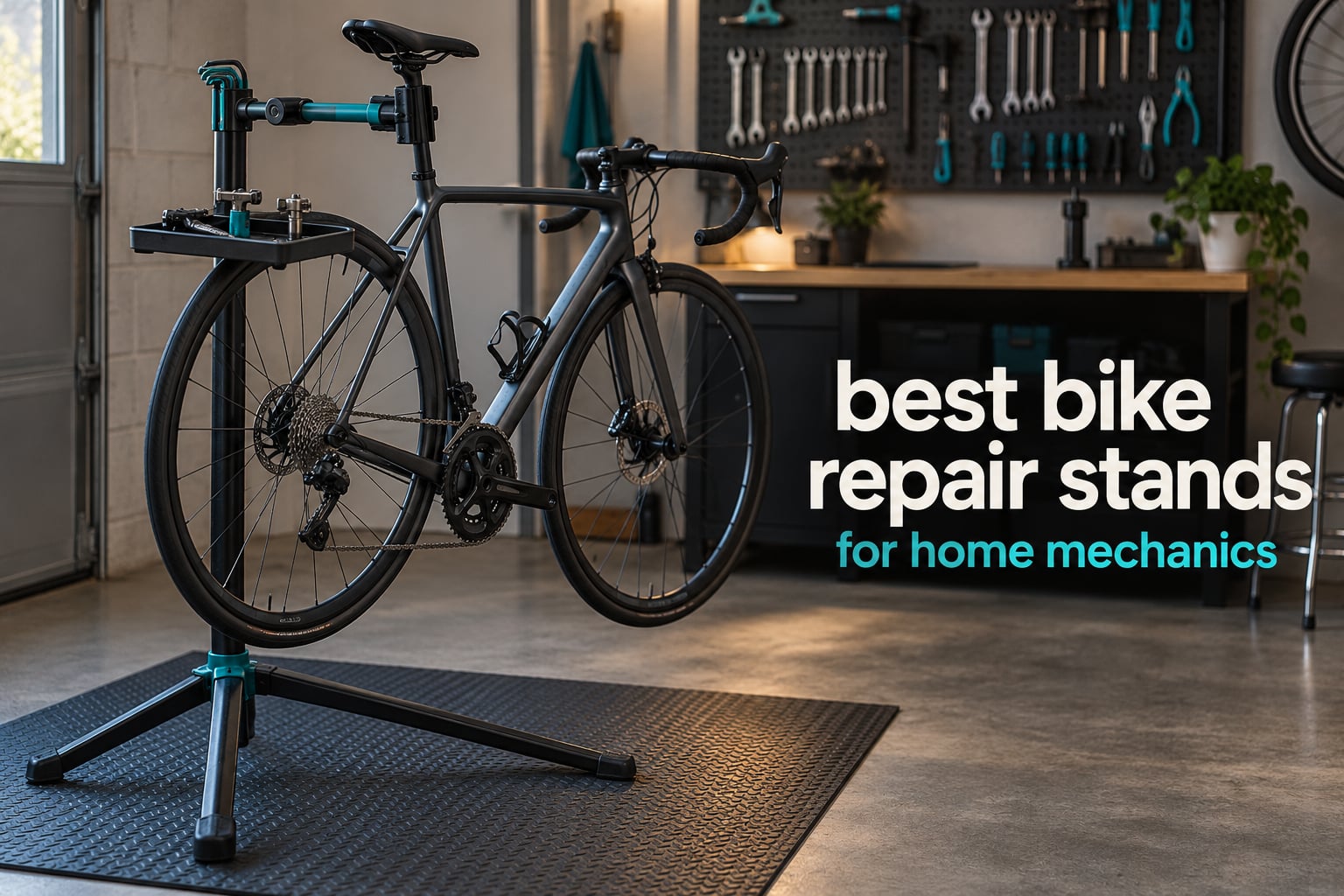
A bike repair stand, also called a workstand or maintenance stand, is a fixture that holds your bicycle off the ground at working height so you can service the drivetrain, brakes, and wheels with both hands free. Most use a two-jaw rotating clamp that grips the seatpost and spins 360 degrees. A few cradle the bottom bracket shell and lock the fork dropouts instead. Either way, it is the first tool most home mechanics buy, because working on a bike that is lying on its back or leaning against a wall is slow, dirty, and hard on your back.
We put together this guide to the best bike repair stands for home mechanics after comparing twelve of them side by side, cross-checking every spec sheet against owner reports, and reading the forum threads where owners actually complain. The short version: a stand rated 60 lb covers road, gravel, and most hardtail mountain bikes. Anything heavier needs 66 lb or more, and e-bikes and fat bikes need 80 lb. Match that number to your heaviest bike before you match anything else.
One note on terminology, because it trips people up. A repair stand holds a whole bike for general service. An indoor trainer holds a bike while you ride. A wheel truing stand holds a bare wheel by the axle for spoke and dish work. They are three different objects, and this roundup covers the first one only. We explain where the second and third fit later in the article.
Top 3 Bike Repair Stands for Home Mechanics in October 2026
Before the full list, here is what we would put in a garage tomorrow. The BikeHand YC-100BH is the one most owners keep, the CXWXC RS-100 is the strongest value in the category, and the Park Tool PCS-10.3 is the answer when your heaviest bike is an e-bike or a fat bike.

BikeHand YC-100BH Workstand
- › 55 lb capacity
- › 39-59 inch height range
- › 360-degree head
- › Foldable magnetic tool plate

CXWXC RS-100 Workstand
- › 60 lb capacity
- › Telescoping height
- › Front wheel stabilizer rod
- › Removable magnetic tray
Park Tool PCS-10.3 Repair Stand
- › 80 lb capacity
- › Steel triangular base
- › Built for fat bikes and e-bikes
- › 9.03 kg planted weight
All 12 Bike Repair Stands at a Glance in October 2026
Every stand in this roundup, in one table. The capacity column is the one that decides whether a stand suits your bike; everything else is a preference question.
| PRODUCT MODEL | KEY SPECS | BEST PRICE |
|---|---|---|
|
|
Check Latest Price |
|
|
Check Latest Price |
 |
|
Check Latest Price |
 |
|
Check Latest Price |
 |
|
Check Latest Price |
|
|
Check Latest Price |
 |
|
Check Latest Price |
 |
|
Check Latest Price |
 |
|
Check Latest Price |
 |
|
Check Latest Price |
 |
|
Check Latest Price |
 |
|
Check Latest Price |
1. BikeHand YC-100BH Portable Workstand – the Community Default
BikeHand Bike Repair Stand – Home Portable Bicycle Mechanics Workstand – for Mountain MTB Road Bikes Maintenance – Max. 55 lbs
Max load: 55 lb
Height: 39-59 inch
360-degree head
Foldable tool plate
+ The Good
- Light aluminium body that folds flat
- Quick-release height and tilt
- 360-degree head with hard-wearing teeth
- Magnetic foldable tool plate included
- 5-year warranty with spare parts stocked
- The Bad
- 55 lb ceiling makes heavy e-bikes awkward to load
- Lifting a bike near the limit takes two people
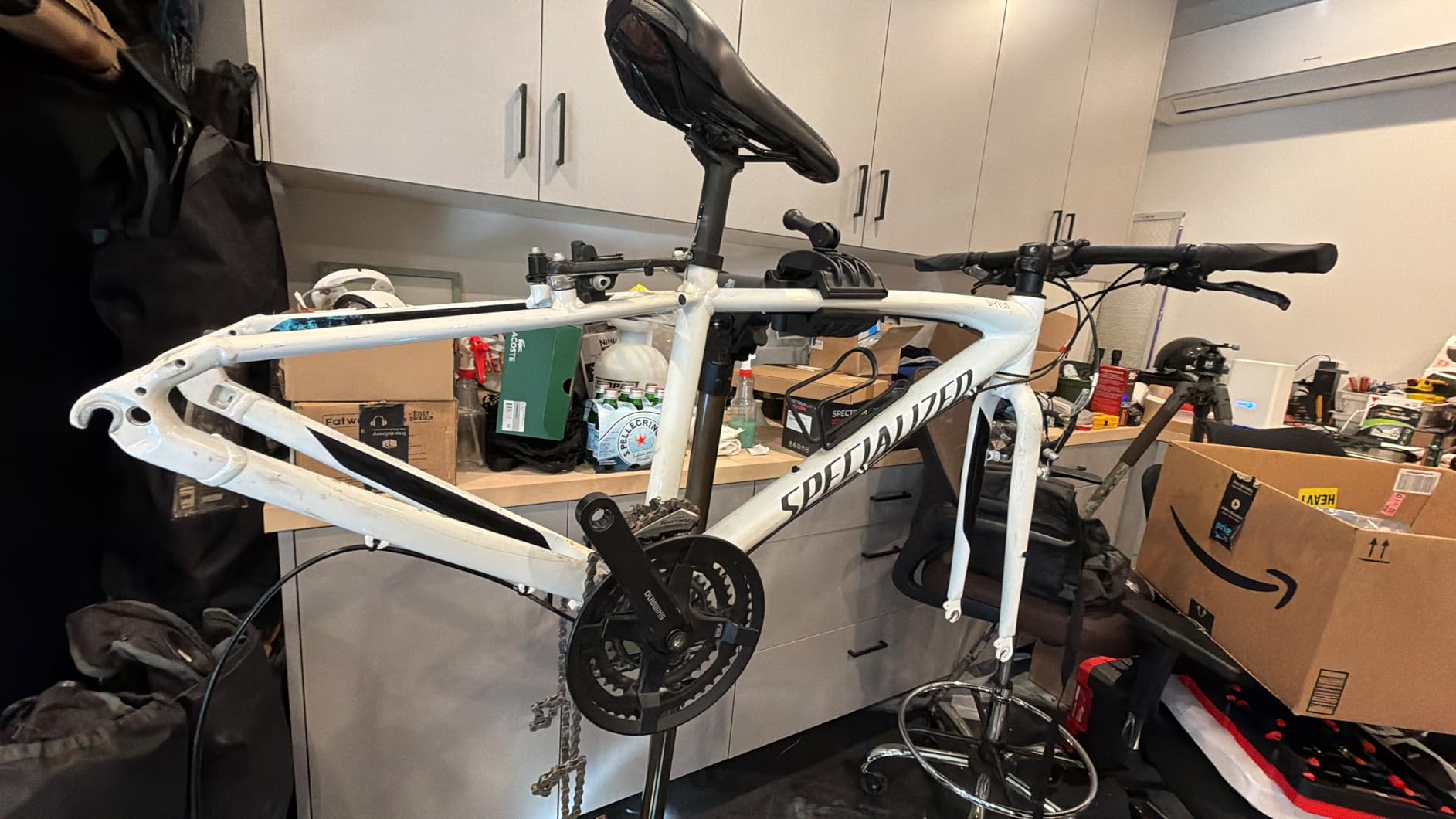
I have used the YC-100BH pattern for years across several bikes and it remains the stand I reach for first. The whole thing is aluminium alloy with a plastic head and clamp, and the light mass is the headline feature: it folds down small enough to walk to a friend’s garage or leave in a car boot between jobs. At 4.7 stars from more than eleven thousand ratings, it is also the design with the longest track record in this whole list.
The adjustment is the part that surprises people. Two quick-release skewers handle height and tilt, and the height range runs from 39 to 59 inches, which covers everything from a kids bike to a 29er. A third quick-release knob releases the head so the clamp swings out, loads the bike, and locks back into position at whatever angle you want to work from.
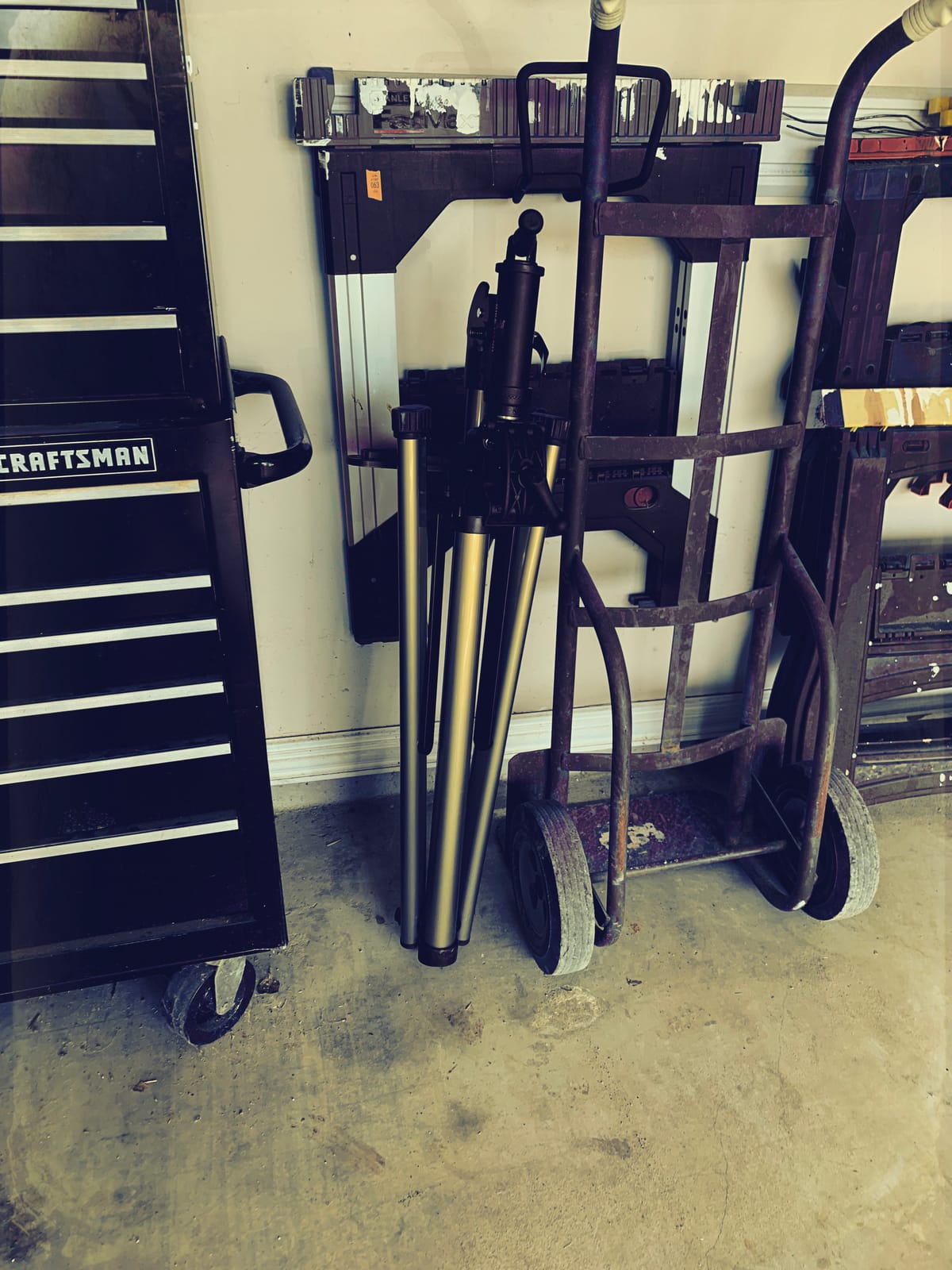
The teeth in the rotating head are noticeably harder than the plastic bits on cheaper stands, and that is where most budget units eventually fail. The clamp grips the seatpost with rubber-lined jaws, so it does not mark an alloy post or a carbon one if you keep the pressure sensible. Owners mention the included magnetic tool plate constantly, because it folds flat and catches every bolt and washer you set down mid-job.
This model has been on the market for more than ten years and carries a five-year warranty, with spare parts still available. That matters more than it sounds. When a clamp knob cracks on a lesser stand two years in, there is usually nothing to replace it with, and the whole unit goes to a shelf.
Who the BikeHand YC-100BH suits
This is the right pick if your heaviest bike is a road bike, a gravel bike, or a hardtail under about 50 lb. It suits anyone working in a flat or a small garage, because it folds to roughly 40 inches packed and weighs so little you can move it between rooms without thinking about it. If you do one tune-up a month, this is more than enough capability.
It is also a good first stand. You are not committing much, you are learning which jobs you actually want to do yourself, and you can put it away when it is not earning its floor space. For a household with one bike and a shared room, the foldability matters as much as the clamp.
Who the BikeHand YC-100BH does not suit
Owners are consistent about one limitation: 55 lb is the ceiling, and approaching it is awkward. A 60 to 70 lb e-bike is under the weight limit on paper but genuinely hard to lift into the jaws alone. If your bikes include a loaded e-bike or a fat bike, read the load capacity section of the buying guide before settling on this one.
The load rating is also not the same as a comfort rating. A stand rated 55 lb is fine at 45 lb and unpleasant at 54 lb. Treat the number as a hard ceiling and keep a comfortable margin below it.
2. CXWXC RS-100 Mechanic Maintenance Rack – Best Value
CXWXC Bike Repair Stand -Shop Home Bicycle Mechanic Maintenance Rack
Max load: 60 lb
Height adjustable body
360-degree clamp
Stabilizer rod
+ The Good
- Angled vertical tube gives real pedal clearance
- Indexed teeth hold position across multiple bikes
- Light enough to carry and folds compactly
- Tool tray with magnetic strip
- Very strong owner satisfaction
- The Bad
- Several plastic and composite parts that wear over time
- Can feel slightly tipsy on a heavy bike
- Stabilizer rod strap is fiddly to fasten
The CXWXC RS-100 is the one we would hand to someone who wants the most capability for the least outlay, and it has the sales rank in this category to prove it sits at the top of the chart. Owners routinely compare it favourably with stands costing several times as much, and at 4.6 stars across close to ten thousand ratings the satisfaction is broad rather than enthusiastic.
The design detail most stands in this class get wrong is the vertical tube angle. On a straight upright, the pedal of a road bike hits the post the moment you turn the clamp toward the drive side. The CXWXC slants its upright forward, which puts the pedal clear and lets you spin the cranks to check indexing without fighting the frame.
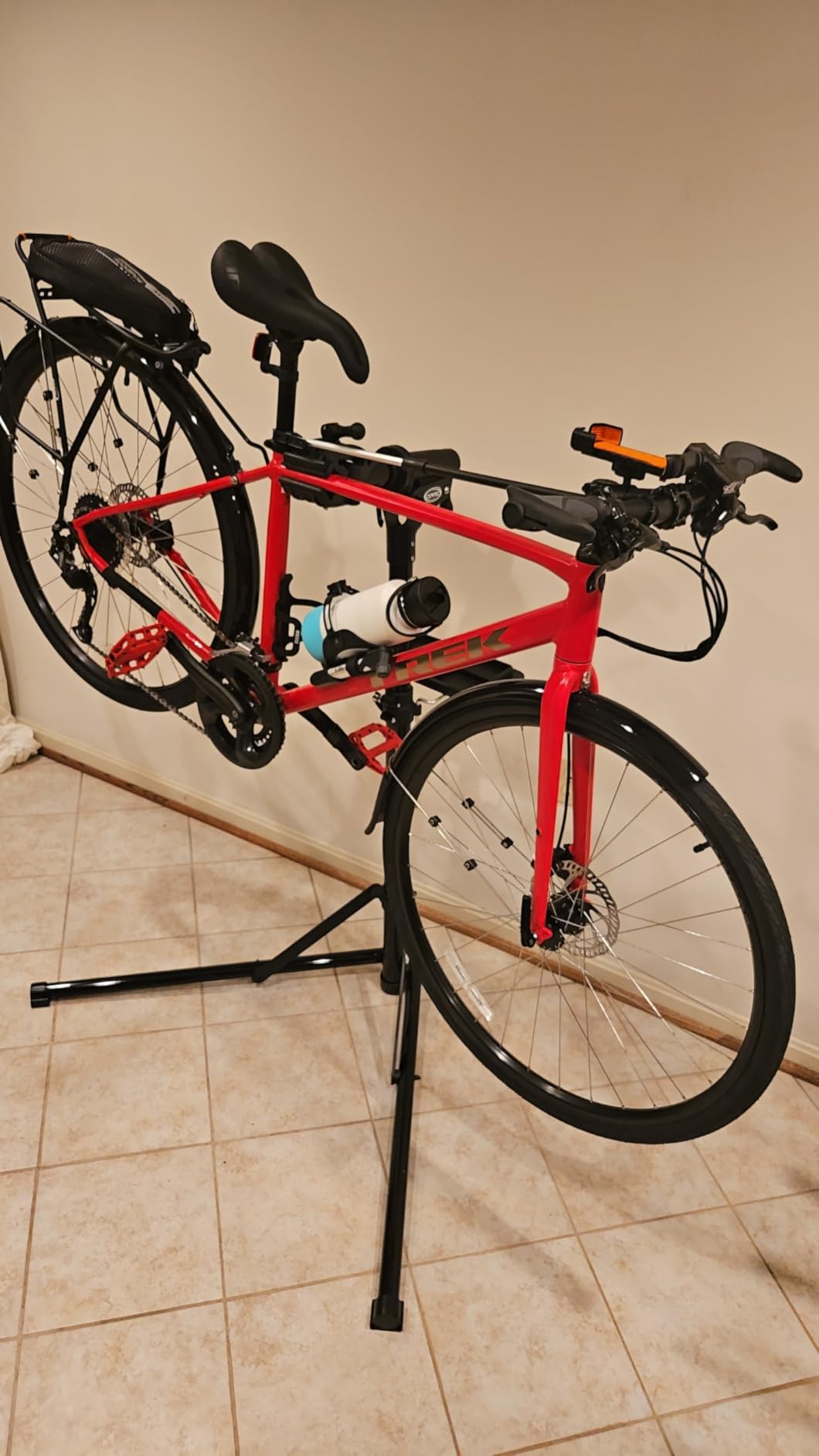
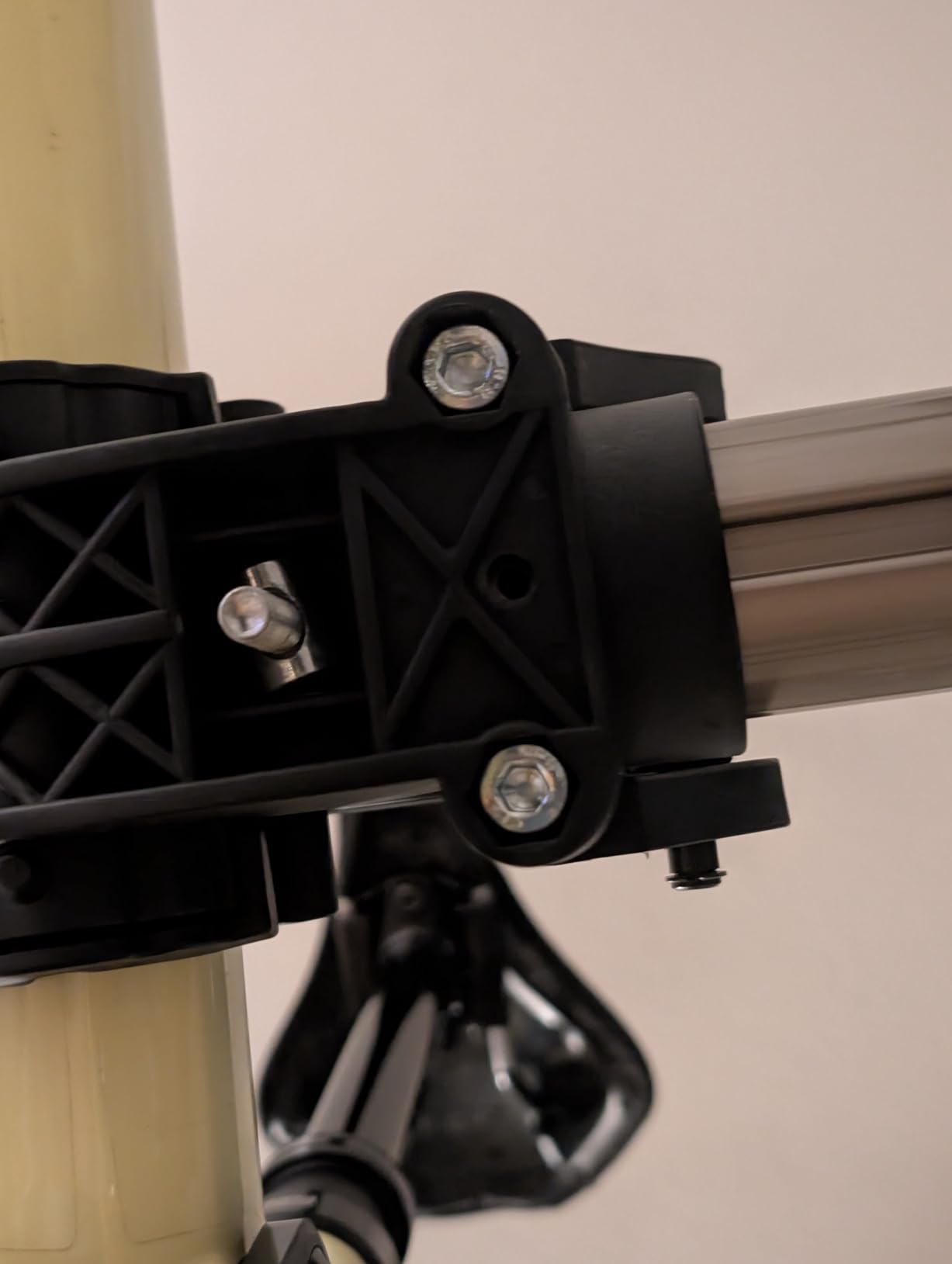
Instead of a friction joint, the horizontal arm runs on indexed notched teeth, so the arm holds the same position bike after bike rather than slowly creeping under load. The 360-degree lever clamp does the work at the seatpost, and the barrel itself is a durable alloy rated to 60 lb while staying lighter and more corrosion resistant than solid steel would be.
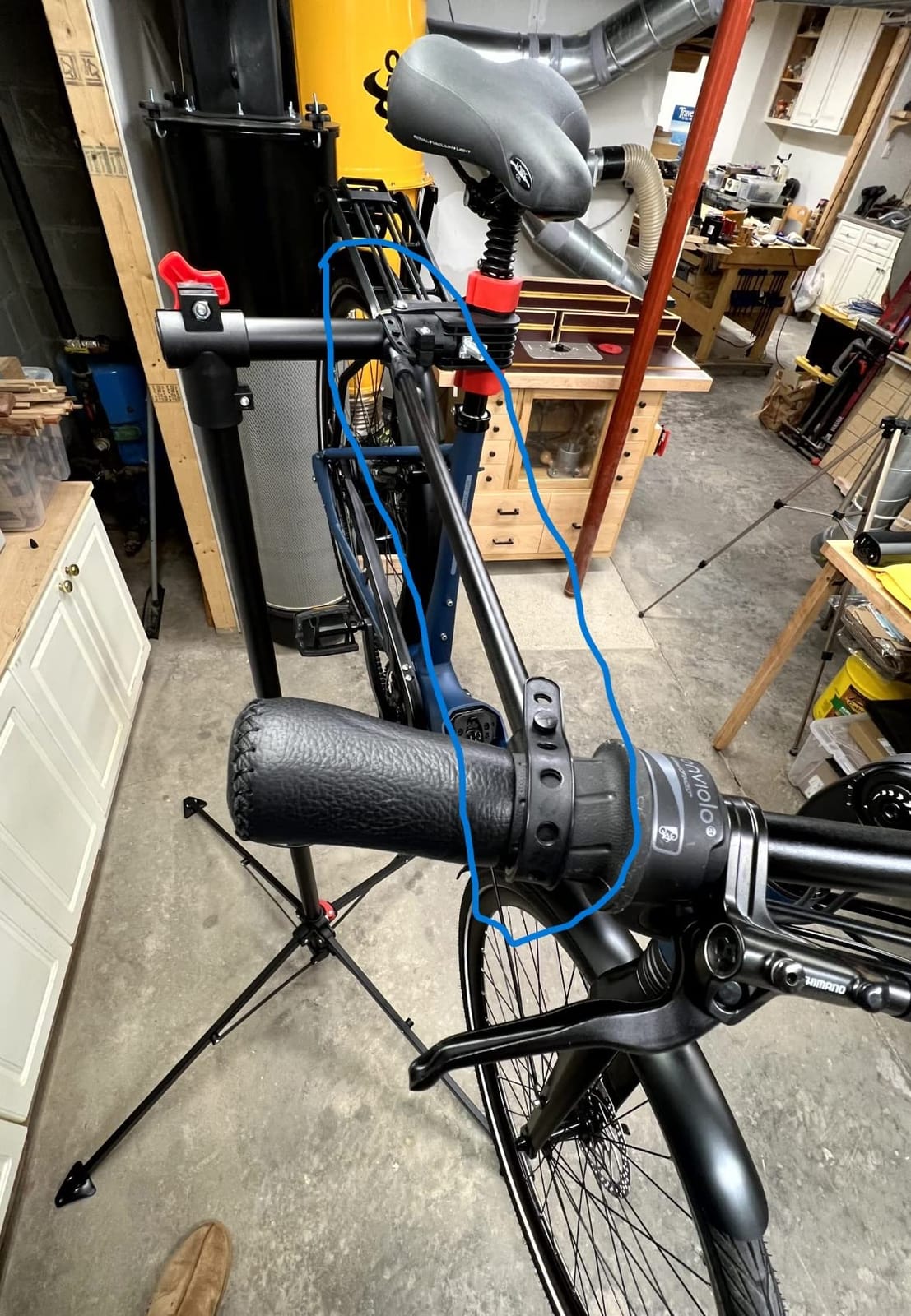
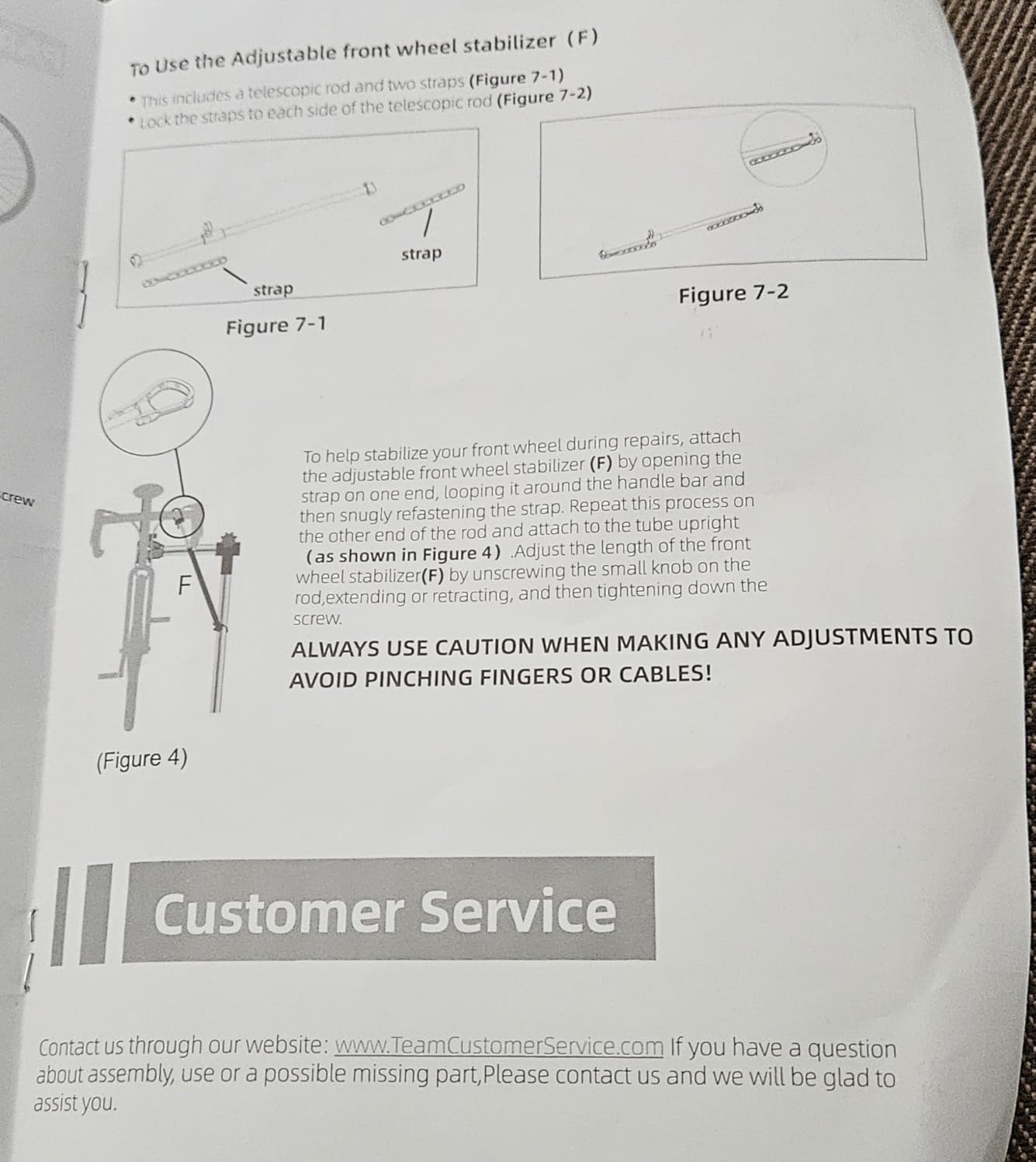
A telescoping stabilizer rod clamps to the front wheel or fork so the bike cannot swivel while you work on the rear end. It is genuinely useful on drivetrain jobs, and it is also the part owners complain about most, because the strap fastening is awkward to do with gloves on. The removable tool tray drops in on two pins and carries a magnetic strip for ball bearings and small hardware.
Who the CXWXC RS-100 suits
It suits the majority of home mechanics: road, gravel, hardtail, and light full-suspension bikes, anything up to about 55 lb. It is a good fit for drivetrain work in particular, because the pedal clearance and the stabilizer rod both remove the two most common frustrations when tuning shifting in a clamp stand.
It also suits anyone who moves their workspace. The unit weighs 5.81 kg and folds down compactly, so a balcony, a garage corner, or a shared utility room all work. The triangle base with rubber anti-skid feet gives it a wider footprint than a typical two-legged budget stand, which is where a lot of the stability comes from.
Who the CXWXC RS-100 does not suit
The honest weakness is material. Several load-bearing-feeling parts are plastic or composite, and owners report those wearing over long-term use. If you plan to work on the same stand daily for years, a stand built entirely in steel will outlast it.
Second, at 60 lb rated and 5.81 kg actual, it can feel slightly light under a heavy bike at full extension. For e-bikes, the 80 lb stands are the correct answer. Give yourself a re-tightening pass on the bolts after first assembly, which several reviewers note is needed before the stand sits truly rigid.
3. Yaheetech Foldable Maintenance Rack – for Heavy Steel Bikes
Yaheetech Bike Repair Stand Adjustable Foldable Bicycle Rack, Black/Red
Max load: 66 lb
Height: 42.5-74.8 inch
Alloy steel
Folds flat
+ The Good
- Four wide-spread legs make tipping a non-issue
- Handles heavy e-bikes without bending or twisting
- Steel clamp hardware with seated nuts
- Reaches 74.8 inch for standing work
- Folds flat for small-space storage
- The Bad
- Friction-only clamp arm can torque under a heavy bike
- Clamping a heavy bike by the seatpost is a two-person job
- Some plastic collars
- Instructions rely on unclear diagrams
The Yaheetech is the stand in this roundup that most consistently surprises people, because it is heavier than most stands in its class and feels like a piece of workshop equipment. At 14.1 lb of alloy steel with four wide-spread legs, tipping is effectively off the list of problems. If you own a steel-framed bike and want something that will not move while you hang off the bars, this is the one.
The telescopic bracket runs from 42.5 to 74.8 inches, one of the tallest reaches in this group, and it lets you stand upright for drivetrain work rather than crouching. The adjustable clips take frame tubes from 1 to 1.6 inches, and the 360-degree swivel clip has rubber jaws to protect the paint. Two pivots plus the height adjustment give you more ways to angle the bike than most stands offer.
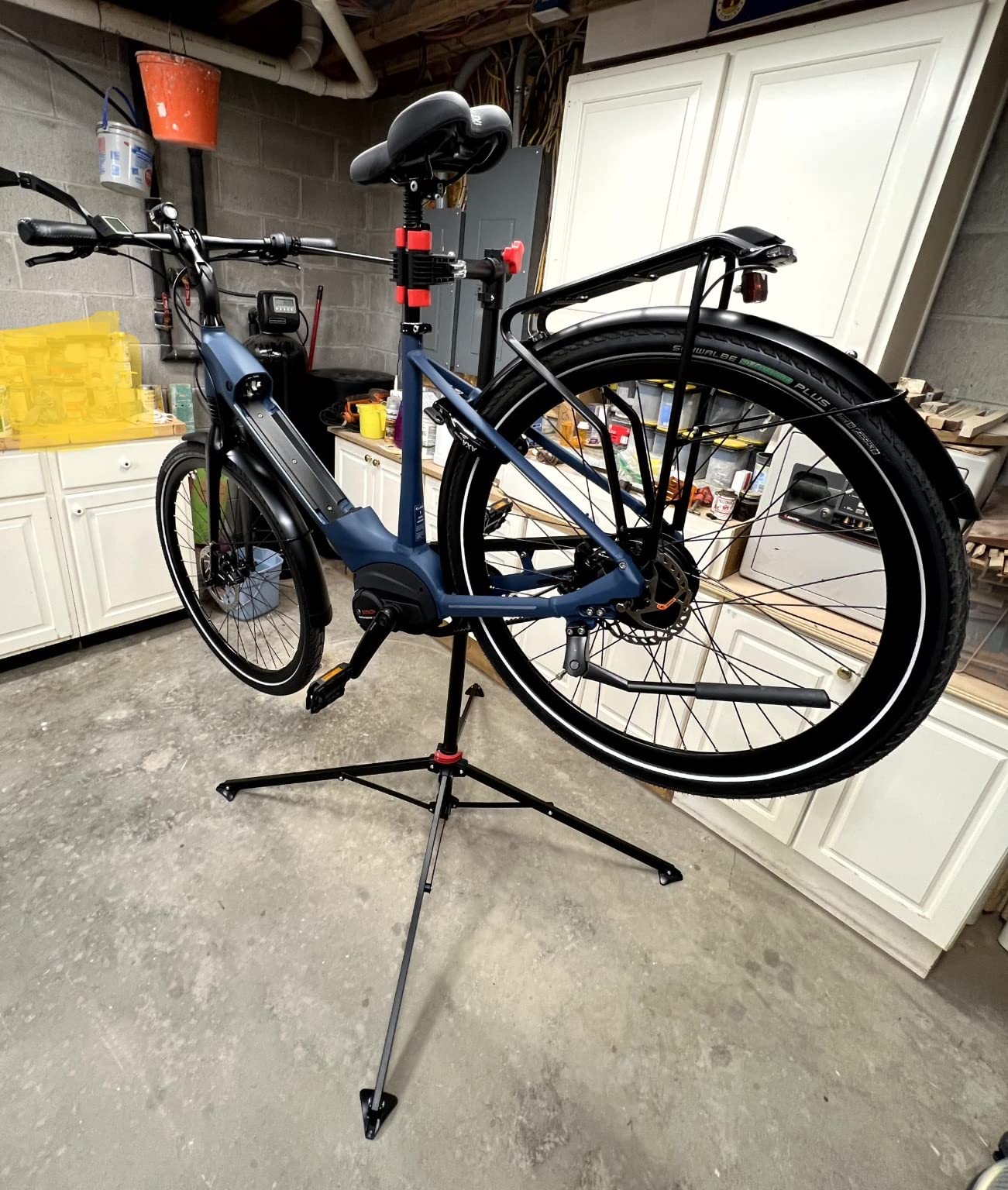
Owners report the steel clamping hardware with seated nuts rather than threaded plastic as the reason it survives, and several describe full teardown-and-rebuild cycles with no resulting wobble. That is a durability story the lighter aluminium stands in this roundup struggle to match. The free tool tray with organising brackets keeps small hardware off the floor, which matters more than it sounds during a rebuild.
It folds flat, and despite the heft it can be moved around a room by one person. The 40 by 40 inch footprint when open is wide, so plan where it lives before you buy. A rubber or interlocking foam mat underneath helps on a hard floor, as we explain in the wobble section.
Who the Yaheetech stand suits
It suits anyone with a heavy bike and a hard floor. Steel-framed mountain bikes, loaded commuters, and mid-weight e-bikes all sit comfortably inside the 66 lb rating, and the wide four-leg base means you can lean on the bike hard without it walking across the concrete. Several owners specifically mention holding e-bikes without the stand bowing or twisting.
It also suits anyone who wants standing-height working positions. A 74.8 inch maximum is among the tallest reaches here, which is real for anyone over about six feet or anyone who gets back pain from working bent over a bike.
Who the Yaheetech stand does not suit
The friction-only clamp arm is the recurring complaint, and it is worth understanding. There is no mechanical hard stop on the grabber arm, so under the uneven weight of a heavy bike clamped by the seatpost, the arm can rotate slightly. Most owners live with it. If you are doing precision work where that movement matters, an indexed arm is worth the step up.
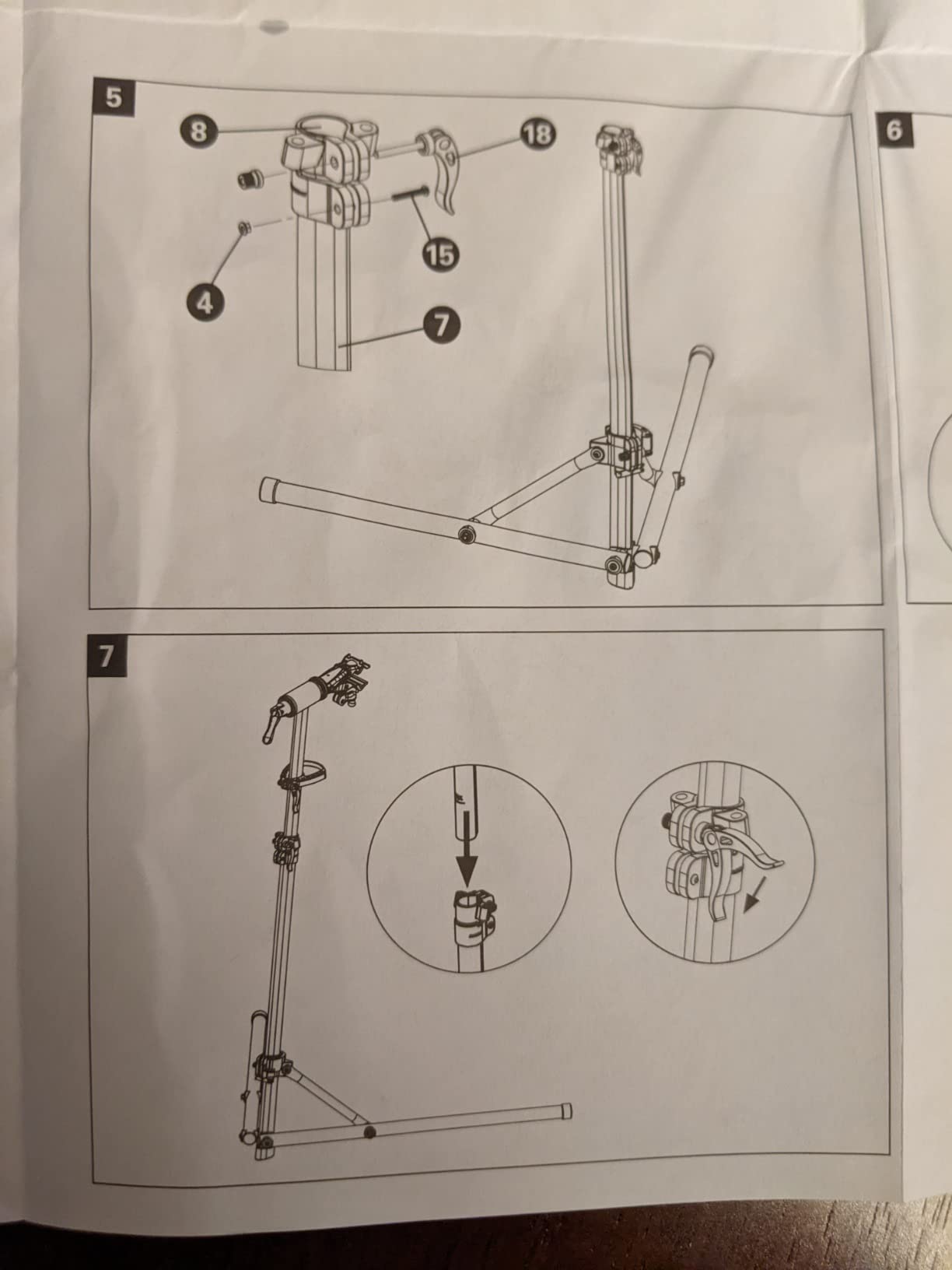
Clamping a heavy bike by the seatpost is a two-person job in practice, and the instructions are sparse enough that owners rely on the diagrams. Budget ten minutes for assembly and check every bolt by hand before you trust it with a load.
4. RAD Cycle Pro Stand Plus – for a Garage You Can Anchor to
RAD Cycle Products Pro Bicycle Adjustable Repair Stand Holds up to 66 Pounds or 30 kg with Ease for Home or Shop Road Pro Stand
Max load: 66 lb
Height: 41-75 inch
Powder-coated steel
Anchoring holes
+ The Good
- Wide adjustable four-leg base gives real stability
- Quick releases for height and angle
- Tool tray and handlebar rod at this tier
- Round vertical tube rotates the bike freely
- Handles a 50 lb e-bike without issue
- The Bad
- Main clamp is a threaded nut and bolt rather than quick release
- Bikes can spin if not perfectly centred
- Water collects in the tray and the clamp
The RAD Cycle Pro Stand Plus is the option for anyone whose garage floor is level, permanent, and willing to take four screws. The feet are pre-drilled so you can anchor the stand to the slab and never think about wobble again, which is the single most common complaint in every bike maintenance forum we read.
It is powder-coated tubular steel rated to 66 lb, and the telescoping column adjusts from 41 to 75 inches to fit 1 to 1.5 inch tubing. The round vertical tube is the detail that separates it from cheaper stands: the bike rotates freely in the clamp, so you can reach the far side of the frame without unclamping and repositioning.
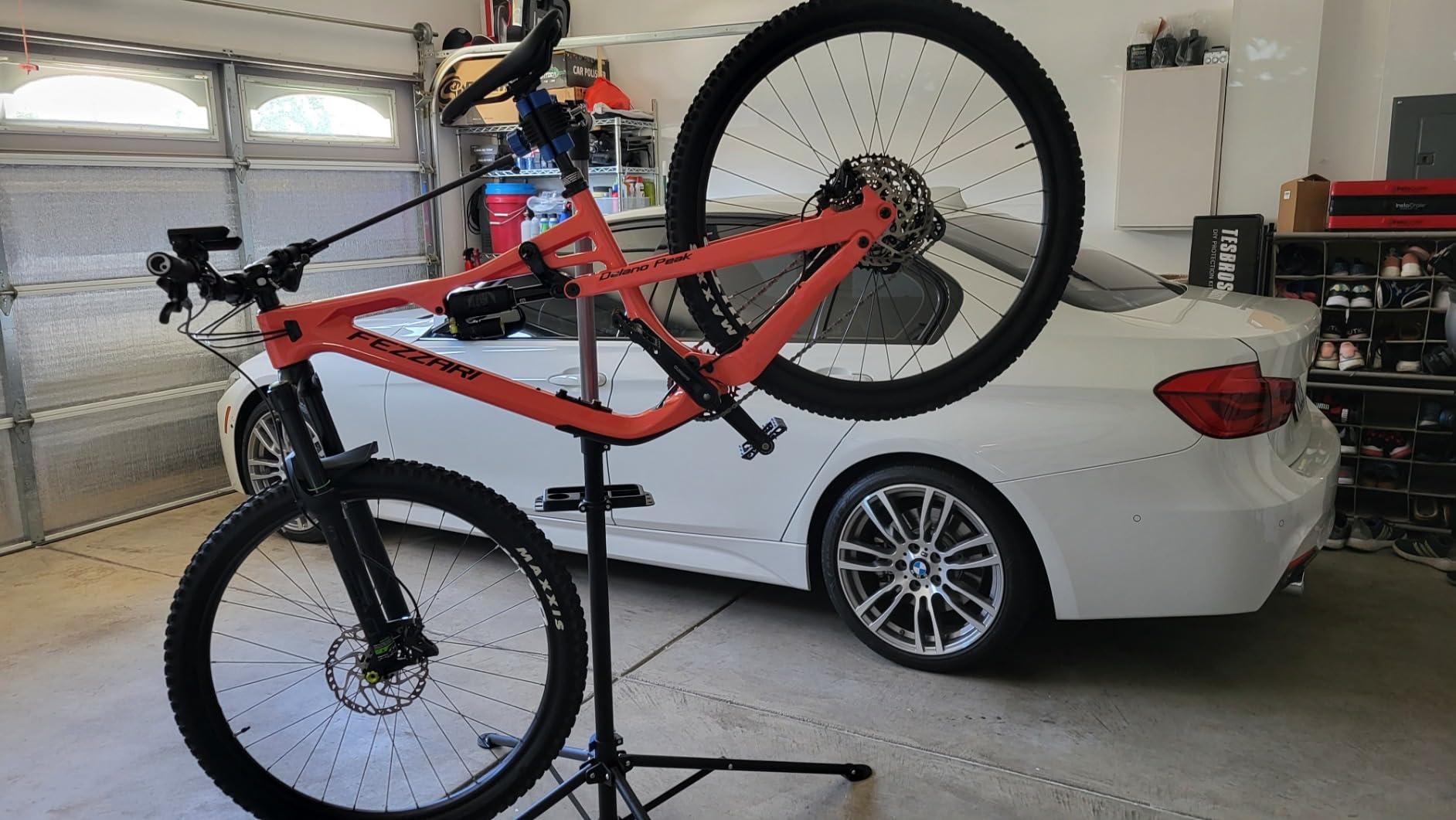
The adjustable handlebar rod stabilises the front wheel, and the tool tray is magnetic so bolts do not roll away mid-job. Legs fold up for storage or transport, a hex key is included, and at 12 lb the unit is heavy enough to feel planted while still being carryable between rooms. Owners describe it as a dependable home-garage stand rather than a showpiece.
There is one design decision that divides opinion more than anything else here: the main clamp uses a threaded nut and bolt, not a quick release. That means every time you put a bike in or take one out, you are turning a knurled nut by hand. Slow, but positive, and it never creeps.
Who the RAD Cycle stand suits
It suits people with a dedicated garage bay. Anchoring the feet to a concrete slab converts this from a good stand into an essentially rigid fixture, and that is worth more than any material upgrade you can buy elsewhere. Anyone doing weekly maintenance in a fixed space will notice the difference immediately.
It also suits anyone who works on heavier bikes than a 60 lb stand handles. At 66 lb with a wide four-leg base, a mid-weight e-bike or a loaded commuter sits comfortably.
Who the RAD Cycle stand does not suit
It is a poor fit for renters, apartments, or anyone who moves the workspace constantly. The pre-drilled feet are a feature only if you intend to use them, and the threaded clamp is a poor trade if you are constantly clamping and releasing bikes.
Watch the water. Owners report that water collects in the tool tray and inside the clamp and does not drain, so wipe it after washing work rather than leaving the bike sitting wet in the jaws. And if the bike is not perfectly centred in the clamp, it can rotate, which is worth a glance each time before you load up on the bars.
5. CXWXC Folding Bike Maintenance Stand – Compact and Light
CXWXC Bike Repair Stand – Bike Stand For Maintenance Workstand
Max load: 60 lb
Height: 31.5-57.5 inch
Welded iron
Magnetic tray
+ The Good
- Compact welded iron frame that folds for storage and travel
- ABS-plated clamps avoid scratching frames
- Fits 25-45 mm tubes for kids bikes and road bikes
- 360-degree clamp works standing or sitting
- Magnetic tray for bolts and lubricant
- The Bad
- Lowest-rated CXWXC stand here at 4.4
- Maximum height is shorter than competing stands
- Plastic elements in the head and clamp show wear
This is the smaller sibling of the RS-100, and its reason to exist is the 31.5 inch minimum height. That lower floor is the whole point: it will hold a child bike, a folding bike, or a small-wheeled bike at a height a child or a seated mechanic can reach, which no other stand in this list does.
Construction is lightweight welded iron with sturdy tubes, and the head and clamp are ABS-plated specifically to stop scratching the frame. It takes tubes from 25 to 45 mm, the widest clamp range in the roundup, so it accepts kids bikes, road bikes, and mountain bikes without swapping anything.
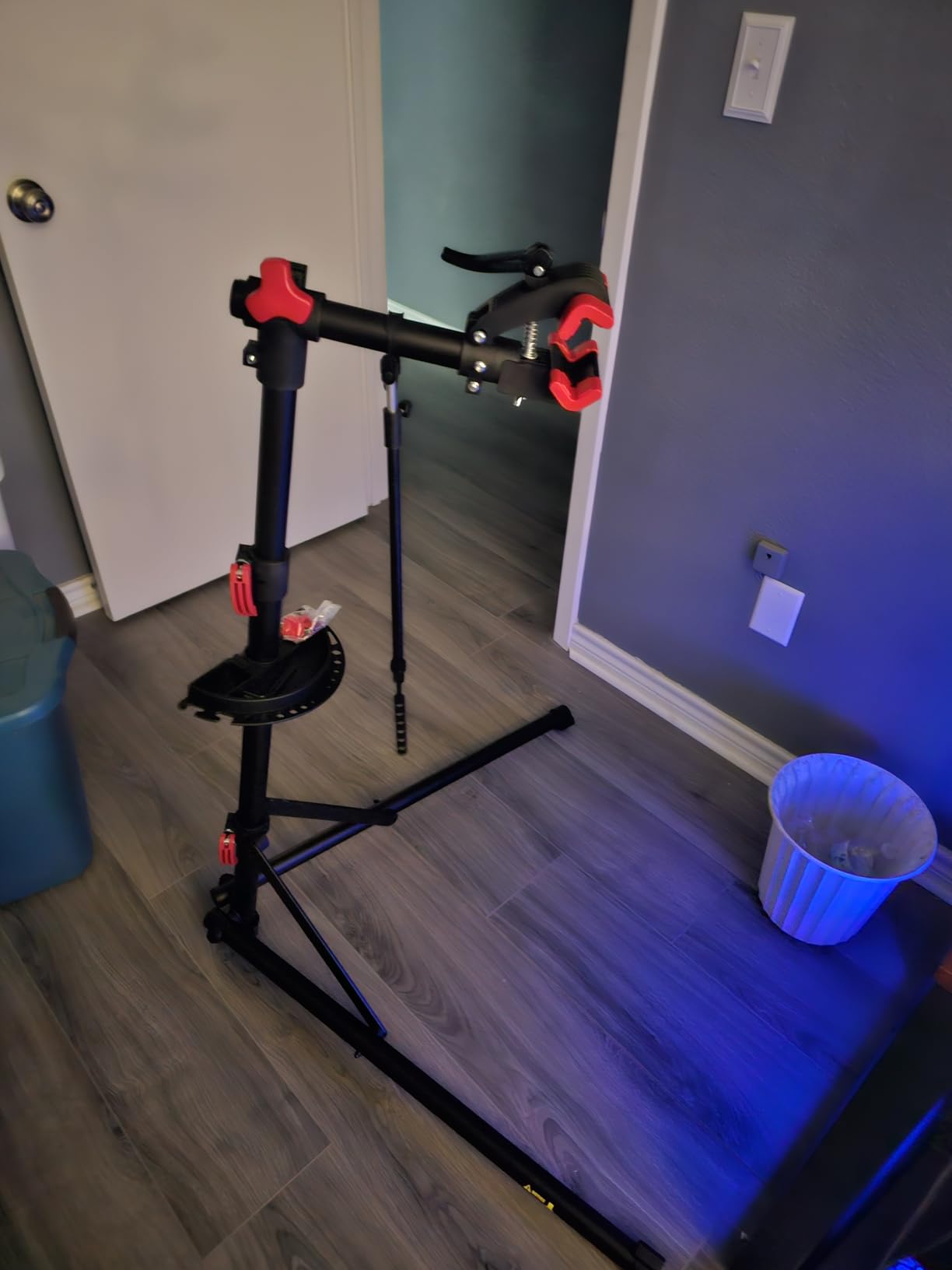
The magnetic plastic tray is sized for tools, lubricant, and spare parts, and the 360-degree rotating clamp plus a 31.5 to 57.5 inch height range mean you can work standing or sitting. It folds small for storage and travel, which makes it a reasonable choice for a flat where floor space is the constraint.
At 7.22 kg it carries more mass than the lighter folding stands, but the iron frame is the trade for a folded footprint small enough for a flat. Rated to 60 lb, it is a road and hardtail stand rather than an e-bike stand.
Who the compact CXWXC stand suits
It suits families working on small bikes, and anyone who folds their workspace away at the end of a session. The 25 to 45 mm clamp range is the widest here, so a household with a child bike, a folding bike, and a road bike can use one stand for all three.
It also suits anyone who prefers sitting to standing. The low minimum height means you can get the drivetrain at a comfortable seated height without a footstool, which makes index adjustment and chain work much easier on the back.
Who the compact CXWXC stand does not suit
It scores 4.4 with the highest share of one-star ratings among the CXWXC stands here, and the gap against its own bigger sibling is visible. The short 57.5 inch ceiling means tall mechanics will be working bent over on a full-size bike, which is exactly the posture a workstand is meant to eliminate.
The head and clamp use plastic elements that show wear over time, and at 60 lb it is not the right tool for e-bikes or fat bikes. Choose this one for its size range, not for its capacity.
6. Park Tool PCS-10.3 Deluxe Home Mechanic – for E-Bikes and Fat Bikes
Park Tool PCS-10.3 – Deluxe Home Mechanic Repair Stand
Max load: 80 lb
Steel construction
Triangular base
9.03 kg
+ The Good
- 80 lb capacity covers fat bikes and most e-bikes
- Steel construction with a triangular base
- 9.03 kg of planted weight
- Joint-highest rating in this roundup
- Built by an established repair tool maker
- The Bad
- The highest-priced stand in this roundup
- Non-round vertical tube limits rotating the bike in the clamp
The PCS-10.3 is the stand to buy when the heaviest bike in your house is an e-bike or a fat bike. Rated to 80 lb, it has the headroom to take those bikes with margin rather than right at the limit, and the 9.03 kg steel construction gives it a planted feel that light aluminium stands cannot match while you work over the bars.
Park Tool describes it as their deluxe home mechanic tier, built on a steel frame with a triangular base. That triangular footprint spreads the load wider than a straight tripod, which is the difference between a stand that rocks when you load a heavy wheel and one that does not move.
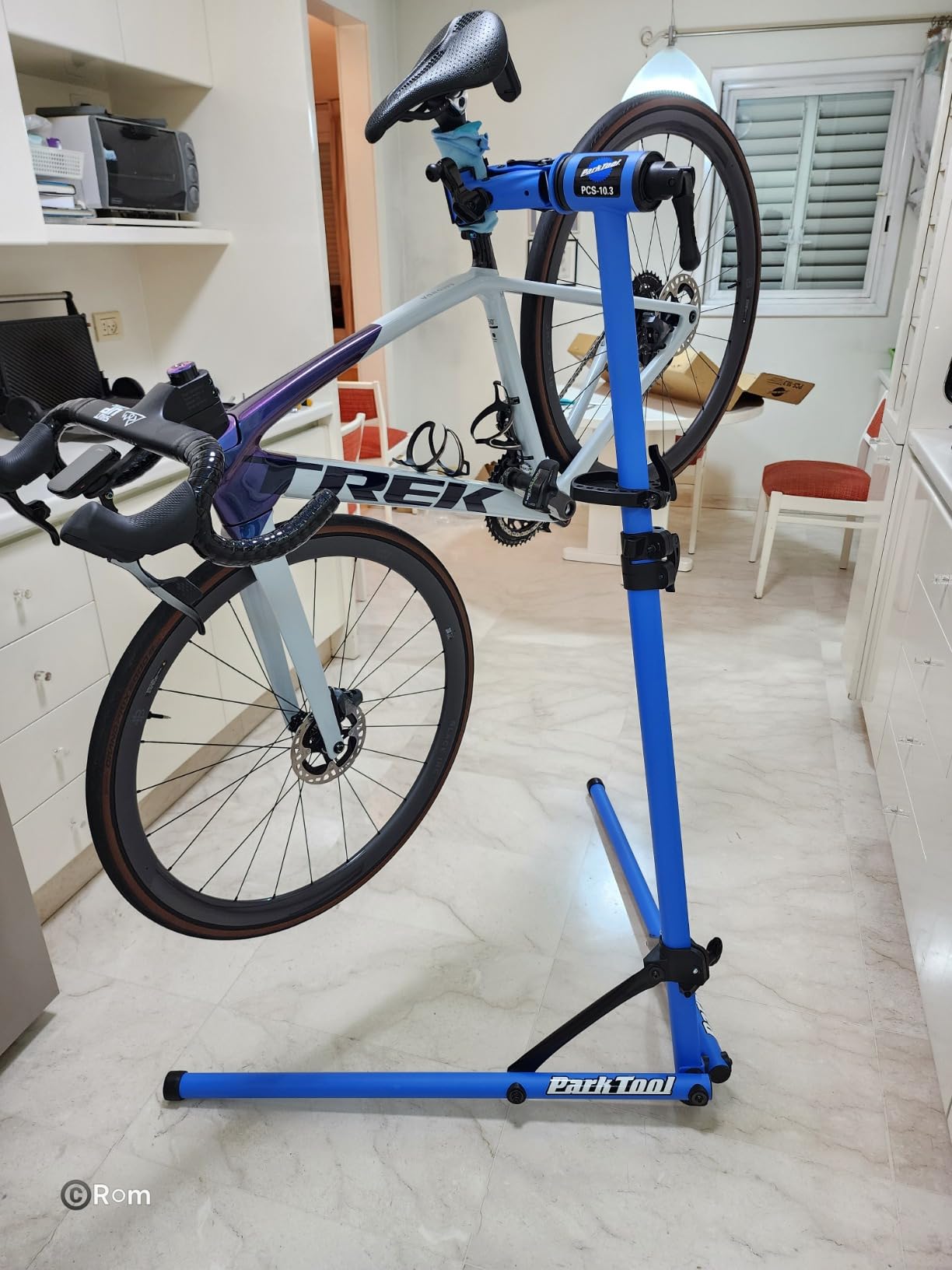
Owners rate build and finish highly and the 4.7 across 986 ratings is the joint-highest score in this roundup. The stated design intent is a wide variety of bikes including fat bikes and most e-bikes, so this is not capacity added to a small stand; the whole structure is sized for it.
The trade-offs are honest ones. This is the most expensive stand we tested, and the non-round vertical tube means the clamped bike cannot be rotated freely in the head the way a round post allows. If you constantly spin the bike to reach the far side, that matters.
Who the Park Tool PCS-10.3 suits
It suits e-bike and fat bike owners, full stop. Buyers with 60 to 70 lb e-bikes cite the capacity as the deciding factor, and the steel weight means the bike does not swing when you dismount it. It also suits anyone who wants a stand that will still be there in ten years; Park Tool parts and serviceability are a genuine advantage in this category.
It suits mechanics who work on their bike weekly. There is no daily assembly, nothing to unbolt, and the base does not need re-tightening because there is no folding joint under load.
Who the PCS-10.3 does not suit
It does not suit a small flat, a renter, or anyone who wants the stand to disappear when not in use. At 9.03 kg and a fixed triangular base, it is a permanent fixture in a corner rather than a portable tool.
It also does not suit a household that only ever works on road bikes. For occasional work on a light bike, the same brand has a cheaper, lighter, folding option further down this list that does everything you need. The premium here buys capacity and permanence, and if you do not need either, it is money you do not have to spend.
7. ROCKBROS Wall and Bench Mount Stand – for Renters and Small Rooms
ROCKBROS Bike Repair Stand – Wall/Bench Mount, 44 lbs Capacity
Max load: 44 lb
Tube range: 30-75 mm
Iron construction
Folds flat
+ The Good
- Frees up floor space by mounting to a bench or wall
- Silicone clamp covers 30-75 mm without marking paint
- Quick release mount is easy to install or reposition
- Only 3 lb and mounts solidly on four long screws
- Also works as a bow vise
- The Bad
- 44 lb capacity sits at the bottom of this roundup's range
- Requires a solid bench or wall and drilling first
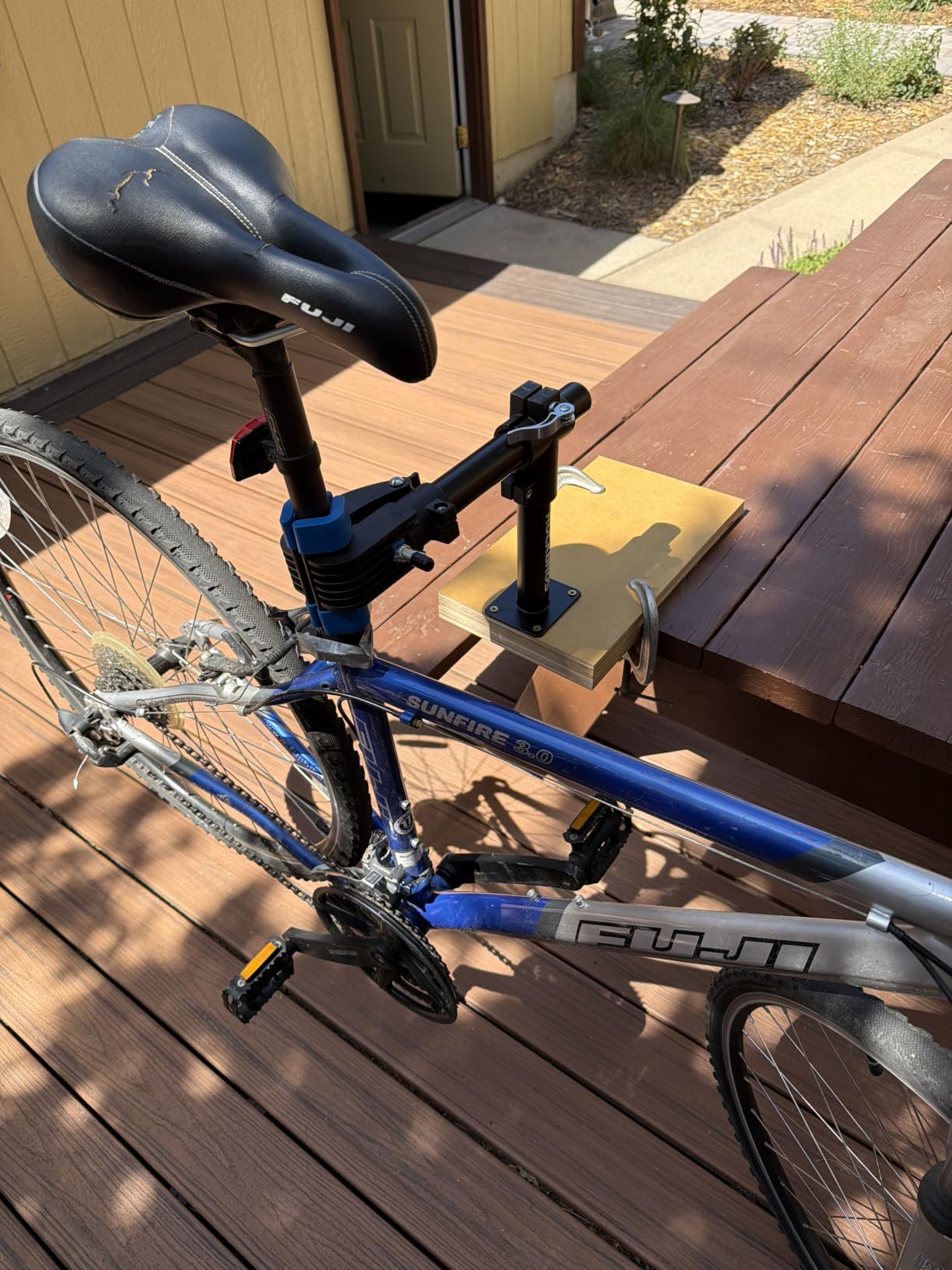
If you rent, live in a flat, or share a one-car garage, floor space is the binding constraint and a wall mount solves it completely. The ROCKBROS bolts to a bench or a wall with four long screws, swings out when you need it, and folds flat against the surface when you are done. Owners consistently report that recovering a square meter of floor is the reason they bought it.
The clamp is the best in this group for paint protection. A soft non-slip silicone jaw adjusts to tubes from 30 to 75 mm, which covers seatposts, top tubes, and even a seat tube on a small frame, and it does not mark the finish. The upper arm rotates so you can hold the bike by a vertical seatpost or a horizontal frame depending on the job.
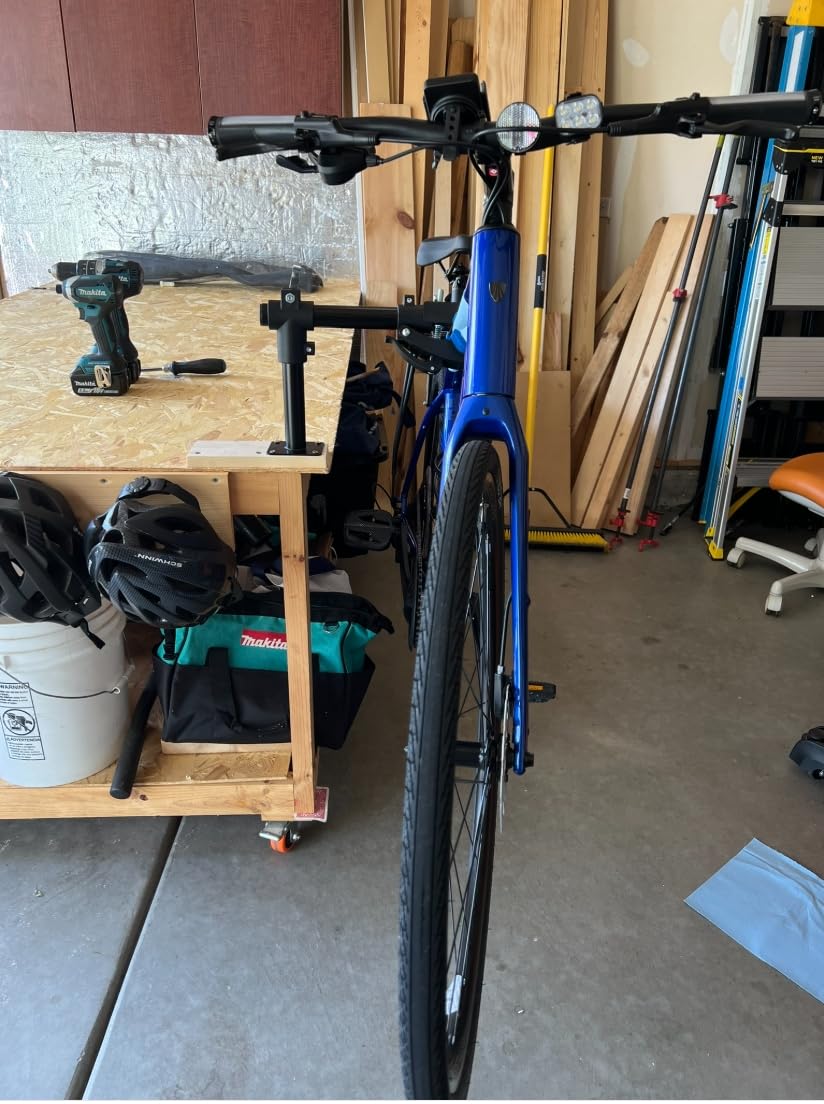
At 3 lb the whole unit is trivially light, and the quick release design means you can remove and reposition it without tools. The iron construction is wear resistant, and it folds away when not in use. As a bonus it doubles as a bow vise, which is a use we did not expect but owners mention approvingly.
What you give up is capacity and mobility. At 44 lb rated, this is the lowest capacity figure in the roundup and it rules out e-bikes and heavy full-suspension bikes entirely. You also need a solid surface and a drill before it is usable at all.
Who the ROCKBROS mount suits
It suits renters, apartment dwellers, and anyone whose floor is already spoken for. A workbench is the ideal host, because the mount puts the clamp at adjustable height over the bench rather than over the floor, and four long screws into a solid bench top make it extremely rigid once installed.
It also suits anyone with mixed frame shapes. The 30 to 75 mm range is the widest of any mount in this roundup, and the ability to grab a horizontal frame as well as a vertical seatpost gives real flexibility for unusual frames and odd-size bikes.
Who the ROCKBROS mount does not suit
It does not suit heavy bikes, full stop. At 44 lb it is under the weight of most loaded e-bikes and at the limit for a big full-suspension mountain bike. If your heaviest bike is over about 40 lb, you need one of the 66 lb or 80 lb stands in this list.
It also does not suit anyone who cannot drill, or who wants to move their workspace between rooms. Once screwed to a wall, it is a fixture, and taking it down means finding the screws again.
8. VEVOR Four-Leg Steel Repair Stand – Highest Capacity for the Money
VEVOR Bike Repair Stand, 4-Leg Steel Bicycle Repair Stand, 42.5″-74.8″ Adjustable Height Bike Maintenance Work Stand with Magnetic Tool Tray, Foldable Bike Service Stand for Home, Shop (Max 80 Pounds)
Max load: 80 lb
Height: 42.5-74.8 inch
Four-leg steel base
Magnetic tray
+ The Good
- 80 lb capacity on a heavy steel chassis
- Four-legged non-slip base holds 29 inch bikes steady
- Arrives largely assembled so setup takes under 10 minutes
- Rubber grip feet and clamp jaws protect the frame
- Height adjusts for sitting or standing
- The Bad
- Lowest rating in this roundup at 4.0 with 12 percent one-star ratings
- Plastic head clamp can rotate under load
- Clamp jaws can open too narrow for larger tubes
The VEVOR is the standout on paper: 80 lb capacity, four steel legs, a 42.5 to 74.8 inch height range, and a magnetic tray, on a chassis that costs about as much as a single brake bleed kit. Owners routinely report it holding heavy bikes including big 29 inch full-size frames without complaint, and it arrives largely assembled so you are working in under ten minutes rather than an hour with hex keys.
The base is the reason it holds a heavy bike. Four non-slip legs spread the load wider than a tripod, so the centre of gravity of a 70 lb e-bike stays inside the footprint while you work. Height adjustment is telescoping, and the 360-degree rotating clamp uses heat-treated hardware.
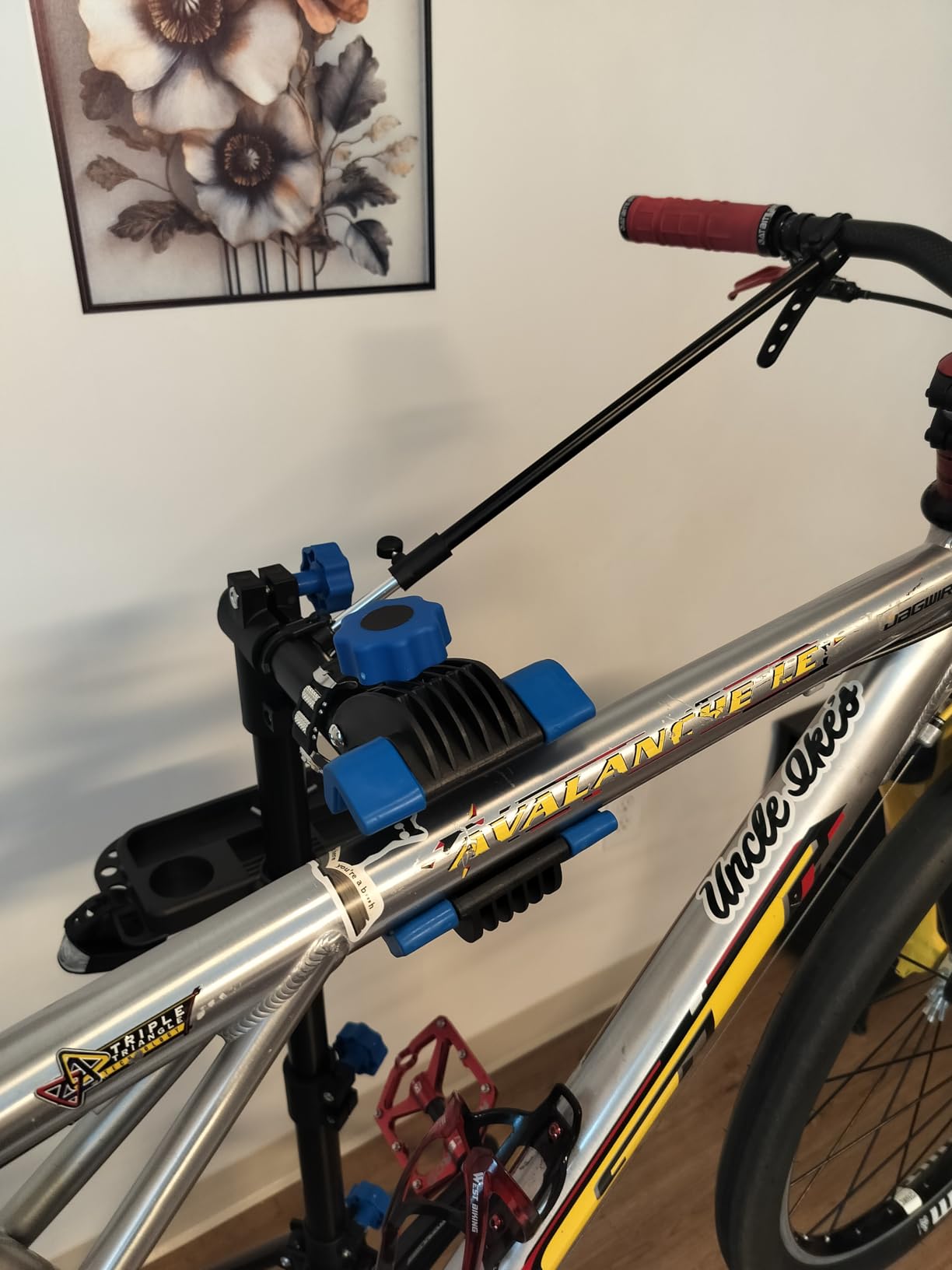
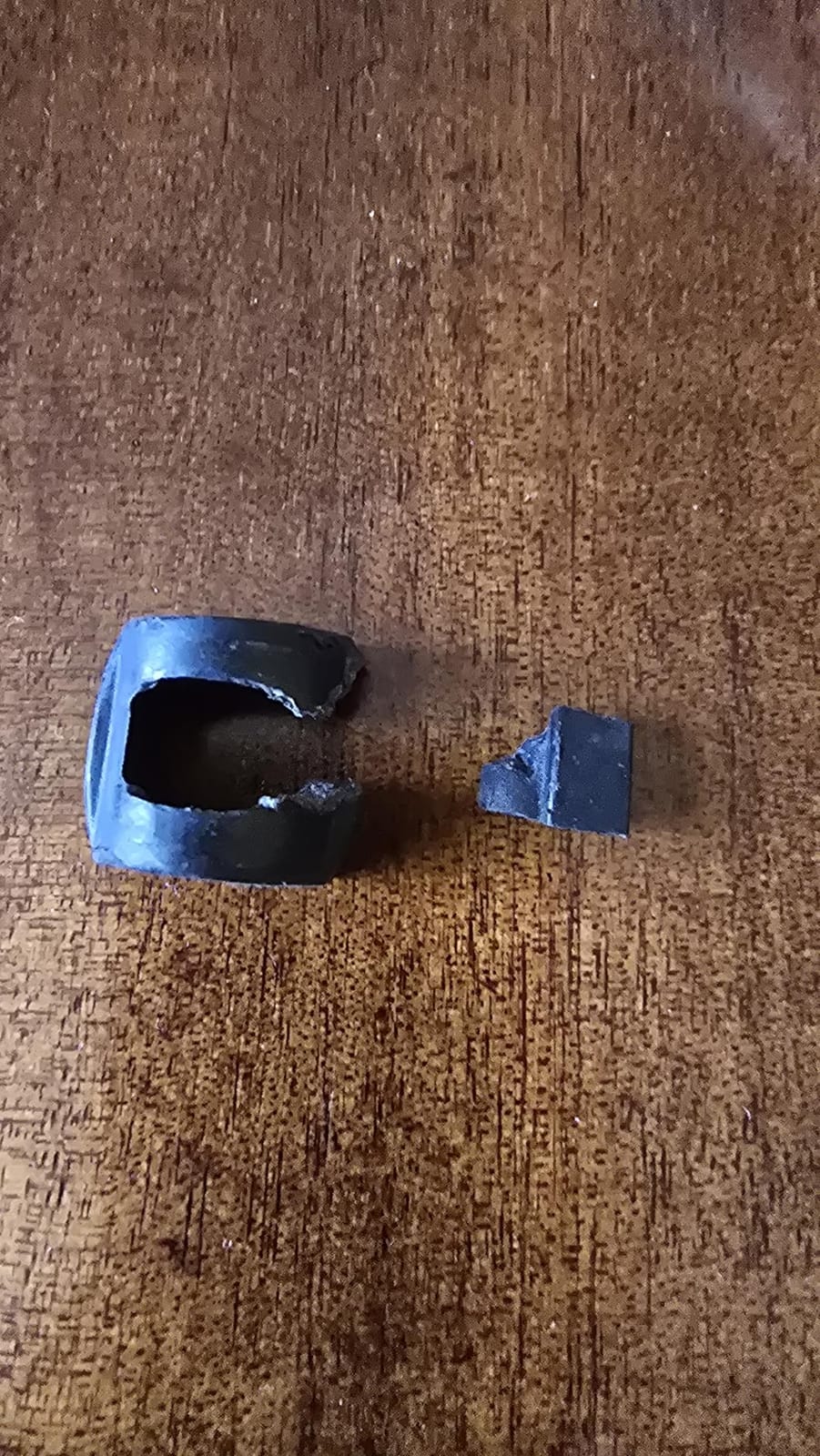
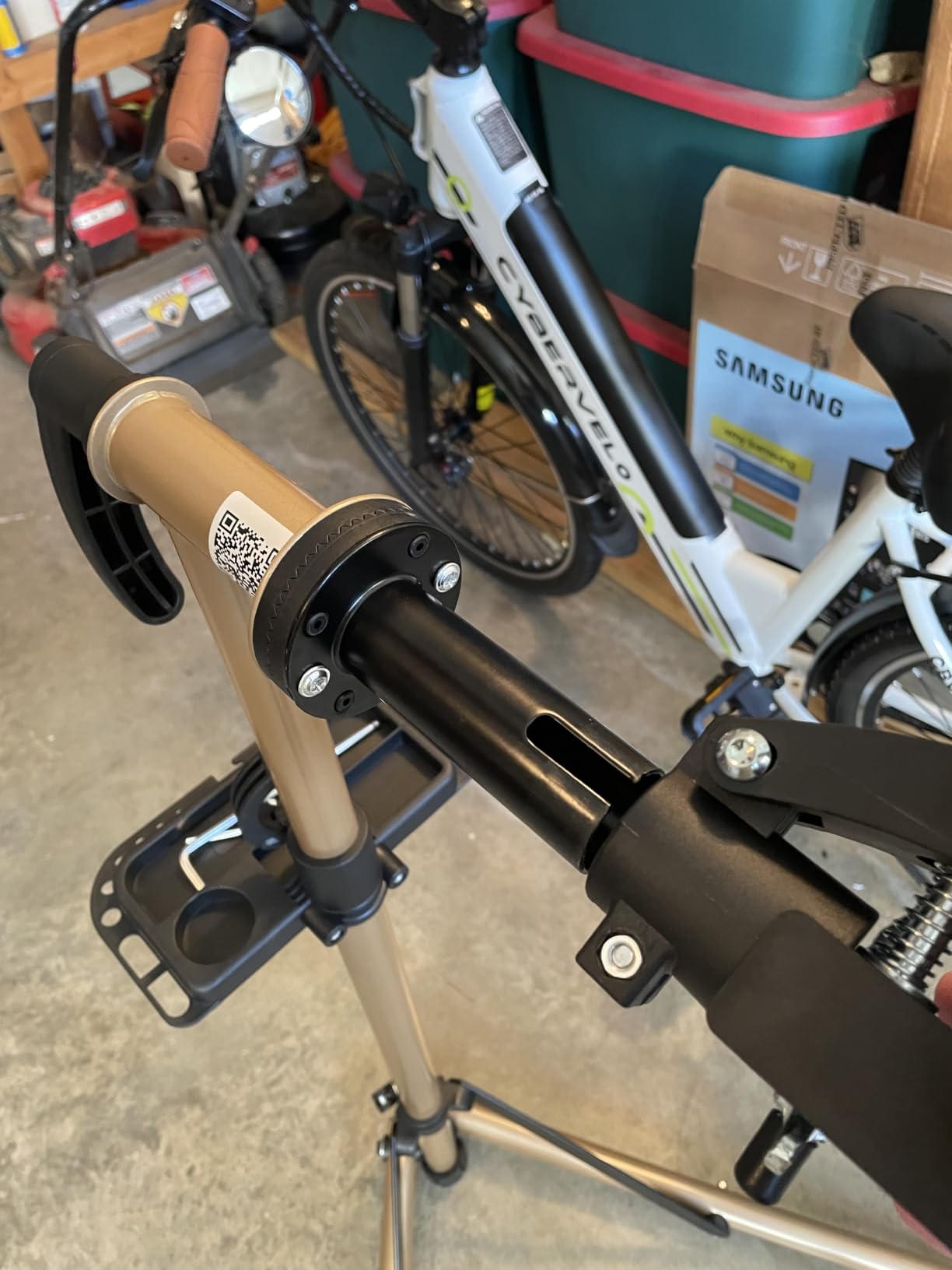
It is also the lowest-rated stand in this roundup, at 4.0 with 12 percent one-star ratings. The complaints cluster around one part: the head clamp is plastic, and under a heavy load it can rotate slightly. The suggested fixes from owners are consistent and simple. Swap in an M8 by 40 bolt, and reinforce or replace the plastic jaws with steel or a wider jaw insert.
A second group of reviewers reports the clamp jaws opening too narrow for larger frame tubes, including carbon road bikes with oversized seatposts. The opening is specified at 1 to 1.6 inches with a 50 mm maximum, so check your seatpost diameter before buying.
Who the VEVOR stand suits
It suits anyone whose main constraint is budget and whose main problem is a heavy bike. Most stands rated 80 lb in this roundup are heavy steel machines, and this one gets you the capacity with a four-leg base and a full height range for a fraction of the outlay. For a first e-bike or a fat bike on a tight budget, it is a genuine option.
It also suits anyone who dreads assembly. Owners repeatedly mention setup speed as a positive, which matters if the stand is arriving the same week you discover you cannot change a chain.
Who the VEVOR stand does not suit
It does not suit anyone with a carbon road bike with a large-diameter seatpost, or anyone who wants a stand they never have to think about. A 12 percent one-star share means there is a real group of buyers for whom the plastic head is a dealbreaker regardless of the spec sheet.
The tool tray is also smaller than ideal, which is worth knowing if you are the type who needs every bolt laid out in order. Weigh the four-star average against the two stand models in this list that score 4.7 and decide whether the capacity gap is worth it.
9. Park Tool PCS-9.3 Home Mechanic Stand – the All-Steel Folding Pick
Park Tool PCS-9.3 – Home Mechanic Repair Stand, One Size,Blue
Max load: 80 lb
All-steel teardrop tubing
Locking support yoke
Folds flat
+ The Good
- All-steel clamp and rotating head for a rigid planted feel
- Holds a heavy cargo e-bike steady with no wobble
- Drilled holes line up and instructions are clear
- Folds down to fit a closet or small apartment
- Serviceable with readily available parts
- The Bad
- No quick release so more manual tightening
- Big and heavy for tight living spaces
- Height mark is easy to over-extend past
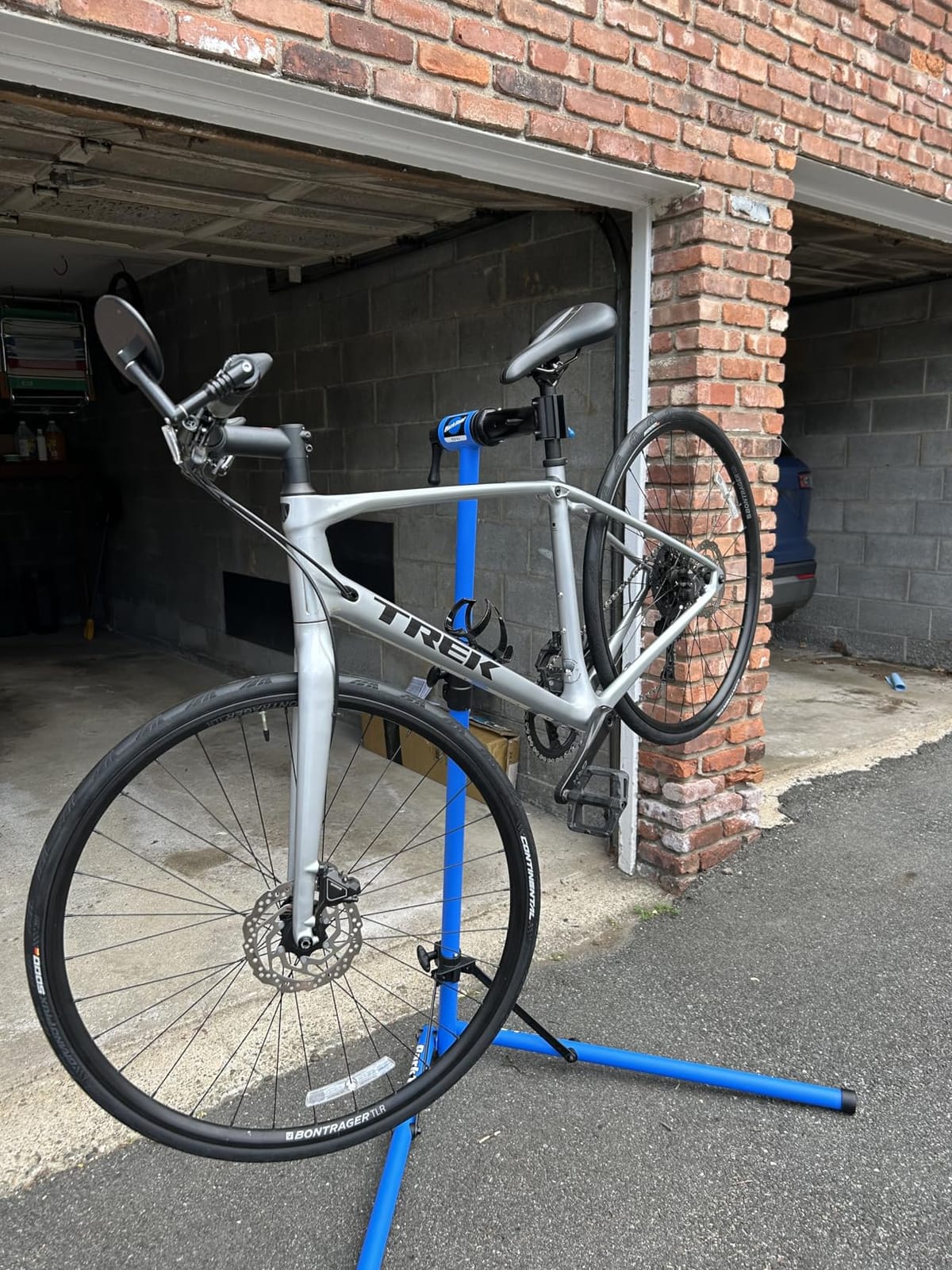
The PCS-9.3 is the stand to buy if you want a folding stand that still feels completely rigid. Unlike the aluminium stands in this roundup, the clamp and the rotating head are steel, and the frame uses teardrop-shaped tubing for rigidity rather than a thin round tube that flexes under load. At 4.7 from 632 reviews, satisfaction is high and specific.
It is rated to 80 lb including heavy cargo e-bikes, and owners report holding roughly a 75 lb cargo bike steady with no wobble at all. The locking support yoke holds the arm in position without relying on friction alone, which is the structural difference from cheaper stands that slowly sag under an uneven load.
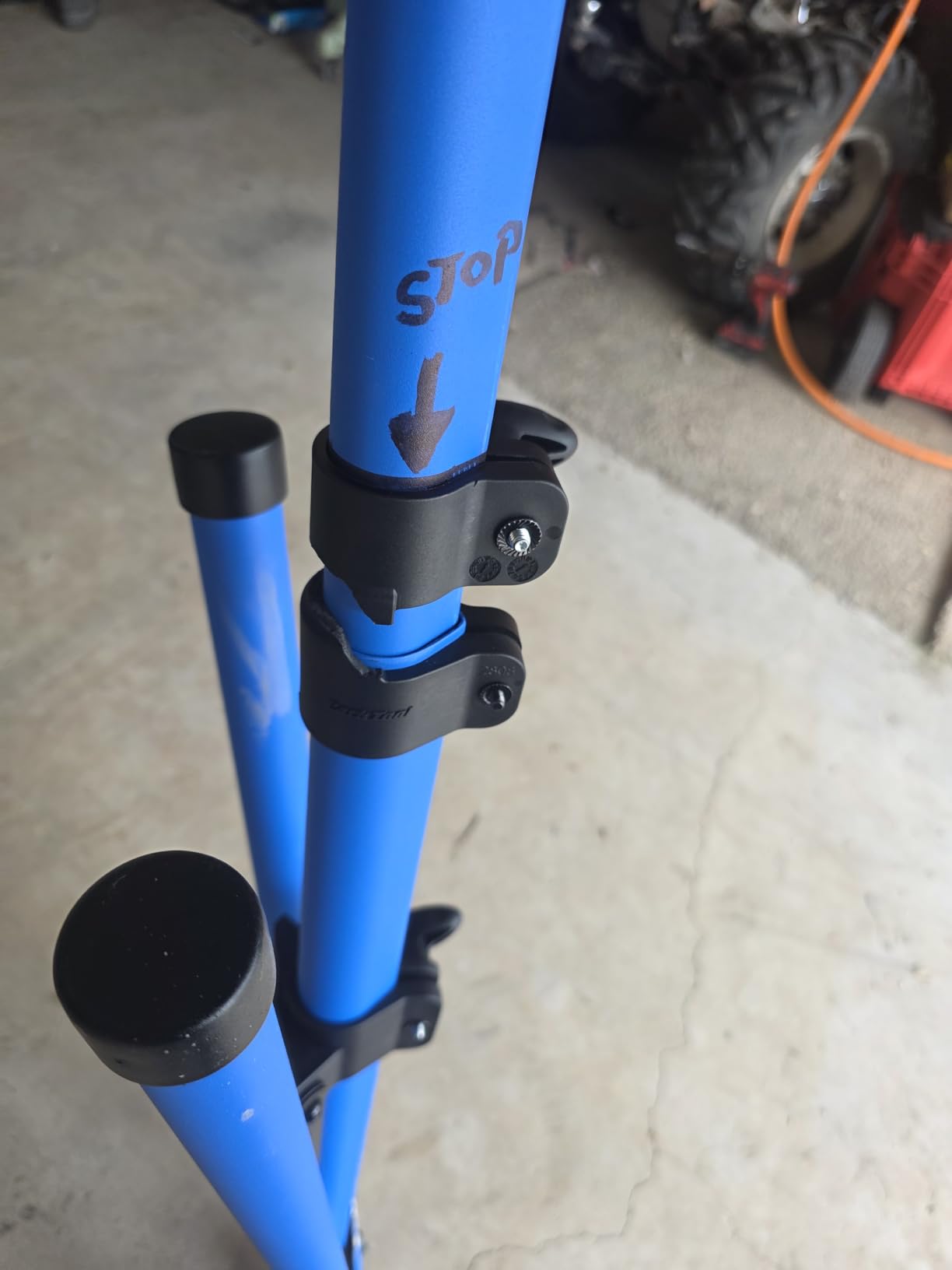
Serviceability is a real and underrated advantage here. Owners mention that the drilled holes line up properly, the instructions are clear, and replacement parts are readily available, including a free replacement collar when a customer was honest about damaging one. That is a very different ownership experience from a stand with no spare parts.
It folds down to 40 by 12 by 4.5 inches, which fits a closet or a small apartment. The catch is that it weighs 7.2 kg, so folding it is about reducing the footprint, not about carrying it up a staircase one-handed.
Who the PCS-9.3 suits
It suits owners of heavy cargo e-bikes who still need the stand to go away when the work is done. That combination is rare: 80 lb capacity and a folded package of 40 inches is a genuine fit for a garage that doubles as a storage space. Owners with small apartments single this out as the deciding factor.
It also suits anyone who intends to keep their stand for a decade. Steel throughout, serviceable, and supported by a company that supplies parts, is the durability argument that justifies paying more than a budget stand.
Who the PCS-9.3 does not suit
It does not suit anyone who wants quick release. There is no quick-release functionality on this platform, so putting a bike in and taking it out means more manual tightening than the aluminium stands require. If you clamp and release bikes many times a day, that friction adds up.
Two smaller warnings from owners. The maximum height mark is barely visible, and extending past it can break the plastic collar. And at 7.2 kg it is genuinely heavy for a small flat, so check you can actually move it into the corner you are planning to put it in.
10. Feedback Sports Scorpion Moto-Style Stand – for Display and Parking
Feedback Sports Scorpion Moto-Style Portable Bike Stand, 2 Piece, Black
Max load: 60 lb
Crank spindle mount
Powder-coated steel
One-bolt teardown
+ The Good
- Sits on the crank spindles so wheels and drivetrain never touch the floor
- Adapters cover 10
- 13
- 18 and 20 mm hollow spindles
- Packs flat in seconds by removing one bolt
- Powder-coated steel with a 3-year warranty
- Suits garages
- sheds
- events and retail display
- The Bad
- A parking and display stand
- not an adjustable working clamp
- Only fits cranks with hollow spindles
- Lowest rating among the portable picks here
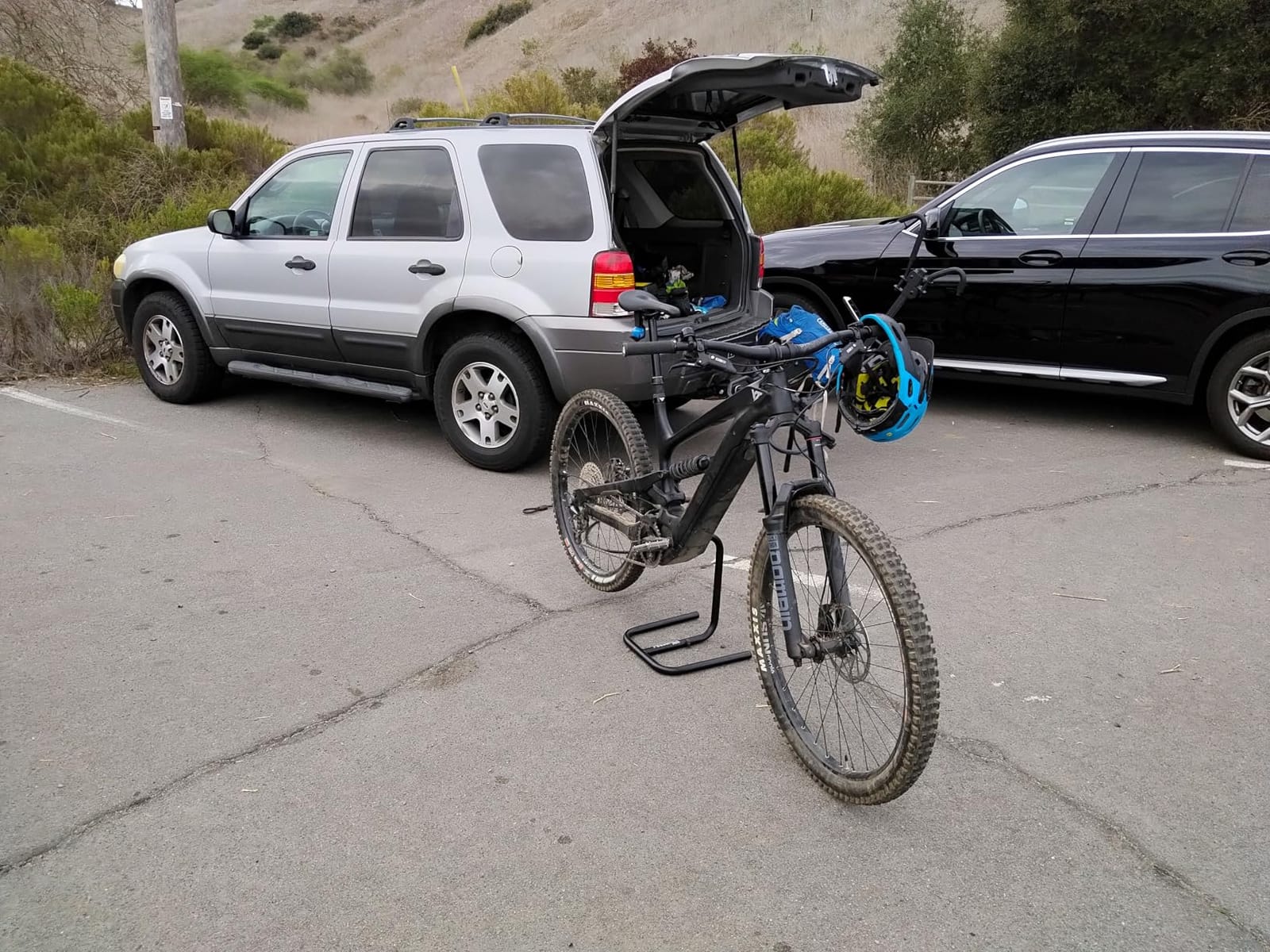
The Feedback Sports Scorpion is a different category of object, and we include it because it solves a problem the other eleven do not. It is a parking and display stand inspired by motocross bike stands, not a workstand with an adjustable clamp, and it supports a bike on its crank spindles so the wheels and drivetrain never touch the floor. It is not a substitute for any of the eleven workstands above it.
Adapters are included for 10, 13, 18, and 20 mm hollow spindles, which covers most road, cyclocross, mountain, and electric bikes. The rear wheel stays elevated and clear of painted surfaces, which is the main reason owners buy it: a clean frame and a clean floor, with no oil prints from a chain resting on concrete.
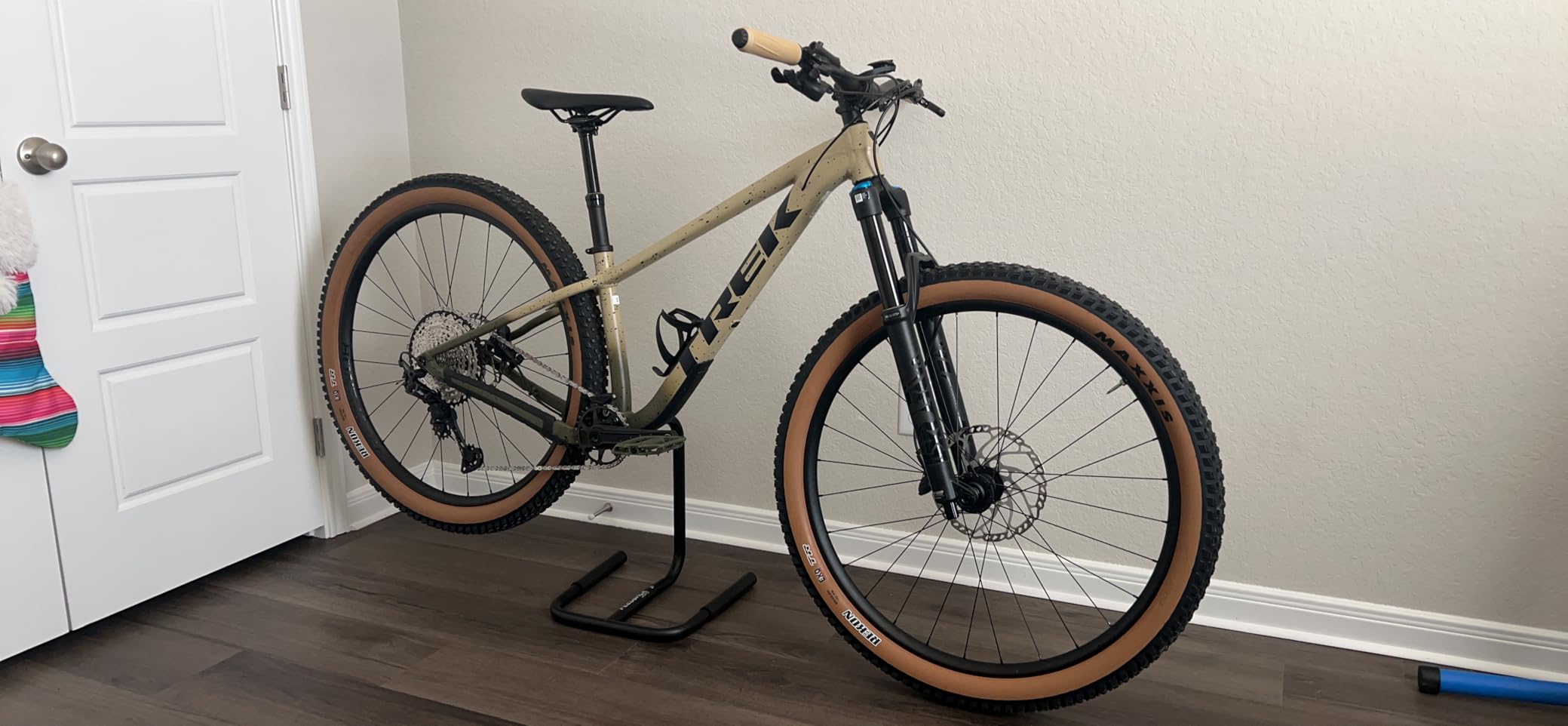
Powder-coated steel construction, a 60 lb capacity, a three-year warranty, and a teardown that requires removing a single bolt. It stores flat at 14 by 15.5 by 1.5 inches, which is smaller than any workstand here, and it is a genuinely good choice for garages, sheds, apartments, cycling events, and shop displays.
At 4.3 from 502 reviews it sits below the workstands in this roundup, and the reason is structural rather than quality-related. It only works with hollow spindle cranks, and it cannot be adjusted for height, so it does not do what a workstand does.
Who the Scorpion suits
It suits anyone with a spare bike, a display bike, or a second bike they want to keep presentable. Because the frame and drivetrain never touch, a freshly cleaned bike stays looking clean, which matters if the bike is on show or if you simply do not want chain oil on your floor.
It also suits people with genuinely no floor space. The folded package is 1.5 inches thick and the whole stand is 2.1 kg, so it lives behind a door or on a high shelf between uses. If your workshop is a corner of a flat, this is the most storable object in the roundup.
Who the Scorpion does not suit
It does not suit anyone who wants to do maintenance. There is no adjustable clamp, no height adjustment, and no way to raise a bike to a working position. You still need a workstand from this list for that, and we would not describe this one as a substitute at any point.
It also does not suit bikes with solid crank spindles. Check your crankset before buying, and note that it is the only stand in this roundup with a compatibility requirement that can rule it out entirely.
11. ZENY Adjustable Folding Work Stand – for Closet Storage
ZENY Adjustable Bike Repair Stand, Bicycle Maintenance Stand
Max load: 66 lb
Height: 42-74 inch
Steel construction
4 foldable legs
+ The Good
- Holds heavy and electric bikes without flexing or creaking
- Telescoping 42-74 inch range with a wide leg spread
- Handlebar rod steadies the front wheel
- Folds down tightly for a closet or corner
- Tool tray collects small parts
- The Bad
- Assembly instructions are thin so setup relies on pictures
- Plastic connectors and knobs raise durability concerns
- Clamp can let the bike pivot if it is not balanced
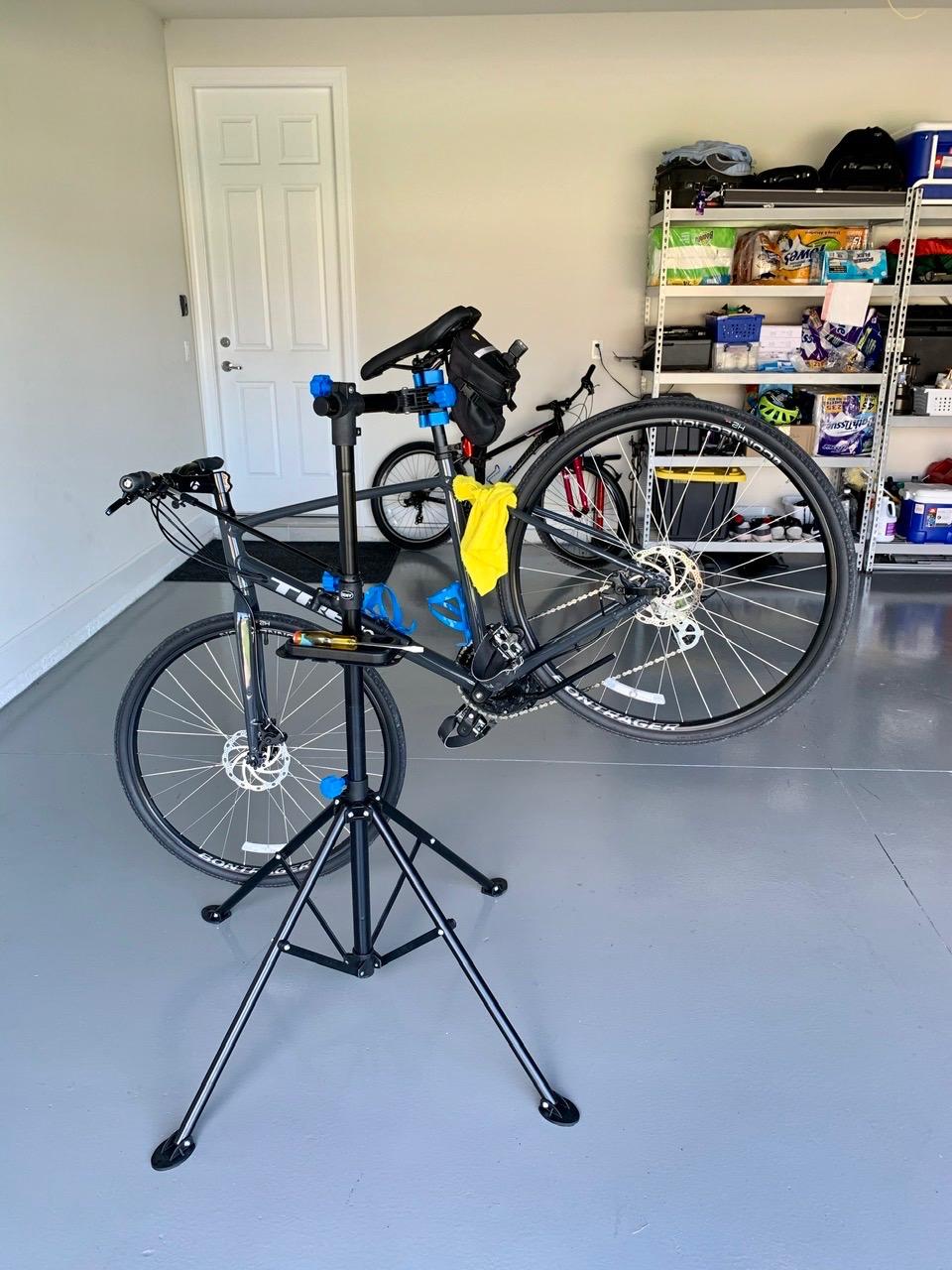
The ZENY is the stand for someone whose storage space is a closet rather than a garage. Four foldable legs and a telescoping column take it from a 42 inch minimum to a 74 inch maximum, and the whole unit folds down tightly enough to stand in a corner or lean against a wall out of the way.
It is steel, rated to 66 lb, and owners specifically report it holding electric bikes and steel-framed mountain bikes without flexing or creaking, which is not a minor thing for a 15.2 lb stand carrying that load. The wide leg spread stops the bike tipping at the taller settings.
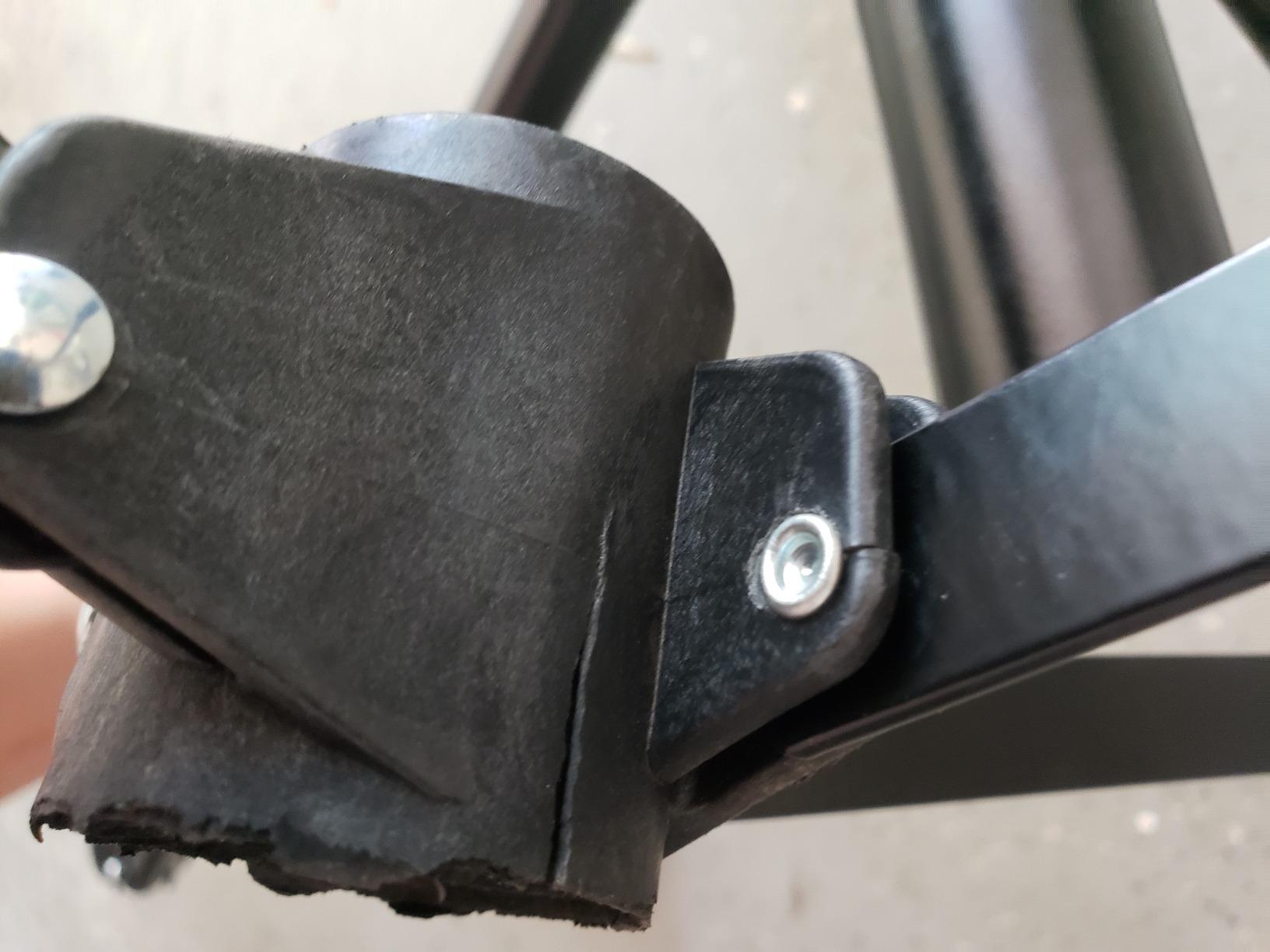
The handlebar rod keeps the front wheel from rotating while you work, which makes drivetrain and brake jobs on the rear end far more practical. The 360-degree rotation clamp takes stands from 1 to 1.8 inches, one of the widest ranges of any freestanding stand here, and a plastic rubber clamp protects the finish. A built-in tray collects small parts and thickened foot mats improve grip on the ground.
At 4.2 from 563 reviews it sits near the bottom of the scores in this roundup, and the reason is build detail rather than capability. Several connectors and knobs, including the handlebar rod attachment, are plastic, which is what owners worry about for long-term heavy use.
Who the ZENY suits
It suits apartment mechanics who want a real 66 lb workstand that folds away. That is a meaningful pairing, because the other 66 lb stands here are heavier and bulkier when folded. The clamp range of 1 to 1.8 inches also makes it tolerant of unusual seatpost sizes.
It also suits people who work on heavier bikes than a 60 lb stand allows without stepping up to an 80 lb steel unit. A loaded commuter or a mid-weight e-bike sits inside its limit, and the wide leg spread keeps it planted.
Who the ZENY does not suit
It does not suit anyone who will leave it assembled for years. The plastic connectors and knobs are the components most likely to fail under daily loading, and unlike the Park Tool stands in this list there is no expectation of spare parts. Assembly instructions are also thin, so expect to work from pictures.
If the bike is not balanced in the clamp it can pivot, which is a minor annoyance for drivetrain work and a real problem for precision jobs. Center it carefully every time.
12. COTOUXKER Wall and Bench Mount Stand – Widest Clamp Range on a Mount
COTOUXKER Bike Repair Stand, Bicycle Repair Stand for Bike Maintenance and Repair Space Saving Hold Up to 44 Ibs
Max load: 44 lb
Tube range: 1.2-2.5 inch
Iron construction
Folds flat
+ The Good
- Adjustable clamp covers a wide range of tube diameters
- Soft silicone grip protects the paint finish
- Rotating arm holds the bike by seatpost or frame
- Mounts with four long screws and folds away
- Also functions as a bow vise
- The Bad
- Requires a workbench or wall rather than standing freely
- Clamp and mounting hardware need tightening between jobs
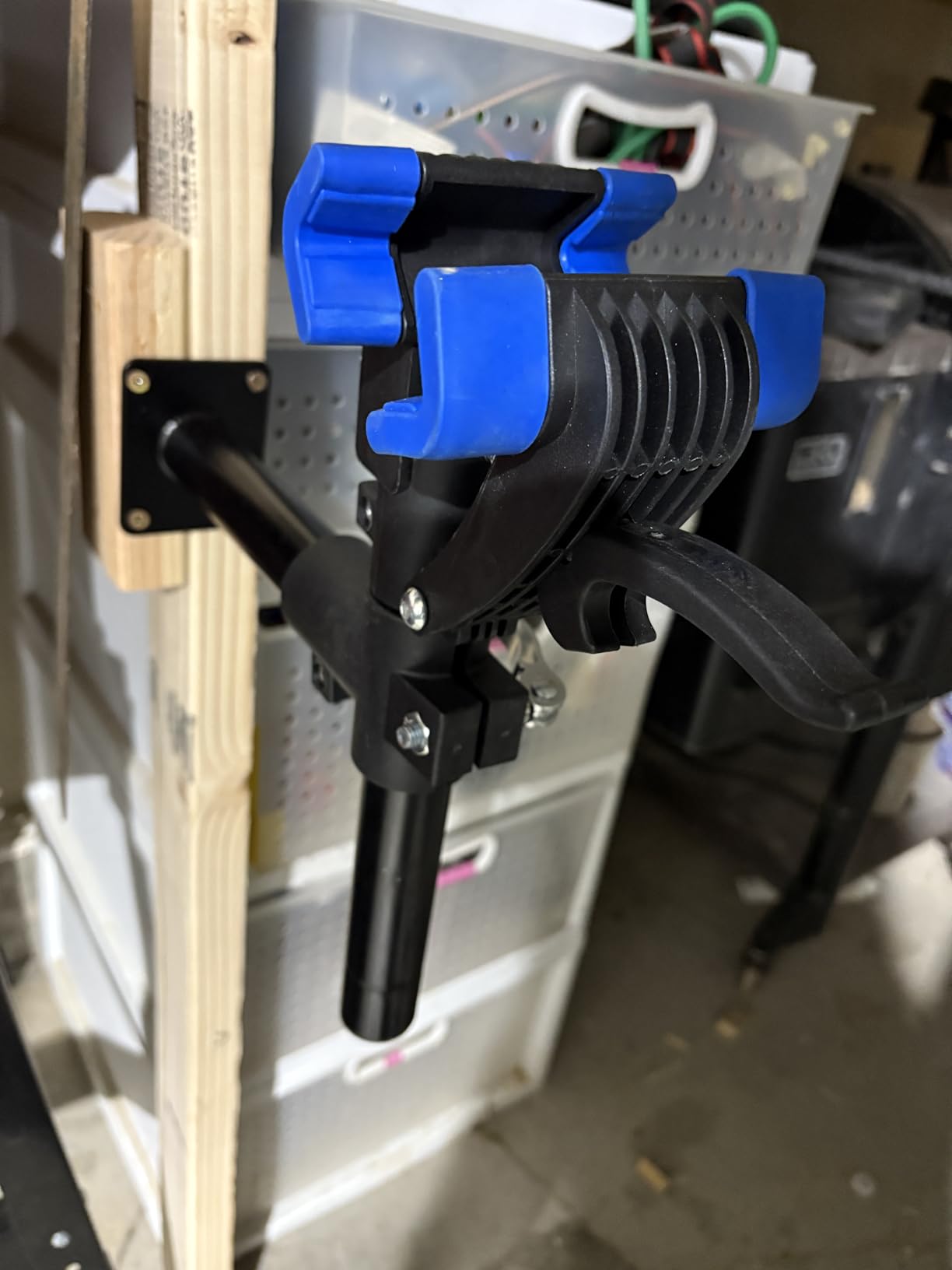
The COTOUXKER does the same job as the ROCKBROS bench mount with a different balance of strengths. The adjustable clamp takes bike tubes from 1.2 to 2.5 inches with a soft non-slip silicone grip, so it handles everything from a narrow road seatpost to a fat bike down tube without a second clamp.
Installation is four long screws into a wall or workbench and a quick release design that simplifies assembly. The upper arm rotates to hold the bike by a vertical seatpost or a horizontal frame, so you can choose the clamping point depending on the job rather than being locked into one position.
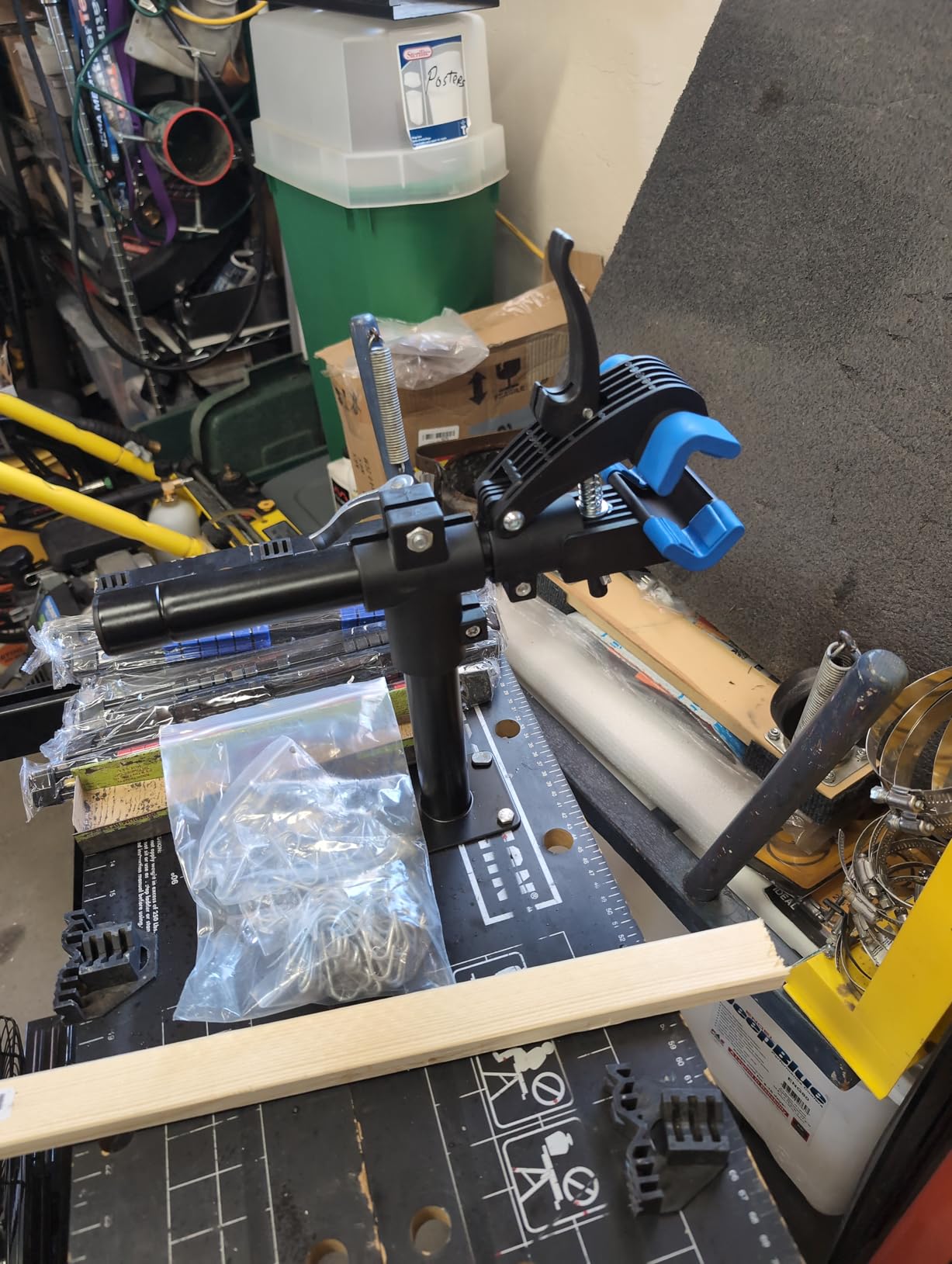
At 3 lb and roughly 14.5 by 3.9 by 5.1 inches, it is a small object to store and a large object to have taken off your floor. When you are not using it, it flips around against the bench, and it doubles as a bow vise, which is a genuinely useful second function in a small workshop.
The construction is wear-resistant iron rated to 44 lb across commuter, mountain, and road bikes. At 4.5 from 272 reviews the satisfaction is solid for what it is, though the review base is the thinnest of the twelve.
Who the COTOUXKER mount suits
It suits anyone with a bench who wants a working clamp on a tight budget. The 1.2 to 2.5 inch clamp range means one mount covers road, mountain, and fat-bike frames, and the silicone grip means you are not trading paint protection for clamp range.
It also suits small-space setups where floor space is the problem and the walls are free. The flip-away design means the stand occupies wall space, not the middle of the room, and at 3 lb it can be moved between a garage and a shed.
Who the COTOUXKER mount does not suit
It does not suit heavy bikes. At 44 lb it sits at the bottom of the capacity range in this roundup and it rules out e-bikes and most full-suspension mountain bikes. Pair it with one of the 66 lb or 80 lb freestanding stands if your bike list is heavy, not light.
Owners also note the clamp and mounting hardware need tightening between jobs to stay secure. That is a fair trade for saving floor space, but it is not a set-and-forget tool, and it needs a solid bench or wall with drilling before it can be used at all.
How to Use a Bike Repair Stand in 6 Steps
Getting a bike into a stand correctly takes about a minute, and doing it the right way prevents most of the paint marks people complain about. Here is the sequence we use every time.
Set the base first. Unfold the legs fully, then tighten every leg and clamp bolt by hand before the bike goes anywhere near it. Most wobble problems start with a bolt tightened two jobs ago.
Choose the clamp point. The seatpost is the right answer in almost every case. Clamp the widest part of the post just above the collar, and if you must clamp a frame, use the rubber jaws and keep the pressure light.
Center the bike in the jaws. Sit the bike in the stand, centre it side to side, and check the front wheel is not hanging heavily to one side. This is what stops a bike spinning when you lean on it.
Tighten the clamp. Tighten until the jaws grip firmly with no play, and stop there. You should be able to lift the bike by the seatpost and feel the clamp hold, not by force.
Add the stabilizer rod. If the stand has one, clamp it to the handlebar or front fork so the wheel cannot swivel. This is what makes drivetrain work practical.
Set the height and angle. Extend to a height where your arms are roughly level with the work, then use the tilt and rotation to bring the job to you. Working at waist height rather than bent over is the entire point.
For more on getting the most from a stand day to day, our guide to the best bike repair tool kits covers the tools that pair with one.
What to Look for in a Bike Repair Stand
There are seven criteria that actually decide whether a stand works for you, and most buyers weigh them in the wrong order. Capacity first, then how you will use the space, then everything else.
1. Load capacity, matched to your heaviest bike
This is the one criterion that cannot be compromised. Match it to the heaviest bike you own, not the lightest or the most common. The spread across this roundup runs from 44 lb to 80 lb, and that spread is the single biggest difference between the picks.
Road, gravel, and hardtail under 45 lb: a 55 to 60 lb stand is comfortable.
Full-suspension or loaded commuter, 45 to 60 lb: you want 66 lb so you are not always near the limit.
E-bike or fat bike, 60 to 80 lb: you need 80 lb. This is the reality check most roundups skip, and it is why three of the stands in this list are rated to 80 lb.
Cargo, tandem, or trailer bikes over 80 lb: none of the stands here. Look at shop-grade equipment instead.
Treat the rating as a ceiling rather than a target. A 55 lb stand with a 54 lb bike is an unpleasant experience and a good way to damage the clamp, even though the bike is technically under the limit.
2. How it holds the bike
Almost every stand in this roundup uses a two-jaw clamp on the seatpost. The alternative is a Euro-style or fork-mount design that cradles the bottom bracket shell and locks the fork dropouts, which never touches the frame paint and is the safest choice for carbon and aero frames.
No Euro-style stand made our list, and that is a deliberate call rather than an oversight. The clamp stands available here are cheaper, higher capacity, and more widely available, and clamping a seatpost safely is a technique rather than a gamble. If your primary bike is a high-end carbon or deep-section aero frame and you are nervous about it, a fork-mount design is the answer regardless of price.
3. Stability and footprint
Wobble is the most repeated complaint in every forum thread we read, and it is almost always a floor problem or a geometry problem. Four-leg and triangular bases are more stable than tripods. The wider the base, the heavier the bike it can carry without rocking.
4. Height range
A stand whose minimum height is too high is useless for kids bikes and small folders, and one whose maximum is too low puts you back to bending over. Look for a range that covers roughly your hip to your eye level, and check whether the maximum is a soft limit you can exceed at your peril. On the PCS-9.3, going past the mark can break the collar.
5. Rotation and tilt
A 360-degree rotating head lets you bring the job to you instead of walking around the bike. It is close to universal in this roundup. The more useful distinction is whether the vertical tube is round, because a round post lets the whole clamped bike rotate, while a non-round or collared post limits it to the head alone.
6. Portability and folded size
If you work in a flat, folded size matters more than weight. A unit that folds to 40 inches and can be walked between rooms is a different proposition from a 9 kg fixed-base stand. If you need the floor space back on a schedule, this is a deciding criterion, not a nice-to-have.
7. Tray, anchors, and small details
A magnetic tool tray is nearly standard here and it genuinely prevents lost hardware. Pre-drilled feet for anchoring are worth a lot in a permanent garage. A front wheel stabilizer rod is the feature people miss most, and it is what makes drivetrain work possible without the bike spinning.
If your bike is an e-bike, our dedicated guide to bike work stands for e-bikes goes deeper on the capacity numbers. For a broader look at the category, see our roundup of bike repair stands for home use.
Clamp-Style vs Euro-Style Bike Repair Stands
There are two ways to hold a bike up, and understanding the difference is the fastest way to a confident purchase.
A clamp-style workstand grips the bike with two padded jaws, almost always on the seatpost, and the whole clamp rotates on a head so you can turn the bike. It is cheaper, taller, holds more weight, and works on essentially any frame. Every stand in this roundup is clamp-style.
A Euro-style or fork-mount stand does something different. It lifts the bike by the fork dropouts and cradles the bottom bracket shell, so the frame is never touched. That makes it the safest option for carbon, deep-section aero tubes, and paint you care about, and it is the format most shop mechanics reach for when precision matters more than price.
There are real limits to the fork-mount format, though. The horizontal bar between the dropouts is a fixed length, so long-travel mountain bikes and 29ers can sit awkwardly on it. You also cannot rotate the bike freely in a fork-mount stand, which limits work on the far side of the frame. And because a fork-mount stand supports the bike at the front, some jobs require turning the bike around in the stand.
Our advice: if you own one bike and it is alloy, painted steel, or a normal carbon frame you are comfortable clamping, a clamp-style stand is the correct choice and it will serve you for years. If you own deep-section aero or high-end carbon and you would rather not think about it, a fork-mount design removes the question. There is more on the format in our general bike repair stand guide.
Do You Need a Repair Stand or a Wheel Truing Stand?
You need a repair stand. A wheel truing stand does something different, and no competitor we found explains the distinction, so here it is plainly.
A repair stand holds a complete bike so you can work on the drivetrain, brakes, wheels, and frame. A wheel truing stand holds a bare wheel by the axle and hub, with the rim free to spin, so you can adjust spoke tension and lateral dish while watching the gap between rim and brake track.
Most serious home mechanics end up owning both, and they serve different stages of a project. You cannot properly true a wheel in a repair stand, because the frame and the rim constrain each other. What you can do is a rough index true: spin the wheel in the clamp, watch the wobble, and squeeze the brake lever to see if the rim straightens. That fixes a badly out of true wheel, not a subtle dish or tension problem.
So the order of purchase matters. Get a repair stand first, because you will use it every time you touch the bike. Add a truing stand when you start building wheels from scratch, or when a hit or a pothole leaves you with a wheel you cannot true by feel. If you want a broader view of where a stand fits in the workshop, our dirt bike stand guide covers the mounted-stand alternative for off-road work.
Why Your Bike Repair Stand Wobbles and How to Fix It
Wobble is the number one complaint about home repair stands, and it is almost never the stand’s fault. Five causes account for nearly all of it.
The floor. Bare concrete is the worst surface, and it is the most common one. A rubber mat or interlocking foam tiles under the footprint restore grip immediately. Carpet works but the feet can sink into it.
Loose bolts. Leg bolts, the clamp bolt, and the telescoping collar all loosen over time. Tighten everything by hand before every job, and re-check after the first month of regular use.
A friction-only arm. Some stands hold the rotating arm with friction rather than a toothed or locking mechanism, so an unevenly heavy bike twists it. Tightening the friction joint helps, and indexing the arm solves it properly.
An off-centre bike. If the bike is not centred in the jaws, the front wheel swings and the whole thing looks unstable. Centre it every time, and use the stabilizer rod if the stand has one.
An over-extended column. A stand pushed past its maximum height has less material left in the telescoping section, and it flexes. Stay inside the marked range, which on some models is easy to overrun.
If wobble persists after all five, the base itself is undersized for the bike you are lifting, and the fix is a stand with a wider footprint or a higher load rating rather than a different technique.
Frequently Asked Questions
What should I look for in a bike repair stand?
Look at six things in this order: load capacity matched to your heaviest bike, how it holds the bike (two-jaw seatpost clamp or fork mount), stability and footprint, height range, rotation and tilt, and folded size if space is tight. A magnetic tool tray and a front wheel stabilizer rod are the most useful extras. Capacity is the only one you cannot compromise on.
What are the different types of bike workstands?
There are three main types. Clamp-style tripods use two padded jaws on the seatpost and rotate 360 degrees, and are the most common and cheapest. Euro-style or fork-mount stands cradle the bottom bracket shell and lock the fork dropouts, so the frame is never touched. Wall and bench mounts bolt to a surface and fold flat, which suits small spaces.
Can a bike repair stand accommodate all types of bikes?
Not on capacity alone. Road, gravel, and hardtail bikes sit comfortably in a 55 to 60 lb stand. Full-suspension and loaded commuters want 66 lb. E-bikes and fat bikes commonly weigh 60 to 80 lb and need an 80 lb rating, which is why budget stands fail on them. Tandem, cargo, and trailer bikes exceed everything in this roundup.
Is it bad to leave a bike on a repair stand?
It is fine for days at a time. Clamp the seatpost rather than the top tube, leave the clamp firm but not aggressive, and keep tyres at normal pressure so they hold the shape of the rim. Over months, be aware that grease can migrate out of the head tube bearings if the bars are turned while the bike hangs, and check the clamp for paint marks occasionally.
What is the best bike stand for a garage?
For a fixed garage space, an 80 lb steel tripod or triangular-base stand is the safest answer because it will not rock with a heavy bike. If you want zero wobble, a stand with pre-drilled feet that you can anchor to the slab is worth the drilling. Our top pick, the BikeHand YC-100BH, is the better choice if you need it to fold away instead.
Do I need a repair stand or a wheel truing stand?
You need a repair stand first, because you will use it every time you touch the bike. A wheel truing stand holds a bare wheel by the axle so you can adjust spoke tension and dish. A repair stand cannot true a wheel properly, though spinning the wheel in the clamp gives you a rough index true for a badly out of true wheel. Add a truing stand when you start building wheels.
How much should I spend on a bike repair stand?
For occasional work on a standard road or gravel bike, a stand in the lower end of this roundup’s range is genuinely sufficient and folds away easily. For daily use, e-bikes, or fat bikes, step up to a 66 lb or 80 lb steel tripod. The jump to premium steel buys rigidity, capacity, and serviceable spare parts rather than features you can see.
How to use a bicycle repair stand?
Set the base and tighten every bolt first, then clamp the widest part of the seatpost just above the collar with rubber jaws, tighten firmly without forcing, centre the bike in the jaws, add the front wheel stabilizer rod if the stand has one, and finally set the height so the work sits at arm level. Re-check the leg bolts by hand every few jobs.
The Verdict: Which Bike Repair Stand Should You Buy in 2026?
The BikeHand YC-100BH is our pick for most people. It carries the largest review base in this roundup, it folds flat, it holds a road or hardtail bike at any working height, and the five-year warranty with stocked spare parts means it is still going in five years. That is the most complete answer to the question of the best bike repair stands for home mechanics for the large majority of garages.
Buy the CXWXC RS-100 if you want more capacity and better drivetrain access for very little more outlay, and its angled upright clears pedals in a way most stands do not. Buy the Park Tool PCS-10.3 the moment an e-bike or fat bike enters your household, and the PCS-9.3 if you need 80 lb capacity in a package that folds into a closet. Buy the ROCKBROS wall mount if you rent or live in a flat, and buy the Yaheetech if your bikes are heavy steel and your floor is unforgiving.
Whichever you choose, buy it against the weight of your heaviest bike rather than the price of the lightest one, and put a rubber mat under the feet before you blame the stand for wobbling. Both of those decisions will matter more to how the stand feels every day than anything else on the spec sheet.