
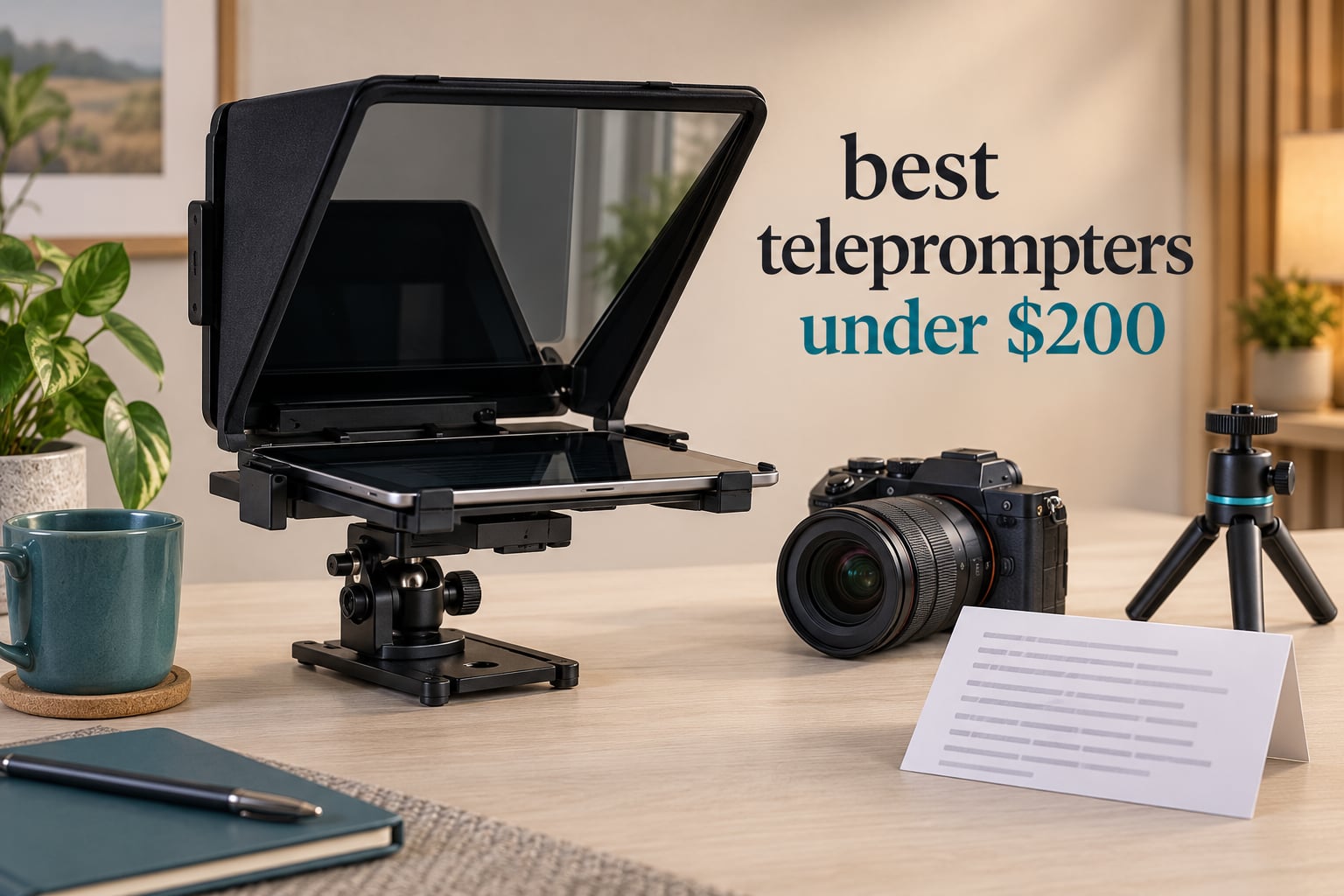
A teleprompter is a sheet of beam-splitting glass mounted in front of your camera lens. It bounces your scrolling script back into your eyes while letting the scene’s light pass through to the sensor, so you can read a full page and still look straight down the barrel. That single change is the biggest gap between amateur-sounding delivery and footage that holds attention.
We spent the last few weeks cycling through the best budget teleprompters on the market — the ones that actually fit inside this price ceiling right now — testing mounts, reading distance, glass clarity and how they behave when the light in the room changes. We compared ten kits across every tier you are likely to shop: desktop mini kits, phone-only adapters, tablet prompters and full camera-plate rigs with hoods. The results surprised us in one way: the cheapest kit on the list held its own on glass quality, and the smallest platforms were the ones that fought back hardest on readability.
Here is the honest version. This is what your money actually buys at each price point, which mount fits which device, and where the bundled apps fall short. If you want the wider category covered first, our full teleprompter guide covers studio and pro rigs too. For the short version, the Glide Gear TMP 100 is the one we keep coming back to.
Top 3 Budget Teleprompters Right Now for October 2026
We kept three kits on the desk permanently after testing finished. The Glide Gear TMP 100 is the best overall because its aluminum frame shrugs off a bumped tripod and its 70/30 glass stays readable from across a small studio. The NEEWER X12 is the better value if you want a Bluetooth remote and a carry case in the box without paying for the premium badge. The TeleprompterPAD iLight PRO is the pick if you shoot with a real camera and want thick 4mm glass with fast tilt-to-frame adjustment.

Glide Gear TMP 100
- › 70/30 beam splitter glass
- › 6061 aluminum frame
- › Collapsible with carry bag
- › 1/4-20 and 3/8-16 tripod threads

NEEWER X12 14 Inch
- › 75% transmittance glass
- › RT-110 Bluetooth remote
- › Adjustable lens hood
- › Folds into carry case

iLight PRO 12 Inch Autocue
- › 4mm 60/40 HD glass
- › Tilt-to-frame angle adjust
- › Remote and app included
- › Works with DSLR and camcorders
Budget Teleprompter Comparison in October 2026
All ten kits below fit inside the same price ceiling. Prices shift constantly across retailers, so treat the button labels as the reference point rather than any number you may see elsewhere.
| PRODUCT MODEL | KEY SPECS | BEST PRICE |
|---|---|---|
|
|
Check Latest Price |
|
|
Check Latest Price |
|
|
Check Latest Price |
 |
|
Check Latest Price |
 |
|
Check Latest Price |
 |
|
Check Latest Price |
 |
|
Check Latest Price |
 |
|
Check Latest Price |
 |
|
Check Latest Price |
 |
|
Check Latest Price |
How we picked: every kit had to fit inside the budget ceiling, include real beam-splitter glass rather than acrylic, and have a documented mount path for either a phone, a tablet or a camera. We then checked reading distance at 45-degree glass angle, how the mount behaved under a side load, whether a remote was included, and whether the bundled app actually held a Bluetooth connection.
1. Glide Gear TMP 100 — The One We Recommend to Almost Everyone
Glide Gear TMP 100 Teleprompter – DSLR, Tablet, Smartphone – 12″ Glass, Carry Case, No Assembly
70/30 beam splitter glass
6061 aluminum frame
Weighs 5 pounds
Folded 60cm x 60cm x 20cm
+ The Good
- Clear 70/30 glass with good camera clarity
- Durable 6061 aluminum build
- Collapses into an included carry bag
- Handles phones and tablets up to 10.5 x 8 inches
- The Bad
- Does not fit the iPad Pro
- Teleprompter app not included
- Flat camera mount surface resists quick-release plates
The TMP 100 has been on our shooting table for the longest of any kit here, and it is the one that survived every scenario we threw at it. The frame is 6061 aluminum rather than the ABS plastic you find on the cheap end, which is the entire difference between a prompter that sits still and one that rings when you tighten a tripod head.
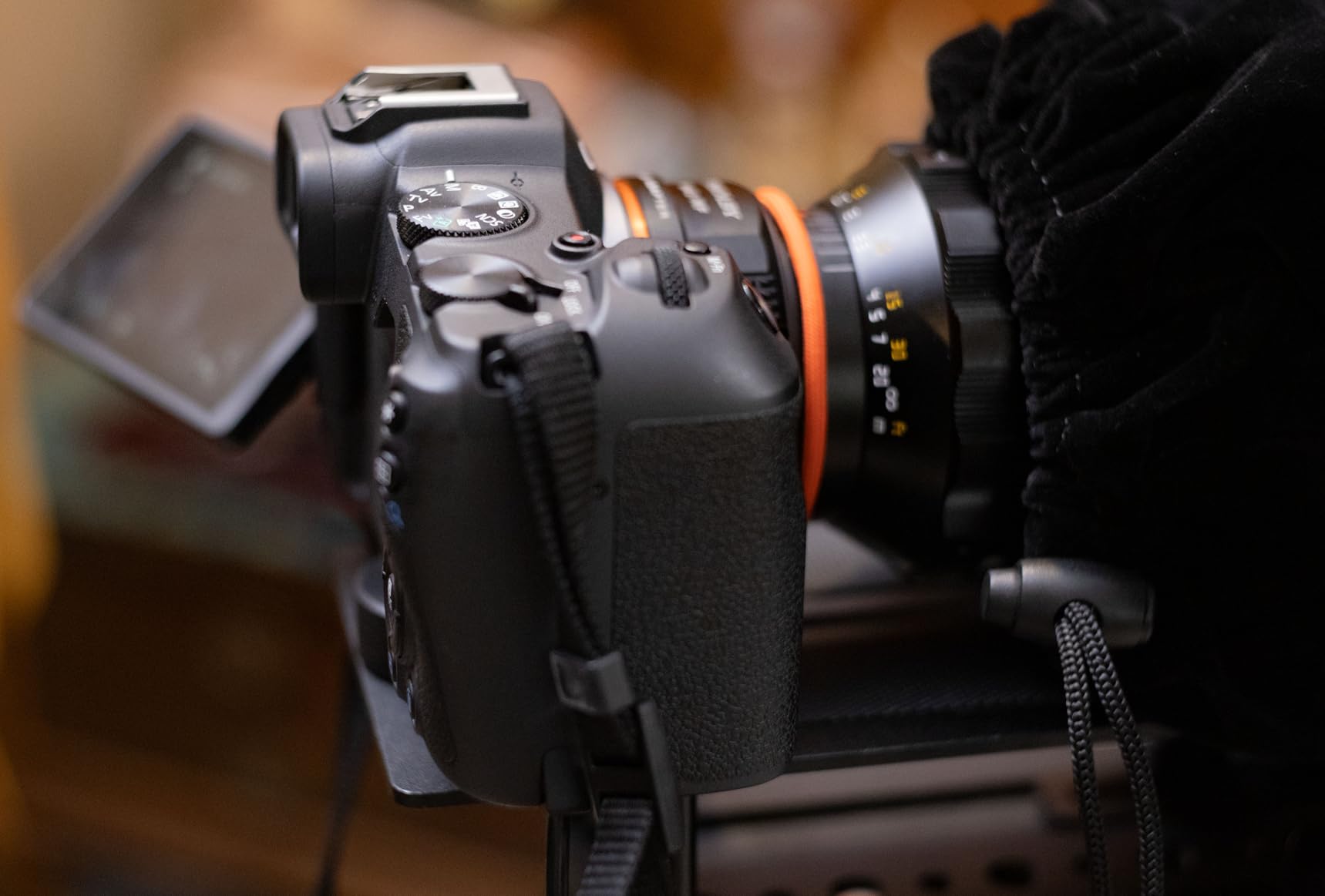
The glass is genuine 70/30 beam splitter, and that ratio matters more than most buyers realise. At 70/30 the script side is brighter, so you can run your tablet at a lower backlight and the text stays crisp without spilling into the lens. Reviewers consistently single out the glass clarity as the reason the kit holds a 4.6 average across more than 2600 ratings.
It takes any phone or tablet up to 10.5 by 8 inches, which covers most iPads and every mainstream phone with a case on. The tripod accepts both 1/4-20 and 3/8-16 threads, so it drops onto light stands and proper video tripods without an adapter.
How it holds up under load
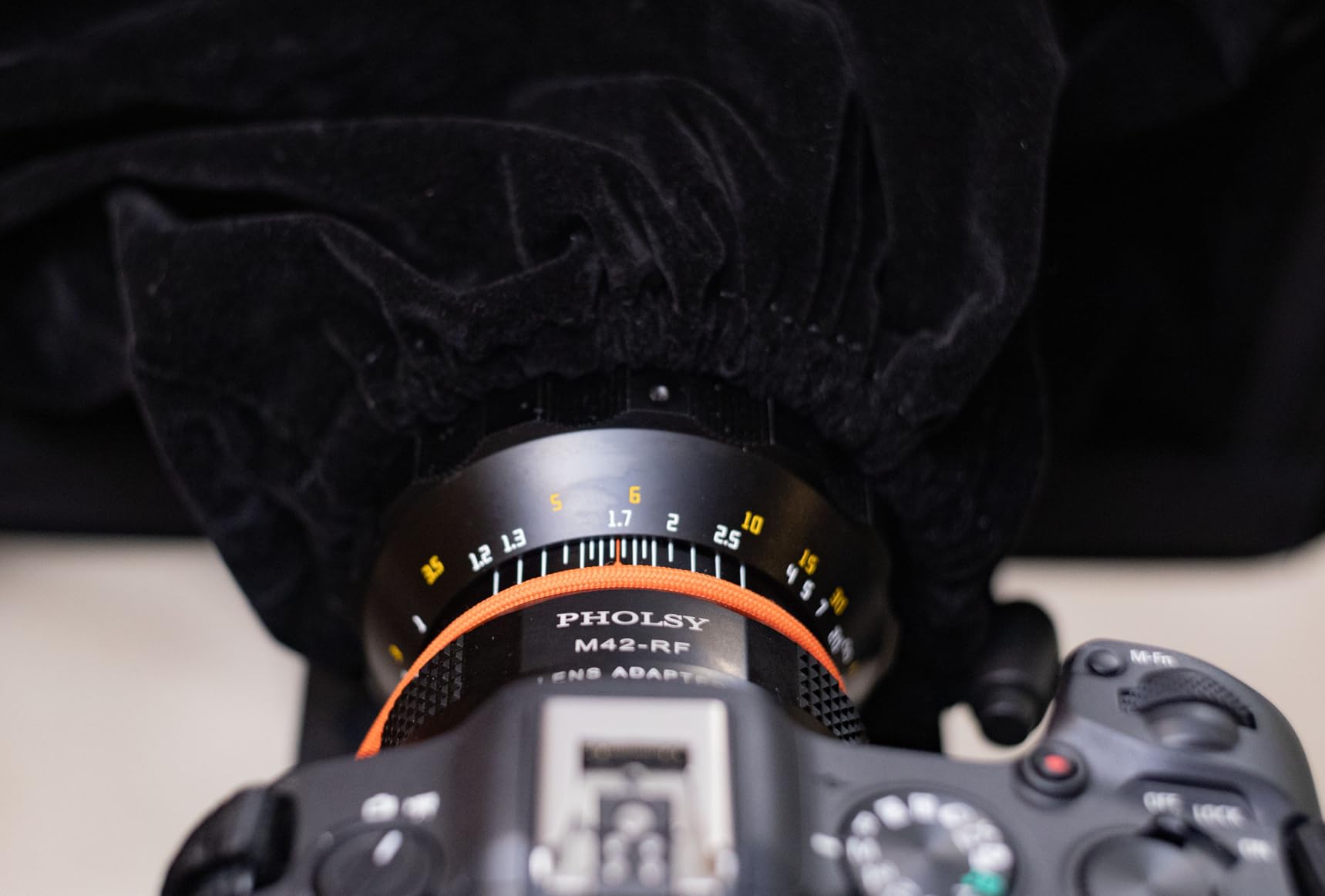
This is where cheap prompters fail and where the TMP 100 earns its place. The complaint we heard most from owners of budget kits was a bumped tripod head letting the device slide out. The TMP 100’s device shelf sits low and wide, and the aluminum frame does not flex when you rotate the head.
The two real compromises are worth stating plainly. The iPad Pro does not fit, which matters if your scripting device is a 12.9-inch tablet. And the camera mount is a wide flat surface rather than a 15mm rail or Arca-style plate, so if you already own pro camera gear you may need a separate plate to marry the two.
Who should skip it
If your only device is a 12.9-inch iPad Pro, move on — the NEEWER X12 handles larger tablets and the Desview P13 has a 13-inch platform. If you need an app included with a remote that pairs automatically, this kit arrives as bare glass and frame, and you bring your own prompting software.
We also weighed the no-assembly claim and it is true. It opens flat, the glass is already seated at the correct angle, and setup took us well under two minutes. For creators who film in more than one location, that collapse time matters more than the spec sheet suggests.
2. NEEWER X12 14 Inch — Best Value With a Remote in the Box
NEEWER X12 14 Inch Aluminum Alloy Teleprompter for iPad Tablet Phone Camera
75% light transmittance glass
Readable up to 10 ft
Weighs 6.5 pounds
RT-110 Bluetooth remote
+ The Good
- Crisp highly transmissive glass with minimal ghosting
- Bluetooth remote plus dedicated app
- Collapsible frame folds into carry case
- Quick to assemble
- The Bad
- Requires 28mm or longer focal length
- Not compatible with iPad Pro 12 inch
- Remote pairs only with NEEWER app
- Tray does not grip the device tightly
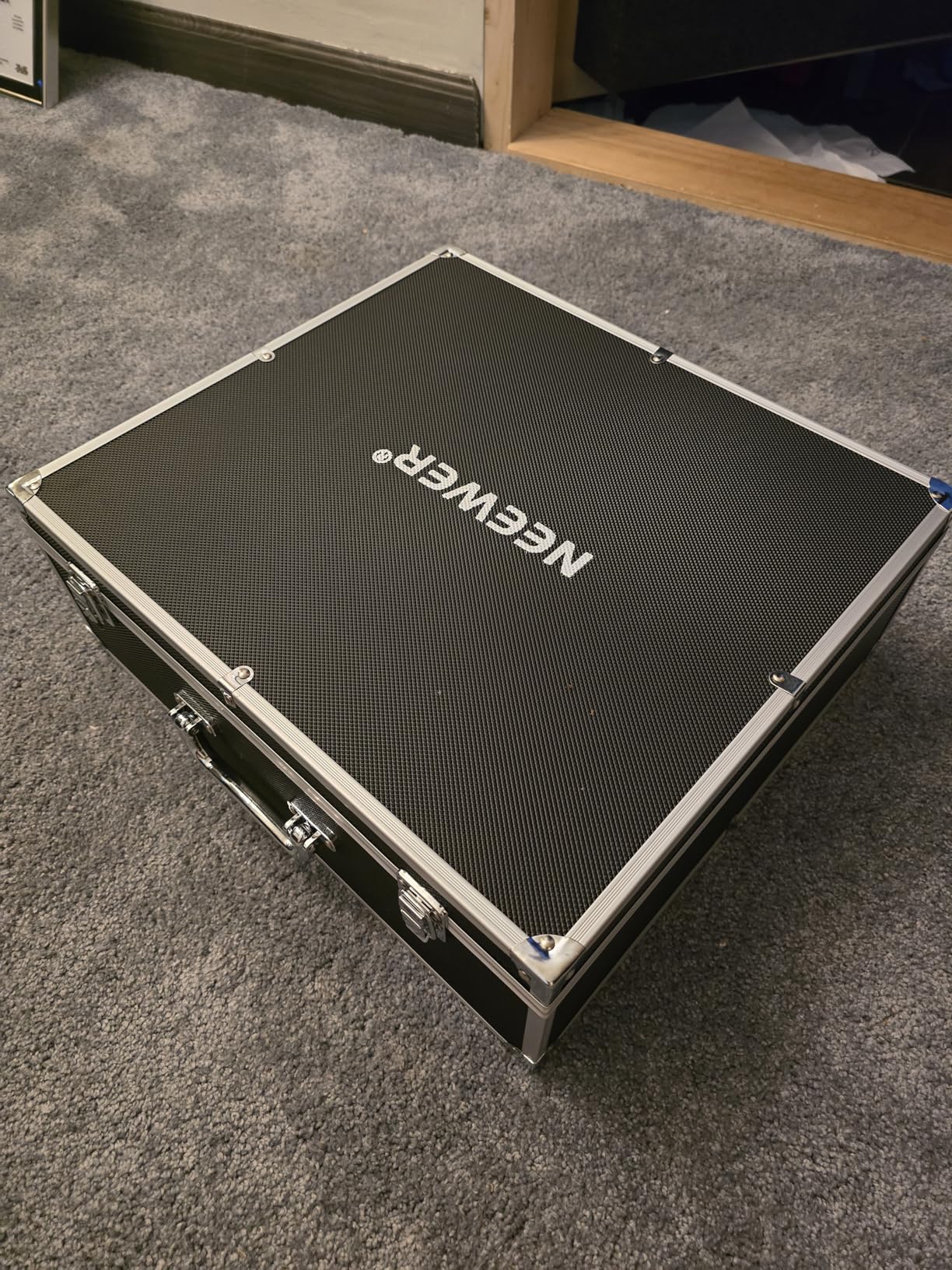
The NEEWER X12 is the kit we recommend when someone asks for one box that contains everything. The remote, the app, the carry case and the phone holder all come in the same box, which removes the three most common late-night YouTube rabbit holes when you are starting out.
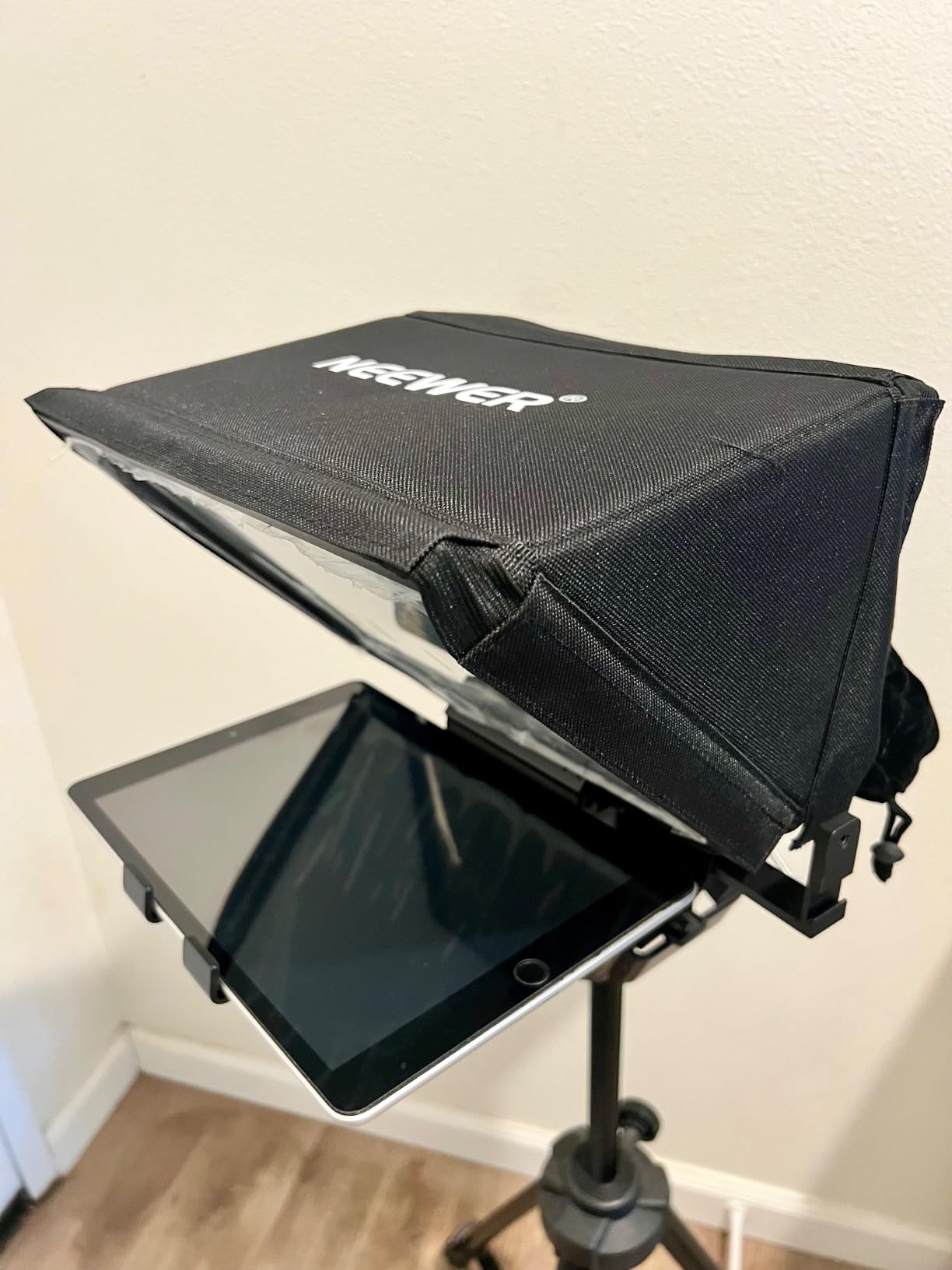
Glass quality is the surprise. It carries 75% light transmittance and a coating that resists the ghosting and double-image effect you get from cheaper glass. Reviewers describe it as readable up to 10 feet, which in practice means a presenter can stand further back from the rig than on most kits at this budget.
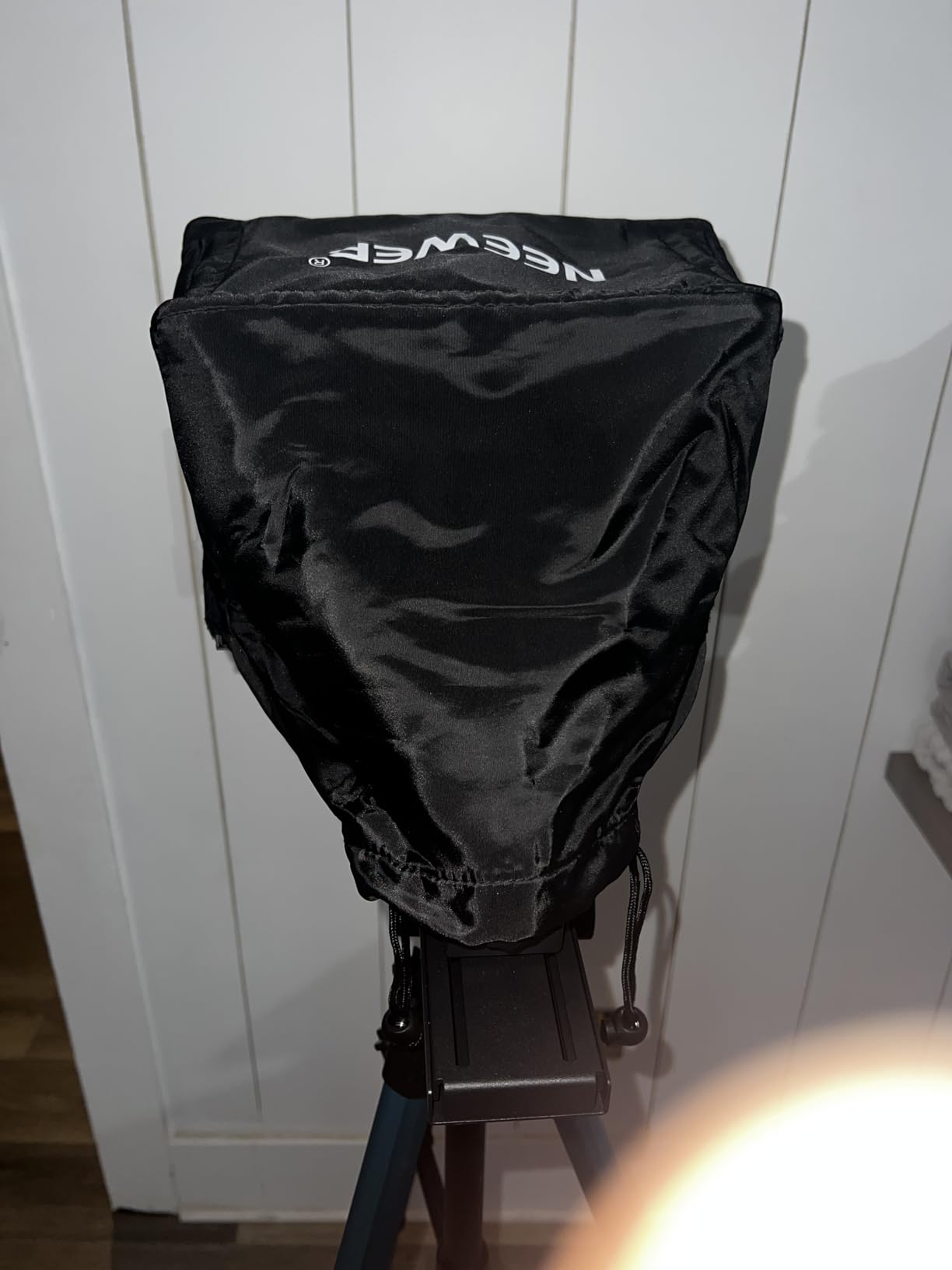
The adjustable lens hood is genuinely useful. It shrinks the light box around smaller phones so the ambient room light does not wash the reflection, and it expands for a tablet. That single feature is what keeps your face readable when the sun is low and shooting toward a window.
Compatibility limits worth knowing first
Two restrictions catch people out. Your camera lens must be 28mm or longer, so wide-angle shooters are out, and the 12-inch iPad Pro will not fit. Before you buy, hold your actual device against the 9.84 by 8.68 inch maximum with the case on.
There is also a lock-in to be aware of. The RT-110 remote only pairs with the NEEWER app, and that app does not offer margin adjustment, so if you need to fine-tune the text block you will be buying a third-party prompting app anyway. Many users do exactly that and keep the remote as a simple play and pause trigger.
Where the build falls short
The display tray does not grip a device as firmly as we would like, and on a moving rig a tablet can creep. If you are walking with the setup, a strap or a rubber mat under the device is the cheap fix. The darkbox zipper is also thin enough that a bright room can leak light in, which shows up as a faint glow on the glass edge.
At 6.5 pounds this is the heaviest kit in our test group, and the folded case is the size of a small carry-on. If you shoot on location every week, that bulk matters. The Glide Gear folds tighter. If you shoot at a desk or a fixed studio corner, none of that matters and the X12’s included remote wins.
3. iLight PRO 12 Inch Autocue — Thickest Glass in the Group
TELEPROMPTER PAD iLight PRO 12″ Autocue teleprompter iPad Tablet – Kit teleprompter for Video with Remote Control, APP & Carry Bag, Beam Splitter Prompter DSLR, iPhone, APP for Apple Android Mac Win
60/40 HD beamsplitter glass
4mm glass thickness
Weighs 1.7 kg
Tilt-to-frame adjustment
+ The Good
- Thick scratch-resistant 4mm beamsplitter glass
- Quick tilt-to-frame angle adjustment
- Collapsible aluminum build travels well
- Works with DSLR and handheld camcorders
- The Bad
- App and remote reliability draw low ratings
- Not ideal for very long focal lengths
- Glass can crack in transit
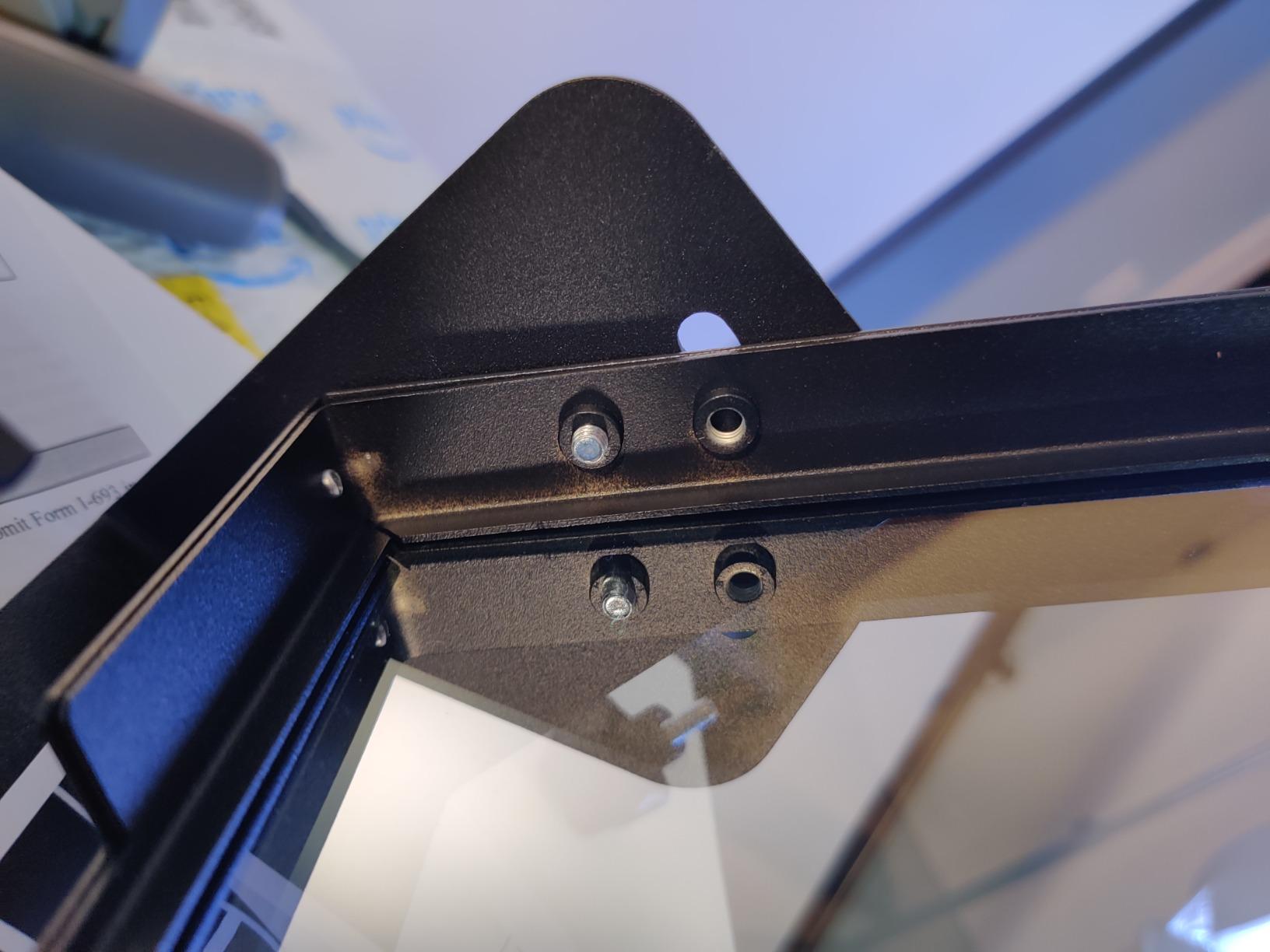
The iLight PRO is the one in this list we would put next to a mirrorless body without hesitation. At 4mm the glass has real weight behind it, and that extra mass is why it does not flex or shimmer while you read it.
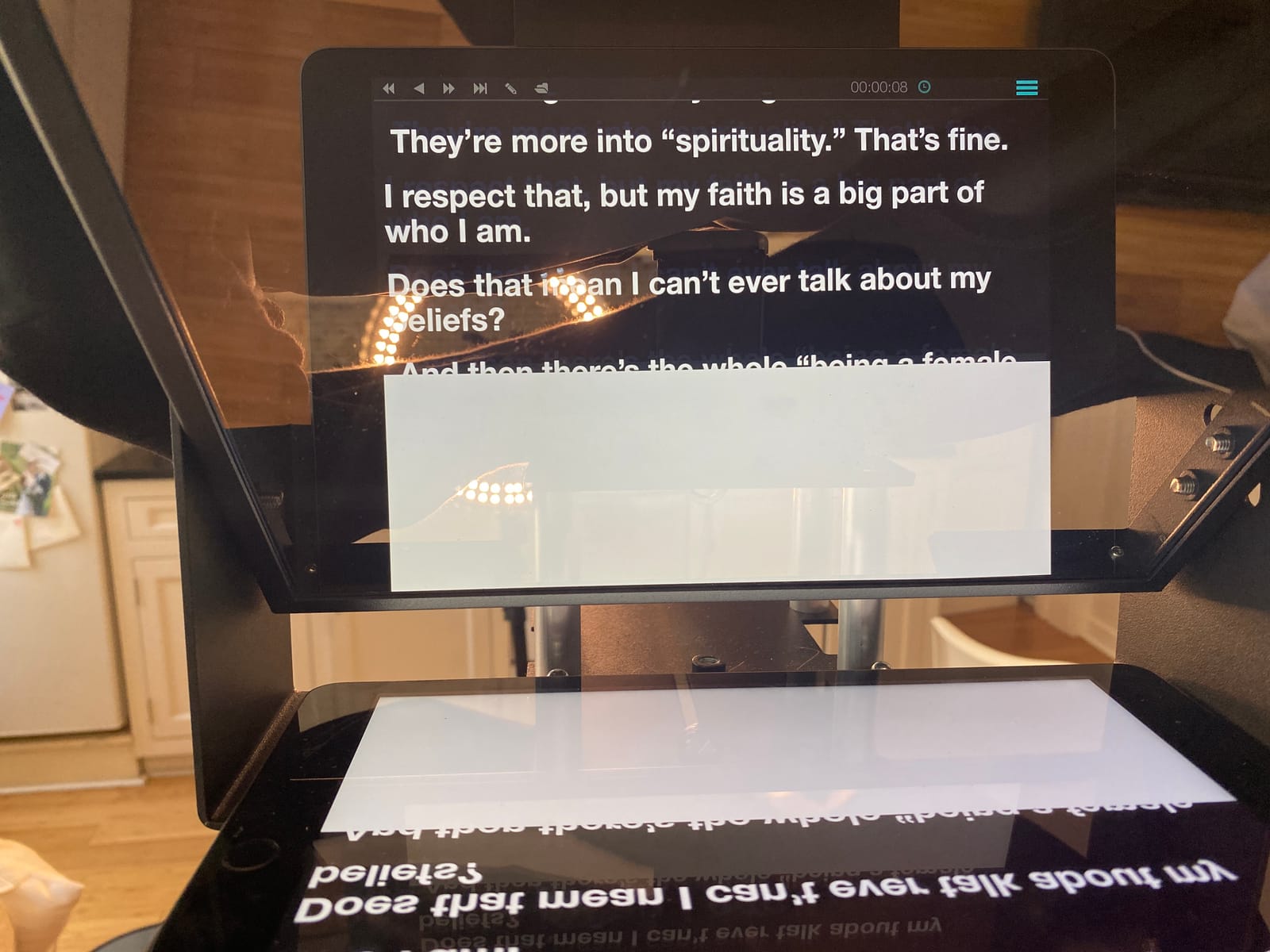
The tilt-to-frame system is the feature that wins over reviewers. Rather than loosening screws and rotating the whole glass panel, you tilt the panel a few degrees until your camera framing sits in the reflection. On a fast turn-around shoot with different lenses, that saves real minutes per setup change.
It fits tablets and phones up to 20 by 26 cm, which covers iPad 10, iPad 10.2, iPad Air 10.5, iPad Pro 11 and iPad mini. It also accepts handheld camcorder formats including HDVCAM, XDCAM and NXCAM, which is rare in this price bracket.
The glass ratio trade-off
This kit uses 60/40 glass rather than 70/30. More light reaches your face and less reaches the sensor, which means your device screen needs to run brighter to keep the text legible. On a bright set that can push spill toward the lens, so watch your backlight settings rather than maxing them out.
Very long lenses are also not a good match. The deeper the glass sits, the narrower the effective aperture of your shot, and with a telephoto you will notice vignetting before you would on a shorter lens.
Is the app good enough?
Honestly, no. Its 4.1 average with more than 1200 ratings reflects a split verdict: the hardware earns praise, and the bundled software draws criticism, especially around remote reliability. Treat the app as the weakest link and plan on pairing this with a third-party prompting app if you need margin control or reliable Bluetooth.
One practical warning from buyer reports: a few examples arrived with cracked glass after transit. The frame itself survived, but if you order this, film a short test immediately on arrival so you can document any transport damage before the return window closes.
4. NEEWER Basics X12B — Fastest Setup on the List
NEEWER Basics X12B Aluminum Alloy Teleprompter 12″ for Tablet DSLR Camera
75% transmittance coated glass
Weighs 0.25 kg
Folds to 12 x 12 x 2 inches
Flip-open design
+ The Good
- Same transmissive glass as NEEWER's larger kits
- No-assembly flip-open design sets up in seconds
- Remote and app control for speed and font size
- Lightweight aluminum frame folds flat
- The Bad
- Not designed for phone shooting
- Does not function as a monitor or self-view
- Remote arrives without AAA batteries
- Fewer accessory mounting points
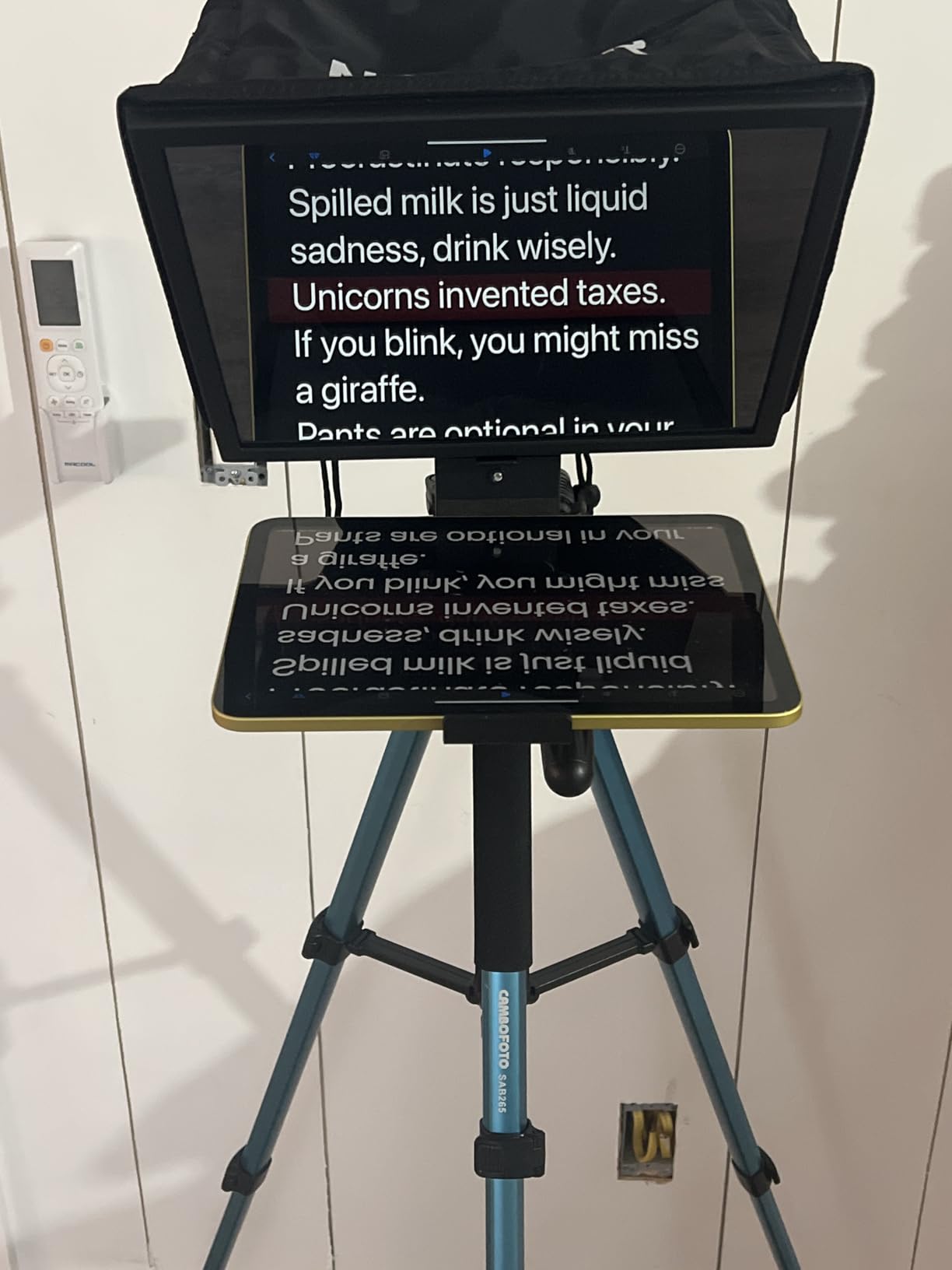
The Basics X12B is the value pick inside the NEEWER line and the least fiddly rig to deploy in our test group. You flip it open, drop the device in and it is ready. There is no assembly step at all, which is not a small thing when you are filming before sunrise on a schedule.
Despite the stripped-down naming, the glass carries the same 75% light transmittance coating as the pricier X12, and reviewers rate readability consistently. The liftable platform underneath is the detail that separates it from no-name kits — it raises or lowers to keep your lens centred whatever camera body you pair it with.
It folds to 12 by 12 by 2 inches and weighs a quarter of a kilogram, so it genuinely lives in a laptop sleeve. If you travel to shoot rather than producing from a fixed room, that footprint is worth more than any extra accessory mount.
Where the savings show
Two limits are worth stating up front. It is not built for phone-only shooting — the platform is sized for a tablet — and it does not double as a monitor, so you get no on-screen self-view while recording. If framing yourself is your main struggle, this is not the kit.
The RT113 remote also arrives without AAA batteries, a small annoyance that has generated its own share of one-star reviews. It also carries fewer cold shoe and accessory points than the larger NEEWER models, so plan on a separate stand for a microphone or light.
Who it suits
A creator filming on a tablet who wants dependable glass, minimal weight and zero assembly is the ideal buyer. It is also a sensible second prompter if you already own a desktop kit and want one that can live in a camera bag for on-location shoots. Pair it with a third-party app if you need features the NEEWER software leaves out.
5. Padcaster Parrot — Best for Travel and Phone-Only Setups
The Padcaster Parrot Teleprompter Kit, Portable Teleprompter for iPhone
30R/70T beam splitter glass
Weighs 10.72 ounces
4.75 x 4 inches
Direct lens filter thread mount
+ The Good
- Under 11 ounces so it travels easily
- Mounts straight to the lens filter thread
- Adapter rings from 37mm to 82mm cover most lenses
- Covers and glass cleaning kit included
- The Bad
- Phone screen limits how much text fits at once
- Direct lens mounting strains the lens mount over time
- Push-down phone tray adds strain to the phone
- Older phone-only design
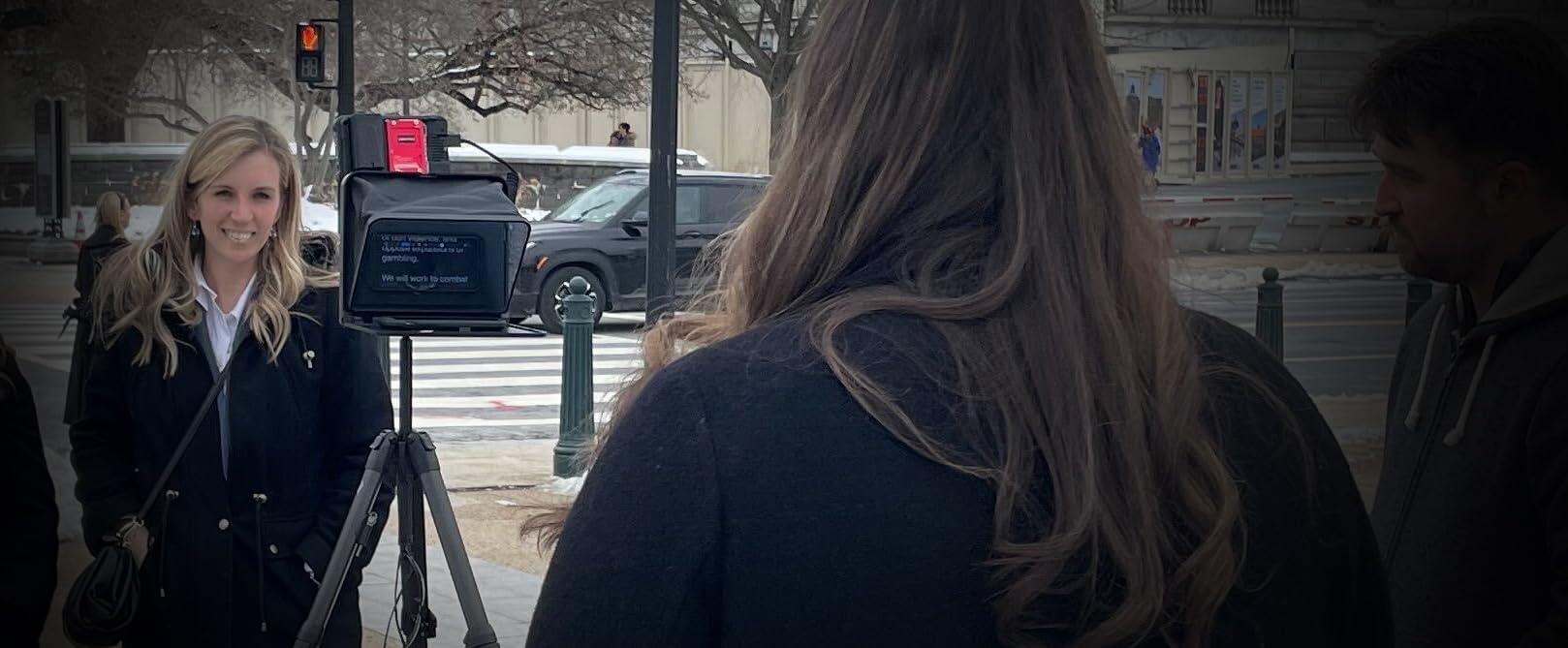
The Parrot has one of the most compact footprints here at 4.75 by 4 inches and just 10.72 ounces, and that changes how you shoot. It fits in a jacket pocket, which makes it a strong fit for street interviews and travel vlogs where you are already carrying too much.
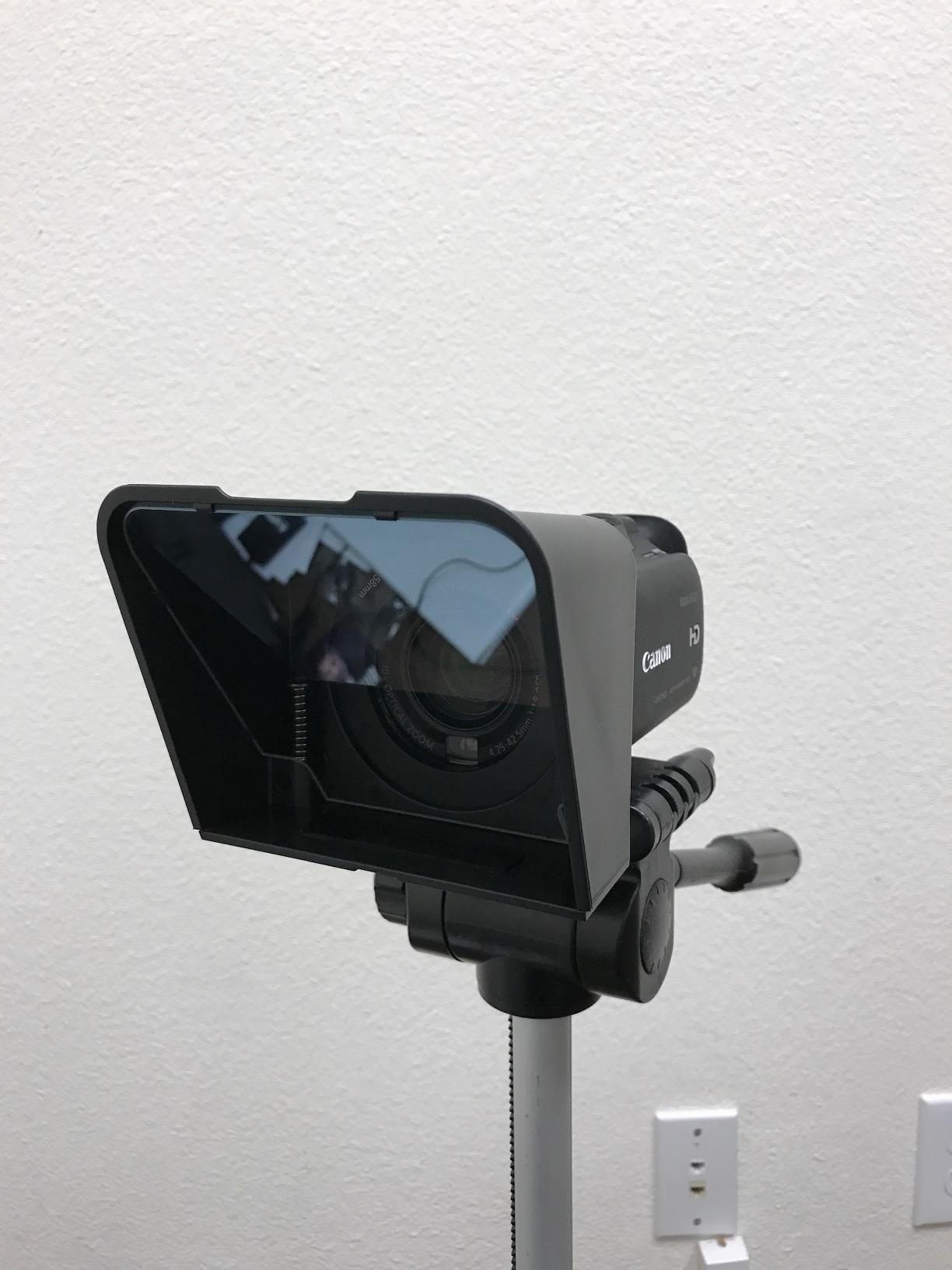
Setup is genuinely fast because it mounts directly to the lens filter thread. The box includes adapter rings from 37mm through 82mm, so most lens threads are covered without a separate purchase, and the front and rear covers protect the glass when it is in your bag.
The 30R/70T glass gives clear text with little ghosting. The free iOS and Android app plus the Bluetooth remote handle play, pause and speed, which is the minimum viable control set for a scripted read.
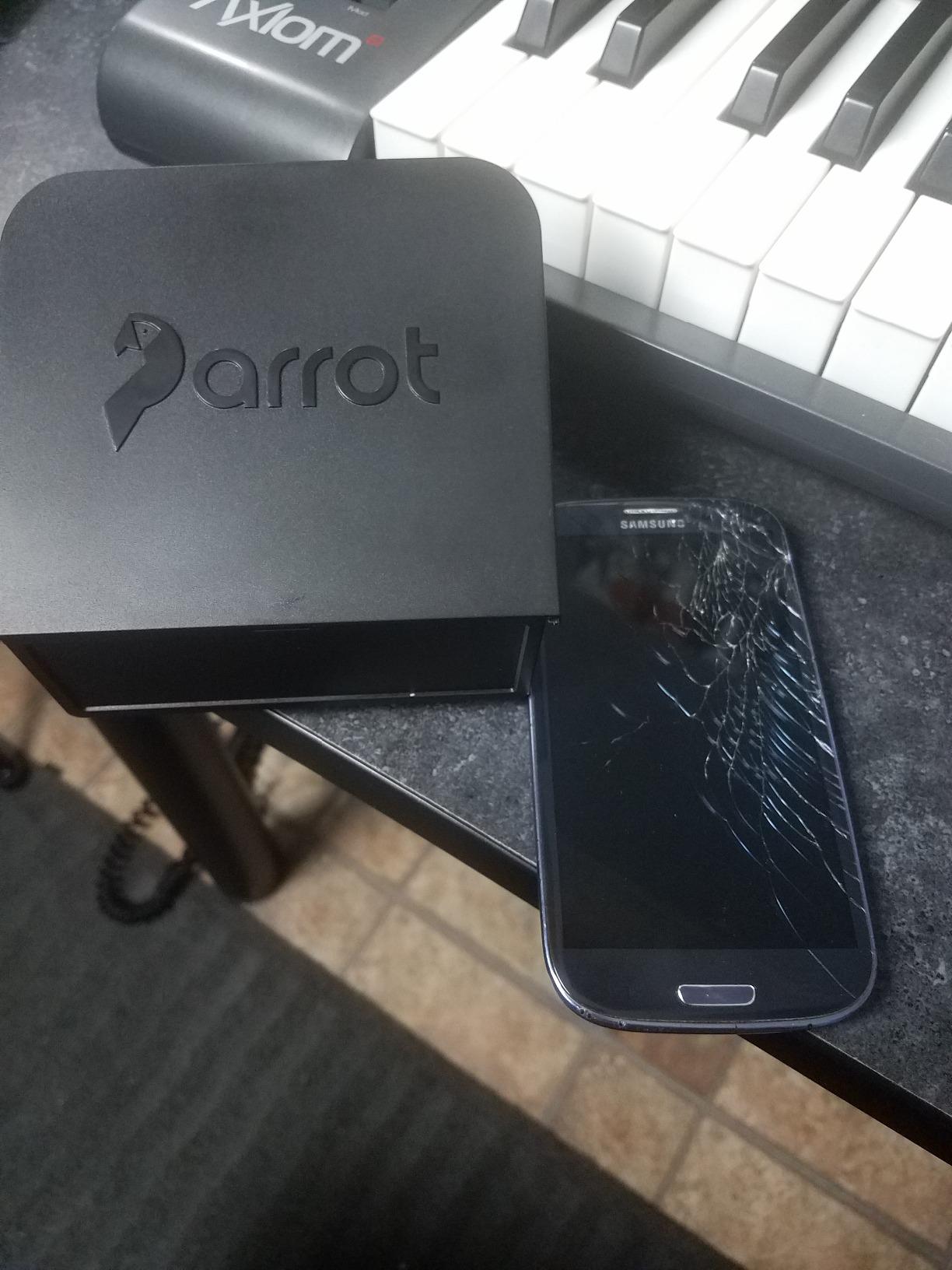
The strain trade-off nobody mentions
Hanging a full kit on a lens filter thread means every bump transfers into the lens barrel. Camera manufacturers build those threads to hold a filter, not a several-hundred-gram rig with a phone in it. Over months of field use that is a real cost, and it is the main reason experienced shooters move to a plate-mounted kit.
The push-down tray also puts forward pressure on the phone, and a phone with a case may not seat properly. Keep the tray light and remove the case if the fit feels loose.
Where it falls short
A phone screen is small, so you can only show a limited amount of text at a comfortable reading size. If your script is dense or you speak slowly, expect to scroll more than you would on a tablet prompter. It also predates the tablet platforms of newer kits, so this is a phone-only design.
Against this price ceiling it leaves plenty of headroom, which means you could pair it with a small stand and a better remote. That is a sensible way to spend the difference rather than stretching toward a heavier frame you do not need.
6. AMBITFUL 7.5 Inch Mini — The Cheapest Way Into Prompting
AMBITFUL 7.5” Mini Teleprompter W/Desktop Tripod for Smartphone & DSLR
7.5 inch HD reflective display
350g prompter body
Bundled desktop tripod
49-77mm adapter rings
+ The Good
- Lowest-cost entry into prompting with a stand included
- Coated glass with no ghosting or double images
- Full adapter ring set plus standard 1/4 inch thread
- App and Bluetooth remote included
- The Bad
- 7.5 inch platform is too small for tablets
- Will not work with wide lenses under 35mm
- Plastic build feels basic beside aluminum kits
- Some remotes pair unreliably
The AMBITFUL mini is the lowest-cost way to find out whether you actually enjoy working from a script. It ships with a desktop tripod, a Bluetooth remote and a full ring set, so the only thing you need to add is your phone and a prompting app.
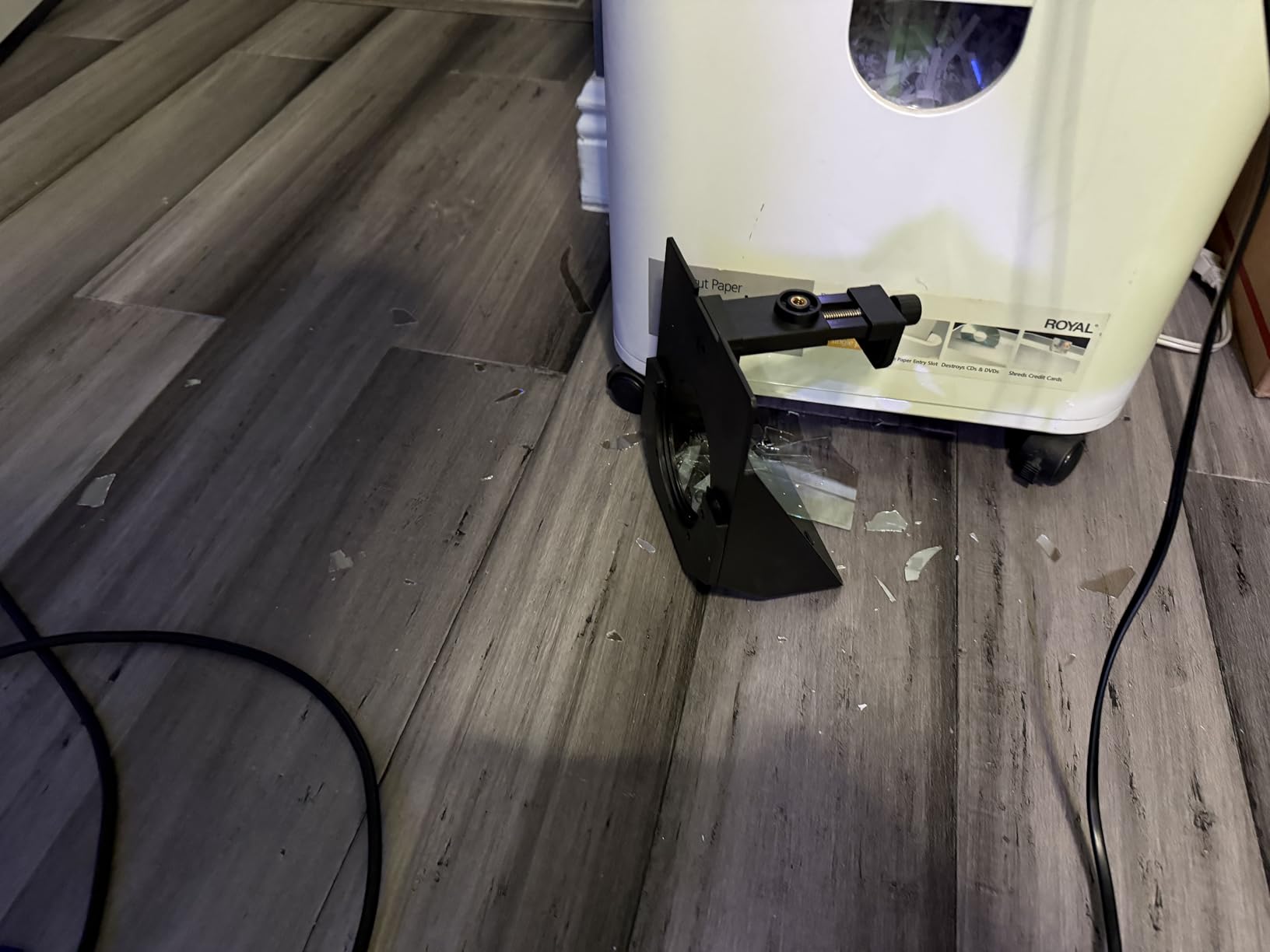
Glass quality surprised us at this tier. It is coated to suppress double images and ghosting, which are the two artefacts that make cheap glass look cheap on camera. Several reviewers noted the reflection stays legible even with the room lights on, which is more than we expected from a kit this size.
The adapter rings run from 49mm to 77mm and the standard 1/4 inch thread means it fits standard tripods and stands. The prompter body alone is 350 grams; the full kit including the tripod is 1.09 kg.
What you give up at this size
The 7.5 inch platform is the whole trade-off. It cannot take a tablet, so if you want a large reading surface you need to look at the Desview T3 or the NEEWER Basics instead. It also will not work with lenses wider than 35mm, so it is not a pairing for a wide-angle body.
The plastic build is the second compromise. It is lighter than aluminum kits by design, but it feels basic in the hand and offers less resistance to twisting. If you mount it on a proper video tripod rather than the bundled desktop stand, it settles down and stops being noticeable.
Who should buy it
Buy this if your scripts are short and you shoot at a desk, or if you want to practise eye contact before spending more. It is genuinely useful for course videos, app walkthroughs and livestreams where you are reading from a laptop-adjacent screen.
Skip it if you script long paragraphs, need a tablet, or shoot handheld with a wide lens. In that case the extra spend on the Desview T3 buys you real readability and a bigger platform, and it is the single biggest step up from this tier.
7. Desview T5 — Most Versatile Kit Under the Ceiling
Desview T5 Teleprompter for Smartphone & Tablet, Video Recording | Compatible with DSLR Cameras. Includes 49-82mm Adapter Rings, Coated Glass, Bluetooth Remote, Free App for Streaming
Anti-scratch coated glass with foam light seals
Weighs 0.52 kg
49-82mm adapter rings
Supports horizontal and vertical
+ The Good
- Handles phones tablets and DSLRs in one kit with the full ring set
- Build is sturdy enough to trust with expensive bodies
- Free app with script import and font control
- Bluetooth remote with auto sleep
- Foam light seals cut glare effectively
- The Bad
- Phone holder obstructs side buttons and fights cased phones
- Mounting on the lens adds strain to the mount
- Included carry case is soft and unprotected
- Bundled app is not the best option
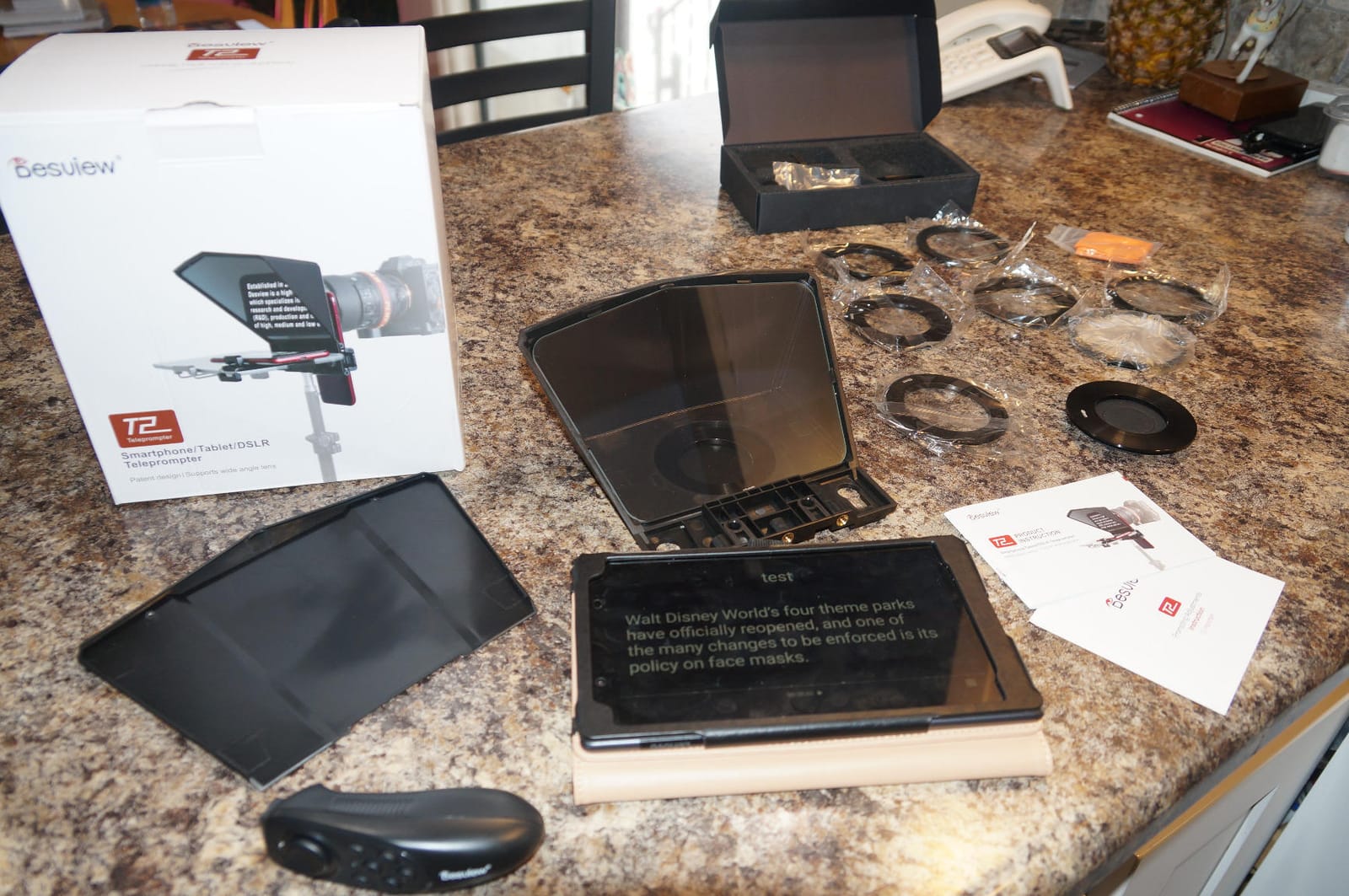
The Desview T5 is the kit we would hand someone who has not yet decided what device they will film on. It handles phones, tablets up to 11 inches and DSLR bodies, and the full 49 to 82mm ring set means you can swap devices without buying anything else.
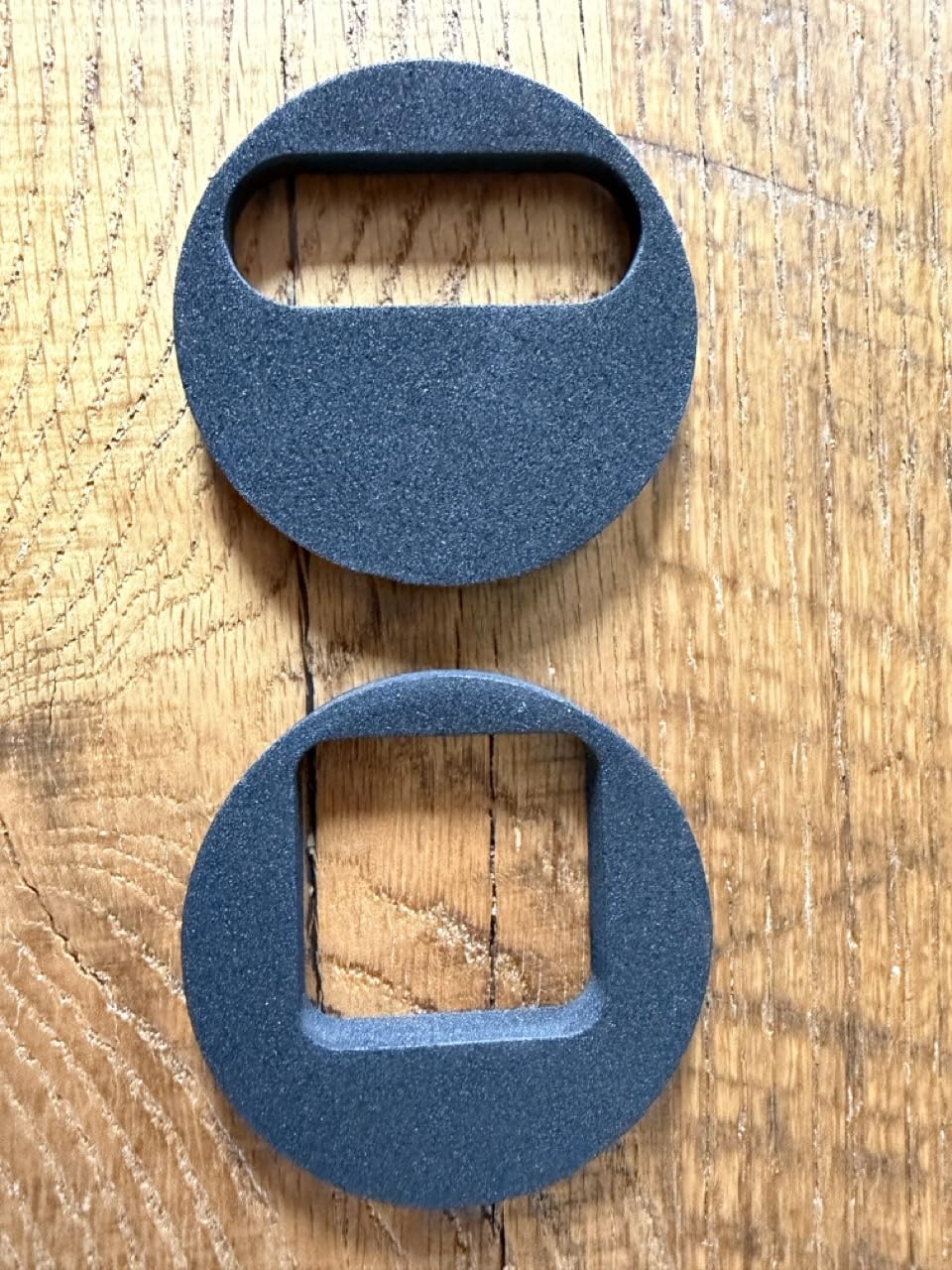
The foam light seals around the glass are a real, practical improvement rather than a spec-sheet line. They sit between the glass and the outer frame and cut the ambient light leaking in from the sides, which is the single biggest cause of a washed-out, low-contrast reflection on budget kits.
The bundled Desview app is more capable than most competitors at this price. It imports txt and docx files, controls font and background, handles mirror and rotate, includes a countdown, and the remote has one-key power with auto sleep after five minutes idle or thirty connected.
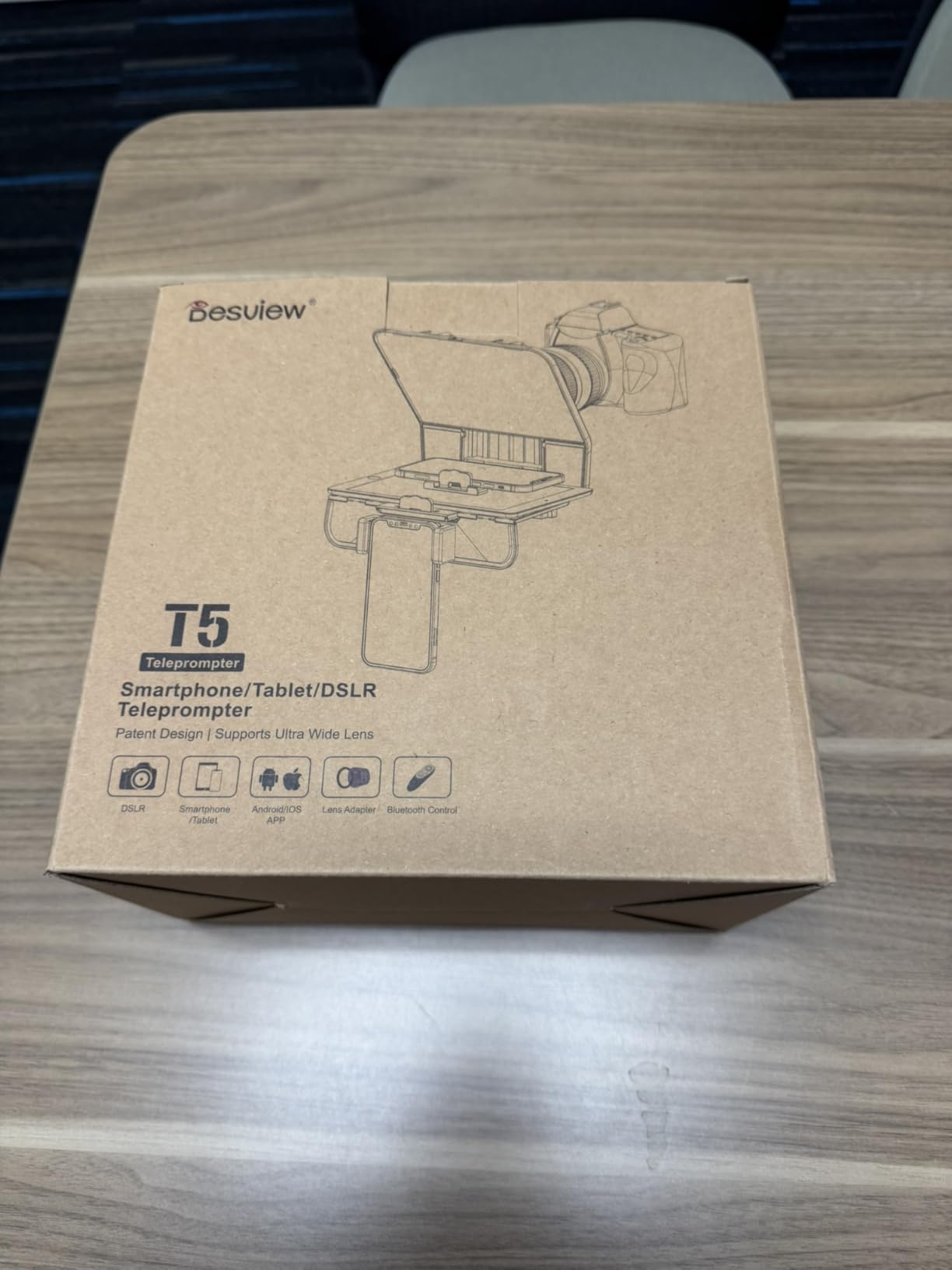
Mounting options and their trade-offs
It supports horizontal and vertical shooting with one-key camera alignment, and reviewers use the real-time self-check feature by installing a second phone to confirm framing. The 0.52 kg weight is in the middle of this group — light enough for a camera bag, heavy enough to stay stable on a tripod.
Two practical notes. Mounting on the lens has the same long-term strain issue as the Padcaster Parrot, so use the camera plate path whenever your body supports it. And the phone holder can obstruct side buttons and will not fit a modern iPhone with a case on, which is a common enough frustration that reviewers mention it repeatedly.
What to change out of the box
The included carry case is soft and offers no real protection for glass in transit. We would budget for a padded replacement or a hard case if you travel. Several reviewers also prefer third-party prompting apps for margin control, and the warranty includes lifetime free maintenance, which is a genuine plus at this price.
8. LENSGO TC7 — Folds Flat in About a Second
LENSGO 9.7” Teleprompter for Camera iPad Tablet Smartphone w/Remote Control, APP Compatible with iOS & Android System for Online Teaching Vlogger Live Streaming Interview, Fold in One Sec
Coated beam splitter glass
Weighs 450 g
Folds flat in about one second
Glass fixed at 45 degrees
+ The Good
- Packs flat to roughly the thickness of a book
- 450g body barely loads a lens or gimbal
- Coated glass stays clear even at 17mm wide angle
- Cold shoe mounts accept a light or microphone
- One-second fold for fast deploy and stow
- The Bad
- Bundled TCQI app is unreliable and users substitute their own
- Remote has latency and pairing failures
- Phone holder is fiddly and the edge can enter frame
- Flimsy plastic build and a missing 40.5-49mm ring
The LENSGO TC7 is the travel winner. It collapses in about one second to roughly the thickness of a book, and at 450 grams it adds very little to a gimbal or a camera bag. If you shoot on location, that footprint is the spec that matters.
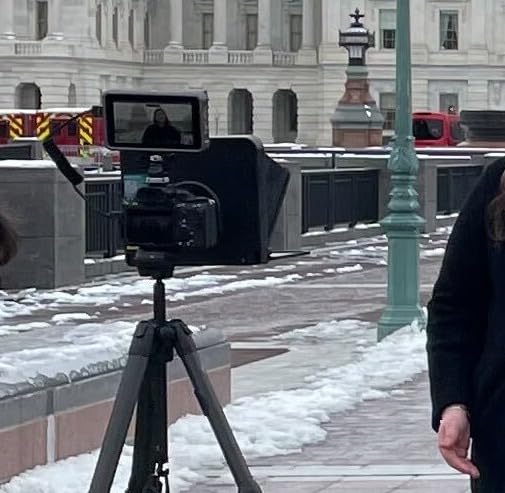
The glass is coated and, unusually, holds clarity at wide angles down to 17mm. That matters more than it sounds, because most budget kits start vignetting below about 24 to 35mm, which quietly crops into the corners of your frame. Multiple cold shoe mounts on top accept a light or a microphone.
The glass locks at 45 degrees rather than requiring adjustment, which removes a variable during setup. It fits phones, tablets under 9.7 inches and cameras via eight adapter rings, with six shading rings for phones included.
The app and remote are the weak points
This is the clearest example in our test of the problem forum users keep raising: bundled software is frequently the weak link. Reviewers report the TCQI app is unreliable and that many have replaced it with a third-party prompting app entirely. The included Bluetooth remote adds latency and occasionally fails to pair.
Treat this as a glass-and-frame purchase and bring your own app. Doing that turned several of its average reviews into positive ones in our reading, which suggests the hardware is being judged down for software it was never designed to carry well.
Two build caveats
The plastic body is the main structural compromise here. On a solid tripod it settles; on a lightweight travel tripod it can introduce enough movement to make long lines hard to track. The phone holder is fiddly, and reviewers note the edge of the prompter can enter the frame if alignment is rushed.
One more detail worth checking before you order: the ring set skips the 40.5 to 49mm range, so if your lens thread falls there you will need an adapter. The package also comes in a proper box rather than a soft pouch, which helps with transit damage.
9. Desview P13 — Big Platform for Large Tablets
Desview P13 Teleprompter 13 Inch Aluminum Alloy with High Definition Glass, Compatible with iPad Tablet Camera DSLR, Portable No-Assembly Design for Video Recording
13 inch HD reflective platform
70/30 7H hardness glass
Weighs 1.7 kg
Detachable sun hood
+ The Good
- 13 inch platform comfortably fits large tablets
- 70/30 7H hardness glass stays readable in bright light
- No-assembly design works out of the box
- Bluetooth remote pairs easily with older tablets
- Oxford cloth carry bag included
- The Bad
- Some buyers report poor or missing instructions
- Larger tablets can edge into the camera frame
- Bundled app has limited script import
- 1.7 kg is heavier than compact alternatives
The Desview P13 exists for one reason: large tablets. The 13 inch platform fits bigger devices comfortably, including the sizes that fall out of the NEEWER range, and the 70/30 glass with a 7H hardness surface shrugs off the scuffs that come with a device you handle constantly.
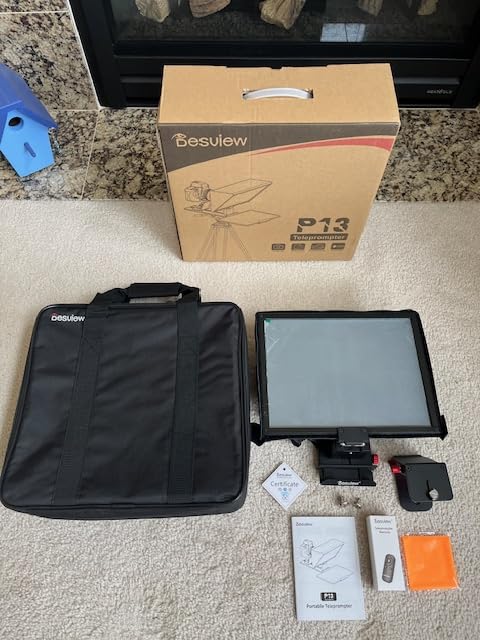
That glass rating matters in practice. A 7H surface shrugs off the fingerprints, scuffs and cleaning that come with a device you handle constantly, and at 70/30 the script side stays bright enough to read without pushing your tablet’s backlight to the point where text spills toward the lens.
The detachable sun hood is the feature that earns its place outdoors. It extends beyond the glass to block direct light, which is what keeps the reflection readable in a bright location. It also supports both horizontal and vertical shooting for short-form work.
Size is the benefit and the problem
At 1.7 kg this is one of the heavier kits we tested, and that is a fair trade only if you are shooting from a fixed position. If you are walking, carrying and repositioning all day, the NEEWER Basics X12B at a quarter of a kilogram is a much saner companion.
The other issue is frame edges. A 13 inch platform sitting above a camera lens has more chance of entering the shot, and reviewers specifically mention needing to reposition the tablet to keep it out of view. Take five minutes with the framing before a real recording session rather than adjusting mid-take.
Documentation and software
Some buyers report poor or missing instructions, so budget time to work out the mounting from the hardware itself. The bundled app has limited script-import options, which is another case where a third-party prompting app is the sensible upgrade. The included Oxford cloth bag is fine for storage but not a hard travel case.
10. Desview T3 — Best Glass Under the Budget Ceiling
Desview T3 Portable Teleprompter for Camera & Smartphone, Tablet Prompter for iPad up to 10″, 70/30 Beam Splitter Glass, 9 Adapter Rings for DSLR, YouTube Video Recording & Live Streaming
70/30 beam splitter glass
26 anti-reflection coatings
Weighs 15.52 ounces
Readable to 10 ft
+ The Good
- 70/30 glass with 26 coating layers stays sharp
- 9 adapter rings plus 5 shading rings give broad fit
- Detachable design speeds storage and setup
- Dual cold shoe mounts for lights and microphones
- Light enough to carry in a camera bag
- The Bad
- Bundled app resets settings and can reverse the mirror
- Remote arrives without its batteries
- First setup takes about 20 minutes
- Instructions are thin and off-gassing reported
The T3 punches above its tier on the one thing that matters most: the glass. It uses 70/30 beam splitter with 26 anti-reflection coating layers and a 7H hardness surface, and readers describe the result as sharp with no ghosting or distortion. For a modest outlay, that is the spec you should be buying on.
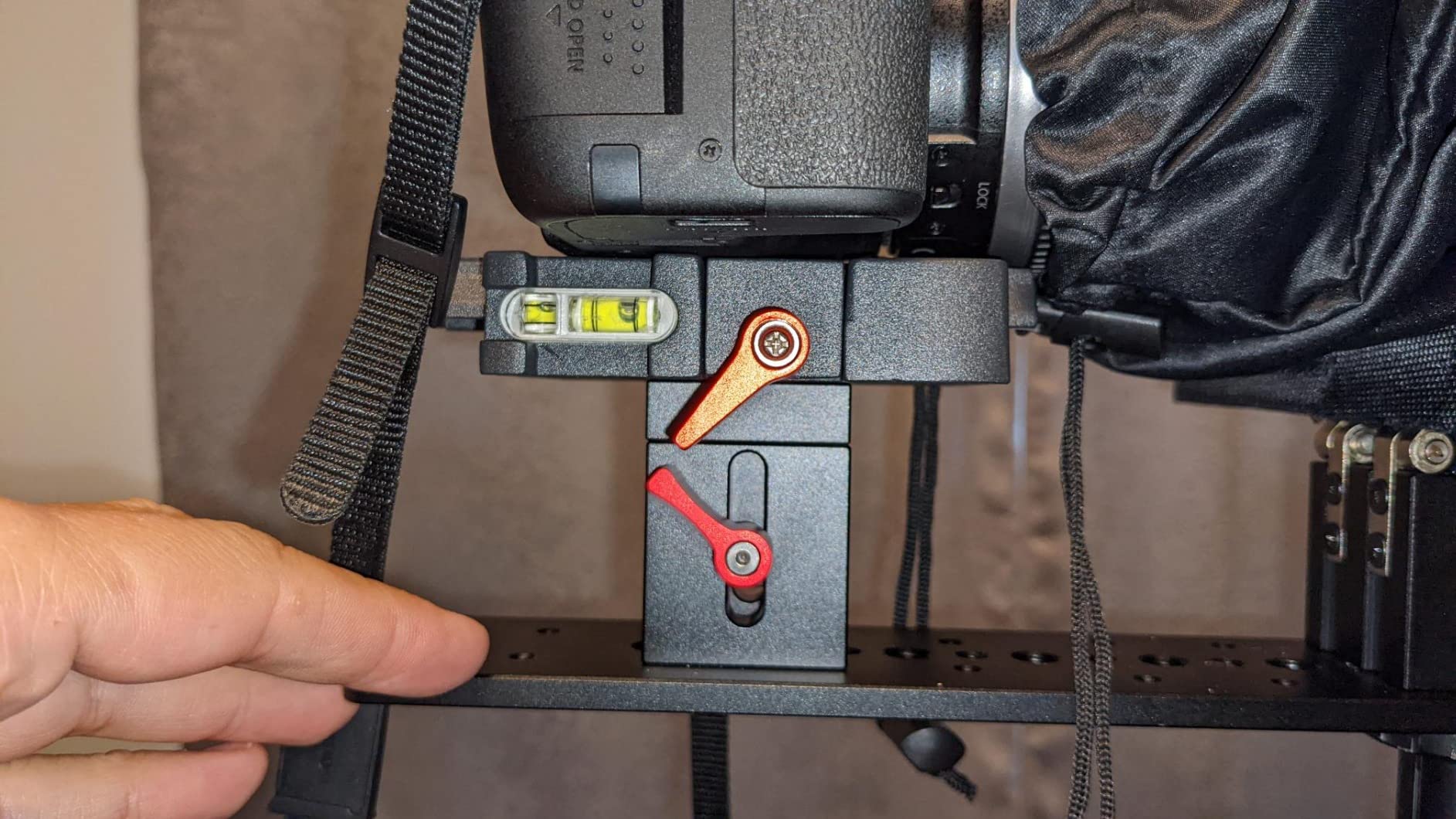
It also holds up optically at wider angles than most kits here, supporting 24mm horizontal shooting without vignetting, with a 10 foot reading distance. Dual cold shoe mounts on top take an LED light and a microphone, and the detachable hand-tightened design makes storage and repeated setup quick.
At 15.52 ounces it is light enough to sit in a camera bag permanently, yet the 11 inch platform is far more useful for long scripts than the 7.5 inch mini kits. That combination of readable glass, workable size and low weight is why it rounds out the list as the sleeper pick.
Plan for the first setup
First-time assembly and balancing takes roughly 20 minutes, and the instructions are thin, so most of the technique comes from tutorial videos. That is a one-time cost, not a recurring one — once the kit is balanced it stays balanced between shoots.
The Bluetooth remote arrives without its two AAA batteries, another small thing to add to a shopping list before your first session. The protective lid helps during transport, which is more than several kits here can say.
The app caveat
Reviewers report the bundled app occasionally resets settings and can reverse the mirror effect mid-session. If you rely on prompting for a scripted read, test your chosen app thoroughly before a recording day and keep a paper backup of the opening lines. One owner also reported a strong chemical smell that lingered for weeks, so if you are sensitive to off-gassing, let it air out before filming in an enclosed space.
How to Choose a Budget Teleprompter?
Start with the device you will actually prompt from, because it eliminates most of the list instantly. If you script on a phone, only kits with a genuine phone platform or lens-mount adapter work. If you script on a tablet, measure the short side of your device including the case and compare it against the platform maximum.
Second, decide how the camera attaches. Phone adapters that screw onto the lens filter thread are fast but place strain on the lens over time. Camera-plate and rail mounts spread that load properly. If you own a mirrorless or DSLR body, prioritise rigidity over compactness — a bumped tripod dropping an expensive camera is the failure mode people complain about most in forum threads.
Third, check the glass ratio and the coatings rather than the headline price. 70/30 keeps your script side brighter and lets you run a lower screen backlight, which reduces spill into the shot. 60/40 gives you a brighter face but demands more screen brightness. Ask whether the glass is genuinely beam-splitter or acrylic, because acrylic softens the image noticeably.
Fourth, look honestly at the remote and the app. Several kits here include a remote that pairs only with the manufacturer’s software and offers no margin adjustment. If your workflow needs text-block control or reliable Bluetooth after a device restart, plan on a third-party prompting app from day one.
Finally, factor in stability. A frame that wobbles makes long lines hard to track no matter how good the glass is. Our advice is to mount any kit on a proper video tripod rather than the bundled table stand, even when the prompter is capable enough to be used either way.
Beamsplitter Glass Explained: 70/30 vs 60/40
The glass is the part worth understanding before you spend anything. A beam-splitter coating reflects a set proportion of incoming light back toward you and passes the remainder straight through to the lens. The two numbers describe that split: 70/30 reflects 70 percent back and passes 30 through, while 60/40 reflects 60 and passes 40.
More reflection means a brighter script and a darker shot. Less reflection means a brighter shot and a script you can only read if the screen is turned up. This is why the 70/30 kits on our list — the Glide Gear TMP 100, the Desview T3 and the P13 — tend to be easier to read, and why the 60/40 iLight PRO suits controlled indoor lighting better than an outdoor set.
The second factor is coating quality. Uncoated budget glass produces ghosting and a double image, both of which the camera sees as much as you do. Every kit we tested claims an anti-reflective coating, but reviewers consistently single out the multi-layer options — the T3’s 26 layers, the NEEWER 75% transmittance coating — as the ones that stay sharp in daylight.
A final practical note on reflection strength: if you can read the script clearly with your room lights on and the screen at about half brightness, the balance is right. Turn it higher and you will start to see your own text ghosting on the subject behind you.
Choosing Your Mount: Phone, Tablet, Camera or Laptop
Phone mounts are the simplest and the most constrained. A phone screen shows less text at a readable size, so scripts should be shorter or you will scroll constantly. The Padcaster Parrot is built purely for this, and the AMBITFUL mini works with phones alongside a small camera.
Tablet mounts are the sweet spot for most creators. Tablets give you a large script surface and enough resolution to keep text crisp through the glass. Check the maximum platform size carefully — the NEEWER X12 does not take a 12-inch iPad Pro, and that is the single most common compatibility failure in this category.
Camera mounts matter if you shoot with a dedicated body. Look for a plate or rail path rather than a filter-thread adapter, and confirm your focal length meets the kit’s minimum. The NEEWER X12 needs 28mm or longer, the AMBITFUL mini will not go under 35mm, and the LENSGO TC7 is the outlier here by working from 17mm.
Laptop prompting is the quiet fourth option. A laptop behind the glass can drive a livestream or a Zoom presentation without any device purchase at all, provided the display is bright enough and the glass is large enough to read from a normal seated distance. The trade is the same everywhere: bigger screens read better and cost more to carry.
What Your Budget Does Not Cover?
A kit at the top of this range is not a complete shooting system. You still need the prompting device, which for a tablet setup is often the single largest cost in the build. Add whatever app you choose if the bundled one falls short, and expect to spend on a proper video tripod rather than relying on the included table stand.
There is also the glass protection question. A soft pouch is not a travel case, and budget glass is the first thing to crack. If you travel with the kit, budget for a padded hard case. Add a circular polarizing filter if your shoot location is reflective and you notice glare — it is the most commonly recommended fix in user forums for see-through prompter reflections.
Our advice is to treat the prompter as roughly two-thirds of a complete budget for this kind of setup, and to spend the remainder deliberately rather than stretching one purchase to cover everything.
App-Only Prompting: When Hardware Is Overkill
Before buying a frame, it is worth asking whether an app solves your actual problem. PromptSmart Pro and Teleprompter Premium are the two names that come up most often among working creators, and both do the core job well: mirrored text, adjustable scroll speed, font sizing and script import.
What an app cannot do is give you eye contact with a separate camera. If the phone filming and the phone prompting are the same device, you are still glancing down and off-axis, which viewers read as disengagement. Two devices help, and forum discussions describe that two-tablet arrangement as passable rather than genuinely convincing.
The common DIY compromise is one tablet for filming and one tablet for prompting, driven by a Bluetooth keyboard and a low-cost app. It delivers usable prompting for well under the cost of a pro rig. It also cannot beat a beam-splitter setup for true eye contact, because there is no glass redirecting the lens view toward you.
So the honest rule is this. If your goal is a private rehearsal tool, an app is enough. If you need believable eye contact in the final cut, you need hardware. Our general-purpose picks for other budget categories, such as our gaming chair guide and smartwatch guide, follow the same principle: buy for the bottleneck, not the spec list.
Setup Tips for Clean, Glare-Free Footage
Get the glass to 45 degrees first. That is the angle where the reflected script reaches your eyes while the lens still sees the scene cleanly, and it is why so many kits here fix the angle permanently at the factory. Adjust before you adjust anything else.
Next, kill ambient light with hoods and seals rather than screen brightness. The Desview T5’s foam light seals and the P13’s detachable sun hood both exist for this reason. Turning the tablet up to maximum is the last resort, because spill from a bright screen reaches the lens and washes out your shot.
Third, add a circular polarizing filter if you see reflections on the glass or on the subject behind it. It is the standard remedy in user communities for reflective budget glass and costs less than replacing a kit.
Fourth, check the frame edges before you roll. On the larger platforms, a tablet corner can enter shot. Five minutes of framing saves a re-shoot. Also watch for a prompter hood blocking a lavalier microphone’s wind protection, which users mention often when the kit sits close to the performer.
Budget Tiers: What Each Price Level Buys
At the entry tier you get a small phone-and-camera kit with coated glass and a bundled remote. Expect a 7.5 inch platform, plastic construction and wide-angle limits, as the AMBITFUL mini shows. This tier is genuinely useful for testing whether prompting suits you.
In the middle of the range the platform grows to 10 or 11 inches and mounting becomes more versatile. The Desview T3, T5 and NEEWER Basics X12B all live here, and they are where the balance of glass quality, size and weight becomes clearly good.
At the upper end of the ceiling, the aluminium frame, larger glass and camera-plate mounts appear — the Glide Gear TMP 100, the NEEWER X12 and the iLight PRO. You also tend to get a carry case and a proper hood. The gains are real but smaller than the price jump suggests, which is why our best value pick sits below the maximum.
The honest summary is that the jump from a plastic mini kit to a mid-tier aluminium kit is the biggest quality step on this list. The step from a mid-tier kit to the most expensive one is refinement.
Frequently Asked Questions
What is the best inexpensive teleprompter?
For most people the Glide Gear TMP 100 is the best inexpensive option, because its 6061 aluminium frame and 70/30 glass stay stable and readable without the price jump into studio hardware. If you want the lowest-cost way to test whether prompting suits you, the AMBITFUL 7.5 inch mini is cheaper still, though the platform is too small for tablets.
Which teleprompter is the best?
There is no single best at this budget because the right answer depends on your device. Camera shooters get the most rigidity from the Glide Gear TMP 100, tablet-first creators get the most from the NEEWER X12, and the iLight PRO is the pick when you want thick 4mm glass with fast tilt-to-frame adjustment.
Where can I find the cheapest teleprompter?
General electronics marketplaces and camera retailers carry this price band, and the same brand lines appear at several sellers with meaningful price differences over time. Compare the glass specification and the mount type rather than chasing the lowest listing, because the cheapest kits are usually the ones using the smallest platform and lighter plastics.
Is there a good teleprompter app for iPad?
Yes, and on iPad it is the most straightforward device to prompt from because of the screen size. PromptSmart Pro and Teleprompter Premium are the two most frequently recommended options among working creators, both supporting mirrored text, adjustable scroll speed and script import. Neither replaces beam-splitter hardware for eye contact.
What is the best teleprompter app for iOS?
PromptSmart Pro is the most widely recommended prompting app for iOS among working creators, with Teleprompter Premium a close second. Both handle mirrored text, font size and scroll speed. Pair either with a Bluetooth remote for hands-free control, and test pairing after a device restart since remote dropouts are the most common complaint.
Can my iPad work as a teleprompter?
An iPad works very well as a prompting screen, which is why most kits at this budget are built around a tablet platform. It cannot by itself give you eye contact, though, because the lens still looks at a device rather than at you. You need beam-splitter glass in front of the camera for that.
What to use instead of a teleprompter?
Alternatives fall into three groups. A prompting app on the phone you film with is free but keeps your eyes off-axis. A second device, often a tablet with a Bluetooth keyboard and a low-cost app, is described by users as passable rather than convincing. A DIY beam-splitter build over a monitor is cheaper than most kits and works, but assembly time and sourcing parts usually erase the saving.
How do you reduce glare on teleprompter glass?
Work through it in order. Use the hood or foam light seals to block side light, lower the prompting screen brightness rather than raising it, and keep the glass at the correct 45 degree angle. If reflections persist, a circular polarizing filter is the standard remedy recommended in user communities for reflective budget glass.
Conclusion: Pick by Shoot Type
If you shoot with a camera body and want the frame to survive a bumped tripod, the Glide Gear TMP 100 is the safest of the best teleprompters in this price range. If you want a remote and a carry case in one box, take the NEEWER X12. If you need something that folds to the thickness of a book, the LENSGO TC7 wins on travel and nothing else.
Match the platform to the device you already own, ignore the bundled app if it frustrates you, and treat the prompter as one part of the budget rather than the whole of it. If you are still weighing up other gear, our best blenders guide covers the same budget-first approach. Updated for 2026.