
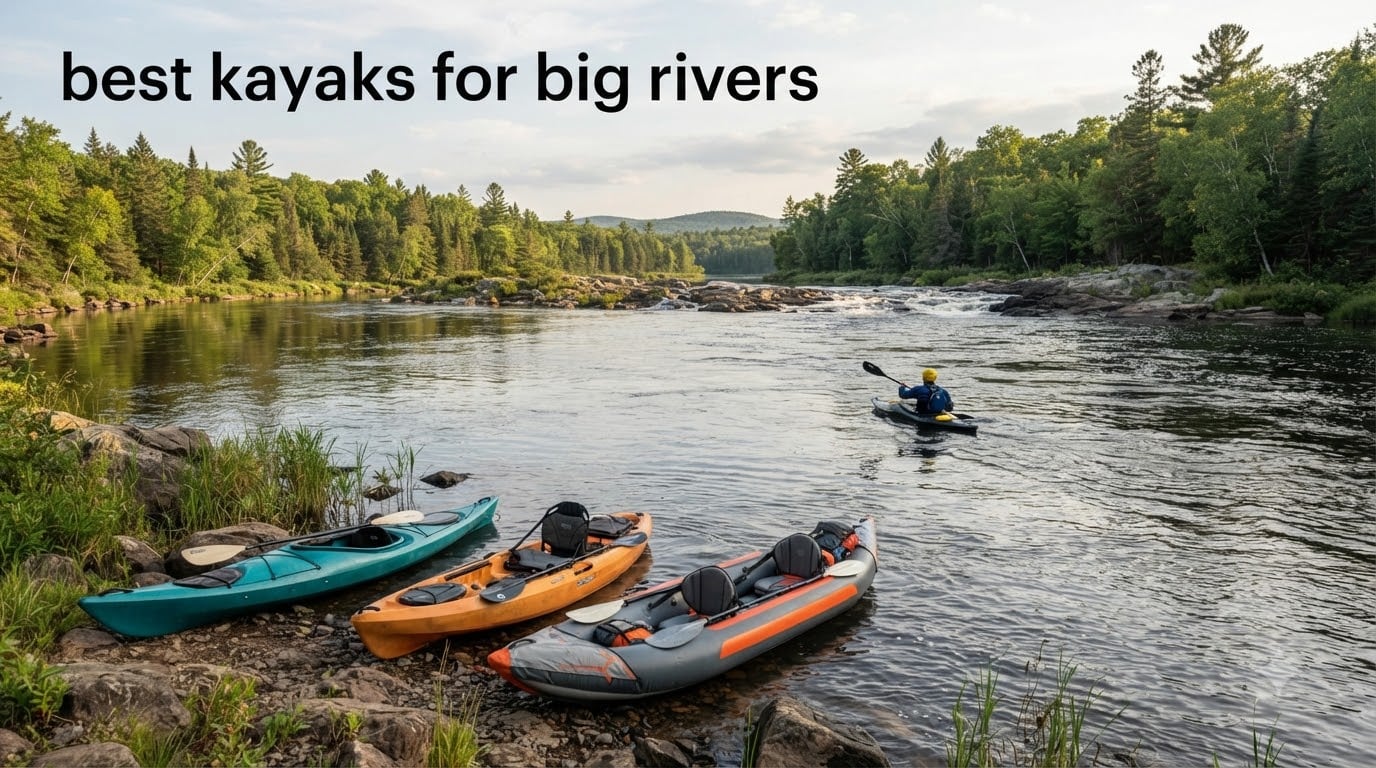
The river is the easy part. Current pushes you downstream whether you are ready or not, wind pushes you sideways, and the water you drifted into is colder than the air above it. That combination is exactly why picking among the best kayaks for big rivers is a different decision than picking a lake boat, and why so many paddlers end up asking the same question on forums: can one boat handle both flat water and moving water, or do I need two?
We spent the season comparing nine kayaks aimed at river work, from wide slow western-style rivers to sections with real current and obstacle fields. We looked hard at the three things that decide whether a boat feels planted or twitchy on big water: tracking, primary stability and secondary stability. We also weighed length, beam, load capacity, carry weight and how much dry storage a multi-day trip needs.
What follows is the short version: the best inflatable kayaks we tested handled moving water better than their reputation suggests, and the hard-shell boats still win on speed. If you want more background on the boat types themselves, our guides to whitewater kayaks and touring kayaks break down the design differences in more detail than this roundup does.
Top 3 Picks for Big River Paddling in October 2026
These three cover the widest range of river conditions in the group. One packs into a sedan trunk, one is a hard-shell boat with a cockpit-controlled skeg, and one is the fastest long-water sit-in here.

Wilderness Systems Aspire 105
- › Cockpit-controlled Trotta skeg
- › 400 lb capacity
- › 10 ft 6 in hard shell

Wilderness Systems Pungo 120
- › 12 ft 2 in tracking hull
- › Fastest in class
- › Removable dashboard dry box
Every Kayak in This Roundup at a Glance for October 2026
All nine boats, ordered the way they appear below. Ratings and review counts are the current figures shown for each listing.
| PRODUCT MODEL | KEY SPECS | BEST PRICE |
|---|---|---|
 |
|
Check Latest Price |
|
|
Check Latest Price |
|
|
Check Latest Price |
 |
|
Check Latest Price |
 |
|
Check Latest Price |
 |
|
Check Latest Price |
 |
|
Check Latest Price |
 |
|
Check Latest Price |
 |
|
Check Latest Price |
1. Sea Eagle 370 Pro: The Most Proven Inflatable on Moving Water
Sea Eagle 370 Pro 3 Person Inflatable Sport Kayak with Pro Package Includes Paddles, Deluxe Seats, Pump, and Carry Bag
32 lbs packed
Listed at 150 inch length
650 lb capacity
Class III rated
I-beam floor
+ The Good
- Proven on rapids and boat wakes with more than 1500 reviews
- Packs into a small car trunk
- Two bottom skegs track straighter than expected
- Seats reposition for solo or tandem
- The Bad
- Slower than any hard-shell hull
- Interior length is tight for two loaded paddlers
- Low seat backs let a life jacket ride up
The Sea Eagle 370 Pro is the boat we kept coming back to. Its 1591 reviews are the deepest owner history on any hard-shell-capable Class III inflatable we tested, and reviewers consistently describe it as stable in lakes, rivers and boat wakes while still handling rapids without flexing. That rating puts it squarely inside the range most big-river paddlers actually paddle.
What surprised me was how little the inflatable label cost it on moving water. Two bottom skegs give it straight-line tracking that reviewers call better than expected, and the I-beam floor resists flex when you brace hard against current. Weights and capacity are generous: 650 lb and seating for three, which covers two adults plus coolers and dry bags.
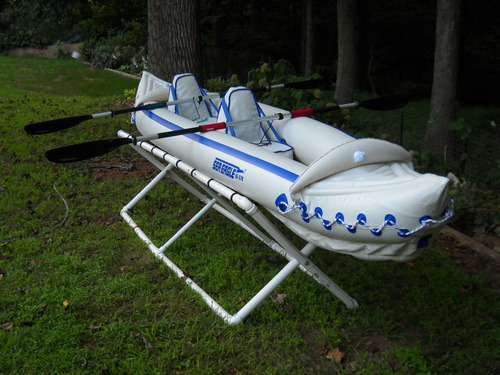
The tradeoff is speed, and it is a real one. Reviewers are blunt that this boat will not make speed against a headwind or a stiff current, so on a long river run the current does the work and you paddle to steer. Interior length of about 10 ft 8 in is tight once two people and camping gear are aboard, so day trips suit it better than loaded overnights.
Two smaller issues come up often. The seats have no D-ring attachment points, so they can shift or lift if the boat flips, and the low seat back height means a life jacket can ride over the top of the seat. Neither is dangerous on its own, but both are the kind of detail you notice while ferrying across a seam of current.
Why It Made the Cut
More owner reviews than any hard-shell boat here means more edge cases already documented. You can read about the exact boat, the exact river conditions and the exact loading arrangement you are planning, which is rarely true of a boat with a few dozen reviews. For a category where failure means a swim in moving water, that body of evidence is worth a lot.
The Class III rating also removes the biggest objection to inflatables on rivers. It is not a whitewater specialist, but it is not a lake toy either, and it packs to 32 lbs with a handle that fits in a closet. If your access points are stairs, gravel bars or a long walk, that changes the maths completely.
Where It Falls Short
Speed is the honest answer, and so is interior space. Anyone planning a loaded multi-day trip for two will find the 10 ft 8 in interior cramped, and anyone fighting an upstream leg or a headwind will be working harder than a hard-shell paddler next to them. For flat-and-slow itineraries it is the wrong tool even though it is a capable boat.
The seat fittings also mean you will want to check your life jacket position before launching rather than after a capsize. Budget a few minutes at the launch to confirm the PFD sits correctly against the low seat back. That habit is good practice in any boat.
2. Wilderness Systems Aspire 105: Best Skeg Control for Current and Wind
Wilderness Systems Aspire 105 | Sit Inside Recreational Kayak | Adjustable Skeg – Phase 3 Air Pro Seating | 10′ 6″ | Mango
10 ft 6 in long
48 lbs
29 in beam
400 lb capacity
Trotta skeg
+ The Good
- Cockpit-controlled skeg holds a line in current and wind
- Stable and easy to handle
- Phase 3 Air Pro seat with lumbar support
- Large rear hatch with stern buoyancy foam
- The Bad
- Cockpit is snug for smaller paddlers
- 48 lb polyethylene hull is heavy to carry
- Best on flat or slow water rather than rapids
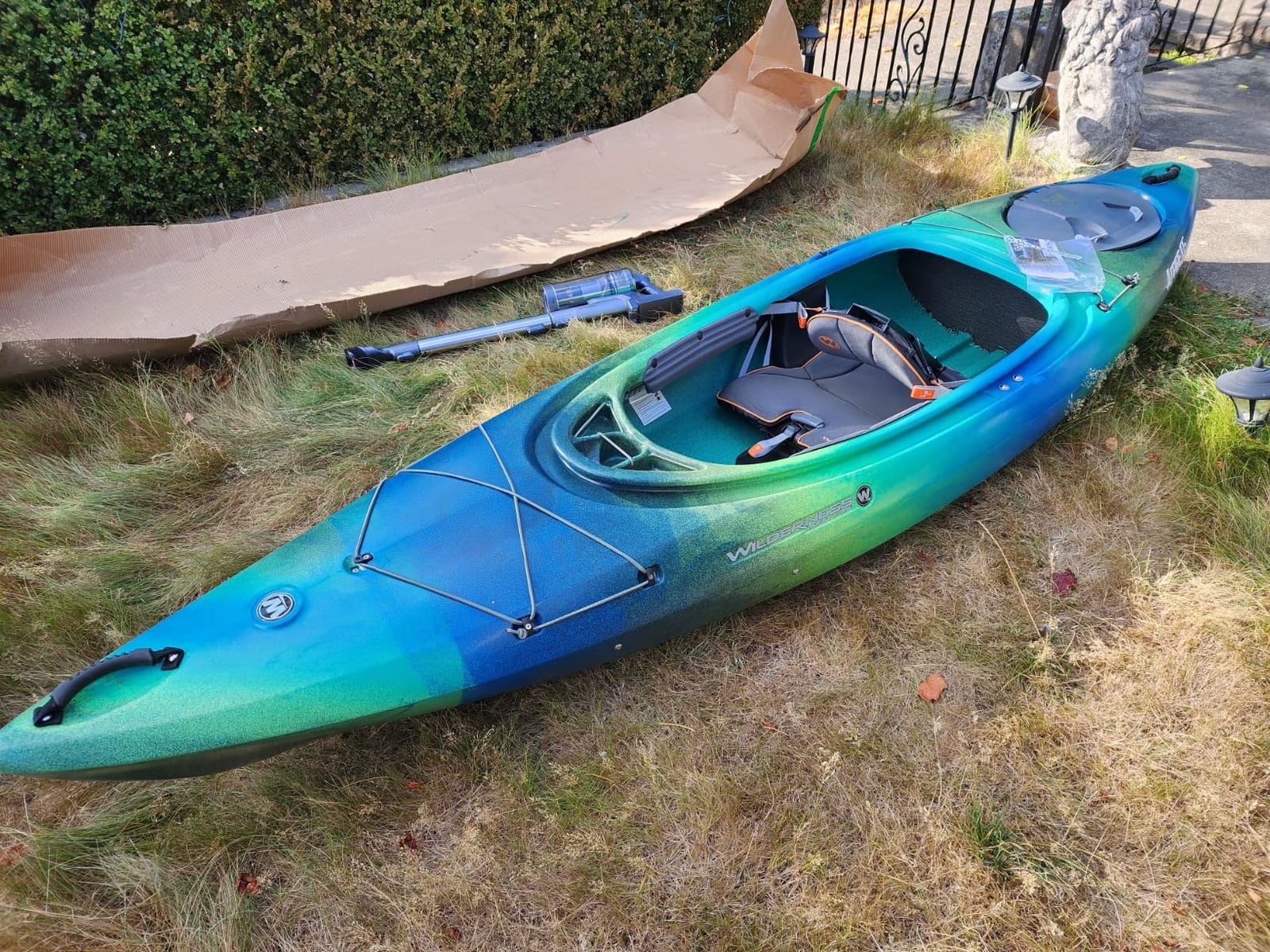
The Aspire 105 is the boat we recommend when current and wind are the problem and speed is not. Its Trotta skeg is controlled from a lever inside the cockpit, so you can change tracking angle while you are already committed to a line rather than stopping, reaching over the side, or wishing you had a different hull. On a wide river that is a genuinely useful degree of control.
Owners single out the fully adjustable Phase 3 Air Pro seat as a second reason this boat endures long days. Mesh fabric over ergonomic foam gives airflow and lower back support, and the large padded foot rests adjust with a locking lever to fit different paddlers. The 400 lb capacity rating gives real headroom for a paddler and a full day of gear.
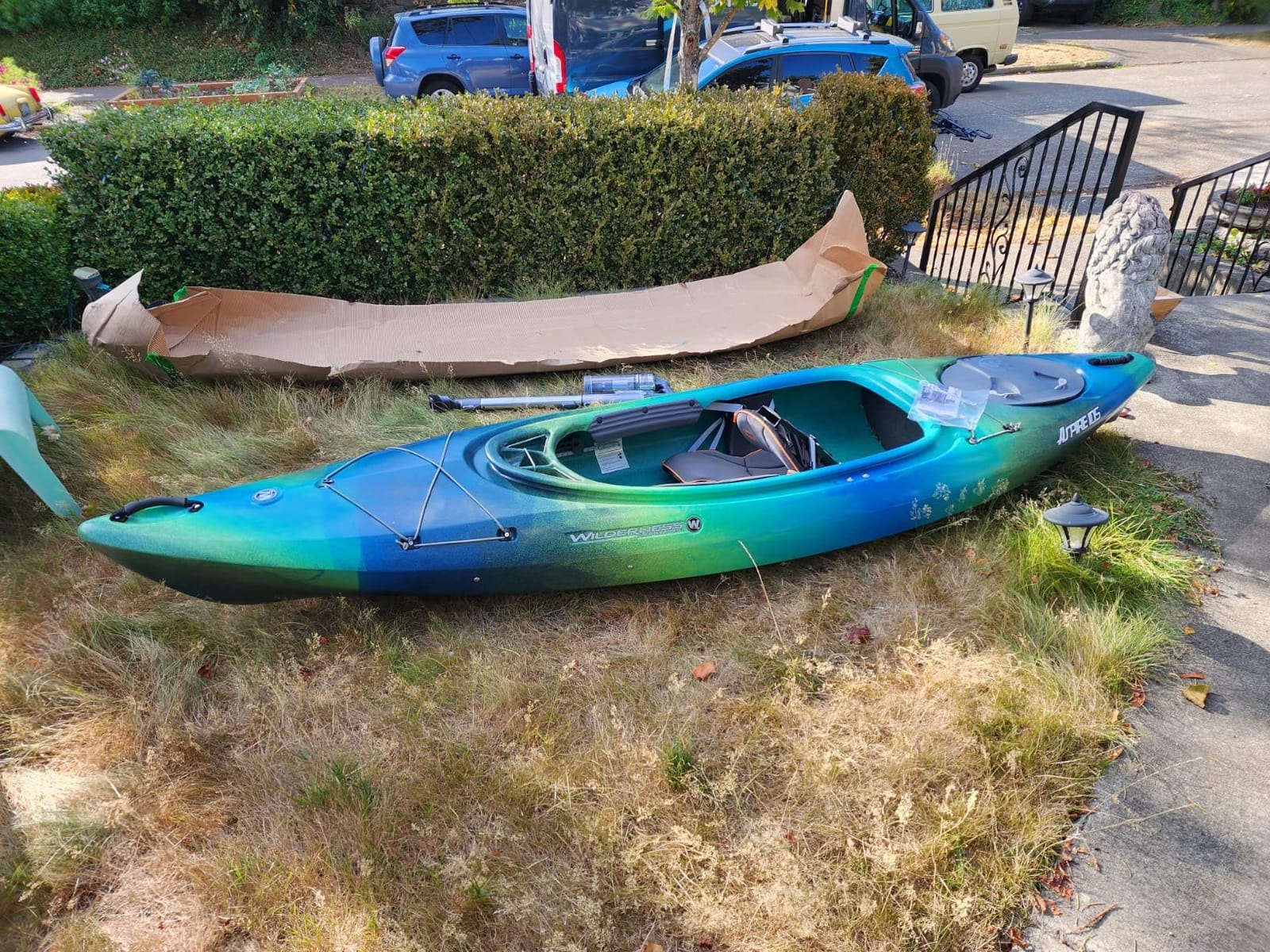
Thigh and knee padding adds control as well as comfort, which matters more than comfort on a boat that is being steered through seams. The rear oval storage hatch keeps gear dry, and the stern bulkhead foam adds buoyancy at the back of the boat, where you want reserve volume in a following sea.
The catch is honest and reviewers say it plainly: this is a flat or slow-water boat, not a boat for strong current or whitewater. The flat hull is stable and predictable, which is precisely why it does not recover quickly once you put it on edge. If your river has Class III rapids, keep looking.
Why It Made the Cut
Among hard shells, cockpit-controlled skeg adjustment is rare, and on a big river it is the single most useful control on the boat. You can carry skeg on the upstream side of a bend to hold your line, then pull it for a shallow crossing where a fixed fin would drag. That adaptability is why this one tops the hard-shell list for cruising water.
The 400 lb rating is also the most generous among the single hard-shell sit-ins here, and the rear hatch with bulkhead foam gives it more than dry storage. It is a dry-hatch boat you can actually pack for a warm-weather overnight without strapping everything to the deck.
Where It Falls Short
The cockpit is sized for medium to larger paddlers, and smaller paddlers report it feels snug. If you are under about five foot four, sit in one before buying. At 48 lbs the polyethylene hull is also a two-person carry to most launches unless a cart is in the plan.
Reviewers also note the hull is heavier than comparable inflatable touring kayaks, which is an unfair comparison in one direction and a fair one in another. Plastic will not deflect off a rock the way PVC does. Choose this boat for control and speed, not for durability in contact with debris.
3. Wilderness Systems Pungo 120: Best Value for Long River Runs
Wilderness Systems Pungo 120 Recreational Kayak – Sit Inside – Phase 3 Air Pro Comfort Seating – 12.2 ft – Mango
12 ft 2 in long
49 lbs
29 in beam
325 lb capacity
Classic sit-in hull
+ The Good
- Fastest and most efficient hull in this roundup
- Tracks straight over long distances
- Stable without feeling dull
- Dashboard with removable dry box
- The Bad
- 325 lb rating is modest for loaded trips
- Small cockpit for larger paddlers
- Included paddle length draws complaints
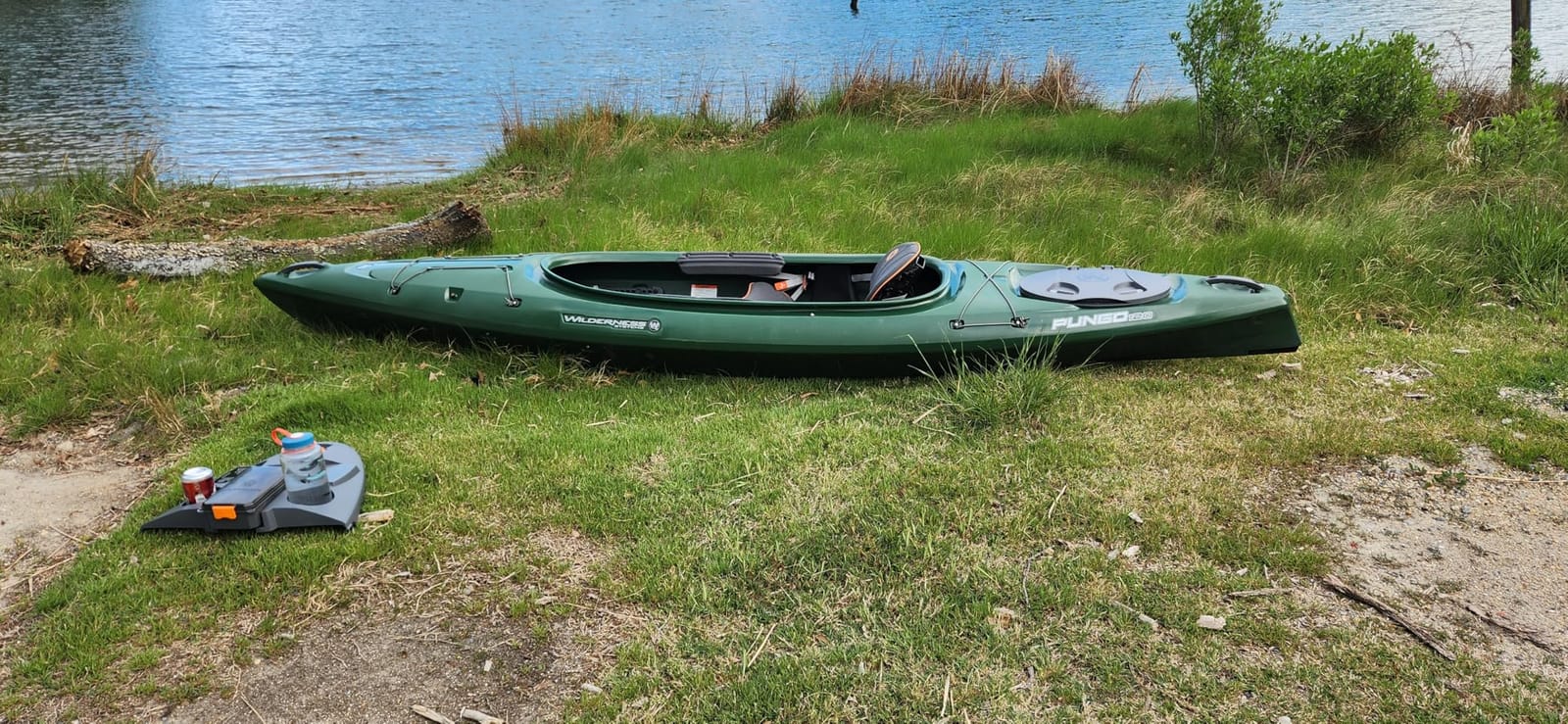
The Pungo 120 is the boat for covering ground. Owners describe it as the easiest and most efficient paddle in its length class, and on a long river run where current is doing half the work, efficiency compounds. The 12 ft 2 in hull tracks straight, which is what turns a four-hour paddle into a four-hour paddle instead of a four-hour fight.
Stability is the other half of the appeal. Reviewers praise the hull for reassuring stability without giving up performance, and the 29 inch beam keeps it planted when a wake or a wind gust hits from the side. The Pungo dashboard carries a removable dry box, two cup holders, an accessory rail and a battery recess.
The rear Orbit hatch sits over a sealed bulkhead, so the storage you put in there stays dry rather than merely enclosed. For a multi-day trip that is a meaningful difference, since a dry box in a bulkhead survives a wet splash that a mesh tank well never will.
Reviewers are most critical about the 325 lb capacity rating. That figure is fine for a solo paddler with day gear, and tight for two people or a heavily loaded boat. The cockpit also draws comments from larger paddlers who find it snug, and a minority report the included paddles are shorter than ideal for this hull length.
Why It Made the Cut
Length is the reason. A 12-foot hull on a long river reach gives you glide and tracking that a 10-foot boat simply does not have, and the Pungo converts that into real speed rather than theoretical glide. If your river trips cover fifteen or twenty miles a day, this is the boat that makes them comfortable.
It is also a straightforward, well-supported platform with a limited lifetime warranty on the hull and deck. For a first hard-shell kayak that will be paddled hard for years, that combination of speed, stability and warranty coverage is hard to argue with.
Where It Falls Short
Larger paddlers should sit in the cockpit first. Reviewers flag it as small relative to the hull length, which is an unusual complaint for a boat this size and worth taking seriously before purchase. Anyone running above 300 lb of total load should look at the Tribe 13.5 or the 380x instead.
On rougher water the flat, efficient hull has less shape to pivot over obstacles than a rockered whitewater design. That is a fair trade for straight-line speed on open reaches, but it is a trade. Know which water you are paddling before you commit.
4. Perception Tribe 13.5: Best Tandem for Families on Wide Water
Perception Kayaks – 13.5 Tandem Kayak – Sit on Top – Large Rear Storage with Tie Downs – 13.5 ft – Deja Vu
13.5 ft tandem sit-on-top
79 lbs
34 in beam
500 lb capacity
+ The Good
- Hard to flip even in boat wakes and medium waves
- Tracks straight despite its size
- 500 lb rating fits two adults plus gear
- Adjustable framed seatbacks suit tall paddlers
- The Bad
- 79 lbs needs two people or a cart
- Side handles sit off-center
- Hatches and cup holders are small
The Tribe 13.5 solves the problem that stops a lot of families paddling big rivers: can two people of different sizes share one boat and still feel safe? At 13.5 feet long and 34 inches wide, with a 500 lb total rating, this is the roomiest combination of stability and capacity in the roundup. Owners report riding through boat wakes and medium waves without concern.
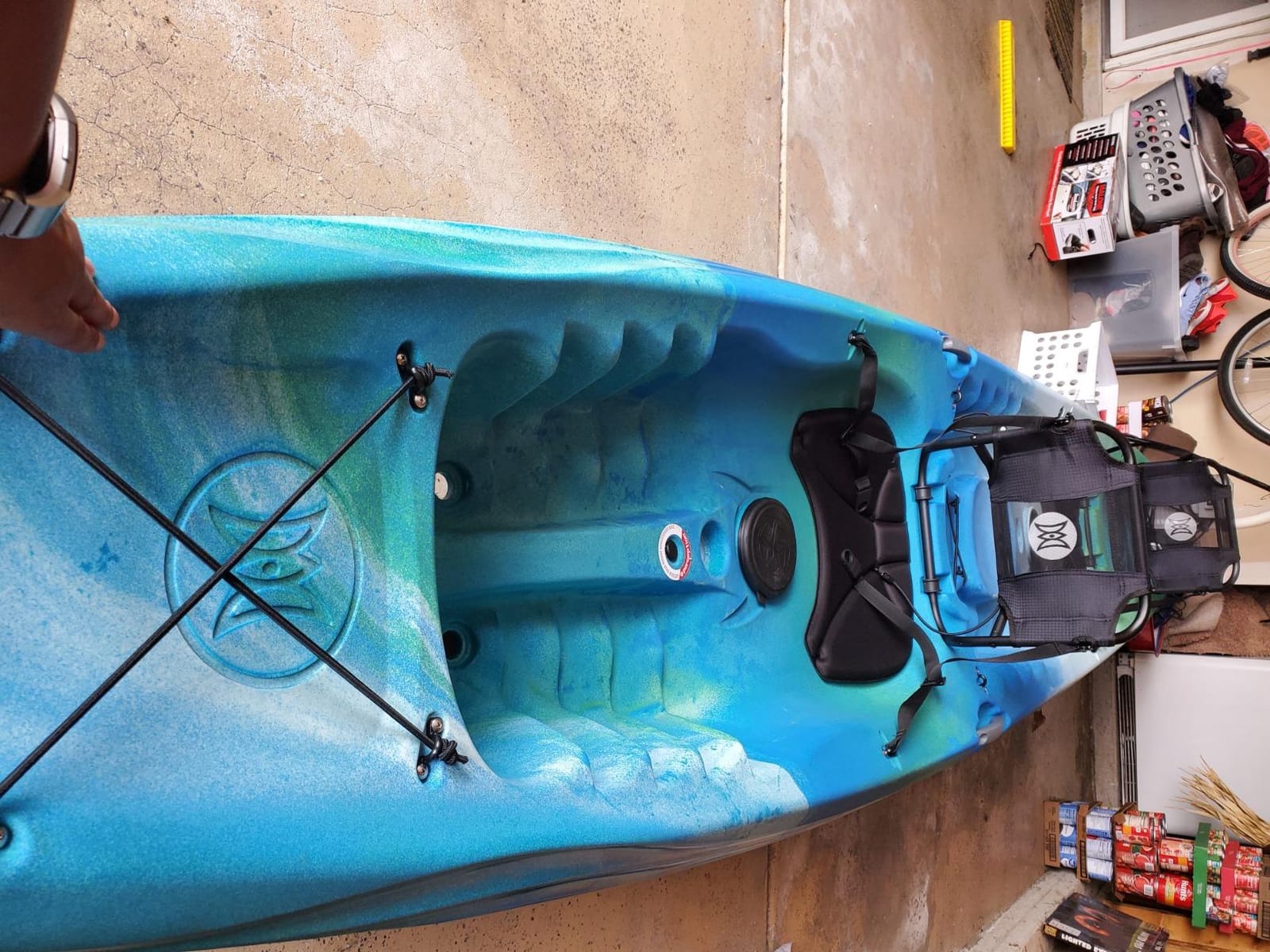
Straight tracking despite its size is the quiet achievement here. Several reviewers mention paddling it on wide rivers, and the 13.5 foot platform holds a line better than most tandems of this width. Adjustable framed seatbacks with cushioned seat pans and molded knee areas make the fit adjustable, which matters when the front paddler is tall and the back paddler is not.
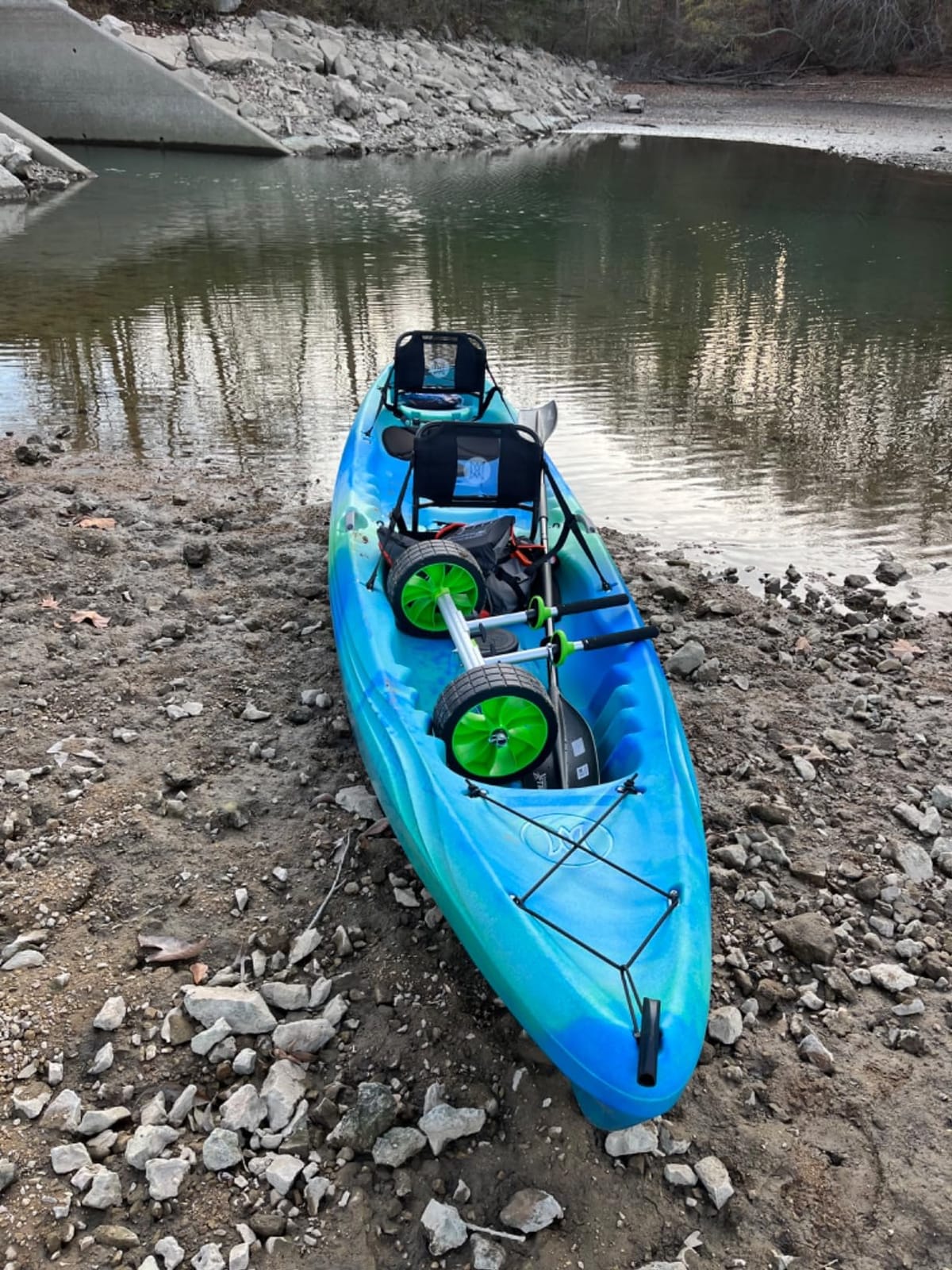
Storage is genuinely generous for a family boat. Front and rear tank wells secured by bungee cords take coolers and gear, and two central hatches cover smaller items. Scupper holes drain water, which extends the season on mild rivers, and two solo mount recesses let you add accessory tracks.
The complaints are mostly about weight and finish. At 79 lbs this is a two-person carry, and the side handles sit off-center, so the load is biased toward the rear when you walk it to the water. Central hatches are small enough that small dry bags barely fit, and the cup holders will not hold a standard bottle without tipping.
Why It Made the Cut
Capacity and stability together are the reason. Most boats rated for two adults with gear are either too narrow or too short to feel planted on a wide river, and the Tribe’s 34 inch beam plus 500 lb rating is the pairing that fixes both. For a family with a child or a smaller adult in the back seat, the adjustable framed seatbacks are the deciding feature.
Reviewers repeatedly note the framed seatbacks are a clear upgrade over earlier versions, and the tank well layout takes a full day of gear without everything ending up on the deck where it catches wind.
Where It Falls Short
Weight is the real limit. Seventy-nine pounds is manageable with two people and painful alone, and roof-rack loading solo is awkward. If your launches involve stairs or a long gravel bar, plan on a cart or a second person, or look at an inflatable tandem instead.
It is also a recreational platform, not a whitewater boat. On Class III and above you want rocker, volume distribution and a proper spray skirt setup, none of which this hull offers. Use it on the wide, slower reaches where its size pays off.
5. Lifetime Tamarack Pro 103: Best for Big River Fishing
Lifetime Tamarack Pro 103 Sit-On-Top Kayak, Lightning Fusion, 10 ft. 3 in.
10 ft 3 in sit-on-top
57.5 lbs
31 in beam
300 lb capacity
Fishing rig included
+ The Good
- Deep hull channels and chine rails track well in current
- Adjustable framed seat and footrests
- Center hatch with bucket plus a deeper tank well
- Five-year limited warranty
- The Bad
- Fishing layout uses up deck space
- 300 lb rating is the lowest in the group
- Shorter length tracks less precisely than 12-13 ft hulls
If your river days start with a rod rather than a campsite, the Tamarack Pro 103 is built for it. It carries one adjustable and two flush-mounted rod holders, accessory mounting, tackle box storage and a catch ruler as standard equipment. That is a fishing layout rather than a touring layout, and it changes what the boat is good at.
The hull matters more than the rigging. Deep hull channels give it tracking in current and wind, and chine rails add lateral stability, which together make it feel planted when you are standing to cast or when a wind gust hits. The wide sit-on-top platform is easy to get in and out of, and that matters when you are wading in shallows at dawn.
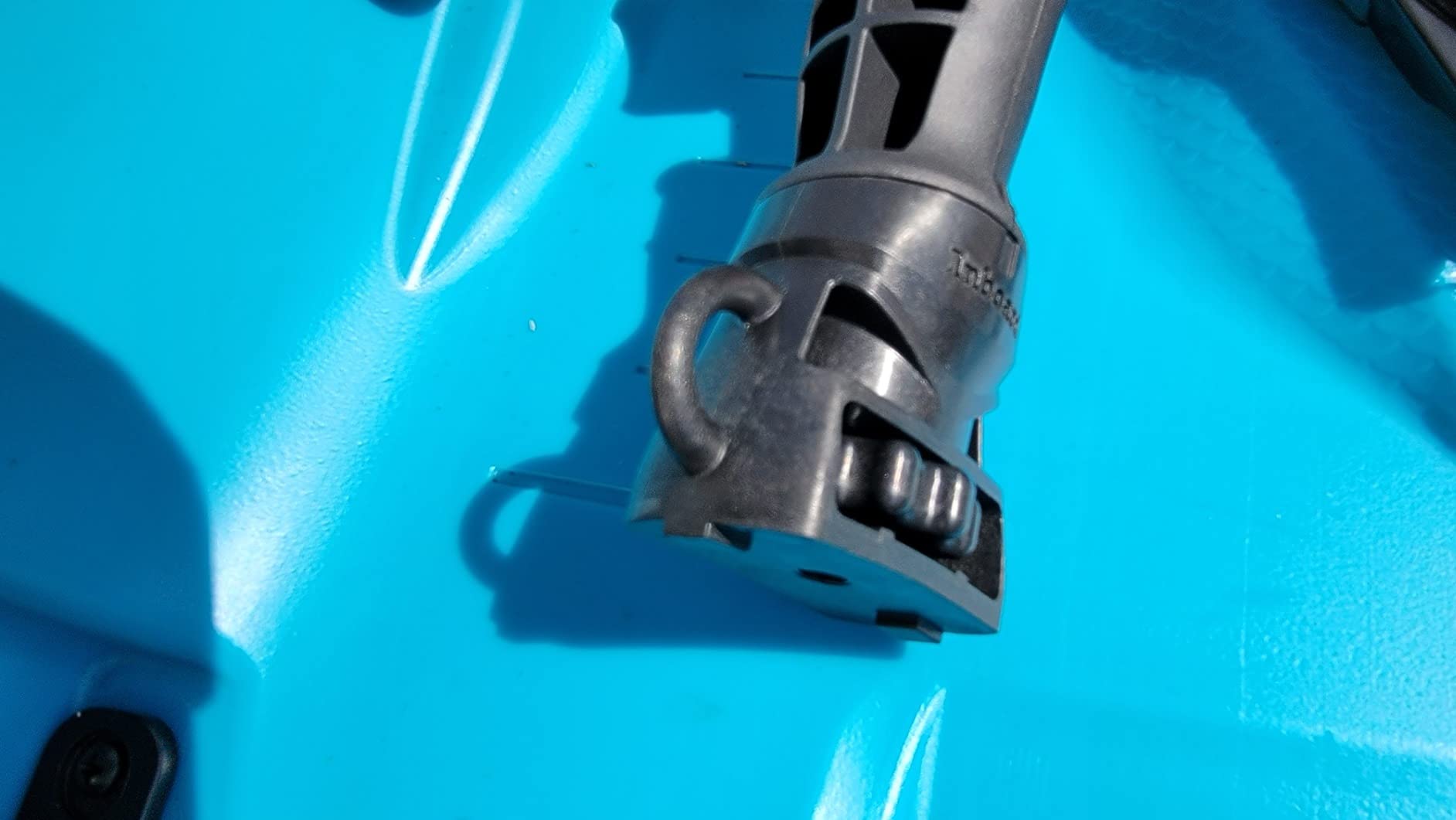
Storage is set up for a working day. A center hatch includes a bucket, and a deeper tank well sits behind it for extra capacity. Front and rear bungee cords secure loose gear, and a paddle keeper holds the paddle against the hull while you fish. The adjustable framed seat and footrests let you dial in a position that does not fatigue over a long morning.
The 300 lb rating is the tightest in the group, and reviewers note it limits gear and passenger load. At 10 ft 3 in it also tracks less precisely than the 12 to 13 foot touring hulls, so on a wide river with crosswind you will be correcting more often than an angler in the Pungo 120 would.
Why It Made the Cut
Chine rails plus deep hull channels is a genuinely good combination on moving water, and it is the part of this boat that has nothing to do with fishing. A boat you can stand in while a current pushes you sideways is a safer boat, and anglers who wade the inside of a bend know exactly why that matters.
The five-year limited warranty is also longer than most of what we tested, including every inflatable in this roundup. For a boat that lives on a trailer and takes abuse from gear and hooks, that coverage is worth noting.
Where It Falls Short
This is not a touring boat and does not pretend to be one. The rod holders and tackle box occupy deck space that a paddler would use for dry bags, and the fishing layout is awkward to strip. If you want one boat for both angling and multi-day trips, the Tarpon 105 handles that balance better.
Watch the load rating. Three hundred pounds covers a paddler and a fishing rig but leaves little margin, and the shorter hull gives up precision in the exact conditions, crosswind and open width, where big river anglers spend their day.
6. Sea Eagle 380x Explorer: Most Capable on Rapids and Remote Launches
Sea Eagle 380x Inflatable Kayak with Pro Package
12 ft 5 in long
40 lbs
39 in beam
750 lb capacity
Class IV rated
+ The Good
- Highest whitewater rating in this group
- 16 self-bailing drain valves
- Drop-stitch floor inflates to 10 PSI
- 750 lb capacity fits two to three adults
- The Bad
- 40 lbs carry weight needs a cart to remote launches
- About 8 minutes of inflation time on the water
- Wide beam tracks less precisely than narrow hulls
The 380x Explorer is the most capable boat here, and the capability is not close. It is rated to Class IV whitewater rapids, which puts it above every other boat in this roundup, and it does that with a 1000 denier reinforced PVC hull and quadruple-overlapped glued seams that reviewers describe as bouncing off rocks, logs and debris.
The floor is the detail that changes the feel. A rigid drop-stitch floor inflates to 10 PSI, so you are standing on something closer to a hard shell than to a pool noodle. Owners consistently credit it for making the boat feel solid underfoot, and 16 self-bailing drain valves let you choose between rapid draining in whitewater and staying dry on flat water.
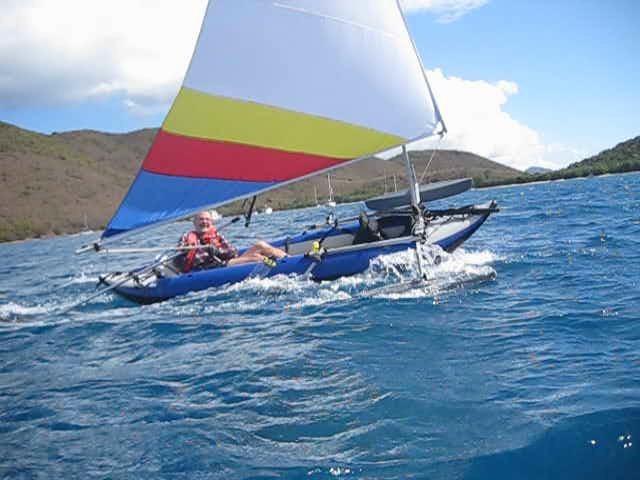
Capacity is the headline number: 750 lb for two to three adults, plus a removable swept-back rear skeg for straight tracking on open reaches. The Pro Package adds tall back seats, heavy-duty paddles, a high-output SUP pump and a backpack, so the packing weight is roughly what you carry on your shoulders.
At 40 lbs packed, that weight is the trade. It is light compared with a 79 lb hard-shell tandem but heavy compared with a 32 lb inflatable, and reviewers treat it as the boat for remote launches precisely because it still fits in a backpack. Plan on a cart for anything longer than a short walk.
Why It Made the Cut
Class IV is the number that matters, and no hard-shell boat in this roundup carries a rating anywhere near it. If your river has steep sections with holes and pushy currents, this is the only boat here whose manufacturer rates it for that water, and a 4.8 average from owners backs the claim.
The drain valve system is the underrated part. Most inflatable owners drain constantly and accept a wet cockpit. Being able to open the valves for a rapid and close them for a dry flat-water day means one boat genuinely does both, which answers the most common question we see in paddling forums.
Where It Falls Short
The 39 inch beam is wide, and wide means less tracking efficiency against a narrow hard-shell touring hull. On a long flat reach where speed matters, a harder narrow boat will out-paddle it. Where it wins is in current, chop and cargo, so match the boat to that reality.
Eight minutes of inflation is also a real part of the day. On the water that is a non-issue; at a remote trailhead it is not. Budget for it, and dry the boat properly before packing, because trapped moisture in a sealed hull is the fastest way to shorten its life.
7. Goplus Tandem Inflatable: Best Budget Tandem for Open Reaches
Goplus Tandem Inflatable Kayak, 12.5FT 2-Person Kayak Set for Adults
12.5 ft long
37 in beam
507 lb capacity
2.18 PSI max pressure
+ The Good
- Long hull and 2 fins give decent tracking for a tandem
- 507 lb capacity in a 3-chamber build
- Two adjustable EVA seats with high backs
- 4 carry handles and a repair kit included
- The Bad
- Only a 3-month warranty
- Low 2.18 PSI leaves the hull soft and slow
- Hand pump only for a slow inflation
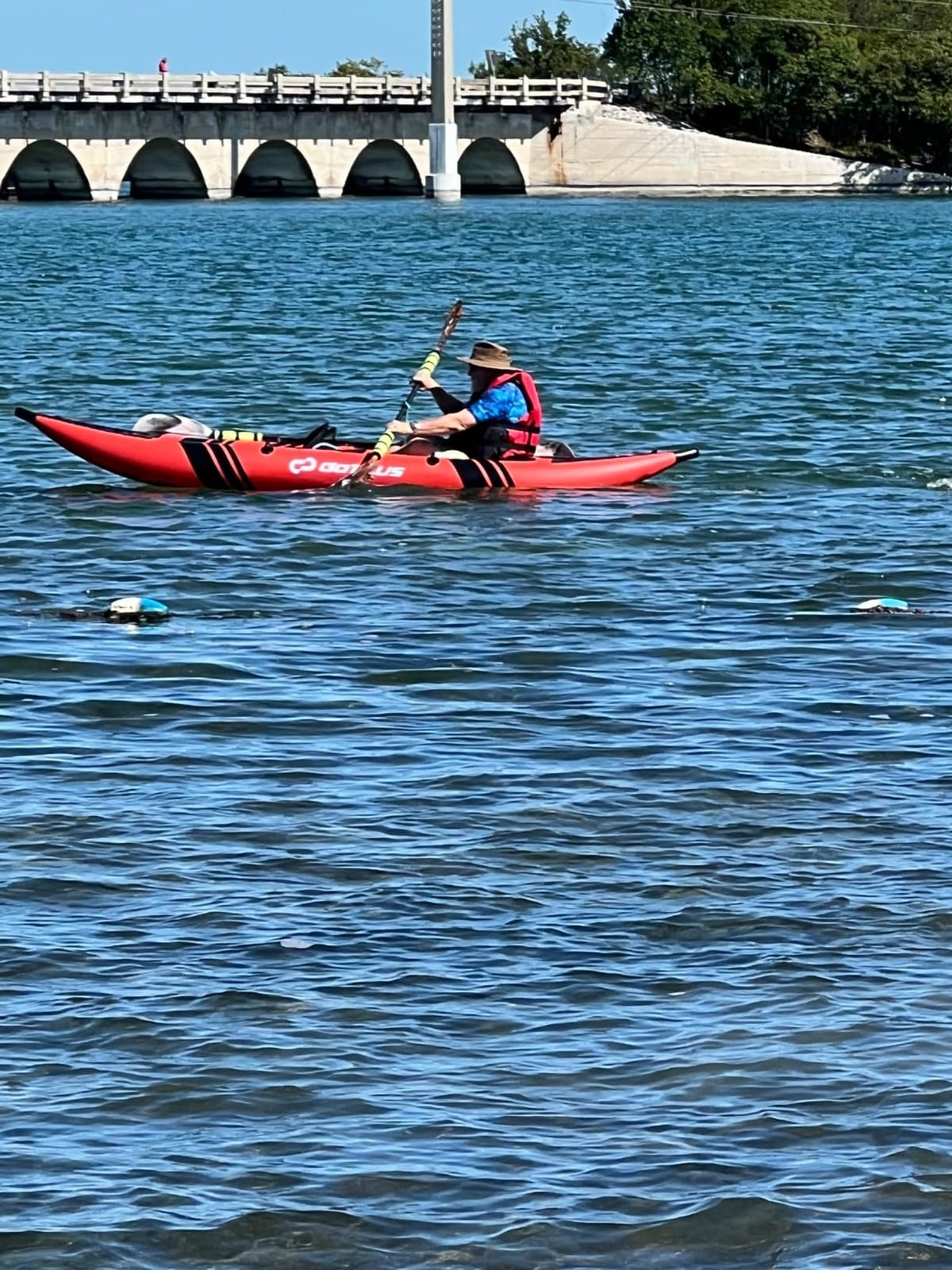
The Goplus 12.5 is the size-per-cost answer for a tandem river trip. A 12.5 foot hull with two fins gives better straight-line tracking and glide than most inflatables at this level, and 507 lb of capacity in a premium three-chamber build makes it hard to sink even when fully loaded.
Comfort is better than the number suggests. Two adjustable EVA seats with high back support reduce fatigue on longer outings, and a three-level adjustable footrest lets a shorter front paddler and a taller back paddler both find a relaxed position. Reinforced laminated PVC with an anti-slip floor resists punctures and wear.
It also packs into a carry bag, and four handles make the walk from a car to the launch manageable. Front and rear elastic cargo ropes hold gear on deck, and 89 inch three-section detachable paddles break down small enough to fit in the same bag.
The 4.1 average reflects three honest limitations. The maximum pressure is 2.18 PSI, which leaves the hull soft and slow compared with drop-stitch models, and the warranty runs three months, far shorter than the hard-shell alternatives. The included hand pump takes noticeably longer than an electric pump would.
Why It Made the Cut
Length and fins are the reason it out-performs its class. Most budget inflatables are nine or ten feet and wallow; a 12.5 foot hull with two directional fins holds a line far better across an open reach. Reviewers buying it for tandem river trips report good tracking for the money spent.
It also carries its own repair kit, wrench and patch, which matters more than it sounds when you are a kilometre from a road. For paddlers learning on a wide slow river with a forgiving boat underneath them, forgiving is the point.
Where It Falls Short
Soft is soft. At 2.18 PSI the hull flexes under a heavier paddler and offers less support for standing or casting than a drop-stitch floor, and reviewers repeatedly note the slow feel compared with premium inflatables. If you plan to stand to fish, buy a firmer boat.
The three-month warranty is the biggest red flag in the set. Something can go wrong with a glued seam or a valve in the first season, and a warranty that short does not give you much recourse. Weigh that against the low entry cost honestly.
8. Intex Challenger K1: Best Starting Boat for Calm Water and Mild Rivers
INTEX 68305EP Challenger K1 Inflatable Kayak Set: Includes Deluxe 86in Kayak Paddles and High-Output Pump – Adjustable Seat with Backrest – Removable Skeg – 1-Person – 220lb Weight Capacity
9 ft inflated length
26 lbs
220 lb capacity
Removable skeg
+ The Good
- Extraordinary PVC durability for the entry tier
- Inflates in 5 to 10 minutes and folds into a bag
- Very stable and hard to tip
- Removable skeg gives straight tracking
- The Bad
- Short and slow on moving water
- Skeg is easy to lose
- 220 lb rating and 9 ft length limit big-river use
With 19,724 reviews, the Challenger K1 is the most reviewed boat in this roundup by a wide margin, and the durability story repeats consistently. Owners report dragging it over downed trees, through quicksand mud and years of sun and rain without a puncture, which is remarkable for a boat at this entry level.
It also sets up in five to ten minutes and folds into a bag that fits in a sedan trunk or a closet, which is how most first-time paddlers end up owning a kayak at all. On the water it is very stable and genuinely hard to tip, and the removable skeg gives it the straight tracking that cheap inflatables usually lack.
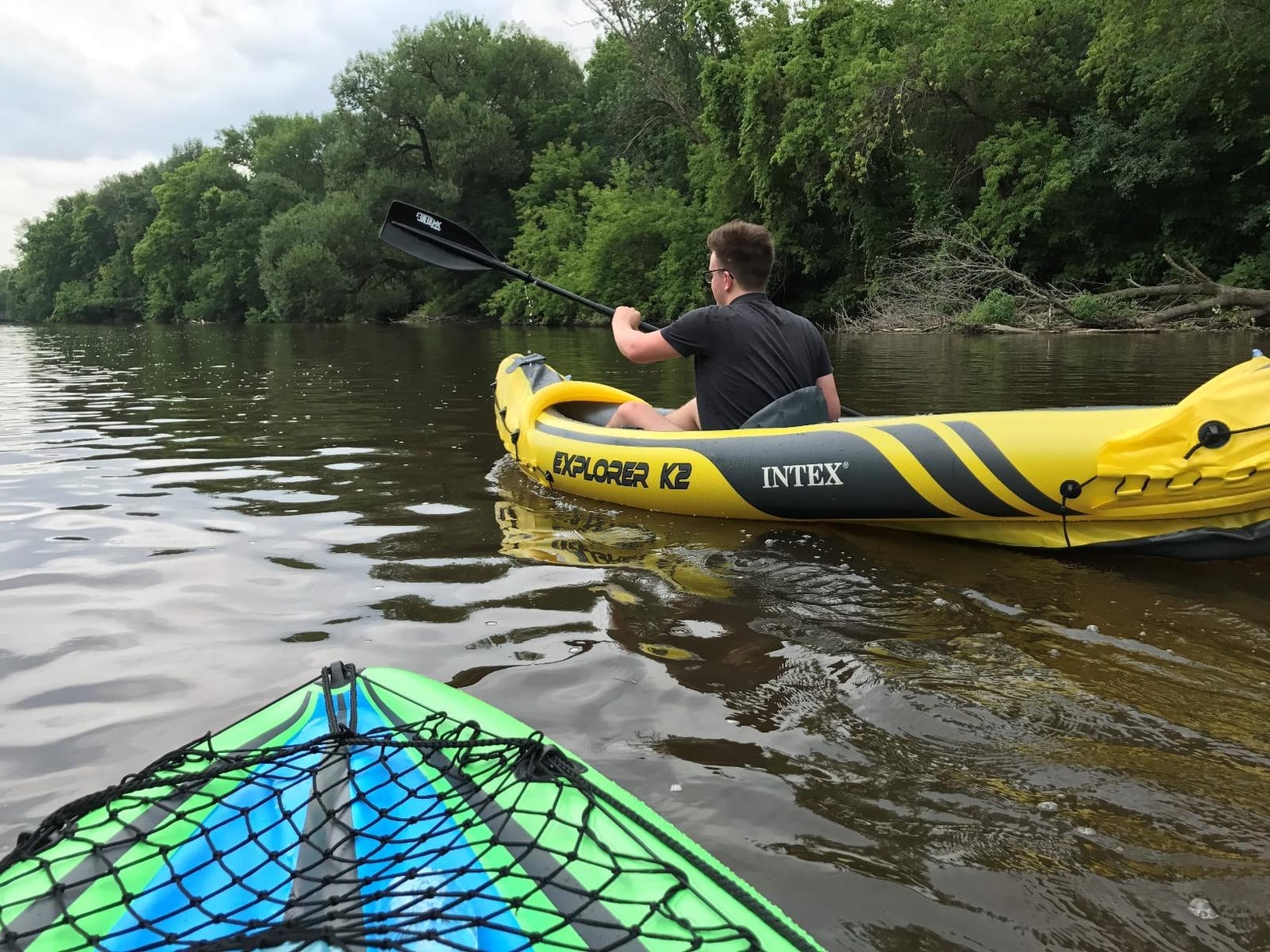
The cockpit seats are removable and adjustable with a backrest, and a cargo net plus front and rear storage carry a cooler, rods and gear. For lakes, calm water and mild rivers, that is a complete package with nothing important missing.
Be clear about what it is not. At 9 feet and 220 lb, this is a calm-water and mild-river boat, not a big-river vessel. Owners note it is slow and does not glide, the included 86 inch paddle is short and not very durable, and the removable skeg is easy to lose, with several reviews describing being stranded without one.
Why It Made the Cut
Two reasons. First, the review volume means the failure modes are already documented, so you are not gambling. Second, the PVC holds up to abuse that destroys cheaper boats, which is why so many owners keep it for years after outgrowing its performance.
For a first river paddle on a wide, slow section with a gentle current, the stability here is a genuine advantage. It is hard to tip and impossible to sink, and that combination buys new paddlers confidence faster than a faster boat would.
Where It Falls Short
Length. Nine feet gives you very little tracking on a wide river with crosswind, and the 220 lb rating means the boat is sized for a single paddler under about 190 lb plus day gear. Neither fits a large paddler or a loaded trip.
Also note the awkward parts of inflatable ownership: one-way valves cannot suck air out, so deflating is tedious, and drying before storage is a chore you cannot skip. Seat backrests can deflate from leaning against them. None of that is dangerous, but all of it is friction.
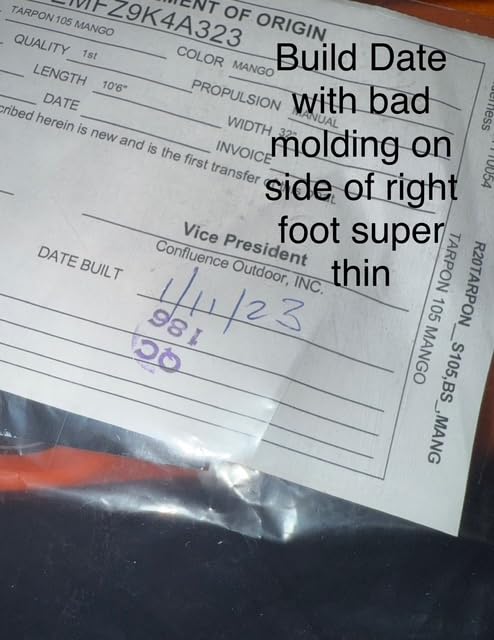
9. Wilderness Systems Tarpon 105: Best for Gear-Heavy Multi-Day Trips
Wilderness Systems Tarpon 105
10 ft 6 in long
55 lbs
32 in beam
325 lb capacity
Dry Tec dry box included
+ The Good
- Fast and straight-tracking for a 10 ft 6 in sit-on-top
- Very large rear storage well
- Front hatch plus removable Dry Tec dry box
- Phase 3 Air Pro seat with cool-touch material
- The Bad
- Angler-oriented deck layout uses deck space
- 325 lb rating limits total load
- 55 lbs needs a cart or two people to carry
The Tarpon 105 is built around one word: storage. The rear well fits crates, coolers, scuba tanks and camping gear, which is a list that tells you immediately what kind of trips the designers had in mind. A front storage hatch and a removable Dry Tec dry box protect the things you cannot afford to soak, phones and keys included.
It is also quick. Owners describe the hull as fast, efficient and straight-tracking for its 10 ft 6 in length, The Phase 3 Air Pro seat uses cool-touch material that stays cool, which pays off on a long summer day.
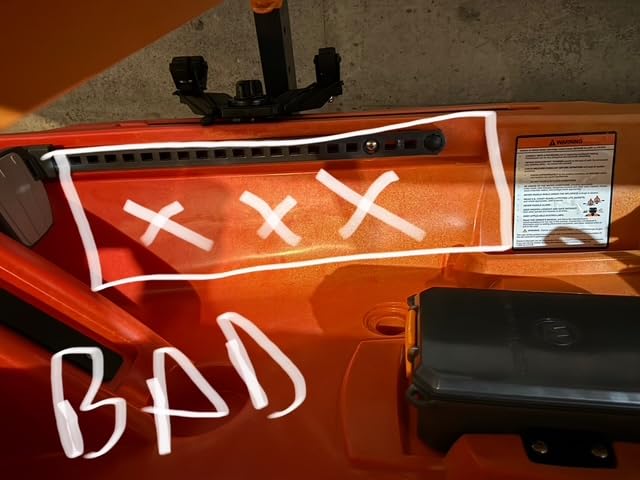
Sectioned storage trays organise small items like sunscreen, lures and snacks so they are not lost in the well, and Sidetracks accessory rails plus Magnate magnetic bottle straps let you customise the deck. Large padded foot rests adjust with a locking lever for different paddler heights.
The 325 lb rating is the limiting number for a gear-focused boat, and it is worth working out your real load before buying. Reviewers also note the angler-oriented layout uses deck space that a touring paddler might want, and at 55 lbs it needs a cart or two people to reach most launches.
Why It Made the Cut
Dry storage on a sit-on-top is unusual, and it is the feature that separates this boat from a pure fishing kayak. The combination of a large open well for wet gear and a sealed dry box for everything else is what lets you camp for several nights without strapping a bag to the bow.
It also has the smallest review base here at 67, so expect less hard-won detail than some rivals. The 4.4 average is solid, and the warranty is a limited lifetime on hull and deck, which matters on a boat designed to be loaded heavily and often.
Where It Falls Short
Think carefully about the deck layout before buying. Rod-holder thinking takes up space a touring paddler would use, and rigging it down for river trips means working around mounts rather than using them. If you fish, that is a benefit. If you do not, it is dead weight.
Fifty-five pounds over a rough bank is a two-person job or a cart job. On a wide river with a hard launch, that is manageable; on a gravel bar with a hundred-metre carry it is not. Pair the boat with a cart from the start rather than making that discovery at the water.
How to Choose a Kayak for Big Rivers
Big rivers ask a boat to do three things at once, and no hull does all three perfectly. The boat has to resist crosswind and drift downstream, which is tracking. It has to stay upright while you brace or stand to ferry, which is primary stability. And it has to stay controllable when you are pushed onto rocks or dropped into an eddy, which is maneuverability. Pick the two that matter most on your water and let the third suffer.
Match the boat to the river class
Class I water is flat with small ripples and few obstacles, and almost any stable recreational boat handles it. Class II has straightforward current, small waves and a few rocks that require steering, and a crossover or recreational sit-in with a skeg covers it. Class III brings frequent obstacles, tighter lines and real consequences for a capsize, and that is where whitewater hulls with rocker and spray skirts begin to matter.
Match the boat to the hardest water on your trip, not the easiest. A boat that feels oversized on a lazy reach will still be the right boat at the put-in for the rapid you cached your vehicle above.
Length, beam and the 120 rule
The 120 rule is a sizing shortcut: a kayak roughly 120 percent of your height in length usually gives enough internal volume for your body with a small clearance. Someone six foot two aims for a boat around twelve feet. Shorter boats fit smaller paddlers, longer boats fit larger ones, and going beyond the rule usually means a cockpit that feels loose rather than roomy.
Length gives you speed and tracking. Beam gives you primary stability. Between them, longer and narrower boats cover distance and narrower-and-wider boats stay planted in wind. For big rivers, most paddlers land between 10 and 13 feet, with 12 feet a sensible default for adults.
Primary versus secondary stability
Primary stability is how hard the boat resists tipping while you are sitting upright in flat water. Wide, flat-bottomed hulls win this contest, and it is why sit-on-tops feel planted and short recreational kayaks feel safe. Secondary stability is how the boat behaves once you are already on edge, which is what saves you in current.
Boats with rocker and chines win secondary stability, because the curved hull and angular edges self-right rather than waiting for you to fix the mistake. On a wide slow river, prioritise primary stability. Below Class II, prioritise secondary.
Rocker, skegs and rudders
Rocker is the bow-to-stern curve that pivots the boat over waves and obstacles instead of driving it into them. More rocker means a boat that turns and bounces, less rocker means a boat that tracks and glides. A skeg is a retractable fin for tracking, controlled from the cockpit on boats like the Aspire 105; a rudder is a steerable trailing blade that gives you more control but costs more and adds drag.
On open water you want the skeg or rudder deployed. In shallow, rocky sections you retract it. Owning a boat with cockpit control means making that change while moving, which is why it matters on a river and barely at all on a pond.
Sit-in versus sit-on-top on moving water
Sit-on-tops are wider, easier to climb into from the water and better suited to fishing, wind and casual family outings. Sit-ins are narrower, faster, better at tracking and the usual choice for touring and longer distances. Neither is safer on moving water by default; hull shape and volume matter more than layout.
For big rivers specifically, a sit-on-top wins when you have fish, coolers or a child in the boat. A sit-in wins when the priority is covering distance. If you are torn, our tandem kayak guide covers the size questions in more detail.
Carry weight and launch logistics
Weigh the boat against your access point before anything else. Hard shells in this roundup run from 48 to 79 lbs, and inflatables from 26 to 40 lbs. A boat you cannot lift onto a roof rack solo will end up unused, and no amount of hull quality changes that.
A trailer is worth the setup if you paddle a hard shell regularly. For long carries, an inflatable that fits in a bag beats a cart every time. If you are buying a heavy tandem, plan on a second person at the launch.
Storage for multi-day river trips
Count your gear in dry bags and add the hull weight to your paddler weight before checking a capacity rating. Then divide by the number of nights. Two people with a tent, sleeping bags, food and a stove routinely exceed 300 lbs total, which is why the 400, 500, 650 and 750 lb boats in this roundup exist.
Dry storage matters more than volume. A sealed hatch or dry box keeps electronics and spare clothing safe; an open tank well keeps coolers and wet gear out of the cockpit. Boats with both, like the Tarpon 105 and the Pungo 120, suit multi-day trips best.
Safety and Self-Rescue on Moving Water
River kayaking is dangerous in one specific way that lake kayaking is not: the water carries you away while you are not ready. Everything below follows from that fact.
Wear a properly fitted personal flotation device on the water, not on shore. Tell someone your launch point, your take-out and your paddle time, and give them a time to call if you have not returned. That float plan is the single highest-value habit on this list.
Learn the wet exit before you need it. The wet exit works in any boat: get your paddle across your lap as a brace, unclip nothing that stops you moving, drop your trailing shoulder into the water on the downstream side, bring your knees up to your chest, and push off the hull with your feet. Practise it in shallow water until it is automatic.
For a sit-on-top, get back in by swimming to the bow, pulling the hull down onto one knee and pushing with your arms. Paddle alongside to keep the boat steady. If you cannot get back in, swim to the nearest bank and get out of the river; an empty boat is replaceable.
Cold water kills before exhaustion does. Dress for the water temperature rather than the air temperature, and treat a mid-season river as cold even on a mild day. A kayak roll is the best self-rescue skill available to a sit-in paddler, and it is worth taking the course before you commit to Class III water.
Seasonal water level changes matter as much as the boat. High water moves rocks, creates strainers and pushes more debris; low water leaves gravel bars, dead trees and shallow channels that ground a hull. Check the gauge at your intended launch, and pick a boat suited to the level you will actually see.
Frequently Asked Questions
What type of kayak is best for using on rivers?
A crossover or recreational kayak with a skeg works for most Class I and Class II rivers, because it combines enough width for primary stability with enough length for tracking. For Class III and above, choose a whitewater kayak with rocker, spray skirt compatibility and a volume distribution that keeps you high in the current. Touring kayaks suit long, flat multi-day reaches.
What kind of kayak is best for big water?
For wide open water with wind and fetch, look for a stable hull with a beam of at least 29 inches, a length around 12 feet, and either a retractable skeg or a rudder for tracking. Sit-on-tops stay planted and dry out faster; sit-ins are faster and better for long distances. Inflatable models rated to Class III work well when access points are remote.
What length kayak is best for rivers?
For most adult paddlers on rivers, 10 to 12 feet is the sweet spot. Shorter boats are more maneuverable but wander in current and crosswind; longer boats track better and cover ground faster but feel less agile. Tandems for two adults generally start around 13 to 15 feet. Apply the 120 rule and add a small clearance to your height to land in the right size.
What is the 120 rule for kayaking?
The 120 rule is a sizing guideline: choose a kayak roughly 120 percent of your height in overall length. A paddler who is six foot two aims for a boat around twelve feet. It is a starting point rather than a law, so also check the listed capacity against your paddler weight plus gear, and sit in the cockpit before buying.
Are sit-on-top kayaks good for rivers?
Yes, for wide and slow-moving rivers they are excellent. Their wide platform gives strong primary stability, they are easy to climb back into after a capsize, and scupper holes drain water quickly. They hold fishing gear and gear for family trips well. The trade-off is slower speed and less precise tracking than a narrow sit-in hull on long, flat reaches.
Is river kayaking dangerous?
The main hazards are cold water, current carrying you into obstacles, and being unable to get back into an overturned boat. Wear a properly fitted PFD, leave a float plan with a contact person, know the wet exit before you launch, and treat Class III water as a skill you learn rather than a boat you buy. Training reduces risk more than any single hull choice.
Final Verdict: The Best Kayaks for Big Rivers in 2026
For most paddlers buying one boat for big water, the Sea Eagle 370 Pro is the pick: it carries a Class III rating, stays stable in boat wakes, and packs into a small car trunk. If you want speed and hard-shell tracking instead, the Wilderness Systems Aspire 105 gives you cockpit skeg control and 400 lb of capacity.
Match the rest to the water. The Pungo 120 covers long fast reaches, the Tribe 13.5 carries two adults and a full day of gear, the Tamarack Pro 103 is rigged for anglers, the 380x Explorer is the only Class IV-rated boat here, and the Tarpon 105 is built for loaded multi-day trips. If you also want comparison buying guides, our motorized kayak roundup covers propulsion options for long river days.
Before any of them goes on the water, check the gauge, wear the PFD, file the float plan and practise the wet exit. The best kayak for big rivers is the one you can leave the launch confident in.