
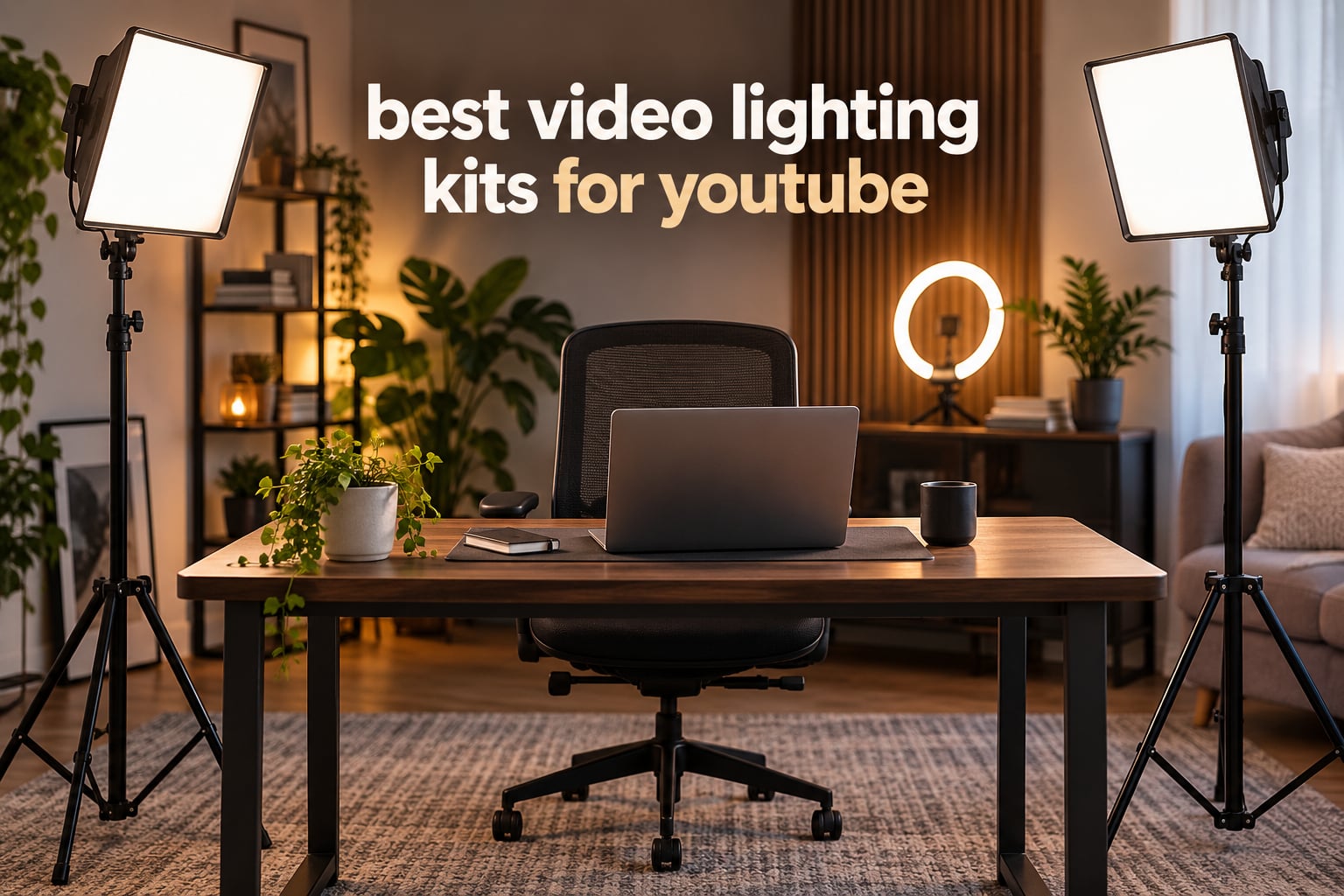
The best video lighting kits for YouTube right now are the Neewer 480 LED two-light panel kit for talking-head work, the UBeesize 12-inch ring light if you are starting with almost nothing, and the Torjim 30W two-pack when you want real brightness for a dim room. I have shot with all three types, and the gap between a cheap kit and a good kit is mostly about diffusion and colour accuracy, not raw wattage.
That is the whole problem with searching for a video lighting kit. Listings call almost anything a kit, and half of them ship a bare panel with a thin tripod and no modifier at all. The difference between a face that looks flat and grey and one that looks produced comes down to whether the light hits your subject through something soft.
Over the past few months our team has worked through twelve kits spanning ring lights, bi-color panels, screw-in softboxes and integrated softbox heads. We looked at the specs that actually change your image: colour temperature range, CRI, output, modifier size and what stands come in the box. Everything below is a real kit we recommend, with the limits spelled out so you can skip it if it does not fit your room.
We earn a commission when you buy through the links on this page, and it does not change which products we list or the order they appear in.
Top 3 Picks for Best Video Lighting Kits for YouTube for October 2026
All 12 Video Lighting Kits at a Glance in October 2026
This table is the fastest way to narrow the field. Match the light type to your shooting situation, then read the full review for the one or two that survive.
| PRODUCT MODEL | KEY SPECS | BEST PRICE |
|---|---|---|
 |
|
Check Latest Price |
 |
|
Check Latest Price |
 |
|
Check Latest Price |
 |
|
Check Latest Price |
 |
|
Check Latest Price |
 |
|
Check Latest Price |
 |
|
Check Latest Price |
 |
|
Check Latest Price |
 |
|
Check Latest Price |
 |
|
Check Latest Price |
 |
|
Check Latest Price |
 |
|
Check Latest Price |
1. Neewer 480 LED Two-Light Panel Kit – Best Overall for Talking Heads
Neewer 2 Packs Dimmable Bi Color 480 LED Video Light Kit, 3200~5600K CRI 96+ LED Panel with U Bracket, 75 inches Tripod Light Stand for YouTube Recording Studio Photography Streaming Key Lighting
480 LEDs per panel
3200K-5600K bi-color
CRI 96+
Two 75 inch stands
+ The Good
- CRI 96+ for natural skin tones
- Two lights give balanced key and fill
- 75 inch stands give real framing freedom
- Aluminum housing and U bracket feel solid
- The Bad
- Analog dimming knobs are not precise
- No battery included so mains power is required
- Cables and adapters add clutter
This is the kit I keep coming back to for talking-head video. Each panel carries 240 white and 240 yellow LEDs, which is enough output that you can put one light a metre and a half from your face and still stop down your camera without the image going muddy.
The 3200K to 5600K range is where it earns its place. Warm it to around 3500K for a cosy vlog look, or push toward 5600K to match a window, and you do not need a second purchase to change the mood of a shoot.
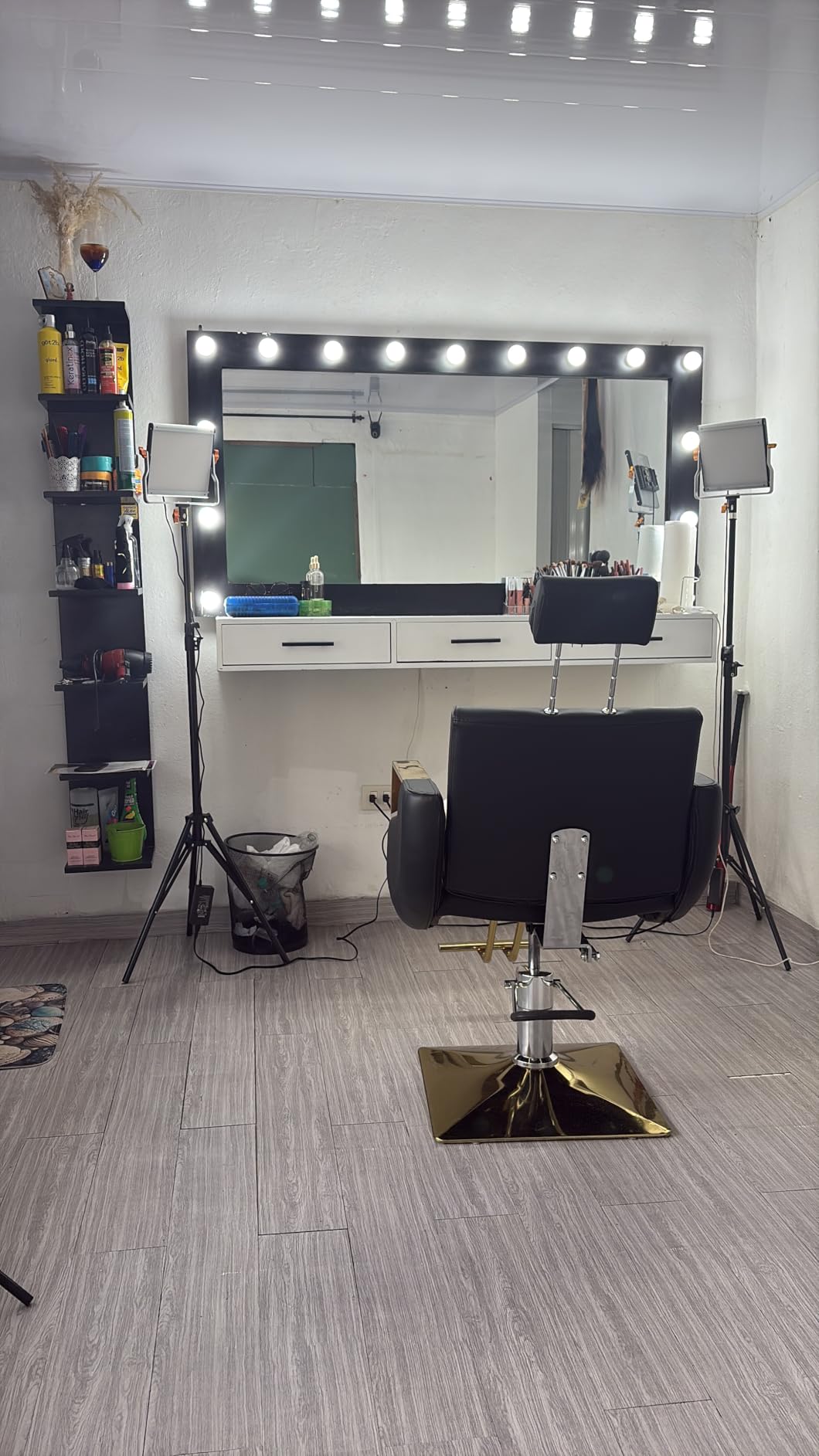
What is actually in the box matters more than the headline spec, and this one is unusually complete: two panels, two telescopic 75-inch stands that run from 3 feet to 6.2 feet, two white diffusers and two carry cases. Those diffusers are doing a lot of work. Sliding one across a panel turns a hard source into something close to a small softbox, which is the single cheapest fix for harsh nose shadows.
Reviewers consistently single out the CRI 96+ rating as the step above cheaper kits, and the steady flicker-free output at full brightness matters more than most buyers expect. If you shoot high frame rates, that stability is the reason this kit keeps working for you a year later.
What this kit is genuinely good at
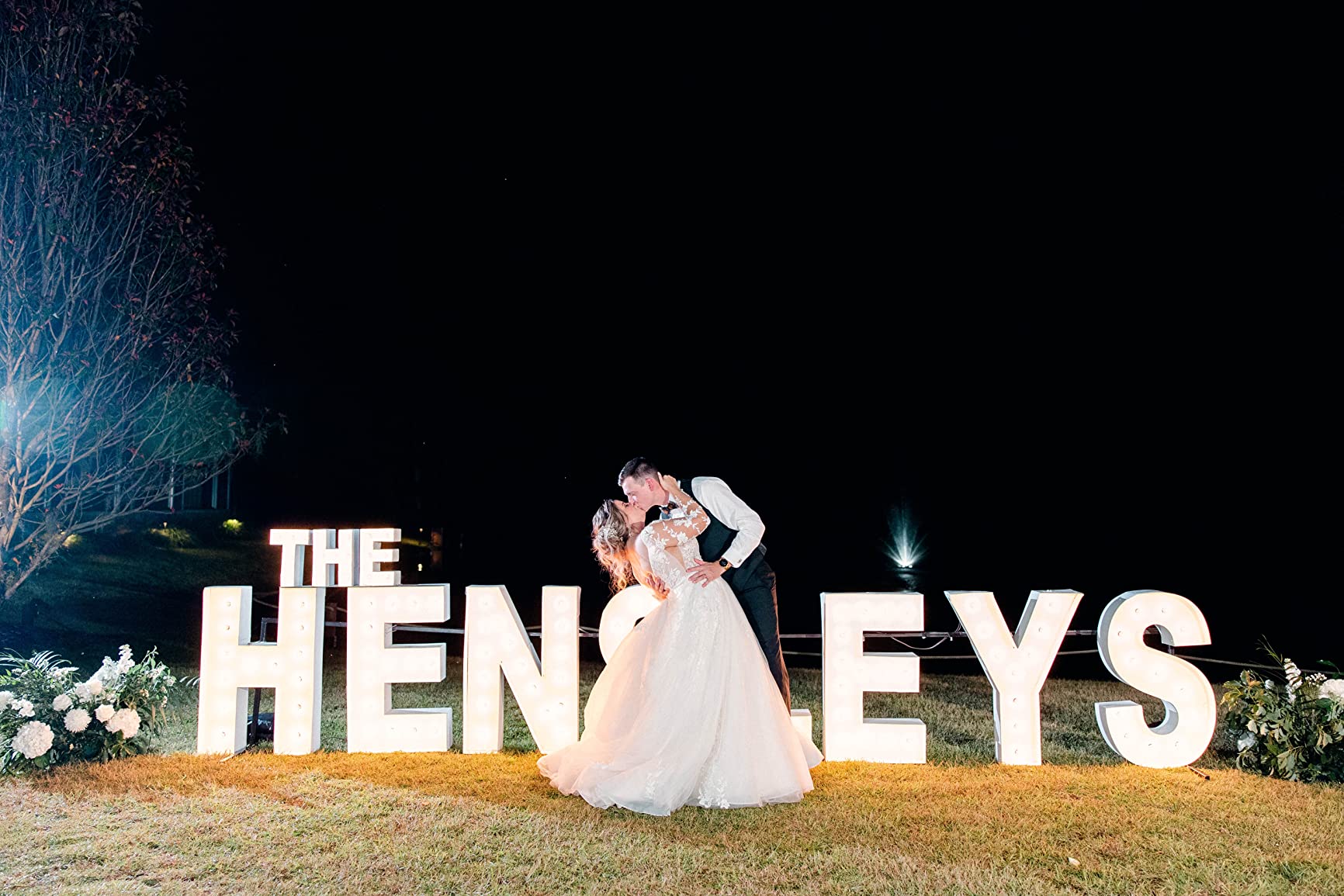
Two lights of equal output placed 30 to 45 degrees on each side of your subject is the standard two-point setup experienced creators describe, and this kit ships with everything for it. Match your main light and you get soft, even skin tones with no hard shadow on one side of the face, which is the look most talking-head channels settle on.
When to look past this kit
Skip it if you shoot away from a wall outlet for long stretches. No battery is included, and the cables plus adapters add clutter that shows up in wide framing. If you need to run on battery, the Neewer NL-192AI further down this list is the version of the same idea built around an internal cell.
2. UBeesize 12-Inch Ring Light Kit – Best Under-Budget Starter
UBeesize 12″ LED Ring Light with 62″ Tripod Stand, Phone Holder & Remote
12 inch ring with 240 LEDs
10W output
3000K-6000K in 5 modes
62 inch tripod
+ The Good
- Most reviewed kit in the roundup
- Stand converts to a handheld selfie stick
- Touch panel makes changes fast during a take
- Works with phones tablets webcams and GoPros
- The Bad
- 10W is dim compared with dedicated video lights
- Circular catchlight in eyes can distract
- Not a key light for a room or large space
- Some buyers report uneven illumination around the ring
The ring light is where most YouTubers actually start, and this is the one they end up on. With close to 99k reviews behind it, the failure modes are well documented, which is worth something when you are spending very little on your first setup.
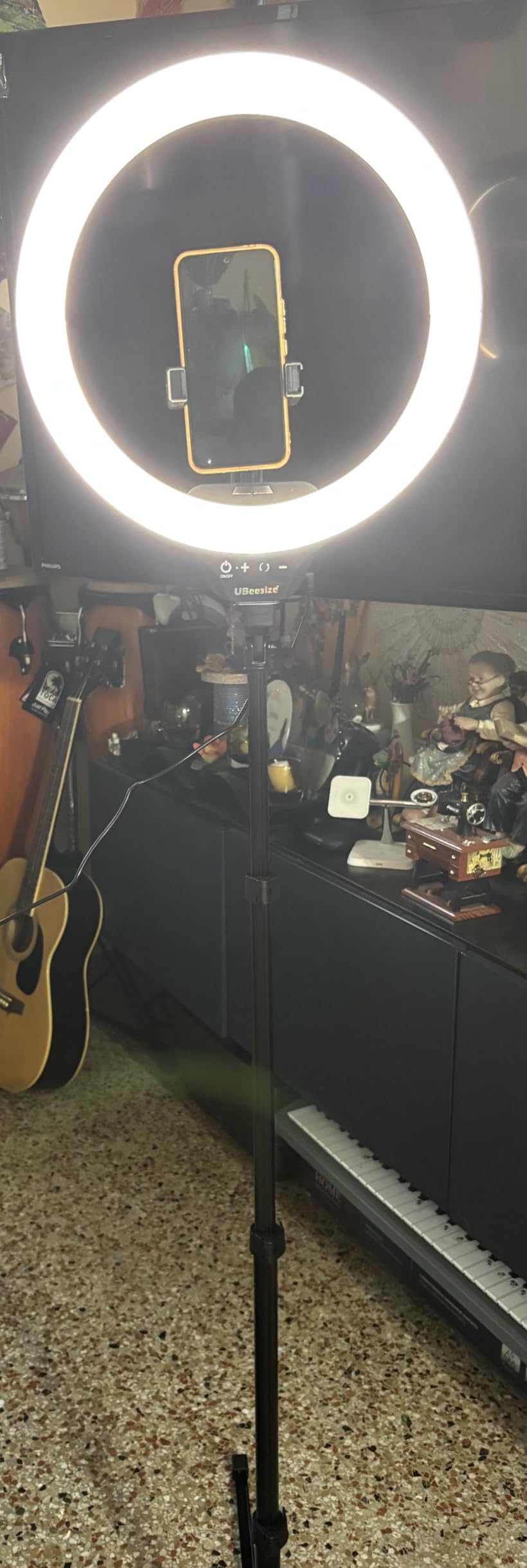
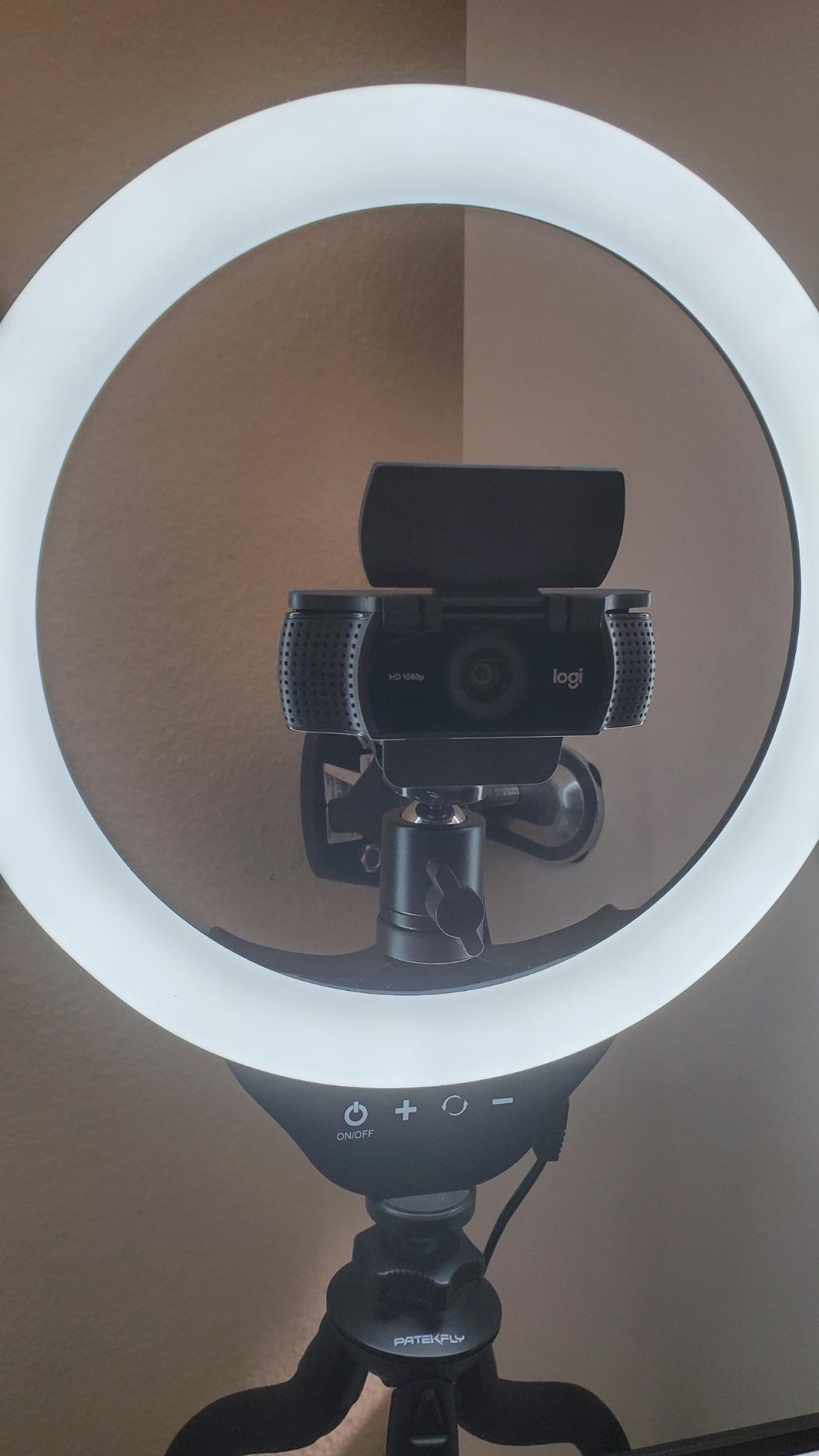
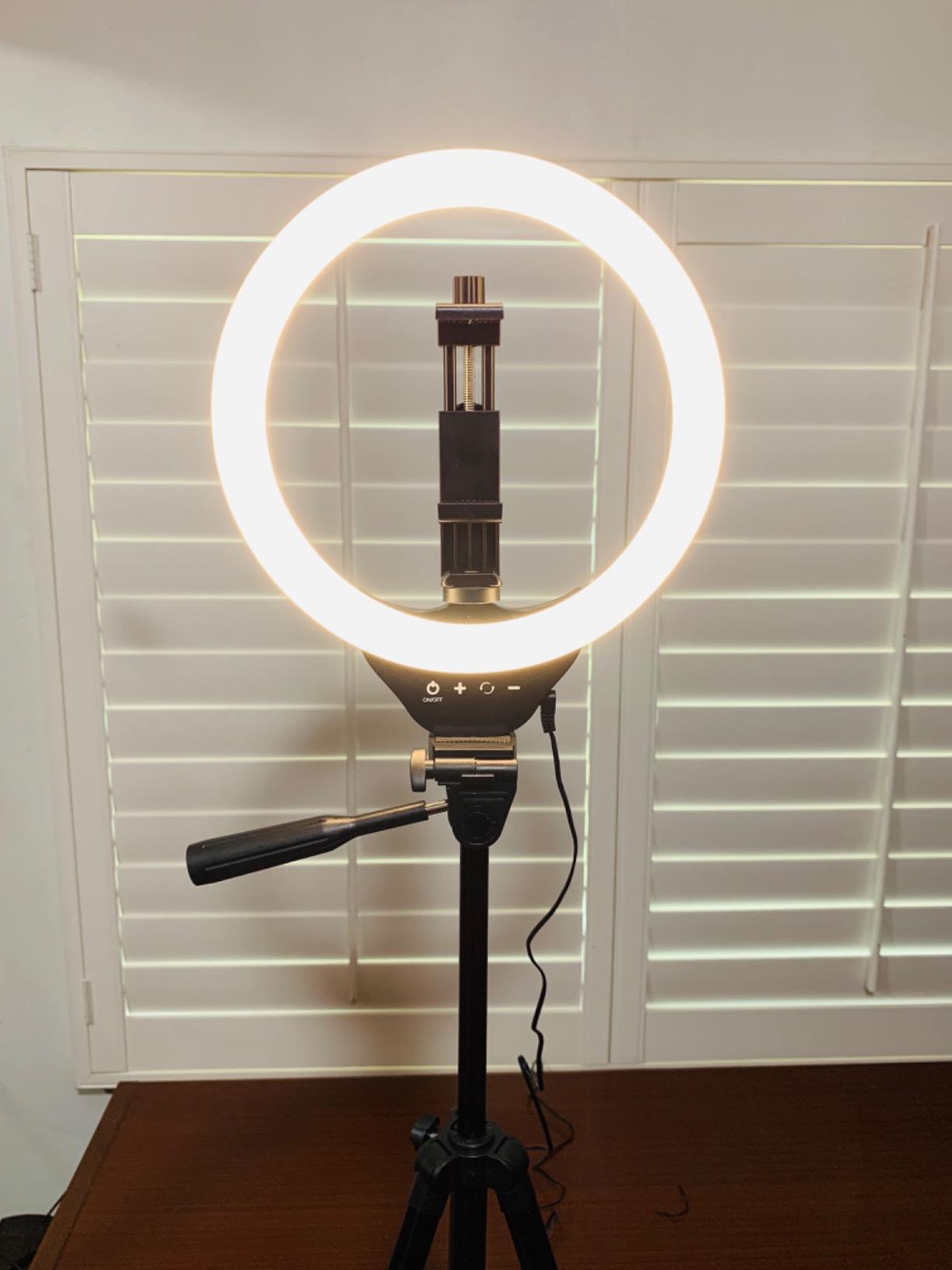
What you get is a 12-inch ring with 240 high-efficiency LEDs, five colour modes from 3000K to 6000K, ten brightness levels, a touch-control panel and a 62-inch tripod that converts into a handheld stick. That combination covers the three jobs beginners ask about: face-lit phone filming, streaming and makeup application.
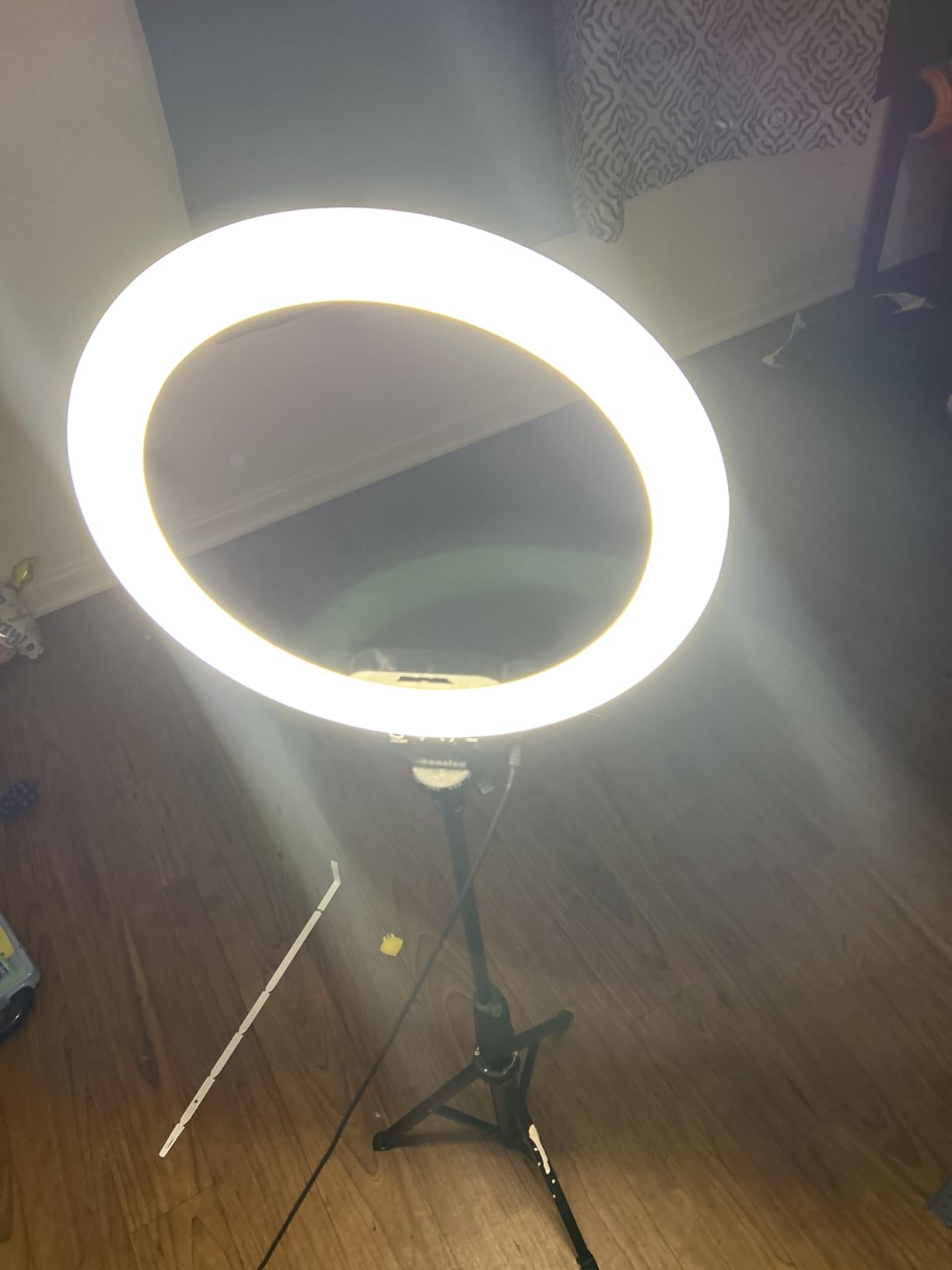
The 360-degree rotatable head and adjustable phone holder are the features I underestimated. Being able to angle the ring high and slightly forward removes the shadow the classic straight-on ring position puts under your chin, which is where most ring-light footage falls apart.
Where a ring light earns its place
Beauty and makeup content is the clearest win, because a ring produces a shadowless frontal wash that shows texture evenly. Short-form vertical video shot on a phone at arm’s length works too, and the Bluetooth remote shutter means you are not reaching for the phone mid-take.
What it will not do
It will not light a room, and buyers who expected a studio-grade key light are disappointed for good reason. The circular catchlight reflected in eyes is also a genuine issue on interviews and long talking heads, where the shape becomes a distraction rather than a signature.
3. Torjim 30W Two-Light Studio Kit – Best Value Brightness
Torjim 12 Inch Video Light Kit for Creators | 30W High Brightness
Two 12 inch 30W panels
3000K-6500K
9 brightness levels
In-line controller
+ The Good
- 30W per panel beats most kits at this level
- Bright enough for a dim room
- In-line controller for live adjustments
- Carrying bag and two phone holders included
- The Bad
- Shorter stands than 70 inch designs
- No battery so it must stay plugged in
- Wired controller adds cable clutter in frame
Output is the reason this kit exists. Thirty watts per panel puts it ahead of most two-light kits at this level, and owners point out that it makes a measurable difference in a dim room where a smaller panel simply cannot keep up.
The colour temperature range of 3000K to 6500K across nine brightness levels covers most of what a first or second channel needs, from a warm vlog tone to a cool, clean tutorial look. A one-year warranty is included, which is not a given in this bracket.
The in-line controller is a small feature that I did not expect to care about and now recommend constantly. It sits on the cable, so you can change brightness during a take without walking to the back of the panel or leaving the frame. For a live stream that is worth more than the extra brightness.
In the box you get two 12-inch panels, two adjustable tripod stands, two phone holders, a remote and a carrying bag. That is a complete two-light corner, not a single light with a clip.
Why brightness matters more than most specs
Wattage on its own tells you very little, because diffusion eats output. What 30W buys you is the ability to keep the light far enough back that the falloff across your shoulders is gentle, rather than cramming a panel 40cm from your face to get the exposure right.
Where it falls short
The stands are shorter than the 70-inch designs in this roundup, which matters if you shoot standing up or want the light above eye level. There is no battery, so both lights need mains power and the inline controller cable adds length you have to manage.
4. NiceVeedi 15W Two-Pack Panel Kit – Best for USB-C Power Banks
2-Pack LED Video Light Kit, NiceVeedi Studio Light, 2800-6500K Dimmable Photography Lighting Kit with Tripod Stand&Phone Holder, 73″ Stream Light for Video Recording, Game Streaming, YouTube
Two 15W panels
CRI 97+
2800K/4800K/6500K
USB-C power input
+ The Good
- Two panels and two tripods in one kit
- CRI 97+ for accurate skin tones
- Runs from a power bank via USB-C
- Storage bag and phone holders included
- Reviewers confirm no visible flicker
- The Bad
- Only three fixed colour temperatures
- AC wall charger not included
- 15W is modest for a large dim room
This is the kit we recommend to anyone who films in more than one place. USB-C power from a power bank or a laptop is the quiet superpower here, and it is the reason it appears on so many first-streaming lists.
Each of the two panels carries 356 LED beads at 15W, with a CRI of 97+. That colour rendering figure is the highest alongside the battery Neewer in this roundup, and it shows up in footage as skin that stays warm rather than shifting green on camera.
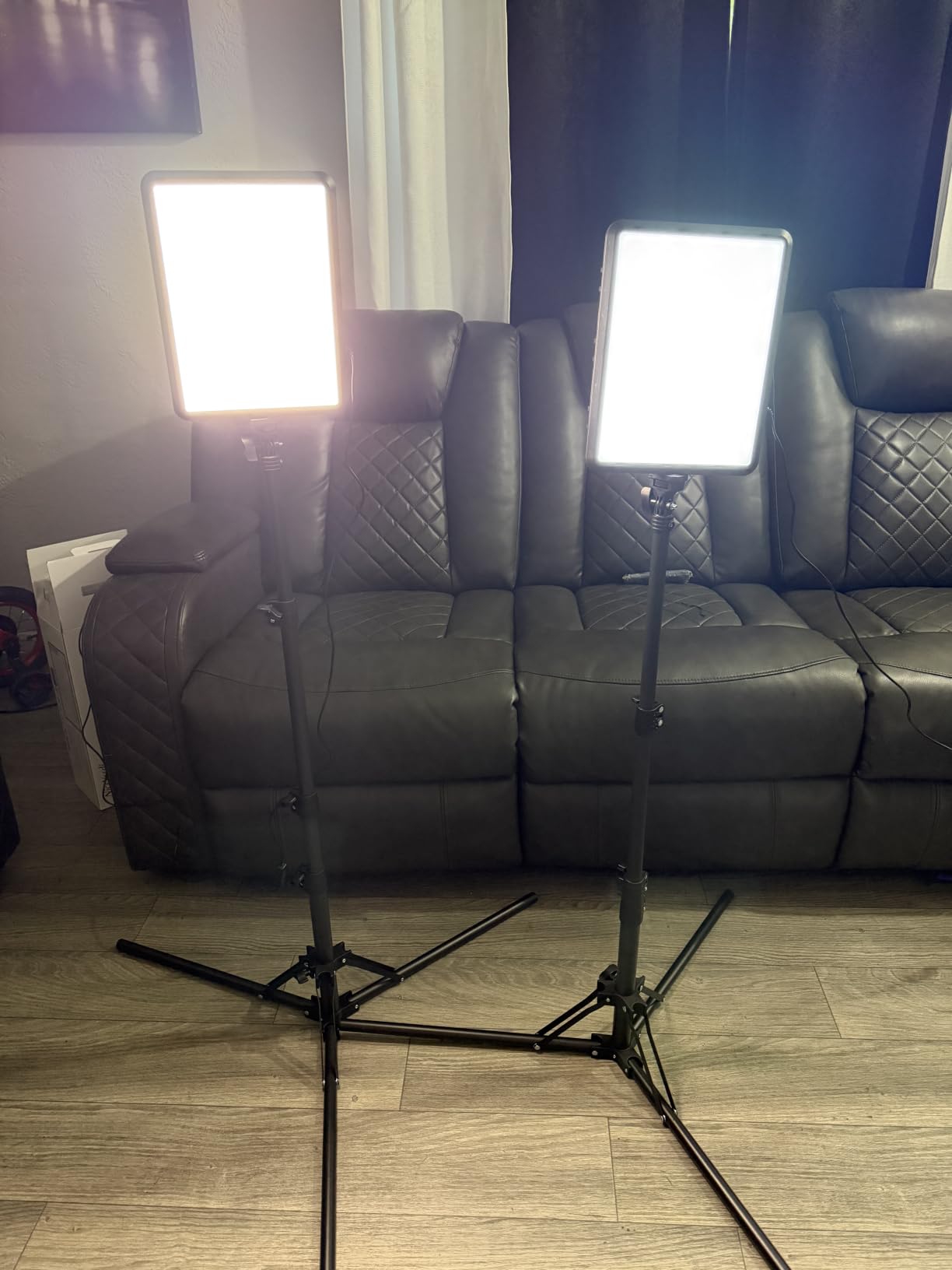
The three colour temperatures are 2800K, 4800K and 6500K rather than a continuous range, and that is the trade-off. You get a very warm, neutral and very cool option, but no in-between. For most creators that is enough, and it is the reason the kit reviews so well for streaming and tutorial work.
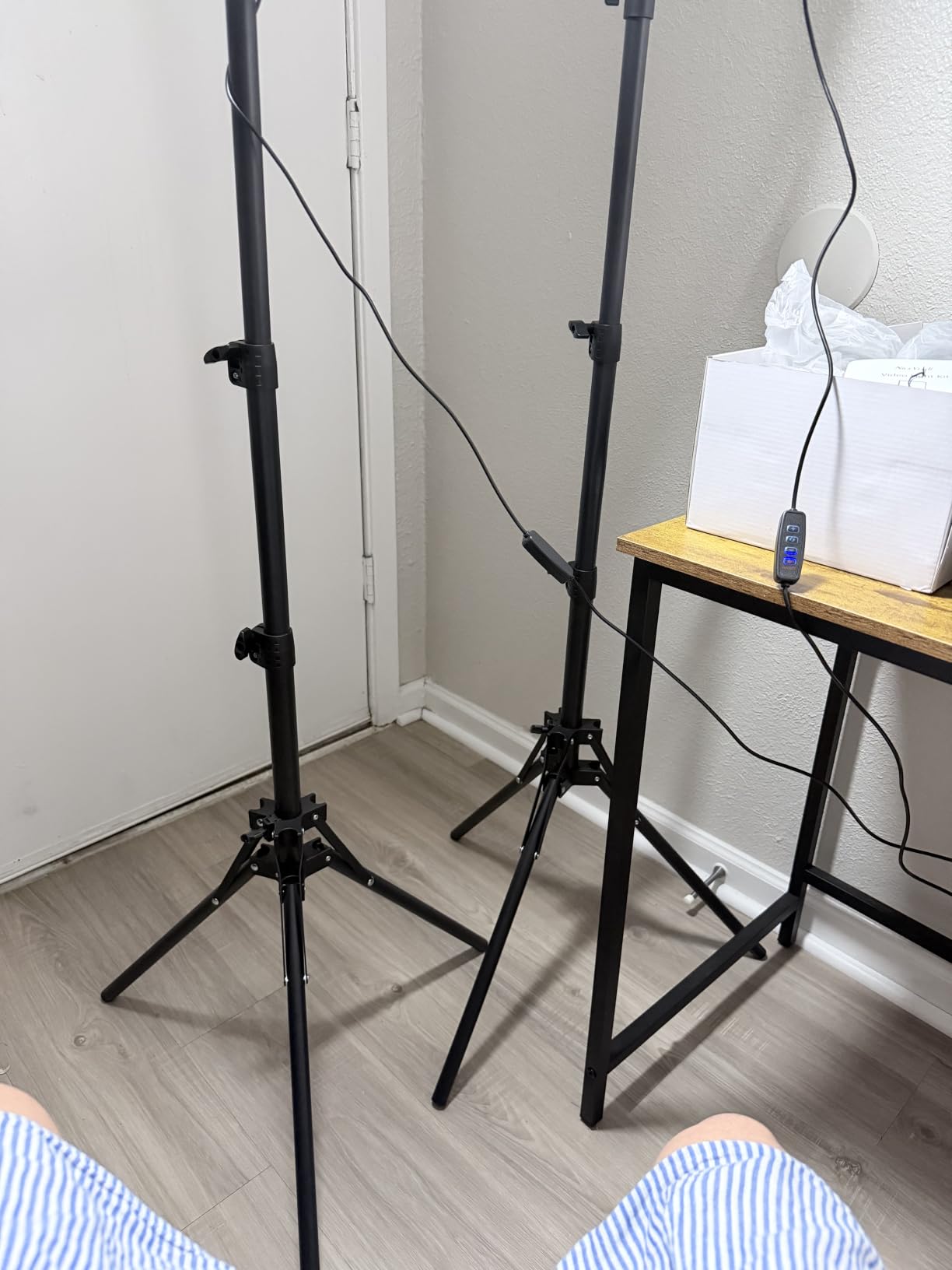
Tripods reach 60 inches, fold down to 17 inches and the panels tilt 180 degrees. That folding size is what makes it genuinely portable, and the storage bag means the whole two-light set is a single carry.
Best for creators who move between rooms
If your shoot happens in a bedroom at night and a living room on weekends, this is the kit that fits your life. Plug both panels into the same power bank, set the stands up in two minutes, and you have a matched key and fill anywhere you can put a tripod.
The trade-offs you accept here
No AC wall charger is included, so you need a USB-C brick or a laptop to power the panels out of the box. That catches people out more often than anything else about this kit.
5. RaLeno 20-Inch Softbox Two-Pack – Best for Soft Portraits
RALENO Softbox Photography Lighting Kit, 2Pack 20″x20″ Soft Box Light
Two 20 inch softboxes
Two 50W CRI 97 bulbs
2500K-7500K via remote
Stands to 80 inches
+ The Good
- Large softboxes give broad wraparound light
- CRI 97 bulbs render skin accurately
- Remote dimming across a wide 2500K-7500K range
- Tall 80 inch stands with secure locking
- Oxford cloth tote keeps it portable
- The Bad
- Uses E27 screw-in bulbs not integrated panels
- Remote needs two AAA batteries not included
- Slower to assemble than a panel kit
Size is the entire argument for this kit. A 20 by 20 inch softbox is a genuinely large source relative to a person’s face, and light from something that big wraps instead of cutting, which is why portrait and interview footage from these looks noticeably smoother than panel output.
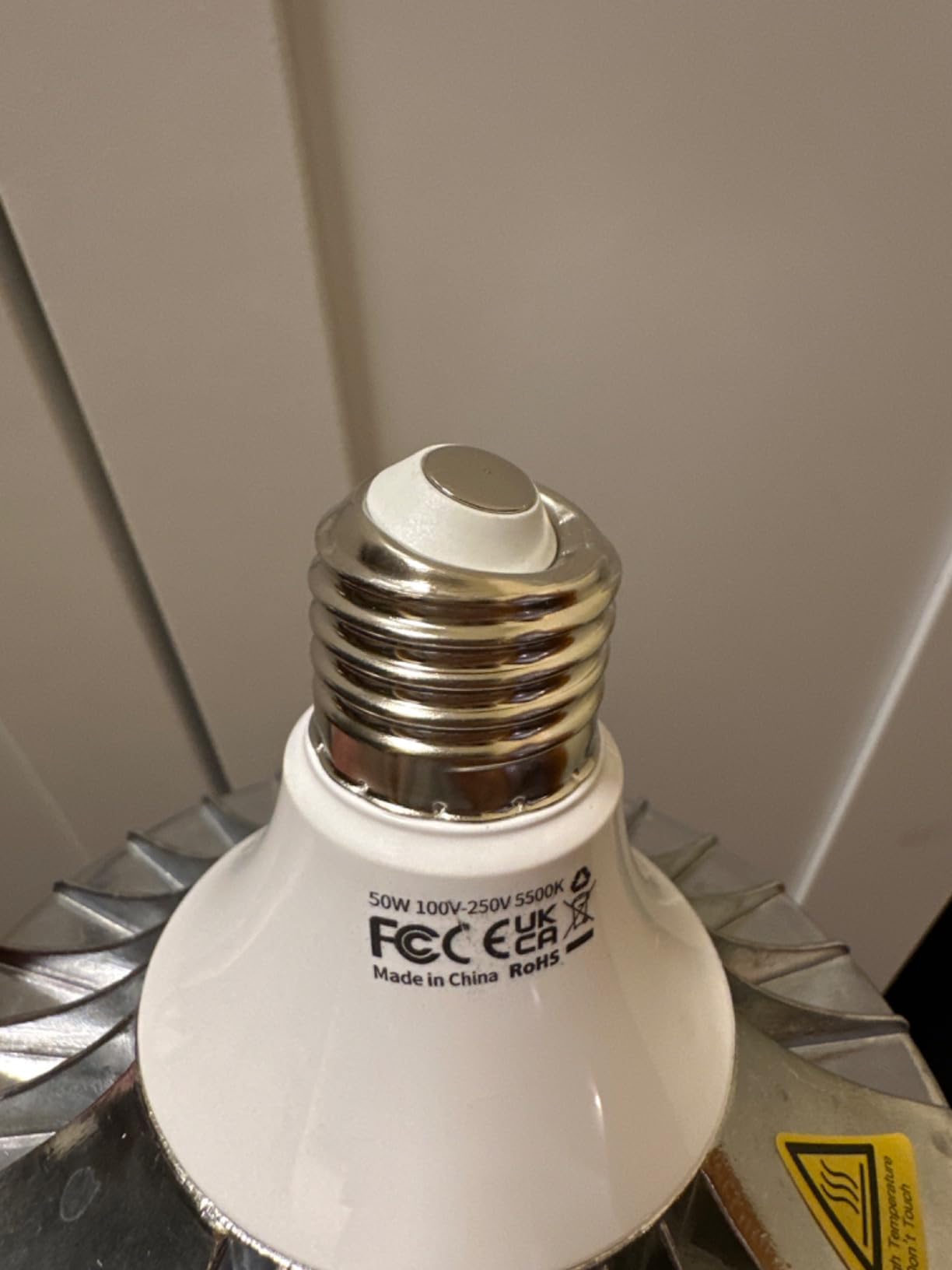
Each softbox uses a 50W daylight LED bulb rated at CRI 97, and the 2.4G remote controls brightness plus a colour temperature range from 2500K to 7500K. That is the widest warm-to-cool range of any kit here, and it is genuinely useful for matching different rooms.
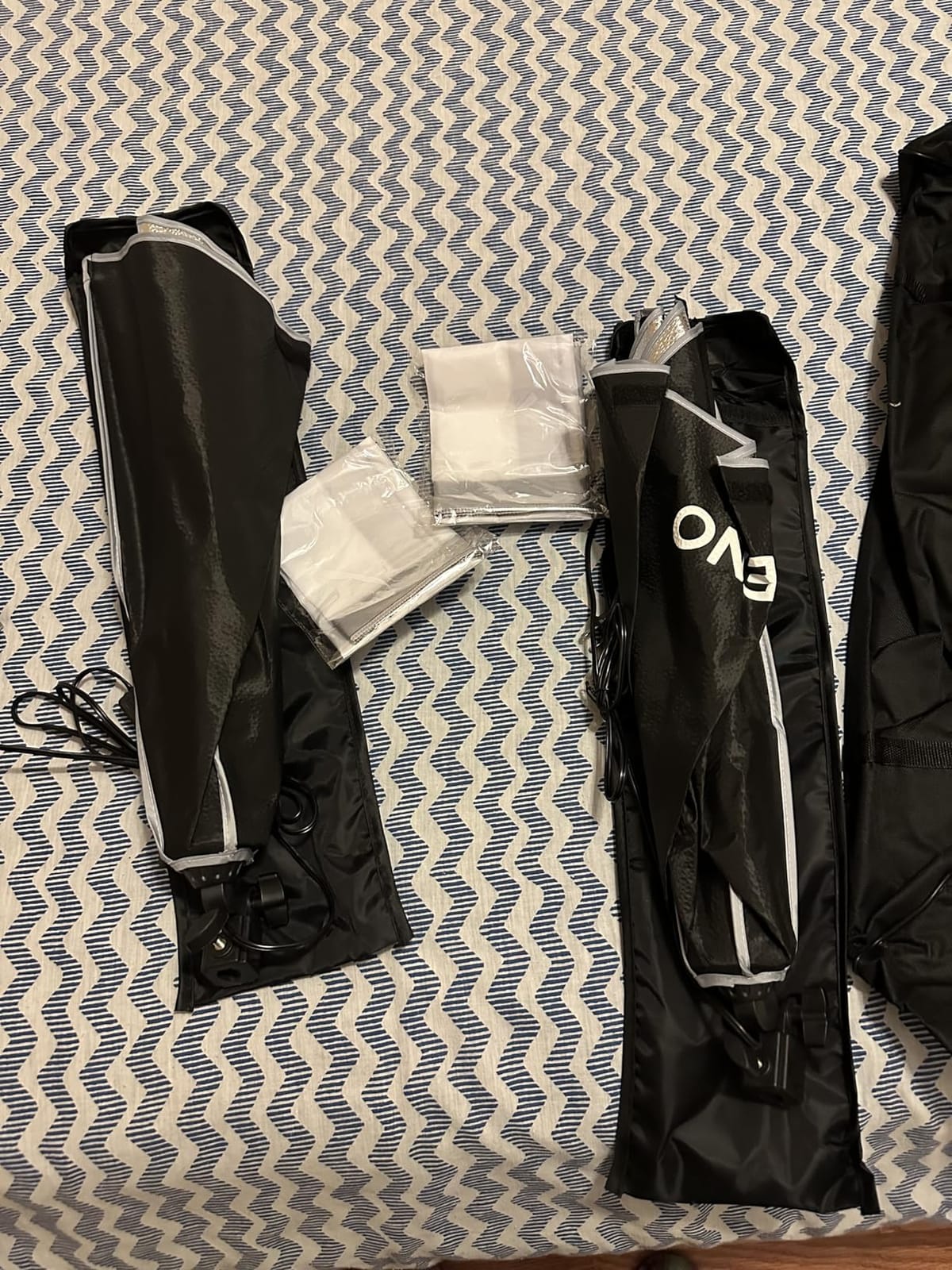
The stands run from 27 inches folded to 80 inches extended with a locking system that holds position, and they use a standard 1/4-inch screw top mount. The silver reflective interior inside each softbox is what does the heavy lifting on spread.
Bulb service life is around 8000 hours, so a replacement is a non-event years from now, and the Oxford cloth tote means the whole thing is one bag. Reviewers buying for portrait and streaming work point at the softer, more even light as the reason they came back to this kit.
Where softbox light wins
Interviews and seated talking heads benefit more from softbox size than from brightness. With two 20-inch sources at matched intensity, you can light a face from both sides at 30 to 45 degrees and the shadows under the eyes and jaw essentially disappear.
What the bulb design costs you
Screw-in bulbs mean more assembly time than an integrated panel or softbox head. You are building a head, a bulb and a stand instead of lifting one piece, which matters if you record in a single take regularly.
The remote runs on two AAA batteries that are not in the box, a small omission that has annoyed more than one reviewer. Plan to add a small pack of batteries.
6. Skytex 20×28 Softbox Two-Pack – Best for Bright Bulb Output
Skytex Softbox Lighting Kit 2Pack 20x28in Soft Box | 85W 2700-6400K E27 LED Bulb Continuous Photography Lighting, Photo Studio Lights Equipment for Camera Shooting, Video Recording
Two 20x28 inch softboxes
Two 85W dimmable bulbs
2700K-6400K remote
Stands to 79 inches
+ The Good
- Tall softboxes give very soft wraparound light
- 85W bulbs carry a subject at distance
- Remote sets brightness and colour temperature
- 8.5 foot cables allow real positioning freedom
- The Bad
- CRI 90 is below the best panels here
- Remote batteries not included
- Screw-in design takes more setup than panels
This is the softbox kit to buy if your subject sits further from the camera than a desk setup. The 85W bulbs move real light, and the 20 by 28 inch heads are tall enough that the falloff across a standing frame stays even.
Colour temperature runs 2700K to 6400K with brightness from 1 to 100 percent, both handled from the remote. Bulbs have a built-in diffuser, so you are not looking at a bare hot spot when a softbox is off.
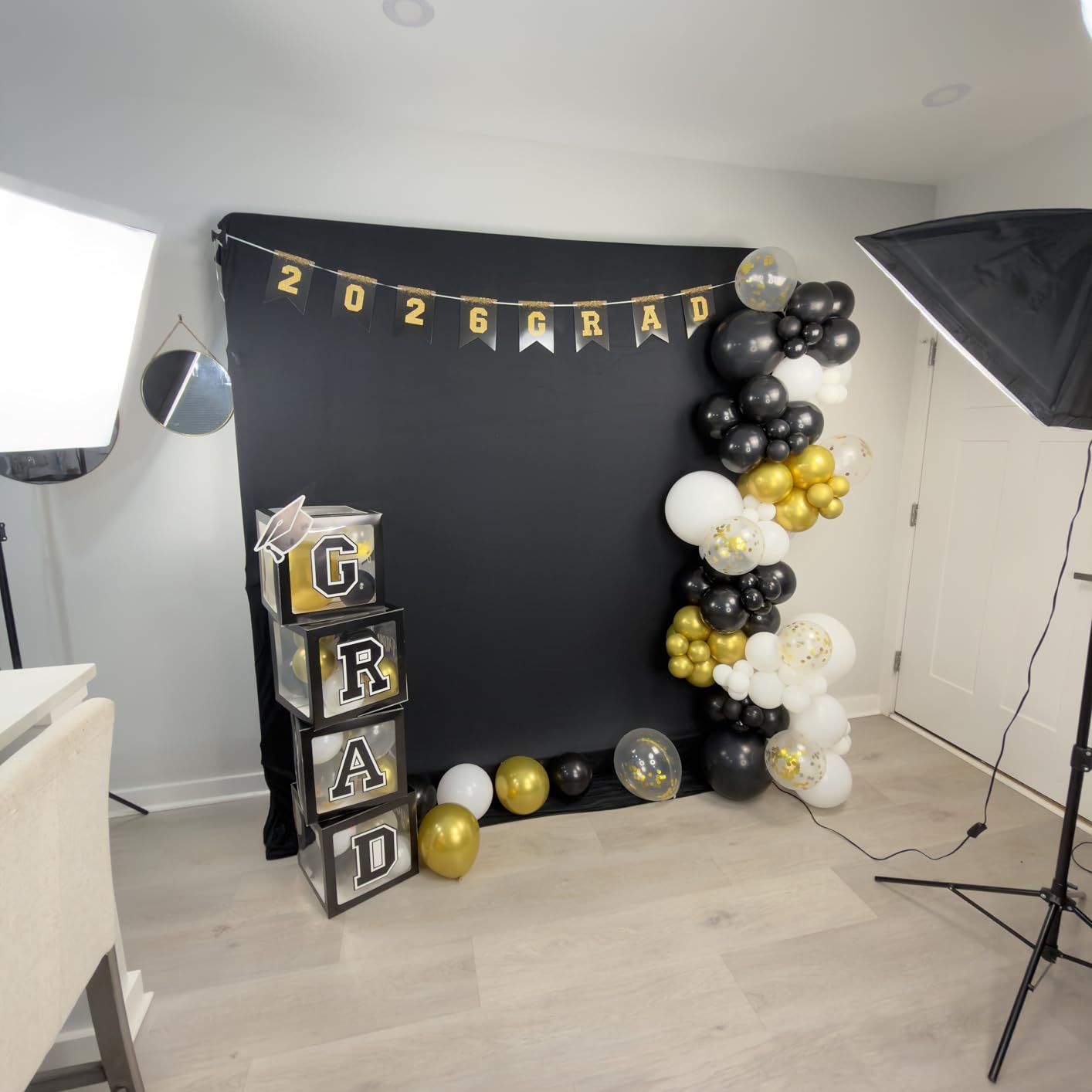
Two details make it nicer to use than the price suggests. The softbox heads rotate 210 degrees, so you can angle one high and one low without moving a stand, and the extra-long 8.5 foot power cables mean you are not immediately hunting for an extension lead.
Stands adjust from 26 to 79 inches on an aluminum frame, and an Oxford cloth bag is included. Reviewers mention the bulbs running cool and dimming smoothly, which matters for long sessions where a hot bulb becomes uncomfortable.
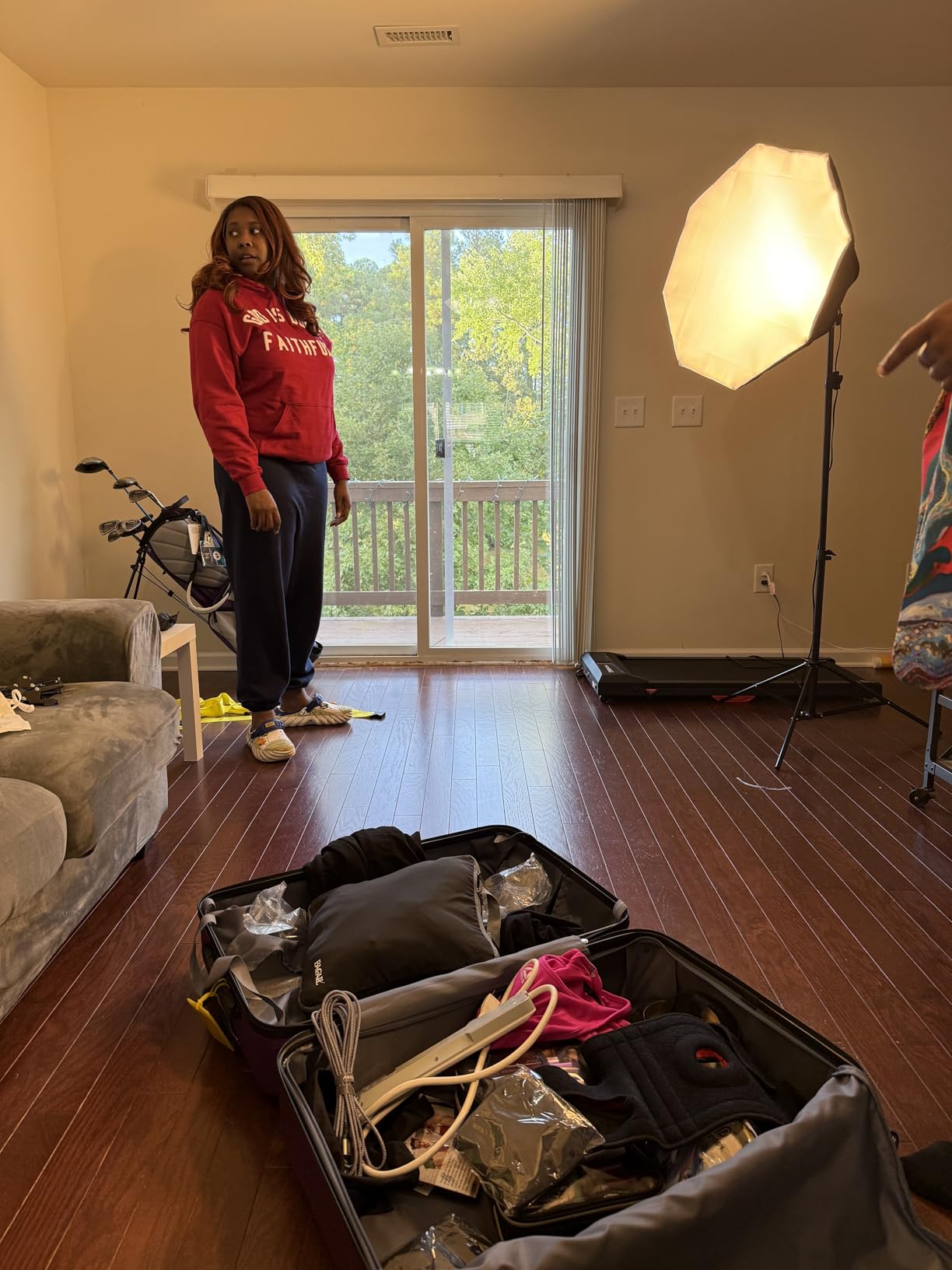
Why bulb wattage still matters for some setups
If you are lighting a seated interview across a room, a larger subject or a standing presenter, the 85W rating gives you the reach that a 50W softbox bulb cannot. You can place the light further back, get a softer angle relative to your camera and still expose correctly.
Where CRI 90 shows up
A CRI of 90 is adequate but not exceptional, and it is the reason this kit is not our softbox pick. If your content is colour-critical, shows food, reviews makeup or needs skin tones to grade accurately, spend the difference on the Torjim 27-inch kit with CRI 100 bulbs instead.
As with the other bulb kits here, the remote needs AAA batteries that are not included, and screw-in assembly takes longer than an integrated head.
7. Torjim 27-Inch Softbox Two-Pack – Best for CRI 100 Colour
Torjim Softbox Photography Lighting Kit, 2Pcs 27″ x 27″ Professional Soft Box | 3000K-7500K 85W LED Bulbs with Remote, Photography Continuous Lighting Kit for Studio Lights, Portrait, Video Recording
Two 27 inch softboxes
Two 85W bulbs at CRI 100
7500K daylight
210 degree heads
+ The Good
- Largest square softboxes in the roundup
- CRI 100 bulbs give extremely accurate colour
- Low heat output for long sessions
- Locking system keeps the head steady
- The Bad
- Fixed 7500K daylight with limited dimming control
- Listed item dimensions are not representative
- Larger stands take more room to set up
At 27 by 27 inches these are the largest square softboxes in the roundup, and size is what makes them work. A source that big relative to a head produces the flattest, most forgiving light of any kit here, which is why they show up in portrait-heavy channels.
The bulbs are rated CRI 100 at 7500K with roughly 6000 hours of service life. That colour rendering figure is the highest in this roundup, and it is the deciding factor for anyone shooting beauty, food or product content where a green or muddy skin tone is an obvious flaw.
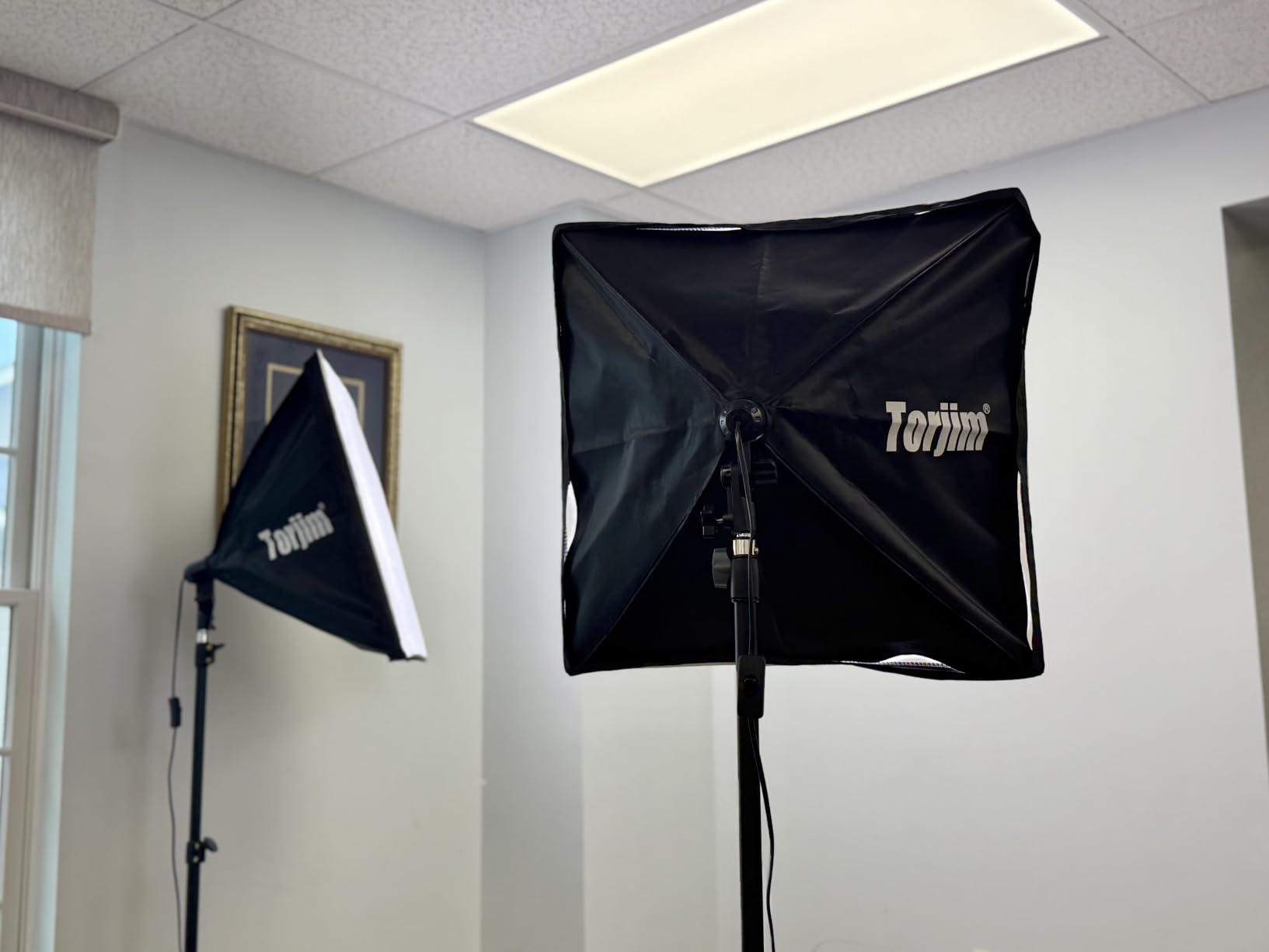
Each softbox has a removable PET diffuser, so you can strip it back to a harder source for contrast and put it back when you want wrap. Heads rotate 210 degrees, and the aluminum alloy stands adjust from 27 inches to 74.5 inches.
Owners mention low heat output as the practical benefit during long sessions, and the locking system holds the head steady on the stand once tightened, which is a small thing that saves repeated frustration.
Who should care about CRI this much
If you shoot anything where colour is part of the product, CRI 100 is worth paying for. Makeup tutorials, cooking, product photography and anything where you grade colour will show the difference against a CRI 80 bulb, which pushes skin tones slightly.
The limits to plan around
The bulbs are fixed at 7500K daylight. If your room is warm or you want the cosy look many vloggers prefer, you will need gels or a second bi-color light, and colour temperature is not remotely adjustable here.
Also note the listed item dimensions are inaccurate, so measure your space before committing. Two 27-inch heads and tall stands need a real corner, not a bedside table.
8. NiceVeedi 16-Inch Softbox Two-Pack – Best for 4K and 60fps
Softbox Lighting Kit, NiceVeedi 2-Pack 16” x 16” Softbox Photography Lighting Kit with 63” Tripod Stand & 5400K 450W Equivalent LED Bulb, Continuous Lighting for Photography/Video Record
Two 16 inch softboxes
Two 50W 5400K bulbs
Flicker-free for 4K60
Stands 15 to 63 inches
+ The Good
- Flicker-free output records cleanly at high frame rates
- Compact 16 inch softboxes fold for storage
- Reverse-folding tripods save space at full height
- Two-light key and fill pair works out of the box
- The Bad
- CRI 80 is the lowest in the roundup
- Fixed 5400K with no remote adjustment
- Some buyers report a chemical smell from fabric and bag
Flicker is the quiet killer of video quality, and this kit is the one here with a manufacturer claim we would build a high-frame-rate setup around. The 50W bulbs are specified as anti-strobe and flicker-free for 4K60 and 1080p30 recording.
If you shoot 60fps or 120fps, banding and flicker artefacts are extremely hard to remove in editing because they change every frame. Checking for that before you buy saves an afternoon of colour work later.
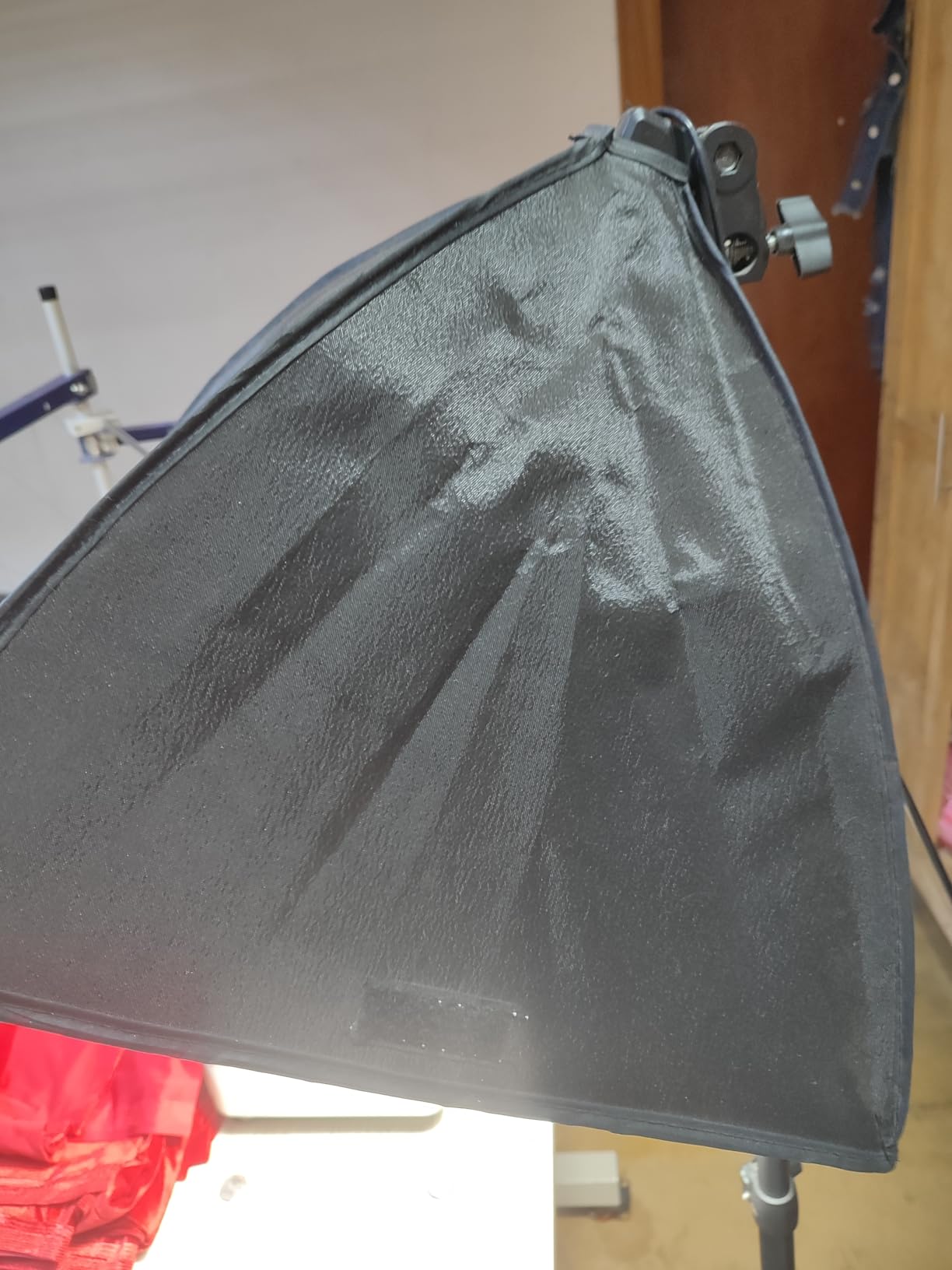
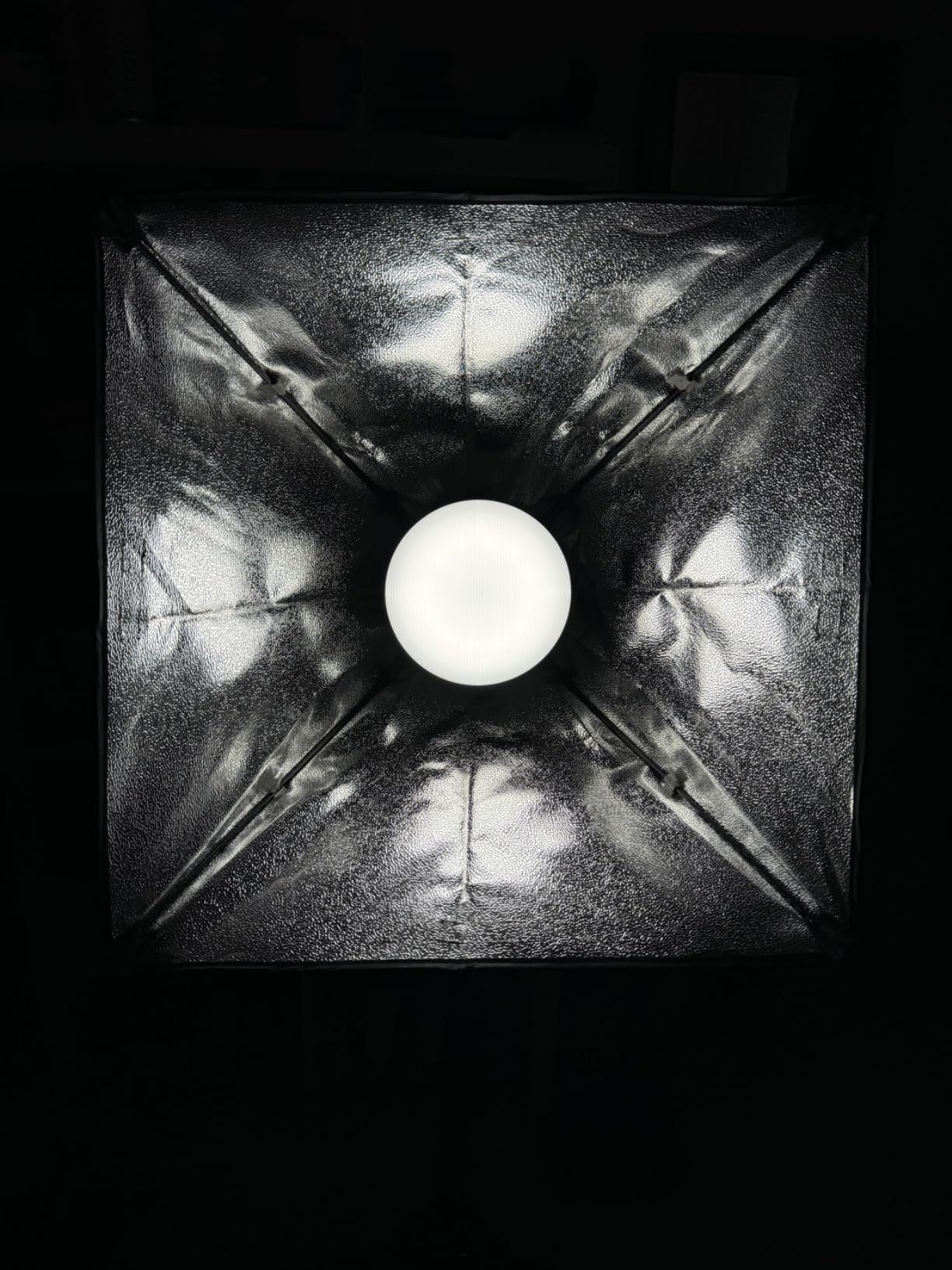
The softboxes are 16 by 16 inches, which is smaller than the 20-inch and 27-inch kits but still large enough to wrap a face. Bulbs sit at 5400K, close to neutral daylight, and the 1/4-inch screw top mount on both tripods accepts a phone, a ring light or a GoPro.
The reverse-folding tripod design is genuinely clever. The legs fold back on themselves so the stand still reaches 63 inches while taking up much less floor space, which is what makes it workable in a small room.
When flicker-free output is the deciding feature
Anyone shooting 4K at 60fps, sports-style slow motion or high-frame-rate B-roll needs a light that holds steady as you dim it. Budget bulbs are the usual culprit, so this is a spec worth paying attention to even when the rest of the kit is mid-range.
What you give up for it
CRI 80 is the lowest figure in this roundup, and it is the reason we would not choose this kit for close-up portrait work where skin accuracy shows. It is also fixed at 5400K with no remote, so matching a warm room means gels.
Several reviewers mention an initial chemical smell from the softbox fabric and carry bag. It fades after a few days of airing, but it is worth knowing before you shoot in the same room you sleep in.
9. Neewer NL-192AI Battery Panel Kit – Best for Shooting Away from Outlets
NEEWER 13″ LED Video Light Panel Kit with Tripod Stand, 2 Pack, NL-192AI
Two 13 inch bi-color panels
CRI 97+ and 2400 lux
4000mAh built-in battery
Two 70 inch stands
+ The Good
- Only battery-powered two-light kit in the roundup
- CRI 97+ with 2400 lux of output
- 0.4 inch panels are thin and easy to carry
- Cold shoe and 1/4 inch mount with 180 degree tilt
- The Bad
- Internal battery lasts about 90 minutes
- Battery is not swappable without opening the panel
- Longer-run options exist for heavy shooting days
This is the answer to the most common question in video lighting threads: which kit works somewhere other than next to a wall socket. Each of these 13-inch panels carries a built-in 4000mAh lithium battery, so you can shoot a location, a garden table or a hotel room with no power at all.
Output is 2400 lux with CRI 97+ across a 3200K to 5600K range, and each panel runs 192 LEDs split evenly between warm and cool. That is enough light for a properly exposed talking head at a normal shooting distance.
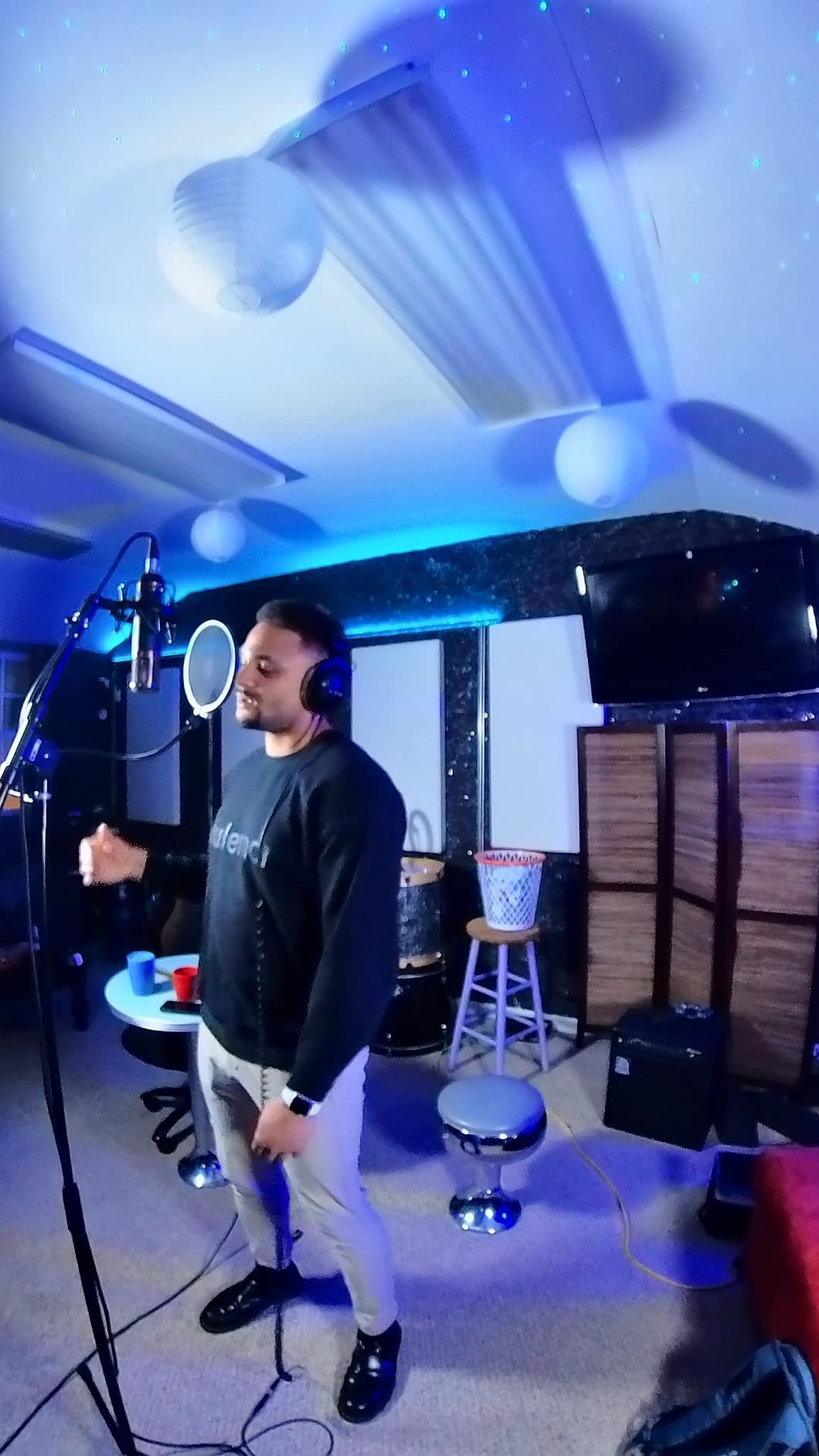
Two details make it a joy to travel with. The panels are 0.4 inches thick and weigh 1.3lb each, and the stands fold down to 21 inches, so the whole kit fits into the included carrying case without a separate bag for parts.
A back LCD screen shows your current settings, which is genuinely useful when you are adjusting a light you cannot reach. Cold shoe and 1/4-inch thread mounting with 180-degree tilt means the panels also sit happily on top of a camera for run-and-gun work.
Why battery power changes what you can shoot
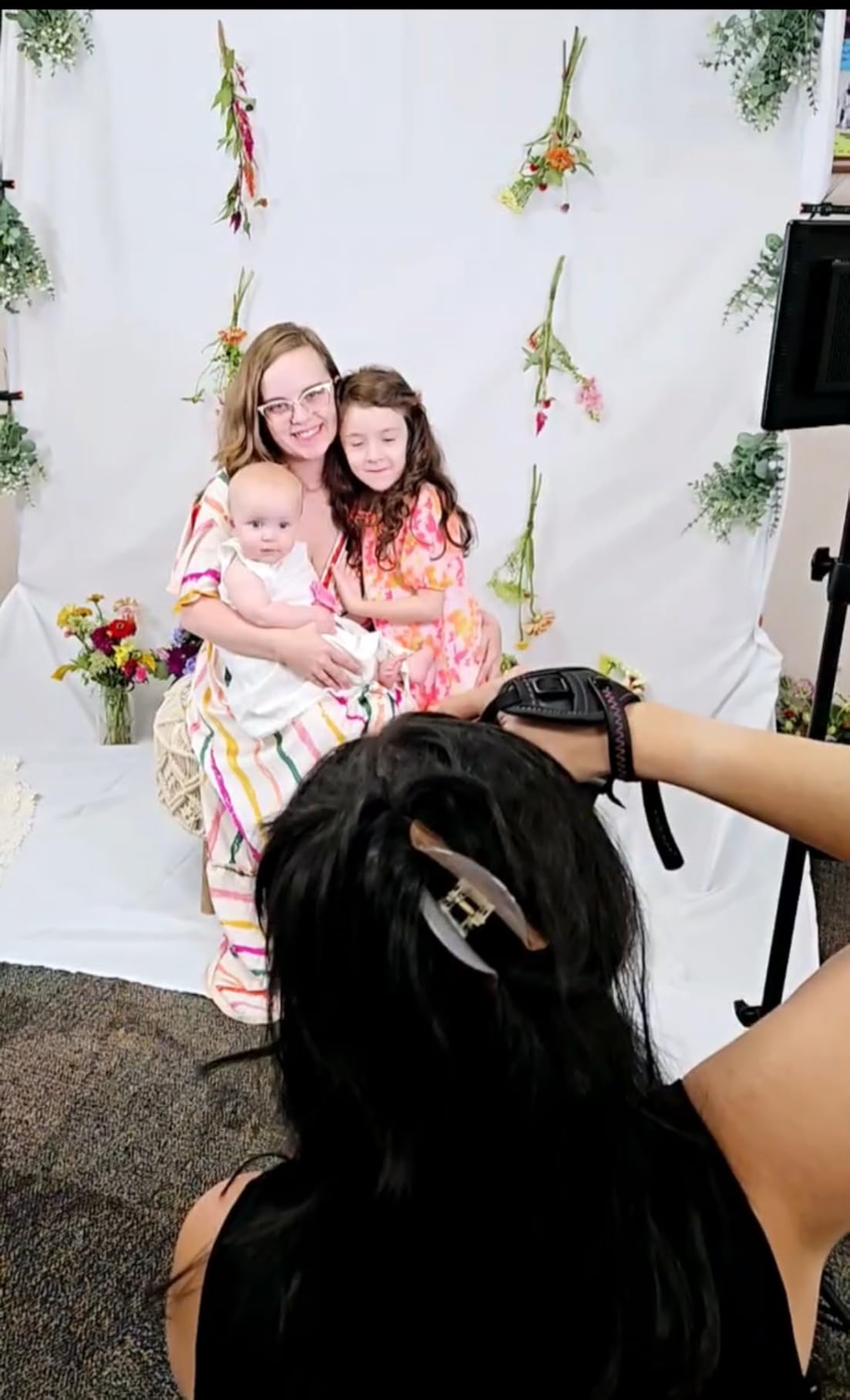
Run-and-gun vlogging, outdoor product shoots and any location without power are simply not possible with a mains-only kit. Creators consistently point to the built-in rechargeable battery as the reason they chose this one, and the ability to relocate mid-project is worth the runtime limit.
The runtime question you have to plan for
Expect about 90 minutes of continuous light per panel, with a full charge taking two hours. That is fine for a half-day shoot if you charge overnight, and it is not fine for a full day of recording without breaks.
The battery is internal and not swappable without opening the panel, and there is no way to hot-swap. If you regularly shoot eight-hour days away from power, budget for mains or a larger panel with external battery support.
10. EMART 85W Softbox Two-Pack – Best for Packed-On-the-Go Sets
EMART Softbox Lighting Kit 85W 16″x16″ Soft Box for Photography Light 2Pack
Two 16 inch softboxes
Two 85W bulbs 3000K-6000K
Remote with 23 ft range
Stands 18 to 65 inches
+ The Good
- Remote controls brightness and colour temperature
- Quick to assemble and break down
- Non-slip rubber base keeps stands stable
- Carry bag gloves and cable ties included
- 3 meter cords make routing easy
- The Bad
- CRI 80 is low for close-up portrait work
- Remote only responds when aimed at the unit
- Bulbs run warm after extended use
- AAA batteries for the remote not included
The unusual thing about this kit is the accessories. You get gloves, six Velcro cable ties and a carry bag alongside two softboxes, two bulbs, a remote and two stands, and the non-slip rubber base on each stand stops a top-heavy light tipping on a hard floor.
Each 85W bulb is dimmable and adjustable from 3000K to 6000K via a remote with a claimed range of 23 feet. That is a useful amount of colour control for a kit at this level, and most people leave the remote on a table and stop walking back and forth to the lights.
Stands adjust from 18 to 65 inches using a reverse-folding design, and softbox heads tilt 210 degrees. The 3-meter cord per softbox, with the included ties, is a detail that saves you when the nearest socket is behind the camera.
Where this kit is the sensible choice
Small product shoots, UGC content and a home studio in a rented flat are all situations where a complete, tidy package beats a technically better light. Everything has a place in the bag, which matters when you are the only person handling the gear.
Limitations worth weighing
CRI 80 is low, and it shows on close-up portrait work. The remote also has a narrow viewing angle, so it only responds when pointed at the unit, which is annoying if you have to walk behind the light. Bulbs run warm after extended use, and AAA batteries for the remote are not included.
One reviewer also reported short-circuit behaviour on power-up. It is a single report, but it is a reminder to check the cord and socket before a shoot rather than after.
11. GVM 80W Bowens Mount Video Light – Best for Modifier Compatibility
GVM 80W Video Light, Studio Lights for Photography, Softbox Lighting Kit with Bowens Mount, CRI97+ 5600K Colour Temperature , 22in Softbox, Tripod Stand, YouTube, Video, Wedding
80W integrated LED head
Bowens mount
CRI 97+ at 5600K
22 inch octagon softbox and 79 inch stand
+ The Good
- Integrated head gives cleaner output than screw-in bulbs
- CRI 97+ daylight matches window light
- Bowens mount accepts a wide range of modifiers
- Quiet cooling and all-metal build run cool
- The Bad
- Fixed 5600K with no warm-to-cool range
- Bluetooth adds little for lighting control
- Smaller review base than the heavily reviewed kits
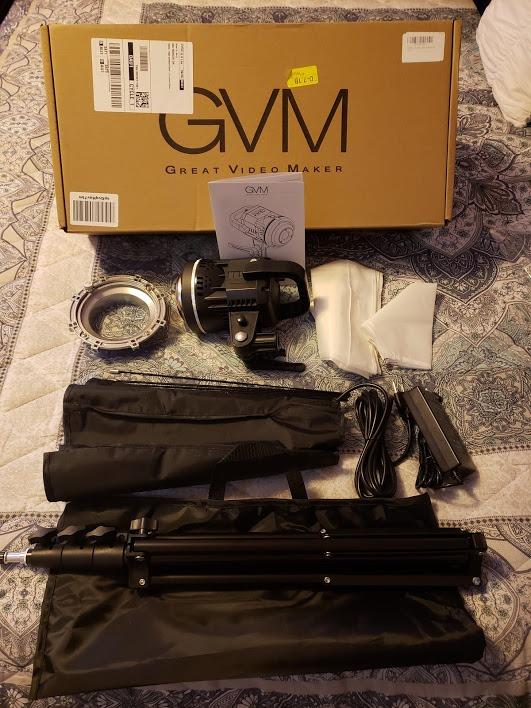
The reason to buy this kit is the mount. A Bowens mount is the professional standard, and it means the head accepts almost any softbox, grid, lantern or reflector made by any brand. Every other kit here locks you into whatever modifier shipped with it.
It is an 80W integrated LED head rather than a screw-in bulb, so there is nothing to loosen or replace over time. CRI is 97+ at 5600K, which is close to neutral daylight, and the all-metal body with quiet cooling runs cool under long sessions.
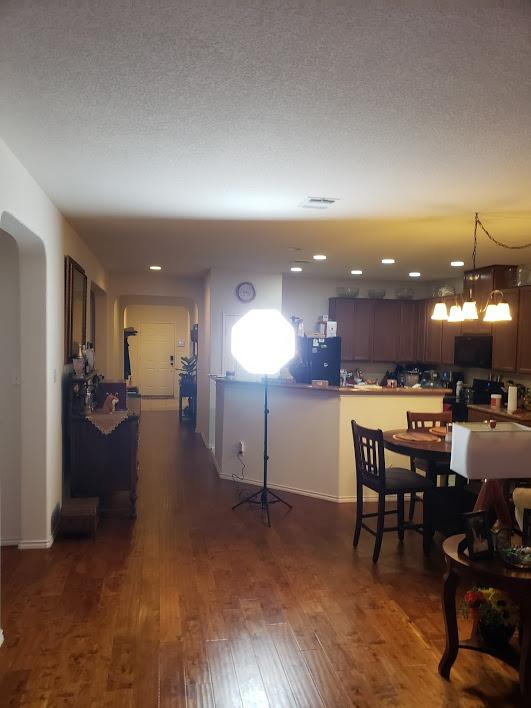
The included 22-inch octagon softbox is a proper modifier, made of PET with a silver interior, and it rotates 180 degrees on the head. You can also strip it and use the lamp bare with beam angle control for a harder, more directional key, which is a genuine creative option the softbox-only kits cannot offer.
Why mount compatibility is a long-term decision
Accessory ecosystems are what separate a one-off purchase from a system. With a Bowens mount, every modifier you buy later fits this head, and the head is not obsolete the moment you outgrow the bundled softbox.
If you plan to shoot more than talking heads, this is the kit that grows with you. The bare-head mode is also what you want for hard light and for a rim or back light behind your subject.
What you give up
Colour temperature is fixed at 5600K. There is no bi-color range, so matching a warm room means adding gels, which experienced users treat as a perfectly good way to change colour temperature rather than buying a second light.
The Bluetooth connectivity adds little practical value for lighting control, and with 328 reviews the long-term record is shorter than for the kits above. Judge it on the spec sheet, not on volume.
12. SHIRTAL 37-Inch Octagon Softbox Two-Pack – Best for Raw Output
Shirtal Softbox Photography Lighting Kit,37″ Octange Softbox Lighting Kit with Honeycomb Grid 110W 2700K-6500K 11000Lux Dimmable LED Prismatic Lamp and Remote Control, Lighting for Video Recording
Two 37 inch octagon softboxes
110W integrated heads
11000 lumens each
CRI 97+ with honeycomb grids
+ The Good
- Highest output in the roundup at 11000 lumens per head
- CRI 97+ across a 2700K-6500K range
- Removable honeycomb grid controls spill
- Integrated design is faster to assemble than bulb kits
- The Bad
- Smallest review base in the roundup at 165
- 37 inch softboxes need real space
- Two-light package is heavy and awkward to move alone
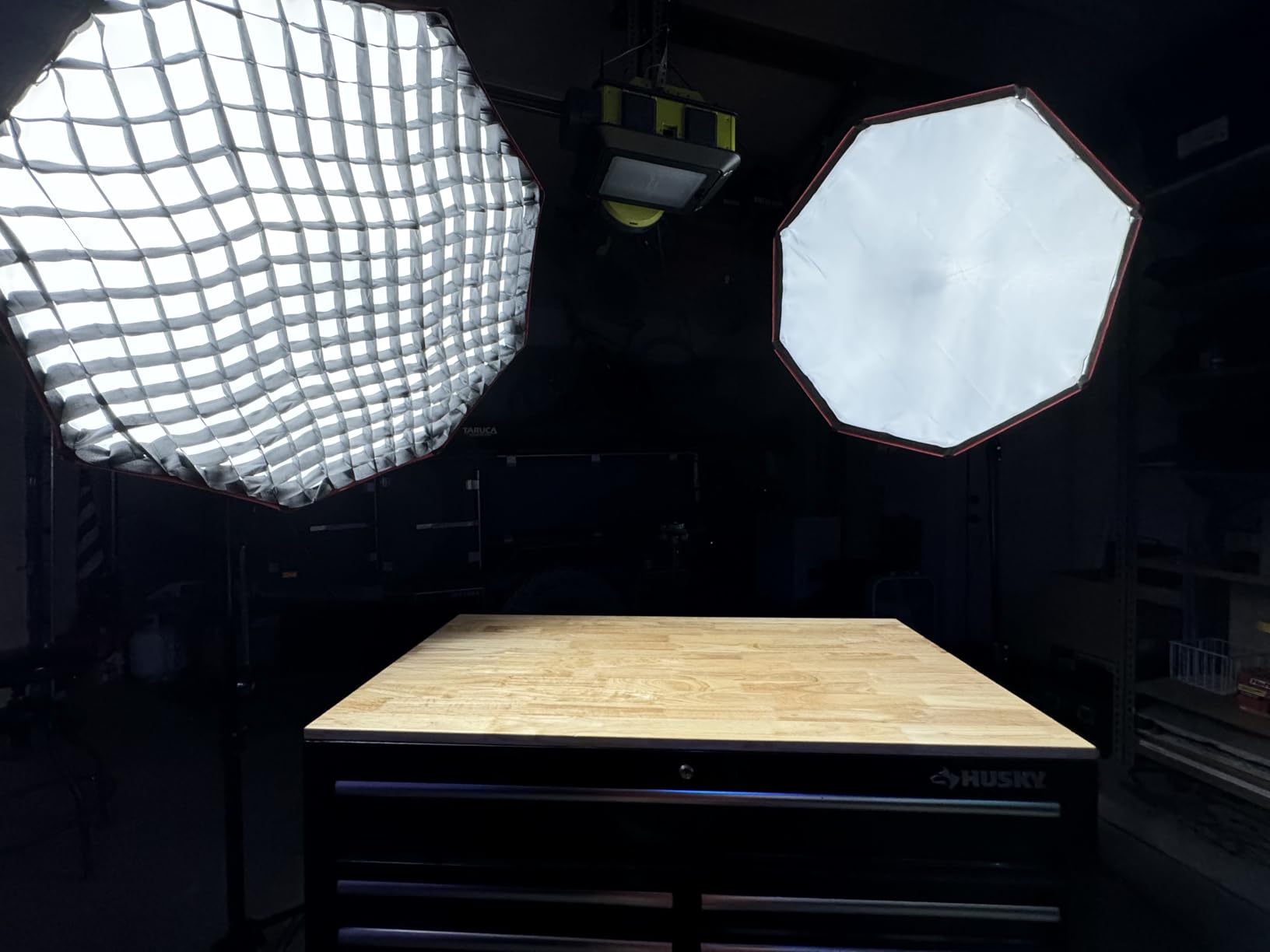
When you need light to reach across a room, this is the most capable kit here. Each 37-inch octagon softbox has an integrated 110W LED head with 720 LED beads, rated at up to 11000 lumens, which is the highest output figure of any kit in the roundup.
Colour accuracy holds up: CRI 97+ across a 2700K to 6500K range with brightness from 0 to 100 percent. You control it either from rear panel buttons or the included IR remote, and having both means you can dial in from the camera position.
The removable honeycomb grid is the feature that makes this more than a big diffuser. With the grid on, the light is concentrated and spill is controlled, which is what you want for portrait and product work where you do not want the background brightened.
Because the lamp and softbox are one integrated piece, assembly and storage are much simpler than a screw-in kit. You also get two power adapters, two remotes, two softbox bags and an Oxford storage bag, plus aluminum stands running 27 to 79 inches.
Where that much output pays off
Large output is not about making a face brighter. It is about being able to back the light off to two or three metres, keep a modifier large, and still get a clean exposure. That produces softer, more directional light than cranking a small panel close in.
Two matched 37-inch sources also make a strong two-point or three-point rig in a room you do not fully control, including a setup lit entirely through windows.
Before you commit, check the room
Two 37-inch octagons are large. They need floor space, headroom and a door wide enough to get them through, and the package is heavy and awkward to move on your own. Measure before ordering.
With 165 reviews this is the thinnest record in the roundup, so long-term reliability is less established than the kits above. The specs justify the interest, but buy it knowing you are an early adopter rather than joining a long-tested product.
How We Picked These Video Lighting Kits
We ranked these on five things that visibly change your footage, not on brand reputation or the number printed on the box.
Diffusion and modifier size. The light source that actually reaches your face matters more than the wattage. A 27-inch softbox at moderate output beats a bare panel at full power every time.
Colour rendering. We prefer CRI 95 and above. Below 90, skin tones shift on camera and the problem shows up in the grade.
Output headroom. You want the ability to place the light at a distance and still control exposure with your camera, rather than bringing the light close to the subject to compensate.
Colour temperature control. A bi-color range lets you match daylight through a window. A fixed temperature means gels or a manual grade.
What is in the box. Stands, diffusers, remotes and bags are part of the kit. Thread weight, stand height and stand count are as important as the lamp.
If your setup is desktop-scale rather than a full studio, our picks for smaller setups are in the webcam lighting kit roundup and our higher-end options in the premium webcam lighting roundup.
What to Look for in a Video Lighting Kit
Understand the difference between a light and a kit
A bare light is one panel. A kit is the light plus the stand, the modifier, the mount and usually the remote and bag. The confusion is the most common reason buyers end up with something they cannot actually shoot on, so check the contents list before anything else.
Anything sold as a kit should include a stand of usable height and either a diffuser or a softbox. If it does not, you are buying a light.
Read output as lux, not watts
Wattage is a power draw, not brightness. Two 50W lights can look completely different once one is behind a 20-inch softbox and the other is a bare panel. Look for lumen or lux figures where they are given, and treat large wattage numbers on paper bulbs cautiously, since they are often incandescent-equivalent marketing.
Check CRI for skin tones
CRI measures how accurately a light renders colour, and skin is the hardest thing to fake. Above 95 is comfortable for a talking head, above 97 is what you want for beauty, food and product work, and anything at 80 will visibly push skin tones.
Two kits in this roundup sit at CRI 80. Both are fine for general use and neither is right for close-up colour-critical work.
Flicker and fan noise decide the shoot
For 60fps or 120fps work, only use a light specified as flicker-free. Banding appears and disappears as you dim or move the light, and it is very hard to remove in post. For anyone recording a podcast with video or a voiceover near the lamp, listen for fan noise first, because cooling fans are audible on close dialogue.
Budget for the accessories a kit leaves out
Light stands shipped with cheap kits are the most common complaint in creator communities, and the reason is that a thin stand is not rated for a real light plus a softbox. Stands that ship with these kits range from 60 inches to 80 inches, and lighter designs flex enough to show in frame.
For how a light interacts with a room rather than a spec sheet, our guides to LED lighting kits and track lighting kits cover the same physics in different fixtures.
One Light, Two Lights or Three: Setups That Actually Work
You do not need a full rig to start. Experienced creators building a talking-head setup on a modest budget typically specify two lights of equal intensity at 30 to 45 degrees on each side of the subject, plus a back light. Start below that and add as you go.
One light: the simplest start
Put a single panel or softbox 30 to 45 degrees on one side of your face, slightly above eye level, and turn it up until the shadow side is about one stop darker. Add a white card or piece of foam board on the other side as a bounce to soften it. The UBeesize ring light works here too if you shoot close and want shadowless frontal light.
If you are ready to spend properly on a single light, the GVM 80W with its 22-inch octagon is the one we would build around, because the Bowens mount means the next modifier you buy will fit.
Two lights: the setup most channels end up at
Place two lights of equal output at 30 to 45 degrees on each side, at matching colour temperature and matching brightness, aimed at the subject rather than at the background. The Neewer 480 two-light kit and the Torjim 30W two-pack both give you matched pairs, which is the hard part of this rig.
Three lights: when you need background separation
Add a third light behind and above the subject, aimed down at the backdrop or at the back of your head. This is the rim or back light, and its whole job is to separate a subject from a background that is the same brightness as the subject.
Aiming that third light at the wall rather than at the subject gives you a controlled background glow that makes a small room look deeper. The honeycomb grid on the SHIRTAL octagons is designed for exactly this kind of controlled spill.
Keep the three colour temperatures matched. Mixed colour temperature across key, fill and back is the most common reason a three-point rig still looks flat, and no amount of editing fixes it as cleanly as matching the lights does.
Frequently Asked Questions
What is the best lighting equipment for YouTube videos?
For most creators, the best lighting equipment for YouTube videos is a two-light bi-color kit with stands and diffusers, because it gives you a matched key and fill you can reposition as your room changes. Our top pick is the Neewer 480 LED two-light panel kit, which pairs two CRI 96+ panels with 3200K to 5600K control and 75-inch stands. If you shoot on a phone only, a ring light covers the basics at a much lower cost.
What is the best light kit for videography?
The best light kit for videography is one with a large modifier and a high CRI figure, because soft output and accurate skin tones matter more than raw wattage. A 20-inch or 27-inch softbox at CRI 97 or above will out-perform a bare panel of the same wattage. The RaLeno 20-inch softbox two-pack is our pick for interview and portrait work.
What is the best lighting setup for video recording?
The best lighting setup for video recording depends on how many lights you use. One light at 30 to 45 degrees to one side with a white card bounce is a solid start. Two lights of equal intensity on each side of the subject is the setup most creators settle on. Three lights adds a back light aimed at the background to separate your subject from it. Match colour temperature across every light you use.
What are some good lighting kits for filming?
Some good lighting kits for filming include the Neewer 480 LED two-light kit for talking heads, the Torjim 27-inch softbox two-pack for high-CRI portrait work, the NiceVeedi 16-inch softbox two-pack for flicker-free high-frame-rate recording, and the Neewer NL-192AI battery panel kit for shooting away from wall outlets. Each covers a different room type and shooting situation, so match the kit to your space rather than to price alone.
What is the best cheap lighting for video recording?
The best cheap lighting for video recording is a two-panel or two-softbox kit rather than a single light, because two sources let you balance key and fill and remove the single-source shadow. The Torjim 30W two-light studio kit offers the most brightness per panel at this level, and the NiceVeedi 15W two-pack runs from a power bank for shooting away from outlets. A ring light is cheaper still but limited to close-range single-person framing.
What is the best studio lighting setup for beginners?
The best studio lighting setup for beginners is one bi-color light on a stand with a diffuser or softbox, positioned 30 to 45 degrees to one side and slightly above eye level. Add a white board opposite as a bounce. Resist buying three lights at once, because you will not learn what each one is doing. Buy the second light once you can name the problem the first one is causing.
Which Video Lighting Kit Should You Buy?
Buy the Neewer 480 LED two-light kit if you are starting a talking-head channel. Two CRI 96+ panels, a continuous 3200K to 5600K range and 75-inch stands cover almost everything a YouTuber shoots, and the two-panel format is the setup you will still be using when your channel grows.
Buy the Torjim 30W two-pack if your room is dim and you would rather not fight it. Thirty watts per panel and the in-line controller make it the most capable two-light set at this level, and the carrying bag means it moves between rooms easily.
Buy the Neewer NL-192AI if you shoot anywhere without a power outlet, and the NiceVeedi 16-inch softbox pair if you record at 60fps and need guaranteed flicker-free output.
Whatever you choose, the order of operations is the same in 2026: get one light, learn what it is doing to your face, then add the second light once you know the problem you are trying to fix.