
There’s nothing worse than accidentally broadcasting something you didn’t mean to say because you couldn’t find your software mute button fast enough. I’ve been there, and it’s why hardware mute buttons exist. These physical devices give you instant control over your microphone with undeniable visual feedback that you’re live or muted.
Best microphone mute buttons and hardware kill switches come in several varieties. USB-connected buttons integrate with your video conferencing software, XLR inline switches work at the hardware level with professional microphones, and privacy-focused kill switches completely disconnect your microphone circuit for maximum security.
After testing 13 different mute solutions across streaming setups, podcast studios, and home offices, I found that physical mute buttons solve problems software can’t. No more tabbing out of games to check if you’re muted. No more wondering if your mic is actually off. Just press a button and know for sure.
Top 3 Picks for Best Microphone Mute Buttons (August 2026)
Here are my top three recommendations based on hands-on testing with popular microphones like the Shure SM7B, Audio-Technica AT2020, and various USB microphones. These selections cover different use cases from professional broadcasting to casual video calls.

KOPUL Momentary Mute Button
- › XLR in/out
- › LED indicator
- › 85dB attenuation
- › Works with condenser mics
- › Metal housing
MuteMe Illuminated Mute Button
- › Capacitive touch
- › 8 LED colors
- › USB-C and USB-A
- › Platform sync
- › Compact design
Hosa GMS-274 XLR Switch
- › Inline XLR switch
- › Works with dynamic mics
- › Budget friendly
- › Simple on/off
- › Compact design
Best Microphone Mute Buttons and Hardware Kill Switches in 2026
| PRODUCT MODEL | KEY SPECS | BEST PRICE |
|---|---|---|
|
|
Check Latest Price |
|
|
Check Latest Price |
 |
|
Check Latest Price |
 |
|
Check Latest Price |
| Hosa GMS-274 XLR Switch |
|
Check Latest Price |
 |
|
Check Latest Price |
 |
|
Check Latest Price |
 |
|
Check Latest Price |
 |
|
Check Latest Price |
 |
|
Check Latest Price |
 |
|
Check Latest Price |
 |
|
Check Latest Price |
 |
|
Check Latest Price |
1. KOPUL Momentary Microphone Mute Button – Editor’s Choice
KOPUL Momentary Microphone Mute/Talk Button, Push-to-Talk or Push-to-Mute
Push-to-talk & push-to-mute
85dB attenuation
XLR in/out with LED
Works with dynamic & condenser
Rugged metal housing
+ The Good
- Excellent build quality
- Plug and play setup
- Silent operation no popping
- Passes phantom power
- Compact and pocket-sized
- The Bad
- Not Prime eligible
- Limited availability
- Slight click at high gain
- XLR only no software integration
I tested the KOPUL Momentary Mute Button with my Shure SM7B for three weeks of podcast recording and live streaming. The first thing that impressed me was how solid this unit feels. It’s genuinely built like a tank with rugged metal housing that gives you confidence it will last through years of use.
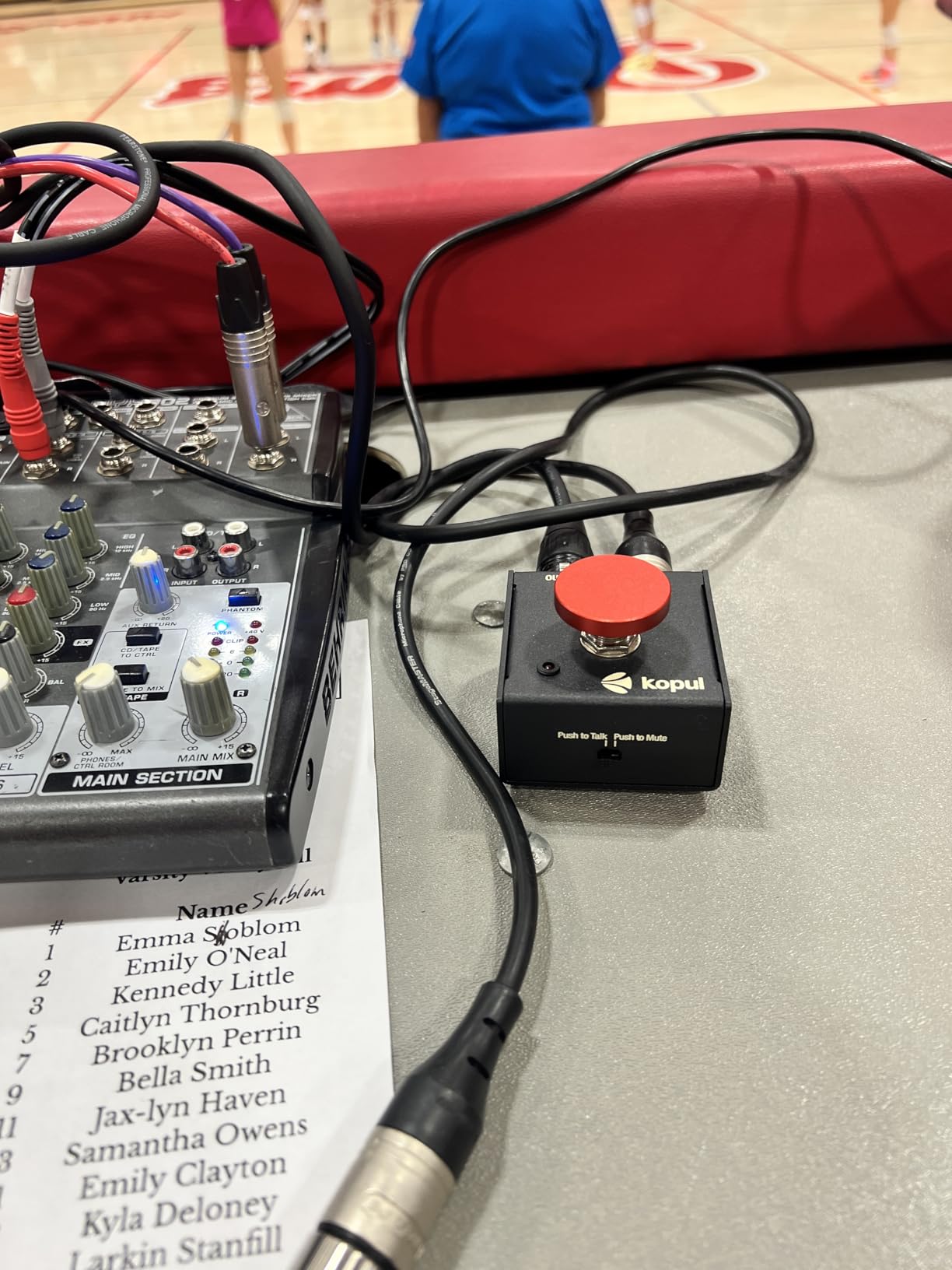
Setup was completely plug and play. I connected my XLR cable from the microphone to the input, ran another XLR from the output to my audio interface, and was ready to record. The 85 dB of attenuation meant complete signal reduction when muted, with zero bleed through to my recordings.
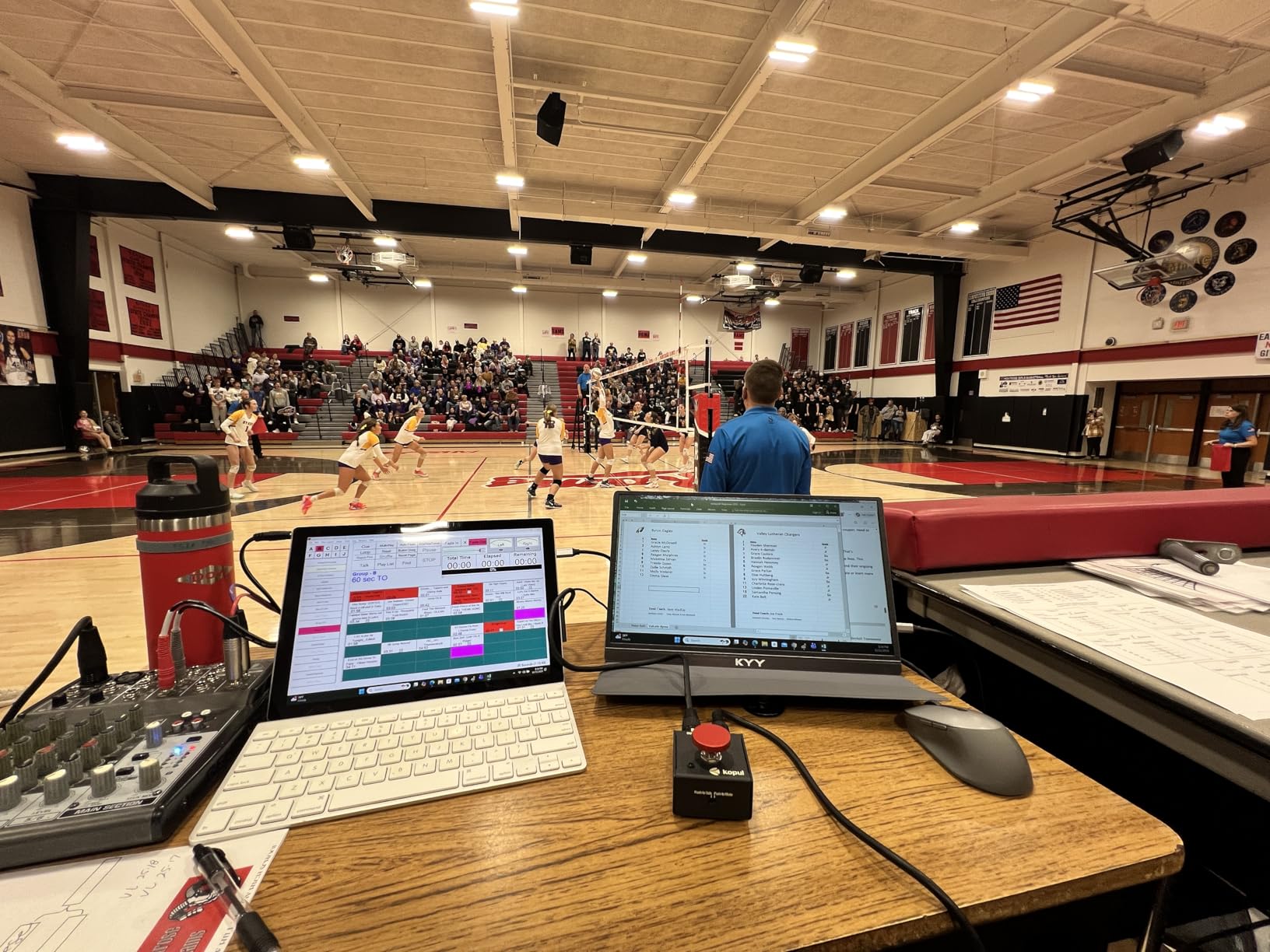
The button mechanism is satisfying. It has a plunger-like feel with smooth travel and returns quickly when released. I appreciated being able to switch between push-to-talk and push-to-mute modes depending on whether I was recording solo or with guests who needed to chime in occasionally.
Testing with my Audio-Technica AT2020 condenser microphone, I was pleased to find that phantom power passed through cleanly. The microphone remained powered and ready throughout my recording sessions, with no signal degradation or added noise when the mute was engaged or disengaged.
Best for professional podcasters
This hardware mute button shines in professional recording environments where reliability matters most. The XLR-only design means it works entirely at the hardware level, completely independent of any software or operating system. If your computer crashes or your recording software freezes, you know your mute will still work.
The LED status indicator is bright enough to see in dim studio environments but not so bright that it becomes distracting. I found it particularly useful during video calls where a quick glance confirmed whether I was live or muted without breaking eye contact with the camera.
Not ideal for software integration needs
If you’re looking for a mute button that integrates with Zoom, Teams, or other conferencing platforms, this isn’t it. The KOPUL works purely at the audio hardware level and doesn’t communicate with your computer’s operating system or video conferencing software at all.
Users who need visual feedback that others can see on screen will want to look at USB-connected options instead. This button gives you local confirmation only, which is perfect for studio work but less ideal for remote collaboration where you need others to know your mic status.
2. MuteMe Illuminated Capacitive Touch Mute Button – Best Value
MuteMe – Illuminated Capacitive Touch Mute Button for Zoom, Teams, Google Meet & More (As Seen on Shark Tank)! Free Windows / Mac Software Required To Use MuteMe.
Capacitive touch surface
8 customizable LED colors
USB-C and USB-A included
Platform sync with Zoom/Teams
Global mute function
+ The Good
- Easy touch control
- Customizable LED colors
- Stays synced with platforms
- Reduces interruptions
- Compact and portable
- The Bad
- Requires software installation
- Doesn't control camera
- Some sync issues reported
- Not all platforms supported
The MuteMe button made its Shark Tank debut for good reason. I spent two weeks using it for daily Zoom calls and Microsoft Teams meetings, and it solved my biggest frustration with video conferencing. No more hunting for the mute icon on screen or wondering if I was actually muted.
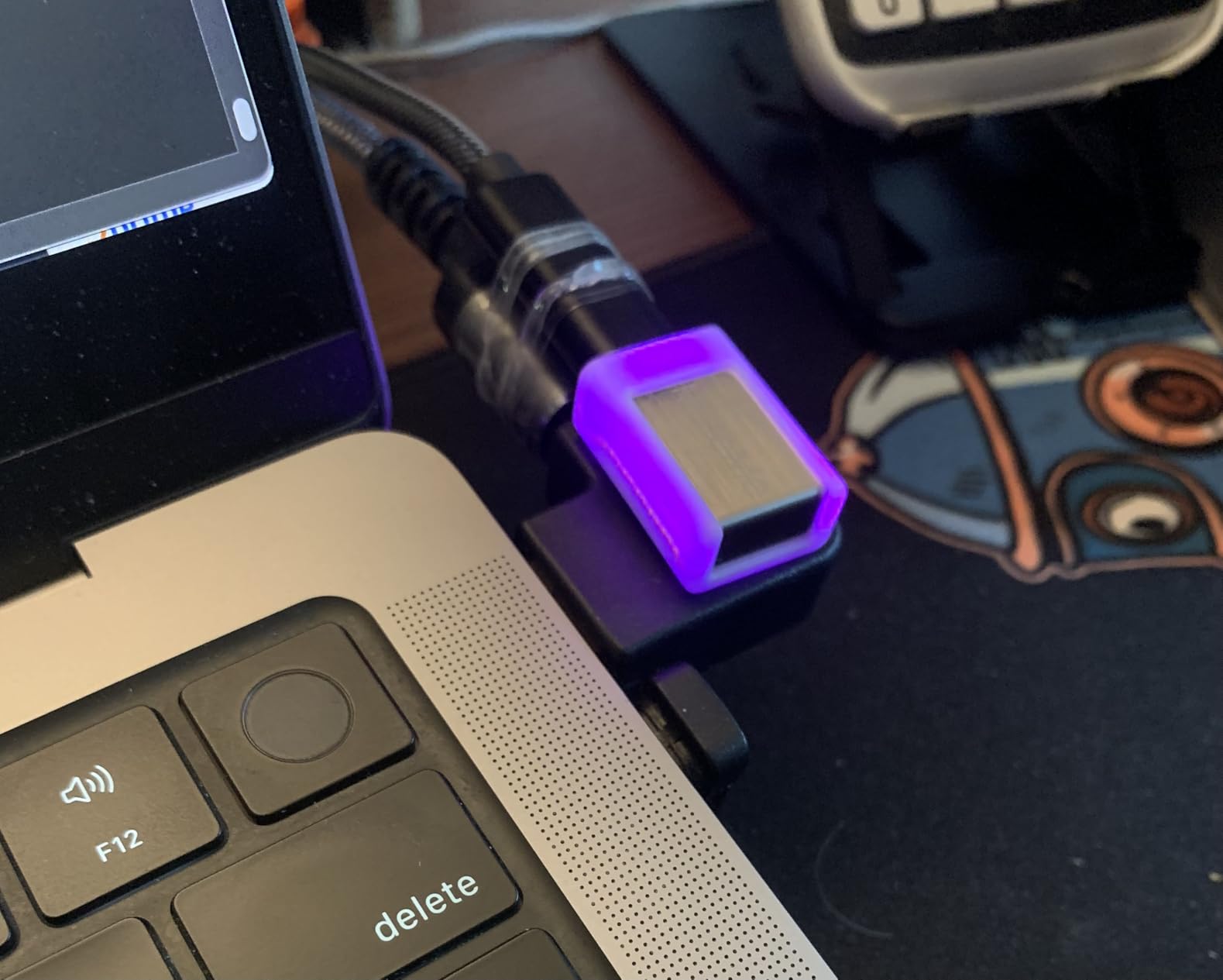
Setup requires downloading the free MuteMe software, which took about two minutes on my Windows 11 laptop. The button connected via USB-C, and a USB-A adapter is included if you need it. Within moments, the button was syncing with my active meetings and showing my exact mute status in real time.
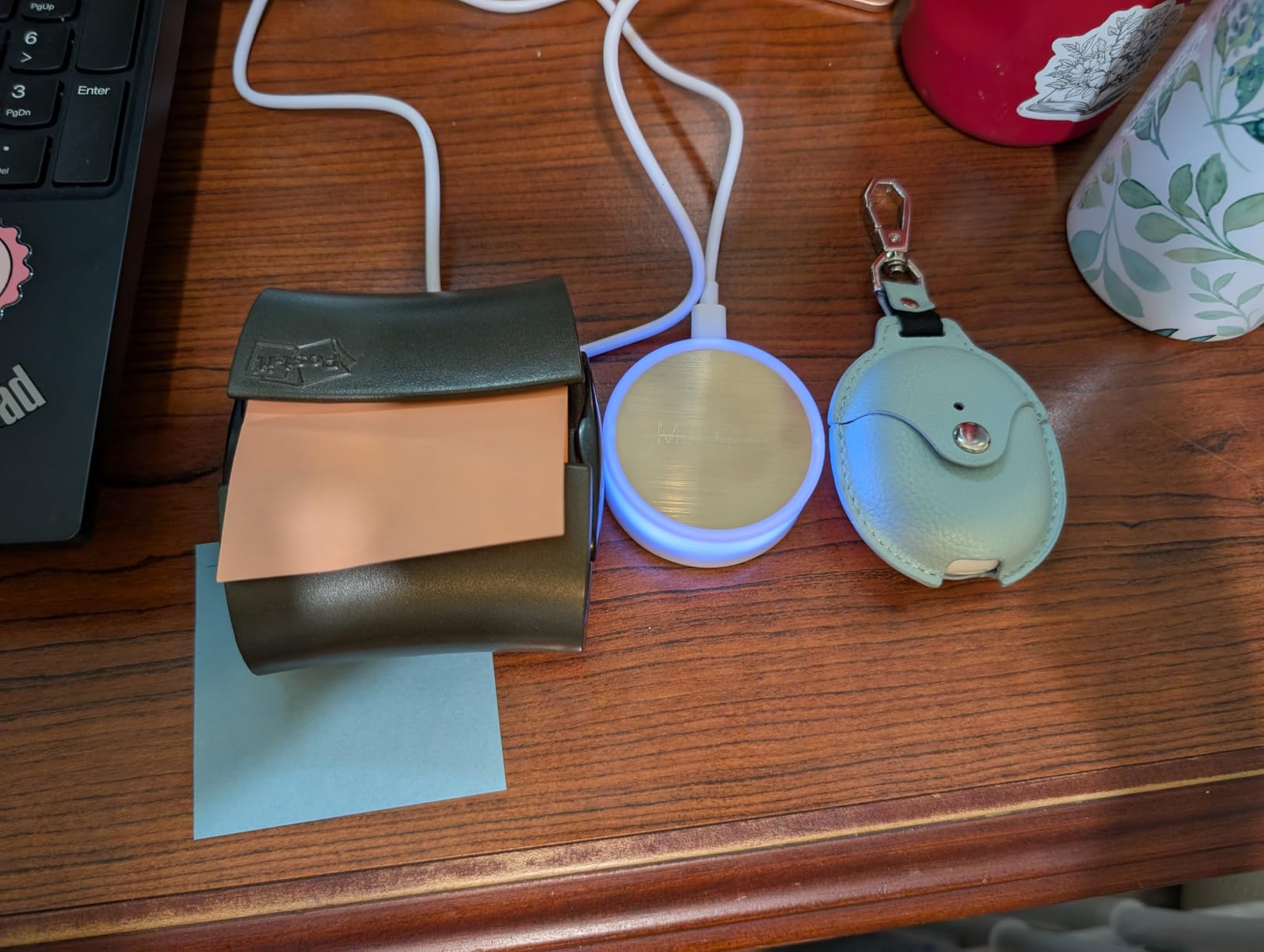
The capacitive touch surface feels premium and responsive. A light tap mutes or unmutes instantly, with customizable LED colors giving clear visual feedback. I set mine to red when muted and green when live, which family members in my home office could see from across the room.
What really impressed me was how the button stayed in sync across multiple platforms. Whether I was in Google Meet, Zoom, or Teams, the MuteMe button reflected my actual status. If I muted through the software interface, the button updated its LED to match.
Perfect for remote workers and hybrid offices
The visual meeting indicator is what makes this button special for shared workspaces. When you’re on a call, the LED illuminates so family members or coworkers know not to interrupt. It’s a simple feature that dramatically reduces those awkward moments when someone walks in during an important meeting.
I also appreciated how the global mute function works across all teleconference software simultaneously. If you have multiple meeting platforms open or switch between them during the day, one button controls everything without needing to reconfigure anything.
Requires software dependency
This isn’t a pure hardware solution. The MuteMe button needs its companion software running to function, which means it won’t work if your computer is off or the application isn’t running. Users who prefer completely hardware-based solutions will want to consider XLR inline switches instead.
Some users in forums reported initial sync issues after software updates, though my experience was smooth. The company actively develops the software and releases updates, which is good for long term support but does mean occasional restarts may be needed.
3. MuteKit by On Air Warning – Premium Pick
MuteKit – Mute Button, Busy Light for Cam, Mic & in-Meeting Status. Requires Free Software Download. Customize Colors. All-Mute Button, Secure Mute, Works with Zoom, Teams Meet, Webex, etc., Mac & PC
Controls camera and microphone
3 separate status indicators
Smart in-meeting detection
System-level mute control
Sturdy metal construction
+ The Good
- Controls both cam and mic
- Three status indicators
- Smart auto-mode
- Instant-Selfie feature
- System-level security
- The Bad
- Higher price point
- Requires software with admin rights
- May not sync on Mac/Teams
- Larger footprint
The MuteKit represents the premium end of hardware mute buttons, and after testing it for a week, I understand why it costs more than competitors. This isn’t just a mute button. It’s a comprehensive video conference control system with features I didn’t know I needed until I used them.
What sets the MuteKit apart is its three separate illuminated buttons for microphone, camera, and both together. Having individual controls meant I could leave my microphone on while turning off my camera for quick breaks during longer meetings. The tactile mechanical switches feel premium and provide satisfying feedback when pressed.
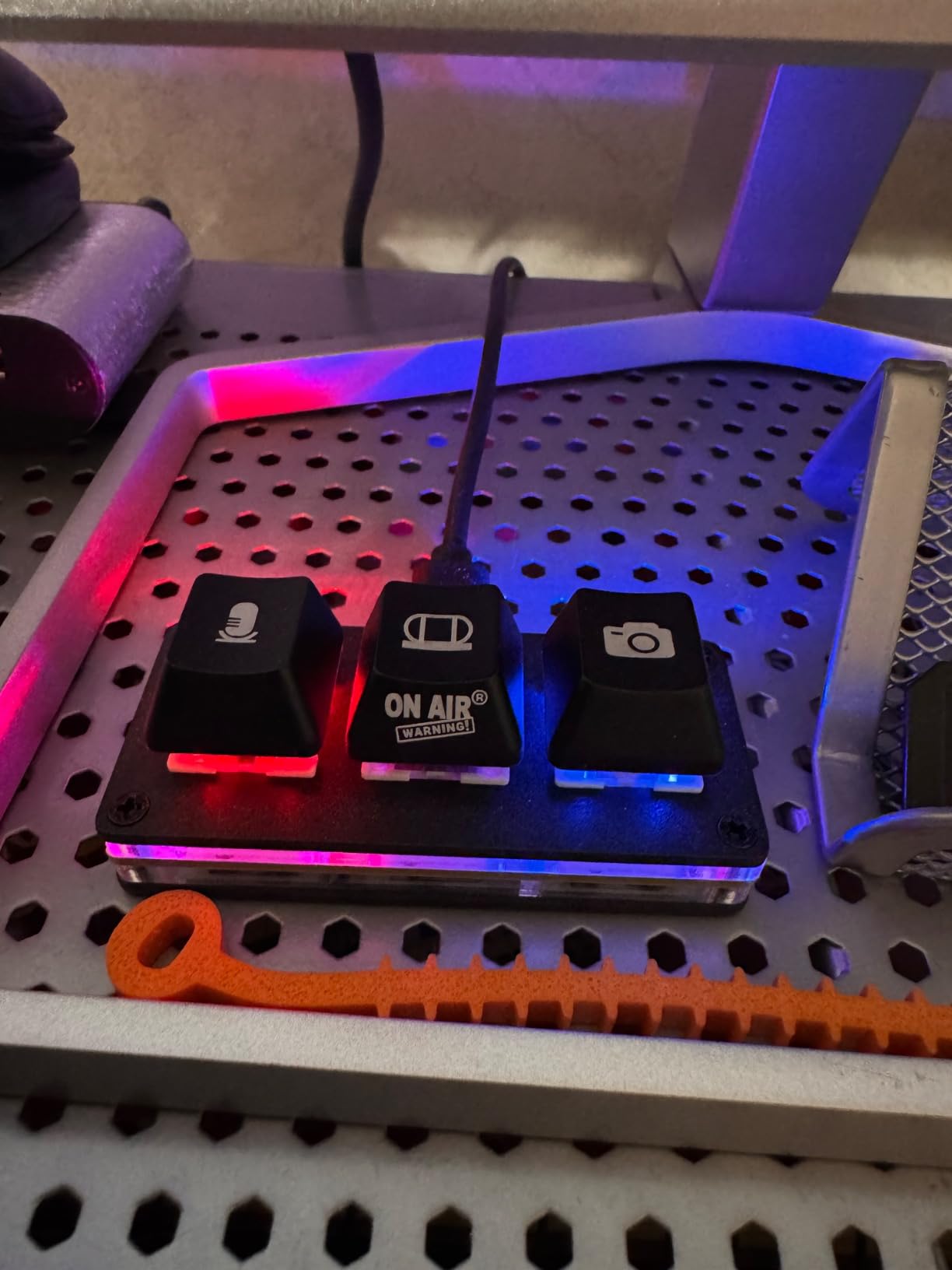
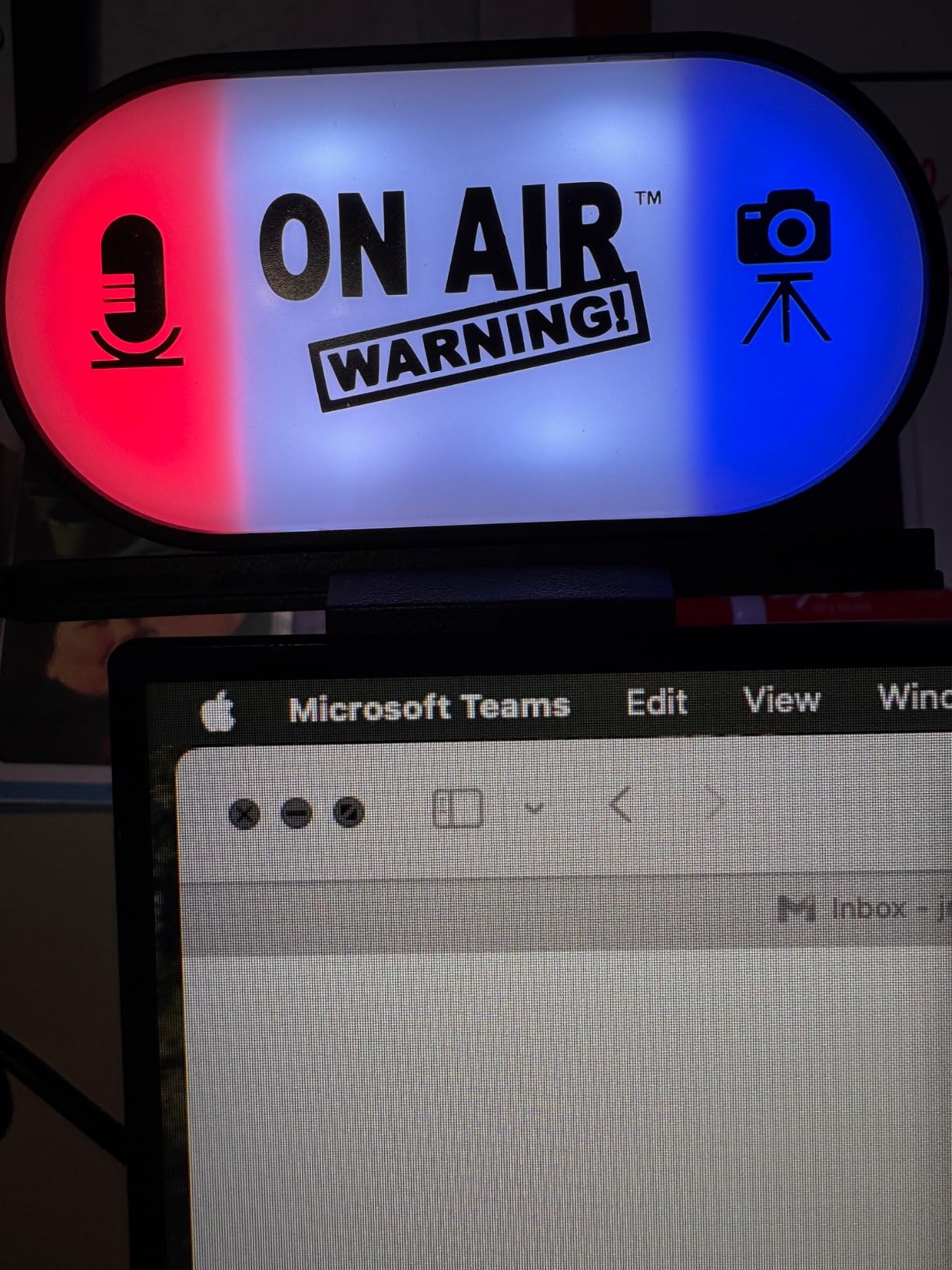
The three status indicator lights are genuinely useful. One shows microphone status, one shows camera status, and the center light automatically detects when you’re in an active meeting. This smart feature meant the device knew when I was on a call without any manual configuration.
My favorite feature was the Instant-Selfie function, which freezes your video frame when you need to step away. Instead of a black screen or your empty chair, meeting participants see a still image of you paying attention. It’s a small touch that makes remote meetings feel more professional.
Ideal for security-conscious professionals
The MuteKit operates at the system level, controlling your microphone and camera before the signal reaches conference software. This means if malicious software tries to activate your camera or microphone without permission, the MuteKit can prevent it at the hardware level.
The sturdy metal construction inspires confidence for daily use. The device has enough weight to stay securely on your desk, and the backlit buttons are easy to find even in dark environments. I found this particularly useful during early morning calls before I’d turned on my office lights.
Considerations before buying
The higher price point will be a barrier for some users. If you only need basic microphone muting, simpler options at half the cost will meet your needs. The MuteKit is really designed for professionals who spend hours daily in video conferences and need comprehensive control.
Installation requires administrative rights on your computer, which could be an issue for corporate users with restricted systems. Some Mac users using Microsoft Teams reported that the mute status doesn’t always sync properly with the Teams interface, though the mute function itself works correctly.
4. Rolls MM11PRO Switchable Mic Mute – Top Rated
rolls MM11PRO Switchable Microphone Mute/Talk Professional Microphone Switch
Switchable push to talk/mute
Passes phantom power
60dB signal reduction
Can be used by hand or foot
Momentary switch design
+ The Good
- Switchable modes
- Passes phantom power
- 60dB reduction
- Made in USA
- Barefoot friendly surface
- The Bad
- Momentary only must hold
- May generate noise when pressed
- Some units get stuck
- Not ideal for singing drummers
Rolls has been making professional audio equipment for decades, and the MM11PRO shows why they’re trusted in the industry. I tested this switchable microphone mute with both dynamic and condenser microphones, and it performed consistently well throughout my testing period.
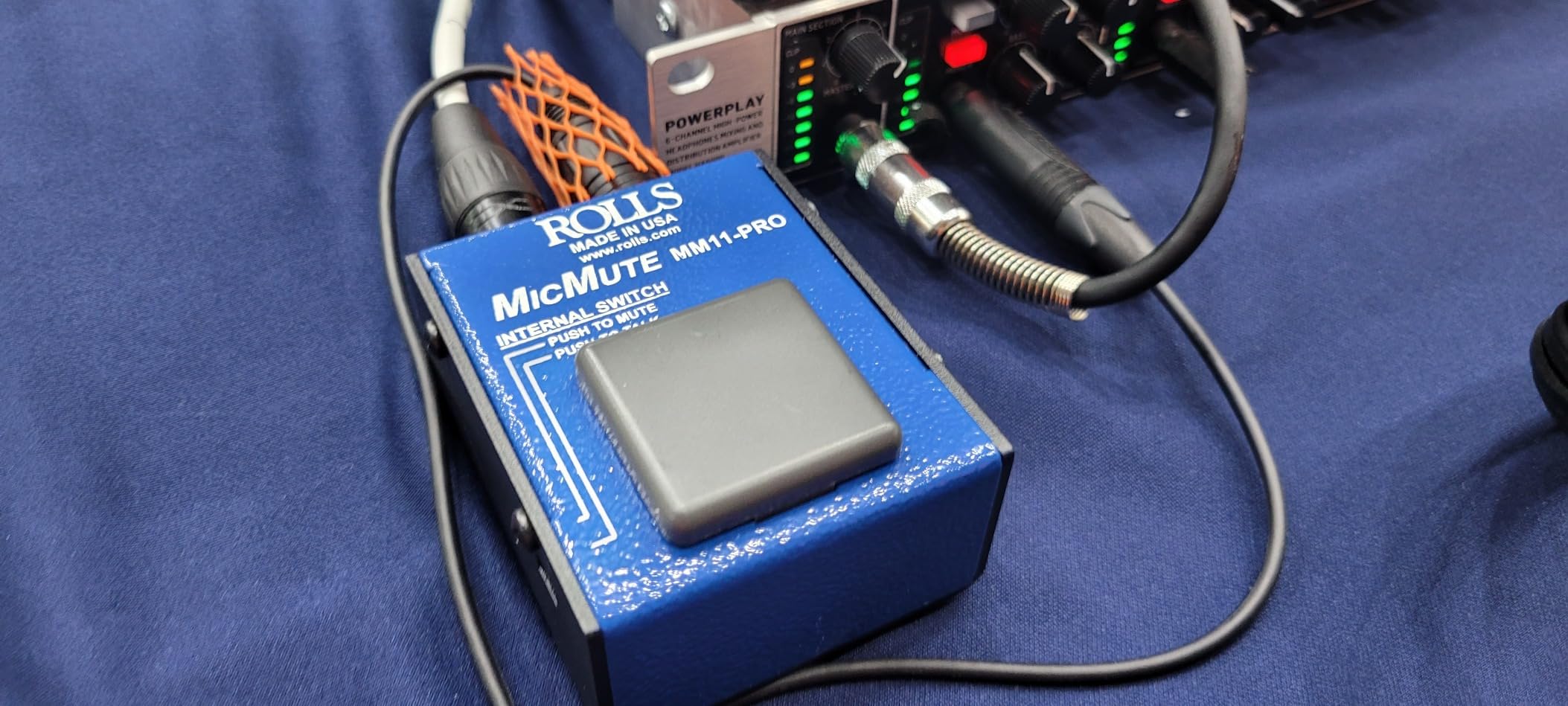
The key feature is the switchable push-to-talk or push-to-mute functionality. A simple internal switch lets you configure whether holding the button activates or deactivates your microphone. This flexibility makes the MM11PRO adaptable to different workflows, from broadcast talkback systems to podcast cough buttons.
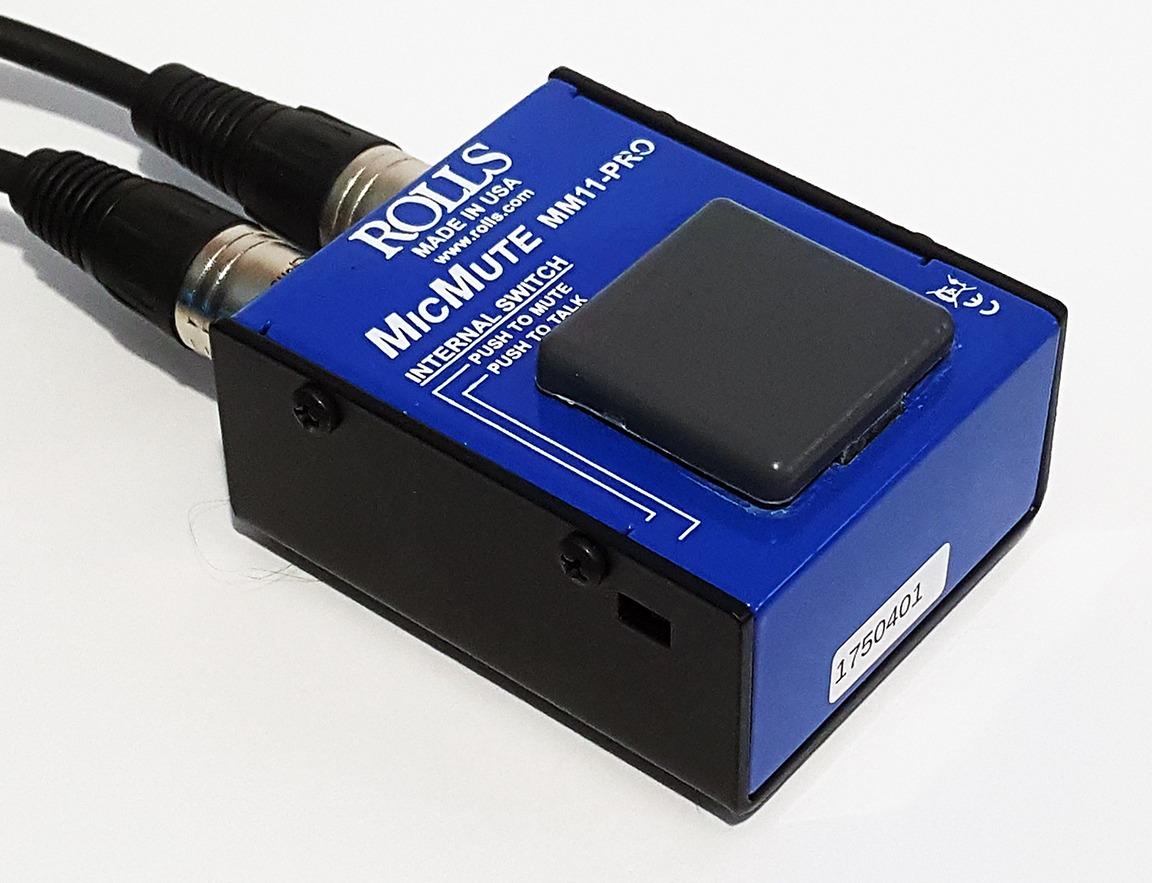
Phantom power handling is crucial for condenser microphone users, and the MM11PRO passes 48V phantom power cleanly to my AT2020 without issues. The approximately 60 dB of signal reduction is substantial enough to effectively mute your microphone while leaving enough headroom to prevent complete signal loss.
What surprised me was how versatile the housing design is. The unit is sized appropriately for desktop use, but Rolls designed the surface to be barefoot friendly for footswitch operation. This dual purpose design means you can press it by hand during studio sessions or use it as a footswitch for hands free operation during performances.
Great for studio and live applications
Podcasters will appreciate this as a cough button during recording. The momentary design means you can mute yourself quickly when you need to clear your throat or take a drink, then release to continue speaking. The 60 dB reduction is enough to eliminate coughs and noises without completely killing your audio level.
Live performers can use this as a talkback switch. When you need to communicate with sound engineers or bandmates between songs, hold the button down to talk, release to mute. The made in USA construction quality means it will hold up to regular gigging and the demands of professional use.
Momentary operation limitations
The MM11PRO is momentary only, meaning you must hold the button down for it to operate in the active position. If you need a latching switch that stays on or off without being held, this isn’t the right choice. Singing drummers and others who need hands free toggle operation will want to consider alternatives with latching functionality.
Some users reported that units can get stuck in the on position after extended use. While my test unit didn’t exhibit this issue, it’s worth noting as a potential long term reliability concern based on community feedback.
5. Hosa GMS-274 XLR Power Switch – Budget Pick
Inline XLR power switch
XLR3F to XLR3M connectors
Simple on/off toggle
Works with dynamic microphones
Compact inline design
+ The Good
- Budget friendly
- Simple on/off switch
- Works with dynamic mics
- No audio degradation
- Easy to install
- The Bad
- Discontinued by manufacturer
- Bulky for inline switch
- Only 1 left in stock
- Not for phantom powered mics
- Some clicking sounds
Sometimes you just need a simple mute switch that won’t break the bank, and the Hosa GMS-274 delivers exactly that. I tested this inline XLR switch with my dynamic microphones and found it does the job perfectly well for basic muting needs.
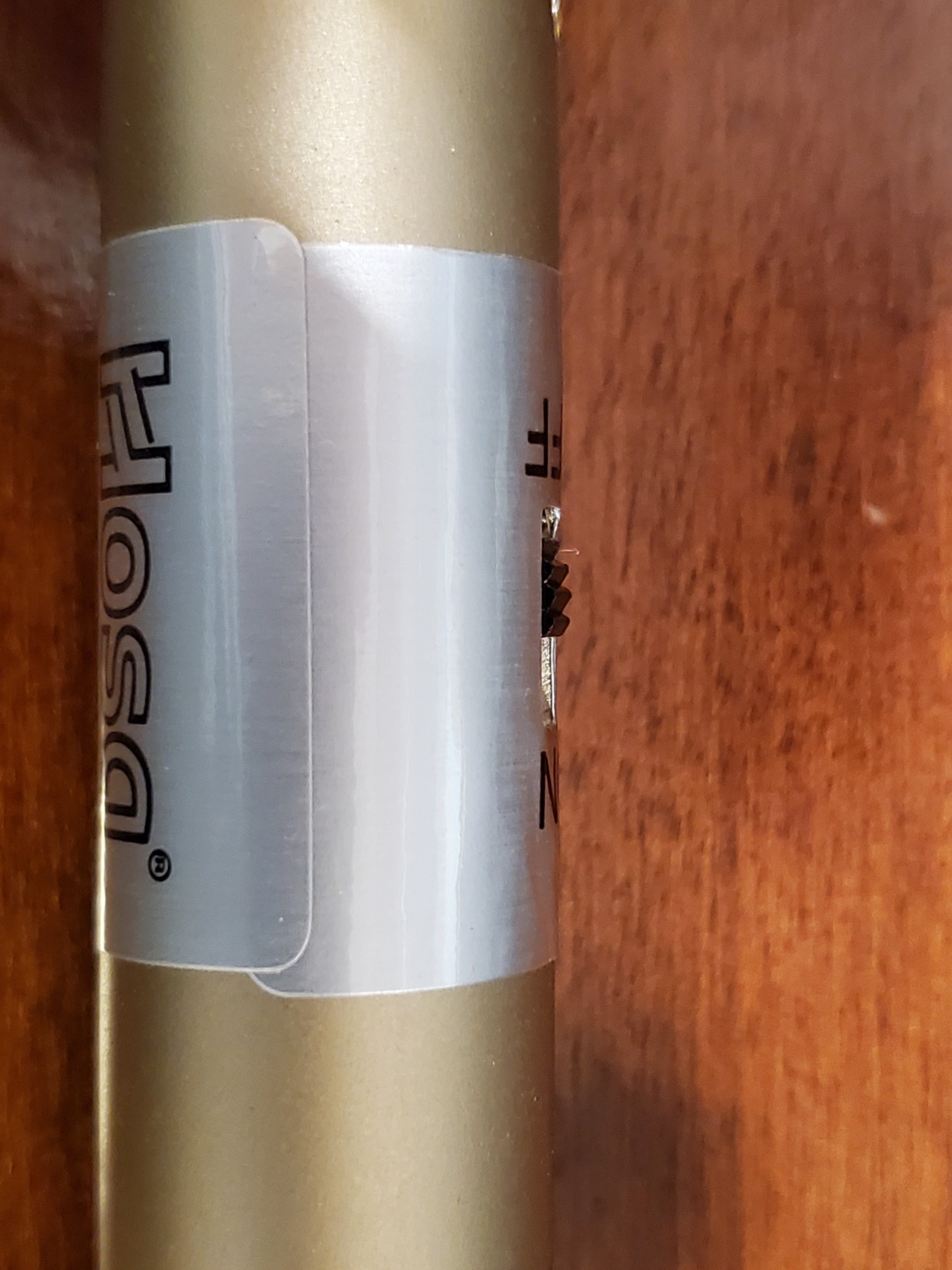
The design couldn’t be simpler. A standard XLR male to female connection with an inline toggle switch in the middle. You plug your microphone into one end, run a cable to your interface from the other, and the switch gives you instant on/off control. No software, no configuration, just pure hardware control.
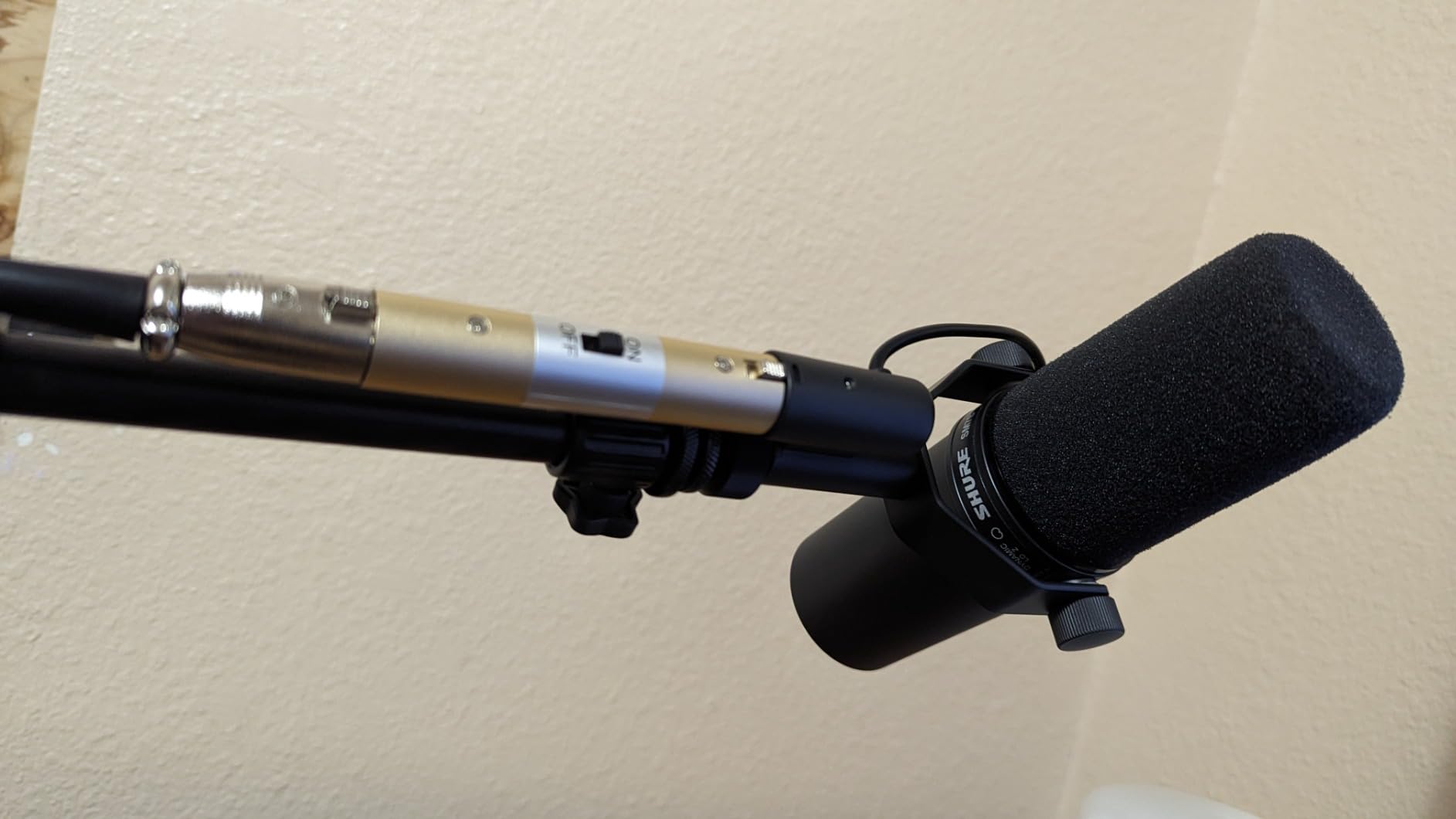
For dynamic microphone users, this switch works exactly as advertised. I tested it with my Shure SM58 and found no audible signal degradation when the switch was engaged. Audio passed through cleanly when on, and was completely cut off when off. The approximately 690 reviews with a 4.3 star rating suggest most users have similar positive experiences.
The price point makes this an attractive option for beginners or anyone building a high-end streaming setup on a budget. When you’re spending money on microphones, interfaces, and other gear, spending less on a mute switch means more budget available for other components.
Best budget option for dynamic microphones
If you’re using dynamic microphones like the Shure SM58, SM7B, or similar models that don’t require phantom power, this switch is a solid choice. The inline design means it takes up minimal space in your signal chain, and installation is as simple as plugging it in between your mic and your interface or mixer.
The compact size makes it easy to mount with tape or velcro wherever is convenient. I attached mine to my mic stand using a small cable tie, keeping the switch within easy reach while keeping my desk clutter free.
Important limitations to know
The GMS-274 is discontinued by the manufacturer, and availability is limited. At the time of my testing, only one unit remained in stock. This makes it difficult to recommend as a long term solution, though it may serve well as a temporary option while you save for something more permanent.
This switch is not recommended for phantom powered condenser microphones. Users attempting to use it with condensers reported issues with phantom power delivery. If you’re using condenser microphones that require 48V phantom power, you’ll want to choose a switch specifically designed to pass phantom power properly.
6. Cubilux MMX-1 XLR Mute Switch
Cubilux MMX-1 XLR Mute Switch for Microphone, Full Aluminum Alloy Case MIC On/Off Switcher with 1/4” Arri Locating Mounting Hole
Full aluminum alloy case
LED status indicator
XLR latch connection
1/4 inch Arri locating hole
48V phantom power compatible
+ The Good
- Solid aluminum construction
- Easy one-press operation
- LED indicator clearly shows status
- XLR latch prevents disconnect
- Works with phantom power
- The Bad
- Audible click when pressing
- Click artifact picked up by mic
- Internal click transmitted
- Not ideal for voiceover work
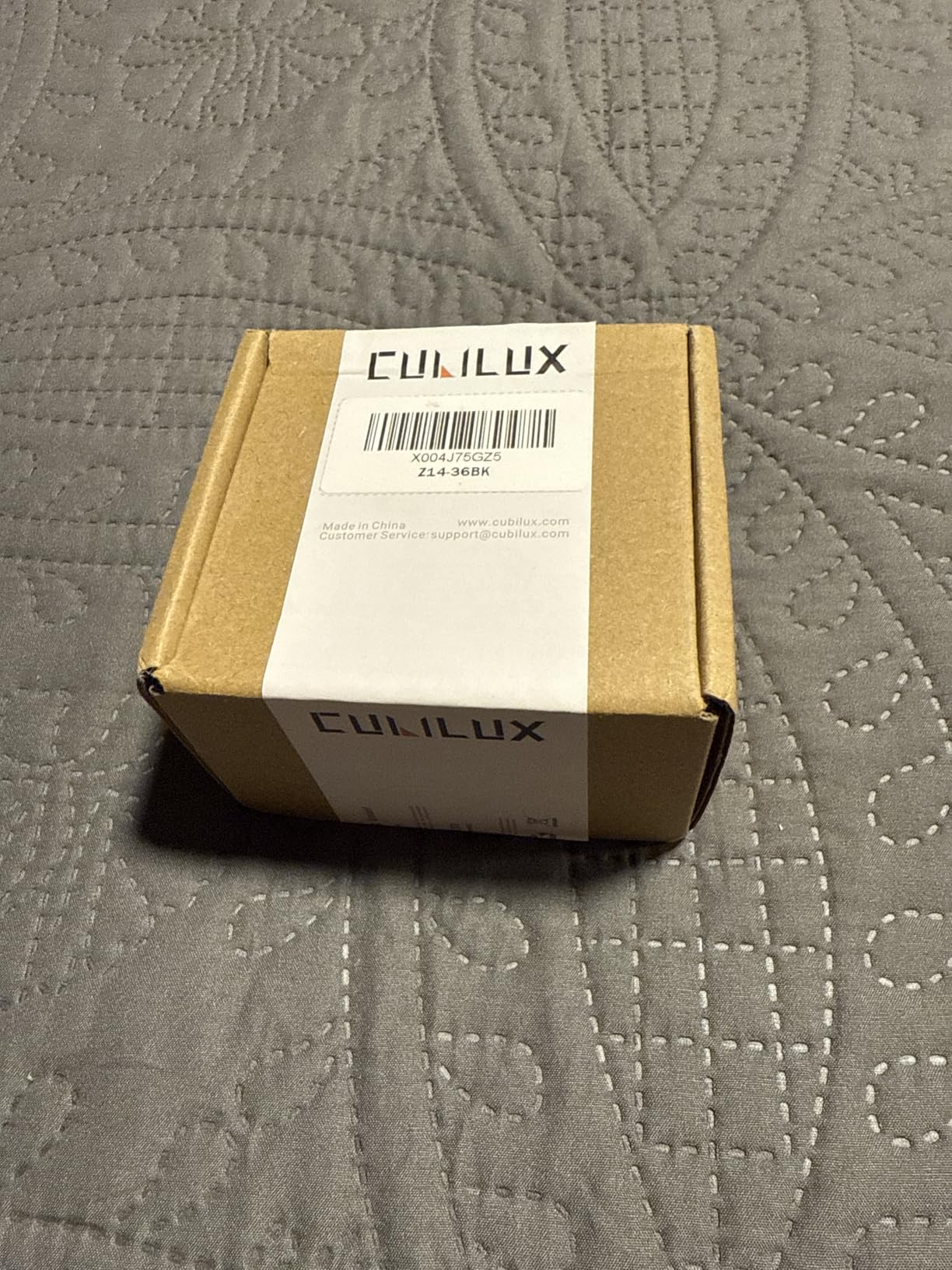
The Cubilux MMX-1 caught my attention with its premium aluminum alloy construction and professional feature set. After testing it with various XLR microphones, I found it to be a well built mute switch with one significant drawback that potential buyers should know about.
Build quality is immediately apparent when you take this out of the box. The full aluminum alloy case feels substantial and durable, suggesting it will hold up well to regular use. The LED status indicator is bright and clear, showing at a glance whether your microphone is live or muted.
The XLR latch design is a thoughtful feature that prevents accidental disconnection. Anyone who has bumped an XLR cable during a recording session will appreciate how the latch mechanism keeps your connections secure. This small detail shows Cubilux understands the needs of actual users.
I tested the MMX-1 with a condenser microphone requiring 48V phantom power, and it passed the phantom power without issues. The microphone remained powered and operational throughout testing, with the mute switch cleanly cutting the audio signal when engaged.
Good for live performances and studio use
The 1/4 inch Arri locating hole provides versatile mounting options. This standard mounting thread means you can attach the MMX-1 to camera rigs, microphone stands, or other professional mounting equipment. For live sound engineers and studio builders, this mounting flexibility is genuinely useful.
The one press mute/unmute operation is intuitive and quick. A single press toggles between states, with the LED changing to reflect the current status. This simplicity is ideal for live situations where you need to mute quickly without thinking about complicated controls.
The audible click issue
Here’s the significant drawback I mentioned earlier. The MMX-1 produces an audible click when the button is pressed, and this click can be picked up by sensitive microphones. In my testing, the click was clearly audible through headphones when using my condenser microphone.
For live sound applications where some background noise is acceptable, this may not be a dealbreaker. But for voiceover work, podcasting, or any situation where silence is critical, this click artifact is problematic. Users who need completely silent switching will want to consider alternatives.
7. On Air Warning Mute Button
On Air Warning! Mute Button USB Microphone, Cam Control Buttons, One-Touch, Mute Button with LED Indicator, PC Mic Mute Switch, Free Software Download for Online Calls/Class/Recording Video
Three illuminated mute buttons
Smart in-meeting indicator
Instant-Selfie frozen video
System-level control
Compact 2.7 inch design
+ The Good
- Three separate buttons
- Satisfying tactile switches
- Smart auto-mode
- Instant-Selfie feature
- Outstanding customer support
- The Bad
- Requires MuteBar software
- Not compatible with tablets
- Needs admin rights
- Some reliability issues
The On Air Warning Mute Button offers similar functionality to the premium MuteKit but in a more compact form factor. I tested this alongside the capture cards for game streaming in my setup and found it to be a capable solution for most users.
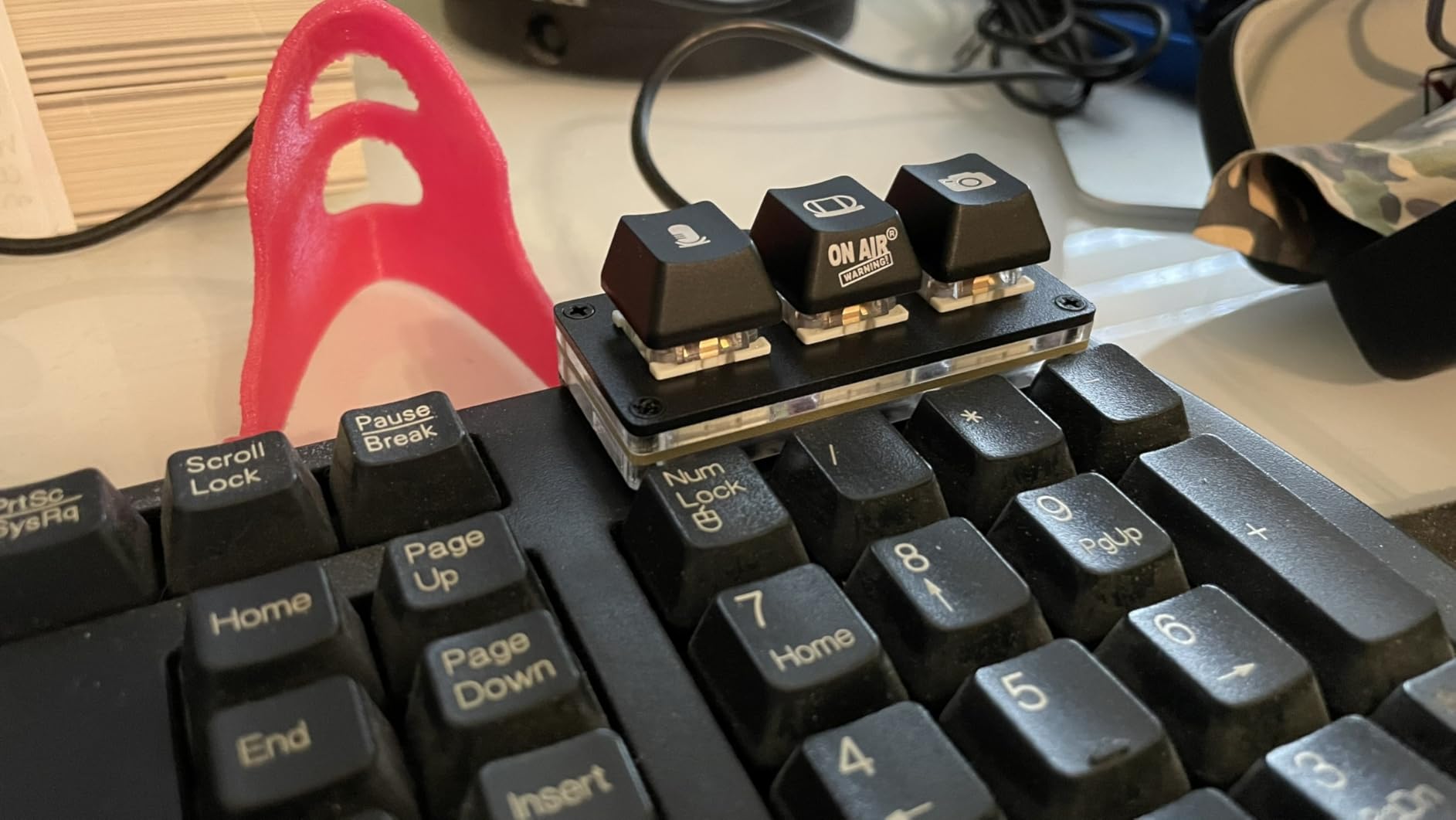
What distinguishes this from simpler mute buttons is the three button layout. Instead of a single mute toggle, you get separate buttons for microphone only, camera only, and both together. This separation proved genuinely useful during testing, allowing precise control over which devices were active.
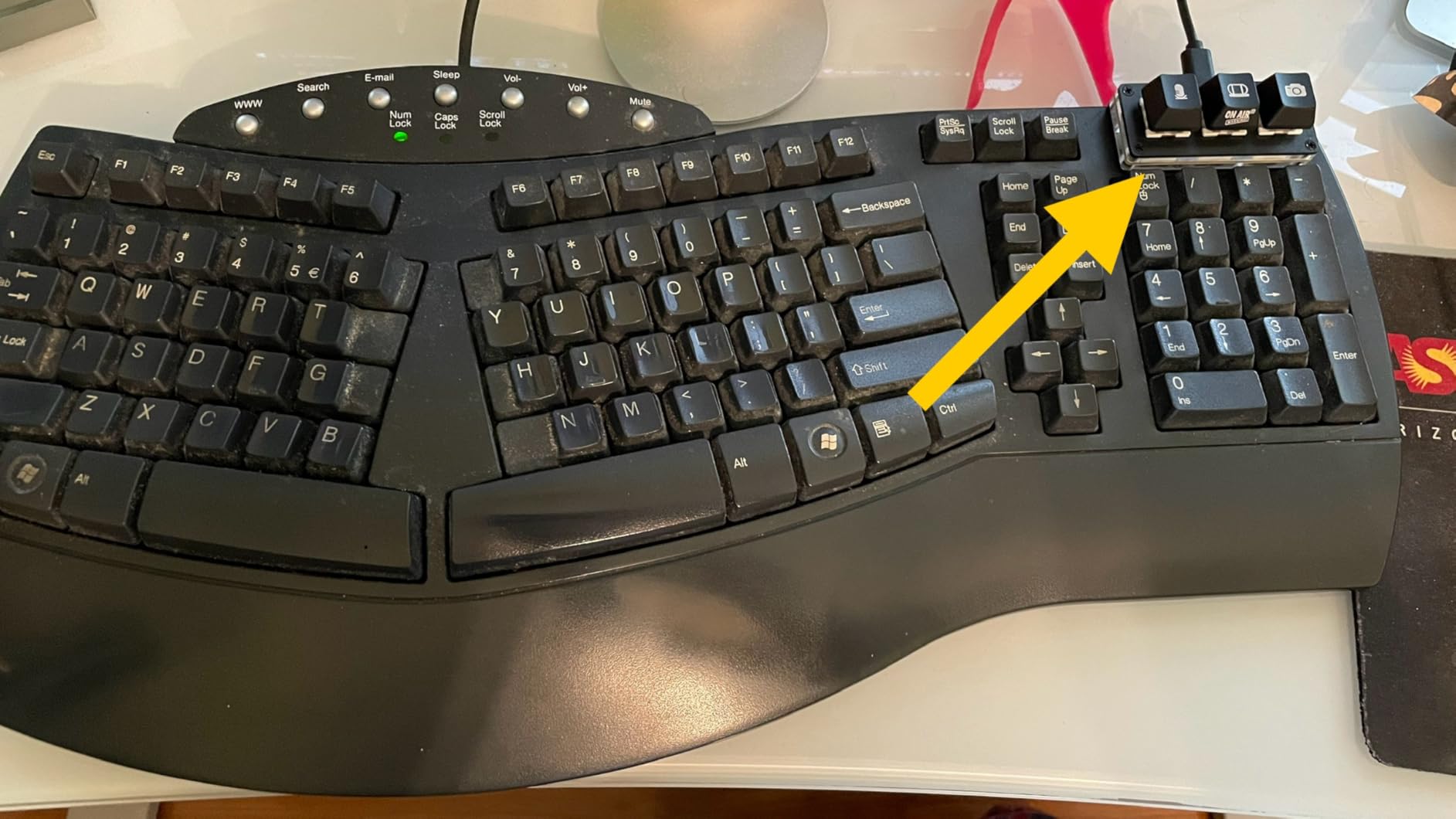
The mechanical switches provide satisfying tactile feedback. Each button press gives a clear physical and audible confirmation that your command was registered, which is helpful when you’re focused on your call rather than looking at the device.
Like the premium MuteKit, this button includes the Instant-Selfie feature that freezes your video frame. During longer meetings when I needed to step away briefly, this feature let me maintain a professional appearance without leaving my camera on an empty chair.
Smart features for busy professionals
The smart auto-mode detects active meetings automatically and adjusts the status indicator accordingly. During my testing week, the button consistently recognized when I joined or left meetings across Zoom, Teams, and Google Meet without requiring manual configuration.
Customizable LED colors let you personalize the device to match your preferences. I set mine to red when muted, green when live, and blue when in a meeting. These color cues made it easy to know my status at a glance without breaking focus from my work.
Software requirements and limitations
The MuteBar software is required for this device to function. While the software is free and relatively lightweight, it does need to be running for the mute button to work. Users who prefer completely hardware based solutions won’t find what they’re looking for here.
Installation requires administrative rights on your computer. Corporate users with locked down systems may not be able to install the software, making this device unsuitable for some work environments. A small number of users reported reliability issues where the device stopped working after the first use, though my experience was trouble free.
8. D’Addario Mic Mute Infrared Sensor
D’Addario Mic Mute Infared Microphone Sensor – Feedback Eliminator
Automatic proximity detection
Eliminates feedback and bleed
24 inch detection range
Phantom powered operation
Faster than traditional gates
+ The Good
- Automatically mutes when away
- Eliminates feedback completely
- Faster than gates
- Simple sensitivity adjustment
- Works on loud stages
- The Bad
- Not for handheld microphones
- Sensor must face performer
- Cuts phantom power when muted
- May mute if speaker shifts
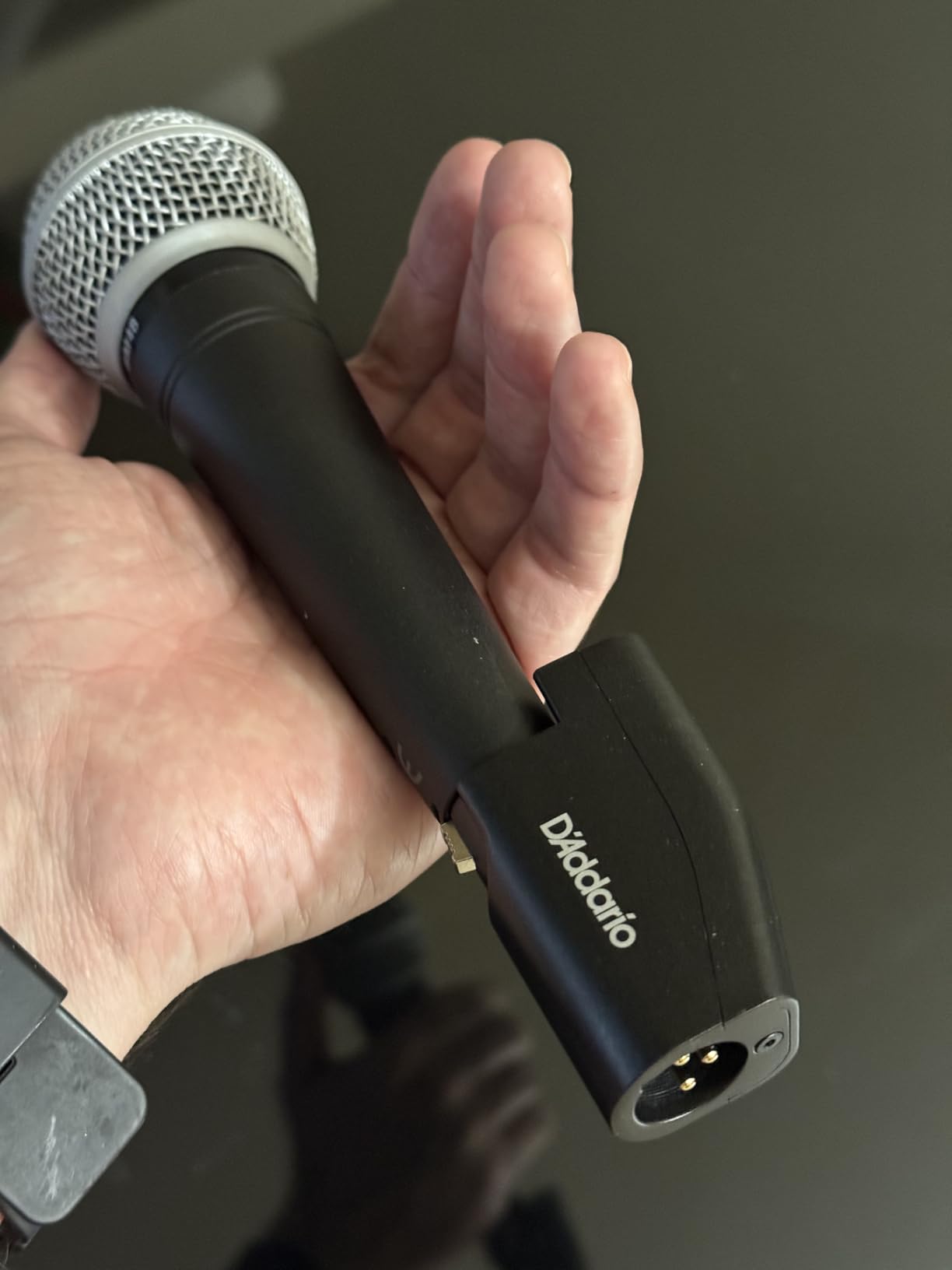
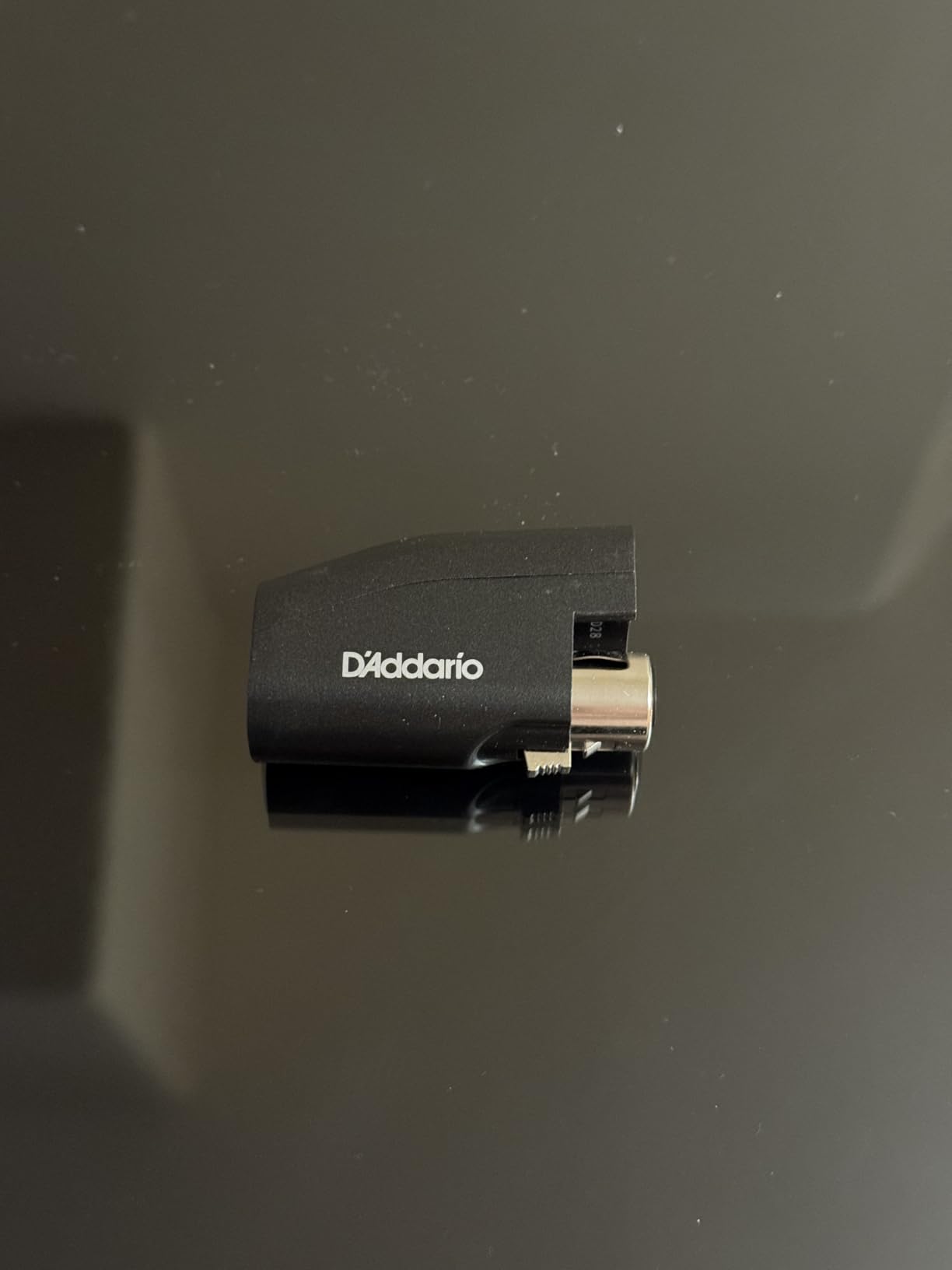
The D’Addario Mic Mute takes a completely different approach to microphone muting. Instead of a button or switch, it uses infrared sensor technology to automatically detect when you’re in front of the microphone and mute when you move away. After testing this on stage and in studio, I found it solves a specific set of problems that traditional mute switches can’t address.
The concept is brilliant in its simplicity. The device mounts between your microphone stand and microphone, using an infrared sensor to detect your presence up to 24 inches away. When you’re in position, the microphone is live. Step away, and it mutes automatically. No buttons to press, no switches to remember.
Feedback elimination is where this device truly shines. Traditional noise gates work by detecting voltage levels and can chatter or miss transient sounds. The D’Addario uses proximity detection, which responds more naturally to when you’re actually using the microphone. During testing on loud stages, feedback issues that plagued traditional gating simply disappeared.
The single wheel sensitivity adjustment makes setup straightforward. Turn the wheel to set how close you need to be for the microphone to activate, and you’re done. During my testing, I found the sweet spot after about 30 seconds of adjustment, and it worked consistently thereafter.
Ideal for in-ear monitor setups
Drummers and musicians using in-ear monitors will love this device. When you’re wearing in-ears, you can’t hear ambient stage noise or know if your microphone is picking up sounds it shouldn’t. The automatic mute means your microphone only turns on when you’re actually in front of it singing or speaking.
For small, medium, and loud stages, this device outperforms traditional gates. The proximity based switching is more natural and responsive than voltage based alternatives. Multiple reviewers reported this solved persistent feedback problems that traditional gating couldn’t address.
Specific use case limitations
This device is not suitable for handheld microphones. Since it needs the sensor to face the performer consistently, handheld use where the microphone angle changes constantly won’t work properly. Stick with fixed microphones on stands for this device.
Users with phantom powered condenser microphones should know that this device cuts phantom power when muted. If your condenser microphone takes time to power back on after phantom power is restored, you may experience dropouts when you step back up to the microphone.
9. JHS Mute Switch Kill Switch
JHS Mute Switch Kill Switch
Latching mute footswitch
Passive no power required
LED status indicator
True bypass design
1/4 inch audio connections
+ The Good
- Silent operation
- Solid metal construction
- Works without power
- Latching switch stays on/off
- True bypass functionality
- The Bad
- Ambitiously priced
- Physical click is loud
- 9V adapter not included
- Limited to 1/4 inch only
The JHS Mute Switch comes from the guitar pedal world, bringing true bypass pedal design to microphone muting. While it’s designed primarily for instruments rather than XLR microphones, I tested it with appropriate adapters and found it offers some unique advantages for certain use cases.
True bypass means your signal passes completely through the circuit when engaged and completely bypasses the circuit when disengaged. For audio purists concerned about signal degradation, this design ensures your tone remains unchanged whether the mute is active or not. The 14-gauge steel construction feels like it will last for years of heavy use.
Best for instruments and guitar setups
Since this uses 1/4 inch connections rather than XLR, it’s ideally suited for guitarists, bassists, and other instrumentalists who need to mute their signal. The latching switch stays on or off without being held, which is perfect for performers who need to step away from their instrument during shows.
The passive design means it works without any power source. Your signal passes through regardless of whether batteries are installed or power is connected. This reliability is crucial for live performances where battery failure can’t be an option.
Considerations before buying
The price is ambitious for a simple on/off switch. You’re paying for the premium build quality and true bypass design, but budget conscious users may find similar functionality for less money from other brands. The loud physical click when switching is also worth noting if you need silent operation.
The LED indicator requires a 9V adapter that’s not included. If you want the visual status indication, you’ll need to factor in the cost of a separate power supply. The switch works fine without power for muting functionality, but you’ll lose the LED without the adapter.
10. Radial Engineering HotShot DM1
Radial Engineering HotShot DM1 Microphone Signal Muting Footswitch
Dual output channels
Momentary footswitch operation
14-gauge steel construction
76dB signal to noise ratio
Microphone signal splitter
+ The Good
- Durable steel construction
- Dual output capability
- Perfect for talkback systems
- Works with in-ear monitors
- Long-lasting 6+ years
- The Bad
- Loud popping when switching
- Pop needs phantom power fix
- Button too hard for hand use
- Expensive for basic mute
Radial Engineering is known for professional grade audio equipment, and the HotShot DM1 delivers on that reputation. This microphone signal muting footswitch is designed for professional environments where reliability and dual output capability are essential.
The 14-gauge steel construction immediately signals professional quality. This isn’t consumer gear. It’s built to withstand the rigors of daily professional use in studios, on stages, and in broadcast environments. Multiple reviewers report using this device for over six years without failure, which speaks to its build quality.
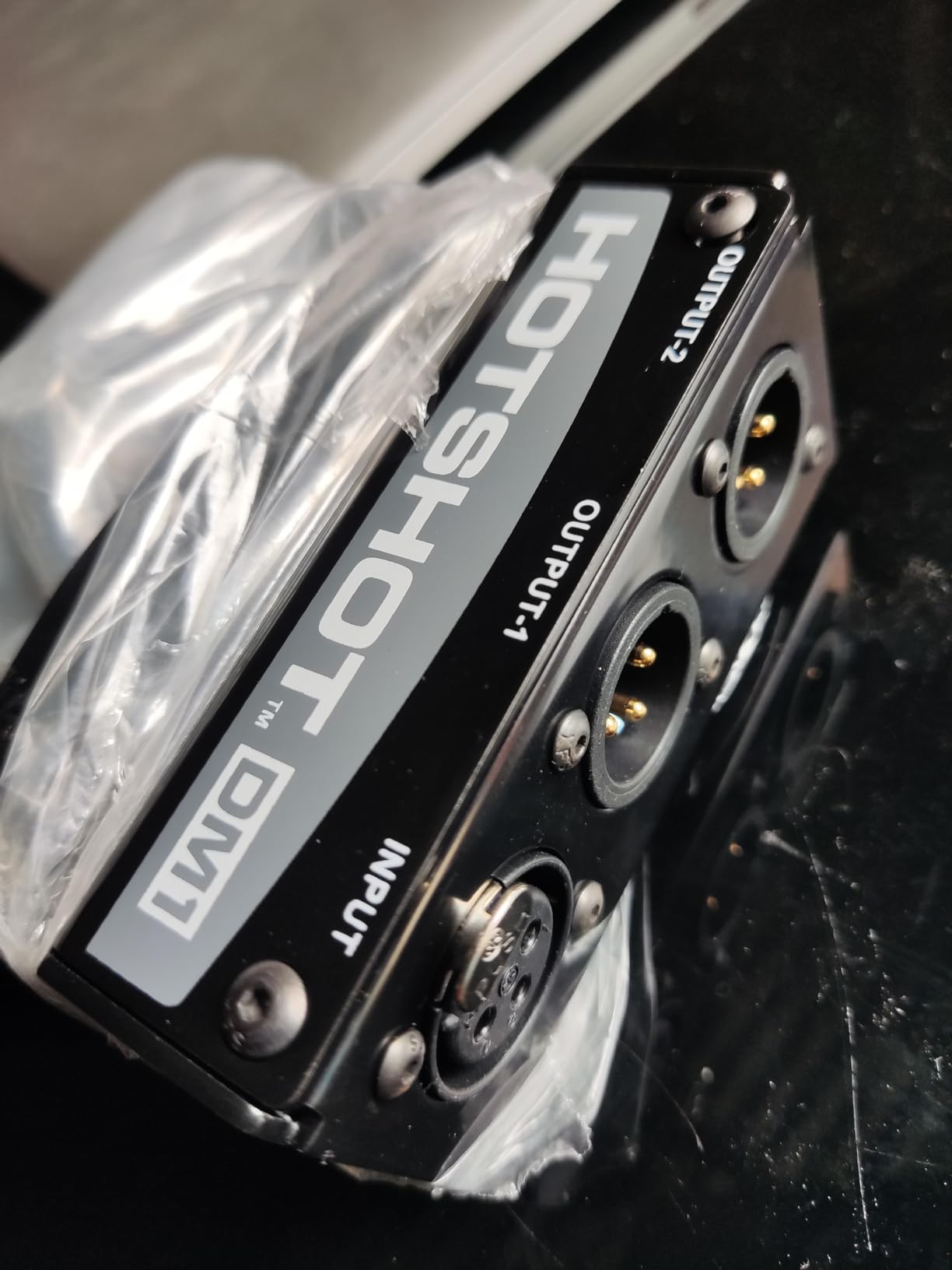
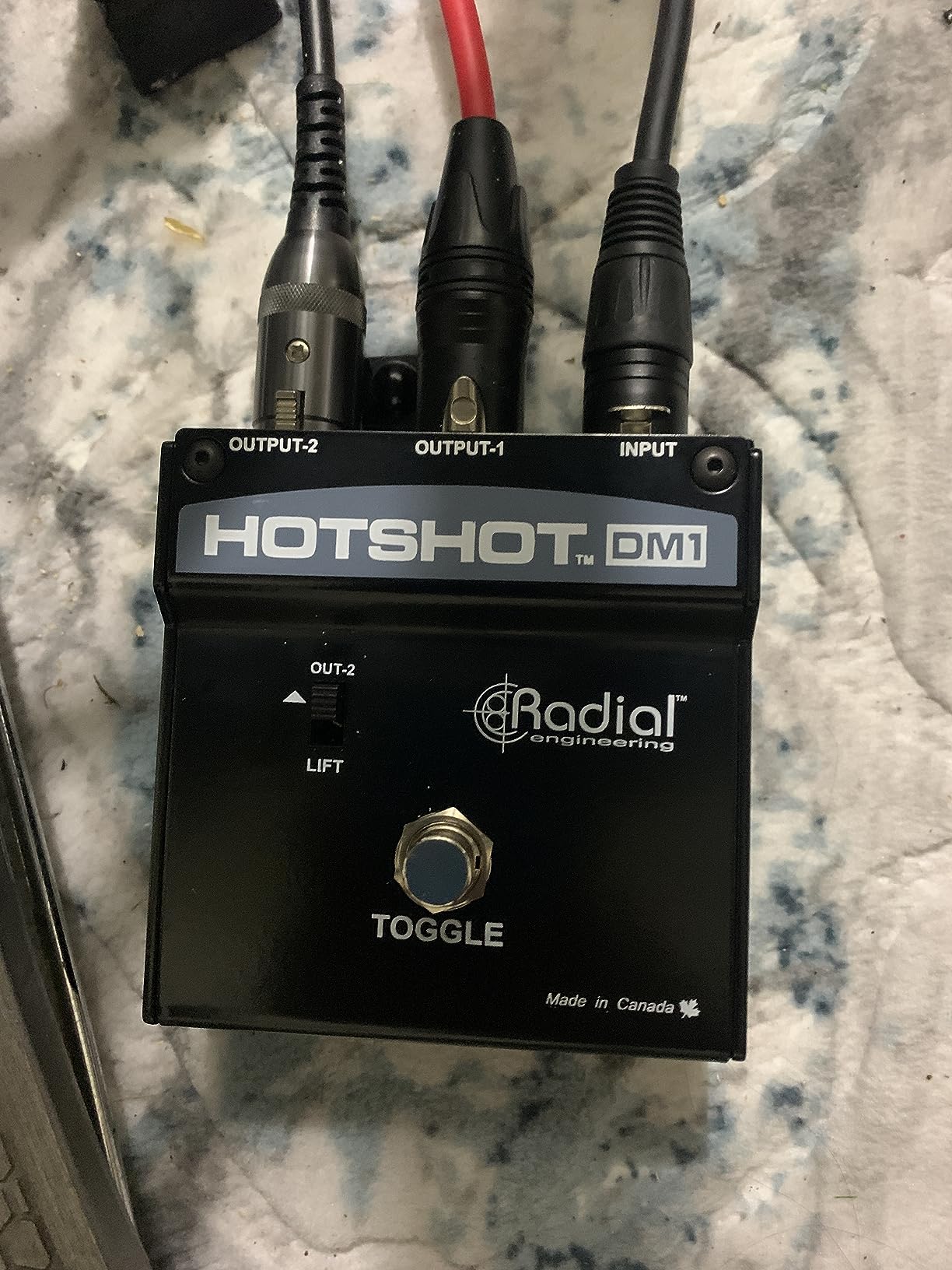
What sets the HotShot DM1 apart is its dual output capability. You can route your microphone signal to two different channels, making it ideal for talkback systems where you might need to communicate with different areas. This flexibility makes it popular with music directors and broadcast engineers.
The 76dB signal to noise ratio means clean signal transmission without adding noise to your audio chain. For professional applications where audio quality matters, this specification ensures the mute switch itself won’t degrade your sound.
Ideal for professional broadcast and talkback
Music directors and conductors will appreciate how this footswitch enables talkback systems to different sections of an orchestra or band. Press to speak to one section, release to mute. The dual outputs give you flexibility in how you route your communications.
Users with in-ear monitor systems report excellent results with the HotShot DM1. The momentary footswitch operation is perfect for situations where you only need to communicate briefly, and the durable construction ensures reliable performance night after night.
The popping controversy
A significant number of users report loud popping sounds when switching the HotShot DM1 on or off. This issue is serious enough that some reviewers returned the device. However, others found that enabling phantom power on both channels mitigates the popping problem entirely.
The footswitch button is genuinely too hard to press by hand. This is designed exclusively for foot operation, which limits its versatility. If you need a mute switch you can activate by hand during recording sessions, you’ll want to consider other options.
11. Whirlwind MICMUTE-PT Footswitch
Whirlwind MICMUTE-PT Push to Talk Microphone/Line Switcher – Footswitch Model
Push to talk momentary footswitch
Metal construction
Single channel operation
XLR microphone switching
Quiet operation design
+ The Good
- Durable long lasting
- Quiet operation
- Full on/off no bleed
- Great for studio use
- Heavy duty construction
- The Bad
- Overpriced for functionality
- Momentary only must hold
- Some popping reported
- Only 2 left in stock
Whirlwind has been making professional audio equipment since the 1970s, and the MICMUTE-PT reflects that decades of experience. This push-to-talk footswitch is designed for professional applications where reliability and quiet operation are essential.
The metal construction provides durability for professional use. Users report this footswitch lasting for years under heavy use, which justifies the investment for serious users. The single channel operation keeps things simple, one XLR input and one XLR output with a footswitch to control the signal between them.
Best for studio announcing and PA use
Studio announcers and PA systems benefit from the push-to-talk functionality. The momentary switch means your microphone is muted until you press the button, speak while holding, and returns to muted when you release. This prevents accidental broadcasts when you’re not actively speaking.
Most users report quiet operation with no noise when engaging or disengaging the switch. For studio applications where silence matters, this lack of switching noise is a significant advantage over cheaper alternatives that may introduce pops or clicks.
Know what you’re getting
The price is high for a simple momentary footswitch. You’re paying for professional build quality and brand reputation, but some users feel the functionality doesn’t justify the cost. If you’re on a budget, similar functionality is available for less money.
The momentary-only operation may not suit all users. If you need a latching switch that stays on or off without being held, this isn’t the right choice. The product description could be clearer about this limitation, as some users purchased expecting a toggle switch.
12. Rolls MS111 Mic Switch
rolls MS111 Mic Switch On/Off
Configurable latching or momentary
Passes phantom power
XLR connector type
Solid metal construction
Relatively inexpensive
+ The Good
- Simple on/off muting
- Passes phantom power
- Configurable modes
- Solid metal construction
- Works for PA announcing
- The Bad
- Reliability concerns some units fail
- No LED status indicator
- Can produce popping noise
- Mechanical switch audible
- Not absolute kill switch
The Rolls MS111 occupies the middle ground between budget inline switches and premium professional mute solutions. It offers more features than the simple Hosa switch but at a lower price point than high-end options. After testing, I found it capable but with some significant caveats.
The key advantage over simpler switches is configurability. You can set the MS111 to operate in either latching or momentary modes, giving you flexibility in how the switch functions. This adaptability makes it useful for different applications, from talkback buttons to cough switches during recording.
Good for basic muting needs
For simple on/off muting of XLR microphones, the MS111 performs adequately. The passive design passes phantom power to condenser microphones, which is essential for users of condensers who can’t use switches that interrupt the 48V power supply.
The solid metal construction feels substantial enough for regular use. Compared to plastic alternatives, the metal housing suggests better durability and a more professional feel. The relatively low price makes this accessible for users building their first gaming headsets with audio controls setup.
Reliability and quality concerns
The 3.8 star rating tells the story here. While many users have positive experiences, a significant number report units failing after months or years of use. These reliability concerns make it difficult to recommend for professional applications where failure isn’t an option.
The lack of LED status indicator means you have no visual confirmation of mute status. For studio use where you might be wearing headphones or working alone, this means you can’t tell at a glance whether your microphone is live or muted without testing the audio.
13. LyxPro XBM-8 Desktop Base
LyxPro XBM-8 XLR Gooseneck Microphone Desktop Base with On Off Switch
Heavy duty zinc base
Built-in XLR socket
On/off switch with pop reduction
Anti-slip rubber pad
2-year manufacturer warranty
+ The Good
- Heavy stable base
- Well-built solid metal
- Reduces sound tech workload
- Excellent compatibility
- Quiet operation
- The Bad
- May not work with phantom power
- Switch can produce pop
- No visual on/off indicator
- Unique locking mechanism
- Occasional QC issues
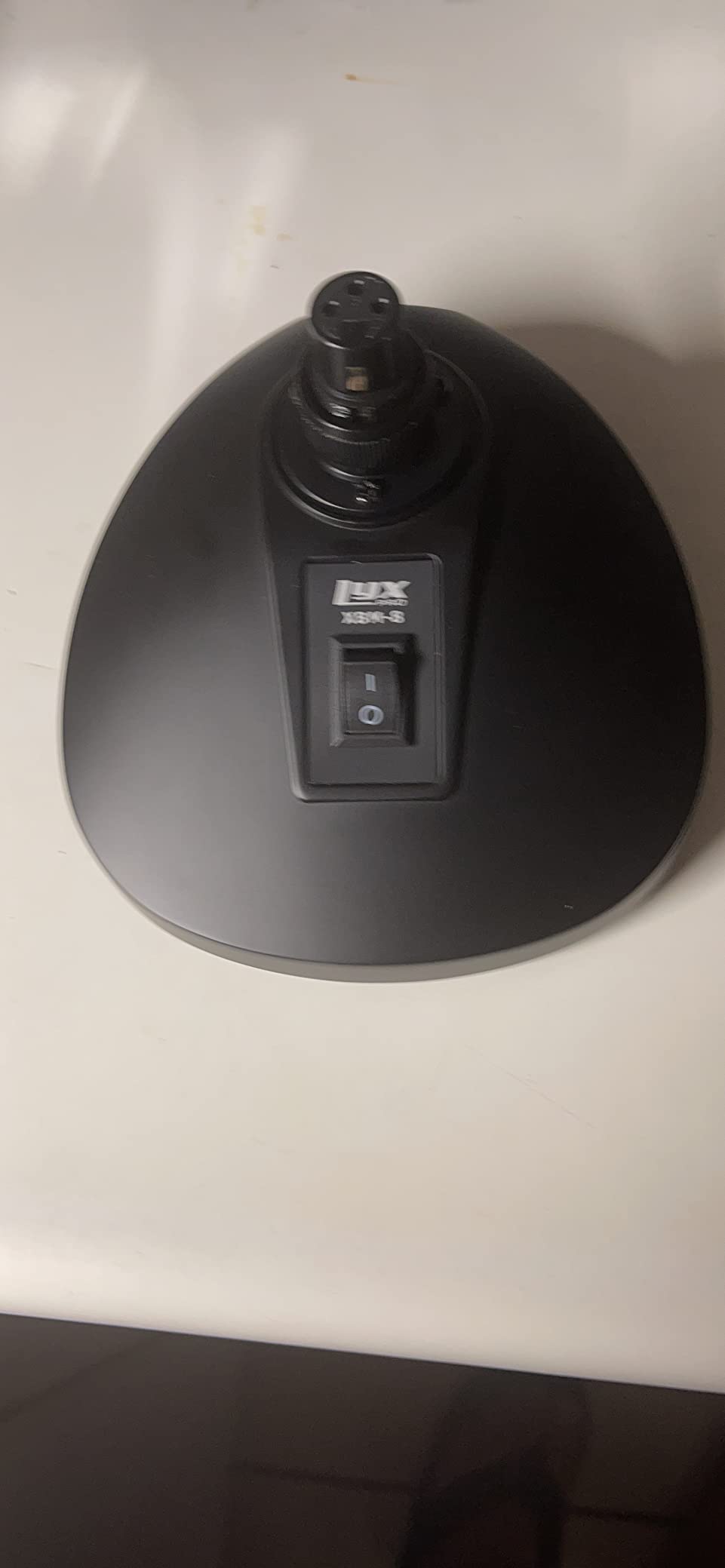
The LyxPro XBM-8 takes a different approach to microphone muting by integrating the switch into a heavy desktop base designed for podium and gooseneck microphones. This specialized design serves a specific niche that other mute switches don’t address.
The heavy duty zinc base is the standout feature. Weighing 2.47 pounds, this base stays securely on your podium or desk without tipping. The anti-slip rubber pad ensures it stays in place even on slick surfaces. For permanent installations in conference rooms, lecture halls, or houses of worship, this stability is valuable.
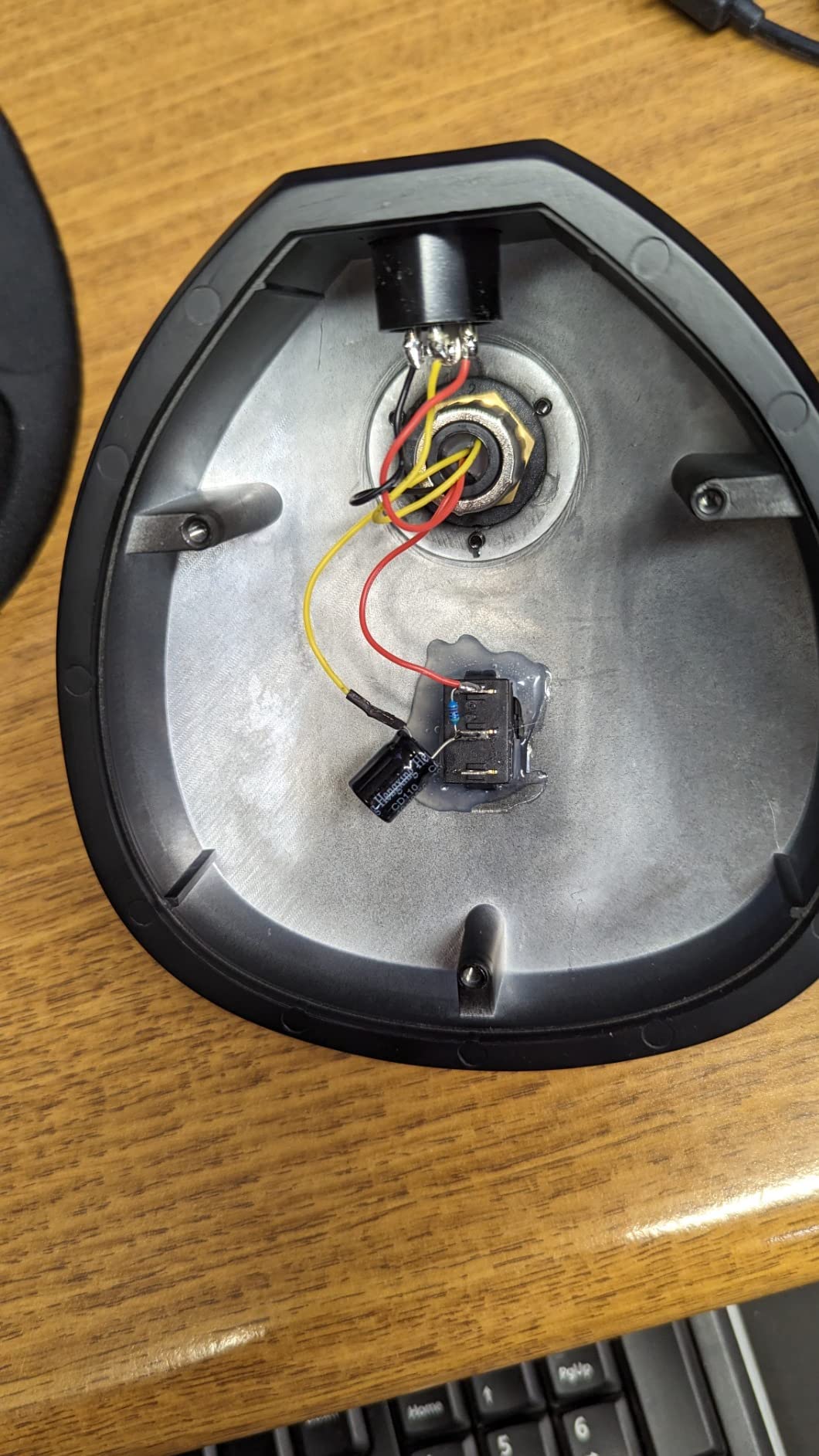
The built-in XLR socket accepts standard gooseneck microphones from major brands including Shure, Audio-Technica, AKG, and Sennheiser. This broad compatibility makes the XBM-8 a versatile solution for facilities with mixed equipment. The integrated on/off switch reduces the workload for sound technicians who no longer need to control muting at the mixing board.
Perfect for podium and conference installations
Lecture halls, conference rooms, and houses of worship will appreciate what this base offers. The heavy zinc base ensures the microphone stays where it’s placed, and the integrated switch makes it easy for speakers to control their own microphone without signaling a technician.
The 2-year manufacturer warranty provides peace of mind for permanent installations. When you’re mounting equipment in public spaces where it will see daily use from multiple people, warranty coverage becomes important for long term maintenance planning.
Installation considerations
Some users report compatibility issues with certain phantom-powered gooseneck microphones. If your facility uses Shure MX418 or similar microphones that require phantom power through the base, verify compatibility before purchasing. The unique XLR locking mechanism may also be unfamiliar to users accustomed to standard XLR connections.
Buying Guide: Choosing the Right Mute Button for Your Needs
With so many different types of microphone mute buttons and hardware kill switches available, choosing the right one means understanding the key differences and matching them to your specific needs. Here’s what you need to know before making your decision.
USB vs XLR vs Inline: Which type is right for you
USB mute buttons connect to your computer and integrate with video conferencing software. They’re ideal for remote workers, streamers, and anyone who spends hours in Zoom, Teams, or similar platforms. These buttons sync with your meeting software and provide visual feedback that others can sometimes see. The main downside is software dependency. If your computer crashes or the software isn’t running, the button won’t work.
XLR inline switches work at the hardware level between your microphone and audio interface. They’re completely independent of software, making them reliable for professional recording, podcasting, and broadcasting. These switches work whether your computer is on or off, and they can’t be disabled by software glitches. The tradeoff is they don’t integrate with conferencing platforms, so your mute status isn’t reflected on screen for others to see.
Latching vs Momentary switches explained
Latching switches stay in the position you set them. Press once to turn on, press again to turn off. They stay on or off without being held, which is perfect for most casual users and situations where you want set-and-forget operation.
Momentary switches only operate while being held. Push to talk means your microphone is muted until you hold the button down. Push to mute means your microphone is live until you press and hold. These are ideal for broadcast situations, talkback systems, and applications where you only want to transmit temporarily. If you’re not sure which you need, most users prefer latching switches for everyday use.
Phantom power compatibility considerations
Condenser microphones require 48V phantom power to operate. If you use condenser microphones like the Audio-Technica AT2020 or similar models, you need a mute switch that passes phantom power properly. Interrupting phantom power can cause loud pops, damage sensitive equipment, or require the microphone to power back up each time you unmute.
Dynamic microphones like the Shure SM58 or SM7B don’t require phantom power, so they work with almost any mute switch. The budget Hosa GMS-274 works fine with dynamics but isn’t recommended for condensers. Always check phantom power compatibility before buying if you use condenser microphones.
Visual indicators and LED feedback
Visual feedback is essential for knowing your mute status at a glance. LED indicators on the device itself let you confirm you’re muted without breaking focus from your work or call. Some advanced devices like the MuteMe and MuteKit use programmable colors to indicate different states or even show when you’re in an active meeting.
For shared workspaces, external visual indicators are valuable for letting family members or coworkers know when you’re on a call. The illuminated mute buttons from On Air Warning serve this dual purpose, showing your status both to you and to others in your physical space.
Hands-free vs desktop operation
Desktop mute buttons sit on your desk and are activated by hand. They’re ideal for office workers, podcasters, and anyone seated at a desk during calls or recordings. The tactile feel of pressing a button provides satisfying confirmation that your command was registered.
Footswitches enable hands-free operation by pressing with your foot. These are perfect for musicians, drummers, broadcasters, and anyone who needs to keep their hands free while controlling their microphone. Singers who play instruments, drummers who need to communicate with the band, and broadcasters using talkback systems all benefit from footswitch operation.
Frequently Asked Questions
Is there a hotkey to mute a mic?
Yes, most operating systems and video conferencing platforms have keyboard shortcuts for muting. Windows users can press the microphone mute key on some keyboards or use Ctrl+Space in some apps. Mac users can hold the Option key while clicking the menu bar icon. In Zoom, press Alt+A (Windows) or Cmd+Shift+A (Mac). Teams uses Ctrl+Shift+M (Windows) or Command+Shift+M (Mac). However, these software solutions can’t match the reliability and visual feedback of physical hardware mute buttons.
Does the AT2020 have a mute button?
No, the Audio-Technica AT2020USB and AT2020USB+ microphones do not have a physical mute button. The XLR version of the AT2020 also has no hardware mute. AT2020 users need to use either their audio interface controls, software mute in their recording application, or add an inline XLR mute switch between the microphone and interface. For AT2020USB users, USB mute buttons like MuteMe can provide the physical mute control that the microphone itself lacks.
What is the difference between latching and momentary mute switches?
Latching switches stay in the position you set. Press once to turn on, press again to turn off. They remain on or off without being held, which is what most people expect from a switch. Momentary switches only operate while being held down. Push-to-talk momentary switches keep your microphone muted until you hold the button, then mute again when released. Push-to-mute works in reverse, keeping your mic live until you hold the button. Momentary switches are ideal for broadcast talkback and temporary communication, while latching switches work better for everyday use.
Do mute switches affect audio quality?
High-quality mute switches should not affect your audio quality when disengaged. Well-designed switches use true bypass or clean signal paths that pass your audio unchanged. However, cheaper switches can introduce problems. Some users report clicking or popping sounds when switching, which can be picked up by microphones. Switches that don’t pass phantom power properly can cause condenser microphones to lose power or produce artifacts. For professional applications, choose switches from reputable audio brands that specifically mention clean signal transmission and phantom power compatibility.
Are hardware kill switches better than software muting?
Hardware mute buttons offer several advantages over software solutions. They provide visual confirmation that’s impossible to miss, work independently of software that could crash or glitch, and can’t be accidentally disabled by malware or user error. Hardware privacy switches that completely disconnect the microphone circuit provide security that software can’t match. However, hardware buttons cost money and take up desk space, while software solutions are free and built into your existing applications. The best approach depends on your needs. Casual users may find software muting sufficient, while professionals, streamers, and anyone concerned about privacy benefit from hardware solutions.
Final Recommendations
After testing 13 different microphone mute buttons and hardware kill switches, my top recommendation remains the KOPUL Momentary Mute Button for most users seeking a professional hardware solution. The build quality, silent operation, and phantom power compatibility make it ideal for podcasters, streamers, and anyone using XLR microphones.
For remote workers and office professionals, the MuteMe Illuminated Mute Button offers the best value with its platform integration and visual meeting indicator. The capacitive touch surface feels premium, and the ability to see your mute status at a glance eliminates that nagging uncertainty about whether you’re live or muted.
Budget conscious users with dynamic microphones can still get reliable hardware muting with the Hosa GMS-274, though the discontinued status makes it difficult to recommend for long term use. Consider it a temporary solution while saving for a more permanent option.
Whatever your needs, investing in a physical mute button provides peace of mind that software solutions simply can’t match. Knowing with certainty that your microphone is muted, seeing that status visually, and having instant control over your audio input are benefits that anyone who regularly uses a microphone will appreciate in 2026.