
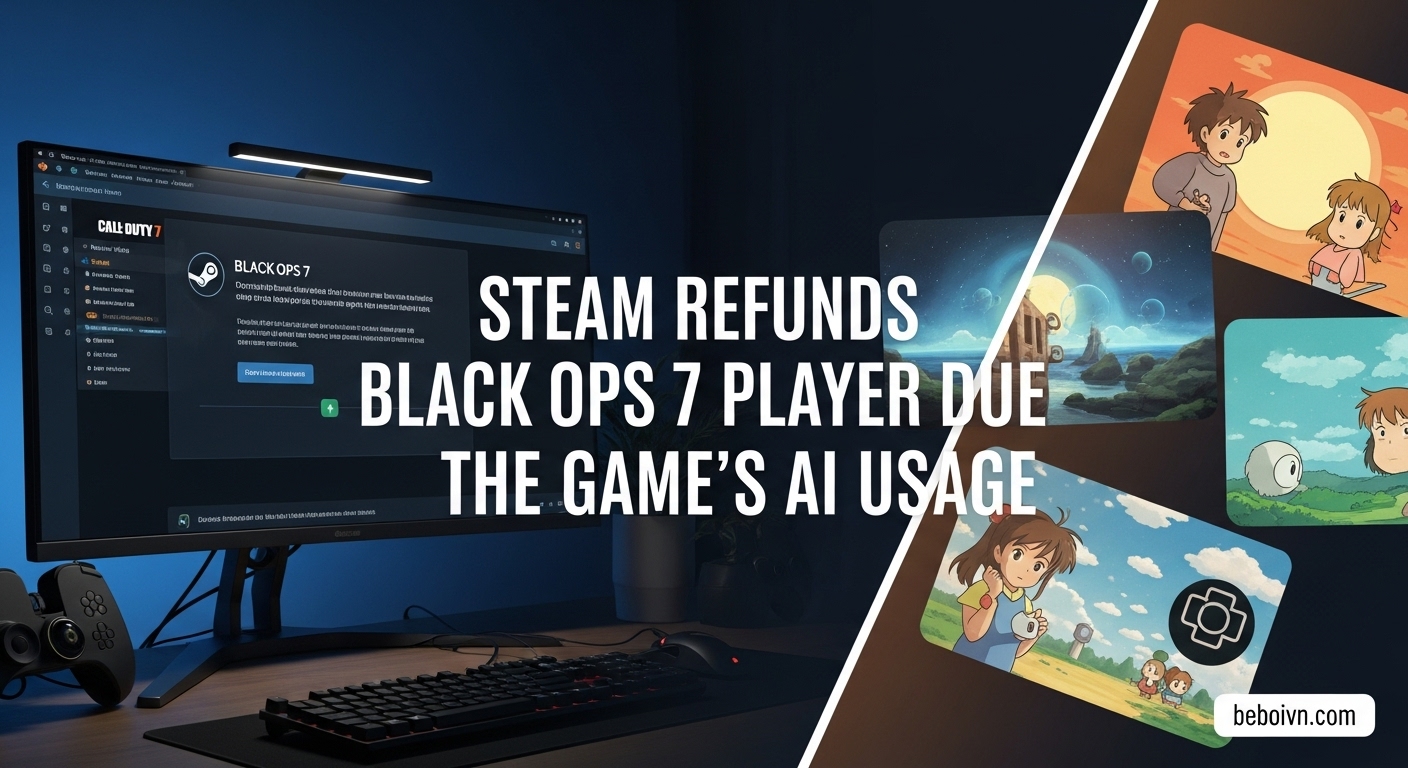
In an unprecedented move that’s sending shockwaves through the gaming industry, Steam has reportedly refunded a Call of Duty: Black Ops 7 player who completed the entire campaign but demanded their money back due to the game’s extensive use of artificial intelligence. This incident highlights the growing tension between game developers embracing AI technology and players demanding transparency and human creativity in their gaming experiences.
The Unprecedented Refund That Started It All
The controversy began when a Steam user known as “Bricky” took to social media to share their surprising success story. “I finished the entire BLOPS 7 campaign, asked for a refund and Valve granted it to me,” they posted, explaining that the game constantly utilized AI-generated options that weren’t present in any marketing materials, screenshots, or promotional videos.
What makes this case particularly remarkable is that Steam typically only offers refunds within 14 days of purchase and for less than two hours of gameplay. The fact that this player completed the entire campaign—likely taking well beyond the standard refund window—yet still received their $69.99 back signals a significant shift in how digital marketplaces might handle AI-related complaints moving forward.
The Studio Ghibli-Style Calling Cards That Sparked Outrage
At the heart of this controversy are Black Ops 7’s calling cards—customizable player icons that feature what many players describe as “Studio Ghibli-style” artwork. These animated cards, which have been a staple of the Call of Duty franchise for years, immediately stood out to longtime fans for their unusual aesthetic quality.
“I haven’t played myself, but from what little I’ve watched, it seems to be hallucinations caused by the mkultra-style drug thing from black ops 6,” one Reddit user commented, while others were more direct in their criticism. “They have fucking AI ghibli calling cards for the campaign in Bo7 man this is so fucking funny,” posted another user on Twitter/X, capturing the mix of amusement and frustration sweeping through the community.
The Studio Ghibli-style art is particularly jarring because it represents such a dramatic departure from Call of Duty’s typically gritty, military-inspired visual identity. While some games successfully blend contrasting art styles—Fallout being a prime example—Black Ops 7’s implementation feels forced and out of place, raising questions about why such a stylistic choice was made in the first place.
Activision’s Response: Corporate Speak That Satisfied No One
As backlash mounted, Activision was forced to address the growing controversy. Their response, however, did little to quell player dissatisfaction. “Like so many around the world, we use a variety of digital tools, including AI tools, to empower and support our teams to create the best gaming experiences possible for our players,” the company stated. “Our creative process continues to be led by the talented individuals in our studios.”
This carefully worded statement acknowledges AI usage while attempting to reassure players that human creativity remains at the forefront. However, critics argue that the response is deliberately vague and fails to address specific concerns about which assets are AI-generated and why players weren’t informed of this extensive AI usage before purchasing.
The Steam store page for Black Ops 7 does include a disclosure: “Our team uses generative AI tools to help develop some in game assets.” But many players argue this buried acknowledgment doesn’t constitute proper transparency, especially when the AI-generated content is as prominent and visually distinctive as the calling cards in question.
This Isn’t Activision’s First AI Controversy
What makes this situation particularly troubling for longtime Call of Duty fans is that it’s not the first time the franchise has faced AI-related backlash. Both Modern Warfare III and Black Ops 6 were previously accused of using AI-generated assets, though those instances were more subtle.
Last year’s Black Ops 6, for example, featured a notorious “Zombie Santa” loading screen during its Christmas event that displayed the telltale signs of AI generation—most notably, hands with an incorrect number of fingers. These “AI giveaways” became a running joke in the community, but the response from Activision at the time was similarly evasive.
The difference with Black Ops 7, however, is the sheer blatancy of the AI usage. Where previous instances might have been dismissed as isolated incidents or experimental implementations, Black Ops 7’s AI-generated content feels pervasive and intentional, suggesting that Activision has “doubled down” on AI technology despite clear player resistance.
The Steam Refund Precedent: What This Means for Gamers
The successful refund granted to the Black Ops 7 player could set a significant precedent for how digital marketplaces handle AI-related complaints moving forward. Steam’s refund policy is typically quite strict—games must be refunded within 14 days of purchase and with less than two hours of playtime. Exceptions are generally reserved for catastrophic launches, like Cyberpunk 2077’s disastrous debut.
By granting a refund to a player who completed the entire campaign, Steam appears to be acknowledging that undisclosed AI usage might constitute a legitimate reason for refund, even outside the normal policy constraints. This could open the floodgates for similar requests from other players who feel misled about a game’s AI content.
Industry experts are divided on whether this represents a one-time exception or the beginning of a new trend. Some argue that Steam was simply avoiding negative publicity, while others believe it signals a broader shift in how digital marketplaces view consumer rights in the age of AI-generated content.
The Government Gets Involved: When Gaming Controversies Reach Capitol Hill
What began as a player complaint about AI-generated calling cards has now escalated to the highest levels of government. U.S. Congressman Ro Khanna (D-California) weighed in on the controversy, calling for regulations to prevent companies from using AI to eliminate jobs solely to increase profits.
“We need regulations that prevent companies from using AI to eliminate jobs to extract greater profits,” Khanna stated on social media. “Artists at these companies need to have a say in how AI is deployed. They should share in the profits. And there should be a tax on mass displacement.”
The congressman’s involvement elevates this from a gaming industry issue to a broader conversation about labor rights, technological ethics, and corporate responsibility in the AI era. His proposed solutions include tax reforms to discourage excessive automation, guardrails to protect worker input, and support for unions to bargain for workers benefiting from productivity gains.
This isn’t the first time gaming industry practices have caught the attention of lawmakers, but it’s rare for a specific game’s content choices to spark such high-level discussion about technology policy and labor rights.
The Bigger Picture: AI in Gaming and Consumer Rights
The Black Ops 7 refund controversy raises fundamental questions about the future of AI in gaming and consumer rights. As game developers increasingly turn to AI tools to streamline production and reduce costs, players are demanding greater transparency about what they’re purchasing.
Key issues at stake include:
Transparency in Marketing: Should game developers be required to disclose the extent of AI usage in their games? Players argue that marketing materials should accurately represent the final product, including whether significant portions were AI-generated.
Value Proposition: If games are using AI to reduce development costs, should those savings be passed on to consumers? Many players feel that paying premium prices ($70 for Black Ops 7) for AI-generated content represents poor value.
Artistic Integrity: The gaming community has long valued the artistic vision and craftsmanship that goes into creating immersive worlds. The rise of AI-generated content threatens to undermine this perception, with many players viewing AI as a shortcut that sacrifices quality for efficiency.
Labor Concerns: Beyond player experience, the increasing use of AI in game development raises serious questions about the future of creative jobs in the industry. Artists, designers, and writers may find their roles diminished or eliminated as AI tools become more sophisticated.
What Other Players Are Saying: Community Reaction
The response from the gaming community has been overwhelmingly negative, with Black Ops 7 currently sporting “Mixed” reviews on Steam. Players have taken to forums, social media, and review platforms to express their frustration:
“Not to break immersion but when I came up with Tee’s boss I had them be a Call of Duty fan cause I love very stupid details like that. So it would make sense for me to get Black Ops 7 and stream it but how can I pay 70 bucks for such AI slop,” one player posted on Bluesky, capturing the sentiment of many who feel betrayed by the undisclosed AI usage.
Others have pointed out the irony of a franchise known for its cutting-edge technology and massive budgets resorting to what they perceive as cost-cutting measures. “For a game that costs this much to make and market, using AI for something as visible as calling cards just feels lazy,” commented a Reddit user.
Some players have attempted to defend Activision, arguing that AI tools are simply part of the modern development pipeline and that the quality of the final product should matter more than how it was created. However, these voices appear to be in the minority, with most of the community siding with the refunded player.
The Industry-Wide Implications
The Black Ops 7 AI controversy doesn’t exist in isolation. Other major titles have faced similar backlash recently:
- Arc Raiders: Despite achieving impressive player numbers, the game faced criticism for its use of AI voices
- Anno 117: Pax Romana: Ubisoft was forced to issue a statement after fans spotted AI artwork, claiming it was “a placeholder asset that unintentionally slipped through our review process”
- Fragpunk: Some players specifically mentioned dropping this game due to AI content, similar to their objections to Black Ops 7
This pattern suggests that the gaming industry is grappling with how to integrate AI tools while maintaining player trust and artistic integrity. The Black Ops 7 incident, however, represents the most high-profile case to date, involving one of gaming’s biggest franchises and resulting in an unprecedented refund.
What This Means for the Future of Call of Duty
As one of gaming’s most successful franchises, Call of Duty’s approach to AI technology could influence industry-wide practices. The backlash against Black Ops 7 suggests that Activision may need to reconsider its strategy moving forward.
Potential outcomes could include:
- Greater Transparency: Future Call of Duty titles might include more prominent disclosures about AI usage, both in marketing materials and in-game
- Hybrid Approach: Developers might find a middle ground, using AI for certain elements while ensuring that key artistic components remain human-created
- Player Choice: Games could offer options to toggle between AI-generated and traditional content, allowing players to customize their experience
- Backtracking: If the backlash continues to impact sales and reputation, Activision might scale back its AI implementation in future titles
How Players Can Protect Themselves?
For gamers concerned about AI content in future purchases, there are several steps you can take:
- Research Before Buying: Look for reviews and community discussions that specifically mention AI usage
- Check Store Pages: Read the full description on digital storefronts, as some games (like Black Ops 7) do include AI disclosures
- Understand Refund Policies: Familiarize yourself with Steam’s and other platforms’ refund policies, including any exceptions that might apply
- Speak Up: If you encounter undisclosed AI content, consider leaving a review to inform other potential buyers
- Support Human Creators: Seek out and support games that emphasize human artistry and transparency
The Bottom Line: A Watershed Moment for Gaming
The Steam refund granted to a Black Ops 7 player over AI usage represents more than just an isolated customer service decision—it’s a watershed moment for the gaming industry. As artificial intelligence becomes increasingly prevalent in game development, the relationship between developers, players, and technology is being redefined in real-time.
This controversy raises important questions about transparency, value, artistic integrity, and labor rights that will likely shape industry practices for years to come. Whether you view AI as a valuable tool for innovation or a threat to creative jobs and quality, one thing is clear: the era of undisclosed AI usage in major gaming releases may be coming to an end.
As players continue to demand greater transparency and accountability from developers, the Black Ops 7 refund incident could mark the beginning of a new chapter in gaming—one where technology and creativity must find a balance that satisfies both corporate interests and consumer expectations.
The conversation around AI in gaming is just getting started, and if the response to Black Ops 7 is any indication, players will have a significant say in how that conversation unfolds. For now, the message from the gaming community is clear: we appreciate technological advancement, but we won’t accept it at the expense of transparency, quality, or respect for the artists who make gaming great