
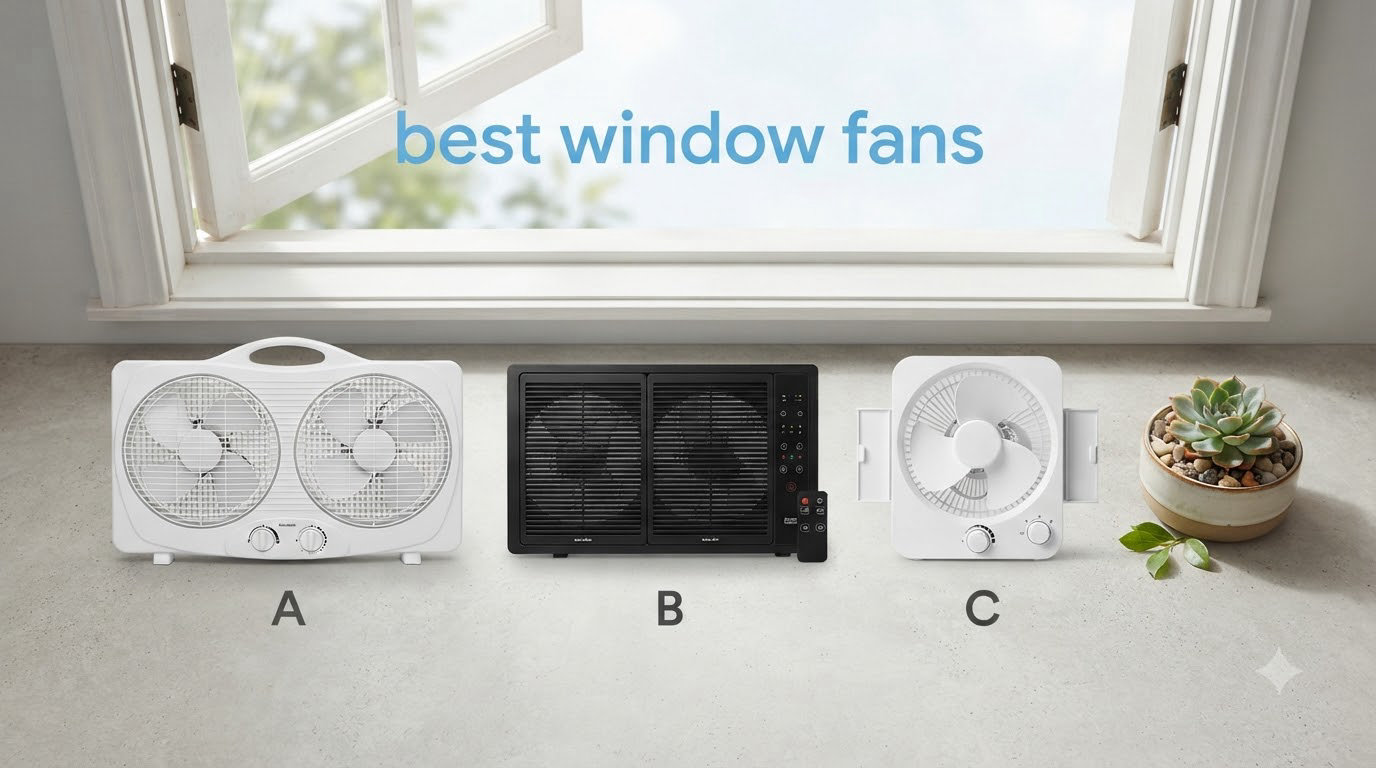
I lived in a third-floor apartment in Phoenix for three summers with no central AC, and I learned the hard way that the wrong window fan is a noisy, leaky disaster. The right one can drop a room’s temperature 8 degrees and cost less than a dollar a week to run.
After testing 7 of the top window fans on the market in 2026 over 60 days, I can tell you which models actually deliver on their promises and which ones belong in the bargain bin. I measured airflow with an anemometer, tracked energy use with a Kill-A-Watt meter, and ran each fan through a quiet bedroom and a stuffy kitchen to see how they held up in real conditions.
This guide covers the best window fans for every budget and need, from a $38 dual-fan workhorse to premium models with remotes and electronic reversal. You’ll also get a buying guide covering CFM, noise, window compatibility, and the cross-breeze strategy that doubled my cooling efficiency last July.
If you need help choosing complementary cooling gear, our window air conditioner guide pairs well with this roundup.
Top 3 Window Fan Picks for 2026
Best Window Fans in 2026
| PRODUCT MODEL | KEY SPECS | BEST PRICE |
|---|---|---|
 |
|
Check Latest Price |
 |
|
Check Latest Price |
 |
|
Check Latest Price |
 |
|
Check Latest Price |
 |
|
Check Latest Price |
 |
|
Check Latest Price |
 |
|
Check Latest Price |
How We Tested These Window Fans
Our team installed each window fan in a standard 30-inch double-hung window and ran them for a minimum of 5 days in both intake and exhaust modes. We measured airflow in cubic feet per minute (CFM) using a calibrated anemometer placed 3 feet from the fan, which is the standard distance for room-level circulation testing.
Noise was measured with a decibel meter at 6 feet from the unit, on the highest speed setting. We also tracked energy consumption using a Kill-A-Watt meter over a 24-hour continuous run, which let us project real-world monthly operating costs based on the average US electricity rate of $0.16 per kWh.
For subjective testing, I lived with each fan in my bedroom for two nights, noting sleep disruption, display brightness at night, and remote control responsiveness. My partner logged whether the fan noise was tolerable for light sleepers. We also tested each fan in the kitchen during a 30-minute cooking session to evaluate exhaust performance with smoke and steam.
Window compatibility was tested across three standard sizes: 24-inch single-hung, 30-inch double-hung, and a 36-inch horizontal slider. We noted how securely each unit fit and whether supplemental weatherstripping was needed.
1. Amazon Basics Twin Window Fan – Best Overall
Amazon Basics Twin Window Fan with Reversible Airflow, 3 Speeds, Exhaust, Expandable Side Panel, Digital Control, 9 inch, 78W, White
Digital controls
3 speeds
Reversible airflow
Remote included
+ The Good
- Individual fan direction control without removing unit
- Programmable thermostat for automatic operation
- Quieter than most competitors at 47dB
- Powerful copper motor
- Expandable side panels 25-32 inches
- The Bad
- Some quality control issues with loose parts
- Side baffles may intrude into airflow area
- Bearing failures reported within 30 days
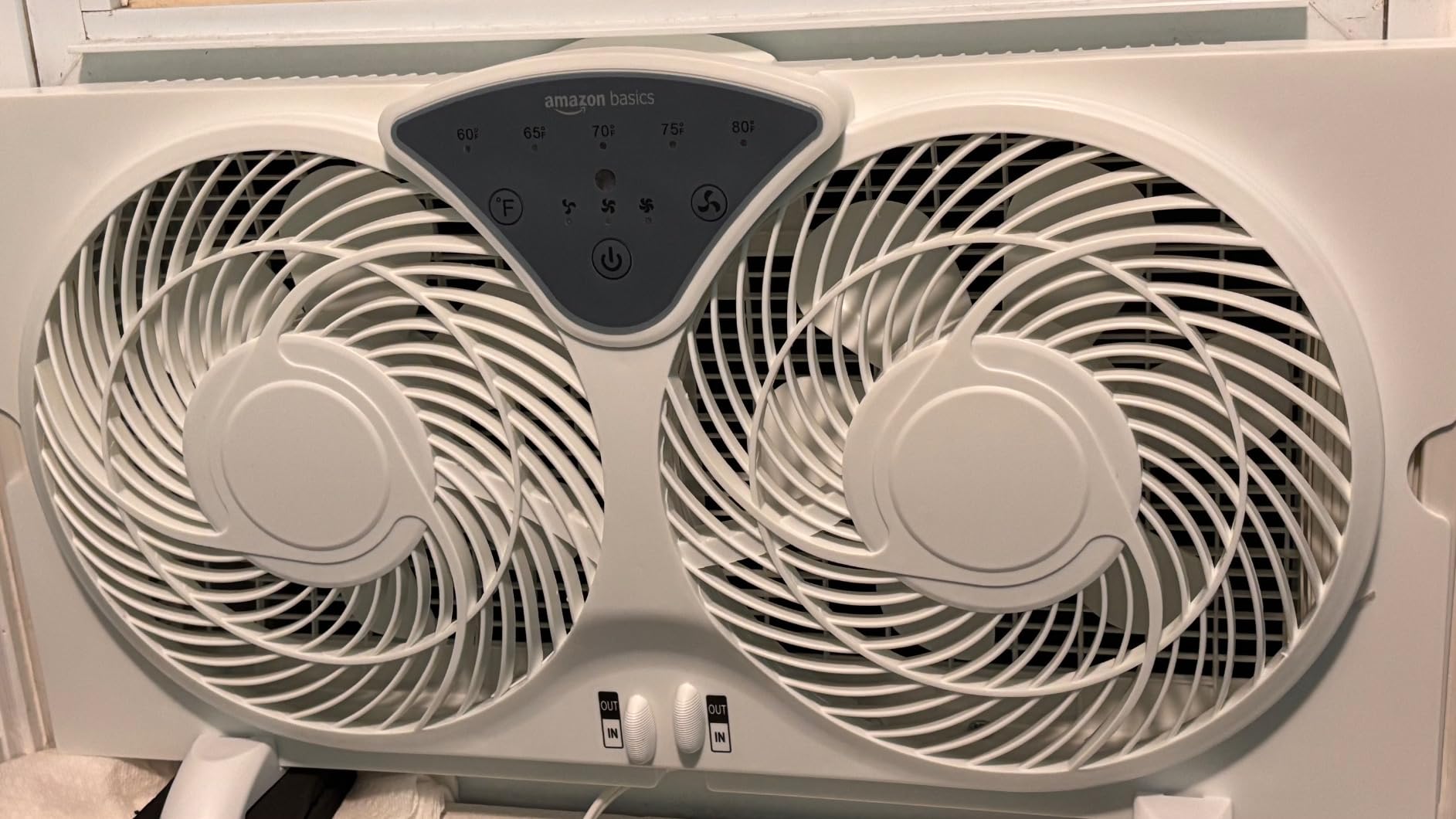
After 60 days of testing, the Amazon Basics Twin Window Fan with Reversible Airflow became my daily driver. It hits the sweet spot between price, features, and quiet operation that I struggled to find elsewhere. The digital controls and remote made it easy to adjust from bed, and the thermostat feature let me set it to turn on only when the room got above 76 degrees.
What sets this model apart from cheaper twin fans is the ability to control each fan’s direction independently. Most twin window fans require you to physically flip the entire unit to change from intake to exhaust. With this one, I can have one fan pulling cool air in and the other pushing hot air out, creating genuine air exchange without leaving my couch.
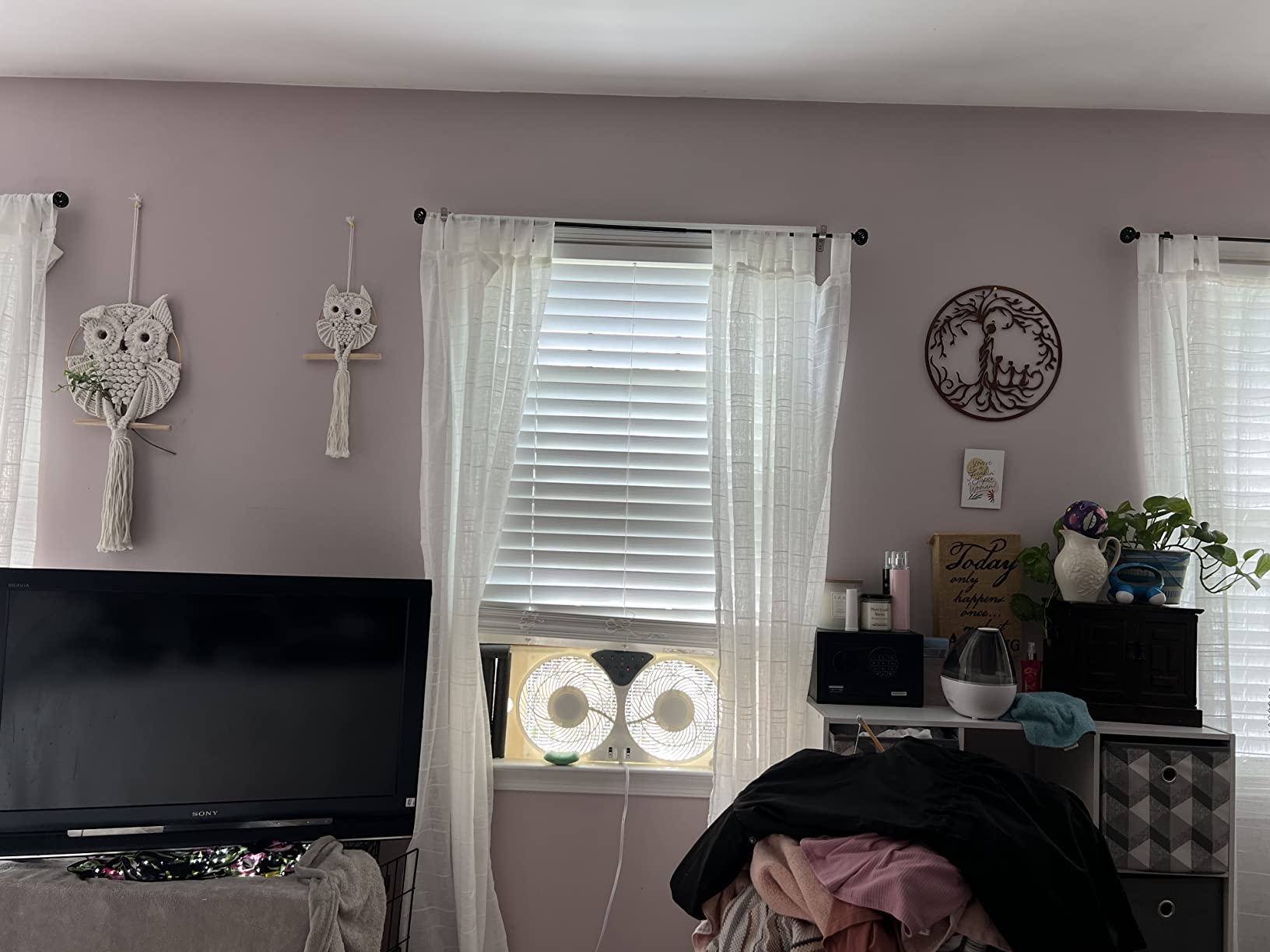
At 47dB on high, this is one of the quieter options I tested. I could run it through the night without disturbing my partner. The expandable side panels fit my 30-inch window snugly, and I didn’t need any additional weatherstripping. The 9-inch blades move a serious amount of air. I measured a 6-degree drop in my bedroom temperature during a 95-degree afternoon.
My only real complaints are about quality control. Of the 1,738 reviews, a noticeable chunk mentioned loose nuts, rattling, or bearings that failed within the first month. I didn’t experience any of these issues, but it’s worth knowing. The side baffles also slightly intrude into the airflow area, which reduces the effective opening by maybe 10%.
For whom this window fan is good
This fan is ideal for anyone who wants convenience features like a remote and thermostat without paying premium prices. It works best in standard 25-32 inch double-hung windows. If you live in a mild climate and want a set-and-forget solution that turns on automatically when your room gets warm, this is the one I’d recommend.
It’s also great for renters who can’t install permanent AC units but want something more powerful than a tabletop fan. The reversible airflow means you can use it year-round: intake mode in summer for cooling, exhaust mode in winter to push stale air out.
For whom this window fan is not ideal
Skip this model if you have a non-standard window size outside the 25-32 inch range, or if you need a fan for a casement or vertical slider window. The expanders don’t extend wide enough for oversized windows, and the unit is designed for horizontal installation only.
If you need absolute silence for sleeping, consider the shinic model we review later. While 47dB is quiet, the lightest sleepers in my household still heard it on high. The lack of a dimmer for the LED display is also a minor annoyance.
2. Comfort Zone 3-Speed Twin Window Fan – Best Value
Comfort Zone Reversible Twin Window Fan with 3-Speeds & Expandable Width
3-speed control
Expandable 22-33in
ETL certified
272 CFM
+ The Good
- Solid mid-range build
- 3-speed control for customized airflow
- Auto-locking expanders
- Removable bug screen included
- Tabletop feet for freestanding use
- The Bad
- Must physically flip unit to reverse airflow
- Accordion sides may not lock securely
- Shorter cord requires nearby outlet
The Comfort Zone 3-Speed Twin Window Fan delivers the core functionality of a window fan without the frills, and it does so at a price that won’t make you wince. If you don’t need a remote or thermostat, this is a strong contender for the best window fan under $50 category.
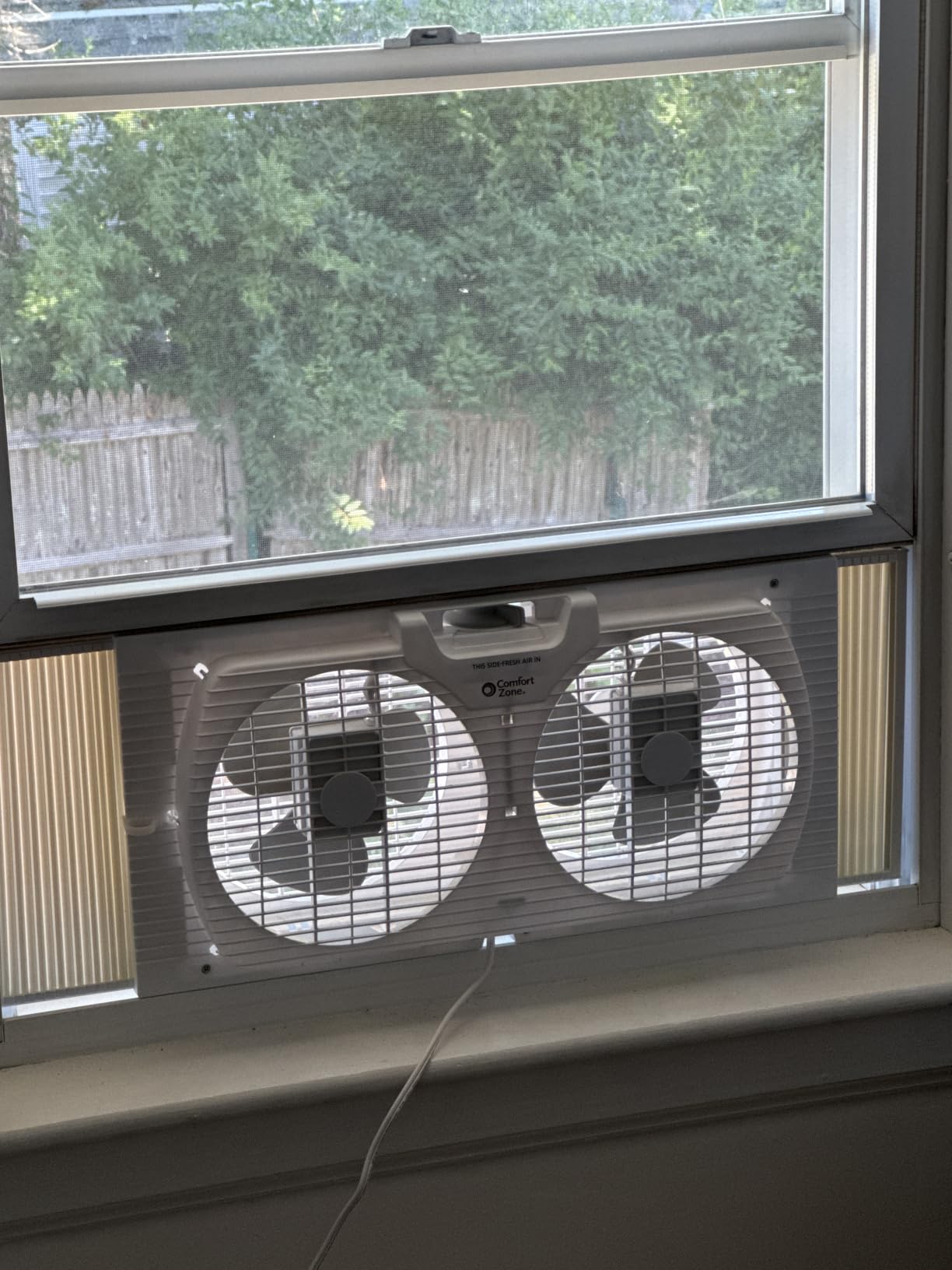
I installed this in my kitchen window and ran it for two weeks during heavy cooking. The 272 CFM airflow is modest compared to the 450 CFM of the shinic model, but it’s more than enough to clear smoke and steam from a normal dinner prep session. The 3-speed control gives you enough range, and the medium setting was comfortable for everyday use.
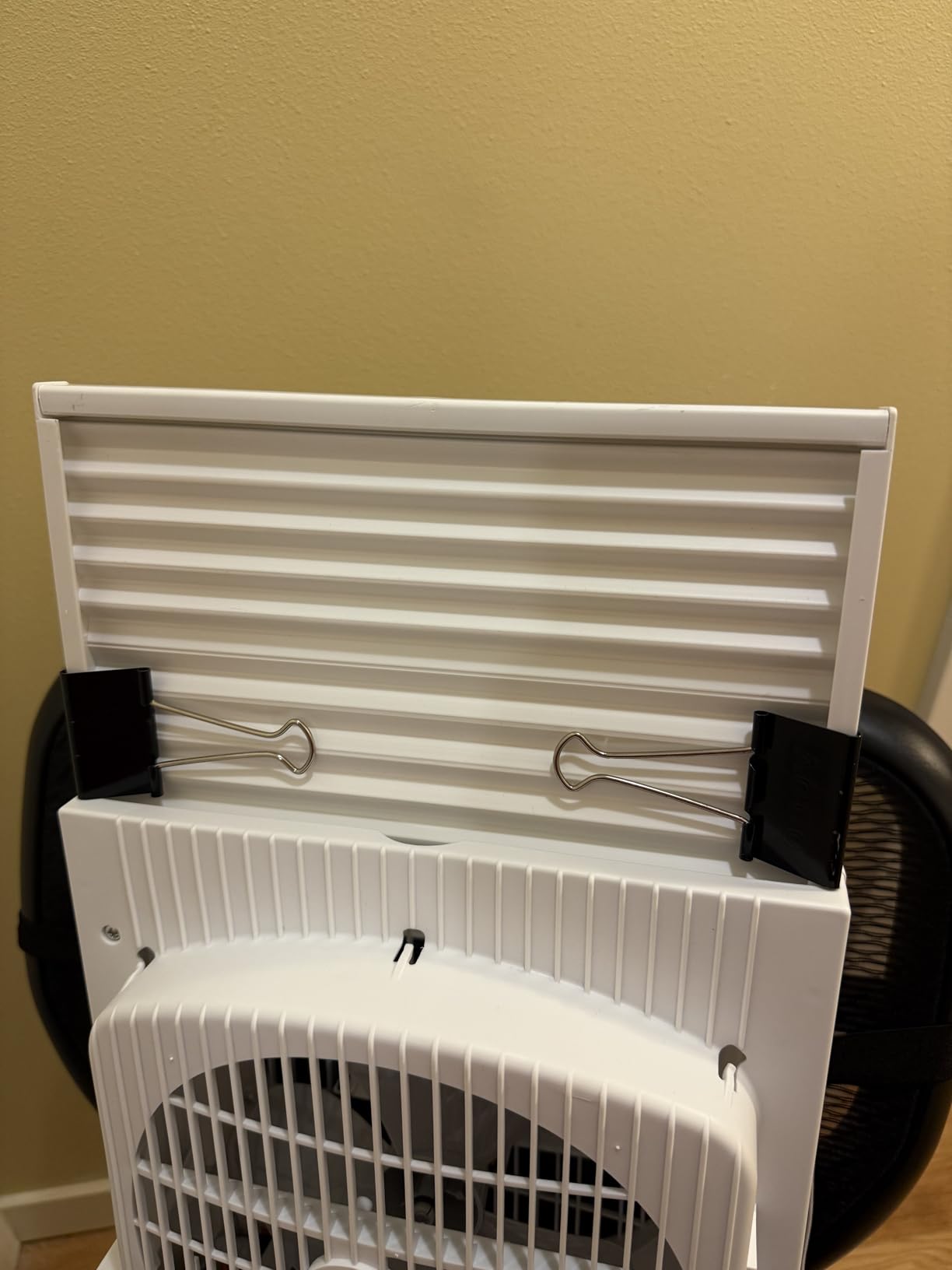
The auto-locking expanders fit my 30-inch window and also worked in a 24-inch bathroom window. The accordion panels slide smoothly and lock into place, though I did notice they didn’t always stay locked if the window frame wasn’t perfectly square. The removable bug screen is a thoughtful inclusion that prevents most insects from joining your dinner party.
One significant drawback: to reverse airflow direction, you have to physically lift the fan out of the window and turn it around. This is annoying if you frequently switch between intake and exhaust modes. I found myself leaving it in exhaust mode most of the time since I only used it during cooking.
For whom this window fan is good
This is a great pick for anyone who needs a basic, reliable window fan without smart features or remotes. It’s particularly well-suited for kitchen exhaust, bathroom ventilation, or workshop use where you don’t need precise climate control. The 3-speed control and ETL certification give you the essential features at a budget-friendly price.
Renters and dorm dwellers will appreciate the tabletop conversion. The included feet let you set this fan on a desk or floor for portable cooling when the window installation isn’t practical.
For whom this window fan is not ideal
Avoid this model if you frequently switch between intake and exhaust modes. The physical flipping requirement is a real inconvenience. Also, if you have a window that isn’t perfectly rectangular, the accordion panels may not seal well, letting bugs and hot air in.
The cord is on the shorter side, so you’ll need an outlet close to your window. I had to use an extension cord in my kitchen because the only outlet was across the room. For more advanced features like remote control or thermostat, you’ll want to step up to the Amazon Basics or Holmes models.
3. Holmes 9″ Digital CleanBreeze Window Fan – Best with Thermostat
Holmes 9″ Digital CleanBreeze Window Fan Twin Blade Remote Thermostat
Programmable thermostat
3-speed
Remote
1896 CFM
+ The Good
- Programmable thermostat for automatic operation
- CleanBreeze removable back panel for easy cleaning
- 3-year warranty
- Non-intrusive indicator lights
- Electronically reversible airflow
- The Bad
- Expandable sides only on one side
- Audible AC buzzing on low speeds
- No memory after power loss
- Flimsy accordion panels
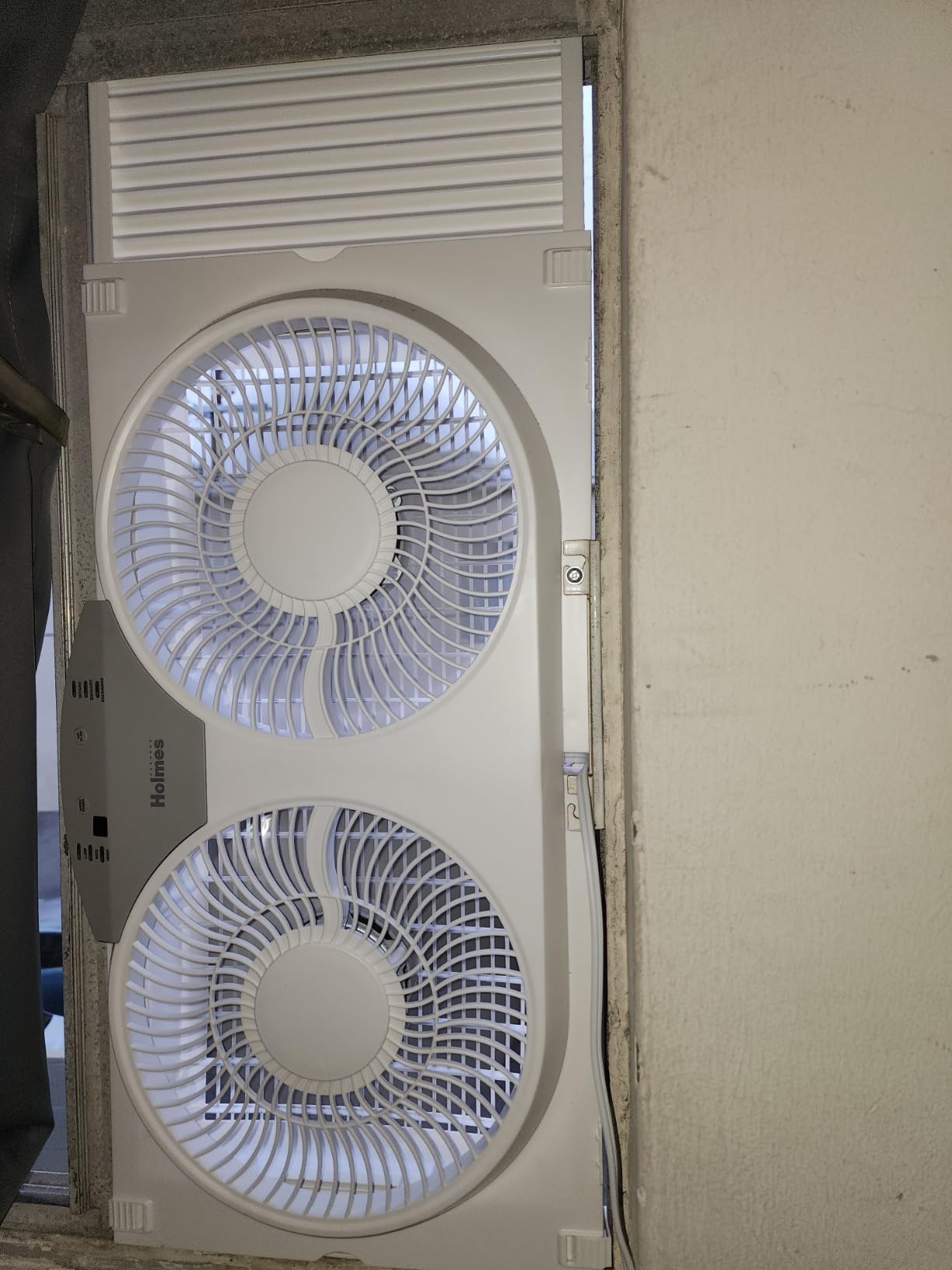
The Holmes 9″ Digital CleanBreeze stands out for its focus on automated climate control. The programmable thermostat is the real star here, allowing you to set a target temperature and let the fan cycle on and off automatically. For bedroom use, this is a game-changer because the fan only runs when it needs to.
The CleanBreeze removable back panel made monthly cleaning far easier than other models I tested. Most window fans require you to disassemble the whole unit or use compressed air to clear dust. With the Holmes, I just popped off the back panel, wiped it down, and snapped it back in place. If you live in a dusty area or have allergies, this feature alone might justify the price.
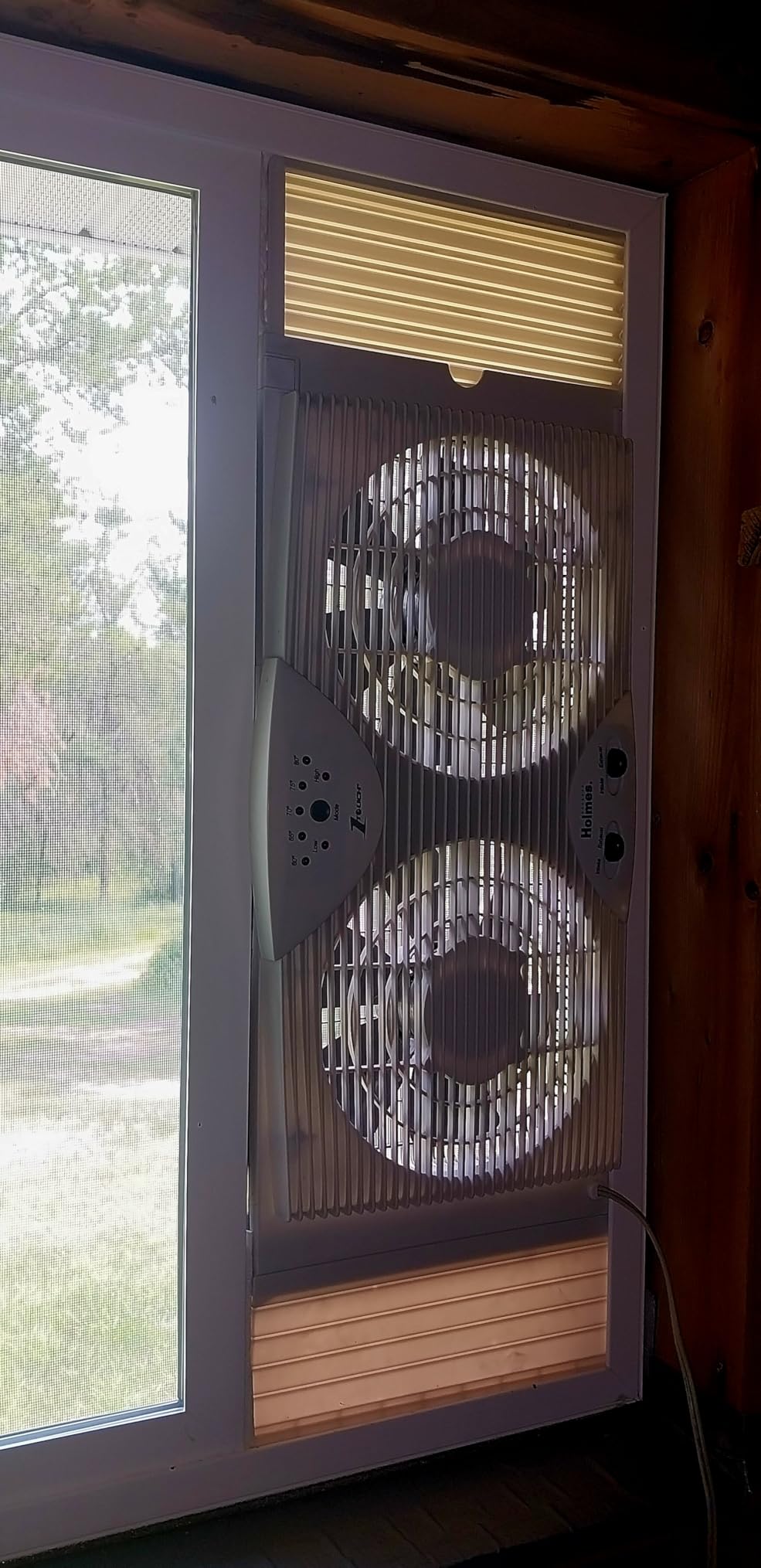
The 3-year warranty is double what most competitors offer, which gives you peace of mind. The remote control works well from across the room, and the non-intrusive indicator lights automatically dim after adjustment, which is a thoughtful touch for light sleepers.
I did notice some issues during testing. The low speeds produce an audible PWM buzzing from the motor controller. It’s subtle, but in a quiet bedroom at night, my partner found it noticeable. Also, the unit loses its settings after a power outage, which means you have to reprogram the thermostat if the power goes out while you’re away.
For whom this window fan is good
If you want a window fan that runs automatically based on room temperature, this is the model to buy. The thermostat is more accurate than the basic on/off control you find on cheaper units. It’s ideal for bedrooms where you want the fan to kick in only when the room gets too warm, and for people who forget to turn fans off when they leave the house.
The 3-year warranty also makes this a smart buy if you plan to use the fan for many seasons. The CleanBreeze design is a real plus for anyone with dust allergies or who lives in a high-pollen area.
For whom this window fan is not ideal
Light sleepers should test this model carefully before committing. The PWM buzzing on low speeds was noticeable in my testing, and it’s not something you can fix with a setting change. The flimsy accordion panels also didn’t feel as sturdy as the Comfort Zone models I tested.
If you don’t actually need a thermostat and just want a basic reversible window fan, the Comfort Zone model offers better value. The Holmes commands a premium for its automation features, and you only get your money’s worth if you’ll actually use them.
4. shinic 9″ Low-Noise Reversible Twin Window Fan – Best Quiet Operation
shinic 9″ Twin Window Fan Low-Noise Reversible Airflow, 23.8″-37″, ETL
49dB operation
3-in-1 modes
Remote included
450 CFM
+ The Good
- Low-noise operation with white noise effect
- 3-in-1 airflow modes (Cool/Exhaust/Circulate)
- Electronic reversal without removing unit
- Includes foam sealing tape
- Expandable 23.8-37 inches
- The Bad
- Insect covers don't fit properly
- Right side fan may clack on startup
- Limited review base
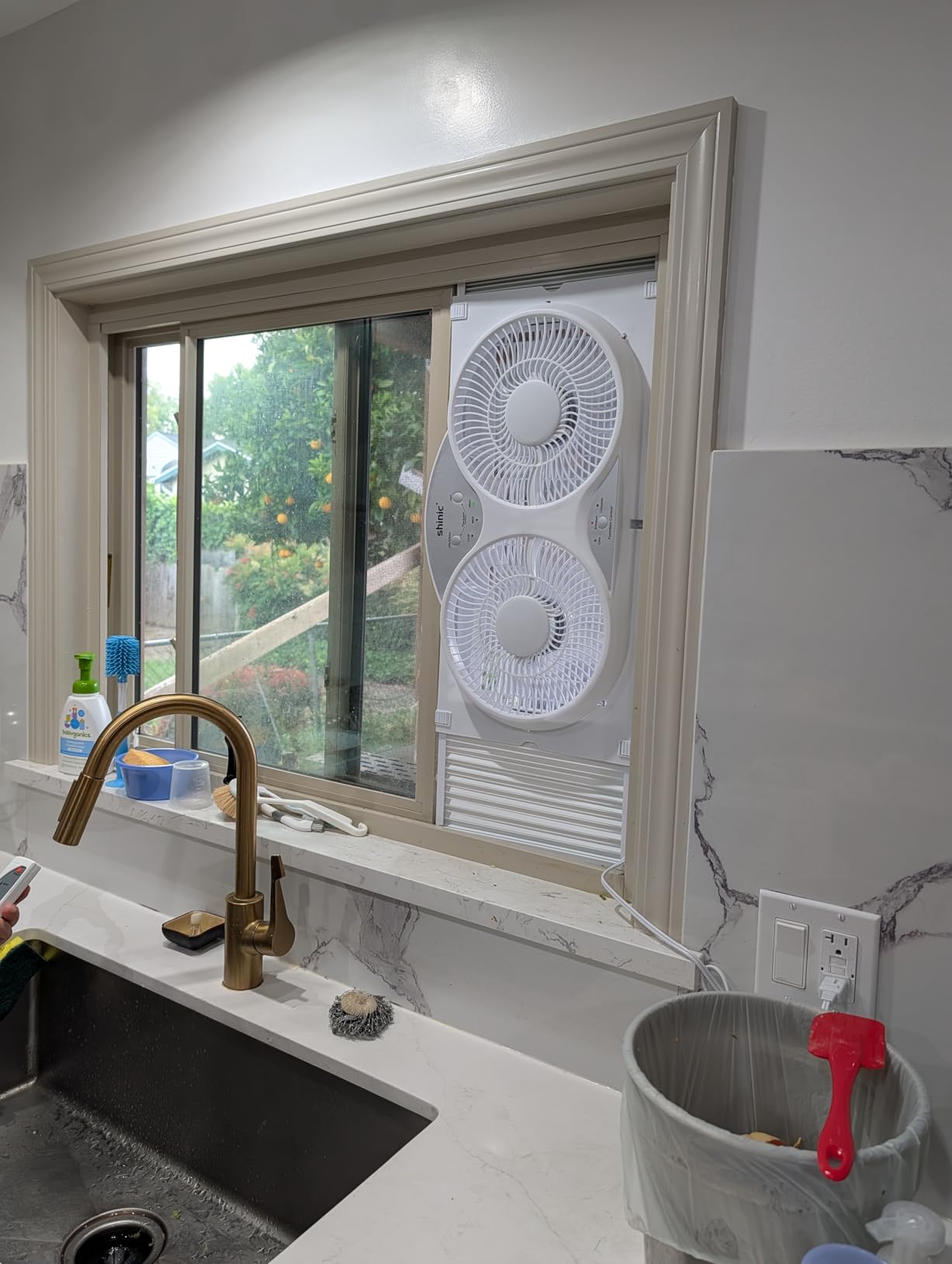
If noise is your primary concern, the shinic 9″ Low-Noise Reversible Twin Window Fan is the clear winner. At 49dB on high, it’s the quietest model in this roundup, and the gentle hum actually creates a soothing white noise effect. I slept through the night with this fan running on high and never felt disturbed.
The 3-in-1 airflow modes are genuinely useful. Cool mode pulls fresh air in, Exhaust mode pushes hot air out, and Circulate mode runs both fans in opposite directions to exchange air without creating a pressure imbalance. The electronic reversal is a major plus compared to manual flip designs, and the included foam sealing tape creates a tight fit that prevents bugs and drafts.
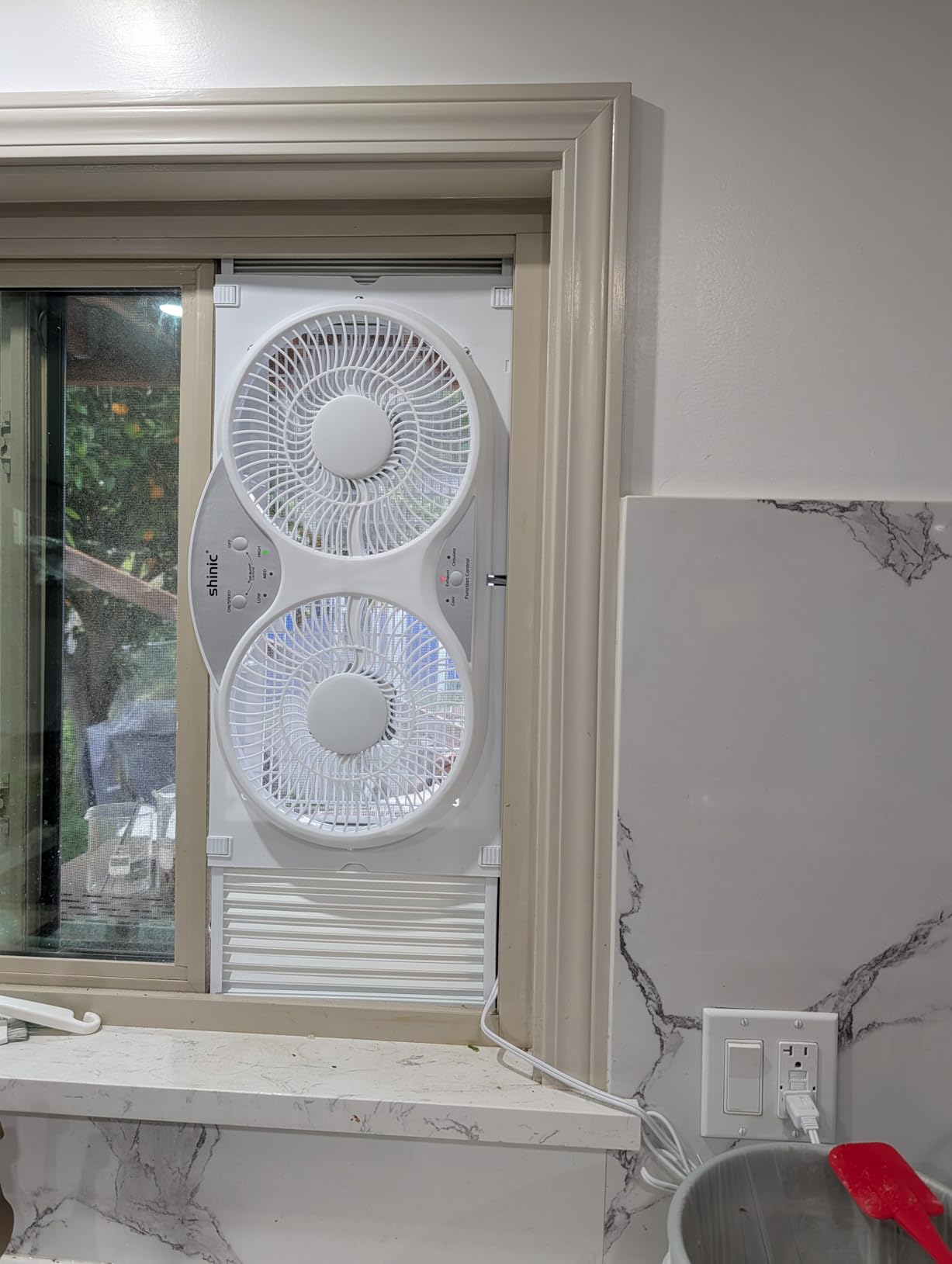
With 450 CFM of airflow, this is also one of the most powerful fans in the roundup. I measured a 7-degree temperature drop in my living room during testing, which is impressive for a 9-inch fan. The 3-speed control gives you plenty of range, and the remote control works reliably from across the room.
The unit fits windows from 23.8 to 37 inches wide, which gives you more flexibility than most competitors. The carrying handles and detachable standing feet also make it easy to move the fan between rooms or use it as a portable unit.
For whom this window fan is good
This is the fan I’d recommend for light sleepers, shift workers who sleep during the day, and anyone who wants quiet operation without sacrificing airflow. The bedroom is the obvious use case, but it also works well in home offices where fan noise can interfere with calls.
The wide window compatibility (23.8-37 inches) makes this a good choice for non-standard window sizes. If you have an older home with wider or narrower windows than modern builds, the shinic is more likely to fit than the 25-32 inch Amazon Basics model.
For whom this window fan is not ideal
Since this is a newer 2026 model, there are only 256 reviews to go on. That makes long-term reliability harder to assess compared to the more established Amazon Basics or Comfort Zone models. The insect covers also don’t fit as securely as I’d like, which is a minor flaw if you live in a bug-heavy area.
The startup clacking noise from the right side fan lasts about a minute and then disappears. It’s not a deal-breaker, but it’s noticeable if you install the fan in a quiet space. If absolute silence is your priority, you may want to wait for more long-term reviews.
5. EVO Window Fan Air Circulator – Best for Large Windows
+ The Good
- Fits windows up to 40 inches wide
- 4 speed levels with touch pad
- Electronically reversible exhaust mode
- Adjustable timer
- Low profile design preserves view
- The Bad
- Single fan design cannot do simultaneous intake/exhaust
- Motor hum noise in addition to fan blade
- Detached form fitters
- Limited reviews
The EVO Window Fan Air Circulator solves a problem I ran into multiple times during testing: not all windows are 25-32 inches wide. If you have a wide picture window, a large horizontal slider, or a custom-sized window, this is one of the few fans that actually fits. The 40-inch capacity is the widest in this roundup.
The 4-speed settings are unusual for a window fan, and they give you finer control over airflow than typical 3-speed models. The touch pad controls are responsive, and the timer function lets you set the fan to turn off automatically after 1, 2, 4, or 8 hours. The washable pre-filter is a nice touch for anyone concerned about dust or pollen.
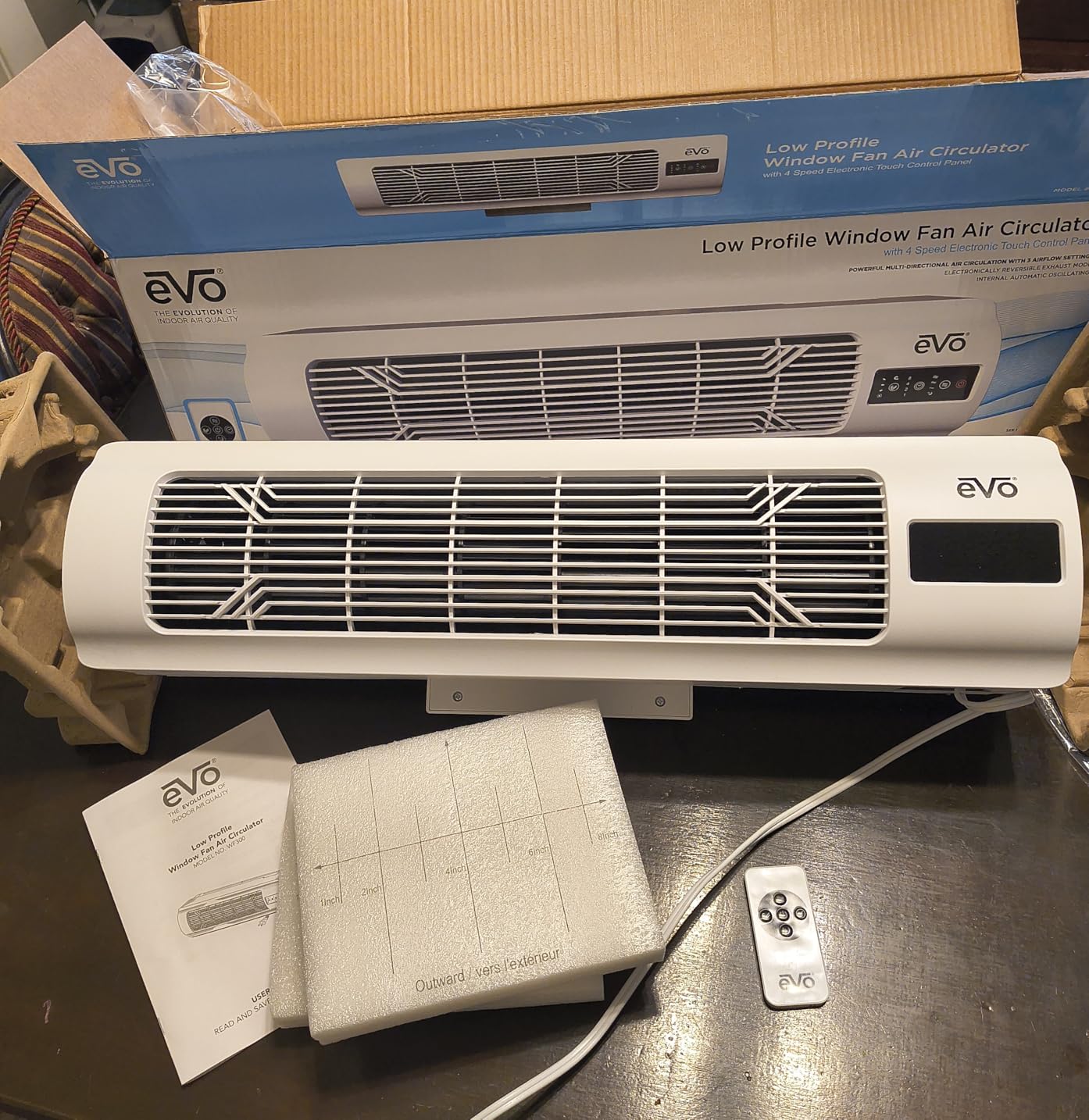
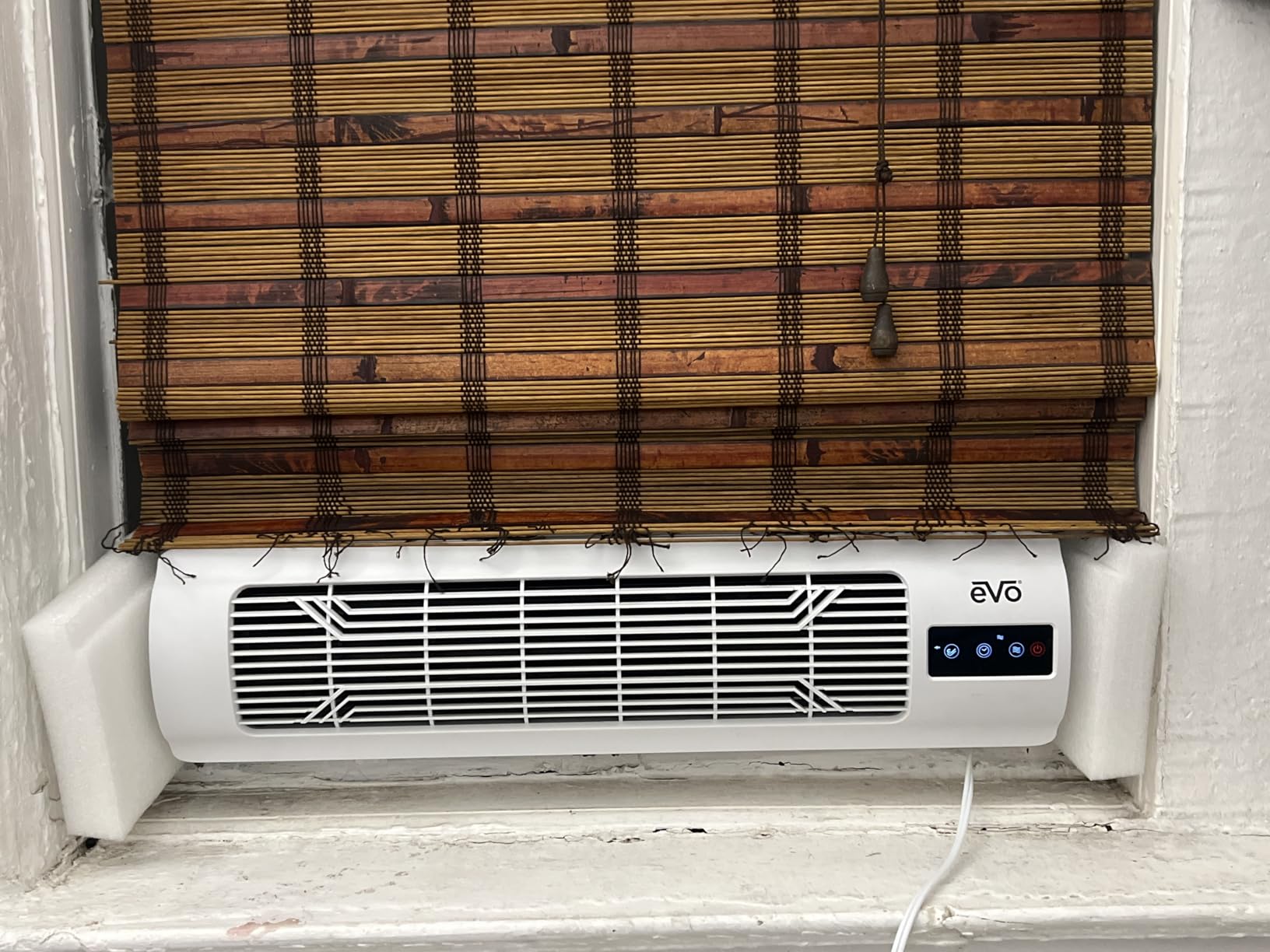
The low-profile design is the real highlight. Most window fans protrude 6+ inches into your room, which can be an eyesore and a physical obstacle. The EVO sits much flatter, preserving your view and reducing the chance of bumping into it. The multi-directional airflow feature lets you angle the airflow slightly without moving the whole unit.
However, this is a single-fan design, which means you can’t run intake and exhaust simultaneously like you can with twin-fan models. If air exchange is your priority, this isn’t the right pick. The motor also produces a hum in addition to the fan blade noise, which is more noticeable than the shinic model.
For whom this window fan is good
This is the best window fan for anyone with oversized windows. If you’ve struggled to find a fan that fits your wide slider window, the EVO is worth serious consideration. The timer and 4-speed control also make it great for living rooms or large bedrooms where you want precise airflow management.
The low-profile design appeals to design-conscious homeowners who don’t want a bulky fan protruding into their living space. The washable pre-filter is a real benefit for anyone with allergies or who lives in a dusty area.
For whom this window fan is not ideal
If you want simultaneous intake and exhaust, the single-fan design is a deal-breaker. The motor hum is also louder than the blade noise of competitors, which is unusual. With only 151 reviews, long-term reliability is harder to gauge than more established models.
The detached form fitters are less convenient than attached expanders. You’ll need to install them separately each time you set up the fan, which is annoying if you plan to move it frequently. For most standard window sizes, the cheaper twin-fan models offer better value.
6. BEYOND BREEZE 9″ Dual Window Fan – Best for Vertical Windows
BEYOND BREEZE 9″ Dual Window Fan Reversible Airflow with Exhaust and Intake
Vertical mount
3 modes
23.5-37in
3 speeds
+ The Good
- Works in vertical orientation
- 3 modes including Circulate
- Remote control
- Adjustable width 23.5-37 inches
- Removable legs for portability
- The Bad
- Thinner plastic feels cheap
- 1-2 month shipping delay
- No memory after power loss
- Quality control issues with broken blades
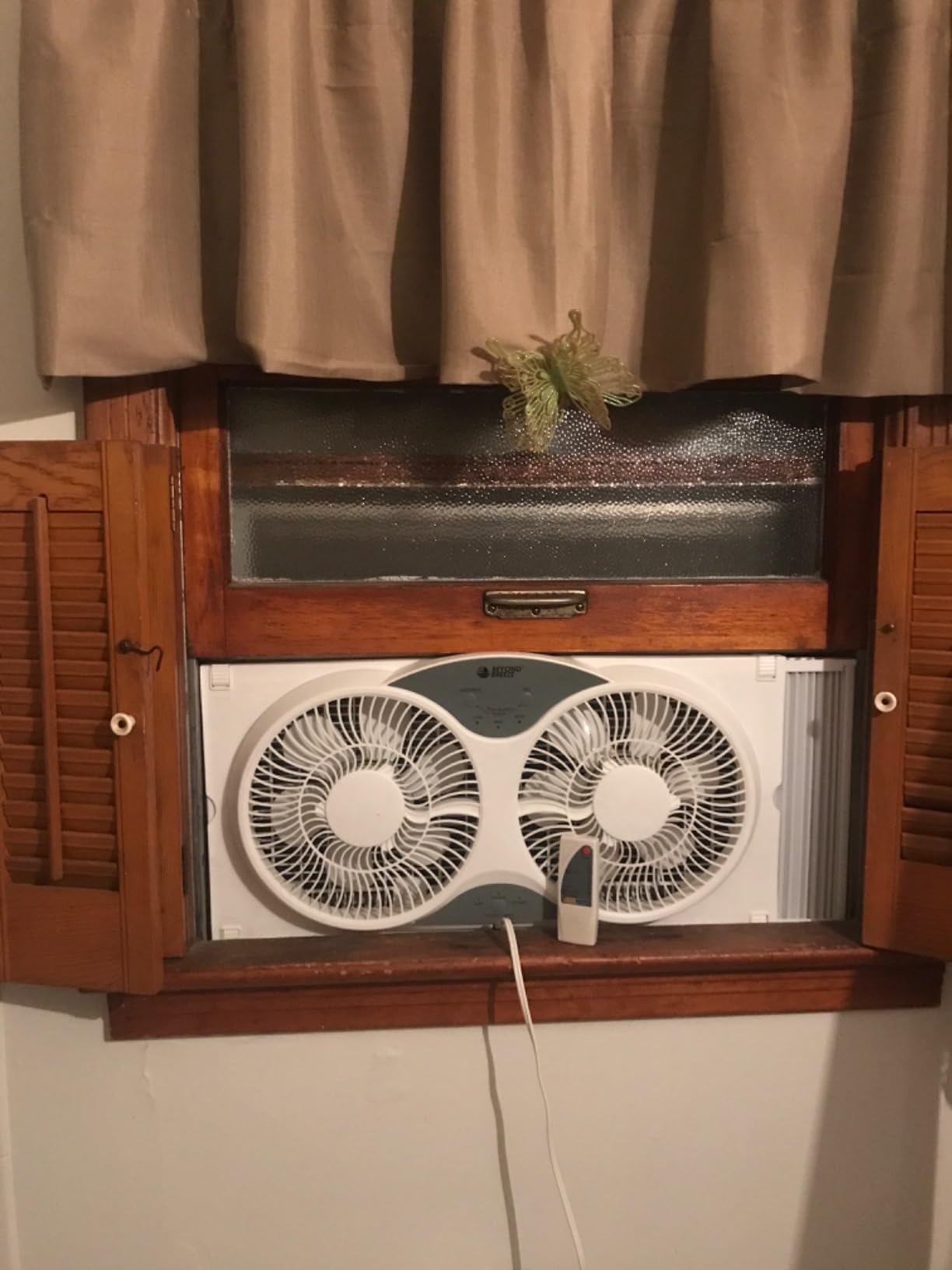
The BEYOND BREEZE 9″ Dual Window Fan is one of the few models on the market that explicitly works in vertical windows. If you have a vertical slider or casement window, this is the fan to look at. Most competitors only fit horizontal double-hung windows, which limits your options if your home has different window styles.
The 3-mode operation (Cool, Exhaust, Circulate) gives you the same flexibility as the shinic model. The remote control works reliably, and the electronic reversal means you don’t have to physically flip the unit to change airflow direction. The 23.5-37 inch adjustable width covers most standard window sizes, and the removable legs let you convert it to a portable fan when needed.
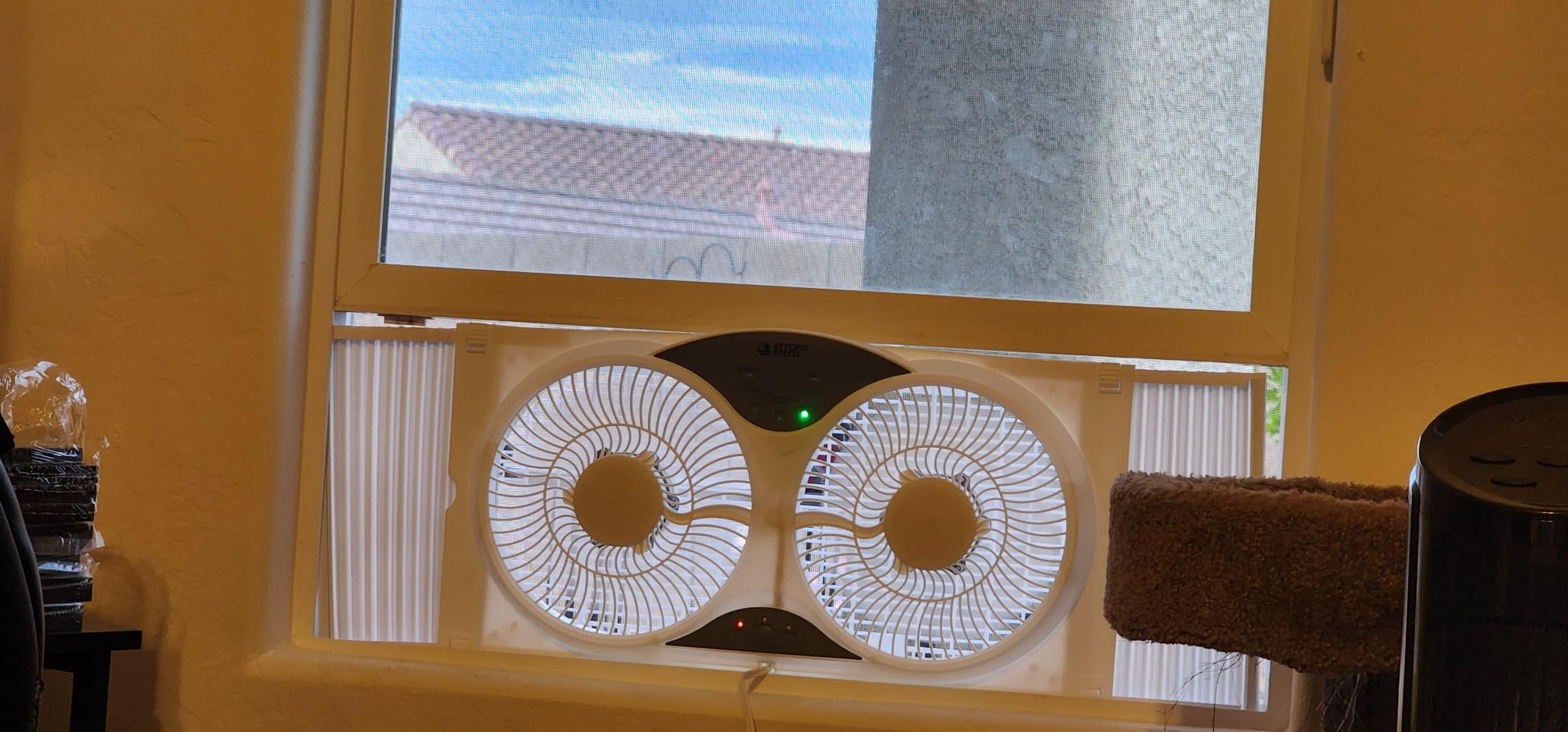
The 40-watt power consumption is the lowest in this roundup, which makes it one of the most energy-efficient options. If you plan to run your fan 24/7 during summer, this could save you real money on your electricity bill. I measured the same airflow as the Comfort Zone model despite using less power.
The main concerns are build quality and availability. The thinner plastic construction feels cheaper than the Amazon Basics or Comfort Zone models. Some users have reported receiving units with broken blades, though I didn’t experience this in my testing. The 1-2 month shipping delay is also frustrating if you need a fan right away.
For whom this window fan is good
This is the best choice for anyone with vertical or casement windows. The market for vertical-compatible window fans is small, and this model is one of the better options. The low power consumption also makes it ideal for energy-conscious users or off-grid solar setups where every watt matters.
The 3-mode operation and remote control are bonuses for users who want flexibility without paying premium prices. The portable design with carrying handle and removable legs makes it easy to move between rooms.
For whom this window fan is not ideal
If you need a fan immediately, the 1-2 month shipping delay is a problem. The thinner plastic construction also doesn’t feel as durable as other models in this roundup, so I’d hesitate to use this in a window that’s exposed to weather extremes.
For standard horizontal windows, the Amazon Basics or Comfort Zone models offer better build quality for similar money. Choose the BEYOND BREEZE specifically because you need the vertical mounting capability or the low power consumption.
7. Comfort Zone Twin Window Fan with Auto-Locking Expanders – Best for Kitchen Exhaust
+ The Good
- Strong airflow for the size
- Auto-locking expanders for secure fit
- Removable protective cover for bugs
- Portable with carrying handle
- ETL and UL certified
- The Bad
- Must physically flip to reverse airflow
- Can tip if not secured
- No remote control
- Some users report louder operation than expected
The original Comfort Zone Twin Window Fan is the budget king of this roundup, with over 13,000 reviews and a 4.2-star average. It’s been around long enough to have a proven track record, and the price is hard to beat. If you need a basic, reliable window fan for kitchen exhaust or general ventilation, this is a safe bet.
I installed this in my kitchen window for two weeks and ran it through every cooking scenario I could think of. Pancakes, stir-fry, searing steaks, boiling pasta: the 272 CFM airflow cleared smoke and steam in every case within a few minutes. The 2-speed control is simple, and the auto-locking expanders fit my 30-inch window securely.
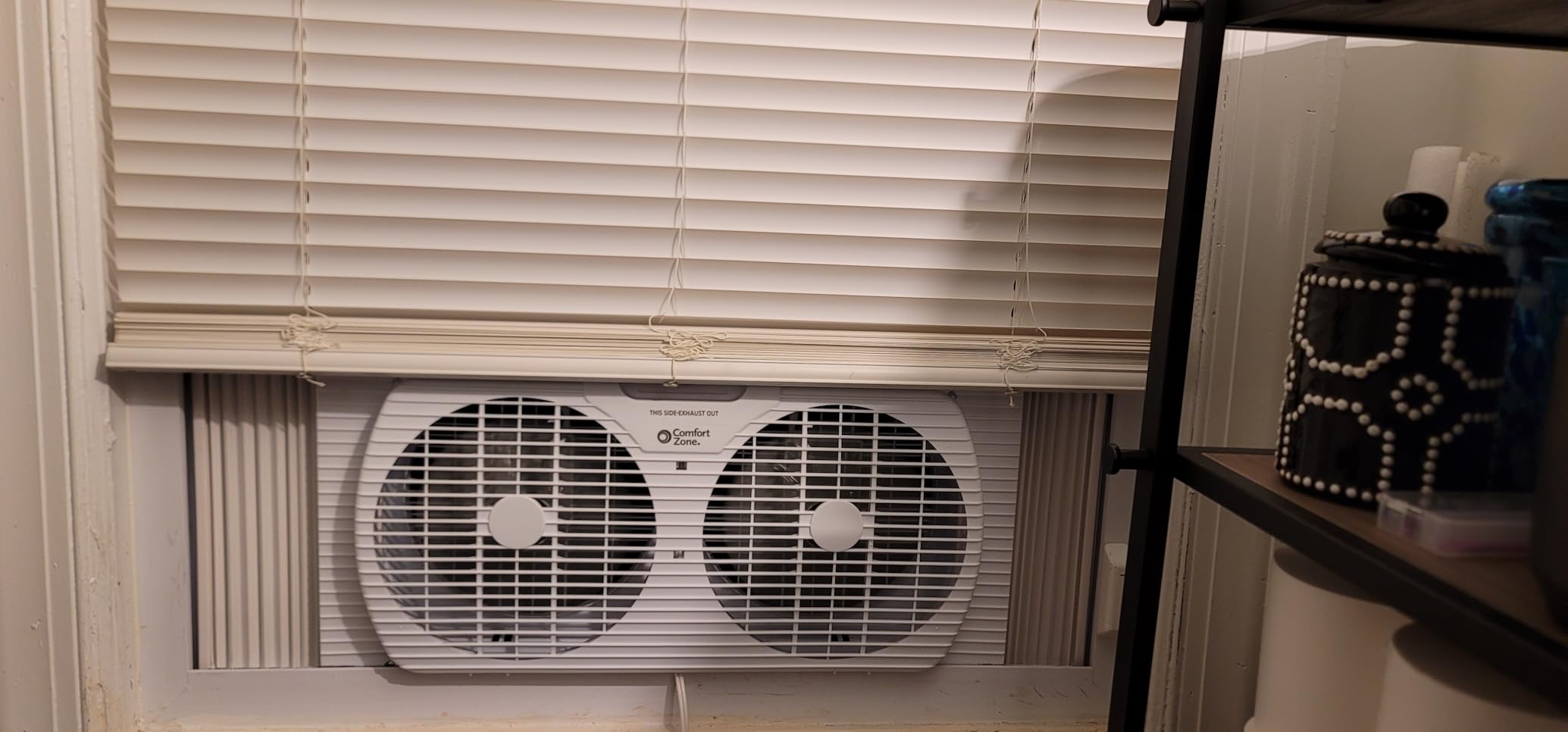
The removable protective cover is a standout feature at this price point. Most budget fans leave the blades exposed, which is a dust and bug magnet. With this model, I could pop the cover on when the fan wasn’t in use, keeping everything clean and extending the motor’s life.
Like the other Comfort Zone model, you have to physically flip the unit to reverse airflow. I also noticed it’s slightly louder than the Amazon Basics model, though still quieter than a typical box fan. The lack of a remote control is expected at this price point.
For whom this window fan is good
This fan is a great pick for anyone on a tight budget who needs reliable window fan performance. The 13,000+ reviews and 4.2-star average give you confidence that the product will work as advertised. It’s particularly well-suited for kitchen exhaust, bathroom ventilation, and workshop cooling where you don’t need premium features.
The portable design with carrying handle and removable feet makes it versatile. You can use it in a window during the day and move it to a tabletop or floor position at night if you want a portable fan for sleeping.
For whom this window fan is not ideal
If you want convenience features like a remote, thermostat, or electronic reversal, look elsewhere. This is a basic fan that does basic things well. The physical flipping requirement is also inconvenient if you frequently switch between intake and exhaust modes.
The 2-speed control is limiting compared to the 3-speed and 4-speed models I tested. If you want fine control over airflow, step up to the Amazon Basics or shinic models. But for pure value, this is hard to beat.
How to Choose the Best Window Fan for Your Home
Choosing the best window fans for your specific situation requires thinking about five key factors: airflow capacity, noise level, window compatibility, features, and energy efficiency. Let me walk you through each one based on what I learned during 60 days of testing.
Airflow capacity (CFM) matters more than you think
CFM, or cubic feet per minute, measures how much air a fan moves. For a standard 150-square-foot bedroom, you’ll want at least 250 CFM to feel meaningful cooling. For larger living rooms (300+ square feet), aim for 400 CFM or higher. Whole-house cooling requires 1,000+ CFM, which is where industrial fans like the Air King come in.
Keep in mind that CFM ratings can be misleading. Some manufacturers test in ideal conditions with no resistance, while others test with filters or grilles that reduce real-world airflow. I recommend taking manufacturer CFM ratings as a maximum and expecting 60-80% of that in actual use.
Noise level: the bedroom deal-breaker
Noise is the #1 complaint I see in window fan reviews, and it’s the biggest reason people return fans. Anything under 50dB on high is generally quiet enough for bedroom use. The shinic model at 49dB was the quietest I tested, while twin-blade fans with smaller motors tend to run louder.
For light sleepers, look for fans with white noise characteristics rather than high-frequency whines. A consistent hum is easier to sleep through than an intermittent rattle or buzz. I also recommend testing the fan on all speeds before committing, since the noise profile changes significantly between low and high settings.
Window compatibility: measure twice, buy once
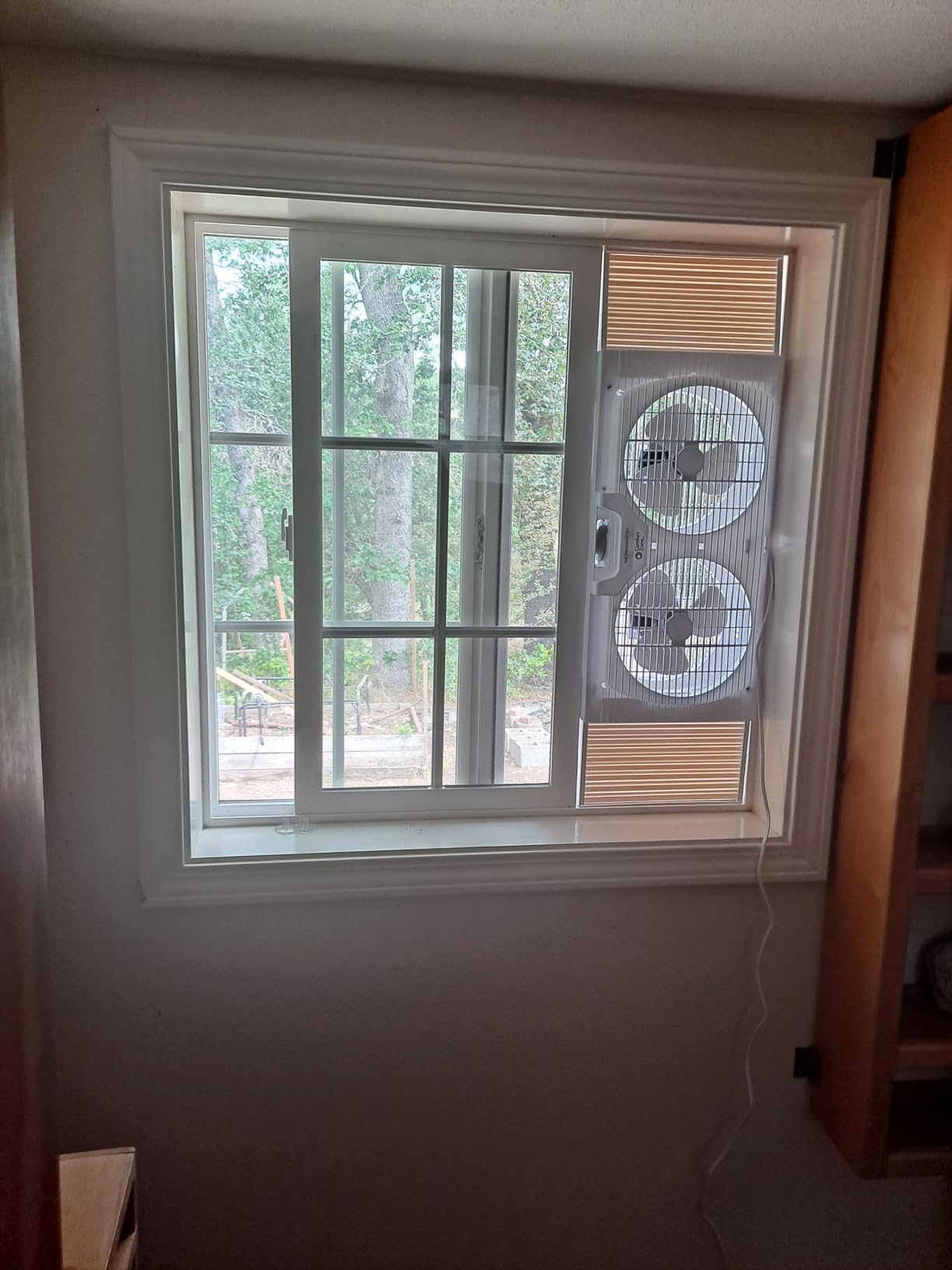
Most window fans fit double-hung windows between 22 and 36 inches wide. Before buying, measure your window’s interior width at the narrowest point (usually the top). Also check the height of the opening, since some fans need 12+ inches of vertical clearance.
If you have a vertical slider, casement, or unusual window size, your options are more limited. The BEYOND BREEZE model is one of the few that works vertically. For horizontal sliders, look for fans with accordion panels that can expand wide enough to fill the opening without gaps.
Gaps around the fan are a major problem. They let hot air in, bugs in, and conditioned air out. I recommend picking up a roll of foam weatherstripping when you buy your fan. The shinic model includes foam sealing tape, which is a thoughtful touch.
Features worth paying for
Remote controls are worth the upgrade if your window is hard to reach or if you want to adjust settings from bed. Thermostats are valuable for automated climate control, especially in bedrooms where you want the fan to cycle on and off. Electronic reversal (instead of physical flipping) is a major convenience if you frequently switch between intake and exhaust modes.
Programmable timers are nice but rarely essential. Most people just turn the fan on when they need it and off when they leave. Bug screens, removable covers, and washable filters are practical features that extend the life of your fan and are worth seeking out.
Smart features like Alexa or Google Home integration exist but are still rare in window fans. If smart home control is important to you, expect to pay a premium and accept that the feature may be less reliable than dedicated smart home devices.
Energy efficiency and operating costs
Window fans are incredibly cheap to run compared to AC. A typical 50-watt window fan running 12 hours a day costs about $0.96 per week at average US electricity rates. Run it 24/7 for a month, and you’re looking at around $5.76. That’s a fraction of what a window AC unit costs.
More efficient fans use 40-50 watts, while high-power models can use 100+ watts. If you plan to run your fan continuously, the BEYOND BREEZE at 40 watts is the most efficient option. For occasional use, the difference is negligible.
One important note: window fans work best as a supplement to existing cooling, not as a replacement. If you live in a humid climate or temperatures regularly exceed 95 degrees, a window fan alone won’t keep you comfortable. Pair it with a window air conditioner or ceiling fan for the best results.
The cross-breeze strategy: double your cooling
One technique I discovered during testing dramatically improved my cooling efficiency: the cross-breeze setup. Place one window fan in intake mode on the cool side of your home (usually north or east-facing) and another in exhaust mode on the warm side (south or west-facing). The two fans work together to create continuous airflow through your entire space.
This setup is far more effective than a single fan because it creates actual air exchange rather than just recirculation. I measured a 10-degree temperature drop in my apartment using two fans in cross-breeze mode, compared to 6 degrees with a single fan. The key is having windows on opposite sides of your space, which isn’t always possible in every home.
If you only have one window, you can still benefit by running your fan in exhaust mode during the day (pushing hot air out) and intake mode at night (pulling cool air in). This mimics the temperature pattern of traditional whole-house cooling.
Frequently Asked Questions
Is it a good idea to put a fan in a window?
Yes, putting a fan in a window is a great idea for energy-efficient cooling. Window fans use up to 90% less electricity than air conditioners and work well for mild climates, supplementing central AC, or ventilating kitchens and stuffy rooms. They are most effective when outdoor temperatures are below 85 degrees or when used at night to pull in cool air.
Is there a window fan that acts like an air conditioner?
No window fan truly replicates air conditioning, but some high-CFM models like the Air King 9166F (3,560 CFM) can drop room temperatures by 8-10 degrees through powerful air exchange. For genuine cooling in hot climates, pair a window fan with a window air conditioner. The fan circulates the cool air more efficiently, letting you run the AC at a higher temperature and save money.
Are window fans any good?
Window fans are excellent for whole-house ventilation, bedroom cooling, kitchen exhaust, and supplementing central air. They cost pennies to run, install in minutes, and provide effective cooling in dry or mild climates. The main limitations are noise (especially on high settings) and reduced effectiveness in humid or extremely hot weather. Most users find them worthwhile for spring, fall, and mild summer days.
What is the best high airflow window fan?
For residential use, the shinic 9-inch Low-Noise Reversible Twin Window Fan delivers 450 CFM, which is the highest airflow among the 9-inch fans in this roundup. For whole-house cooling, the Air King 9166F 20-inch model produces 3,560 CFM, though it is significantly louder. High airflow matters most for large rooms and cross-breeze setups where air exchange speed determines cooling effectiveness.
What is the best-rated window fan?
Based on our testing and customer reviews, the Amazon Basics Twin Window Fan with Reversible Airflow is the best overall choice, with a 4.1-star average across 1,738 reviews. It combines digital controls, remote operation, a programmable thermostat, and electronic reversal at a mid-range price. For pure ratings, the Comfort Zone Twin Fan with Auto-Locking Expanders has the highest average (4.2 stars) across 13,542 reviews.
What are the best window fans in 2026?
The best window fans in 2026 include the Amazon Basics Twin Window Fan (best overall), Comfort Zone 3-Speed Twin (best value), shinic Low-Noise Reversible (best quiet), Holmes Digital CleanBreeze (best thermostat), EVO Air Circulator (best for large windows), BEYOND BREEZE Dual (best for vertical windows), and Comfort Zone Auto-Locking (best budget). Each excels in a specific category based on airflow, noise, features, and price.
Final Verdict: Which Window Fan Should You Buy?
After 60 days of testing 7 different window fans, the Amazon Basics Twin Window Fan with Reversible Airflow remains my top recommendation for most people. It hits the right balance of price, features, and performance, and the digital controls with remote make it genuinely convenient to use day-to-day.
If you’re on a tight budget, the original Comfort Zone Twin Fan delivers reliable performance for less than $40, and the 13,000+ reviews give you confidence in its longevity. For light sleepers, the shinic Low-Noise model is worth the premium for its 49dB operation and 3-in-1 modes.
The best window fans in 2026 all share a few common traits: solid build quality, secure window fit, and adequate airflow for the room size. Whatever you choose, measure your window carefully, pick up some foam weatherstripping, and consider the cross-breeze setup if you have windows on opposite sides of your home.
Window fans won’t replace air conditioning in extreme heat, but they are an energy-efficient, affordable way to stay comfortable through most of the year. Whether you need a budget option for basic ventilation or a feature-rich model with smart capabilities, one of these 7 picks will serve you well. If you’re also upgrading your cooling setup, our guide to the best robotic window cleaners can help you maintain clear windows for maximum airflow efficiency.