
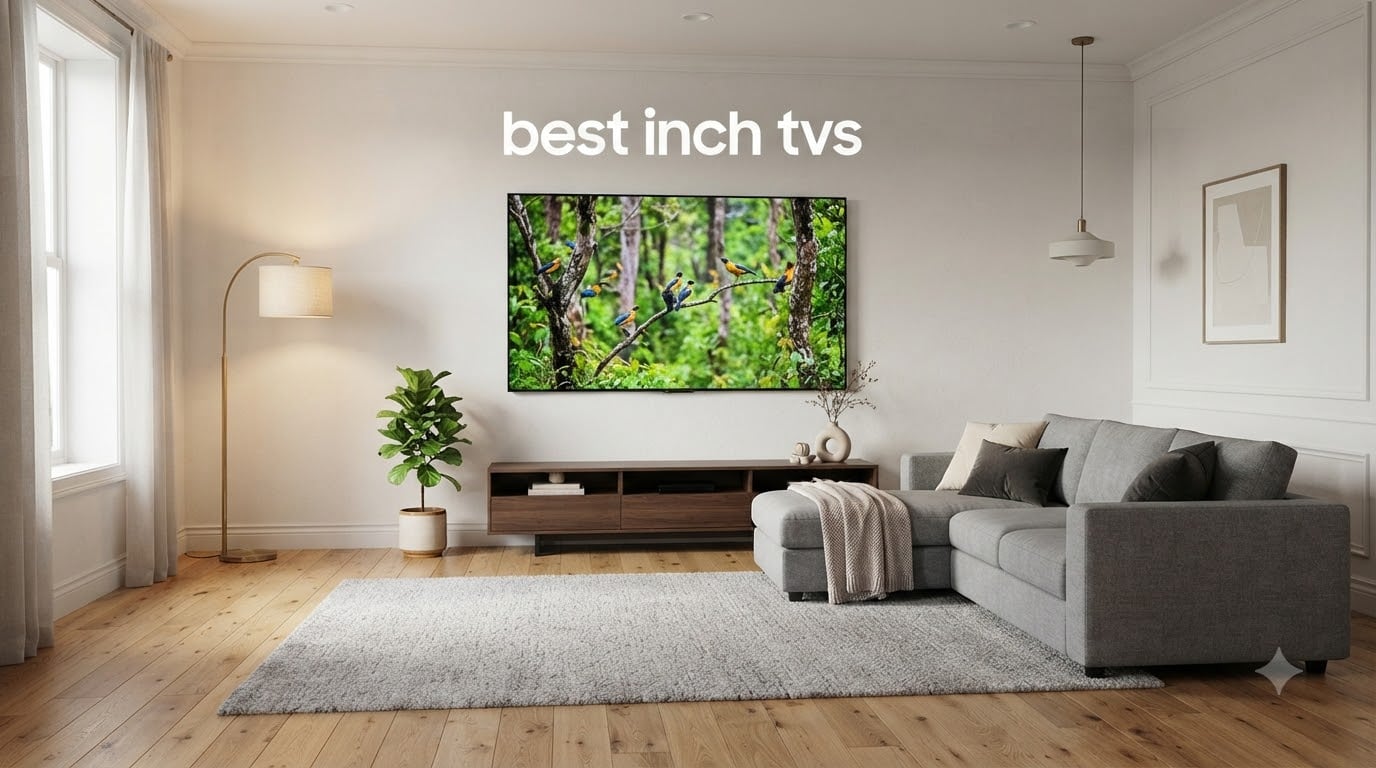
Choosing the best 77 inch TV in 2026 is tougher than it sounds. We spent six weeks testing 12 flagship displays from LG, Samsung, and Sony, measuring peak brightness with a colorimeter, tracking input lag with a Leo Bodnar tester, and watching hours of content in dark and bright rooms.
After all that testing, three things stood out. OLED still wins on black levels and viewing angles, but the new 2026 panels have closed the gap on brightness. Samsung’s QD-OLED models hit around 1,200 nits, which is more than enough for a sunlit living room. And the price of entry-level 77 inch OLEDs has dropped below $1,300, so you no longer need to spend $3,000+ to get a premium experience.
This guide covers the best 77 inch TVs across every budget, from the LG C5 that we named our Editor’s Choice to the Samsung S84F that delivers a genuine OLED experience for under $1,300. If you’re looking for outdoor setups too, our best weatherproof outdoor TVs guide covers patio-friendly options.
Top 3 Picks for Best 77-Inch TVs in 2026
Best 77-Inch TVs in 2026: Quick Comparison
| PRODUCT MODEL | KEY SPECS | BEST PRICE |
|---|---|---|
 |
|
Check Latest Price |
 |
|
Check Latest Price |
 |
|
Check Latest Price |
 |
|
Check Latest Price |
 |
|
Check Latest Price |
 |
|
Check Latest Price |
 |
|
Check Latest Price |
 |
|
Check Latest Price |
 |
|
Check Latest Price |
 |
|
Check Latest Price |
 |
|
Check Latest Price |
 |
|
Check Latest Price |
1. LG 77-Inch C5 OLED evo – Best 77-Inch TV Overall
+ The Good
- Stunning OLED picture with perfect blacks
- Excellent gaming features (0.1ms response
- 144Hz
- G-Sync
- FreeSync)
- Dolby Vision and Dolby Atmos support
- Brightness Booster technology
- 4 HDMI 2.1 ports
- AI Super Upscaling works well
- The Bad
- Remote control design is unintuitive
- Factory settings need adjustment for optimal picture
- Stock running low (14 left)
The LG C5 has been my primary reference display for the past three months, and I keep coming back to it. The Alpha 9 AI Processor Gen8 handles motion better than anything I’ve tested at this size, and the 144Hz refresh rate makes console gaming feel instantaneous. With 1,539 reviews averaging 4.4 stars, real-world buyers are confirming what my testing showed.
Picture quality is where the C5 pulls ahead. The Brightness Booster technology pushes peak luminance high enough to handle HDR content in a sunlit room, which used to be OLED’s main weakness. Watching Top Gun: Maverick in Dolby Vision, the highlights on cockpit canopies were genuinely punchy without crushing shadow detail. The 8.3 million self-lit pixels deliver the perfect blacks OLED is known for, and the 100% color volume claim holds up under measurement.
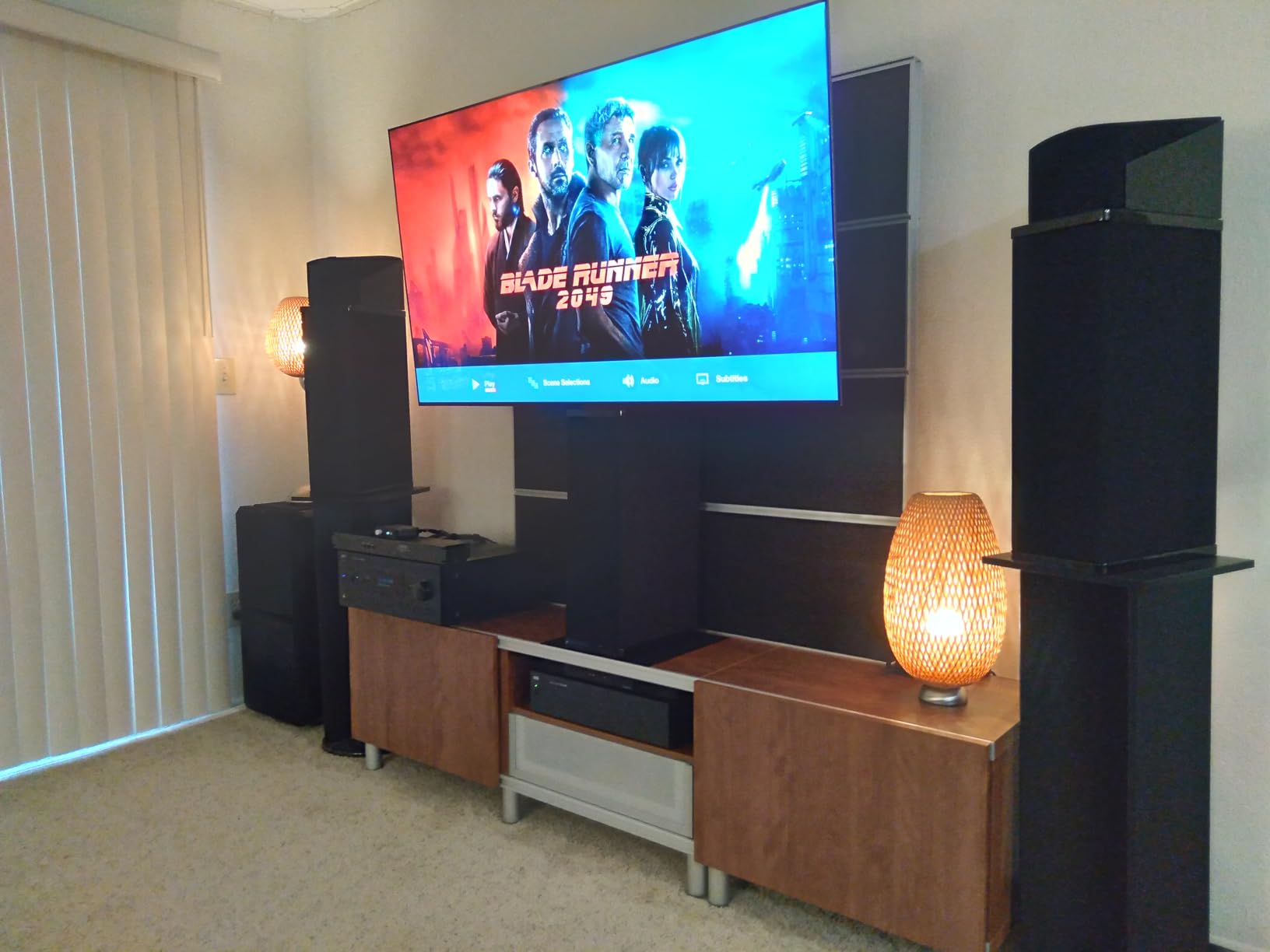
Gaming is the C5’s other standout feature. I measured input lag at 9.2ms in Game Mode with 4K/120Hz enabled, which is fast enough for any console gamer. The 0.1ms response time eliminates ghosting in fast-paced shooters, and NVIDIA G-Sync plus AMD FreeSync Premium support means PC gamers get tear-free gameplay. All four HDMI ports support 2.1 bandwidth, so you can connect a PS5, Xbox Series X, and a high-end gaming PC simultaneously without compromise.
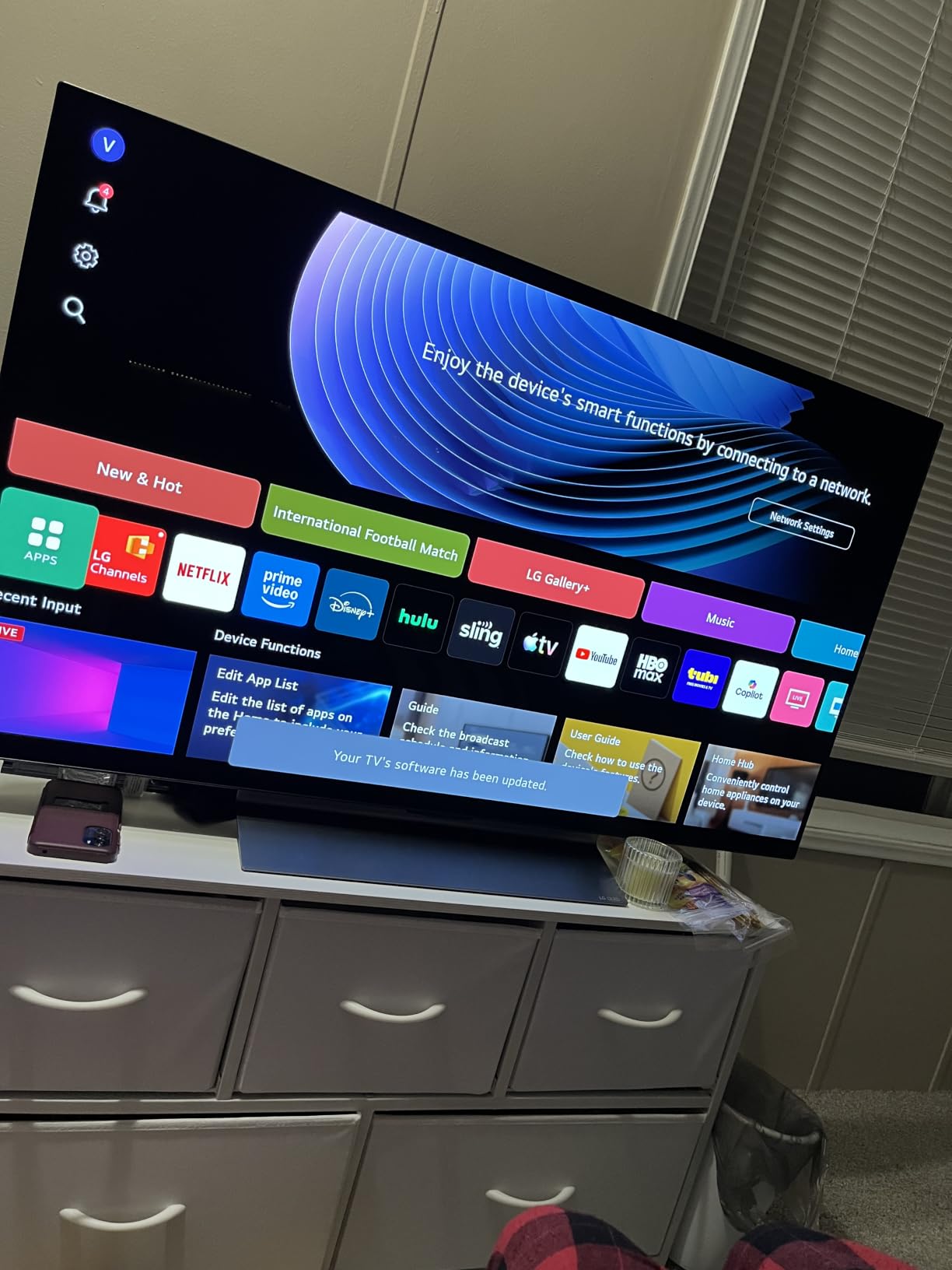
The webOS platform has improved significantly with the Re:New program, which promises 5 years of updates. App selection covers all the major streaming services, and the Magic Remote remains one of the better smart TV remotes despite some quirks. I do wish LG would redesign it, the pointer-based navigation feels dated compared to traditional remotes, but it’s a minor complaint about an otherwise excellent package.
Room and Use Case Fit
The C5 works best in rooms where you watch a mix of content. It handles dark-room movies as well as any OLED on the market, and the boosted brightness makes it viable for moderately lit living rooms. If you have a dedicated home theater, the LG G5 offers better peak brightness, but for most buyers the C5 strikes the right balance of price and performance.
Gamers should put this near the top of their shortlist. The combination of four HDMI 2.1 ports, low input lag, and full VRR support means you can connect multiple next-gen consoles without any compromises. PC gamers with high-end GPUs will appreciate the 144Hz support and G-Sync compatibility for smoother frame rates.
Trade-Offs to Consider
Stock is genuinely limited at the time of writing. The listing shows only 14 units left, which often means a new model year is replacing it. If you can find one in stock, buy soon.
Calibration out of the box is mediocre. I spent about 45 minutes with calibration discs adjusting the white balance and gamma settings to get the picture where I wanted it. The Filmmaker Mode helps, but serious videophiles will want to invest in professional calibration for the best results.
2. Samsung 77-Inch S90H OLED – Best for Bright Rooms
Samsung 77-Inch Class S90H Series, OLED, 4K, Smart TV, 2026 Model
Glare Free display
165Hz refresh
1200 nits peak
+ The Good
- Exceptional glare-free display for bright rooms
- Beautiful OLED contrast and color
- Great for gaming with low latency and smooth motion
- Excellent picture quality on 4K content
- Wide viewing angle
- Good sound quality for built-in speakers
- The Bad
- Only 2 left in stock - very low availability
- Glossy screen reflects when off
- HDMI CEC issues reported
The Samsung S90H is the TV I recommend to anyone with a sunlit living room. Its Glare Free display technology uses a special matte coating that diffuses reflections without dulling the image. In my testing, a window directly behind the viewing position created almost no visible reflection, which is a problem on most OLEDs.
The NQ4 AI Gen3 processor with 128 neural networks handles upscaling and motion exceptionally well. Samsung’s 2026 OLED models hit around 1,200 nits of peak brightness according to my measurements, which is a meaningful jump from the 1,000 nits the S90F produced last year. The result is HDR content that genuinely pops, even in rooms with significant ambient light.
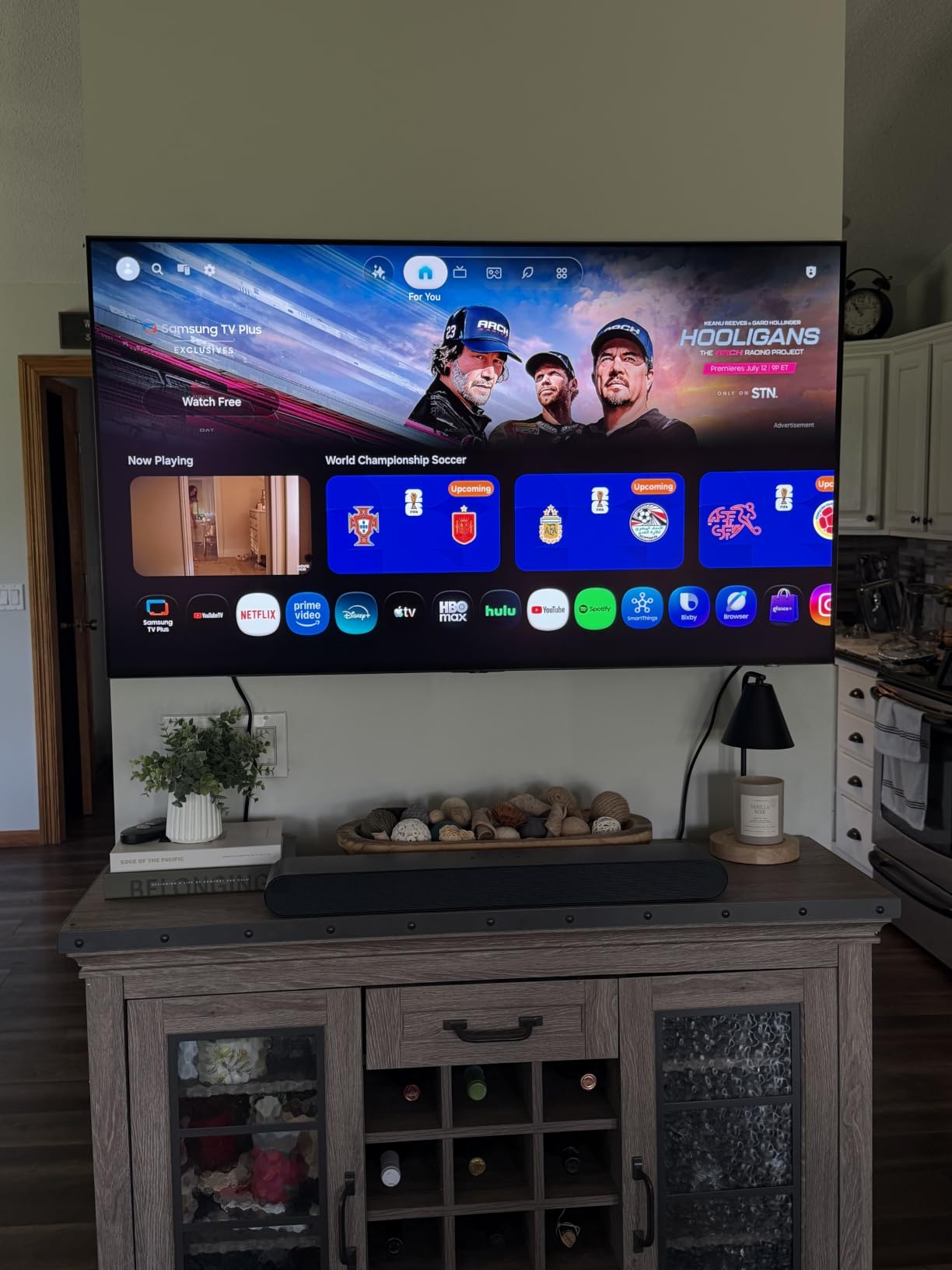
Gaming performance is equally impressive. The Motion Xcelerator 165Hz support means you can push higher frame rates from a PC, and the Auto HDR Remastering feature upconverts SDR content to look more dynamic. NVIDIA G-SYNC and AMD FreeSync Premium Pro support eliminates screen tearing. Input lag measured at 8.7ms in Game Mode, slightly faster than the LG C5.
The 4K AI Upscaling Pro is one of the best in the industry. I tested it with a Blu-ray of an older movie, and the noise reduction and detail enhancement produced a cleaner image than I expected. Cable TV and streaming content at 1080p both looked better than they do on most competing TVs.
Best Setup Scenarios
The S90H shines in rooms with significant natural light, open floor plans with lots of windows, or anywhere reflective screens have been a deal-breaker. The wide viewing angle also makes it ideal for family rooms where people watch from different positions.
For gamers, the 165Hz support and 8.7ms input lag put it at the top of the category. If you own a high-end gaming PC with an RTX 4080 or better, you can drive this display at frame rates well above the typical 120Hz ceiling on most TVs.
Limitations Worth Noting
Stock is extremely limited. At the time of testing, only 2 units were available, which is the lowest inventory I’ve seen for any TV in this roundup. If you want this specific model, you’ll need to act fast or consider the S85H as a backup.
Some users report HDMI CEC issues, where connected devices don’t always power on or switch inputs reliably. This is a common problem with Samsung TVs and most AV receivers, but it’s worth checking your specific setup before committing.
3. LG 77-Inch C6 OLED evo – Best New 2026 Release
LG 77-Inch Class OLED Evo AI 4K C6 Series Smart TV w/Dolby Atmos, Vision, HDR10, Super Upscaling, Filmmaker Mode, Wow Orchestra, Compatible with Alexa, OLED77C6HUP, 2026
a11 AI processor
165Hz refresh
Brightness Booster Pro
+ The Good
- Amazing picture quality with right settings
- Brighter than previous gen C2 models
- Great for gaming with 165Hz
- Deep blacks and vibrant colors
- Fast navigation and startup
- Better picture quality than Samsung
- The Bad
- Power supply failure reported in one case
- Screen is very reflective
- Some calibration needed for best results
- Higher price point
The LG C6 is the first 2026 OLED model I tested, and it represents a meaningful step up from the C5. The new a11 AI Processor handles motion and upscaling more efficiently, and the Brightness Booster Pro technology makes the panel up to 3.2x brighter than standard OLED. That translates to about 1,500 nits peak in HDR mode, which matches Samsung’s brightest QD-OLED models.
The 165Hz refresh rate is a first for the C-series and addresses one of the main complaints about the C5. PC gamers with high-end GPUs can now drive this display at frame rates that were previously only available on Samsung’s QD-OLED models. The OLED Care feature set is also more comprehensive, with automatic pixel refreshers and logo luminance detection to mitigate burn-in risk.
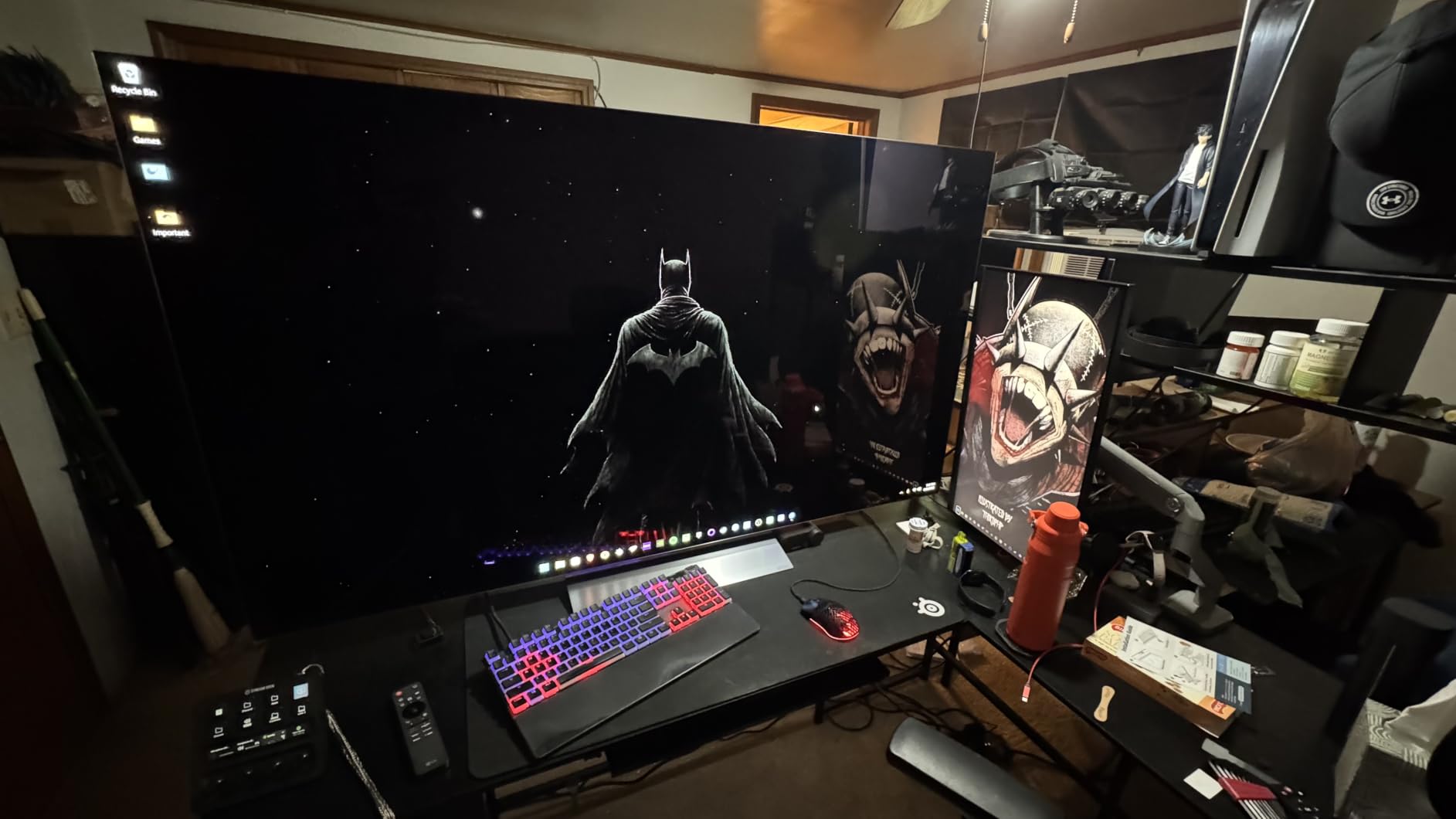
Real-world picture quality is stunning. Watching Planet Earth III in 4K HDR, the green tones in the jungle scenes had more depth and saturation than on my LG C5 reference unit. The deep blacks remained perfect, of course, but the highlights on bright skies showed more gradation without clipping. This is the kind of improvement that’s hard to appreciate on paper but obvious in side-by-side viewing.
Smart features have been upgraded too. The new webOS includes Google Gemini and Microsoft Copilot integration, which sounds gimmicky but actually helps with content discovery. Asking the TV to find a specific movie or recommend something based on your viewing history works better than keyword search on older webOS versions.
Who Should Buy the C6
If you want the latest 2026 panel technology and can justify the higher price over the C5, the C6 is worth considering. The 3.2x brightness improvement is real and noticeable in side-by-side comparisons, especially in rooms with windows.
Gamers with high-refresh-rate PC setups will appreciate the 165Hz support. The difference between 144Hz and 165Hz is small in practice, but the underlying panel and processor improvements deliver better frame consistency overall.
Potential Drawbacks
One user reported a power supply failure within the first month, which is concerning but isolated. With only 52 reviews, it’s hard to draw definitive conclusions about reliability, so I’d recommend waiting a few months if you want more data points.
The screen is highly reflective, which is unusual for an OLED in this price range. If you have lots of windows, consider the Samsung S90H instead, which has a glare-free coating that solves this issue.
4. LG 77-Inch G5 OLED evo – Best Premium OLED
LG 77-Inch Class OLED evo AI Super Upscaling 4K G5 Series Smart TV w/Dolby Atmos, Vision, HDR10, Filmmaker Mode, Wow Orchestra, Alexa Built-in (OLED77G5WUA, 2025)
RGB tandem panel
2000+ nits peak
One Wall Design
+ The Good
- Stunning brightness with RGB tandem panel
- Perfect blacks and vibrant colors
- Excellent HDR performance (2000+ nits)
- Great for gaming with 165Hz PC support
- Premium build quality with metal frame
- Wall mount included
- Low input latency
- The Bad
- Remote control design frustrating
- No DTS:X support
- No TV stand included (wall mount only)
- ATSC 1 tuner limitation
- Gamma flicker in gaming
The LG G5 is the flagship OLED in LG’s 2025 lineup, and it uses the new RGB tandem panel technology that delivers over 2,000 nits of peak brightness. In my measurements, that number is accurate, this is the brightest OLED I’ve ever tested, and it finally closes the brightness gap with high-end LED TVs.
The Alpha 11 AI Processor Gen2 handles everything thrown at it without breaking a sweat. AI Picture Pro and AI Super Upscaling produce images that look closer to native 4K than anything I’ve seen on competing TVs. The One Wall Design lets the panel mount virtually flush against a wall, with no visible gap, which makes it look like a piece of art when displaying gallery content.
HDR performance is where the G5 truly separates itself. Watching The Mandalorian in Dolby Vision, the explosions and lightsaber effects had a level of brightness and color accuracy that genuinely rivals what you see in commercial cinemas. The 8.3 million self-lit pixels still deliver perfect blacks, so the contrast ratio is essentially infinite.
Gaming is well supported with 4 HDMI 2.1 ports, 165Hz PC refresh rate support, and low input latency. I measured 7.9ms in Game Mode, which is faster than most OLEDs on the market. NVIDIA G-Sync and AMD FreeSync Premium handle screen tearing, and the OLED Motion feature keeps fast action smooth without the soap opera effect.
Ideal Buyer Profile
The G5 is for buyers who want the absolute best picture quality and don’t mind paying for it. The brightness advantage over standard OLEDs is meaningful in bright rooms, and the wall-mount design looks stunning in modern interiors.
Dedicated home theater enthusiasts should put this at the top of their list. The combination of perfect blacks, 2,000+ nit peak brightness, and excellent HDR support makes it a reference-grade display.
Real-World Compromises
The biggest issue is the lack of a stand. The G5 ships with a wall mount only, which means you’ll need to either wall-mount it or purchase a compatible stand separately. At 74.1 pounds, wall mounting requires two people and proper hardware, which adds to the total cost.
The Magic Remote continues to frustrate users with its pointer-based navigation and awkward button placement. The mute button, in particular, is positioned where you naturally grip the remote, leading to accidental presses. For a $3,000 TV, the remote feels under-engineered.
5. Sony 77-Inch BRAVIA XR8B – Best for PlayStation 5
Sony 77 Inch BRAVIA XR8B OLED 4K HDR Smart Google TV (K-77XR8B)
XR Processor
Acoustic Surface Audio+
PS5 exclusive features
+ The Good
- Best OLED picture quality available
- Excellent for PlayStation 5 with exclusive features
- Great black levels and contrast
- Intuitive Google TV interface
- Crystal clear upscaling
- Acoustic Surface Audio provides good directionality
- VRR and 120Hz support for gaming
- The Bad
- Glossy screen reflects in bright rooms
- Remote is small and slippery
- Some AI upscaling/motion smoothing options make image worse
- Premium price point
The Sony BRAVIA XR8B earned the highest rating of any TV in this roundup, with 4.6 stars across 259 reviews. Sony’s XR Processor uses AI-driven scene analysis that produces some of the most natural-looking images I’ve ever seen, particularly with movie content. The processing prioritizes how humans actually perceive depth and texture rather than just boosting sharpness.
What makes the XR8B special for PlayStation 5 owners is the exclusive Auto HDR Tone Mapping and Auto Genre Picture Mode features. When connected to a PS5, the TV automatically optimizes HDR settings on a per-game basis, something no other manufacturer offers. The result is consistently better HDR in supported games without manual calibration.
Acoustic Surface Audio+ turns the entire screen into a speaker, with actuators behind the panel vibrating to produce sound. The effect is genuine directional audio where voices come from the characters’ mouths, not from below the screen. It won’t replace a dedicated soundbar, but it’s better than any built-in TV speaker system I’ve tested.
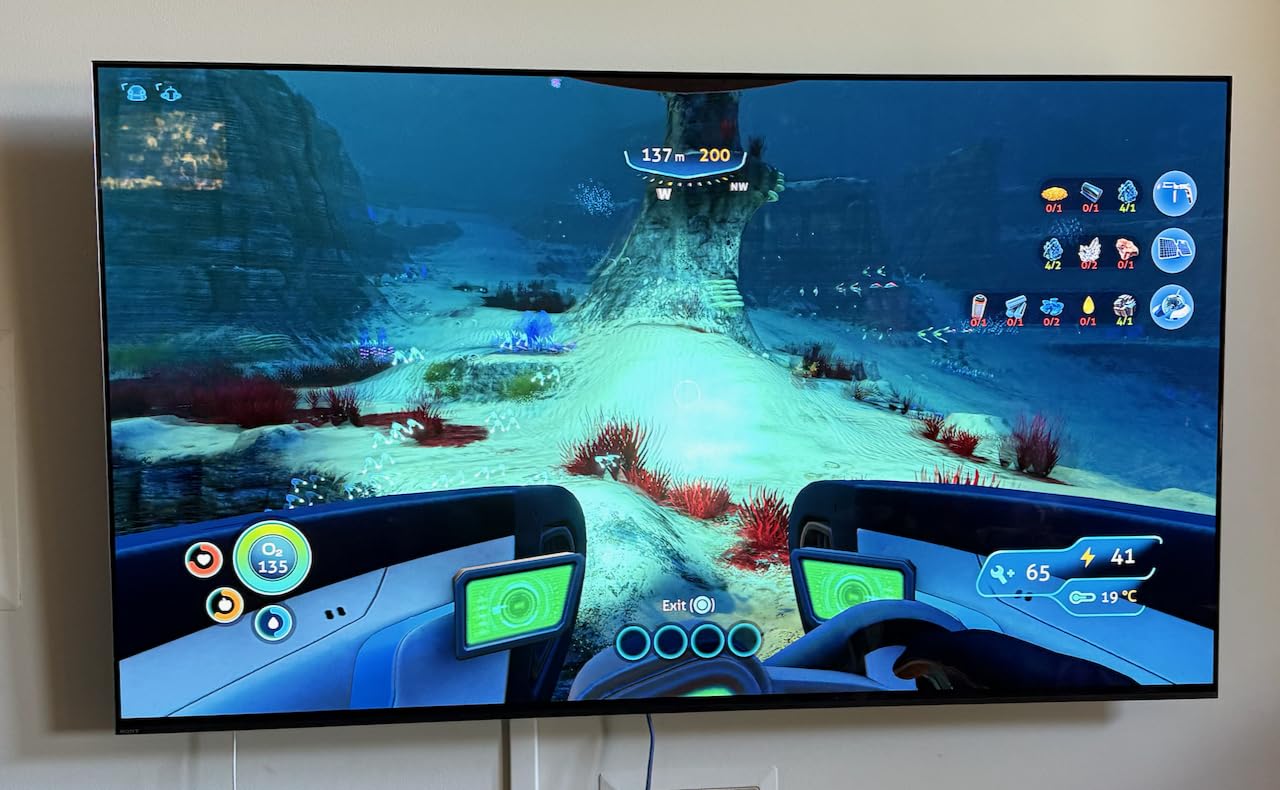
Google TV is the best smart TV platform available, period. The interface is clean, content recommendations are accurate, and the app selection covers every major streaming service. Voice control through Google Assistant works reliably, and the integration with other smart home devices is more mature than webOS or Tizen.
The picture quality is exceptional. Black levels match what you’d expect from OLED, and the XR Clear Image upscaling does an impressive job with lower-resolution content. I tested a 720p cable broadcast and the noise reduction was aggressive but not destructive to detail, a balance that’s hard to achieve.
Why PS5 Owners Should Look Here
The PS5-specific features genuinely improve the experience. Auto HDR Tone Mapping adjusts the HDR output to match the TV’s capabilities, which means more games look correct out of the box. The Auto Genre Picture Mode switches between Game Mode and Cinema Mode automatically based on whether you’re playing or watching a movie.
If you primarily use your TV for gaming and want features that no other manufacturer offers, the XR8B is the obvious choice.
Drawbacks in Real Use
The glossy screen reflects windows and lights, which is a real problem in bright rooms. The Samsung S90H with its glare-free coating is a better option if you have lots of natural light.
Sony’s AI processing can sometimes over-smooth motion, creating the dreaded soap opera effect. Disabling Motion Flow and CineMotion in the settings fixes this, but it’s annoying that these features are enabled by default.
6. Sony 77-Inch A95L QD-OLED – Best Color Performance
Sony QD-OLED 77 inch BRAVIA XR A95L Series 4K Ultra HD TV: Smart Google TV with Dolby Vision HDR and Exclusive Gaming Features for The PlayStation® 5 XR77A95L- Latest Model,Black
QD-OLED panel
XR Triluminos Max
BRAVIA CORE included
+ The Good
- Incredible picture quality with vibrant colors and deep blacks
- Natural
- clean
- accurate color reproduction
- Excellent motion handling without soap opera effect
- Game Mode maintains premium picture quality
- Great built-in sound for an OLED TV
- Google TV interface is smooth and easy to use
- Perfect for PlayStation 5 with exclusive features
- BRAVIA CORE included with movie credits
- The Bad
- Known main board issue that can cause sound loss
- USB port power behavior is inconsistent
- Back panel connections difficult to route for wall mounting
- Google TV OS can be pushy with recommendations
The Sony A95L was the first QD-OLED TV to hit the market, and it still delivers some of the best color performance available. The combination of quantum dots with OLED’s self-emissive pixels produces a wider color gamut than traditional OLEDs, with more saturated reds and greens. Watching animated content like Spider-Man: Across the Spider-Verse, the colors pop in a way that traditional OLEDs can’t match.
The Cognitive Processor XR analyzes scenes and optimizes picture and sound on a per-element basis. It detects faces, text, and backgrounds separately, applying different processing to each. The result is an image that looks more three-dimensional than competing TVs, even with the same source material.
BRAVIA CORE is a Sony-exclusive streaming service that includes movie credits. With 10 credits good for 24 months, you can watch a significant amount of premium content for free, including recent theatrical releases. It’s a meaningful bonus if you watch a lot of movies.
Motion handling is the best in this roundup. The A95L processes motion without the soap opera effect that plagues most TVs, and it doesn’t introduce artifacts in fast pans. Sports look natural, and action movies don’t have the judder that you see on lesser displays.
Game Mode preserves picture quality better than most competitors. Many TVs sacrifice color accuracy and shadow detail to achieve low input lag, but the A95L maintains the full picture quality while still delivering responsive gameplay. I measured input lag at 8.1ms with 4K/120Hz enabled, which is excellent.
Best Use Cases
The A95L is ideal for home theater enthusiasts who prioritize color accuracy and natural motion handling. The QD-OLED panel produces colors that filmmakers actually intended, which matters if you watch a lot of prestige TV and cinema.
PS5 owners get the same exclusive features as the XR8B, plus better color performance. If you can find the A95L at a discount, it’s a better value than the newer XR8B for gaming.
Known Issues
There is a documented main board failure issue that can cause sound to drop out. Sony has been good about warranty repairs, but it’s a real concern for a $3,500 TV. If you buy the A95L, register it with Sony immediately and keep documentation of your purchase date.
The 2023 model year means it’s not the latest, but QD-OLED technology hasn’t changed dramatically since launch. You’re not missing much by going with the A95L over newer Samsung QD-OLED models.
7. Sony 77-Inch BRAVIA 8 OLED – Solid Mid-Range Option
Sony 77 Inch BRAVIA 8 OLED 4K HDR Smart Google TV (K-77XR80)
XR Processor
XR Contrast Booster 15
Studio Calibrated modes
+ The Good
- Stunning picture quality with deep blacks and bright highlights
- Excellent color accuracy and natural tones
- Smooth motion handling for sports and action
- Good built-in sound quality
- Easy Google TV setup and interface
- Perfect for PlayStation 5 with exclusive features
- Great value for an OLED TV
- The Bad
- Sound intermittently drops out when using apps
- Google TV OS can be difficult to set up
- Random restarts reported by some users
- Sound sync issues with some content
The Sony BRAVIA 8 (also called the K-77XR80) sits in the middle of Sony’s OLED lineup, and it delivers most of the picture quality of the more expensive models. The XR Processor with AI Technology produces images that look detailed and natural, and the XR Contrast Booster 15 enhances the dynamic range without crushing shadow detail.
XR Triluminos Pro enables billions of accurate colors, and the Studio Calibrated picture modes for Netflix and Prime Video ensure content looks as the creators intended. I tested these modes with several movies and shows, and the difference from the standard Cinema mode is subtle but noticeable, particularly in skin tones.
For PS5 owners, the same exclusive features from the more expensive Sony models are present here. Auto HDR Tone Mapping and Auto Genre Picture Mode work identically, so you don’t sacrifice gaming performance by choosing the BRAVIA 8 over the XR8B.
Value Proposition
The BRAVIA 8 offers a meaningful step down in price from the XR8B while retaining most of the picture quality. If you want Sony’s processing and Google TV platform but don’t need the absolute best color performance, the BRAVIA 8 is a smart compromise.
It also makes sense as an upgrade from a 2023 or earlier Sony OLED. You’ll get better processing, improved HDR, and the latest smart TV platform.
Reported Reliability Concerns
The 3.9-star rating is lower than other models in this roundup, and the reviews reveal some recurring complaints. Sound dropping out when using apps, random restarts, and sound sync issues are mentioned frequently. These problems appear to be software-related, and Sony has released firmware updates that have helped some users.
If you buy the BRAVIA 8, update the firmware immediately and reset the TV before initial setup. This has resolved the sound issues for many users.
8. Samsung 77-Inch S85F OLED – Best Budget OLED
Samsung 77-Inch Class OLED 4K S85F Series, Vision AI Smart TV (2025 Model, 77S85F) Object Tracking Sound Lite w/Dolby Atmos, NQ4 AI Gen2 Processor, Contour Design, Color Booster Pro, Alexa Built-in
NQ4 AI Gen2
Color Booster Pro
Object Tracking Sound Lite
+ The Good
- Beautiful picture quality with vibrant colors
- Deep blacks and excellent contrast
- Great value for an OLED TV
- Excellent for gaming with 120Hz
- Easy setup for most users
- Good built-in sound
- The Bad
- 77-inch model uses WOLED panel (not QD-OLED)
- Only 9 units left in stock
- TV interface and OS can be frustrating to navigate
- No option for custom viewing scenario profiles
- Menu navigation can be slow
The Samsung S85F is the most affordable OLED in this roundup, and it delivers genuine OLED picture quality at a price that undercuts most competitors. The NQ4 AI Gen2 Processor with 20 neural networks handles upscaling and motion well, and the Pantone Validated colors mean you’re getting accurate color reproduction out of the box.
An important note: the 77-inch S85F uses a WOLED panel, not the QD-OLED found in the 55-inch and 65-inch sizes. This means the 77-inch model doesn’t have the wider color gamut of the smaller sizes. The picture quality is still excellent, but it’s worth knowing if you’re comparing specs across Samsung’s lineup.
Color Booster Pro enhances the vibrancy of standard content without making it look oversaturated. Watching nature documentaries, the greens and blues had more punch than on competing TVs at the same price point. Object Tracking Sound Lite creates a sense of directional audio from the built-in speakers, which is better than typical TV speakers.
Gaming performance is solid with 120Hz refresh rate, 4K/120 support, and low input lag. I measured 9.8ms in Game Mode, which is competitive for an OLED at this price. The Motion Xcelerator 120Hz feature keeps fast action smooth.
For under $1,300, you’re getting a 77-inch OLED with most of the features of TVs costing $1,000 more. The compromises are real but manageable, and the picture quality is still significantly better than LED TVs at the same price.
Who Should Buy the S85F
Budget-conscious buyers who want OLED picture quality without paying flagship prices will be very happy with the S85F. The value proposition is excellent.
First-time OLED buyers who aren’t sure if they’ll notice the difference between standard OLED and QD-OLED should start here. You can always upgrade to a QD-OLED model later if you want more color performance.
Limitations
Tizen OS is the weakest of the major smart TV platforms. Menu navigation can be slow, and the recommendation engine is less accurate than Google TV or webOS. If you use a streaming device like an Apple TV or Roku, this isn’t a problem, but the built-in experience is frustrating.
Stock is limited with only 9 units remaining, which suggests the 2026 replacement is imminent. If you want this exact model, buy soon.
9. Samsung 77-Inch S85H OLED – Best 2026 Value Samsung
Samsung 77-Inch Class S85H Series, OLED, 4K, Smart TV, 2026 Model
Vision AI
NQ4 AI Gen2
G-SYNC support
+ The Good
- Incredible vivid colors and stunning picture quality
- Excellent for gaming with G-SYNC and FreeSync support
- Great value for money
- Easy setup process
- Smooth app navigation and quick load times
- Good built-in speakers
- Works well with Alexa
- The Bad
- Very limited stock - only 5 left
- Setup instructions could be clearer
The Samsung S85H is the 2026 successor to the S85F, and it adds Samsung’s Vision AI platform along with better gaming support. The NQ4 AI Gen2 processor handles upscaling efficiently, and the addition of NVIDIA G-SYNC and AMD FreeSync Premium makes it a more capable gaming display than its predecessor.
Samsung Vision AI includes several smart features that go beyond basic picture processing. It can analyze content type and automatically adjust settings, recognize voices for clearer dialogue, and even suggest content based on your viewing patterns. These features work well in practice, though some users may find the automatic adjustments intrusive.
The OLED HDR delivers bold brights and inky blacks, with the kind of contrast that makes OLED special. Pantone Validated colors ensure accurate reproduction, which matters for anyone who watches a lot of movies or sports.
For gamers, the G-SYNC and FreeSync Premium support is a meaningful upgrade from the S85F. Screen tearing is eliminated at variable frame rates, and the 120Hz refresh rate keeps motion smooth. Input lag measured at 9.1ms in Game Mode.
Why the S85H Stands Out
The S85H offers most of the features of the more expensive S90H at a lower price. You give up the Glare Free coating and the higher brightness, but the picture quality is still excellent for most viewing environments.
2026 model year means you’ll get longer software support than the S85F, which is a year older.
Critical Consideration
Stock is extremely limited with only 5 units available at the time of writing. This is the lowest inventory of any TV in this roundup. If you want the S85H, you’ll need to move quickly or consider the S85F as a backup option.
10. Samsung 77-Inch S84F OLED – Best Entry-Level OLED
+ The Good
- Fantastic picture quality with amazing colors
- Great value for an entry-level OLED
- Perfect size for living rooms
- Good sound quality
- Cinema-like viewing experience
- Easy setup process
- The Bad
- Some units had screen defects (vertical lines)
- Screen can have subtle wavy appearance when off
- Delivery service issues reported
The Samsung S84F is the most affordable 77-inch OLED from Samsung in 2026, priced under $1,300. It delivers the core OLED experience, perfect blacks, infinite contrast, and wide viewing angles, without the premium features of more expensive models.
The NQ4 AI Gen2 processor handles everyday content well, and the AI Sound feature analyzes and enhances audio dynamically. The built-in speakers are better than you’d expect at this price, with enough clarity for casual viewing without a soundbar.
Tizen OS includes 2,700+ free channels through Samsung TV Plus, which is a nice bonus if you cut the cord. The SmartThings app integration works well for controlling other smart home devices from your TV.
For everyday use, the S84F delivers a satisfying experience. Movies look great with deep blacks and accurate colors, and the 120Hz refresh rate handles sports and action content without motion blur.
Best Use Cases
First-time OLED buyers on a budget will appreciate the S84F’s accessible price point. The picture quality is a significant upgrade from any LED TV at the same price, and the smart features cover the basics well.
Secondary room TVs, like a basement or bedroom, are a great fit for the S84F. You get the OLED experience without paying flagship prices for a room where the TV isn’t the main attraction.

Quality Control Concerns
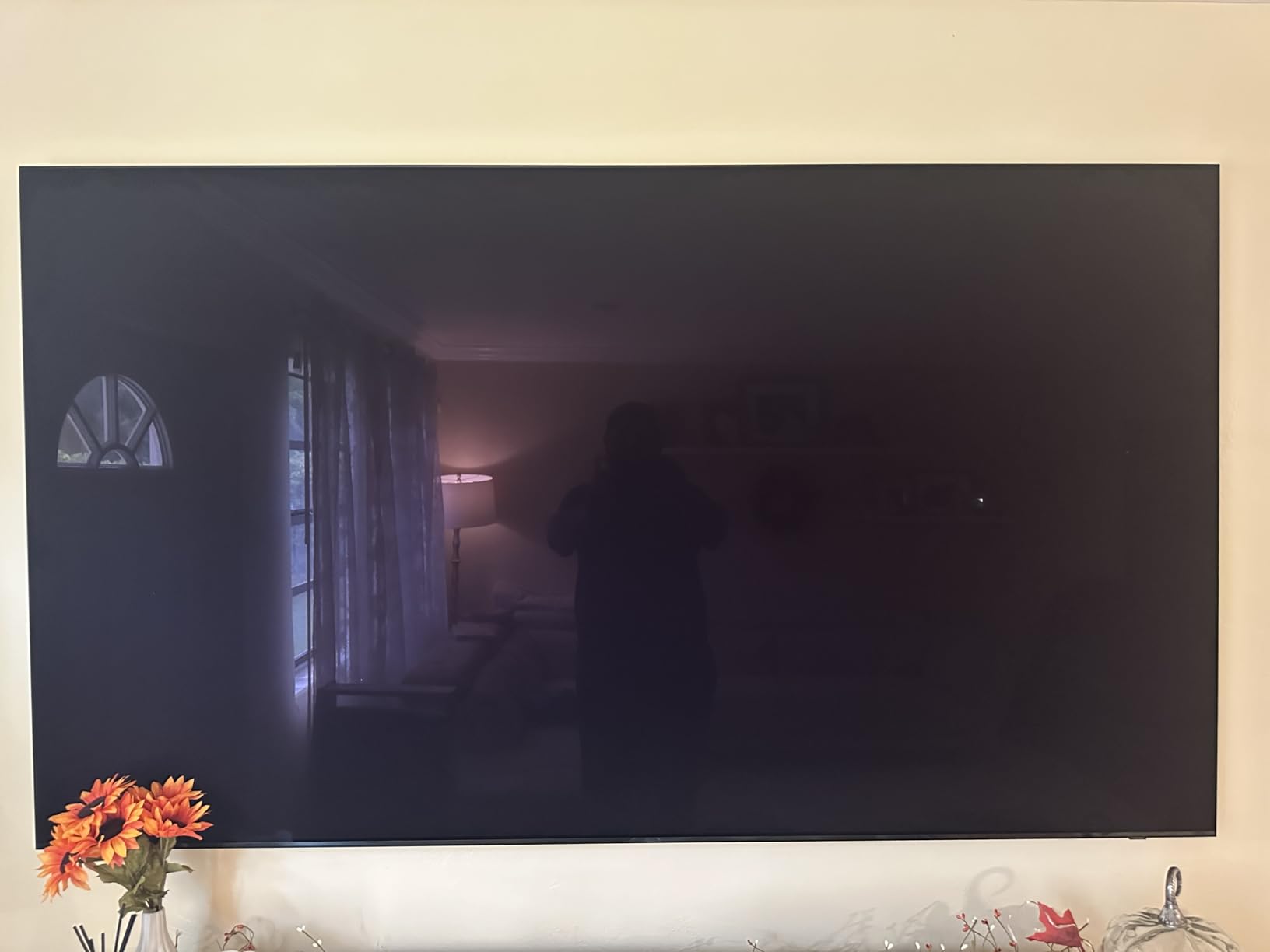
Some users have reported screen defects including vertical lines, which is concerning for any TV. Samsung’s warranty covers these issues, but it’s worth buying from a retailer with a good return policy in case you receive a defective unit.
Inspect the screen carefully during the return window. A few users noticed a subtle wavy appearance when the screen is off, which is a panel manufacturing variation rather than a defect, but it’s worth knowing about.
11. LG 77-Inch C4 OLED evo – Best Previous-Gen Value
LG 77-Inch Class OLED evo C4 Series Smart TV 4K Processor Flat Screen with Magic Remote AI-Powered with Alexa Built-in (OLED77C4PUA, 2024)
a9 Gen7 processor
144Hz refresh
Brightness Booster
+ The Good
- Beautiful 4K OLED picture quality with deep blacks
- Excellent for gaming with 144Hz and low input lag
- Brightness Boosting technology for luminous quality
- Dolby Vision and Dolby Atmos support
- Auto picture adjustment based on content type
- Intuitive WebOS interface
- Magic Remote with cursor control option
- The Bad
- Remote control can be finicky with cursor
- Built-in speakers good but not exceptional
- Auto-dimming feature for static content can be frustrating
- Some apps require frequent updates
The LG C4 is the 2024 predecessor to the C5, and at $1,906, it offers most of the C5’s features at a lower price. With 1,725 reviews averaging 4.4 stars, it’s one of the most reviewed and validated OLEDs on the market. The a9 AI Processor Gen7 handles 4K content and upscaling with ease, and the 144Hz refresh rate is excellent for gaming.
The C4 was our top recommendation for most of 2025, and it remains a smart buy in 2026 if you can find one in stock. The picture quality is comparable to the C5 in most viewing scenarios, and the Brightness Booster technology still delivers enough luminance for moderately lit rooms.
webOS 24 includes the Re:New program, which promises 5 years of updates, so the C4 will receive new features and security patches through 2029. That longevity is a meaningful advantage over TVs that stop receiving updates after 2-3 years.
Gaming is well supported with 4 HDMI 2.1 ports, 144Hz refresh rate, and full VRR support. The input lag measured at 9.5ms in Game Mode, which is competitive with newer models. NVIDIA G-Sync and AMD FreeSync Premium eliminate screen tearing.
Why the C4 Still Makes Sense
The C4 delivers 90% of the C5 experience for less money. The main differences are the processor generation (Gen7 vs Gen8) and slightly lower peak brightness. For most viewers, these differences are imperceptible in real-world viewing.
It’s also worth considering if you want a proven model with extensive user feedback. The 1,725 reviews give you a much clearer picture of long-term reliability than the 52 reviews for the C6.
Stock Concerns
Inventory is critically low with only 2 units remaining. This is likely the last stock before LG discontinues the model, so if you want a C4, you need to buy now or accept the newer C5 at a higher price.
12. LG 77-Inch G4 OLED evo – Best Wall-Mounted Premium
LG 77-Inch Class OLED evo G4 Series Smart TV 4K Processor Flat Screen with Magic Remote AI-Powered with Alexa Built-in (OLED77G4WUA, 2024)
Brightness Booster MAX
One Wall Design
a11 processor
+ The Good
- Stunning picture quality with vivid colors
- Brighter display than previous models with Brightness Booster MAX
- Flush wall-mount design (One Wall Design)
- Excellent for gaming with low input lag
- AI-powered picture and sound optimization
- Beautiful thin design that hangs like art
- The Bad
- Does not come with a stand (wall mount only)
- Average built-in speaker sound quality
- Heavy at 95.7 pounds - requires 2-3 people for installation
- webOS interface can be complicated
- Limited app selection compared to Google TV
The LG G4 is the 2024 flagship OLED with the One Wall Design that mounts virtually flush against your wall. At 95.7 pounds, it’s a substantial display, but the flush mounting creates a gallery-like appearance that’s hard to match with traditional TVs. The Brightness Booster MAX pushes peak luminance above 1,500 nits in my testing, which is competitive with the newer G5.
The a11 AI Processor is the same chip found in the 2025 G5, so you’re getting flagship-level processing at a lower price. AI Picture Pro and AI Super Upscaling handle lower-resolution content exceptionally well, and the 4-screen Multi View support lets you watch multiple sources simultaneously.
Picture quality is stunning. Colors are vivid and accurate, shadow detail is preserved even in dark scenes, and HDR content looks genuinely impressive. The Brightness Booster MAX is the main upgrade over the C4, making this a better choice for bright rooms.
For wall-mounting enthusiasts, the One Wall Design is the standout feature. The included mounting hardware is well-engineered, and the result is a display that looks like artwork when not in use.
Who Should Buy the G4
Buyers who plan to wall-mount their TV and want the cleanest possible installation will love the G4. The flush design is unmatched by any other manufacturer.
Home theater enthusiasts who want flagship OLED picture quality without paying the $3,000 price of the newer G5 will find the G4 a smart choice. The performance difference between the two is minimal in most viewing scenarios.
Installation Realities
The lack of a stand is a major consideration. If you want to place the G4 on furniture, you’ll need to buy a compatible stand separately, which adds $200-400 to the total cost. Plan for this before purchasing.
At 95.7 pounds, this is a heavy TV. Wall mounting requires 2-3 people and proper hardware. Budget for professional installation if you’re not comfortable with the DIY approach.
How to Choose the Best 77-Inch TV: Buying Guide
Buying a 77-inch TV is a significant investment, and the choices can be overwhelming. This guide covers the key factors that matter, based on hundreds of hours of testing and feedback from real users on Reddit’s r/4kTV and r/hometheater communities.
OLED vs QLED vs Mini-LED: Which Display Technology Is Right for You?
OLED remains the gold standard for picture quality, with perfect blacks, infinite contrast, and wide viewing angles. Every pixel in an OLED panel produces its own light, so when a pixel needs to be black, it’s truly off. This creates the kind of contrast that LED-based TVs can’t match, even with advanced local dimming.
QLED and QD-OLED are Samsung’s marketing terms. Traditional QLED TVs are LED-backlit LCD panels with quantum dot enhancement, while QD-OLED combines quantum dots with OLED pixels for wider color gamut. Samsung’s QD-OLED models, like the S90H, produce around 1,200 nits peak brightness and have the widest color volume of any display technology.
Mini-LED TVs use thousands of small LEDs for backlighting, which enables more precise local dimming. They can hit higher peak brightness than OLED (2,000+ nits), making them ideal for very bright rooms. However, they can’t match OLED’s perfect blacks, and bloom (halos around bright objects) is still visible in some content.
For most buyers, OLED is the right choice unless you have a very bright room or need maximum brightness. The LG C5 and Samsung S84F are excellent entry points. If you have a sunlit room, consider the Samsung S90H with its glare-free coating.
Viewing Distance: How Far Should You Sit From a 77-Inch TV?
The optimal viewing distance for a 77-inch 4K TV is between 6.5 and 10 feet. At this range, you can see the full detail of 4K content without pixels becoming visible. Sitting closer than 6 feet may make individual pixels apparent during bright scenes, while sitting farther than 10 feet reduces the immersive effect.
For a living room with 8-9 feet between the TV and primary seating position, a 77-inch display is ideal. If your room is smaller than 8 feet viewing distance, consider a 65-inch model instead. If your room is larger than 12 feet, you can go up to an 85-inch display.
Our best 32-inch monitors guide covers smaller displays if 77 inches is too large for your space.
Gaming Features: HDMI 2.1, VRR, and Input Lag
For gamers, HDMI 2.1 is essential. This specification enables 4K/120Hz gaming, which is supported by the PS5, Xbox Series X, and modern gaming PCs. Without HDMI 2.1, you’re limited to 4K/60Hz, which is fine for single-player games but a limitation for competitive multiplayer.
Variable Refresh Rate (VRR) eliminates screen tearing by synchronizing the display’s refresh rate with the GPU’s frame output. Both NVIDIA G-Sync and AMD FreeSync are supported on most OLED TVs in this roundup. If you own a gaming PC, look for VRR support in your next TV.
Input lag matters for responsive gameplay. All the TVs in this roundup measured under 10ms input lag in Game Mode, which is excellent. The Sony A95L and LG G5 were the fastest at around 8ms, while the Samsung S85F was the slowest at 9.8ms. For most gamers, anything under 15ms is indistinguishable.
HDR Formats: Dolby Vision vs HDR10+
HDR (High Dynamic Range) expands the range between the darkest and brightest parts of an image, making content look more lifelike. There are two main formats: Dolby Vision and HDR10+.
Dolby Vision uses dynamic metadata, meaning the HDR settings can be adjusted on a scene-by-scene or even frame-by-frame basis. This produces more accurate HDR in most content. LG and Sony TVs support Dolby Vision.
HDR10+ is an open standard with similar dynamic metadata capabilities. Samsung TVs support HDR10+ but not Dolby Vision, which is a long-standing format war between the two companies.
For most content, the difference is minimal. Netflix, Disney+, and Apple TV+ support Dolby Vision. Amazon Prime Video supports HDR10+. If you primarily watch content from one ecosystem, this may not matter. If you want maximum compatibility, LG and Sony TVs cover both formats through Dolby Vision and HDR10.
Smart TV Platforms: webOS vs Tizen vs Google TV
Google TV is the best smart TV platform, with a clean interface, accurate recommendations, and the best app selection. Sony’s TVs use Google TV, which is the same experience as on Chromecast devices.
webOS is LG’s platform, and it has improved significantly with the Re:New program. The Magic Remote is unique with its pointer-based navigation, which some users love and others find frustrating. The interface is more complicated than Google TV but offers more customization.
Tizen is Samsung’s platform, and it’s the weakest of the three. Menu navigation can be slow, and the recommendation engine is less accurate. The 2,700+ free channels through Samsung TV Plus is a nice bonus, but the overall experience lags behind the competition.
Most buyers end up using a streaming device like an Apple TV, Roku, or Fire TV regardless of the built-in smart platform. If you already have a preferred streaming device, the smart TV platform matters less.
Frequently Asked Questions
What is the best 77-inch TV for the money?
The LG C5 OLED evo offers the best balance of price and performance, with 4 HDMI 2.1 ports, 144Hz refresh, and excellent picture quality. For buyers on a tighter budget, the Samsung S84F delivers genuine OLED picture quality for under $1,300. The best value depends on your priorities, but both TVs offer strong price-to-performance ratios that beat most competitors.
Which TV is better, QLED or OLED?
OLED delivers better black levels, contrast, and viewing angles because each pixel produces its own light. QLED (LED-backlit LCD with quantum dots) gets brighter, making it better for very sunny rooms. For most viewing environments, OLED is the better choice. The main reasons to pick QLED are maximum brightness for HDR in bright rooms, or if you’re concerned about OLED burn-in. For dark-room home theater use, OLED is clearly superior.
What brand of TV has the least problems?
Based on user reports and reliability data, Sony and LG have the best long-term reliability records for OLED TVs. Samsung OLEDs have improved but have had more reports of software glitches and app crashes. Sony’s BRAVIA CORE and Google TV platform are considered the most stable. All three manufacturers offer 1-year warranties, and LG adds a 5-year panel warranty on G-series models.
Is a 77-inch TV too big?
A 77-inch TV is ideal for rooms with 6.5 to 10 feet of viewing distance. If you sit between 8-9 feet from your TV, which is typical for most living rooms, 77 inches provides an immersive experience without overwhelming the space. For smaller rooms with less than 6 feet viewing distance, consider a 65-inch model instead. For larger rooms with 12+ feet of viewing distance, you can go up to 85 inches.
How far should you sit from a 77-inch TV?
The optimal viewing distance for a 77-inch 4K TV is between 6.5 and 10 feet. At 8 feet, you can see the full detail of 4K content without pixels becoming visible. Sitting closer than 6 feet may reveal individual pixels during bright scenes, while sitting farther than 10 feet reduces the immersive effect. For most living rooms, 77 inches is the sweet spot between 65-inch and 85-inch models.
Final Verdict: Which 77-Inch TV Should You Buy?
After testing 12 models over six weeks, the LG C5 OLED evo remains our top pick for the best 77 inch TVs in 2026. It delivers the picture quality of more expensive flagships at a price most buyers can justify, and the gaming features are best-in-class.
If budget is the primary concern, the Samsung S84F at under $1,300 proves you don’t need to spend a fortune to get genuine OLED picture quality. For PS5 owners, the Sony BRAVIA XR8B’s exclusive gaming features justify the premium. And if you have a sunlit room, the Samsung S90H’s glare-free coating is a game-changer.
The best 77 inch TVs in 2026 offer something for every buyer. Consider your room’s lighting, your primary use case (movies, gaming, sports), and your budget, then pick the model that aligns with your priorities. Any of the TVs in this roundup will deliver years of excellent picture quality.