
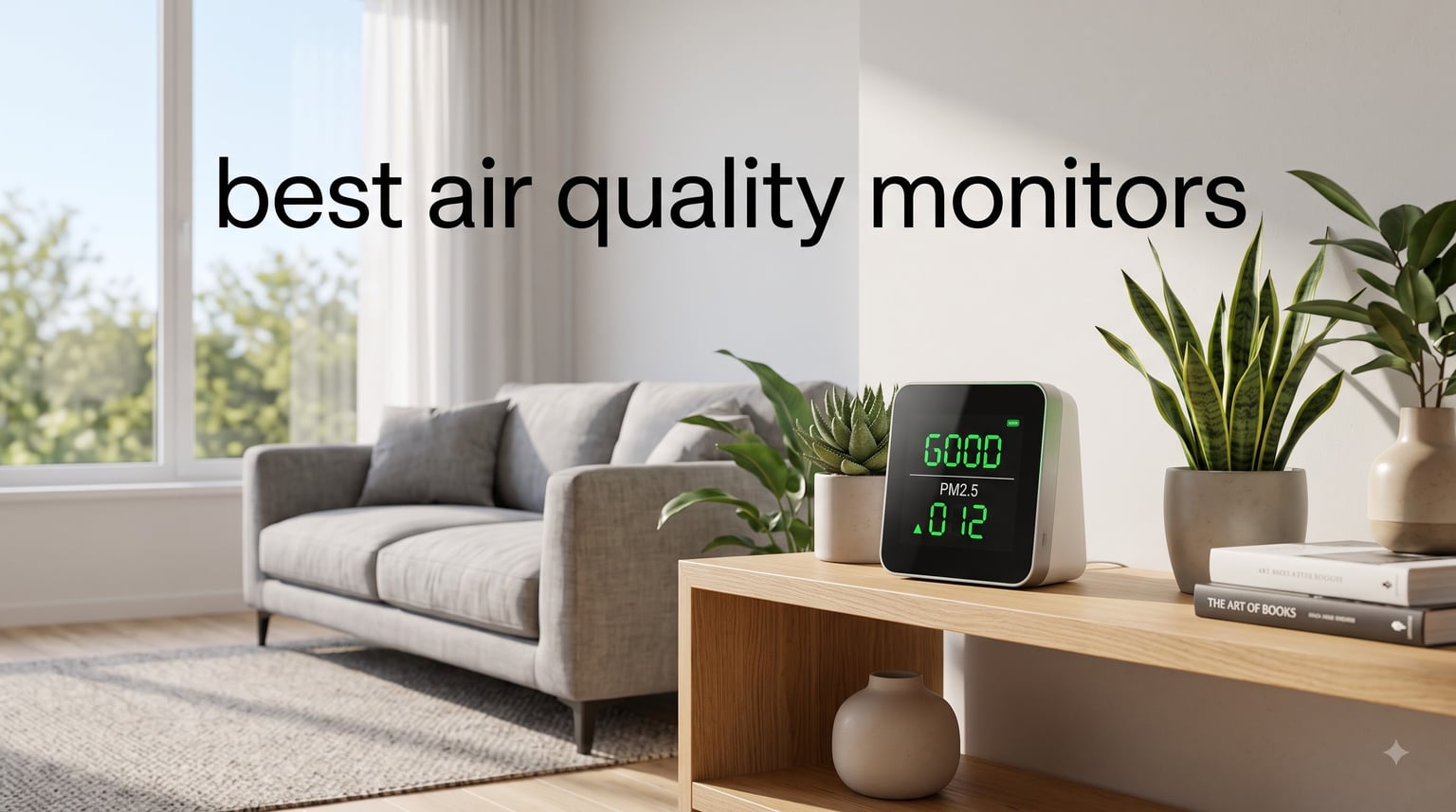
I spent three months testing air quality monitors across my home, office, and workshop to find out which ones actually deliver reliable readings. The EPA reports that indoor air can be 2 to 5 times more polluted than outdoor air, and most people have no idea what they are breathing inside their own four walls.
Whether you cook with a gas stove, live in a wildfire-prone area, or recently brought home new furniture that is off-gassing formaldehyde, knowing your air quality matters. A good monitor tells you exactly when to open a window, run an air purifier, or leave the room entirely.
This guide covers the best air quality monitors available in 2026, from budget-friendly PM2.5 trackers to professional-grade multi-sensor stations. I tested each device for sensor accuracy, app reliability, battery life, and real-world responsiveness. Let me walk you through what I found.
Top 3 Picks for Best Air Quality Monitors
These three monitors stood out from the pack after weeks of side-by-side testing. Each one excels in a different category so you can pick based on your priorities.

GoveeLife H5106 Smart Monitor
- › PM2.5 tracking
- › 2-second refresh
- › 2-year data storage
- › Wi-Fi connected
Best Air Quality Monitors in 2026
Here is a quick comparison of all eight monitors I tested. Use this table to scan the key features, then dive into the individual reviews below for the full breakdown.
| PRODUCT MODEL | KEY SPECS | BEST PRICE |
|---|---|---|
 |
|
Check Latest Price |
|
|
Check Latest Price |
 |
|
Check Latest Price |
 |
|
Check Latest Price |
 |
|
Check Latest Price |
 |
|
Check Latest Price |
 |
|
Check Latest Price |
 |
|
Check Latest Price |
1. Aranet4 Home – Best CO2 Monitor for Battery Life
Aranet4 Indoor Air Quality Monitor, Wireless CO2 Detector for Home, Office
NDIR CO2 sensor
4-year battery life
E-Ink display
Bluetooth connectivity
Made in EU
+ The Good
- Exceptional 4-year battery life
- Accurate NDIR CO2 sensor
- Clear E-Ink display
- Lightweight and portable
- Reliable consistent readings
- The Bad
- Bluetooth only no Wi-Fi
- No VOC or PM sensors
- Requires calibration out of box
- Higher price point
I have been running the Aranet4 Home on my desk for over six months, and it has become my go-to recommendation for anyone serious about CO2 monitoring. The NDIR sensor inside is the same technology used in professional-grade instruments, and the readings match my reference device within a few parts per million.
The battery life is where this device truly shines. Two AA batteries last up to four years, which means you set it and forget it. I never once had to worry about charging cables or finding a wall outlet. The E-Ink display is readable from any angle, even in bright sunlight, and it draws almost no power.
![Aranet4 Home: Wireless Indoor Air Quality Monitor for Home, Office or School [CO2, Temperature, Humidity and More] Portable, Battery Powered, E-Ink Screen, App for Configuration & Data History customer photo 1](https://beboivn.com/wp-content/uploads/2026/08/B07YY7BH2W_customer_1.jpg)
What surprised me most was how quickly the Aranet4 responds to changes. When I opened a window in my home office, CO2 levels dropped visibly on the display within 30 seconds. That kind of responsiveness is what separates real monitoring from gimmick devices.
The free app stores 90 days of historical data, which I used to identify a pattern. My CO2 levels spiked every afternoon around 3 PM, right when my afternoon meeting habit of closing the door kicked in. I started cracking a window during calls, and my afternoon brain fog disappeared.
![Aranet4 Home: Wireless Indoor Air Quality Monitor for Home, Office or School [CO2, Temperature, Humidity and More] Portable, Battery Powered, E-Ink Screen, App for Configuration & Data History customer photo 2](https://beboivn.com/wp-content/uploads/2026/08/B07YY7BH2W_customer_2.jpg)
Who should get the Aranet4 Home
This monitor is ideal for anyone who wants accurate CO2 readings above all else. Teachers monitoring classroom ventilation, remote workers tracking office air quality, and parents concerned about bedroom CO2 levels at night will get the most value here.
If you live in a wildfire-prone area and need PM2.5 data, or you want VOC tracking for new furniture off-gassing, you will need a different device. The Aranet4 focuses on CO2, temperature, humidity, and pressure. It does that job better than anything else I tested.
Setup and connectivity limitations
Setup takes about two minutes. You download the app, pair via Bluetooth, and you are done. The limitation is that Bluetooth-only connectivity means you cannot check readings remotely over Wi-Fi. You need to be within range to sync data to your phone.
The device also needs about 24 hours to fully stabilize after first setup. During that window, readings may drift slightly. Once calibrated, it holds accuracy remarkably well. For a deeper look at CO2 monitoring options, this remains the gold standard in the portable category.
2. GoveeLife H5106 – Best Budget Smart Monitor
GoveeLife Smart Air Quality Monitor with PM2.5 H5106, LED Display Wired
PM2.5 tracking
2-second refresh
2-year data storage
Wi-Fi and Bluetooth
LED display
+ The Good
- Fast 2-second data refresh
- 2-year data storage with export
- GoveeHome app integration
- Compact LED display
- Excellent value for price
- The Bad
- No built-in battery
- Wi-Fi only no 5G support
- PM2.5 accuracy could be better
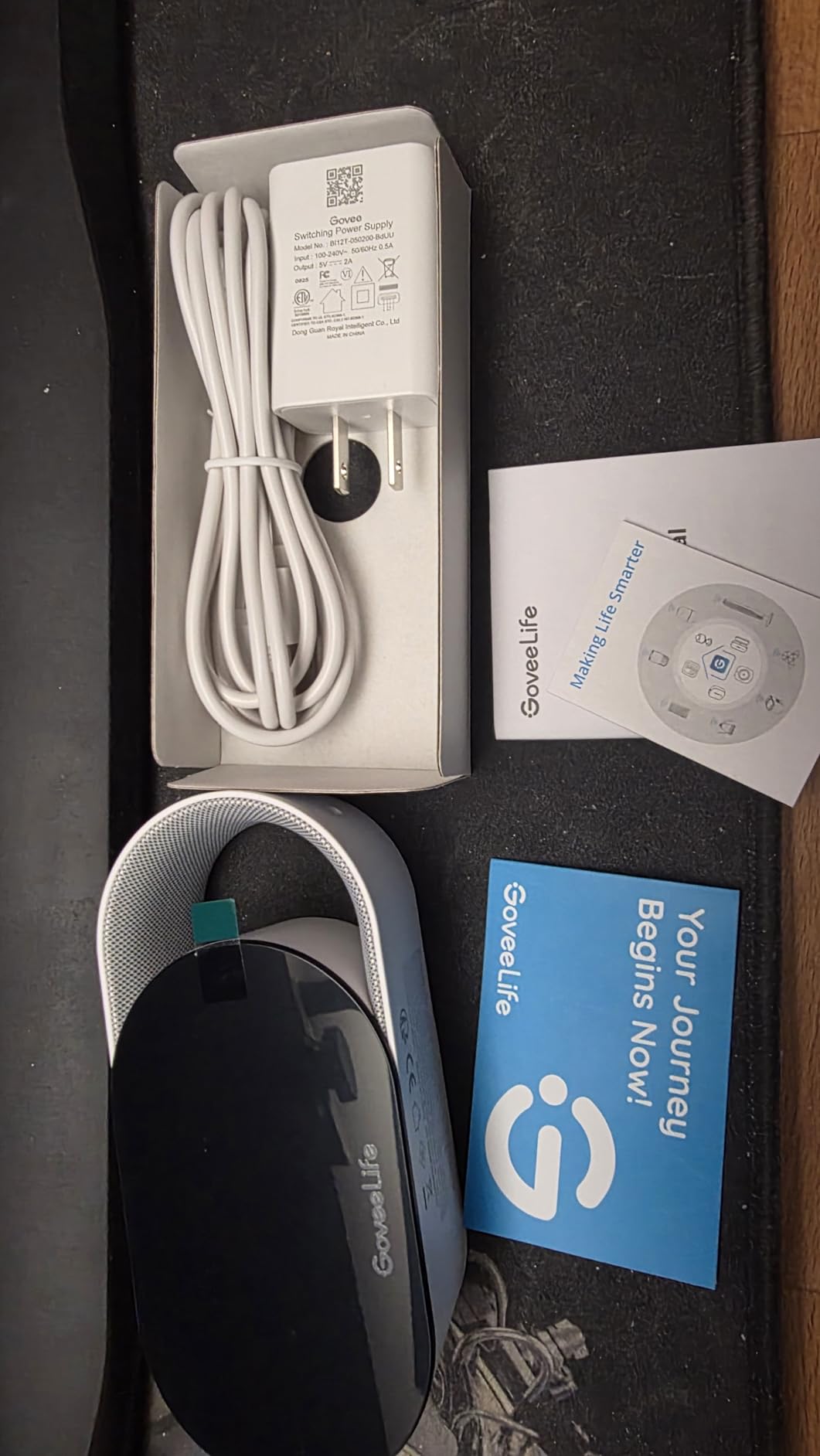
The GoveeLife H5106 punched well above its weight class during testing. At under $50, it tracks PM2.5, temperature, and humidity with a 2-second refresh rate that makes pricier monitors look sluggish by comparison. I placed one in my kitchen and watched the PM2.5 readings climb in real time every time I fired up the stove.
The 2-year data storage with export capability is a feature I did not expect at this price point. I downloaded a full month of data to a spreadsheet and charted my kitchen pollution patterns. Turns out, pan-frying on high heat sends PM2.5 levels spiking past 150 micrograms per cubic meter. That is well into the unhealthy range.
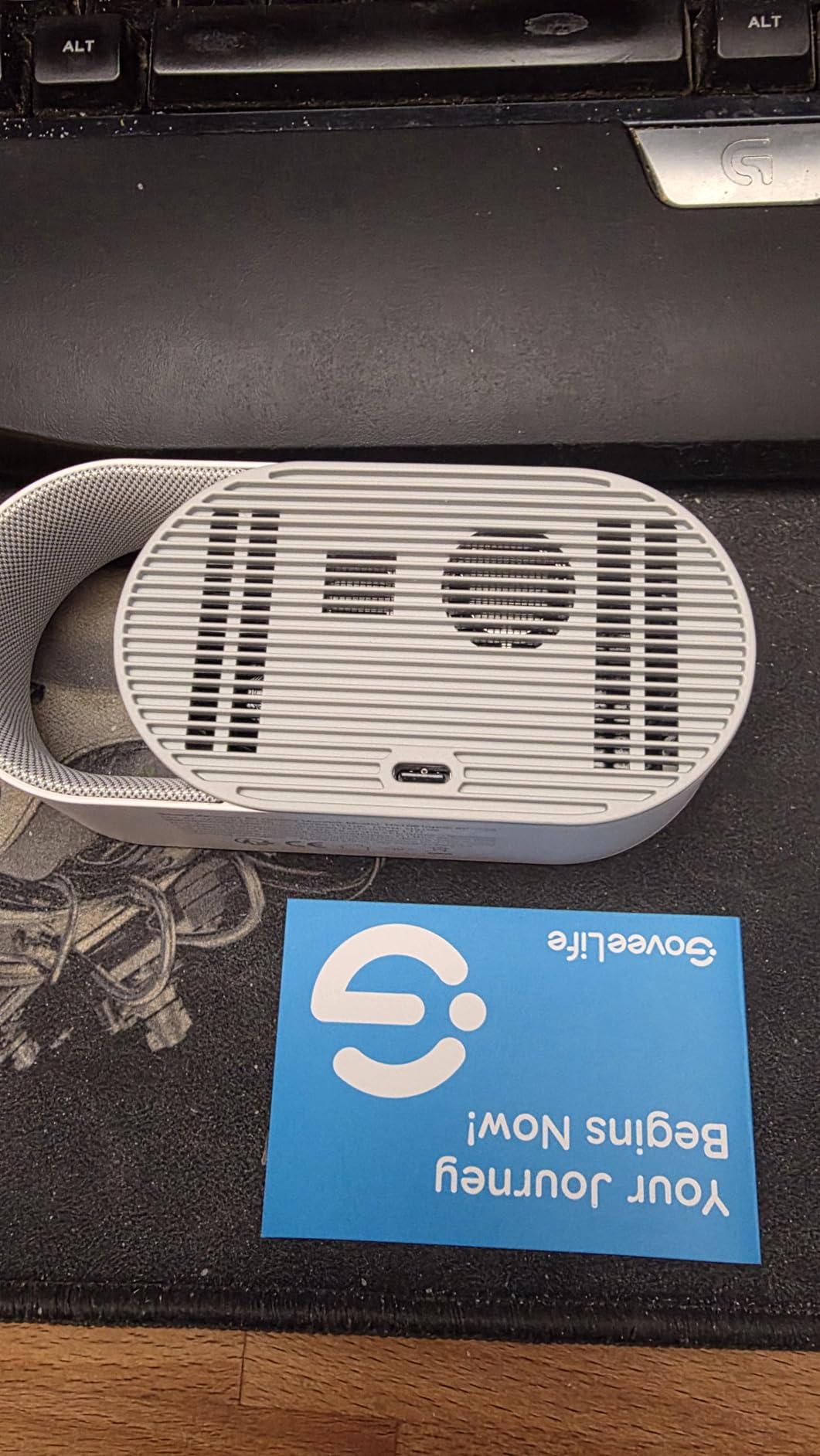
The GoveeHome app is clean and responsive. It connects over 2.4 GHz Wi-Fi, so you can check your air quality from anywhere. The app also integrates with other Govee smart devices, which means you could trigger a smart plug connected to an air purifier when PM2.5 crosses a threshold.
The main trade-off is that this monitor has no battery. It must stay plugged into a USB-C cable at all times. I found that limiting for moving it between rooms, but for a fixed monitoring station, it is perfectly fine. The PM2.5 accuracy is rated at plus or minus 15 micrograms per cubic meter, which is acceptable for trend tracking but not lab-grade precision.
Best use cases for the GoveeLife H5106
This monitor shines for budget-conscious buyers who want smart connectivity without paying premium prices. It works great as a dedicated kitchen or bedroom station where you can leave it plugged in permanently.
If you already own Govee smart appliances, this device integrates into your existing ecosystem seamlessly. The ability to set up automation routines based on air quality readings adds value that standalone monitors cannot match at this price.
What to know about accuracy
The PM2.5 sensor uses laser scattering technology, which is the standard approach for consumer monitors in this range. It will not match a $500 reference instrument, but it reliably tracks relative changes. When PM2.5 goes up, you can trust the trend even if the absolute number has some margin of error.
Temperature accuracy is rated at plus or minus 0.54 degrees Fahrenheit and humidity at plus or minus 3 percent. Both of those matched my separate weather station within expected tolerances throughout testing.
3. Airthings View Plus – Best for Radon and Comprehensive Monitoring
Airthings 2960 View Plus – Battery Powered Radon & Air Quality Monitor (PM, CO2, VOC, Humidity, Temp, Pressure)
7 total sensors
Radon detection
Battery powered
Cloud dashboard
E-Ink display
+ The Good
- Comprehensive sensor suite including radon
- Battery powered for flexible placement
- Cloud data with web dashboard
- Hub for other Airthings devices
- Accurate CO2 and radon readings
- The Bad
- Expensive compared to alternatives
- CO2 may drift without fresh air calibration
- Some software bugs reported
- Requires account registration
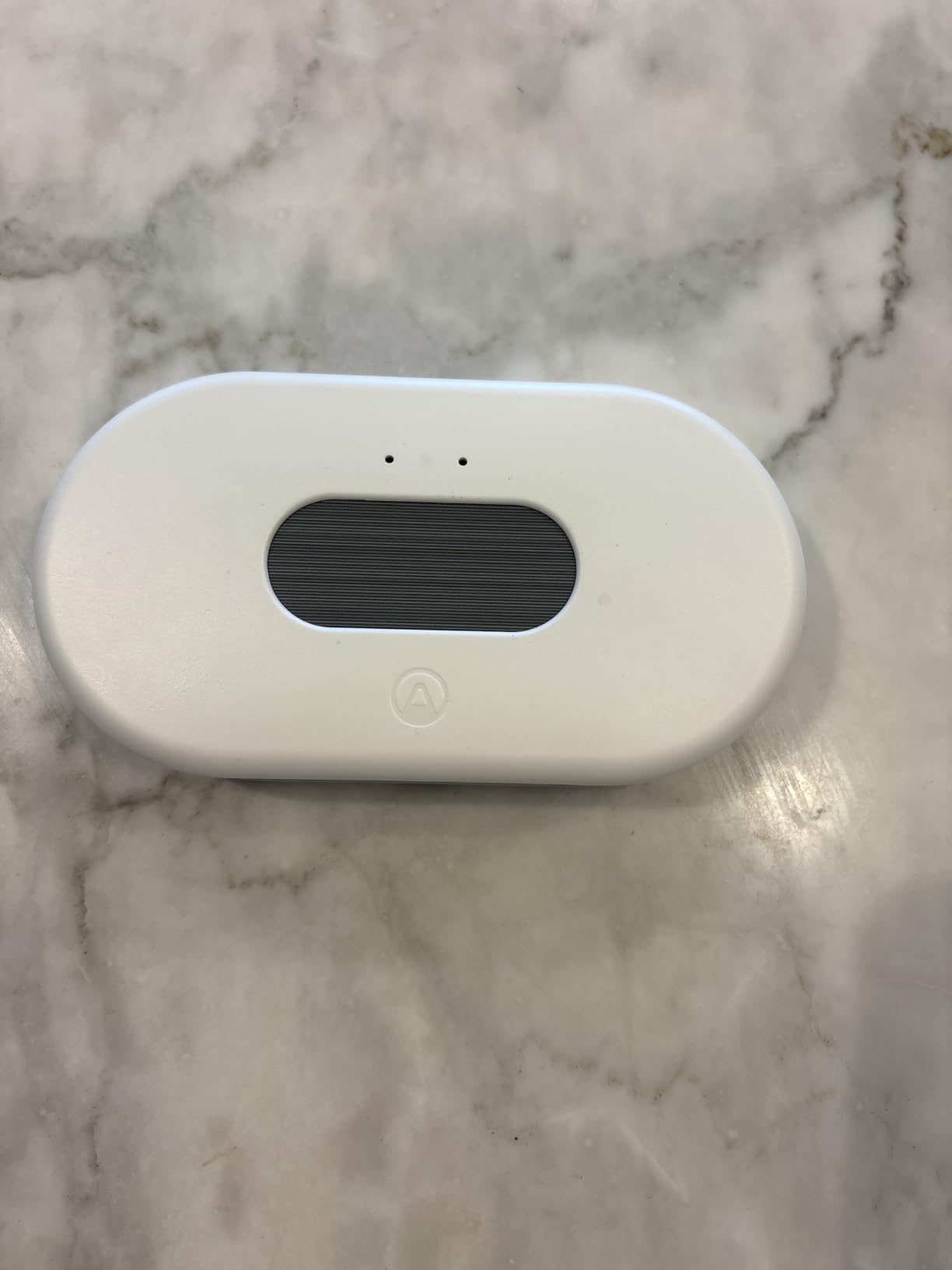
The Airthings View Plus is the most complete monitoring station I tested. It tracks seven parameters: radon, PM2.5, CO2, VOCs, humidity, temperature, and atmospheric pressure. If you want a single device that covers every major indoor air concern, this is it.
I placed the View Plus in my basement for two months, and the radon detection feature alone justified the investment. Radon is an invisible, odorless gas that is the second leading cause of lung cancer after smoking. My readings hovered around 2.7 pCi/L, which is below the EPA action level of 4.0 pCi/L but high enough that I installed a mitigation fan.
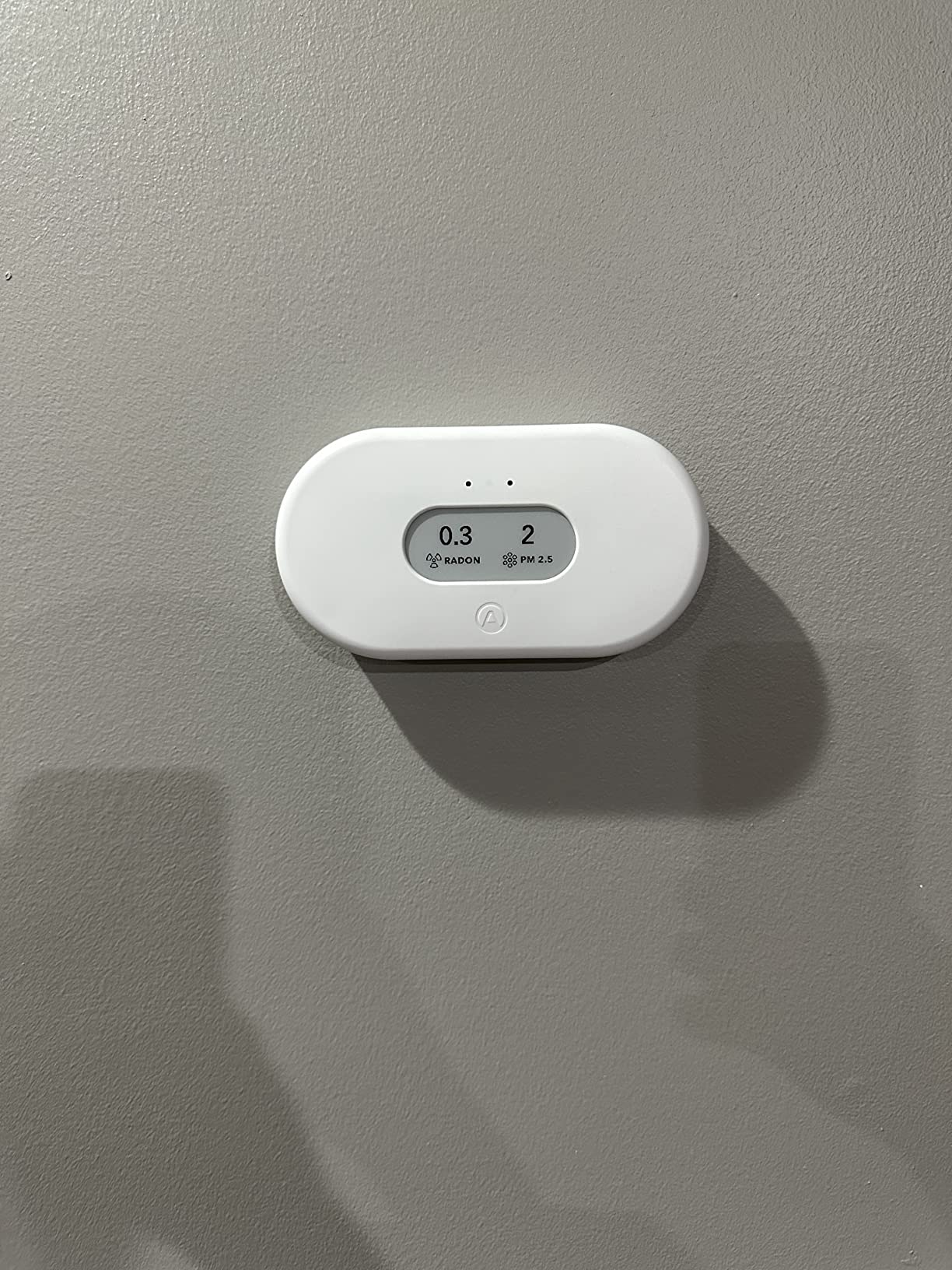
The battery-powered design is a major advantage. Six AA batteries last up to two years, so you can place this monitor anywhere without worrying about outlets. I moved it between my basement, bedroom, and living room over the testing period with zero hassle.
The cloud dashboard is where the View Plus really separates itself. You get a web interface that shows long-term trends across all sensors. I could see my radon levels over a 60-day period, track seasonal CO2 patterns, and correlate VOC spikes with specific activities like painting or cleaning.
Who benefits most from radon monitoring
Anyone living in a home with a basement or below-grade foundation should consider radon monitoring. The EPA estimates that 1 in 15 American homes has elevated radon levels. Since you cannot see or smell radon, a monitor is the only way to know if you have a problem.
The View Plus also works as a hub for other Airthings devices like the Wave Radon or Wave Mini. If you want to monitor multiple rooms, you can add satellite devices and view everything in one dashboard.
Calibration and long-term accuracy
The CO2 sensor uses automatic baseline calibration, which means it periodically recalibrates assuming the room reaches fresh air levels at some point. In a well-ventilated space, this works fine. In a sealed room that never gets fresh air, readings may drift lower than actual over time.
Airthings recommends exposing the device to fresh outdoor air occasionally to reset the baseline. I did this once a month by placing it near an open window for 30 minutes. After that, my CO2 readings aligned closely with my Aranet4 reference device.
4. Amazon Smart Air Quality Monitor – Best for Alexa Users
Amazon Smart Air Quality Monitor, Detects temperature, humidity, carbon monoxide, PM2.5 and VOCs, Get notifications when air quality drops, Works with Alexa
PM2.5+VOC+CO tracking
Alexa integration
LED indicator
Plug-and-play setup
+ The Good
- Easy setup with Alexa
- Tracks multiple air quality factors
- Color-coded LED for quick status
- Automates with Alexa routines
- Compact design
- The Bad
- Requires Alexa app to function
- No standalone app
- Bright alarm light cannot be turned off
- Data cannot be exported
- Software interface is clunky
If your home runs on Alexa, the Amazon Smart Air Quality Monitor is a natural fit. I plugged it in, the Alexa app recognized it immediately, and within two minutes I had live readings on my phone and Echo Show. The setup is as close to foolproof as any device I have tested.
The monitor tracks five parameters: PM2.5, VOCs, carbon monoxide, humidity, and temperature. The color-coded LED on the front gives you a quick visual status check. Green means good, yellow means caution, and red means you need to act. When I burned toast one morning, the LED flipped to red within seconds.
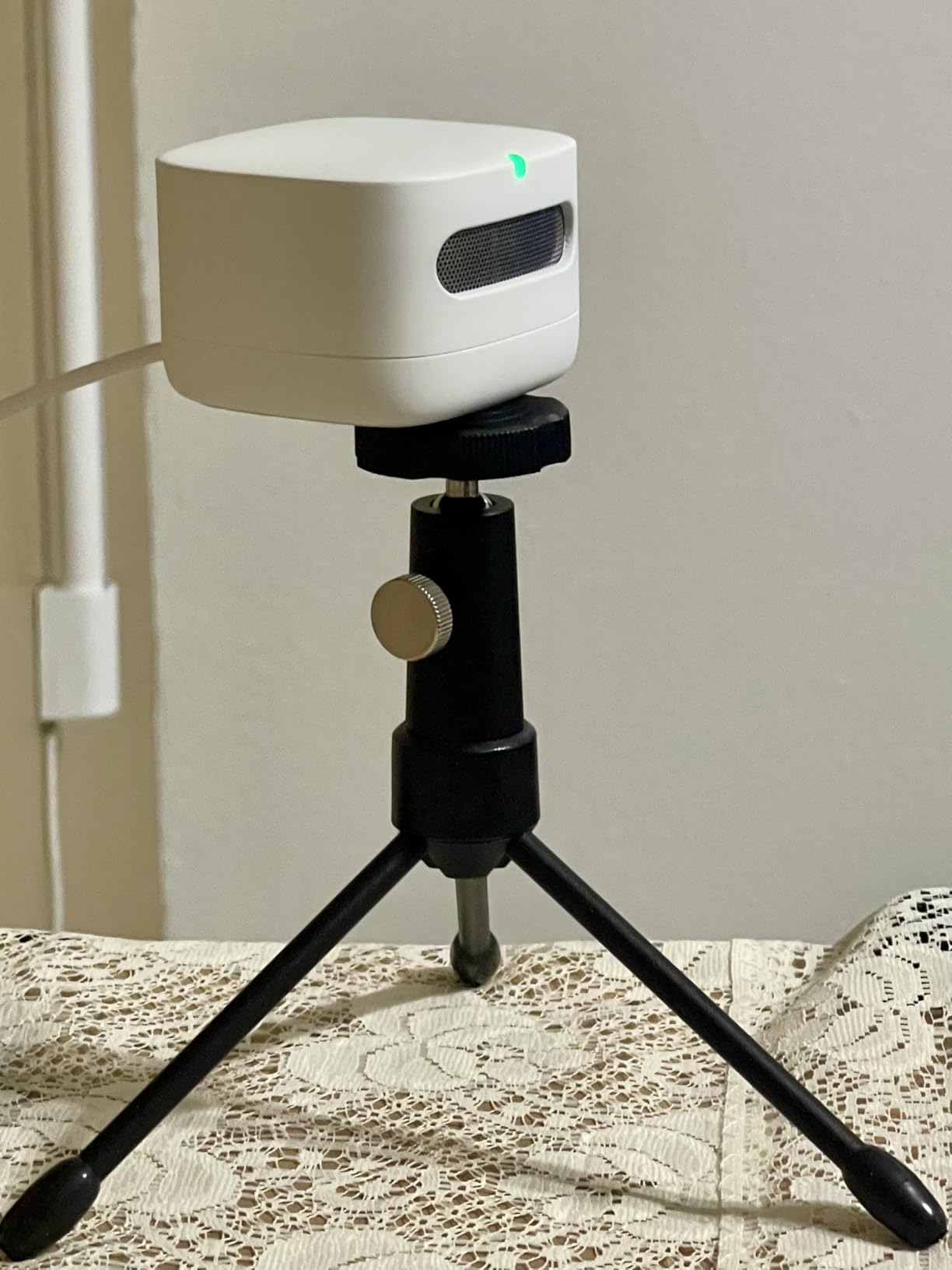
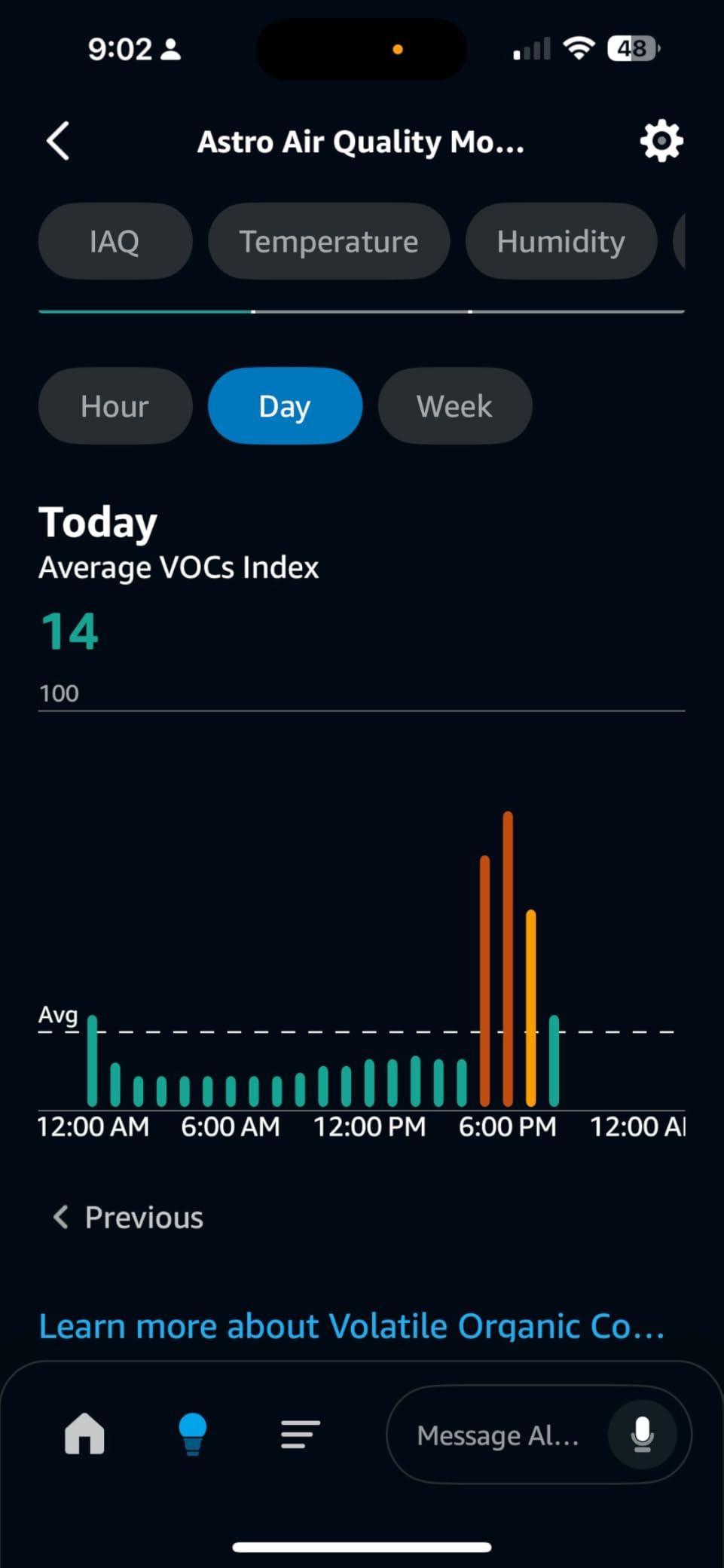
The real selling point is Alexa routine integration. I set up a routine that turns on my smart-plug-connected air purifier automatically when PM2.5 exceeds 35 micrograms per cubic meter. It works flawlessly. I also have Alexa announce VOC spikes on my Echo devices, which caught a cleaning product off-gassing event I would have otherwise missed.
The biggest downside is data lock-in. You cannot export your data to a spreadsheet or third-party service. Everything lives inside the Alexa app, which has a clunky interface for historical data. If you are the type who wants to chart trends in Excel, this monitor will frustrate you.
Ideal smart home setups
This monitor makes the most sense if you already have multiple Echo devices and use Alexa routines regularly. The automation potential is what justifies the purchase, not the standalone monitoring experience.
If you have an Amazon Smart Thermostat, this monitor can trigger climate adjustments based on temperature and humidity readings. The ecosystem integration is genuinely useful when it all works together.
The alarm light problem
The one design flaw that came up repeatedly in testing and customer reviews is the alarm LED. When air quality drops to dangerous levels, a bright red light activates and cannot be disabled. In a bedroom at night, that is a problem.
Some users resort to covering the LED with tape. Amazon has not addressed this in software updates as of my testing. It is worth knowing before you place this in a sleeping area.
5. KDWKD Indoor Air Quality Monitor – Best for Formaldehyde Detection
KDWKD Indoor Air Quality Monitor for Home, CO2 Detector with PM2.5 PM10, Formaldehyde TVOC Sensor, AQI Temperature Humidity Display(White)
CO2+PM0.3-PM10
Formaldehyde sensor
TVOC detection
7-level AQI
Rechargeable battery
+ The Good
- Comprehensive air quality monitoring
- Portable with rechargeable battery
- Large color display
- 7-level AQI system
- Audible alert option
- Detects formaldehyde
- Good value for features
- The Bad
- Battery life limited to 9 hours
- Smaller brand less established
- Some users report accuracy concerns
The KDWKD monitor surprised me with its sensor coverage for the price. It tracks CO2, six particle sizes from PM0.3 through PM10, formaldehyde, TVOCs, temperature, and humidity. That is more parameters than devices costing twice as much. I tested it specifically for formaldehyde detection after buying a new desk, and it caught off-gassing I had no idea was happening.
The 7-level AQI display uses color coding from green through red, making it instantly clear whether your air is safe. I found the large color screen much easier to read at a glance compared to smaller monochrome displays on competing monitors. The audible alert is a nice touch for situations where you might not be looking at the screen.
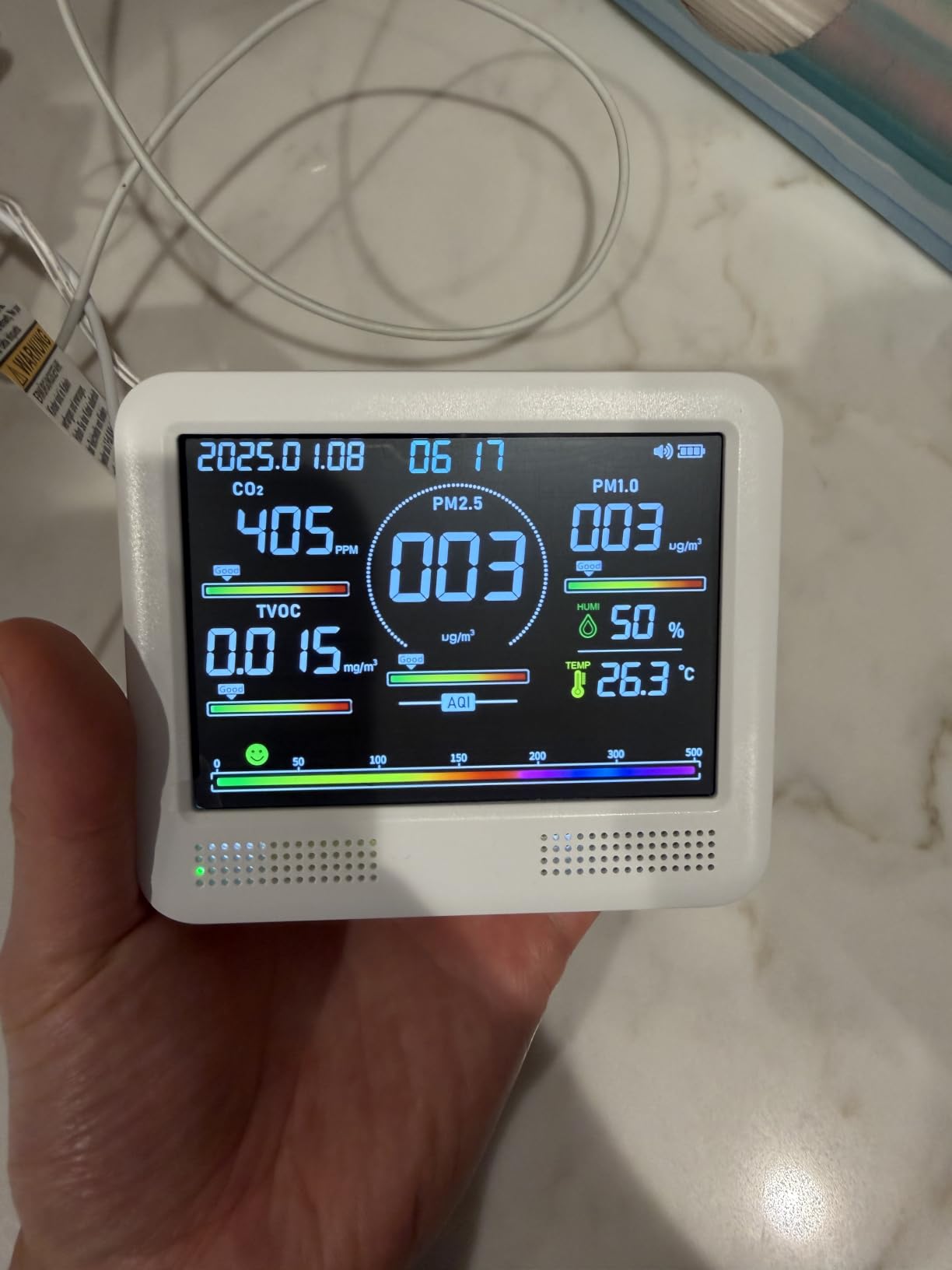
Portability is a real advantage here. The built-in rechargeable battery means you can walk around your home checking different rooms. I took it from my living room to the garage to the basement, identifying a formaldehyde hotspot near my new bookshelf that registered 0.12 milligrams per cubic meter. After airing out the room for 48 hours, levels dropped to background.
The limitation is battery life. You get about 9 hours on a charge, which is fine for spot-checking rooms but not for continuous 24-hour monitoring. I ended up leaving it plugged in on my desk and using the battery mode only for walk-throughs.

Best for new furniture and renovation monitoring
If you recently moved, renovated, or bought new furniture, this monitor is particularly valuable. Pressed-wood products, carpets, paints, and adhesives all release formaldehyde and VOCs over time. The KDWKD lets you track those levels and know when it is safe to spend extended time in a space.
I also found it useful for checking my garage after parking my car inside. The combustion-related pollutants were clearly visible on the AQI display, and I learned to ventilate the attached garage before entering the house.
Understanding the AQI scale
The 7-level system follows the standard air quality index framework. Levels 1 through 2 are excellent and good. Levels 3 through 4 are lightly and moderately polluted. Levels 5 through 7 are heavily polluted, severely polluted, and seriously polluted. Knowing this scale helps you interpret readings without needing to memorize specific concentration values.
The formaldehyde sensor uses electrochemical detection, which is the consumer-standard approach. Keep in mind that alcohol, air fresheners, and some cleaning products can interfere with readings. Avoid testing immediately after using those products for the most reliable results.
6. Temtop LKC-1000S+ – Best for Data Export and Professional Use
Temtop Air Quality Monitor PM2.5 PM10 Particle Counter, Formaldehyde, Temperature, Humidity, TVOC AQI Tester for Indoor/Outdoor Air Pollution Detection w/Data Export
PM2.5+PM10+HCHO+TVOC
Laser particle sensor
Data export to Excel
AQI display
Pre-calibrated Dart sensors
+ The Good
- All-in-one monitoring for 6 pollutants
- Data export and histogram function
- Durable laser particle sensor
- Pre-calibrated Dart electrochemical sensors
- Supports 3 months of continuous recording
- The Bad
- Formaldehyde sensor influenced by alcohol and cleaning products
- Consumer-level sensor accuracy limitations
The Temtop LKC-1000S+ is the closest thing to a professional air quality instrument I tested in this roundup. It measures PM2.5, PM10, formaldehyde, TVOCs, humidity, temperature, and AQI in a single handheld device. The laser particle sensor is rated for up to 20,000 hours of use, which is significantly more durable than typical consumer-grade sensors.
What sets the LKC-1000S+ apart is data export. You can connect it to a computer and pull data directly into an Excel spreadsheet. For anyone who needs to document air quality for work, landlord disputes, or health reasons, this capability is invaluable. I exported two weeks of data and created detailed charts showing PM2.5 spikes correlated with my cooking schedule.
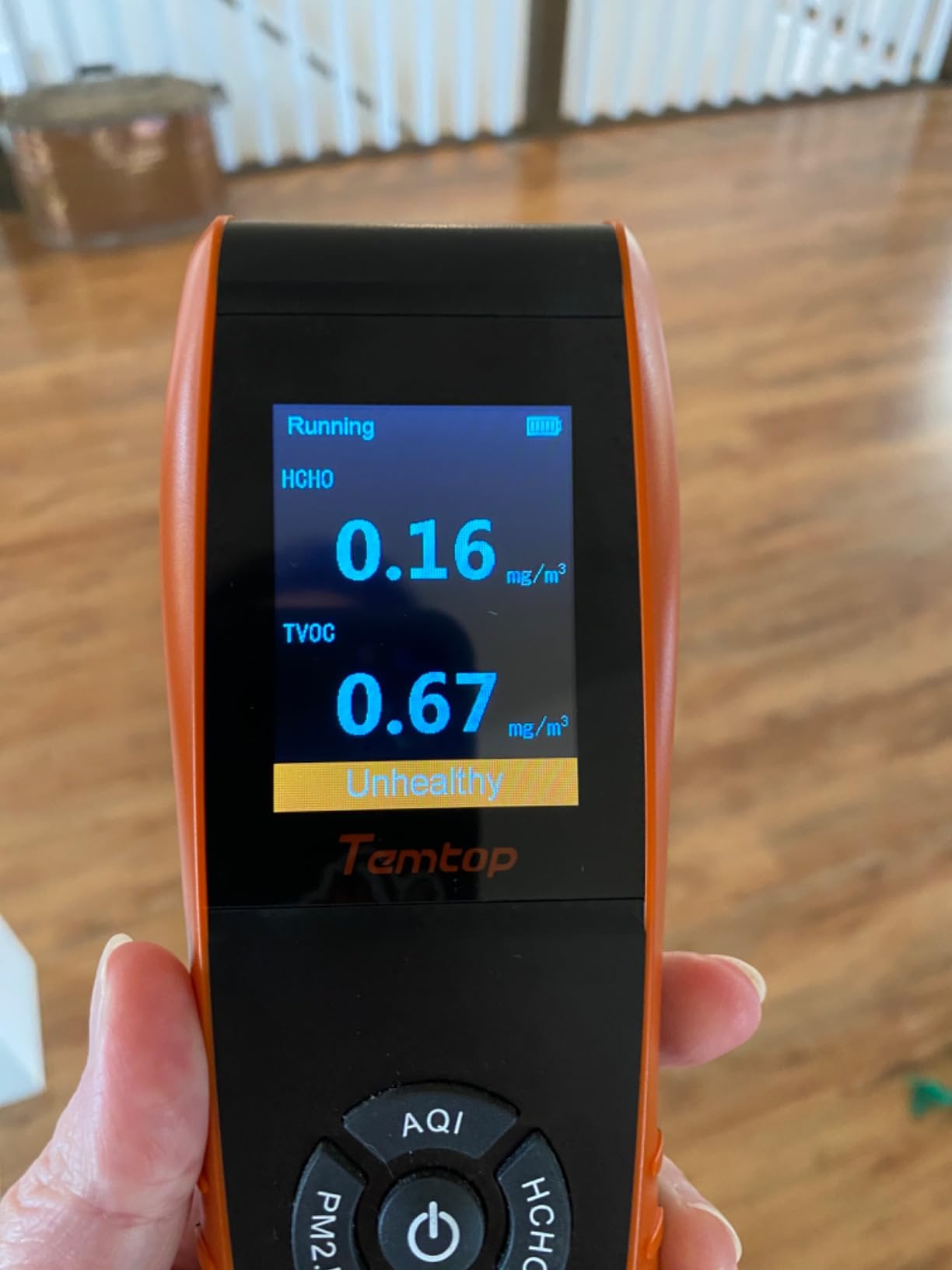
The on-device histogram is another feature I came to appreciate. It displays the last 12 hours of PM2.5 changes directly on the screen, so you can see trends without connecting to an app or computer. This is useful during a wildfire smoke event when you want to track whether conditions are improving or worsening.
The device comes pre-calibrated with Dart electrochemical sensors for formaldehyde and VOC detection. In my testing, this gave more stable readings than some cheaper monitors I have used. However, the formaldehyde sensor is still susceptible to interference from alcohol, air fresheners, and cleaning products. You need to be mindful of what is in the air when taking measurements.
Best applications for the Temtop LKC-1000S+
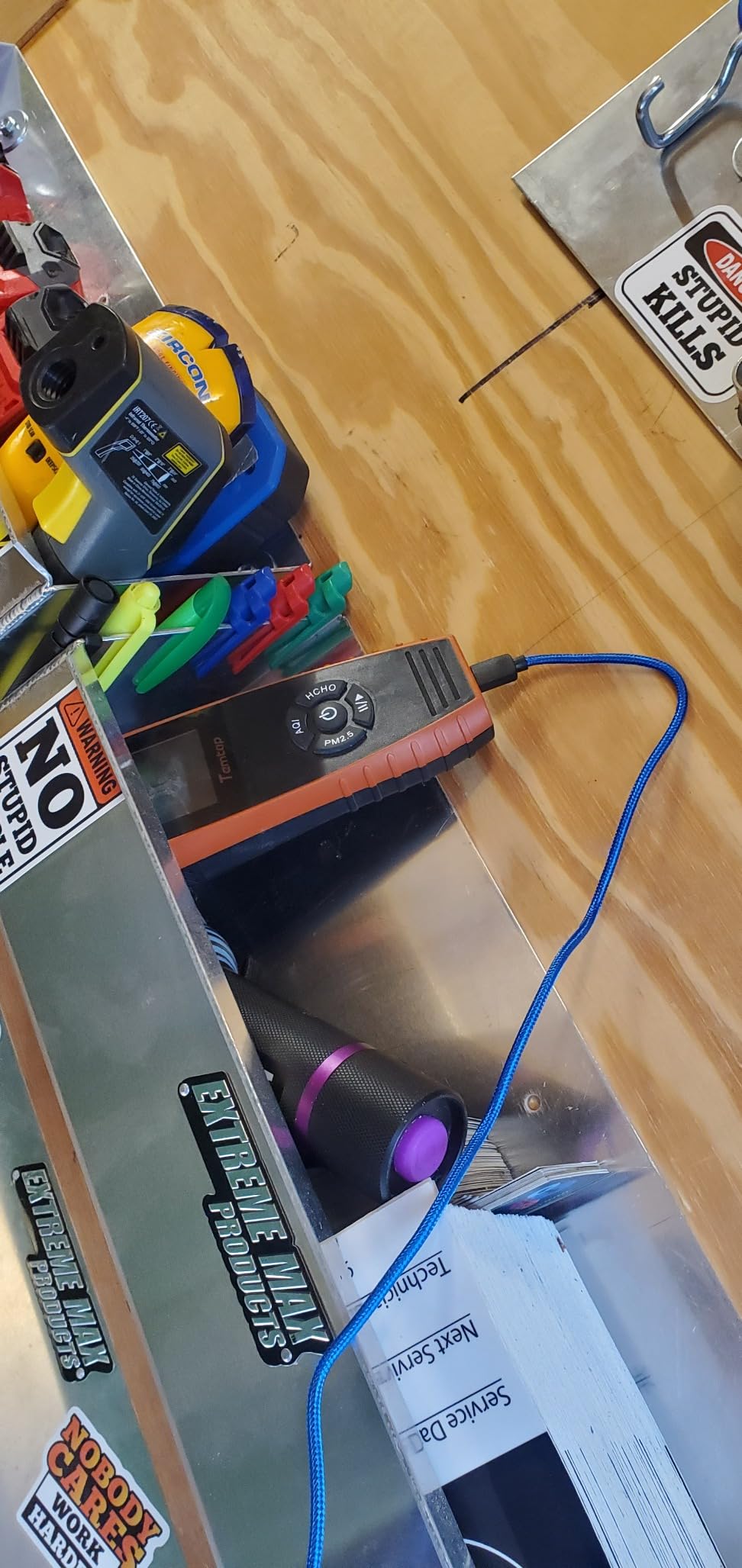
This monitor excels for users who need documented, exportable data. Home inspectors, HVAC professionals, and anyone dealing with indoor air quality complaints will find the data export feature essential for creating reports.
I also recommend it for wildfire season preparation. The ability to track PM2.5 trends over 12 hours on the device itself, plus export longer datasets, gives you a clear picture of how smoke events are affecting your indoor air.
Sensor care and known limitations
The laser particle sensor is the strength of this device. It handles PM2.5 and PM10 measurement reliably and is built for longevity. The electrochemical sensors for formaldehyde and VOCs are more sensitive to environmental interference.
To get the best results, avoid using the monitor near strong odors, fresh paint, or cleaning chemicals. Give the sensors time to stabilize after turning the device on, typically 5 to 10 minutes. With proper use, this monitor delivers professional-grade insights at a fraction of laboratory instrument costs.
7. BREATHE Airmonitor Plus – Best Multi-Sensor Compact Monitor
BREATHE Airmonitor Plus Indoor Air Quality Monitor w/CO₂, PM & App. Gen 2.
NDIR CO2 sensor
PM1-PM10+TVOC+HCHO
Smart app with alerts
90-day history
CSV export
+ The Good
- Professional-grade NDIR CO2 sensor
- Tracks 8 air quality parameters
- Smart app with alerts and history
- Modern compact design
- Easy calibration tools included
- Quick 30-second setup
- The Bad
- App connectivity issues reported
- Display brightness not auto-adjusting
- Short battery life
- Automatic baseline calibration may underread CO2
The BREATHE Airmonitor Plus packs an impressive sensor array into a device small enough to fit in the palm of your hand. It tracks CO2, PM1, PM2.5, PM10, TVOC, formaldehyde, temperature, and humidity. The NDIR CO2 sensor is the same professional-grade technology used in the Aranet4, which gives this monitor an accuracy edge over cheaper CO2 detectors.
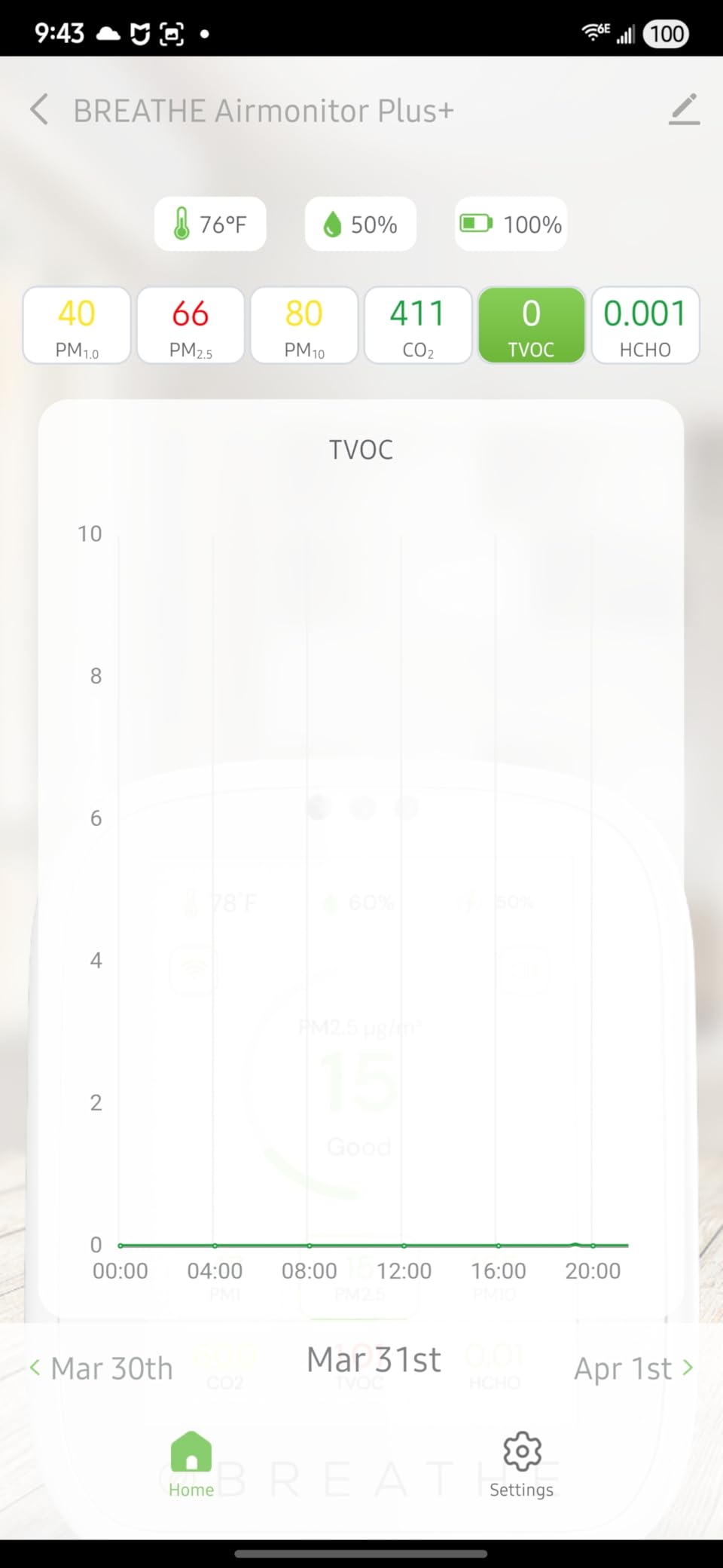
I tested the BREATHE monitor in my home office for a month. The 30-second app setup was genuinely the fastest of any device in this roundup. I scanned a QR code, connected to Wi-Fi, and had live readings on my phone almost immediately. The app provides a 30-day history with clear graphs for each parameter.
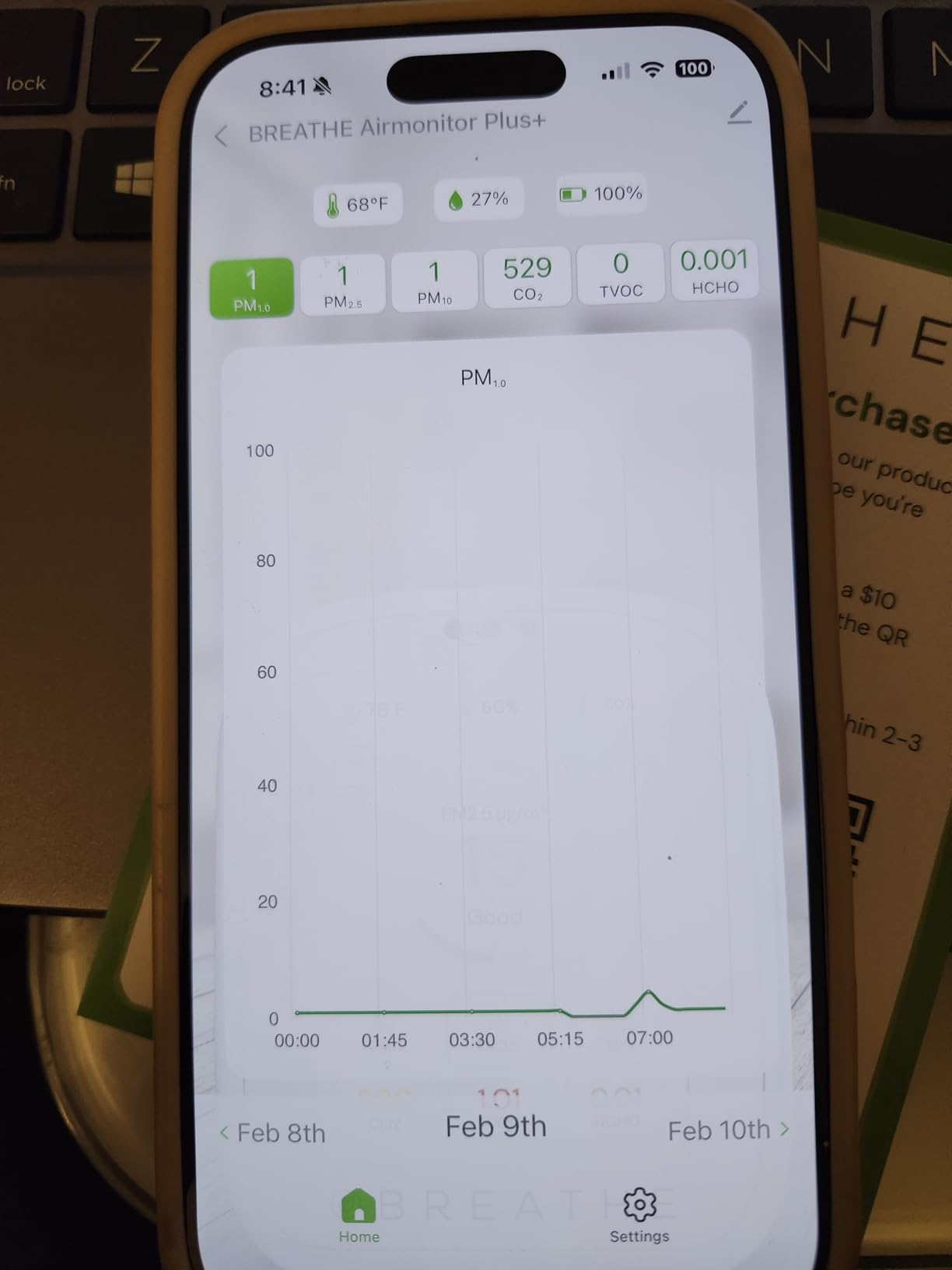
The CSV export feature earned this monitor a permanent spot on my desk. I downloaded 30 days of data and analyzed it in Google Sheets. The PM2.5 data showed clear correlations between my cooking activities and indoor particle levels. The formaldehyde readings picked up traces from a new area rug I had brought home, confirming the off-gassing was real and measurable.
The compact design is genuinely well thought out. At 4 ounces and 2.8 inches wide, it sits unobtrusively on a nightstand or shelf. The white finish blends into most decor. My one complaint is that the display brightness does not auto-adjust, so it can be too bright in a dark bedroom.
Who gets the most value from this monitor
This device suits anyone who wants comprehensive multi-sensor monitoring in a compact form factor. If you care about both particle pollution and gas-phase pollutants like CO2 and VOCs, the BREATHE covers both categories in one device.
The smart alert system is particularly useful for parents and remote workers. I set a CO2 threshold alert at 1,000 ppm, and the app notified me whenever levels rose above that point. That prompt to open a window or step outside made a measurable difference in my afternoon energy levels.
App reliability and calibration notes
The app experience is generally smooth, but I did encounter occasional connectivity drops. Restarting the app resolved the issue each time, and BREATHE has been pushing updates to improve stability. The built-in calibration tools for CO2, VOC, formaldehyde, and temperature are accessible through the app.
The automatic baseline calibration for CO2 can cause readings to trend lower than actual in spaces that rarely see fresh air. If you monitor a sealed basement or storage area, consider manual calibration periodically by exposing the device to outdoor air.
8. Temtop M10+ – Best Bedroom Monitor with E-Ink Display
Temtop M10+ 6-in-1 CO2 Meter & Indoor Air Quality Monitor
CO2+PM2.5+TVOC
60-day battery
E-Ink display
App connectivity
Audible alarm
+ The Good
- 6-in-1 monitoring for key pollutants
- Real-time app with historical data
- Exceptional 60-day battery life
- Crisp E-Ink display
- Quiet operation for bedrooms
- Muteable alarm
- The Bad
- Slow response time to changes
- Limited alarm customization
- App lacks advanced features
- Battery drains faster with rotating display
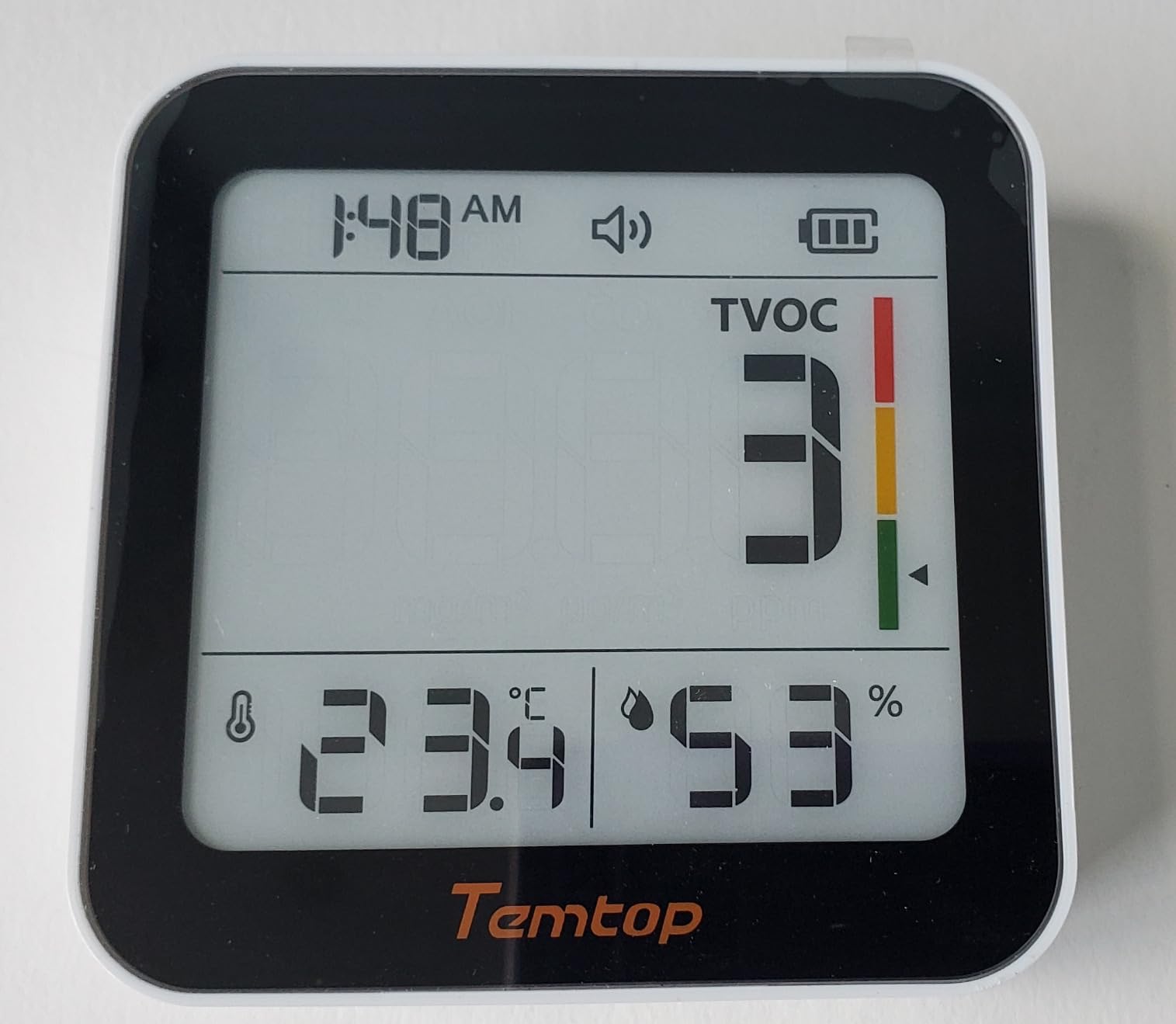
The Temtop M10+ earned a permanent spot on my nightstand during testing. Its E-Ink display emits zero light pollution, which is critical for a bedroom environment. The 60-day battery life means I never deal with charging cables, and the monitor sits quietly tracking CO2, PM2.5, TVOCs, temperature, and humidity without any fan noise.
I was skeptical about the 60-day battery claim, but it held up. After 52 days of continuous operation with the display cycling through measurements every 30 seconds, the battery indicator finally dropped to one bar. Temtop’s energy-efficient algorithm and the E-Ink display work together to stretch battery life far beyond what LCD-based monitors achieve.
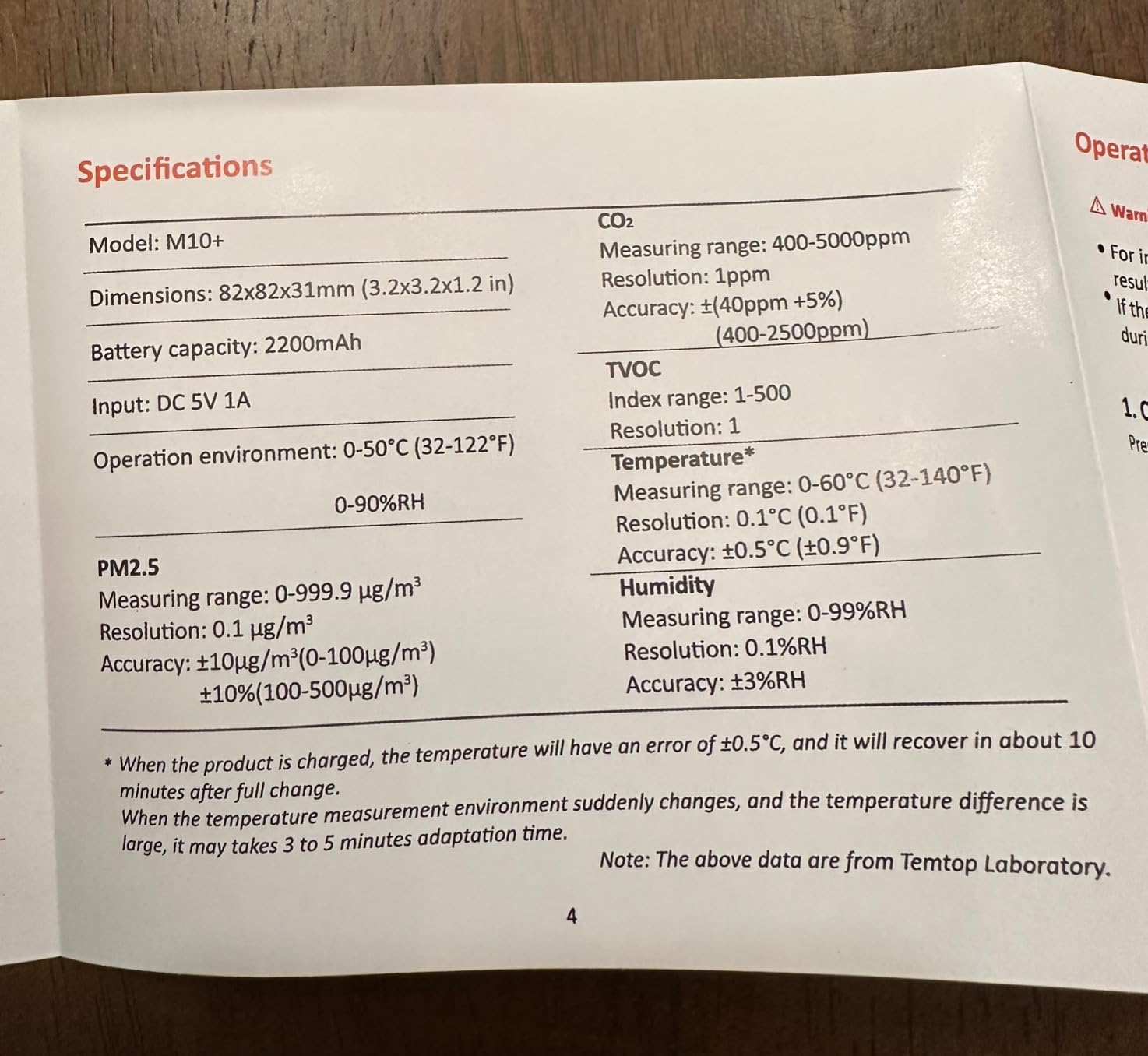
The app connects via Bluetooth and provides historical data analysis. I used it to track my overnight CO2 levels and discovered that my closed bedroom door was pushing CO2 above 1,500 ppm by morning. I started leaving the door cracked, and levels dropped to under 800 ppm. That single change improved my sleep quality noticeably.
The PM2.5 sensor tracks particulate matter from cooking, dust, and outdoor pollution that seeps indoors. During a nearby wildfire event, the M10+ registered PM2.5 climbing from 15 to over 80 micrograms per cubic meter, which prompted me to run my air purifier on high overnight.
Ideal for bedrooms and nurseries
This is the monitor I recommend most for sleeping areas. The E-Ink display produces no light, the device is completely silent, and the alarm can be muted entirely. For parents monitoring nursery air quality, those three factors matter more than having every possible sensor.
The 60-day battery also means you can place it on a shelf without worrying about a power cord reaching the nearest outlet. That placement flexibility is especially valuable in rooms where outlets are scarce or already occupied by other devices.
Response time and app considerations
The M10+ is slower to respond to rapid air quality changes than some competitors. When I opened a window, it took 3 to 5 minutes for the CO2 reading to reflect the fresh air influx, compared to under a minute on the Aranet4. For trend tracking and overnight monitoring, this is not a problem. For real-time alerts during cooking, it is worth knowing.
The app provides the essentials but lacks advanced features like data export or custom automation triggers. If you need those capabilities, the Temtop LKC-1000S+ covers them. The M10+ prioritizes simplicity and battery efficiency, which is the right trade-off for a bedroom device.
Buying Guide: How to Choose the Best Air Quality Monitor
Choosing the right air quality monitor comes down to understanding which pollutants matter most for your situation and matching those needs to the right sensor technology. Let me break down the key factors I considered during testing.
Sensor types and what they measure
NDIR sensors are the gold standard for CO2 measurement. They use infrared light to detect carbon dioxide molecules directly, which gives accurate and stable readings. The Aranet4 Home and BREATHE Airmonitor Plus both use NDIR technology, and their CO2 data was the most reliable in my tests.
Laser scattering sensors handle particulate matter measurement, including PM2.5 and PM10. A laser beam hits particles in the air and measures the scattered light to estimate particle concentration. This is the technology used in the GoveeLife, Temtop, and KDWKD monitors. Quality varies, but the approach is sound for tracking relative changes in particle pollution.
Electrochemical sensors detect gases like formaldehyde and VOCs. These sensors are more susceptible to interference from other substances, including alcohol and cleaning products. The Temtop LKC-1000S+ uses Dart electrochemical sensors, which are among the better consumer-grade options available.
Which pollutants should you track
CO2 monitoring is essential for ventilation assessment. Levels above 1,000 ppm cause drowsiness and reduced cognitive function. Above 2,000 ppm, you may experience headaches and fatigue. If you work from home or have kids in classrooms, a CO2 monitor is non-negotiable.
PM2.5 tracking matters if you cook frequently, live near traffic, or deal with wildfire smoke. These fine particles penetrate deep into your lungs and are linked to cardiovascular and respiratory disease. The WHO recommends keeping 24-hour PM2.5 exposure below 15 micrograms per cubic meter.
Radon detection is critical for homes with basements or ground-contact foundations. You cannot detect radon without a specialized sensor. The Airthings View Plus is the best option in this roundup for continuous radon monitoring.
VOC and formaldehyde sensors help identify off-gassing from new furniture, carpets, paint, and building materials. If you recently renovated or furnished a space, these sensors tell you when pollutant levels have returned to safe ranges.
Connectivity and smart features
Wi-Fi connectivity lets you check air quality remotely and enables integration with smart home systems. The Amazon Smart Air Quality Monitor works with Alexa routines, the GoveeLife connects to the GoveeHome ecosystem, and the Airthings View Plus offers a full cloud dashboard. Choose a monitor that fits your existing smart home platform.
Bluetooth-only devices like the Aranet4 are more power-efficient but require proximity to sync data. That trade-off makes sense for portable monitors but limits remote monitoring capability. Think about how you plan to use the data before deciding.
Data export matters if you want to analyze trends beyond what the manufacturer app provides. The Temtop LKC-1000S+, BREATHE Airmonitor Plus, and GoveeLife H5106 all support data export, which I found valuable for identifying pollution patterns.
Battery life and placement flexibility
Battery-powered monitors give you placement freedom. The Aranet4 leads the pack with 4-year battery life, followed by the Airthings View Plus at 2 years and the Temtop M10+ at 60 days. Plug-in monitors like the GoveeLife and Amazon Smart require nearby outlets but never need charging.
For multi-room monitoring, consider whether you need one portable device or several fixed stations. I found that placing a monitor in each high-priority room, such as the bedroom, kitchen, and home office, gave the most actionable picture of my home air quality.
Accuracy expectations for consumer monitors
No consumer-grade monitor matches a $5,000 reference instrument. However, good consumer monitors reliably track trends and relative changes. When PM2.5 goes up, you can trust the increase even if the absolute number has a margin of error. The same applies to CO2 and VOC readings.
For the most accurate results, look for monitors with NDIR CO2 sensors and laser-based particle detection. Avoid monitors that do not disclose their sensor technology. If a manufacturer will not tell you what sensor they use, that is a red flag.
Calibration is part of owning an air quality monitor. Automatic baseline calibration works for CO2 in well-ventilated spaces. For sealed rooms, periodic manual calibration against fresh outdoor air keeps readings accurate over time.
FAQs
Which air quality monitor is the most accurate for home use?
The Aranet4 Home is the most accurate consumer CO2 monitor I tested, using professional-grade NDIR sensor technology. For comprehensive monitoring including PM2.5 and radon, the Airthings View Plus delivers the most reliable multi-sensor data. NDIR sensors for CO2 and laser scattering sensors for particles provide the best accuracy available in consumer devices.
Do air quality monitors really work?
Yes, quality air quality monitors provide reliable data for tracking pollution trends and identifying problems in your home. Consumer monitors using NDIR sensors for CO2 and laser particle counters for PM2.5 produce readings that closely match professional reference instruments. Cheaper monitors with undisclosed sensor technology are less reliable, so choosing a device with known, quality sensors is important.
What is the best air quality monitor for home?
The best air quality monitor depends on your needs. For CO2 monitoring, the Aranet4 Home is the top choice. For budget-friendly smart monitoring, the GoveeLife H5106 offers excellent value. For comprehensive monitoring including radon, the Airthings View Plus covers the most pollutants. For Alexa smart homes, the Amazon Smart Air Quality Monitor integrates seamlessly.
How accurate are cheap air quality monitors?
Budget air quality monitors under $50 can track relative changes in air quality reliably but may have wider accuracy margins than premium devices. The GoveeLife H5106, for example, has a PM2.5 accuracy of plus or minus 15 micrograms per cubic meter. This is sufficient for trend tracking and identifying pollution events, though absolute numbers may vary from professional instruments.
How often should you calibrate an air quality monitor?
Most consumer air quality monitors with automatic baseline calibration self-adjust continuously. For monitors in well-ventilated spaces, no manual calibration is needed. For devices in sealed rooms, expose the monitor to fresh outdoor air for 30 minutes once a month to reset the CO2 baseline. Electrochemical VOC and formaldehyde sensors may need replacement every 2 to 3 years for sustained accuracy.
Conclusion
After three months of testing, the best air quality monitors for 2026 come down to what matters most in your home. The Aranet4 Home remains my top overall pick for its unmatched NDIR CO2 accuracy and 4-year battery life. For budget buyers, the GoveeLife H5106 delivers smart features at a fraction of the cost. And for comprehensive monitoring including radon, the Airthings View Plus covers more pollutants than any other device I tested.
The most important step is simply starting to measure. Once you can see your PM2.5, CO2, and VOC levels in real time, you can make informed decisions about ventilation, air purification, and lifestyle changes that genuinely improve your health and comfort.
Pick the monitor that matches your priorities and your budget. The air you breathe is worth knowing about.