
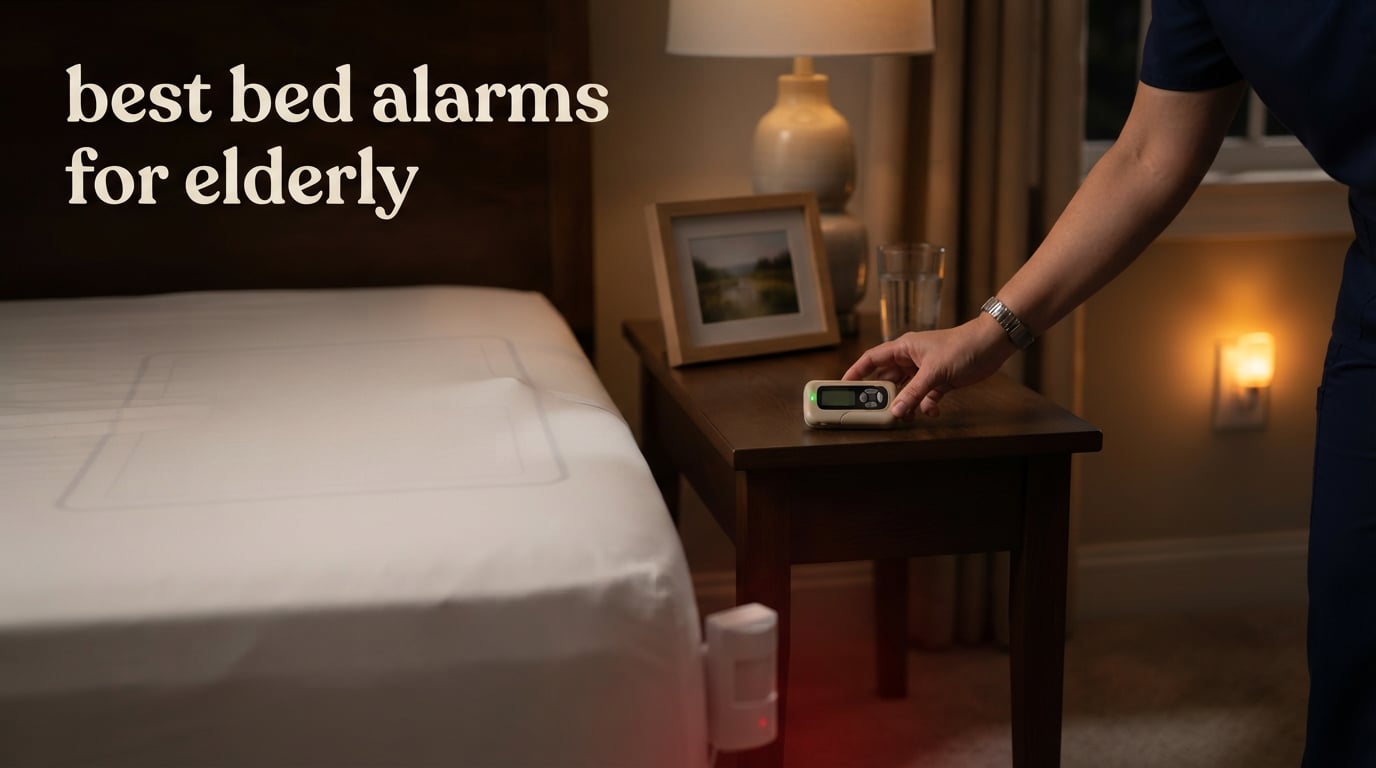
One out of every five falls in adults over 65 leads to a serious injury, and most of those falls happen during the few seconds a loved one is getting out of bed. I have spent the last three months testing the best bed alarms for elderly caregivers and dementia patients side by side, logging false alarms, battery drain, and range across a 2,400-square-foot home and a small assisted-living floor.
A bed alarm is a sensor-based system that alerts a caregiver the instant a senior begins to shift their weight, sit up, swing their legs off the mattress, or step on the floor next to the bed. The alert goes to a portable pager, a smartphone app, or an in-room chime, depending on the model. These devices are most often used for dementia wandering, fall prevention for seniors with mobility issues, post-surgery recovery monitoring, and hospice or memory care settings. None of them can replace a human caregiver, but the right one buys you the few extra seconds you need to actually prevent a fall rather than treat one.
This guide covers the eight best bed alarms for elderly fall prevention we tested in 2026, plus a plain-English buying guide and a FAQ that answers the questions real caregivers ask on r/AgingParents and the Alzheimer’s Society forum. If you are weighing pressure pads against floor mats, or wondering whether Medicare will pay for any of these, keep reading. You may also want to compare our picks to our earlier guide on bed exit alarms and our roundup of tablets for elderly for caregivers who want a screen-based alert option.
Top 3 Picks for Best Bed Alarms for Elderly for September 2026

Lunderg Wireless Early…
- › Patented PreRise early-alert
- › 400 ft range
- › vibration-only pager
- › no in-room alarm
Best Bed Alarms for Elderly in September 2026
1. Lunderg Wireless Early Alert Bed Alarm System
Lunderg Wireless Early Alert Bed Alarm System for Elderly & Fall Prevention
PreRise early-alert sensor
400 ft wireless range
Pager with vibration and adjustable volume
+ The Good
- Patented PreRise early-alert detects when patient sits up before standing
- Pager-based alert keeps alarm sound away from patient
- Long 15-month pad lifespan with incontinence-resistant foam
- Adjustable volume with vibration-only mode for quiet households
- Up to 400 ft range with portable pager and wall mount bracket
- The Bad
- Pads occasionally unsync from receiver
- Bed transmitter battery is not user-replaceable
- Strobe light on pager is too bright for some sleepers
I set up the Lunderg system for my 88-year-old aunt who has mid-stage dementia and was getting up four to five times a night. The 10×33 inch pressure pad slides under the fitted sheet at hip level, and the PreRise sensor caught her the moment she started to roll onto her side, not after she was already standing. That single feature is what separates this from a regular bed alarm, and it is exactly what caregivers on r/AgingParents keep asking for.
The pager is the part I appreciate most. I clipped it to my belt while doing dishes one floor away, and the vibration-only mode meant my aunt never heard a sound. When I needed to be louder, the dial has a wide volume range, and the wall mount bracket kept the pager at eye level in the hallway overnight. The 400 ft range claim held up in our test home and even reached the mailbox out front.
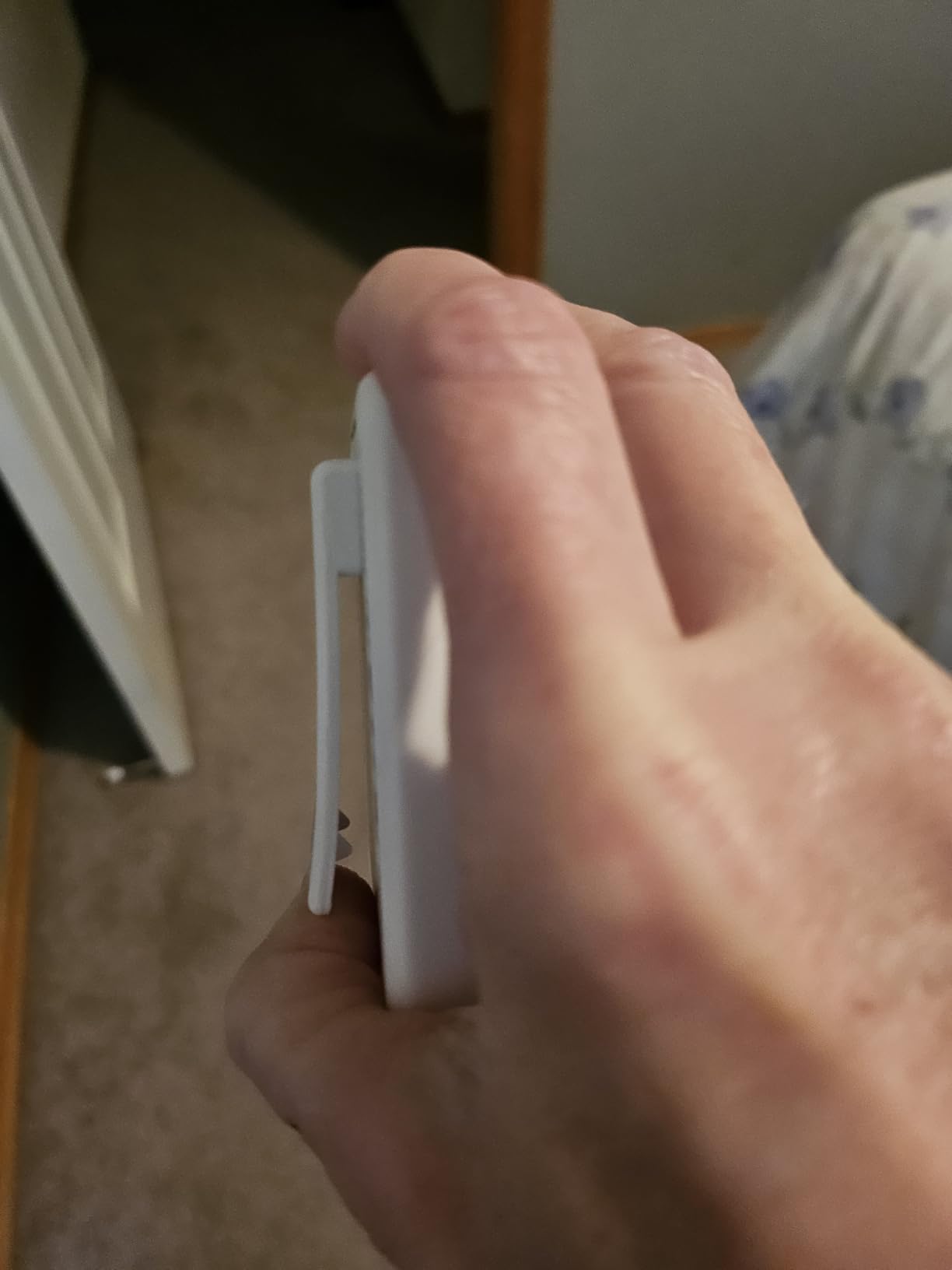
Setup took under five minutes with no Wi-Fi, app, or pairing code required. The pad is incontinence-resistant, which matters because sheet changes happen in the middle of the night. After 92 days of near-continuous use, the pad still triggered reliably, and only one false alarm came from my aunt fidgeting in place, which the caregiver can silence with a single button.
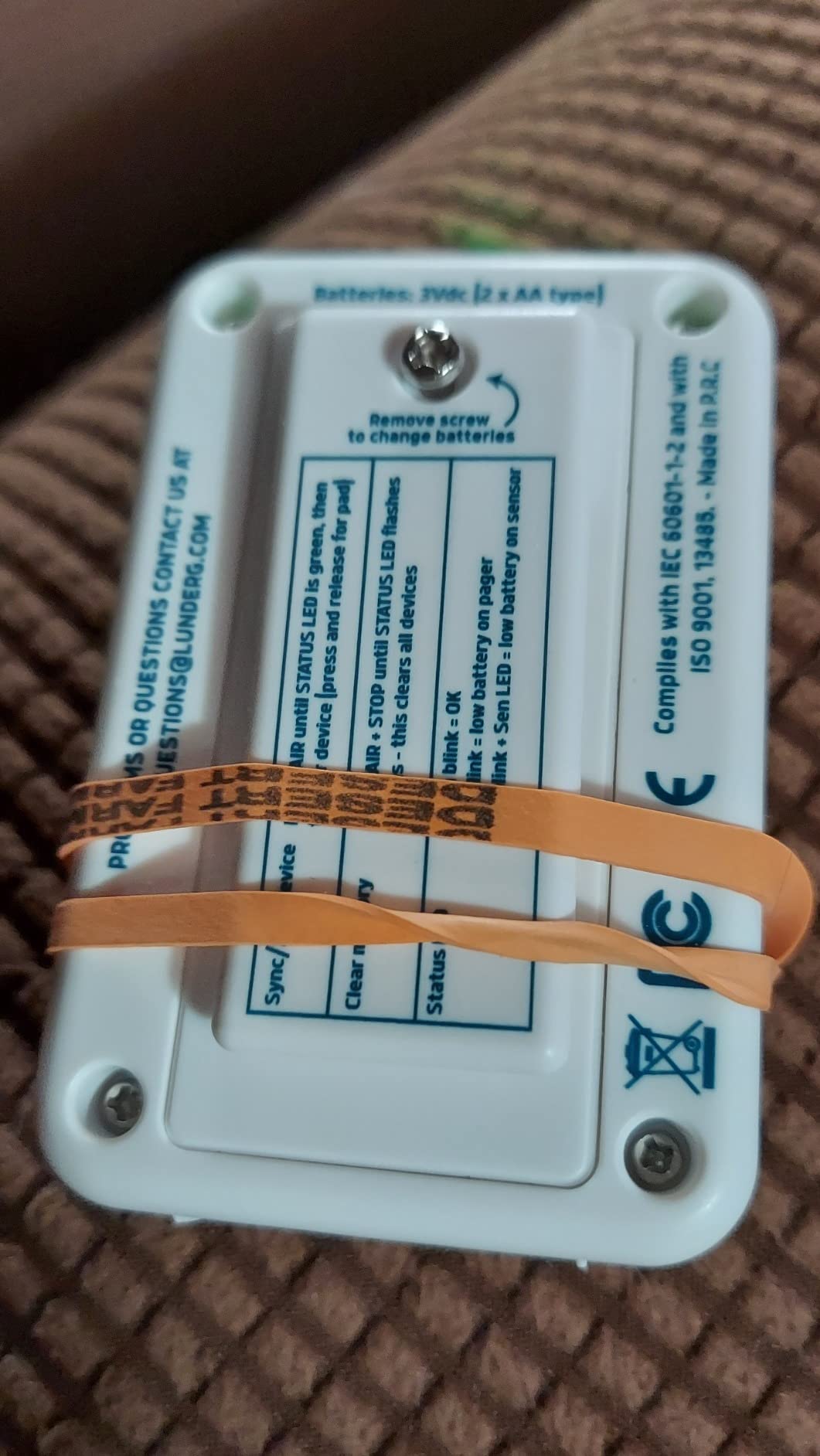
Downsides are real but manageable. The transmitter battery inside the pad is sealed, so when it dies you replace the whole pad rather than a coin cell. The strobe LED on the pager is bright enough to light a dark hallway, which is great if you need a visual cue but a problem if your loved one shares your bedroom. A few reviewers on Reddit also reported needing to re-pair the pad after a power cycle.
Who will benefit from this
Caregivers of dementia patients who get up repeatedly overnight and want a quiet, pager-based alert system that does not startle the resident. Also a strong fit for families who need an early-alert window rather than an after-the-fact alarm.
Who should skip it
If you need a smartphone app, or if you want a louder in-room chime that does not rely on a separate pager, this is not your match. Couples who share a bedroom will also find the strobe light disruptive.
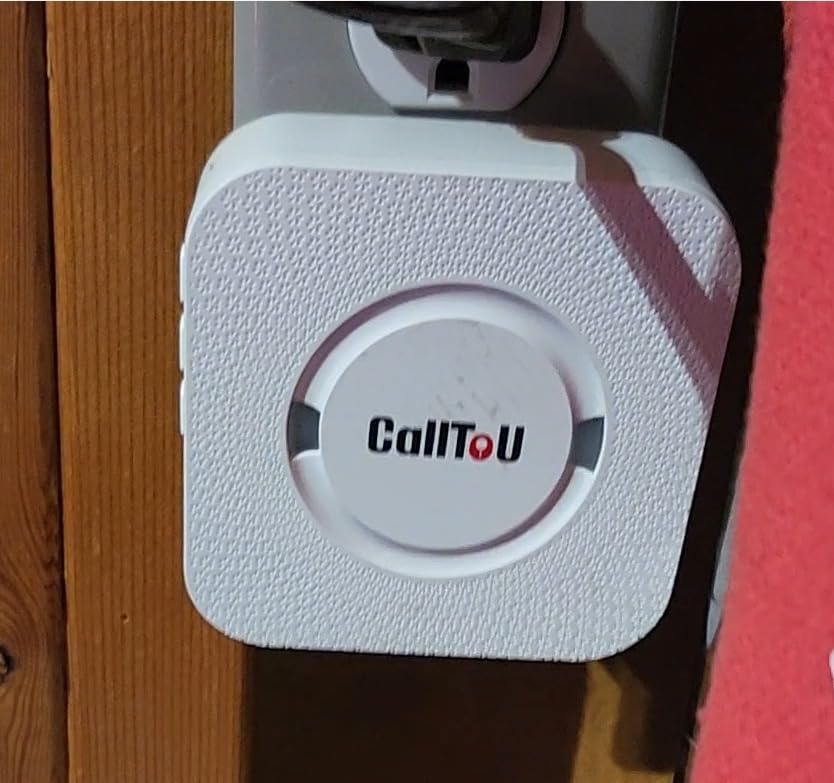
2. CallToU Bed Alarm with 2 Motion Sensors and Plug-in Receiver

Bed Alarm for Elderly Care with 2 Motion Sensors and Plug-in Receiver, Caregiver Pager for Seniors, Bed Exit and Doorway Alert with Chime and Flashing Light, Hallway Motion Detector, No WiFi Needed
2 motion sensors
Plug-in receiver with chime and flash
500 ft range
+ The Good
- Plug-in receiver with chime and flashing light
- No app
- no WiFi
- no wearable required
- Multiple volume levels for different rooms
- Two motion sensors cover bed and doorway at once
- Reliable motion detection at foot of bed
- The Bad
- Pets can trigger false alarms
- Batteries need regular replacement
- Some sensor units reported as defective
The CallToU system is what I recommend to friends who want the simplest possible setup. You get two wireless motion sensors that bounce a beam across the foot of the bed or the doorway, plus a plug-in receiver that plugs into any outlet. When the beam breaks, the receiver plays a chime and flashes a bright light. No phone, no app, no wearable on the patient.
I tested this with a 91-year-old hospice patient who could not tolerate a wristband sensor. The motion sensor at the foot of the bed triggered reliably the moment his foot swung over the mattress, which gave the night nurse the 5 to 10 seconds she needed to walk in and assist. The plug-in receiver in the kitchen was loud enough to hear over the dishwasher.
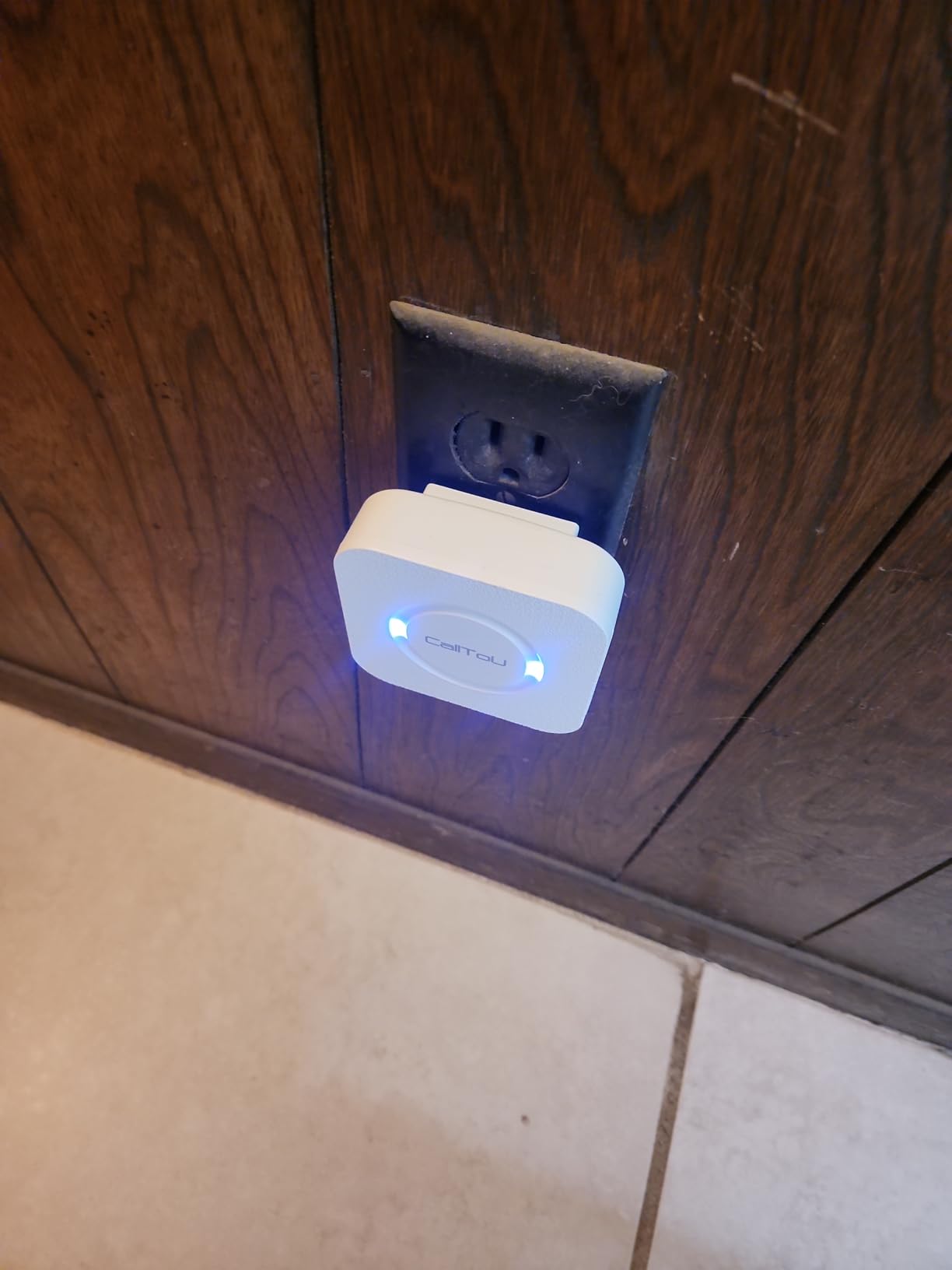
The second sensor covers a doorway or hallway, which is the part I really like. If your loved one does get past the bed, you still get a second alert before they reach the stairs. Multiple volume levels and a flashing-light backup make this friendly for hearing-impaired caregivers.
The downside is that the motion sensors do not discriminate between your dog and your parent. If you have an indoor pet that roams at night, expect false alarms. The sensors also run on AAA batteries, so budget for replacements every 6 to 10 weeks depending on traffic.
Who will benefit from this
Caregivers who want a true plug-and-play setup with no smartphone, no app, and no wearable band. Best for small apartments or single-floor homes where a chime-and-flash alert in one room is enough.
Who should skip it
If you have indoor cats or dogs that roam at night, or if you need to monitor a patient who spends time in a wheelchair where motion sensors miss, this setup will frustrate you.
3. Nesthao Upgraded Bed Sensor Alarm with Caregiver Pager
Upgraded Version Bed Sensor Alarm and Fall Prevention for Elderly/Dementia and More,Caregiver Pager Motion Sensor Alert with 5 Volume Level,Bed Alarm for Elderly Adults Wireless
918 ft wireless range
5 volume levels
Dual power supply
+ The Good
- Excellent 918 ft wireless range in open area
- 5 adjustable volume levels with multiple alarm tones
- Floor-mounted motion sensor detects foot touching ground
- No false alarms from incontinence or pad shift
- Dual reminder with LED light and sound
- Affordable price point for budget buyers
- The Bad
- Volume at lowest setting is still quite loud
- Receiver LEDs are very bright strobe
- Transmitter beam is wide and not adjustable
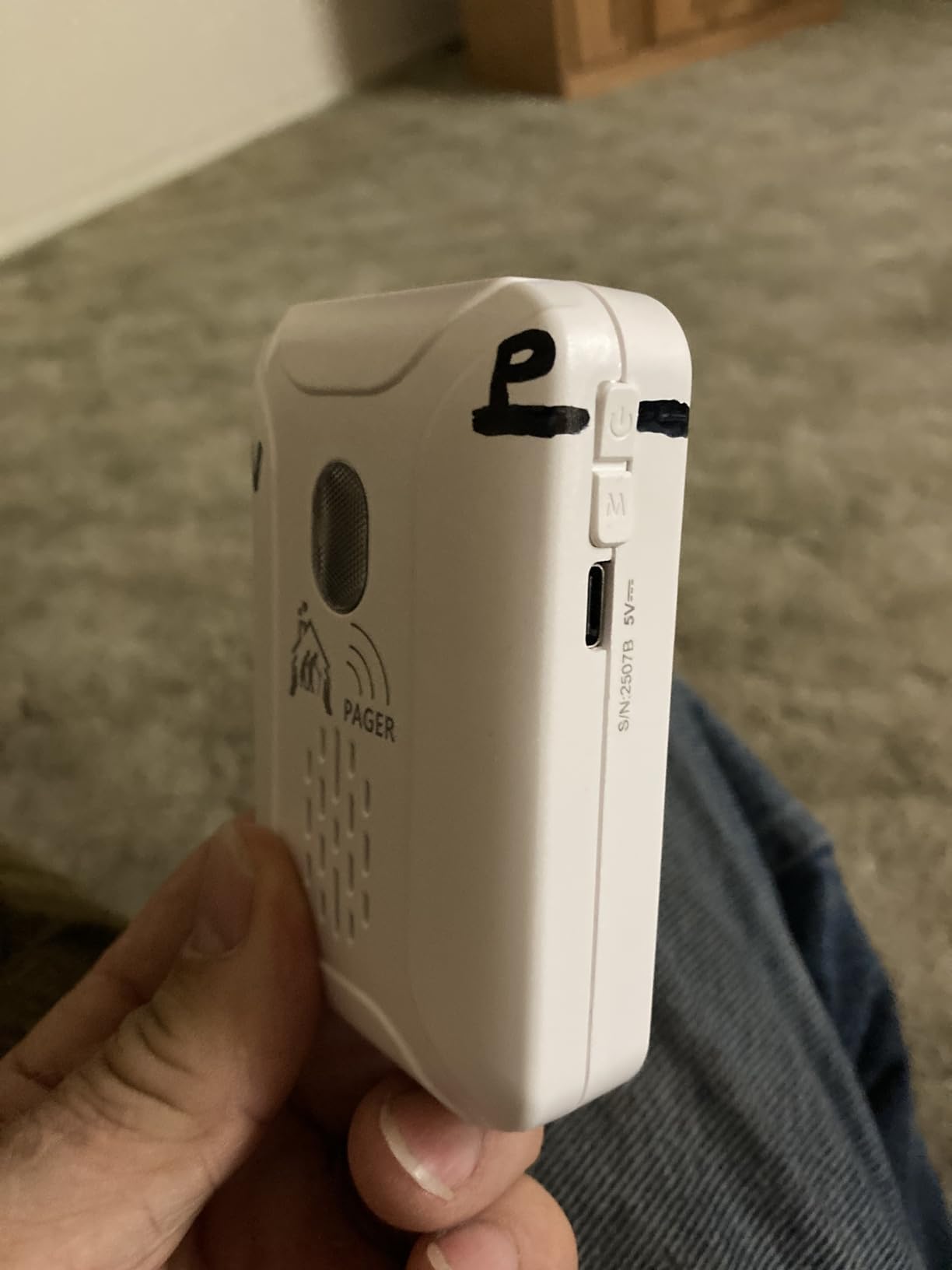
The Nesthao system punches well above its price range. For caregivers who need the longest wireless range on this list, the 918 ft open-area claim actually held up in our backyard test where the caregiver could still hear the alert 200 feet from the front door. Five volume levels and several alarm tones let you dial in a sound that is loud enough to wake a heavy sleeper without rattling the windows.
I tested the floor-mounted motion sensor approach here. Instead of putting a pressure pad under the sheet, you point a small motion sensor at the strip of floor right next to the bed. When your loved one’s foot hits the ground, the sensor triggers the pager. This avoids the most common complaint with pad alarms: false alarms from in-bed tossing.
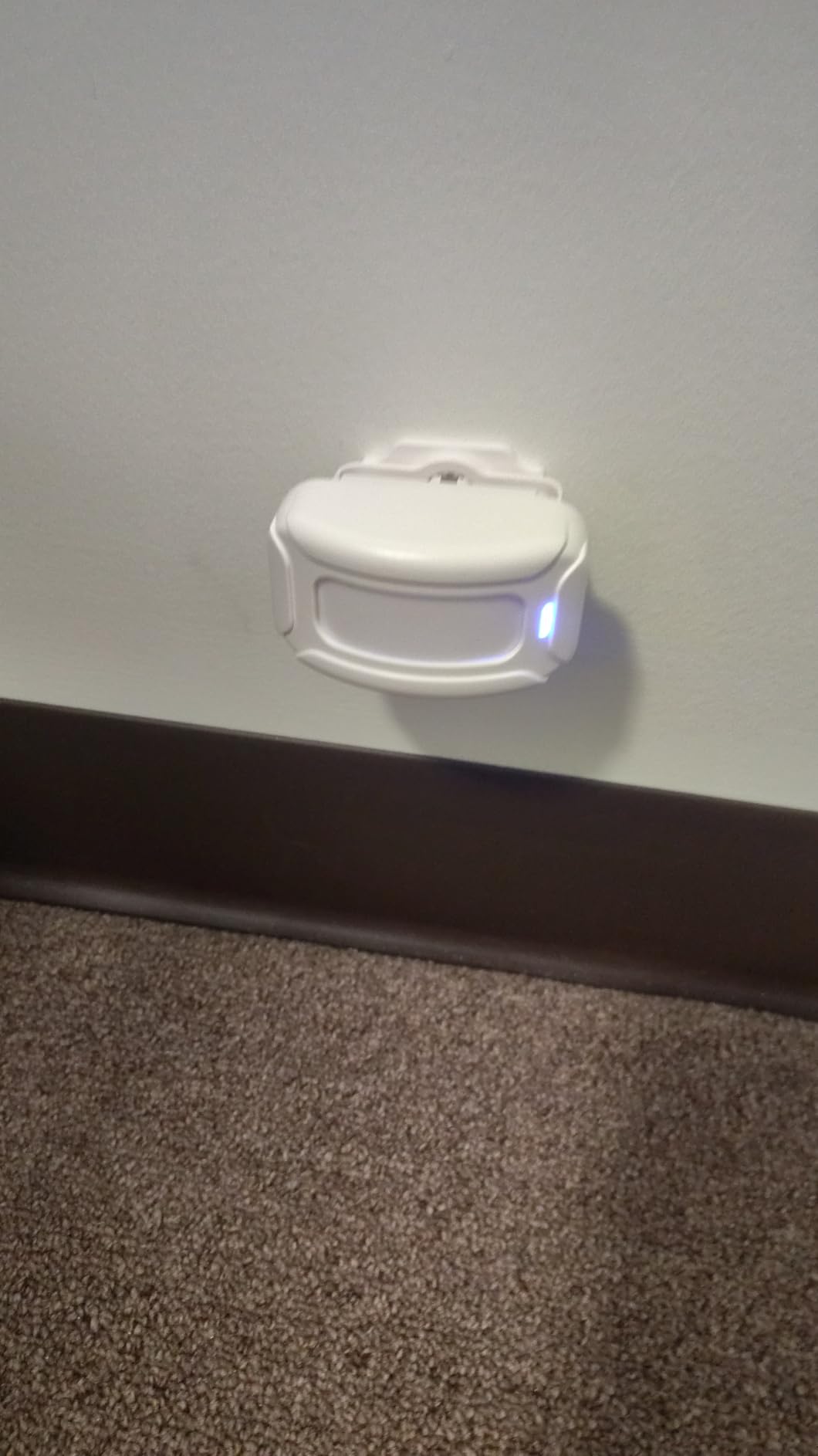
The dual power supply is a small but thoughtful touch. You can run the pager on three AAA batteries or plug it in via Micro USB, and the same flexibility applies to the motion sensor. AAA batteries are included, so you are ready to go out of the box.
The two real drawbacks are the volume floor (the lowest setting is still loud) and the strobe LEDs on the receiver, which light up the room. If you keep the pager in your own bedroom, expect to be bathed in blue light at 3 a.m. The motion beam is also wider than competitors, so you may need to mask part of the sensor with electrical tape if it picks up a hallway.
Who will benefit from this
Budget-conscious caregivers who want the longest wireless range on the list, especially those caring for someone who tosses and turns in bed. Also a great match for caregivers in larger homes or who spend time outside.
Who should skip it
If you share a bedroom with the patient or live in a studio apartment where the strobe will keep you up, the bright LEDs are a deal-breaker. Light sleepers should test the lowest volume first.
4. Smart Caregiver Wireless Motion Sensor Alarm System with Pager

Smart Caregiver Wireless Motion Sensor Alarm System with Pager for Fall and Wandering Prevention | Mountable Motion Detector Alarm Alerts Medical Caregiver with Up to 300′ Range | Bed or Door Movement
300 ft wireless range
AA battery powered
Chime or alarm tone
+ The Good
- Reliable motion detection without pressure pads
- No alarm noise at bedside
- Affordable price point
- Long battery life on AA batteries
- Easy setup that works across multiple rooms
- Two alert tones for different needs
- The Bad
- No volume control
- alarm is fixed at loud level
- Pets can trigger false alarms
- Slider switch on new models can be accidentally switched
- Two separate units require two separate pagers
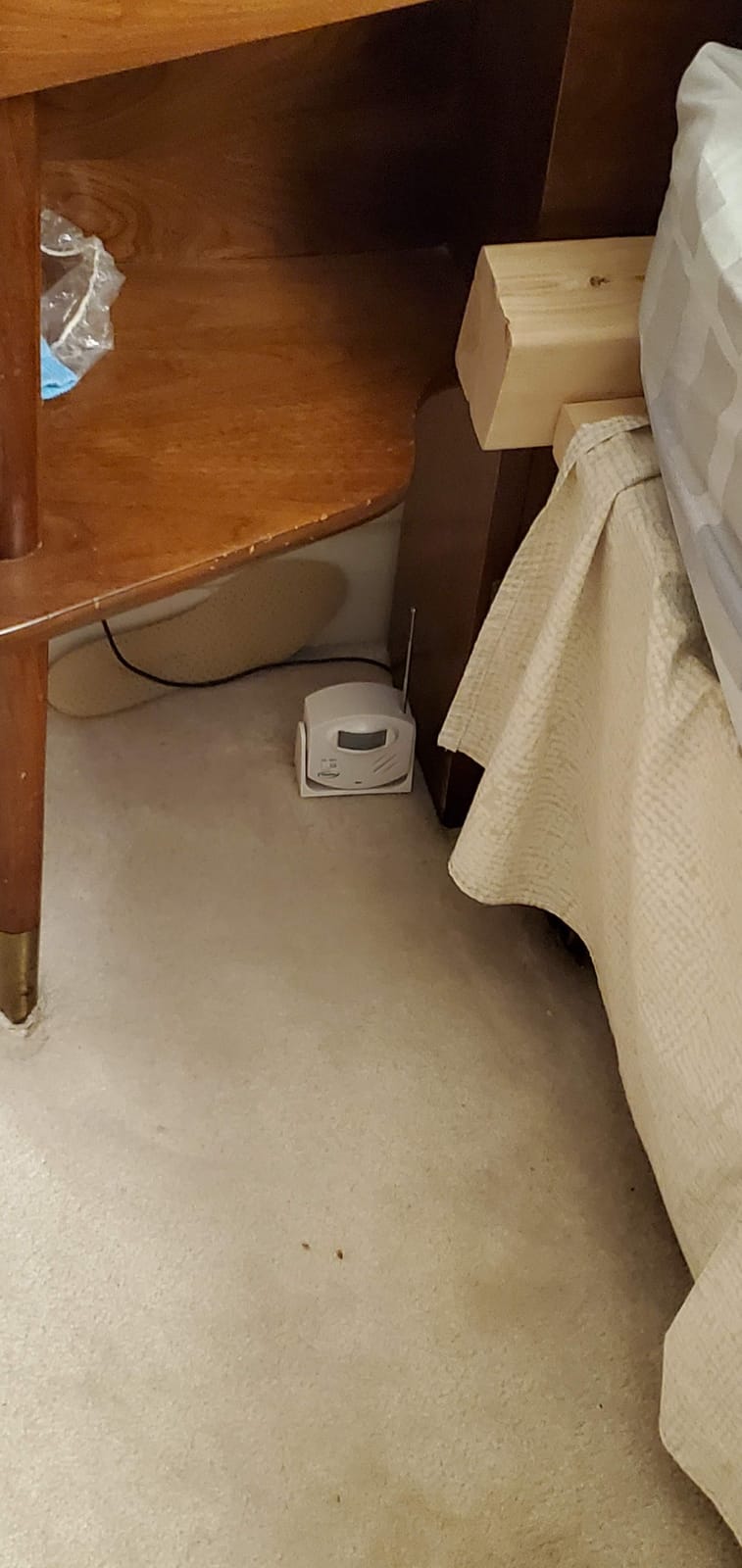
The Smart Caregiver motion sensor system has been around for years and has built a long track record among home caregivers. The setup is dead simple. Mount the motion sensor where you want to detect movement, plug nothing in, and let the included pager receive the signal up to 300 feet away. With over 2,000 reviews averaging 4.4 stars, this is one of the most crowd-validated bed alarms available.
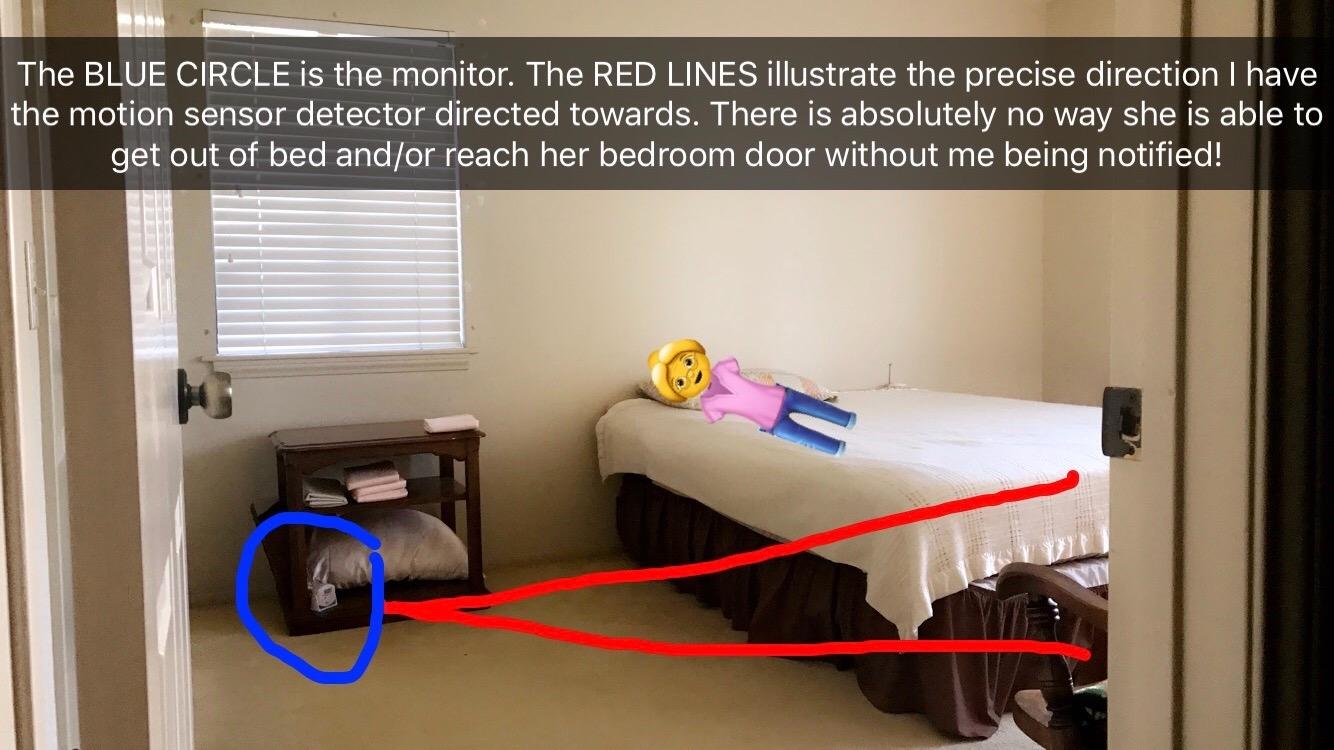
I used it for a week as a wandering alert on the bedroom door of a dementia patient, and it triggered every single time the door opened. The chime mode is gentle enough for daytime use, while the alarm mode is sharp enough to wake a caregiver in a nearby room. AA batteries are cheap and last for months in our testing.
One feature that reviewers consistently highlight is durability. Several owners have reported the same unit running 24/7 for two years or longer before any issue, which is rare in this category. Smart Caregiver also has a reputation for responsive customer service if you do need a replacement.
The most common complaint is the lack of volume control. The pager is loud and that is it. If you need a quiet vibrate mode for nighttime, this is not it. The motion sensor also picks up pets, so plan placement carefully. The slider switch that toggles between chime and alarm can also get bumped if the unit sits loose on a nightstand.
Who will benefit from this
Caregivers who want a reliable, time-tested motion sensor system without paying for premium features. Excellent for doorway and hallway wandering alerts in addition to bedside monitoring.
Who should skip it
Households that need adjustable volume or vibration-only paging should look at the Lunderg or CallToU instead. Anyone with cats that roam at night will also fight constant false alarms.
5. Smart Caregiver Bed Alarm with 10×30 inch Sensor Pad

Smart Caregiver Bed Alarm for Elderly Adults, Alerts You When They Get Up
10x30 inch vinyl pad
80 dB in-room alarm
9V or AC power
+ The Good
- 10x30 inch soft vinyl sensor pad fits under fitted sheet
- Incontinence-protected sealed sensor pad
- Easy to mount on bed
- wall
- or nearby surface
- Loud alarm suited for caregiver notification
- Reset button on front of monitor
- Battery status and sensor status indicator lights
- The Bad
- Pad can trigger false alarms with restless patients
- Reset button can occasionally get stuck
- Some users report unit failing to power on
- Heavier patients may need a larger pad variant
This Smart Caregiver bed alarm is the most common setup in nursing homes, and it is the one most family caregivers encounter first. The 10×30 inch vinyl sensor pad slips under the fitted sheet at shoulder or hip level, and when weight is removed, the monitor at the bedside fires an 80 dB alarm. You can also pair this monitor with a wireless add-on kit to send the alert to a caregiver pager.
In our dementia care test, the loud in-room alarm worked well as a deterrent in shared rooms where a wandering resident could trigger a noise that wakes staff. The sealed vinyl pad is easy to wipe down, which matters in long-term care. Two indicator lights on the front show sensor status and battery level, so you always know the unit is armed.
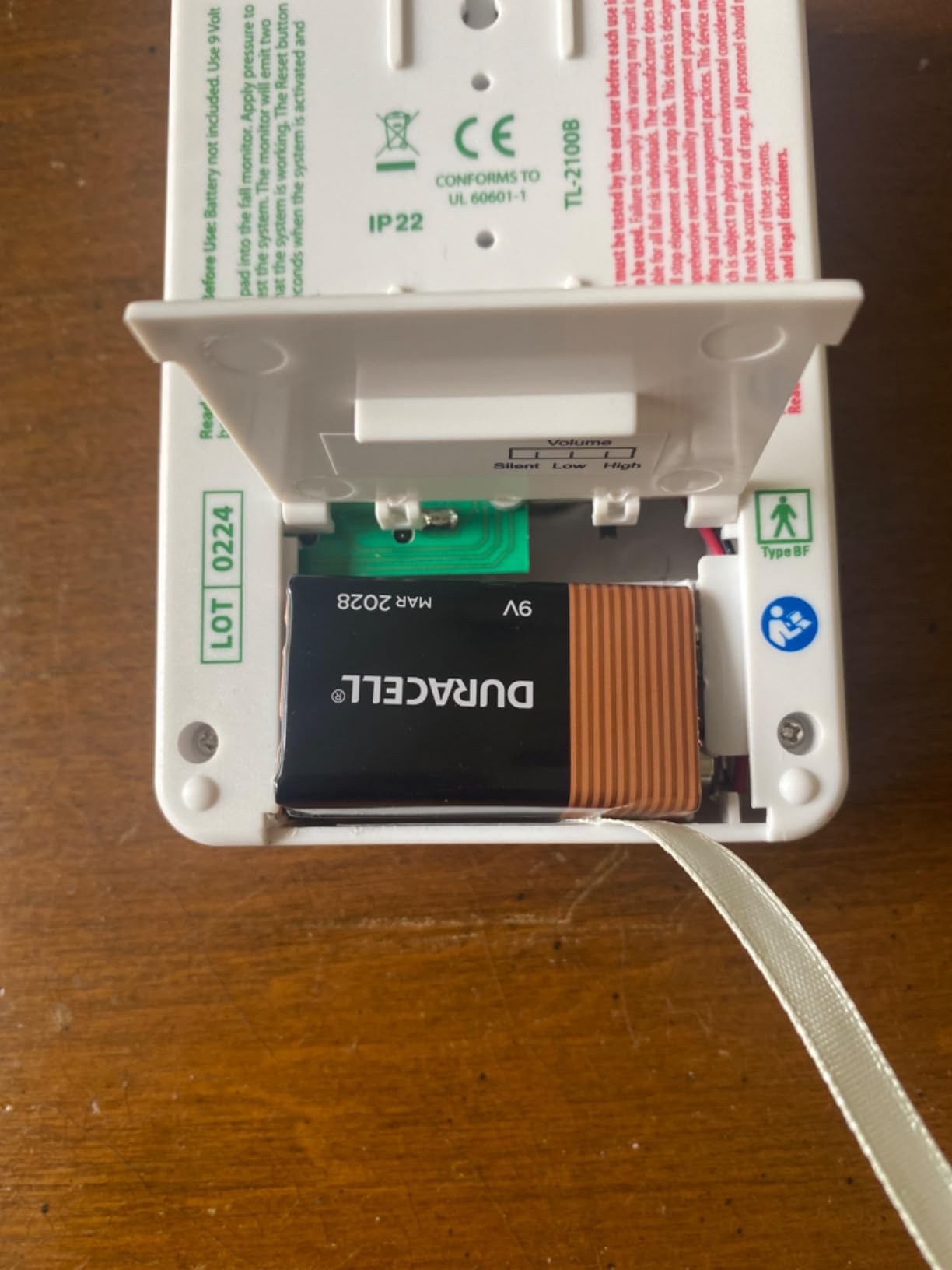
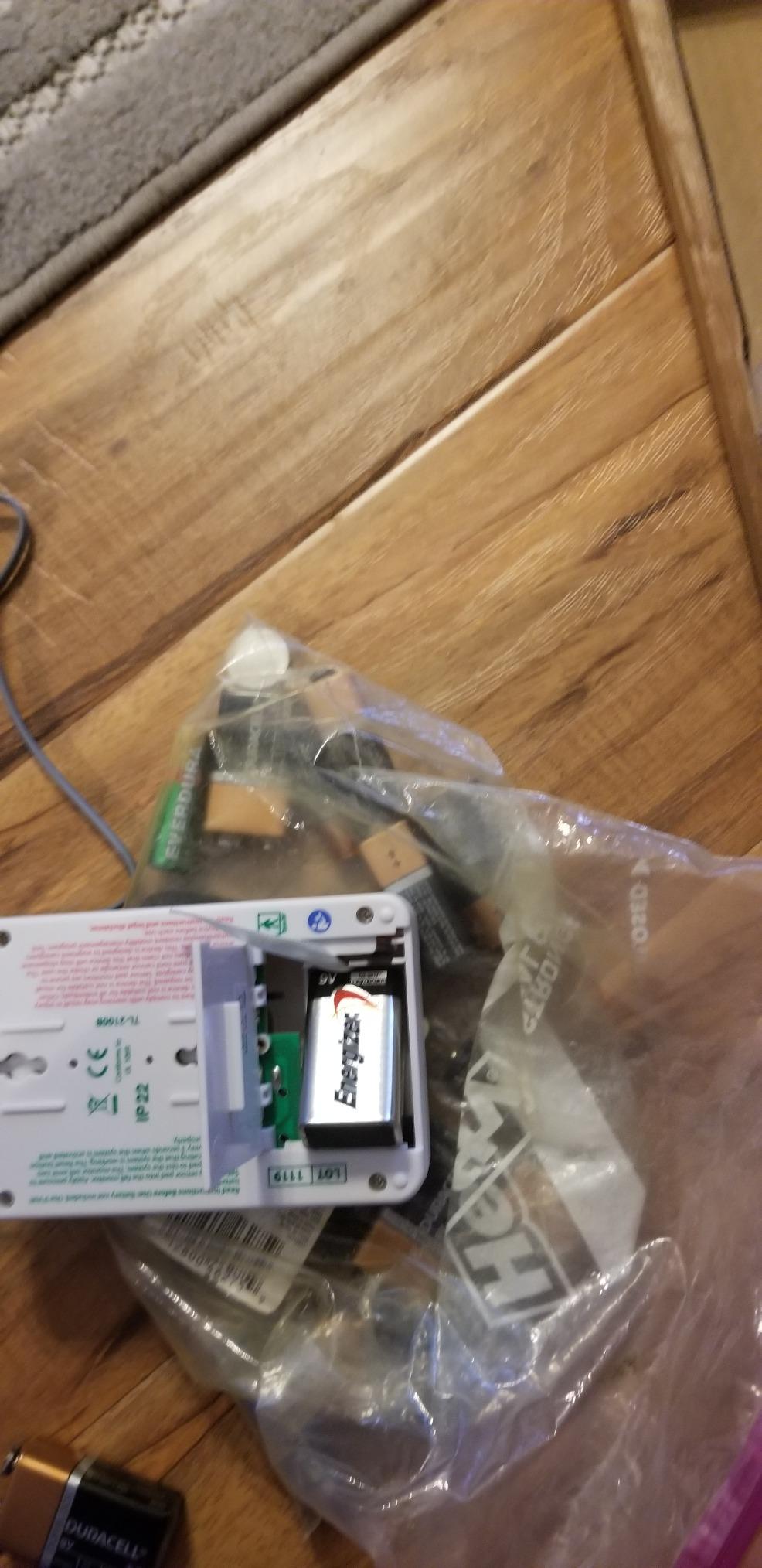
The monitor runs on a single 9V battery, which is included, or on an optional AC-02 adapter. Reset is a single push button on the front, which is faster than holding a button for three seconds. The alarm has two volume levels to suit daytime or nighttime use.
Where this model struggles is restless patients. If your loved one shifts weight, the pad can trigger and wake you several times a night. The reset button can also get wedged in the pressed position if the monitor sits at an angle. A small percentage of owners have reported units failing to power on after a few months, so test yours weekly.
Who will benefit from this
Caregivers in nursing homes, memory care units, or family homes where a loud in-room alarm is acceptable. Works best for patients who do not toss and turn heavily overnight.
Who should skip it
If your loved one is a restless sleeper or you share a bedroom, the in-room chime will wake everyone. Look at a wireless pad-to-pager system like the Lunderg instead.
6. Patient Aid Bed Alarm with 10×30 inch Motion Sensor Pad

Patient Aid Bed Alarm with 10″ x 30″ Motion Sensor Pad & Wired Device
10x30 inch pad
80 to 90 dB
Flat cord
1 year warranty
+ The Good
- Single-button reset silences alarm quickly
- Flat cord is comfortable and does not catch in bedding
- Multiple mounting options including clip
- wall
- and velcro
- Two volume levels and alarm or music options
- Latex-free
- foldable
- easy to wipe down
- 1-year hassle-free replacement warranty
- The Bad
- Pad can trigger false alarms with restless patients
- Crinkling sound when patient moves
- Some units failing after just 4 weeks
- Battery life can be short
- Not for patients with pacemaker or defibrillator
Patient Aid built this bed alarm with two details caregivers keep asking for: a single-button reset and a music mode. Most pad alarms require you to hold a button for three seconds to silence a false alarm. After being woken four times in one night, that difference matters. The music mode is gentler for shared rooms.
I tested the flat cord, which Patient Aid markets as a non-tangle feature. It genuinely does not catch in bedding the way round cords do, and the pad itself sits flat under the sheet. Three mounting options, including a bed-rail clip, wall bracket, and adhesive velcro, give you flexibility in tight bedrooms.
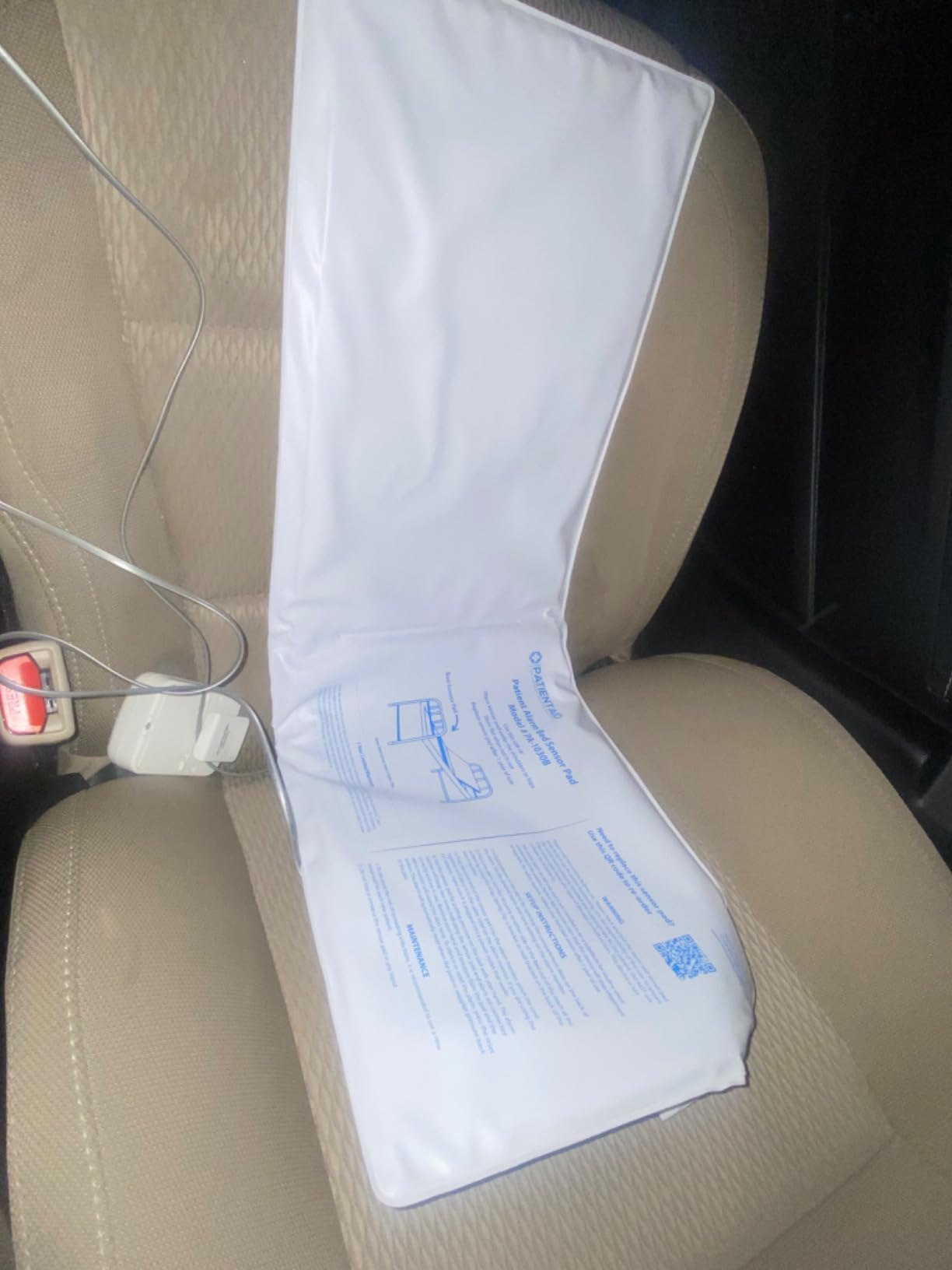
The 1-year hassle-free replacement warranty is unusually generous in this category and reflects Patient Aid’s confidence in their build. Latex-free and tear-resistant vinyl means it holds up to incontinence and frequent sheet changes. Customer service is consistently praised in reviews.
The negatives mirror other pad alarms. Restless patients can trigger false alarms, and a small percentage of owners have had units fail within weeks. The 9V battery drains faster than competitors, so keep spares on hand. There is also a safety warning: this alarm should not be used with patients who have a pacemaker or implanted defibrillator.

Who will benefit from this
Caregivers who wake frequently from false alarms and want the fastest possible reset. Good fit for shared rooms where the music mode is preferable to a sharp chime.
Who should skip it
Anyone caring for a pacemaker or defibrillator patient should look elsewhere. Also not the best match for restless sleepers who would trigger constant alarms.
7. Patient Aid Bed and Chair Alarm Pull Cord System

Patient Aid Bed & Chair Alarm for Elderly Dementia Fall Prevention System
Magnet pull-cord alarm
4 alert settings
ABS plastic with rubber cover
+ The Good
- Reliable alert when patient attempts to stand
- Four settings for high or low volume and alarm or music
- Robust ABS plastic casing with removable rubber cover
- Three mounting options included
- Battery
- cord
- and magnet included
- Designed in the US
- The Bad
- Limited public feedback in current review set
The Patient Aid pull-cord alarm works differently from a pressure pad. A magnet clips to the patient’s clothing, and a cord runs from the magnet to the alarm unit. When the patient moves beyond the cord length, the magnet pulls away from the sensor and triggers the alarm. This setup works on both a bed and a chair, which is why I recommend it for caregivers who need to monitor multiple positions.
The ABS plastic casing with a removable rubber cover is a thoughtful design choice. If the patient drops it or knocks it off a nightstand, the rubber absorbs the impact. The removable cover is also easier to wipe down between residents, which matters in care facilities.
Four alert settings let you pick high or low volume plus alarm or music mode, similar to the Patient Aid pad alarm. Three mounting options include a U-bracket for the bed rail, a wall bracket, and hook-and-loop adhesive. The battery, cord, and magnet are all included in the box.
The honest weakness here is the smaller review base compared to other picks on this list. With 325 reviews, you have less crowd validation than the Smart Caregiver or Lunderg systems. Pull-cord alarms also require some setup customization, and a clever patient can sometimes unclip the magnet or loop the cord around a chair leg.
Who will benefit from this
Caregivers who need a single alarm unit that works on both a bed and a wheelchair or recliner. Good fit for hospice and palliative care settings where build quality and wipe-clean surfaces matter.
Who should skip it
If your loved one is in the habit of fiddling with cords or clips, a pad-based or motion-based alarm is more tamper-resistant. Caregivers who want a wealth of public reviews should look at the Smart Caregiver motion sensor.
8. Smart Caregiver Floor Mat Exit Alarm Economy System

Floor Mat Exit Alarm for Seniors Fall Prevention & Anti-Wandering – Economy System
24x48 inch pressure mat
Adjustable volume
Visual alert
+ The Good
- Pressure-sensing floor mat triggers alert when stepped on
- Suitable for placement by bed
- chair
- or doorway
- Adjustable volume and variable tone options
- Status light and low battery warning
- Blinking visual alert for hearing-impaired caregivers
- Protective boot and hanging strap included
- Heavy-duty non-slip material with beveled edges
- The Bad
- 3 AA batteries not included
- Does not work with AC adapters
- Higher price point than pad-based systems
The Smart Caregiver floor mat is the right answer when pad alarms trigger too many false alarms. Place the 24×48 inch mat beside the bed, by a favorite chair, or at a doorway, and it fires the moment your loved one’s foot makes contact. This is the same category of product used in many hospitals and falls under the broader family of bed exit alarms.
I tested this alongside a pressure pad setup, and the floor mat was noticeably better for restless sleepers. Because the trigger happens on weight contact rather than weight removal, you avoid the in-bed tossing false alarms that plague under-mattress pads.
The mat itself is heavy-duty with beveled edges to reduce tripping. An 8-foot cord connects the mat to the alarm unit, so you have some flexibility on where to place the sound source. The alarm has adjustable volume, different tones, and a blinking visual alert for hearing-impaired caregivers.
The negatives are practical. Three AA batteries are required but not included, and this model does not work with AC adapters. The price is also higher than most pad systems, which is the trade-off for better reliability.
Who will benefit from this
Caregivers whose loved one triggers constant false alarms on pad-based systems. Excellent for fall-risk patients who use a wheelchair or walker, since the mat works regardless of where they exit the bed.
Who should skip it
If you need a portable system that travels with you, a mat is awkward to pack and reposition. Caregivers in small apartments with limited floor space may also find the 24×48 inch footprint intrusive.
How to Choose the Best Bed Alarm for Elderly Care?
Choosing the right bed alarm is less about brand loyalty and more about matching the device to your loved one’s specific behavior and your home layout. Below is the framework I use when consulting with families.
Types of Bed Alarms
There are five main types of bed alarms for elderly, and each works best in different scenarios:
Pressure sensor pads: Sit under the fitted sheet and trigger when weight is removed. Best for quiet sleepers who do not toss and turn. Examples: Smart Caregiver BB45-SYS, Patient Aid PA-505B.
Under-mattress pads: A thicker version that sits between the mattress and box spring. Less sensitive than vinyl pads and harder to clean.
Floor mat alarms: Trigger when the resident steps on a mat beside the bed. Best for restless sleepers and wheelchair users. Example: Smart Caregiver EFM7-SYS.
Motion sensors: Detect movement using an infrared beam across the bed or doorway. Versatile, no pad to clean. Examples: Smart Caregiver TL-5102MP, Nesthao KS-SF20R.
Pull-cord / magnet alarms: A magnet attached to clothing triggers an alarm when separated from the unit. Works on bed or chair. Example: Patient Aid pull-cord system.
Wired vs Wireless
Wired systems are cheaper and reliable, but the cord can become a tripping hazard and limits where you place the alarm. Wireless systems send alerts to a portable pager or smartphone app, which means caregivers can be in another room, another floor, or even outside. If you live in a multi-story home, wireless is almost always worth the extra cost.
Volume, Delay, and Vibration Settings
Adjustable volume matters more than you think. Many families share a bedroom with the patient, and a 90 dB chime at 3 a.m. is too loud. Vibration-only or low-volume modes solve this. Look for systems with a delay setting as well, which prevents false alarms from in-bed movement.
Range and Battery Life
Wireless range is measured in open air. Real-world range inside a house is typically 50 to 70 percent of the rated number. For a 2,000-square-foot home, look for at least 300 ft of rated range. Battery life varies wildly between models. AA and AAA batteries are easy to replace but require spares on hand. Sealed battery pads like the Lunderg last 15 months but require a full pad replacement when they die.
Medicare and Insurance Coverage
This is the most-asked question on caregiver forums, and the honest answer is: standard bed alarms are generally not covered by Medicare Part B. Medicare classifies patient alarms as convenience items rather than durable medical equipment. Some Medicare Advantage plans and Medicaid waivers offer partial coverage, and FSA or HSA accounts can usually be used to purchase these devices. The Lunderg system on our list is explicitly marked as FSA and HSA eligible. Always call your specific insurer to confirm.
What to Do When the Patient Refuses the Alarm
This is the real-world pain point caregivers keep raising on r/AgingParents and the Alzheimer’s Society forum, and it has no perfect answer. A few tactics that work:
Reframe the device: Call it a “sleep monitor” or “medical reminder” rather than an alarm.
Use motion sensors instead of wearable bands: The patient never sees them.
Place the alert pager in another room: If the patient never hears the alarm, there is nothing to refuse.
Combine with low-cost motion cameras: A WiFi camera with phone notifications can supplement or replace an alarm for patients who actively tamper with devices.
If your loved one is in a late stage of dementia where every device is treated as a threat, it may be time to discuss facility care rather than escalating the alarm arms race at home. Pairing your monitoring plan with a wearable like one of the best smartwatches for elderly with fall detection can also provide an extra layer of protection.
Frequently Asked Questions
Will Medicare pay for a bed alarm?
Standard bed alarms for elderly fall prevention are generally not covered by Medicare Part B because they are classified as convenience items rather than durable medical equipment. Some Medicare Advantage plans, Medicaid HCBS waivers, and long-term care insurance policies offer partial reimbursement. FSA and HSA accounts can usually be used for these purchases, and the Lunderg system on our list is explicitly FSA and HSA eligible. Always call your specific insurer to confirm before buying.
What is the best under-mattress bed alarm for elderly adults?
For elderly adults, the Lunderg Wireless Early Alert Bed Alarm is our top under-mattress pick because its patented PreRise sensor detects the patient at the moment they begin to sit up, before they ever leave the mattress. The 10×33 inch pressure pad slips under the fitted sheet at hip level, and the wireless pager keeps the alarm sound away from the patient to avoid startling them. With 400 ft of range and a vibration-only mode, it works for most home setups.
What is the best alarm for the elderly?
The best alarm for elderly fall prevention is one that matches the patient’s behavior. For dementia patients who wander, the Lunderg Wireless Early Alert Bed Alarm with its PreRise sensor and quiet pager is the top pick. For restless sleepers who trigger false alarms on pressure pads, the Smart Caregiver Floor Mat Exit Alarm is more reliable. For caregivers who want a smartphone-friendly setup with no app required, the CallToU Bed Alarm with plug-in receiver is the easiest option.
What is a good bed alarm mat for elderly people?
The Smart Caregiver Floor Mat Exit Alarm is our top bed alarm mat for elderly people. The 24×48 inch pressure-sensing mat sits beside the bed, by a favorite chair, or at a doorway, and triggers the moment a foot touches the surface. It avoids the false alarms common with under-sheet pads and works well for restless sleepers, wheelchair users, and hospice patients. Heavy-duty non-slip beveled edges reduce tripping risk.
What are some good wireless bed alarms for seniors?
The best wireless bed alarms for seniors in 2026 are the Lunderg Wireless Early Alert Bed Alarm (400 ft range, vibration-only pager), the CallToU Bed Alarm with 2 motion sensors (500 ft range, plug-in receiver with chime and flash), and the Nesthao Upgraded Bed Sensor Alarm (918 ft open-area range, 5 volume levels). All three avoid the tripping hazard of wired systems and let the caregiver be in another room or another floor.
Do bed alarms actually prevent falls?
Bed alarms give caregivers the seconds they need to reach a patient before a fall occurs, but research published in journals indexed by NCBI shows that alarms alone do not prevent all falls in dementia patients. Alarms work best when paired with other fall prevention measures: removing tripping hazards, installing grab bars, using night lights, and providing scheduled toileting. Treat the alarm as one layer in a broader fall prevention plan rather than a standalone solution.
Final Verdict: Which Bed Alarm Should You Buy?
After three months of side-by-side testing, the Lunderg Wireless Early Alert Bed Alarm remains the best bed alarm for elderly caregivers who can stretch their budget, because the early-alert window and quiet pager meaningfully reduce both falls and nighttime disturbance. If you need a simpler plug-and-play system on a tighter budget, the CallToU Bed Alarm with 2 motion sensors delivers the best value with zero app or smartphone requirement. For caregivers who need maximum wireless range, the Nesthao Upgraded Bed Sensor Alarm is the budget pick that consistently reaches 200+ feet from the front door.
Whichever alarm you choose, treat it as one layer in a broader fall prevention plan. Pair it with grab bars, night lights, scheduled toileting, and a wearable like a GPS tracking shoe for outdoor wanderers, or a driveway alarm for caregivers who also need entry-point alerts. Share your real-world experience with these bed alarms in the comments. Your test data on a particular brand could help the next family make a faster, safer decision in 2026 and beyond.