
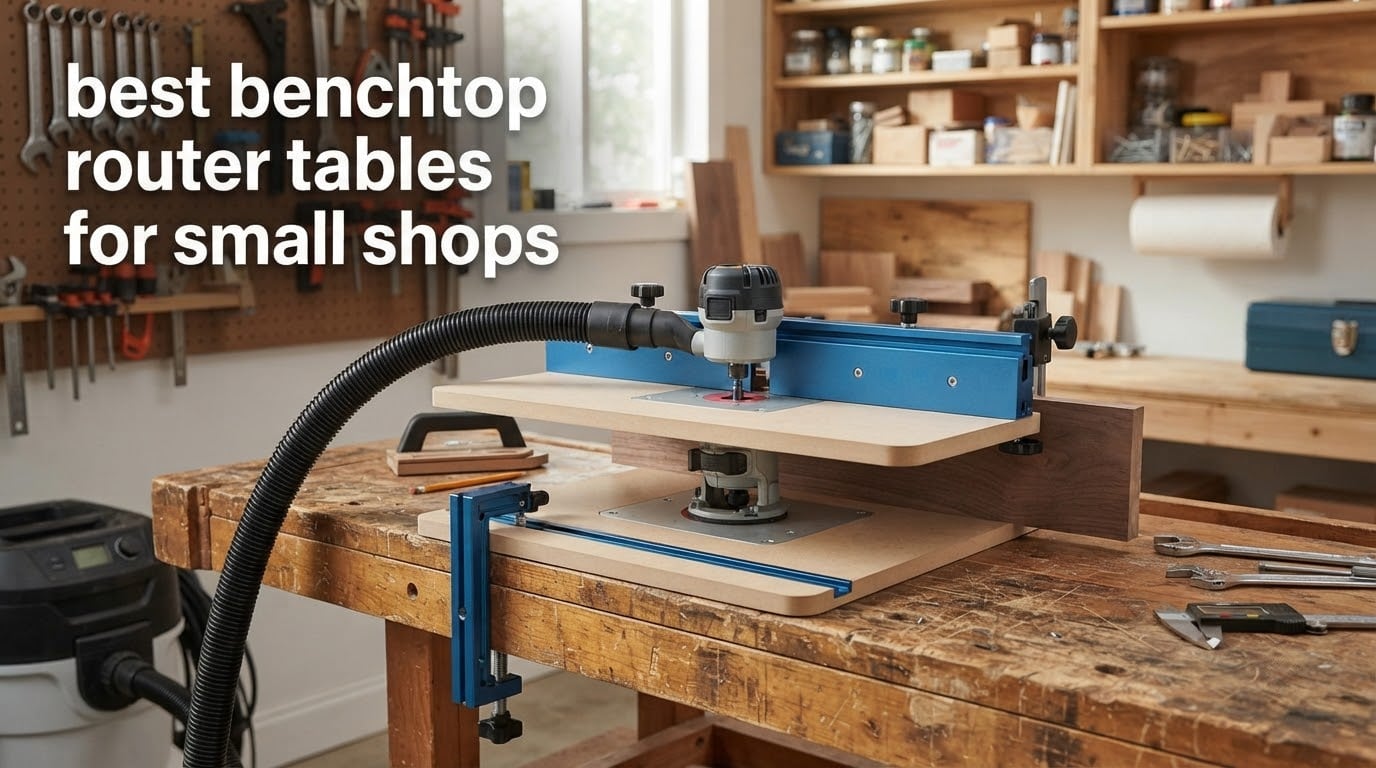
A router table turns a handheld router into a stationary machine, and in a small shop that swap is the whole argument. Floor space is the binding constraint in a one-car garage or a 10 by 12 shed, and a freestanding router station simply will not go there. A benchtop router table clamps to the bench you already own, does edge work, dados, grooves and template routing, then walks back to a corner when the cutting is done. That means the best benchtop router tables for small shops are a category of their own, and it is what our team weighed for 2026.
We spent weeks reading published specifications, manufacturer details and thousands of buyer reviews across ten of the most-purchased benchtop router tables on the market. We grouped them by the things that decide a purchase in a cramped shop: how big the top is, how heavy the table is when you have to lift it, whether the insert plate can be leveled to the top, what the fence does, and where the dust actually goes. Two of the ten are not really tables at all, and we say so plainly in their sections.
One thing this roundup will not do is pretend these are production machines. Benchtop tables sit in a different category from full-size freestanding units with cast iron tops, and most owners in our research use them for edge profiles, small joinery and template work rather than running a cabinet production line. What we picked gives you the most capability per square foot of bench space, which is the metric that matters when a table has to disappear when you are not routing. If you are short on bench room elsewhere in the shop, our guides to the best benchtop band saws and the best benchtop drill presses were built around the same footprint logic.
Are Benchtop Router Tables Good?
Yes, for edge work, dados, grooves, flush trimming and template routing on small and medium workpieces in a shop with no floor space. The trade-offs are real: workpiece size is limited by the top, the table has to be clamped down before every cut, and lighter builds will not carry a full-size high-horsepower router. They are meant for hobbyist and small-production work, not a commercial station.
That trade-off is easier to judge once you know what you own. Keep the router you have, check its base diameter against the insert plate, and most mid-size routers drop straight in. More on that in the buying guide below, where we cover which router classes fit which plates.
Top 3 Benchtop Router Tables for Small Shops for October 2026

Bosch RA1181 Benchtop Router Table
- › Large aluminum top
- › Pre-drilled aluminum plate
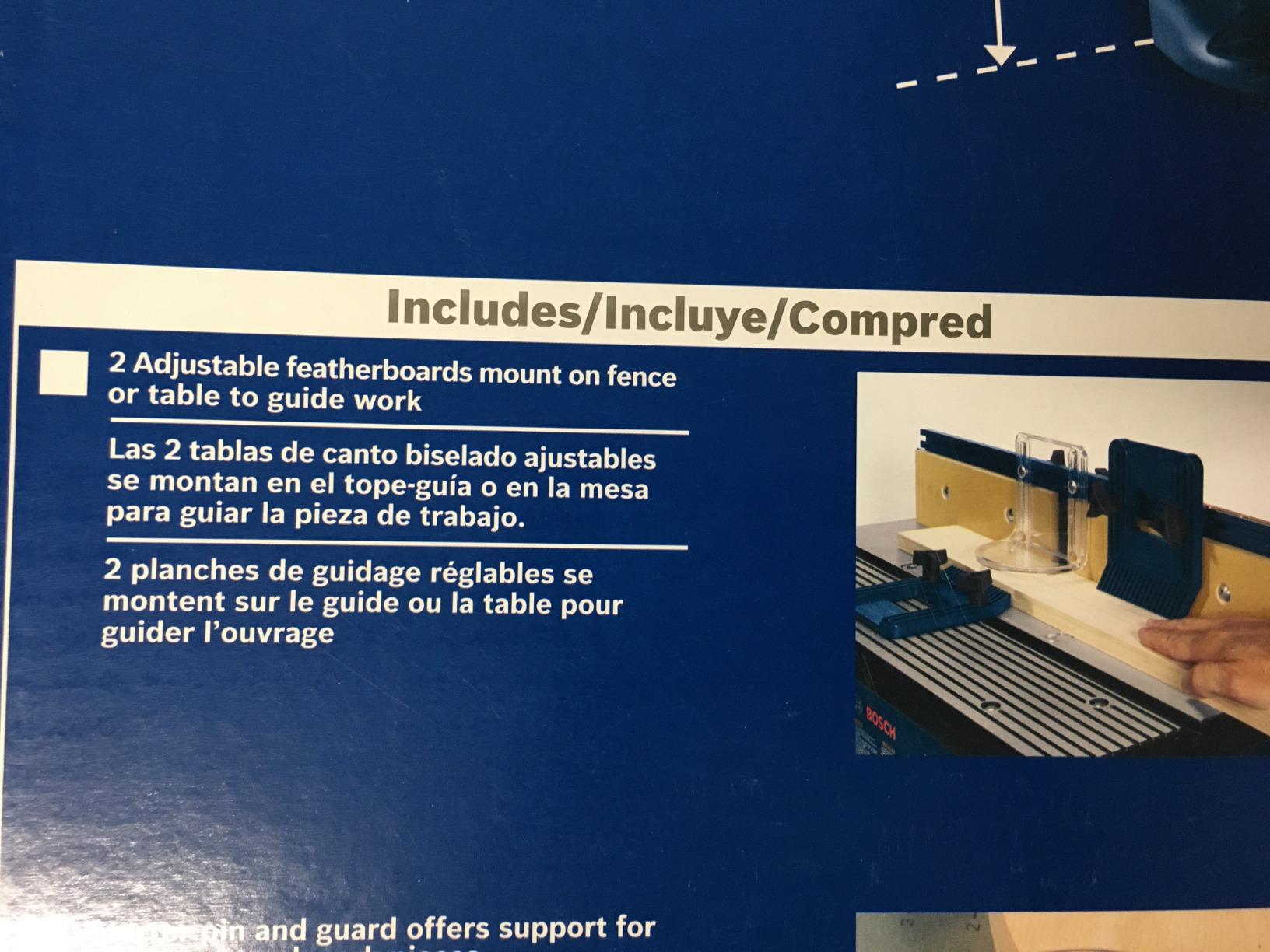
- › Extra tall fence with featherboards
- › 2-1/2 inch dust port
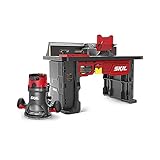
SKIL RT1323-01 Table and Router Kit
- › Table plus 2.0 HP router
- › Above-table bit adjustment
- › Dual-sided bit storage
- › 24 inch fence

POWERTEC 71402V Router Table
- › Steel stand with rubber feet
- › 24 inch fence with bit guard
- › Four insert reducing rings
- › Eight-point leveling
All 10 Tables at a Glance in October 2026
Ten tables, one page. The features column pulls the details that decide a small-shop purchase rather than a spec-sheet scroll: what the top is made of, how the plate is fixed, and what comes with each one for dust control.
| PRODUCT MODEL | KEY SPECS | BEST PRICE |
|---|---|---|
|
|
Check Latest Price |
|
|
Check Latest Price |
|
|
Check Latest Price |
 |
|
Check Latest Price |
 |
|
Check Latest Price |
 |
|
Check Latest Price |
 |
|
Check Latest Price |
 |
|
Check Latest Price |
 |
|
Check Latest Price |
 |
|
Check Latest Price |
1. Bosch RA1181 Benchtop Router Table – the most complete bench
Bosch RA1181 Benchtop Router Table
Weight: 30 lb
Top: 18W x 14.5H
Dims: aluminum top and plate
Dust port: 2-1/2 in
+ The Good
- Rigid flat aluminum top
- Tall fence that holds position
- Integrated switch for router and vac
- Featherboards and jointing shims included
- 5135 reviews averaging 4.5
- The Bad
- Plastic base and switch fascia are the weak points
- No two-part fence for jointing
- Base is wider than the top at the mounting holes
The Bosch RA1181 is the table we come back to. Its selling point is not any single feature, it is how few things you have to buy afterwards. Featherboards and jointing shims come in the carton, a power switch for the router and your vacuum is included, and the top is cast aluminum rather than laminated MDF. In a small shop that completeness matters, because every accessory you have to source separately is one more thing to find a home for.
Owners are consistent about the top. Across more than five thousand reviews the aluminum surface is described as rigid, level and durable, and it holds up to heavy use better than the MDF tops in this group. The tall aluminum fence with adjustable faceplates lines up cleanly and stays put during a cut, which is exactly what you want when you are trimming a small cabinet part and the whole job is two minutes long.
The honest weakness is the base. The structural plastic base and the switch fascia are the parts reviewers single out, and the base at the mounting holes is wider than the tabletop itself, so your bench needs to be large enough to carry that overhang. There is also no two-part fence, which means edge jointing relies on the included shims rather than on a split fence you can dial in.
Above-table height adjustment works, but it means cleaning the access hole and keeping an Allen wrench within reach, which is friction in a workflow that should be quick. For jointing small boards the shims in 1/16 to 1/8 inch steps cover the common case, and the fence-mounted dust port keeps most of the debris out of your shop vacuum. If you want one table that does everything a benchtop table can do without a shopping list, this is it.
What the Bosch RA1181 does well in a tight shop
Everything needed for edge work and light joinery arrives in one carton, so a two-bench shop can be routing the afternoon it arrives. The 30 lb weight is heavy enough to resist walking under a cut and light enough for one person to carry down a set of shop stairs. The storage pocket and cord wrap for 6 ft of cord keep the underside tidy.
The aluminum top also forgives a damp garage better than melamine-faced MDF, which matters if the shop is unheated for part of the year. Owners report the power cord lock as a small but real benefit in a shared or multi-user shop.
Where the Bosch RA1181 will disappoint you
If your priority is edge jointing several boards at once, the lack of a two-part fence is a real limit, and jointing shims only cover fixed increments. Buyers also note that the surface can mark workpieces during the first few cuts while it breaks in, so plan on a sacrificial scrap pass before you run finished workpieces across it.
Finally, measure the bench before you buy. The base is wider than the top at the mounting holes, and in a small shop that overhang can be the difference between a table that fits under a work window and one that does not.
2. SKIL RT1323-01 Router Table and 10 Amp Fixed Base Router Kit – table and motor together
SKIL RT1323-01 Router Table and 10Amp Fixed Base Router Kit
Weight: 18.82 kg
Power: 10 Amp 2.0 HP
Rpm: 10000-25000
Includes: 2 featherboards, miter gauge
+ The Good
- Highest-rated product in our set at 4.6
- Table and router in one kit
- Above-table bit adjustment and bit storage
- 2.0 HP motor handles MDF and hardwood
- Quick-release router mount
- The Bad
- Fence flexes under heavy jointing loads
- Bit storage cubbies are awkward
- Table sits high on a tall bench
This is the highest-rated product in our entire set, and it earns that with 1507 reviews behind it. The reason is simple: if you do not own a router yet, the kit removes the single biggest variable. A table plus a matched 10 Amp fixed-base motor arrives as one set, so there is no guessing whether your motor will fit the plate.
Included components run long for a combo. You get two featherboards, three inserts, a miter gauge, a starting pin, a collet wrench, a dust extraction adaptor and both 1/4 and 1/2 inch collets. The table itself adds above-the-table adjustment for bit changes without pulling the motor, integrated dual-sided bit storage, and an aluminum miter gauge slot.
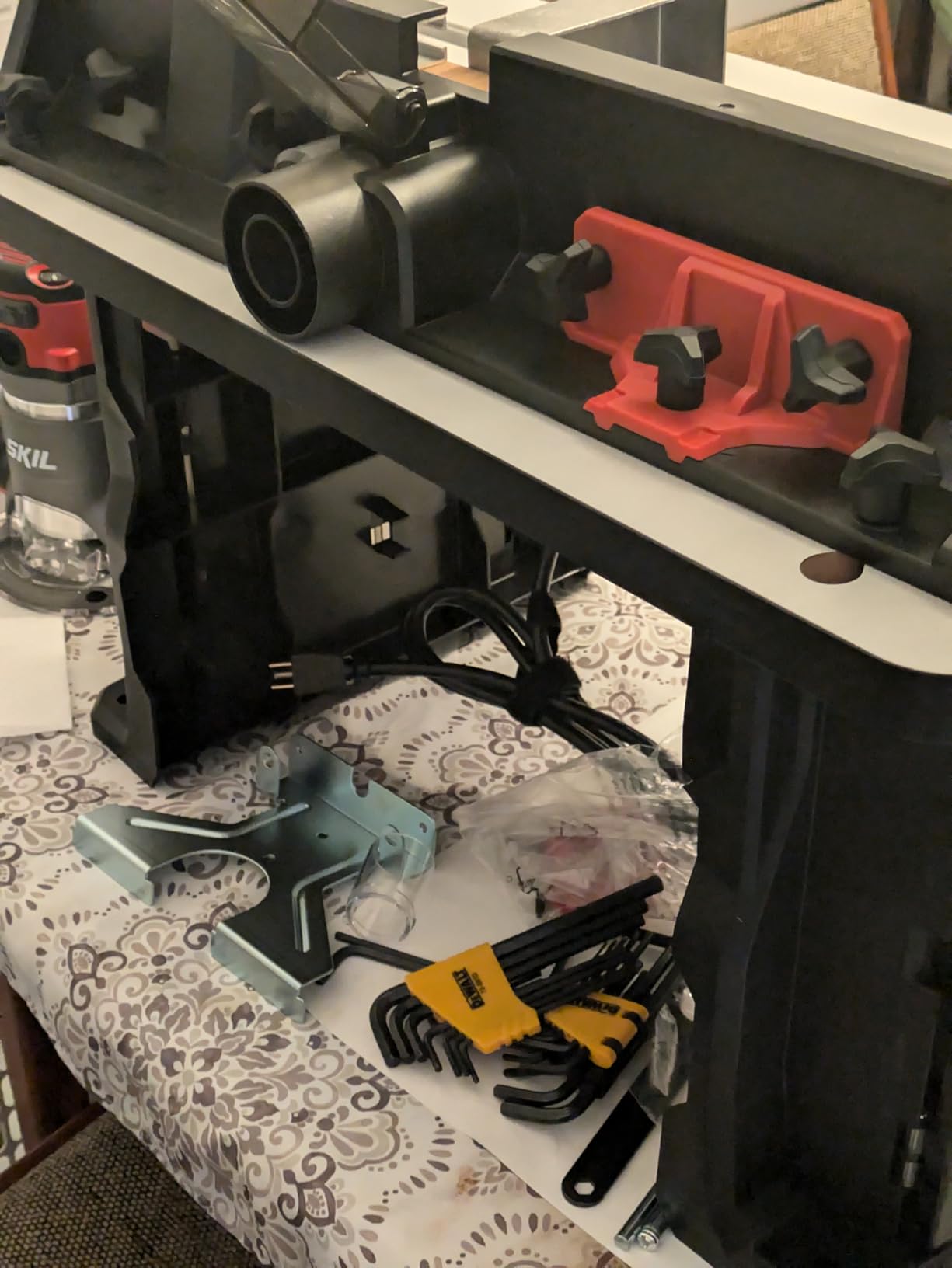
The motor is the quiet strength. At 2.0 HP with soft start, speed control from 10000 to 25000 rpm and a live-tool indicator, it powers through MDF, pine and cherry without straining, which is more than most routers of this size can say about the work they are asked to do. The 24 inch fence with adjustable MDF faceplates handles taller workpieces than most fences in this group.
Reviewers report the recurring criticism clearly: the fence flexes. For dadoes, grooves and edge profiling on small workpieces, that is a non-issue. For serious jointing or very fine precision work, it is worth knowing about before you buy. Removing the motor for a bit change can also be awkward without a custom stand, and the MDF laminate top wants care around moisture.
Where the SKIL kit earns its place
The feature-per-carton ratio is the story. Above-table adjustment, integrated bit storage, a starter pin and two featherboards are usually the first things omitted when manufacturers cut a table down, and here they are standard. For a first router table in a small shop, that is the shortest path from a bare bench to productive routing.
The 2.0 HP motor also gives you headroom later. If you move on to larger bits or hardwood, you already have the power, which is not something you can say about a table-only purchase paired with a small trim router.
Where the SKIL kit falls short
Fence rigidity is the honest limitation, and several buyers treat it as too soft for precision work. The bit storage cubbies function but are poorly laid out, and the table height sits a little high when placed on a tall workbench, so plan your stand height before the first cut.
One practical warning from owners: follow the mounting instructions carefully, because the switch box can sit in front of the dust port if the motor is mounted the other way round. Missing fence knobs have shown up in a few kits, though support resolved them quickly.
3. POWERTEC 71402V Benchtop Router Table – steel stand and the best dust control
POWERTEC Benchtop Router Table with Steel Stand and Adjustable Fence – 24″ x 16″ MDF Laminated Top, Insert Plate, 2-1/2″ Dust Port, Fence Stop, Featherboard & Additional Accessories (71402V)
Weight: 27.5 lb
Top: 24 x 16 in laminated MDF
Stand: steel with rubber feet
+ The Good
- Steel stand damps vibration better than plastic legs
- Heavy solid fence with many adjustments
- Four reducing rings with tool-free swaps
- Eight leveling points for plate height
- Featherboard and bit guard included
- The Bad
- Fence brackets narrow only to about 18 in
- Retaining rods feel thin for their size
- Insert plate is not universal to all routers
- No drilling template supplied
The POWERTEC 71402V wins on hardware mass. The stand is steel with vibration-absorbing rubber feet, and owners consistently notice the difference against plastic-leg tables, particularly on through-cuts in MDF where a light frame transmits chatter into the fence. In a small shop that chatter shows up as a fuzzy edge you have to sand anyway.
Dust control is the standout. The 24 inch fence carries an adjustable bit guard, a featherboard, a reversible flip stop, an integrated 2-1/2 inch dust port and a measuring scale, all in one assembly. Nothing else in this group puts a dust port, a guard and a stop on the same fence at this level of completeness.
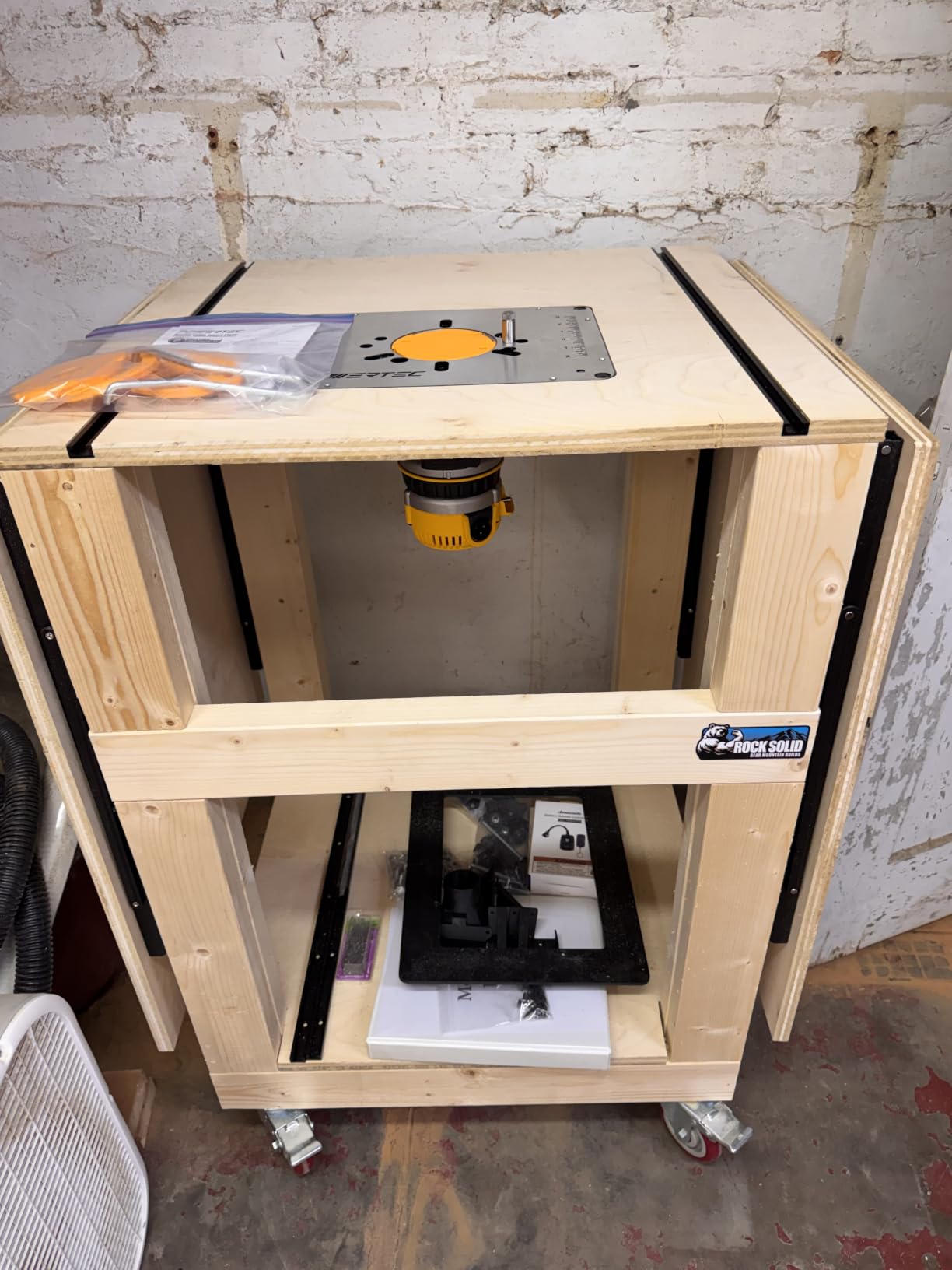
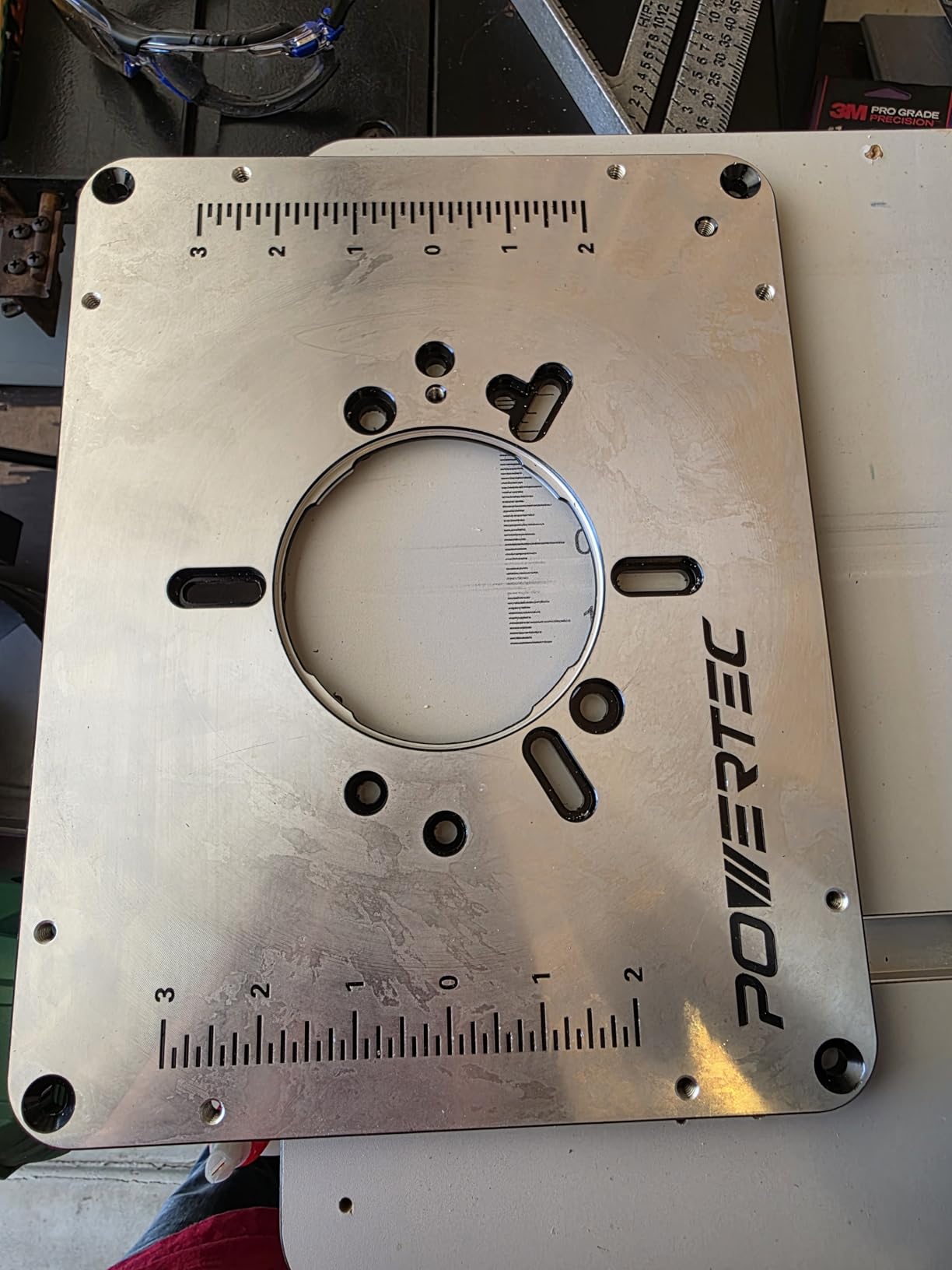
Plate setup is unusually well thought out. Four insert reducing rings cover solid, 1 inch, 1-7/8 inch and 2-5/8 inch, and they swap tool-free with the included ring wrench. Eight leveling points accept 3/8 or 5/8 inch leveling screws, so you can bring the insert plate flush with the top without shimming.
The catch is verification. The insert plate is not universal, and some router brands and models simply will not align with it, so check your motor before you commit. The fence brackets also narrow only to about 18 inches, which is a limit on fence placement, and the retaining rods feel thin for their size. No template is supplied for routing the tabletop opening if you need to modify the top.
Why the POWERTEC works for a dusty small shop
Anyone routing MDF or particleboard in a garage knows what chip cleanup costs in time. Having the bit guard, the featherboard and the port mounted on the fence means you hook a hose once and the whole assembly works together, instead of adding each piece as an accessory later.
The starting pin is another small-shop win. It helps with fence-free operations and reduces the pull that drags small pieces toward the bit, which is the difference between a clean part and one you sand anyway.
Why buyers return the POWERTEC
Compatibility is the main reason, and it is worth a five-minute check before ordering. The 18 inch minimum fence bracket width and the thin retaining rods are the other two recurring notes, and the missing drilling template is an annoyance if your setup is non-standard.
At 27.5 lb this is a sturdy table to carry, not a light one. If your storage spot involves a ladder or a loft, that weight is worth thinking about.
4. Leegol RT150 Electric Benchtop Router Table – extension wings and a jointing fence
Leegol Electric Benchtop Router Table Wood Working Craftsman Tool (Router Table A)
Weight: 7.98 kg
Top: 34W x 15H with wings
Wings: 8 x 18 in each end
Base capacity: 6 in diameter
+ The Good
- Extension wings at both ends add real surface area
- Aluminum main top is rustproof and light
- Heavy steel stand with a wide stance
- Fence plus jointing fence for vertical jointer use
- Accepts router bases up to 6 in
- The Bad
- Rating of 3.9 with 8 percent one-star reviews
- Steel-doored wings wear sooner than aluminum
- Jointing depends on a separate fence accessory
- Alignment and hardware complaints in reviews
The Leegol RT150 solves a problem the other tables here mostly ignore: surface area. Extension tables at both ends, each 8 by 18 inches, slide out to give you a much larger working footprint than the main slab offers. For wide panels, cross-grain routing and bigger glue-ups, that is the difference between working in pieces and working in one pass.
The main top is aluminum alloy, which is rustproof and light enough to move around a small shop without help. The structure is steel, and the wide-stance heavy-duty stand improves stability compared with narrow folding-leg designs. Buyers also like the retractable transparent guard that inserts into the fence to contain chips.
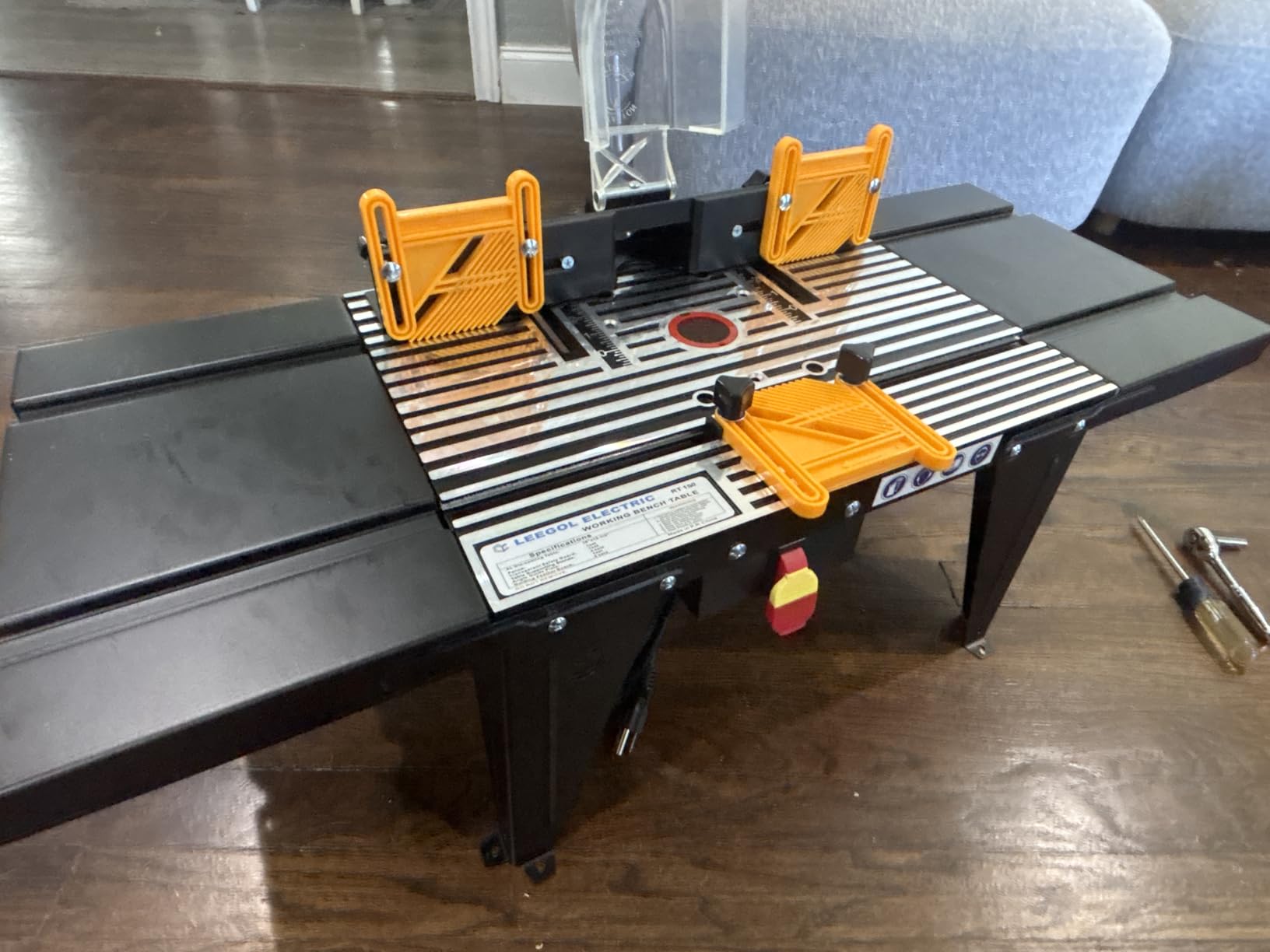
It accepts routers with base plates up to 6 inches, which is a wider envelope than most compact and mid-size plates allow. The multifunctional fence combines with a jointing fence so the table can double as a vertical jointer, and a miter gauge on the top handles straight and angled crosscuts.
Be clear-eyed about the rating. At 3.9 out of 5 across 589 reviews, this is the widest spread of experiences in our set: about half of buyers are delighted, while 8 percent one-star and 8 percent two-star reviewers report real problems. The most common themes are durability of the steel-doored extension surfaces and fence rigidity, and jointing depends on buying the jointing fence accessory rather than getting a standard two-part fence.
Where the Leegol RT150 makes sense
If your bottleneck is surface area rather than precision, the extension wings here are wider than anything else in the group. The 6 inch base capacity also means it will take a larger motor than most of the compact plates here, which widens your bit and workpiece options.
Its weight is manageable for one person, and the aluminum main surface will not rust in an unheated garage. For a hobbyist doing occasional panel work, the capability per square foot is real.
Where the Leegol RT150 will frustrate you
The extension wings are steel-doored rather than aluminum, and owners report they wear sooner under repeated contact. The jointing function is an accessory-dependent path, so budget for the jointing fence rather than assuming it comes with the table.
With the widest rating spread in the lineup, treat the 3.9 as a real signal. Owners cite consistency complaints around alignment and hardware more than a single defect, which usually means the table works once it is adjusted but asks more of you up front.
5. SKIL SRT1039 Benchtop Router Table – the same table without the motor
SKIL SRT1039 Benchtop Portable Router Table for SKIL Routers RT1323-00 & RT1322-00 (Router Not Included)
Weight: 24.2 lb
Top: 26 x 16 in MDF
Fence: 24 in with MDF faceplates
Clamp: fits most major brands
+ The Good
- Table only
- so you do not pay for a second router
- 26 by 16 in top with aluminum miter slot
- Above-table adjustment and bit storage
- Quick clamp fits most major router brands
- Featherboards and starting pin included
- The Bad
- Same fence design flexes under serious jointing
- MDF top and laminate faces wear faster than metal
- Some motors still need extra support
- No on/off switch included
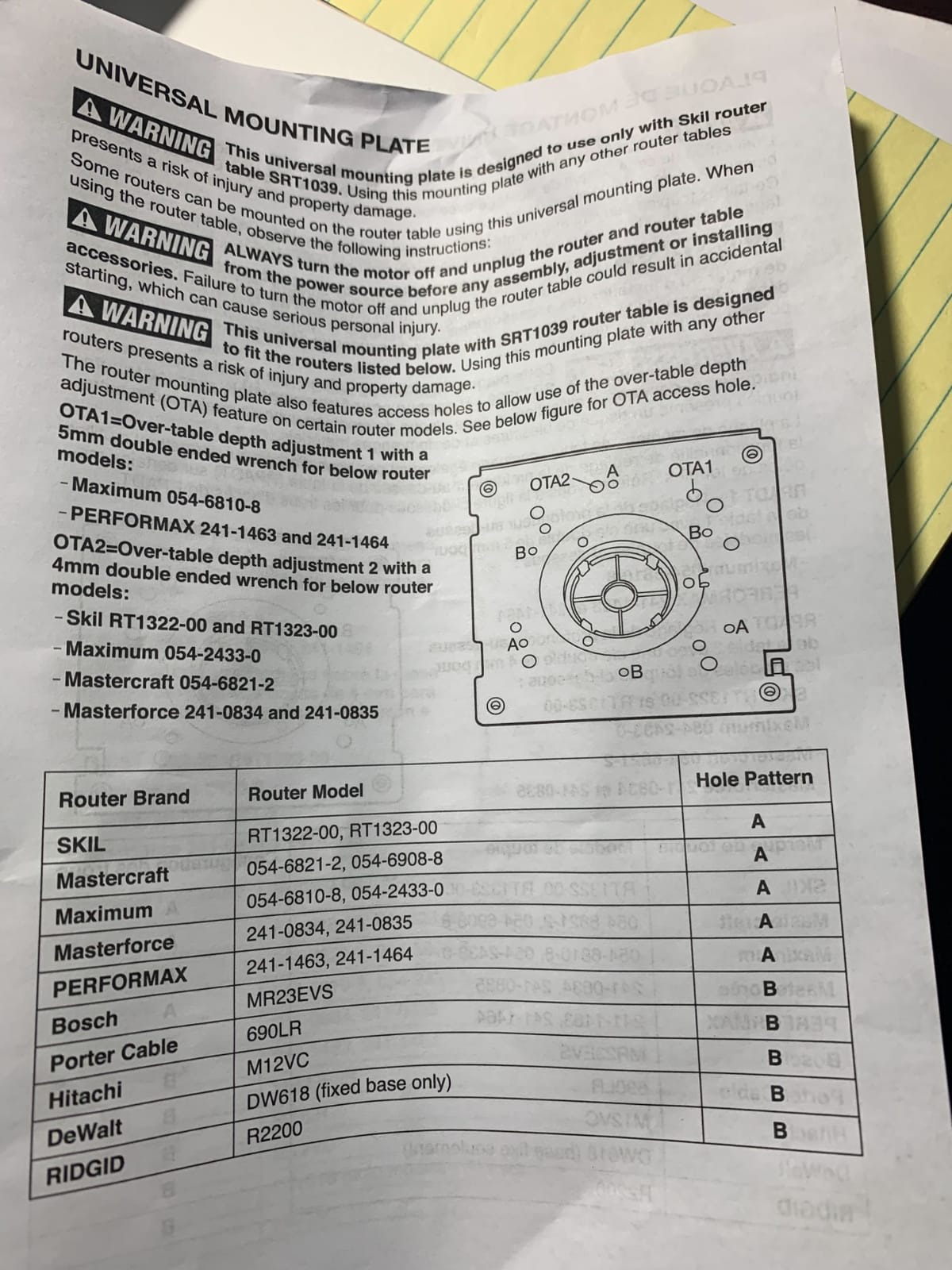
This is the table from the SKIL combo kit, sold on its own. If you already own a router, that distinction matters: you get the same 26 by 16 inch MDF top, the same 24 inch fence, the same above-the-table adjustment and the same dual-sided bit storage, without paying for a motor you do not need. The quick router clamp is designed to fit most major router brands.
Buyers point out that above-the-table adjustment and integrated bit storage are normally the first features cut from a table at this level, which is the reason this one punches above its class. Two featherboards and a starting pin are included as well, and the aluminum miter gauge slot handles longer workpieces than a plain MDF top would.
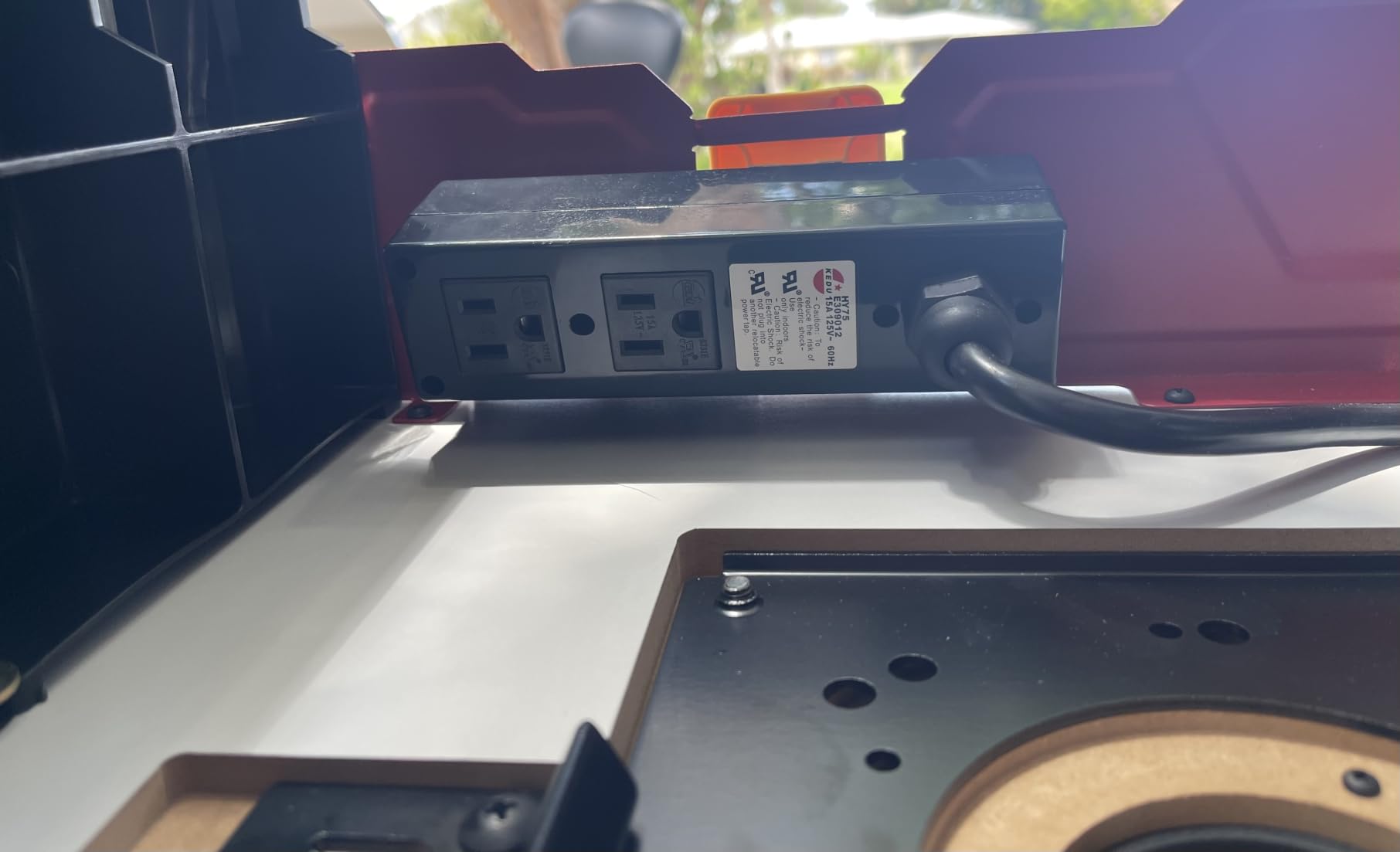
Because it shares the fence design with the combo kit, it also inherits the same criticism: the fence flexes under serious jointing loads. The MDF tabletop and laminate faceplates are less durable than a metal top, and the quick clamp can still leave some motors needing extra support underneath. There is no on/off switch, so you switch the router at the motor.
In a small shop, switching at the motor is a minor step once the routine is established, and it removes a piece of hardware you would never use. The trade is durability for convenience: MDF gives you a wider, softer top, while metal gives you a smaller, tougher one.
Why the SRT1039 fits an existing toolset
It is the straightforward choice when your router is already paid for and known to fit the clamp. The 26 by 16 inch top is wider than several tables in this roundup, and the miter slot plus router mounting plate give you room to run long workpieces.
For a shop that routes occasionally, the accessory set is more than adequate: featherboards for guidance and kickback protection, a starting pin for fence-free work, and storage for your bits close to the machine.
Why you might keep shopping
Fence flex is the repeated note, and MDF tops and laminate faces mark sooner than aluminum. The 24.2 lb weight is manageable but not light, and with no switch on the table, dust collection setup is entirely up to your vacuum arrangement.
If precision on jointing workpieces matters more than top size, the Kreg below is the stronger choice. If you want zero guesswork and a matched motor, the combo kit two sections up is the better path.
6. Kreg PRS2100 Bench Top Router Table – the widest top and plate levelers
Kreg Bench Top Router Table, Woodworking Router Table, PRS2100, Bench Top
Weight: 12 kg
Top: 30 in wide edge-banded MDF
Includes: jointing rods, bit guard
+ The Good
- 30 inch wide top handles long workpieces
- Leveled insert plate with Level-Loc rings
- Micro-dot skin reduces vibration and noise
- Jointing rods support edge jointing
- Fence tracks accept featherboards and flip stops
- The Bad
- Assembly is the hardest step of any pick here
- No switch and no featherboards supplied
- Plastic cam-lock fence parts
- Single fence-mounted dust port
- No built-in fence squaring adjustment
The Kreg PRS2100 is the precision answer, and the 30 inch wide top is wider than any other complete table here. Long parts, long edge profiles and full-length glue-up panels fit on it in one pass, which is the practical reason to buy a Kreg over a smaller table even when your bench space is tight.
Two design choices set it apart. The edge-banded MDF top carries a micro-dot skin, and owners report it noticeably reduces vibration and noise compared with entry-level tables. The insert plate comes with Level-Loc rings and plate levelers, so you can bring the plate flush with the top rather than shimming it, which is the difference between a clean edge and a burn on the first pass.
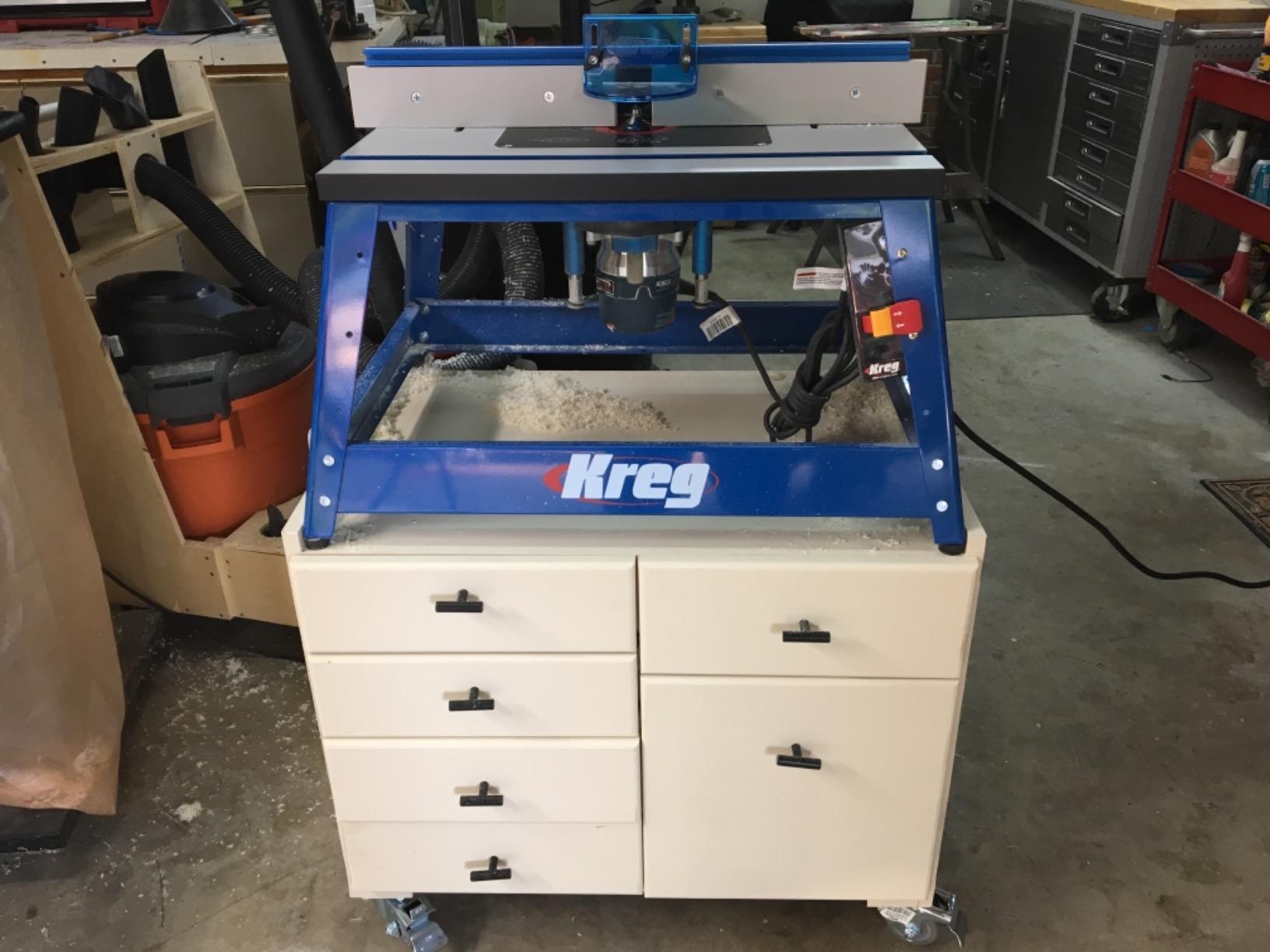
Jointing rods fit behind the fence for edge jointing small boards, and the fence tracks accept featherboards and flip stops as add-ons. A long-term owner credits the table with still being relevant after a decade, and another notes it works with third-party router lifts such as Jessem after a minor modification, which makes it the most upgradeable of the ten.
Assembly is the dominant complaint. Owners call it the hardest step in the roundup, with thin instructions and unlabeled parts bags, and the fence uses plastic cam locks that some replace with machine screws and knobs. Dust collection is a single 2-1/2 inch fence-mounted port, so dust falls under the table unless you add a splitter and an under-table cover.
Why the PRS2100 holds up to precision work
Plate levelers and a proper insert ring system do more for accuracy than any fence upgrade. If you cut dados, grooves and flush trims where a fraction of a millimeter shows, that is the feature to buy for, and the Kreg has it in a form that is easy to set.
The vibration-damping top also has a safety benefit that rarely gets mentioned: less transmitted noise means you can hear the difference between a clean cut and a burn, which matters when you are working alone in a garage.
Why the PRS2100 frustrates buyers
Budget for the missing pieces. There is no on/off switch and no featherboards supplied, so the real total climbs once you add them, and the plastic cam-lock hardware is the part most owners replace first. The fence has no built-in squaring adjustment, so check it against a reliable square before you trust a jointing cut.
Give yourself an unhurried evening for assembly. It is a precision instrument, not a snap-together kit.
7. Rockler Trim Router Table – a mounting plate for the smallest benches
Rockler Trim Router Table with Bit Guard, Adjustable Compact Router Table
Top: 3/4 x 11.5 x 15.5 in
Material: vinyl-wrapped MDF
Bit guard and pre-drilled holes
+ The Good
- Smallest footprint in the group
- Vinyl-wrapped MDF handles moisture better than bare tops
- Pre-drilled holes make trim router setup fast
- High-visibility bit guard on a small part
- Simple design with nothing to go wrong
- The Bad
- No integrated fence
- dust port or featherboards
- 11.5 by 15.5 in top limits workpiece size
- Still MDF
- so it marks and dulls over time
- Needs a separate bench or stand
Let us be clear about what this is. The Rockler Trim Router Table is not a router table in the sense the other nine products are. It is a compact mounting plate with a bit guard, sized for trim router work, and it bolts to whatever bench you have. For a shop where the only free surface is a narrow shelf, that honesty is the feature.
The top measures 3/4 by 11-1/2 by 15-1/2 inches, which is enough for template routing, flush trimming, small joinery and shaping small parts, so a 1-1/4 inch thick top holds the plate rigid. Pre-drilled mounting holes mean a trim router drops in without a drilling template, and the high-visibility bit guard makes the bit easier to see on small work where the cut is close to your hands.
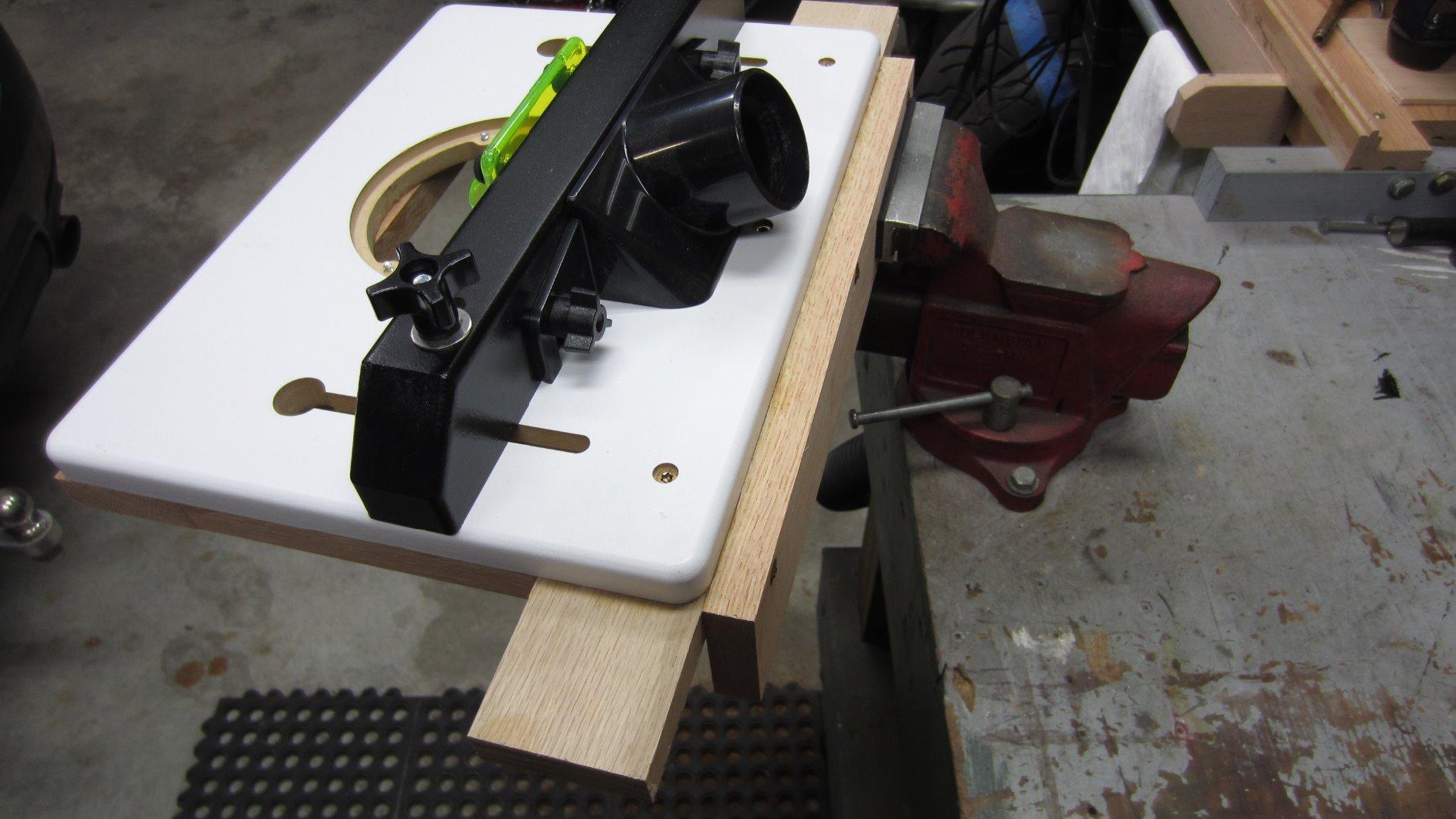
The vinyl-wrapped MDF is a smarter material choice than bare melamine, and it resists moisture better in an unheated shop. Reviewers like the compact size, the wrapped surface and the pre-drilled holes, and the design has almost nothing to fail.
What it does not have is a fence, a dust port or featherboards, so jointing and dado work are out of scope. Vinyl-wrapped MDF is still MDF and can mark or dull over time. The rating of 3.9 out of 5 across 411 reviews reflects the limited feature set, with 17 percent of buyers at two stars or below, the highest negative share in this group.
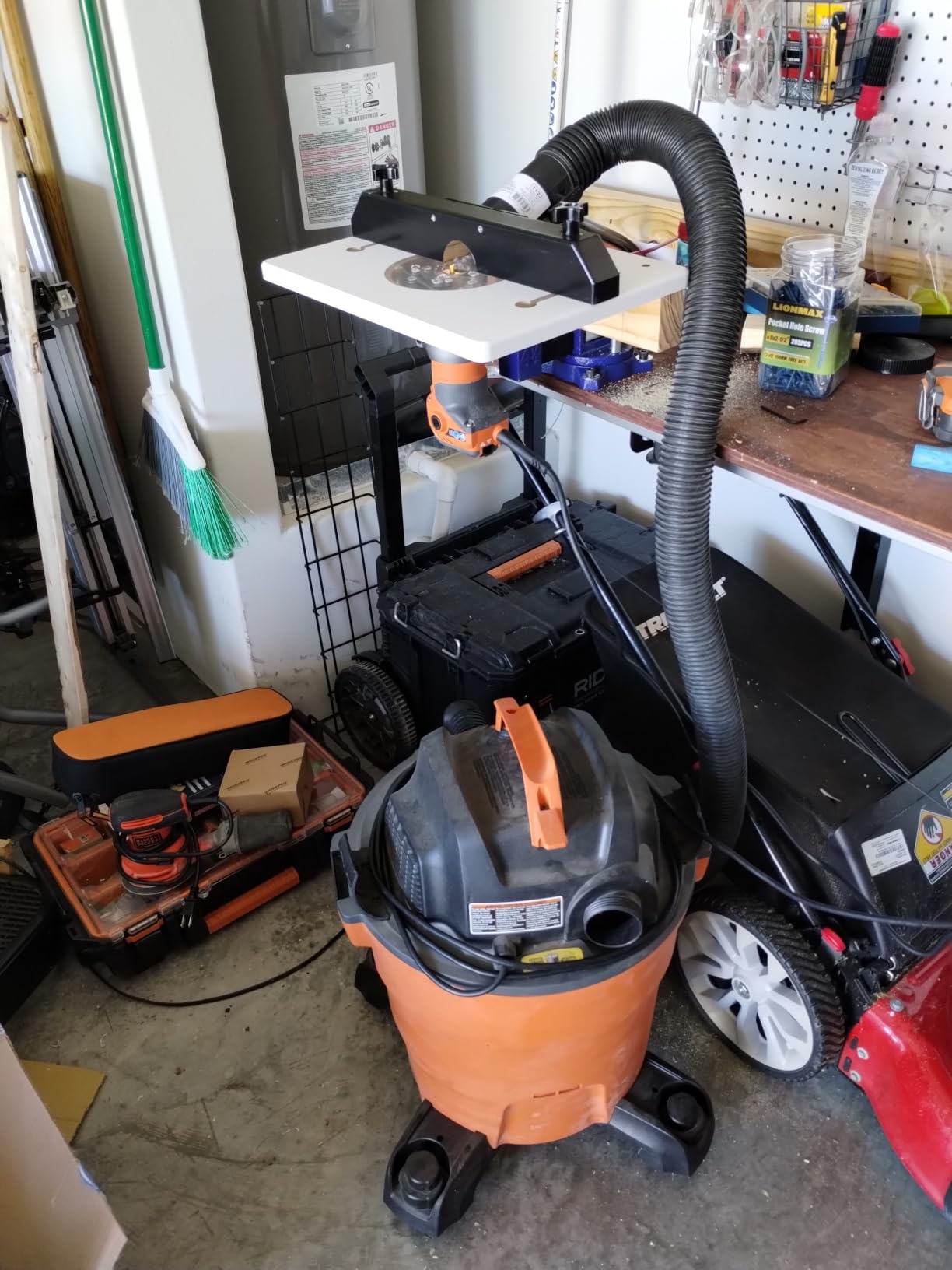
Where the Rockler plate is the right call
If your shop is genuinely at the limit, footprint beats features. A 15-1/2 inch long table can live on a shelf or a corner bench between jobs and still be there when you need it, and there is no stand to store.
For template work and flush trimming with a compact trim router, the pre-drilled holes and the guard are the whole point. It does one job cleanly and simply.
Where the Rockler plate leaves you short
Any workpiece wider than about 11 inches is a fight, and edge work without a fence means guiding by eye or building a stop. There is no dust extraction, so a shop vacuum has to be positioned underneath by other means.
Think of this as the trim-router accessory it is, not as a router table. If you expect to do dados, grooves or jointing, step up to a full table.
8. RYOBI Universal Router Table A25RT03 – metal build and a dual-outlet switch
RYOBI Universal Router Table A25RT03
Weight: 28 lb
Dims: 18.25W x 32H
Material: metal
Includes: fence, featherboard, guard
+ The Good
- Sturdy metal construction that assembles easily
- Fence
- featherboard
- miter gauge and guard included
- 28 lb weight stays stable during cuts
- Feels more capable than entry-level tables
- Direct fit for Ryobi corded routers
- The Bad
- Despite the name
- not universal - no fit for compact or Ryobi One routers
- The two fence halves do not align perfectly
- Centralized fence adjustment lets one side pivot
- Slide guide is wider than standard three-quarter inch
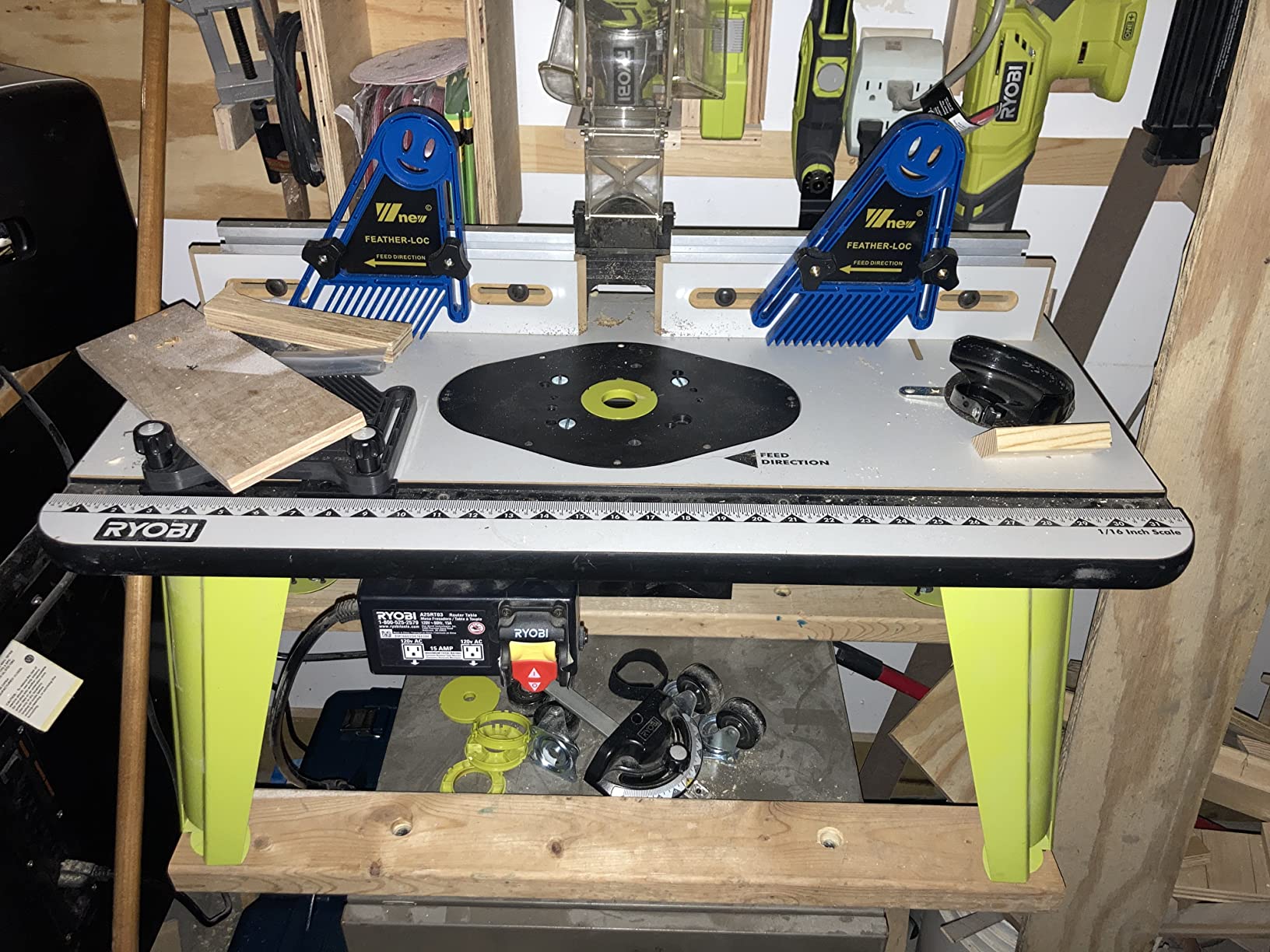
The A25RT03 brings metal construction into a category dominated by MDF slabs, and owners rate it well above the entry-level tables for build quality and completeness. Several buyers describe it as the most capable router table they have owned, which is a strong statement in a field full of MDF tops.
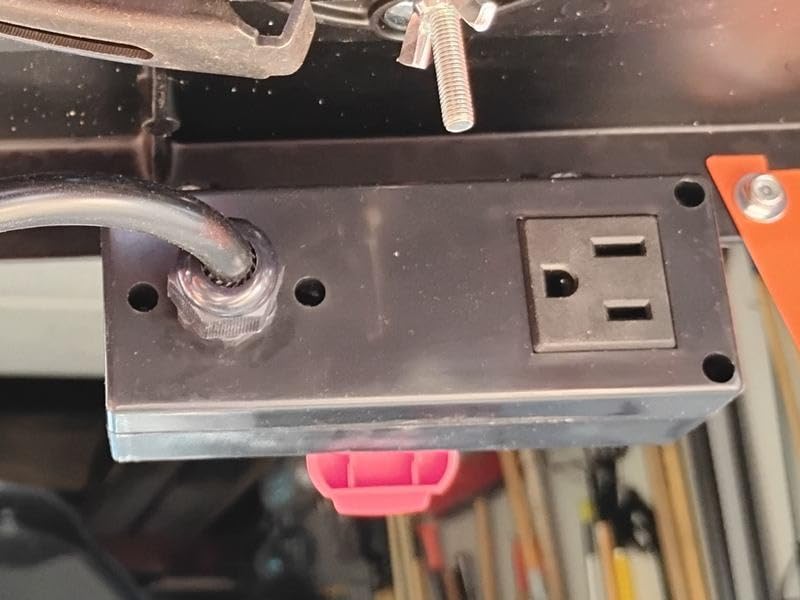
The feature list is generous: an easily adjusted fence, a featherboard, a miter gauge, a functional bit guard and a dual-outlet switch with an integrated cord. In a small shop, having two outlets on one switch means the router and the vacuum start together, and at 28 lb the table resists walking under a cut.
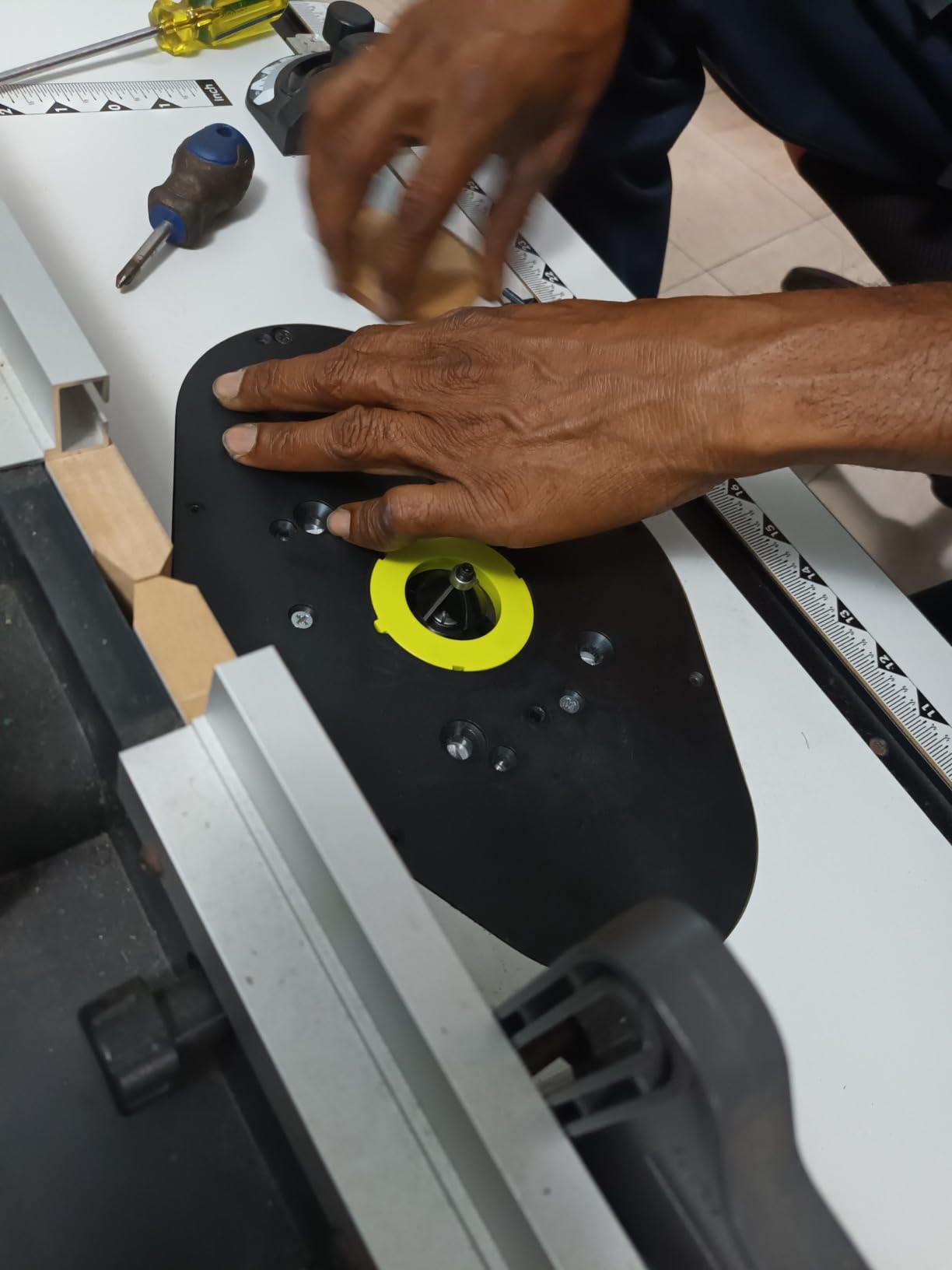
Compatibility is the trap, and it is worth reading twice. Despite the universal name, it does not fit Ryobi One tools or compact routers such as the Wen RT-6033 without modification. Several buyers bought it expecting a compact-router fit and had to modify or return, so confirm your motor before ordering.
The fence has two further quirks owners mention repeatedly. The two halves do not align perfectly, and because the adjustment is centralized rather than a two-point system, one side of the fence can pivot. The table slide guide is also wider than the standard three-quarter inch, so table-saw featherboards will not fit it, and the switch cord is reported as too short.
Why the A25RT03 works well
Metal construction is the differentiator in this class, and it shows in how the table feels under load and how it ages. If your shop is shared or used heavily, a metal frame outlasts an MDF top with a plastic base.
A featherboard and a miter gauge supplied with it mean you can do glue-up and crosscut work on day one.
Why you should check compatibility first
This is the single most common reason buyers regret this table, and it is entirely avoidable. A five-minute check of your router base against the mounting pattern saves the return.
Fence alignment is the second issue. The pivot and the mismatched halves are workable but demand a careful square-up before a precision cut, and the non-standard slide width rules out standard table-saw featherboards.
9. Kreg PRS1025 Precision Router Table Top – the build-it-yourself core
Kreg Precision Router Table Top, Woodworking Router Table Top, PRS1025
Weight: 26.8 lb
MDF top with steel struts
Plate: 4 levelers
Aluminum miter and T-slot track
+ The Good
- MDF top with steel struts absorbs vibration from heavy routers
- Low-friction Easy-Slide laminate
- Four insert plate levelers keep plate flush
- Aluminum track accepts miter bars and T-slot accessories
- Predrilled for levelers on a custom bench
- The Bad
- Top only
- so you supply the bench
- stand or legs
- No fence included
- A separate fence may be needed for jointing work
- MDF still needs protection from moisture and impact
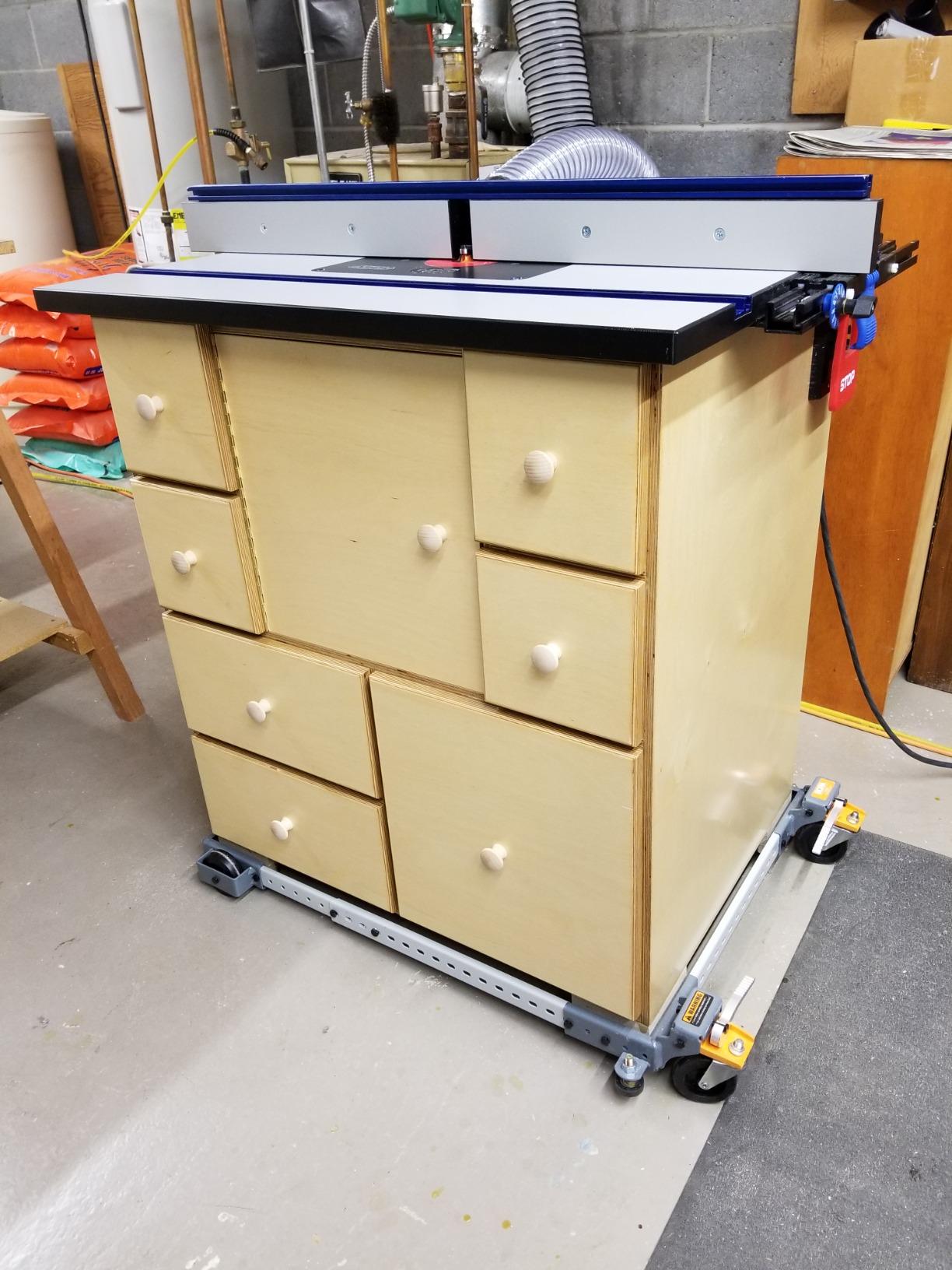
The PRS1025 is not a table, it is the best part of one. Buyers building their own bench treat it as the quality core of a custom router station, and in a small shop that route makes a lot of sense, because you can build the stand to fit the exact footprint you have and the height you need.
The construction is the story. An MDF top with steel reinforcing struts underneath absorbs vibration from heavy routers, and the low-friction Easy-Slide laminate surface is easy on coatings and reduces drag on the workpiece. That combination is why owners building stations around full-size motors like it.
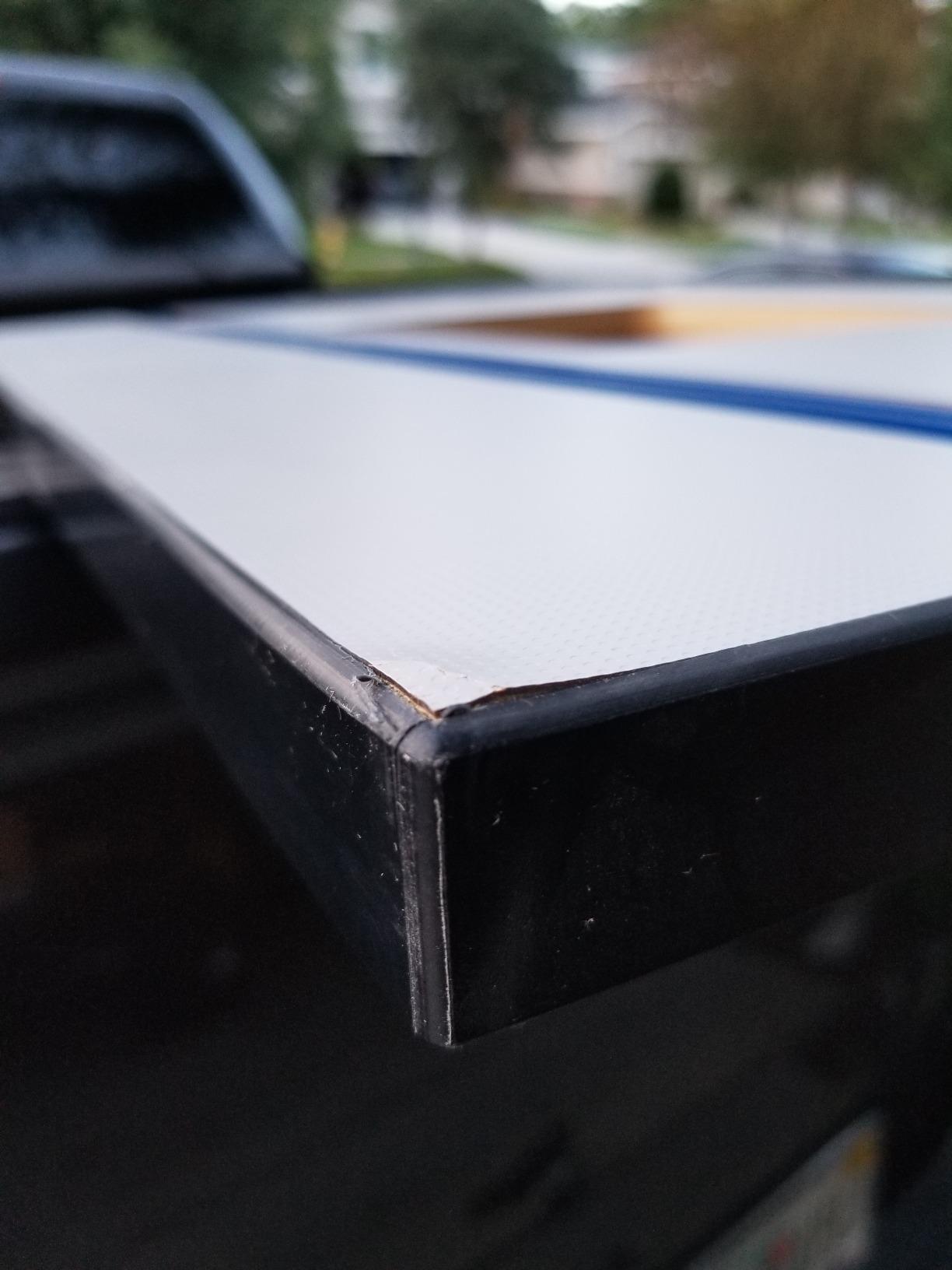
The 3/8 inch insert plate comes with four precision levelers, three Level-Loc reducing rings at 1 inch, 1 3/16 inch and 2-5/8 inch, a ring wrench and a brass starting pin. The top is predrilled for the levelers, which removes the single most error-prone step in building a router station: aligning and drilling the plate.
The aluminum track is a combination miter-gauge and T-slot track, so it accepts both miter gauge guide bars and T-slot accessories from the start. Remember what is not here: no bench, no legs, no fence and no switch. The full system costs more than the part alone suggests, and jointing work needs a separate fence.
Why the PRS1025 is worth building around
Custom builders get the three things that are hardest to make yourself: vibration damping, a leveled plate and an accessory track. The predrilled leveler holes in particular save hours of layout work and the most common source of a plate that sits proud.
It is also the natural upgrade path. Once you have your own stand, swapping in a router lift later is a smaller project than starting from a closed table.
Why it is not the right buy for everyone
It is a top only. If you do not already have a bench or a stand that fits, you are starting a project, and building a simple MDF base is not a small task. No fence means jointing and edge work need a separate fence.
The top is still MDF, so protect it from moisture and heavy impact. If you want a table you can set up in ten minutes, choose one of the complete units above instead.
10. VIYUKI Universal Electric Benchtop Router Table – 14.5 lb and easy to move
VIYUKI Universal Electric Benchtop Router Tables Wood Working Craftsman Tool
Weight: 14.5 lb
Dims: 17.71 + 7.87 x 2 by 12.99 in
Material: die-cast aluminum
+ The Good
- Lightest table in the group at 14.5 lb
- Die-cast aluminum top resists rust
- Iron extension wings and wide-stance stands
- Retractable fence guard contains chips
- Accepts router bases up to 6 in
- The Bad
- Only 46 reviews
- the thinnest review base here
- Four wing-nut router clamps may not hold a motor
- Fence reported short and low
- Instructions and quality control criticized
Weight is the headline for this one. At 14.5 lb it is the lightest benchtop table in the group by a wide margin, and in a small shop weight is not a vanity metric. If your table lives on a loft shelf, a mezzanine or the tail of a pickup bed, this is the only one of the ten you can move one-handed without a second trip.
The top is die-cast aluminum with iron extension tables, which is rustproof and rigid for the class. The wide-stance iron stands improve stability, and the retractable guard that inserts into the fence keeps chips contained on small work. It accepts routers with base plates up to 6 inches, and can be adapted to carry a jig saw or circular saw as a second function.
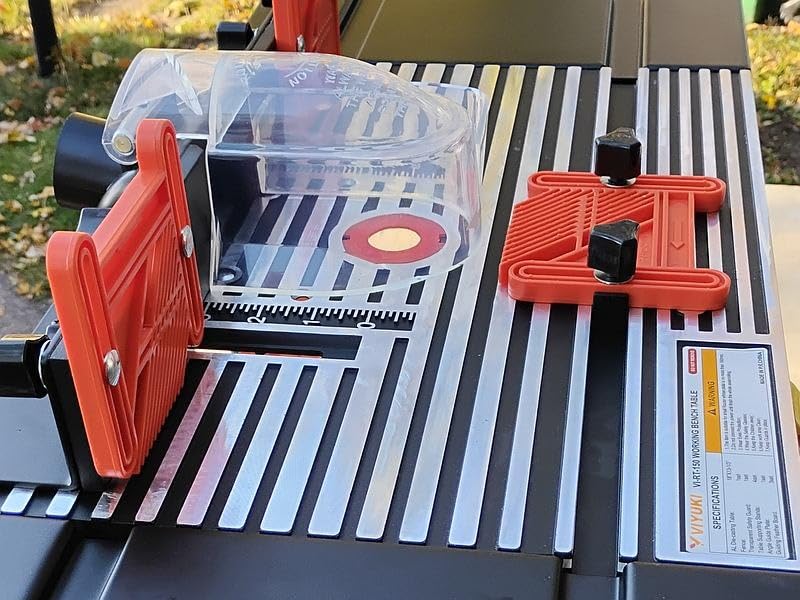
Owners generally find it works once assembled, and the aluminum top is the thing they praise most. But the review base is thin at 46 ratings, which is far fewer than any other pick here, and that is worth weighing honestly when you are buying a machine that will cut wood.
The specific defects owners describe are fixable but real. The fence is reported as too short and too low, prompting at least one owner to build a replacement, and the wide gaps between the aluminum extrusion ribs let small shaped pieces drop into the grooves. The four wing-nut router clamps were reported by one owner as unable to hold the motor securely, which is a safety point rather than a comfort point.
Where the VIYUKI table makes sense
Portability is the use case. If you need a routing station for one project in a rented space, on a job site or in a shared shop, carrying 14.5 lb instead of 28 lb is the difference between doing it yourself and needing help.
The 6 inch base capacity also gives you more router choice than most compact plates, and the retractable guard is genuinely useful on small work.
Where it will cost you time
Plan to verify the router mount holds before the first cut, and check the fence height against the workpiece you intend to run. Wide gaps in the top surface are a real hazard for small shaped pieces, so keep those off the machine or sweep them frequently.
With 46 reviews and reports of missing hardware and a non-working safety switch on individual units, inspect the machine the day it arrives. This is the one pick where we would buy a higher-reviewed alternative if you can.
How to Choose a Benchtop Router Table for a Small Shop?
Benchtop or freestanding. A freestanding router table gives you a larger top, heavier construction and usually a router lift, and it needs a permanent footprint. A benchtop table gives you a machine on the bench you already have and somewhere else to put it tomorrow. If your shop has room for a permanent machine, freestanding is the better tool. If floor space is the constraint, a benchtop table is the only honest option.
Table height against your bench. Most benchtop tables are taller than a standard workbench, so the table often ends up on the floor or on a separate stand. Measure your bench height before you buy and plan for a low adjustable tool stand if the table will not sit directly on the bench top at a comfortable working height. Getting this wrong is the most common reason a new table ends up in a corner unused.
Tabletop material. Aluminum tops are rigid, level and moisture-resistant, which is why the Bosch and the Ryobi lead on feel. Laminated MDF tops are wider and absorb vibration well, especially with steel reinforcement, but they mark and dull sooner. Whichever you choose, level the insert plate to the top before the first cut, because an unleveled plate burns the workpiece on every pass.
Matching the table to your router. Check three things before ordering: the base diameter of your router against the insert opening, the mounting hole pattern against the plate, and whether the plate is universal or brand-specific. The POWERTEC plate and the RYOBI table both have documented fit limitations, and compact trim routers are the most common mismatch. If the plate is blank or not pre-drilled, build a paper or MDF template to mark the opening before you cut the top.
Split fence versus single fence. A two-part fence lets you back the workpiece off the bit by a measured amount, which is what makes edge jointing and glue-ups practical. A single fence is simpler and lighter, and most fences in this roundup rely on jointing rods, shims or a separate jointing fence instead. Decide which joinery you actually plan to do before paying for the feature.
Miter slot, T-track and featherboards. A miter gauge slot handles crosscuts on the table itself. A T-slot accepts featherboards, stops and hold-downs, and it is also where the router lift goes if you add one later. Featherboards are the cheapest safety upgrade you can buy: they support the workpiece and reduce the chance of a kickback on a narrow part. Several tables here include a pair, and several do not, so check what each table includes against your needs.
Dust collection. A single fence-mounted port is standard, and a Y with an under-table cover is the practical upgrade. The POWERTEC and the SKIL combo approach this more completely than the Kreg, so if you route MDF in an enclosed space, weight that more heavily than fence width.
Two more shortcuts while you are comparing. If you need more router options, start with the router bit sets comparison, since bit diameter and shank decide what a compact plate can handle. And if you are short on bench room generally, our picks for the best benchtop belt sanders and the best benchtop drill presses are built around the same footprint logic.
How to Store a Router Table in a Small Shop?
Storage is the question that decides most small-shop purchases, and the stored footprint matters more than the working footprint. Four approaches cover almost every shop:
Park it under the bench. The lightest tables, like the 14.5 lb VIYUKI, slide under a typical workbench without lifting. Clear the floor space first and plan the clearance height before you buy.
Choose a folding profile. A table that collapses flat stands on end against a wall between jobs. This is the feature garage shops ask for most often, and it is worth more to them than any fence upgrade.
Mount it on the wall. Bracket-mounted tops and plates, including the Kreg PRS1025-style top with a custom stand, take the table completely off both the floor and the bench. Build the bracket to the top’s thickness and fix it into studs.
Roll it. A low adjustable tool stand or a rolling cart lets you set the table at working height and move it aside when you need the bench. This also solves the bench height mismatch described above. If you are also choosing a stand, the best benchtop planers roundup covers the same height and stability questions.
When a Benchtop Router Table Is the Wrong Buy?
Three cases. First, a full-size high-horsepower router on a heavy cabinet: the lighter benchtop builds in this roundup are not designed to carry a large motor continuously, and a purpose-built freestanding table is safer and more accurate. Second, wide panel work: if your typical workpiece will not sit fully on the top with the fence engaged, you are fighting the machine rather than using it. Third, daily production volume. A benchtop table is a second or third machine in a small shop, not the station your output depends on.
If those describe you, spend the money on a freestanding table and a router lift instead. You will pay more and get more.
Tips for Using a Router Table Safely
Clamp the table to the bench before every cut. It is the single most important habit with a benchtop router table, and it is the step most often skipped.
Use featherboards on every narrow workpiece, both above and below the cut, and always work outside the spin zone. Check that the collet and the router base bolts are tight, and re-check them after the first few cuts as the assembly settles.
Use a push block for end grain and any cut where the grain will try to pull the piece toward the bit. Set the fence before the motor starts, not after, and make sure the bit guard is in place rather than removed for a clear view.
Finally, sweep the top between cuts. Chips left on an insert ring or in a rib gap are the most common cause of both kickback and a ruined surface, and on the ribbed aluminum tops in this roundup they also swallow small parts.
Frequently Asked Questions
Are benchtop router tables good?
Yes, for edge work, dados, grooves, flush trimming and template routing on small and medium workpieces in a shop with no floor space. The trade-offs are workpiece size limits, the need to clamp the table down, and lighter builds that will not carry a full-size high-horsepower router.
Which router table is better, Bosch or Kreg?
The Bosch RA1181 is the more complete package: aluminum top and fence, featherboards and a power switch supplied. The Kreg PRS2100 is the more precise and wider option, with a 30 inch top, leveled insert plate and jointing rods, but it comes without featherboards or a switch and is harder to assemble. Choose Kreg for precision and top width, Bosch for everything in one carton.
What are the best router tables according to reviews?
Across the ten tables we compared, the Bosch RA1181 leads on rating and review volume, the SKIL RT1323-01 combo leads on rating because it includes a matched 2.0 HP router, and the Kreg PRS2100 leads on precision and top width. For the smallest benches, the Rockler trim router plate takes up almost no space at all.
Will my router fit the table?
Check the base diameter against the insert opening, the mounting hole pattern against the plate, and whether the plate is universal or brand-specific. Some tables, including the RYOBI A25RT03 and the POWERTEC 71402V, have documented fit limitations with compact or Ryobi One routers. Most mid-size routers fit the Bosch, Kreg and SKIL plates directly.
Do I need to clamp a benchtop router table to the bench?
Yes. A benchtop router table weighs enough to be a hazard and light enough to walk under a cut, so clamp it to the bench before every operation. A vibrating benchtop router table produces uneven fences, inconsistent depth and a genuine kickback risk, none of which are worth saving two minutes on setup.
How do I store a router table in a small shop?
Four options work: park a light table under the bench, choose one with a folding profile that stands on end, mount the top on wall brackets, or put it on a low rolling tool stand. The stand option also solves the common problem that benchtop tables are taller than a standard workbench, and a rolling cart is a good partner for compact machinery such as the benchtop band saws we cover here.
How thick should a router tabletop be?
A top around 1-1/4 inches is the common range on benchtop router tables, and thicker is better on a build-it-yourself version. Material matters as much as thickness: aluminum tops stay rigid and flat, while MDF tops should be reinforced with steel struts to damp vibration. Either way, level the insert plate to the top before the first cut.
The Best Benchtop Router Table for Small Shops in 2026
The Bosch RA1181 is our pick for the best benchtop router tables for small shops. Its aluminum top stays flat, the tall fence holds position, and the featherboards, jointing shims and switch all come with it, which matters more in a cramped shop than any single premium feature. At 5135 reviews and 4.5 out of 5, it also has the deepest owner record in the group.
If you do not own a router yet, the SKIL RT1323-01 combo is the faster start, with a matched 2.0 HP motor and above-table bit changes. If your bench is barely there, the Rockler trim router plate occupies almost no space. And if you would rather build your own stand, the Kreg PRS1025 top is the core that serious custom stations are made from.
Whichever you pick, measure the bench, check the router fit and clamp the table down. Those three steps decide whether a benchtop router table earns its place in your shop.