
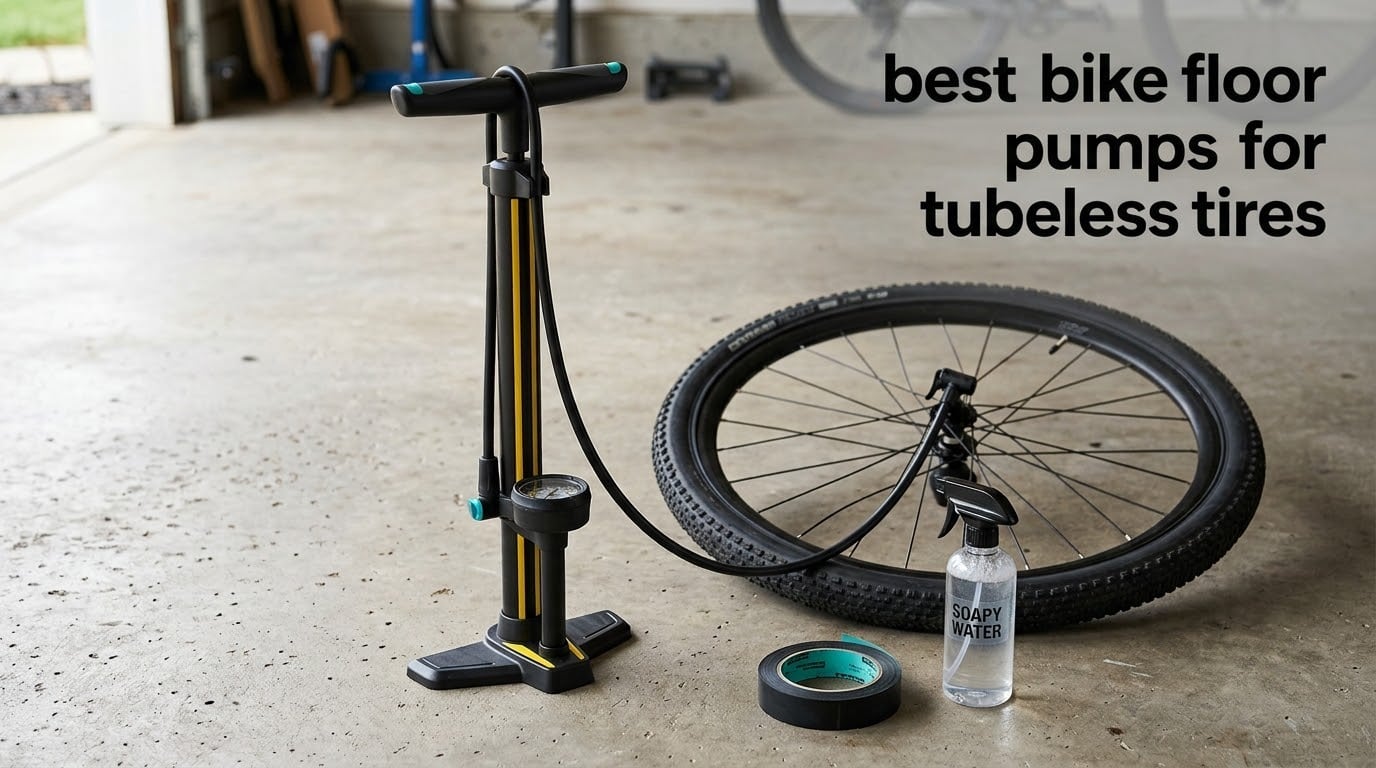
The best bike floor pumps for tubeless tires are the ones that store a big slug of air before they hit the bead. Our top pick is the Topeak JoeBlow Booster, which pairs a 160 psi aluminium reservoir with a long hose and a release head. The Topeak JoeBlow Sport III is the pick for riders who just want a dependable everyday pump, and the LEZYNE High Volume Tubeless is the one mountain bikers lean on for stiff plus-size casings.
Most tubeless failures are not pump failures. Riders point the blame at the pump, but a bead that will not seat is usually a preparation problem: dry rim tape, a bead edge sitting proud of the rim bed, or a tire mounted without lubricant. Pump choice matters, though, because a standard floor pump pushes air one small stroke at a time while a tubeless bead needs volume delivered fast.
We built this roundup around what actually separates the ten pumps below: reservoir volume, valve head behaviour, gauge resolution at low pressure, base stability and how well the pump doubles as a daily inflator afterwards. Every rating and review count below is copied from the current listing, and each pick carries a clear verdict on who should and should not buy it. Last tested in 2026.
One note before we start: if your real problem is inflating car tyres, sand, or off-road vehicle rubber, that is a different machine entirely. Our guide to the best portable air compressors for off-road tires covers that category.
Top 3 Picks for Tubeless Tires in October 2026
All 10 Floor Pumps Compared in October 2026
Every pump in this roundup, side by side. The key column to read first is the reservoir: only the JoeBlow Booster and the LEZYNE High Volume Tubeless carry a secondary air chamber that can seat a stubborn bead on its own.
| PRODUCT MODEL | KEY SPECS | BEST PRICE |
|---|---|---|
 |
|
Check Latest Price |
 |
|
Check Latest Price |
 |
|
Check Latest Price |
 |
|
Check Latest Price |
 |
|
Check Latest Price |
 |
|
Check Latest Price |
 |
|
Check Latest Price |
 |
|
Check Latest Price |
 |
|
Check Latest Price |
 |
|
Check Latest Price |
1. Topeak JoeBlow Booster – Best Overall Tubeless Floor Pump
Topeak JoeBlow Booster Tubeless Tire Floor Pump – Dual Function Air Compressor & Standard Pump, 160 PSI Capacity, SmartHead DX3, Black
160 psi air chamber
SmartHead DX3 head
2.9 kg
Anodized aluminum barrel
+ The Good
- Integrated chamber seats beads where standard pumps fail
- Anodized aluminum barrel and steel base feel rigid
- Long hose works with the bike on a stand
- One-hand dial switches boost and normal pumping
- The Bad
- Analog gauge lacks fine graduations at low pressure
- Schrader attachment reported unreliable
- Small rigid base plate needs flat ground
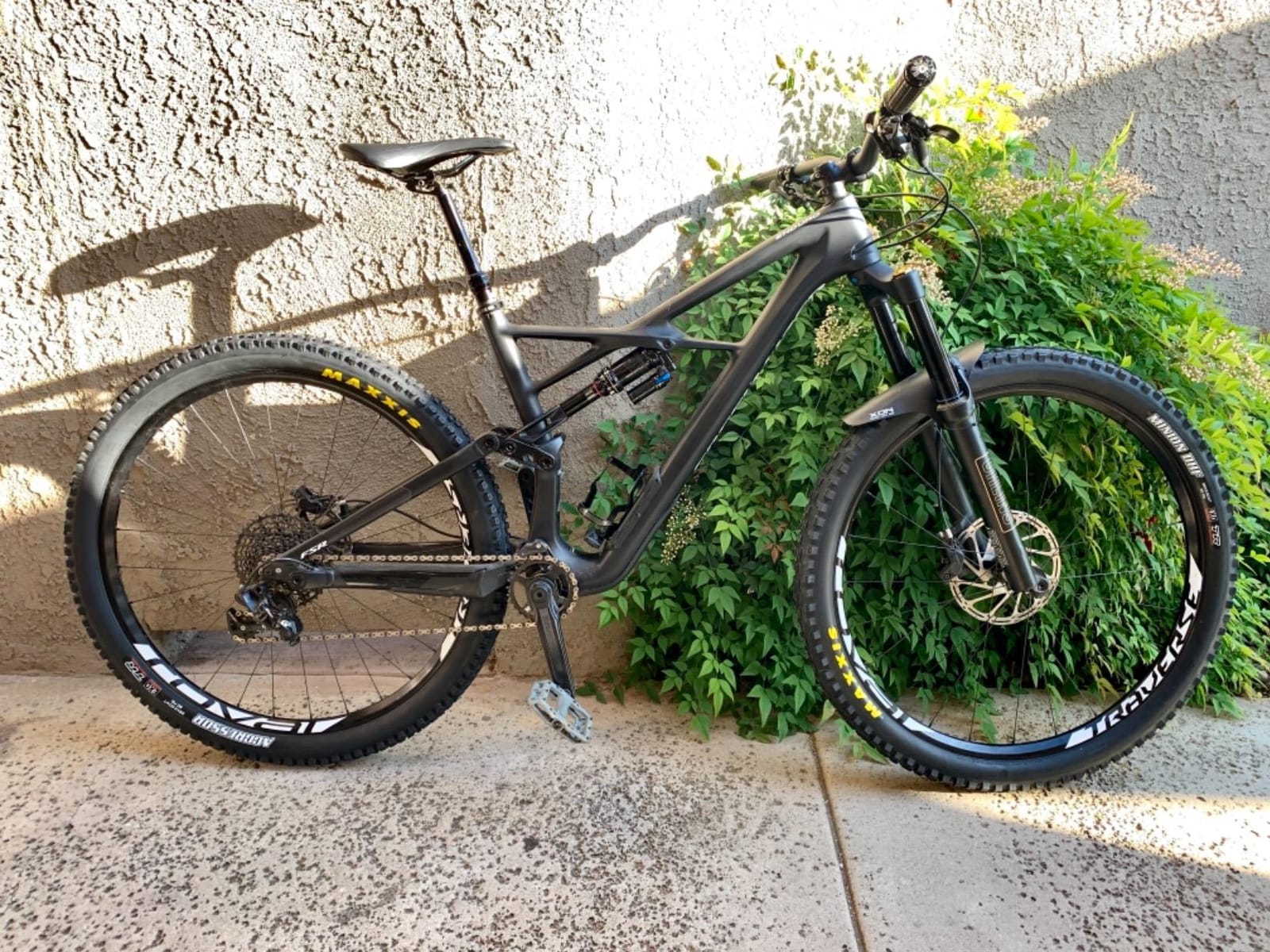
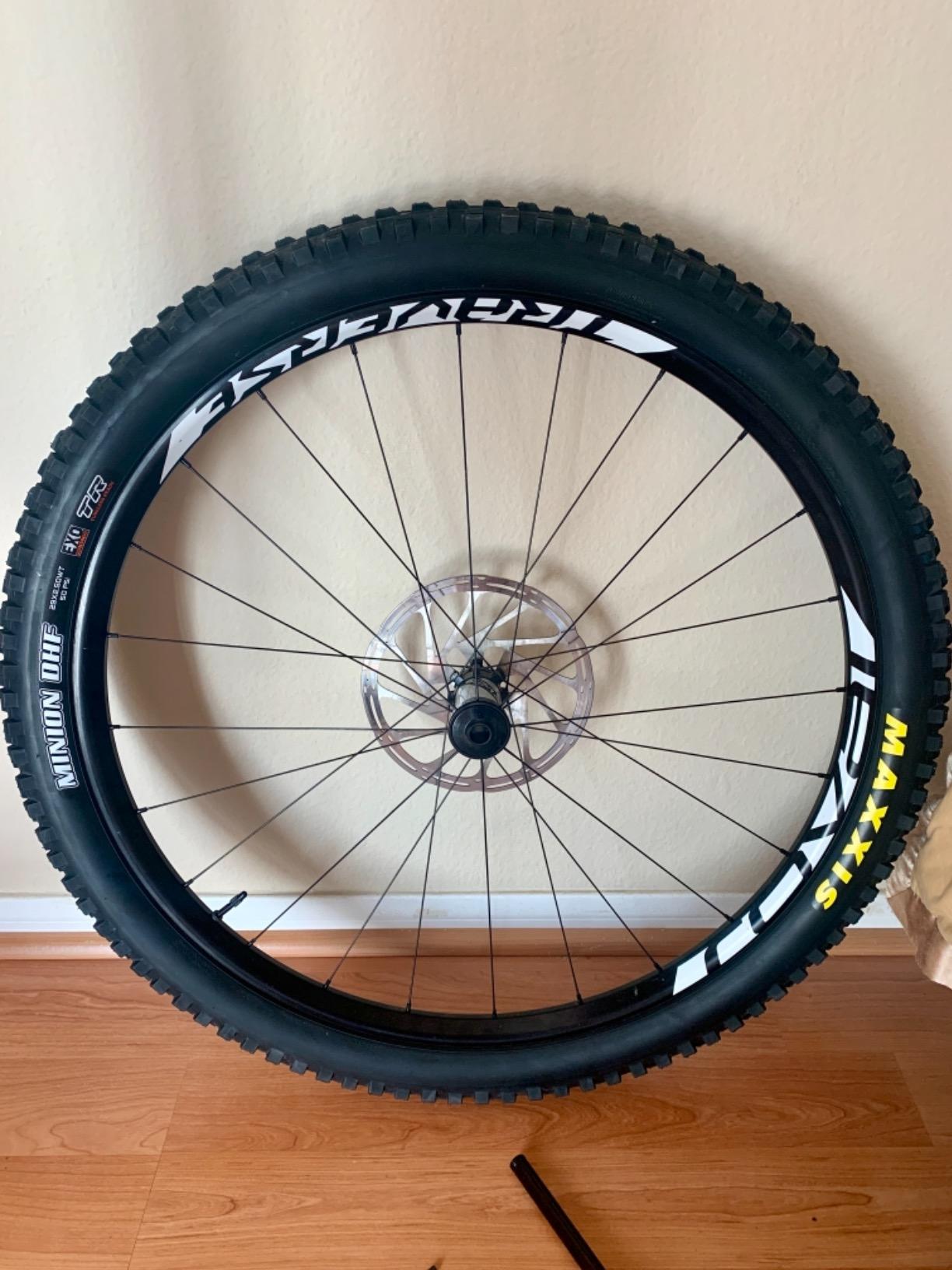
The JoeBlow Booster is the only pump in this roundup that behaves like a small compressor and a normal floor pump in one body, and that dual identity is exactly why it wins. Owners report that the integrated chamber seats tubeless beads where a standard pump failed, which matches the one detailed rim test we found: hookless carbon rims took a Maxxis DoubleDown on a single blast, while a hooked rim setup needed more than one attempt.
Build quality is a genuine strength. The anodized aluminium barrel and steel base have a rigid, shop-grade feel, and the extra-long hose means the pump can stay on the floor while the bike sits on a workstand. Switching between the stored-air boost and normal pumping is a single dial, so you are not fumbling with levers mid-task.
Two things hold it back from perfection. The analog gauge is coarse, and riders report it being hard to tell 18 psi from 19 psi, which is a real problem for low-pressure tubeless running. The small aluminium base plate is also unforgiving on anything other than flat, smooth ground, so keep it indoors or on a mat.
There is one more reported rough edge: the head is said to seat unreliably on Schrader valves, so you may need the Presta adapter for car tyres. The long hose and wide valve coverage otherwise let it handle everything from 700c skinny tyres to 26 inch casings, tubed or tubeless.
Who the JoeBlow Booster suits
It suits riders who mount tubeless at home without access to a compressor, and apartment dwellers who cannot tolerate compressor noise. If you convert a wheel set a few times a season, this is the pump that removes the trip to the shop.
It is also a strong second-role pump. Once the tubeless job is done it works fine for daily pressure checks, and reviewers note it handles a wide range of sizes with one head.
Who should skip it
Skip it if you run gravel at 18 psi and want to trust a gauge reading at that resolution, because the graduations are too coarse. Riders who mostly top off and rarely mount a tire will get more out of a simpler pump with a bigger, clearer dial.
2. LEZYNE High Volume Tubeless – Best for Mountain Bike Tubeless
LEZYNE Pressure Over Drive Analog Floor Pump
Chambered Pressure Over Drive
220 psi max
2.5 inch gauge
1.4 kg
+ The Good
- Secondary chamber released by a stainless steel foot lever
- Large 2.5 inch gauge calibrated in-house
- Aluminum base
- steel barrel and piston
- ABS-1 Pro chuck has a pressure bleed button
- The Bad
- Chamber must be charged first
- wasting strokes for top-offs
- No low-range secondary gauge
- Reported leak or self-vent above 200 psi
This is the pump mountain bikers mention when they talk about tubeless. The chambered Pressure Over Drive design releases from a stainless steel foot lever, so you can hold the pedal down and keep both hands free to work the valve area on a wide, stiff tyre. The 2.5 inch analog gauge is calibrated in-house, which matters more than the dial size on a pump you will use for both setup and trail-side pressure checks.
The extra-long braided hose reaches a bike in a stand or on a rack, and the aluminum base, steel barrel and wooden handle give it a planted, workshop feel. At 220 psi maximum it also covers the pressure range that road riders ask of a floor pump.
Owner reviews are genuinely split, and you should know why before buying. Tubeless riders describe it as unbeatable for stubborn beads, while regular riders find the mandatory chamber-charge cycle genuinely awkward, because air does not flow to the tire until the tank is full. That single design choice is the pump’s best feature and its biggest inconvenience.
Who the LEZYNE High Volume suits
It suits anyone fitting 2.3 to 2.5 inch mountain bike casings on hooked rims, where a single low-volume burst will not do the job. The foot lever also makes it a good choice for riders with limited hand strength, since the release is a foot action rather than a hand lever.
Travel-with-a-pump riders who convert on the road will also like the hose length and the fact that it covers road pressure as well as trail pressure.
Who should skip it
Skip it if your main use is a two-minute top-off before work, because charging the chamber first wastes dozens of strokes every single time. There is no three-way valve or low-range secondary gauge, so precise low-pressure adjustment is awkward, and there are reports of leaking or self-venting above roughly 200 psi.
3. LEZYNE Classic Floor Drive 3.5 – Best for Road and Gravel Tubeless
LEZYNE Classic Floor Drive 3.5 High Pressure Bicycle Pump
220 psi max
3.5 inch analog gauge
Threaded ABS-1 Pro chuck
Steel and aluminum
+ The Good
- Threaded chuck gives a secure leak-free connection
- Oversized 3.5 inch gauge is readable while standing
- Reaches 220 psi for road and gravel
- Long flexible hose reaches awkward valves
- The Bad
- Gauge can read 8 to 12 psi high
- Tightening the head can back out a Presta valve core
- Does not fit some unthreaded extra-long valve stems
For road and gravel riders running tubeless at moderate pressure, this is the pump that makes the daily ritual painless. There is no reservoir, so you are relying on technique and a strong pump rather than a burst, but the 220 psi ceiling and the 3.5 inch gauge make it a genuinely high-volume tool in the right hands.
The threaded ABS-1 Pro chuck screws onto the valve and stays put, which is a real advantage when you are working at low pressure and want a leak-free seal. The oversized gauge is readable from standing, and the long, very flexible hose snakes around spokes to reach valves at awkward angles. Steel and aluminum construction with a varnished wood handle feels like it will outlast the bikes it serves.
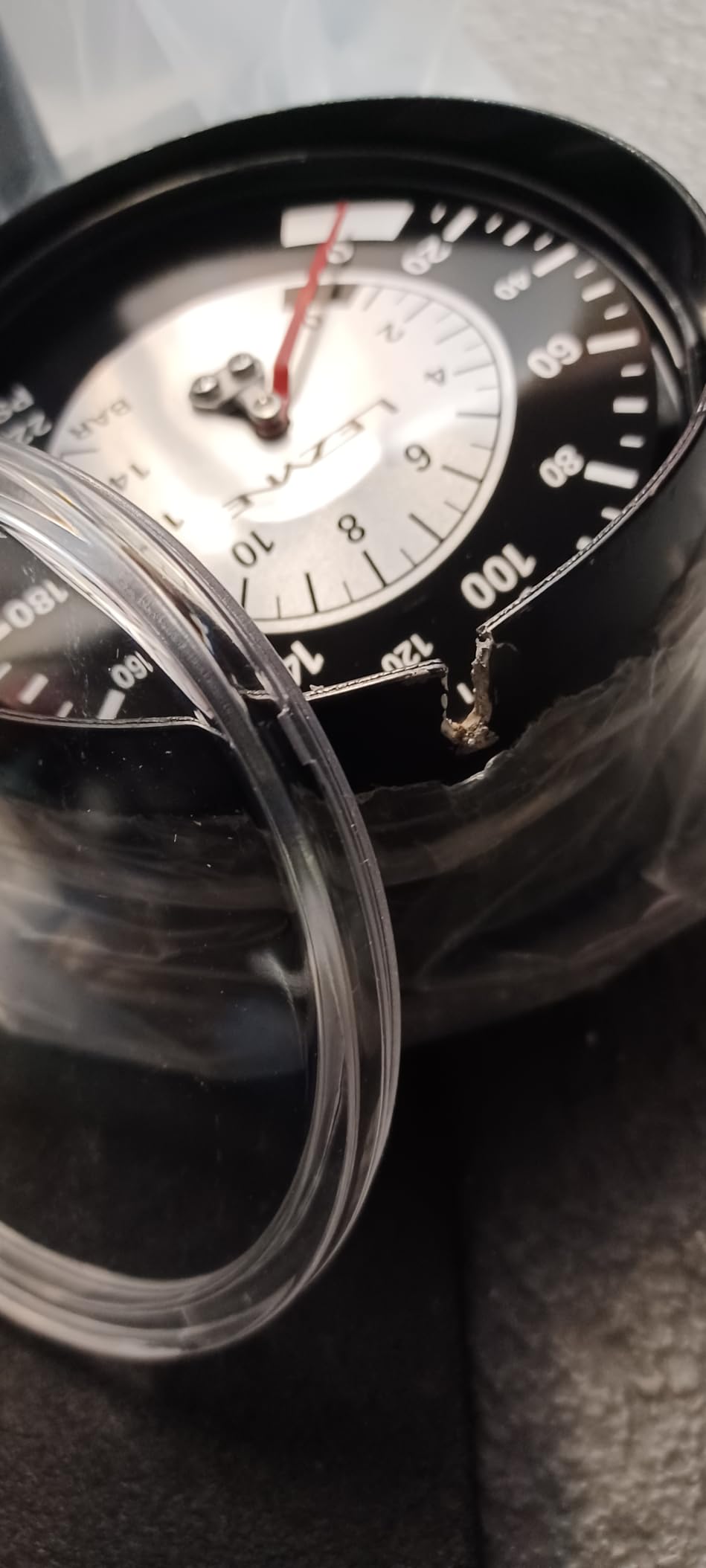
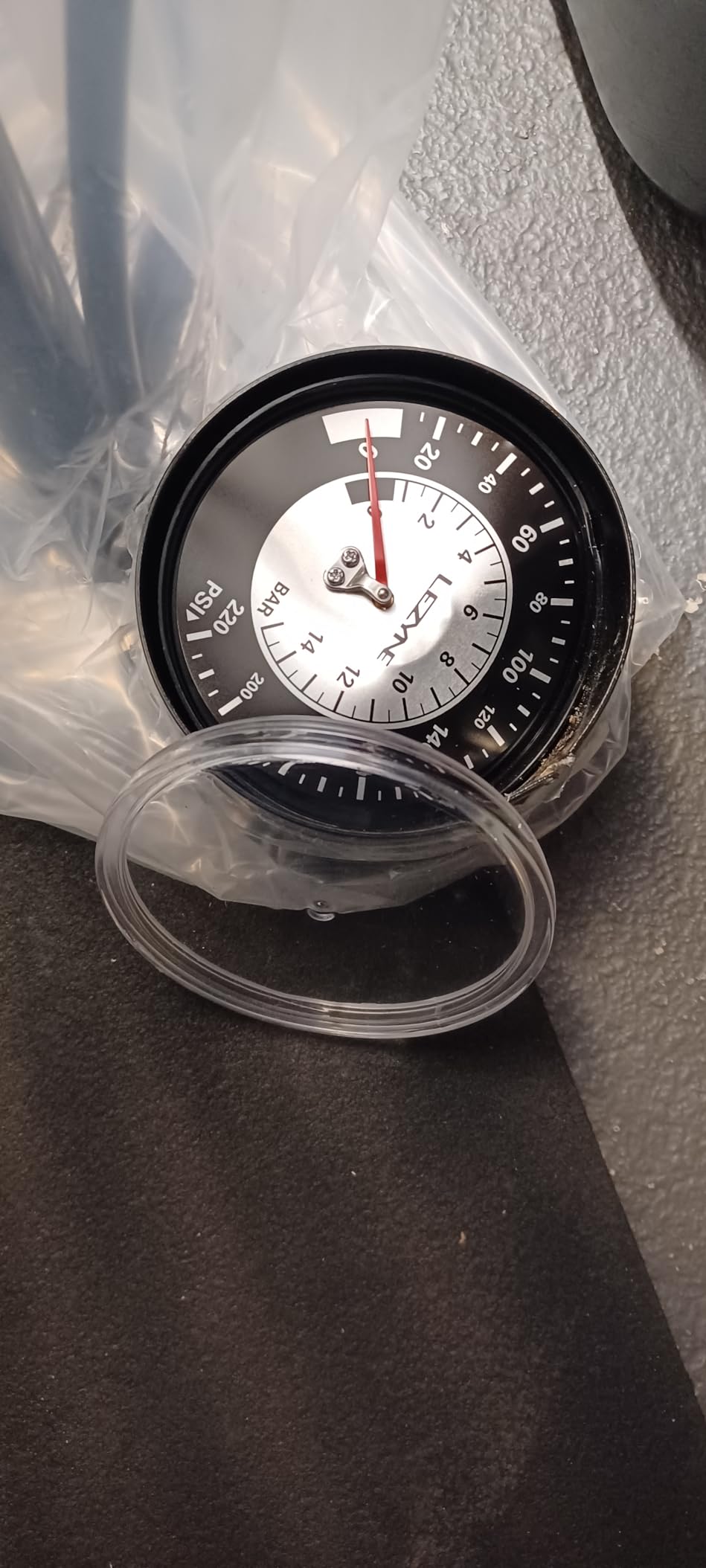
Two accuracy caveats are worth internalising before you buy. Reviewers report the gauge reading roughly 8 to 12 psi high against calibrated digital gauges, so most riders simply offset their target. And because the chuck screws on, tightening it too firmly and then removing it can back the Presta valve core out of the stem.
There is also a compatibility limit with unthreaded extra-long valve stems found on some deep-dish rims, plus the small ritual of unscrewing the head to swap between Presta and Schrader.
Who the LEZYNE Classic suits
It suits road and gravel riders who mount tubeless on hooked or hookless rims that seat reasonably, and who want one pump that also handles 100 psi riding pressure. With 954 owner reviews behind it, the long-term reliability picture is well documented.
Riders who lead group rides and run a pre-ride check for others will appreciate how readable the gauge is from a standing position.
Who should skip it
Skip it if you fit stiff plus-size mountain bike casings regularly, since there is no reservoir to help you. Also reconsider if you run very low pressures and want an honest number, because the gauge offset is large enough to matter below 25 psi.
4. Topeak JoeBlow Sport III – Best Everyday Floor Pump on Our List
Topeak JoeBlow Sport III High-Pressure Bike Floor Pump – 160 PSI, Durable Steel Barrel, 3” Analog Gauge, TwinHead DX5 Pump Head, Long Hose, Ergonomic Handle, Fits Presta, Schrader, & Dunlop Valves
160 psi max
3 inch top-mounted gauge
TwinHead DX5
3.7 pounds
+ The Good
- Steel barrel and base that hold up over years of daily use
- Strong airflow fills 700x32c in about a minute
- DX5 head fits Presta
- Schrader and Dunlop
- Clear top-mounted gauge
- The Bad
- Short barrel means many strokes from flat
- Seating tubeless tires is reported to be laborious
- Metal foot can mark or rust on concrete
With 5594 owner reviews and a 4.7 average, the JoeBlow Sport III is the most proven pump here, and owners describe steel barrels and bases that have held up through four to seven years of daily use. The TwinHead DX5 fits Presta, Schrader and Dunlop with a positive engagement lever, so one head covers every valve on your household.
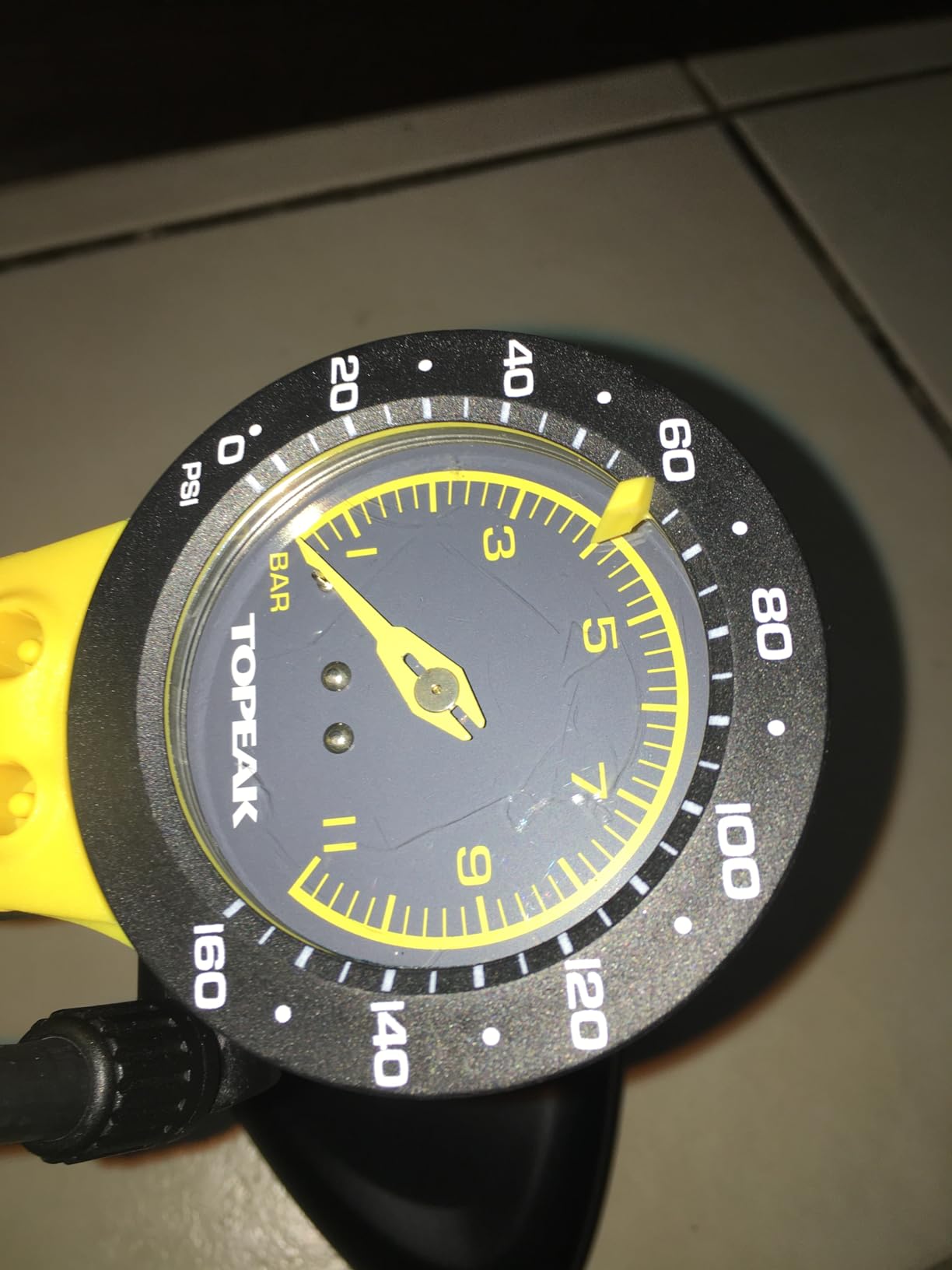
Airflow is strong for a pump this size: reviewers report filling a 700x32c tire in about a minute with little effort, and the specification sheet lists 318 cubic centimetres per second. The 3 inch top-mounted analog gauge is clear and easy to read, and the ball and bladder needles plus the built-in hose dock are details you will use more than you expect.
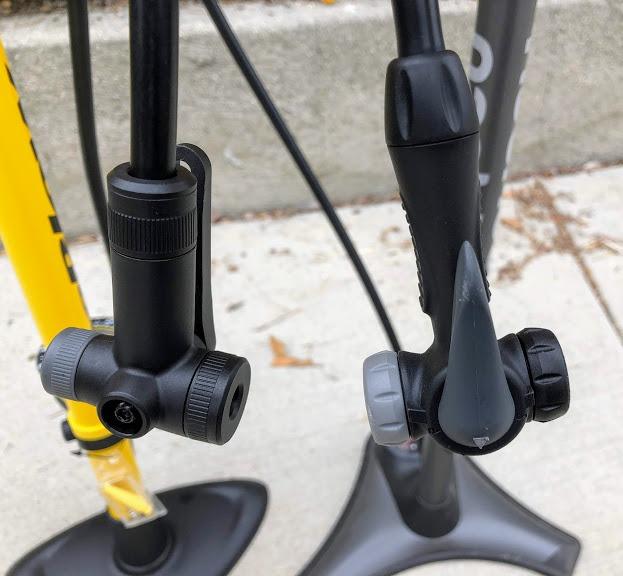
What it is not is a tubeless tool. The short barrel means many strokes to bring a fully flat tire up to riding pressure, and owners specifically report that seating tubeless tires with it is a laborious effort. That is a volume problem, not a quality problem, and it is the reason this pump sits below the reservoir pumps on tubeless seating specifically.
Small practical warning: the bare metal foot can mark or rust on concrete if you use it in a garage without a mat under it.
Who the JoeBlow Sport III suits
It suits the rider who inflates a few times a week, owns cars and trailers alongside bikes, and wants a valve head that never needs adapters. In one r/bikecommuting discussion of what to spend on a floor pump, riders repeatedly named this model as about as much as a floor pump should cost, and that consensus matches the review data here.
It also suits anyone who wants a backup pump, because it is simple, mechanical and has no moving electronic parts to fail.
Who should skip it
Skip it as your only tubeless pump. If you seat a tire from scratch more than a few times a year, buy a reservoir pump for that job and keep this one for everything else. Riders running e-bike tyres with high volume will also find the stroke count tiring.
5. LEZYNE Sport Floor Drive 3.5 – Best for High-Pressure Road Inflating
LEZYNE Sport Floor Drive 3.5 High Pressure Bicycle Floor Pump
220 psi max
3.5 inch analog gauge
ABS-1 Pro chuck
1432 g
+ The Good
- Small-diameter barrel needs little force on the last strokes
- Oversized gauge calibrated in-house
- Threaded chuck seals leak-free
- Composite Matrix base is stable
- The Bad
- No hose clip
- and the hose flops when stored
- Composite base rather than steel
- Arrives with no instructions
- so the head swap is easy to miss
This is the LEZYNE to buy if road pressure is your priority. The small-diameter barrel reaches 220 psi with minimal force on the final strokes, which is the opposite of a high-volume pump and exactly what you want when you are chasing 90 psi on a narrow road tyre.
The oversized 3.5 inch gauge is tested and calibrated in-house, the threaded ABS-1 Pro chuck seals leak-free and avoids valve stem wear, and the extra-long high-strength hose reaches a bike in a stand or on a hitch rack. The Composite Matrix base is stable, and the overall build quality is consistently praised.
There is one design oversight that comes up repeatedly: there is no hose clip or dock, and the hose is too short to fold over the handle as pictured, so it flops around during storage. The base is composite rather than the steel some buyers expect, and the pump arrives with no basic instructions, so the interchangeable head is easy to miss on first use.
Who the LEZYNE Sport Floor Drive suits
It suits road and track riders who inflate often, work in a home space where a hose that stays put matters, and want accurate readings across a wide pressure range. It is a solid tubeless companion for riders whose tires seat without a reservoir.
Anyone who struggles to push a high-volume pump on the last few psi will find the small barrel here noticeably easier.
Who should skip it
Skip it if you need a hose dock, and skip it as a mountain bike tubeless tool because there is no reservoir behind it. Riders who swap Presta and Schrader constantly will also find the unscrew-to-change head fiddly at first.
6. Topeak JoeBlow Max HP – Best for a Home Workshop
Topeak JoeBlow Max Hp Bike Floor Pump, 160 Psi/11 Bar, TwinHead, fits Presta, Schrader, and Dunlop valves
160 psi max
TwinHead for three valves
1.39 kg
Two year warranty
+ The Good
- Painted steel barrel and composite base made for shop use
- TwinHead covers Presta
- Schrader and Dunlop
- Large easy-to-read analog gauge
- Padded handle and extra-long hose
- Includes ball and bladder needles
- The Bad
- 160 psi ceiling below what road riders need
- Analog gauge is not precise at low pressure
- Composite base is less rigid than steel
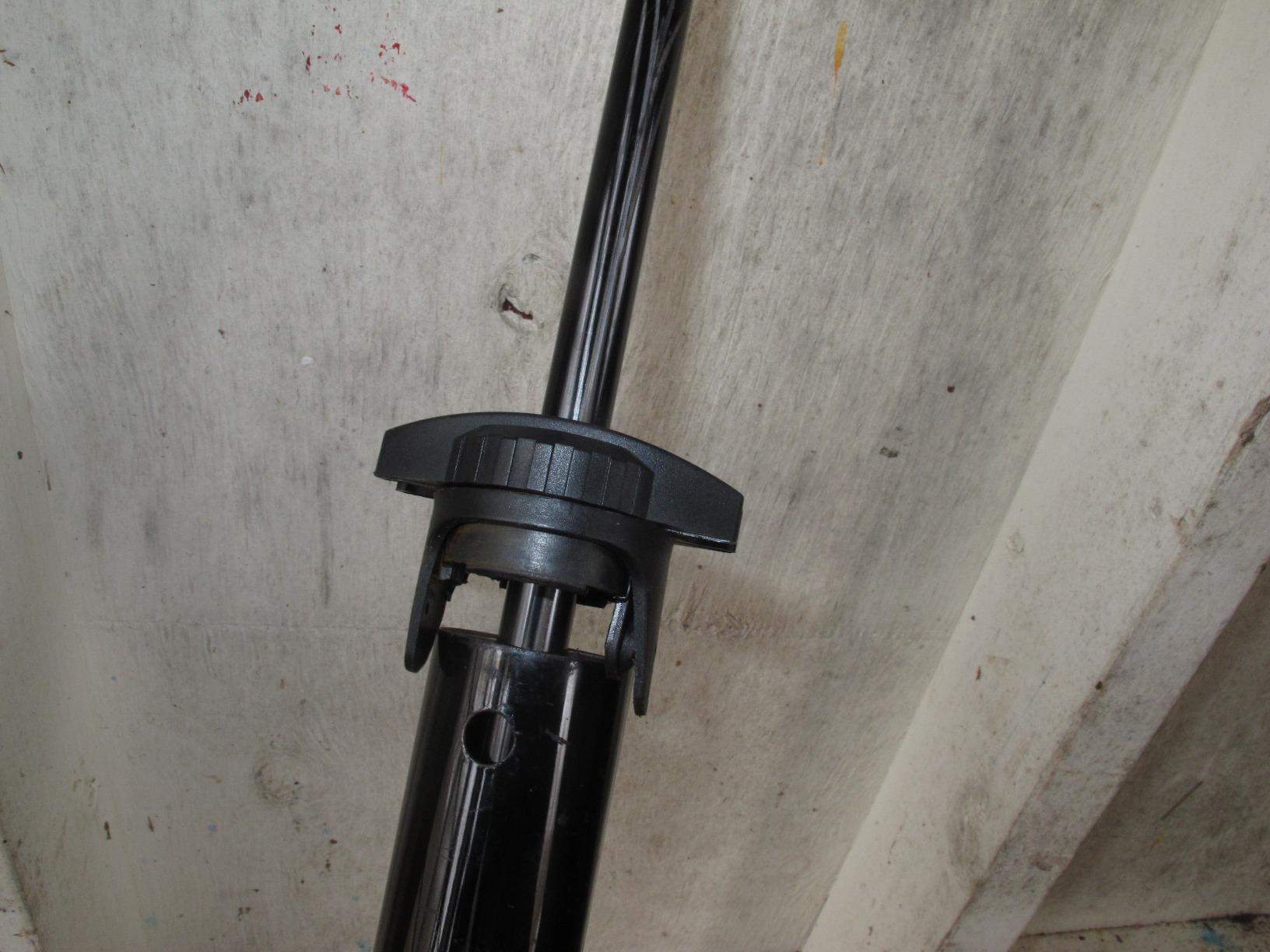
The JoeBlow Max HP is the workshop pump: a heavy-duty painted steel barrel on a composite base, built for a corner of a garage rather than a shelf. It is 1.39 kg, which is light for its class, and the listed air flow of 322 cubic centimetres per second is on the higher end of the standard pumps in this roundup.
The TwinHead design covers Presta, Schrader and Dunlop with no adapters, the analog gauge is large and easy to read, and the padded oversized handle plus extra-long hose reduce fatigue on longer sessions. It comes with ball and bladder needles and a hose dock, and it carries a two year manufacturer warranty, which is longer than several rivals here.
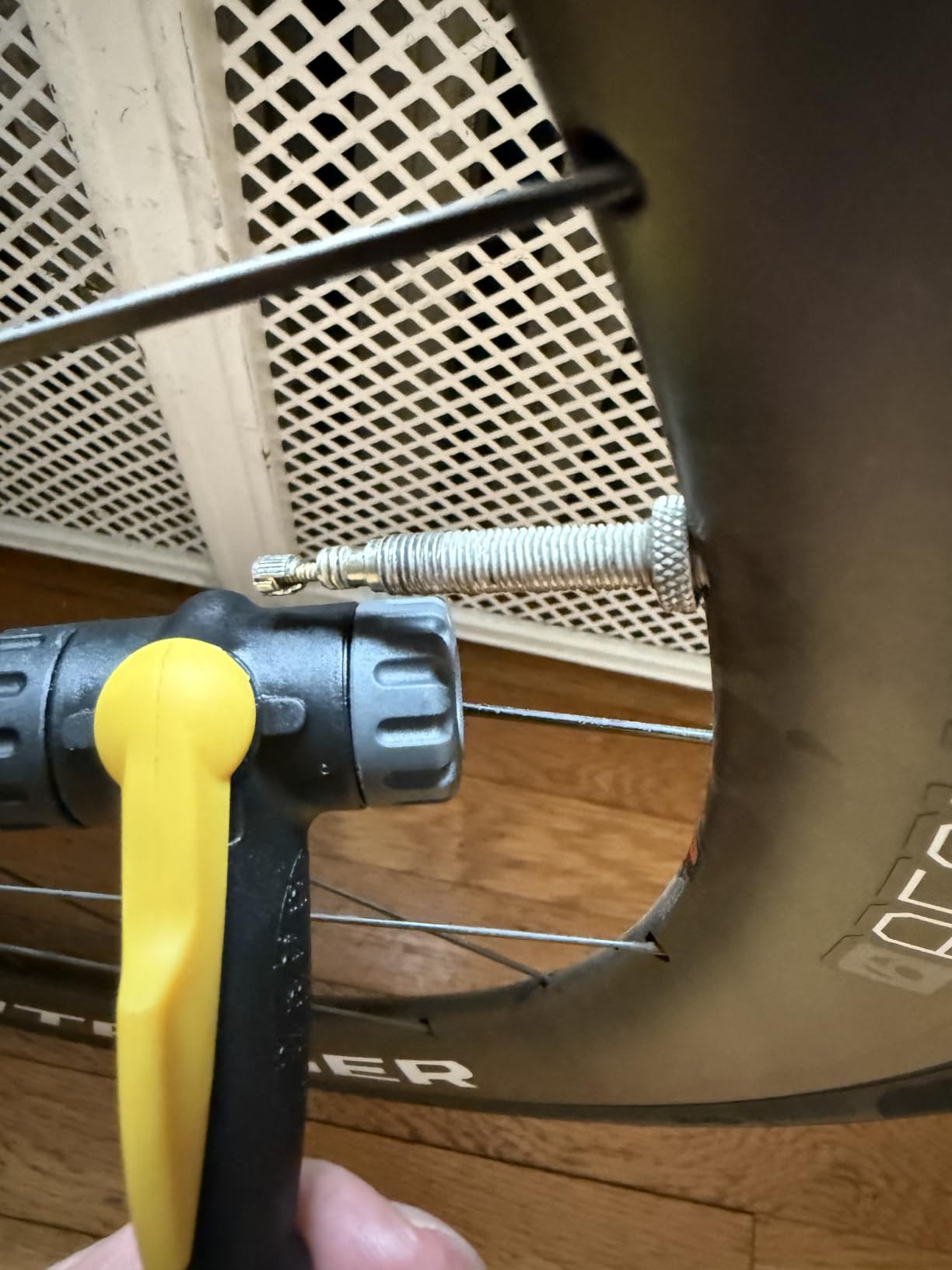
The ceiling is 160 psi, so it will not cover the 200-plus psi that some road riders chase, and the analog gauge is not for anyone who wants a trustworthy number at 18 psi. The composite base is less rigid under hard pumping than a full steel baseplate.
For tubeless work it is a top-off and pressure-check tool, not a bead-seating tool, and there is no reservoir to change that.
Who the JoeBlow Max HP suits
It suits household mechanics who service several bikes, run trailers and inflate car tyres from the same tool, and want one valve head for everything. The extra-long hose means you can leave it on the floor and work on a bike in a stand.
It is also a good choice for anyone who has already converted to tubeless and now mostly needs accurate routine pressure checks. When the same garage also handles car and trailer tyres at genuinely high volume, our portable air compressor guide covers the faster alternative.
Who should skip it
Skip it if you ride skinny road tyres at high pressure or mount tubeless from scratch regularly. Anyone who wants a lifetime warranty should note this one is covered for two years rather than for life.
7. Beto Universal Floor Pump – Best Budget Multi-Valve Pump
Beto Bike Pump Portable with Presta Schrader Dunlop Valve Universal 160 Psi Max
160 psi max
2.5 inch top-mounted gauge
AH4 auto head
47.2 inch hose
+ The Good
- Top-mounted 2.5 inch gauge is easy to read
- AH4 auto head locks onto Presta
- Schrader and Dunlop
- Very long 47.2 inch hose from the top of the shaft
- Metal barrel with a wide stable base
- Ball needle stores in the handle
- The Bad
- Auto head lever assembly reported to break
- Schrader seal can start too tight
- Not a high-volume design
- so large tires take more strokes
The Beto punches above its weight in the places that matter for daily use. The 2.5 inch gauge sits at the top of the shaft rather than on the base, which owners of cheaper pumps often praise as the feature they did not expect, especially older riders who do not want to crouch to read pressure.
The patented AH4 auto head locks onto Presta, Schrader and Dunlop without adjustment, and the 47.2 inch hose originates near the top of the pump, so it reaches valves in a stand without draping across the floor. A wide stable base and an anti-skid ergonomic handle round out a genuinely practical package, with the ball needle stored inside the handle.
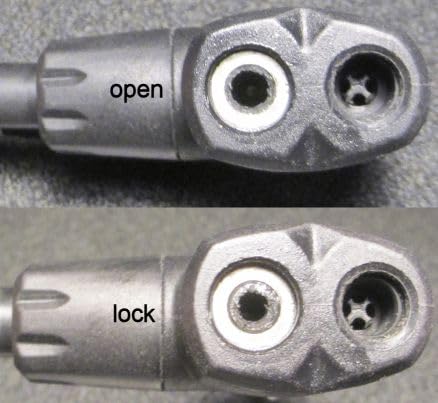
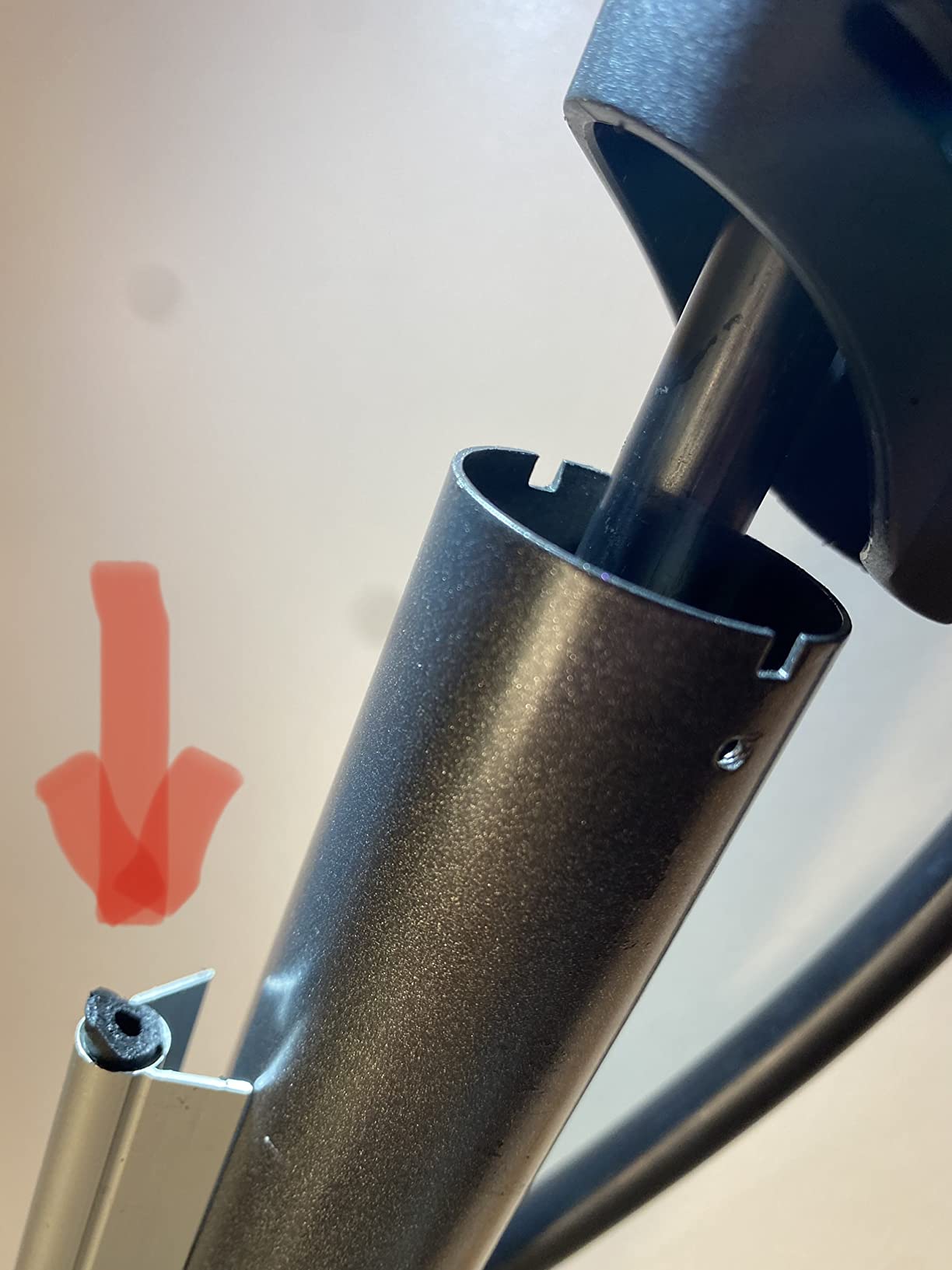
The durability watch point is the auto head itself. Reviewers report the lever-lock mechanism inside the AH4 head breaking after extended use, which can render the pump unusable, so it is not a tool to lean on for high-pressure car work. The Schrader seal can also start too tight and needs silicone lubrication.
It is also not a high-volume design, so filling large-volume tyres takes more strokes, and there is no reservoir for tubeless bead seating.
Who the Beto suits
It suits riders on a tight budget who want a top-mounted gauge and a genuinely universal head at the lowest entry point in this roundup. Reviewers routinely compare it favourably to the Topeak JoeBlow on value, and the top gauge is the reason most of them do.
It is a good secondary pump for a second bike, or for anyone who inflates car and bike tyres in the same garage.
Who should skip it
Skip it if you are the type to lean on a head hard at high pressure, given the reported lever failures. It is also the wrong choice for tubeless setup work and for anyone with large-volume tyres who counts strokes.
8. GIYO GF27 – Best Gauge for Low-Pressure MTB Tires
GIYO Bike Floor Pump – 3″ Dual Scale Gauge – Road & MTB | One Handed Operation -Clever Valve for Presta & Schrader | Max 160PSI Steel Barrel (GF27)
Dual-scale 3 inch gauge
1 psi steps from 0 to 40
160 psi max
1.1 kg
+ The Good
- Dual-scale gauge gives 1 psi increments from 0 to 40
- Verified within 0.1 to 0.2 psi at low pressure
- Thumb-touch lock clip works in tight spoke spaces
- Head fits Presta and Schrader without adapters
- The Bad
- No tubeless bead-seating reservoir
- At least one pump failed after only two uses
- No manufacturer support reached
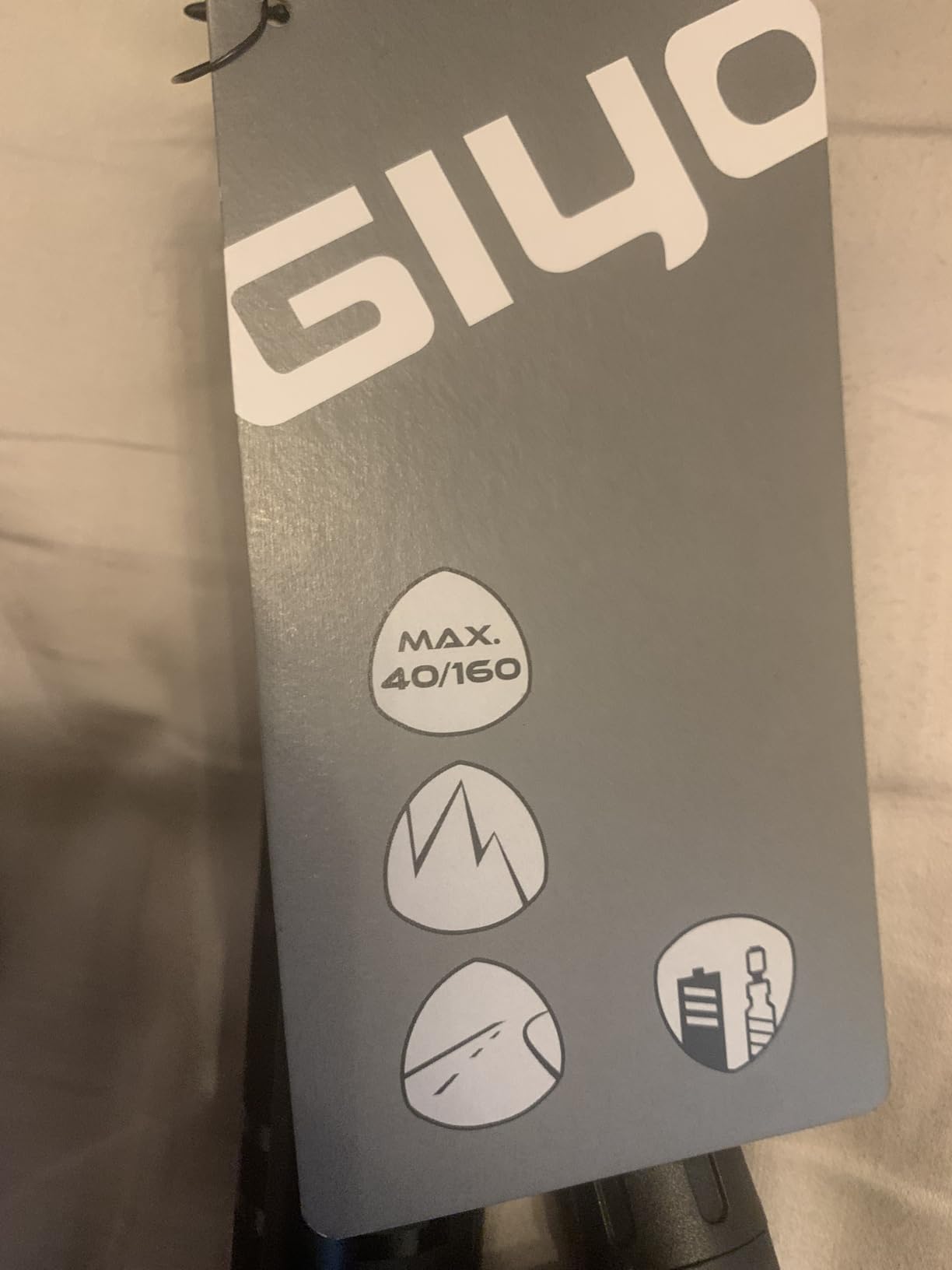
Everything interesting about the GIYO GF27 is the dial. It is a dual-scale 3 inch gauge with 1 psi increments from 0 to 40 psi and 5 psi increments above that, and owners report verifying it within 0.1 to 0.2 psi against calibrated gauges at the low end. If you run mountain bike tyres at 14 to 17 psi, that resolution is the feature you are buying.
The rest is clean and modern. The thumb-touch lock clip engages and releases with a single touch even in tight spoke spaces, the clever valve head fits both Presta and Schrader without adapters, and at 1.1 kg it is one of the lightest pumps here. Stroke volume is respectable too, at roughly 1.5 pumps per psi on a motorcycle front tyre.
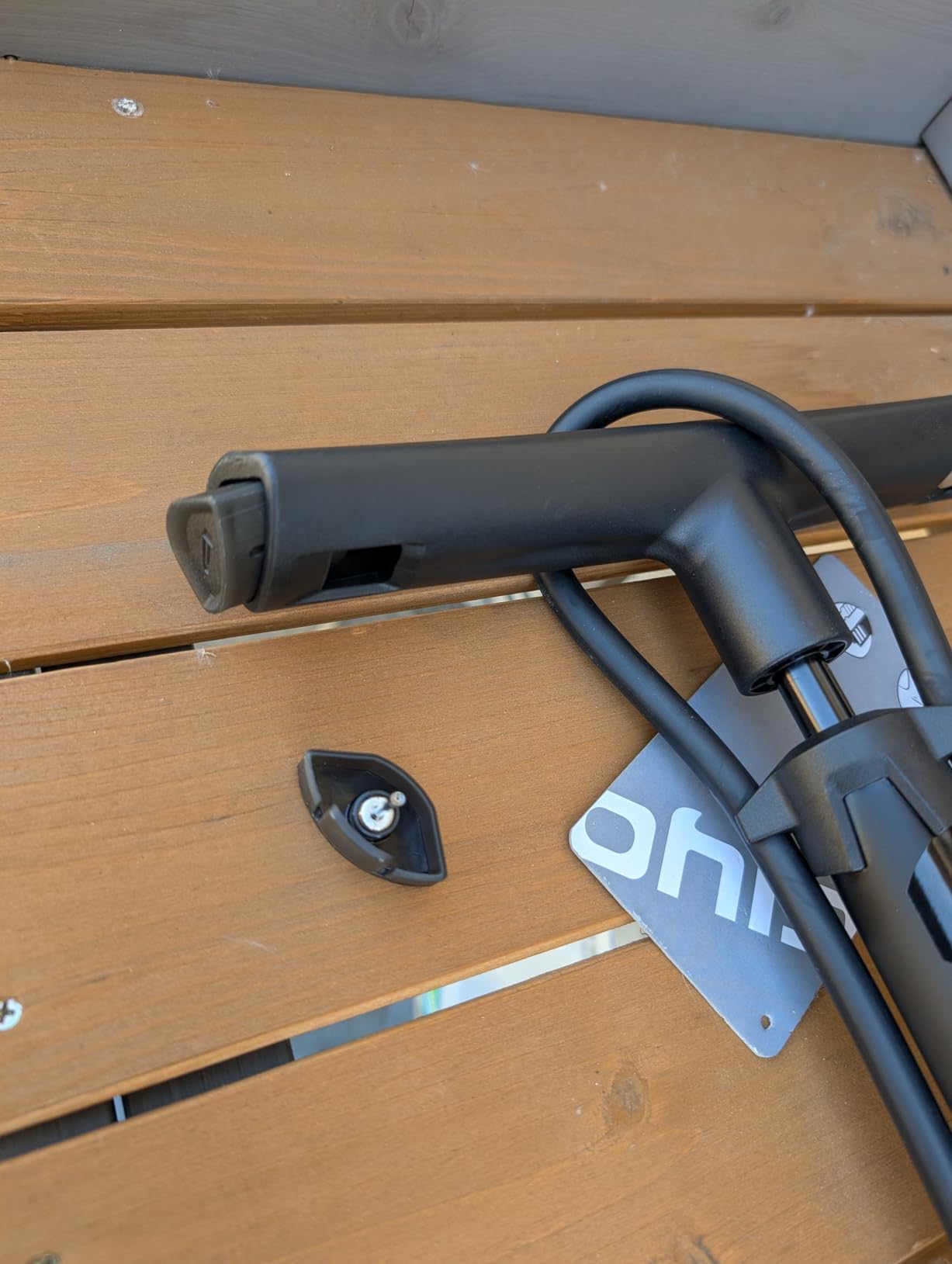
The concern is durability rather than design. At least one owner reported a pump failing after only two uses with no reachable manufacturer support, and the review base of 120 is thin enough that such reports are hard to weigh against the positives.
There is no tubeless-specific bead-seating capability here at all, so treat it as a pressure-accuracy tool rather than a setup tool.
Who the GIYO GF27 suits
It suits riders running genuinely low pressures who currently squint at a coarse dial or carry a separate digital gauge. The light weight also makes it easier to move between a home stand and a garage.
Riders who switch between Presta and Schrader without wanting to unscrew a head will find the adapter-free head convenient.
Who should skip it
Skip it if you want a single pump to mount tubeless tires, and consider skipping it if you are hard on tools given the reported early failure. The one year warranty is also the shortest here.
9. BIKETUBE Air Handler – Best for Precise Gauge Readings
BIKETUBE Air Handler Bike Floor Pump with Industrial Gauge
160 psi aluminum barrel
2 percent accuracy gauge
9 inch steel base
35 inch hose
+ The Good
- Large industrial gauge with an adjustable target marker
- Polished aluminum barrel pushes 700x23mm to 100 psi in about 20 strokes
- AutoHead adapts and locks without threading
- 9 inch steel base stays planted at high pressure
- Hose clamps to the handle for storage
- The Bad
- Slow
- delivering roughly half a psi or less per stroke
- Locking lever can strike a finger
- No tubeless reservoir or bead-seating design
The BIKETUBE Air Handler is built around measurement. It carries a large industrial gauge rated at 2 percent accuracy with an adjustable red target marker, so you set your pressure once and stop guessing. Owners report readings that are consistently spot-on against a separate pressure gauge, which is unusual at this level.
Stroke performance is documented too: the polished aluminum barrel takes a 700x23mm tyre to 100 psi in about 20 strokes. The AutoHead adapts to Presta or Schrader and locks on without threading, the 9 inch steel base keeps the pump planted at high pressure, and the hose drapes over the handle and clamps to the side for tidy storage.
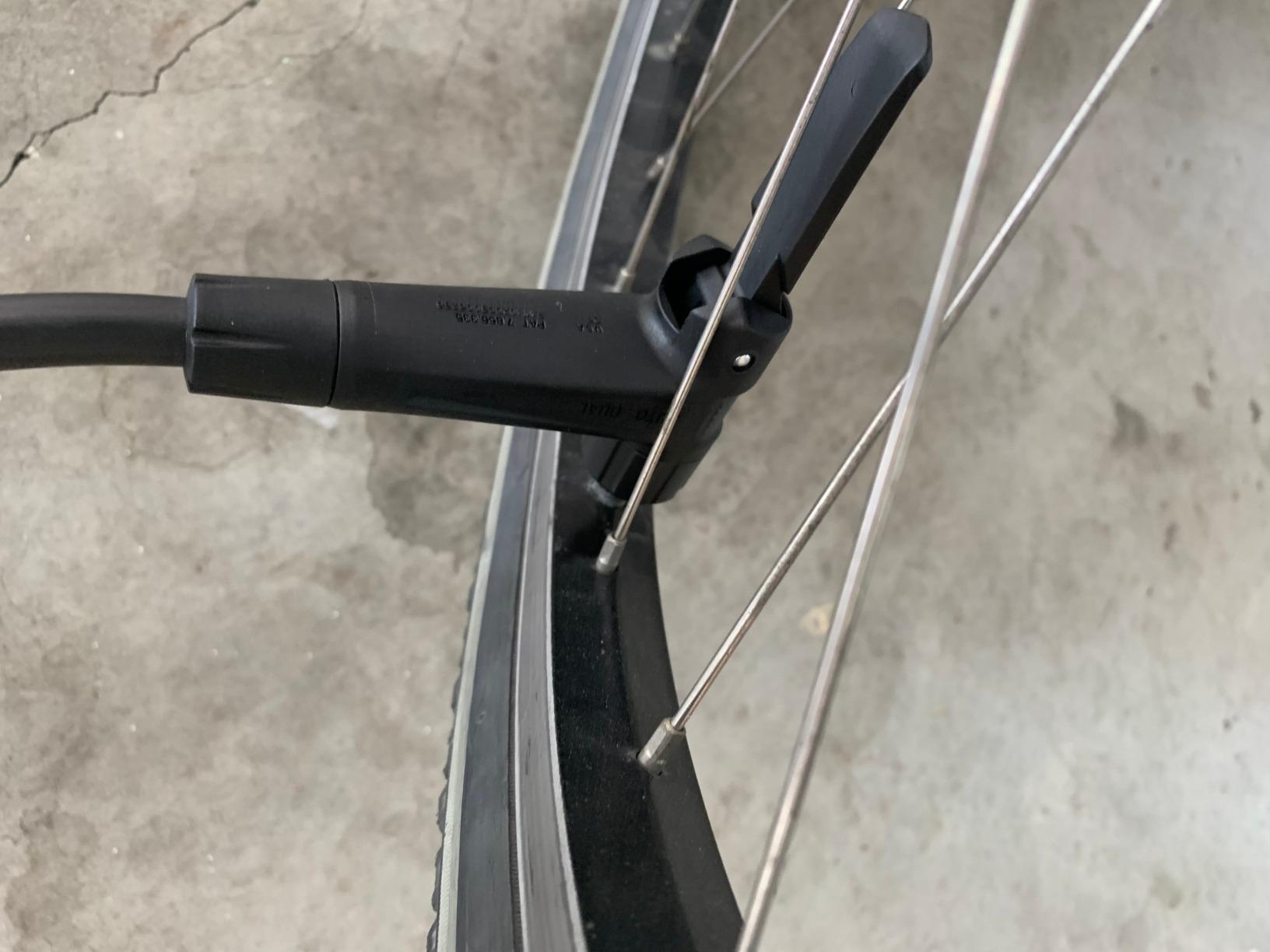
The trade-off is speed. Several users find it slow, delivering roughly half a psi or less per stroke, so bringing a fully flat tyre up takes real patience. The locking lever can also strike your finger when released, which is an annoying habit to develop.
Like most of the standard pumps here, it has no tubeless-oriented reservoir, so it will not help you seat a stubborn bead.
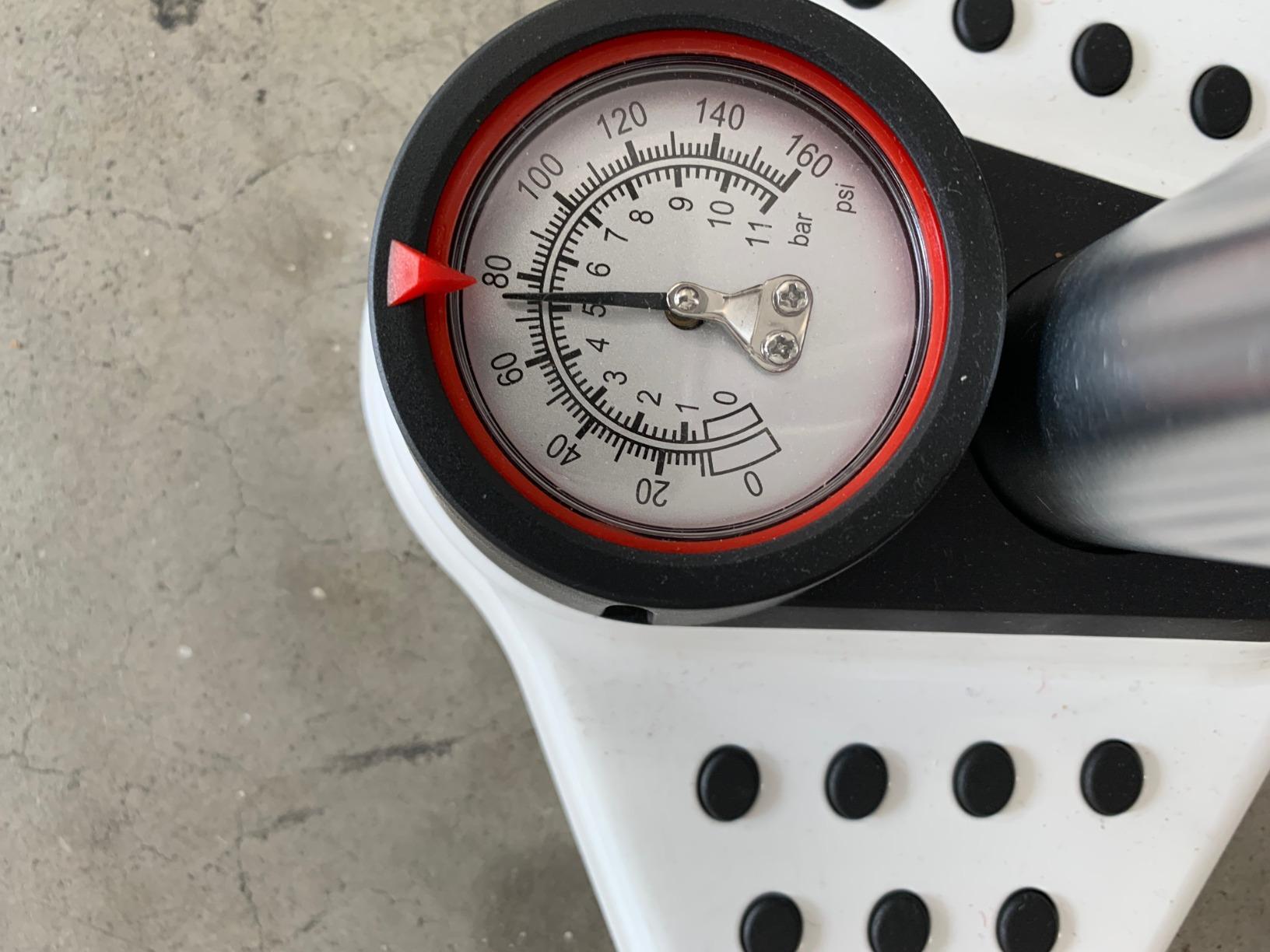
Who the BIKETUBE Air Handler suits
It suits riders who care more about hitting a number than about speed, and who set a target pressure for a car or a bike and want the pump to confirm it. The movable target marker makes it genuinely pleasant for repeated identical inflations.
The steel base and the hose clip make it a good garage tool where tidiness and stability matter more than portability.
Who should skip it
Skip it if you inflate from flat often or run high-volume mountain bike tyres, because the stroke rate will frustrate you. It is also the wrong tool for tubeless bead seating.
10. Blackburn Core Pro – Best for Small Footprints and Travel
Blackburn Core Bike Floor Pump (Black, Core 2)
160 psi max
AirTap reversible head
2.5 inch base gauge
8 ounces listed
+ The Good
- Reversible head fits Schrader
- Presta and Dunlop
- Integrated air bleed button for micro-adjustments
- Base-mounted gauge doubles as part of the footprint
- Limited lifetime warranty
- The Bad
- Lowest average rating here at 4.0
- Base-mounted gauge means crouching to read
- No tubeless reservoir or high-volume chamber
The Core Pro is the simplest design in this roundup, and simplicity has a place. The AirTap reversible head fits Schrader, Presta and Dunlop, and the integrated air bleed button at the valve lets you make fine micro-adjustments without a separate tool. The 2.5 inch base-mounted gauge doubles as part of the pump’s footprint, adding to its stability while standing.
It is also the only pump here with a limited lifetime warranty for the original purchaser, excluding heat, abuse, accident, alteration and cosmetic wear. That is a genuinely strong long-term promise for the money.
What it does not have is performance. The average rating is the lowest in this set at 4.0, with about 10 percent of reviews at one star, and the base-mounted gauge forces you to crouch down every time you want a reading. There is no tubeless bead-seating reservoir and no high-volume chamber, so it plays no part in a tubeless setup.
Who the Core Pro suits
It suits riders who want one small, simple tool that fits any valve, lasts indefinitely, and disappears when not in use. The bleed button is genuinely useful for fine pressure work on tubeless setups once the bead is already seated.
It also works as a car and trailer inflator for a household that only needs occasional top-offs.
Who should skip it
Skip it if you want a pump you can use without bending down, or if you need to mount tubeless tires from scratch. At a 4.0 average with a meaningful one-star tail, the satisfaction ceiling here is visibly lower than the rest of the list.
What to Look for in a Tubeless Floor Pump
Reservoir volume and strokes to charge come first. Nearly every dual-chamber pump in this category is specified around 160 psi, so the meaningful difference is how much air it holds and how many strokes it takes to get there. A tank that needs sixty strokes is fine once a month and exhausting after three failed attempts.
Valve stem length is the failure mode riders complain about most. Short 35 mm Presta tubeless valves give a chuck very little to grip, and chucks have been reported coming off short stems under the pressure spike of a burst. Longer 40 to 45 mm valves give the head something to hold, and locking latch heads are generally safer during a release than screw-on heads.
Gauge resolution matters more than gauge size for tubeless. A big dial with coarse graduations is worse than a smaller dial with fine ones when you are chasing 18 psi. Only two pumps in this roundup give usable resolution below 40 psi, so if that is your riding pressure, read those two sections closely.
Is a regular floor pump enough? For routine top-offs, absolutely, and any of the eight standard pumps here will do it. For seating a stiff casing on a hooked rim from scratch, a reservoir is the difference between a five-minute job and a trip to a shop. The soapy water method widens what a standard pump can handle considerably, and offset rims in particular have been reported to seat well with a standard pump once a tube is used as a shape.
Base stability and storage are the last filters. Wide steel baseplates stay planted at high pressure, while small rigid plates need flat ground. Hose clips and top-mounted versus base-mounted dials are small details that you notice every single time.
Finally, think about tiers without obsessing over the number. The budget end of this list gives you a reliable valve head and a readable dial. The mid-range adds gauge accuracy, screw-on chucks and longer hoses. The premium tier buys you the reservoir, which is the only feature here that changes what you can seat.
If you are still weighing a pump against a compressor for occasional high-volume work, our portable air compressor guide covers that alternative, and electric floor pumps are worth a look for apartment riders who inflate rarely and want zero effort.
How to Seat a Tubeless Tire With a Floor Pump
Even a 160 psi tank can fail to seat a tire, so follow the order below rather than reaching for the release lever immediately. Every step exists because riders reported skipping it and blaming the pump.
Check the rim tape. Cover the spoke holes with tape sized for the internal rim width. Tape that is too narrow leaves holes that hold pressure poorly; tape that is too wide can wrinkle at the bead.
Inspect the bead and the rim bed. Run a finger around the tire bead and the rim well. Any dirt, sealant residue or a rubber casing kink here is a seating failure waiting to happen.
Fit the tire with the beads tucked under the rim lip. Work around the wheel in small increments, starting opposite the valve.
Add sealant before you inflate. A single shot of sealant in the casing lubricates the bead as the air hits it, which measurably improves seating.
Lubricate the bead with soapy water. A drop of dish soap and water along the bead is the single most effective step, and it is the one most often skipped.
Remove the Presta valve core if the tire refuses to seat, especially with a tubeless-specific valve. Air escaping through the open core is what drives the bead into place. Reinsert it once the bead is seated and pumped up.
Charge the reservoir, lock the head, and release. If you do not have a reservoir pump, use your fastest strokes and let the pump run continuously without stopping.
If the first burst fails, stop and add more soap. Do not repeat the same burst three times. Add lubricant, spin the wheel, and try again.
Frequently Asked Questions
What is the best floor pump for tubeless tires?
The Topeak JoeBlow Booster is the best overall floor pump for tubeless tires because it stores air in an integrated 160 psi aluminium chamber and releases it in one burst, with a long hose and a SmartHead DX3 with a release button. For riders who mostly need a dependable daily pump, the Topeak JoeBlow Sport III rates 4.7 across more than 5000 reviews, and mountain bikers with stiff casings tend to prefer the LEZYNE High Volume Tubeless with its foot-lever chamber release.
What kind of pump do I need for tubeless bike tires?
You need a high-volume pump for everyday pressure checks, and a dual-chamber pump with a secondary air reservoir if you mount tubeless tires from scratch. The reservoir is pre-charged to roughly 160 psi, then released in a single burst to push the bead onto the rim. On hooked rims with reinforced plus-size casings, the reservoir is the difference between a quick job and a trip to a shop.
Do I need an air compressor for tubeless tires?
No. A dual-chamber floor pump replaces an air compressor for almost all riders, because the same burst of stored air that a compressor delivers in one slug comes from the pump reservoir. The difference is speed, since a compressor refills a tank faster than you can stroke. If you inflate car or off-road tyres as well as bikes, a compressor may still be worth keeping alongside your floor pump.
How does a dual-chamber floor pump work?
You switch the pump to its charge setting and stroke the reservoir to about 160 psi, then lock the head onto the valve and throw the release lever. The stored air rushes into the tire in one high-volume slug that snaps the bead onto the rim. After the bead seats, the chamber refills from the tire and the pump behaves like an ordinary high-pressure floor pump again.
Why won’t my tubeless tire seat with a floor pump?
In most cases the pump is not the problem. Riders have documented three full 160 psi releases producing no seating at all until sealant and soapy water were added, so preparation matters more than pump power. Work through the protocol in order: correct rim tape, a clean bead and rim bed, sealant added, the bead lubricated with soapy water, and the Presta valve core removed if the tire still resists. A stiff casing on a hooked rim can defeat even a large tank.
How much pressure does a tubeless floor pump need?
Most dual-chamber tubeless pumps charge their reservoir to about 160 psi, and that figure is close to standard across the category. What separates the pumps is volume rather than peak pressure, so look at how much air the chamber holds and how many strokes it takes to charge. A pump that reaches 160 psi in a small chamber will not move the same amount of air as one with a larger barrel.
Which Tubeless Floor Pump Should You Buy?
The Topeak JoeBlow Booster is our pick for the best bike floor pumps for tubeless tires, because it is the only pump here that stores a real burst of air and still works as a normal inflator the rest of the time. Mountain bikers with stiff casings should add the LEZYNE High Volume Tubeless, and road and gravel riders who seat easily should look at the LEZYNE Classic Floor Drive 3.5.
For everything that is not tubeless setup, the Topeak JoeBlow Sport III remains the most proven pump in this roundup, and the GIYO GF27 and BIKETUBE Air Handler are the two to buy if you run low pressures and need to trust the number on the dial.
Whichever you choose, run the seating protocol in order before you blame the pump. A clean bead, correct rim tape, sealant and soapy water will carry you further than any reservoir on the market. Last tested in 2026; check the latest listing details before you buy.