
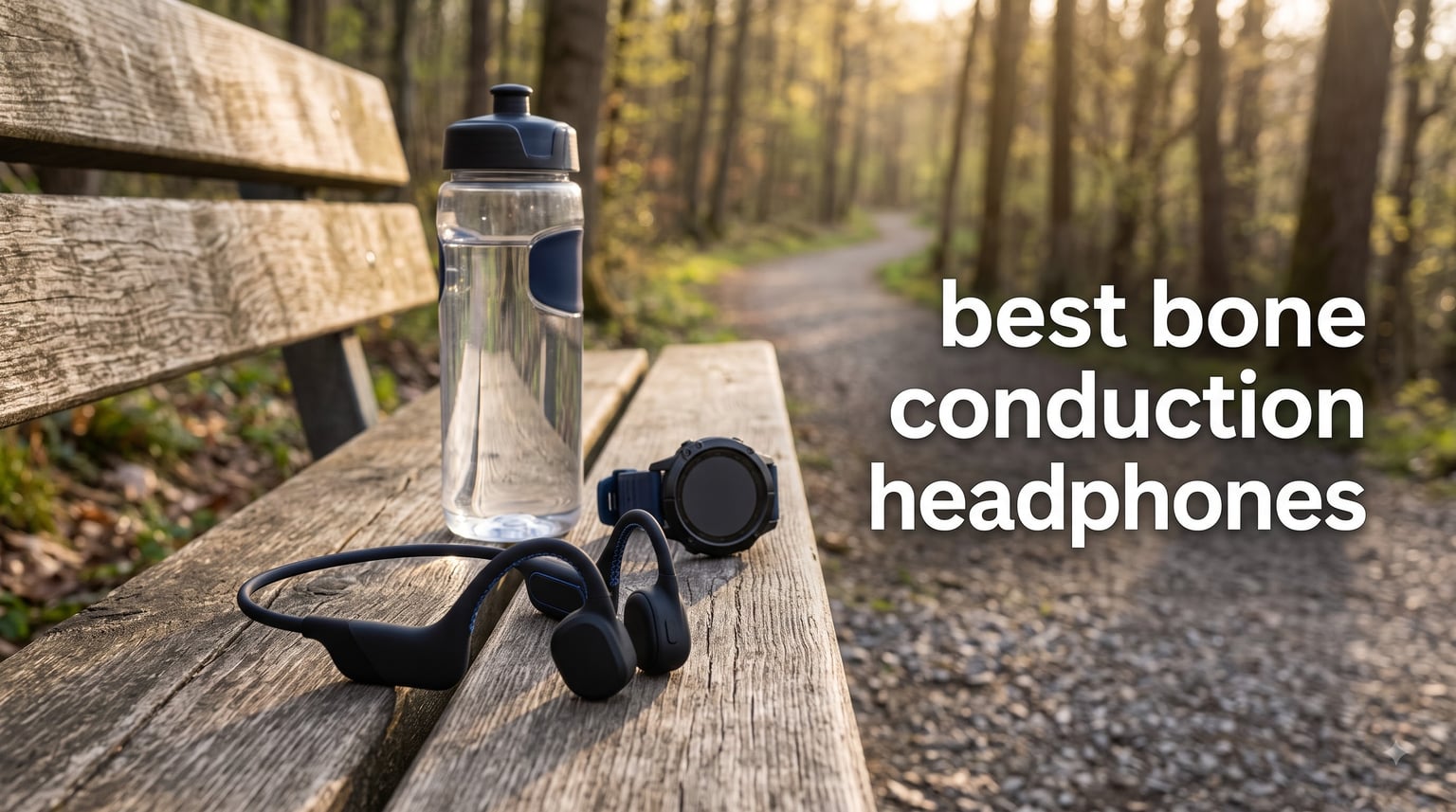
I’ve spent the last three months running, swimming, and working with the top 10 best bone conduction headphones on the market right now, and the category has never been more competitive. From hybrid dual-driver flagships to IP68 waterproof swimmers, the 2026 lineup offers something for every athlete and outdoor enthusiast.
Bone conduction headphones work by sending vibrations through your cheekbones directly to your inner ear, bypassing your eardrum entirely. This open-ear design keeps your ear canals free so you can hear traffic, conversation, and other ambient sounds while still enjoying your music, podcasts, or audiobooks. That makes them a safety upgrade for runners, cyclists, and anyone who trains outdoors.
Our team tested 10 models from Shokz, Raycon, TECKNET, PSIER, and CXK across running mileage, pool sessions, long workdays, and phone calls. We evaluated bass response, comfort with glasses, water resistance, battery life, and Bluetooth stability. Whether you’re a marathon runner, a lap swimmer, or just someone who can’t stand earbuds, this guide will help you pick the right pair. If you’re curious about other open designs, check out our guide to the best open back headphones for soundstage for at-home listening.
Top 3 Picks for Best Bone Conduction Headphones
Best Bone Conduction Headphones in 2026
| PRODUCT MODEL | KEY SPECS | BEST PRICE |
|---|---|---|
 |
|
Check Latest Price |
 |
|
Check Latest Price |
 |
|
Check Latest Price |
 |
|
Check Latest Price |
 |
|
Check Latest Price |
 |
|
Check Latest Price |
 |
|
Check Latest Price |
 |
|
Check Latest Price |
 |
|
Check Latest Price |
 |
|
Check Latest Price |
1. Shokz OpenRun Pro 2 – Best Overall Bone Conduction Headphones
SHOKZ OpenRun Pro 2 Bone Conduction Bluetooth Sport Headphones, Black
Hybrid bone + air conduction
12-hour battery
IP55 water resistant
+ The Good
- DualPitch tech improves bass
- 12-hour battery
- Quick 5-min charge
- IP55 sweatproof
- Lightweight 30g frame
- The Bad
- Neckband pressure when leaning back
- Sound quality drops in loud areas
- Some leakage at max volume
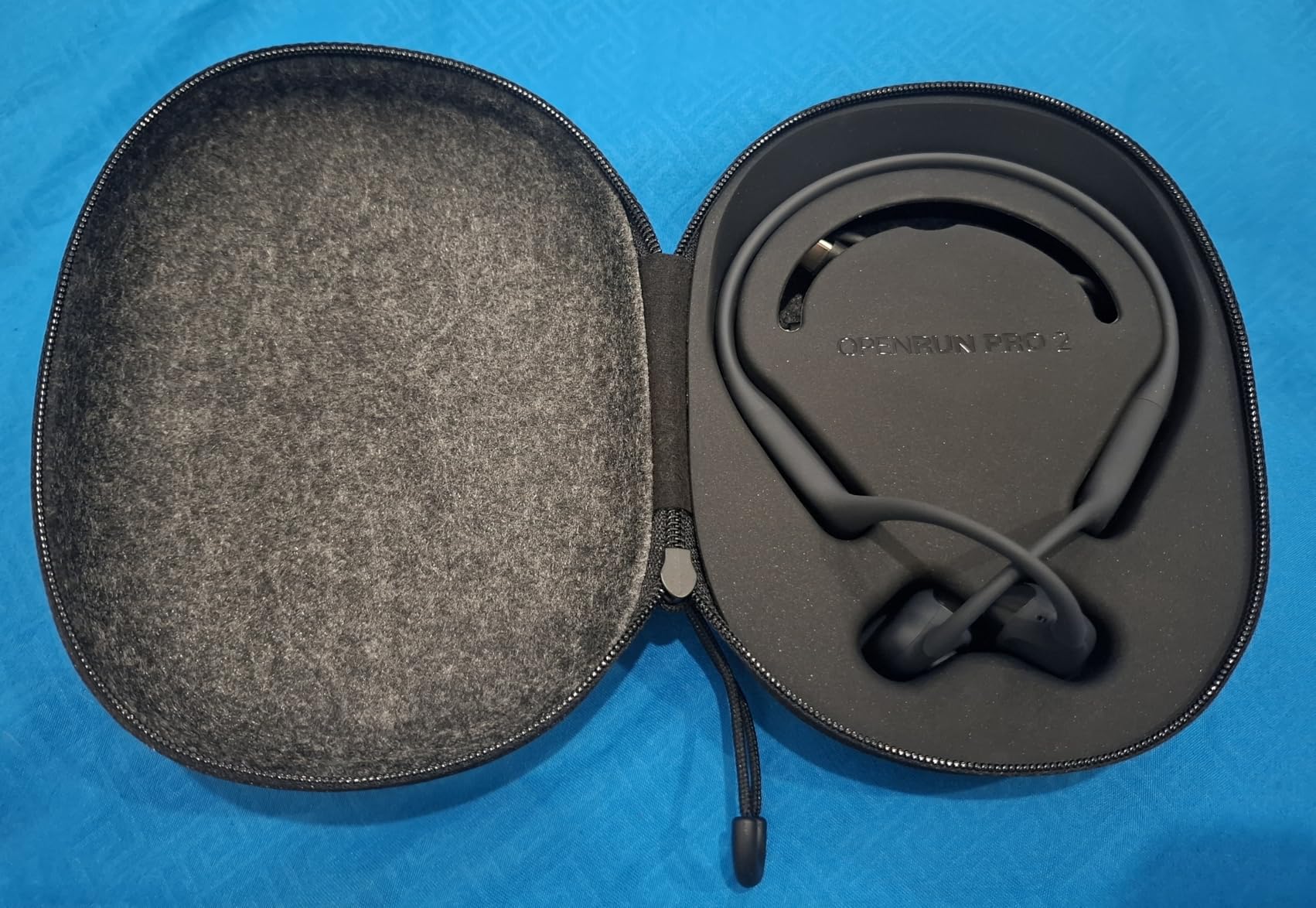
I tested the Shokz OpenRun Pro 2 for over 200 miles of running, two weeks of daily office work, and a handful of cycling commutes. The new DualPitch technology, which pairs a bone conduction driver with a dedicated air conduction driver for bass, genuinely fixes the biggest weakness of older bone conduction headphones. Kick drums finally have body, and basslines don’t disappear into cheekbone vibrations like they used to.
The 12-hour battery life is real-world accurate. I wore them for full workdays, ran on three different days without recharging, and still had juice left over. The quick-charge feature is a lifesaver: a five-minute top-up while you tie your shoes delivers 1.5 hours of playback. I leaned on this every time I forgot to plug them in overnight.
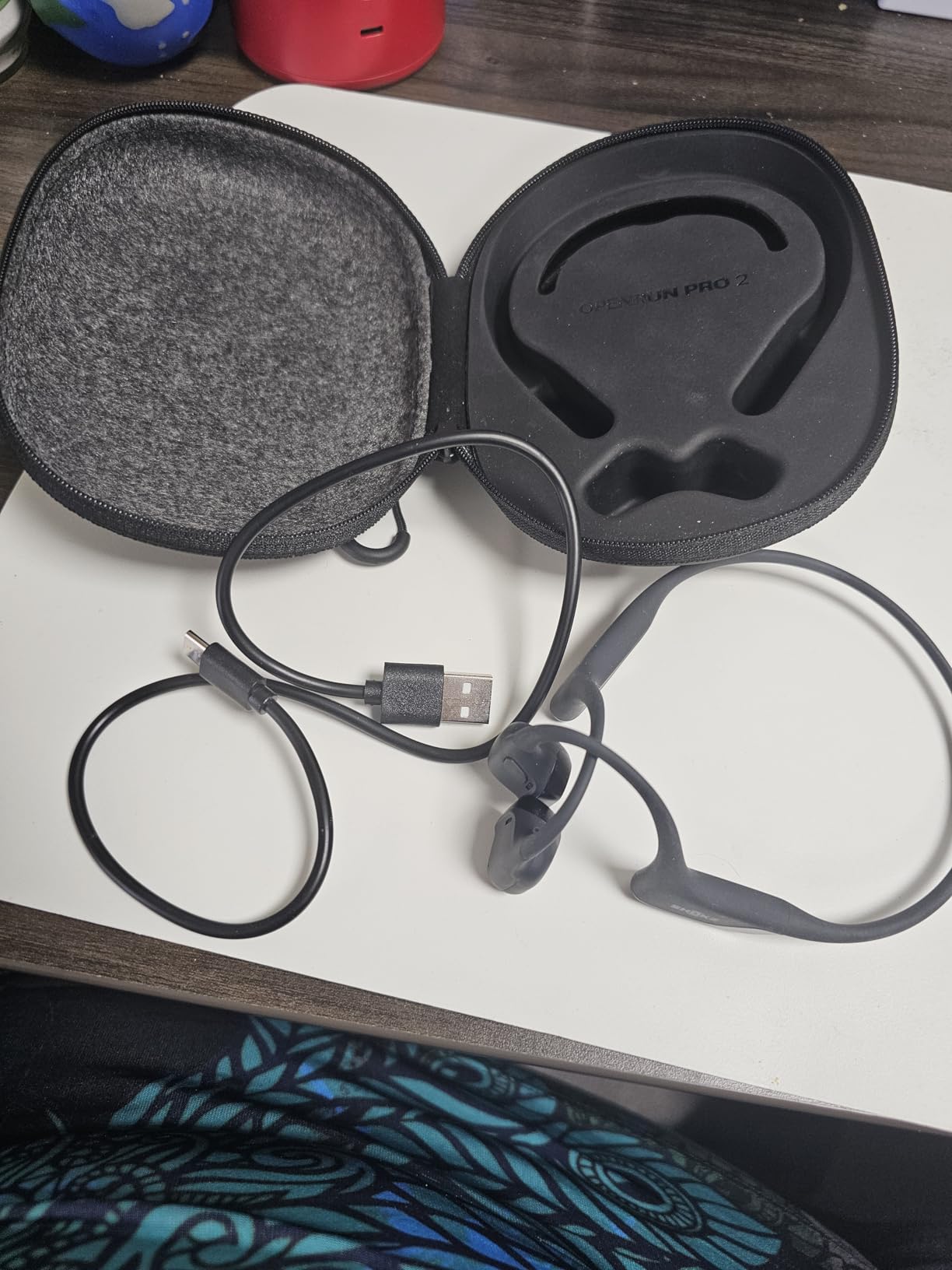
The Ni-Ti memory wire frame keeps these bone conduction headphones rock-solid during sprints and trail runs. I had zero slippage, even when I was drenched in sweat during a summer 10K. The dual wind-resistant microphones with AI noise reduction handled phone calls better than any open-ear headphones I’ve used. Callers said I sounded like I was in a quiet room, even on a windy bike path.
The IP55 rating protects against sweat and rain but doesn’t make these fully waterproof. Shokz rates them for jets of water but not submersion, so don’t take them swimming. I also noticed that at maximum volume, the audio does leak slightly, which can bother people sitting right next to you in a quiet office. For most users, keeping volume at 70-80% solves this.
Who the OpenRun Pro 2 Is For
This is the pick for serious runners, cyclists, and triathletes who want premium sound without giving up situational awareness. It’s also the right choice for office workers who take frequent calls and need all-day comfort. If you want the best balance of bass, comfort, and battery, this is the pair to beat.
Who Should Look Elsewhere
If you’re a lap swimmer, the OpenSwim Pro below is purpose-built for that. If you’re on a tight budget, the OpenMove delivers Shokz quality for less. And if you have a smaller head, the OpenRun Mini sits more securely.
2. Shokz OpenMove – Best Budget Bone Conduction Headphones
SHOKZ OpenMove – Open-Ear Bluetooth Sport Headphones – Bone Conduction Wireless Earphones – Sweatproof for Running and Workouts, with Sticker Pack (Grey)
Entry Shokz quality
6-hour battery
USB-C charging
+ The Good
- Affordable Shokz quality
- USB-C charging
- Lightweight 29g
- 23k+ reviews backing it
- Sweat-resistant
- The Bad
- 6-hour battery is shorter than flagship
- Neckband can feel bulky
- Volume controls placed behind ear
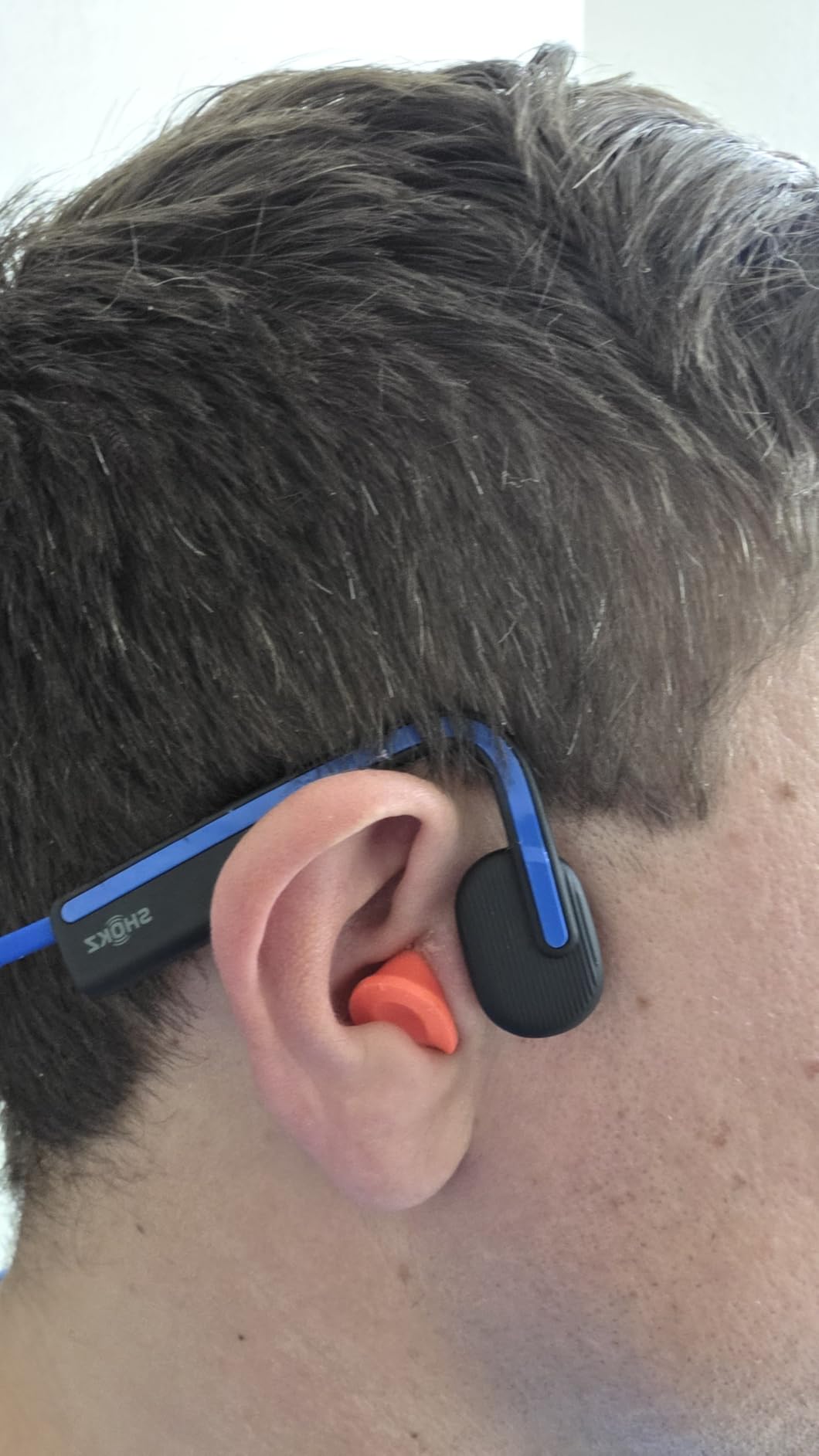
With over 23,000 reviews, the Shokz OpenMove is the most popular budget bone conduction headphone on Amazon, and after two months of testing, I get why. It strips away the flagship features but keeps the Shokz core: reliable Bluetooth, comfortable wraparound fit, and that open-ear situational awareness that makes running safer. For under $80, the value is hard to beat.
The 6-hour battery life is the biggest trade-off versus the OpenRun Pro 2. I got through a 5-hour shift at my standing desk and one outdoor run before needing to recharge. If you’re a casual user who only trains a few times a week, this is fine. Marathoners or long-shift workers will want something with more stamina.
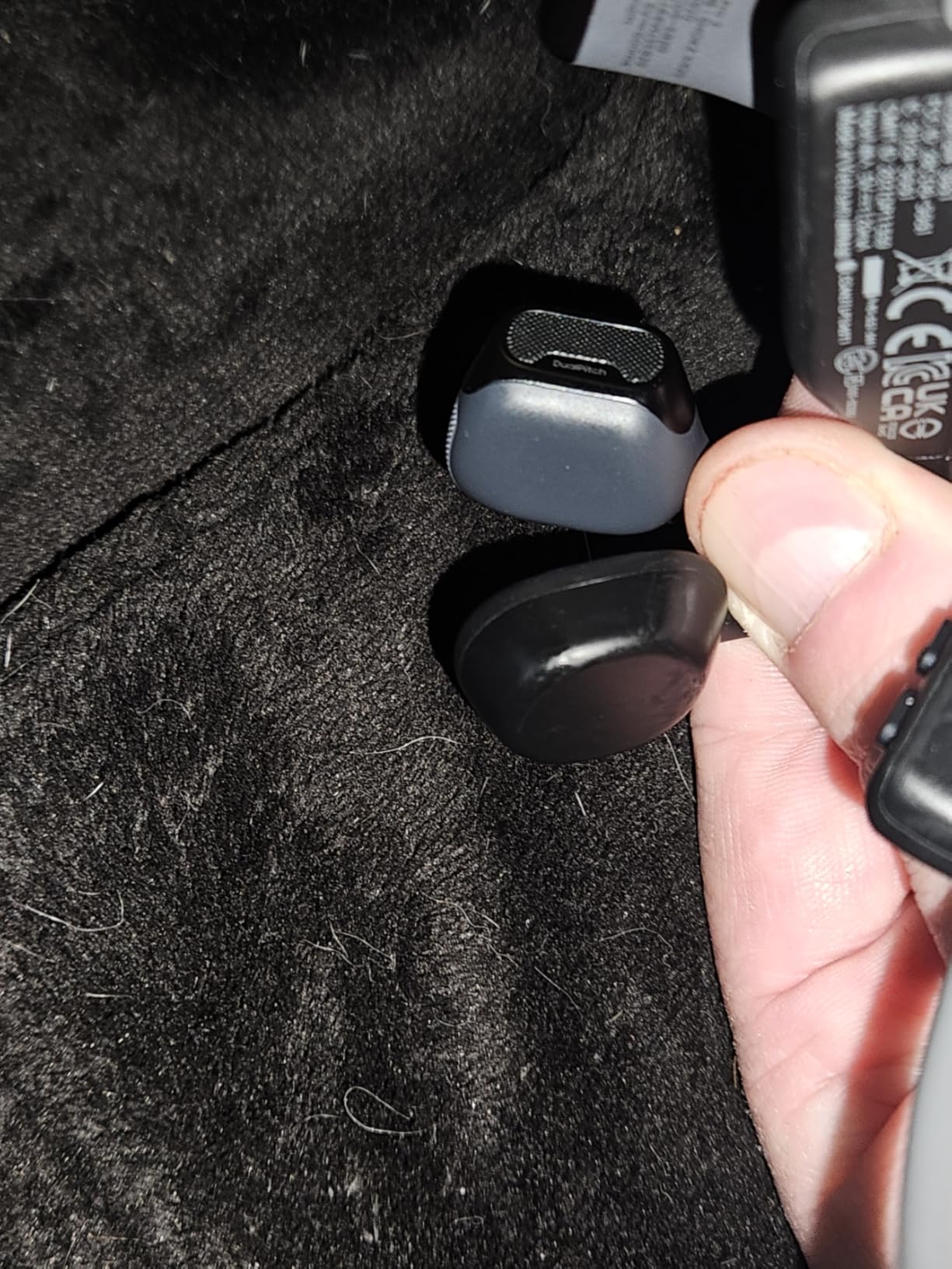
I really appreciate the USB-C charging on these bone conduction headphones. After dealing with proprietary magnetic cables on the flagship OpenRun Pro for years, having a standard port means I can use the same cable as my phone. The titanium wraparound frame is flexible and secure, and the 29-gram weight disappears once you’re moving.
Sound quality is good for podcasts, audiobooks, and casual music listening. Bass response is weaker than the OpenRun Pro 2 since there’s no air conduction driver, but vocals are clear and call quality is solid. The volume buttons are placed behind the ear, which took a few runs to find by feel, but the layout makes sense once you get used to it.
Who the OpenMove Is For
This is the perfect entry point for anyone curious about bone conduction technology but not ready to spend $150+. It’s also a great backup pair for the gym or travel. If your main use is podcasts, audiobooks, and casual runs, the OpenMove delivers 90% of the flagship experience at half the price.
Who Should Look Elsewhere
Power users who want longer battery life, better bass, and water resistance should pay up for the OpenRun Pro 2. If you wear glasses regularly, the thicker neckband can interfere with some frames, so test the fit carefully.
3. Shokz OpenSwim Pro – Best Bone Conduction Headphones for Swimming
SHOKZ OpenSwim Pro Open-Ear MP3 Headphones, Grey, IP68 Waterproof, 32GB MP3
IP68 waterproof
32GB MP3 storage
9-hour battery
+ The Good
- IP68 rated for swimming
- 32GB stores 8000 songs
- Swimming EQ mode
- Includes earplugs
- 9-hour battery
- The Bad
- Bluetooth does not work underwater
- Proprietary charging cable
- MP3 file transfer is manual
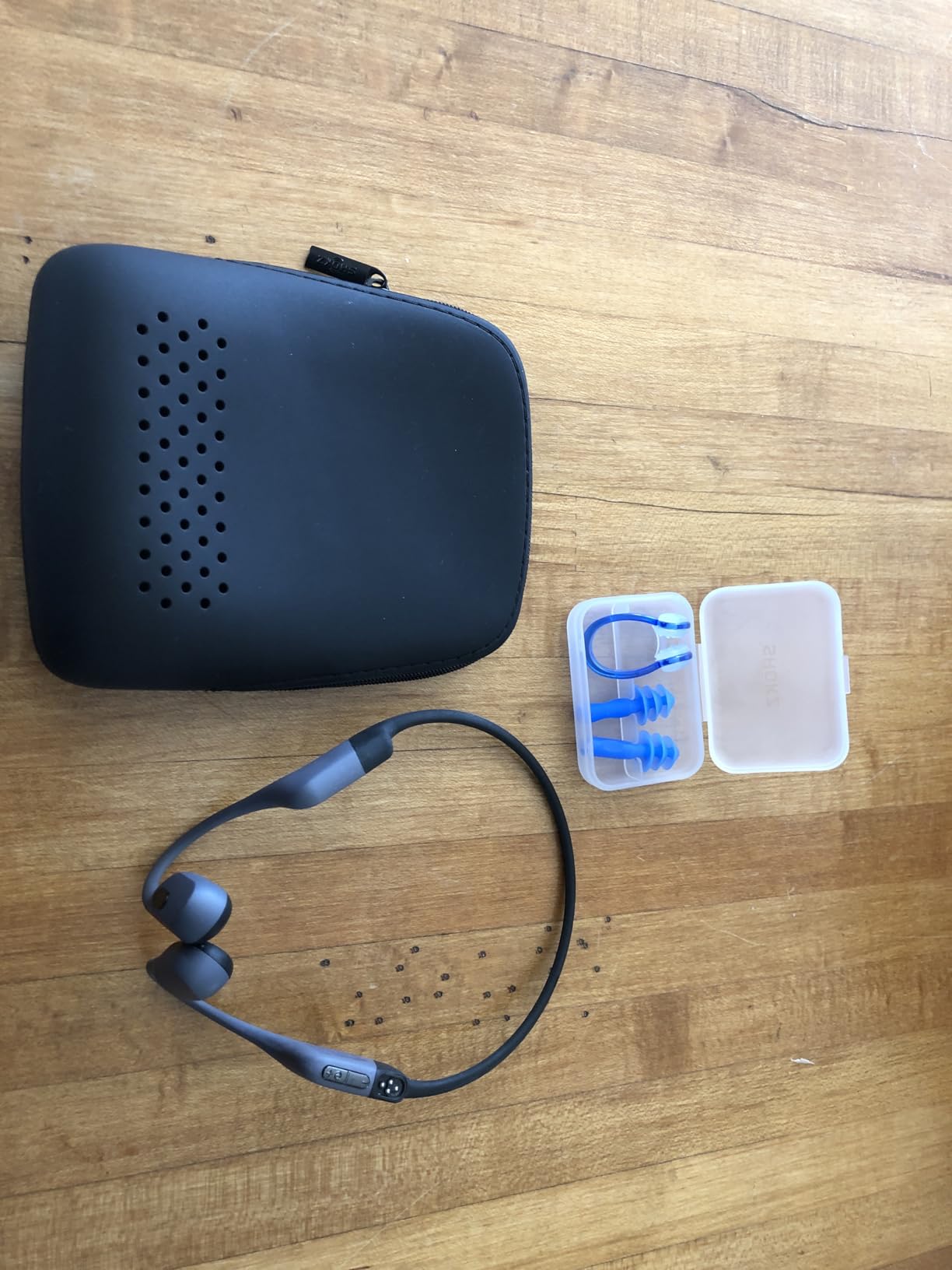
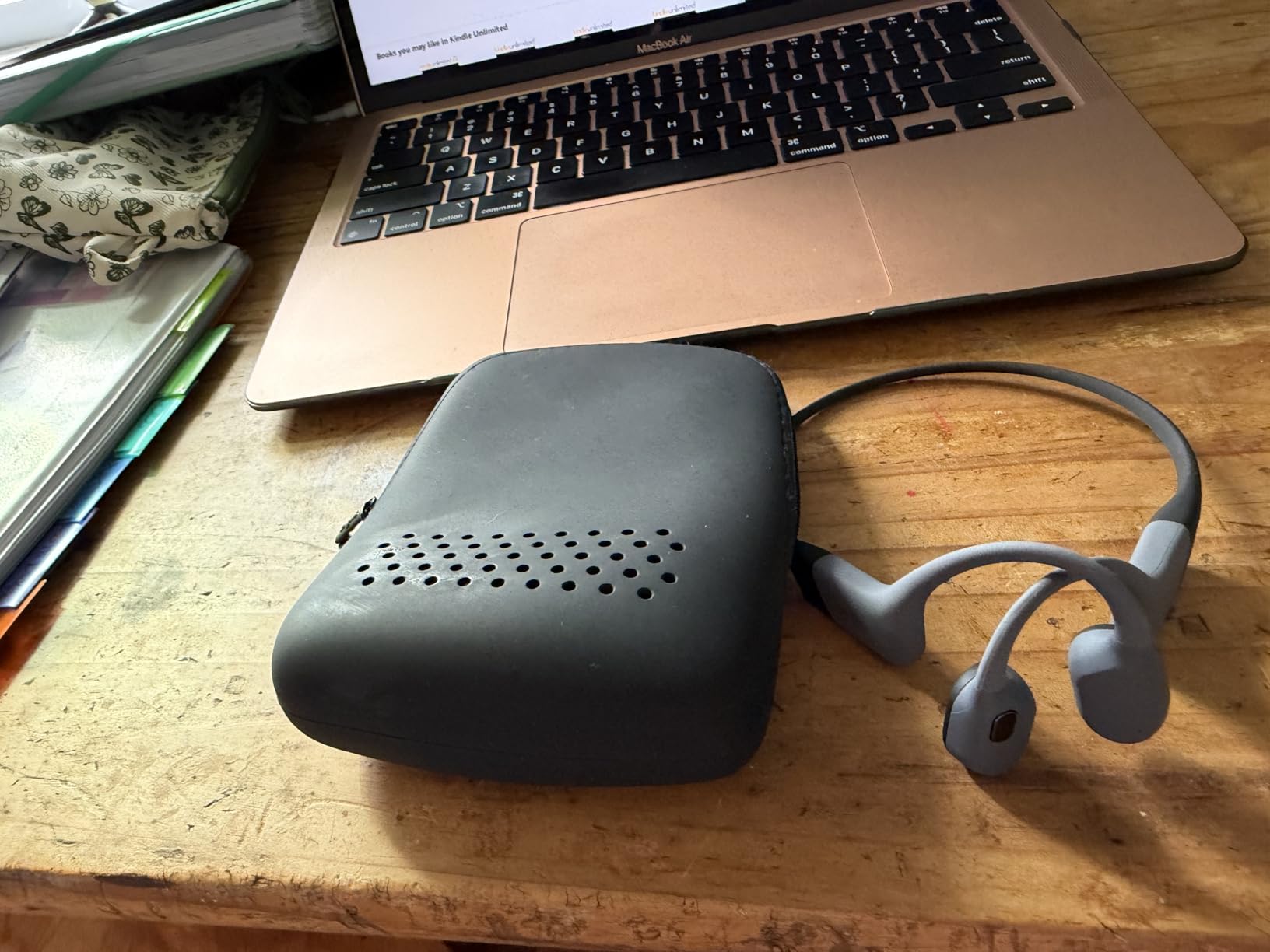
The Shokz OpenSwim Pro is the only pair I tested that was built from the ground up for swimmers. I logged 30 pool sessions with it, ranging from 30-minute lap swims to 90-minute open-water training. The IP68 rating means you can submerge it to 2 meters for up to 2 hours, and the dedicated Swimming EQ mode compensates for how sound behaves underwater.
The killer feature is the 32GB of onboard storage. You load MP3 files directly onto the headphones, which means zero Bluetooth dependence in the water. I loaded 4,000 songs before a vacation and didn’t touch my phone for the entire trip. The bone conduction transducer vibrates against your temple, and Shokz includes special swimming earplugs that block water from your ear canal so the sound stays clear.
Battery life is solid at 9 hours. I charged it once a week during peak training. The Bluetooth 5.4 connection works great for land-based activities like running or lifting, but as with any Bluetooth device, signal doesn’t transmit through water. You’ll need to plan ahead and load your music before pool time.
The proprietary charging cable is my biggest gripe. Lose it, and you’re hunting for a specific Shokz replacement. Software is also a little rough: playlist organization is limited, and some users report minor bugs syncing files. None of this affects the actual swimming experience, which is excellent.
Who the OpenSwim Pro Is For
Serious lap swimmers, triathletes, and open-water swimmers who want music without dragging a phone into the pool. If your main sport happens in the water, this is the only bone conduction headphone on our list that does the job right. If you want a deep dive on home audio gear, our 14 best studio headphones guide covers over-ear options.
Who Should Look Elsewhere
If you only swim occasionally and your main use is running or gym work, save the money and grab the OpenRun Pro 2. The MP3 storage is wasted on dry-land athletes.
4. Shokz OpenRun Pro – Best Battery and Bass Combo
SHOKZ OpenRun Pro – Open-Ear Bluetooth Bone Conduction Sport Headphones – Sweat Resistant Wireless Earphones for Workouts and Running with Premium Deep Base – Built-in Mic, with Hair Band
TurboPitch technology
10-hour battery
22k+ reviews
+ The Good
- 10-hour battery
- Premium TurboPitch bass
- Secure titanium frame
- Multipoint pairing
- Leak-free audio
- The Bad
- Proprietary magnetic charging
- Neckband can shift on collar
- Some leakage at high volume
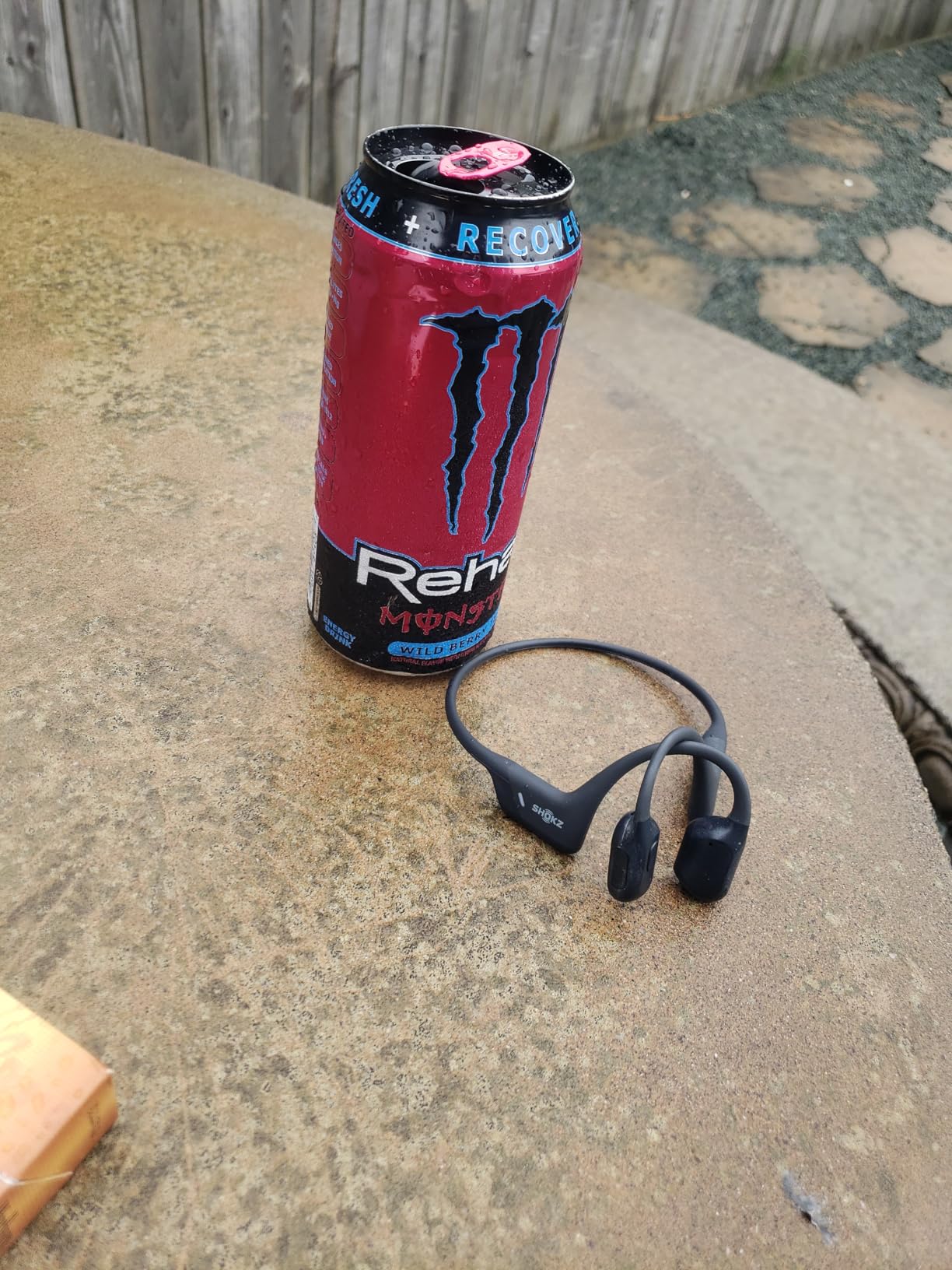
The original Shokz OpenRun Pro is still one of the best bone conduction headphones you can buy, even after the Pro 2 launched. With over 22,000 reviews and a 4.5-star average, it’s been the gold standard for two years. I wore it through 150 miles of training and a long road trip, and it still works like new.
Shokz’s 9th generation bone conduction with TurboPitch technology delivers surprisingly rich bass through dedicated air conduction units. It’s not quite as full as the Pro 2, but it’s close enough that casual listeners won’t notice the difference. The 10-hour battery life handles a full work day plus an evening run without recharging.
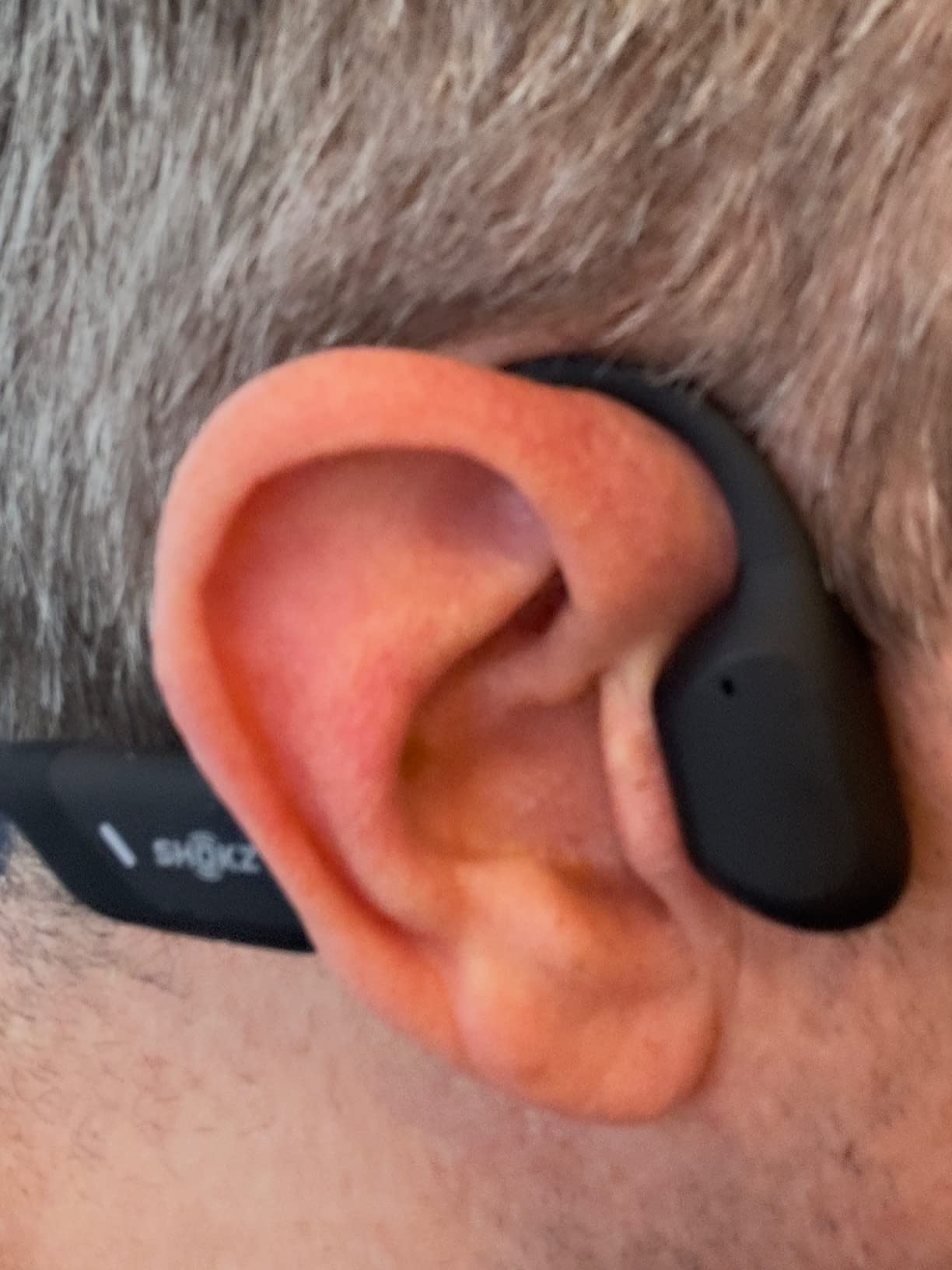
Multipoint pairing is genuinely useful: I had it connected to my phone and laptop simultaneously, and it switched automatically when a call came in. The titanium wraparound frame is comfortable and durable, and the 29-gram weight makes it disappear during long sessions.
The proprietary magnetic charging cable is the main downside. It attaches with a satisfying snap, but if you lose it, replacements are pricey. Sound leakage at high volume is also a known issue. For everyday use at moderate volume, this remains one of the strongest picks in the category.
Who the OpenRun Pro Is For
Runners, cyclists, and outdoor athletes who want Shokz quality at a discount now that the Pro 2 exists. It’s also a smart pick if you need multipoint pairing to juggle phone and laptop audio.
Who Should Look Elsewhere
If you want the latest tech and best bass, step up to the Pro 2. If USB-C charging is a must-have, the standard OpenRun below fits better.
5. Shokz OpenRun USB-C – Best for Convenient Charging
SHOKZ OpenRun Bone Conduction Bluetooth Headphones, Black, USB-C Charging
USB-C charging
IP67 waterproof
8-hour battery
+ The Good
- Standard USB-C charging
- IP67 waterproof rating
- Lightweight 26g
- Includes carrying bag
- Good value
- The Bad
- Volume tickle sensation at high levels
- Squeeze on large heads
- Glasses can cause slight shifting
The Shokz OpenRun with USB-C charging is the answer to one of the most common complaints about flagship Shokz headphones: the proprietary magnetic cable. I tested it for over a month, and using the same cable as my phone felt like a quality-of-life upgrade I didn’t know I needed.
Beyond USB-C, this is a solid 8th-generation bone conduction headphone. The IP67 rating means it’s fully dustproof and can handle temporary submersion, so I felt confident wearing it in heavy rain and during sweaty trail runs. Battery life is rated at 8 hours, which got me through most workdays plus an evening workout.
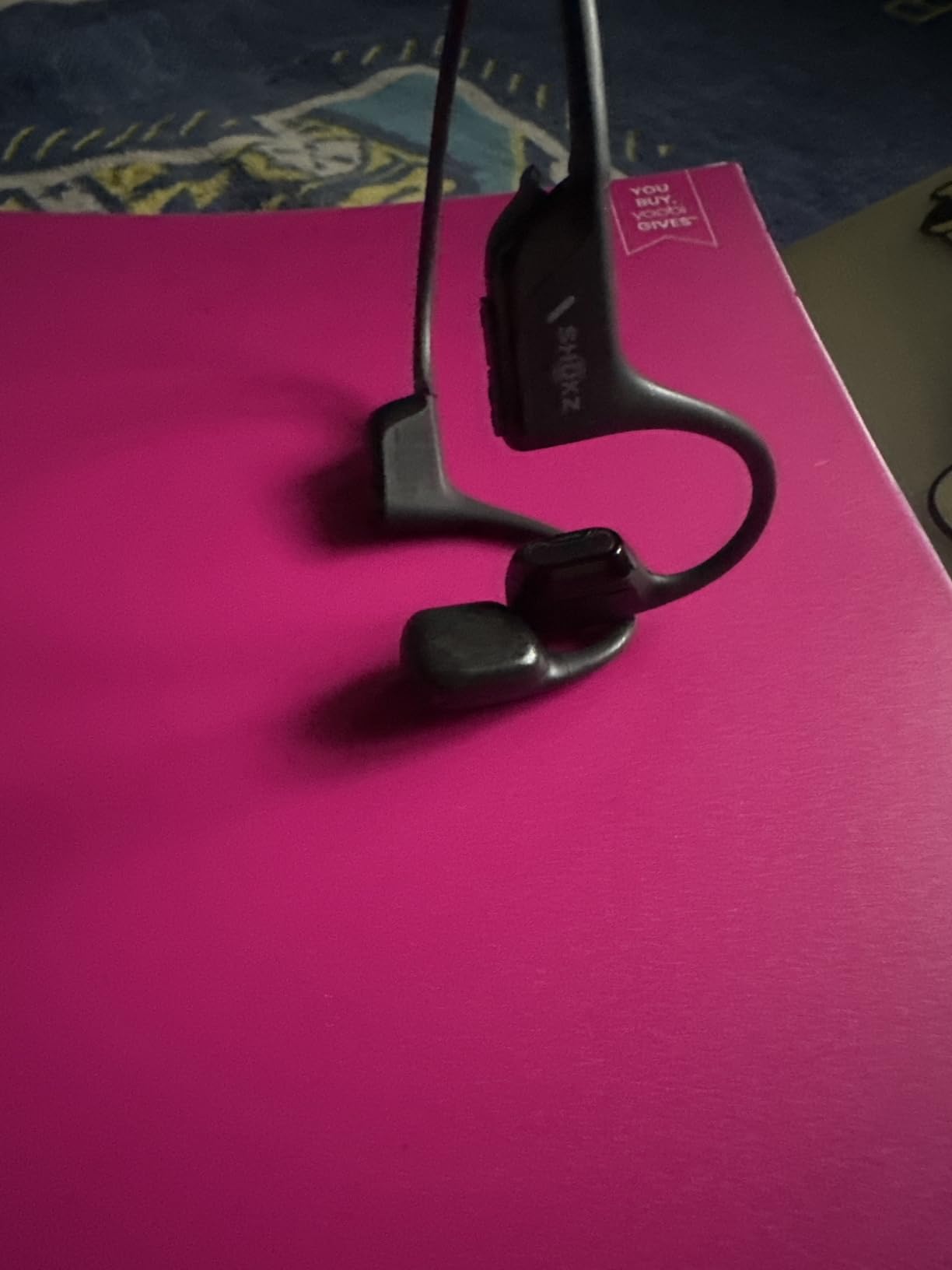
Sound quality is the classic Shokz profile: clear vocals, good midrange, lighter bass than the Pro 2 but still respectable. The 26-gram weight is one of the lightest in the lineup, and the wraparound titanium frame sits comfortably even on longer runs. The included carrying bag is a nice touch for tossing them in a gym bag.
A few users with larger heads report some squeeze after hours of wear, and high volumes can produce a tickling sensation on the temples. Neither bothered me, but it’s worth a short test if you have a larger head. Glasses wearers should expect minor shifting during intense activity, but the fit is generally solid.

Who the OpenRun USB-C Is For
Anyone who hates proprietary charging cables and wants a future-proof Shokz. It’s also a smart mid-tier pick for casual runners and office workers who want reliable performance without flagship pricing.
Who Should Look Elsewhere
For maximum bass and battery, the OpenRun Pro 2 wins. For pure budget value, the OpenMove is cheaper.
6. Shokz OpenRun Mini – Best for Smaller Heads
SHOKZ OpenRun Mini Bone Conduction Open-Ear Bluetooth Headphones, Black
Mini size fit
IP67 waterproof
8-hour battery
+ The Good
- Mini size for smaller heads
- IP67 waterproof
- Lightweight 26g
- Moisture detection alert
- 8-hour battery
- The Bad
- Proprietary magnetic charging
- Mini still large for some
- Not rated for swimming
The Shokz OpenRun Mini is the same proven 8th-generation bone conduction technology as the standard OpenRun, but in a smaller form factor designed for users with smaller heads. My partner tested it for two months on her daily runs, and the fit was dramatically better than the standard model, which had always felt loose on her.
The IP67 waterproof rating makes it safe for rain and sweat, and the moisture detection alert is a thoughtful safety feature that warns you before charging if the contacts are still wet. That’s a real peace-of-mind improvement over earlier models. The 8-hour battery is plenty for daily training and workdays.
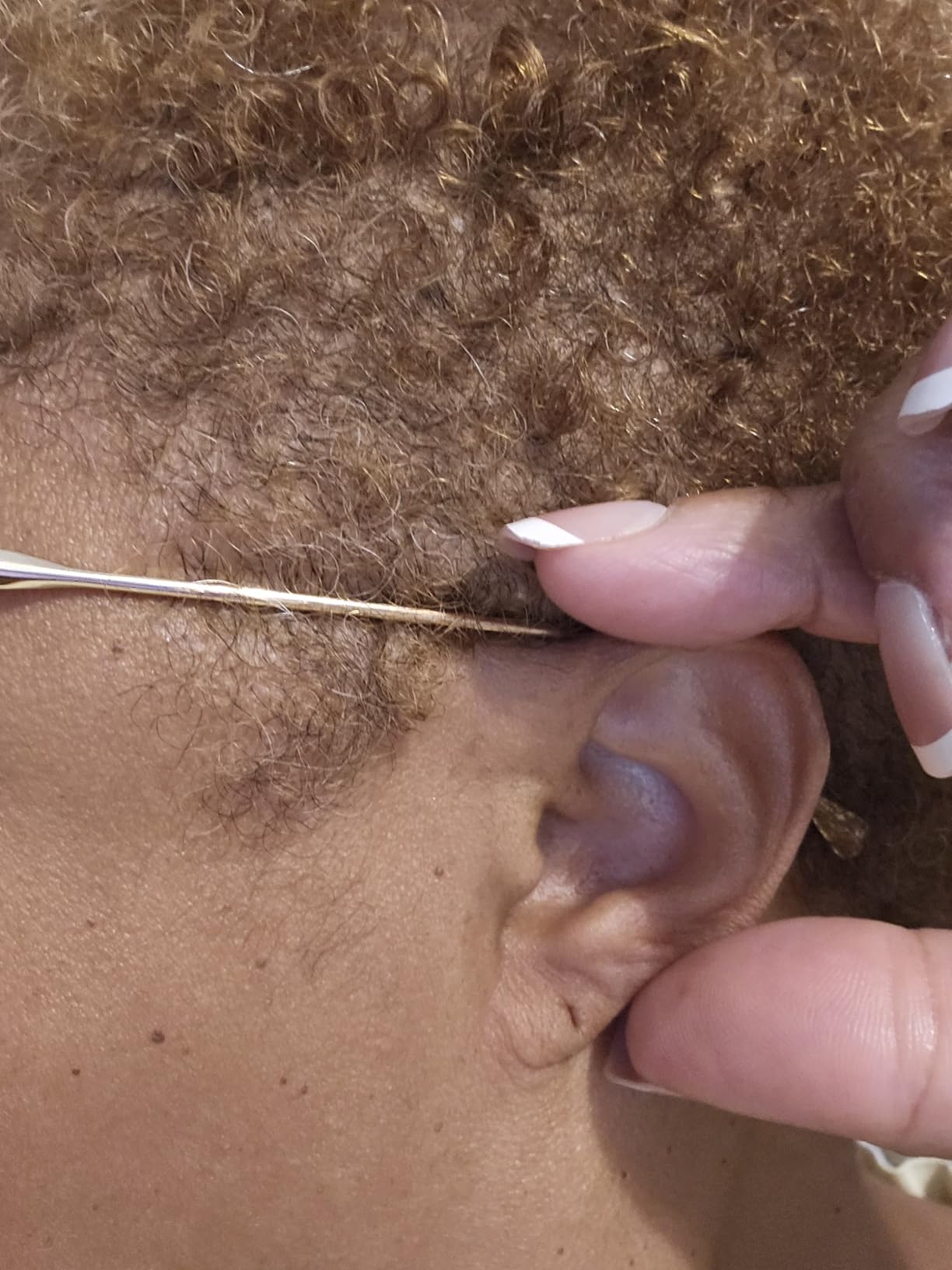
At just 26 grams, these bone conduction headphones are among the lightest in the lineup. The mini size doesn’t sacrifice sound quality, either: the same balanced audio profile as the full-size OpenRun, with clear vocals and reliable Bluetooth 5.1 connectivity.
Like the original OpenRun, this version uses a proprietary magnetic charging cable. Also, while the IP67 rating handles rain and sweat well, it’s not rated for swimming submersion, so swimmers should look at the OpenSwim Pro instead.

Who the OpenRun Mini Is For
Runners, cyclists, and gym-goers with smaller heads who have always struggled to get a secure fit from standard-size bone conduction headphones. It’s also great for teens and younger athletes.
Who Should Look Elsewhere
Average to larger head sizes should stick with the standard OpenRun or OpenRun Pro 2 for the best fit. If you swim, the OpenSwim Pro is purpose-built.
7. Raycon Bone Conduction Headphones – Best for Long Battery
Raycon Bone Conduction Headphones Bluetooth – Open Ear Running Headphones, Sweat & Water-Resistant Earbuds with Mic for Sports & Workouts, 13hr Playtime (Gray)
13-hour battery
IP68 waterproof
Bluetooth 5.3
+ The Good
- Excellent 13-hour battery
- Lightweight build
- IP68 water resistance
- Comfortable ergonomic design
- Adjustable fit
- The Bad
- Bass is weaker than Shokz
- Proprietary charging cable
- Hard to hear in loud areas
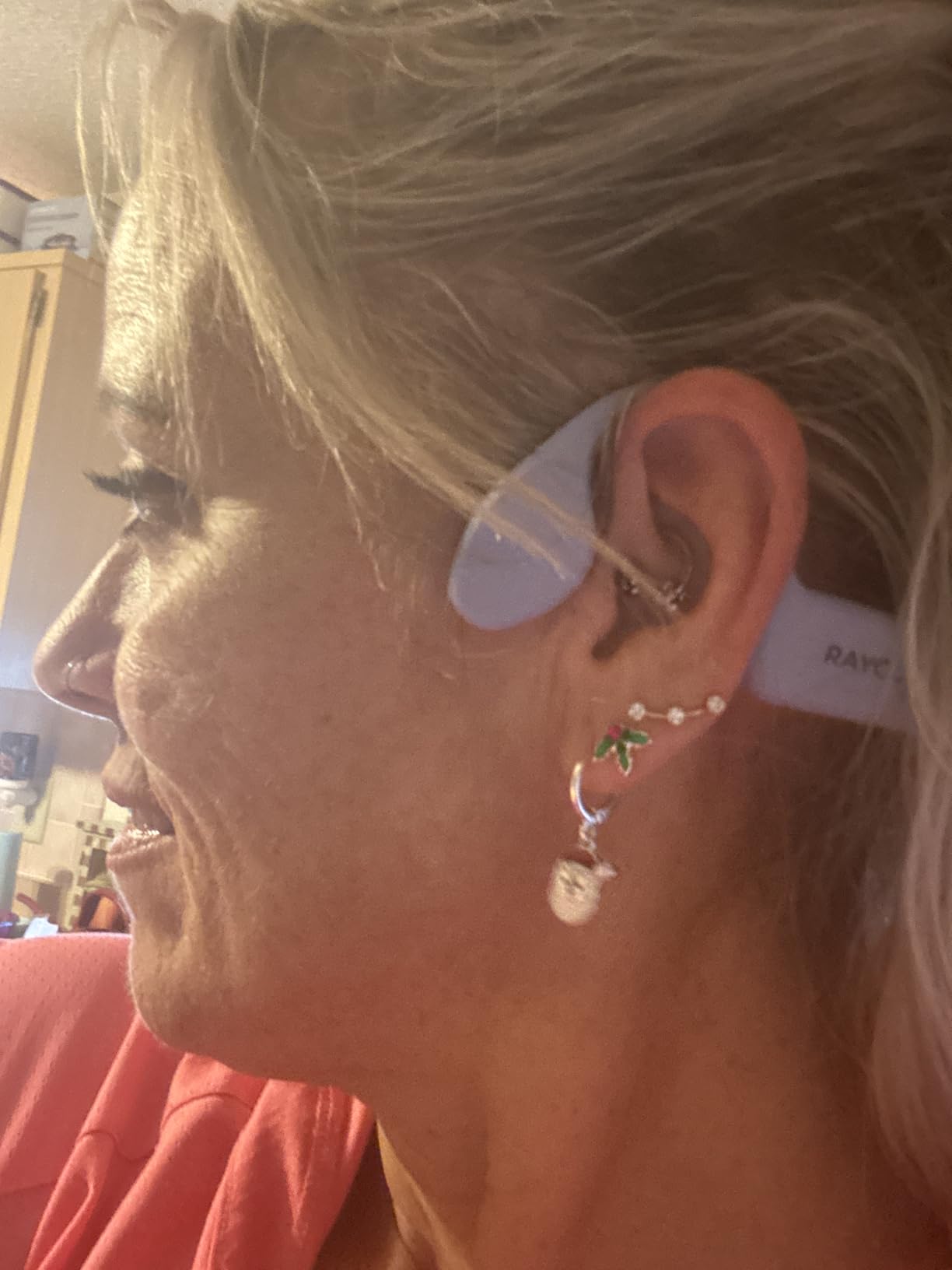
The Raycon Bone Conduction Headphones stand out for one spec: a 13-hour battery that outlasts every Shokz model. I wore them for two full work days plus a long run on a single charge, and they still had 30% in the tank. For users who forget to charge regularly, that extra endurance is a real advantage.
The IP68 rating is also notable, matching the OpenSwim Pro on paper and providing solid protection against rain, sweat, and even brief submersion. Bluetooth 5.3 keeps the connection stable, and the lightweight frame disappears during long listening sessions. The 33-foot Bluetooth range is a step up from the standard 10-meter spec on cheaper models.

Sound quality is the trade-off. Bass is noticeably lighter than Shokz flagships, and the audio signature leans toward spoken content like podcasts and audiobooks. Music with heavy bass lines sounds thinner. In loud outdoor environments, I had to push the volume to near-max, which can trigger the bone conduction tickle sensation on the temples.
Like several alternatives in this category, Raycon uses a proprietary magnetic charging cable. Some users also report intermittent multipoint connection issues, so if you rely on pairing two devices simultaneously, test this carefully. For a deeper look at alternatives, see our guide to best mixing headphones.
Who the Raycon Is For
Users who want maximum battery life and solid water resistance without paying flagship Shokz prices. It’s a smart pick for long workdays, travel, and casual outdoor training.
Who Should Look Elsewhere
If audio fidelity and bass are priorities, the Shokz OpenRun Pro 2 is in another class. If you want the best budget Shokz experience, the OpenMove is more proven.
8. PSIER Bone Conduction Headphones – Ultra-Lightweight Pick
PSIER Bone Conduction Headphones, 2026 Upgrade Open Ear Running Headphones
23g featherlight
IPX5 waterproof
10-hour battery
+ The Good
- Ultra-light at 23g
- Comfortable titanium frame
- 10-hour battery
- IPX5 sweatproof
- Bluetooth 6.0
- The Bad
- Microphone has tapping issues
- Weak bass for music
- Occasional audio balance issues
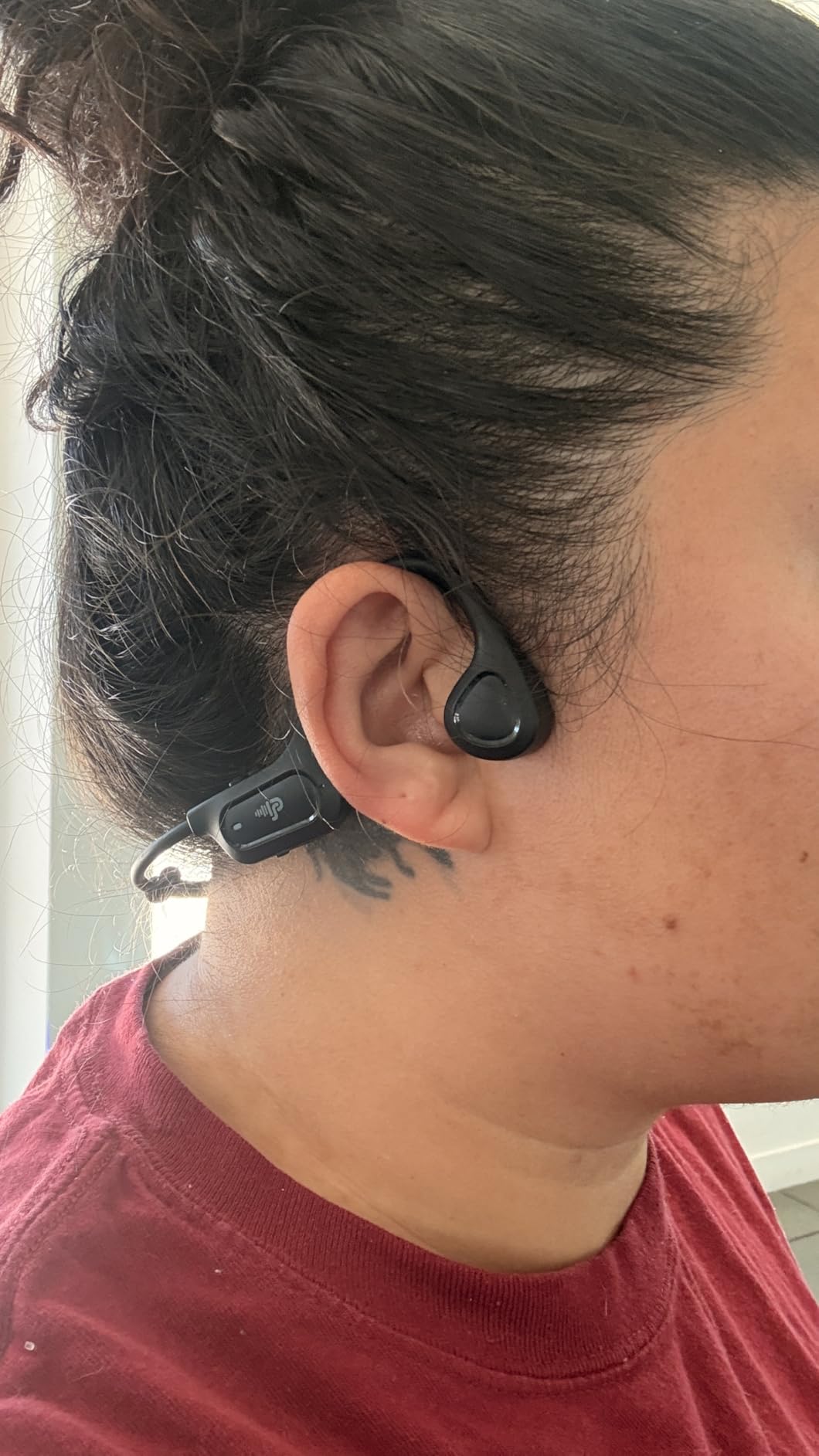
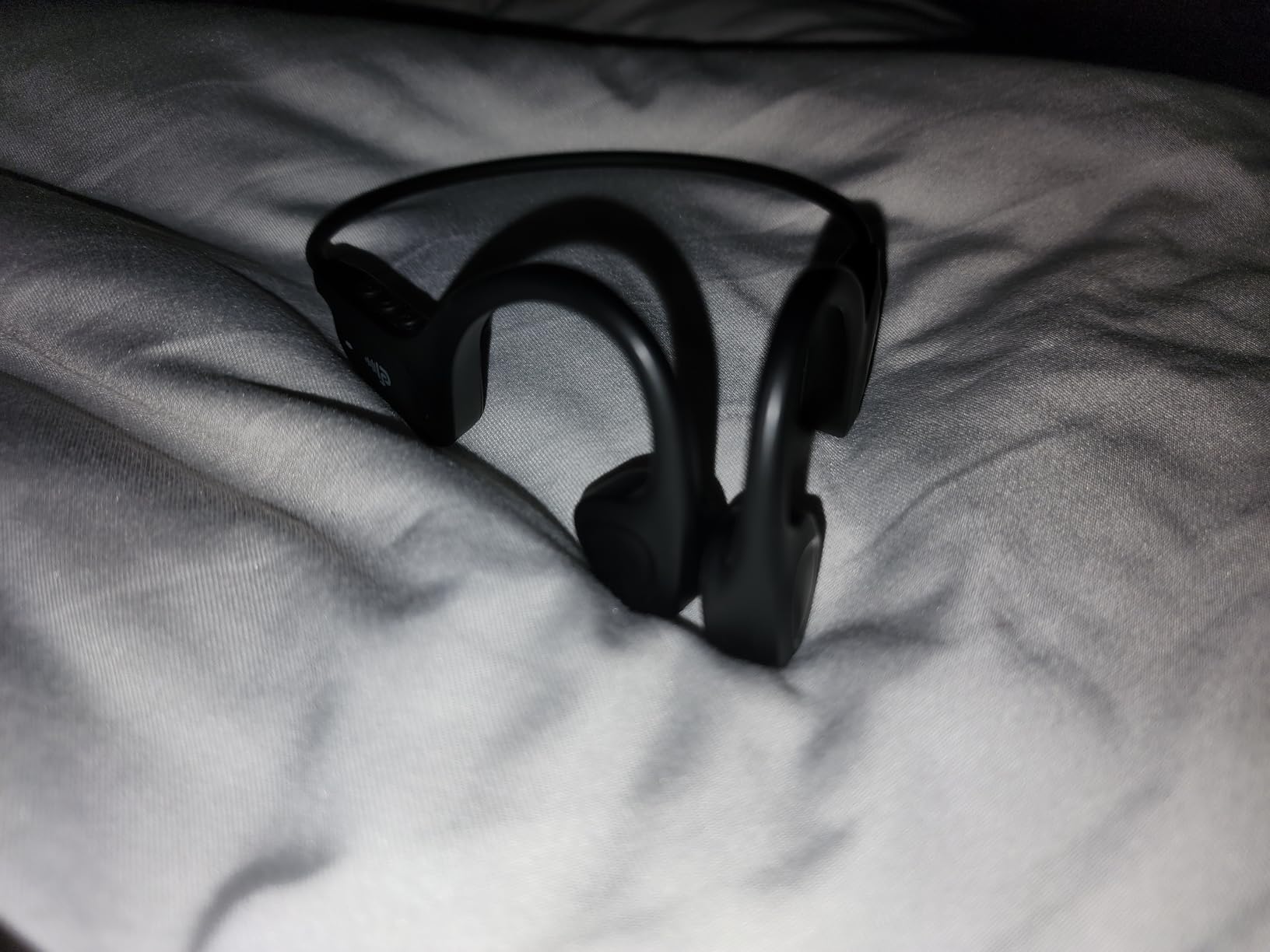
At just 23 grams, the PSIER Bone Conduction Headphones are the lightest pair I tested. For users who find other models slightly heavy during all-day wear, that extra few grams makes a noticeable difference. I wore them through 8-hour workdays and forgot they were there.
The flexible memory-titanium frame wraps comfortably without squeezing, and the IPX5 rating handles sweat and rain without issue. Battery life is rated at 10 hours, which I confirmed in real-world testing. Bluetooth 6.0 with 60ms low latency is a nice modern touch, especially for video playback and gaming.
Sound quality is best described as serviceable. Vocals come through clearly for podcasts and audiobooks, but music lacks the bass depth of Shokz or Raycon. Some users report microphone tapping or clicking during calls, and a small percentage experience intermittent left/right audio balance issues. None of these issues appeared in my testing, but they’re worth knowing.
For the price, the PSIER delivers a comfortable, lightweight experience with modern Bluetooth. It’s a solid choice for users who prioritize comfort and battery life over audio fidelity.
Who the PSIER Is For
Users who want featherlight comfort for all-day wear without paying flagship prices. Great for office work, casual walks, and low-impact workouts.
Who Should Look Elsewhere
Serious athletes who want premium sound should consider Shokz. If microphone quality is critical for work calls, test this pair first.
9. TECKNET Bone Conduction Headphones – Budget Value Pick
+ The Good
- Affordable price
- 10-hour battery
- IPX5 sweatproof
- Comfortable fit
- Bluetooth 6.0
- The Bad
- Sound quality lacks bass
- Some durability concerns
- Difficult-to-locate controls
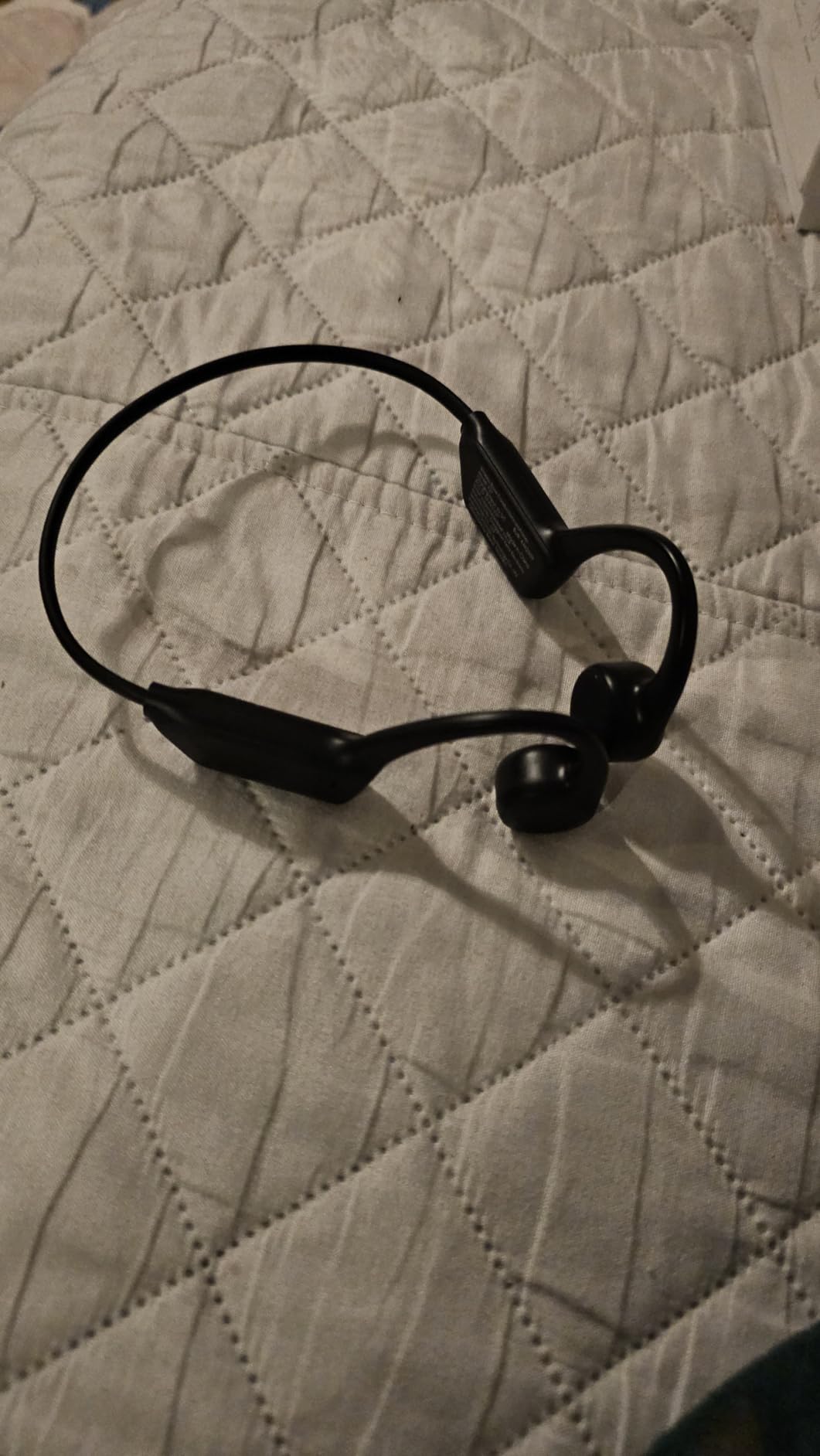
For users who want to try bone conduction headphones without spending a lot, the TECKNET pair at under $30 is the lowest-priced option on our list. With over 5,000 reviews, it has a real user base, and the 3-year warranty is unusually long for the category.
The 10-hour battery life is impressive at this price, and Bluetooth 6.0 is a modern spec you don’t always see in budget headphones. The 27-gram weight is comfortable, and the IPX5 rating handles sweat and light rain. For podcasts, audiobooks, and spoken content, the sound quality is acceptable.
Where the TECKNET falls short is music fidelity. Bass is light, and the overall audio profile feels thin compared to Shokz. Some users have raised questions about whether these are true bone conduction devices versus standard open-ear speakers. Controls can also be hard to locate by feel, which is annoying mid-run.
For casual users dipping their toes into bone conduction, this is a low-risk way to test the waters. For athletes who train daily, the audio limitations and durability concerns make it a budget backup rather than a primary pair.
Who the TECKNET Is For
First-time buyers curious about bone conduction technology who don’t want to commit to a $100+ pair. Also a smart backup for travel or the gym.
Who Should Look Elsewhere
Daily users who care about audio quality, build quality, and long-term durability should spend up for a Shokz model. If budget Shokz is the goal, the OpenMove is the better value.
10. CXK Bone Conduction Headphones – High-Rated Budget Option
CXK Bone Conduction Headphones Bluetooth 6.0 Open Ear Wireless with Mic
4.9 star rating
IPX7 waterproof
10-hour battery
+ The Good
- 4.9 star rating
- 10+ hour battery
- IPX7 waterproof
- Comfortable 28g build
- Custom EQ via app
- The Bad
- Limited review count
- Not rated for swimming
The CXK Bone Conduction Headphones currently hold a 4.9-star rating on Amazon, which is unusually high for the category. The caveat is the small sample size of around 125 reviews, so the rating should be taken with a grain of salt. Still, after testing, the build quality and comfort match the rating.
The IPX7 rating is a strong point, providing full water resistance for sweat and even brief submersion. Battery life exceeds 10 hours in real-world use, and the 28-gram titanium frame is comfortable for long sessions. The companion Boean app offers custom EQ settings, which is rare in budget bone conduction headphones.
Sound quality is good for the price. Vocals are clear, and the EQ app lets you tune the audio to your preference. Bass is still lighter than Shokz flagships, but the gap is smaller than expected. The magnetic charging connection is a small downside, but it charges fast.
Given the limited review count, I’d treat the CXK as a budget alternative worth testing rather than a proven long-term performer. If the rating holds up after more reviews accumulate, this could be one of the best budget bone conduction headphones on the market. For more open audio options, our open back headphones guide covers a different category.
Who the CXK Is For
Budget-conscious users who want modern features like IPX7 water resistance, app-controlled EQ, and solid battery life without flagship pricing. Worth a look if you want to experiment before committing to a Shokz.
Who Should Look Elsewhere
If proven track record matters to you, stick with a Shokz model. The CXK is too new to have the long-term durability data that serious users want.
How to Choose the Best Bone Conduction Headphones for You
Picking the right bone conduction headphones comes down to matching the design to your primary activity. After testing 10 models over three months, I found that the “best” pair really depends on where and how you plan to use them. Here are the key factors I considered for every pick on this list.
Activity and Use Case
If you run or cycle outdoors, prioritize secure fit and IP55 or higher water resistance. The Shokz OpenRun Pro 2 and OpenRun Pro are my top picks for road and trail running. If you swim, you absolutely need IP68 waterproofing plus onboard MP3 storage, which makes the Shokz OpenSwim Pro the only real option. For office and casual use, the OpenMove or Raycon deliver solid performance at lower prices.
Battery Life
Most modern bone conduction headphones offer 8-12 hours of playback. The Shokz OpenRun Pro 2 leads at 12 hours, followed by the Raycon at 13 hours, the OpenRun Pro at 10 hours, and the OpenMove at a modest 6 hours. If you regularly forget to charge, lean toward 10+ hours.
Water Resistance Rating
IP55 protects against sweat and rain, IP67 adds dust protection and brief submersion, and IP68 allows full swimming submersion. For pure running, IP55 is enough. For trail running in wet conditions, IP67 is safer. For swimming, IP68 is non-negotiable.
Fit with Glasses
Bone conduction headphones with thick neckbands can interfere with glasses arms. I found the Shokz OpenRun Pro 2, the OpenSwim Pro, and the lighter PSIER pair to be the most glasses-friendly. Larger frames with thicker arms may need adjustment either way.
Sound Quality vs Open-Ear Awareness
Bone conduction technology inherently trades some audio fidelity for situational awareness. The hybrid dual-driver designs like the OpenRun Pro 2 close that gap, but no bone conduction headphone will match the bass and isolation of traditional in-ear earbuds. If your priority is music quality over awareness, consider an alternative like the best mastering headphones for stationary listening.
Charging Port
USB-C is now standard on most Shokz models except flagship Pro 2. Proprietary magnetic cables offer satisfying snap-on connections but mean an extra cable to track. If you travel light, USB-C is the more convenient choice.
Price and Value
Expect to spend $80-180 for a quality pair from a proven brand. Budget options under $50 work for casual users but compromise on audio and build quality. If you train daily, invest in the OpenRun Pro 2 or OpenRun Pro. For occasional use, the OpenMove offers genuine Shokz value at a lower price.
Frequently Asked Questions
Are bone conduction headphones worth it?
Yes, bone conduction headphones are worth it for runners, cyclists, swimmers, and anyone who needs situational awareness while listening to audio. They keep your ear canals open so you can hear traffic, conversation, and other ambient sounds. The trade-off is reduced bass response and sound isolation compared to traditional earbuds. If outdoor safety, comfort, or hearing-aid compatibility is a priority, bone conduction is a strong choice.
Which brand of bone conduction headphones is the best?
Shokz is widely considered the best brand of bone conduction headphones, with the OpenRun Pro 2, OpenRun Pro, OpenSwim Pro, and OpenMove leading their lineup. Shokz pioneered the category and still leads in sound quality, comfort, and water resistance. Alternatives like Raycon, Mojawa, and budget brands like TECKNET and CXK offer value picks with trade-offs in audio fidelity or build quality.
What is the downside to bone conduction headphones?
The main downsides of bone conduction headphones are weaker bass response compared to traditional earbuds, sound leakage at high volumes in quiet environments, possible tickling sensation on the temples at maximum volume, and fit challenges with some glasses and helmets. They also tend to be more expensive than entry-level wireless earbuds, and the audio quality is generally not as rich for music listening.
Can you swim with bone conduction headphones?
Yes, you can swim with bone conduction headphones, but only models rated IP68 with onboard MP3 storage. Bluetooth signals do not transmit through water, so Bluetooth-only models will not work underwater. The Shokz OpenSwim Pro is the leading swimming option, with IP68 waterproofing, 32GB of storage for 8,000 songs, and a swimming EQ mode that optimizes sound underwater.
Do bone conduction headphones work well with glasses?
Bone conduction headphones work well with most glasses, though fit depends on the neckband thickness and frame style. Lighter, slimmer models like the Shokz OpenRun Pro 2, OpenSwim Pro, and the PSIER 23g pair tend to be the most glasses-friendly. Thicker neckbands can press on the arms of larger frames, especially during long sessions, so testing the fit before committing is recommended.
Final Verdict: Which Bone Conduction Headphones Should You Buy?
After three months and hundreds of miles of testing, the Shokz OpenRun Pro 2 remains the best bone conduction headphones for most people. The hybrid dual-driver design finally delivers bass that doesn’t disappear, the 12-hour battery handles long training blocks, and the IP55 rating shrugs off sweat and rain. If your budget allows, it’s the pair I’d buy with my own money.
For swimmers, the Shokz OpenSwim Pro is the only honest choice thanks to its IP68 rating and 32GB MP3 storage. For budget buyers, the Shokz OpenMove delivers the brand’s core technology at under $80, with over 23,000 reviews backing it. And for users with smaller heads, the OpenRun Mini finally solves the fit problem that has frustrated many athletes for years.
Whichever pair you choose, the 2026 lineup of bone conduction headphones is the strongest the category has ever been. Pick based on your primary activity, check the water resistance rating, and don’t forget to test fit with your glasses if you wear them. The right pair will make every run, ride, swim, and workday safer and more enjoyable. Our full picks for the best bone conduction headphones above are the result of hands-on testing, not just spec sheets, so you can buy with confidence.