
The short answer: the best brushless impact drivers for mechanics in 2026 are the Makita XDT131 18V LXT for all-around shop use, the DEWALT DCF845B 20V MAX for power-to-size ratio, and the Milwaukee M18 FUEL 2953-20 when a fastener is truly frozen. All three pair a 1/4-inch hex collet with a brushless motor and enough torque to handle the 8 mm to 12 mm hardware that fills a typical service bay.
A brushless impact driver is a cordless 1/4-inch hex driver whose hammering mechanism and brushless motor deliver roughly 1,500 to 2,500 in-lbs of torque in a package that weighs about two pounds. It has no keyed chuck and no clutch, which is exactly why a technician reaches for it instead of a drill. Every impact inside the nose rotates and then strikes the hex, so the torque arrives in thousands of small pulses instead of one steady push. A frozen caliper bracket or a rusty seat rail bolt gives up long before the motor stalls.
I have put these ten drivers through the same filter a working technician would use: rated torque against the fastener sizes that actually show up on a lift, head length for the gap between a radiator support and a fan shroud, bare weight for overhead work, drive modes for controlling the trigger, and the cost of the battery platform you will be stuck with for the next decade. I also read the customer reviews closely, because the complaints are where the real differences live.
What follows is a 10-pick roundup with an honest verdict on each one, plus the buying guide that closes the article. Nobody in this list wins every job, and the driver-versus-wrench question needs answering before you spend anything, so we start there.
Top 3 Brushless Impact Driver Picks for Mechanics for September 2026

Makita XDT131 18V LXT
- › 1500 in-lbs torque
- › 0-3400 RPM variable speed
- › Brushless motor
- › Kit with 3.0Ah battery

DEWALT DCF845B 20V MAX
- › 1825 in-lbs torque
- › 3-speed selector
- › Tri-LED work light
- › 5.3 inch head length

Milwaukee M18 FUEL 2953-20
- › 2000 in-lbs torque
- › 4-mode drive control
- › Tri-LED lighting
- › 2.76 inch length
The Makita takes the top slot because it is the only pick here that ships complete with battery and charger, carries the highest review volume of the group, and holds a 4.8 rating. The DEWALT is the strongest compact unit on the market if you already run 20V MAX packs. The Milwaukee FUEL is the one to reach for when the bolt has been sitting in a winter road salt bath since last season.
Impact Driver vs Impact Wrench: Know Which Job You Have
This is the single biggest source of wasted money in a garage, and the search results for this keyword are dominated by impact wrenches because that is the higher-volume term. An impact driver has a 1/4-inch hex collet and exists to drive screws and bolts. An impact wrench has a 1/2-inch square anvil and exists to remove nuts, starting with lug nuts. They are not interchangeable.
Impact driver: a 1/4-inch hex collet, rated in in-lbs, four modes on the good ones. It drives trim bolts, bracket screws, caliper bolts, body panel fasteners, and long suspension bolts. It is your default fastener tool for eight hours of a shift.
Impact wrench: a 1/2-inch square drive, rated in ft-lbs, hundreds of in-lbs higher. It handles lug nuts, axle nuts, and seized hardware above 250 ft-lbs. A driver will stall on a 200 ft-lb lug nut and can damage the anvil trying.
Overlap: a 1/4-inch impact-rated bit on a driver can break loose a stubborn 10 mm caliper bolt, and a mid-torque wrench can drive a long bolt into a soft bracket. The dividing line is not a rule, it is a torque range.
Our companion guide covers the wrench side in full, including the mid-torque and high-torque classes, if you are building a complete set rather than replacing one tool. The short version for this article: buy the driver for fastening and small removals, and keep a wrench on the bay for anything with a nut on it.
One more rule before you start. Impact tools are for removal and for the initial breakaway on tightening. Final torque on a wheel nut, a head bolt, or a suspension pivot comes from a torque wrench. Using the driver to finish at spec is how threads get stretched and how warped rotors and loose fasteners come back next week.
If you want the broad picture first, our guide to the best impact wrenches walks through drive sizes and torque classes, and the pneumatic impact wrench roundup covers the air tools you are likely still comparing against.
All 10 Picks Compared Side by Side for September 2026
| PRODUCT MODEL | KEY SPECS | BEST PRICE |
|---|---|---|
|
|
Check Latest Price |
|
|
Check Latest Price |
|
|
Check Latest Price |
 |
|
Check Latest Price |
 |
|
Check Latest Price |
 |
|
Check Latest Price |
 |
|
Check Latest Price |
 |
|
Check Latest Price |
 |
|
Check Latest Price |
 |
|
Check Latest Price |
1. Makita XDT131 18V LXT – Best Overall for a Working Bay
Makita XDT131 18V LXT® Lithium-Ion Brushless Cordless Impact Driver Kit (3.0Ah)
1500 in-lbs torque
Brushless BL motor
0-3400 RPM variable speed
3.0Ah battery and charger kit
+ The Good
- Highest review volume in this group at 3330 ratings
- Brushless motor runs cooler and lasts longer
- Variable speed from 0 to 3400 RPM
- Compact and well balanced for tight spaces
- Part of the widely adopted 18V LXT ecosystem
- The Bad
- Only two speed settings
- Carry bag is small
- Does not include driver bits
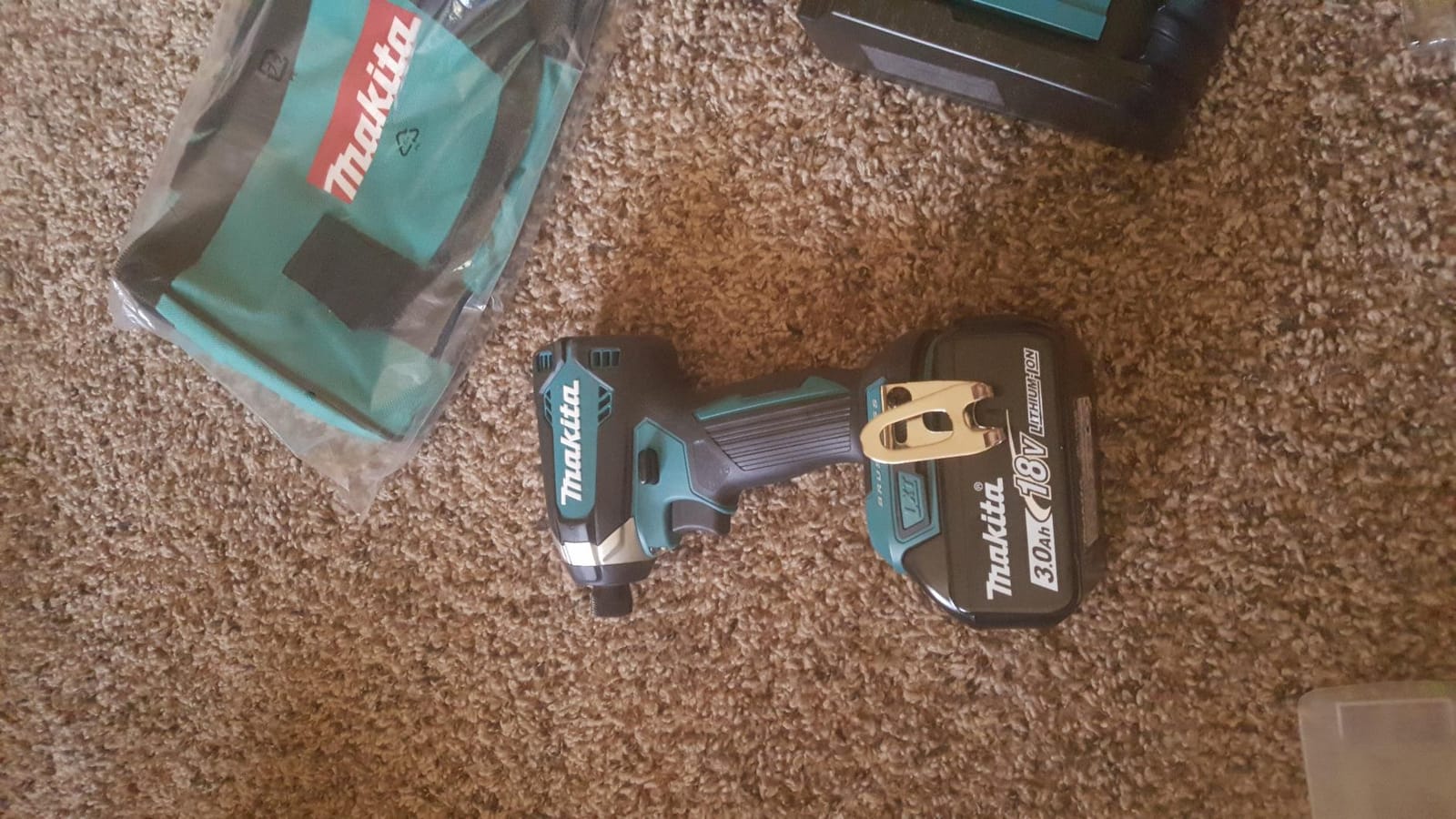
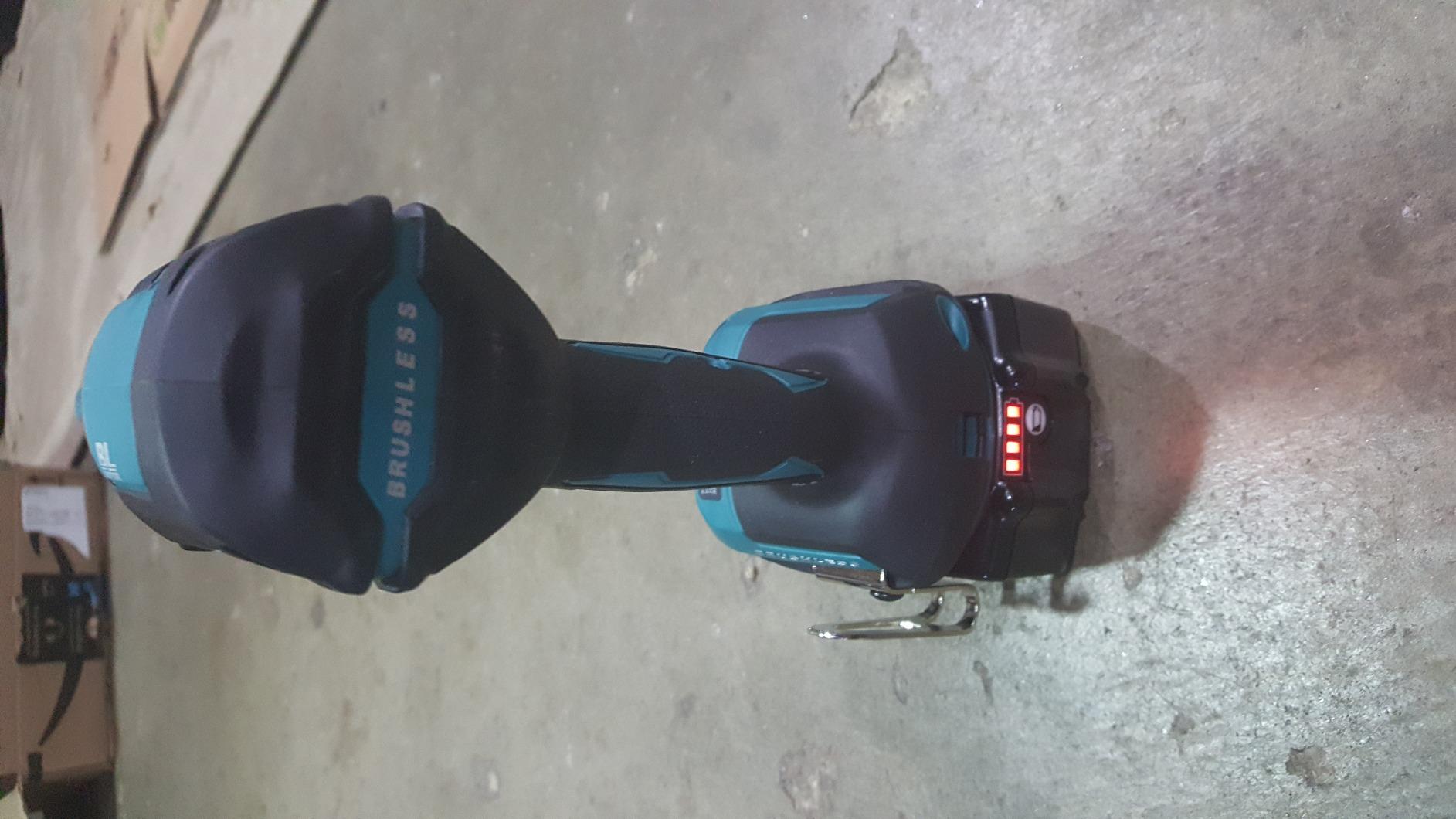
This is the driver I keep coming back to for general bay work. The BL brushless motor is rated at 1,500 in-lbs and pulls to 3,400 RPM with 0 to 3,600 IPM on the hammer, and the variable speed trigger gives you enough control to start a 10 mm bolt by hand and finish it with the tool. In a week of brake and suspension jobs it never once felt underpowered for the hardware it is supposed to handle.
The thing that actually makes it my first pick is the packaging. You get the tool, a 3.0Ah battery, and a charger that tops up in about 25 minutes. No second trip to the parts counter for a bare tool and a lonely pack.
Reviewers consistently describe the same behaviour: 1,500 in-lbs that feels like more because the tool is well balanced, and battery life that carries a full day. The 18V LXT platform is also the most portable of the big ecosystems, which matters more than marketing suggests if you are moving between a house and a shop.
The honest limitation is the mode count. Two speed settings is fewer than the three or four on the DEWALT, the Ryobi, and the Milwaukee FUEL. If your work is heavy on long suspension bolts or you want a self-tapping screw mode, you give up a little finesse here. The charger also has no cooling fan, so it is quiet but slower under sustained load than a fan-cooled unit.
When the Makita XDT131 earns its bay time
It is the pick for a technician who already has LXT packs or who wants one platform to carry drills, drivers, grinders, and lights. Brake jobs, caliper work, battery tray removal, interior trim reassembly, and general suspension hardware all fall inside its envelope without drama.
Because it ships with a battery and charger, it is also the least risky first brushless driver for a shade-tree mechanic. You are not calculating platform entry costs before you have used the tool once.
When you should buy something else
If your bread and butter is frozen seized hardware or heavy suspension work, the 1,500 in-lbs rating leaves the Milwaukee FUEL’s 2,000 in-lbs and four drive modes on the table. Two speed settings also mean less finesse on small Torx and button-head fasteners than a three-speed model gives you.
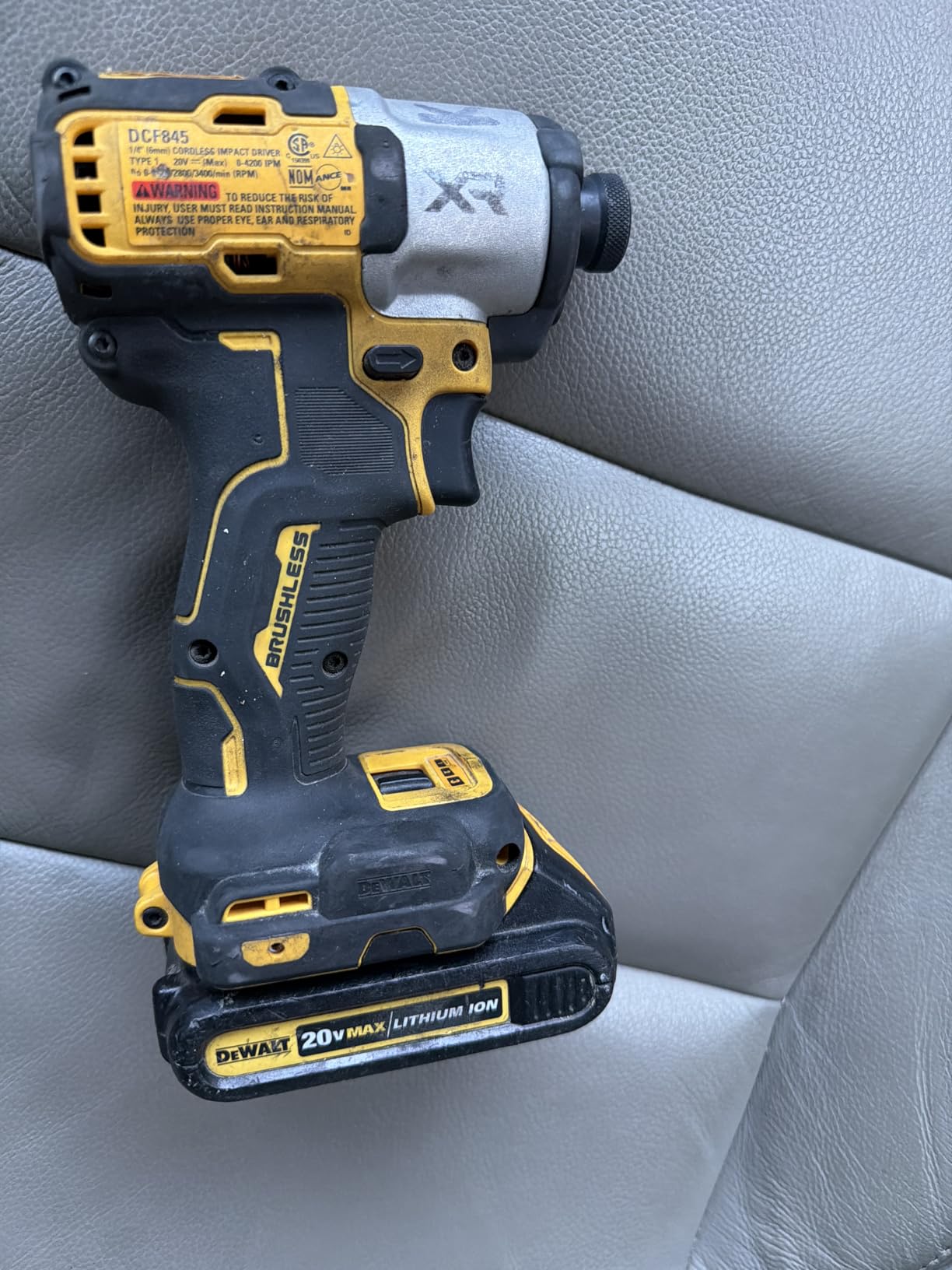
2. DEWALT DCF845B 20V MAX – Best Power-to-Size Ratio
DEWALT 20V MAX XR Impact Driver, 1/4 Inch High Torque Brushless 3 Speed Premium Cordless with LED Light, Extended Runtime, Tool Only (DCF845B)
1825 in-lbs torque
3-speed selector
Tri-LED work light
Electronic brake
+ The Good
- 1825 in-lbs in a genuinely compact body
- Three-speed selector for real control
- Tri-LED ring with 20-second delay
- Electronic brake stops over-driving
- Three-year limited warranty
- The Bad
- Tool only - battery and charger sold separately
- Not the highest torque in its class
Torque density is the whole story here. 1,825 in-lbs out of a head that is listed at 5.3 inches long puts more turning force into less space than anything else in this roundup, and the 3-speed selector lets you pick the rate the job needs rather than feathering the trigger and hoping.
The integrated three-LED work light stays on for 20 seconds after you release the trigger, which sounds like a small detail until you are under a dash with a headlamp already in your hat. The electronic brake stops the anvil the moment the fastener reaches spec, so it will not keep spinning and chew a screw head after it is tight.
Reviewers report driving 500-plus deck screws on a charge and removing rusted bolts without breaking into a sweat, and they repeatedly call the power-to-size ratio the reason they bought it. The 20V MAX platform is broad enough that most shops and most serious weekend mechanics already have packs for it.
Two things to keep in mind. It is a tool-only purchase, so if you have no 20V MAX packs this is a two-transaction buy. And the electronic brake protects the fastener but not you, so you still need to feather the trigger on a torque-critical joint.
When the DCF845B earns its bay time
This is the driver for engine bay access. A 5.3-inch head is short enough to work between a radiator support and a fan shroud, and short enough to reach a lower dash fastener with the tool nearly vertical. For a bay where space is the constant constraint, that matters more than another 200 in-lbs.
It is also a strong fit for repetitive fastening, because the three speeds cover everything from a delicate trim screw to a long lag-style bolt without changing tools.
When you should buy something else
It does not lead on raw torque. If your workload is dominated by axle and hub hardware that has fused itself to the studs, the 2,000 in-lbs Milwaukee FUEL has more margin. And if you own no 20V MAX packs, the all-in cost of this tool plus a battery plus a charger changes the math entirely.
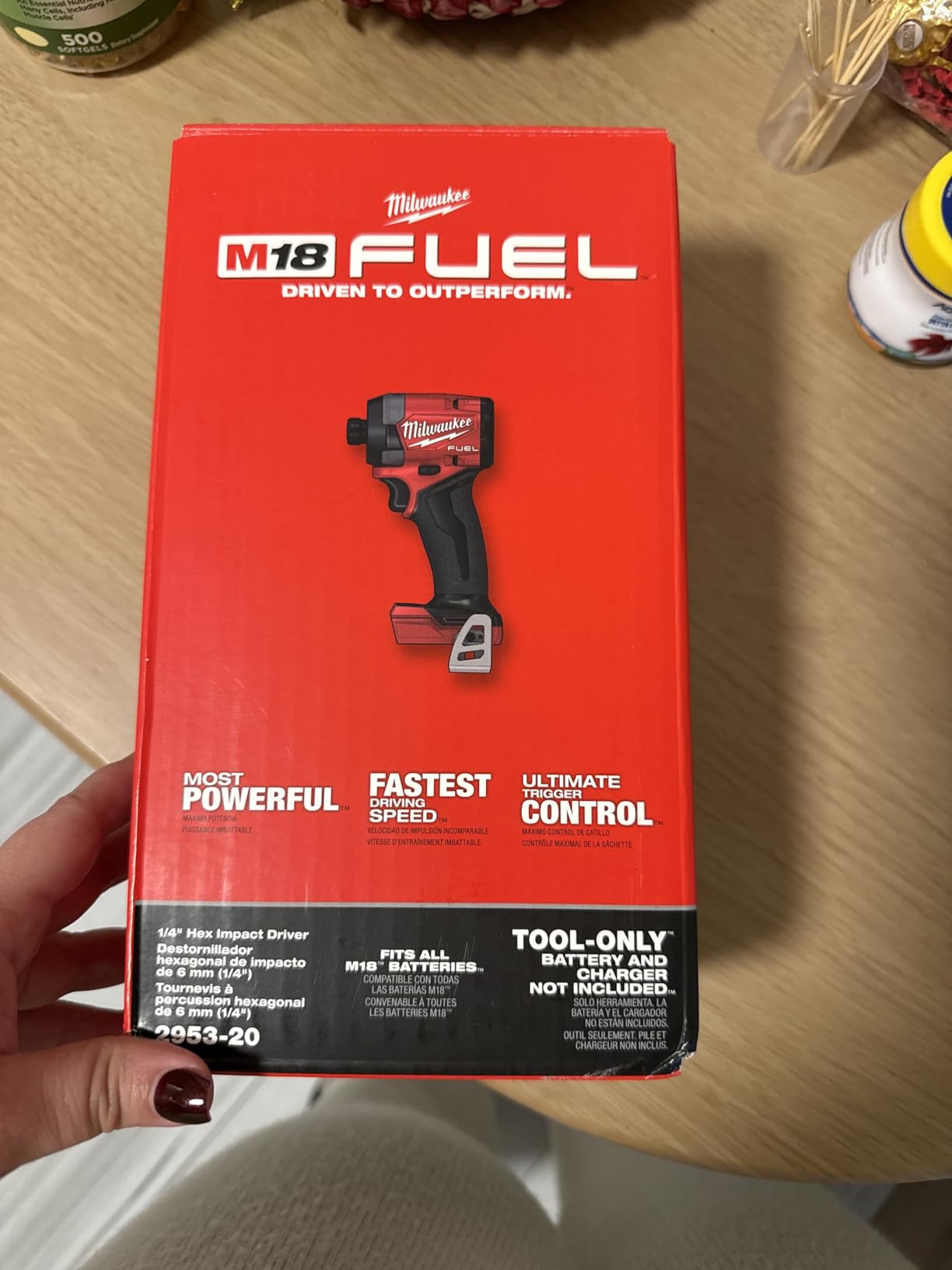
3. Milwaukee M18 FUEL 2953-20 – Best for High-Torque Fastening
Milwaukee Electric – M18 Fuel. 1/4 HEX Impact Driver
2000 in-lbs torque
4-mode drive control
Tri-LED lighting
All-metal gearcase
+ The Good
- Highest rated torque in this group at 2000 in-lbs
- Four-mode drive control for fastener-specific tuning
- Excellent trigger control that resists stripping
- All-metal gearcase and gears
- REDLINK PLUS overload protection
- The Bad
- Tool only - battery and charger sold separately
- Shorter warranty than some rivals
This is the most torque you can get in a 1/4-inch hex driver from this list, and the 4-mode drive control is the feature that separates it from everything else. Mode 1 gives you a single slow impact for small fasteners, higher modes give you speed, and the mode for self-tapping screws stops the tool before it drives one through a panel.
Reviewers describe the trigger feel as the standout: smooth acceleration that lets you creep a Torx or a valve cover screw without spinning it off. The all-metal gearcase and gears are a real durability claim in a shop, not a spec-sheet line, and REDLINK PLUS protects against overload and heat when you are leaning on it.
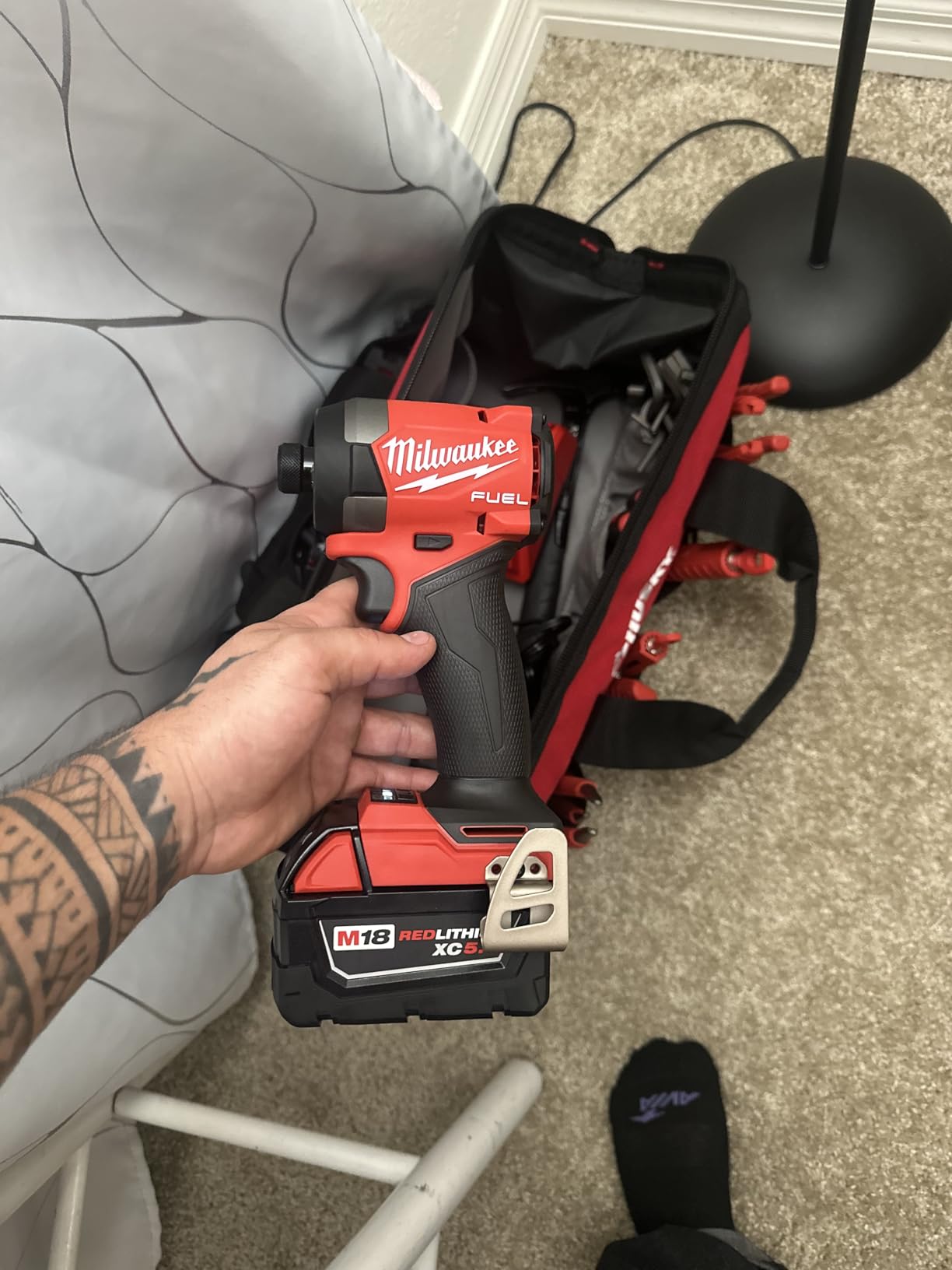
For seized fasteners, this is the one. Lug hardware, axle nuts, and hardware that has sat through a winter in road salt are where 2,000 in-lbs and a compact 2.76-inch nose earn their keep. Professionals on r/Tools single out the Milwaukee 2767 series for lug nut work for the same reason.
It is a bare tool, and it is priced above several of the picks on this list. The M18 pack ecosystem is enormous, so if you are starting from zero you are buying into the platform as much as the tool.
When the M18 FUEL earns its bay time
Seized hardware, rust-pitted fasteners, and anything that needs a genuine breakaway torque. Suspension work where a control arm bolt has been torqued to spec and forgotten for a decade is the classic case. The four modes also make it the most versatile tool here for mixed trim-and-suspension days.
Because it is bare tool pricing with an M18 battery you likely already own, the cost per driver drops fast for a shop that has committed to Milwaukee.
When you should buy something else
If you need the smallest possible head for a firewall or a seat rail gap, this is not the shortest tool on the list. And if you have no M18 packs, the platform entry cost is the largest of any option here. Four modes are also overkill if you only ever drive 6 mm trim bolts.
4. AVID POWER 20V 2220 in-lb – Best Budget Starting Point
AVID POWER 20V Cordless Brushless Impact Driver Kit 1/4″ 2220 in-lbs
2220 in-lbs torque
Brushless motor
2-speed control
Battery and bits included
+ The Good
- Kit includes battery charger four sockets and four bits
- 2220 in-lbs in a 2.16 lb body
- Brushless motor with 60 percent longer battery life
- Brake stop in reverse protects fasteners
- LED light for dark workspaces
- The Bad
- Battery ecosystem is not compatible with the big brands
- Two-speed control only
- Long-term durability unproven against established brands
The number on the box is the selling point: 2,220 in-lbs, which is higher than every premium tool in this roundup, from a 2.16-pound body. The brushless motor is claimed at 60 percent longer battery life and 30 percent more torque than a brushed equivalent, and the two-speed control runs 1,900 RPM delicate and 2,600 RPM heavy duty.
What you get in the box is where this one really wins for a first purchase: a battery, a charger, four sockets, four driver bits, and the tool. That is a working setup on day one with no platform maths to do.
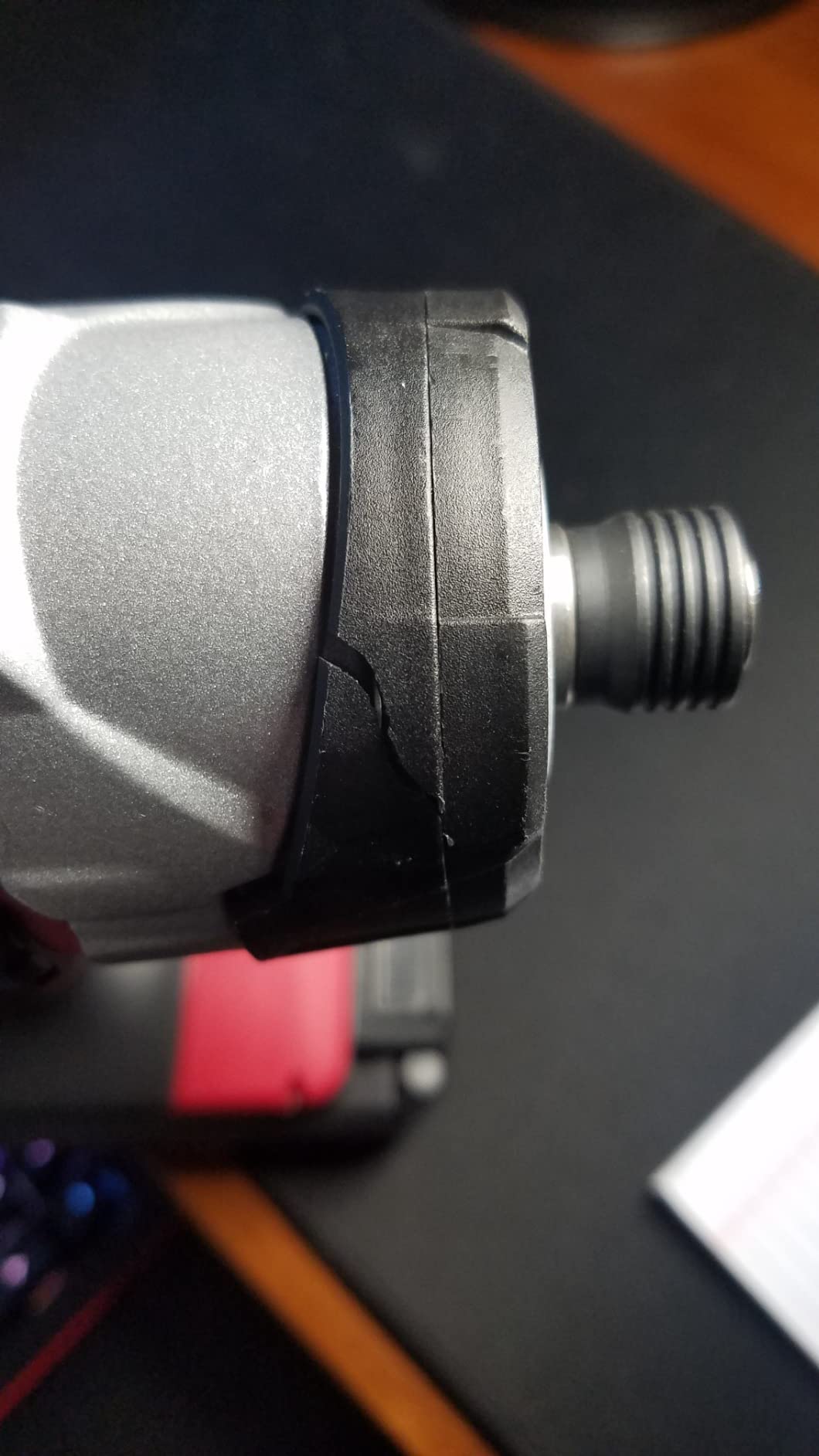
The brake stop function in reverse is a thoughtful detail. It stops the anvil the instant a fastener breaks free, which means a stubborn bolt coming off does not become a bolt shooting across the bay floor. That single feature is worth more in real shop work than the extra 400 in-lbs.
Reviewers report a 70 percent five-star rate, which is the lowest on this list, and the reasons are consistent: the value is excellent for home and hobby use, but the brand is unknown, the battery ecosystem is a dead end, and the long-term durability record is not established the way it is for the big three.
When the AVID POWER earns its place
First tool purchases, weekend projects, and anyone who does not want to think about platform commitment. At this weight and torque rating it handles trim, brackets, and general hardware for a home garage, and the included bits and sockets mean you can start immediately.
It also makes a reasonable second tool for a shop that already owns a big platform and needs a spare for a technician who is just getting started.
When you should buy something else
Do not build a tool collection on it. The battery is not cross-compatible with any major ecosystem, and a two-speed control is thin for fine work. If your day involves daily professional use, the shorter review history and lower five-star rate are real signals, not noise.
5. DEWALT DCF787D1 20V MAX – Best Ready-to-Go Kit
DEWALT 20V MAX Impact Driver, 1/4 Inch, Battery and Charger Included (DCF787D1)
Brushless motor
LED light with 20-second delay
2Ah battery and charger included
Belt hook
+ The Good
- Tool battery and charger in one box
- 91 percent five-star rating among 1767 reviews
- Compact and light for hard-to-reach areas
- LED stays lit 20 seconds after trigger release
- Runs on every DEWALT 20V MAX battery
- The Bad
- Only a 2Ah battery included
- Single speed setting
- Heavier at 4.3 pounds with the battery fitted
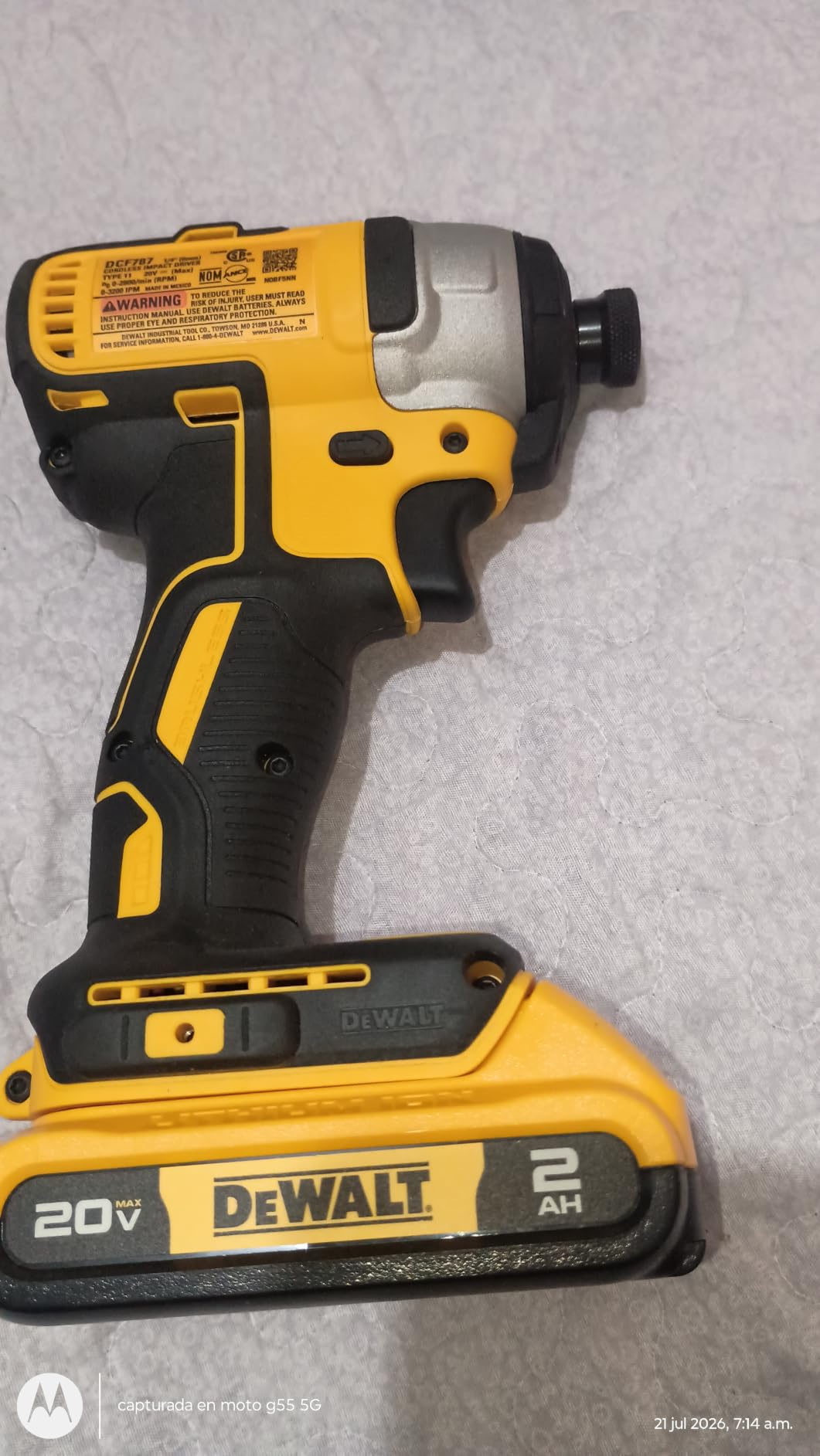
This is the kit to hand a new technician on day one. The DCF787 driver, a 20V MAX 2Ah battery, a DCB107 charger, and a belt hook arrive together, and reviewers report the battery lasting two to three days of heavy use before it needs a swap.
The brushless motor gives the runtime and durability claims, and the LED with a 20-second delay after trigger release does the same job as the DeWalt tri-LED on the DCF845, just without the ring. The grip is comfortable and the balance is good, which matters when you are working over your head or lying under a dash.
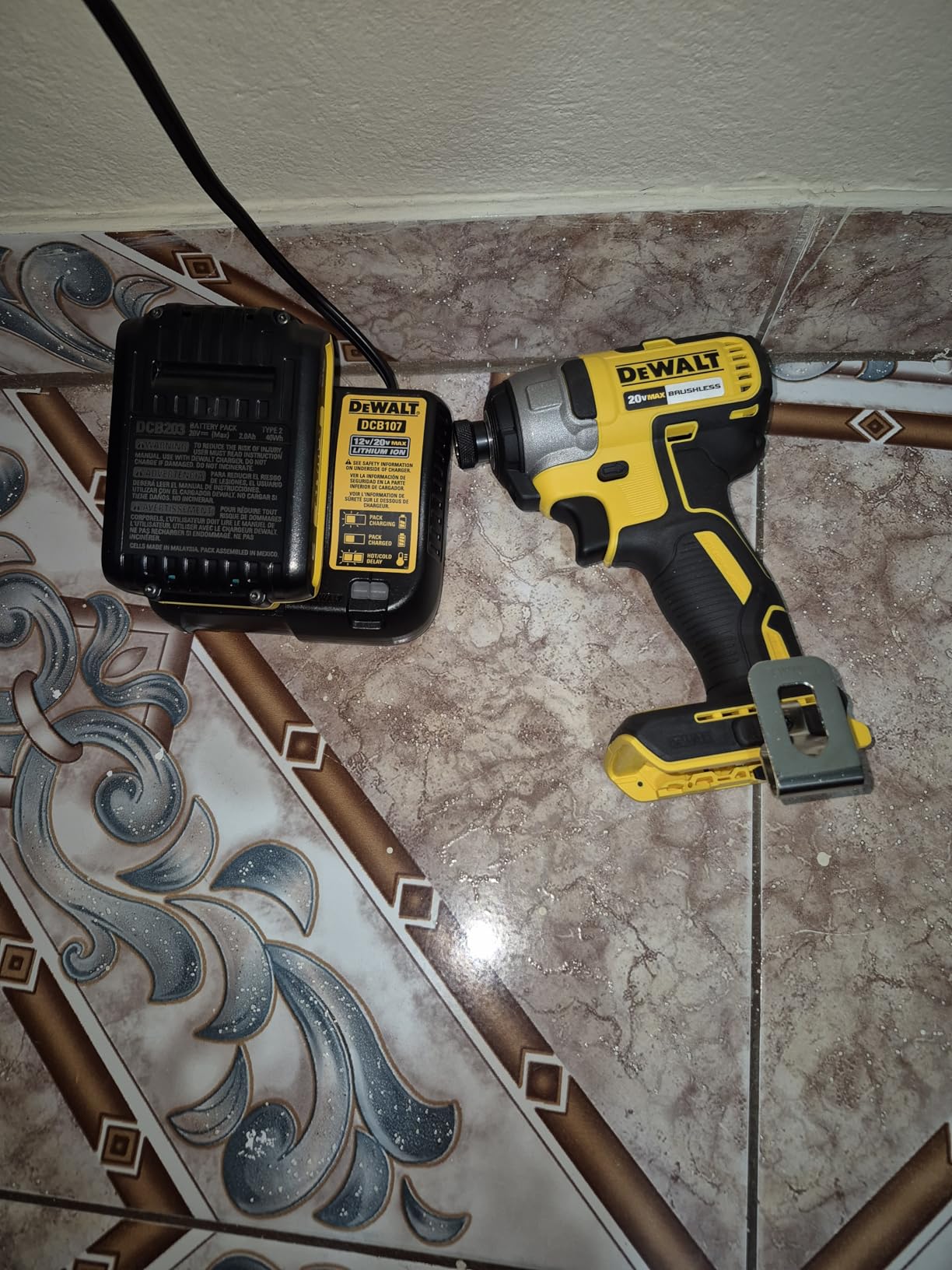
At a 4.8 rating across 1,767 reviews with 91 percent five-star feedback, this is the most consistent satisfaction score in the entire group. Professionals and hobbyists both reach for it, and the recurring comment is that it is simply reliable.
The single speed setting is the biggest limitation. Without multiple drive modes, control on small or delicate fasteners depends entirely on trigger feathering, and the 2Ah battery is the smallest pack in the 20V MAX range, so you will be swapping more often than with a 5Ah.
When the DCF787D1 earns its bay time
Anywhere the point is having a complete, working, mechanically sound driver immediately with no extra purchases. A service writer counting out a kit for a new hire, or a shop standardising on one driver model across multiple bays, gets the same tool every time.
It is also a solid all-rounder for brake, suspension, and interior work once you are past the learning curve on trigger control.
When you should buy something else
If you need mode selection for a mix of trim and heavy bolts, the single-speed setup is a downgrade from the DCF845. For all-day continuous use, budget for a larger battery, because a 2Ah pack means more swap time than the tool deserves.
6. Greenworks ISG402 24V – Best on the 24V Platform
Greenworks 24V Brushless 1950 in./lbs Impact Driver, 1/4-inch Hex Variable Speed, Tool Only
1950 in-lbs torque
2.14 lb bare weight
3-speed control
2800 RPM and 3500 IPM
+ The Good
- 1950 in-lbs from a 2.14 lb body
- Three-speed control for versatility
- Battery USB-C charging with power bank function
- 24V system claimed at 20 percent more power than 18V and 20V
- LED with delay illumination
- The Bad
- Tool only - battery and charger sold separately
- Greenworks 24V ecosystem is smaller than the big brands
- Quick-release collet lacks a premium detent
The Greenworks is the lightest genuine mid-torque driver in this group at 2.14 pounds, and it still rates 1,950 in-lbs at 2,800 RPM and 3,500 IPM. That is a real power-to-weight result, and it is why the tool is 35 percent more compact than comparable units.
The distinguishing feature is the battery. Greenworks 24V packs charge over USB-C and can double as a power bank, so you can top up a phone or a light from the same pack that runs the driver. The 24V system is claimed at 20 percent more power and 35 percent more runtime than 18V and 20V systems.
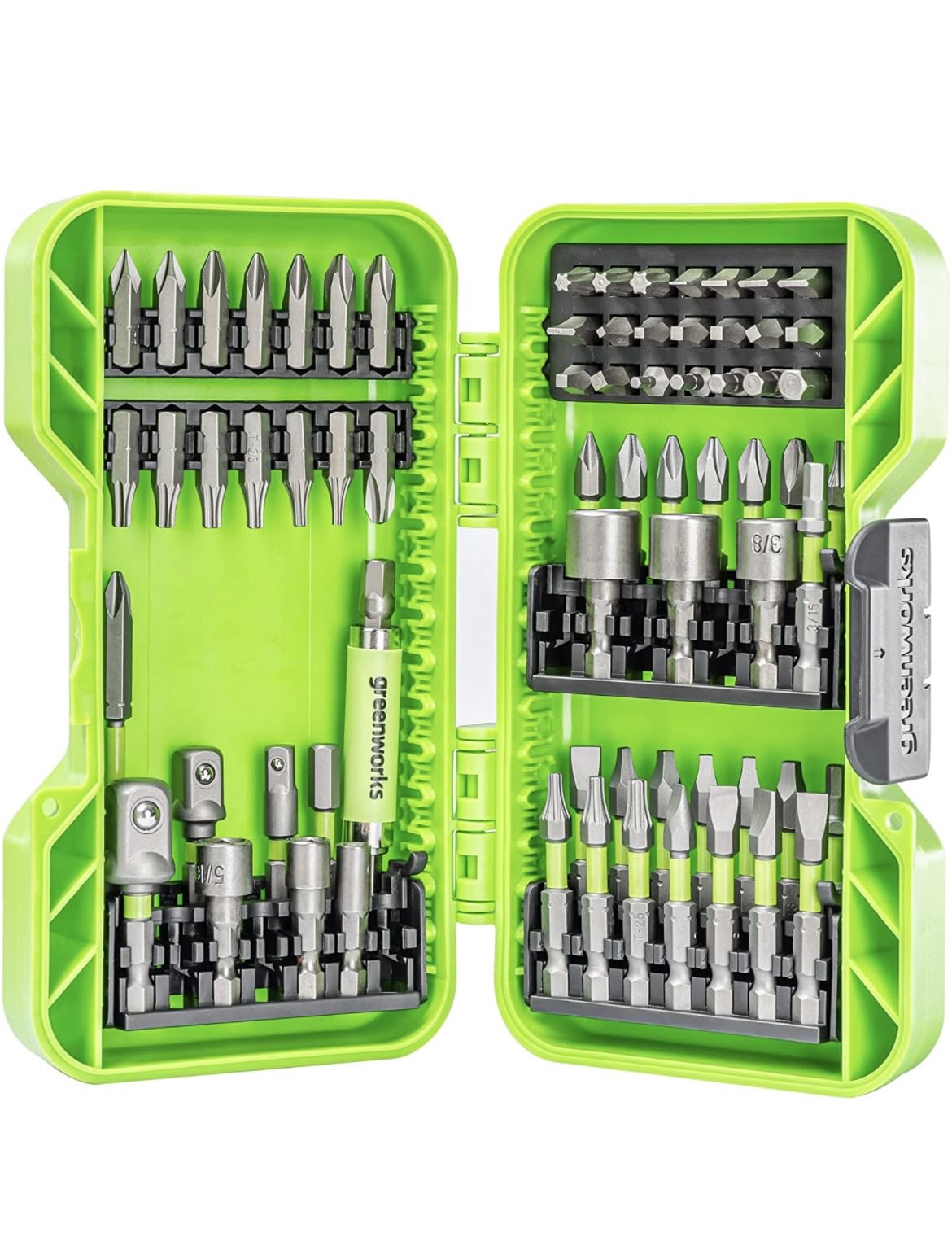
Reviewers like the surprise factor: plenty of people expected less from the brand and found the torque genuinely competitive with Milwaukee and DeWalt at this weight. The three-speed control gives more finesse than the two-speed budget options, and the delay illumination LED is useful under a vehicle.
The tradeoff is the ecosystem. A 77 percent five-star rate is respectable, but the 24V range is narrower than the big platforms, high-capacity packs are harder to find, and the quick-release collet does not have the same positive detent as a premium collet. That last point matters if you are one-handed under a dash and the bit drops out.
When the Greenworks ISG402 earns its bay time
It is built for weight-sensitive work. Under-dash and seat rail fasteners, interior trim, and overhead access in a confined engine bay all reward a 2.14-pound tool that still breaks a stubborn bracket bolt.
It is also a genuinely good option for a technician who wants a cordless setup that does not occupy a bench charger, because USB-C charging collapses the charging logistics.
When you should buy something else
For a shop that runs a big established platform, adding a fourth brand means a second charger, a second battery set, and a second set of spares on the truck. If you already own Milwaukee, DeWalt, Makita, or Ryobi packs, that duplication is usually not worth the torque figure.
7. Bosch GDX18V-1800B12 – Best Two-in-One Hex and Square Drive
Bosch GDX18V-1800B12 18V Two-In-One 1/4 In. and 1/2 In. Bit/Socket Impact Driver/Wrench Kit with 2 Ah Standard Power Battery
1/4 hex and 1/2 square drive
1800 in-lbs torque
4200 IPM
2.0Ah battery and charger included
+ The Good
- Accepts both 1/4 hex bits and 1/2 square sockets
- Hammer-and-anvil system for impact energy
- 1800 in-lbs at 4200 IPM
- AMPSHARE multi-brand battery compatibility
- Five-year tool and three-year battery warranty
- The Bad
- Kit weight is 6.2 pounds
- 2Ah battery is light for all-day work
- 1/2 drive is not built for extreme lug nut work
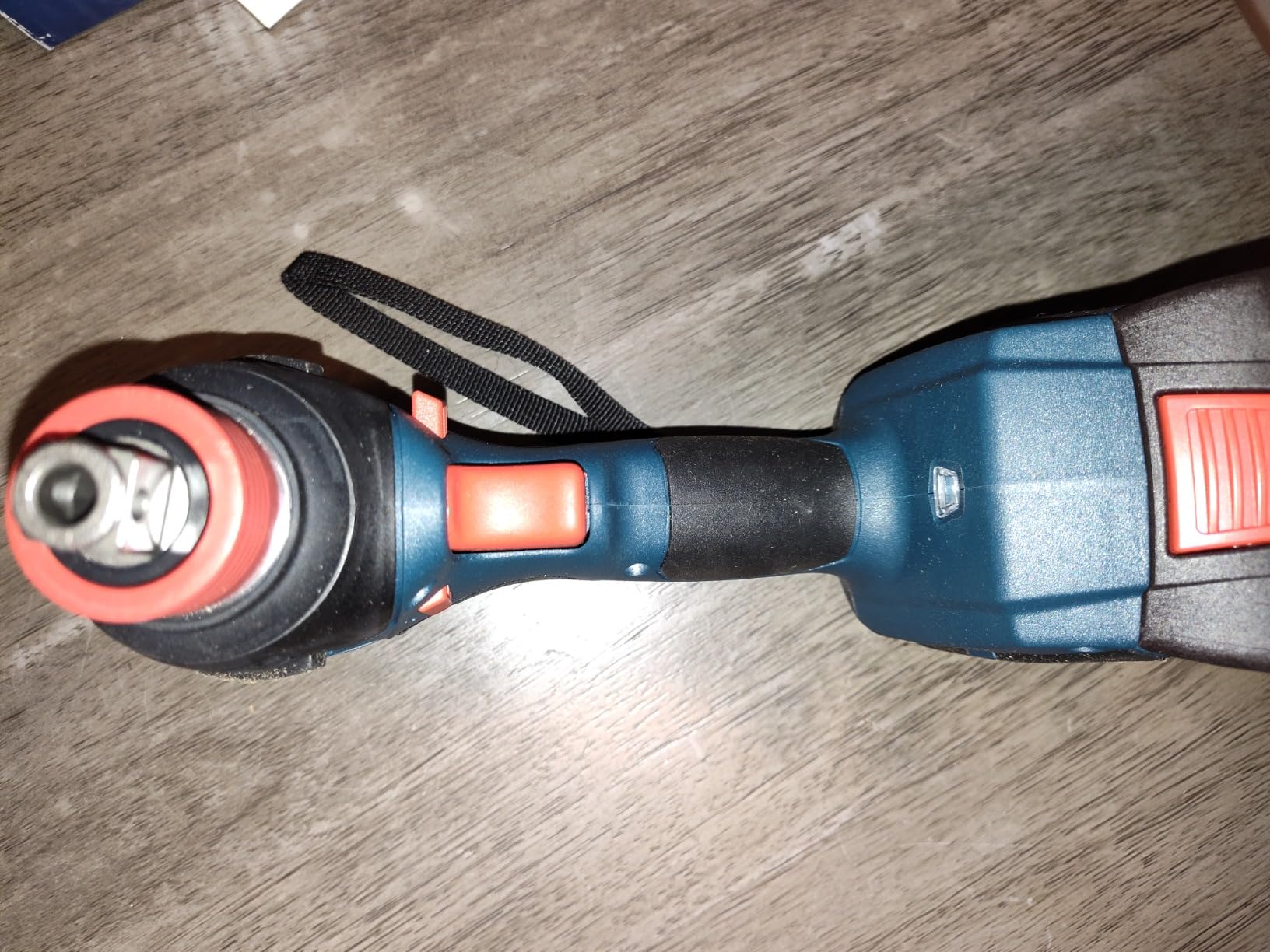
This is the only tool in the roundup that solves a problem in a way no adapter does. The nose takes a 1/4-inch hex bit and a 1/2-inch square socket, so the same tool drives a trim screw and fits a ratchet-style socket without a bolt-on adapter sitting between the anvil and the drive.
Torque goes straight through the 1/2-inch anvil rather than being lost in an adapter, and the brushless motor rates 1,800 in-lbs at 4,200 IPM using a hammer-and-anvil system. AMPSHARE also gives the broadest battery compatibility in this list, since it works across Bosch and partner packs.
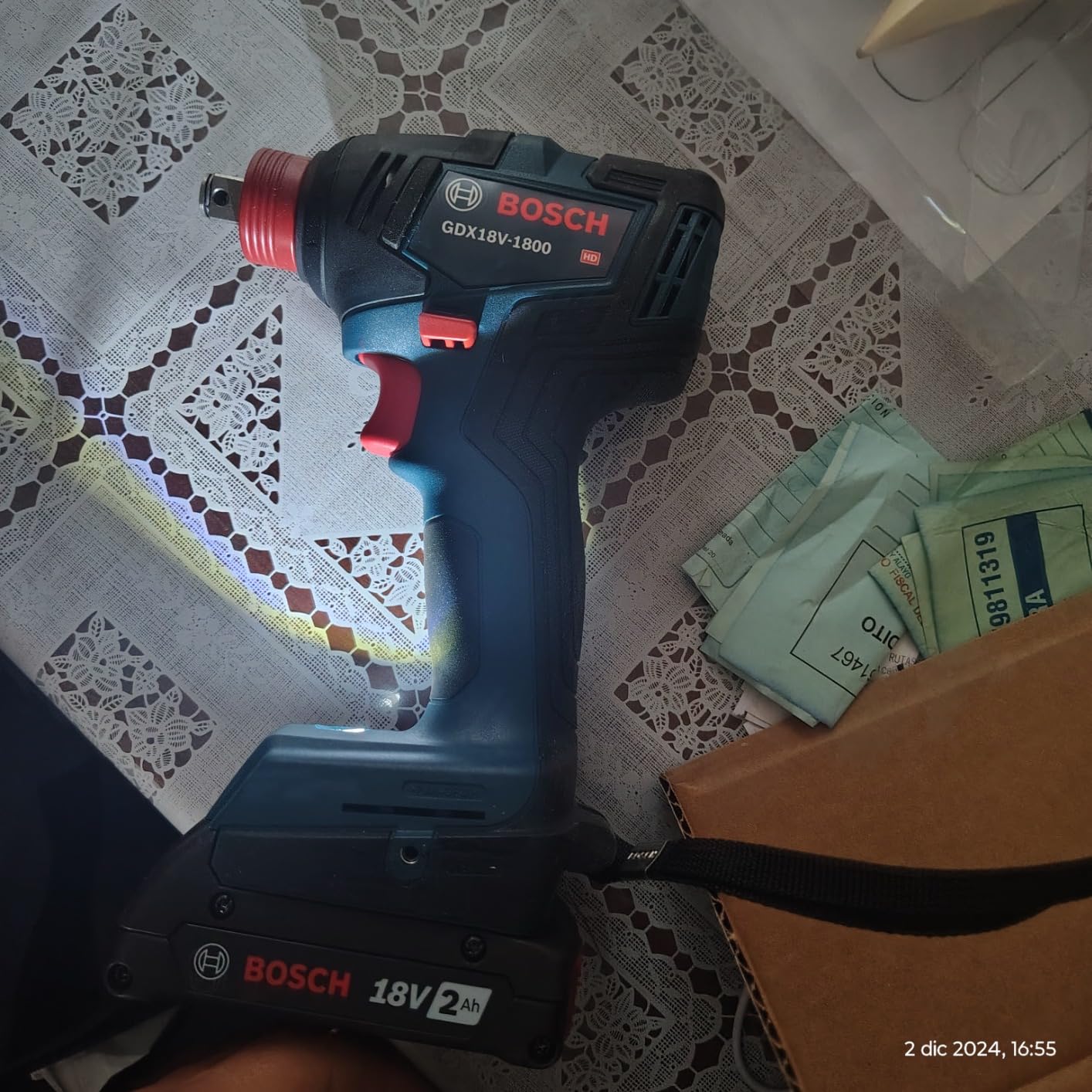
Reviewers report using it on stubborn oxygen sensors, deck screws, and general automotive fasteners, and the warranty is the best on this list by a wide margin: five years on the tool and three on the battery. For a working technician buying one tool, that is a real number.
Be realistic about the limits. The kit weighs 6.2 pounds, the included 2Ah SlimPack is small for a full day, and the 1/2-inch drive here is a convenience feature rather than a substitute for a proper impact wrench. The charger is 110V only, which matters if you travel outside the US.
When the Bosch earns its bay time
It is the value pick for a technician who does not want to carry two tools. Oxygen sensors, exhaust fasteners, and sensor harness connectors are hex or small socket work mixed together on the same job, and this removes the adapter juggling from the middle of a diagnostic task.
The five-year tool warranty also means that for a professional, the per-year cost of ownership is genuinely low compared with a shorter-warranty tool you may replace.
When you should buy something else
It is not a lug nut tool. The 1/2-inch drive is there for convenience, not nut-busting, and pushing it there risks the anvil. If most of your removals are nuts, buy a wrench alongside it, and note that the 2Ah pack will need upgrading for all-day use.
8. Milwaukee 2850-21P M18 – Best for Overhead Work
Milwaukee 2850-21P M18 Brushless Lithium-Ion Compact 1/4 in. Cordless Hex Impact Driver Kit (2 Ah)
1600 in-lbs torque
5.1 inch body length
2.0Ah battery and charger
Tool bag with REDLINK
+ The Good
- Compact 5.1 inch body for overhead and tight spaces
- 1600 in-lbs in a small package
- REDLINK overload and temperature protection
- Kit includes battery multi-voltage charger and tool bag
- Good balance for overhead work
- The Bad
- Single speed only
- Lower torque than newer M18 FUEL models
- 2Ah battery needs upgrading for heavy work
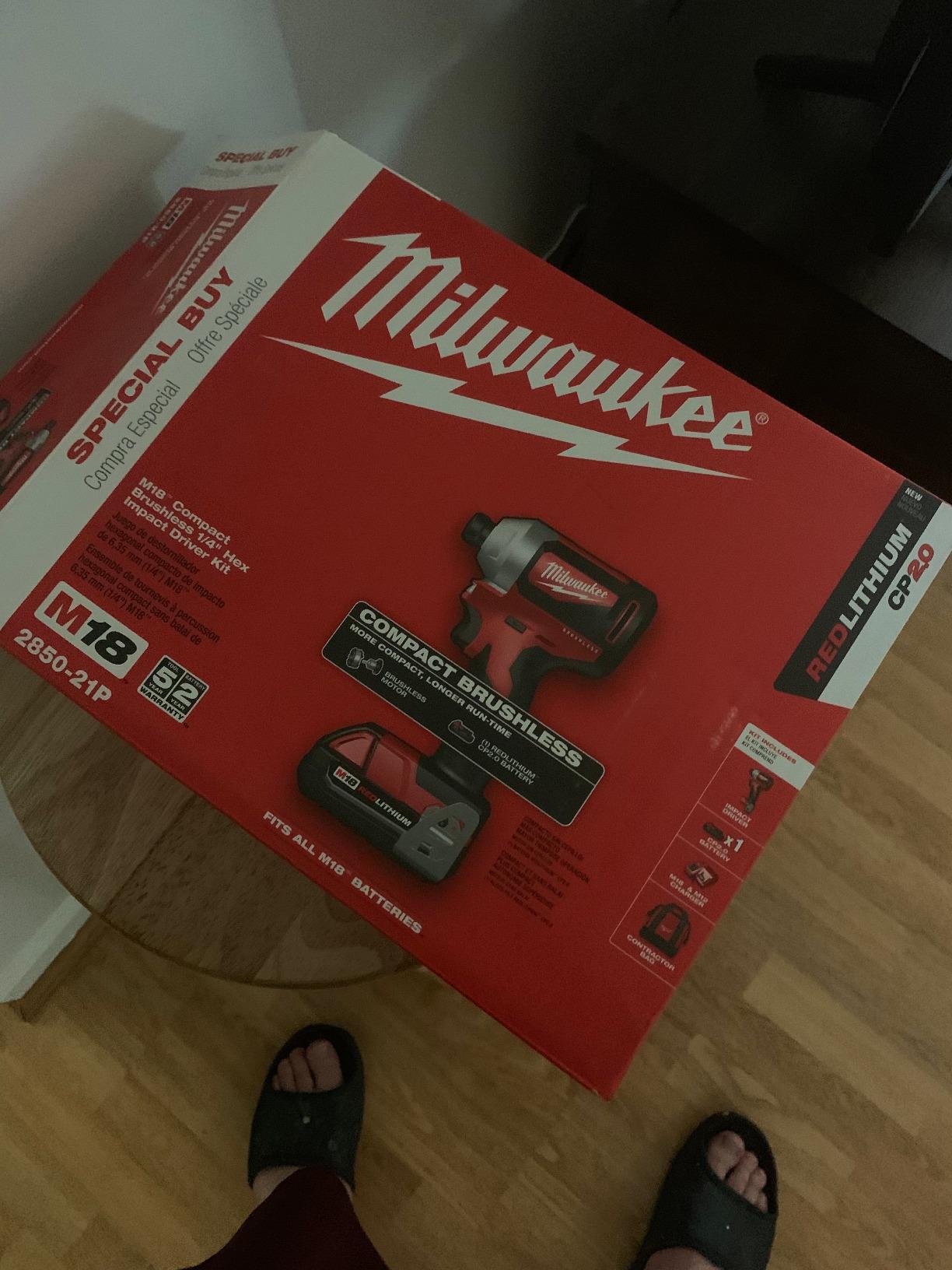
This kit is 1,600 in-lbs in a 5.1-inch body, and that short length is the entire argument. When you are above your head on a headliner, a roof console, or a lift-mounted sensor, the length of the tool decides whether you can get the bit square to the fastener at all.
REDLINK intelligence monitors overload and temperature and cuts power before the tool or the pack cooks itself, and the multi-voltage charger accepts both M18 and M12 packs, which is useful if you are building out an M12 subcompact set for trim work.
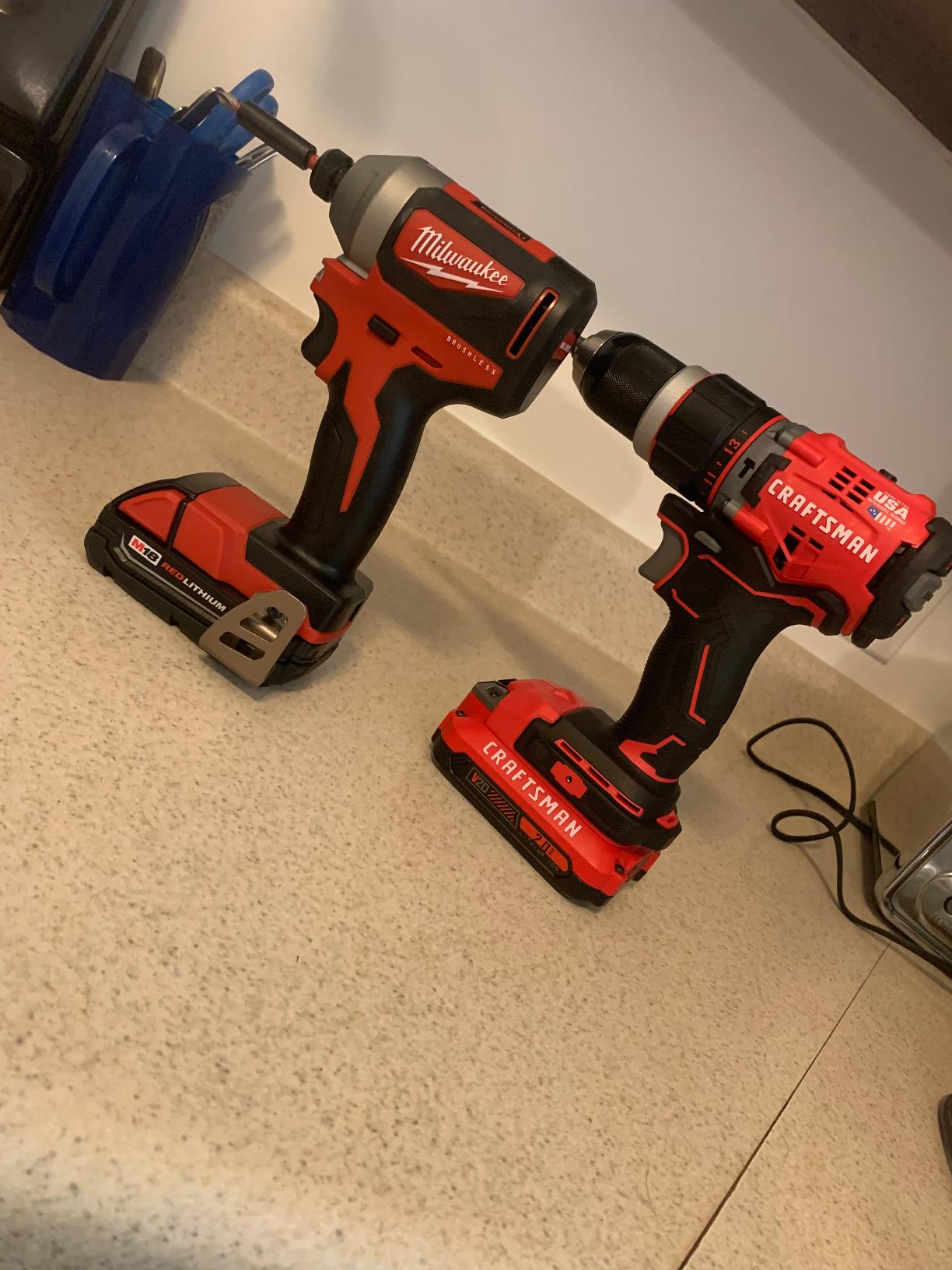
It arrives as a complete kit with the driver, a 2.0Ah battery, the multi-voltage charger, and a tool bag, so it is an easy first M18 purchase. Reviewers praise the balance and the compact size repeatedly.
This is also the pick with the sharpest quality signal on the list: an 8 percent one-star rating, with complaints clustering around the trigger and the collet. It is an older design, superseded by the M18 FUEL 2953-20, and at 1,600 in-lbs with a single speed it is no longer the strongest Milwaukee option here.
When the 2850-21P earns its bay time
Overhead and confined-access work: headliner work, roof consoles, interior pillar trim, and anything on a lift where you are working at arm’s length overhead. The kit completeness makes it a fine first Milwaukee purchase for a technician starting a personal collection.
If you are also building a subcompact set, the multi-voltage charger removes the need for a second charger on the bench.
When you should buy something else
If you can stretch to it, the M18 FUEL 2953-20 on this list has more torque, four drive modes, and a much cleaner review record. The single-speed control here is a real limitation on mixed fastener work, and the 8 percent one-star rate is worth respecting rather than dismissing.
9. Ryobi ONE+ HP PSBID01 – Best for ONE+ Platform Owners
Ryobi ONE+ HP 18V Cordless Compact Brushless 1/4″ Impact Driver PSBID01 (Tool ONLY- Battery and Charger NOT Included)
1700 in-lbs torque
4-mode control
2.1 lb bare weight
Knurled hex collet for one-handed release
+ The Good
- Four mode settings in a body this compact
- 2.1 lb bare weight
- Knurled collet allows one-handed bit changes
- 1700 in-lbs at 3800 IPM
- Works with every ONE+ 18V battery
- The Bad
- Tool only - requires existing ONE+ batteries
- Plastic housing that can heat under heavy use
- Only a 30-day warranty
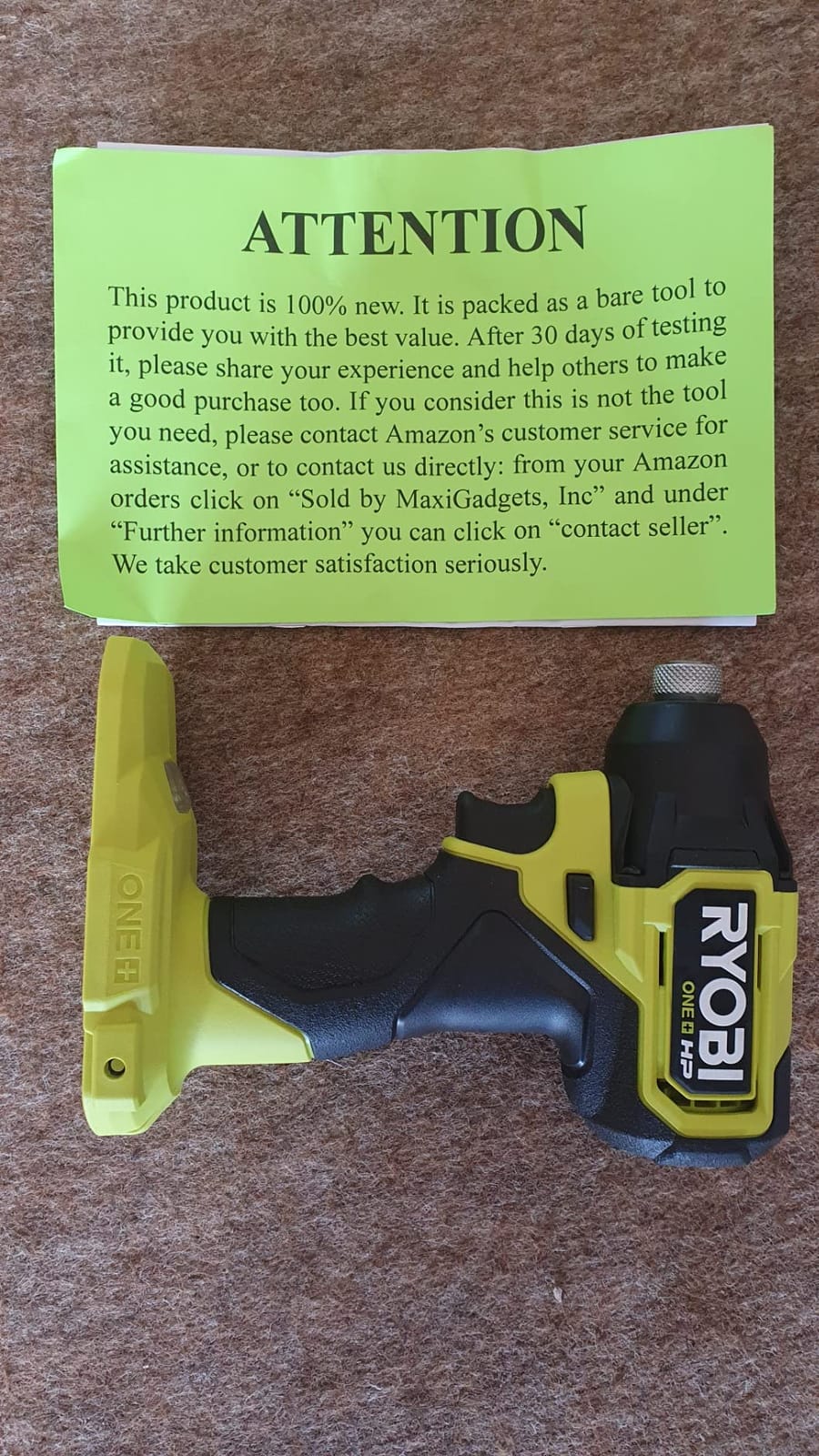
Four mode settings on a 2.1-pound driver is unusual at this weight, and that is what makes the ONE+ HP interesting. It rates 1,700 in-lbs at up to 3,800 IPM on a 0 to 2,900 RPM variable speed trigger, with a knurled 1/4-inch hex collet that lets you change bits one-handed.
Forum discussion is consistently positive about the ONE+ platform as a value entry, and technicians who already own Ryobi packs get a capable driver without buying into a second battery system. The brushed-to-brushless jump also means longer runtime and longer motor life than the older ONE+ drivers.
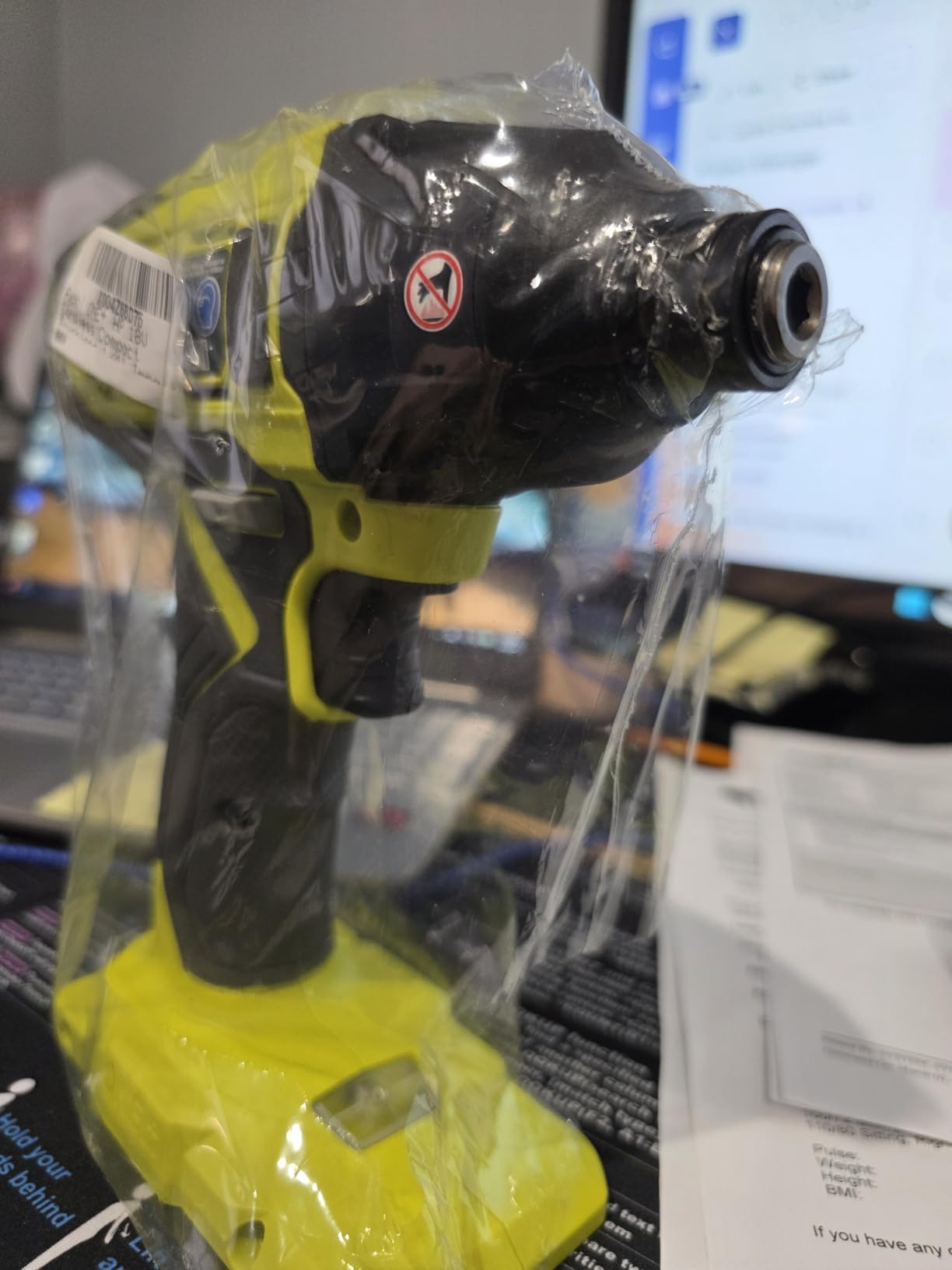
Users report it removing tractor hardware, which tells you the mode control and the impact mechanism handle more than light trim work. The LED worklight is on board, and the whole thing is well balanced at 2.1 pounds.
Three limitations are worth stating plainly. The housing is plastic rather than metal, which can heat up under sustained heavy use. There is no variable torque clutch, so control is entirely trigger-based. And the warranty is 30 days, which is dramatically shorter than every other pick on this list and is the clearest signal that Ryobi positions this tool for home use rather than professional duty.
When the ONE+ HP earns its bay time
If you are already invested in ONE+, this is the driver to add. Four modes give better fastener control than most tools in the class, and the compact 2.1-pound body suits trim, interior, and light suspension work where a metal gearcase is not the deciding factor.
For a shade-tree or weekend mechanic, the broad ONE+ battery range means you can build a whole collection on one charger.
When you should buy something else
A 30-day warranty and a plastic housing are both problems if the tool earns a living. For a professional, the lack of a clutch and the heat concerns under sustained load argue for a metal-gearcase alternative even if it means a different platform. The driver is also tool-only, so it needs existing ONE+ packs.
10. Milwaukee 3650-20 M18 – Best for Tightest Access
Milwaukee Electric – M18TRADE Compact BRUSHLESS 1/4 HEX Impact Drive
1700 in-lbs torque
1.7 lb bare weight
4.4 inch length
All-metal gearcase
+ The Good
- Lightest and shortest tool in this roundup
- 1700 in-lbs of torque from a 1.7 lb body
- Smooth variable speed trigger that reduces fastener damage
- All-metal gearcase and gears for professional durability
- The Bad
- Tool only - battery and charger sold separately
- Single speed setting
- Battery drains faster on heavy fastener work
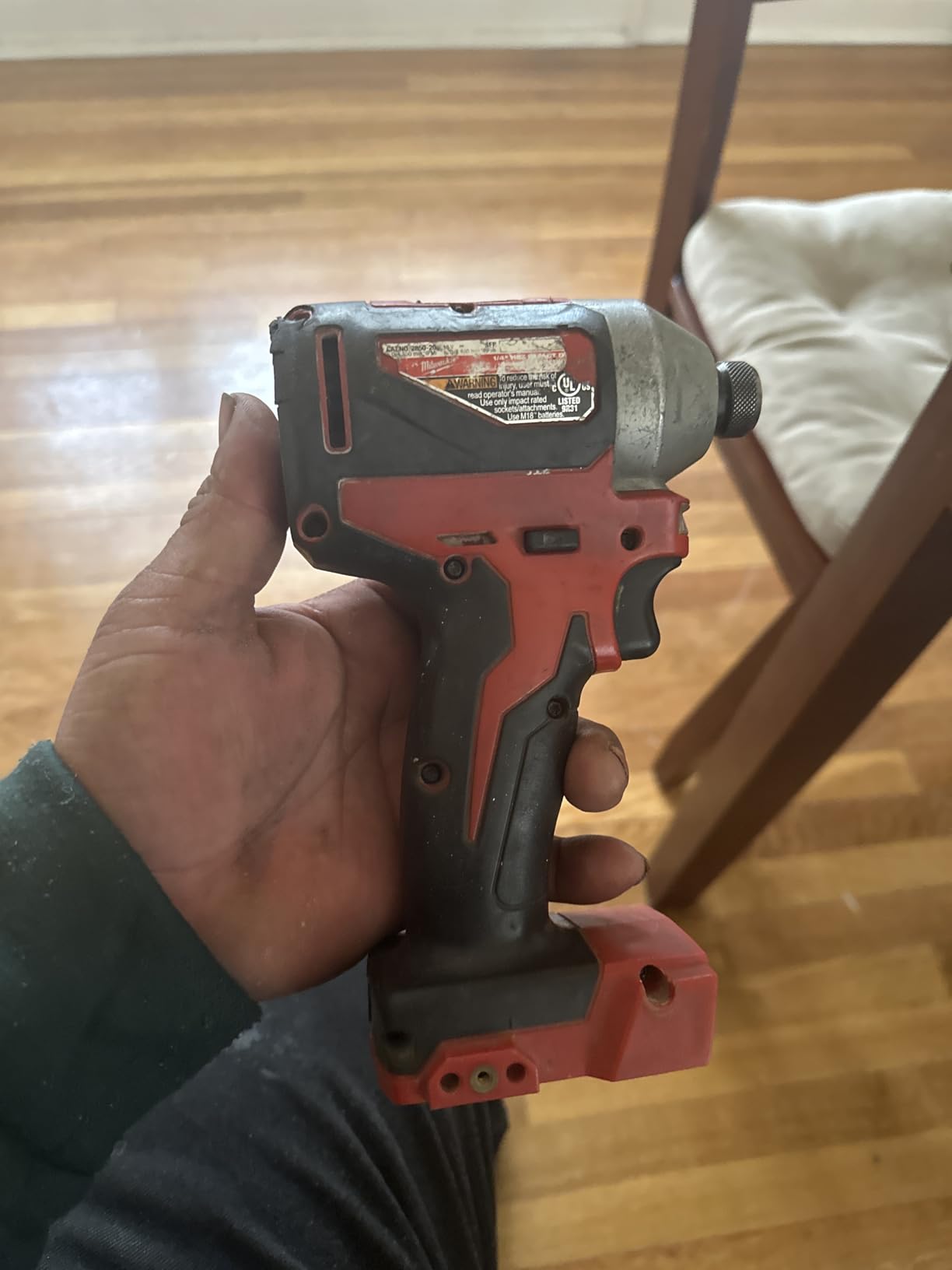
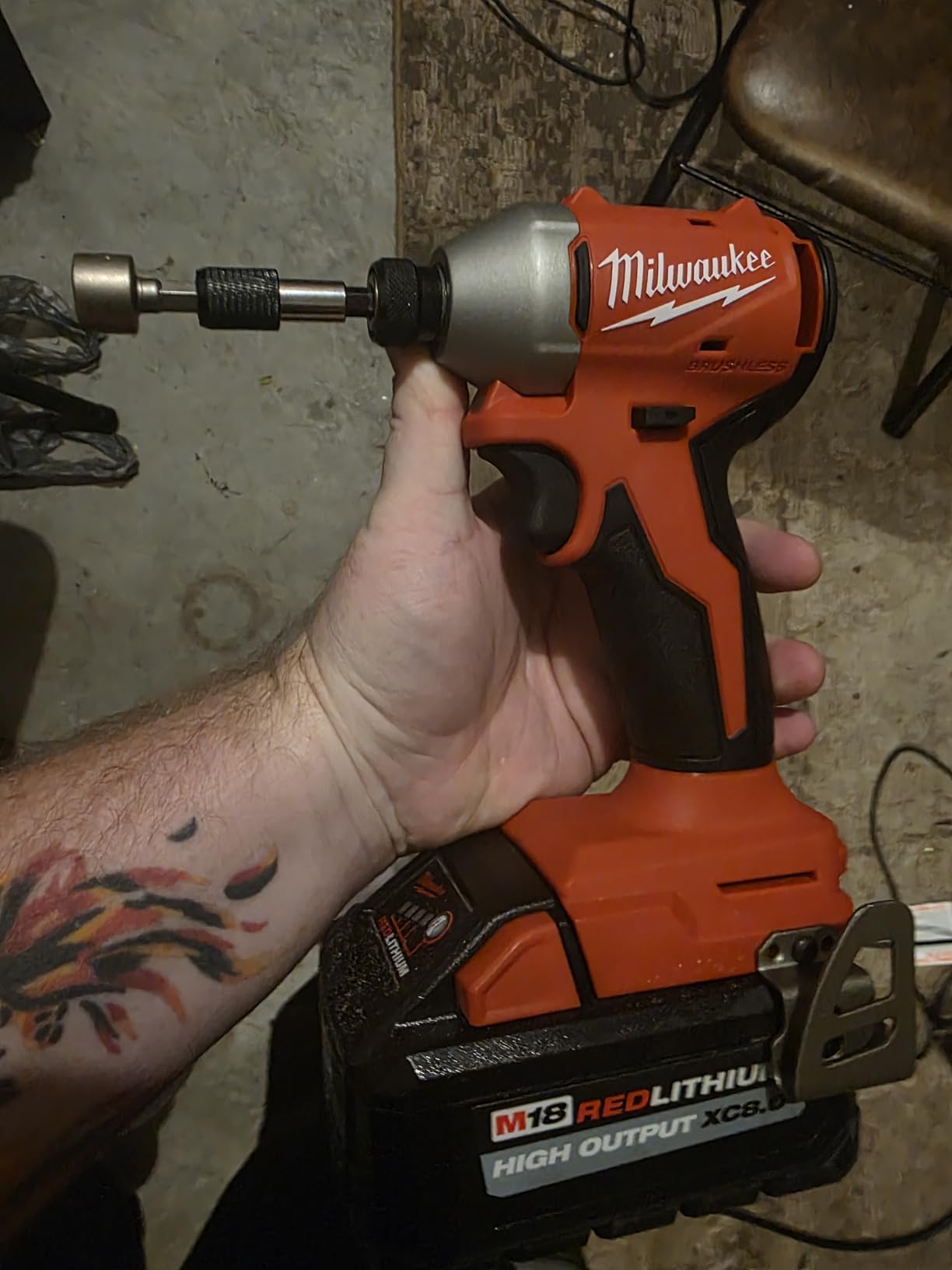
At 1.7 pounds and 4.4 inches long, this is the smallest and lightest driver here, and it still rates 1,700 in-lbs. That combination is what you want when the fastener sits in a gap you cannot see clearly, because you can position the tool square, get full torque, and still have the wrist control to avoid rounding the head.
The all-metal gearcase and gears are a genuine professional construction detail, and the enhanced variable speed trigger is tuned to reduce fastener and material damage, which is exactly the complaint we hear most about powerful drivers in general.
Reviewers describe it as a tool they reach for without thinking, and the recurring praise is for balance and low fatigue on overhead and confined work. It is a good entry point into the M18 system if you already have packs, or a second, lighter driver for a technician who carries one on the belt and one in the bag.
The tradeoffs are straightforward. It is tool-only, it has a single speed setting, and its 1,700 in-lbs trails the M18 FUEL. Reviewers also note that battery life drops faster on heavy or large fastener applications, so a working technician should keep a second pack on the rotation.
When the 3650-20 earns its bay time
Engine bay access and confined interior work: firewall fasteners, seat brackets, centre console trim, and anything where you are working by feel in a space a larger nose will not enter. At 1.7 pounds it is also the least fatiguing tool for a long day of overhead trim removal.
Pairing it with the heavier M18 FUEL from this list is a legitimate shop strategy: one tool for tight access, one for seized hardware.
When you should buy something else
It is not the choice for seized fasteners, where 1,700 in-lbs and a single speed leave margin on the table. Nor is it the value choice if you are starting the M18 platform from nothing, because you still need batteries and a charger before it becomes useful.
Buying Guide for Working Technicians
Torque is the first filter, and it is the one most buyers get wrong. Rated in-lbs on a driver tells you the ceiling, not the working range. Around 1,500 in-lbs covers the overwhelming majority of suspension, brake, and trim hardware on a modern vehicle. Above 1,800 in-lbs adds margin for frozen fasteners and for the rusted axle nut that has been there since the last road service. Below 1,400 in-lbs, you will end up carrying a second tool. Note that the figure is a rating, not a measurement, and a published test rig can show a large gap between the two.
Drive size and head length come next. Every driver here uses a 1/4-inch hex collet, which is the right interface for impact-rated bits and the reason drivers are not interchangeable with 1/2-inch wrenches. Head length is the access number: units around 4.4 to 5.1 inches reach gaps that a 6-inch tool cannot, and on under-dash and engine bay work that difference shows up as minutes per fastener. The Milwaukee 3650-20 at 4.4 inches and the M18 FUEL at 2.76 inches are the extremes in this group.
Speed and drive modes determine control more than torque does. Two speeds is enough for general work. Three speeds let you drive small trim fasteners without overdriving. Four modes, on the Milwaukee FUEL and the Ryobi ONE+ HP, add a self-tapping screw mode that prevents driving a screw into a door skin or a bumper cover. Look for an electronic brake in reverse as well, because it stops the anvil the moment a fastener breaks free instead of letting it spin and chew the head.
Brushless versus brushed matters more for a professional than for a hobbyist. A brushless motor runs cooler and more efficiently because it eliminates the carbon brushes, which means longer motor life, less heat in a hot bay, and better runtime between charges. It also removes the one wear item that traditionally decides when a shop tool is retired. All ten picks on this list are brushless.
Battery platform is the decision you cannot cheaply undo. The M18, 20V MAX, 18V LXT, and ONE+ ecosystems are all broad, but packs are not interchangeable across them. A working technician typically ends up with one main platform, one subcompact platform, and a charger for each. Bosch AMPSHARE is the exception, offering multi-brand compatibility, which is a genuine argument for that tool if you want flexibility. Plan for at least two batteries per driver and a charger per bay, and treat the pack as part of the tool purchase rather than an accessory.
Bit retention is the consumable nobody talks about. For 1/4-inch hex, look for a quick-release collet with a positive detent and a knurled body for one-handed changes, which is what the Ryobi ONE+ HP and the Bosch two-in-one do well. Buy impact-rated bits, and do not run a standard screwdriver bit in an impact driver. A standard bit is a sacrificial part waiting to shatter inside a fastener. A good impact-rated bit brand matters here, and the consensus among technicians on r/Tools is that quality bits from a specialist maker outlast generic ones several times over.
Trigger technique goes with bit quality. Feathering the trigger rather than snapping it to full speed gives you a slow first impact that breaks the thread loose before the hammer goes to full rate, and it is the single biggest factor in whether you strip a fastener or not.
Noise and hearing deserve a mention because an enclosed shop is a genuinely damaging environment. Published testing of this class of tool has measured peaks in the range of 109 to 120 decibels, which is well into the range where prolonged exposure requires protection. If you are running a driver all day in a closed bay, use hearing protection and keep the bay ventilated.
Warranty length is an underrated differentiator for professional buyers. The Bosch on this list carries five years on the tool and three on the battery, which spreads the cost of ownership over a long window. DeWalt offers three years on tools. The Ryobi ONE+ HP carries 30 days, which tells you plainly where the brand expects the tool to be used.
Finally, the rule that protects your work and the customer’s: use the driver for removal and for the initial breakaway on tightening, then finish with a torque wrench. Impact torque is variable and depends on how the tool is held and how long you lean on it, so a fastener torqued to spec with an impact tool is a guess, and stretched threads on a head bolt or a stretched lug stud will come back to you as a comeback.
Frequently Asked Questions
Which impact driver is best for a mechanic?
For most working technicians the Makita XDT131 18V LXT is the best all-round brushless impact driver, because it ships with a battery and charger, holds the highest review volume of this group, and delivers 1,500 in-lbs of torque with variable speed. For seized hardware pick the Milwaukee M18 FUEL 2953-20 at 2,000 in-lbs, and for the tightest engine bay gaps pick the Milwaukee 3650-20 at 1.7 pounds and 4.4 inches long. The right answer also depends on which battery platform you already own.
What is the best brushless impact driver?
The best brushless impact driver depends on the job. For overall shop use the Makita XDT131 18V LXT wins on complete-kit packaging and 1,500 in-lbs of torque. For power-to-size the DEWALT DCF845B 20V MAX gives 1,825 in-lbs with three speeds and a 5.3 inch head. For maximum torque in a 1/4-inch hex tool the Milwaukee M18 FUEL 2953-20 rates 2,000 in-lbs with four drive modes. For confined access the Milwaukee 3650-20 is the smallest and lightest at 1.7 pounds.
Are brushless impact drivers better?
Yes, for most working technicians. A brushless motor eliminates carbon brushes, so it runs cooler, wastes less energy as heat, delivers more torque for the same platform, and lasts longer than a brushed motor. In a hot, greasy shop that translates to fewer failures and less downtime. The trade-off is usually a higher purchase price and a battery platform that is more expensive to enter, since quality packs and chargers cost more than entry-level brushed kits.
What is the best impact wrench for car mechanics?
An impact wrench, not an impact driver, is the correct tool for lug nuts, axle nuts, and any hardware above about 250 ft-lbs. Drivers use a 1/4-inch hex collet and deliver torque in the 1,500 to 2,250 in-lbs range, while wrenches use a 1/2-inch square anvil and deliver hundreds of ft-lbs. Most technicians own both: a driver for the many screws and bolts of a service day, and a mid-torque or high-torque wrench for the nuts. Our separate impact wrench roundup covers the wrench classes in detail.
Do I need an impact driver or an impact wrench?
You need an impact driver for fasteners: trim screws, bracket bolts, caliper bolts, body panel hardware, and long suspension bolts. You need an impact wrench for nuts: lug nuts, axle nuts, and seized hardware. The practical test is the fastener head. If it is a hex, Torx, or Phillips, reach for the driver. If it is a nut or a square-drive fastener, reach for the wrench. A Bosch two-in-one tool covers a lot of both, but it is a convenience rather than a replacement for a proper nut-busting wrench.
Final Verdict for Working Mechanics
The best brushless impact drivers for mechanics in 2026 are not interchangeable, so the honest summary is a short list with clear roles. The Makita XDT131 18V LXT is the one to buy first: 1,500 in-lbs of brushless torque, 0 to 3,400 RPM variable speed, a cool-running motor, and a kit that includes a 3.0Ah battery and a charger so you can work on day one. It carries the highest review volume of the ten and a 4.8 rating, and the complaints against it are a two-speed control and a small carry bag.
Add to it based on your actual day. Take the Milwaukee M18 FUEL 2953-20 if seized hardware is a regular part of the job, with 2,000 in-lbs and four drive modes. Take the DEWALT DCF845B 20V MAX if engine bay and under-dash access is the constraint, with 1,825 in-lbs in a 5.3-inch head and a three-speed selector. Take the Milwaukee 3650-20 M18 if you work overhead or in gaps you cannot see, at 1.7 pounds and 4.4 inches long. Take the Greenworks ISG402 24V if you want the lightest mid-torque option with USB-C battery charging.
Whatever you choose, buy impact-rated bits, feather the trigger instead of snapping it, keep a second battery on rotation, and finish every torque-critical fastener with a wrench. Check the listing for the current details before you order, and add the wrench half of the set with our impact wrench guide once the driver is in your hand.