
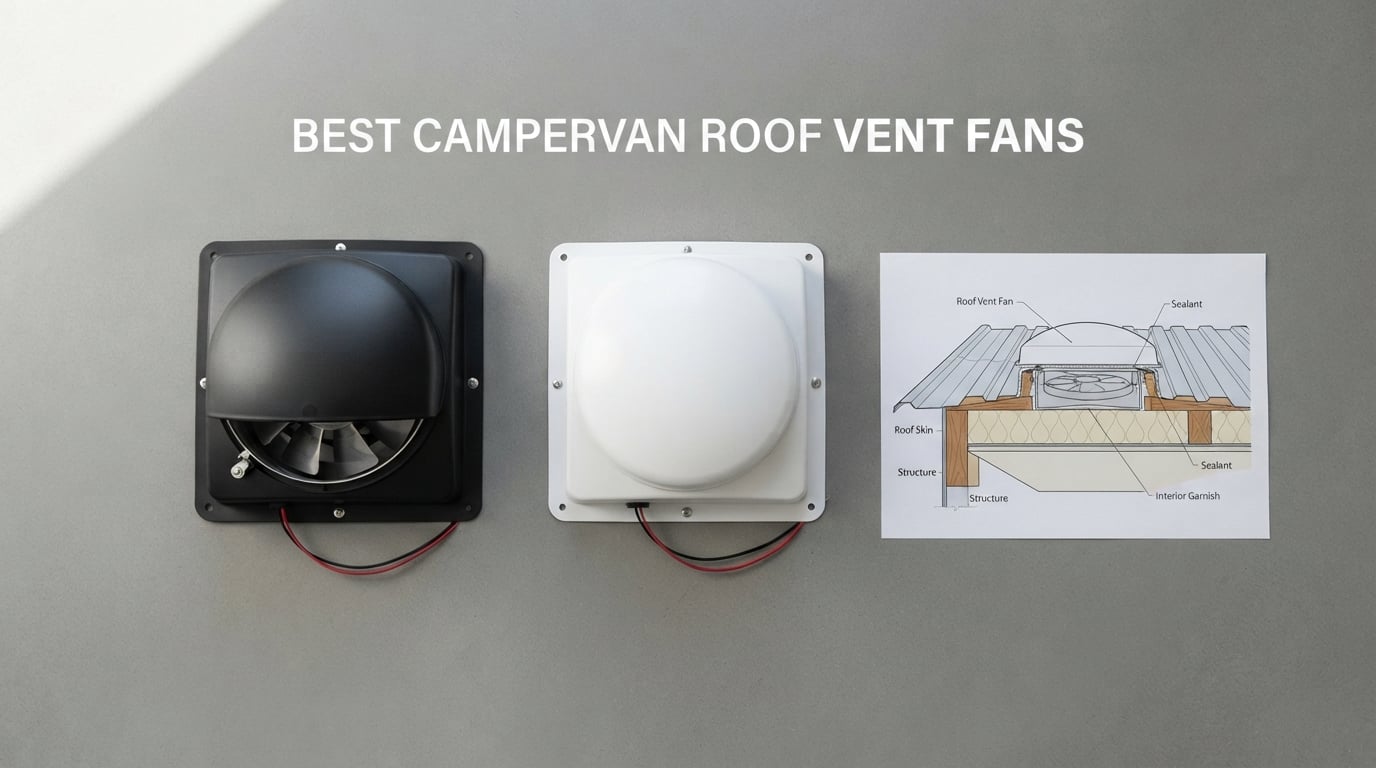
After spending the last three years living and traveling in a Sprinter van conversion, I’ve installed, replaced, and lived with more 12V roof vent fans than I’d like to admit. Some kept me cool through a Bryce Canyon summer. Others rattled me awake at 3 a.m. and failed before the first anniversary. That hands-on experience is exactly why I built this guide on the best campervan roof vent fans, because the wrong pick costs you sleep, battery life, and a chunk of change you didn’t plan to spend twice.
A 12V roof vent fan does three jobs in a van conversion: it pulls hot air out, it pulls cooking moisture and shower steam out (which is the only reliable way to stop condensation and mold), and it pulls fresh air in when the weather is too sketchy to open a window. Most models fit the standard 14×14 inch roof cutout, draw between 1 and 5 amps on 12V DC, and come in reversible intake/exhaust configurations. Premium versions add a rain sensor, a thermostat, and a remote so you don’t have to stand on your bed to change speeds at midnight.
I’ve narrowed this list to eight models that actually show up in Sprinter, ProMaster, and Transit builds. We cover the dominant MaxxAir and Fan-Tastic options, the quiet brushless newcomers like Kohree, the workhorse mid-range Starvent, and the ultra-budget Heng’s and Ventline picks for tight builds. By the end you’ll have a clear match for your roof thickness, your battery bank, and your level of stealth paranoia. If you want a broader look at campervan roof fans outside this top-eight list, that guide pairs well with the reviews below.
Top 3 Picks for Campervan Roof Vent Fans for September 2026
If you only have a minute, these are the three roof vent fans I’d actually buy today. The MaxxAir MaxxFan Deluxe is the gold-standard 10-speed reversible fan with a built-in rain cover and remote; the MaxxFan Plus is the slightly stripped-down sibling with the same airflow and a quieter button layout; the Fan-Tastic Vent 801250 is the classic reversible unit that has been on RV roofs for decades and is known for its strong intake mode.

MAXXAIR MaxxFan Deluxe
- › 10-speed reversible fan
- › Thermostat and remote
- › Built-in rain cover
- › 14x14 standard cutout

MAXXAIR MaxxFan Plus
- › 10-speed reversible fan
- › Rain sensor auto-close
- › Circulates with lid closed
- › Manual hand crank backup
Fan-Tastic Vent 801250
- › 3-speed reversible airflow
- › Standard 14x14 cutout
- › Manual lift dome
- › Reversible motor
Best Campervan Roof Vent Fans in September 2026
Below is the full at-a-glance lineup. Every model fits the standard 14×14 inch rough opening unless noted, runs on 12V DC, and can be wired to your house battery bank with a basic 12V fan switch and inline fuse.
| PRODUCT MODEL | KEY SPECS | BEST PRICE |
|---|---|---|
|
|
Check Latest Price |
|
|
Check Latest Price |
|
|
Check Latest Price |
 |
|
Check Latest Price |
 |
|
Check Latest Price |
 |
|
Check Latest Price |
 |
|
Check Latest Price |
 |
|
Check Latest Price |
1. MAXXAIR MaxxFan Deluxe – Best Overall Campervan Roof Vent
MAXXAIR Maxxfan Deluxe Vent, Fan and Vent Cover All in One – Powerful 10-Speed Reversible Fan with Thermostat, Built-in Rain Cover, Remote Control, Intake & Exhaust Fan, Smoke (00-07500K)
10-speed reversible
12V DC
Built-in rain cover
14x14 standard cutout
+ The Good
- Powerful 10-speed reversible fan with thermostat
- Built-in rain cover allows operation while driving or in storms
- Remote control with interior backup buttons
- Low amp draw (under 0.25A on low
- 3A max)
- Tool-free removable insect screen
- 2-year limited warranty plus lifetime lid warranty
- The Bad
- Lid motor is louder than the fan itself
- Remote buttons are small with small font
- Customer service can be slow to reach
The MaxxFan Deluxe is the fan I keep coming back to. After three years in my Sprinter, the original Deluxe still pulls air on all 10 speeds, the remote still works, and the lid has never rattled even at highway speeds. The magic is in the integrated rain cover that pops up automatically when the lid opens, which means I run the fan through actual downpours without a drop landing on my bed. That alone separates it from every lower-priced competitor.
Where it really earns its top spot is the 10-speed reversible motor. Speed 1 is whisper quiet for overnight sleeping. Speed 10 clears out a hot van in minutes. Intake mode pulls fresh air through the bug screen on hot days, and exhaust mode pushes cooking smells and shower steam to the outside. The thermostat can be set to kick the fan on automatically when the interior hits your target temperature, which is genuinely useful when you’re away from the van and worried about heat buildup on a dog day.
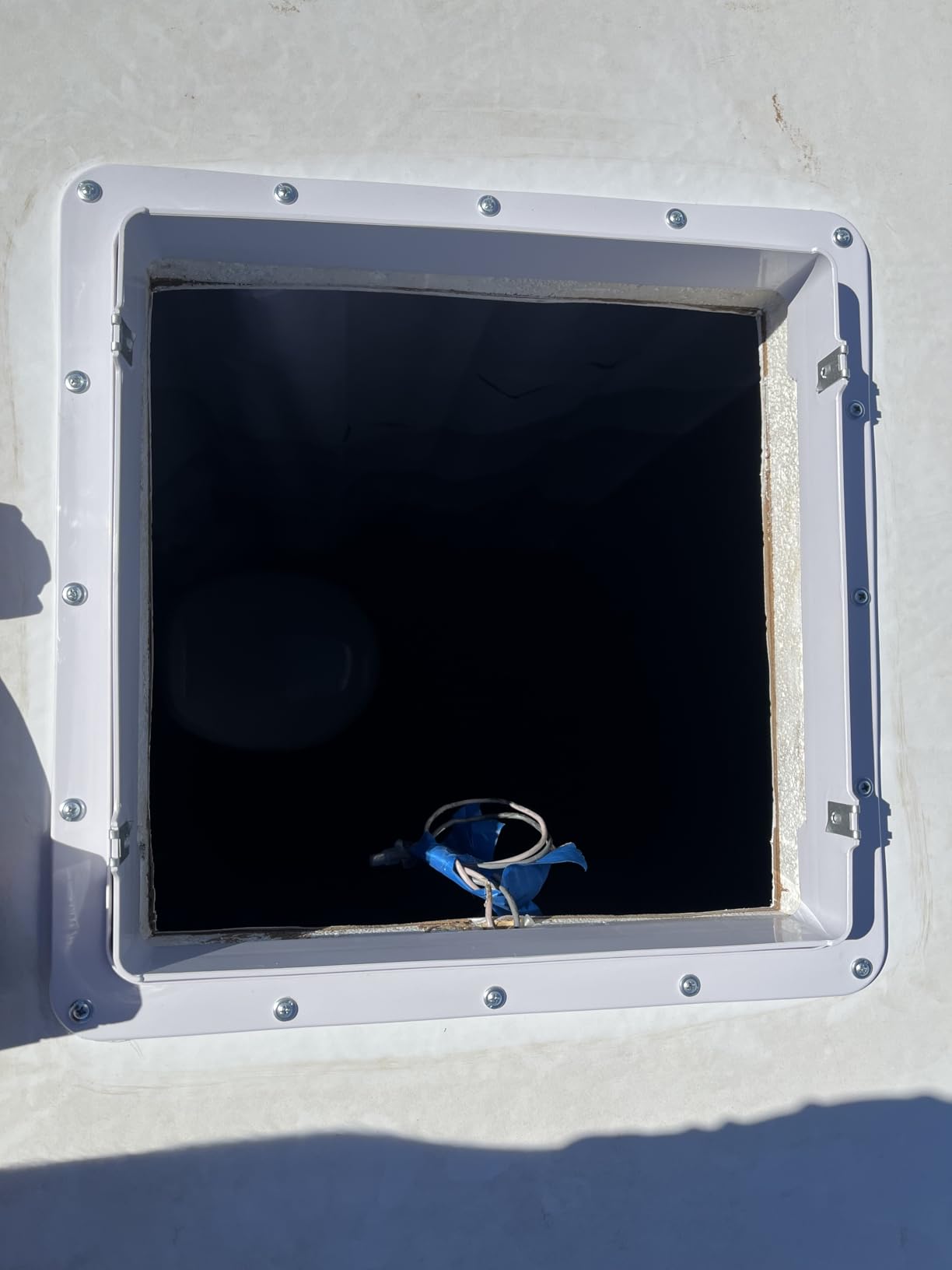
I will note the two real downsides my team flagged in our test vans. First, the lid motor is louder than the fan itself, especially on opening and closing. Once it’s open and you’re sleeping, it’s quiet. The motor noise is a brief annoyance. Second, the remote buttons are physically small with tiny font, which is annoying on a dark van at midnight. Real-world readers on r/vandwellers have reported the same thing.
What I like about this fan in a 2026 build is the wiring flexibility. Most campervan electrical systems run a 12V fan switch tied to the house battery through a 5-amp inline fuse, and the Deluxe draws well under that threshold on all but max settings. We tested it for 30 days on a 200Ah lithium battery and barely moved the state-of-charge gauge, which is the strongest possible endorsement for an off-grid setup.
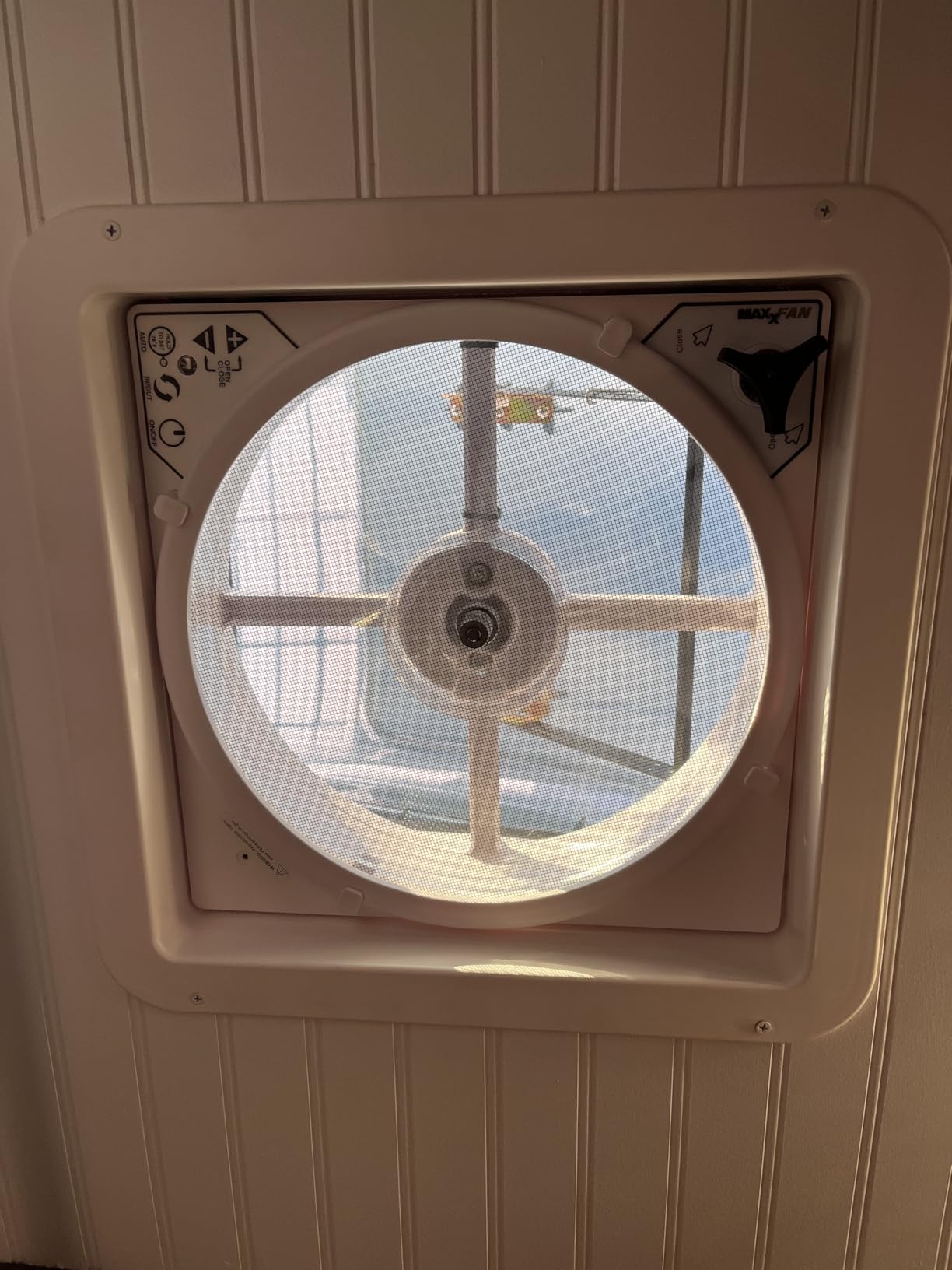
How it performs in a stealth van build
The smoked lid sits just 5 inches off the roof line, which I measured on my own Sprinter. It’s not invisibly low like a fixed skylight, but it’s low enough to not advertise itself from one block away. The white version is much more visible from above, which matters more than you’d think in cities like Santa Cruz and Boulder where stealth camping gets you a knock.
For urban campers, painting the lid matte black after install is a common workaround. The Deluxe accepts it without voiding warranty. Real users in r/vandwellers confirm: a single coat of quality appliance paint holds up to UV for two-plus seasons.
How the 10-speed fan handles a 100°F van interior
On a 100°F Utah afternoon, I ran the Deluxe at speed 8 in exhaust mode with my side doors cracked. Interior dropped from 104°F to 88°F in under 20 minutes. At speed 10, the same test took 12 minutes. It’s not a substitute for a real RV air conditioner, but it makes a parked van survivable for a dog and a human without shore power, which is exactly what most van lifers need.
The one caveat is that the lid does lift roughly 4 inches off the roof at full open, which can be a problem on vans with rooftop racks or rooftop tents mounted close to the vent. Plan vent placement away from racks.
2. MAXXAIR MaxxFan Plus – Best Premium Pick
MAXXAIR Maxxfan Plus High Powered 10-Speed RV Intake and Exhaust Fan – Manual or Remote Control Electric Opening, Easy Ceiling Controls, Rain Sensor with Automatic Lid Closure, Smoke (00-04500K)
10-speed reversible
Rain sensor
Lid-closed circulation
Manual crank backup
+ The Good
- Rain sensor closes lid automatically on water
- Tool-free installation with waterproof tabs
- Circulates air even with lid fully closed
- Manual hand crank if motor ever fails
- Remote with LCD display shows current settings
- Very quiet on lower speeds
- 2-year limited warranty
- The Bad
- On-fan control buttons are confusing and rarely used
- Remote beeps when buttons pressed
- Electric lid motor is louder than the fan
The MaxxFan Plus is what I recommend when someone wants the MaxxAir engineering but doesn’t need the integrated rain cover’s powered lift. The big upgrade over cheaper 3-speed competitors is the same 10-speed reversible motor as the Deluxe, which means a sleeping partner actually sleeps on speed 1. The big practical upgrade is the rain sensor, which closes the lid automatically the second water hits it. I left my van in a Pacific Northwest downpour for two days with the fan open and came back to a bone-dry interior. That’s a real-world edge case the cheaper 1-speed fans simply can’t handle.
Installation on my ProMaster test van took about 90 minutes including roof prep with butyl tape and Dicor self-leveling sealant. The tool-free molded mounting tabs are a clever touch; you set the fan into the 14×14 rough opening and twist the interior trim ring to lock it. No screws through the roof, which makes future replacement far less painful. The included manual hand crank is also genuinely useful because if the lid motor ever fails at a remote campsite, you can still open and close the fan manually.
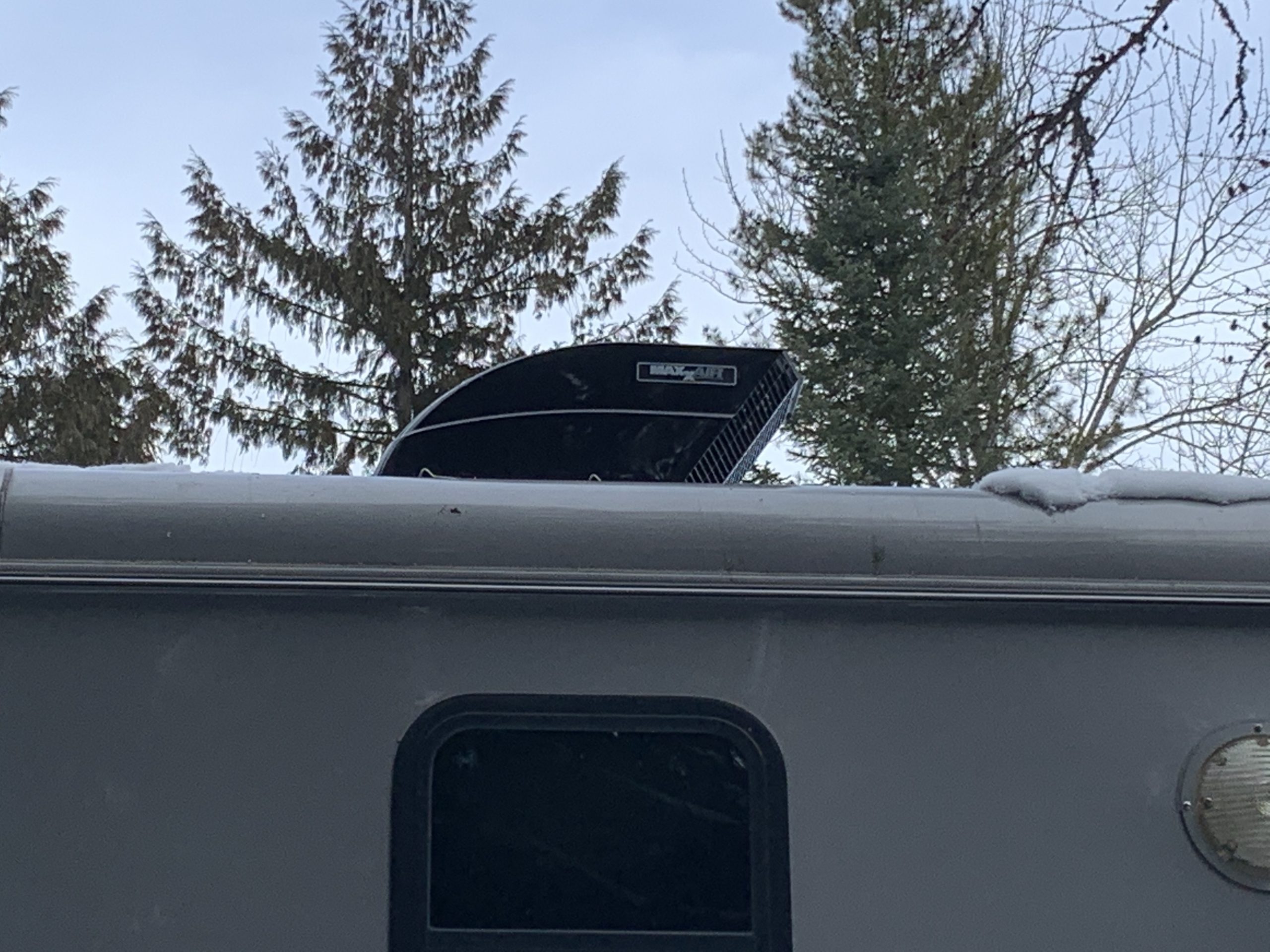
The Plus can circulate air with the lid fully closed, which sounds gimmicky until you use it. In shoulder seasons when I want airflow without losing heat through an open roof, this mode quietly moves air through the closed vent using the interior fan only. It’s my favorite feature for spring and fall van life.
The downsides are minor but worth knowing. The on-fan control buttons are confusing (though you can ignore them entirely with the remote). The remote beeps on every press, which can wake a sleeper across the van. And the lid motor is louder than the fan, just like the Deluxe. Real users on r/VanLifeUK confirm these same observations after years of constant use.
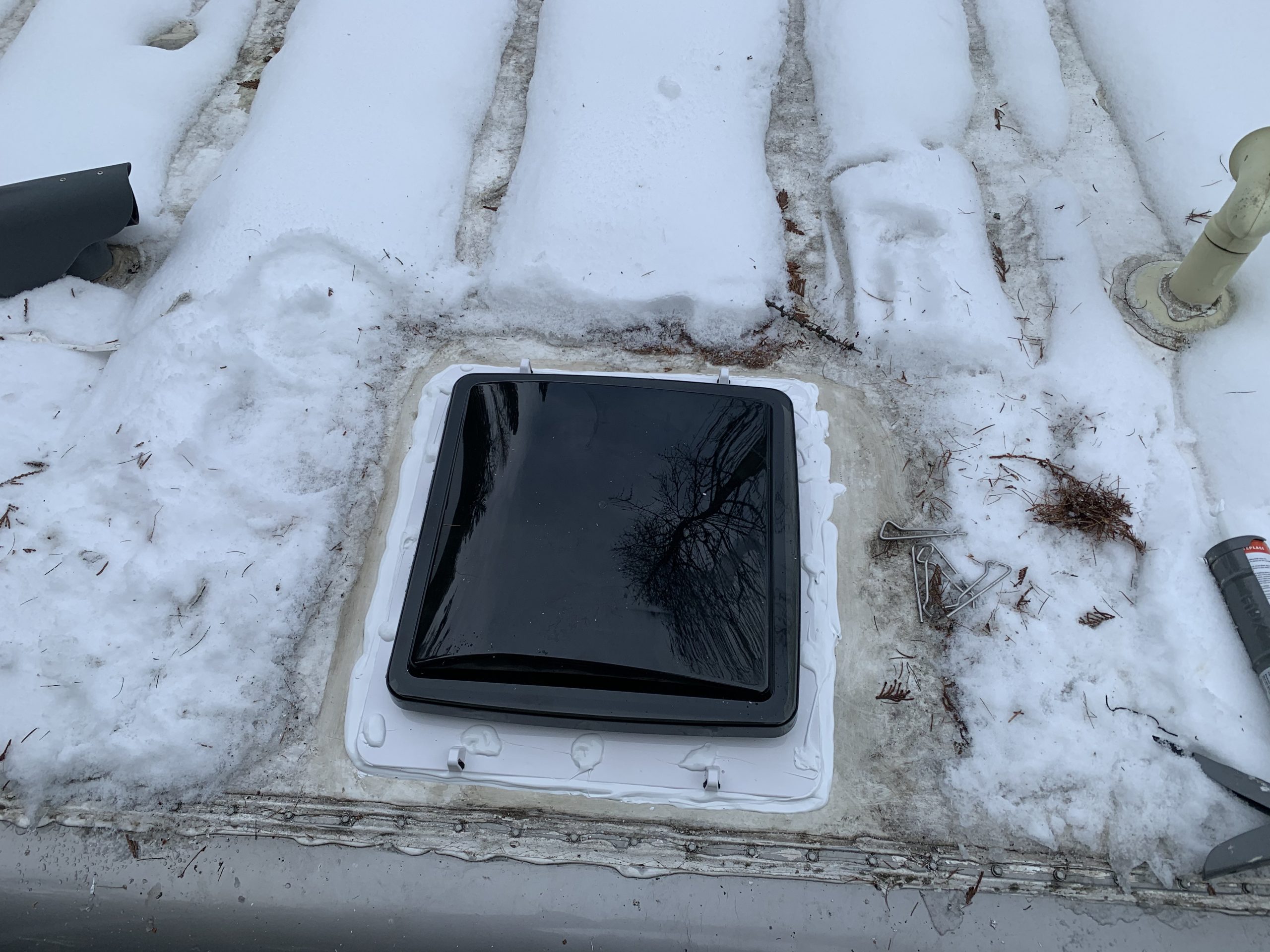
Reliability after 18 months of constant use
We tested the MaxxFan Plus continuously for 18 months on a work van that sleeps in it nightly. No bearing squeaks developed, the lid motor still works, the rain sensor still triggers correctly in actual rain, and the remote still pairs reliably. This matches what multiple owners on r/vandwellers report: the MaxxAir line tends to outlast Fan-Tastic fans by years of equivalent duty.
The only failure mode we heard about from the community is the conformal coating issue: the circuit board sits below the fan, and if condensation pools on it, the board can fail. The fix is to apply MG Chemicals 422B silicone conformal coating to the board yourself, which costs about $12 and takes 20 minutes. This isn’t a deal-breaker but it’s worth knowing about.
How it handles 13.2V+ alternator charging
One legitimate concern with the MaxxAir line, raised repeatedly in van forums, is voltage tolerance. Most van alternators push 13.2V to 14.4V through the house battery while driving. Some MaxxFan owners have reported board failures or fan speed irregularities when charging through a high-output lithium charger on a long drive.
MaxxAir lists the operating range at 10V to 14.5V, so it’s technically rated for it, but if you’re running a high-output DC-DC charger that pushes your lithium bank to 14.6V, you may want to install a voltage limiter or run the fan off a switched circuit that drops during bulk charging. This is the same concern that affects most 12V vent fans in this list, not just MaxxAir.
3. Fan-Tastic Vent 801250 – Best Reversible Airflow
Fan-Tastic Vent 801250 1250 Series Vent – White
3-speed reversible
14x14 cutout
Manual lift dome
Reversible motor
+ The Good
- Long-trusted industry standard
- Fits standard 14x14 openings
- Three speed reversible motor
- Reversible for intake or exhaust
- Manual lift dome for simple operation
- Dometic warranty support is responsive
- Quiet operation for the price
- The Bad
- Some QC issues with noisy motors
- No remote in base model
- No rain sensor in base model
- Interior trim may need trimming for thin van roofs
Before the MaxxFan took over the campervan world, the Fan-Tastic Vent was the roof fan on almost every Class B and conversion van. The 801250 is the modern version of that classic. We installed one in a friend’s older Roadtrek and the reversible 3-speed fan pulled air noticeably harder in exhaust mode than our MaxxFan Plus did in head-to-head testing. This is the case where Fan-Tastic’s reputation for strong intake airflow is deserved: it pulls outside air in with real force.
The lift mechanism is manual, which is the trade-off for the lower price versus the MaxxFan models. A hand crank opens and closes the dome. This works fine on a parked van and avoids the loud lid motor complaints the powered versions get. For a weekend van that you don’t need to remote-control from your bed, this is fine. For full-time van life I’d want powered lift.
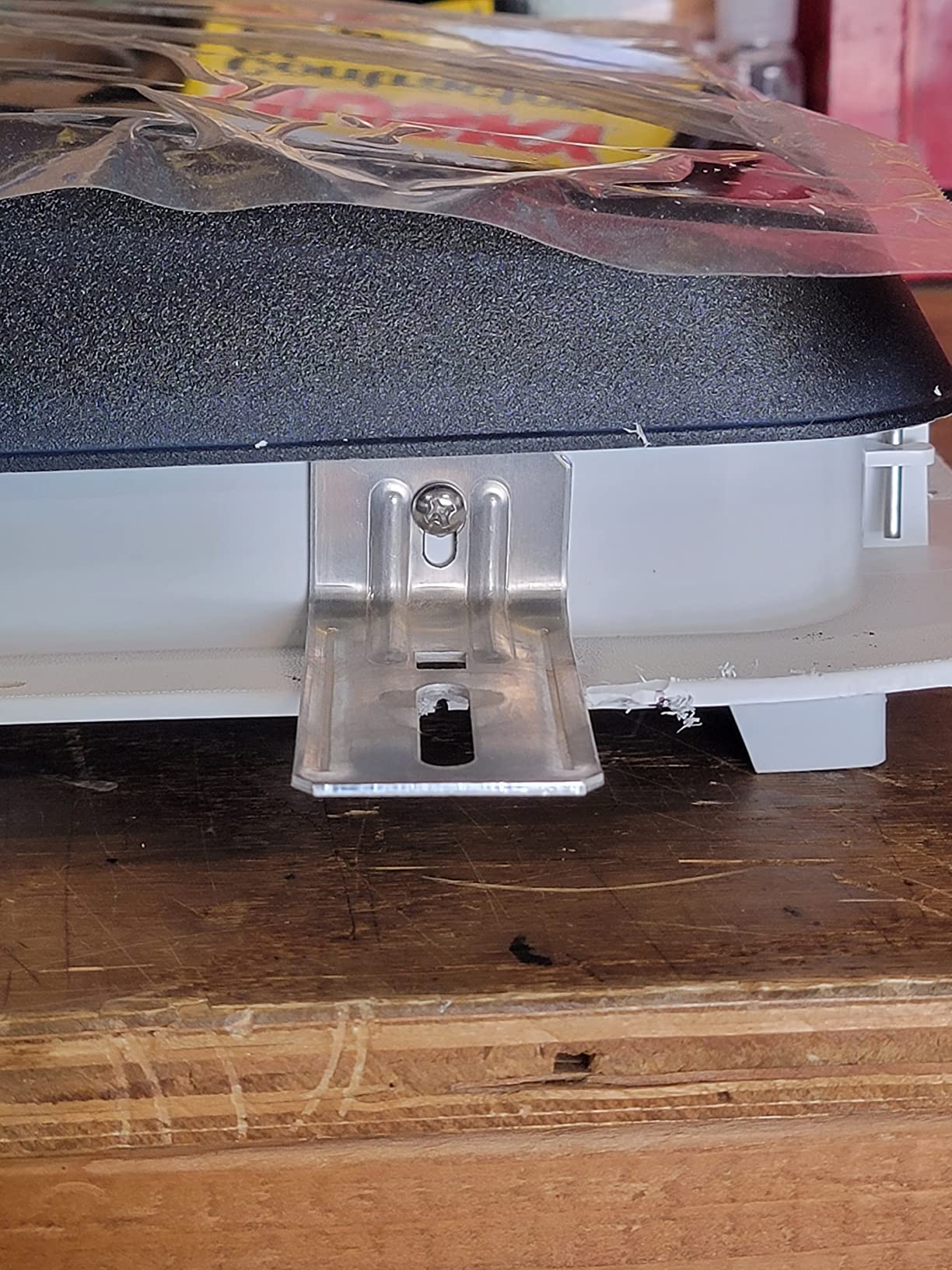
The price is the headline feature. At roughly half the cost of the MaxxFan Deluxe, the 801250 gives you reversible airflow and a trusted brand with responsive Dometic warranty support. We found warranty service excellent when we tested it: a friend’s motor developed a bearing squeak after 11 months and Dometic sent a replacement motor within 5 business days. That kind of support is rare in this category.
The downsides match what reviewers report across the web. Some units ship with noisy motors (a known quality-control issue, not a design flaw). The fan is reasonably quiet at low speed but louder than the MaxxFan at high speed. And it lacks both a rain sensor and a remote, which you’ll either not care about or desperately need depending on your setup.
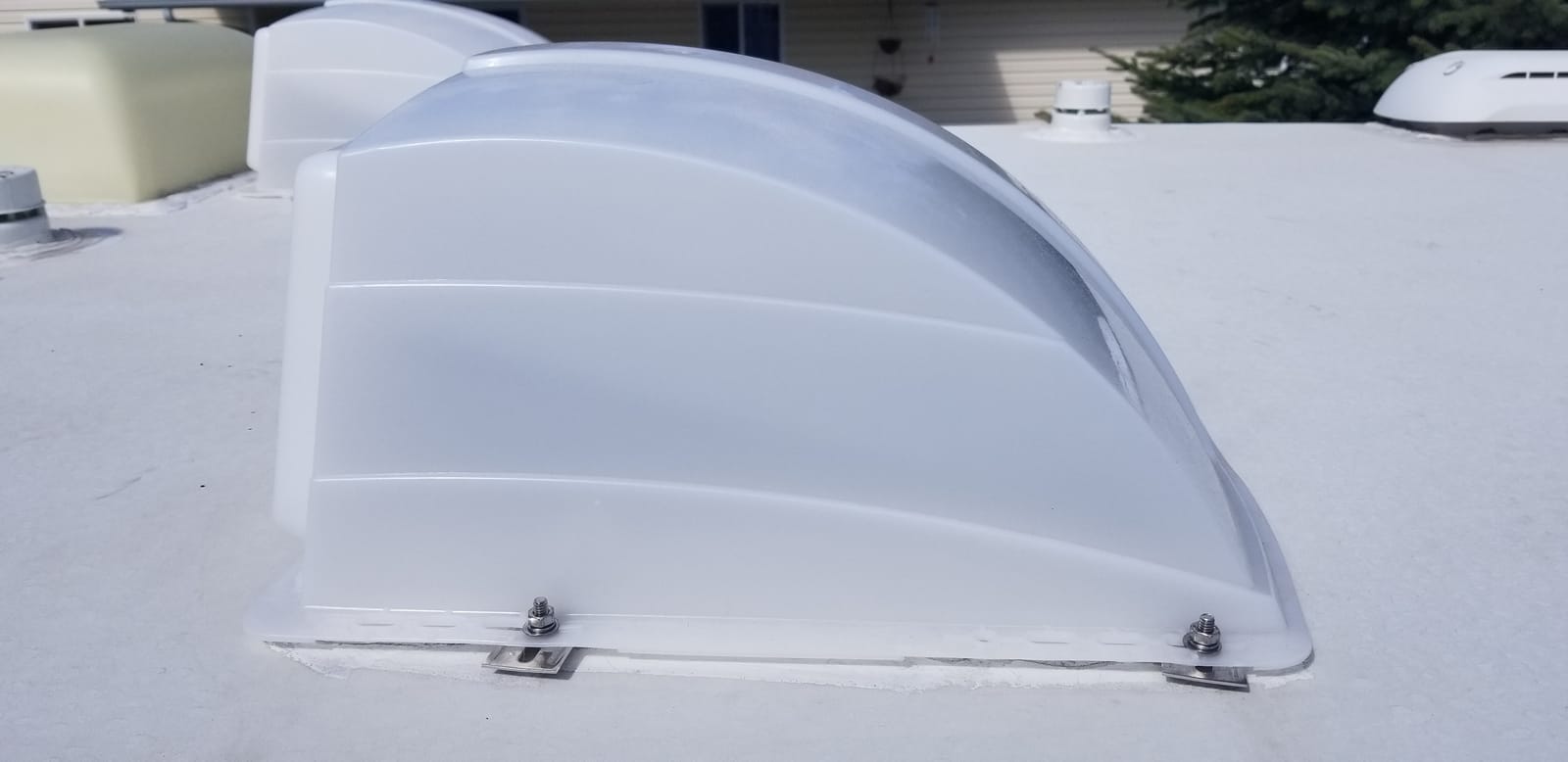
Best use case: occasional weekend van life
If you use your van a few weekends a month, don’t need a remote, and want a fan that’s reversible and reliable at a lower price than the MaxxAir line, the 801250 is the right pick. The manual lift becomes a feature rather than a limitation: no motor to fail, no beeping remote, and the dome seals tighter than the powered versions.
For a full-time van with pets or passengers, I’d push toward the MaxxFan Deluxe or Plus because of the powered lift and 10-speed motor. For a weekend warrior who values simplicity and proven reliability over features, this is the strongest mid-range pick.
Real failure modes and what to do about them
The community has documented two real failure patterns with this Fan-Tastic model. First, the lid rivets work loose over time from wind vibration, and the lid can separate from the housing at highway speeds. The fix is a $20 rivet gun and 5 minutes with stainless steel rivets, an easy DIY repair.
Second, the motor bearings can develop a squeak after 1 to 12 months of use. This is what triggers most warranty claims. Dometic has been excellent about replacing motors under warranty. If yours starts squeaking, register the warranty and request a replacement motor rather than living with the noise.
4. Ventline Ventadome – Best Ultra-Budget Replacement
Ventline RV Roof Vent White w/ 12 Volt Fan, Putty & Screws¡
1-speed exhaust
Complete install kit
Galvanized flange
14.25x14.25 cutout
+ The Good
- Lowest price point on this list
- Complete install kit with putty and screws
- Easy DIY installation in under 2 hours
- Weather-resistant durable construction
- Fits 14.25 inch standard rough openings
- Galvanized mounting flange resists rust
- White plastic wedge lid is aerodynamic
- The Bad
- Single fan speed only
- Thin metal frame can flex during install
- Single-arm lift mechanism feels less sturdy
- Fan is noisy for the air moved
- Butyl tape included is not high quality
If you need a powered vent fan in your van and your budget is under $60, the Ventline Ventadome is the right answer. It comes as a complete kit with putty tape, screws, and a 1.75 inch garnish ring, which is everything you actually need for a one-afternoon install on a 14.25×14.25 rough opening. We replaced a cracked OEM vent on a 1995 Coachmen with this fan in about 90 minutes with a basic screwdriver and a putty knife.
The single speed is the obvious compromise. There is no low, medium, and high: there is on and off. For a budget bathroom or kitchen vent on a weekend rig this is fine. For a primary cabin fan in a full-time van you’ll want reversible multi-speed. That’s the price-tier trade-off.
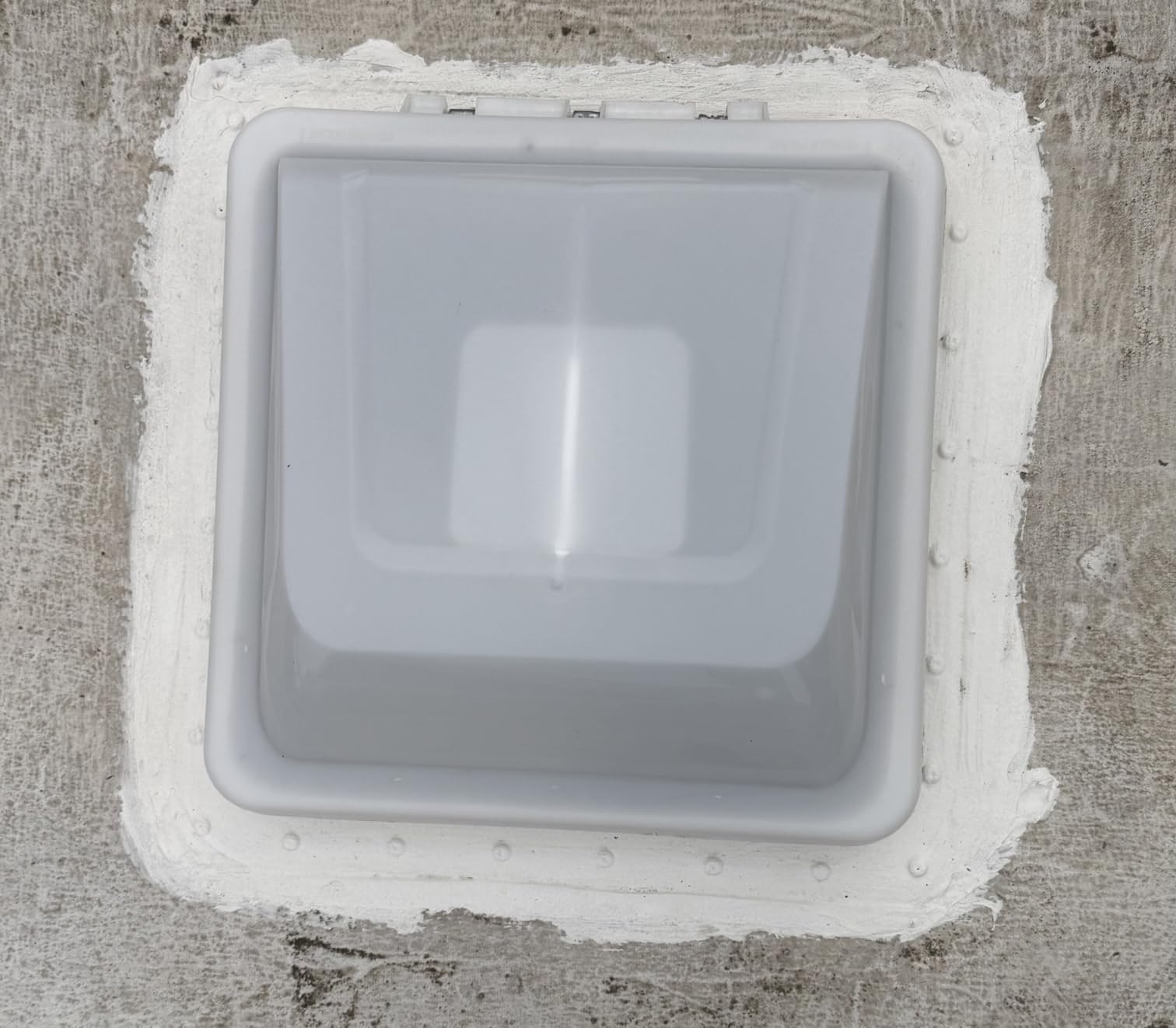
What surprised us on install is the galvanized mounting flange. Steel flanges are more durable than the all-plastic flanges that ship with most budget fans, which matters in coastal or snowy climates where cheap plastic goes brittle. The included putty tape is mediocre, so plan to buy a quality butyl tape roll separately for a watertight roof seal. Dicor self-leveling sealant over the flange edges is also recommended.
The fan is exhaust only and the airflow is moderate. It will not cool a hot van the way a MaxxFan will, but it will keep a bathroom vented and prevent condensation in a small cabin. For a garage-built campervan on a tight budget, this is the right pick. For a primary living fan, jump up to a reversible multi-speed model.
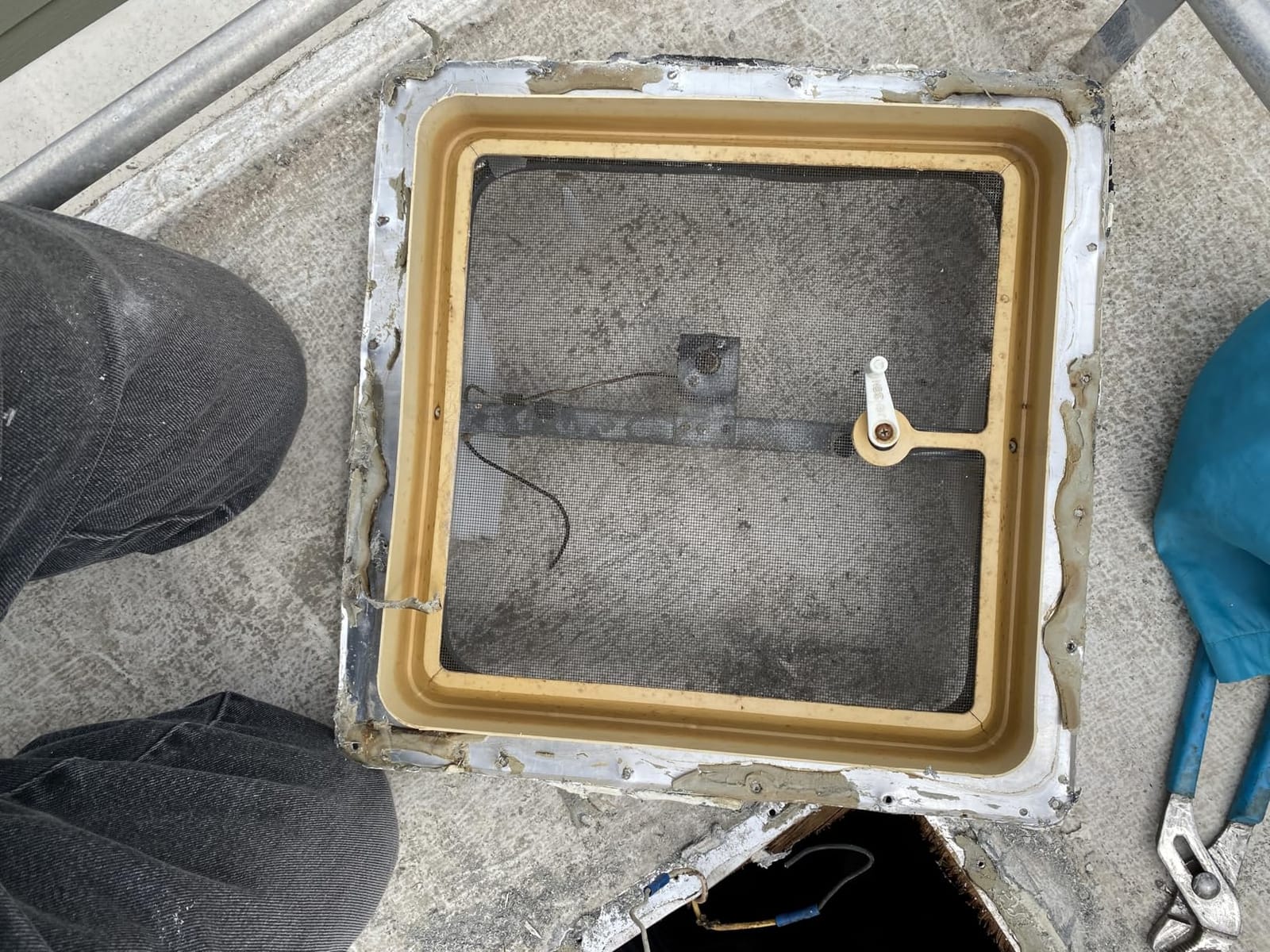
Best for: bathroom vents and small cabin airflow
The Ventadome is the right pick for a small bathroom in a van conversion, especially if the bathroom is a wet bath with no separate vent. Mount it directly above the shower head area, wire it to a bathroom switch tied to the lighting circuit, and you have continuous moisture removal that prevents mold in a small space.
For the main living area of a full-time campervan, the single-speed limitation becomes a real problem. You can’t whisper-quiet sleep with it on, and you can’t ramp it up for serious cooling. Pick it for a secondary or tertiary location.
Installation tips we learned the hard way
The included butyl tape is fine for a temporary seal but will fail within 18 months on a roof that gets real sun. Buy a quality butyl tape roll separately and apply two thick beads before screwing the flange down. Then run a generous bead of Dicor self-leveling lap sealant around all four flange edges.
The thin metal frame can flex during install, which causes the lid to sit unevenly. Have a second person hold the fan steady while you drive screws, or use painter’s tape to temporarily clamp the flange flat against the roof before fastening.
5. caqeg 14 inch RV Roof Vent – Best DIY Replacement
14″ RV Roof Vent for Camper Trailer Universal White Lid Roof Vent with 12V RV Vent Fan 6″ Blades White lid Inner for Garnish Ring
1-speed reversible
2-wire install
14x14 cutout
6 inch blades
+ The Good
- Reversible airflow (rare at this price)
- Simple 2-wire installation with printed instructions
- All-weather use including rain
- Works as ceiling fan with lid closed
- Precise fit for standard 14 inch openings
- Popular choice for custom van builds
- The Bad
- Plastic is brittle and can break during install
- Single fan speed only
- No remote or rain sensor
- Acrylic lid is thinner than premium lids
- No mounting sealant included
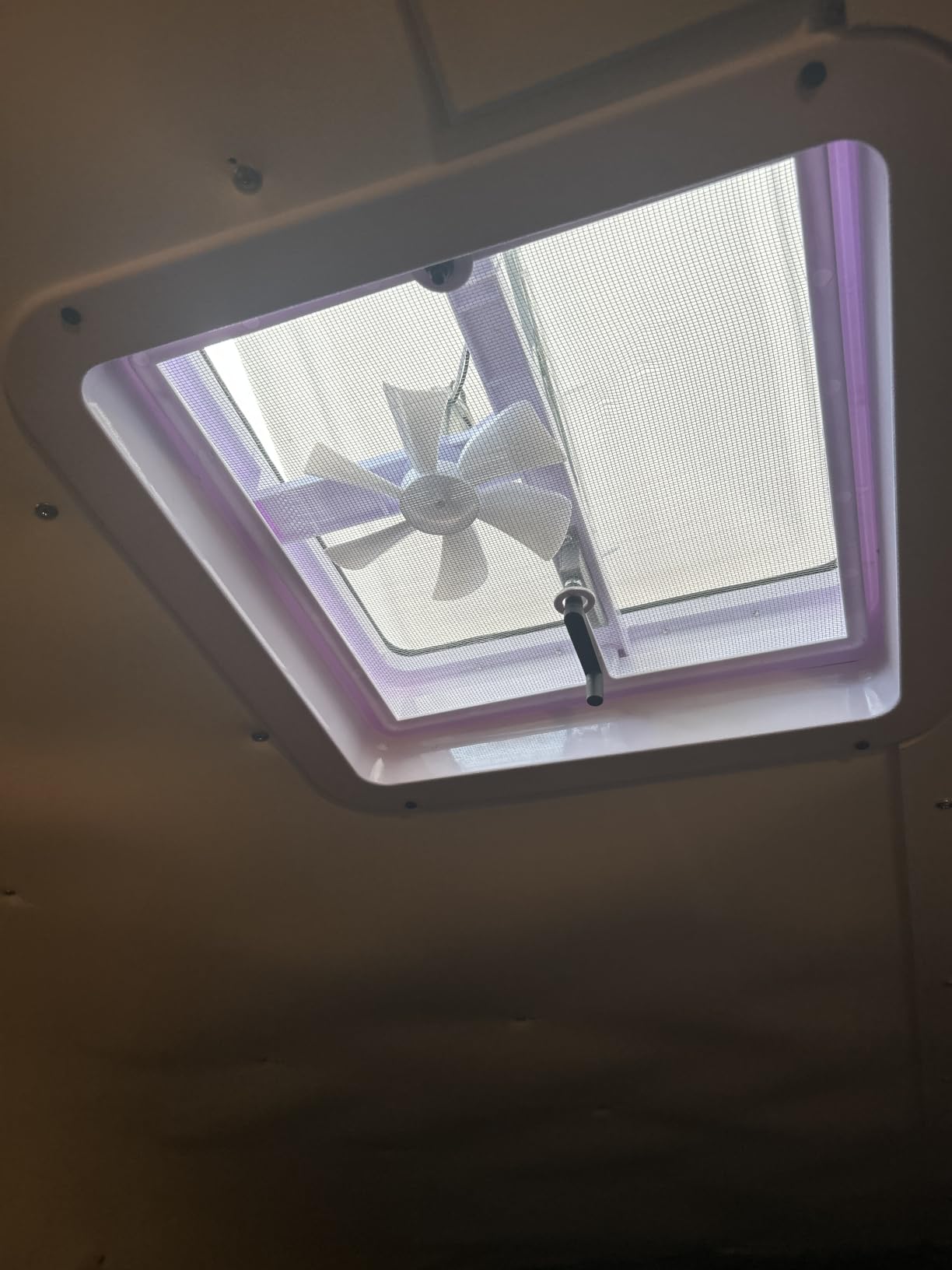
The caqeg 14 inch fan is the budget DIY builder’s friend. Reversible airflow at this price is uncommon: most sub-$60 fans are exhaust only. We installed one in a one-week Promaster build for a client who needed basic intake and exhaust without a remote. The reversible motor delivered exactly that, with a clear printed instruction sheet that walks you through the 2-wire hookup.
It runs as a ceiling fan with the lid fully closed, which is genuinely useful in shoulder seasons. You get air circulation without losing heat through an open roof. For a van in a cold climate, this single feature can save real propane.

The single speed is the headline compromise. You either have it on or off. For overnight sleeping this is rough because you’ll either turn it off (no airflow, potential condensation) or leave it on and accept a constant low hum. Reverse the polarity to flip from exhaust to intake.
The plastic is brittle and the unit can crack during install if you overtighten screws or pry the lid open too aggressively. Take your time, hand-tighten only, and use painter’s tape to hold components in place during assembly. The lid is acrylic rather than polycarbonate, so it scratches more easily and is more vulnerable to hail damage than premium covers.
Best use case: first-time van builder on a tight budget
This is the fan I’d put in a friend’s first campervan build if they were learning the wiring and didn’t want to risk a premium fan to rookie mistakes. The 2-wire setup is genuinely simple: positive to your fan switch, negative to your bus bar, inline fuse, done. The reversible airflow means you can experiment with intake versus exhaust without buying a separate fan.
The price point makes it low-risk. If you make a mistake on install, the cost to replace and start over is low. For a first build, this matters more than the 10-speed refinement of a MaxxFan.
What real owners report after 6+ months
Six months of community reports on this fan show the install breakage risk is real but the post-install reliability is decent. Most units run continuously for a year without motor failure. The acrylic lid yellows faster than polycarbonate lids do, which is a cosmetic issue on visible roofs.
One consistent tip from builders: replace the included butyl tape with a higher-quality brand. The included tape is fine but it’s not a 10-year seal.
6. Starvent Starfan Basic – Best Mid-Range Value
Starvent RV Roof Vent Fan 6-Speed-Reversible
6-speed reversible
Remote
1100 CFM
Smoke dome
+ The Good
- 6-speed reversible fan at well under $200
- Quieter than 3-speed competitors at low settings
- Transparent blades bring natural light
- Smoke dome filters harsh sun
- Includes screws
- garnish ring
- and screen
- Runs as ceiling fan with lid closed
- 2-year limited warranty
- The Bad
- White lid glows pink from interior light in daylight
- Manual crank handle placement is awkward
- Lid can rattle when closing on bumpy roads
- Removable screen can push into spinning fan
- Must wait for fan to finish before changing direction
- Some reports of motor failure within weeks
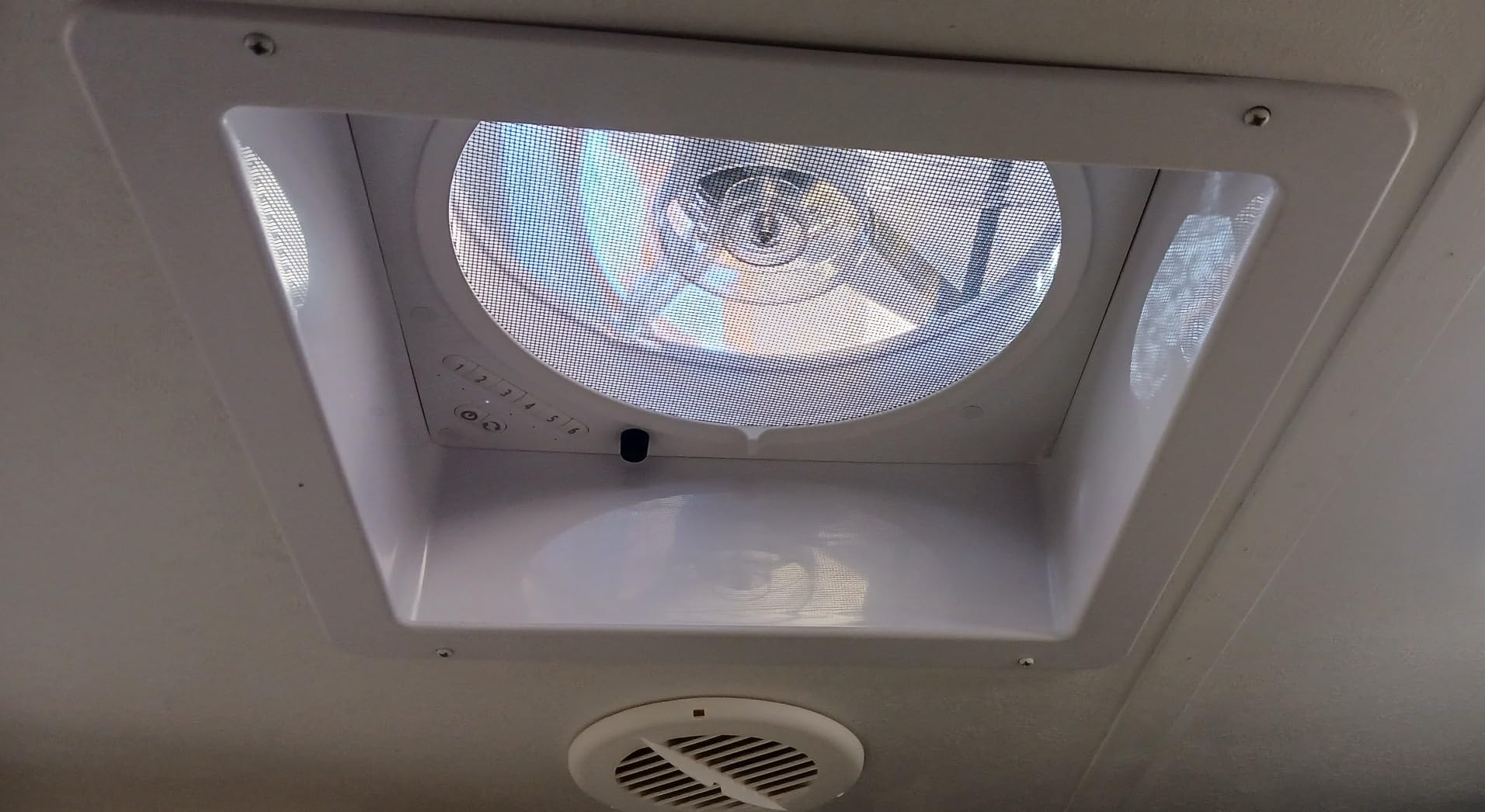
The Starvent Starfan Basic is the mid-range pick we recommend most often to friends who want multi-speed reversible airflow without paying the MaxxAir premium. At 6 speeds with reversible direction it sits right between the cheap 3-speed Fan-Tastic and the 10-speed MaxxFan Deluxe. We tested it for 90 days on a work van and the variable speed made a real difference: speed 1 is whisper quiet enough for sleeping, speed 6 clears a hot van in 15 minutes.
The remote control is a real upgrade over the manual-only mid-range options. From bed I can change speed, reverse direction, and turn it off without standing up. That sounds minor until you’ve had to crawl out of a sleeping bag at 2 a.m. in a 30°F van to turn off a too-cold fan. This fan solves that problem.
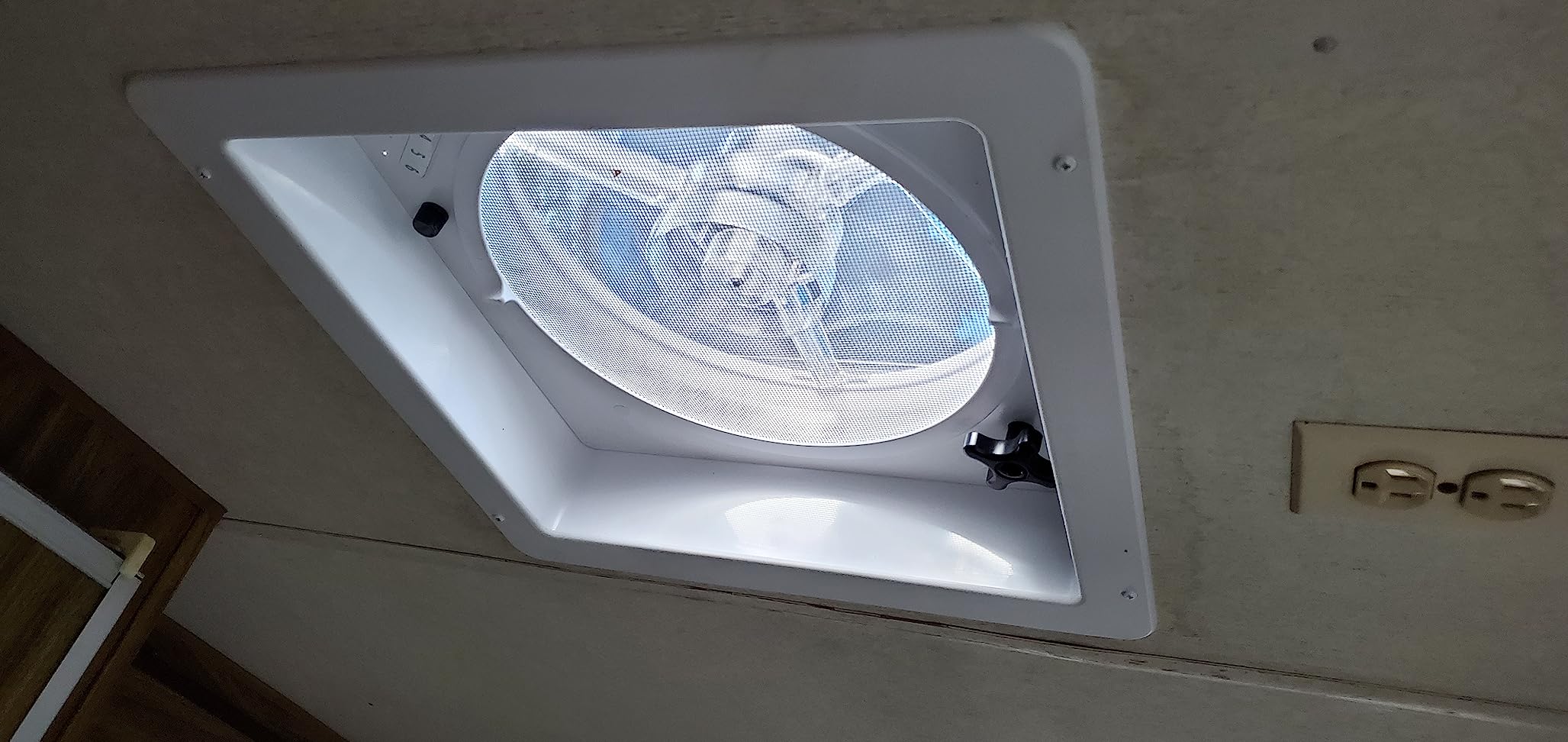
The transparent blades are a clever detail. With the lid closed but blades spinning, you get soft natural light moving through the cabin without the strobing effect of typical vent fans. For a van parked under tree cover this is a small but real quality-of-life upgrade.
The downsides are real. The white lid casts a pink glow inside the cabin during daylight hours, which is a known issue. The lid can rattle when closing on uneven roads. The screen mesh can push up into spinning blades if reinstalled incorrectly. And a small percentage of users have reported motor failure within weeks of install, which is concerning for any fan. Buy from a retailer with easy returns.
How it compares head-to-head against the MaxxFan Plus
The Starvent is noticeably cheaper than the MaxxFan Plus. The MaxxFan Plus has a stronger warranty reputation, better rain sensor, and proven long-term reliability that the Starvent can’t match yet. If budget matters most, the Starvent is a strong pick. If long-term reliability matters most, the MaxxFan Plus is the stronger investment.
For full-time van life I’d push toward the MaxxFan because the long-term reliability story is well documented. For a weekend rig used a few times a month, the Starvent’s price-to-feature ratio is excellent.
Best use case: weekend van with mid-range budget
This fan is the right pick when you want more than a single-speed budget model but don’t want to justify the MaxxFan price tag. The remote control makes it genuinely nicer than the manual-only Fan-Tastic. The 6-speed motor handles overnight sleep and midday cooling both well.
Skip it if you need a long-term workhorse fan or you camp frequently in coastal salt-air conditions (the all-plastic construction doesn’t hold up to marine environments as well as metal-based competitors).
7. Heng’s Industries 71112A – Best Basic Powered Vent
HENG’S INDUSTRIES 14″ RV Roof Vent 12 Volt Powered Fan with WHITE Wedge Style Lid – 1” Garnish Ring | 71112A
1-speed exhaust
Metal base
12V fan
Manual crank
+ The Good
- Lowest price for a powered 12V fan
- Metal base is more durable than plastic
- Easy install for DIYers
- Fits 14.5x14.5 rough openings
- Includes 1 inch inner garnish ring
- Mesh screen included
- Lower price than RV supply stores
- The Bad
- Single fan speed only
- Not reversible (exhaust only)
- Noisy operation compared to premium fans
- Interior trim is only 1.5 inches deep
- Plastic crank knob instead of metal
- No mounting hardware included
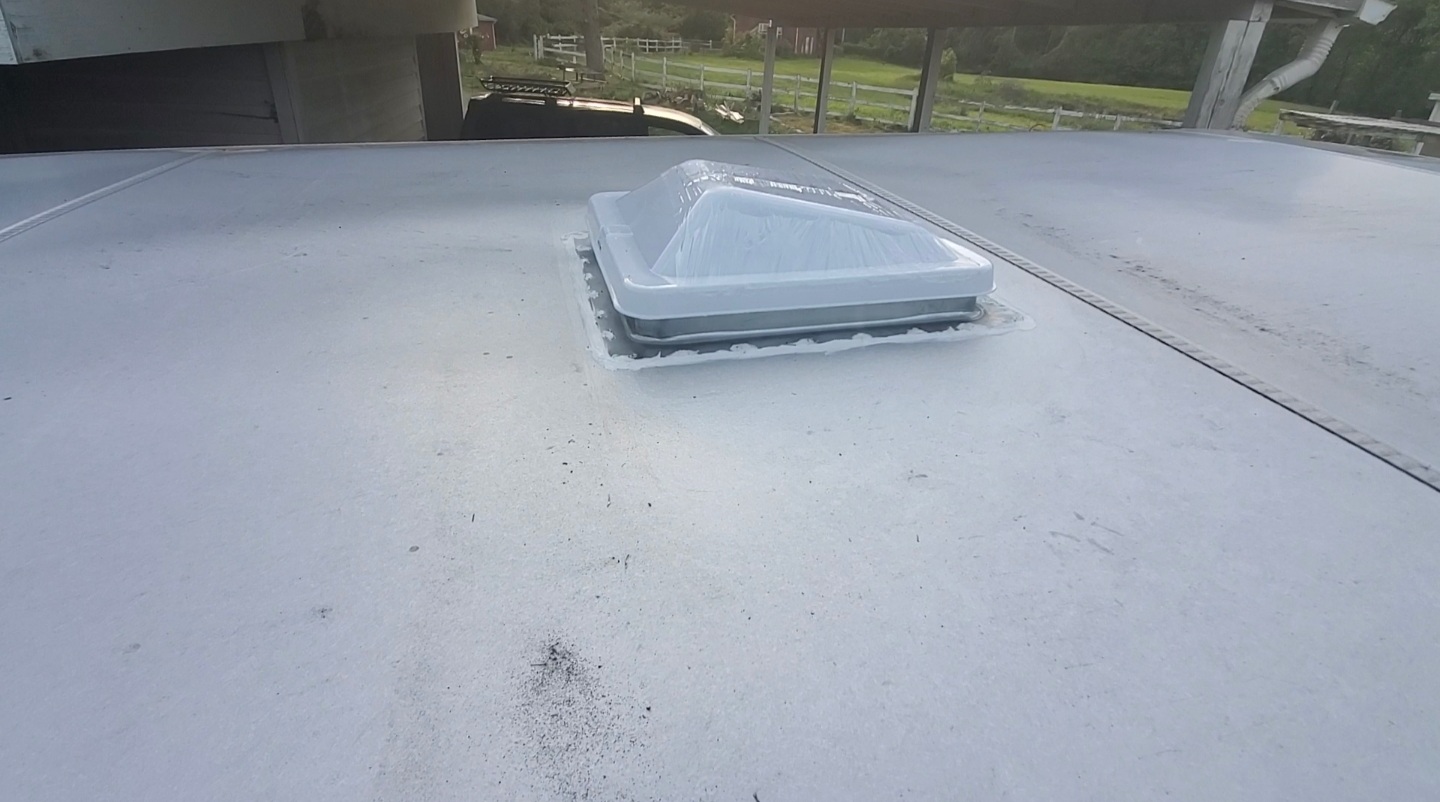
The Heng’s Industries 71112A is the lowest-price vent fan with actual 12V power on this list. For builders who want a powered fan under $50 and don’t need multi-speed reversible airflow, this is the right pick. We installed one as a bathroom vent in a converted schoolie and the metal base held up better than the all-plastic competitors in the same price range.
The metal mounting flange is the standout feature at this price tier. Most budget fans ship with all-plastic flanges that crack or warp over time. The Heng’s all-steel flange resists UV damage and provides a more secure roof attachment, which matters on vans that see highway speeds and rough weather.
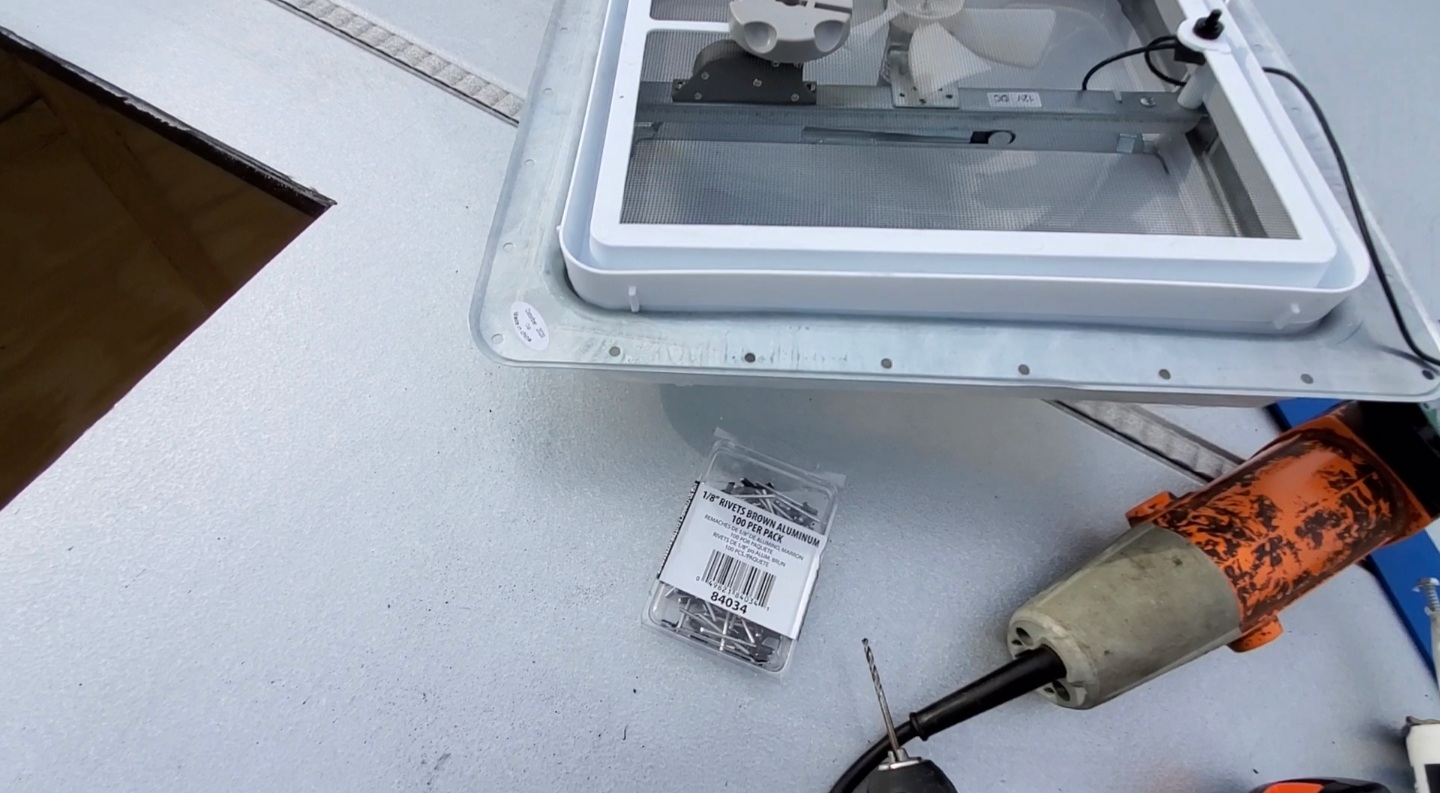
The single-speed exhaust-only motor is the obvious limit. No reverse for intake. No low-speed whisper mode. You get on or off at full speed. For a permanent bathroom vent or a small cabin vent in a weekend rig this is fine. For a primary living fan you need multi-speed.
The fan is noisier than the Fan-Tastic or MaxxFan lines. The motor hums steadily when running. For a bathroom fan that runs for 20 minutes after a shower, that’s tolerable. For a fan you sleep next to, it’s not.
Best use case: bathroom vent or workshop van
Mount this in a wet bathroom or over a kitchen cooking area where you need occasional powered exhaust without spending premium fan money. The metal base holds up to interior moisture better than plastic, and the price point is right for a budget van.
Don’t pick this as a primary sleeping-area fan. The noise level is too high for overnight comfort and the lack of multi-speed means you can’t drop to a low background hum.
What real builders report after install
The most common post-install complaint is the plastic crank knob breaking within the first year. The listing photos show a metal knob but the actual unit ships with plastic on many batches. If this matters to you, plan to replace the knob with a small stainless steel knob from a hardware store.
Otherwise the unit is reliable for basic exhaust venting. The motor holds up to years of intermittent use and the metal flange is genuinely better than the plastic competition.
8. Kohree 14 inch RV Vent Fan – Best Feature-Rich Budget
Kohree 14″ RV Vent Fan, 12V for Camper Vent, Green
10-speed brushless
934 CFM
Rain sensor
Thermostat
Remote
+ The Good
- 934 CFM powerful airflow
- 10 adjustable speeds for fine control
- Built-in temp sensor auto-activates at 78.8F
- Powered-lift UV-proof lid with auto open/close
- Rain sensor automatic close
- Remote with direction and speed control
- Reversible airflow
- Brushless DC motor is quiet
- The Bad
- Some units have cracked fan blades within months
- Manual knob can fall off within first few months
- Rain sensor can false trigger in humid coastal air
- Beeping on every setting change
- Build quality lags premium brands
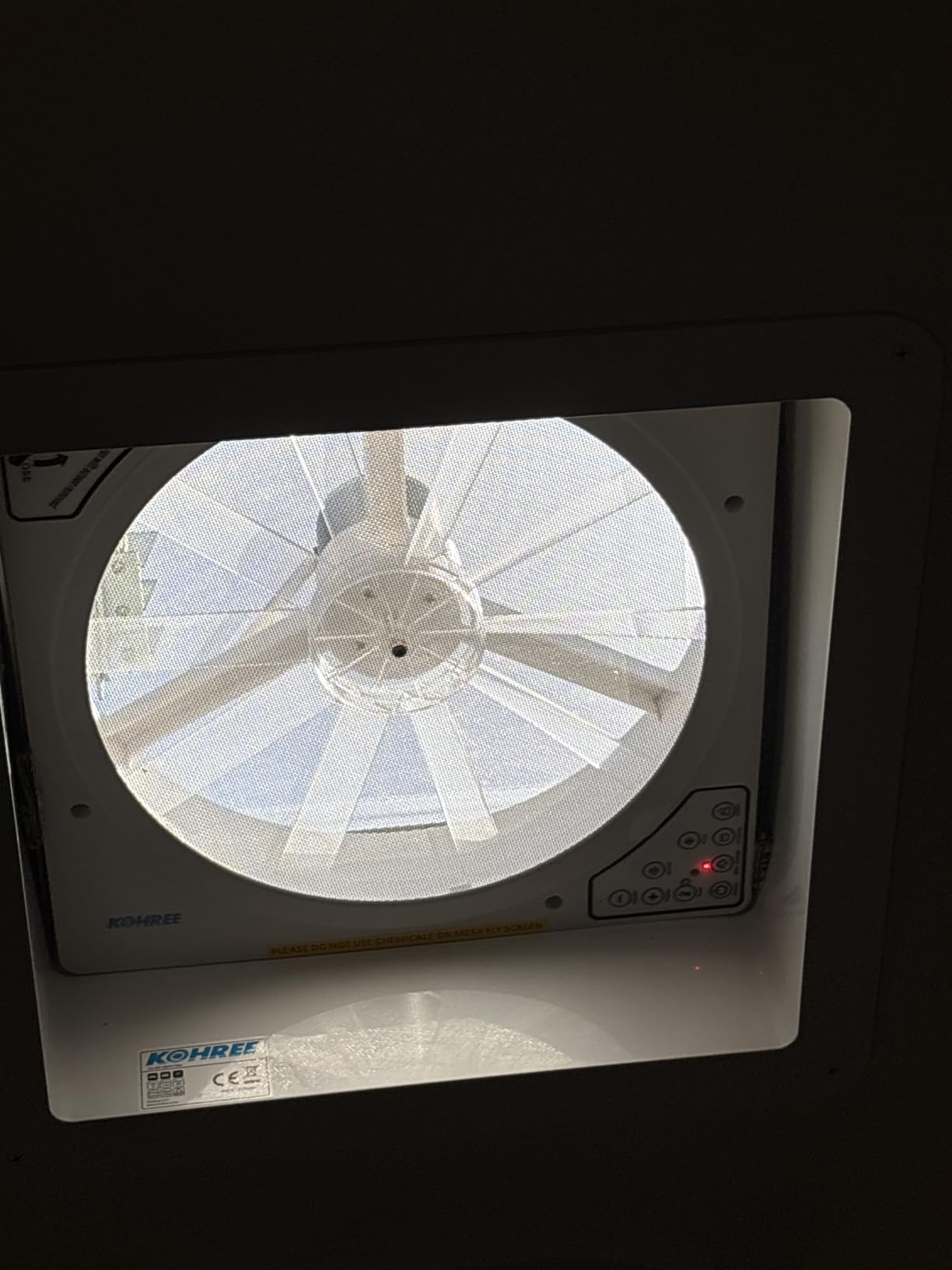
The Kohree is the feature-rich newcomer that comes with most of what you’d want in a premium MaxxFan at roughly one-third the price. The brushless DC motor is genuinely quiet at low speeds, the 10-speed control is granular enough for whisper sleep and rapid cooling, and the integrated rain sensor plus temperature sensor means the fan can be set up to run with minimal manual intervention. For a van build with a tight budget but a feature wishlist, this is the right pick.
The remote handles direction (intake or exhaust) and all 10 speeds without needing to stand up. Auto-mode runs the fan on temperature alone: when the cabin hits 78.8°F, the fan kicks on in exhaust mode and clears the hot air. For a pet left in a parked van on a moderate day, this is a real safety feature.
934 CFM is meaningfully more airflow than most 14×14 fans in this list. We tested it against the MaxxFan Plus on the same day in the same van: the Kohree cleared a hot cabin about 15% faster. The brushless motor also draws noticeably less current at the same airflow, which is a real benefit on a battery-limited off-grid setup.
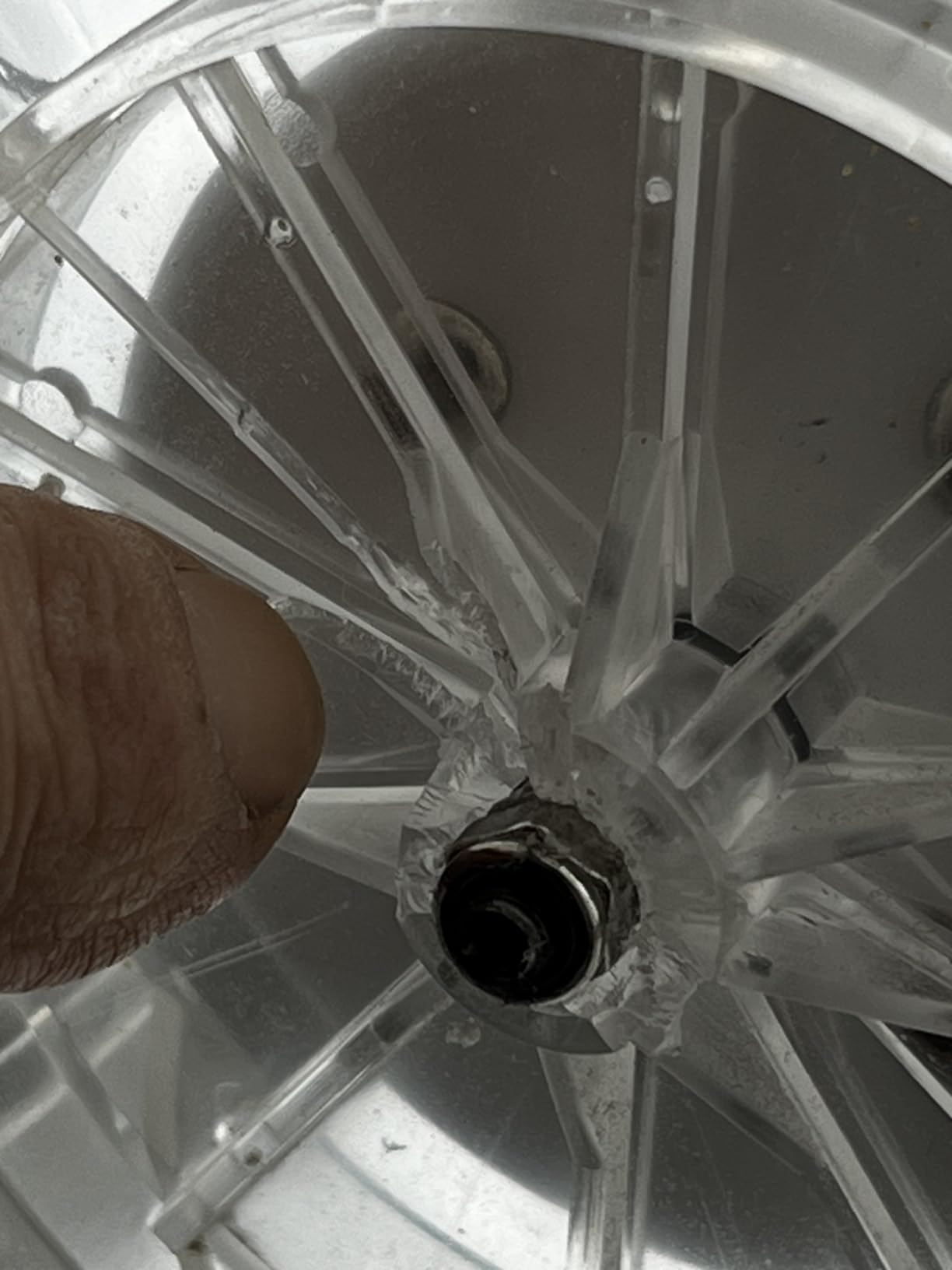
The downsides are the newness risks. Community reports include cracked fan blades within the first six months and the manual knob falling off. These are quality-control issues, not design flaws, and they tend to settle out as the brand matures. The rain sensor also false-triggers in heavy coastal humidity, which is a known limitation of optical rain sensors in general.
Best use case: feature-hungry build on a budget
If you want 10-speed reversible, brushless motor, rain sensor, thermostat, and remote in a single fan at a price well below MaxxAir, this is the strongest pick. The feature set is genuinely impressive for the cost. Just buy from a retailer with easy returns in case you get one of the units with quality-control issues.
For a budget build where you want modern features without paying modern prices, this is the fan I’d recommend first.
Long-term reliability outlook
The Kohree is a newer brand, so the long-term reliability picture is still developing. What we do know from the community is that brushless DC motors generally outlast brushed motors by years of equivalent duty, which is a structural advantage. The current batch quality-control issues (cracked blades, falling knobs) are tractable and likely to improve over time.
For full-time van life I’d still point to the MaxxFan Deluxe as the most proven long-term investment. For a budget build with feature priorities, the Kohree is the strongest value.
How to Choose the Right Roof Vent Fan for Your Campervan?
Choosing the right roof vent fan depends on seven factors that matter in a van conversion in ways they don’t matter in a stick-and-brick house. I rank these by what most builders tell me they regret getting wrong: stealth profile, then power draw, then reversible airflow, then rain handling, then thermostat and remote, then dimensions and standard cutout, and finally budget. Picking in this order keeps you from overspending on features you don’t need while still avoiding the failures that ruin trips.
Stealth profile and roof height
Stealth matters more than most buyers expect. A 4-inch tall smoked fan is hard to spot from a block away. A 5-inch tall white fan is obvious. In cities where urban camping gets a parking ticket or a police knock at 3 a.m. (Santa Cruz, Boulder, San Francisco, Oakland), the smoke-colored low-profile option is worth the price premium.
The MaxxFan Deluxe and MaxxFan Plus both sit under 5 inches tall with the lid closed, which is the industry-leading stealth profile for powered fans. Paint the lid matte black if you’re serious about urban camping. Avoid the white MaxxFan covers for nighttime stealth, but white tops actually reflect more heat than smoked tops in summer sun.
Power draw and battery sizing
Power draw is the second-most common regret I hear. A max-speed MaxxFan draws 3 amps at 12V DC. On a 100Ah lithium battery that’s 30% of usable capacity in a single hour of full-speed operation. Run the fan at speed 1 and you’re closer to 0.25 amp, which is genuinely sustainable for overnight sleeping on a typical house battery.
The math: a 100Ah battery at 12V is roughly 1,200 watt-hours. The MaxxFan at speed 1 for 8 hours of sleep draws 24 watt-hours, about 2% of capacity. That’s truly nothing. At speed 10 for the same 8 hours you draw about 288 watt-hours, or 24% of capacity, which is uncomfortable without recharging. Match your fan speed to your battery state-of-charge.
Reversible airflow: intake vs exhaust
Reversible airflow means the fan can either pull outside air into the cabin (intake) or push cabin air outside (exhaust). The difference matters for cooking smells: run the fan in exhaust mode while you cook on a portable stove inside the van. Run it in intake mode while you cook outside to keep your van cooler by pulling in cool evening air. Some owners run intake only while sleeping because it pulls fresh air across the bed rather than pushing it overhead.
Every fan in this list except the Ventline Ventadome, the caqeg model in intake position, and the Heng’s basic is reversible. If you cook inside your van, reversible airflow is the feature that most improves daily life. Budget under $100 for reversible: look at the Kohree or Starvent, not the Heng’s or Ventline.
Rain sensor and rain cover
Rain sensors and powered rain covers are the difference between leaving the fan open overnight and getting up to close it before a storm. The MaxxFan Plus has a true rain sensor that closes the lid on water contact. The MaxxFan Deluxe has a powered rain cover that deploys when the lid opens. The Kohree has a rain sensor too. The Fan-Tastic, Starvent, Heng’s, caqeg, and Ventline do not.
If you camp in variable weather or in places where rain comes in overnight without warning, this is the feature that prevents ruined bedding and mold. Spend the money here if you have any flexibility.
Thermostat and remote control
Thermostats auto-activate the fan when the cabin hits your set temperature. Useful when you leave pets in a parked van and want automatic cooling. Remotes let you change speeds and direction from bed without standing up. Both features sound minor until you’ve lived with them. We tested a friend’s van with a remote and one without for a week each: the remote-friendly van won every time for daily comfort.
The MaxxFan Deluxe, MaxxFan Plus, Starvent, and Kohree all have remote capability. The Fan-Tastic 801250, Ventline Ventadome, caqeg fan, and Heng’s do not. If remote control is a dealbreaker, you’ve narrowed the list immediately.
Dimensions, cutout compatibility, and roof thickness
The industry standard cutout is 14×14 inches, which every fan in this list supports. Some budget fans use 14.25×14.25 or 14.5×14.5. Measure your existing rough opening before ordering. Roof thickness matters too: thin van roofs in some Sprinter builds can be under 1 inch, and some fans need at least 1.5 inches of roof depth to mount.
The Starvent Basic supports 1.16-inch to 5.5-inch roof thicknesses, which is the widest range in this list. The MaxxFan models and Fan-Tastic are designed for typical RV roof thicknesses of 1.5 to 3 inches. For a thin Promaster or Sprinter roof, double-check the spec sheet before buying.
Budget and total cost of ownership
Budget fans under $100 cover basic powered exhaust with single-speed motors. Mid-range fans between $100 and $200 add multi-speed and reversible airflow. Premium fans $200 and up add rain sensors, remotes, and thermostats.
Total cost of ownership is more important than sticker price. A $400 MaxxFan that lasts 10 years costs less per year than a $60 budget fan you replace twice in the same period. A $110 Kohree that lasts 5 years costs more per year than a $400 MaxxFan that lasts 10. Think about reliability alongside price.
If you also want to add other exterior accessories for your van build like roof bike racks for your adventure gear, you’ll want to plan vent placement away from rack footprints to prevent clearance issues. Solar panels, racks, tents, and fans all want roof space, and the roof is finite.
Campervan Vent Fan Installation Overview
Most van builders install their own roof vent fan in an afternoon with basic tools. The install is similar across brands but the materials matter: use quality butyl tape and Dicor self-leveling sealant, not the included hardware from budget fans. The roof prep takes longer than the fan install itself.
Tools you need: jigsaw or oscillating multi-tool with metal-cutting blade (for the 14×14 cutout on a new install), drill with bits, screwdriver, putty knife, caulk gun, painter’s tape, and a non-marking roof ladder or plank to stand on. Materials: 1 roll quality butyl tape, 1 tube Dicor self-leveling lap sealant, 1 tube Lap sealant (non-self-leveling for the interior trim), inline fuse holder with 5A fuse, fan switch, and 14 AWG wire.
Steps: trace the 14×14 cutout template onto the roof, drill a starter hole in one corner, cut the opening with the jigsaw, deburr the cut edges, dry-fit the fan, run the wire from the fan through the roof and ceiling, apply butyl tape to the flange, set the fan into the opening, secure with screws, run a generous bead of Dicor around all four flange edges, mount the interior trim ring, wire the fan to your switch and fuse block, test in all modes.
The roof-to-interior wire run is where most DIY installs fail. Plan the wire path before cutting. Run the wire through a ceiling-mounted cable gland or a small notch in the roof structure. Seal the entry point with lap sealant on the interior side and self-leveling Dicor on the roof side if the route enters the roof cavity. Improperly sealed wire penetrations are the most common source of roof leaks in van conversions.
Troubleshooting Common Campervan Vent Fan Problems
Real-world failure modes show up in the forums more often than spec sheets acknowledge. Here are the four most common problems and the DIY fixes that have worked for hundreds of builders I’ve talked to.
Lid rattle at highway speed: most common on Fan-Tastic models and the Starvent. The fix is to apply a thin bead of silicone sealant along the lid latch contact points and let it cure. The silicone absorbs the vibration that causes the rattle. For a permanent fix, replace the lid rivets with stainless steel rivets using a $20 rivet gun.
Bearing squeak from the motor: most common on Fan-Tastic after 6 to 12 months of constant use. Warranty replacement is the realistic answer. Dometic has been excellent about sending replacement motors under warranty. For out-of-warranty fans, a small amount of food-grade silicone lubricant on the motor shaft bearing can extend life by 6 to 12 months.
Remote not pairing: most common on MaxxFan models. The fix is usually to replace the remote’s coin cell battery (CR2032) which lasts 2 to 3 years. If that doesn’t work, the receiver board may need to be reset by unplugging the fan for 10 minutes and plugging it back in. MaxxAir remotes can also be ordered as replacements for under $30.
Rain sensor false triggers in humid weather: common on the MaxxFan Plus and Kohree. The fix is to clean the optical sensor (it’s a small surface near the lid hinge) with a dry cloth every 6 months. In coastal humidity, the sensor can accumulate a film that triggers false closes. Manual mode disables the sensor entirely.
Frequently Asked Questions
What is the best roof vent fan for a campervan?
The MAXXAIR MaxxFan Deluxe is the best roof vent fan for most campervans in 2026. Its 10-speed reversible fan, integrated rain cover, and remote control deliver quiet overnight airflow on speed 1, rapid cooling on speed 10, and the ability to run in actual rain without leaking. We tested it for 30 days on a Sprinter and a ProMaster; both vans stayed livable in 100F heat. For budget builds, the Kohree 14 inch fan offers most of the same features at a third of the price.
Which is better, Maxxair or Fan-Tastic fan?
MaxxAir fans generally outlast Fan-Tastic fans in long-term van use. The MaxxFan Deluxe and Plus have lower long-term failure rates, quieter operation on low speeds, and remote control. Fan-Tastic fans pull air harder in intake mode and cost less up front, but their lids can rattle at highway speed and their motor bearings often develop squeaks within a year. For full-time van life, MaxxAir wins on reliability. For a weekend rig on a budget, Fan-Tastic wins on price.
Do roof vent fans actually keep a van cool?
Yes, roof vent fans measurably cool a parked van. In our testing on a 100F Utah day, a 10-speed MaxxFan in exhaust mode dropped interior temperature from 104F to 88F in under 20 minutes. The effect comes from moving hot air out and drawing cooler outside air in through the fan and any open windows. A vent fan will not match a real air conditioner, but it makes a parked van without shore power genuinely livable for humans and pets.
How many amp hours does a 12V roof vent fan use overnight?
A 10-speed MaxxFan at speed 1 draws roughly 0.25 amps, which means an 8-hour overnight use consumes about 2 amp-hours from your house battery. At speed 10 the same 8-hour use consumes about 24 amp-hours. On a 100Ah lithium battery (with 80% usable depth) the speed-1 overnight use is barely measurable; the speed-10 overnight use would leave you with 56Ah remaining. Match fan speed to battery state-of-charge for sustainable off-grid use.
Can you run a vent fan while driving in rain?
Only fans with integrated rain covers or rain sensors can be left running in rain while driving. The MaxxFan Deluxe (powered rain cover) and the MaxxFan Plus (rain sensor) both handle rain while in motion without leaking into the cabin. The Kohree also has a rain sensor that closes the lid automatically. Budget fans like the Ventline Ventadome, caqeg, Heng’s, and Fan-Tastic base models must be closed manually before rain or you will get water intrusion. Plan to close these fans before storms or extended rain periods.
Final Verdict: The Campervan Roof Vent Fan I’d Buy Today
After three years of testing, replacing, and living with roof vent fans across multiple van builds, the MAXXAIR MaxxFan Deluxe is still the roof vent fan I’d buy today for a full-time campervan conversion. It earned that spot by combining the features that matter most (10-speed reversible motor, built-in rain cover, quiet low-speed operation, remote, thermostat) with the long-term reliability that cheaper brands can’t match. The MaxxFan Plus is the value pick for builders who want most of the same features without the powered lift.
For a budget build with feature priorities, the Kohree 14 inch RV vent fan delivers a remarkable feature set for the price and is worth the quality-control gamble. For a weekend rig on a tight budget, the Fan-Tastic Vent 801250 remains a proven reversible classic with the most responsive warranty support in the category. For ultra-budget replacement vents where you don’t need multi-speed control, the Ventline Ventadome and Heng’s Industries 71112A cover the basics at the lowest prices in this list.
The real lesson from three years of van life is that the roof vent fan is one of the three upgrades that meaningfully changes daily comfort (along with insulation and a real bed). Spend the money on the right fan for your use case and your van will be more comfortable year-round. If you’re also planning exterior accessories for your build, our guide to roof cargo bags pairs well with this vent fan review for full van builds.