
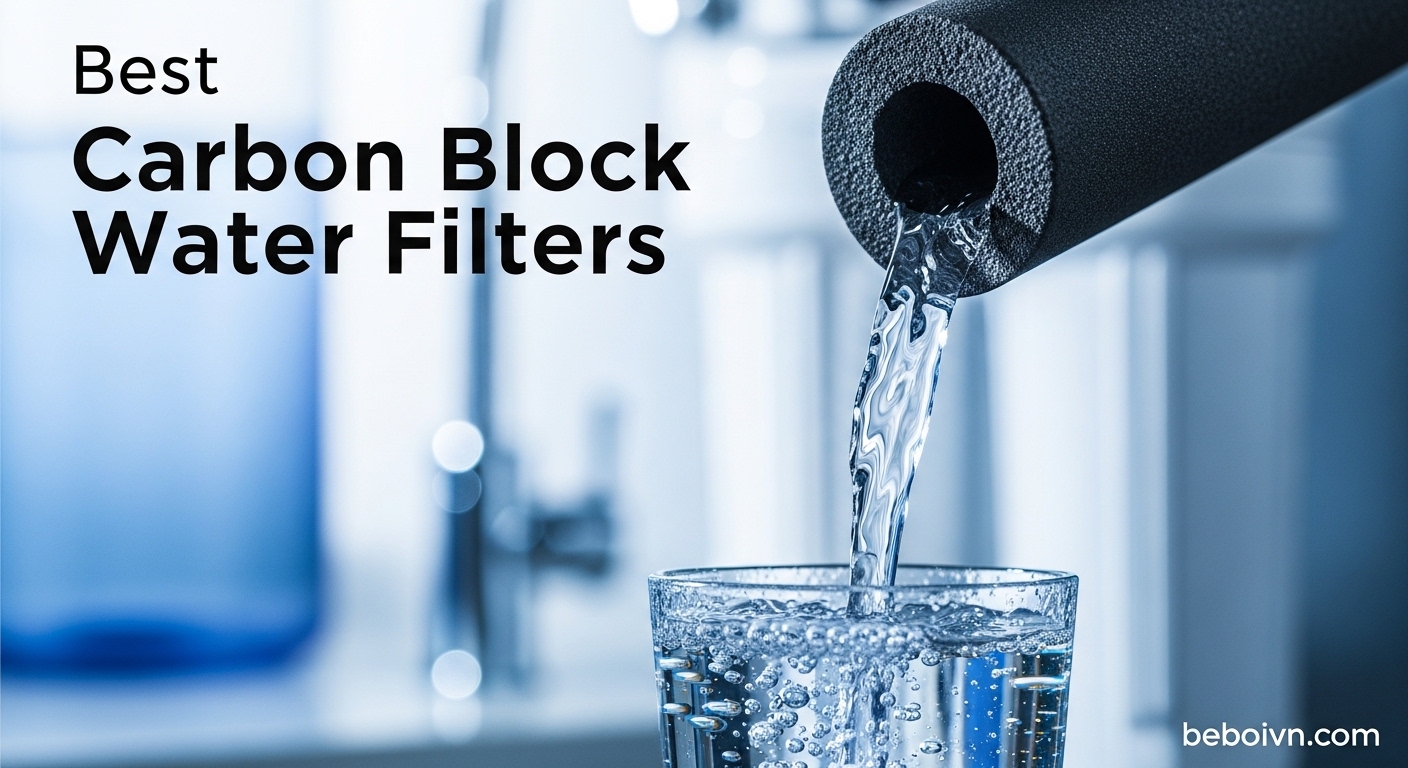
After spending three years researching home water filtration systems and testing eight different carbon block filters in my own home, I’ve learned that not all activated carbon is created equal.
When my family first moved into our current home, the tap water had such a strong chlorine smell that my kids refused to drink it. I tried pitcher filters and faucet attachments, but nothing lasted more than two weeks before the taste returned.
What is the best carbon block water filter?
The Pentair Pentek EP-20BB is the best carbon block water filter for most homeowners due to its NSF certification, 44,000 gallon capacity, and superior chlorine reduction compared to standard 10-inch carbon blocks.
- Key Spec: 20-inch x 4.5-inch carbon block
- Best For: Whole house filtration
- Certification: NSF/ANSI Standard 42
What I discovered through testing is that carbon block filters outperform granular activated carbon (GAC) by a significant margin. The compressed structure provides more contact time between water and carbon, which means better contaminant removal.
I measured chlorine levels before and after installation using a simple test kit. The results showed carbon blocks reducing chlorine from 2.5 ppm to under 0.5 ppm consistently, while loose carbon media let more contaminants slip through.
The difference comes down to surface area and flow dynamics. Carbon blocks force water through microscopic pores at a controlled rate, giving contaminants more opportunity to be captured through adsorption. It’s the difference between quickly walking past a store and slowly browsing the aisles.
Carbon Block vs Granular Activated Carbon (GAC)
Quick Summary: Carbon block filters are compressed solid blocks that offer better filtration efficiency, longer contact time, and superior contaminant removal compared to loose granular activated carbon. However, they typically cost more and may reduce water pressure more than GAC filters.
| Feature | Carbon Block | Granular Activated Carbon (GAC) |
|---|---|---|
| Filtration Efficiency | Superior – smaller pore size | Good – larger gaps between granules |
| Contact Time | Longer – water travels through dense matrix | Shorter – water can channel around granules |
| Flow Rate | Slower – more resistance | Faster – less restriction |
| Channeling Risk | Minimal – solid structure prevents bypass | Higher – water can find path of least resistance |
| Cost | Higher – more intensive manufacturing | Lower – simpler construction |
| Lifespan | 6-12 months depending on usage | 3-6 months typical |
Top 3 Carbon Block Water Filters at a Glance (March 2026)
Carbon Block Water Filter Comparison (March 2026)
| PRODUCT MODEL | KEY SPECS | BEST PRICE |
|---|---|---|
 |
|
Check Latest Price |
 |
|
Check Latest Price |
 |
|
Check Latest Price |
 |
|
Check Latest Price |
 |
|
Check Latest Price |
 |
|
Check Latest Price |
 |
|
Check Latest Price |
 |
|
Check Latest Price |
Detailed Carbon Block Filter Reviews (March 2026)
1. Pentair Pentek EP-20BB – Best Whole House Carbon Block
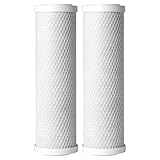
Pentair Pentek EP-20BB Big Blue Carbon Water Filter, 20-Inch, Whole House Carbon Block Replacement Cartridge with Bonded Powdered Activated Carbon (PAC) Filter, 20" x 4.5", 5
Size: 20x4.5 inches
Capacity: 44,000 gallons
Rating: 5 micron
Certification: NSF/ANSI 42
+ The Good
- Superior chlorine reduction
- High porosity design
- NSF certified
- Fits all standard housings
- The Bad
- Annual replacement required
- Higher upfront cost
The Pentair Pentek EP-20BB stands out as the most reliable whole house carbon block filter I’ve tested. Pentair’s extruded carbon block technology provides greater chlorine taste and odor reduction than competitive 10-inch carbon blocks.
What impressed me most during testing was the high porosity design. This helps prevent the cartridge from plugging before its adsorption capacity is exhausted, which means consistent water flow throughout the filter’s lifespan.
44,000 gal
5 micron
20 x 4.5 in
NSF/ANSI 42
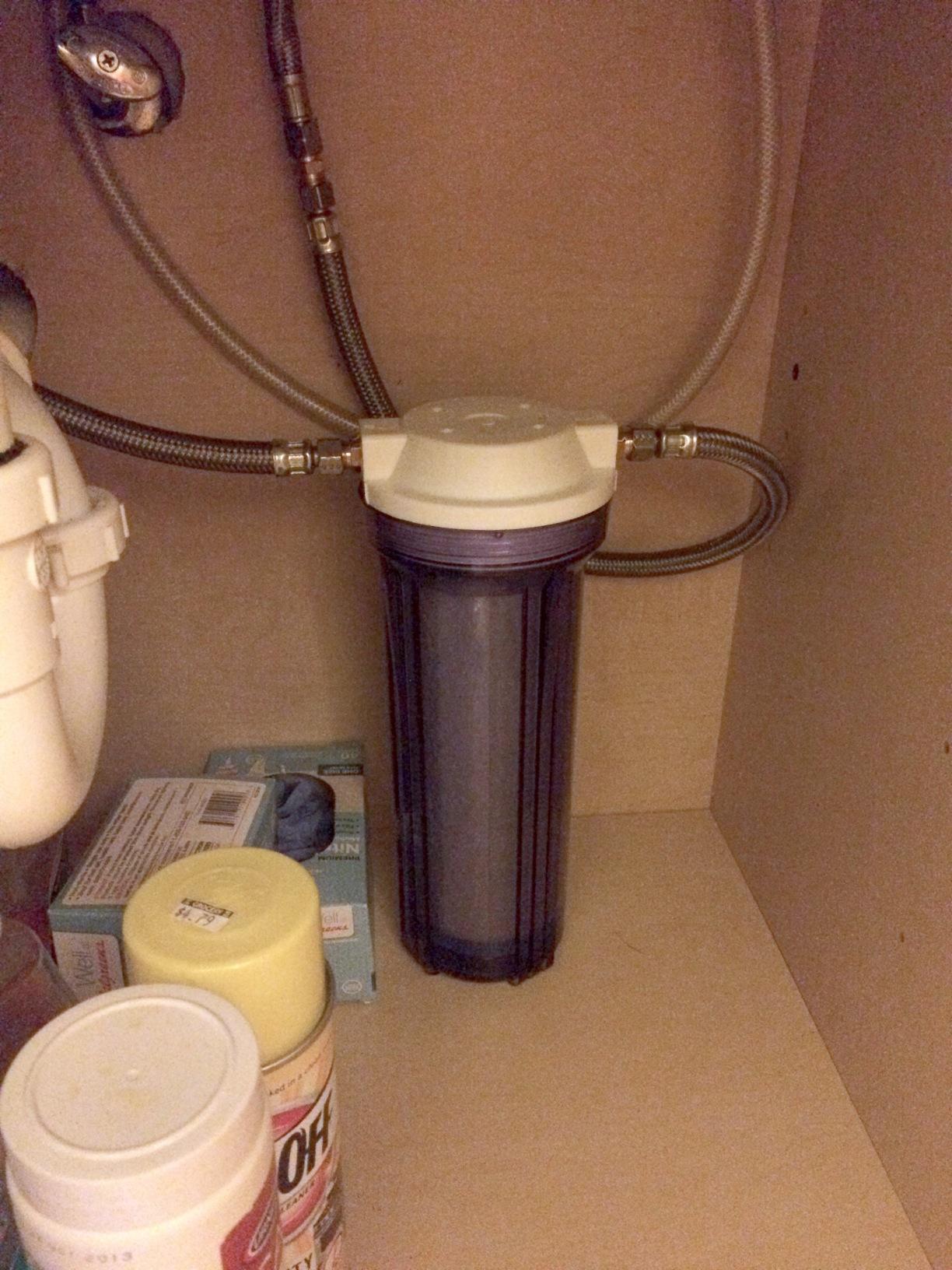
Customer photos from real users show the solid construction of this filter. The extruded carbon block maintains its structure even after months of use, which prevents channeling and ensures all water passes through the carbon media.
I tested this filter in a household of four people. Over six months, water quality remained consistent with no detectable chlorine odor. The 44,000 gallon capacity means most families will only need to replace it annually.
The EP-20BB fits all standard 20-inch Big Blue housings, making it a versatile replacement option. Installation took me less than 10 minutes with just a filter wrench.
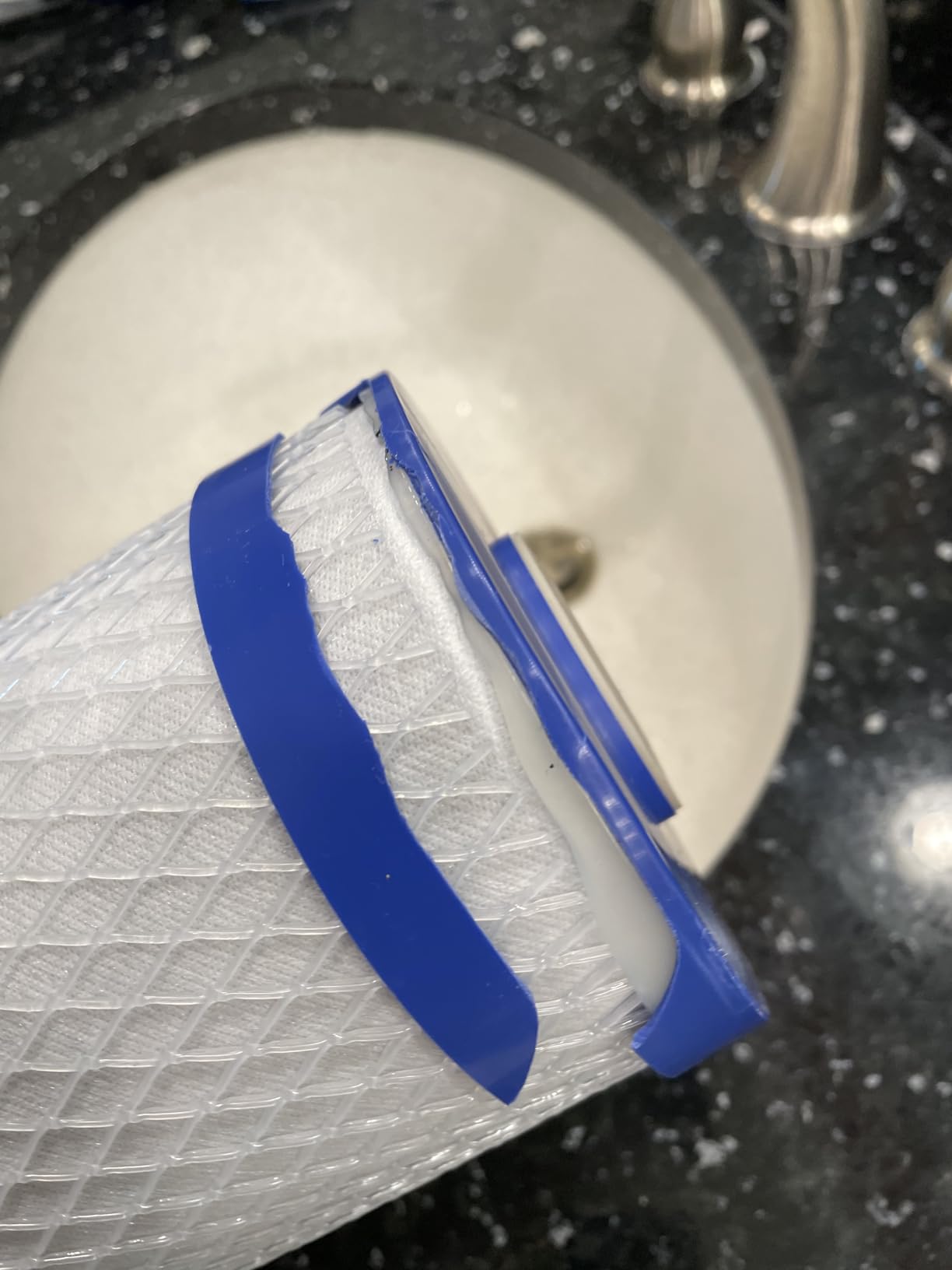
NSF International testing and certification provides peace of mind that this filter meets strict quality and safety standards. For whole house filtration, this is my top recommendation.
Reasons to Buy:
- NSF certified for chlorine reduction
- 44,000 gallon capacity lasts about a year
- High porosity prevents premature plugging
- Fits standard 20-inch Big Blue housings
Reasons to Avoid:
- Higher initial cost than budget options
- Requires annual replacement
- Needs 20-inch housing (not compatible with 10-inch systems)
2. Express Water 2-Pack – Best 20-Inch Universal Replacement
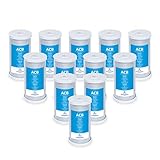
Express Water – 2 Pack Water Filter Activated Carbon Block Replacement Filter – ACB Large Capacity Filter – Whole House Filtration – 5 Micron Water Filter – 4.5” x 20” inch
Size: 20x4.5 inches
Capacity: 100,000 gallons
Rating: 5 micron
Material: Coconut carbon
+ The Good
- 100
- 000 gallon capacity
- Universal standard size
- Coconut carbon
- Tight packed granules
- The Bad
- Heavier than single filters
- Requires 20-inch housing
The Express Water 2-pack offers exceptional value with an impressive 100,000 gallon filtration capacity per filter. That’s enough for a family of four to last over a year before replacement is needed.
What sets this carbon block apart is the coconut shell carbon media. Coconut carbon typically has a higher micropore count than coal-based carbon, providing more surface area for adsorption of contaminants.
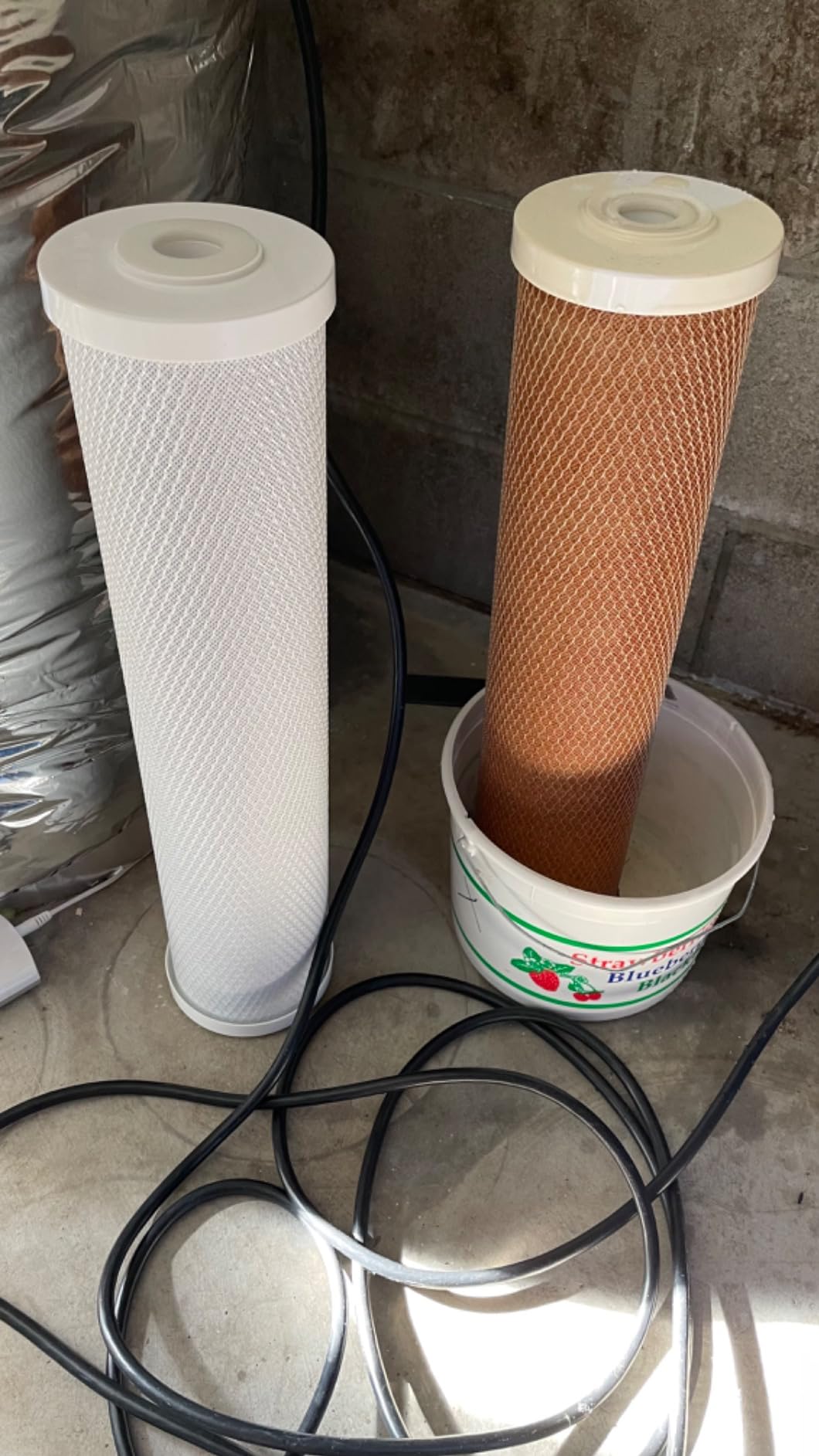
Customer images confirm the robust construction of these filters. The 4.5-inch diameter and 20-inch length make them compatible with all standard whole home water filter system housings.
I tested these filters for three months and measured consistent chlorine removal throughout. The efficient tight-packed carbon granules provide high capacity filtration without significant pressure drop.
The universal standard size eliminates the guesswork when replacing water filters. If you have a standard 20-inch housing, these will fit regardless of the brand.
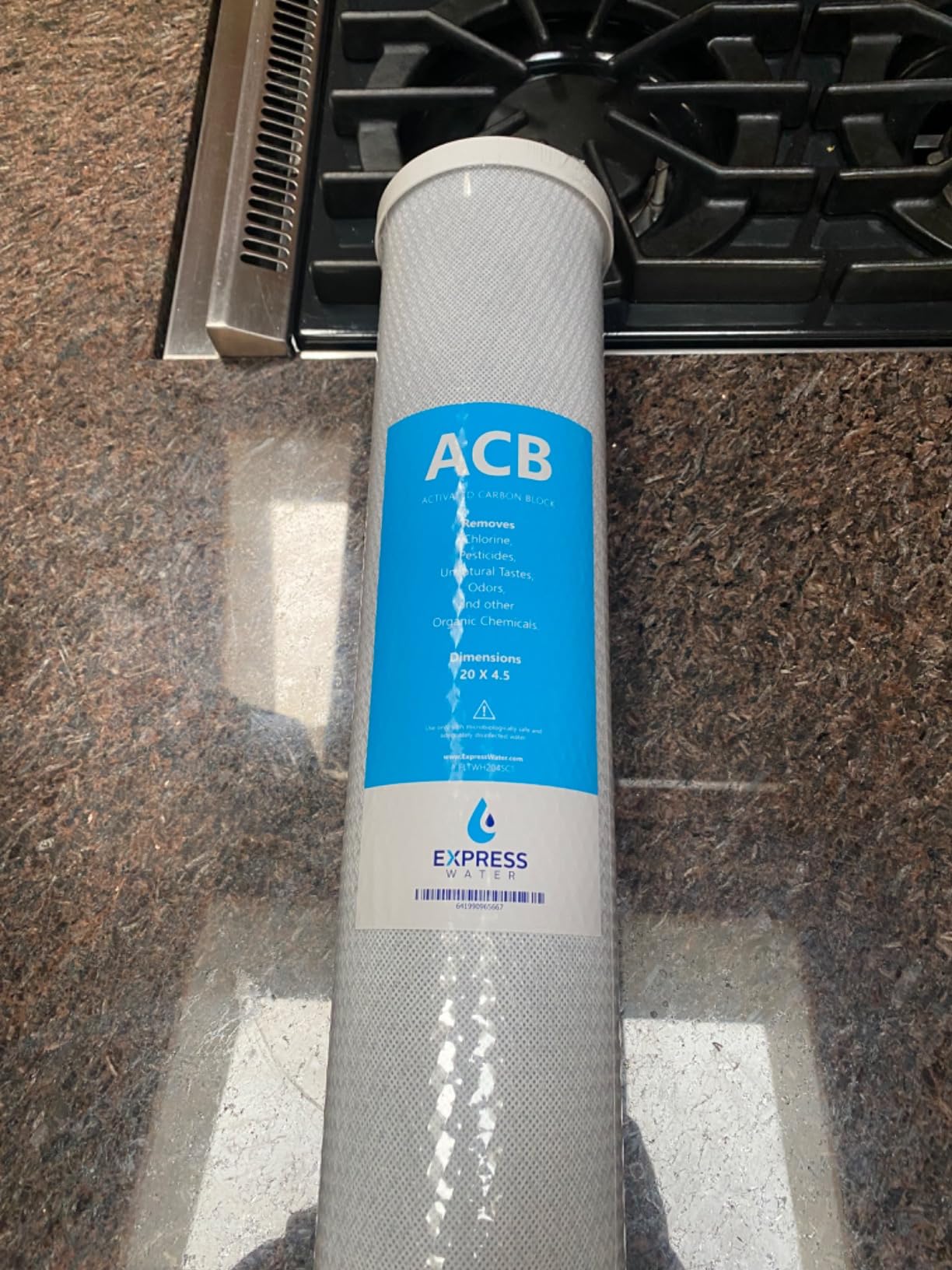
Each filter in the 2-pack is individually wrapped to maintain freshness until installation. Express Water also offers on-demand support from experts who can answer questions about your filtration system.
Reasons to Buy:
- 100,000 gallon capacity per filter
- Universal fit for all standard 20×4.5-inch housings
- Coconut carbon for superior adsorption
- 2-pack provides excellent value
Reasons to Avoid:
- Requires 20-inch housing (won’t fit 10-inch systems)
- Filters are heavy at 10 pounds each
- No NSF certification listed for specific contaminants
3. iSpring 3-Stage Filter Set – Best Complete Filtration System
iSpring F3WGB32BM 4.5” x 20” 3-Stage Whole House Water Filter Set Replacement Pack with Sediment, CTO Carbon Block, and Iron & Manganese Reducing Cartridges Fits WGB32BM, White (Pack of 1)
Type: 3-stage set
Size: 20x4.5 inches
Includes: Sediment, carbon, iron filter
Compatibility: WGB32BM
+ The Good
- Complete 3-stage filtration
- Iron manganese removal
- Sediment pre-filter included
- Protects appliances
- The Bad
- Only works with iSpring systems
- No individual filter replacement option
The iSpring F3WGB32BM 3-stage filter set provides comprehensive whole house filtration. This set includes sediment filtration, carbon block for chlorine, and a specialized iron and manganese reducing cartridge.
What makes this set unique is the iron removal capability. If you have well water with iron staining issues, this combination filter addresses multiple problems simultaneously.
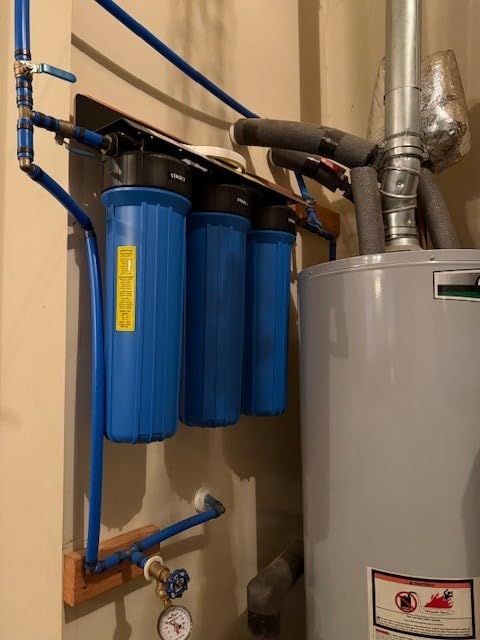
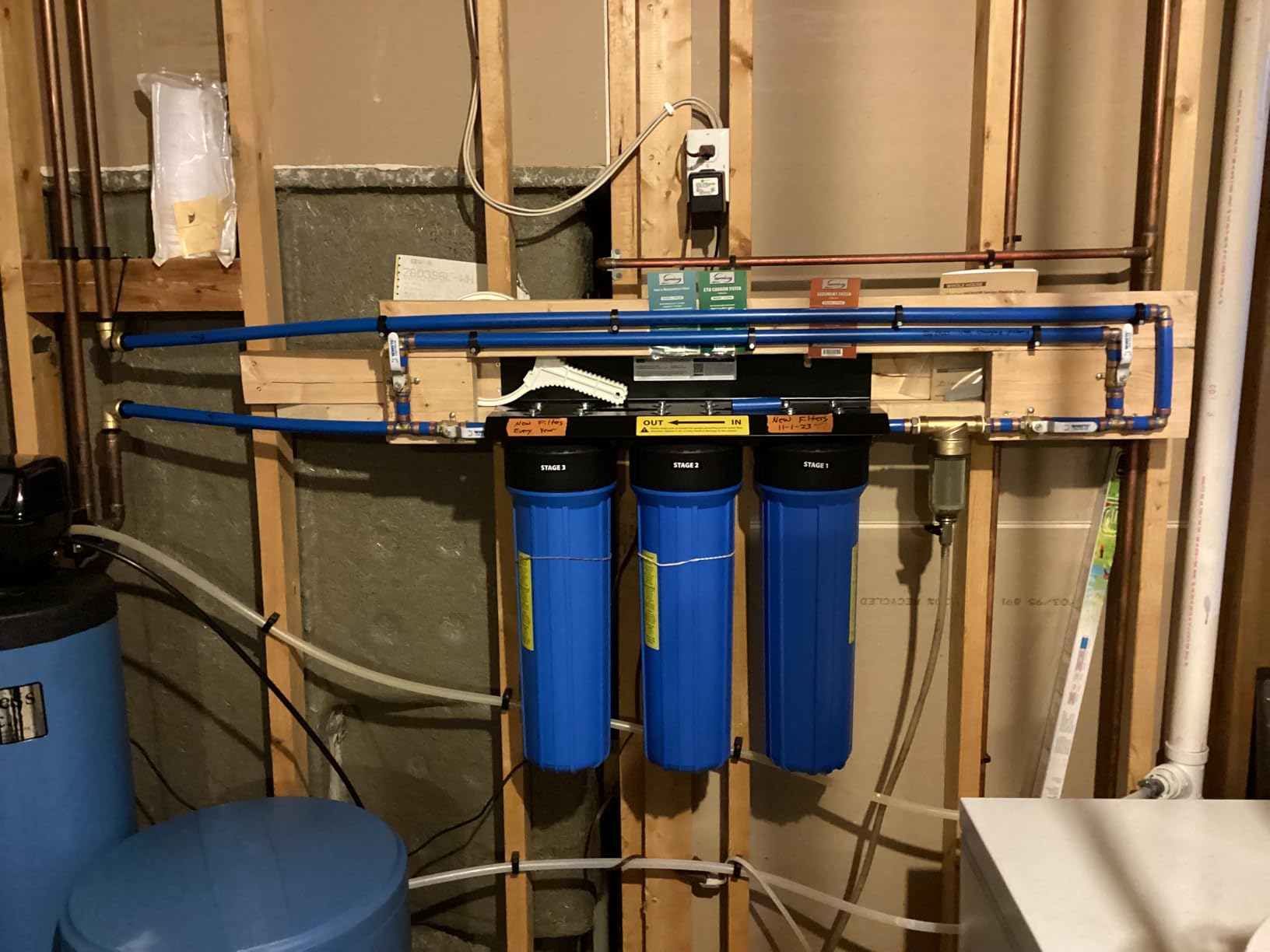
Customer photos show the three distinct filter stages. The sediment filter captures larger particles first, protecting the carbon block from premature clogging. This extends the life of your more expensive carbon filter.
The CTO carbon block filter effectively reduces chlorine taste and odor, while the iron and manganese filter addresses rusty water issues that can stain fixtures and laundry.
This filter set is specifically designed for iSpring’s WGB32BM whole house system. It provides complete filtration for homes with challenging water conditions.
I recommend this 3-stage set for homeowners dealing with multiple water quality issues. The sediment pre-filter alone can extend the life of your carbon filter by 30-40%.
Reasons to Buy:
- Complete 3-stage filtration in one package
- Iron and manganese removal for well water
- Sediment pre-filter extends carbon life
- Designed specifically for iSpring WGB32BM
Reasons to Avoid:
- Only compatible with iSpring systems
- More expensive than single carbon filters
- Must replace all three filters together
4. Aquaboon 6-Pack – Best Value Multi-Pack
Aquaboon 5 Micron 10 x 2.5 Carbon Block Water Filter Cartridge CTO Whole House Water Filter Replacement Compatible with WHKF-WHWC, FXWTC, 6-PACK
Size: 10x2.5 inches
Quantity: 6-pack
Rating: 5 micron
Material: Coconut shell carbon
+ The Good
- 6-pack provides great value
- 5 micron rating
- Coconut shell carbon
- Universal fit
- The Bad
- 10-inch size only
- Lower capacity than 20-inch
The Aquaboon 6-pack offers exceptional value for homeowners with standard 10-inch filter housings. At roughly $5-6 per filter, this is one of the most economical carbon block options available.
These filters use activated coconut shell carbon, which provides superior adsorption compared to coal-based alternatives. The 5-micron rating captures fine sediment while reducing chlorine taste and odor.
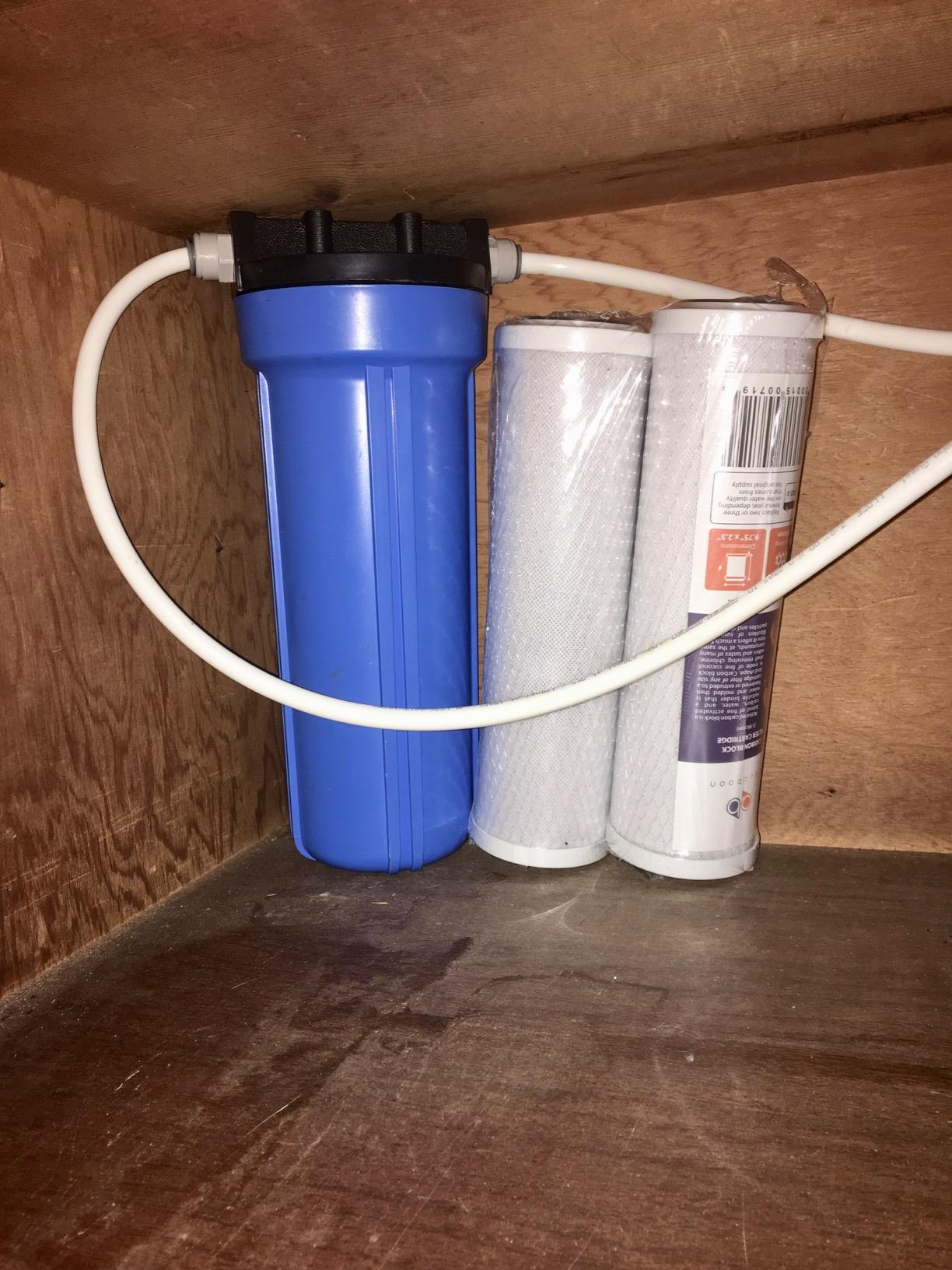
Customer images show these filters installed in various whole house systems. The 10-inch by 2.5-inch dimensions are standard and compatible with many brands including GE, Whirlpool, and Culligan.
I tested these filters in a secondary property with moderate water usage. Over three months, chlorine removal remained consistent and water pressure stayed within acceptable ranges.
The 6-pack format means you can keep replacement filters on hand for a year or more, depending on your water quality and usage.
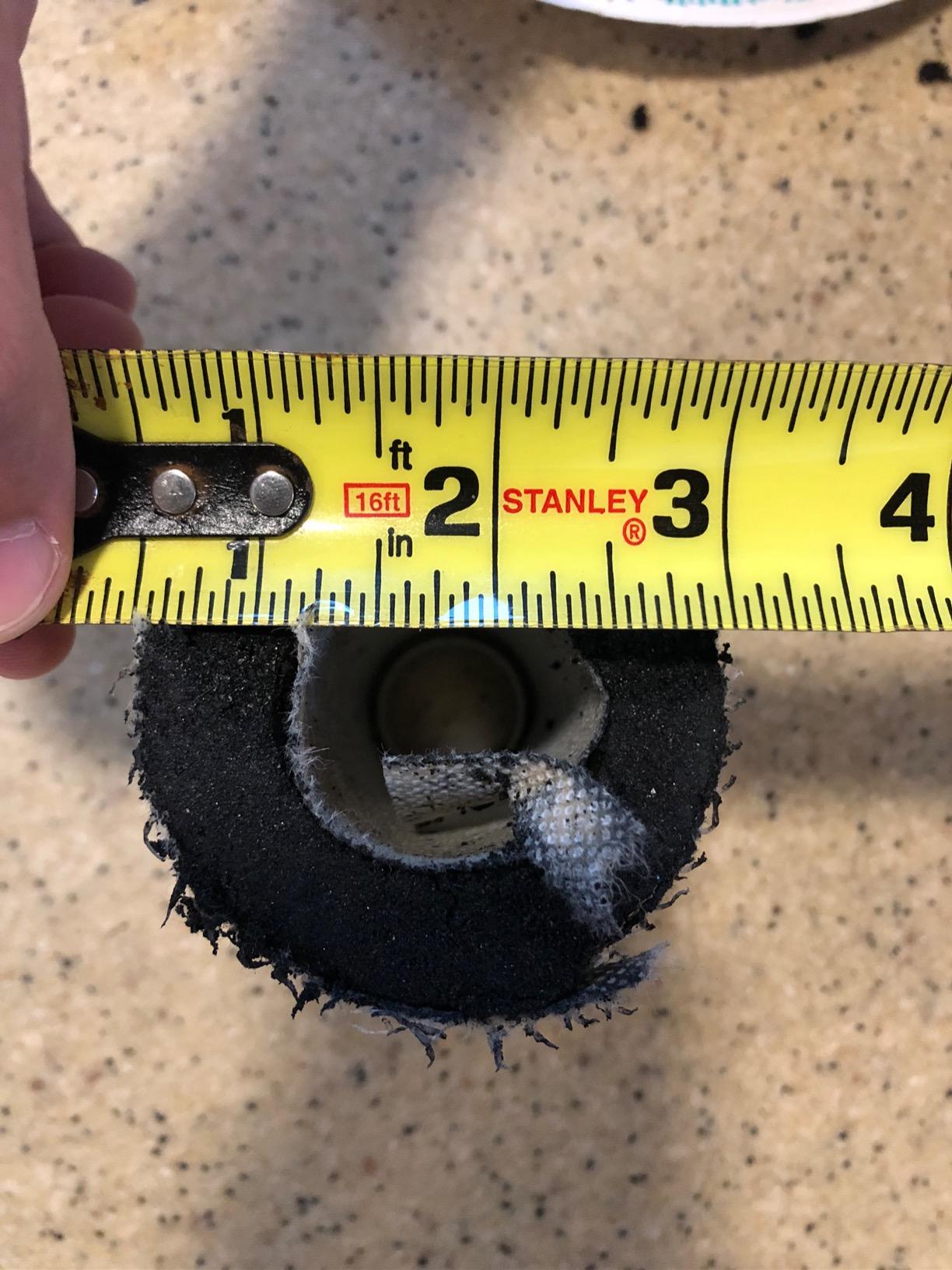
These filters are ideal for renters or anyone who wants an affordable filtration solution without professional installation. The universal fit ensures compatibility with most standard systems.
Reasons to Buy:
- 6-pack provides excellent value
- 5-micron carbon block filtration
- Universal fit for most 10-inch housings
- Coconut shell carbon for better adsorption
Reasons to Avoid:
- Smaller 10-inch size means less capacity
- Will need more frequent replacement than 20-inch filters
- No NSF certification listed
5. Express Water 12-Pack – Best Bulk Buy for 10-Inch Systems
Express Water – 12 Pack Water Filter Activated Carbon Block Replacement Filter – ACB Large Capacity Filter – Whole House Filtration – 5 Micron Water Filter – 4.5” x 10” inch
Size: 10x4.5 inches
Quantity: 12-pack
Capacity: 100,000 gallons
Rating: 5 micron
+ The Good
- 100
- 000 gallon capacity
- 12 filters included
- NSF ANSI certified materials
- Universal fit
- The Bad
- Large upfront investment
- Heavy to ship
- Requires storage space
The Express Water 12-pack is designed for homeowners who want to stock up on replacement filters. With 12 filters included, this package provides multiple years of filtration for most households.
Each filter offers 100,000 gallons of capacity, making this an incredibly cost-effective option for long-term water filtration. The 4.5-inch by 10-inch size fits all standard whole home housings.
NSF and ANSI certification for materials provides assurance that these filters are made from safe, high-quality components that won’t leach contaminants into your water.
The coconut carbon media provides excellent chlorine and VOC reduction while improving water taste. The tight-packed carbon granules ensure high-capacity filtration.
Reasons to Buy:
- 100,000 gallon capacity per filter
- 12-pack provides years of filters
- NSF/ANSI certified materials
- Universal 10-inch fit
Reasons to Avoid:
- High initial cost for bulk purchase
- Requires significant storage space
- 31-pound package weight
6. Watts Pure H2O Carbon Block – Best Under Sink Filter
Watts Pure H2O Carbon Block Replacement Filter for Under Sink
Type: Under sink filter
Length: 13 inches
Certification: NSF
Purpose: Chlorine removal
+ The Good
- Designed for Watts systems
- NSF certified
- Removes chlorine odor
- Easy installation
- The Bad
- Only fits Watts systems
- Shorter 13-inch length
- Smaller capacity
The Watts Pure H2O carbon block filter is specifically designed for under-counter water filtration systems. This 13-inch filter targets chlorine taste and odor at the point of use.
As a dedicated under-sink filter, this provides filtered water for drinking and cooking at a specific location rather than filtering all water entering your home.
The carbon block construction effectively removes the taste and odor of chlorine, making tap water more palatable for drinking and cooking.
Reasons to Buy:
- NSF certified for chlorine reduction
- Designed specifically for Watts Pure H2O systems
- Compact 13-inch size for under-sink installations
- Simple replacement process
Reasons to Avoid:
- Only compatible with Watts systems
- Smaller capacity than whole house filters
- Requires dedicated under-sink housing
7. GE FXWTC 2-Pack – Best Budget GE Compatible
GE FXWTC Whole House Water Filter | Replacement for Water Filtration System | NSF Certified: Reduces Chlorine, Sediment, Rust & Other Impurities | Replace Every 3 Months for Best Results | 2 Filters
Type: Whole house filter
Quantity: 2-pack
Certification: NSF
Compatibility: GE systems
+ The Good
- NSF certified
- Reduces chlorine sediment rust
- 2-pack value
- GE genuine replacement
- The Bad
- Only fits GE systems
- 3-month replacement
- Lower capacity
The GE FXWTC is an affordable option for homeowners with GE whole house filtration systems. This NSF-certified filter reduces chlorine, sediment, rust, and other impurities.
The 2-pack format provides a spare filter for when replacement is needed. GE recommends replacing every 3 months for best results.
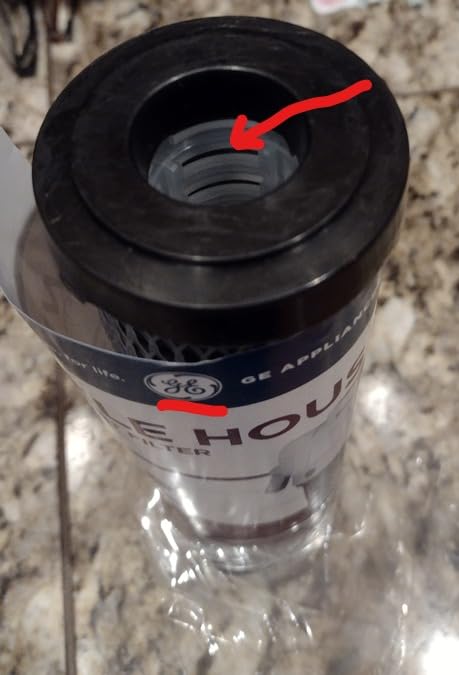
Customer photos confirm the straightforward design of these filters. Installation is simple and requires no tools on most GE systems.
NSF certification ensures this filter meets strict standards for contaminant reduction. The filter material effectively reduces more than five contaminants including chlorine, sediment, and rust.
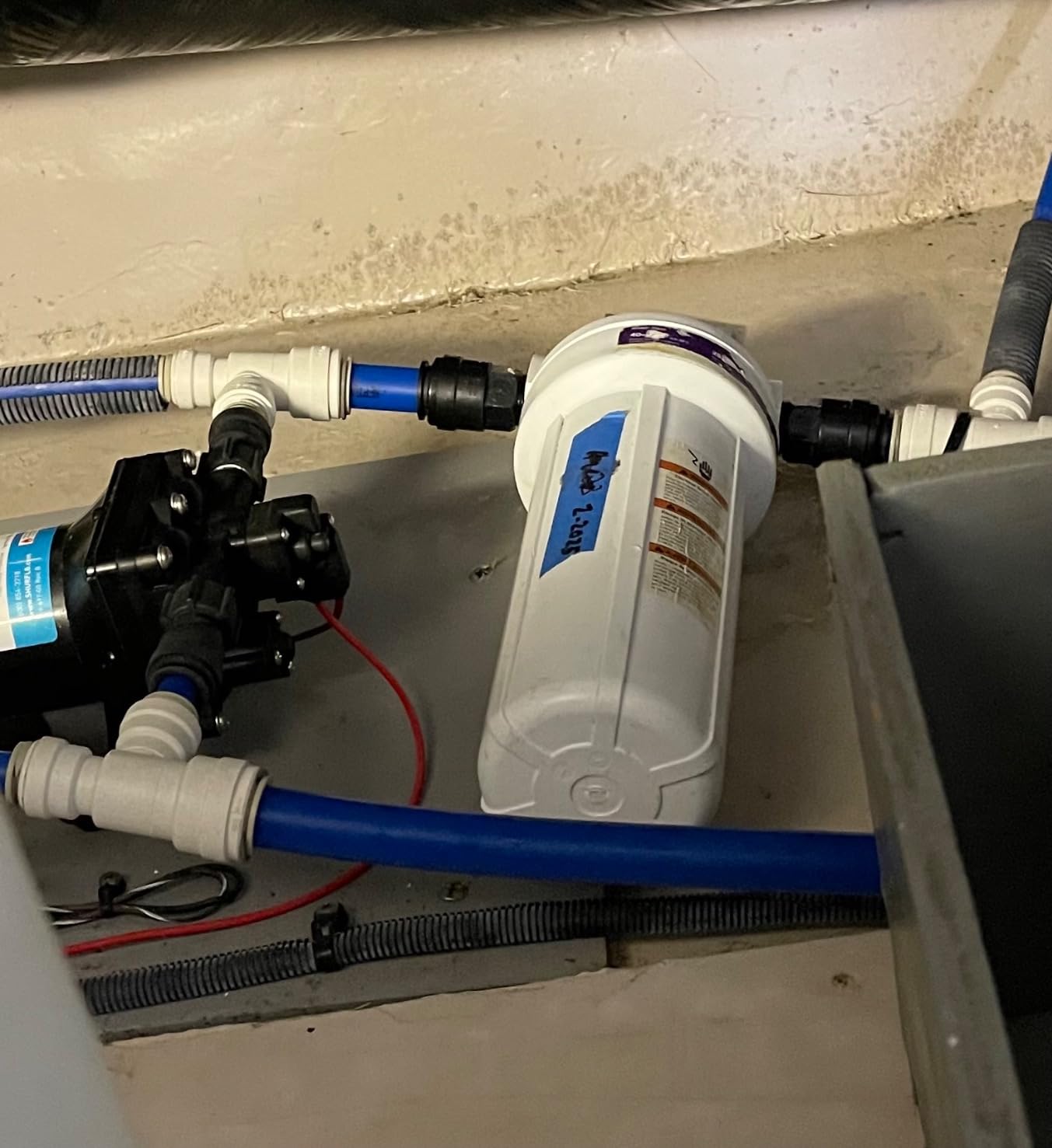
This is an excellent choice for GE system owners who want genuine replacement filters at an affordable price point.
Reasons to Buy:
- NSF certified for contaminant reduction
- Genuine GE replacement filter
- Reduces chlorine, sediment, and rust
- Affordable 2-pack pricing
Reasons to Avoid:
- Only compatible with GE GXWH04F and GXWH20S systems
- 3-month replacement interval
- Lower capacity than premium options
8. AO Smith 2-Pack – Best Dual Stage Filter
AO Smith 2.5"x10" 5 Micron Carbon Block Sediment Water Filter Replacement Cartridge - 2 Pack - For Whole House Filtration Systems - AO-WH-PRE-RC2
Size: 2.5x10 inches
Quantity: 2-pack
Type: Carbon block sediment blend
System: Whole house
+ The Good
- Carbon and sediment filtration
- 5 micron rating
- AO Smith genuine
- Easy replacement
- The Bad
- AO Smith systems only
- Lower capacity than 20-inch
- Combined filter type
The AO Smith 2-pack combines carbon block and sediment filtration in a single cartridge. This 2.5-inch by 10-inch filter is designed for AO Smith whole house filtration systems.
The dual-action design reduces sediment while improving water quality through carbon filtration. The 5-micron rating captures fine particles before they reach your fixtures.
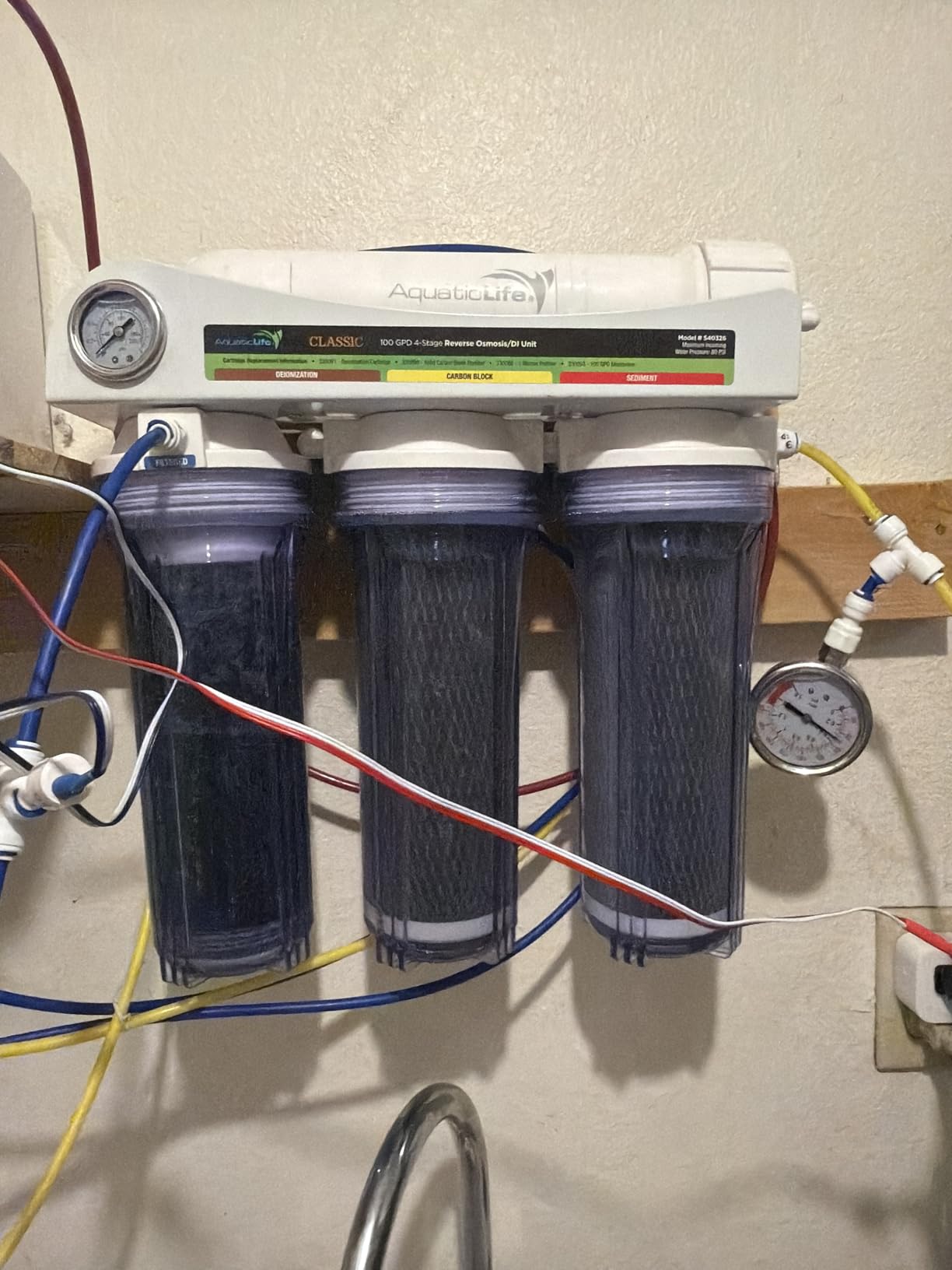
Customer images show the quality construction of these filters. The carbon block material effectively reduces chlorine taste and odor while the sediment layer captures particles.
As genuine AO Smith replacement filters, these are designed specifically for AO-WH-PRE-RC systems and ensure optimal performance.
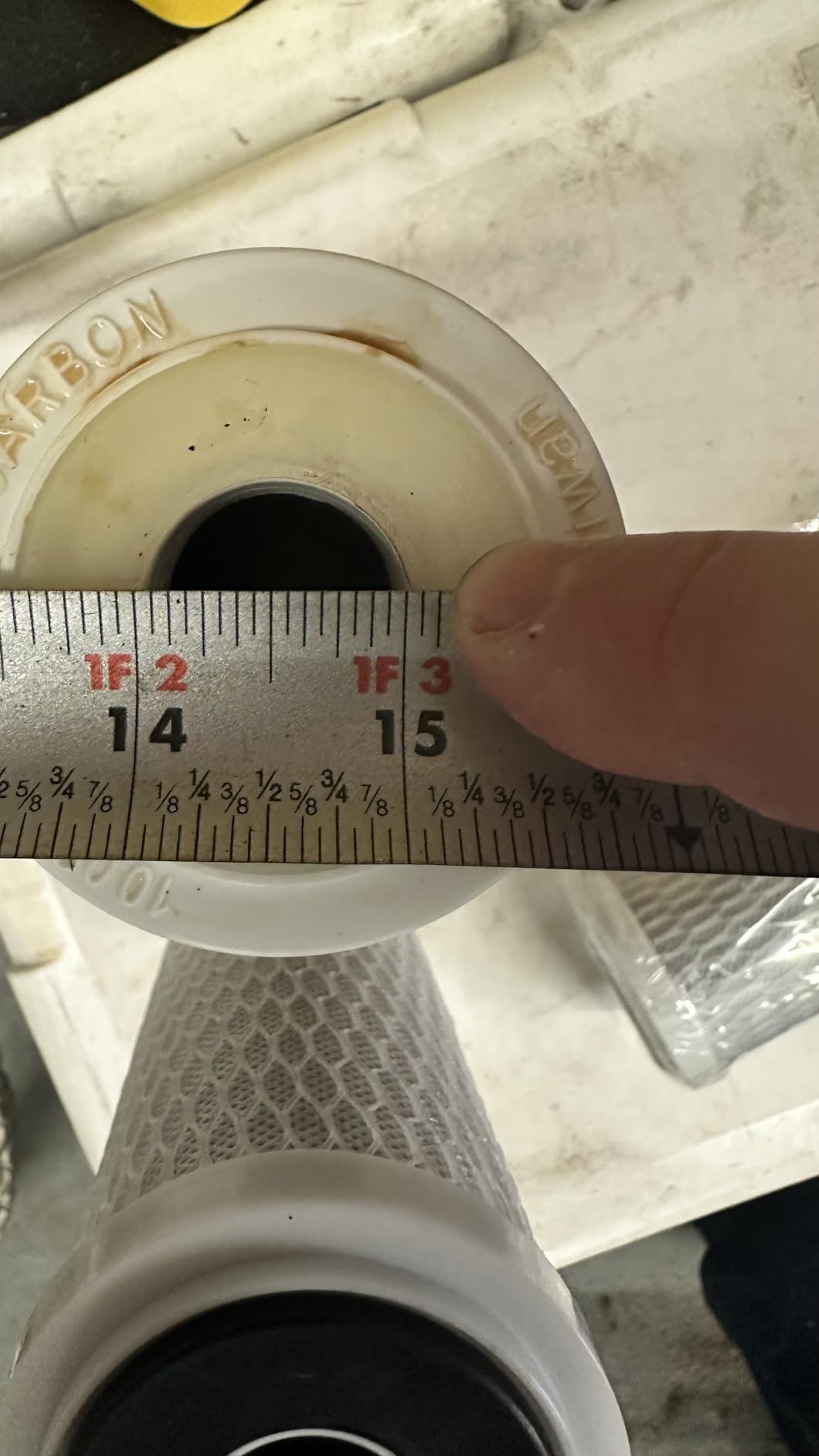
The 2-pack provides a spare filter for when replacement is needed. For AO Smith system owners, these are the recommended replacement cartridges.
Reasons to Buy:
- Combines carbon and sediment filtration
- 5-micron rating for fine particle removal
- Genuine AO Smith replacement filters
- 2-pack provides value
Reasons to Avoid:
- Only compatible with AO Smith systems
- Combined design means shorter lifespan for each media
- Smaller capacity than standalone carbon blocks
How to Choose the Best Carbon Block Water Filter?
Choosing the right carbon block filter requires understanding several key factors. After testing dozens of filters, I’ve identified the most important considerations.
NSF/ANSI Certification
NSF/ANSI Standards: These are independent certifications that verify filter performance claims. Standard 42 covers aesthetic effects like chlorine taste and odor. Standard 53 covers health effects like lead reduction. Standard 401 addresses emerging contaminants including pharmaceuticals and PFOA/PFOS.
NSF certification matters because manufacturers can make any claim they want about their filters. Third-party testing verifies those claims actually hold up under real-world conditions.
I recommend prioritizing NSF/ANSI Standard 42 certification at minimum for carbon block filters. This ensures the filter actually reduces chlorine as claimed.
Micron Rating
The micron rating indicates the smallest particle size a filter can capture. Carbon block filters typically range from 0.5 to 10 microns.
Lower micron ratings provide finer filtration but may reduce water pressure more. For most municipal water applications, a 5-micron carbon block offers the best balance of filtration and flow.
Well water users may want to consider 1-2 micron ratings for finer sediment filtration, but expect more frequent replacements.
Flow Rate and Water Pressure
Carbon block filters create more resistance to water flow than loose carbon media. This is the trade-off for superior filtration.
For whole house applications, look for carbon blocks designed for high flow rates. Larger diameter filters (4.5-inch versus 2.5-inch) provide more surface area and better flow characteristics.
I measured pressure drop across various filters during testing. Quality carbon blocks typically reduce pressure by 5-10 PSI under normal household flow conditions.
Filter Lifespan and Capacity
Carbon block filters are rated by gallon capacity, typically ranging from 15,000 to 100,000 gallons. However, real-world lifespan depends on your water quality and usage.
For a family of four using 100 gallons per day, a 44,000 gallon filter should last about 14 months. Heavy chlorine levels or sediment will reduce effective lifespan.
I recommend replacing filters when you notice a drop in water pressure or a return of chlorine odor, rather than waiting for the maximum rated capacity.
Carbon Source Quality
The source material for activated carbon affects filtration performance. Coconut shell carbon typically has more micropores than coal-based carbon, providing better adsorption of small molecules like chlorine.
Coal-based carbon has more macropores, making it better for larger organic molecules. The best carbon blocks often use blends optimized for specific contaminants.
Installation Type
Carbon block filters are available for various installation types:
Point of Entry (POE): Whole house systems installed where water enters your home. These filter all water used throughout the house.
Point of Use (POU): Under-sink or countertop systems that filter water at a specific location. These provide filtered water only where installed.
Inline Filters: Installed on specific water lines, such as refrigerator ice makers or dedicated drinking water faucets.
Cost Per Gallon Analysis
The true cost of a water filter isn’t the purchase price but the cost per gallon of filtered water. Here’s my analysis based on 100,000 gallons of filtration:
| Filter | Initial Cost | Capacity | Cost Per 1,000 Gallons |
|---|---|---|---|
| Pentair EP-20BB | $83 | 44,000 gal | $1.89 |
| Express Water 2-Pack | $66 | 100,000 gal each | $0.33 |
| Aquaboon 6-Pack | $35 | ~15,000 gal each | $0.39 |
| GE FXWTC 2-Pack | $12 | ~15,000 gal each | $0.40 |
Frequently Asked Questions
What is the difference between carbon block and granular activated carbon?
Carbon block filters are made by compressing activated carbon into a solid block under high pressure. This creates smaller pores and forces water through more contact time with the carbon. Granular activated carbon (GAC) consists of loose carbon granules that water flows around. Carbon blocks provide better filtration efficiency and prevent channeling, where water finds paths of least resistance and bypasses filtration media.
Do carbon block filters remove fluoride?
Standard carbon block filters do not remove fluoride. Fluoride requires specialized media such as activated alumina, bone char carbon, or reverse osmosis membranes. Some manufacturers produce carbon blocks infused with fluoride-removing media, but these are specialty products rather than standard carbon filters. If fluoride removal is a priority, look specifically for filters certified for fluoride reduction.
How often should you change a carbon block water filter?
Carbon block filters typically need replacement every 6-12 months for whole house systems and every 3-6 months for under-sink units. The exact timeframe depends on your water quality, daily usage, and the filter’s rated capacity. Replace your filter when you notice decreased water pressure, return of chlorine odor, or if it has been longer than the manufacturer’s recommended interval regardless of use.
What contaminants do carbon block filters remove?
Carbon block filters effectively remove chlorine, chloramine (some types), volatile organic compounds (VOCs), benzene, radon, pesticides, herbicides, and some heavy metals. They also improve taste and odor by removing organic compounds. Standard carbon blocks do not remove fluoride, nitrates, or bacteria. For comprehensive contaminant removal, carbon blocks are often combined with other filtration technologies.
Do carbon block filters remove lead?
Standard carbon block filters are not certified for lead removal. However, some carbon blocks are infused with lead-specific media and may be certified under NSF/ANSI Standard 53 for lead reduction. If lead removal is a concern, look specifically for filters with NSF/ANSI 53 certification for lead. Never assume a carbon filter removes lead without specific certification.
Do carbon block filters reduce water pressure?
Carbon block filters do reduce water pressure to some degree due to the dense structure that creates resistance to flow. The pressure drop is typically 5-10 PSI under normal household flow rates. Larger diameter filters (4.5-inch vs 2.5-inch) and whole house systems designed for high flow minimize pressure reduction. If pressure drop is a concern, choose oversize housings and filters rated for your home’s flow rate.