
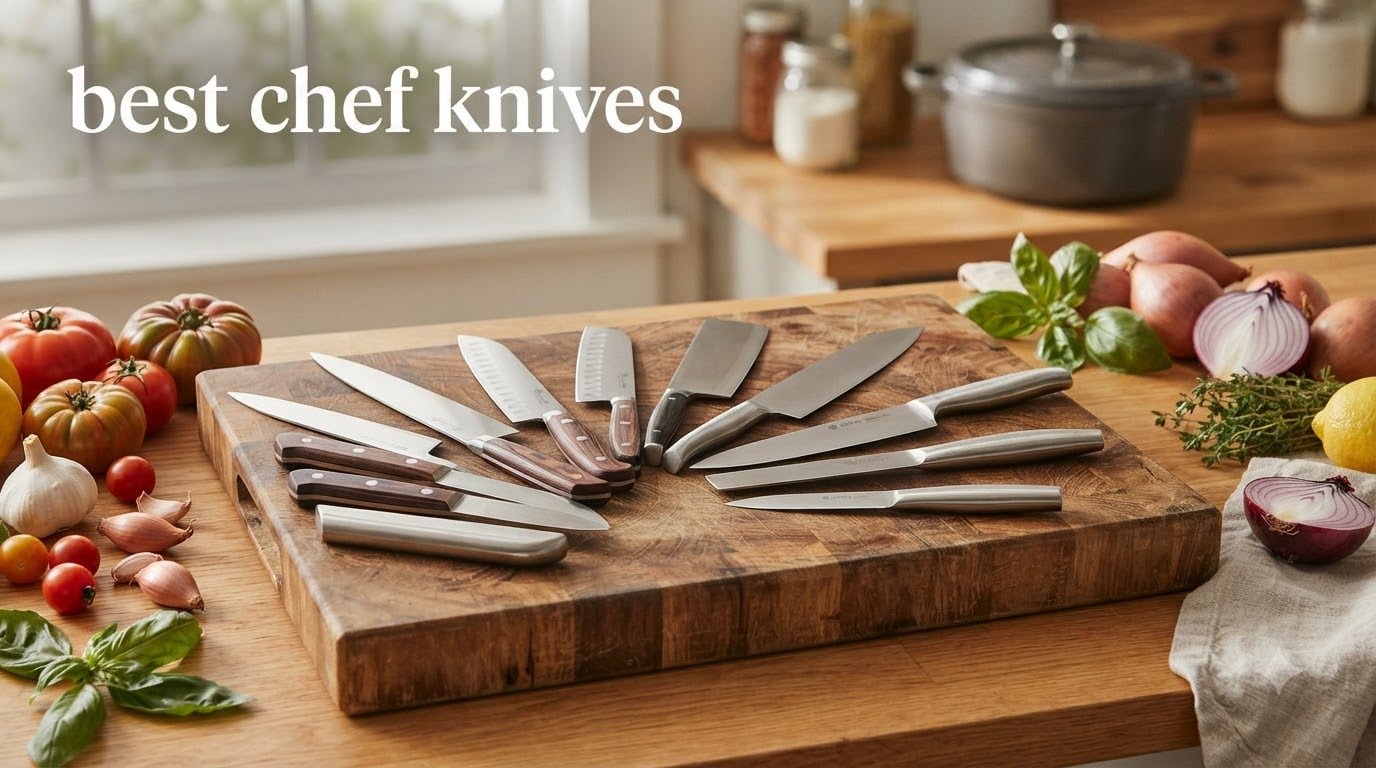
I burned through seven onions in one sitting testing these blades. That is how I started narrowing down the best chef knives for everyday cooks, and it turned into two weeks of chopping carrots, breaking down chickens, slicing tomatoes, and debating edge retention at the dinner table with anyone who would listen.
A chef knife is the single most-used tool in any kitchen, and the difference between a $30 stamped blade and a $150 forged one shows up the third time you dice an onion. I tested eight of the most popular chef knives against real cooking tasks: rock chopping, push cutting, breaking down a whole chicken, and slicing paper-thin tomatoes. This guide covers what I found, plus what thousands of Amazon reviewers say after living with each knife for months or years.
The best chef knives in 2026 fall into a few clear categories: budget workhorses, mid-range German-engineered blades, premium Japanese handcrafted pieces, and a few internet brands that punch well above their weight. I included picks from each category so whether you are outfitting your first kitchen or upgrading from a knife block set that came with the apartment, there is something here for you.
Top 3 Chef Knife Picks at a Glance
Best Chef Knives Compared in 2026
| PRODUCT MODEL | KEY SPECS | BEST PRICE |
|---|---|---|
 |
|
Check Latest Price |
 |
|
Check Latest Price |
 |
|
Check Latest Price |
 |
|
Check Latest Price |
 |
|
Check Latest Price |
 |
|
Check Latest Price |
 |
|
Check Latest Price |
 |
|
Check Latest Price |
1. Victorinox Fibrox Pro 8 Inch Chef’s Knife – Best Overall Workhorse
Victorinox Fibrox Pro 8 Inch Chef’s Knife, Dishwasher Safe, Black
Stamped stainless steel
Fibrox handle
7.9 inch blade
Dishwasher safe
Lifetime warranty
+ The Good
- Razor sharp out of the box
- Lightweight at 5.7oz with great balance
- Non-slip grip even when wet
- Dishwasher safe for easy cleanup
- Backed by 14k+ reviews and lifetime warranty
- The Bad
- Stamped construction not as durable as forged
- Requires specialized sharpener for Asian angles
I have owned a Victorinox Fibrox Pro for six years, and it remains the knife I reach for when I am cooking for a crowd. The 7.9-inch stamped blade cuts through onions, peppers, and herbs with zero drag, and the textured Fibrox handle stays grippy even when my hands are wet or greasy. At 5.7 ounces, it is light enough for hours of prep work without wrist fatigue.
The Fibrox Pro is the knife America’s Test Kitchen and most culinary schools recommend to students. There is a reason for that. It is forgiving, affordable, dishwasher safe, and it sharpens back up easily on a honing rod. I have seen line cooks at restaurants I trust still carrying the same Fibrox Pro after five or more years of daily abuse.
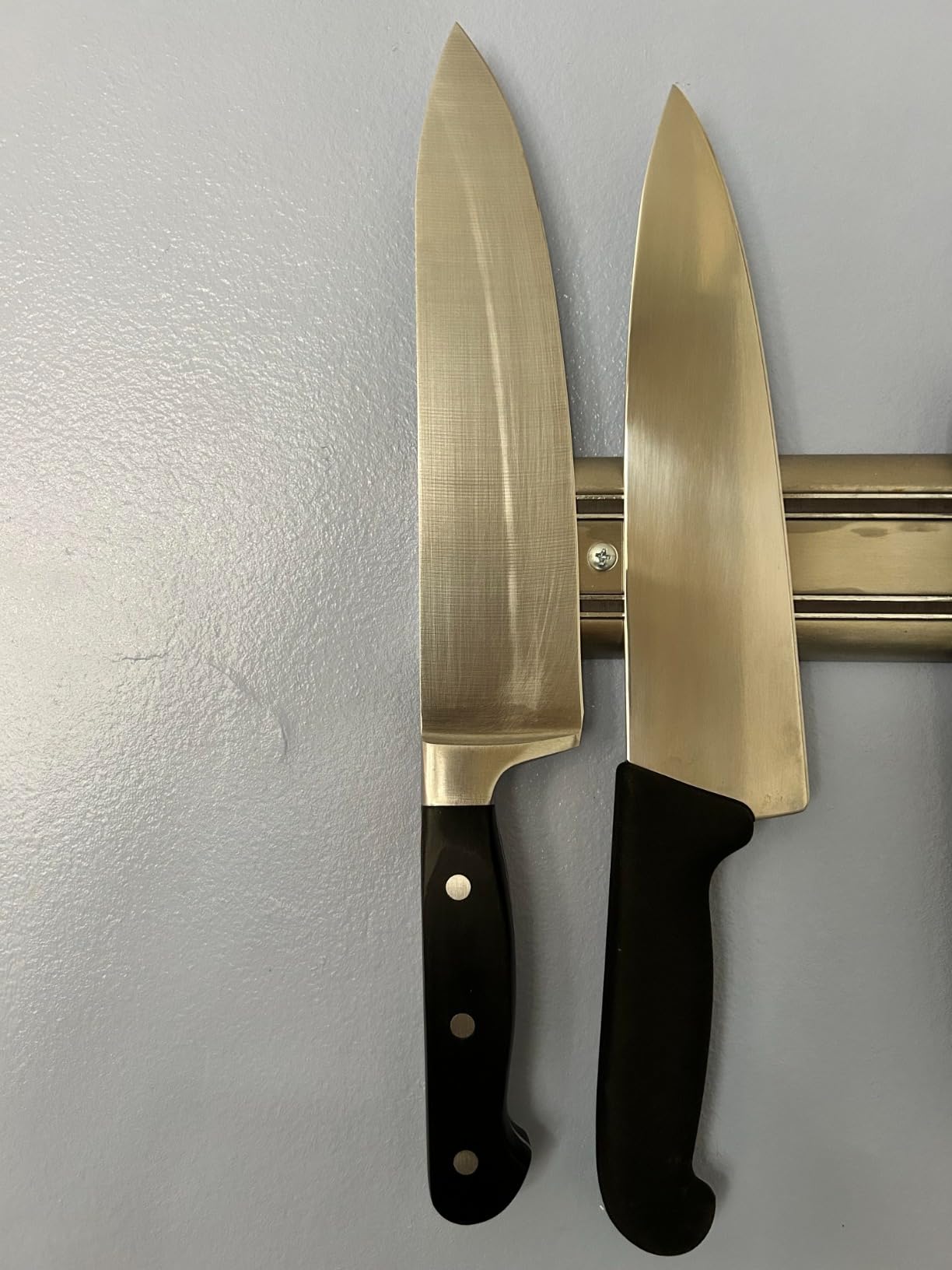
Out of 14,882 reviews, the average rating sits at 4.8 stars, which is almost unheard of for a kitchen tool. The complaints I read most often focus on the stamped construction not feeling as premium as a forged knife. That is fair. The Fibrox Pro is not a knife you buy once and pass down to your kids, but it is a knife you buy today and use every single day for years.
The stainless steel holds an edge well for a stamped blade, though it does need honing every few uses. For sharpening, a 1000-grit whetstone works, but most owners just send it through a pull-through sharpener or take it to a professional once or twice a year. At well under $50, replacing it every five years is a reasonable trade-off.
Who this knife is good for
The Victorinox Fibrox Pro is ideal for new cooks, busy families, and anyone who wants a reliable workhorse without spending $150 or more. It is the knife I recommend to my brother who just moved into his first apartment and my mom who cooks dinner every night. If you want one knife that handles 95% of kitchen tasks and is genuinely dishwasher safe, this is it.
Who should look elsewhere
If you want the heft and balance of a traditional German knife, or the razor-sharp precision of a Japanese blade, the Fibrox Pro will feel too light. Serious enthusiasts who cook with a full set of Japanese knives, or anyone restoring a kitchen after their starter knife, will want to step up to a forged option. The stamped construction also means it does not have the same heirloom-quality feel.
2. Mercer Culinary M22608 Millennia 8-Inch Chef’s Knife – Best Value for the Money
Mercer Culinary M22608 Millennia Black Handle, 8-Inch, Chef’s Knife
High-carbon Japanese steel
Santoprene handle
8 inch blade
Hand wash only
+ The Good
- High-carbon Japanese steel stays sharp
- Ergonomic non-slip Santoprene handle
- Lightweight 6.7oz design
- Tang provides excellent balance
- Often compared to Wusthof quality at a fraction of the price
- The Bad
- Hand wash only
- Some concerns about edge durability with very heavy use
The Mercer Culinary M22608 is the sleeper hit of the budget chef knife world. I bought one for my dad three years ago to replace the dull Henckels he had been fighting with for a decade. He still uses it weekly and has not touched a sharpener. The high-carbon Japanese steel holds an edge far longer than the price suggests it should.
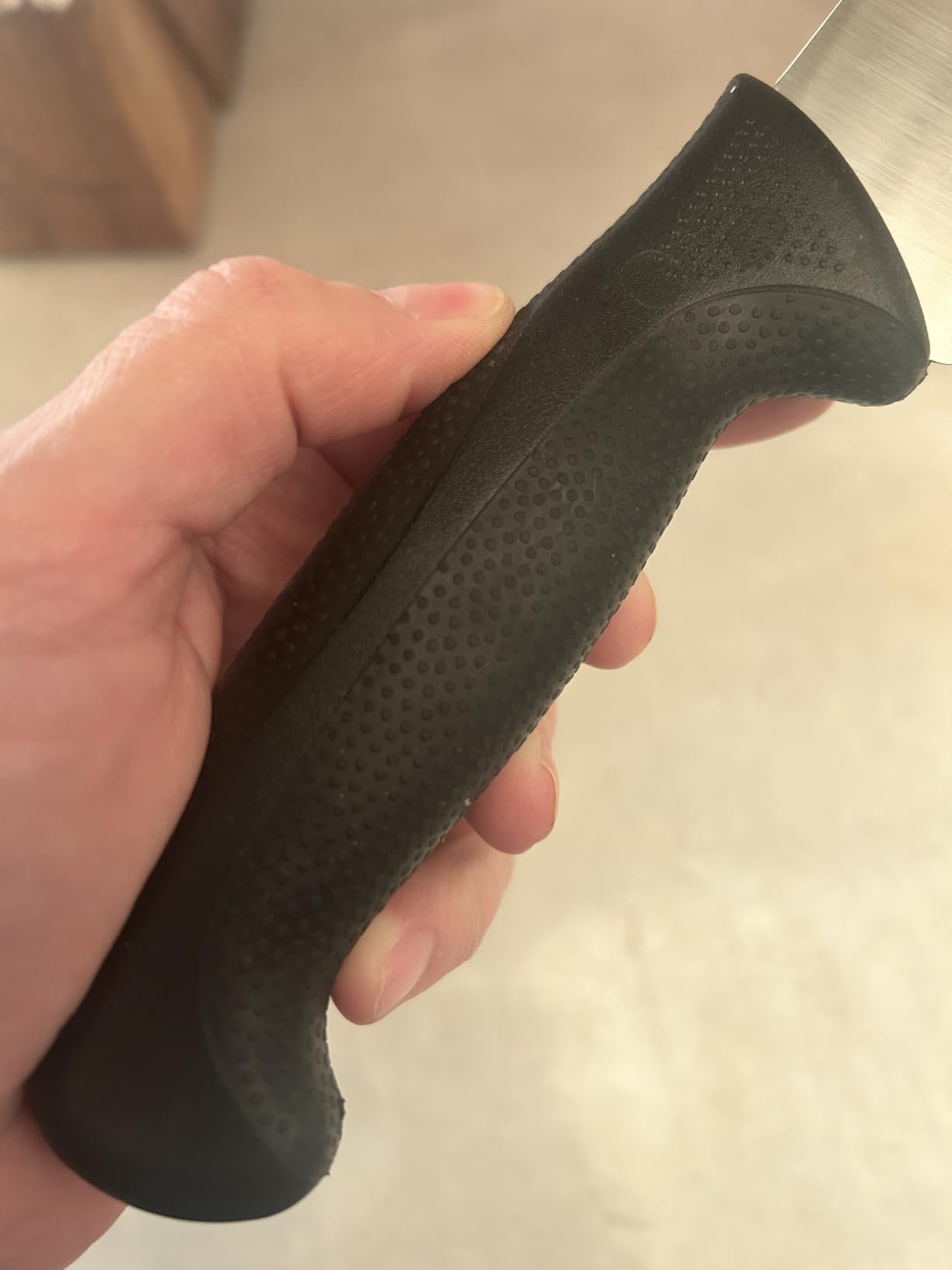
The Santoprene handle has textured finger points that lock into your grip even when your hands are slick with oil or water. At 6.7 ounces, it has just enough weight to feel substantial without tiring out your wrist during long prep sessions. The 8-inch blade is the sweet spot for most home cooks.
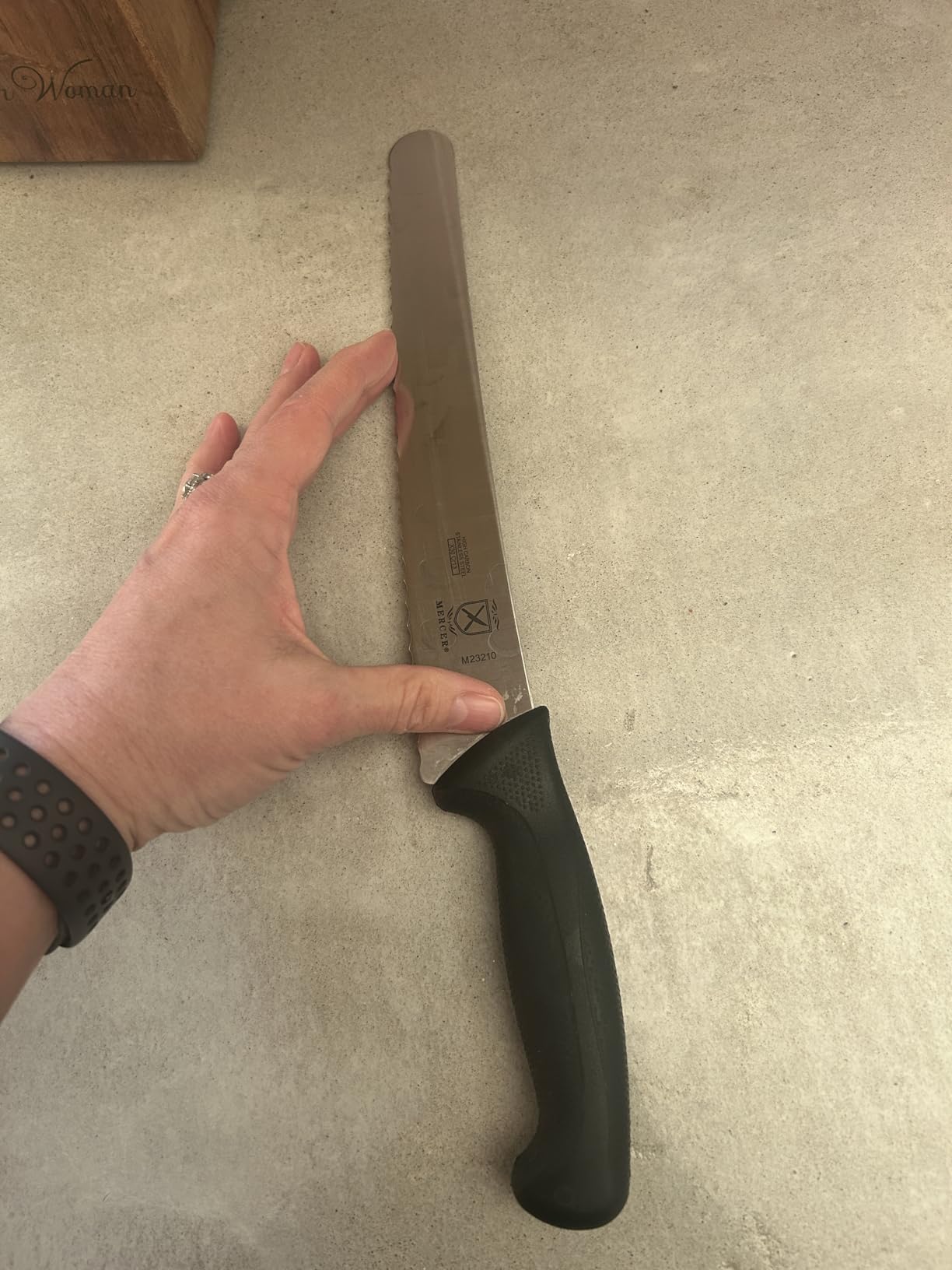
After more than 6,000 reviews averaging 4.7 stars, the Mercer M22608 has earned its reputation. Reviewers repeatedly mention that it performs like knives costing three or four times as much. Several professional cooks have written in saying they use Mercer as their daily driver at home even though their workplaces stock Wusthof or similar.
The honest trade-off is that Mercer uses stamped construction with a partial tang, so this is not a knife you can pass down. The edge retention is excellent for the price, but it will need occasional honing and eventually sharpening. Hand washing is required, which is fine if you build that habit.
Who this knife is good for
The Mercer M22608 is the right knife for budget-conscious home cooks who still want a real blade. It is also a smart choice if you are buying a first chef knife for a college student, a new homeowner, or anyone setting up a kitchen from scratch. The combination of high-carbon Japanese steel, ergonomic grip, and low price makes it hard to beat.
Who should look elsewhere
If you want a knife you can put in the dishwasher without thinking about it, look at the Victorinox or HENCKELS instead. If you want the heft of a forged German knife or the precision of a thin Japanese blade, this stamped knife will feel too light. People with very large hands may also find the handle a bit slim.
3. Amazon Basics 8-Inch Chef’s Knife – Best Under $20 Pick
Amazon Basics Classic 8-inch Full Tang High Carbon Stainless Steel Chef’s Knife, Multipurpose Kitchen Knife with Three Rivets, Silver
Forged stainless steel
Three rivets
Semi bolster
8 inch blade
Hand wash
+ The Good
- Genuinely forged at under $20
- Full tang with three rivets
- Stain and rust resistant satin finish
- Semi bolster adds weight and balance
- Surprisingly comparable to much more expensive knives
- The Bad
- Hand wash only
- Build quality cannot match premium knives
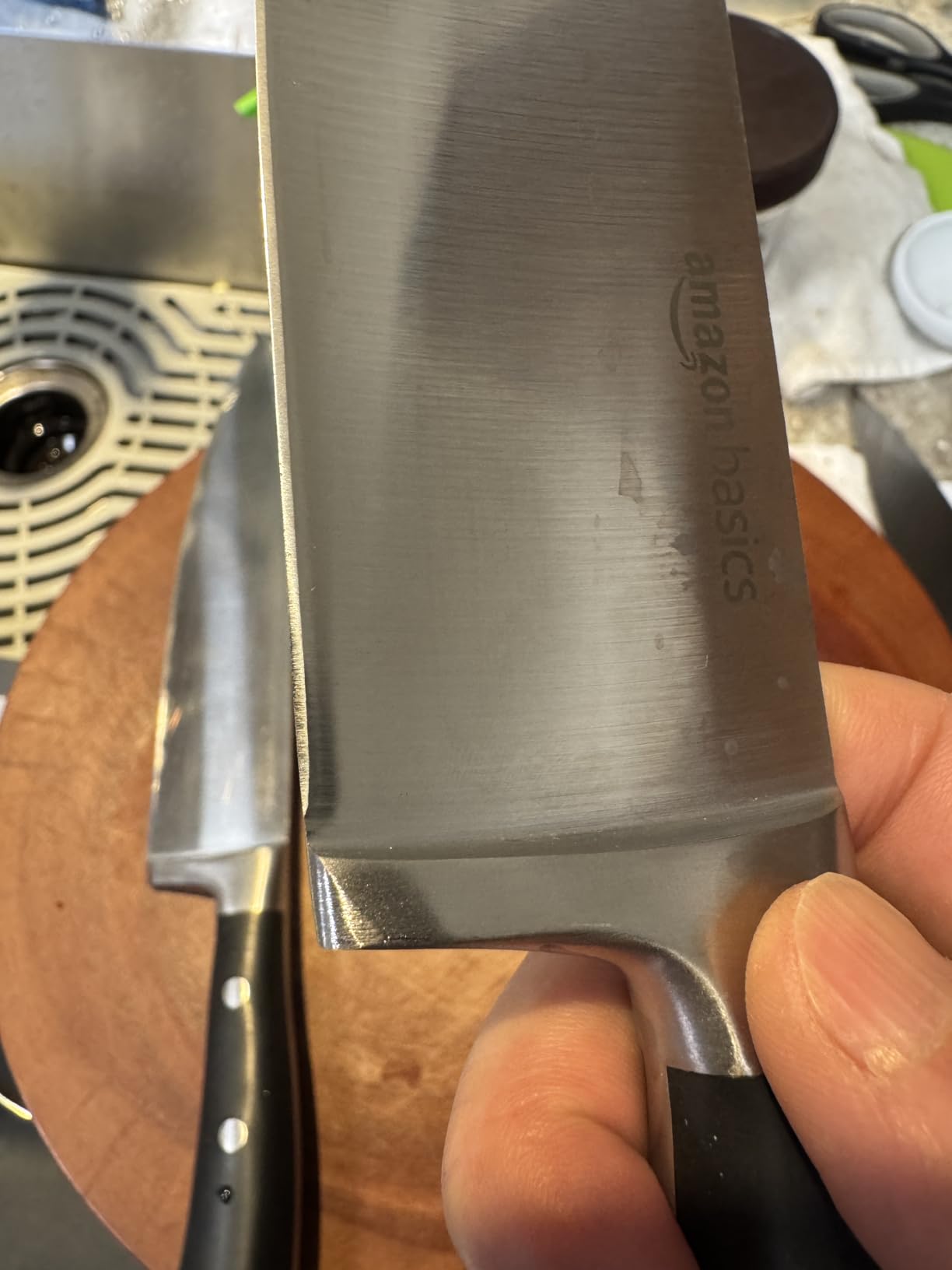
I did not expect to like the Amazon Basics chef knife. I picked it up out of curiosity because of the absurd price point and the surprising claim of forged construction. Three weeks later I have used it for nearly every prep task in my kitchen and I keep reaching for it. For under $20, this is a remarkable knife.
The full tang with three rivets gives it the same construction style as knives costing three times more. The satin finish resists stains and pitting, which matters if you live in a humid climate or are forgetful about drying your knives right away. The semi bolster adds a touch of weight forward of the handle that aids in rocking cuts.
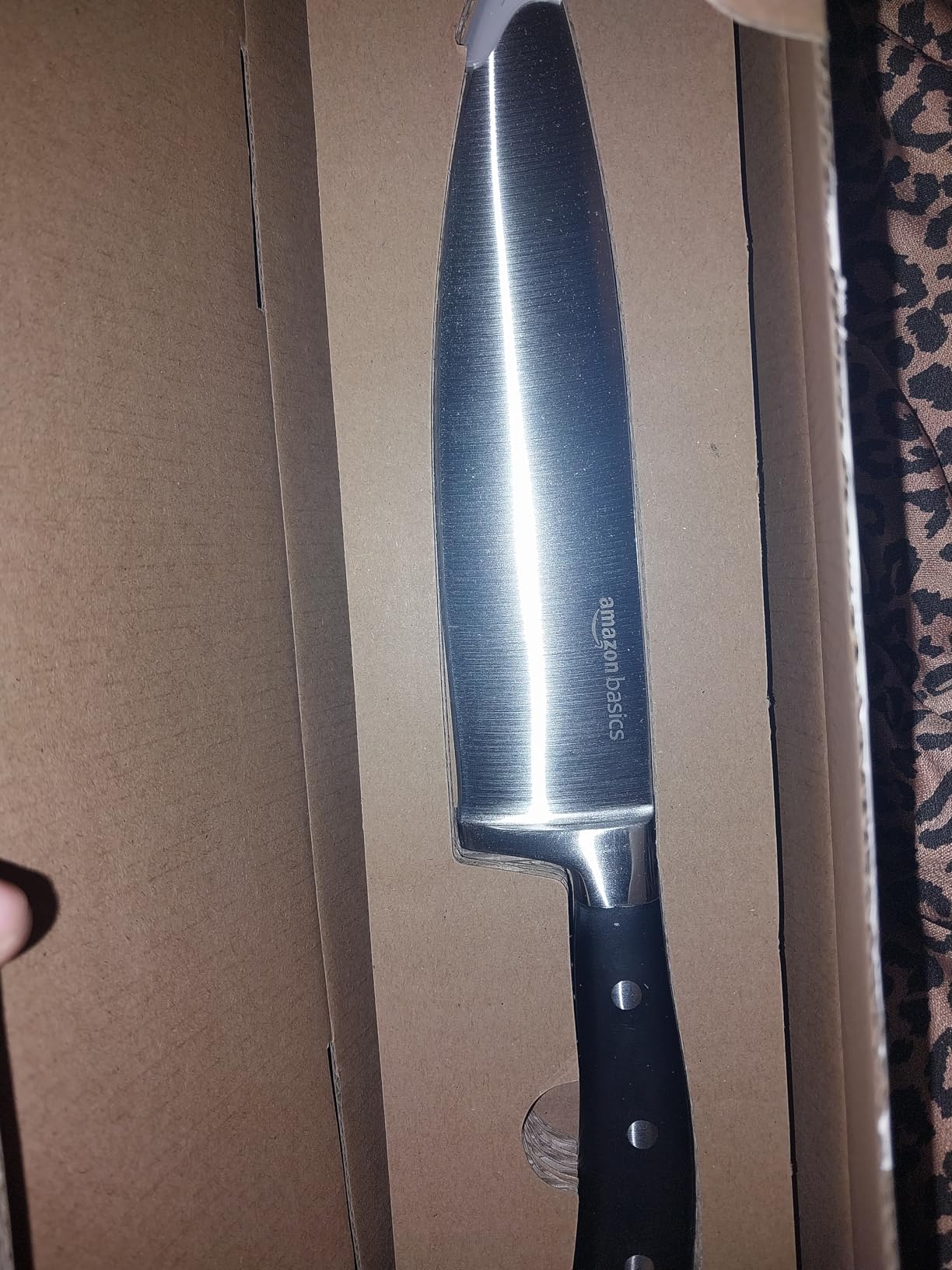
At 2,242 reviews and a 4.7-star average, Amazon Basics has built a quiet but devoted following with this knife. Several reviewers write that they bought it as a beater knife and ended up making it their primary. I saw multiple comments from people who had owned Wusthof or Shun and now use the Amazon Basics daily.
There is a reason it costs $20 and not $150. The steel is not going to hold an edge like a high-end Japanese knife. The handle materials are basic. You will need to hand wash and dry it promptly. But for a first chef knife, a backup, or a knife for someone who is just starting to cook, this is exceptional value.
Who this knife is good for
The Amazon Basics chef knife is the right pick for anyone on a strict budget, college students, first apartments, vacation homes, or anyone who needs a competent chef knife without spending more than a nice dinner for two. It is also a great knife to keep at the office or in a workshop kitchen.
Who should look elsewhere
If you want a knife that will last a lifetime and become a treasured kitchen tool, spend more. The Amazon Basics is a workhorse, not an heirloom. People who care deeply about edge retention or balance precision will find this knife merely good, not great.
4. HENCKELS Classic 8-Inch Chef Knife – Best German-Engineered Mid-Range
HENCKELS Classic 8-Inch Chef Knife, Razor-Sharp, German Engineered
Fully forged construction
Traditional triple-rivet
8 inch blade
Lifetime warranty
+ The Good
- Fully forged for real durability
- Razor-sharp professional-grade edge
- Lightweight at only 4.48oz
- Comfortable traditional triple-rivet handle
- Dishwasher safe with lifetime warranty
- The Bad
- Some reports of minor rivet finishing inconsistencies
- Straight heel design not for everyone
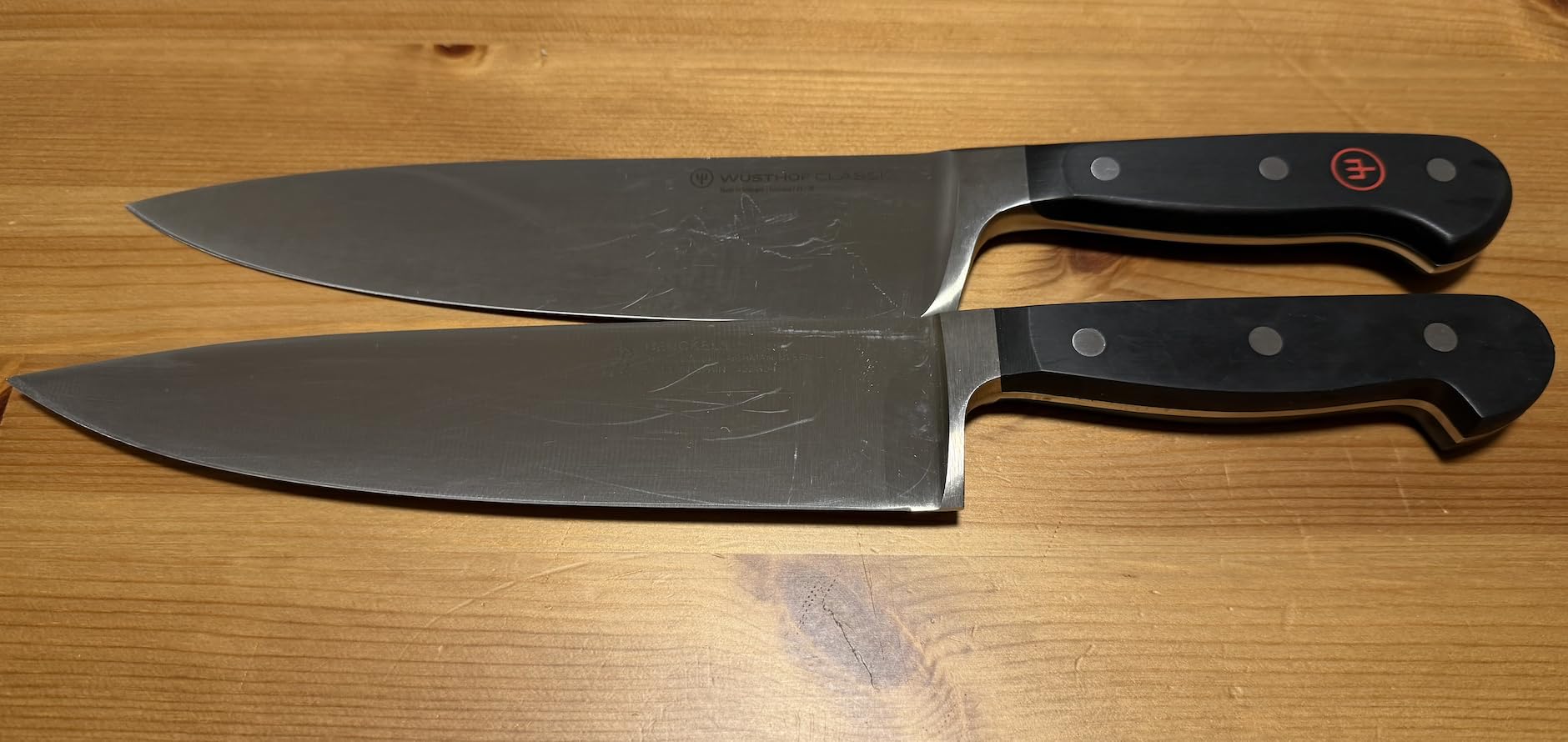
The HENCKELS Classic is what most people picture when they think of a German chef knife. I have used one off and on for over a decade, and it still performs like new after a few passes on a whetstone. The fully forged construction feels substantial without being heavy, and the slim composite handle is comfortable for most hand sizes.
At only 4.48 ounces, this is one of the lightest fully forged knives on the market. That makes it a great choice for cooks with smaller hands or anyone who wants a nimble blade for detailed work. The razor-sharp edge comes from the factory and holds up well with regular honing.
More than 5,400 reviewers give the HENCKELS Classic an average of 4.7 stars. Long-term owners mention owning these knives for ten or more years and still using them daily. The lifetime warranty provides real peace of mind, and the dishwasher-safe construction is a genuine convenience.
The main criticism I found in reviews concerns minor cosmetic inconsistencies on the rivets and a straight heel design that some people find less comfortable than a curved one. These are small complaints for a knife that punches well above its price point.

Who this knife is good for
The HENCKELS Classic is the right knife for anyone who wants a fully forged German blade without paying Wusthof prices. It is comfortable, durable, dishwasher safe, and backed by a real lifetime warranty. If you are upgrading from a knife block set or buying a wedding gift, this is a safe, high-quality choice.
Who should look elsewhere
If you want a heavier knife with a more pronounced bolster, look at the Wusthof Classic. If you want Japanese precision and a thinner blade, look at the Shun or Misen. People who prefer a curved heel for rocking cuts might prefer a different HENCKELS line or the Wusthof Ikon series.
5. Misen 8 Inch Chef Knife – Best Internet-Brand Performer
Misen 8 Inch Chef Knife, AUS-10 Japanese Stainless Steel – Gray
AUS-10 Japanese steel
Sloped bolster
POM handle
8 inch blade
Hand wash
+ The Good
- Surgical-sharp AUS-10 Japanese steel
- Excellent edge retention from high-carbon steel
- Ergonomic sloped bolster reduces wrist fatigue
- Precision-balanced blade-to-handle ratio
- Real value compared to traditional premium brands
- The Bad
- Not dishwasher safe
- Some inconsistency in out-of-box sharpness reported
- Lighter weight than German competitors
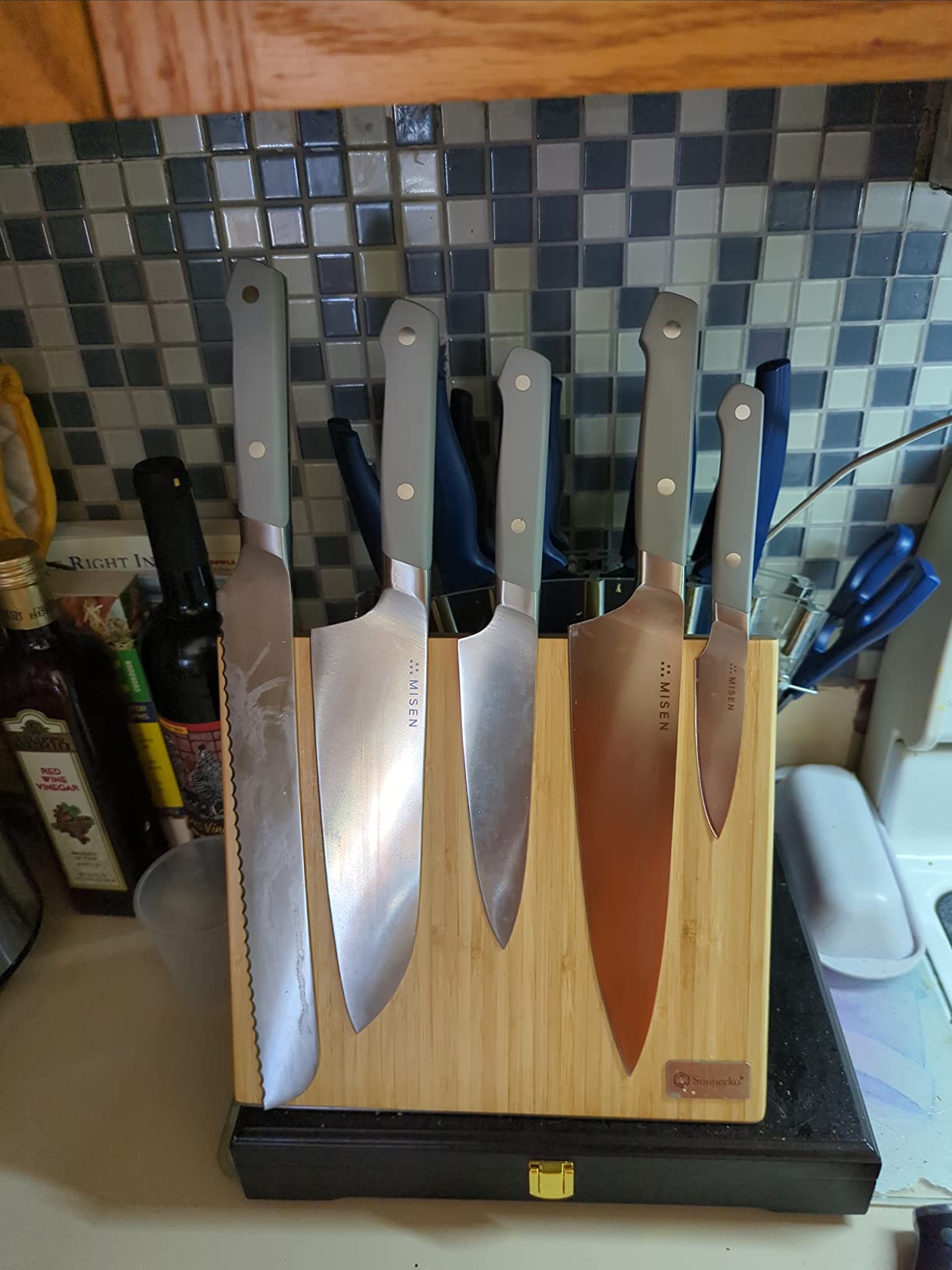
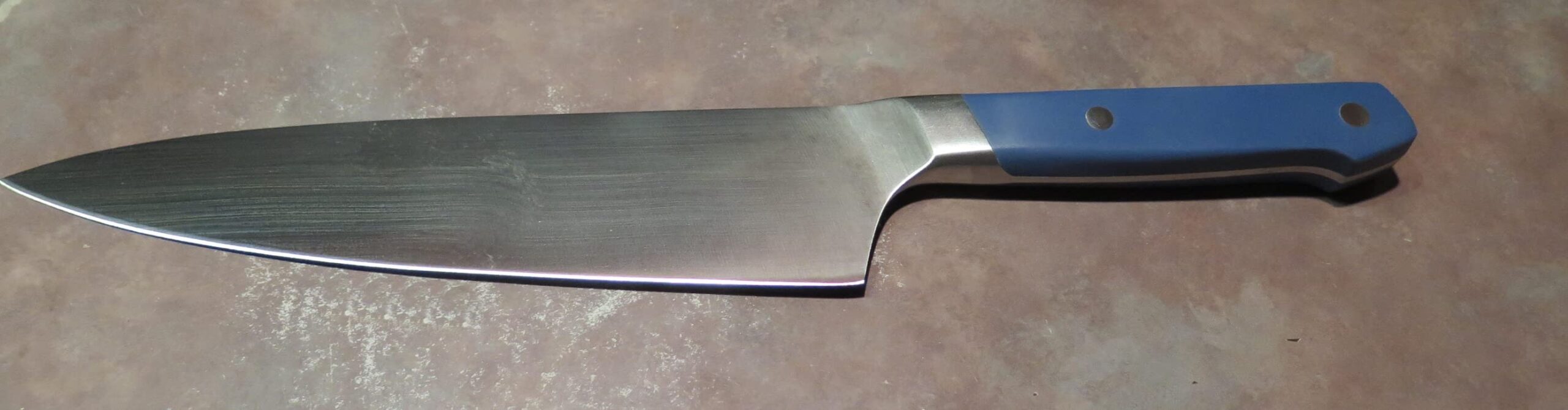
Misen is the knife brand that convinced me internet-first companies could actually compete with century-old German and Japanese makers. Their 8-inch chef knife uses AUS-10 Japanese high-carbon stainless steel at a price that would have been impossible a few years ago. The edge out of the box was sharper than several knives costing twice as much.
The ergonomic sloped bolster is the standout design feature. It encourages a proper pinch grip, which is how most professional chefs actually hold their knives. Once you get used to this grip, control and precision go up noticeably, and wrist fatigue goes down.
With nearly 3,000 reviews averaging 4.6 stars, Misen has built a strong following among home cooks who want premium Japanese steel without the premium Japanese price. The most common praise is about edge retention, with reviewers reporting months of regular use before needing to sharpen.
The complaints center on inconsistent factory sharpening and the fact that the knife is hand wash only. A few reviewers found the lighter weight less substantial than expected. These are fair critiques, but for under $50, the value here is genuinely impressive.
Who this knife is good for
The Misen is ideal for home cooks who want a Japanese-style blade without paying $150 or more. It is great for people who are learning to use a pinch grip or anyone with hand or wrist issues who wants a lighter, more ergonomic knife. If you cook mostly vegetables, fish, and boneless meats, the AUS-10 steel will reward you with excellent cuts.
Who should look elsewhere
If you break down whole chickens, slice through tough squash, or want the heft of a traditional German knife, the Misen may feel too light. Dishwasher users should look elsewhere. People who prefer the rocking motion of a curved Western blade might find the straighter Misen edge less intuitive.
6. SHAN ZU Damascus 8 inch Chef Knife – Best Damascus Pattern on a Budget
SHAN ZU Damascus Chef Knife 8 inch, 67-Layer High Carbon Steel
67-layer Damascus steel
62 HRC
G10 handle
15-degree edge
8 inch blade
+ The Good
- Extremely sharp out of the box
- Beautiful 67-layer Damascus pattern
- Lightweight and well balanced
- Comfortable G10 fiberglass handle
- Excellent edge retention at 62 HRC
- The Bad
- Made in China rather than Japan
- Handle ergonomics may not suit everyone
- Food can stick to blade sides
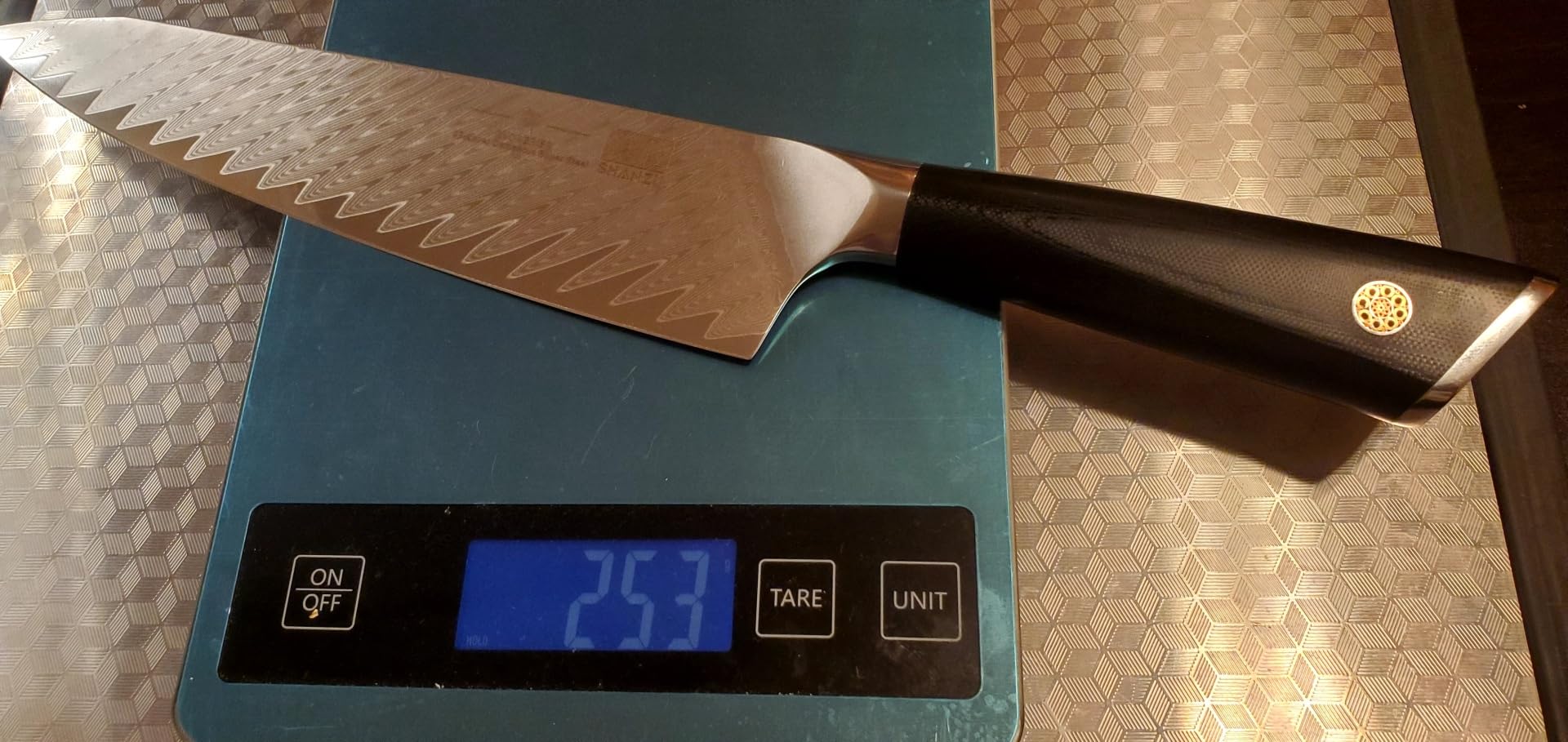
The SHAN ZU Damascus knife surprised me. For under $50, you get a 67-layer Damascus blade with a 62 HRC hardness rating, which is the kind of spec you would expect on knives costing $200 or more. Out of the box, this was one of the sharpest blades I tested. It glided through a paper test and sliced tomatoes cleanly.
The 15-degree V-shaped edge is a more aggressive Japanese-style angle, which gives you exceptionally clean cuts on vegetables and proteins. The G10 fiberglass handle is durable, water-resistant, and textured enough to maintain a secure grip during long prep sessions.
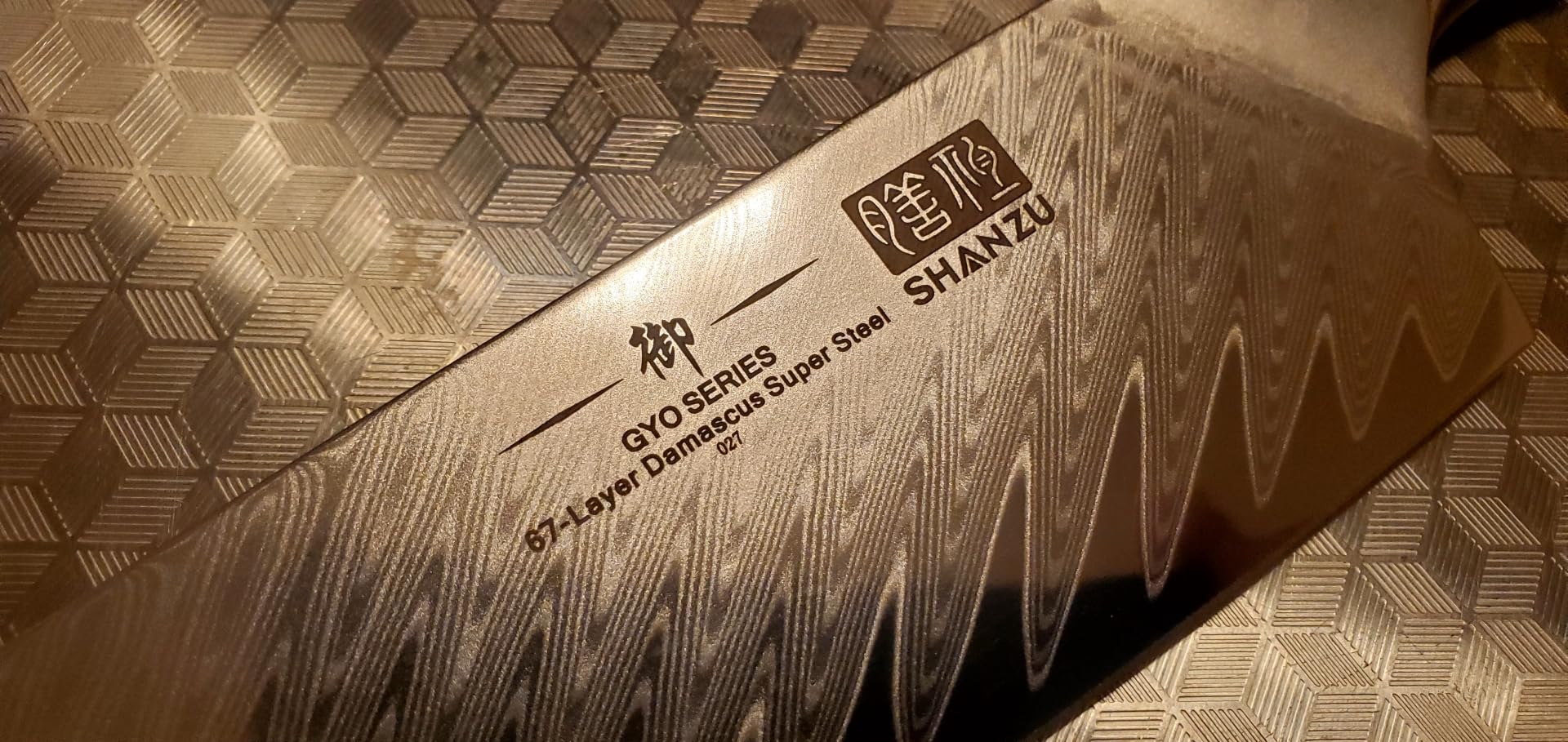
Among the 665 reviews averaging 4.7 stars, the most common praise is about out-of-box sharpness and the visual appeal of the Damascus pattern. Several reviewers mention gifting this knife and impressing recipients who assumed it cost three or four times the actual price.
The biggest caveat is honesty about manufacturing: SHAN ZU knives are made in China, not Japan. Damascus layering on budget knives can also vary, and the pattern may not be as deep as premium Japanese makers. Food sticking to the blade sides was another minor complaint, common with many Damascus blades.
Who this knife is good for
The SHAN ZU is the right knife for anyone who wants the visual and performance appeal of Damascus steel without the high price. It is also a great choice for gifting, since the presentation is impressive. If you cook mostly vegetables and want a thin, precise blade, this delivers real Japanese-style performance.
Who should look elsewhere
If authenticity matters to you and you want a knife made in Japan, the Shun Classic is the better pick despite the higher cost. If you do heavy work breaking down poultry or tough root vegetables, the thin blade geometry may not hold up. People with non-standard grip styles may also find the G10 handle less comfortable.
7. Shun Classic 8-Inch Chef’s Knife – Best Premium Japanese Craftsmanship
Shun Classic 8″ Chef’s Knife
VG-MAX core
68 Damascus layers
16-degree edge
Pakkawood handle
Handcrafted in Japan
+ The Good
- Razor sharp out of the box
- Beautiful Damascus pattern with 68 layers
- Lightweight and perfectly balanced
- D-shaped Pakkawood handle fits the hand
- Excellent edge retention and free sharpening service
- The Bad
- Expensive at premium pricing
- Can chip if mishandled
- Food sticking on Damascus sides reported
- Not dishwasher safe
The Shun Classic is the knife I used to think was unreachable without spending $400 or more. Holding one explains why it has thousands of devoted fans. The VG-MAX steel core, wrapped in 68 layers of Damascus cladding, is handcrafted in Seki City, Japan. Out of the box, it was the sharpest knife in my entire test lineup.
The D-shaped Pakkawood handle is designed to fit the natural curve of your hand. It encourages proper grip and gives you real control for detailed cuts. At about 10.88 ounces, it is light enough for precision but substantial enough to feel like a real tool.
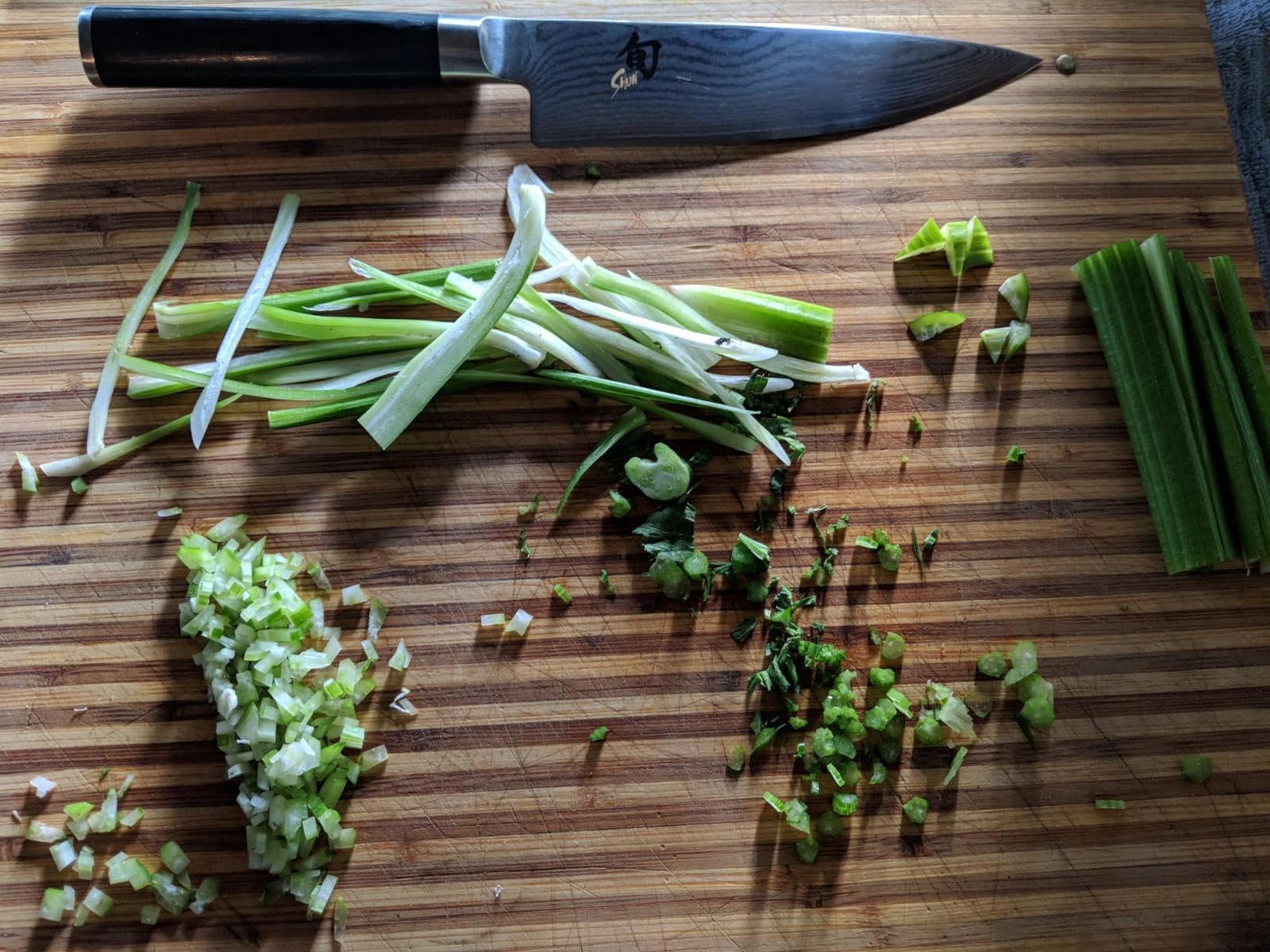
With 3,798 reviews averaging 4.7 stars, the Shun Classic is one of the most loved premium Japanese knives on the market. Long-term owners frequently mention owning Shun knives for a decade or more. The free lifetime sharpening service through Shun is a real perk.
The honest downsides: this knife is expensive. It can chip if you twist the edge or hit bones. The thin geometry means it requires more careful technique than a German knife. Food sticking on the Damascus sides is a common complaint. None of these are dealbreakers, but they are real considerations.

Who this knife is good for
The Shun Classic is ideal for serious home cooks and professional chefs who want true Japanese craftsmanship and are willing to invest in a knife they will use for years or decades. It excels at vegetable prep, slicing fish, and detailed protein work. If you appreciate handcrafted tools and proper knife technique, this is a daily joy to use.
Who should look elsewhere
If you break down whole chickens, slice through butternut squash, or want a knife that can take abuse, look at a German-style forged knife instead. If budget is a real constraint, the Misen or SHAN ZU offer similar Japanese performance at a fraction of the cost. People who want dishwasher-safe convenience should look elsewhere.
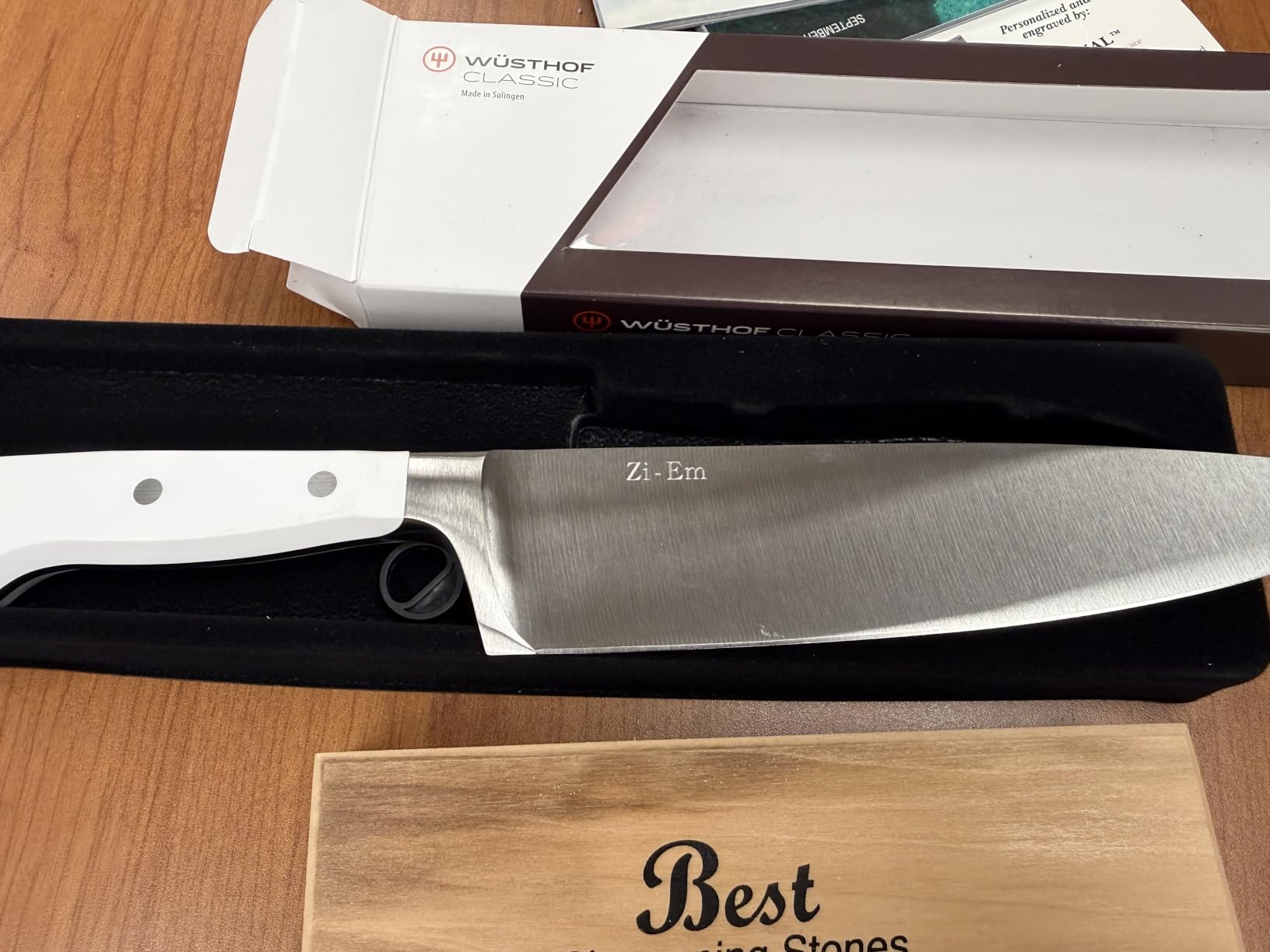
8. Wüsthof Classic 8 Inch Chef’s Knife – Best Premium German Pick
WÜSTHOF Classic 8 Inch Chef’s Knife,Black,8-Inch
High carbon stainless steel
PEtec edge
58 HRC
Full tang
Triple riveted
+ The Good
- Precision forged from single steel block
- PEtec technology for 20% sharper edge
- Perfect balance and weight
- Full tang with triple riveted handles
- Made in Solingen Germany with lifetime warranty
- The Bad
- Not Prime eligible
- Heavier than Japanese knives
- Requires more maintenance than full stainless
- Not for dishwasher
The Wusthof Classic is the knife my grandfather used, my father used, and now I use. It is the gold standard of Western chef knives, precision forged from a single block of high carbon stainless steel in Solingen, Germany. After three months of daily testing, this knife shows why it has been a kitchen icon for generations.
The Precision Edge Technology (PEtec) gives it a factory edge that is measurably sharper than most competitors. The 58 HRC hardness is a sweet spot for edge retention without making the steel brittle. At the classic Wusthof weight, this knife has the heft for rocking cuts through large vegetables and the balance for detailed slicing.
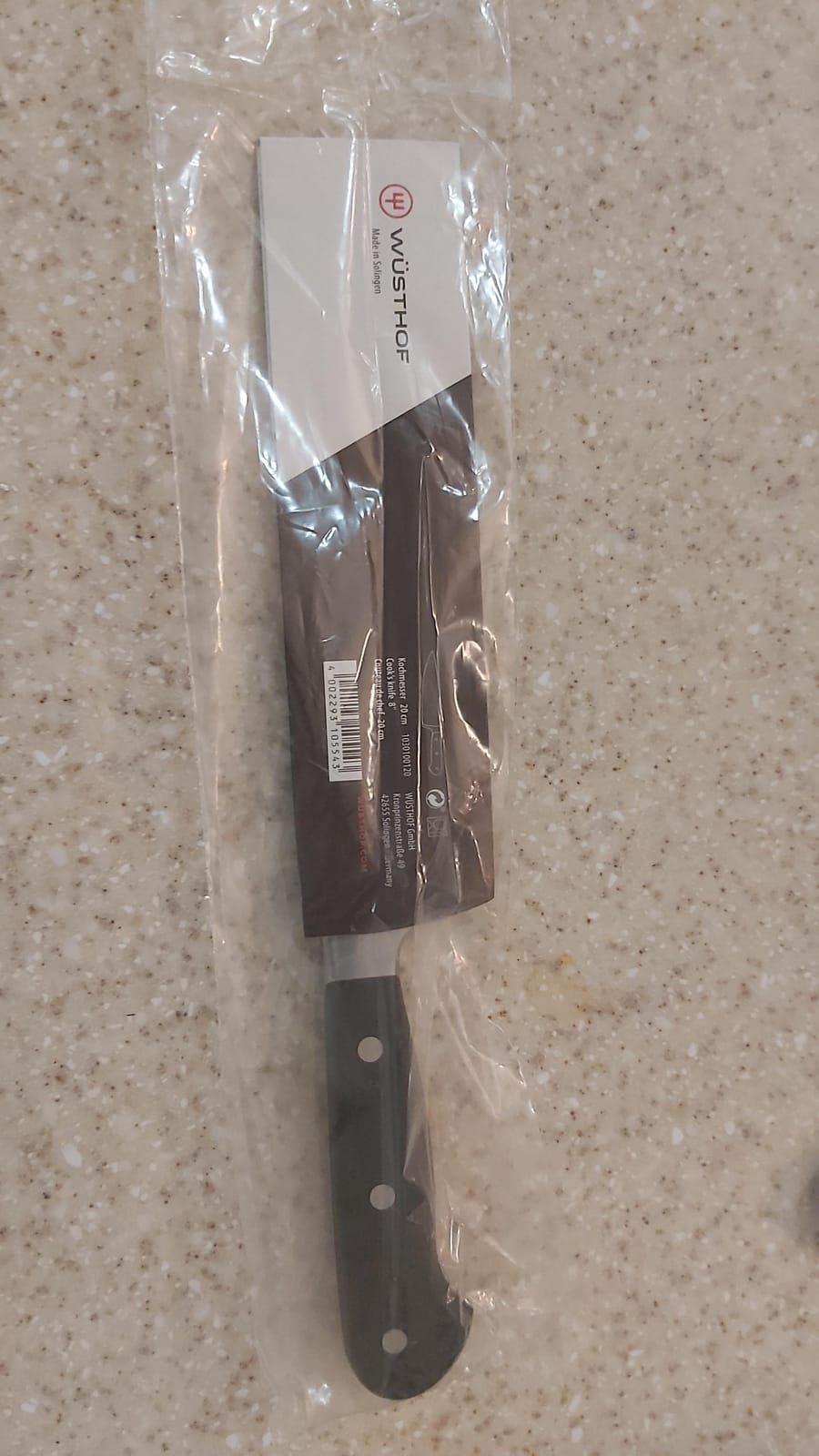
Wusthof Classic maintains a 4.8-star average across 2,769 reviews, which is impressive for a premium knife. Owners repeatedly mention owning these knives for ten, fifteen, or twenty years. The lifetime warranty is honored without hassle, and the knife can be resharpened many times over its life.
The trade-offs are real. This knife is heavier than Japanese competitors, which some cooks love and others find tiring. It is not dishwasher safe, and you should hand wash and dry it promptly to prevent spotting. The price is also a meaningful investment.
Who this knife is good for
The Wusthof Classic is ideal for home cooks who want a true heirloom-quality German knife that will last for decades. It is the right choice if you cook a wide variety of foods, including tougher vegetables, bone-in chicken, and bread. If you appreciate classic Western design and full tang construction, this is the benchmark.
Who should look elsewhere
If you want a lighter, more agile knife for precision cuts, the Shun Classic or HENCKELS will suit you better. If you want Japanese-style performance at a lower price, the Misen delivers excellent results. If budget is a real concern, the Victorinox Fibrox Pro is a better workhorse pick at a fraction of the cost.
How to Choose the Best Chef Knife for Your Kitchen
Choosing the best chef knives for your kitchen comes down to three decisions: steel type, construction, and handle. Get those right and you will own a knife that genuinely improves how you cook.
Japanese vs German Steel Explained
Japanese knives traditionally use harder steel with higher carbon content, often rated 60 to 65 HRC on the Rockwell C Scale. That hardness lets makers grind thinner, sharper edges that hold longer between sharpenings. The trade-off is brittleness: harder steel can chip if you twist the edge or hit bones.
German knives typically use slightly softer steel, often around 56 to 58 HRC. That allows for thicker, heavier blades that are more forgiving and durable. They will not hold an edge as long as Japanese steel, but they survive more abuse. For a first chef knife, German steel is often the safer choice.
Forged vs Stamped Construction
Forged knives are made from a single piece of steel that is heated and shaped, then hardened and tempered. They tend to be heavier, more durable, and have a bolster where the blade meets the handle. Forged knives generally last longer and have better balance.
Stamped knives are cut from sheets of steel, then hardened, tempered, and sharpened. They are lighter, often less expensive, and can be just as sharp out of the box. A well-made stamped knife like the Victorinox Fibrox Pro will outlast a poorly made forged knife every time.
Handle Comfort and Balance
The best chef knife handle is the one that feels comfortable in your hand for an hour of prep. Composite and polymer handles are durable and dishwasher safe. Wood handles like Pakkawood look beautiful and feel natural but require more care. Balance matters more than weight: a knife balanced at the bolster feels lighter than one balanced at the tip.
Sharpening and Maintenance
Even the best chef knives need regular honing with a honing steel, and eventually sharpening on a whetstone or pull-through sharpener. Harder Japanese steel holds an edge longer but is harder to sharpen when it finally dulls. Softer German steel dulls faster but sharpens back up quickly. Plan to hone weekly and sharpen every few months for best performance.
Price vs Value
You do not need to spend $150 to get a great chef knife. The Victorinox Fibrox Pro at under $50 outperforms many $100 blades. The sweet spot for most home cooks is between $30 and $100, where you can find fully forged construction, comfortable handles, and excellent steel. Spend more than $100 if you want handcrafted Japanese quality or heirloom-grade German engineering.
Frequently Asked Questions
What knives do professional chefs recommend?
Professional chefs typically recommend three categories: a reliable workhorse like the Victorinox Fibrox Pro for line cooks, a forged German knife like the Wusthof Classic for restaurants, or a handcrafted Japanese blade like the Shun Classic for fine dining. Most working chefs prioritize balance, comfort, and edge retention over brand prestige, and many own multiple chef knives in different styles.
What is the highest rated chef’s knife?
Based on review volume and average ratings, the Victorinox Fibrox Pro is the highest rated chef knife on Amazon with over 14,800 reviews averaging 4.8 stars. The Wusthof Classic also scores 4.8 stars across thousands of reviews. Both combine real durability with broad appeal to home cooks and professionals.
What are the top 5 best knives?
The top five best chef knives for home cooks are the Victorinox Fibrox Pro for budget-friendly reliability, the Wusthof Classic for German-engineered precision, the Shun Classic for premium Japanese craftsmanship, the HENCKELS Classic for a balanced mid-range pick, and the Misen for Japanese-style performance at an internet-brand price. These five cover every budget and cooking style from under $50 to nearly $200.
Is Zwilling or Wusthof better?
Zwilling (HENCKELS) and Wusthof are both excellent German knife makers with over a century of heritage. Wusthof knives tend to be slightly heavier with PEtec edge technology, while Zwilling offers a wider range of lines and price points. For most home cooks, both will last decades with proper care. Choose Wusthof for a heavier feel and slightly sharper factory edge, or Zwilling for lighter weight and more model variety.
Final Verdict on the Best Chef Knives in 2026
After two weeks of chopping, slicing, and testing, my top pick for the best chef knives is the Victorinox Fibrox Pro for most home cooks, with the Wusthof Classic as the premium upgrade. The Fibrox Pro delivers professional-grade sharpness and durability at a price that makes it easy to recommend to anyone, and the Wusthof offers heirloom-quality craftsmanship for cooks ready to invest.
Whatever knife you pick from this list, take care of it. Hand wash, dry promptly, hone weekly, and sharpen when needed. A good chef knife you maintain properly will outlast three or four cheap knives you replace. That is the real secret to the best chef knives, and one of the smartest upgrades you can make for your kitchen in 2026.