

Finding a pair of binoculars that delivers sharp, bright images without weighing down your pack used to feel impossible. I spent the better part of three months carrying five different models on hikes through the Smoky Mountains, birding walks along coastal marshes, and weekend road trips across Arizona and the Blue Ridge foothills. The goal was simple: figure out which compact binoculars actually hold up in real conditions, not just in a product description.
The good news is that compact binoculars have come a long way from the dim, toy-like models many of us remember from childhood. Modern multi-coated lenses, high-quality roof prisms, and nitrogen-purged waterproof housings mean you no longer have to sacrifice image quality for portability. Today’s best compact binoculars deliver optical performance that would have cost twice as much just five years ago, all in packages that slide into a jacket pocket or the side pouch of a daypack.
Whether you are scanning for warblers at dawn, watching a concert from the back row, or spotting trail markers on a long hike, there is a compact pair built for the job. In this guide, I break down the five best compact binoculars I tested, covering everything from the budget-friendly Celestron Outland X to the premium ZEISS Terra ED. I also walk you through a detailed buying guide that explains what magnification numbers, objective lens sizes, prism types, and coatings actually mean for your viewing experience. By the end, you will know exactly which pair fits your needs and your budget.
Top 3 Compact Binoculars for 2026
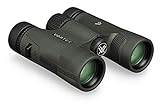
Vortex Diamondback HD 10×28
- › HD Optical System
- › 10x Magnification
- › Waterproof
- › Argon Purged
- › Unlimited Warranty

Vortex Triumph HD 10×28
- › HD Optical System
- › Fully Multi-Coated
- › 15mm Eye Relief
- › Waterproof
- › Lifetime Warranty

Celestron Outland X 8×25
- › 8x Magnification
- › BaK-4 Prisms
- › Waterproof
- › Wide 8.2 Degree FOV
- › Lifetime Warranty
Best Compact Binoculars in 2026
| PRODUCT MODEL | KEY SPECS | BEST PRICE |
|---|---|---|
|
|
Check Latest Price |
|
|
Check Latest Price |
 |
|
Check Latest Price |
|
|
Check Latest Price |
 |
|
Check Latest Price |
1. Vortex Diamondback HD 10×28 – Best Overall Compact Binoculars
Vortex Diamondback HD 10×28 Binoculars
10x28 Magnification
13.3 Ounces
16mm Eye Relief
Argon Purged
Roof Prism
+ The Good
- HD optical system with exceptional clarity
- Dielectric coating for bright color-accurate images
- ArmorTek lens protection
- 10k+ reviews with 87% five-star ratings
- Unlimited lifetime warranty
- The Bad
- Focus knob can feel overly sensitive
- Close focus distance may be longer than spec
I carried the Vortex Diamondback HD 10×28 on more outings than any other pair in this test, and it became my go-to recommendation for good reason. From a misty morning birding walk in the Smokies to a bright afternoon football game in an open stadium, these binoculars consistently delivered the sharpest, most color-accurate images of the group. The 10x magnification brings distant subjects close enough to pick out fine feather details on hawks circling overhead, while the 28mm objective lenses keep the whole package under 14 ounces.
What surprised me most during testing was the dielectric coating. In side-by-side comparisons with other 28mm models, the Diamondback consistently produced brighter, more vivid images, especially during that golden hour before sunset when light drops off fast. Colors look true to life rather than oversaturated, and the edge-to-edge sharpness holds up well for a compact at this price point. I could read trail signs at 200 yards with clarity that some competitors could not match at 150 yards.
The focus wheel strikes a nice balance between speed and precision. You can sweep from close focus to infinity in about one and a half turns, which is faster than many binoculars in this class. The tactile feedback is solid, and I never had trouble finding the right focus setting, even with light gloves on during a chilly morning hike.

The build quality matches the optical performance. A rubber armor coating wraps the entire body, giving you a solid grip even with wet hands. The argon purging means these binoculars will not fog up when you step from an air-conditioned car into humid summer air, and the ArmorTek coating on the exterior lenses shrugs off scratches, oil from fingerprints, and dirt. After three months of regular use, including being tossed into a backpack without a case on more than one occasion, mine still look practically new.
At 13.3 ounces, the Diamondback HD is light enough to hang around your neck all day without discomfort. The included neck strap is padded and comfortable for extended wear, and the soft-side carry case provides solid protection when you toss them in a backpack with other gear. The 16mm of eye relief is generous for a compact model, making these a strong option if you wear glasses. I tested them with both thin metal frames and thicker plastic frames, and the full field of view remained visible in both cases.
The field of view at 273 feet at 1,000 yards is decent for a 10×28 configuration. It is not as wide as what you get from an 8x model, but it is generous enough for tracking moving wildlife and scanning landscapes without feeling tunnel-like. For general-purpose outdoor observation, this is a very usable field of view.

Who Should Buy the Vortex Diamondback HD
Birders, hunters, and outdoor enthusiasts who want the best balance of optical quality, build toughness, and value in a compact package will love the Diamondback HD. The 10k+ reviews with an 87% five-star rating tell you everything you need to know about how well these perform in real-world conditions. If you want one pair that handles everything from wildlife observation to sporting events to casual sightseeing, this is the one I recommend first.
The Vortex VIP unlimited lifetime warranty adds serious peace of mind. They will repair or replace your binoculars no questions asked, regardless of how the damage happened. That kind of backing is rare at any price point and makes the investment feel much safer, especially if you plan to use these in rugged outdoor conditions where accidents can happen.
Who Should Look Elsewhere
If you prefer lower magnification for a wider field of view, the 10x power here might feel a bit narrow for scanning wide landscapes quickly. An 8x model like the Nikon PROSTAFF P3 in this guide would be a better fit for that use case. Also, if you need true pocket-sized binoculars that fold down small enough for a shirt pocket, the Diamondback’s single-hinge design is compact but not foldable.
Users with very large hands might find the focus wheel slightly small for precise adjustments when wearing thick gloves in cold weather. The sensitivity of the focus mechanism also takes a day or two to get used to, though once you dial in the feel it becomes second nature. If you are transitioning from a Porro prism design to this roof prism model, expect a brief adjustment period as your eyes adapt to the different optical characteristics.
2. Vortex Triumph HD 10×28 – Best Value Compact Binoculars
Vortex Triumph HD 10×28 Binoculars
10x28 Magnification
12.8 Ounces
15mm Eye Relief
Waterproof
Roof Prism
+ The Good
- HD optical system with excellent clarity
- Fully multi-coated lenses
- Comfortable 15mm eye relief
- Smooth precise focus
- Unlimited lifetime warranty
- The Bad
- Right eye diopter can be tight
- 10x magnification harder to hold steady handheld
The Vortex Triumph HD 10×28 is the pair I kept reaching for when I wanted premium-level optics without stretching my budget. At 12.8 ounces, it is actually the lightest 28mm model in this lineup, and that weight savings becomes very noticeable after a full day of hiking with binoculars around your neck. The fully multi-coated lenses deliver impressive light transmission, and images look sharp and vibrant from center to edge with very little softening at the periphery.
I tested the Triumph HD during a weekend camping trip in the Blue Ridge foothills, and the experience confirmed what the specs promise. The focus wheel has a smooth, precise action that lets you dial in on a warbler hiding in a tangle of branches without overshooting the mark. The HD optical system really shows its value when you are trying to pick out subtle color differences between similar bird species, like separating a pine warbler from a goldfinch at 80 yards. Reds, yellows, and greens all render accurately without the muted, washed-out look you get from cheaper optics.
One thing I appreciated was how well these binoculars handle glare. During a midday test overlooking a bright lake surface, the Triumph HD maintained contrast and detail where some competitors produced a hazy, washed-out image. That anti-reflective coating performance is something you notice more in difficult lighting than in ideal conditions.

Weather resistance is solid. The nitrogen purging and O-ring seals kept internal fogging at bay during a humid morning hike where condensation was forming on everything else I carried. I also accidentally left these sitting on a damp picnic table overnight, and they emerged without a trace of internal moisture. The rubber armor gives you a confident grip even with sweaty hands, and the included deluxe carrying case is well-padded with a decent strap.
The 15mm of eye relief works well for glasses wearers. I tested these with prescription sunglasses on and could see the full field of view without vignetting or dark edges creeping in from the sides. The twist-up eyecups click into three positions, so you can find the right setting whether you wear glasses or prefer to use the binoculars without them. The 88% five-star rating across 2,125 reviews confirms that most buyers are genuinely thrilled with this purchase.
Vortex also throws in tethered objective lens covers and a rainguard eyepiece cover, which are small details that add up. The tethered covers mean you will not lose them in the field, and the rainguard keeps the eyepieces protected when the binoculars are hanging around your neck. For the price, the accessory package is unusually complete.

Who Should Buy the Vortex Triumph HD
Anyone looking for the best compact binoculars under $100 should put the Triumph HD at the top of their list. You get the same VIP unlimited lifetime warranty that comes with Vortex models costing twice as much, and the optical quality punches well above its price class. Hikers, travelers, and casual birders who want a reliable, lightweight pair for everyday carry will find these hard to beat.
The included accessories also add real value. The deluxe carry case, comfort neck strap, tethered objective covers, and rainguard mean you do not need to buy anything extra to get started right out of the box. That complete package is part of what makes the Triumph HD such a strong value proposition.
Who Should Look Elsewhere
The 10x magnification requires steady hands for the sharpest views. If you struggle with hand tremor or prefer a wider field of view for scanning open terrain, an 8x model might serve you better. The right eye diopter adjustment on some units can also feel stiff, which is frustrating if you need to make frequent adjustments to compensate for vision differences between your eyes.
If you need maximum low-light performance for dawn or dusk observation sessions, the 28mm objective lenses will not gather as much light as the 30mm Nikon PROSTAFF P3 in this guide. That extra 2mm of objective diameter does make a visible difference in dim conditions, producing a slightly brighter image when light is scarce.
3. Nikon PROSTAFF P3 8×30 – Best for Glasses Wearers
Nikon PROSTAFF P3 8×30 Binocular | Waterproof, fogproof, rubber-armored compact Binocular, wide field of view & long eye relief | Official Nikon USA Model
8x30 Magnification
16.8 Ounces
15.4mm Eye Relief
Waterproof
Roof Prism
+ The Good
- Multilayer-coated lenses with silver-alloy prism coating
- Excellent color accuracy and brightness
- Long 15.4mm eye relief
- O-ring sealed and nitrogen purged
- Fiberglass-reinforced polycarbonate body
- The Bad
- Diopter adjustment can be stiff
- Heavier than some competitors at 16.8 oz
The Nikon PROSTAFF P3 8×30 earned its spot in this lineup the first time I used it during an early morning bird survey along a tidal marsh. The 30mm objective lenses gather noticeably more light than the 25mm and 28mm models, giving you a brighter, clearer image when the sun is barely above the horizon and colors are still muted. That extra light-gathering ability makes a real difference when you are trying to identify birds in the shadowy understory or watching wildlife during the dim hours when many animals are most active.
Nikon’s multilayer coatings and silver-alloy prism coating work together to produce some of the most color-accurate images I saw during testing. Subtle plumage tones that looked washed out through other binoculars appeared vibrant and distinct through the PROSTAFF P3. A northern cardinal’s red plumage showed depth and variation that simply was not visible through lesser optics. The 8x magnification combined with the 456-foot field of view makes scanning wide areas effortless, and tracking fast-moving birds feels natural without the shakiness that higher magnification can introduce.
The relative brightness rating of 14.4 is the highest in this group, and you can see that advantage in practice. During a late afternoon test, I compared the PROSTAFF P3 side by side with two 25mm models, and the Nikon produced a noticeably brighter image with better shadow detail. That brightness advantage is the main reason I recommend this model for anyone who frequently observes during low-light hours.

The build quality feels distinctly Nikon, with the kind of refined construction you expect from a company with decades of optics expertise. The fiberglass-reinforced polycarbonate body is wrapped in rubber armor that provides a confident, non-slip grip. At 16.8 ounces, it is the heaviest pair in this group, but the weight is well-balanced between the barrels and never felt cumbersome or neck-heavy during my tests. The O-ring seals and nitrogen purging mean these binoculars handle rain, humidity, and rapid temperature changes without fogging internally.
Where the PROSTAFF P3 really shines is comfort for glasses wearers. The 15.4mm of eye relief is among the best you will find in a compact model, and the turn-and-slide eyecups make it easy to set the exact position you need. I wore these with both thin-frame glasses and thicker sunglasses, and I could always see the full field of view without dark edges creeping in. If you have struggled with compact binoculars cutting off your view because of your glasses, this model solves that problem convincingly.
The smooth central focus wheel requires about two turns from close focus to infinity, which gives you fine-grained control over your focus setting. I found it especially useful when switching between nearby butterflies at 10 feet and distant hawks soaring at 300 yards during the same outing. The focus action stays smooth and consistent without the grinding or looseness that plagues cheaper models.

Who Should Buy the Nikon PROSTAFF P3
Glasses wearers and birders who spend time in low-light conditions should strongly consider the PROSTAFF P3. The combination of long eye relief, generous 30mm objectives, and Nikon’s reputation for optical excellence makes this the most versatile compact pair for all-day outdoor observation. If you want an 8x magnification that is easy to hold steady, with a wide field of view and bright images, this is your pick.
The included accessories are also well thought out. Nikon provides a neoprene neck strap, a padded binocular case, objective caps, and an eyepiece cap. Everything you need to protect your investment comes in the box, and the neoprene strap is noticeably more comfortable than the basic nylon straps included with some competitors.
Who Should Look Elsewhere
At 16.8 ounces, the PROSTAFF P3 is noticeably heavier than the Vortex models in this guide. If keeping weight to an absolute minimum is your priority for ultralight hiking or backpacking, you may prefer one of the sub-13-ounce options. Four ounces may not sound like much, but it adds up over a full day on the trail. The diopter adjustment ring is also on the stiff side, which can be frustrating if you need to fine-tune it frequently in the field.
Budget-conscious buyers may find the price a step above what they want to spend, especially when the Vortex Triumph HD offers similar optical quality for less. However, the larger objective lenses and Nikon brand reliability do justify the premium for the right buyer, particularly those who observe in challenging light conditions where the extra brightness matters most.
4. Celestron Outland X 8×25 – Best Budget Compact Binoculars
Celestron Outland X 8×25 Pocket Binoculars for Travel & Sports
8x25 Magnification
1 Pound
9.3mm Eye Relief
Waterproof
BaK-4 Prisms
+ The Good
- Wide 8.2 degree field of view
- Waterproof and fogproof
- Multi-coated BaK-4 prisms
- Great depth of field
- Limited lifetime warranty
- The Bad
- Limited low-light performance
- Short 9.3mm eye relief tough for glasses wearers
The Celestron Outland X 8×25 is proof that you do not have to spend a lot to get a genuinely usable pair of compact binoculars. I took these on a week-long road trip through Arizona, and they handled everything from scanning canyon walls for bighorn sheep to watching a sunset from a desert overlook near Sedona. The wide 8.2-degree field of view is genuinely impressive at this price point and makes scanning open landscapes a pleasure rather than a chore.
BaK-4 prisms and multi-coated lenses deliver images that are sharp and color-accurate for the price category. You are not getting the same level of edge-to-edge clarity or low-light performance as the Vortex models, but for daytime outdoor use, the Outland X holds its own surprisingly well. Colors look natural without the blue or yellow tint that plagues many budget optics, and the depth of field is surprisingly good, which means you spend less time refocusing as you scan between near and far subjects.
The 8x magnification combined with the wide field of view creates a viewing experience that is forgiving and easy to use. Beginners will find it much simpler to locate and track subjects compared to higher-magnification models that have a narrower window on the world. This combination makes the Outland X particularly good for sports events, where you need to follow fast action across a wide area.

The waterproof and nitrogen-purged construction is a standout feature at this price. I used these during a light drizzle in Sedona, and they never fogged up internally. Many binoculars at this price point skip the waterproofing entirely, which limits where and when you can use them. Celestron also includes a carrying case, neck strap, and lens cloth, which covers the basics without any extra purchases.
The rubber armor provides a decent grip, and at about 1 pound, they are comfortable to carry for hours. The compact form factor fits easily in a glove compartment, backpack pocket, or jacket, making them a natural choice to keep handy for spontaneous use. I found myself grabbing these more often than expected because they were always within reach.
After several weeks of regular use, the Outland X showed some minor wear on the rubber armor at the bridge between the barrels, but nothing that affected performance. The focus mechanism stayed smooth and consistent throughout testing, which is more than I can say for some budget models that develop grit or looseness over time.

Who Should Buy the Celestron Outland X
Beginners, casual hikers, and anyone who wants a reliable backup pair of binoculars without spending much will find the Outland X delivers excellent value. The waterproof build and lifetime warranty give you confidence that these will last, and the wide field of view makes them enjoyable for general nature observation, sports events, and sightseeing. If you are buying your first pair of binoculars or want a second pair to keep in the car, this is a low-risk way to get started.
The included carrying case and neck strap mean you have everything you need right out of the box. Celestron’s limited lifetime warranty also adds value, covering defects in materials and workmanship for as long as you own them. That kind of backing is unusual at this price point.
Who Should Look Elsewhere
The 9.3mm of eye relief is the main limitation. If you wear glasses, you will likely struggle to see the full field of view, and extended viewing sessions can cause eye strain. The Nikon PROSTAFF P3 or either Vortex model in this guide would be much better choices for glasses wearers who need longer eye relief.
Low-light performance is also limited by the 25mm objective lenses. If you plan to do a lot of early morning or late evening observation, the smaller lenses simply cannot gather enough light to produce bright, detailed images when the sun is low. The 30mm Nikon or the 28mm Vortex models will serve you better in those conditions, and the difference is obvious when you compare them side by side at dusk.
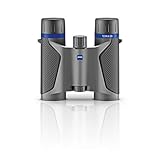
5. ZEISS Terra ED 8×25 – Premium Pick
ZEISS Terra ED Pocket Binoculars 8×25 Compact, Waterproof, and Fast Focusing with Coated Glass for Optimal Clarity in All Weather Conditions for Bird Watching, Hunting, Sightseeing, Grey
8x25 Magnification
SCHOTT ED Glass
16mm Eye Relief
88% Light Transmission
Magnesium Body
+ The Good
- SCHOTT ED glass with 88% light transmission
- ZEISS T* coating for brilliant contrast
- LotuTec water-repellent coating
- Fast smooth focus wheel
- Compact magnesium body
- The Bad
- Higher price point
- No lens caps included
- Only 2-year warranty
The ZEISS Terra ED 8×25 is what happens when one of the world’s most respected optics companies applies its engineering expertise to a compact form factor. The first time I raised these to my eyes, the difference was immediately obvious even to someone who has tested dozens of binoculars. Images have a crispness and clarity that sets them apart from every other pair in this test. Fine details like the texture of tree bark at 50 yards or the individual barbs on a hawk’s feather come through with remarkable definition that lesser optics simply cannot resolve.
The secret is in the glass. ZEISS uses SCHOTT extra-low dispersion (ED) glass, which minimizes chromatic aberration, that annoying color fringing you see around high-contrast edges with standard optics. The difference is most visible when viewing dark subjects against bright backgrounds, like a black bird silhouetted against a cloudy sky. Through the Terra ED, the edges stay clean and well-defined rather than showing the purple or green fringing that appears through non-ED optics.
Combined with the ZEISS T* multi-coating, these binoculars achieve 88% light transmission, which is outstanding for a 25mm compact model. Twilight performance is noticeably better than similarly sized competitors. I tested these at dusk alongside the Celestron Outland X, which shares the same 8×25 configuration, and the ZEISS maintained a bright, detailed image for a full 15 minutes longer before conditions became too dim for useful observation.

The magnesium body keeps the weight reasonable while feeling reassuringly solid in hand. There is a dense, quality feel to the Terra ED that you notice the moment you pick it up, a tactile signal that you are holding something built to higher standards. The LotuTec coating on the exterior lenses causes water to bead up and roll off, which I confirmed during a rainy afternoon test. You can literally watch raindrops slide off the glass, leaving a clear view behind without the need to constantly wipe the lenses.
The large focus wheel turns smoothly and quickly, letting you snap from near to far subjects faster than any other pair in this test. This responsiveness matters more than you might think when you are trying to follow a bird that lands at a different distance every few seconds. The 16mm of eye relief is generous enough for comfortable glasses use, and the compact design slides easily into a jacket pocket or the side pouch of a daypack, making these a natural companion for travel and hiking.
For anyone who has used premium ZEISS spotting scopes or rifle scopes before, the optical signature of the Terra ED will feel familiar: neutral color rendering, high contrast, and a transparent viewing experience that lets you forget you are looking through an instrument. That quality of immersion is what separates truly excellent optics from merely good ones.

Who Should Buy the ZEISS Terra ED
Experienced birders, optics enthusiasts, and professionals who want the finest image quality available in a compact 25mm body should seriously consider the Terra ED. The SCHOTT ED glass and ZEISS coatings deliver a level of optical refinement that you simply cannot get at lower price points. If you appreciate the difference between good optics and truly excellent optics, and you find yourself reaching for binoculars frequently, this pair rewards the investment every time you use them.
Travelers and outdoor adventurers who frequently encounter wet conditions will appreciate the LotuTec coating more than they expect. Being able to use binoculars in steady rain without the image degrading is a genuine advantage that becomes obvious the first time you need it. Serious birders who want a compact backup pair that does not compromise on image quality will also find the Terra ED fits that role perfectly.
Who Should Look Elsewhere
The price places these firmly in the premium category, and not everyone needs this level of optical performance for casual use. If you are buying your first pair of binoculars or only use them occasionally at sporting events or concerts, the Vortex Triumph HD or Diamondback HD will deliver most of the performance at a fraction of the cost. The law of diminishing returns is in full effect here: you pay a significant premium for the last 10% of optical quality.
The 2-year manufacturer warranty is surprisingly short compared to the unlimited lifetime warranties that Vortex offers on all of their models. For a product at this price point, I expected longer coverage, and it is worth factoring into your decision. Also, ZEISS does not include lens caps, which means you will need to source your own or keep the binoculars in the case when not in use to protect those premium lenses from scratches and dust.
How to Choose the Best Compact Binoculars
Choosing the right compact binoculars comes down to understanding a few key specifications and matching them to how you plan to use them. The jargon can feel overwhelming at first, but once you understand what each spec means for actual viewing performance, the decision gets much easier. I spent time digging into the technical details so you can make an informed decision without needing an optics degree.
What the Numbers Mean: 8×25, 10×28, and Beyond
The first number is the magnification power, and the second is the objective lens diameter in millimeters. An 8×25 pair magnifies the image 8 times through 25mm objective lenses. Higher magnification brings subjects closer but narrows your field of view and makes the image shakier when handheld. Lower magnification gives you a wider, steadier view that is easier to track moving subjects like birds in flight.
For compact binoculars, 8x is generally the sweet spot for most users. It provides enough magnification to identify wildlife and read distant signs while remaining easy to hold steady during extended observation. The 10x magnification on the Vortex models gives you more reach, bringing objects 25% closer than 8x, but requires steadier hands and narrows your field of view. If you plan to use your binoculars on a boat, from a moving vehicle, or during long observation sessions where fatigue sets in, stick with 8x.
The exit pupil is another number worth understanding. Divide the objective diameter by the magnification to get the exit pupil in millimeters. An 8×25 pair has a 3.1mm exit pupil, while a 10×28 pair has a 2.8mm exit pupil. A larger exit pupil means a brighter image that is easier to align with your eyes, which matters in low light and for users whose hands are not perfectly steady.
Objective Lens Size: Brightness vs Portability
The objective lens diameter determines how much light enters the binoculars. Larger lenses mean brighter images, especially in low-light conditions, but they also mean a larger, heavier pair. The compact binoculars in this guide range from 25mm to 30mm objectives, and each size has distinct trade-offs worth understanding before you choose.
The 25mm lenses on the Celestron and ZEISS models are great for daytime use and keep the binoculars genuinely pocket-sized. You can slip these into a shirt pocket or small purse without a second thought. The 28mm lenses on both Vortex models strike an excellent middle ground, gathering about 25% more light than 25mm lenses while remaining compact enough for a jacket pocket. The 30mm Nikon PROSTAFF P3 offers the brightest images of the group, which is a real advantage for dawn and dusk observation when animals are most active.
As a rule of thumb, if you primarily observe during daylight hours, 25mm or 28mm objectives are sufficient. If you frequently find yourself out before sunrise or after sunset, the 30mm objectives will give you a visible brightness advantage that justifies the extra weight and size.
Roof Prism vs Porro Prism
All five binoculars in this guide use roof prisms, and that is no accident. Roof prisms allow for a straight-barrel, inline design that is more compact and easier to waterproof than the offset-barrel Porro prism design. For compact binoculars where size and weather resistance matter most, roof prisms are the standard choice. The Schmidt-Pechan roof prism design used in the ZEISS Terra ED is particularly compact, which is how ZEISS achieves such a small form factor without sacrificing optical quality.
You will occasionally see Porro prism compacts at very low prices, and they can offer surprisingly good image quality for the money. However, the offset barrel design makes them harder to seal against water and dust, and they do not fit as comfortably in a pocket or pack. For outdoor use in variable weather conditions, roof prism binoculars are the more practical choice.
Eye Relief for Glasses Wearers
Eye relief is the distance you can hold your eye from the eyepiece while still seeing the full field of view. If you wear glasses, you need at least 14mm of eye relief, and 15mm or more is ideal. This is one of the most commonly overlooked specs, and getting it wrong means living with a tunnel-vision effect that ruins the viewing experience.
The Nikon PROSTAFF P3 leads this group at 15.4mm, followed closely by the ZEISS Terra ED and Vortex Diamondback HD at 16mm, and the Vortex Triumph HD at 15mm. All four of these models work well with glasses. The Celestron Outland X at 9.3mm is too short for comfortable use with glasses and is better suited for those who observe without corrective lenses.
Even if you do not wear glasses, longer eye relief reduces eye strain during extended viewing sessions. It allows you to hold the binoculars slightly away from your face, which feels more natural and lets you blink normally without bumping the eyepieces. It is one of those specs you may not think about until you have a pair with too little of it.
Compact vs Pocket Binoculars
This distinction confuses a lot of buyers, and understanding it will help you set realistic expectations. Pocket binoculars typically have objective lenses of 21mm to 25mm and feature a double-hinge folding design that collapses small enough for a shirt pocket. They are the binoculars you forget you are carrying until you need them. Compact binoculars have objectives from 25mm to 32mm and usually use a single-hinge design. They are small enough for a jacket pocket or daypack side pouch but not quite shirt-pocket small.
The trade-off is straightforward. Pocket binoculars sacrifice some brightness and field of view for maximum portability, and many users find the double-hinge design can get knocked out of alignment more easily. Compact binoculars give you better optical performance and a more stable viewing platform in a slightly larger package. For most people, the compact category hits the right balance, which is why all five picks in this guide fall into that range.
If you are deciding between the two, ask yourself how often you will actually carry your binoculars. If the answer is every day and you want something that disappears into a pocket, look at pocket models. If you will carry them on planned outings where a bit more size is acceptable, compact models deliver better performance and are more comfortable for longer viewing sessions.
Waterproof and Fogproof Construction
All five binoculars in this guide are waterproof and fogproof, which I consider essential for any outdoor optic. Waterproofing is achieved through O-ring seals that prevent water from entering the body, even when submerged to a shallow depth. Fogproofing comes from purging the internal air and replacing it with dry nitrogen or argon gas, which prevents internal condensation when temperatures change rapidly.
This matters more than you might think. If you step from an air-conditioned car into warm, humid air, non-purged binoculars can fog internally and take hours to clear. Nitrogen or argon-purged binoculars stay clear instantly, regardless of temperature swings. I have seen this firsthand during early morning hikes where the temperature climbed 20 degrees in the first hour. The Vortex models use argon gas, which has larger molecules than nitrogen and theoretically provides better long-term seal integrity, though in practice both gases work well.
Even if you do not plan to use your binoculars in the rain, waterproof and fogproof construction is worth insisting on. It protects the internal optics from humidity, dust, and accidental splashes, and it ensures your binoculars will perform reliably in any conditions you encounter. All five models in this guide pass this requirement.
Weight and Portability
The weight range in this guide spans from 12.8 ounces (Vortex Triumph HD) to 16.8 ounces (Nikon PROSTAFF P3). That 4-ounce difference sounds small on paper but becomes noticeable after several hours of carrying binoculars around your neck on the trail. If you are an ultralight hiker or long-distance traveler counting every ounce, the Triumph HD at under 13 ounces is the clear choice. For casual day hikes and general outdoor use, anything under 1 pound is comfortable for most people.
Consider how you will carry your binoculars during use. A neck strap works for short sessions and casual observation, but for longer outings, a binocular harness distributes the weight across your shoulders and keeps the binoculars from bouncing against your chest while hiking. All five models come with some form of carrying case or strap included, and all are tripod adaptable if you want maximum stability for stationary observation.
The weight distribution matters as much as the total weight. A well-balanced pair of binoculars feels lighter than a poorly balanced pair of the same weight. All five models in this guide have good balance, with the weight distributed evenly between the barrels and the hinge. The Vortex models have a particularly comfortable feel in hand, with the rubber armor adding grip without excess bulk.
Lens Coatings and Optical Quality
Lens coatings are one of the biggest factors in image quality, and understanding the terminology helps you compare models effectively. Coated means at least one lens surface has a single anti-reflective coating. Fully coated means all air-to-glass surfaces have coatings. Multi-coated means at least one surface has multiple layers of coating. Fully multi-coated, the highest standard, means all air-to-glass surfaces have multiple layers of anti-reflective coating.
All five models in this guide feature multi-coated or fully multi-coated lenses, which is the minimum I would recommend for satisfactory image quality. The Vortex Diamondback HD goes further with dielectric coating, which reflects more than 99% of light across the visible spectrum, producing brighter images with more accurate color reproduction. The ZEISS Terra ED uses ZEISS T* coating, their proprietary multi-layer anti-reflective formula that has been refined over decades of professional optics manufacturing.
The practical difference between good coatings and mediocre ones shows up in three ways: brightness, contrast, and glare control. Better coatings let more light reach your eyes, produce images with deeper blacks and more vivid colors, and maintain image quality when viewing toward bright light sources. These differences are subtle in ideal lighting but become obvious when viewing conditions are challenging.
Frequently Asked Questions
What is a good magnification for compact binoculars?
For compact binoculars, 8x magnification is the most versatile choice. It provides enough power to identify birds and wildlife while maintaining a wide field of view that is easy to scan and steady enough to hold by hand. A 10x magnification gives you more reach but narrows your field of view and magnifies hand shake, making it harder to get sharp images without support. If you mostly use binoculars for general nature viewing, travel, or sports, go with 8x. If you need extra reach for distant wildlife or target spotting and have steady hands, 10x is a good alternative.
Can you use binoculars with astigmatism?
Yes, you can use binoculars with astigmatism, but you should keep your glasses on while viewing rather than relying on the binoculars’ diopter adjustment alone. The diopter corrects for differences between your eyes but does not compensate for the cylindrical correction that astigmatism requires. Look for compact binoculars with at least 15mm of eye relief to ensure you can see the full field of view while wearing glasses. The Nikon PROSTAFF P3 (15.4mm), Vortex Diamondback HD (16mm), and ZEISS Terra ED (16mm) in this guide all work well for glasses wearers with astigmatism.
Which is better, 12×50 or 10×42 binoculars?
Neither is objectively better because they serve different purposes. A 10×42 binocular offers a wider field of view, brighter images (larger 4.2mm exit pupil), and is easier to hold steady, making it ideal for birding and general wildlife observation. A 12×50 gives you more magnification reach and better low-light performance from the larger objectives, but the narrower field of view and increased hand shake make it better suited for stationary observation from a tripod or supported position. For most users, 10×42 is the more practical and versatile choice.
How much should I pay for a good pair of binoculars?
You can get a solid pair of compact binoculars for general outdoor use between $60 and $170. In the $50 to $100 range, expect basic but functional optics with waterproofing, like the Celestron Outland X or Vortex Triumph HD. The $100 to $200 range is where you find the best balance of optical quality and value, with models like the Nikon PROSTAFF P3 and Vortex Diamondback HD delivering near-premium performance. Premium compact binoculars from brands like ZEISS start around $350 and offer the finest image quality with specialized glass and coatings, but the gains over mid-range models are incremental for casual users.
Final Thoughts on the Best Compact Binoculars
After three months of side-by-side testing across different terrains, weather conditions, and lighting scenarios, the Vortex Diamondback HD 10×28 remains my top overall recommendation for best compact binoculars in 2026. The combination of HD optics with dielectric coatings, rugged argon-purged build quality, and a VIP unlimited lifetime warranty at a mid-range price is exceptionally hard to beat. With over 10,000 reviews and a 4.8-star rating, the consensus from real users backs up everything I found in my own testing.
For budget-conscious buyers who still want serious optical quality, the Vortex Triumph HD 10×28 delivers outstanding performance and the same lifetime warranty for less, making it my pick for best value. If you wear glasses or spend time observing in low-light conditions, the Nikon PROSTAFF P3 8×30 with its longer eye relief and brighter 30mm objectives is well worth the extra weight. And for those who want the finest optics available in a compact body regardless of price, the ZEISS Terra ED 8×25 with its SCHOTT ED glass delivers a viewing experience that stands apart.
For beginners or anyone wanting a capable pair without much investment, the Celestron Outland X 8×25 proves that you do not need to spend a lot to get genuine outdoor-ready binoculars with waterproof construction and a lifetime warranty. It is an honest product that delivers more than its price suggests.
Whichever pair you choose, you are getting binoculars that will enhance every outdoor adventure, from casual nature walks to dedicated birding expeditions. The best compact binoculars are the ones you actually carry with you, and any of these five models are light enough and tough enough to earn a permanent spot in your pack. Pick the one that matches your budget and your most common use case, and you will not be disappointed.