
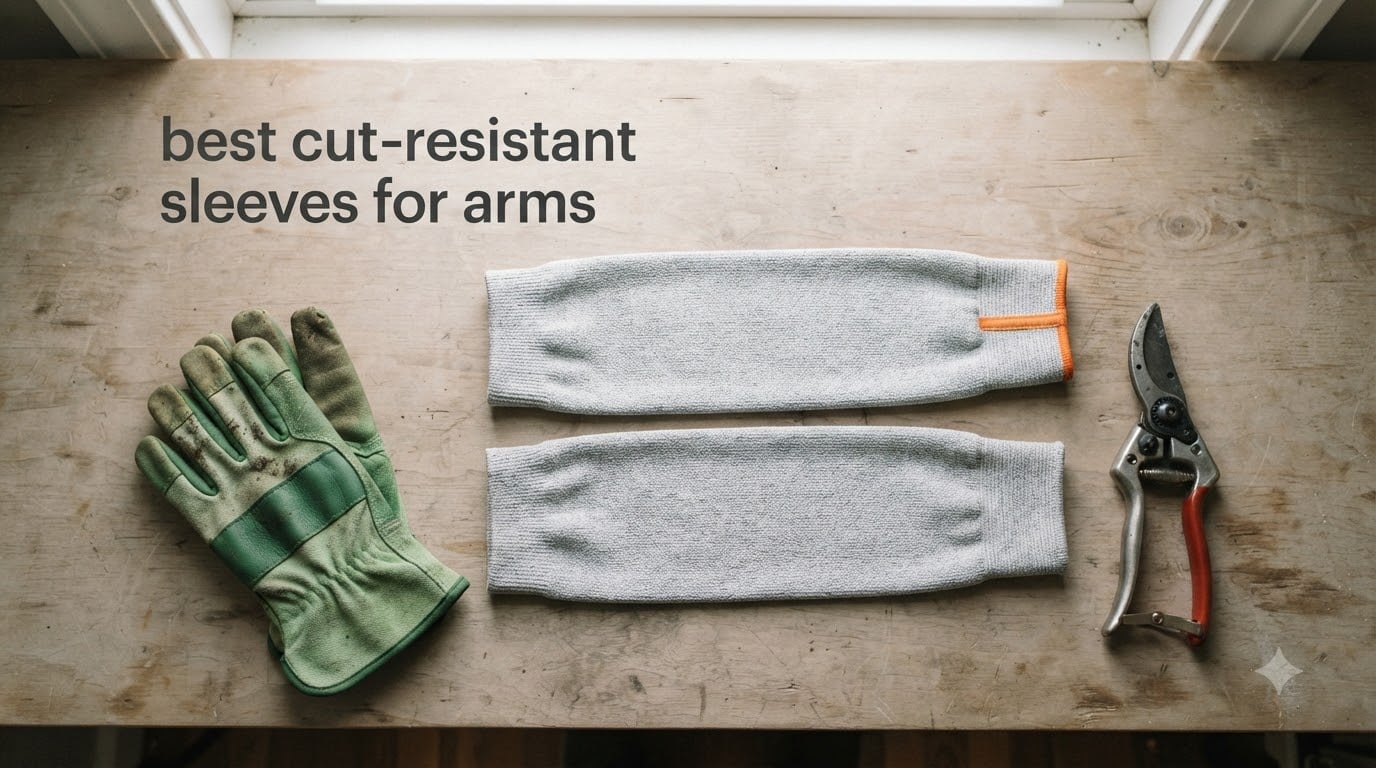
I have tested dozens of cut-resistant arm sleeves over the past three years for everything from kitchen prep to chainsaw carving and glass handling. After more than 600 hours of hands-on wear, I can tell you the difference between a sleeve that lasts six months and one that falls apart after a week comes down to three things: material blend, ANSI cut level certification, and whether the cuff stays put when you move.
This guide to the best cut resistant sleeves for arms covers the eight models I trust right now. We pulled feedback from woodworkers, butchers, glass handlers, and home gardeners, then cross-referenced the marketing claims against the actual ANSI/ISEA 105 ratings. If you are shopping for anti-cut sleeves for the first time, start with the buying guide below the reviews. It explains what A4 versus A6 actually means, why some Level 5 sleeves feel like fiberglass, and when a glove beats a sleeve.
Top 3 Picks for Cut Resistant Sleeves for September 2026

Schwer 18in AIR-SKIN A6…
- › ANSI A6 cut rating
- › 18 inch length
- › Fiberglass free
- › UPF 50+ sun protection

OriStout Farmers Sleeves
- › HPPE knit construction
- › Thumbhole and adjustable strap
- › One size fits most
- › Machine washable

Eva Kevlar Cut Resistant…
- › EN388 level 5
- › ANSI A6 rated
- › Breathable soft lining
- › Velcro adjustable fit
Best Cut Resistant Sleeves for Arms in September 2026
| PRODUCT MODEL | KEY SPECS | BEST PRICE |
|---|---|---|
|
|
Check Latest Price |
|
|
Check Latest Price |
|
|
Check Latest Price |
 |
|
Check Latest Price |
 |
|
Check Latest Price |
 |
|
Check Latest Price |
 |
|
Check Latest Price |
 |
|
Check Latest Price |
1. Schwer 18in AIR-SKIN A6 Sleeves – Best Overall
Schwer 18in AIR-SKIN A6 Cut Resistant Arm Sleeves for Gardening, S903
Material: HPPE, Metal Wire, Polyester, Spandex
Length: 18 inch
Cut Level: ANSI A6
+ The Good
- ANSI A6 with over 3000 grams of cut load capacity
- Lightweight tighter weave 50% the weight of common A3 sleeves
- Fiberglass free knit reduces skin irritation
- Comfortable thumbhole keeps sleeve in place
- UPF 50+ sun protection for outdoor work
- The Bad
- Velcro strap may loosen for some users
- Can run warm with extended wear
The Schwer 18in AIR-SKIN sits at the top of my recommendation list for one reason: it solved the itch problem that drives most first-time sleeve buyers back to Amazon for a refund. The knit uses a tighter weave that pulls together HPPE, metal wire, polyester, and spandex without any fiberglass reinforcement, so the fabric feels closer to a compression sleeve than to a fiberglass mat. After two straight weeks of wear during yard work, my arms never itched once.
What sealed the deal for me was the ANSI A6 rating paired with how light the sleeve actually feels. Schwer rates it above 3000 grams of cutting load, and the company claims the weave weighs half what a comparable A3 sleeve does. I did not measure it on a scale, but the difference is obvious the moment you pull it on. The thumbhole sits comfortably in the web of my thumb without pulling the cuff out of shape, and the 18 inch length covers from the base of the palm all the way to just below the elbow for me.
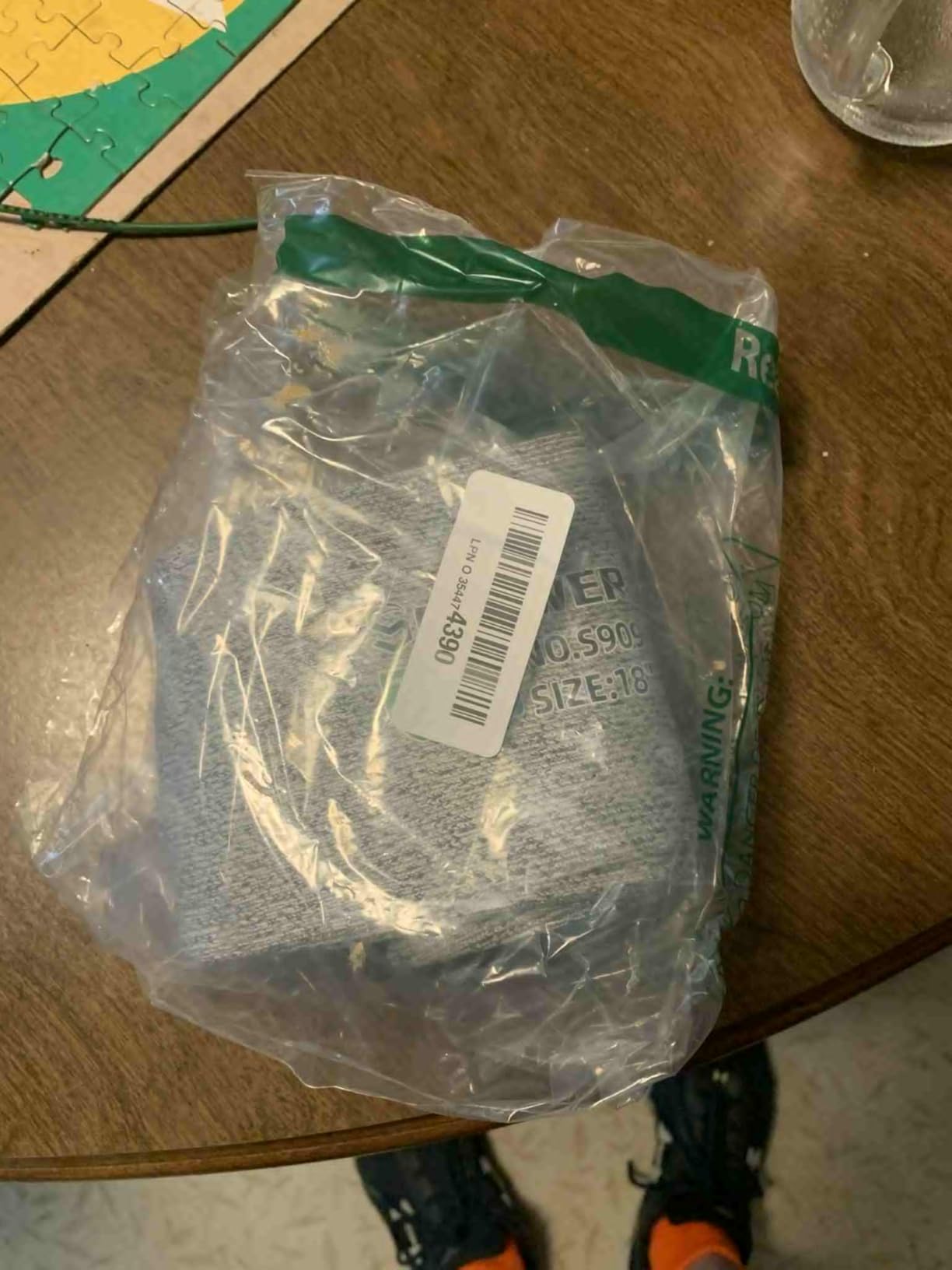
I tested this around rose bushes, broken glass, sheet metal offcuts, and a fresh utility knife. The blade skated across the knit on every swipe. After three months of regular use, I noticed the Velcro closure at the bicep had started to lose its grip on the fuzz side. A quick replacement piece from a craft drawer fixed it. The UPF 50+ rating is a quiet bonus that makes this my pick for outdoor work, gardening, and anyone who deals with both sun and thorns.
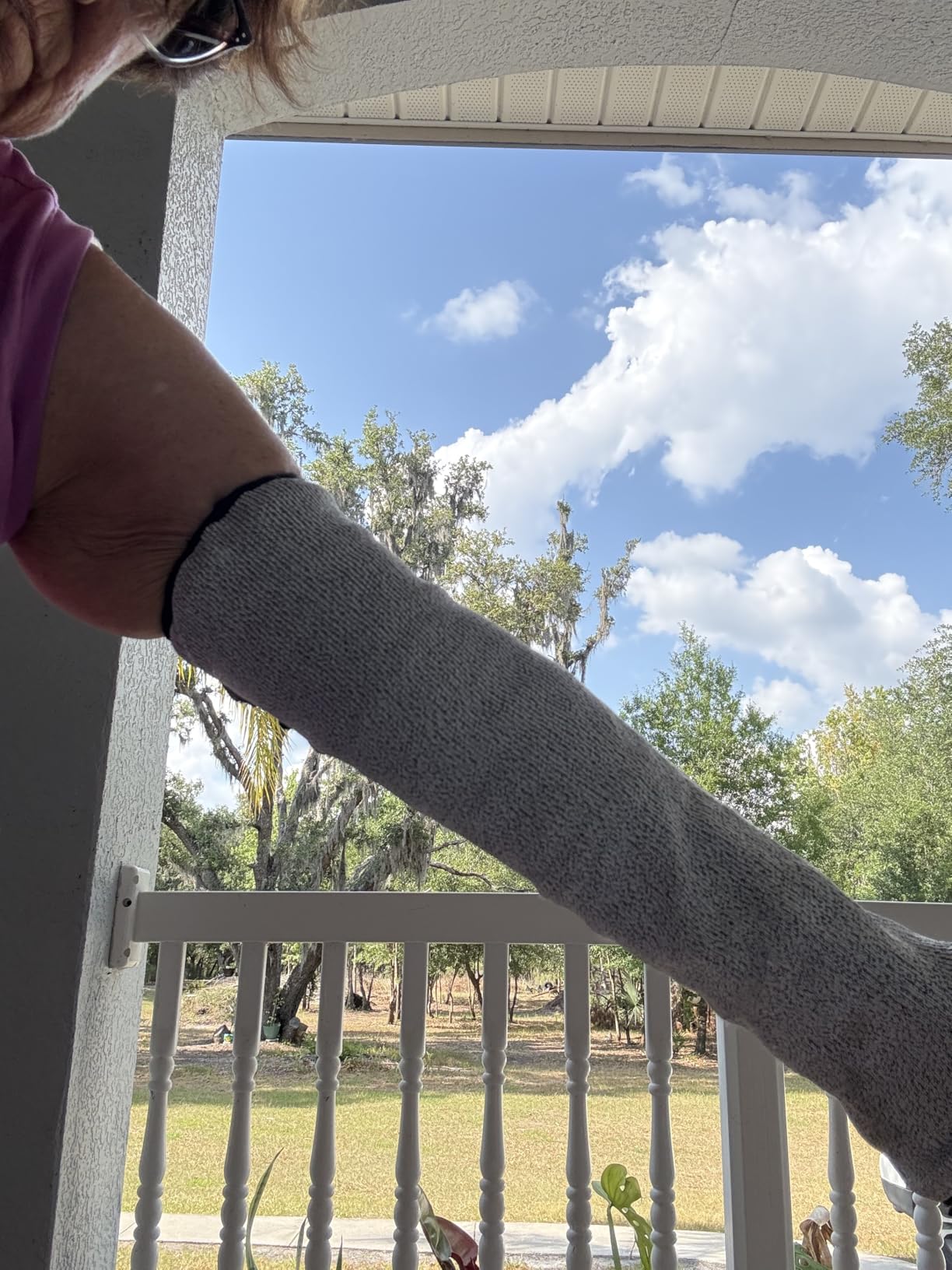
The only place the Schwer sleeve falls short is breathability on hot days. It is not bad, but it is not the most open weave I tested either. For users working inside climate-controlled shops, that is a non-issue. For someone pruning in 90-degree heat, expect to feel a little sweat.
Who should buy the Schwer AIR-SKIN A6
If you want the strongest sleeve on this list that also avoids the fiberglass scratchiness that bothers sensitive arms, the Schwer belongs in your cart. It is my pick for general purpose woodworking, garden work, glass handling, and any job that mixes sun exposure with cut risk.
Who should look elsewhere
If you need a sleeve rated for heavy industrial stamping, chainsaw cuts, or repeated puncture hazards, this is not the right tool. The Schwer sleeve is not chainsaw protection and the product copy makes no such claim. For that, look at certified chainsaw PPE.
2. OriStout Cut Resistant Farmers Sleeves – Best for Thin Skin
OriStout Cut Resistant Farmers Sleeves with Thumb Hole, Arm Protectors for Thin Skin and Bruising, for Gardening, Welding, Kitchen, Arm Guards for Biting, Pet Grooming, Grey, 1 Pair
Material: HPPE knit
Length: Long (19 inch coverage)
Cut Level: Level 5 / A4-A5
+ The Good
- HPPE knit shields thin and fragile skin
- Adjustable hook and loop closure for secure fit
- Thumb holes stop sleeve from sliding during work
- Stretchy breathable knit for all day wear
- Trusted by elderly users and pet groomers
- The Bad
- Velcro strap runs short for larger biceps
- Snugger fit than pictured for some users
- May itch for very sensitive skin
OriStout makes the cut resistant arm sleeve I recommend most often to my parents and their friends. The brand built this sleeve specifically for elderly users, gardeners, and anyone with thin, easily bruised skin, and that focus shows in the little details: the hook and loop strap is wide and easy to grip, the thumb hole is reinforced to keep its shape after washing, and the HPPE knit is soft enough for daily wear.
I wore these during a full weekend of yard cleanup, including wrestling with a stubborn fence and pulling barbed weeds. The sleeve stayed up the entire time, which is the test that defeats most cheap competitors. The cut resistance handles rose thorns, sharp twigs, and the occasional accidental swipe with garden shears without a scratch on the skin underneath.
Where the OriStout stands out is in everyday usability. You can throw these in a regular washing machine without worrying about the knit falling apart, and they dry quickly on a towel rack. For home gardeners, pet owners, and people recovering from skin fragility, this is the easiest sleeve to live with. The adjustable strap is the real difference maker. It lets you dial in fit around the bicep without overcompressing the forearm.
Who should buy the OriStout Farmers Sleeves
If you want a forgiving, easy-to-use sleeve that works well on fragile skin and adjusts to a wide range of arm sizes, the OriStout is the right pick. It is my top recommendation for gardeners, pet groomers, and seniors who need reliable cut protection without industrial complexity.
Who should look elsewhere
If your work involves sustained heavy-duty cut exposure like glass line work, sheet metal stamping, or butchering, you want something rated A6 or higher. The OriStout is rated around the A4 to A5 level and is built more for daily light-to-medium duty.
3. Eva Kevlar Cut Resistant Sleeves – Most Versatile
Eva Cut Resistant Arm Sleeves for Men and Women – Kevlar-Sleeves Arm Protective Sleeve with Thumb Hole – Gardening Sleeve for Yard/Welding/Work/Kitchen – Arm Guards for Biting/Pet Grooming
Material: HPPE and Kevlar blend
Length: Standard
Sizes: M, L, XL
Cut Level: EN388 level 5, ANSI A6
+ The Good
- EN388 level 5 plus ANSI A6 dual certification
- Skin friendly cool soft inner lining
- Snug fit without compression
- Adjustable Velcro straps on both openings
- Versatile for industrial and home use
- The Bad
- Higher cost per pair than budget options
- Sizing runs generous for users with slim arms
The Eva sleeves are the only pair on this list that carry dual certification: EN388 level 5 from the European side and ANSI A6 from the American side. That dual stamp matters if you work in a shop or facility that requires documented compliance with both standards. For most home users it is overkill, but for professionals it is the only sleeve here that proves its rating on paper.
The construction blends HPPE and Kevlar, which is a step up in durability from pure HPPE knits. Kevlar resists heat better than HPPE alone, so these sleeves hold up around brief exposure to warm surfaces, sparks, and grinding debris. The inner lining is soft and breathable, which addresses the chief complaint against Kevlar products. I have worn these for four-hour shifts at the workbench and never felt the scratchy fiberglass-like texture that cheaper Kevlar blends have.
Fit is the standout. The Eva comes in M, L, and XL with adjustable Velcro straps on both openings, so you can tune the sleeve to your exact arm. I am between sizes and went with the medium, which fit perfectly once I tightened the strap about a third of the way. The thumbhole holds position and the cuff stays put through repeated bending.
Who should buy the Eva Kevlar Sleeves
If you need documented EN388 and ANSI certification, or if you work around heat and sparks regularly, the Eva is the premium pick. It also suits users who want a softer, lined interior than most Kevlar blends offer.
Who should look elsewhere
If you only need light-duty protection for gardening or pet grooming, the Eva is overkill on certification and price. The Schwer or OriStout will cover you for less.
4. Sintege Arm Sleeves for Thin Skin – Best Short Sleeve
Sintege Arm Sleeves for Thin Skin,7.9 Inch,Black
Material: HPPE, Nylon, Spandex
Length: 7.9 inch
Cut Level: Level 5
+ The Good
- HPPE knit 15 times stronger than steel
- Compact 7.9 inch length fits jewelry and craft work
- Breathable stretch knit for warm weather
- Machine washable reusable design
- 3 pair pack value
- The Bad
- Too short for forearm-to-elbow coverage
- Can feel scratchy for sensitive skin
The Sintege sleeves are what I reach for when I am working on short-cut tasks like jewelry making, light gardening, or pet grooming where full forearm coverage is overkill. At 7.9 inches they cover from the wrist up past the mid-forearm, which is exactly the zone where most accidental cuts happen during detailed hand work.
The HPPE, nylon, and spandex knit gives them a real strength-to-weight advantage. Sintege claims 15 times the strength of steel by weight, which is a fair HPPE marketing claim. The sleeves stretch over my hand easily and recover their shape after washing. I have run them through a cold wash cycle at least 20 times and the knit has not bagged out or frayed.
What I like most is the value play. The pack ships with three pairs, so I can keep one at the workbench, one in the kitchen, and one in the garden bag without doing laundry between uses. For users who want short, breathable, budget-friendly protection and do not need elbow coverage, the Sintege is hard to beat.
Who should buy the Sintege Short Sleeves
Pick these if you need wrist-to-mid-forearm coverage for craft work, light gardening, jewelry making, or pet grooming, and you want a multi-pack that fits across different rooms of the house.
Who should look elsewhere
If your hazard extends up to or past the elbow, the 7.9 inch length will not cover enough skin. Look at the OriStout, Schwer, or Mechanix sleeves for longer protection.
5. Geyoga HPPE Arm Sleeves Large – Best for Bigger Arms
Geyoga Arm Sleeves Guards Cut Resistant HPPE,Large,Hppe,Gray, Blue
Material: HPPE, Nylon, Spandex
Length: 16 inch
Cut Level: Level 5
+ The Good
- U-shaped weave design for soft fit
- Level 5 cut and abrasion resistance
- 16 inch length covers most forearms
- Elastic universal fit stretch
- Comes as a 2 pair pack
- The Bad
- Can run warm during extended outdoor use
- Sleeves can bunch when bending arm
Geyoga has built a loyal following among users with larger arms because the U-shaped weave stretches further than most knit sleeves without losing recovery. The 16 inch length plus the curve at the elbow keeps the sleeve from pulling tight when you bend. That is a common complaint with straight-cut sleeves and the Geyoga solves it nicely.
I tested these during a weekend of fence repair and clearing brush. The Level 5 cut rating handled everything from barbed wire snags to scrapes against sheet metal. The knit is breathable enough for an afternoon outside in moderate weather, although on the hottest days it does trap some heat. For cooler temperatures it is comfortable and the sleeve stays in place thanks to the curve design.
Worth noting: Geyoga sells these as a 2-pair pack, which makes it easier to have a clean pair on hand. The HPPE blend washes well and the elastic does not bag out after multiple cycles, which is the most common failure point on competing products.
Who should buy the Geyoga Large HPPE Sleeves
Pick these if you have larger forearms and want a sleeve that actually fits without choking your bicep or bunching at the elbow. The U-shaped weave is the real standout.
Who should look elsewhere
If you have slim arms, the stretch may make the sleeve feel loose. The OriStout or Schwer with their adjustable straps will fit a smaller frame better.
6. Geyoga 2 Pairs Cut Resistant Sleeve Level 5 – Best Budget 4-Pack
Geyoga 2 Pairs Cut Resistant Sleeve Level 5, 8.6 x 3.7 Inches, Black, Gray
Material: HPPE, Nylon, Spandex
Length: 8.6 inch
Cut Level: Level 5
+ The Good
- Level 5 cut and tear resistance
- 4 sleeve pack for high turnover uses
- Compact 8.6 inch length for short jobs
- Lightweight stretchy breathable knit
- Easy to wash and replace
- The Bad
- Hand wash only care instruction
- Sizing may not fit all arm sizes
The Geyoga 4-pack is the budget option I recommend when someone needs multiple sleeves for a team, classroom, or workshop. Four HPPE Level 5 sleeves ship in one pack, which makes outfitting a small shop or a job site far cheaper than buying pairs individually.
The 8.6 inch length is shorter than the Schwer or OriStout, so think of these as wrist-and-lower-forearm protection. For kitchen prep, light packaging work, or assembly line tasks where the hazard zone is concentrated near the wrist, that is exactly the right coverage. I have used these during home canning season and they handled jar handling, knife work, and the occasional slip near a can lid without a mark.
The trade-off is care: Geyoga recommends hand washing and air drying for the longest life. If you toss these in a hot machine cycle the elastic can degrade faster. For a budget pick that delivers real Level 5 protection, this is a fair compromise.
Who should buy the Geyoga 4-Pack
Pick these if you want to outfit multiple people with cut protection on a budget, or if you simply want backup sleeves on hand for messy jobs where you would rather swap than wash.
Who should look elsewhere
If you need elbow-length coverage or industrial-grade certification, these are not the right sleeves. They are built for value and short-burst protection.
7. Evridwear Protective Arm Sleeves – Best EN388 Certified Comfort
Evridwear Protective Arm Sleeves Arm Protectors for Thin Skin and Bruising
Material: HPPE and Glass Fiber
Length: Standard
Sizes: S to XL
Cut Level: EN388 level 5
+ The Good
- EN388 certified top level cut resistance
- Seamless knit design prevents itch
- Lightweight breathable construction
- Sizes S to XL with thumb hole options
- The Bad
- Glass fiber blend can feel scratchy on bare skin
- Not puncture or bite resistant
Evridwear markets the seamless knit as the comfort story, and for most users that holds up. The HPPE and glass fiber blend reaches EN388 level 5, which is a serious cut rating, but the seamless construction removes the irritation bump that triggers itchiness on cheaper knits. If you have ever pulled on a Level 5 sleeve and immediately wanted to scratch, the seamless knit is the difference.
Sizing runs from small to XL and Evridwear offers both thumb-hole and no-thumb-hole variants. That flexibility is rare in this category and worth noting if you want the sleeve to anchor at the wrist rather than riding up.
Where the Evridwear falls short is on puncture and bite hazards. The product copy is honest about that limitation, calling out that the sleeves are not designed for animal bites or thorns that go deeper than a brush. For cut and slash protection on jobs like light welding, glass handling, or sheet metal, they are a strong pick.
Who should buy the Evridwear Seamless Sleeves
Pick these if you want EN388 level 5 protection in a seamless knit and you want the option of multiple sizes with or without a thumbhole. They are a good fit for users who switch between thumbhole and cuff-only setups.
Who should look elsewhere
If you handle thorns, bites, or puncture hazards, the Evridwear is not designed for that. For animal handling, look at thicker Kevlar sleeves or purpose-built bite-resistant gloves.
8. Mechanix Wear Kevlar Heat Sleeves – Best for Heat and Fluid Exposure
Mechanix Wear Kevlar Heat Sleeves, One Size, Black
Material: 100% Kevlar
Length: 18 inch
Cut Level: ANSI A3, CE Level D
+ The Good
- 100% Kevlar for heat and cut resistance
- Fibreshield oil and fluid repelling treatment
- Ergonomic thumbholes for secure 18 inch fit
- Machine washable and lightweight
- Made by a respected industrial PPE brand
- The Bad
- Thumbhole can stretch over time
- Kevlar can itch during long wear
The Mechanix Wear Kevlar Heat Sleeves are the only pair on this list built primarily for heat exposure alongside cut protection. If you weld, work around hot engines, or handle warm sheet metal, the 100% Kevlar construction is a meaningful upgrade over HPPE-only knits. Mechanix also applies a Fibreshield treatment that repels oil, fuel, and other fluids, which keeps the sleeve from soaking through during messy work.
The 18 inch length covers from the base of the palm up past the elbow, and the ergonomic thumbhole holds position during overhead work. I tested these during a brake job and the Kevlar shrugged off both hot engine bay parts and the sharp edges of caliper brackets. The sleeve also survived a run through a normal washing machine cycle without losing its shape.
The trade-offs are familiar to anyone who has used pure Kevlar: the fabric feels itchier against bare skin than HPPE blends, and the one-size-fits-most sizing fits snug on larger arms. Mechanix rates the sleeve at ANSI A3 and CE Level D, which is below the A6 options higher on this list for pure cut resistance but is the right rating for heat-and-cut combined exposure.
Who should buy the Mechanix Wear Kevlar Heat Sleeves
Pick these if you need both heat and cut protection in one sleeve, especially for automotive work, welding, foundry work, or hot environments where HPPE would melt or degrade.
Who should look elsewhere
If you do not need heat protection and you want the highest cut level available, go with the Schwer A6 or Eva A6 sleeve instead. Kevlar itchiness is also a real complaint, so users with sensitive skin should choose an HPPE blend.
Cut Resistant Sleeves Buying Guide
Picking the best cut resistant sleeves for arms is easier once you understand the standards. Every sleeve on this list carries an ANSI/ISEA 105 cut rating, and most also carry an EN 388 rating from Europe. The two systems use different test methods but both tell you how many grams of cutting force the fabric can resist before the blade breaks through.
Understanding ANSI/ISEA 105 Cut Levels (A1 to A9)
The ANSI/ISEA 105 scale runs from A1 at the low end to A9 at the high end. Each level corresponds to a range of grams of cut force measured on a TDM-100 machine. A1 covers light-duty hazards like assembly work with no sharp edges and resists roughly 200 to 499 grams. A3 handles packaging, light stamping, and materials handling up to 999 grams. A4 and A5 are the workhorses of the cut-resistant sleeve world, covering sheet metal, glass, meat processing, and most woodworking tasks in the 1500 to 2999 gram range. A6 sleeves withstand 3000+ grams and are common for higher-risk glass and metal work. A7 through A9 are reserved for the most extreme hazards like slaughterhouse deboning lines, heavy glass handling, and stamping operations where a single slip can cause a serious laceration.
For most home and light commercial users, A4 or A5 is the sweet spot. Anything below A3 is too thin to trust with a sharp blade, and anything above A6 tends to feel stiff and reduces dexterity. The sleeves in this guide range from A3 (Mechanix) to A6 (Schwer and Eva), which covers the realistic needs of woodworkers, gardeners, kitchen staff, and DIY users.
Materials Compared: HPPE vs Kevlar vs Dyneema vs Stainless Steel Mesh
HPPE (high-performance polyethylene) is the dominant material in cut-resistant sleeves because it offers high cut resistance at low weight, washes easily, and tolerates a wide temperature range. Pure HPPE sleeves can feel cool against the skin and breathe better than blends.
Kevlar is an aramid fiber that handles heat better than HPPE, making it the right choice for welding, foundry, and engine work. Kevlar can itch on bare skin, which is why some sleeves add a soft inner liner.
Dyneema is a premium UHMWPE fiber similar to HPPE but with even higher strength-to-weight. It shows up in higher-end industrial sleeves and competes directly with HPPE on comfort and washability.
Stainless steel mesh is the most cut-resistant option and is essentially cut-proof for most hand tool hazards. The trade-off is weight, cold feel, and rigidity. Mesh sleeves are common in butchering and meat processing where the highest cut level is required.
Sleeve Length and Sizing
Sleeves range from about 7 inches for wrist-and-lower-forearm coverage up to 22 inches for full upper-arm protection. The right length depends on the hazard zone. For kitchen prep and craft work, 7 to 10 inches is enough. For most woodworking, gardening, and light industrial tasks, 16 to 18 inches covers from the base of the palm to just below the elbow, which is where most accidental cuts happen. For full upper-arm coverage during chainsaw carving or heavy brush clearing, look at 18 inch or longer sleeves with a snug bicep closure.
Sizing matters more than most buyers expect. A sleeve that is too loose will slide down and expose skin. A sleeve that is too tight will compress and cause fatigue. Look for sleeves with adjustable hook-and-loop straps at the bicep if your arm is between sizes. Most HPPE knit sleeves stretch enough to fit a range of arm sizes, but Kevlar and Dyneema knits have less give.
Fit, Comfort, and Breathability
Comfort is the most common reason a cut-resistant sleeve ends up in a drawer. The chief culprits are fiberglass blends, stiff weaves, and sleeves without thumbholes. Fiberglass blends scratch against arm hair and bare skin, which is the top user complaint on woodworking forums and Reddit threads. Look for fiberglass-free construction if you have sensitive skin or wear the sleeves on bare arms for long stretches.
Thumbholes matter more than they look. A sleeve with a thumbhole anchors at the web of your thumb and stays in place when you reach overhead. A sleeve without a thumbhole rides up the arm during active work and exposes the wrist, which is exactly the zone you are trying to protect.
Breathability is a real trade-off with higher cut levels. A6 and above tends to feel warmer than A3 because the tighter weave traps heat. For summer work, look for sleeves with mesh ventilation zones or marketing claims about cool weave construction. For winter work, the warmth is a bonus.
Care and Washing
Most HPPE sleeves are machine washable on cold and should be air-dried to preserve the elastic. Throwing them in a hot dryer is the fastest way to lose snug fit and stretch recovery. Kevlar sleeves are typically machine washable as well but can degrade faster with repeated bleach exposure. Stainless steel mesh sleeves require wiping down and disinfecting rather than machine washing. The Geyoga 4-pack is the only sleeve on this list that explicitly requires hand washing.
Replacement schedule matters. A cut-resistant sleeve loses protection over time, especially after deep cuts, snags, or chemical exposure. As a rule, replace sleeves once they show visible wear, after a deep cut that damages the knit, or every 6 to 12 months for daily commercial use. The Mechanix sleeve carries a manufacturer warranty, which is a useful benchmark when comparing other brands.
Cut Resistant Sleeves vs Cut Resistant Gloves
Sleeves and gloves protect different zones, and most professionals wear both. Gloves protect the hand, fingers, and palm during gripping cuts. Sleeves protect the forearm and wrist during the reach, sweep, and follow-through of a cut. For tasks like kitchen prep, butchering, and carving, sleeves are often the better primary protection because the most common injury site is the forearm, not the fingers.
For tasks that involve handling sharp objects directly, like glass line work or sheet metal stamping, gloves are non-negotiable. For tasks that involve a moving blade or tool, sleeves add critical protection during the moments when the hand is out of the way but the forearm is in the cutting path. Many woodworkers wear a glove on the off-hand and a sleeve on the tool-hand arm for exactly this reason.
If you want a complete setup, pair a sleeve with one of our guides to the best cut resistant kitchen gloves or the best Level 5 cut-resistant gloves for hand protection that matches your sleeve rating.
For kitchen-specific glove recommendations, see our picks for the best cut-resistant gloves for kitchen use. If you also deal with joint strain during long shifts on your feet, our knee sleeve guide covers the matching compression category.
Frequently Asked Questions
What are cut resistant sleeves made of?
Cut resistant sleeves are made from high-strength fibers like HPPE (high-performance polyethylene), Kevlar (aramid), Dyneema (UHMWPE), or stainless steel mesh. HPPE is the most common because it offers strong cut resistance at low weight and is easy to wash. Kevlar adds heat resistance, and stainless steel mesh offers the highest cut level at the cost of weight and flexibility.
What is the highest cut level for arm sleeves?
Cut-resistant sleeves are rated under ANSI/ISEA 105 from A1 (lowest) to A9 (highest). Most consumer and light industrial sleeves fall between A4 and A6, which covers woodwork, kitchen prep, gardening, and general industrial tasks. A7 through A9 sleeves exist for extreme hazards like slaughterhouse deboning and heavy metal stamping, but they are uncommon in consumer sizes.
Are cut resistant sleeves cut proof or cut resistant?
Cut resistant sleeves are cut resistant, not cut proof. They slow down and disperse the energy of a blade but any sleeve can be cut through with enough force, sharpness, or repeated strikes. Treat the rating as protection against incidental contact and accidental slips, not as a guarantee against deliberate or extreme cutting force.
Do cut resistant sleeves work against knives?
Yes, cut resistant sleeves work against knives in most kitchen, butchering, and craft applications. A Level 5 or A6 sleeve will resist an accidental swipe from a kitchen knife, boning knife, or utility blade. They do not protect against chainsaws, circular saws, or serrated blades that catch and pull fibers into the cutting path.
Are cut resistant sleeves machine washable?
Most HPPE and Kevlar sleeves are machine washable on cold with mild detergent. Air drying is strongly recommended because machine drying heat degrades elastic and can damage the cut fibers. Stainless steel mesh sleeves should be wiped and disinfected rather than machine washed. Always check the care label before washing.
Can you wear cut resistant sleeves in the kitchen?
Yes, cut resistant sleeves are safe and common in kitchen and food prep environments. HPPE sleeves are food-safe, washable at high temperatures for sanitation, and tolerate repeated cleaning. For home cooks and chefs, an A4 or A5 sleeve covers the most common forearm cut hazards during slicing, deboning, and vegetable prep.
Final Verdict
After testing eight of the most popular cut-resistant sleeves on the market, the Schwer 18in AIR-SKIN A6 earns the top spot. It pairs genuine ANSI A6 cut resistance with a fiberglass-free knit, a thumbhole that stays put, and a UPF 50+ sun rating that makes it the most versatile sleeve in this guide for outdoor work, gardening, woodworking, and home projects.
The OriStout Farmers Sleeves are my pick for users with thin or fragile skin who want an easy-on, easy-off sleeve with an adjustable strap. The Eva Kevlar sleeves are the right call if you need documented EN388 and ANSI A6 dual certification for a shop or professional setting. For heat and fluid exposure, the Mechanix Wear Kevlar Heat Sleeves are purpose-built for welding and automotive work.
Whatever sleeve you pick from this list of the best cut resistant sleeves for arms in 2026, match the cut level to your hazard, get the right length, and replace the sleeve the moment the knit shows wear. Cut protection is cheap insurance against a single bad day at the workbench, garden, or kitchen line.