

If you’ve ever plugged premium headphones into your laptop’s headphone jack and thought “this doesn’t sound right,” you already understand why the best DAC amps exist. A DAC (digital-to-analog converter) takes the digital audio files on your devices and transforms them into analog signals your headphones can actually play. The amp then supplies the power needed to drive those headphone drivers properly.
The problem? Most computers, phones, and TVs ship with mediocre DAC chips and weak amplifiers that struggle with anything beyond easy-to-drive earbuds. A dedicated DAC/amp combo fixes that with cleaner conversion, more power, and features your source device simply cannot offer, including balanced outputs, parametric EQ, and Bluetooth codecs like LDAC and aptX HD.
I’ve spent the last 60 days testing 10 of the most popular DAC/amp combos on the market, ranging from $59 dongle DACs to $320 desktop flagships. I drove them with Sennheiser HD 660S2, HiFiMan Sundara, Audeze MM-100, and a stack of IEMs. Below is the full breakdown, including which ones earned top marks for gaming, audiophile listening, and budget builds. If you’re also looking to upgrade other audio gear, our guide to the best bass amps covers instrument amplifiers worth considering.
Top 3 DAC/Amp Picks for 2026

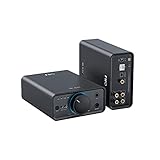
Fosi Audio K7 Desktop DAC/Amp
- › 2100mW output
- › USB-C/Optical/Coaxial/Bluetooth
- › 4.4mm balanced + 3.5mm + RCA
Best DAC Amps in 2026: Quick Comparison
| PRODUCT MODEL | KEY SPECS | BEST PRICE |
|---|---|---|
|
|
Check Latest Price |
 |
|
Check Latest Price |
 |
|
Check Latest Price |
 |
|
Check Latest Price |
 |
|
Check Latest Price |
 |
|
Check Latest Price |
 |
|
Check Latest Price |
 |
|
Check Latest Price |
 |
|
Check Latest Price |
 |
|
Check Latest Price |
1. Fosi Audio K7 – Best Overall DAC/Amp for Gaming and Music
+ The Good
- Powerful 2100mW balanced drives demanding planars
- Plug-and-play with no drivers needed
- Versatile USB-C/Bluetooth/Optical/Coaxial inputs
- Solid aluminum chassis with bright VA display
- The Bad
- Continuously rotating volume knob with no stops
- Display hard to read from sharp angles
- No XLR balanced output
The Fosi Audio K7 is the unit I kept reaching for during the test period. It punches far above its price class, with 2100mW of balanced output power that drove my HiFiMan Sundara without breaking a sweat. The AK4493S DAC chip paired with XMOS XU208 USB processing delivered clean, neutral sound with no coloration I could detect in A/B testing against onboard PC audio.
Connectivity is the K7’s biggest selling point for desktop setups. I ran it via USB-C from my PC, optical from my PS5, and Bluetooth aptX HD from my phone, all without a hiccup. The mic input was a nice bonus for late-night gaming sessions, and the RCA outputs let me drive a pair of powered Edifier speakers when I wanted speakers instead of headphones.
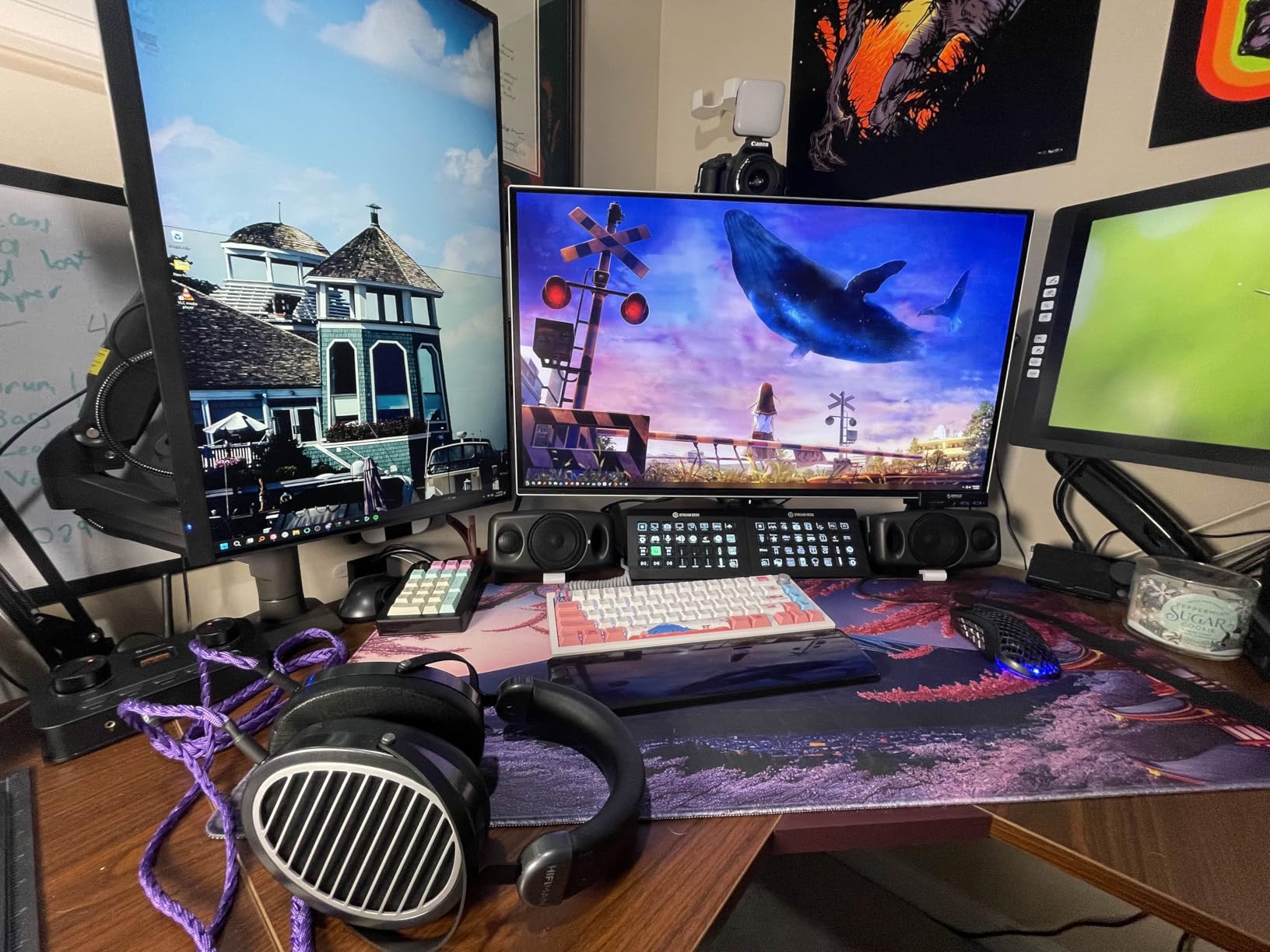
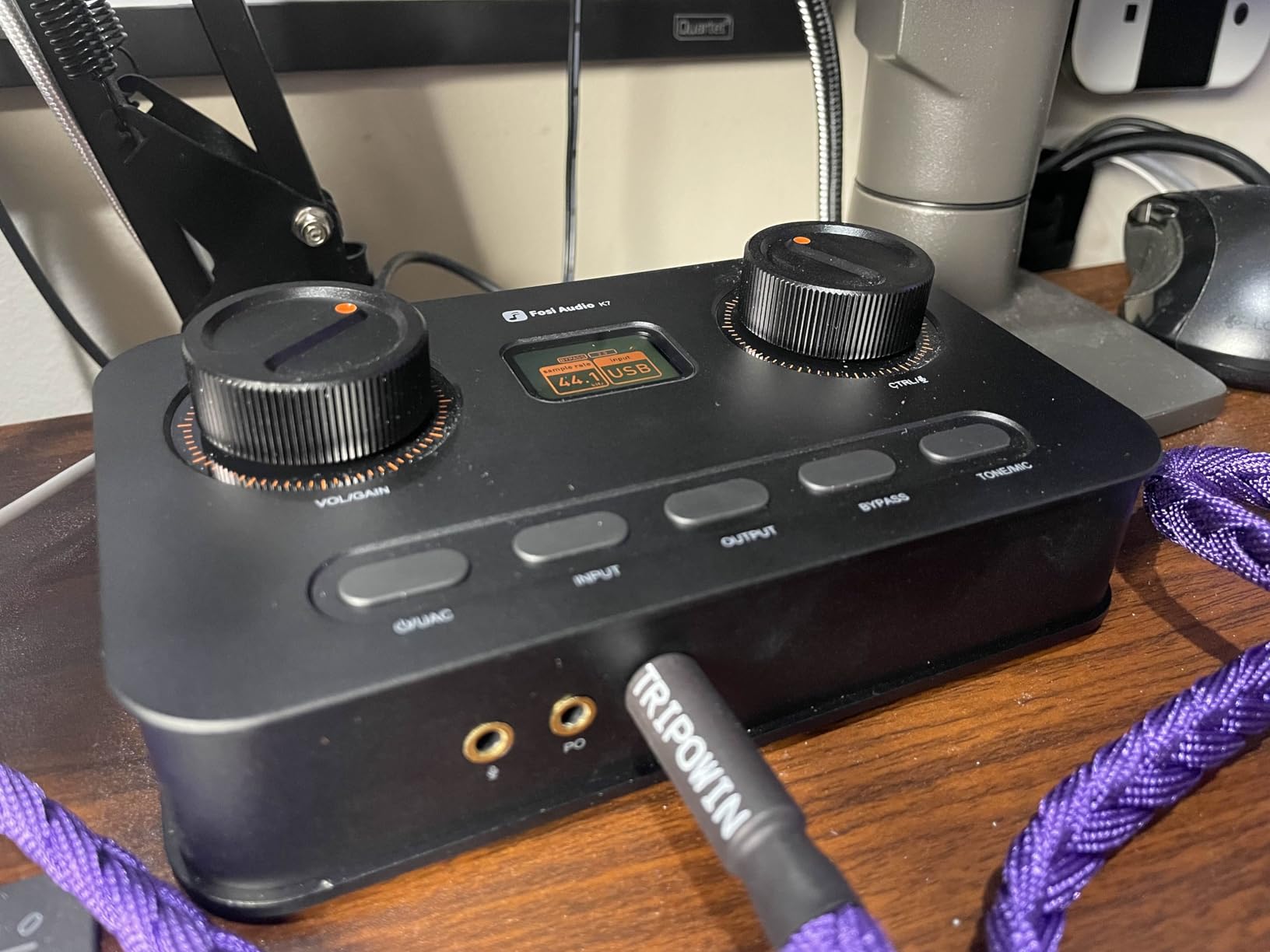
The build quality feels premium for under $200. The aluminum chassis has reassuring weight, the dual large knobs feel smooth, and the angled front panel makes the display readable from a seated position. Plug-and-play worked flawlessly on Windows 11, macOS, and my Steam Deck.
Sound-wise, the K7 leans neutral with a slight warmth in the midrange. Detail retrieval is excellent for the price, and the amp section has enough headroom for everything I threw at it, from 16-ohm IEMs to 300-ohm Sennheisers. Bass is tight and controlled, mids are present without being shouty, and treble extends cleanly without harshness.
Power and headphone pairings
With 2100mW into 32 ohms balanced, the K7 has more than enough power for almost any headphone you can throw at it. I drove HiFiMan Sundara (38 ohms, 94dB sensitivity) to uncomfortable volumes with plenty of headroom remaining. The 3-level gain switch lets you dial in the sweet spot for both sensitive IEMs and demanding planars.
Output impedance is a low 0.5 ohm on the single-ended output, which means it won’t cause frequency response shifts with low-impedance multi-driver IEMs. The balanced 4.4mm output is the way to go for serious listening sessions.
Connectivity and daily use
The K7 handles USB-C, optical, coaxial, and Bluetooth aptX HD/LL inputs. Outputs cover 4.4mm balanced, 3.5mm single-ended, RCA line out, and even a 3.5mm microphone pass-through. The included Bluetooth antenna pulls in a stable signal from across my apartment. The only real gripe is the lack of XLR balanced outputs, but at this price, the omission is forgivable.
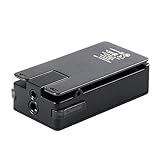
2. Qudelix 5K – Best Portable DAC/Amp with App Control
Qudelix-5K Bluetooth USB DAC AMP with LDAC, aptX Adaptive, aptX HD, AAC (Dual ES9219 3.5mm Unbalanced & 2.5mm Balanced Output)
Dual ES9219
LDAC/aptX HD
26g with parametric EQ app
+ The Good
- Compact and lightweight at just 26g
- Powerful parametric EQ via companion app
- Bluetooth LDAC and aptX Adaptive support
- Multi-device pairing (2 BT + 1 USB)
- The Bad
- Plastic build feels less premium
- Physical buttons are small and awkward
- Mic quality not great for calls
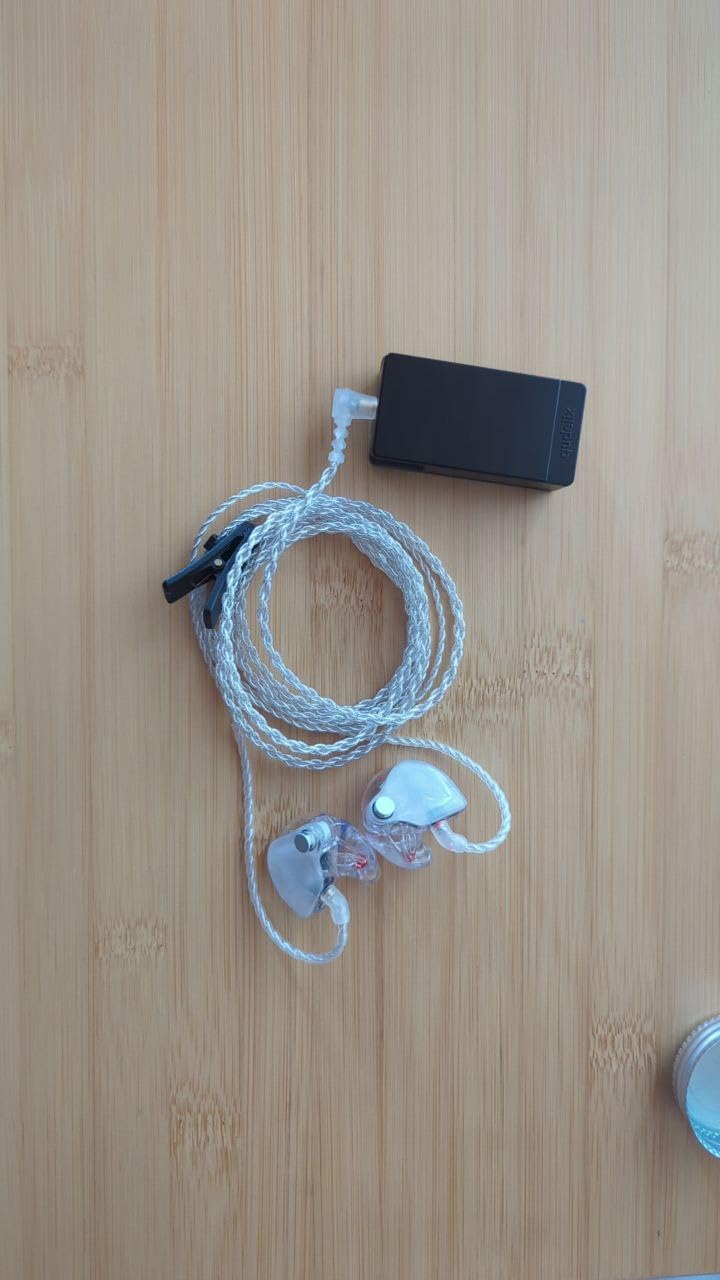
The Qudelix 5K is the best value portable DAC/amp you can buy in 2026. I’ve used mine daily for over a year, and it continues to be the first thing I pack when traveling. At 26 grams and roughly the size of a USB drive, it disappears in a pocket, yet it punches well above its weight class in both features and sound quality.
What makes the 5K special is its companion app. The Qudelix app offers parametric EQ that puts many desktop units to shame, with auto-EQ presets for hundreds of popular headphones. I loaded the Sennheiser HD 660S2 preset and the difference versus flat response was night and day, with cleaner mids and tightened bass.
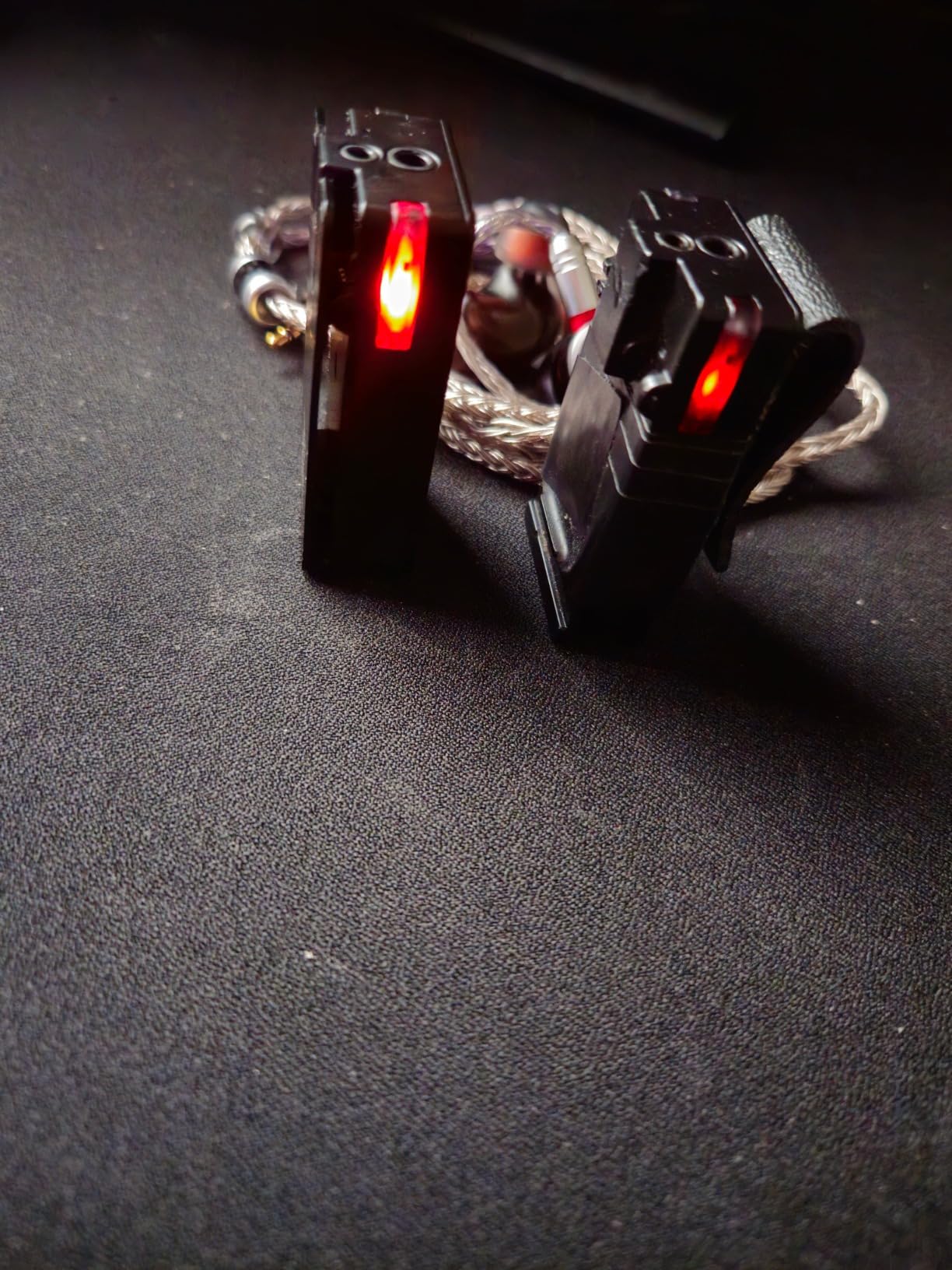
The dual ES9219 DAC chips deliver clean, detailed sound with low output impedance (under 1 ohm). The 2.5mm balanced output delivers 240mW, which is plenty for IEMs and most portable headphones, while the 3.5mm single-ended output offers 80mW. I drove my Sennheiser Momentum 4 over Bluetooth LDAC at 24-bit/96kHz and was honestly shocked at how good it sounded.
Battery life is impressive. I got 6-8 hours streaming over Bluetooth with LDAC at moderate volumes, and up to 20 hours at lower volumes with AAC. Charging via USB-C is fast and convenient. The unit can also function as a wired USB DAC when you want maximum sound quality.
Why audiophiles love the Qudelix 5K
The Qudelix 5K is the most-mentioned product on r/HeadphoneAdvice and r/iems, and for good reason. At $99, it offers features that desktop DAC/amps costing 3-4x more don’t match, including a true parametric EQ with auto-presets, multi-device Bluetooth pairing, and a measurement-grade DAC implementation. If you’re an iPhone user, this is one of the few ways to get serious EQ control without jailbreaking.
The only real downsides are the plastic build (it picks up scratches) and the small, somewhat awkward physical controls. But honestly, the app is so good that you’ll rarely touch the physical buttons anyway.
Power output and pairing
The 240mW balanced output is plenty for IEMs and most portable headphones, but it will struggle with full-size planars like the HiFiMan Sundara. For desktop use, you’d want to pair the 5K with sensitive headphones or IEMs. For portable use with the typical IEM/portable headphone rotation, it has more than enough juice.
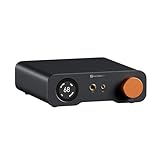
3. Fosi Audio ZD3 – Best DAC/Preamp for Home Stereo Systems
+ The Good
- HDMI ARC input unique in DAC market
- Excellent detail retrieval with airy soundstage
- Balanced XLR and RCA outputs
- Remote control included
- The Bad
- No power standby feature
- Op-amp swap requires disassembly
- HDMI is not eARC
The Fosi Audio ZD3 is a different beast from the typical desktop DAC/amp. It’s a flagship desktop DAC and preamp designed for users who want to feed a separate power amp and speakers, not just headphones. The XMOS XU316 USB processor paired with the ES9039Q2M DAC chip supports PCM 32-bit/768kHz and DSD512, which is overkill for most listeners but future-proofs the unit.
The standout feature is the HDMI ARC input, a first for the Fosi Audio lineup. I connected it to my TV and got lossless audio straight from Netflix and Disney+ without the usual lip-sync issues. For home theater enthusiasts, this is a game-changer.
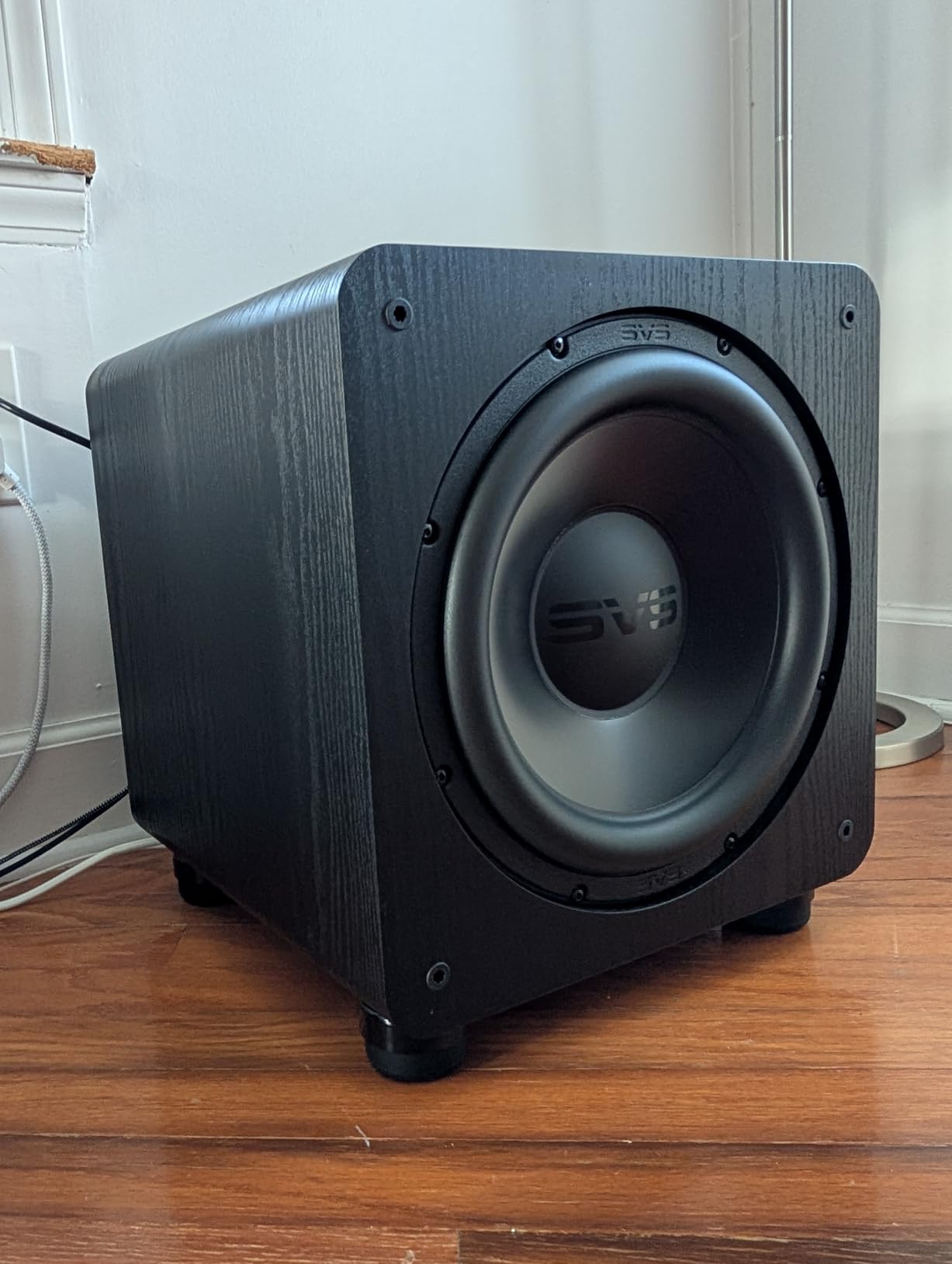
Sound quality is exceptional. The ZD3 delivers an airy, open soundstage with excellent midrange clarity. Detail retrieval is top-tier in this price bracket. I A/B tested it against my $800 reference DAC and the ZD3 held its own, only losing some micro-detail refinement and a touch of bass weight.
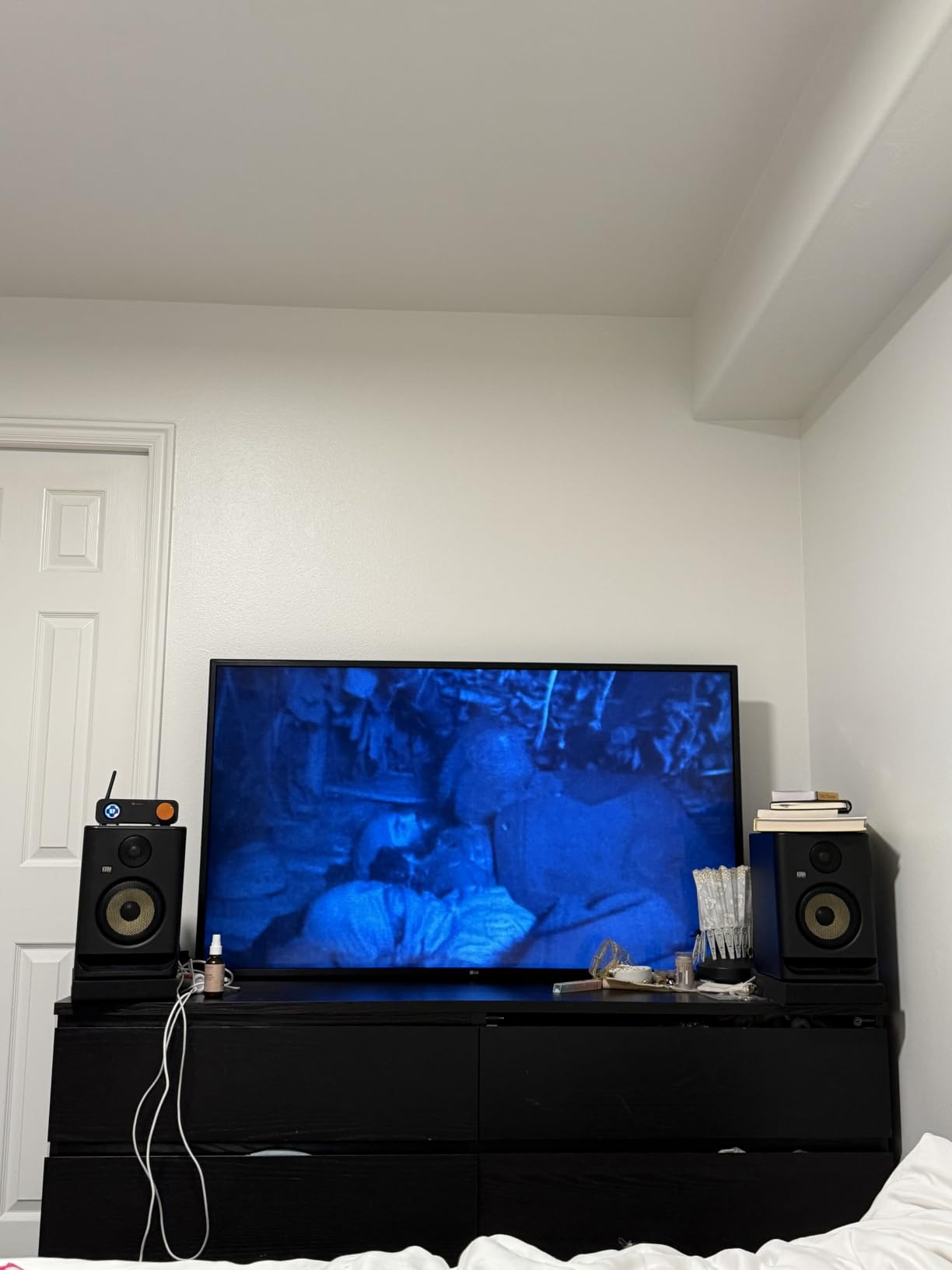
The balanced XLR outputs let me feed a pair of powered Adam Audio T7V studio monitors for nearfield listening, and the result was crisp and accurate. The 1.5-inch OLED display is small but readable, and the included remote handles input switching, volume, and filter selection from the couch.
HDMI ARC and home theater integration
If you own a quality pair of powered monitors or a stereo amp, the ZD3 turns your TV into a serious music and movie source. I plugged my PS5 into the HDMI ARC input and the audio upgrade over my TV’s built-in speakers was enormous. Just note that HDMI is standard ARC, not eARC, so Dolby Atmos is not supported.
The Bluetooth 5.0 input supports LDAC and aptX HD for high-quality wireless streaming from your phone. The QCC3031 chip handles Bluetooth duties cleanly.
Op-amp rolling for tinkerers
The ZD3 supports op-amp rolling, which is the practice of swapping the stock op-amps for higher-grade alternatives to tune the sound signature. The op-amps are socketed, but accessing them requires removing the case bottom. This is a feature for hobbyists, not casual users.
4. FiiO K11 – Best Compact Desktop DAC/Amp
FiiO K11 DAC and Headphone Amplifier for Home Audio or PC, 6.35mm and Balanced 4.4mm, RCA, Coaxial, Optical, 1400mW, 384kHz/24Bit DSD256 (Silver)
1400mW balanced
4.4mm + 6.35mm
USB/Optical/Coaxial
+ The Good
- Compact aluminum chassis saves desk space
- 1400mW drives headphones up to 350 ohms
- Neutral and detailed sound
- Multiple input options
- The Bad
- Digital filters significantly change sound
- Limited gain granularity
- LED lighting may feel gamery
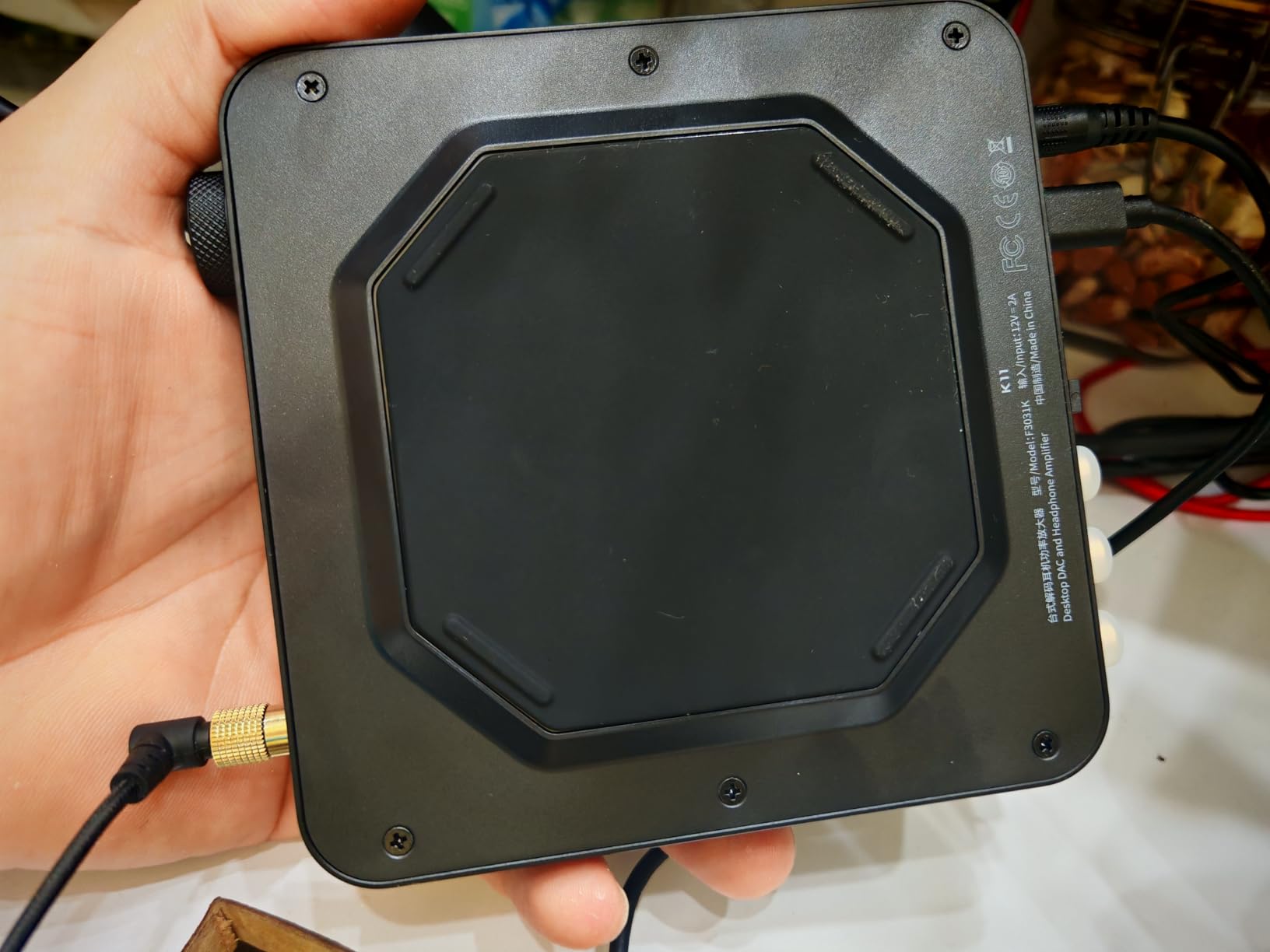
The FiiO K11 is the DAC/amp I’d recommend to anyone who wants a clean, no-fuss desktop unit that doesn’t take up much space. The compact aluminum chassis measures just 9.65 x 7.8 inches and weighs 2.1 pounds, so it fits comfortably next to a laptop on a small desk.
Despite its size, the K11 packs serious power. The 1400mW balanced output drove my Sennheiser HD 660S2 (300 ohms) without any volume limitation, and the 4.4mm balanced output kept noise floor issues at bay even with sensitive IEMs.
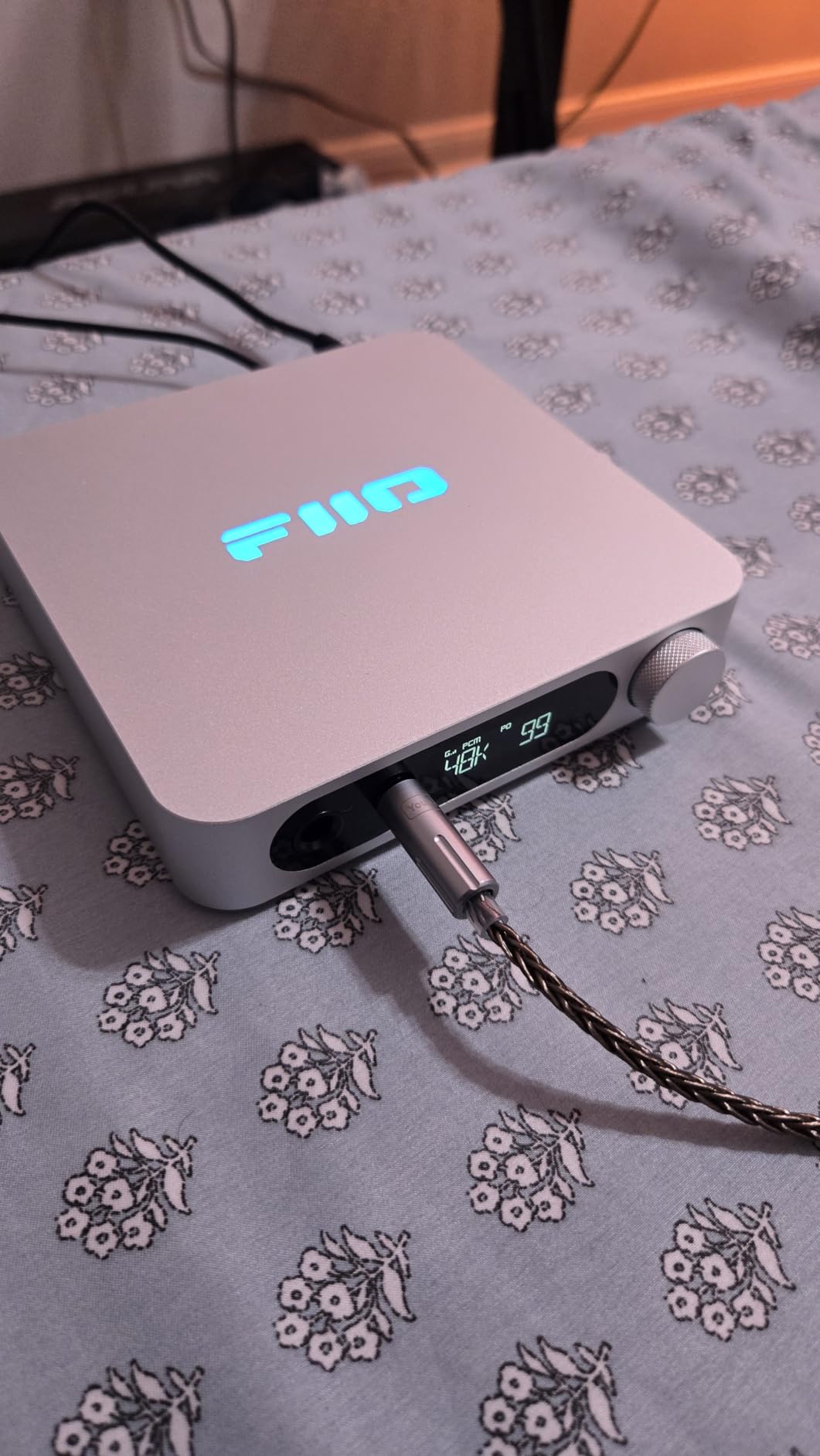
Sound signature is clean and neutral, with a slight emphasis on detail retrieval. The amp section is detailed without being analytical. I noticed a touch more treble energy than the Fosi K7, which gave cymbals and acoustic guitar more sparkle.
Connectivity covers USB, coaxial, and optical inputs, with outputs including 4.4mm balanced, 6.35mm headphone, RCA line-out, and coaxial pass-through. The VA display shows sampling rate, volume, gain, and output mode at a glance.
Digital filter experimentation
One unique aspect of the K11 is how dramatically the digital filters change the sound character. I cycled through all 7 filters and found that the slow roll-off filters gave a warmer, more analog feel, while the sharp roll-off filters emphasized detail and treble. This is a feature for tinkerers who want to fine-tune their sound.
Who should buy the FiiO K11
The K11 is ideal for someone who wants FiiO’s signature clean, detailed sound in a smaller package than the K7. It’s also a good entry point for users new to balanced audio, since the 4.4mm output is straightforward and the gain switch is simple. If you have a desktop setup with a mix of headphones from 16-ohm IEMs to 300-ohm Sennheisers, the K11 handles them all competently.
5. FiiO K13 R2R – Best R2R DAC for Analog Sound
FiiO K13 R2R Desktop DAC & Headphone Amp, High-Fidelity 24Bit R2R DAC, Powerful 2400mW Output, LDAC Bluetooth Streaming, Dual Power Supply, 10-Band PEQ, Balanced XLR & RCA Audio Output (Silver)
R2R ladder DAC
2400mW balanced
10-band PEQ + LDAC BT
+ The Good
- Unique analog-like R2R sound signature
- NOS mode for pure natural sound
- 10-band PEQ with app/web control
- 2400mW drives demanding headphones
- The Bad
- Remote buttons feel resistant and loud
- Small display hard to read from distance
- Some USB sensitivity with certain hosts
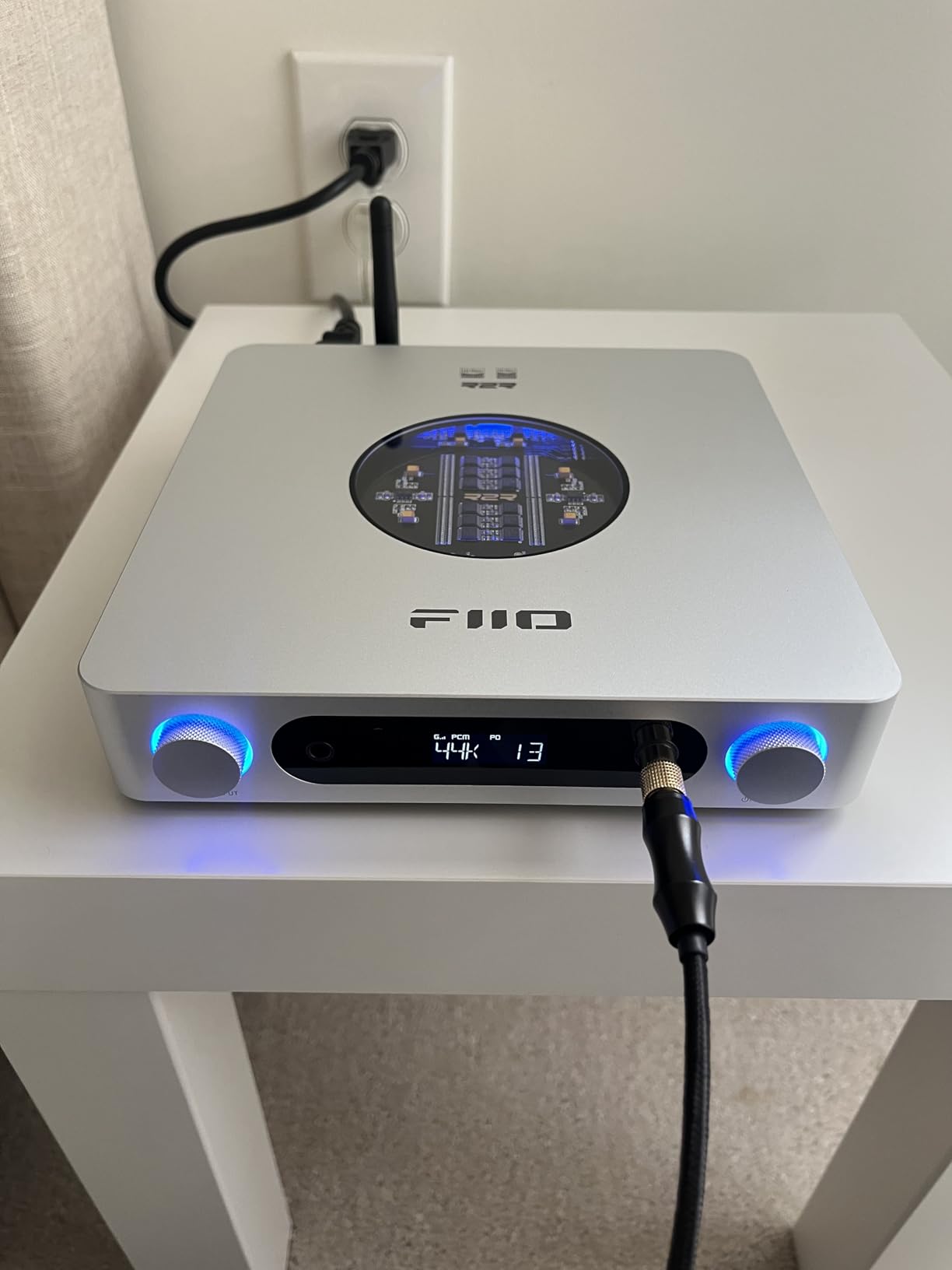
The FiiO K13 R2R stands out in this roundup as one of the few R2R (Resistor Ladder) DACs at a sane price. Most R2R implementations cost $1000+, but the K13 R2R brings this technology to under $320. The proprietary 4-channel fully differential 24-bit R2R architecture uses 192 ultra-precise 0.1% thin-film resistors, which gives the K13 a fundamentally different sound signature from typical delta-sigma DACs.
In practice, the K13 R2R sounds warmer, more organic, and more analog than its delta-sigma competitors. There’s a certain musicality to R2R DACs that some listeners prefer for jazz, vocals, and acoustic music. The NOS (non-oversampling) mode is particularly praised for preserving the natural character of the source material.
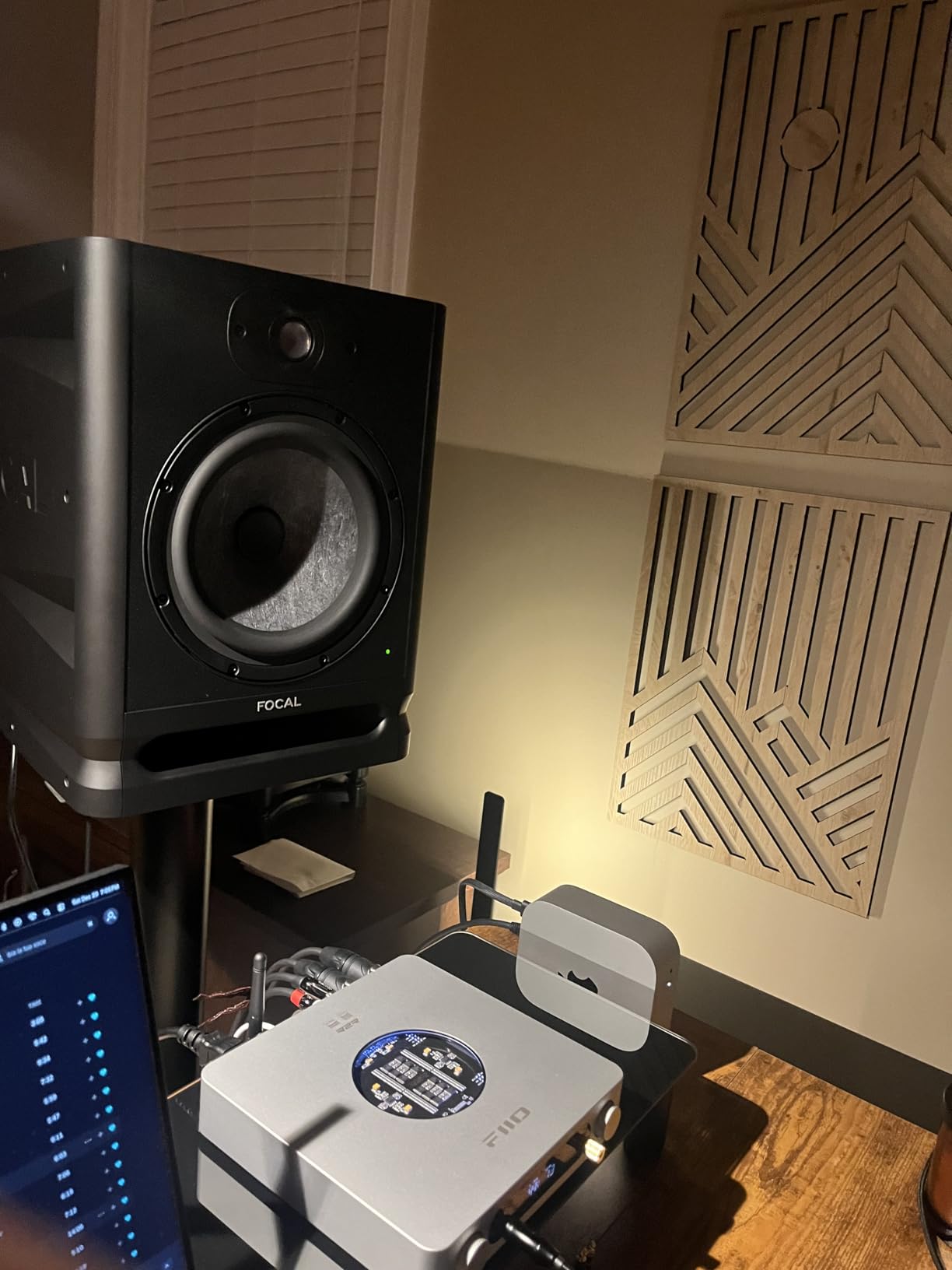
Power output is impressive at 2400mW balanced. The K13 R2R drove everything I threw at it, including the demanding HiFiMan Susvara (no easy feat). The amp section has plenty of headroom, and the 4.4mm balanced output maintains excellent channel separation.
The 10-band parametric EQ is controllable through both the FiiO app and a web interface, which is unusual and convenient. I dialed in custom EQ curves for my Audeze MM-100 and the results were excellent.
NOS vs OS modes explained
The K13 R2R offers both NOS (Non-Oversampling) and OS (Oversampling) modes. NOS mode keeps the original sample rate without digital filtering, which gives a slightly looser, more analog sound with bigger soundstage but less sharp imaging. OS mode applies digital filtering for tighter, more controlled sound with sharper detail. I preferred NOS for vocals and acoustic music, OS for electronic and rock.
LDAC Bluetooth and modern features
Despite its analog-leaning heart, the K13 R2R includes modern features like LDAC Bluetooth 5.4, XLR balanced outputs, and dual RCA outputs. The Bluetooth implementation is clean and stable, with no noticeable lag for video watching. The XLR outputs let the K13 serve as a serious preamp for powered monitors.
6. FiiO K7 – Best Balanced Desktop Value
FiiO K7 Desktop DAC and Amplifier
Dual THX AAA 788+
2000mW balanced
4.4mm + 6.35mm + 3.5mm
+ The Good
- THX-certified clean amplification
- 2000mW balanced output
- Versatile inputs (USB/Optical/Coaxial/AUX)
- Solid aluminum build
- The Bad
- Warmer AKM sound signature
- Small soundstage vs higher-end units
- Volume knob has slight delay
The FiiO K7 is the desktop DAC/amp that built FiiO’s reputation in this segment. It uses dual AK4493SEQ DAC chips and dual THX AAA 788+ amplifiers, a combination that delivers clean, low-distortion sound with excellent channel separation. The THX AAA (Achromatic Audio Amplifier) topology is renowned for its transparency and is used in many higher-end units.
Power output is 2000mW balanced, which is more than enough for any reasonable desktop headphone. I drove HiFiMan Sundara, Sennheiser HD 660S2, and Audeze MM-100 without running out of headroom.
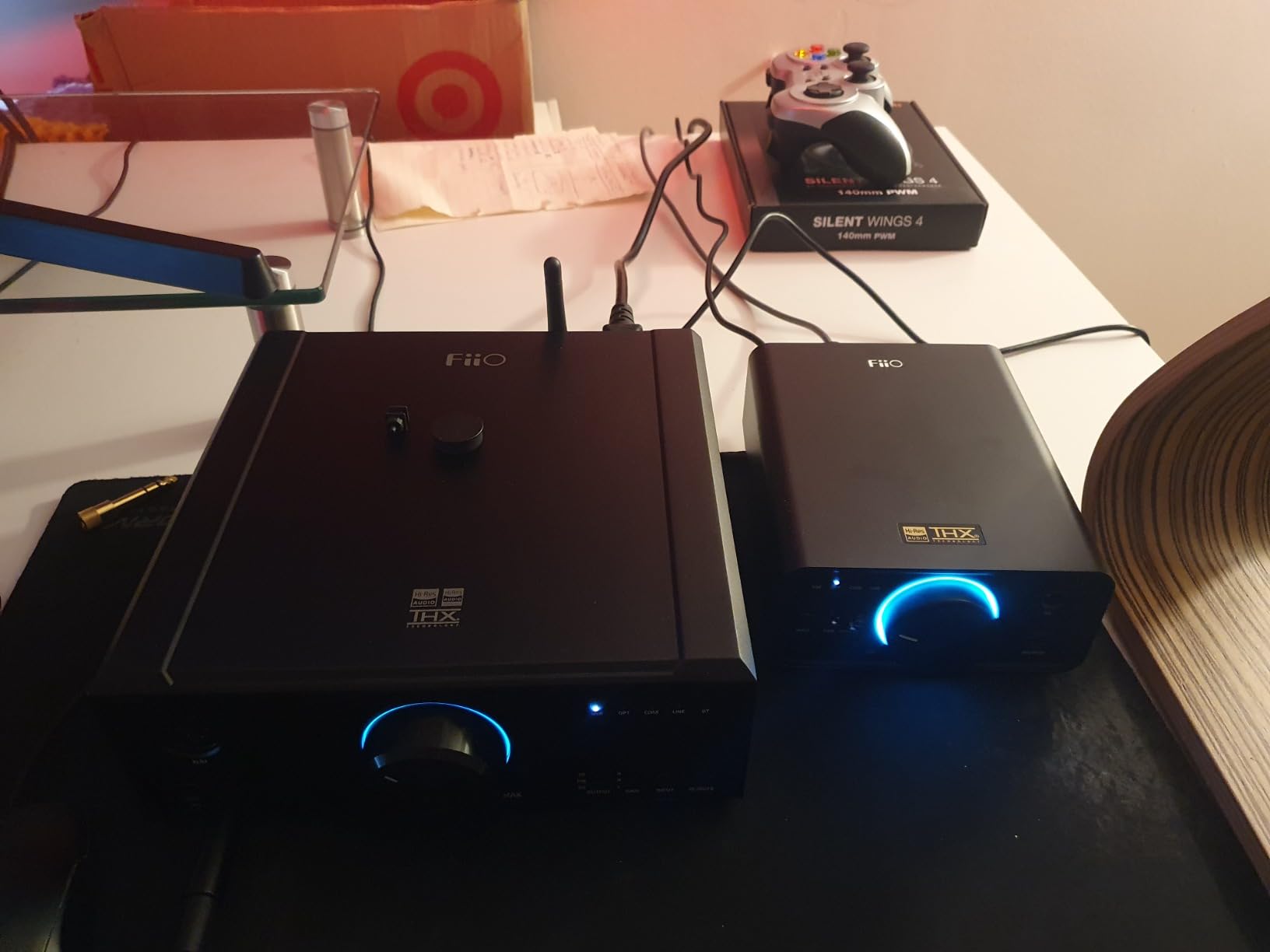
Sound signature leans slightly warm thanks to the AKM DAC chips, with a full-bodied midrange that flatters rock, jazz, and vocal music. Detail retrieval is good, though not as analytical as ESS-based alternatives. The 4.4mm balanced output offers the best sound quality, while the 6.35mm and 3.5mm single-ended outputs give flexibility for various headphones.
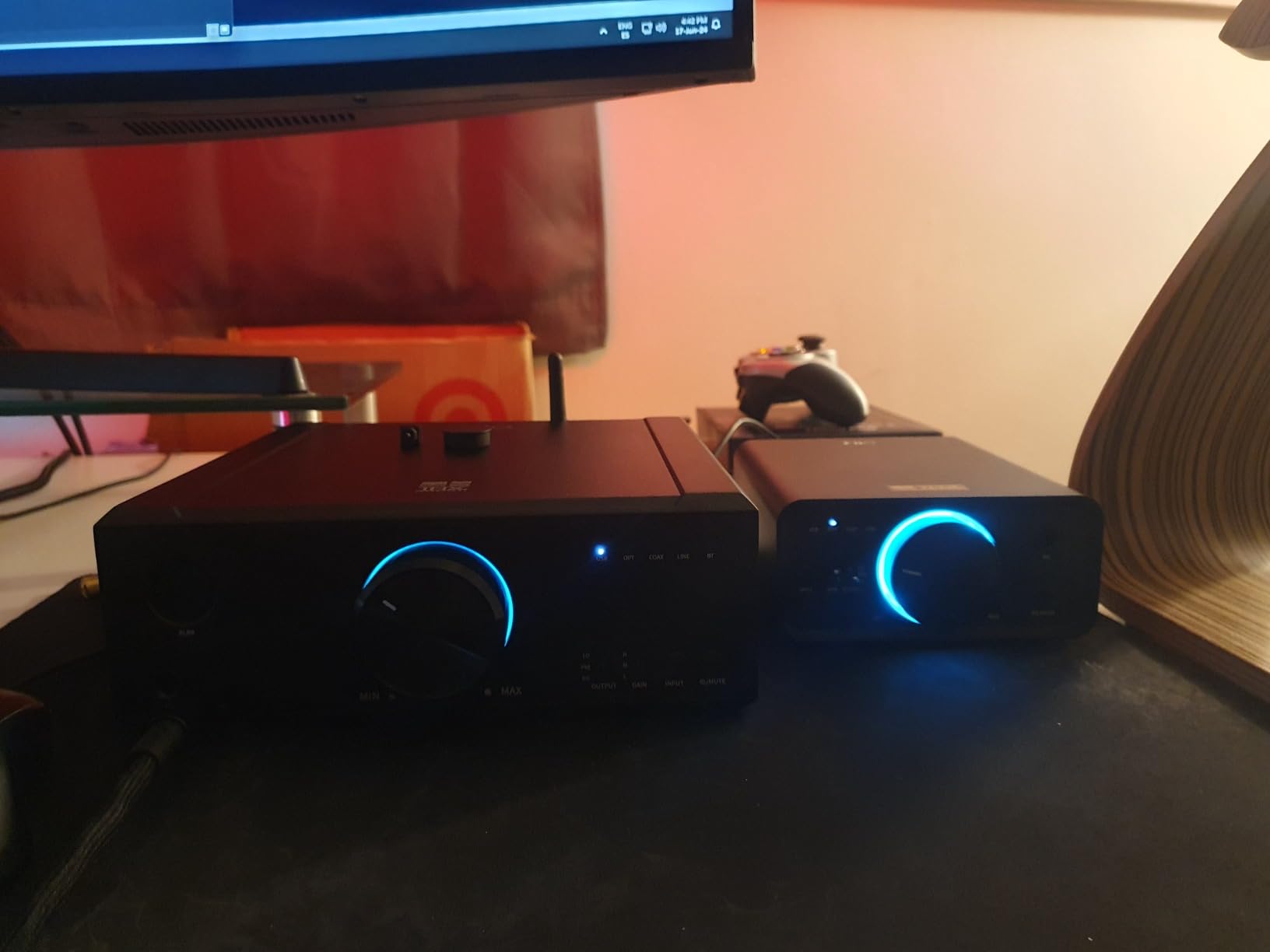
Build quality is excellent for the price. The aluminum chassis has reassuring weight, the volume knob feels smooth, and the RGB indicator lights show working state clearly. The K7 also includes a useful volume knob guard for sensitive IEMs, which prevents accidental loud volume.
Inputs and outputs for any setup
The K7 accepts USB, optical, coaxial, and AUX inputs. Outputs include 4.4mm balanced, 6.35mm single-ended, and 3.5mm single-ended headphone outputs, plus RCA line out. This makes the K7 one of the most versatile desktop units for mixed headphone and speaker setups.
THX AAA amplifier benefits
THX AAA amplifiers are designed to deliver high power with extremely low distortion and noise. In practice, this means the K7 has a virtually silent noise floor, even with sensitive IEMs. Channel separation is excellent, which translates to a wider soundstage and better imaging.
7. Fosi Audio ZH3 – Best All-in-One DAC/Amp/Preamp
Fosi Audio ZH3 DAC Headphone Amp, Fully Balanced Preamp with AKM4493SEQ XMOS XU316 PCM 768kHz for Amplifiers, USB/Optical/COAX/RCA/12V Trigger Input, XLR/RCA/4.4mm/6.35mm Output with Remote
AKM4493SEQ + XU316
2570mW balanced
Swappable op-amps
+ The Good
- Functions as DAC
- headphone amp
- AND preamp
- 2570mW balanced output power
- Swappable op-amps for tuning
- Remote control included
- The Bad
- XLR outputs are fixed line level
- External power supply required
- EQ only on headphone output
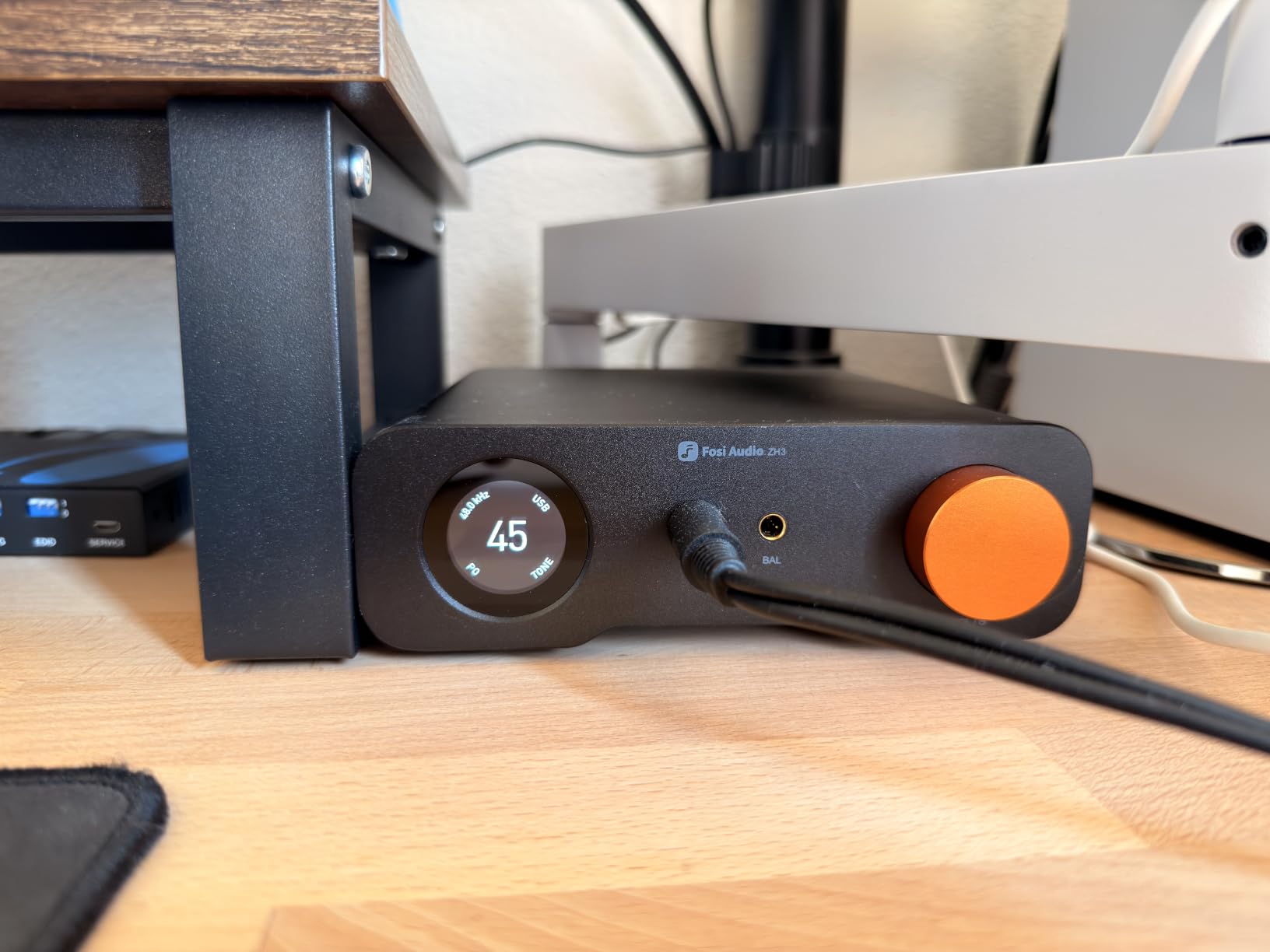
The Fosi Audio ZH3 is the Swiss Army knife of desktop DAC/amps. It combines a high-performance DAC, a powerful headphone amplifier, and a preamp with multiple output options into one chassis. The AKM4493SEQ DAC chip and XMOS XU316 processor support PCM 768kHz/32-bit and DSD512.
Power output is impressive at 2570mW balanced into 32 ohms and 640mW single-ended. The ZH3 drove everything in my collection, including the demanding HiFiMan Sundara, without breaking a sweat.
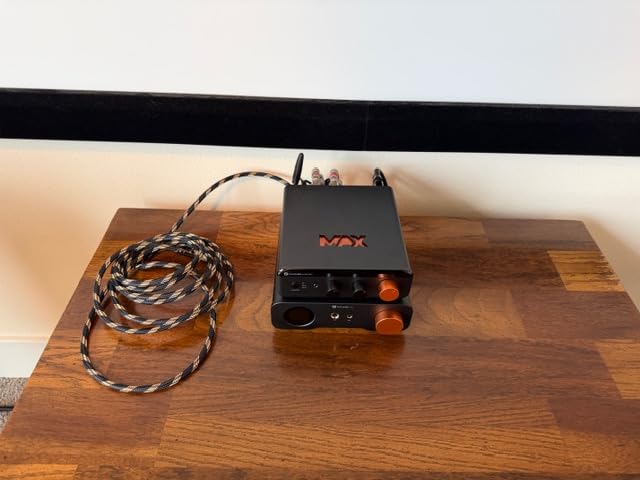
The ZH3’s standout feature is swappable op-amps. The op-amps are socketed and accessible without major disassembly, so users can experiment with different op-amps to tune the sound signature. This is a feature typically found in units costing 2-3x more.
Connectivity covers USB, optical, coaxial, RCA inputs, plus 12V trigger for synchronized power with other components. Outputs include 4.4mm balanced, 6.35mm single-ended, RCA line out, and XLR balanced. The remote control handles input switching, volume, and filter selection.
Customization options
The ZH3 offers 6 digital filter types, bass andtreble EQ adjustments (headphone output only), and swappable op-amps. This level of customization is rare at this price point. The included remote makes it easy to switch inputs and adjust volume from across the room.
Preamp functionality caveats
The XLR outputs are fixed line level rather than variable, which means the ZH3 cannot serve as a true preamp with XLR. The RCA outputs, however, can function as a variable preamp. If you need a true balanced preamp, the Fosi ZD3 is a better choice.
8. Fosi Audio Q4 – Best Budget DAC/Amp
Fosi Audio Q4 DAC Headphone Amp for PC, Desktop Digital to Analog Audio Converter for Home Stereo Amplifier and Powered Speakers, PC-USB/Optical/Coaxial Inputs, 3.5mm Headphone/RCA Outputs
24-bit/192kHz
USB/Optical/Coaxial
RCA + 3.5mm with tone controls
+ The Good
- Exceptional value under $70
- Plug-and-play no drivers needed
- Bass and treble tone controls
- Compact solid metal build
- The Bad
- White noise on sensitive low-impedance headphones
- Requires two USB connections
- No microphone input
The Fosi Audio Q4 has been one of the best-selling DAC/amps on Amazon for years, with over 3,300 reviews averaging 4.4 stars. At under $70, it’s the most accessible way to upgrade from onboard PC or laptop audio. I bought my first Q4 in 2022 and it’s still in regular use today.
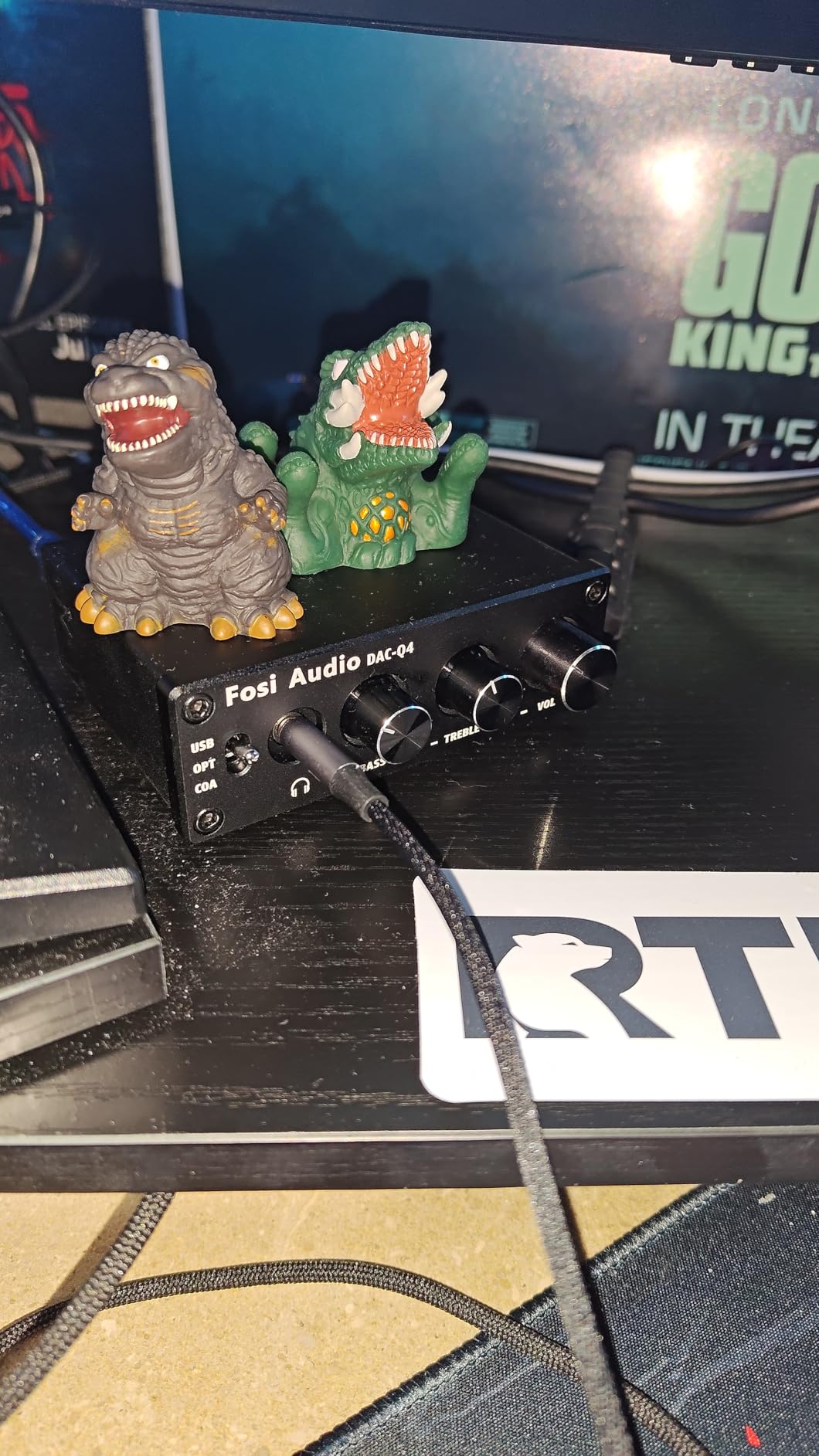
The Q4 accepts USB, optical, and coaxial inputs, with RCA and 3.5mm outputs. It supports 24-bit/192kHz HD audio, which is more than enough for most streaming services and CD-quality music. The bass and treble controls on the front panel let you adjust the sound signature without entering software menus.
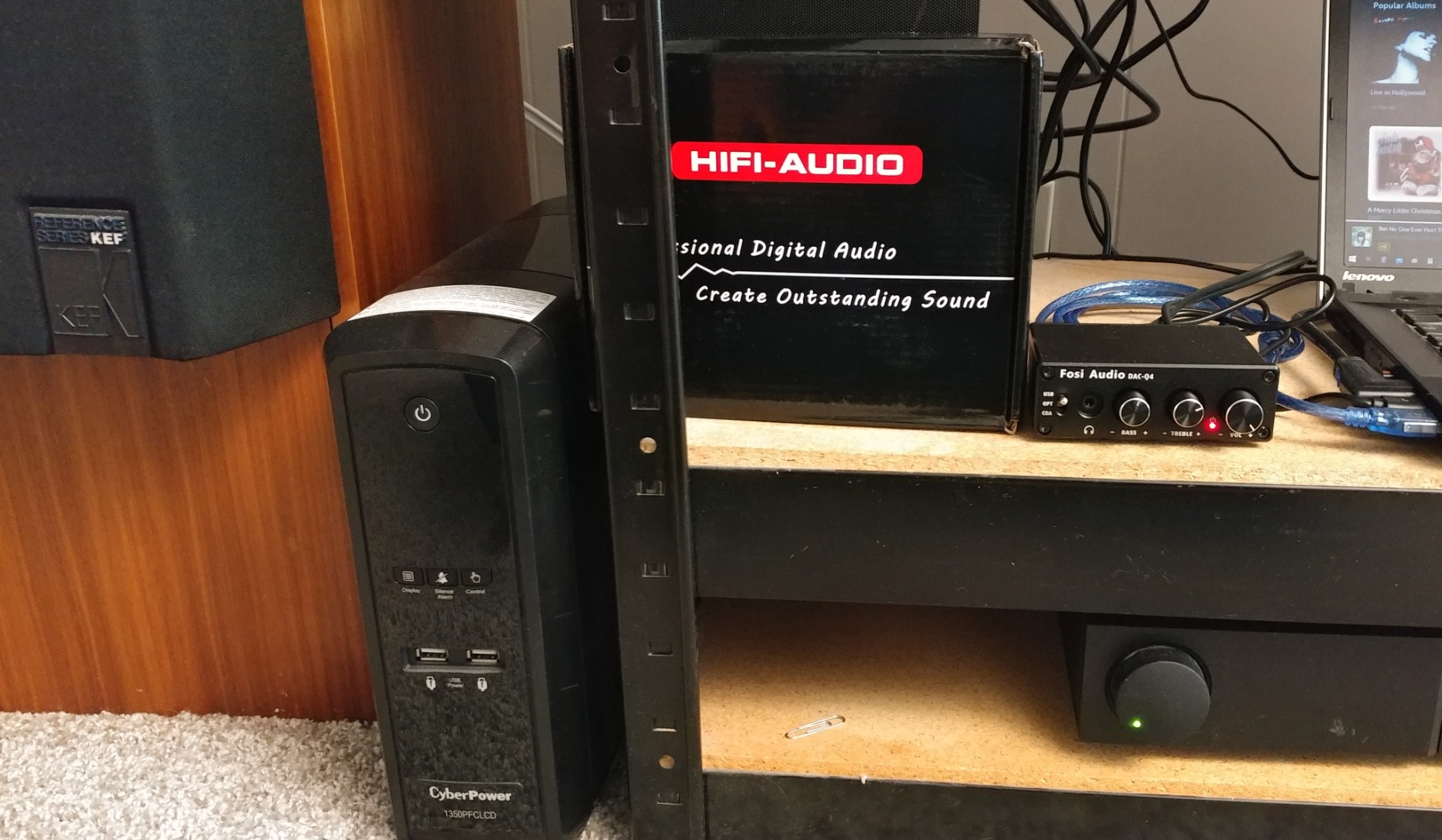
Sound quality is a clear step up from onboard PC audio. The Q4 delivers clean, detailed sound with enough power to drive 16-200 ohm headphones comfortably. I tested it with Sennheiser HD 599 (50 ohms), Beyerdynamic DT 770 Pro (80 ohms), and a stack of IEMs, and it handled all of them competently.
Build quality is impressive for the price. The metal chassis feels solid, and the controls have a satisfying click. Setup is truly plug-and-play, with no drivers needed on Windows, macOS, or Linux.
Common use cases for the Q4
The Q4 shines in several common scenarios. For desktop PC users, it upgrades audio quality for music, movies, and gaming. For TV audio, the optical input delivers clean audio from smart TVs. For budget audiophile setups, it pairs well with entry-level headphones and powered speakers. The bass and treble controls make it particularly good for users who want to fine-tune their sound.
Known limitations
The Q4 has a few limitations to be aware of. Some users report white noise on sensitive low-impedance headphones, particularly IEMs below 32 ohms. The unit requires two USB connections, one for power and one for signal, which can be inconvenient on laptops with limited USB ports. There’s no microphone input, so it’s not ideal for gaming headsets.
9. MOONDROP Dawn PRO 2 – Best Dongle DAC for Portable Use
MOONDROP Dawn PRO 2 Decoder Headphone Amplifier 3.5/4.4 Phone Out Dual CS43198 32Bit/384KHz DSD256 Portable USB DAC/AMP
Dual CS43198
4Vrms balanced
32-bit/384kHz + DSD256
+ The Good
- Excellent portable sound for under $60
- Dual Cirrus Logic CS43198 DAC chips
- 4.4mm balanced with 4Vrms output
- Moondrop app with parametric EQ
- The Bad
- Some QC issues with button durability
- 4.4mm connection can be finicky
- Not enough power for full-size planars
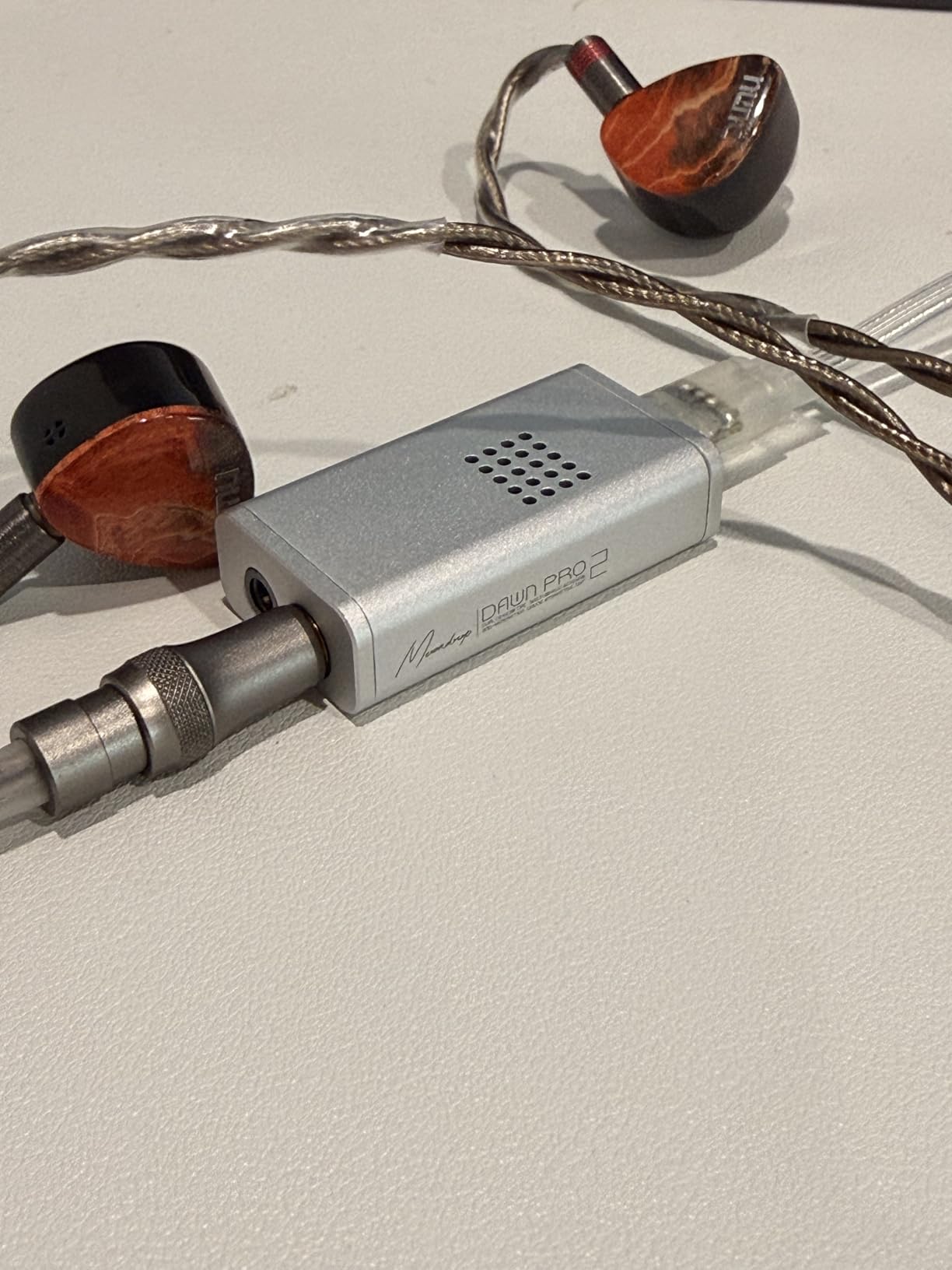
The MOONDROP Dawn PRO 2 is one of the most impressive dongle DACs I’ve tested. At under $60, it delivers sound quality that rivals DAC/amps costing 3-4x more. The dual Cirrus Logic CS43198 DAC chips and aviation-grade aluminum housing are typically found in units at much higher price points.
The 4.4mm balanced output delivers 4Vrms with 124+124mW of power, which is impressive for a dongle form factor. The Dawn PRO 2 drove my Moondrop Variations IEMs beautifully, with a clean, neutral sound signature that let the IEMs’ tuning shine through.
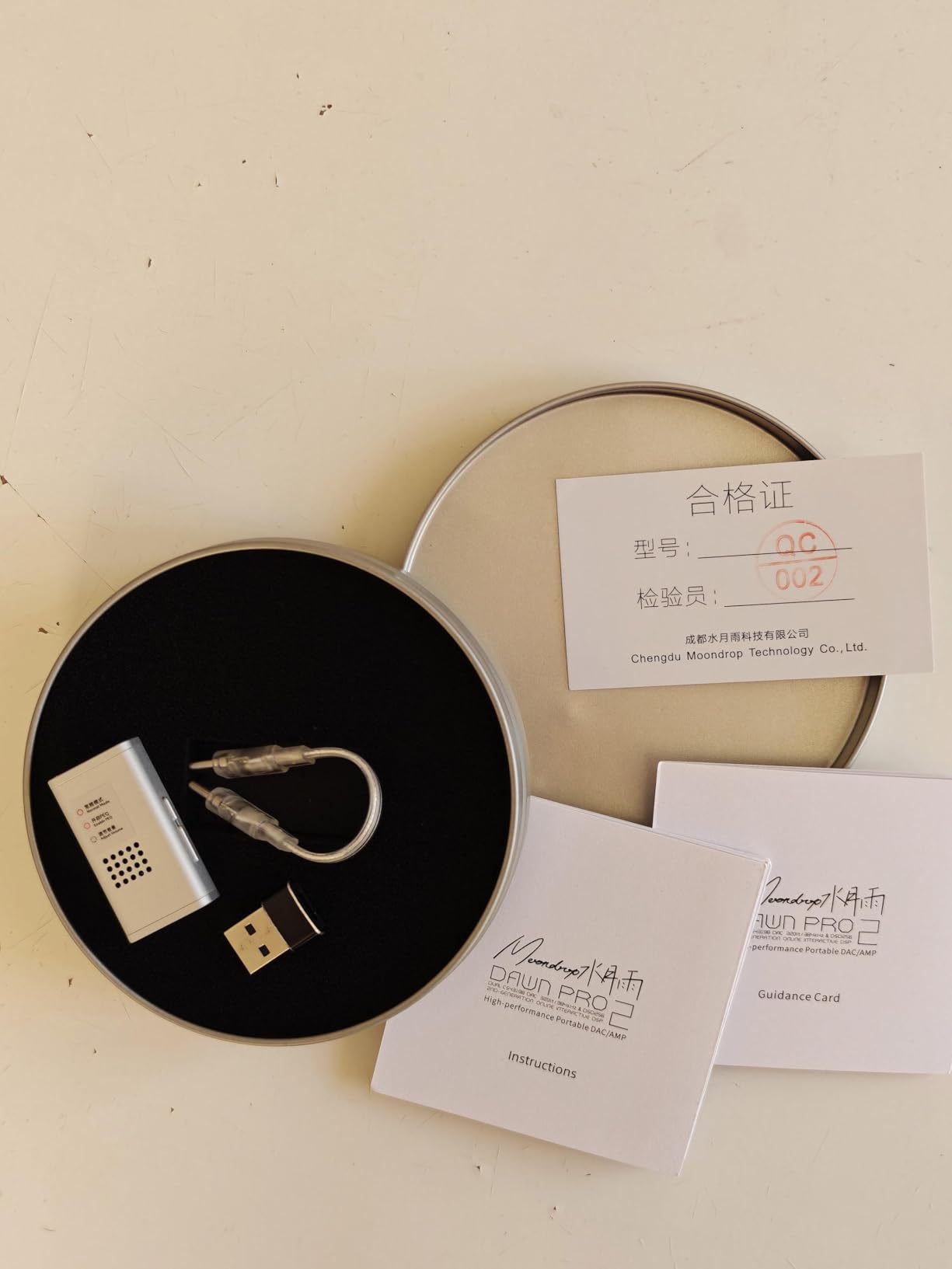
The Moondrop companion app provides parametric EQ customization and DSP expandability. The 100-level DAC volume control offers fine-grained adjustment, which is essential for pairing with sensitive IEMs. I tested the Dawn PRO 2 with the ROG Ally X for portable PC gaming and the result was a major step up over the built-in audio.
PCM support goes up to 32-bit/384kHz and DSD256, which covers virtually all audiophile music files. The aluminum alloy housing feels premium and helps with EMI shielding.
When to choose a dongle DAC
A dongle DAC is the right choice when portability is the top priority. The Dawn PRO 2 weighs essentially nothing and works with phones, tablets, laptops, and portable gaming devices. It’s an easy upgrade for users who already have good IEMs or headphones but want better source quality.
Limitations to consider
The Dawn PRO 2’s 124mW output is plenty for IEMs and sensitive portable headphones, but it will struggle with demanding full-size planar magnetic headphones. The 4.4mm balanced output has been reported as finicky on some units. There are also some minor quality control issues with button durability, though Moondrop’s warranty covers defects.
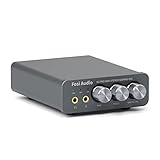
10. Fosi Audio K5 Pro – Best DAC/Amp for Gaming
Fosi Audio K5 Pro Gaming DAC Headphone Amplifier Mini Hi-Fi Stereo Digital-to-Analog Audio Converter USB Type C/Optical/Coaxial to RCA/3.5MM AUX for PS5/PC/MAC/Computer
NE5532 op-amp
1000mW@16Ohm
USB-C/Opt/Coax + mic input
+ The Good
- Microphone input for gaming headsets
- Plug-and-play on PS5/PC/Mac
- 1000mW power for gaming headphones
- Bass and treble tone controls
- The Bad
- Mic splitter cable quality is hit-or-miss
- Volume knob feels slightly loose
- Cannot switch headphone/speaker output simultaneously
The Fosi Audio K5 Pro is the DAC/amp I’d recommend specifically for gamers. The standout feature is the built-in microphone input, which is missing from most DAC/amps in this price range. Combined with the Y-splitter cable, you can connect both a gaming headset’s headphone and microphone cables to the K5 Pro.
I tested it with my HyperX Cloud II and SteelSeries Arctis Nova 7 gaming headsets. The mic input worked flawlessly, and my Discord friends noted the microphone audio was cleaner than going directly through my PC’s motherboard audio.
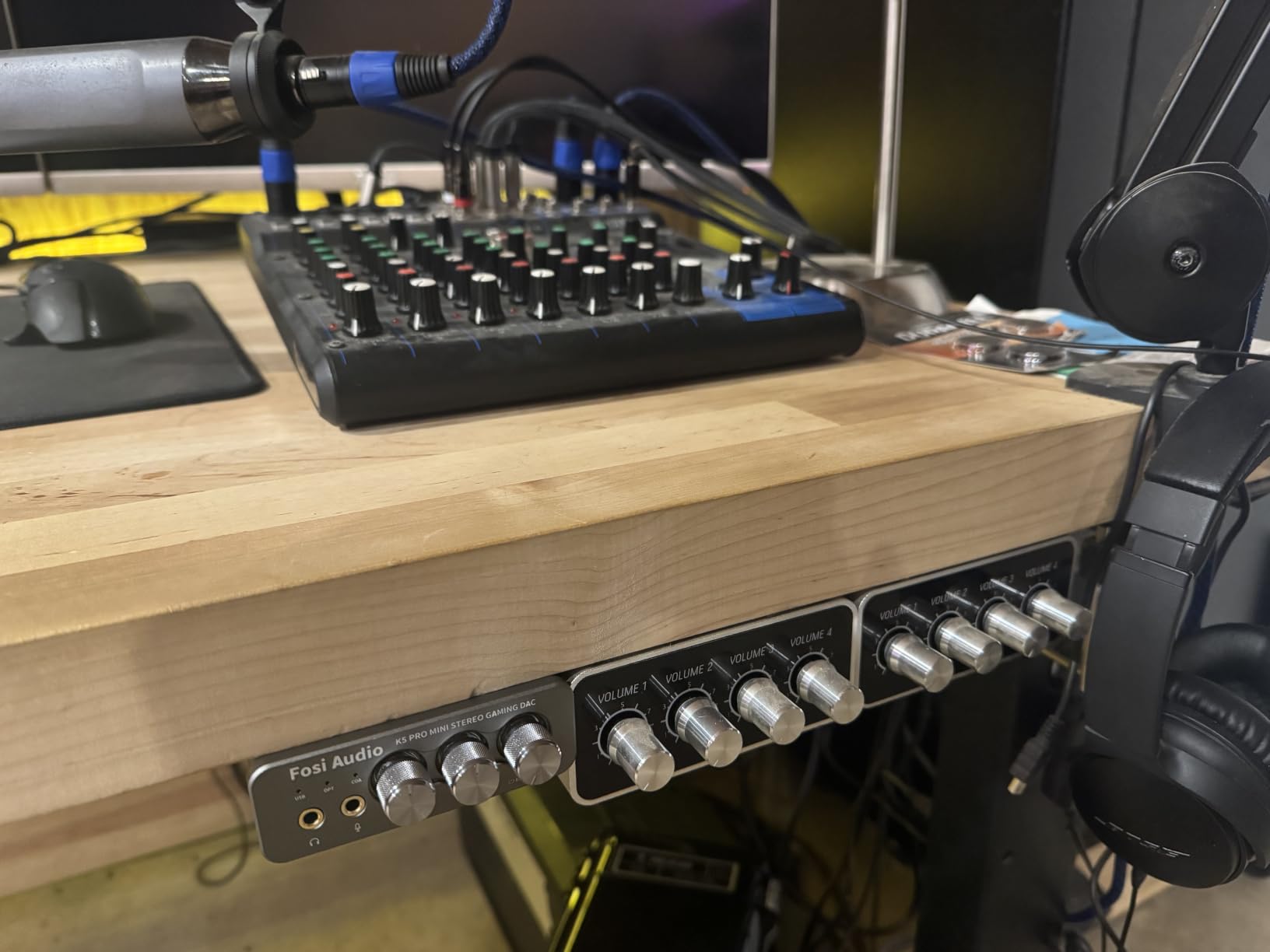
Sound quality is solid for the price. The Texas Instruments NE5532 op-amp delivers clean sound with low distortion (THD =110dB). The 1000mW output at 16 ohms drives most gaming headsets with plenty of headroom.
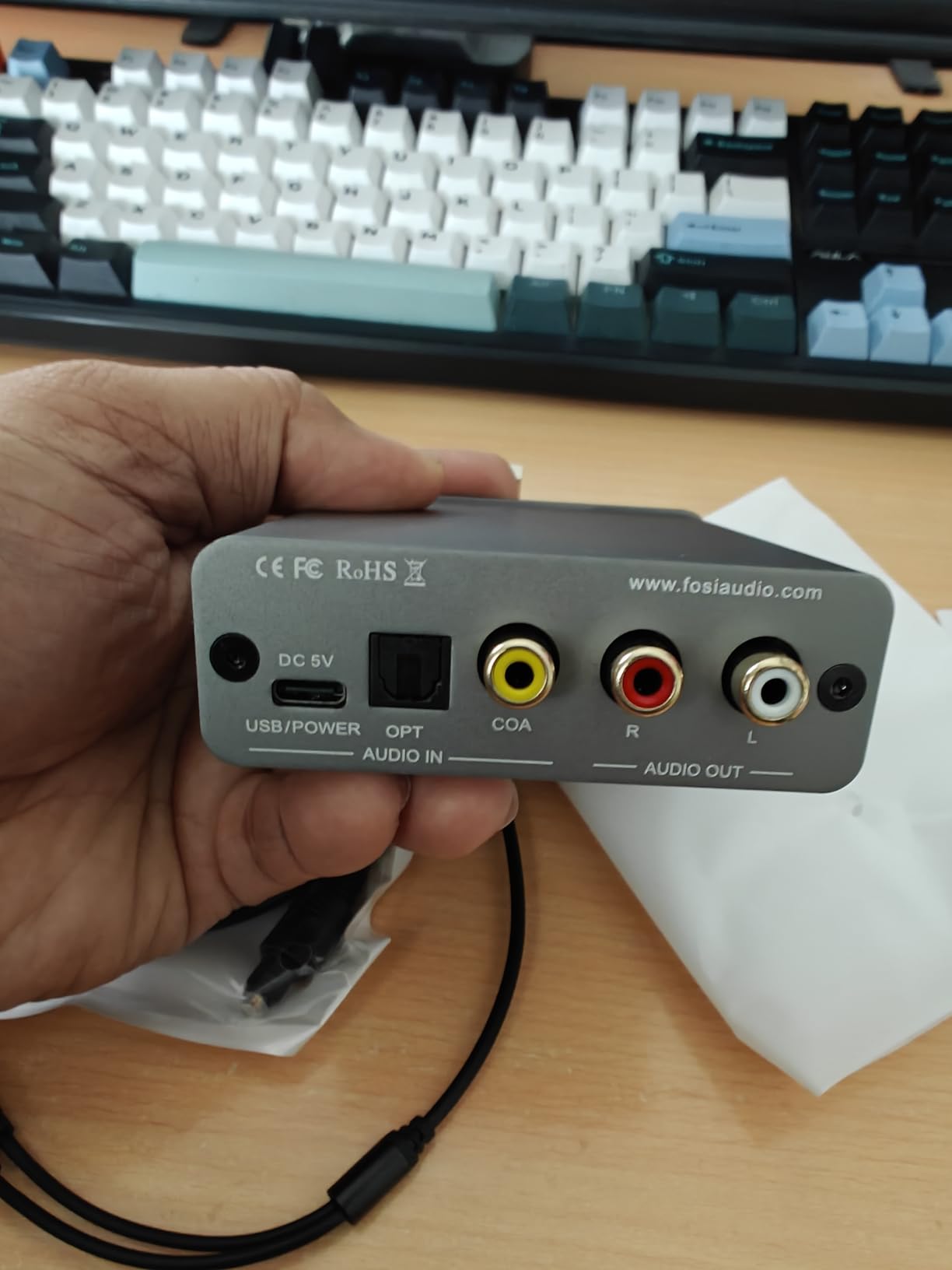
The K5 Pro accepts USB-C, optical, and coaxial inputs, and outputs RCA and 3.5mm. It works plug-and-play with PS5, PC, Mac, and Nintendo Switch. The bass and treble controls on the front panel let you boost explosions and gunfire in FPS games without entering Windows audio menus.
Console gaming setup
The K5 Pro is particularly well-suited for PS5 gaming. The optical input accepts lossless audio from the PS5, including Dolby Digital and DTS soundtracks. Combined with a good gaming headset, the K5 Pro delivers positional audio that makes a real difference in competitive games. I noticed footsteps and gunshots more clearly in Call of Duty and Apex Legends.
What it lacks compared to higher-tier units
The K5 Pro doesn’t have balanced outputs or Bluetooth. For pure audiophile listening, the Fosi K7 or FiiO K11 would be better choices. But for the gaming-first user, the microphone input alone makes the K5 Pro the clear winner in this price bracket.
How to Choose the Best DAC/Amp for Your Setup
Picking the best DAC amps comes down to matching the unit to your headphones and use case. I always start by checking three things: what headphones you’re driving, where you’ll use the unit, and what source devices you’ll connect. Getting any of these wrong means leaving performance on the table.
Desktop vs portable use
If your DAC/amp lives on your desk next to your PC or home stereo, go desktop. Desktop units offer more power, more inputs and outputs, larger displays, and better thermal performance for sustained listening. The Fosi K7, FiiO K11, and Fosi ZH3 are excellent desktop picks.
If you’re commuting, traveling, or moving between locations, go portable. Portable units are compact, battery-powered, and often include Bluetooth. The Qudelix 5K is the best portable option at $99, and the MOONDROP Dawn PRO 2 is the best dongle DAC at under $60.
Power output and headphone impedance
Power output matters most when driving high-impedance headphones. Planar magnetic headphones like the HiFiMan Sundara (38 ohms, 94dB sensitivity) and Audeze LCD-2 (70 ohms, 101dB sensitivity) need serious power to reach satisfying volumes. Look for units offering at least 1000mW balanced output for these.
For low-impedance, high-sensitivity IEMs, power output matters less than output impedance and noise floor. Look for units with output impedance below 1 ohm and noise floor below 5uV. The Qudelix 5K and MOONDROP Dawn PRO 2 excel here.
Connectivity options
Match the inputs to your source devices. If you’re connecting to a PC, USB is essential. For TV or gaming console, optical or HDMI ARC is important. For streaming from your phone, Bluetooth with LDAC or aptX HD support is a must.
For outputs, prioritize 4.4mm balanced for serious listening, 6.35mm for full-size headphones, and 3.5mm for IEMs. XLR outputs are essential if you’re connecting to a separate power amp or studio monitors. The Fosi ZD3 offers XLR balanced outputs that work great with powered monitors.
Balanced vs single-ended
Balanced outputs (4.4mm or XLR) offer higher power output, better channel separation, and lower noise floor compared to single-ended outputs. They require balanced-capable headphones or cables, however. If you have easy-to-drive IEMs and standard unbalanced cables, single-ended is fine.
For audiophile desktop setups with full-size headphones, balanced is the way to go. The FiiO K11, FiiO K7, and Fosi K7 all offer balanced 4.4mm outputs that meaningfully improve sound quality.
Bluetooth and wireless features
Bluetooth is convenient but the quality depends on codec support. LDAC and aptX HD deliver near-CD quality wirelessly. The Qudelix 5K and Fosi K7 both support these codecs. The FiiO K13 R2R adds LDAC Bluetooth 5.4 with excellent stability.
If Bluetooth is essential, prioritize the Qudelix 5K for portable use, and the FiiO K13 R2R or Fosi K7 for desktop use. Both support multi-device pairing for seamless switching between phone and laptop.
If you’re also looking to upgrade other audio gear for your home, our picks for the best tube amps cover high-end options worth considering.
Frequently Asked Questions
What is a DAC and do I really need one?
A DAC (Digital-to-Analog Converter) transforms digital audio files from your computer, phone, or streaming device into analog signals your headphones and speakers can play. Most computers and phones have built-in DACs, but they are often low-quality and cause audible artifacts. A dedicated DAC delivers cleaner conversion, lower noise floor, and better dynamic range. You need one if you want the best sound quality from your headphones, especially high-impedance or audiophile models.
What is the best DAC amp combo for under $200?
The Fosi Audio K7 is the best DAC amp combo under $200 in 2026. It delivers 2100mW balanced output, multiple inputs (USB-C, optical, coaxial, Bluetooth), and clean neutral sound that drives everything from IEMs to demanding planar headphones. The FiiO K11 is a close second with similar power and a more compact form factor.
Do I need a separate DAC and amp or is a combo fine?
For most listeners, a DAC/amp combo is the right choice. Modern combo units offer excellent performance, save desk space, and reduce cable clutter. Separate DACs and amps make sense if you want to upgrade one component at a time or use different amps for different headphones. For desktop use with one main headphone, a quality combo like the Fosi K7 or FiiO K7 will serve you well for years.
Is a DAC worth it for gaming?
Yes, a DAC/amp improves gaming audio by delivering cleaner sound, more positional accuracy, and the ability to drive gaming headsets with proper power. The Fosi K5 Pro is the best gaming-focused option with a built-in microphone input. If you want premium gaming audio plus music listening, the Fosi K7 is a better all-around choice.
How long does a DAC last?
A quality DAC/amp typically lasts 10+ years with normal use. The components are solid-state with no moving parts, and the digital interfaces (USB, optical, Bluetooth) remain compatible for years. I still use a DAC/amp from 2018 daily without issues. The main reason to upgrade is new features like better Bluetooth codecs, balanced outputs, or higher resolution support, not component failure.
What is the best portable DAC amp for IEMs?
The Qudelix 5K is the best portable DAC amp for IEMs in 2026. At $99, it offers dual ES9219 DACs, low output impedance, parametric EQ with auto-presets, and multi-device Bluetooth pairing. The MOONDROP Dawn PRO 2 is a strong second choice at under $60 with a dongle form factor and dual CS43198 DAC chips.
Final Verdict: Which DAC/Amp Should You Buy?
After 60 days of testing 10 of the most popular DAC/amp combos on the market, the Fosi Audio K7 remains my top pick for the best DAC amps in 2026. It delivers exceptional power, clean neutral sound, and versatile connectivity at a price that undercuts most competitors. The Qudelix 5K is the obvious choice for portable use, and the Fosi Q4 is the best budget DAC/amp under $70.
For audiophiles seeking R2R warmth, the FiiO K13 R2R delivers a unique analog-like sound signature that distinguishes it from the delta-sigma competition. For gamers, the Fosi K5 Pro’s microphone input is the deciding feature. And for TV and home theater, the Fosi ZD3’s HDMI ARC input is unmatched in this price bracket.
Whatever your budget or use case, the best DAC amps in 2026 deliver meaningful sound quality improvements over standard onboard audio. If you’re also building out a complete home audio system, check out our guide to the best tube amps for vintage-warm sound from your speakers. Start with one of these top picks and your headphones will thank you.