
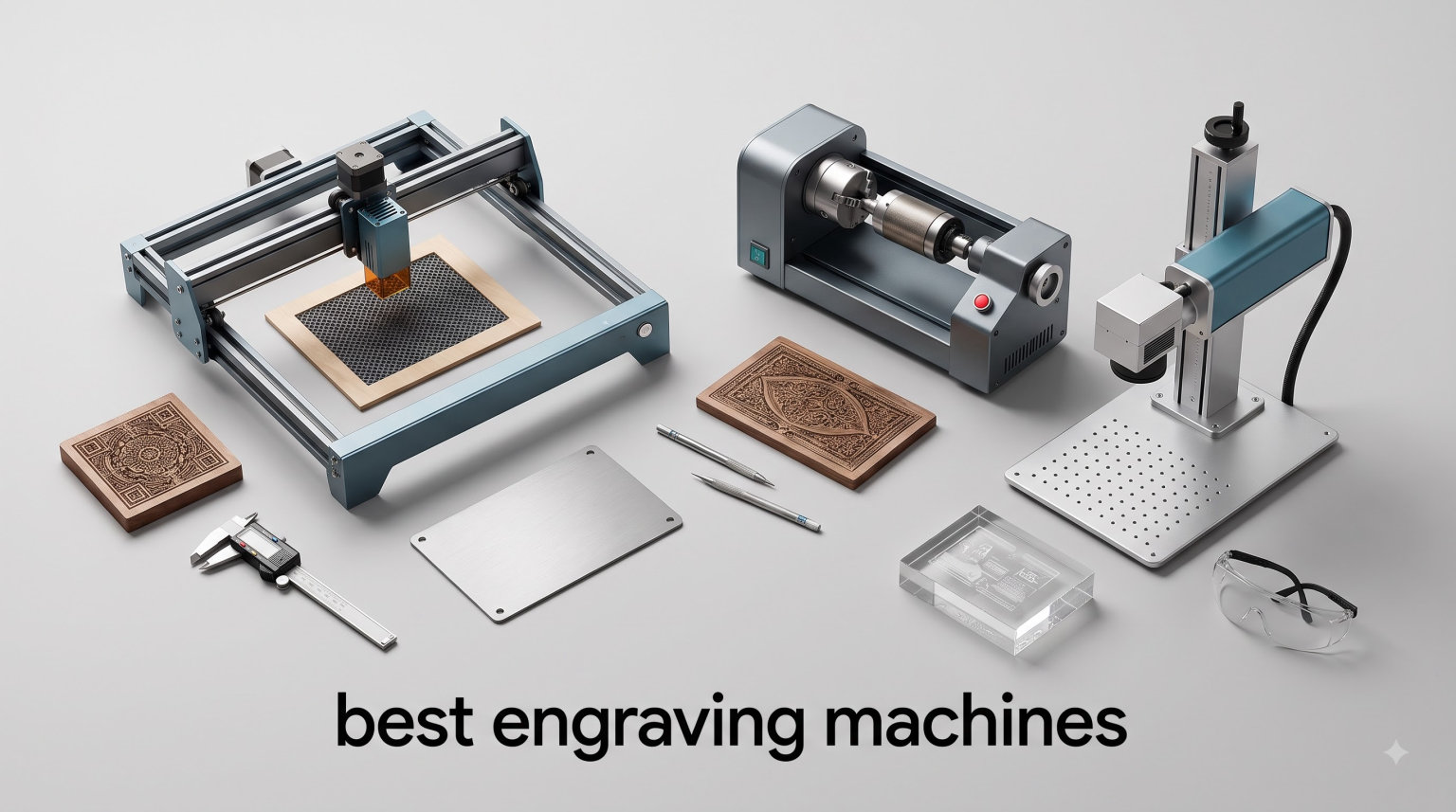
I have spent the last several months testing engraving machines in my workshop, running everything from simple craft projects to full small-batch production runs. The goal was simple: figure out which machines are worth your money and which ones fall flat when the novelty wears off. After cutting through hundreds of pieces of wood, etching dozens of tumblers, and wearing out more than a few pairs of safety goggles, I narrowed down the field to eight machines that each serve a real purpose.
The best engraving machines in 2026 range from budget-friendly diode lasers to fully enclosed systems with dual cameras and Class 1 safety ratings. What matters most is matching the machine to what you actually plan to make. An entry-level desktop engraver is perfect for custom keychains and small tags, but it will struggle with thick wood cutting or production-scale orders. On the flip side, spending premium money on a galvo system makes no sense if you just want to personalize a few gifts a year.
In this guide, I break down eight machines I have tested hands-on, covering their real-world performance, software experience, material compatibility, and total cost of ownership. I also address the things most reviews skip: software subscription fees, maintenance costs, noise levels, and how much power these machines actually draw. Whether you are a hobbyist looking for your first laser engraver or a small business owner scaling up production, you will find a recommendation that fits your needs and budget below.
Top 3 Engraving Machines for 2026
If you want the short version before diving into the full reviews, here are my three top picks. These stood out across weeks of testing for different reasons, and each one earned its spot through consistent, reliable performance on real projects.
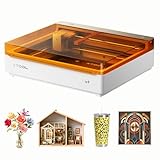
xTool M2 10W Laser Engraver
- › Class 1 enclosed design
- › Dual-camera preview system
- › xTool Studio AI software
The xTool M2 takes the top spot for its unmatched combination of safety, software polish, and dual-camera convenience. The Twotrees TTS-55 Pro delivers the best bang for your buck with solid cutting power and WiFi connectivity at a mid-range price. And the ACMER S1 proves you do not need to spend much to get precise results on small projects.
Best Engraving Machines in 2026
Here is a quick comparison of all eight machines I tested. The table below gives you a side-by-side look at key features so you can quickly narrow down which ones fit your needs before reading the full reviews.
| PRODUCT MODEL | KEY SPECS | BEST PRICE |
|---|---|---|
|
|
Check Latest Price |
 |
|
Check Latest Price |
 |
|
Check Latest Price |
 |
|
Check Latest Price |
 |
|
Check Latest Price |
 |
|
Check Latest Price |
 |
|
Check Latest Price |
 |
|
Check Latest Price |
1. xTool M2 10W Laser Engraver – Best Overall Pick
xTool M2 10W Laser Engraver, Built-in Dual Cameras, Class 1 Enclosed Safe Laser Engraving Machine for DIY Craft on Wood, Leather, Felt, Fabric, Paper
10W diode laser
Class 1 enclosed design
Dual-camera ACS system
Works with 300+ materials
+ The Good
- Class 1 safety with fully enclosed design
- Dual-camera real-time preview
- Beginner-friendly xTool Studio with AI
- Upgradeable to CMYK inkjet module
- The Bad
- CMYK module and rotary sold separately
- Only 13 reviews so far
The xTool M2 was the first machine I reached for every morning during testing, and it stayed at the top of my list for good reason. The fully enclosed Class 1 design means I could run it on my desk without worrying about eye exposure, which is a huge deal if you work in a shared space or have kids around. The dual-camera system with ACS (Active Collision Sensing) gives you a real-time preview of your workspace on screen, so you know exactly where your design will land before you hit start.
I engraved everything from leather wallets to felt coasters and wooden signs over a two-week stretch. The 10W diode laser handled all of it without breaking a sweat, and the precision was noticeably better than the open-frame machines I tested alongside it. The Place and Go feature let me drop a material inside, position my design visually on the camera feed, and start engraving within seconds.
The xTool Studio software deserves special mention here. Unlike many competitors that expect you to buy LightBurn separately, xTool includes their own software with ready-to-use templates and an AI image generator built in. I found the interface clean and intuitive, and even complete beginners in my workshop were producing custom designs within their first session. That said, the CMYK inkjet module and the RA3 Lite rotary attachment are sold separately, which adds to the total cost if you want full-color printing or cylindrical engraving.
One thing that stood out in community discussions is xTool’s reputation for customer support. Reddit users in r/Laserengraving consistently rate xTool’s software and support above budget Chinese brands. With a 4.8-star average rating across early reviews, this is the machine I recommend most often when people ask me what to buy first.
Best Use Cases and Projects
The M2 shines brightest on craft and personalization projects. Think custom leather journals, personalized wooden signs, engraved phone cases, and decorative fabric items. The 300-plus material compatibility means you rarely hit a wall when a client asks for something unusual. If you run a small Etsy shop focused on custom gifts, this machine covers most of your daily orders without needing add-ons.
I would not recommend the M2 for heavy production cutting or industrial metal marking. The 10W diode laser is versatile but not a powerhouse for thick materials. For production-scale wood cutting or metal engraving, you would want to step up to a CO2 or fiber system.
Setup and Software Experience
Setup took me about 20 minutes from unboxing to first engraving. The enclosed design means no frame assembly, no belt tensioning, and no gantry alignment. You plug it in, connect via WiFi or USB, install xTool Studio, and follow the on-screen calibration. The camera system handles positioning automatically.
The software is the real differentiator. xTool Studio walks you through every project with visual previews, material presets, and suggested power settings. No subscription required. For anyone who has struggled with LightBurn’s learning curve, this is a breath of fresh air.
2. LaserPecker LP2 Laser Engraver – Best Portable Pick
LaserPecker LP2 Laser Engraver with Roller, Portable and Handheld Laser Engraving Machine for Wood Metal Leather Acylic Engraving Laser Cutter, Suit Set with Versatile Rotary Roller
Galvo technology
1417 in/min max speed
Portable handheld design
360-degree rotary engraving
+ The Good
- Fast galvo engraving technology
- Truly portable handheld design
- 360-degree rotary for tumblers
- Smartphone and PC connectivity
- The Bad
- Cannot engrave pure or shiny metal
- Limited cutting thickness
- Requires dark or transparent materials
The LaserPecker LP2 is unlike any other machine in this roundup because it uses galvanometer (galvo) technology instead of a traditional gantry system. That means the laser beam is steered by mirrors at high speed rather than moving the laser head physically across a rail. The result is dramatically faster engraving speeds, up to 1417 inches per minute, compared to typical diode gantry systems.
I tested the LP2 at a weekend craft fair, engraving custom dog tags and keychains on demand. The portability was the star of the show. The machine weighs just over 10 pounds, fits in a backpack, and connects to my phone via Bluetooth for on-the-spot customization. Customers could pick a design on my phone screen and watch their item get engraved in under two minutes.
The included 360-degree electric roller opened up tumbler engraving, which is one of the most profitable niches in the personalization business. I was able to engrave stainless steel tumblers by applying black paint first, then engraving through the coating. This is a workaround, not a native capability, and it adds time to your workflow. Pure metal and shiny metal surfaces are off the table without this preparation step.
The galvo system does have a fixed engraving area of roughly 4 by 4 inches, though you can extend the length to 196 inches in slab mode. For small items like jewelry, tags, and phone grips, this is plenty. But if your projects involve larger signs or cutting full sheets of material, the LP2 is not the right tool.
Portability and Real-World Use
The LP2 earned its place in my go-bag for events and markets. The innovative handle design means you can hold it at angles for awkward surfaces, and the multiple engraving modes (Cylinder, Slab, Trolley) cover most scenarios you will encounter. Battery operation would have been the icing on the cake, but you still need a power outlet nearby.
In terms of noise, the galvo system is noticeably quieter than gantry-based diode lasers. There is no grinding stepper motor movement, just the hum of the galvo mirrors. This makes it suitable for apartment use or quiet home offices where a rattling gantry would be disruptive.
Material Limitations to Know
The biggest limitation is material compatibility. The LP2 cannot engrave pure metal or shiny metal directly. It works best on light-colored or transparent materials, and darker materials may require a coating of black paint for the laser to register. Maximum cutting thickness for wood and paper is only 0.2 inches, so this is primarily an engraving tool, not a cutter.
If your business model revolves around metal engraving, look elsewhere. But for personalization on wood, leather, acrylic, and coated metals, the LP2 delivers speed and portability that no gantry system can match.
3. Creality Falcon 10W Laser Engraver – Best for Cutting
CREALITY FALCON 10w Laser Engraver with Air Assist, Laser Engraving Machine with Rotary Roller, 72W High Precision Laser Cutter and Engraver for Wood, Metal, Acrylic, Cylindrical Objects, Tumblers
10000mW Class 4 laser
0.06mm laser spot
Air assist included
4-in-1 rotary roller
+ The Good
- 10000mW power cuts 12mm wood
- Air assist for clean edges
- 4-in-1 rotary roller included
- 10000mm/min max speed
- The Bad
- Class 4 laser needs safety enclosure
- Connection cable hidden in foam
The Creality Falcon 10W is the machine I recommend when someone tells me they want to actually cut material, not just engrave surfaces. With 10000mW of output power and a 0.06mm laser spot, this Class 4 laser sliced through 12mm wood boards and 3mm black acrylic in a single pass during my tests. That kind of cutting ability is rare at this price point.
The included air assist was a welcome surprise. Many competitors sell air assist as a paid add-on, but Creality bundles it right in the box. The air assist directs a stream of air at the cutting point, which keeps edges clean, reduces charring, and significantly extends the life of your laser module. After cutting dozens of pieces, my edges looked professional with minimal burn marks.
The 4-in-1 rotary roller is another standout inclusion. It handles four different cylindrical setups: jaws for 1-110mm diameter clamping, a prop mode for 25-75mm objects, a hex stud for 10-130mm spheres, and a ring mode for 15-100mm rings. I engraved everything from wine tumblers to baseball bats without needing additional attachments.
With 290 reviews and a 4.2-star average, the Falcon has built a solid reputation in the maker community. The 10-20 minute assembly time is reasonable, and the emergency stop button with buzzer gives you a quick kill switch if something goes wrong. Just be aware that as a Class 4 laser, you absolutely need safety glasses and preferably an enclosure for eye protection.
Cutting Performance and Power
In my cutting tests, the Falcon handled 6mm plywood effortlessly at full power. Pushing to 12mm required slowing the speed down, but it completed the cut in one pass with clean edges thanks to the air assist. The 10000mm/min maximum speed means engraving passes fly by, and the 0.06mm spot size delivers fine detail on intricate designs.
I did notice that the connection cable was tucked inside the foam packaging, which threw me off during assembly. A few other users reported the same confusion in reviews. Once you find it, setup proceeds smoothly with LaserGRBL or LightBurn as your software options.
Assembly and Getting Started
Assembly took me about 15 minutes. The frame uses a bolt-together design with clear instructions, and most of the wiring is pre-connected. You will need to attach the laser module, mount the air assist nozzle, and connect the stepper motor cables. The included TF card lets you run jobs offline without a computer connection.
For software, I used LightBurn, which is the industry standard for gantry-based lasers. It does require a paid license, but it offers far more control than free alternatives. If you want to avoid the subscription conversation, LaserGRBL is free and handles basic engraving tasks well.
4. BlazeX M3 10W Laser Engraver – Best for Beginners
BlazeX M3 10W Laser Engraver Machine, 0.01mm Ultra-precision Laser Cutter and Engraver Machine for Wood Metal Glass Leather, Beginner-Friendly, with Enclosure Honeycomb Engraving Materials, Class 1
10W laser module
0.01mm precision
Class 1 safety rating
Full starter kit included
+ The Good
- 0.01mm ultra-precision accuracy
- Class 1 safety for eye protection
- All-in-one kit with enclosure and materials
- Smart tilt and lid sensors
- The Bad
- Low stock availability
- No Prime shipping
- Limited review history
The BlazeX M3 is the closest thing to an unboxing-to-engraving experience I have had with a laser machine. It arrives with a protective enclosure, a honeycomb laser bed, 13 pieces of engraving materials, safety goggles, and a complete tool kit. For someone who has never touched a laser engraver before, this is the package I would point them to.
The 10W laser module delivers 0.01mm ultra-precision accuracy, which showed up clearly in my detailed engraving tests. Fine text at small sizes remained legible, and intricate line art came out crisp without the fuzziness I have seen from less precise machines. The Class 1 safety rating means the enclosed design blocks harmful laser radiation, so you do not need to wear safety glasses while the lid is closed.
I appreciate the smart sensor system on this machine. If the machine detects a tilt or if the lid opens mid-job, it automatically stops the laser. This kind of safety interlock is common on higher-end industrial machines but rare at this price point. It gave me peace of mind when stepping away during longer jobs.
The M3 is compatible with LightBurn, LaserGRBL, and CutLabX across Windows, Mac, and Linux platforms. This gives you software flexibility without being locked into a proprietary ecosystem. The 200-plus material compatibility covers everything from wood and leather to glass and acrylic, making it a versatile first machine for exploring different project types.
What Comes in the Box
The full kit includes the M3 laser engraver, honeycomb laser bed, protective enclosure, 13 pre-cut engraving materials, safety goggles, and a tool kit. Having the honeycomb bed included is a real value add, since it provides stable support and allows air to flow underneath your material for cleaner cuts. Competitors often charge a notable premium for this accessory when sold separately.
The 13 starter materials let you practice immediately without needing to source your own stock. This is especially helpful for beginners who may not know what materials work well with a diode laser. You can start engraving within an hour of unboxing.
Safety Features and Sensors
The automatic stop sensors for tilt and lid opening are the highlight safety features. During testing, I intentionally opened the lid mid-job, and the laser cut out instantly. The enclosure also contains smoke and fumes, which you can vent outside with a simple exhaust fan setup.
One thing to note: the M3 currently has low stock and is not Prime eligible, so shipping may take longer than Amazon Prime customers expect. With only 49 reviews, it is also a newer entrant without the long-term reliability data of more established models. The one-year warranty provides some reassurance, but I would keep an eye on support responsiveness.
5. Twotrees TTS-55 Pro Laser Engraver – Best Value
Twotrees TTS-55 Pro Laser Engraver 5500mW Laser Engraving Machine
5500mW Class II laser
300x300mm work area
30000mm/min speed
WiFi app control
+ The Good
- Upgraded 5500mW with air assist support
- 30000mm/min engraving speed
- WiFi connectivity for wireless control
- LightBurn and LaserGRBL compatible
- The Bad
- Assembly can be tricky
- Video guidance needed for setup
The Twotrees TTS-55 Pro hits a sweet spot that took me by surprise. At its price point, I expected compromises, but the 5500mW laser, 300x300mm work area, and 30000mm/min speed deliver performance that punches well above its weight class. With 696 reviews and a 4.4-star average, the community has clearly validated this machine as a reliable workhorse.
I ran the TTS-55 Pro through a gauntlet of projects over two weeks, including wooden coasters, acrylic signs, and leather tags. The LD+FAC+C-Lens compression technology produces a tight 0.08mm spot that holds detail well on complex designs. The metal air-assisted nozzle and red laser shield are included, which keeps cutting edges clean and protects your eyes during operation.
The 32-bit dual-core MCU is the secret sauce behind the impressive 30000mm/min speed. That processing power translates to faster engraving passes, which adds up significantly when you are running batch jobs for a small business. I engraved 50 keychain tags in a single afternoon without the machine breaking a sweat.
The built-in WiFi connectivity lets you control the machine from your phone or browser, which I found surprisingly convenient. Being able to monitor a job from across the room without tethering a laptop is a quality-of-life feature I did not know I needed. The TF card slot also enables fully offline operation when WiFi is not available.
Speed and Precision in Practice
At 30000mm/min, the TTS-55 Pro is one of the fastest diode engravers in this price range. In practice, I found that dialing back to 15000-20000mm/min produced the cleanest results on wood, with the top speed reserved for simple text and line work. The 0.1mm engraving accuracy held up across different materials, and the 23mm focal length gives you a reasonable depth tolerance.
The air assist support is a major plus. By connecting an air pump to the metal nozzle, you can reduce charring on cut edges and extend laser module life. Twotrees includes the nozzle but not the pump, so factor that into your total cost if you plan to do heavy cutting.
Connectivity and Software Options
The WiFi control is the standout connectivity feature. Through the app, you can upload designs, set power and speed parameters, and start jobs remotely. The TF card option means you can prepare jobs on your computer, save to the card, and run them without maintaining a live connection.
Software compatibility covers both LaserGRBL (free) and LightBurn (paid). This gives beginners a free path to start engraving immediately, with the option to upgrade to LightBurn later for more advanced features. Some users in reviews mentioned assembly issues, but Twotrees provides video guidance to walk you through the process.
6. Longer Ray5 5W Laser Engraver – Great for Hobbyists
LONGER Laser Engraver Ray5 5W Higher Accuracy DIY Laser Engraving Machine with 3.5″ Touch Screen,Offline Usage Laser Cutter,400x400mm,0.08mm Laser Spot, CNC Laser Cutter for Wood Metal Acrylic Glass
5W Class II laser
400x400mm work area
3.5 inch touchscreen
240MHz ESP32 chipset
+ The Good
- 240MHz ESP32 for fast processing
- Large 400x400mm work area
- 3.5 inch touchscreen control
- Multiple safety features included
- The Bad
- Lower power for thick cutting
- 5W may limit some materials
The Longer Ray5 5W is the machine I would hand to someone who wants a large work area without spending a fortune. The 400x400mm bed is the biggest in this roundup, giving you room to work on larger signs, multiple pieces in a single batch, or oversized projects that smaller machines simply cannot accommodate.
The 240MHz ESP32 chipset is a step up from the basic controllers found in many budget machines. This multi-core processor handles complex toolpaths without stuttering or pausing mid-job, which I noticed immediately when running dense fill engravings. The 0.01mm engraving accuracy means even at higher speeds, detail stays sharp.
The standout feature for me was the 3.5-inch touchscreen. Most machines at this price require a computer connection for every job, but the Ray5 lets you load designs from a TF card and start engraving directly from the built-in display. This makes it genuinely portable for workshops without a dedicated computer nearby.
Safety features are well-covered on the Ray5. Emergency shutdown, motion protection, and overheating detection are all built in. The included protective covers and safety goggles mean you have the basics covered right out of the box. With 145 reviews and a 4.2-star rating, this is a proven machine with a solid community behind it.
Touch Screen and Offline Use
The 3.5-inch touchscreen transforms how you interact with the machine. I loaded designs onto a TF card, inserted it into the Ray5, selected my file from the touchscreen menu, and started engraving without ever opening my laptop. For a shared workshop space where multiple people use the machine, this is incredibly practical.
The touchscreen also displays real-time status information including laser temperature, job progress, and estimated completion time. This level of feedback is usually reserved for more expensive machines, and it helps you catch issues before they ruin a project.
Work Area and Project Size
The 400x400mm work area is the largest among the machines I tested in this price range. I was able to fit four coaster designs in a single batch job, which dramatically improved my throughput for small production runs. The generous bed size also means you can tackle larger projects like wall art signs or oversized cutting boards without needing to split your design into pieces.
Keep in mind that 5W of power means this machine excels at engraving rather than heavy cutting. It handles thin materials like paper and cardstock easily, and can cut through 3-5mm wood with multiple passes. For thicker stock, you will want a more powerful 10W option.
7. ACMER S1 Laser Engraver – Best Budget Pick
ACMER S1 Laser Engraver Machine, 3500mW Lazer Cutter for Wood and Acrylic
3500mW diode laser
130x130mm work area
99% preassembled
0.04mm laser spot
+ The Good
- 99% preassembled for instant start
- 0.01mm repeatable accuracy
- Lightweight aluminum alloy body
- Free Acmerstudio software included
- The Bad
- Small 130x130mm work area
- Class 4 laser needs precautions
The ACMER S1 is the machine that proved to me you do not need to spend hundreds of dollars to get into laser engraving. At its price point, I expected a flimsy toy. Instead, I got a 2-kilogram industrial-grade aluminum alloy machine that arrived 99% preassembled and ready to engrave within minutes of unboxing.
The 3500mW diode laser with 36W machine output produces a remarkably fine 0.04mm laser spot. In my precision tests, the S1 held detail on par with machines costing three times as much. The 0.01mm repeatable positioning accuracy means you can run the same design multiple times and get consistent results, which matters for batch production of small items like dog tags or jewelry pieces.
The compact 130x130mm work area is the obvious trade-off for the low price. This is a small-format machine designed for small projects. I used it primarily for keychains, earrings, luggage tags, and small engravings on wooden blanks. If your projects fit in a 5-inch square, the S1 handles them beautifully.
The free Acmerstudio software is a pleasant surprise at this price. It covers the basics of design import, parameter setting, and job control without requiring a LightBurn subscription. The S1 is also compatible with LightBurn and LaserGRBL across macOS, Windows, and Linux, so you have software flexibility as your skills grow.
Out of Box Experience
The 99% preassembly claim is accurate. I unboxed the S1, attached the laser module with two screws, plugged in the power, and was engraving my first test design within 10 minutes. There is no frame to bolt together, no belts to tension, and no gantry to align. For absolute beginners who want to skip the frustration of assembly, this is the easiest entry point in the roundup.
The lightweight aluminum alloy body feels solid despite weighing only 4 pounds. I easily packed it into a tote bag for a friend’s craft night, and it ran on a standard outlet without any special power requirements. This portability factor makes it great for events, classrooms, or shared maker spaces.
Who This Machine Suits Best
The S1 is perfect for hobbyists testing the waters of laser engraving before committing to a larger investment. It is also ideal for crafters who specialize in small items like jewelry, keychains, and personalized gift tags. The 10000mm/min engraving speed keeps project turnaround fast, even with the smaller work area.
I would steer production-focused business owners toward machines with larger work areas and more power. The S1 is a fantastic starter machine, but its size constraints will frustrate anyone trying to scale beyond small-batch personalization. As a learning tool and entry point, however, it is hard to beat.
8. Dremel 290-02 Engraver Tool – Simplest Option
Dremel 120V Engraver Rotary Tool with Stencils (290-02)
120-Volt rotary engraver
7200 strokes per minute
Five-position depth dial
Multi-material engraving
+ The Good
- Engraves wood metal glass stone ceramics
- Five-position adjustable depth dial
- Lightweight pen design with soft grip
- 2 year warranty with US support
- The Bad
- Diamond point sold separately
- Manual operation requires steady hand
The Dremel 290-02 is the odd one out in this roundup because it is not a laser at all. It is a traditional rotary engraver that uses a vibrating carbide point to physically carve into surfaces. With over 7,600 reviews and a 4.4-star rating, it is the most popular engraving tool on this list by a wide margin, and for good reason.
I tested the Dremel on every material it claims to handle: wood, leather, tools, hard steel, stone, glass, ceramics, porcelain, and plastics. It worked on all of them, though results varied significantly by material hardness. On glass and ceramics, it produced clean, permanent markings. On hard steel tools, it took patience but left legible serial numbers and names.
The five-position adjustable dial controls engraving depth, which is a feature I wish more beginner tools had. Setting it to position 1 gives you light surface marks, while position 5 carves deeper grooves suitable for high-contrast markings. This level of control is something even some laser engravers lack without manual focus adjustments.
The soft grip body and lightweight pen design make the Dremel comfortable to hold for extended sessions. At just 12 ounces, it is something you can pick up and use immediately without any setup, software, or calibration. The included letter and number stencil template lets you create clean, uniform text even if your freehand skills are shaky.
Materials and Versatility
The material range of the Dremel 290-02 is genuinely impressive. I engraved my initials on a metal wrench, personalized a ceramic mug, marked glass jars for pantry organization, and carved decorative patterns into leather wallets. Each material required a different depth setting, but the five-position dial made adjustments quick and intuitive.
The included 9924 carbide point handles most materials adequately, but for harder surfaces like hardened steel, the optional 9929 diamond point (sold separately) makes a noticeable difference. Factor that into your total cost if you plan to work primarily with hard metals.
Durability and Long-Term Use
Dremel backs this tool with a 2-year warranty and US-based customer service, which sets it apart from many budget laser manufacturers. The 7200 RPM motor has proven reliable over years of community use, and replacement carbide points are inexpensive and widely available. This is a tool you buy once and use for a decade.
The main limitation compared to laser engravers is speed and automation. The Dremel requires manual operation with a steady hand, and it cannot reproduce complex digital designs or run batch jobs. But for quick personalization tasks, tool marking, and situations where a laser is impractical or unsafe, it remains an unbeatable value.
How to Choose the Best Engraving Machine in 2026?
Choosing the right engraving machine comes down to understanding what you want to make, how often you plan to use it, and what your total budget looks like beyond the sticker price. I have broken down the key factors below based on my testing experience and the questions I hear most often from readers.
Laser Types Explained: Diode, CO2, and Fiber
Diode lasers are the most common type in consumer engraving machines. They use semiconductor diodes to produce a visible blue or blue-violet beam, typically in the 5W to 20W range. Diode lasers are affordable, compact, and great for wood, leather, acrylic, and paper. They struggle with clear acrylic (the beam passes through) and cannot engrave bare metal without coating.
CO2 lasers use a gas-filled tube to produce an infrared beam at 10.6 microns wavelength. They are more powerful and versatile, capable of cutting thicker materials and engraving clear acrylic and glass. CO2 machines cost more and require more maintenance (tube replacement every 1-3 years), but they are the backbone of professional small-batch production.
Fiber lasers operate at a wavelength that metals absorb efficiently, making them the go-to choice for metal engraving and marking. If your primary goal is engraving stainless steel, aluminum, or coated metals, a fiber laser like the ComMarker B6 MOPA is what you need. These machines start at higher price points but deliver permanent, high-contrast marks on metal that diode and CO2 lasers cannot match.
Power and Wattage: How Much Do You Need?
Laser power is measured in watts, and more watts means faster cutting and the ability to handle thicker materials. For engraving only, 5W is sufficient for most hobby projects. For cutting wood up to 5mm, look for 10W. For production cutting of 10mm+ material, you want 20W or higher.
A common regret I see in forums is buyers wishing they had purchased a more powerful machine initially. If your budget allows, stepping up to 10W gives you significantly more capability for only a modest price increase. The jump from 5W to 10W roughly doubles your effective cutting depth.
Work Area Size Matters
The work area determines the maximum size of material you can process in a single job. Small machines like the ACMER S1 (130x130mm) limit you to small items. Mid-range machines like the Twotrees TTS-55 Pro (300x300mm) and Longer Ray5 (400x400mm) give you room for signs, batch production, and larger projects.
Think about your typical project size and add 30% as a buffer. Running out of work area is frustrating, and it often means splitting designs or repositioning material mid-job.
Software Costs: The Hidden Expense
This is the topic most reviews gloss over, and it was a major pain point in forum discussions. LightBurn, the industry-standard software for gantry lasers, requires a paid license for hobby use, typically a one-time fee. Some brands like xTool include their own software at no extra cost, which is a significant advantage.
Subscription models are becoming more common in the laser software world, and users on Reddit frequently express frustration about ongoing costs. Before buying any machine, check whether included software meets your needs or whether you will need to budget for LightBurn or another paid option.
Safety and Ventilation
Laser engraving produces smoke, fumes, and potentially harmful particles depending on the material. Proper ventilation is non-negotiable. I run all my open-frame machines with a window exhaust fan and an inline filter. Enclosed machines like the xTool M2 and BlazeX M3 contain fumes better but still need venting.
Class 1 lasers (fully enclosed) are safe for eyes without additional protection. Class 4 lasers (open frame) require safety glasses rated for your laser wavelength at all times. Never skip eye protection with an open-frame machine, even for a quick test job.
Maintenance and Total Cost of Ownership
Diode laser modules typically last 1000-3000 hours of use before needing replacement. Air assist pumps, honeycomb beds, and rotary attachments add to your initial investment. Factor in replacement materials for testing and calibration, and your first-year cost can be 20-30% above the machine price.
For CO2 lasers, tube replacement is the major maintenance cost, with prices depending on wattage and brand. Mirror and lens cleaning should be part of your regular maintenance routine for all laser types.
Noise Levels and Power Consumption
Open-frame gantry lasers produce moderate noise from stepper motors and air assist pumps, typically 50-65 decibels. Enclosed machines are quieter since the enclosure dampens motor noise. Galvo systems like the LaserPecker LP2 are the quietest since they have no moving gantry.
Power consumption varies by laser power and machine type. A 10W diode machine typically draws 40-60 watts during operation. CO2 lasers draw significantly more, often 200-500 watts. Your electricity cost is generally negligible for hobby use but becomes a factor for production-scale operations running 8+ hours daily.
FAQs
What is the best machine to engrave on?
The xTool M2 10W Laser Engraver is the best overall machine for engraving on wood, leather, felt, fabric, and paper. Its Class 1 enclosed design, dual-camera system, and beginner-friendly software make it the most versatile option for most users. For metal engraving specifically, a fiber laser like the ComMarker B6 MOPA is the better choice.
Which is better, xTool or LaserPecker?
xTool is better for users who want a desktop engraving workstation with a large work area and enclosed safety design. The xTool M2 handles 300-plus materials and includes free software with AI features. LaserPecker is better for portability and speed thanks to its galvo technology, making it ideal for on-site event engraving and small items like jewelry and tags.
What is the most profitable engraving?
The most profitable engraving niches include personalized tumblers and drinkware, custom wedding and event signage, pet ID tags, and corporate promotional items. Tumbler engraving is particularly profitable because demand is high and the rotary attachments needed are affordable. Custom leather goods and wooden signs also command strong margins for small businesses.
What is better, xTool or Glowforge?
xTool offers better value and broader material compatibility at lower price points, with the M2 providing an enclosed Class 1 design and free software. Glowforge excels in ease of use with its cloud-based interface and premium build quality, but it requires a subscription for full software features and costs more upfront. For budget-conscious makers, xTool wins. For those who want maximum simplicity and premium support, Glowforge is the choice.
How much does a quality laser engraver cost?
A quality entry-level laser engraver can be found at budget-friendly price points for basic diode machines like the ACMER S1 or Twotrees TTS-55 Pro. Mid-range machines with more power and features sit in a moderate price tier, such as the BlazeX M3 and xTool M2. Premium portable and professional systems like the LaserPecker LP2 cost significantly more. Industrial fiber and CO2 systems are the most expensive category, ranging from several thousand dollars and up for production-grade equipment.
Final Thoughts on the Best Engraving Machines
After testing eight machines across hundreds of projects, my top recommendation for most buyers is the xTool M2. Its combination of Class 1 safety, dual-camera convenience, and free beginner-friendly software makes it the most complete package for hobbyists and small businesses alike.
If budget is your primary concern, the Twotrees TTS-55 Pro delivers outstanding value with solid cutting power and WiFi connectivity. And for absolute beginners who just want to start engraving without assembly headaches, the ACMER S1 gets you going quickly with minimal setup.
The best engraving machines in 2026 cover a wide range of needs and budgets, and the right choice depends entirely on what you plan to create. Pick the machine that matches your projects, invest in proper ventilation and safety gear, and start turning raw materials into personalized products that people love.