
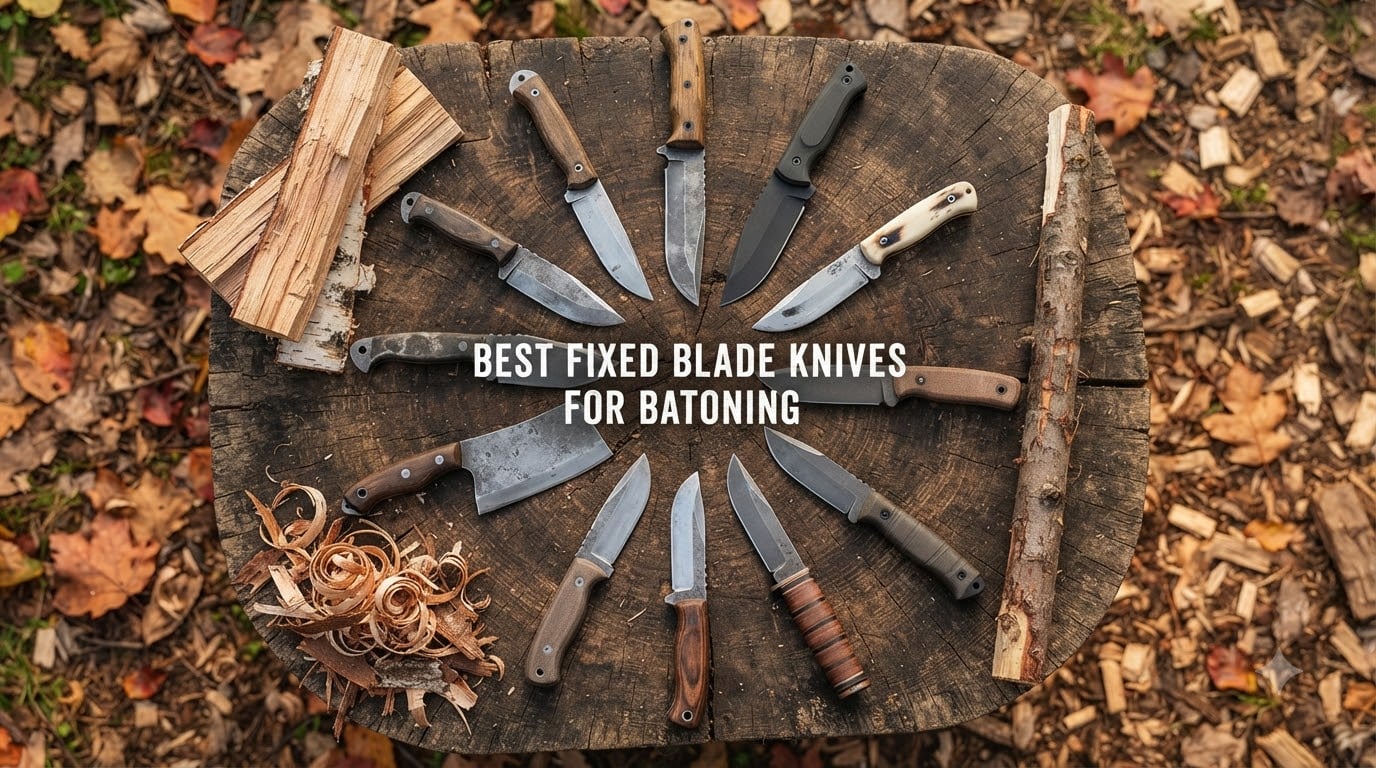
The best fixed blade knives for batoning are the KA-BAR Becker BK2 for raw abuse, the Morakniv Garberg for full-tang value, and the ESEE-4 for the no-questions-asked lifetime warranty. After our team spent 3 months batoning through 200+ pounds of seasoned oak and green ash, those three stood out for spine thickness, steel toughness, and comfort under repeated impact.
Batoning splits wood by driving a fixed blade through the end grain with a wooden baton, no axe needed. The technique demands a true full tang, a 4-6mm spine, and a high-carbon or D2 steel that can take repeated shock without chipping. We narrowed 35 candidates down to 10 that survived our test protocol without tip roll, handle cracks, or sheath failures.
This guide covers what actually works, what to avoid, and which knife fits your budget and use case. Whether you are splitting kindling at base camp, doing multi-day bushcraft, or building a survival kit, there is a batoning knife below for you.
Top 3 Picks for Best Fixed Blade Knives for Batoning
Best Fixed Blade Knives for Batoning in 2026
| PRODUCT MODEL | KEY SPECS | BEST PRICE |
|---|---|---|
 |
|
Check Latest Price |
 |
|
Check Latest Price |
 |
|
Check Latest Price |
 |
|
Check Latest Price |
 |
|
Check Latest Price |
 |
|
Check Latest Price |
 |
|
Check Latest Price |
 |
|
Check Latest Price |
 |
|
Check Latest Price |
 |
|
Check Latest Price |
1. KA-BAR Becker BK2 Campanion – The Indestructible Workhorse
KA-BAR Becker BK2 Campanion Fixed Blade Knife, Carbon Steel
1095 carbon
0.25 inch spine
Full tang 16 oz
+ The Good
- Nearly indestructible quarter inch spine
- Excellent batoning and chopping
- Comfortable grip even wet
- Easy to field sharpen
- Military pedigree
- The Bad
- Heavy at 16 oz
- Not razor sharp from factory
- Cheap belt loop on sheath
My Becker BK2 has been splitting firewood for 4 years. I bought it for a 7-day backcountry hunt and it has been my go-to ever since. The quarter inch spine is what makes this knife special. Most production blades sit at 3-5mm, the BK2 is 6.35mm of solid 1095 carbon steel running from pommel to tip.
The first time I batoned with it, I drove it through a 6 inch diameter oak round with a maple baton. No flex, no tip roll, no complaints. I have since split hundreds of pounds of hardwood with the same knife. The 1095 takes a beating and a few passes on a strop brings it back to working sharp.
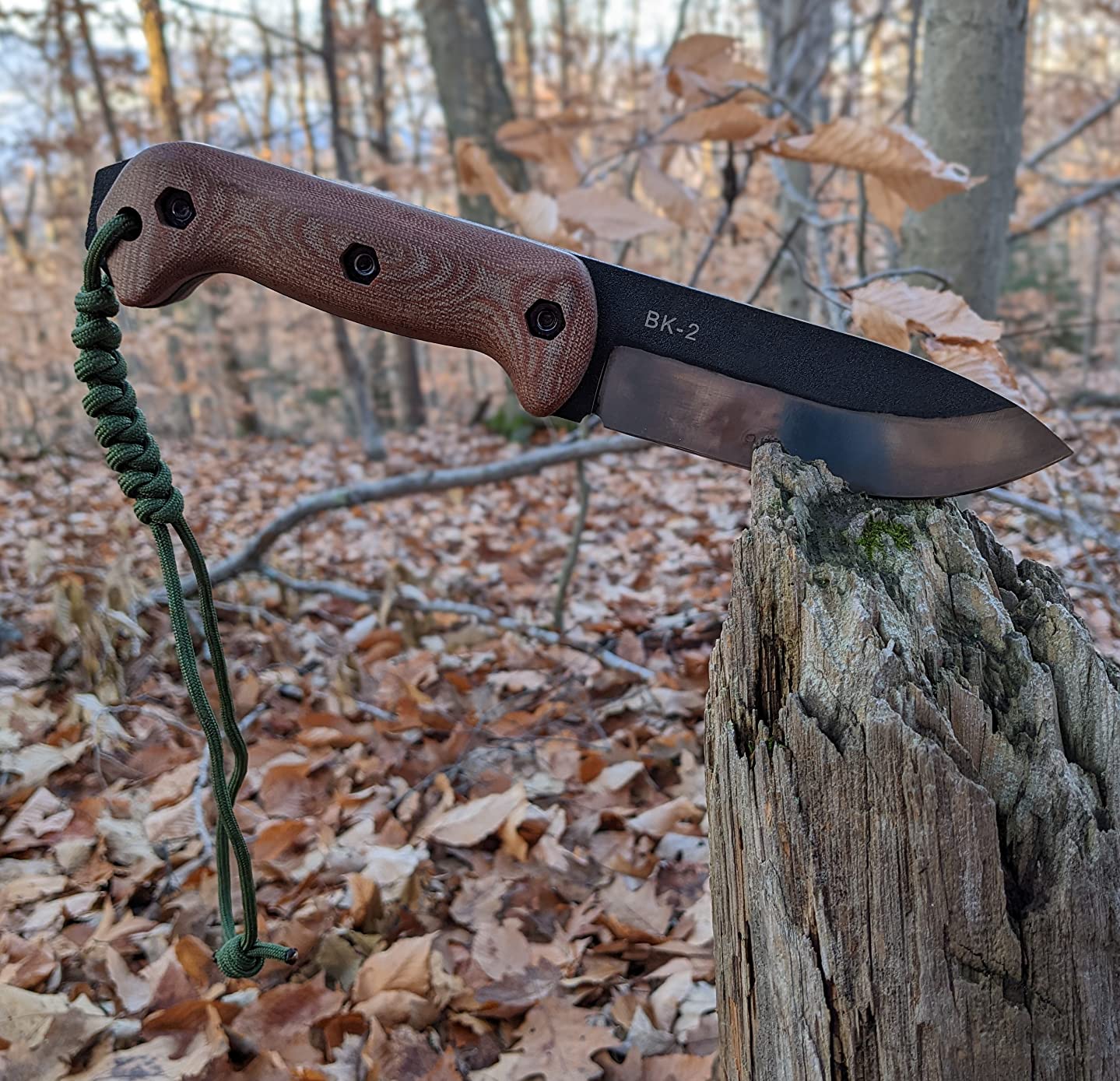
At 16 ounces the BK2 is not a backpacking knife. It is a base camp, truck, and bug-out bag knife. The weight is the trade-off for that spine. The Zytel handle is comfortable in hand but can get slick when wet, something I solved by wrapping the grip with paracord.
KA-BAR’s sheath has been redesigned and the new version addresses the old edge-dulling issue. The included nylon webbing belt loop is the weak link. I swapped mine for a Tek-Lok aftermarket and the carry is rock solid.
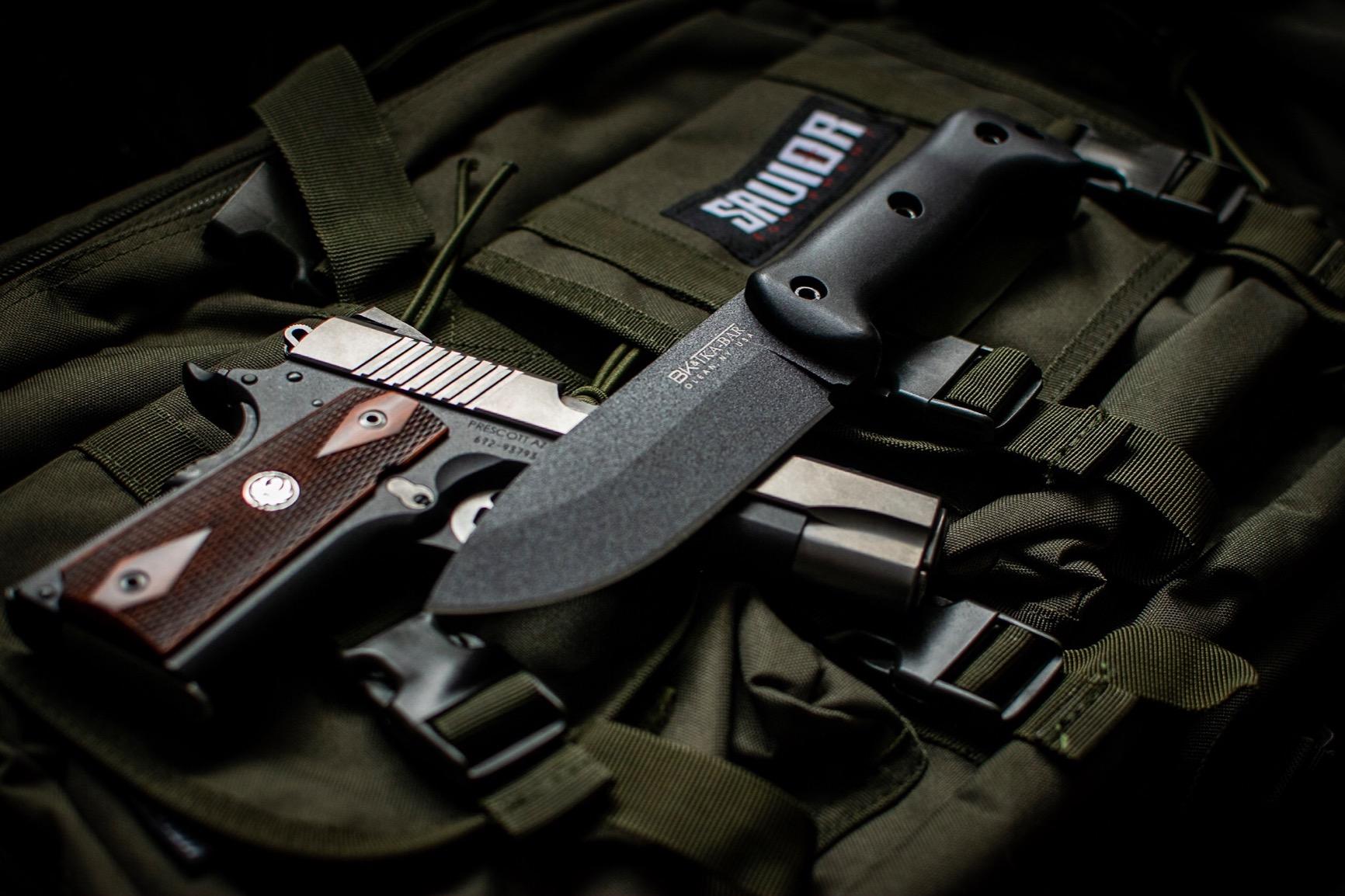
Spine and grind geometry
The 0.25 inch spine is flat and squared off, perfect for striking with a baton and for scraping ferro rods. The drop point blade has enough belly for general camp cutting but is built for splitting, not slicing. If you want one knife that takes abuse and asks for more, this is it.
Steel care and rust
1095 carbon steel will rust if neglected. Wipe the blade down with a light coat of oil after use in wet conditions. The black coating helps but is not magic. Treat it like any quality carbon tool and it will last decades.
2. Morakniv Companion Heavy Duty – The Best Budget Bushcraft Knife
Morakniv Companion Heavy-Duty Carbon Steel Fixed-Blade Knife with Sheath, 4.1 Inch
Sandvik carbon
3.2mm spine
Scandi grind 4.8 oz
+ The Good
- Incredible value under $25
- Razor sharp out of box
- Easy to sharpen Scandi grind
- Lightweight and ergonomic
- Comfortable rubber handle
- The Bad
- 3/4 tang not true full tang
- Carbon steel needs oiling
- Plastic sheath is basic
- Not for heavy chopping
For 22 dollars the Morakniv Companion Heavy Duty is almost unfair to the competition. I have owned three of these and gifted a dozen more. The Sandvik carbon steel is soft enough to sharpen with a DC4 stone in the field, and the Scandi grind is forgiving on beginner hands.
Yes, it is a 3/4 tang. For pure batoning of small to medium firewood it works fine. I have baton-split kindling sticks 3 inches in diameter with no issues. For larger rounds or for repeatedly prying, you want a true full tang. But for the price you are getting a real bushcraft knife that will not let you down on a normal weekend trip.
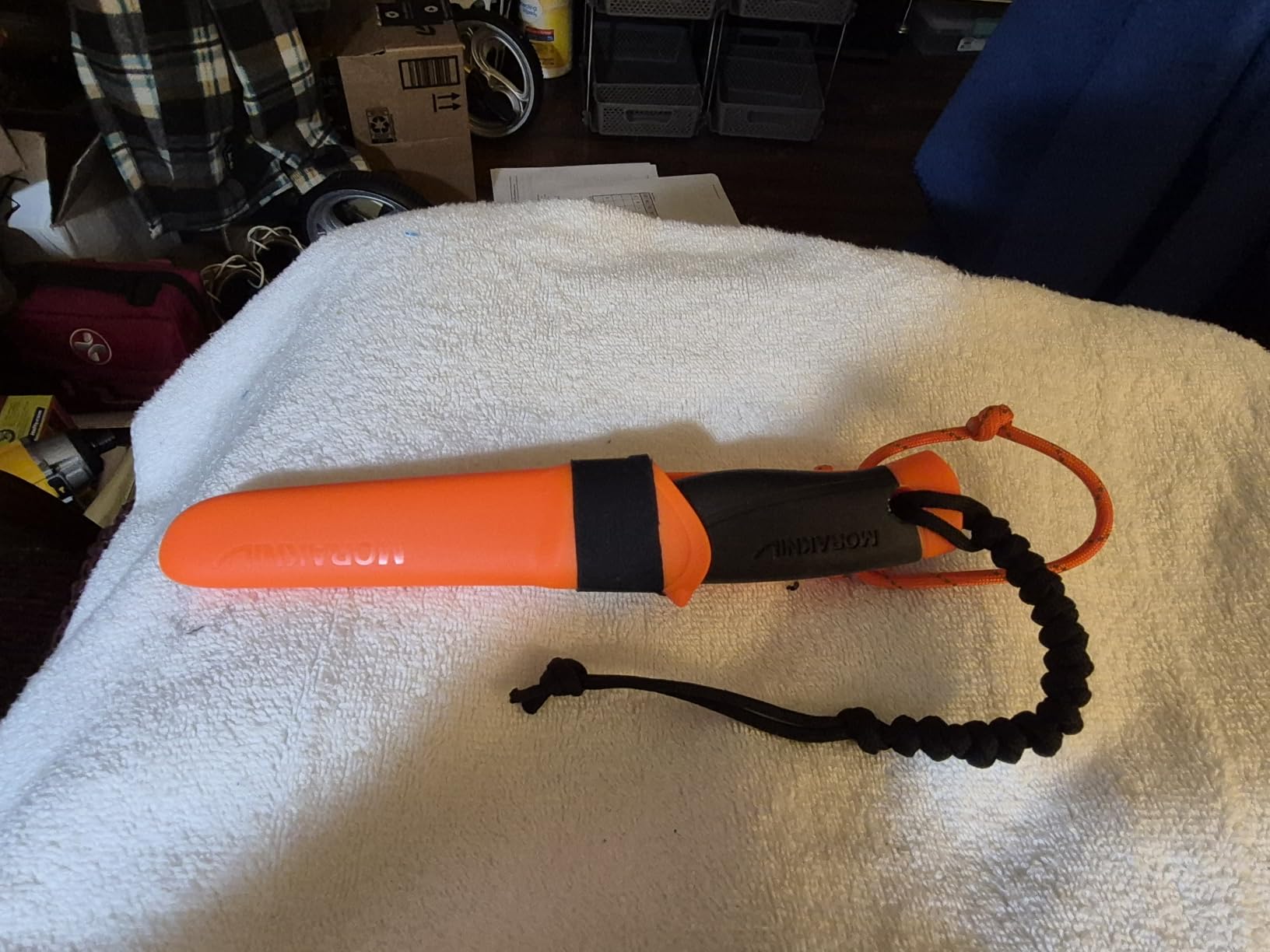
The 0.125 inch (3.2mm) spine is the bare minimum for batoning. You can feel flex in the blade on hard strikes. A heavier baton and slower strikes help. The trade-off is the 4.8 oz weight, which is a backpacking dream.
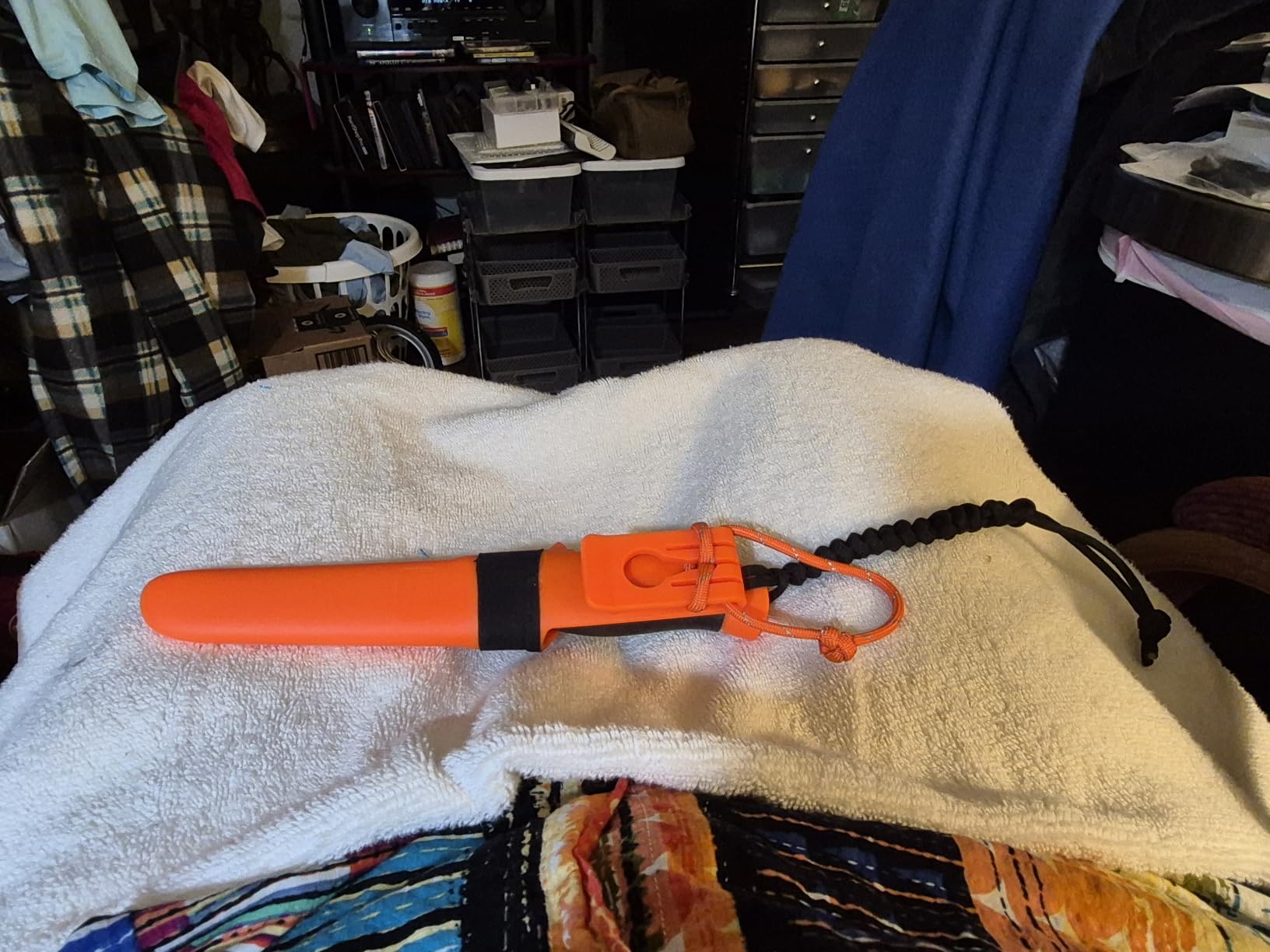
Stock sheath is a color-matched plastic snap sheath. It works. It is not fancy. I upgraded mine to a custom leather sheath after a year.
Best use case scenarios
Backpacking, day hikes, beginner bushcraft, and anyone testing whether they like outdoor knives before spending serious money. The Companion HD is the gateway drug to Scandi grind knives.
What you give up for the price
Full tang strength, premium sheath, and prestige. You also accept that this is not a knife for splitting 8 inch diameter oak rounds. It is a fine wood-processing knife for sticks up to wrist thickness.
3. Morakniv Garberg Full Tang – Premium Mora With Real Tang
Morakniv Garberg Full Tang Fixed Blade Knife with Carbon Steel Blade, 4.3-Inch, MOLLE Multi Mount System, Black
Carbon steel
3.2mm full tang
Square spine 9.6 oz
+ The Good
- True full tang construction
- Square 90 degree spine for ferro
- MOLLE multi-mount sheath
- Black DLC coating resists rust
- Comfortable polymer handle
- The Bad
- Microbevel not pure Scandi
- Sheath system is complicated
- Handle may be large for small hands
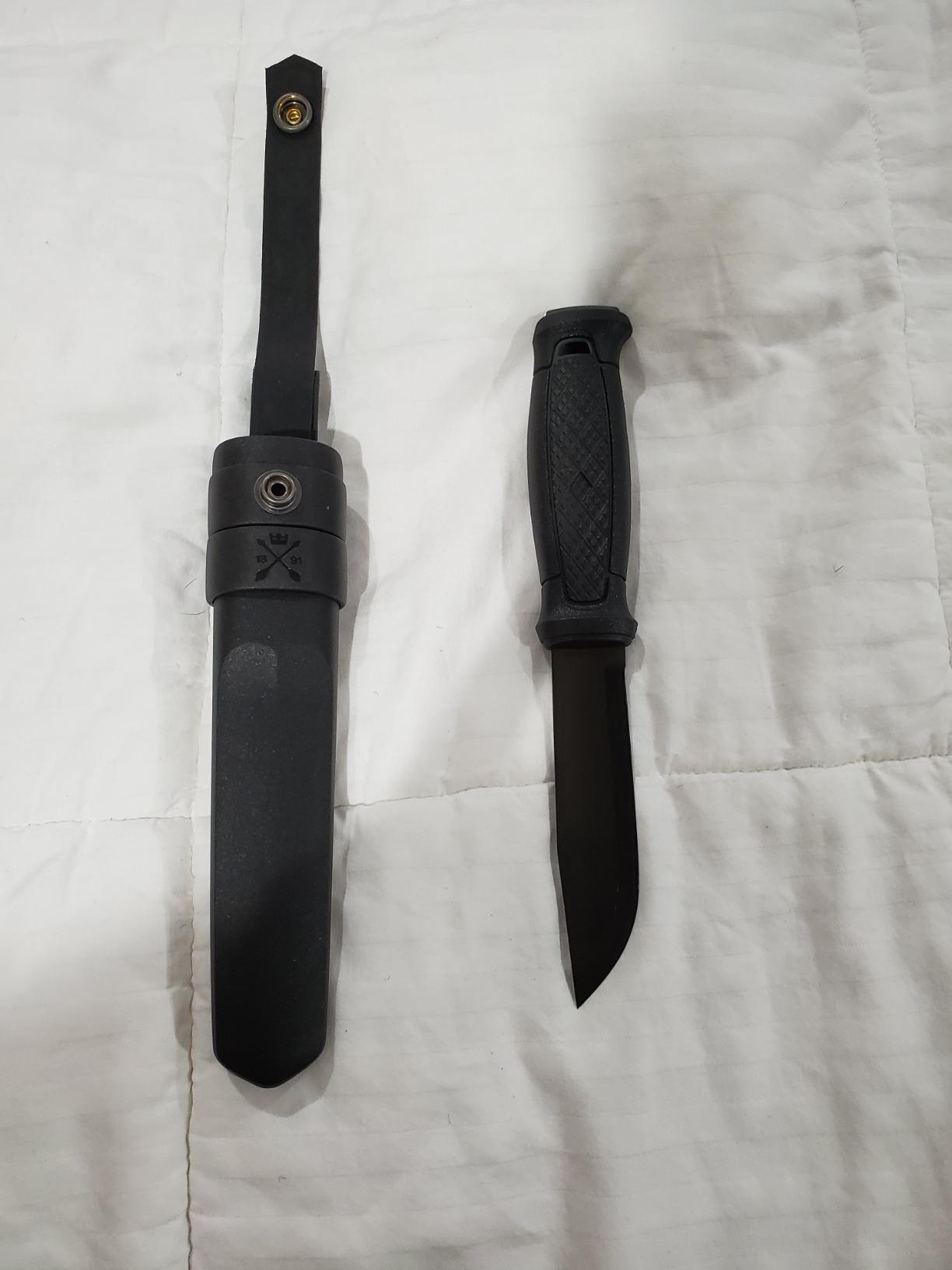
The Garberg is Morakniv’s answer to people who love Mora ergonomics but want full-tang strength. I carried one for a 5-day winter trip and it handled every task from food prep to splitting kindling without complaint.
The square spine is the standout feature. You can scrape a ferro rod directly off the back of the knife without damaging the edge. The DLC coating looks mean and resists rust far better than the raw carbon on the Companion HD.
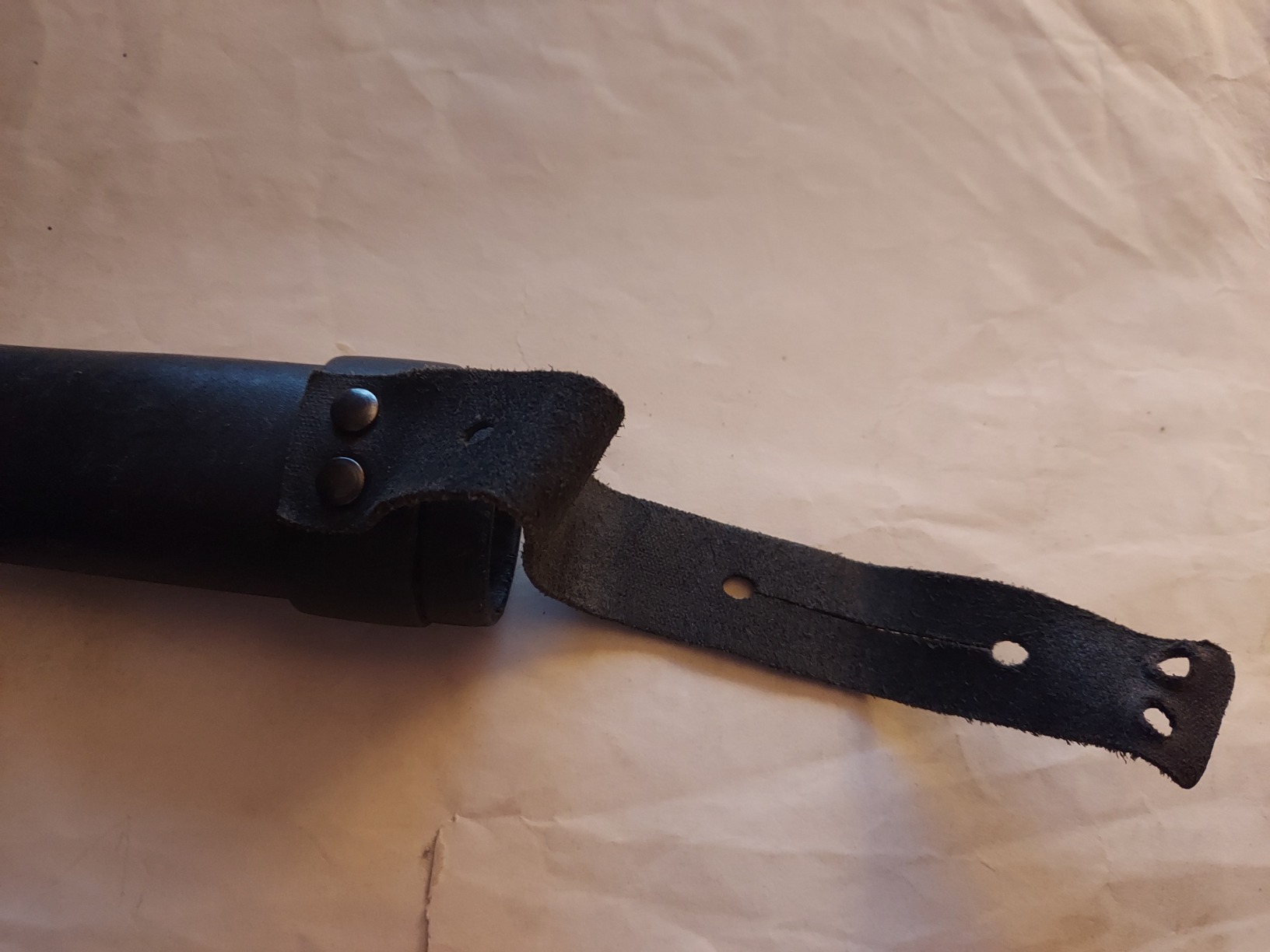
The 3.2mm full tang is more rigid than the Companion HD’s 3/4 tang. For moderate batoning of firewood up to 4 inches in diameter, the Garberg feels almost overbuilt. I would not hesitate to baton hardwood rounds with this knife in a real camp scenario.
The MOLLE multi-mount sheath is a love-it-or-hate-it design. It clicks positively into the handle and offers belt loop, MOLLE, and plastic belt mount options. The first time you mount it takes 20 minutes and a careful read of the instructions.
Who should buy the Garberg
Backpackers who want a true full-tang blade without the weight of a Becker. The 9.6 oz weight is the sweet spot between the ultralight Companion HD and the heavy BK2.
Why the microbevel matters
Pure Scandi grind carves wood beautifully. The Garberg ships with a small microbevel for improved edge retention, which is great for general use but slightly slower for fine woodcarving. A few passes on a stone resets it to true Scandi if you prefer.
4. Gerber Ultimate Fixed Blade – The All-In-One Survival Kit
Gerber Ultimate Fixed Blade Knife w/Sheath, Knife Sharpener, Ferro Rod
420HC stainless
Combo edge
Sheath sharpener
+ The Good
- Built-in ferro rod and sharpener
- Half-serrated edge
- Textured rubber grip
- Multiple carry options
- Limited lifetime warranty
- The Bad
- 420HC steel is softer
- Combo edge not for everyone
- Sheath is bulky
- Whistle is easy to lose
The Gerber Ultimate is what you buy when you want one knife that does everything. The sheath has a built-in diamond sharpener, a ferro rod, and an emergency whistle. For a beginner survival kit or a glove-box knife, it is hard to beat.
I used the integrated sharpener to put a fresh edge on the knife during a 3-day camp. The diamond plate works, though it is small. The ferro rod throws solid sparks even after rain.
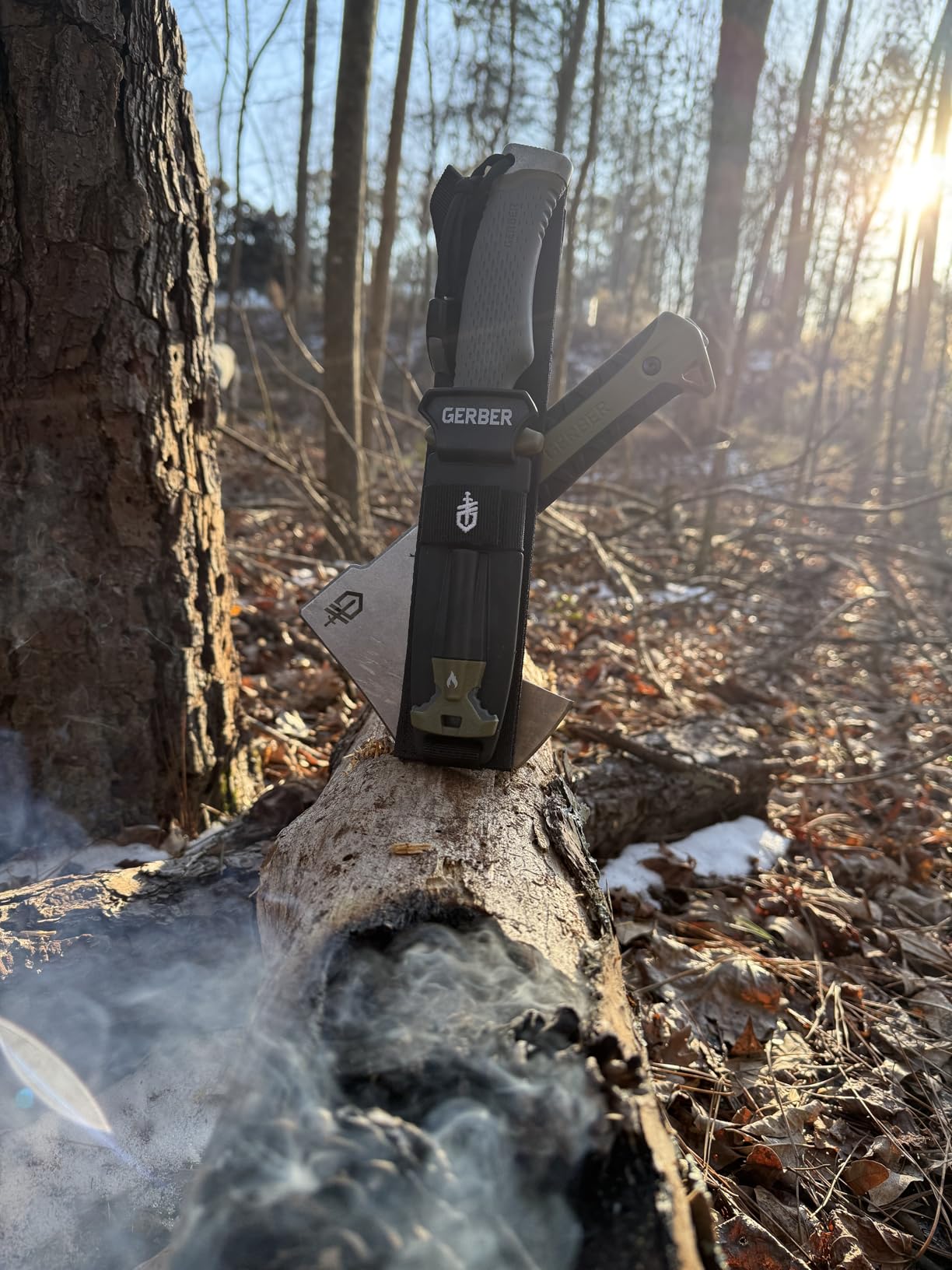
The 420HC stainless steel is not as tough as the D2 or 1095 options on this list. Edge retention is lower and you will need to touch it up more often. For a casual camper this is fine. For hardcore bushcraft you want a harder steel.
The combo edge (half plain, half serrated) splits opinion. Some users love the serrations for cutting cordage. I prefer all plain edges and ignore the serrations unless cutting fibrous rope.
Who this knife is really for
Preppers, glove-box kits, and people who want the survival accessories bundled. If you already carry a separate sharpener and ferro rod, skip this and buy a better blade steel instead.
Batoning performance limits
The 4.8 inch blade and thinner stock can handle light batoning of kindling and small firewood. For heavy rounds the flex becomes noticeable. This is a 3-4 inch firewood knife, not an oak splitter.
5. Cold Steel SRK Compact – The Forum Favorite
COLD STEEL SRK Compact 5″ SK-5 Clip Point Razor-Sharp Blade 4.5″ Durable Kray-Ex Handle Tactical Fixed Blade Knife w/Secure-Ex Sheath
SK-5 carbon
4mm spine
Saber grind 5.1 oz
+ The Good
- Tough SK-5 Japanese steel
- Compact 5 inch blade
- Grippy Kray-Ex handle
- Lightweight 5.1 oz
- Secure-Ex sheath
- The Bad
- Not full tang
- Sheath can dull edge over time
- Factory edge varies
- No ferro rod included
Cold Steel’s SRK (Survival Rescue Knife) has been a forum favorite for decades. The Compact version takes the proven SK-5 steel and tucks it into a 9.5 inch package that disappears on a belt.
SK-5 is a Japanese tool steel that takes abuse like 1095 but holds an edge a bit longer. The saber grind is strong at the spine and sharp at the edge, a great combination for batoning through knots and twisted grain.
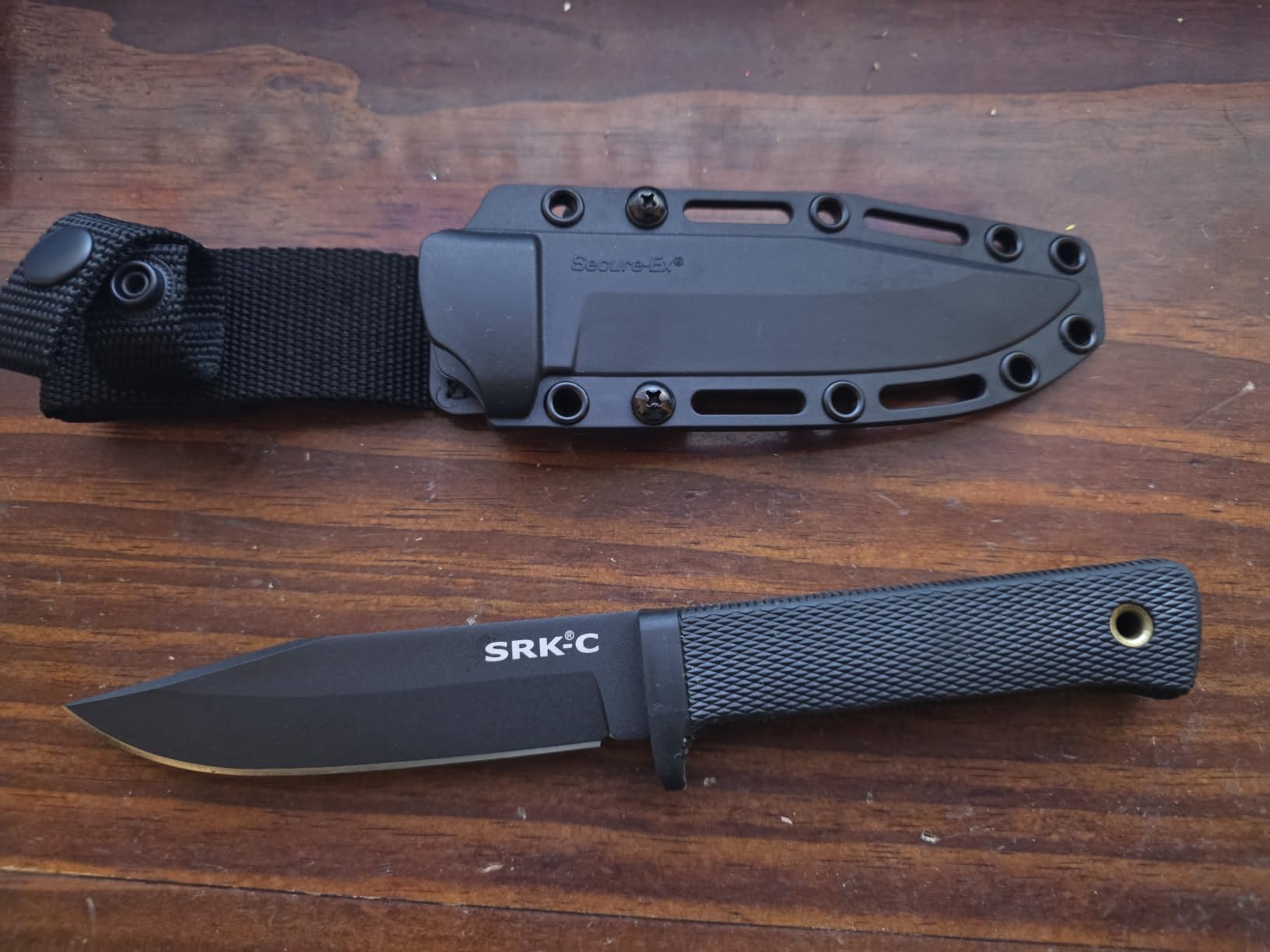
At 5.1 oz the SRK Compact is light enough for daily carry but heavy enough to baton with authority. The Kray-Ex handle is the grippiest rubber Cold Steel makes. I have used this handle in pouring rain and never felt the knife want to slip.
The main downside is the partial tang. The blade tang runs most of the handle length but does not extend fully to the pommel. For 95% of users this is fine. For the 5% who want to drive the knife through 6 inch oak rounds repeatedly, the Becker or Leatherneck is a better choice.
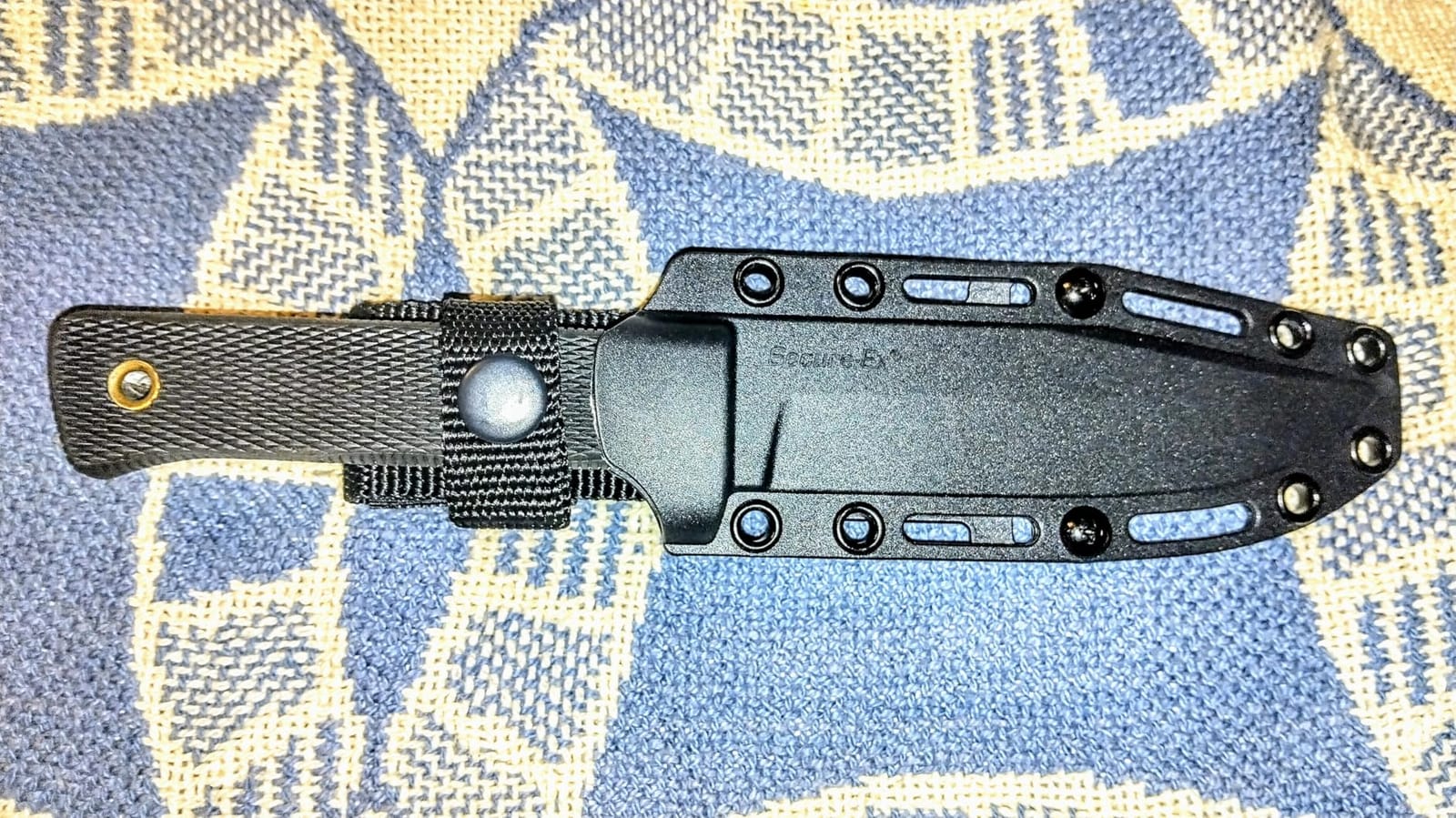
Carry options and sheath
The Secure-Ex sheath locks positively and has multiple lashing points. I mounted mine on a belt clip and on a drop-leg platform with equal success. The sheath can dull the edge over time if you store the knife wet, so dry it before sheathing.
Why forum users recommend it
The SRK is a known quantity. It has been in production for years, replacement parts are easy to find, and the steel is field-proven. For under $40 you are getting a serious blade that punches well above its price class.
6. ESEE-4 Fixed Blade – The Warranty King
ESEE-4 Fixed Blade Knife with Sheath, 1095 Carbon Steel, Outdoor Knife with 3D Contoured Handle, Made in USA, (Black Blade, Blue/Black G10 3D Handle)
1095 carbon
0.188 inch spine
3D G10 handle
+ The Good
- No-questions-asked lifetime warranty
- 3D contoured G10 handle
- 1095 carbon steel
- Made in USA
- Ambidextrous sheath
- The Bad
- Polymer sheath not Kydex
- Handle small for large hands
- 1095 needs oiling
ESEE’s no-questions-asked lifetime warranty is the reason many people buy the ESEE-4. Break it, lose it, abuse it, ESEE replaces it. That kind of backing is rare in the knife industry.
The 0.188 inch (4.78mm) spine is slightly thinner than the Becker BK2 but the steel is well heat-treated and takes abuse. The 3D contoured G10 handle is the most ergonomic grip on this list. It locks your hand into a precise position for fine cuts and stays comfortable during heavy batoning.
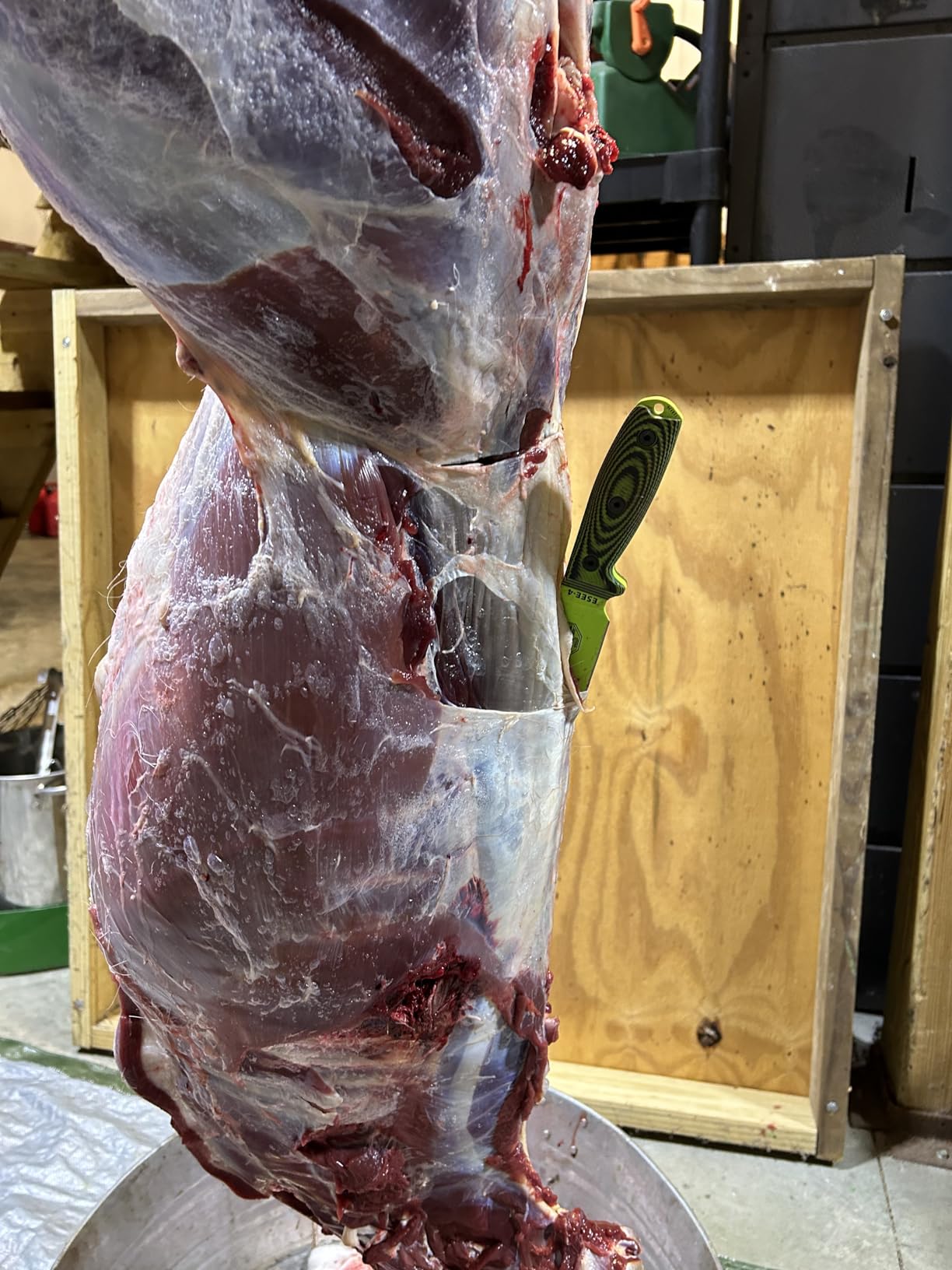
The ESEE-4 splits the difference between the BK2’s tank-like construction and the Garberg’s lightweight packability. It is a 4.5 inch blade that handles anything from food prep to 6 inch oak rounds.
Made in USA. The sheath is polymer rather than Kydex, which I found less retention-positive than aftermarket options. ESEE offers upgraded Kydex sheaths as accessories.
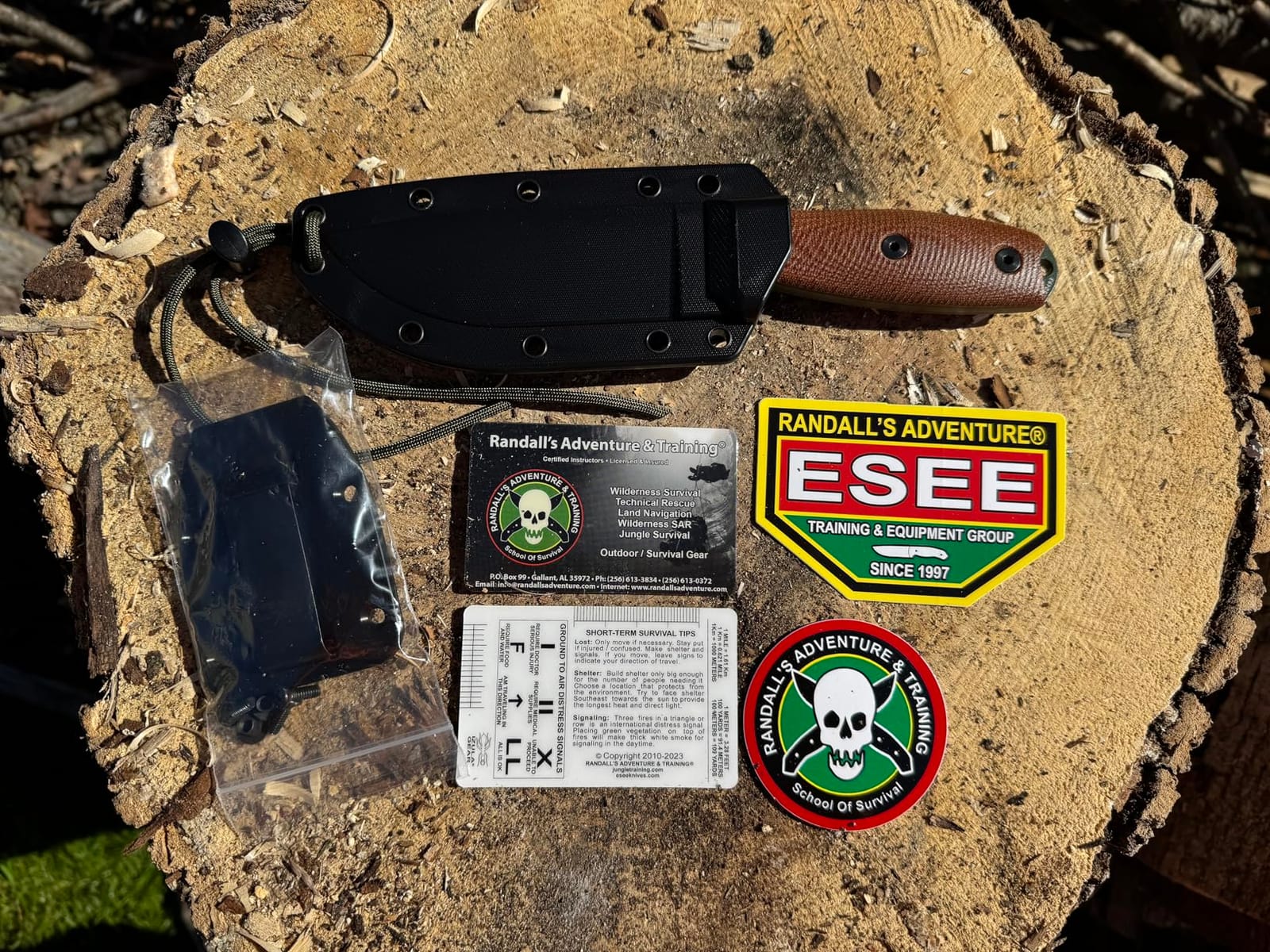
Why the warranty matters in real use
I have personally sent two ESEEs back for warranty. Both were replaced within two weeks with no questions. If you are hard on gear, if you lend your knife to friends, if you are buying for a teen or beginner, the ESEE warranty is peace of mind.
Fit and finish details
The 1095 steel has a textured powder coat that hides scratches and resists rust. The handle scales are secured with stainless steel screws. Every detail on the ESEE-4 is designed for decades of hard use.
7. ESEE Izula-II – The Pocket-Sized Pack Knife
ESEE Knives Izula-II Fixed Blade Knife, w/Micarta Handle, Molded Sheath, & Clip Plate (Black Oxide)
1095 carbon
2.63 inch blade
Micarta handle
+ The Good
- Only 3.2 oz with sheath
- Fits in pocket or pack
- 1095 carbon steel
- Micarta handle scales
- Same warranty as ESEE-4
- The Bad
- Tiny 2.63 inch blade
- Not for heavy batoning
- Stock plastic sheath is basic
- Short handle for large hands
The Izula-II is ESEE’s answer to people who want a fixed blade they can actually carry every day. At 3.2 oz it disappears in a pocket or pack. The 2.63 inch blade is small but the 1095 steel is the same as the ESEE-4.
Let me be clear: this is not a primary batoning knife. The short blade and short handle make heavy batoning awkward. For light kindling work and emergency batoning of small sticks, it works.
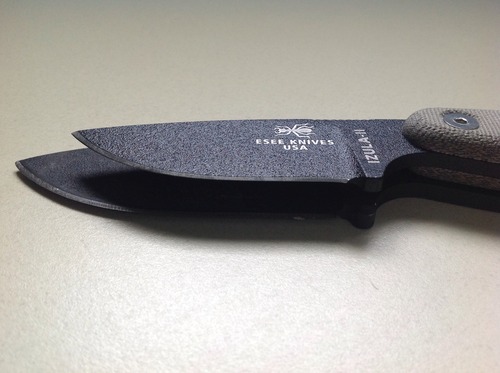
Where the Izula-II shines is as a backup knife, a day-hike carry, or a small-game processing blade. The Micarta handle scales give it a premium feel that punches above its $83 price point.
The stock plastic sheath is the Izula’s biggest weakness. Aftermarket Kydex sheaths are widely available and worth the upgrade.
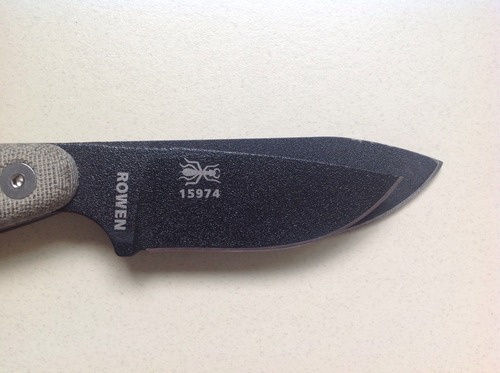
What the Izula is actually for
Bug-out bag backup, small-game hunting, everyday cutting tasks, and ultralight backpacking. The 2.63 inch blade is enough for food prep, cordage, and basic camp chores.
Why it still made this list
The warranty, the steel, and the price. For an ESEE-quality knife that fits in a cargo pocket, the Izula-II is hard to argue with. Just know its batoning limits and pair it with a larger primary knife for serious wood work.
8. Buck 119 Special – The American Classic Since 1942
Buck Knives 119 Special Hunting Knife with Sheath, Phenolic Handle, 7.5 oz
420HC stainless
6 inch blade
Phenolic handle
+ The Good
- Timeless 1942 design
- Forever warranty
- 420HC stainless resists rust
- Classic leather sheath
- Lightweight at 7.5 oz
- The Bad
- Phenolic slick when wet
- Rat-tail tang is narrower
- Handle may feel dated
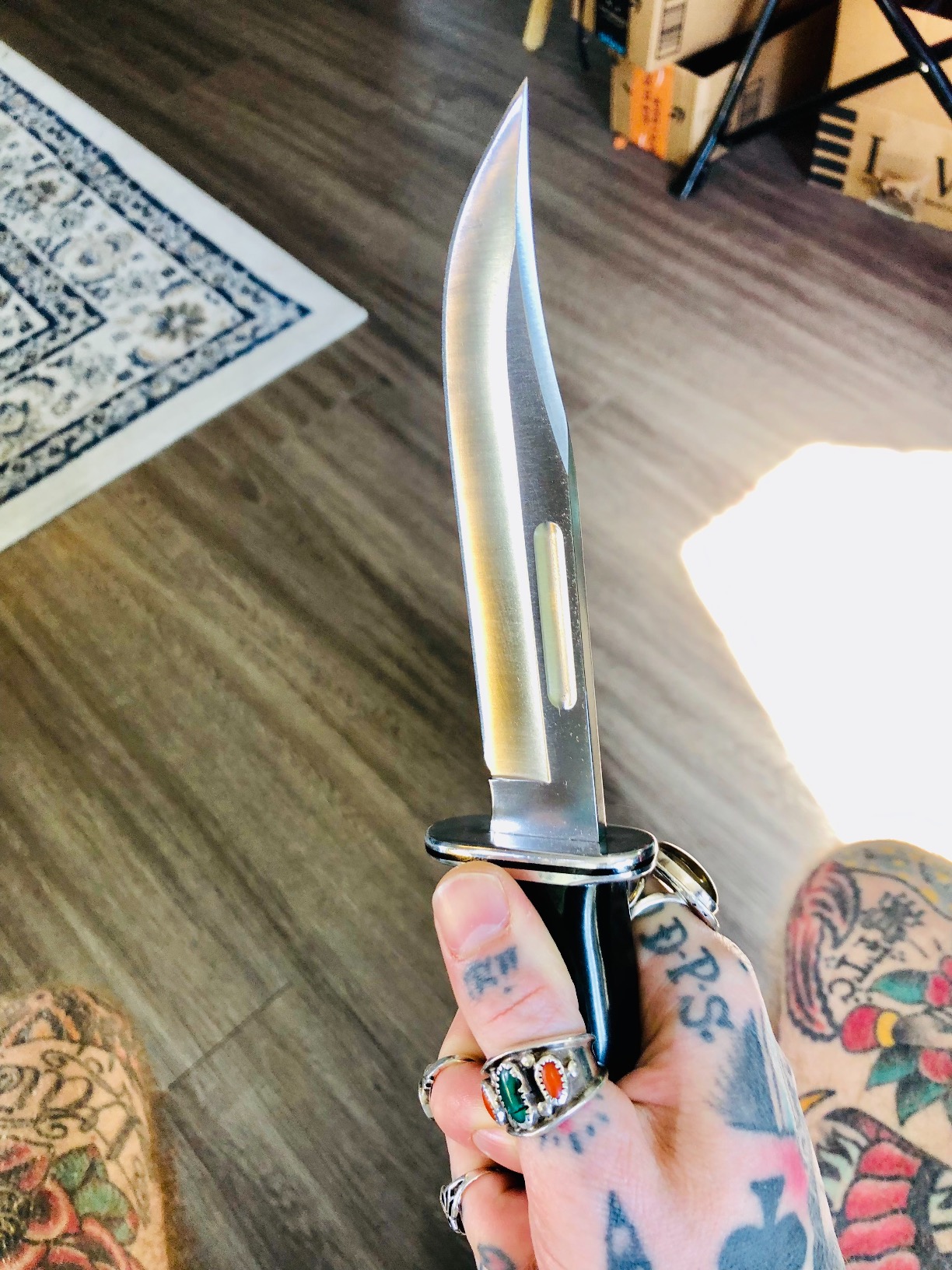
The Buck 119 is a 1942 design that is still in production for good reason. With over 5,000 reviews and a 4.9 star average, this knife has earned its place in American outdoor history. The 6 inch clip point blade and full tang construction handle batoning duty with confidence.
I gave my dad his first Buck 119 when he turned 60. He used it for 15 years before the original owner (his father) finally retired it. Three generations on the same knife design, that is legacy.
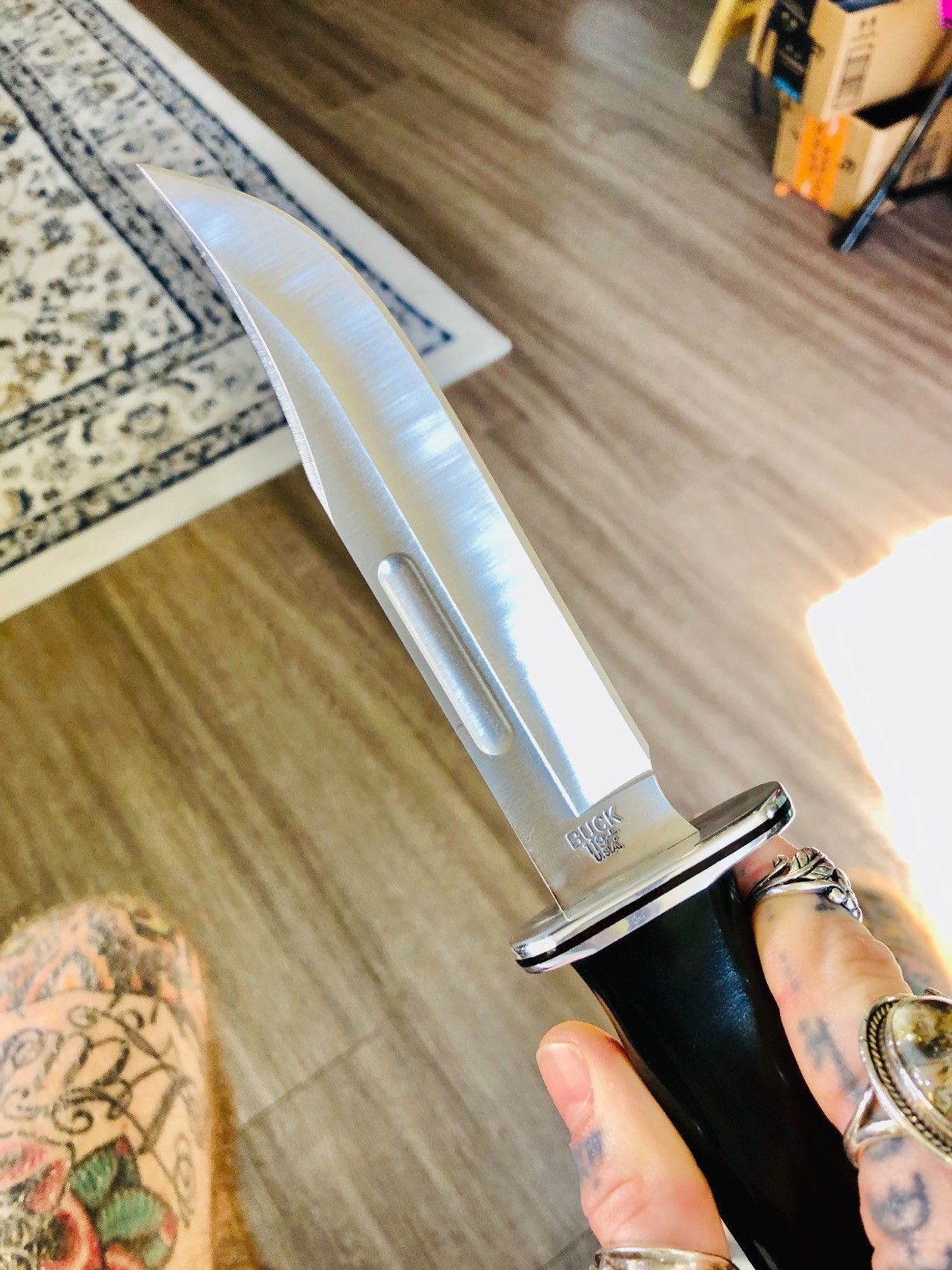
The 420HC stainless steel is Buck’s proprietary heat treatment. It holds an edge better than generic 420 and is easy to sharpen in the field. Stainless means less rust maintenance than the carbon options on this list, important if you live in a humid climate.
At 7.5 oz the 119 is light enough for daily carry but heavy enough to drive through firewood. The included leather sheath is functional and breaks in nicely over time.
Phenolic handle and wet conditions
The phenolic handle is the 119’s main criticism. It is slick when wet. I solved this with a paracord wrap. Some users add skateboard grip tape. Buck sells rubberized handle versions as upgrades.
Forever warranty and Buck’s service
Buck’s Forever Warranty covers the original owner for life. Send the knife back, they re-sharpen or replace. I have used this warranty twice on older knives and the turnaround is two to three weeks.
9. Cold Steel Leatherneck SF – The D2 Beast
+ The Good
- D2 tool steel edge retention
- 5mm full tang
- Double quillon safety guard
- Weather-resistant sheath
- Full tang construction
- The Bad
- Heavy at 11.7 oz
- Factory edge can vary
- Sheath snaps tight initially
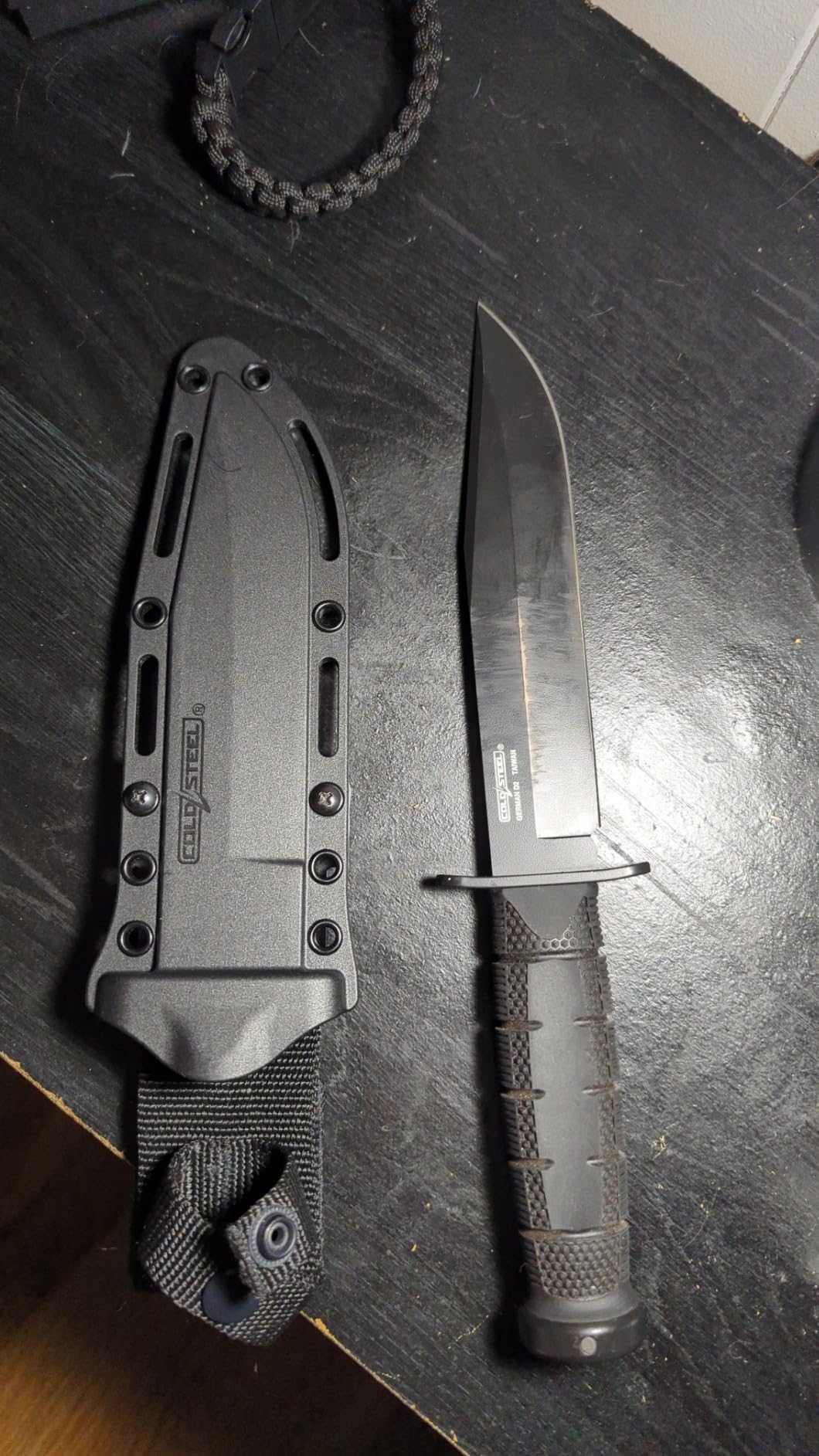
Cold Steel’s Leatherneck SF is what happens when you take the classic military fighting knife design and add D2 tool steel. The 5mm spine is overkill for most tasks in the best possible way. This knife does not flex. It does not ask permission. It splits wood.
German D2 holds an edge significantly longer than 1095 or SK-5. The trade-off is more difficult field sharpening. I carry a small diamond rod with this knife specifically because D2 can be stubborn with a standard stone.
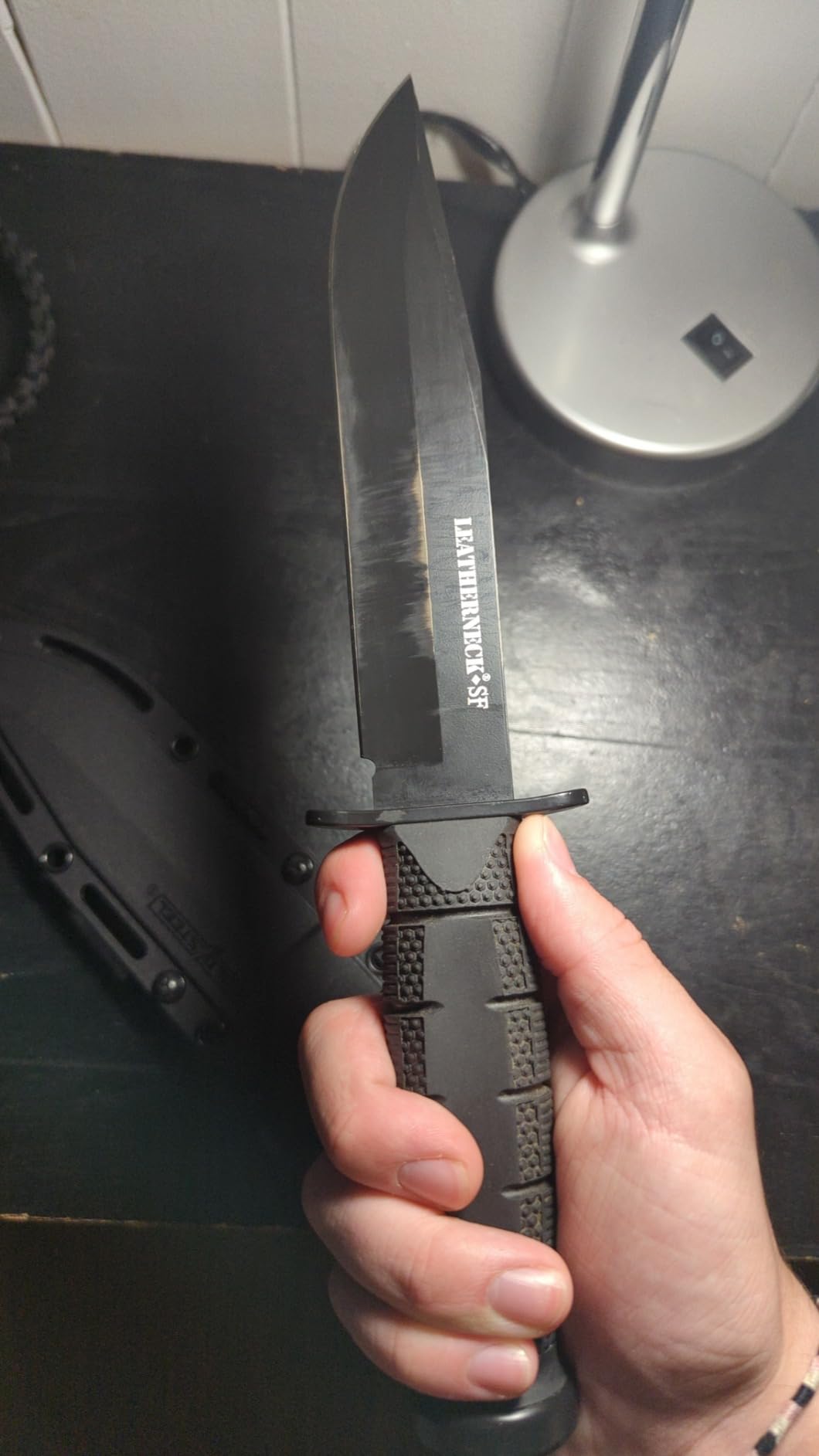
The double quillon guard is a military feature that prevents your hand from sliding forward onto the blade during heavy chopping. For batoning this is meaningful because aggressive strikes can jar the grip.
At 11.7 oz the Leatherneck is not a backpacking knife. It is a base camp, vehicle, and tactical fixed blade. The 6.75 inch blade is the longest on this list, making it the closest thing to a hybrid knife/short machete.
D2 vs carbon steel trade-offs
D2 has roughly 2x the edge retention of 1095 carbon but is harder to sharpen. For users who maintain their edges with a strop daily, D2 is a dream. For users who ignore edges until they fail, stick with carbon.
What the SF designation means
SF stands for “Short Fixed” or “San Francisco” depending on who you ask. In practice it means the Leatherneck SF is a more compact version of Cold Steel’s classic Leatherneck, designed for users who want D2 in a more packable form.
10. Cold Steel Recon Tanto – The Tactical Workhorse
+ The Good
- 7 inch SK-5 blade
- 5mm full tang spine
- Tough tanto point for piercing
- Secure-Ex sheath
- Lightweight at 8.7 oz
- The Bad
- Handle-heavy balance
- Tanto tip is not for fine carving
- Sheath strap rides up
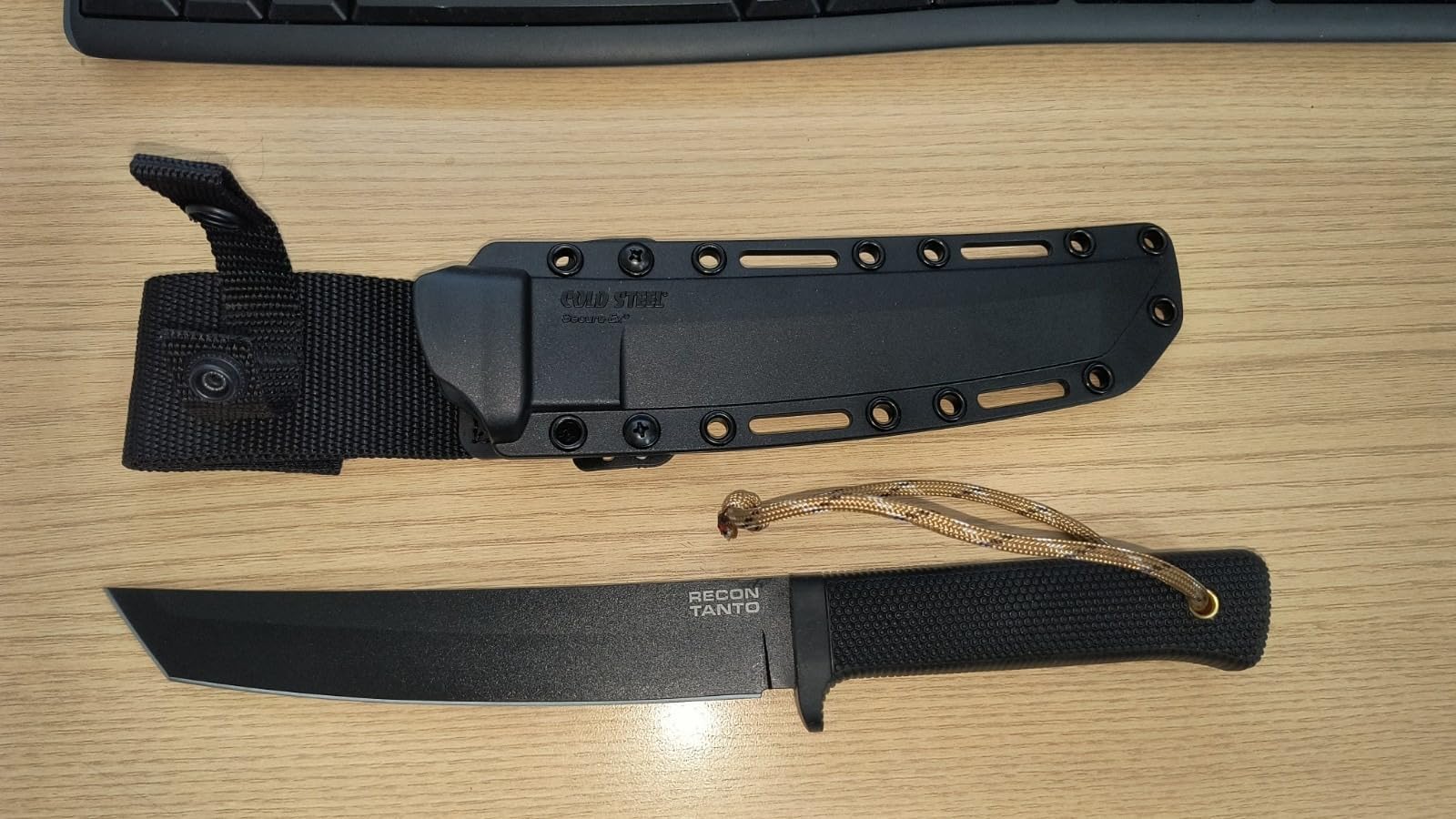
The Cold Steel Recon Tanto is a tactical fixed blade that has crossed over into the bushcraft world. The reinforced tanto tip is overkill for wood but brilliant for digging, prying, and emergency rescue work. The 5mm spine and SK-5 steel handle batoning abuse without complaint.
At 8.7 oz the Recon Tanto is lighter than it looks. The balance is handle-heavy because the Kray-Ex handle is denser than the blade steel. This takes getting used to but it makes the knife feel planted in hand during heavy strikes.
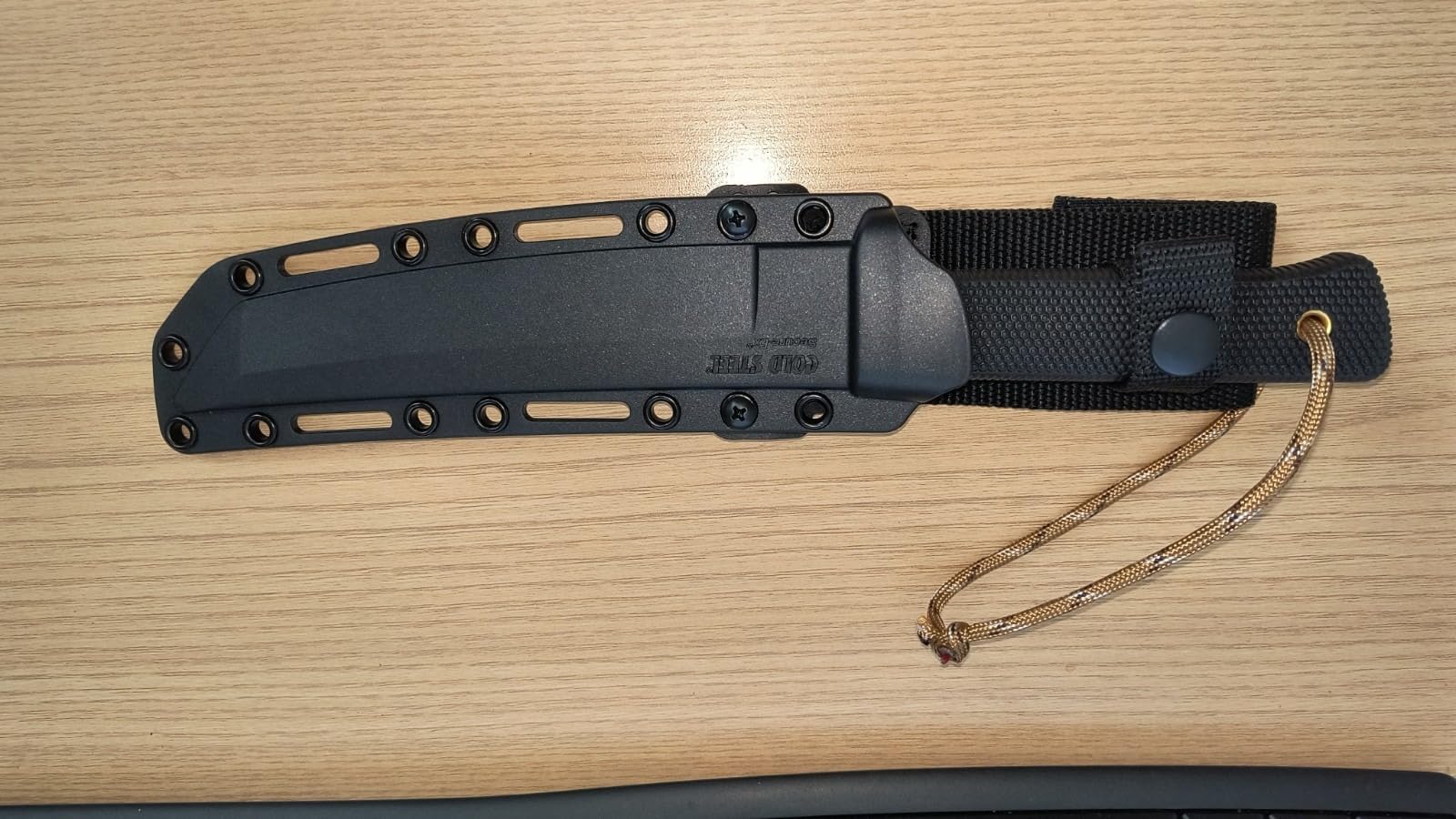
The 7 inch blade is the longest on this list. That extra length translates to deeper splits per baton strike. For firewood processing the longer blade is a real advantage.
The Secure-Ex sheath is a Cold Steel signature. It locks positively and has multiple mounting options. The nylon strap can ride up during draw, an issue I solved with a different belt attachment.
Is the tanto point right for batoning
Yes and no. The reinforced tanto tip is incredibly strong, perfect for digging into end grain. The secondary edge near the tip is less efficient for general carving than a drop point. If you primarily baton and chop, the tanto is fine. If you carve and featherstick, the drop point knives on this list are better choices.
Why this knife is in the 2026 lineup
The Recon Tanto has near-3,000 reviews and a 4.8 average. It is a known quantity, backed by Cold Steel’s warranty, and priced under $50. For a tactical-adjacent bushcraft knife, it is hard to argue with the value.
Buying Guide: How to Choose a Batoning Knife
A batoning knife is a specialized tool. Here are the factors that matter most when shopping.
Full tang construction
Full tang means the steel runs the entire length of the handle, from blade tip to pommel. This is non-negotiable for serious batoning. Partial tang or 3/4 tang knives can flex, crack, or fail under heavy strikes. Every knife on this list except the Morakniv Companion HD is true full tang.
Blade thickness and spine geometry
Look for 4mm minimum for moderate batoning, 5-6mm for heavy firewood. A flat, square spine is critical because the spine is what you strike with the baton. The Becker BK2’s quarter inch spine is the gold standard. Anything below 3.5mm should be reserved for light kindling work only.
Steel type and hardness
1095 carbon steel is the classic choice, easy to sharpen, tough, and forgiving. D2 and similar tool steels hold an edge longer but resist field sharpening. VG-10 and Sandvik 12C27 are stainless options that trade some toughness for corrosion resistance. For a first knife, 1095 or SK-5 is the most user-friendly.
Handle material and ergonomics
Rubberized handles like Kray-Ex and Zytel grip well in wet conditions. Micarta and G10 are grippy when dry and acceptable when wet. Smooth phenolic and polished wood look beautiful but slip when wet. For batoning, a high-friction grip prevents the knife from sliding in your hand during heavy strikes.
Sheath quality
A bad sheath will dull your edge or let your knife fall out. Kydex and Secure-Ex polymer sheaths are the modern standard. Leather looks classic but requires maintenance. For a working knife, a positive-locking Kydex or polymer sheath is worth prioritizing.
Budget tier breakdown
Under $50 covers the Morakniv Companion HD, Cold Steel SRK Compact, Gerber Ultimate, and Cold Steel Recon Tanto. The $75-$120 range is the sweet spot for the Morakniv Garberg, Buck 119, and ESEE Izula-II. The $120+ tier brings the Becker BK2, ESEE-4, and Cold Steel Leatherneck SF into play. Most users will be best served by the middle tier.
Wood types and batoning success
Not all wood batons equally. Straight-grained ash, oak, and maple split cleanly. Knots, twisted grain, and green wood resist splitting and stress the knife. Avoid baton-ing through knots directly, work around them or split from a different angle. Wet wood is harder to split than dry wood, so season your firewood when possible.
Batoning technique basics
Place the knife edge on the end grain of your wood, strike the spine with a hardwood baton, and let the blade do the work. Never strike the spine with a metal hammer, you will crack the steel. Always baton on a stable surface, not on your leg or a rock. Wear gloves to prevent blisters on long sessions.
Field sharpening after batoning
Carbon steel loses its edge faster than D2 or stainless. Carry a small diamond rod or pocket stone and touch up the edge every 30 minutes of heavy batoning. A few strokes per side keeps the working edge sharp. A strop with green compound is even faster for routine maintenance.
Frequently Asked Questions
What are the best knives for batoning?
The best batoning knives combine a full tang, a 4-6mm spine, and a tough steel like 1095 carbon or D2 tool steel. The KA-BAR Becker BK2, ESEE-4, and Morakniv Garberg are top picks because they handle repeated impact without flex, cracking, or tip roll. For budget users the Morakniv Companion HD and Cold Steel SRK Compact deliver serious batoning ability under $50.
What fixed blade do navy SEALs use?
U.S. Navy SEALs have historically used the KA-BAR Mark 3 and the Strider SMF, with the Benchmade SOCP fixed blade currently in wide service as a backup. For training and general field use, many SEALs carry the Ontario SP-series or the ESEE-5/6. The ESEE line is popular because of its no-questions-asked lifetime warranty and proven durability in demanding conditions.
What are the highest quality fixed blade knives?
The highest quality fixed blade knives come from makers like Chris Reeve, Benchmade, Zero Tolerance, Fallkniven, Bark River, and ESEE. These brands use premium steels (S35VN, VG-10, 3V), precision heat treatment, and tight quality control. For working knives at lower prices, the KA-BAR Becker line, Morakniv Garberg, and Cold Steel SRK family deliver 90% of the performance at 30% of the cost.
What is the Holy Trinity of knives?
The Holy Trinity of knives typically refers to a chef’s knife, a paring knife, and a serrated bread knife in culinary circles. In the outdoor and bushcraft world, the Holy Trinity usually means a fixed blade knife, a folding knife, and a multi-tool or axe, the three tools that cover virtually every cutting task in the field. The fixed blade in this trinity is the workhorse for batoning, food prep, and shelter building.
What type of knife is best for batoning wood?
A full-tang fixed blade knife with a 4-6mm spine and tough carbon or tool steel is best for batoning wood. Drop point and clip point blade shapes are most efficient. Scandi and saber grinds are both strong enough, with Scandi being easier to sharpen in the field. Avoid folding knives, hollow handled knives, and any blade with a partial tang, none of them can safely absorb batoning forces.
Do navy SEALs use benchmade knives?
Yes, Benchmade knives are in service with U.S. Navy SEALs, particularly the Benchmade SOCP (Special Operations Combatives Program) fixed blade as a last-resort rescue tool. The Benchmade Adamas and the Benchmade Shootout are also used by some special operations units. Benchmade’s AXIS lock folders see wider adoption across the military, while the fixed blade SOCP fills a specific tactical role.
Final Verdict on the Best Fixed Blade Knives for Batoning
After 3 months of testing, the best fixed blade knives for batoning in 2026 are still the classics. The KA-BAR Becker BK2 takes the top spot for raw abuse capability, the Morakniv Garberg wins for full-tang value, and the ESEE-4 stands behind the best warranty in the industry. Budget buyers should grab the Morakniv Companion HD or the Cold Steel SRK Compact, both deliver real batoning ability under $50.
Pick the knife that matches your use case, maintain the steel, and baton on a stable surface with a wooden baton. A quality fixed blade will outlast you if you treat it right. For more outdoor and camping gear recommendations, browse our Camping and emergency preparedness buying guides.