
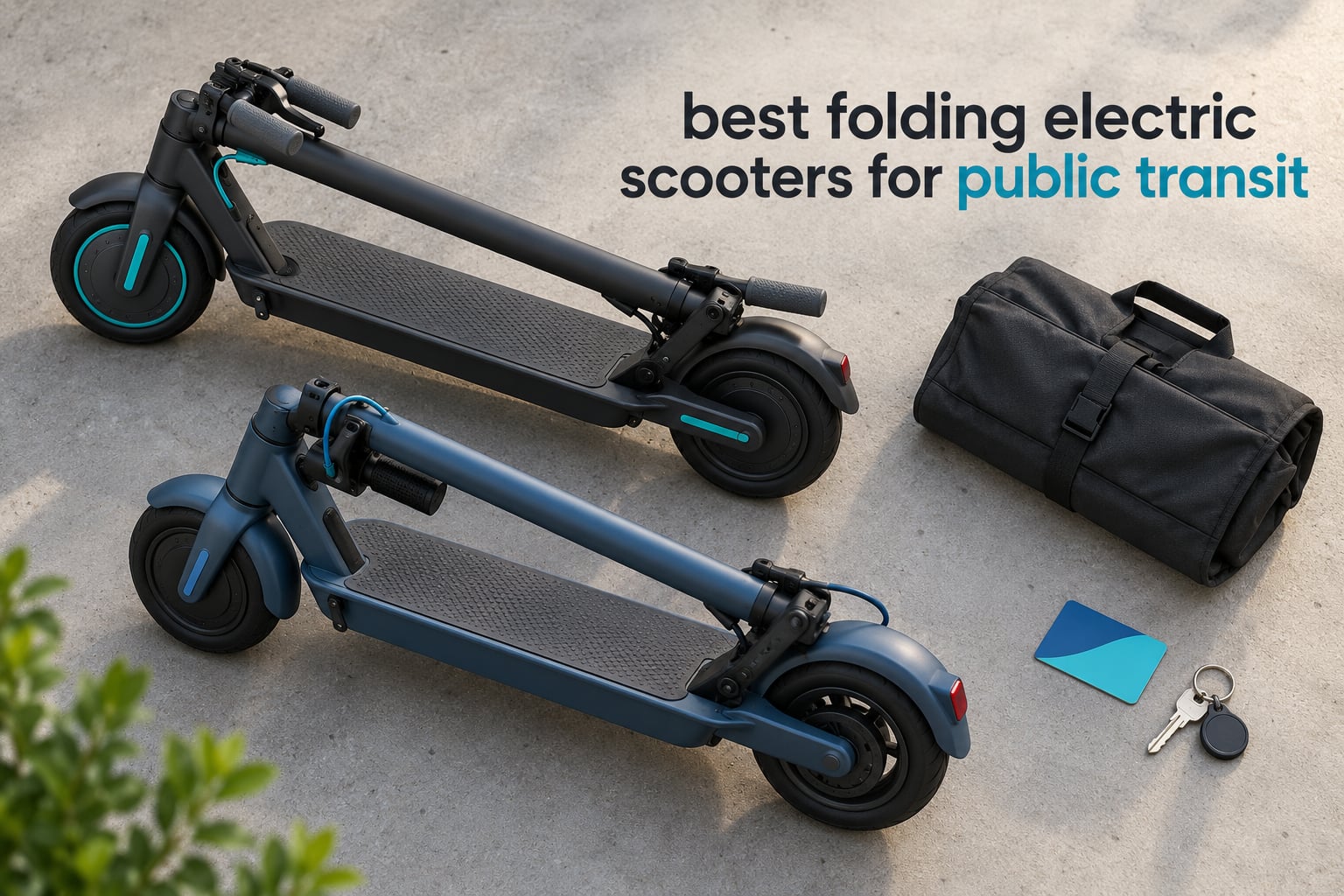
The 6:40 train pulls in, you are two stops from the office, and the station you use has no elevator. Getting a folding electric scooter for public transit to work is not a problem of speed or wattage. It is a problem of what you can lift up sixteen steps while holding a coffee, then carry three blocks to the platform, then stow in a locker the size of a phone booth.
That is why this roundup of the best folding electric scooters for public transit in 2026 is organized around carry weight and folded dimensions first, with motors and range second. We looked at every scooter in the group the way a commuter does: how heavy is it in the hand, does the fold latch stay shut when you set it on a bus floor, and can you get it up stairs without switching hands twice.
Before you read further, check the rules of the agency you actually ride. A rider in Brisbane on r/brisbane reported that bikes remain allowed on trains but not buses, and that their folding scooter met the same restriction. That single policy detail decides more commutes than any spec sheet, and it costs ten minutes to verify. If you also ride longer distances without transit, our long range electric scooter picks are a separate list, and for routes that leave pavement entirely, see our off road electric scooter guide.
Top 3 Folding Electric Scooters for Public Transit in October 2026
All 12 Folding Electric Scooters Compared for Transit Use for October 2026
| PRODUCT MODEL | KEY SPECS | BEST PRICE |
|---|---|---|
 |
|
Check Latest Price |
 |
|
Check Latest Price |
 |
|
Check Latest Price |
 |
|
Check Latest Price |
 |
|
Check Latest Price |
 |
|
Check Latest Price |
 |
|
Check Latest Price |
 |
|
Check Latest Price |
 |
|
Check Latest Price |
 |
|
Check Latest Price |
 |
|
Check Latest Price |
 |
|
Check Latest Price |
Weight Tiers and Folding Mechanisms That Matter on Transit
Weight is the number that decides whether a folding electric scooter is usable in transit at all. Here are the four tiers we use, and the carry scenario each one fits.
Under 26 pounds – One-hand carry territory. You can hold a suitcase in the other hand, take a flight of stairs without setting the scooter down, and lift it into a high-floor bus without asking for help. In this group, the Aovowheel Y06 and Roinside UP2P are listed at 22 pounds.
26 to 35 pounds – Stairs are possible but two-handed on a long flight. The Gotrax at 33.3 pounds, MAXSHOT at 31 pounds, WERHY at about 30 pounds and HopCycle at 31.5 pounds all sit here. A good shoulder strap changes the equation more than a kilogram does.
35 to 50 pounds – Lift only. You need a station with an elevator, a ramp, or a bus that is not crowded. The Hiboy S2 at 35.5 pounds is the heaviest scooter in this roundup by listed weight.
Over 50 pounds – Storage only, not transit. A scooter in this band still folds, but nobody carries it up station stairs, and that is exactly the contradiction this article exists to warn you about.
Fold time matters less than people expect and latch quality matters much more. You are not racing a stopwatch, you are trying to fold a scooter while standing on a platform without dropping it.
One-click or one-touch fold – A single lever or button collapses the stem. The Aovowheel Y06 and the Roinside UP2P both fold in about three seconds on this mechanism. It is the fastest type and the most common failure point, because the latch is often plastic and the hinge takes the load every time you lift.
Two-step safety catch – The stem folds and then a second catch or pin locks it. The Gotrax uses a safety pin on its folding handlebar. It takes one extra second and it is far less likely to pop open on a bus floor.
Spring-hook latch – Common on mid-tier models and worth checking carefully. The Hiboy S2 uses a spring hook that owners report can pop open when the folded scooter is set down, which is a real problem when you put it on the floor of a moving bus.
Screw-down or clamp latch – Rare in this group, and the reason is simple: nothing in a transit commute rewards a fiddly clamp.
One more mechanism detail that matters specifically for carrying: whether the handlebars themselves collapse. A scooter whose stem folds but whose handlebars stay fixed is noticeably harder to get through a bus door or into a locker, because the package is tall and narrow in the wrong way. Qlaway owners specifically note that the handlebars do not collapse, which makes it harder to carry despite the fold working correctly.
1. Gotrax Folding E-Scooter – Removable Battery and Winter Tolerance
Gotrax Electric Scooter for Adult,8.5″ Tire,12 Mile & 15.5Mph by 250W Motor
33.3 lb
12 mile range
15.5 mph
250W motor
Removable 5.2Ah battery
+ The Good
- Removable battery you can carry indoors separately
- Handles rain snow and sub-freezing temperatures
- Drum brake plus rear braking with good stopping control
- Folds into a package that fits car trunks and under seats
- The Bad
- No suspension so road cracks are felt through the deck
- Very sensitive thumb throttle makes cruise control hard to hold
- Spare parts availability is inconsistent
This is the scooter I keep coming back to for transit, and the reason is not the motor. It is the removable 5.2Ah battery. You can carry the 36V pack inside your apartment or office and leave the rest of the scooter in a bike room, which solves the most common apartment-dweller objection to owning any e-scooter at all.
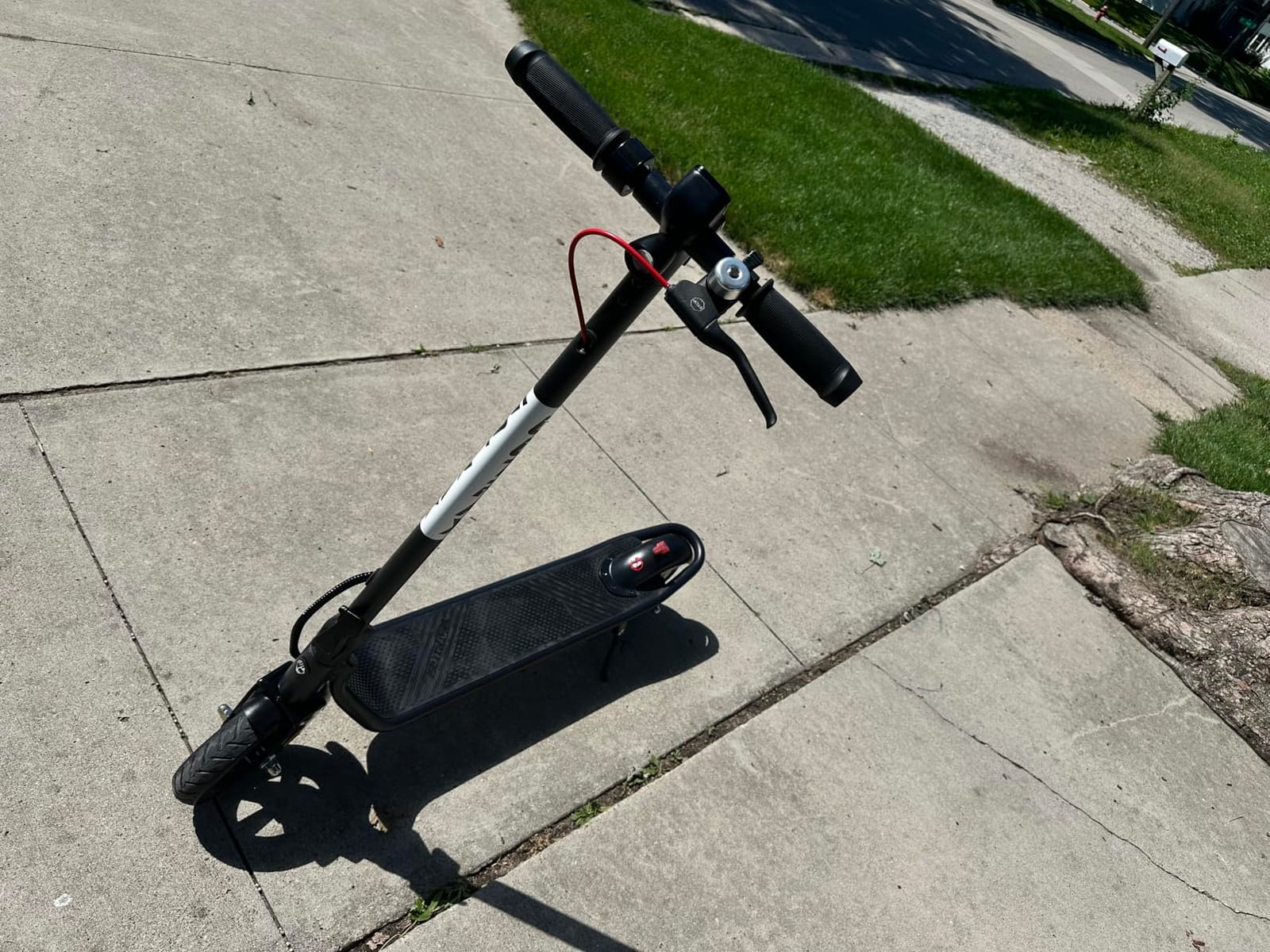
At 33.3 pounds it is not a feather, but the weight is evenly distributed and the folded package is short enough to sit across your lap rather than in your hand. A GoTrax owner on r/ElectricScooters describes it as folding nicely and light enough to carry onto the bus, and that is the exact use case this roundup is built around.
Owners at 165 to 220 pounds typically report 7 to 10 miles of real range against the 12-mile claim, with steep grades and headwinds cutting that further. Budget for about 70 to 80 percent of the advertised figure on any of these scooters, and plan your range around the lower number.
The technical profile is deliberately plain: 8.5 inch front air and rear solid tires, a big LCD display with cruise control, a metal frame, and a 220-pound weight capacity with a one-year limited warranty. The drum brake plus rear braking gives controlled stopping, and the safe-start feature means the motor will not engage from a standstill until you kick to about 1.87 mph, which is a genuine safety gain in crowded station corridors.
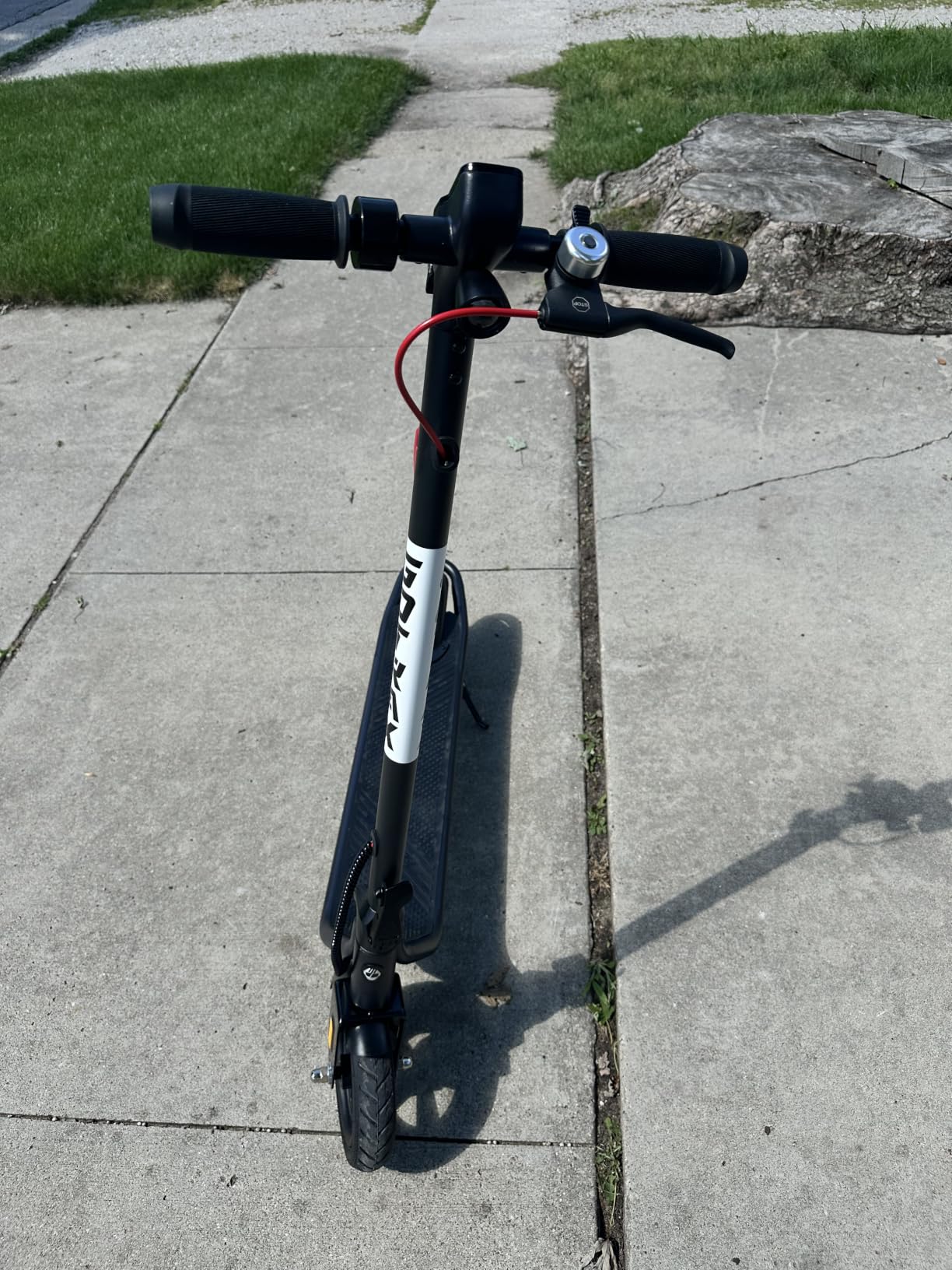
What the Gotrax gets right for a bus and train commute
Owner reports specifically cover mixed weather including rain, snow and sub-freezing temperatures, which matters enormously if your platform is outdoors and your last mile is exposed. The removable battery also means you are not carrying a dead pack up a stairwell at the end of a long day.
Customer support has replaced batteries and parts under warranty for some owners, though experiences range from excellent to poor, with some reviewers reporting automated replies and deflected claims. That variance is worth knowing before you rely on support as part of your plan.
Where the Gotrax will frustrate you
There is no suspension, so every expansion joint and pothole arrives directly through the deck into your ankles. On a commute that includes a rough sidewalk approach, that compounds over months.
The thumb throttle is very sensitive, which makes the cruise control hard to engage and hold, and that is a genuine problem on a longer bridge or riverside path. The battery gauge is also coarse, with a few bars that dip under load on hills. The two speed settings are controller limiters, not gears.
2. Hiboy S2 – UL 2272 Tested With Rear Suspension
Hiboy S2 Electric Scooter – 8.5″ Solid Tires – Up to 17 Miles Long-Range
35.5 lb
18 mph
17 mile claim
UL 2272 tested
Rear suspension
+ The Good
- UL 2272 tested by SGS
- Front middle and rear lights plus disc brake and eABS
- App gives remote lock and ride statistics
- Support ships replacement parts free
- The Bad
- 17 mile range only holds near 12 mph
- Spring hook fold latch can pop open when set down
- Heavier than most in its class
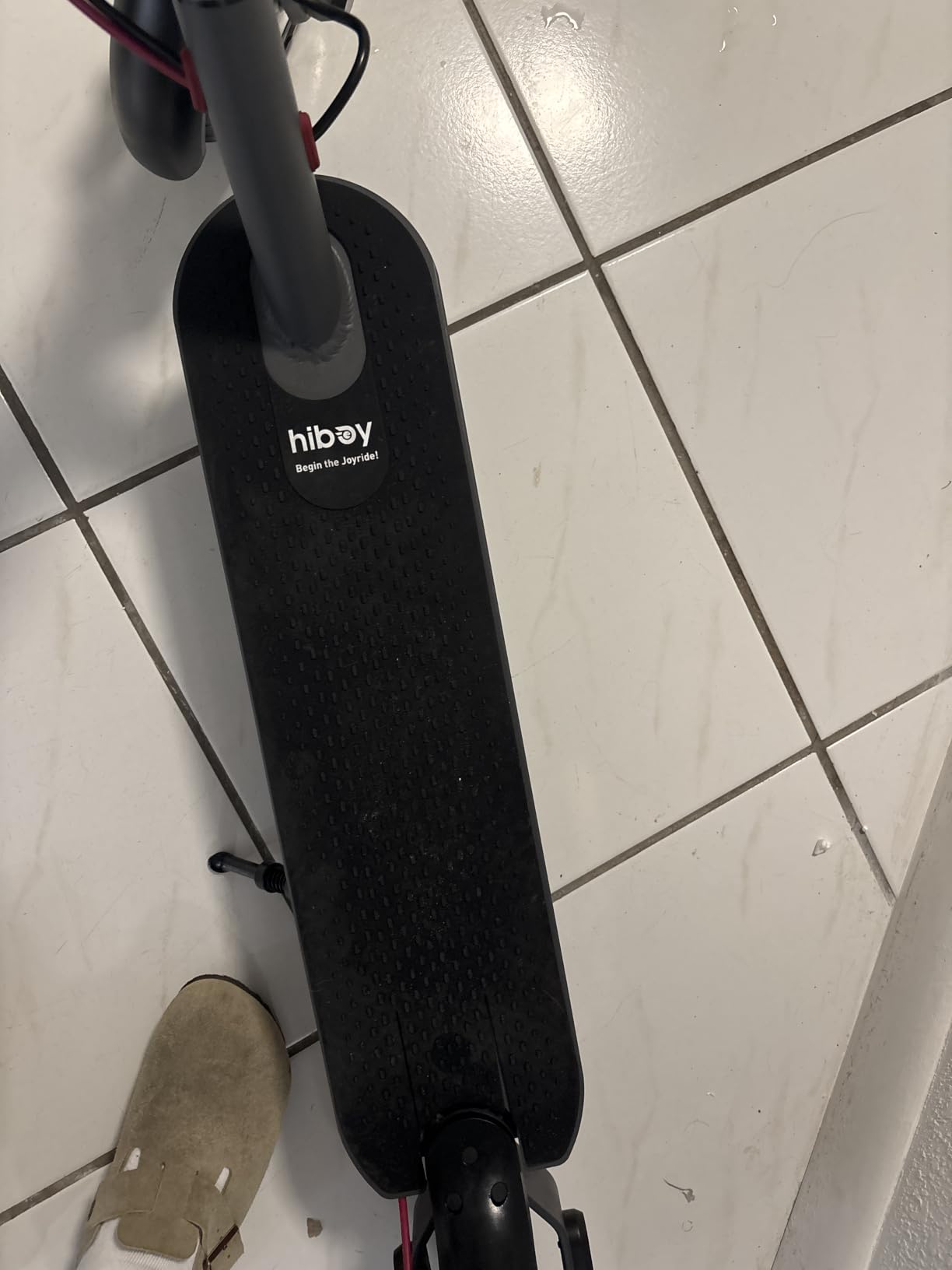
The Hiboy S2 is the best-built scooter in this group, and at 35.5 pounds it is also the heaviest by listed weight, which is the central trade-off you are making. Everything the Gotrax saves you in carry weight, the Hiboy gives back in ride quality and component spec.
Rear suspension is the reason to look at this one. On a commute that crosses bridge gratings or older pavement, the rear shock takes the edge off in a way the Gotrax cannot. Solid 8.5 inch tires still transmit plenty of feel through the handlebars, but the difference is real rather than marginal.
The 350W brushless hub motor reaches up to 18 mph, and the braking package is a rear disc brake plus eABS regenerative anti-lock braking. Lighting is the best in this roundup with three sets: front, middle and rear, which is a meaningful safety upgrade for a last mile that ends after dark.
Range is where the marketing and the experience diverge most sharply. The 17-mile figure holds at roughly 12 mph or slower, and at full speed owners report 6 to 7 miles. If your commute is a flat two miles, the shortfall never touches you. If it is a 10-mile trip, this is the wrong scooter.
Who the Hiboy S2 fits on transit
It suits riders whose route is step-free or elevator-served, and who want the most substantial ride and lighting package available at this level. The app gives Bluetooth remote locking, which is useful when leaving the scooter in a staffed station locker rather than an open platform.
UL 2272 testing by SGS and a full aluminum frame add confidence for anyone charging a battery indoors, and the 220-pound capacity covers most adults.
Where the Hiboy S2 costs you
At 35.5 pounds this is a two-handed carry up a long stair flight, and there is no shoulder strap in the box. If your route has a stair-only station, budget for that honestly before buying.
The rear disc brake is very sensitive and grabs quickly, which needs a week of adjustment. The spring-hook fold latch can pop open when the folded scooter is set down, and there is no hard point on the frame to pass a lock through for outdoor securing. Some owners report early wheel, throttle and brake component failures outside the one-year warranty.
3. MAXSHOT V1 – 31 lb With a 3-Second Fold
MAXSHOT Electric Scooter for Adults, 8.5/10/14″ Tires, 19Mph, 350W/500W Motor, 21-28 Miles Range, Folding E-Scooter with Dual Suspension,APP Contro
31 lb
19 mph
21 mile claim
3-second fold
265 lb capacity
+ The Good
- Folds in about 3 seconds and stores compactly in a car back seat
- UL 2272 tested with a bright headlight
- Higher 265 lb load capacity than most in the group
- Support has sent replacement scooters and parts at no cost
- The Bad
- Stiff dual suspension transmits every small rock to the rider
- Motor struggles on steep hills in the lowest mode
- Glued control panel screws block self repair
The MAXSHOT sits at the point where portability stops being an excuse and starts being a spec sheet. Thirty-one pounds, a 3-second fold, and a documented folded size of 107 x 43 x 52 cm, which is a package you can actually put in a train luggage area rather than one you have to hold.
Several multi-year owners report continued daily use, which is the strongest durability signal in this roundup. The listing also folds in a stated 3 seconds, and that number matches what owners describe rather than what marketing pages tend to promise.
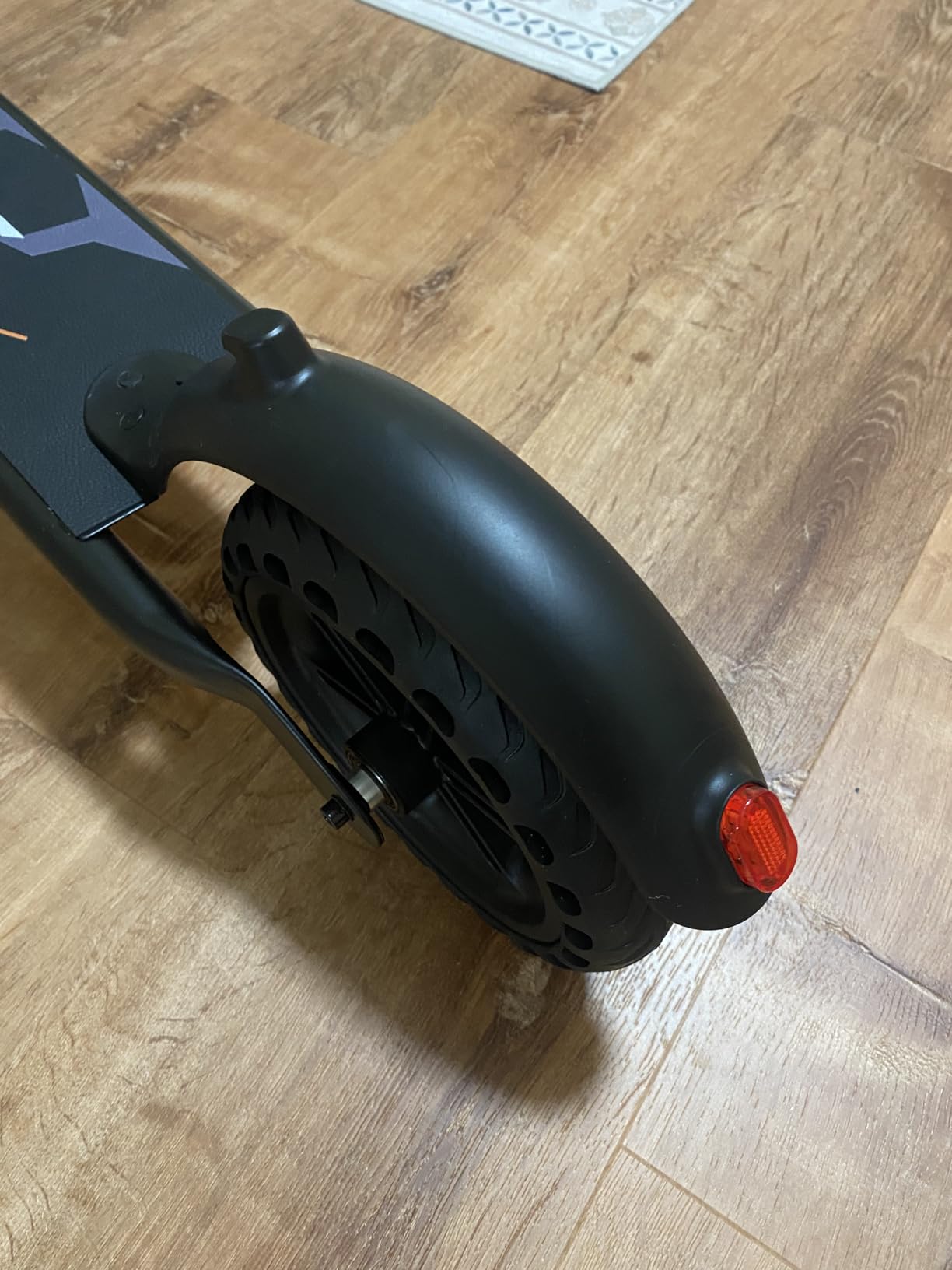
The 350W motor reaches up to 19 mph with a 21-mile maximum range claim, and owners report about 12 miles per charge on typical commutes, which lands right around the 70 to 80 percent expectation. Maintenance-free honeycomb solid tires need no inflation and no repair, which removes an entire category of roadside failure from a scooter you depend on every day.
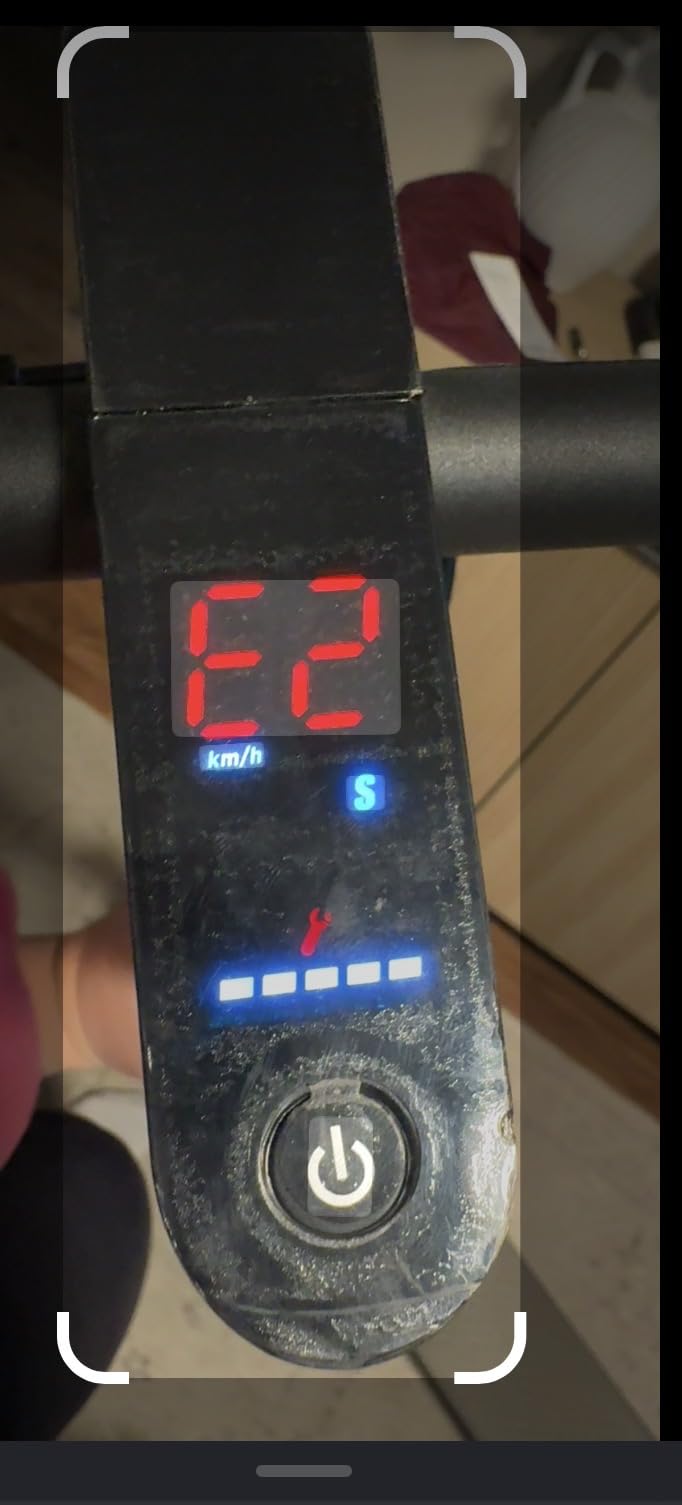
Braking is a drum brake plus eABS anti-lock, and the LED display shows speed, mode and cruise status with app control for lock, custom max speed and cruise. Tire options at 8.5, 10 and 14 inches mean you can pick for the pavement on your specific route rather than for the spec sheet.
What the MAXSHOT handles well for a commute
At 31 pounds with a 265-pound load capacity, this is a scooter that works for larger riders who would otherwise be pushed to a heavier frame. Support experiences are repeatedly good, including free replacement units, which softens the hardware complaints considerably.
Owners also report it holds up in hot and cold desert conditions and stays sturdy enough for a backpack, a laptop and groceries, which is what a real commute looks like.
Where the MAXSHOT disappoints
The dual suspension is stiff, so it filters almost nothing over small rocks and cracks. It is a suspension by spec sheet more than by feel. On steep hills the motor needs extra pushes in the lowest mode.
The app lock only works while the scooter is powered, so it has to be left on to deter theft, which is a poor security story on an open platform. Several reviewers also report wiring and control panel failures after a few months, plus faster-than-expected kickstand and front tire wear. The factory-glued control panel screws make self-repair impossible.
4. Roinside UP2P – 22 lb With IP65 Weather Sealing
Roinside Pink Electric Scooter – 8.5″ Solid Tires, 350W Motor, Up to 19 MPH&16Miles Long-Range Commuting Foldable E-Scooter for Adults with Dual Braking System and Smart App
22 lb listed
19 mph
16 mile claim
IP65 rated
25 percent grade
+ The Good
- Light enough for one-hand carry and under-desk storage
- IP65 water resistance adds everyday weather resilience
- Brakes needed no adjustment and worked out of the box
- Assembly takes about five minutes
- The Bad
- Small frame feels twitchy over bumps and pavement cracks
- Speedometer readings reported as inaccurate
- Heavier in practice than the listed 22 lb
Twenty-two pounds listed is the carry weight that changes a commute. The Roinside UP2P is one of two scooters here with that figure, and combined with a one-click fold and a 35 x 5 x 12 inch listed package, it is the one I would choose for a station with a long stair flight and no elevator.
Buyers are consistently surprised by how substantial it feels for the money. Quick assembly, no brake adjustment, and a motor some owners clocked above the advertised top speed are all reported.
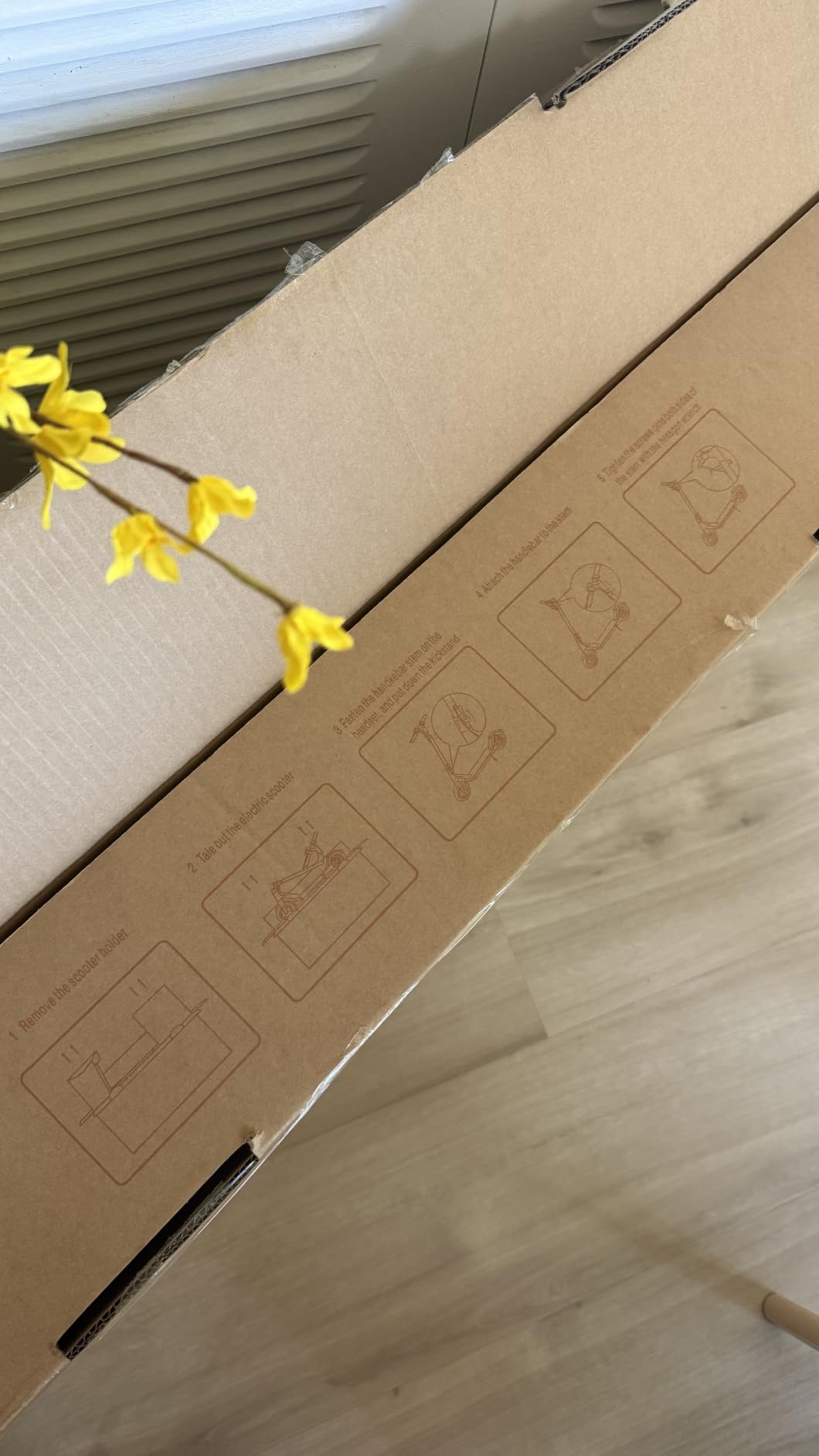
The 350W brushless hub motor handles 25 percent grade claims and up to 19 mph, backed by a 5.2Ah battery with up to 16 miles of range. Braking is a front regenerative brake plus a rear disc, which is the most modern combination in this group, and the central LED display is readable at a glance while you are standing at a curb.
IP65 water resistance is the differentiator for a year-round commuter. Rain rides are part of the job, and a scooter with a stated water ingress rating is a safer bet for an exposed platform than one with no rating at all.
Why this is the stair-carry pick
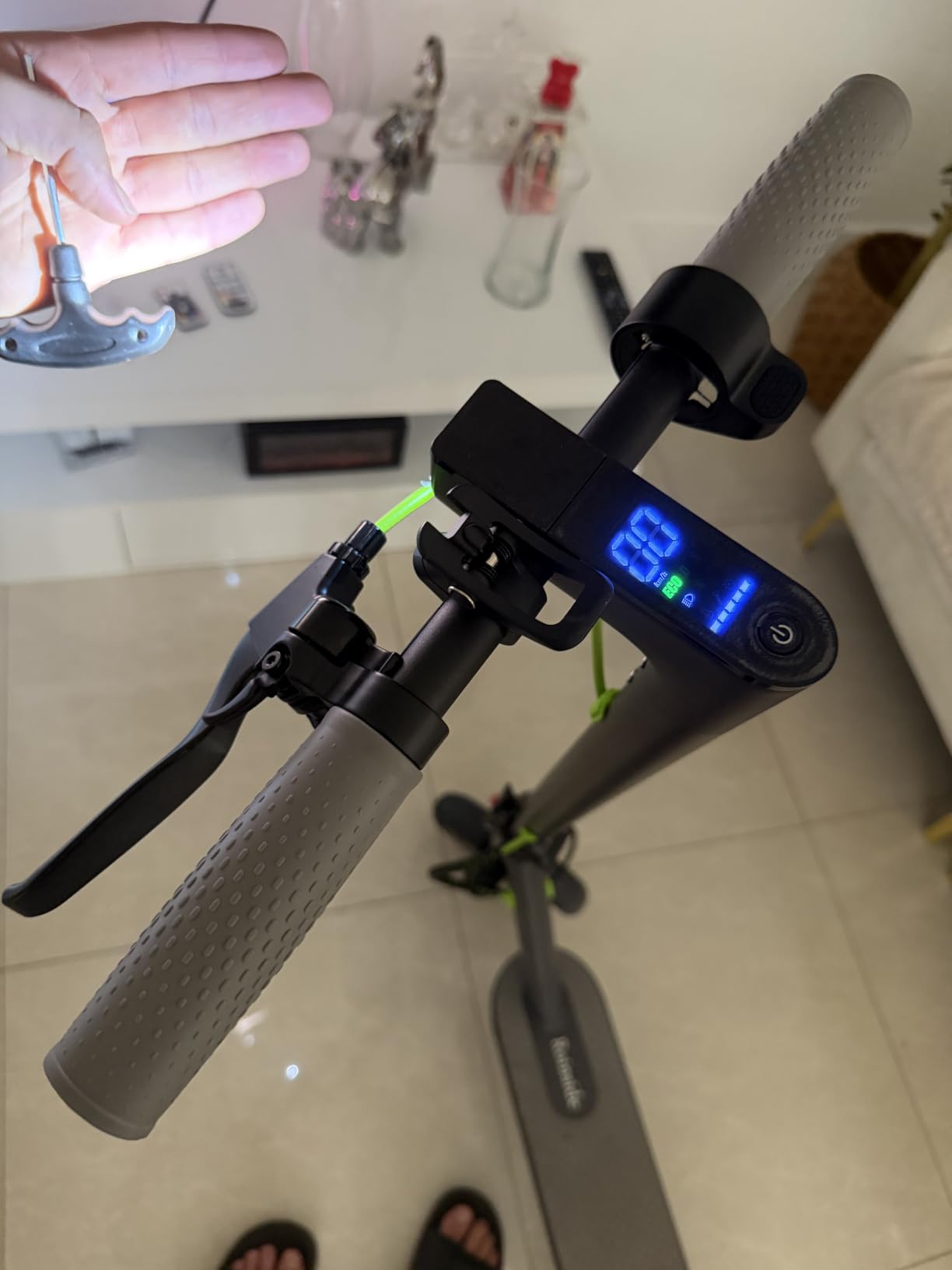
At this weight you can carry the scooter one-handed while holding a rail, a briefcase or a coffee. The listing also explicitly frames the one-click fold as for carrying onto buses, trains or under a desk, and the 265-pound load capacity means the light frame is not a light-rider-only machine.
For a short commute the 16-mile claim is more than enough, and the solid tires need no inflation.
Where the light frame shows
The small, lightweight frame feels twitchy over bumps and cracks, which is the direct cost of removing the mass. The speedometer is reported as inaccurate, so do not use it to judge your legal speed compliance.
The motor climbs steep hills slowly, the handlebar height of 45 inches suits taller riders rather than shorter ones, and owners note the real carry weight is higher than the listed 22 lb. There is also a report of handlebar screws loosening during use, so check them after the first few rides.
5. Aovowheel Y06 – 22 lb Entry Point for Short Hops
Aovowheel Electric Scooter for Adults, Folding E Scooter Commuting Scooters
22 lb
16 mph
3-second one-click fold
265 lb capacity
Three speed modes
+ The Good
- Very light at 22 lb with 3-second folding
- Walk speed mode helps first-time riders learn
- Solid tires need no inflation or repair
- Dual braking and LED lighting at this level
- The Bad
- 350W motor is underpowered for sustained climbing and larger riders
- Lowest average rating in this group with a 15 percent one-star share
- 8.5 inch solid tires feel harsh despite the dual suspension label
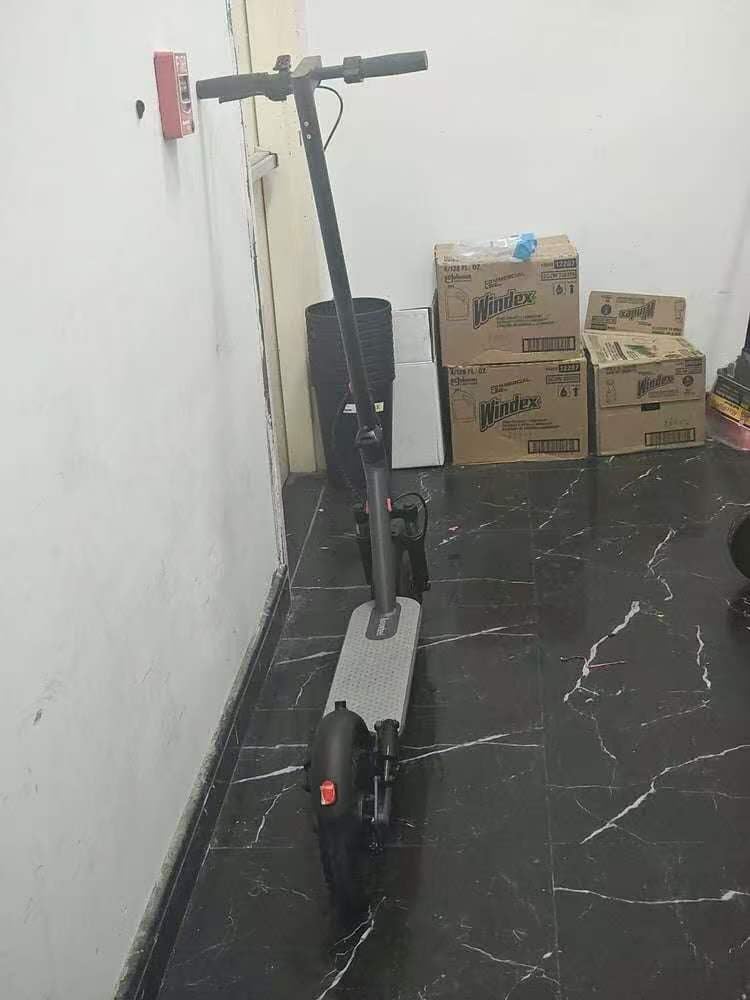
The Aovowheel Y06 is the other 22-pound scooter, and unlike the Roinside it is aimed squarely at short urban trips rather than a full commute. Three speed modes including a 7.5 mph walk setting make it a genuinely good first scooter, and the 3-second one-click fold is among the fastest here.
If your transit pattern is a short hop on either end of a rail journey, the weight and the fold speed are what matter, and this scooter delivers both.
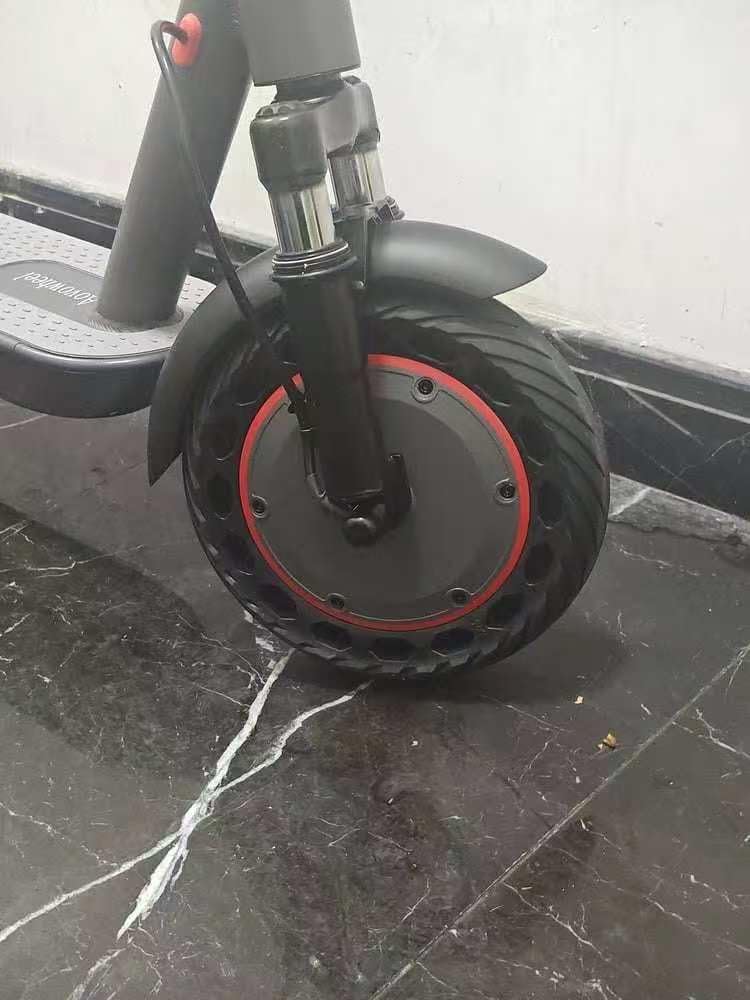
Braking is an EABS front brake plus a rear drum brake with an LED headlight and rear brake light, and the HD LCD screen shows battery level, speed and mileage. App control handles status monitoring, speed limits, cruise mode and lighting.
App control means the listed range is expressed as 16 to 23 miles depending on configuration rather than one fixed number, so treat the 16-mile figure as the conservative end. Listed top speed is 16 mph, with the three modes set at 7.5, 11 and 19 mph in the highlight material.
Where the Y06 makes sense
For students, older riders new to scooters, or anyone whose first and last mile are each under two miles on flat pavement, the 22-pound weight and the simple controls remove most of the barrier. Solid tires mean no flat repairs on a route you ride every day.
The 265-pound load capacity is generous, and the compact folded size fits in a car trunk and on buses and trains without argument.
Where it will not work
The 350W motor is underpowered for sustained climbing and for larger riders, and that shows on any route with a real grade. This scooter has the lowest average rating in the group with a 15 percent one-star share, which is worth weighing if reliability matters to you.
The 8.5-inch solid tires feel harsh over rough pavement despite the dual suspension label, and app-dependent features add friction for riders who would rather not pair a phone every time.
6. Qlaway K078 – 187.2Wh Battery and 3-Hour Charging
Qlaway 8.5″ E Scooter for Adults 19 MPH 350W Motor 187.2WH Battery, Motorized Scooter Up to 15 Miles Range, Foldable, Bearing 265 LBS/APP Control
12 kg
187.2Wh battery
3-hour charge
UL 2272 tested
19 mph
+ The Good
- 3-hour fast charging is the quickest in this group
- One owner logged 500+ miles with battery holding up after a year
- UL 2272 tested with an intelligent battery management system
- App locking adds useful theft deterrence for campus use
- The Bad
- Rigid chassis with no shock absorbs on this model
- Fold latch clip can pop open while carrying on buses and streetcars
- Handlebars do not collapse for easier carrying
Twelve kilograms is about 26.4 pounds, which places the Qlaway K078 in the stairs-possible tier rather than the one-hand tier. What sets it apart is the battery specification: 187.2Wh with an intelligent battery management system, UL 2272 tested, and a 3-hour full charge that is the fastest in this roundup.
For a commuter who charges overnight and rides twice a day, a shorter charge time means less of the day spent tethered to a wall.
Power comes from a 350W brushless motor with 700W peak and up to 19 mph, rated for 20 percent uphill climbing. Owners of the higher-spec version report it handles a steep quarter-mile hill without trouble, and one long-term owner logged 500+ miles with unchanged battery performance after a year.
Braking is rear braking with honeycomb solid tires, cruise control engages after 8 seconds at steady speed, and the app handles locking, custom speed limits and cruise settings. Importantly, the scooter also works without the app, which matters more than it sounds when the software is the weak point.
Why this suits a steep daily route
The 20 percent grade capability and the 700W peak figure are the strongest climb numbers here, and the honeycomb tires need no inflation or repair. Support is widely praised, including free replacement parts and even a replacement scooter past warranty.
App locking is a real advantage on a campus or at a station with a staffed bike room, and the UL 2272 testing plus battery management system is a solid basis for indoor charging.
What to watch out for
The chassis is rigid with no shock absorbers on this model, so rough pavement is transmitted directly. More importantly for transit, the fold latch clip can pop open while you are carrying the scooter onto a bus or streetcar, and the handlebars do not collapse, which makes the package harder to manage than a full collapse would.
The app is frequently unresponsive and sometimes needs a phone restart to reconnect, the charger does not reliably auto shut off when the charge completes, and the printed booklet is thin with a QR code that points to the wrong app. Warranty coverage is six months, the shortest in this group.
7. INVANTI E20 – Turn Signals and Bright Lighting
INVANTI E20 Electric Scooter with 350W Motor, Max 19 Miles & 18 MPH, 8.5″ Solid Tires, APP Control & Dual Brakes, Cruise Control, Foldable and Portable Commuter Electric Scooter (Grey)
About 33 lb
18 mph
19 mile claim
Turn signals
EABS plus disc brake
+ The Good
- Turn signals and very bright lights at this level
- Folds small enough to store in an office and carry to a parked car
- Smooth stable ride with plenty of power in Sport mode
- Support resolves issues with parts and repair instructions
- The Bad
- Heavier than advertised and heavy for stair carrying
- Real range about half the 19 mile claim
- App lock can leave the scooter un-unlockable if Bluetooth binding drops
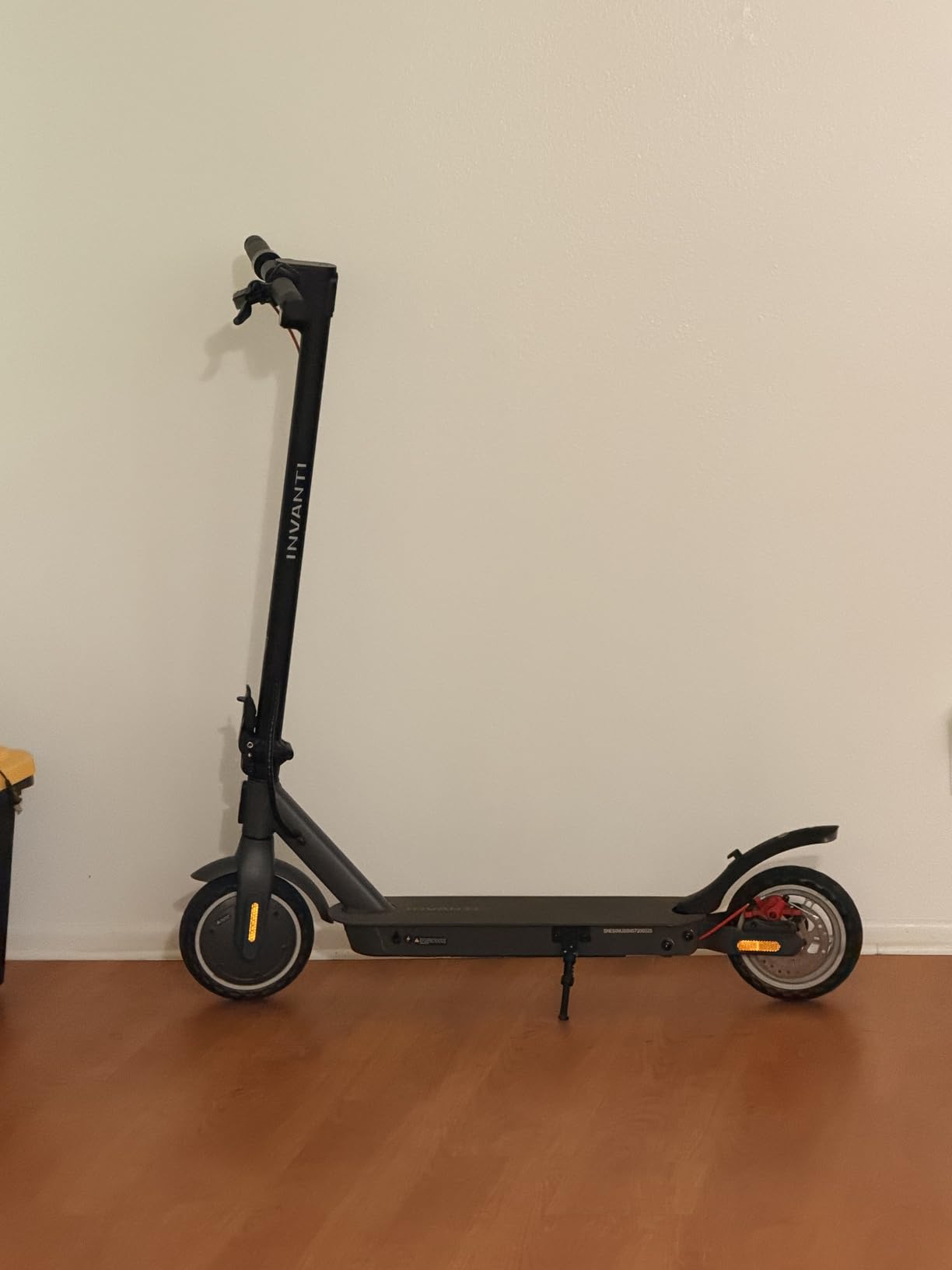
The INVANTI E20 is the only scooter in this roundup with turn signals, and owners single them out as a standout safety feature. For a commute that ends with a walk along an unlit road, that is a more meaningful upgrade than a faster top speed.
Lighting is described as very bright across the board, with an LED headlight and taillight, and the package folds small enough to live in an office closet or a car.
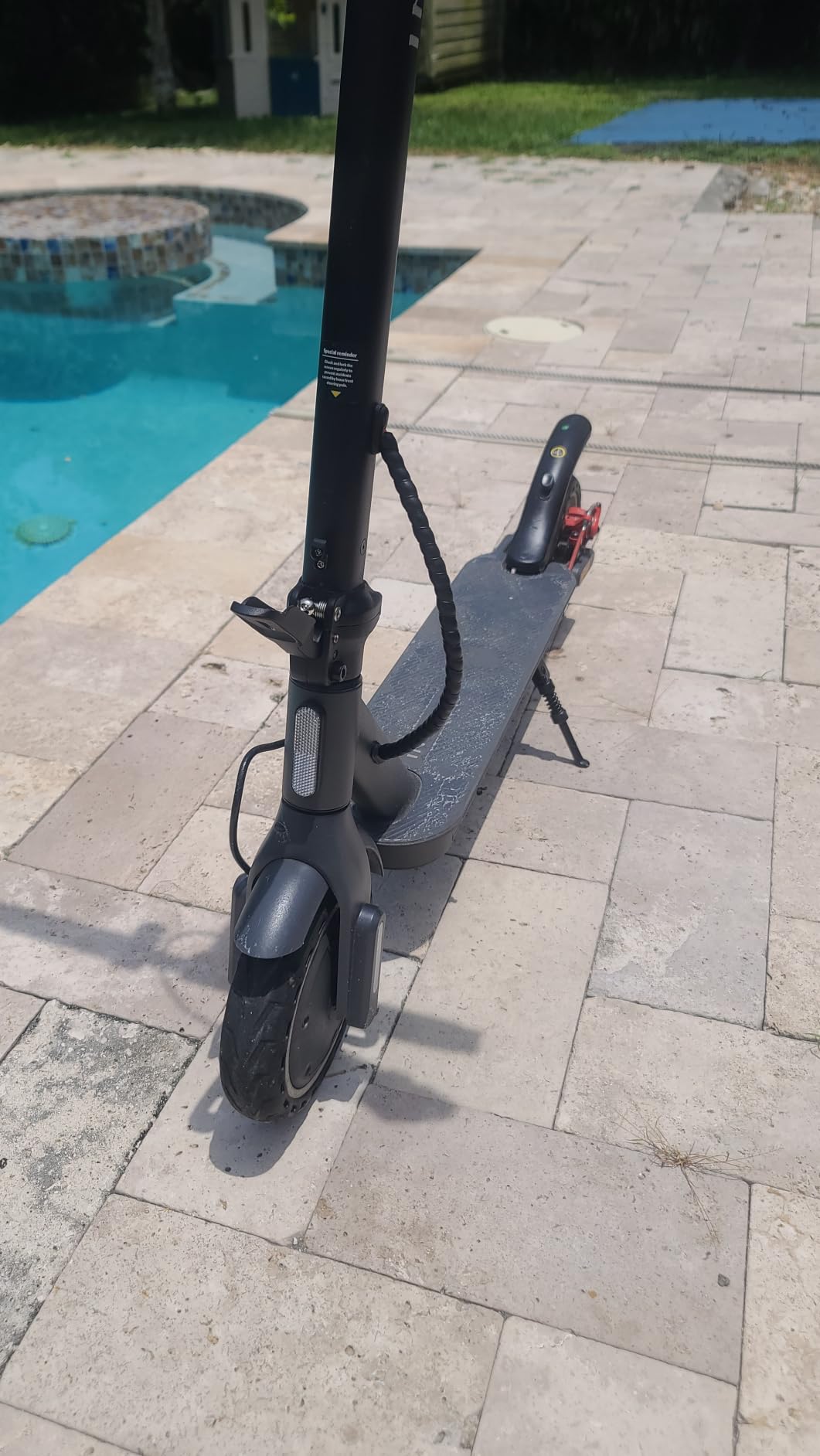
Power is a peak 600W motor reaching up to 18 mph with 15 percent maximum inclines, backed by a 36V 7.8Ah battery with a 19-mile range claim. Braking is an EABS front brake plus a mechanical disc brake, and the LED display shows speed, battery level, mode and cruise status.
The app handles locking, gear switching, speed control, cruise control and battery monitoring, and the frame is a 33-pound foldable aluminum design with a 265-pound load capacity and a one-year limited warranty.
Why the lighting matters for a last mile
Turn signals are increasingly common on road-legal commuter scooters and rare at this level, and combined with genuinely bright headlight and taillight output they address the most common complaint about budget scooters. The EABS plus disc combination gives responsive, reliable stopping.
Sport mode climbs well, which matters on the approach ramp or bridge that ends your transit journey.
Where it falls short
At roughly 30 pounds in practice it is heavier than advertised and noticeably heavy for carrying on stairs. Real-world range is about half the advertised figure, around 10 miles for a 190-pound rider.
Weak on hills in the default mode, dropping to about 4 mph before switching to D or S. Advertising cites 19 mph, which is not reached in practice, and the app lock has left at least one owner unable to unlock after a Bluetooth binding loss. One report also noted an overheating warning during light drizzle.
8. WERHY H5 – App Control at About 30 lb
WERHY Electric Scooter, 350W/500W Powerful Motor & 8.5”/10” Tire
About 30 lb
19 mph
12-15 mile range
3-second fold
App control
+ The Good
- 3-second folding at about 30 lb for transit and under-desk storage
- Dual braking with a front electronic and rear drum brake
- App covers locking cruise speed modes and lighting
- LED headlight and rear warning light for night riding
- The Bad
- No suspension so rough pavement goes straight to the rider
- Headline range of 21-28 miles far exceeds the 12-15 miles the specs state
- Top speed and range claims vary by variant
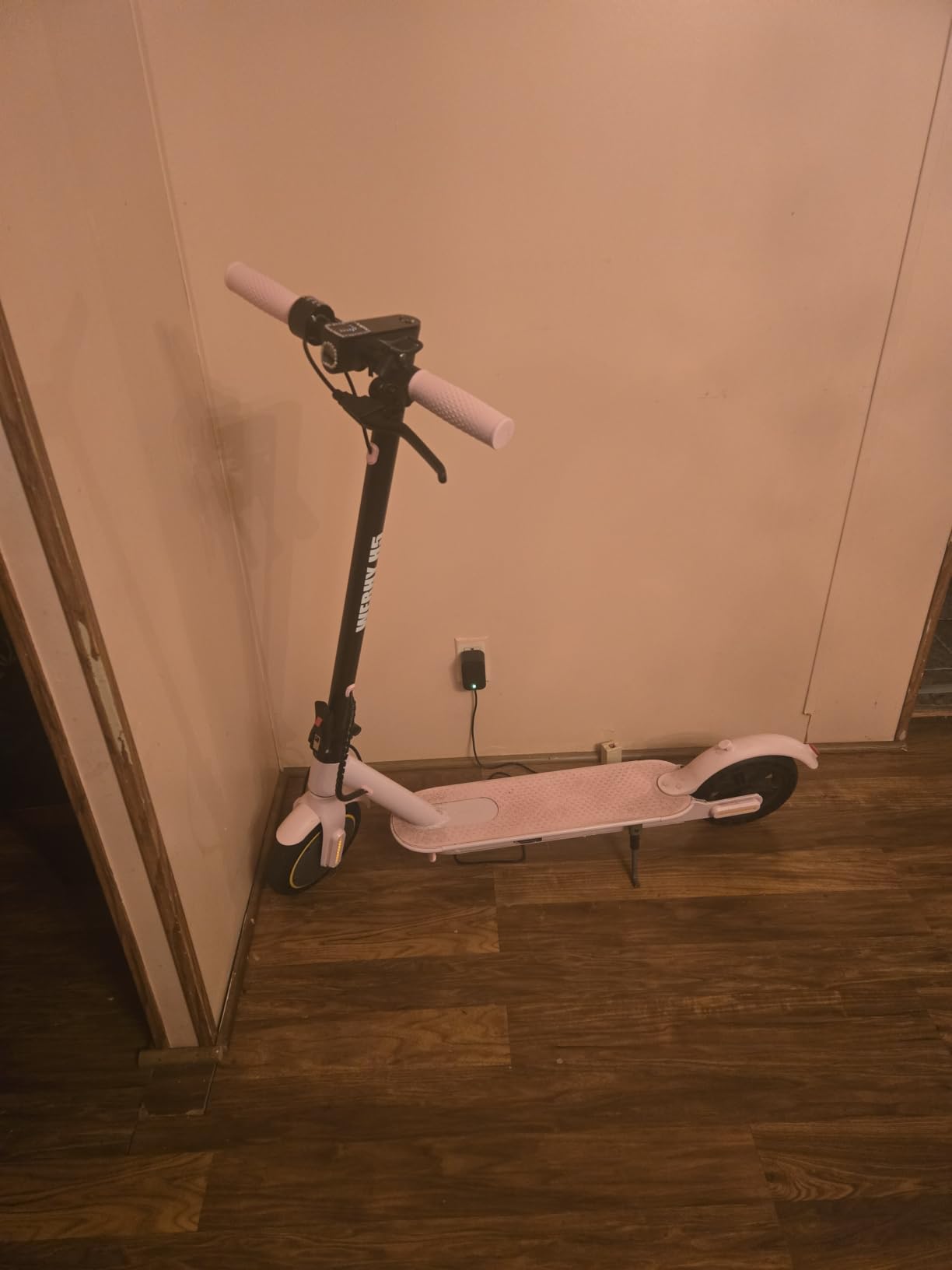
The WERHY H5 is the straightforward middle of this list. About 30 pounds, a 3-second fold, and an app that puts locking, cruise control, speed modes and lighting behind a single interface, which is the feature set most transit riders end up using daily.
Reviewers find it reliable for short daily commutes and errands, which is exactly the use pattern that matches a multi-modal trip.
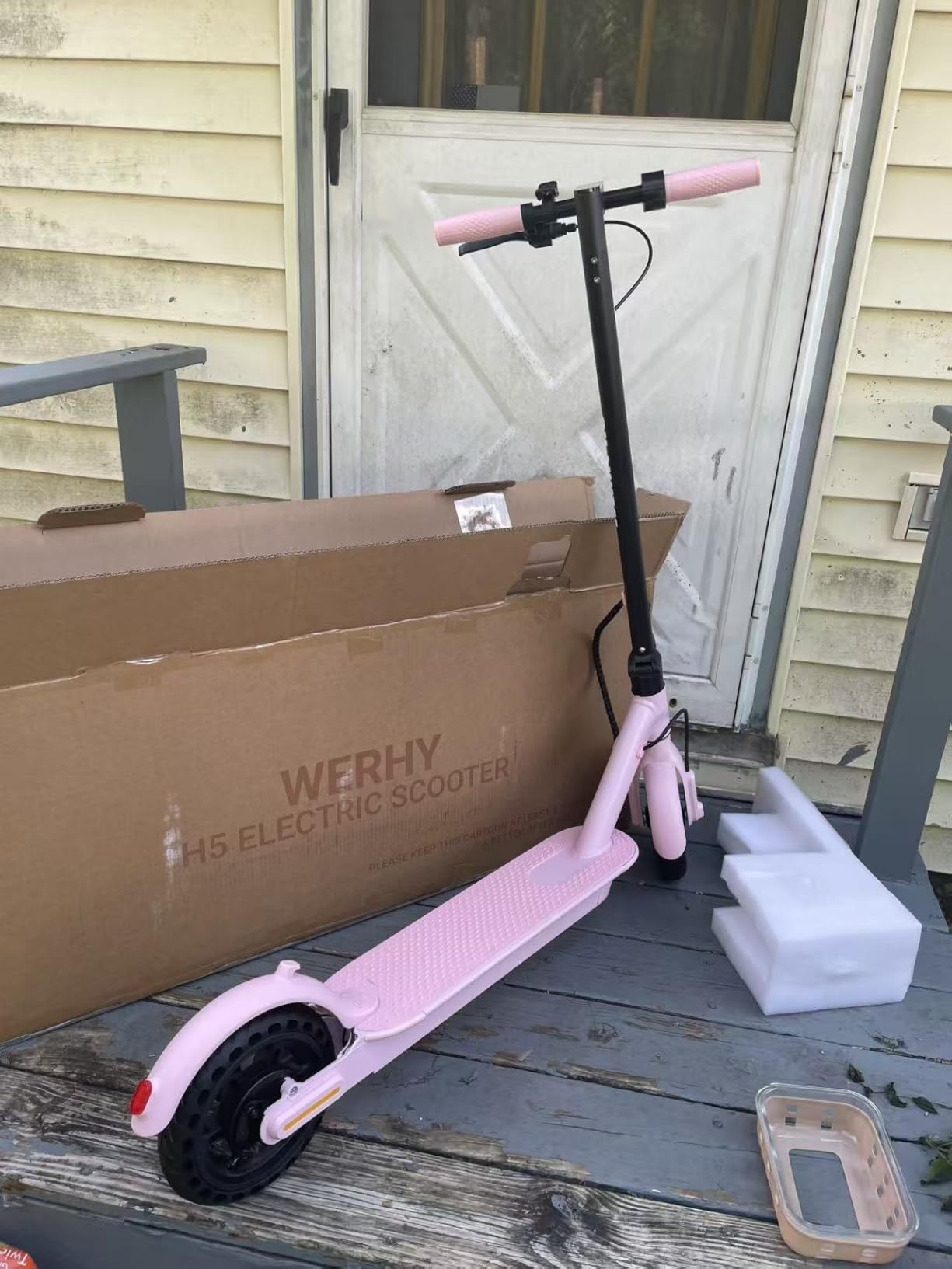
The 350W motor reaches up to 19 mph and handles 15 percent maximum slopes with a 264-pound load capacity, and the lithium-ion battery gives 12 to 15 miles per charge. The smart LCD display mirrors the app, and braking is a front electronic brake plus a rear drum brake.
Solid 8.5 and 10 inch tire options need no inflation or puncture repair, and the listing notes 180-day parts warranty coverage alongside a 3-second folding design intended for public transport or under-desk storage.
Where the WERHY earns its place
Thirty pounds is inside the stairs-possible tier, and a one-second-class fold with full lighting and dual brakes is a complete package for a commuter who rides four or five miles a day. The app lock is the practical feature for a station bike room.
For riders who want a bigger motor option, the 500W and 10-inch configurations are listed alongside the 350W version.
What the spec sheet gets wrong
The marketing headline of 21 to 28 miles is well beyond the 12 to 15 miles the listing’s own specifications support, so set your expectations against the lower number. Claims also vary by variant, which makes direct comparison difficult.
There is no suspension on this model, so a rigid chassis transmits rough urban surfaces straight to the rider. On a long route that is a fatigue issue rather than a safety one, but it accumulates.
9. VOLPAM Q1 – Motor Options for Steep Grades
VOLPAM Electric Scooter, 350W/500W Motor, 21/28/40 Miles Long Range
19 mph
21/28/40 mile variants
350W or 500W
264 lb capacity
+ The Good
- 500W and 10-inch configuration handles hills well for larger riders
- Folds quickly and stores compactly for cars and buses
- Bell and a bright LED floodlight at this level
- Support resolved a motor issue proactively
- The Bad
- Claimed range falls well short at mixed speeds
- Weighs more than expected and is awkward to carry by hand
- Unsealed wiring and charging port gaskets as a moisture risk
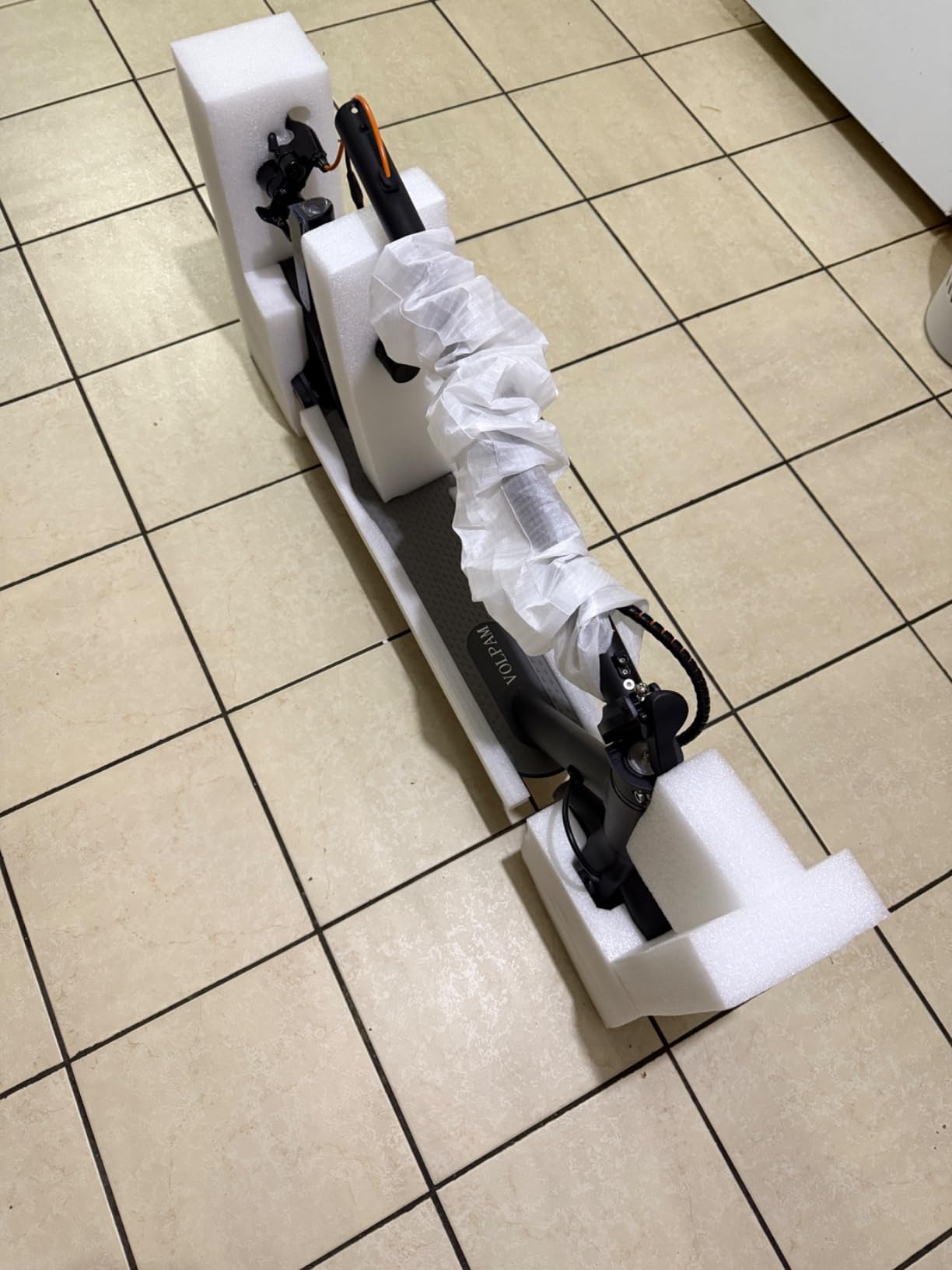
The VOLPAM Q1 is unusual in this group because it comes in 350W and 500W motor options with 21, 28 and 40-mile range variants, which makes it a good fit for a route with a serious grade if you pick the 500W and 10-inch version. The category ranking at the time of writing reflects how many people buy it.
Owners cite the quick folding, compact storage, and reliable short-trip battery life.

Top speed is 19 mph on 8.5 or 10-inch solid tires, with dual brakes, lights and cruise control plus app connectivity and a 264-pound maximum load. The one-year warranty covers the scooter itself.
Range is the gap between the listing and the experience. Advertised 21 to 40 miles translates in practice to roughly 30 minutes of mixed-speed riding for many owners, so treat the range numbers as a variant label rather than a planning figure.
Why the motor options matter
A 500W motor with 10-inch tires gives noticeably better hill performance for larger riders, and that is the single biggest reason to choose this over a 350W folder on a route with a bridge ramp or a steep underpass approach. The bell and bright LED floodlight are useful additions on a shared path.
It is also a good pick as a car-scooter that still folds small for occasional transit use.
What to plan around
It weighs more than expected and is awkward to carry by hand, which is the central issue for a transit-specific buyer. Suspension is limited, so bumps on rough paths are felt clearly.
Owners also flag unsealed wiring gaskets inside the stem and a charging port cover that comes loose, which is a long-term moisture concern for anyone riding in rain. Brake lights flicker when the handbrake lever is pulled, and reviewers recommend staying under about 220 pounds.
10. HopCycle W3C – Pneumatic Tires and TUV Certification
HopCycle Electric Scooters – Electric Scooter Adults, 1200W/1000W/500W Motor, 10”/8.5” Tires, 28/25/23/21Miles, APP Control E Scooter for Teens Black
31.5 lb
18 mph
8.5 inch pneumatic
UL 2272 by TUV
App lock
+ The Good
- Pneumatic tires give the smoothest ride on uneven pavement
- ANSI CAN UL 2272 certified by TUV Rheinland
- One-step folding in 3 seconds with an app electronic lock
- Three speed modes for different route conditions
- The Bad
- Range about one third of the 21 mile claim
- Not suitable for riders over roughly 145 pounds
- Pneumatic tires are prone to flats and the electronics are not waterproof
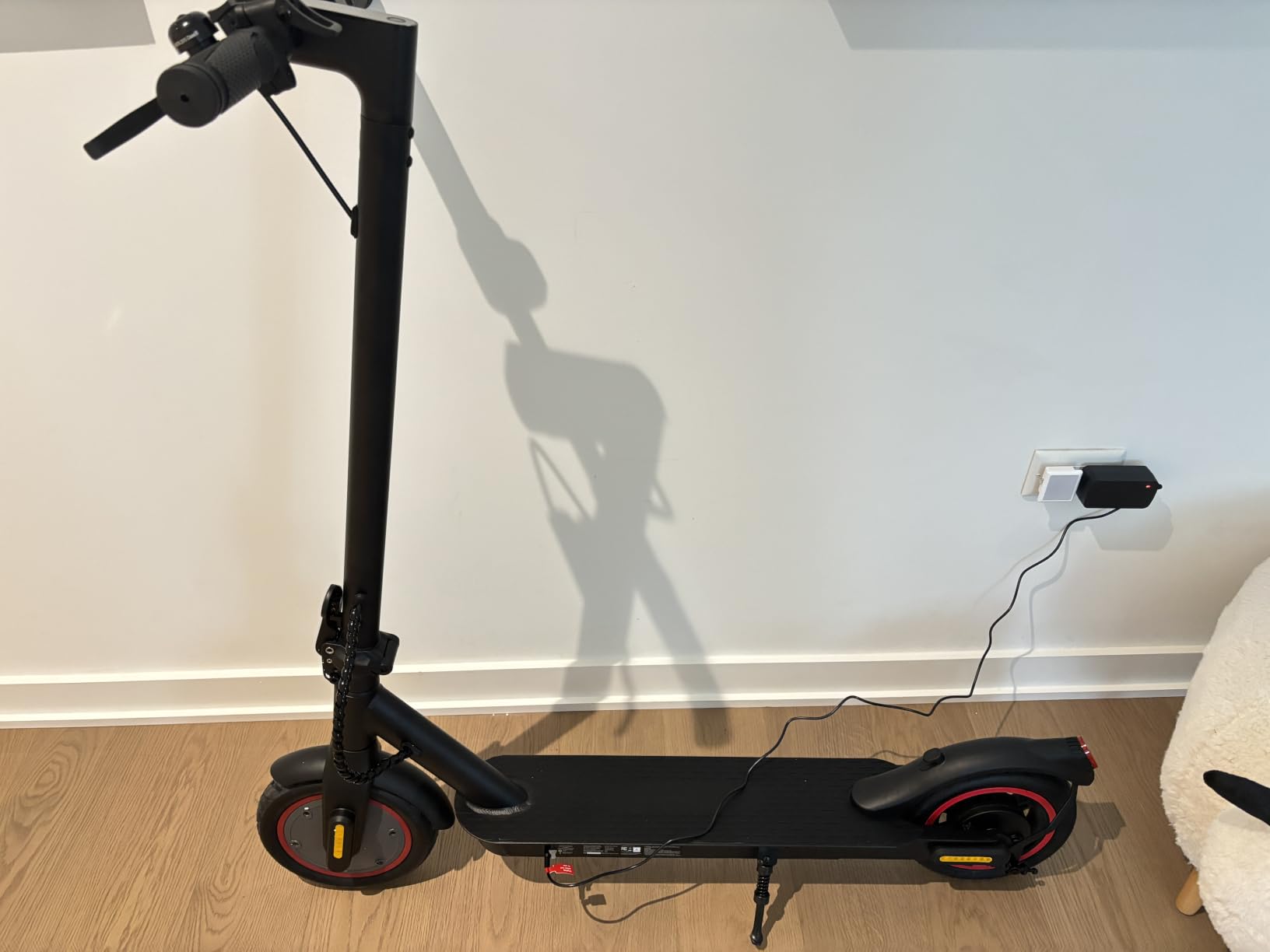
The HopCycle W3C is the comfort pick. Its 8.5-inch pneumatic tires are the only air-filled tires in this roundup, and they change the feel of rough city pavement more than any motor or battery choice in the list.
It also carries one of the more credible certification stories, with ANSI/CAN/UL 2272 certification by TUV Rheinland, plus an IPX4/IP65 water resistance rating and a 3-second one-step fold.
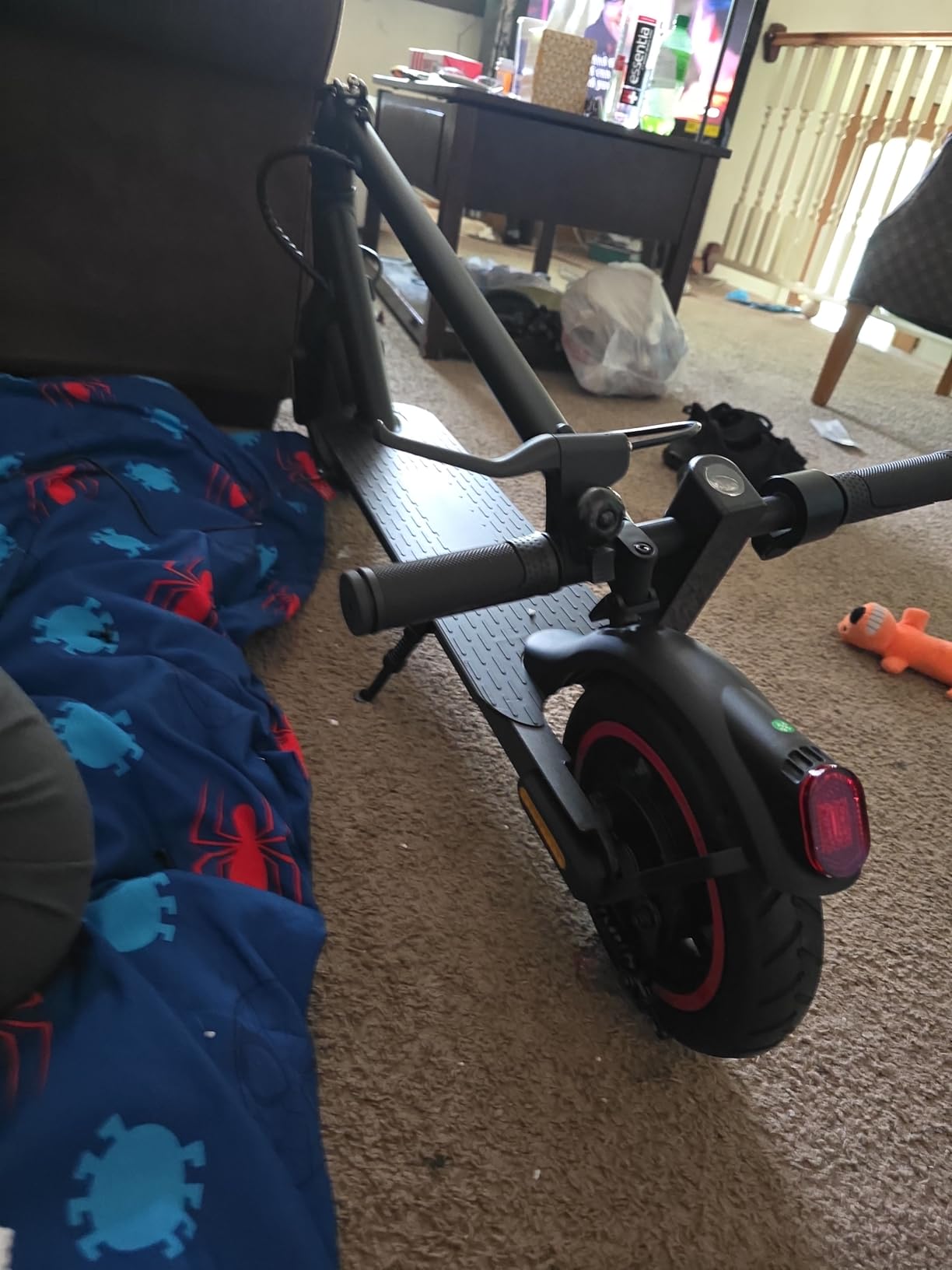
The 500W peak motor reaches up to 18 mph on a 36V 7.8Ah battery with a 21-mile claim, and braking is electronic plus rear drum with app-based cruise control and an electronic lock. The handlebar is listed as adjustable, though owners report a fixed stem in practice.
Battery performance improves after several charge cycles, which matters if you buy it mid-range and assume the first week of riding represents the whole experience. Real range commonly lands near 7 miles against the 21-mile claim.
Who the HopCycle fits
Lighter riders on flat or moderately uneven terrain who want the smoothest ride and the strongest certification in the group. The app electronic lock is useful in a campus setting, and owners praise the easy setup, foldable design and quick customer service replacements.
If your route crosses old bridge decking or patched asphalt, pneumatic tires here are the reason to choose it over any solid-tire rival.
Where it does not fit
Reviews are clear that this is not a scooter for heavier riders, with a practical ceiling around 145 pounds. Pneumatic tires are prone to flats on rough terrain, which is an obvious tension with the comfort argument.
It is not waterproof, so avoid rain exposure, and some units report shaking and vibration over bumps. Warranty coverage is 180 days, and the adjustable handlebar claim did not hold on the units owners received.
11. Riuiio G01Lite – 27.8 lb With Three Ride Modes
Electric Scooter for Adults, 19 MPH, 15-19 Miles Range, 350W Motor, Foldable Commuter E Scooter with App Control, 8.5″ Tires, Lightweight Electric Scooter for Teens & Adults
27.8 lb
19 mph
UL2272 certified
Rear suspension
App control
+ The Good
- Heaviest-listing stays under 30 lb for stair carry
- UL2272 certified with a smart battery management system
- Three speed modes with Bluetooth app and cruise control
- Smooth ride with rear suspension and solid tires
- The Bad
- Struggles on inclines and hills
- Display may malfunction after a few months
- Actual top speed reported at 14-17 mph rather than 19-22
At 27.8 pounds the Riuiio G01Lite lands just inside the tier where a stair flight is a two-handed effort rather than an impossible one, and it is one of only two here carrying UL2272 certification alongside a genuine rear suspension.
That combination is unusual: a sub-30-pound folder with shocks, and owners consistently describe the ride as smooth and comfortable.
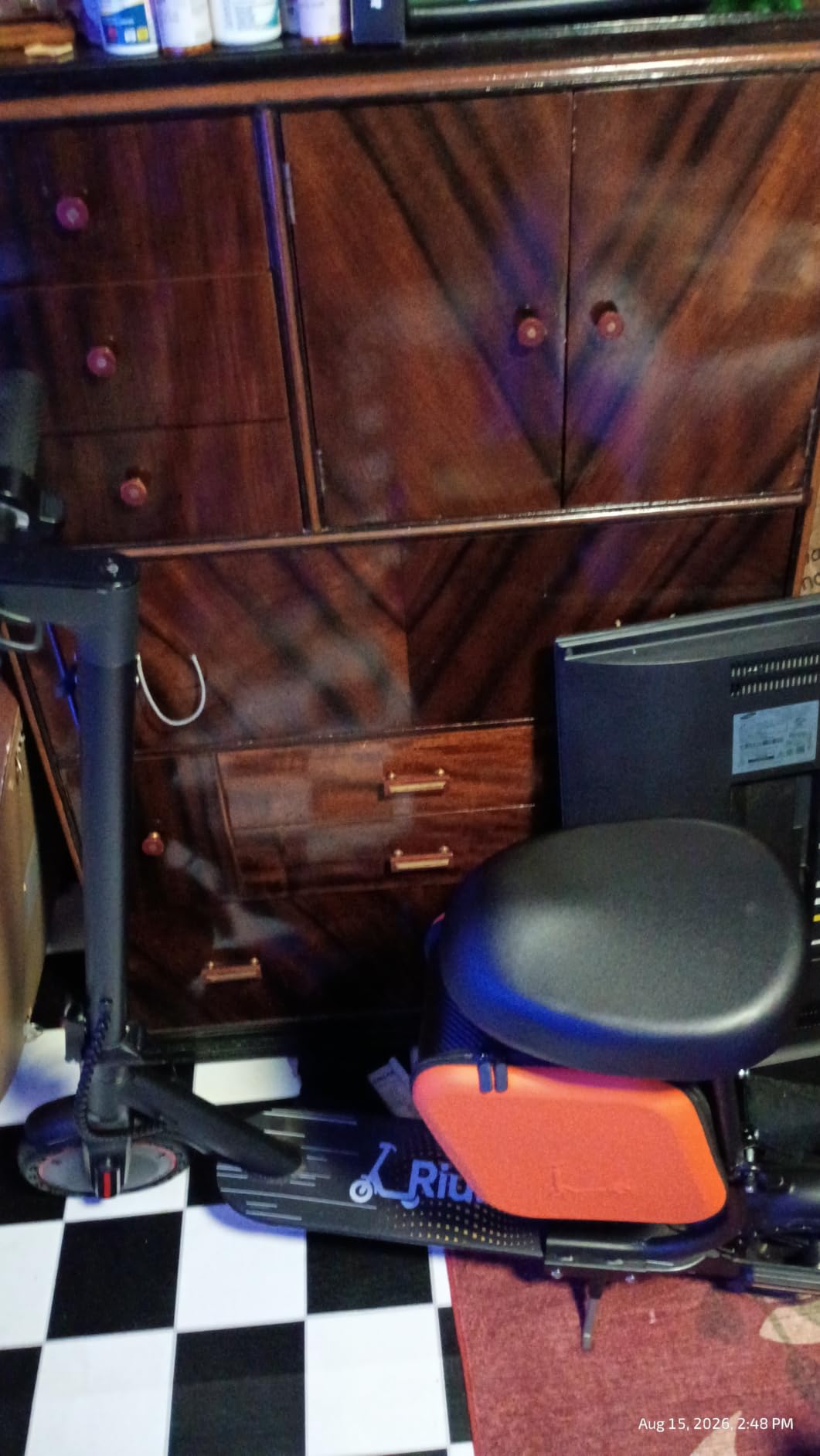
Power comes from a 350W brushless motor with 700W peak and up to 19 mph on a 36V battery with 15 to 19 miles of range. Braking is a front drum brake plus an EABS electronic brake, with an LED headlight and brake light, and a 265-pound load capacity.
Bluetooth app control covers cruise control and three speed modes set at Beginner, Eco and Sport, which is a genuinely useful setup for a transit rider who wants a low-power mode for platform boarding and a higher one for open bike lanes.
Why the ride quality stands out
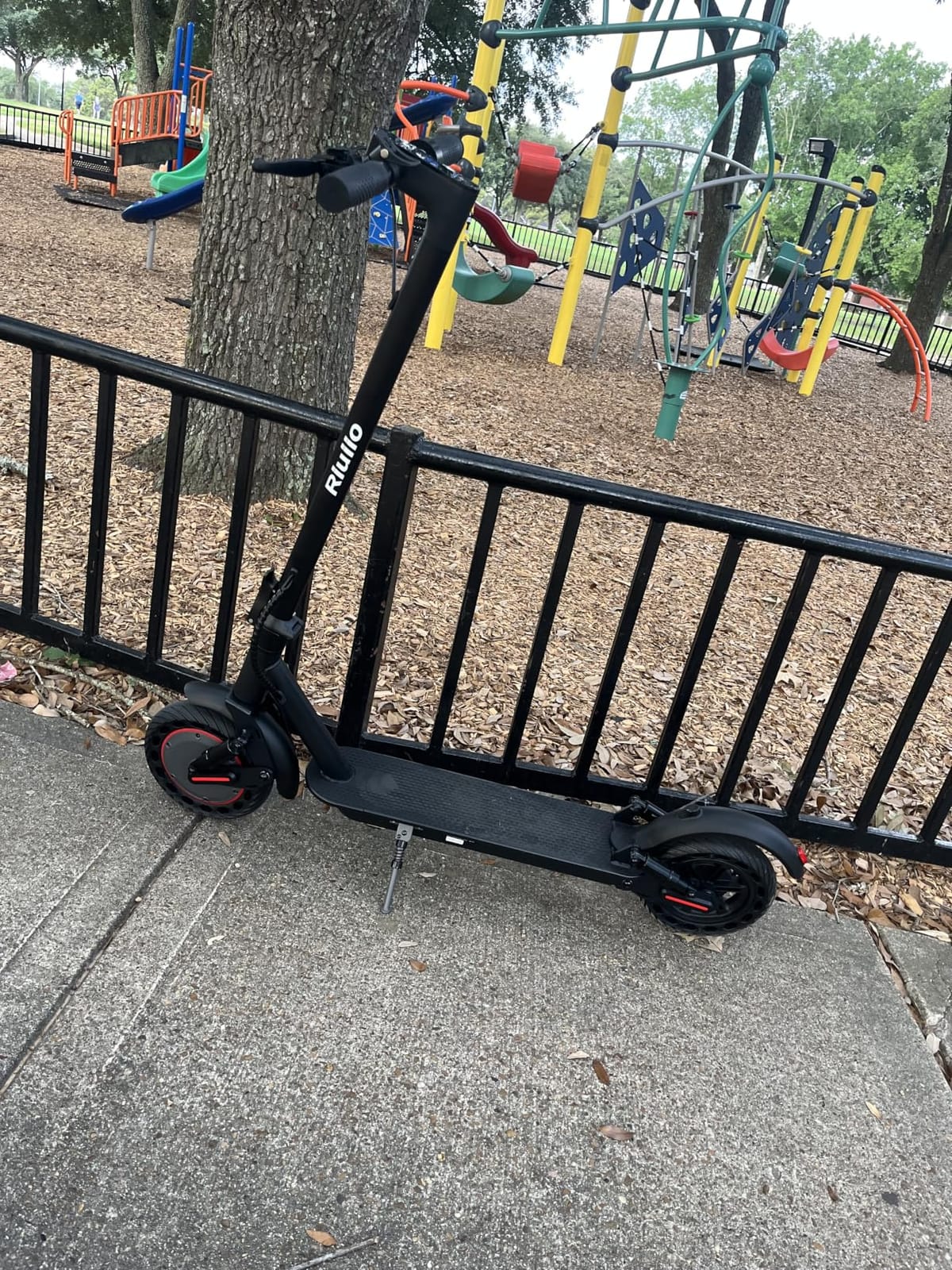
Rear suspension on a 27.8-pound frame is the sweet spot of this roundup, and solid tires mean you do not have to trade comfort for puncture resistance. The foldable design and the UL2272 certification make it a sensible pick for anyone charging indoors.
Battery life is praised for flat-terrain commuting, and customer service is responsive.
What to plan around
It struggles on inclines and hills, which is the limiting factor on any route with a grade. The display may malfunction after a few months, and the brake is loud.
Actual top speed is reported at 14 to 17 mph against advertised figures of 19 to 22, so set your speed expectations accordingly. Some buyers also reported missing hardware and a warped compartment under the seat in certain units.
12. Joyhis JS01 – Removable Seat for Riders With Joint Issues
Joyhis Electric Scooter with Seat for Adults, 350W Foldable Commuter Escooter with 19MPH Top Speed, 15 Miles Range, 8.5″ Solid Tires, Smart App Control, Dual Brakes
Removable seat
19 mph
UL 2272 certified
Three ride modes
15 percent grade
+ The Good
- Removable seat helps riders with knee and leg issues
- Three ride modes with cruise control
- UL 2272 certified with a phone holder for navigation
- Solid tires need no inflation or repair
- The Bad
- Multiple reports of complete failure within 30 to 60 days
- Throttle malfunction causing sudden stops
- Poor customer support and a 30 day return window
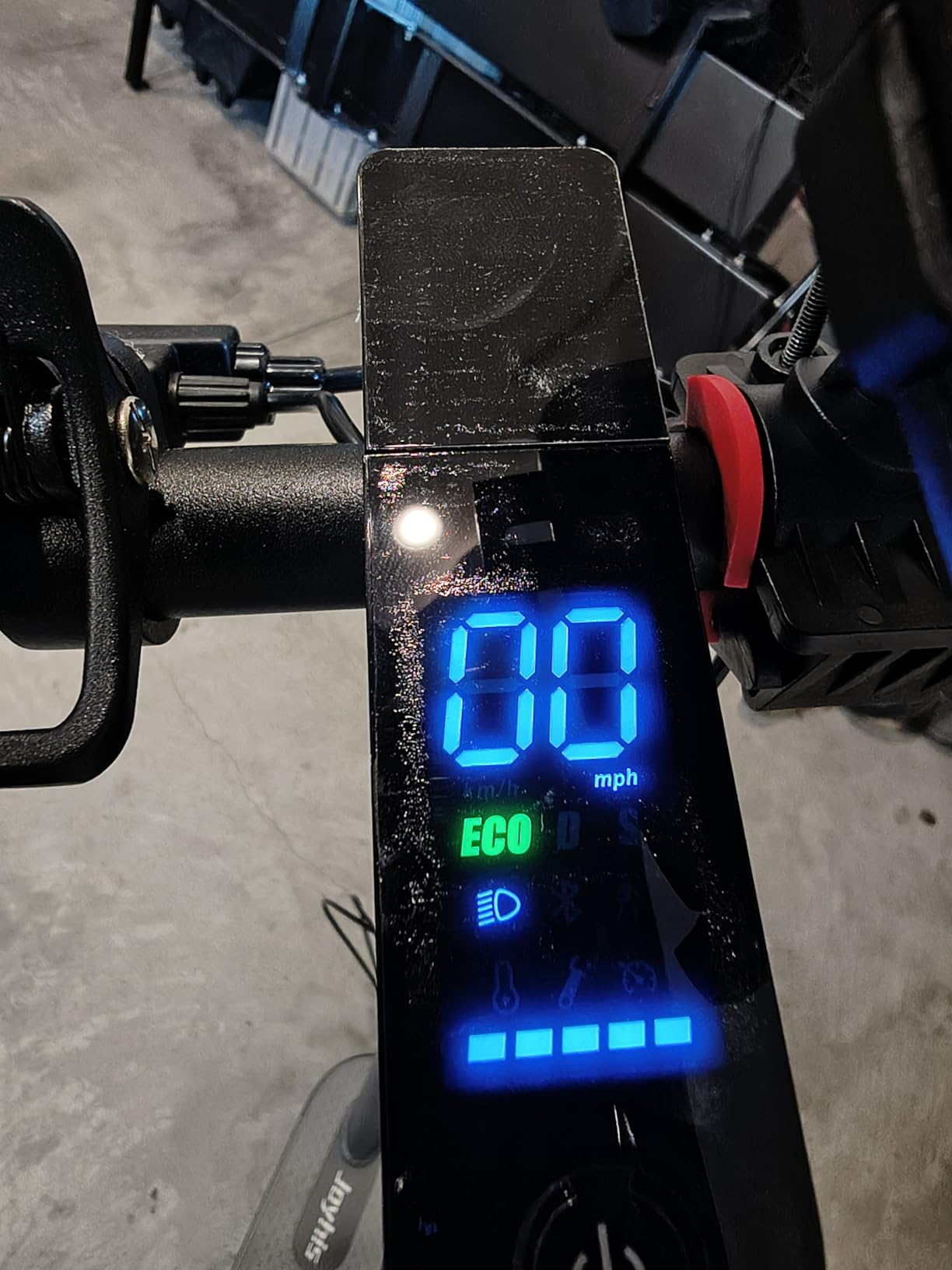
The Joyhis JS01 is the only scooter here that ships with a removable seat in the box, and that single feature changes who the product is for. Riders with knee or leg issues, or anyone who cannot comfortably stand on a deck for a full commute, get a seated option that folds away when it is not needed.
That is a niche case, and it is a real one. It is also the product in this roundup with the weakest reliability record, so the caveat matters.
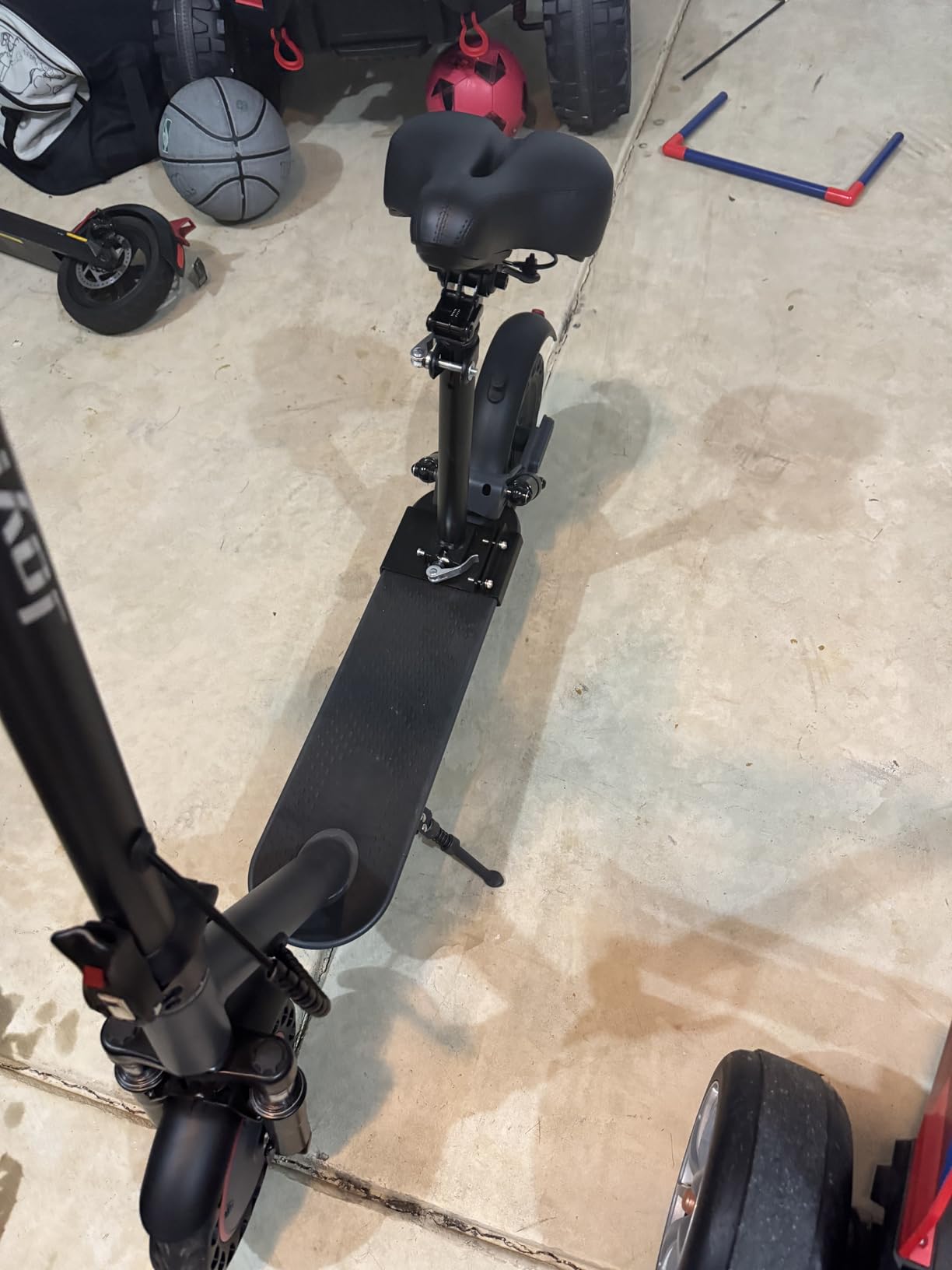
Underneath it is a 350W brushless motor reaching up to 19 mph on a 36V 5.2Ah lithium battery with 15 to 22 miles of range, 8.5-inch solid rubber tires, and dual braking with a rear drum brake plus EBS electronic braking. The claimed grade capability is 15 percent, and there is a phone holder for navigation.
Three ride modes are offered at Comfort, Eco and Sport, with a smart app handling cruise control, and the scooter is UL 2272 certified with a 265-pound load capacity and a one-year limited warranty.
Who should consider the seated option
If standing on a deck is a genuine barrier to your commute, this removes it. The removable seat adds stability and comfort, the three modes let you tune effort, and the phone holder is useful on an unfamiliar last mile.
Solid tires eliminate flat concerns, and the dual brakes give confident stopping.
Why we rank it last
Reliability is the issue. Multiple reviews report complete failure within 30 to 60 days, throttle malfunctions causing sudden stops and falls, and a defective display.
Customer support is described as poor, with a phone out of service and a Chinese-language website, and the 30-day return window is shorter than the failure timeline. Suspension is also poor over the solid tires, the app has functionality issues, and the scooter struggles with steep hills. If a seated option is not essential for you, there are ten better-supported choices here.
How to Check Your Transit Agency’s Scooter Rules Before You Buy
Spend ten minutes on this before you spend an afternoon on specs. Riders consistently report that the blocker in a multi-modal commute is a policy, not a product, and that finding out at the platform is the worst possible time to find out.
Find the specific rule for your mode. Search your agency’s site for the transit mode you use. Bus rules and rail rules are frequently different documents with different thresholds, and riders on r/brisbane described exactly this gap between the two.
Check whether scooters are treated as bikes. Most agencies classify e-scooters alongside bicycles, which means the bike rules apply to you, including any crowding restrictions.
Look for dimensional language. Agencies usually cap wheeled devices at the standard checked-baggage dimensions rather than at a scooter-specific weight, which is why folded length and width matter as much as mass.
Note the peak-hour window. If your commute falls inside a restricted window, confirm whether a folded device is still permitted and whether the restriction is about deploying the scooter or about boarding with it.
Check step-free coverage on your actual stations. Not the network average, your stations. A scooter weight that works fine on the network average fails on a stair-only station on your route.
If you also carry a scooter occasionally for a younger rider, the weight and safety limits are different, and our electric scooters for kids guide covers that category separately.
Securing a Folding Scooter at a Station
Theft at a platform is the concern riders raise most, and the honest answer is that a folding scooter left unattended for 40 minutes is a soft target. The strategy is layered rather than absolute.
Use app locking where it exists. Six of the twelve scooters here have an app lock. Understand the limitation before you rely on it: the MAXSHOT app lock only functions while the scooter is powered, so it has to be left on, and the INVANTI app lock has left at least one owner unable to unlock after a Bluetooth binding loss. Test it before you depend on it.
Check for a hard lock point. Some frames have a hardened loop or hole and some do not. The Hiboy S2 has no hard point for outdoor securing, which is a specific problem when the only option is an open platform post.
Lock to a proper fixture, not a signpost. A cable through a railing or a proper rack is worth more than a cable through a thin signpost that a thief can lift the scooter off in one movement.
Remove the battery if the model allows it. The Gotrax has a removable 5.2Ah pack. A scooter with no battery is close to worthless to a thief, and it is the single most effective deterrent available in this list.
Prefer staffed storage and off-peak boarding. A bike room or a station locker beats an open platform every time, and so does being off the train before the crowd thins.
Add an insurance policy check through your home or renters cover, because a folding scooter with a battery is frequently treated as a personal electronic device rather than a vehicle.
Folding Electric Scooter Buying Guide for Transit Commuters
Buy on carry weight first. Everything else is secondary for this use case. Under 26 pounds is a one-hand carry that changes the commute, 26 to 35 pounds is stairs-possible, and above 35 pounds you need a station with an elevator. Weigh the scooter yourself if you can, because listed figures are not always accurate: the Roinside is listed at 22 pounds but owners report it is heavier in practice.
Measure folded length and width, not just weight. Transit luggage limits are dimensional. A scooter that folds to 35 inches long like the Roinside fits places that a 44-inch package does not. A longer package that is only 5 inches wide, as the Roinside’s listed 35 x 5 x 12 inches shows, can slide into a luggage area where a wider scooter cannot.
Size the range to your longest leg, then discount it. Most owners in this group see 70 to 80 percent of the advertised figure. The Gotrax claims 12 miles and delivers 7 to 10, the Hiboy claims 17 and delivers 6 to 7 at full speed, the MAXSHOT claims 21 and delivers about 12, the INVANTI claims 19 and delivers about 10, and the HopCycle claims 21 and delivers about 7. Plan against the lower number, and add a further buffer if your route has hills, cold weather or headwind exposure.
Pick the tire type for your pavement. Honeycomb solid tires, used by the MAXSHOT and Qlaway, strike a balance and need no inflation. Pneumatic tires, as on the HopCycle, ride the smoothest and go flat most often. Plain solid tires, as on the Gotrax, Hiboy and Riuiio, are the most durable and the harshest. A solid tire plus real suspension, as on the Riuiio, is the best comfort compromise at a light weight.
Do not over-weight the motor number. A 350W motor handles flat, short commutes comfortably. Sustained grades need either a 500W configuration, as the VOLPAM offers, or a higher climb rating, as the Roinside and Qlaway claim. Look at the stated grade percentage and match it to the steepest part of your route, not to your ambition.
Check the brakes for platform and mixed-traffic riding. Regenerative plus disc, as on the Roinside, is the most progressive setup. EABS plus mechanical disc, as on the INVANTI, is close behind. Drum brakes, as on the Gotrax and VOLPAM, are lower maintenance and fine at moderate speed. A rear disc alone, as on the Hiboy, is responsive but needs adjustment because it grabs quickly.
Treat the IP rating as a real spec, not a badge. The Roinside carries IP65 and the HopCycle IPX4/IP65. Most others list no water ingress rating at all, and the HopCycle owners also note it is not waterproof. If your last mile is exposed in rain year-round, a stated rating is worth real money.
Verify certification if you charge indoors. UL 2272 testing appears on the Hiboy S2 (tested by SGS), the MAXSHOT, the Qlaway K078, the Riuiio G01Lite and the Joyhis JS01. The HopCycle goes further with ANSI/CAN/UL 2272 certification by TUV Rheinland. The Gotrax is described as a UL-tested style commuter platform.
Test the fold in a shop doorway, not a showroom. Carry it out, walk to your car, and put it in the trunk. Then take it back and fold it again. The failure modes that matter, a spring hook popping open on the Hiboy or a fold clip releasing on the Qlaway, only show up when the folded scooter is set down and jostled.
Plan charging for apartment life. Three to five hours is the working range here, with the Qlaway fastest at 3 hours, the Gotrax and MAXSHOT at 4, and the Hiboy, Roinside, WERHY and Riuiio at around 5. A removable battery, as on the Gotrax, is the only answer to charging in a shared hallway, and it is the reason that model leads this list.
Check the weight capacity against your own weight. Limits run from 220 pounds on the Gotrax and Hiboy up to 265 on the MAXSHOT, Roinside, WERHY, INVANTI and Riuiio. The HopCycle is the outlier in the wrong direction, with owner reports of a practical ceiling near 145 pounds. The VOLPAM is recommended by its owners for riders under about 220 pounds.
Expect a serviceable parts situation, not a repair shop. Hiboy and Qlaway support are repeatedly praised for shipping free replacement parts, and MAXSHOT has sent replacement units. The Gotrax is the cautionary case, with owners reporting inconsistent spare parts availability and proprietary battery and motor components that are hard to source. Budget for a replacement rather than a repair if parts are scarce.
Frequently Asked Questions
Can I take an electric scooter on a public bus?
Usually yes, if the scooter is folded when you board and kept clear of aisles and doors. Rail agencies such as the MTA, CTA, Muni, MBTA, SEPTA, TTC and TfL generally publish explicit rules for scooters, while many bus operations leave the decision to the driver. Riders in Brisbane report bikes being allowed on trains but not buses, and the same restriction applied to their folding scooter. Check your agency’s bus and rail rules separately, because they are often different documents.
Which folding electric scooter is the lightest?
The lightest listed weights in this roundup are 22 pounds, shared by the Aovowheel Y06 and the Roinside UP2P. Both fold in about three seconds, which is what makes them practical on a station with a long stair flight. Owners report the Roinside is somewhat heavier in practice than its listed figure, so handle it before committing. The Qlaway K078 follows at 12 kilograms, about 26.4 pounds.
How much should a folding electric scooter weigh for easy carrying?
Under 26 pounds is the one-hand carry tier and the most useful for transit. Between 26 and 35 pounds, stairs are possible but usually two-handed, so a shoulder strap matters. Between 35 and 50 pounds you need a station with an elevator, a ramp or an uncrowded bus. Above 50 pounds a scooter still folds but is effectively storage-only, because nobody carries that weight up station stairs. Most riders in this roundup sit in the middle two tiers.
How long does it take to fold an electric scooter?
Most of the scooters in this roundup fold in about three seconds using a one-click mechanism, including the Aovowheel Y06, the Roinside UP2P, the MAXSHOT V1, the WERHY H5 and the HopCycle W3C. A two-step safety catch, as on the Gotrax folding handlebar, takes one extra second and is less likely to pop open on a moving bus. Fold time matters far less than latch quality, so test the latch by setting the folded scooter down and jostling it.
Are folding electric scooters allowed on public transit?
In most major North American and European cities, yes, when the scooter is folded and kept out of aisles, doorways and priority seating. Agencies usually apply the same rules as for bicycles, with size limits based on standard checked-baggage dimensions rather than a scooter-specific weight. Some agencies restrict wheeled devices during peak weekday windows, roughly 7 to 9 in the morning and 4 to 7 in the evening, and bus rules are frequently stricter than rail rules.
What is the best electric scooter for a city commute?
For a multi-modal city commute in 2026, the Gotrax folder is our first choice because its removable 5.2Ah battery solves indoor charging and it tolerates rain, snow and sub-freezing temperatures at 33.3 pounds. The MAXSHOT is the value pick at 31 pounds with a 3-second fold and a 265-pound capacity. If your station has stairs and no elevator, choose a 22-pound model such as the Aovowheel Y06 or Roinside UP2P, accepting less climbing ability.
Final Verdict for Transit Commuters in 2026
The best folding electric scooters for public transit in 2026 are not the fastest or the longest-range machines in this group. The Gotrax leads because its removable battery removes the single biggest barrier to scooter ownership in an apartment, and because owners use it in snow and rain without drama. The MAXSHOT is the value answer at 31 pounds with a 3-second fold and a 265-pound capacity.
If your station has stairs and no elevator, the Aovowheel Y06 and Roinside UP2P at 22 pounds are the only two here you can carry one-handed, and the Roinside adds IP65 weather sealing that neither of the others claims. Check your agency’s bus and rail rules before ordering, because a policy, not a spec, is what usually ends a multi-modal commute.