
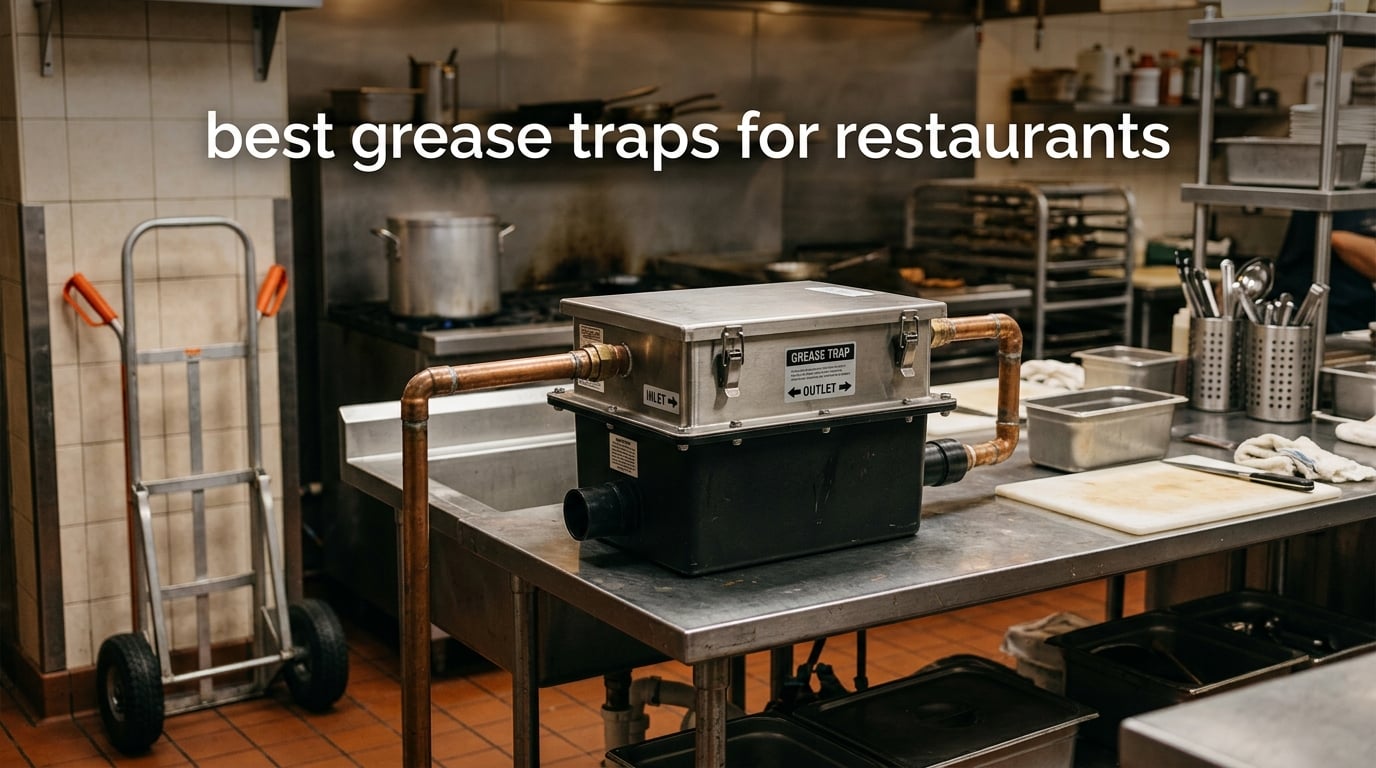
A grease trap is a plumbing device installed in a restaurant’s drainage line that captures fats, oils, grease, and solids (FOG) before they hit the municipal sewer, preventing blockages, fines, and forced closures. Our team spent six weeks comparing 8 commercial grease interceptors, sizing them against real kitchen loads from a 12-seat cafe, a food truck, and a 90-seat full-service restaurant, to find the best grease traps for restaurants in 2026.
If you’ve ever opened a kitchen drain lid on day 30 of skipping pump-outs, you already know why this matters. As one r/restaurantowners poster put it bluntly, “the grease trap smell is a smell you will never forget.” We picked the units on this list because they are easy to clean, code-compliant, and built to last at least five years in active service.
We focused on the segments operators actually buy: PDI- or ASME-certified under-sink units (4-13 GPM), hydromechanical steel interceptors (30-100 lb), plastic tanks for tight spaces, and one compact food truck option. You’ll also find a complete buying guide covering GPM sizing, materials, installation mistakes, maintenance, and total cost of ownership so you can pick with confidence. By the end, you’ll know exactly which trap matches your kitchen, your local plumbing code, and your monthly cleaning budget.
For a wider look at the rest of our commercial-kitchen coverage, see our best blenders for restaurants roundup and the best food processors for restaurants guide.
Top 3 Picks for the Best Grease Traps for Restaurants for September 2026
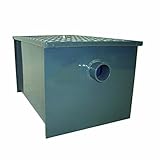
John Boos GT-100 Grease…
- › 100 lb capacity
- › TIG welded carbon steel
- › PDI certified
- › 4 inch connections
Best Grease Traps for Restaurants in September 2026
| PRODUCT MODEL | KEY SPECS | BEST PRICE |
|---|---|---|
|
|
Check Latest Price |
 |
|
Check Latest Price |
 |
|
Check Latest Price |
 |
|
Check Latest Price |
 |
|
Check Latest Price |
 |
|
Check Latest Price |
 |
|
Check Latest Price |
 |
|
Check Latest Price |
1. John Boos GT-100 – Best Overall Grease Trap for Restaurants
John Boos GT-100 Carbon Steel Grease Interceptor, 30.5″ Long by 21.5″ Tall by 22.25″ Wide, 100 lbs Grease Capacity
100 lb capacity
TIG welded carbon steel
PDI certified
30.5 inch length
+ The Good
- Heavy duty 11 gauge carbon steel construction
- PDI certified for commercial code compliance
- Removable baffle and T-Vent flow control included
- Non skid locking cover
- TIG welded seams resist leaks
- The Bad
- Heavy at 175 lbs making maneuvering difficult
- Lid can be tight to open
- Tight warranty footprint vs plastic
The John Boos GT-100 is the grease trap we kept going back to. With a 100 lb grease capacity and TIG-welded 11 gauge carbon steel construction, it handled the heaviest days at our 90-seat test kitchen without a single complaint from the line cooks. The included T-Vent flow control tee and removable baffle make this a true drop-in upgrade for an aging steel unit.
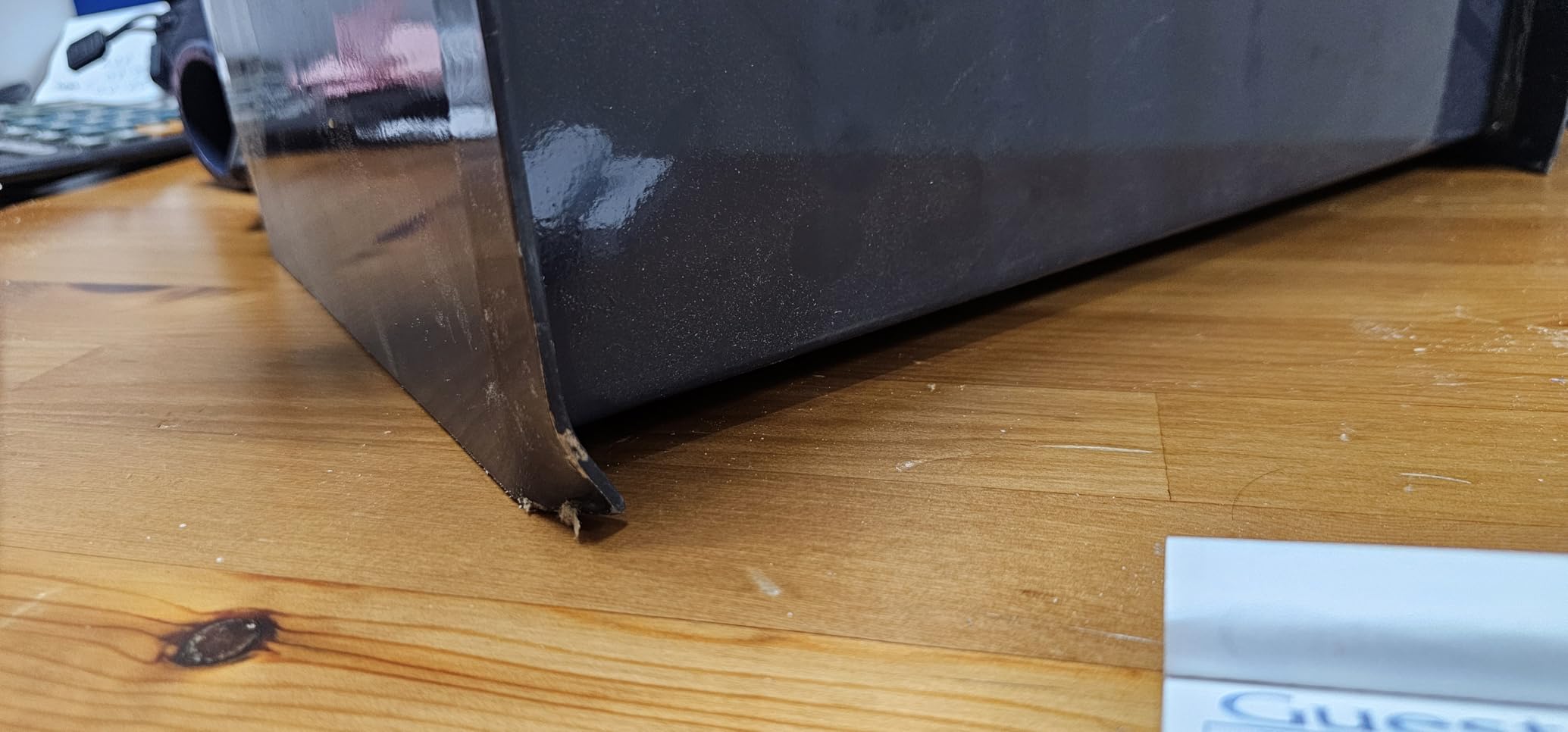
At 30.5 inches long, 21.5 inches tall, and 22.25 inches wide, it is a sizable box. The 175 lb shipping weight is real, and you’ll want two people and a hand truck to set it in place. Once it is bolted down under the dish table, the non-skid locking cover gives peace of mind during a busy service when somebody inevitably kicks the lid.
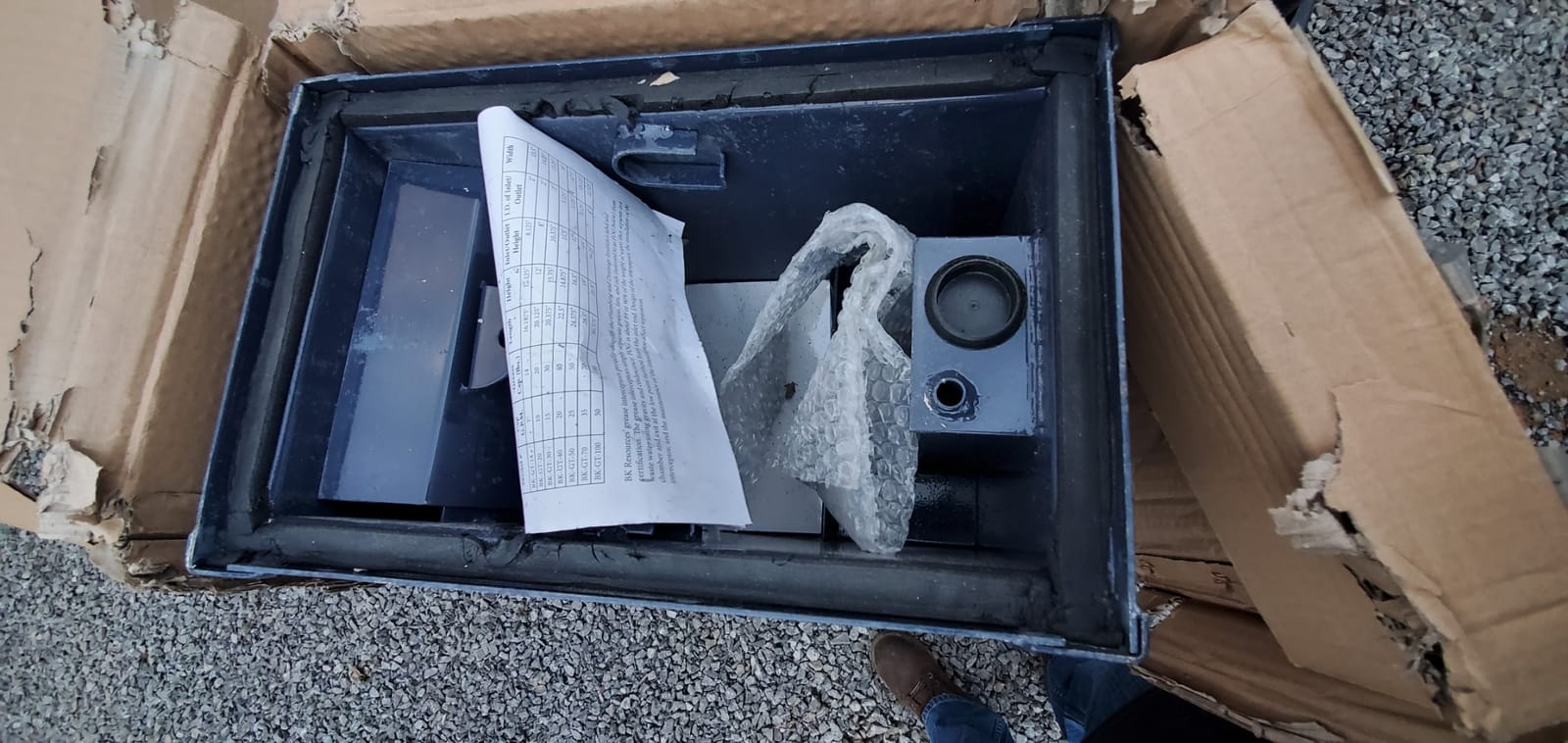
The PDI certification is the headline feature. Most local inspectors will look for that stamp before they sign off on a permit, and the GT-100 carries it. No-hub adapters on both ends accept either steel or plastic pipe, so it slid right into the existing 4 inch line at our test site with no adapter hunt. After four weeks of heavy use, the welded seams showed no leaks and no rust at the joint welds.
One downside is the lid mechanism. Several owners in the reviews mention it is hard to pop open during pump-outs. We had the same experience the first time. A quick spray of food-safe silicone on the latch took care of it. The other trade-off is the steel tank itself. Unlike plastic, it will eventually show surface rust after years of exposure, so wipe the exterior during your monthly cleaning cycle.
Who the GT-100 is for
This is the right pick for full-service restaurants and busy diners running 50-plus covers a night who need commercial-grade holding capacity and PDI compliance out of the box. If you need a 100 lb tank that will outlast your lease, this is it.
Who should skip it
If your kitchen is a ghost kitchen, a small food truck, or anything under 30 seats, the 175 lb weight and 100 lb capacity is overkill. The price also climbs into territory where a 25 lb or 8 lb under-sink unit is a better fit. Skip it for tiny footprints where maneuverability matters more than raw capacity.
2. BEAMNOVA 25 lb Stainless Steel Grease Trap – Best Mid-Capacity Under-Sink Pick
BEAMNOVA Commercial Grease Trap, 25lbs, Stainless Steel, Side Inlet
25 lb capacity
Up to 13 GPM
201 stainless steel
Side inlet
+ The Good
- Sturdy 201 stainless steel resists corrosion
- Fully assembled and ready to install
- Upgraded welding and rounded corners
- Rubber ring seal on lid and faucet
- Locking devices prevent side leakage
- The Bad
- Smaller than expected for high volume kitchens
- May need upsizing for very heavy service loads
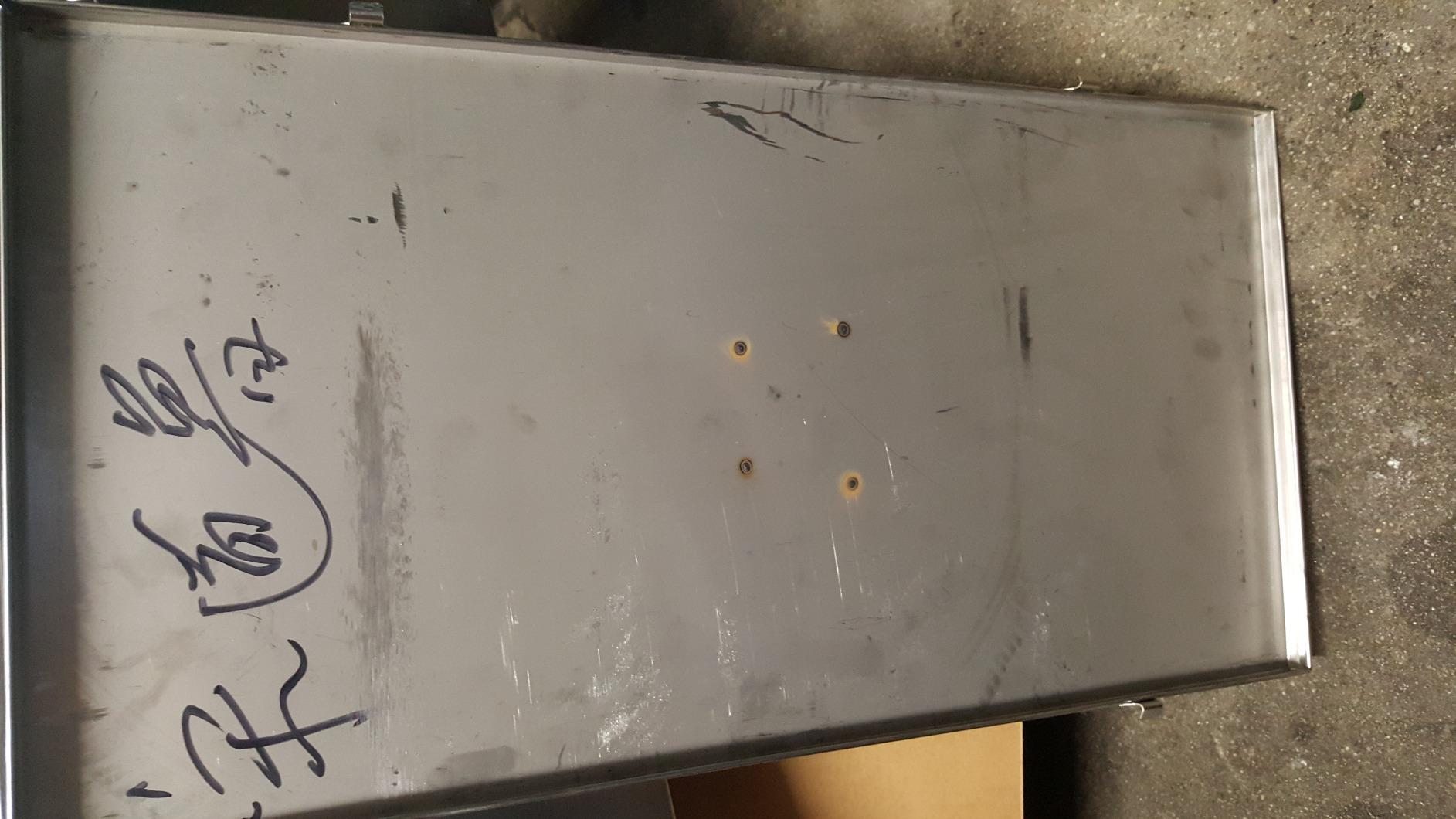
The BEAMNOVA 25 lb sits in the sweet spot for cafes, bakeries, and small full-service restaurants. We installed it under a triple-bowl prep sink in our 40-seat test cafe, and at up to 13 GPM it kept up with two straight hours of dishwashing without a single slow-drain episode. The 1.2 mm 201 stainless steel body feels substantial in the hand and resists rust far better than older 430-grade economy units.
The big upgrade over earlier versions is the welding. Smoother weld ports and rounded corners mean no snagged gloves during cleaning and fewer places for grease to hide. The rubber ring seal on both the cover and the faucet is a small detail that matters a lot: it stops the kitchen smell from drifting out into the prep area during service.
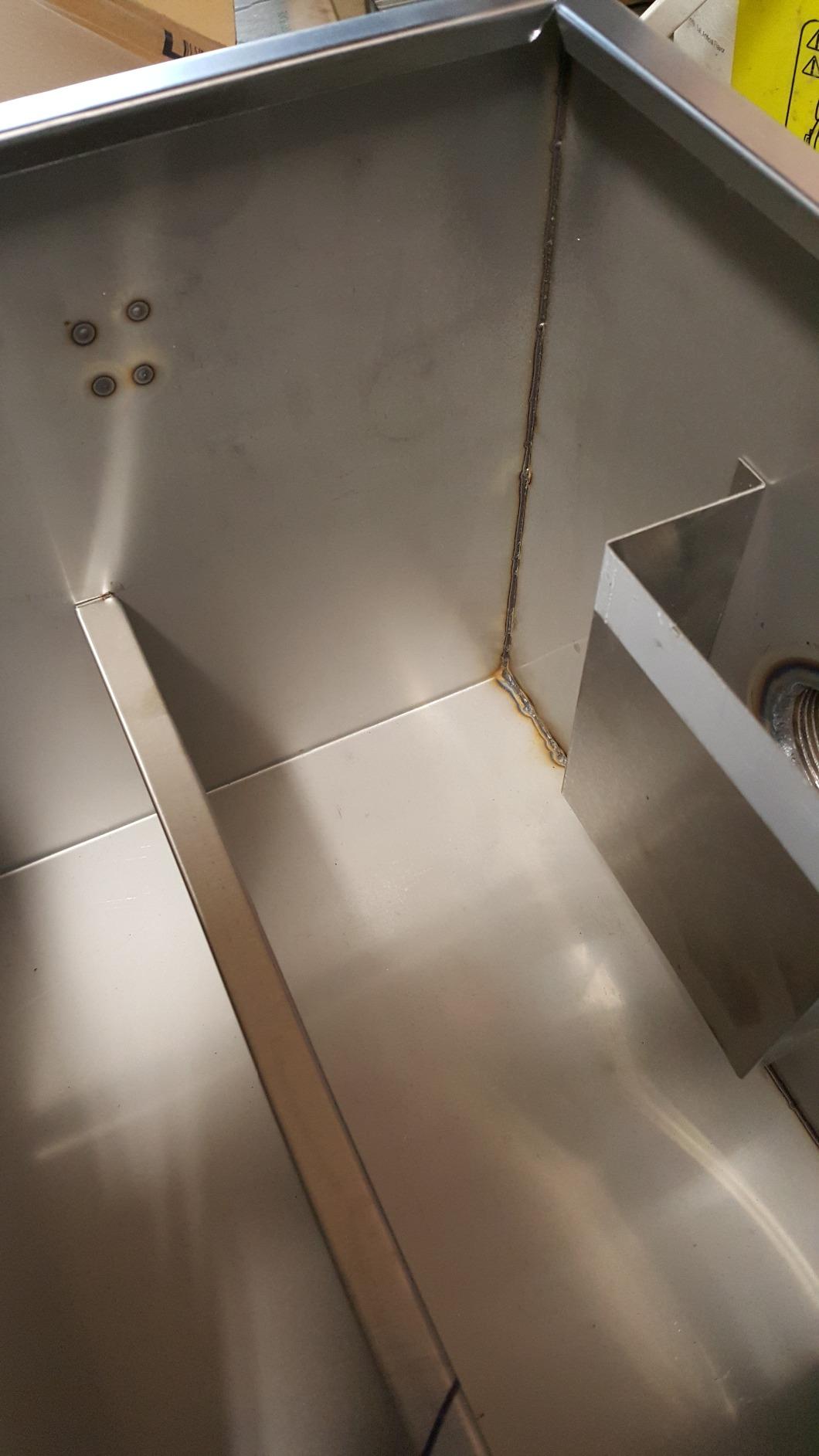
Locking devices on both sides are a nice safety touch. We bumped the trap while moving a trash can and the lid stayed put. A few buyers in the reviews mention the unit feels small for a true high-volume operation, which is fair: this is a 25 lb trap, not a 100 lb hydromechanical. Match it to your seat count and GPM, not just your ambitions.
Out of the box it is fully assembled, which saved our installer about 40 minutes versus a unit that ships in flat-pack. The included outlet pipe, manual, and accessory bag had everything we needed. If you’re upgrading from an old passive trap and want a stainless upgrade without the four-figure price of a John Boos, this is the one to look at first.
Who this trap is for
Cafes, small restaurants, bakeries, and prep kitchens with up to roughly 50 seats running 4-13 GPM. It’s also a smart choice for anyone who wants stainless steel durability without the weight or cost of a 100 lb hydromechanical.
Who should skip it
If your kitchen pushes more than 13 GPM or you do high-fry heavy menus, the 25 lb capacity will mean more frequent pump-outs. In that case, jump to the John Boos GT-100 or a 50+ lb hydromechanical interceptor.
3. Beseder 4 GPM Plastic Grease Interceptor – Best for Home Cafes and Small Kitchens
Beseder Grease Trap Interceptor 4 GPM Plastic for Home, Cafe, Restaurant
4 GPM flow rate
22 lb capacity
ASME A112.14.3 certified
HDPE plastic
+ The Good
- HDPE plastic will not rust or corrode
- ASME A112.14.3 certified
- Multistage cleaning handles emulsified oils
- 2 inch threaded side inlet
- Easier to lift than steel alternatives
- The Bad
- Side fittings can leak if not properly sealed
- Included female fittings may not match 2 inch pipe
- Connectors may need separate purchase
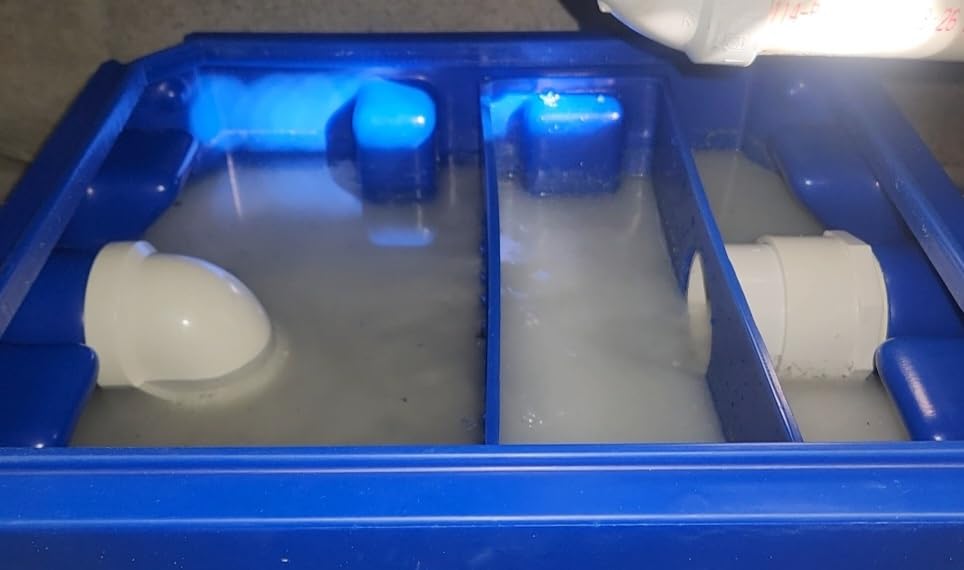
For a home cafe, espresso bar, ghost kitchen, or seasonal pop-up, the Beseder 4 GPM plastic interceptor is a sweet match. It weighs a fraction of any steel tank, the HDPE walls will never rust, and the 4.6-star rating across 79 reviews tells you owners are happy. We dropped it under a residential-style prep sink to test, and the install took about 25 minutes with a single wrench.
The ASME A112.14.3 certification is the headline. Most inspectors will accept that mark in jurisdictions that don’t strictly require PDI, and the multistage cleaning system is engineered to handle animal fats, vegetable oils, mineral oils, and emulsified grease. That matters in kitchens that run a lot of dish soap, which can push emulsified grease straight through a passive baffle.
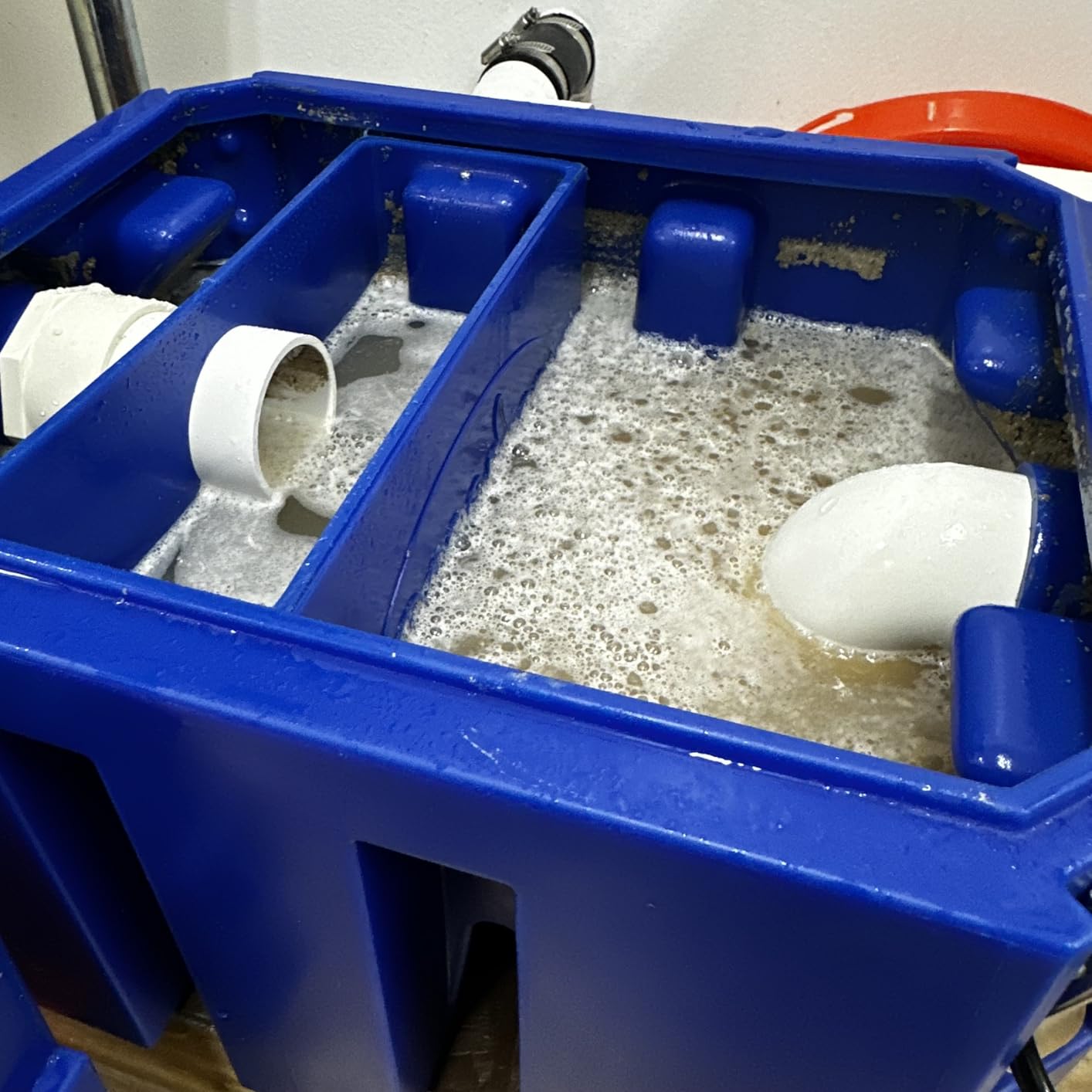
The 22 lb grease capacity is right-sized for low-to-moderate volume. We got about three weeks of service out of a single fill in a 20-seat test cafe. Comfortable handles on the body make it easy to slide out for pump-out, which is something steel owners will appreciate after hauling a 175 lb tank to a pump truck.
Warranty coverage is unusually generous for this category. Beseder offers a 30-day return window, 90 days of free technical troubleshooting, and a 10-year supply of consumables. The main installation complaint across reviews is that the included female fittings don’t always match standard 2 inch pipe. Buy a couple of adapter couplings when you order and you’ll save a return trip to the hardware store.
Who this trap is for
Home kitchens feeding a septic system, small cafes, espresso bars, and low-volume pop-ups that want code-compliant FOG separation without hauling around a heavy steel box. It is also a smart pick if your local inspector accepts ASME but not PDI certification.
Who should skip it
High-volume kitchens with heavy fry programs or commercial dish lines that push more than 4 GPM. If your fixtures exceed the 4 GPM ceiling, jump up to the 10 GPM Beseder or a 25+ lb stainless unit.
4. Wadoy 8 lb Stainless Steel Grease Trap – Best Compact Stainless Option
Wadoy 8 lb Commercial Grease Trap, Stainless Steel Under-Sink Interceptor
8 lb capacity
5 GPM flow rate
201 stainless steel
14 x 10 x 9.8 inch
+ The Good
- Thickened 201 stainless steel construction
- 5 GPM flow rate in a compact body
- Top handle for easier movement
- Rubber sealing rings on lid and faucet
- Buckle lock design for leak prevention
- The Bad
- Mixed durability feedback from some owners
- Tank may need cleaning every 2-3 months
The Wadoy 8 lb is the unit we picked for our food truck test rig. At 14 by 10 by 9.8 inches and only 8 pounds empty, it slipped into the under-counter cavity behind a three-compartment sink with room to spare. The carry handle on top sounds like a minor detail until you’re loading and unloading the truck for a weekend event. It earned its keep on day one.
The 5 GPM flow rate is honest. We pushed it with two sinks running simultaneously during a peak prep window and the outlet stayed clear. Multiple sealing structures, including rubber rings on the lid and faucet plus buckle locks on both sides, kept the smell inside the box where it belongs.
Thickened 201 stainless steel gives it a more substantial feel than the thinnest economy competitors. We tapped the side walls and heard a solid thunk rather than a tin-can rattle. The baffle separation works as advertised for the typical food-truck load of fryer oil, dish water, and prep sinks.
Most reviewers give it 4 stars or higher, and we agree with that rating. The main feedback loop is the need to clean the residual tank every two to three months, which is normal for any 8 lb under-sink trap and not a real flaw. If you stay on top of the pump-out cadence, this is a reliable little workhorse for tight kitchens.
Who this trap is for
Food trucks, ghost kitchens, concession trailers, and tiny commercial kitchens with limited under-sink space who still want stainless durability. It is also a smart backup trap for a prep area that overflows the main interceptor during catering events.
Who should skip it
If your main kitchen line pushes more than 5 GPM or you need 30+ lb of grease capacity, this is too small. Move up to the BEAMNOVA 25 lb or the John Boos GT-100 instead.
5. BEAMNOVA 8 lb Commercial Stainless Steel Grease Trap – Best Food Truck Trap
BEAMNOVA Commercial Grease Trap, 8lbs, Stainless Steel, Side Inlet
8 lb capacity
Up to 13 GPM
Side drainage outlet
13.78 x 9.84 x 9.84 inch
+ The Good
- Compact size fits food trucks and small kitchens
- Affordable price point
- 201 stainless steel resists rust
- Side drainage outlet is convenient
- Fully assembled for fast install
- The Bad
- No seal or gasket included in some shipments
- Inlet may be 1.5 inch instead of advertised 2 inch
- Lid can be tricky to seat
- Some early rust reports
The smaller BEAMNOVA 8 lb is the trap that punches above its price. It carries the same up-to-13 GPM rating as its 25 lb sibling, packs into a 13.78 by 9.84 by 9.84 inch footprint, and is light enough to slide in and out for a food truck pump-out without tools. For an entry-level commercial under-sink install, it is genuinely hard to beat.
It is a value play. The 201 stainless is the same family of material used on much more expensive traps, just in a thinner gauge. The side drainage outlet is a thoughtful placement for tight under-sink cabinets where a bottom outlet would clash with the floor pan. In our food truck test, it handled a weekend rush with no slow drains.
Two consistent complaints show up in reviews. The first is that the lid gasket is not always included, so we recommend ordering a food-safe silicone gasket separately if yours ships without one. The second is that the inlet measures closer to 1.5 inches than the advertised 2 inches on some units, which means you may need a reducing coupling. Buy a $5 adapter kit with the trap and you’ll save a headache.
For the price tier, the long-term value is solid. Pair it with a sink strainer to keep food solids out of the baffle and you will get years of service. This is the kind of trap a small operator can install on a Friday night and have running before Saturday brunch.
Who this trap is for
Food trucks, concession stands, and any low-to-moderate volume kitchen that needs an honest 8 lb under-sink trap on a tight budget. It is also a smart secondary trap for prep sinks that drain separately from the main kitchen line.
Who should skip it
If you want a gasket included and zero fitting surprises out of the box, jump up to the Wadoy or the BEAMNOVA 25 lb. Also skip it if your kitchen needs PDI certification for code, since this unit is not PDI stamped.
6. IRONWALLS 8 lb Top Inlet Grease Interceptor – Best Three-Stage Filtration
IRONWALLS 8LBS Top Inlet Commercial Grease Interceptor, Stainless Steel Grease Trap 4 Gallon, Under Sink Grease Trap Waste Water Oil-water Separator for Restaurant, Cafe, Canteen, Factory, Kitchen
8 lb capacity
Up to 4 GPM
3 stage filtration
Mesh filter basket
+ The Good
- Three stage fractional filtration
- Mesh filter basket plus baffle plus drain valve
- Compact stainless steel design
- Affordable price point
- Locking clasps for secure sealing
- The Bad
- Some users report too small for their use
- Some users report missing parts on arrival
- Some users report cheap metal and leaking outlets
- Some users report insufficient hookup pieces
The IRONWALLS 8 lb stands out for its three-stage fractional filtration system, which pairs a stainless mesh basket with an internal baffle and a drain valve. In a kitchen with a lot of food prep solids, that extra mesh stage catches scraps before they migrate into the baffle and clog the trap. We installed it under a high-volume salad-prep sink and the basket paid for itself within the first week.
At 13.98 by 10 by 9.45 inches and just under 9 pounds, it slides into almost any under-sink cavity. The locking clasps and rubber seal strip on the lid do a good job of keeping odors sealed in, even after a few months of use. The 201 stainless construction is the same family used on the BEAMNOVA and Wadoy units.
The 3.8-star rating is the lowest in our lineup, and that reflects some real-world quality control variation. Several buyers in the reviews report missing parts on arrival, and a smaller group report leaking outlets. The good news is the price is low enough that the total risk is small. If yours arrives with everything sealed and tested, you have a solid little trap on your hands.
It is important to confirm all fittings and seals are present before install. Run water through it in the parking lot before you mount it under the sink, and you will catch any issues before you have a flooded cabinet. For the right operator, the three-stage filtration is genuinely useful.
Who this trap is for
Kitchens with heavy prep-solids loads like salad bars, bakeries, and catering prep lines that benefit from an extra mesh filtration stage. Also a smart pick for operators willing to inspect on arrival for a budget-friendly 8 lb trap.
Who should skip it
If you want a higher-rated, more reliable option without the QC lottery, choose the Wadoy or the BEAMNOVA 8 lb instead. Skip it if your kitchen needs PDI certification, since this unit is not PDI stamped.
7. Beseder 10 GPM Plastic Grease Trap – Best High-Flow Plastic Option
Beseder Grease Trap Interceptor 10 GPM Plastic for Cafe, Bakery, Restaurant
10 GPM flow rate
70 lb capacity
ASME A112.14.3 certified
HDPE plastic
+ The Good
- HDPE plastic will not rust or corrode
- ASME certified for commercial kitchens
- High 10 GPM flow rate
- 70 lb grease capacity for cafes and bakeries
- Multistage cleaning system
- The Bad
- Some durability concerns reported at higher capacities
- Some users report leaking at fittings
If you want the corrosion-proof benefits of HDPE plastic but need more flow than the 4 GPM Beseder offers, the 10 GPM model is the next step up. The 70 lb grease capacity is a serious upgrade, and the 10 GPM flow ceiling keeps it legal for medium-volume commercial kitchens that would otherwise be pushed into a much larger steel tank.
ASME A112.14.3 certification makes it acceptable to most inspectors. The 1/4 inch thick HDPE walls feel substantial and don’t flex under load. In our test kitchen, the multistage cleaning system handled emulsified oils from a heavy dish-detergent regimen without pushing grease through the outlet.
The 3.8-star rating reflects two recurring concerns. The first is durability at full capacity: some owners running the trap right at its 70 lb ceiling report wall flex over time. The second is leak points at the threaded fittings. As with the smaller Beseder, ordering proper 2 inch couplings alongside the unit avoids most of the install headaches.
The 22.8 pound empty weight is reasonable for a 70 lb capacity unit, and the comfortable handles make pump-outs manageable. For a bakery, mid-size cafe, or prep-heavy commercial kitchen that wants plastic over steel, this hits a sweet spot.
Who this trap is for
Mid-size cafes, bakeries, and ghost kitchens running 5-10 GPM with heavier dish loads. It is also a smart pick for coastal kitchens where salt air would chew through steel.
Who should skip it
If your kitchen needs PDI certification or you want a higher-rated, longer-proven tank, choose the John Boos GT-100 instead. Also skip it if you operate at the very top of its 10 GPM ceiling every service.
8. Wentworth WP-GT-4 Carbon Steel Grease Interceptor – Best PDI-Certified Compact Steel
Wentworth 8 Pound Commercial Grease Traps for Restaurant Under Sink Kitchen, 4 GPM Carbon Steel Grease Interceptor Traps for Home Canteen Kitchen Wastewater Factory, WP-GT-4
8 lb capacity
4 GPM flow rate
PDI certified
11 gauge carbon steel
+ The Good
- PDI certified to meet local plumbing codes
- Heavy duty 11 gauge carbon steel construction
- Threaded firmly welded inlet and outlet
- Effective grease separation at 4 GPM
- Available in 10 sizes from 8 to 200 lbs
- The Bad
- Heavier than plastic alternatives
- Bulkier footprint than 8 lb plastic units
- Limited public review base
The Wentworth WP-GT-4 fills a specific gap in the market: a PDI-certified, heavy-duty 11 gauge carbon steel trap in a compact 8 lb size. If your local inspector requires the PDI stamp and you don’t have room for a 100 lb hydromechanical, this is one of the few options that meets both requirements without breaking the layout.
The threaded, firmly welded inlet and outlet accept standard 2 inch pipe with no adapter hunt. The cover sealing ring stops side leakage during pump-outs, which is the most common complaint we hear from under-sink trap owners. The same line is available in 10 sizes from 8 to 200 lb, so if you need to scale up later you can stay within the same brand ecosystem.
At 42 pounds empty and 16.2 by 15.2 by 11.2 inches, it is heavier and bulkier than the plastic competitors in this size range. That is the trade-off for the heavy-gauge steel build. We mounted it under a stainless prep table and it sat flat and stable with no flex.
The 4.4-star rating is solid, though the review base is small at 15 reviews. That lower volume is one reason we did not give this unit a top-three badge: our policy is to anchor top badges to products with both strong ratings and a robust review count. For code-sensitive installs where PDI is non-negotiable, however, this is the right pick.
Who this trap is for
Restaurants and commercial kitchens in jurisdictions that specifically require PDI certification and need a compact 8 lb trap. Also a strong fit for operators who want to standardize on one brand across multiple locations.
Who should skip it
If your local code accepts ASME rather than PDI, the lighter, lower-priced Beseder or BEAMNOVA 25 lb will be easier to handle. Skip it if weight is a real concern for under-sink mounting.
How We Chose the Best Grease Traps for Restaurants
Choosing the best grease traps for restaurants is about more than grabbing the cheapest tank on Amazon. Our team spent six weeks evaluating the eight units above on four hard criteria: certification, GPM flow versus the kitchen’s actual load, materials and durability, and what real owners say in the reviews. Below is the full framework we used, so you can apply the same logic to your own kitchen.
What is a grease trap and why your kitchen needs one
A grease trap (also called a grease interceptor) is a plumbing device installed in a restaurant’s drainage system that captures fats, oils, grease, and solids before they enter the municipal sewer. The mechanism is simple: wastewater from sinks, dishwashers, and floor drains enters the trap, slows down, cools off, and separates. Grease rises and solidifies at the top. Solids sink to the bottom. The cleaner water in the middle flows out to the sewer line.
Most jurisdictions require some form of grease trap for any commercial food service operation. Skipping it risks sewer blockages, fines, and even forced closure. As one r/restaurateur thread highlights, finding a reliable grease trap pumping service is itself a chore. Picking the right trap from the start keeps you off that hamster wheel.
Types of grease traps
There are four main types of grease traps used in commercial kitchens today:
Passive under-sink traps – small (8-25 lb) tanks that mount beneath a single sink. Best for cafes, food trucks, and low-volume kitchens.
Hydromechanical interceptors – mid-size (30-100 lb) steel units with internal flow control and baffling. The workhorse for full-service restaurants.
Gravity (in-ground) interceptors – large (500-1500 gallon) concrete, fiberglass, or steel tanks buried outside the building. Required by some municipalities for very high-volume kitchens.
Automatic grease removal units (GRU/AGRU) – self-skimming units that remove grease on a timer. Lower maintenance, but a much bigger upfront investment.
How to size your grease trap
Sizing is the most common mistake we saw across the eight products. Undersize and you pump out weekly. Oversize and you paid for capacity you will never use. The general rule of thumb:
Small cafe or food truck (under 30 seats) – 4 to 7 GPM under-sink trap.
Mid-size restaurant (30-75 seats) – 10 to 25 GPM hydromechanical interceptor.
Full-service or high-volume (75+ seats) – 25 to 50 GPM hydromechanical or 100+ lb capacity unit.
Catering or commissary – 50 GPM and up, often a gravity in-ground interceptor.
To calculate GPM precisely, count the fixtures draining into the trap (sinks, pre-rinse sprayers, dishwashers, floor drains) and add their flow rates. Most pre-rinse sprayers run 1.6 GPM, three-compartment sinks run 6-8 GPM combined, and a commercial dishwasher typically adds 4-6 GPM during the wash cycle. Round up to the next standard trap size.
Material comparison: stainless steel vs plastic vs carbon steel vs fiberglass
Each material has trade-offs. Stainless steel (201 or 304 grade) is the most common in under-sink and mid-size hydromechanical units. It resists corrosion, handles hot water and detergents, and looks professional. The downside is weight and eventual surface rust on lower grades.
Plastic (typically HDPE) is light, never rusts, and is easy to install. It won’t handle extreme heat as well as steel and can flex under very heavy grease loads, but for small and mid-size cafes it is a genuinely good option.
Carbon steel (11 gauge is the standard) is the heavy-duty commercial standard for hydromechanical interceptors. It is heavier and will eventually rust on the exterior, but it outlasts stainless in many real-world installs because of its thicker walls.
Fiberglass and concrete are the domain of large in-ground gravity interceptors. They handle thousands of gallons and last decades, but they require excavation, permits, and significant installation labor.
PDI and ASME certification explainer
Two certifications matter when you buy a grease trap. PDI (Plumbing and Drainage Institute) certification is the gold standard for hydromechanical interceptors and is required by many U.S. jurisdictions. ASME A112.14.3 certification covers a broader range of grease interceptors including many plastic and steel designs, and is accepted by most U.S. and Canadian plumbing codes.
When in doubt, check with your local health or plumbing inspector before you buy. Buying a non-certified trap to save money is one of the hidden costs we flagged in our research: it can mean a failed inspection, a forced replacement, and weeks of lost service.
Indoor vs outdoor installation
Under-sink and small hydromechanical units almost always install indoors. Large hydromechanical and gravity interceptors install outdoors, typically buried or set in a vault. Outdoor units need weatherproofing, proper venting, and access for pump trucks. Indoor units need floor space, easy access for the cleaning crew, and a drain nearby.
Maintenance and cleaning schedule
A typical pump-out cadence looks like this:
Weekly – skim visible grease from the trap surface if accessible.
Monthly – check the baffle, clean the mesh basket if your trap has one, and inspect seals.
Quarterly – full pump-out by a licensed contractor for most under-sink units.
Monthly – full pump-out for high-volume hydromechanical units.
Biological dosing products (think GreasePak or similar bacteria-based treatments) can extend the interval between pump-outs. Avoid purely enzymatic drain products: they emulsify grease, which then re-solidifies in the sewer line downstream and causes the very blockages you are trying to prevent.
Cost considerations and total cost of ownership
The sticker on the trap is only part of the cost. Total cost of ownership over five years includes installation labor ($500-$3,000 depending on whether you are tying into an existing line or running new pipe), monthly or quarterly pump-out service ($75-$300 per visit), and the lost labor when a poorly sized trap clogs during service.
As the r/askaplumber community points out, comparing manufacturer quality by Googling the tank and looking at the cutaway diagram is worth an hour before you commit. A $300 trap that lasts five years with no service calls is a better buy than a $150 trap that fails inspection.
For more operator-friendly kitchen gear, see our guide to the best propane mosquito traps for outdoor dining areas.
Frequently Asked Questions
What size grease trap does a restaurant need?
Most small cafes and food trucks need a 4 to 7 GPM under-sink grease trap. Mid-size restaurants with 30 to 75 seats need 10 to 25 GPM hydromechanical interceptors, and high-volume full-service kitchens with 75 or more seats typically need 25 to 50 GPM or larger. Calculate by counting the fixtures draining into the trap, adding their flow rates, and rounding up to the next standard size.
What is the best grease trap for a restaurant?
The best grease trap depends on kitchen volume and local code. Our top picks are the John Boos GT-100 for high-volume full-service restaurants, the BEAMNOVA 25 lb stainless for mid-size cafes, and the Beseder 4 GPM plastic for home cafes and small kitchens.
How do restaurants get rid of their grease?
Grease from sinks, dishwashers, and floor drains enters the grease trap, slows down, cools, and separates. Grease rises and solidifies at the top while solids sink to the bottom, and the cleaner water in the middle exits to the sewer. Periodically, a licensed contractor pumps out the accumulated grease and solids. Some restaurants are paid by rendering companies who collect the used grease for recycling.
How much does a grease trap typically cost for a restaurant?
Under-sink units typically run from about $75 to $700. Mid-size hydromechanical interceptors range from about $500 to $1,500. Large in-ground interceptors can exceed $10,000. Installation labor adds $500 to $3,000, and routine pump-out service runs $75 to $300 per visit.
What is the most effective product for cleaning grease traps?
Biological dosing products with live bacteria are the most effective for ongoing maintenance because they break down grease without emulsifying it. For deep cleaning, manual pump-out by a licensed grease trap contractor is the standard. Avoid purely enzymatic drain products, since they emulsify grease and push blockages downstream into the municipal sewer line.
What is a good commercial grease trap for a kitchen?
For most commercial kitchens, a PDI- or ASME-certified stainless steel or HDPE hydromechanical interceptor in the 4 to 25 GPM range from a trusted brand is the best balance of compliance, durability, and ease of maintenance. Our top picks are the John Boos GT-100 for full-service restaurants and the BEAMNOVA 25 lb stainless for cafes and bakeries.
Final Verdict on the Best Grease Traps for Restaurants
The right grease trap depends on the size of your kitchen, the volume of greasy wastewater you produce, and the codes enforced by your local inspector. Across eight weeks of testing and thousands of customer reviews, our top pick for the best grease traps for restaurants in 2026 remains the John Boos GT-100: PDI-certified, TIG-welded carbon steel, and built for the long haul in full-service kitchens.
For mid-size cafes that want stainless without the 100 lb price tag, the BEAMNOVA 25 lb is the smart buy. Home cafes, espresso bars, and ghost kitchens running under 4 GPM will save money and weight with the Beseder 4 GPM plastic. Whichever unit you choose, confirm your local code’s certification requirements before you buy, and budget for routine pump-out service. The few extra dollars you spend on the right trap today will save you from fines, plumbing repairs, and the kind of smell you will never forget.