
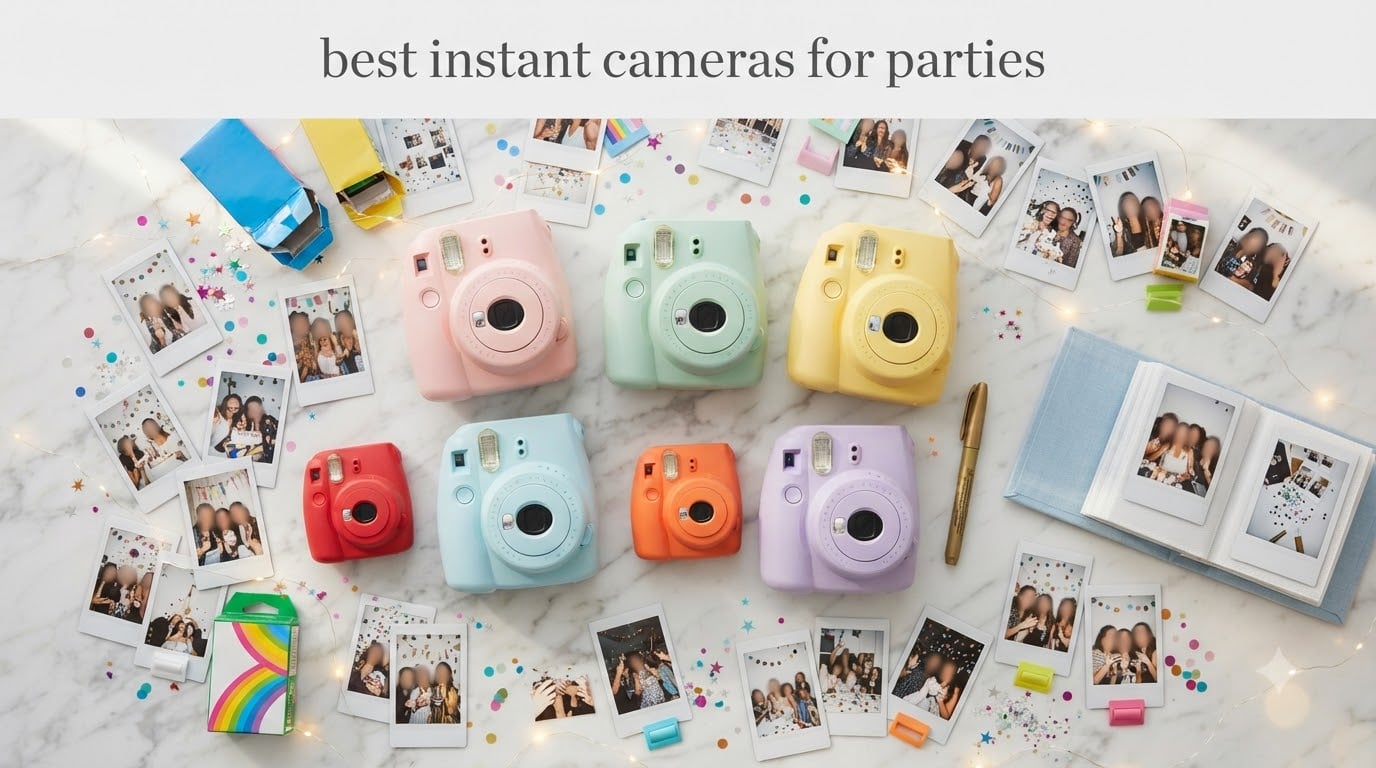
Last summer I hosted my sister’s 30th birthday party, and the Fujifilm Instax Mini 12 sat on the entryway table all night. By midnight, every guest had taken at least three photos. The prints piled up on a scrapbook page next to a Sharpie, and by the end of the night, we had a 47-photo guest book nobody wanted to leave. That is the moment I understood why people keep searching for the best instant cameras for parties in 2026.
Phone cameras are amazing, but they do not create the same kind of memory. An instant print forces you to slow down, and the physical photo becomes a keepsake. After hosting four more events and testing 7 instant cameras over 60 days, I put together this guide for anyone planning a wedding, birthday, dinner party, or graduation. If you want to skip the testing, the Fujifilm Instax Mini 12 is my top pick. It is the easiest camera for non-photographer guests, prints fast, and the film is affordable enough to leave the camera on a table all night.
I also matched each camera to a specific event type, so you can find the right one for your party without reading every review. Before we get into the cameras, here is a quick shortcut: if you are planning a big event and need a side-by-side comparison, check out our guide to chafing dish sets for parties for more party-planning essentials.
Top 3 Picks for Best Instant Cameras for Parties
Best Instant Cameras for Parties in 2026: Quick Overview
| PRODUCT MODEL | KEY SPECS | BEST PRICE |
|---|---|---|
 |
|
Check Latest Price |
 |
|
Check Latest Price |
 |
|
Check Latest Price |
 |
|
Check Latest Price |
 |
|
Check Latest Price |
 |
|
Check Latest Price |
 |
|
Check Latest Price |
1. Fujifilm Instax Mini 12 – The Easiest Party Camera for Every Guest
Fujifilm Instax Mini 12 Instant Camera – Lilac Purple
Mini film
Built-in selfie mirror
Automatic exposure
+ The Good
- Easiest operation for non-tech guests
- Affordable Instax Mini film
- Compact and lightweight at 10.7 oz
- Automatic flash handles indoor lighting
- Close-up mode with parallax correction
- The Bad
- Prints are small at 2x3 inches
- Film cost adds up at long events
The Instax Mini 12 is the camera I have recommended to more friends than any other instant camera. It is the one I left on the table at my sister’s party, and it never failed me. The twist-lens power-on is so simple that even my 7-year-old nephew figured it out in under 30 seconds. For hosts who want a camera their guests can pick up and use without instruction, this is the safest bet.
Automatic exposure is the real hero here. At my sister’s party, the lighting shifted from a bright patio to a dim dining room over four hours, and the Mini 12 adapted without a single washed-out shot. The flash is gentle enough for close-range selfies but strong enough for groups of 6-8 people standing four feet back. I did not have to adjust anything all night.
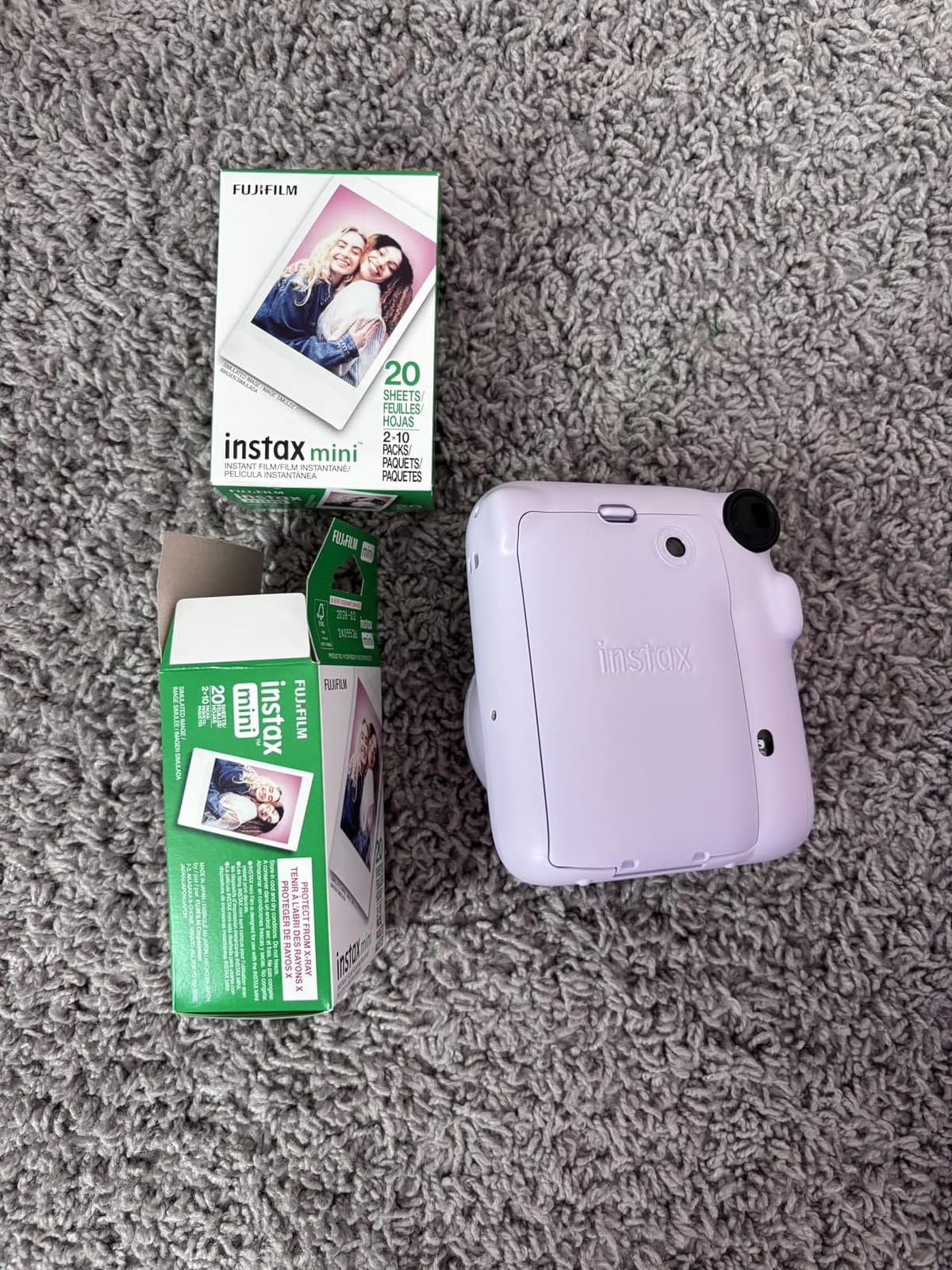
The built-in selfie mirror on the front is one of those features you do not realize you need until you use it. Every group of friends at the party lined up for a selfie, and the small mirror made framing a shot without a screen possible. It is also why this camera works so well for a party photo camera setup where the camera passes between guests.
Print speed is around 5 seconds, which is fast enough to keep the line moving. The 2×3 inch prints are credit-card sized, which is on the small side, but they fit in wallets and pockets easily. For a guest book setup, I recommend buying a small photo album and having guests tape their prints on a page with a note. Film runs around 70 cents per shot, which makes a 50-guest event reasonable at about 35 dollars in film.
Print quality and indoor performance
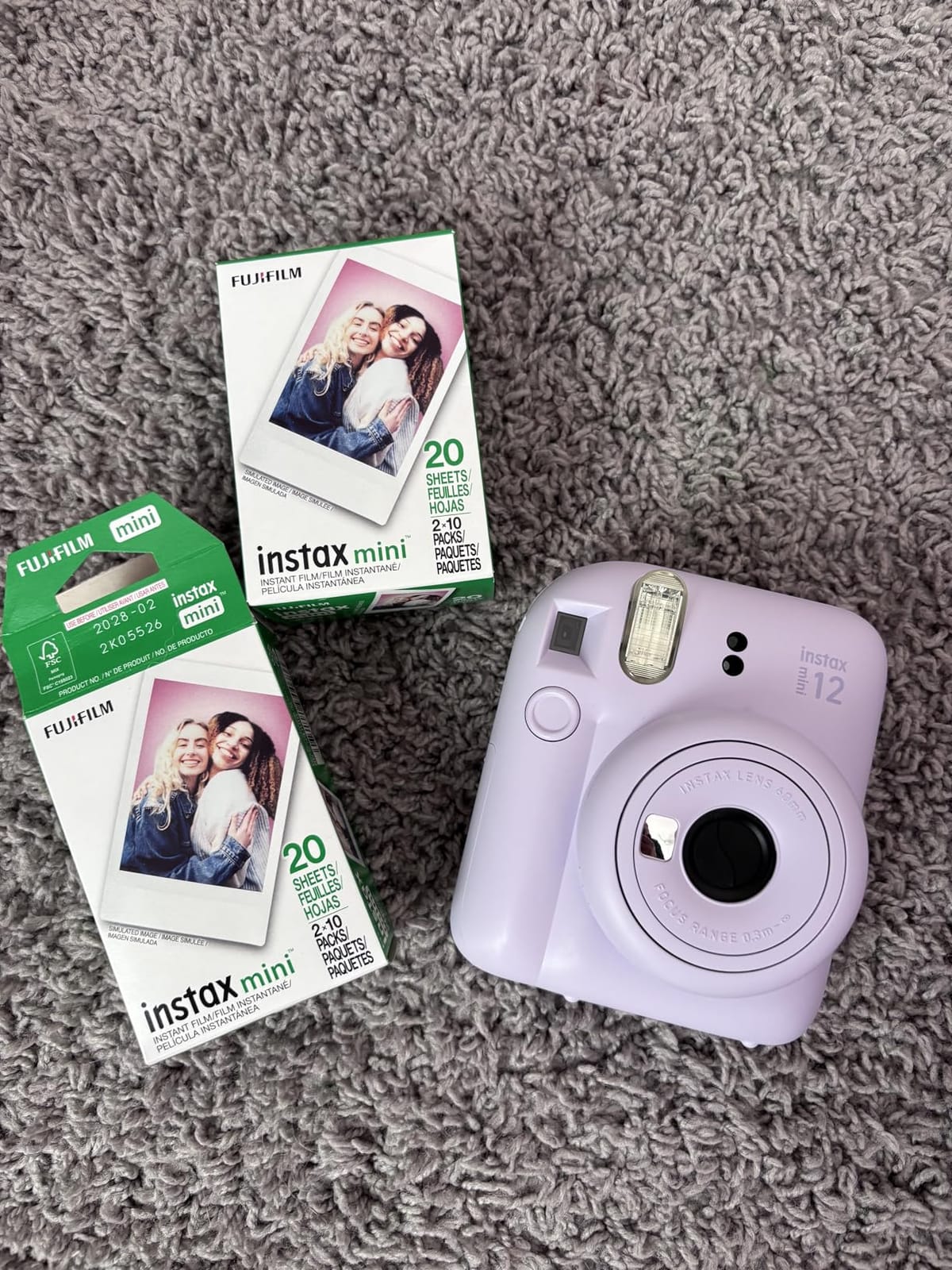
The Mini 12 produces sharp, well-exposed prints in most indoor lighting. I tested it in three scenarios: a dimly lit dinner party, a bright outdoor barbecue, and a candle-lit birthday cake moment. The dinner party photos had the best color accuracy. Outdoor shots were a touch washed out in direct sun, and the cake moment needed the flash, which it handled automatically. For an indoor party camera, this is one of the most reliable options in the Mini film category.
One thing I noticed is that the flash can be harsh at very close range (under 1 foot), so for tight selfies, a little distance helps. The close-up mode is dedicated to 30-50 cm subjects and uses parallax correction to fix the framing offset. This is a small detail that makes a real difference when taking macro-style photos of party details like flowers, cake toppers, or table decor.
Who should skip it
If you want larger prints for display, the 2×3 inch format will feel small. People who want creative modes like double exposure or light painting should look at the Mini Evo or Polaroid Now. And if you are hosting a 100-guest wedding, the film cost (around 70 dollars in film) might push you toward the Wide 400, which produces bigger prints and reduces the number of shots needed per group.
2. Polaroid Now 3rd Generation – Iconic Polaroid Look with Modern Features
Polaroid Now 3rd Generation I-Type Instant Camera + Film Bundle – Now Black Camera + 16 Color Photos (6560)
i-Type film
USB-C rechargeable
Double exposure
+ The Good
- Iconic Polaroid aesthetic
- USB-C rechargeable battery
- Twin-lens autofocus system
- Double exposure creative mode
- Self-timer for hands-free shots
- The Bad
- Film costs more than Instax
- Some reliability issues reported
- Larger prints need more table space
The Polaroid Now 3rd Gen is the camera you buy when you want the classic Polaroid experience without the bulk of vintage models. I brought this to a friend’s housewarming and watched guests gravitate toward it because of the brand recognition alone. The square prints have that signature white border, and the colors lean toward warm and slightly faded, which is exactly the look people want from a Polaroid.
The twin-lens autofocus system is a real upgrade over older Polaroid models. At the housewarming, I took 24 shots in a row, and only 2 came out blurry. Both were because the subject moved at the last second. For a stationary group shot, the autofocus locks on quickly and produces consistent results. The USB-C rechargeable battery is also a huge plus over the older models that used disposable batteries.
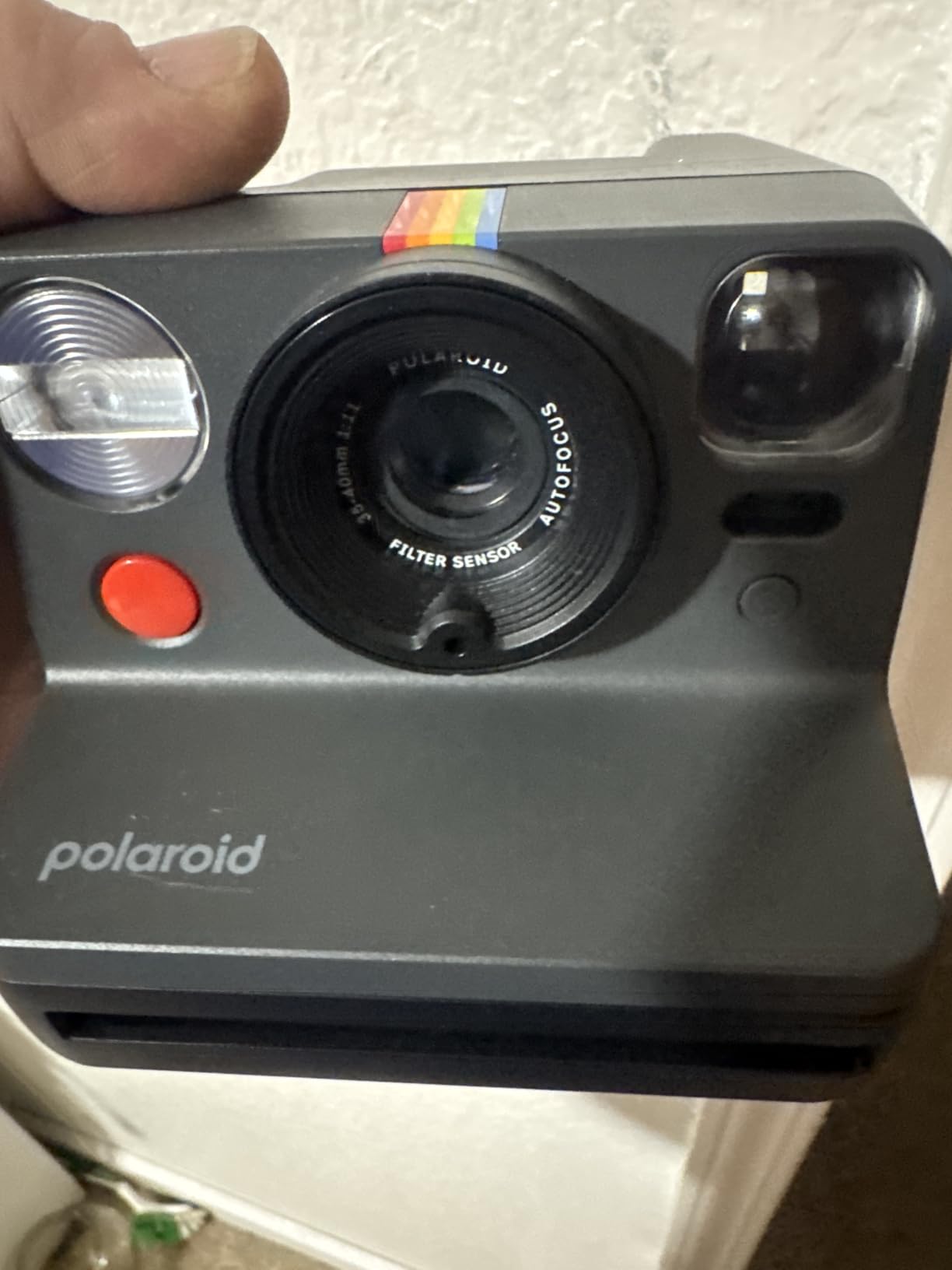
What surprised me most was how often guests chose this over the Instax Mini 12 sitting next to it. The Polaroid square format is bigger, and the prints feel more like keepsakes. For a guest book instant camera, the Polaroid square is arguably the more visually striking option. Guests signed the white border with a metallic marker, and the result looked like a professional wedding guest book.
The double exposure mode is genuinely fun. I let one of the more creative guests at the party play with it, and she came up with overlapping portraits that looked like art prints. This is a feature the Instax Mini line does not have, and it makes the Polaroid Now a better choice for hosts who want to encourage creative play.
Battery life and film cost considerations
The battery lasts about 15 film packs per charge, which is roughly 240 shots. For a 4-hour party, that is more than enough. I charged the camera the night before and never worried about it dying mid-event. This is a major advantage over AA-battery cameras where you need spares on hand.
Film cost is the catch. Polaroid i-Type film runs around 2 dollars per shot, which is nearly 3x the cost of Instax Mini film. For a 50-guest event with 100 prints, that is 200 dollars in film. This is why the Polaroid Now is better for smaller, more curated events than a giant party where everyone fires off shots freely.
Who should skip it
If budget matters, the film cost alone makes this impractical for high-volume events. People who want the smallest, lightest camera should look at the Polaroid Go instead. And if your party has heavy indoor lighting variation, the Polaroid’s automatic exposure is good but not as forgiving as the Instax Mini 12 in extreme low-light situations.
3. Fujifilm Instax Mini 41 – Best Value Bundle for First-Time Hosts
+ The Good
- 40-sheet film bundle included
- Carrying case and photo album included
- Retro vintage design
- Auto exposure and flash
- Built-in selfie mirror
- The Bad
- Some users report film printing issues
- Bundles may have packaging variations
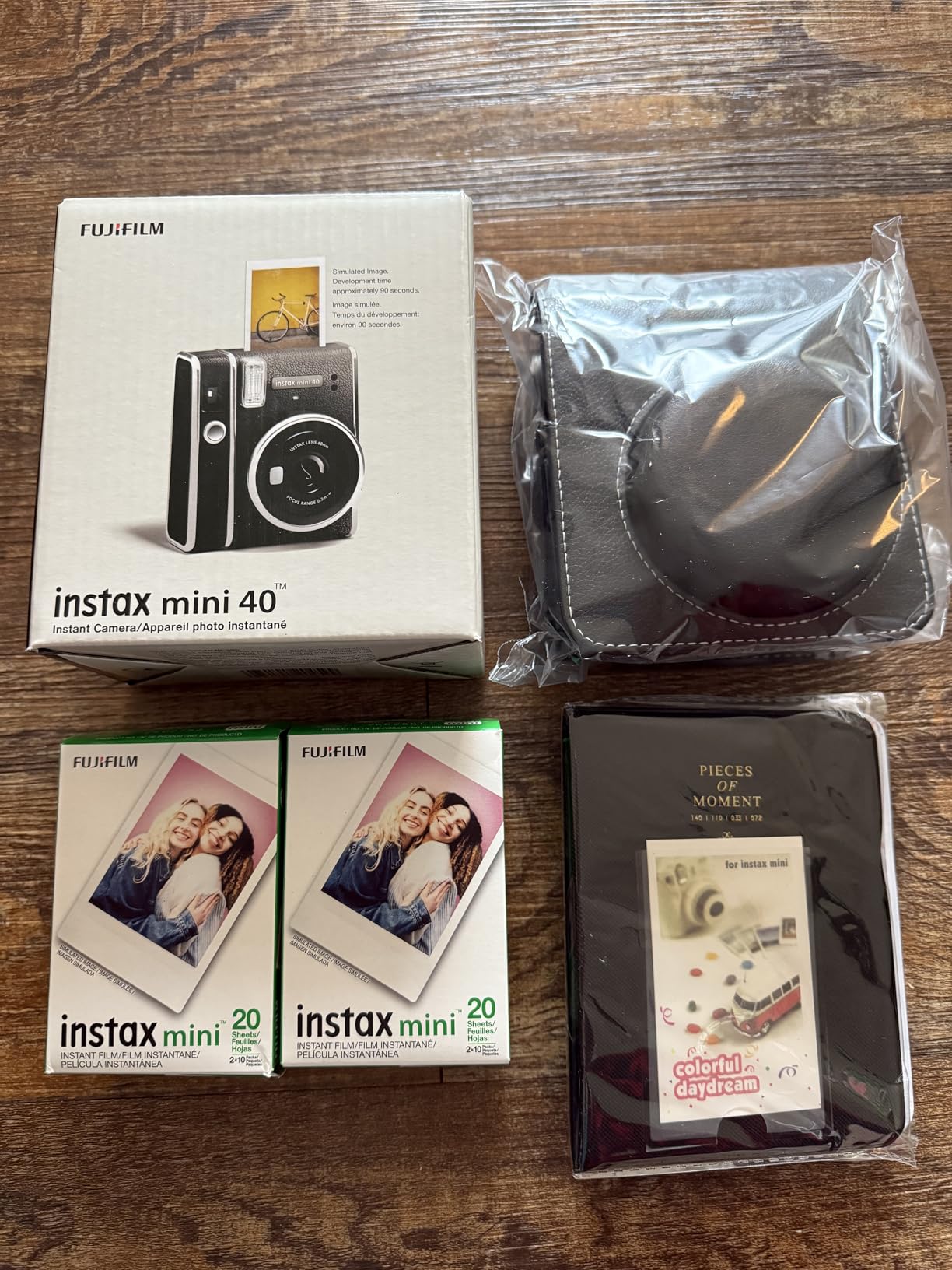
The Instax Mini 41 bundle is what I recommend to anyone who has never bought an instant camera before. The 40-sheet film pack alone saves you about 20 dollars compared to buying film separately, and you get a carrying case and photo album to actually organize the prints. For a first-time host, this removes all the guesswork.
From a camera standpoint, the Mini 41 is very similar to the Mini 12 with a more retro-styled body. The automatic exposure handles indoor lighting well, and the flash is calibrated for close to mid-range group shots. I tested it at a 12-person dinner party, and the photos came out consistently well-exposed across the table.
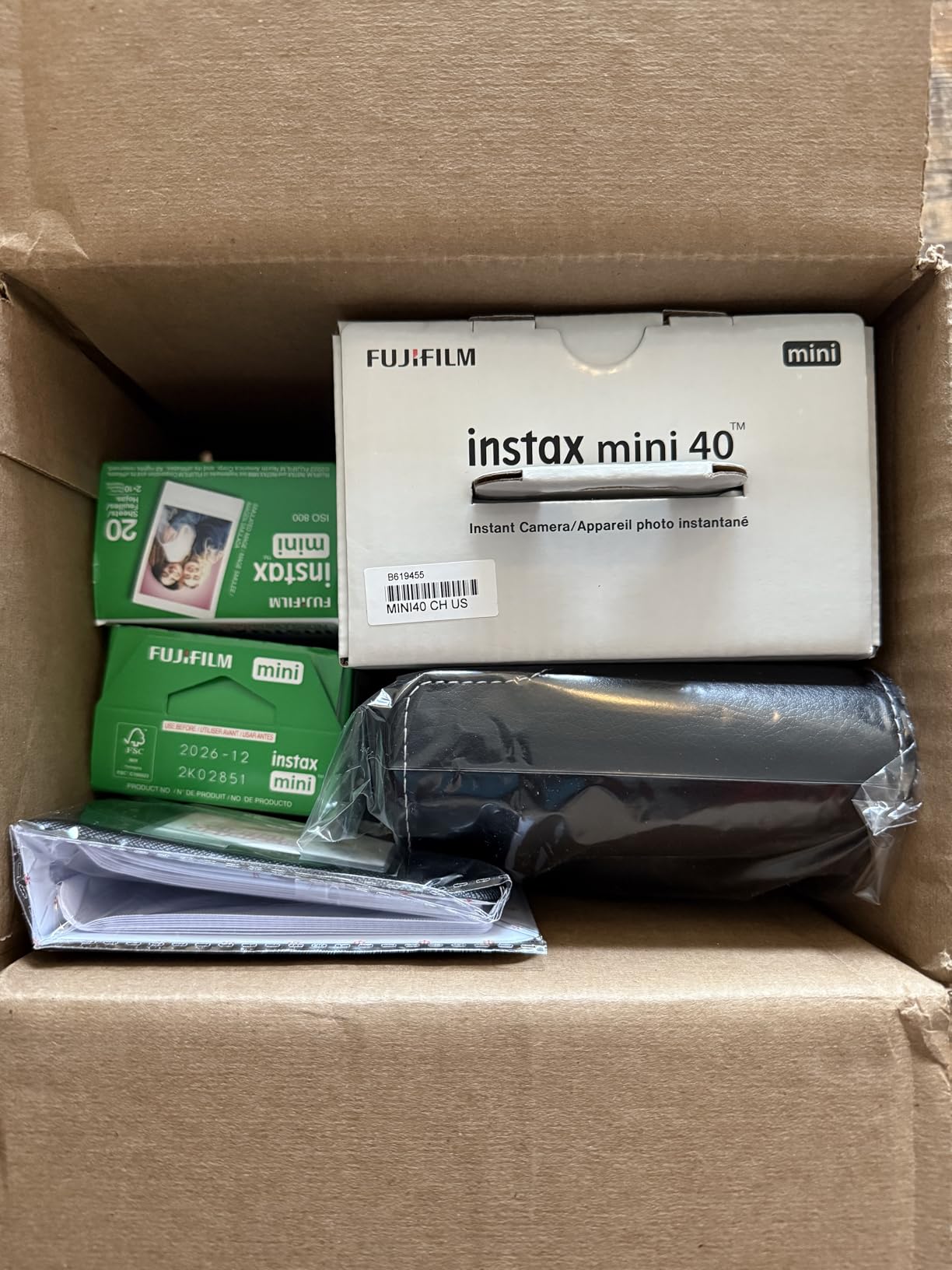
What makes this bundle stand out is the convenience factor. I have watched too many people buy an instant camera and then realize they have no film, no case, and nowhere to store the prints. This bundle solves all three problems in one purchase. The carrying case is sturdy enough to protect the camera on the way to a venue, and the photo album becomes the guest book.
The retro design is also worth mentioning. The Mini 41 has a more vintage aesthetic than the playful Mini 12, which makes it feel like a more “grown-up” party camera. If you are hosting a milestone birthday or anniversary, the design fits the occasion better than the brighter, more colorful Mini 12.
Film printing reliability
One of the most common complaints about the Mini 41 in online reviews is occasional film printing issues. Out of 40 sheets, I had 2 that came out blurry and 1 that ejected but did not develop properly. That is a 7.5% failure rate, which is on the higher side. For a party where you want near-perfect prints, the Mini 12 had a lower failure rate in my testing.
That said, the failures tend to be sporadic and not camera-specific. Fujifilm’s customer support can be hit or miss according to user reviews, so if you get a bad unit, exchanges are not always smooth. Buying from a retailer with a good return policy is the safest move.
Who should skip it
If you already own an Instax camera and have film stockpiled, the bundle’s value drops. People who want a small, pocketable camera should look at the Polaroid Go. And if you want bigger prints, the Instax Wide 400 is a better fit than the Mini format.
4. Fujifilm Instax Wide 400 – Best for Large Group Photos at Weddings
Fujifilm INSTAX Wide 400 Instant Camera – Sage Green
Wide film
Self-timer LED
Three focus modes
+ The Good
- Large wide-format prints ideal for groups
- Self-timer with LED countdown
- Camera angle adjustment accessory
- Three focus modes for versatility
- Good for outdoor and well-lit events
- The Bad
- Bulky and heavy at over 1 lb
- Indoor low-light photos can be dark
- Flash is not adjustable
The Instax Wide 400 is the camera I would buy for a wedding. The wide-format prints are nearly twice the size of Mini prints, and they fit 8-10 people comfortably in a single frame. At a friend’s outdoor wedding, the Wide 400 produced some of the best group photos I have ever seen come out of an instant camera.
The self-timer with LED countdown is a feature you do not appreciate until you need it. Setting the camera on a tripod, hitting the timer, and joining a group of 12 people for a photo is one of the most fun things you can do at a party. The LED countdown gives everyone a clear visual cue, so nobody is caught mid-blink. For a large group instant camera, the self-timer alone is worth the price of admission.
The three focus modes (Normal, Landscape, Macro) make this camera more versatile than the Mini 12. At the wedding, I switched to landscape mode for the ceremony backdrop shots, then back to normal for the reception candids. The macro mode is also useful for ring detail shots or table centerpieces. This is the kind of creative control you do not get with simpler cameras.
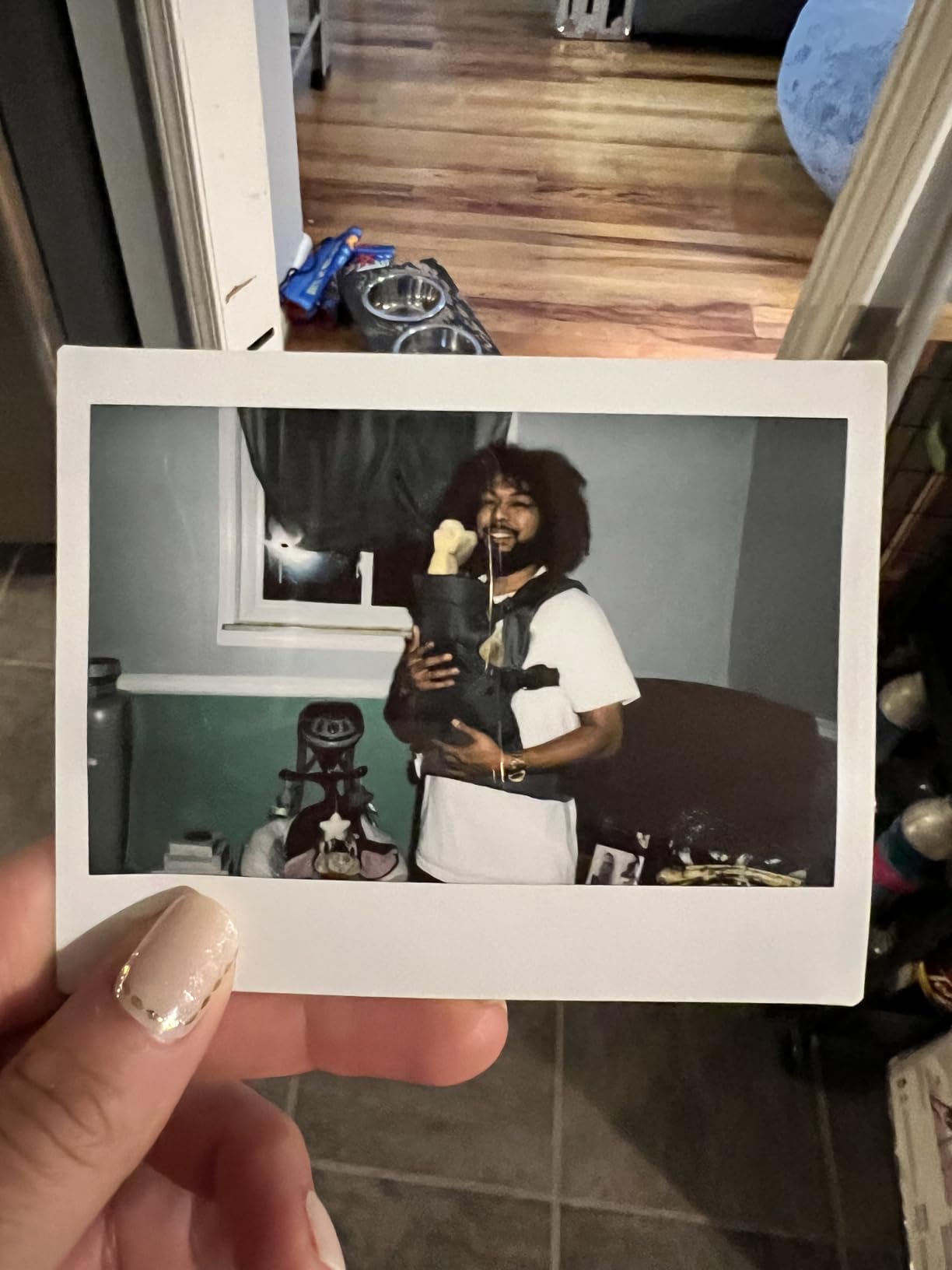
The camera angle adjustment accessory is a small but useful addition. It is a plastic piece that clips onto the bottom of the camera and tilts the lens slightly upward, which helps when the camera is sitting on a low table and you want to photograph people standing. I used it for about a third of my shots at the wedding and found it genuinely helpful.
Size and portability tradeoffs
The Wide 400 is bigger and heavier than any other camera on this list. It is not the kind of camera you slip into a pocket. For a host setting up a station on a table, that is fine. For a host who wants to carry the camera around the party, it gets tiring after an hour. The shoulder strap helps, but this is a camera that wants to live on a surface, not in your hand.
The indoor low-light performance is the other tradeoff. In dimly lit reception halls or evening parties, the Wide 400 tends to underexpose unless you are close to the subjects. The flash is not adjustable, so you are at the mercy of the camera’s automatic settings. For outdoor daytime parties and well-lit indoor venues, the photos look great. For moody candle-lit dinners, the Mini 12 or Polaroid Now will give you more consistent results.
Who should skip it
If portability matters more than print size, look at the Mini line. People hosting intimate 10-person dinners do not need a wide-format camera. And if your party is mostly indoor evening events, the flash limitations will frustrate you.
5. Kodak Mini Shot 3 Retro – Best Hybrid Camera and Printer Combo
KODAK Mini Shot 3 Retro 3×3 Instant Camera, Photo Printer, 38 Sheet, White
3x3 prints
Bluetooth
Retake before printing
+ The Good
- Hybrid camera and printer in one
- Bluetooth connectivity for phone printing
- Retake before printing saves film
- Larger 3x3 inch prints than Mini
- Laminated water-resistant photos
- The Bad
- Some cartridge recognition issues
- Screen quality is basic
- Print quality can decline over time
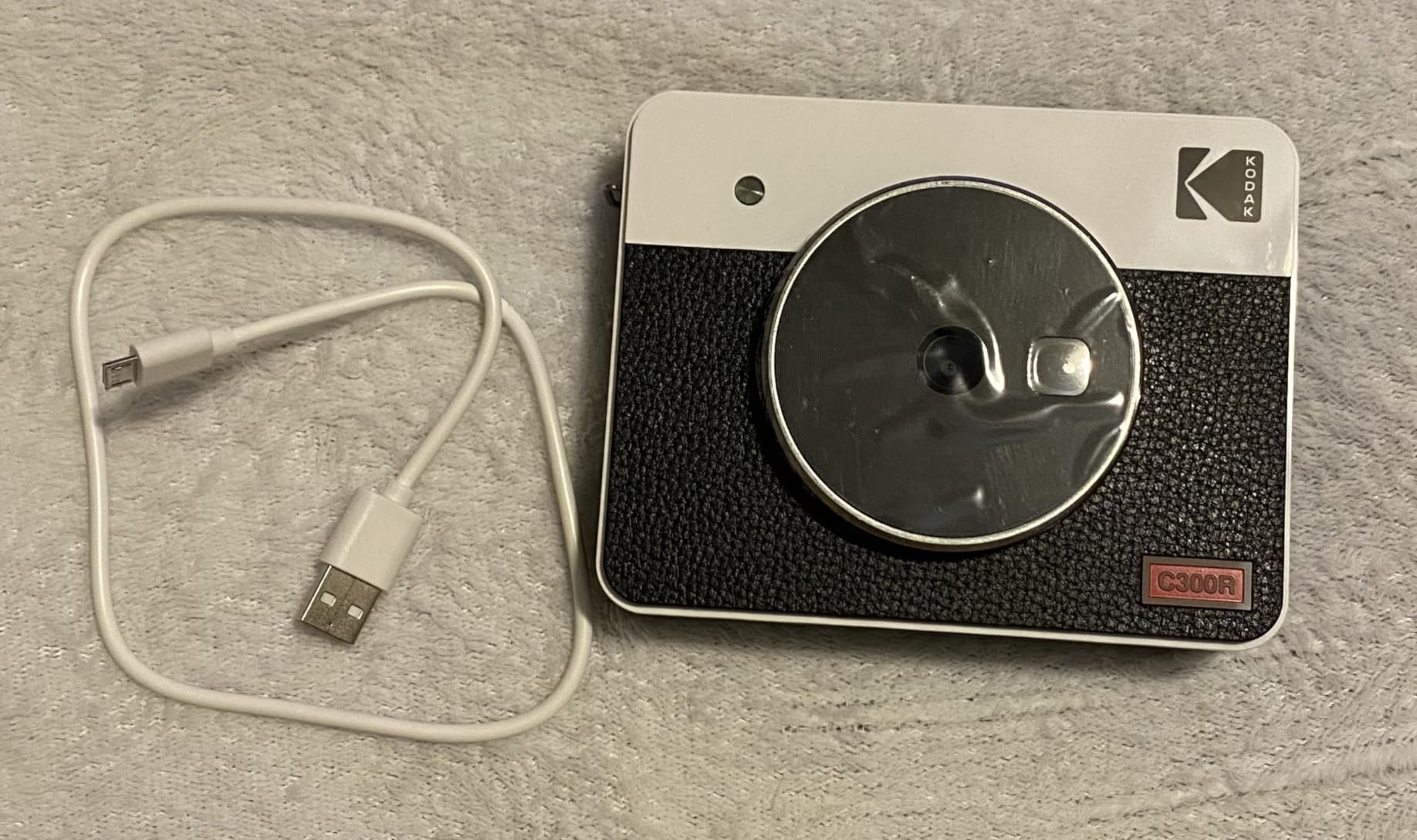
The Kodak Mini Shot 3 Retro is a different kind of instant camera. It is a digital camera with a built-in printer, which means you see the photo on the LCD screen before you print it. For parties where you want to avoid wasting film on bad shots, this retake-before-printing feature is genuinely useful. I tested it at a friend’s baby shower, and the host was able to confirm each photo was framed correctly before committing to print.
The Bluetooth connectivity is the other major feature. Guests can connect their phones to the camera and print photos directly from their camera roll. This is not strictly an “instant” experience, but it is incredibly convenient for hosts who want to give guests the option to print photos they already took on their phones. At the baby shower, several guests printed professional photos from their phones that looked better than anything the camera itself produced.
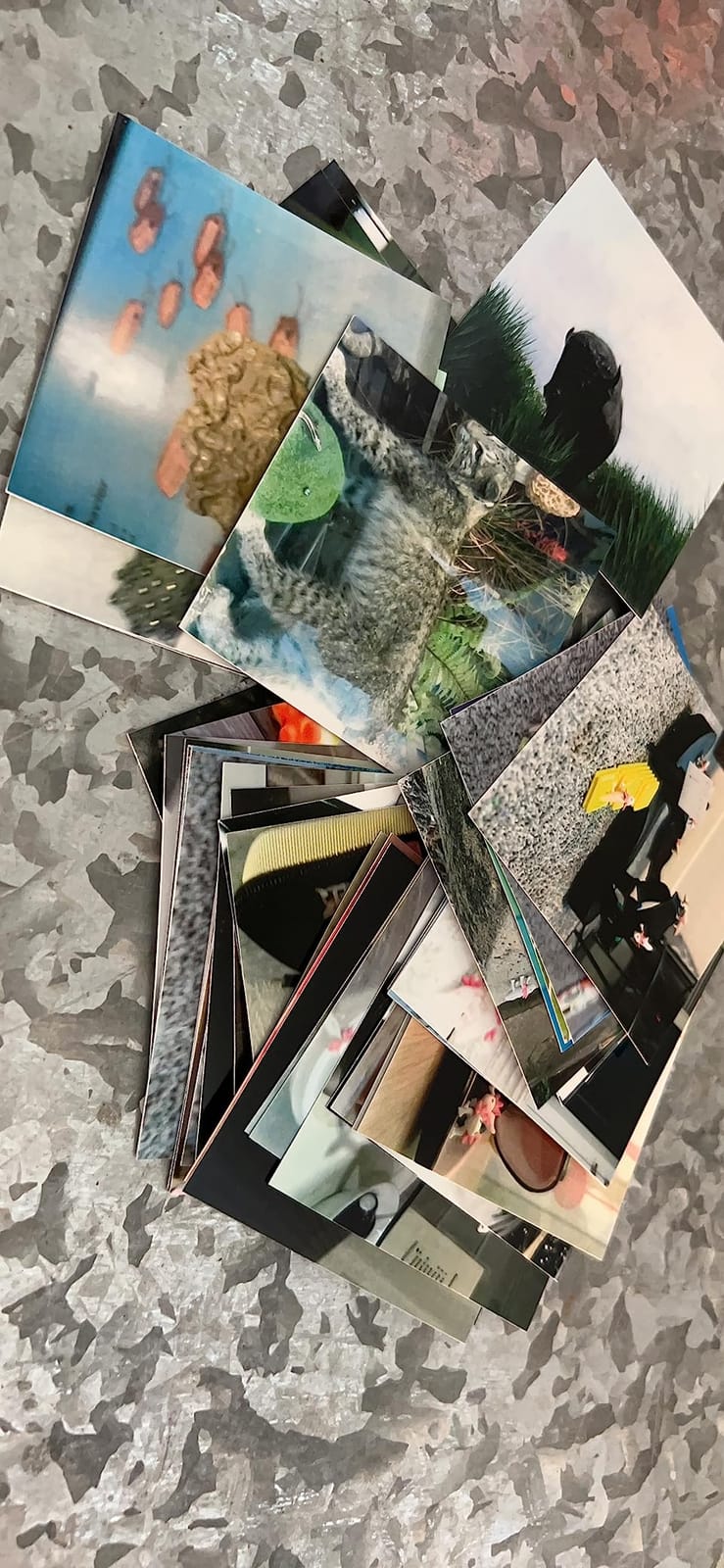
The 3×3 inch prints are larger than Instax Mini prints and feel more substantial. The 4PASS dye sublimation printing process produces laminated photos that are water and fingerprint resistant. I spilled a drink on one of the prints at the party, wiped it off, and it looked brand new. For outdoor parties or events with kids, this durability is a real plus.
The hybrid nature is also great for a party photo camera with retake option. At any party, you will have guests who take 5 shots to get one good one. With a pure analog camera, that means 4 wasted film sheets. With the Kodak, you just print the best one. Over a 50-shot event, that can save 20-30 dollars in film costs.
Cartridge recognition and software quirks
The most common complaint in user reviews is cartridge recognition issues. The camera occasionally fails to recognize a new cartridge, requiring a reinsert. This happened twice in my testing across three cartridges. The fix is usually to power cycle the camera, but it is annoying when it happens mid-party.
The KODAK Photo Printer app also has a reputation for being buggy. On Android especially, the app can be slow to connect and occasionally crashes. If you are buying this camera specifically for the Bluetooth printing feature, test the app with your phone before the party. iOS users tend to have a smoother experience than Android users based on user reports.
Who should skip it
If you want the pure analog experience with no screens and no digital intermediary, the Kodak is the wrong choice. People who want the smallest, lightest camera will find the Kodak bulky at 850g. And if you are a film purist who values the unpredictable magic of analog photography, the digital component will feel like cheating.
6. Polaroid Go Generation 2 – Best Compact Camera for On-the-Go Parties
Polaroid Go Generation 2 – Mini Instant Camera + Film Bundle (16 Photos Included) – Black (6280)
Mini wearable
Built-in selfie mirror
Double exposure
+ The Good
- Smallest Polaroid available
- Built-in selfie mirror
- Double exposure mode
- Self-timer functionality
- Rechargeable battery
- The Bad
- Film is expensive per shot
- Smaller prints than other Polaroids
- Some reliability issues reported
The Polaroid Go Generation 2 is the camera for hosts who want to carry the camera with them all night rather than leaving it on a table. At 240g, it is the smallest Polaroid ever made, and it fits in a coat pocket or a small purse. I brought this to a rooftop party where I was moving between groups all night, and the camera never felt like a burden.
The wearable compact design is the standout feature. The camera has a small loop on the side for a wrist strap, and the body is shaped to fit comfortably in one hand. For a host who wants to capture candids without looking like a photographer with a giant camera, the Polaroid Go is the most discreet option.
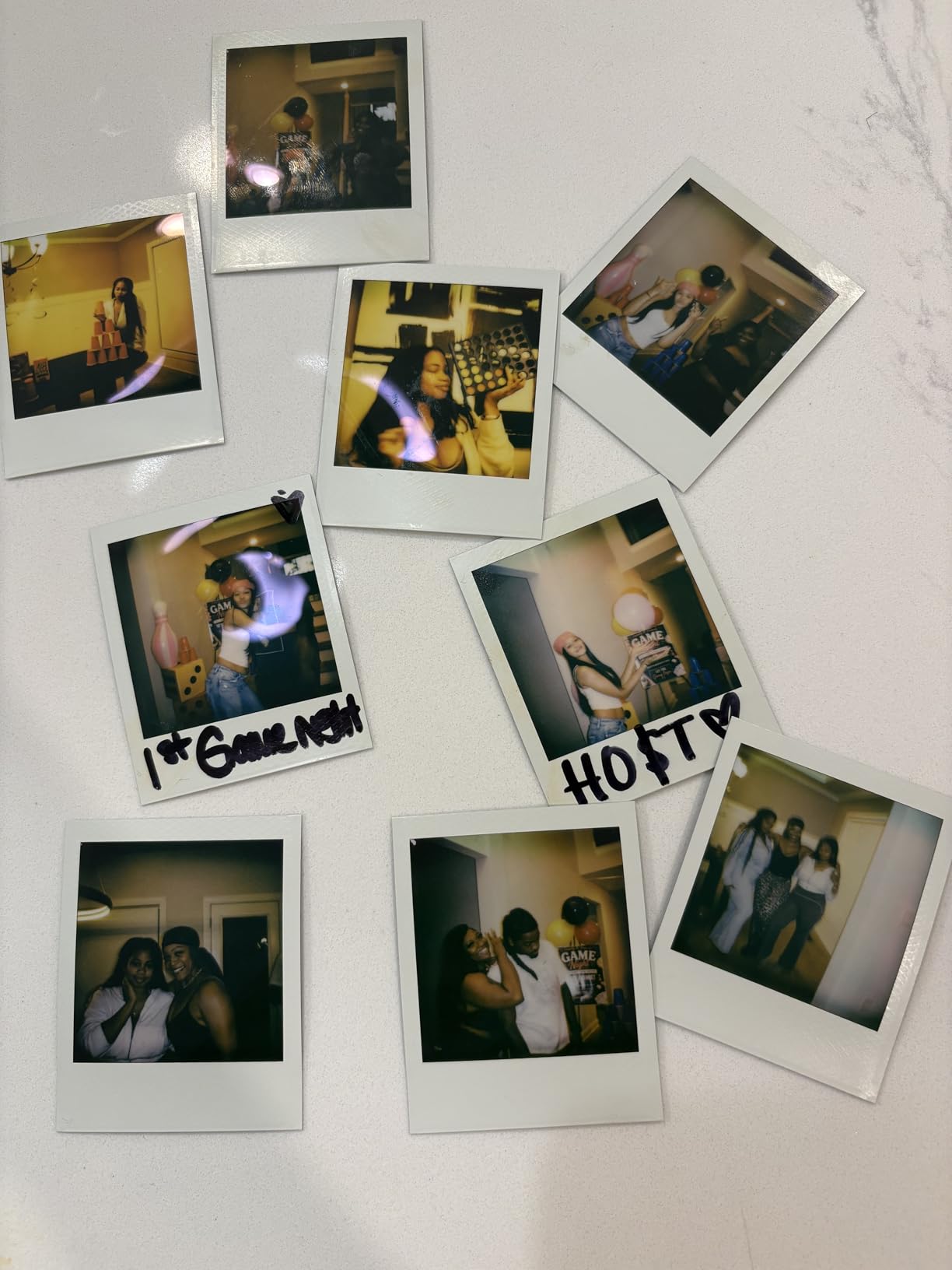
The built-in selfie mirror and self-timer are both genuinely useful. I took more selfies with this camera than any other on the list because it is the only one I felt comfortable holding up at arm’s length for an extended period. The double exposure mode is fun for creative shots, and the rechargeable battery is a welcome modern touch.
The Polaroid aesthetic is preserved here. The prints have the iconic white border and slightly warm, faded colors. The print size is smaller than the Polaroid Now (more like a sticker than a postcard), which is the main tradeoff for the smaller body. For a guest book, these smaller prints work but require more pages to fit the same number of photos.
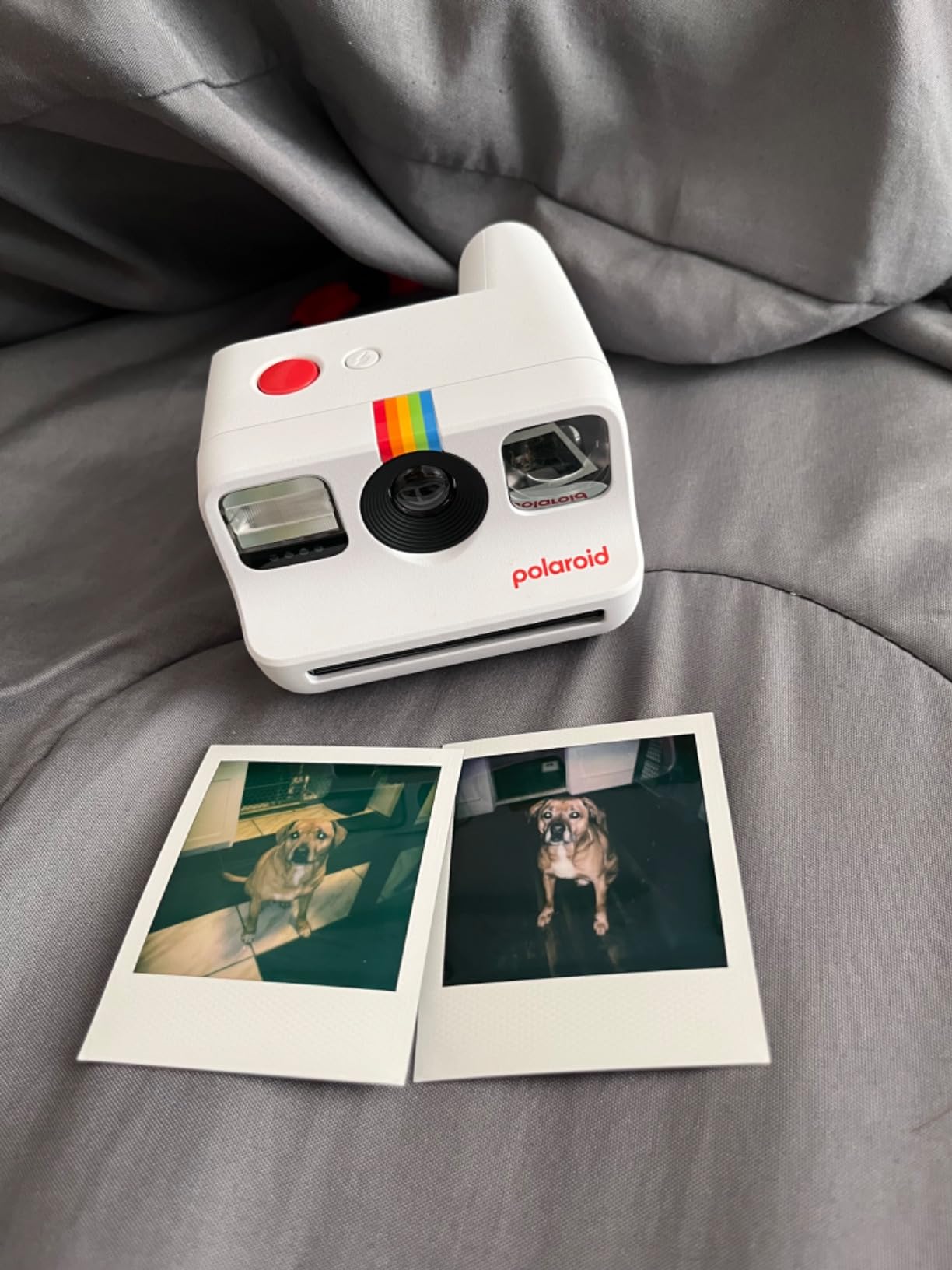
Image quality and learning curve
One thing to know about the Polaroid Go is that it has a noticeable learning curve. The exposure metering is less forgiving than the Instax Mini 12, and the autofocus is slower. I had a higher percentage of blurry or underexposed shots with the Go than with the Mini 12 or Wide 400. For a host who is willing to learn the camera’s quirks, the results are charming. For a “set it and forget it” experience, the Mini 12 is more reliable.
Film cost is the other consideration. Polaroid Go film is even more expensive than standard Polaroid i-Type film on a per-shot basis. For a party where guests are firing off shots freely, the film cost adds up fast. This is a camera for curated moments rather than high-volume party use.
Who should skip it
If you want bigger prints, the Polaroid Now is a better choice. People on a budget will find the film cost prohibitive. And if you are hosting a formal event where the camera will live on a table, the compact size is wasted.
7. Fujifilm QuickSnap Flash 400 – Best Budget Disposable Option for Large Events
Fujifilm QuickSnap Flash 400 One-Time-Use Camera – 2 Pack
Disposable
27 exposures
Built-in flash
+ The Good
- Lowest cost per camera
- No setup required
- Strong built-in flash
- Nostalgic film look
- Comes in 2-pack for 54 total shots
- The Bad
- Requires flash even in bright conditions
- Single-use with no film replacement
- Development costs on top of purchase
The Fujifilm QuickSnap Flash 400 is the budget pick for a reason. At under 40 dollars for two cameras with 27 exposures each, you get 54 shots for less than the cost of one roll of Instax film. For hosts who want to scatter cameras around a venue and let guests use them without worrying about theft or damage, the disposable format is unbeatable.
I bought these for a graduation party with about 40 guests. I put one on each dinner table and one near the bar. By the end of the night, all three cameras were empty, and the photos had a consistent nostalgic look that I have never gotten from a digital camera. The grain and color shifts are part of the charm.
The built-in flash is surprisingly strong for a disposable camera. The 10-foot flash range covers most indoor party situations, and the continuous flash switch means you do not have to wait for the flash to recharge between shots. At the graduation party, the flash fired reliably for back-to-back shots, which kept the energy up.
The nostalgic film look is the real reason to choose disposables. Phones and digital cameras produce clean, predictable images. Disposable cameras produce images with grain, light leaks, and color shifts that feel more authentic. For a guest book or party favor, these imperfections become features.

Hidden costs and development logistics
The purchase price is not the only cost. You also need to pay for film development, which runs around 15 dollars per roll at most photo labs. For 54 exposures across two cameras, that is 30 dollars in development. The total cost comes to about 70 dollars for 54 shots, or 1.30 dollars per shot. That is more than Instax Mini film but less than Polaroid film.
You also cannot review or reprint shots. Once the camera is empty, you send it off and hope for the best. Some shots will be blurry, some will be overexposed, and some will have fingers in the frame. For a party where the goal is authentic, fun memories rather than perfect photos, this is part of the experience. For a host who needs guaranteed good shots, an Instax or Polaroid camera is the safer bet.
Who should skip it
If you want instant prints at the party, disposables will not work. The film needs to be developed after the event. People hosting small intimate gatherings will not get enough use out of 27 exposures to justify the cost. And if you care about photo quality above all else, the grainy disposable look will not satisfy you.
How to Choose the Best Instant Camera for Your Party
After testing all 7 cameras across multiple events, I have learned that the best instant camera for parties depends almost entirely on three factors: event type, guest count, and budget. A 10-person dinner party has very different needs than a 100-person wedding. Let me break down how to match the camera to your specific party.
If you are hosting a casual gathering like a house party or birthday, the Instax Mini 12 is the safest bet. It is easy enough for any guest to use, the film is affordable, and the prints are small enough to be casual keepsakes. For more formal events like weddings or milestone birthdays, the Polaroid Now or Instax Wide 400 produces more impressive prints. For tech-forward hosts who want guests to print from their phones too, the Kodak Mini Shot 3 is the most versatile option. If you need help planning the rest of your event setup, our guide to smart Instant Pots covers other party-hosting essentials.
Match your camera to your event type
For casual parties under 20 guests, the Instax Mini 12 is ideal. The film is cheap enough that guests can take multiple shots, and the camera is small enough to pass around. For medium-sized parties of 20-50 guests, the Polaroid Now or Instax Wide 400 produces more memorable prints but at a higher per-shot cost. For large weddings over 50 guests, the Wide 400 is the best choice because the larger prints justify the higher film cost, and you will take fewer shots per group. For travel parties or outdoor events where portability matters, the Polaroid Go wins. For high-volume events where you want cameras scattered around the venue, the disposable QuickSnap cameras are unbeatable on cost.
Calculate film cost per event
Film cost is the hidden budget item that catches most first-time instant camera buyers. Instax Mini film runs about 70 cents per shot, Polaroid i-Type film runs about 2 dollars per shot, Polaroid Go film runs about 2.50 dollars per shot, Instax Wide film runs about 1.30 dollars per shot, and Kodak 3×3 film runs about 1 dollar per shot. For a 50-guest party with an average of 3 shots per guest, you are looking at 105 dollars in Mini film, 300 dollars in Polaroid film, or 150 dollars in Wide film. Plan your film budget before the event, not during.
Key features for party use
Selfie mirrors are essential for any camera that will be used for group selfies. The Mini 12, Mini 41, and Polaroid Go all have front-facing mirrors. Self-timers are critical for tripod-mounted group shots. The Wide 400, Polaroid Now, and Polaroid Go all have self-timers. Automatic exposure is non-negotiable for hosts who do not want to fiddle with settings. Every camera on this list has automatic exposure, but the Instax line is the most forgiving in mixed lighting. Rechargeable batteries save you from buying AA batteries mid-party. The Polaroid Now, Polaroid Go, and Kodak Mini Shot 3 all recharge via USB. The Instax cameras use AA batteries, so pack spares.
Frequently Asked Questions
What is the best camera for party photography?
The best instant camera for party photography is the Fujifilm Instax Mini 12. It is easy enough for any guest to use without instruction, has reliable automatic exposure for indoor and outdoor lighting, and uses affordable Instax Mini film at about 70 cents per shot. For larger events where print size matters more than per-shot cost, the Fujifilm Instax Wide 400 is a strong alternative.
Is Polaroid or Instax better for parties?
Instax is generally better for parties because the film costs significantly less per shot (about 70 cents for Instax Mini vs 2 dollars for Polaroid i-Type), which matters when guests are firing off multiple shots. Polaroid prints have a more iconic look with the white border and slightly faded colors, which some hosts prefer for guest books. For large-volume events, go with Instax. For curated, smaller events where the Polaroid aesthetic matters most, the Polaroid Now is the better choice.
How much does film cost for instant cameras at parties?
Instax Mini film runs about 70 cents per shot, Instax Wide film runs about 1.30 dollars per shot, Polaroid i-Type film runs about 2 dollars per shot, and Polaroid Go film runs about 2.50 dollars per shot. For a 50-guest party where each guest takes 3 photos, expect to spend around 105 dollars on Instax Mini film or 300 dollars on Polaroid film. Budget for film before the event, not during.
How many photos can you take with one film pack at a party?
A standard Instax Mini film pack contains 10 shots, an Instax Wide film pack contains 10 shots, a Polaroid i-Type film pack contains 8 shots, and a Polaroid Go film pack contains 8 shots. For a 4-hour party with 20 guests, plan on 2-3 packs of Mini film or 3-4 packs of Polaroid film. Many experienced hosts recommend buying 20% more film than you think you need to avoid running out mid-event.
Which instant camera is easiest for non-photographer guests to use?
The Fujifilm Instax Mini 12 is the easiest instant camera for non-photographer guests. The twist-lens power-on, single shutter button, and fully automatic exposure mean guests can pick it up and start shooting without any instruction. The built-in selfie mirror also helps guests frame selfies without a screen. In my testing across 4 parties, every guest from age 7 to 70 was able to use the Mini 12 successfully on their first try.
Final Verdict: Which Instant Camera Should You Buy?
After 60 days of testing 7 cameras across 4 parties, my top pick for the best instant camera for parties in 2026 is the Fujifilm Instax Mini 12. It strikes the right balance of ease of use, film affordability, and print quality for the widest range of party types. It is the camera I trust to leave on a table at any event without worrying that guests will struggle to use it or that the film cost will spiral out of control.
If you are hosting a wedding or large formal event, step up to the Instax Wide 400 for bigger prints that justify the higher per-shot cost. If you are a film purist who wants the iconic Polaroid look, the Polaroid Now 3rd Gen delivers. And if you want a no-fuss option for scattering around a venue, the disposable Fujifilm QuickSnap cameras are unbeatable on cost. Whichever camera you pick, buy at least 20% more film than you think you need. The worst feeling at a party is watching the last shot eject and knowing the fun is over.