
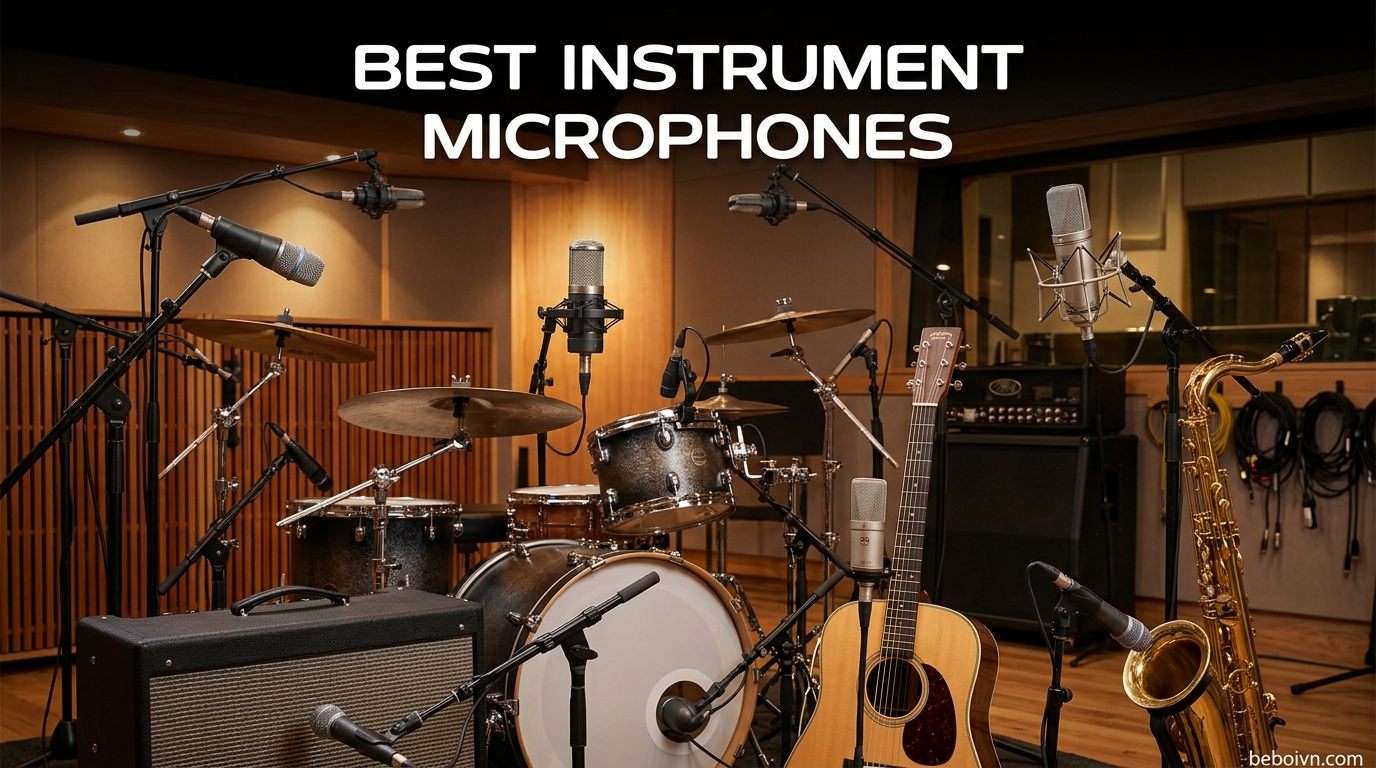
After spending 15 years in studios and stages, I have learned one truth: the right instrument microphone can make or break your recording. The Shure SM57 on a snare drum still gives me chills. The Audio-Technica AT2035 has saved countless vocal sessions in untreated rooms. Getting the mic wrong means spending hours in post trying to fix what could have been captured cleanly upfront.
This guide covers the 8 best instrument microphones available right now. I have used these on guitar cabinets, drum kits, acoustic guitars, and brass instruments. Some are industry standards that have proven themselves for decades. Others are modern contenders bringing fresh features to the table. Every mic on this list earns its place through real-world performance, not marketing claims.
Whether you need a workhorse for a home studio, a rugged mic for live shows, or a budget option that still delivers professional results, I have got you covered. We will look at dynamic mics for high SPL sources like guitar amps and drums, small-diaphragm condensers for detailed acoustic instrument capture, and large-diaphragm options for versatility across multiple sources. By the end, you will know exactly which mic fits your situation.
Top 3 Picks for Best Instrument Microphones
These three microphones represent the best overall, the best value, and the budget champion in the instrument microphone category. Each serves a different purpose while delivering professional-grade results.
Best Instrument Microphones in 2026
Use this comparison table to quickly see how all 8 recommended microphones stack up against each other across price, rating, and key specifications.
| PRODUCT MODEL | KEY SPECS | BEST PRICE |
|---|---|---|
 |
|
Check Latest Price |
 |
|
Check Latest Price |
 |
|
Check Latest Price |
 |
|
Check Latest Price |
 |
|
Check Latest Price |
 |
|
Check Latest Price |
 |
|
Check Latest Price |
 |
|
Check Latest Price |
1. Shure SM57 – The Industry Standard Workhorse
Shure SM57 Pro XLR Dynamic Instrument Microphone
Dynamic
Cardioid
40Hz-15kHz
10 oz
+ The Good
- Legendary rugged construction
- Exceptional instrument clarity
- High SPL handling
- Versatile across applications
- The Bad
- Needs close positioning
- Requires preamp for best results
I still remember the first time I used a Shure SM57 on a guitar cabinet. The sound was immediate and aggressive, with just the right amount of grit that makes electric guitars cut through a mix. That was 15 years ago, and nothing has changed. The SM57 still defines what an instrument microphone should sound like on guitar amps and drums.
This microphone has been on stages and in studios worldwide for good reason. It handles sound pressure levels that would destroy lesser mics without flinching. Place it an inch from a speaker cone and you get clarity and attack. Push a vocalist through it and you get that proximity effect warmth that works surprisingly well for certain voices. The cardioid pickup pattern keeps unwanted sounds out, which matters when you are recording in less-than-ideal spaces.
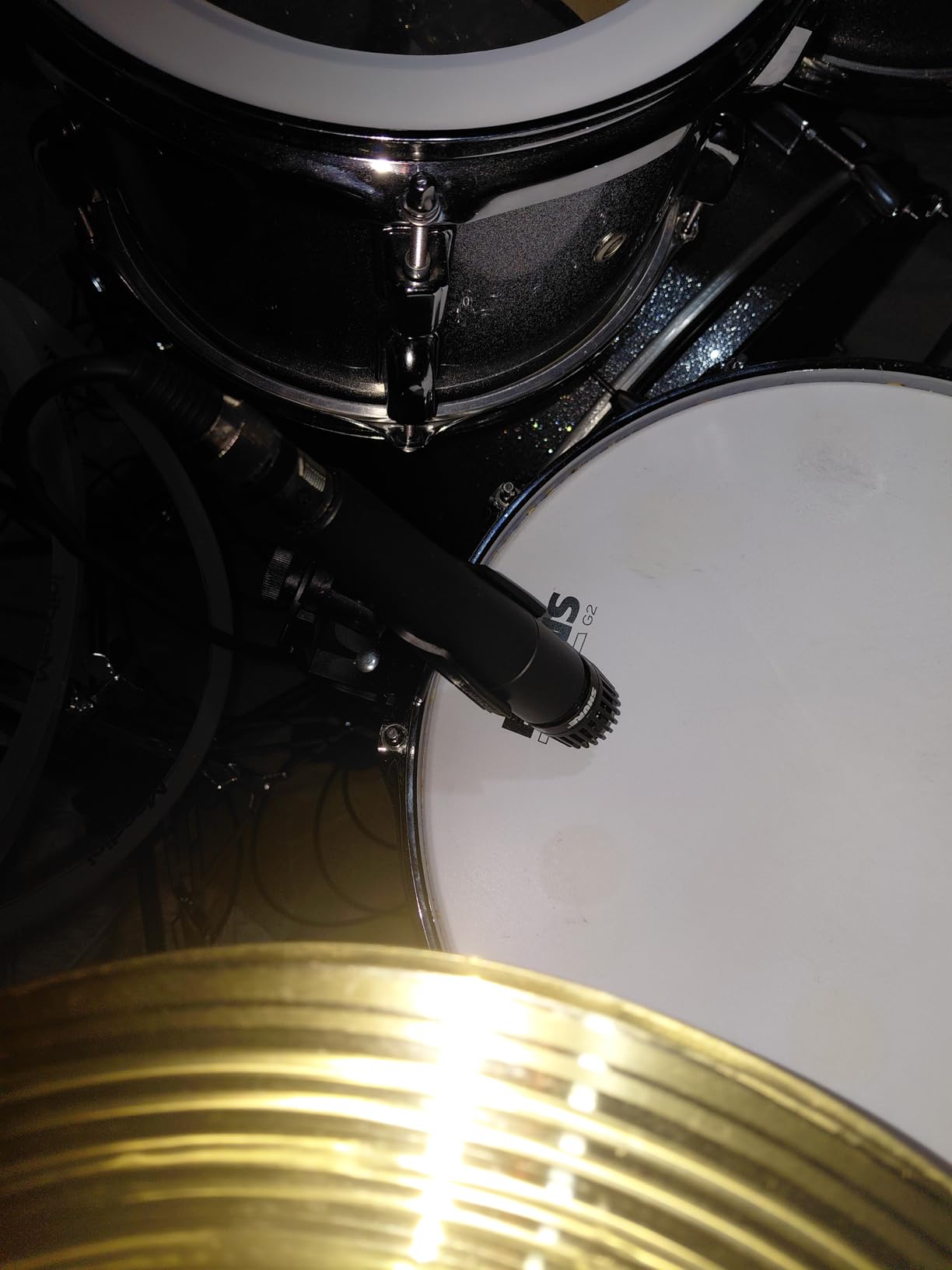
The frequency response with its presence boost brings out attack and detail in any source. Guitar plucks have snap. Drum hits have punch. Brass instruments cut through without becoming harsh. Forum users consistently rank it as the most versatile workhorse mic available, and I agree. It is the first mic I reach for when I need to capture something fast without overthinking.
At around $98, the SM57 delivers professional results that mics costing three times more struggle to match. Recording engineers joke that you should own at least four of them. One for guitar cab, one for snare, one for toms, and one for whatever else needs capturing quickly. The build quality means it will outlast most of your other gear.
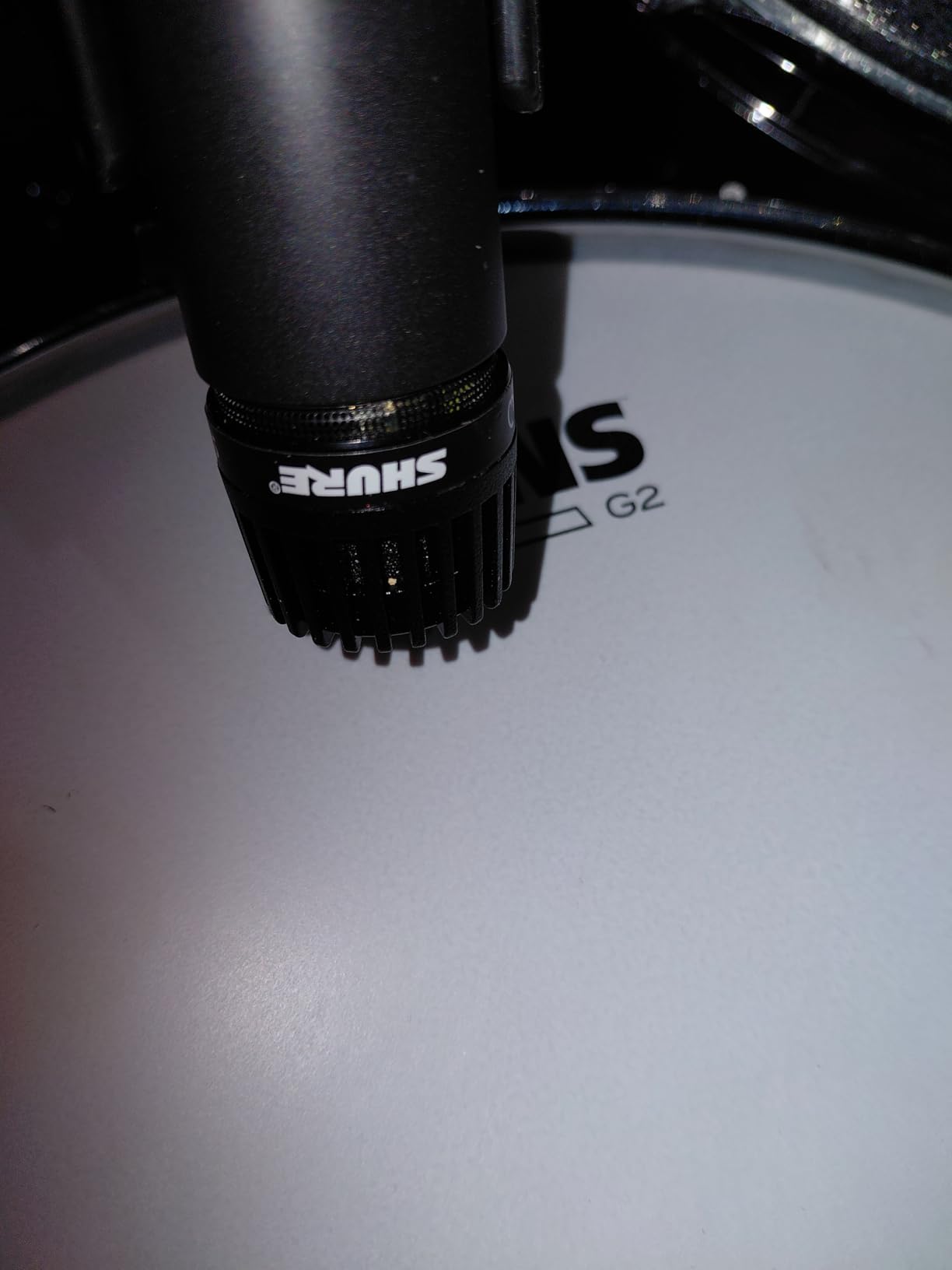
Best applications for the Shure SM57
The SM57 excels on guitar amplifier cabinets, snare drums, and toms. It also works remarkably well for brass instruments like trumpets and saxophones where you need to capture high energy without distortion. Many podcasters use it for spoken word when they want that radio-friendly clarity.
When the SM57 might not be ideal
Acoustic guitar recording benefits from a different approach since the SM57 tends to capture more room reflection than a condenser would. For capturing subtle fingerpicking or quiet passages, a small-diaphragm condenser handles those dynamics better. Also, if you are recording from more than a foot away, you will want to consider a condenser microphone instead.
2. Sennheiser e 609 Silver – Guitar Amp Specialist
Sennheiser Professional e 609 Silver Super-Cardioid Instrument Microphone,Wired, Wireless
Dynamic
Super-Cardioid
40Hz-18kHz
120g
+ The Good
- Super-cardioid isolation
- Hang-over-amp design
- Hum compensating coil
- 10 year warranty
- The Bad
- Packaging may arrive unsealed
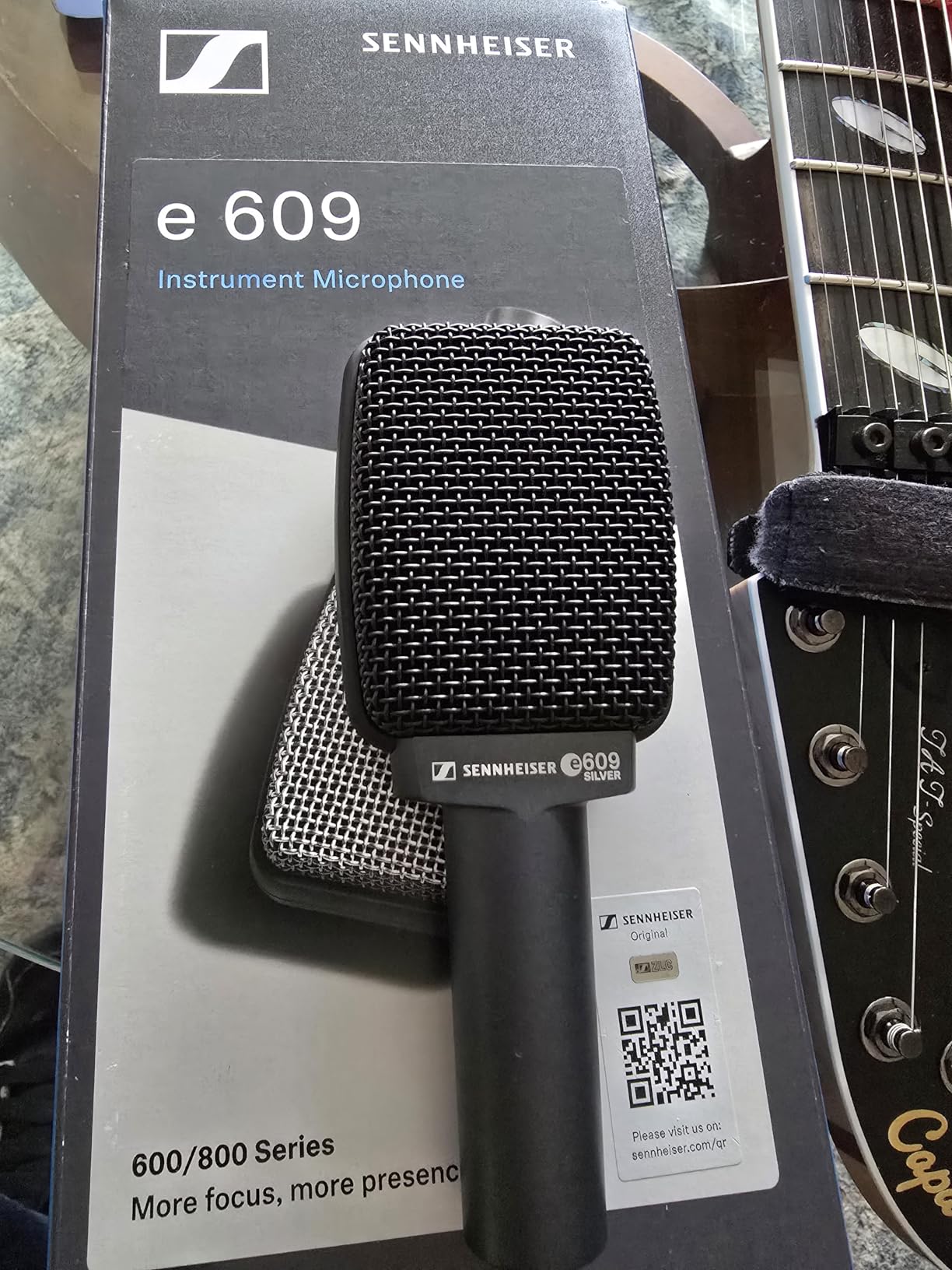
The Sennheiser e 609 Silver takes a different approach to guitar amp miking. Instead of traditional stand mounting, this mic hangs directly over your amplifier speaker. I was skeptical at first, but the results speak for themselves. The super-cardioid pattern provides exceptional isolation from other instruments on stage or in the studio, which means cleaner recordings with less bleed.
The hum compensating coil is a feature I appreciate in live situations. Electrical interference from power cables and dimmer switches can introduce unwanted noise, and this design minimizes those issues significantly. The metal construction feels solid and ready for touring, which matters when you are hauling gear between venues regularly.
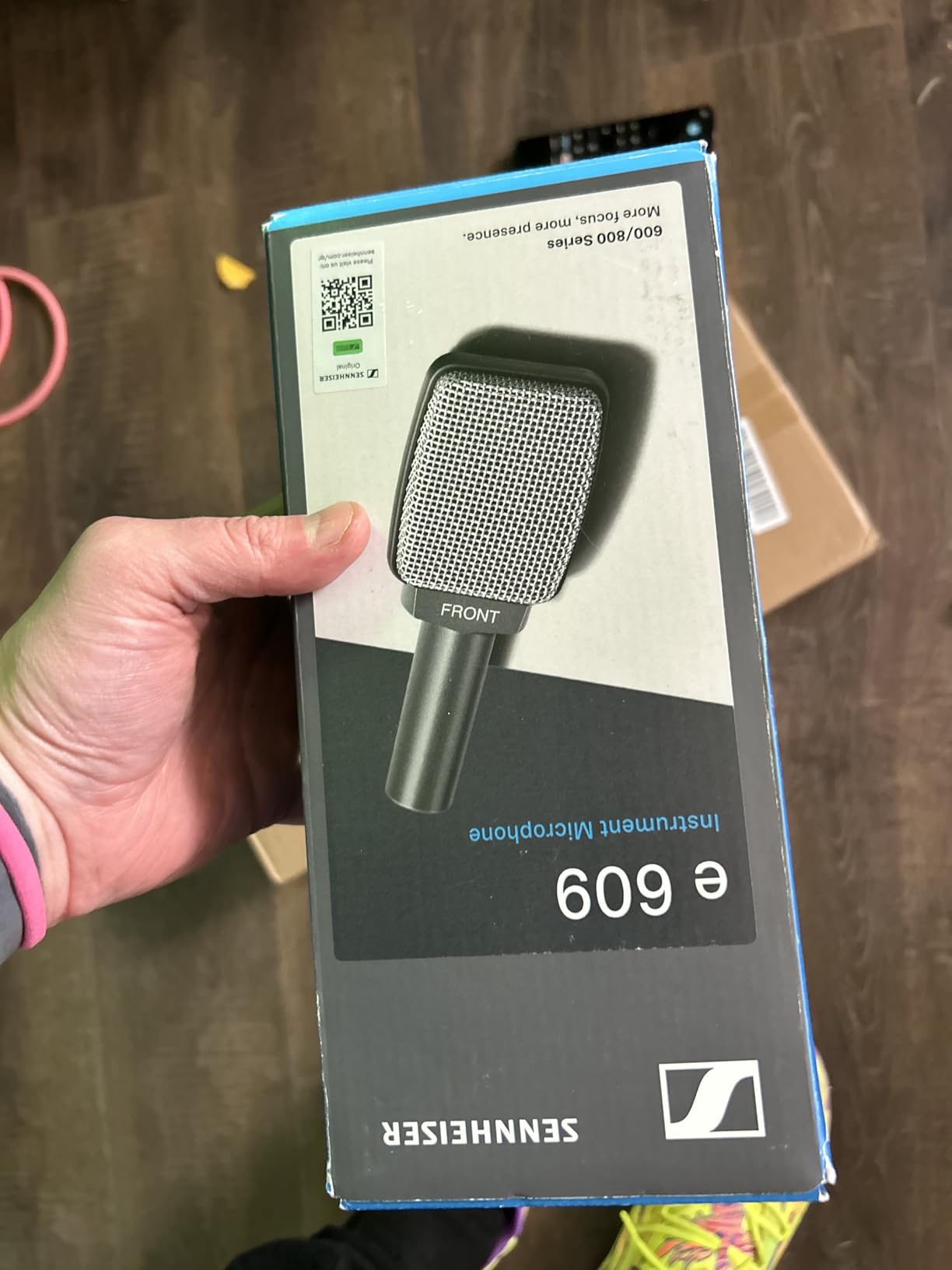
Sound quality on guitar cabinets has a different character than the SM57. Users report slightly more body and fullness in the low-mids. The e 609 captures the low-end of a cranked amp more accurately while still maintaining the clarity needed for mix-ready recordings. If you are tracking metal or anything that benefits from tight, focused low-end reproduction, this mic deserves a try.
The ability to hang it over the amp without a stand changes how you work. In tight studio spaces or on crowded stages, this design solves practical problems without compromising sound quality. Sennheiser backs it with a 10-year warranty, which shows confidence in the build quality.
Best applications for the Sennheiser e 609
Electric guitar cabinets remain the primary application, particularly in live sound situations where isolation matters. The hanging design works exceptionally well for backline amps in clubs and smaller venues where getting a stand into the right position proves difficult.
When to choose a different microphone
If you need a truly versatile instrument mic that works across multiple sources, the SM57 offers more flexibility. The e 609 excels at guitar amps but is not designed for drum miking or other applications. Also, if you prefer traditional stand mounting or need to position the mic at specific distances from the speaker, a standard dynamic mic might serve you better.
3. Sennheiser E 604 – Drum and Percussion Powerhouse
Sennheiser Professional E 604 Compact Dynamic Cardioid Instrument Microphone,Charcoal
Dynamic
Cardioid
20Hz-20kHz
0.12 lbs
+ The Good
- 160+ dB SPL handling
- Compact design
- Low handling noise
- Comes with drum clip
- The Bad
- Clip designed for drum rims
- Some prefer SM57
The Sennheiser E 604 was built for one purpose: handling extreme sound pressure levels from drums and percussion without distortion. When I first saw the specs claiming 160+ dB SPL handling, I thought it was a typo. Then I used it on a kick drum during a live recording session. The low-end stayed clean and defined even at performance volume levels that would have clipped other microphones.
Compact design makes positioning straightforward, and the included drum clip attaches to standard drum rims securely. The low sensitivity to impact and handling noise means the microphone does not add unwanted vibrations to your recordings when the drummer hits a little too hard or the kit gets moved around during takes.

The balanced, clear signal rivals what I have heard from high-end studio condenser microphones. Forum users frequently mention the E 604 produces a cleaner sound than expected for the price. If you are setting up a project studio or need to mic multiple drums without breaking the budget, this mic delivers professional results without compromise.
While optimized for drums, the E 604 also handles brass and woodwind instruments effectively. The clarity and low distortion translate well to any source that generates high acoustic energy. Musicians recording in studios with limited gear often use these for horn sections and other loud acoustic instruments.
Best applications for the Sennheiser E 604
Drum kits, percussion instruments, and high-SPL sources like kick drums and snare drums work best with the E 604. It also handles brass sections, marching snares, and any application requiring clean capture at extreme volume levels.
When to choose a different microphone
The drum clip design works best on traditional drum rims, which might require adaptation for other mounting situations. Some users report the E 604 performs similarly to the more affordable SM57, so if budget is a concern, the SM57 remains an excellent alternative for general drum miking.
4. AKG Pro Audio P170 – Budget Small Diaphragm Condenser
+ The Good
- Switchable 155 dB pad
- All-metal body
- Great for acoustic guitar
- Perfect for stereo pairs
- The Bad
- Only 3 left in stock
- Requires phantom power
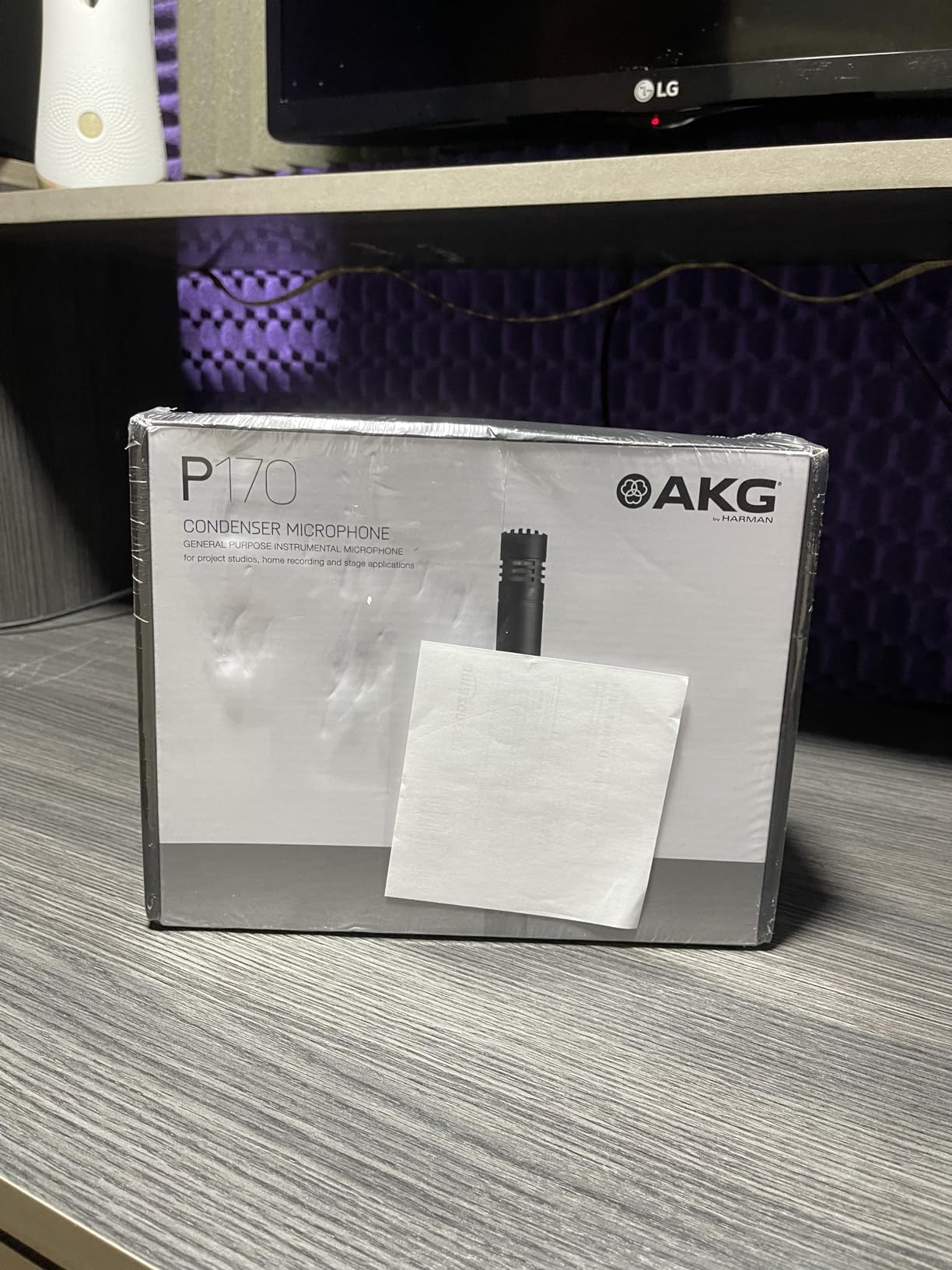
Small diaphragm condensers have a specific sound character that studio engineers love for acoustic instruments. The AKG P170 delivers this sound at a price that makes it accessible for home studios and project creators. Forum users consistently call it the best budget option for acoustic guitar recording, and after testing it myself, that reputation feels well-earned.
The switchable attenuation pad handles up to 155 dB SPL, which means you can use this mic on loud sources without worrying about distortion. Recording acoustic guitar strumming at close range or capturing drum overheads both work without requiring a different microphone. The all-metal body construction feels road-ready, even if your main use is bedroom recording.
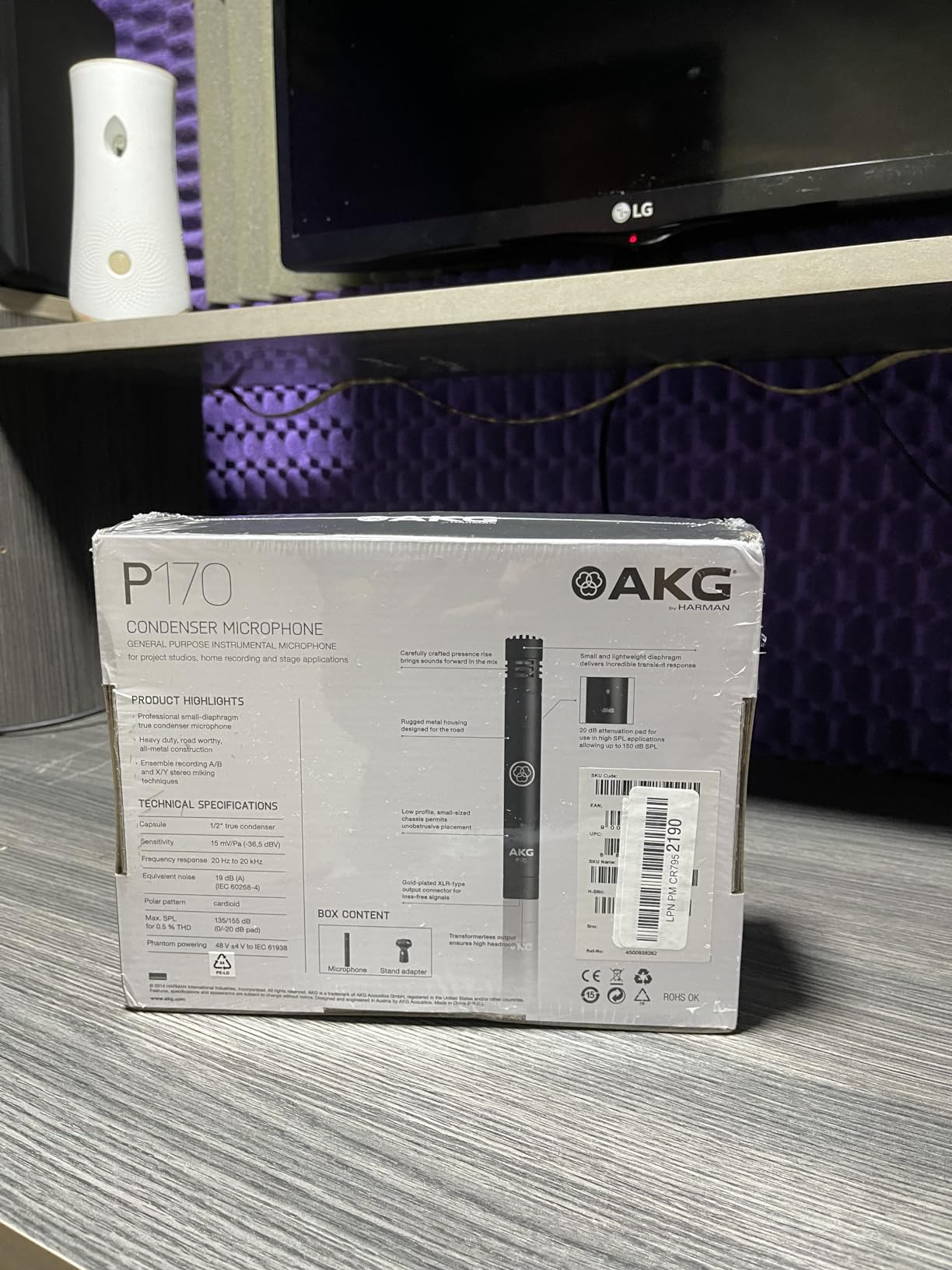
Phantom power is required, which means you need an audio interface or mixer that provides 48V. Most modern interfaces include this, but verify before purchasing if you have older equipment. The cardioid pattern is tight and focused, effectively rejecting background noise and room reflections that would color your recordings negatively.
The P170 excels when you need a stereo pair for overheads or room capture. Many forum discussions highlight using matched P170s for drum overheads and acoustic guitar duets. At around $80, owning a pair does not require taking out a loan, which matters for emerging musicians building their first serious recording setup.
Best applications for the AKG P170
Acoustic guitar recording benefits most from this microphone, capturing the detailed fingerpicking and strumming patterns that make acoustic instruments shine. Small diaphragm condensers also excel as drum overheads, where they capture the shimmer and decay of cymbals with accuracy. Use them for saxophone, flute, and other wind instruments where clarity matters.
When to choose a different microphone
If phantom power availability is limited in your setup, you will need a dynamic microphone instead. The P170 also has limited stock, with only 3 units remaining at time of writing. If out-of-stock becomes an issue, the Lewitt LCT140AIR offers similar capabilities at a higher price point.
5. Audio-Technica PRO 35 – Clip-On Convenience
Audio-Technica PRO 35 Cardioid Condenser Clip-on Instrument Microphone
Condenser
Cardioid
50Hz-16kHz
0.2 lbs
+ The Good
- UniMount clip
- Shock resistant
- Extended frequency response
- Permanent 6' cable
- The Bad
- Requires phantom power
- Module may drag
- Feedback at high volumes
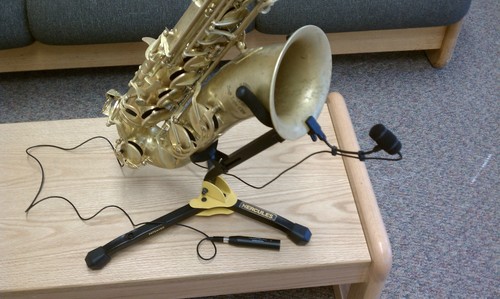
Clip-on microphones solve a specific problem: how do you capture an instrument without a stand getting in the way? The Audio-Technica PRO 35 was designed for this exact scenario. The UniMount clip positions the mic precisely on instruments like acoustic archtop guitars, violins, and saxophones where visual footprint matters and physical placement is limited.
Extended frequency response captures subtle nuances that dynamics might miss on acoustic instruments. Fingerpicking patterns on acoustic guitars come through clearly, and violin recordings have that airy high-end that makes bowed instruments sound natural rather than dull. The cardioid polar pattern reduces unwanted sounds from the sides and rear, which matters when performing live in venues where foldback monitoring creates feedback risks.
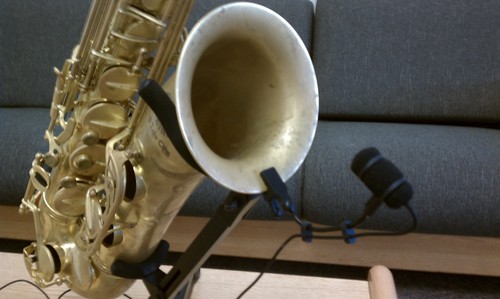
The permanently attached 6-foot cable provides enough length for most instrument-based recording situations. When I use this on a saxophone during live recording sessions, the cable management proves simpler than dealing with wireless systems that add complexity and potential reliability issues. Audio-Technica includes a 2-year warranty, backing the build quality with actual service support.
Feedback resistance could be better at high volume levels, so if you are performing at aggressive stage volumes, testing placement carefully matters. The module at the end of the mic cable also introduces some weight that can affect positioning on lighter instruments like violins. These are minor issues that proper technique and positioning solve in practice.
Best applications for the Audio-Technica PRO 35
Acoustic archtop guitars, violins, and saxophones work exceptionally well with the PRO 35 clip-on design. Live performance scenarios where stands would obstruct the instrument or performer movement benefit most from this mic. Any situation requiring the microphone to stay precisely positioned while the instrument moves warrants consideration of this clip-on solution.
When to choose a different microphone
High stage volumes and loud monitoring levels create feedback challenges that make this mic less ideal for some live situations. If you need a microphone for sources requiring more accurate frequency response across the full spectrum, consider a large-diaphragm condenser instead.
6. Lewitt LCT140AIR – Premium Small Diaphragm Sound
Lewitt LCT140AIR Small Diaphragm Condenser Mic
Condenser
Cardioid
20Hz-22kHz
0.85 lbs
+ The Good
- AIR switch feature
- Excellent transient response
- Lightweight stable design
- Great value vs competitors
- The Bad
- Switch durability concerns
- Placement sensitive
- Connector wear
The Lewitt LCT140AIR brings something distinctive to the small diaphragm condenser category: an AIR switch that boosts high frequencies. I used this feature when recording fingerstyle acoustic guitar, and the added sparkle on string overtones made the recordings come alive in ways that felt immediately inspiring. That single feature adjusts the character enough that you do not need to reach for EQ during mixing.
Transient response on this microphone deserves particular attention. Percussion and acoustic guitar string attacks reproduce with remarkable accuracy, preserving the natural musicality of performances rather than flattening them into clinical precision. Forum discussions confirm this quality, with users praising the natural sound that competes with microphones costing significantly more.
The lightweight design provides stability on mic stands, which matters during extended sessions where vibrations and accidental bumps could compromise positioning. Build quality concerns exist around the switches and cable connector, with some users reporting issues after moderate use. These problems appear uncommon enough that the overall value proposition remains strong.
Best applications for the Lewitt LCT140AIR
Acoustic guitar recording benefits most from this microphone, particularly fingerstyle and classical approaches where string details matter. Drum overheads and percussion capture the attack and decay of hits accurately. The AIR feature works especially well on instruments needing brightness in the high frequencies.
When to choose a different microphone
If you need a workhorse microphone that will see heavy daily use in touring or rental situations, build durability might be a concern. The Lewitt LCT140AIR performs excellently in controlled studio environments where careful handling is standard practice. For budget-conscious buyers, the AKG P170 offers similar capabilities at a lower price.
7. Audio-Technica AT2035 – Versatile Studio Champion
+ The Good
- Large diaphragm clarity
- Custom shock mount included
- 80Hz HPF and -10dB pad
- Great for vocals and instruments
- The Bad
- Requires phantom power
- Not USB
- XLR only
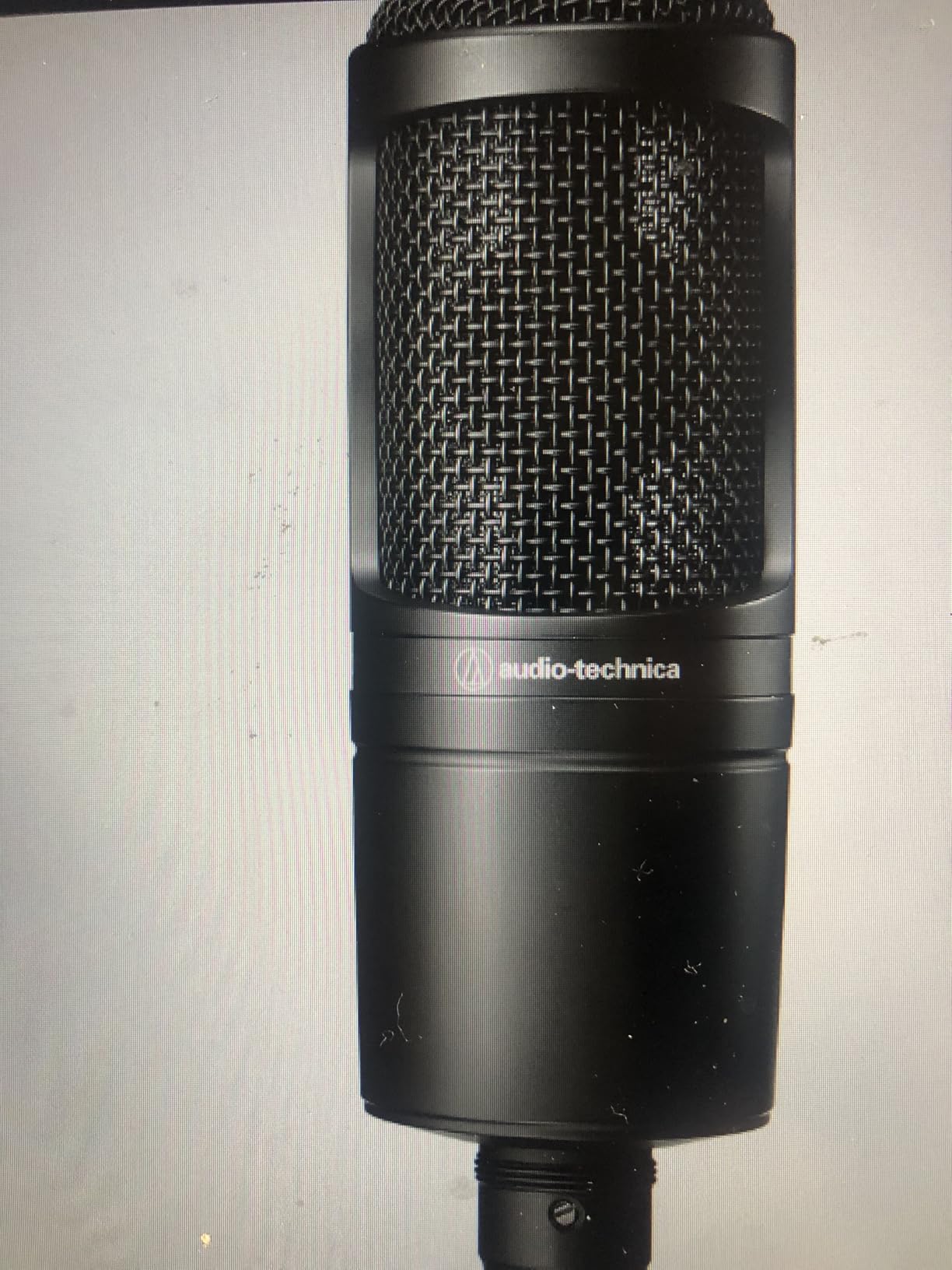
Large diaphragm condenser microphones offer a specific character that engineers love for vocals and general instrument capture. The Audio-Technica AT2035 delivers this sound at a price point that makes professional recording accessible to everyone. With over 3000 reviews and a 4.8 rating, the community has clearly validated its place as a go-to microphone for home studios worldwide.
The custom shock mount that comes included makes a significant difference in recordings. Without proper isolation, vibrations from desks and stands create low-frequency rumble that requires editing. This shock mount solves that problem out of the box, which matters when setting up in untreated rooms where every vibration matters more.
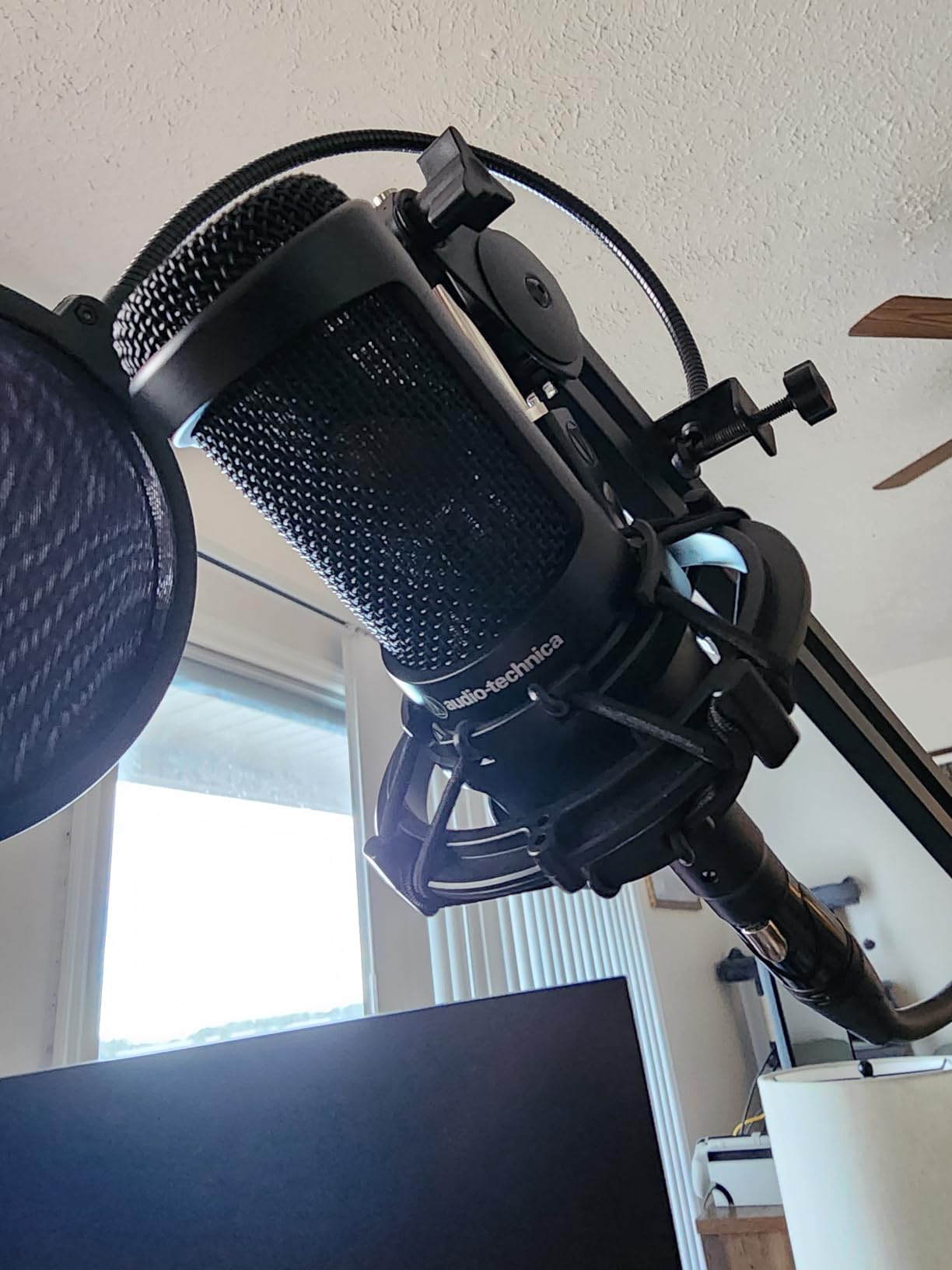
Switchable 80 Hz high-pass filter removes problematic low frequencies that accumulate in untreated spaces. The -10 dB pad handles louder sources without distortion, which extends the versatility across acoustic guitar, amplifier recording, and even loud vocal performances. Forum discussions highlight this microphone as excellent for untreated rooms where reflections and background noise create challenges.
Large diaphragm design provides smooth, natural sound with low self-noise. Recording vocals benefits from this character, and the same microphone handles acoustic guitar, amplifier cabinets, and ambient room capture without switching gear. That versatility matters when your studio sessions involve multiple instruments and you need consistent quality without constant gear changes.
Best applications for the Audio-Technica AT2035
Vocals receive exceptional treatment from this microphone, with warmth and clarity that suits spoken word podcasts as well as singing. Acoustic guitar recording captures full-body sound that smaller condensers sometimes lack. The high SPL handling also makes the AT2035 suitable for amplifier recording, particularly for clean-toned guitar approaches.
When to choose a different microphone
If you need USB connectivity without an audio interface, this microphone requires additional equipment. The XLR output means you need a mixer or interface with phantom power. For pure instrument-specific applications like drum overheads, a small diaphragm condenser like the AKG P170 might serve better.
8. sE Electronics X1 A – Modern Studio Contender
+ The Good
- New redesigned capsule
- 150 dB max SPL
- -20dB pad and 100Hz filter
- Internal windscreen
- The Bad
- Sound similar to cheaper alternatives
- Not as crisp as competitors
- May need line booster
The sE Electronics X1 A builds on the reputation of the original X1 with a completely redesigned capsule that aims for professional-grade performance at an accessible price. The capsule delivers what the company promises: stellar sonic performance with remarkable speed on transient reproduction. This combination handles complex sources like full drum kits and dynamic vocal performances without requiring multiple microphone changes.
The maximum SPL handling of 150 dB places this microphone in serious territory for high-energy recording scenarios. Kick drums, amplified guitar cabinets, and brass sections all pose no challenge for the X1 A. The -20 dB pad and 100 Hz low-cut filter provide useful tonal shaping options for different sources and recording environments.

The built-in internal windscreen eliminates plosives without requiring external pop filters, which simplifies setup significantly. For podcast recording and vocal sessions where you want to maintain consistent microphone positioning, this integrated approach removes variables that could compromise takes. The all-metal chassis rejects electrical interference effectively, which matters when recording near power cables and digital equipment.
Durability comes from the rugged metal housing, and the gold-plated XLR connector ensures reliable signal transfer session after session. A 2-year warranty backs the build quality, providing peace of mind for users investing in their first serious microphone purchase. The X1 A bridges the gap between budget starter mics and professional-grade equipment without requiring the full investment that studio workhorses demand.
Best applications for the sE Electronics X1 A
Drum recording benefits from the extreme SPL handling and transient accuracy. The internal windscreen makes this microphone excellent for podcast applications and spoken word recording. Acoustic instruments and amplified sources both receive accurate capture with the tonal flexibility the pad and filter provide.
When to choose a different microphone
Users seeking the absolute crispest high-end definition might find competitors outresolve the X1 A in extended frequency testing. Some forum users note that the sound signature does not differ significantly from more affordable alternatives, suggesting diminishing returns at this price point. If you need maximum transparency, higher-priced options deliver additional resolution.
How to Choose the Right Instrument Microphone
Selecting the right instrument microphone requires understanding a few key technical concepts that directly impact your recording results. Let me walk you through the main factors that separate a good microphone choice from a poor one for your specific situation.
Dynamic vs Condenser: Understanding the Technology
Dynamic microphones use electromagnetic induction to convert sound waves into electrical signals. They handle high sound pressure levels without damage and resist moisture, making them ideal for guitar amplifiers, drums, and live performance. The Shure SM57 and Sennheiser e 609 represent dynamic technology optimized for instrument recording.
Condenser microphones use capacitive technology that requires phantom power from your audio interface or mixer. They capture more detail and nuance with better frequency response extension, particularly in the high frequencies. Small-diaphragm condensers like the AKG P170 excel on acoustic instruments where detail matters most. Large-diaphragm condensers like the Audio-Technica AT2035 offer warmth and versatility across multiple sources.
Sound Pressure Level (SPL) Handling
SPL handling determines how loud a source a microphone can capture before distorting. Guitar amplifiers, drums, and brass instruments generate extreme pressure levels that require microphones rated for 150 dB or higher. Recording these sources with a microphone rated for only 120 dB results in distorted recordings that cannot be fixed in post-production.
The Sennheiser E 604 handles over 160 dB, making it exceptional for kick drums and snare drums during live recordings. The sE Electronics X1 A reaches 150 dB, suitable for most instrument recording scenarios. Dynamic microphones generally handle higher SPL than condensers, which is why guitar amps and drums traditionally use dynamic mics.
Polar Patterns and Why They Matter
Cardioid patterns capture sound from the front while rejecting sounds from the sides and rear. This works well for most instrument recording applications where you want to isolate your target source from room noise or other instruments. Most instrument microphones use cardioid patterns.
Super-cardioid patterns like the Sennheiser e 609 provide even tighter rear rejection, which matters on live stages where monitor speakers create potential feedback. Understanding polar patterns helps you position microphones correctly and choose mics appropriate for your acoustic environment.
Phantom Power Requirements
Condenser microphones require 48V phantom power from your audio interface or mixer to operate. Dynamic microphones and passive ribbon microphones do not require phantom power. If your recording setup lacks phantom power capability, you are limited to dynamic microphones only.
Forum discussions frequently highlight confusion around USB versus XLR microphones for beginners. USB microphones have built-in analog-to-digital conversion, while XLR microphones require an external interface. XLR generally provides better audio quality and flexibility, which is why professional studios use XLR connections exclusively.
Untreated Room Considerations
Home studios often record in untreated rooms with reflective surfaces that introduce unwanted reverb and delay into recordings. Microphone choice helps mitigate these issues through polar pattern selection and frequency response characteristics. Large-diaphragm condensers like the Audio-Technica AT2035 with included shock mounts handle these environments better than unprepared setups.
Positioning becomes more critical in untreated spaces. Close-miking techniques reduce the amount of room sound captured while maintaining clear signal. The dynamic microphones excel at close-miking where their frequency response character and SPL handling provide clean results even in problematic acoustic spaces.
The 3:1 Rule for Microphone Placement
When using multiple microphones to record a single source, the 3:1 rule helps prevent phase cancellation. Place the second microphone at least three times the distance from the first microphone as the first microphone is from the source. For example, if your first mic is 6 inches from the guitar amp speaker, position the second mic at least 18 inches away from the first mic.
This rule applies primarily to recording sessions with multiple mic positions on a single source, like drum overheads combined with close mic positions. In most home studio scenarios using a single microphone, the 3:1 rule does not apply.
FAQs
What is the best instrument microphone?
The Shure SM57 remains the best overall instrument microphone due to its legendary versatility, durability, and proven performance across guitar amps, drums, and vocals. For specific applications, other mics might excel: the Sennheiser E 604 for drums, AKG P170 for acoustic guitar, or Audio-Technica AT2035 for studio versatility.
What is the 3:1 rule for mics?
The 3:1 rule states that when using multiple microphones on a single source, the second microphone should be placed at least three times further from the source than the first microphone is from the source. This helps prevent phase cancellation issues that can degrade recording quality.
Why is the Shure SM7B so popular?
The Shure SM7B is popular for vocal recording due to its smooth frequency response, excellent rejection of background noise, and ability to handle close-mic technique without harsh proximity effect. It became a podcasting standard but excels equally for vocals and broadcast applications.
What are the big 5 microphones?
Industry standards often called the ‘big 5’ include the Shure SM57 for instrument miking, Neumann U87 for vocal recording, AKG C414 for versatile condenser work, Royer R-121 for ribbon applications, and Shure SM7B for broadcast and vocals. These microphones define professional recording quality across different applications.
Final Thoughts on the Best Instrument Microphones
The Shure SM57 remains the industry standard for a reason. If you need one microphone that handles guitar amps, drums, and general instrument recording reliably, this is the one to own. The durability means it will serve you for decades, and the resale value holds well if your needs evolve.
For home studios with untreated rooms, the Audio-Technica AT2035 provides versatility across vocals and instruments without requiring extensive acoustic treatment. The included shock mount and switchable filters address common room problems directly.
Budget-conscious buyers should look at the AKG P170 for acoustic instruments and the Sennheiser e 609 for guitar amp recording. Both deliver professional results at price points that do not require saving for months. The best instrument microphone depends entirely on your specific needs, but starting with one of these eight options ensures you get quality that serves your music for years to come.