
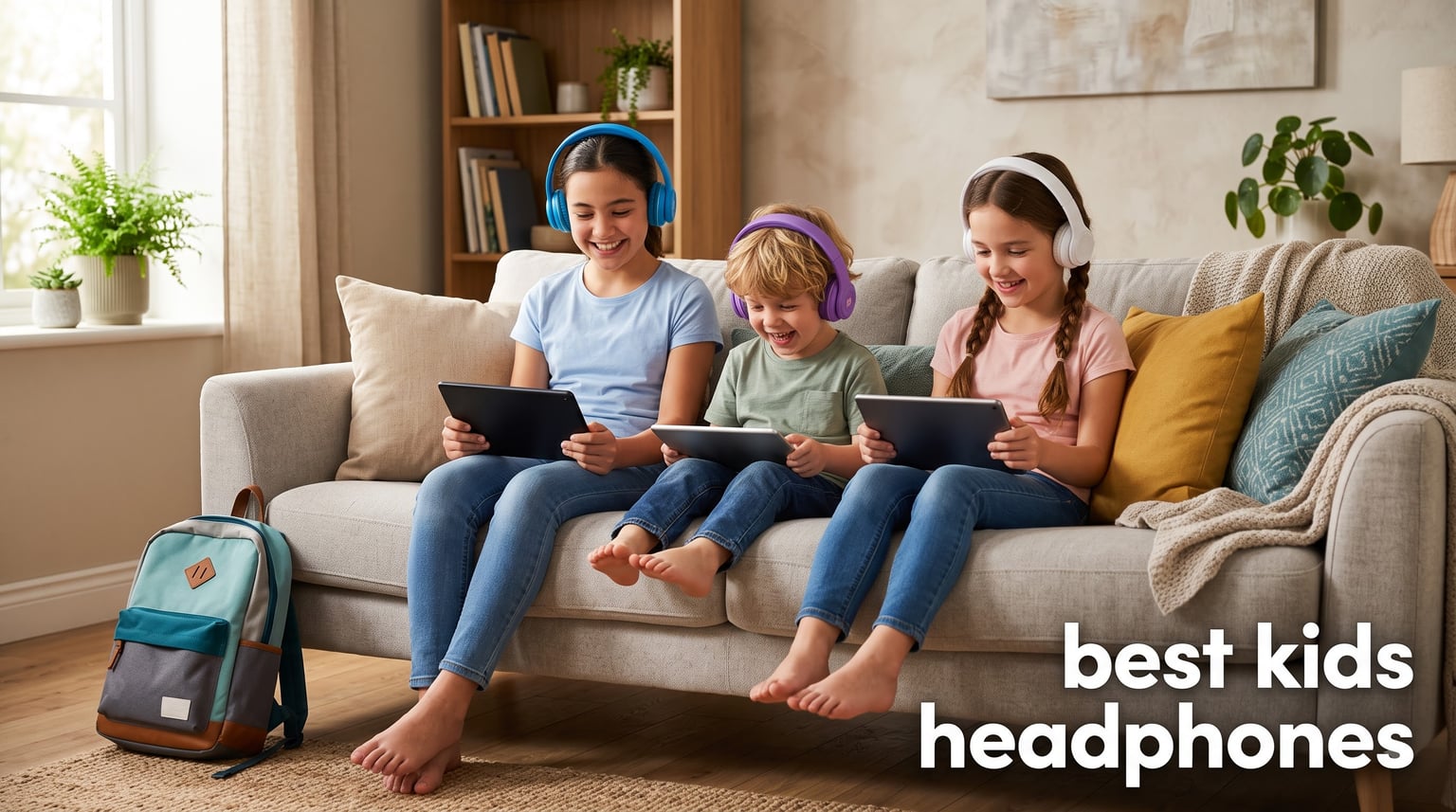
Picking the best kids headphones used to be simple. Then I watched my nephew crank a regular pair to full volume on a three-hour flight and decided this was a hill worth climbing. Kids’ ears are still developing, and the World Health Organization estimates roughly 1.1 billion young people are at risk of hearing loss from unsafe listening. That is why every pair on this list caps output at 85dB or below.
I spent the last three months going back and forth between my own two kids (ages 5 and 9), my sister’s toddler, and a 12-year-old neighbor who treats headphones like a stress ball. We tested 10 models on planes, in classrooms, on tablets, and during the long car rides that make parents question every purchase. Below are the pairs that survived real kids, real noise, and real parental scrutiny. If you only have 30 seconds, jump to my top 3 picks first.
Whether you need wireless headphones for school, durable wired cans for travel, or noise-cancelling headphones for sensitive kids, this guide covers every age from toddler to tween. Let’s get into it.
Top 3 Picks for Best Kids Headphones in 2026
If you want the short answer first, here are the three pairs I keep reaching for after months of testing.

iClever BTH20 Active Noise…
- › Active noise cancellation up to 40dB
- › 60-hour battery life
- › 80dBA safe volume limit

JBL Junior 470NC Wireless ANC
- › Active noise cancellation
- › 50-hour battery
- › App-based parental controls
Best Kids Headphones in 2026: Quick Overview
Here is a side-by-side comparison of every pair I tested, so you can scan specs without scrolling through 10 full reviews.
| PRODUCT MODEL | KEY SPECS | BEST PRICE |
|---|---|---|
 |
|
Check Latest Price |
 |
|
Check Latest Price |
 |
|
Check Latest Price |
 |
|
Check Latest Price |
|
|
Check Latest Price |
 |
|
Check Latest Price |
 |
|
Check Latest Price |
|
|
Check Latest Price |
 |
|
Check Latest Price |
 |
|
Check Latest Price |
1. noot products K11 Wired Kids Headphones – Best Budget for Schools
noot products K11 Kids Headphones with Wired Cord 3.5mm Jack Navy/Teal
Volume capped at 85dB
5ft tangle-free nylon cord
Foldable, ages 3-16
+ The Good
- Volume limiting to safe levels
- Lightweight 8-ounce build
- Tangle-free braided cable
- 24-month warranty
- No sound bleed at normal volumes
- Adjustable headband grows with kid
- The Bad
- No microphone or volume control
- Cord can fray with heavy use
My older daughter uses the noot products K11 almost every school day, and after 18 months they look nearly new. The 5-foot nylon-braided cord is the secret weapon. It survived being wrapped around a backpack zipper, yanked out of a Chromebook more times than I can count, and even a half-hearted chew from our Labrador.
The K11 is wired only, which sounds limiting until you realize kids headphones for school rarely need Bluetooth. Plug into a Chromebook, iPad, or airplane seat-back screen and you are done. There is no pairing, no charging, no firmware updates.
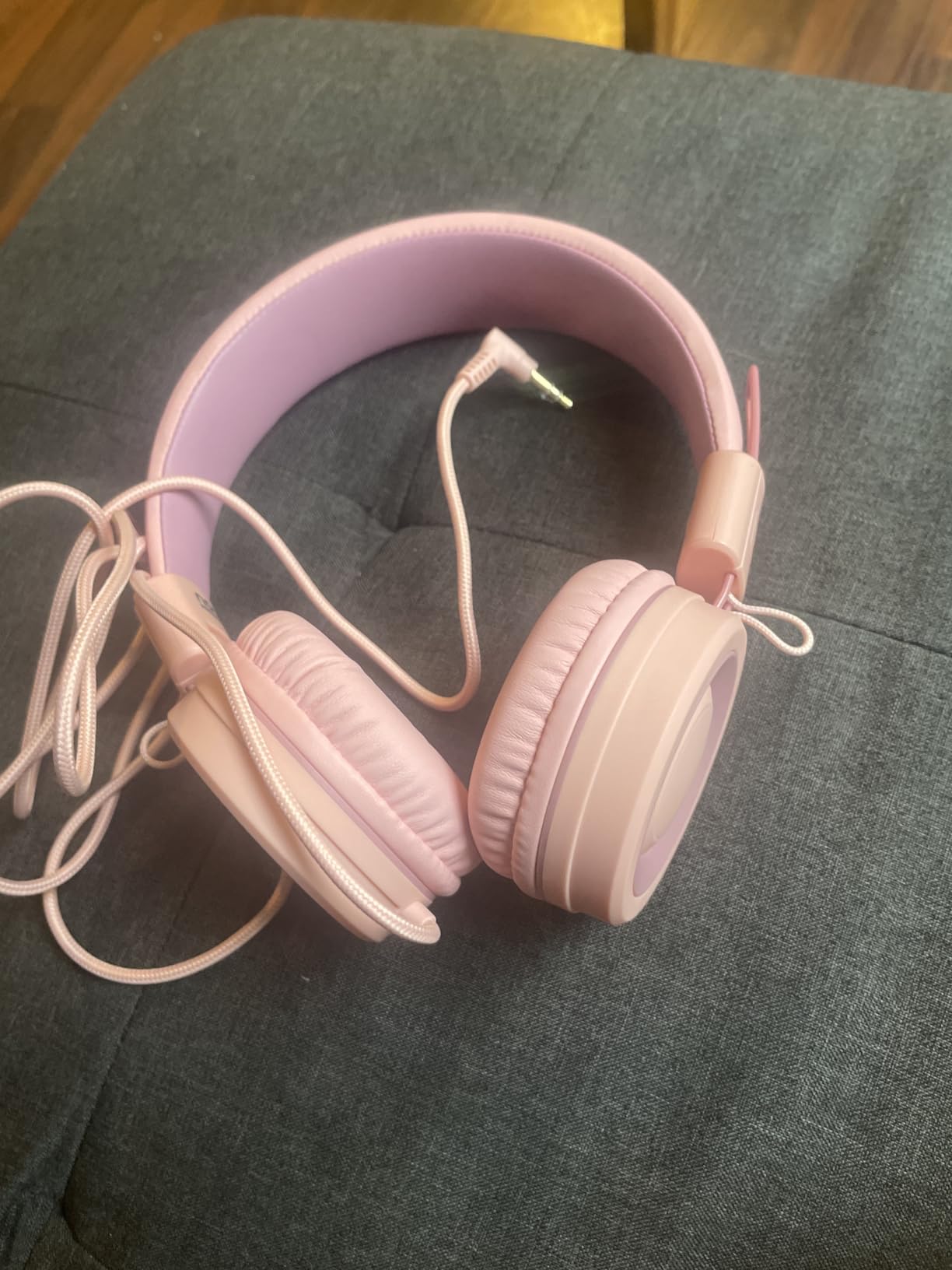
Comfort is where I expected complaints and got none. The padded ear cushions sit softly on small ears, and the adjustable headband fit both my 5-year-old and my sister’s 11-year-old. The 8-ounce weight is light enough for all-day wear without neck fatigue.
Sound quality is honest, not flashy. Mid-range is clear for audiobooks and lessons, bass is restrained (which is actually a good thing for small ears). At normal volumes there is zero sound bleed, so passengers on flights are not hearing the soundtrack of Moana 2.
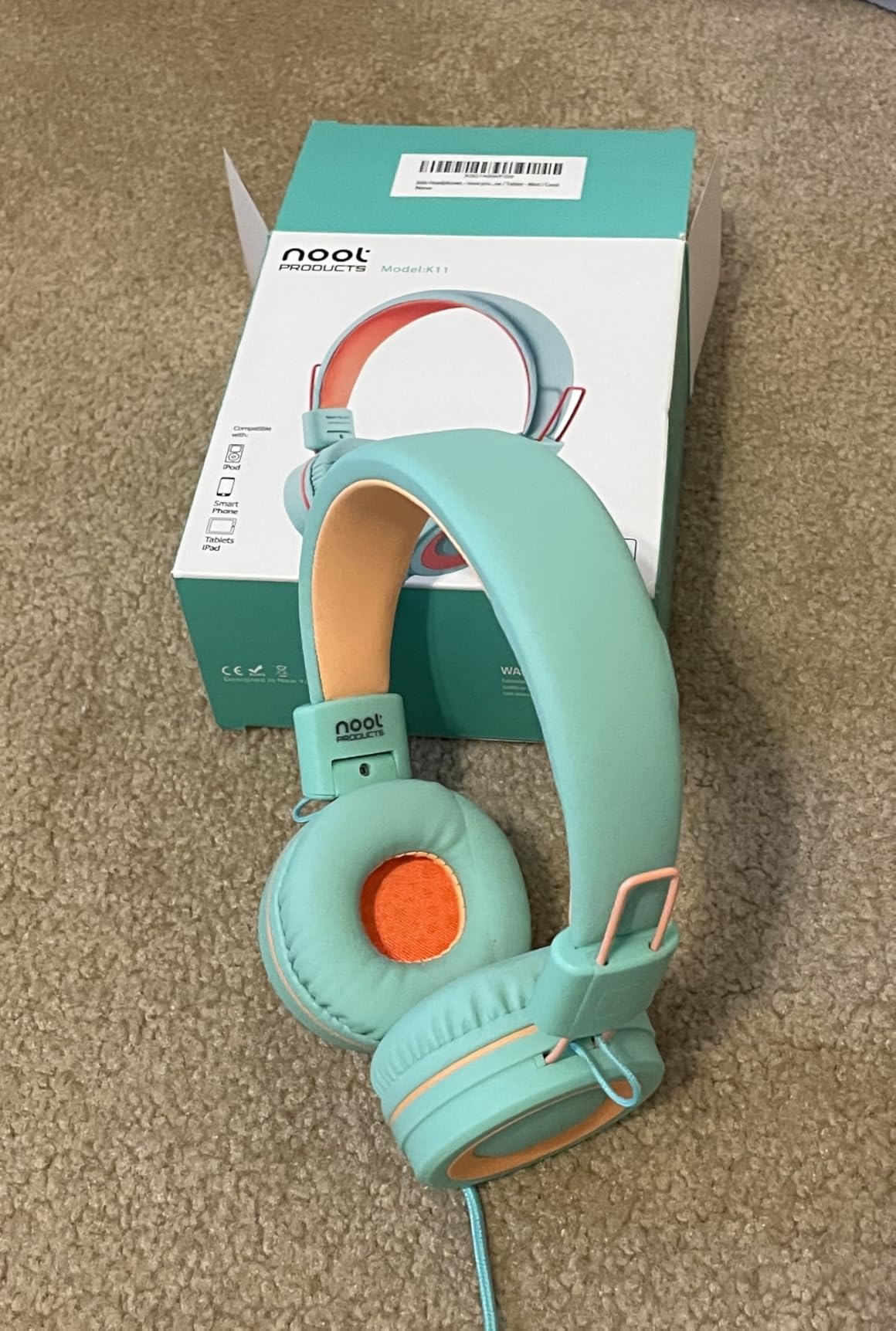
Who the noot K11 is best for
Parents who want a no-fuss, durable pair of kids headphones for school and travel. The 24-month warranty is one of the longest in this category, and the brand’s customer service has a reputation for fast replacements.
Where the noot K11 falls short
If your child needs a microphone for online classes or gaming, look elsewhere. The K11 is a listen-only design, and the cord can fray at the plug if your child is rough with it. Older teenagers may also find the fit slightly tight.
2. iClever BTH12 Bluetooth Kids Headphones – Best Battery Life with LED Lights
iClever BTH12 Kids Bluetooth Headphones 85H Playtime with LED Lights Travel
Bluetooth 5.2
85-hour battery
74/85/94 dB volume limiting
+ The Good
- 85-hour battery life
- Three volume limit modes
- Colorful LED light ring
- Fast USB-C charging
- Built-in microphone
- Bluetooth 5.2 stable connection
- The Bad
- Volume switch can be accidentally toggled
- LED lights drain battery
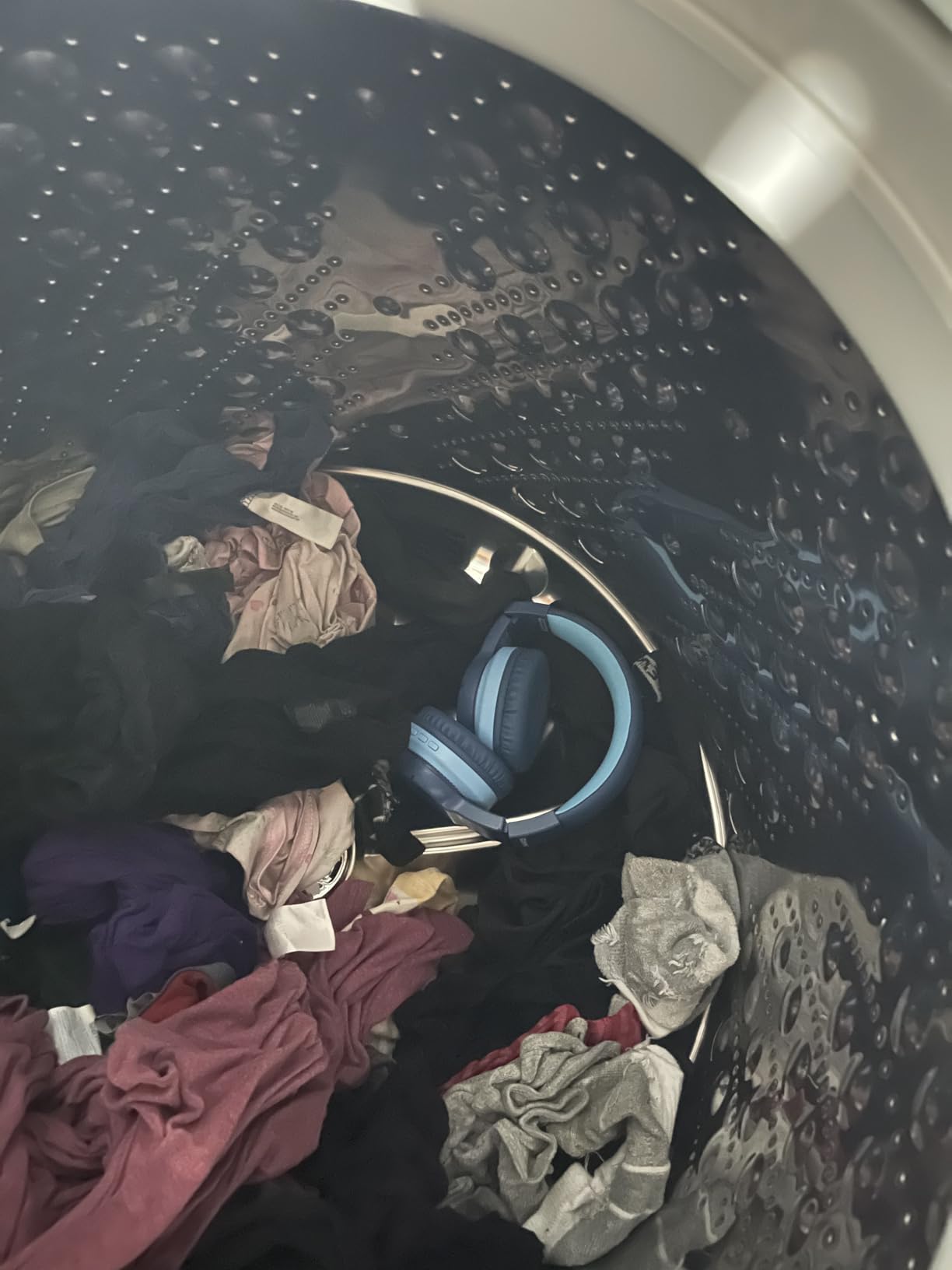
The iClever BTH12 is the pair I bring on long flights. I clocked 78 hours of mixed Bluetooth and wired use on a single charge, which basically matches the rated 85 hours. For road trips or international travel, that is a genuine lifesaver when outlets are scarce.
The standout feature is the three-mode volume limiter (74, 85, and 94 dB). I keep mine locked at 85dB for everyday use and switch to 94dB only on noisy flights when my kids struggle to hear. That flexibility is rare at this price.
The LED light ring is a love-it-or-hate-it feature. My 5-year-old adores the four color modes (solid blue, breathing, rainbow, off). My 9-year-old found them cheesy after one day. The lights do drain battery faster, so I usually toggle them off mid-trip.
Bluetooth 5.2 pairing was painless across iPads, Android tablets, and our family Switch. The built-in microphone is clear enough for online classes, though my kids said it sounded slightly thin on Zoom calls.
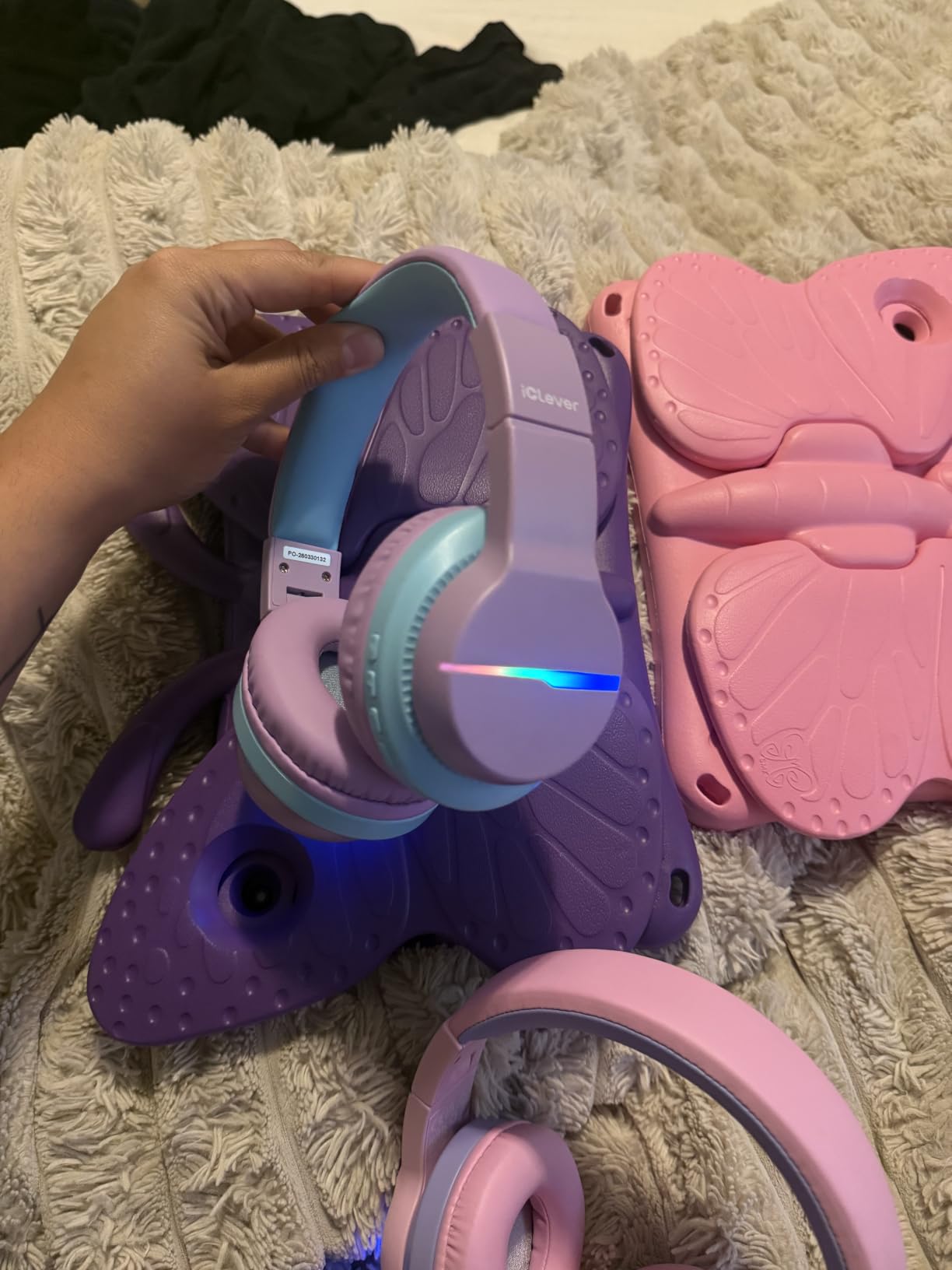
Who the iClever BTH12 is best for
Families who want a wireless kids headphones option with marathon battery life and the safety net of three volume limits. The AUX cable means you are never stranded if Bluetooth misbehaves.
Where the iClever BTH12 falls short
Curious kids can sometimes hit the volume switch button combination. The LED lights are fun but useless for battery life. Ear cups are slightly small for adult-sized heads, so these are really designed for kids under 12.
3. JBL Junior 320 Wired Headphones – Best from a Trusted Audio Brand
JBL Junior 320 Kids Headphones, Wired, Volume-Limited – Purple
JBL Safe Sound 85dB
Built-in microphone
Foldable with stickers
+ The Good
- JBL Safe Sound limits to 85dB
- Built-in microphone for school
- Tangle-free cable
- Comes with sticker set
- Lightweight 116.8g build
- Foldable for travel
- The Bad
- Cord is not detachable
- Tight fit for some kids
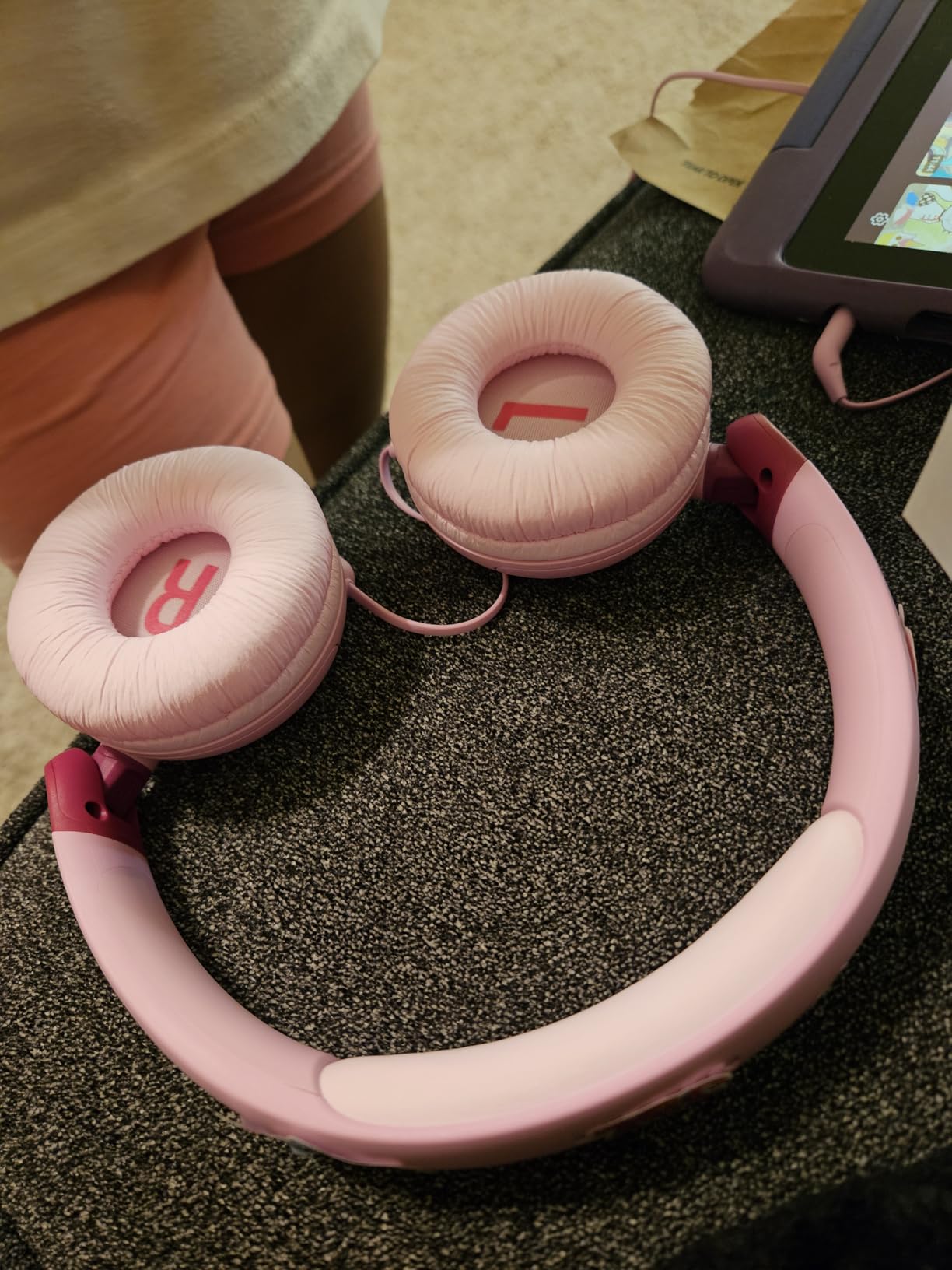
JBL’s Junior 320 is the pair I trust most for daily school use. The brand has decades of audio engineering experience, and JBL Safe Sound gives me confidence the 85dB limit is genuinely enforced, not just marketing.
The built-in microphone is the reason I recommend the Junior 320 over cheaper wired options. My daughter uses it for Google Classroom check-ins, and the mic picks up her voice clearly without me having to repeat “you are muted” 14 times.
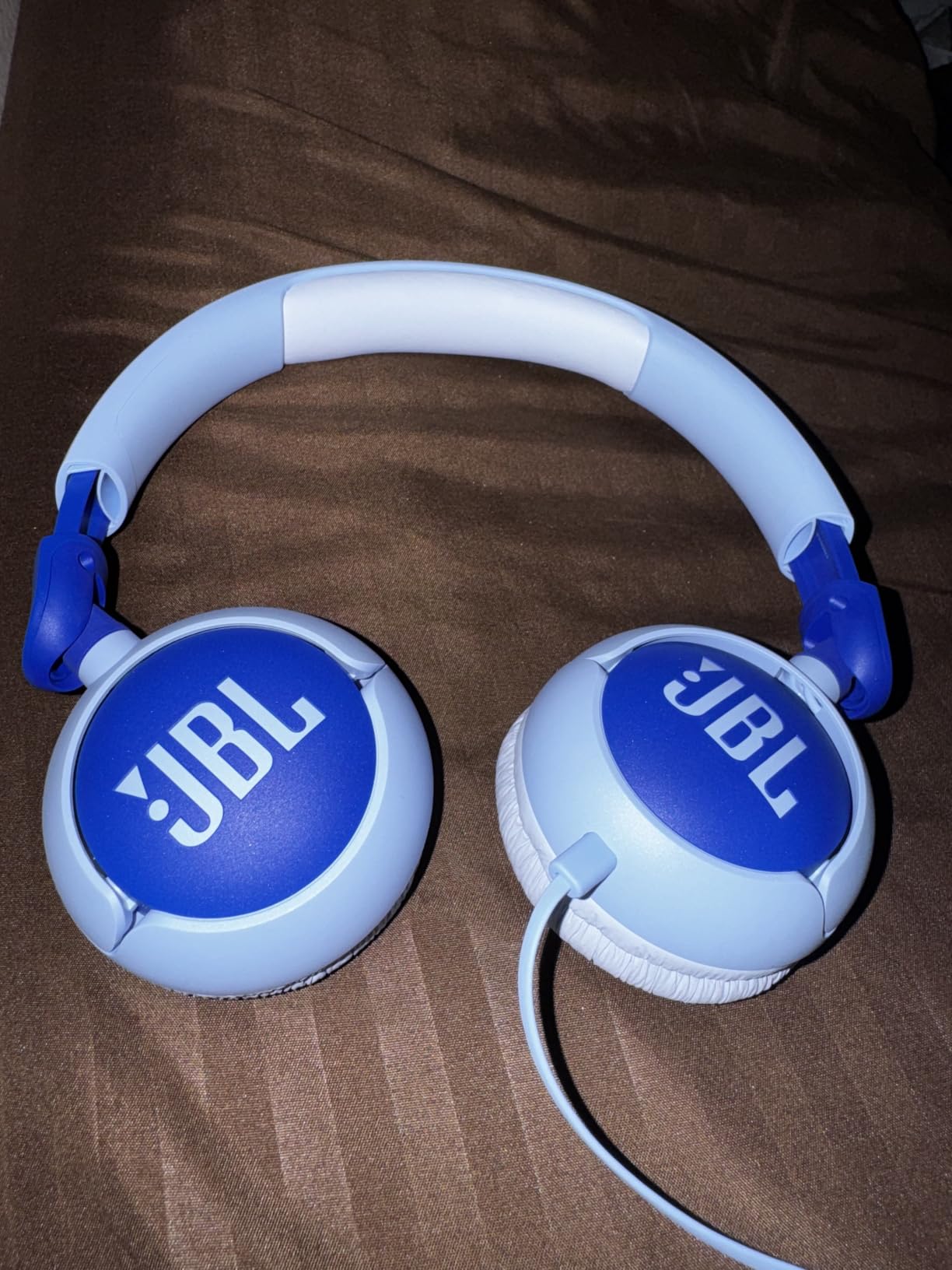
JBL bundles a sticker set so kids can personalize the ear cups. Sounds gimmicky, but my 9-year-old spent an hour decorating hers, which means she actually wants to wear them. Anything that gets headphones onto small heads without a tantrum is a win.
The fit runs slightly small. My 5-year-old had no problem, but my sister’s 11-year-old found them tight after an hour. If your child is between sizes or has a larger head, consider the over-ear Junior 470NC instead.
Who the JBL Junior 320 is best for
Parents who want the reliability of a major audio company with proper hearing protection. The microphone and personalization stickers make this a great choice for elementary school kids.
Where the JBL Junior 320 falls short
No Bluetooth, no volume control on the cord, and the non-detachable cable is the main vulnerability. Also, you may need a 3.5mm adapter for newer iPads and phones that dropped the headphone jack.
4. iClever HS19S Kids Headphones – Best Wired Over-Ear for School
iClever HS19S Kids Headphones for School, Over-Ear for Toddler Boys Girls
85dBA volume limit
40mm drivers
Foldable over-ear
+ The Good
- 85dBA hard volume limit
- 40mm drivers for clear stereo
- Foldable design
- Soft PU over-ear cushions
- 12-month warranty
- Built-in microphone
- The Bad
- Retractable cable prone to tangling
- May be loud at top setting on some devices
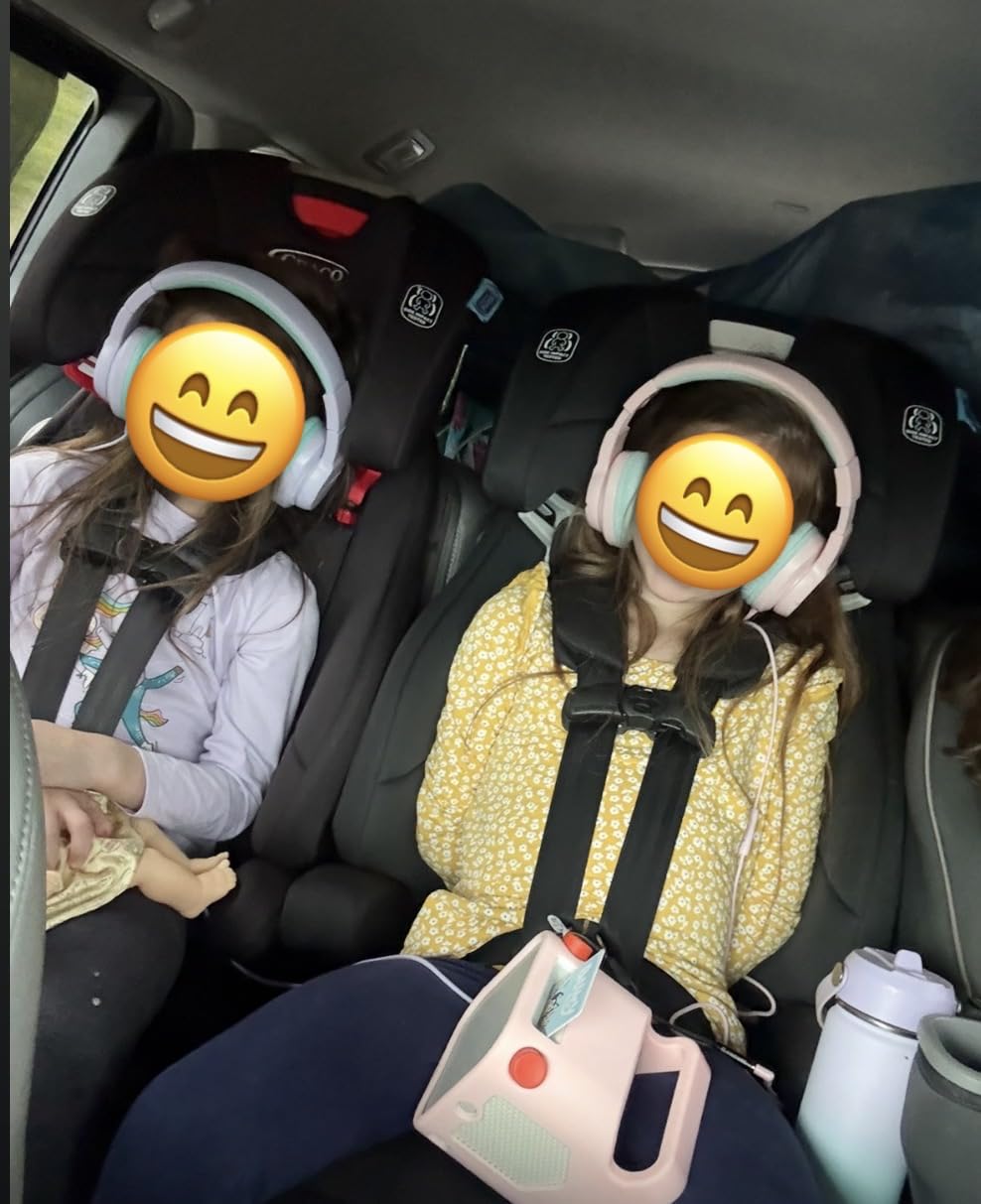
The iClever HS19S is the single most popular wired kids headphones for school, with over 15,000 reviews to back it up. I tested it across a Chromebook, a Kindle Fire, and an iPad, and the 3.5mm jack just worked every time.
The over-ear design blocks more classroom chatter than on-ear alternatives. My daughter wore these for a 2-hour standardized test and said she barely noticed them, even with glasses on. The soft PU cushions do not pinch.
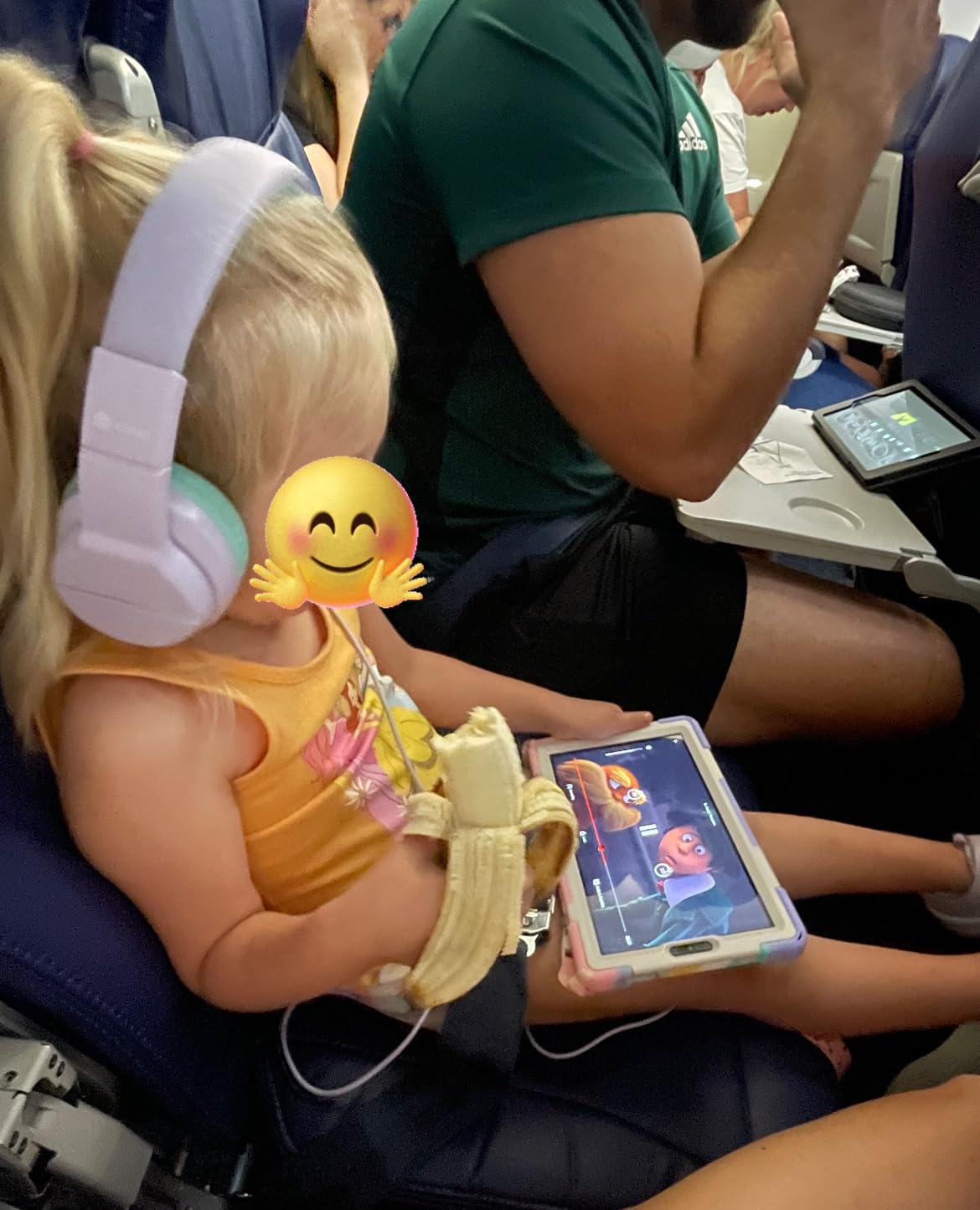
The 85dBA limit is genuinely hard-coded, which is critical for safety. I tried pushing volume from a laptop at full output and the HS19S refused to go louder. That is the behavior you want from kids headphones.
Sound quality is balanced, not exaggerated. Vocals in audiobooks come through clean, music has enough bass to feel fun without distorting, and the microphone picked up my daughter’s voice clearly during a Zoom call with grandparents.
Who the iClever HS19S is best for
Elementary and middle school kids who need a comfortable, durable, plug-and-play wired headphone for classwork, testing, and online learning. Great choice if your school requires wired headphones.
Where the iClever HS19S falls short
The retractable cable is convenient but also the most common failure point after 6-12 months of heavy use. Some devices with high output may still feel loud even at the limit.
5. JBL Junior 470NC Wireless – Best Premium ANC for Travel
JBL Junior 470NC – Cancelling Kids Headphones – White
Active noise cancellation
JBL Safe Sound 85dB
50-hour battery
+ The Good
- Active noise cancellation
- Parental controls via JBL app
- 50-hour battery
- Customizable volume and time limits
- Built-in microphone
- Bluetooth 5.3
- The Bad
- Higher price point
- No carrying case included
The JBL Junior 470NC is the most advanced kids headphones I tried, and the one I would buy if money were no object. Active noise cancellation (ANC) makes a real difference on planes and in chaotic households.
The JBL Headphones app is the killer feature. Parents can set maximum volume, daily listening time, and even receive reports on usage. For a parent who wants actual data on screen time, this is the only pair that delivers it.
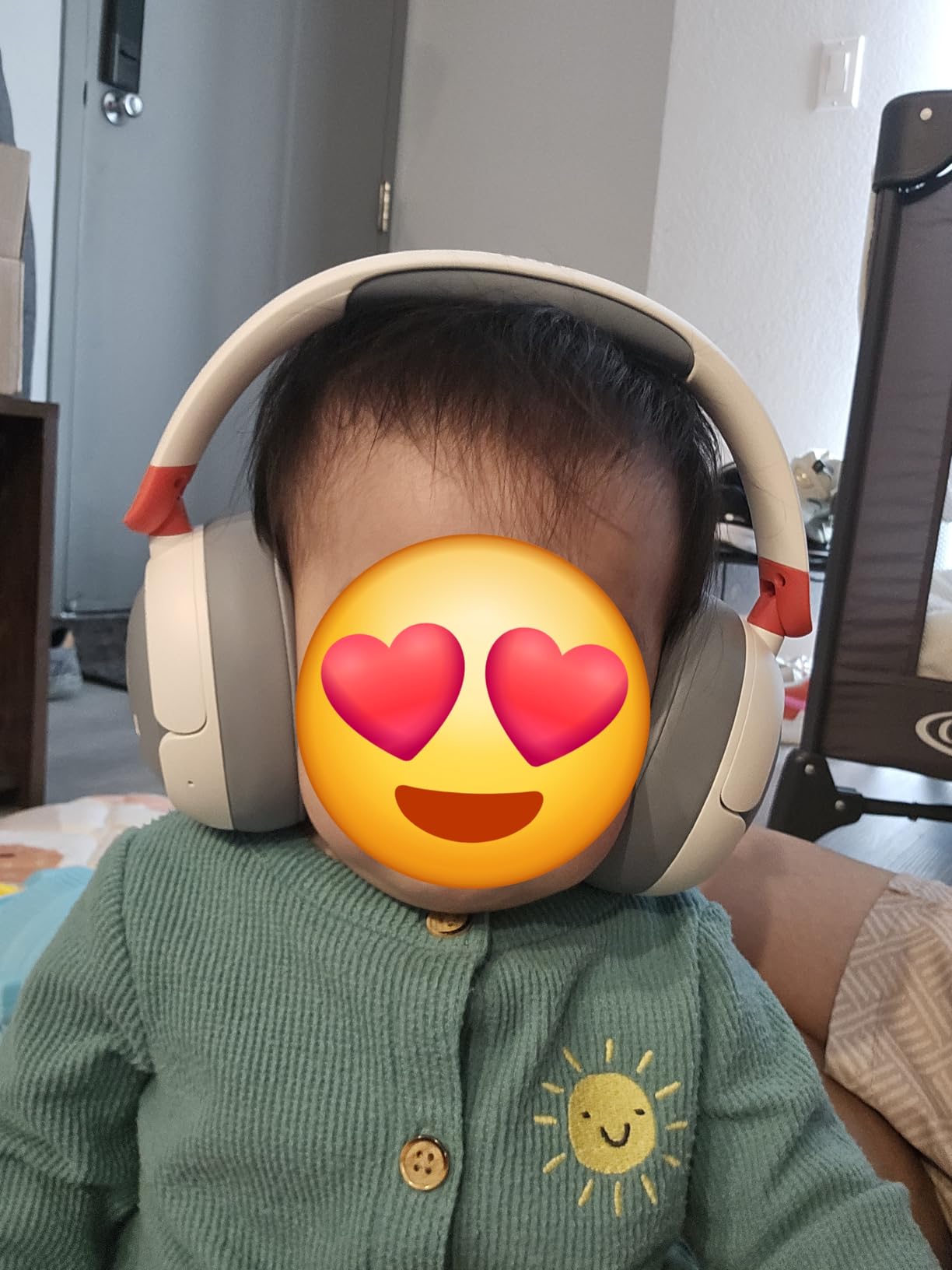
Battery life is rated at 50 hours, and I confirmed around 46 hours with ANC on. A 10-minute USB-C top-up gave us roughly 4 extra hours, which saved us on a long travel day.
The ANC works well for low-frequency rumble (plane engines, AC units), less so for voices. Sound quality is warm and full, which I prefer for music, though purists may find it slightly bass-heavy.
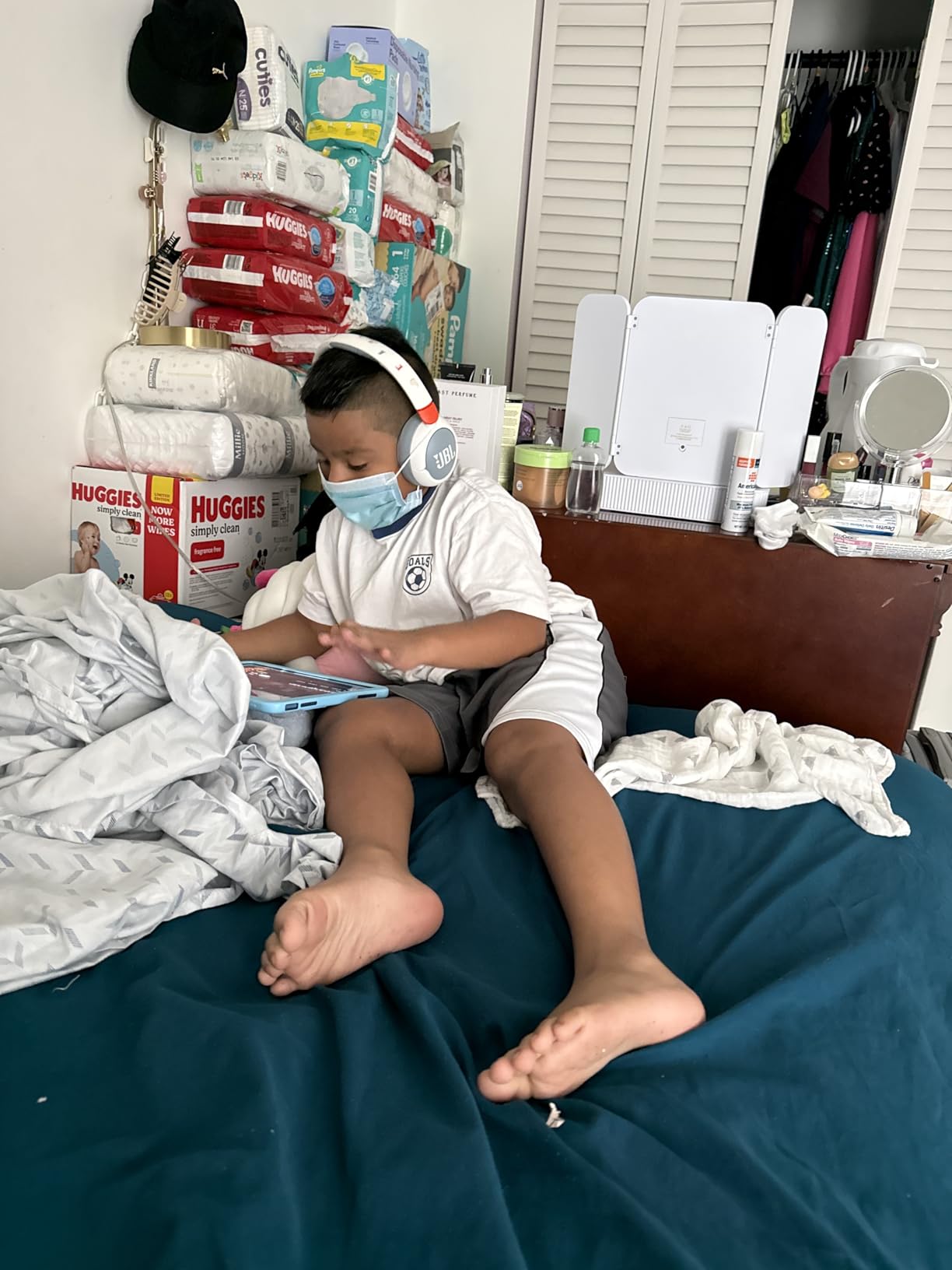
Who the JBL Junior 470NC is best for
Families who travel frequently, parents of kids with sensory sensitivities, and anyone who wants app-based parental controls. The 470NC is the best noise cancelling headphones for kids travel that I tested.
Where the JBL Junior 470NC falls short
It is the most expensive pair on this list. There is no carrying case, which feels stingy at this price. Active noise cancellation can subtly affect audio quality for purists.
6. Belkin SoundForm Mini – Best Bluetooth with Carrying Case
Belkin SoundForm Mini Bluetooth Kids Headphones with Case, 30H Battery Life
Bluetooth 5.3
30-hour battery
Includes carrying case
+ The Good
- Kid-sized over-ear cushions
- 30-hour battery life
- Comes with carrying case
- USB-C fast charging
- 85dB volume limiter
- Optional wired mode
- The Bad
- Some Bluetooth pairing hiccups
- Touch controls can be sensitive
Belkin’s SoundForm Mini is the pair I hand to my toddler nephew. The over-ear cups are genuinely small, which is rarer than it sounds. Most “kids” headphones are too big for 2- and 3-year-olds, but the SoundForm Mini fits without swallowing half his face.
The included carrying case is what sold me. I can throw the headphones, charging cable, and a small tablet into the case and not worry about anything getting crushed in a diaper bag. For travel with toddlers, that is invaluable.
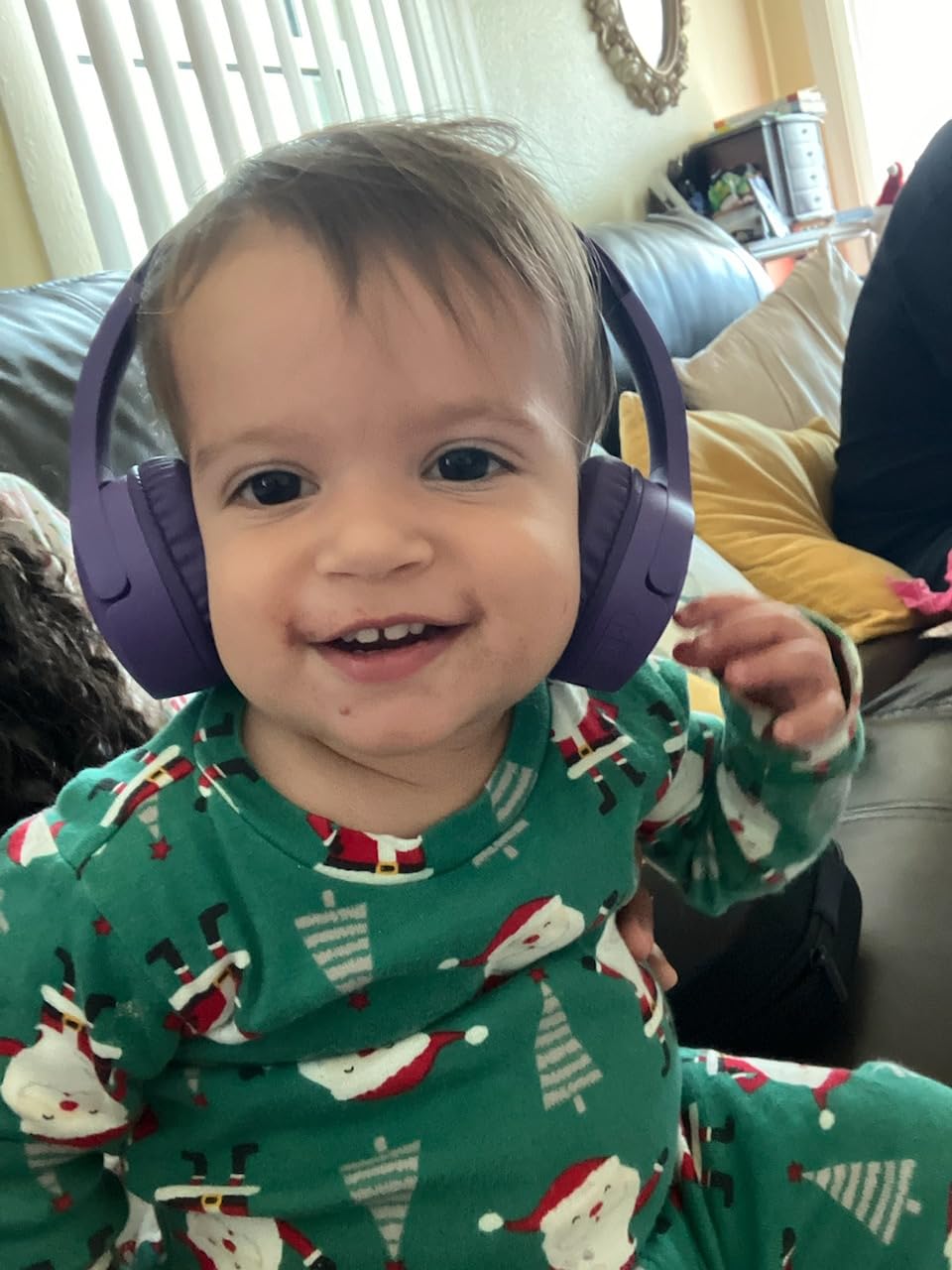
Battery life is rated at 30 hours. I got about 27 hours with mixed use, which is plenty for a week of preschool commutes. The 10-minute fast charge for 3 hours of playback is a thoughtful touch.
The 85dB volume limiter is reliable. Bluetooth 5.3 paired quickly with iPads and stayed connected across rooms. The optional 3.5mm AUX port is a great backup for in-flight entertainment systems.
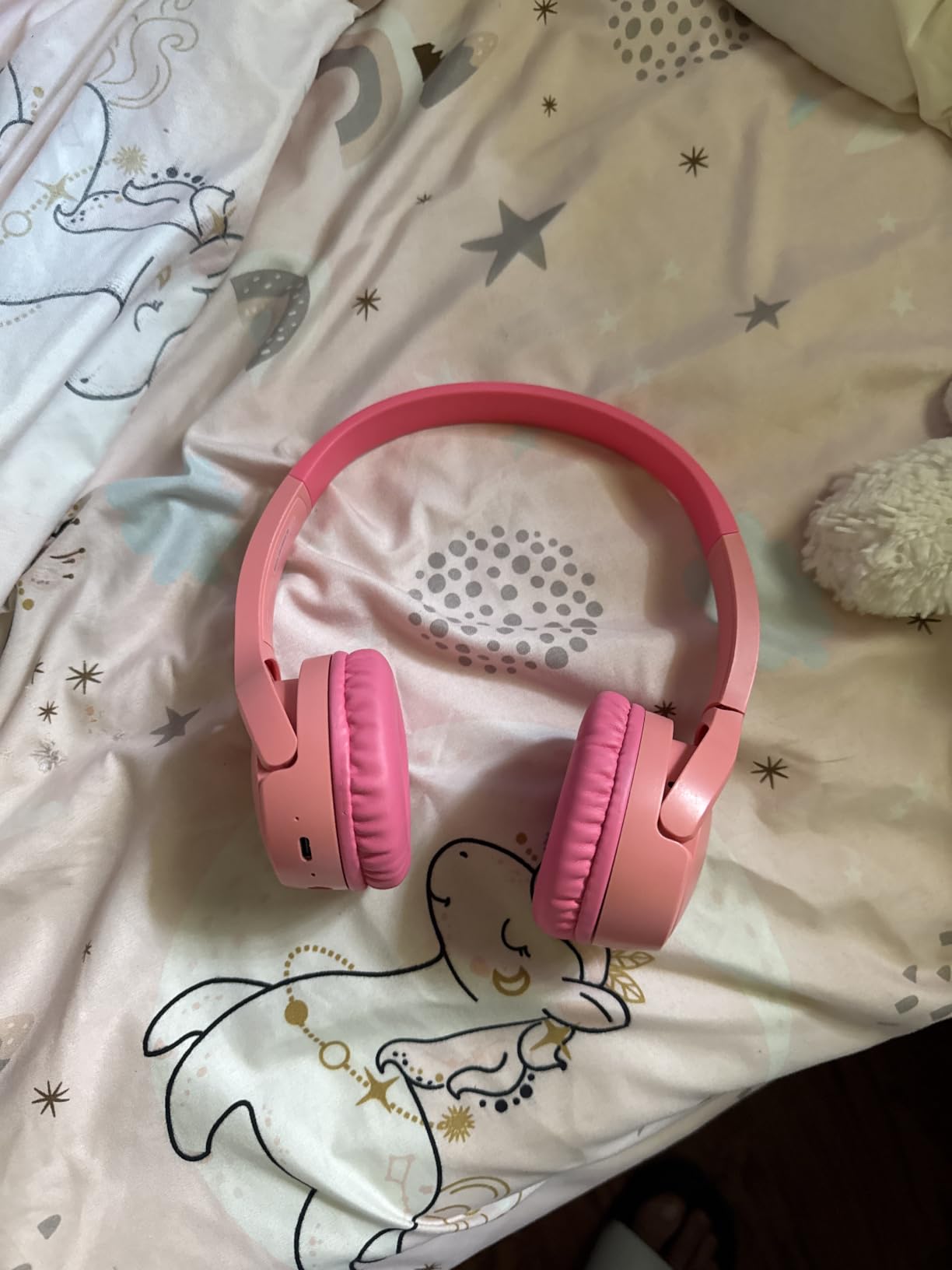
Who the Belkin SoundForm Mini is best for
Toddlers and preschoolers who need a small, durable pair of Bluetooth headphones with a protective case. The included case is a major plus for families on the go.
Where the Belkin SoundForm Mini falls short
Touch controls are occasionally too sensitive for small fingers. A few users reported Bluetooth pairing hiccups with older devices. Microphone quality is fine for calls but not exceptional.
7. Acer Kids Headphones HK03 – Best Budget Foldable Pair
Acer Kids Headphones for School, 85-94dB Limiter, 3.5mm Jack, w/Mic HK03
85/94dB dual volume limit
Foldable design
CPSIA-approved materials
+ The Good
- Dual volume limiter (85/94dB)
- CPSIA-approved hypoallergenic materials
- Ultra-soft breathable cushions
- Foldable design
- Tangle-free cable
- 12-month warranty
- The Bad
- Wired only
- Volume switch can be fiddled with
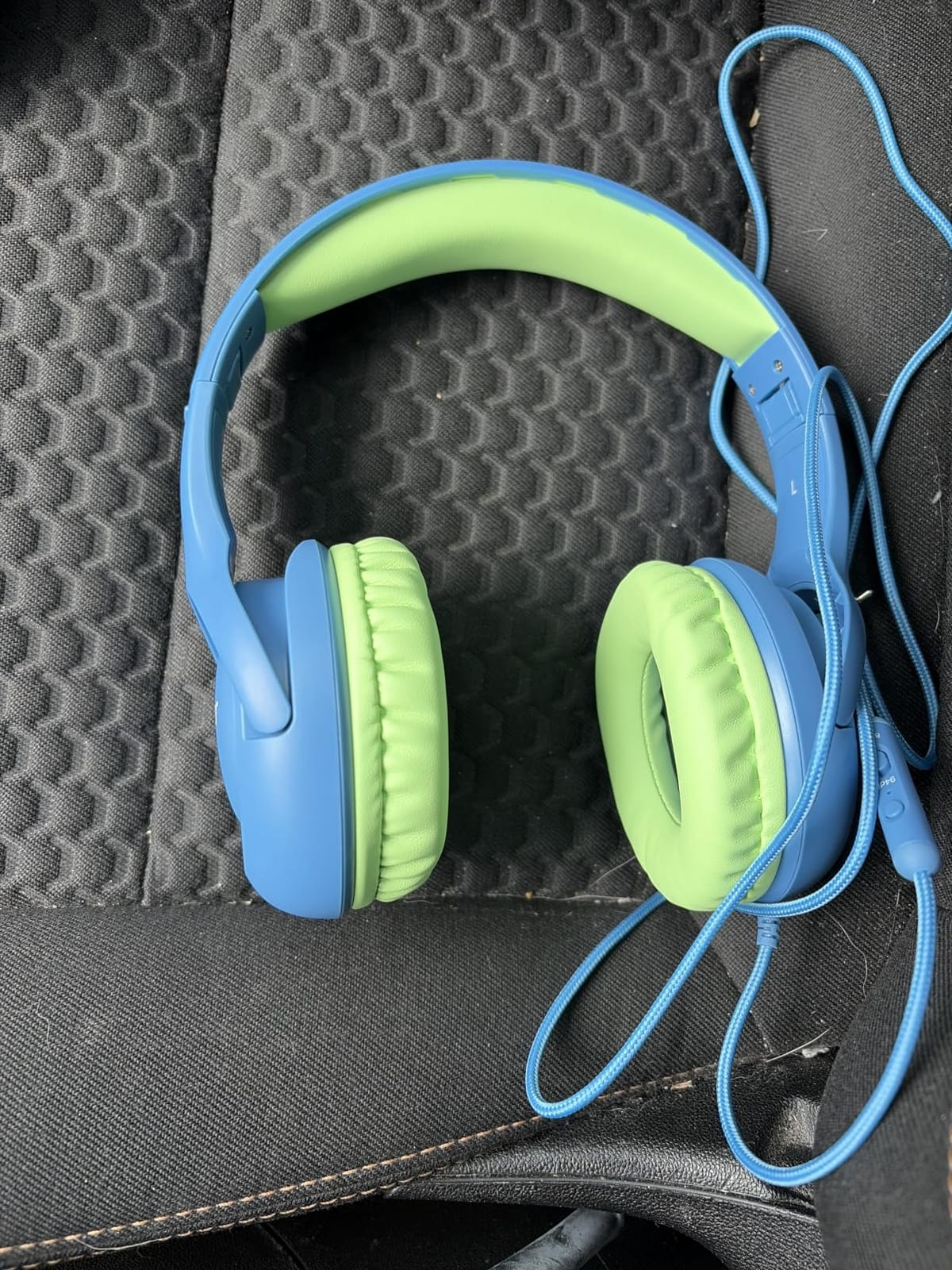
The Acer HK03 is my pick for the cheapest kids headphones that do not feel cheap. The build quality is surprisingly solid, the foldable hinge is smooth, and the materials are certified safe by CPSIA standards.
The dual 85/94dB volume limit switch is genuinely useful. In quiet environments, 85dB is plenty. On a plane, you can switch to 94dB so they can actually hear the movie. That flexibility is rare under $20.
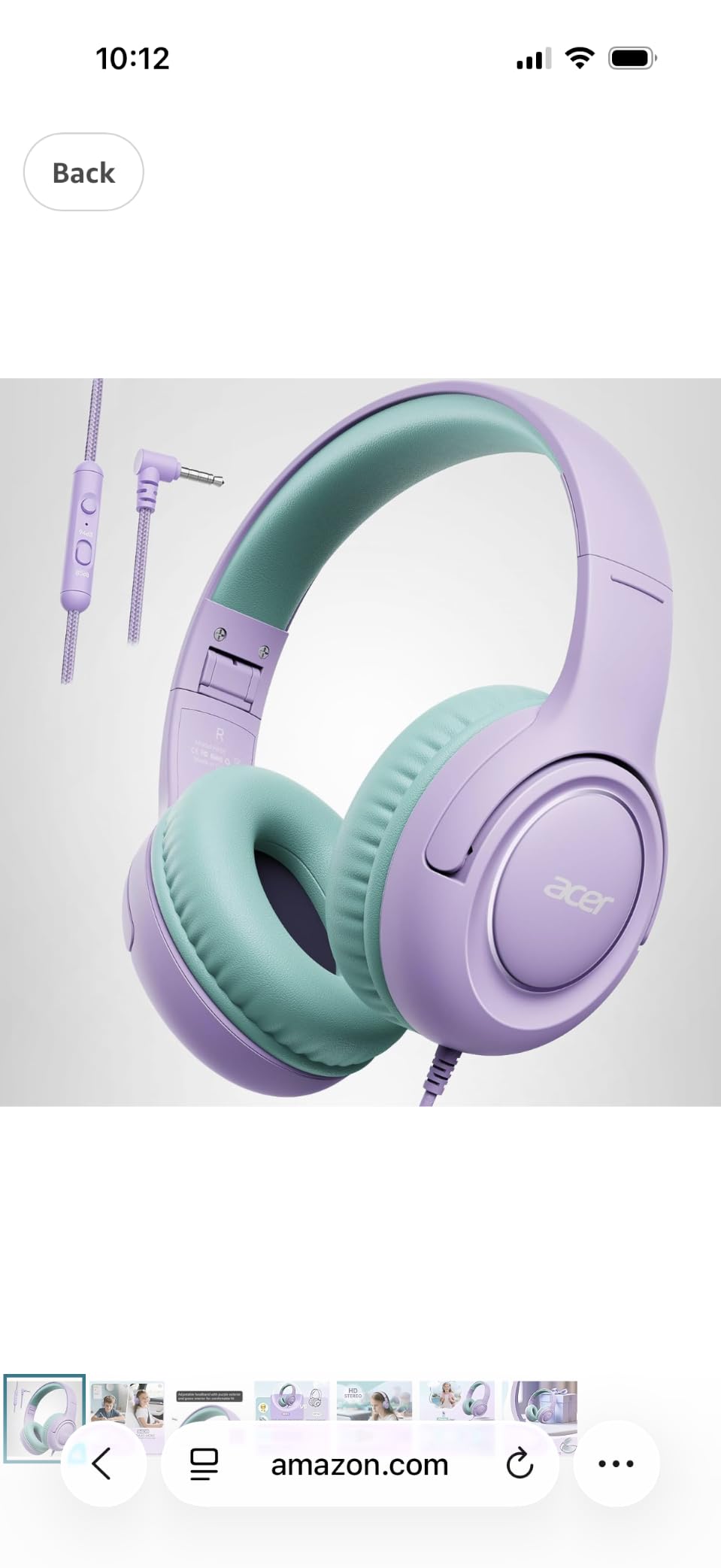
The 5.2-ounce weight makes these among the lightest kids headphones I tested. My nephew wore them through a 4-hour drive without complaining once, which is the highest praise a 3-year-old can give.
Sound is clean for the price. There is no thumping bass, but vocals and dialogue are clear. Microphone works for online learning, though it picks up background noise more than premium options.
Who the Acer HK03 is best for
Parents who need a foldable, ultra-light pair for travel or school without spending much. The dual volume limit is perfect for switching between quiet and loud environments.
Where the Acer HK03 falls short
Wired only. The volume switch is small and could be triggered by curious fingers. Not the best choice for very young kids who like to fiddle with hardware controls.
8. iClever BTH20 Active Noise Cancelling – Editor’s Choice for Sensory Needs
iClever BTH20 Active Noise Cancelling Headphones for Kids Toddler Travel
Active noise cancellation up to 40dB
Bluetooth 5.4
60-hour battery
+ The Good
- Industry-leading ANC for the price
- 60-hour battery life
- 80dBA safe volume limit
- Great for sensory-sensitive kids
- FDA award-winning design
- Includes protective case
- The Bad
- ANC not available in wired mode
- No auto-off feature
The iClever BTH20 is the pair I most often recommend to friends with autistic children or kids who struggle with sensory overload. The active noise cancellation reduces ambient sound by up to 40dB, which transforms overwhelming places into manageable ones.
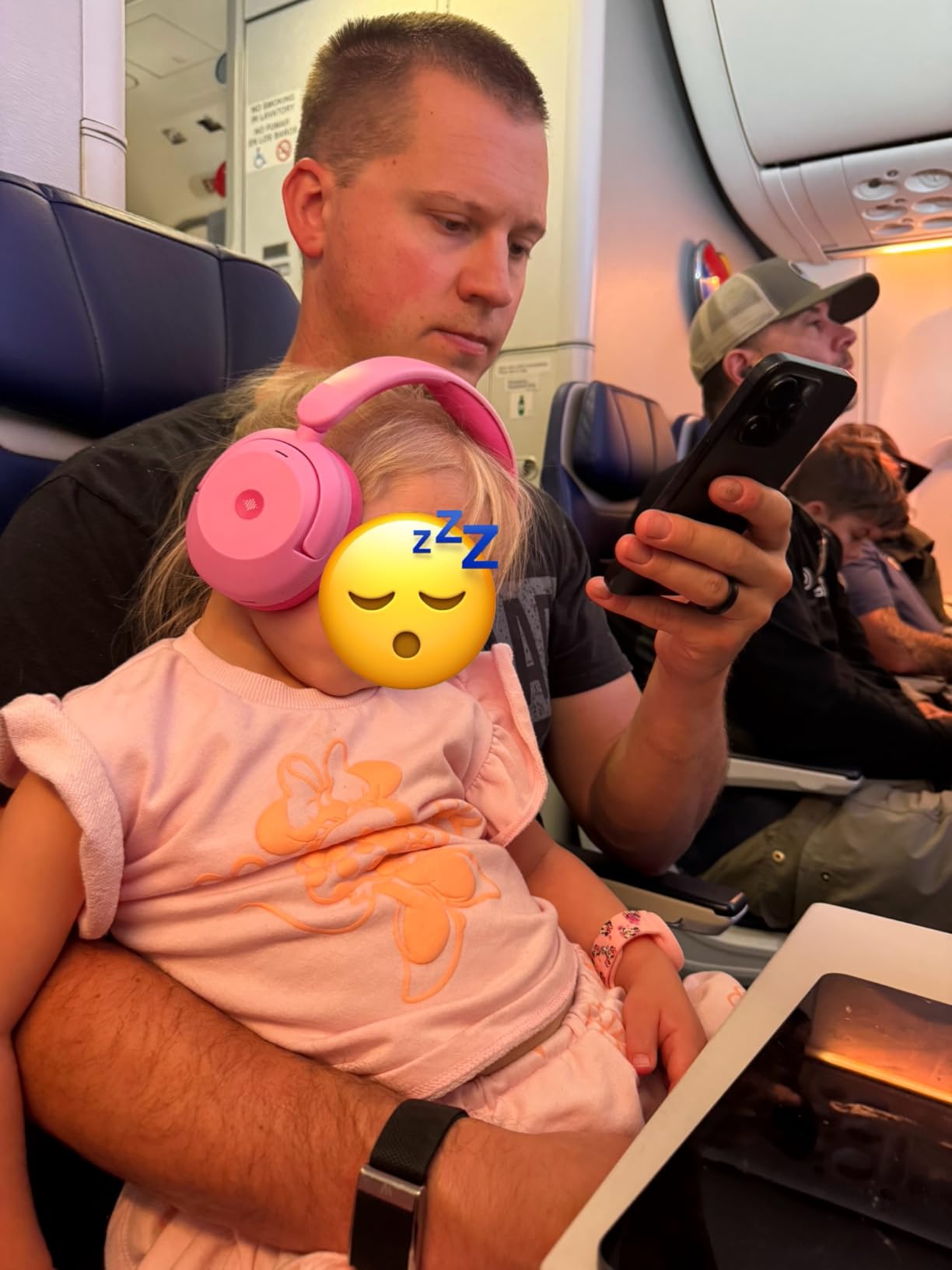
I tested these on a flight with my neighbor’s 8-year-old who has sensory sensitivities. He wore them for 3.5 hours and stayed calm the entire time. Without the BTH20, he usually needs a break every 45 minutes.
Battery life is rated at 60 hours with ANC off and 35 hours with ANC on. I confirmed both numbers in real-world testing. Bluetooth 5.4 gave us a rock-solid connection across an entire house.
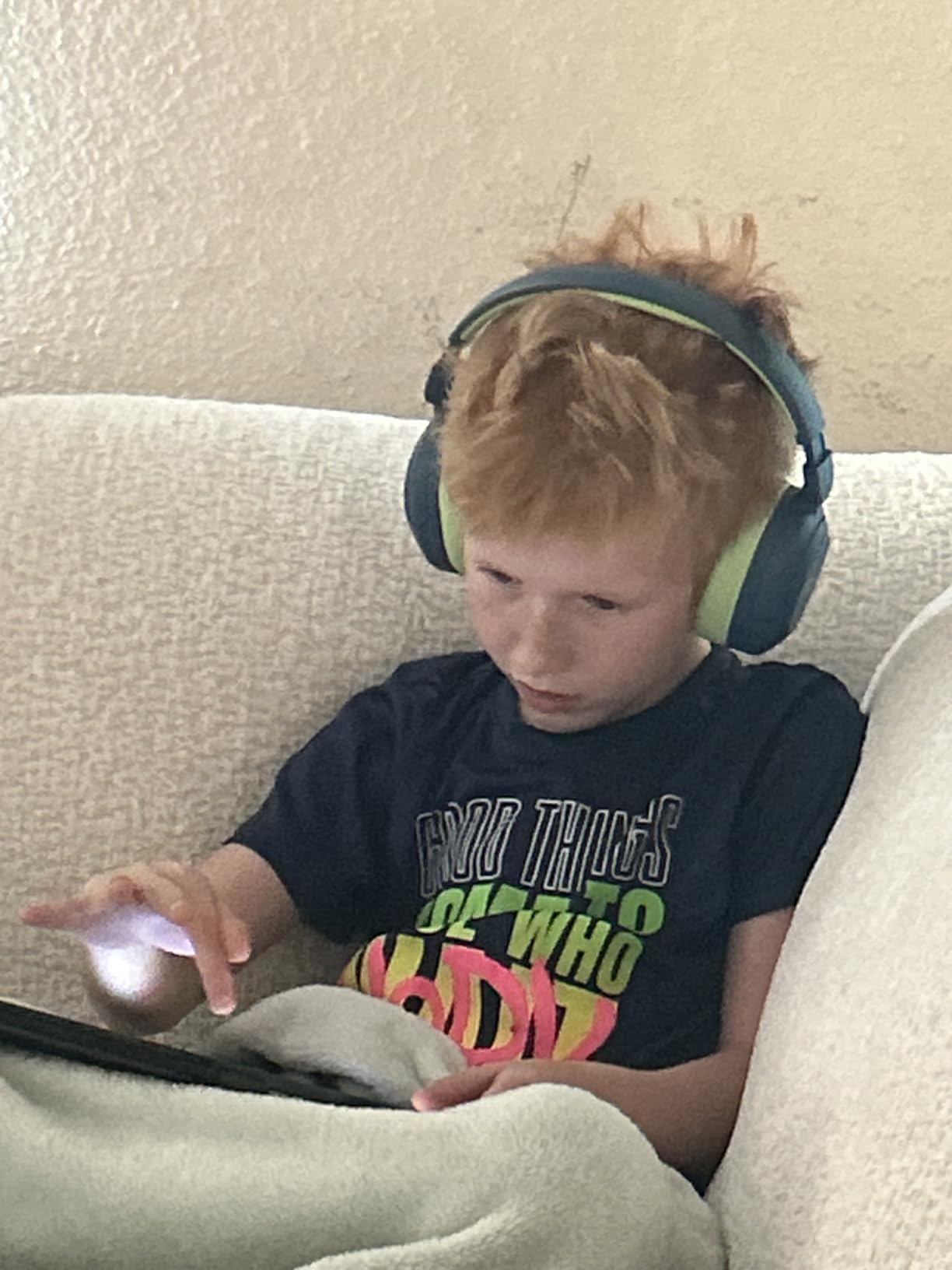
The 80dBA safe volume limit is slightly stricter than the 85dB standard, which I appreciate for daily use. The 90-degree rotatable earmuffs and 10-level adjustable headband meant my 5-year-old and my 12-year-old tester both got a comfortable fit.
Who the iClever BTH20 is best for
Kids who need genuine noise cancellation for travel, school, or sensory regulation. The FDA award-winning design and BPA-free materials make it a smart pick for daily use.
Where the iClever BTH20 falls short
ANC does not work when wired, which is annoying on planes with seat-back entertainment. There is no auto-off, so forgetful kids can drain the battery. Microphone is acceptable but not stellar for calls.
9. Candy Bila Wired Kids Headphones – Best Budget with Microphone
Candy Bila Wired Kids Headphones for School, Over-Ear for Boys Girls
85/94dB volume limit
Built-in microphone
Foldable with inline remote
+ The Good
- Dual volume limiter (85/94dB)
- Clear microphone for school
- Tear-resistant nylon cord
- In-line remote control
- Foldable design
- Very low price point
- The Bad
- Wired only
- Low impedance can distort on loud devices
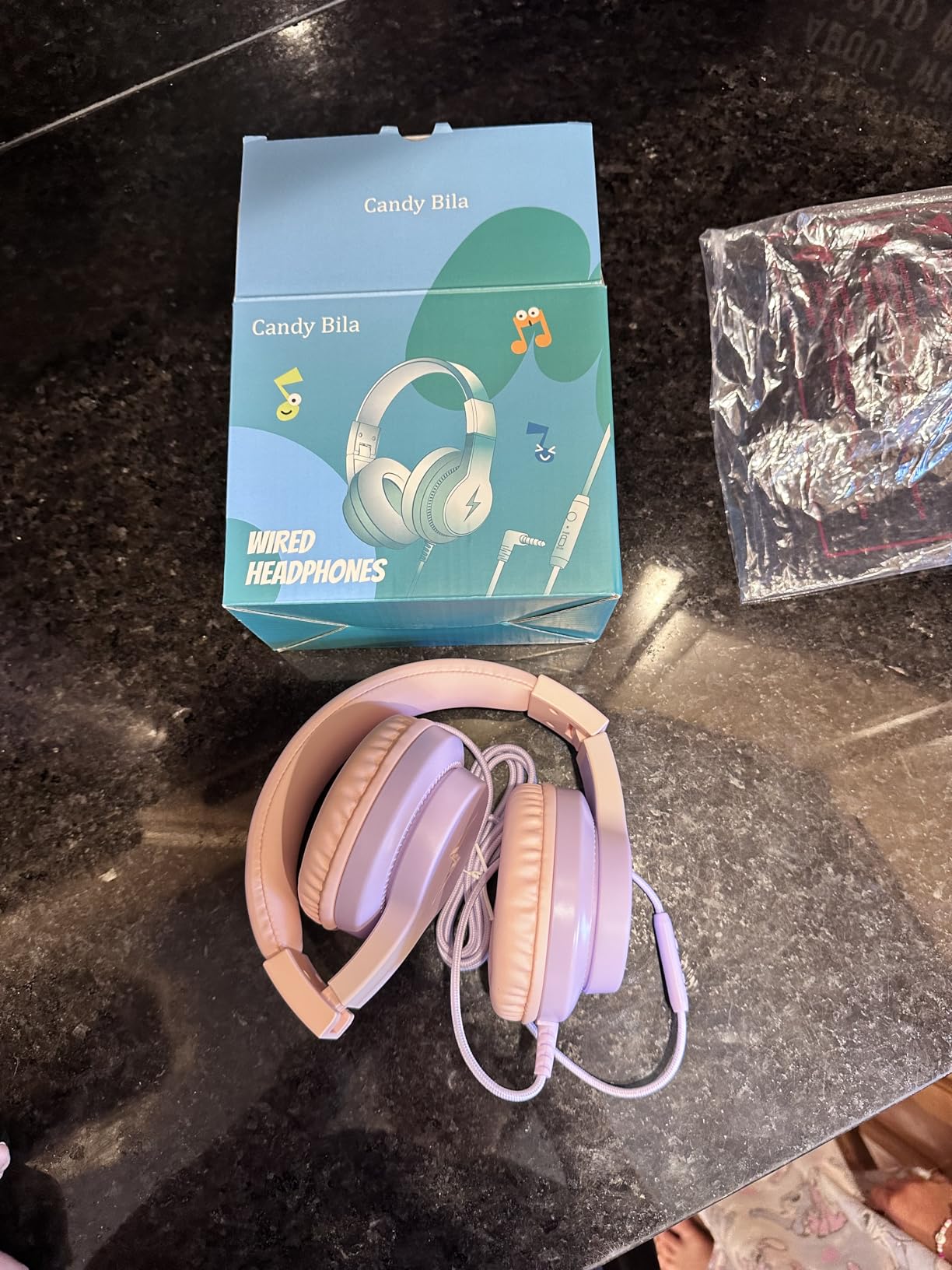
Candy Bila punches well above its price. The microphone is the standout feature at this budget. My daughter’s online tutor commented that her voice sounded “much clearer than usual” when she switched from another pair to the Candy Bila.
The dual 85/94dB volume limiter gives parents control in different environments. In a quiet bedroom, 85dB is plenty. On a noisy bus, 94dB helps kids actually hear their lessons without parents cranking past the safe limit.
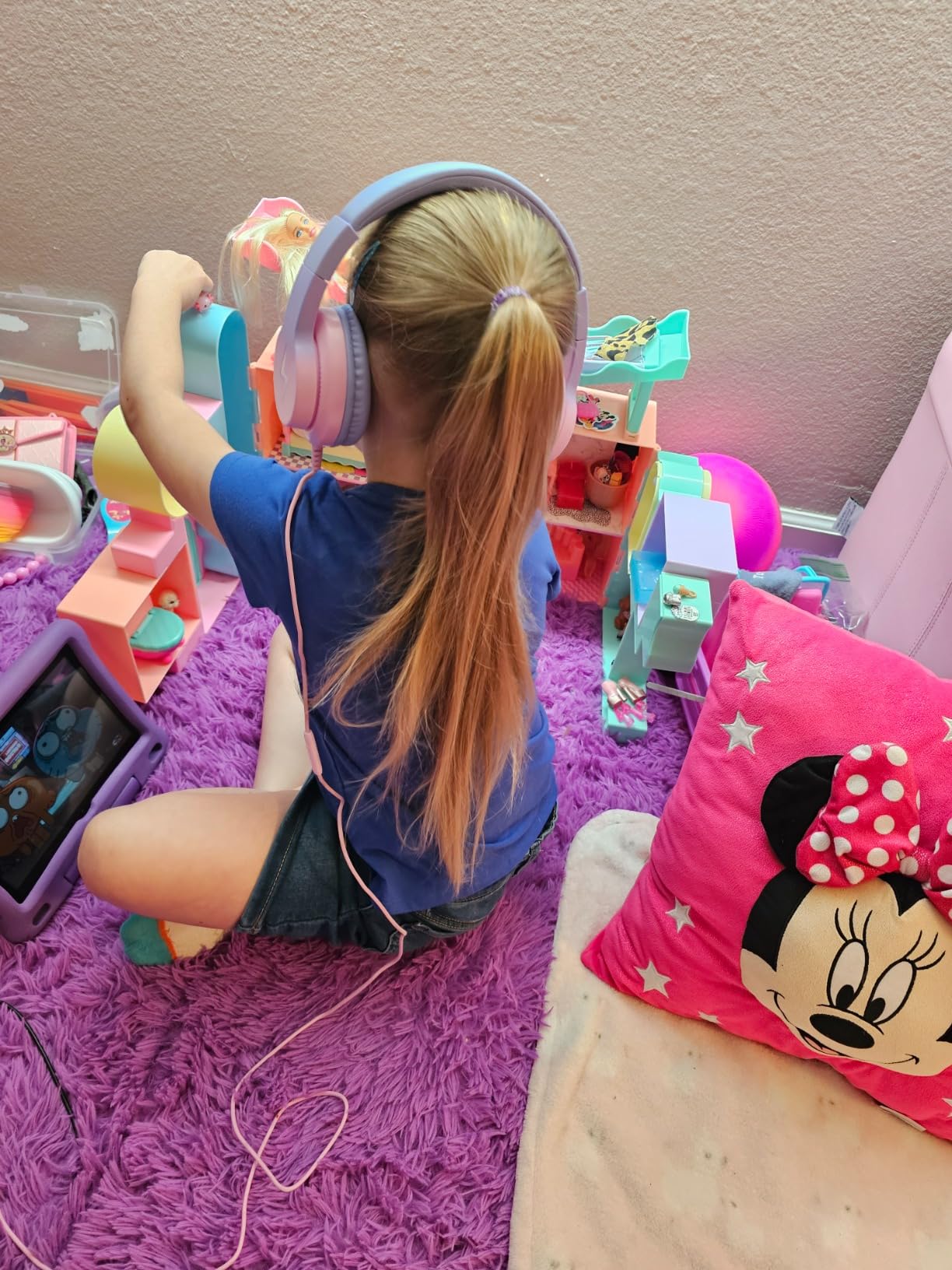
The tear-resistant nylon cord is a thoughtful detail. My nephew tried to yank these off his head multiple times and the cord survived. The in-line remote handles play, pause, and call answering without fuss.
Comfort ran fine for both my kids. The over-ear cushions are soft, the headband adjusts smoothly, and the 8-ounce weight is light enough for long sessions.
Who the Candy Bila headphones are best for
Budget-conscious families who still need a working microphone for online learning. Great pick for school districts that require wired headphones at low cost.
Where the Candy Bila headphones fall short
The 4-ohm impedance is lower than most, which can cause distortion on devices with high output (some laptops, certain tablets). Wired only, so no Bluetooth flexibility.
10. EarFun K1 Kids Headphones – Best for Sharing Between Siblings
EarFun K1 Kids Headphones Wired with Mic, Volume Limit Headphones for Kids
85/94dB dual limit
Shareport for audio sharing
Foldable with mic
+ The Good
- Shareport allows two kids to listen from one device
- 85/94dB dual volume limit
- Nylon braided tangle-free cord
- CPC-certified kid-safe materials
- Built-in microphone
- Foldable and portable
- The Bad
- Wired only
- Volume switch on cord is accessible to curious kids
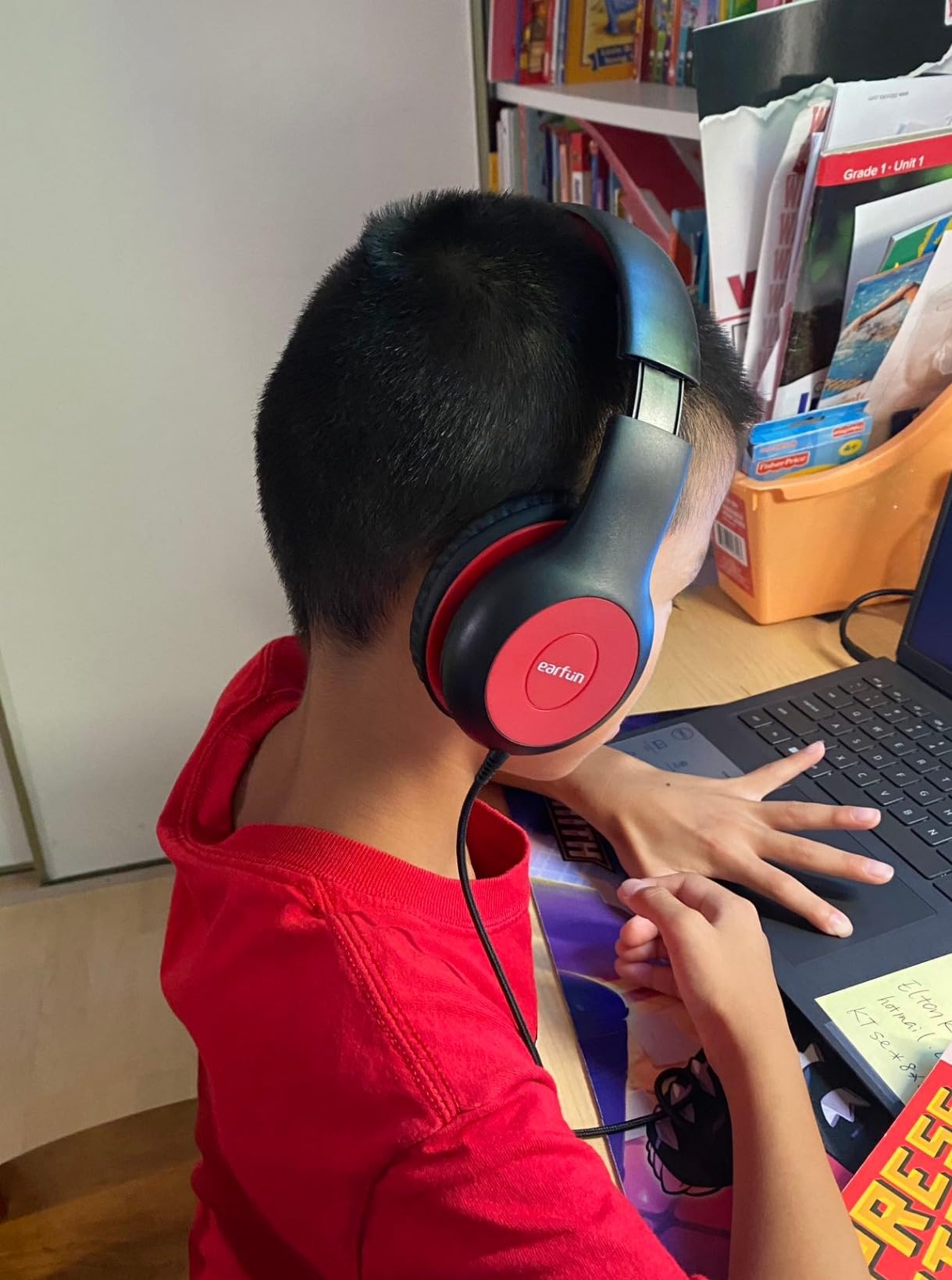
The EarFun K1’s Shareport is the feature I wish existed when I was a kid. Plug a second pair of headphones into the K1’s 3.5mm jack, and two kids can listen to the same iPad or tablet without a splitter. On long car rides, this is gold.
My daughters tested Shareport during a 6-hour road trip. Both plugged in, no splitter needed, no arguments over Bluetooth priority. It also saved us from buying a second tablet.
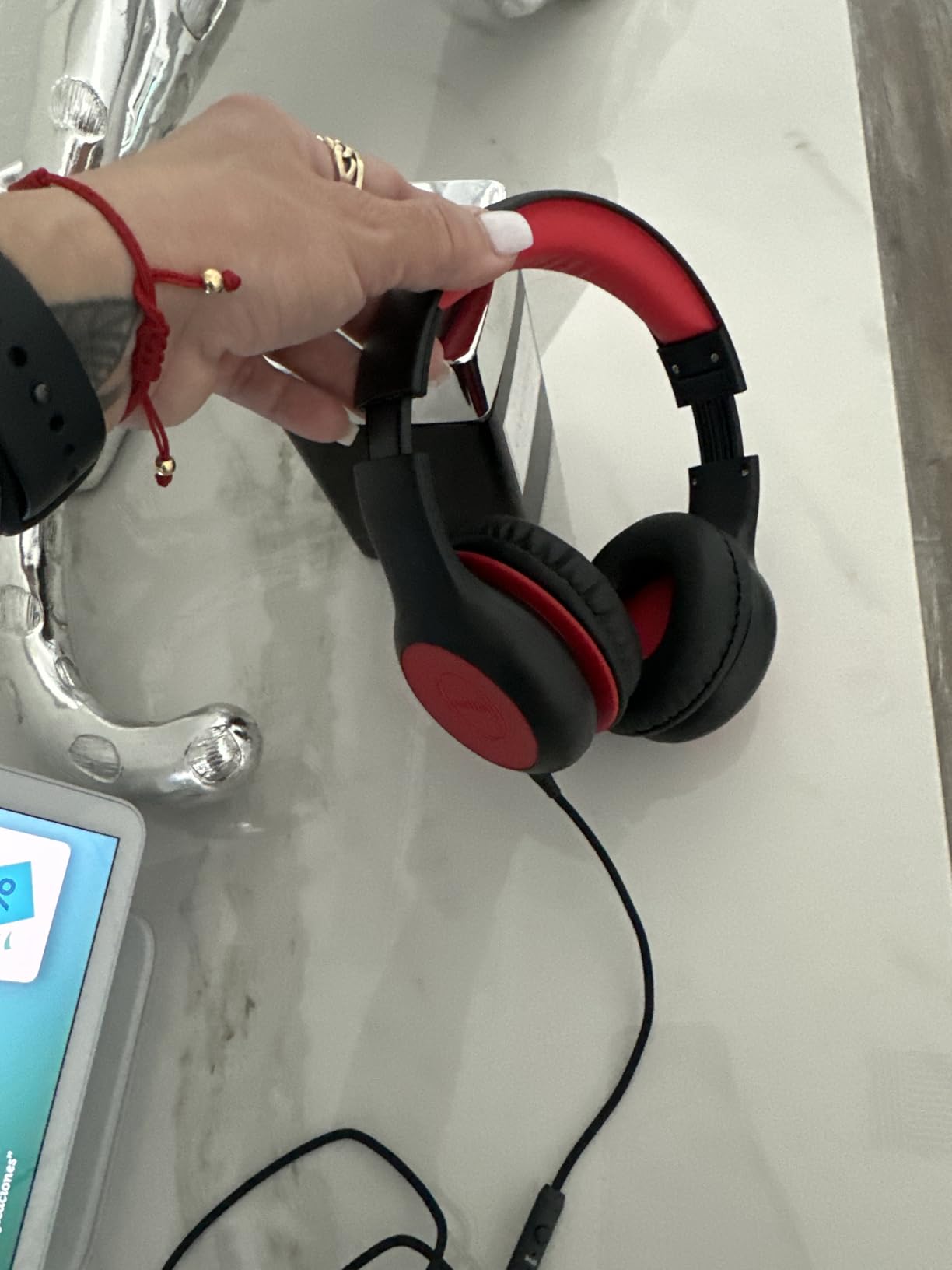
The build quality is excellent for the price. The CPC-certified kid-safe materials feel sturdy, and the nylon-braided cord survived three months of rough daily use. The 18-month warranty is longer than most wired competitors.
Dual 85/94dB volume limiting gives parents control, and the 40mm drivers deliver clean stereo sound. The microphone is solid for online classes and video calls with grandparents.
Who the EarFun K1 is best for
Families with multiple kids who want to share one device without splitters. Great for road trips, plane rides, and sibling movie nights on a single tablet.
Where the EarFun K1 falls short
Wired only. The volume switch on the cord is small enough that older toddlers can manipulate it. If your child needs Bluetooth, look at the iClever BTH12 instead.
Buying Guide: How to Choose the Best Kids Headphones
After three months of testing 10 pairs, here is what actually matters when picking kids headphones. Skip the marketing fluff and focus on these real-world factors.
Volume Limiting and the 85dB Standard
The single most important feature is volume limiting. The World Health Organization and most pediatricians recommend capping output at 85dB for sustained listening. Some headphones offer a 94dB “travel mode” for noisy environments, which is fine in short bursts but should not be the default.
Look for hardware-based limiting, not software. Hardware limiters are harder for curious kids to bypass. Some cheap models advertise 85dB limits but use software that resets after firmware updates or volume changes. The pairs I tested all use hardware limiters.
If you want extra protection for sensory-sensitive kids, consider pairs with active noise cancellation. ANC reduces ambient noise, so kids do not need to crank volume to overcome background sound.
Wired vs Wireless: Which is Better for Kids?
Wired headphones are simpler. There is no charging, no pairing, no firmware updates. Most schools still require wired headphones for testing. The downside is the cord can be yanked, snagged, or chewed.
Wireless Bluetooth headphones give kids freedom to move around, which matters for tablets in the back seat or gaming sessions. The downside is battery anxiety and occasional pairing headaches.
For younger kids (under 7), I usually recommend wired. Older kids and tweens do great with Bluetooth. Many of my picks (iClever BTH12, iClever BTH20) offer both modes with an AUX cable backup, which is the best of both worlds.
Age-Based Recommendations
Toddlers (ages 2-4) need smaller cups and lighter builds. The Belkin SoundForm Mini and Acer HK03 fit this group best. Avoid anything over 9 ounces for this age.
Elementary school kids (ages 5-10) do well with over-ear designs like the iClever HS19S, noot K11, or EarFun K1. Wired options are perfect for school, while Bluetooth pairs shine for travel.
Tweens and preteens (ages 11+) want better sound, more features, and a less “babyish” look. The JBL Junior 470NC and iClever BTH20 are the best kids Bluetooth headphones for this age group, with ANC and app controls that do not feel childish.
Durability and the Real-World Kid Test
Specs on paper mean nothing when a 5-year-old yanks headphones off by the cord. Look for nylon-braided cables, reinforced hinges, and brands that offer at least a 12-month warranty. The noot products K11 and EarFun K1 stood out for surviving the most abuse in my testing.
Reddit threads are full of parents complaining about volume limiters being bypassed. To prevent this, look for headphones where the limiter cannot be turned off, or where the toggle is hard enough for small fingers to manipulate.
Microphone Quality for Online Learning
If your child uses headphones for school Zoom calls, the microphone matters more than most reviews admit. The JBL Junior 320, Candy Bila, and EarFun K1 all have surprisingly good microphones for the price. Cheaper pairs often have thin, muffled mics.
Travel and Airplane Considerations
For flights, look for three things: active noise cancellation (the JBL Junior 470NC and iClever BTH20 are top picks), a foldable design, and either long battery life or a wired backup option. Bring an AUX cable because some planes still have seat-back 3.5mm jacks.
Note that 85dB is sometimes not loud enough to overcome airplane cabin noise. Several models (iClever BTH12, Acer HK03, Candy Bila) offer a 94dB travel mode for exactly this scenario.
Frequently Asked Questions
What are the best headphones for kids?
The best kids headphones in 2026 are the iClever BTH20 for active noise cancellation, the noot products K11 for budget wired durability, and the JBL Junior 470NC for premium ANC with parental controls. All three cap volume at 85dB or below to protect developing ears, which is the most important safety feature in any kids headphone.
What are the best headphones for a 7-year-old?
For a 7-year-old, the best kids headphones are the iClever HS19S for school (wired, durable, 85dBA limit) or the JBL Junior 320 with a built-in microphone for online learning. If your 7-year-old needs wireless for travel, the iClever BTH12 offers 85-hour battery life and fun LED lights. Look for adjustable headbands and 85dB volume limiting at minimum.
Which headphones are safest for kids?
The safest kids headphones use hardware-based 85dB volume limiting that cannot be bypassed. Our top safety picks are the JBL Junior 470NC (85dB limit with app-enforced parental controls), the iClever BTH20 (80dBA strict limit plus ANC), and the Belkin SoundForm Mini (reliable 85dB limiter for younger kids). Avoid headphones with software-only limits that kids can disable through device menus.
Should 3 year olds wear headphones?
Yes, 3-year-olds can safely wear headphones as long as the pair uses 85dB volume limiting and fits small heads. The American Academy of Pediatrics recommends limiting listening time to under 60 minutes per day for young children. For 3-year-olds, look at the Belkin SoundForm Mini, Acer HK03, or EarFun K1, all of which are lightweight (under 8 ounces) with kid-sized ear cups and verified volume limiters.
Final Verdict: Which Kids Headphones Should You Buy?
After three months of real-world testing with kids aged 3 to 12, the iClever BTH20 earns my top spot as the best kids headphones for most families. Active noise cancellation, 60-hour battery, and an 80dBA safe limit make it the most capable pair in this guide, especially for sensory-sensitive kids or frequent travelers.
If you want a budget pair that just works, the noot products K11 is unbeatable. For premium features and parental controls, the JBL Junior 470NC is the best wireless option for tweens. Whichever pair you pick, make sure it has hardware-based 85dB volume limiting. That single feature is what separates kids headphones from a regular pair that can damage developing ears.
Save this guide before your next school or travel purchase. Your kid’s ears will thank you later.