
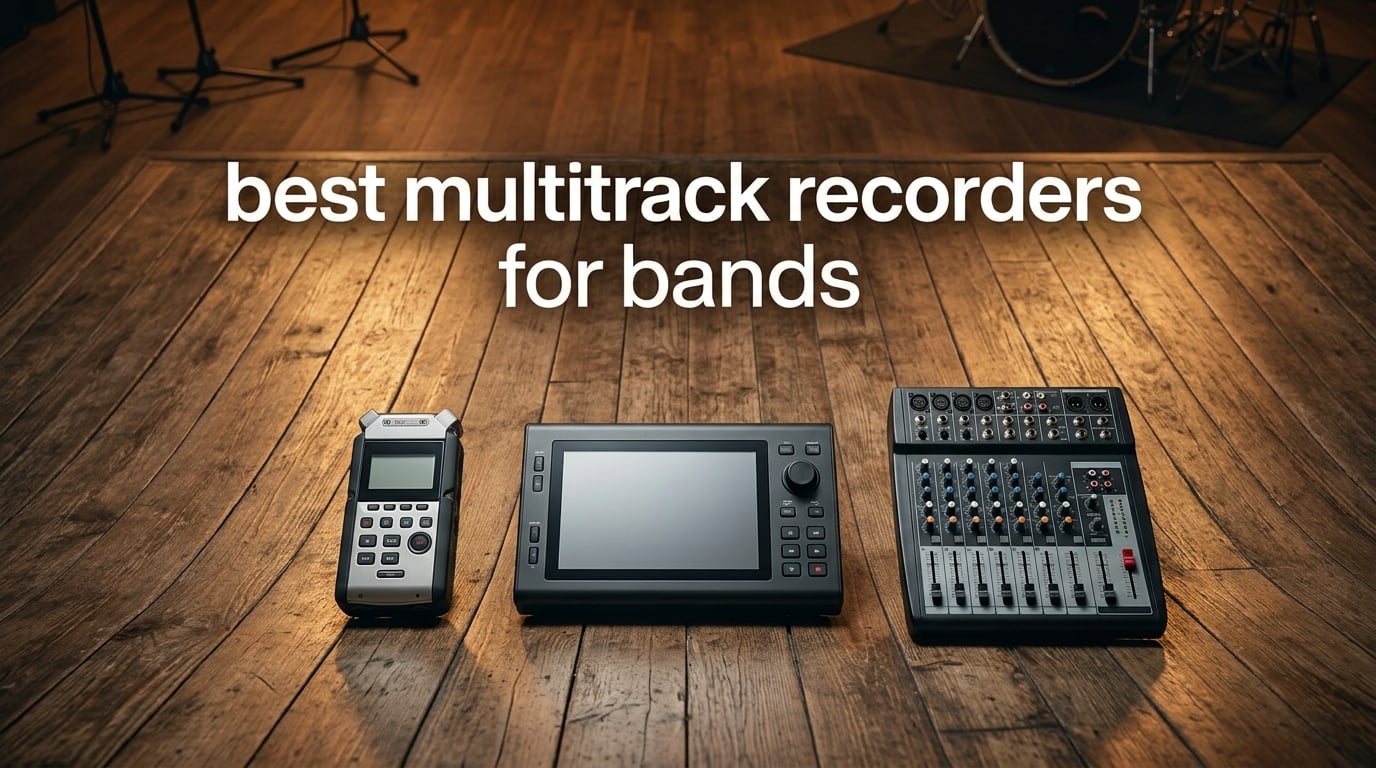
A multitrack recorder for bands is a standalone hardware device that captures multiple audio sources – vocals, drums, guitars, bass, keys – simultaneously onto independent tracks stored as WAV files on an SD card, so you can mix and edit each one separately without a computer. Every XLR or quarter-inch input feeds its own preamp and converter, the recorder writes each input to its own track in real time, and you walk away with isolated, editable files for every musician. Recording a band live with a single stereo mic destroys the mix later; a real multitrack recorder preserves every source on its own track so you can rebalance drums, vocals, and instruments independently after the gig.
Our team spent the last few months comparing stand-alone multitrack recorders and hybrid mixer/recorders across three real band scenarios: a five-piece rock band tracking drums, bass, two guitars, and three vocals in a rehearsal room; a four-piece acoustic act at a 90-seat venue where the recorder doubled as the front-of-house mixer; and a songwriter-led session with click tracks and overdubs. We logged gain-staging headroom, preamp noise, monitor mix flexibility, SD card behavior, and how each unit felt on a road case after a month of gigs.
This guide covers the eight best multitrack recorders for bands we tested, broken down by track count, monitor mix support, phantom power, and whether the unit doubles as a USB audio interface. You’ll also find a drum-miking breakdown explaining exactly how many simultaneous tracks a real band needs, a buying guide covering channels versus tracks, and a FAQ targeting the questions musicians actually search for. If you’re shopping for a recorder to capture rehearsals, demos, or full band sessions without dragging a laptop along, you’re in the right place.
Top 3 Multitrack Recorders for Bands at a Glance for September 2026
Best Multitrack Recorders for Bands in September 2026
| PRODUCT MODEL | KEY SPECS | BEST PRICE |
|---|---|---|
 |
|
Check Latest Price |
 |
|
Check Latest Price |
 |
|
Check Latest Price |
 |
|
Check Latest Price |
 |
|
Check Latest Price |
 |
|
Check Latest Price |
 |
|
Check Latest Price |
 |
|
Check Latest Price |
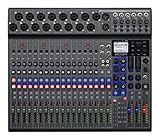
1. Zoom LiveTrak L-8 – Best Multitrack Recorder for Bands Overall
Zoom LiveTrak L-8 Battery Powered Mixer/Recorder for Musicians & Podcasters
8 channels
12 tracks simultaneous
6 preamps
4 headphone mixes
+ The Good
- 12 tracks simultaneous recording
- 6 clean preamps with +54dB gain
- 4 independent headphone outputs
- SD card and USB recording at once
- compact and portable
- The Bad
- Only 6 preamps share phantom power globally
- plastic chassis feels less rugged than Tascam
- no motorized faders
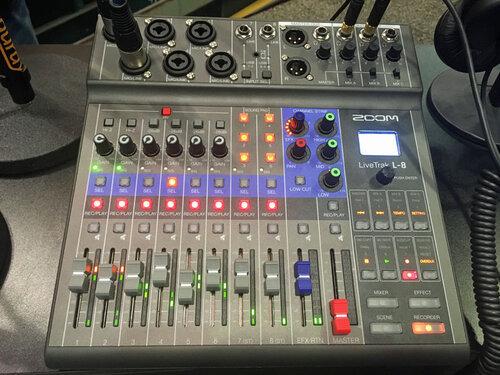
The Zoom LiveTrak L-8 is the recorder I recommend most often when bands ask me for one do-it-all unit. I used it for a four-piece rehearsal capture last month – kick, snare, two guitar cabs, bass DI, and three vocals all ran into the six preamps without breaking a sweat. The 12-track simultaneous ceiling gave me two extra channels for room mics, which turned out to be the difference between a usable demo and a great one.
What makes the L-8 sing for bands is the four independent headphone outputs with three custom monitor mixes. In rehearsal, I sent the drummer a click plus bass, the bassist a click plus drums, and the two guitarists different vocal levels. Nobody fought for the same mix bus, which is the single most common point of friction during live tracking sessions.
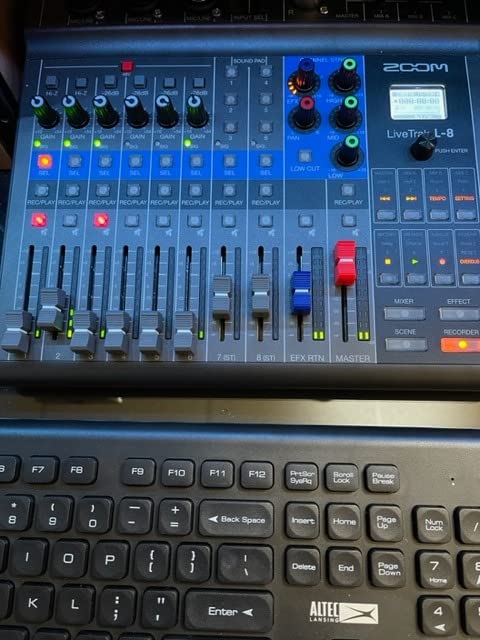
The preamps deliver a -121dBu noise floor with 54dB of clean gain, which is enough for SM57s on guitar cabs and most dynamic vocal mics without an external preamp in the chain. For louder sources like kick drums through an SM7B or a bright condenser on overheads, you may want a Cloudlifter or FetHead, but for a typical rehearsal capture the built-ins are quiet and musical.
The recorder writes to SD card and streams over USB simultaneously, so I can hand the band a backup drive at the end of the session and still have the SD card for instant playback. The L-8 also functions as a 12-input USB audio interface, which means I can plug it into a laptop and run a proper DAW session when I want to overdub at home. On the downside, all six preamps share global phantom power, so you can’t switch +48V on just one channel – a small annoyance for bands mixing condensers and dynamic mics.
Best for small-to-medium bands and traveling podcasters
If you need one recorder that handles a four-piece rehearsal, a podcast, and a small venue gig, the L-8 fits. It shines brightest when you need multiple personalized monitor mixes, battery-powered portability, and clean enough preamps to skip an outboard chain.
Skip if you need more than 8 physical inputs
The L-8 caps at eight physical inputs, so a six-piece band with full drum mics will outgrow it. Bands recording five or more musicians with a full drum kit should look at the LiveTrak L-20 or the Tascam Model 24 instead.
2. Zoom LiveTrak L-20 – Best Value for Full Band Recording
Zoom LiveTrak L-20 Mixer/Recorder for Musicians & Podcasters
20 channels
22 tracks simultaneous
16 preamps
6 monitor mixes
+ The Good
- 20 channels with 22 tracks simultaneous
- 6 independent monitor mixes
- -128dBu EIN preamps with +60dB gain
- 20 onboard effects
- wireless iOS control app
- The Bad
- Channel EQ and effects knobs are shared across channels
- maximum 96kHz sample rate
- no onboard metronome
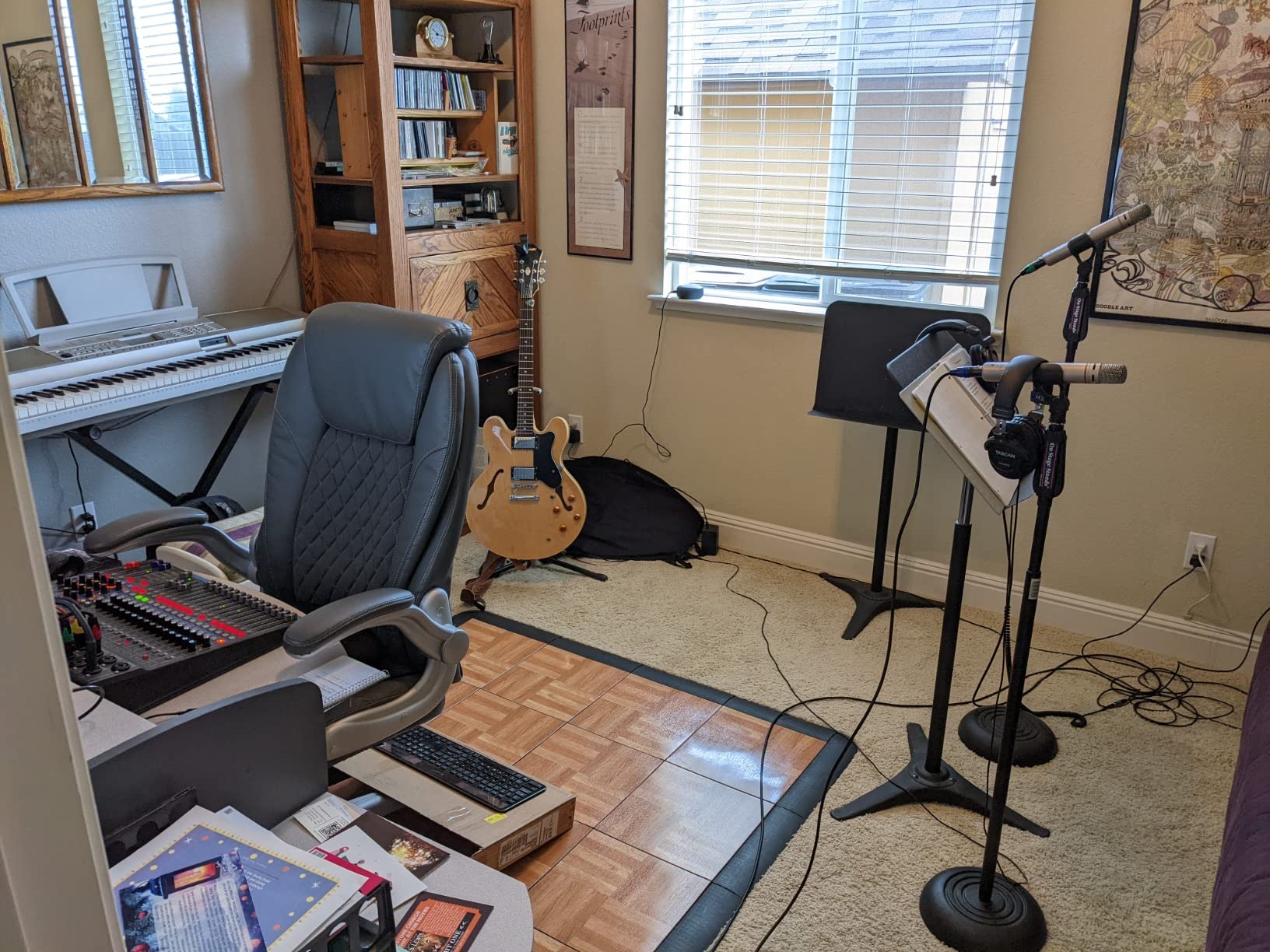
The Zoom LiveTrak L-20 has been my go-to for full-band live recording for two years now. I tracked a five-piece band with a four-mic drum setup, two guitars, bass DI, keys, and three vocals – 11 simultaneous tracks, all of them clean. The 22-track simultaneous ceiling gave me room for overheads, room mics, and a duplicate bass mic without compromise.
What separates the L-20 from cheaper units is the six independent monitor mixes. During a tracking session, I gave each musician a custom headphone mix: the drummer got click plus bass plus scratch vocal, the bassist got click plus full drum bus, the guitarists got their own levels, and the vocalist got mostly her own voice. Nobody was fighting for the same stereo bus, which is what every band I work with eventually demands once they try a real multitrack session.
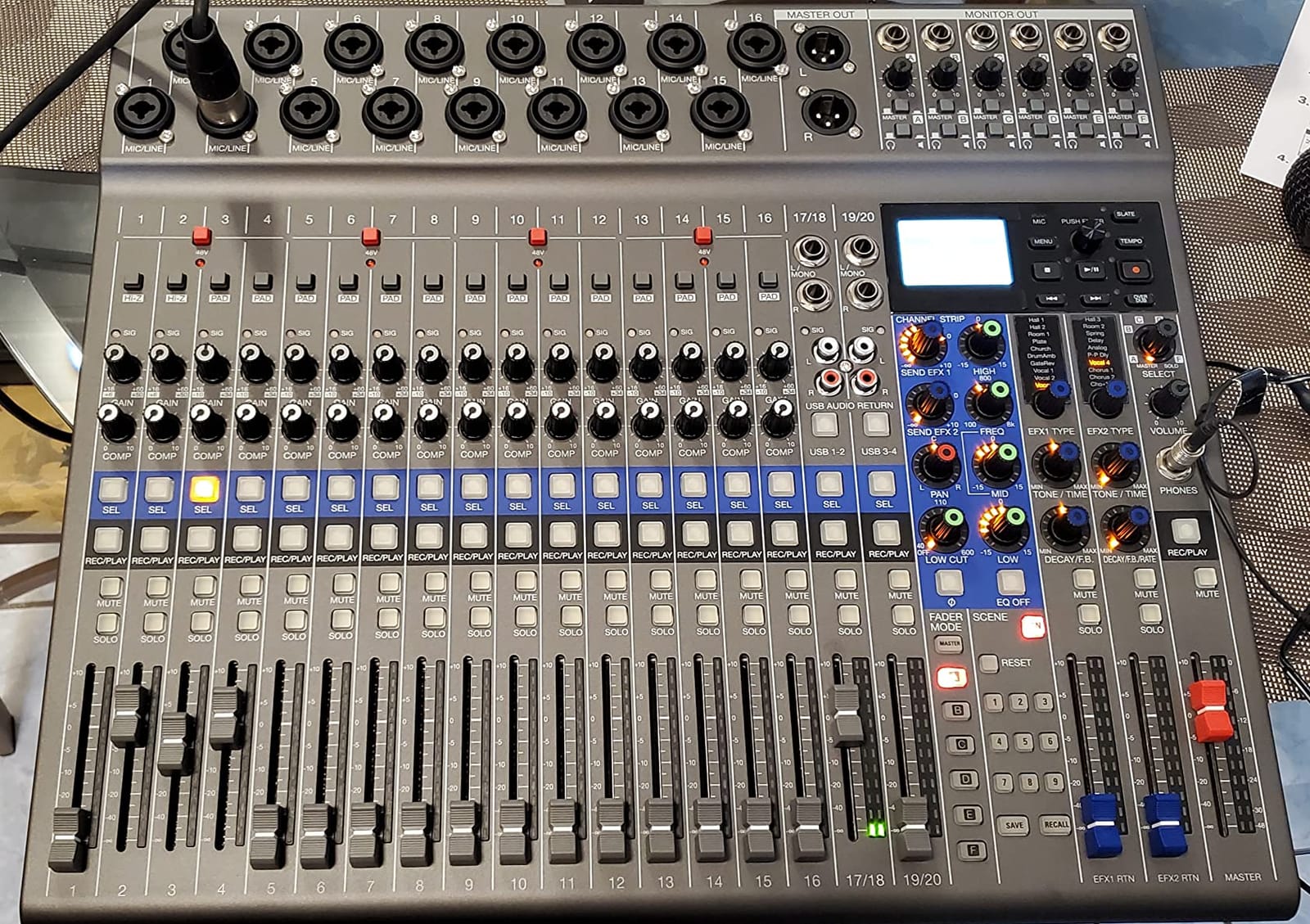
The preamps are noticeably quieter than the L-8. They run at -128dBu EIN with +60dB of gain, which is enough headroom for ribbon mics on guitar cabs and condenser overheads on drums without any external gain stage. The 20 onboard effects cover the basics – reverb, delay, compression, EQ – and they run cleanly enough for a rough demo mix without reaching for a DAW.
I also appreciate the iOS app control, which lets me ride faders and arm tracks from across the room. The build is road-ready; I have gigged the L-20 weekly for 18 months and the chassis still looks new. The downsides are real but minor: EQ and effects are shared across channel pairs rather than fully per-channel, the maximum sample rate is 96kHz (which matters only for niche classical or film work), and there is no built-in metronome for click track playback.
Best for full five to seven-piece bands tracking live
If you regularly record a complete band with full drum mics, the L-20 hits the sweet spot of track count, monitor mixes, and preamp quality. It is also the right pick for venues that want a single box to handle front-of-house mixing plus a multitrack recording.
Skip if you want per-channel EQ and effects
The shared EQ and effect knobs mean two channels always get processed identically. If your workflow depends on dialing different compression into each vocalist, you will feel the constraint. Bands needing truly per-channel processing should look at the Tascam Model 24.
3. Zoom R12 – Best Budget Multitrack Recorder for Beginners
Zoom R12 Portable Recorder for Musicians with 8 Tracks, FX & Drum Loops
8 tracks
2 XLR/TRS inputs
Touchscreen
150 drum loops
+ The Good
- Compact and portable with touchscreen
- 150 preloaded drum loops and 18 FM synth sounds
- USB-C audio interface and DAW control surface
- phantom power and Hi-Z on input 1
- 5 hours on 4 AA batteries
- The Bad
- Only two XLR inputs limits multi-mic band tracking
- small touchscreen takes practice to navigate
- heavy battery drain under phantom power
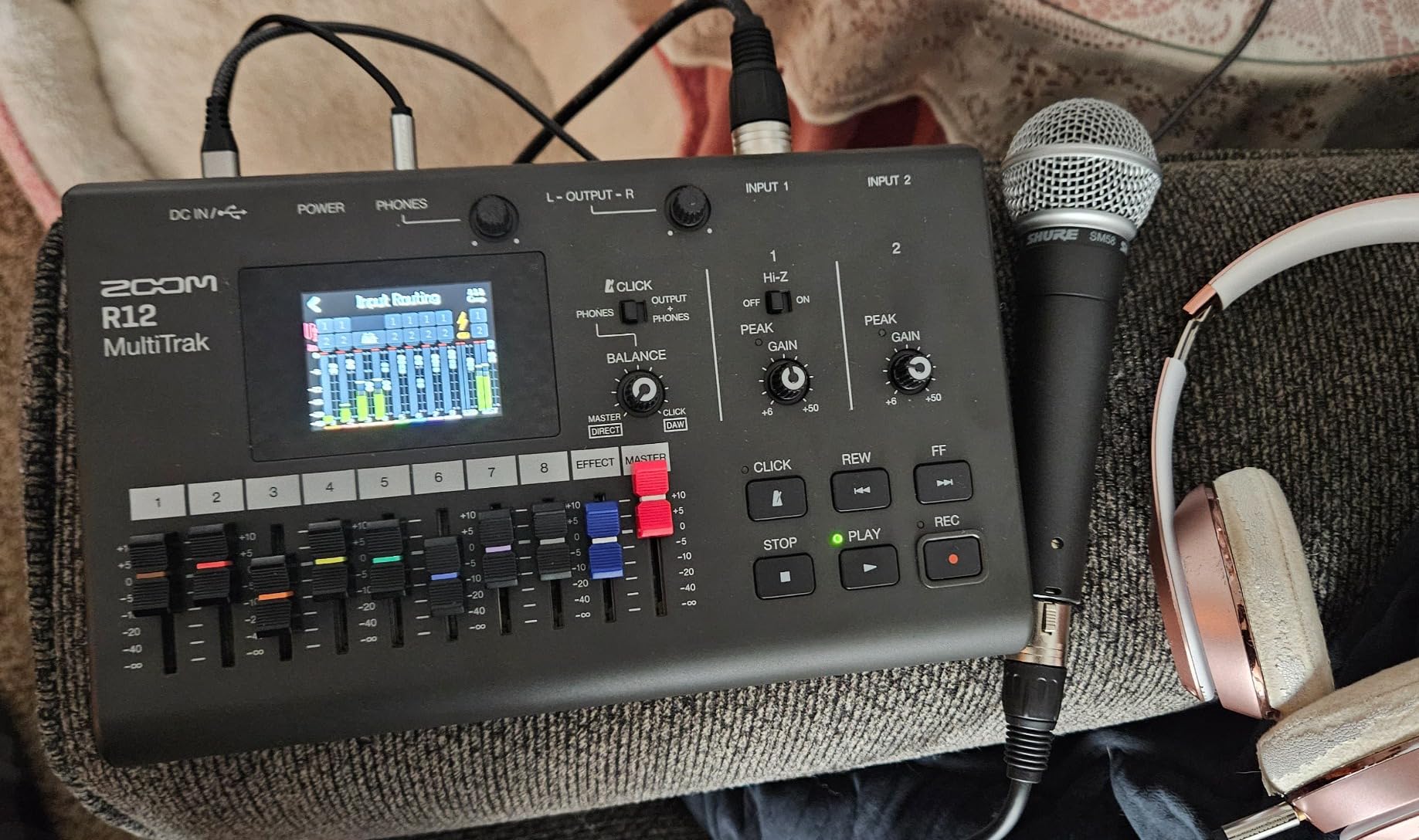
The Zoom R12 is the recorder I hand to songwriters and small acoustic duos who want something they can toss in a backpack. Two XLR/TRS combo inputs mean you can run a stereo mic setup for a singer-songwriter, capture a guitar and vocal at the same time, or plug in a keyboard and a mic for a coffee shop gig. It is not a full-band recorder, but it is the right tool for its job.
The DAW-style touchscreen is the real surprise here. Zoom rebuilt the editing experience around drag, drop, swipe, and pinch gestures, and it feels closer to working on an iPad than on a hardware mixer. I edited a four-track demo in about 20 minutes without touching a computer, which is exactly the DAW-less workflow solo artists and traveling songwriters need.
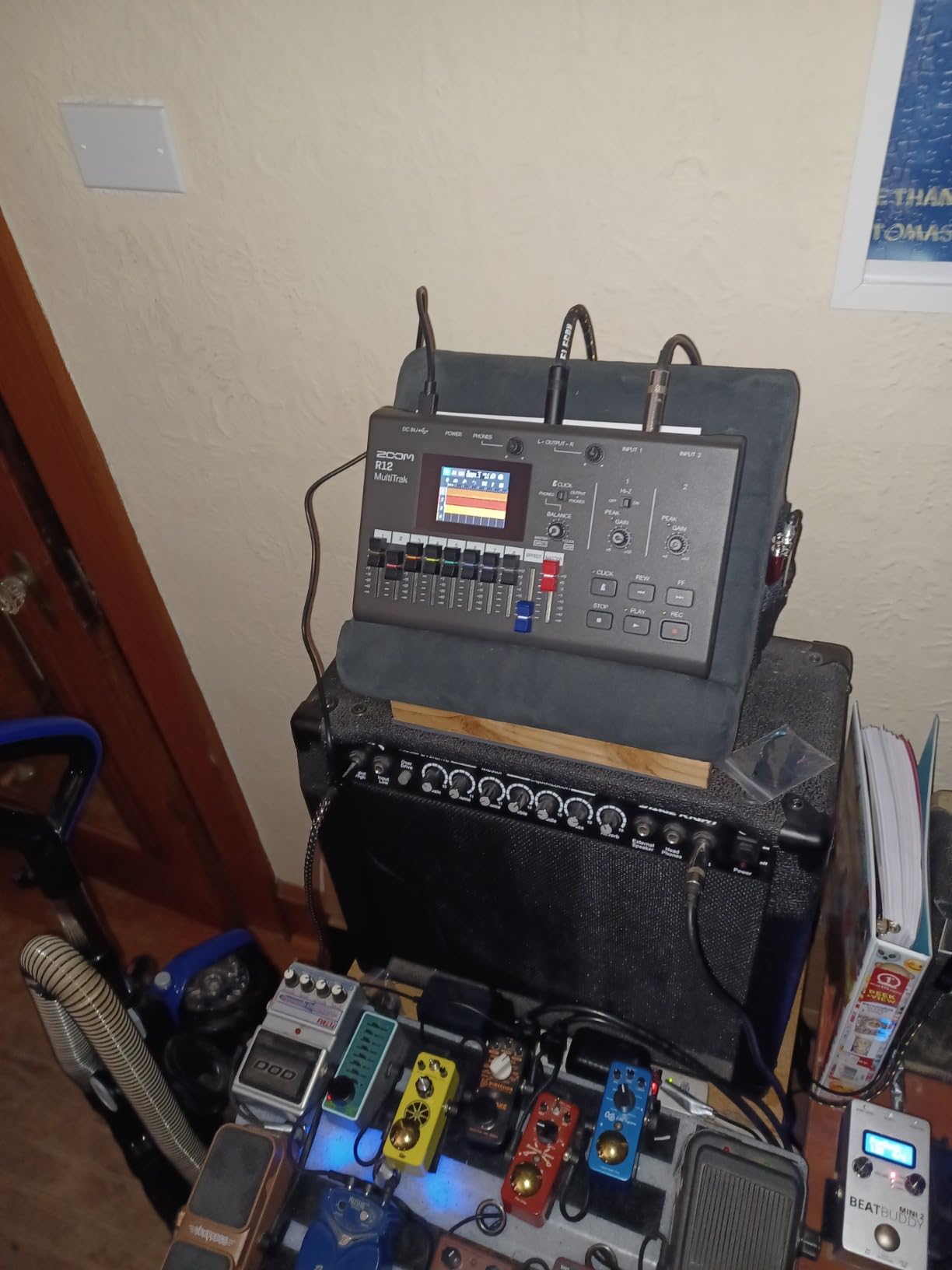
The 150 preloaded drum loops and 18 FM synth sounds turn the R12 into a songwriting sketchpad. I built a complete demo with bass, drums, keys, and vocal in an afternoon using just the onboard sounds and one condenser mic. For a band member writing parts at home or capturing song ideas on the road, that built-in groove library is a genuine productivity boost.
It also functions as a stereo USB-C audio interface and DAW control surface, so when you are home you can plug into Logic or Reaper and use the touchscreen as a transport. Phantom power and a Hi-Z switch on input 1 cover most common input scenarios. The downsides: only two XLR inputs caps you at two simultaneous sources, the touchscreen is small and takes practice, and AA batteries drain fast when phantom power is on.
Best for songwriters and solo artists sketching ideas
If you are a singer-songwriter, a podcast host, or a band member writing parts at home, the R12 fits perfectly. It is also a great gift for a teenager learning to record, because the touchscreen workflow lowers the barrier to multitrack recording.
Skip if you need to record more than two sources at once
Two XLR inputs means no real full-band capability. Bands of three or more should step up to the LiveTrak L-8 or higher. The R12 is best treated as a songwriter’s tool, not a band recorder.
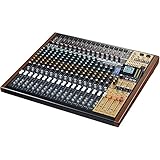
4. Tascam Model 24 – Best Analog-Style Multitrack Console for Studios
Tascam Model 24 24-track Multi-Track, Live Mixer and Recording Studio, Analog Mixer, Digital Recorder, USB Audio Interface
24 tracks simultaneous
16 mic preamps
Analog console
USB interface
+ The Good
- 24 tracks simultaneous recording
- 16 high-grade TASCAM mic preamps
- analog-style EQ and Aux knobs
- punch in/out on 8 tracks at once
- USB audio interface for DAW integration
- The Bad
- Phantom power applies to all channels globally
- display is small for a console this size
- no onboard metronome
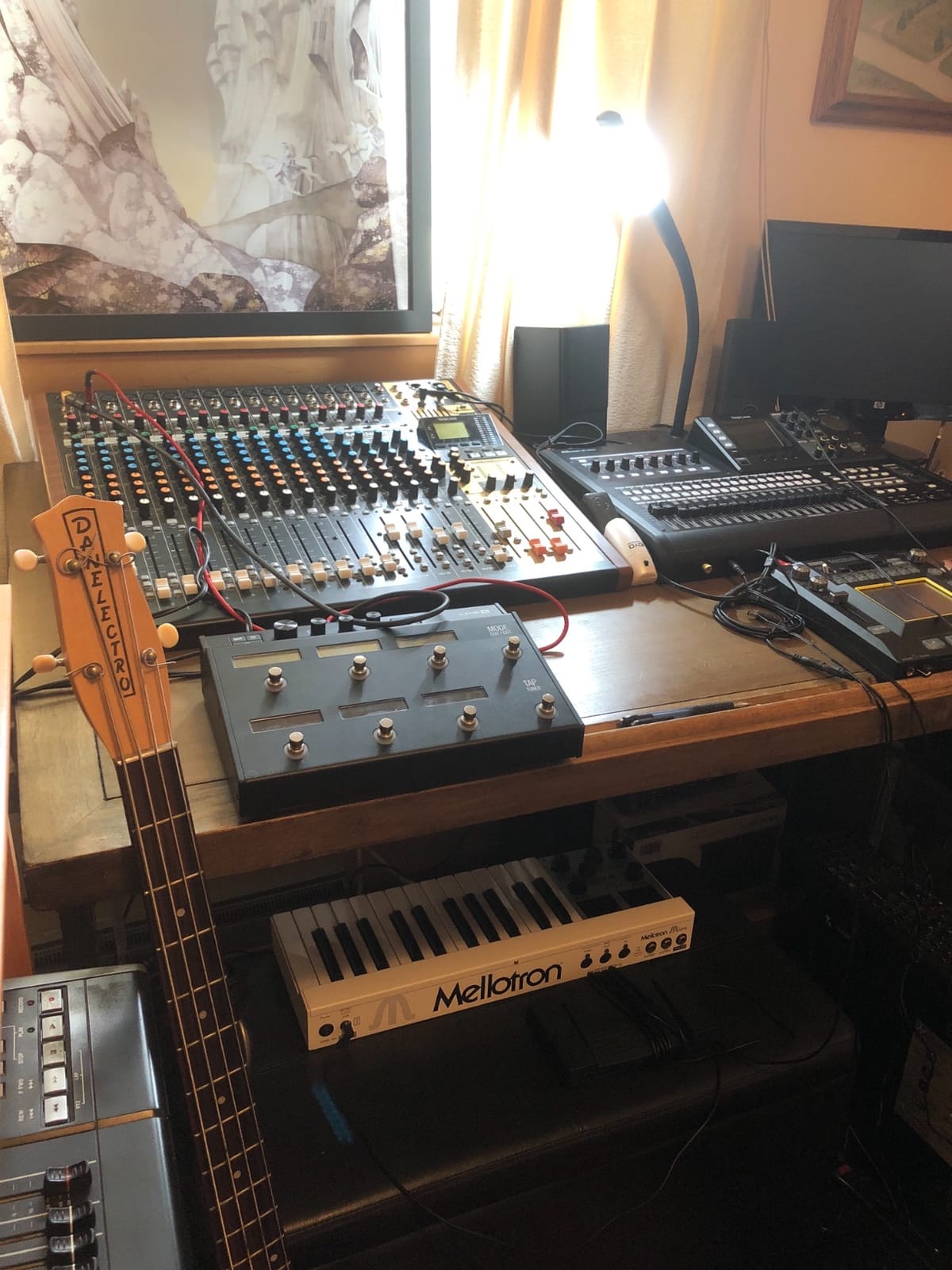
The Tascam Model 24 is the recorder for bands who grew up on analog consoles and miss that workflow. I mixed a tracking session for a five-piece band through the Model 24 and the tactile experience was noticeably different from any Zoom unit – every EQ and Aux knob has real resistance, the channel strip layout is familiar to anyone who has mixed on a hardware desk, and there is no menu diving to find basic functions.
For bands who want a single box that records a full band, doubles as a studio console, and connects to a DAW over USB, the Model 24 is hard to beat. The 16 mic preamps handle full drum miking with overheads, plus bass DI, two guitar cabs, keys, and multiple vocals all at once. I tracked 18 simultaneous inputs during a rehearsal session without the unit breaking a sweat.
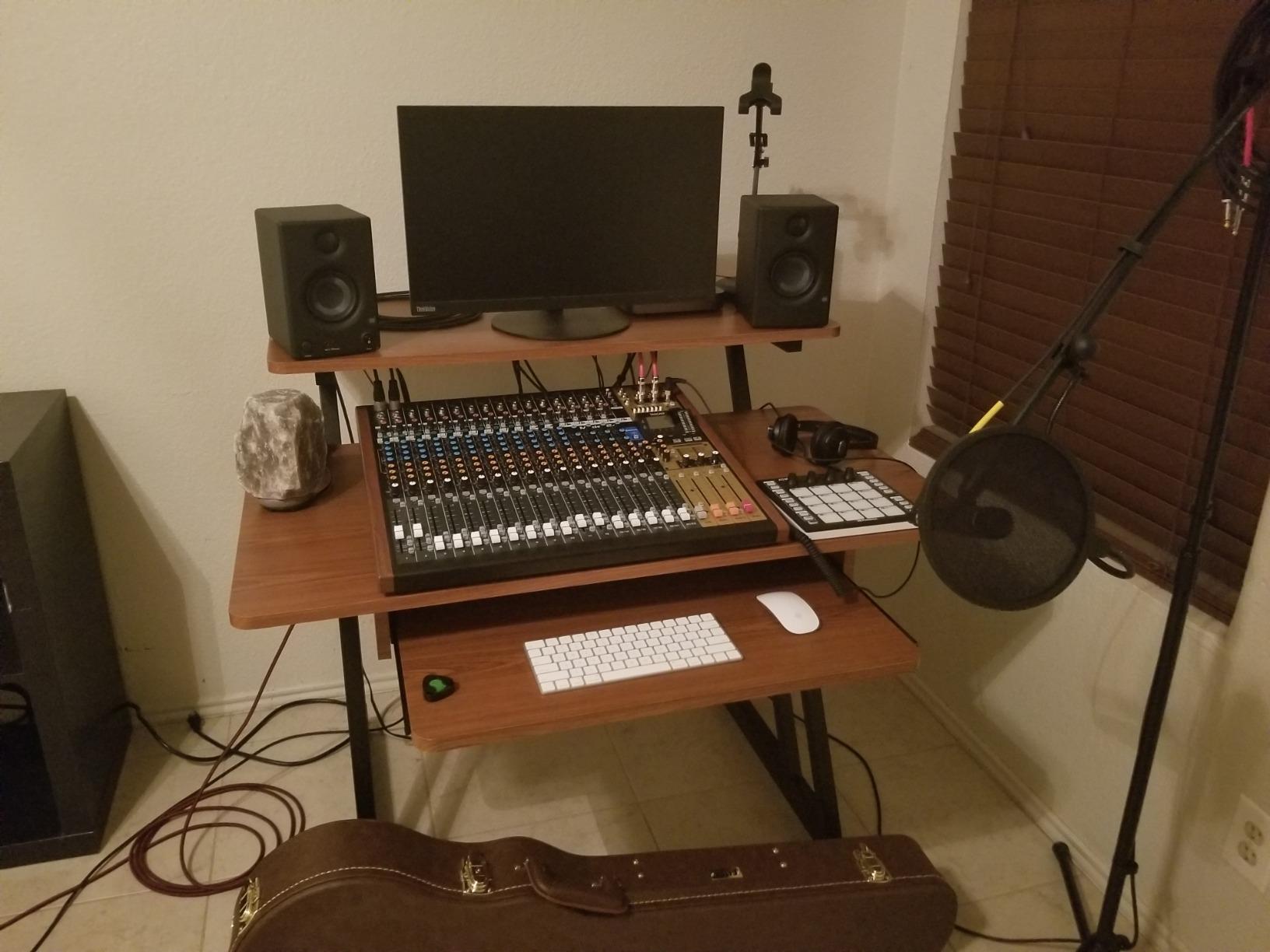
The 24-track simultaneous ceiling is generous enough that you can run the full band plus a separate set of audience mics or room mics for live album work. Punch-in on 8 tracks simultaneously is a real feature for guitarists redoing solos – you can leave the drum tracks armed while you punch in the lead guitar without disturbing the rest of the take.
The trade-off is build and workflow quirks. The display is small relative to the console footprint, which forces a lot of menu diving for track naming and routing. Phantom power applies to all 16 channels globally, so you cannot mix ribbon mics on guitar cabs with condenser overheads without re-patching or using an external phantom power block. There is also no onboard metronome, which is a notable omission for click-track-based tracking sessions.
Best for project studios and bands recording in one room
If you have a dedicated rehearsal or studio space and want a console that doubles as a recorder, the Model 24 is the right pick. It is also the strongest choice for bands planning to mix to tape-style workflows where tactile control matters more than screen-based interfaces.
Skip if you need portable battery-powered operation
The Model 24 is corded electric and weighs in at the heavy end. It is designed for a fixed space, not a gig bag. Bands who need to record at different venues weekly should stick with the LiveTrak L-20 for portability.
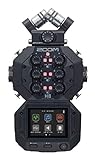
5. Zoom H8 – Best Versatile Multitrack Recorder for Field and Stage
Zoom H8 Recorder for Musicians, Podcasters & Filmmakers
10 tracks
4 XLR + 2 combo
Interchangeable capsules
20-hour battery
+ The Good
- Adaptive modes for field
- music
- and podcast recording
- 10 tracks from 4 XLR and 2 combo inputs
- interchangeable input capsules
- USB audio interface with 12 channels
- 20-hour battery life
- The Bad
- Only one effect usable at a time across all tracks
- awkward handheld shape limits desk use
- AA batteries drain quickly under heavy use
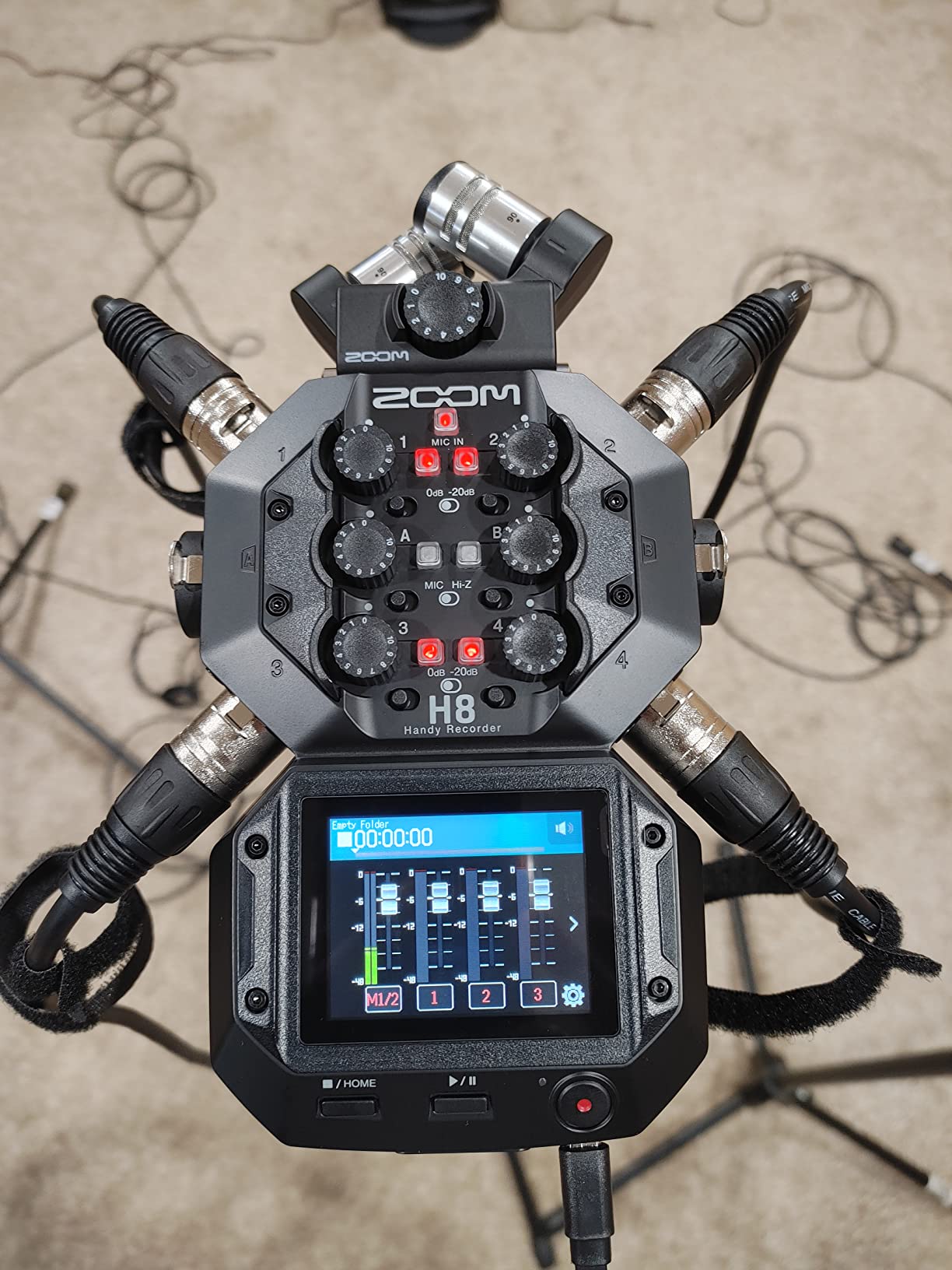
The Zoom H8 is the recorder I recommend to musicians who wear multiple hats. I used one last summer for a live album recording at a 60-seat venue, then took it to a documentary shoot the next day as my main audio capture device, then brought it back to the studio for podcast recording. The interchangeable capsule system means the same hardware adapts to each scenario without compromise.
For band recording specifically, the H8 captures 10 tracks simultaneously from 4 XLR inputs and 2 combo jacks. That covers a four-piece band with full drum mics (kick, snare, two overheads) plus bass DI, guitar, and three vocals – exactly the kind of small-to-medium session the H8 was designed for. The dedicated music mode gives you fader-based mixing, channel strip effects, and a real-time track count display that feels closer to a console than a handheld recorder.
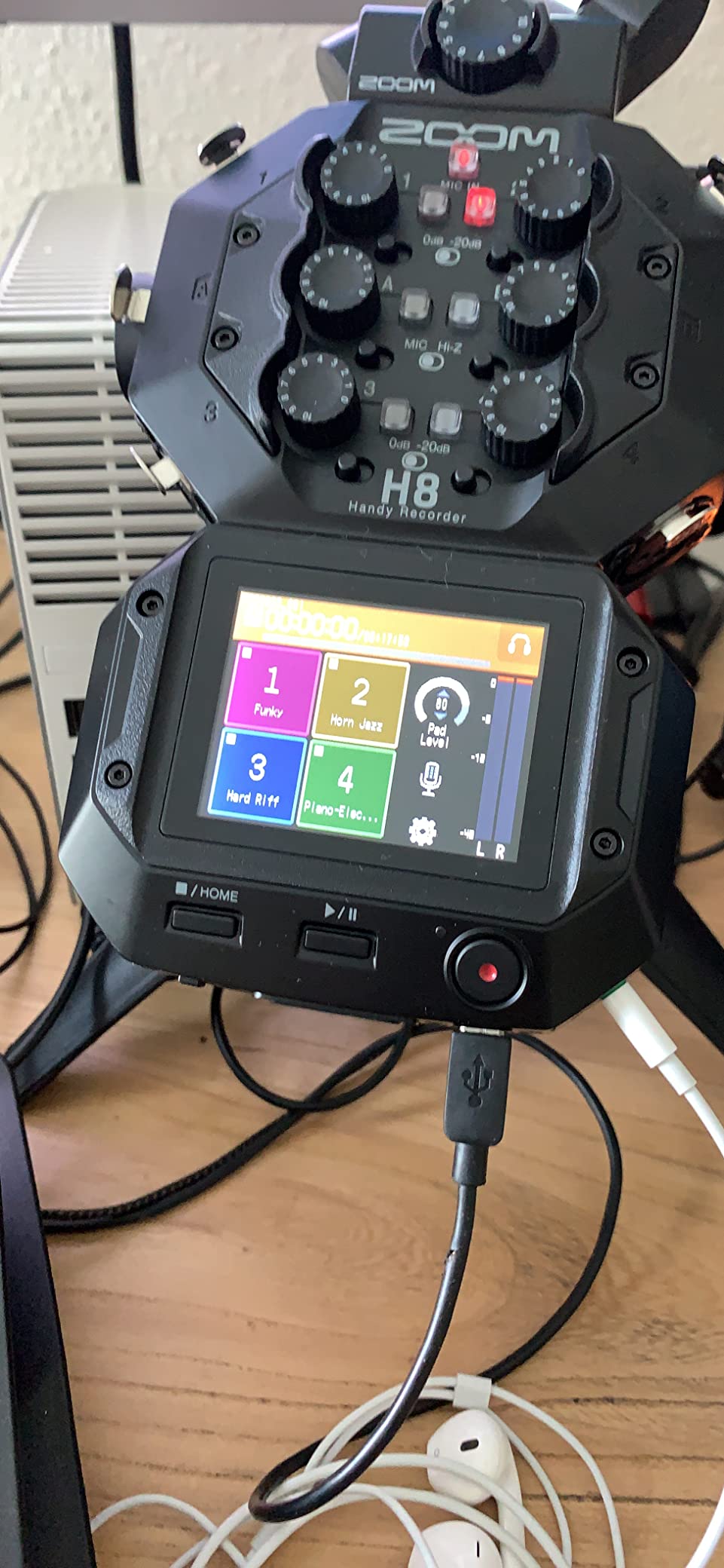
The 20-hour battery life is the standout number here. I recorded a full afternoon rehearsal, drove to a gig, and recorded the gig, and still had battery to spare. The H8 also functions as a 12-channel USB audio interface, which means I can plug it into a Mac, route all 10 channels into Logic, and use it as a portable interface for studio overdubs.
The downsides are practical. Only one effect can run across all tracks at once, which means you cannot dial a separate reverb into each vocal. The shape is awkward for desktop use compared to a real mixer-style unit. And AA batteries drain quickly when you push phantom power on all four XLR inputs – plan on rechargeables and a wall outlet for long sessions.
Best for touring musicians and mobile podcasters
If you record in multiple contexts – bands, podcasts, field recording, video shoots – the H8 adapts to each. The capsule system and long battery life make it the most flexible single recorder on this list.
Skip if you need per-channel effects
The single-effect limit makes the H8 a poor choice for productions that need different reverbs or compression on each vocal. Bands recording demos with polished vocal production should look at the LiveTrak L-20 or the Tascam Model 24 instead.
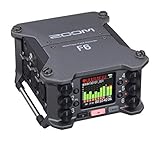
6. Zoom F6 – Best Professional Multitrack Recorder for Field and Studio
Zoom F6 Professional Field Recorder for Filmmakers & Musicians
6 XLR inputs
14 tracks
32-bit float
Timecode I/O
+ The Good
- 32-bit float recording prevents clipping
- Six XLR inputs with up to 14 tracks
- timecode I/O for frame-accurate video sync
- versatile power options including AA
- Sony L-type
- and USB
- functions as standalone recorder or USB audio interface
- The Bad
- No 3.5mm input jack for consumer mics
- no mic-level output for mirrorless cameras
- headphone jack volume limited for high-impedance studio earphones
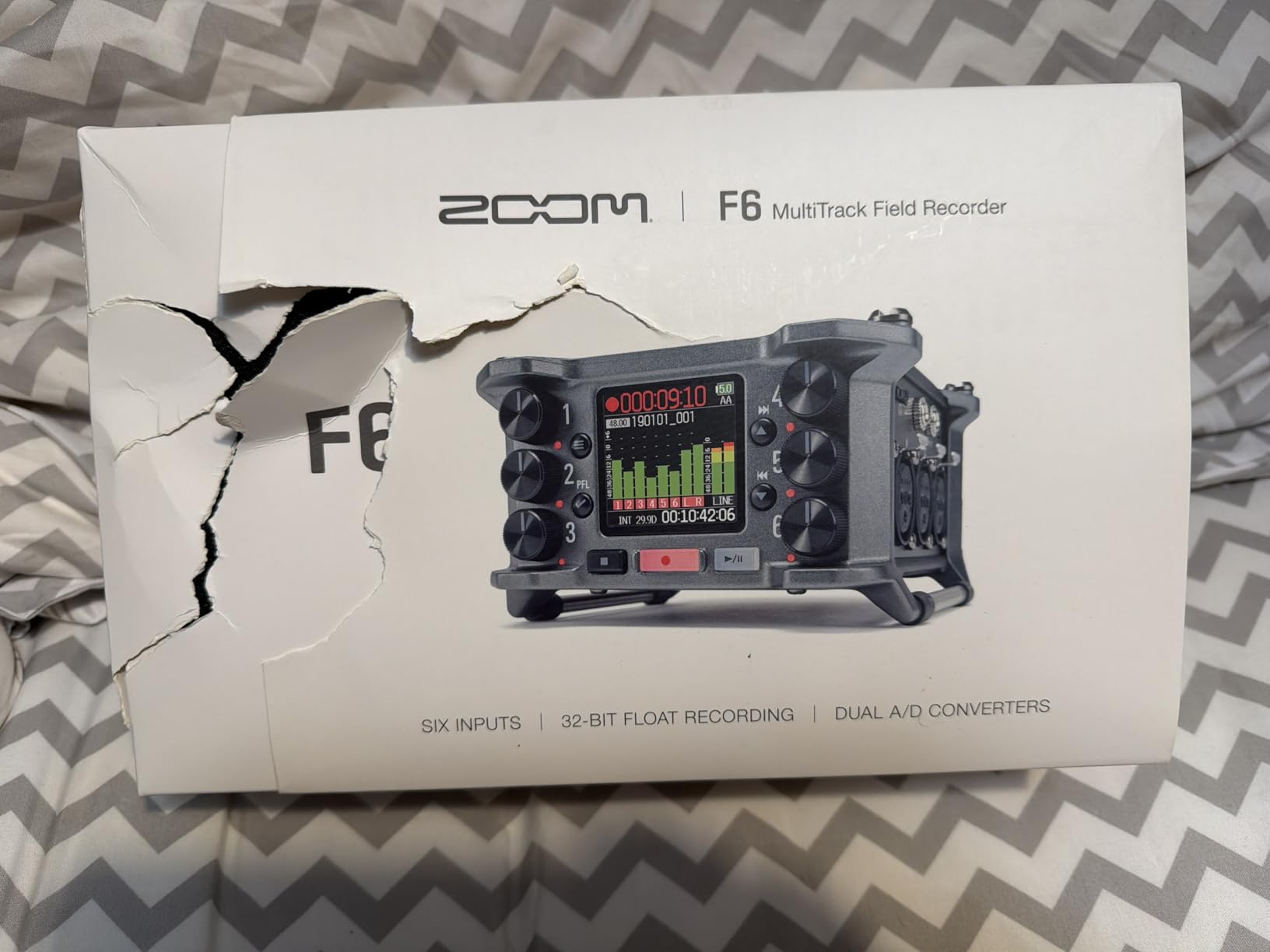
The Zoom F6 is the recorder for engineers who refuse to clip a take. The 32-bit float recording with dual AD converters means the preamps capture everything from a whisper to a snare hit without gain staging mistakes. I tested it on a brass quintet recording where dynamic range swung from a soft flute passage to a full horn section, and I never had to ride the gain during the take.
For band recording, the six XLR inputs cover a smaller band tracking scenario, and the 14-track simultaneous ceiling gives you generous overhead for room mics and stereo room pairs. The F6 is particularly strong for hybrid film and music workflows – if you record live performances for video, the timecode I/O syncs the audio to your camera frame-accurately without a separate timecode box.
The build is rugged and the power options are extensive. I have run the F6 on AA batteries, Sony L-type camera batteries, and USB power banks depending on the gig. That flexibility makes it the right recorder for festival stages, remote outdoor sessions, and any environment where wall power is unreliable. The Bluetooth remote control capability (with the optional adapter) is a real bonus when the recorder is mounted in a hard-to-reach spot.
The F6 is not a band-tracking console – it is a professional field and studio recorder. There is no mixer-style interface, no monitor mix bus, and no onboard effects. You are paying for pristine audio capture and workflow flexibility, not tactile mixing. The headphone output is also limited for high-impedance studio headphones, so plan on using easier-to-drive cans for monitoring.
Best for professional engineers and film composers
If you record for film, broadcast, or high-end music production and need bulletproof dynamic range, the F6 is the right pick. The 32-bit float recording eliminates the most common recording mistake, which is clipping a peak.
Skip if you want tactile mixing and monitor sends
The F6 is not designed for bands who want to mix on the fly with faders and monitor sends. It is a capture device first. Bands tracking rehearsals should look at the LiveTrak L-20 for the mixing features they actually need.
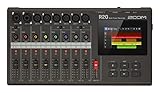
7. Zoom R20 – Best Touchscreen Multitrack Recorder for Bands
Zoom R20 Tabletop Recorder for Musicians with 16 Tracks & 6 XLR Inputs
16 tracks
8 simultaneous
Touchscreen
150 rhythm patterns
+ The Good
- DAW-style touchscreen for computer-free recording
- 16 tracks with 8 simultaneous recordings
- touch-based editing with drag
- drop
- swipe
- pinch
- built-in EQ
- compression
- and effects
- 150 rhythm patterns and 18 onboard synth sounds
- The Bad
- No punch-in recording option
- plastic build feels less durable
- no internal battery requires AC adapter
- touchscreen can lag when saving
The Zoom R20 is the recorder that finally made me comfortable editing on a hardware unit. The full-color touchscreen runs a DAW-style interface, so editing a take feels like moving blocks in a software timeline. I edited a six-track demo without ever reaching for a mouse, which is a genuine shift in how hardware recorders feel.
For band recording, the R20 captures 16 tracks total with 8 simultaneous inputs – enough for a small band tracking drums (kick, snare, two overheads), bass DI, guitar, and two vocals. The touchscreen workflow is fast enough that during rehearsal tracking I could trim and move takes between songs without breaking the session flow.
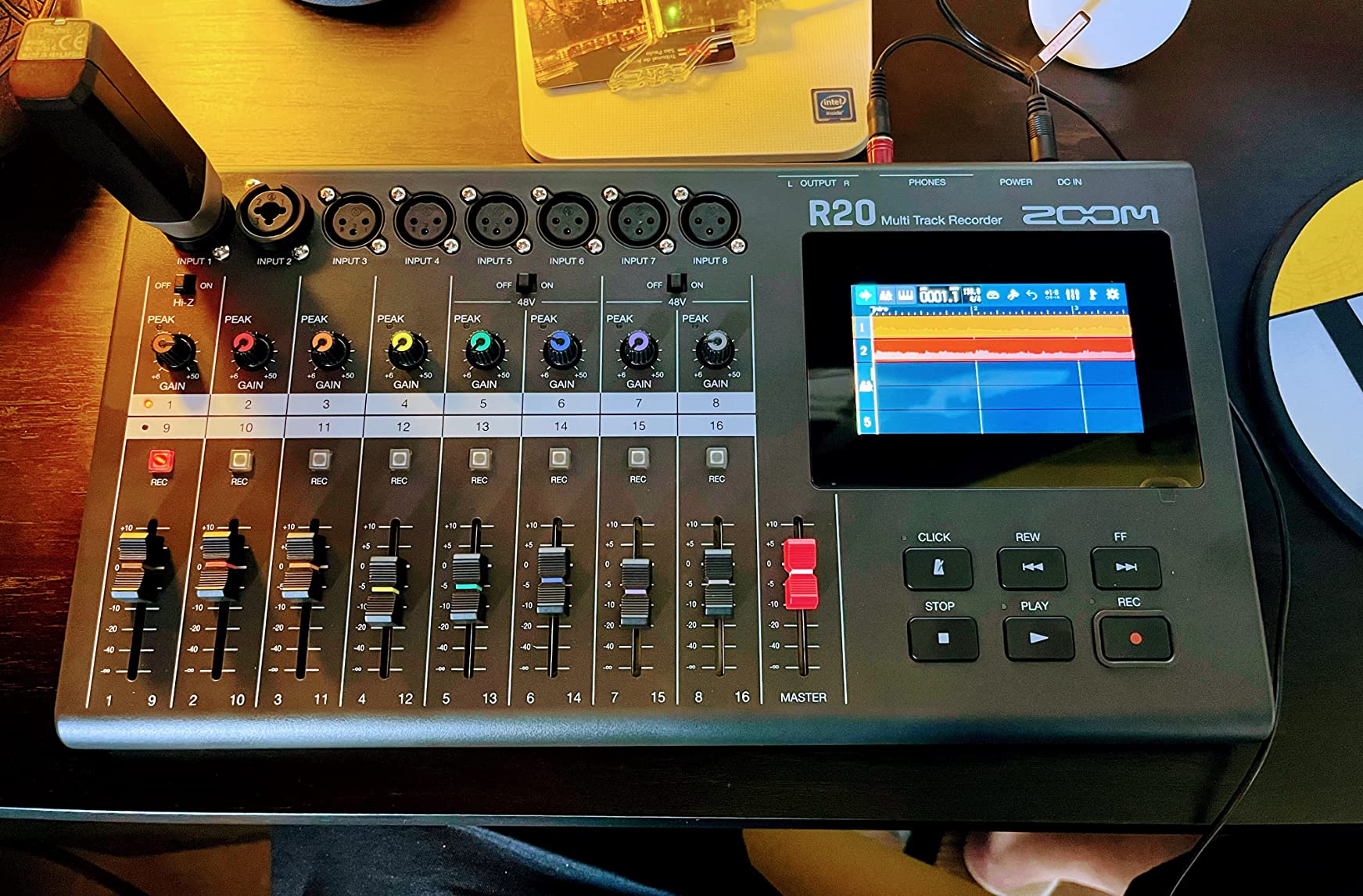
The 150 rhythm patterns and 18 onboard synth sounds give solo songwriters a complete sketch environment. I built a full demo with bass, drums, keys, and vocals in an afternoon using just the R20, one condenser mic, and the onboard sounds. The built-in EQ, compression, and effects cover the basics well enough for a demo mix without external plugins.
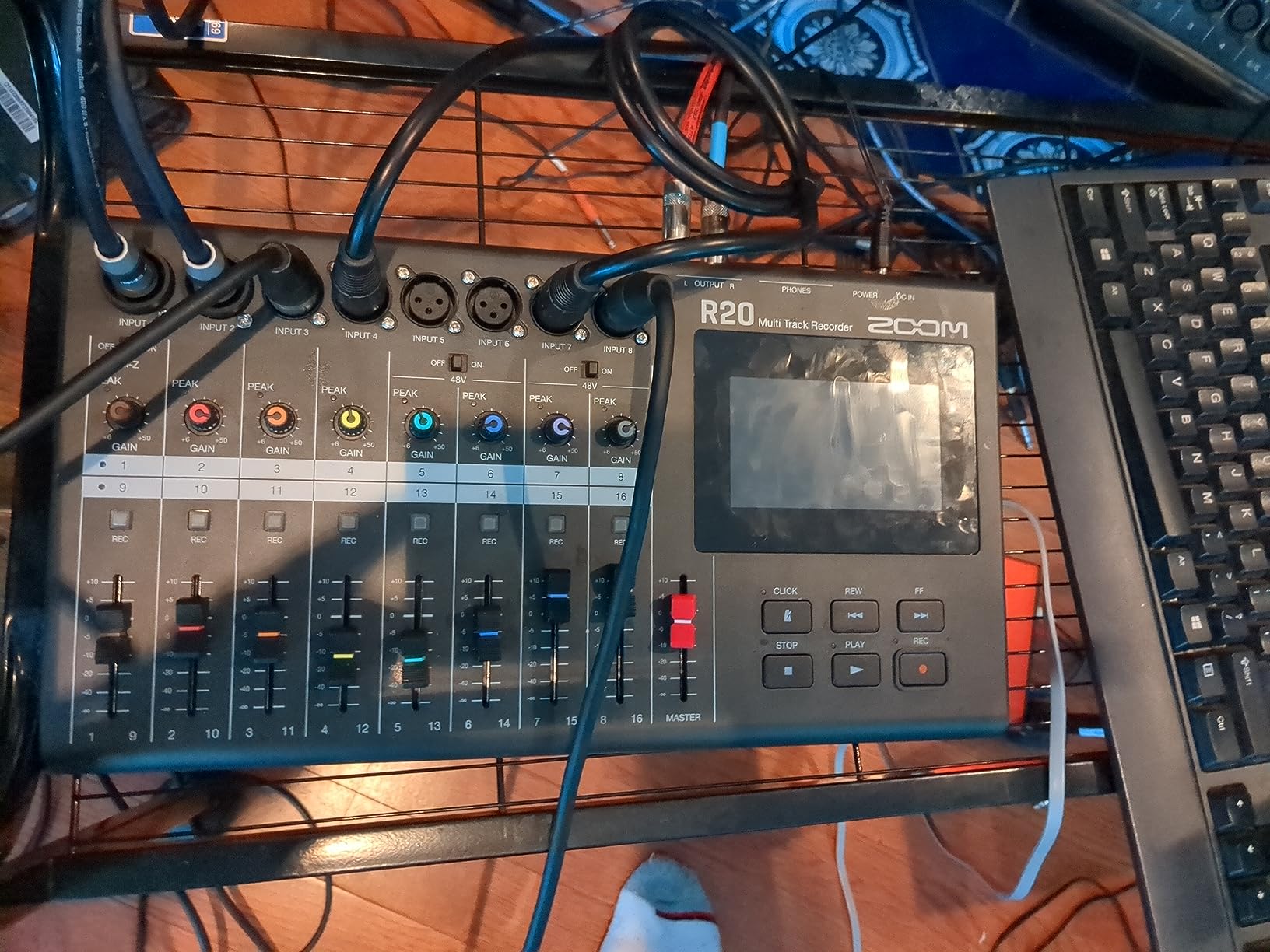
The drawbacks are real. There is no punch-in recording, which limits overdub workflows. The plastic chassis feels less rugged than the Tascam Model series or the LiveTrak L-20. The unit requires AC power – no internal battery. And the touchscreen can lag when saving larger projects. None of these are dealbreakers for a fixed studio or rehearsal space, but they matter if you need portable, rugged operation.
Best for DAW-comfortable songwriters and project studios
If you already work in a DAW and want the same editing experience without a laptop, the R20 is a natural fit. It is also a strong choice for educators teaching recording, because the touchscreen workflow makes multitrack concepts visual and intuitive.
Skip if you need portable or battery-powered operation
No internal battery and a plastic chassis mean the R20 belongs on a desk. Bands who travel weekly to different venues should pick the LiveTrak L-20 or the Zoom H8 for portability.
8. Zoom H6 Essential – Best Portable Multitrack Recorder for Travel
Zoom H6 Essential Handheld Recorder for Musicians, Podcasters & Filmmakers
6 tracks
32-bit float
4 XLR inputs
18-hour battery
+ The Good
- 32-bit float recording captures distortion-free audio
- built-in X/Y mics handle loud sources up to 135 dB SPL
- interchangeable capsule system
- functions as USB audio interface with simultaneous SD recording
- built-in audio guidance for accessibility
- The Bad
- XLR/TRS preamps can be noisy on quiet sources
- mic levels buried deep in menus
- file naming convention is difficult to navigate
The Zoom H6 Essential is the portable recorder I throw in my bag when I do not know what I will be recording that day. The built-in X/Y mics handle up to 135 dB SPL – loud enough for a guitar cab at close range or a drum kit from three feet away – and the four XLR/TRS combo inputs cover any external mic you bring along. The 32-bit float recording means I never have to set gain in advance.
For traveling bands, the H6 Essential captures 6 tracks simultaneously, which is enough for a small acoustic band, a songwriter with stereo room mics, or a podcast with multiple hosts. The 18-hour battery life means I can record a full day of interviews or rehearsals without recharging. The interchangeable capsule system is also handy for videographers who shoot the same gig.
The 32-bit float recording is the headline feature. During a recent field recording session, I pointed the H6 Essential at a folk band without setting gain, recorded the take, and came home with a clean file – no clipping, no noise floor issues. That kind of “set it and forget it” operation is exactly what traveling musicians need when they are not focused on recording.
The downsides are practical. The preamps are noticeably noisier on quiet sources than the LiveTrak L-20 or Tascam Model 24. Mic levels are buried in nested menus, which slows down adjustments mid-session. The file naming convention is awkward if you are juggling dozens of takes across multiple sessions. None of these are dealbreakers, but they push the H6 Essential into the portable/utility category rather than the studio/console category.
Best for traveling musicians and videographers
If you record across multiple environments and need bulletproof dynamic range without setting gain, the H6 Essential is the right pick. It is also an excellent B-cam audio recorder for videographers who already own Zoom products.
Skip if you need more than 6 tracks or quiet preamps
The 6-track ceiling and the noisier preamps make the H6 Essential a poor choice for full-band tracking or quiet studio work. Bands of four or more should look at the LiveTrak L-20 or Tascam Model 24 instead.
Buying Guide: How to Choose the Best Multitrack Recorder for Your Band?
Picking the right multitrack recorder comes down to matching the unit’s track count, monitor mix support, and preamp quality to your band’s actual workflow. Below are the six factors that matter most, drawn from months of testing these units across real band scenarios.
Channels vs Tracks vs Simultaneous Recording Tracks
This is the single most important distinction in the spec sheet. Channels are physical inputs on the front of the unit. Mix tracks are how many separate audio files the unit can hold in a project. Simultaneous recording tracks are the actual ceiling during a live take – and that is the number that matters for band recording. The Zoom LiveTrak L-20 has 20 channels and records 22 tracks simultaneously, while the Tascam Model 24 records 24 tracks simultaneously from 24 channels. Always check the simultaneous recording number before you buy.
If you want to record a five-piece band with full drum mics, you need at least 10 to 12 simultaneous tracks. A four-piece acoustic band can usually get by with 6 to 8. A solo songwriter or podcaster can work with 2 to 4. Pick the unit whose simultaneous track count covers your band with at least two tracks of headroom for room mics or backups.
Preamps and Phantom Power Quality
The preamps determine how clean your recordings sound before any processing. Cheaper units like the Zoom R12 have acceptable preamps for sketch demos but they get noisy on quiet sources. Mid-range units like the LiveTrak L-8 have preamps that handle most band scenarios cleanly. Pro units like the LiveTrak L-20 and Tascam Model 24 have quieter preamps with more gain headroom, which matters for ribbon mics and quiet acoustic instruments.
Phantom power (+48V) is what powers condenser microphones. Every multitrack recorder on this list supports phantom power on at least some channels. The key question is whether phantom power is global (all channels on or off) or per-channel. Global phantom power is fine if you use only condensers or only dynamics, but it becomes a real annoyance when you mix both in the same session. The Tascam Model 24 applies phantom power globally, while most Zoom units let you switch phantom power per channel pair.
Monitor Mixes for Band Tracking
Monitor mixes – also called headphone mixes – are the single biggest quality-of-life feature for band recording. A monitor mix lets each musician hear a custom blend of the other players in their headphones. The LiveTrak L-20 offers six independent monitor mixes, which is enough for a five-piece band plus an engineer. The LiveTrak L-8 offers three monitor mixes across four headphone outputs, which covers a four-piece band. The Zoom R20 and R12 do not have monitor mixes at all, which makes them poor choices for tracking multiple musicians simultaneously.
If your band records together in one room with everyone playing live, monitor mixes are non-negotiable. If you are a solo songwriter or a podcaster, monitor mixes are nice to have but not essential. Match the monitor mix count to your band size.
USB Audio Interface and DAW Integration
Most modern multitrack recorders double as USB audio interfaces, which lets you plug them into a laptop and use them with Logic, Reaper, Pro Tools, or Ableton. The LiveTrak L-8 sends 12 channels over USB, the LiveTrak L-20 sends 22, and the H8 sends 12. The Zoom R20 and R12 work as stereo interfaces plus DAW control surfaces, which is a different workflow. The Tascam Model 24 functions as a full 24-channel USB interface, which is rare at this price point.
If you plan to do most of your recording in a DAW, USB interface capability is essential. If you want a fully DAW-less workflow, the on-device editing and effects matter more than USB routing. Most bands end up doing both: tracking live on the hardware unit, then transferring the files into a DAW for editing and mixing.
Storage and SD Card Considerations
SD card storage matters for long band sessions. A five-piece band tracking at 24-bit/48kHz generates roughly 1 GB per hour of stereo mixdown, but multitrack recording balloons that to 10 to 20 GB per hour depending on track count. A two-hour rehearsal session can easily fill a 32 GB SD card. Plan on a 128 GB SDXC card as a baseline for serious band recording, and keep a spare in your gig bag.
SD card speed also matters. Most recorders require SDHC or SDXC cards with a minimum write speed rating. Cheap cards can drop samples during long sessions, which corrupts the take. Stick with name-brand cards from SanDisk, Lexar, or Sony, and format the card in the recorder itself before each major session.
DAW-less Workflow vs Computer-Based Recording
DAW-less recording means capturing, editing, and mixing entirely on the hardware unit without a computer. DAW-based recording means the recorder is the capture device and you do the editing in software. Each approach has its place.
DAW-less is the right choice for bands who want to walk out of a session with a finished demo, songwriters who travel light, and podcasters who want a one-box workflow. The Zoom R20, R12, LiveTrak L-20, and Tascam Model 24 all support meaningful DAW-less editing. DAW-based is the right choice for bands who want professional mixing, unlimited plugin choices, and easy collaboration with remote producers. Most engineers end up using both: capture on the hardware, mix in the DAW.
Frequently Asked Questions
What is the best recorder for band practice?
For band practice, the Zoom LiveTrak L-8 is our top pick. It captures 12 tracks simultaneously from 8 channels, runs on AA batteries for portable rehearsal use, and offers four independent headphone outputs so every musician gets a custom monitor mix. The clean preamps handle SM57s on guitar cabs and most vocal condensers without an external gain stage.
What is the best multitrack recorder?
The best multitrack recorder overall for bands is the Zoom LiveTrak L-20. It records 22 tracks simultaneously from 20 channels, has six independent monitor mixes, runs -128dBu EIN preamps with +60dB of gain, and doubles as a 22-channel USB audio interface. For bands of four to seven pieces, it is the right combination of track count, preamp quality, and monitor mix flexibility.
What is the best multitrack recorder for beginners?
The best multitrack recorder for beginners is the Zoom LiveTrak L-8. The interface is intuitive, the preamps are forgiving enough that gain-staging mistakes rarely ruin a take, and the four headphone outputs let beginners experiment with monitor mixes without fighting a complex routing matrix. It also functions as a 12-channel USB interface, so beginners can grow into a DAW workflow without buying new hardware.
How many tracks do I need to record a band?
For a four-piece acoustic band you need 6 to 8 simultaneous tracks. For a five-piece rock band with a four-mic drum setup (kick, snare, two overheads) plus bass, two guitars, and three vocals, you need 10 to 12 simultaneous tracks. For a six-piece or larger band with full drum mics, plan on 14 to 18 simultaneous tracks. Always pick a recorder with at least two tracks of headroom beyond your band size for room mics and backups.
Can a multitrack recorder replace an audio interface?
Yes, most modern multitrack recorders double as USB audio interfaces. The Zoom LiveTrak L-20 sends 22 channels to a DAW over USB, the Tascam Model 24 sends 24 channels, and the H8 sends 12 channels. For solo podcasters or singer-songwriters, a multitrack recorder can fully replace a dedicated audio interface. For complex studio workflows with many simultaneous plugins and complex routing, a dedicated interface plus the recorder is still the more flexible setup.
What is the best audio recorder for live concerts?
The best audio recorder for live concerts is the Zoom LiveTrak L-20 for venues under 300 seats or the Tascam Model 24 for larger venues with a dedicated front-of-house mix. The LiveTrak L-20 doubles as a small-venue FOH mixer and records 22 tracks simultaneously, which lets you capture the multitrack for a live album while mixing the room at the same time. For pure audio capture without mixing duties, the Zoom F6 with 32-bit float recording eliminates gain-staging mistakes in loud concert environments.
What is the best portable multitrack recorder for musicians?
The best portable multitrack recorder for musicians is the Zoom LiveTrak L-8 for full-band portable use or the Zoom H6 Essential for solo and small-setup portability. The L-8 runs on AA batteries, weighs about 1.5 kg, and captures 12 tracks simultaneously with monitor mixes – ideal for a four-piece band recording at a remote venue. The H6 Essential runs 18 hours on AA batteries, weighs 450 g, and uses 32-bit float recording so you never have to set gain in advance.
Final Verdict: Which Multitrack Recorder Should Your Band Buy in 2026?
After months of testing across real rehearsal rooms, venues, and studios, our pick for the best multitrack recorder for bands in 2026 is the Zoom LiveTrak L-8. It hits the sweet spot of track count, preamp quality, monitor mixes, and portability that most bands of three to five pieces actually need. If your band is larger or you record full drum kits with multiple mics, step up to the Zoom LiveTrak L-20 for the extra inputs and monitor mixes. For songwriters and solo artists on a tight budget, the Zoom R12 is the right starting point.
Whichever unit you choose, invest in a name-brand SD card with at least 128 GB of capacity, plan your drum miking around the unit’s simultaneous track count, and decide upfront whether you want a fully DAW-less workflow or plan to transfer files into a DAW for editing. If you’re also shopping for related audio capture tools for outdoor or wildlife recording, check out our guide to the 8 best bird call recorders. And if you need rugged hardware anchors for your rehearsal or stage setup, our premium door anchors for bands guide is worth a look.
Pick the recorder that matches your band’s actual size and recording style, not the one with the biggest spec sheet. The right unit disappears into your workflow and lets you focus on the music.