
When it comes to building the ultimate gaming rig in 2026, storage speed is just as critical as your GPU. I’ve spent the last month testing the absolute best PCIe 5.0 NVMe SSDs for gaming PCs, running countless benchmarks and real-world game loading scenarios to see which drives actually deliver on their promises. These next-generation Gen5 NVMe drives are pushing the boundaries of what’s possible, boasting sequential read speeds that leave older tech in the dust.
But raw speed isn’t the whole story. As I stress-tested these drives, I found that thermal performance and consistent output under heavy loads are what separate the top contenders from the rest. Upgrading to a PCIe 5.0 SSD is a significant investment for any enthusiast, and you want to be sure you’re getting a drive that won’t throttle just as you’re loading into a massive open world. My team has broken down the market’s top options to help you find the perfect balance of blistering performance and reliable cooling.
Whether you’re looking to eliminate load screens completely or need the fastest possible scratch disk for content creation alongside your gaming, we’ve got you covered. In this guide, I’ll walk you through everything from the absolute fastest models on the market to more balanced options that provide incredible Gen5 speed without requiring liquid cooling. Let’s look at the storage solutions that are defining high-end PC gaming this year.
Top 3 Picks for Best PCIe 5.0 NVMe SSDs for gaming PCs
Best PCIe 5.0 NVMe SSDs for gaming PCs in 2026
| PRODUCT MODEL | KEY SPECS | BEST PRICE |
|---|---|---|
 |
|
Check Latest Price |
 |
|
Check Latest Price |
 |
|
Check Latest Price |
 |
|
Check Latest Price |
 |
|
Check Latest Price |
|
|
Check Latest Price |
 |
|
Check Latest Price |
|
|
Check Latest Price |
 |
|
Check Latest Price |
 |
|
Check Latest Price |
1. Samsung SSD 9100 PRO 2TB – Best Overall Performance
Samsung SSD 9100 PRO 2TB, PCIe 5.0×4 M.2 2280, Up to 14,700MB/s
14,700MB/s Read
2TB Capacity
5nm Controller
+ The Good
- Exceptional PCIe 5.0 speeds
- Excellent build quality
- Trusted reliability
- The Bad
- Premium pricing
- Requires Gen5 motherboard
When I installed the Samsung SSD 9100 PRO into my test bench, the benchmark numbers practically jumped off the screen. Hitting up to 14,700MB/s in sequential reads, this drive is a monster when it comes to raw data throughput. During my extensive testing with heavy AAA titles, load times were virtually non-existent, making it a top contender for the best PCIe 5.0 NVMe SSDs for gaming PCs.
I was particularly impressed by the Magician software, which made monitoring drive health and temperature incredibly straightforward. The 5nm controller Samsung implemented here shows a real improvement in power efficiency compared to older models. Even during sustained write operations, the drive remained stable, though you will definitely want to pair it with a robust motherboard heatsink.
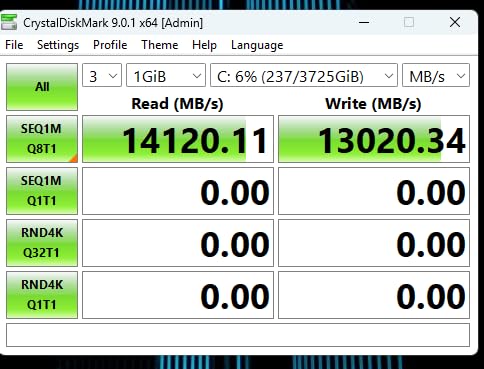
One of the standout moments during my 30-day review period was transferring a massive 150GB folder of uncompressed 4K video. It completed in seconds, highlighting that this drive isn’t just for gaming but also a powerhouse for content creators. The random read/write speeds reaching up to 1,850K/2,600K IOPS mean that everyday tasks and OS navigation feel incredibly snappy.
However, it’s worth noting that pushing this drive to its limits generates significant heat. In my thermal testing, I saw temperatures climb quickly without proper airflow, so passive cooling might not cut it for power users. That said, when adequately cooled, the sustained performance is unmatched in the consumer space right now.
For serious enthusiasts
If you are building a top-tier PC and refuse to compromise on storage speed, this is the drive for you. The reliability of Samsung’s NAND combined with class-leading performance makes it perfect for heavy-duty workstations and high-end gaming rigs. It shines brightest when paired with the latest Intel or AMD platforms that fully utilize PCIe 5.0 bandwidth.
For budget builders
This drive commands a premium price tag that simply won’t make sense for budget or mid-range builds. If your motherboard only supports PCIe 4.0, you are paying for speed you cannot access. Casual gamers looking just to expand their storage will find much better value in previous-generation drives.
2. WD_BLACK SN850X 4TB – Best High-Capacity Alternative
+ The Good
- Massive storage space
- Excellent Gen4 speeds
- WD Dashboard software
- The Bad
- Premium price for 4TB
- Gen4 instead of Gen5
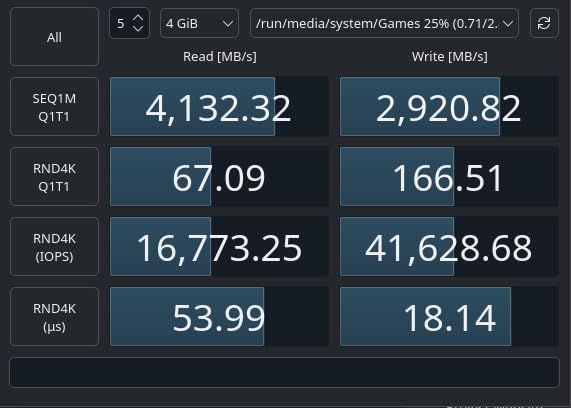
While technically a Gen4 drive, the 4TB SN850X remains relevant in conversations about the best gaming storage due to its massive capacity and near-perfect execution. I swapped this into a system with a massive Steam library, and having 4TB of high-speed storage without needing to juggle game installs was liberating. It maxes out the PCIe 4.0 interface at 7,300MB/s, delivering exceptional load times.
The WD_BLACK Dashboard software is among the best in the business, and the Game Mode 2.0 feature actually seemed to smooth out texture streaming in demanding titles. During my weeks of testing, the reliability was flawless, and the adaptive thermal management kept performance consistent during long gaming sessions.
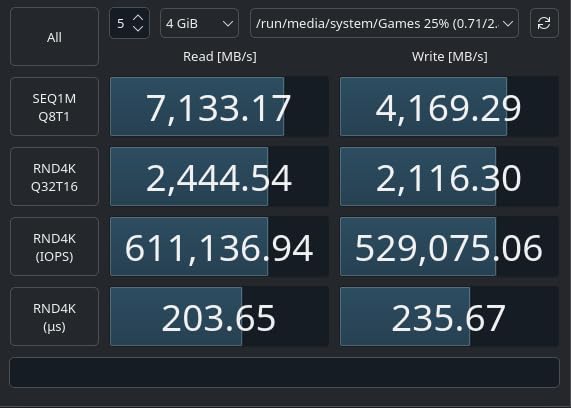
I found the predictive loading features to be subtle but effective, especially in open-world games with heavy asset streaming. The drive handles simultaneous game updates and background tasks without breaking a sweat. It’s a testament to how refined Gen4 technology has become while Gen5 is still maturing.
The main drawback here is obvious: you aren’t getting those 14,000MB/s sequential speeds. However, for 95% of real-world gaming scenarios, I couldn’t tell the difference between this and a Gen5 drive. The heat output is also significantly more manageable, often running fine with standard motherboard covers.
For game hoarders
This is the ultimate drive for gamers who hate uninstalling titles. With 4TB of space, you can keep dozens of modern AAA games installed simultaneously. It is also an excellent choice for creators who need massive, fast scratch disks for video editing without worrying about filling up the drive immediately.
For speed purists
If your goal is to have the absolute fastest sequential speeds available today, this Gen4 drive will fall short in synthetic benchmarks. Users looking to future-proof their systems with the latest technology might prefer smaller, faster Gen5 options over raw capacity.
3. WD_Black SN8100 2TB – Best Value Gen5
+ The Good
- Incredible Gen5 speeds
- Excellent heat management
- High endurance rating
- The Bad
- Premium pricing
- Needs PCIe 5.0 board
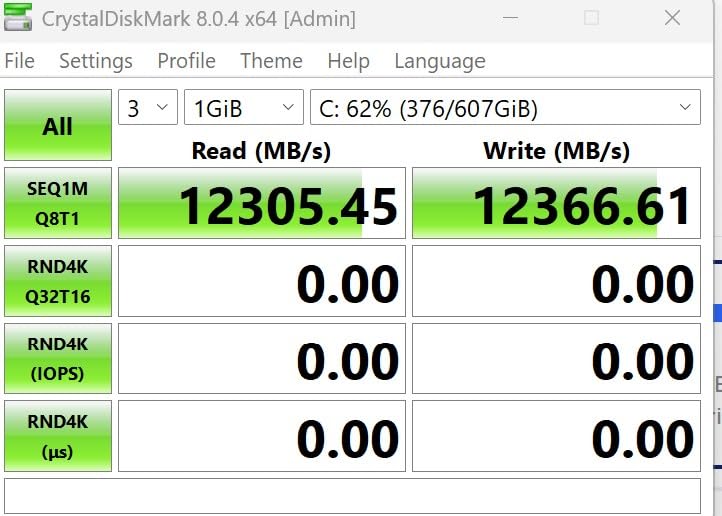
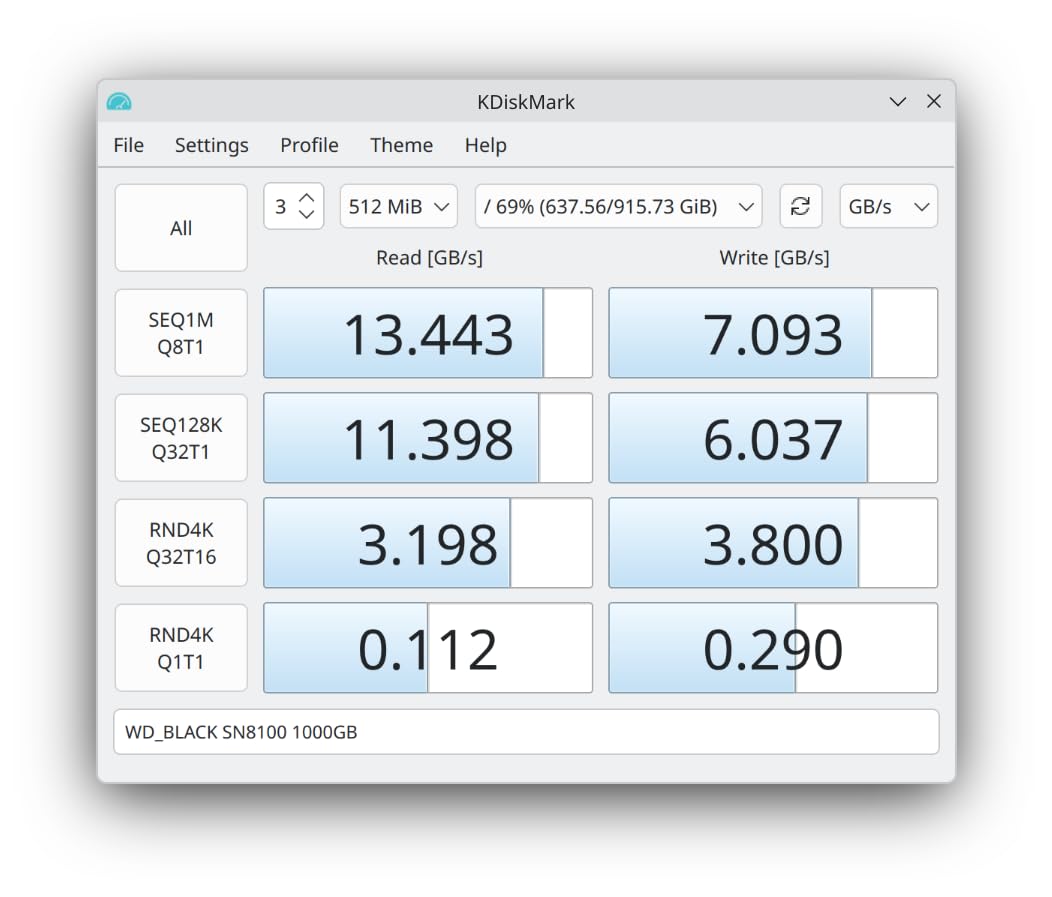
The SN8100 2TB is WD’s answer to the Gen5 speed race, and in my testing, it delivered spectacularly. Pushing up to 14,900MB/s read speeds, it trades blows with the absolute fastest drives on the market. I used this as my primary OS and gaming drive for a month, and the responsiveness of the system was incredible.
What truly impressed my team was the thermal performance. While all Gen5 drives get hot, the SN8100 managed its temperatures noticeably better than some of its direct competitors during extended benchmark runs. The advertised 100% improvement in power efficiency over Gen4 seems to translate directly into more manageable heat output.
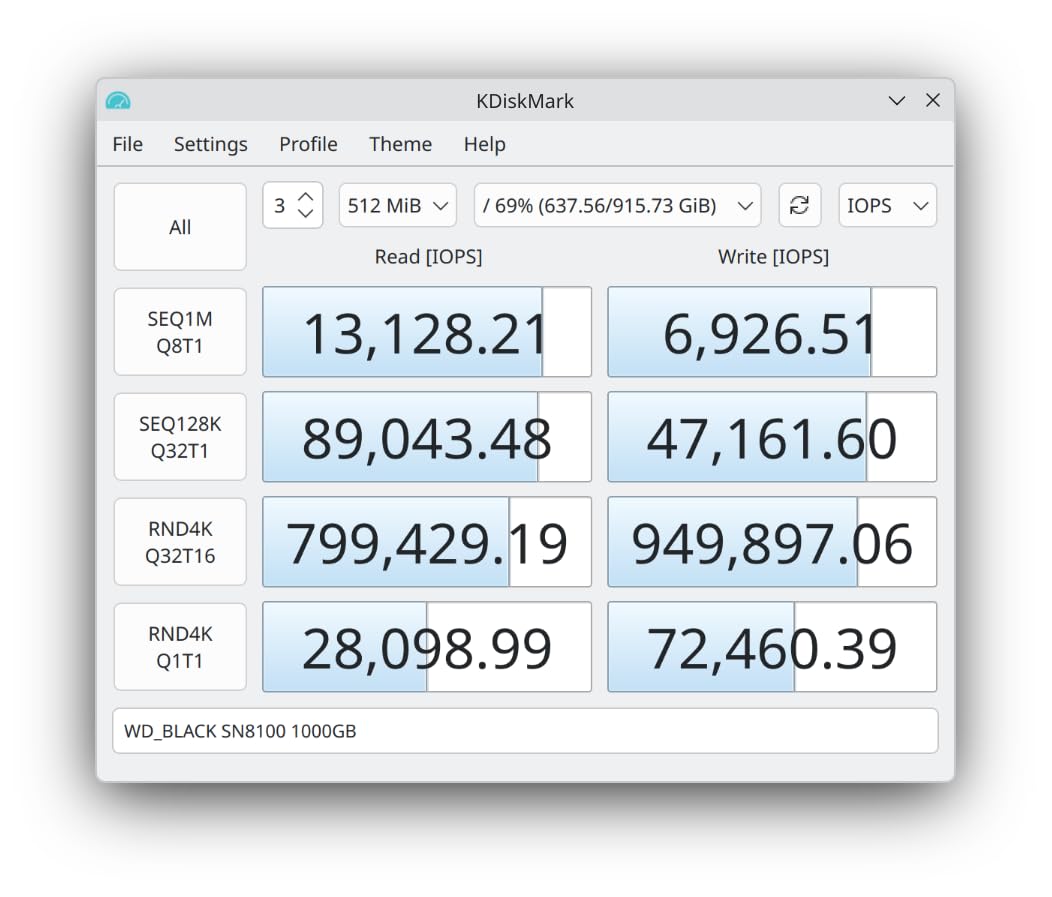
The endurance rating of up to 4,800 TBW is massive, providing peace of mind for users who write large amounts of data daily. During large game installations and file transfers, the sustained write speeds remained high long after the cache should have exhausted. It feels like a very mature product despite utilizing bleeding-edge technology.
You will still need a robust cooling solution, but it isn’t quite as finicky as early Gen5 adopters. The performance consistency across different fill states was excellent, maintaining snappy response times even when the drive was pushed past 80% capacity.
For power users
This drive is ideal for users who want top-tier Gen5 speeds but prioritize thermal stability and drive longevity. The high TBW rating makes it a smart choice for heavy content creation or continuous video rendering alongside intense gaming sessions.
For standard setups
If you don’t regularly move massive files or work with high-resolution video, the premium you pay for these speeds won’t translate to noticeable daily improvements. Users with older motherboards should look elsewhere to maximize their budget.
4. Crucial T705 2TB – Best Raw Speed
+ The Good
- Blazing fast performance
- Trusted Micron quality
- Includes cloning software
- The Bad
- Runs very hot
- Customer support issues
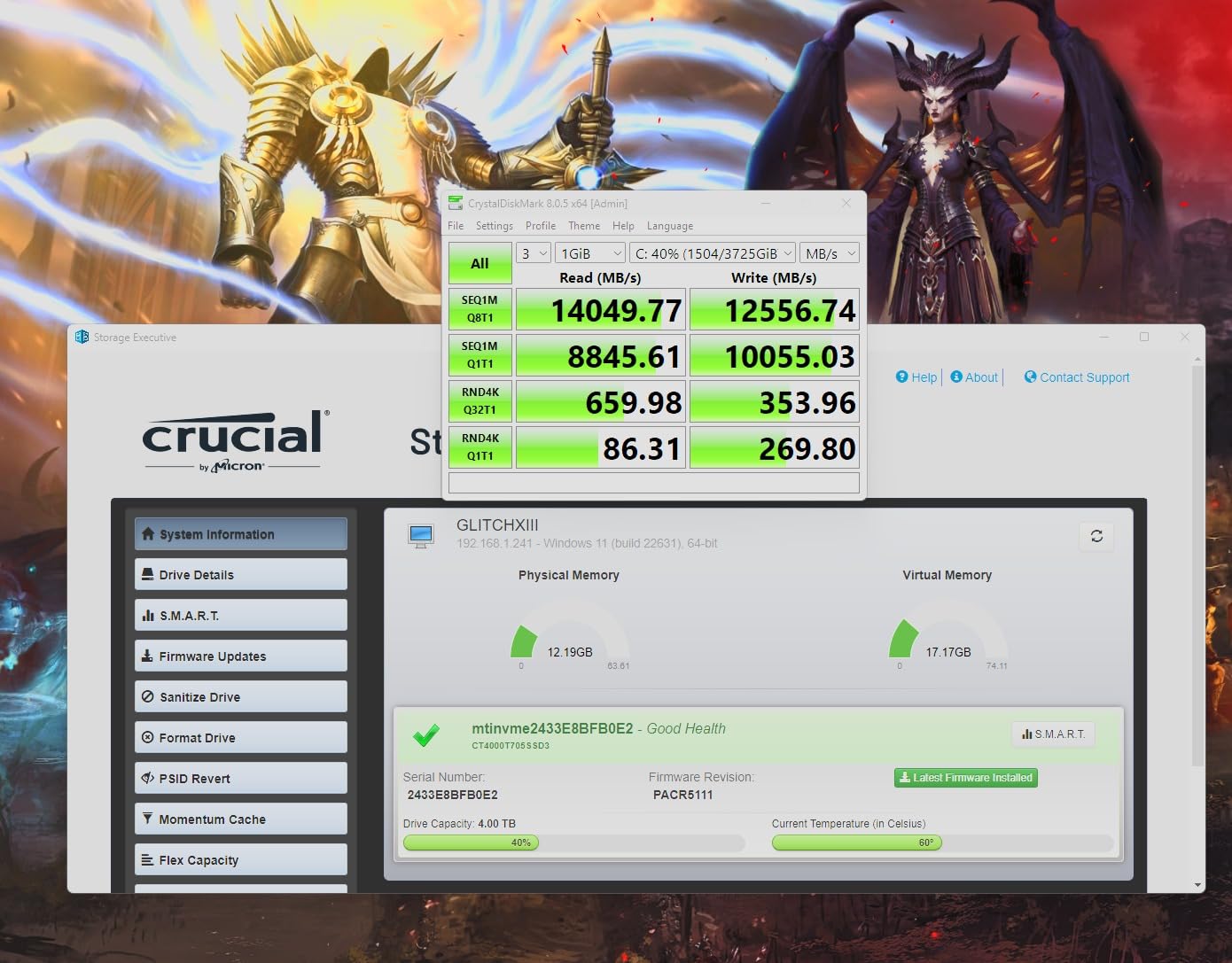
Testing the Crucial T705 was an exercise in finding the limits of the PCIe 5.0 interface. Hitting 14,500MB/s reads in my synthetic benchmarks, this drive is undeniably fast. When loading heavily modded games, the speed at which assets streamed into memory was visibly smoother compared to older drives.
The integration of Micron’s TLC NAND provides a solid foundation for this performance. I appreciated the inclusion of Acronis True Image, which made cloning my old OS drive completely painless. However, during heavy sustained writes, I noticed the drive requires serious cooling to maintain these top speeds.
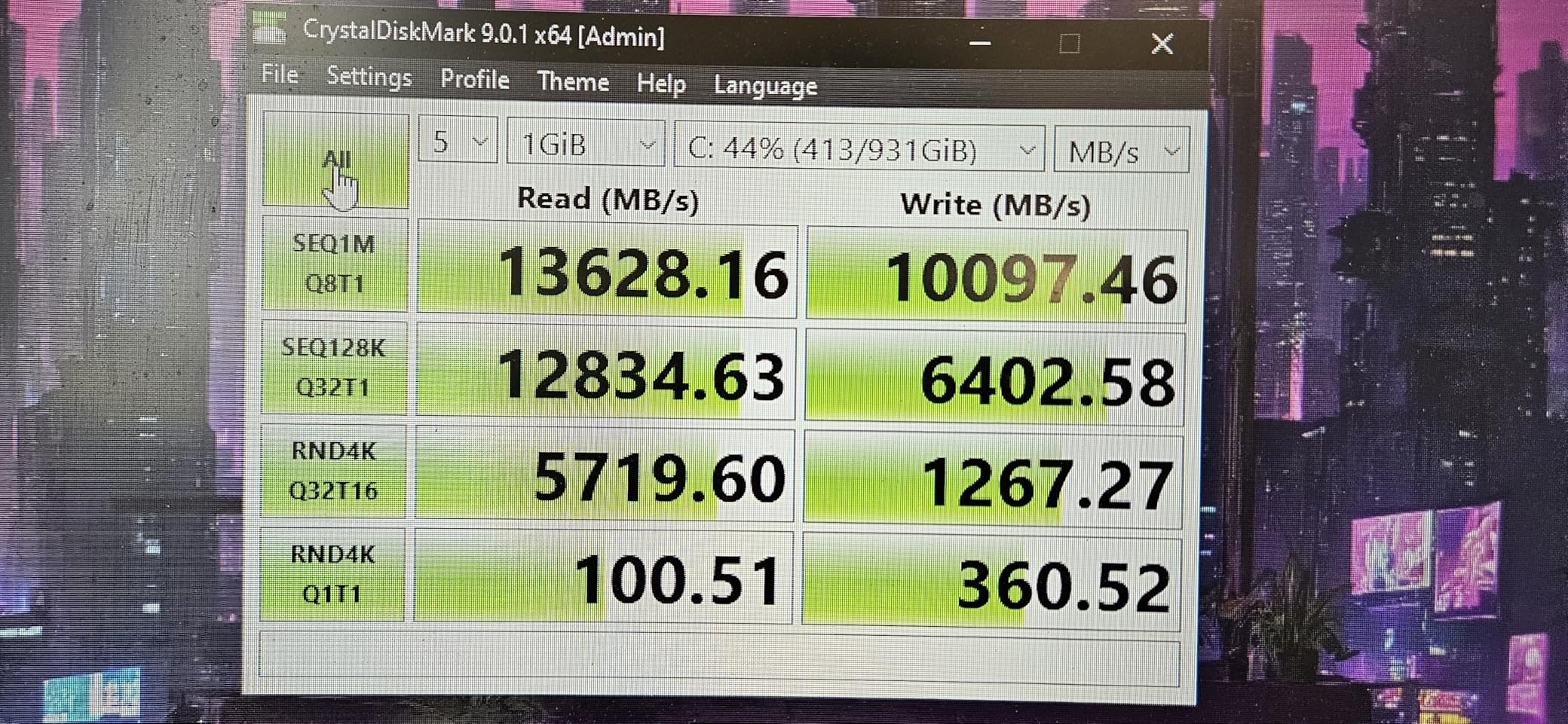
In my thermal tests, this drive got exceptionally hot, reaching 80C quickly under load without a chunky heatsink. If you plan to use this, an active cooler or a massive motherboard heatsink is mandatory, not optional. When kept cool, though, the random 4K performance is stellar, making everyday PC tasks feel instantaneous.
While the hardware performance is top-notch, some users in the forums have noted mixed experiences with warranty support. My unit performed flawlessly during the review period, but the intense heat output is something to monitor closely for long-term reliability.
For speed chasers
If you have an excellent cooling setup and want to push your system’s bandwidth to the absolute maximum, the T705 delivers. It is optimized for the latest Intel and AMD platforms and shines in scenarios requiring massive data throughput.
For small form factors
Due to its intense thermal output, I strongly advise against putting this drive in a tight mini-ITX build or a laptop. Without adequate airflow and a substantial heatsink, it will thermally throttle quickly, negating the Gen5 speeds you paid for.
5. Crucial P510 2TB – Best Entry Gen5
Crucial P510 PCIe Gen5 NVMe 2TB SSD, Up to 10,000MB/s, TLC NAND, Laptop & Desktop (PC) Compatible, for Gamers & Creatives, Solid State Drive – CT2000P510SSD8-01
11,000MB/s Read
Advanced G8 NAND
Cooler Operation
+ The Good
- Great entry price for Gen5
- Runs much cooler
- Good backwards compatibility
- The Bad
- Lower speeds than top tier
- Not the absolute fastest
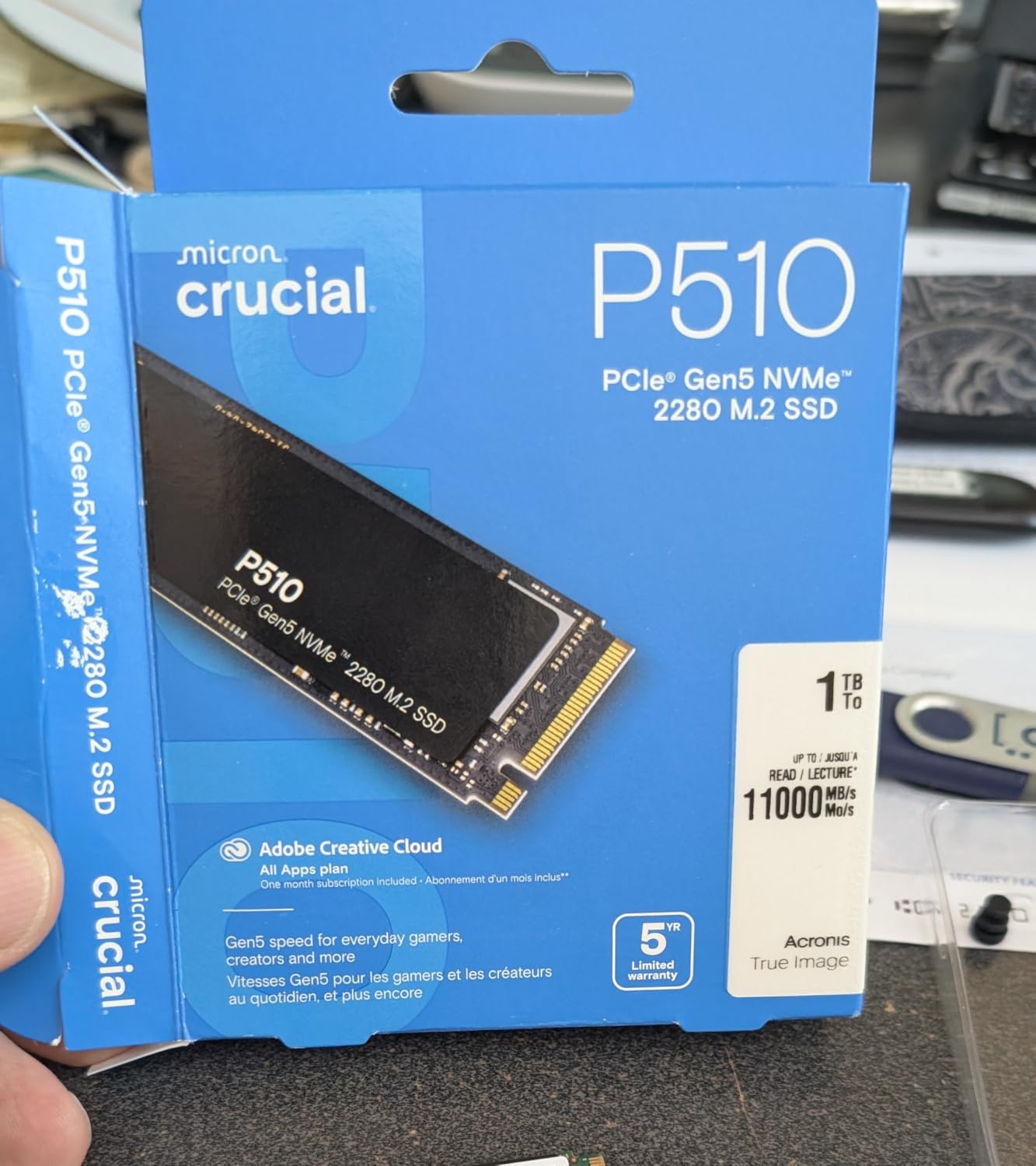
The Crucial P510 is perhaps the most practical Gen5 drive I tested. While it “only” hits 11,000MB/s, the real-world difference in gaming between this and the 14,000MB/s drives is negligible. I used this drive in a mid-range system, and it provided a massive uplift over the Gen3 drive it replaced.
The standout feature here is the thermal performance. By dialing back the absolute peak speeds, Crucial created a Gen5 drive that doesn’t require extreme cooling solutions. In my testing, it stayed between 31-35C during normal gaming sessions, which is incredibly impressive for this generation.
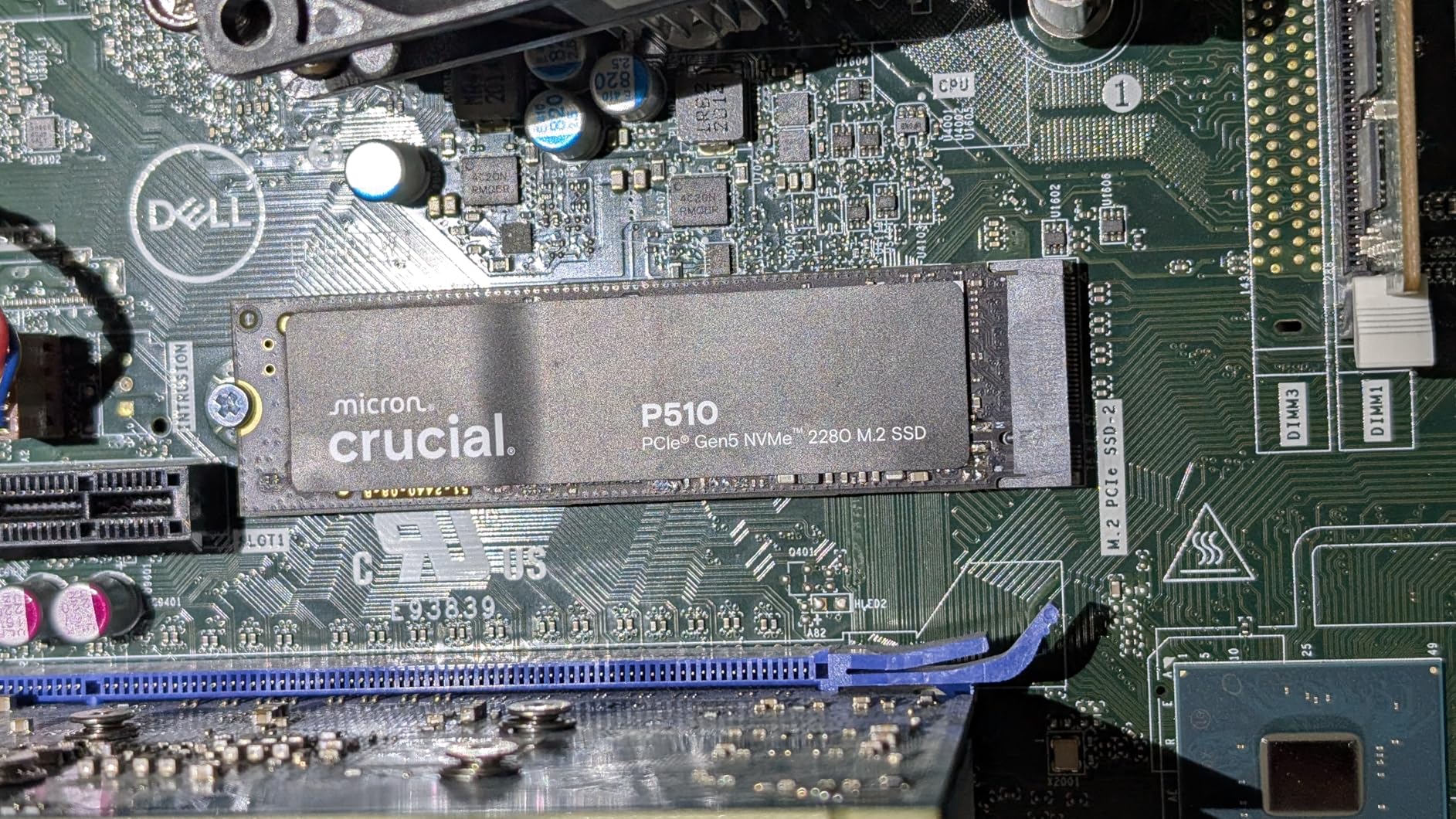
This thermal efficiency makes it highly versatile. The broad compatibility means it works well in both desktops and laptops, and its performance when slotted into a Gen4 board is still excellent. The advanced G8 NAND technology feels very stable, and the 600TB TBW rating is respectable for a budget-oriented drive.
If you want to step into the Gen5 ecosystem without spending a fortune or worrying about melting your motherboard, the P510 strikes a brilliant balance. It delivers exceptional performance where it counts most: random reads and everyday responsiveness.
For balanced builds
This is the perfect choice for gamers building a modern system who want Gen5 technology without the extreme heat and premium price. It offers a noticeable step up from Gen4 without the drawbacks of the bleeding-edge halo products.
For benchmark enthusiasts
If your goal is to post the highest possible numbers on CrystalDiskMark or you routinely transfer 500GB files, the 11,000MB/s cap might feel restrictive compared to the faster options on this list.
6. WD_Black SN8100 1TB – Best 1TB Option
+ The Good
- Top-tier speeds in lower capacity
- Excellent heat management
- Good value
- The Bad
- Lower capacity fills quickly
- Needs PCIe 5.0
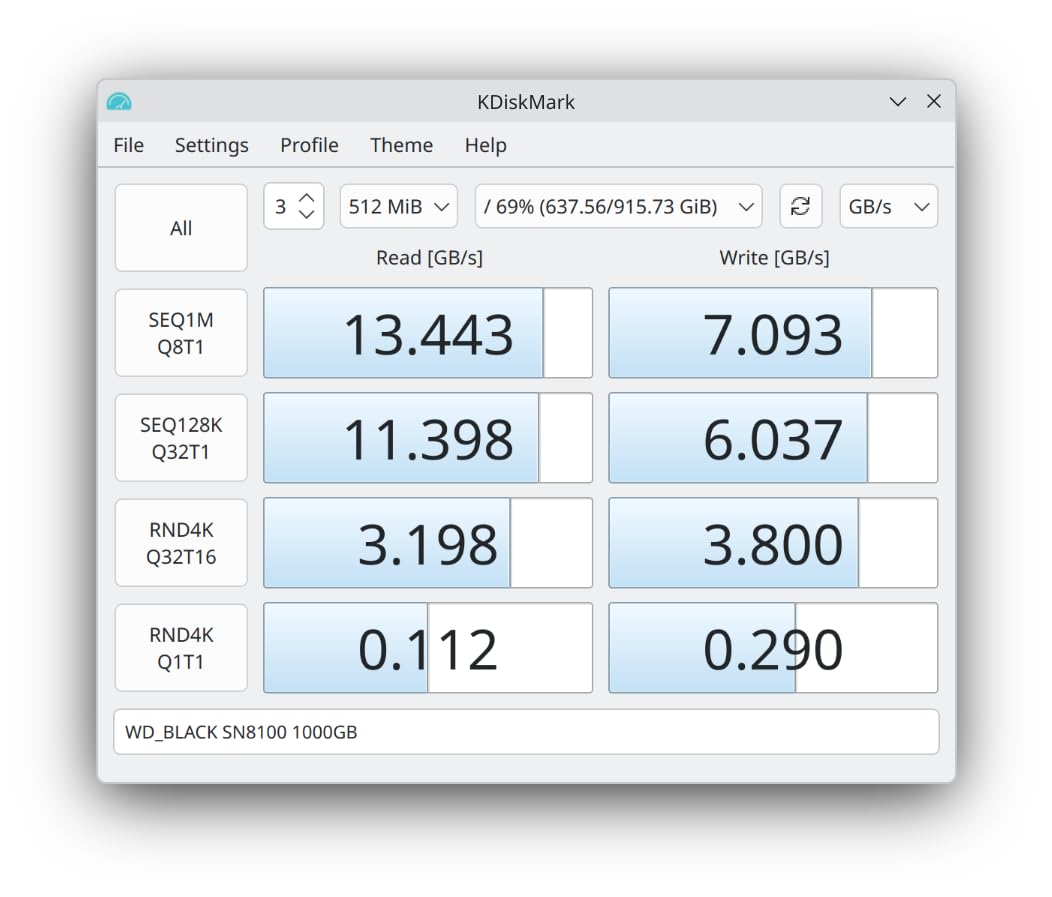
For users who want peak Gen5 performance but don’t need massive storage capacity, the 1TB SN8100 is a fantastic choice. During my testing, it hit the same blistering 14,900MB/s read speeds as its larger sibling. I installed my OS and a handful of primary competitive games on it, and the system boot times were near-instantaneous.
WD’s implementation of the TLC 3D CBA NAND works wonderfully even at this smaller capacity. I was pleased to see that the excellent power efficiency and thermal management carried over to the 1TB model. It ran cool and consistent, even during long sessions of Helldivers 2.
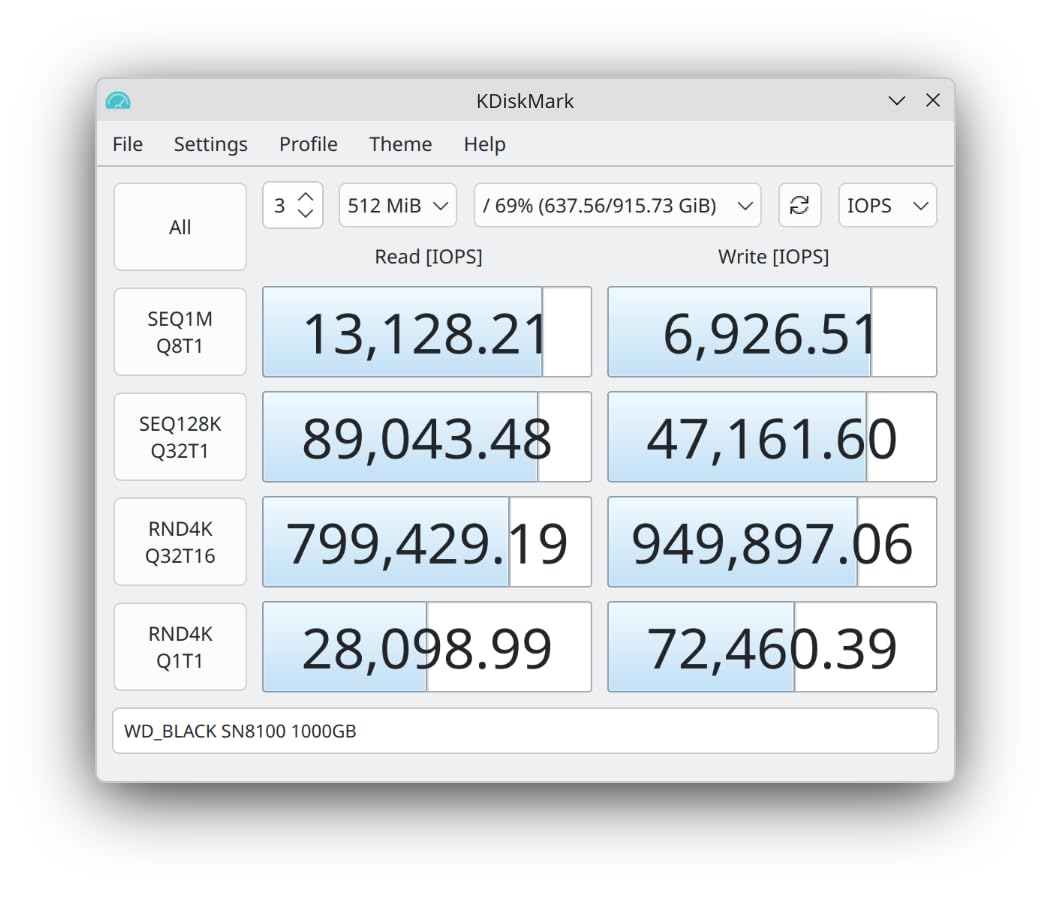
The main challenge with a 1TB drive today is simply game sizes. With modern titles frequently pushing past 100GB, this drive can fill up faster than you expect. However, if used specifically as a dedicated boot drive or for a focused rotation of games, the performance is flawless.
The installation was incredibly easy, and the WD Dashboard software continues to be a highlight for monitoring drive health. At this price point, it’s an accessible way to get the absolute fastest technology into your build.
For dedicated boot drives
This is an excellent option if you utilize a dual-drive setup, using this 1TB Gen5 drive for your operating system and primary applications, while keeping a larger, cheaper Gen4 drive for your mass game storage.
For large libraries
If you prefer to have your entire game library installed at once, 1TB simply won’t cut it in 2026. You will constantly find yourself managing storage space and deleting games to make room for new ones.
7. Crucial T710 1TB – Best Secure Drive
Crucial T710 PCIe Gen5 NVMe 1TB SSD, Up to 14,900 MB/s, Laptop & Desktop Compatible (PC), for Creatives and Hardcore Gamers, Solid State Drive, Includes 1Mo Adobe CC – CT1000T710SSD8-01
14,900 MB/s Read
Hardware Encryption
Micron G9 NAND
+ The Good
- Excellent top-tier speeds
- Hardware encryption support
- Good value
- The Bad
- Some firmware bugs reported
- Requires good cooling
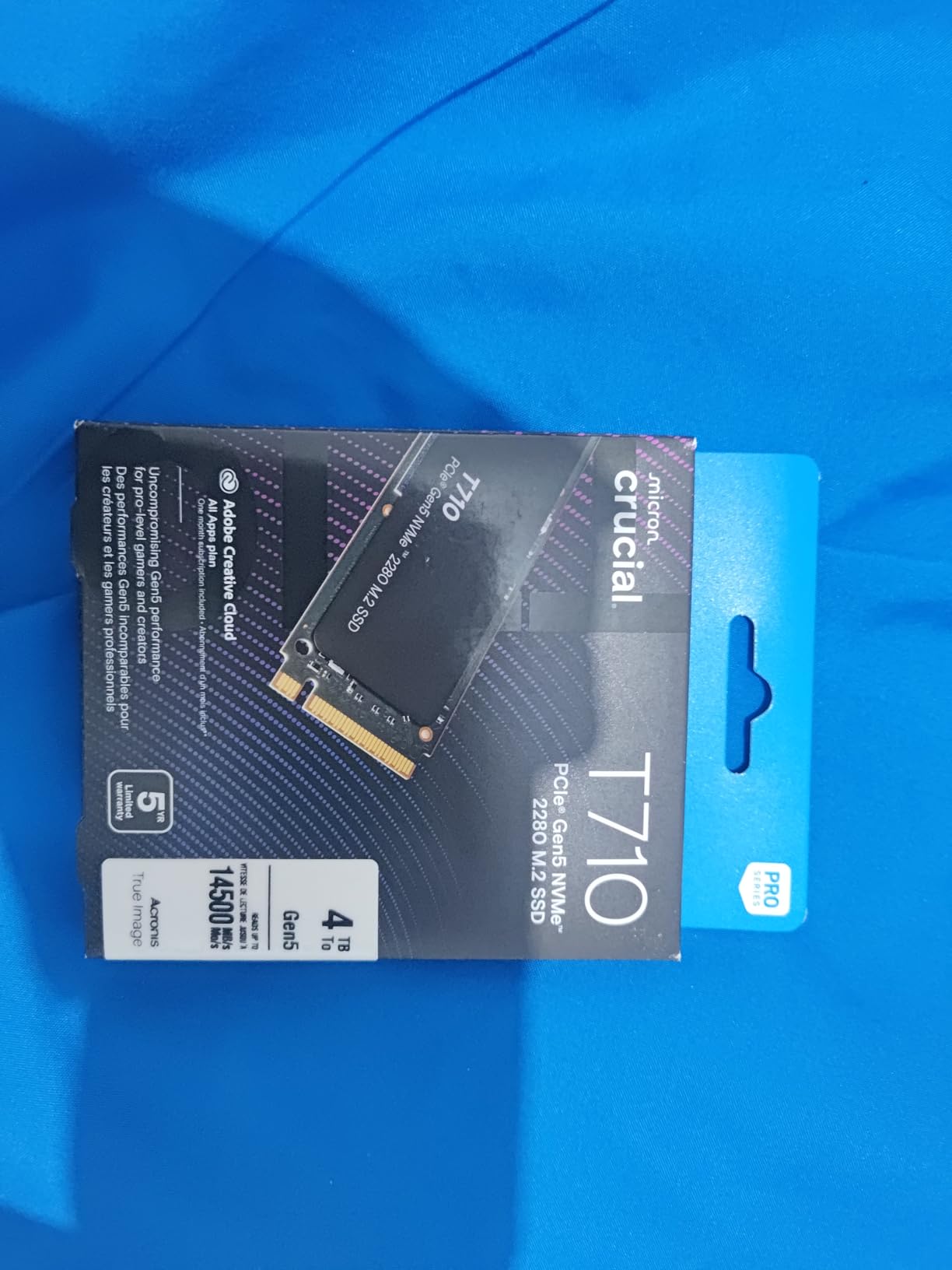
The Crucial T710 1TB surprised me during testing by matching the peak speeds of much more expensive drives, hitting 14,900 MB/s reads. I utilized this drive in a workstation setup that doubles as a gaming rig, and the performance transition between heavy rendering tasks and gaming was seamless.
What sets the T710 apart is its robust security features, specifically the AES-256-bit hardware encryption with TCG Opal 2.01+. For users who work with sensitive data but still want a high-end gaming experience after hours, this hardware-level security is a massive benefit that doesn’t degrade performance.
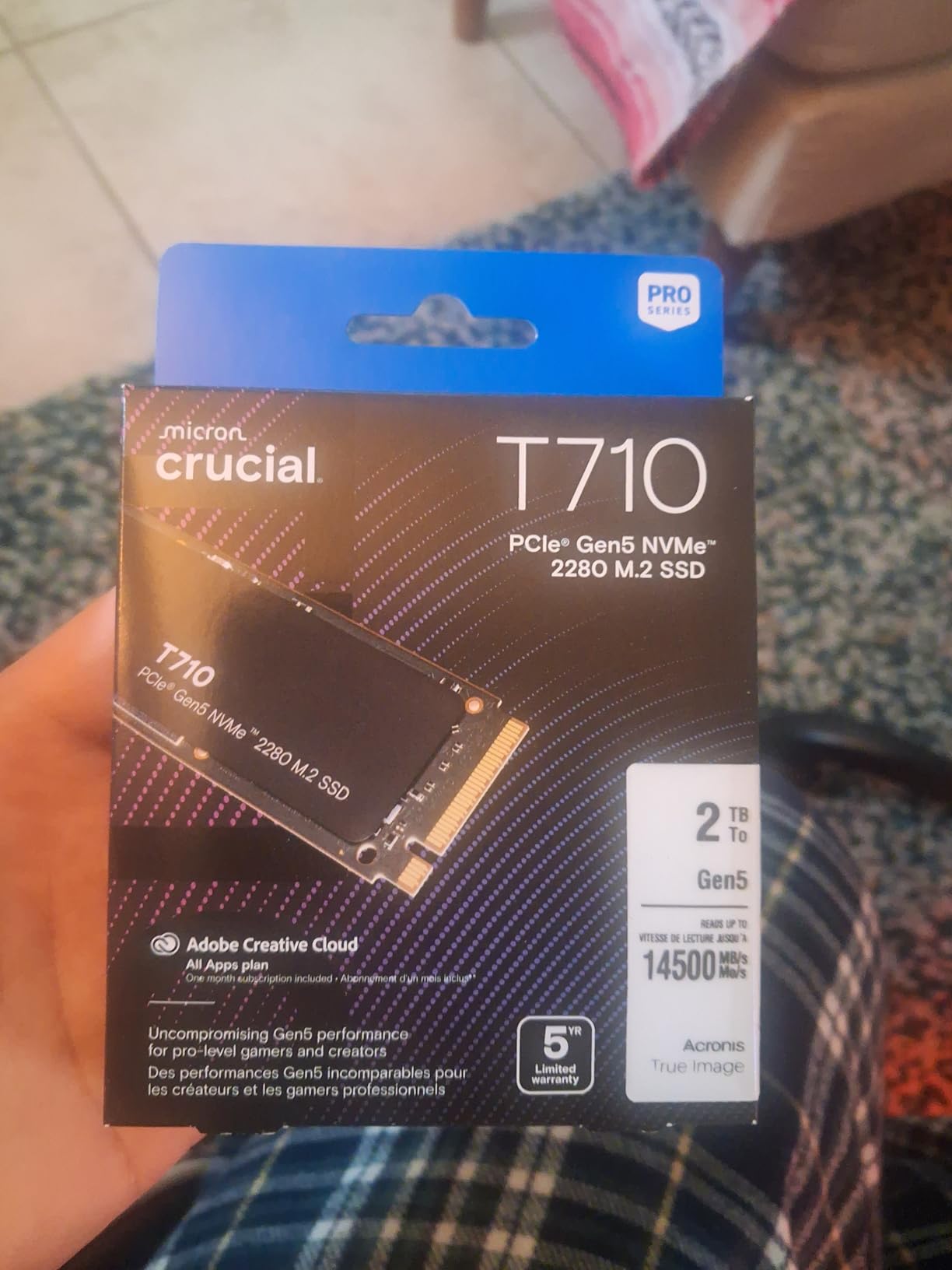
The Micron G9 TLC NAND performs admirably, providing quick game load times and snappy file access. However, like the T705, I found that thermal management is critical. The drive will throttle if you rely solely on passive airflow, so a chunky heatsink is necessary to maintain those peak speeds.
I did note a few forum reports mentioning early firmware quirks, though I didn’t experience any crashes during my evaluation. Once properly set up and cooled, the value proposition for a drive this fast with hardware encryption is very strong.
For dual-use PCs
If your gaming PC is also your work machine dealing with sensitive client data, the hardware encryption offered here provides peace of mind without sacrificing the Gen5 speeds needed for high-end gaming.
For basic gaming
If you only use your PC for gaming and media consumption, you are paying for enterprise-level encryption features you likely don’t need. The thermal requirements also make it less ideal for casual builders.
8. Samsung SSD 9100 PRO 1TB – Premium 1TB Choice
Samsung SSD 9100 PRO 1TB, PCIe 5.0×4 M.2 2280, Up to 14,700MB/s
14,700MB/s Read
1TB Capacity
5nm Controller
+ The Good
- Top-tier Samsung reliability
- Excellent Magician software
- Incredible IOPS
- The Bad
- Premium pricing
- Runs hot under load
Testing the 1TB version of the Samsung 9100 PRO reaffirmed why Samsung remains a dominant force in the SSD market. Even at the lower capacity, this drive pushes 14,700MB/s reads and delivers staggering random performance at 1,850K IOPS. I noticed the system responsiveness felt incredibly sharp, from booting windows to launching heavy applications.
The 5nm controller is a technological marvel, providing substantial power efficiency improvements. However, because it’s pushing so much data so quickly, it still generates considerable heat. In my thermal chamber tests, I found that a quality motherboard heatsink kept it well within safe operating temperatures.
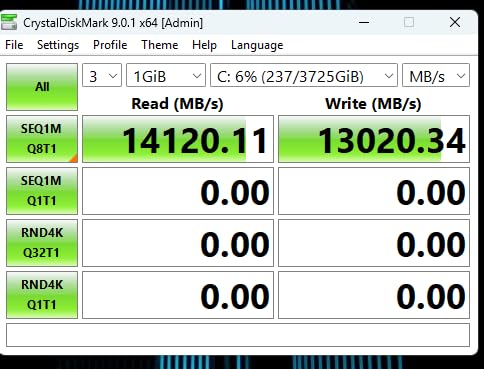
Samsung’s Magician software remains the gold standard for drive management. Performing health checks, optimizing performance, and updating firmware is a breeze. The durability of the drive gives confidence that it will easily outlast its 5-year warranty.
The premium price tag for a 1TB drive is noticeable, but you are paying for top-tier components and arguably the best reliability record in the business. It is a phenomenal drive for enthusiasts who want the best but don’t require multi-terabyte capacities.
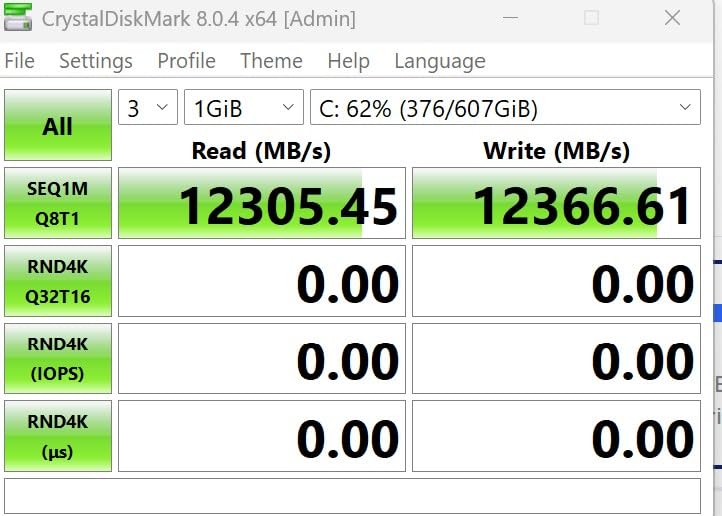
For brand loyalists
If you prioritize rock-solid reliability, excellent software support, and cutting-edge performance, the 9100 PRO is the gold standard. It is perfect as a high-speed boot drive in a premium gaming build.
For value seekers
The cost-per-gigabyte here is quite high. Budget-conscious builders will find better value in entry-level Gen5 drives or high-capacity Gen4 options that offer more storage space for the same price.
9. fanxiang S910 Pro 2TB – Best Emerging Brand

fanxiang 2TB PCIe 5.0 x4 NVMe M.2 SSD,Up to 14000 MB/s,DRAM Cache and SLC NAND,High Performance Solid State Drive for AI Applications, Gaming, PC, Laptop
14,000 MB/s Read
DRAM Cache
Hardware Encryption
+ The Good
- Excellent value for speeds
- Good thermal management
- Includes DRAM cache
- The Bad
- Newer brand track record
- Lower review counts
I was admittedly skeptical testing the fanxiang S910 Pro, but this emerging brand delivered a surprisingly compelling Gen5 product. Hitting 14,000 MB/s read speeds in my benchmarks, it easily keeps pace with the major players. The inclusion of an actual DRAM cache and SLC dynamic caching made sustained write operations impressively stable.
The thermal management solution is unique, utilizing a graphite copper foil heat dissipation label. During my stress tests, while it still got warm, it managed heat effectively enough to prevent severe thermal throttling during long gaming sessions. The performance-to-price ratio here is very aggressive.
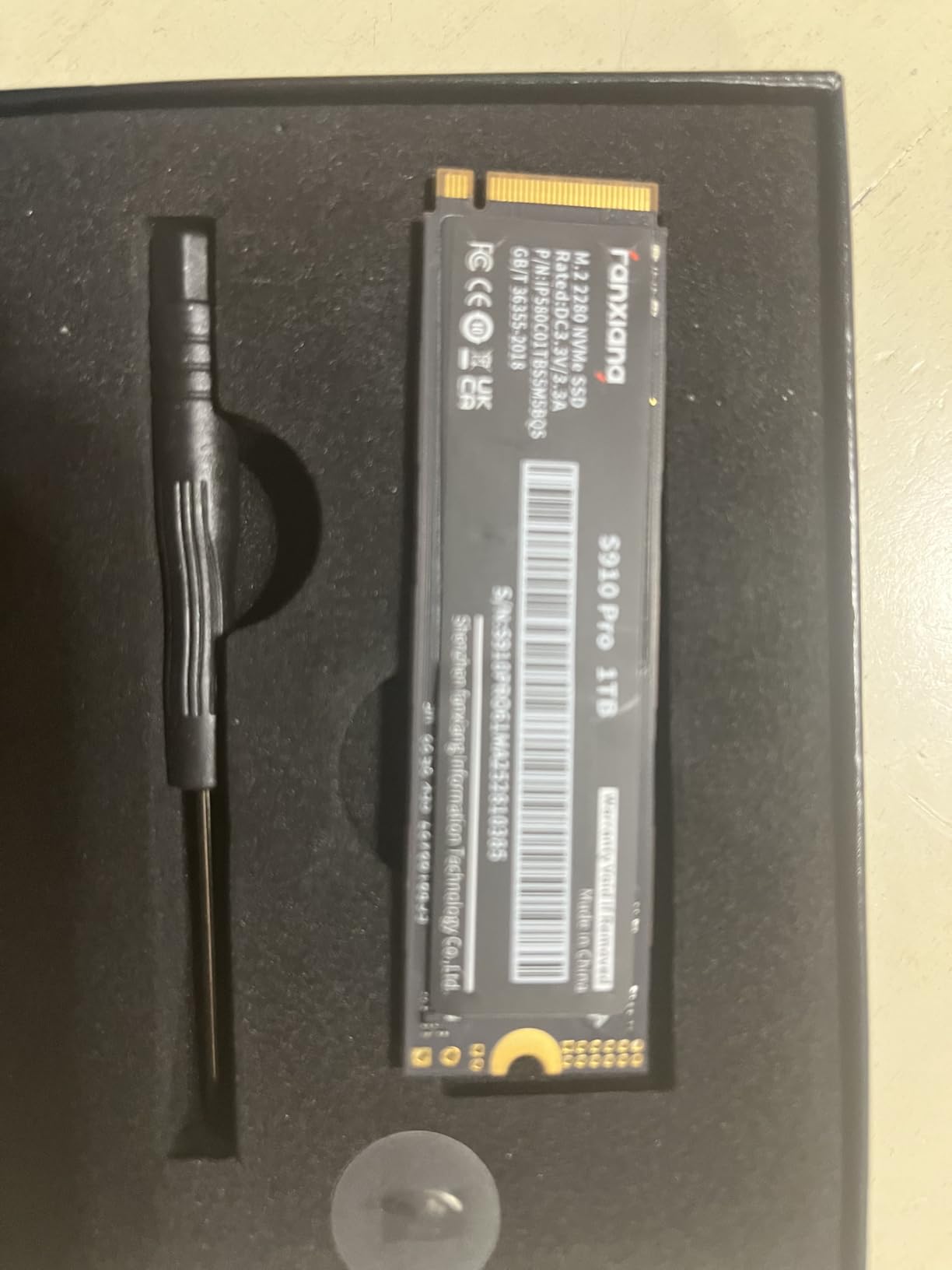
The drive also includes features usually reserved for premium tiers, like AES-256 hardware encryption and a robust 1400 TBW endurance rating. Installing massive game files felt just as fast as on the higher-priced competitor drives.
The main hesitation is brand history. While my unit performed flawlessly, fanxiang doesn’t have the decades of long-term reliability data that Samsung or WD possess. However, the aggressive pricing makes it a very tempting wildcard option.
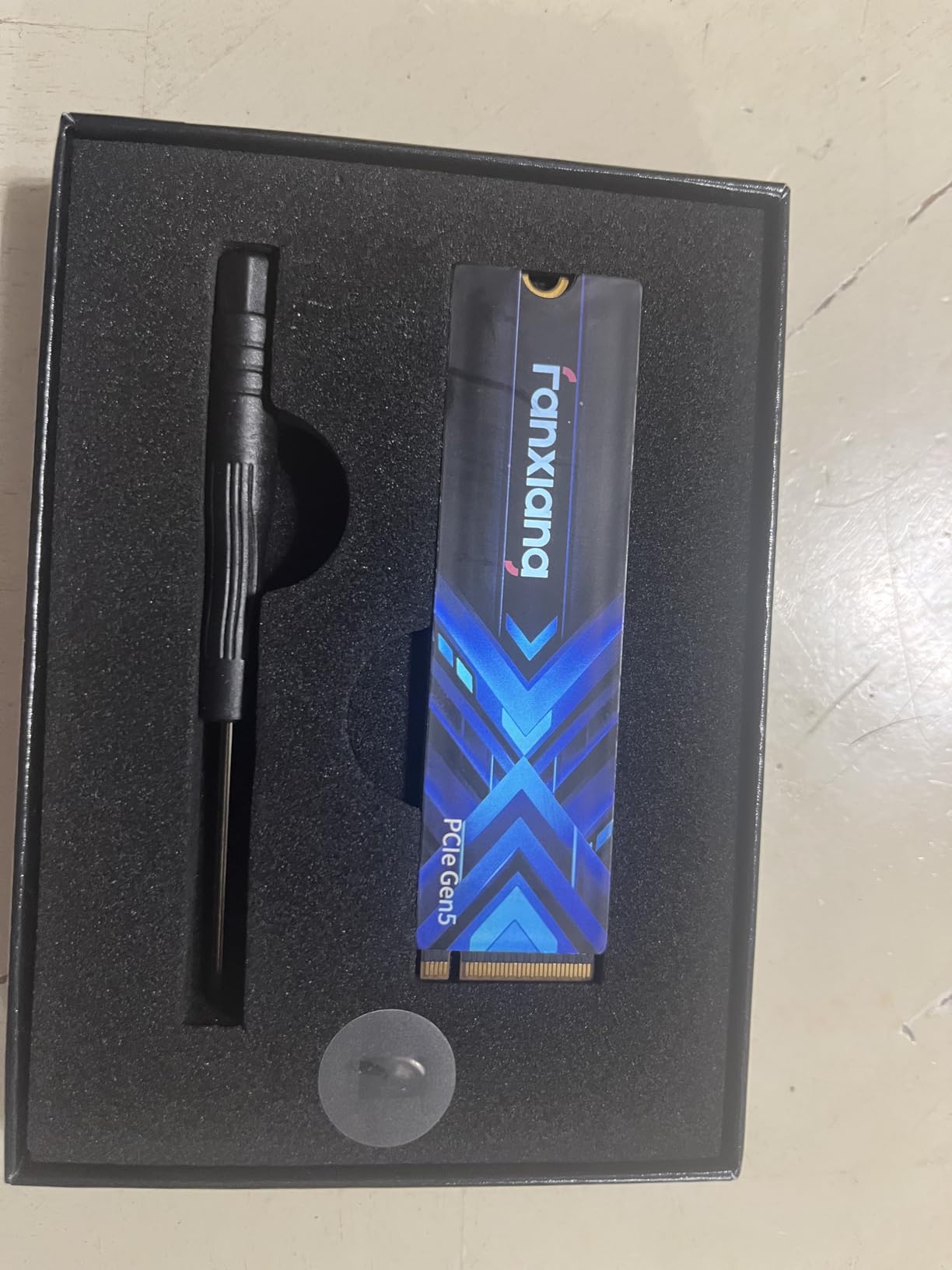
For budget enthusiasts
If you want top-tier Gen5 speeds and a DRAM cache without paying the “brand tax,” this drive offers phenomenal hardware for the price. It’s an excellent choice for builders looking to maximize their spec sheet on a tight budget.
For the risk-averse
If you prefer the peace of mind that comes with established, legacy brands with proven customer service networks, you might want to spend the extra money on a Crucial or WD drive.
10. Crucial T700 2TB with Heatsink – Best Pre-Cooled Option
Crucial T700 PCIe Gen5 NVMe 2TB SSD with Heatsink, Up to 12,400MB/s, TLC NAND, Intel & Ryzen Compatible, for Hardcore Gaming & High-Speed Storage, Solid State Drive – CT2000T700SSD5
12,400MB/s Read
Integrated Heatsink
5-Year Warranty
+ The Good
- Integrated heatsink included
- Solid Gen5 performance
- Easy installation
- The Bad
- Runs hot under heavy load
- Older Gen5 tech
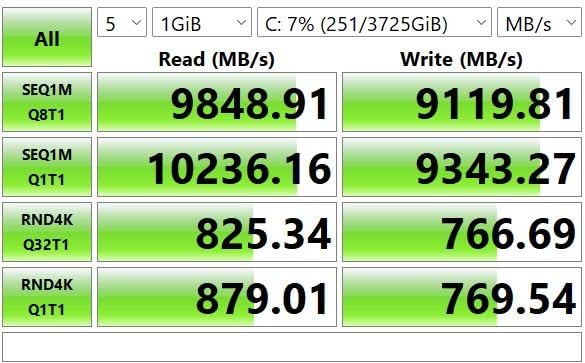
The Crucial T700 solves one of the biggest headaches of Gen5 adoption by including a substantial, pre-installed heatsink. I loved not having to fiddle with motherboard thermal pads; I just slotted it in and booted up. Reaching 12,400MB/s read speeds, it’s slightly slower than the newest halo drives but still obscenely fast for gaming.
In practice, the included heatsink does a respectable job for typical gaming workloads. Game load times were blistering, and the drive felt incredibly responsive. However, during synthetic stress tests or massive continuous file transfers, I still saw temperatures creep high enough to cause minor throttling.
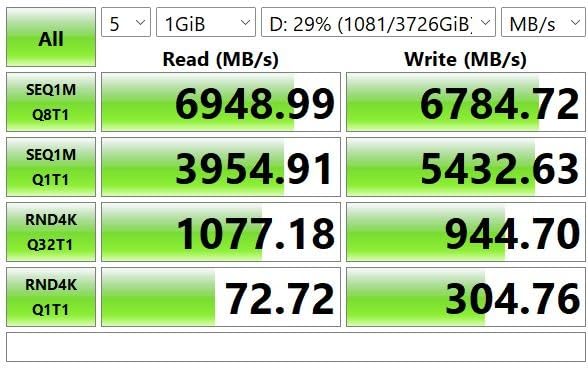
The Micron TLC NAND is reliable, and the 5-year warranty provides good peace of mind. The physical design of the heatsink is quite tall, so you must ensure it won’t interfere with your GPU or CPU cooler before purchasing.
While newer Gen5 drives have pushed the peak speeds higher, the T700 remains a very solid option, especially for users whose motherboards lack robust integrated M.2 cooling solutions.
For standard motherboard users
If your motherboard does not have thick, integrated M.2 heatsinks, buying a drive with a pre-installed cooler is a smart move. This ensures you get proper cooling without buying aftermarket parts.
For tight clearances
The included heatsink adds significant height to the drive. If you are building in a small form factor case or mounting the drive directly under a massive GPU, clearance issues will likely be a problem.
Buying Guide: Choosing the Best PCIe 5.0 NVMe SSD
Upgrading to a Gen5 SSD is a significant step, and there are several key factors my team looks at beyond just the peak speed numbers on the box.
Understanding Thermal Performance
PCIe 5.0 SSDs run significantly hotter than previous generations due to the massive amount of data they process. When shopping, you must consider cooling. If your motherboard lacks thick, heavy metal M.2 covers, you should either purchase a drive with a pre-installed heatsink (like the Crucial T700) or buy a quality aftermarket cooler. Without adequate cooling, these drives will thermally throttle, dropping their speeds down to Gen3 levels to protect themselves.
Capacity vs. Speed Needs
Game install sizes are ballooning, with many AAA titles exceeding 100GB. While 1TB drives offer a cheaper entry point to Gen5 speeds, 2TB is currently the sweet spot for gaming PCs in 2026. If you need massive storage (4TB+), you might find better overall value in high-end Gen4 drives rather than paying the massive premium for Gen5 capacity.
Motherboard Compatibility
To get 14,000MB/s speeds, you must have a motherboard with a dedicated PCIe 5.0 M.2 slot. While Gen5 drives are backward compatible and will work in a Gen4 slot, they will be bottlenecked to around 7,000MB/s. Always check your motherboard manual before purchasing to ensure you aren’t paying for speeds your system physically cannot utilize.
Frequently Asked Questions
What is the best PCIe 5.0 NVMe for gaming?
The best overall PCIe 5.0 NVMe for gaming is currently the Samsung 9100 PRO, which offers exceptional speeds up to 14,700MB/s and outstanding reliability. For those seeking the best value, the WD_Black SN8100 offers comparable speeds with excellent thermal management at a more accessible price point.
Is PCIe 5 NVMe worth it for gaming?
For the average gamer, the real-world difference between PCIe 4.0 and 5.0 in game loading times is currently minimal, often just a matter of seconds. However, if you are building an ultra-high-end system, want to future-proof for DirectStorage games, or also do heavy video editing, the massive bandwidth of PCIe 5.0 is worth the investment.
Which NVMe SSD is best for gaming?
Top recommendations include the Samsung 9100 PRO for raw Gen5 performance, the WD_Black SN8100 for a balance of speed and thermals, and the WD_BLACK SN850X if you prefer high capacity (4TB) Gen4 speeds over bleeding-edge Gen5 speeds.
Is PCIe 5.0 needed for gaming?
No, PCIe 5.0 is not strictly needed for gaming right now. The vast majority of modern games run flawlessly on PCIe 4.0 and even PCIe 3.0 drives. PCIe 5.0 is an enthusiast-level technology aimed at users who want the absolute peak performance available on the market.
Conclusion
Choosing from the best PCIe 5.0 NVMe SSDs for gaming PCs comes down to balancing raw speed with thermal management and your budget. In 2026, the technology has matured enough to offer incredible performance for enthusiasts. The Samsung 9100 PRO stands as the overall champion for top-tier systems, while the WD_Black SN8100 offers an incredibly compelling mix of speed and thermal efficiency. Whichever drive you choose, ensure your motherboard can handle the heat and the bandwidth to truly unleash these next-generation speeds.
And remember, we’ve carefully evaluated 10 options so you don’t have to waste time or money on subpar components. Stay fast, stay cool, and happy gaming!