
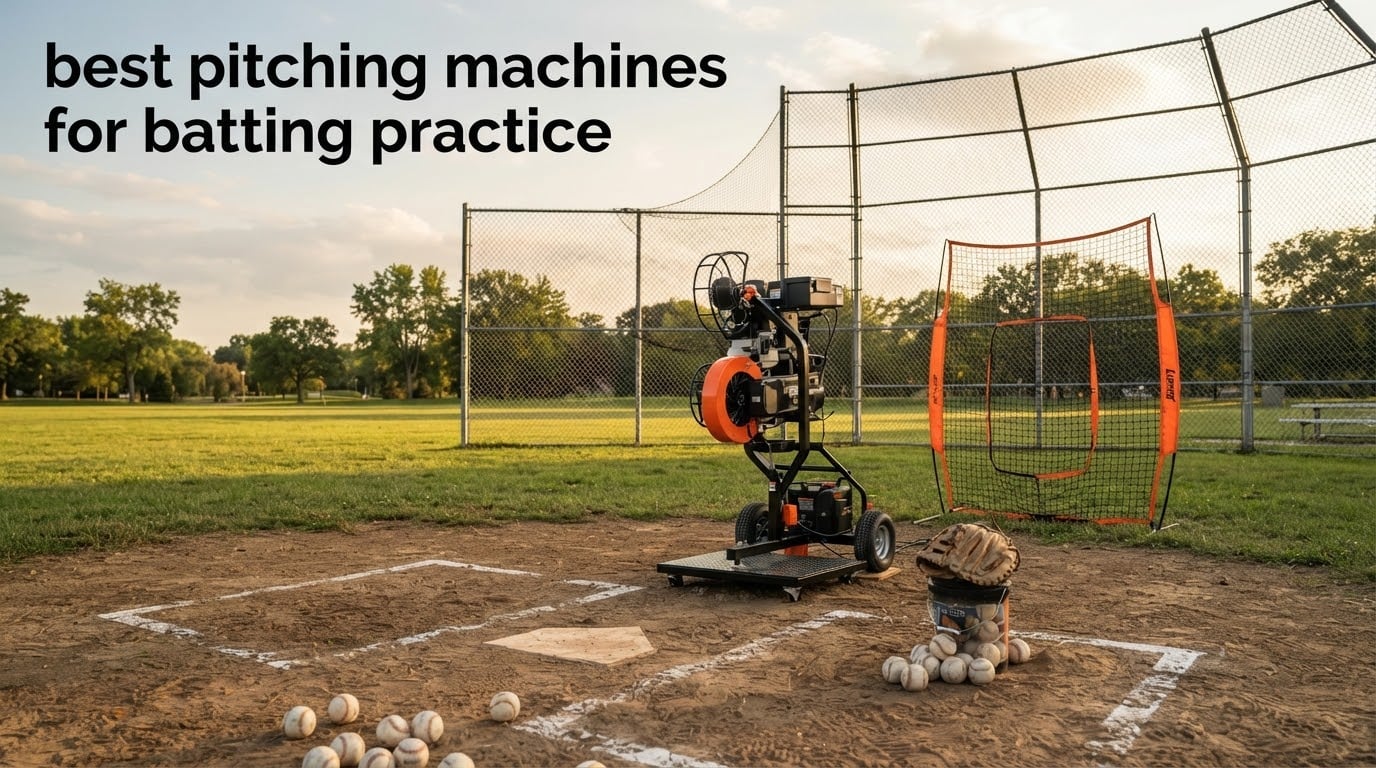
A pitching machine solves one problem better than anything else in baseball: it never gets tired, never misses the zone twice in a row, and never takes a day off. A coach who wants three hundred quality swings in a session cannot get them from an arm. If you are searching for the best pitching machines for batting practice, the deciding factor is almost never the top speed on the box. It is whether the machine puts the ball in the same spot, over and over, so the hitter can actually work on something.
We spent weeks putting twelve machines through backyard and garage sessions, timing setup, watching for drift and recoil, and tracking how each one behaved once a hitter started fouling balls back at it. The pattern was clear. The cheap plastic machines are genuinely fun and genuinely useful for a seven year old. The moment you ask for accuracy, a consistent release point and a repeatable pitch, you are in different territory, and the machine you need depends on how many wheels it has.
If your team is still deciding between models, our baseball pitching machine guide covers the fundamentals, and the youth pitching machine roundup breaks down the first-machine decision in more detail. For softball programs specifically, start with our softball pitching machine picks.
Top 3 Picks for Batting Practice in October 2026

Louisville Slugger Blue Flame
- › 18-45 mph with hard balls
- › Manual spring power
- › Official Babe Ruth and Pony machine

Heater Slider Lite 360
- › Lite balls to 80 mph at 46 feet
- › Automatic feeder included
- › Folds for storage
The 12 Best Pitching Machines at a Glance in October 2026
| PRODUCT MODEL | KEY SPECS | BEST PRICE |
|---|---|---|
|
|
Check Latest Price |
 |
|
Check Latest Price |
 |
|
Check Latest Price |
 |
|
Check Latest Price |
|
|
Check Latest Price |
 |
|
Check Latest Price |
 |
|
Check Latest Price |
 |
|
Check Latest Price |
 |
|
Check Latest Price |
 |
|
Check Latest Price |
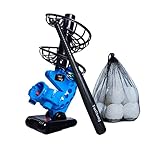 |
|
Check Latest Price |
 |
|
Check Latest Price |
1. Louisville Slugger Blue Flame – Best Overall
Louisville Slugger Blue Flame Pitching Machine – Manual, Lightweight, Adjustable Speed (18–45 MPH), Throws Baseballs & Softballs
18-45 mph hard balls,60 mph with light balls
Manual spring power
11.9 lb
Official Babe Ruth and Pony machine
+ The Good
- No electricity and no batteries
- Throws nearly any round ball
- Adjustable speed and height
- Light enough for one adult to carry
- The Bad
- Manual loading needs a second person
- Back end shifts on hard ground
- 45 mph ceiling with baseballs
- No breaking pitches
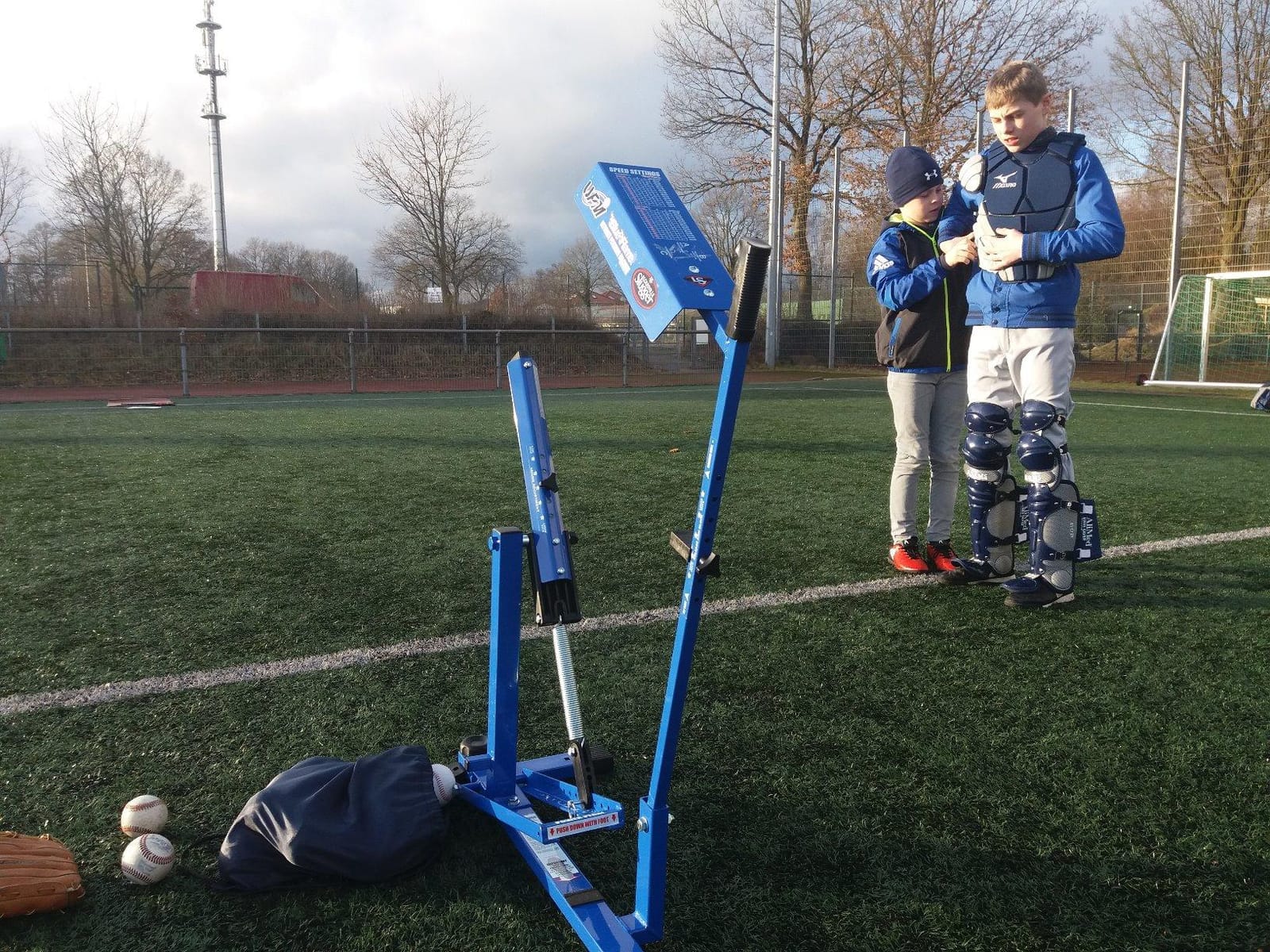
This is the machine leagues actually use. The Blue Flame is the official machine of the Babe Ruth League and Pony Baseball, and that affiliation explains why it shows up in so many fields around the country. It is fully manual, so there is no outlet, no battery and no extension cord to run across a parking lot.
The spring mechanism does the work. You set the tension, the release speed and the release height, then load a ball by hand every time. Once it is dialled in, owners report a high share of pitches landing in the zone, and our sessions matched that. It throws hard baseballs from 18 to 45 mph, and light flight or plastic balls up to 60 mph, which means one machine covers a tee-ball beginner and a middle-school hitter.
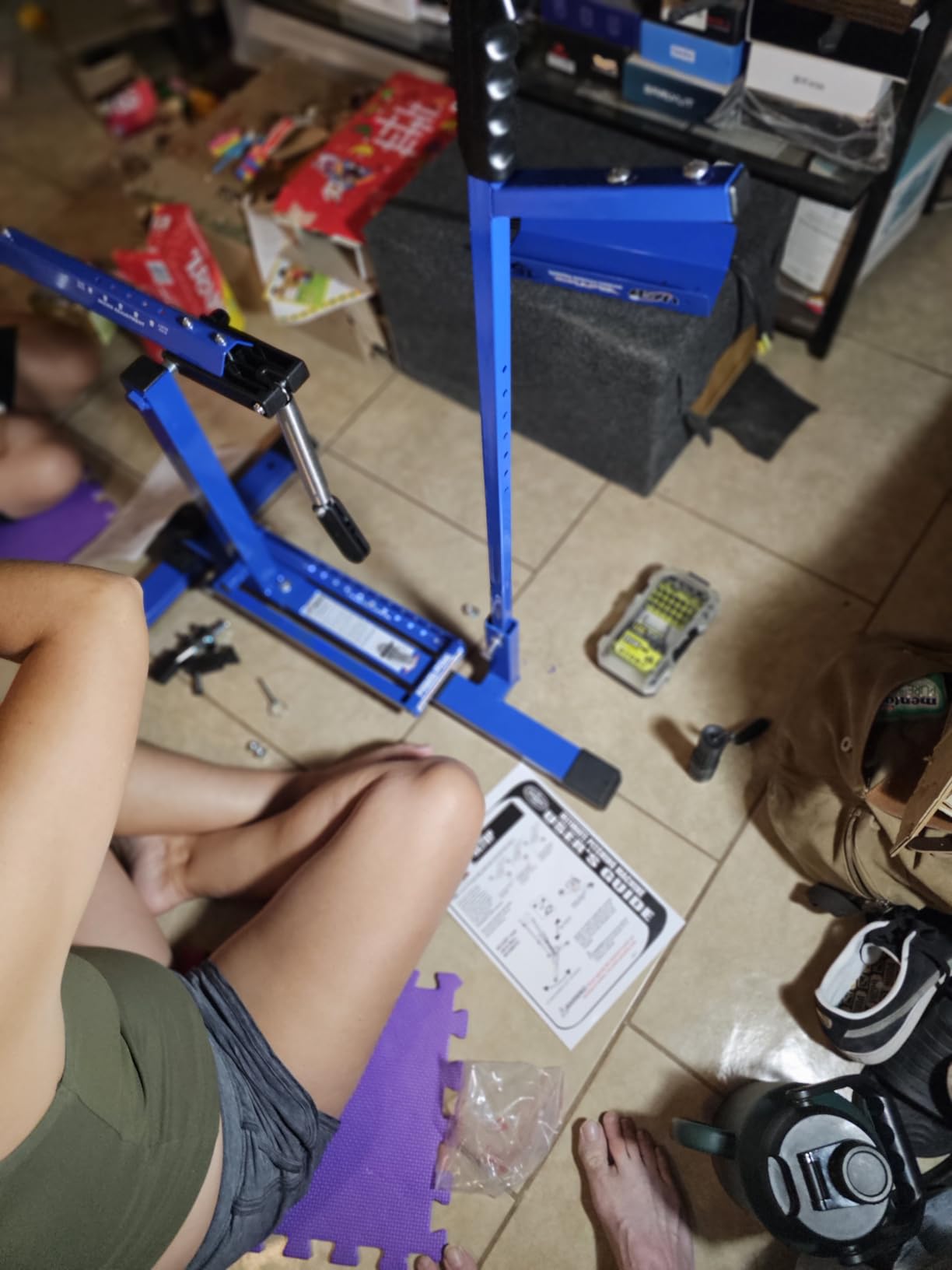
Two things catch new buyers. First, manual loading means one person cannot both feed and hit. That is a real limitation for a parent running solo practice, and it is the main reason the Heater Slider Lite 360 earns its spot later in this list. Second, on hard ground the rear of the unit can slide unless you brace it with a foot.
The Blue Flame also throws slowpitch softballs with up to a 12 inch arch, and adjustable height gives you fly balls, line drives and grounders. The frame measures 32 by 14 by 6 inches, so it lives in a car trunk between practices.
Who this machine suits
A league or a coach with two adults at practice. It handles the widest range of ball types in the category, so it moves from Little League to travel ball without a purchase. It is also the safest choice for a field with no power access.
Who should skip it
Anyone practicing alone. Manual loading means every pitch costs you a walk to the machine and back, which quietly cuts your rep count. If your setup is a single adult and one hitter, an automatic feeder is worth the extra money.
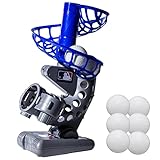
2. Franklin Sports MLB Electronic – Best for Youth Practice
Franklin Sports MLB Pitching Machine
Pitches every 7 seconds
Feeder holds 9 balls
4 D batteries, not included
6 plastic balls included
+ The Good
- Assembles fast and kids can move it
- Works indoors and outdoors on batteries
- Flashing light gives a clean release cue
- Turns backyard time into a routine
- The Bad
- Pitch placement is unpredictable
- Batteries drain during long sessions
- Included plastic balls wear out fast
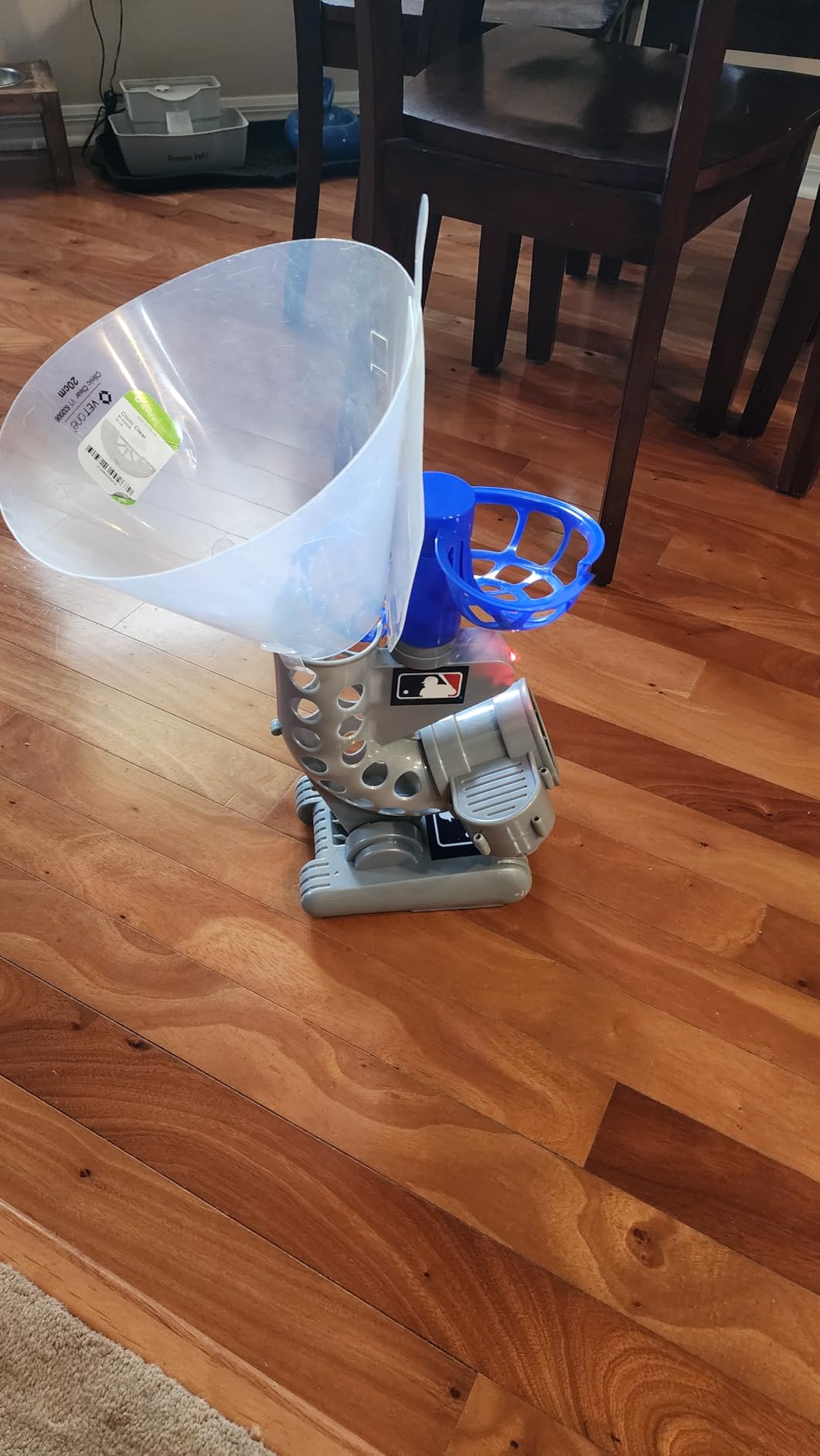
With roughly 9,400 reviews averaging 4.1 stars, this is the most widely used machine on this list by a wide margin, and the reason is simple: it works immediately. Assembly takes a few minutes, the unit weighs almost nothing, and it fires a ball every seven seconds with a flashing red light that tells the hitter when to swing.
For a five to eight year old, the seven second gap is the whole product. It is long enough to reset, take a swing and reset again without an adult feeding by hand. The feeder shoe holds up to 9 balls and the machine comes with 6 plastic baseballs. The angle adjusts across several positions so you can work flat grounders and lifted flights as well as straight pitches.
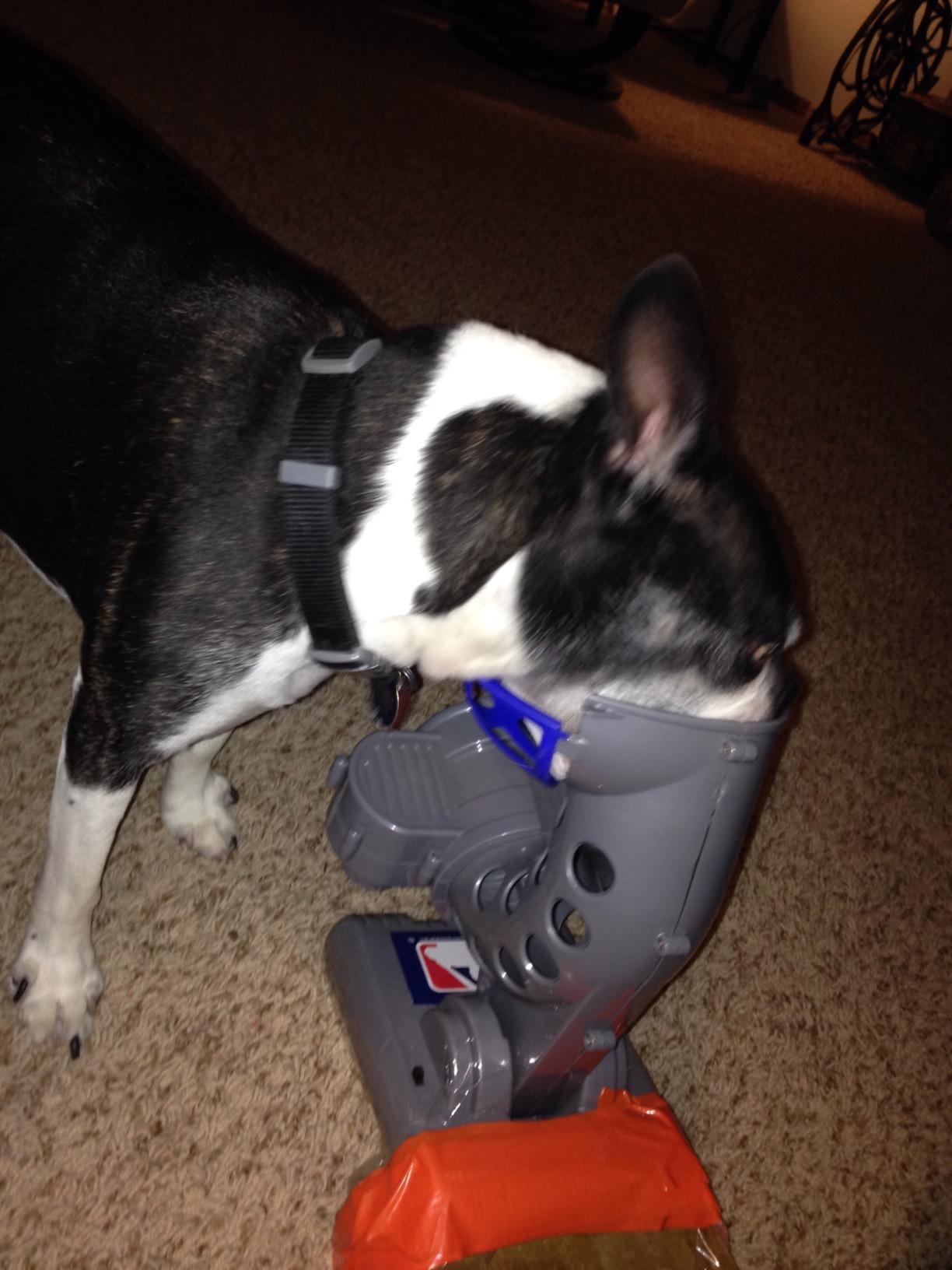
The honest limitation is placement. Owners consistently describe ball flight paths as inconsistent and unpredictable, and that shows up quickly once a hitter is old enough to care where the ball lands. It is also a plastic ball machine only. Using it with regulation baseballs is not supported, and the included plastic balls deteriorate quickly with use.
Batteries are not included, and long sessions drain a set faster than most parents expect. A few machines also arrive with bent parts, so check the frame before the first session.
Who this machine suits
Families with a young beginner who wants a structured routine rather than free play. It doubles as a ball tosser for catching practice, and the assembled footprint of 7.75 by 9.5 by 9.875 inches means it works in a garage or a small yard.
Who should skip it
Any hitter working on pitch recognition or location discipline. Unpredictable placement will quietly train bad habits, because the hitter learns to guess instead of read.
3. Heater Sports Slider Lite 360 – Best Value
Heater Sports Slider Lite 360 Baseball Pitching Machine with Automatic Ball Feeder – Accurate 360-Degree Delivery, Durable and Portable Training Tool for All Ages
Lite balls to 80 mph at 46 feet
Swivel head fastball and curve
Auto feeder included
13 lb, folds flat
+ The Good
- Auto feeder covers the spin-up delay
- Accurate at 40-45 mph with lite balls
- Swivel head adds curveballs
- Folds down for storage
- The Bad
- Only performs with Heater lite balls
- Wheel needs seconds to recover
- Plastic body cracks on hard returns
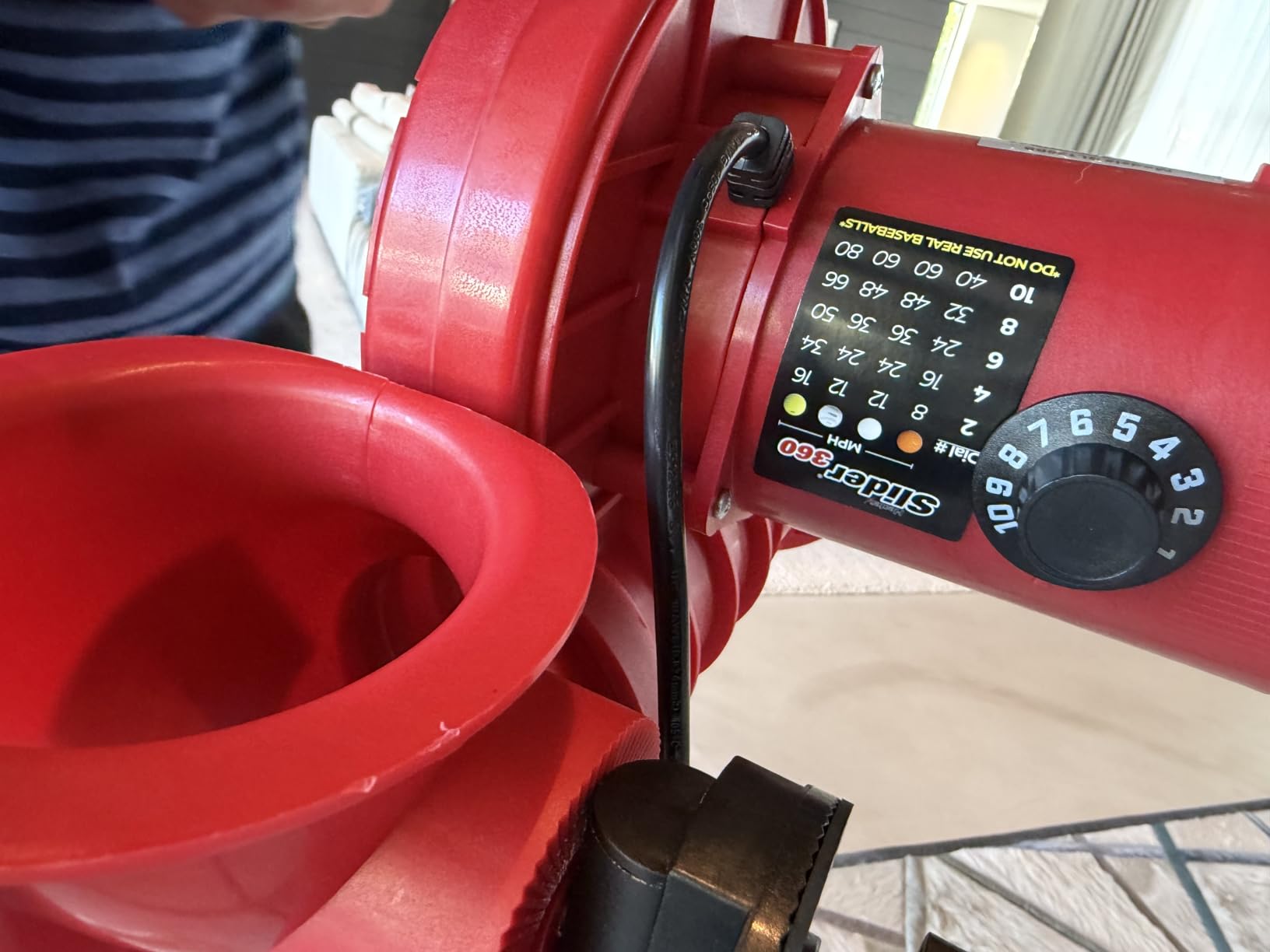
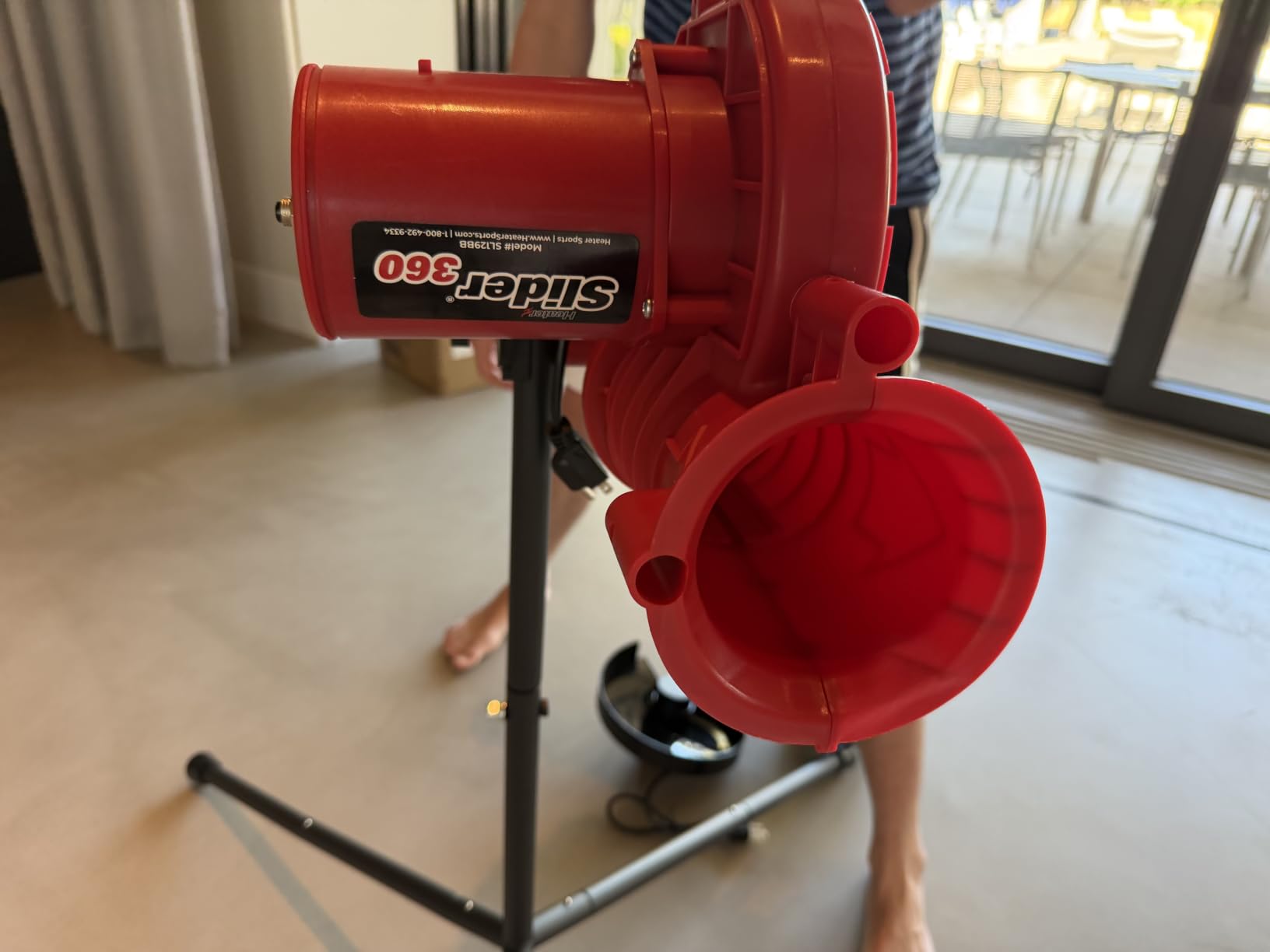
This is the machine we kept coming back to as the sensible middle of the range. It has an automatic feeder, which removes the single biggest complaint about manual machines, and it holds 13 pounds so one adult can carry it from the garage to the field without a cart.
The swivel head is the part that lifts it above the entry tier. Instead of one fixed trajectory, it delivers fastballs and curveballs, and owners report good accuracy in the 40 to 45 mph band with the rated lite balls. Tubular steel legs with rubber tips keep it planted, which matters more than it sounds on uneven grass.
There is one rule with this machine, and it is not optional. It performs well only with Heater branded lite balls. Owners report that other brands bog the motor down and reduce accuracy, so budget for the correct balls from day one rather than trying to make do.
Second, the wheel slows after each delivery and needs several seconds to spin back up. That recovery gap is the trade for the automatic feeder, and it is why we would not use this machine to simulate high-velocity breaking stuff.
Who this machine suits
A family or small travel program that wants automatic feeding at a mid-tier price. One owner reports six years of heavy use, and the folding frame makes garage storage painless at 36 by 36 by 36 inches folded.
Who should skip it
Anyone expecting to throw real leather. This machine is designed around lite balls, and mixing ball types is how the motor gets strained.
4. Junior Hack Attack by Sports Attack – Best for Breaking Balls
Junior Hack Attack Baseball Pitching Machine
Two wheels,70 mph max
Fastball, curve, slider, splitter, knuckle
96 lb
Pivots for fielding to 250 feet
+ The Good
- Repeats the same pitch accurately
- Knob-driven pitch selection
- Very quiet at the plate
- Absorbs hard returns without damage
- The Bad
- Feeder and leg extensions sold separately
- Baseball only without a conversion kit
- Setup instructions are minimal
- Costly next to lighter two-wheel machines
This is the machine for a program that has outgrown fastballs. Two independently variable-speed wheels produce fastballs, curveballs, sliders, split-finger and knuckle balls, with both handedness of the breaking stuff, and pitch selection happens by turning a crank rather than moving the machine.
Accuracy is where it separates itself. At 4.7 stars across roughly 310 reviews, owners describe a machine that stays in the zone and repeats the same pitch, which is precisely what fundamentals work requires. It is also quiet enough to be inaudible from the plate, so the hitter hears a voice and a bat rather than a motor.
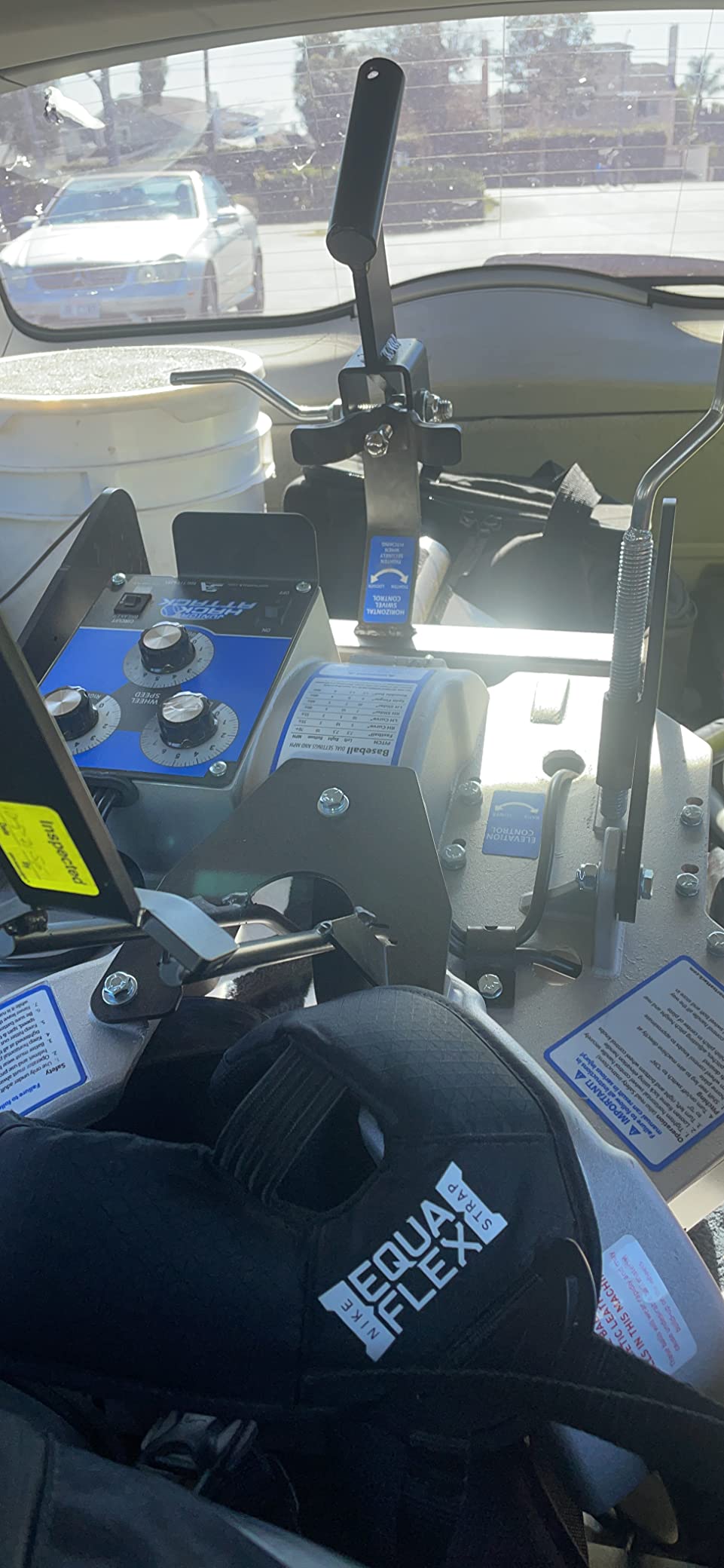
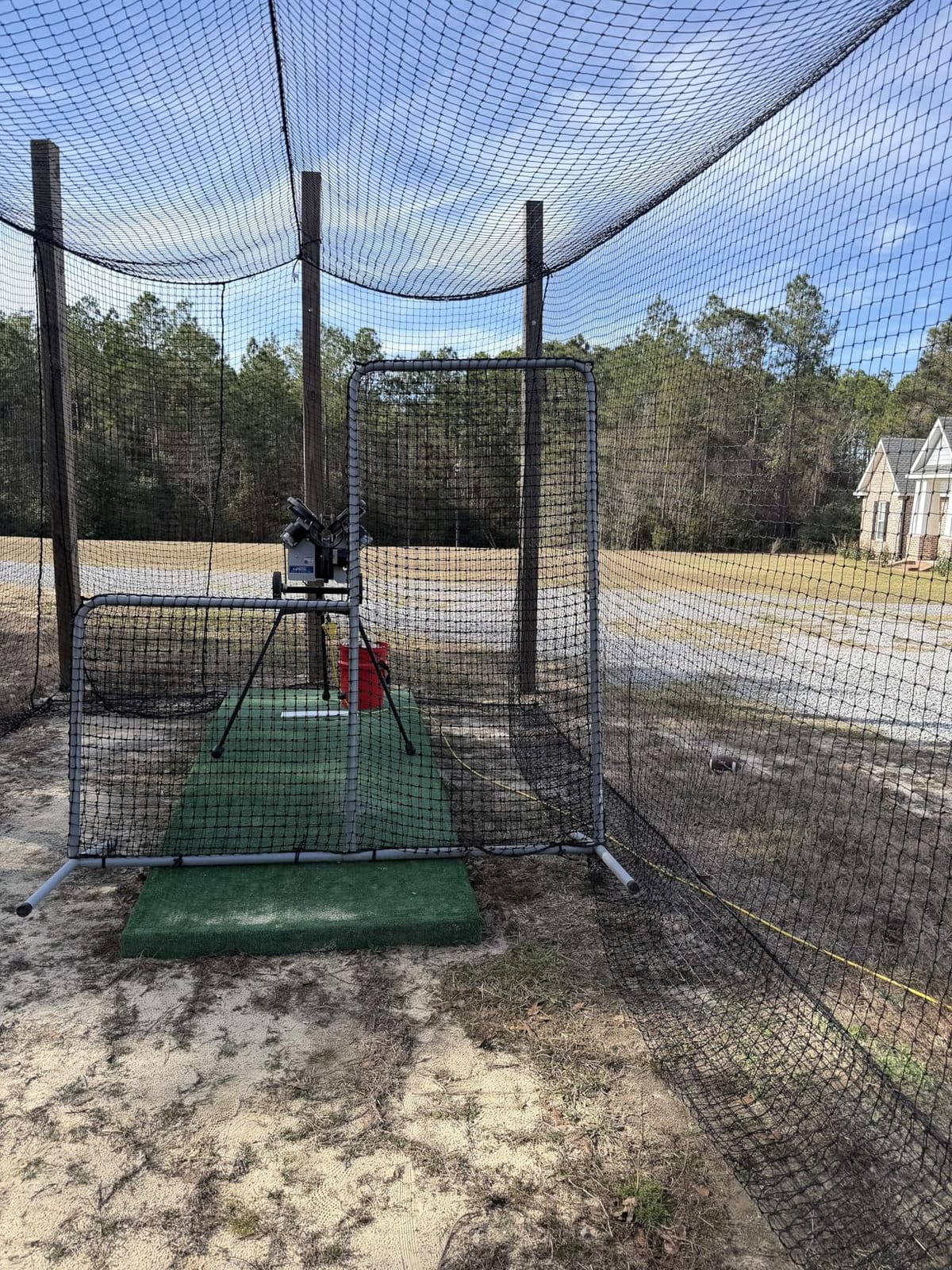
At 96 pounds it is heavy, but one adult can still move, set up and break it down, and owners note it fits in a compact sedan. The throwing head pivots for ground balls, line drives and fly balls out to 250 feet, which turns it into a defensive practice tool as much as a hitting one.
Two practical notes. The base has to be locked before the legs go on, and the setup documentation is minimal, so budget time for the first assembly. The ball feeder and the leg extensions are separate purchases, and softballs do not fit without a conversion kit.
Who this machine suits
A high school or travel program coaching older hitters who need to see breaking-ball spin at real speed. The two-year manufacturer warranty is the longest in this group.
Who should skip it
Softball programs and anyone who needs fly balls that a fielding coach can catch at close range without a lot of warning. It is a serious baseball machine first.
5. Heater Sports Heavy-Duty – Best for Team Sessions
Heater Sports Heavy-Duty Baseball Pitching Machine W/Bonus Ball Feeder – Accurate & Adjustable Pitching Machine for Kids, Teens, and Adults | Ideal for Baseball Training and Practice Sessions
All-metal housing
Speed control from 10 to 52 mph
Lite balls from 20 to 80 mph
12-ball auto feeder,42.7 lb
+ The Good
- Stable all-metal construction
- Ten real speed positions
- Auto feeder gives 8 second gaps
- Handles batting
- catcher and fielding work
- The Bad
- Pitching wheel can deteriorate fast
- Replacement wheel is a costly part
- Feed path jams occasionally
- Real baseballs scuff in the wheel
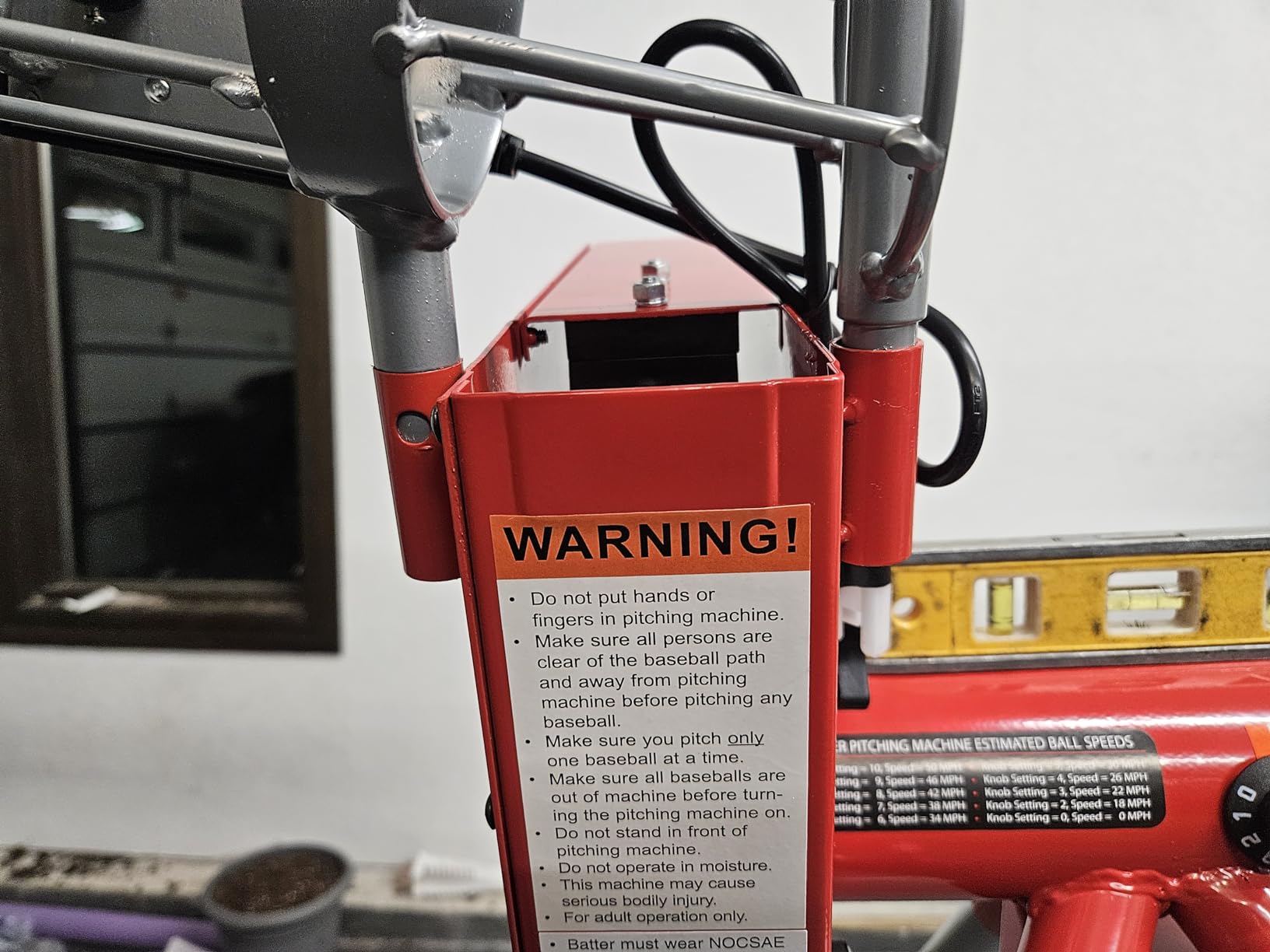
This is the machine a volunteer-built program puts at the end of a line. The all-metal housing is the reason it feels commercial grade, and the 10-position speed control from about 10 to 52 mph is a genuine dial rather than a two-speed switch.
The automatic 12-ball feeder drops a ball every eight seconds and can be removed if you want to feed manually. Owners report consistent 48 to 51 mph with regulation baseballs, which is useful for older hitters, and the pivot head knob gives you grounders and pop flies on top of the straight stuff.
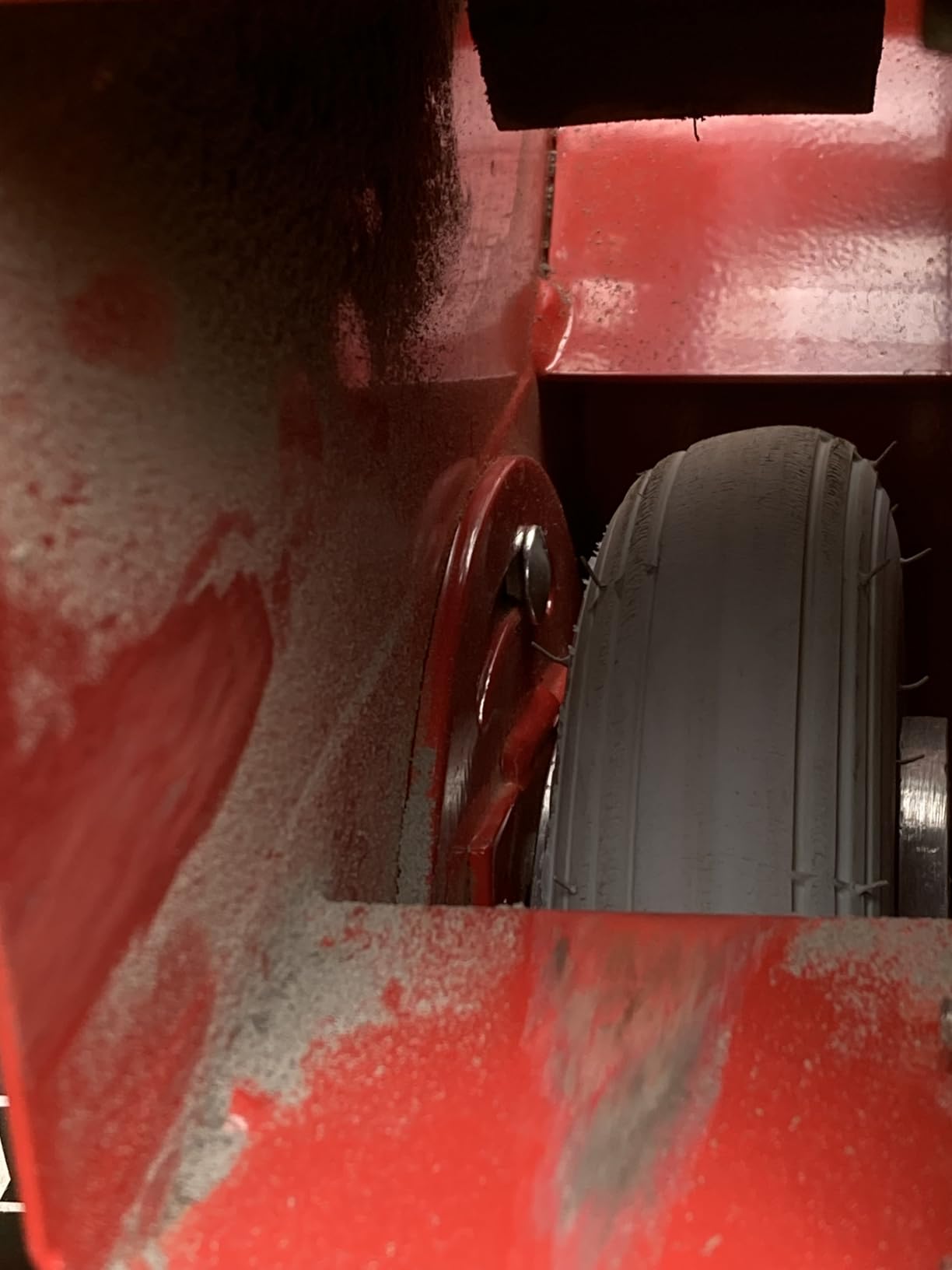
Be clear-eyed about the running costs. The pitching wheel can deteriorate within a few months of seasonal use, and replacing it is a significant share of the original purchase. The feed path also jams now and then, so someone should stand behind the machine during a full group session rather than walking away.
Real leather balls scuff quickly in the wheel, and the wheel has to be inflated before first use. Those are the trade-offs you accept when you buy metal instead of plastic.
Who this machine suits
A club or school running long sessions with many hitters in rotation. At 42.7 pounds it needs two people to carry, and it makes more sense parked at a permanent field than moving between locations.
Who should skip it
A parent with one hitter and a backyard. The weight and the wheel replacement economics only pay off with heavy volume use.
6. PowerNet Launch F-lite – Best for Baseball and Softball
PowerNet Launch F-lite Baseball & Softball Pitching Machine, Adjustable Height and Angles, Variable Speed Up to 90 MPH, Batting Practice Ball Launcher (F-lite)
Interchangeable leg sets for both sports
Four settings,40-90 mph at 25 feet
12 lite balls included
13 kg, folds down
+ The Good
- Quick switch between the two sports
- Four settings span a wide age range
- Strong customer support
- Handles a full youth season
- The Bad
- Output falls short of the listed range
- Only works with Launch F-lite balls
- Manual handling on wheels
- Plastic shell cracks on solid returns
This is the answer for a program that fields both sports. Interchangeable tripod leg sets let you convert the release height from baseball to softball in a couple of minutes, which removes the most common reason coaches end up owning two machines.
Four adjustable settings simulate 40 to 90 mph at 25 feet, and the bundle includes 12 Launch F-lite balls split between baseballs and softballs. Owners like that one machine covers a six year old and an eleven year old, and that the unit stays stable enough for sustained batting practice once it is set up.
Two caveats stand out. Measured output falls noticeably short of the listed range on some machines, so do not treat the printed speed figure as a guarantee. The calibration is also exclusive to Launch F-lite balls, and using anything heavier risks damage and affects the warranty.
Transport is manual work with no wheels attached, and the plastic shell is vulnerable to a solid return, which is worth remembering on a field with a hard backstop nearby.
Who this machine suits
A multi-age club or a parent with children in two sports. Support is a genuine strength here, with owners reporting replacement parts sent quickly when something failed.
Who should skip it
Anyone who wants accurate speed verification. If the machine’s headline number has to be reliable for a competitive program, this is not the one, and a metered machine from a higher tier is the better spend.
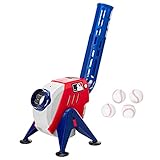
7. Franklin MLB Superstar 4 in 1 – Best for Fielding Drills
Franklin MLB Superstar 4 in 1 Pitching Machine
4-in-1 hitting and fielding design
Adjustable launch angle
Feeder holds 9 balls
5 lb, runs on 4 C batteries
+ The Good
- Covers batting and fielding in one unit
- Angle adjusts for soft toss and pop flies
- Light at 5 lb
- Long sessions on one battery set
- The Bad
- Accuracy varies pitch to pitch
- Plastic construction feels basic
- Batteries not included
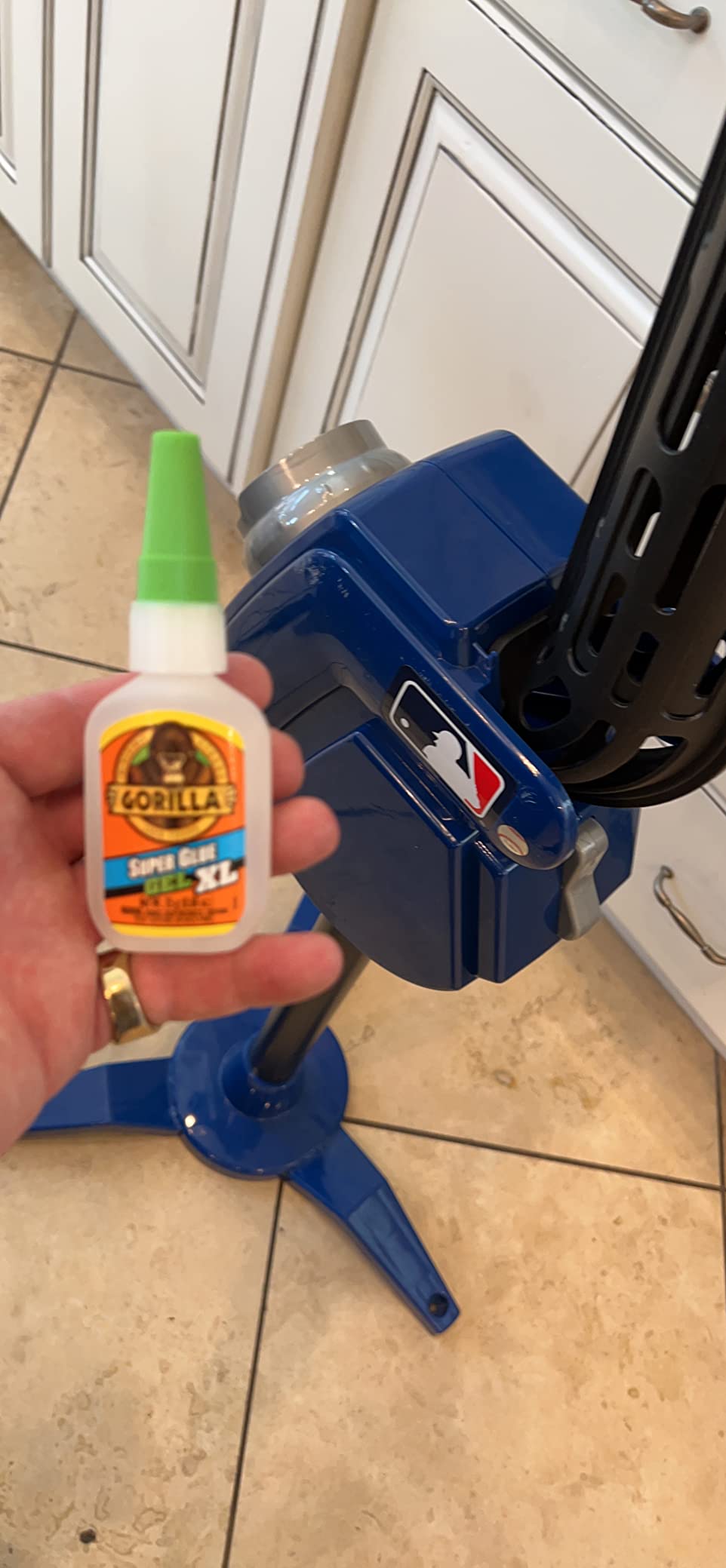
The name describes the design honestly. The adjustable launch angle lets the same machine deliver soft toss, ground balls and pop flies, so a single unit covers both halves of practice. At 5 pounds it is one of the lightest machines here and a child can reposition it.
The feeder holds up to 9 balls and fires one every seven seconds, with 6 compatible plastic baseballs in the box. Owners describe it as a good entry-level teaching tool, and roughly 1,830 reviews at 4.0 stars confirm it holds up as a backyard fixture.
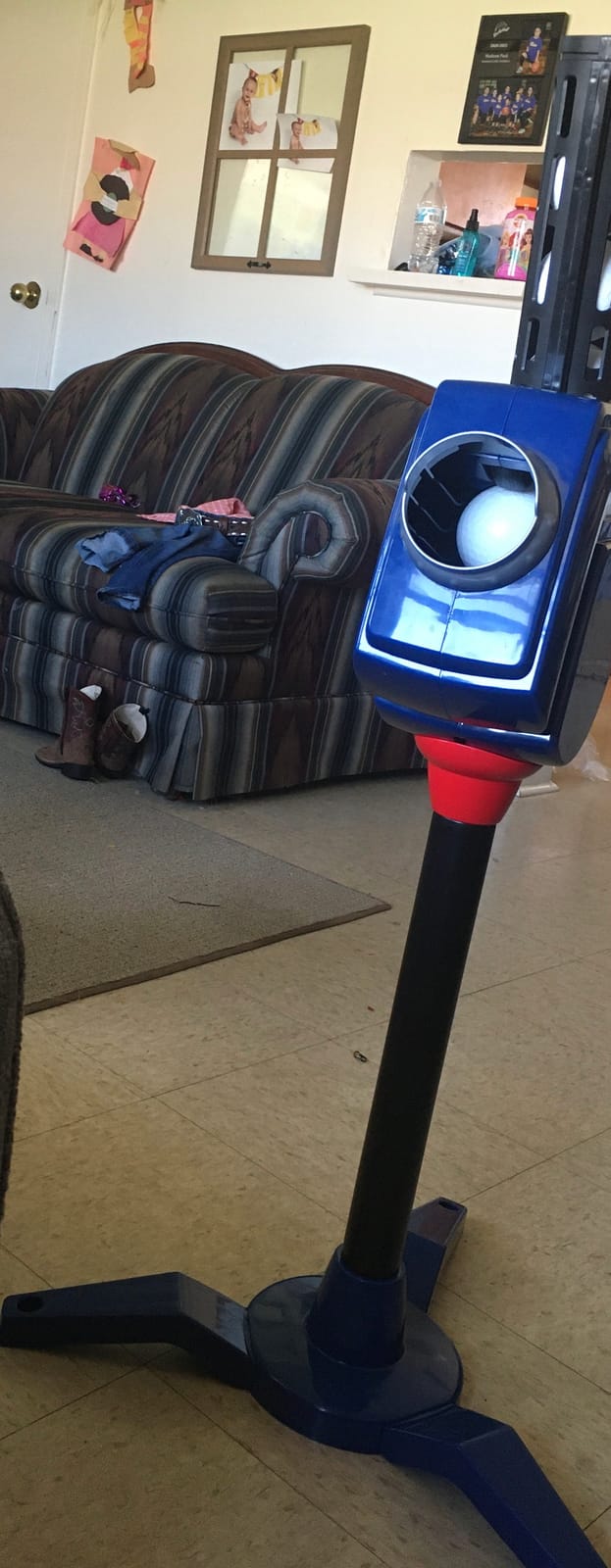
Accuracy is the trade. Pitch placement varies, which is acceptable for a young player learning to swing and unhelpful for a hitter trying to hit a location. The plastic construction also feels basic, and you need 4 C batteries that are not included.
The angle adjustment is the reason it earns its place. Fielding reps with pop flies and grounders are the most overlooked part of batting practice, and few cheap machines can produce them.
Who this machine suits
A parent coaching kids in two age groups who wants both hitting and defensive reps. The one-year warranty against manufacturer defects adds a little confidence.
Who should skip it
Hitters working on strike-zone discipline. Variable placement teaches guessing, and no amount of extra practice at that pattern transfers to a real at-bat.
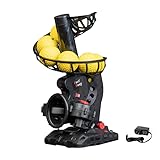
8. Franklin Sports MLB Power Pitcher – Best for Ages 7 to 15
Franklin Sports MLB Power Pitcher Pitching Machine
Three speeds at 10, 15 and 20 mph
3-position angle adjustment
Feeder holds 9 balls
4.5 lb, batteries or optional AC
+ The Good
- Three speed settings cover a range of ages
- Seven second gaps suit one adult
- Four foam balls are safer
- Works on batteries or an optional cord
- The Bad
- Wide pitch dispersion
- Four balls for a 9-ball feeder
- AC adapter sold separately
This machine is built for a specific window of a kid’s development, and the manufacturer says so with a recommended age range of 7 to 15. Three speed settings at 10, 15 and 20 mph give a growing hitter something new without overwhelming them.
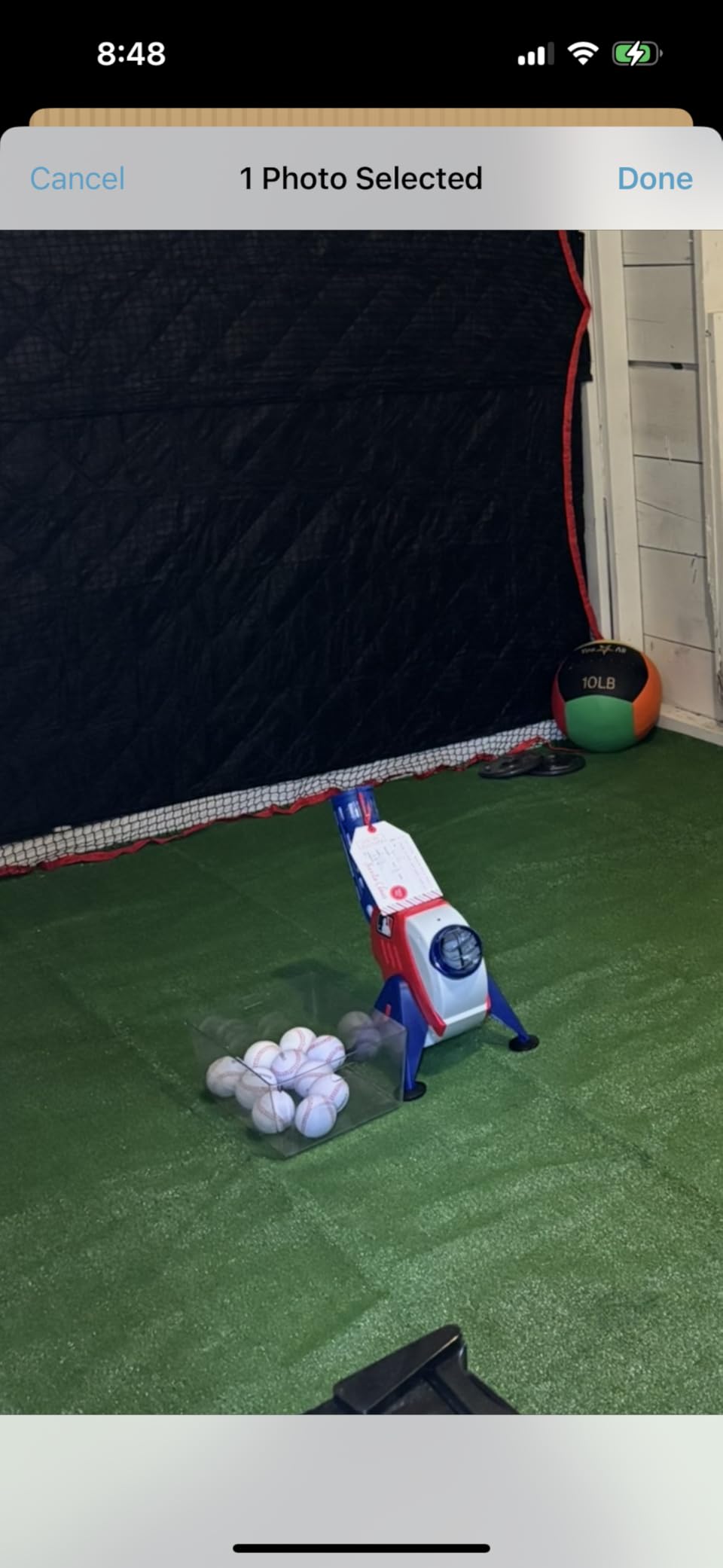
The design detail that matters is timing. With a pitch every seven seconds and a red release indicator light, an adult has time to load a ball, step away and swing, which is a realistic setup for one person working with one hitter. Four foam baseballs come included and are safer than hard plastic at close range.
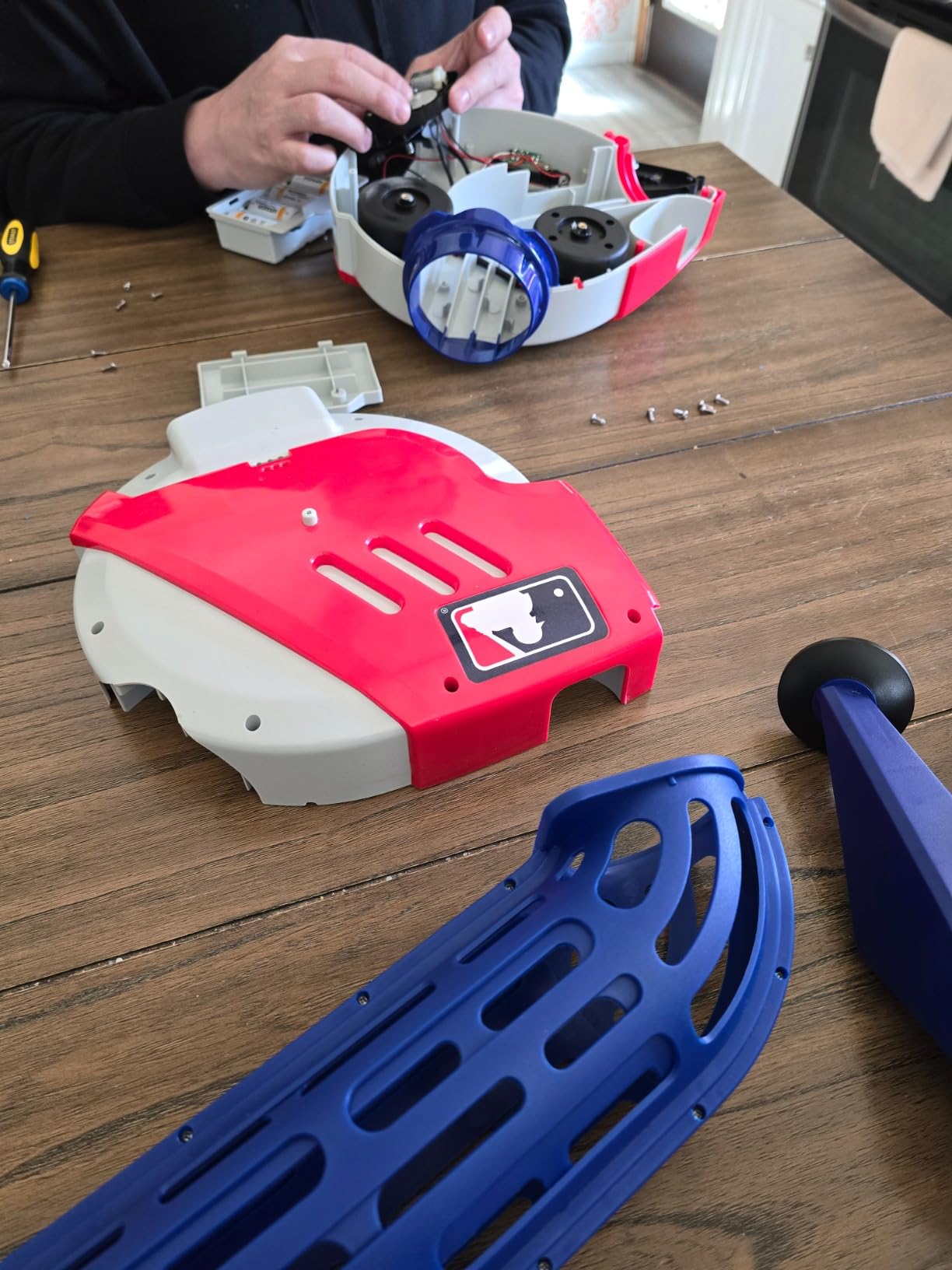
Owners do report real problems. The first pitch after a refill tends to come out slow and low, and the dispersion is wide. Some machines develop a cranking noise and weak output after about a year. Also note that only 4 balls ship for a feeder that holds 9, and the A/C adapter is a separate purchase if you want to stop using batteries.
One owner also reports the machine handled heavy rain without complaint, which tells you more about its build quality than the plastic suggests.
Who this machine suits
A family with a hitter somewhere between Little League and early high school. The 4.5 pound body and the 12 by 25.75 by 18 inch footprint make it easy to move between a garage, a park and a relatives’ yard.
Who should skip it
Anyone beyond tee-ball age who is ready for a real fastball. Twenty miles per hour stops being a challenge quickly, and reaching for a faster machine later is the sensible next step.
9. Heater Sports Power Alley Lite 360 – Most Versatile
Heater Sports Power Alley Lite 360 Baseball Pitching Machine – Pitches Lite Balls 40-80 MPH Fastballs, Sliders, & Curves | Accurate, Durable, & Portable Training Tool for Batting & Field Practice
40-80 mph with Heater lite balls
Swivel head for fastball, slider, curve
Tri-pod included
12.5 lb, 110V or power station
+ The Good
- Enclosed wheel is safer around kids
- Tri-pod included in the box
- Throws grounders and pop flies
- Light and quick to reposition
- The Bad
- Needs Heater lite balls to run right
- Wiggles unless held down
- Manual feeding unless you add the feeder
- Noisier than metal machines
The fully enclosed solid wheel is the feature that separates this from the plastic toys. Around children, a covered wheel removes the single most obvious hazard in the category, and the tri-pod is included rather than sold separately.
Speed control runs from 40 to 80 mph with Heater Sports lite balls, and the swivel head delivers fastballs, sliders and curves along with grounders, line drives and pop flies out to 200 feet. A 1/8 HP motor drives it from 110V power or a portable power station.
There are two practical problems. The machine wiggles unless you hold it down, especially outdoors on uneven ground, which becomes a second pair of hands during a session. And feeding is manual unless you buy the auto feeder attachment.
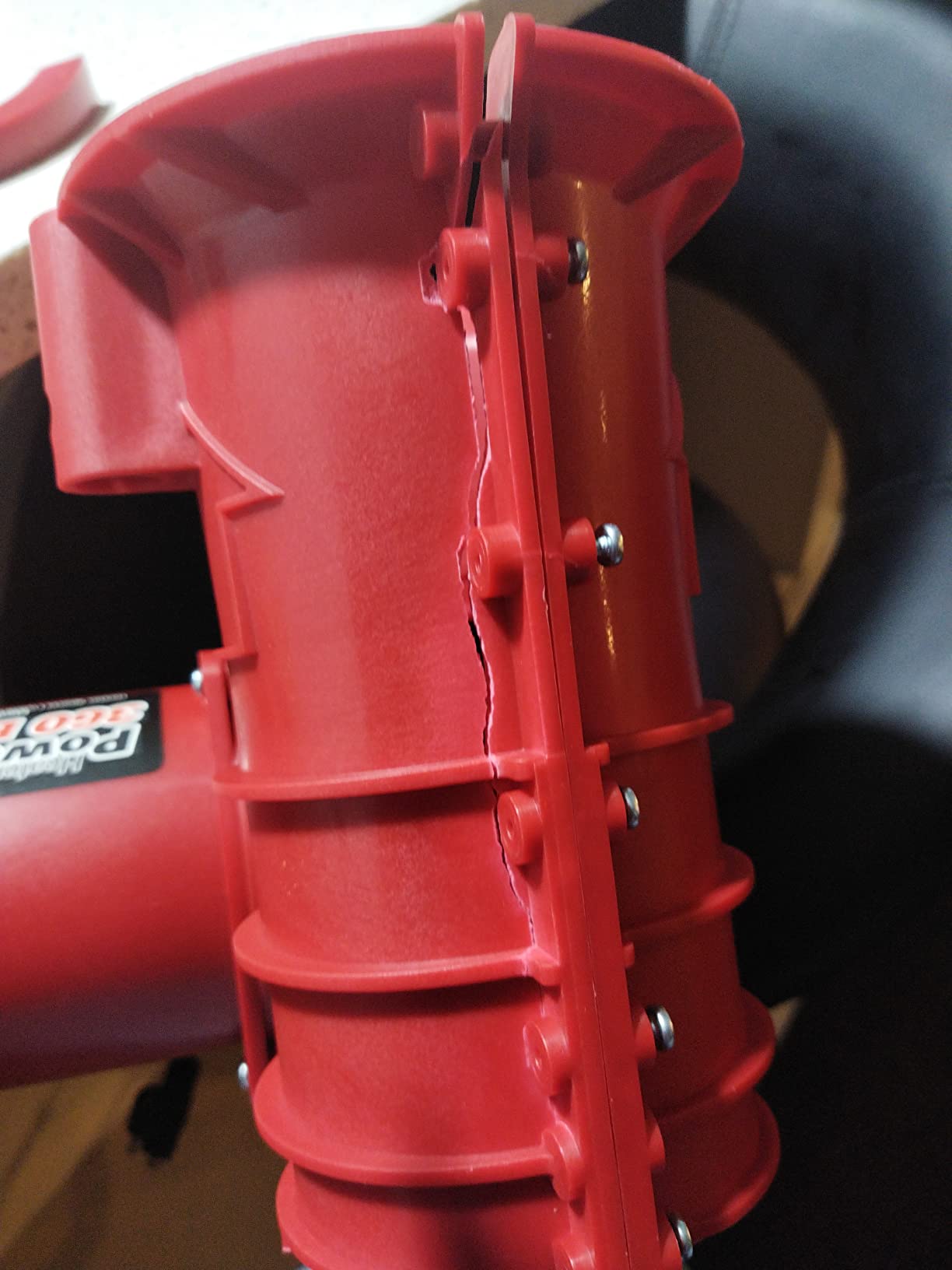
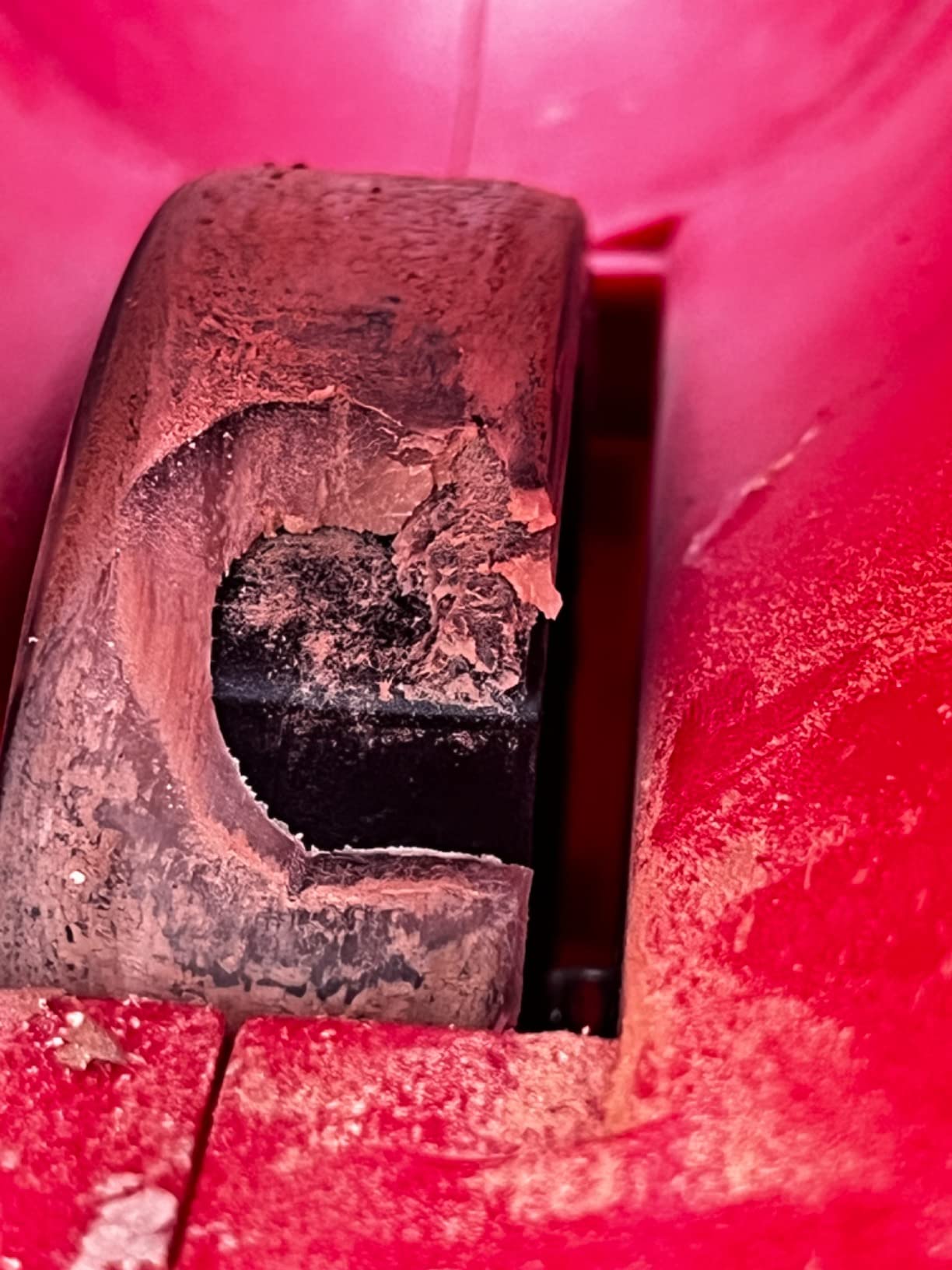
The plastic housing is also vulnerable to a hard return ball, and owners describe it as noisier than metal-bodied machines. It runs on 110V, so plan your power source before the first session.
Who this machine suits
A family with a hitter in the 10 to 14 range who wants real speed numbers and breaking balls without a large purchase. The enclosed wheel makes it a sensible choice for younger siblings who wander.
Who should skip it
Anyone with a strict accuracy requirement, and anyone without reliable mains power or a portable power station. Real baseballs are not recommended for this machine.
10. Furlihong 898BH Soft Toss – Best for Soft Toss
Furlihong 898BH Baseball Soft Toss Machine, Angle Adjustable, Step On Paddle and Release to Launch, No Power Supply Needed, Works with Regulation Baseball
Step-on pedal, no power supply
Three launch angles
Extendable ball stacker
Works with regulation baseballs
+ The Good
- Runs with no batteries and no outlet
- Accepts regulation baseballs
- Three angles for different ages
- Sturdier than the price suggests
- The Bad
- Younger kids under-press the pedal
- Shifts position after a few pitches
- Rack sections clip loosely
- Occasional mis-launches
This is a soft toss machine rather than a full pitching machine, and that distinction matters. You step on the paddle and the ball launches roughly six seconds later. No batteries, no outlet, and it works with regulation baseballs, which very few machines in this price range accept.
Three launch angles are set by a rear switch, so the same unit covers soft toss for a young hitter and a flatter release for an older one. The extendable stacker is compatible with other Furlihong machines, so it fits into a growing backyard setup.
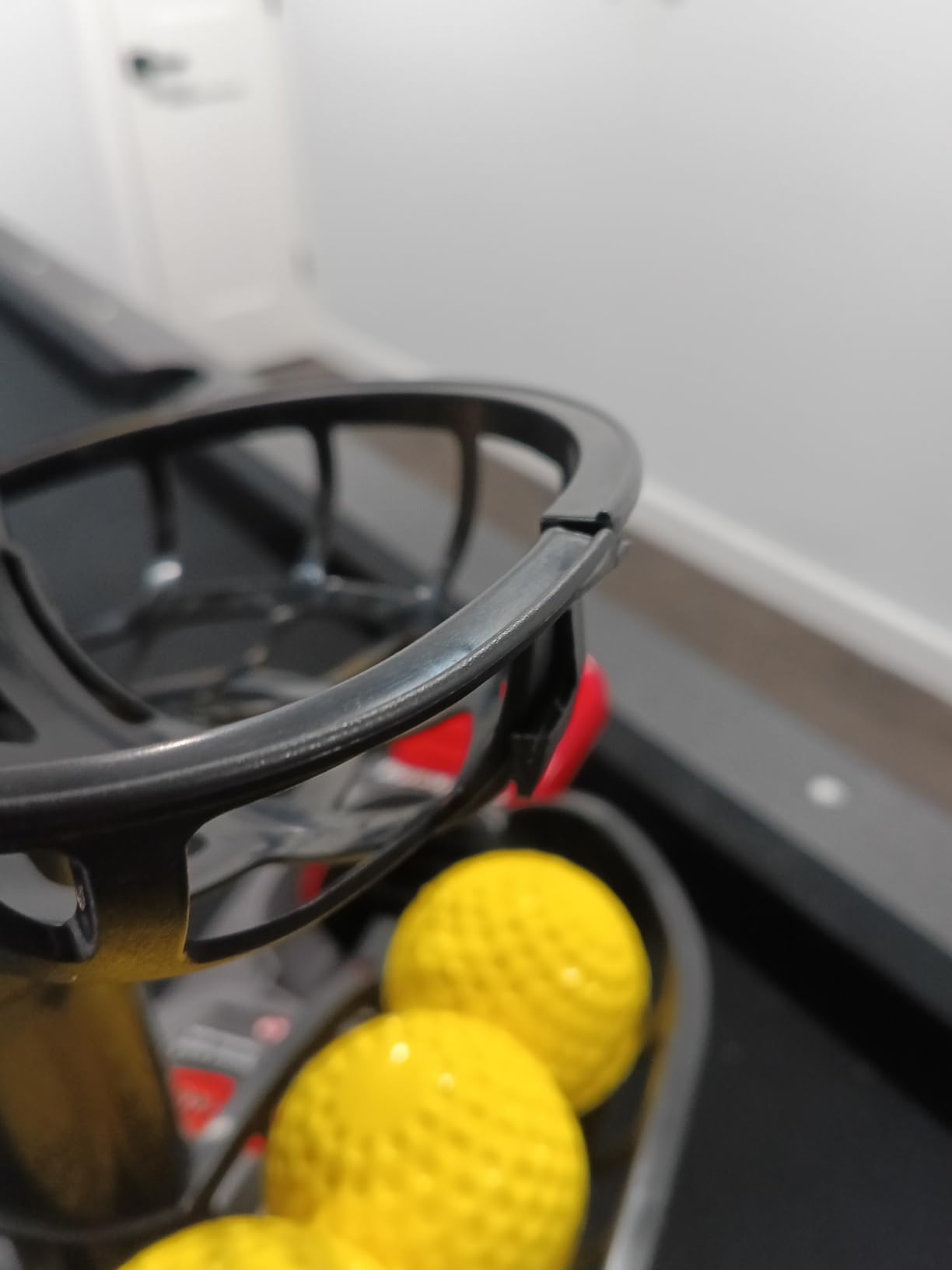
The pedal is the weakness. Younger children do not press firmly enough for a consistent launch, and the machine shifts position after a couple of pitches unless it is weighted or braced. Ball rack sections also do not always clip together tightly, and a mis-seated ball occasionally produces a bad launch.
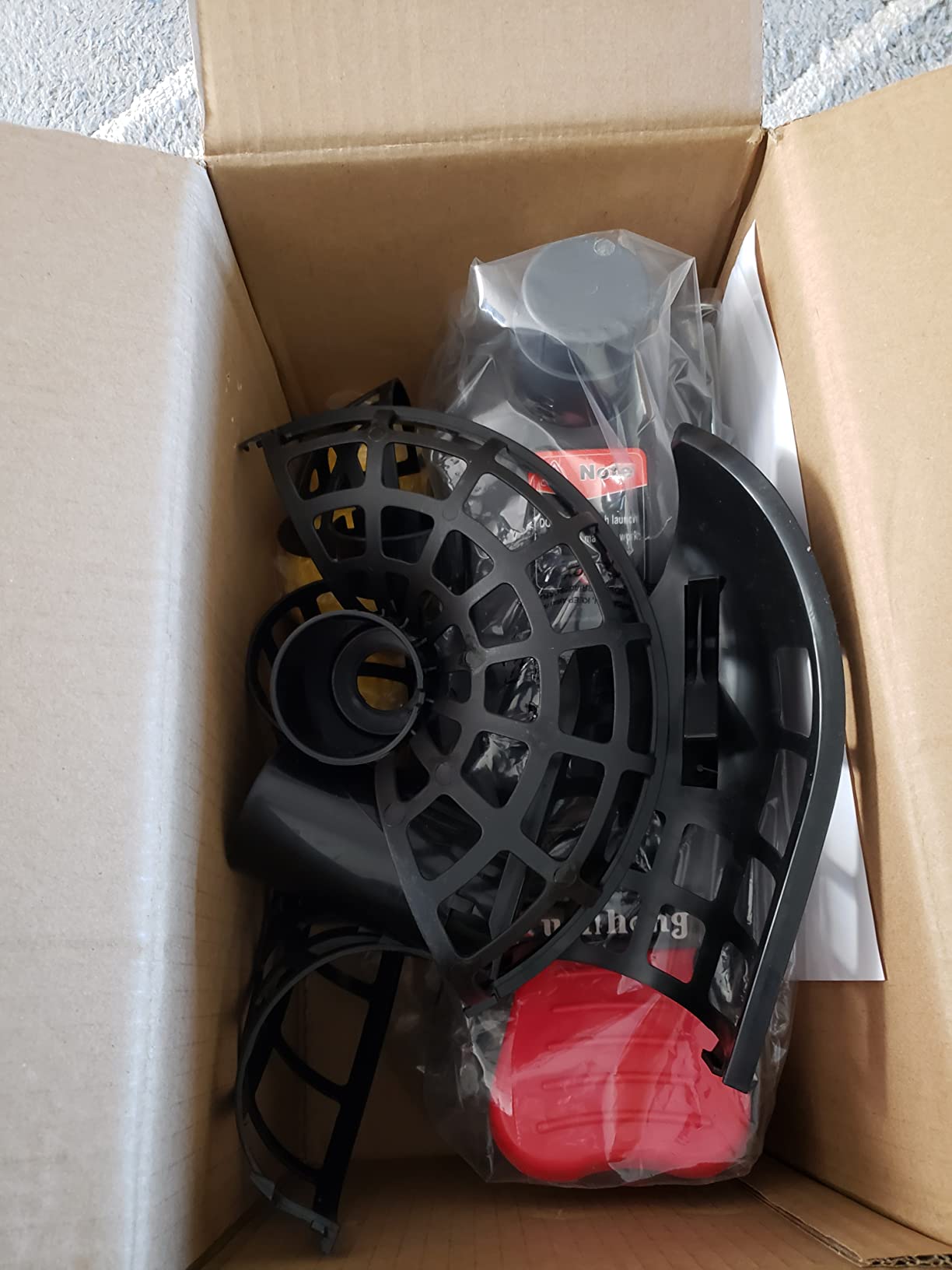
Owners describe it as sturdier than expected for the price, with a 180-day warranty behind it. The box includes the toss machine, a ball chute and the tunnel pieces.
Who this machine suits
Parents focused on short toss and timing work rather than full machine batting practice. It is the easiest unit here to take to a park because there is nothing to plug in and nothing to charge.
Who should skip it
Anyone wanting a true machine pitch at regulation distance. Soft toss trains timing in the hitting zone, which is valuable, but it does not simulate a pitch arriving from the mound.
11. Furlihong 380BH – Best First Machine
Furlihong 380BH Baseball Pitching Machine for Kids and Beginner
Single 20 mph speed
Three launch angles
Extendable ball tracks
2.1 lb, runs on 4 D batteries
+ The Good
- Light enough for a child to carry
- Sting-free 9 inch training balls
- Three angles grow with the player
- No outlet required
- The Bad
- One speed capped at 20 mph
- Only works with Furlihong balls
- Plastic body flexes under hard swings
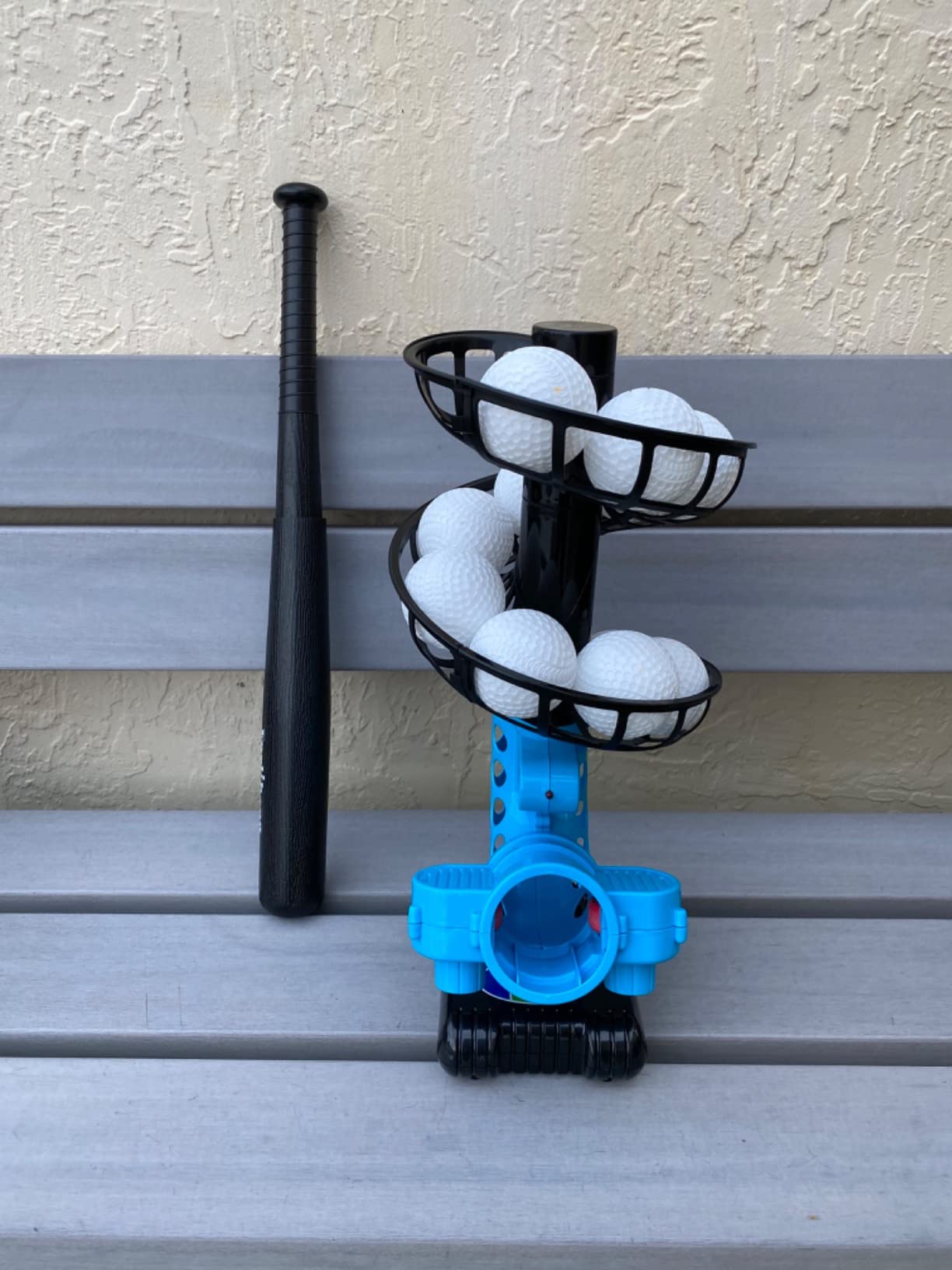
At 2.1 pounds this is the lightest machine in the group, and it is the box that makes it interesting: a plastic bat plus 20 training balls. A family opening a machine for the first time gets everything needed for a first session in one purchase.
The balls are sting-free nine inch training balls, which removes the sting that stops many beginners. Three launch angles cover different ages and levels, and the ball tracks extend to hold more balls as the player grows.
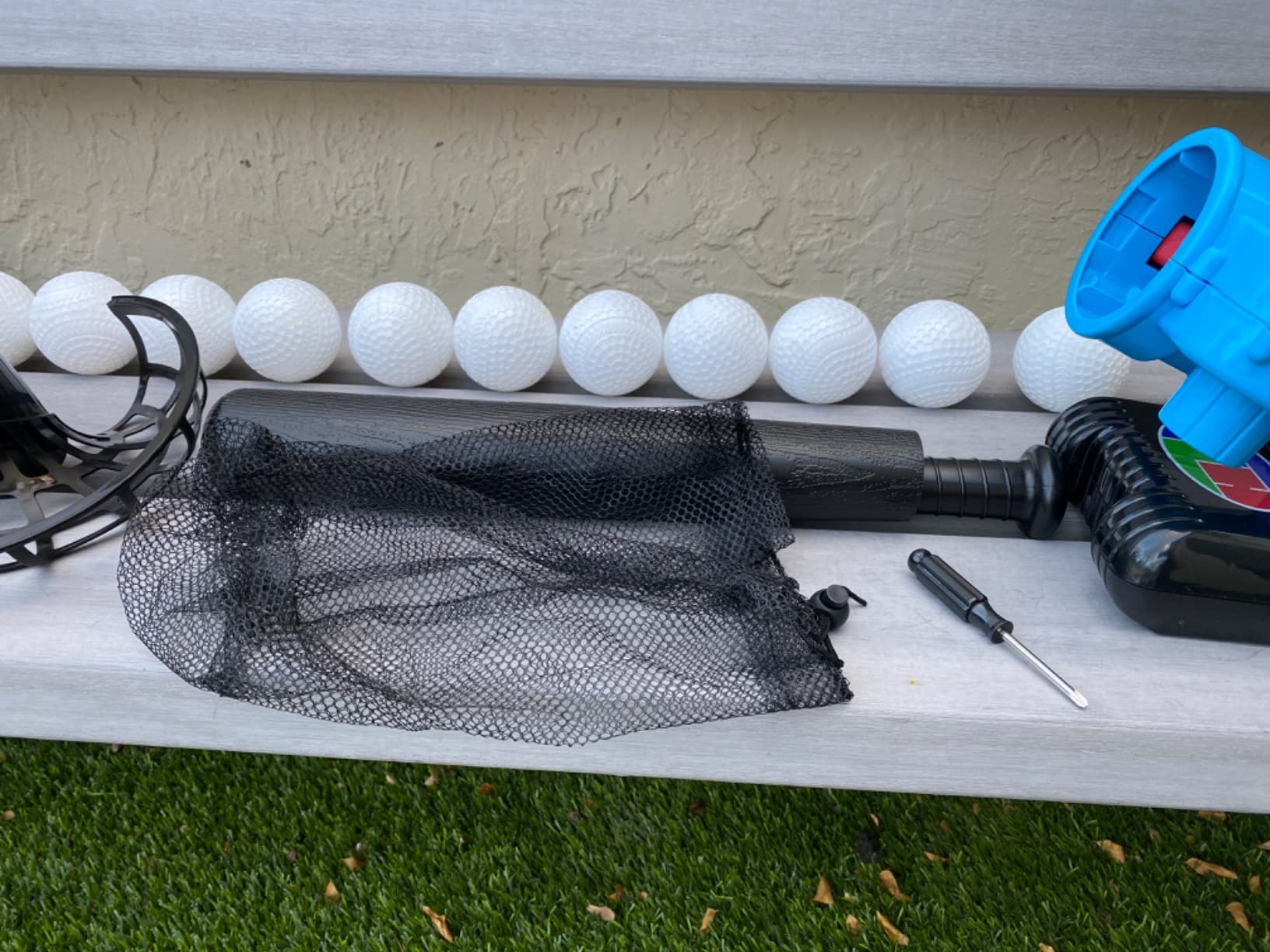
There is one speed and it is 20 mph. That is a real limit rather than a flaw, and it is why this machine is a starting point and not a destination. The body is plastic, so repeated hard swings will stress it over time.
Only use Furlihong plastic training balls with it. Substituting other balls is not supported. A ball comes out every seven seconds with an indicator, and it runs on 4 D batteries, so it works at a park with no power.
Who this machine suits
A first-time buyer with a young beginner, roughly ages four to seven. The sting-free balls matter most here, since fear of contact ends more batting sessions than bad technique does.
Who should skip it
Anyone with a hitter already swinging well. There is nowhere to grow from a single 20 mph setting, so plan on a second purchase within a year.
12. Furlihong 3801BH – Best for Quiet Indoor Practice
Furlihong 3801BH Upgraded Electronic Baseball Pitching Machine for Beginner
Up to 30 mph
Adjustable wheels on both sides
4 D batteries or included 6V adapter
4.5 lb, dimpled PU balls
+ The Good
- Dual-wheel adjustment adds curve and slider moves
- Quiet enough for a garage
- Compact and easy to carry
- Service replaced a faulty machine quickly
- The Bad
- Included balls are light and unbalanced
- High and low settings barely differ
- Wind noticeably moves the balls
- Feed ramp part costs about a third of the machine
Most machines in this roundup announce themselves. This one does not, which is why it works in a garage or even a living room. Owners single out the quiet operation as the reason they can use it indoors without neighbours objecting.
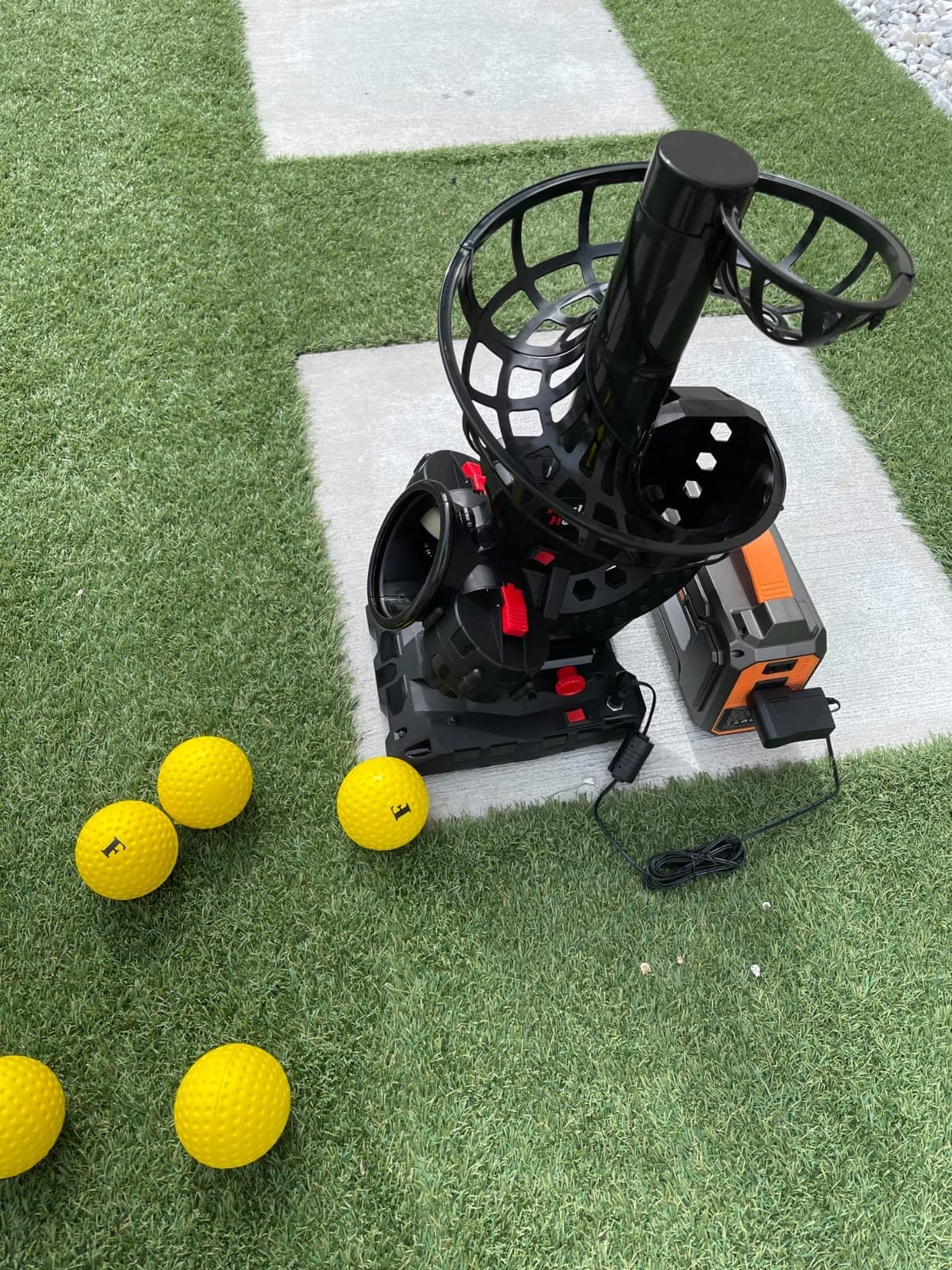
The spec sheet says adjustable wheels on both sides, and in practice that gives you real control over speed and angle for fastballs, curves and slider movement up to 30 mph. It runs on 4 D batteries or the included 6V AC adapter, and the box includes 8 training balls.
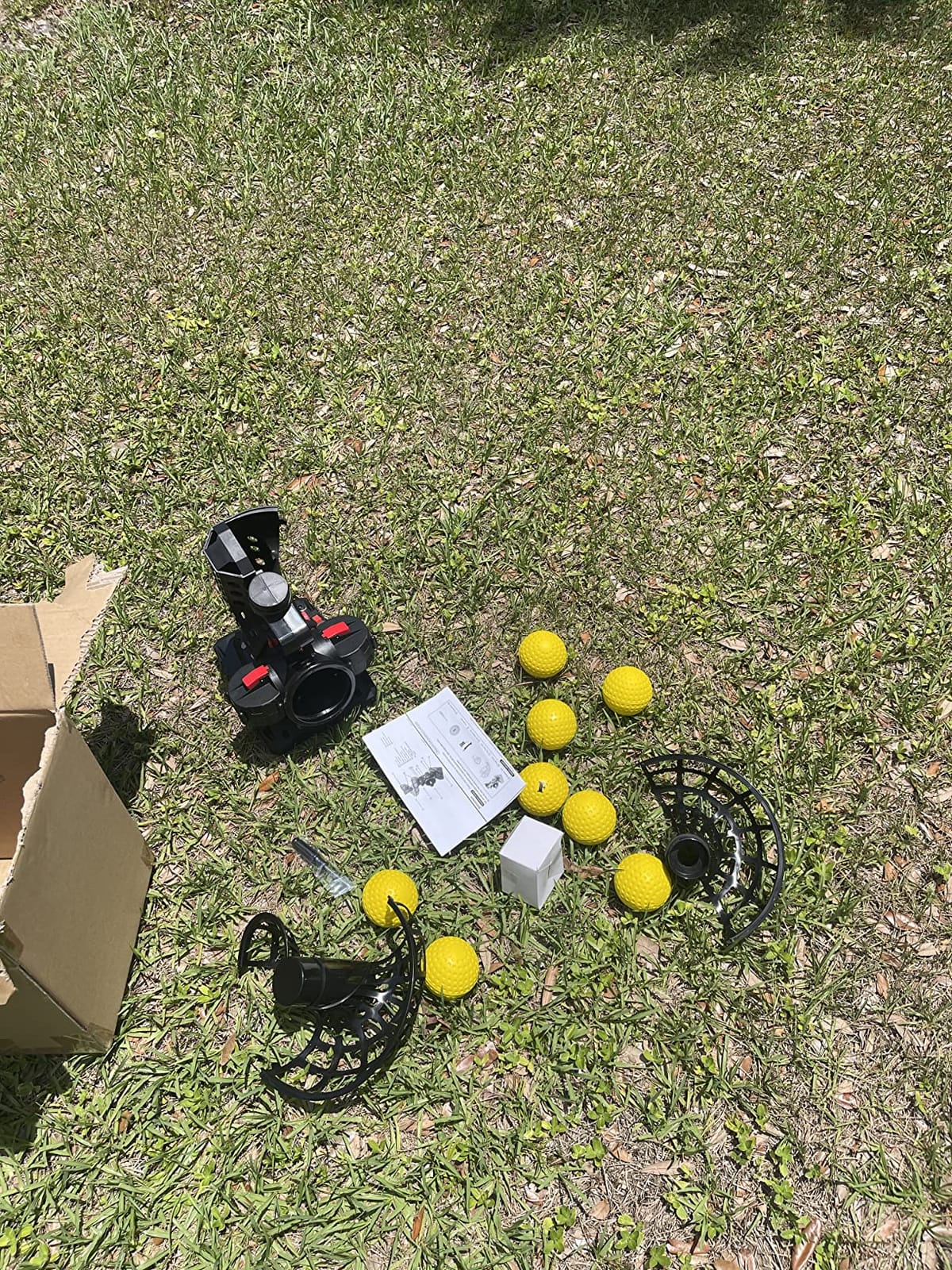
The balls are the limitation. They are 1 ounce polyurethane dimpled balls that owners describe as light and unbalanced, so contact is inconsistent even indoors, and wind visibly affects them outdoors. Regulation baseballs will not work. Several owners also report that the high and low speed settings show no noticeable difference.
The feed ramp is cheaply made, and a replacement part costs roughly a third of the machine, which is worth knowing before you buy. Allow a few seconds after power on before the ball launches.
Who this machine suits
Apartment or garage practice where noise and space rule out everything else. The 8.7 by 7.1 by 18.9 inch body and 4.5 pound weight make it a one-carry unit.
Who should skip it
Anyone training outdoors in wind, and anyone who wants regulation ball feel. The dimpled polyurethane balls feel nothing like leather, and that limits what you can take from the session.
How to Choose a Pitching Machine for Your Hitters
Start with the pitch you actually need to see, not the speed number. If your hitters need a fastball in the strike zone and nothing else, a one-wheel machine with manual power does it for the lowest outlay of any category here. If breaking balls are part of the plan, two wheels is the entry requirement and there is no shortcut around it.
Next, sort by player age. Tee-ball and early Little League work sits comfortably in the 20 to 35 mph band. Ages 9 to 10 need roughly 35 to 50 mph. Middle school hitters are usually ready for 50 to 65 mph, which is where most of the machines on this list stop. High school and adult work moves into 65 to 80 mph, and only a two-wheel or three-wheel machine gets you there.
Then check the ball type before anything else. Several machines here are calibrated only for their own branded balls, and using heavier balls can shorten the life of the wheel or the motor. The Heater machines want Heater lite balls, the PowerNet unit wants Launch F-lite balls, and the Franklin and Furlihong units want their own plastic or foam balls. The Louisville Slugger Blue Flame and the Junior Hack Attack are the two that will accept a genuine leather baseball.
Power source decides your setup more than any other single choice. Manual machines need nothing and give you total freedom. Battery machines are light and portable but slow down as the cells fade, so keep a spare set. 110V machines need a cord, a power station or a generator, and that infrastructure is a line item people forget.
On placement, the trick most buyers miss is running the machine closer rather than faster. Perceived speed scales with distance, so a machine set 35 feet from the plate at 45 mph feels faster than the same machine at 60 feet 6 inches. Divide 60 by the new distance and multiply by the machine speed to get the equivalent velocity at regulation distance. Start youth hitters at 35 to 46 feet and only move toward the full 60 feet 6 inches as they handle the pace.
Accuracy, in our testing, ranked the three-wheel and commercial two-wheel machines above everything else, because extra points of contact stop the ball slipping out. The manual machines ranked next once dialled in. The light plastic ball machines ranked last, and that ordering matched what coaches describe in batting practice forums. Our backyard batting cage net guide covers the safety side of the setup.
Batting Practice Drills You Can Run With a Machine
The machines get discussed constantly, but the drills are what actually make practice productive. These four come from coach discussions about machine work and each one has a specific purpose.
Cone distance ladder. Place cones at three foot intervals between home plate and the machine. The hitter swings and advances up a cone on every hit; a miss means the hitter is out and the losing side packs up the equipment. Coaches like competitive formats because they fight batting practice boredom directly.
Two machine fastball and change-up. Set one machine for a fastball and a second for a changeup, then feed balls into either one at random. The hitter has to adjust without knowing which is coming, and the improvement comes fast. It does require two machines, which is why we suggest budgeting for a second unit rather than buying one twice as expensive.
The one-one count drill. Bring hitters up on a 1-1 count, or run it as a two-strike drill, so the session stays as tight as a real at-bat. It keeps everyone engaged and it forces the hitter to protect the edge of the zone.
Fielding and fungo reps. Use the swivel head and pivot head to produce fly balls and grounders for the defensive group while the hitters work. One coach on the fastpitch forum made the point that a swivel base lets a single coach get twice as many reps out of a session, and that fly ball and grounder consistency was the first thing machines improved for his program.
One caution from experienced coaches on the same forums: machine work at high speeds with no instruction can build bad habits. The recommendation is to use lower speeds to reinforce mechanics and reserve high speeds for simulating a hard throw. Live pitching still matters for timing. If you are also building a hitting area, our backyard batting cage comparison is worth a look.
The Full Setup Checklist Nobody Budgets For
The machine is the line item everyone plans for and frequently the smaller one. Here is what a complete station actually needs.
Power. Nothing in this category runs without a solution. Manual machines need none, battery machines need spare cells, and 110V machines need an extension cord, a portable power station or a generator.
Balls. Budget for machine-specific balls rather than assuming you can use a bucket of scuffed baseballs. Several machines on this list are damaged by heavier balls. Add a separate bucket for regulation balls if your hitters train on both.
An L-screen in front of the machine. A return ball hitting an operator is the most common avoidable injury in backyard machine work, and a screen costs a fraction of a dental visit.
A backstop net behind the hitter, especially for pop fly work and for any machine that throws hard on the return.
Ground anchors or clamps. Several machines here drift or rock on hard ground, and a machine that moves changes your line every pitch. Bracing with a foot works for manual units; clamps exist for heavier frames.
Replacement parts. On the metal machines, the pitching wheel is a consumable with a meaningful replacement cost. Check what it is before you buy rather than after the wheel goes.
Pitching Machine Safety and Indoor Use
Enclosed wheels come first. The Heater Power Alley Lite 360 has a fully enclosed solid wheel, and that is the single most important safety feature to look for when children are near the machine.
Manual levers kick back. On spring machines, the lever stores real energy and it returns. Nobody should stand in the lever path, and it is another reason to keep a second person away from the loading side.
Protect the operator. Stand behind an L-screen, never beside the machine on the return line, and keep the machine far enough back that a fouled ball does not reach you.
Indoors is workable with clearance and a backstop net. Manual and light battery machines suit a garage. Heavy high-speed machines need more room than most garages offer, plus the power infrastructure they require.
Frequently Asked Questions
Are pitching machines good for batting practice?
Yes, with one condition. Coaches consistently use machines at low and mid speeds to reinforce mechanics, and reserve high speeds for simulating a hard throw rather than for building swing patterns. A machine gives you volume a live arm cannot, but it does not develop the feel for a moving ball that live pitching does, so it should supplement rather than replace throwing to your hitters.
What is the best pitching machine for home use?
For most families the Louisville Slugger Blue Flame is the answer, because it needs no electricity, no batteries and no extension cord, and it is light enough for one adult to carry to the field. For solo practice where nobody can stand at the machine loading balls, the Heater Sports Slider Lite 360 is the better pick because its automatic feeder lets the hitter work unattended.
What is the best automatic pitching machine for baseball?
The Heater Sports Slider Lite 360 is the strongest all-round automatic option for family and club use, with a feeder that drops a ball every pitch and a swivel head that delivers fastballs and curveballs. For larger sessions with more hitters in rotation, the Heater Sports Heavy-Duty machine feeds 12 balls automatically with ten real speed positions and an all-metal body.
Which pitching machine is the most accurate?
Accuracy depends on wheel count. Three-wheel machines are the most accurate because three points of contact stop the ball slipping out of the wheel, and commercial two-wheel machines follow closely. On this list the Junior Hack Attack is the accuracy leader, and the Louisville Slugger Blue Flame is the most accurate once its spring tension is dialled in. Light plastic ball machines rank last for placement.
How far should a pitching machine be from home plate?
Set youth hitters between 35 and 46 feet, and move high school and adult hitters toward the full 60 feet 6 inches as they handle the pace. Perceived speed scales with distance, so a machine set closer feels faster. To work out the equivalent velocity at regulation distance, divide 60 by the new distance and multiply by the machine speed.
Can a pitching machine throw a curveball?
Only dual-wheel and three-wheel machines can. Two independently variable-speed wheels create spin differential, which is what makes a ball break. One-wheel machines produce a straight or rising fastball at best. The machines here that throw curveballs include the Heater Slider Lite 360, the Heater Power Alley Lite 360 and the Junior Hack Attack.
Which Pitching Machine Should You Buy?
The Louisville Slugger Blue Flame is our pick for the best pitching machines for batting practice in 2026. It is the official machine of the Babe Ruth League and Pony Baseball, it needs no power source of any kind, it throws nearly every kind of round ball, and it holds up from Little League through travel ball. If you have a second adult to load balls, it is the most complete single purchase in the category.
Practicing alone with one hitter changes the answer. The Heater Sports Slider Lite 360 removes the loading problem with an automatic feeder while staying light enough to carry. Once breaking balls matter, move up to a two-wheel machine such as the Junior Hack Attack, which repeats the same pitch accurately and quietly. And for a young beginner, the Franklin Sports MLB Electronic turns practice into a routine without asking anyone to manage an outlet.
Whatever you choose, set it up so the hitter can see the ball leave the machine cleanly, keep it low enough in speed to reinforce good mechanics, and move it closer rather than turning it up. That single habit does more for a hitter than any specification on the box.