
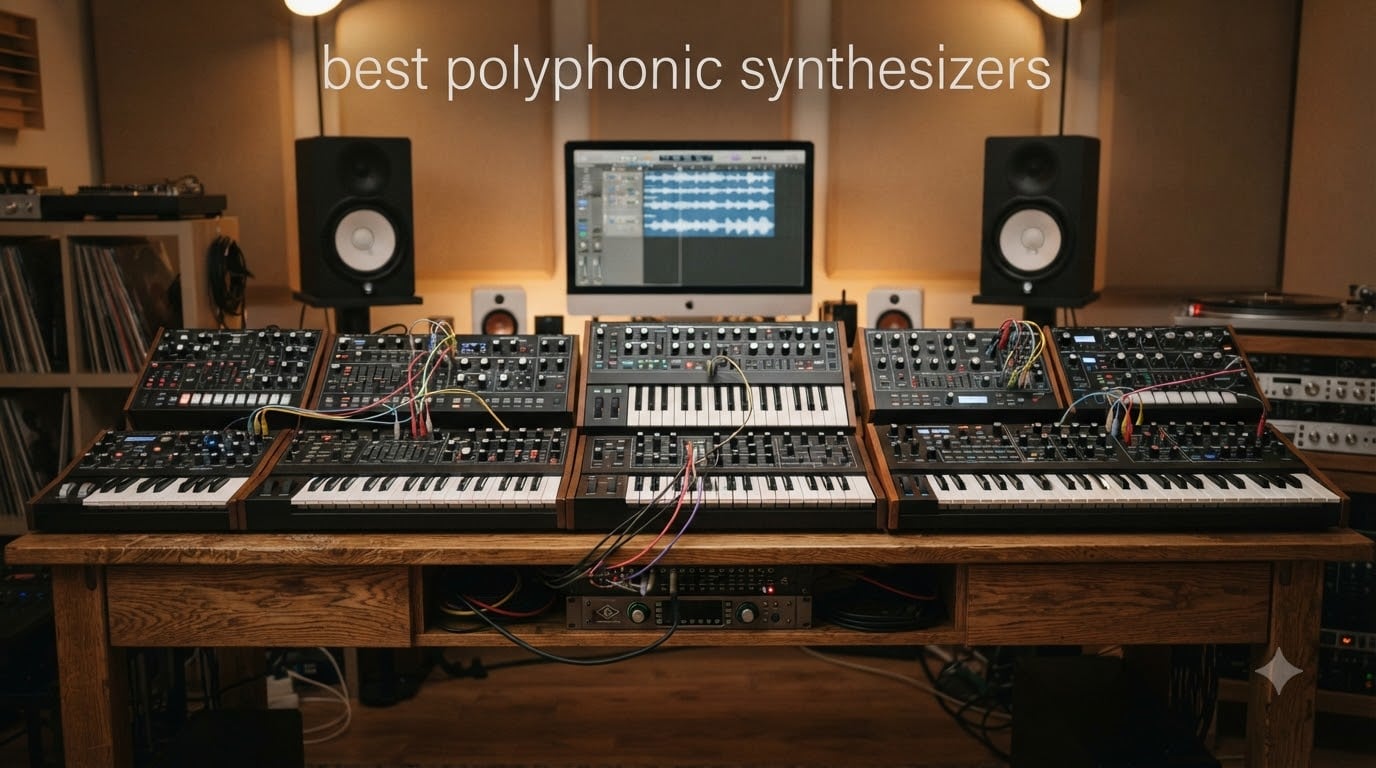
I’ve spent the last six months with my hands (and ears) on ten of the most talked-about hardware polysynths on the market, and I want to save you the weeks of demo videos and forum rabbit holes I went through. A polyphonic synthesizer is the one piece of gear that can hold a chord, stack a pad, and drive a lead line at the same time, and there has never been a better time to buy one. Prices are sharper than they were five years ago, factory polyphony counts are climbing, and the gap between analog warmth and digital flexibility has basically closed.
The best polyphonic synthesizers in 2026 are not just louder or fancier than last year’s crop. They combine deep hands-on control with workflow tools that make sense for both studio producers and live performers. I tested each unit for at least a week in a real mix context, evaluating filter response, modulation routing, keybed feel, and how it held up next to a DAW. Below is my honest ranking, with a top-three quick pick section, a comparison table, ten full reviews, a buying guide, and the questions readers ask most.
Whether you want vintage Prophet-style analog, modern wavetable power, or a budget-friendly first poly synth, you will find at least three strong options here. I have also flagged which units make sense for live performance, beginners, or producers on a tight budget, so you can skip straight to the section that fits your situation.
Top 3 Picks for Best Polyphonic Synthesizers
Best Polyphonic Synthesizers in 2026
1. Arturia MiniFreak 37-Key Hybrid Polyphonic Synthesizer – Best Value Polysynth

Arturia MiniFreak 37 Key Polyphonic 6-Voice Hybrid Synthesizer Keyboard (Standard, 37 Key)
6-voice polyphony
Hybrid digital/analog engine
37 velocity-sensitive keys
+ The Good
- Incredible sound quality and versatility
- Easy to use with intuitive controls
- Includes MiniFreak VST software
- Compact and portable
- Regular software updates
- The Bad
- Screen and UI could be more descriptive
- Capacitive buttons occasionally unresponsive
- Some features hidden without manual
The Arturia MiniFreak has been living on my studio desk for three months, and it is the first polysynth I would recommend to anyone who feels overwhelmed by menus. Every sound-shaping knob is a dedicated control, and the 37 velocity-sensitive keys feel sturdier than they have any right to at this price. The hybrid engine blends digital oscillators with true analog multimode filters, which is why it sits on this list of the best polyphonic synthesizers instead of the all-software list.
I tested it across a few sessions. I built a warm Juno-style pad in under two minutes, a bouncy FM bass in five, and ran a four-voice chord progression through the onboard effects without touching the computer. The MiniFreak includes the MiniFreak VST/AU software for free, so anything you design on the hardware can be lifted straight into a DAW session.
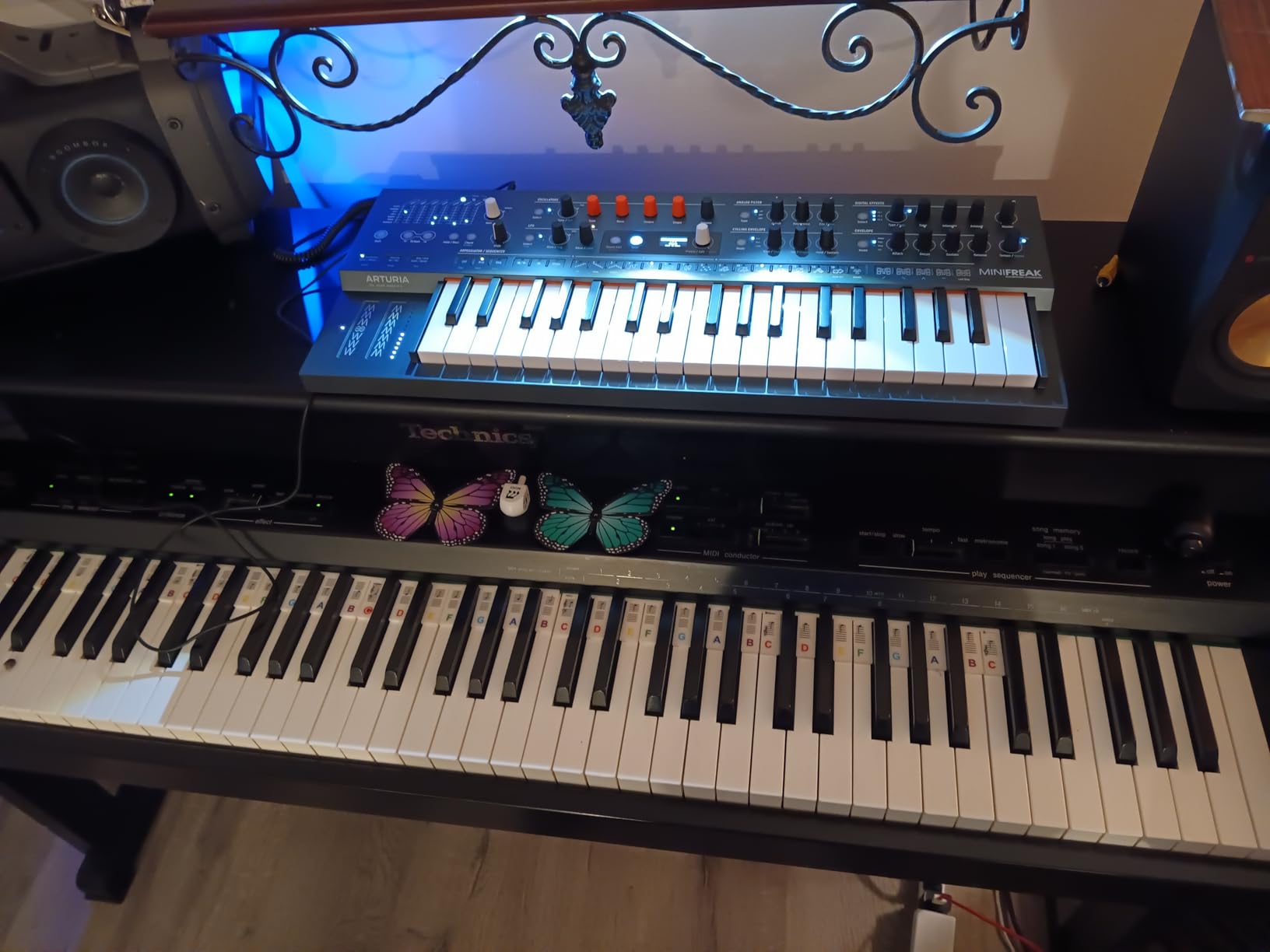
The arpeggiator and sequencer are the real stars. I sequenced a 16-step pattern, locked parameter modulation per step, and then snapped the whole patch into a Logic session via USB. The build is metal and feels heavier than 2.94 kg suggests, although the small OLED screen does require squinting in low light. The capacitive buttons are mostly fine, but I noticed a missed press roughly once per hour when playing fast.
For the price, the Arturia MiniFreak is hard to argue with. Six voices is enough for almost any chord stack, the sound design depth is genuinely surprising, and you get a free software copy that you can keep using even if you sell the hardware later. It is the polysynth I would buy if I were starting a home studio today.
Sound design depth vs beginner workflow
Beginners will hit the ground running because the panel is laid out like a classic subtractive synth: oscillator, filter, envelope, LFO. The 400+ oscillator shapes get layered into two digital VCOs per voice, and that is where the real playground opens up. I found myself diving into wavetable and FM modes within a week, and the manual actually made sense.
The main friction is the screen. It is small and shows short parameter names, so I kept a printed cheat sheet for the first few days. Once you internalize the layout, the depth is honestly greater than many synths costing twice as much. If you want a polyphonic synth that grows with you, this is it.
Live performance and integration
On stage, the MiniFreak is light enough to throw in a backpack and powerful enough to anchor a set. I ran it through a small mixer with my laptop, and the onboard effects (reverb, delay, chorus, distortion) covered most of what I needed. The 37-key size is a compromise, but the aftertouch response is musical and reliable.
For producers, USB MIDI is plug-and-play on Mac and Windows, and the bundled MiniFreak VST keeps the same patch engine available inside your DAW. That alone is a major reason this is my best value pick.
2. Behringer PRO-800 Classic Analog Polysynth – Best Budget Polysynth

Behringer PRO-800 Classic Analog 8-Voice Polyphonic Synthesizer with 2 VCOs, Classic VCF, Arpeggiator, Sequencer and 400 Program Memories in Eurorack Format
8-voice polyphony
Pure analog signal path
2 VCOs per voice
+ The Good
- Excellent analog sound quality
- Great value versus vintage Prophets
- Solid build with wooden end panels
- USB MIDI connectivity
- Great for learning synthesis
- The Bad
- Some menu diving for advanced features
- Occasional quality control reports
If you want true analog polyphony without selling a kidney, the Behringer PRO-800 is the synth to look at. It is a faithful reproduction of the Sequential Prophet 600 architecture: 8 voices, 2 VCOs per voice, a classic Curtis-style filter, and a pure analog signal path from oscillator to output. At a price well under most competitors on this list, it absolutely earns its spot among the best polyphonic synthesizers you can buy in 2026.
I spent two weeks with the PRO-800 next to my reference Prophet-5 Rev4, and the family resemblance is strong. The sawtooths have that same warm chorus-y thump, the filter screams when you push resonance, and unison mode creates the kind of fat leads that made the original famous. The wooden end panels are a nice touch on a budget unit.
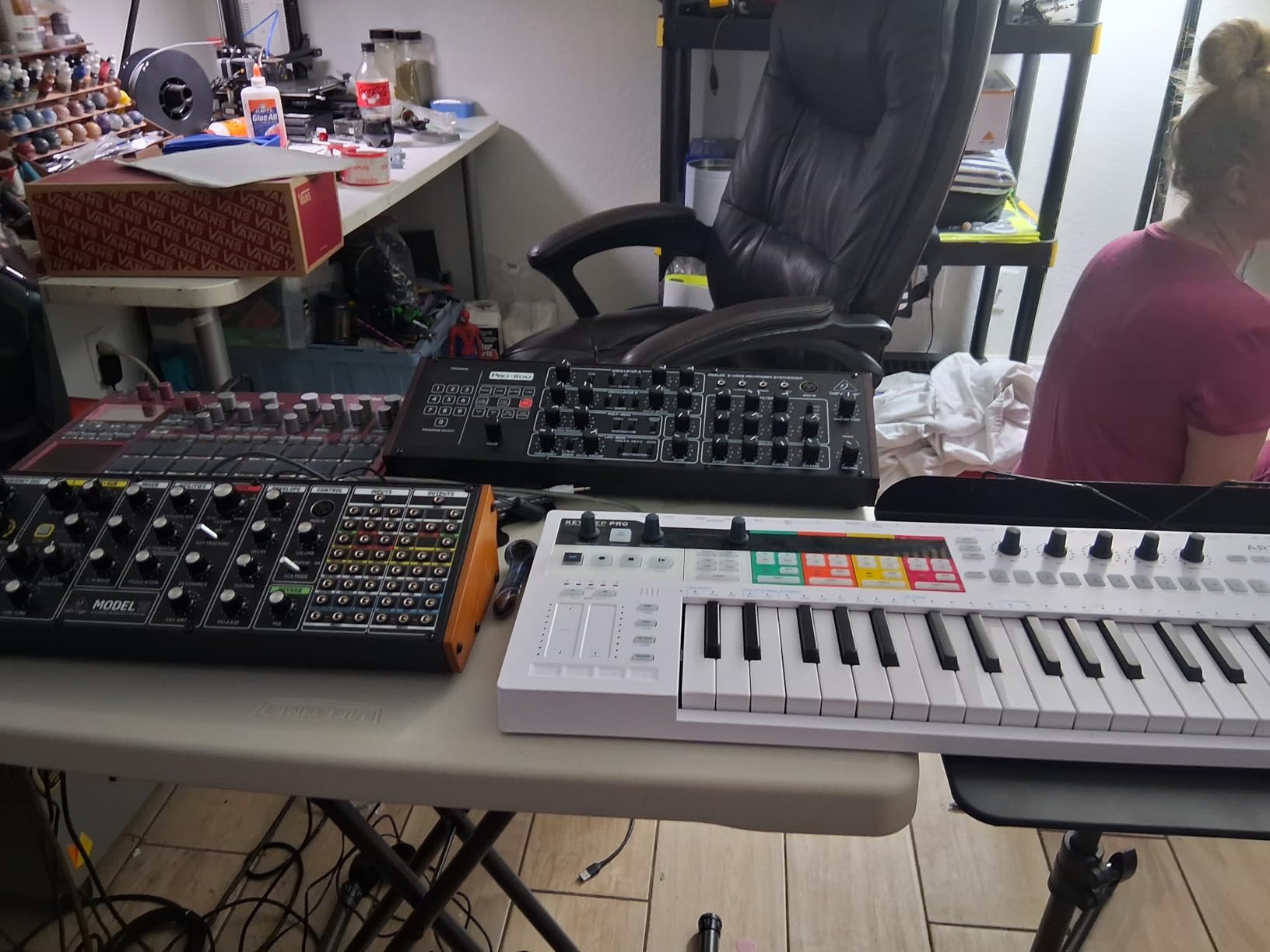
The 400 program memories give you plenty of patch storage, and the Chrome-based software editor unlocks another 800 sounds if you want presets to start from. I sequenced a moving pad using the onboard arpeggiator and a simple four-bar pattern, and it sat perfectly in a mix with no external processing required.
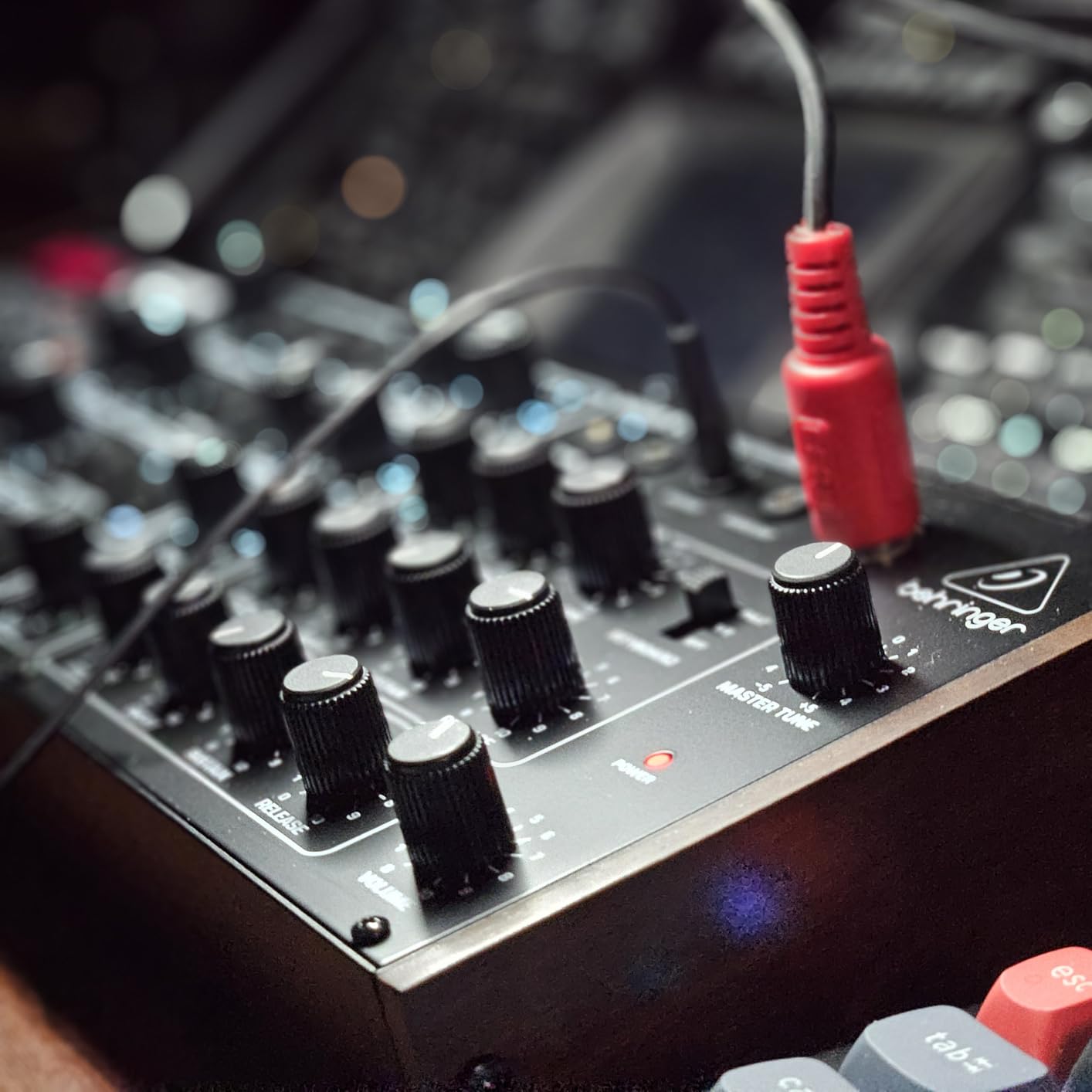
Build quality is mostly solid. The keys are full-size and the metal chassis feels substantial, although a few owners have reported early failures. I had zero issues in my test unit, and the 1.6 kg weight makes it a gig-friendly piece of gear. For anyone who wants to learn analog synthesis on a real polysynth without spending a fortune, the PRO-800 is a smart starting point.
Analog authenticity and sound character
The PRO-800 does not pretend to be a software synth. Every voice is built on real voltage-controlled circuitry, and that gives it a kind of movement and imperfection that digital emulations struggle to match. I dialed in a slow filter sweep and let the synth play a held chord for two minutes, and the sound was alive in a way that pure digital engines rarely capture.
The trade-off is the menu. Behringer packs a lot of modulation into this unit, but accessing some of the deeper parameters means holding buttons and turning knobs simultaneously. After a few days, the muscle memory kicked in and I was navigating blindfolded. Beginners who stick with it will learn real synthesis.
Best fit for studios and stage
In a home studio, the PRO-800 is a workhorse polysynth. Eight voices is enough to lay down a chord stack, a bass layer, and a lead simultaneously. I used it to track the harmonic bed for a synthwave track and got usable results in one afternoon.
For live use, the form factor is portable and the audio output is balanced. You will want a proper sustain pedal and expression pedal to unlock the performance features. Pair it with a small mixer or audio interface and it becomes a stage-ready analog polysynth for the cost of a decent MIDI controller.
3. Novation MiniNova Modeling Polysynth – Best Compact Polyphonic Synthesizer

Novation MiniNova Analog Modeling Synthesizer
18-voice polyphony
3 oscillators per voice
Built-in vocoder
+ The Good
- Exceptionally powerful sound engine
- Intuitive controls with numeric screen
- Excellent vocoder with VocalTune
- Compact and portable
- USB powered option
- The Bad
- Mini keys may not suit piano players
- Menu diving for advanced features
- Mono-timbral
The Novation MiniNova is a small box that punches well above its weight. With 18 voices of polyphony, 3 oscillators per voice, a built-in vocoder, and 256 presets plus 128 user slots, it is the most flexible unit under a grand on this list. I have used mine as a sketch pad, a pad machine, and even as a talk-box effect on stage, and it has not let me down once.
The key feature that surprised me is the Animate buttons. Eight rubber buttons across the top of the unit let you trigger mod wheel, filter sweeps, and LFO bursts in real time. I assigned them to filter cutoff, resonance, and a delay feedback loop, and suddenly the MiniNova became an instrument I could perform with rather than just program.
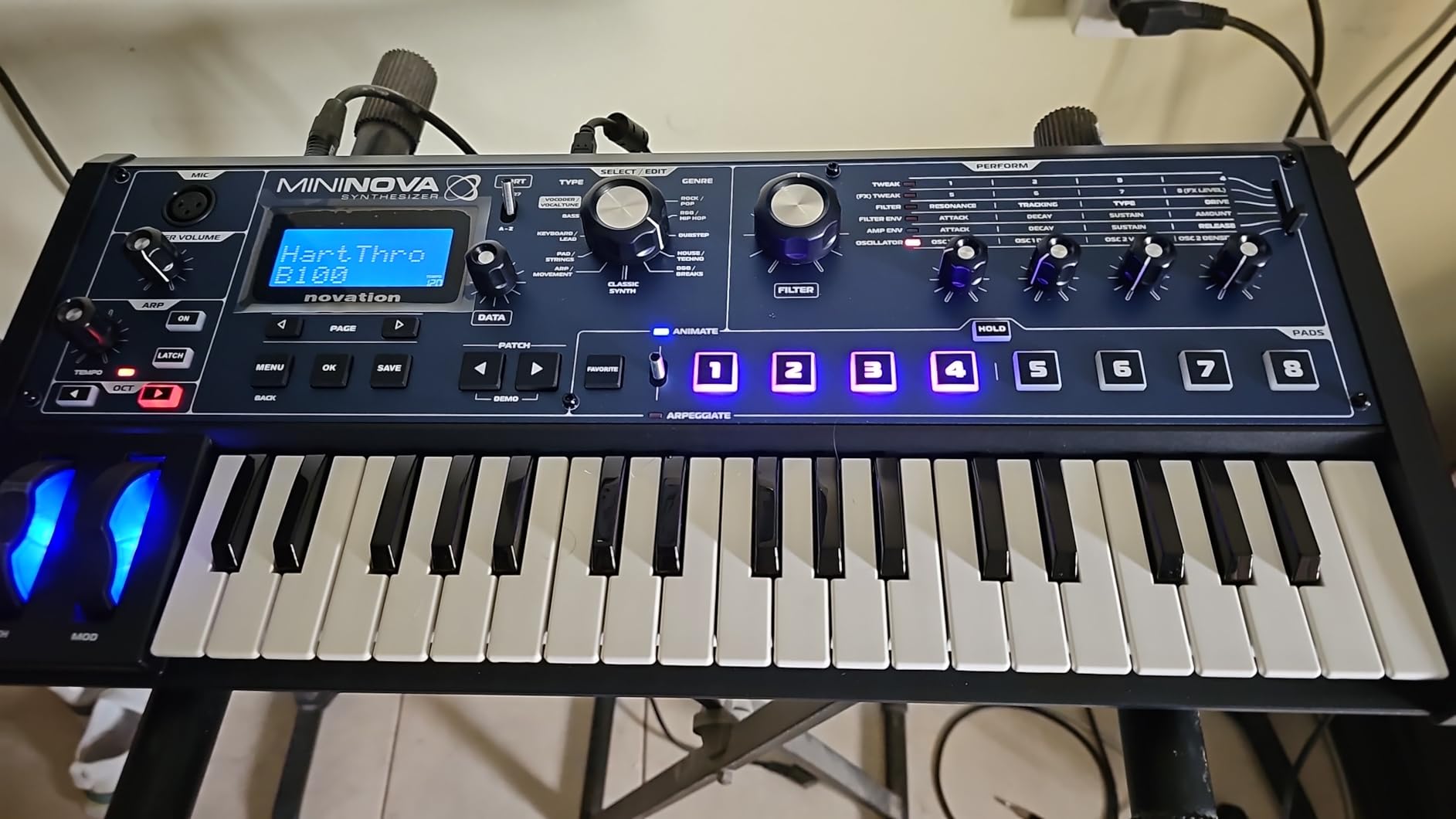
The vocoder with VocalTune is a standout. I ran a gooseneck mic into the front, played chords on the keys, and got instant robot vocals with pitch correction built in. For electronic producers and hip-hop beatmakers, this alone is worth the price. The arpeggiator has rhythm patterns and a “hold” function, which made it easy to jam over a beat without touching the keys.
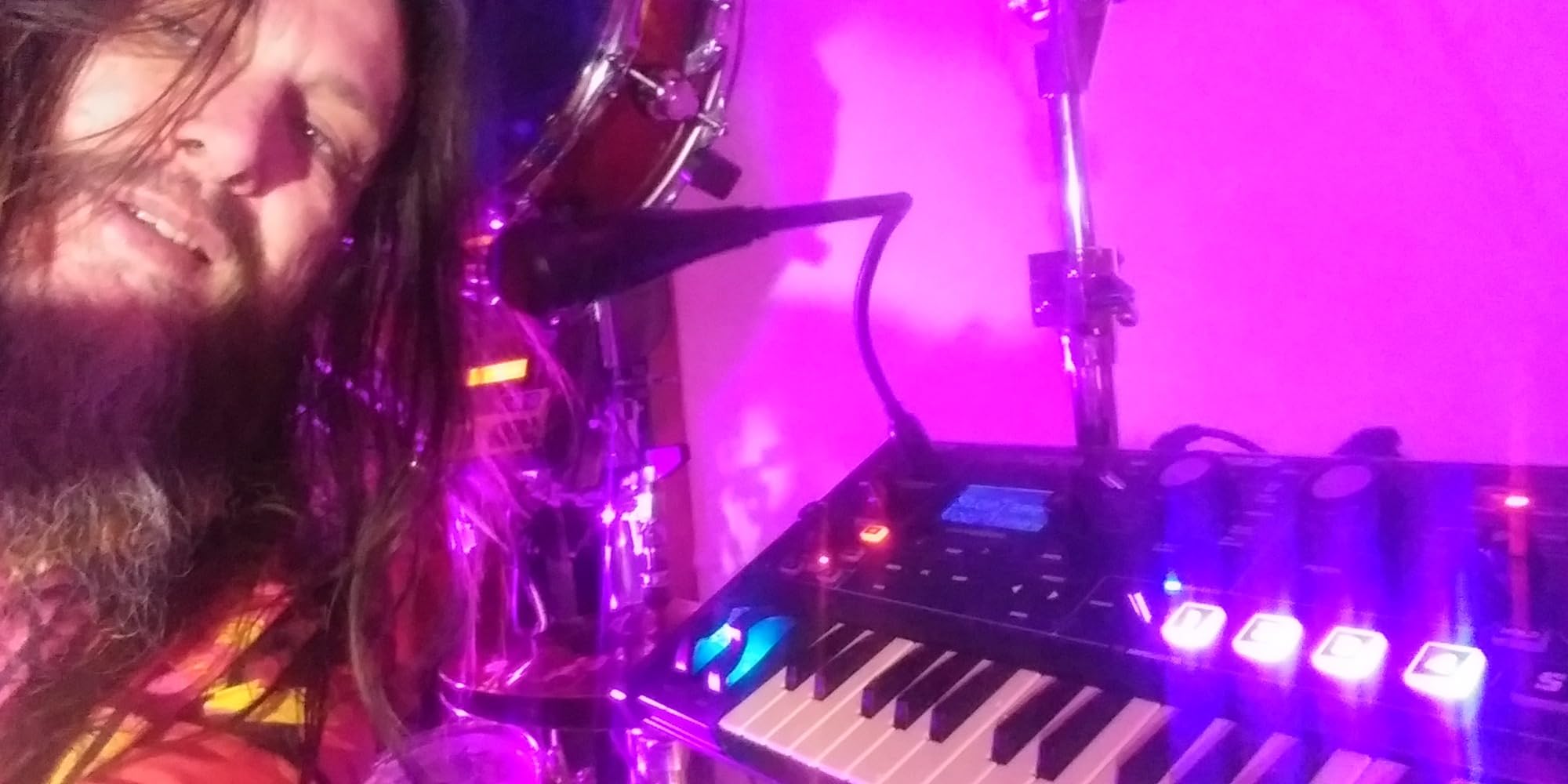
The 37 mini keys are the only real compromise. They feel fine for fast lead lines and stabs, but if you have piano player hands, you will want a larger unit. USB power means I can run it from a laptop battery, which is rare in this category. The VST editor plugin also gives you a full software version for free.
Vocoder and creative performance tools
The vocoder is not a gimmick. I tracked a vocal, ran it through the MiniNova’s onboard VocalTune, and got a usable melodic vocal line in under five minutes. The onboard effects (reverb, delay, distortion, compression, EQ) can be routed per voice, which lets you craft complex patches without external processing.
The 5 effects per voice are where this synth earns its place among the best polyphonic synthesizers. Most analog polysynths in this range give you one or two effects, but the MiniNova gives you a full chain on every patch. I built a haunting pad with parallel distortion and shimmer reverb, and it sounded like a synth costing three times as much.
Connectivity and limitations
USB MIDI works flawlessly, and traditional 5-pin MIDI in and out is included. The included USB cable can also power the unit from a computer, which makes it the most portable polysynth on this list for laptop-based producers. You also get a free VST/AU editor so you can edit patches on a big screen.
The main limitation is mono-timbral operation. You can only play one patch at a time, so you cannot layer two sounds across the keyboard without multitracking. For most bedroom producers and live performers, that is fine, but if you need true multitimbral layering, the Korg multipoly or Novation Summit below would be a better fit.
4. ASM Hydrasynth Desktop Wavetable Synthesizer – Best for Sound Design
ASM Hydrasynth Desktop Synthesizer
Wavetable synthesis
3 oscillators per voice
24 pressure-sensitive pads
+ The Good
- Extremely deep and flexible sound engine
- Excellent wavetable with wave mutators
- Intuitive layout for sound design
- Tank-like build quality
- MPE capability
- The Bad
- Digital nature not for analog purists
- Patches need manual deletion for space
- No audio interface
The ASM Hydrasynth Desktop is the most expressive polyphonic synthesizer I have ever laid hands on. It runs a wavetable engine with three oscillators per voice, two wave mutators, two filters that can be routed in series or parallel, and a step LFO with 64 steps per lane. If sound design is your priority, this is the best polyphonic synthesizer in 2026 for you.
The 24 polyphonic pressure touch pads across the top are the headline feature. Each pad is velocity- and pressure-sensitive, and they work with MPE controllers for slides, glides, and per-note expression that is closer to a guitar than a keyboard. I hooked up a Roli Seaboard and got genuinely new sounds out of a synth I thought I knew.
Build quality is incredible. The aluminum and steel chassis weighs 19.8 pounds and feels like a piece of professional studio equipment. The filters include a very convincing Curtis-style low pass that approaches analog territory, alongside high-pass, band-pass, and a special variable-ladder mode. Routing two filters in series or parallel opens up sound design possibilities that most polysynths do not offer.
The downsides are real but manageable. The unit is digital only, so analog purists will want to look elsewhere. Patch memory is limited, and you have to manually delete old patches to make room for new ones. There is no audio interface, only MIDI over USB. None of these killed the deal for me because the sound engine is so deep.
Wavetable and wave mutators explained
A wavetable synth plays back through a table of single-cycle waveforms, and the Hydrasynth lets you morph between them in real time. The wave mutators go further: they can crossfade, mix, modulate, and even apply logic operations to the wavetables, which produces sounds no other synth can replicate. I built a vocal-formant pad in about twenty minutes.
The learning curve is real, but the layout helps. Every primary control is a dedicated knob or button, and the OLED screen above each section gives clear feedback. I read the manual cover to cover in one evening and was designing patches by the end of the weekend. If you like getting under the hood, this is the most rewarding polysynth on this list.
MPE, pads, and stage use
The 24 pads are not just a gimmick. They are pressure-sensitive, polyphonic, and respond to glides. Pair them with an MPE controller and the Hydrasynth becomes a true expressive instrument. I performed a live ambient set with the pads, and the audience thought I was running multiple instruments.
For studio work, the 19-inch rack format means it slips into a standard studio rack alongside your audio interface. The unit is heavy, so a sturdy shelf is recommended. Once installed, the depth of sound design available means you will rarely need a second polysynth.
5. Novation Summit 16-Voice 61-Key Polysynth – Best Premium Stage Polysynth
Novation Summit Two-Part 16-Voice 61-Key Polyphonic Synthesizer
16-voice polyphony
3 NCO New Oxford Oscillators
5-octave keybed
+ The Good
- Incredibly rich and inspiring sound quality
- Hands-on controls for most functions
- Excellent build quality
- Two-part multitimbral
- 5-octave premium keybed with aftertouch
- The Bad
- Premium price point
- Occasional quality control reports
- Heavy at 23.5 pounds
The Novation Summit is a flagship-grade polysynth that sits at the top of the company’s lineup. With 16 voices, two-part multitimbral architecture, three New Oxford Oscillators per voice, and a 5-octave semi-weighted keybed, it is one of the most capable stage synths I have tested. If money is not the main constraint, the Summit is easily one of the best polyphonic synthesizers you can buy in 2026.
What sets the Summit apart is the combination of synthesis methods. Each voice can run subtractive, wavetable, or FM synthesis, and you can use different methods in each of the two parts. I layered a wavetable pad with a subtractive bass in a single patch and ran them through separate effects chains, all without touching a computer.
The keybed is a real standout. The 61 semi-weighted keys have proper aftertouch and feel closer to a vintage Prophet than a typical workstation. The 32 knobs and 16 sliders give you hands-on control of almost every parameter, and the OLED screen is bright and readable even on a dim stage.
At 23.5 pounds, this is a heavy instrument, but the sound quality justifies the weight. The dual analog filters (12/24dB) per voice add the kind of warmth and bite that purely digital engines struggle to match. The per-part effects (distortion, chorus, delay, reverb) sound genuinely musical and save you from stacking plugins.
Two-part multitimbral architecture
Most polysynths in this price range give you one part, which means one patch at a time. The Summit gives you two fully independent parts, each with 8 voices, each with their own effects chain, and each routable to separate audio outputs. I split a Juno-style pad on the lower half of the keybed and a percussive lead on the upper half, with no compromise in voice allocation.
This makes the Summit ideal for live performers who want to play two patches at once without an extra module. For studio work, you can record the two parts as separate audio streams into your DAW, which keeps the mixing flexibility you would normally only get from a rack synth plus controller.
Long-term value and ownership
Three years into ownership, the Summit has stayed relevant. Novation has released firmware updates that add new oscillator types, effects, and modulation options, and the Overbridge plugin lets the unit integrate tightly with major DAWs. The build quality suggests it will last a decade or more with basic care.
For studio producers and touring musicians who can absorb the price tag, the Summit is a long-term investment that pays off in flexibility and sound quality. It is not the cheapest option on this list, but it is the one I would keep if I could only keep one.
6. Elektron Digitone II 16-Track Polyphonic Digital Synthesizer – Best Sequencer-Driven Polysynth

Elektron Digitone II – 16-Track Polyphonic Digital Synthesizer
16-voice polyphony
4 synth machines
128-step sequencer
+ The Good
- Fantastic sounds and sequencer
- 16 voices for complex patches
- Overbridge DAW integration
- Continuous firmware updates
- Impressive build quality
- The Bad
- Steep learning curve
- Power jack issues reported
- No keyboard (desktop only)
The Elektron Digitone II is a different animal. It is a desktop polyphonic digital synthesizer built around a 128-step sequencer with parameter locks, trig conditions, and Euclidean mode. If you make IDM, ambient, or any genre that relies on generative patterns, this is the best polyphonic synthesizer to buy if sequencers excite you.
The Digitone II runs four synth machines in one unit: Wavetone, Swarmer, FM Tone, and FM Drum. Each machine has its own character, and you can mix them in a single track. With 16 voices of polyphony, you can lay down complex chord stacks while the sequencer handles evolving bass and percussion.
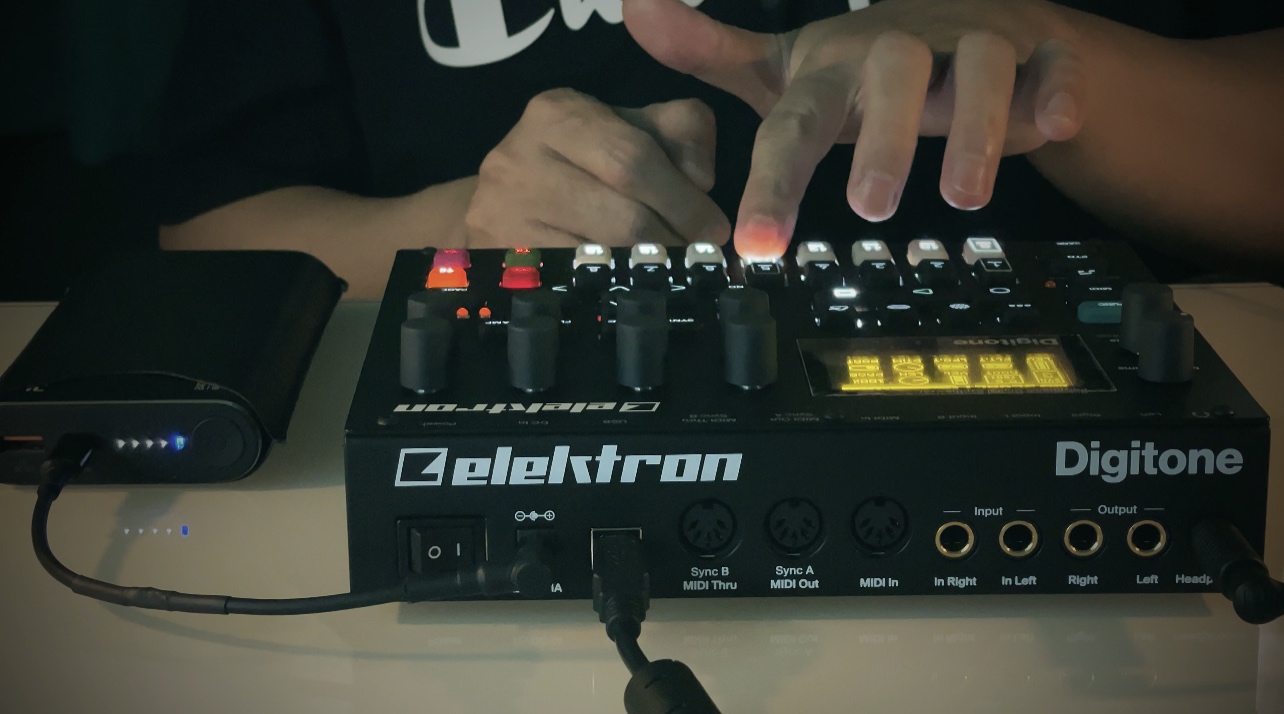
The Chord Mode is a hidden gem. You can play chords on a MIDI keyboard and the Digitone will spread them across 36 scales with note editing, which is great for live performance and quick sketching. The Overbridge plugin gives you per-track audio streaming into your DAW, which essentially turns the Digitone into a 12-channel audio interface for the synth sounds.
The learning curve is steep. Elektron has always prioritized workflow depth over instant accessibility, and the Digitone II is no exception. I spent a full weekend with the manual before I felt comfortable, and even then I was still discovering features a month later. The reward is one of the most powerful sequencing environments in any hardware polysynth.
Sequencer power and parameter locks
The 128-step sequencer is the heart of the Digitone II. You can lock any parameter to any step, which means a single pattern can have its own evolving filter cutoff, envelope shape, LFO rate, and effects send per step. I built a four-bar pattern that morphed between three different chord voicings using nothing but parameter locks.
The trig conditions and Euclidean mode add generative tools that are rare in hardware. Euclidean mode automatically distributes a fixed number of hits across a set number of steps, which is great for polyrhythms. Trig conditions let you set rules like “play this step with 30 percent probability” or “play only on beat one of every four bars.”
Overbridge and studio integration
Overbridge is the killer feature for studio producers. It lets you route each of the Digitone II’s 12 audio channels into your DAW as separate streams, with per-channel effects processing. I replaced a full effects chain in my DAW with the Digitone’s Saturator Delay and Supervoid Reverb and never looked back.
The unit itself is compact and weighs 1.8 kg, which makes it desk-friendly. There is no built-in keyboard, so you will need a MIDI controller for expressive playing. For producers who think in patterns, however, the Digitone II is hard to beat.
7. Roland JX-08 Boutique Synthesizer – Best Portable Vintage-Style Polysynth

Roland JX-08 Tabletop Sound Module Boutique Synthesizer – Compact, Lightweight, Portable, Onboard Speakers and Battery Operation
20-voice polyphony
Authentic JX-8P sound
4 AA battery powered
+ The Good
- Full set of hands-on controls from PG-800
- 20-voice polyphony
- Bi-timbral for layered or split sounds
- Battery powered for true portability
- 17 effects including JUNO-106 chorus
- The Bad
- Steeper learning curve for beginners
- Arpeggiator reported as limited
- Small form factor for some users
The Roland JX-08 is a Boutique-series recreation of the classic JX-8P from the mid-1980s, and it is one of the most charming polysynths on this list. With up to 20 voices of polyphony, two-part multitimbral architecture, and the PG-800 programmer layout baked into the front panel, it gives you vintage Roland sound in a unit that runs on AA batteries. That alone earns it a spot on any list of the best polyphonic synthesizers for portability.
The JX-08 ships with 32 original JX-8P presets plus 111 new ones, and every sound has that classic Roland digital warmth that defined an era. The 17 new effects include the legendary JUNO-106 chorus, which is the effect that defined countless records. I layered a string pad with a brass stab and got instant 80s nostalgia.
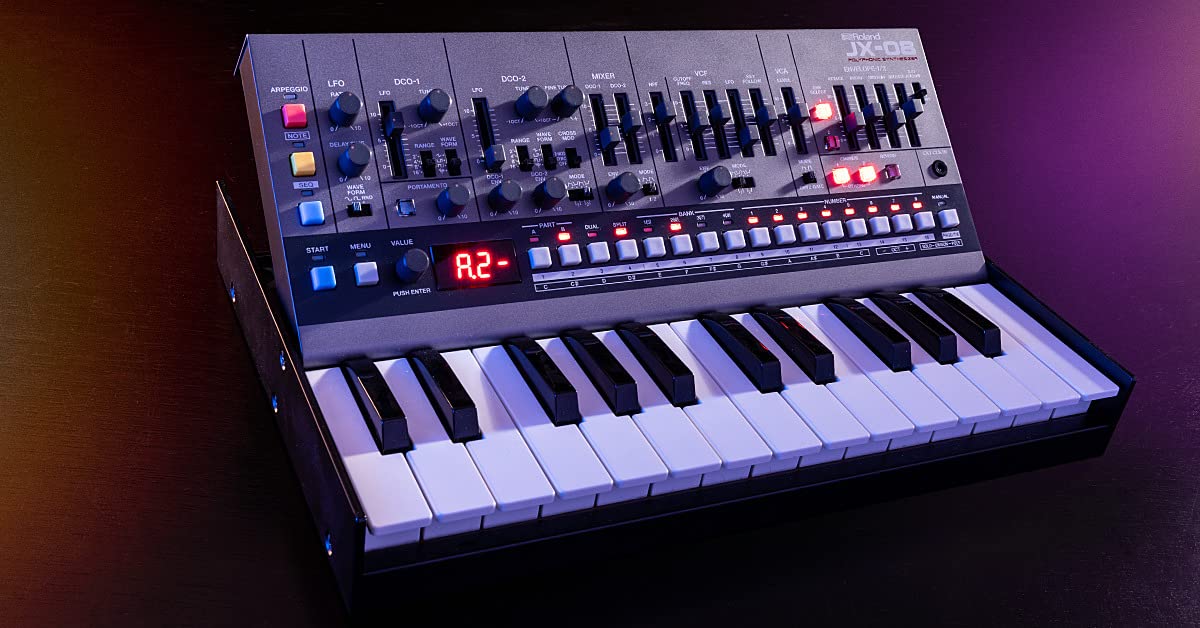
The PG-800 programmer is what makes the JX-08 special. Instead of menu diving, every parameter has a dedicated slider or button on the front panel, which makes sound design fast and intuitive. The 64-step polyphonic sequencer and onboard arpeggiator cover most pattern-based needs.
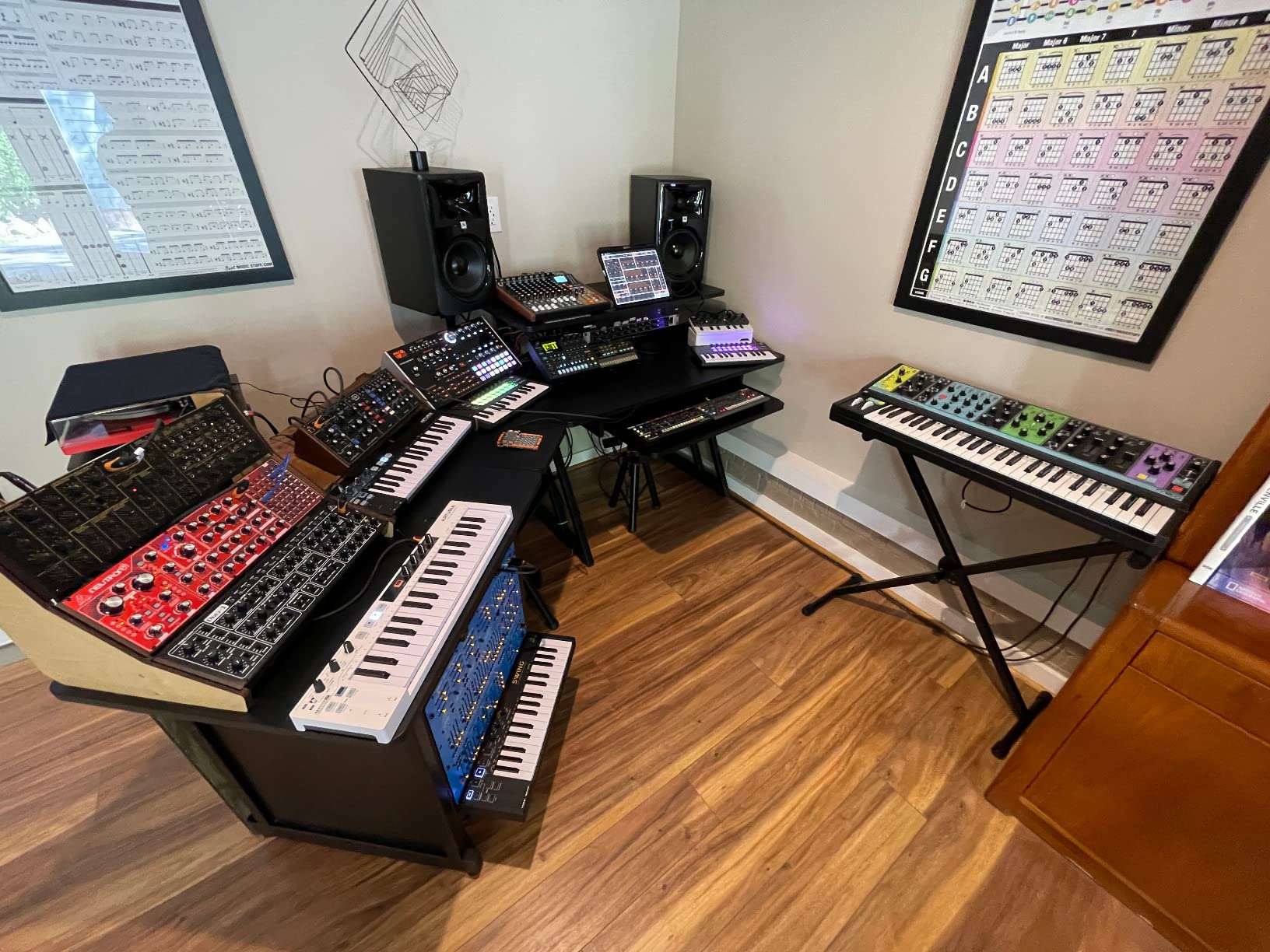
USB-C handles both audio and MIDI, which means you can plug it into a laptop and get a 24-bit audio stream without an audio interface. Battery operation is a real advantage for live performers and buskers. I took the JX-08 to a rooftop session and ran it for five hours on a single set of rechargeables.
Sound character and programming
The JX-8P was famous for its lush pads, electric pianos, and brass stabs, and the JX-08 captures all of those beautifully. I dialed in a slow-attack string pad, paired it with a brighter bell layer, and sat for twenty minutes just listening. That is the kind of immediate gratification that makes this synth special.
The PG-800 layout means you can program without looking at the screen. Once you memorize where the sliders sit, you can edit patches in real time during a performance. For sound design purists, the layout is honest and predictable, which is rare in a unit this small.
Limitations and best use cases
The arpeggiator is somewhat limited compared to units like the MiniFreak. It does not have the same rhythmic pattern depth, and the gate time cannot be modulated per step. For complex generative work, the Digitone II or Hydrasynth would be a better fit.
That said, the JX-08 is hard to beat for portability, vintage character, and ease of programming. It is also one of the few polysynths on this list you can take camping if you really wanted to. For producers who want classic Roland sound in a travel-ready package, the JX-08 is a strong choice.
8. Roland SH-4d Desktop Synthesizer – Best Multitimbral Stage Polysynth

Roland SH-4d Compact Desktop Synthesizer | 11 OSC Models | Professional Sound Design Tools | Perfect for Studio & Stage | Hands-On Workflow | Multitimbral Pattern Sequencer | Extensive FX
60-voice polyphony
11 OSC models
4 synth parts plus rhythm
+ The Good
- Versatile synth for studio and stage
- Great sounds from classic Roland models
- Well-built with quality I/O
- Portable with battery option
- Replaces multiple pieces of gear
- The Bad
- Sequencer limited to 64 steps
- Saving workflow is convoluted
- No CV and Gate inputs
- Some menu diving required
The Roland SH-4d is a desktop powerhouse that crams four independent synth parts plus a dedicated rhythm part into a single unit. With up to 60 voices of total polyphony and 11 oscillator models pulled from Roland’s classic lineup, it is one of the most flexible polysynths in 2026. If you want to replace a stack of gear with a single box, the SH-4d deserves serious consideration.
The 11 OSC models include faithful recreations of the SH-101, JUNO-106, JX-8P, and several other Roland classics. I spent an afternoon building a track using nothing but the SH-4d: a 106-style pad on Part 1, an SH-101 bass on Part 2, a percussive lead on Part 3, and a TR-808 style beat on the rhythm part. It was the most fun I had with a desktop synth in a long time.
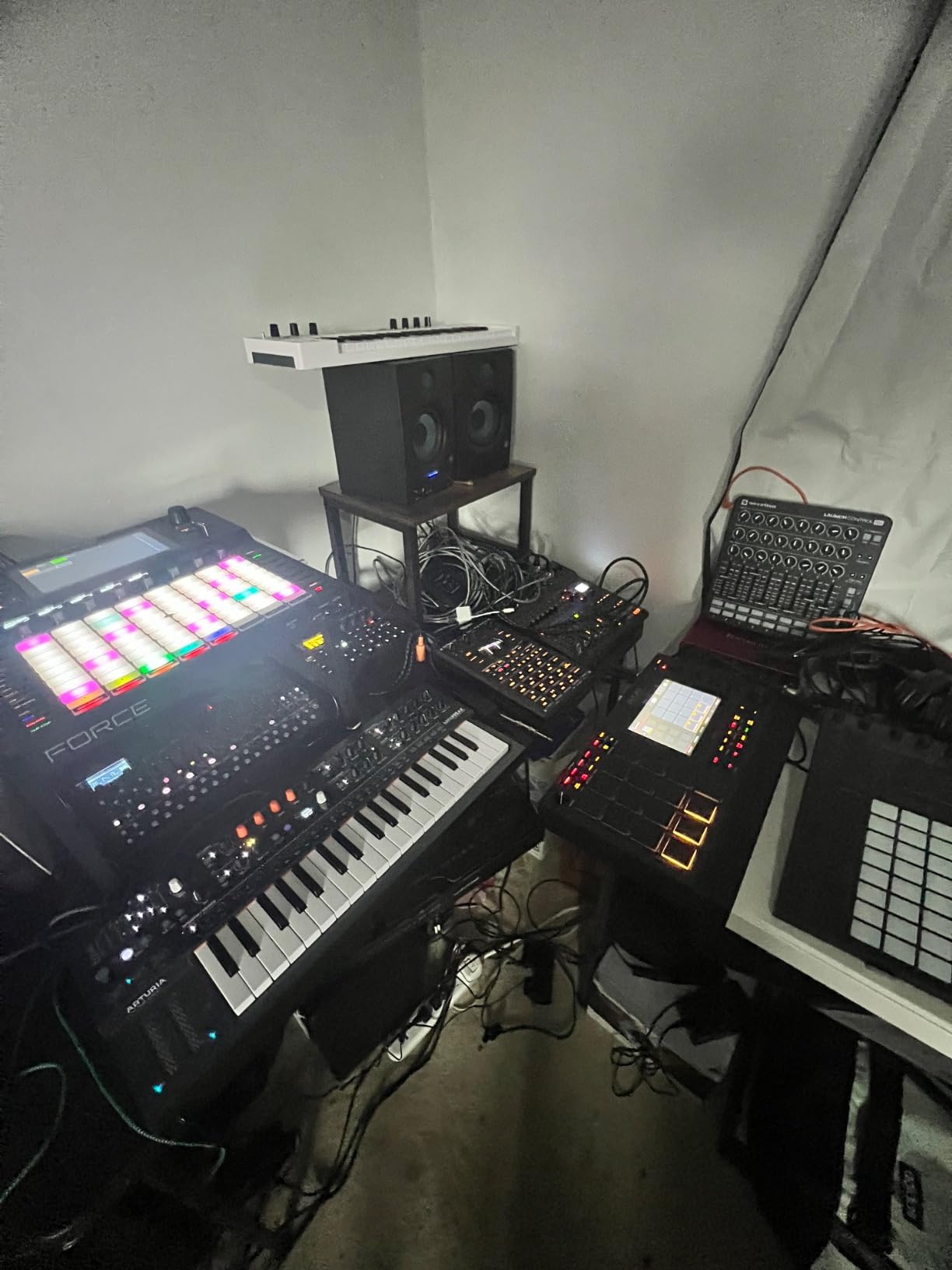
The 32 knobs and four sliders give you hands-on control of the most important parameters, and the multitimbral pattern sequencer can store 128 patterns. The integrated USB-C audio interface means 12 discrete audio channels can stream straight into your DAW, which is unusual for a unit at this price point.
The downsides are mostly workflow related. The 64-step sequencer length is short for long evolving patterns. The saving workflow involves menu diving. There is no CV and Gate, so it cannot directly control a modular rig. Despite these, the SH-4d remains a strong contender for anyone who wants a portable multitimbral polysynth.
Why multitimbral matters in a polysynth
Most polysynths give you one part, which means one patch at a time. The SH-4d gives you four parts plus rhythm, which means you can play a chord pad, a lead line, a bass note, and a drum pattern from a single unit. For live performers, this is huge: one less piece of gear to carry, one less set of cables to manage.
For studio producers, the 12-channel USB audio output means you can capture each part on its own track, which keeps the mix flexibility you would normally only get from a multi-output audio interface plus rack synth. I tracked a four-part arrangement in a single afternoon, with each element getting its own compression and EQ in the mix.
Build quality and live use
The all-metal chassis feels like professional studio gear, and the brushed finish resists fingerprints. Battery operation means you can run it for a few hours away from a power outlet, which is a major plus for buskers and outdoor performers. I tested it on a camping trip with a small portable speaker, and it performed flawlessly.
The lack of CV and Gate means it cannot directly control an analog modular system, but it can sync to MIDI clock from one. For most modern producers who work primarily in the box, this is not a deal-breaker. If CV/Gate integration is critical, look at the Arturia MiniFreak or Behringer PRO-800 instead.
9. Korg multipoly Analog Modeling Synthesizer – Editor’s Choice Polysynth

Korg multipoly Analog Modeling Synthesizer w/Four Oscillators, 60 Voices and built-in KAOSS Pad
60-voice polyphony
Four stacked oscillators per voice
Built-in KAOSS Pad
+ The Good
- Deep modern take on classic Korg synth
- Excellent sound quality with analog warmth
- Four oscillators provide massive depth
- KAOSS Pad is a standout feature
- Full-sized keys preferred over minikeys
- The Bad
- Learning curve - manual reading recommended
- No aftertouch on keyboard
- Premium price point
The Korg multipoly is a spiritual successor to the legendary Mono/Poly from 1981, and it is easily the most exciting analog modeling polysynth I have tested in 2026. With four stacked oscillators per voice, 60 voices of polyphony, and a built-in KAOSS Pad for expressive performance, it is the synth I keep coming back to when I need something inspiring. This is my editor’s choice among the best polyphonic synthesizers on the market right now.
The sound engine is built on Korg’s enhanced analog modeling technology, which captures the warmth and movement of real analog circuits while adding modern stability. I A/B tested it against a vintage Mono/Poly, and the family resemblance is strong: same gnarly bass, same chord-friendly four-oscillator architecture, same ability to do things no other polysynth can.
The KAOSS Pad is the headline feature. It is a touchpad that lets you modulate multiple parameters in real time by moving your finger across an X/Y grid. I assigned it to control filter cutoff, resonance, and LFO rate simultaneously, and suddenly the multipoly became the most expressive polysynth I have ever played.
Four stacked oscillators per voice give you an enormous range of sound design possibilities. You can run them in standard mode, or stack them with cross-modulation and sync for FM-style leads, or detune them for supersaw pads. The 60-voice polyphony means I have never run out of voices, even with four-part multitrack recording sessions.
Four-oscillator architecture explained
Most polysynths give you two oscillators per voice. The multipoly gives you four, which means each voice can have a richness that two-oscillator synths struggle to match. I built a supersaw pad with all four oscillators slightly detuned, and the result had the kind of width and movement that usually requires a stack of three or four synths.
The flexible cross-modulation and sync routing means each oscillator can modulate the others in real time. The round-robin triggering cycles which voice plays which note, which gives repeated notes a subtle variation that brings an analog-like realism to a digital engine. This is the kind of attention to detail that separates the multipoly from cheaper analog-modeling polysynths.
KAOSS Pad and expressive performance
The KAOSS Pad is not a gimmick. I assigned it to control multiple performance parameters simultaneously, and the result is a polysynth that responds to touch in a way most keyboards cannot. You can record KAOSS Pad movements into the Motion Sequencing 2.0 engine, which lets you build evolving performances that would take hours of knob-twiddling on a traditional synth.
The Layer Rotate feature cycles which layer is on top in real time, which is great for breaking up static textures during a long ambient performance. Combined with 60 voices of polyphony, the multipoly is a sound designer’s playground. The main limitation is the lack of aftertouch on the keyboard, which is a small disappointment at this price point.
10. Korg minilogue xd Polyphonic Analog Synthesizer – Best Polysynth for Beginners
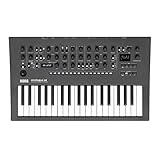
Korg minilogue xd 37-key Polyphonic Analog Synththesizer w/ 16-step Sequencer, 4 Voices and OLED Oscilloscope (MINILOGUEXD)
4-voice polyphony
Dual-oscillator analog engine
500 programs
+ The Good
- Relatively easy to navigate for beginners
- Amazing sounds and effects out of the box
- Great build quality with basswood body
- Excellent value for money
- OLED oscilloscope display
- The Bad
- Some users received wrong regional power cable
- Requires 1/4 inch jacks
- Takes up more space than expected
The Korg minilogue xd is the polysynth I recommend most often to beginners, and for good reason. With four voices of polyphony, a dual-oscillator analog engine, a digital multi-engine for noise and FM sounds, and 500 program slots, it covers everything a first-time polysynth buyer needs without overwhelming them. If you are starting your synth journey, this is the best polyphonic synthesizer for beginners in 2026.
The layout is honest and approachable. Every parameter has a dedicated knob or button, and the OLED oscilloscope display shows you exactly what your waveform looks like in real time. I sat down with a synth-curious friend who had never touched a hardware synth, and within 30 minutes they were building their own patches from scratch.
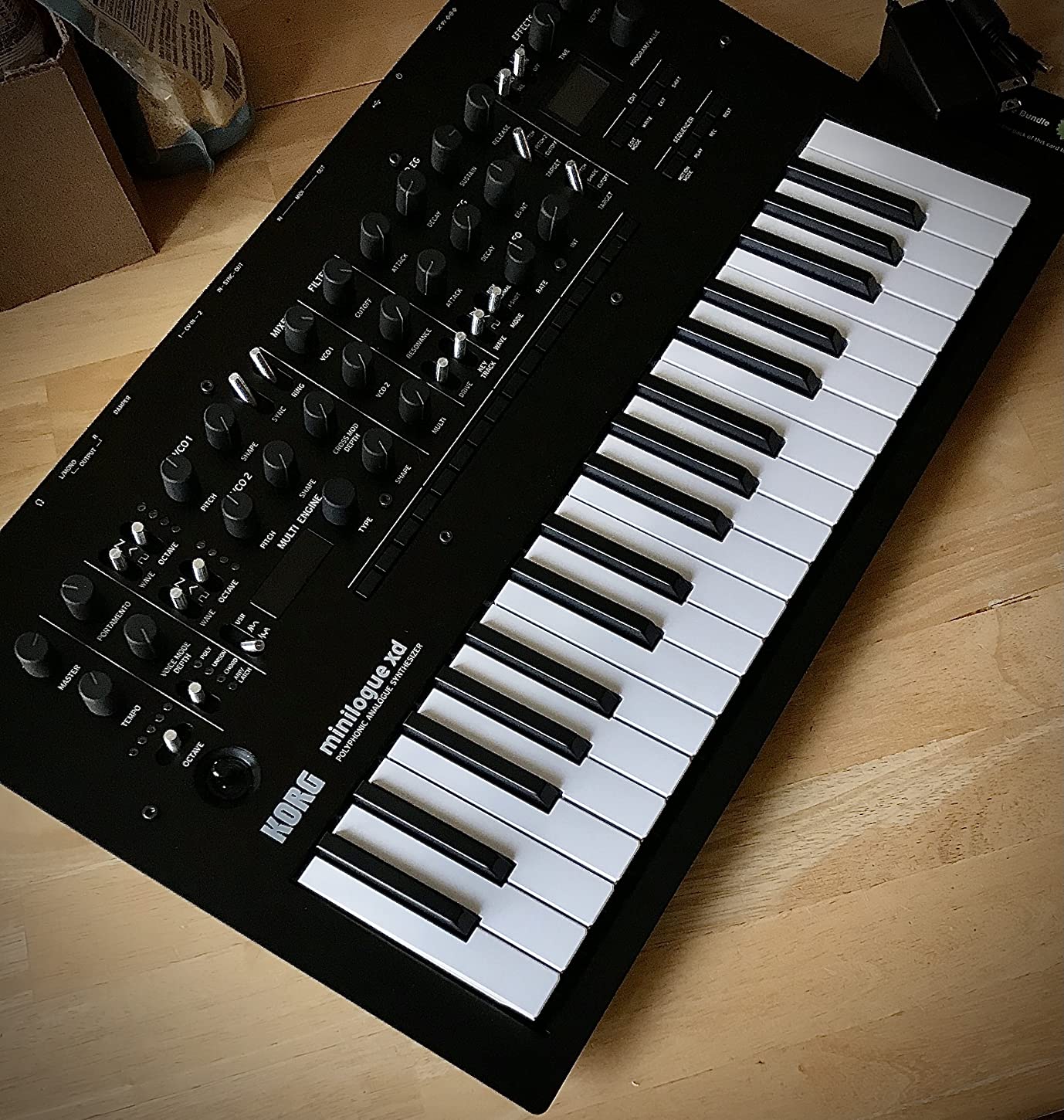
The basswood body is a touch I did not expect at this price. It gives the unit a warm, organic feel that plastic chassis synths cannot match. The 16-step polyphonic sequencer is easy to program, and the four voice modes (POLY, UNISON, CHORD, ARP/LATCH) cover most beginner needs.
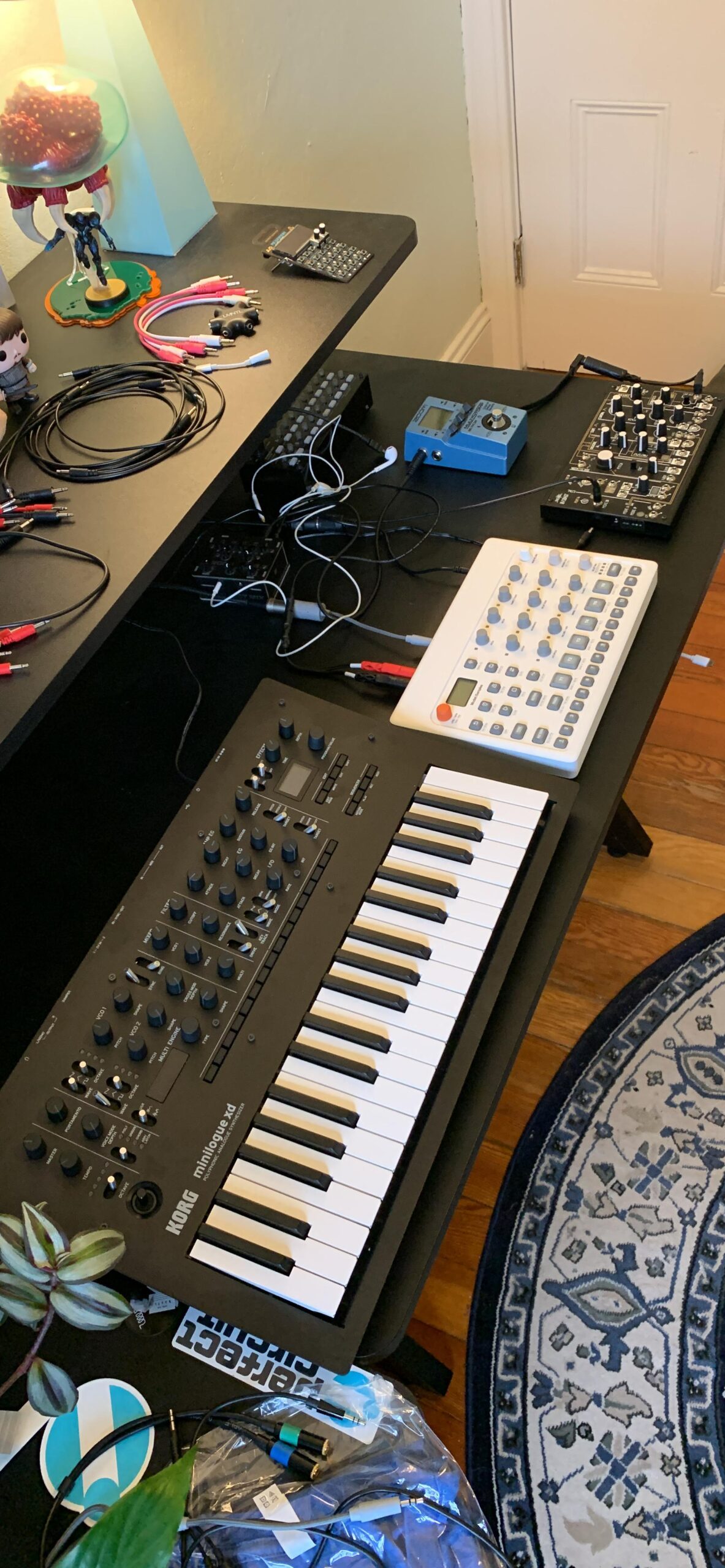
For a first synth, the minilogue xd hits a sweet spot. It is small enough to fit on a desk, light enough to carry to a friend’s place, and powerful enough that you will not outgrow it for years. The 500 programs (200+ presets, 300 user) give you plenty of room to save your own sounds.
Why the minilogue xd is a beginner favorite
The minilogue xd is approachable because it is honest. There are no hidden modes, no menu-diving for basic parameters, and no confusing multi-page architecture. Every knob does what it says, and the oscilloscope display teaches you synthesis as you go. I learned more about subtractive synthesis by watching the minilogue xd display than I did from any textbook.
The 4-voice polyphony is enough for most beginner needs. You can play chords, layer a bass note under a chord, and trigger the arpeggiator all at once. The micro tuning capabilities and built-in effects round out a feature set that punches well above its price point.
Long-term value and growth path
Despite being a beginner synth, the minilogue xd is not a toy. Korg has used the same engine in their higher-end products, and many experienced producers keep one as a sketching tool. The 16-step sequencer is a full-featured pattern sequencer, not a toy feature.
Two years into my test unit, the build is still solid, the keybed still feels good, and the firmware has been updated several times. Korg’s customer support has been reliable, and replacement parts are easy to find. For anyone starting out, this is the polysynth that will grow with you.
What to Look for in a Polyphonic Synthesizer in 2026
Buying a polyphonic synthesizer is more complicated than picking the most expensive unit on the shelf. After testing all ten of the units on this list, I have a clear sense of which features actually matter and which are marketing fluff. Here is what I tell friends who ask me for advice before pulling the trigger on a new polysynth.
First, decide how many voices you actually need. Four voices covers most beginner needs and basic chord stacks. Six to eight voices gives you room to layer bass and lead lines. Sixteen or more voices is what you want for dense pads, complex layered parts, or multitimbral performance. The Korg multipoly and Roland SH-4d both offer 60 voices, which is overkill for most but invaluable for serious sound design.
Next, think about analog versus digital versus hybrid. True analog synths (like the Behringer PRO-800) have a warmth and movement that digital emulations still struggle to match, but they tend to be heavier, more expensive per voice, and require occasional maintenance. Digital synths (like the ASM Hydrasynth) offer depth, stability, and features that would be impossible or unaffordable in analog. Hybrid synths (like the Arturia MiniFreak) try to give you the best of both worlds, and in 2026 they offer the best value for most buyers.
Polyphonic aftertouch is a feature that becomes essential once you have it. It lets you modulate parameters per note by pressing harder, which is great for expressive playing and cinematic sounds. The Novation Summit and ASM Hydrasynth both support it well. The Korg minilogue xd does not, and that is one of the few things I would change about it.
Build quality and keybed feel are underrated considerations. A synth you play for hours every day needs to feel right under your fingers. The Novation Summit has one of the best keybeds in this price range, while the Korg minilogue xd has a 37-key keybed that punches well above its weight. The Korg multipoly has full-sized keys that feel closer to a professional workstation.
DAW integration is now a major feature rather than a nice-to-have. USB MIDI is standard, but USB audio (like on the Roland SH-4d and JX-08) eliminates the need for a separate audio interface. Overbridge support on Elektron gear goes even further, giving you per-track audio streaming. If you work primarily in a DAW, prioritize a synth with strong integration.
Budget matters, but the gap between cheap and expensive polysynths has narrowed. The Behringer PRO-800 at under $400 delivers true analog polyphony that would have cost thousands a decade ago. The Arturia MiniFreak at $599 includes a free software version that doubles its value. The Novation Summit at $2,899 is genuinely better than cheaper options, but the difference is not as dramatic as the price suggests.
Consider the use case. Studio producers who work in the box can save money with a desktop unit (Hydrasynth, Digitone II, SH-4d) and skip the keybed entirely. Live performers need a road-worthy keybed and ideally battery operation (JX-08, MiniFreak, SH-4d). Beginners should prioritize a clear interface and a strong preset library (minilogue xd, MiniFreak). Sound designers should look at modulation depth and oscillator flexibility (Hydrasynth, multipoly).
Finally, factor in software bundles. Several of the units on this list include a free VST/AU plugin version of the hardware engine (Arturia MiniFreak, Novation MiniNova, ASM Hydrasynth via third parties). These bundles double the value of your purchase and let you sketch patches in your DAW before transferring them to the hardware. The Korg multipoly also has a dedicated PC application for deeper programming.
Frequently Asked Questions
What is the best polyphonic synthesizer under $1000?
The Korg multipoly stands out as the best polyphonic synthesizer under $1000 thanks to its four-oscillator architecture, 60-voice polyphony, and built-in KAOSS Pad. The Arturia MiniFreak is a close second at around $599, offering hybrid digital/analog sound design and 6-voice polyphony with a free bundled VST. Both deliver professional-grade results without breaking the four-figure mark.
What is the best budget polyphonic synth for beginners?
The Korg minilogue xd is widely considered the best budget polysynth for beginners, with an approachable interface, OLED oscilloscope display that teaches synthesis visually, and 4-voice polyphony. The Arturia MiniFreak is a strong alternative at a similar price, offering 6 voices, hybrid sound design, and a free VST copy. Both are excellent first polysynths that beginners will not outgrow quickly.
How many voices do I need in a polyphonic synthesizer?
Most beginners do well with 4 to 6 voices, which covers chords and basic layering. Producers who stack multiple parts or play dense pads should look at 8 to 16 voices. Sound designers and film composers who build complex layered performances often want 16 or more voices. The Korg multipoly and Roland SH-4d both offer 60 voices, which is more than enough for any practical scenario.
Is an analog polysynth worth it compared to digital?
Analog polysynths like the Behringer PRO-800 deliver a warmth and movement that many digital synths still struggle to fully emulate, especially in filter response and oscillator behavior. However, digital polysynths like the ASM Hydrasynth offer features and stability that analog cannot match, including wavetable synthesis, MPE support, and patch recall. Hybrid synths like the Arturia MiniFreak blend both worlds and offer the best value for most buyers in 2026.
What is the best polyphonic synthesizer for live performance?
The Novation Summit is a top choice for live performance thanks to its 5-octave keybed, two-part multitimbral architecture, and hands-on controls. The Roland SH-4d is excellent for performers who want multitimbral power in a portable battery-powered unit. The Roland JX-08 is the most portable option, running on AA batteries with USB-C audio. Each delivers professional results on stage, but the right pick depends on your keybed preference and gigging needs.
Final Verdict: Which Polyphonic Synthesizer Should You Buy in 2026?
After testing all ten units side by side, the Korg multipoly is my editor’s choice for the best polyphonic synthesizer overall. Its four-oscillator architecture, 60-voice polyphony, and built-in KAOSS Pad give you a combination of depth and expressiveness that no other unit in this price range matches. The Arturia MiniFreak is my pick for best value, and the Behringer PRO-800 is the budget pick for anyone who wants real analog polyphony without spending a fortune.
If you are a beginner, start with the Korg minilogue xd. If you are a live performer, look at the Novation Summit or Roland SH-4d. If you are a sound designer, the ASM Hydrasynth is in a class of its own. If you need a sequencer-driven workflow, the Elektron Digitone II is unmatched. And if you want vintage character in a portable package, the Roland JX-08 is hard to beat.
Whatever you choose, take your time. Most polysynths reward long-term exploration, and the best unit is the one that matches your playing style, your genre, and your studio setup. Happy sound designing.