
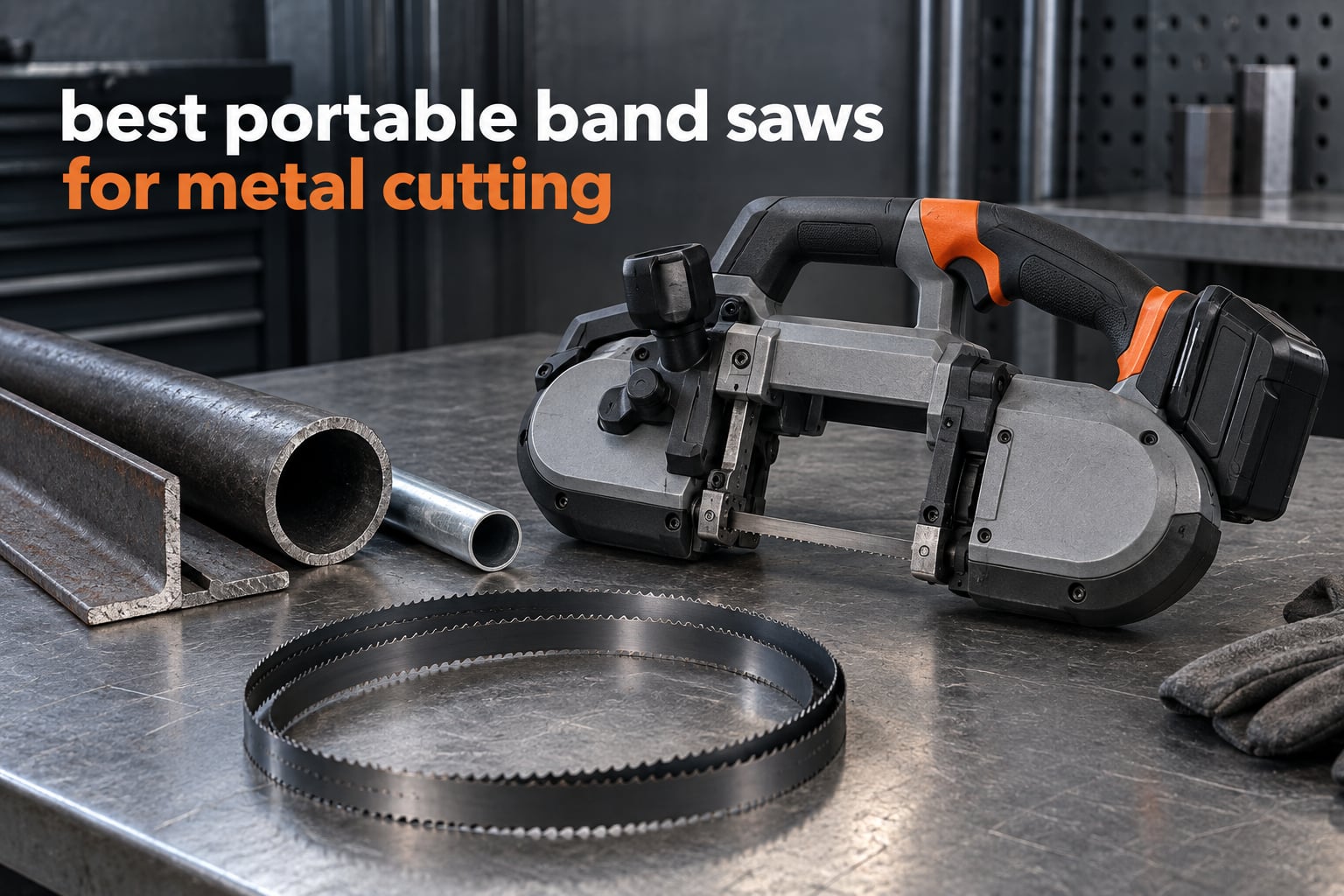
A portable band saw is a handheld power saw that runs a continuous loop of toothed band blade around two wheels, so it makes fast, square, burr-free cuts in pipe, tubing, conduit, angle iron and rebar anywhere a stationary saw cannot reach. Yes, it cuts metal, and it does it far cleaner than a reciprocating saw, an angle grinder or an abrasive chop saw.
Each pick replaces the three tools most people reach for on a job site, and every one of them trades accuracy for convenience. A sawzall throws a wandering kerf, a grinder throws sparks and a hot edge, and a chop saw refuses to leave the shop. If you are an electrician cutting EMT, a plumber cutting water-heater pipe, an HVAC tech trimming duct, or a fabricator breaking down angle iron, this is the tool category that changes the job.
We compared 11 portable band saws for metal cutting for this guide, weighing cutting capacity, blade speed, weight, blade-change mechanics and real reviewer feedback. Every saw here earned its place by cutting steel, not by having a good listing. If you want the wider category first, our guide to metal cutting band saws covers the benchtop side, and our full band saw roundup goes deeper on saw types.
Top 3 Portable Band Saws for Metal Cutting in September 2026
The three picks below cover the three ways people actually buy these saws: a cordless deep cut for battery-platform owners, a corded value saw that undercuts the big brands on capacity, and a corded heavy-duty saw for full-time fabrication work.
DEWALT 20V MAX DCS374B
- › 5 inch cutting capacity
- › Brushless motor
- › Variable speed
- › Tool-less blade change
Every Pick at a Glance in September 2026
All 11 saws in this roundup, with their headline specs. Deep cut means the throat capacity when the saw is held in its normal handheld position.
| PRODUCT MODEL | KEY SPECS | BEST PRICE |
|---|---|---|
|
|
Check Latest Price |
 |
|
Check Latest Price |
 |
|
Check Latest Price |
 |
|
Check Latest Price |
 |
|
Check Latest Price |
 |
|
Check Latest Price |
 |
|
Check Latest Price |
 |
|
Check Latest Price |
 |
|
Check Latest Price |
 |
|
Check Latest Price |
 |
|
Check Latest Price |
Corded vs Cordless Portable Band Saws
The corded versus cordless decision comes down to where you cut, not how hard. A cordless saw wins overhead, in crawl spaces and on rooftops with no power. A corded 10 amp saw wins whenever you are stationary for a while, on heavy stock, or in a shop where an extension cord reaches.
There is one more honest consideration for cordless: a second battery is effectively part of the purchase. Several picks here are bare tools, and platform owners already own packs and chargers. Corded saws trade that for a cord you must manage and, at 14.5 to 15 pounds, no more portability than a well-balanced cordless.
Many tradespeople end up running both, using a compact cordless for tight and overhead work and a corded deep cut saw for breaking down material.
1. DEWALT 20V MAX DCS374B – Best Overall Cordless Deep Cut Band Saw
DEWALT 20V MAX Band Saw, 5″ Cutting Capacity, Integrated Hang Hooks, Portable, For Deep Cuts, Bare Tool Only (DCS374B)
5 in capacity
20V MAX brushless
12.4 lbs
Variable speed
Tool-less blade change
+ The Good
- Cuts 3.5 inch schedule 40 pipe and thick angle iron
- Brushless motor runs smooth and near silent under load
- Fully adjustable front handle plus pistol grip
- Integrated hang hook and LED work light with 20 second delay
- The Bad
- Included blade dulls quickly
- Sold as a bare tool with no carrying case
- 12.4 pounds gets tiring overhead
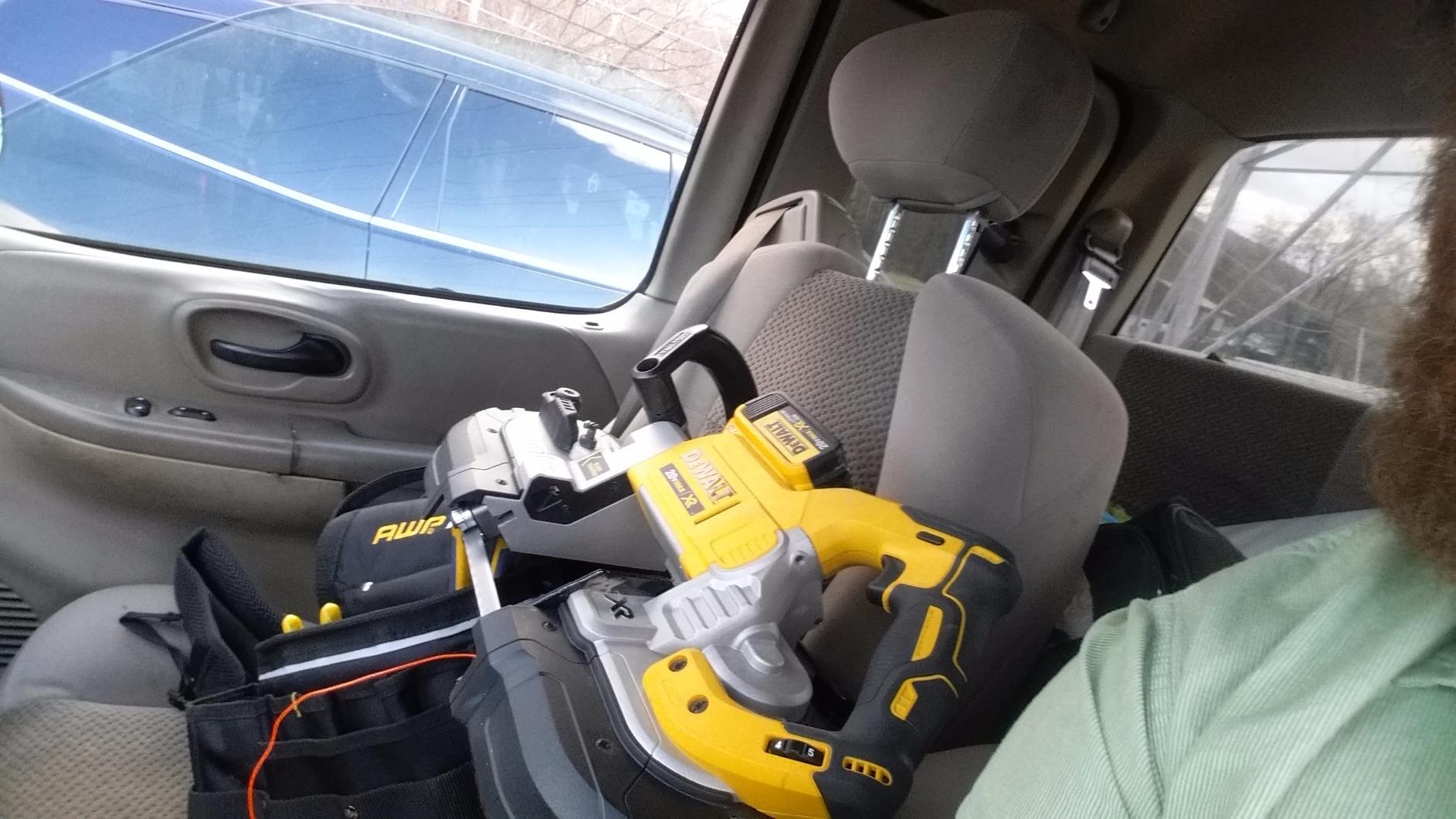
This is the saw we would hand a trade who already owns 20V MAX packs and wants one tool that covers everything from EMT to 3.5 inch schedule 40 pipe. The 5 inch cutting capacity sits at the top of the cordless class, and the brushless motor holds speed under load without the noise complaints that plague brushed designs.
Reviewers consistently single out the adjustable front handle as the feature that makes square cuts achievable by hand, plus the tool-less blade change lever that releases blade tension in seconds. The LED with a 20 second delay means you can start a cut in a dark chase or crawl space without fumbling for a flashlight.
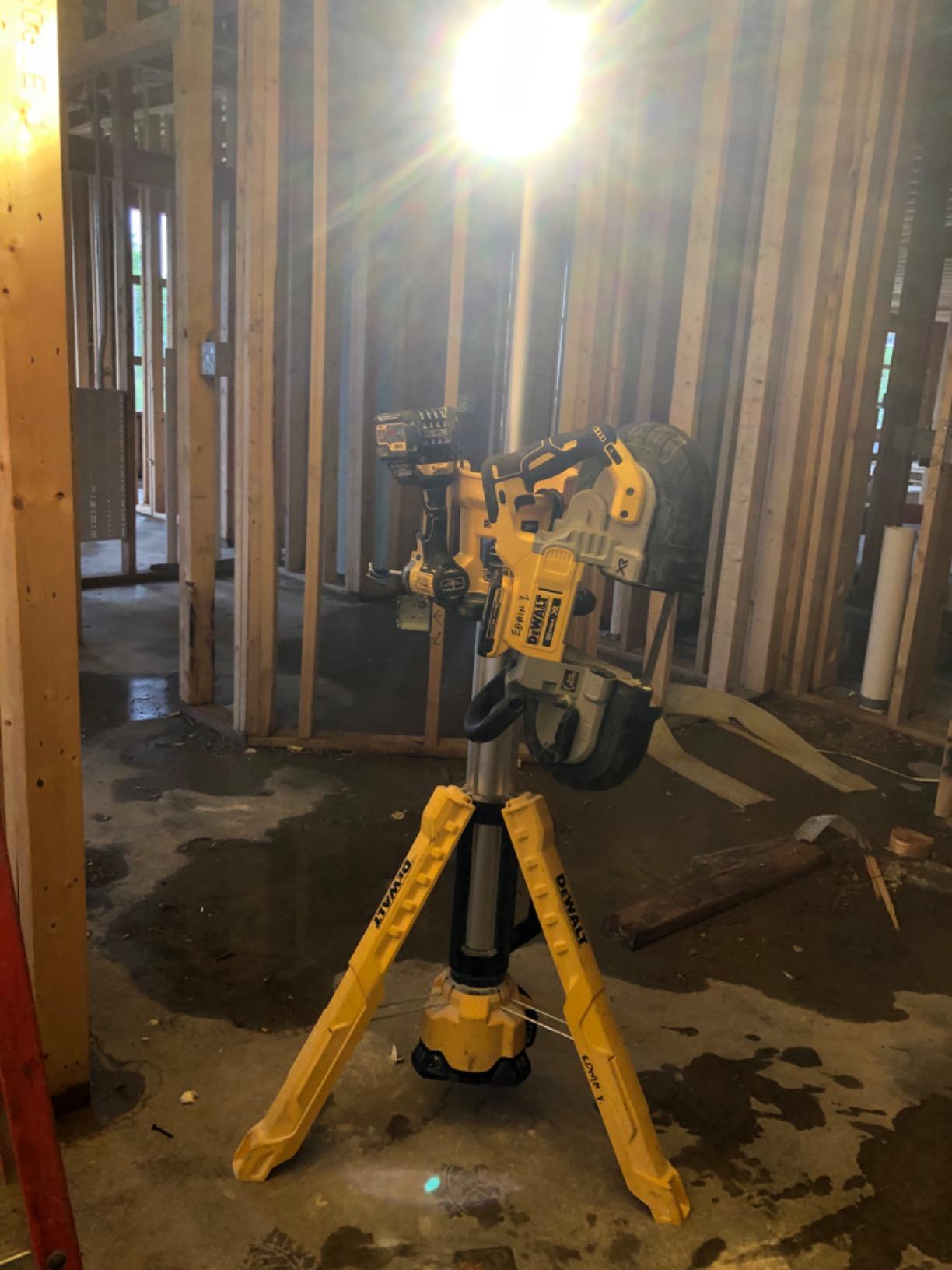
The blade that comes in the box is a thin general-purpose blade that dulls quickly on solid bar, and at 12.4 pounds the saw gets tiring in long overhead sessions. A proper metal blade with more teeth per inch fixes the first problem quickly.
What holds up in daily use
The brushless motor is the reason this saw does not get hot or bog down on structural steel, and the variable speed trigger lets you feather the blade into thin-wall conduit instead of smashing it. It ranks near the top of the Band Saws category by sales volume, which reflects how widely it is actually used.
Where it falls short
If you need cuts square and repeatable, this handheld saw will not get you there on its own. Most owners who chase precision either run the saw against a guide surface or add a portaband table. The hang hook, by contrast, is genuinely well thought out for jobsite work.
2. WEN 94396 – Budget Pick Corded Band Saw for Metal
WEN Portable Band Saw for Metal, 10-Amp, Variable Speed, Handheld (94396)
5 in by 5 in capacity
10 amp 1200W
60-420 FPM
14.5 lbs
Two year warranty
+ The Good
- Cuts stainless rod
- 1018 and 4140 bar
- steel tube and angle iron
- Standard 5 inch blades so blade sourcing is easy
- Table-mount holes accept a portaband stand
- Holds up over years of intermittent shop use
- The Bad
- Very loud in operation
- Included blade is low quality
- 14.5 pounds is heavy for prolonged handheld work
This is the saw that makes people ask why they pay more for a brand name. A 10 amp 1200 watt motor with 5 inch by 5 inch capacity undercuts several premium saws, and the six-position detented control from 60 to 420 feet per minute covers everything from thin-wall tube to solid round bar.
Owners report multiple years of intermittent shop service, cutting 4140 bar and stainless without drama. The blade compatibility is the quiet winner: standard 5 inch blades fit, so when the factory blade wears out you are not hunting for a proprietary part.
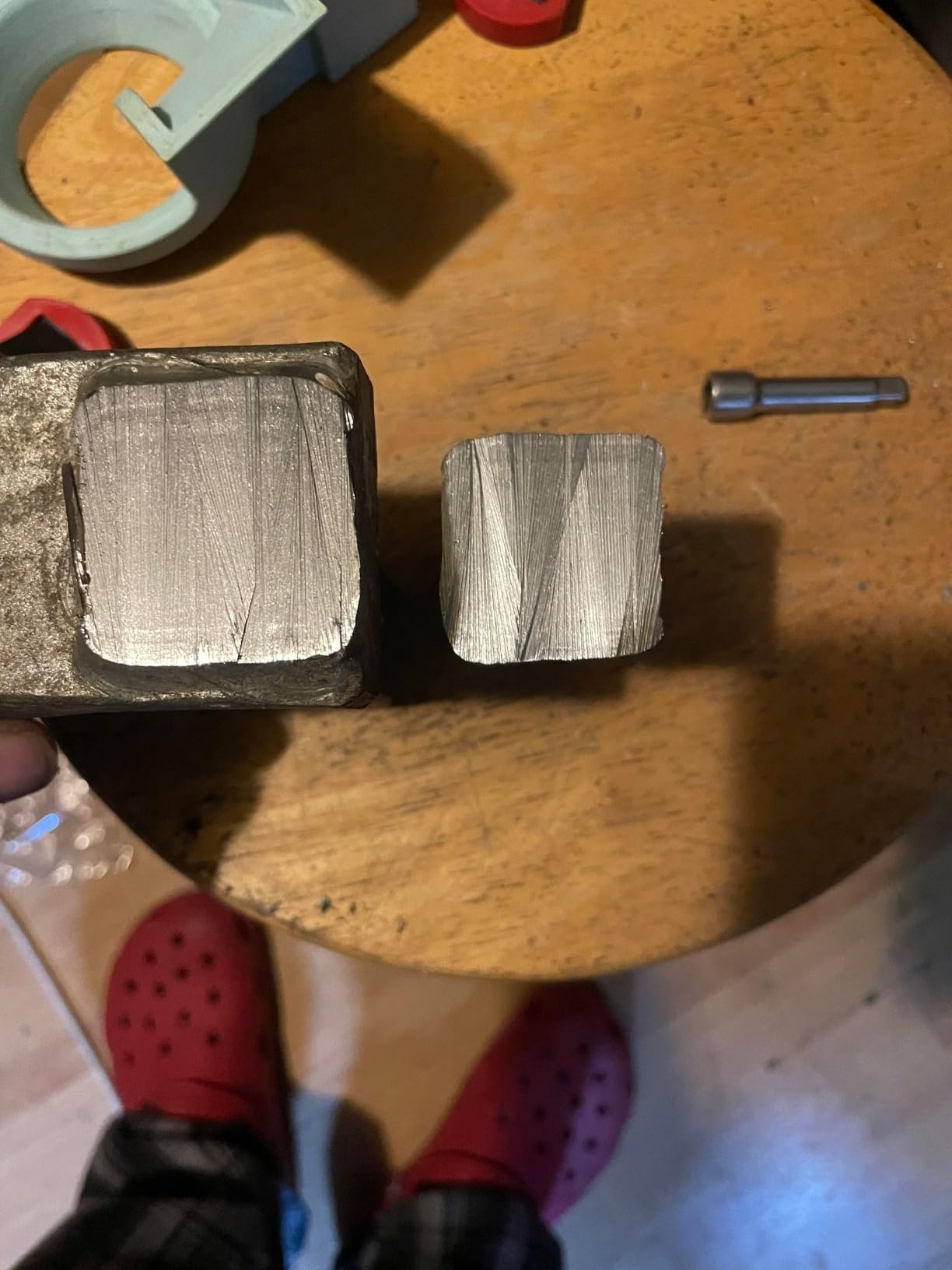
What you give up is refinement. It is loud enough that reviewers call for hearing protection, the included 10/14 TPI blade wears quickly, and the 14.5 pound weight is noticeable when you are holding the saw overhead with one hand. A few owners also find they need to shim the base plate to get a square cut.
Why this is the value pick
The speed range alone separates it from cheaper generic saws, because you can back the speed off for thin material and let the teeth climb into the cut instead of stalling the wheel. The LED work light and external tensioning lever are also more than most budget saws bother with.

Where it falls short
Mounting holes for a portaband table are not drilled on every unit, which matters if you were counting on converting it to a semi-stationary saw. Blades dull faster on solid bar cutting, so expect to buy replacements sooner than with a name-brand saw that comes with a better factory blade.
3. DEWALT DWM120K – Best Corded Saw for Heavy-Duty Steel
DEWALT Portable Band Saw, Deep Cut, 10 Amp, 5-Inch (DWM120K)
5 in deep cut
10 amp 1200W
100-350 spm
15 lbs
Three year warranty
+ The Good
- Fast pencil-thin cuts in mild steel
- stainless
- aluminum
- copper and bronze
- Blade tracking adjustment extends blade life
- Hard case doubles as blade storage
- LED sight light aimed at the cut line
- The Bad
- No trigger lock for table use
- Factory blade is poor and most owners replace it
- Does not support itself vertically on its own
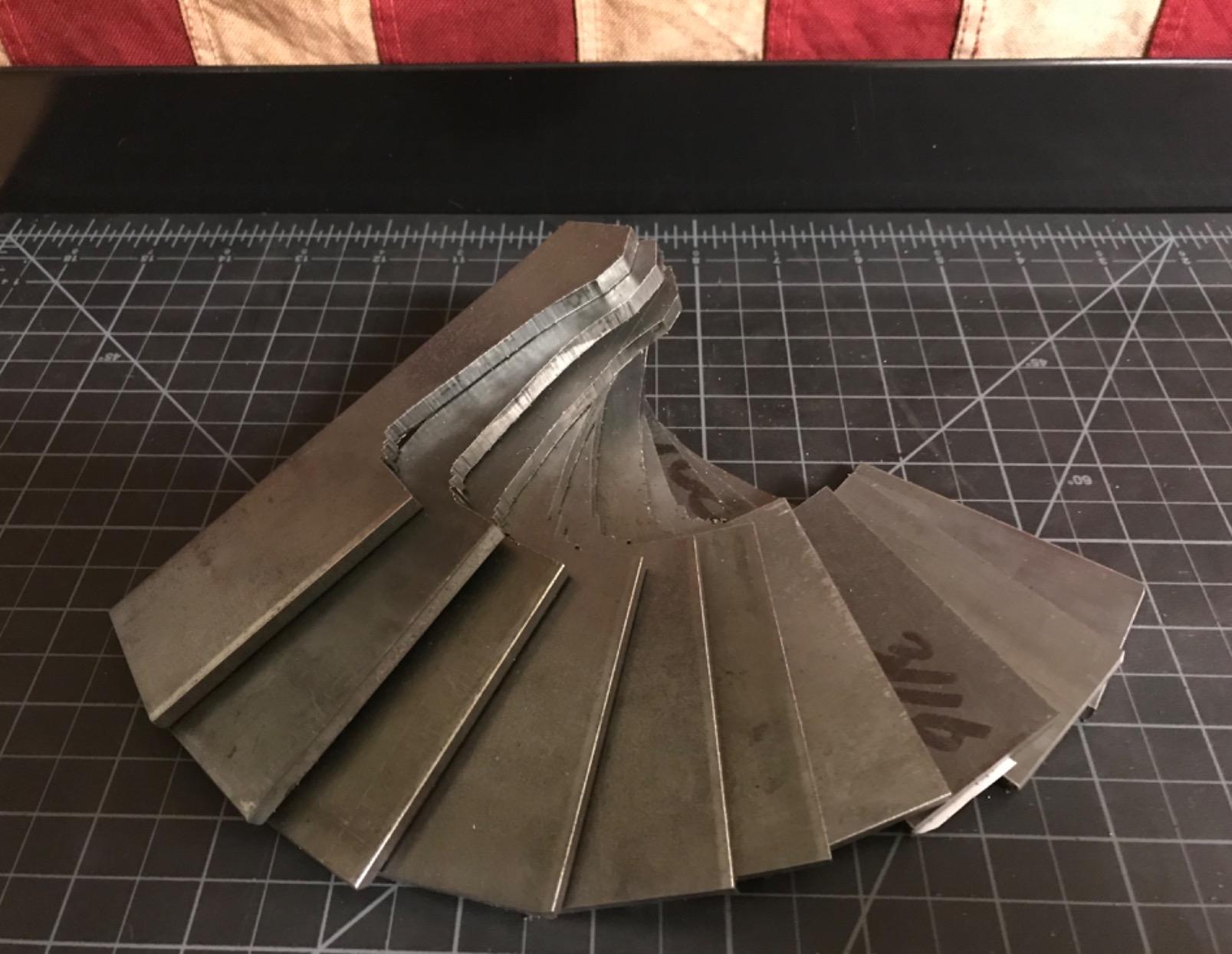
This is the saw fabricators and welders describe as a shop staple, and the reason is simple: it cuts faster and cleaner than an abrasive chop saw while the blade lasts far longer than a cutoff wheel. The 5 inch deep cut handles round or rectangular material up to that size, which covers structural material most handheld tools cannot reach.
Two details separate it from the corded pack. The blade tracking adjustment corrects the drift that comes from a tired wheel, which measurably extends blade life, and the dual bearing guide rollers support the blade more evenly than plain slide guides do.
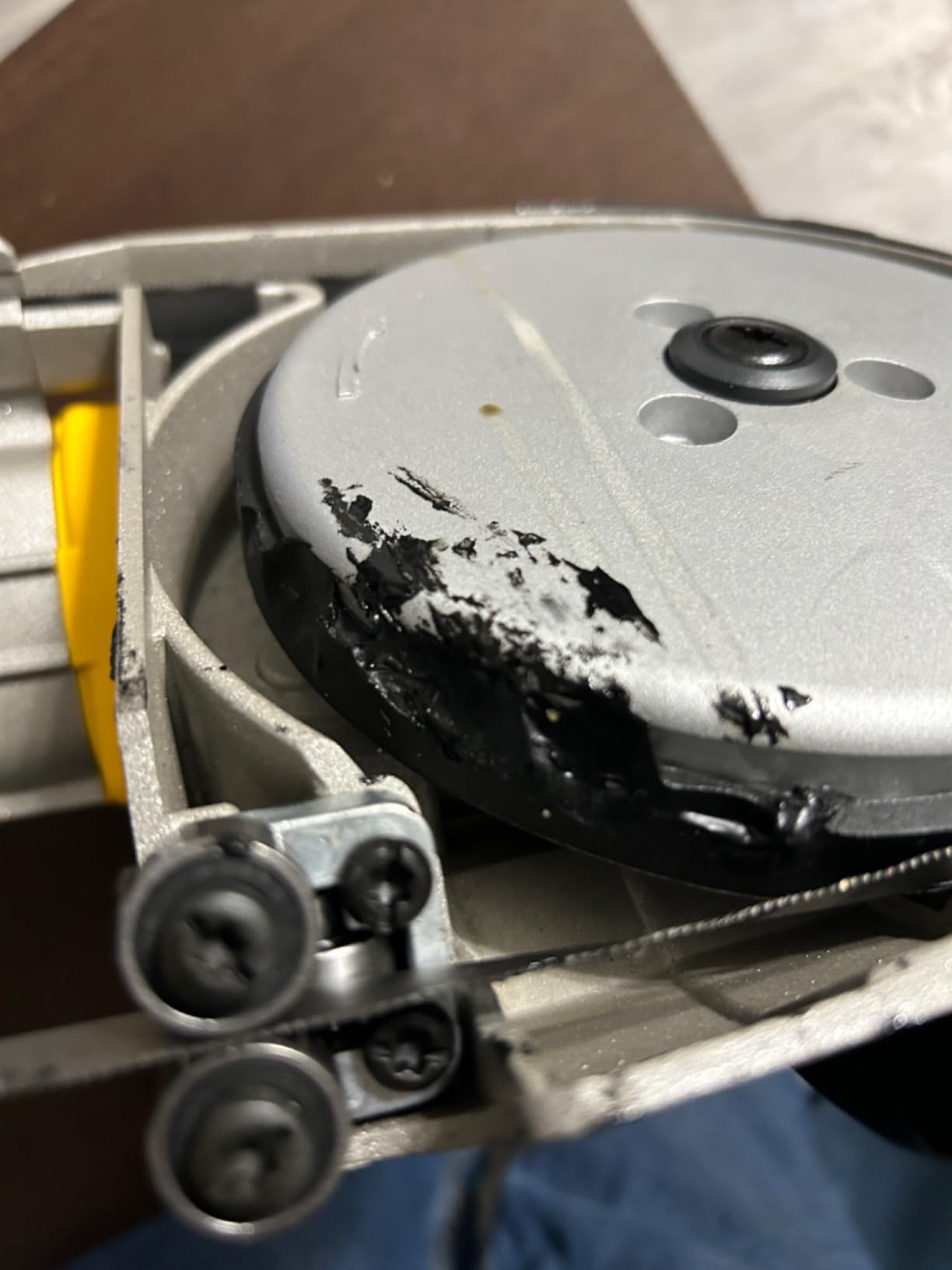
Reviewers like the variable speed dial for being within thumb reach mid-cut, and the LED sight light for being bright and well aimed. The included hard case is singled out because it doubles as blade storage, which solves a real problem for anyone cutting a lot of ferrous metal.
What holds up under heavy work
Serviceable steel shrouds and rubber bumpers take jobsite abuse that would crack a plastic guard, and the multi-position front handle gives you real hand space for steering a straight cut. Owners cutting stainless, copper and bronze report clean finishes with no burn or temper color.
Where it falls short
There is no trigger lock, so anyone mounting it to a table needs a strap or foot switch to hold the throttle. The blade guides are small, which limits fine stationary precision work, and the factory blade is poor, so plan for a proper metal blade up front.
4. VEVOR Portable Band Saw – Best With a Swiveling Workbench Base
VEVOR Portable Band Saw, 110V Removable Alloy Steel Base 5 Inch Cutting Capacity Hand held Variable Speed Portable Bandsaw, 10Amp Motor Deep Cut Band saw for Metal Wood
5 in round handheld
1100W 10 amp
137.8-472.4 FPM
Swivel base 0-45 degrees
+ The Good
- Removable alloy steel base swivels 0 to 45 degrees
- 1100W pure copper motor with wide speed range
- Adjustable blade guard
- Soft-grip rear handle
- The Bad
- Capacity drops to 3.9 by 3.2 inches with the base attached
- Heavy at 28.7 pounds limits handheld portability
- No case or blade listed in the box
Among the picks in this roundup, only a few solve a problem almost every other handheld saw ignores: how to get a consistent, square cut without bolting the saw to a bench. The removable alloy steel base swivels from 0 to 45 degrees and holds the material still while the blade tracks straight.
Trade forums regularly list VEVOR alongside Harbor Freight models as usable value picks for tradespeople and millwrights, which matches the design intent. The 1100W pure copper motor and the 137.8 to 472.4 feet per minute speed range cover metal, steel, aluminum, angle iron and composite cable without a speed change.
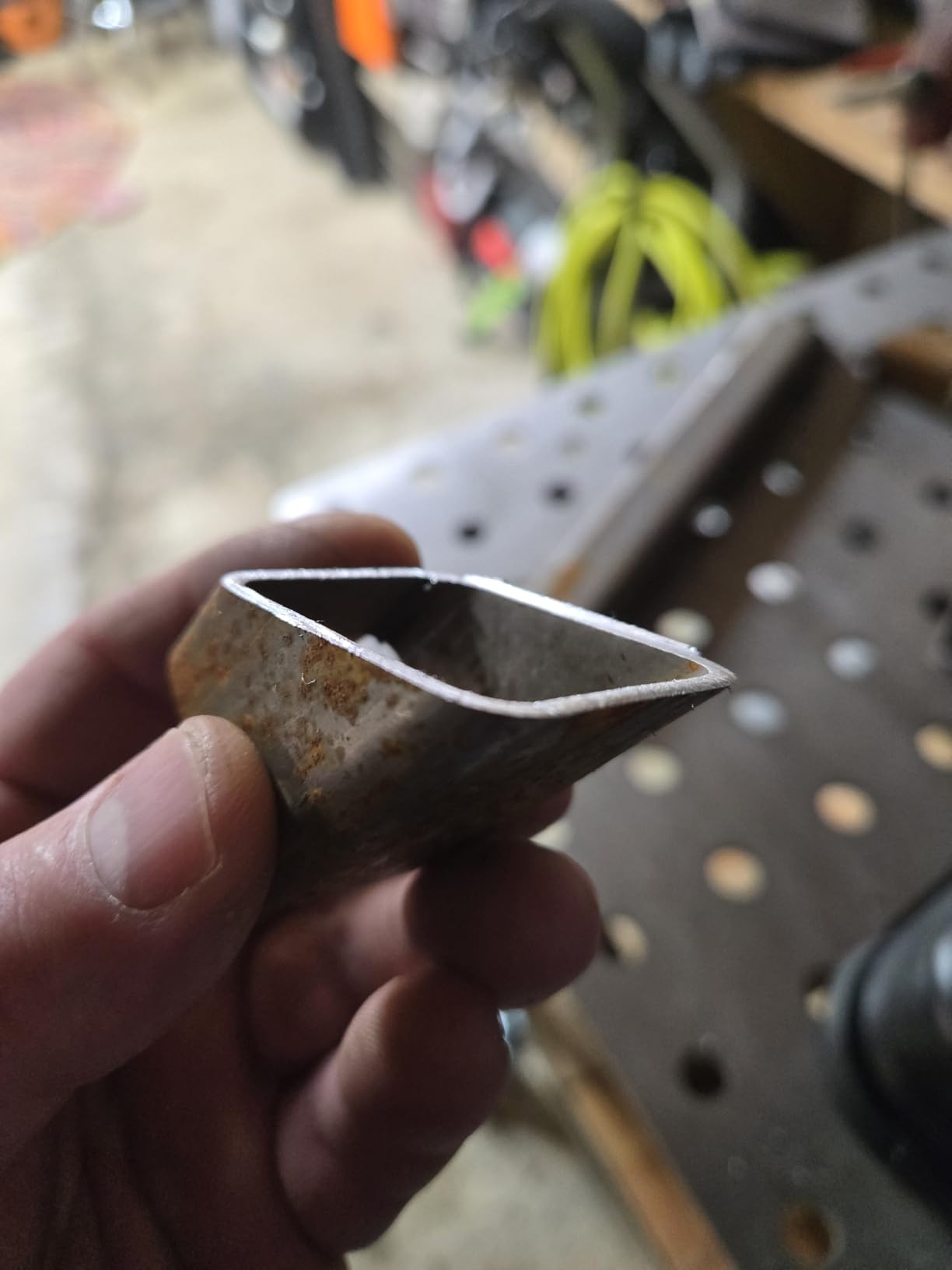
The tradeoff is arithmetic. Without the base, you get 4.7 by 4.7 inches on rectangular material and 5 inches on round. With the base installed, that drops to 3.9 by 3.2 inches and just under 4 inches round, so you are trading reach for repeatability every time the base is on.
Why the base matters more than it looks
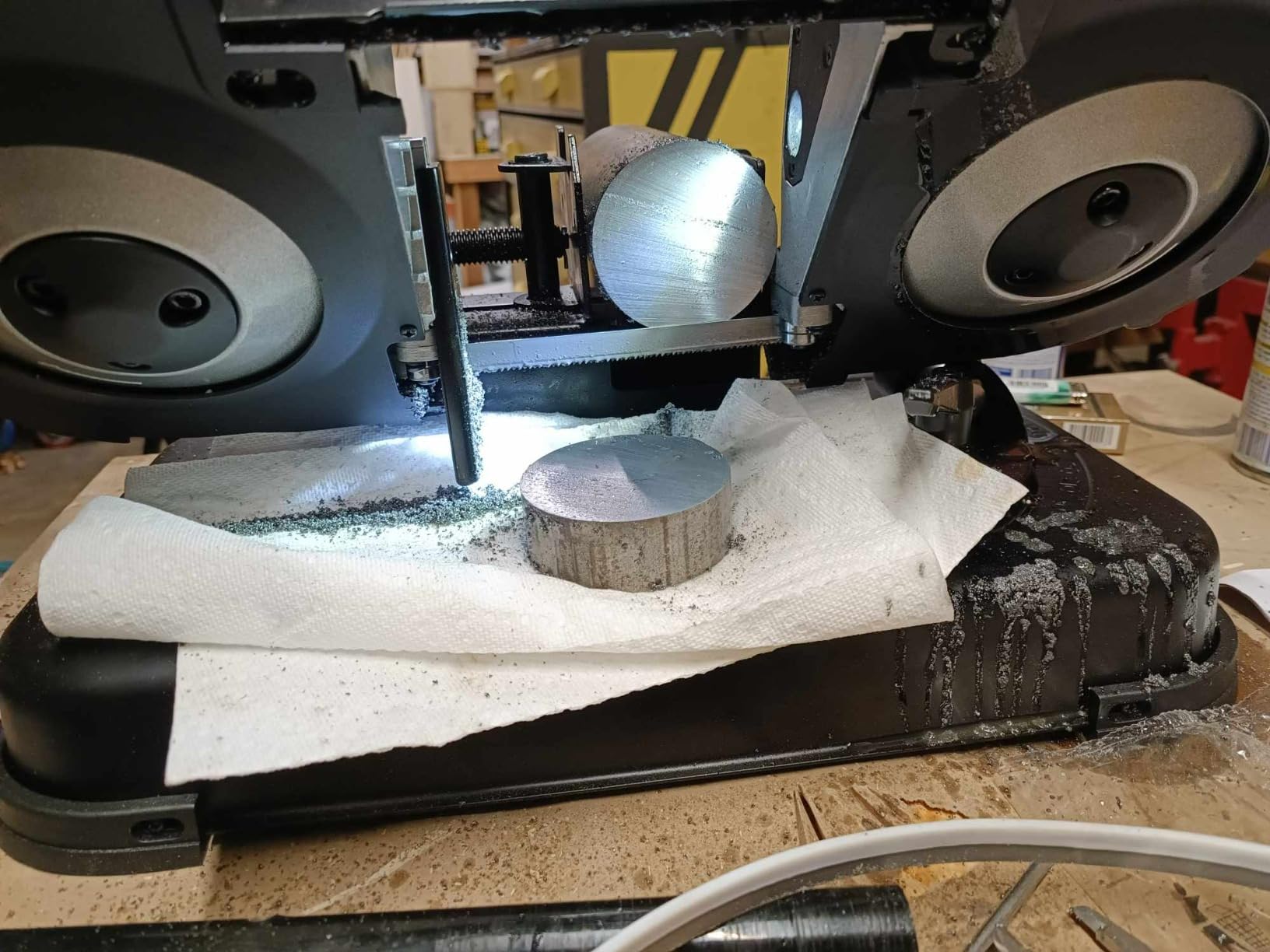
A swiveling base does two jobs at once. It angles the work for you when you are working overhead, and it clamps down to keep thin-wall tube from flexing and pushing the blade off line. That is the difference between a cut you can weld and a cut you have to grind.
Where it falls short
At 28.7 pounds, this is not a one-hand tool, and the base itself is a meaningful chunk of that. The adjustable blade guard and soft-grip rear handle help control, but the rating spread is wider than the big-brand saws here, which is a fair signal that finish quality varies from saw to saw.
5. PowerSmart PS3051 – Best Value That Includes Two Blades
PowerSmart Portable Band Saw, 10A Variable Speed, 5″ Cutting Capacity
5 in by 5 in capacity
10 amp 1100W
0-435 FPM
Two 14 TPI blades included
+ The Good
- Two 14 TPI blades included
- One owner put the spare to work on a second saw
- Six-speed dial helps control blade wander
- Cuts thin slices consistently
- Tool-less blade change and LED at this level
- The Bad
- Blades can walk off the drive wheels
- Tracking screw is undocumented
- Base clamp and angle adjustments are not precise
This is the lowest-rated saw in the group, and the reason is consistent enough to name: blade tracking. The most common complaint is the blade popping off the drive wheels and binding in the guards, particularly on thin-wall tube, and that usually means the blade is not tracking true on the wheel.
Here is the useful part. At least one sharp owner found an undocumented 5 mm Allen screw beneath the base mount that provides the tracking adjustment, and reported that aligning it fixed the problem outright. That single detail explains the 4.2 average, because owners who find it rate the saw very highly and owners who do not rate it very low.
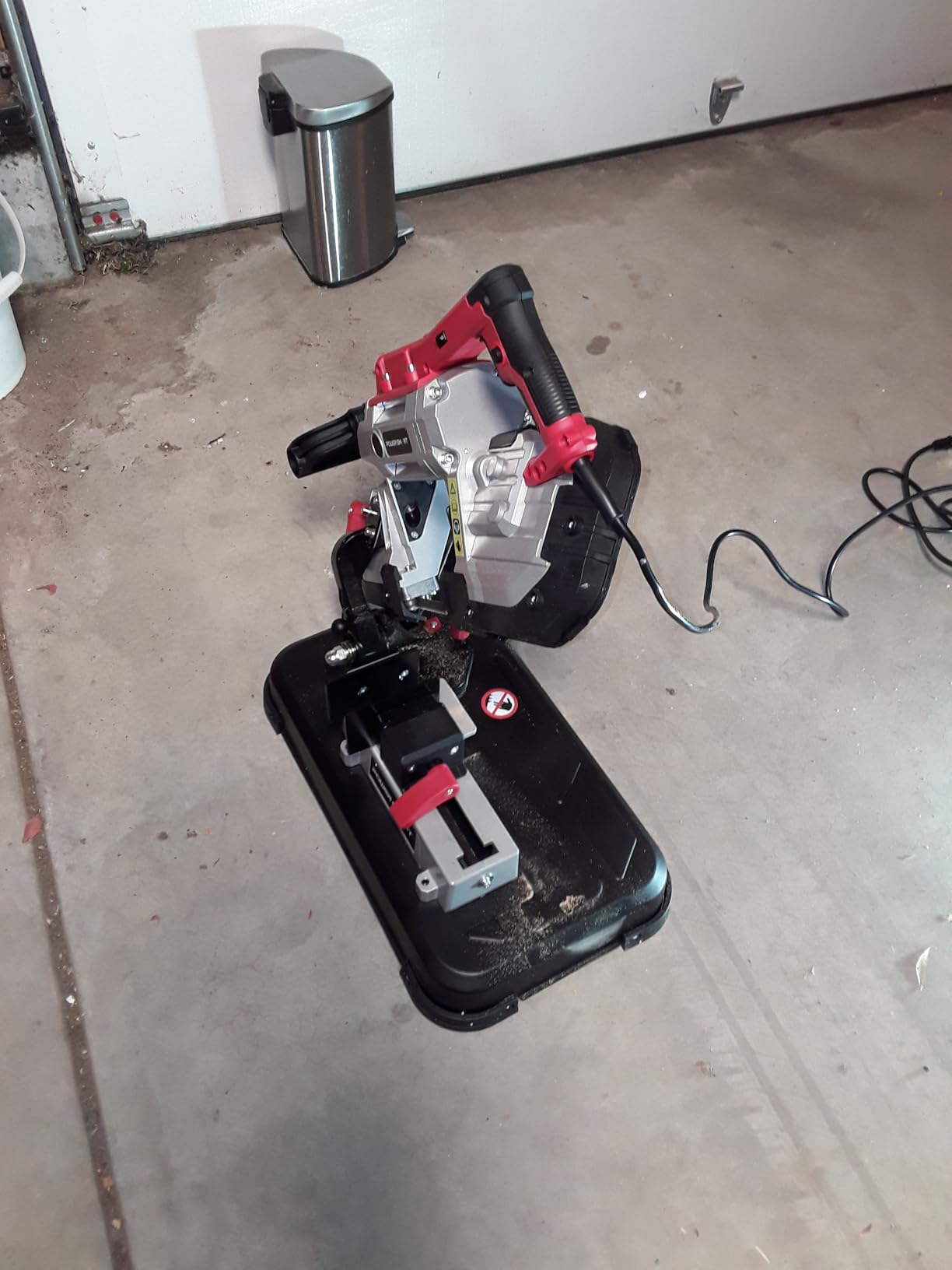
Two blades are included rather than one, which is unusual at this level, and the 0 to 435 feet per minute six-speed dial genuinely helps manage blade wander in different materials. Reviewers also note that it is not especially loud and makes very consistent thin slices once set up.
What to check before you cut
Spend five minutes setting the tracking screw and shimming the base before your first real cut, not after your first ruined blade. The removable 0-45 degree alloy steel base can be used as a foot-pedal style setup for hands-free cutting, which owners find genuinely useful for repetitive short cuts.
Where it falls short
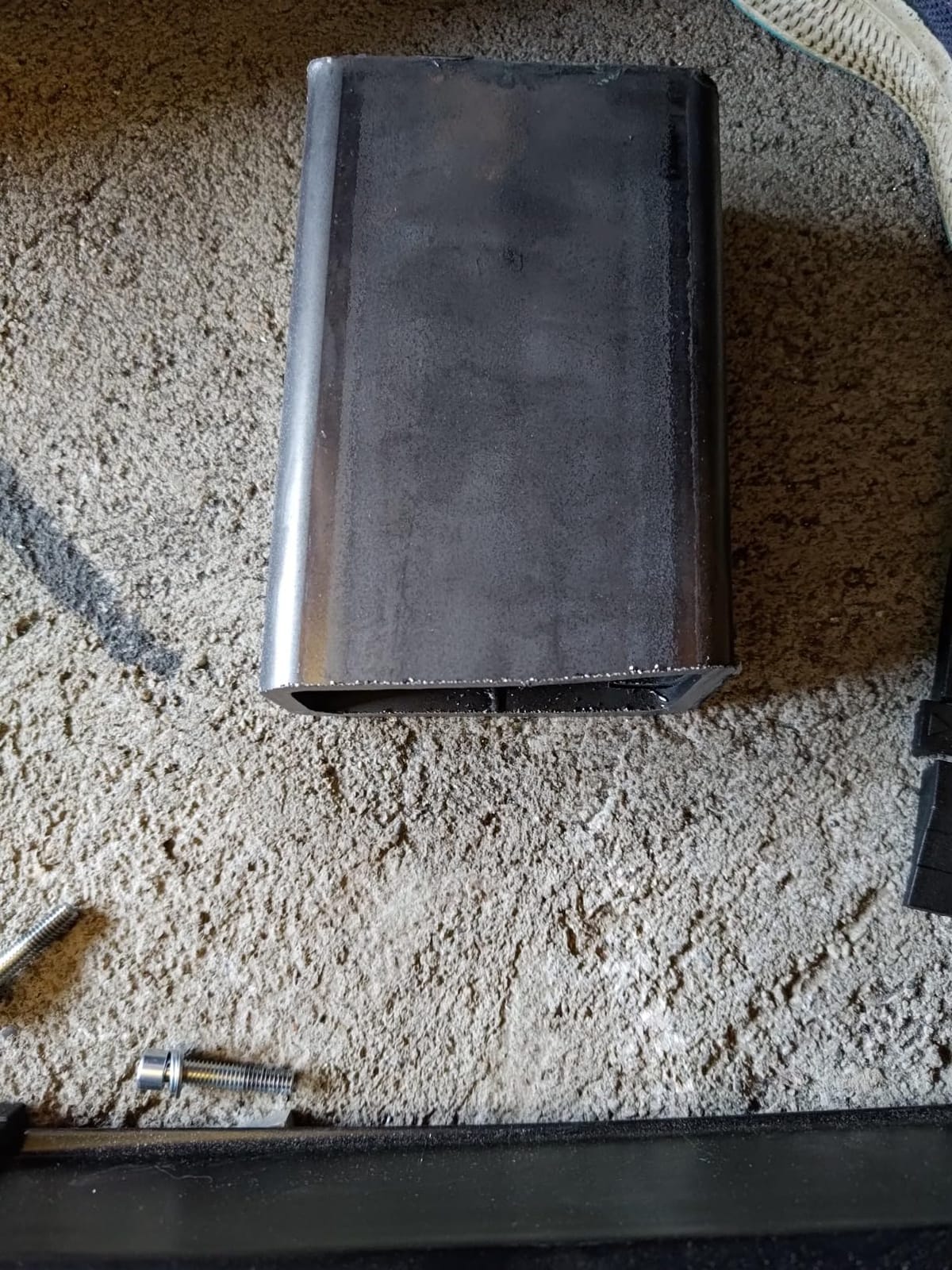
The base clamp and angle adjustments are not precise, so this is not the saw to miter repeatably. Around 9 percent of ratings are a single star, and at least one owner had to discard the saw entirely, which is a real risk if you are cutting structural steel on a deadline.
6. Anbull R2103 – Best Blade Compatibility of the Budget Group
Anbull Portable Band Saw with Upgraded Removable Alloy Steel Base
5 in handheld capacity
1100W 10 amp
100-350 FPM
Accepts 10-14, 14-18 and 24 TPI
+ The Good
- Accepts three TPI ranges for different materials
- Removable base swivels 0 to 45 degrees
- Serviceable steel shroud with rubber bumpers
- LED spotlight and adjustable blade guard
- The Bad
- 33 pound total weight is heavy for handheld work
- Capacity drops to about 4 inches with the base
- Generic design with no brand parts ecosystem
Blade choice is the real decision when cutting different materials, and this saw is the most flexible in the group about it. It accepts 10-14 TPI, 14-18 TPI and 24 TPI blades, so you can run coarse teeth for structural steel and fine teeth for thin-wall pipe on the same machine.
It also publishes its own speed guidance by material, starting from the third speed for hard material, keeping stainless at or below the third speed, using the fourth and fifth for 45 steel, and the sixth for galvanized pipe. That kind of documentation is rare in this price band and saves guesswork.
Without the base you get 5 inches round and 5 by 4-3/4 inches on rectangular material. With the base fitted, capacity drops to 4 inches round and 4 by 3-1/5 inches, and the base alone weighs 14.6 pounds before the saw itself.
Where the serviceable parts help
The steel shroud with rubber bumpers is the detail that matters on a jobsite, because guards get dropped and banged and plastic ones crack. An adjustable blade guard also reduces the chance of the blade jamming against the guard, which is a common way cheap saws get ruined.
Where it falls short
At 33 pounds total, this is a shop saw that can be carried, not a handheld overhead saw. And because it is a generic design, parts availability is thinner than with an established brand, which matters if the drive wheel or the speed selector fails.
7. Milwaukee 2729-20 – Best for M18 FUEL Platform Owners
MILWAUKEE’S 2729-20 M18 Fuel Deep Cut Band Saw Tool Only
5 in deep cut
18V M18 FUEL
Brushless motor
5 year warranty
13.6 lbs
+ The Good
- Shares batteries and chargers with the rest of the M18 line
- 5 inch deep cut in a cordless package
- 5 year tool warranty
- Brushless motor
- Electronic brake
- The Bad
- Bare tool only so battery and charger are extra
- 13.6 pounds is heavy for overhead work
- Sparse listed specifications
If you already run M18 FUEL tools, this is the most direct path to a genuinely capable cordless band saw, because the battery and charger are already on the shelf. At 4.8 stars across 507 ratings, with about 90 percent of those at the top score, it is one of the most consistently rated saws in the group.
Milwaukee is the brand most often recommended across metalworking and trades forums, and this saw’s 5 year warranty is specifically cited as a reason to trust the tool long term.
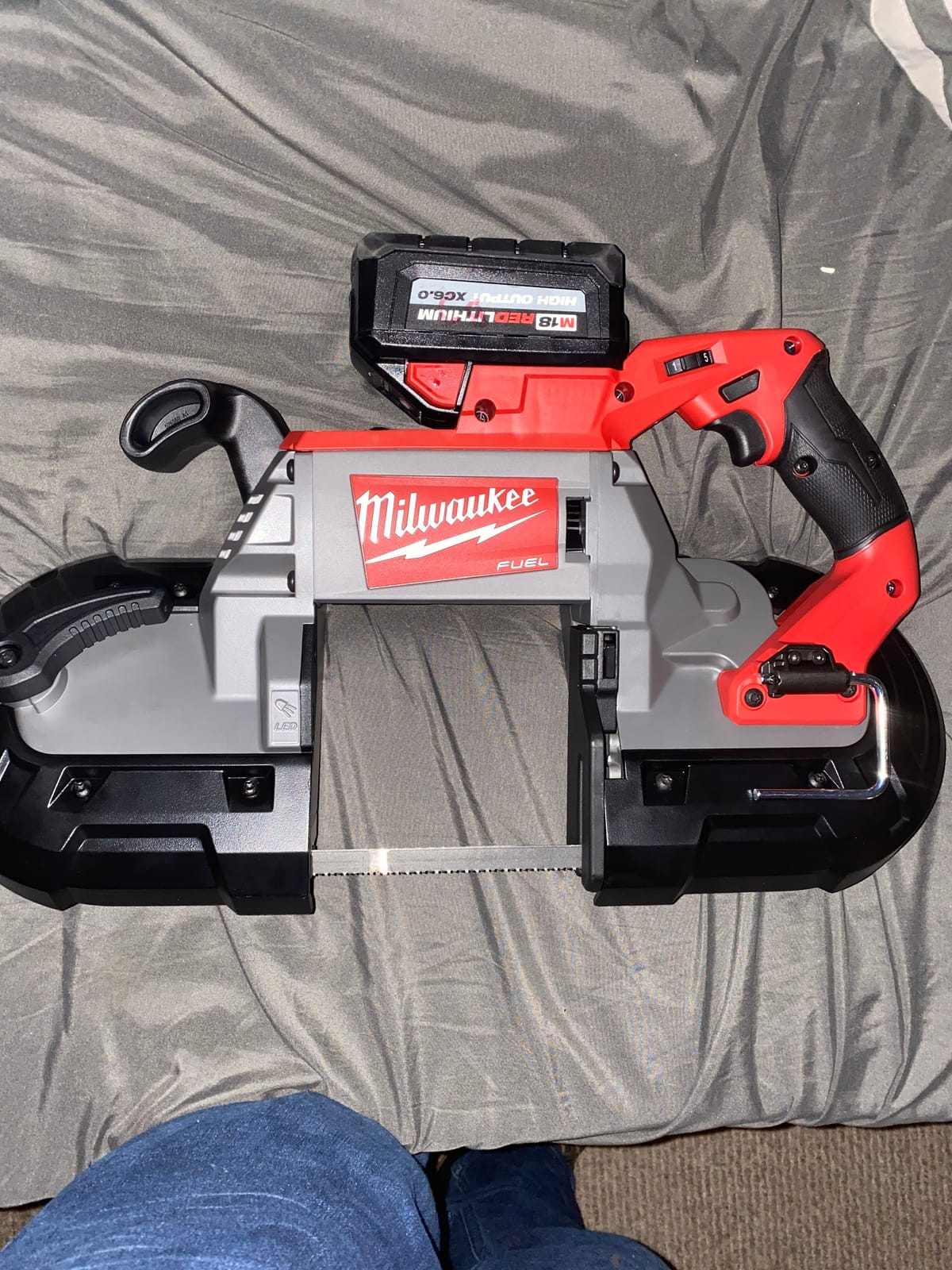
The 5 inch deep cut is the headline, since it matches the biggest corded saws in this roundup while running off a battery pack. The electronic brake stops the wheel quickly after the cut, which is a real safety and convenience benefit on a tool that gets handled constantly.
Who should buy this one
The buyer who already owns M18 FUEL packs, cuts structural steel regularly, and wants one cordless saw that can go toe to toe with a 10 amp corded model. Tradespeople commonly run a compact cordless for overhead work and keep a corded saw for breaking down stock, and this fits the first half of that pair.
Where it falls short
At 13.6 pounds it is one of the heavier cordless saws here, which limits long overhead sessions. It is a bare tool, so a pack and charger have to be added separately, and the listing detail is thin, so treat the capacity figure as the number to plan cuts around.
8. Makita XBP02Z – Best Variable Speed Range for Controlled Cuts
Makita XBP02Z 18V LXT Lithium-Ion Cordless Portable Band Saw, Tool Only
4-3/4 in capacity
275-530 FPM
Trigger lock-off
Over-torque alert
15 lbs
+ The Good
- Wide 275 to 530 FPM range gives fine control on thin and thick material
- Cuts steel
- PVC
- rebar
- unistrut and channel cleanly
- Trigger lock-off prevents accidental starts
- Long battery life per charge
- The Bad
- 15 pounds is heavy for overhead work
- Brushed motor is louder than brushless
- No plastic case and no trigger lock-on
The speed dial is the story here, running 275 to 530 feet per minute, and no other cordless saw in this group offers a dial at all. That range lets you creep through a thin-wall pipe and then hold full speed through solid bar without swapping tools, and Makita puts the dial in a convenient thumb position.
Owners describe it as a clean, quiet replacement for grinders and reciprocating saws on EMT, conduit, pipe, rebar and unistrut, and report notably better battery life per cut than a sawzall. The protection circuit with a built-in alert light warns on over-torque before something breaks.
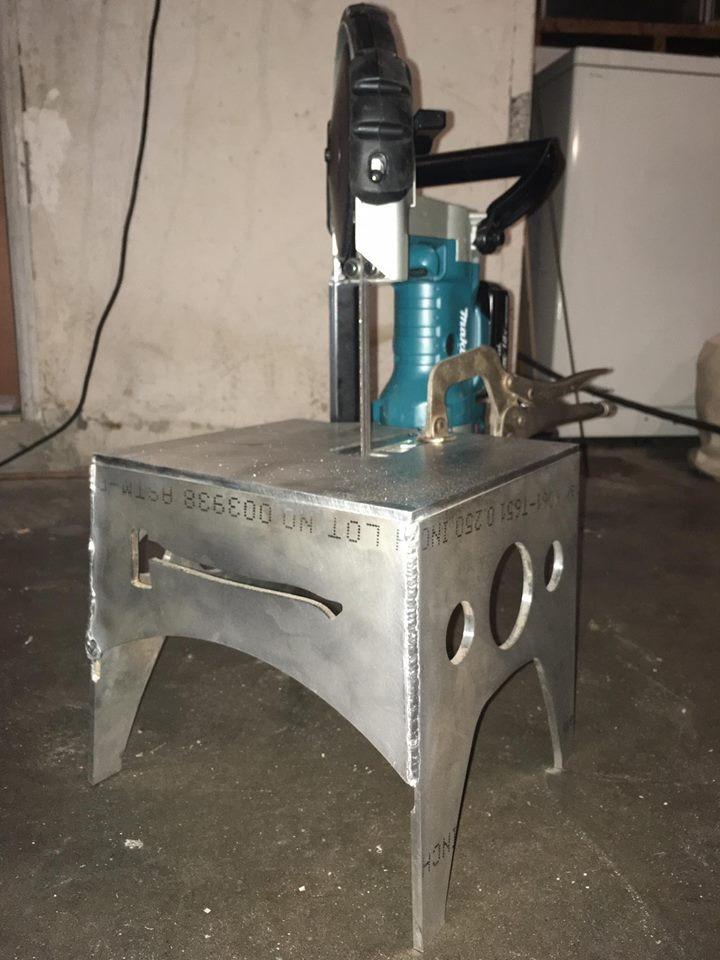
It accepts a 44-7/8 inch blade and comes with an 18 TPI blade, which is a better starting point for structural steel than the thinner blades many competitors include. The trigger with a lock-off feature requires two separate actions to power on.
Why speed control matters on metal
Rushing a band saw into steel is the single most common way people waste blades. With a dial this wide you can start slowly until the teeth are engaged, let the saw’s weight do the work, and then open it up. Forum users consistently advise letting the weight cut rather than pushing down.
Where it falls short
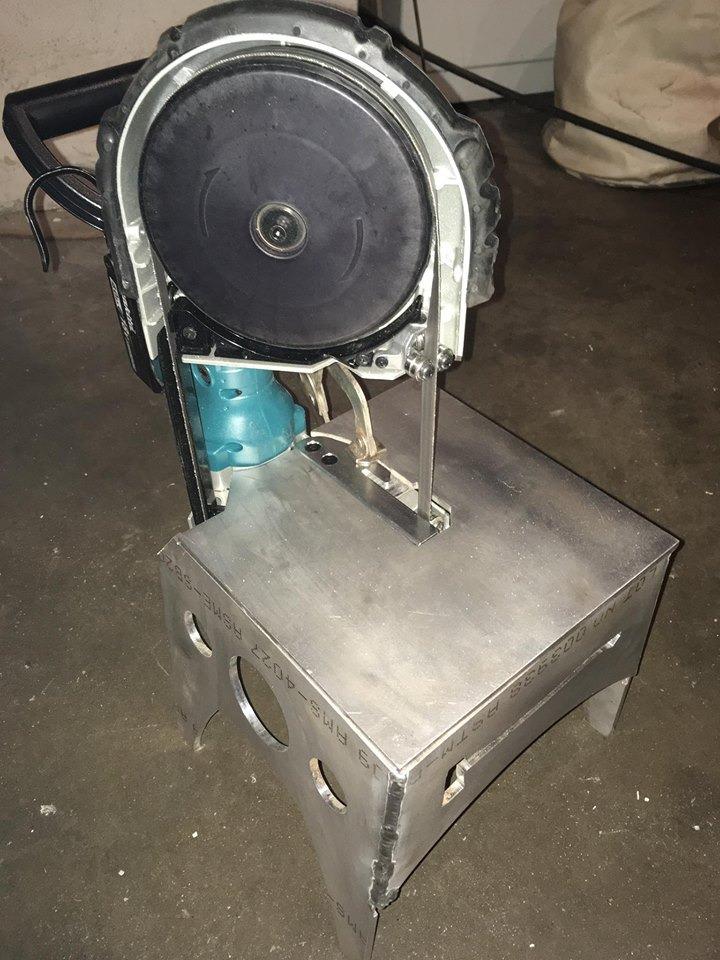
At 15 pounds it is the heaviest full-size cordless saw in this list, and the brushed motor is audibly louder and less efficient than a brushless design. There is no lock-on for vertical stand use, so you would need a modification if you plan to mount it.
9. DEWALT DCS378B – Best for All-Thread and Threaded Rod
DEWALT 20V MAX XR Bandsaw, Brushless Motor, Portable and Cordless, 3-3/8 Inch Cut Capacity, Bare Tool Only (DCS378B)
3-3/8 in capacity
535 MWO at 570 SFPM
Integrated blade guard
10.8 lbs
+ The Good
- Brushless motor cuts 7/8 inch all-thread and dense steel without bogging
- Light at 10.8 pounds and balanced for one-handed use
- Integrated blade guard is more enclosed than competing designs
- Soft-start behavior makes it easier to control
- The Bad
- Small rear guide wheel lets a worn blade veer off track
- 3-3/8 inch capacity is smaller than the 5 inch models
- Safety button must be held with the trigger
Threaded rod and all-thread is a miserable job for a reciprocating saw and a good one for this. The 535 MWO brushless motor running at 570 feet per minute cuts 7/8 inch all-thread without bogging, and at 10.8 pounds the saw is light and balanced enough to control one-handed on a ladder.
Plumbers, electricians and fabricators pick it for threaded rod, unistrut, PVC, copper and steel pipe, and the integrated blade guard is more enclosed than the guard on the competing red tool, which matters when a blade shatters on hard stock.
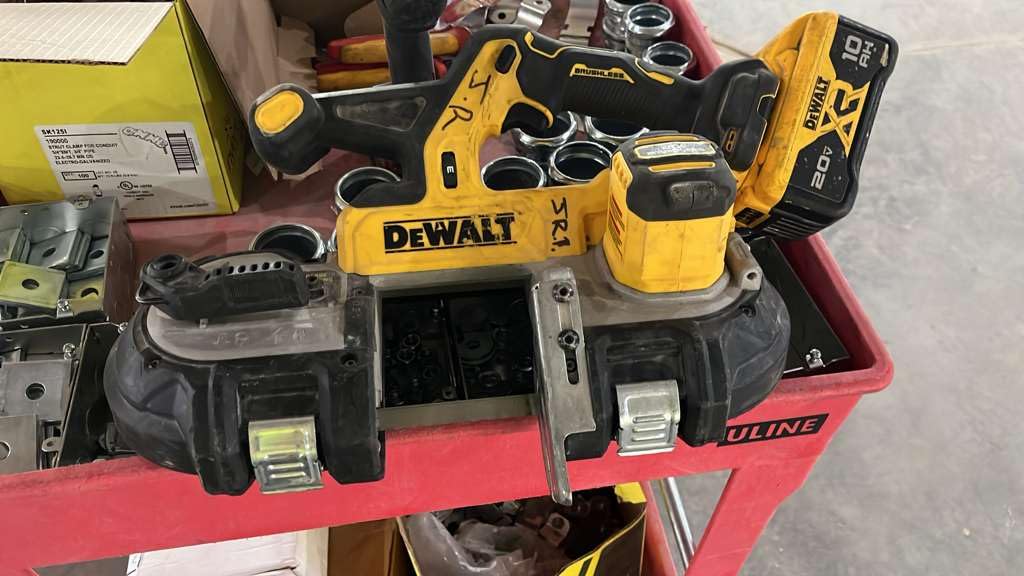
The variable speed trigger plus a separate speed dial gives two ways to control the blade, and the slow-start behavior makes the saw safer and easier to control than a full-throw competitor. A built-in LED illuminates the cut line, and there is a lanyard-ready tether point for working at height.
Why the guard design matters
Enclosing the rotors so blade fragments are directed away from the user is a real safety upgrade on a tool that often runs overhead on conduit hangers. The Tool Connect chip pocket also lets a contractor track the tool through a fleet app, with the chip sold separately.
Where it falls short
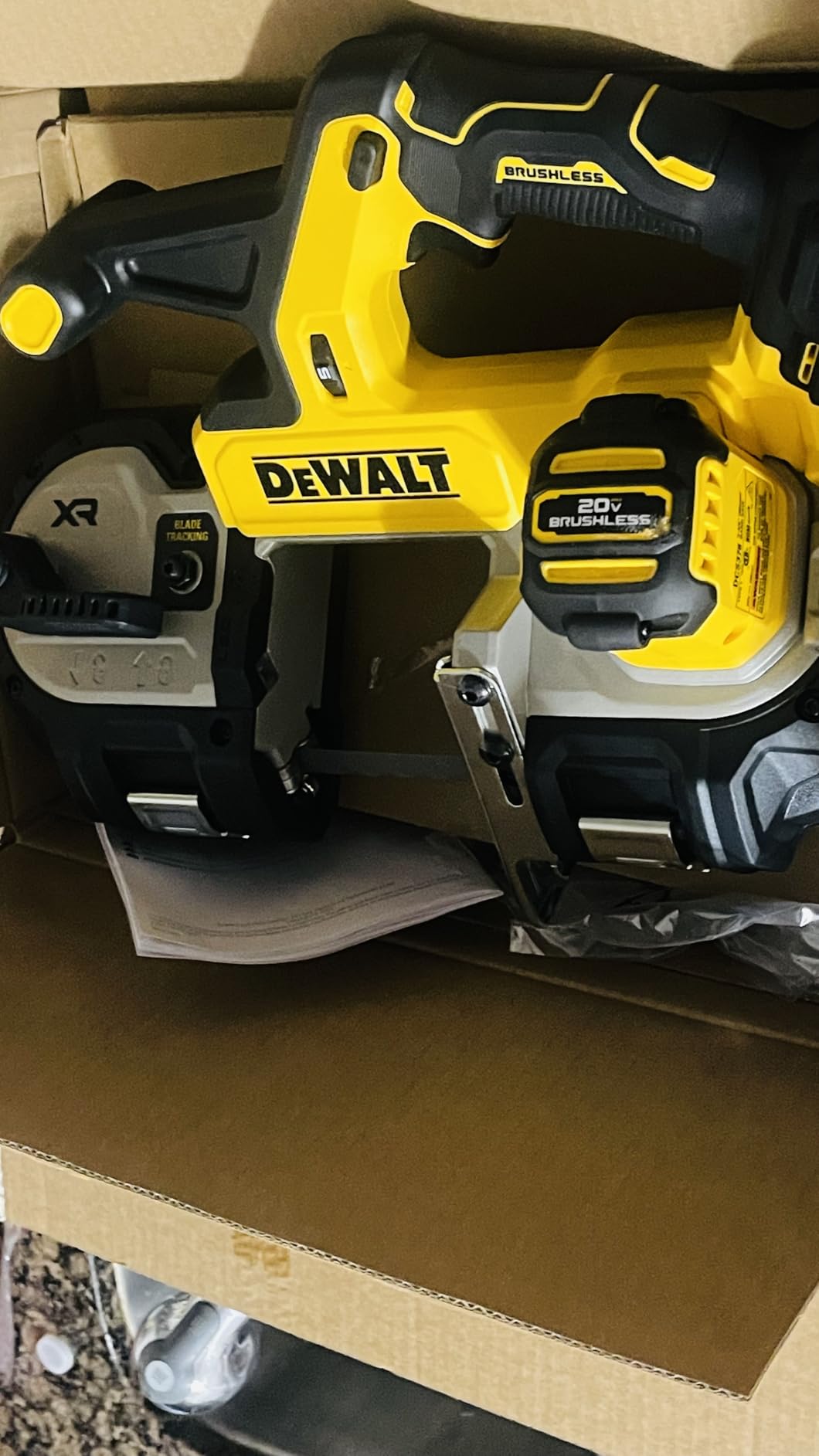
The small rear guide wheel is the one persistent complaint, because once the blade is worn the rear support lets it veer and forces an angled cut. Also note the 3-3/8 inch capacity, which is the trade-off for the compact size, and that the safety button must be held with the trigger.
10. Milwaukee 2529-20 M12 FUEL – Best for Overhead Work
Milwaukee Electric – M12 Fuel Compact Band Saw
2.5 in throat capacity
570 FPM
6.0 pounds
One-handed operation
5 year warranty
+ The Good
- Only 6 pounds and can genuinely be operated one-handed
- Brushless M12 FUEL motor cuts 1-5/8 and 13 gauge fence posts and all-thread
- Deep throat for its size
- Reinforced nylon housing and 5 year warranty
- The Bad
- No variable speed control despite the speed specification
- Blade hangs if you start it against the material
- Drains the battery faster and overload-protects on heavy cuts
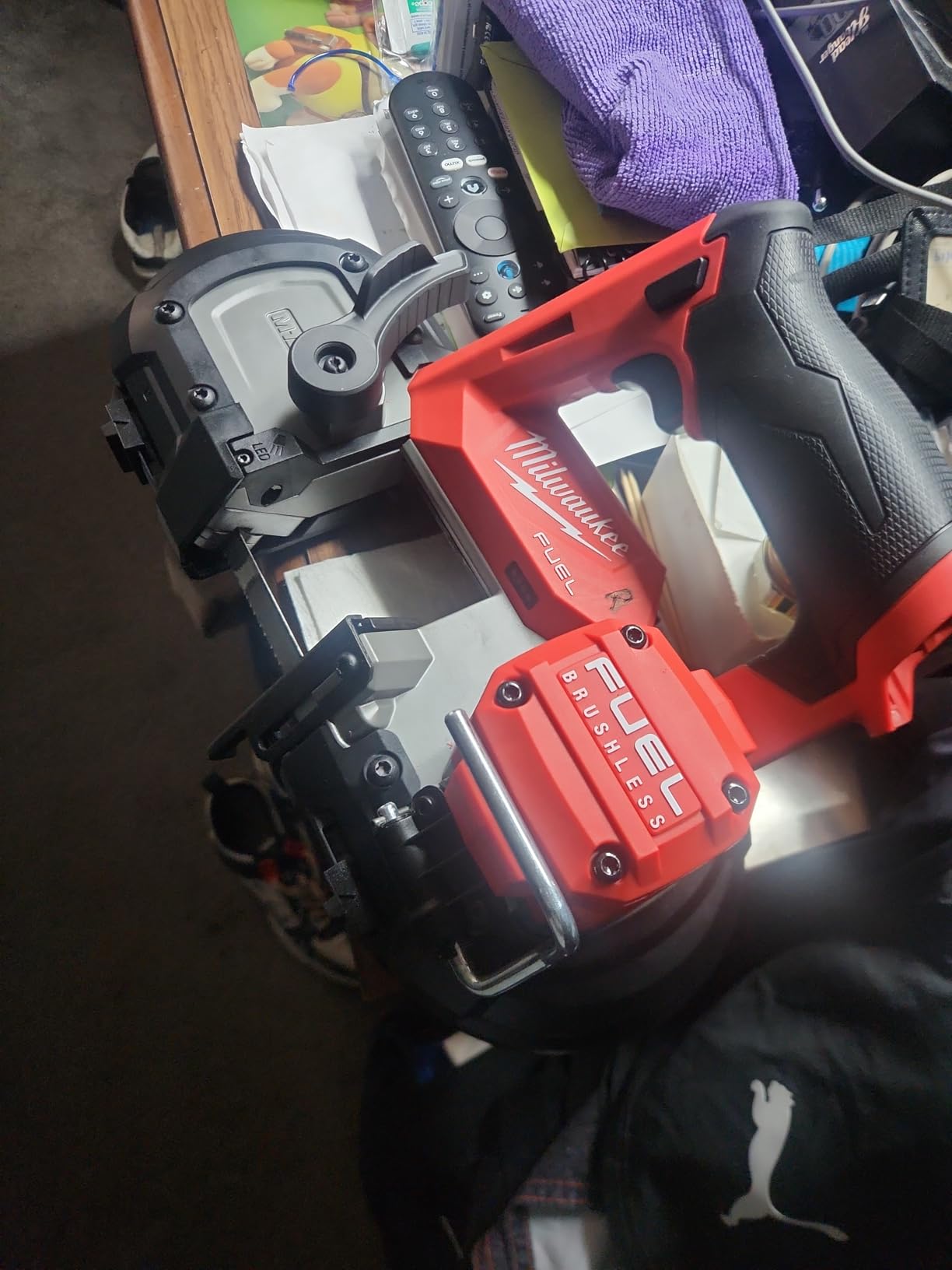
At 6 pounds this is the lightest saw in the roundup, and that weight is the entire reason to own it. Overhead work, in a crawl space or on a ladder is where a 12 or 15 pound saw becomes a liability, and at six pounds this one stays controllable in positions a bigger saw simply cannot reach.
The 2.5 inch throat depth and width capacity is deep for a saw this size, so it handles more pipe than the class suggests. The brushless M12 FUEL motor cuts 1-5/8 inch and 13 gauge fence posts and all-thread quickly.
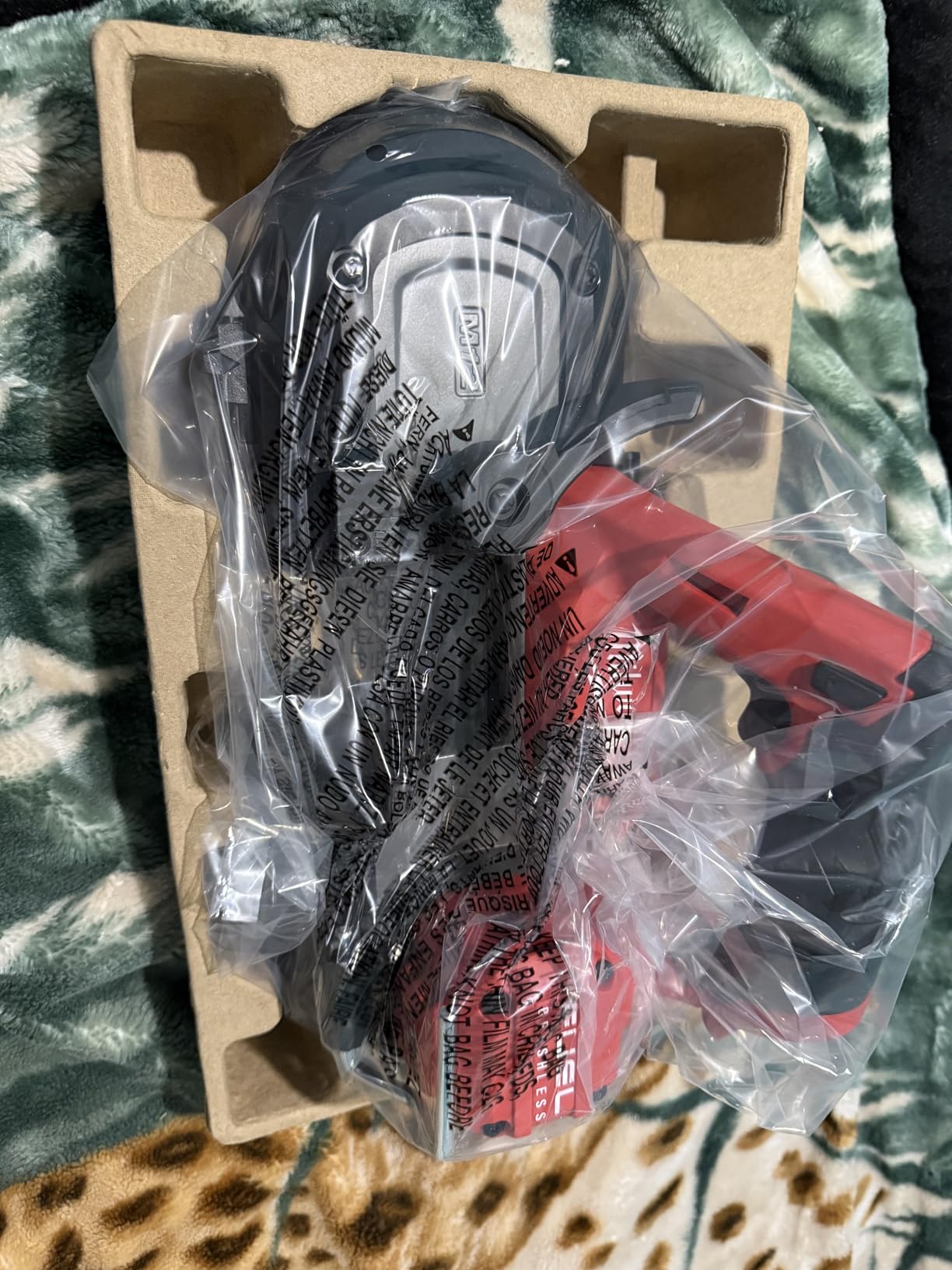
The reinforced nylon housing and 5 year warranty back up the durability claim, and the integrated work light plus hanging hook are small conveniences you notice on a dark job. Replacement blades are harder to source than full-size 5 inch blades, which is the practical catch.
Two behaviors to know before you buy
Start the blade before you touch it to the material, or it will hang. And under heavy load it drains the battery faster and trips the overload protector, which interrupts a cut partway through. Both are quirks of the design rather than defects, but they change how you plan a job.
Where it falls short
There is no variable speed control despite the electronic speed specification, so you get one cutting speed and no fine adjustment on thin material. It is also bulkier and heavier than the older brushed M12 band saw, which cuts into the compact advantage that made the M12 famous.
11. Bosch GCB18V-2N – Best for Tight Spaces
BOSCH GCB18V-2N 18V Compact Band Saw (Bare Tool)
2-1/2 in capacity
7.3 pounds
18V brushless
Tool-free blade change
5 year warranty
+ The Good
- Only 7.3 pounds and built for overhead and tight-space work
- Tool-free blade change and tool-free blade guard
- Centered handle plus soft-grip main handle for control
- LED light illuminates the cut line
- The Bad
- Only 2-1/2 inch cutting capacity
- Bare tool so battery and charger are sold separately
- No variable speed dial listed
This is one of the two smallest saws in the roundup, with 2-1/2 inch capacity at 7.3 pounds, and Bosch built the housing to be up to 60 percent lighter and 40 percent more compact than a standard deep cut band saw. That is the whole pitch: it goes where heavier tools will not.
Tool-free blade change and a tool-free blade guard are genuinely useful, and the centered handle with an enhanced soft-grip main handle gives you control in a position where you have almost none. The LED illuminates the cut line for accuracy in tight spots.
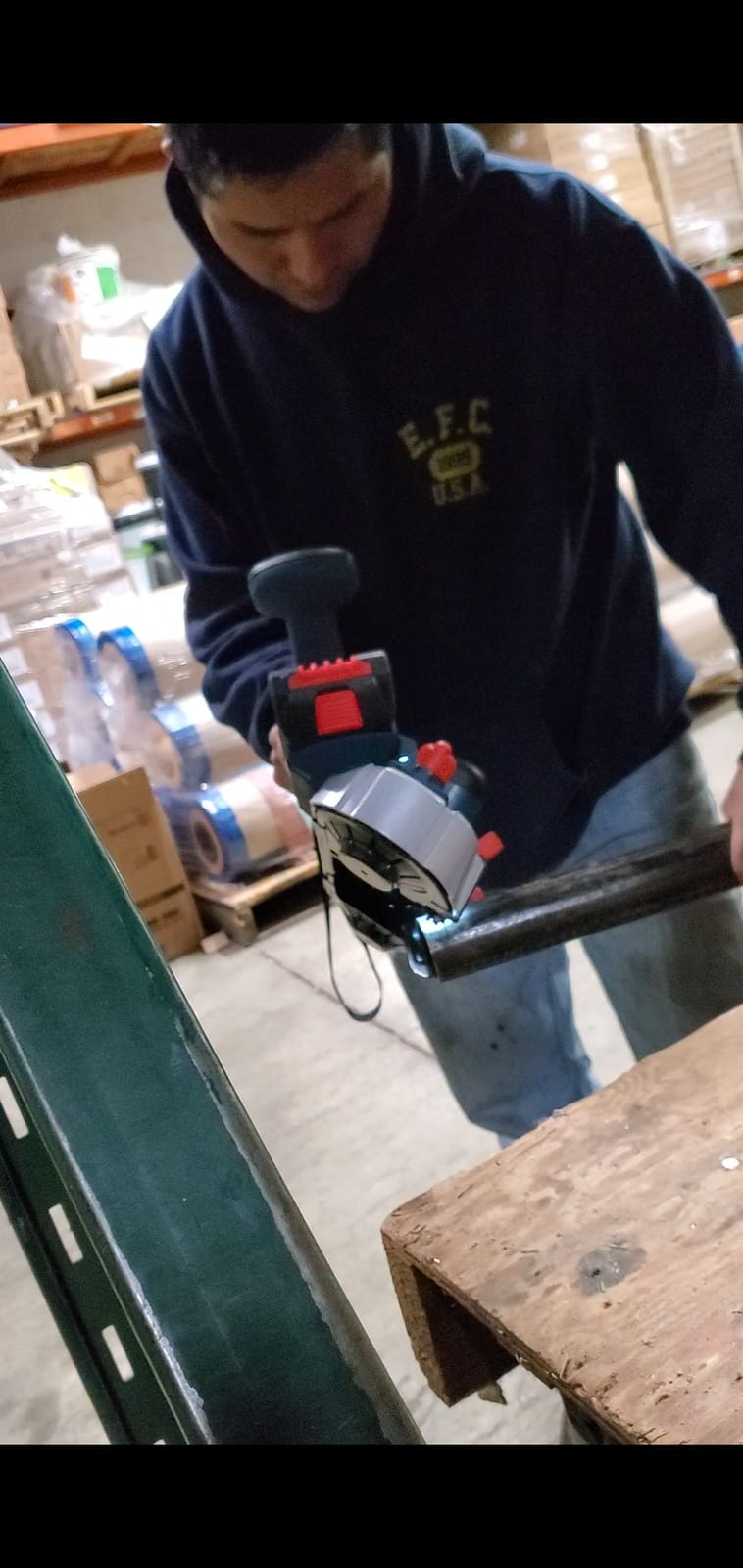
Forum users report that guards needing two Philips screws to remove get lost on a jobsite. This model answers that directly with the tool-free guard, and the rugged aluminum base is built to survive being set down on concrete.
When the compact size pays off
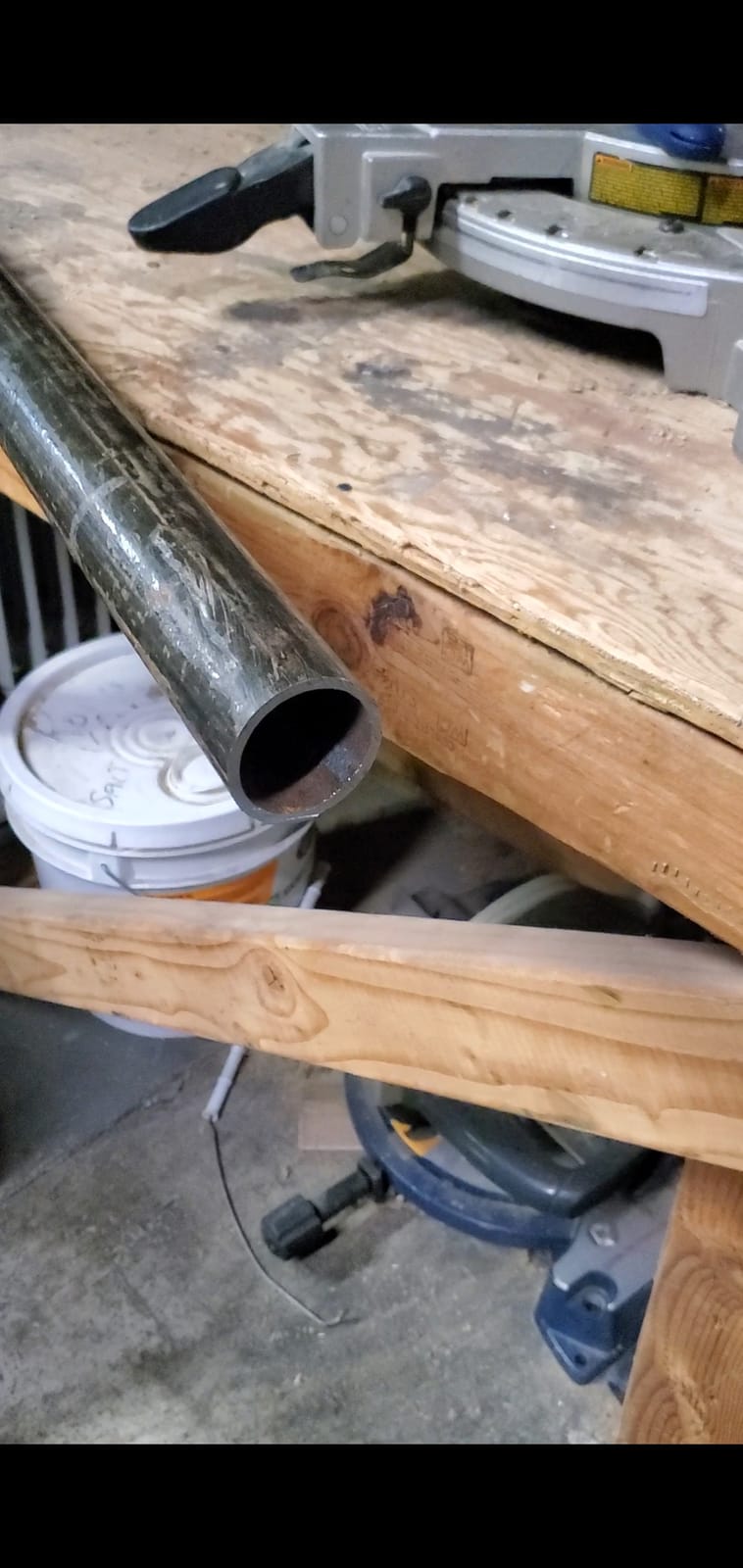
Reach for this when the material is conduit, small unistrut, thin-wall tube or light structural pieces and the working envelope is the problem, not the material. Bosch rates its 18V brushless motor as producing clean cuts with fewer sparks and little rework for burrs or temper color.
Where it falls short
The 2-1/2 inch capacity is tied for the smallest here, so solid bar and heavy structural work is out of scope. It is a bare tool, so packs and a charger are extra, and no variable speed dial is listed, which limits control on thin material.
How We Picked: Methodology and Scoring
We compared the eleven saws in this roundup on five things: stated cutting capacity, blade speed range and how finely it is controlled, tool weight and balance, the blade change and tensioning mechanism, and the consistency of real owner feedback at the stated rating.
Capacity is the first filter because it decides what you can cut at all. Below 3 inches of capacity and you are limited to conduit and light tubing. At 5 inches you reach structural material and pipe. We then weighed speed control, because a wide variable range separates a saw you can tune to a material from one you simply run.
Weight mattered more than expected. Saw feedback across the group repeatedly praised light saws for overhead and awkward work, and criticised heavy ones for the same reason, so two of our picks are chosen specifically for being light. Finally, every pick includes a factory blade, and factory blades are the single most criticized component across this category, so we weighted how easy it is to source a replacement.
How to Choose a Portable Band Saw for Metal Cutting
Start with capacity, because everything else is negotiable and this is not. Below about 3 inches means conduit, small tubing and light structural. Near 3-3/8 inches covers threaded rod, unistrut and standard pipe. At 4-3/4 to 5 inches you can break down structural material and round pipe that most other handheld tools will not touch.
Next decide corded or cordless. A cordless saw wins wherever there is no outlet, and a 10 amp corded saw wins on sustained heavy cutting. If you already own packs and chargers for a platform, that platform usually decides for you, which is why five of the picks here are battery tools.
On corded amperage, a 10 amp motor is the usual answer for stock up to roughly 3 inch steel pipe, and going above that only matters if you regularly cut solid 3 inch or thicker material. Below that size, the blade matters more than the amps.
Then check weight. Under 8 pounds suits overhead and ladder work. Between 12 and 15 pounds is fine for two-handed shop and jobsite cutting but tiring above your head. Over 20 pounds and you are carrying a machine, not wielding one.
Portable Band Saw Blades and TPI by Material
For mild steel, rebar, angle iron and square tube, run 10-14 TPI bi-metal. For thin-wall pipe, conduit and sheet, go finer at 18-24 TPI so the teeth have material to land in instead of shattering the edge. For stainless, stay around 14-18 TPI and keep the speed low.
Aluminum is the one people get wrong. Cutting 6061 dry with a steel blade causes the blade to stick and gum up, so use a dedicated aluminum blade and pick a speed well below what you would use on steel. And let the saw’s weight do the work, because pushing down wears blades and motors far faster than the cut needs.
Blades are consumables, not accessories. Cutting solid bar dulls a blade quickly, so plan on replacements, and note that several saws here use the same 44-7/8 inch blade length, which means one blade stock covers multiple saws.
Portable Band Saw Safety Tips
Keep both hands on the tool where the manufacturer provides a second handle, and never work a band saw one-handed unless the model is specifically designed and rated for it. Keep the blade guard installed and the material shoe pressed flat against the work before the blade touches metal.
Always start the blade at full speed before you make contact, and let the saw’s own weight feed the cut instead of pushing. Support thin-wall tube so it cannot pinch the blade, and clamp the material when you cut overhead or vertically.
If you plan to mount any of these saws in a stand, add a trigger lock or foot switch, since several models here do not include one. Wear eye protection, and expect a broken band to stop rather than fly, but a loose guard is what turns a broken blade into a projectile.
Frequently Asked Questions
What is the best portable metal cutting bandsaw?
The DEWALT 20V MAX DCS374B is our top pick for most people, offering 5 inch cutting capacity, a brushless motor, variable speed and a tool-less blade change lever. Corded tradespeople who cut heavy steel daily often prefer the DEWALT DWM120K, and buyers on a tight budget get more cutting capacity per dollar from the WEN 94396.
Can I use a band saw to cut metal?
Yes. A portable band saw is a metal-cutting machine first, running a continuous loop of toothed blade around two wheels at speeds measured in feet per minute. Fit it with a bi-metal blade and it cuts steel, stainless, aluminum, copper and plastic cleanly, with almost no burr and no kerf waste.
What type of blade is best for cutting metal in a bandsaw?
A bi-metal blade is the standard for metal. Use 10-14 TPI for mild steel, rebar and angle iron, 18-24 TPI for thin-wall pipe, conduit and sheet metal, and a dedicated aluminum blade for non-ferrous work, since cutting aluminum dry with a steel blade makes it stick.
How deep can a portable band saw cut?
It depends on the class of saw. Subcompact models cut about 2 to 2-1/2 inches, compact cordless saws around 3-3/8 to 4-3/4 inches, and deep cut models reach 5 inches on round or rectangular material. Installing a swiveling workbench base reduces capacity to roughly 4 inches.
Can a portable band saw cut curves?
No. A handheld band saw is a straight-cut machine, because feeding the workpiece sideways into a moving blade is unsafe. For curves, bevels or compound angles you need a benchtop band saw, a jobsite saw with a mitering head, or a chop saw. The swiveling bases on some picks only angle the workpiece, they do not change the cut direction.
What is the best speed for a bandsaw to cut metal?
Match the speed to the material, and err slow. Start on the lower settings for hard alloys and stainless, move up for mild steel, and use the top setting for galvanized pipe. Wide-range controls from about 100 to 400 feet per minute let you start slow until the teeth engage, then open the cut up.
Conclusion
The best portable band saws for metal cutting come down to capacity, control and how you work. For most people the DEWALT 20V MAX DCS374B pairs the biggest cordless capacity with a brushless motor and quick blade changes, and it is our pick for 2026. If you cut heavy steel every day, the DEWALT DWM120K handles it with less fuss.
Budget buyers get more metal per dollar from the WEN 94396, and anyone who needs square repeatable cuts should look hard at the swiveling base models like the VEVOR. Check the battery platform you already own, fit a proper metal blade, and let the saw’s weight do the cutting.