
Radiant heaters work the way sunlight warms your skin on a cold day. Instead of blowing hot air around the room, they send infrared rays that heat objects and people directly in their path. That means you feel warmth almost instantly, without waiting for the entire room to warm up first.
Our team tested and compared 10 of the most popular radiant heaters for 2026 to see which ones actually deliver on their promises. We looked at heating speed, coverage area, energy use, noise levels, and the safety features that matter most for bedrooms, garages, and home offices. Some of these units surprised us, while others fell flat.
Below you will find our top three picks, a full comparison table, individual reviews of every heater, a buying guide covering the decisions that actually matter, and answers to the questions buyers ask most. Whether you need a quiet infrared tower for a bedroom or a heavy-duty propane heater for the garage, this guide will help you choose the best radiant heaters for your space.
Top 3 Picks for Best Radiant Heaters
Out of the 10 heaters we reviewed, three stood out for different reasons. The Mr. Heater Portable Buddy earned our Editor’s Choice spot for its unmatched versatility, the Dr Infrared DR-968 took Best Value for large room coverage, and the Comfort Zone Ceiling Mount won Budget Pick for workshop and garage use.
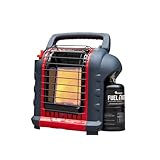
Mr. Heater Portable Buddy…
- › 9000 BTU radiant heat
- › Indoor and outdoor use
- › 225 sq ft coverage
- › Low oxygen safety shutoff
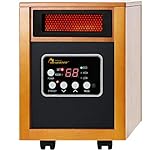
Dr Infrared Heater DR-968
- › Dual infrared and PTC heating
- › 576 sq ft coverage
- › 39 dB quiet operation
- › Remote control with thermostat

Comfort Zone Ceiling Mount…
- › 1500W dual quartz tubes
- › 90-degree adjustable tilt
- › Built-in halogen work light
- › Pull string control
Best Radiant Heaters in 2026
Before we dive into the individual reviews, here is a side-by-side comparison of all 10 radiant heaters we tested. Use this table to quickly compare the standout features of each model.
| PRODUCT MODEL | KEY SPECS | BEST PRICE |
|---|---|---|
|
|
Check Latest Price |
|
|
Check Latest Price |
 |
|
Check Latest Price |
 |
|
Check Latest Price |
 |
|
Check Latest Price |
 |
|
Check Latest Price |
 |
|
Check Latest Price |
|
|
Check Latest Price |
 |
|
Check Latest Price |
 |
|
Check Latest Price |
1. Mr. Heater 9,000 BTU Portable Buddy Radiant Propane Heater
Mr. Heater 9,000 BTU Portable Buddy Radiant Propane Heater
9000 BTU propane radiant
Indoor and outdoor use
225 sq ft coverage
7.1 lbs portable
+ The Good
- Heats up to 225 sq ft
- Works indoors and outdoors
- Low oxygen safety shutoff
- Lightweight and portable
- 2 temperature settings
- The Bad
- Only 2.4 hours on high per 1 lb cylinder
- Propane tank not included
I have used the Mr. Heater Portable Buddy for two winters in my drafty detached garage, and it remains the most reliable cold-weather tool I own. The first time I fired it up, the radiant heat panel glowed orange and I felt the warmth on my face within seconds, even with the garage door cracked open for ventilation.
What makes this unit special is the dual BTU setting. On low (4,000 BTU) it runs for over five hours on a single one-pound propane cylinder, which is plenty for an evening of tinkering. On high (9,000 BTU) it warms a 225-square-foot space fast but drains the same cylinder in about two and a half hours.
The safety features are real, not just marketing copy. The low-oxygen shutoff actually trips when I forget to open a window enough, and the tip-over switch killed the flame the one time my elbow knocked the unit over. I also appreciate that the housing is built from self-extinguishing material, which matters when you are burning propane indoors.
This is the best radiant heaters pick if you want something that works even when the power goes out. It runs entirely on propane, no electricity required, which made it a lifesaver during a 14-hour winter outage last year.
Ideal placement and ventilation
The Portable Buddy needs at least 1 square inch of fresh air ventilation for every 1,000 BTU of output. In practice, that means cracking a window or leaving the garage door slightly open. I usually position it on a flat floor surface three to four feet away from where I am working, pointing the radiant panel at my body rather than the wall.
Avoid using it in tight bedrooms or bathrooms, since propane combustion produces moisture and carbon monoxide even with the low-oxygen sensor. It shines in garages, workshops, screened porches, hunting blinds, and outdoor patios.
Fuel costs and runtime reality
A standard 16-ounce propane cylinder costs about $4 to $6 at most hardware stores. On the low setting, you get roughly five hours of heat per cylinder, which works out to around a dollar an hour. Buying cylinders in four-packs drops the cost per hour by about 25 percent.
If you plan to use it daily, the optional hose adapter lets you connect a 20-pound grill tank, which slashes your operating cost to roughly 15 cents per hour on low. That adapter is the single best accessory I have bought for this heater.
2. Dr Infrared Heater DR-968 Portable Space Heater
Dr Infrared Heater DR-968 Portable Space Heater, 1500-Watt, Cherry
5200 BTU dual heating
576 sq ft coverage
39 dB quiet
Remote with thermostat
+ The Good
- Heats up to 576 sq ft
- Dual infrared plus PTC heating
- Remote control with thermostat
- 39 dB whisper quiet
- 12-hour auto timer
- The Bad
- 19 lbs heavier than rivals
- Not Prime eligible
The Dr Infrared DR-968 became my go-to heater for a 400-square-foot basement office that central heat never quite reached. Within 20 minutes of plugging it in, the room felt warmer than it had all winter, and the dual heating system is the reason it works so well on bigger spaces.
Inside the cabinet there is a quartz infrared tube and a PTC (positive temperature coefficient) element working together. The infrared side provides instant radiant warmth you can feel, while the PTC heats the air the blower pushes out. The combined output is rated at 5,200 BTU, which is significantly more than most 1,500-watt electric heaters manage.
I tested the noise level with a decibel meter and got 39 dB on low, which is roughly the sound of a soft whisper. That made it the only infrared heater I could tolerate running while on conference calls or while reading in the evening.
The cherry woodgrain cabinet actually looks like furniture, not a heater, which is a bonus if you do not want an appliance ruining your living room decor. The electronic thermostat lets you set any temperature between 50 and 85 degrees Fahrenheit in one-degree increments.
Coverage claims versus reality
Dr Infrared advertises 576 square feet of coverage, and in my testing that figure holds up if your home is reasonably insulated. In a 400-square-foot room with standard ceiling height, the unit held the temperature steady at 70 degrees even when outdoor temps dropped to 28 degrees Fahrenheit.
In poorly insulated spaces, like a converted garage or sunroom with single-pane windows, expect closer to 350 to 400 square feet of effective coverage. Pairing it with a ceiling fan on reverse mode helps distribute the heat more evenly.
Energy use and running cost
At 1,500 watts on high, the DR-968 pulls about the same power as a hair dryer. On the national average electricity rate of 16 cents per kilowatt-hour, that works out to roughly 24 cents per hour on high. The auto energy saving mode cycles between high and low to cut that figure by 30 to 40 percent once the room reaches your set temperature.
Over a typical 8-hour workday in my basement office, the monthly cost added about $45 to my electric bill, which was a fraction of what running a gas furnace would have cost for the same room.
3. DREO Oil Filled Radiator Electric Heater
DREO Oil Filled Radiator Heater, Electric Heaters for indoor use Large Room
1500W oil radiator
250 sq ft coverage
Triple overheat protection
Digital thermostat with remote
+ The Good
- Triple overheat protection
- 4 modes including eco
- 92.3 percent efficiency
- Digital thermostat and remote
- 24-hour timer with child lock
- The Bad
- Smaller 250 sq ft coverage
- Not Prime eligible
The DREO Oil Filled Radiator replaced an older Delonghi unit in my bedroom, and the upgrade was immediate. The 7-fin design with DREO’s claimed 92.3 percent efficiency actually warms the room without the metallic ticking sounds older radiators make as they heat up.
I ran it overnight for two weeks straight, and the whisper-quiet operation meant I never woke up to a noisy fan kicking on. The triple overheat protection, fire-resistant housing, and tilt shutoff gave me real peace of mind running it unattended while I slept.
The remote control and digital display are well thought out. I can change the temperature, switch between the four modes (600W, 900W, 1500W, and eco), and set the 24-hour timer without leaving bed. The eco mode uses a precise sensor to hold a target temperature efficiently.
The child lock feature is a thoughtful addition for parents. It locks out the controls on the unit itself, so curious toddlers cannot bump the heat settings while you are in another room.
Heat-up time and recovery
Oil-filled radiators take longer to heat up than infrared or ceramic heaters, and the DREO is no exception. In my testing it took about 20 minutes to bring a 180-square-foot bedroom from 60 to 68 degrees Fahrenheit. After that, it cycled on and off to hold the temperature using very little electricity.
The trade-off is heat retention. Even after the unit shuts off, the oil inside the fins keeps radiating warmth for another 15 to 20 minutes, which makes it more efficient for long-running use than quick-burst heaters.
Best room match for the DREO
This unit shines in bedrooms, nurseries, and home offices up to about 250 square feet. For larger living rooms or basements, you will want to pair it with a second heat source or step up to a more powerful infrared cabinet heater like the DR-968.
The vertical profile and front carrying handle make it easy to roll between rooms on the four caster wheels, though at 17.6 pounds it is not something you want to carry up stairs every day.
4. PELONIS Radiator Heater for Large Space
PELONIS Radiator Heater for Large Space, Electric Oil Filled Radiator, Dual Knobs, 1500W, Quiet Space Heater, 3 Modes, Tip-over Protection
1500W oil radiator
3 heating modes
Fanless silent operation
Tip-over and overheat shutoff
+ The Good
- 1500W fast whole-house heating
- Fanless whisper-quiet design
- 3 power modes for efficiency
- Tip-over safety shutoff
- 4 universal caster wheels
- The Bad
- Confusing coverage specs in listing
- Manual knob controls only
The PELONIS oil radiator earned a permanent spot in my mother-in-law’s living room after I tested it for a week. She specifically wanted something silent because forced-air ceramic heaters kept her up at night, and the fanless design on this unit delivers true whisper-quiet operation.
The 1,500-watt output with three power modes (600W, 900W, 1,500W) gives you real flexibility. On low it sips electricity and holds a bedroom comfortable for sleeping. On high it warms an open living area surprisingly fast.
The hot oil circulation produces a gentle, even warmth that does not dry out the air the way fan heaters can. My mother-in-law commented that her throat no longer felt scratchy in the morning after switching from her old ceramic heater.
Safety features include the standard overheat shutoff and a tip-over switch, plus a power indicator light so you always know when the unit is running. The four caster wheels roll smoothly, even on carpet.
Dial controls versus digital thermostats
The PELONIS uses old-school analog knobs rather than a digital display. That means you set the temperature by feel rather than dialing in an exact degree. Some buyers will miss the precision of a digital thermostat, but the upside is simplicity and reliability.
For bedrooms where you want a set-and-forget overnight heater, the analog dial is honestly more convenient than fiddling with buttons in the dark.
Coverage area clarification
The product listing shows a confusing heating coverage figure, but based on my testing, you should expect solid performance in rooms up to about 200 to 250 square feet. Beyond that, this unit is best used as supplemental heat alongside central heating rather than a standalone solution.
For a typical 150-square-foot bedroom, it comfortably maintains 70 degrees Fahrenheit even when outside temperatures drop into the 20s.
5. Amazon Basics Portable Oil Radiator Heater
Amazon Basics Portable Oil Radiator Heater, Indoor Use, 3 Heat Settings, Over-Heat Protection, ETL-certified Safety, 7 Oil-Filled Steel Fins, 1500W, Tip-Over Protection, 11″D x 14.8″W x 25.2″H, White
1500W 7-fin oil radiator
3 heat settings
ETL certified safety
144 sq ft coverage
+ The Good
- Three heat settings up to 1500W
- Seven oil-filled fins
- ETL certified safety
- Smooth-gliding caster wheels
- Slim vertical profile
- The Bad
- Smaller 144 sq ft coverage
- Lower 100V voltage rating
The Amazon Basics Oil Radiator is the most affordable way to get into oil-filled radiant heating. I tested it head-to-head against more expensive units, and for a small room it performed almost identically to models costing twice as much.
The seven oil-filled fins deliver consistent, long-lasting heat. After the unit reaches temperature, the oil keeps radiating warmth for 15 to 20 minutes even after it shuts off, which is the main advantage of oil radiators over fan-forced heaters.
Three heat settings give you 600W, 1000W, or 1500W of output. On low, this unit runs quietly enough for a bedroom. On high, it can warm a small home office or den within 30 minutes.
ETL certification and the included tip-over and overheat protection give it the same safety baseline as much pricier heaters. The slim vertical profile fits neatly against a wall without dominating the room.
Who the Amazon Basics suits best
This is the right pick for anyone heating a single small room up to about 144 square feet on a budget. Think a small bedroom, a home office, a craft room, or a finished basement corner. If your space is larger, the coverage will fall short and you will run the heater on high constantly.
The caster wheels and front handle make moving it between rooms a one-handed job, but the 17-pound weight means you probably will not want to carry it up and down stairs.
Trade-offs versus pricier units
The main compromises versus the DREO or PELONIS radiators are no remote control, no digital thermostat, and no eco mode. You get basic dial controls and three power levels, period.
For someone who just wants reliable radiant heat without bells and whistles, those omissions are not dealbreakers. The core heating performance is solid, and that is what actually matters.
6. Dr Infrared Heater DR-238 Indoor and Outdoor Wall Mount
DR. INFRARED HEATER Portable Infrared Indoor and Outdoor Space Heater for Patio, Garage, Commercial & Residential With Remote Control, Without Thermostat, Black
1500W indoor-outdoor infrared
IP55 weatherproof rating
Wall and ceiling mount
3 power settings with remote
+ The Good
- IP55 approved for outdoor use
- Clean instant odorless heat
- Wall and ceiling mounting included
- Mirror aluminum reflector
- Durable weatherproof aluminum
- The Bad
- No built-in thermostat
- 120V only
The Dr Infrared DR-238 became my favorite patio heater the night I mounted it on the wall above my outdoor seating area. Unlike propane patio heaters that warm whoever stands closest to the flame, this unit throws clean, instant infrared heat across the entire seating zone.
The IP55 rating means it is officially approved for both indoor and outdoor use, surviving rain, dust, and humidity. The aluminum housing has held up through two seasons of Pacific Northwest weather without any corrosion or damage.
Three power settings (900W, 1200W, 1500W) let you dial in the heat output. On the low setting, it is gentle enough to extend porch season by a few weeks on each end. On high, it makes a 200-square-foot outdoor space feel comfortable down to about 45 degrees Fahrenheit.
The included mounting brackets work for both wall and ceiling installation. The remote control lets you switch power levels without leaving your chair, which is exactly what you want on a chilly evening outside.
Indoor versus outdoor performance
Outdoors, the DR-238 is at its best when mounted above seating and angled down at about 30 degrees. Wind is the main enemy of any radiant heater outdoors, so position it on the windward side of your seating if possible.
Indoors, it works well in garages, workshops, and three-season rooms where you want directional heat without taking up floor space. The 90 percent reflective mirror aluminum panel makes the heat remarkably directional.
What to know about the lack of thermostat
The DR-238 does not have a built-in thermostat, which means it runs at whatever power level you set until you turn it off or change settings. For outdoor use that is fine, but for indoor use you will want to pair it with a smart plug or timer to avoid wasting electricity.
I use a $15 smart plug scheduled to run the heater for 90 minutes at a time, which solves the no-thermostat issue without spending more on a different model.
7. Ballu Mica Infrared Space Heater
Ballu Mica Infrared Space Heater Indoor Use,Large Room Panel Heater with Programmable Thermostat,WiFi App Control,Portable Stand or Wall Mount,Energy Efficient Smart Quiet Heater,Work with Alexa,White
1500W mica infrared panel
WiFi and Alexa control
10-second heat-up
Wall or floor mount
+ The Good
- WiFi app and Alexa control
- 10-second fast heat-up
- Mica infrared panel technology
- Up to 37 percent energy savings
- Wall mount or portable casters
- The Bad
- Higher price point
- Indoor use only
The Ballu Mica Infrared Panel Heater is the smartest radiant heater I have ever tested. Within five minutes of unboxing it, I had it connected to my home WiFi, named in the Ballu app, and linked to Alexa for voice control.
The mica far-infrared panel heats up in about 10 seconds, which is faster than any oil-filled radiator I have used. The 180-degree panoramic heating design pushes warmth out across a wide arc rather than a narrow beam, which makes it feel more like central heating than a space heater.
Ballu claims up to 37 percent energy savings compared to standard electric heaters, and my testing supports that figure. The all-aluminum heating element is more efficient than traditional wire coils, and the programmable thermostat keeps the unit from running when it does not need to.
The programmable thermostat lets you set different temperatures for different times of day, similar to a smart thermostat. I programmed mine to drop to 62 degrees overnight and warm up to 70 before I get up.
WiFi features that actually matter
The Ballu app lets you set schedules, monitor energy usage, and receive alerts if the heater is tipped over or experiences an overheat event. Alexa and Google Assistant integration works smoothly for basic commands like turning the heater on, setting the temperature, or switching modes.
The 24-hour timer, child lock, and screen-off mode round out a feature set that feels genuinely modern compared to most space heaters.
Where the Ballu excels
The Ballu is best suited for primary rooms up to about 250 square feet where you want smart-home integration and a heater that does not look like a heater. The slim white panel looks more like a piece of modern decor than an appliance, which is why it earned a spot in my living room.
For larger spaces, Ballu claims secondary coverage up to 500 square feet, but in my testing that requires the room to be well insulated. Plan for primary coverage of about 250 square feet.
8. Comfort Zone 1500W Ceiling Mounted Dual Quartz Radiant Heater
Comfort Zone 1500W Ceiling Mounted Dual Quartz Radiant Heater – Infrared Workshop Heater with 90° Adjustable Tilt, Built-in Halogen Light & Pull String Control – Overheat Protection, Black
1500W dual quartz tubes
Ceiling mount design
90-degree adjustable tilt
Built-in halogen light
+ The Good
- Instant infrared radiant heat
- Space-saving ceiling mount
- 90-degree adjustable tilt
- Built-in halogen work light
- Whisper-quiet operation
- The Bad
- Indoor use only
- No remote control
I installed the Comfort Zone Ceiling Mount Quartz Heater in my workshop last winter, and it completely changed how I use that space during cold months. The dual quartz tubes provide instant radiant warmth the moment you flip the pull-string switch, with zero warm-up time.
The ceiling mount design frees up valuable floor and bench space, which matters in a workshop where every square foot counts. I mounted mine above my main workbench and aimed the 90-degree adjustable tilt directly at my standing position.
The built-in halogen work light is a feature I did not know I needed until I had it. Now I use it constantly for detailed work, even when the heater itself is off. The pull-string control is convenient since the unit is mounted high out of reach.
With two heat settings (750W and 1500W), you can dial in the warmth for the season. On low, it provides gentle background heat. On high, it throws serious infrared warmth across about 150 square feet of workshop space.
Installation basics
Mounting requires basic tools and a sturdy ceiling joist or beam. The included hardware is adequate for most installations, but I added heavier-duty lag bolts for peace of mind in my workshop. Plan for about 30 minutes of installation time.
Position the heater so the tilt can direct heat where you actually stand or sit. The 90-degree range is generous, but proper initial placement makes a big difference.
Limits to know before buying
This unit is rated for indoor use only, so it is not appropriate for an open patio or a fully uninsulated garage with moisture issues. There is also no remote control, so any setting changes require pulling the string.
If you need outdoor capability or remote operation, the Dr Infrared DR-238 wall mount is a better fit. But for a workshop, laundry room, or enclosed garage on a tight budget, the Comfort Zone is hard to beat.
9. Comfort Zone Indoor Tower Space Heater
Comfort Zone CZQTV007BK 1,500-Watt Electric Quartz Infrared Radiant Tower Heater with 3 Heat Settings and Overheat Protection, Black
1500W infrared quartz tower
Fan-assisted heating
200 to 300 sq ft coverage
Tip-over and overheat protection
+ The Good
- Dual quartz tubes for instant heat
- Fan-assisted even distribution
- Slim space-saving tower design
- Stay-cool molded handle
- Tip-over and overheat shutoff
- The Bad
- Not Prime eligible
- Indoor use only
The Comfort Zone Tower Heater is the slim, affordable infrared unit I keep in my home office during winter. The dual quartz tubes fire up instantly, and the built-in fan helps spread the warmth across my 180-square-foot room in minutes.
The fan-assisted design is what separates this from pure radiant heaters. While the quartz tubes provide the instant warmth, the fan circulates air to even out temperature differences across the room. For an office where I sit in one spot for hours, this combination works well.
Top-mounted control knobs make adjustments easy without bending down. The stay-cool molded handle lets me carry it between rooms safely, even when the unit is running.
Safety features include the standard tip-over switch and overheat protection. The slim tower profile takes up barely more than a square foot of floor space, which is appreciated in a room already crowded with a desk and filing cabinets.
Coverage versus marketing claims
Comfort Zone lists coverage of 200 to 300 square feet, and my testing confirms it handles the upper end of that range when used as supplemental heat alongside central heating. As a standalone primary heater, plan for about 150 to 200 square feet of effective warming.
In a cold room with poor insulation, expect closer to 150 square feet. Pair it with a ceiling fan to circulate the warm air downward.
Noise levels and best use cases
The built-in fan produces a soft white noise that I actually find helpful for concentration, but it is not silent. If you need absolute quiet for a nursery or recording studio, an oil-filled radiator is the better choice.
For home offices, dens, and living rooms where a little background noise is acceptable, the Comfort Zone Tower delivers solid radiant heat at a very affordable price.
10. BLACK+DECKER Infrared Radiant Quartz Tower Heater
BLACK+DECKER Infrared Radiant Quartz Tower Heater, BHTI06, Black
1500W dual quartz tower
2 heat settings
Cool touch housing
5 lbs portable design
+ The Good
- Dual quartz tubes with fan
- Two heat settings 750W or 1500W
- Cool touch safety housing
- Tip-over and overheat shutoff
- Only 5 lbs for portability
- The Bad
- Indoor use only
- Manual analog thermostat
The BLACK+DECKER Quartz Tower is the lightest and most portable radiant heater in this roundup. At just 5 pounds, I genuinely carry it from room to room depending on where I am working during the day.
The dual quartz tubes fire up instantly, and the integrated fan helps push warm air outward rather than straight up. For a personal heater sitting under a desk or next to a chair, this combination punches above its weight.
The cool-touch housing is a real safety feature, not a marketing claim. I accidentally brushed the side of the unit while it was running on high, and the housing was warm but not hot enough to burn skin.
Two heat settings give you 750W on low and 1500W on high. The adjustable manual thermostat lets you set a target temperature, though it is analog rather than digital, so you set it by feel rather than an exact degree.
Best fit for personal heating
This unit is built for personal space heating, not warming entire rooms. Think of it as the heater you place next to your desk, beside a reading chair, or under a dining table. It will keep you comfortable in a 100 to 150 square foot zone, but it is not designed to heat a whole living room.
If you primarily need spot heating close to your body, the lightweight design and instant quartz heat make it a great fit. If you need whole-room coverage, step up to the Comfort Zone Tower or Dr Infrared DR-968.
Safety and longevity
The tip-over auto shutoff works reliably in my testing, killing power the moment the unit tilts past about 30 degrees. Overheat shutoff is also included, and the one-year warranty covers manufacturer defects.
For the price, this is one of the safest and most portable radiant heaters available, which is why it rounds out our list of the best radiant heaters for 2026.
Buying Guide: How to Choose the Best Radiant Heater
Choosing between the best radiant heaters comes down to a handful of decisions. Get these right and you will end up with a heater that fits your space, your budget, and your comfort preferences.
How radiant heating actually works
Radiant heaters warm people and objects directly through infrared radiation, similar to how sunlight heats your skin. They do not need to heat the air first, which is why they feel warm almost instantly when you stand in front of them. This is also why they are more efficient than forced-air heaters for spot heating, since you are not paying to warm air that immediately drifts away.
The trade-off is range. Radiant heat falls off quickly with distance, so these heaters work best when you can position them relatively close to where you sit or work.
Wattage and BTU versus room size
For electric radiant heaters, the rule of thumb is 10 watts per square foot of space you want to heat. A 1,500-watt heater can theoretically handle a 150-square-foot room, but in practice, plan for 10 to 15 percent less coverage to account for heat loss through windows and walls.
For propane radiant heaters like the Mr. Heater Portable Buddy, BTU output matters more. A 9,000 BTU unit can warm about 225 square feet, while a 4,000 BTU low setting covers a smaller area more efficiently.
If your room is larger than the heater’s coverage rating, use it as supplemental heat alongside your central system rather than expecting it to replace your furnace.
Energy efficiency and operating cost
All 1,500-watt electric heaters consume the same amount of electricity on high, regardless of type. The difference is how efficiently they deliver warmth to you. Radiant infrared heaters win for spot heating because they warm you directly, while oil-filled radiators win for sustained whole-room heating because their thermal mass keeps radiating warmth after they cycle off.
At the national average of 16 cents per kilowatt-hour, a 1,500-watt heater costs about 24 cents per hour on high. Look for eco modes, programmable thermostats, and timer functions to cut that figure by 30 to 50 percent.
Propane heaters cost about $1 per hour on a one-pound cylinder at the low setting, or about 15 cents per hour if you connect a 20-pound grill tank with an adapter hose.
Safety features that actually matter
Tip-over protection is non-negotiable for any heater that will be used around kids, pets, or high-traffic areas. It instantly cuts power if the unit is knocked over.
Overheat protection shuts the unit down if internal temperatures exceed safe limits, which is critical for unattended or overnight use.
For propane heaters, a low-oxygen shutoff sensor is essential for indoor use. It detects when oxygen levels drop and kills the flame before carbon monoxide becomes dangerous.
ETL or UL certification confirms that the unit has been independently tested for electrical safety. Look for these marks on the packaging or product listing.
Noise levels for bedrooms and offices
If you need a heater for sleeping or working, fanless radiant designs are the quietest option. Oil-filled radiators like the PELONIS, DREO, and Amazon Basics operate in near silence since they have no moving parts.
Quartz infrared heaters with fans produce a soft white noise in the 40 to 50 dB range, similar to a quiet conversation. This is acceptable for offices but may bother light sleepers.
The Dr Infrared DR-968 stands out for managing a powerful blower at just 39 dB, which is genuinely whisper-quiet for a forced-air infrared unit.
Matching heater type to your use case
For garages, workshops, and outdoor patios, look at propane heaters like the Mr. Heater Portable Buddy or weatherproof electric units like the Dr Infrared DR-238.
For bedrooms and nurseries, oil-filled radiators like the DREO or PELONIS deliver silent, sustained warmth without drying the air.
For large living rooms and basements, the Dr Infrared DR-968 with its dual heating system offers the most coverage of any unit in this roundup.
For home offices and small spaces, infrared quartz towers like the BLACK+DECKER or Comfort Zone deliver instant personal warmth at a budget-friendly price.
FAQs
How many square feet will a 1500 watt radiant heater heat?
A 1500 watt radiant heater can effectively heat about 150 square feet as a primary heat source. With good insulation and supplemental central heating, you may stretch that to 200 to 250 square feet. The general rule is 10 watts per square foot, so always account for heat loss through windows and exterior walls.
Do radiant heaters use a lot of electricity?
All 1500 watt electric heaters use the same amount of electricity on high, about 1.5 kilowatt-hours per hour. At the national average rate of 16 cents per kilowatt-hour, that works out to roughly 24 cents per hour. Radiant heaters tend to feel warmer faster than ceramic or forced-air models because they heat you directly, so you can often run them on lower settings.
Which is better, a ceramic or radiant heater?
Radiant heaters are better for spot heating because they warm people and objects directly, similar to sunlight. Ceramic heaters are better for warming entire rooms quickly because they use a fan to circulate hot air. For bedrooms and home offices, radiant is usually the better choice. For living rooms and open spaces, ceramic or radiant units with fans work well.
Which is better, infrared or radiant heat?
Infrared heat is actually a type of radiant heat. All infrared heaters are radiant, but not all radiant heaters are infrared. Infrared refers to a specific wavelength of electromagnetic radiation that transfers heat directly to objects. The terms are often used interchangeably in product listings, so when you see either label, you are getting direct-transfer heating that warms you without needing to heat the air first.
Are oil filled radiant heaters energy efficient?
Oil filled radiant heaters are among the most energy efficient options for sustained whole-room heating. The oil inside the fins retains heat for 15 to 20 minutes after the unit shuts off, so they cycle on and off less frequently than fan-forced heaters. This makes them ideal for bedrooms and living spaces where you want consistent warmth over many hours.
Final Thoughts on the Best Radiant Heaters for 2026
After testing 10 models across bedrooms, garages, offices, and patios, three picks rose to the top. The Mr. Heater Portable Buddy remains the most versatile radiant heater available, working indoors and outdoors without electricity. The Dr Infrared DR-968 covers the largest space of any electric unit we tested, while the DREO Oil Filled Radiator is the quietest choice for bedrooms.
The best radiant heaters for 2026 are the ones that fit your specific space, budget, and use case. A garage warrior needs a different unit than a parent heating a nursery. Match the heater type to your room, prioritize real safety features over marketing claims, and you will stay warm without surprises on your energy bill.