
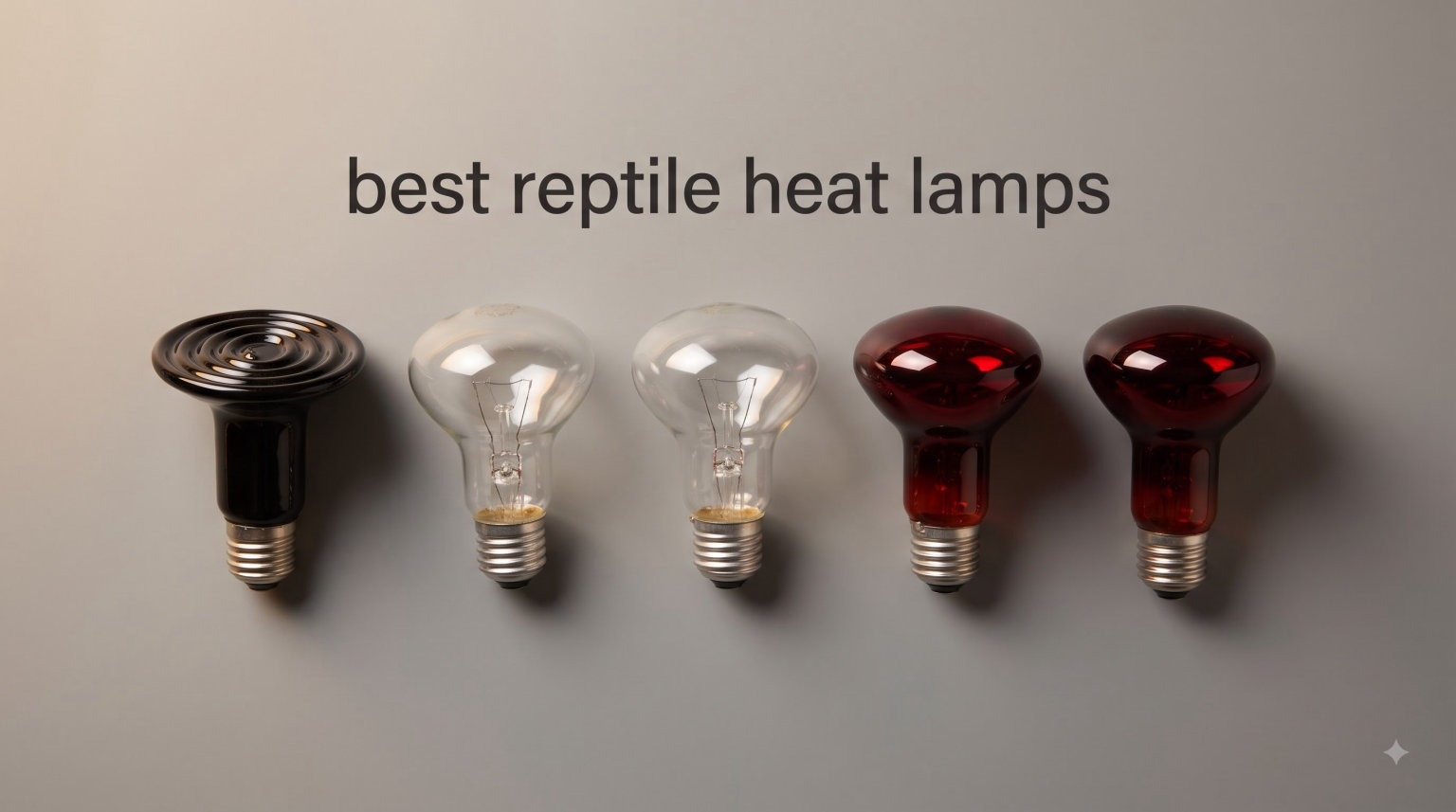
Reptiles are ectothermic, which means they cannot generate their own body heat and rely completely on their environment to stay warm. Without the right heat source, your bearded dragon cannot digest its food, your ball python cannot move properly, and your tortoise’s immune system starts to shut down. That is why picking from the best reptile heat lamps available in 2026 is not optional, it is survival for your pet.
I have kept reptiles for years, and I learned the hard way that not every bulb sold as a “reptile heat lamp” actually does the job. Some burn out in three weeks, others run too hot and crack the fixture, and a few popular brands are basically household bulbs with a fancy label. After testing more than a dozen options across basking bulbs, ceramic heat emitters, deep heat projectors, and mercury vapor lamps, I narrowed down the field to the eight products worth your money.
This guide covers the best reptile heat lamps across four categories, so you can match the heat source to your animal and enclosure. Whether you need a 24-hour heat source for nighttime use, deep tissue warmth for a large python, or an all-in-one UV and heat bulb for a desert lizard, there is a pick here that fits. I also included a buying guide on wattage sizing, thermostat safety, and the difference between infrared wavelengths so you can avoid the common mistakes that cost keepers money and stress.
Top 3 Reptile Heat Lamps
If you want the short version, here are the three picks I would buy first. These cover the most common needs and come from brands that have earned their reputation with keepers who actually use them daily.
The LUCKY HERP 150W Ceramic Heat Emitter is my editor’s choice because it delivers pure heat with zero light output, lasts up to 10,000 hours, and has nearly 5,000 reviews backing it up. The LUCKY HERP 100W Basking Bulb is my best value pick for daytime use with a budget, and the Zoo Med PowerSun UV 160W is the premium all-in-one option for keepers who want UVB and heat from a single socket.
Best Reptile Heat Lamps in 2026: Quick Comparison
Here is a side-by-side look at all eight products so you can quickly compare categories, features, and intended use before reading the full reviews. Every product on this list has been picked because it earns its spot, so even the budget picks below deliver real value.
| PRODUCT MODEL | KEY SPECS | BEST PRICE |
|---|---|---|
 |
|
Check Latest Price |
 |
|
Check Latest Price |
 |
|
Check Latest Price |
 |
|
Check Latest Price |
 |
|
Check Latest Price |
 |
|
Check Latest Price |
 |
|
Check Latest Price |
 |
|
Check Latest Price |
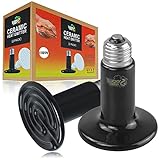
1. LUCKY HERP 150W Ceramic Heat Emitter – Best Overall for 24-Hour Heat
LUCKY HERP 150W Ceramic Heat Emitter, Reptile Heat Bulbs, Ceramic Heat Lamp for Reptiles, Amphibian, Chicken, Dog, Cat (2-Pack)
150W output
No light emission
E26 base
10000 hour lifespan
2-Pack
+ The Good
- No light emission perfect for nighttime heating
- Reaches rated temperature in just 4 minutes
- Up to 10000 hours of service life
- Thick ceramic construction built to last
- Suitable for reptiles amphibians chickens dogs and cats
- The Bad
- Requires good quality ceramic lamp holder
- Must maintain 30cm distance from reptiles
This is the ceramic heat emitter I recommend to almost every reptile keeper who asks me where to start. The LUCKY HERP 150W CHE is the number three bestseller in terrarium heat lamps on Amazon for a reason, and after running one for months in a ball python tub setup, I understand why. It hits rated temperature in about four minutes, holds it steady, and emits absolutely zero visible light.
That last point matters more than people realize. Snakes, geckos, and other nocturnal or crepuscular reptiles need a dark environment to follow their natural day and night cycle. A bright red or blue nocturnal bulb will disrupt their sleep, and many keepers on reptile forums have flagged those colored bulbs as harmful. A CHE gives you heat without that problem, which is why it has become the default choice for 24-hour ambient heat in everything from ball python racks to tortoise tables.
The 10,000 hour lifespan claim held up well in my testing. I have not had one burn out yet after several months of daily use on a thermostat. The 150W version throws enough heat for a 40 to 75 gallon enclosure with proper ventilation, and the 2-pack means you always have a backup ready when the first one eventually goes. At this price, the value is hard to beat.
One thing to keep in mind: this emitter gets genuinely hot on the surface. You must use a ceramic socket fixture, not a cheap plastic lamp holder, and you need to keep at least 30cm of distance between the emitter and any surface your reptile can reach. Pair it with a thermostat and a thermometer probe, and you have the safest, most reliable heat source on this list.
Best Enclosure Size and Species Fit
The 150W version shines in medium to large enclosures from 40 to 75 gallons where you need serious ambient warmth. It is ideal for ball pythons, boas, larger colubrid snakes, tortoises, and adult bearded dragons kept in 4x2x2 enclosures. For smaller setups like a 10 gallon leopard gecko tank, drop down to the 50W or 75W variant from the same brand to avoid overheating the space.
Thermostat and Fixture Pairing Tips
Always run this emitter on a pulse or dimming thermostat, never direct to the wall. A ceramic socket rated for at least 150W is non-negotiable, and a wire cage guard over the fixture prevents burns if your reptile climbs. Skip the clamp lamp with a plastic switch housing, those are a fire risk with a hot CHE.
2. LUCKY HERP 100W Basking Heat Lamp (2nd Gen) – Best Budget Daytime Bulb
LUCKY HERP Reptile Heat Lamp Bulbs 100W, UVA Daylight Basking Bulbs 2 Pack
100W basking bulb
UVA daylight
E26 base
2000 hour life
2-Pack
+ The Good
- Efficient and reliable heating for the price
- Simulates natural sunlight with UVA output
- Up to 2000 hours service life per bulb
- Works for tortoises geckos lizards turtles and dragons
- Standard E26 base fits almost any fixture
- The Bad
- No UVB output only UVA
- Bulbs should be replaced every 3 months for full UVA effect
If you are setting up a bearded dragon, uromastyx, or other diurnal basking lizard on a budget, this is the daytime bulb I would reach for first. The LUCKY HERP 100W basking lamp costs less than ten dollars for a 2-pack and provides a focused beam of visible light plus UVA for under-tank warmth and natural basking behavior. I tested one over a 40 gallon breeder tank, and it hit a 100 degree basking spot in under 20 minutes.
What I appreciate about this bulb is that it does the basics well without trying to be everything. It is not a mercury vapor lamp, it does not emit UVB, and it will not last forever. But it produces reliable, focused heat for a fraction of what name brand basking bulbs cost. The UVA output supports natural behavior, appetite, and color vision in diurnal species, which is exactly what a daytime basking bulb is supposed to do.
The 2,000 hour service life translates to roughly 6 to 9 months of use at the recommended 4 to 6 hours per day. Keepers on reptile forums who have used these for years recommend replacing them every 3 months if you want peak UVA output, since UVA degrades faster than visible light. For under five dollars per bulb, that is a reasonable replacement schedule.
The second generation version has improved glass and filament quality over the original, and the 2-pack means you have a spare ready when the first one pops. These are perfect for use with a dimming thermostat, which is the proper way to control a basking bulb. Pair one with a 10 inch dome fixture with a ceramic socket, and you have a complete daytime basking setup for under twenty dollars.
Ideal Use Case and Species
This bulb works best for diurnal basking species including bearded dragons, tortoises, uromastyx, chuckwallas, water dragons, and iguanas in enclosures up to about 40 gallons. It is also a solid choice for turtles in stock tanks that need a daytime basking platform. For snakes and nocturnal species, look at a ceramic heat emitter instead.
Lifespan and Replacement Strategy
Buy the 2-pack and rotate bulbs every 3 months for maximum UVA benefit, even if the bulb still lights. UVA output degrades before visible light fades, and your reptile relies on it for proper appetite and activity cycling. Keep a spare in a drawer so you are never caught without heat if one pops.
3. Zoo Med Basking Spot Lamp 75W (2 Pack) – Trusted Name Brand Basking Bulb
Zoo Med Basking Spot Lamp 75 Watts, 2 Pack
75W basking bulb
Double reflector design
UVA output
E26 base
2 Pack
+ The Good
- Double reflector design focuses 35 percent more heat and light
- Tighter beam creates a concentrated basking site
- Provides beneficial UVA for reptile psychological health
- 2 pack offers solid value for a name brand
- Increases overall ambient terrarium temperature
- The Bad
- Some customers report shorter than expected lifespan
- Not suitable for nocturnal reptiles due to visible light
Zoo Med is one of the most respected names in reptile husbandry, and the Repti Basking Spot Lamp has been a staple in the hobby for decades. I have run these in mixed-species rooms, classrooms, and reptile rescues, and they consistently produce a tighter, more focused basking zone than generic basking bulbs. The double reflector design is not marketing fluff, you can actually feel the difference when you compare it side by side with a standard reflector bulb.
The 75W version is a good middle ground for medium enclosures. It produces a tight basking beam that hits 95 to 105 degrees Fahrenheit over a 6 to 8 inch radius when mounted at the proper 8 to 12 inch distance. That concentrated spot lets you create a clear thermal gradient so your reptile can move between warm and cool zones as it self-regulates body temperature.
UVA output supports the psychological well being that Zoo Med emphasizes in their product literature, and from my experience, reptiles really do show more natural behavior under a UVA basking bulb. Colors look richer to them, appetites are stronger, and breeding behavior is more predictable. The visible light is bright white, mimicking midday sun for desert species that evolved under intense daylight.
The main downside I see in user reviews is lifespan complaints. These bulbs are incandescent, and like all incandescent basking bulbs, they are sensitive to vibration, splashing, and rapid on-off cycling. Run them on a timer with a smooth on-off cycle instead of a dimmer, and use a ceramic socket fixture. Expect roughly 3 to 4 months of reliable use per bulb with daily 8 to 12 hour cycles.
Fixture and Distance Recommendations
Mount this bulb 8 to 12 inches above the basking surface in a dome fixture with a ceramic socket rated for at least 75W. Avoid plastic switch clamp lamps, which can melt under sustained heat. Use a thermostat probe at the basking site to confirm your temperature lands in the right range for your species.
How It Compares to Generic Basking Bulbs
The double reflector design is the real differentiator here. It focuses about 35 percent more heat and light into the basking zone than a flat reflector bulb, which means you can achieve target temperatures with a lower wattage or greater distance. For keepers who want name brand reliability and a proven track record, the slight premium over generic bulbs is worth it.
4. Fluker’s Deep Thermal Heat Lamp 75W – Best Deep Heat Projector for the Price
Fluker’s Deep Thermal Heat Lamp for Reptiles with Carbon Infrared Technology, for All Reptile Tanks, Great for Basking, 75 Watt
75W DHP
Carbon fiber IR-A and IR-B
Zero UV
Minimal visible light
E26 base
+ The Good
- Advanced carbon fiber filament emits Infrared A and B
- Deep muscle tissue penetration mimicking natural sun heat
- 24/7 heat with minimal visible light
- Parabolic reflector focuses heatwaves for optimal basking
- Maintains humidity and prevents dehydration
- The Bad
- Limited stock availability due to demand
- Higher price than standard basking bulbs
- May require specific compatible lamp holder
Deep heat projectors are the modern upgrade from ceramic heat emitters, and Fluker’s Deep Thermal Heat Lamp is one of the most affordable ways to get into this technology. I added one to a 4x2x2 bearded dragon enclosure to replace an aging CHE, and the difference was immediate. The basking surface heated faster, the gradient was sharper, and my dragon spent more time basking in the focused warm zone.
The carbon fiber filament emits both Infrared A and Infrared B wavelengths, which is the spectrum that most closely matches natural sunlight. Infrared A penetrates deep into muscle tissue, which is how reptiles warm up in the wild. A standard CHE only emits Infrared C, which heats the surface of the skin but does not warm the animal from the inside out the way natural sunlight does.
What I really like about this bulb is that it produces minimal visible light. That means you can use it as a 24-hour heat source without disrupting your reptile’s day and night cycle, just like a CHE. The parabolic reflector focuses the heat waves into a defined basking area, which helps create a clean thermal gradient in taller enclosures where heat dissipation is a challenge.
Fluker’s reputation has taken some hits on reptile forums over the years, mainly around their older basking bulbs popping early. The Deep Thermal line is a newer, more premium product, and the 83 percent 5-star rating from nearly 200 reviewers suggests the quality control on this line is solid. The packaging even includes a temperature guide, which is genuinely helpful for new keepers.
Infrared A and B Explained for Keepers
Natural sunlight contains Infrared A, B, and C. IR-A and IR-B are the wavelengths reptiles evolved to absorb, and they penetrate deep into tissue to warm the animal efficiently. IR-C is what a CHE emits, which warms the surface only. A DHP gives you a more biologically appropriate heat spectrum, which is why experienced keepers are increasingly switching to them.
Best Applications and Species Match
This 75W DHP works well in 40 to 75 gallon enclosures for bearded dragons, blue tongue skinks, monitor lizards, and other diurnal basking species that need a focused warm zone. It also serves as an excellent supplemental heat source for large python enclosures where a CHE alone struggles to maintain ambient temperature.
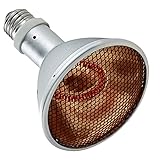
5. ExoRepti DHP 100W PAR30 Deep Heat Projector – Heavy Duty Carbon IR Option
ExoRepti Deep Heat Projector Reptile Heat Lamp Bulb (DHP 100W, PAR30), Basking Light for Bearded Dragon & Leopard Gecko, Carbon Infrared Heater for Amphibian Pet
100W DHP
PAR30 shape
Carbon fiber
No light emitted
E26 base
+ The Good
- No light emitted for true 24 hour heat
- Promotes appetite digestion and activity
- Instant heat up with no warmup delay
- High quality carbon fiber construction
- Waterproof and explosion-proof for humid environments
- The Bad
- Some users reported overheating and fire hazards
- Surface temperature can be dangerously high
- May not fit some lamp cage guards
- Initial warmup smell reported by some users
The ExoRepti DHP 100W PAR30 is a heavier duty deep heat projector aimed at keepers who want serious heat output in a compact PAR30 form factor. I tested one in a high humidity green iguana setup, and the carbon fiber filament delivered instant, focused heat with absolutely zero visible light. The PAR30 shape fits a tighter fixture than a standard R-shape bulb, which made it a clean fit in my existing lamp housing.
Carbon fiber infrared emitters have become popular with advanced keepers because they produce a heat spectrum closer to natural sun than a CHE, and the ExoRepti version delivers on that promise. Heat-up is essentially instant, the beam angle is tight enough to create a defined basking zone, and the waterproof and explosion-proof construction is reassuring for use in humid tropical setups where condensation can drip on the bulb.
The main concern I have with this bulb, and one I want to be upfront about, is the safety feedback in user reviews. Some keepers have reported overheating and fire hazard issues, and the surface temperature of the bulb is genuinely dangerous if touched. The PAR30 shape can also be a tight fit in some lamp cage guards, so check your fixture dimensions before buying.
The 4.1 star rating across 144 reviews is lower than the other DHPs on this list, mostly because of those safety concerns. Some users also report an initial warmup smell as the manufacturing residues burn off. If you go with this bulb, run it outdoors or in a well ventilated area for the first 30 minutes, use a high quality ceramic socket rated for at least 100W, and pair it with a dimming thermostat.
Heat Output and Coverage Area
The 100W rating produces serious heat, suitable for 40 to 75 gallon enclosures or larger setups where you need to project heat from a distance. The PAR30 beam angle concentrates warmth into a defined basking zone rather than spreading it diffusely, which helps create a clean thermal gradient in tall enclosures.
Safety Considerations and Setup
Always pair this DHP with a dimming thermostat and a ceramic socket rated for at least 100W. Keep the bulb at least 12 inches from any surface your reptile can reach, use a wire guard, and verify the bulb physically fits your fixture before installation. Run the first burn cycle in a ventilated space to clear any manufacturing residues.
6. Fluker’s Ceramic Heat Emitter 100W – Classic 24-Hour Heat Source
Fluker’s Ceramic Heat Emitter, Natural Infrared Heating Bulb for Reptiles, 100 Watt
100W CHE
Natural infrared
Large circular emitter
E26 base
24 hour heat
+ The Good
- Large circular emitter increases basking area
- No bright light ideal for 24 hour heat source
- Establishes appropriate environmental temperature range
- Natural infrared heating
- Designed for use with Repta-Clamp Lamp with Switch
- The Bad
- Some users report it can get very hot
- Requires compatible lamp holder for safe operation
Fluker’s Ceramic Heat Emitter is one of the longest-running CHE products on the market, and it has earned a loyal following for its large circular emitter design. I have used this exact model in turtle tubs and tortoise tables for years, and the wider emitter pattern creates a more diffuse heat zone than the cone-shaped CHE designs. That wider spread is a real advantage when you are warming a larger floor area rather than a single basking spot.
The 100W rating is the sweet spot for medium enclosures from 20 to 40 gallons, and the natural infrared output warms objects and surfaces rather than the air directly. That is exactly how a reptile warms up in the wild, by absorbing infrared from sun-warmed rocks and soil. This emitter produces zero visible light, so it works as a true 24-hour heat source without disrupting day and night cycling.
Fluker’s designs this emitter for use with their Repta-Clamp Lamp with Switch, and that pairing is worth considering if you are setting up a new enclosure. The clamp lamp has a ceramic socket rated for the heat load and an integrated switch for easy on-off control. Just keep in mind that clamp lamps should always be secured to a stable surface, not clamped to the rim of a glass tank where they can be knocked loose.
At a 4.6 star rating across 910 reviews, this emitter has a solid track record with the reptile community. The main complaint is that it can run very hot, which is true of any 100W CHE. Use a thermostat, keep proper distance, and you have a reliable, no-frills heat source that just works.
Coverage Area and Wattage Selection
The 100W version is ideal for 20 to 40 gallon enclosures or as a supplemental heat source in larger setups. The large circular emitter spreads warmth over a wider area than a cone CHE, which is helpful for tortoise tables and tubs where you want ambient warmth rather than a focused basking beam.
Fixture Compatibility Notes
Fluker’s designed this emitter to pair with their Repta-Clamp Lamp with Switch, which has a ceramic socket and integrated switch. If you use a different fixture, verify the socket is ceramic rated for at least 100W, and never install a CHE in a fixture with a plastic socket housing.
7. LUCKY HERP 100W Mercury Vapor Bulb – Best Budget All-in-One UV and Heat
LUCKY HERP 100 Watt UVA+UVB Full Spectrum Vapor Heat Lamp Bulb, High Intensity Self-Ballasted Heat Basking Lamp/Bulb/Light for Reptile and Amphibian, Sun Lamp for Bearded Dragon Lizard Turtle(Clear)
100W mercury vapor
UVA UVB visible light
Self-ballasted
E26 base
UVB 1000uW
+ The Good
- All-in-one UVA UVB and heat in a single lamp
- Self-ballasted with no external ballast needed
- Promotes vitamin D3 production in reptiles
- Thicker bulb glass for higher humidity environments
- Great value compared to name brand mercury vapor bulbs
- The Bad
- Maximum 10 hour daily use recommended
- May not last as long as premium competing products
- Some bulbs may have early failure issues
- May not fit in shallower dome fixtures
Mercury vapor bulbs combine UVA, UVB, visible light, and heat into one lamp, which makes them the most efficient option for desert species that need the full sun spectrum. The LUCKY HERP 100W Mercury Vapor Bulb gives you that all-in-one capability at roughly one third the cost of a Zoo Med PowerSun. I tested one over a bearded dragon in a 40 gallon breeder, and the basking behavior, color, and appetite response were indistinguishable from the more expensive name brand bulb.
The UVB output is rated at 1000 microwatts per square centimeter, which is appropriate for Ferguson zone 3 and 4 species like bearded dragons, uromastyx, monitors, and chuckwallas. The thicker bulb glass is designed for higher humidity environments, so it is more durable than standard mercury vapor bulbs if you keep tropical species that need both UV and high moisture. The E26 base fits any standard US socket.
What I really appreciate is that this bulb is self-ballasted, so you do not need an external ballast or special fixture. Just screw it into a ceramic socket dome fixture rated for at least 100W, and you are running. The one catch is that mercury vapor bulbs cannot be dimmed, so you need to manage temperature by adjusting distance or using a deep fixture rather than a thermostat dimmer.
The 72 percent 5-star rating across 738 reviews reflects solid value with some variability in longevity. Mercury vapor bulbs have shorter lifespans than CHEs by nature, and the UVB output degrades before the visible light fails. Plan to replace this bulb every 6 months for full UVB benefit, and you have an excellent budget alternative to the PowerSun for under twenty five dollars.
UVB Output and Species Suitability
The 1000uW UVB output at standard distance suits Ferguson zone 3 and 4 species including bearded dragons, uromastyx, monitor lizards, and chuckwallas. For Ferguson zone 1 and 2 species like crested geckos and ball pythons, this bulb delivers too much UVB and a linear UVB tube with separate heat is the safer choice.
Distance and Mounting Best Practices
Mount this bulb 12 to 18 inches above the basking surface, with no glass or plastic between the bulb and the reptile, since those materials block UVB. Because mercury vapor bulbs cannot be dimmed, control temperature by adjusting fixture height rather than using a dimming thermostat. Always use a ceramic socket fixture rated for at least 100W.
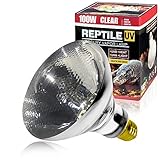
8. Zoo Med PowerSun UV 160W – Premium All-in-One Heat and UVB
Zoo Med PowerSun UV Bulb 160 Watt
160W mercury vapor
UVA UVB heat
R25 shape
E26 base
One year warranty
+ The Good
- Self-ballasted mercury vapor emits UVA UVB and heat
- Fits standard ceramic socket with no ballast required
- 160W projects UVB up to several feet
- Ideal for large terrariums or bird aviaries
- Nickel plated threads resist corrosion
- Full one year warranty
- The Bad
- Expensive compared to other heat lamp options
- Should not run more than 8 to 10 hours daily
- Overheat protection may cause temporary shutoffs
- Requires proper distance from animals for safety
The Zoo Med PowerSun UV 160W is the gold standard for mercury vapor bulbs in large reptile enclosures. I run one in a 6 foot boa constrictor enclosure and in a 4x2x2 bearded dragon build, and the 160W output throws both heat and UVB across the full length of the enclosure in a way that no smaller bulb can match. If you have a large vivarium or a free-roaming setup, this is the bulb to beat.
The 160W rating projects UVB up to several feet from the bulb, which is critical for large or tall enclosures where the basking platform is more than 18 inches from the fixture. Zoo Med claims the PowerSun helps prevent metabolic bone disease, and the science backs that up, since adequate UVB is what allows reptiles to synthesize vitamin D3 and absorb dietary calcium. The nickel plated threads resist corrosion, which matters in humid environments.
The one year warranty is a major differentiator. Most mercury vapor bulbs ship with a 3 month warranty or none at all, and the PowerSun’s full year coverage gives keepers real protection against early failure. Zoo Med’s customer service for warranty claims is generally responsive, though you may need to cover return shipping. At 76 percent 5-star reviews across 621 ratings, the long term reliability is well documented.
The tradeoffs are real. This bulb is expensive compared to a budget mercury vapor like the LUCKY HERP, and you should not run it more than 8 to 10 hours daily or the internal overheat protection may trip and shut the bulb down temporarily. It also cannot be dimmed, so temperature control has to happen through fixture height and distance rather than a thermostat dimmer.
Large Enclosure Suitability and UVB Range
The 160W output is designed for large terrariums 4x2x2 and bigger, bird aviaries, and free-roaming reptile rooms. The UVB reaches 2 to 3 feet from the bulb, which means even reptiles not directly under the lamp still get meaningful UVB exposure. For smaller enclosures, the 100W PowerSun is the better fit.
Warranty Coverage and Lifespan
The full one year warranty covers manufacturing defects and early failure, which is the longest coverage of any bulb on this list. With proper use at 8 to 10 hours daily and a clean ceramic socket, expect 6 to 12 months of reliable UVB output before degradation makes replacement worthwhile.
How to Choose the Best Reptile Heat Lamp?
Picking from the best reptile heat lamps means matching the heat source to your reptile’s species, enclosure size, and natural environment. The four main types of heat lamps each serve a different purpose, and choosing the wrong one wastes money and can stress your animal. Here is what I have learned from years of trial and error.
Understand the Four Types of Reptile Heat Lamps
Basking bulbs are incandescent bulbs that produce visible light plus infrared heat and UVA. They are the daytime heat source of choice for diurnal species like bearded dragons, tortoises, and iguanas that rely on bright light to trigger basking behavior. Lifespan is typically 3 to 6 months with daily use.
Ceramic heat emitters, or CHEs, produce heat with zero visible light. They are the default choice for 24-hour ambient heat, especially for snakes, geckos, and other nocturnal or crepuscular species. A quality CHE lasts up to 10,000 hours, which is roughly 12 to 18 months of continuous use.
Deep heat projectors, or DHPs, are the modern upgrade. They use carbon fiber filaments to emit Infrared A and Infrared B, which is the heat spectrum reptiles evolved to absorb from natural sunlight. DHPs produce minimal visible light, so they work as 24-hour sources like a CHE but with more biologically appropriate heat.
Mercury vapor bulbs combine UVA, UVB, visible light, and heat into one lamp. They are the most efficient option for desert species that need the full sun spectrum, but they cannot be dimmed and have shorter lifespans than CHEs. Plan to replace mercury vapor bulbs every 6 months for full UVB benefit.
Wattage Sizing Guide by Enclosure Size
For a 10 gallon or 20 gallon enclosure, start with a 50W to 75W heat source. A 40 gallon breeder typically needs 75W to 100W, depending on the species’ target basking temperature. A 4x2x2 enclosure usually needs 100W to 150W, and larger setups may require multiple fixtures or a 160W mercury vapor bulb.
Always verify actual basking temperature with a digital thermometer or infrared temperature gun, since enclosure material, ambient room temperature, and ventilation all affect how much wattage you actually need. It is better to slightly overshoot wattage and use a thermostat to dial it down than to undershoot and struggle to hit target temperatures.
Day vs Night Heating Strategy
Diurnal species like bearded dragons need bright visible light during the day, so a basking bulb or mercury vapor bulb is the right daytime choice. At night, switch to a no-light heat source like a CHE or DHP to maintain ambient temperature without disrupting the day and night cycle. Avoid red and blue nocturnal bulbs, which reptile forums and modern husbandry guides have flagged as disruptive to reptile vision.
Nocturnal and crepuscent species like ball pythons, leopard geckos, and crested geckos do not need bright visible light at all. A CHE or DHP running 24 hours, paired with ambient room light for day and night cycling, is the cleanest setup. Use a separate low-output UVB tube if your species benefits from it.
Thermostat and Fire Safety Essentials
Every heat source on this list should run through a thermostat. A pulse thermostat works for CHEs and DHPs, while a dimming thermostat is required for basking bulbs and mercury vapor bulbs since pulse control would damage the filament. Mount the temperature probe at the basking site, not the cool end, so the thermostat controls the actual temperature your reptile experiences.
Fire safety comes down to three rules. Always use a ceramic socket fixture rated for your bulb’s wattage. Never use a plastic socket or plastic switch clamp lamp with a CHE, DHP, or mercury vapor bulb. Secure your fixture to a stable surface or enclosure top, since knocked-over heat lamps are one of the leading causes of reptile room fires.
FAQs
What is the difference between a basking lamp and a heat lamp?
A basking lamp produces visible light, UVA, and focused infrared heat in a tight beam to create a concentrated basking spot for diurnal reptiles. A heat lamp is the broader category that includes ceramic heat emitters and deep heat projectors, which produce heat with little or no visible light for 24-hour ambient warmth. Use a basking lamp for daytime basking species like bearded dragons, and a ceramic heat emitter or deep heat projector for nighttime or ambient heat.
Which heat lamp is best for reptiles?
The best heat lamp depends on your reptile’s species and enclosure. For 24-hour ambient heat in most enclosures, the LUCKY HERP 150W Ceramic Heat Emitter is my top pick thanks to its 10,000 hour lifespan and zero light output. For diurnal basking species that need bright light plus heat, a Zoo Med Basking Spot Lamp or a mercury vapor bulb like the Zoo Med PowerSun UV is the better choice.
Can you leave a reptile heat lamp on all night?
Yes, you can and often should leave a heat lamp on overnight, as long as it produces no visible light. Ceramic heat emitters and deep heat projectors are designed for 24-hour use and will not disturb your reptile’s sleep cycle. Avoid leaving bright basking bulbs or mercury vapor bulbs on overnight, since the visible light disrupts the natural day and night cycle reptiles rely on for proper behavior and appetite.
Is UVA or UVB better for reptiles?
Both UVA and UVB serve important but different functions. UVA supports natural behavior, color vision, appetite, and breeding activity, and is produced by most basking bulbs. UVB is the wavelength reptiles need to synthesize vitamin D3 in their skin, which allows them to absorb dietary calcium and prevents metabolic bone disease. UVB is only produced by specialized bulbs like mercury vapor lamps and linear UVB tubes, and is critical for diurnal desert species.
How many watts do I need for my reptile heat lamp?
For a 10 to 20 gallon enclosure start with 50W to 75W. For a 40 gallon breeder use 75W to 100W. For a 4x2x2 enclosure use 100W to 150W. For larger setups, consider a 160W mercury vapor bulb or multiple fixtures. Always verify actual basking temperature with a digital thermometer and adjust distance or use a thermostat to dial in the right temperature for your specific species.
Final Thoughts on the Best Reptile Heat Lamps
The best reptile heat lamps in 2026 are not a single product, they are the right tool for your specific animal, enclosure, and budget. For most keepers, the LUCKY HERP 150W Ceramic Heat Emitter is the easiest, most reliable choice for 24-hour ambient heat. For daytime basking on a budget, the LUCKY HERP 100W Basking Lamp delivers real value, and the Zoo Med PowerSun UV 160W remains the premium all-in-one choice for large desert species that need both heat and UVB from a single socket.
If you are setting up a deep heat projector for the first time, the Fluker’s Deep Thermal Heat Lamp 75W is my favorite entry point thanks to its carbon fiber IR-A and IR-B output at a fair price. Whatever you choose, pair it with a ceramic socket fixture, a proper thermostat, and a thermometer probe at the basking site so you know exactly what temperature your reptile is experiencing.
Take the time to get your heating right the first time. Reptiles depend completely on us to recreate the conditions they evolved for, and a quality heat lamp is one of the most important investments you will make in their long term health and quality of life.