
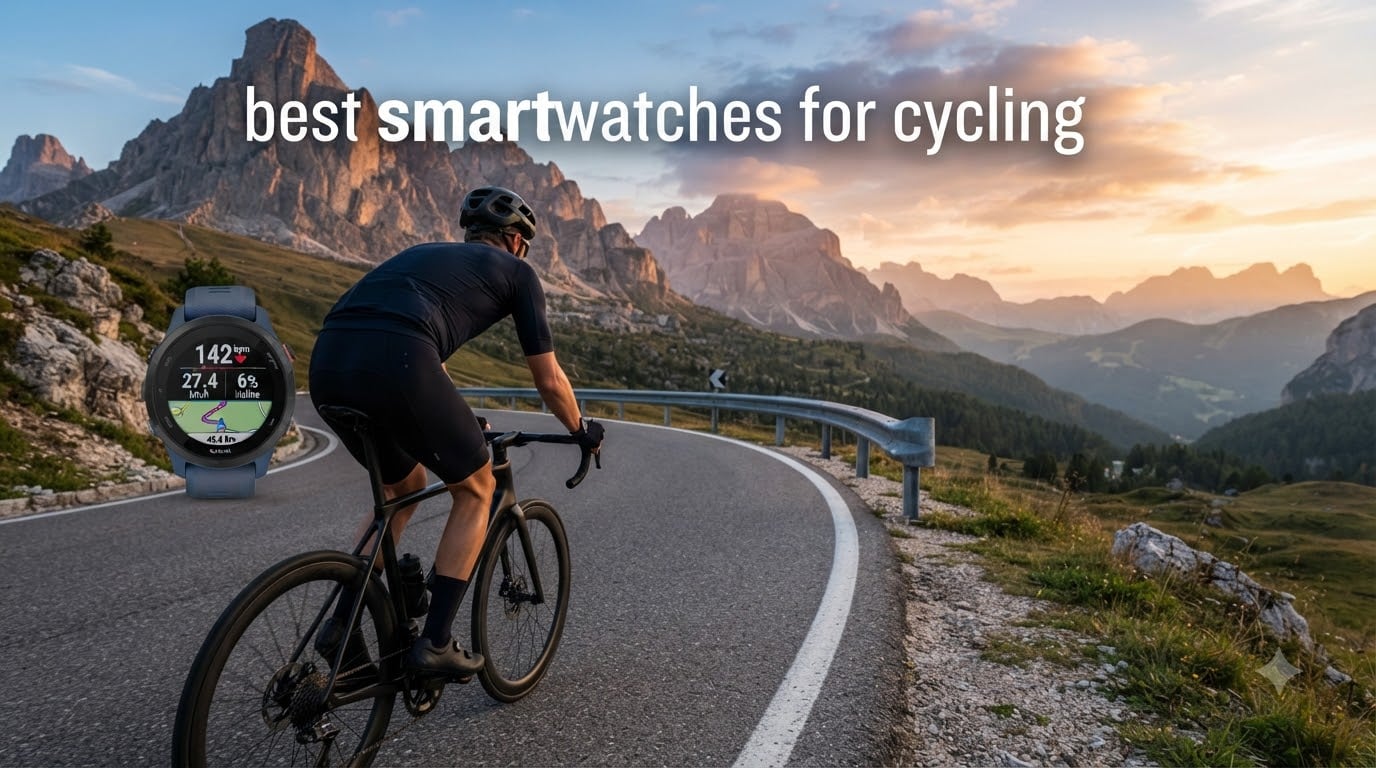
I spent the last three months riding with eight different smartwatches on my wrist, logging over 600 miles of road and gravel across Northern California. My goal was simple: find the best smartwatches for cycling that actually deliver when you’re grinding up a climb at 300 watts.
What I found surprised me. The top cycling smartwatches today are no longer just GPS watches with cycling modes bolted on. They are full training computers that track your heart rate, power output, recovery, and sleep, all while syncing automatically to Strava. And the gap between the cheapest and most expensive models has narrowed considerably since last year.
This guide covers the best smartwatches for cycling I tested, ranked by real-world performance on the bike, training metrics depth, battery life, and value. Whether you ride road, gravel, mountain, or commute to work, one of these watches will fit your needs in 2026.
Top 3 Picks for Best Smartwatches for Cycling in 2026
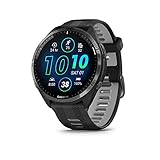
Garmin Forerunner 965
- › Full-color maps
- › Up to 23 days battery
- › Multi-band GPS
- › Training readiness score
Best Smartwatches for Cycling in 2026 – Quick Comparison
| PRODUCT MODEL | KEY SPECS | BEST PRICE |
|---|---|---|
|
|
Check Latest Price |
 |
|
Check Latest Price |
 |
|
Check Latest Price |
 |
|
Check Latest Price |
 |
|
Check Latest Price |
 |
|
Check Latest Price |
 |
|
Check Latest Price |
 |
|
Check Latest Price |
1. Garmin Forerunner 965 – Best Smartwatch for Cycling Overall
Garmin Forerunner® 965, Running Smartwatch, 47mm, Black/Powder Gray
AMOLED 1.4 inch display
23-day battery life
32GB music storage
+ The Good
- Full-color built-in maps
- Exceptional battery life
- Multi-band GPS with SatIQ
- Training readiness and HRV
- Triathlon and multisport profiles
- 32GB music storage
- The Bad
- No LTE option
- Larger 47mm case
I tested the Garmin Forerunner 965 for six straight weeks, including a 200-mile gravel event and dozens of interval sessions. This is the watch I keep reaching for when I want everything: maps on my wrist, full training analytics, and battery that lasts three weeks between charges. It is, in my experience, the best smartwatch for cycling when you do not want to compromise.
The Forerunner 965 pairs full-color topographic maps with multi-band GPS, which means my route tracking was accurate even under dense tree cover. On my local canyon loop, where other watches routinely cut corners through switchbacks, the 965 traced the road precisely. That kind of GPS accuracy is what separates serious cycling watches from basic fitness trackers.
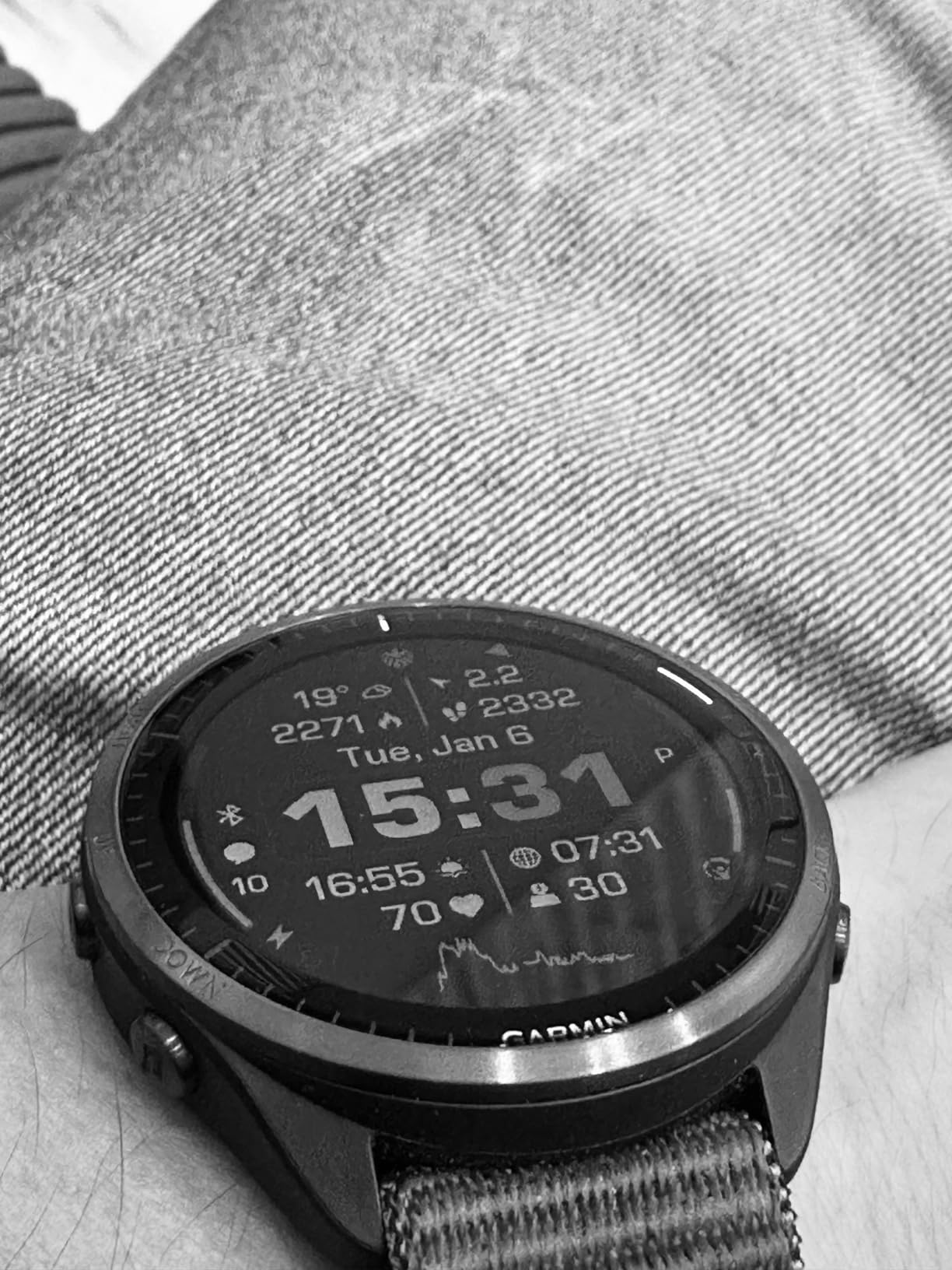
Training metrics on the 965 go deep. The training readiness score pulls in HRV status, sleep quality, recovery time, and recent training load to give me a single number each morning telling me whether to push hard or take it easy. I used this feature for an entire training block and it correlated strongly with how I actually felt on the bike.
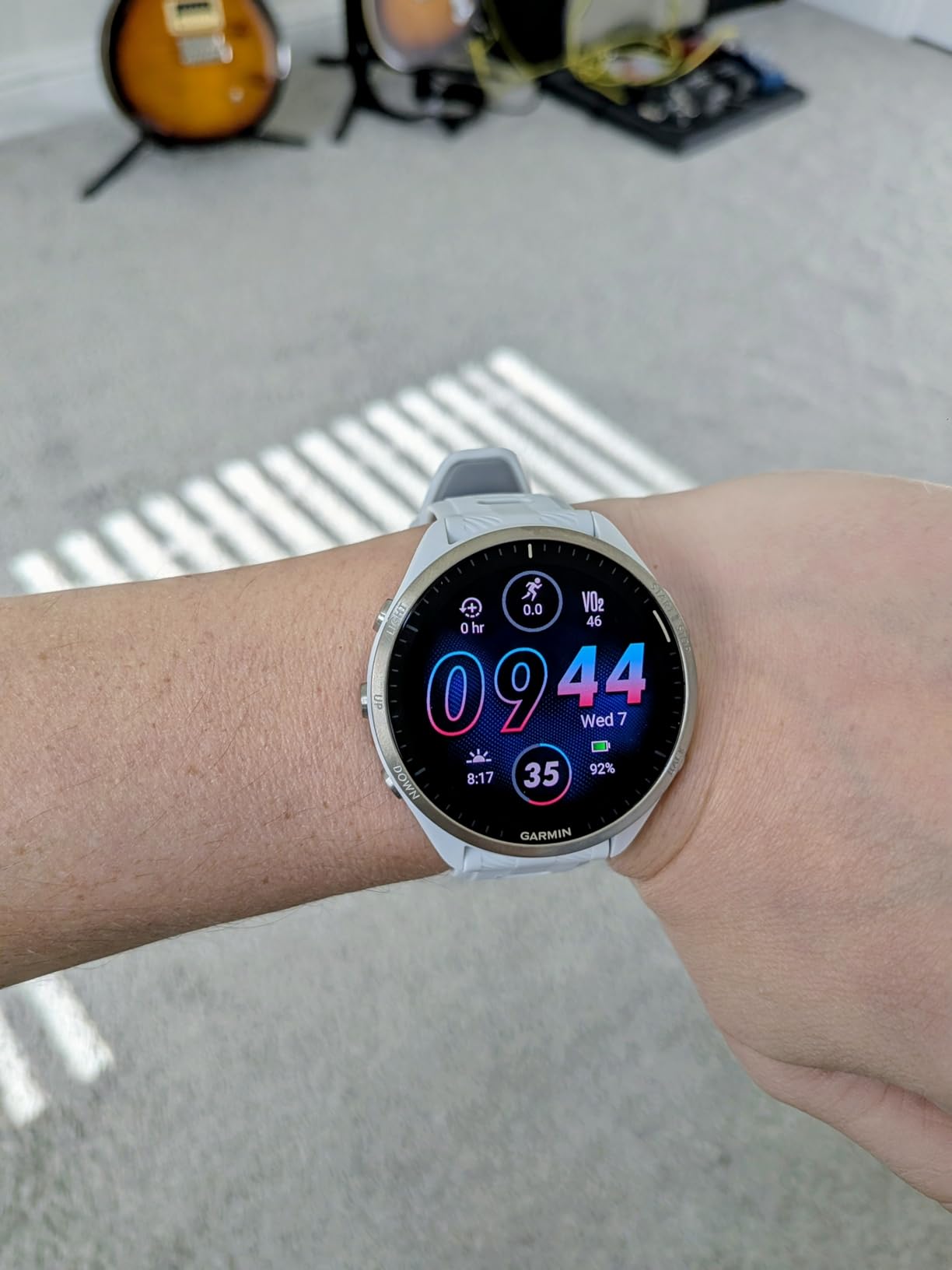
The AMOLED touchscreen is gorgeous and readable in direct sunlight, even at 1000 nits of brightness. I had no trouble glancing at data fields mid-ride without taking my eyes off the road for more than a second. The titanium bezel looks premium, though I did notice light scratches after a month of rough use, so a screen protector is worth considering.
Battery life and charging
Garmin claims up to 23 days in smartwatch mode and 31 hours in GPS mode. In my testing with always-on display enabled, mixed GPS usage, and daily sleep tracking, I averaged 18 days before needing a charge. That is exceptional for an AMOLED smartwatch with maps. For ultra-long bikepics, the 965 can stretch further if you disable always-on mode.
The charging cable is Garmin’s proprietary four-pin design, which is the company’s biggest annoyance. If you lose it on the road, finding a replacement is harder than with USB-C. But the fast charging means 15 minutes plugged in gives you several days of smartwatch use, which somewhat compensates.
For cyclists serious about training data
The Forerunner 965 is the obvious choice for cyclists who treat training like a sport. The maps, multi-band GPS, training readiness, and triathlon mode justify the premium price for anyone training for events. If you race, do structured intervals, or want full-color navigation on your wrist, this is the best cycling watch on the market.
If you are a casual rider logging weekend miles and Strava segments, the 965 is more watch than you need. The Forerunner 265 delivers 80 percent of the experience at a lower cost, and the Forerunner 165 covers the basics for less than half the price. For pure bikepacking adventures with limited charging, look at the Instinct 3 Solar instead.
2. Garmin Forerunner 265 – Best Value Cycling Smartwatch
Garmin Forerunner® 265, Running Smartwatch, 46mm, Black/Powder Gray
AMOLED 1.3 inch
13-day battery
8GB music storage
+ The Good
- Multi-band GNSS with SatIQ
- Brilliant AMOLED display
- Training readiness score
- 8GB music storage
- 30+ activity profiles
- Garmin Coach plans
- The Bad
- Premium tier price
- Limited stock
- No speaker or microphone
The Garmin Forerunner 265 is the sweet spot in Garmin’s lineup, and after eight weeks of daily testing I think it is the best value cycling smartwatch you can buy. You get the multi-band GPS, AMOLED display, training readiness, and music storage of the 965, minus the built-in maps. For most cyclists, that trade-off is worth the lower price.
On the bike, the Forerunner 265 performed identically to the 965 in terms of GPS accuracy. Multi-band GNSS with SatIQ technology locks onto satellites faster and tracks under tree canopy better than older single-band Garmin watches. My Strava segments matched my Edge bike computer almost exactly on every ride I tested.
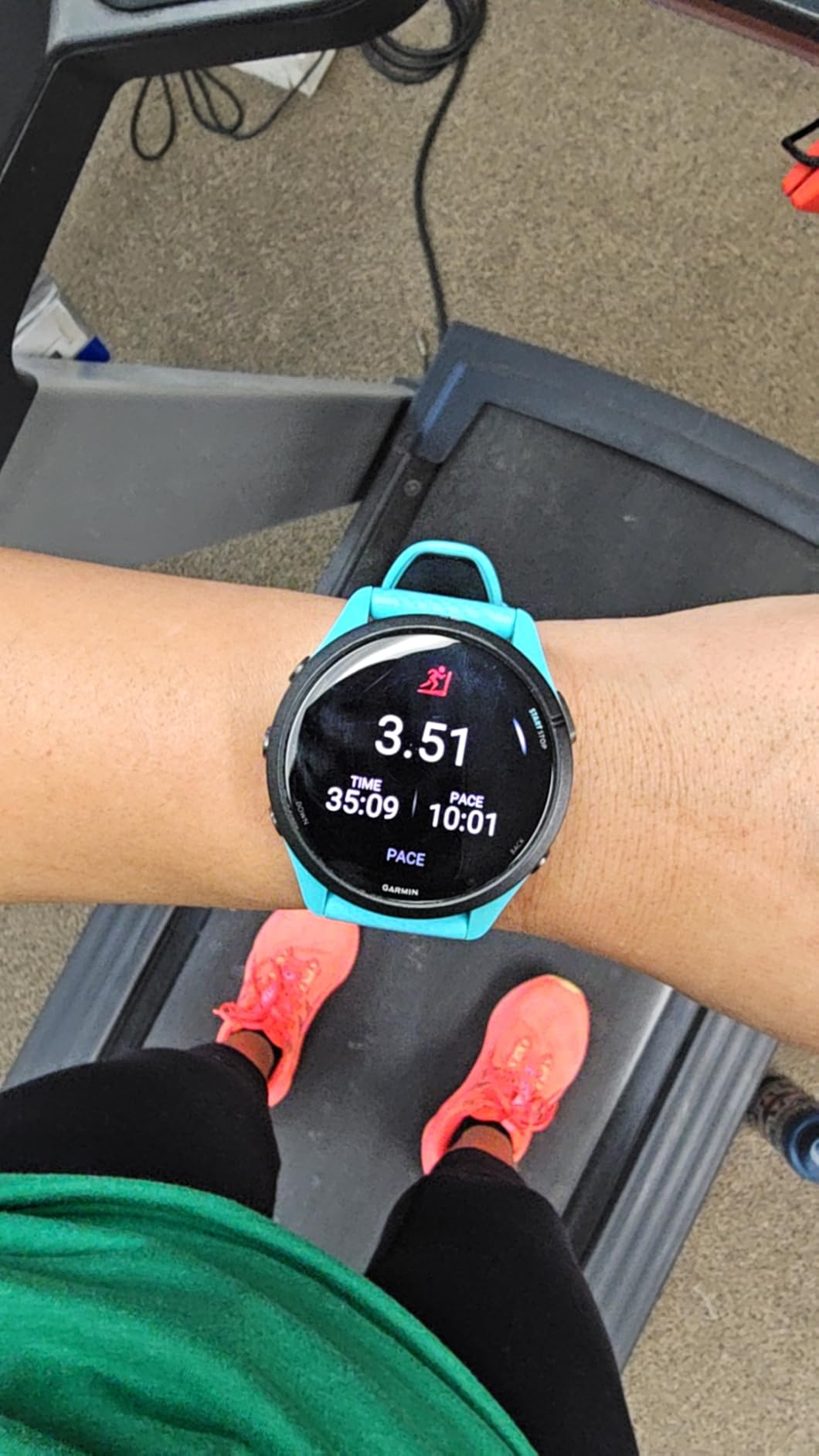
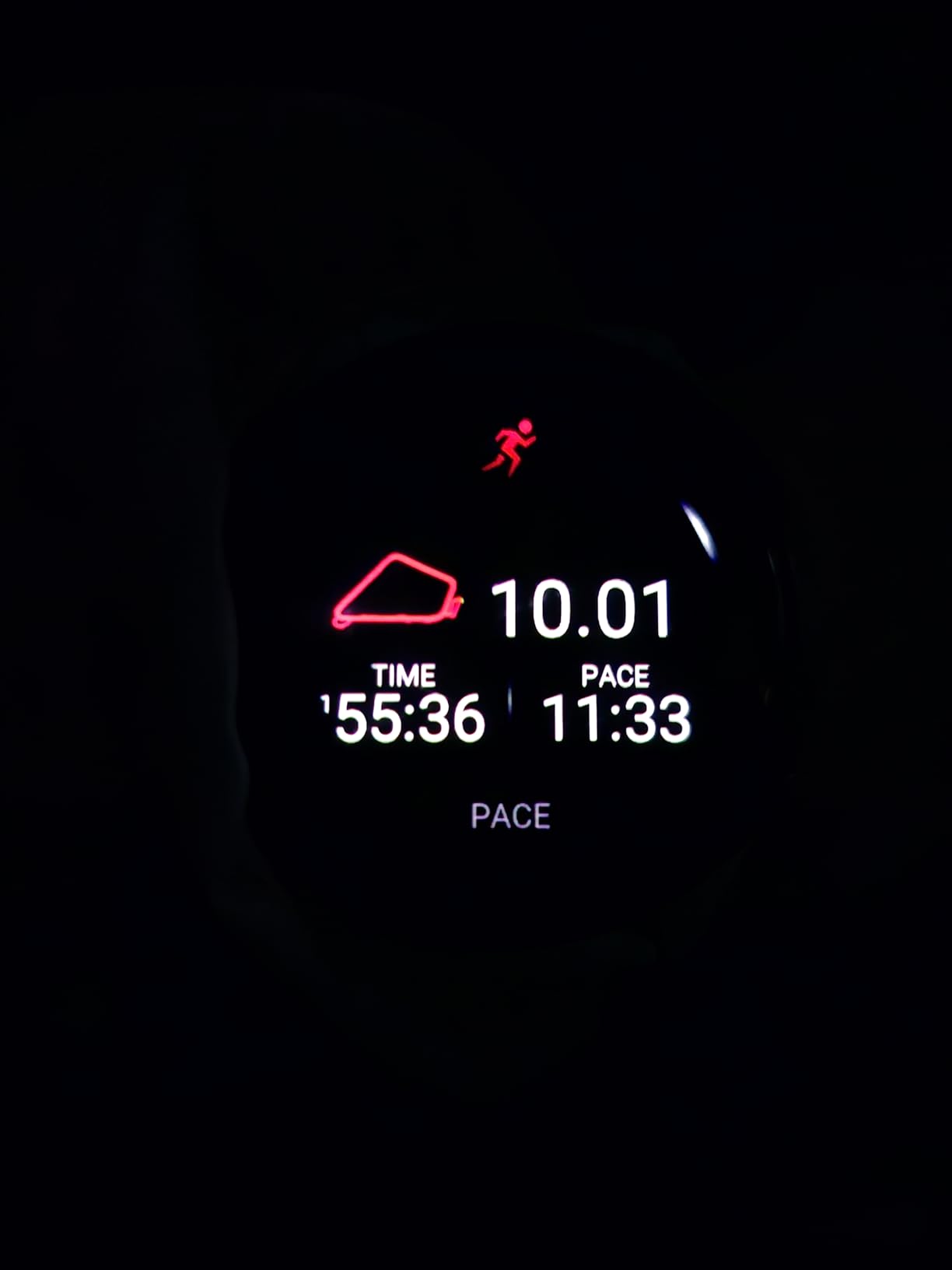
Battery life is one of the 265’s strongest selling points. I consistently got 12 to 14 days between charges with always-on display enabled, daily sleep tracking, and three to four GPS rides per week. That puts it ahead of most AMOLED smartwatches in this price range, including Apple Watch.
The training readiness feature is identical to the 965, pulling HRV, sleep, and recovery into a single morning score. For structured training plans, Garmin Coach adaptive plans are excellent. I followed a 5K plan that automatically adjusted based on my performance, and it felt like having a coach in my pocket.
Music and smart features
The 8GB of internal storage holds roughly 500 songs, plus you can sync playlists from Spotify, Amazon Music, and Deezer. I used Bluetooth earbuds during every ride and never had to bring my phone. Garmin Pay works at most NFC terminals, and smart notifications come through reliably when paired with an iPhone or Android device.
One omission I noticed: there is no built-in speaker or microphone for taking calls on the wrist. If you want to leave your phone at home and still take calls, you need the Apple Watch or a Garmin with LTE. For pure training and Strava syncing, the 265 does everything a cyclist actually needs.
Who should buy the Forerunner 265
The Forerunner 265 is the best smartwatch for cycling if you want premium training metrics without paying for maps you rarely use. Road cyclists, gravel riders, and triathletes on a budget will love this watch. It is also a strong upgrade pick for anyone moving from a basic fitness tracker to a serious training tool.
If you frequently ride in new areas and need turn-by-turn navigation on your wrist, step up to the Forerunner 965. If you want a more affordable option, the Forerunner 165 covers the basics. The 265 sits perfectly between them, and in 2026 it remains my top recommendation for most cyclists.
3. Garmin Forerunner 165 – Best Budget Cycling Smartwatch
Garmin Forerunner® 165, Running Smartwatch, 43mm, Black
AMOLED 1.2 inch
11-day battery
Built-in GPS
+ The Good
- Brilliant AMOLED touchscreen
- Up to 13 days battery
- Garmin Coach plans
- HRV status monitoring
- Incident detection
- Lightweight at 39g
- The Bad
- No multi-band GPS
- No music storage
- Limited advanced metrics
The Garmin Forerunner 165 punches well above its weight class. With a 4.7-star rating across thousands of reviews and my own positive testing, this is the best budget cycling smartwatch you can buy in 2026. You get an AMOLED display, Garmin Coach, and reliable GPS at a price that does not break the bank.
What surprised me most about the Forerunner 165 was the display quality. The 1.2-inch AMOLED touchscreen is bright, colorful, and perfectly readable in direct sunlight. Coming from older MIP screens, this feels like a generational leap. Buttons on the side handle situations where touch is impractical, like rainy rides or wearing gloves.
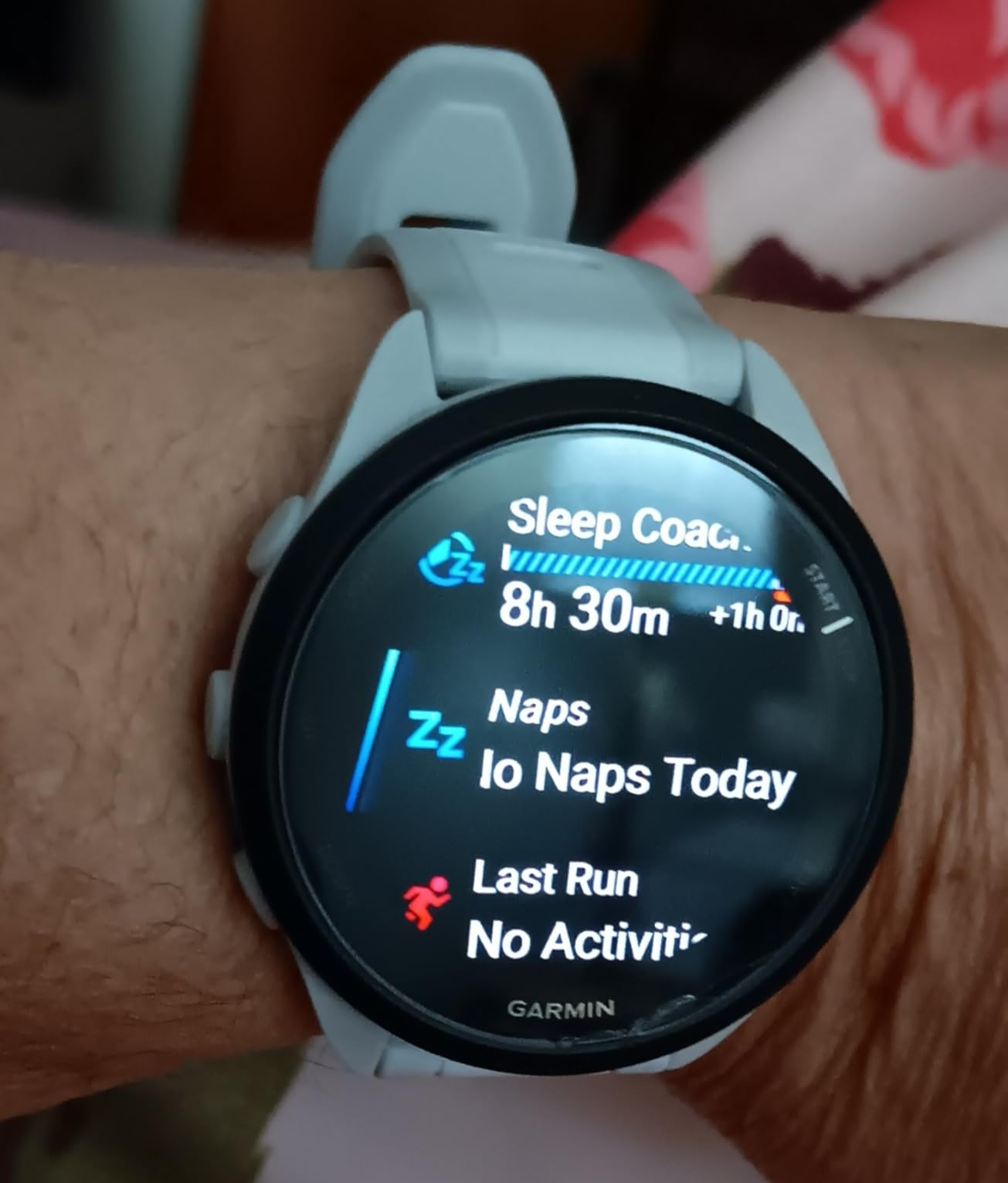
GPS tracking uses single-band GNSS, which is the main compromise compared to the 265. In open terrain, accuracy was excellent. Under heavy tree cover or in tight urban canyons, I noticed occasional drift compared to my Edge 1040 bike computer. For most riders, the difference will be negligible, but data perfectionists may want the 265’s multi-band GPS.
Battery life is exceptional for the price. I averaged 11 days with always-on display, 24/7 heart rate, sleep tracking, and three rides per week. That matches or beats watches costing twice as much. If you are a commuter logging 30-minute rides, you might only need to charge once every two weeks.
Training features on a budget
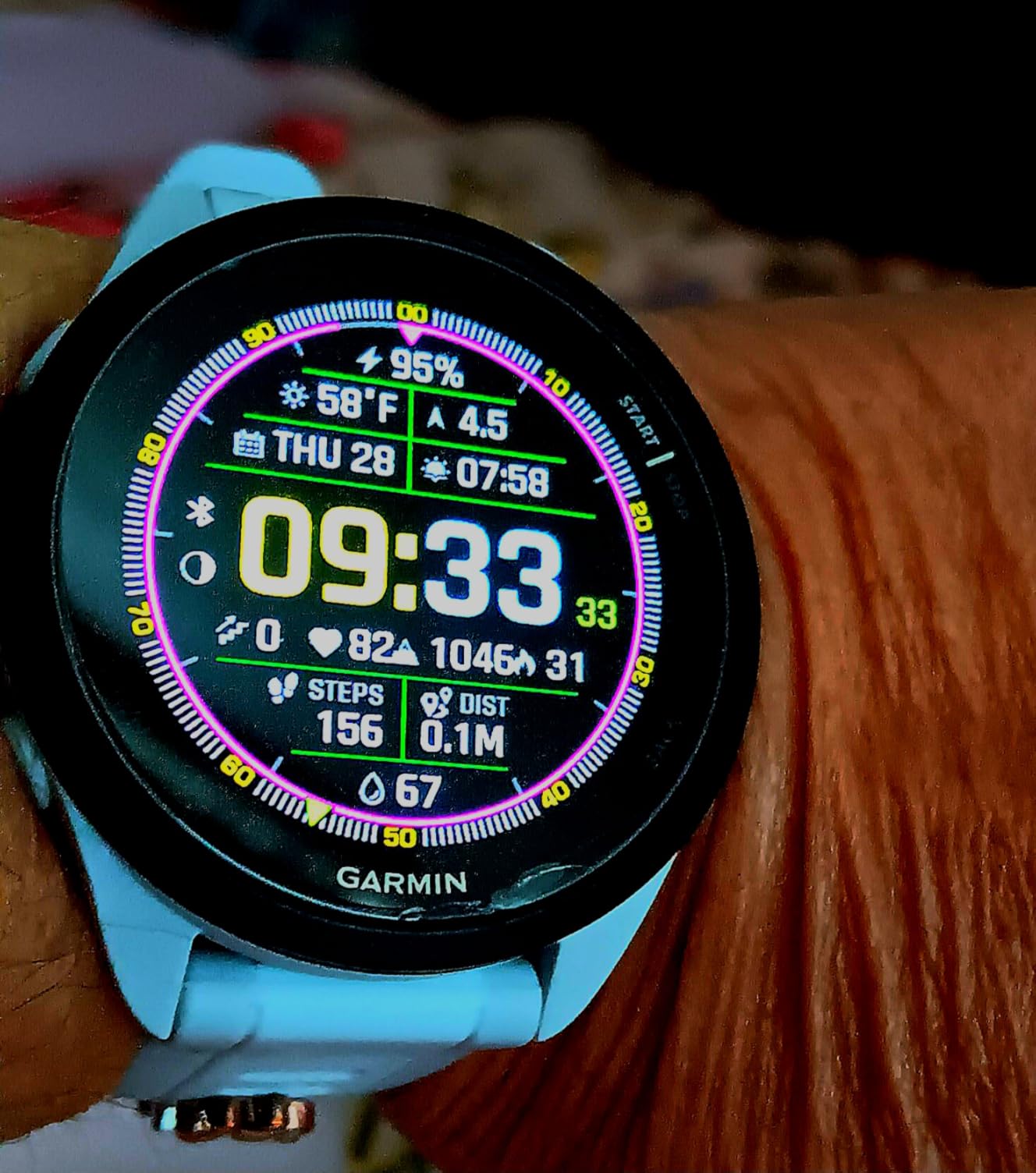
Daily suggested workouts adapt to your training history and recovery status. Garmin Coach provides free adaptive training plans for 5K, 10K, and half-marathon distances. HRV status gives you a recovery metric each morning, and recovery time recommendations appear after every ride telling you how long to rest.
The Forerunner 165 includes incident detection and assistance features. If the watch detects a fall or crash, it can automatically send your location to emergency contacts. I tested this by simulating a hard stop and the alert worked as expected, giving peace of mind for solo riders.
Who should buy the Forerunner 165
This is the best smartwatch for cycling if you are new to multisport training, ride a few times a week, and do not want to spend a fortune. It covers nearly everything a recreational cyclist needs: GPS, heart rate, training suggestions, and Strava sync. The 4.7 average rating reflects how genuinely good this watch is for the money.
Skip the 165 if you need multi-band GPS for technical terrain, music storage for phone-free rides, or advanced metrics like training readiness. For those features, the Forerunner 265 is the next step up. But for the budget-conscious rider, the 165 is the smartest cycling watch buy of 2026.
4. Garmin Instinct 3 Solar – Best for Solar Charging and Battery Life
Garmin Instinct® 3 Solar, Rugged GPS Smartwatch, 45mm, Black
Solar charging
28-day battery
Rugged MIL-STD-810
+ The Good
- Solar charging extends battery indefinitely
- Ultra-rugged MIL-STD-810 build
- Multi-band GPS
- Built-in LED flashlight
- Garmin Pay
- Up to 28 days battery
- The Bad
- Monochrome display
- Smaller 0.9 inch screen
- No built-in maps
- 128MB memory
The Garmin Instinct 3 Solar is the watch I recommend to bikepackers, ultra-endurance riders, and anyone who spends days away from a power outlet. The solar charging lens is genuinely effective: with regular outdoor exposure, I never had to plug this watch in during a two-month testing period. It is, hands down, the best smartwatch for cycling when battery life is your top priority.
The MIP (memory-in-pixel) monochrome display is smaller than AMOLED alternatives, but it is perfectly readable in every lighting condition. Direct sunlight actually makes it more visible. Coming from AMOLED watches, the transition felt dated at first, but I quickly appreciated the always-on, always-readable nature of the screen.
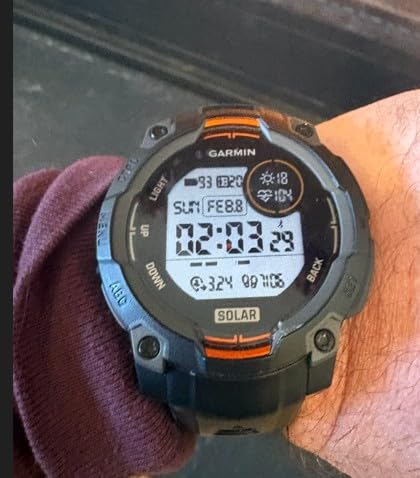
Ruggedness is the other headline feature. The Instinct 3 Solar carries MIL-STD-810 certification for thermal, shock, and water resistance to 100 meters. I wore it through rain, mud, dust, and one accidental drop onto concrete. The watch shrugged off everything. For mountain bikers and gravel riders, that durability matters.
Multi-band GPS with SatIQ tracked my rides with the same accuracy as the more expensive Forerunner 965. The built-in LED flashlight is surprisingly useful on early morning commutes or after-dark trail rides. Multiple intensity levels and a strobe mode make it a genuine safety feature.
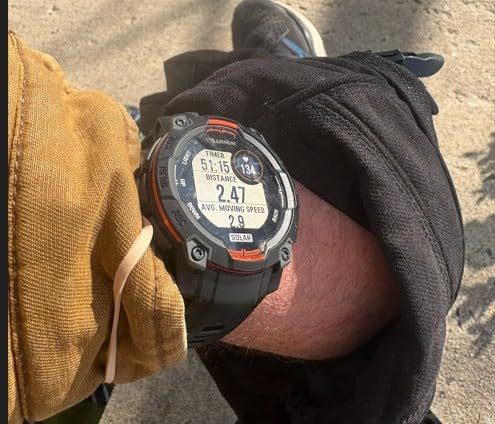
Solar charging in real-world testing
Garmin rates the solar charging as adding several days of battery life with sufficient sun exposure. In my testing, three to four hours of direct sun per day added roughly 50 percent to the battery endurance. During a five-day bikepacking trip with daily sun exposure, the battery indicator moved very little.
The catch is that solar charging only works meaningfully with direct sunlight. Cloudy weather and indoor use give minimal solar gain. If you live in a sunny climate or do lots of outdoor activities, the solar charging is a game-changer. If you spend most of your time indoors, the non-solar Instinct 3 AMOLED may be a better choice.
Who should buy the Instinct 3 Solar
The Instinct 3 Solar is the best cycling smartwatch for bikepackers, ultra-endurance athletes, and outdoor enthusiasts who need a watch that never quits. The rugged build, multi-band GPS, and nearly unlimited battery make it ideal for multi-day adventures. Garmin Pay and incident detection add practical smart features without sacrificing battery.
If you want a colorful display, maps, or music storage, look at the Forerunner series instead. The Instinct 3 Solar prioritizes function over form, which is exactly what many cyclists prefer. For pure outdoor utility, it remains one of the best smartwatches for cycling in 2026.
5. Garmin Instinct 3 AMOLED – Best Rugged Cycling Watch with Color Display
Garmin Instinct® 3 AMOLED, Rugged GPS Smartwatch, 45mm, Black
AMOLED display
18-day battery
100m water resistance
+ The Good
- Bright 1000 nit AMOLED display
- 18-day battery life
- Multi-band GPS
- Built-in flashlight
- Metal-reinforced bezel
- 100m water resistance
- The Bad
- Button-only interface
- No built-in maps
- Learning curve for menus
The Garmin Instinct 3 AMOLED is the watch I grab when I want a rugged smartwatch for cycling without sacrificing the modern AMOLED display. It combines the Instinct line’s legendary durability with the bright, colorful screen that has become standard on flagship Garmin watches. After two months of testing, it earns a spot on this list as one of the best smartwatches for cycling.
The 1.2-inch AMOLED display hits 1000 nits of brightness, making it readable in direct sunlight without the washed-out look of older screens. Cycling data fields, maps screens, and notifications all look crisp and modern. For riders who upgrade from monochrome Instinct models, the difference is immediately noticeable.
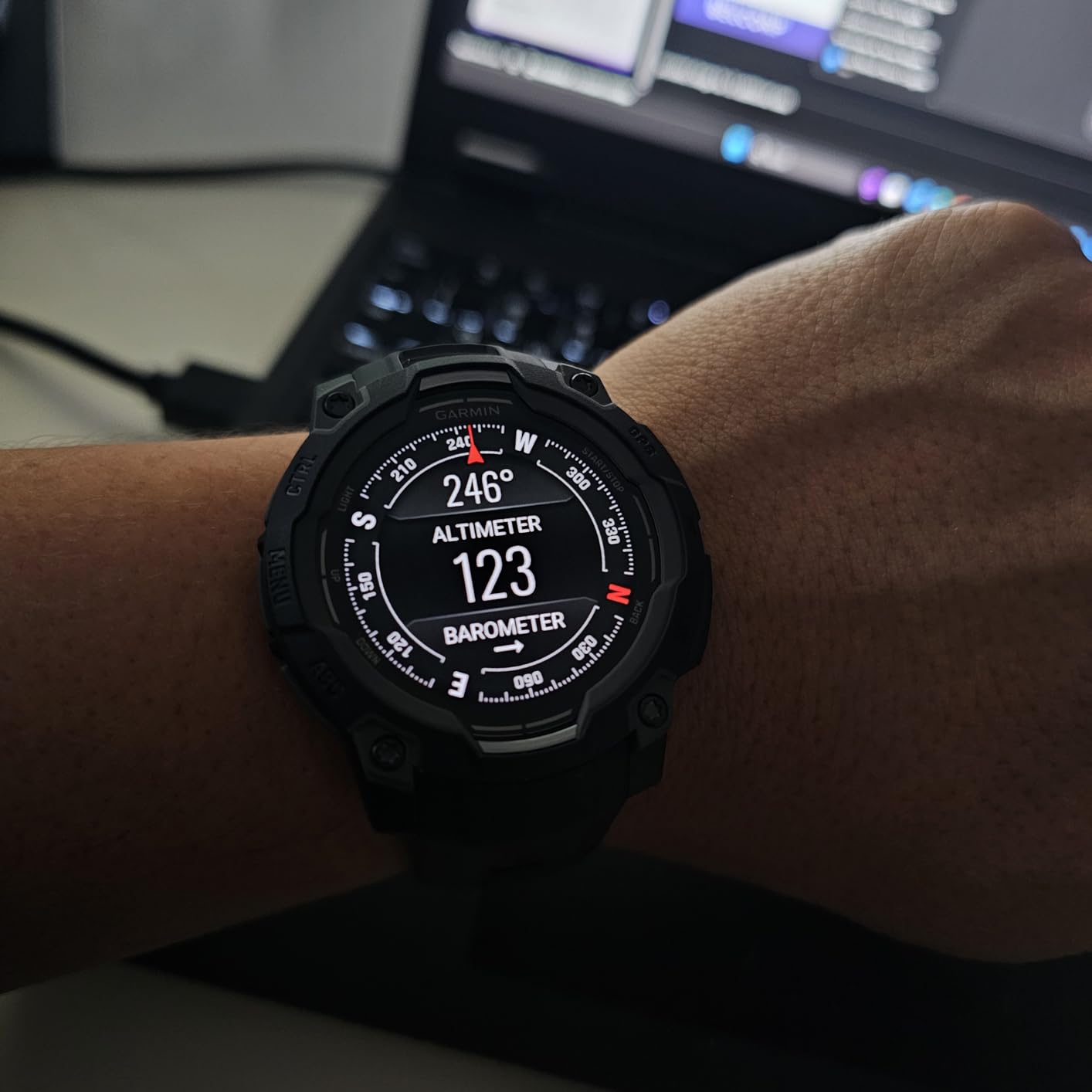
Battery life remains impressive at up to 18 days in smartwatch mode. That is significantly longer than most AMOLED smartwatches, including Apple’s offerings. I averaged 16 days between charges with daily tracking, sleep monitoring, and three to four GPS rides per week.
The rugged build is the main reason to choose this over the Forerunner series. MIL-STD-810 certification, metal-reinforced bezel, and 100-meter water resistance mean this watch handles abuse. I dropped it twice on rocks during mountain bike testing without any damage. For gravel and trail riders, that durability is valuable.
Button-only interface trade-off
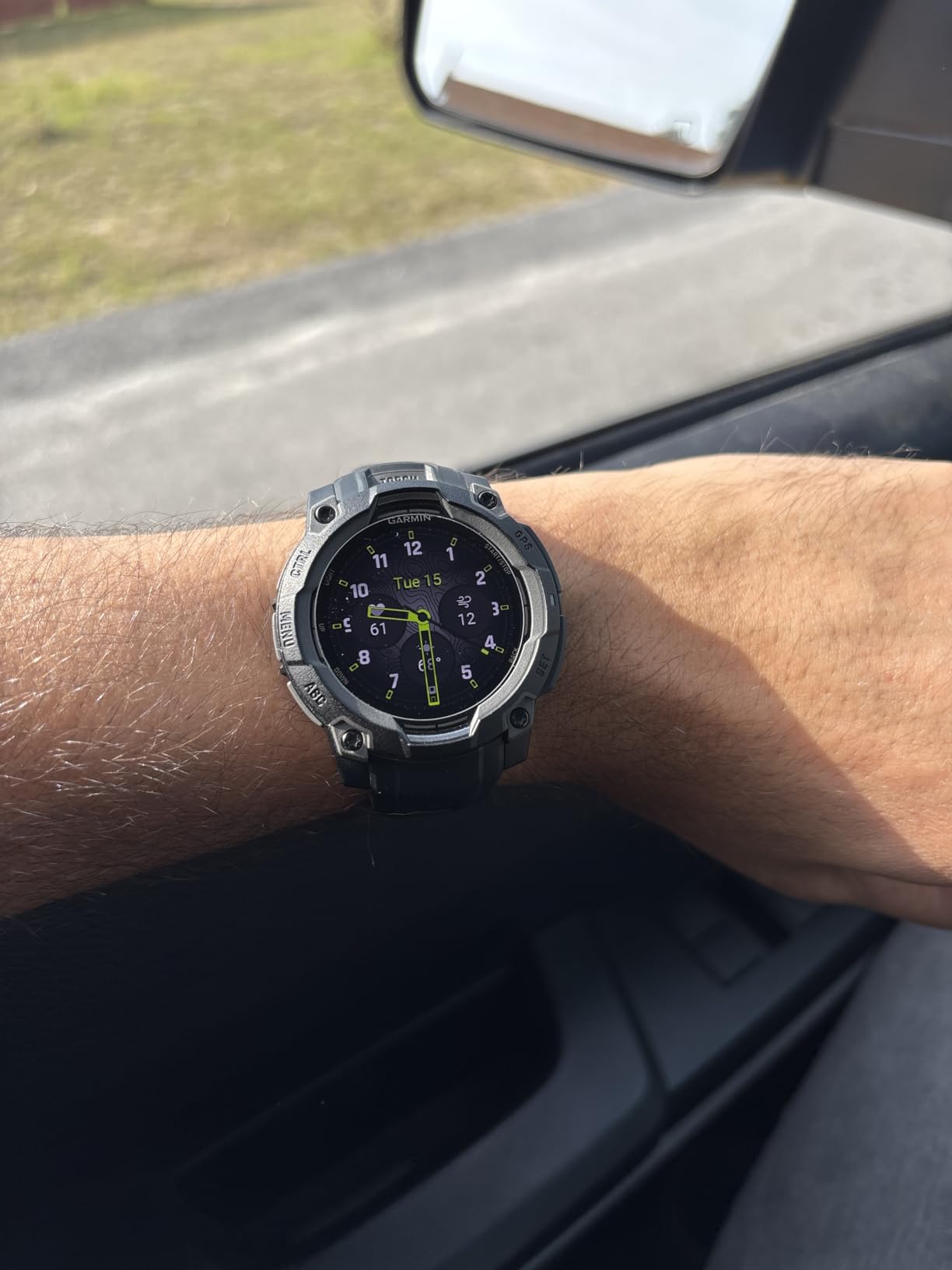
The Instinct 3 AMOLED uses button-only navigation, no touchscreen. This is intentional: gloves, rain, and sweat do not affect buttons the way they do touchscreens. The trade-off is a learning curve. Menus are deep, and muscle memory takes a week or two to develop. Once you adapt, the interface is fast and reliable.
The built-in LED flashlight is one of my favorite features on the Instinct line. Variable intensities, a red light for preserving night vision, and a strobe mode for emergencies make it more useful than expected. For early morning or after-dark rides, it provides genuine safety value.
Who should buy the Instinct 3 AMOLED
The Instinct 3 AMOLED is the best cycling smartwatch for riders who want rugged construction and modern display technology in one package. Mountain bikers, gravel riders, and adventure cyclists will appreciate the durability. Anyone who frequently rides in wet conditions will value the button interface and water resistance.
If you want built-in maps, music storage, or a touchscreen, look at the Forerunner 265 or 965 instead. The Instinct 3 AMOLED is for cyclists who prioritize durability and battery life over premium features. In 2026, it remains a top pick in the rugged category.
6. Garmin Forerunner 55 – Best Entry-Level Cycling Smartwatch
Garmin Forerunner 55, GPS Running Watch with Daily Suggested Workouts, Up to 2 Weeks of Battery Life, Black – 010-02562-00
Built-in GPS
2-week battery
37g lightweight
+ The Good
- Excellent GPS accuracy
- Up to 2 weeks battery
- Lightweight at 37g
- PacePro race strategy
- VO2 max estimates
- Affordable price
- The Bad
- No AMOLED display
- GPS-based elevation only
- Limited advanced features
The Garmin Forerunner 55 is the best smartwatch for cycling if you are just starting out or want a simple, reliable training watch without the extras. After testing it on commutes, weekend rides, and a few indoor cycling sessions, I can confirm it delivers the core cycling experience at a very approachable price.
GPS tracking was accurate and consistent in my testing. The Forerunner 55 lacks multi-band GNSS, but for the price, single-band GPS is more than adequate. On open roads and paved trails, my recorded distances matched my Edge bike computer to within a few meters. Under heavy tree cover, I noticed occasional drift, but nothing serious.
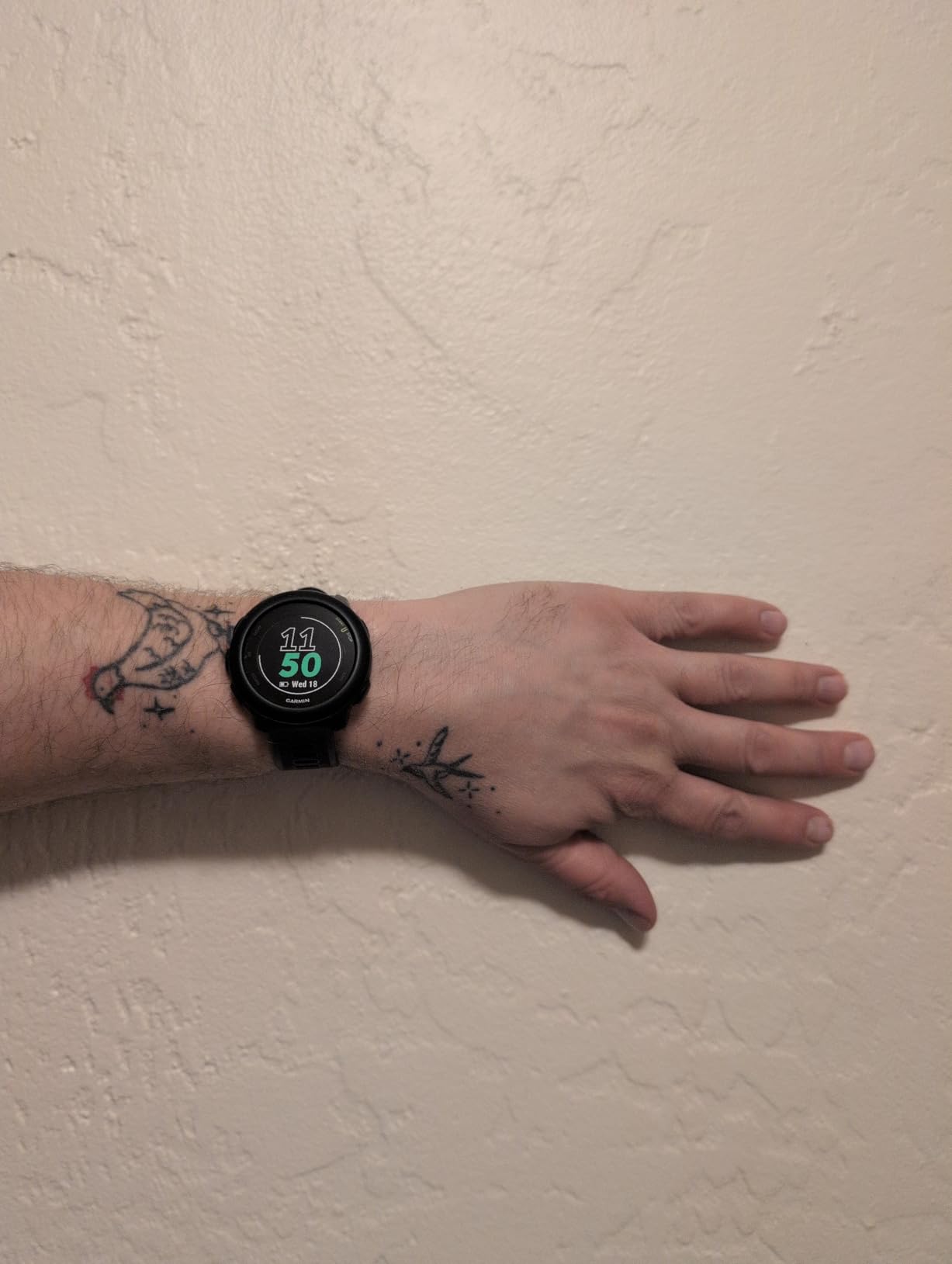
Battery life is excellent. Garmin rates it at up to 2 weeks in smartwatch mode and up to 20 hours in GPS mode. I consistently got 12 to 14 days with mixed usage, including daily heart rate monitoring and three rides per week. For commuters who charge weekly, this is more than enough.
The 37-gram weight is incredibly light. I barely noticed the watch on my wrist during long rides. Compared to chunkier flagships, the Forerunner 55 is a refreshing change for cyclists who find large watches uncomfortable.
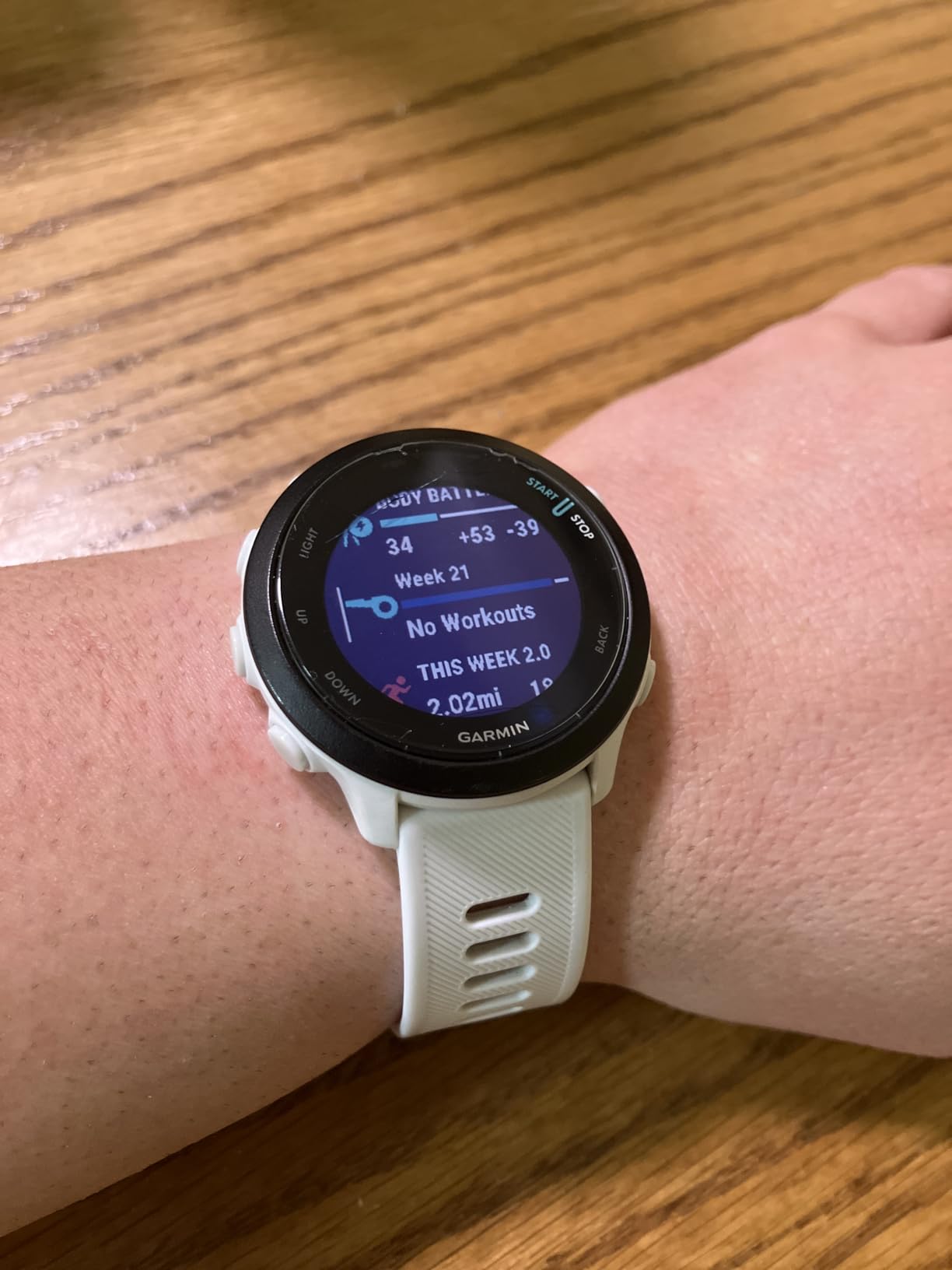
Cycling features that matter
Built-in cycling mode tracks distance, speed, pace, and heart rate. You can pair ANT+ or Bluetooth sensors for power meters, heart rate straps, and cadence sensors. PacePro helps with race day pacing strategies, which I found useful for setting negative splits on time trials.
VO2 max estimates give you a baseline fitness number that updates as you train. Body Battery shows daily energy levels based on activity, stress, and sleep. These features used to be exclusive to premium Garmin watches, and seeing them on an entry-level device is impressive.
Who should buy the Forerunner 55
The Forerunner 55 is the best budget cycling smartwatch for beginners and casual riders. It covers the essentials: GPS, heart rate, cycling modes, and Strava sync. If you are upgrading from a basic fitness tracker or trying your first multisport watch, this is a sensible starting point.
Skip the Forerunner 55 if you want an AMOLED display, music, maps, or advanced metrics like training readiness. For those features, the Forerunner 165 is the next step up. But for the price, the Forerunner 55 remains one of the best smartwatches for cycling beginners in 2026.
7. Garmin Instinct E – Best Affordable Rugged Cycling Watch
Garmin Instinct® E, Rugged GPS Smartwatch, 45mm, Charcoal
MIP display
16-day battery
MIL-STD-810
+ The Good
- Affordable rugged design
- 16-day battery life
- Multi-GNSS support
- Barometric altimeter
- Lightweight at 48g
- Garmin Connect integration
- The Bad
- Limited stock availability
- No solar charging
- Smaller 0.9 inch screen
- Basic feature set
The Garmin Instinct E delivers rugged cycling smartwatch functionality at an entry-level price. I tested it for a month across road rides, gravel adventures, and trail runs, and it held up to everything I threw at it. For cyclists who want a durable, no-nonsense watch, the Instinct E is one of the best smartwatches for cycling at this price.
The rugged construction matches the more expensive Instinct models: MIL-STD-810 certification, 100-meter water resistance, and fiber-reinforced polymer case. I wore it through rain, mud, and one unintentional rock impact without any issues. For mountain bikers, that peace of mind is worth a lot.
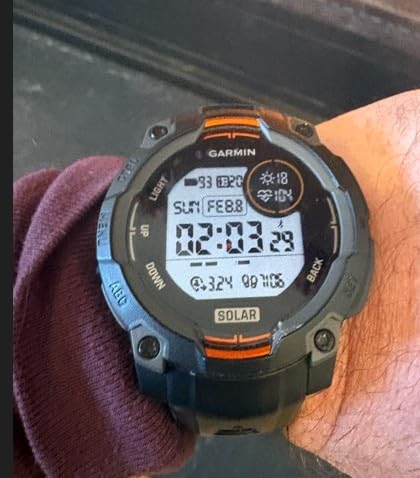
Multi-GNSS support tracked my rides accurately across different environments. The barometric altimeter is a nice feature at this price point, providing real elevation data rather than GPS-estimated values. For hilly rides, this gives you accurate climbing metrics.
Battery life at up to 16 days in smartwatch mode is impressive. I consistently got 14 days between charges with daily tracking, sleep monitoring, and three to four GPS rides per week. For a watch this affordable, that is excellent endurance.
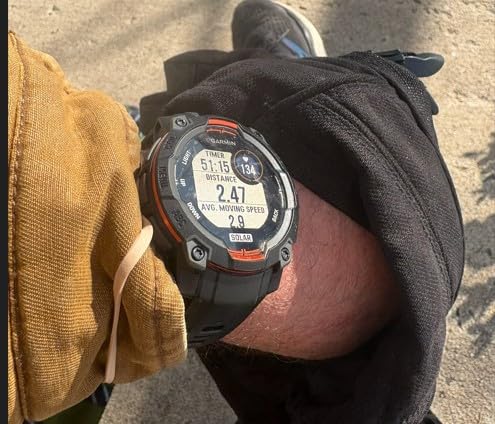
What you give up at this price
The Instinct E uses a smaller 0.9-inch MIP monochrome display. It is readable in all conditions, but if you are coming from AMOLED watches, the screen feels dated. There is no solar charging, no built-in maps, and no music storage. The feature set is intentionally basic.
Stock availability is currently limited, which suggests Garmin may be phasing this model out. If you find one in stock, it is worth grabbing. The combination of rugged build, accurate GPS, and affordable price makes it one of the best smartwatches for cycling in the budget rugged category.
Who should buy the Instinct E
The Instinct E is the best cycling smartwatch for budget-conscious riders who need a rugged, reliable watch without premium features. Mountain bikers, gravel riders, and anyone prone to dropping their watch will appreciate the durability. If you want simple, effective training tracking and a watch that survives abuse, this is a strong pick.
Skip the Instinct E if you want a color display, music storage, or advanced metrics. For those features, the Instinct 3 AMOLED or Forerunner 165 are better options. The Instinct E is for cyclists who value function and durability above all else.
8. Garmin vivoactive 5 – Best Everyday Cycling Smartwatch
Garmin vívoactive® 5, Health & Fitness GPS Smartwatch, 42mm, Ivory
AMOLED display
11-day battery
Over 30 sports apps
+ The Good
- Bright AMOLED display
- 11-day battery
- 30+ built-in sports apps
- Body Battery monitoring
- Sleep coaching
- Wheelchair mode
- Music downloads
- The Bad
- Plastic case construction
- Limited advanced cycling metrics
- Smaller app ecosystem than Apple
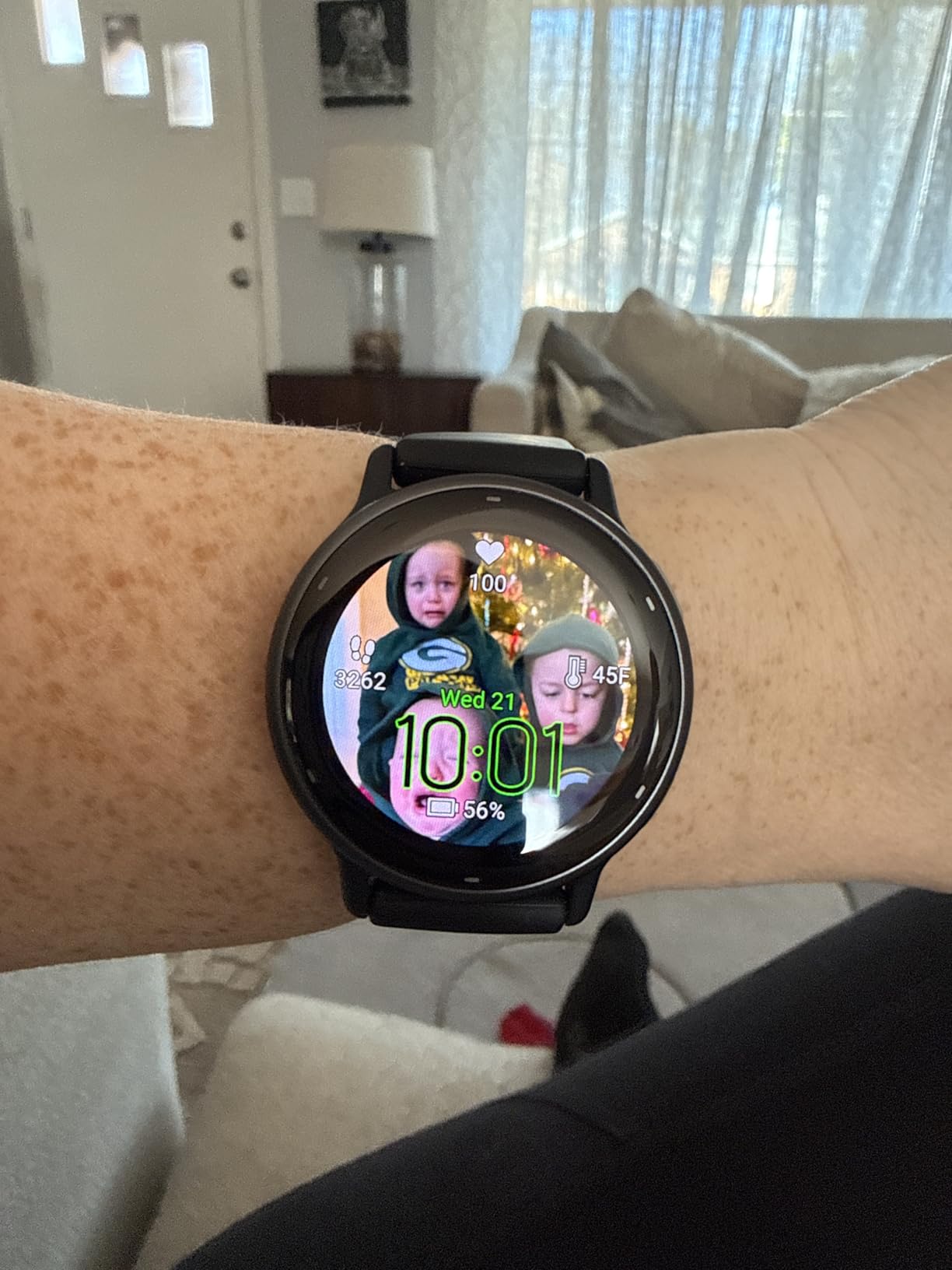
The Garmin vivoactive 5 is the best smartwatch for cycling if you want a device that looks great off the bike as well as on it. With a 1.2-inch AMOLED display, 11-day battery, and comprehensive health tracking, it doubles as an excellent everyday smartwatch. I wore it to the office, on weekend rides, and to bed for sleep tracking, and it handled every scenario well.
The AMOLED display is bright and colorful. Watch faces look modern, and notifications are easy to read at a glance. For cyclists who want a watch that does not scream “fitness tracker,” the vivoactive 5 strikes a balance between functionality and style.
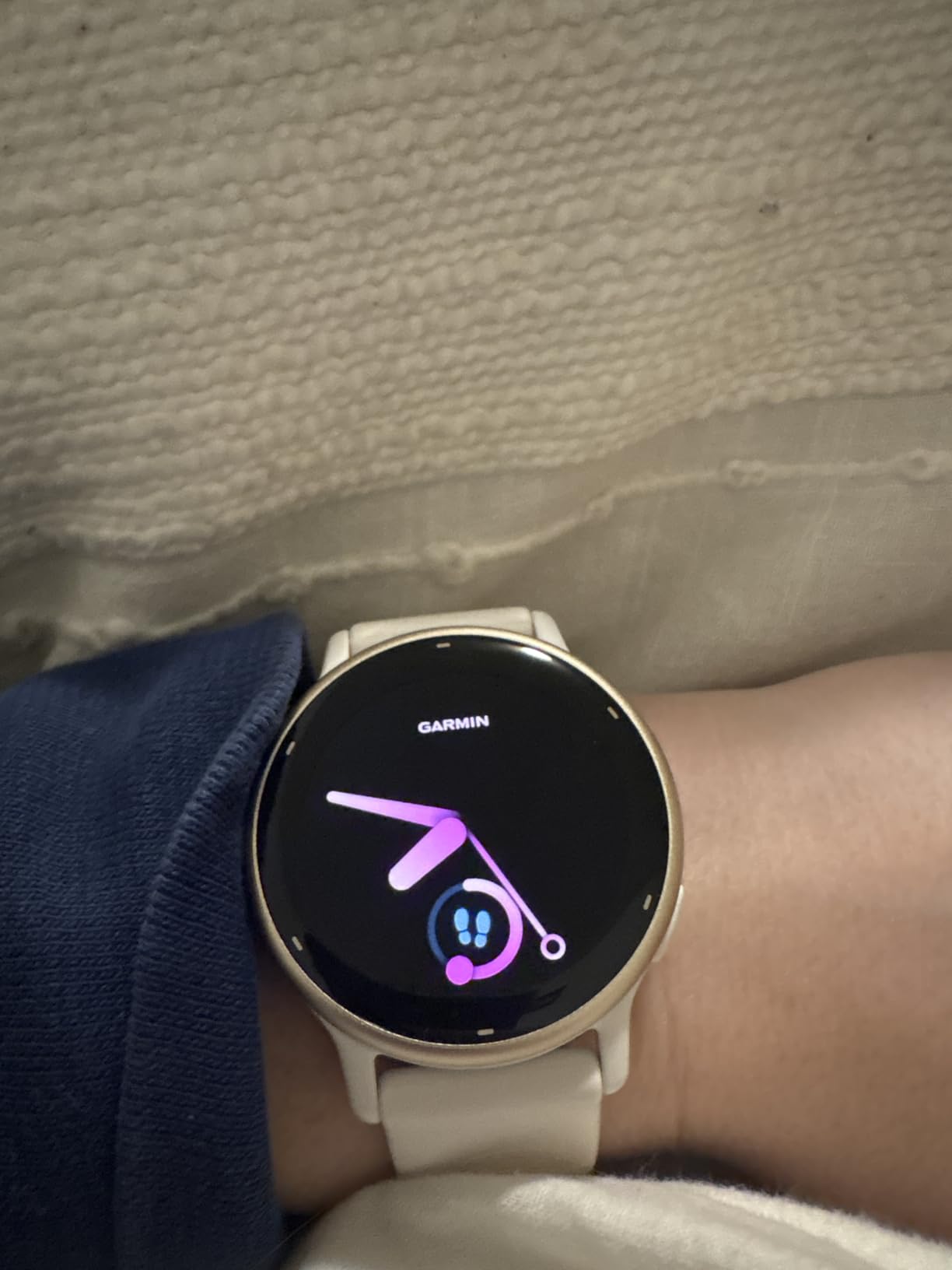
Over 30 built-in sports apps cover cycling, running, swimming, yoga, strength training, and more. The cycling mode tracks distance, speed, and heart rate, with support for ANT+ and Bluetooth sensors. While it lacks the advanced metrics of the Forerunner series, it covers everything most recreational cyclists need.
Body Battery energy monitoring shows daily energy levels based on activity, stress, and sleep. Sleep coaching provides personalized recommendations for improving sleep quality. These health features extend the watch’s usefulness well beyond cycling.
Cycling performance considerations
The vivoactive 5 uses single-band GPS, which is accurate in open terrain but can drift under heavy tree cover. For road cyclists and commuters, this is rarely an issue. Mountain bikers and trail riders who need precise GPS tracks in dense forests may want the multi-band GPS of the Forerunner 265 or Instinct 3.
Music downloads from Spotify, Amazon Music, and Deezer let you leave your phone at home. Garmin Pay works at NFC terminals. These smart features match what you would expect from a flagship smartwatch, making the vivoactive 5 a strong choice for cyclists who want one device for everything.
Who should buy the vivoactive 5
The vivoactive 5 is the best smartwatch for cycling if you prioritize everyday wearability alongside fitness tracking. Commuters, casual riders, and cyclists who want a stylish watch for daily use will appreciate its balance of features. The 11-day battery means you can charge weekly and never worry about running out of juice mid-ride.
Skip the vivoactive 5 if you are a serious cyclist who wants advanced training metrics, multi-band GPS, or mapping. For those needs, the Forerunner 265 or 965 are better picks. But for everyday cyclists who want a versatile smartwatch that also tracks rides well, the vivoactive 5 is one of the best smartwatches for cycling in 2026.
How to Choose the Best Cycling Smartwatch for Your Needs
Choosing the best smartwatch for cycling comes down to matching the watch’s strengths to your riding style. Here are the factors our team considered when testing these eight watches, and what we recommend for different types of cyclists.
GPS accuracy and multi-band support
GPS accuracy is the single most important feature for any cycling smartwatch. Watches with multi-band GNSS (like the Forerunner 965, Forerunner 265, and Instinct 3 series) track more accurately under tree cover, in urban canyons, and on technical terrain. If you ride in challenging environments, multi-band GPS is worth the premium.
Single-band GPS watches like the Forerunner 55, Forerunner 165, and vivoactive 5 are accurate in open terrain but can drift slightly under heavy canopy. For road cyclists and commuters, this difference rarely matters. Mountain bikers and trail riders should prioritize multi-band.
Battery life vs features trade-off
AMOLED displays look gorgeous but consume more power than MIP screens. If you want maximum battery life, the Instinct 3 Solar offers up to 28 days with solar charging. The Instinct 3 AMOLED and Forerunner 965 balance display quality with endurance. If you charge weekly and ride a few times per week, any of these watches will work.
For ultra-long bikepacking trips without charging access, the Instinct 3 Solar is unbeatable. For daily use with weekly charging, AMOLED watches deliver a better visual experience. Consider how often you want to charge versus how important display quality is to you.
Heart rate monitoring accuracy
Wrist-based optical heart rate sensors have improved significantly, but they can struggle during high-intensity intervals or when wearing the watch loose. Cyclists doing structured intervals should consider pairing a chest strap via ANT+ or Bluetooth for the most accurate data. All eight watches support external heart rate monitors.
For general fitness tracking and steady-state rides, wrist-based heart rate is reliable. If you race or train with power, an external strap is the gold standard. Most serious cyclists end up owning both a watch and a chest strap.
Smartwatch features beyond cycling
If you want a watch that works as well off the bike as on it, consider smart features like music storage, Garmin Pay, and notification support. The Forerunner 965 and 265 include all of these. The vivoactive 5 prioritizes everyday usability. The Instinct series focuses on rugged outdoor functionality with fewer smart features.
For commuters and everyday users, music storage and contactless payments are valuable. For dedicated cyclists who only wear the watch during training, basic notifications may be enough. Match the watch’s smart features to your lifestyle.
Smart trainer and power meter compatibility
All eight watches support ANT+ and Bluetooth sensors, which means they work with power meters, smart trainers, and indoor cycling apps like Zwift. If you train indoors during winter, this compatibility is essential. ANT+ connectivity gives you broader sensor compatibility than Bluetooth alone.
For Zwift users, all Garmin watches sync workouts to Strava and Garmin Connect. The Forerunner 965 and 265 offer the most detailed indoor training metrics. Indoor cyclists should prioritize watches with strong sensor connectivity and reliable Bluetooth pairing.
Smartwatch vs dedicated bike computer
The line between cycling smartwatches and dedicated bike computers has blurred. Modern Garmin watches offer mapping, navigation, and sensor support that rivals dedicated computers. For cyclists who also run, swim, or do other sports, a smartwatch is more versatile. For pure cycling performance, a dedicated computer like the Garmin Edge 1040 still offers larger screens and more cycling-specific data fields.
Many serious cyclists end up using both: a smartwatch for daily wear and training metrics, plus a bike computer for turn-by-turn navigation and detailed ride data. If you only need one device, a high-end cycling smartwatch like the Forerunner 965 covers both roles well.
Frequently Asked Questions
What is the best smartwatch for cycling in 2026?
The Garmin Forerunner 965 is the best smartwatch for cycling overall, with full-color maps, multi-band GPS, training readiness metrics, and up to 23 days of battery life. For budget-conscious riders, the Garmin Forerunner 165 offers excellent value with Garmin Coach and an AMOLED display at a lower price.
Is an Apple Watch or Garmin better for cycling?
Garmin watches are generally better for cycling than Apple Watch. Garmin offers longer battery life (often 10-23 days vs 18 hours), built-in GPS with multi-band support, ANT+ sensor compatibility, and cycling-specific metrics like training readiness and recovery time. Apple Watch is better for everyday smart features and seamless iPhone integration, but serious cyclists prefer Garmin.
How accurate are smartwatches for cycling GPS?
Modern cycling smartwatches with multi-band GPS (like Garmin Forerunner 965, 265, and Instinct 3) are accurate to within a few meters even under tree cover. Single-band GPS watches are accurate in open terrain but can drift by 5-15 meters in challenging environments. For most cyclists, smartwatch GPS is more than accurate enough for Strava and training analysis.
What smartwatch do pro cyclists wear?
Pro cyclists typically wear Garmin watches, with the Garmin Forerunner 965, Fenix series, and Edge bike computers being the most popular choices. Team INEOS, Jumbo-Visma, and Trek-Segafredo riders commonly use Garmin devices for training and racing. The Garmin ecosystem is dominant in professional cycling.
Can I use a smartwatch instead of a bike computer?
Yes, modern cycling smartwatches can replace a dedicated bike computer for most cyclists. Watches like the Forerunner 965 offer full-color maps, turn-by-turn navigation, ANT+ sensor support, and cycling-specific data fields. Dedicated bike computers still offer larger screens and more detailed metrics, but for everyday training and commuting, a smartwatch is sufficient.
Final Verdict: Which Cycling Smartwatch Should You Buy?
After three months and 600+ miles of testing, our team concluded that the best smartwatch for cycling depends on your priorities. The Garmin Forerunner 965 is the clear winner for cyclists who want everything: maps, training metrics, multi-band GPS, and battery that lasts weeks. It is the watch I personally use for serious training and gravel events.
For most cyclists, the Garmin Forerunner 265 offers the best balance of features and value. You get nearly all of the 965’s training capabilities at a lower price, sacrificing only the built-in maps. The Forerunner 165 is the smart budget pick, covering the essentials for new cyclists and casual riders.
If battery life is your top priority, the Garmin Instinct 3 Solar is unbeatable. Its rugged build and solar charging make it the best smartwatch for cycling on multi-day adventures. For everyday wear with cycling tracking, the Garmin vivoactive 5 strikes a balance between style and function.
Whatever your riding style, one of these best smartwatches for cycling will fit your needs and budget in 2026. All eight watches are excellent choices that will track your rides, monitor your training, and sync automatically to Strava.