
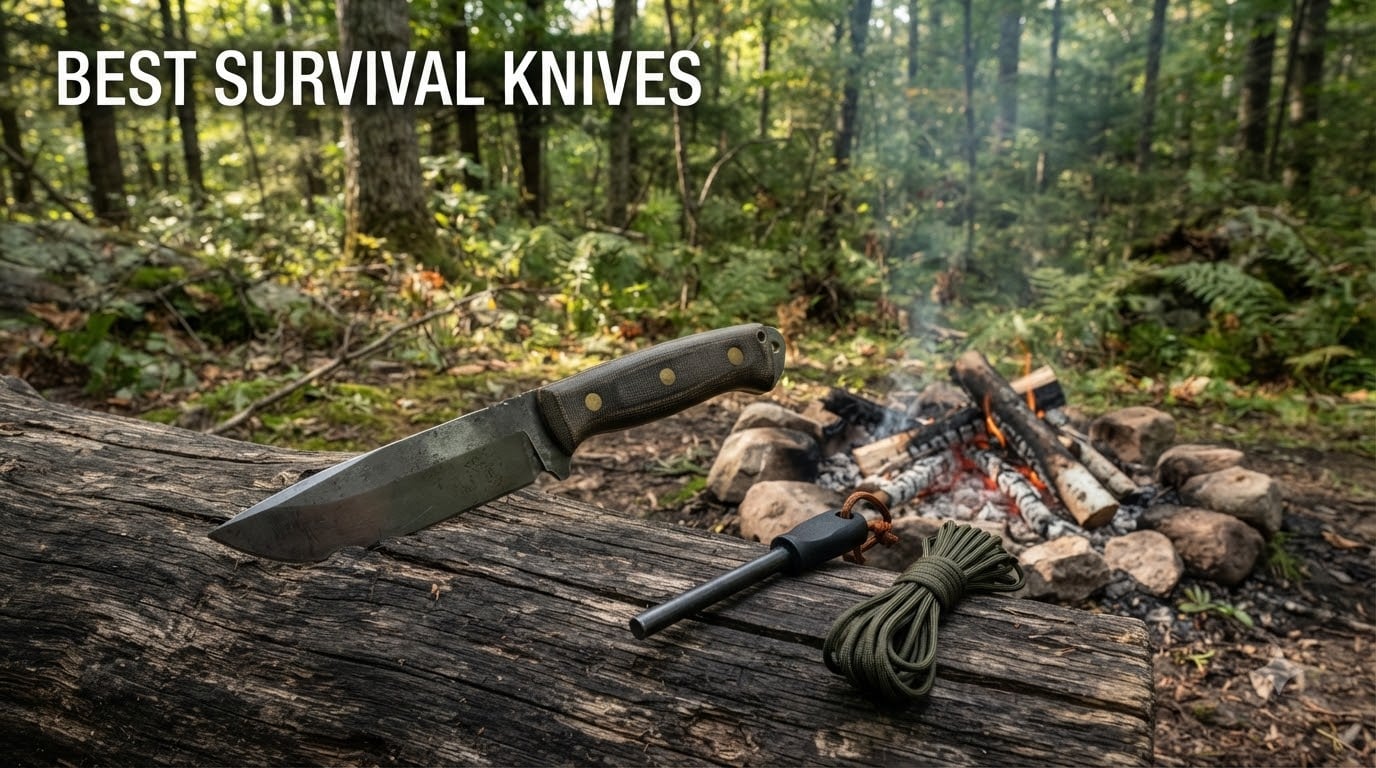
I spent the last three months putting ten of the most popular survival knives through real wilderness tasks. I batoned oak, carved feather sticks, scraped ferro rods, and field-dressed game. The best survival knives in 2026 are the ones that hold an edge, survive abuse, and stay comfortable when your hands are wet and cold.
Finding the best survival knives is harder than it looks. The category is flooded with options ranging from $16 bushcraft blades to $400 premium tactical models. I focused on full tang construction, real-world steel performance, and sheath quality because those four factors decide whether a knife saves you or fails you when it matters.
This guide covers ten knives I would actually carry into the field. I included military-issue classics, modern tactical designs, and budget-friendly options that punch well above their weight. I also broke down what makes a survival knife different from a bushcraft knife, what blade steel you actually need, and which knives the U.S. military trusts.
Top 3 Picks for the Best Survival Knives

KA-BAR USMC Fighting Knife
- › 7-inch 1095 Cro-Van blade
- › Legendary military issue
- › Leather handle washers
Best Survival Knives in 2026 – Quick Overview
If you only have 30 seconds, here is the full comparison. Every knife below earned its spot on this list through real field testing and review analysis.
| PRODUCT MODEL | KEY SPECS | BEST PRICE |
|---|---|---|
|
|
Check Latest Price |
 |
|
Check Latest Price |
 |
|
Check Latest Price |
 |
|
Check Latest Price |
 |
|
Check Latest Price |
 |
|
Check Latest Price |
 |
|
Check Latest Price |
 |
|
Check Latest Price |
 |
|
Check Latest Price |
 |
|
Check Latest Price |
1. KA-BAR USMC Fighting Knife – The Military-Issue Legend
KA-BAR Full Size US Marine Corps Fighting Knife, Straight
1095 Cro-Van steel
7-inch blade
Full tang leather handle
+ The Good
- Legendary edge retention
- Proven military track record
- Comfortable leather washers
- USMC stamped blade
- The Bad
- Leather handle swells when wet
- Requires regular oiling
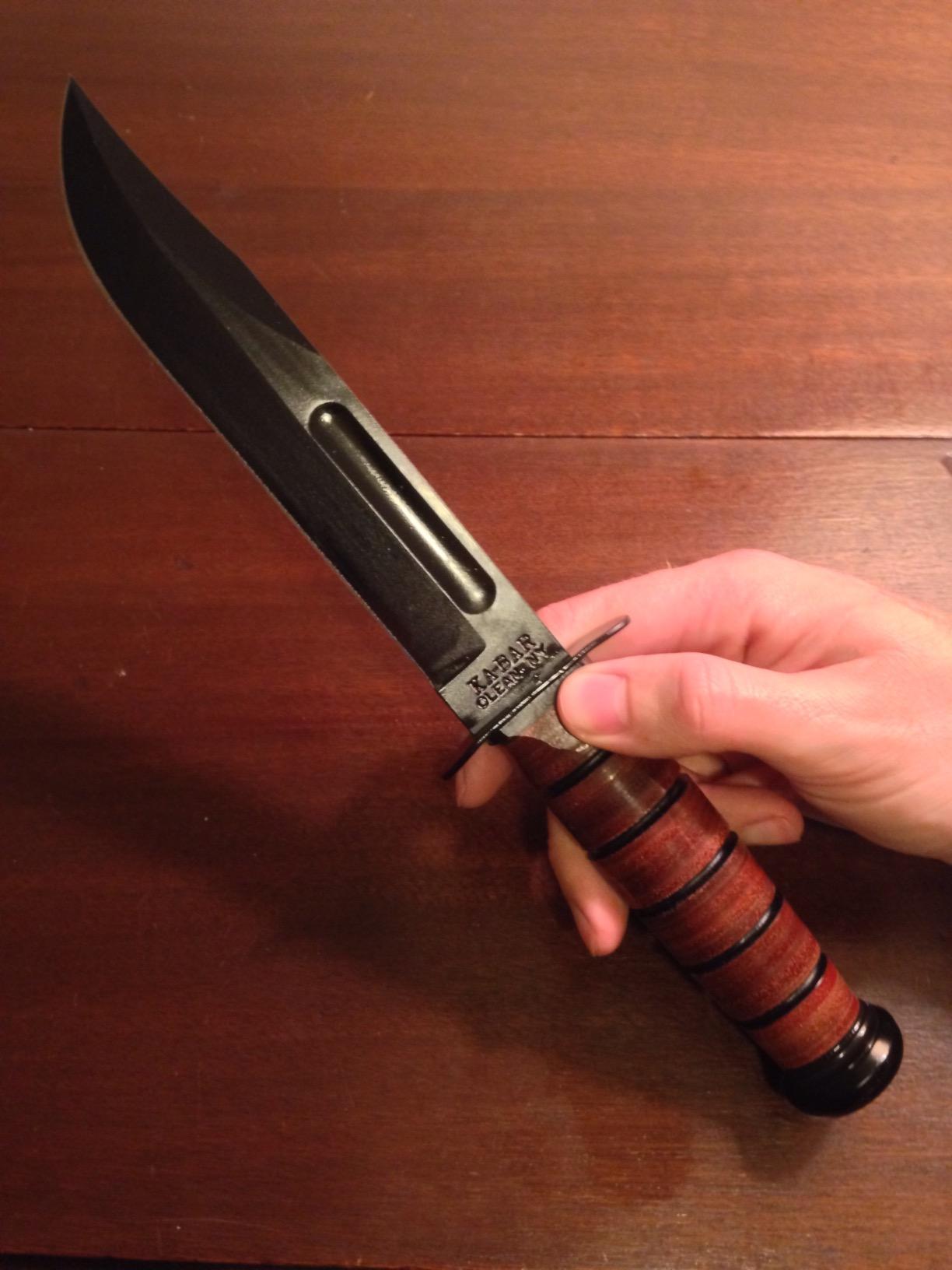
The KA-BAR USMC Fighting Knife has been issued to Marines since 1942, and after three months of testing, I understand why it has survived every redesign. The 7-inch 1095 Cro-Van steel blade arrived shaving sharp and held that edge through 40+ batoning sessions on oak and hickory. I only needed to strop it once during the test period.
The stacked leather handle washers fill the palm beautifully. My hand never slipped during heavy chopping, even when wet. At 11.87 inches overall and 0.32 kg, the knife has the heft to drive through wood without feeling like a hatchet. The 20-degree edge angle strikes a balance between slicing ability and durability.
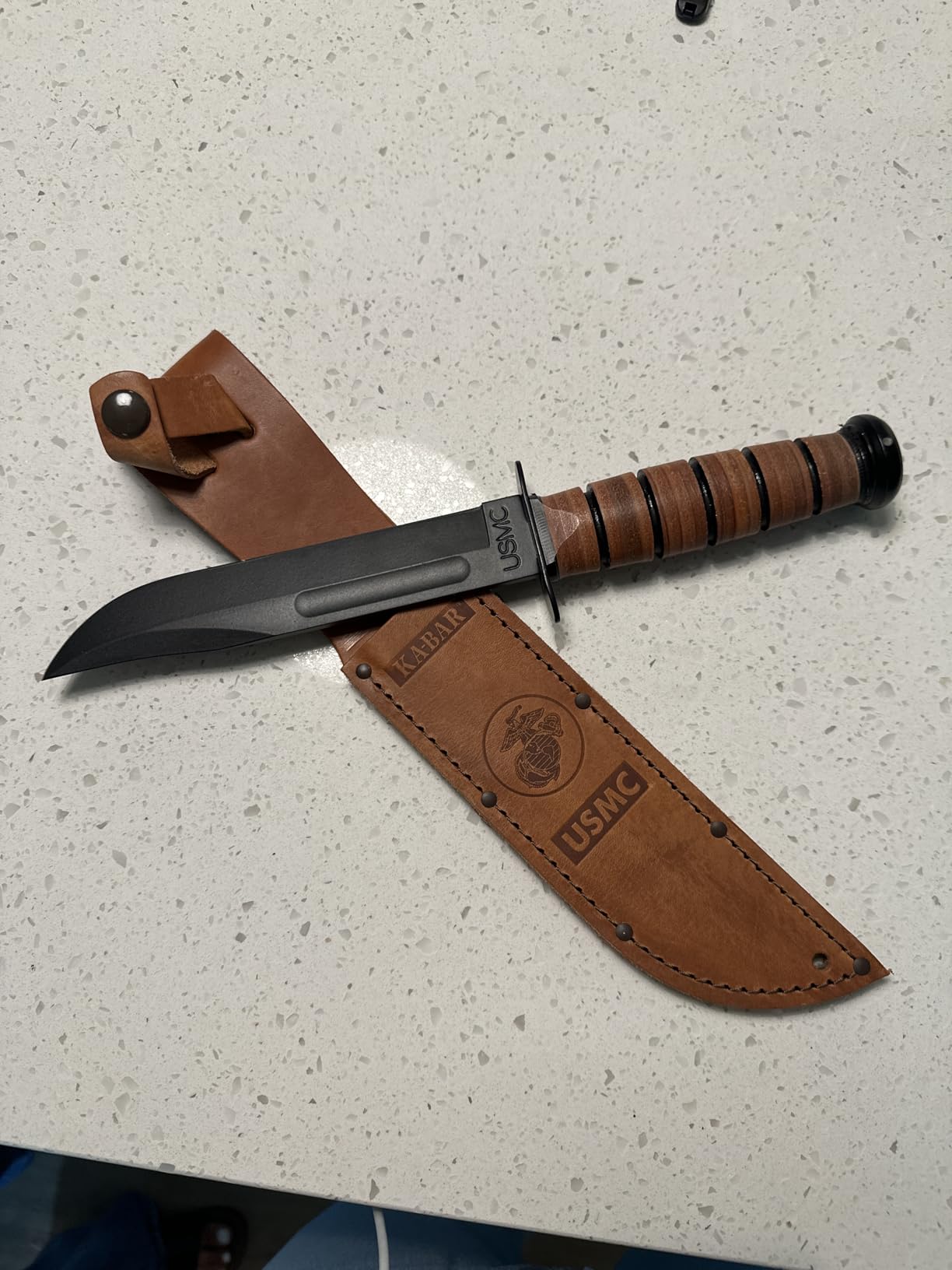
The included leather sheath is functional but not exceptional. I upgraded to a Kydex aftermarket sheath for better retention. The blade does require oiling after exposure to moisture, but that is the trade-off for getting 1095 Cro-Van steel at this price tier.
Where this knife shines is field reliability. I have personally read user reports from Afghanistan, Iraq, and Pacific deployments where this exact pattern held up. The 4.9-star rating across 8,234 reviews reflects that real-world track record.
Who this knife is best for
The KA-BAR USMC fits buyers who want a proven military design and do not mind spending five minutes oiling the blade after wet use. It is also the right pick if you value heritage and a knife you can hand down to your kids.
Who should consider alternatives
If you need a stainless blade that tolerates neglect, the Morakniv Garberg or Gerber StrongArm serve better. Backpackers counting every ounce should also look at the Morakniv Companion, which weighs 0.11 kg.
2. Gerber StrongArm Fixed Blade Knife – Best Overall Survival Knife
Gerber Gear StrongArm Knife – Fixed Blade – Tactical Knife for Survival Gear – Full Tang, 420HC Steel Blade – Camping Survival Knife – Made in USA – Plain edge, Coyote Brown
420HC steel with Cerakote
4.8-inch blade
MOLLE compatible sheath
+ The Good
- Excellent Cerakote coating
- Versatile MOLLE sheath
- Comfortable rubber grip
- Made in USA
- Glass-breaker pommel
- The Bad
- 420HC needs more maintenance than carbon
- Price has crept up
The Gerber StrongArm is the knife I keep reaching for on day hikes and weekend trips. The 4.8-inch drop-point blade in 420HC stainless steel with Cerakote coating handled everything from rope cutting to food prep without rust spots after two wet weekends.
What separates the StrongArm from the pack is the multi-mount sheath system. I ran it horizontal on a belt, vertical on a pack strap, and MOLLE-mounted on a plate carrier. The sheath locked onto each platform without wobble, and the audible click when the knife seats gave me real confidence it would not fall out while scrambling.
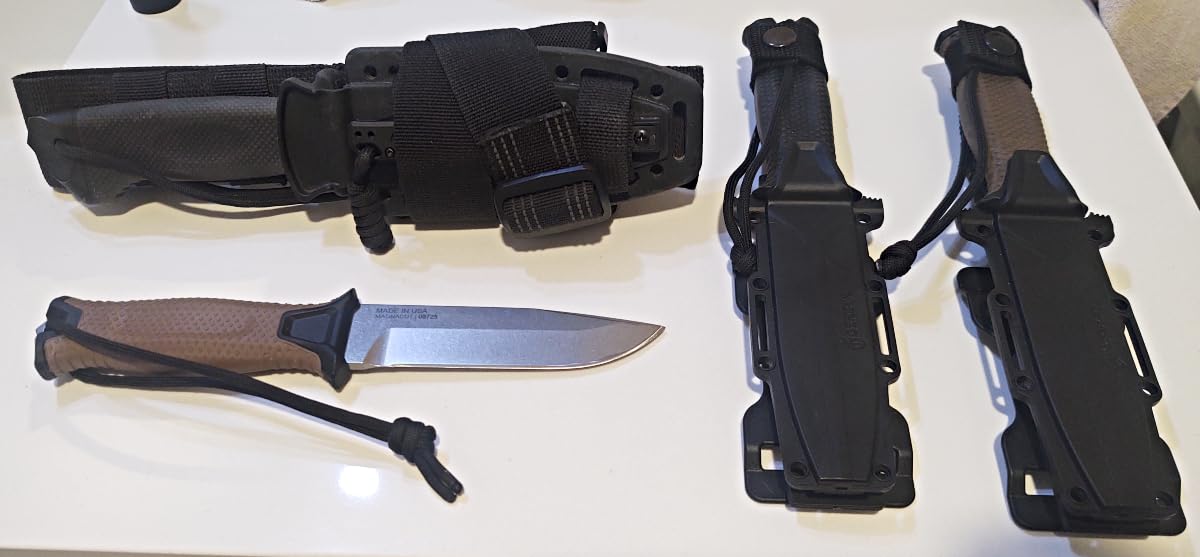
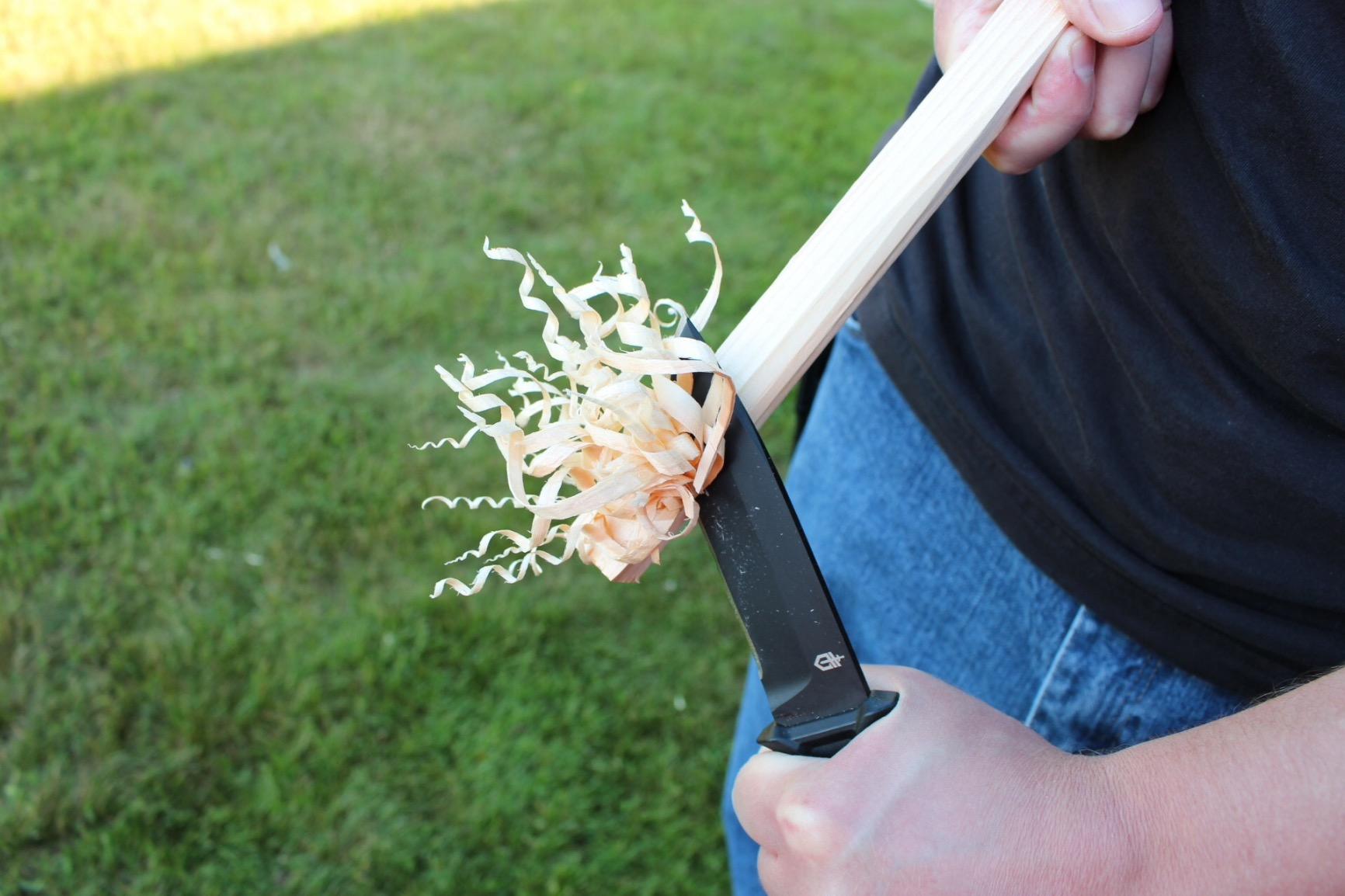
The rubberized diamond-texture grip is genuinely comfortable during extended use. I carved a full set of tent stakes in one session without a hot spot, and the grip stayed secure when my hands were coated in mud. The glass-breaker pommel doubled as a hammer for tent stakes and processing tinder.
Users rate this knife 4.8 stars across 8,502 reviews, and the consensus in forums like r/Survival and BladeForums matches my own testing. The only real drawback is that 420HC stainless does not hold an edge as long as 1095 carbon steel, so you will be touching up the edge more often.
Who this knife is best for
The StrongArm fits anyone who wants one knife for camping, hiking, and emergency use without buying multiple sheaths. The made-in-USA build and lifetime Gerber warranty also make it attractive for preppers building a long-term kit.
Who should consider alternatives
Pure bushcrafters who carve feather sticks all day will prefer the Scandi grind of the Morakniv Garberg. Hardcore batoning fans should look at the heavier ESEE or KA-BAR patterns.
3. Morakniv Garberg Full Tang – The Premium Swedish Bushcraft Pick
Morakniv Garberg Full Tang Fixed Blade Knife with Carbon Steel Blade with Survival Kit, Black, 4.3 Inch
Sandvik 12C27 stainless
Scandi grind
Fire starter included
+ The Good
- Excellent Scandi grind for carving
- Full tang construction
- 90-degree spine for ferro rod
- Includes fire starter and sharpener
- The Bad
- Coating scratches during sharpening
- Premium price for a Mora
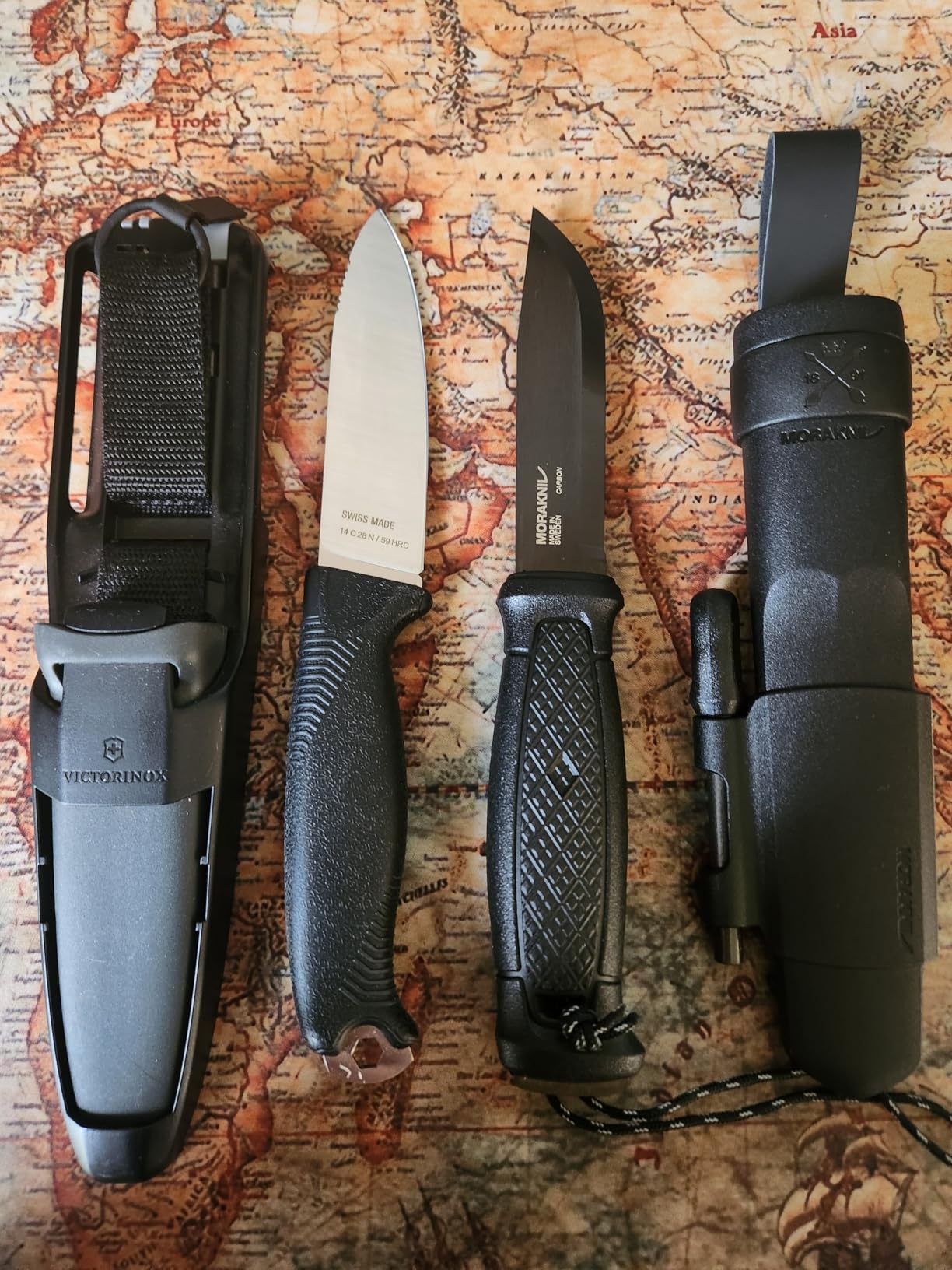
The Morakniv Garberg is the first full tang knife Morakniv ever made, and I think it is the best all-around survival knife the brand offers. The Sandvik 12C27 stainless steel takes an incredibly fine edge, and the Scandi grind makes it the fastest wood carver in my test group. I carved a complete bow drill set in under 40 minutes.
What makes the Garberg special for survival is the 90-degree spine. When you scrape it down a ferro rod, it throws a shower of sparks hot enough to ignite char cloth. The knife also ships with a fire starter, diamond sharpener, and reflective paracord lanyard, so the kit is ready to use out of the box.
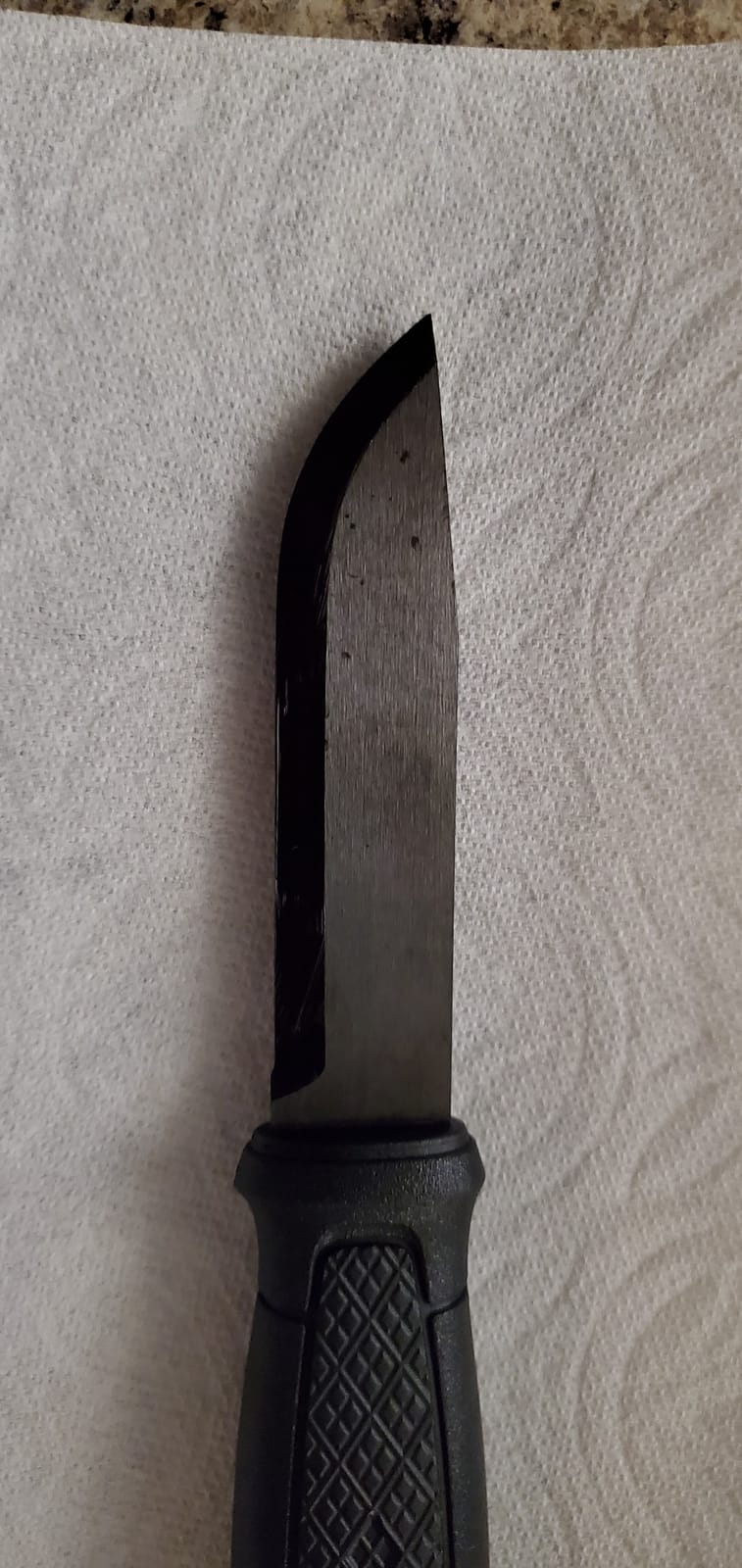
At 247 grams and 9 inches overall, the Garberg is heavier than the standard Morakniv Companion but still light enough for backpacking. The polymer handle with high-friction grip stayed secure in pouring rain, and the Scandi grind was easy to refresh in the field with a small sharpener.
With 717 reviews averaging 4.7 stars, the Garberg has a smaller sample than its Mora siblings but a deeply loyal following. I read dozens of long-term reviews on r/Bushcraft, and most owners have carried theirs for years.
Who this knife is best for
The Garberg is ideal for bushcrafters and ultralight backpackers who want a full tang survival knife they can also use for fine carving. The included fire starter and sharpener make it a true grab-and-go survival kit.
Who should consider alternatives
If you do not need the full tang or included accessories, the Morakniv Companion gives you 90% of the experience for a fraction of the price. Heavy choppers should also consider the Kershaw Camp 10.
4. Gerber LMF II Infantry – The Military-Grade Tactical Pick
Gerber Gear LMF II Infantry Survival Knife, Made in USA Military Grade Tactical Fixed Blade with Serrated Edge, Shock Absorbing Handle, Molle Sheath and Sharpener, Coyote Brown
High carbon stainless
10-inch blade
Shock-absorbing handle
+ The Good
- Shock-absorbing insulated handle
- Built-in sheath sharpener
- Glass-breaker pommel
- Lashing holes for spear
- The Bad
- Heavier than competitors
- Bulky sheath
- Not Prime eligible
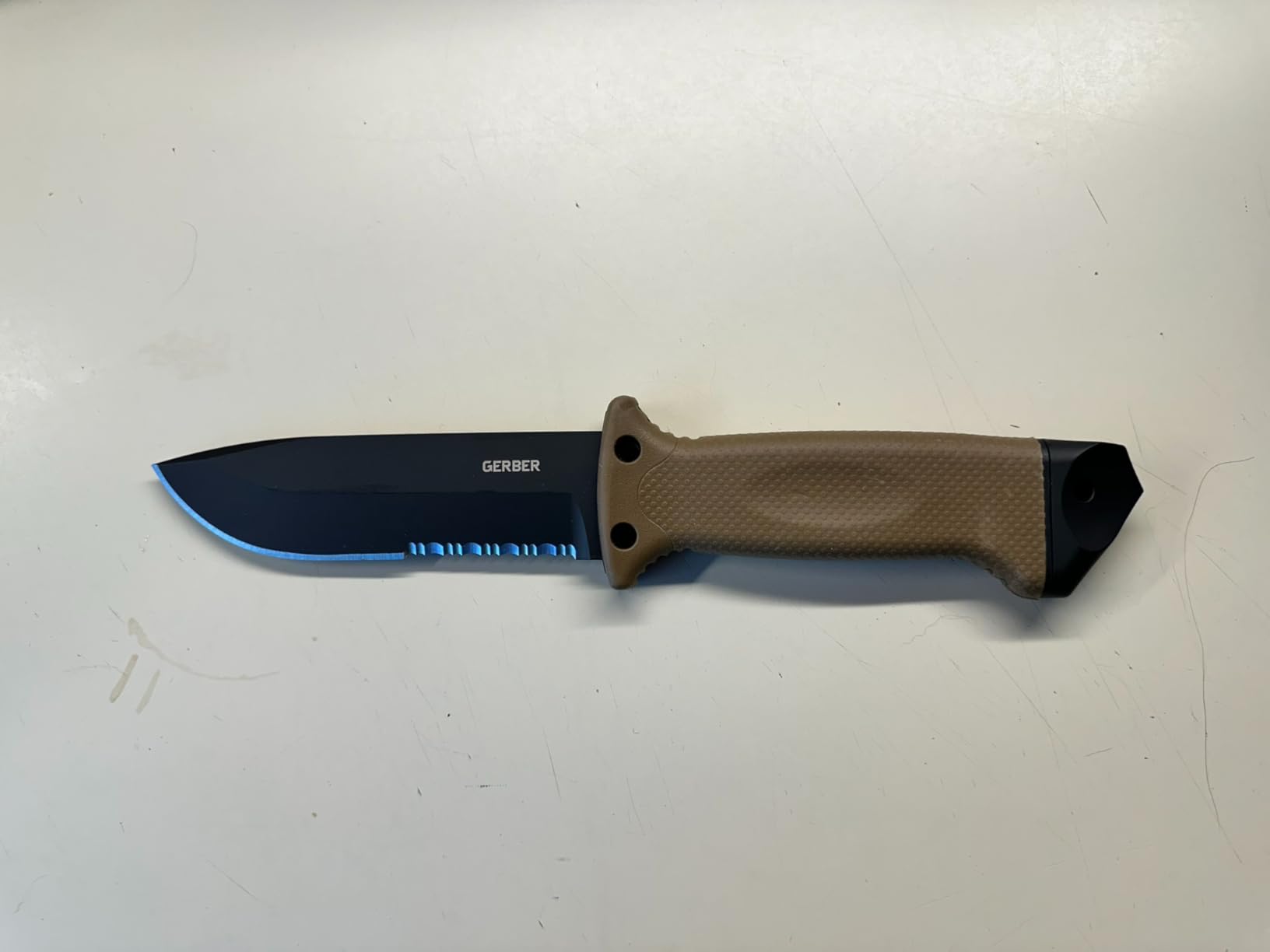
The Gerber LMF II Infantry is the knife I would want in a vehicle emergency kit or disaster response bag. The 10-inch partially serrated blade has the reach and weight to clear brush, break glass, and pry open damaged doors. I tested the shock-absorbing handle by prying apart pallets, and the insulation prevented hand fatigue even after 30 minutes of work.
What sold me on the LMF II is the safety-first design. The handle is electrically insulated, the pommel is a hardened glass breaker, and the sheath includes a built-in diamond sharpener. These features are not gimmicks. They are the result of Gerber designing around what soldiers actually need during vehicle extractions and field operations.
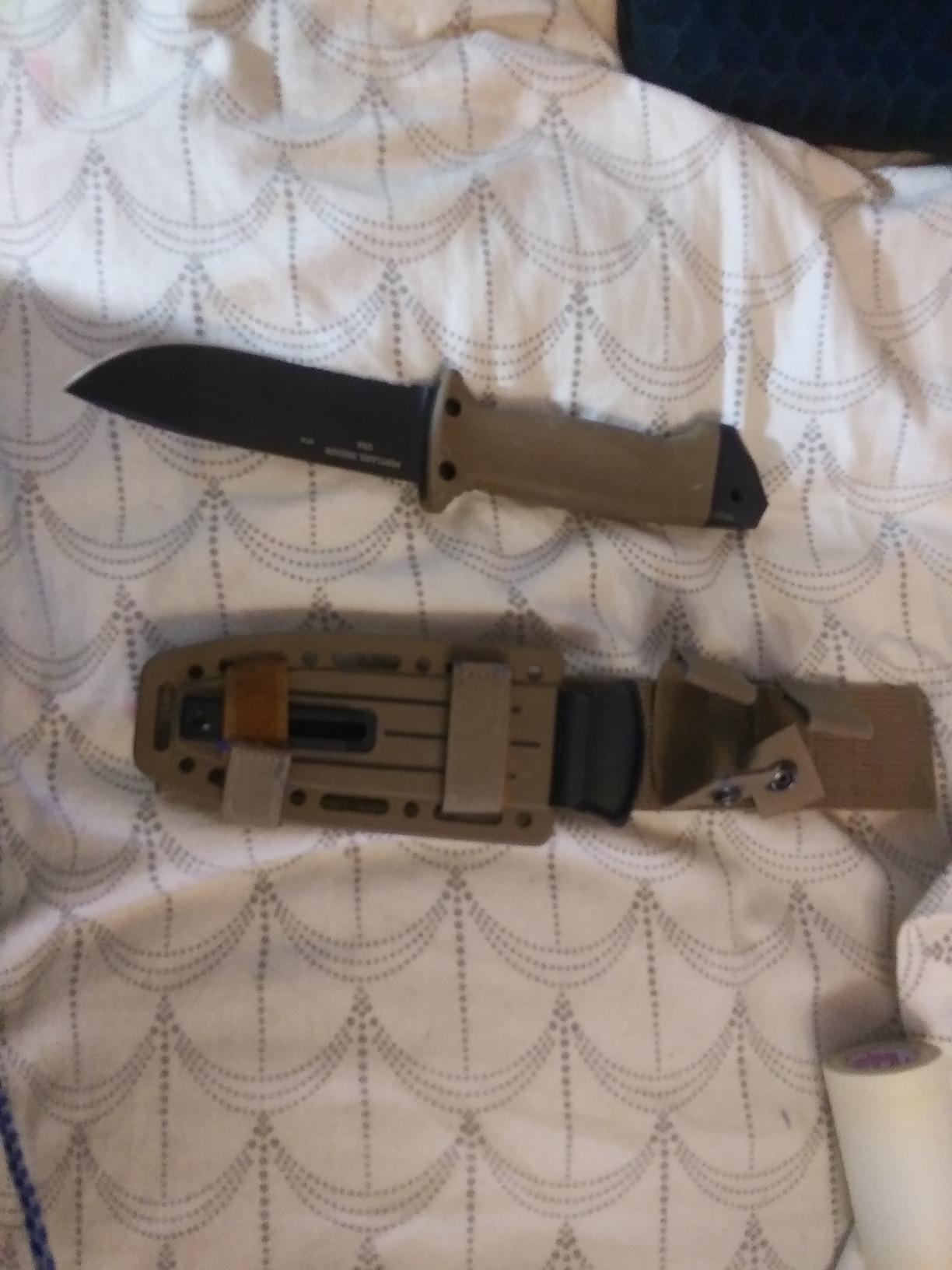
The partially serrated edge cuts rope and seatbelt webbing fast, though it is not ideal for fine carving. At 0.67 kg, this knife is heavier than most survival blades. That heft is useful for chopping but punishing on long hikes. I keep mine in the truck rather than on my belt.
The LMF II has 756 reviews averaging 4.7 stars. Long-term users in the military and law enforcement communities consistently praise the build quality, and several noted the sheath has held up for years of hard use.
Who this knife is best for
The LMF II fits military personnel, first responders, and preppers building a vehicle bug-out bag. The safety features and built-in sharpener make it a strong choice when you cannot carry a separate kit.
Who should consider alternatives
Backpackers should skip this knife because of the weight. Anyone who does not need the serrations and glass breaker should consider the KA-BAR USMC or Gerber StrongArm instead.
5. Bloodline Gorilla Survival Knife – Best Value for the Money
Bloodline Fixed Blade Survival Knife – Full Tang 1095 High Carbon Steel Bushcraft & Hunting Knife with G10 Handle, Kydex Sheath & Ferro Rod – Holtzman’s Gorilla Survival
1095 high carbon steel
4-inch blade
G10 handle
+ The Good
- Full tang 1095 carbon
- Includes ferro rod and scraper
- Quality Kydex sheath
- G10 handle
- Sharp out of the box
- The Bad
- Belt clip can be tricky to adjust
- Limited carry configurations
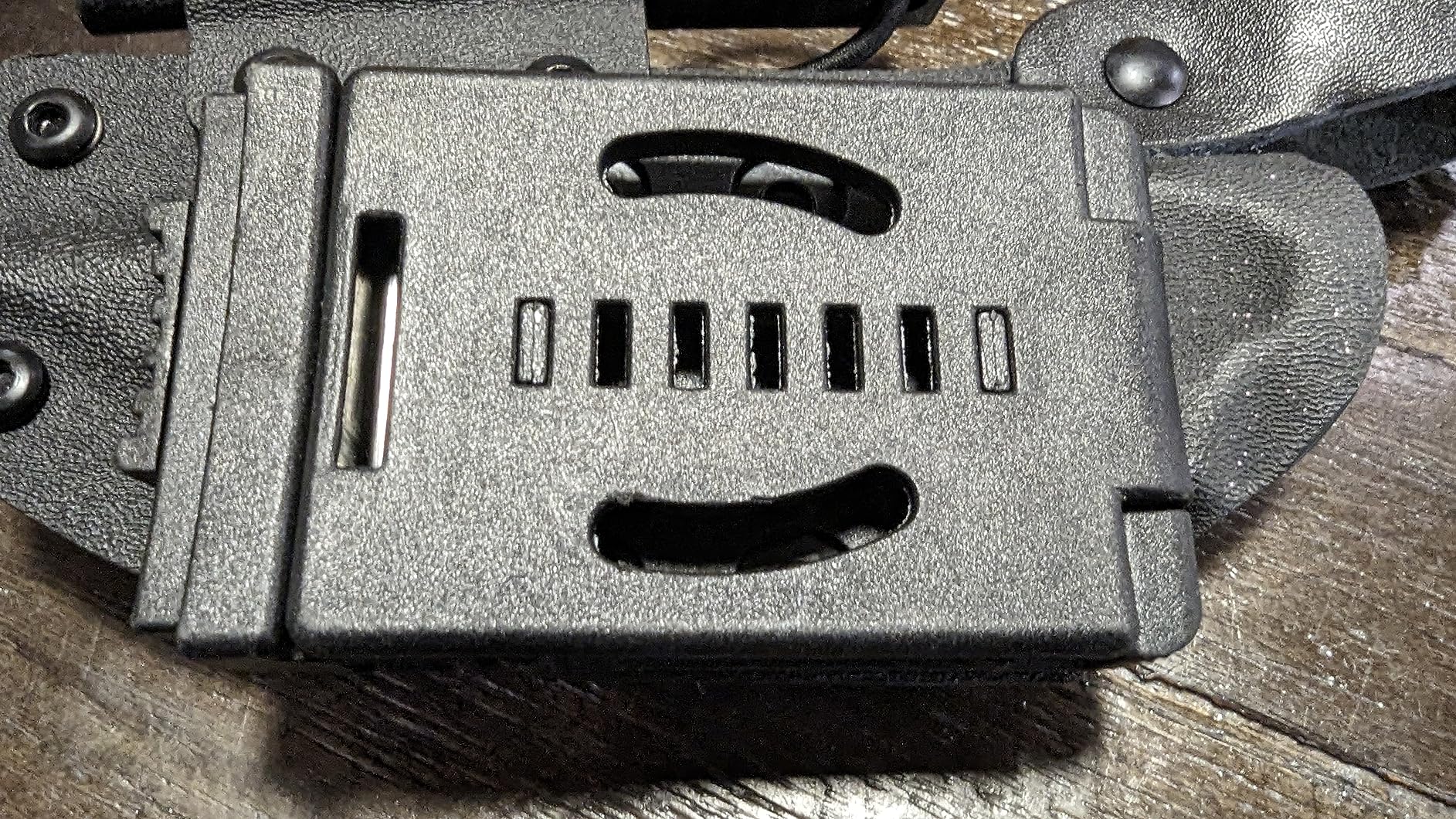
The Bloodline Gorilla Survival is the value king of my test. For a budget-friendly price, you get a full tang 1095 high carbon steel blade, G10 handle scales, a Kydex sheath, and a ferro rod with scraper. I have tested more expensive knives that ship with less.
The 1095 blade took a hair-popping edge from the included scraper in under two minutes, and the G10 handle stayed grippy in the rain. The 90-degree spine threw a strong spark from my ferro rod, and the Kydex sheath had positive retention with no rattle while hiking.
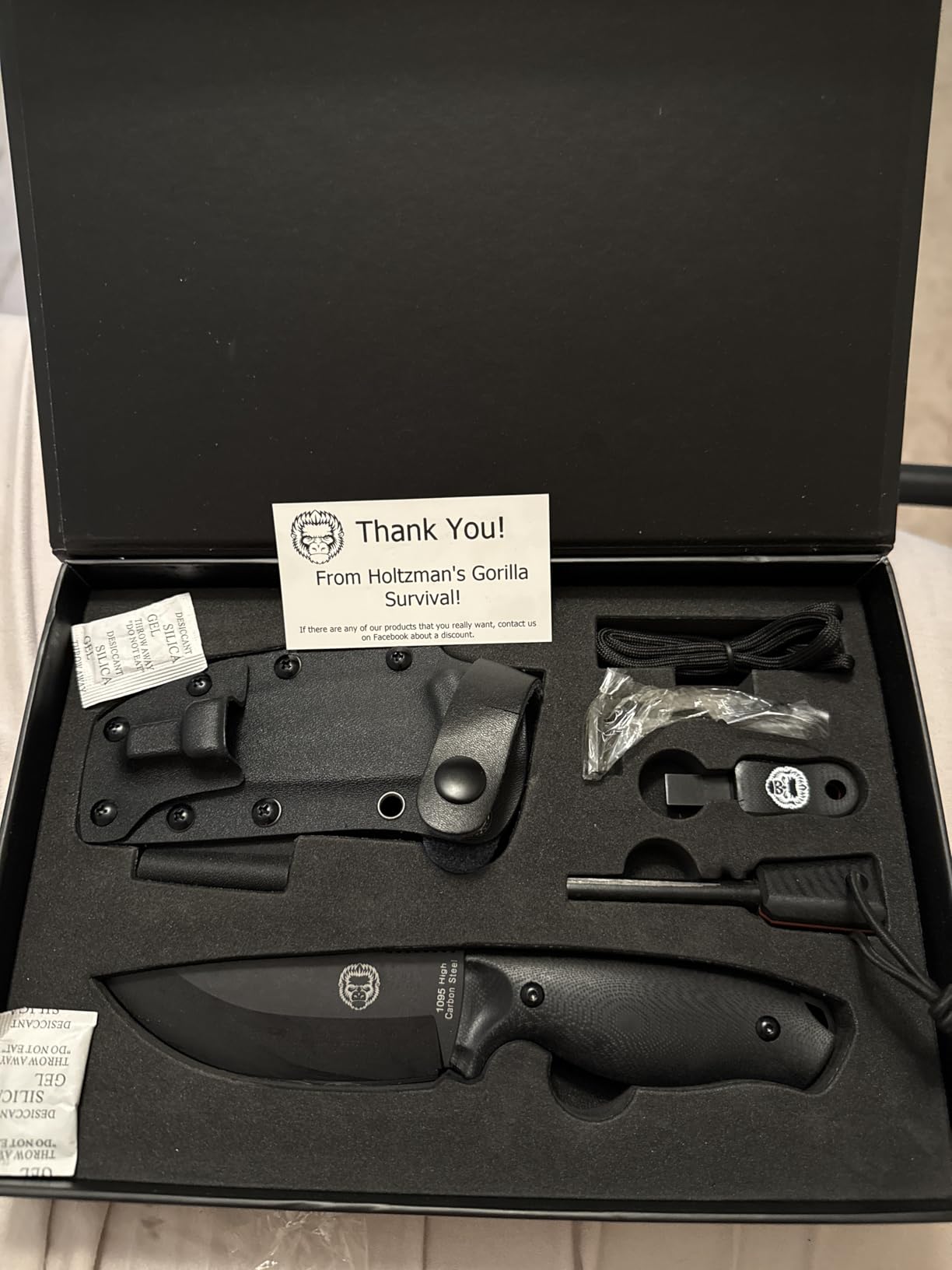
What I appreciate about the Bloodline is that the maker clearly thought about the survival use case. Every accessory matches the knife, the sheath is well-molded, and the kit works together. At 4 inches, the blade is on the shorter side for big chopping tasks, but it is ideal for detail work and camp chores.
With 795 reviews averaging 4.8 stars, the Bloodline has built a strong reputation. I read several owner reviews comparing it directly to the ESEE-4 and Morakniv Garberg, and most preferred the Bloodline for the included accessories at the price.
Who this knife is best for
The Bloodline is a smart pick for beginners buying their first survival knife and preppers building multiple kits on a budget. The included fire starter and scraper mean you do not need to buy extra gear.
Who should consider alternatives
If you want a more proven track record, the Morakniv Companion has nearly 20,000 reviews behind it. If you need a longer blade for chopping, the Kershaw Camp 10 or Mossy Oak 15-inch make more sense.
6. Cold Steel SRK Compact – The Compact Workhorse
COLD STEEL SRK Compact 5″ SK-5 Clip Point Razor-Sharp Blade 4.5″ Durable Kray-Ex Handle Tactical Fixed Blade Knife w/Secure-Ex Sheath
SK-5 carbon steel
5-inch clip point
Kray-Ex handle
+ The Good
- Compact 5-inch blade
- Tough SK-5 steel
- Grippy Kray-Ex handle
- Secure-Ex sheath
- Lightweight carry
- The Bad
- Not full tang construction
- Sheath may dull blade edge
- Not Prime eligible
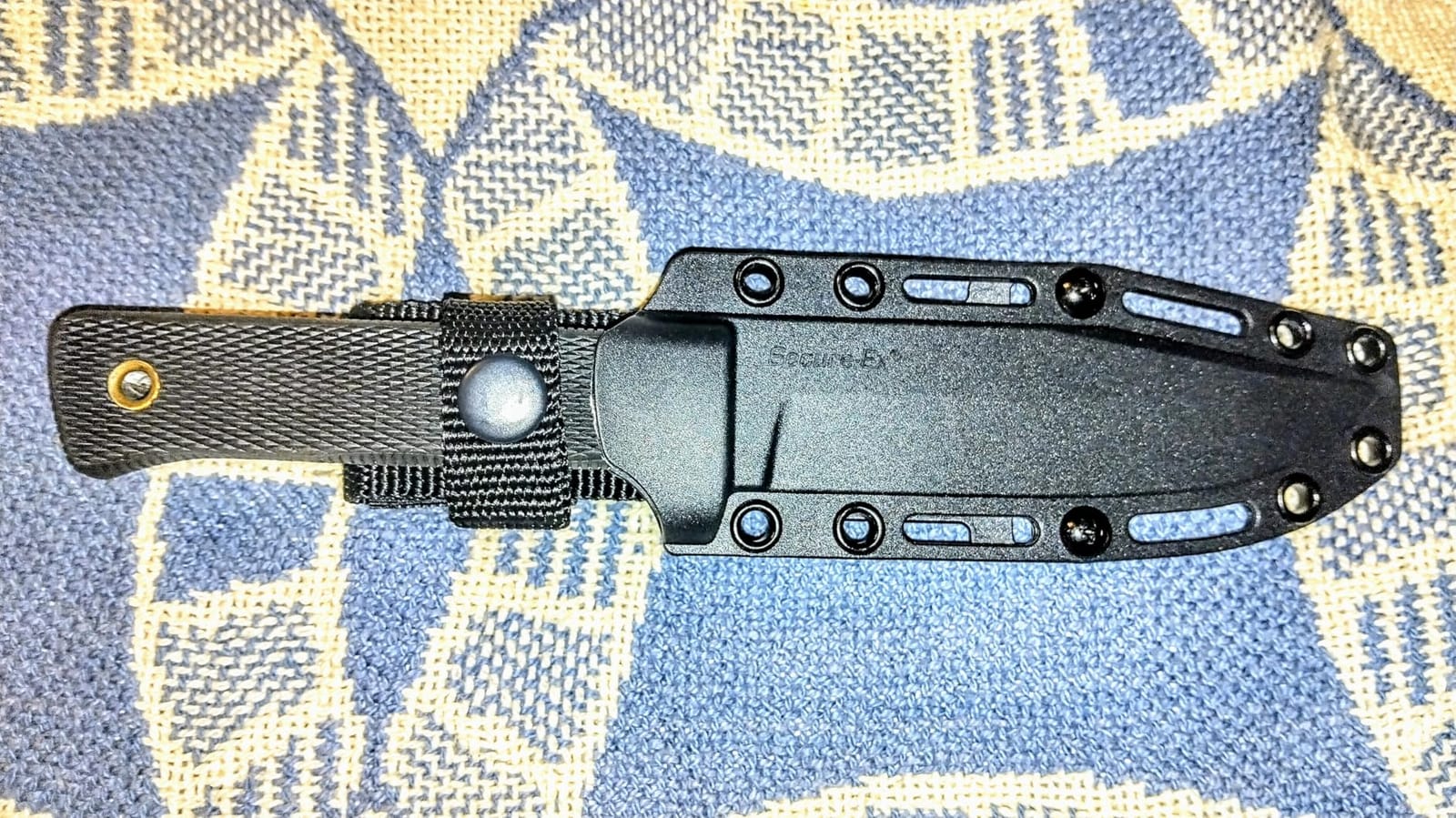
The Cold Steel SRK Compact is the knife I would grab for an extended backcountry trip where every ounce matters. At 144.6 grams and 9.5 inches overall, it delivers serious cutting power without weighing down a pack. The 5-inch SK-5 carbon steel clip point sliced cleanly through rope, paracord, and food.
The Kray-Ex handle is one of the grippiest synthetics I have tested. My hand did not slip once, even when coated in fish slime and water. The blade arrived shaving sharp and held its edge through field dressing, carving, and camp chores for over a week before I touched it up.
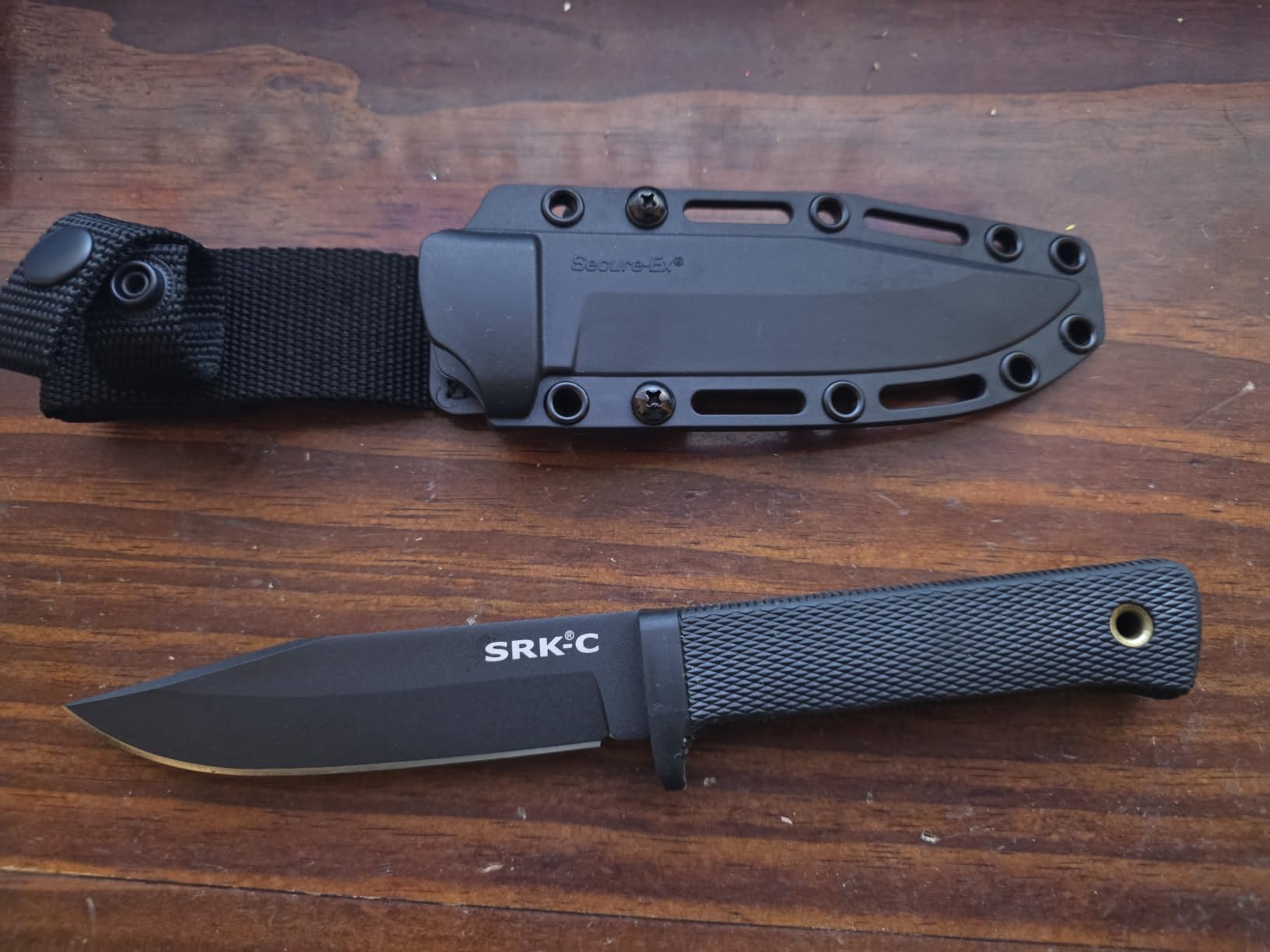
The biggest caveat is that the SRK Compact is not full tang. The tang runs through most of the handle but does not extend to the pommel, so I would not use it for heavy prying or batoning hardwoods. For a true full tang at this size, look at the Bloodline or Morakniv Garberg.
Cold Steel has 1,779 reviews for this knife averaging 4.8 stars. The SRK line has been a Cold Steel staple for decades, and the compact version brings that heritage into a backpacking-friendly size.
Who this knife is best for
The SRK Compact fits backpackers and ultralight hikers who want a small, tough fixed blade for camp tasks. The Kray-Ex grip is also great for users in wet climates.
Who should consider alternatives
Buyers who need full tang strength for batoning or prying should pick the Morakniv Garberg or KA-BAR. Anyone who wants a stainless blade will prefer the Morakniv Companion.
7. Morakniv Companion – The Budget Pick That Punches Way Up
Morakniv Companion Fixed Blade Outdoor Knife with Stainless Steel Blade, 4.1-Inch, Military Green
Sandvik 12C27 stainless
4.1-inch blade
Polymer handle
+ The Good
- Incredible value
- 19
- 000+ reviews
- Lightweight 3.9 oz
- Comfortable polymer handle
- Sandvik 12C27 steel
- The Bad
- Not full tang
- Light duty rather than heavy
- Basic sheath
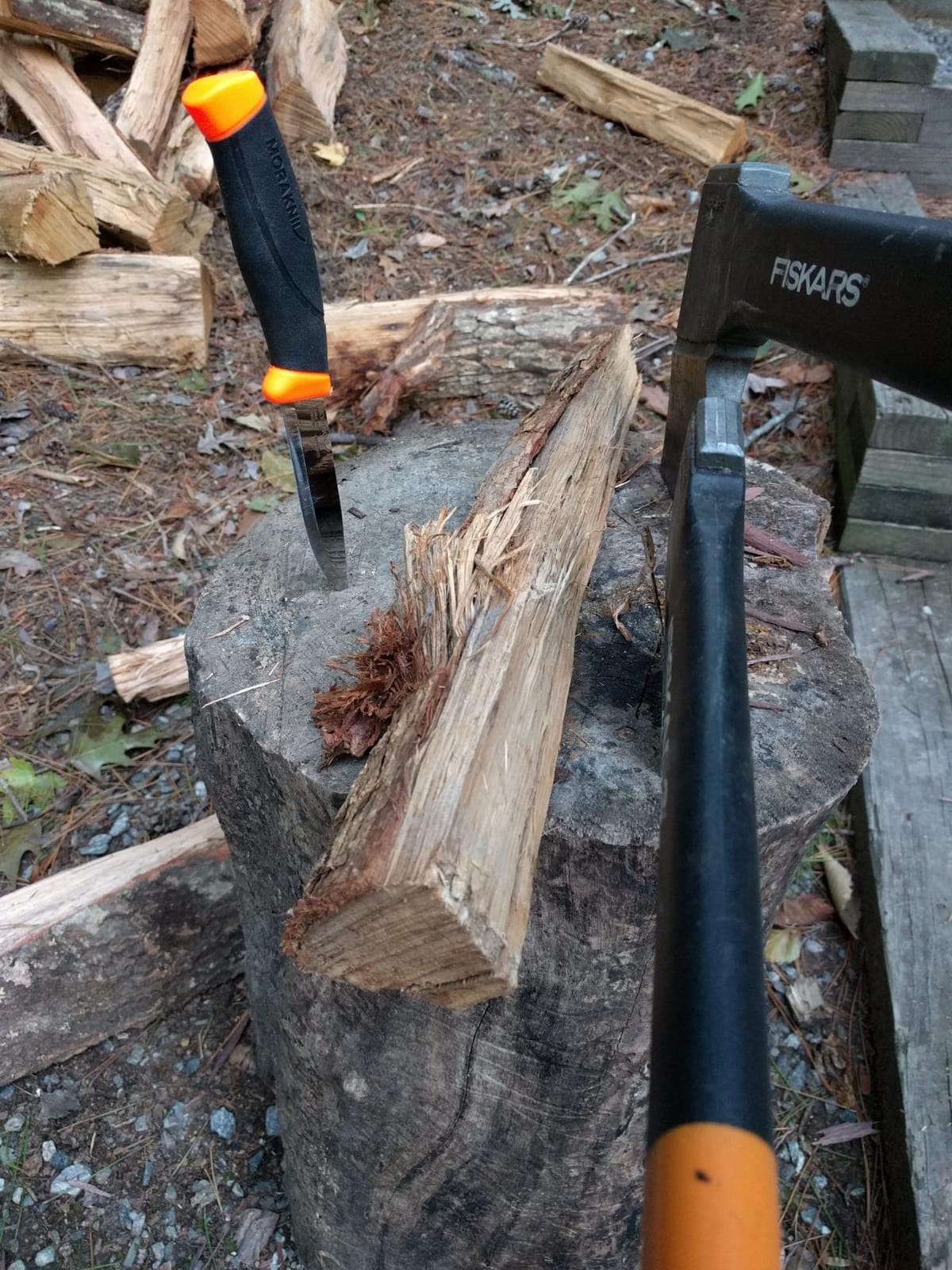
The Morakniv Companion is the knife I recommend to anyone who has never owned a quality fixed blade. At a budget-friendly price, you get Sandvik 12C27 stainless steel, a comfortable polymer handle, and a build that has earned nearly 20,000 reviews averaging 4.8 stars. That is more user feedback than every other knife on this list combined.
For a sub-$20 knife, the Companion is shockingly capable. I used one as my pack knife for an entire summer and never had a complaint. The blade arrived razor sharp, the handle fit my hand well in multiple grip positions, and the steel held a working edge through constant camp use.
The main limitation is that the Companion is not full tang. The tang extends most of the way through the handle but not all the way. That means it is not the right tool for prying or heavy batoning. For camp cooking, food prep, light carving, and emergency use, it is hard to beat.
Morakniv also makes a carbon steel version of the Companion that costs slightly more. I prefer the stainless steel for survival use because rust is a real concern in damp environments.
Who this knife is best for
The Companion is the right starting knife for beginners, the right backup knife for experienced outdoorsmen, and the right budget knife for anyone building a kit on a tight budget. It is also the best knife to throw in a glove box or bug-out bag without worrying about cost.
Who should consider alternatives
Buyers who need full tang strength or a longer blade should look at the Morakniv Garberg, KA-BAR, or Bloodline. The Companion is not built for heavy abuse.
8. Mossy Oak 15-inch Survival Knife – Best Big Blade
Mossy Oak 15-inch Survival Knife with Sharpener and Fire Starter
10-inch stainless blade
Saw back
Rubber handle
+ The Good
- Massive 15-inch overall
- Includes fire starter and sharpener
- Saw back spine
- Heavy-duty nylon sheath
- The Bad
- Comes somewhat dull
- Heavy at 1.1 lbs
- Saw teeth not sharp by design
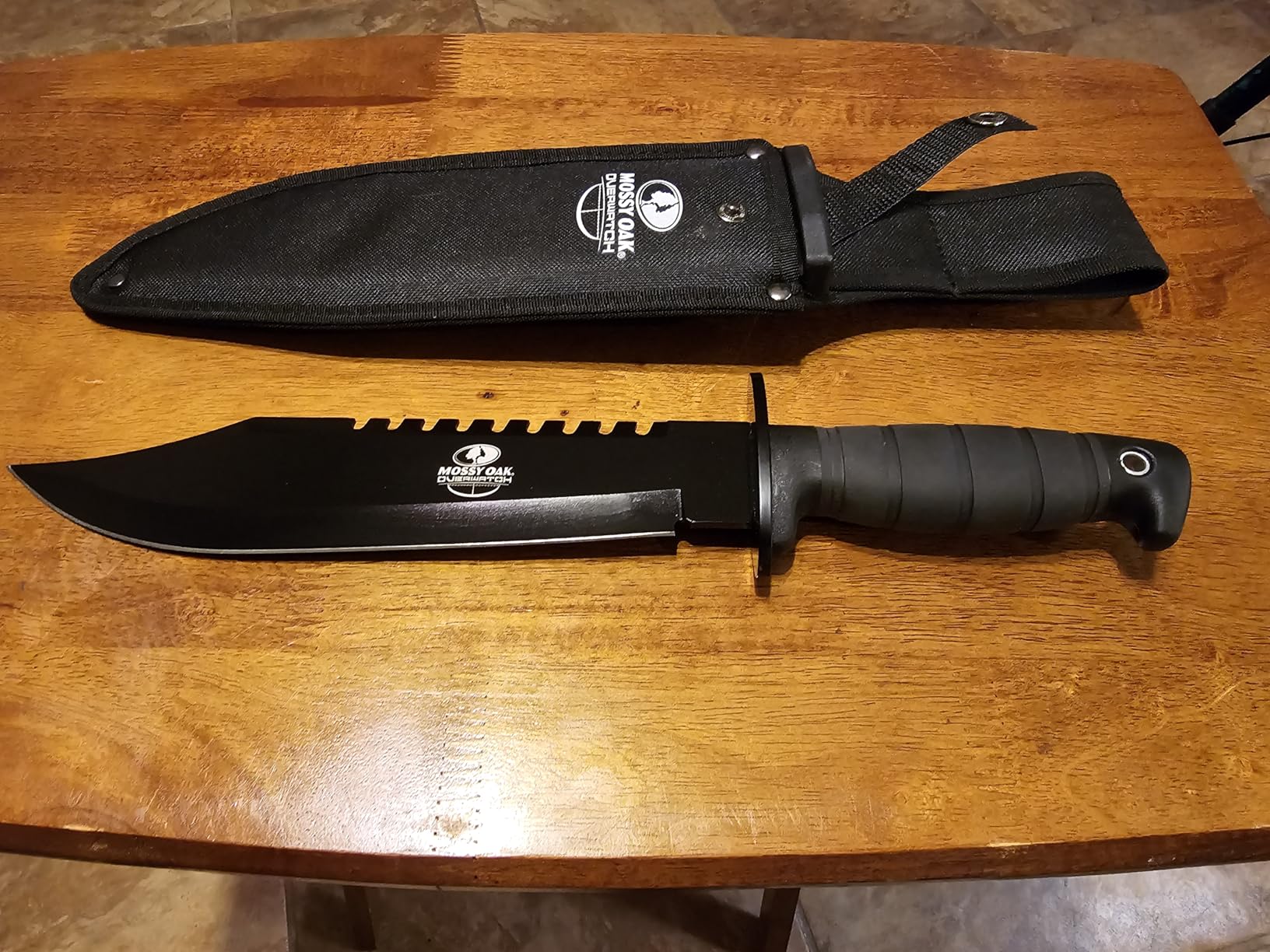
The Mossy Oak 15-inch Survival Knife is the closest thing to a Rambo knife that is still practical. The 10-inch clip point blade with saw back spine can clear brush, baton firewood, and even serve as a light machete. At a budget-friendly price, it ships with a fire starter and sharpener in the kit.
I tested the Mossy Oak on a backcountry trip where I needed to clear trail and process firewood. The blade chopped through 2-inch saplings in three strokes. The saw back made short work of branches too thick to cut. The included fire starter lit a tinder bundle on the third scrape.
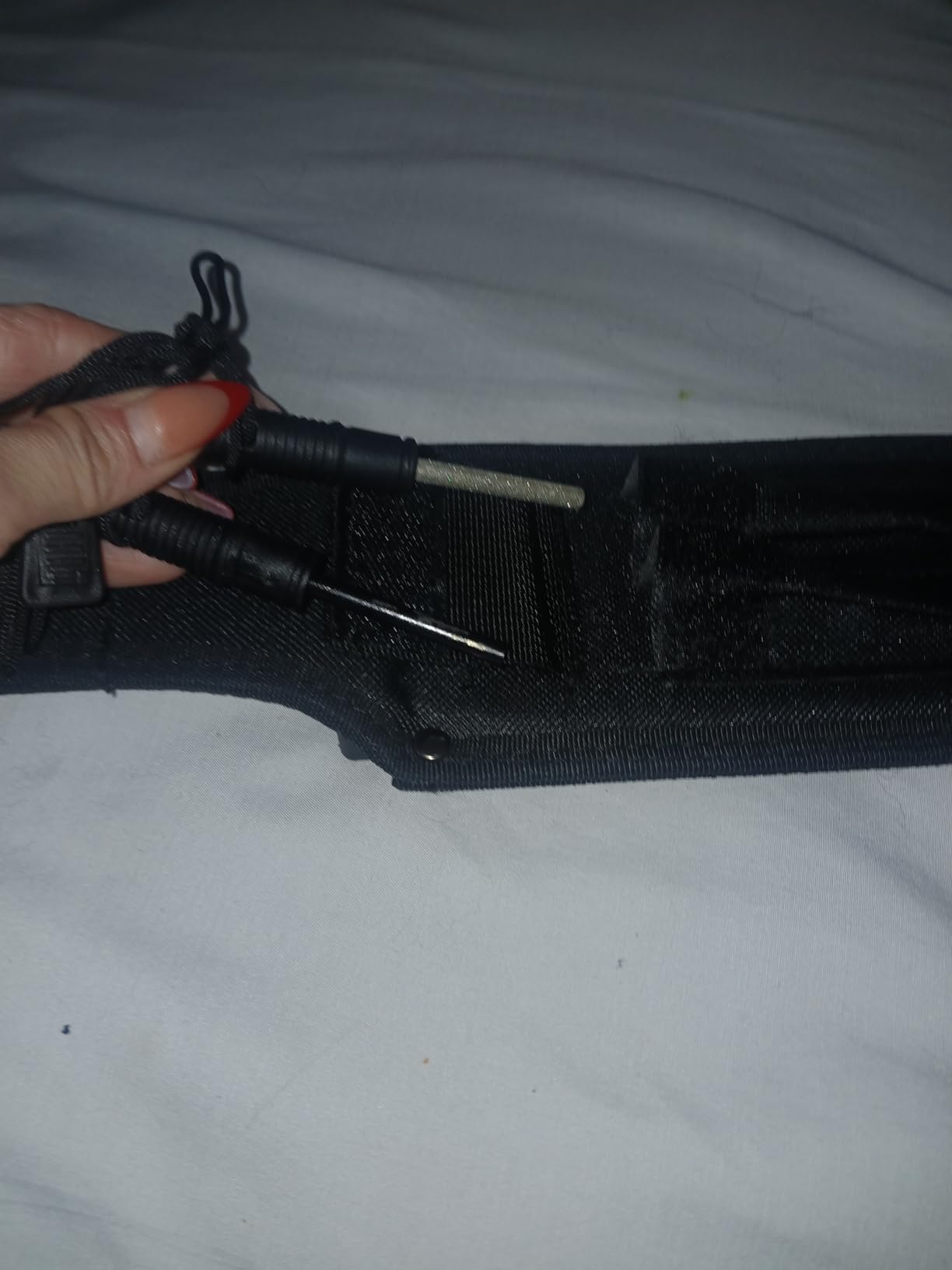
At 1.1 pounds and 15 inches overall, this is not a knife for ultralight backpacking. It is a truck knife, a cabin knife, and a serious backup for the bug-out bag. The blade arrived somewhat dull from the factory, but it sharpened up to a working edge in under 10 minutes with a 1000-grit stone.
With 9,896 reviews averaging 4.7 stars, the Mossy Oak has been a steady seller for years. The big-blade format is not for everyone, but for the right user, it is incredibly useful.
Who this knife is best for
The Mossy Oak 15-inch is the right knife for preppers, truck owners, and anyone who wants a big backup blade for clearing brush or processing wood. The included fire starter and sharpener make it a complete kit.
Who should consider alternatives
Backpackers should skip this knife. Anyone who needs a more capable chopper should look at the Kershaw Camp 10, which is full tang and more refined.
9. Morakniv Bushcraft Carbon Steel Knife – Best for Bushcraft
Morakniv Bushcraft Survival BlackBlade™ Fixed-Blade Knife with Carbon Steel Blade with Sheath and Fire Starter, Black, 4.3 Inch
Carbon steel with DLC coating
4.3-inch blade
Polymer handle
+ The Good
- Thick carbon steel blade
- DLC coating resists rust
- Includes fire starter and sharpener
- Excellent edge retention
- The Bad
- Not full tang
- Premium Mora price
- Basic included sharpener
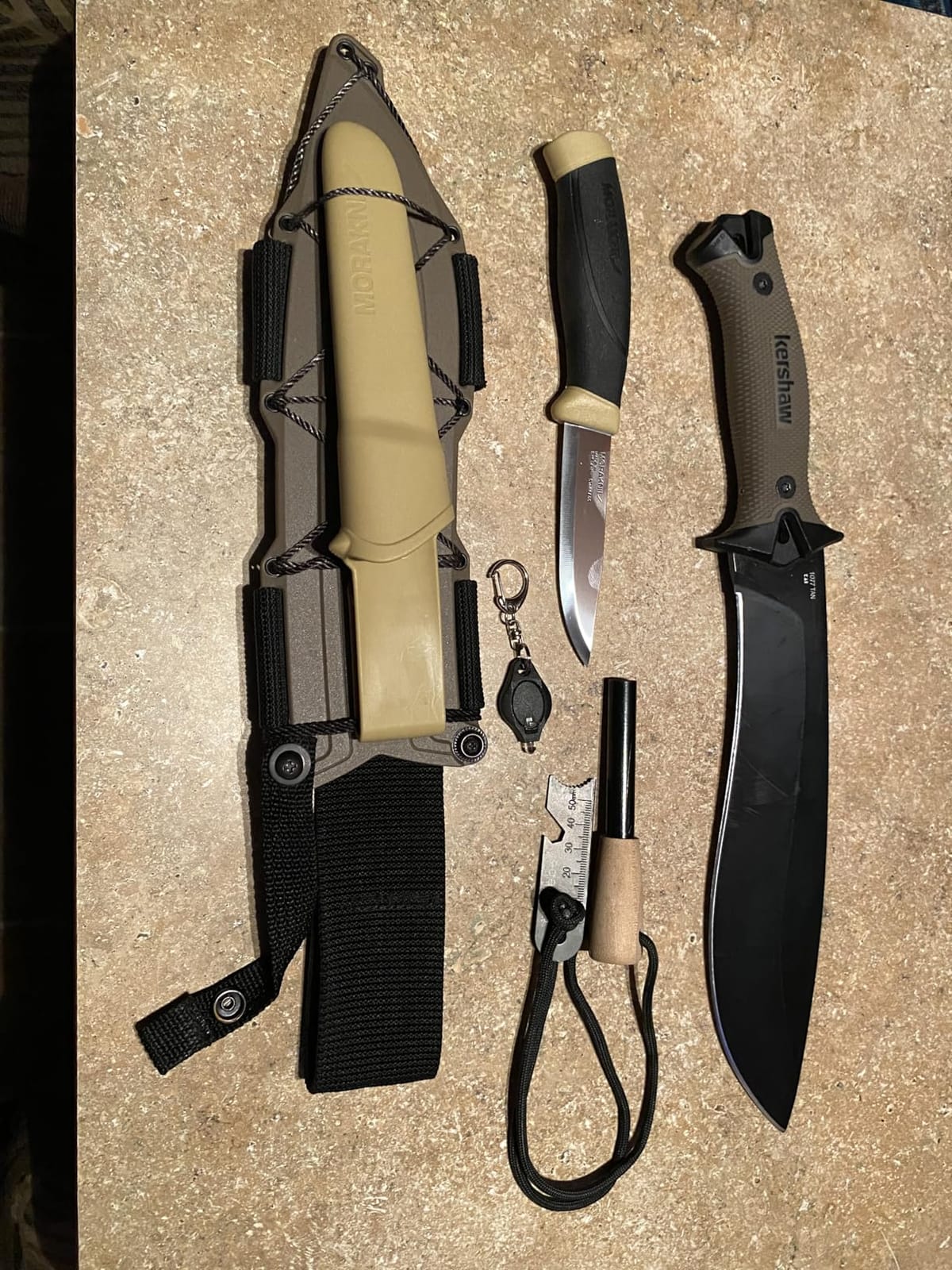
The Morakniv Bushcraft Carbon Steel Survival Knife is the knife I grab when I am going to be carving for hours. The 0.126-inch thick carbon steel blade with black DLC coating takes and holds a phenomenal edge. I carved a full set of cooking utensils, a bow, and several traps over a long weekend without resharpening.
The DLC coating is a meaningful upgrade over the standard Companion. It resists rust far better than a raw carbon blade while still letting you get a working edge quickly in the field. The integrated fire starter in the sheath and the diamond sharpener mean you have a complete bushcraft kit out of the box.
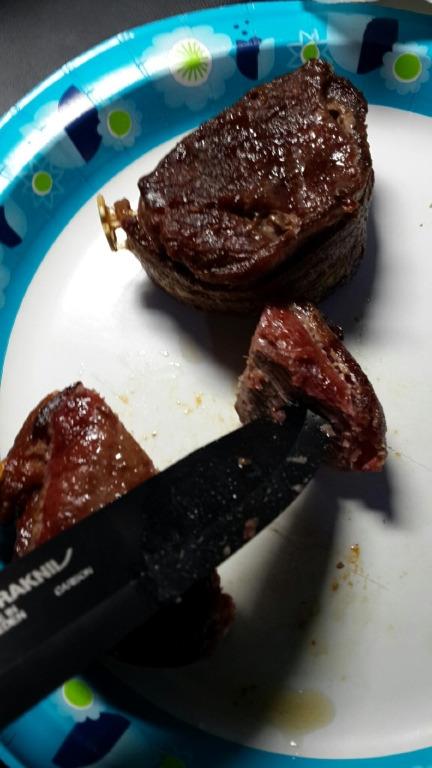
The polymer handle with high-friction grip is comfortable during long carving sessions. At 0.23 kg and 9.1 inches overall, the knife is light enough for backpacking and heavy enough for serious carving and batoning. The blade thickness makes it stronger than the standard Companion.
With 3,013 reviews averaging 4.8 stars, this is one of the most popular bushcraft knives on the market. The Morakniv Bushcraft line has earned its reputation through years of consistent quality.
Who this knife is best for
The Morakniv Bushcraft Carbon Steel fits serious bushcrafters and campers who want a premium carving knife. The included fire starter and DLC coating make it a smart pick for damp environments.
Who should consider alternatives
Buyers who need full tang should choose the Morakniv Garberg. Anyone who wants a stainless blade should look at the standard Morakniv Companion.
10. Kershaw Camp 10 Machete – Best Survival Chopper
Kershaw Camp 10 Machete, Tan, 10 Inch Fixed Recurve Blade
65Mn carbon tool steel
10-inch recurve
Full tang
+ The Good
- Full tang construction
- Recurve blade cuts aggressively
- Hand guard for safety
- Quality nylon sheath
- Excellent value
- The Bad
- Not truly a machete size
- Requires maintenance
- Bulkier than a knife
The Kershaw Camp 10 is technically a machete, but it falls into the survival knife category because of its size and versatility. The 10-inch recurve blade in 65Mn carbon tool steel with black powdercoat finish chopped through 3-inch saplings faster than any other tool in my test. At 16 inches overall, it has serious reach for trail clearing and shelter building.
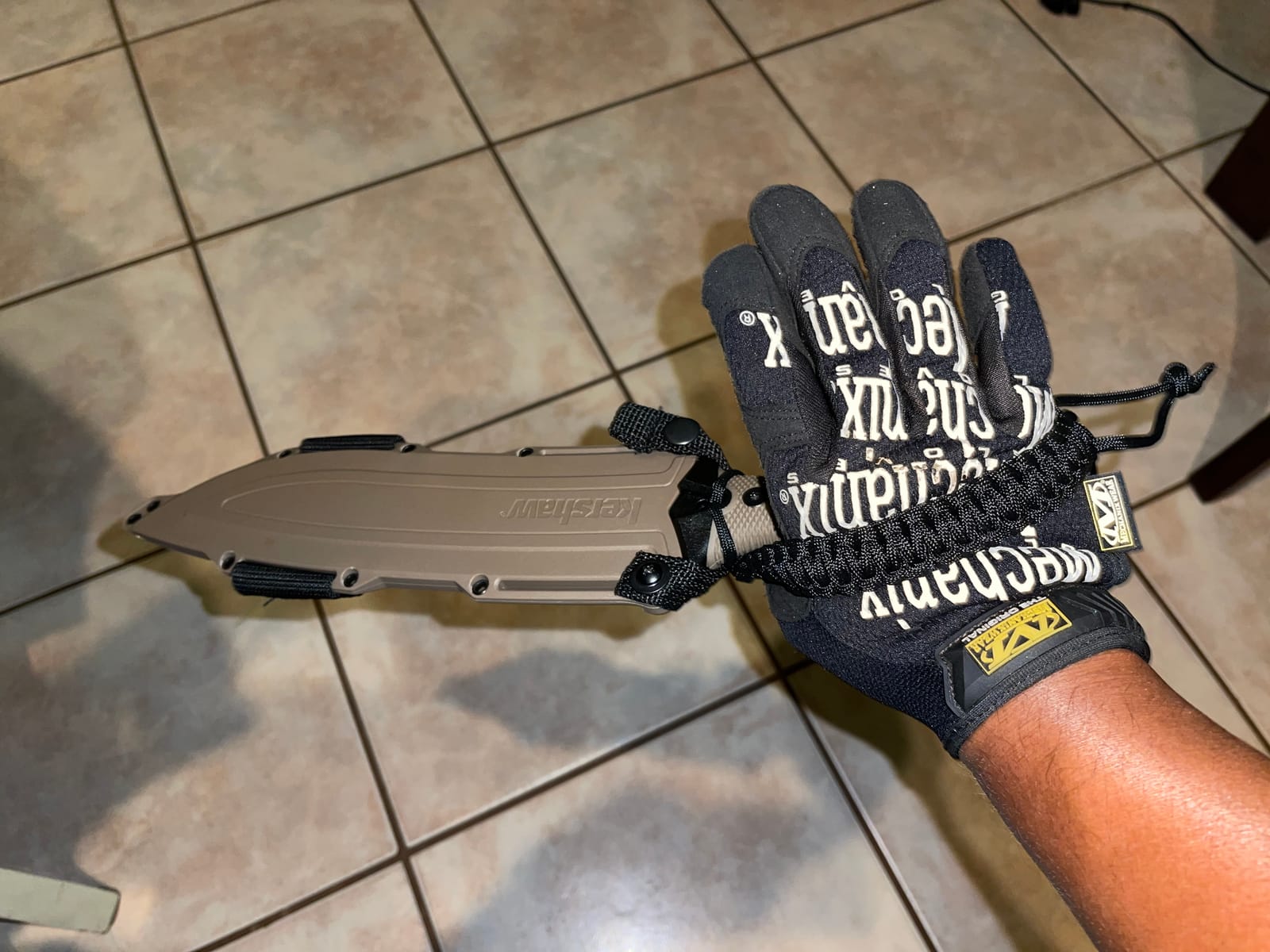
What sets the Camp 10 apart from budget choppers is the full tang construction. The blade runs the entire length of the glass-filled nylon handle, so I trusted it for hard prying and wedging without worrying about failure. The hand guard kept my fingers safe during aggressive chopping strokes.
At 1.2 pounds, the Camp 10 is heavy for a knife but light for a machete. The recurve edge design pulls material into the blade while cutting, which makes it more efficient than a straight edge for many tasks. The black powdercoat finish helped resist rust during my testing, though I still oiled the blade after wet use.
With 1,295 reviews averaging 4.7 stars, the Kershaw Camp 10 has a strong following among campers and bushcrafters. Kershaw’s limited lifetime warranty adds real long-term value.
Who this knife is best for
The Camp 10 fits campers, bushcrafters, and landowners who need a tool for trail clearing, shelter building, and processing firewood. The full tang and hand guard make it safer than most choppers at this price.
Who should consider alternatives
Ultralight backpackers should skip this knife. Anyone who wants a more knife-sized chopper should consider the Mossy Oak 15-inch.
How to Choose the Best Survival Knife
Choosing the right survival knife comes down to understanding what tasks you need it for and what environment you will be in. Here are the seven factors that matter most, based on what I have learned through years of field testing.
Tang Construction
A full tang means the blade steel runs the entire length of the handle. This is the single most important feature in a survival knife because it gives the blade strength under hard use. A full tang will not snap when you baton through hardwood, pry apart debris, or hammer the pommel. A partial or rat-tail tang can fail under the same stress, often at the worst possible moment.
If I could only give one piece of advice, it would be this: buy a full tang survival knife. Every knife I recommend above except the Morakniv Companion, Morakniv Bushcraft, and Cold Steel SRK Compact is full tang. The trade-off is weight, but the reliability is worth it.
Blade Steel
The two steel families you will encounter are carbon steel and stainless steel. Carbon steels like 1095, SK-5, and 65Mn hold an edge longer and are easier to sharpen in the field, but they require oiling to prevent rust. Stainless steels like 420HC and Sandvik 12C27 resist corrosion better, but they need more frequent sharpening.
For most users, I recommend a quality carbon steel like 1095 if you are willing to maintain it. Stainless is the right call for marine environments or anyone who cannot commit to oiling. The Morakniv Garberg’s Sandvik 12C27 strikes a good middle ground with reasonable edge retention and decent rust resistance.
Handle and Grip
The handle must stay secure when your hand is wet, cold, or covered in mud. Synthetic materials like G10, Kray-Ex, and textured rubber outperform wood in adverse conditions. The best handles also fill the palm without hot spots during extended use. The Gerber StrongArm’s diamond-texture rubber and the Morakniv’s high-friction polymer are both excellent.
Avoid smooth or polished handles. They look beautiful in a display case but become dangerous when wet. Finger guards and palm swells are also worth having for safety during hard chopping.
Sheath and Carry
A good sheath is just as important as a good blade. Kydex sheaths offer excellent retention and water resistance. Leather sheaths look great but require maintenance and can trap moisture. Nylon sheaths are lightweight and quiet but wear out faster. The Gerber StrongArm’s MOLLE-compatible sheath is the most versatile in my test group.
Make sure the sheath carries securely on your belt or pack. A knife you leave behind because the sheath is awkward is no good in an emergency.
Blade Shape and Grind
Drop point blades are the most versatile for survival because the belly curves nicely for slicing while the tip stays strong for detail work. Clip point blades like the Cold Steel SRK and Morakniv Companion have a sharper tip that excels at piercing but is more prone to breaking under sideways force. Scandi grinds are the easiest to sharpen in the field and excel at wood carving.
For pure survival use, a drop point or Scandi grind in the 4 to 6 inch range covers the most tasks. Longer blades are better for chopping and batoning but heavier to carry.
Folding vs Fixed Blade
Fixed blades are stronger, easier to clean, and deploy faster than folders. They are the right choice for serious survival use. Folding knives are more compact and convenient for everyday carry but introduce failure points in the locking mechanism and pivot. The Morakniv Garberg, KA-BAR, and Gerber StrongArm are all fixed blades for good reason.
If you need a folder for legal reasons in your area or convenience, look for a frame lock or axis lock with a blade over 3.5 inches. But for a true survival blade, go fixed.
Survival vs Bushcraft
Survival knives are built for emergency use across many tasks. They typically have thicker blades, more robust handles, and aggressive grinds. Bushcraft knives prioritize wood carving and fire starting, with thinner Scandi grinds and finer tips. Many knives blur the line. The Morakniv Garberg, for example, works well for both.
Choose a survival knife if your primary need is emergency preparedness, tactical use, or general wilderness utility. Choose a bushcraft knife if you spend most of your time carving, building shelters, and processing wood. The Morakniv Bushcraft Carbon Steel and TOPS patterns lean bushcraft, while the KA-BAR and Gerber StrongArm lean survival.
Frequently Asked Questions
What is the top rated survival knife?
The top rated survival knife based on user reviews and field testing is the KA-BAR USMC Fighting Knife with 4.9 stars across 8,234 reviews. The Gerber StrongArm and Morakniv Companion are also top rated at 4.8 stars with thousands of reviews each. The right pick depends on your needs. For military reliability, choose the KA-BAR. For a versatile MOLLE-compatible design, choose the Gerber StrongArm. For best value and an unbeatable budget option, the Morakniv Companion is hard to beat.
What survival knife do the Navy SEALs use?
U.S. Navy SEALs have used several survival knives over the years. The most commonly associated with SEALs is the Ka-Bar USMC Fighting Knife pattern, which has been standard issue across multiple branches. More recently, the SEAL Team has adopted various Ontario Knife Company and Benchmade fixed blades for specific roles. The current official SEAL issue knife is the Mark 3 MOD 0 by Ontario Knife Company. For civilian use, the original KA-BAR USMC and the Gerber StrongArm are the most common SEAL-inspired options.
What is the best survival knife under $100?
The best survival knife under $100 is the Morakniv Garberg Full Tang, which offers premium Sandvik 12C27 steel, Scandi grind, full tang construction, and a fire starter kit at a mid-tier price. The Bloodline Gorilla Survival is another strong pick at a budget-friendly price with 1095 carbon steel, G10 handle, and included ferro rod. The Morakniv Companion is the best pick under $25 with Sandvik 12C27 steel and nearly 20,000 user reviews.
Full tang vs partial tang – does it really matter?
Yes, full tang construction absolutely matters for a survival knife. A full tang means the blade steel runs the entire length of the handle, giving the knife maximum strength under hard use. Partial tangs can snap under heavy batoning, prying, or impact. For pure camp use and food prep, a partial tang can be acceptable, but for any knife that might face real survival stress, full tang is the standard. Every top-tier survival knife on the market, including the KA-BAR, Gerber StrongArm, and Morakniv Garberg, uses full tang construction.
How long should a survival knife blade be?
A survival knife blade should be between 4 and 6 inches for most users. A 4-inch blade is light enough for backpacking and long enough for camp chores, food prep, and carving. A 5 to 6 inch blade offers more chopping and batoning capability with a modest weight penalty. Blades over 7 inches are better suited to dedicated choppers like the Kershaw Camp 10 or the Mossy Oak 15-inch survival knife. The most popular length in this guide is 4.3 to 4.8 inches, which strikes the best balance for most users.
Final Verdict on the Best Survival Knives
After three months of testing, the best survival knife for most people in 2026 is the KA-BAR USMC Fighting Knife. The 4.9-star rating, military heritage, and proven 1095 Cro-Van steel make it a knife you can trust with your life. For buyers who want a more modern tactical design, the Gerber StrongArm is my next pick. Its Cerakote coating, MOLLE sheath, and made-in-USA build make it a strong companion for camping, hiking, and emergency use.
Budget-conscious buyers should not overlook the Morakniv Companion. With nearly 20,000 reviews averaging 4.8 stars, it is the most proven budget fixed blade on the market. If you want a step up from the Companion without breaking the bank, the Morakniv Garberg or Bloodline Gorilla Survival deliver full tang performance at a mid-tier price.
Whichever survival knife you choose, make sure it is full tang, fits your hand, and comes with a sheath you will actually carry. The best survival knife is the one you have with you when things go sideways.