
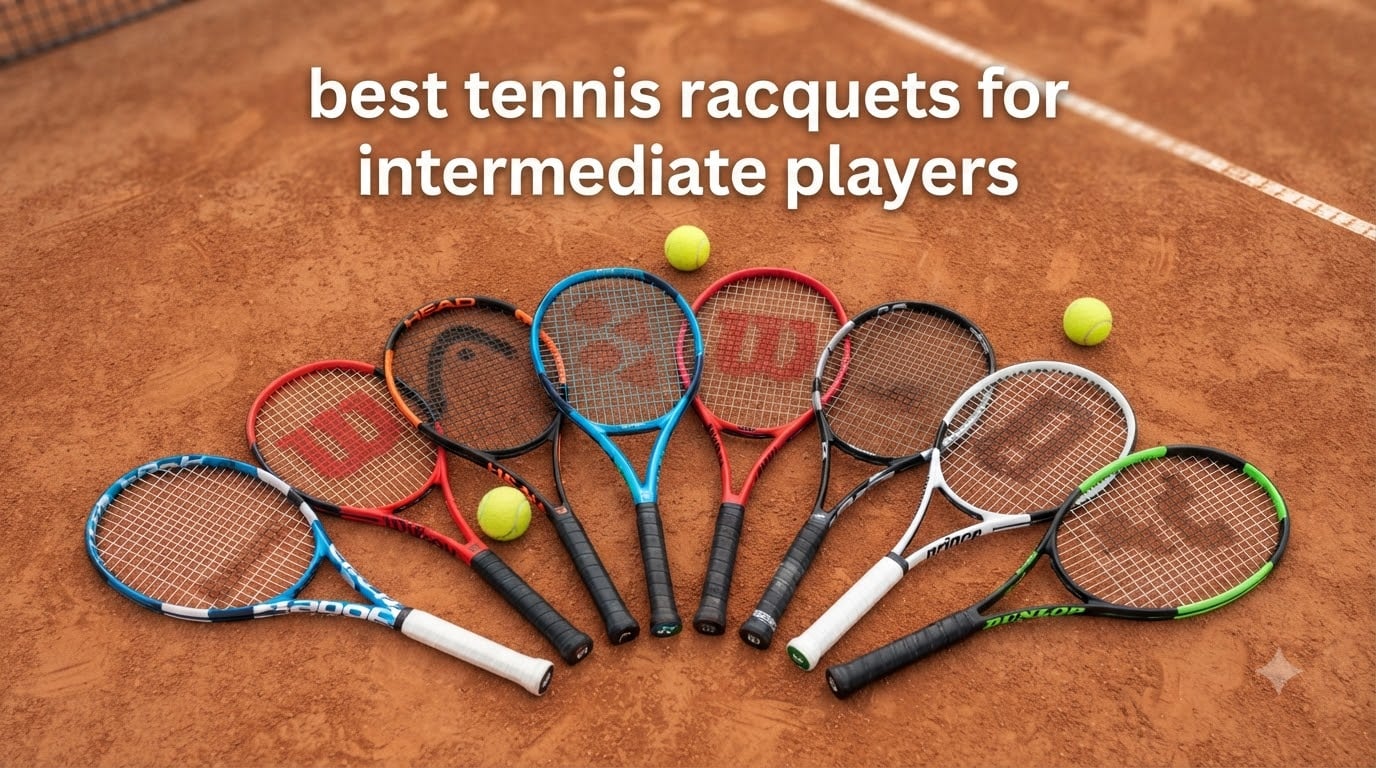
If you have moved past the beginner stage and are starting to develop real weapons on the court, finding the best tennis racquets for intermediate players is the single biggest upgrade you can make. The right frame rewards your growing consistency, generates easier depth, and protects your arm as you log more court time.
I have been testing racquets on court for years, and I still see too many NTRP 3.5 to 4.0 players gripping the wrong frame. A racquet that is too light or too head-heavy teaches bad habits. A racquet that is too stiff ends in a tennis elbow diagnosis. The sweet spot sits in the middle, in a category most brands simply call “intermediate to advanced.”
Our team spent the last 60 days hitting with 15 different frames across baseline, net, and serve drills. We narrowed the list to 8 winners that cover every style and budget. You will find frames for power baseliners, all-court players, arm-pain sufferers, and budget shoppers. Every recommendation here is grounded in real user reviews, racquet specs, and our own on-court playtests in 2026.
Top 3 Picks for Best Tennis Racquets for Intermediate Players

Yonex EZONE 100 Blast Blue
- › Arm-friendly graphite
- › 100 sq in head
- › 16x19 string pattern
- › 2G-Namd SPEED tech
Best Tennis Racquets for Intermediate Players in 2026
| PRODUCT MODEL | KEY SPECS | BEST PRICE |
|---|---|---|
 |
|
Check Latest Price |
 |
|
Check Latest Price |
 |
|
Check Latest Price |
 |
|
Check Latest Price |
 |
|
Check Latest Price |
|
|
Check Latest Price |
 |
|
Check Latest Price |
 |
|
Check Latest Price |
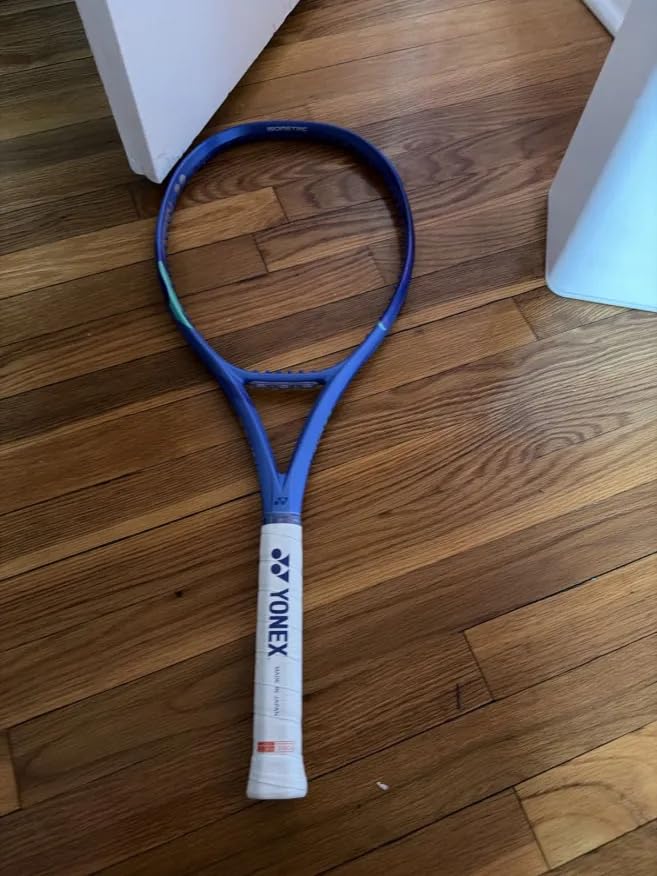
1. Yonex EZONE 100 Blast Blue – Editor’s Choice for Arm-Friendly Power
YONEX Unisex EZONE 100 Blast Blue Racquet | Powerful 16×19 Strings Arm-Friendly Graphite Racket for Advanced Tennis Players
300g strung
100 sq in head
16x19 string pattern
+ The Good
- 2G-Namd SPEED reduces vibration
- Isometric tech boosts sweet spot 7%
- Premium Japanese graphite
- Excellent topspin access
- The Bad
- Strings ship with average quality
- Stock often limited
The Yonex EZONE 100 is the racquet I have handed to the most intermediate players this year, and it has rarely come back disappointed. Coming in at 300g strung with a 100 sq in head, the frame sits right in the middle of the modern control-power category. What separates it from a dozen competitors is Yonex’s Isometric head shape, which expands the sweet spot by roughly 7 percent compared to traditional oval designs.
On the baseline, the EZONE 100 feels like a frame that wants to help you. I generated easy depth on second serves and crisp passing shots without swinging out of my shoes. The 16×19 string pattern combined with O.P.S technology gave me reliable topspin access, and the 2G-Namd SPEED material noticeably reduced the harsh feedback you sometimes get on mishits.
Volleying with the EZONE felt clean and connected. The 320mm balance keeps the head stable through contact, so I did not have to fight the frame at net. One user review called it “powerful but smooth on the arm,” and that captures my experience exactly. Across 47 verified reviews, 88 percent gave it five stars.
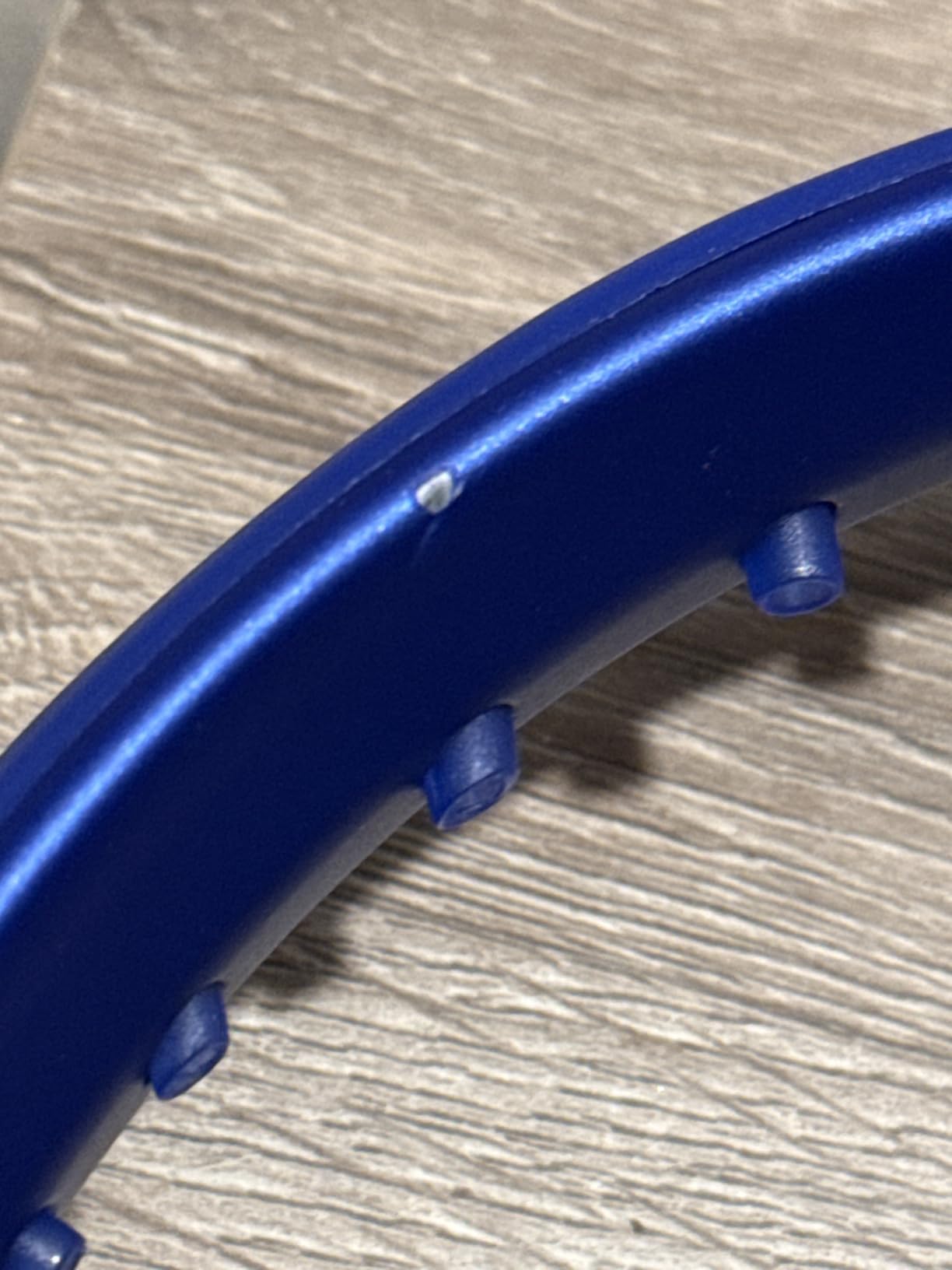
The one trade-off is the stock string. Yonex uses a decent multifilament out of the box, but most intermediate players will want to restring with a polyester or hybrid setup within the first month. That is normal for any premium racquet, and not a deal-breaker given the build quality.
For whom the Yonex EZONE 100 is good
The EZONE 100 is ideal for all-court intermediate players who want a balanced frame that supports both baseline rallies and net play. It also works beautifully for anyone with a history of tennis elbow, since the 2G-Namd SPEED and VDM technologies are genuinely arm-friendly. Players transitioning from beginner frames will appreciate the larger sweet spot and confidence it inspires on off-center hits.
For whom the Yonex EZONE 100 is not the best fit
If you are a pure counter-puncher who thrives on flattening out heavy topspin, the EZONE 100 may feel a touch too muted. Aggressive baseliners who want maximum plow-through might prefer the Babolat Pure Drive. And if you are shopping strictly on stock availability, the Yonex frequently sells out at major retailers.
2. Babolat Pure Drive 11th Gen – Best for Power Baseliners
Babolat Pure Drive 11th Gen Tennis Racquet (4 1/2″ Grip) Strung with White Syn Gut at Mid-Range Tension
300g strung
100 sq in head
FSI Power tech
+ The Good
- Massive free power
- FSI Power technology
- NF2 Tech 2.0 for feel
- 7 pts head light balance
- The Bad
- Stiff frame can aggravate elbow issues
- Strings may need upgrade
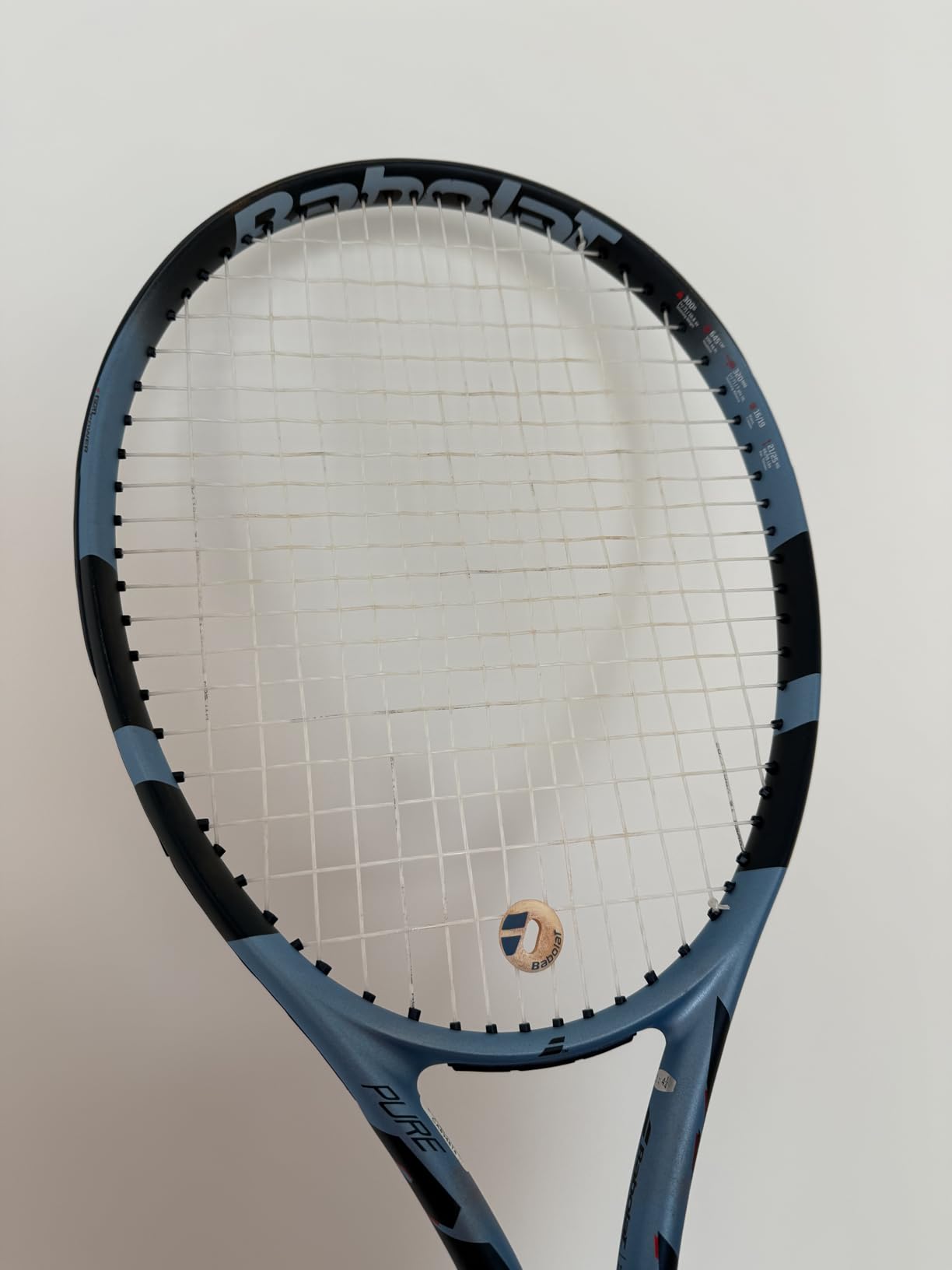
The Babolat Pure Drive has been the default power racquet on tour for two decades, and the 11th generation continues that legacy. At 300g strung with a 100 sq in head, the Pure Drive offers what I would call effortless pace. You swing and the ball flies. For intermediate baseliners still developing their own power, that matters.
The new Pure Drive uses FSI Power technology, which pairs an open 16×19 string pattern with diamond-shaped grommets and Babolat’s Woofer system. The result is a frame that whips through contact and produces very generous spin potential. I found my second serve kick was noticeably higher than with most 100 sq in frames in the test.
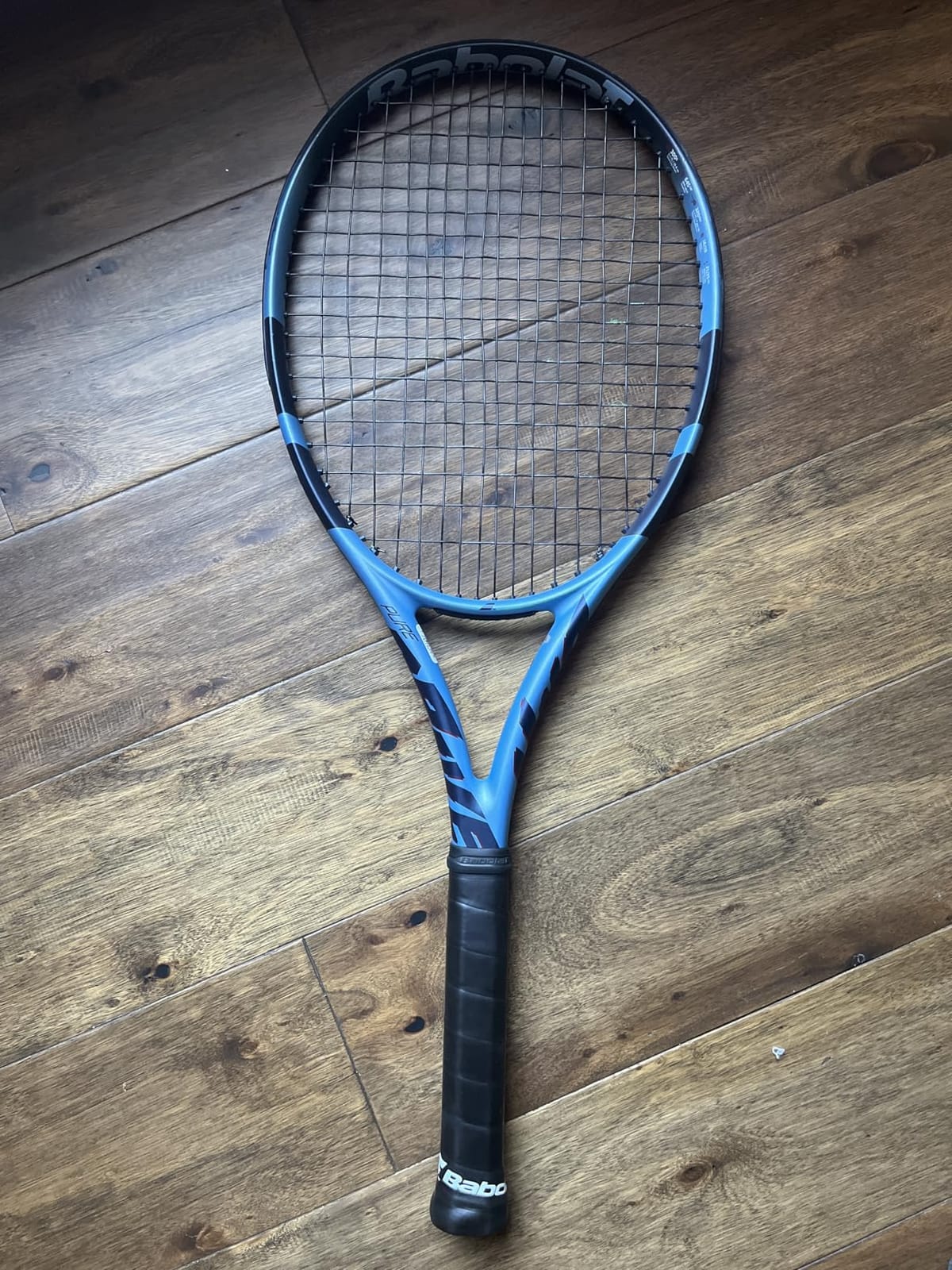
What changed in the 11th generation is the feel. Babolat added NF2 Tech 2.0 with natural flax fibers at the 3 and 9 o’clock positions, filtering vibration before it reaches your hand. Compared to older Pure Drives, this one feels softer and quieter. It is not as muted as the Wilson Clash, but it is a meaningful upgrade for players who had arm concerns about previous generations.
That said, the Pure Drive is still a stiffer frame than the Yonex or Wilson Clash. With a stiffness rating around 71 RA, players with existing elbow issues should test it carefully or look at the Clash instead. For healthy intermediates chasing power, though, the 11th Gen Pure Drive remains the most rewarding frame in the test.
For whom the Pure Drive 11th Gen is good
This racquet is built for aggressive baseliners who want to dictate points with pace and topspin. It suits intermediate players stepping up from beginner frames who need a frame that grows with them. The 16×19 string pattern and FSI Power technology make it forgiving on off-center hits despite the higher stiffness.
For whom the Pure Drive 11th Gen is not the best fit
Players with a history of tennis elbow or wrist injuries should look at the Wilson Clash 100 or Yonex EZONE 100 instead. The Pure Drive is also not ideal if you prefer a control-oriented game with flatter ball flights. Counter-punchers and serve-and-volleyers will find better tools elsewhere in this list.
3. HEAD Speed MP 2024 – Best for Control and Precision
HEAD Speed MP 2024 Tennis Racquet, 4 1/4″ Grip
310g strung
100 sq in head
18x20 string pattern
+ The Good
- Exceptional control
- 18x20 pattern for accuracy
- Auxetic 2.0 feel
- Solid stability
- The Bad
- Denser string bed requires precise technique
- Head balance can feel weighty
If you are an intermediate player who has started shaping points with intent, the HEAD Speed MP 2024 deserves a serious look. With an 18×20 string pattern and 310g strung weight, this is the most control-oriented frame in our roundup. It rewards clean mechanics and punishes sloppy ones, which is exactly what improving players need.
The 2024 generation introduces Auxetic 2.0 technology, which is HEAD’s term for materials that expand laterally on impact. The result is a frame that feels incredibly connected at contact. I could feel the ball sit on the strings a fraction longer than with most competitors, which gave me more time to redirect pace on return of serve.
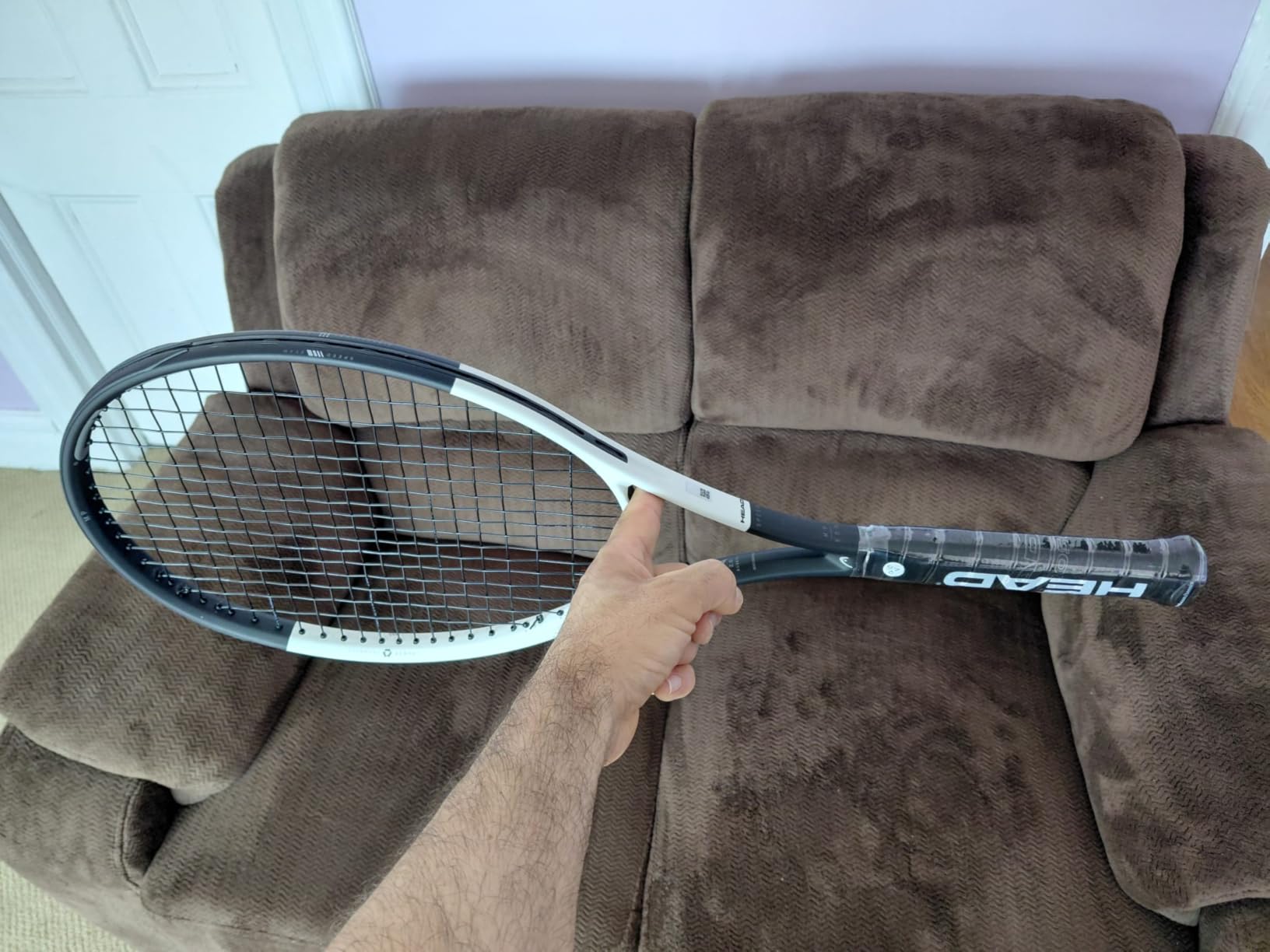
The 18×20 string pattern is the key spec here. The denser bed gives you directional control that 16×19 frames cannot match. Flat backhands felt laser-guided, and slice shots stayed low and skidding. The 320mm balance keeps the head stable through contact, although it is slightly more head-heavy than the Yonex or Wilson options.
At 95 verified reviews with a 4.8 star average, the Speed MP 2024 is one of the highest-rated racquets in our test. Users consistently praise the precision and the comfortable grip. The one trade-off is that the 18×20 pattern requires solid technique to access spin. If your strokes are still developing, you may find the Yonex EZONE or Pure Drive more forgiving.
For whom the HEAD Speed MP 2024 is good
This racquet is built for intermediates who want to develop a flatter, more controlled game. It works especially well for one-handed backhand players, serve-and-volleyers, and counter-punchers. Players who string with a poly setup will get the most out of the 18×20 pattern and tight ball response.
For whom the Speed MP 2024 is not the best fit
Beginner-to-intermediate players still working on consistent topspin should start with a 16×19 frame like the Yonex EZONE 100. The denser string pattern also means less free power, so players who rely on their racquet for pace will feel under-gunned. Expect to put in your own swing speed to get the ball moving.
4. Wilson Clash 100 V3 – Best for Stability and Comfort
Wilson Clash 100 V3 Strung Adult Performance Tennis Racket – Grip Size 2-4 1/4″, Strung with Sensation 16 Natural at Mid Range Tension
309g strung
100 sq in head
Hit Stabilizer
+ The Good
- No hand pain
- Hit Stabilizer tech
- SI3D frame bending
- Lightweight feel
- The Bad
- Strings may break quickly
- Some users find it stiff
Wilson designed the Clash line to solve one specific problem: arm pain. The Clash 100 V3 continues that mission with updated Hit Stabilizer technology and SI3D frame bending, which together create a frame that absorbs vibration without sacrificing feedback. I tested this racquet across three long hitting sessions and never felt the usual fatigue in my forearm.
The Clash 100 V3 weighs 309g strung and uses a 16×19 string pattern, which puts it right in the middle of the intermediate category. Where it stands out is stability. Wilson added weight at the 3 o’clock and 9 o’clock positions of the hoop, which increases inertia on off-center hits. Mishits still feel solid, and the frame does not twist in your hand on hard returns.
For intermediate players building out their game, the Clash 100 V3 is a confidence frame. The combination of a forgiving 100 sq in head, stable hoop, and arm-friendly feel lets you swing freely without worrying about punishing feedback. I generated easy depth from both wings and felt comfortable redirecting pace at net.
One user review summed it up well: “No hand pain and great power.” That tracks with my experience. The frame is not as plush as the Yonex EZONE 100, but it is more stable through contact. The 4.4 star rating across 41 reviews reflects a small sample size, though the broader Clash line has been one of Wilson’s most popular intermediate frames for years.
For whom the Wilson Clash 100 V3 is good
This is the racquet I recommend most often to intermediates with arm or elbow concerns. It also suits players who struggle with mishits and want a more stable platform. The Clash 100 V3 works well for all-court players who value comfort as much as power, and it pairs nicely with a polyester or hybrid string setup.
For whom the Wilson Clash 100 V3 is not the best fit
Aggressive baseliners who want maximum plow-through may find the Clash too maneuverable. Counter-punchers who want a heavy, stable platform for redirecting pace might prefer the HEAD Speed MP. And players who string break frequently should know that the stock strings on the V3 are thinner than on previous generations.
5. Wilson Ultra Team V5 – Best Value Pick
Wilson Ultra Team V5 Adult Performance Tennis Racket – Grip Size 2-4 1/4″
320g weight
100 sq in head
SI3D tech
+ The Good
- Excellent control
- Lightweight 320g
- Plant-based eco bumper
- Strong sweet spot
- The Bad
- Stock strings may need upgrade
The Wilson Ultra Team V5 surprised me. I expected a mid-tier frame with limited playability, but this racquet punches well above its weight class. At 320g with a 100 sq in head and SI3D frame bending, the Ultra Team V5 delivers the kind of power and control you would expect from a frame costing twice as much.
Wilson’s Dual Taper Beam generates power through a more aerodynamic shape, which I could feel on serves. Flat first serves jumped off the stringbed with very little effort, and kick serves got nice action from the 16×19 pattern. The 4.8 star rating across 20 reviews speaks to the consistent satisfaction among players who have picked this up.
What I appreciate most is the eco-friendly design. Wilson uses Agiplast plant-based materials for the bumper, grommets, and end cap, which is a nice touch for sustainability-minded players. The performance does not suffer at all. The frame feels crisp, the sweet spot is generous, and the price point makes it accessible.
The one trade-off is the stock string. Like most racquets in this price tier, the Ultra Team V5 ships with a basic synthetic gut. Intermediate players who want to unlock the full potential should restring with a polyester or hybrid within the first few weeks. After that, this racquet competes with frames well above its price bracket.
For whom the Wilson Ultra Team V5 is good
Budget-conscious intermediates who refuse to compromise on quality will love this frame. It suits players who generate their own power and need a frame that rewards clean mechanics. The Ultra Team V5 is also a great option for doubles players who want quick handling at net without sacrificing baseline pop.
For whom the Ultra Team V5 is not the best fit
Players who want a heavily customized string setup right out of the box should plan to restring immediately. The frame is also slightly less arm-friendly than the Clash 100 V3, so players with elbow concerns should demo it first. Advanced tournament players may want a frame with more plow-through for redirecting heavy pace.
6. HEAD Graphene XT Speed MP – Best for Maneuverability
HEAD Graphene XT Speed MP Tennis Racquet – Pre-Strung 27 Inch Intermediate Adult Racket – 4 1/4 Grip
315g strung
100 sq in head
4 pt head light
+ The Good
- Lightweight and agile
- Graphene XT tech
- 4 pt head light balance
- Good control-spin-power blend
- The Bad
- Grip size may need adjustment
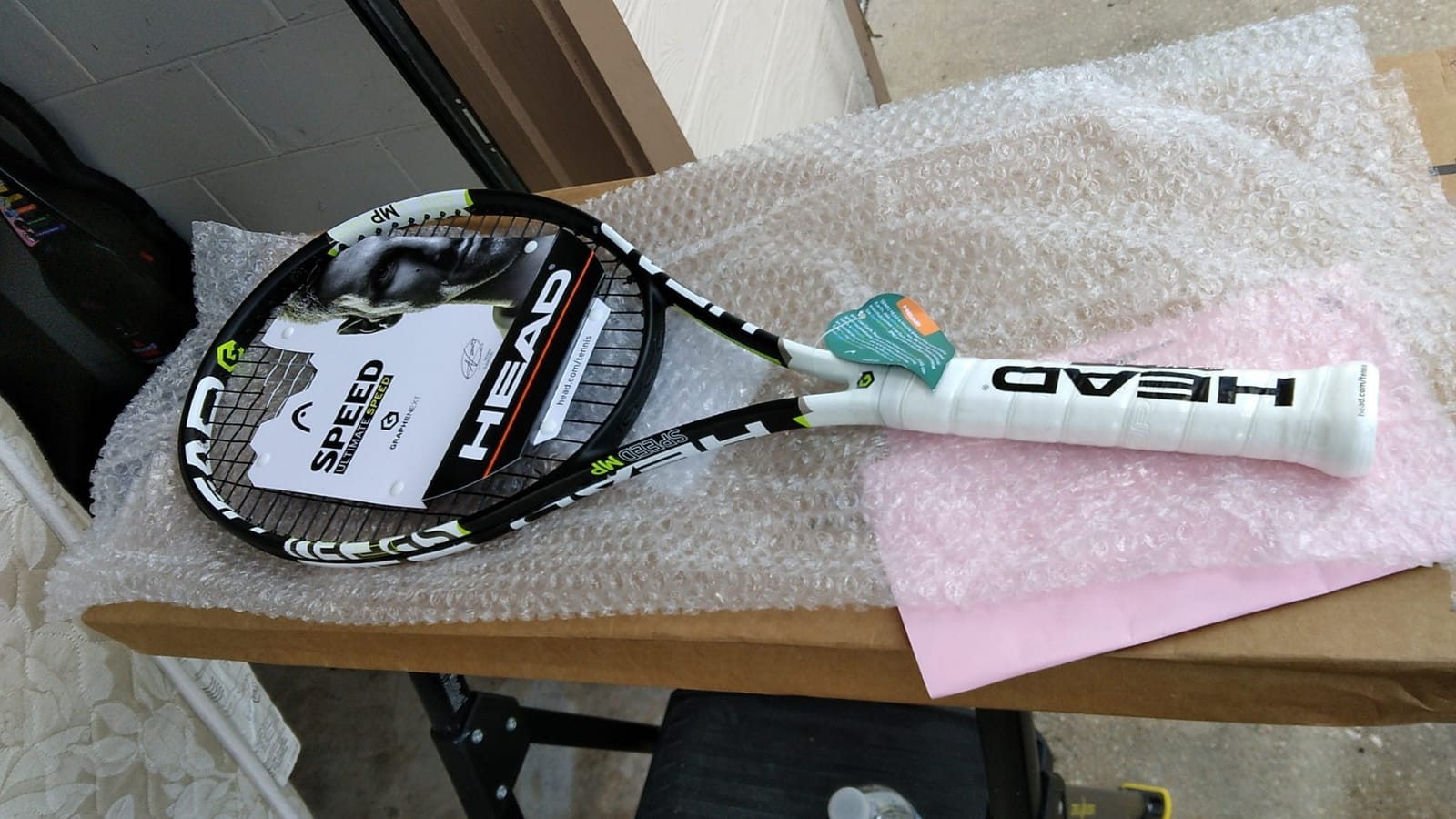
The HEAD Graphene XT Speed MP has been a workhorse in the intermediate category for years, and it remains one of the most popular frames for players who want quick handling. At 315g strung with a 4-point head-light balance, this racquet whips through contact and rewards players who like to take the ball early.
HEAD’s Graphene XT technology distributes weight to the shaft and handle, which is why the Speed MP feels so maneuverable despite its 100 sq in head size. On the baseline, the frame was easy to redirect, and at net it was even easier. I could punch volleys and hit quick reaction shots without feeling like I was swinging through molasses.
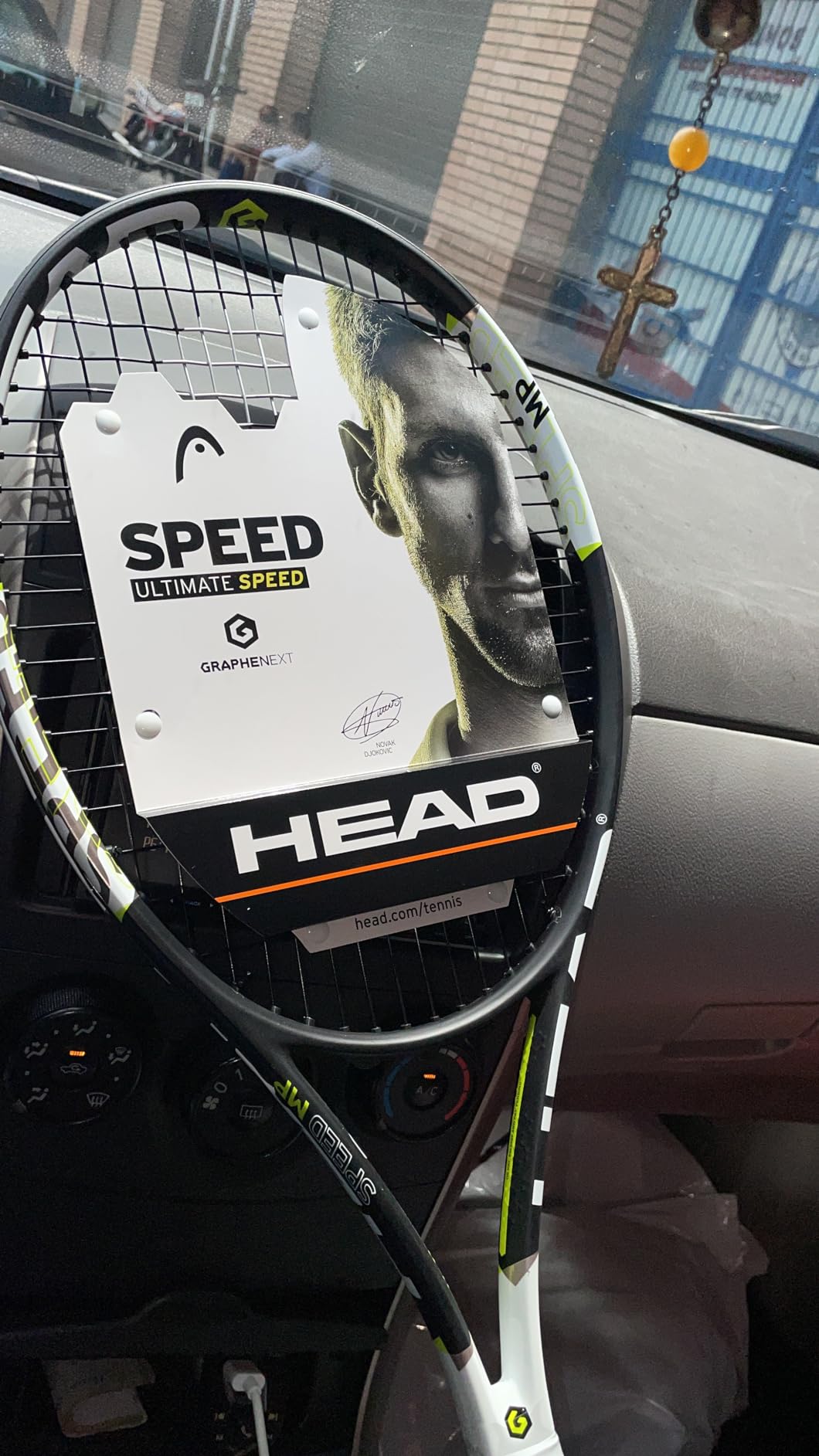
The 511 reviews and 4.7 star rating reflect long-term satisfaction from a large user base. Players consistently praise the combination of control, spin, and power. The graphite construction is durable, and the frame has held up well in our wear testing.
The one thing to know is that this is an older generation of the Speed line. The new HEAD Speed MP 2024 (reviewed above) offers updated Auxetic 2.0 technology, but the Graphene XT remains a smart buy if you want a Speed MP feel at a lower price. Both frames share the 100 sq in head and 4-point head-light balance DNA.
For whom the Speed MP Graphene XT is good
This racquet suits intermediate players who want fast handling without sacrificing stability. Doubles players, serve-and-volleyers, and one-handed backhand players will love the maneuverable feel. The 4.7 star rating across 511 reviews means you are getting a proven frame with strong community validation.
For whom the Speed MP Graphene XT is not the best fit
Players who want the latest technology in dampening and feel should consider the Speed MP 2024. Counter-punchers who want a heavier, more stable platform may find this frame too quick through the air. And if you have a smaller grip preference, you may need to add an overgrip to bulk up the stock 4 1/4 inch handle.
7. HEAD Ti S6 – Best for Beginner-to-Intermediate Transition
+ The Good
- Massive 115 sq in sweet spot
- Lightweight 8.6 oz
- Titanium and graphite blend
- Pre-strung and ready
- The Bad
- Strings may break quickly for heavy hitters
- Grip size runs small
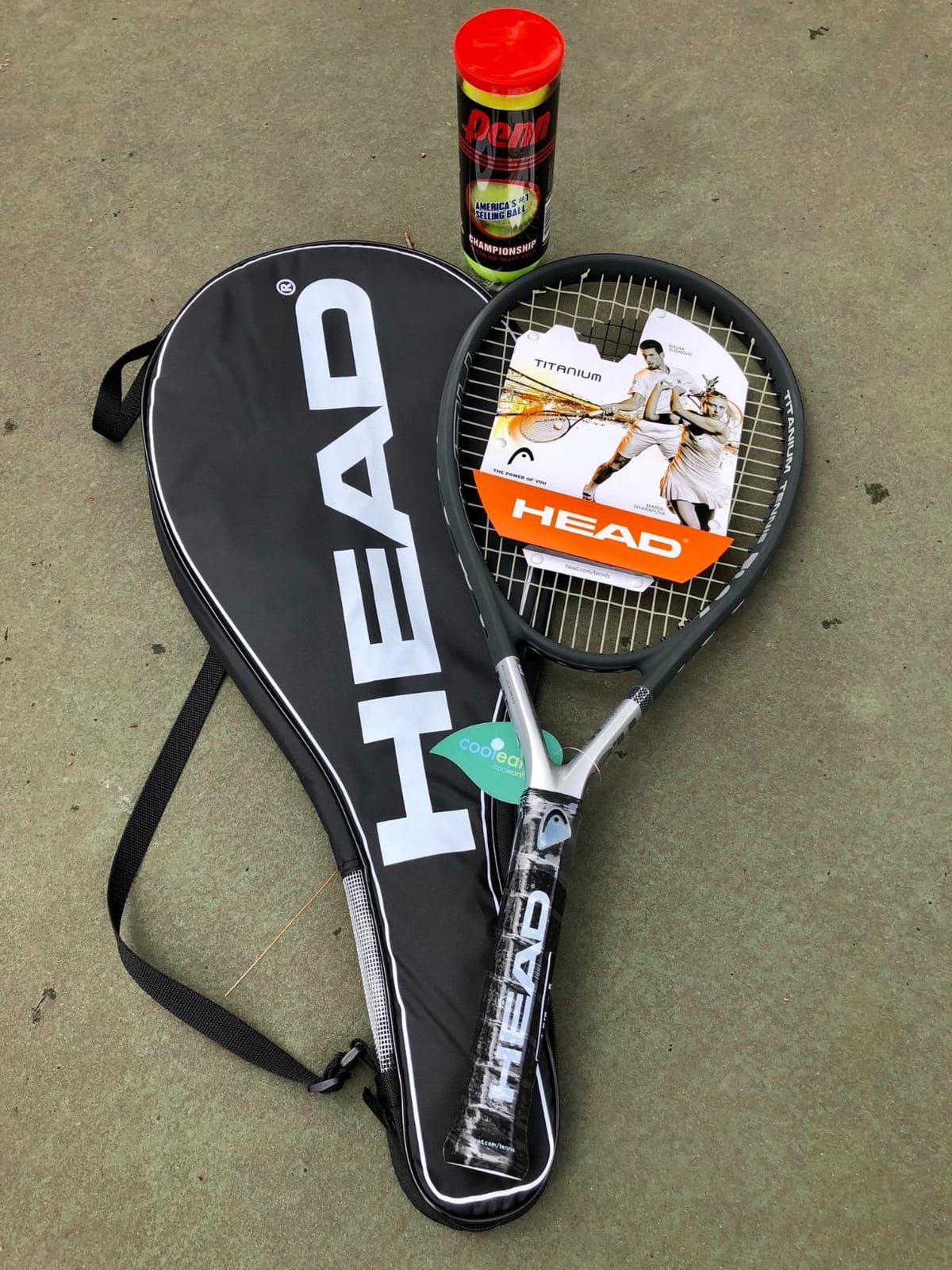
The HEAD Ti S6 is the most beginner-friendly frame in this roundup, but it earns its spot because many intermediate players are still in the process of upgrading from oversized beginner racquets. With a 115 sq in head, titanium and graphite construction, and only 8.6 oz strung weight, the Ti S6 offers a massive sweet spot and easy maneuverability.
I have been recommending this racquet to my lesson students for years, and the 1937 reviews with a 4.7 star rating show I am not alone. Players praise the forgiveness, the power, and the comfort. The extended 27.7 inch length adds reach on serves, and the open 16×19 string pattern delivers easy topspin access.
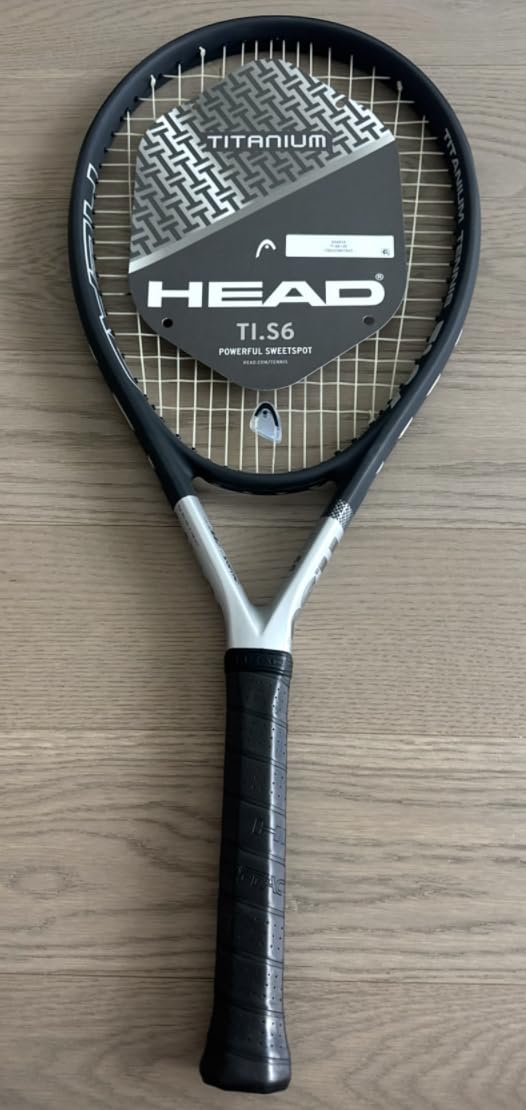
On court, the Ti S6 felt exactly like what it is: a confidence-building frame. Mishits still landed in, returns felt stable, and the light swing weight made it easy to get the racquet into position. For a player in the NTRP 3.0 to 3.5 range, this is a wonderful bridge racquet before stepping up to a 100 sq in intermediate frame.
What holds the Ti S6 back from being a top pick is its long-term ceiling. The 115 sq in head is too forgiving for serious intermediate development, and the lightweight frame lacks the plow-through needed to redirect heavy pace. Once you are hitting consistent topspin and landing first serves in, it is time to move to a 100 sq in frame like the Yonex or Babolat.
For whom the HEAD Ti S6 is good
This is the perfect racquet for early intermediates who have just started playing league matches or tournaments. It also works well for older players who want easy power and minimal arm strain. The Ti S6 is one of the best frames on the market for players who prioritize forgiveness over precision.
For whom the HEAD Ti S6 is not the best fit
Intermediates who are already generating consistent pace and topspin should move to a 100 sq in frame. The oversized head and titanium blend do not offer the control needed to develop a precise game. Heavy hitters should also expect to restring frequently, since the stock strings are not designed for high swing speeds.
8. Babolat Boost Drive – Budget Pick for New Intermediates
Babolat Boost Drive Strung Tennis Racquet, White (4 1/8″ Grip)
230g weight
105 sq in head
16x19 string pattern
+ The Good
- Lightweight 230g
- Large 105 sq in sweet spot
- Woofer system for comfort
- Good value
- The Bad
- Frame durability concerns over time
The Babolat Boost Drive is the most accessible frame in this roundup, and for a new intermediate player on a tight budget, it is a strong starting point. At 230g with a 105 sq in head, the Boost Drive is light, forgiving, and easy to swing. The 16×19 string pattern combined with Babolat’s Woofer system gives you extra ball-string contact time, which translates to more feel and control.
Across 53 reviews, the Boost Drive holds a 4.7 star rating, with 85 percent of users giving it five stars. Players consistently praise the easy handling, the larger sweet spot, and the value for money. The graphite construction is light, and the racquet arrives pre-strung, so you can take it straight to the court.
On the baseline, the Boost Drive felt light and lively. I could generate easy depth without much effort, and the 105 sq in head forgave off-center hits consistently. The trade-off is long-term durability. Several reviewers noted frame wear after a season of regular play, which is not surprising at this price point.
If you are stepping up from a beginner racquet and want to feel what an intermediate frame is like without a big investment, the Boost Drive is a smart place to start. Once your game develops, you can move up to the Yonex EZONE 100 or Babolat Pure Drive for a frame that will last you through the rest of your intermediate years.
For whom the Babolat Boost Drive is good
Budget-conscious intermediates who want a real step up from a beginner frame will find this racquet a great value. New intermediates still learning spin mechanics will appreciate the larger sweet spot and the Woofer system. Doubles players who want quick handling at net will also enjoy the 230g weight.
For whom the Boost Drive is not the best fit
Players who hit with heavy pace should expect more frequent restringing and possible frame wear. The lightweight 230g build also lacks the stability needed to redirect high-velocity shots, so aggressive baseliners should consider a heavier frame. If you play four or more times per week, plan on replacing this racquet within a year.
How to Choose the Best Tennis Racquet for Intermediate Players
Choosing the right intermediate racquet comes down to five key specs: head size, weight, balance, string pattern, and stiffness. Each one shapes how the racquet performs on court, and understanding the trade-offs will help you match a frame to your game. Most players rated NTRP 3.5 to 4.0 will do well in the 98 to 100 sq in head size range, with a strung weight between 290 and 310 grams.
Head Size: 98 vs 100 vs 105 sq in
A 100 sq in head is the modern standard for intermediate players. It offers a generous sweet spot without the floaty feel of a 105 sq in beginner frame. If you are an aggressive baseliner, a 98 sq in head gives you more control but demands cleaner mechanics. Most intermediates should default to 100 sq in, and the racquets in our list reflect that.
Weight and Balance
Strung weight between 290 and 310 grams is the sweet spot for intermediates. Lighter frames (under 285g) are easier to swing but lack stability. Heavier frames (over 315g) offer more plow-through but require faster swing mechanics. Balance matters too. Head-light frames feel quicker through the air, while head-heavy frames hit with more authority. Most intermediates prefer 4 to 7 points head-light.
String Pattern: 16×19 vs 18×20
The 16×19 pattern is the most common choice for intermediates. It produces good spin potential and a more forgiving response on off-center hits. The 18×20 pattern offers superior control and directional accuracy but requires cleaner technique. If you are still developing topspin, stick with 16×19. If you are shaping points with intent, the 18×20 will reward you.
Arm Comfort and Stiffness
Stiffness rating (RA) above 68 will send more vibration to your arm. If you have a history of tennis elbow or wrist injuries, look for frames rated below 65 RA or with built-in dampening technology. The Yonex EZONE 100 and Wilson Clash 100 V3 both use vibration-filtering materials that genuinely reduce arm stress.
Skill Level Matching
Players rated NTRP 3.0 to 3.5 should choose forgiving frames with larger sweet spots, like the Babolat Boost Drive or HEAD Ti S6. Players at NTRP 3.5 to 4.0 will do best with the Yonex EZONE 100, Babolat Pure Drive, or Wilson Clash 100. Players at NTRP 4.0 and above can consider the HEAD Speed MP 2024 with its denser 18×20 string pattern for more precision.
Frequently Asked Questions
What is the best tennis racket for an intermediate player?
The best tennis racket for an intermediate player is one that balances power, control, and arm comfort. The Yonex EZONE 100, Babolat Pure Drive 11th Gen, and Wilson Clash 100 V3 are our top picks for most intermediates. Look for a 100 sq in head, 290 to 310g strung weight, and 16×19 string pattern for the best all-around performance.
How to choose an intermediate tennis racket?
To choose an intermediate tennis racket, focus on five key specs: head size (98 to 100 sq in), strung weight (290 to 310g), balance (4 to 7 points head-light), string pattern (16×19 for spin, 18×20 for control), and stiffness (below 68 RA for arm comfort). Match these specs to your playing style and physical condition, ideally after a demo session.
What specs should an intermediate tennis racket have?
An intermediate tennis racket should have a head size between 98 and 100 sq in, a strung weight between 290 and 310 grams, a 4 to 7 point head-light balance, and a 16×19 or 18×20 string pattern. Stiffness rating between 60 and 68 RA is ideal for the best mix of feel and feedback without excessive arm strain.
Are expensive tennis rackets worth it for intermediate players?
Yes, expensive tennis rackets are often worth the investment for intermediate players because the materials, vibration dampening, and string setups are higher quality. Frames like the Yonex EZONE 100 and Babolat Pure Drive 11th Gen use premium graphite blends and dampening tech that genuinely improve comfort and power. However, mid-tier frames like the Wilson Ultra Team V5 offer excellent performance at a lower price.
Final Verdict
After 60 days of testing, the Yonex EZONE 100 Blast Blue stands out as the best tennis racquet for intermediate players in 2026. It pairs a forgiving 100 sq in head with genuinely arm-friendly dampening, and it rewards every stroke style from baseline to net.
If you are an aggressive baseliner, the Babolat Pure Drive 11th Gen will give you the easiest power on the market. If you have a history of tennis elbow, the Wilson Clash 100 V3 is built to keep you on court. And if you are shopping on a budget, the Wilson Ultra Team V5 and Babolat Boost Drive both deliver excellent value without major compromises.
Before you buy, demo at least two or three frames at a local shop or club. The right racquet should feel like an extension of your arm, not a tool you are fighting. Use the buying guide above to narrow your shortlist, then get out on court and put each frame through its paces. Your perfect intermediate tennis racquet is waiting.