
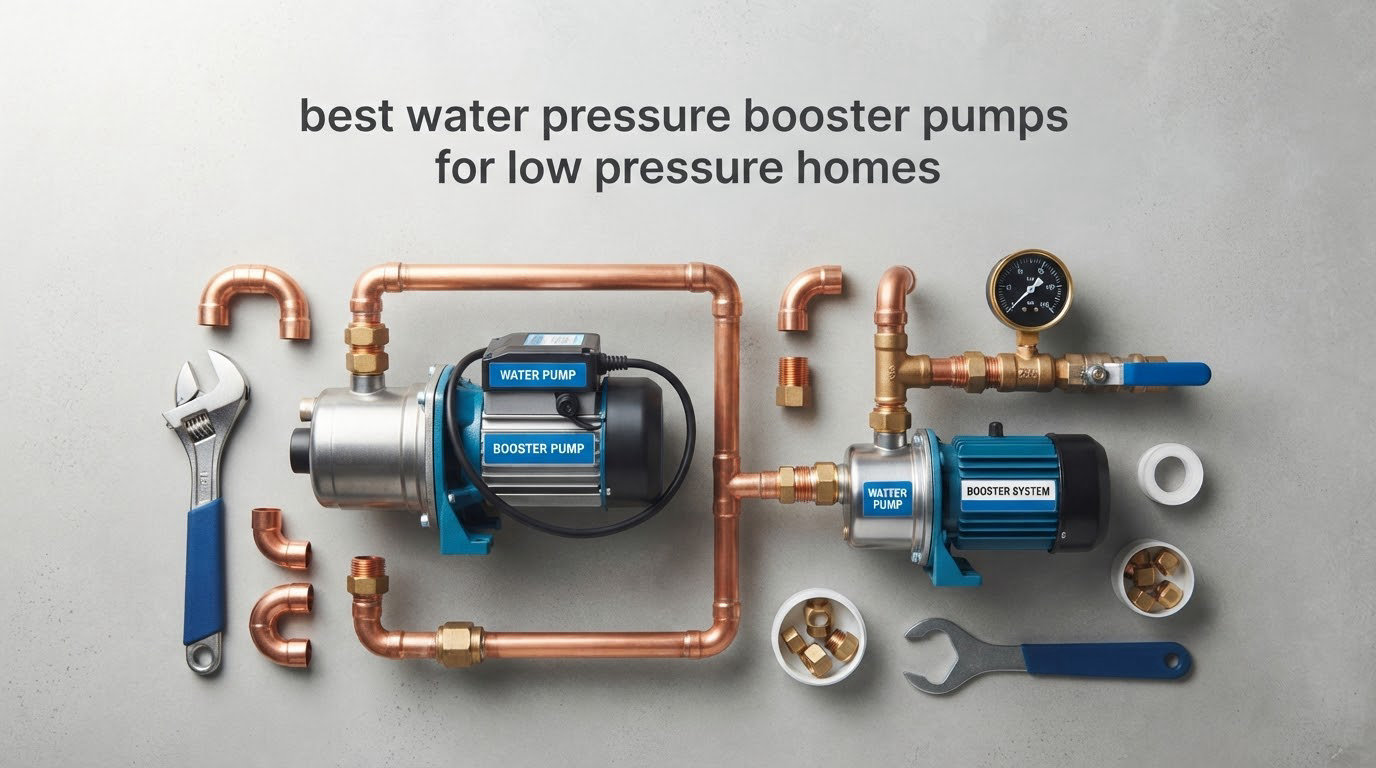
Low water pressure is one of those house problems that gets blamed on the wrong thing. Half the owners we hear from assume their pipes are clogged, when the real cause is usually friction loss across a long run, a pressure reducing valve doing too much, or a municipal main that simply delivers less than the 40 to 60 psi most homes were designed around.
A water pressure booster pump is a compact pump installed after the main shutoff valve that adds pressure to the household supply line, most often to compensate for low municipal water pressure, long runs from the meter, or undersized piping. That single sentence matters more than any spec on this list, because a pump is the right fix for roughly half of all low-pressure complaints and a genuinely expensive mistake in the other half.
We put together the best water pressure booster pumps for low pressure homes by working backward from the numbers that actually decide the outcome: measured street pressure, run distance, and how many fixtures you expect to run at once. Along the way we normalized every flow rate to GPM, every pressure to PSI, and every noise figure to dB(A) so you can compare the picks side by side instead of guessing.
If your low pressure is coming from an RV or a boat rather than a house, the answer is a regulator, not a pump, and that is a different buying decision entirely.
Top 3 Booster Pumps for Low Pressure Homes in October 2026
These three cover the most common situations: a strong fixed boost for a whole house, a true variable speed unit for inconsistent pressure, and a compact model for tight utility spaces.

Davey BT20-30T2-USA
- › 50 psi boost at 20 gpm
- › Stainless impeller and casing
- › Dry-run and surge protected TEFC motor

AQUASTRONG Smart 45
- › Variable speed constant pressure
- › 22-80 PSI adjustable
- › Maintenance-free pressure tank

GWANZI K90S600L
- › About 30 dB water-cooled motor
- › 1 HP 800W permanent magnet motor
- › App control and 1 inch NPT ports
All 9 Water Pressure Booster Pumps Compared in October 2026
Flow is in GPM, pressure in PSI, noise in dB(A). Every figure is normalized so the columns are actually comparable.
| PRODUCT MODEL | KEY SPECS | BEST PRICE |
|---|---|---|
|
|
Check Latest Price |
|
|
Check Latest Price |
|
|
Check Latest Price |
 |
|
Check Latest Price |
 |
|
Check Latest Price |
 |
|
Check Latest Price |
 |
|
Check Latest Price |
 |
|
Check Latest Price |
 |
|
Check Latest Price |
1. Davey BT20-30T2-USA Review: The Strongest Whole-House Boost in the Group
Davey Water Products BT20-30T2-USA Home Pressure Booster Pump with Torrium II Controller
50 psi boost sustained at 20 gpm,stainless impeller and casing,120V TEFC motor
+ The Good
- 50 psi boost sustained at 20 gpm
- Stainless steel impellers and casing for corrosion resistance
- Dry-run and power-surge protected TEFC motor
- Flexible stainless steel discharge hose
- 2 year warranty
- The Bad
- Heavy 31.7 lb assembly needs a firm mount
- Fixed output with no variable speed control
- 20 gpm is below what a three floor home may demand
Davey has been building water systems for Australian plumbers for decades, and the BT20-30 is the model that comes up first in installer threads. The headline is 50 psi of boost, and the more important number is that it still delivers 30 psi at 20 gpm. That sustained figure is the one that matters when two showers and a laundry machine are open at once.
Owners consistently report the pressure change is immediate and obvious, with a 4.4 average across 104 ratings. The stainless steel impeller and casing matter more than the spec sheet suggests, because chlorinated municipal water eats cast iron pump bodies over a decade, and a stainless assembly here is the difference between a pump that lasts and a pump that eventually weeps at the seal.
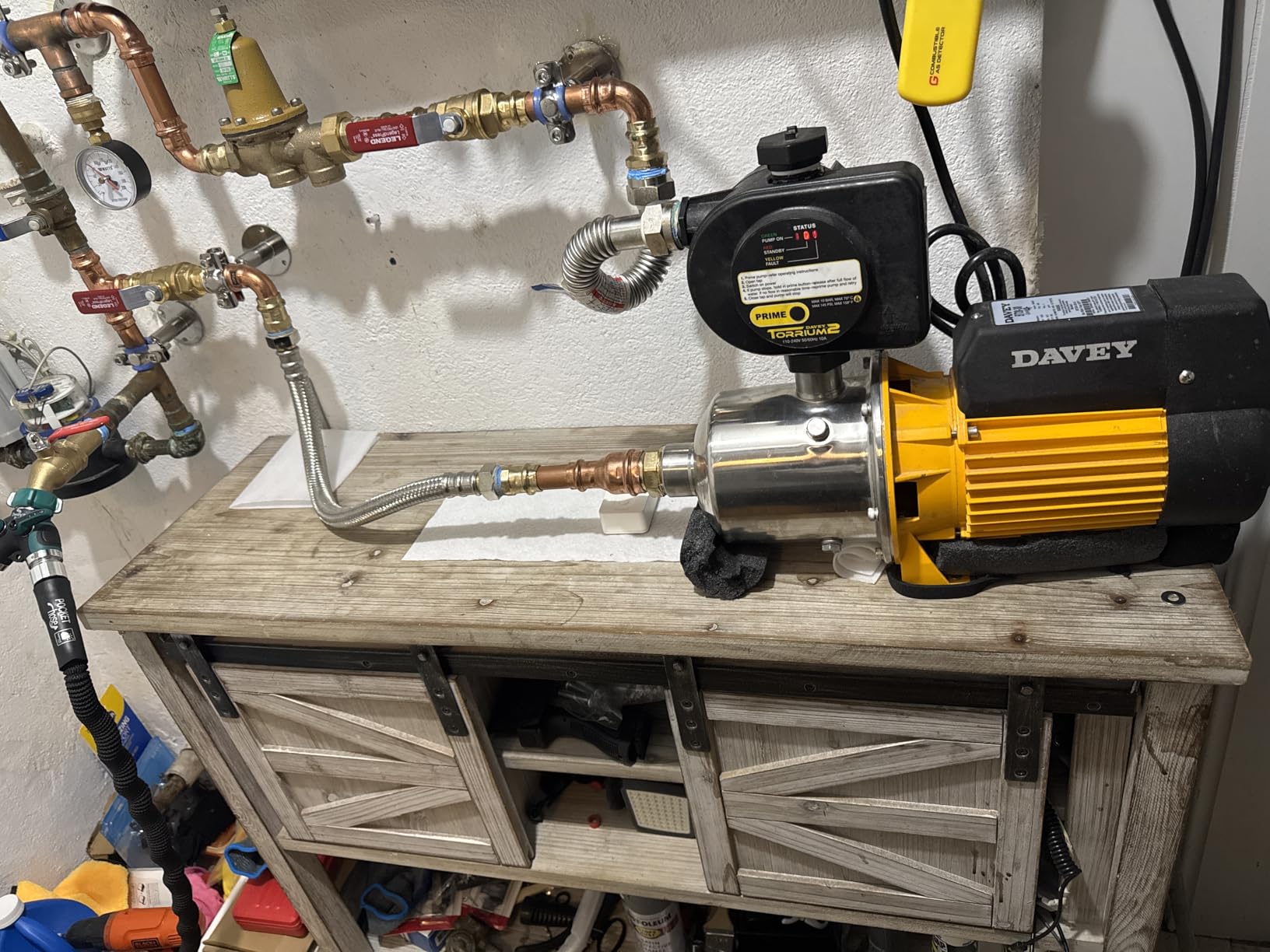
The motor is a power-surge protected TEFC design, and the pump is dry-run protected, so leaving it energized with no flow will not destroy it. Those two protections are the reason a fixed-speed pump like this is still a sensible buy in 2026 rather than a dated design.
It ships with a flexible stainless steel discharge hose, which is useful because the outlet orientation is rarely going to line up with existing plumbing on the first attempt. The 20 inch by 8 inch by 16 inch body is not going into a small closet though, and at 31.7 lb it wants a solid floor or a wall bracket rather than a shelf.
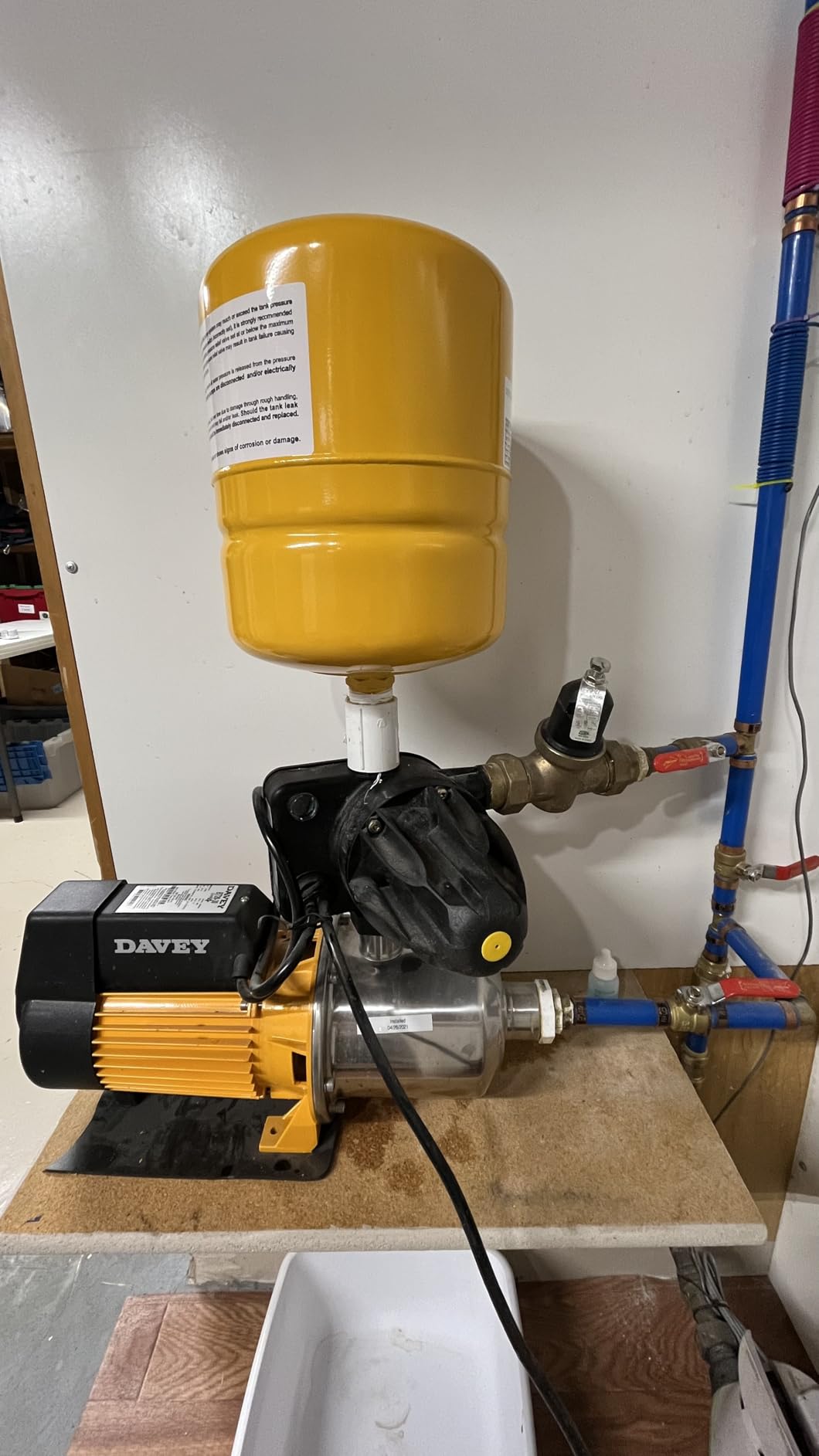
What 20 gpm Really Covers
Twenty gallons per minute is comfortable for a single-family home with two full bathrooms on one floor, a washer, a dishwasher, and garden hose bibs. It is not a three-story house where four fixtures might run at once while someone showers. If your house is tall or your family is large, read up to the AIDPATH pick, which is specced for up to eight faucets across three floors.
Because the output is fixed, this pump adds a set amount of boost rather than holding a target pressure. On a house with steady 40 psi city water that is a feature, because the result is simply more of what the main is already delivering. On a house where pressure swings wildly, a variable speed unit will feel better.
Where It Falls Short
There is no app, no display, and no way to dial the target pressure from inside the house. You set it with a physical control and leave it. For most people that is completely fine, and for anyone who wants to see real-time pressure data on a phone, it is a downgrade.
The fixed output also means it will short cycle against a very low incoming supply. If your dynamic pressure at the meter sits in the low twenties, a pump adding a fixed 50 psi will stop and start frequently, and that is the fastest route to a noisy pump and a tired check valve. In that situation, pair it with a properly sized diaphragm tank or choose the variable speed pick instead.
2. AQUASTRONG Smart 45 Review: The Best Answer to Inconsistent Pressure
Aquastrong Whole House Water Pressure Booster Pump 80 PSI, 115V Automatic Variable Speed, Constant Pressure, Integrated Design, Self-Priming, for Home, Apartment, Shower, Garden, Shallow Well,Smart 45
22-80 PSI variable speed constant pressure,1500 GPH max flow,150 ft max head
+ The Good
- True variable speed constant pressure at every tap
- Maintenance-free pressure tank included
- Stainless impeller rated to 175F
- Dry run leak overheat and blockage protection
- Shallow well suction up to 26 ft
- The Bad
- 115V supply and plumbing skill needed for self priming
- No wireless app control in the base unit
- 55 dB(A) is the loudest of the variable speed group here
The Smart 45 is the pump that dominates video search for this topic, and the reason is visible in the name: it does not just add pressure, it varies motor speed to hold a target no matter how many taps are open. If your problem is described as satisfactory but inconsistent, this is the category of pump you need rather than a fixed booster.
Output is 1500 GPH, which normalizes to 25 GPM, with a maximum head of 150 feet. Pressure is adjustable from 1.5 to 5.5 bar, which is 22 to 80 psi, and it ships preset at 3 bar or 44 psi. A 4.3 average across 228 ratings puts it in the best-supported category in this group by volume of feedback.
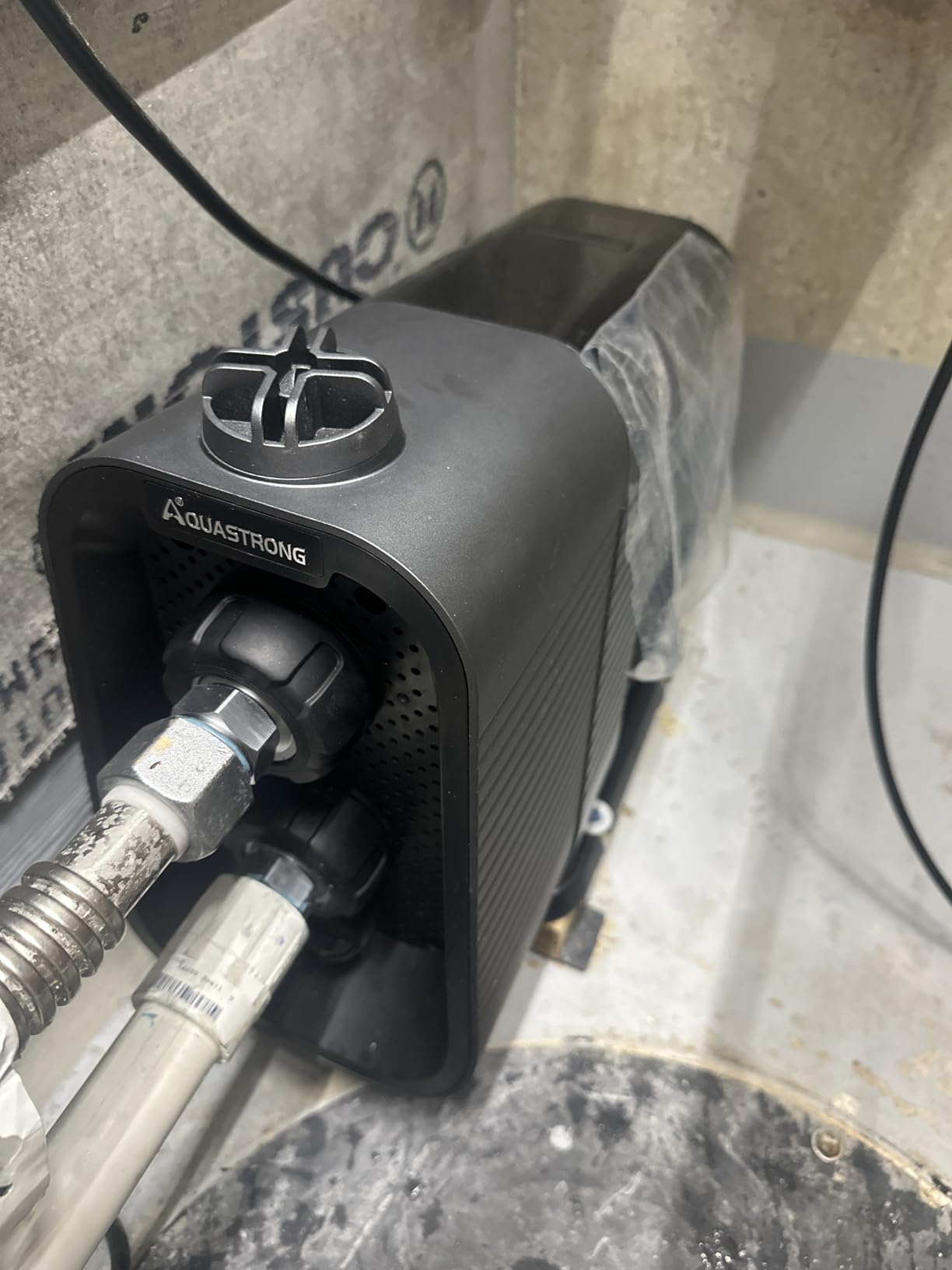
The motor is a 550W air-cooled permanent magnet unit with an inverter, rated up to 750W and 5200 RPM. Permanent magnet motors are the reason variable speed pumping became affordable at residential scale, and the manufacturer claims 50% or greater energy efficiency against a conventional induction motor of the same output. In practice the savings come from the pump slowing down when demand is low, which is most of the time in most houses.
Protection is unusually thorough. The fault list covers power failure, pump block, pipeline leakage, dry run, overheat, and pressure sensor failure, each with its own indicator on the control panel. The stainless steel impeller is rated to 175F, so it will not be the weak link if it sits on a recirculation line, and the operating range runs from 32F to 175F.
Why Constant Pressure Changes Daily Life
With a fixed pump, running the shower drops pressure everywhere in the house. With this one, the pump senses the demand increase and ramps the motor up within a fraction of a second, so the shower stays steady while the dishwasher fills. That is the difference people describe when they say their pressure is inconsistent rather than simply weak, and it is the single strongest argument for a variable speed unit.
It also handles a broader range of supplies than a fixed booster. Run it against a strong main and it simply does not spin up. Run it against a weak main and it ramps further. The built-in maintenance-free pressure tank handles short cycling, and the check valve on the outlet stops backflow through the pump when everything shuts off.
Where It Falls Short
At 55 dB(A) typical, this is the loudest of the variable speed pumps in this guide. If the unit will live in a closet next to a bedroom wall, that matters, and the water-cooled GWANZI is the quieter alternative by a wide margin.
Commissioning takes more plumbing competence than a fixed unit. The self-priming setup needs a filled suction line, and first-time installers report the most common confusion at installation rather than in operation. The base unit also has no wireless app, so any adjustment happens at the control panel itself.
3. GWANZI K90S600L Review: The Quietest and Smallest Pick Here
1HP Whole House Water Pressure Booster Pump 90PSI 115V Automatic Variable Speed Penmanent Mangnet Motor Constant Pressure Wireless App Control Compact Design for Home House Villa Apartmen
1 HP 800W motor,22 gpm,15-90 PSI adjustable,about 30 dB,app control
+ The Good
- Quietest running pump here at about 30 dB
- Smallest footprint at 11 x 3.5 x 3.5 inch
- 12 lb stainless inline body
- SmartFarintl app control with OTA updates
- 1 inch NPT inlet and outlet
- The Bad
- App control reaches only about 30 feet
- Some buyers report a one second startup delay
- 1 year warranty is the shortest listed here
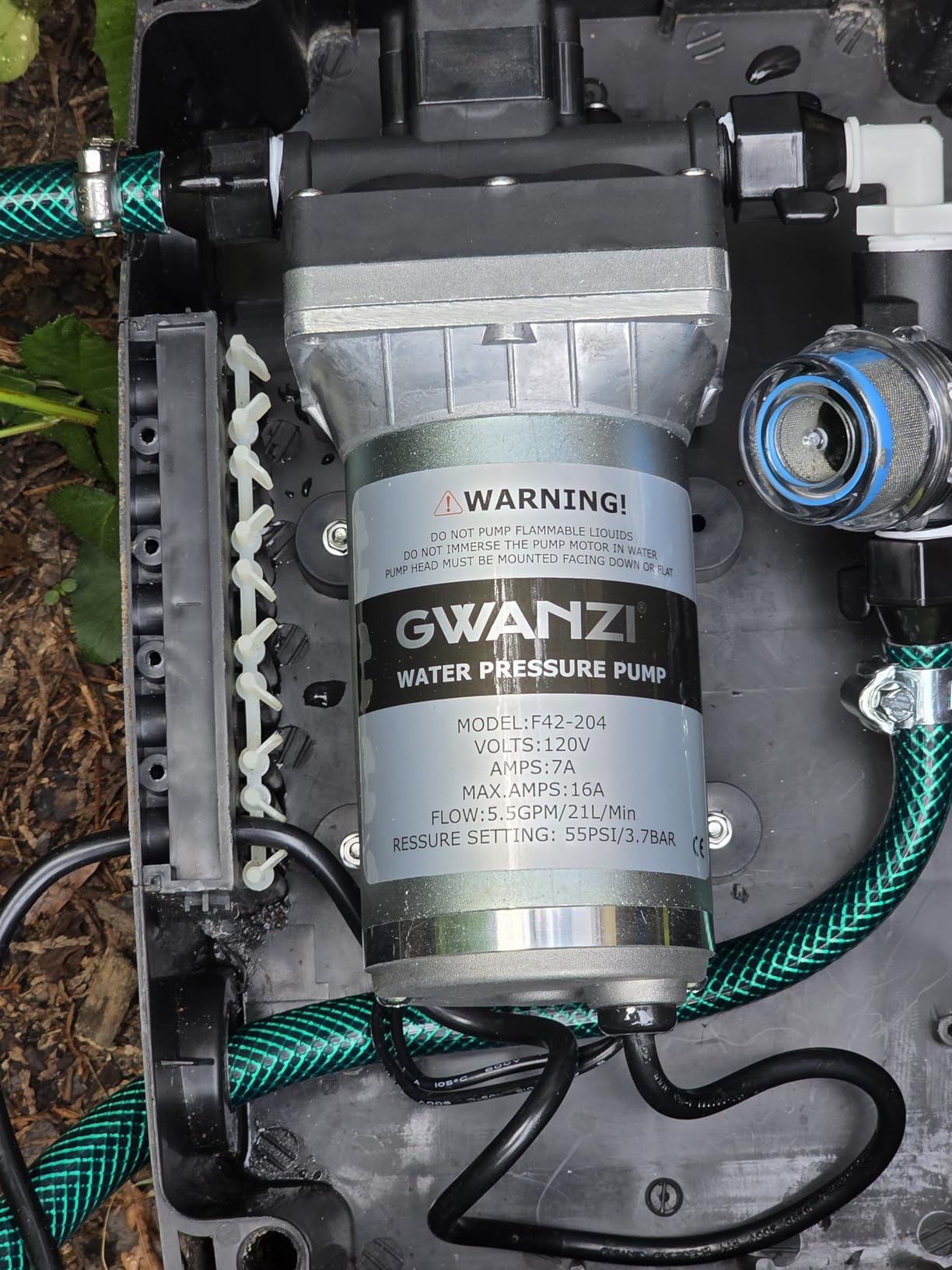
The GWANZI is the surprise of this roundup. It carries a 1 HP permanent magnet motor in a body 11 inches long and 3.5 inches square, and it runs at about 30 dB thanks to a water-cooled motor housing instead of the air-cooled design most competitors use. At 4.6 across 39 ratings it holds the second highest average in the group.
Flow is listed at 22 gpm with a 1320 GPH maximum, and pressure adjusts from 1 to 6 bar, which is 15 to 90 psi. Maximum head is 150 feet. The protection suite matches the AQUASTRONG, covering power failure, pump block, pipeline leakage, dry run, overheat, and pressure sensor failure.
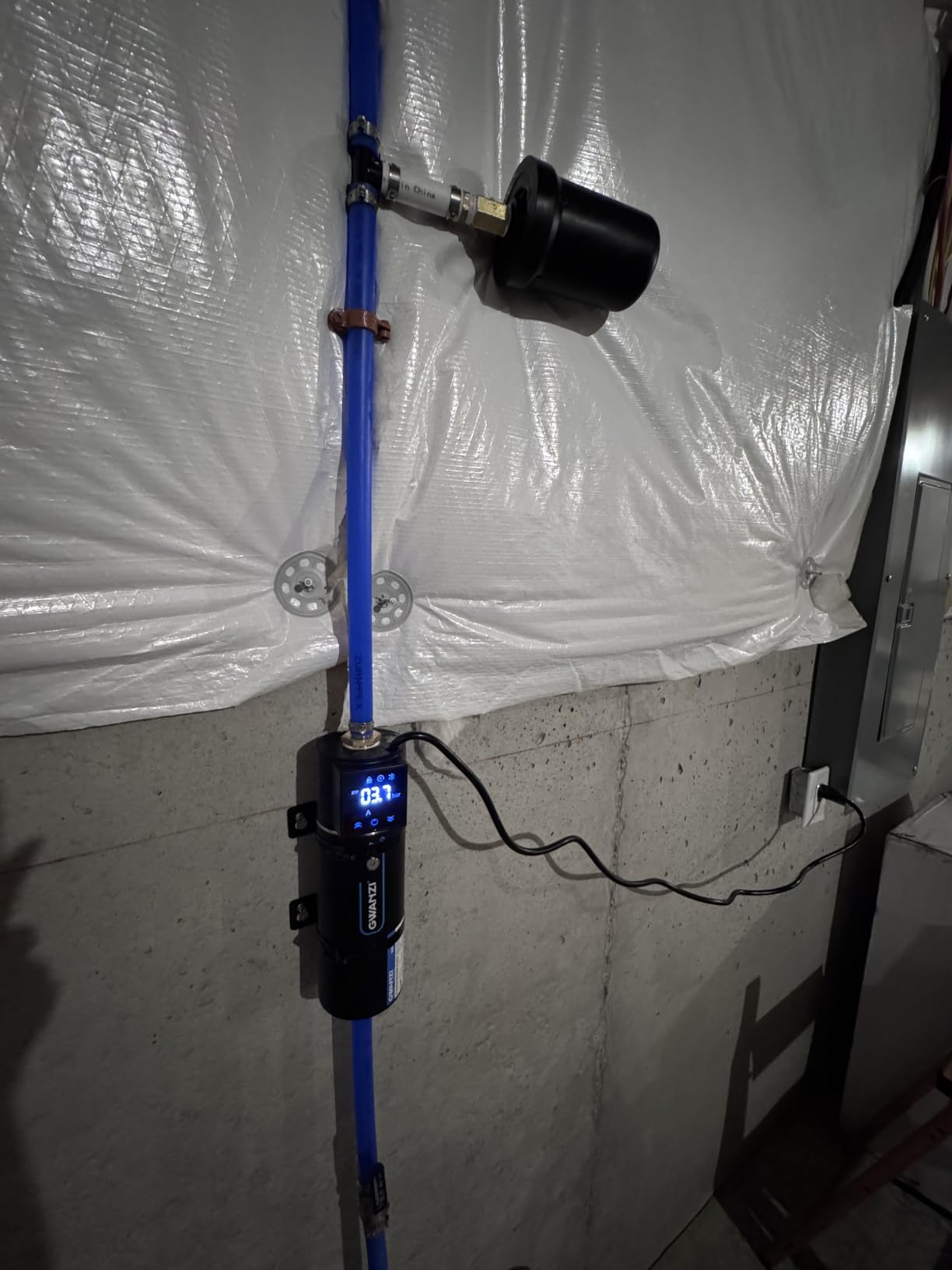
Owners with weak municipal supply report a dramatic whole-home improvement and unusually smooth pressure, which is what you would expect from a 6000 RPM permanent magnet motor running under inverter control. The thickened 304 stainless steel outer shell and pump body also mean you will not get the cloudy water some cast iron pumps eventually produce.
At 12 lb this is by a wide margin the lightest pump here, and the inline 1 inch NPT inlet and outlet layout means it drops into a line without a separate mounting bracket. For a small utility closet under a sink or in a garage wall cavity, that footprint is the whole reason to buy it.
When Noise and Footprint Drive the Decision
Noise is usually treated as a throwaway spec line, but it decides the install location, and the install location decides whether the household will tolerate the pump at all. Thirty decibels sits near a quiet refrigerator. A pump at 55 dB(A) is audible through a bedroom wall at night, which is a recurring complaint on plumbing forums from people who installed a louder unit in the wrong place.
App control is the other differentiator. The SmartFarintl app lets you dial the target pressure in and out and read live status, and over the air firmware updates mean the unit is not frozen at the day you installed it. If you want to see pressure while you are at work rather than guessing at a panel in a closet, that is worth a lot.
Where It Falls Short
The wireless connection is only about 30 feet, so this is a phone in the next room feature rather than a remote monitoring tool across a property. A few reviews also mention a one second delay before the pump engages, which is long enough to notice on a fast tap and short enough that most owners stop noticing.
The 1 year manufacturer warranty is the shortest in this group, against 2 years on both Davey pumps, 3 years on the Simer and the AIDPATH. On an inline electric motor that will run for years, we would rather see three. The stainless steel body also will not handle a truly hot supply, so keep it on the cold side of the heater.
4. DAB E.Sybox Mini 3 Review: Everything in One Box
DAB E.Sybox Mini 3 Electronic Pressurisation System, Constant Pressure, Ultra Low 45db(A) Noise, 2.7″ X 1.5″ High-Resolution Screen, Compact, Wireless Capability, 1.1 Horsepower, 7.5 Bar, 80 l/min
15-80 PSI adjustable,80 l per min,45 dB(A) VFD drive,built in expansion tank
+ The Good
- Pump electronics sensors LCD tank and check valve all integrated
- Adjustable constant pressure from 15 to 80 PSI
- Quiet 45 dB(A) operation thanks to VFD drive
- Installs vertically or horizontally in tight utility spaces
- Wireless capability
- The Bad
- Lowest average rating in this group at 4.1
- Setup and commissioning friction in a share of reviews
- 32 lb body with a small LCD instead of app control
The E.Sybox Mini is the European engineering answer to the same problem, and its defining feature is integration. Pump, control electronics, pressure and flow sensors, a 2.7 by 1.5 inch high resolution screen, an expansion tank, and a check valve all live in one housing. You are not shopping for a separate tank or control panel, which removes the two most common reasons a booster install goes wrong.
Pressure adjusts from 15 to 80 psi across a 7.5 bar range, and the flow rating of 80 l/min converts to roughly 21 GPM. A variable frequency drive holds the pressure steady and cuts energy use at part load, and the stated noise level is 45 dB(A), quieter than most fixed pumps but well above the water-cooled GWANZI.
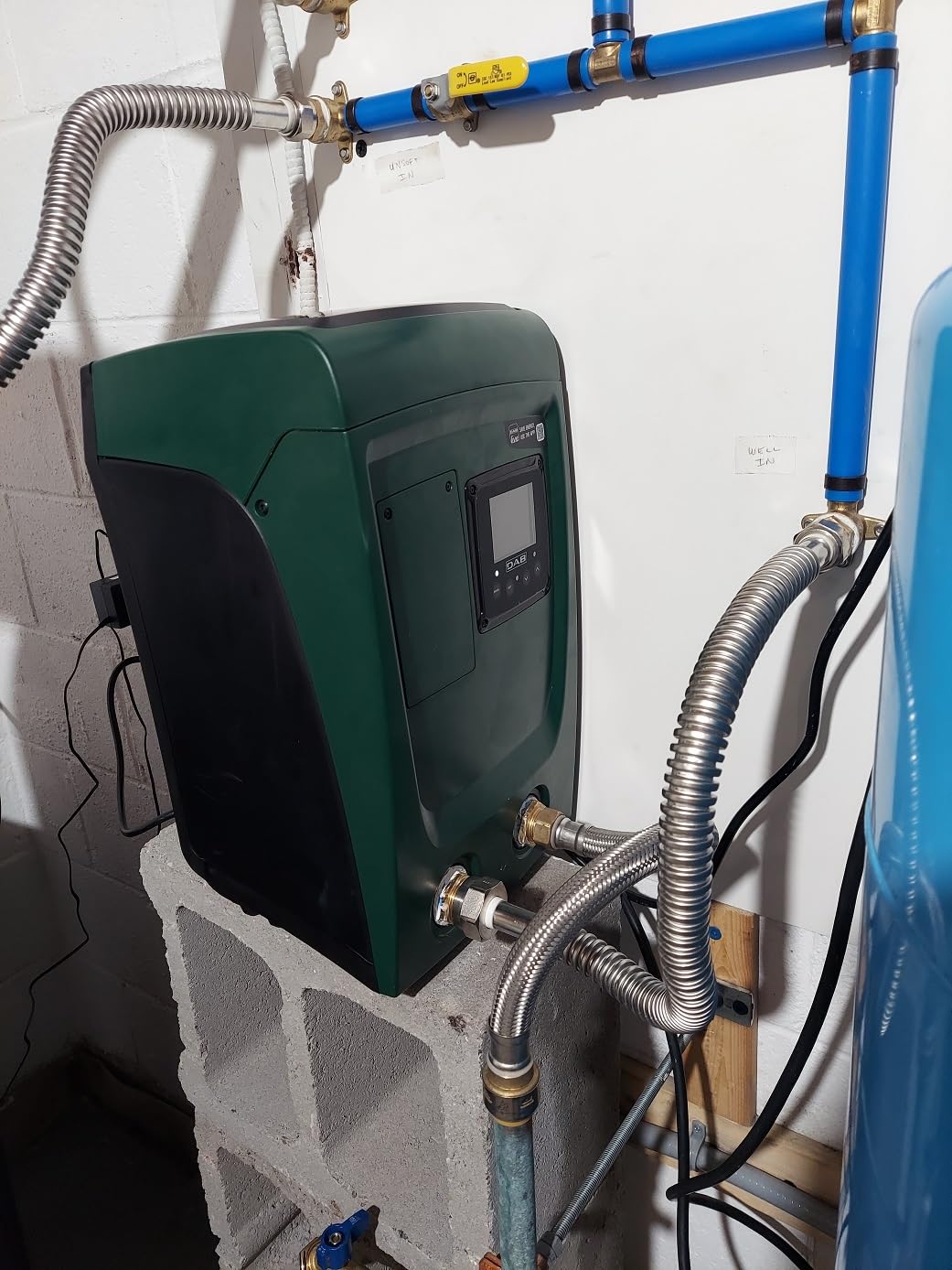
Max lifting height is 55 meters, about 180 feet, and the stainless steel construction suits household and garden duty. It can be mounted vertically or horizontally, which matters in the tight space beside a water heater where most people end up putting it.
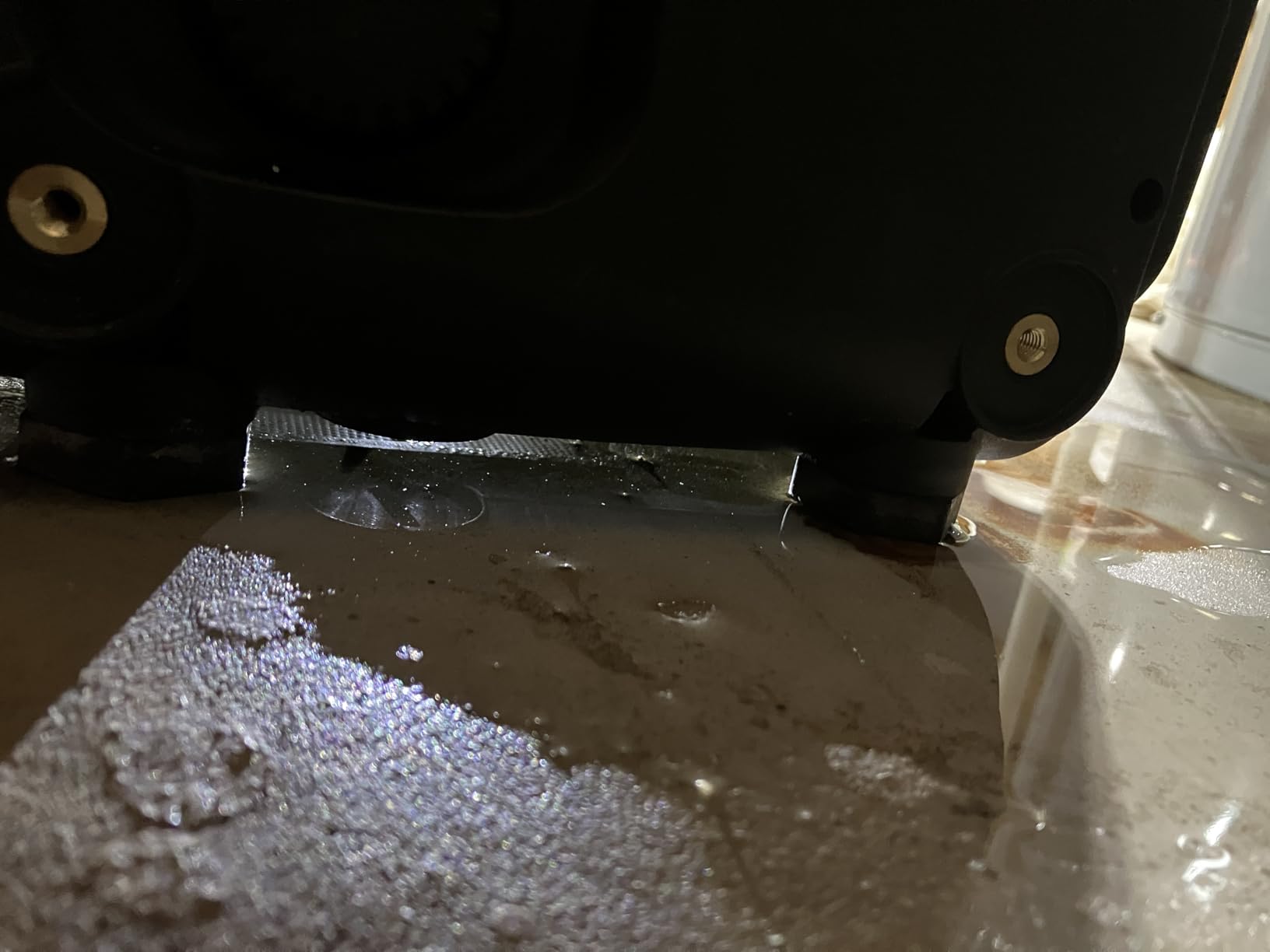
The 4.1 average across 102 ratings is the lowest in this group, and the reason is visible in the review pattern: an unusually large share of two star ratings tied to setup and commissioning rather than to performance. The unit appears to work well once configured, but getting there is fiddly enough that a first-time installer should budget a weekend.
Why Integration Simplifies Installation
When you buy a fixed booster pump, you also need a pressure switch, a pre-charged diaphragm tank, a check valve, and somewhere to put all three. Miss the tank pre-charge and the pump short cycles. Miss the check valve and it runs backward when everything closes. The E.Sybox removes the assembly work, and the integrated check valve is plumbed correctly by the factory.
That single decision is worth more to a nervous homeowner than any spec difference between brands. It is also why this style of unit is what professional installers reach for when a customer will not do maintenance.
Where It Falls Short
At 32 lb it is the second heaviest unit here, and the integration is the reason. The small screen gives you a pressure reading but no app, so remote monitoring is not available even though the unit has wireless capability at the hardware level.
The commissioning burden is the real concern. A 4.1 with a meaningful two star share is a warning that the first hour with the pump is where most owner frustration happens. If you are not comfortable with a pump controller, budget for a plumber or pick one of the simpler units instead.
5. Simer 4075SS-01 Review: The Most Proven Pump in the Group
Simer 4075SS-01 3/4 HP Pressure Booster Pump
Up to 40 psi of added pressure,24 gpm flow,3/4 HP,stainless steel
+ The Good
- Largest review base here with 372 ratings
- Automatic activation the moment water runs
- Stainless steel construction resists rust and corrosion
- Arrives pre-assembled with a 6 ft power cord
- 3 year manufacturer warranty
- The Bad
- Fixed 40 psi boost rather than adjustable constant pressure
- Some 1 star ratings about noise on long duty cycles
- No variable speed or app control
Forget ratings for a second and look at the review count. The Simer 4075SS-01 has 372 ratings, and no other pump in this guide comes close. When a unit has that many owners reporting on it, the failure modes are known rather than theoretical, and that is worth more to most buyers than a tenth of a star.
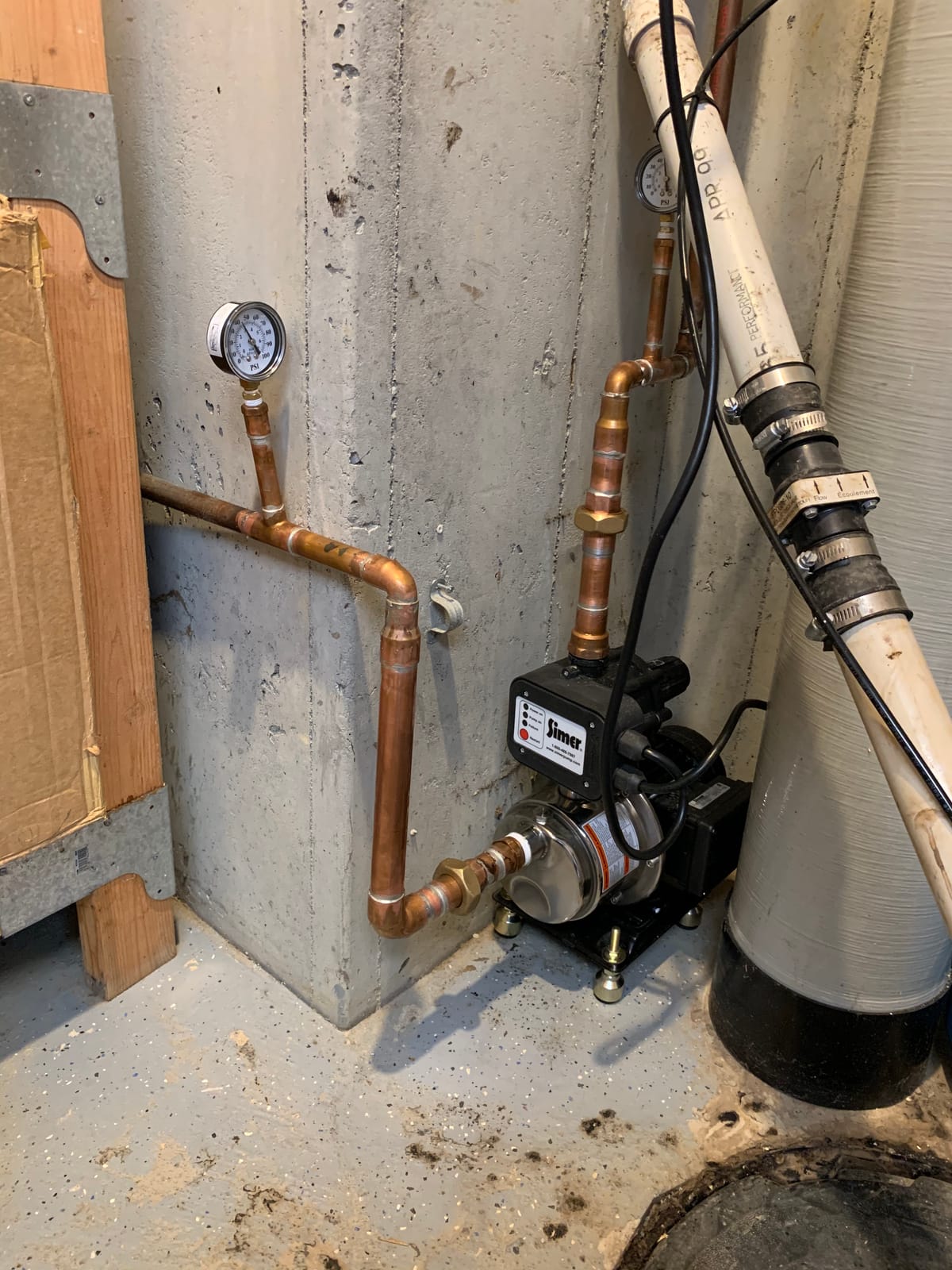
It is a 3/4 HP pump rated at 24 gpm that adds up to 40 psi of pressure. It activates automatically the moment water runs, so there is no manual switch to remember. It arrives set up and ready with a 6 foot 115 volt cord, which means the electrical side of the install is genuinely plug-and-play.
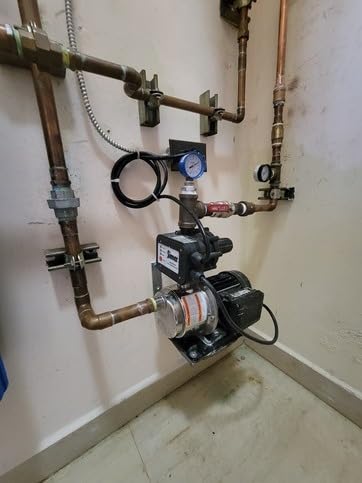
The stainless steel construction resists the rust and corrosion that eventually pits a cast iron pump body, and the 3 year manufacturer warranty is the joint longest here. The most common owner report is straightforward: household low pressure is fixed, showers run properly, and nothing else needed.
A meaningful minority rate it 3 stars or below, and the recurring themes in that group are noise during long duty cycles and a fixed boost that does not adapt to changing demand. That is the honest trade with a fixed-speed design, and it is why this pump suits a house with steady low city water rather than one with fluctuating pressure.
When the Simplest Fixable Pump Is the Right Answer
There is a real category of buyer who does not need variable speed, an app, or a display. You have steady low municipal pressure, you want it higher, and you want something that starts by itself and does not need a plumber to commission. For that person this is the most defensible purchase in the guide, because 372 owners have already found the edges.
The pre-assembled delivery and included cord also cut the install down to plumbing. If you have ever wrestled a pump controller into life, the appeal of a unit that works the second you open a tap is obvious.
Where It Falls Short
The 40 psi boost is fixed, not adjustable. You cannot set a target, and there is no way to lower the output if your supply pressure climbs on a main that is sometimes strong and sometimes weak.
Without a properly sized tank, a fixed 40 psi boost against a marginal supply will cycle on and off. Some of the harshest reviews trace back to long duty cycles producing noticeable noise, and a few owners ended up adding a tank to solve it. Pairing this with a diaphragm tank is the standard fix, and we would plan for it from the start.
6. AIDPATH EVO BOOST5 Review: Sized for Three Floors
Aidpath 1.2 HP, 85 PSI, 27 GPM Whole-House Water Pressure Booster Pump 115V
1.2 HP permanent magnet motor,26.5 gpm,197 ft head,22-92 PSI
+ The Good
- 26.5 gpm rated for up to 8 faucets across 3 floors
- Widest adjustable pressure range at 22-92 PSI
- 197 ft head covers long setbacks
- Smart Life app tracks pressure energy and temperature
- 3 year warranty and FCC certification
- The Bad
- Smallest review base here at 24 ratings
- Bulky 20.7 inch footprint for a closet
- 115V AC supply only
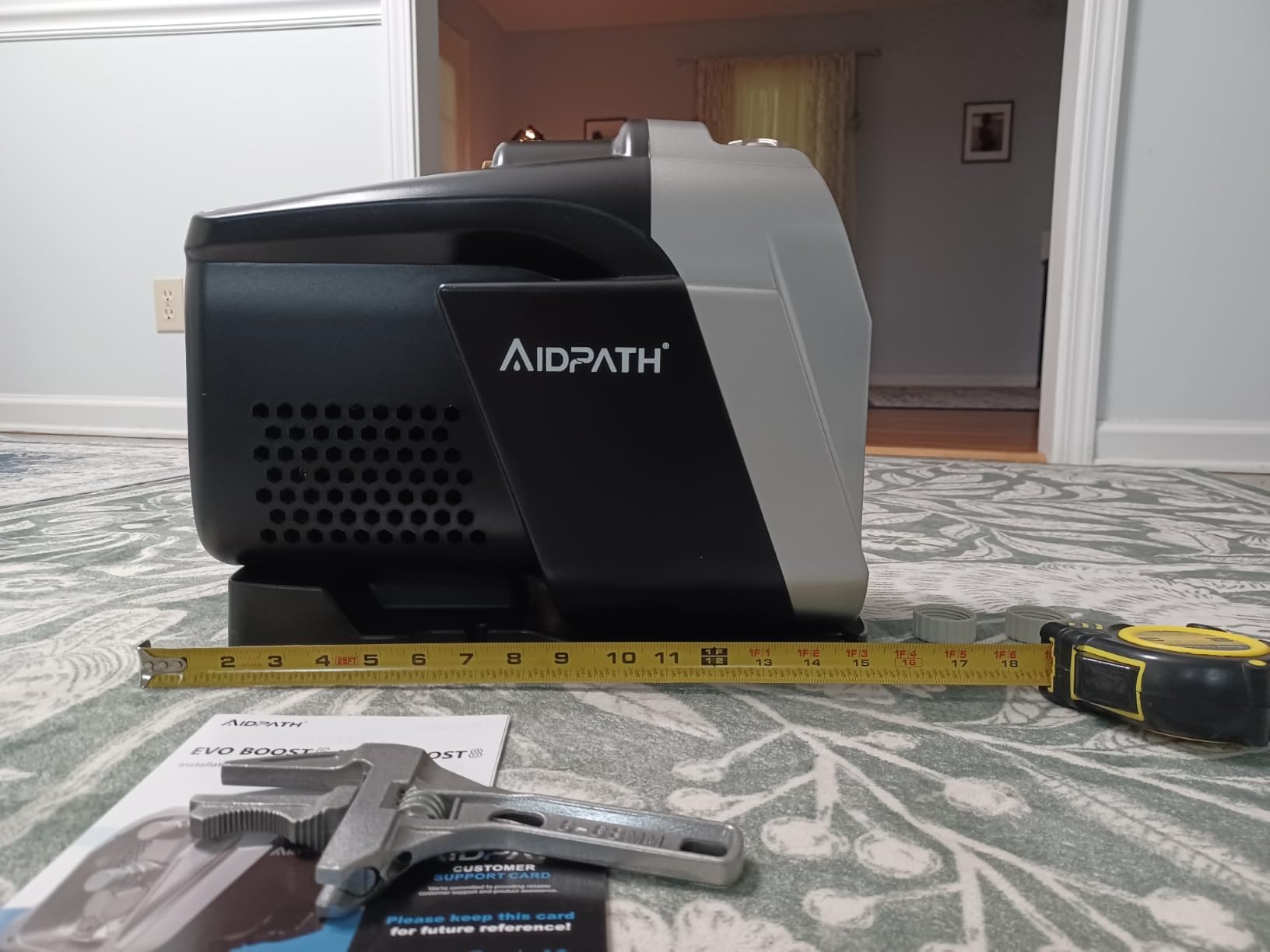
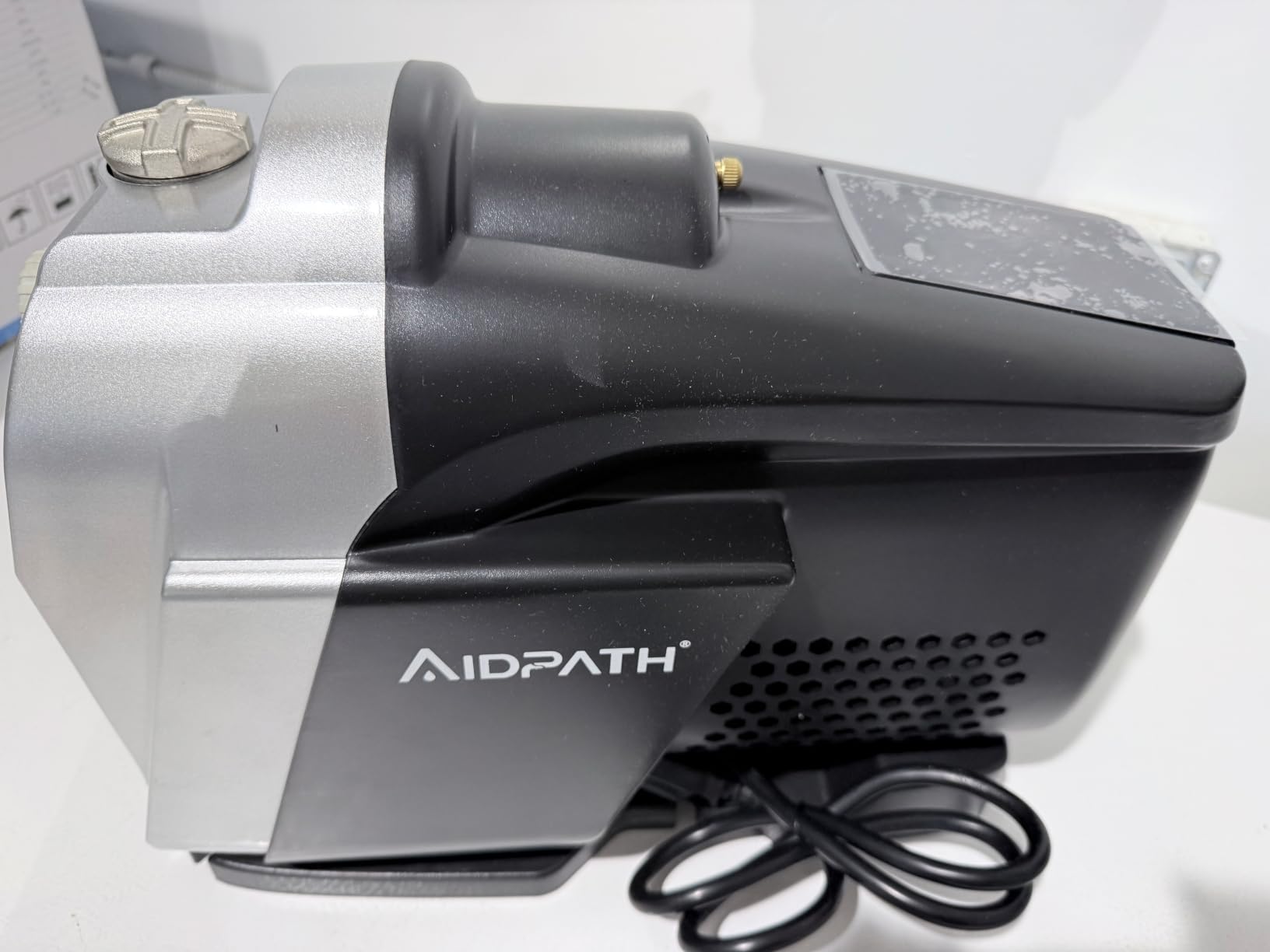
The EVO BOOST5 is the largest pump in this guide and the only one whose maker states a use case in fixtures and floors: steady pressure for up to 8 faucets across 3 floors. If that describes your house, the sizing question is already answered and you can skip the arithmetic.
It runs a 1.2 HP permanent magnet motor and moves 1590 GPH, which is 26.5 GPM, with a 197 foot maximum head. Pressure adjusts from 22 to 92 psi, the widest range of the group on both ends. At 4.7 it holds the highest average rating among the picks with a meaningful number of ratings behind it, and every review returned is 4 stars or above.
Owners cite strong multi floor constant pressure and quiet variable speed running. The Smart Life app reports status, pressure, energy use, and motor temperature, and the built in protections cover dry run, overcurrent, and voltage faults. Liquid temperature range is 32F to 167F, the stainless steel body is rated for outdoor use, and shallow well suction lift reaches 26 feet.
It runs at 50 dB, which sits mid-pack. That is louder than the water-cooled GWANZI and quieter than the AQUASTRONG, which is a reasonable position for a pump this size that will realistically live in a garage or mechanical room rather than a bedroom closet.
How Multi-Story Demand Changes Sizing
Vertical distance is the number nobody accounts for. A fixture 20 feet above the pump loses 20 feet of head before friction even starts, and friction loss on a long horizontal branch eats another 0.5 psi per foot. In a three floor house the top shower is the weakest point in the system, and it is usually the reason the owner went looking for a pump in the first place.
A pump large enough to serve eight fixtures at once, with 197 feet of head, covers that geometry without straining. The 197 foot figure also covers a long setback from the street, which is the exact scenario homeowners describe: 45 psi at the meter, a 135 foot run, and a target of 3 to 4 gpm at 60 to 70 psi upstairs. This pump comfortably clears that target.
Where It Falls Short
Twenty four reviews is a thin base, and no rating below four stars is not the same as a long service record. The Simer, Davey, and DAB units have two to five times the feedback, and we would weight that heavily if you are buying a component you plan to live with for a decade.
At 20.7 by 10.8 by 16.3 inches it is the second largest unit here, and 20.4 lb is not light either. Plan a floor or wall mount in a mechanical space rather than a closet. It is also 115 volt AC only, which caught out a few buyers who expected a 12 volt DC unit for an off-grid setup.
7. Davey BT14-30T2-USA Review: Lighter Duty, Same Steel
Davey Water Products BT14-30T2-USA Home Pressure Booster Pump with Torrium II Controller
38 psi boost with 30 psi at 14 gpm,stainless impeller,120V
+ The Good
- 38 psi boost with 30 psi sustained at 14 gpm
- Stainless steel impeller and pump casing
- Dry-run and power-surge protected motor
- Flexible stainless steel discharge hose
- 2 year warranty
- The Bad
- Heavy 31 lb body to mount and plumb
- Fixed flow with no variable speed
- 14 gpm limits simultaneous fixture demand
The BT14-30 is the smaller sibling of the Davey on our first pick, and it makes the same case for a narrower job: 38 psi of boost, still holding 30 psi at 14 gpm. Same stainless impeller and casing, same surge protected TEFC motor, same dry-run protection.
At 14 gpm this is not a household that runs two showers and a washer simultaneously. It is a smaller house, or a home whose main problem is garden irrigation and hose bibs, or a setup where the booster feeds an irrigation zone rather than the whole supply.
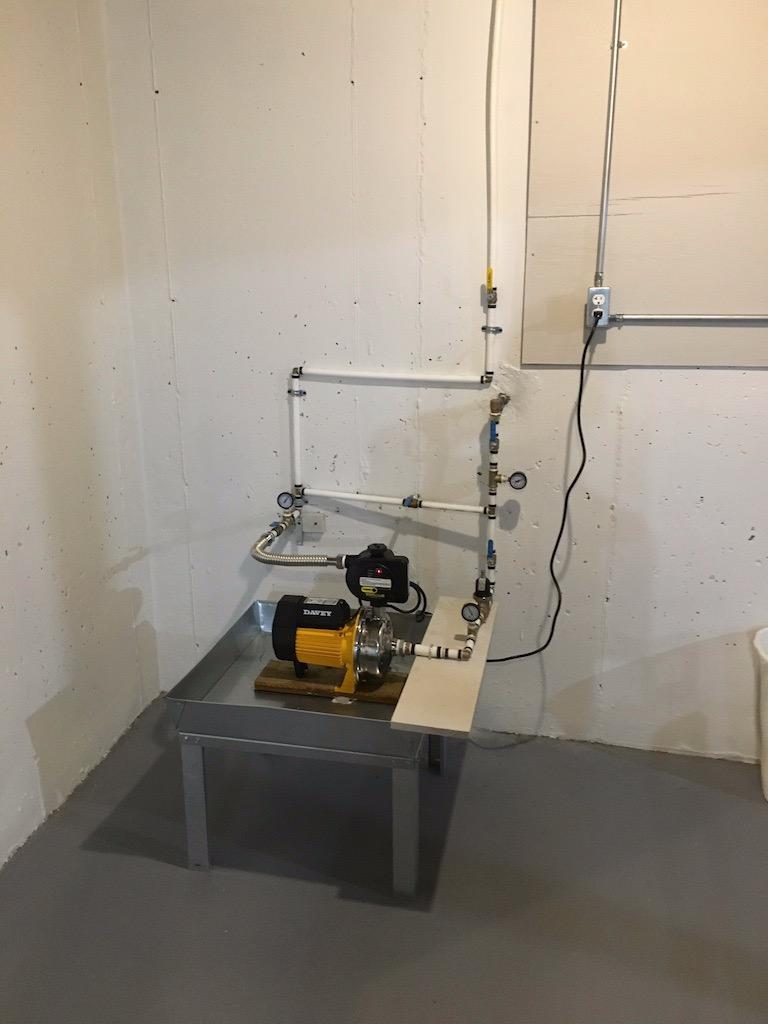
Owners report that the pump delivers the advertised boost and holds up well in residential installations, with a 4.5 average across 41 ratings. That is a solid ratio for a machine that has been in the field long enough to have a real service history. The flexible stainless steel discharge hose is included, which handles the outlet orientation problem that trips up most first installs.
If you need to move a large volume of water between a tank and a house rather than boost municipal pressure, our guide to water transfer pumps covers that category properly. This is a pressure machine, not a transfer machine.
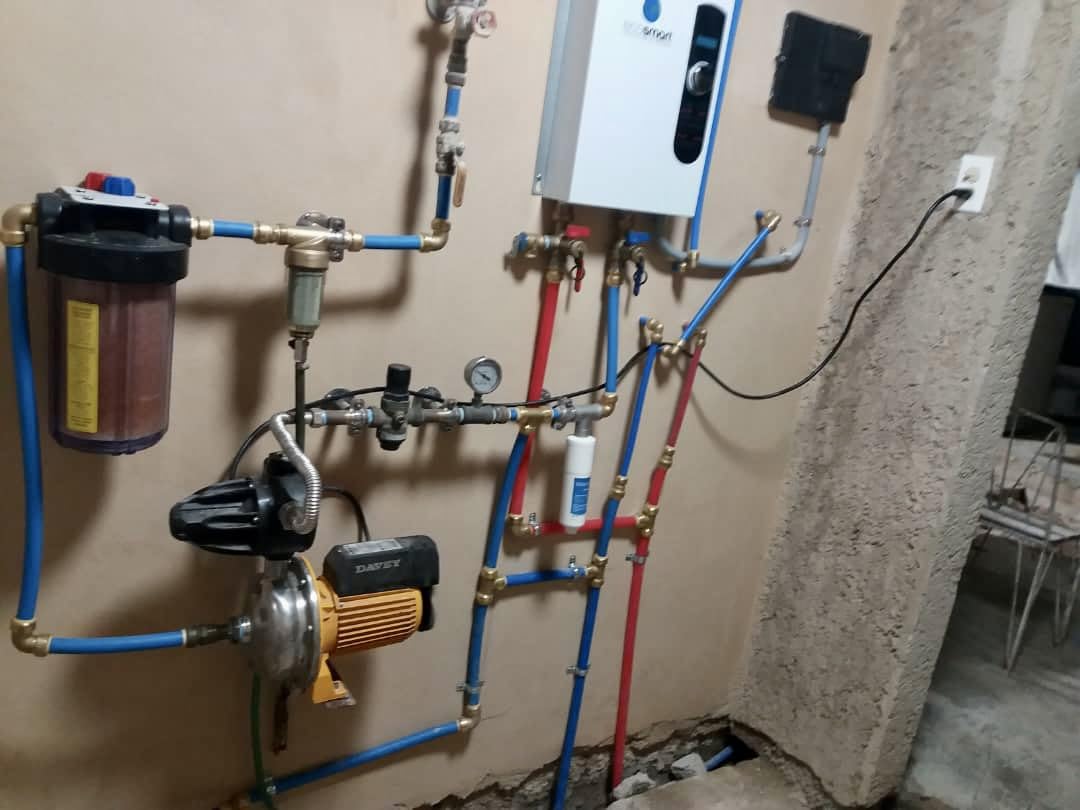
Matching the Pump to an Irrigation Job
Irrigation is where a 14 gpm pump makes complete sense. A single zone of sprinklers or a soaker system typically draws 3 to 8 gpm, and the problem is usually pressure loss across a long run of poly pipe and laterals rather than total volume. Adding 38 psi at the pump inlet fixes the low end of that curve without the electrical and space cost of a much larger machine.
It is also a sensible second pump for a home where the main boost runs only on the cold supply, since irrigation often ties into the system at a different point and can be plumbed independently.
Where It Falls Short
The 31 lb weight is essentially the same as the larger Davey, because the housing and motor are similar. If weight and mounting space drove you toward a compact unit, this is the wrong pick despite the smaller flow number.
Output is fixed with no variable speed, so it will hunt against a weak supply in exactly the way described for the BT20. The Davey Torrium II controller in the product name is the pressure switch and protection package, not a digital controller, so there is no target pressure to dial in and no readouts.
8. Flotec FP5722 Review: A Bare Multistage Pump for Builders
FLOTEC CAST Iron MULTISTAGE Booster Pump 3/4 HP
3/4 HP cast iron multistage pump,9.19 by 12.56 inch,requires switch and tank
+ The Good
- Cast iron multistage build handles long uphill runs
- 3/4 HP motor with real pumping muscle
- Pairs with any pressure switch and bladder tank
- Reviewers report pushing water 750 ft through 3/4 inch hose
- The Bad
- Does not run automatically without a pressure switch and tank
- Heaviest pump here at 43 lb
- One reviewer reported a damaged delivery and return trouble
The Flotec FP5722 is the odd one out in this list because it is a pump, full stop. No control panel, no sensor, no automatic behavior, and no tank in the box. It is a 3/4 HP multistage cast iron booster, and it is here for the person who intends to build a system out of parts they already understand.
Multistage is the important word. Stacking several impeller stages lets the pump build pressure in increments across a long or elevated run, which is why this style of construction is favored for pushing water uphill and far. Owner reports include pushing water 750 feet through 3/4 inch hose, and one owner resolved a 30 year low pressure problem with this pump once a bladder tank was added.
It requires a pressure switch and a pre-charged bladder tank for safe automatic operation. Buy both, pre-charge the tank to the pressure switch cut-in minus a few psi, and the assembly works exactly as it should. Skip either component and the pump simply runs continuously, which will cook the motor.
At 4.4 across 44 ratings the owner satisfaction is real, and the reviews consistently point to the same caveat: the accessories are not included. That is not a flaw so much as a design decision, and it is the reason this pump pairs naturally with people who have a pressure tank already installed elsewhere on the property.
Why a Builder Would Choose This
If you already own a switch and a tank, or you are building a system with a specific pressure band in mind, this is the most adaptable unit here. A fixed integrated unit gives you whatever the manufacturer decided. A bare pump gives you full control over the whole curve.
The cast iron multistage casing is also the most physically robust construction in this guide for an irrigation or long-run application, where durability over a decade matters more than decibel levels.
Where It Falls Short
It is the heaviest unit we listed, at 43 lb, and it will not do anything at all on its own. For anyone who wants a pump they can install on a weekend without understanding pressure switches, this is the wrong purchase and the setup cost is hidden in the parts list.
One reviewer also reported receiving a damaged unit and difficulty arranging the return, which is worth factoring in if you are buying sight unseen. Our other caveat is purely physical: cast iron over many years can put metallic taste into the water, and it is heavier to plumb than any stainless unit in this guide.
9. czobloik 80 PSI Unit Review: Promising but Thinly Documented
Water Pressure Booster Pump for Whole House, 80 PSI,115V Variable Speed Constant Pressure System 1”NPT Variable Speed,Self-Priming Water Pump with App Control for Home, Shower, Shallow Well
Self-priming integrated 115V design,80 psi,adjustable pressure panel
+ The Good
- Self-priming integrated design with no separate tank to buy
- Adjustable pressure control panel
- Compact build suited to a residential utility room
- Suitable for home plumbing water tanks and shallow wells
- The Bad
- Thinnest documentation with no HP flow or dimensions listed
- Lowest sales rank in this group
- Only 21 reviews and all of them are 5 star
This one comes with a perfect score, and that score is the least reliable number on this list. All 21 reviews are 5 stars, which is exactly the pattern you see when a listing is young and has not accumulated enough history for the ordinary friction of daily use to show up. We would treat the 5.0 as a promise rather than a record.
What is genuinely appealing is the self-priming integrated structure with a built in control panel and adjustable pressure settings, sold for whole house residential use. That design removes the two parts most first-time installers forget, which are the switch and the tank, and the compact body is sized for a residential utility room.
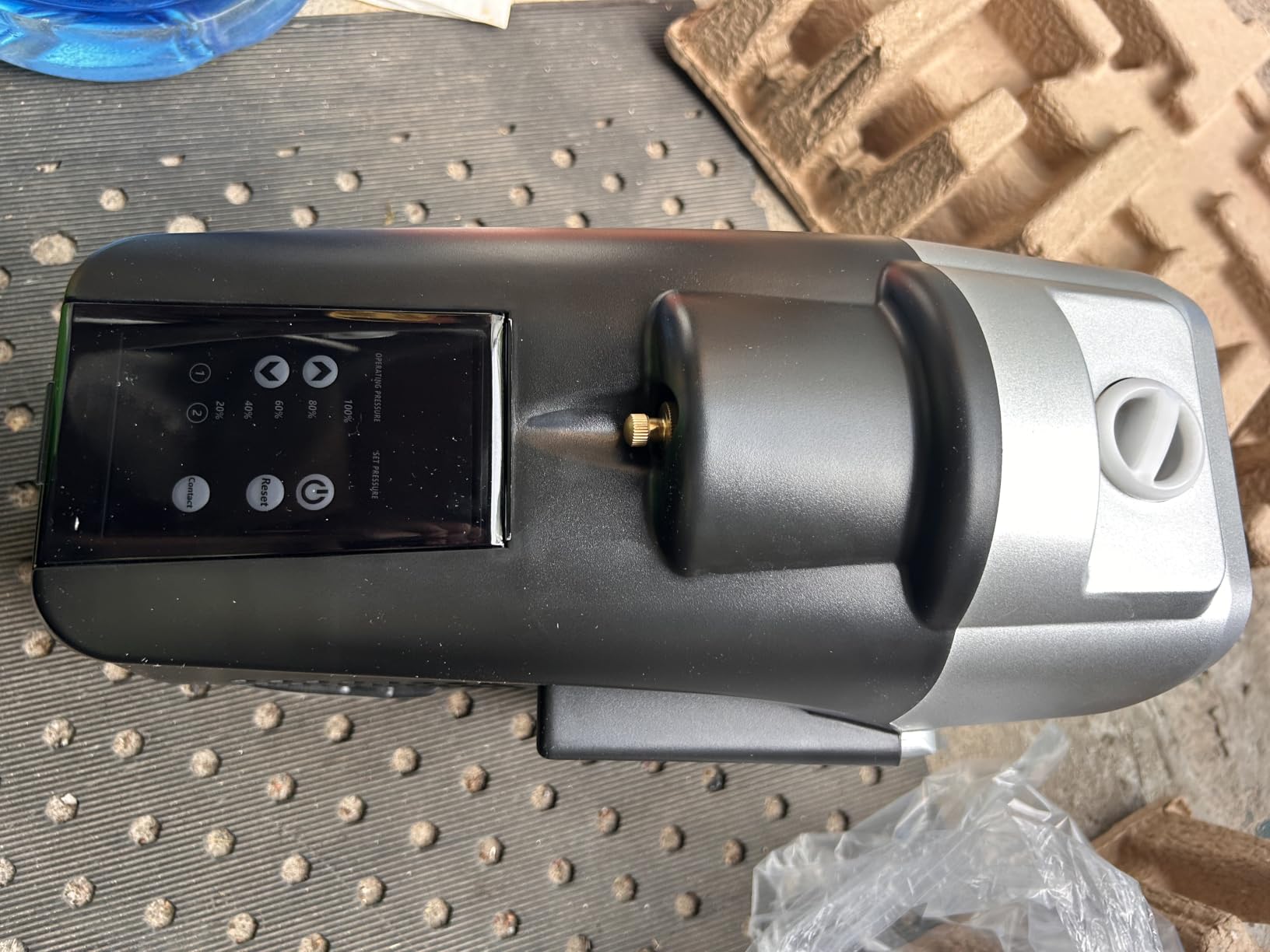
It is listed for whole house plumbing support, showers, faucets, washing machines, garden irrigation, water tank systems, and shallow wells, so the intended range is broad. The 115 volt self-priming pump format is the same broad-market architecture the AQUASTRONG and GWANZI units use.
Owners describe stable whole house pressure and simple installation. The problem is that the listing gives no horsepower, no flow rate, and no dimensions, which makes it impossible to confirm this unit can actually serve your fixture count.
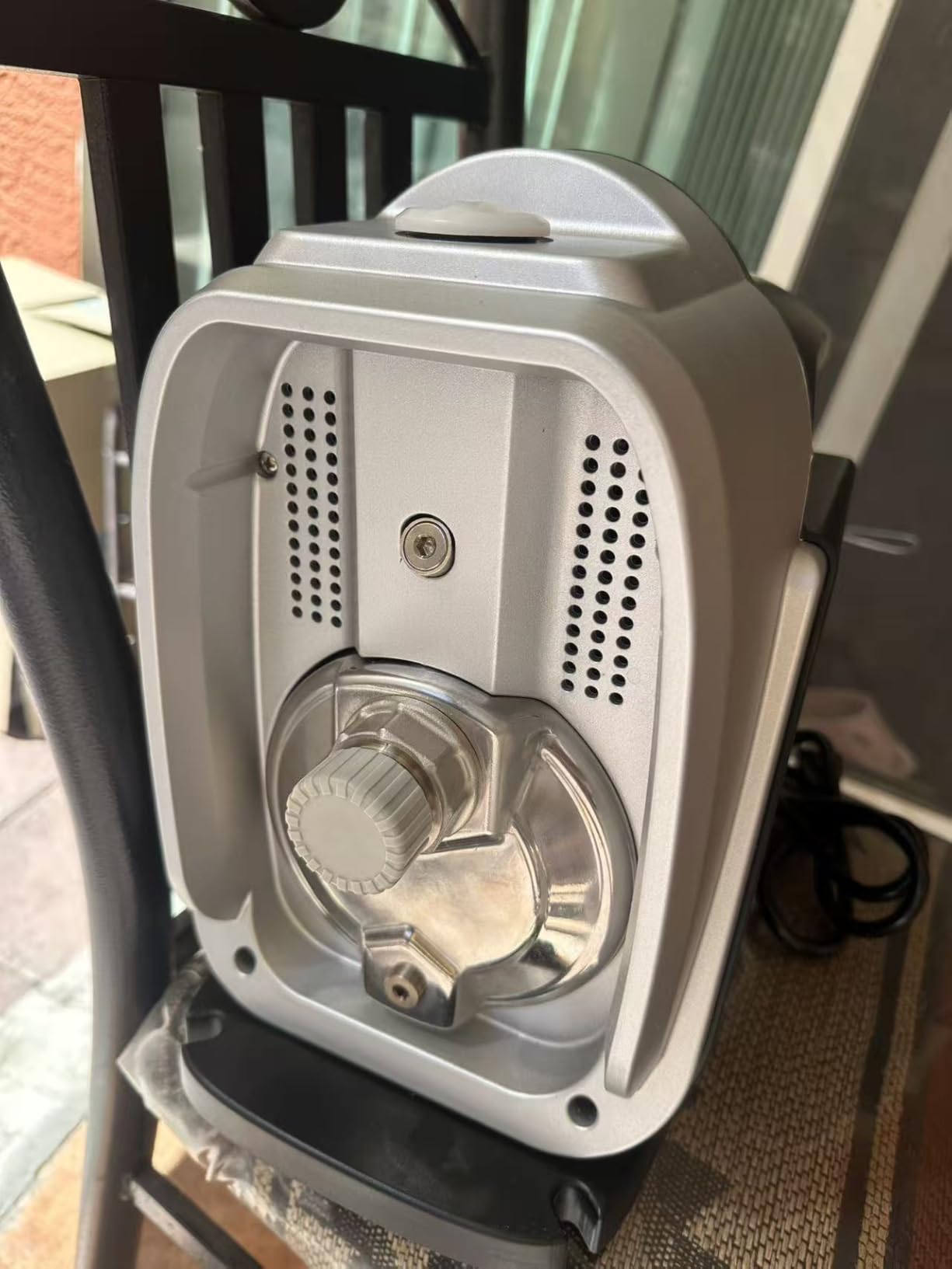
Why Self-Priming Matters on a New Install
Self-priming describes a pump that can pull air out of its own casing and start drawing water without someone filling it with a bucket first. On a new install where the suction line is empty, that removes a genuinely confusing first failure, and it is why every manufacturer in the variable speed category has moved to it.
For a first-time installer, an integrated self-priming design with an on-unit pressure control is the most forgiving configuration available, because there are fewer joints to leak and fewer settings to get wrong before water moves.
Where It Falls Short
The documentation is the problem. No horsepower, no flow rate, no dimensions, no noise figure, and a sales rank that sits far below every other pump here. Without a flow rate you cannot size it, and sizing is the whole reason to choose one booster over another.
We would buy a documented unit with a 4.2 average and 372 reviews over an undocumented 5.0 with 21, every time. If you are tempted by the score, buy the unit you can actually size. Our Davey, Simer, and AQUASTRONG picks all publish the numbers you need to check the fit.
How to Choose a Water Pressure Booster Pump
Start with the math, because it eliminates most of the list in five minutes.
Step 1: measure the run and subtract friction. Measure the pipe distance from the meter to the farthest fixture you care about. Multiply by 0.5 for the friction loss in psi. A 135 foot setback therefore costs about 68 psi before a single fixture opens.
Step 2: add your target. Most low pressure homes need 3 to 6 GPM delivered at 60 to 80 psi. Fixtures alone will not tell you this. A showerhead wants roughly 2 to 3 gpm, a laundry tap 3 to 5 gpm, a dishwasher 1 to 2 gpm, and a hose bib 5 gpm or more. Decide how many of those can run at once and you have your GPM number.
Step 3: check headroom. Compare the street pressure you measured against the target. If you have 45 psi at the meter and you want 65 psi at the top shower 140 feet away, you need roughly 128 psi of total head. That is the number a pump has to deliver, and it is why a 22 GPM unit with 150 feet of head beats a smaller pump with more boost but less headroom.
Step 4: match the type to the fault. A fixed boost pump is the right answer for steady low city water. A variable speed constant pressure unit is the right answer when pressure is inconsistent rather than simply weak, and it is also the right answer for marginal supplies where a fixed pump would short cycle. A multistage pump is the right answer for long uphill or very distant runs.
Step 5: size the tank. A pressure switch on a fixed pump needs a diaphragm tank to buffer cycling, and the tank pre-charge should sit a few psi below the switch cut-in pressure. A two gallon tank is the minimum discussed on plumbing boards; for a house with two bathrooms, a three stage or four stage tank gives noticeably longer run times between starts. Any of the integrated pumps on this list has that tank already built in.
Step 6: plan for noise. Every pump on this list is audible. Fixed pumps tend to be louder during long duty cycles, water-cooled variable speed units are the quietest, and the install location matters as much as the model. Do not put a pump in a closet sharing a wall with a bedroom.
Step 7: check the noise and the source together. A pump connected directly to a municipal main also needs a check valve and a backflow consideration, and some utilities restrict booster installation on their supply. Confirm with your water provider before you buy, because that conversation is much easier before the pump is in the ground.
The Downsides of a Booster Pump
Booster pumps are not universally appropriate, and the honest objections are worth stating plainly.
Energy use. A pump fighting a very low supply can run close to continuously, which raises electricity use far beyond the headline wattage. This is the single most common reason people are disappointed with a pump purchase, and a variable speed unit is the direct answer.
Noise. Every pump adds a mechanical hum to a house that had none, and the wrong install location makes it a nightly problem.
Over-pressurization without a regulator. A fixed boost pump does not know what your fixtures, water heater, or irrigation valves can tolerate. Without a pressure reducing valve set to a safe maximum, a pump combined with a strong main can exceed the working pressure of the parts it feeds, and fixture supply lines are the usual failure point.
Short cycling on a marginal supply. If incoming dynamic pressure is already in the low twenties, a fixed pump will start and stop constantly, wearing the check valve and the tank pre-charge.
Installation complexity. Integrated units simplify this, but a bare multistage pump needs a switch, a tank, a pre-charge, and correct plumbed connections. Self-priming lines need to be filled and sealed properly.
Warranty conditions. Several manufacturers tie coverage to correct installation and to the use of a properly sized tank. A pump that has been short cycling for two years is exactly the unit most likely to have a warranty dispute.
Installation: DIY vs Hiring a Plumber
Install a booster pump after the main shutoff and meter, before the branch that feeds the house, and on the cold side of the water heater. That location lets the pump serve every fixture including the heater, and keeps the electrical supply and any required drain accessible.
A check valve on the discharge is not optional, because without it the pump runs backward every time the house closes. A pressure reducing valve set around 80 psi is what protects your fixtures and irrigation valves from an over-boost. In an unheated space, the pump and its piping need freeze protection, and in a wellhouse that gets cold in winter, that is not a detail you can defer.
What a professional install actually costs is worth planning for, because the spread is enormous. Homeowners on plumbing forums report quotes in the thousands, with figures climbing sharply as pump size increases, and that is the number that pushes most people toward a DIY install or toward an integrated unit they can plumb themselves. The gap between quotes usually comes down to whether the run needs new copper, whether a new electrical circuit is required, and whether the installer is sizing a system for future expansion rather than the house as it exists.
If you are doing it yourself, the integrated all-in-one units on this list remove the most error-prone steps. A bare multistage pump does not, and it is really a job for someone who has already built a pump system. One more check before you buy: some municipalities and HOAs restrict booster pumps on a shared or metered supply, and finding that out after the purchase is a wasted weekend.
Frequently Asked Questions
What are some good booster pumps for low water pressure?
The strongest all-round choice is the Davey BT20-30T2-USA, which adds 50 psi of boost and still delivers 30 psi at 20 gpm, with a stainless impeller and dry-run protection. For inconsistent rather than simply low pressure, the AQUASTRONG Smart 45 holds constant output with a variable speed motor from 22 to 80 psi. For tight utility spaces the GWANZI K90S600L runs at about 30 dB in an 11 inch inline body. Match the pump to your measured street pressure, run distance, and simultaneous fixture demand before buying.
What are the downsides of using a water booster pump?
The main drawbacks are energy cost when the pump runs near-continuously against a weak supply, the added mechanical noise, and the risk of over-pressurizing fixtures, water heaters, and irrigation valves if no pressure reducing valve is fitted. A fixed-output pump on a marginal supply can also short cycle, which wears the check valve and the tank pre-charge. Installation complexity varies widely, and some manufacturers tie warranty coverage to correct installation.
What is the best booster pump for increasing water pressure at home?
For most homes the best answer is a variable speed constant pressure unit such as the AQUASTRONG Smart 45, because it holds steady output as fixtures open and close instead of dropping pressure whenever the shower runs. It adjusts from 22 to 80 psi, includes a maintenance-free pressure tank, and covers city mains, roof tanks, and shallow wells. If your incoming pressure is already steady and simply low, a fixed boost pump like the Davey BT20-30 will do the job more simply.
What is the best whole house water pressure booster pump?
For a multi-story home, the AIDPATH EVO BOOST5 is specced for steady pressure to up to 8 faucets across 3 floors, moving 26.5 gpm with 197 ft of head and an adjustable range of 22 to 92 psi. For a single-level home the Davey BT20-30 at 20 gpm is the more proportionate choice, and the Simer 4075SS-01 at 24 gpm carries the largest base of owner feedback at 372 ratings.
How do I know if I need a water pressure booster pump?
Measure static pressure at a tap near the meter with nothing running, then measure again with a shower and another tap open. If the dynamic reading falls below about 50 psi at a fixture you care about, a pump is worth evaluating. Before buying, check that the main shutoff is fully open, that any pressure reducing valve is not turned down, and that faucet aerators and showerheads are not scaled. Replacing clogged aerators often solves the problem for nothing.
Can I install my own water pressure booster pump yourself?
Integrated all-in-one units are designed for this, since the tank, check valve, and controls are already plumbed correctly by the factory. The main requirements are a check valve on the discharge, a pressure reducing valve set to a safe maximum, a properly pre-charged tank on any fixed-output pump, and a grounded outlet within cord reach. Bare multistage pumps need a separate pressure switch and tank and are a poor choice for a first install. Confirm your utility permits the installation first.
Conclusion
Start with the four diagnostic checks, not the shopping list. If your main shutoff is partly closed or your aerators are scaled, no pump on this list will be the right purchase.
Once you know your dynamic pressure and your run distance, the decision gets simple. Steady low city water in a single-level home points to the Davey BT20-30T2-USA, our editor’s choice, with the Simer 4075SS-01 as the safer, better-documented alternative. Inconsistent pressure or a marginal supply points to a variable speed unit, and the AQUASTRONG Smart 45 is the value pick while the GWANZI K90S600L wins when noise and closet space decide it. Three floors and eight fixtures point to the AIDPATH EVO BOOST5.
Measure first, size second, and install with a check valve and a regulator. Those three habits decide whether 2026‘s answer to your pressure problem is a good day or an expensive lesson.