
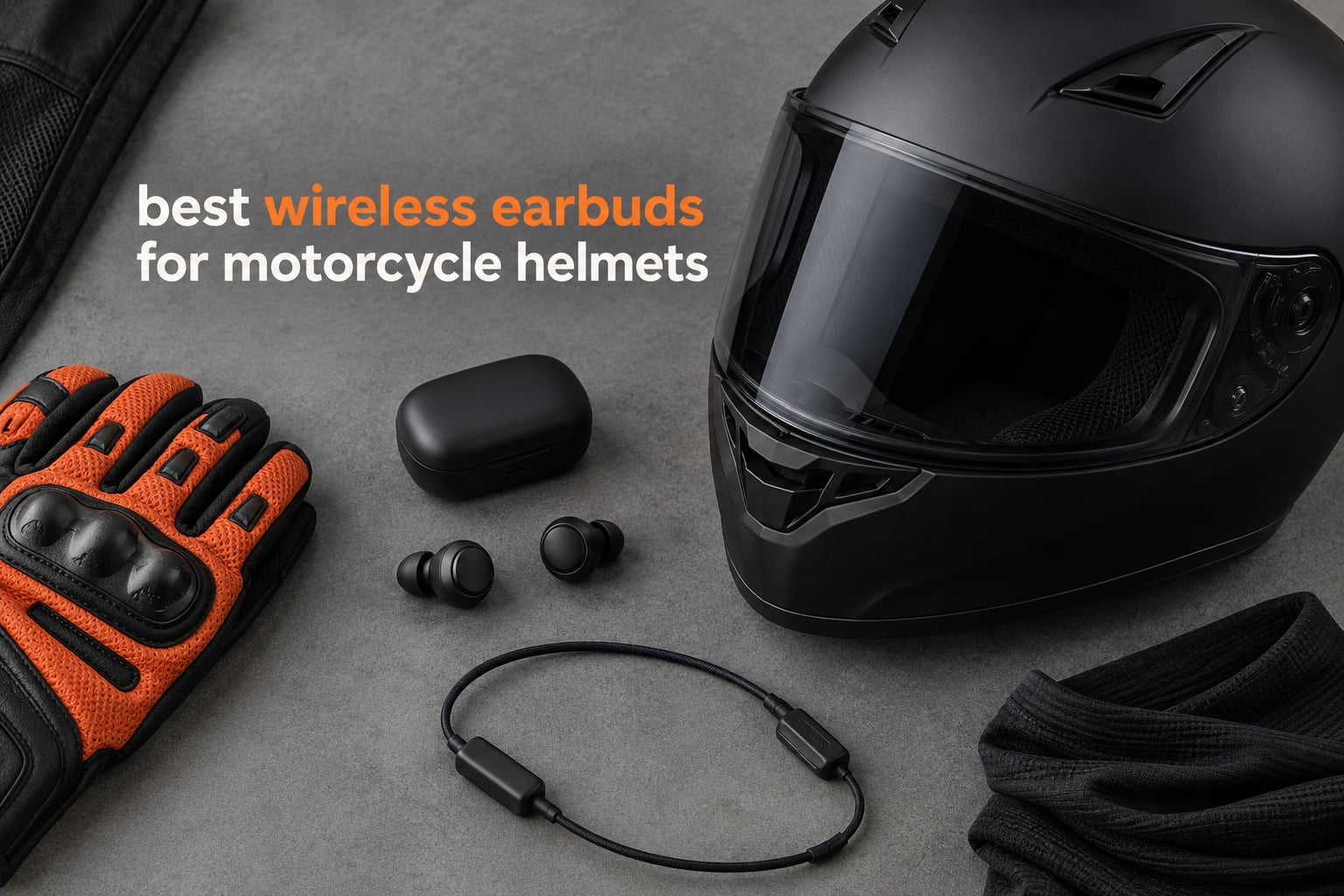
The best wireless earbuds for motorcycle helmets are low-profile earplug-form models that sit flush inside your ear concha, block wind and engine noise passively, and carry an IP rating high enough for sweat and rain. Standard stemmed earbuds from a phone maker are the wrong shape for a helmet: the stem presses into cheek padding and turns into a pressure point after 30 minutes. What you want instead is a corded or true wireless earplug with a deep silicone or foam seal, physical buttons, and no active noise cancellation cranked to maximum.
I have spent the last two seasons logging commute, highway and back-road miles with this category, and the pattern is consistent. The earbuds that survive a season are rarely the ones with the best spec sheet. They are the ones that block the most wind, sit deep enough not to shift when you pull the helmet on, and have a control you can find through a leather glove without taking your hand off the bar.
That is why every product in this list of 12 is an earplug-form or ultra-low-profile design rather than a conventional true wireless stick. Nine of the 12 carry a certified noise reduction rating, which matters more on a motorcycle than it does anywhere else. If you want a broader view of the category first, our guides to the best wireless earbuds overall and the best budget wireless earbuds give you the general baseline before you commit to a helmet-specific shape.
Below you will find the top three picks, a full comparison of all 12, individual reviews, a buying guide that covers fit, wind noise, battery, water resistance, controls and connectivity, and a safety section worth reading before your first ride.
Top 3 Picks for Motorcycle Helmets in October 2026

MIPEACE Bluetooth Earplug Headphones
- › 29dB passive noise isolation
- › IPX6 sweat and rain resistance
- › 20+ hour battery
- › 30g neckband

Elgin Ruckus Wireless Earplugs
- › 25dB NRR OSHA compliant
- › IP65 rated
- › 12+ hour battery
- › Bluetooth 5.3
My first choice is the MIPEACE Bluetooth earplug set, because 29dB of passive isolation plus a 20-hour battery covers a full touring day without a case and the neckband disappears under a collar or liner. The Elgin Ruckus is the value pick for riders who want a certified NRR in a genuinely tiny housing. The HomeSpot set wins on controls: its push buttons are the easiest in this group to find by feel through a gauntlet.
All 12 Picks Compared in October 2026
| PRODUCT MODEL | KEY SPECS | BEST PRICE |
|---|---|---|
|
|
Check Latest Price |
|
|
Check Latest Price |
 |
|
Check Latest Price |
 |
|
Check Latest Price |
 |
|
Check Latest Price |
 |
|
Check Latest Price |
 |
|
Check Latest Price |
 |
|
Check Latest Price |
 |
|
Check Latest Price |
 |
|
Check Latest Price |
 |
|
Check Latest Price |
 |
|
Check Latest Price |
Two things stand out in that table. Every option here is a sealed in-ear or ear-hook design rather than an open-ear hook, which is the correct choice for a motorcycle because wind noise at speed is destructive to unprotected hearing. And the certified noise reduction ratings run from 25dB to 31dB NRR, a range wide enough that a rider who spends real time on the highway should lean toward the higher end.
The Fit Test: Why Retention Beats Sound Quality Under a Helmet
Earbuds fall out of your ears in a helmet for one reason, and it is not ear canal size. Pulling the helmet on compresses the cheek padding inward and upward across the ear pocket, and pulling it off does the same thing in reverse. Anything sitting in that pocket that is not locked in place gets squeezed out on one of those two movements. Riders on r/motorcycles describe the same pattern over and over: fine for a solo lap, gone after the first fuel stop.
Three retention features solve it. A deep silicone or foam tip fills the concha so compression pushes the tip tighter rather than pushing the bud out. A cord with a shirt or liner clip anchors the assembly to your body so the pull comes from the cable instead of the ear canal. A silicone wing or over-ear hook spreads that force across the cartilage ridge of your ear, which is far stronger than the canal wall.
Test retention before you buy with the shake test. Seat the earplug, put your helmet on, then take it off and put it on again five times. If you have to reseat the bud even once, it is not going to work in traffic. The cone test checks depth: slide a closed finger into your ear pocket with the helmet on, and you should be able to close your hand without the bud shifting. If your helmet has a very tight cheek pad, add a shallow foam tip rather than pushing a deep silicone one harder.
Helmet type changes the answer more than most roundups admit. A full-face helmet gives you a sealed ear pocket and the least wind intrusion of any style. A modular or flip-up helmet opens at the chin, so wind reaches your ears at the jaw line and you gain noticeably more noise. An open-face helmet exposes the ear pocket to the full airstream, which is where passive isolation earns its rating. Dirt and adventure helmets are usually open-face, and the extra exposure is why so many ADV riders end up buying a second pair with deeper tips.
1. MIPEACE Bluetooth Earplug Headphones: Best Overall for Helmets
MIPEACE Bluetooth Earplug Headphones, Neckband Wireless Earbuds earplugs-29db Noise Reduction isolating in-Ear earplug Earphones and Controls,IPX6 sweatproof,20+Hour Battery(Blue)
29dB passive noise isolation
IPX6 sweat and rain rated
20+ hour battery
30g silicone neckband
+ The Good
- Strong passive isolation against wind and engine noise
- Comfortable for full-day wear under a full-face helmet
- 20+ hours per charge covers multi-day touring
- Lightweight 30g neckband hides under a collar
- Semi-hard carrying case included
- The Bad
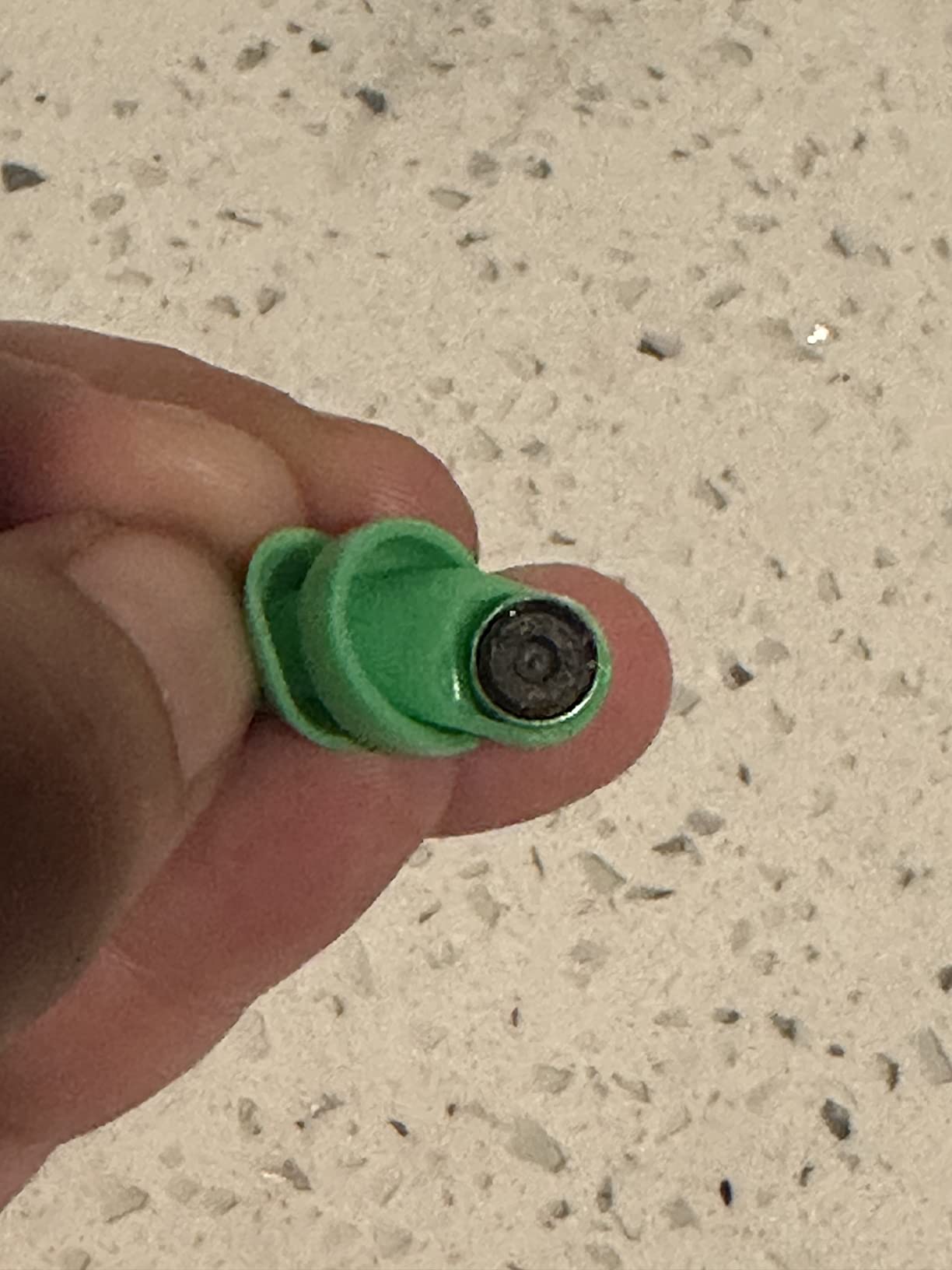
- Silicone tips are permanently attached
- Occasional one-side dropouts reported after months
- Older versions pair slowly
This is the pair I keep on the bike between rides. The MI04 model uses a 30g silicone neckband with flexible joints, so the whole thing weighs 1.12 ounces including the earplugs. On a highway run the 29dB passive isolation does most of the work: the engine note and wind thin out enough that I can hold a normal conversation volume rather than pushing the volume until my ears ache afterward.
Battery life is the standout number here. Twenty-plus hours of continuous playtime from a three-hour charge means I have never once topped it up mid-trip, which is not true of most of the true wireless sets in this group. Bluetooth 5.4 with 20 meters of listed range connects faster than the older 5.0 sets I used before, and the inline controls sit low enough on the neckband to reach under a collar.
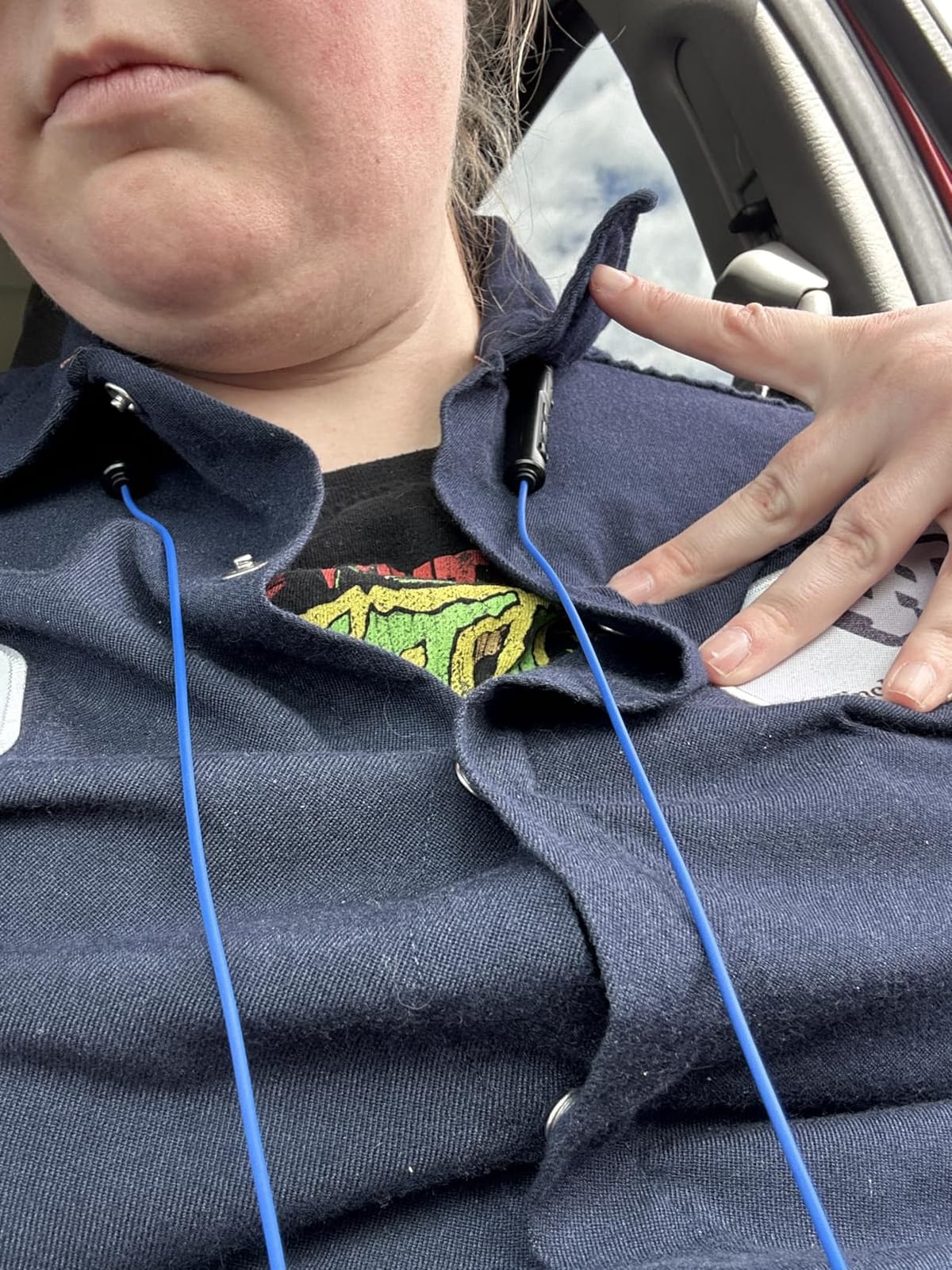
Buyers note the isolation is the standout feature repeatedly, especially on two-wheelers, where road roar and engine harmonics are the two things you most want removed. The 66-foot listed range is more than enough for a phone in a tank bag or a phone mount on the bars. The dynamic driver keeps vocals forward, which is what you want when a navigation prompt cuts through music.
The weaknesses are durability details rather than ride-breaking flaws. The silicone tips are molded onto the earplugs, so a torn tip cannot be swapped. Phone battery percentage reading is reported as unreliable, so judge the charge by earbud behaviour rather than the meter. A few owners on older versions report a slow first pairing.
Who it suits
This suits riders who want a single pair for commuting and multi-day touring without thinking about a charging case. A 20-hour battery covers a long weekend of riding, and the isolation rating is high enough for highway speeds. Riders on an open-face or dual-sport helmet get the most benefit because that style lets the most wind reach your ears.
It is also the safest first purchase for anyone who rides in rain or summer humidity, because IPX6 covers sweat and rain. Riders who dislike a cord around their neck should look at the ISOtunes Free 2.0 further down instead.
Where it falls short
Replaceable tips would extend the life of this set considerably, and their absence is the most common complaint in the reviews. If you have very small ear canals, the fixed oval tip may seal shallowly and lose some of the 29dB figure.
The neckband cable is the part to watch over a long ownership cycle. One-side dropouts show up in reviews after months of use, so if a unit starts cutting out on one channel, treat it as an early failure signal rather than a software glitch. The single year warranty is short compared with the five years offered on the Otium set.
2. Elgin Ruckus Wireless Earplug Headphones: Best Value Certification
Elgin Ruckus Wireless Bluetooth Earplug Headphones, Noise Canceling Mic
25dB NRR OSHA compliant
Bluetooth 5.3 with 50ft range
12+ hour battery
8mm dynamic driver
+ The Good
- Very low profile housing that stays put under a helmet
- Effective at cutting wind and road noise
- Tough build that survives daily use
- Clear calls in noisy settings
- Clip keeps the cable from shifting the buds
- The Bad
- Battery life degrades after several months
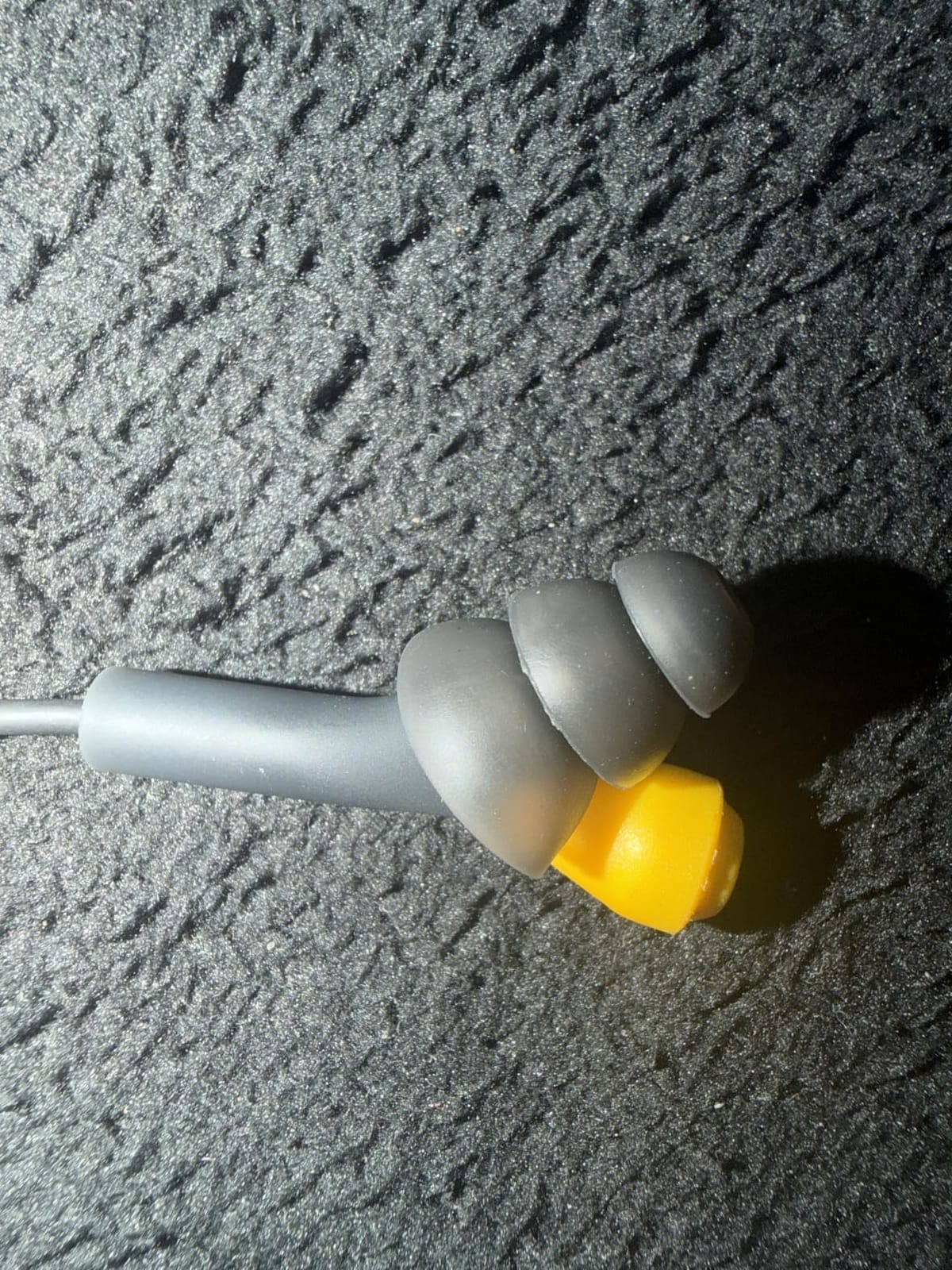
- Ear tips are not easily interchangeable
- Deep insertion needs care and can squeal
The Ruckus has one of the smallest housings in this group, which is exactly what a tight full-face helmet liner wants. At 1 ounce for the set and a carrying case of 3 by 3 by 1 inches, it disappears into a tank bag without taking up the space a charging case needs. Riders report it holding position through helmet on-and-off cycles better than most generic sport earbuds of similar size.
Sound isolation is the second reason to like it. The 25dB NRR is ANSI certified and OSHA compliant, so this is a legitimate hearing protection device rather than a marketing claim, and the noise-cancelling microphone handles calls at speed better than the average budget set. Bluetooth 5.3 with 50 feet of range is a sensible amount of reach for a phone in a pocket or on a bar mount.

Twelve-plus hours of playback covers a working day comfortably, and the Kevlar-reinforced cabling with a retention clip is a smart detail in a helmet where cable snag is a real risk. The soft medical-grade silicone tips sit without pushing on the canal, so the seal comes from depth rather than force.
Reviewers who use this set for riding consistently praise the wind blocking. Insertion does require a steady twisting motion to get a proper seal, and getting it right matters more than it might seem, because a shallow fit loses much of the certified reduction. Volume is not the strong suit; the signature is bass-weighted with less clarity in the high frequencies than a mid-tier music set would give you.
Who it suits
This is the pick for a rider with a tight full-face or modular helmet who needs certified hearing protection in the smallest possible package. It works well for anyone riding in an urban commute where a moderate NRR is enough, and the one-year limited warranty means it is an easy first purchase to make on a budget.
Riders who take calls on the road will appreciate the noise-cancelling microphone. The retention clip on the cable is worth using, because it takes the tug out of every helmet movement.
Where it falls short
Battery degradation is the recurring complaint, with owners reporting noticeably shorter runtime after a few months of daily use. Plan on topping up before a long trip rather than trusting a full charge from months ago.
The non-interchangeable tips are a bigger issue here than elsewhere because the seal is what delivers the certified rating. If you want to swap tip sizes as your fit changes through the season, the Elgin Discord Gen 3 further down is the version built for that. Budget for a replacement unit rather than repairs if a channel starts cutting out.
3. HomeSpot Bluetooth Work Headphones 27dB NRR: Best Physical Controls
HomeSpot Bluetooth Work Headphones, OSHA-Compliant, 27dB NRR, 24H Playtime
27dB NRR OSHA compliant
100ft Bluetooth 5.4 range
Push button controls
24 hour playback
+ The Good
- Physical buttons work without looking down
- Triple-flange tips create a strong isolating seal
- 100ft range suits open riding environments
- 24 hour battery covers long days
- Lightweight neckband keeps buds from being lost
- The Bad
- Not water or sweat resistant
- Neckband adds bulk under a tight liner
- aptX HD only on compatible source devices
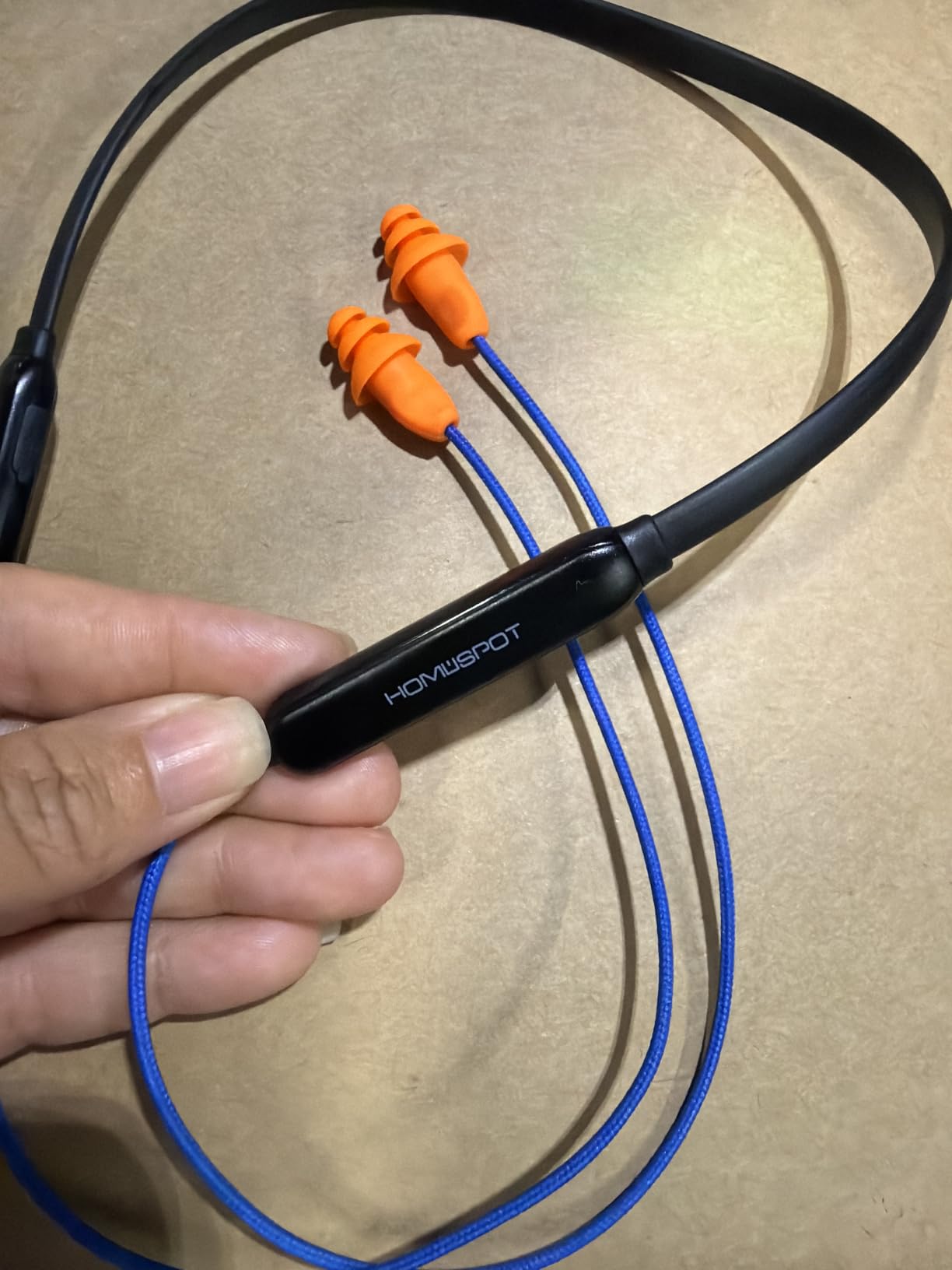
The HomeSpot set wins on the single detail that separates good helmet earbuds from great ones: real buttons. A raised push button is findable through a glove, gives audible feedback, and does not depend on a capacitive touch surface that your glove would simply ignore. For a rider who adjusts volume at a stoplight or answers a call mid-route, that is worth more than a better driver.
Noise reduction is certified at 27dB NRR and OSHA compliant, which puts it near the top of this group. The triple-flange silicone tips are the reason: three flanges fill the concha and stop the tip from shifting when cheek padding pushes inward. Bluetooth 5.4 with up to 100 feet of range in open areas is the longest listed range of the earplug sets here, and 24 hours of playback covers several riding days.
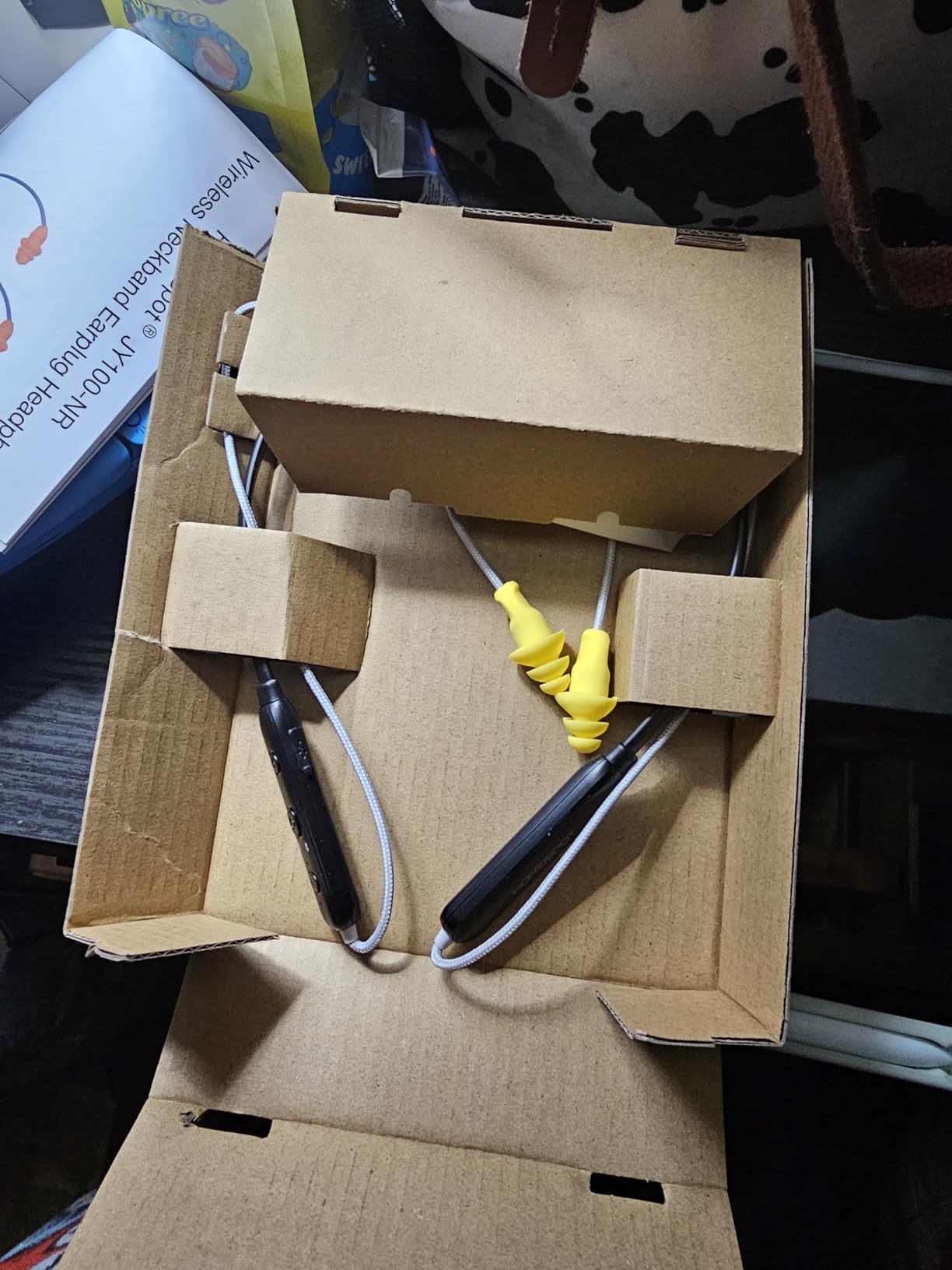
aptX HD support is listed, and it makes a real difference on a compatible phone, though that is a device question rather than a helmet question. The CVC noise-reducing microphone is adequate for a call at a stop, less so at 60 miles an hour. A one-year warranty and a protective case with spare earplugs round out a package that feels complete.
The 100-foot range is the quietly useful spec. It means you can leave a phone in a saddlebag or a top box on a longer route and still keep audio, which matters on a long highway day when your phone is buried and you do not want to stop.
Who it suits
Pick this set if you ride in armored gloves most of the time. Glove-friendly controls are rare in this category, and this is one of the few pairs here where every function can be triggered without removing a hand from the grip or removing a glove.
It is also a strong choice for long open-country routes where 100 feet of range keeps you connected to a phone stowed away from the bars. A commuting rider who wants certified protection without a charging case will find 24 hours easy to live with.
Where it falls short
There is no water resistance rating, and that is a real limitation for summer commuting or wet-weather riding. Sweat and rain will shorten the life of this pair relative to the IPX6 and IPX7 options in this list.
The neckband is bulkier than the fixed-tip models, and owners specifically flag it under a tight helmet liner. If your full-face helmet has a narrow ear pocket, the HomeSpot may feel crowded where a smaller set like the Elgin Ruckus disappears. aptX HD also does nothing on an older phone, so treat it as a bonus rather than a reason.
4. Plugfones Basic Pro Bluetooth Earplug Headphones: Best Discreet Fit
Plugfones Basic Pro Bluetooth Earplug Headphones for Work, OSHA Compliant
25dB NRR ANSI tested
Bluetooth 5.0
SoundSeal suppression
10 hour battery with quick charge
+ The Good
- Discreet earplug styling that vanishes under a helmet
- SoundSeal tips block road and wind noise
- QuickDraw inline controls easy to reach while riding
- Long cord with clip prevents tug and loss
- Multiple ear tip sizes included
- The Bad
- Only 10 hours of battery
- Short range compared with modern sets
- Sound lacks deep bass
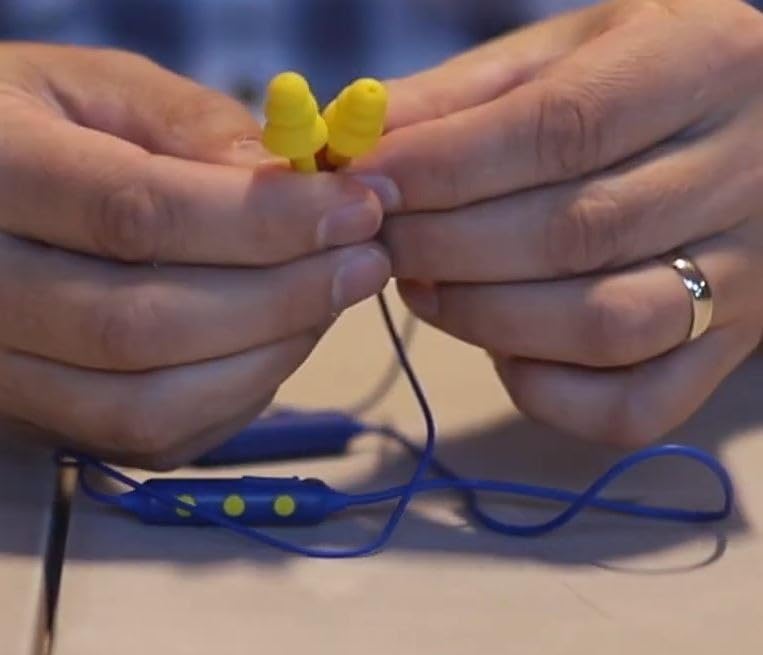
The Basic Pro solves a problem the sport earbuds cannot: looking like you are not wearing earbuds at all. There is no stem, no hook, no bud visible above the concha, so it disappears completely under a full-face cheek pad or a half helmet strap. Riders who care about the discreet look, particularly on dirt bikes and open-face helmets, will find almost nothing else in this category that looks this clean.
SoundSeal noise suppression is the mechanism behind the 25dB ANSI-tested NRR, and it works because the tips are shaped to fill the canal rather than sit in it. The 180-day no-hassle warranty is short but simple. Multiple ear tip sizes ship in the box, which matters because a proper seal is what delivers the certified reduction.
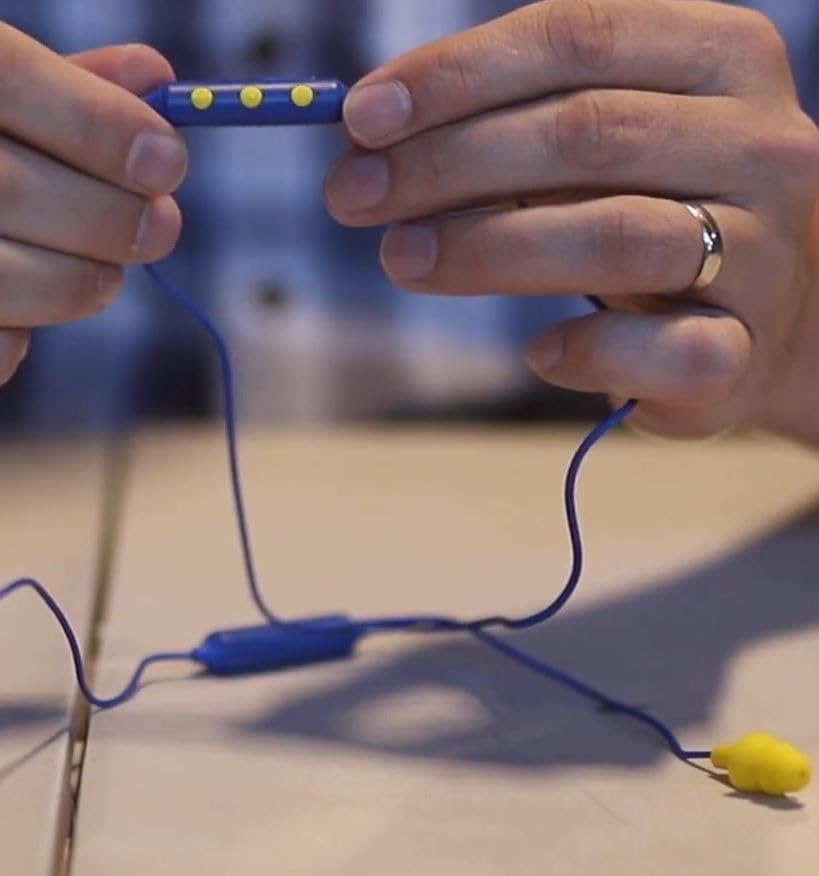
Inline QuickDraw controls sit on the cable where you can find them by touch with a glove on, and the IsoTalk noise-reducing microphone with an adjustable shirt clip handles calls better than the average in-ear at speed. Bluetooth 5.0 and 10 meters of listed range are the most dated numbers in this group, but the connection is stable once paired.
Battery life is 10 hours with a full recharge in 90 minutes through QuickCharge. That covers most commuting riders easily, and a long touring day needs a mid-day top-up or a power bank in the tank bag. The sound profile is functional: fine for navigation prompts and talk radio, less rewarding for music listening.
Who it suits
This is the best choice for open-face and modular riders who want a pair nobody notices. The profile is entirely inside the ear, so nothing catches a helmet strap or an ear brace, and the cord clip tucks under a collar where it stays put.
Short-to-medium commuting days suit it well, since ten hours covers a full week of riding before a charge. The bundled tip sizes make it forgiving if your canal size is between standard sizes.
Where it falls short
Ten hours of battery is the main limitation for touring riders, and it is the reason the Liberate 2.0 exists. The 10-meter Bluetooth range is also short, so a phone stowed in a top box will drop out.
Sound lacks deep bass compared with premium music earbuds, which is a fair trade for isolation but disappointing if your riding is mostly audiobooks and podcasts on a twisty road. The 180-day warranty is the shortest here, so check the return window when you buy.
5. ISOtunes Free 2.0: Best True Wireless Hearing Protection
ISOtunes Free 2.0 Bluetooth Hearing Protection, OSHA Compliant Work Earbuds
ANSI certified 25dB NRR
85dB SafeMax volume limit
True wireless cordless
IP45 sweat and dust rated
+ The Good
- Truly wireless form removes any cable snag in a helmet
- Small and light so buds sit deep in the ear pocket
- Noise-suppressing microphones for clear calls
- Charging case extends total runtime
- Multiple foam and silicone tip sizes included
- The Bad
- Only 7 hours per charge
- Charging case is bulky for a helmet pocket
- Audio is functional rather than detailed
Everything else in this list is corded, and that is the whole pitch of the Free 2.0. There is no cable to snag on a helmet liner, no neckband to sit awkwardly against a collarbone, and no single-bud failure that ends your ride. If you have ever had a cable tug a bud out mid-corner, this is the direct answer to that problem.
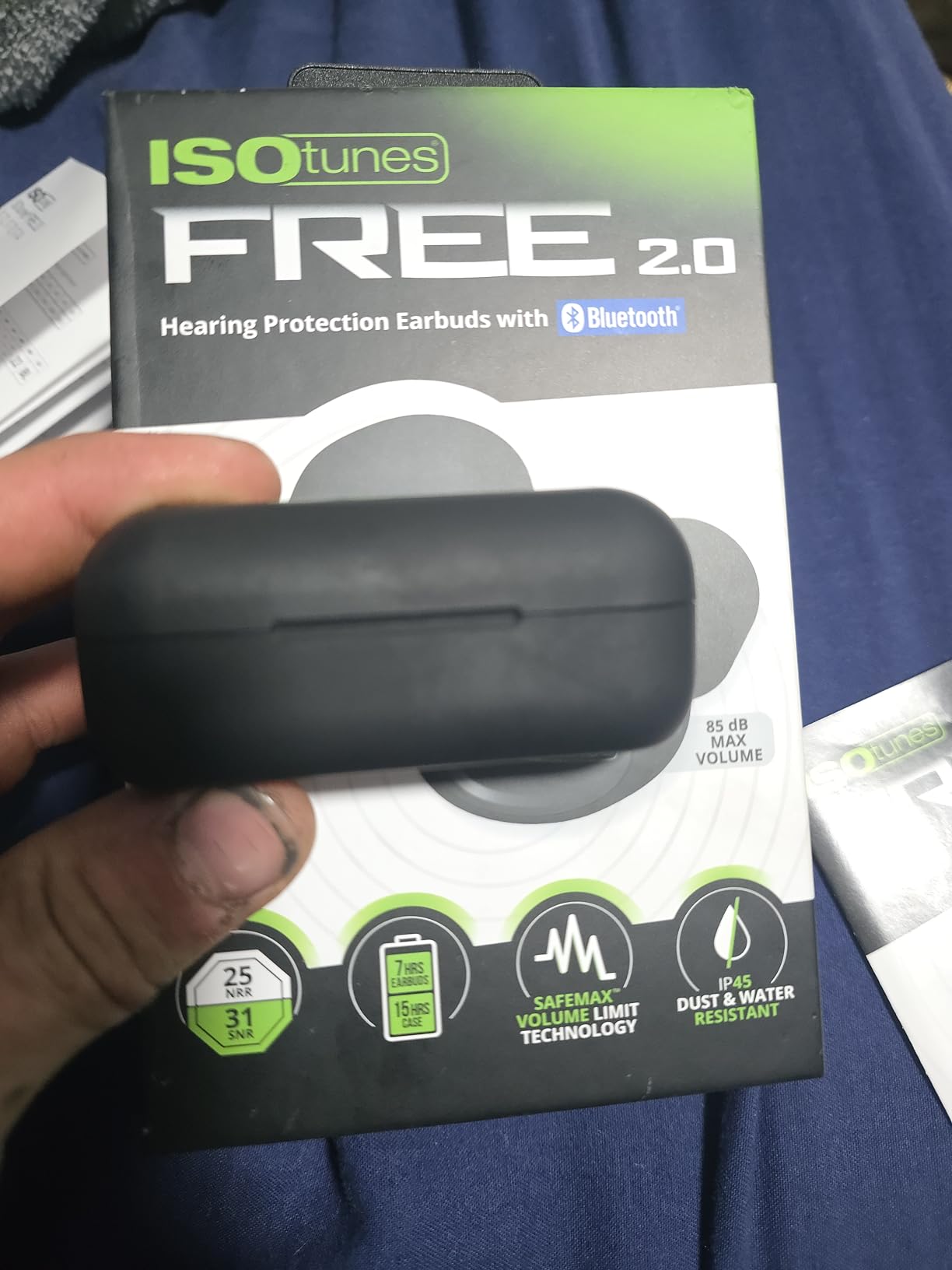
It also carries genuine certified protection: ANSI-certified 25dB NRR with an 85dB SafeMax audio limit built in. That limit is the most rider-relevant feature in this entire roundup. It caps how loud the earbuds can go, which means a distracted tap cannot push a siren or a horn out of your hearing the way an uncapped earbud can.
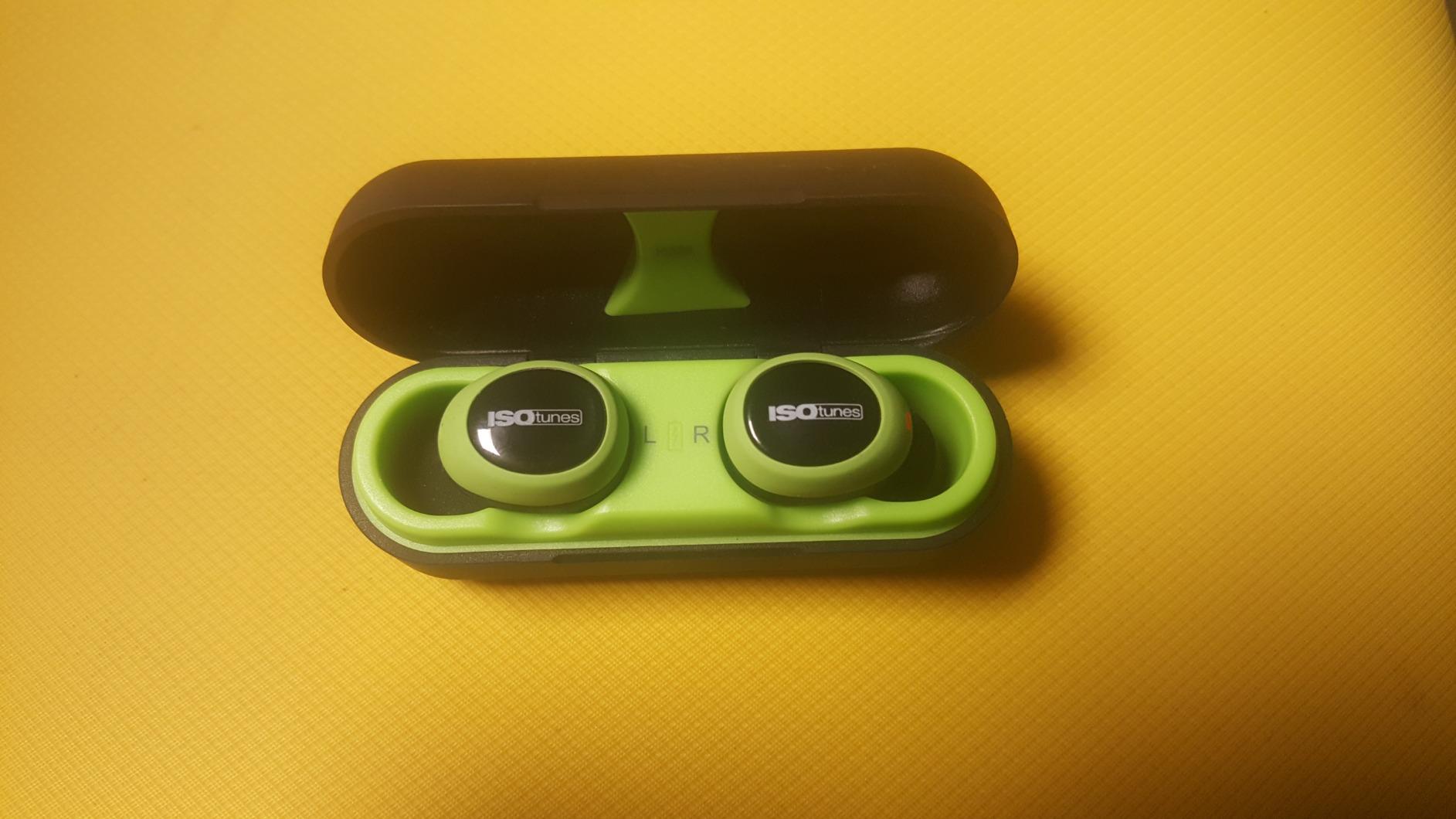
The housing is genuinely small, weighing 100g for the full set, so the buds sit in the ear pocket rather than pushing against it. Bluetooth 5.2 with 10 meters of range is adequate for a phone on the bars. Multiple foam and silicone tip sizes ship in the box, and getting the foam seal right is what unlocks the certified rating.
Battery is the weak point, at 7 hours of continuous play per charge, the shortest per-charge figure in this group. The case adds 14 hours, so a full day is realistic, but a long highway stretch means the case has to come with you. A one-year manufacturer warranty applies.
Who it suits
Choose this if you ride without a neckband under your collar. Dirt bike and adventure riders in particular tend to move around a lot in the saddle, and a cordless pair cannot snag, cannot tangle, and cannot be pulled out by a jacket zip.
The 85dB SafeMax limit is the reason to pick it over every other option if you are strict about protecting your hearing. Pair it with a foam tip and you have certified protection in a genuinely cordless form.
Where it falls short
Seven hours per charge is not enough for a full day of highway riding without the case, and a case in a tank bag or helmet pocket is bulk most riders forget. On a weekend trip, charge it every night.
Audio quality is functional rather than detailed, which is fine for GPS prompts and podcasts and underwhelming for music. The charging case adds bulk compared with the corded sets, and the 6mm driver is small by design. If you want both cordless freedom and long runtime in one product, this is currently the trade you have to make.
6. Plugfones Liberate 2.0: Best for Swappable Ear Tips
Plugfones Liberate 2.0 Bluetooth Earplug Headphones, OSHA Earbuds, Black
29dB NRR foam fit or 27dB silicone
Bluetooth 5.0
12 hour battery with quick charge
4 pairs of ComforTwist tips
+ The Good
- Riders report strong wind and road noise reduction at speed
- Holds position under full-face and half helmets
- Cord design means no individual bud is lost
- Foam tips deliver the highest noise reduction
- Buttons easy to find by feel
- The Bad
- Tips can get uncomfortable after about 30 minutes
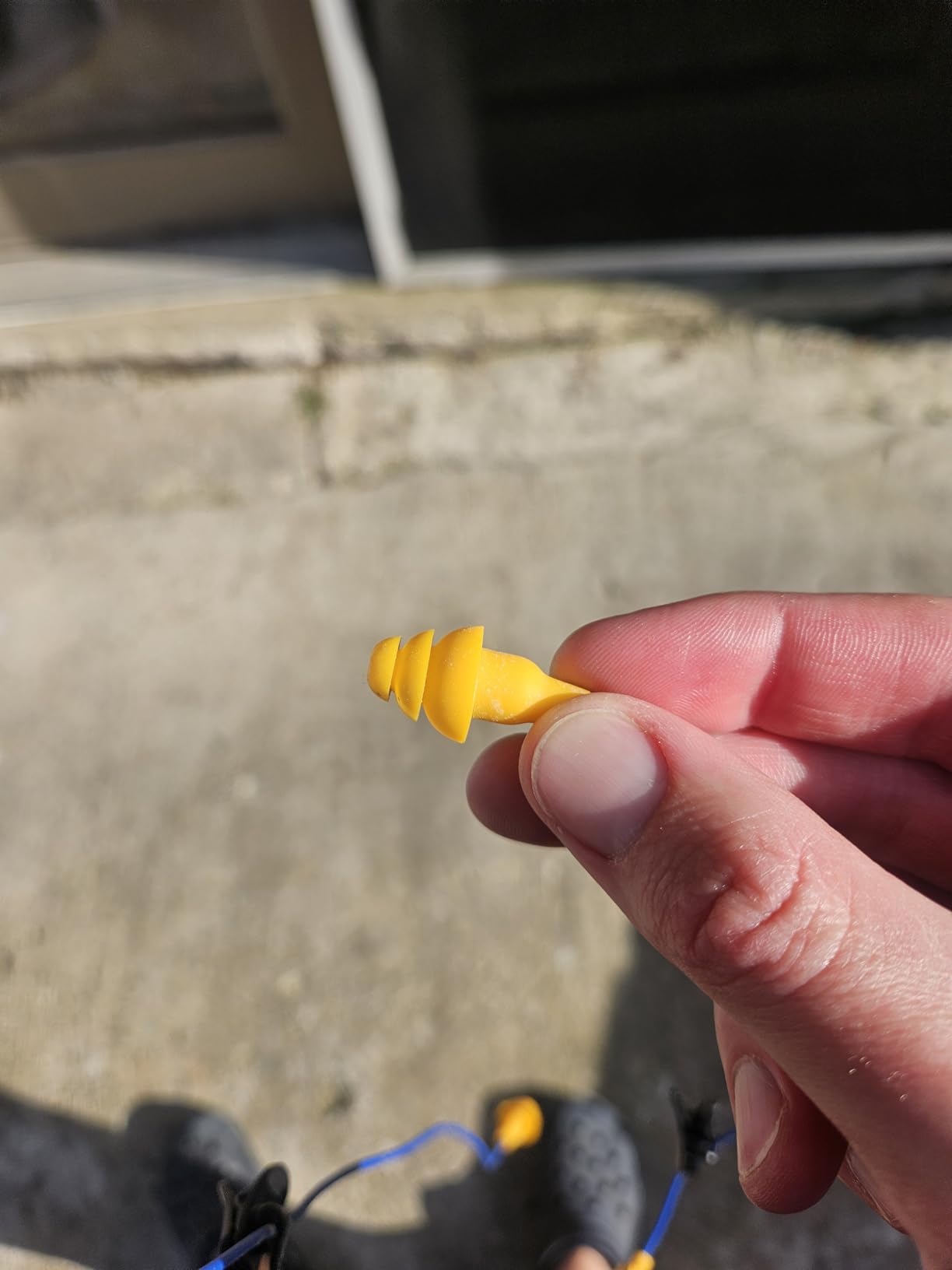
- Foam tips wear out and can break apart
- Does not auto-connect and needs manual re-pairing
The Liberate 2.0 is the version of this category that riders name most often in forum threads about helmet earbuds, and the reason is the tip system. Four pairs of interchangeable ComforTwist ear plugs ship in the box, so you can move between a foam fit and a silicone fit depending on the helmet, the weather, and how long the ride is. The foam fit is certified at 29dB NRR and the silicone at 27dB, both ANSI S3.19 tested and OSHA compliant.
That flexibility solves a problem the fixed-tip sets create. Foam gives you more reduction and better wind rejection but a deeper, firmer feel. Silicone is gentler for long sessions and easier to insert quickly at a fuel stop. Being able to switch is more useful than any single spec in this list.
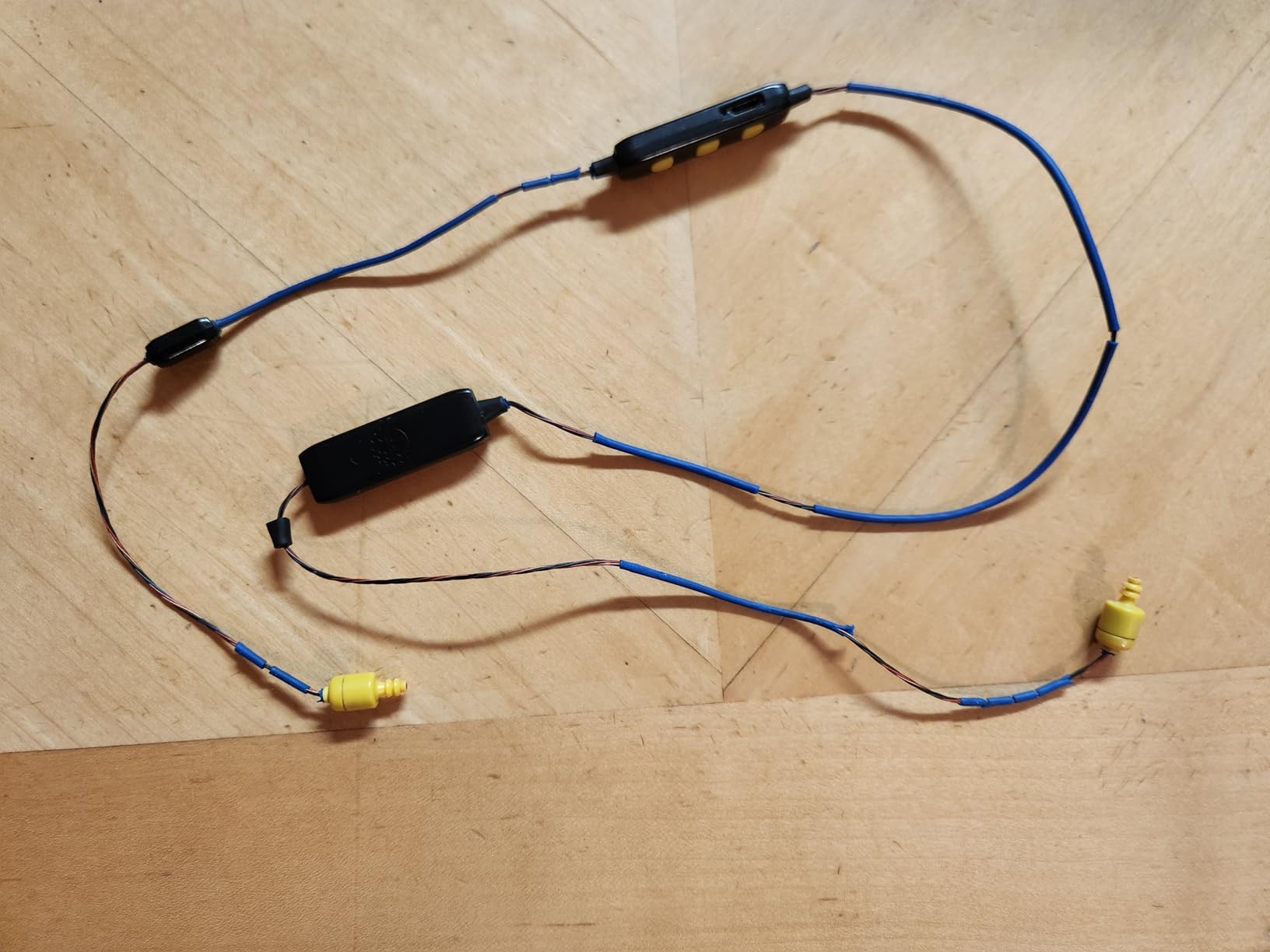
Twelve hours of battery is the best runtime of the corded earplug sets here, and a 10-minute fast charge adds two more hours, which is genuinely useful on a lunch stop. The QuickDraw inline buttons are findable by touch, and the IsoTalk noise-isolating microphone handles a call at road speed better than most competitors. Bluetooth 5.0 with 90 meters of listed range gives you far more slack than the Basic Pro.
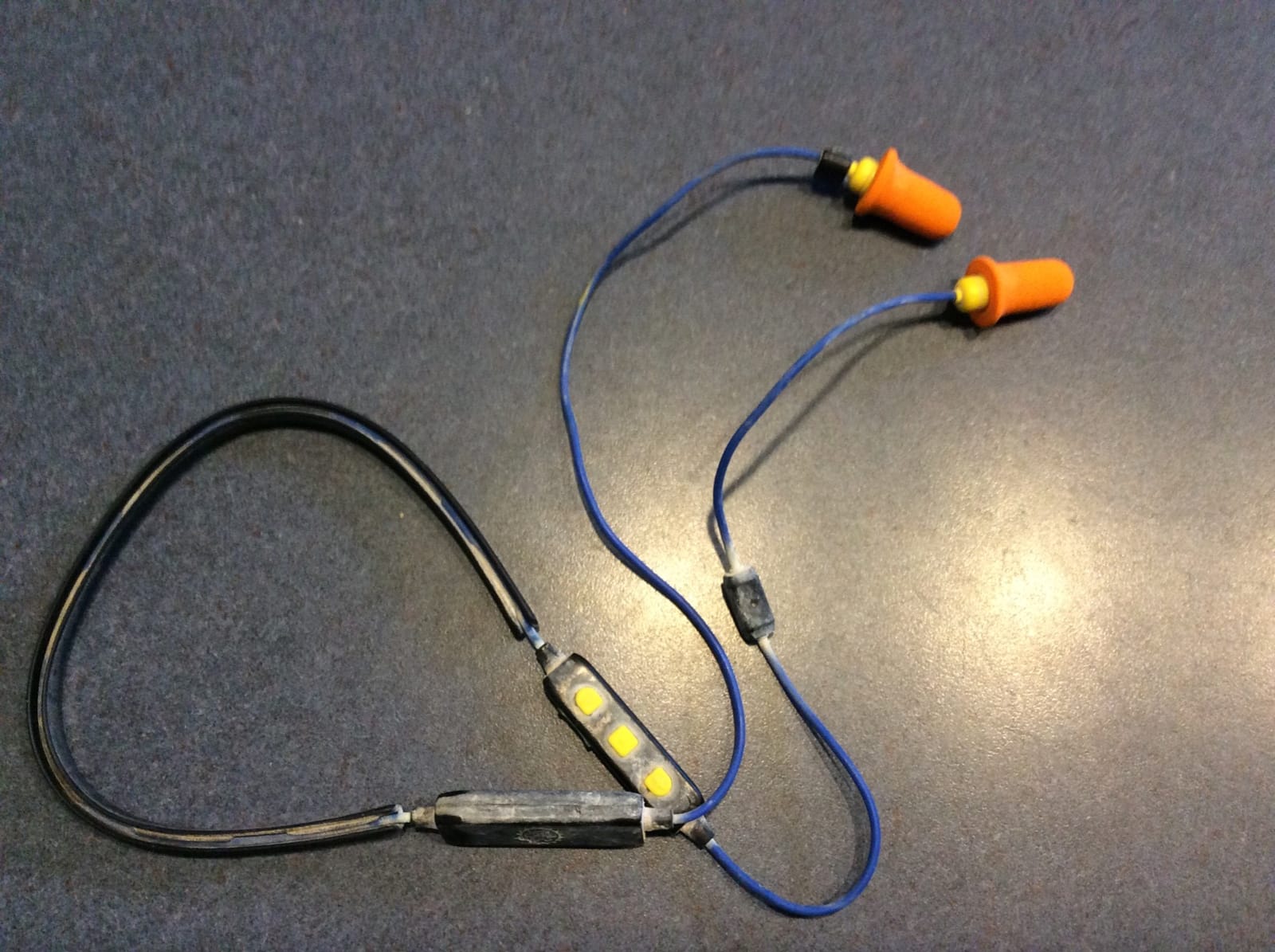
Build quality is where to be careful. Several owners describe the cord cracking near the earpiece after extended use, and the wire is stressed when the tips are pushed deep for a proper seal. A nylon zipper case and cable management clip are included, which is more than most competitors ship.
Who it suits
This suits riders who do long distances in changing conditions, where a foam tip in the morning and a silicone tip in the evening is a genuine comfort improvement. It is also the strongest choice if you cycle through tip sizes or wear inserts, since nothing is molded on.
Twelve hours means most touring days finish without a recharge. The cord is a real advantage too, because a failed cord never leaves you with one earbud and no audio on the other.
Where it falls short
Foam tips wear out, degrade, and can eventually break apart, so expect to replace them. Riders also report the tips becoming uncomfortable after roughly half an hour of continuous wear, which is the trade for the deeper isolation.
The most frustrating issue is pairing. This set does not auto-connect to a phone, and owners frequently describe needing to re-pair manually after a restart. If you ride with your phone in a top box, the 90-meter listed range is more than sufficient, but the reconnection habit is annoying. Budget for a spare set of tips and a careful charge cable, since a cracked cord near the earpiece is the most common long-term failure.
7. DEWALT Jobsite Pro X2: Best for Glove-Friendly Controls
DEWALT Jobsite Pro X2 True Wireless Work Earbuds — ANC Active Noise Cancelling, Glove-Friendly Dial Control, 40+ Hour Runtime, IP54 Water Resistant, 4 EQ Modes, Bluetooth
Active noise cancelling with wear detection
Glove-friendly turn dial
IP54 sweat rain and dust rated
40+ hour total runtime
+ The Good
- ANC reduces engine and road noise effectively
- Turn-dial control usable with gloved hands and findable by feel
- No cord to snag in a helmet liner
- IP54 build handles sweat and dust
- Long total runtime with the case
- The Bad
- Bulky in-ear profile can feel tight in some ear pockets
- Higher cost than earplug-style alternatives
- Fewer customer reviews than the rest of this lineup
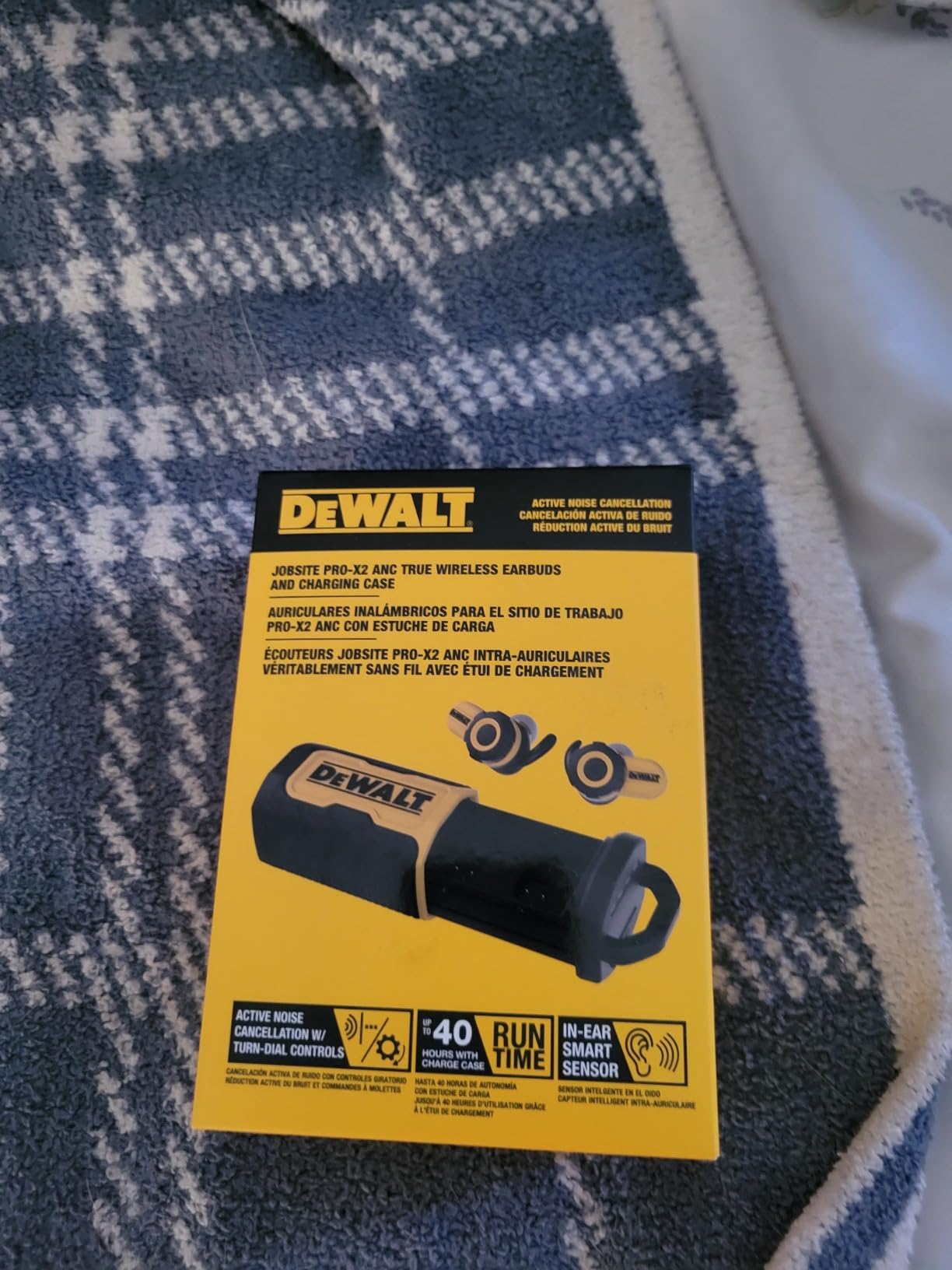
The Pro X2 is the only true wireless set in this roundup with a mechanical volume control, and that is the feature that decides it for gloved riders. A turn dial can be located and rotated through a leather glove in a way no touch surface can. On a motorcycle, where you should not be looking down, a control you can find blind is worth more than a better microphone or a nicer EQ.
It is also the one product here that combines true wireless convenience with a real IP rating for the conditions. IP54 covers sweat, light rain, and jobsite dust, and in-ear sensors auto-pause when you remove a bud, which is a good way to answer a passenger without fumbling. Four EQ modes let you shift between bass-heavy, call-optimised, vocal-boosted, and custom.
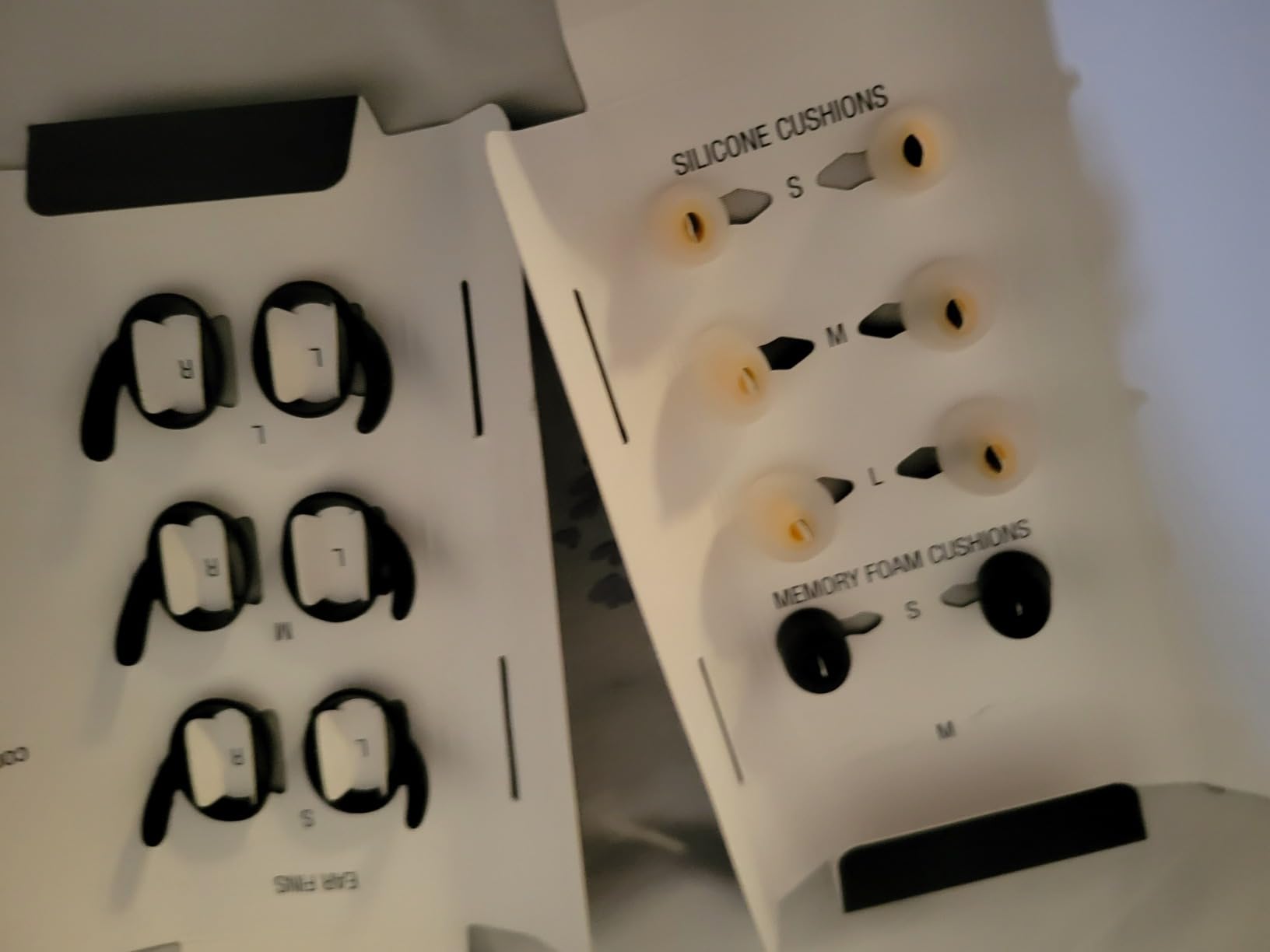
Total runtime runs past 40 hours with the charging case, so battery stops being a factor. The balanced armature driver handles music and podcasts cleanly. It ships with multiple ear tip sizes for a secure fit, and a limited lifetime warranty is the strongest warranty commitment anywhere in this list.
Now the caution. Active noise cancellation is a genuine safety consideration on two wheels, because it attenuates the frequencies that tell you something is happening around you. The sensible use is to run it in a low or adaptive setting, not to seal yourself off. The wear-detection sensors help, since removing a bud to listen is instant and reversible.
Who it suits
This is for the rider who wants no cable, a dial instead of guesswork, and a warranty that will outlast the bike. Riders in full gauntlets who adjust volume often get more from this dial than from any audio upgrade available here.
It also suits anyone whose priority is hearing conservation in noisy environments, because the ANC layer sits under a build rated for sweat, rain, and dust. The case makes it practical for a week of commuting without charging nightly.
Where it falls short
The in-ear profile is bulkier than the corded earplug sets, and owners report it feeling tight in some helmet ear pockets. Test the fit with your own helmet on if you can, because the Pro X2 trades size for features and that trade is not always the right one in a full-face liner.
The ANC needs thought, not maxing out, for the reasons above. The review base is also the thinnest of the earplug and sport sets here, so long-term durability reports are limited. It costs more than the corded alternatives, which is a fair price for the dial and the warranty if you use gloves.
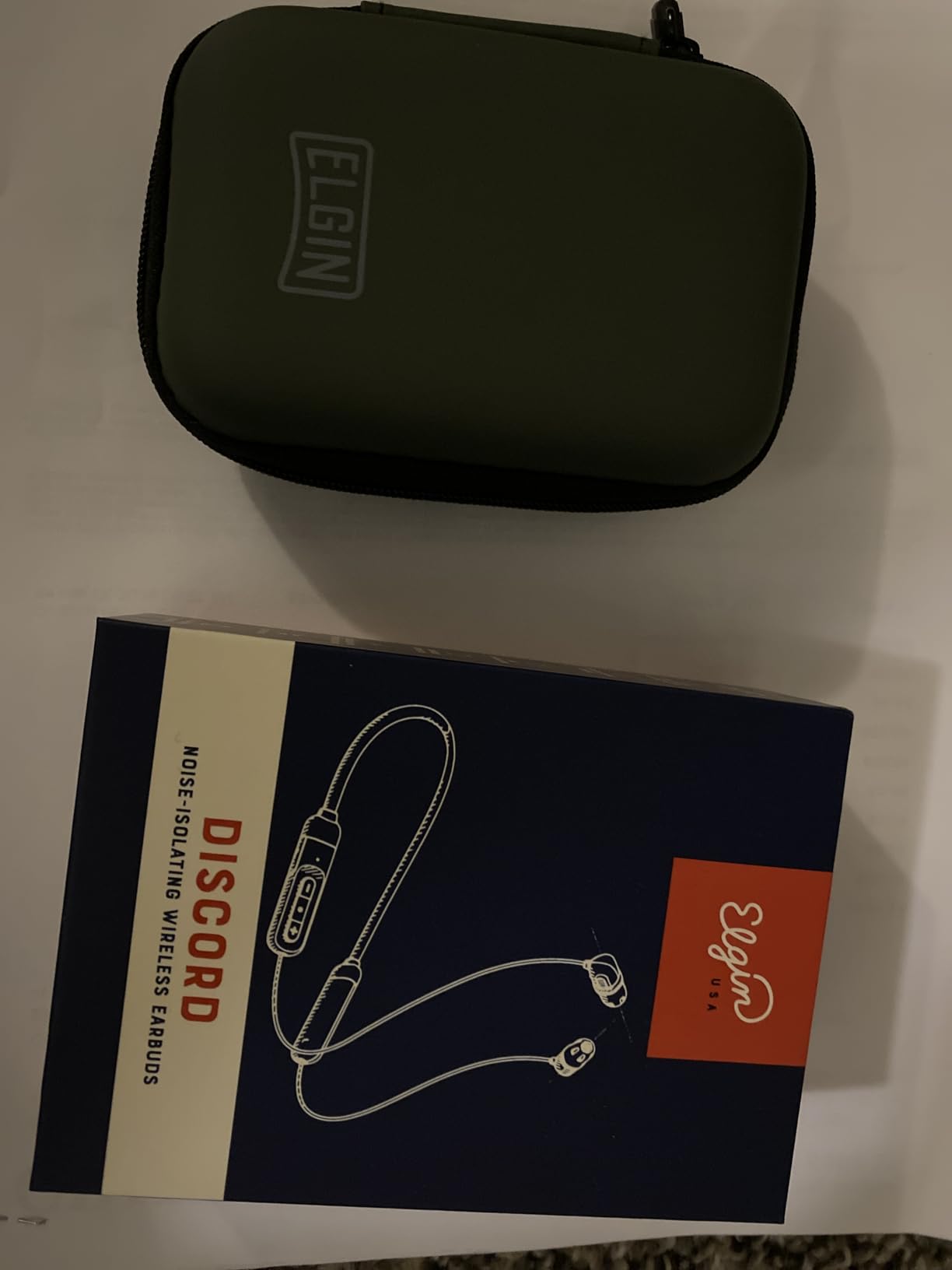
8. Elgin Discord Gen 3: Highest Certified NRR at 31dB
Elgin Discord Gen 3 Bluetooth Earplug Earbuds, Wireless in-Ear Headphones
ANSI certified 31dB NRR
14 hour battery
Replaceable foam and silicone tips
Bluetooth 5.3 with 50ft range
+ The Good
- Highest certified noise reduction in this group
- Replaceable foam and silicone tips solve a hygiene problem
- Magnetic buds snap together so nothing is lost
- 14 hour battery covers a full day
- Listed compatible with motorcycles and laptops
- The Bad
- Magnetic neckband adds bulk under a tight liner
- Foam tips can seat deeper than expected
- Costs more than entry earplug sets
The Discord Gen 3 carries the highest certified noise reduction in this roundup at 31dB NRR, and for a rider who spends real time at highway speed that number is the whole argument. Higher certified reduction means you reach your comfortable listening volume at a lower setting, which in turn means less fatigue and less exposure to the residual noise that leaks past any seal.
It is also the only set here with genuinely replaceable tips in both foam and silicone, and that solves a real annoyance. Foam tips are the part of this category that wears out fastest, and being able to swap them keeps the certified rating valid. The 8mm PET dynamic driver sits in a precision-moulded acoustic chamber covering 20Hz to 20kHz.
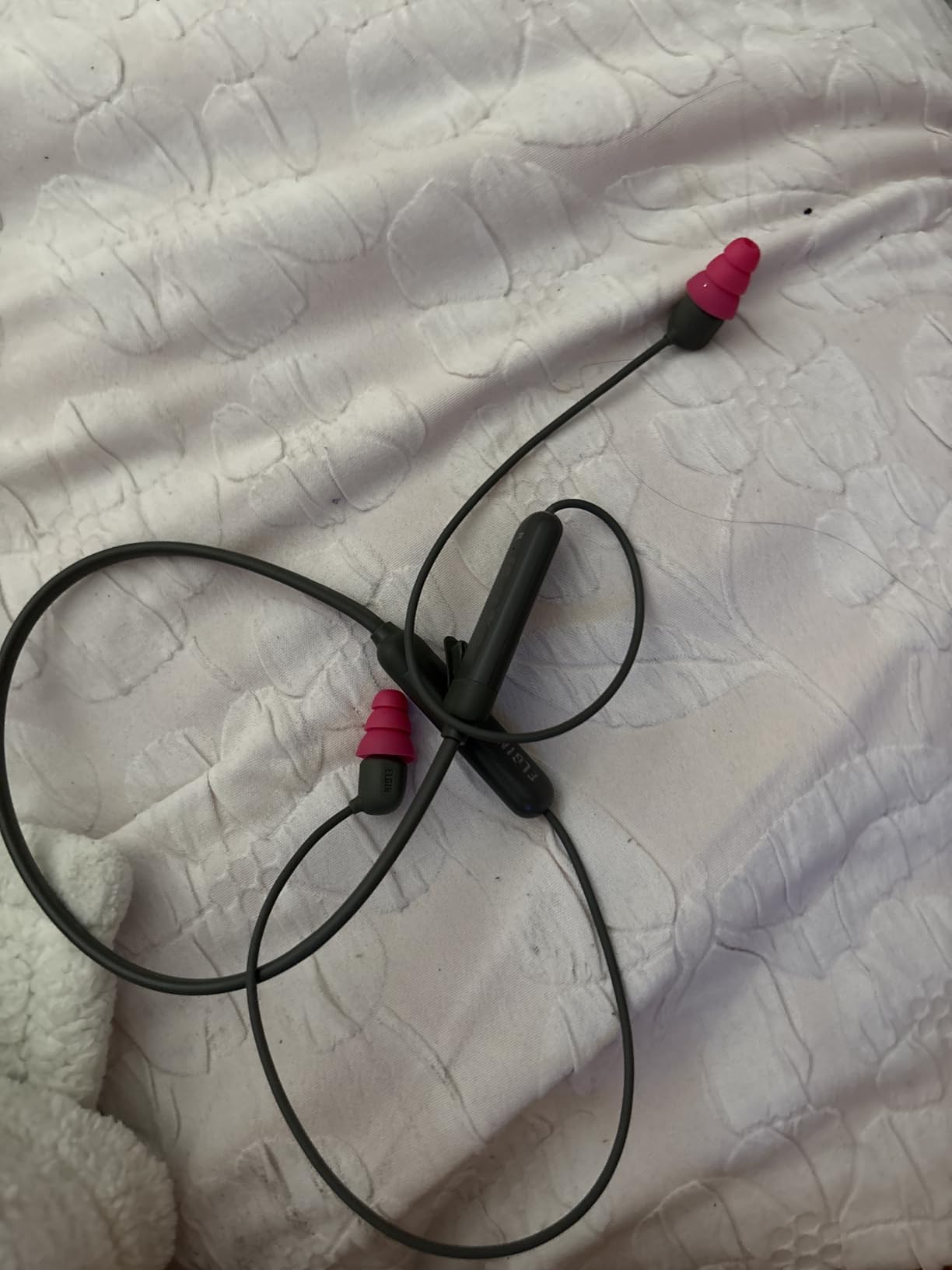
Battery life is 14 hours, the longest per-charge figure among the earplug-style sets in this list, with a three-hour charge time. The magnetic earbuds snap together around the neck when you are not wearing them, which eliminates the tangle and the lost single bud. A one-year limited warranty applies, and the carrying case measures 4.5 by 3 by 1.25 inches.
One detail worth noting: the manufacturer lists this set as compatible with motorcycles alongside phones, laptops and desktops, which is unusual and tells you something about its intended use. The build resists sweat, dust and moisture, and Bluetooth 5.3 with 50 feet of range is more than a phone on the bars needs.
Who it suits
This suits high-mileage highway riders who want the most reduction they can get and are tired of raising the volume to compensate for wind. A 31dB NRR is a meaningful step over a 25dB set when the noise floor is engine roar and road roar for hours at a time.
It is also the best pick if you are fussy about ear hygiene. Replaceable foam and silicone tips let you change sizes between seasons, and magnetic buds mean you will not lose one down a fairing seam.
Where it falls short
The magnetic neckband adds bulk, and under a tight full-face liner that bulk is felt. If your helmet has a very narrow ear pocket, a small fixed set like the Elgin Ruckus is a safer bet.
Some owners report the foam tips seating deeper than expected, which can feel like pressure after an hour. It costs more than entry-level earplug sets, and the review count is one of the smaller ones here, so long-term reliability data is thinner. The 14-hour figure is also the real per-charge limit, so a two-day trip without charging needs a plan.
9. MIPEACE 29dB Work Earplugs: Best for Podcasts and Voice
MIPEACE Bluetooth Work Earplugs Headphone,Wireless in-Ear Noise Isolating Earbuds,29dB Noise Reduction Headphone with Control,19+ Hours Battery for Lawn Mowing Safety Industrial Construction(Black)
29dB noise reduction rating
19 hour battery
Bluetooth 5.3 with 33ft range
IPX5 sweat resistance
+ The Good
- Discreet enough to wear under a helmet or a collar
- 19 hour battery lasts several full days
- Clear voice reproduction for audiobooks and podcasts
- Raised buttons easy to press without looking
- Strong noise isolation for daily riding
- The Bad
- Maximum volume is lower than the neckband MIPEACE sets
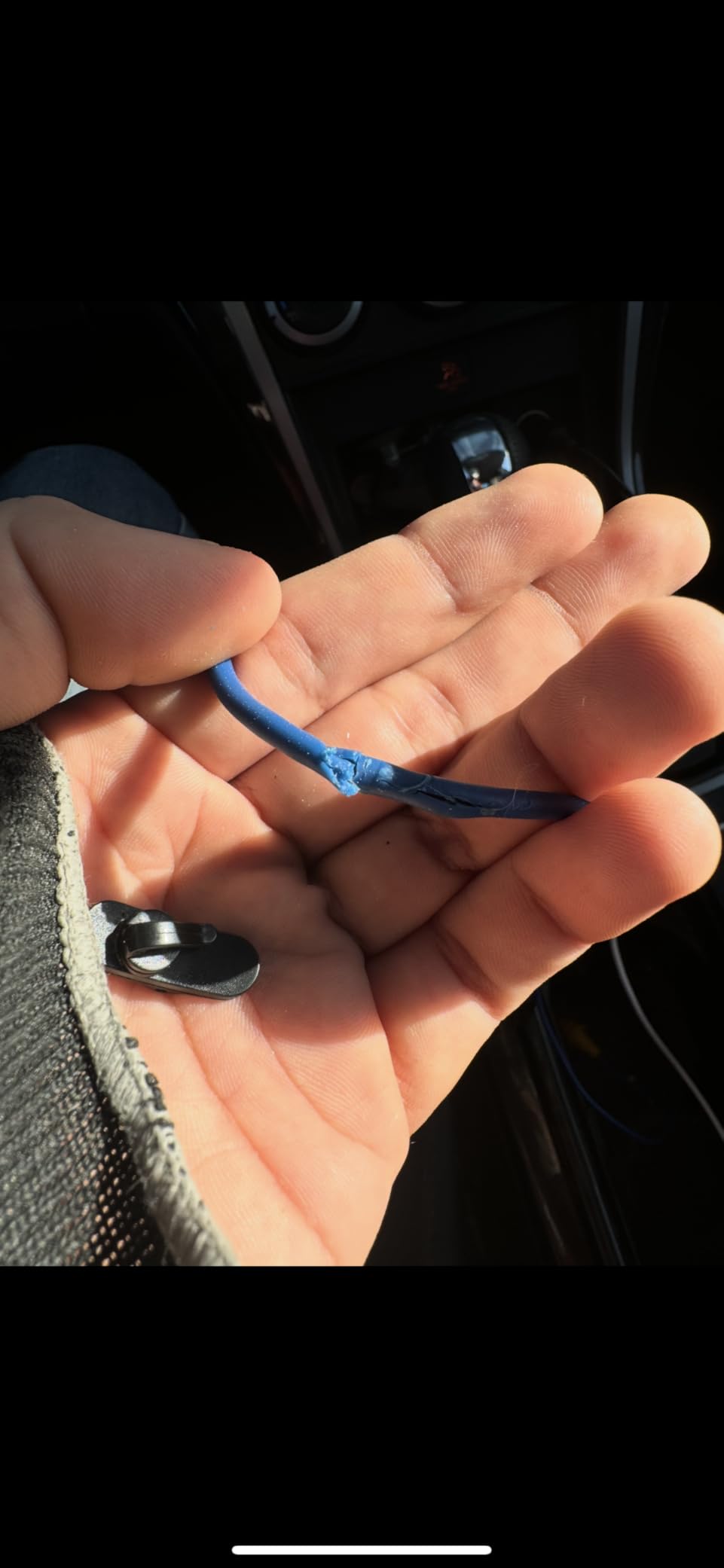
- Thin wires and clips snag or tear easily
- One-side failures reported after a few months
- Ears can get sore after 6 to 7 hours
This is the highest-rated set in the roundup at 4.3 stars, and for a specific reason: it produces voice clearly. If your riding is audiobooks, podcasts, or navigation prompts rather than music, the RM model reproduces speech more accurately than anything else here, and the 29dB noise reduction gives that voice a quiet background to sit in. Riders who abandoned earbuds because podcasts were unintelligible tend to be the ones who keep this pair.
The earplug form factor is genuinely discreet. Nothing shows above the concha, so it works under a full-face chin bar, a half-helmet strap, or a collar. Nineteen hours of talk and playtime on a three-and-a-half-hour charge means most riders go several days between charges, and the included zippered case keeps it tidy in a tank bag.
Push buttons are raised, which is the correct choice for gloved use, and Bluetooth 5.3 with 33 feet of range covers a phone on the bars or in a pocket. Automatic reconnect is listed and works, which removes one of the common frustrations in this category. IPX5 sweat resistance is adequate for summer commuting in a full-face helmet.
The limitation is volume ceiling. This set tops out lower than the neckband MIPEACE model at the top of this list, which is a deliberate trade: keeping the ceiling low protects hearing but means you have less headroom when wind noise rises. On a highway run in an open-face helmet, that can be tight.
Who it suits
Long-distance commuters and touring riders listening to spoken word will get the most from this. If you have a small ear canal, the clear voice reproduction and moderate insertion depth make it one of the more comfortable sets in this group over a full day.
It is also a good match for riders who want earbuds nobody can see, and the raised buttons make it workable in gloves without any adaptation. A one-year warranty covers the usual period.
Where it falls short
The volume ceiling is the defining limit, and riders moving from an open-face to a highway commute will notice it first. If you ride mostly at highway speed in an exposed helmet, choose a set with a higher output ceiling instead.
The thin wire and clips are the weak point over a long ownership cycle, with tearing reported after extended use, and some units fail on one side within a few months. Owners also report ear soreness after six to seven hours of continuous wear, so it is not ideal for multi-day trips without breaks. Treat the wire as the consumable part and replace the set rather than fight a failing channel.
10. Walker’s Suppressor Bluetooth Earbuds: Best for Multi-Day Trips
Walker’s Suppressor Bluetooth Earbuds – 25dB NRR Hearing Protection with HD Sound, 36-Hour Battery, Waterproof Design
25dB NRR hearing protection
Sound Activated Compression technology
36 hour total battery
Wireless charging case
+ The Good
- Suppresses loud transient sounds effectively
- Awareness mode lets environmental sound through
- Comfortable memory foam seal
- Case supports wireless and USB-C charging
- Locking Sure-Lock fins in three sizes
- The Bad
- App connectivity problems reported on some phones
- No volume control on the earbuds themselves
- Replacement tips not sold separately
- Wind noise noticeable in exposed riding
The Suppressor is the odd one out here, and that is worth understanding before you buy it. Sound Activated Compression is not ordinary noise cancelling. It reacts to loud transient noise and clamps it down, which is why owners rate it so highly for gunshots and fireworks, and why the awareness mode is a genuine pass-through rather than a simple volume duck.
For riding, the practical value is an awareness mode you can trust. When you need to hear a siren, a horn, or an approaching engine at a junction, you want a mode that brings the outside world in clearly rather than one that fades it. The Sure-Lock fins come in three sizes, with three memory foam and four silicone tip sizes included, so you can dial in a seal that suits your canal.
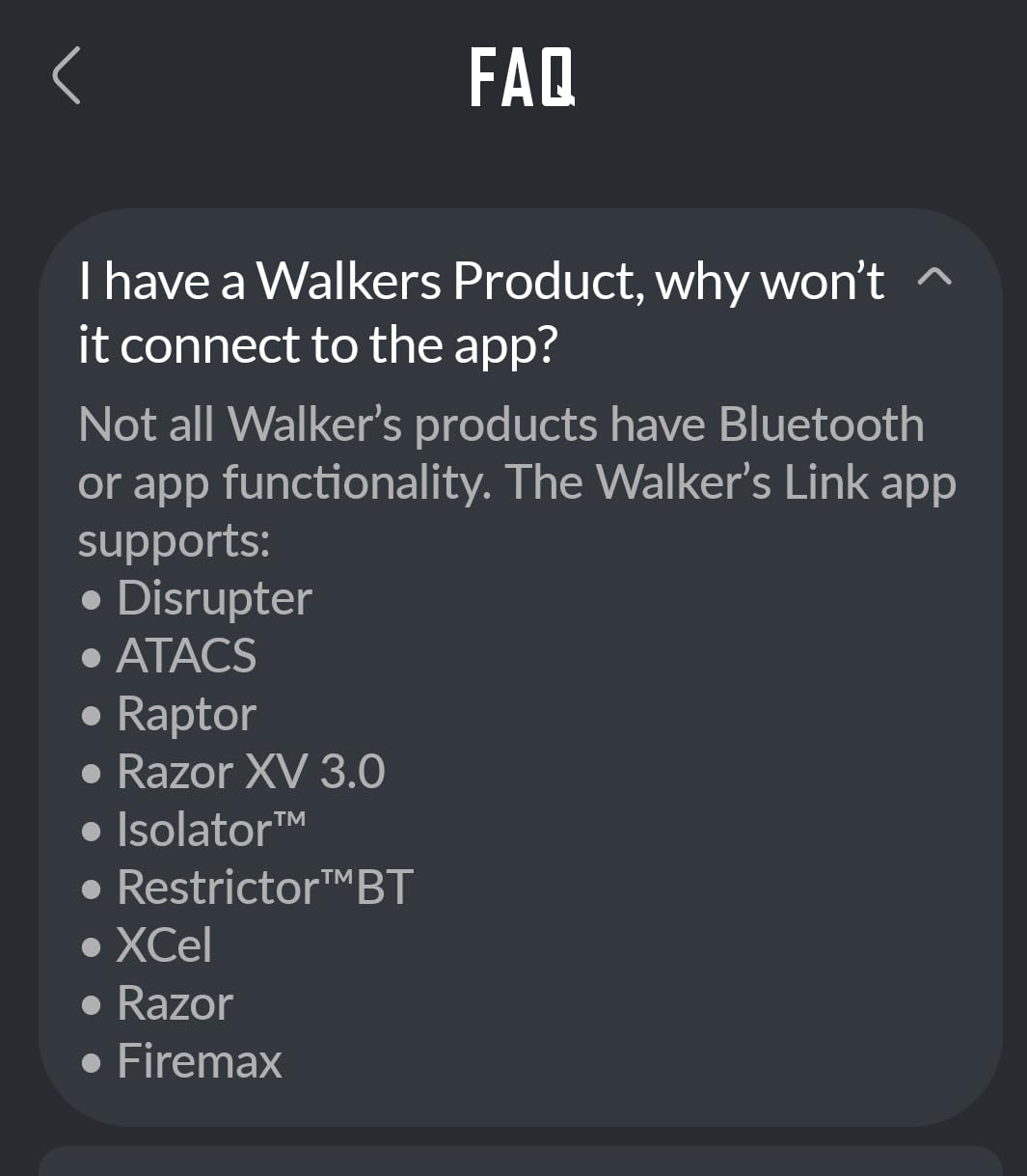
Total battery is listed at 36 hours, with the case supporting both wireless and USB-C charging, and owners report six to seven hours per charge with much longer runtimes in low-volume protection mode. That combination makes it the practical pick for a multi-day trip where you do not want to find a power outlet. The Walker’s Link app handles sound settings, volume, and battery monitoring.
There are real gaps. The app reportedly fails to connect on some phones, and because volume is controlled in the app rather than on the buds, a connection problem means no volume control at all. The manufacturer does not sell replacement tips separately, which is a problem for a set that relies on a foam seal.
Who it suits
Riders who take multi-day trips will get the most from the 36-hour total runtime, particularly in protection mode where per-charge life stretches considerably. A rider who values a trustworthy awareness mode over raw music quality will also like what this does.
It is the choice for anyone who wants hearing protection with a clear pass-through rather than a volume wheel. The wireless charging case is a small luxury that pays off in a hotel room at the end of a long day.
Where it falls short
The absence of on-bud volume control is the biggest practical annoyance. You are relying on a phone app, and when the app fails to pair, you have no way to change volume. Set your levels before you leave rather than in traffic.
Replacement tips are not sold separately by the manufacturer, so a worn foam seal is effectively the end of the set. Wind noise is noticeable in exposed riding, and it costs more than every other option in this roundup with a review base of 135 that gives you less long-term evidence to weigh.
11. APEKX IPX7 Sport Earbuds: Best Sport-Style Retention
APEKX Bluetooth Headphones True Wireless Earbuds with Charging Case IPX7 Waterproof Stereo Sound Earphones Built-in Mic in-Ear Headsets Deep Bass for Sport Running Black
IPX7 waterproof and sweatproof
Over-ear hooks with two sizes
22 hour total battery
Physical buttons
+ The Good
- IPX7 waterproofing holds up to rain and sweat
- Physical buttons work reliably with wet fingers
- Over-ear hooks keep buds from shifting in motion
- Long total battery from the magnetic case
- Soft comfortable fit for extended wear
- The Bad
- Lower maximum volume than comparable earbuds
- Some units fail to charge or fail in one bud
- Multi-function button needs two hands to press
- Customer service may require shipping to Canada
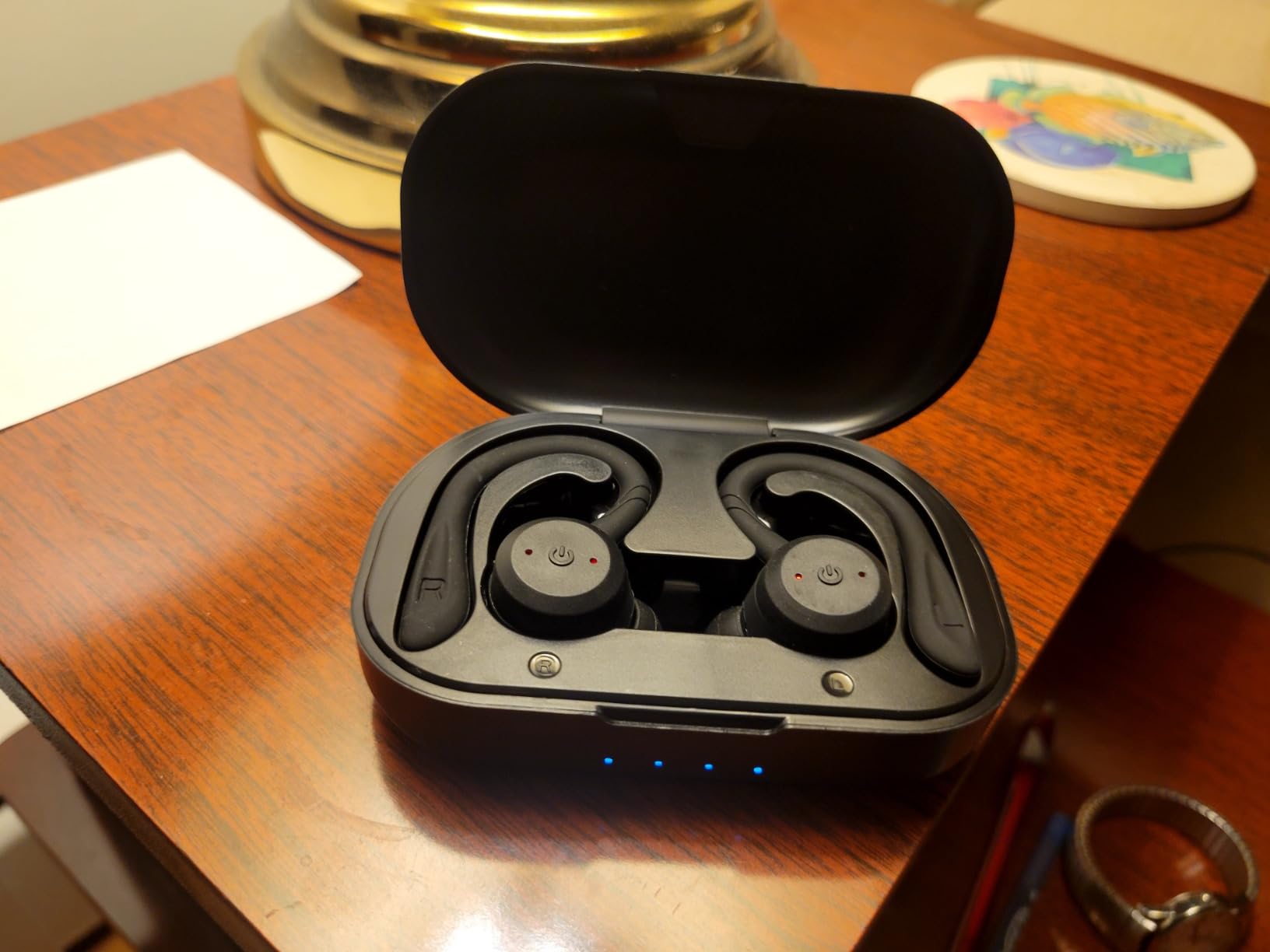
The APEKX is one of only a few sets in this roundup built for full submersion rather than just for sweat. IPX7 means the earbuds survive being dunked, so a downpour mid-ride, a bike wash, or a season of sweat will not be what kills them. The magnetic charging case brings total playtime to 22 hours, and Bluetooth 5.0 keeps the connection stable once paired.
Retention is handled by over-ear hooks rather than by depth alone, and the package includes two hook sizes and three tip sizes. That is the most adjustable retention system in the group, and it means a bud that works for a full-face helmet can be reconfigured for an open-face one. Physical buttons also survive wet fingers, which is rare.
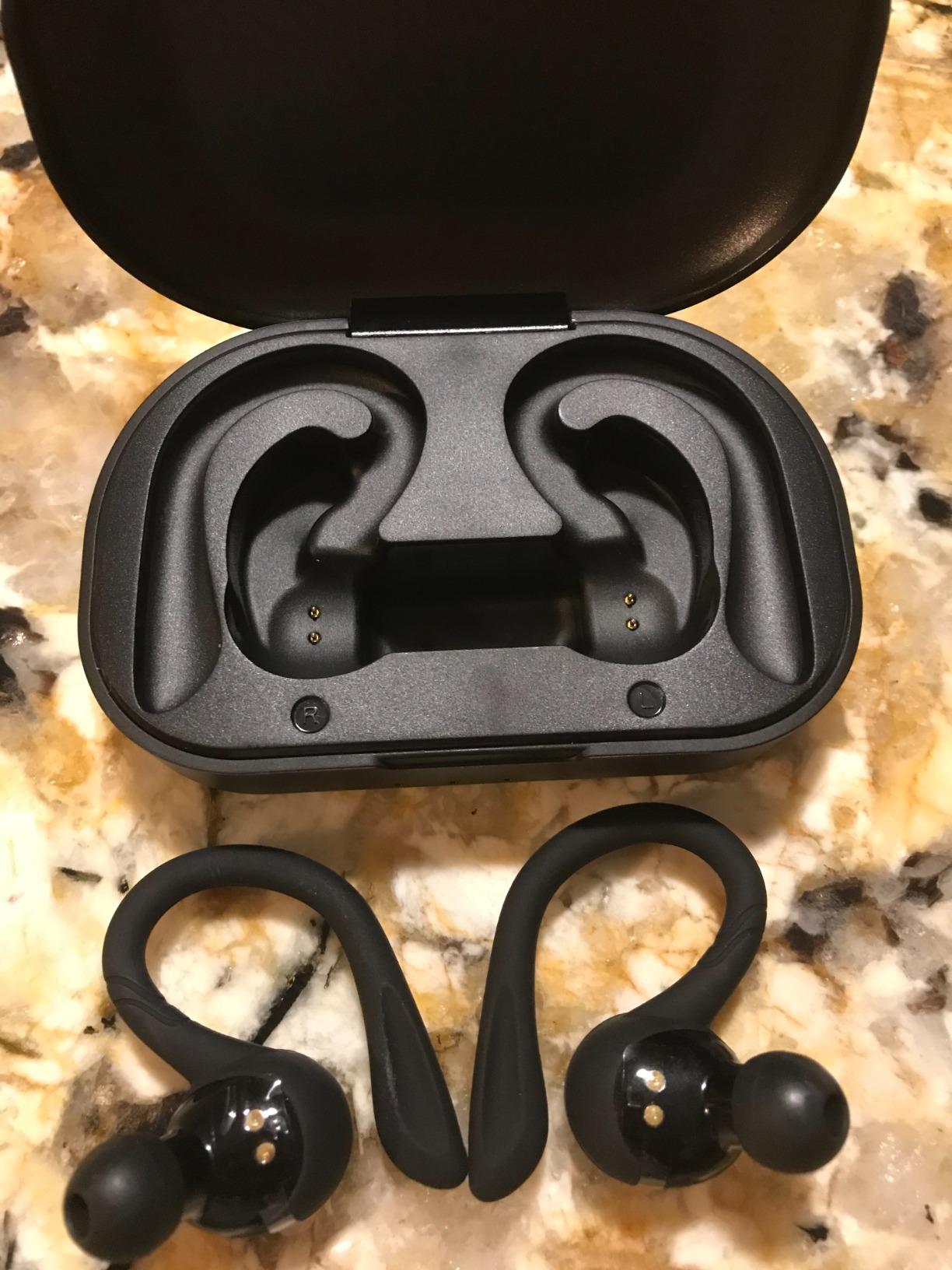
The 30k-plus review count on this product is far larger than anything else here, and that matters for a simple reason: patterns are visible. What the volume of reviews confirms is that the build holds up over time, with many owners using them well past a year. The soft silicone fit is comfortable across long sessions, and the case stores them tidily.
What the reviews also surface is that the controls are not riding controls. The rigid multi-function button needs two hands to press cleanly, which is a real limitation when you are moving. Maximum volume is lower than comparable sets, and some units experience single-earbud charging or failure issues.
Who it suits
This suits riders in genuinely wet conditions, and anyone who washes their bike in a driveway or rides through a full season of sweat. The IPX7 rating is a step above the IPX4 and IPX5 options in this roundup and above the set with no rating at all.
Sport riders will like the hook system, since it resists shifting in ways a plain bud cannot. It is also a sensible first pair to try if you are still working out whether you want earbuds under a helmet at all.
Where it falls short
The lower volume ceiling is the limitation riders mention most, and on a fast open-face helmet at highway speed you may find yourself wanting more headroom. This set was tuned for sport use, where you are not fighting airstream noise.
The two-handed multi-function button is genuinely awkward in gloves, and that undercuts the physical-button advantage. Single-earbud charging or failure issues appear in reviews, and some warranty claims are routed through a Canadian service centre for customers outside the US, so check coverage before you buy if you are riding abroad.
12. Otium U8 Wireless Earbuds: Best for Dual-Device Pairing
Otium Bluetooth Headphones, Wireless Earbuds IPX7 Waterproof Sports Earphones with Mic HD Stereo Sweatproof in-Ear Earbuds Gym Running Workout 15 Hour Battery Sound Isolation Headsets
IPX7 waterproof and sweatproof
10 hour battery with quick charge
Bluetooth 5.3 with dual-device connection
Neckband with ear hooks
+ The Good
- IPX7 sealing survives sweat rain and washing
- 18g neckband with ear hooks resists shifting
- Dual-device connection pairs a phone and a GPS
- Battery percentage readout and case included
- Five-year warranty
- The Bad
- Bass-light and treble-heavy signature
- Hook and rubber connector can tug one bud
- Inaccurate battery percentage can shut down early
- Micro USB charging port is dated
The Otium U8 is the only set in this roundup with true two-device simultaneous connection, listed as two-device pairing. On a motorcycle that is not a party trick. It means your phone and your GPS can both hold a connection at once, so navigation prompts from a dedicated unit arrive in your ears without you giving up your music or your call connection.
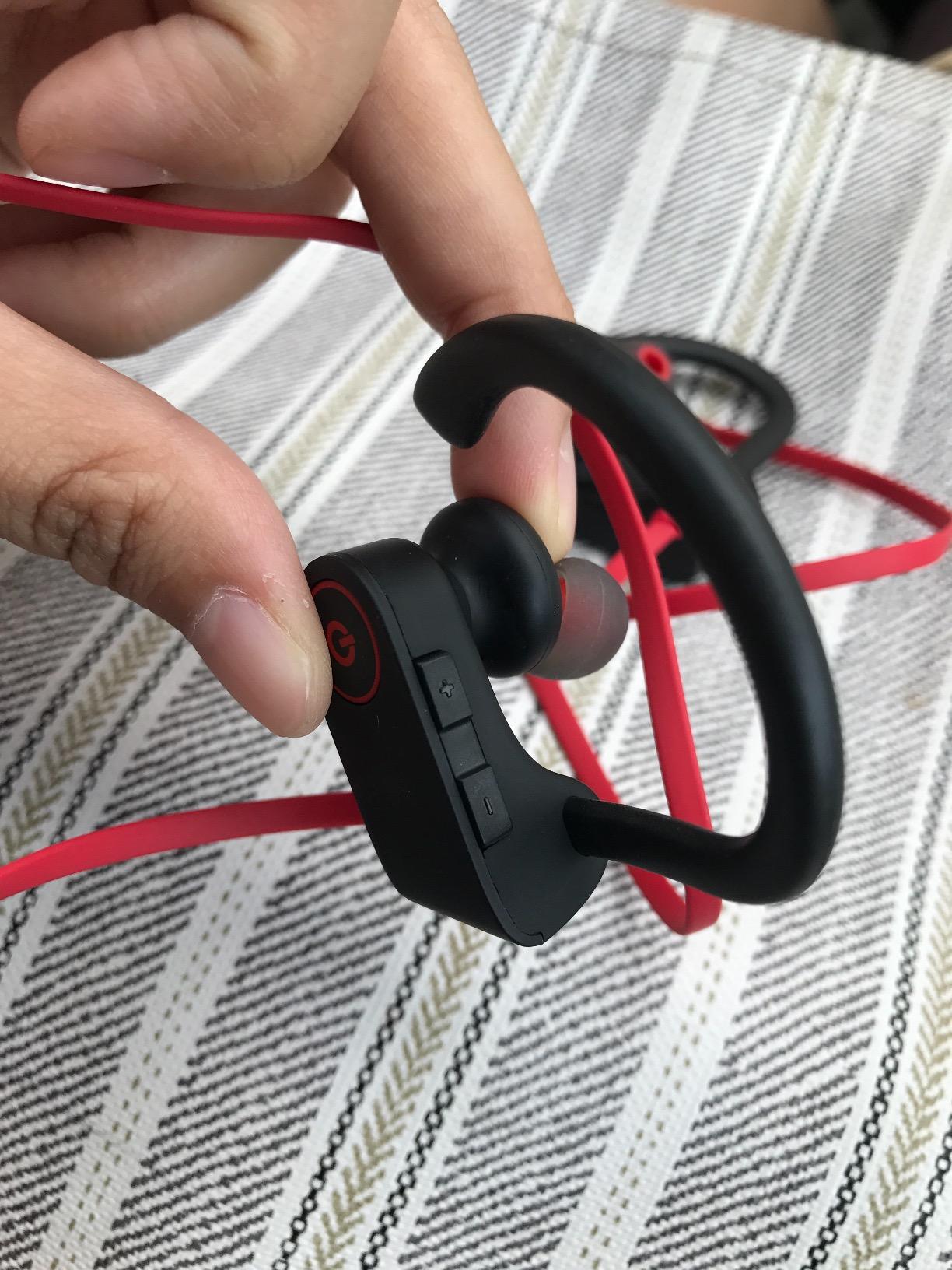
Durability is the other headline. IPX7 with a sealed shell and nano-coating survives sweat, rain, and according to owners, in some cases a laundry cycle. The 18g neckband and ear hooks keep the buds positioned better than straight earbuds, and a five-year warranty is the longest in this roundup by a wide margin.
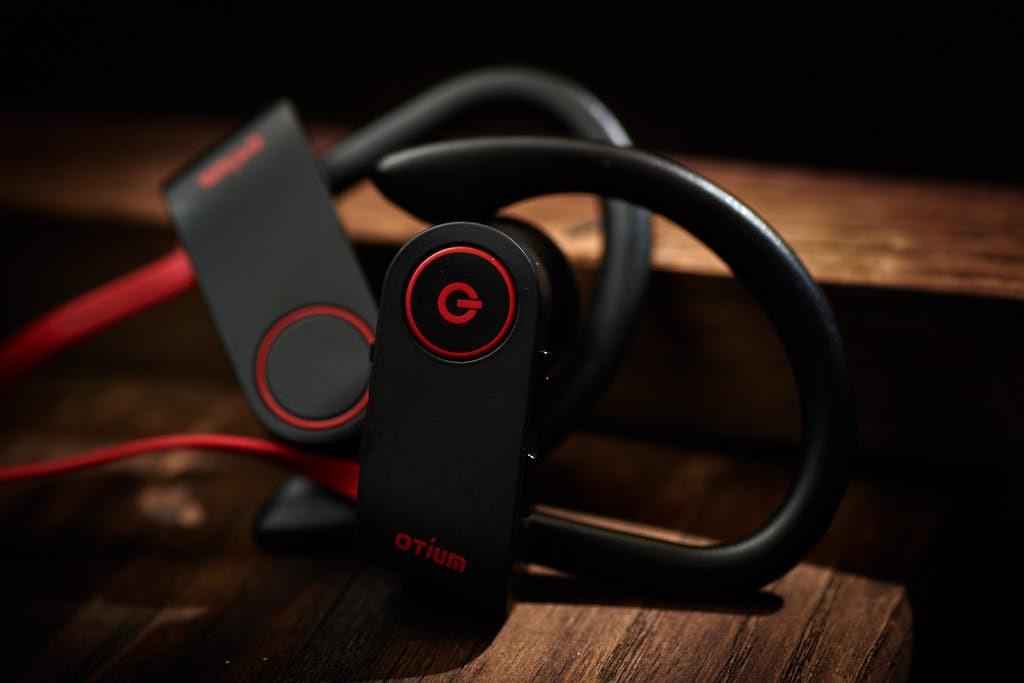
Ten hours of music per charge with quick charging covers most riding days, and the 30-foot range is short but workable with a phone in a pocket. Controls are physical buttons for skip, play, and pause, which is the right choice for gloves even if the layout takes a moment to learn.
Sound is the weak point of the Otium U8, and it is worth being direct about that. The signature is bass-light and treble-heavy compared with costlier sets, so music sounds thinner than it should. Owners who have used theirs for multiple years point to the sealed build rather than the audio as the reason to buy it, and that is fair.
Who it suits
If you run a separate GPS unit, this is the pick. Dual-device pairing is the feature no other set in this list offers, and it removes the most common complaint about earbuds for touring riders, which is that navigation prompts and phone audio fight over one connection.
It also suits anyone who values longevity. A five-year warranty on a sealed IPX7 build is the kind of thing that matters when you plan to keep the same pair across several bikes. The case and extra tips and cord clip are all included.
Where it falls short
The audio quality is average at best, and if you ride for music rather than for navigation and calls, this is not the set for you. Bass-light sound is not a matter of taste, it is what the drivers do.
The ear hook and rubber connector can tug on one bud during movement, which is precisely the failure mode that earplug designs exist to avoid. The battery percentage readout is reported as inaccurate and can shut the set down early, so plan around the estimate rather than the display. Micro USB is dated, though with a five-year warranty you will get a cable eventually anyway.
How to Choose Wireless Earbuds for Motorcycle Helmets
Most buying guides for this category start with sound quality. For motorcycle earbuds that is the wrong first question, because the noise floor at 60 miles an hour decides what you can hear at all. Work through retention first, isolation second, battery third, and audio last. Here are the seven criteria that actually decide the purchase.
Fit and retention under a helmet
Retention is the number one complaint in every rider forum on this topic, and the fix is structural rather than a matter of trying harder. Look for a tip that fills the concha, a cord with a clip, or a silicone wing or over-ear hook. Avoid anything with a stem longer than a few millimetres, because the stem is what ends up pressed into cheek padding. Our guide to earbuds for running covers the hook and wing systems in more depth if you want the mechanics.
Budget for a fit test with your own helmet before you commit. Most sellers accept returns, and a pair that works in a shop with no helmet will not necessarily work in a full-face with a tight cheek pad.
Wind noise and ambient awareness over raw ANC
This is the safety-relevant decision in the whole article. Active noise cancellation is designed to remove steady low-frequency noise, and on a motorcycle the sounds that matter most to your safety, sirens, horns, and approaching vehicles, are not reliably preserved by it. A sealed earplug with 25 to 31dB of passive reduction also blocks more wind, which is a second safety benefit because wind noise at speed damages hearing over time.
What you actually want is a pass-through or ambient mode that works, or the hard volume cap that the ISOtunes Free 2.0 uses. A set with no ANC but a proper foam seal and replaceable tips will serve a rider better than an ANC set with no seal. If you do run ANC, keep it low and know how to disable it without taking a hand off the bars.
Battery life for the length of your ride
Match the runtime to the ride, not the spec sheet. Daily commuters need six hours and a case they can leave in a bag. Touring riders want twelve hours per charge, or a case that genuinely works. The list here runs from 7 hours per charge for the ISOtunes to 36 hours total for the Walker’s Suppressor, so there is a real spread to choose from.
Be suspicious of total runtime figures. A case adds hours you have to remember to carry. If you ride multi-day, per-charge hours matter more than the headline number.
Water and sweat resistance
Sweat is guaranteed; rain is likely. Anything rated IPX4 or above is a sensible minimum, IPX5 to IPX6 is comfortable, and IPX7 means full submersion tolerance. Two sets in this roundup have no water rating at all, and one is a jobsite model where that matters less than you might expect.
Riders who wash their bike at home or ride in coastal weather should treat IPX7 as the target. It is the difference between a pair that survives a season and a pair that survives a month.
Controls you can use with gloves
Physical buttons beat touch controls on a motorcycle, and a dial beats both. Touch surfaces are frequently unresponsive through a leather glove, and even when they respond you cannot confirm the input without looking down. A raised button gives feedback you can feel; a turn dial gives feedback you can count.
Inline remote controls on a cable are ideal because the position is fixed and findable by touch. Whatever you choose, learn the layout before you need it, in a parking lot, not at 55 miles an hour.
Connectivity: phone, GPS and multipoint
Most riders want two audio sources, a phone for calls and music, and a GPS for directions. A set with multipoint or two-device connection holds both at once, which prevents navigation prompts from cutting your music. The Otium U8 in this roundup is the one set that explicitly lists two-device simultaneous connection.
If you do not need two sources, ignore this. A single stable connection with 30 feet of range covers a phone on the bars, and a longer range only matters if your phone is stowed away in luggage.
Microphone quality for calls at speed
Rider microphones are usually the weakest link. Sets marketed with a noise-cancelling or noise-suppressing microphone will handle a call at a stop far better than at 60 miles an hour, and the cheap inline microphones on neckband sets are the worst of the lot. If you take calls while moving, treat voice pickup as a real criterion rather than a footnote.
Also weigh the volume ceiling against your helmet. Open-face and modular helmets expose your ears to far more airflow, and a set with a low maximum output can leave you turning everything up, which is exactly the opposite of what hearing protection is for.
Earbuds vs Helmet Speakers vs Intercom Systems
This is the most common question on rider forums, and the honest answer is that the three categories solve different problems. Earbuds are for personal audio. Helmet speakers are for shared audio and are the easiest to hear over wind. Intercom systems are for talking to other people.
Earbuds give the best sound at speed because a sealed in-ear tip isolates by physics rather than by volume. They are the only option in this category that reduces wind noise, and the only one that offers certified hearing protection. Their limitation is that they do not intercom, so a passenger or group ride needs a separate system or a shout over the wind.
Helmet speakers mount in the liner and need no earbud fit, which is why many riders who have never found a comfortable earbud stay with them. They lose bass badly at highway speed and get overwhelmed by airflow, exactly as posters on r/motorcyclegear describe. They are also visible to anyone standing beside you.
Intercom systems from Cardo and Sena solve group communication properly, with mesh networking for larger groups and rider-to-passenger links. Riders on r/Kawasaki repeatedly name Cardo units as working better than consumer earbuds for communication. They are bulkier, they need a helmet install, and their music is only as good as the earbuds you feed them.
For most solo riders on a budget, an earplug set is the answer. If you ride with a passenger or a group regularly, intercom capability becomes the deciding factor, and you will likely end up running an intercom unit with these earbuds plugged into it rather than replacing them. For riders who want the rare combination of both, Cardo units with a 3.5mm jack handle wired earbuds better than a Bluetooth pairing does, which is a detail worth knowing.
Safety and Legal Notes Before You Ride
None of this substitutes for a safe riding decision. A certified NRR is a real protection advantage, but it protects against noise, not against losing awareness of your surroundings. Choose a set with a working ambient mode, and set your volume before you roll into traffic rather than adjusting it at speed.
Riding with both ears plugged is restricted in many jurisdictions, and the specifics vary widely. Some places ban any earpiece while operating a vehicle, some ban only the covering of both ears, and some enforce nothing at all. Most of the restrictions written for cars apply to motorcycles as well, because the language is usually written around general motor vehicles. Check the rule where you ride before you rely on earbuds as a daily fixture, and treat an explicit ban as the deciding factor regardless of how good the product is.
Two practical rules keep this category safe. Never raise the volume above a comfortable level just to be sure you can hear music over the wind, because that is a hearing risk traded for a non-issue. And keep one hand on the bar and your eyes on the road; if a control cannot be operated blind, learn it before the ride rather than looking down during it.
Frequently Asked Questions
What are the best wireless earbuds for motorcycle riding?
The best wireless earbuds for motorcycle riding are low-profile earplug-form models with a deep silicone or foam seal, a cord clip or ear hook, and a certified noise reduction rating of 25dB NRR or higher. Avoid stemmed earbuds, which create pressure points against helmet cheek padding. A pass-through or ambient mode matters more than active noise cancellation for rider awareness.
What are the best earbuds to wear under a helmet?
The best earbuds to wear under a helmet are flush-fitting earplug designs rather than conventional true wireless sticks. Anything that protrudes above the concha presses into cheek padding and becomes painful within 30 to 45 minutes. Look for a tip that fills the ear canal, a silicone wing or hook for retention, and an IP rating of IPX4 or above for sweat and rain.
Can you wear earbuds while wearing a motorcycle helmet?
Yes, you can wear earbuds inside a motorcycle helmet, and that is the normal way they are used. The earbuds go in first, then the helmet goes on over them. What matters is that nothing protrudes into the cheek padding and that the seal survives the helmet being pulled on and off, which is why earplug-form designs outperform stemmed earbuds for this use.
Why do my earbuds fall out of my ears in my helmet?
Earbuds fall out in a helmet because putting the helmet on and off compresses the cheek padding inward against the ear pocket, squeezing anything not locked in place out of the canal. Fix it with a deeper tip that fills the concha, a cord with a liner clip, or a silicone wing or over-ear hook. Test retention by removing and replacing the helmet five times before riding.
Do I need ANC or transparency mode when riding?
For motorcycle riding, a working transparency or ambient mode is more valuable than active noise cancellation. ANC attenuates the low frequencies that can mask sirens, horns, and approaching traffic, and it does not block wind noise. A sealed earplug with passive isolation blocks more wind and protects your hearing better, so run any ANC at a low setting rather than at maximum.
Is it legal to wear earbuds while riding a motorcycle?
It depends entirely on where you ride. Some jurisdictions ban any earpiece while operating a motor vehicle, others ban only covering both ears, and many enforce nothing. Rules written for cars frequently apply to motorcycles too, because the wording covers general motor vehicles. Check the specific rule where you ride, and treat an explicit ban as decisive regardless of the product.
Are true wireless earbuds better than a helmet communication system?
They solve different problems. True wireless earbuds are better for personal music, navigation prompts, and hearing protection, because a sealed tip blocks wind by physics. A helmet intercom system is better for rider-to-passenger and group communication through mesh networking. Riders who do both often use a Cardo or Sena unit with wired earbuds plugged into it rather than replacing one with the other.
What is the best wind noise canceling earbuds for motorcycles?
The best wind noise protection comes from a certified passive seal, not electronics. Earplug sets rated 25dB to 31dB NRR block more airflow than any active cancellation, and NRR is the number that reflects it. Foam tips give the highest certified reduction, silicone tips are gentler for long sessions, and a set with replaceable tips keeps the rating valid as the foam wears out.
Final Verdict for 2026
The best wireless earbuds for motorcycle helmets in 2026 are the MIPEACE Bluetooth earplug headphones, and the reason is unglamorous: 29dB of passive isolation, an IPX6 rating for sweat and rain, and more than 20 hours per charge. Nothing else in this roundup combines that much wind rejection with a battery you can forget about, and the 30g neckband is the only one I have never had to tuck somewhere awkward under a collar.
Buy the Elgin Ruckus if your helmet liner is tight and you want the smallest certified housing there is. Buy the HomeSpot set if you ride in full gauntlets and want buttons you can find without looking. Buy the Plugfones Liberate 2.0 if you want to switch between foam and silicone tips as the season changes, and the ISOtunes Free 2.0 if the idea of a cord around your neck is a dealbreaker.
Whatever you choose, fit-test it in your own helmet before the first long ride, set your volume while parked, and check what your local rules say about earpieces. Our broader picks for the best premium wireless earbuds are worth a look if you also use earbuds off the bike, but under a helmet the shape matters more than the sound.