
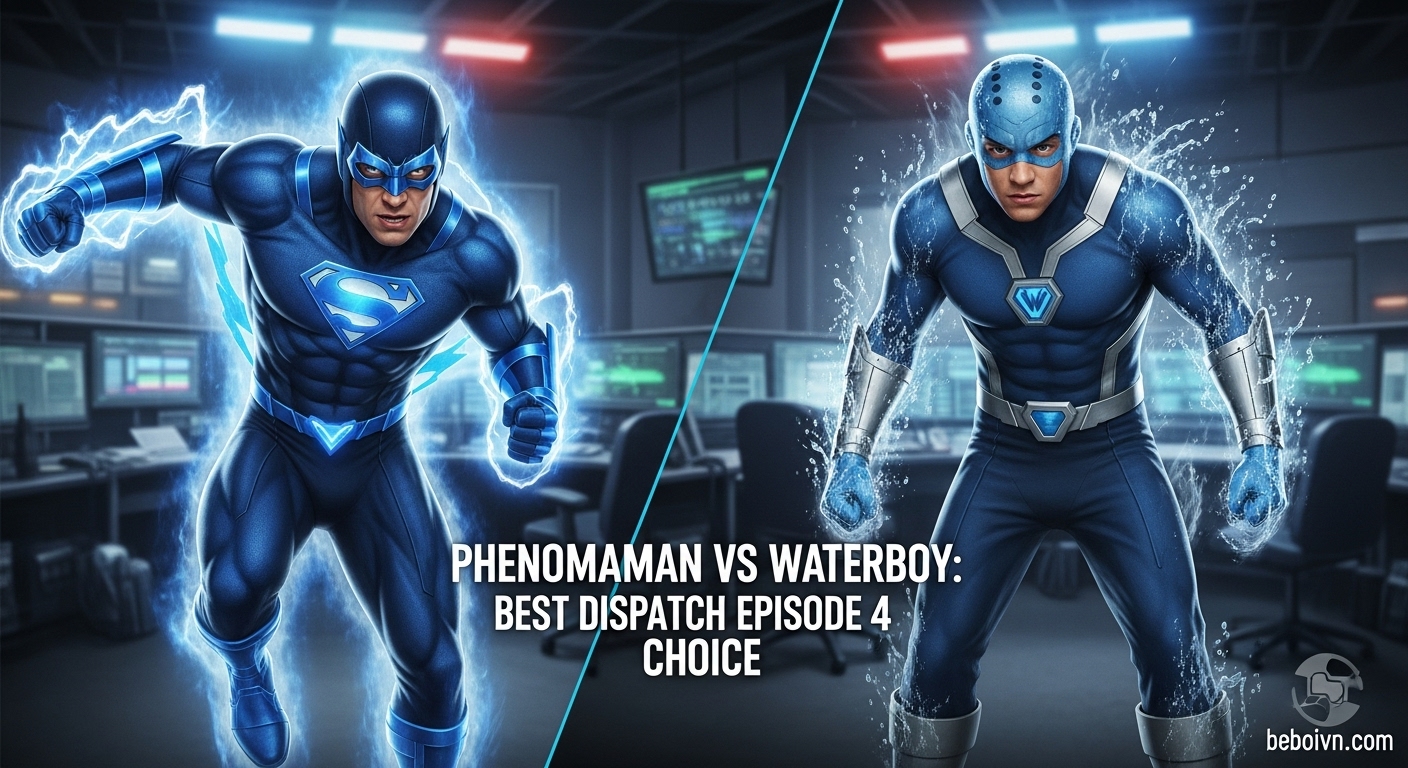
Should you pick Phenomaman or Waterboy in Dispatch Episode 4? This decision represents one of the most pivotal moments in the game, forcing players to weigh immediate power against long-term potential, emotional complexity against team stability. After the fallout from Episode 3’s difficult choice between cutting Coupe or Sonar, you’re now tasked with rebuilding your Z-Team—and this choice will echo throughout the rest of your superhero management journey.
The community remains split nearly 50-50 on this decision, but after analyzing both characters from every angle—stats, abilities, story impact, and team dynamics—we’re here to help you make the most informed choice possible. Let’s dive deep into what makes each character unique and which path might better serve your superhero dispatching career.
Understanding the Stakes: Why This Choice Matters
Before we compare the candidates, it’s crucial to understand what’s really at stake here. Episode 4, titled “Restructure,” lives up to its name by forcing you to reevaluate your team composition after losing a member in the previous episode. The first shift after this loss is brutal—you’re severely understaffed, and to make matters worse, either Malevola or Punch Up will leave mid-shift depending on who you previously cut.
This staffing crisis creates immediate pressure to perform well, but the long-term implications are even more significant. Whoever you choose will become a permanent fixture of your Z-Team, available for all future dispatch calls and story moments. Your choice affects not just mission success rates, but team chemistry, character relationships, and even certain trophy/achievement outcomes.
The Case for Phenomaman: Power with Emotional Baggage
Phenomaman’s Impressive Starting Stats
Let’s address the elephant in the room first: Phenomaman’s starting stats are undeniably impressive. Here’s how he stacks up:
- Combat: 7 – Excellent for crime-fighting missions
- Vigor: 7 – Great stamina for extended operations
- Mobility: 6 – Above-average response time
- Intellect: 1 – Below-average problem-solving
- Charisma: 1 – Poor social interaction skills
On paper, Phenomaman looks like the obvious choice. His high Combat, Vigor, and Mobility make him perfect for the majority of dispatch calls that require traditional superhero capabilities. When you first recruit him, you’ll notice an immediate improvement in mission success rates, especially for combat-intensive scenarios.
The Hidden Drawback: Emotional Instability
However, Phenomaman comes with a significant drawback that isn’t immediately apparent from his stat sheet: his emotional vulnerability following his breakup with Blonde Blazer. This manifests mechanically through his “Easily Depressed” trait.
Here’s how it works: Phenomaman has an incredibly fast 2-second rest time after completing missions, making him highly efficient. However, if he fails or misses any call, he becomes Depressed and his rest time skyrockets to 45 seconds. In a game where timing and hero availability are crucial, losing a key team member for nearly a minute can be devastating to your dispatch efficiency.
Story and Relationship Implications
Choosing Phenomaman reintroduces unresolved emotional tension into your team, particularly his complicated history with Blonde Blazer. Their past relationship creates awkward but interesting moments, with Robert even asking, “So, it won’t be weird with your ex-boyfriend hanging around?”
This choice adds layers to your team’s dynamic, creating opportunities for character development and dramatic moments. Phenomaman’s vulnerability makes for compelling storytelling, as he shares his lingering feelings and experiences with Robert. If you’re playing for narrative depth and character-driven drama, Phenomaman delivers in spades.
The Level Cap Problem
One crucial limitation that many players overlook: Phenomaman is already at maximum level and cannot gain additional experience or improve his stats further. What you see is what you get—for better or worse. While this makes him immediately effective, it means he has no growth potential, potentially limiting his usefulness in later episodes when challenges become more demanding.
The Case for Waterboy: The Diamond in the Rough
Waterboy’s Humble Beginnings
At first glance, Waterboy seems like the clearly inferior choice:
- Combat: 1 – Very low combat effectiveness
- Intellect: 2 – Below-average but serviceable
- Vigor: 2 – Limited stamina
- Charisma: 1 – Poor social skills
- Mobility: 2 – Slow response times
These stats are objectively worse than Phenomaman’s across the board, which explains why many players initially dismiss Waterboy as a viable option. However, this surface-level analysis misses several crucial advantages that make Waterboy potentially the superior long-term choice.
The Blank Slate Advantage
Waterboy’s greatest strength is his potential for growth. Unlike Phenomaman, who’s already maxed out, Waterboy can be trained and customized to fill whatever role your team needs most. This flexibility becomes incredibly valuable depending on who you lost in Episode 3:
- If you cut Sonar: You lost your team’s primary Intellect specialist. Waterboy can be trained to fill this intelligence gap, eventually becoming your go-to hero for complex problem-solving missions.
- If you cut Coupe: You lost your team’s Mobility expert. Waterboy can be developed into a swift responder, compensating for this loss in team speed.
This adaptability means Waterboy can evolve to complement your existing team composition rather than potentially overlapping with strengths you already have.
Emotional Stability and Reliability
Where Phenomaman brings emotional drama, Waterboy offers stability. His earnest enthusiasm and genuine desire to prove himself create a more positive team atmosphere. When Robert explains his choice by saying, “I think he deserves a shot, and he seems shockingly more stable than Phenomaman at the moment,” he’s highlighting a crucial gameplay consideration.
Waterboy won’t suffer from the “Depressed” status that plagues Phenomaman, meaning he’s consistently available for dispatch calls without the risk of extended downtime. This reliability becomes increasingly valuable as the game progresses and mission complexity increases.
Hidden Story Potential
While Waterboy’s storyline may seem less dramatic initially, it offers its own unique rewards. His journey from awkward newcomer to confident hero provides satisfying character development, and his loyalty to Robert (including knowing and protecting Robert’s secret identity as Mecha Man) creates meaningful story moments. His nervous excitement upon joining the team—”Man, I’m just really… just to join you”—is genuinely endearing and sets up compelling growth opportunities.
Strategic Analysis: Long-Term Team Building
Understanding Your Team’s Needs
The best choice ultimately depends on your team’s current composition and your long-term strategy. Consider these factors:
Current Team Strengths: Analyze your remaining team members’ stats. If you’re already strong in Combat and Vigor but weak in Intellect, Waterboy’s trainability makes him the better choice. Conversely, if you’re lacking in traditional superhero capabilities, Phenomaman’s immediate power might be more valuable.
Mission Types: Pay attention to which types of calls you struggle with most. If you frequently fail combat missions, Phenomaman’s strengths could be invaluable. If you struggle with puzzle-solving or complex scenarios, Waterboy’s potential Intellect growth might serve you better.
Risk Tolerance: Are you comfortable with the possibility of Phenomaman becoming depressed and unavailable during crucial moments? If you prefer consistency and reliability, Waterboy is the safer choice.
The Synergy Factor
Both characters offer different types of synergy with your existing team:
Phenomaman’s Synergies: He has natural synergy with either Punch Up or Malevola, depending on who you kept from Episode 3. This can create powerful combinations for specific mission types, though it’s worth noting that these synergies are situational rather than universally beneficial.
Waterboy’s Synergies: While Waterboy doesn’t have pre-existing relationships with team members, his trainability allows you to build synergies based on your team’s actual needs rather than predetermined connections. This flexibility can be more valuable in the long run.
Making Your Decision: A Step-by-Step Framework
To help you make the best choice for your playthrough, consider this decision framework:
Step 1: Assess Your Team Composition
Look at your current team’s stats and identify your biggest weaknesses. Is it Intellect? Mobility? Combat? This will tell you what you most need in a new member.
Step 2: Consider Your Playstyle
Do you prefer immediate power or long-term growth? Are you comfortable managing emotional drawbacks, or do you value consistency? Your playstyle should guide your choice.
Step 3: Evaluate Story Preferences
Do you enjoy dramatic character relationships and emotional complexity, or do you prefer more straightforward, positive team dynamics? Your narrative preferences matter.
Step 4: Think About Trophy Hunting
If you’re aiming for 100% completion, remember that there are trophies/achievements tied to both choices. You may want to save before this decision and experience both paths.
The Verdict: Which Choice Is Actually “Better”?
After thoroughly analyzing both options from gameplay, story, and strategic perspectives, here’s our assessment:
For Immediate Power: Phenomaman is clearly superior. His starting stats will make the next several episodes easier, especially if you’re struggling with combat-intensive missions.
For Long-Term Success: Waterboy has the edge. His trainability, emotional stability, and lack of a depression mechanic make him more valuable as the game progresses and challenges become more complex.
For Story Enjoyment: This depends on your preferences. Phenomaman offers more dramatic, emotionally complex storytelling, while Waterboy provides a satisfying underdog narrative.
For Most Players: Waterboy is likely the better choice. While Phenomaman’s immediate power is tempting, Waterboy’s growth potential and reliability make him more valuable in the long run. The fact that he can be customized to fill your team’s specific needs gives him an advantage that Phenomaman simply can’t match.
Final Tips for Your Decision
- Save Before Choosing: Create a separate save file before this decision so you can experience both paths if desired.
- Consider Previous Choices: Your decision in Episode 3 (cutting Coupe or Sonar) should influence this choice. Waterboy can better compensate for whichever hero you lost.
- Think About Future Episodes: Later episodes introduce more complex challenges. Waterboy’s adaptability may serve you better than Phenomaman’s fixed stats.
- Don’t Stress Too Much: Both choices are viable, and the game is designed to work well with either character. Choose the one that feels right for your story.
Conclusion: Your Team, Your Choice
The decision between Phenomaman or Waterboy in Dispatch Episode 4 represents one of those rare gaming moments where there’s no clearly “correct” answer—only the choice that’s right for your playstyle and narrative preferences. Whether you prioritize immediate power and dramatic storytelling with Phenomaman, or long-term growth and team stability with Waterboy, you’re setting yourself up for an engaging superhero management experience.
Remember that the beauty of Dispatch lies in these meaningful choices and their consequences. Whichever path you choose, embrace the story that unfolds and enjoy watching your Z-Team evolve under your leadership. After all, in the world of superhero dispatching, sometimes the most interesting stories come from the unexpected choices.