
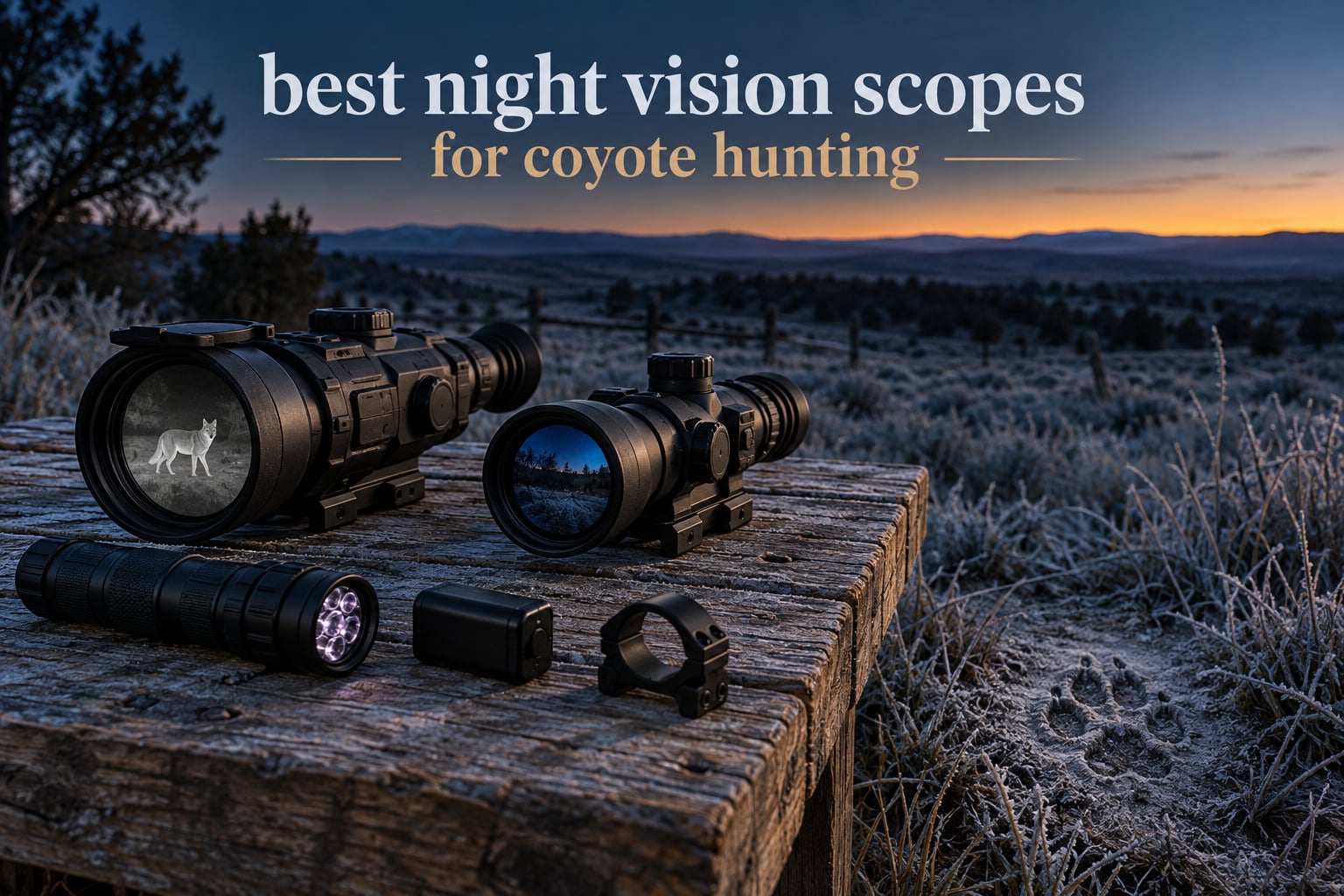
Most coyote calls happen after the light is gone. You are set up in a CRP field, on a fence row, or in a ground blind in timber, and the animal you have been waiting on is somewhere between 150 and 350 yards out with a body temperature barely above the night air. Without help, you are guessing. With the right optic, you are picking a coyote off a deer, reading ears and tail posture, and choosing your shot window instead of reacting to it.
That is the whole reason the best night vision scopes for coyote hunting have become the first purchase most serious predator hunters make after the rifle. The category now splits three ways: digital night vision, which uses an infrared illuminator to light the scene; thermal, which reads the animal’s heat signature with a germanium lens; and clip-on attachments, which bolt in front of the day scope you already own so you keep your zero. The names you will see most often are ATN, AGM Global Vision, Pulsar and Sightmark, and each of them solves a different version of the same problem.
Here is where we landed after working through the full field of electronic optics built for this job. Our first pick is the AGM Global Vision Rattler V2, a 19mm thermal scope that weighs 6.34 ounces, runs up to 11.5 hours on two rechargeable batteries, and gives you a wide scan at 2.5x before you ever need to dial magnification up. If you shoot farther or glass bigger properties, the Pulsar Thermion 2 Pro reaches out to a 2,000 yard detection. And if you want to keep the daytime glass already on your rifle, the ATN Tico 6 thermal clip-on does that without disturbing your zero or your reticle.
Quick answer, the four category winners:
Best overall: AGM Rattler V2 19-256 thermal scope. Wide field of view, 11.5 hour runtime and a stadiametric rangefinder in a body that weighs less than most coffee mugs.
Best thermal for long range: Pulsar Thermion 2 Pro. A 384×288 microbolometer with germanium optics and detection stated out to 2000 yards in complete darkness.
Best clip-on: ATN Tico 6 thermal clip-on. Mounts ahead of your day scope and leaves your zero, magnification and reticle alone.
Best digital scope: Sightmark Wraith 4K Mini. A 4K CMOS sensor, first focal-plane reticles and 4K video recording in a compact aluminum body.
I want to be straight about what this list is and is not. These are the ten optics in this group that hold up when you read the owner reviews rather than the product page, and the ranking is built around the things that actually break a coyote hunt: eye relief, weight over the rail, battery logistics for a long night, and whether the scope can identify an animal at the distance you are comfortable shooting from. It is not a ranking of shiny spec sheets. Where a number on the box does not match what buyers report, I have said so.
Top 3 Picks for Coyote Hunting After Dark for October 2026

AGM Rattler V2 19-256 Thermal
- › 256x192 12um sensor
- › 2.5x base mag
- › 11.5 hr dual battery
- › stadiametric rangefinder
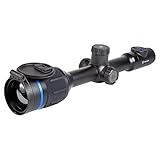
Pulsar Thermion 2 Pro Thermal
- › 384x288 microbolometer
- › germanium optics
- › 2000 yard detection
- › Stream Vision 2 app
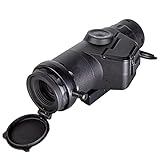
Sightmark Wraith 4K Mini
- › 4K CMOS sensor
- › first focal plane reticle
- › 4K video
- › compact aluminum body
Two thermals and one digital scope, because that split reflects how the field is actually being used right now. The Rattler V2 and the Thermion 2 Pro cover the majority of coyote scenarios, one as a compact generalist and one as a long-range glass. The Wraith 4K Mini earns its place because a lot of hunters do not need heat detection at all, and they want a scope that doubles as a daytime optic with video built in.
All 10 Night Vision Scopes at a Glance in October 2026
| PRODUCT MODEL | KEY SPECS | BEST PRICE |
|---|---|---|
|
|
Check Latest Price |
|
|
Check Latest Price |
|
|
Check Latest Price |
 |
|
Check Latest Price |
 |
|
Check Latest Price |
 |
|
Check Latest Price |
 |
|
Check Latest Price |
 |
|
Check Latest Price |
 |
|
Check Latest Price |
 |
|
Check Latest Price |
Every optic in that table is covered in detail below, in the order I would actually consider them for a coyote setup. The two leading the list are thermal, the next two solve specific problems that thermal alone does not, and the final four are the digital and clip-on options that make sense when your budget, your existing glass or your terrain points somewhere else.
1. AGM Rattler V2 19-256 Thermal Scope – Best All-Round Choice for Coyote Hunters
AGM Global Vision Rattler V2 19-256 Thermal Scope High-Sensitivity Sensor
256x192 12um sensor
2.5x base mag, 8x digital zoom
11.5 hr runtime, IP67 rated
+ The Good
- Wide field of view suits scanning moving predators
- 11.5 hours per charge with two batteries included
- Stadiametric rangefinder plus 10 reticle styles and 4 palettes
- Shot-activated recording with onboard audio
- IP67 waterproof and rated from -22F to 131F
- The Bad
- 256x192 is low resolution against newer sensors
- Polycarbonate body feels less rugged than metal
The Rattler V2 is the optic I keep coming back to because it solves the coyote problem more completely than anything else at this level. The 19mm objective with a 256×192 twelve micron sensor gives you a 9.3 degree field of view at 2.5x base magnification, which is a genuinely wide scan window when a coyote is running a fence line instead of sitting still. You find the animal in the dark, confirm it, and only then zoom.
What surprised me most was the battery situation. AGM fits two rechargeable batteries in the box and rates the scope at up to 11.5 hours per charge. For a caller who is set up before first light and packing out well after dark, that is the difference between a comfortable night and a night spent rationing cells. There is also a stadiametric rangefinder built in, so you can get a range estimate without a separate rangefinder strapped to your rifle.
At 6.34 ounces it is the lightest optic in this entire group, and that matters more for a coyote rifle than the spec sheet suggests. A light scope is a scope you can actually shoulder quickly when something moves at the edge of the light, and a scope you can hold steady off a shooting stick at first light. The 45mm eye relief is also far more generous than most compact thermal scopes manage, so you will not be fighting a scope ring in the dark.
It is not perfect, and buyers are honest about why. The 256×192 sensor is the lowest-resolution option in AGM’s own range, and at long range you will notice that range identification, meaning telling a coyote from a deer, is harder than a 384×288 or 640×480 unit would make it. The body is polycarbonate rather than metal, which keeps the weight down but does not feel as substantial in the hand. Buyers who already own a larger thermal tend to use this one for the general night work and reach for something else at 400 yards and beyond.
What the Rattler V2 does better than the rest
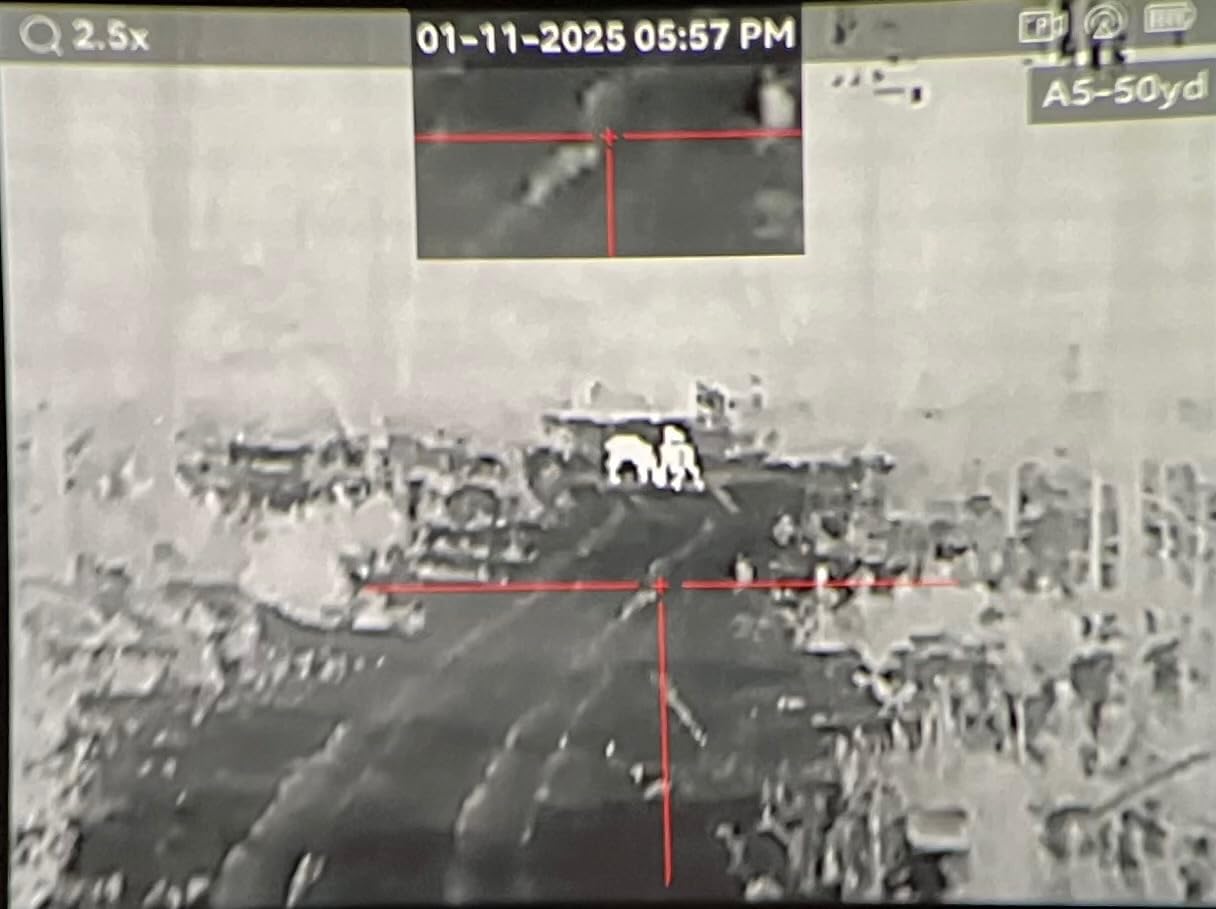
The 2.5x base magnification with 8x of digital zoom gives you a real 20x ceiling, and combined with a 9.3 degree field of view it means one optic covers a 300 yard hayfield and a coyote at the base of a timber edge. Most compact thermals force you to choose between scanning wide and resolving distant detail. This one does both from the same body, and the WiFi plus shot-activated recording with audio means you can review the shot without guessing at what you saw.
It is also rated all the way down to -22F and up to 131F with IP67 sealing, which matters for the shoulder of the season and for the places where a coyote problem is worst because the weather is worst. Scope covers and lens tissue come in the box with a mount and USB cable, so there is nothing else to buy before the first trip.
Where the Rattler V2 falls short
If your hunting is glassing hard at 500 yards or more, the low native resolution is the honest limit here, and you should step up to a 384×288 or 640×480 sensor rather than lean on digital zoom. Two batteries in the box is enough, but plan a rotation anyway, because a second battery is not the same as a third one.
It is also a thermal, which means no antlers and no species detail. If your night hunting includes deer and you need to tell a doe from a buck at distance, you will want a digital scope in the cabinet as well. Within coyotes and hogs, that limitation rarely matters.
2. Pulsar Thermion 2 Pro Thermal Scope – Best Long-Range Detection
Pulsar Thermion 2 XQ50 Pro Thermal Riflescope
384x288 microbolometer
Germanium optics, 2000 yard detection
2x-10x mag, 50mm eye relief
+ The Good
- Longest stated detection range in this group at 2000 yards
- Stream Vision 2 app for live image and remote control
- Picture-in-picture zeroing mode
- IPX7 waterproof magnesium alloy body
- Battery pack
- charger and carrying case included
- The Bad
- 384x288 sits a step below the newest 640x480 sensors
- Higher price tier than every other unit in this group
When the question is how far you can see a coyote before you can identify it, the Thermion 2 Pro is the answer in this group. Pulsar pairs a 384×288 microbolometer with germanium optics, and rates detection out to 2,000 yards in complete darkness. That is a detection figure, not an identification figure, and I want to be clear about that distinction, because it is where most marketing blurs. In practice you will be identifying and shooting well inside that number.
Still, the practical effect is real. On a big CRP field with a treeline a quarter mile off, the Thermion 2 Pro picks up a heat signature long before you would have a visual on the animal with a digital scope, and that head start is what makes a clean shot possible instead of a rushed one. Germanium optics handle the long end of the thermal spectrum better than ordinary glass, which is why this scope resolves a distant animal where the others in this group show a smudge.
The 2x to 10x magnification range with 50mm eye relief and a 7.5 degree field of view is a sensible split for predator work. The low end is wide enough to sweep, and 10x is enough to hold a coyote that is moving across a far field without the digital smearing you get from extreme magnification on a small sensor. Magnesium alloy construction and an IPX7 rating tested to 30 minutes at one meter make it a scope you can leave mounted through bad weather.
What separates this from every other thermal here is the Stream Vision 2 app. It handles software updates, streams the live image to your phone, and lets you control digital functions remotely, which means a partner can call adjustments to your reticle from the truck. Picture-in-picture zeroing uses ten percent of the display area so the magnification change does not black out your view, and getting a digital scope zeroed quickly matters when you only have a few shots to prove the zero at 100 yards.
Why detection range changes how you hunt
Early detection is a shooting advantage, not a bragging point. When you have six hundred yards of warning that a coyote is working the far end of the field, you can get set on your sticks, settle your breathing and call the shot at your pace. When the first thing you see is a coyote at two hundred yards already moving, you are reacting. A scope that finds heat at long range lets you hunt at the speed you choose.
It is also useful on ground that is not open. Thermal reads through light brush, thin fog and the ambient temperature differences that make digital night vision struggle, and the long end of the spectrum handles a cold night better than a moonlit one.
Where the Thermion 2 Pro costs you
This is a magnesium alloy scope in a price tier of its own, and it is the one product here that will make you think twice about the purchase. If you hunt coyotes on ground where everything comes to you inside 300 yards, a smaller scope will serve you better for far less.
Reviewers also note that this generation sits at 384×288 while newer Pulsar panels reach 640×480, so if you are buying strictly for image detail at extreme range, the higher-resolution variant is the better target. And with a modest pool of owner reviews, treat the rating as encouraging rather than settled.
3. ATN Thor LTV 1.5-4.5x Thermal Scope – Best for Close-Range Weight and Eye Relief
ATN Thor LTV Ultra-Light Weight Thermal Scope. The Thor LTVs are Premium Thermal Scopes for Hunting That utilize Advanced Thermal Vision. Easy to use Advanced Thermal Scopes
256x192 12 micron sensor
60Hz refresh rate
1.4 lb total, 90mm eye relief
+ The Good
- 60Hz refresh keeps a moving coyote sharp instead of smeared
- Only 1.4 lb including rings and eyecup
- 90mm eye relief works with almost any mount or shooter
- SharpIR AI processing with One Shot Zero
- Mounts with standard 30mm rings
- The Bad
- 256x192 resolution limits long-range identification
- Thermal cannot show antlers for species ID
The Thor LTV wins on two numbers that forum hunters treat as hard thresholds: refresh rate and weight. The 60Hz refresh rate on a twelve micron sensor is the difference between tracking a coyote that is running and following a trail of afterimages. A lot of people shopping thermals accept 30Hz because it is what most of the category ships with. If you have shot a running animal through a 30Hz scope, you already know why that matters.
Then there is the 635 gram body, which comes to 1.4 lb fully set up with rings and eyecup. For a predator rifle that gets carried in and out of a vehicle, propped on a shooting stick, or used off a ground blind, that is a real difference over a two-pound thermal. Several buyers report buying a second unit, which tells you how well it disappears on a rifle.
SharpIR AI handles the image processing, and the effect is that edges get sharpened rather than simply brightened, which keeps a coyote’s outline readable against a background of grass and shadow. One Shot Zero gets you sighted in without multiple adjustment cycles, and the built-in HD video recorder is there for reviewing the shot afterward.
Where the Thor LTV earns its place
Close-range calling and hog work at 100 yards and inside is exactly what the 1.5x to 4.5x magnification range is built for. A 1.5x base is wide enough to find an animal that is already at your feet line, and 4.5x is plenty to separate a coyote from a deer in a treeline without the shake that high magnification brings on a small sensor.
The 90mm eye relief is the sleeper feature. You can mount it on standard 30mm rings, take a short forward mount position, and still have plenty of room behind the ocular, which means it fits over a heavier barrel, on a scout rifle with a forward accessory rail, or on a high riser without fighting for clearance.
Because it mounts with standard 30mm rings, it drops into a setup that already has a day scope and no rings of its own. The electronics are also built and tested at ATN’s own facility in Florida, and the package includes the eyecup, lens tissue, scope cover and USB-C cable, so it is ready to mount on day one.
Where the Thor LTV falls short
The 256×192 sensor is the weak point, and owners say so directly. Several wish they had stepped up to a higher resolution model after using it. If your coyote hunting involves long glassed shots rather than close calling, this is not the scope.
Thermal imaging cannot show antlers, so you cannot tell a buck from a doe in a mixed group. For predator control that is not a problem. If you are running deer or need species separation at range, plan to keep a digital scope as well.
4. ATN Tico 6 Thermal Clip-On – Best Way to Keep Your Day Scope
ATN Tico 6 Thermal Imaging Clip-On Scope Attachment, 256×192, Coyote & Hog
256x192 at 20 mK NETD
1x-8x, 800x600 OLED
Clip-on or handheld monocular
+ The Good
- Converts an existing day scope without changing zero
- Low 20 mK NETD picks up faint heat signatures
- SharpIR AI enhancement sharpens edges
- Doubles as a handheld monocular for glassing
- Five-year manufacturer warranty
- The Bad
- 256x192 is the lowest resolution option in the Tico 6 range
- Clip-on position adds length and weight ahead of the objective
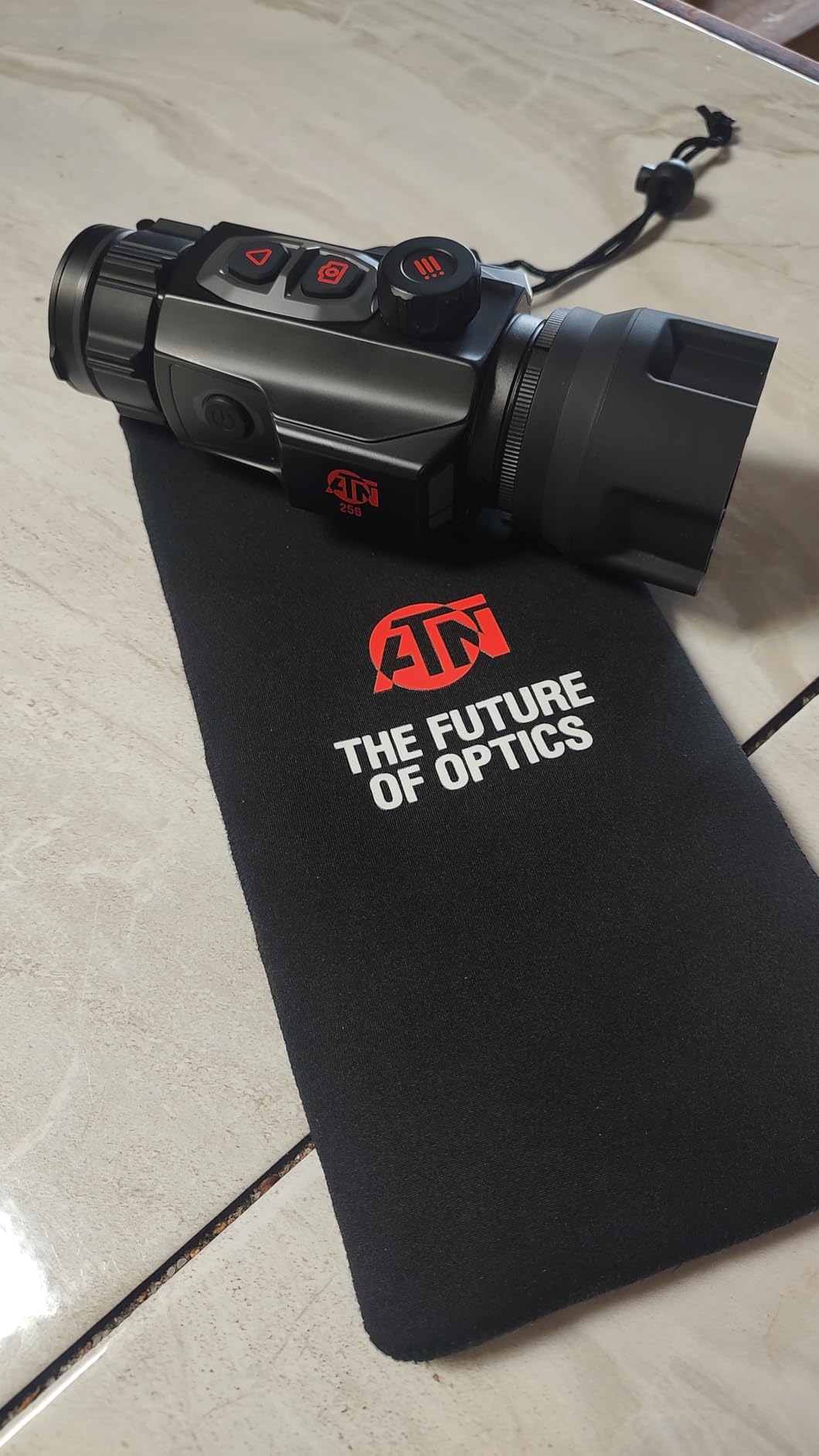
This is the answer for anyone who already owns a daytime scope they love and does not want to replace. The Tico 6 clamps in front of your existing objective and sends the image to its own 0.32 inch 800×600 OLED display mounted behind the eyepiece, which means your magnification, your reticle and, critically, your zero all stay exactly where you left them. There is a rubber adapter and spacer mount in the box for fitting it up against different objective housings.
What you gain is genuine heat detection with a sixth generation sensor at 256×192 and a NETD of 20 mK or better. That figure is where the scope can distinguish a small temperature difference from its surroundings, and a lower number is better. In practice it picks up a coyote through brush, fog and total darkness where a digital night vision scope would show you nothing at all.
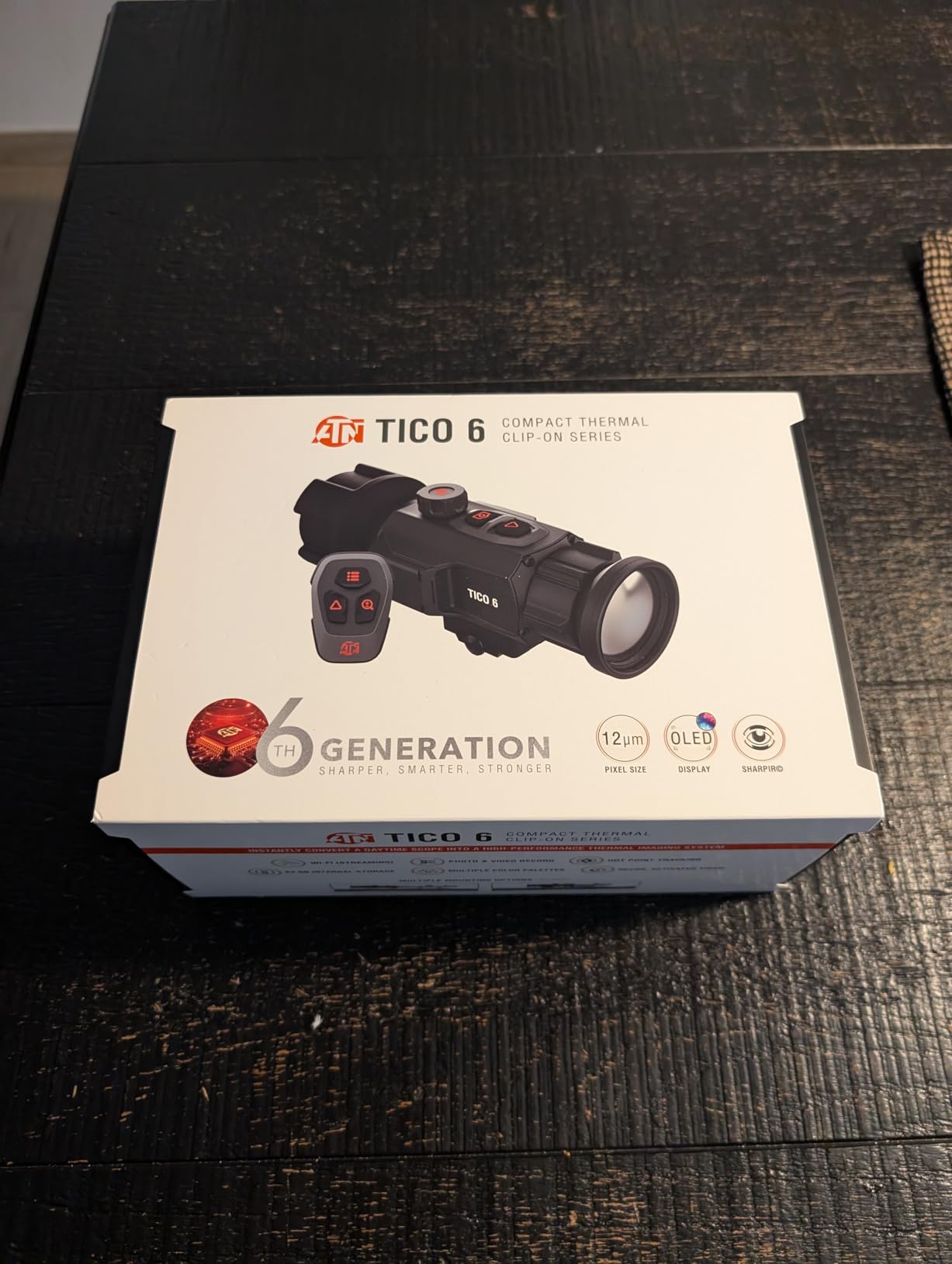
The 1x to 8x magnification is wider at the bottom than a typical thermal, and because the unit detaches and works as a handheld monocular, you can leave the rifle alone and walk a fence line with it. That is a genuinely useful mode. Most of the time you are locating, not shooting, and scanning on foot with a handheld beats sitting behind glass watching a narrow field of view.
Everything else is here too: hot point tracking that locks onto the warmest spot in the scene, multiple color palettes, 64 GB recording, recoil-activated video, WiFi streaming and a tactical remote. The 18650 battery, charger, adapter, spacer and unit all come in the case, so battery logistics are simple, standardized cells you can buy anywhere.
Why keeping your zero matters more than it sounds
Every sighting-in session is time, ammo and a chance to learn something about your rifle. Losing your zero because you swapped optics is a cost most experienced hunters have learned to hate, and a clip-on avoids it completely. You can shoot the same day with the Tico 6 mounted that you sighted in with the glass off.
It also means one rifle can cover a deer hunt in October and a coyote season in January without a second scope in the budget. The five-year warranty is the longest in this group, which matters on a device that will be outside in January.
Where the Tico 6 costs you
Two compromises come with the clip-on format. The first is resolution, since 256×192 is the base of the range and the 384×288 and 640×512 variants are the ones to look at if you intend to shoot past 300 yards regularly. The second is physical, because sitting in front of your existing objective it adds length and weight to the front of the rifle and can upset how the rifle hangs off a pack or a rest.
With only a thin pool of owner reports, the feedback here is limited. What the reviews that do exist show is buyers who value exactly this approach, accepting the trade because preserving their existing scope is worth more to them than the last increment of resolution.
5. Sightmark Wraith 4K Mini Digital Scope – Best Digital Night Vision Scope
Sightmark Wraith 4K Mini 4x Digital Night Vision Riflescope
4K CMOS sensor, 1280x720 FLCOS
4-32x32, 8x digital zoom
Detection to 300 yards with IR light
+ The Good
- Compact aluminum body that is easy to set up and shoot
- Fast startup and a straightforward menu system
- Built-in 1080p and 4K video recording with audio
- First focal-plane reticle options with 8x digital zoom
- Includes an IR flashlight with an adjustable Picatinny mount
- The Bad
- Daytime image can be very blurry on some examples
- Included CR123 batteries run about 2 hours and are not rechargeable
- Weaver-only mount with no tripod thread
If you do not need heat detection, the Wraith 4K Mini is the most pleasant digital night vision scope in this group to actually use. It starts fast, the menu system is intuitive, and zeroing is straightforward, which sounds like small things until you are doing it in the dark with a headlamp on. A 4K CMOS sensor feeding a 1280×720 FLCOS display gives a genuinely detailed picture of a coyote sitting in a field, and it does it in a 1.4 pound aluminum body that is easier to shoulder than a thermal rig.
The detection figure is 300 yards in darkness with the included IR flashlight, and that IR light mounts on an adjustable Picatinny mount so you can center the beam on your existing zero. Owners who already own a thermal report using this one for normal low-light situations instead, which is exactly the complementary setup that makes sense: thermal for the far end of a field, digital for everything in between.
First focal-plane reticle options scale with magnification, so your holdover stays consistent as you zoom, which matters on a 4-32×32 where you will be covering a lot of ground with a single optic. Eight times digital zoom extends the top end for identification on a distant animal.
Video recording is built in at 1080p and 4K with audio, and the package includes flip-up lens covers, a focus throw lever, an eye cup and a fixed Picatinny mount. The scope is shockproof to three foot drops and rated for .308, so a heavy magnum load will not end your night. It operates from 32F to 140F, covering most of a coyote season.
Why a digital scope earns a place in a coyote kit
Digital night vision shows detail, and detail matters for identification. A thermal can tell you something warm is out there, and a digital scope can tell you whether it is a coyote, a deer or a person before you commit. The Wraith is also a usable daytime scope, so one optic covers a deer hunt and a predator season.
The compactness deserves a second mention. At 1.4 lb it is one of the lighter dedicated scopes here, and the FLCOS display means the image stays smooth rather than rolling, which makes a moving coyote far easier to follow.
Where the Wraith 4K Mini falls short
Daytime performance is the recurring complaint. Several owners report a very blurry daytime image, and there is no pinhole lens cap in the box for safe use in bright light, which is a gap in an otherwise complete package. If you plan a lot of daylight use with this scope, buy the daytime cap.
Battery life is the other issue. The included CR123 lithium cells run roughly two hours in full color mode and are not rechargeable, so you are swapping batteries rather than charging, and you should carry more than two. Finally, the Weaver-only mount means no standard tripod thread, which rules out using it as a handheld spotting scope on the same rail hardware.
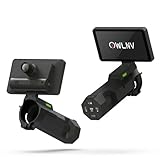
6. OWLNV N9 Digital Clip-On – Best Digital Clip-On Attachment
N9 Digital Night Vision Scope for Rifle – 1080P FHD Clip-On Attachment with 5″ Large IPS Screen, 850nm Infrared Illuminator, WiFi, 3-10.5X Zoom, Recoil Resistant Day/Night Optic for Hunting
1080P FHD capture, 3x-10.5x
5-inch HD IPS screen
850nm IR, ID to 328 yards
+ The Good
- Clip-on design keeps your scope
- magnification and zero intact
- Large 5-inch IPS screen gives a comfortable wide view
- Adjustable 850nm IR beam floods or focuses
- WiFi live streaming and recording to a TF card
- Aviation-grade aluminum rated to 6000J recoil
- The Bad
- Works only with AO or side-focus scopes
- Battery insulating film must be peeled off before first use
- TF card not included
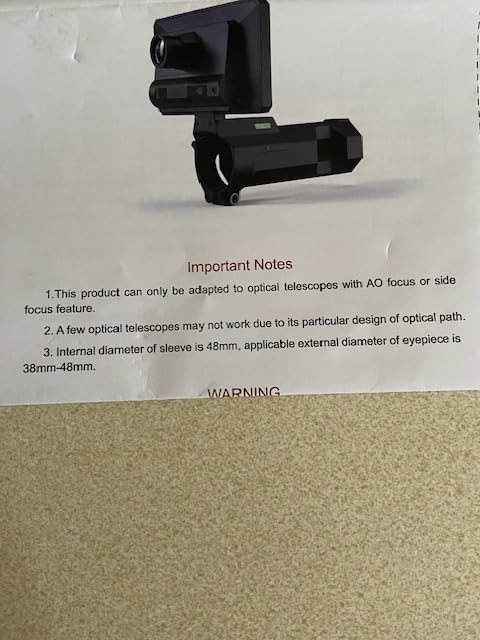
The N9 does for digital night vision what the Tico 6 does for thermal: it makes the daytime scope you already own a night scope without touching your zero. The 48mm sleeve fits eyepieces from 38 to 48mm, and because it clips on behind the glass rather than replacing it, your magnification and your zero carry straight over. The quick-release fastening buckle means setup takes seconds with no tools, which is the difference between using it and leaving it in the case.
The screen is the standout. A 5-inch HD IPS panel with wide-angle viewing is a genuinely large eyepiece image, and on a night hunt that is a real comfort advantage over the small screens most digital add-ons use. The adjustable 850nm IR torch goes from flood to spot, so you can light up a whole treeline or concentrate the beam on an animal, with target identification stated out to 328 yards.
You also get 3x to 10.5x zoom with re-zero capability, 1080P FHD video capture, built-in WiFi for live streaming to a phone and recording to a TF card up to 128GB, and a 3200mAh battery that charges over Type-C and can run off a power bank. Aviation-grade aluminum and a 6000J recoil rating mean it will not be the part that fails when a magnum round goes off.
Why clip-on digital is underrated
The economics are hard to argue with. One attachment gives every scope on your rack a night capability, rather than one rifle having a night optic and the rest having nothing. For a hunter with two or three rifles set up differently, that flexibility is worth more than a marginal image quality gain.
The 850nm illuminator is the standard workhorse wavelength, and it is the right choice for open country and long range. It throws further than 940nm, which is the trade-off you accept by choosing a clip-on with a visible-flood IR.
Where the N9 falls short
Compatibility is the real constraint, and you need to check it before anything else. It works with AO or side-focus scopes only, and some optical path designs will not physically or optically work with a rear-mounted clip-on. Measure your eyepiece and confirm your scope type first.
Two smaller annoyances: the battery ships with an insulating film that has to be peeled off or the unit simply will not power on, which produces a lot of confusion on day one, and the TF card is not included so you need to buy one and pay attention to its speed class. Both are five-minute fixes before you leave the house.
7. Triton StarStrike Gen II Digital Scope – Best Metal-Body Entry Scope
Triton StarStrike Gen 2 5-20×50 Scope with Extended Eyecup
5x-20x with 50mm objective
ID to 200 yards
Patented extendable eyecup
+ The Good
- Patented extendable eyecup blocks light leak and improves comfort
- Clear night image reported out to roughly 270 yards
- 5x-20x zoom with three IR settings and IR focus
- Aircraft-grade aluminum holds zero within a few inches at 75-100 yards
- Unconditional lifetime warranty
- The Bad
- Battery runtime is the most common complaint
- Battery cap is unsealed and hard to align
- Heavy for a digital scope
The StarStrike Gen II is the one in this group that feels like a traditional scope in the hand, because it is a solid aircraft-grade aluminum body rather than a plastic tube. Owners report it holding zero within a few inches at 75 to 100 yards, and that is the kind of mechanical confidence that matters when you are setting up in the dark on a hillside and cannot afford to redo the sighting-in.
The magnification range is unusually wide for an entry digital scope at 5x to 20x with a 50mm objective lens, and identification is reported out to roughly 270 yards. That range puts a sitting coyote well inside what the scope can resolve, which covers the majority of shots people actually take. Three IR settings with IR focus let you tune the illuminator to conditions rather than running it flat out.
The patented extendable eyecup is a nicer piece of engineering than it sounds. It blocks light leaking in from the sides, which protects your night adaptation, and it adjusts so you can dial in your own eye relief on a scope that is heavier than most digital units.
It also records to a memory card with a simple menu, includes two batteries, and carries an unconditional lifetime warranty, which is a stronger commitment than anything else in this group offers. That combination is what makes this an easy first digital scope: there is nothing to learn before you can use it in the field.
When the StarStrike makes sense
If you want a scope that looks and handles like glass, that is durable, and that does not need a phone app or a paired device to work, this is the one. It also mounts on a Picatinny rail without requiring scope rings, so setup is straightforward even if you have never mounted a night optic before.
For a hunter who wants to shoot deer in October and coyotes in January with the same optic, 24-hour day and night viewing and digital zoom make that realistic.
Where the StarStrike costs you
Battery life is the complaint that comes up most often, with several owners reporting short runtime, so treat the two included batteries as a starting point rather than a full night’s set. The battery cap is unsealed, hard to align and the spring inside is stiff, which is a design weakness rather than a user error.
The field of view is narrow, described by owners as resembling a late-1990s camcorder screen, and that narrowness makes scanning a wide field slower than a wide-body digital. At three pounds it is also heavy for a digital scope, and some buyers report it being heavier still than advertised. If you are moving around on foot with a handheld, that weight will tell on you by the end of the night.
8. BESTSIGHT DIY Night Vision Kit – Best Value for Reusing Existing Optics
BESTSIGHT DIY Rifle Night Vision Scope with CCD and Flashlight for Riflescope Hunting
5W 850nm IR to 200m
5-inch 720P HD display
Fits 38-44mm eyepieces
+ The Good
- Turns an existing glass scope or monocular into a night vision system
- 5W 850nm IR illuminator with a 200m effective range
- 5-inch 720P display with adjustable brightness and contrast
- Universal brackets for 25.4mm and 30mm rails
- Metal construction
- The Bad
- Setup needs external clamping and eyepiece distance tuning
- Bright IR emitter is visible to the target
- Mixed owner satisfaction with a share of 1-star ratings
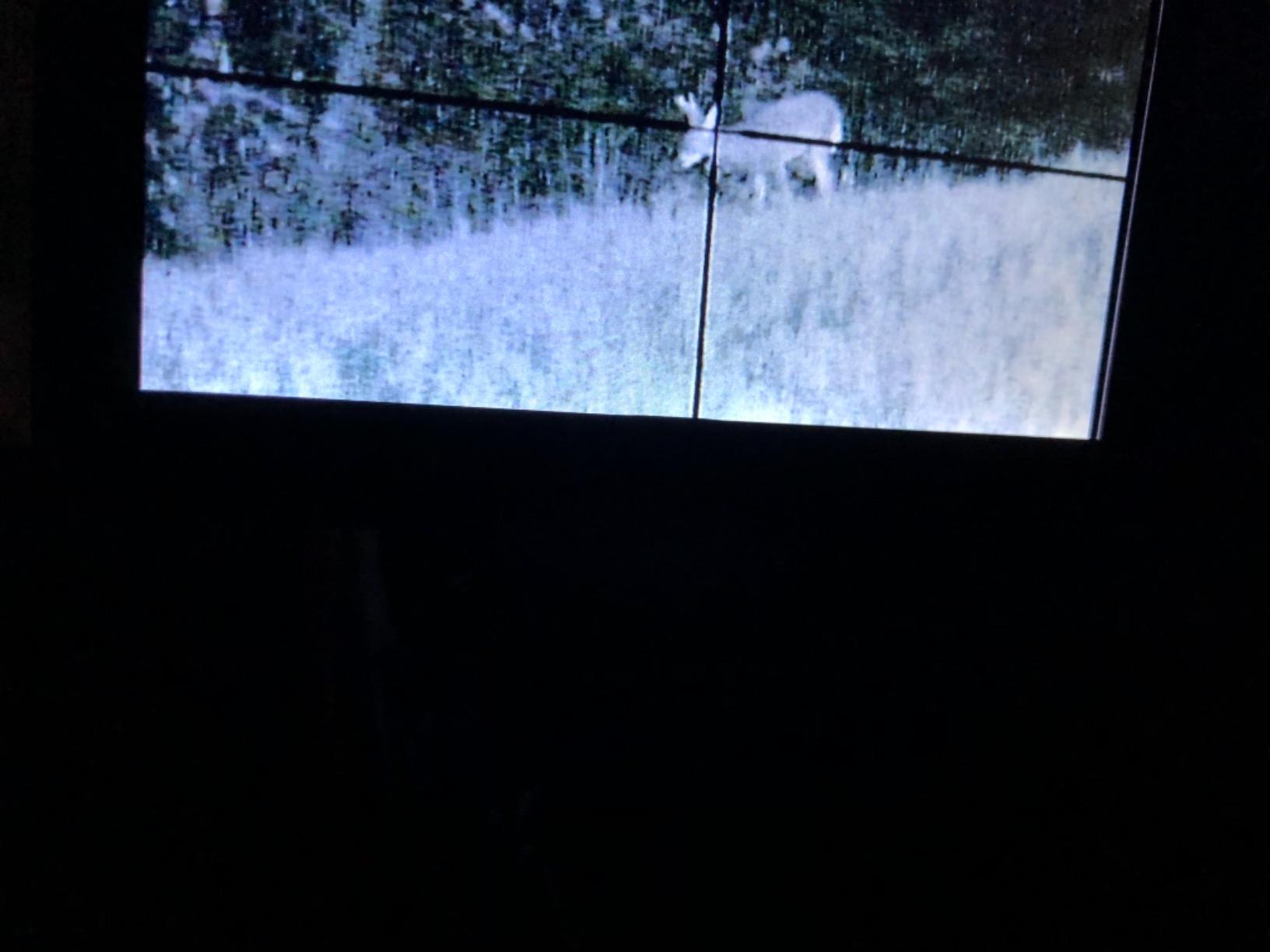
This is the highest review count in the entire group by a wide margin, and that is both its strength and its warning. A rating average built on that many owner reports tells you far more about long-term reliability than a handful of reviews ever can. The core idea is sound: a camera module, an IR illuminator and a 5-inch 720P display that clamp to an eyepiece and turn a daylight glass spotting scope, rifle scope or monocular into a night vision system. Nothing about the existing optic needs to change.
The 5W 850nm IR illuminator is rated to a 200 meter effective observation range, and the camera clamps to eyepieces from 38 to 44mm with universal mounting brackets for both 25.4mm and 30mm rails. The display is a 5-inch 720P HD panel with brightness and contrast adjustment, which is the minimum you want on a dark night when the last thing you need is an image you cannot dim.
The included components list is long: a barrel for attaching the scope, the camera, a camera and scope connector, the IR unit and the screen. Metal construction and a 365-day warranty round it out.
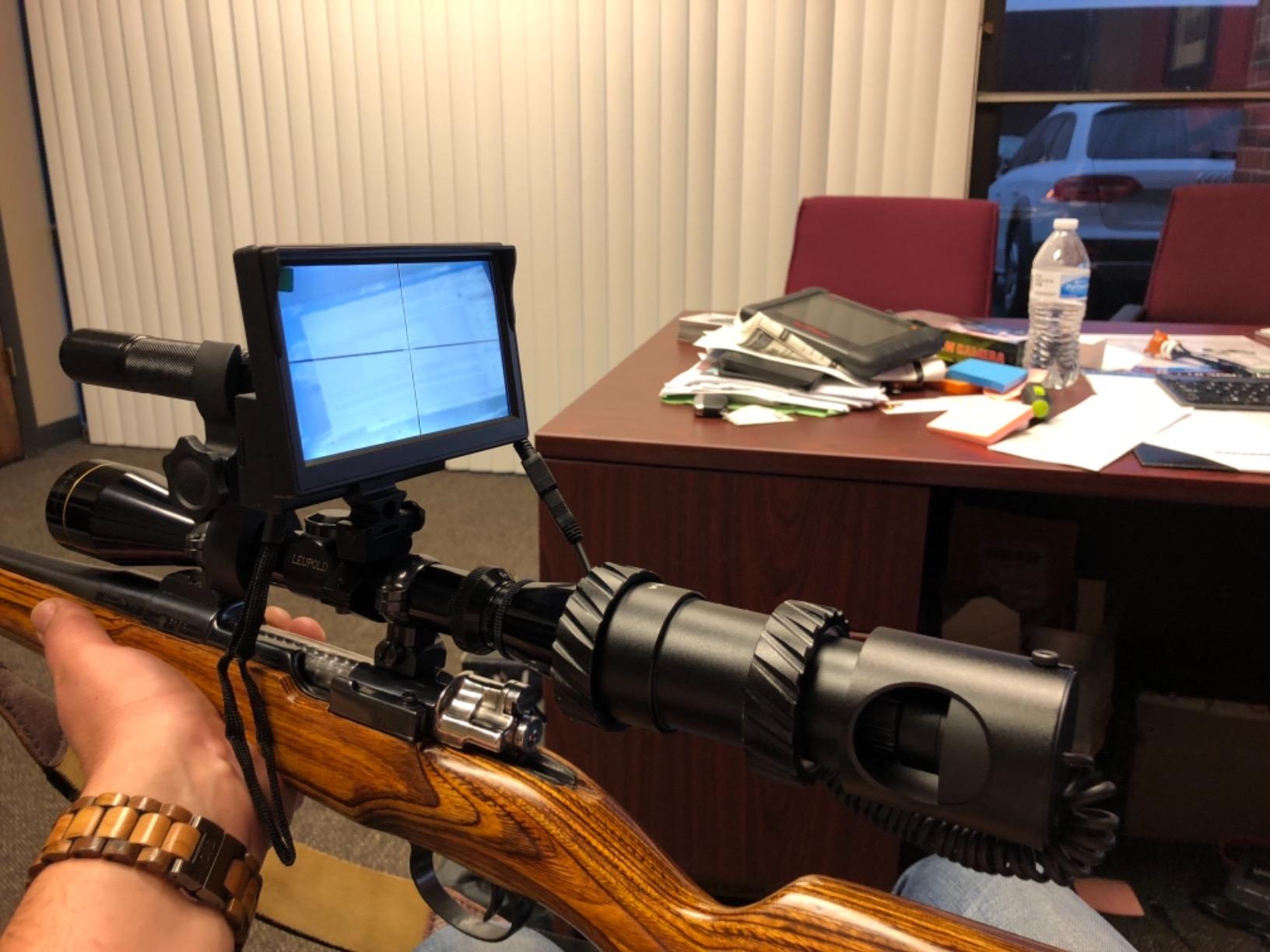
For a hunter who already owns a quality daytime optic and wants night capability for occasional coyote work, this is a low-cost path with no optic to replace. It also serves as a scout mode, letting you glass a field at night without mounting anything on a rifle at all.
What you get for the money
The ability to reuse an existing optic is the whole pitch, and it works. If you own a decent glass scope or a spotting scope with a compatible eyepiece, you have already paid for the hard part, the glass, and this fills in the night half. Owners consistently single out the low barrier to entry as the main reason for the purchase.
Nothing needs a paired device, there is no app to learn, and there is no menu system to work through. You clamp it on, turn up the brightness, and go.
Where the BESTSIGHT kit falls short
Setup is a real task rather than a clamp-and-go. You have to get the camera-to-eyepiece distance right, tune the focus and work out the mounting, and several owners describe the first session as fiddly. Budget an evening in the shop, not the field.
Owner satisfaction is genuinely mixed, with around 16 percent of ratings at one star, and the recurring themes are image clarity and durability. The IR emitter is also visible to the target as a bright source, which matters if you are trying to approach quietly rather than calling from a fixed setup. This is a value tool, and the reviews reflect that ceiling.
9. megaorei M5 1080P Digital Scope – Best Portable Digital Setup
Megaorei M5 Digital 1080P Day & Night Vision Rifle Scope Hunting Monocular Camera with 850 or 940nm IR (M5-50-IR940-GP)
1080P circular HD display
4x-16x zoom
850nm or 940nm IR, 200-400m
+ The Good
- Bright 1080P circular full-screen HD display
- 850nm and 940nm laser IR options reaching 300 yards in darkness
- Day and night modes plus photo and video capture
- Silicone-damped build that passed a 2m drop test
- Includes a built-in sight
- 12-month warranty with free replacement parts
- The Bad
- No elevation adjustment limits it as a sighted optic
- Crosshair zero does not hold under recoil on some rifles
- Plastic body and mount
- Wrong IR wavelength sometimes arrives instead of what was ordered
The M5 is the one to consider if you split your time between a handheld spotter and a rifle. It is 400 grams, has a 1080P circular full-screen HD display and a 4x to 16x magnification range, and it includes a built-in sight, which makes it usable in a way most digital scopes are not. Owners report the laser IR reaching far enough for clear images at 300 yards in total darkness, which is genuinely impressive from a unit this light.
The wavelength choice is the interesting part. This scope comes in 850nm or 940nm, and that is the one decision on this list that deserves real thought. 850nm throws further and gives a brighter image, and its emitter glows faintly red to the naked eye. 940nm is nearly invisible, which keeps your position hidden, but it trades range for that stealth.
Day and night modes, photo and video capture, and silicone-damped internals that passed a two metre drop test round out a build that seems tougher than the plastic body suggests. The warranty is 12 months with free spare part replacement, which is a meaningful offer for a scope in this category.
What the M5 is genuinely good at
Scout work. Carried by hand or set on a tripod, this is a fast way to find coyotes in a field before you ever shoulder a rifle, and the circular 1080P display with a wide view is well suited to sweeping. Owners like the price and the reach for casual or observation use, which is honest about what it is.
The 4x to 16x range is also a sensible compromise. You get enough magnification to separate a coyote from background clutter without pushing into the digital smearing that ruins an image at high magnification on a small sensor.
Where the M5 runs into trouble
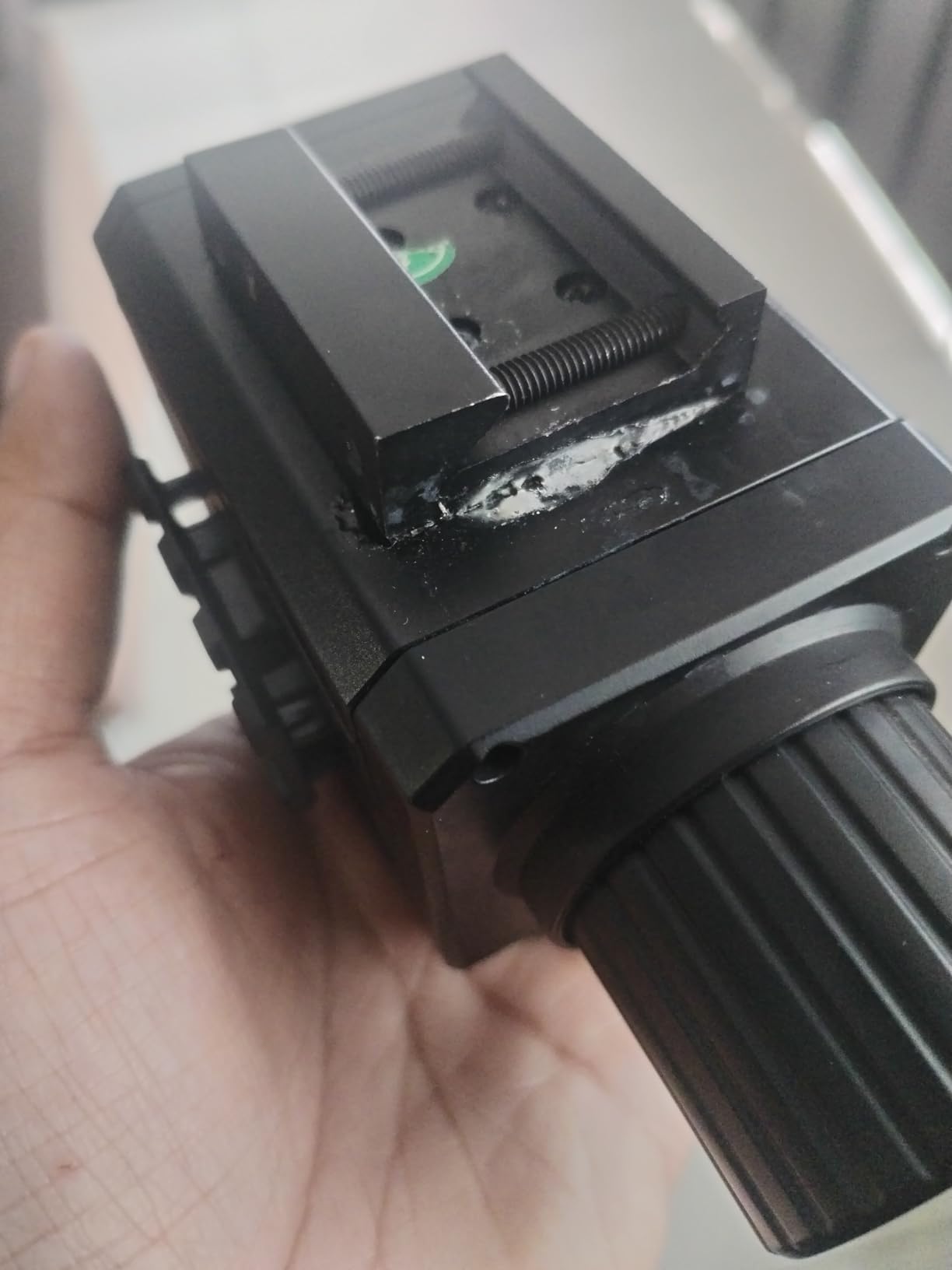
The no elevation adjustment point is fundamental. Without elevation, you cannot use this as a true sighted optic for precise aiming, which limits it to observation and, at best, holdover shooting at close range. Several owners also report the crosshair zero drifting under recoil on some rifles, and one report of pot-metal tripod threads breaking.
There is also a fulfillment issue worth flagging: some buyers received the 850nm unit when the 940nm variant was ordered. If stealth matters to you, check the emitter as soon as it arrives. The image itself is soft compared with costlier scopes, which is the expected trade for the weight.
10. megaorei 720P Digital Night Vision Camera – Budget Pick for Backyard and Pest Work
Digital Night Vision Scope Video Camera for Riflescopes Hunting IR Optics Sight 720P Video/Photo with 4.3 inch HD Display and Infrared Flashlight
720P video and photo, 3MP IR
4.3 inch HD display
IR reach to 1300 feet
+ The Good
- Inexpensive way to add night vision to an already-zeroed scope
- IR light is smaller and more capable than expected
- Frame rate can catch rimfire projectiles in flight
- 18650 batteries with good runtime on 3300mAh cells
- 4.3 inch HD screen with photo and video capture
- Reinforced to withstand recoil
- The Bad
- Recording files often corrupt or freeze around 1 minute 26 seconds
- Mounting nut and camera tube are thin plastic that crack
- Screen is bright at night and needs a red filter
- Not weatherproof
- Memory card and batteries not included
This is the most basic way to make a dark scene visible, and for a lot of people it is enough. A 3MP adjustable infrared camera feeds a 4.3 inch multifunction HD display that clamps to an existing, already-zeroed optic on a ring mount. The infrared flashlight extends observation to more than 656 feet and up to 1300 feet, and owners describe real visibility at 180 to 200 yards, which covers the closer end of most coyote setups.
It runs on 18650 cells, which is a genuine advantage over proprietary batteries. Owners report good runtime with 3300mAh cells, and standardized cells are the easiest battery system to plan around on a long trip because you can buy them anywhere. The frame rate is high enough that owners report catching rimfire projectiles in flight, and the reinforced build is designed to survive rifle recoil.
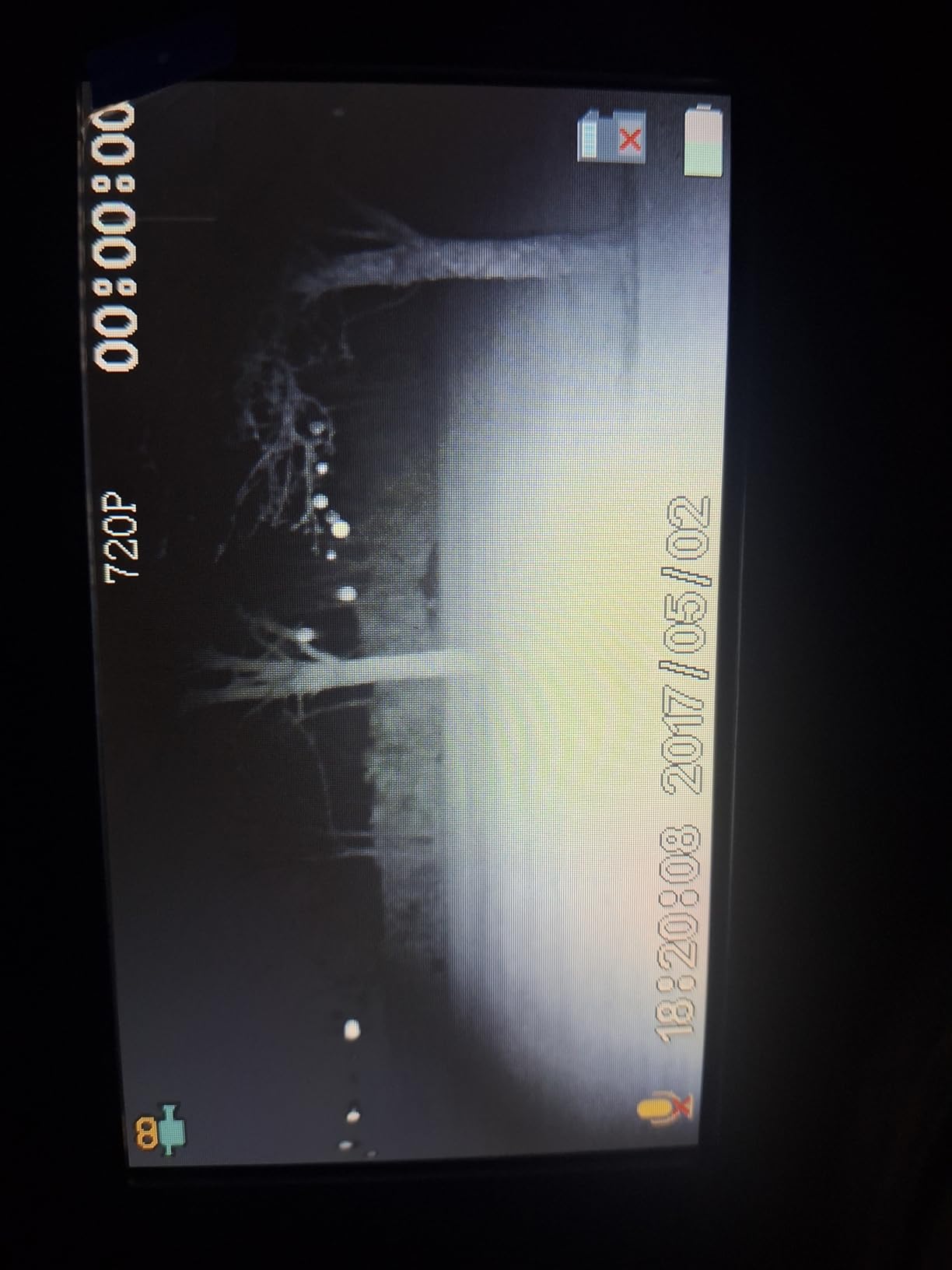
What stops this from being a serious hunting optic is reliability in the details. The recording function is the biggest problem: files frequently come back corrupted or frozen at around one minute and twenty-six seconds, which is exactly the length of a coyote encounter. The mounting nut and camera tube are thin plastic that cracks over time, and the screen is bright enough at night that owners add a red filter to protect their night adaptation.
Where this still makes sense
Backyard predator control, varmint work around the property line and confirming whether something is moving in the dark at short range. For those jobs the outlay is modest, it uses batteries you can buy anywhere, and it adds capability to a rifle you already have zeroed.
It is also a reasonable first exposure to night optics before committing to a real scope. You will learn how IR illumination behaves, how the image degrades with distance and what you can and cannot identify, at a small outlay.
Where it falls short
It is not weatherproof or dustproof, which rules it out in the conditions where coyote problems are most common. It is also not sealed against a cold night, and the recording corruption makes it a poor tool for reviewing a shot afterward.
Memory cards and batteries are not included, and card speed matters enough that a slow card will cause the recording problems on its own. If you buy it, buy a fast card and spare cells in the same order.
How to Choose a Night Vision Scope for Coyote Hunting: 7 Criteria
Coyotes are not difficult animals. A mature coyote on a CRP field at 300 yards is roughly the size of a small dog, and it does not move slowly. The difficulty is that you are doing everything at once in the dark: finding a small warm shape, telling it apart from a deer, judging distance, and doing it before it moves. Every criterion below exists because of something in that sequence going wrong.
1. Image quality and sensor resolution. A 256×192 microbolometer will find a coyote at distance, and a 384×288 or 640×480 sensor will let you identify it at that distance. Those are different jobs, and product pages blur them together constantly. Think of resolution as identification range, not detection range. If your hunting happens at 200 to 300 yards, 256×192 is workable. If you routinely shoot past 400, step up.
2. Detection versus identification range. Detection range is the distance at which the scope shows something is there. Identification range is the distance at which you can tell what it is. Thermal scopes detect far further than they identify, and a scope that detects a coyote at 2,000 yards does not help you if you can only identify it at 300. Match the identification figure to your realistic shot distance, not the detection figure to your ambition.
3. Magnification and field of view. For coyotes, a wide base magnification in the 1.5x to 3x range is worth more than maximum power, because a coyote running a fence line is easier to find at 2x than at 10x. The forum consensus is consistent on this: wide for scanning, then zoom to identify. A 2x-to-10x or 1.5x-to-4.5x range covers both jobs better than a 4x-to-16x.
4. Refresh rate. This is the criterion most roundups skip. A 30Hz display is the category baseline and it smears when a target moves. Forum users treat 30Hz as the floor and prefer 50Hz or 60Hz, and the Thor LTV here runs at 60Hz. For static calling situations, refresh rate barely matters. For a coyote trotting across a road at 250 yards, it matters a great deal.
5. Battery type and all-night logistics. There are three systems in this group and they are not equivalent. Standard 18650 cells are the easiest, because you can buy spares anywhere and carry five of them. Internal rechargeable batteries are the most convenient, with no spares to plan. Proprietary packs are the worst for planning, because you are limited to what the manufacturer sells you. Count your hours: a caller set up from dusk to midnight needs far more runtime than a two-hour glassing session.
6. Eye relief, weight and mounting. Eye relief is a deal breaker for more people than any other spec. It is the distance between the rear of the scope and your eye, and too little means blacked-out edges and a scope ring you cannot see around. The LTV at 90mm and the Rattler V2 at 45mm both solve this. The compact digital scopes at the budget end frequently do not, and several buyers return optics specifically for short eye relief. Weight matters too: anything above about 1.5 lb is noticeable on a rifle carried all day.
7. IR illuminator wavelength. This only applies to digital night vision, and it is a real choice. 850nm IR is brighter and throws further, which suits open country and long range, and its emitter glows a faint red to the naked eye. 940nm is essentially invisible, which keeps your position hidden from a wary coyote, and it costs you range. If you are calling from a fixed setup at 200 to 300 yards, 850nm is the better choice. If you are trying to walk up on animals, 940nm is worth the trade.
One more thing to weigh, and it is the item that quietly decides a lot of purchases: whether you want to keep your daytime scope. If you already have glass you like, a clip-on avoids buying a second dedicated optic and you keep your zero. If you want one scope to do everything, buy dedicated.
Digital Night Vision vs Thermal vs Clip-On: Which One Do You Need?
Here is the decision in the form I would want if someone asked me on a tailgate. If you hunt open country where animals are silhouetted against the sky, if you want depth and texture and the ability to see eyes, or if your night budget is a constraint, digital night vision is the answer. It shows detail, and with a 940nm illuminator it can be nearly invisible.
If you hunt where there is any obstruction between you and the animal, if fog, rain, cold air or a moonless night kills your contrast, or if you are glassing at distances where you need to find before you can identify, thermal wins without much argument. Heat signatures do not care about moonlight, brush or ambient temperature the way image-based optics do. The trade is a picture with no depth, no species detail and no antlers.
If you are deciding between a clip-on and a dedicated scope, the deciding question is whether you care about your existing zero. A clip-on attaches behind or in front of your day scope and leaves your zero, magnification and reticle alone, which means one attachment serves every scope on your rack. A dedicated scope replaces the glass, gives you a cleaner optical path, a brighter display and better integration between the reticle and the sensor. A rear-mounted digital clip-on costs less than a second dedicated optic and keeps your zero.
One practical caution on clip-ons: confirm compatibility before you buy. The OWLNV N9 needs an AO or side-focus scope, and some optical path designs simply will not work with a rear-mounted attachment. A five-minute measurement at the gun saves a return trip.
And if you shoot both deer and coyotes, consider that no single optic does both well. Many hunters in this category end up running a thermal and a lighter digital scope for different scenarios, which is why the Wraith owners in this group also tend to own something thermal. You can see how conventional scopes handle the same problem in our guide to the best low light rifle scopes for dawn and dusk hunting.
For coyote glassing during daylight hours, you will also want a conventional optic alongside whatever night setup you build. Our picks for that job are covered separately in the guides to the best spotting scopes and the best spotting scopes for birding, which cover the magnification and glass choices that work on the same ground where you will be sitting after dark.
Frequently Asked Questions
Which is better for coyote hunting, thermal or night vision?
Thermal is better in almost every condition except daylight and severe weather, because it reads a heat signature rather than amplifying light. A coyote at 300 yards is a small warm shape against a cold background, and thermal finds it through brush, light fog and a moonless night. Digital night vision shows more detail, costs less, and works at very close range and in daylight, so it remains the better daytime and close-quarters option.
Are night vision scopes legal for coyote hunting?
Rules vary by state and some states restrict artificial light used for taking game. Most states permit night vision and thermal optics for coyote and varmint hunting because no light is projected visibly, but a handful restrict night shooting or require specific tags. Before your first trip, check your state wildlife agency regulations and any local restrictions, and confirm with a licensed outfitter if you hunt on ground you do not own.
What magnification do I need for coyote hunting at night?
Start with a wide base magnification between 1.5x and 3x so you can scan a field, then zoom in to identify. Most coyote shots happen between 100 and 250 yards even when the animal is detected much further away, and a 2x to 10x or 1.5x to 4.5x range covers both jobs better than a high-power scope. Very wide low magnification also gives you a wider field of view, which is what actually helps you find a moving animal.
How far can night vision scopes see in total darkness?
Digital scopes with an 850nm illuminator typically identify a target out to roughly 200 to 330 yards depending on the model and conditions, while thermal scopes detect heat much further and identify nearer. Recognition degrades quickly in fog, rain and falling temperatures, which reduce the temperature contrast between an animal and its background. These are manufacturer figures under favourable conditions, so treat them as a ceiling rather than a promise.
Should I buy a 30Hz or 60Hz thermal scope for coyotes?
Buy 60Hz if you can. A 30Hz display is adequate for an animal sitting still but smears noticeably on a coyote that is moving, and 50Hz or 60Hz tracks movement far more cleanly. For close calling, where most shots come from a stationary setup, 30Hz will not stop you from hitting anything. For glassing open country and shooting running animals, the higher refresh rate is worth paying for.
Is a clip-on night vision attachment better than a dedicated scope?
A clip-on wins on cost and flexibility, because one attachment gives every scope on your rack a night capability and leaves your existing zero, magnification and reticle intact. A dedicated scope wins on image quality and integration, with a brighter display, a cleaner optical path and a reticle matched to the sensor. Check compatibility first, since rear-mounted digital clip-ons need an AO or side-focus scope.
What is the best budget night vision scope for coyote hunting?
At the low end, the BESTSIGHT kit adds night capability to an optic you already own, and the megaorei 720P camera does the same for very little money. Above that, the AGM Rattler V2 thermal is the strongest entry into the category, with a wide field of view, 11.5 hours of runtime and a stadiametric rangefinder. What you cannot do at the low end is identify distant animals, so match your expectations to close-range work.
Final Coyote Hunting Scope Picks for 2026
Start with the AGM Rattler V2 if you want one optic that covers most coyote situations, because the wide field of view, 11.5 hour runtime and 6.34 ounce weight handle both calling setups and open field scanning. Move up to the Pulsar Thermion 2 Pro if you glass long distances and need early detection, or to the ATN Thor LTV if you shoot close range and want a 60Hz display with generous eye relief on a light setup.
If you already own a daytime scope you like, the ATN Tico 6 thermal clip-on adds heat detection without touching your zero, and the OWLNV N9 does the same for digital night vision. For a first digital scope, the Sightmark Wraith 4K Mini is the most complete package here. Those are the best night vision scopes for coyote hunting in 2026 for the terrain and budget you actually have, and any of them will change what a January call sequence feels like.