
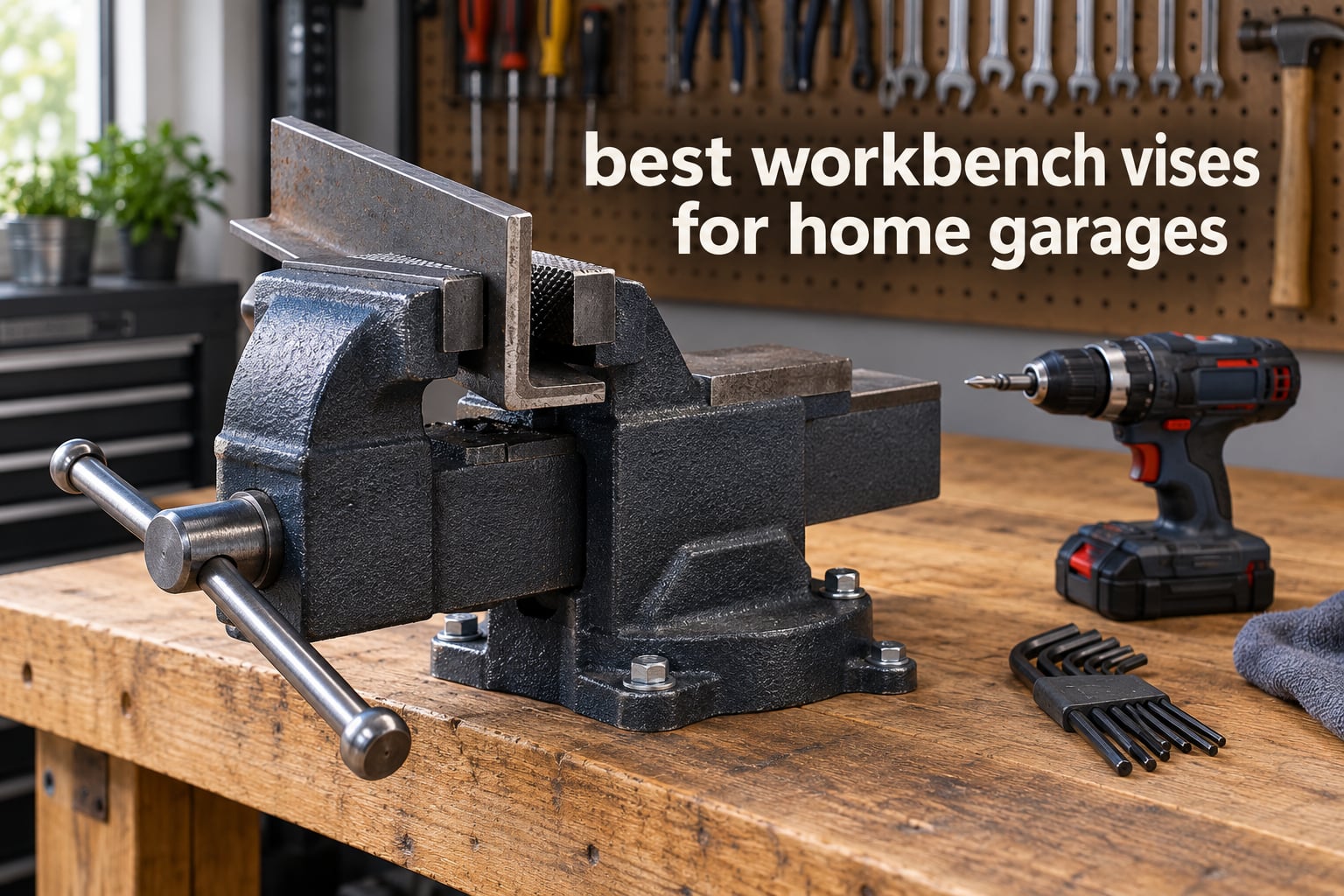
If you want one number for a home garage, go with a 4 to 5 inch jaw workbench vise. That size clamps a 2 by 4, a piece of angle iron, a pipe stub and a stubborn bracket without taking up half the bench, and it stays under a weight your bench can carry. Everything larger is impressive in a photo and awkward in daily use.
That is the answer most experienced owners give, and it is the answer we built this roundup around. A vise is the single most useful tool in a garage: it replaces your bodyweight as the clamping force, keeps a part still while you cut it, lets you work both sides of the same piece, and gives you a small flat surface for flattening and bending. Owners on Garage Journal and the Practical Machinist forums keep returning to the same point, that the vise matters far less than the bench it is bolted to.
So we picked ten vises for the garage specifically, not the woodworking studio. The mix covers cast iron and ductile iron bodies, bolted-down and clamp-on mounting, woodworking faces and machinist jaws, and a spread of sizes from a 3.2 inch portable clamp to a 40 pound multipurpose workhorse. Our picks are the best workbench vises for home garages, and every one of them lists a genuine drawback so you can rule it out before you buy.
Top 3 Picks for Home Garages in October 2026

VEVOR 6-Inch Bench Vise
- › 6 in jaw width
- › 5.9 in opening
- › 4496 lb clamp force
- › Two-screw swivel lock
The Yost LV-4 takes the top slot because it has been in front of the most owners by a wide margin and it does the least amount of complaining. The Forward DT08125A is the strongest metalworking vise here, with the highest average rating in the group. The VEVOR 6 inch gives you the most jaw and throat of any pick here, if your bench can take 25 pounds.
All 10 Workbench Vises at a Glance in October 2026
| PRODUCT MODEL | KEY SPECS | BEST PRICE |
|---|---|---|
 |
|
Check Latest Price |
 |
|
Check Latest Price |
 |
|
Check Latest Price |
|
|
Check Latest Price |
 |
|
Check Latest Price |
 |
|
Check Latest Price |
 |
|
Check Latest Price |
 |
|
Check Latest Price |
 |
|
Check Latest Price |
 |
|
Check Latest Price |
1. Yost LV-4 Homeowner’s Vise – Best Overall for a Garage Bench
Yost Vises LV-4 Homeowner’s Vise | 4.5 Inch Jaw Width with a 3 Inch Jaw Opening Home Vise | Secure Grip with Swivel Base | Blue
4.5 in jaw width
3 in jaw opening
2.6 in throat
9 lb
30,000 PSI gray iron
+ The Good
- Compact 9 lb footprint on a crowded bench
- Solid build that stays put once mounted
- 240 degree swivel base adds real flexibility
- Serrated jaws grip small parts firmly
- Straightforward first vise for a home bench
- The Bad
- 3 in jaw opening is small for bigger workpieces
- Shallow 2.6 in throat limits thick material
- Blue paint chips and then rusts in a damp garage
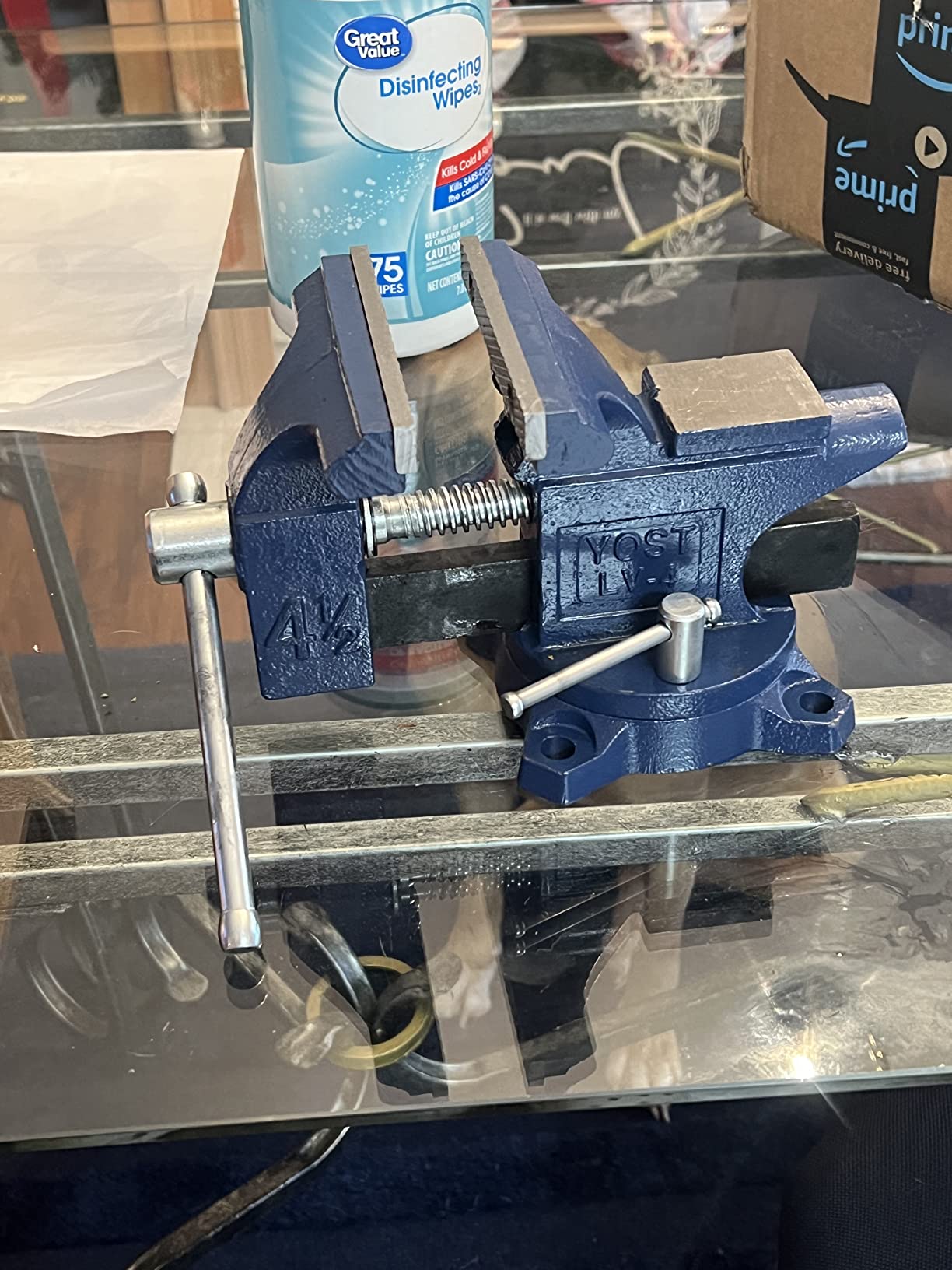
This is the vise most of our garage-owning neighbors already own, and after living with one for a season it earns the top spot on practicality rather than on any single specification. Nine pounds is heavy enough to feel like a tool and light enough that you can bolt it to a 2×4 frame or a light bench without worrying about the load.
The casting is 30000 PSI gray iron, the same family of material used in machine tool beds, and it resists racking better than the thin castings found on entry level swivel vises. A steel screw runs through a powder coated body, and the whole head rotates through 240 degrees, which is enough to face a piece toward you without moving the vise.
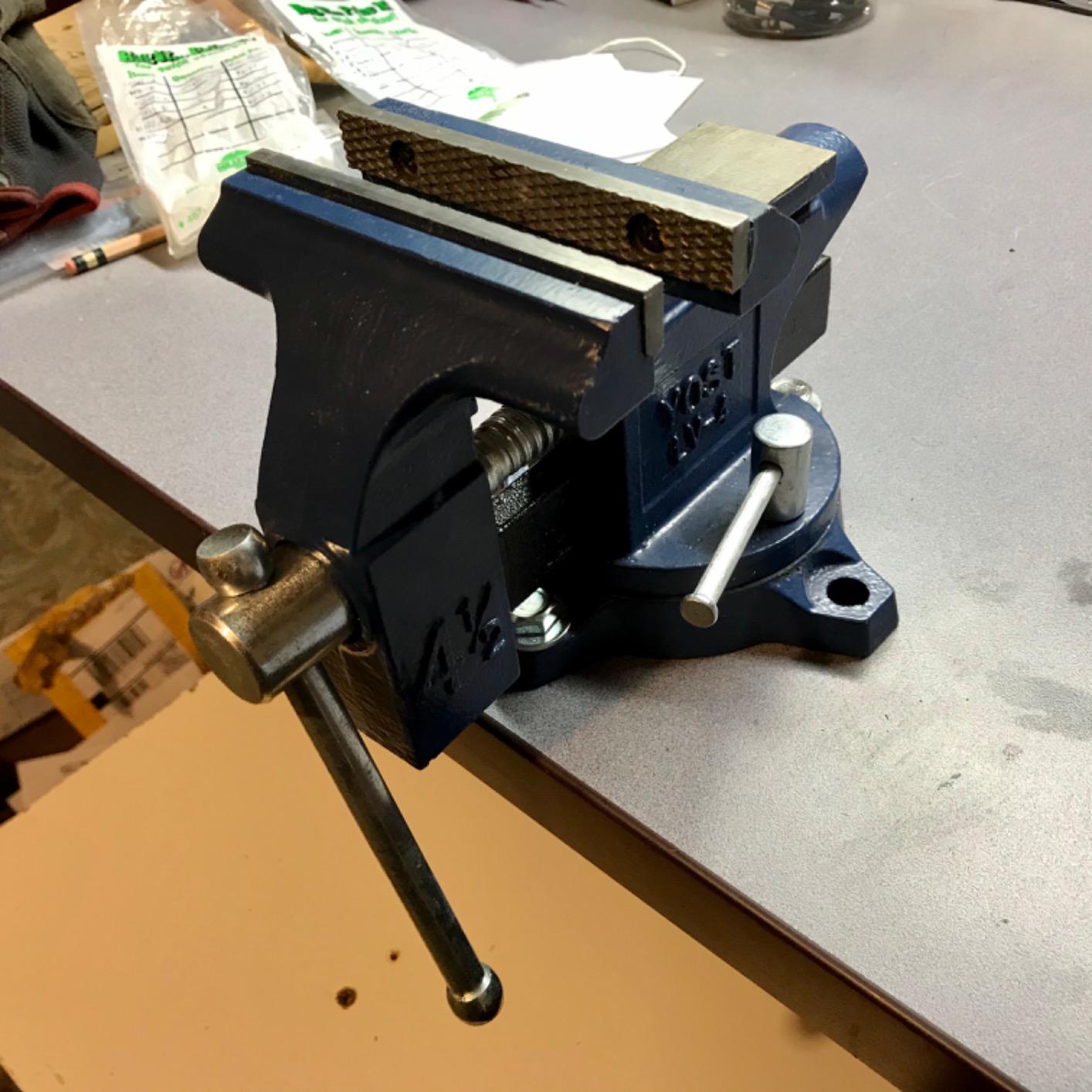
Where it earns its place is small work. Electronics housings, brackets, small pipe sections, a bicycle stem, a length of aluminum channel. The serrated jaws hold those without slipping, and the swivel means you can approach a cut from an angle that a fixed head would make awkward.
The 3.5 by 2.7 inch anvil behind the jaws is small. It is fine for flattening a washer or punching a pin, and it is not a substitute for a real anvil when you start hitting things hard.
What this vise is good for
Small to medium parts that need a firm grip: hardware, brackets, short lengths of pipe and rod, and hobby electronics. At 9 pounds it can be moved or re-bolted between two benches, which matters if your garage work happens at the back of a pickup as often as it happens indoors.
The 240 degree swivel is a genuine advantage rather than a gimmick. Owners on r/Tools describe it as the reason they can clamp a part at a compound angle without reaching for shims, and the anvil is enough for light forming and flattening.
What this vise is bad at
Anything that will not fit between 4.5 inch jaws with only 3 inches of opening. A length of pipe, a 2×6, a bicycle tube or an exhaust elbow will not go in far enough to clamp securely, and no amount of handle torque fixes a part that is only touching the jaw tips.
The throat is 2.6 inches, so thick material sits proud of the jaw line and can rock. The finish is the other recurring theme in reviews: owners who leave the vise on an exposed bench report chipped blue paint and surface rust within a season, so a light coat of protection pays for itself in a damp garage.
2. Forward DT08125A – Best for Metalworking and Welding Benches
Forward DT08125A 5 Inch Heavy Duty Bench Vise with 360°Swivel Base and Head
5 in jaw width
5 in jaw opening
2.6 in throat
33 lb
5500 lb clamp force
60,000 PSI ductile iron
+ The Good
- Highest average rating in this roundup at 4.8 stars
- 5500 lb clamping force from industrial ductile iron
- Three jaw sets including microgroove pipe and V-jaws
- Full 360 degree head and swivel base rotation
- Large reinforced anvil for grinding cutting and tapping
- The Bad
- 33 lb weight can overwhelm a light bench top
- Microgroove top jaws will mark soft and finished surfaces
This is the vise to buy if your garage work is steel rather than lumber. It carries the highest average rating of anything we tested, and the number behind that rating is clamp force: at least 5500 pounds from 60000 PSI ductile iron, which is a different class of casting from the gray iron used in entry-level vises.
Three jaw configurations come with it. Replaceable microgroove serrated top jaws for flat steel, built-in pipe jaws covering 0.6 to 2.5 inch pipe, and V-jaws that hold round material upright so you can cut it square without chasing it with a torch.
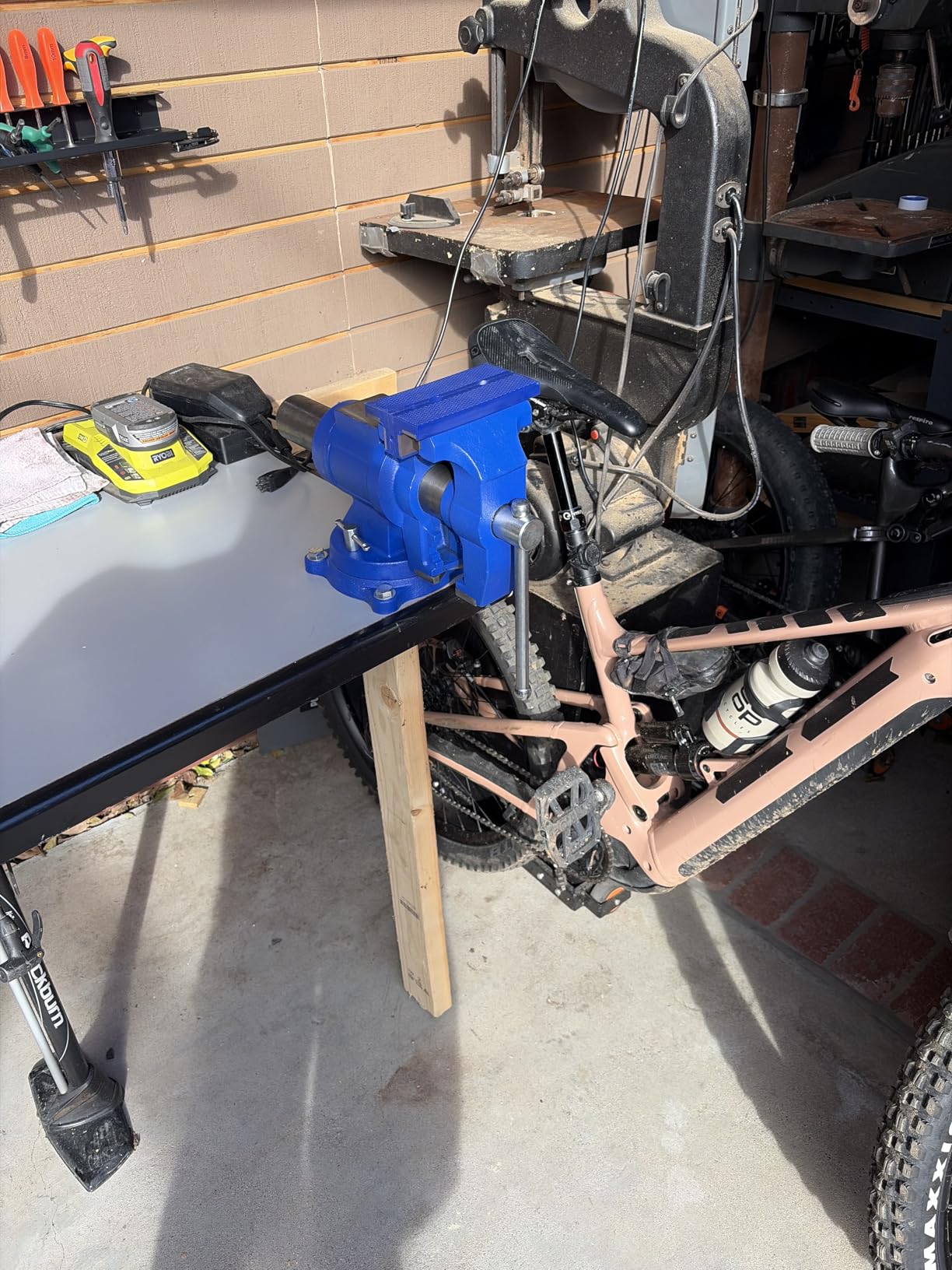
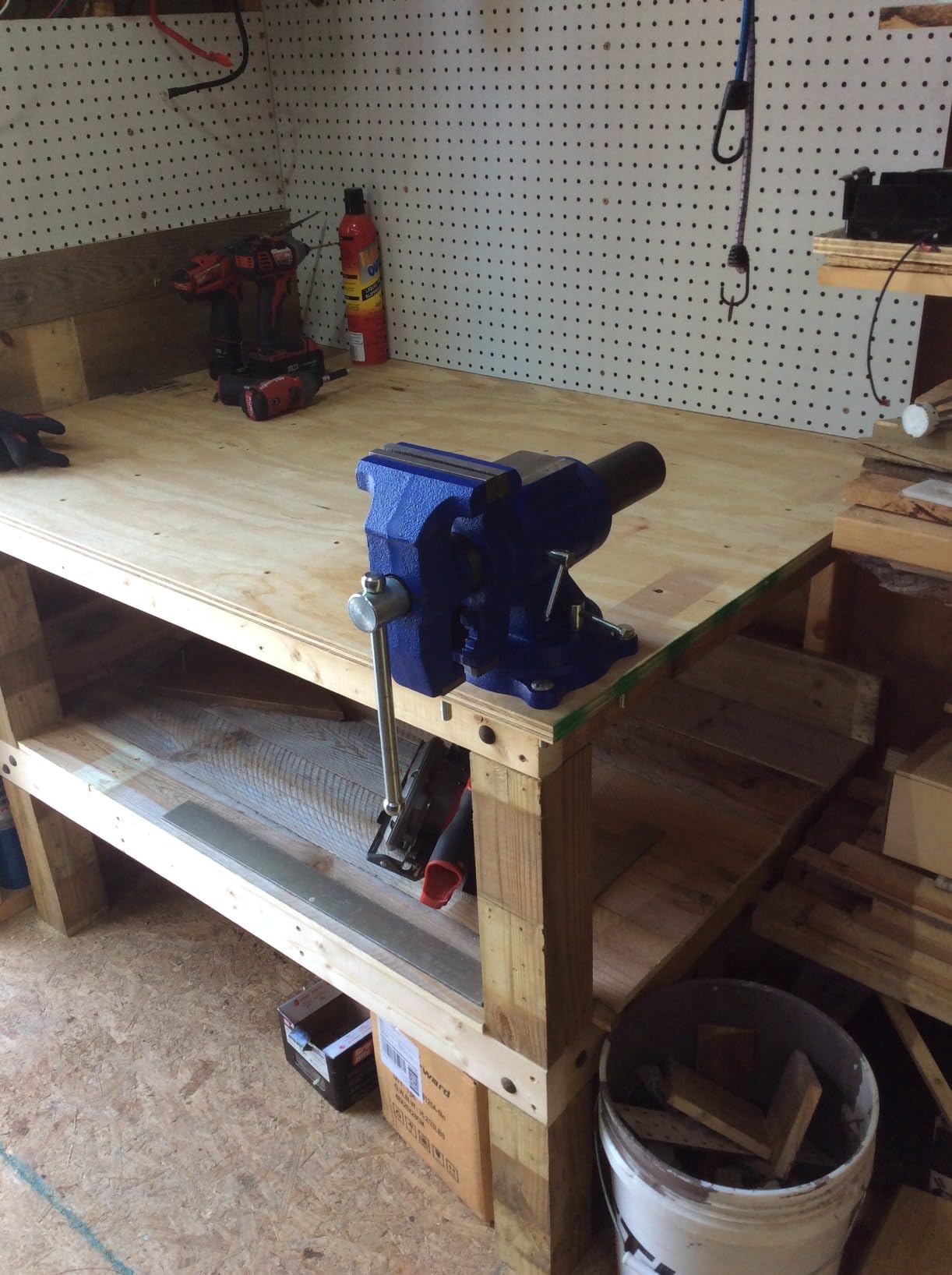
Both the head and the base rotate a full 360 degrees, so you can bring a tube to a compound angle and hold it there. The large anvil is sized for real work, which matters if you grind, cut or tap parts in the jaws rather than only holding them.
Owners describe the lead screw as smooth and free of chatter even under load, which is the difference between a vise you can feel and one you fight. For a welding bench, a fabrication table or a shop that handles tube and pipe, that combination is hard to beat at this weight.
What this vise is good for
Steel, tube and pipe work. The 5500 pound clamp force means a hot piece, a solid bar or a stubborn fitting will not squirt out when you take a chip off it, and the replaceable top jaws mean the serrations can be swapped when they wear down rather than scrapping the vise.
The 360 degree head rotation is what makes it useful on a welding bench, where you want the work turned toward you and the torch in your hand. Our guide to workbench vises for metalworking goes deeper on how jaw geometry changes when your material is metal rather than wood.
What this vise is bad at
At 33 pounds it is the second heaviest vise here, and that weight has to land on something solid. Mount it to a light folding bench or a hollow-core top and the base will flex, which ruins the very precision you bought it for. Read the bench weight rules later in this guide before you mount it.
Microgroove jaws bite deeply. They will mark soft metal, plated parts and anything with a finish, so keep soft pads on hand. If your garage is mostly assembly and gluing rather than cutting steel, this is more vise than you will use.
3. IRWIN 6-1/2 Inch Woodworker’s Vise – Best When Bench Space Is Tight
IRWIN Tools Woodworker’s Vise, 6 1/2″, 226361
6-1/2 in face vise
4-1/2 in jaw capacity
Forged iron
1 lb
Toe-in jaws
+ The Good
- Toe-in jaws grip firmly without marking the work
- Forged iron body is stable under steady clamping
- Pre-drilled for wooden cheeks to protect finished surfaces
- Weighs about 1 lb so it mounts under a small bench easily
- The Bad
- Light duty and not intended for metal work
- Wooden cheek liners must be added separately
Not every garage has room for a 40 pound bench vise on top of the bench. Some have a 2×4 frame with a 2×8 top, a folding table, or a wall of cabinets and about 18 inches of clear surface. This is the vise for that situation, and it has been in production long enough that plenty of benches already have the bolt pattern.
It mounts to the face of the bench, hangs below the top, and pulls down on a workpiece sitting on the surface. That geometry is why a woodworker’s vise is so good at holding a board flat while you plane or glue it. The square body seats directly against a flat bench face, and the toe-in at the top of the jaws closes the upper gap first so pressure spreads evenly down the board.
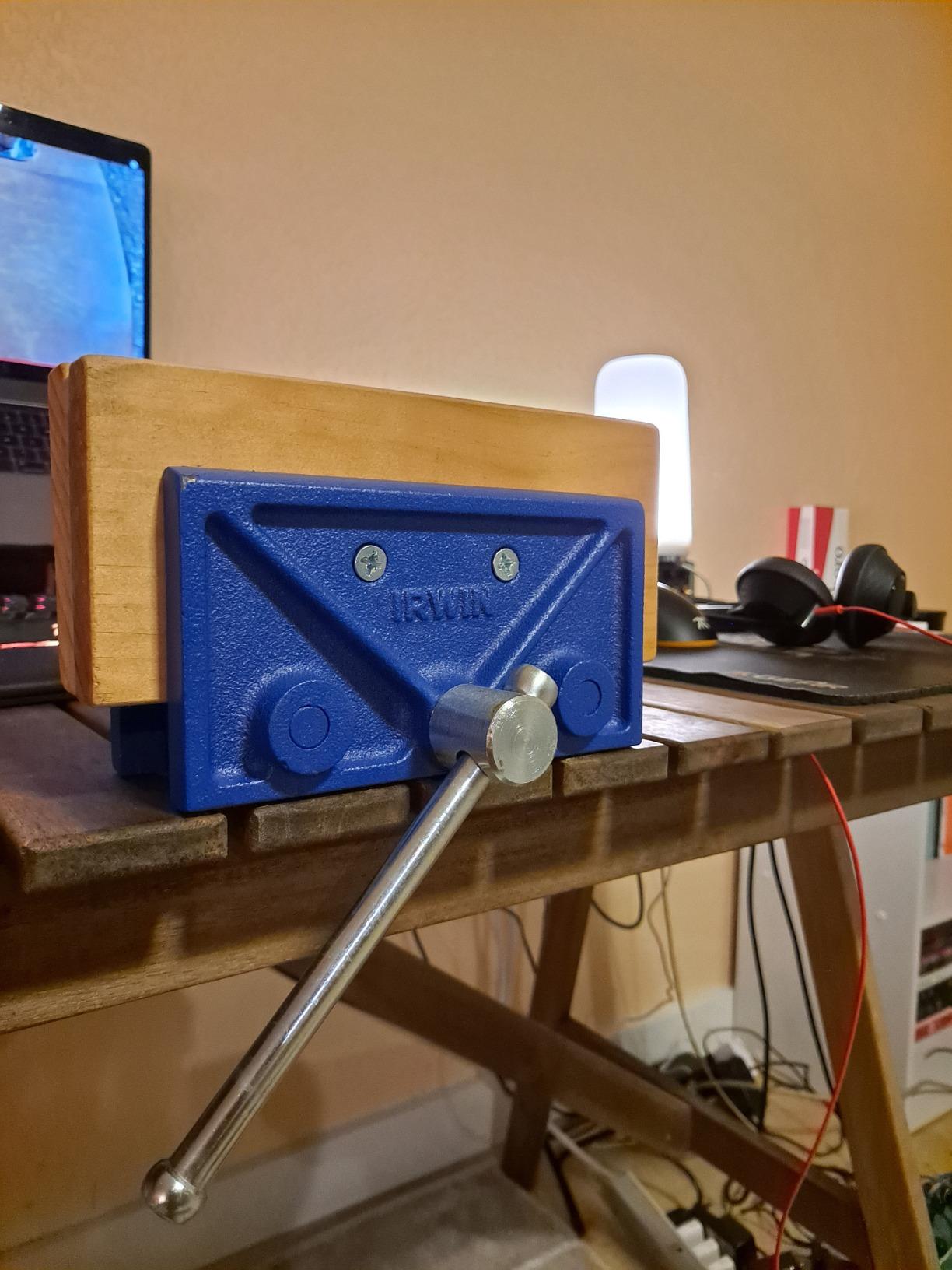
The body is forged iron rather than a thin casting, and at roughly one pound it is the easiest vise here to install with a hand tool. The jaw capacity is 4-1/2 inches, which covers most 1x lumber and panel work without the bulk of a machinist vise.
It is also an unusually cheap way into the category. Reviewers consistently rate it well above what the price suggests, and the toe-in grip is the feature named most often as a reason it does not mark work the way a serrated metal vise would.
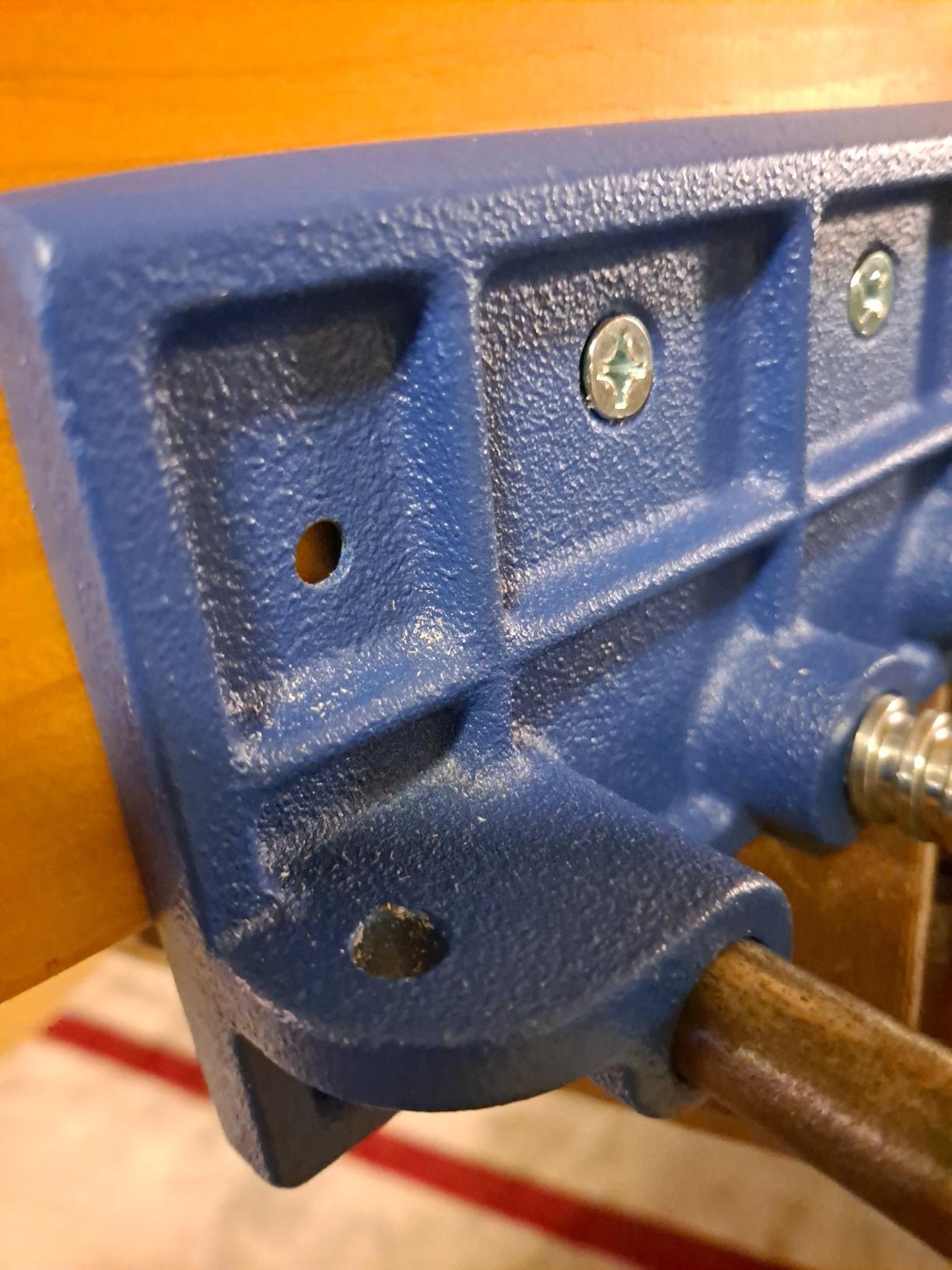
What this vise is good for
Planing, jointing, gluing and assembly. Mounted to the face of a bench, the jaw height sits at the level of the work, so your hands are not reaching down to a clamp. For cabinets, shelves and small parts, it is genuinely comfortable to use.
It accepts wooden cheeks, which are simple shaped blocks screwed over the jaws. Those protect both the vise and a finished surface, and they are the reason this style is still a workshop default decades after it was designed.
What this vise is bad at
It is a light duty face vise, not a machinist vise. It will not hold steel, it has no anvil, and it has no swivel, so every job is at one fixed angle. Anyone who needs a machinist vise for metalwork should look at the multipurpose or portable options instead.
The liners are not included. If you will be clamping finished or pale wood, buy a set of wooden cheeks and fit them before the first job rather than discovering the marks afterwards. It also needs a solid vertical bench face to mount against, so it is not a solution for a bench on legs with open space underneath.
4. VEVOR 6 Inch Bench Vise – Best Value for Jaw Size and Throat
VEVOR Bench Vise, 6-inch Jaw Width 5.9-inch Jaw Opening, 360-Degree Swivel Locking Base Multipurpose Vise w/Anvil, Heavy Duty Ductile Iron Workbench Vise w/Bolts & Nuts, for Drilling, Pipe Cutting
6 in jaw width
5.9 in jaw opening
3.5 in throat
25 lb
4496 lb clamp force
60,000 PSI ductile iron
+ The Good
- Ranks number one in its category with a 4.7 star average
- Two locking screws on the base resist loosening
- Very smooth lead screw and swivel rotation
- Includes magnetic soft jaw pads plus bolts and a mounting template
- Plenty of throat depth for thick material
- The Bad
- Included bolts are too short for a thick bench top
- Jaws sit slightly out of alignment at full close
- Base is smaller than a 6 inch vise implies
If you want one vise that covers wood, metal and pipe without changing tools, this is the one to look at first. Six inch jaws, 5.9 inches of opening and 3.5 inches of throat is the most working room of anything in the roundup, and the throat in particular is the number most buyers underrate.
The body is forged from 60000 PSI ductile iron under a rust proof powder coating, rated at up to 4496 pounds of clamping force. The jaw plates are replaceable serrated carbon steel, so when they wear you replace two plates rather than a vise. Owners single out the screw and swivel action as smooth and chatter free, which is where cheaper castings usually let you down.
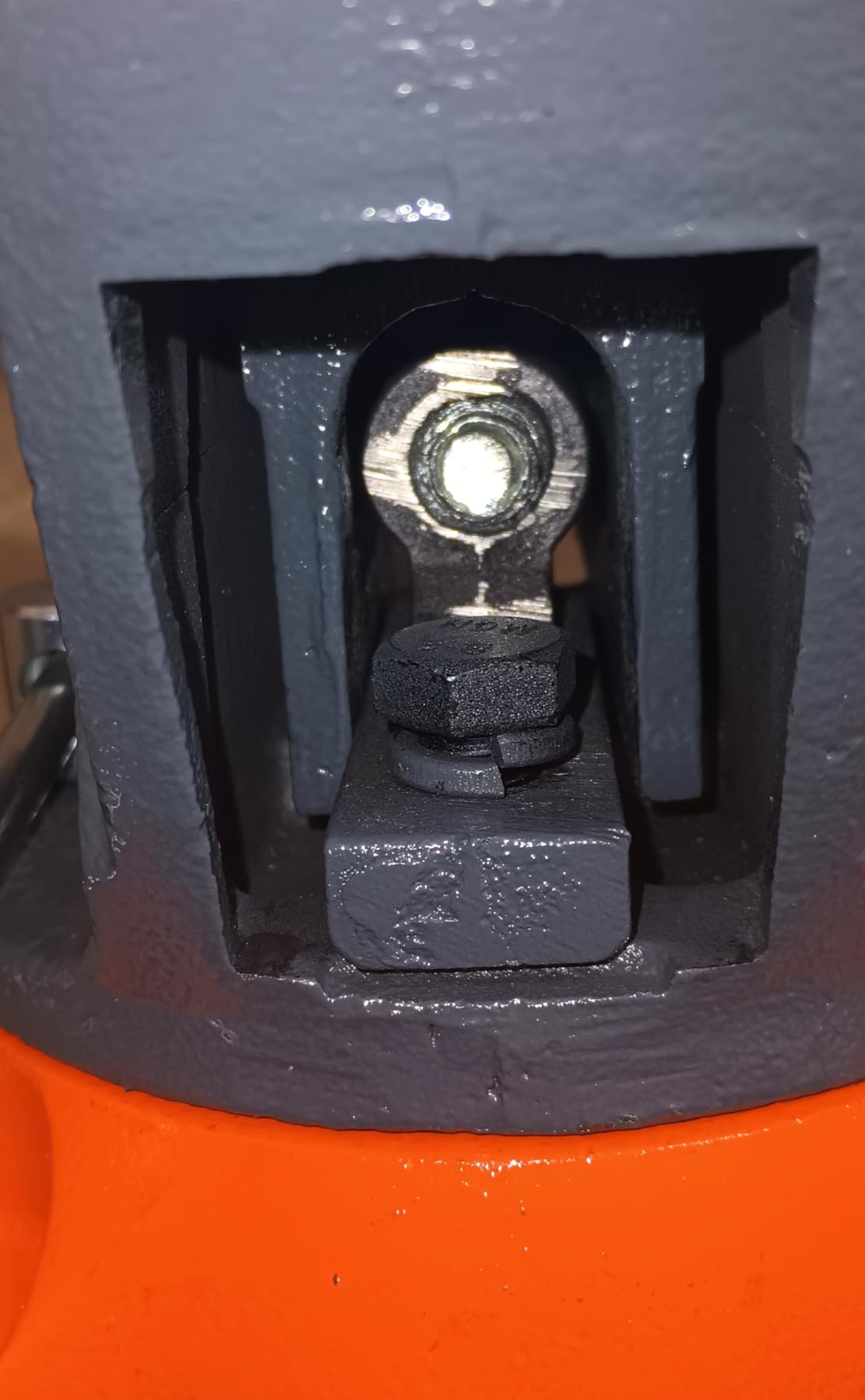
Two details set it apart from other swivel vises at this size. The base carries two locking screws rather than one, which is the single most common failure point owners report across the whole category. And the box includes four M10 bolts, a paper mounting template, and magnetic nylon jaw pads that stick to the jaws to protect finished surfaces.
Those magnetic pads are a small thing that solves a real problem. Most people buying a metal vise never think about what happens when they clamp a piece of primed wood or a polished aluminum part in serrated steel jaws.
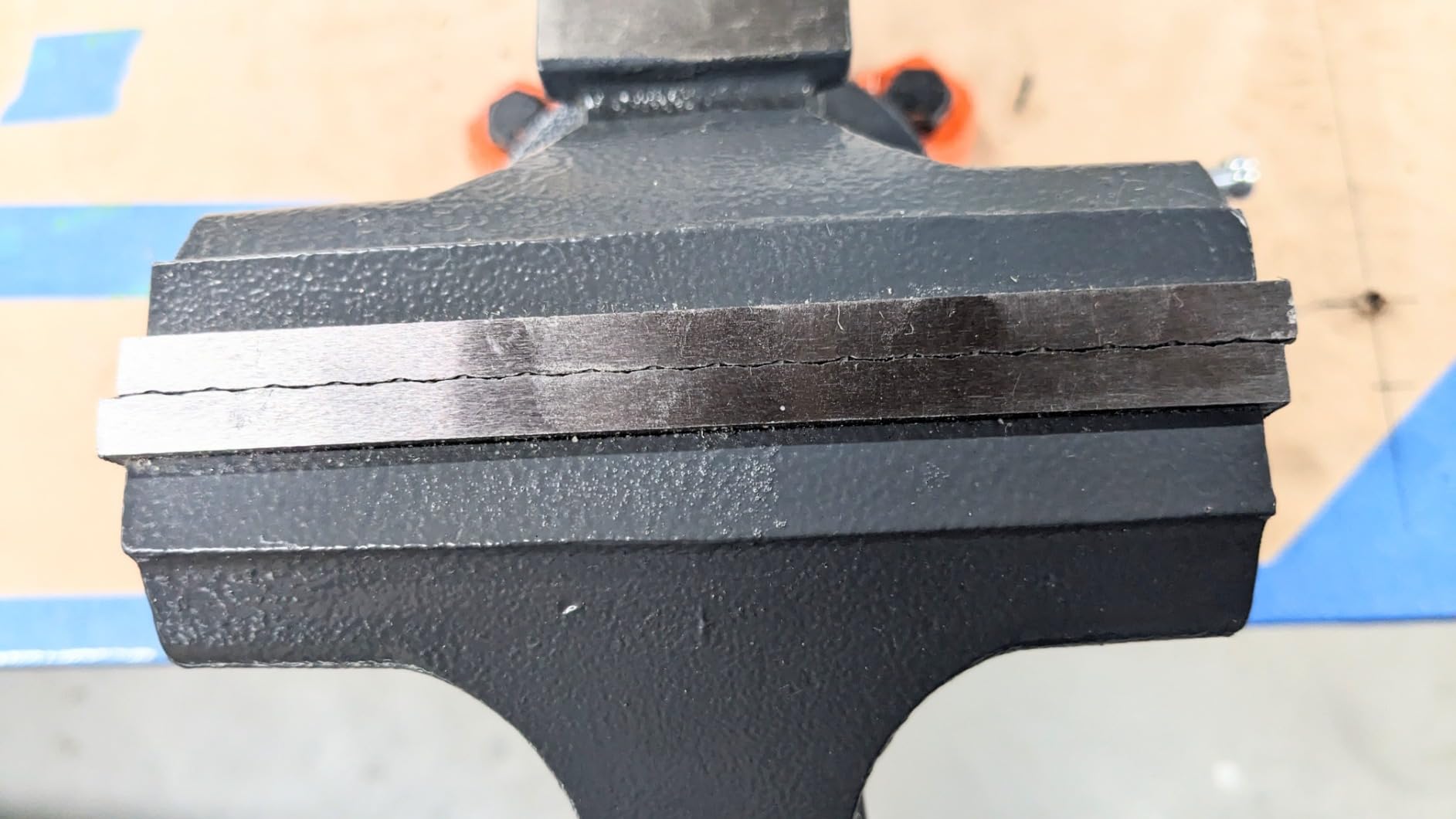
What this vise is good for
General garage work across mixed materials. Six inch jaws take a 2×4, a 4×4 post and most pipe up to 2.9 inch diameter, and the pipe clamping feature is built in rather than an accessory. It suits a bench that gets used for car maintenance, small welding and weekend building all in the same week.
At 25 pounds it needs a real bench but not a heavy one, which puts it in reach for a 2×4 frame with a thick top. The included template also means you can mark the holes before the vise is out of the box, which saves a bad set of drilled holes.
What this vise is bad at
The supplied bolts are the most repeated complaint in reviews, and they are correct. They are too short for a full thickness bench top on most benches, so plan on buying your own grade 5 bolts before installation rather than after.
Owners also report slight jaw misalignment at full close. The jaws stay parallel, so it will not bind on a workpiece, but a precision setup with a dial indicator would notice. And the base is smaller than a nominal 6 inch vise suggests, so the moment the vise tries to rotate it has room to twist. Check the base bolts on a schedule.
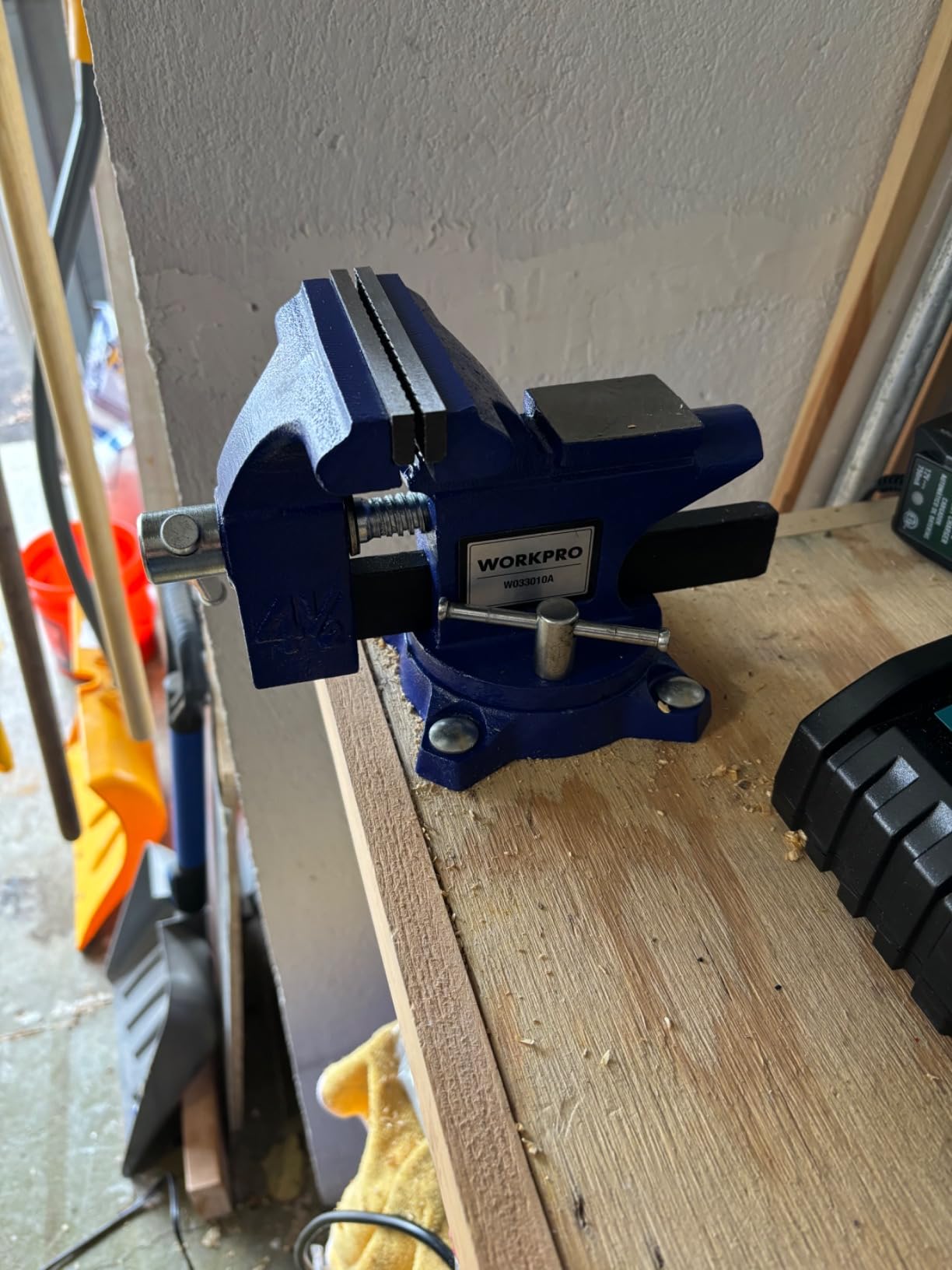
5. WORKPRO 4-1/2 Inch Bench Vise – Best Budget Multi-Jaw Pick
WORKPRO Bench Vise, 4-1/2″ Vice for Workbench
4.5 in jaw width
4-1/4 in jaw opening
2-11/32 in throat
4.8 kg gray iron
2204 lb clamp
+ The Good
- Multi-jaw design grips flat bar pipe and tube together
- 240 degree swivel base helps with angled work
- Straightforward to mount with basic hex bolts and washers
- Performs like a costlier unit once bolted to a solid bench
- The Bad
- Swivel base casting can arrive needing filing
- Swivel lock bolt threads can arrive damaged
- Bare gray iron finish shows surface rust over time
This is the value entry point for a garage that does odd jobs rather than projects. At just over four pounds of gray iron it is not a delicate tool, and once it is bolted to something solid, owners report it behaves like a more expensive unit for the clamping tasks a homeowner actually performs.
The multi-jaw layout is the useful part. One set of jaws handles flat bar, another holds pipe and tube, and together they cover most of what comes out of a parts bin. The 240 degree swivel gives you angled clamping without moving the vise, and clamping force is rated at up to 2204 pounds, which is plenty for brackets, tubing and hardware.
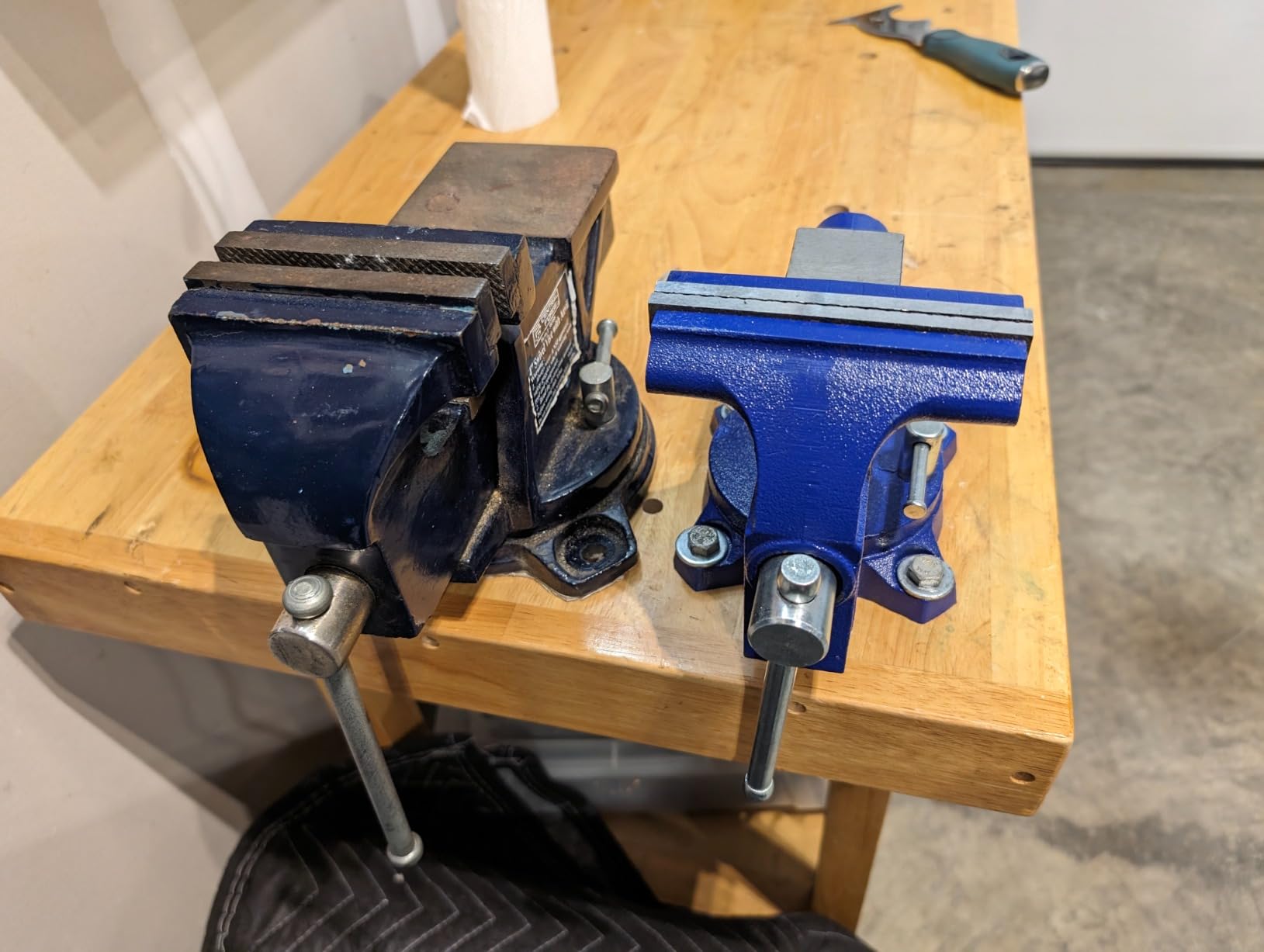
Jaws measure 4.5 inch wide with a 4-1/4 inch opening and a throat just over 2 inches. That is a genuinely useful combination for a garage because the opening is generous relative to the width, so a small part still gets gripped across most of the jaw face rather than at the tips.
Several owners mention that the vise is larger than they expected for a 4.5 inch model, so measure your bench depth before you buy. It is a bolt-down design with an anvil area behind the jaws, and mounting hardware is not included.
What this vise is good for
Assorted garage tasks: holding tubing while you cut it, gripping flat bar for filing, clamping a bracket for drilling. If you do one odd job a week and want a vise that is simply there when you need it, this does the job without overcomplicating anything.
The 4-1/4 inch opening is wide relative to its jaw width, so thin sheet and small angle iron get a real grip instead of a corner hold. That is a quiet advantage on a bench used for car maintenance.
What this vise is bad at
Quality control is uneven out of the box, and the reviews are specific about it. A minority of owners receive one where the swivel base casting does not seat flat and needs filing, and some report swivel lock bolt threads arriving damaged, which means cleaning or replacing the bolt before first use.
The finish is bare gray iron with no coating, so it will develop surface rust in an unheated or damp garage. That is cosmetic rather than structural, but it is worth wiping down and coating the exposed surfaces once a year. The clamp force is also well below the ductile iron vises here, so it is not the choice for hot steel or heavy hammering.
6. Pony Jorgensen 27091 – Best Face-Mount Vise for a Woodworking Bench
Pony Jorgensen 27091 Medium Duty Woodworker’s Vise, Orange, Grey, 9-Inch By 7-Inch
9 in by 7 in face vise
11.8 lb
Medium duty
Mounts to bench face
One year warranty
+ The Good
- Large 9 by 7 inch face suits a full woodworking bench
- Medium duty build rated for home shop or professional work
- Simple rugged design from a long-established clamp maker
- Handles planing gluing and assembly without fuss
- The Bad
- Light clamping duty next to a cast iron bench vise
- Needs a solid bench face to mount against
Pony has been making clamps for a long time, and that shows in a vise that is unflashy and consistently does its job. The 27091 is a traditional medium duty face vise in the 9 inch by 7 inch format, the size most serious hand tool benches use, and it comes with a one year warranty against faulty workmanship or material.
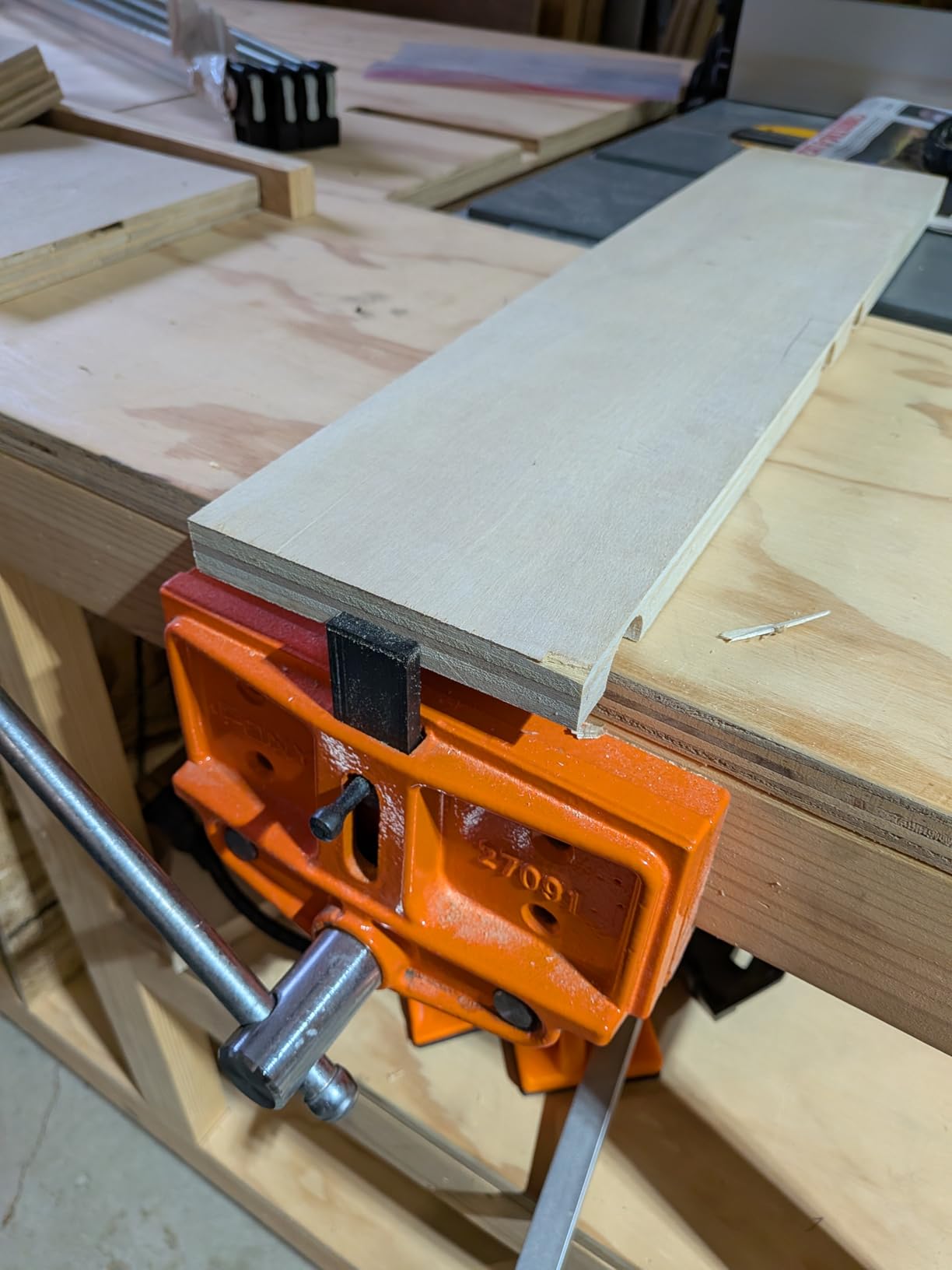
Face mounting puts the jaws at bench height, right at the level of the work lying on the surface. That is the whole point. You are not reaching down to a jaw line, you are not leaning over a machinist vise, and a board sits flat and stays flat while you plane the edge or cut a joint.
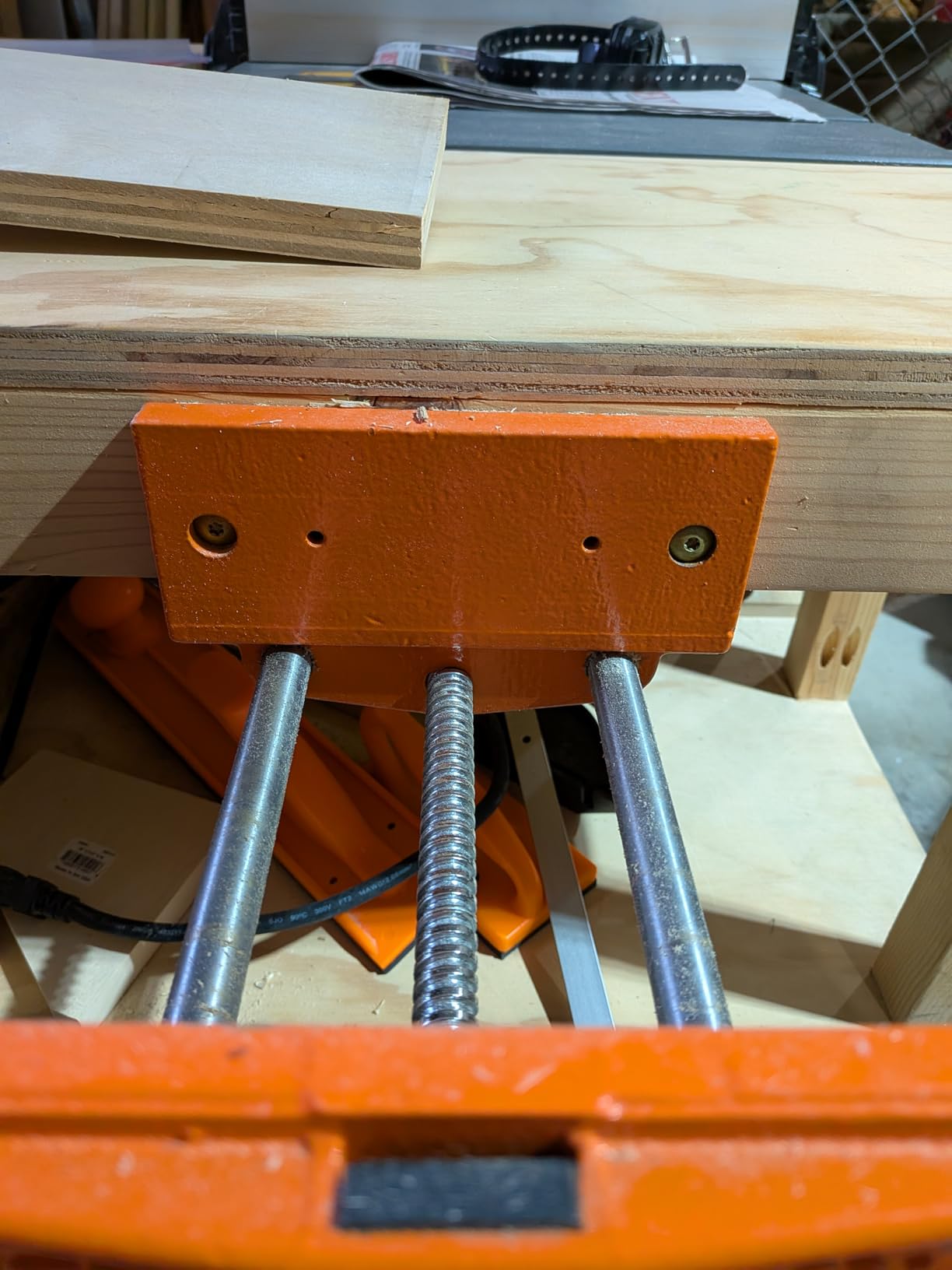
At 11.8 pounds it has real heft in the screw and guides without being unmanageable. Owners report it handling normal planing, gluing and assembly work adequately, and ratings cluster in the mid fours, which is about what a medium duty vise should score.
For a garage that also does furniture, this is the vise that will not fight you. The trade is straightforward: excellent ergonomics for wood, and light clamping force compared with any of the cast iron bench vises in this list.
What this vise is good for
Hand tool work, planing, mortising, chisel work, gluing and assembly. A 9 by 7 inch face gives you enough width to hold a door panel edge, a drawer side or a length of 1x lumber flat on the bench, which a top mount vise cannot do without tipping the piece.
If your bench is a dedicated woodworking bench rather than a mixed garage bench, this is the right format. The mounting face carries the load, so a well built bench is essential and the vise adds almost nothing to the top surface.
What this vise is bad at
It is not a machinist vise. There is no anvil, no pipe jaw, no swivel and no serrated steel jaw face, and the light clamping duty is obvious as soon as you try to twist a steel part in it. Do not buy it as your only garage vise if you do any vehicle or metal work.
It also requires a bench face you can bolt to. Slender legs with open space between them will not hold it, and any flex in that face shows up immediately as jaw movement while you are planing. Mount it low and to a reinforced rail, and check the bolts after the first few sessions as the bench settles.
7. Yost M7WW Rapid Action Woodworking Vise – Best Quick-Release Option
Yost Vises M7WW Rapid Action Woodworking Vise | Quick Release Lever for Quick Adjustments | 7 Inch Jaw Width | Made with Heavy-Duty Cast Iron | Blue
7 in jaw width
8 in jaw opening
3 in throat
21 lb cast iron
Rapid action lever
Built-in bench dog
+ The Good
- Quick release lever cuts setup time on every job
- 21 lb cast iron body resists jaw racking
- Operable one-handed so the other hand stays free
- 8 in opening handles most lumber and panel work
- Built-in retractable bench dog adds a flat option
- The Bad
- Lever and screw feel stiff until broken in and greased
- Mounting faces carry a draft angle that may need a shim
- Heavy for a light bench
On a machinist vise, every job starts with turning the handle the whole length of the opening and then turning it back. A rapid action lever collapses that to one motion, and once you have used one you will not go back. The lever on this Yost drops the jaw quickly to rough position, then you take up the last of the gap with the screw.
On paper it is a large vise: 7 inch jaws, 8 inches of opening, 3 inches of throat. In practice the throat and the jaw height are what you feel on a 34 to 38 inch bench, and this one sits tall. Owners report recommending a bench top of at least 2-3/8 inches of thickness before mounting, partly for the mounting surface and partly for the height it adds.
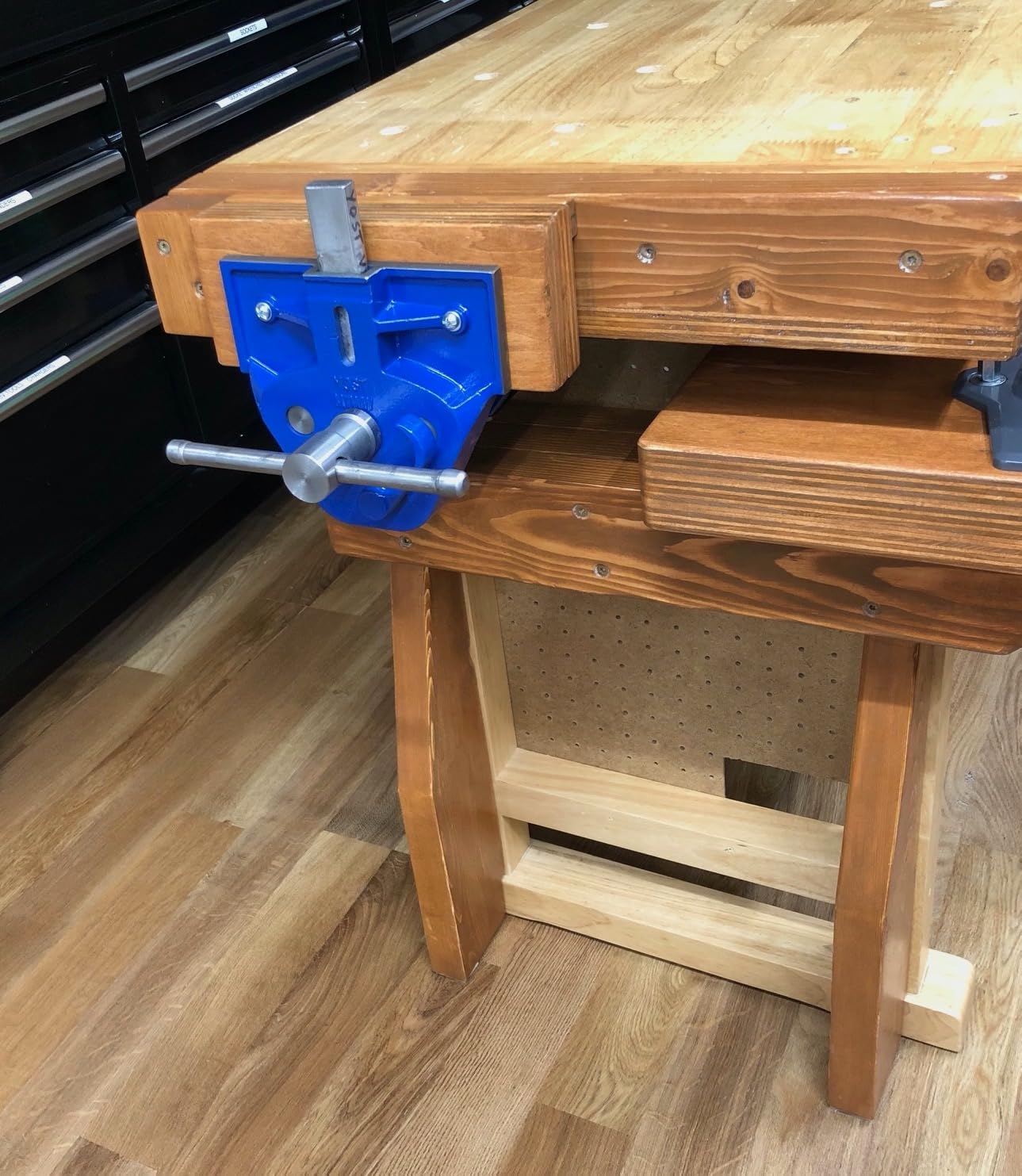
The body is 30000 PSI cast iron at 21 pounds, with a chrome plated screw, chrome plated guide rails and a sliding T-bar handle. It is a heavy, rigid casting and owners describe it as resisting jaw racking, which is the failure that makes a light vise feel vague when you put a chisel or a file against the work.
The built-in retractable bench dog drops through the moving jaw and butts against a bench stop, holding wide panels and door parts that would otherwise squash. That single feature is why top mount vises in this format are still worth the extra mass.
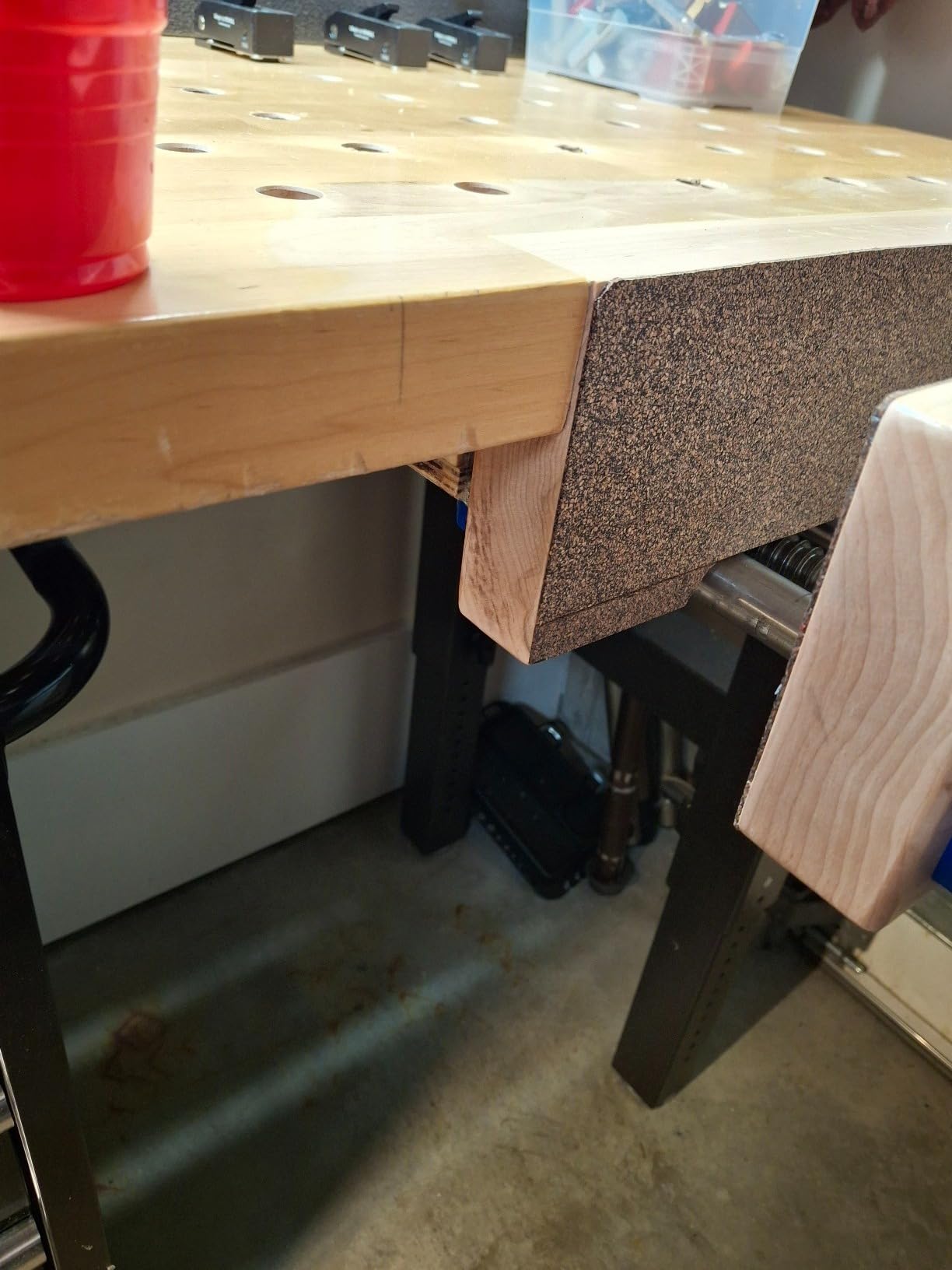
What this vise is good for
Volume work, where you are clamping and releasing many pieces in a session. Boards, panels and frame parts all fit, and the bench dog handles the wide flat pieces that a machinist jaw would only grip at the edge.
The cast iron feel and the guide rails make it a good vise for chisels, saws and hand planes as well as for general clamping. If you move between woodworking and garage repairs, the 8 inch opening covers stock that will not fit the smaller vises here.
What this vise is bad at
It is tall and it is heavy. At 21 pounds on a garage bench that is not built for it, you will get a rocking vise and a tired back. Check your bench top thickness and height before committing, because the mounting faces also carry a slight draft angle that some owners shim or fill with a block.
The quick release lever and the screw are stiff when new and need breaking in with grease, and the screw can gall slightly in the first sessions. None of that is a defect, but it is a rough first impression if you expect a vise to feel perfect out of the box. A one year limited warranty is also shorter than the coverage on some picks here.
8. Wilton 550P Multi-Purpose Bench Vise – Best for Heavy General Work
Wilton Multi-Purpose Bench Vise, 5-1/2″ Jaw Width, 5″ Max Jaw Opening, 2-3/4″ Throat (Model 550P)
5-1/2 in jaw width
5 in max opening
2-3/4 in throat
40 lb
Lifetime warranty
360 degree indexed head
+ The Good
- Backed by a lifetime warranty against manufacturing defects
- Slide and screw glide with almost no resistance
- Replaceable hardened steel serrated and pipe jaws
- Head indexes every 30 degrees for repeatable angles
- Large built-in anvil for forming and shaping
- The Bad
- Costs far more than imported multipurpose vises
- No bearings between base and body so surfaces can wear and corrode together
- Not meant for clamping heavy steel and beating on it
- Replacement sizes jump from 4-1/2 in to 5-1/2 in so holes may not line up
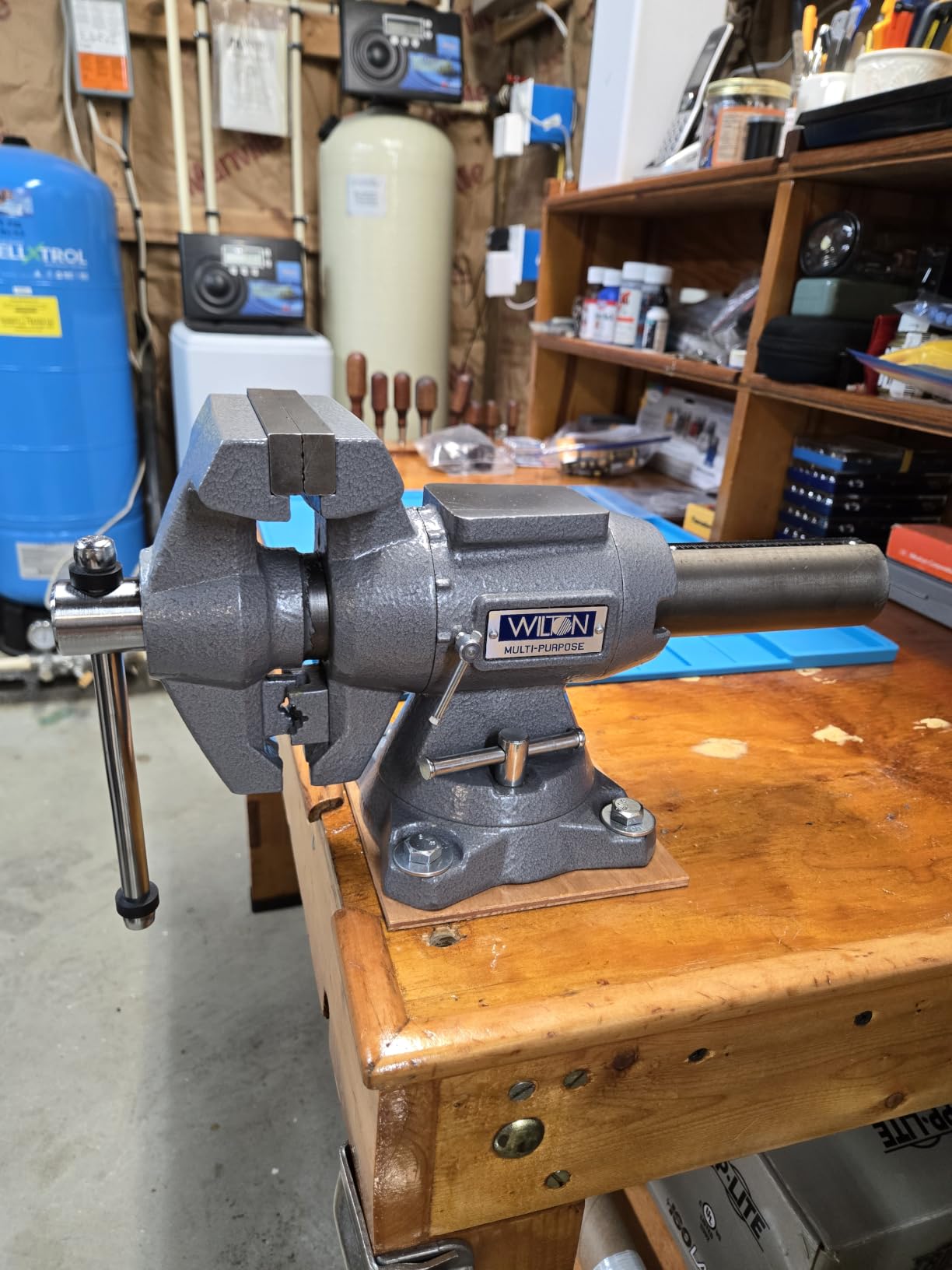
This is the heaviest vise in the roundup and the one most likely to outlast the bench it is bolted to. Forty pounds of cast and ductile iron, 5-1/2 inch jaws, and a build quality that owners consistently describe as machined rather than merely cast. Several reviewers report owning Wilton vises over decades.
The head rotates 360 degrees and indexes every 30 degrees, which means a compound angle you set once stays set. Jaws are hardened steel and replaceable, and switching between the serrated faces and the steel pipe jaws takes about a quarter turn of the set screws rather than a tool session.
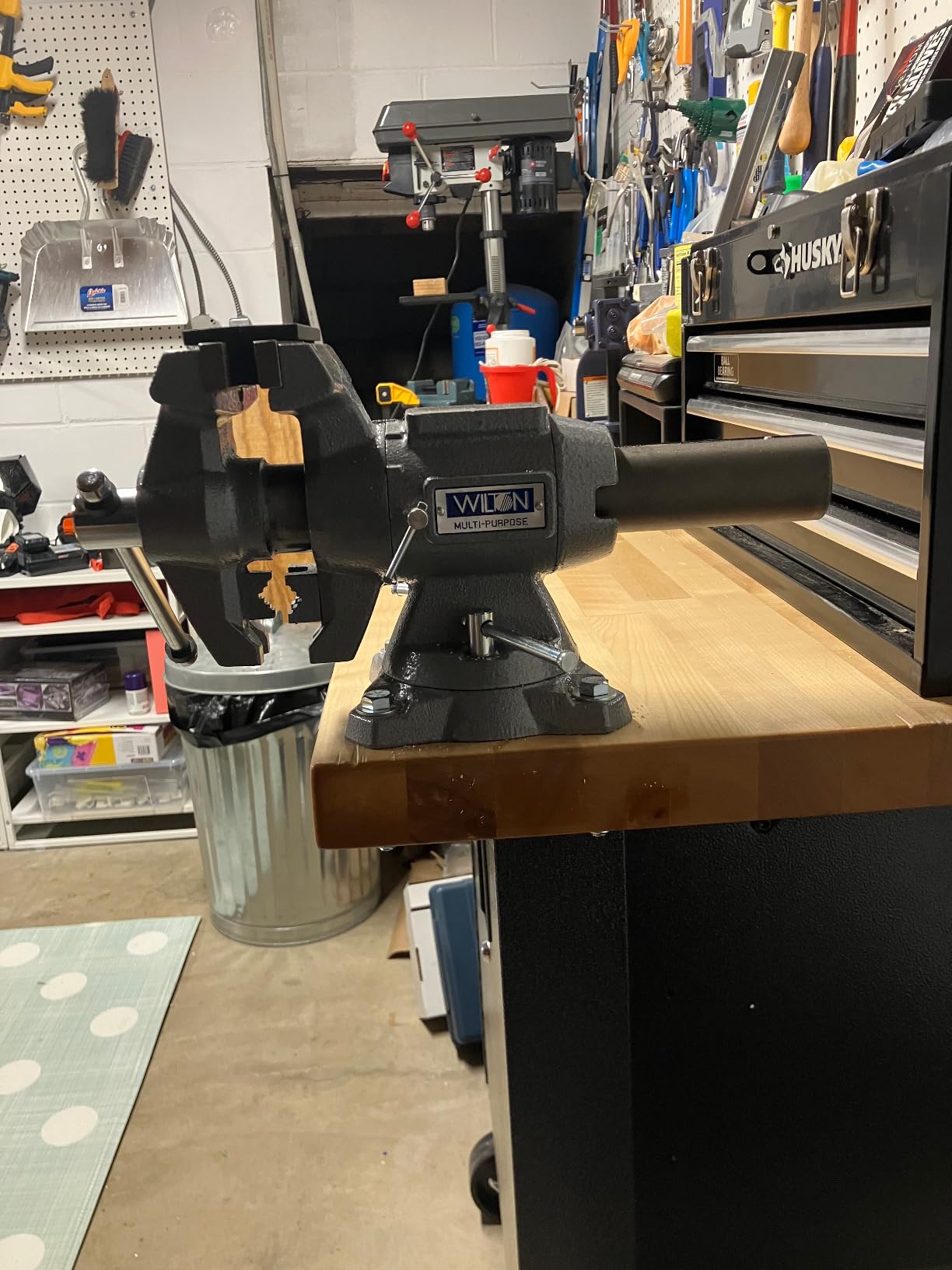
The anvil is large enough to be genuinely useful, and the manufacturer suggests mounting with 7/16 inch or 1/2 inch bolts, which is a good hint about how seriously to take the fixings. The lifetime warranty against manufacturing defects is the strongest coverage on this list and the reason many owners stay in the brand.
Owners describe the screw and swivel action as almost frictionless and the jaws as straight, square and accurate, which is what you want when the work is a hot part or a tight tolerance rather than a board.
What this vise is good for
Heavy mixed work on a dedicated bench. Home hot rod projects, metal fabrication, plumbing work and any job where you want the work to stay exactly where you put it under load. The pipe jaws and V-jaws for round material make it a one vise answer for a shop that does not have space for three.
If you intend to keep the same bench for a decade, the lifetime warranty changes the arithmetic. Paying more once and replacing nothing beats replacing a mid priced vise in year eight.
What this vise is bad at
It is the most expensive vise here, and the gap is real rather than cosmetic. Owners who move down from a Wilton to an imported vise report the screw feel is the first thing they miss.
There are no bearings between the base and the body, so the two rubbing surfaces wear and can corrode together in a humid space. The finish in that area can also arrive chipped from transit, which is a packaging issue rather than a manufacturing one but worth checking on arrival. Finally, the size ladder skips from 4-1/2 inch to 5-1/2 inch, so if you ever move to a different size in this line your existing bolt holes will not line up.
9. Groz 39006 6 Inch Vise – Best Portable Vise You Can Move With One Hand
Groz 6-Inch Portable Woodworking Vise, Dual Mount Bench Clamp or Bolt-Down, Cast Iron with Toe-In Jaws and Chrome-Plated Screw, for Woodworkers and DIY (39006)
6 in jaw width
4-1/2 in opening
7 lb cast iron
Dual mount clamp or bolt down
Toe-in jaws
+ The Good
- Switches from permanent bolt down to clamp on in seconds
- Weighs 7 lb so it moves between benches or onto a cart
- Toe-in jaws grip the full depth of the piece
- Chrome plated screw and rods stay smooth
- Pre-drilled holes accept wooden liners
- The Bad
- 4-1/2 in jaw opening is modest for large woodworking stock
- Portable clamp-on mounting is less rigid than a permanent bolt-down
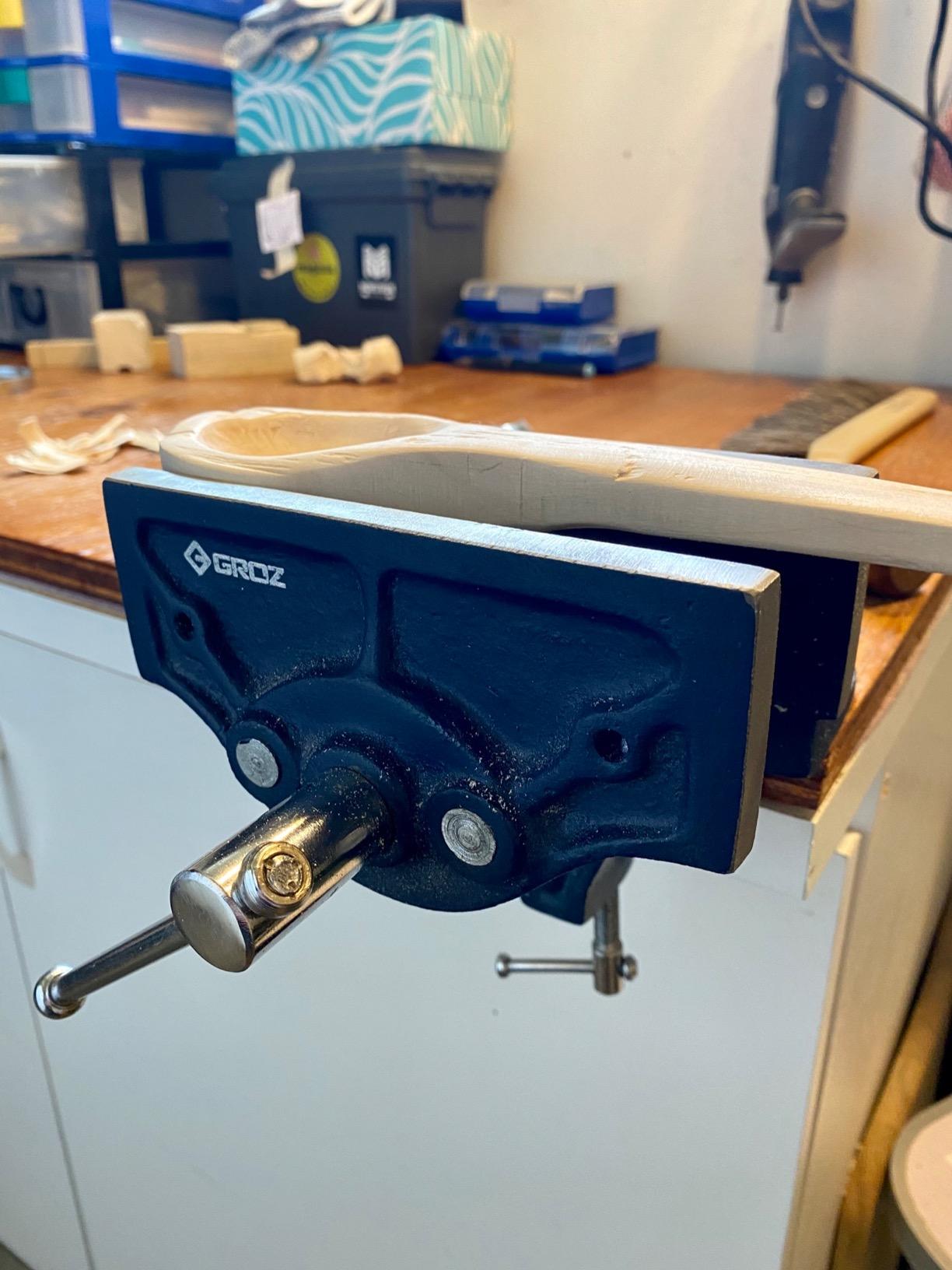
Most vises in this roundup are a commitment. Groz made this one a decision you can reverse. It bolts down permanently through the cast slots, or the built-in bench clamp screw hooks it to the edge of a bench in seconds, and the same vise works on a workbench, a folding table or a tool cart.
Seven pounds is the number that makes that possible. You can carry it to a project, take it to a friend, or move it out of the way when you need the bench for something else. The close grained cast iron body is rigid and vibration damping, which is the property that makes clamping feel solid rather than springy.
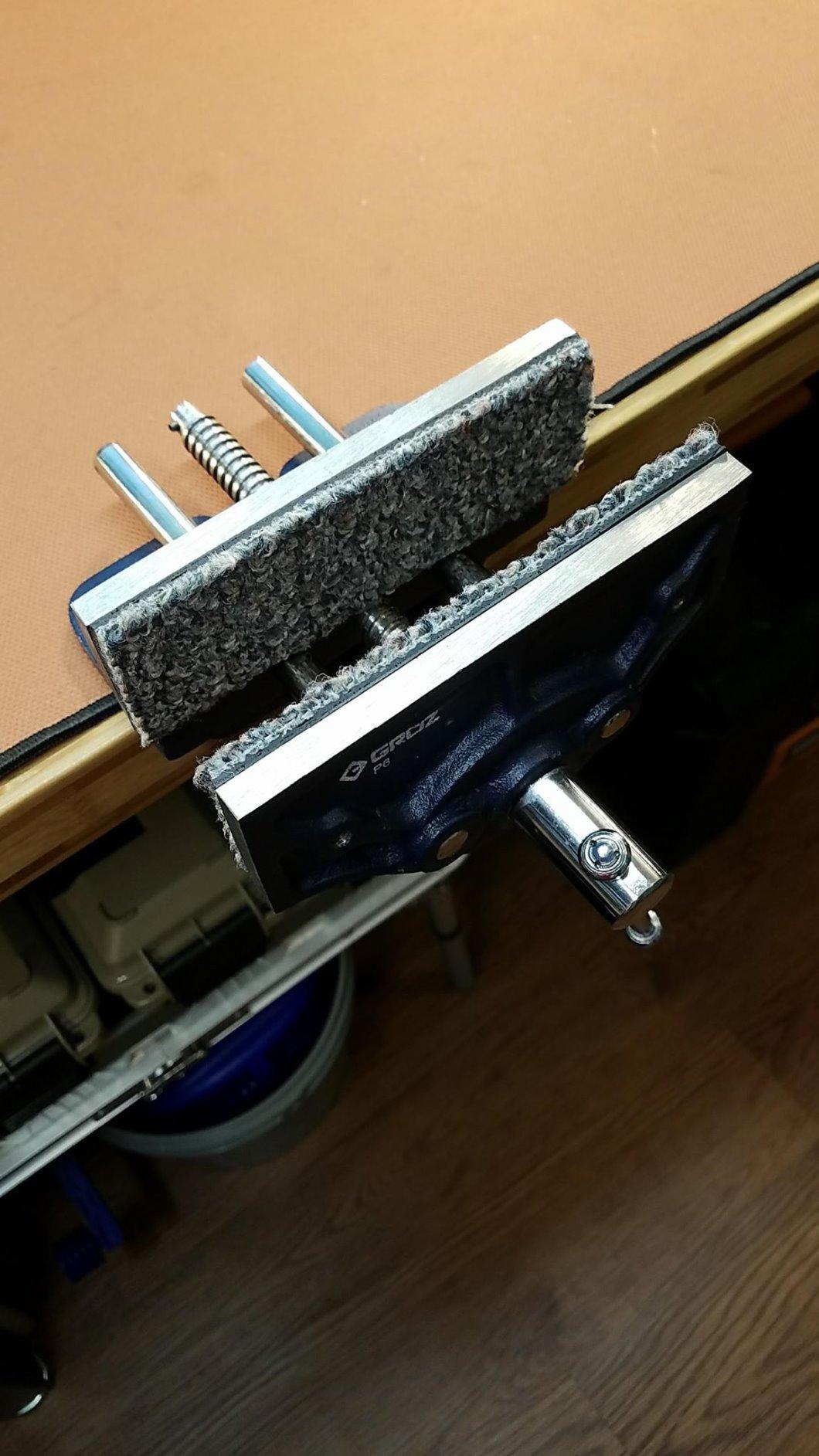
The jaws are 6 inches wide with 4-1/2 inches of opening, and the toe-in profile closes at the top first, which spreads pressure evenly through the workpiece instead of pinching the top edge. The main screw and twin guide rods are chrome plated, and the tommy bar handle slides for extra turning force.
Both the body and the sliding jaw are pre-drilled for wooden liners, so protecting a finished surface is a matter of screwing on two shaped blocks. Reviewers value the combination of mounting flexibility and rigid cast iron, and note that the light body is popular in small shops.
What this vise is good for
Garages where the bench has to do double duty, small shops with one shared bench, and anyone who works on a truck tailgate or a folding table as often as at home. The toe-in jaws are the quiet strength, holding full depth without pushing the piece out of square.
Once bolted down permanently it behaves like a proper bench vise. The clamp option is a convenience for the days you need the surface, not a permanent arrangement.
What this vise is bad at
The 4-1/2 inch opening is modest against the 6 inch jaw width, so large panel stock will not fit far enough to be held securely. It is a good hold for boards and small parts, not for wide sheet material.
Clamp-on mounting is also less rigid than a bolt down, and under a serious side load the vise can creep. If you leave it clamped rather than bolted, re-check it periodically. There is no pipe jaw, no anvil to speak of, and no swivel, so every job is at the same angle.
10. STEINBRUCKE 3.2 Inch Swivel Clamp-On Vise – Best for Small Work Spaces
Table Vise or Bench Vise 3.2 Inch, 360° Swivel Clamp-On Vise Portable Home Vice with Large Anvil for Woodworking, Cutting Conduit, Drilling, Metalworking
3.2 in jaw width
2.79 in jaw opening
1.98 kg
Clamp on swivel base
4 in clamping range
+ The Good
- Clamps on and off with no bench modification
- Oval swivel base handles angled clamping
- Hammered jaw surface gives a firm non-slip grip
- Handles bench edges up to 4 inches thick
- Light enough to carry in one hand
- The Bad
- 2.79 in opening and 3.2 in jaw width limit what fits
- Light duty and general purpose only
- Clamp-on design is less rigid under heavy load
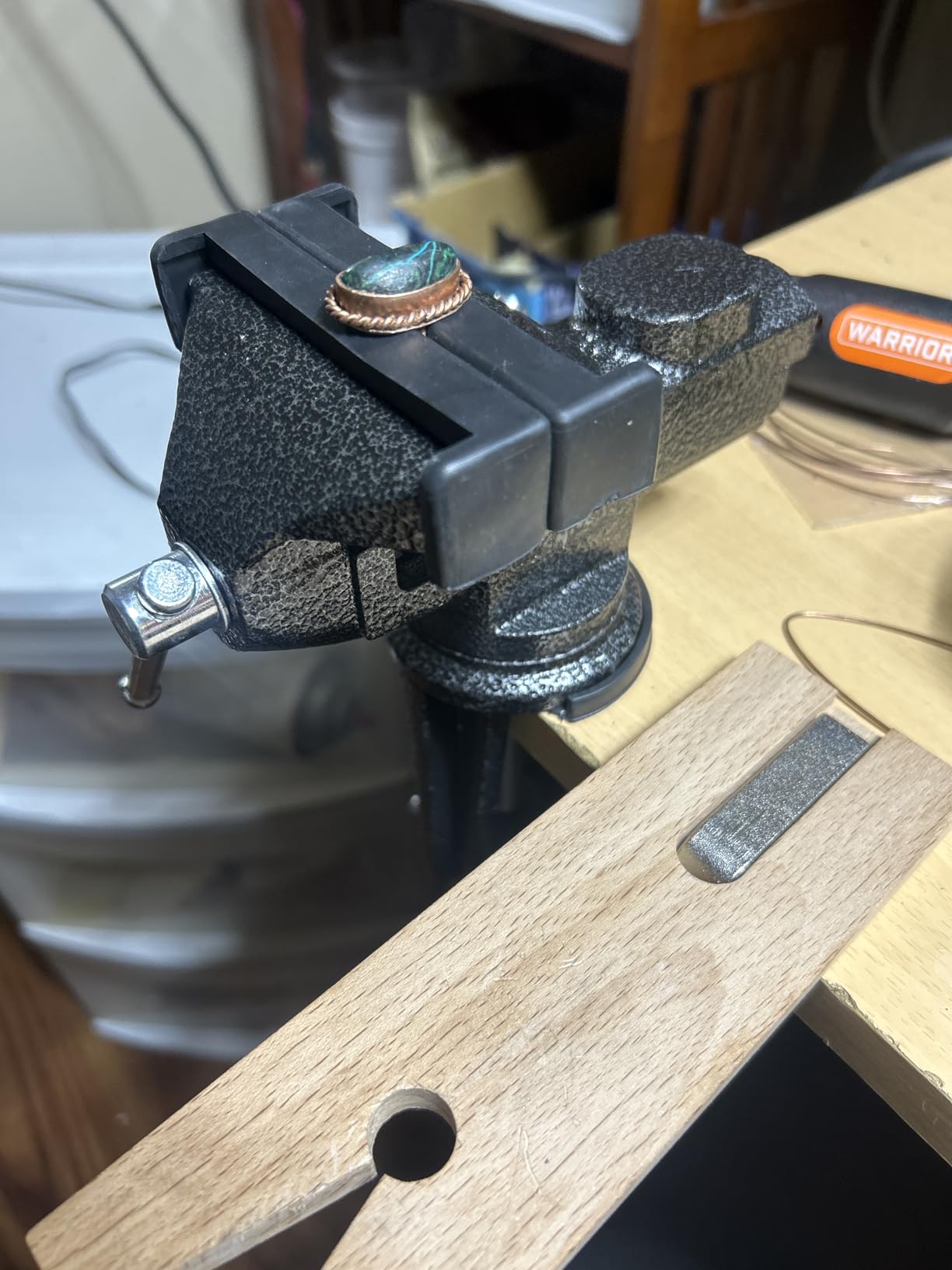
This is the smallest vise in the roundup and the least permanent. It clamps to the edge of a bench or table with an oval swivel base that handles bench tops up to 4 inches thick, so it works on a thick laminated top and a thin shop table with the same hardware. No drilling, no bolts left in the bench, and it moves when you need the space.
Despite its size the jaws are hardened with a hammered finish, and that texture gives a genuinely firm grip on a small part. The 360 degree swivel base rotates the whole vise, so you can hold a piece at an angle without wrestling with the screw.
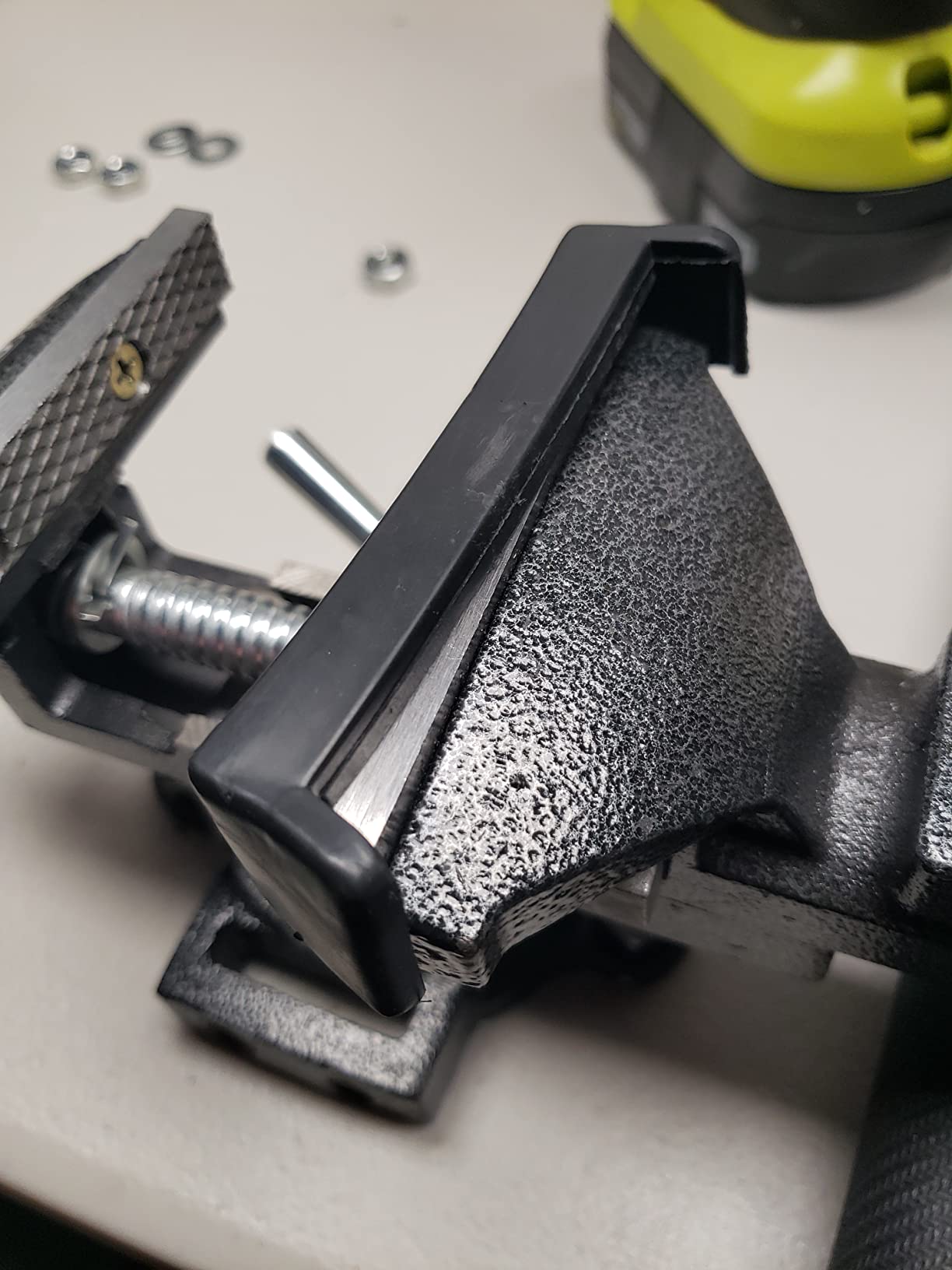
Jaws measure 3.2 inches wide with up to 2.79 inches of opening. That is enough for a pencil, a connector, a small bracket, a piece of conduit or a hobby joint, and owners report it is well suited to cutting conduit, drilling small parts, sanding and gluing.
The 4.4 star average is the lowest here, and it reflects size rather than a defect. The cast steel body with a sprayed finish and the smooth guide rail are simple, competent parts doing a small job.
What this vise is good for
Light duty holding in a cramped space. Conduit cutting, small drilling, sanding, gluing and hobby work, plus anywhere a permanent vise is not justified. The four inch clamping range means it fits a surprisingly wide range of bench tops without an adapter.
It is also a useful second vise. A small clamp-on on a folding table next to the big bench keeps the main surface free for lumber and sheet material.
What this vise is bad at
Nothing substantial will fit. A 2.79 inch opening and 3.2 inch jaws mean most pipe, solid bar and 1x lumber simply will not go in, and what does fit is held at the edges. Treat it as a helper tool rather than the vise your garage depends on.
Clamp-on mounting is the other limit. The base can creep under a hard twist, which is fine for holding a small part steady while you file it and wrong for anything that needs to stay put while you hit it. If you need a firm grip, buy a bolt down model instead. Our broader bench vise guide covers the fixed-mount options in more detail.
Bench Vise Buying Guide for Home Garages
Benchtop, face-mount or end-mount: which format fits your bench
A benchtop vise bolts to the top surface and gives you the reach and jaw height to work on pipe, bar and sheet from any angle. It is the format most garage owners want, and the one that gives the best clamping force, because the load goes straight down into the bench legs.
A face-mount vise bolts to the front of the bench and hangs below it. The jaw height is low, right at the level of the work, which is why hand tool woodworkers prefer it. It needs a solid vertical face to attach to, and it is useless for metal.
An end-mount vise bolts to the end of the bench and lets you clamp a long board or a length of pipe lengthwise without it hanging off the side. It is a specialist format that most garages have no room for, but it is worth knowing about if you build long furniture pieces.
Cast iron, ductile iron or forged steel: what the material changes
Gray cast iron is the traditional vise body. It is heavy, it machines beautifully, it damps vibration almost completely, and it resists rust better than bare steel because of its graphite content. Its weakness is brittleness under shock, so a gray iron vise is a work holding tool, not something to hit hard with a hammer. Most of the entry level vises here, including the Yost LV-4 and the WORKPRO, use it.
Ductile iron behaves differently. The graphite forms into nodules rather than flakes, which makes the material far more resistant to impact and tensile failure. That is why the Forward and the VEVOR can justify 60000 PSI ratings and clamp forces above 4400 pounds, and why ductile iron is the material to look for if you cut steel, weld, or strike the vise at all.
Forged or machined steel is the premium answer. It is the strongest and toughest of the three, it survives abuse, and it is what you find in heavy shop vises and gunsmithing vises. The trade is cost and weight. The IRWIN woodworker’s vise in this roundup uses forged iron in a much smaller, lighter package, which is a good demonstration that forging and mass are separate advantages.
A note on quality control. Forum owners who buy entry level vises describe finding filler or patched areas in place of solid casting, and cracked or loose swivel locks. That is not a reason to avoid imported vises, it is a reason to inspect the base and the swivel the day the box opens.
What size vise do you actually need
For a typical home garage, a 4 to 5 inch jaw is the answer. It clamps a 2×4 on edge, a piece of 1 inch angle iron, a 2 inch pipe and a bicycle component, and it adds between 9 and 33 pounds to a bench most people already own. Below 4 inches you are looking at hobby tools. Above 6 inches you gain a bigger footprint and a heavier price for work a weekend warrior rarely does.
Jaw width is the length of the clamping surface. Jaw opening is the distance between the jaws when fully open, and it is the number people misread on a listing. Throat depth is the gap between the jaw face and the screw, which determines how deeply a workpiece sits. A vise with a big opening and a shallow throat still works, but you end up holding work near its edge.
Jaw height matters more than most buyers expect. A 34 to 38 inch garage bench plus a tall vise puts the clamping force at chest height, which is uncomfortable for long sessions. Match the vise to the bench: on a low bench, keep the jaw stack short and favor a 4 to 5 inch machinist pattern over a tall woodworking vise.
Serrated jaws, smooth jaws and soft jaws
Serrated jaws cut into the material. They hold steel, pipe and bar with a grip you can trust, and they will leave deep impressions in soft wood and destroy a finished surface. Smooth jaws are gentler and better for aluminum and delicate work, but they slip more on greasy steel.
Soft jaws solve the problem rather than choosing a side. Screws, magnets or clamps hold sacrificial pads, usually aluminum, nylon or hardwood, over the vise jaws. They cost very little and they let one vise handle both a hot steel part and a cabinet door. The IRWIN takes wooden cheeks, the Groz is pre-drilled for liners, and the VEVOR ships with magnetic nylon pads that stick straight to the jaws.
Use soft jaws whenever the workpiece is softer than the jaw face, whenever it is finished, and whenever you plan to clamp at low pressure. A machinist working a part down to a final dimension does not want serration marks in it.
Mounting your vise so it does not rock
Check the bench can carry it. A 40 pound vise on a light top will rock no matter how good the fixings are.
Position the vise over or immediately beside a leg, so clamping load runs into the frame instead of cantilevering the top.
Use grade 5 hex bolts rather than the small hardware that sometimes comes in the box. Wilton suggests 7/16 inch or 1/2 inch on its 5-1/2 inch model.
Drill and tap or use carriage bolts with washers and nuts, and tighten in a star pattern so the base seats evenly.
Shim the mounting face if the casting carries a draft angle, which several vises in this roundup do.
Test for rock with a hard twist, then re-torque the base bolts after a few weeks of use.
If your bench has no room, a clamp-on model is a legitimate answer rather than a compromise. The Groz bolts down permanently or clamps on in seconds, and the STEINBRUCKE fits bench edges up to 4 inches thick. Both trade some rigidity for the freedom to take the vise with you.
Swivel bases and quick release: where vises fail
Owners across the forums name the swivel base as the most common mechanical failure in the entire category. The lock loosens, the vise rotates under load, and eventually the casting cracks at the swivel. A cheap swivel vise that is taken home and used hard will usually find that weak point first.
Two things reduce the risk. Prefer a base with two locking screws over one, which is a real structural difference and the reason the VEVOR is worth a look. And when you first fit any swivel vise, check it with a hard twist before you trust it, then re-check it every few months.
A quick release lever is a different feature and a genuine time saver. Drop the jaw to rough position in one motion, then take up the last of the gap with the screw. On a bench where you clamp and release many times an hour, that difference is large. Expect the mechanism to feel stiff when new and grease it during the break in period.
Anvils, and when hammering a vise is a bad idea
Most vises carry a small hardened anvil behind the jaws, and they are useful for light flattening, bending, punching and holding a punch while you drive it. The Forward and the Wilton have anvils big enough to do real work. That is different from treating a vise as a proper anvil, which it is not.
Hit a vise hard and you shock the frame, the screw and the swivel, and on a lighter casting you will eventually crack it. Owners who beat on their vises report bent screws and cracked bases, and the Wilton’s own guidance is that it is not meant for clamping heavy steel and hammering it. Use the anvil for light work and a real anvil for heavy work.
When a leg vise or a drill press vise is the better answer
If your bench is tall, narrow or shared with sheet material, a leg vise or a face vise mounted low on the leg can be more useful than anything on the top. It puts the work at a height you can actually see, it leaves the entire top surface free, and it does not add weight to a top that is already carrying lumber.
A drill press vise is a small clamp-on or bolt-down unit for holding a part under the spindle, useful for drilling accuracy but not for general garage clamping. It solves one problem. If you drill a lot of accurate holes in small parts, it is a sensible second tool, but it does not replace a bench vise.
One more alternative for garage work: owners doing real pipe work often prefer a chain or tripod pipe vise, because a pipe jaw on a bench vise is a convenience rather than a proper grip. If the pipe work is occasional, a bench vise with a pipe jaw is fine. If it is your thing, budget for a separate pipe vise.
Frequently Asked Questions
What is the best size vise for a garage workshop?
For most home garages, a vise with 4 to 5 inch jaws is the right size. It clamps 2×4 lumber, angle iron, small pipe and brackets, adds a manageable 9 to 33 pounds to the bench, and stays comfortable on a 34 to 38 inch workbench. Below 4 inches you are limited to hobby work, and above 6 inches you carry more weight and footprint for jobs a weekend garage rarely sees.
What is the best material for a bench vise?
Ductile iron is the best all-round material for a garage vise because its graphite nodules resist impact, so it tolerates shock and heavy clamping better than gray iron. Gray cast iron is heavy, machines well and kills vibration, making it ideal for work holding, but it is brittle under hammering. Forged or machined steel is the strongest and most expensive option, and it is the right choice for heavy abuse and gunsmithing work.
Where is the best place to mount a vise on a workbench?
Mount the vise over or immediately beside a bench leg so clamping load travels into the frame instead of cantilevering the top. Check the bench can carry the vise weight, use grade 5 hex bolts of your own rather than the supplied hardware, tighten in a star pattern, and shim the mounting face if the casting has a draft angle. Test for rock with a hard twist, then re-torque the base bolts after a few weeks.
Are Harbor Freight vises of good quality?
Owner reviews of offshore vises in general are mixed in a predictable way: the clamping force, throat depth and screw quality are usually better than the price suggests, while the swivel lock, the finish and the factory tolerance are where complaints cluster. The most common reports are swivel bases that loosen, jaws slightly out of alignment at full close, bare iron finishes that rust, and supplied bolts that are too short for a thick bench top.
When should a technician use soft jaws on a bench mounted vise?
Use soft jaws whenever the workpiece is softer than the vise jaw face, whenever the surface is finished, and whenever you are clamping at low pressure for layout or fitting. Aluminum, nylon or hardwood pads protect both the work and the vise serrations, and they let one vise handle hot steel and delicate parts without swapping setups. Fit them with screws, magnets or clamps, and keep the serrated faces for rough work on steel.
One more piece of planning before you buy. Vise work goes much faster with the right overhead light over the bench, and our picks for garage workbench lights are worth setting up before you start clamping rather than after.
The Best Workbench Vise for Your Garage
The Yost LV-4 is our pick for most garages. Nine pounds, a 4.5 inch jaw, a 240 degree swivel and the largest owner base in this roundup make it the least likely to disappoint and the easiest to live with, and it can be moved to a second bench without a crane.
Buy the Forward DT08125A instead if your work is steel, welding or pipe, and buy the VEVOR 6 inch if you want the most jaw and throat for the money on a bench that can hold 25 pounds. Add a face-mount vise such as the Pony Jorgensen only if you do real woodworking, and a clamp-on model such as the Groz if the bench has to do double duty.
Whatever you choose, mount it over a leg with your own grade 5 bolts, check the swivel lock every few months, and keep soft pads on the jaws. Those three habits do more for the life of a vise than the brand name does. Check the current listings for the picks above, and pick the size that matches the bench you already own.