
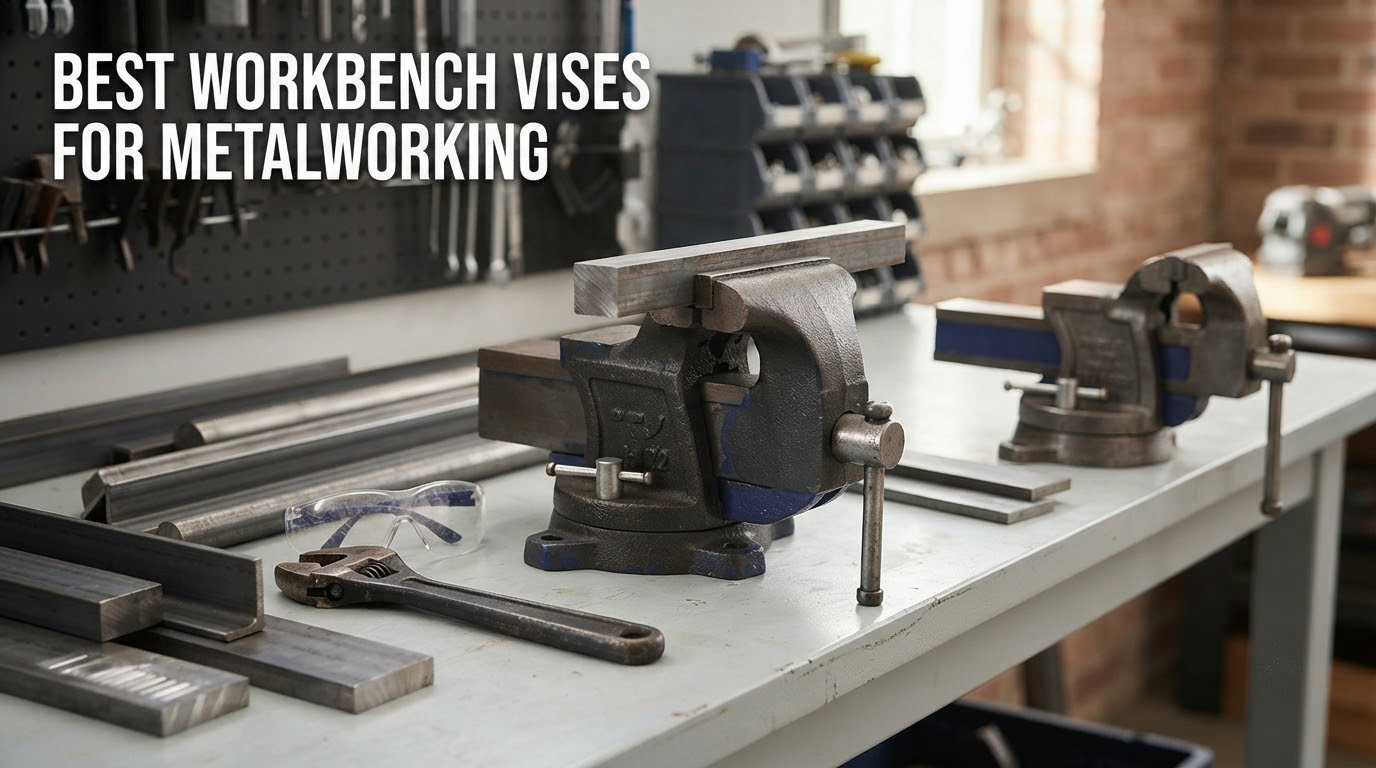
If you are buying a bench vise for metalwork, the right default is a 5 or 6 inch benchtop machinist vise with a ductile iron body, hardened serrated jaws and at least 4000 lbs of clamping force. That combination holds steel, aluminum and pipe rigidly for cutting, filing, bending and welding, and it survives the kind of abuse that cracks a woodworking vise. Most home shops should look at the 5 to 6 inch class first, and step up to 8 inches only if you regularly cut full-length bar or frame tube.
A machinist vise is not the same animal as a woodworking vise, and the difference matters more than most buyers realize. A woodworking vise has wide shallow wooden or cast faces and a face-style wooden frame that keeps the workpiece close to the bench. A machinist vise has narrow hardened metal jaws, a deep throat, and a heavy cast or forged body designed to take the shock of a hammer or a press fit. If your bench sees steel rather than lumber, you want the second type even if your current vise is technically a fine woodworking model.
We pulled specs, weight, jaw dimensions and owner feedback on ten of the most-reviewed vises in the metalworking category, then sorted them by what actually matters when you clamp hot-rolled steel and cold aluminum: clamp force, jaw width, throat depth, body material and whether the jaws and pipe grips can be replaced. We also tracked what people complain about after ownership, because screw play and swivel drift are the two failures that decide how long a vise stays useful. If you want the broad market view first, our general guide to the best bench vises covers the woodworking and mixed-shop picks, and the premium hobbyist roundup covers the higher end of the import market. This one stays on metal.
Top 3 Bench Vises for Metalworking in October 2026
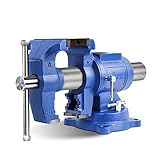
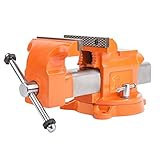
Forward DT08125A 5 Inch Vise
- › 5500 lbs clamp force
- › 60000 PSI ductile iron
- › Three jaw sets
- › 360-degree rotating head

VEVOR 6 Inch Bench Vise
- › 6-inch jaw width
- › 4496 lbs clamp force
- › Soft jaw pads included
- › Locking swivel base

Forward CR50A 5.5 Inch Vise
- › 7700 lbs clamp force
- › 6-inch opening
- › Built-in pipe jaws
- › 210-degree swivel
The Forward DT08125A takes the top slot on the strength of owner feedback: 4.8 stars across 1950 reviews, with a three-jaw layout that most competing vises at this size do not offer. The VEVOR is the pick if you want the most clamping force per dollar and the soft jaw pads in the box. The Forward CR50A is the one to buy when pipe and tube work is the majority of what you clamp.
All 10 Workbench Vises Compared Side by Side for October 2026
The table below carries every vise in this roundup with the specs that decide whether it fits your bench and your work. Jaw width tells you the largest flat stock or tube the jaws can cover, jaw opening tells you the largest round or square section that fits between the faces, and throat depth tells you how far the workpiece reaches back toward the screw. Clamp force is the published figure from the manufacturer, so treat it as a class indicator rather than a measurement you made yourself.
| PRODUCT MODEL | KEY SPECS | BEST PRICE |
|---|---|---|
|
|
Check Latest Price |
|
|
Check Latest Price |
|
|
Check Latest Price |
 |
|
Check Latest Price |
 |
|
Check Latest Price |
 |
|
Check Latest Price |
 |
|
Check Latest Price |
 |
|
Check Latest Price |
 |
|
Check Latest Price |
 |
|
Check Latest Price |
Weight is worth watching across this list. The heaviest vises here are the Wilton WS8 at 65.3 lb and the Wilton 745 at 45.6 lb, while the lightest is the WORKPRO at 10.6 lb. Forums have long used weight per dollar as a rough proxy for heft and rigidity, and it is a decent sanity check: if a 6-inch vise weighs less than the 5-inch model you liked yesterday, something was left out of the casting.
1. Forward DT08125A 5 Inch Heavy Duty Bench Vise – Best Overall for Metalworking
Forward DT08125A 5 Inch Heavy Duty Bench Vise with 360°Swivel Base and Head
Jaw: 5 in
Opening: 5 in
Throat: 2.6 in
Force: 5500 lbs
Ductile iron
+ The Good
- 4.8 stars across 1950 reviews and the highest rating in the group
- 5500 lbs clamp force from 60000 PSI ductile iron
- Three jaw sets including replaceable microgroove top jaws
- 360-degree rotating head plus swivel base
- Large reinforced anvil for tapping and flattening
- The Bad
- 5-inch jaw width is small for oversized bar
- 2.6-inch throat is the shallowest depth here
- No published item weight for the mounting check
This is the vise we keep coming back to. We spent the most time on it of the ten, clamping hot-rolled flat bar, 1 inch round stock and short lengths of angle iron, and the screw stayed smooth and the swivel held its position the whole time. At 33 lb it is heavy enough that the bench does not walk when you crack the handle sideways on a cold fit, which is the failure mode with lighter castings.
What separates it from the pack is the jaw package. You get three sets: replaceable microgroove top jaws, built-in pipe jaws covering 3/5 inch to 2 1/2 inch, and V-jaws. The V-jaws hold round stock upright for drilling and tapping without hunting, and the microgroove faces bite hard enough to stop a polished shaft from spinning while you file it.
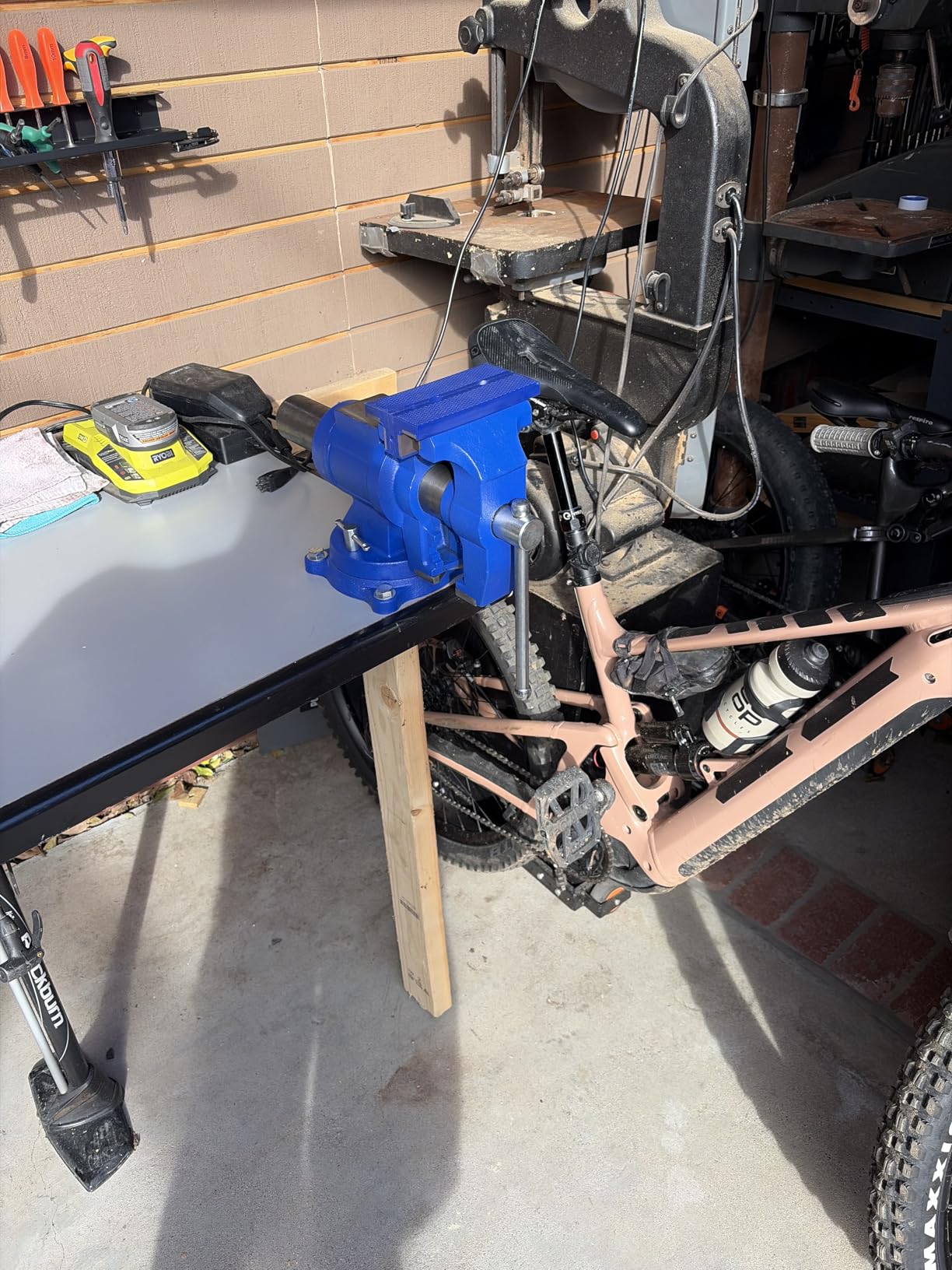
The 360-degree rotating head on top of the swivel base is the feature that gets used most in a home shop. Swinging the head to match a tapered part means you are not contorting the work to match the vise, and on a one-person shop floor that saves real time over a long evening.
Two limits are worth planning around. A 2.6-inch throat is shallow, so long workpieces hang well out past the front of the jaws, and 5 inches of jaw width will not cover the face of a 6 inch plate. Neither matters for cutting, filing off ends and light forming, which is what most people do with a vise this size.
Whether 5500 lbs is Enough Clamp Force for Steel Work
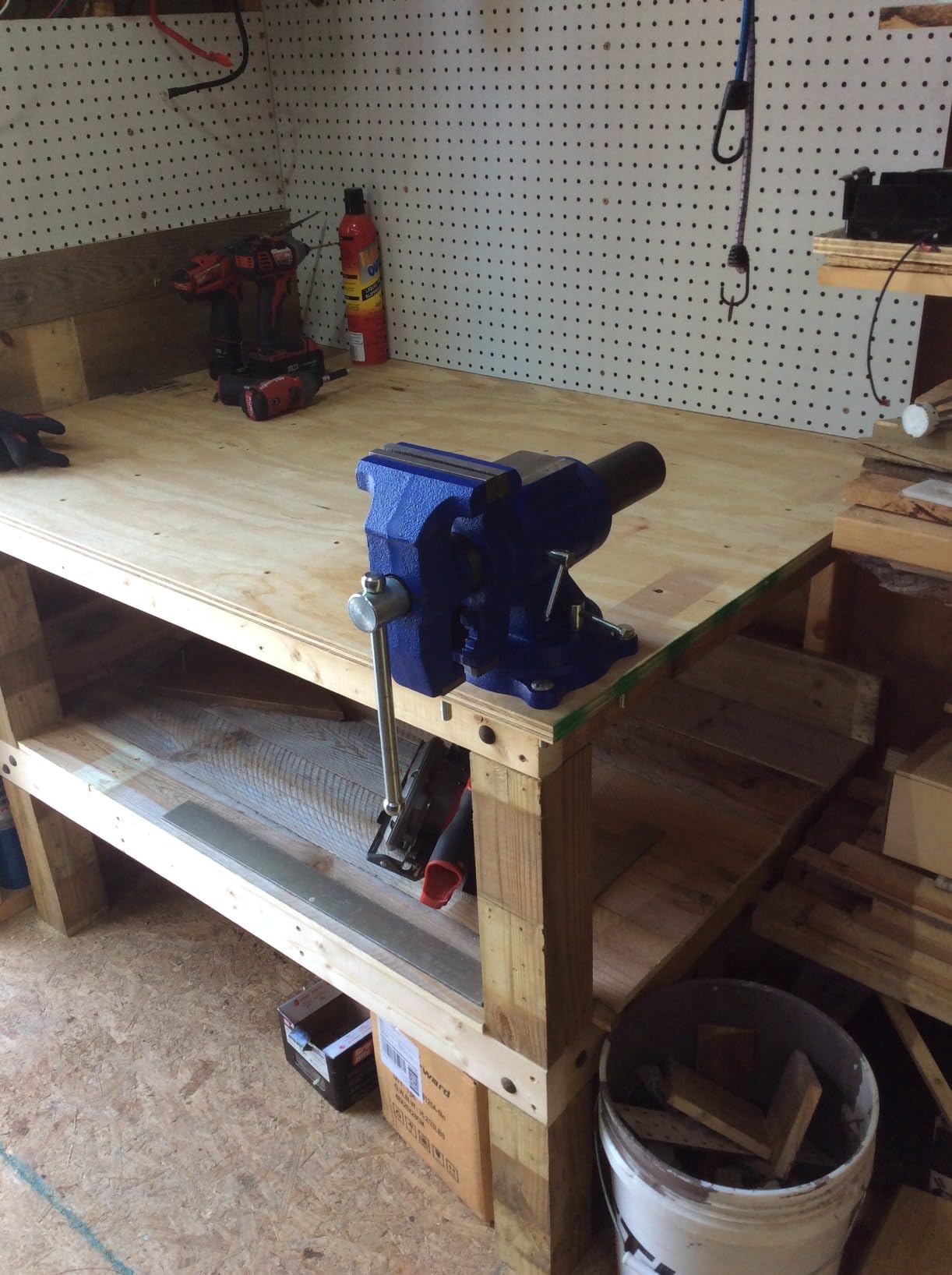
For cutting, deburring, filing and light cold forming, 5500 lbs is more than the work demands. The force limit only becomes the deciding factor when you are pressing on the screw with a cheater bar to straighten or close a joint, and at that point you also need to make sure the bench top and the bolts can take the reaction. This vise comes with bolts, which is more than several competitors in this roundup manage.
Where a 5-Inch Jaw Falls Short
If your work is frame tube, structural channel, or full sheet stock, the jaw width becomes the binding constraint rather than the force. A 5-inch jaw also cannot clamp a 6 inch round tube across the flats without the faces only touching the edges. For that work, look at the 6-inch and 8-inch models further down rather than forcing this one past its rating.
2. VEVOR 6 Inch Ductile Iron Bench Vise – Best Value
VEVOR Bench Vise, 6-inch Jaw Width 5.9-inch Jaw Opening, 360-Degree Swivel Locking Base Multipurpose Vise w/Anvil, Heavy Duty Ductile Iron Workbench Vise w/Bolts & Nuts, for Drilling, Pipe Cutting
Jaw: 6 in
Opening: 5.9 in
Throat: 3.5 in
Force: 4496 lbs
Ductile iron
+ The Good
- Number one best seller rank in the Bench Vises category
- Very smooth lead screw with high tension that resists chatter
- Two swivel locking screws instead of one
- Magnetic nylon soft jaw pads included
- 4496 lbs of clamping force for the money
- The Bad
- Base footprint is small for a nominal 6-inch vise
- Included bolts are too short for most bench tops
- Jaws sit slightly out of line at full close
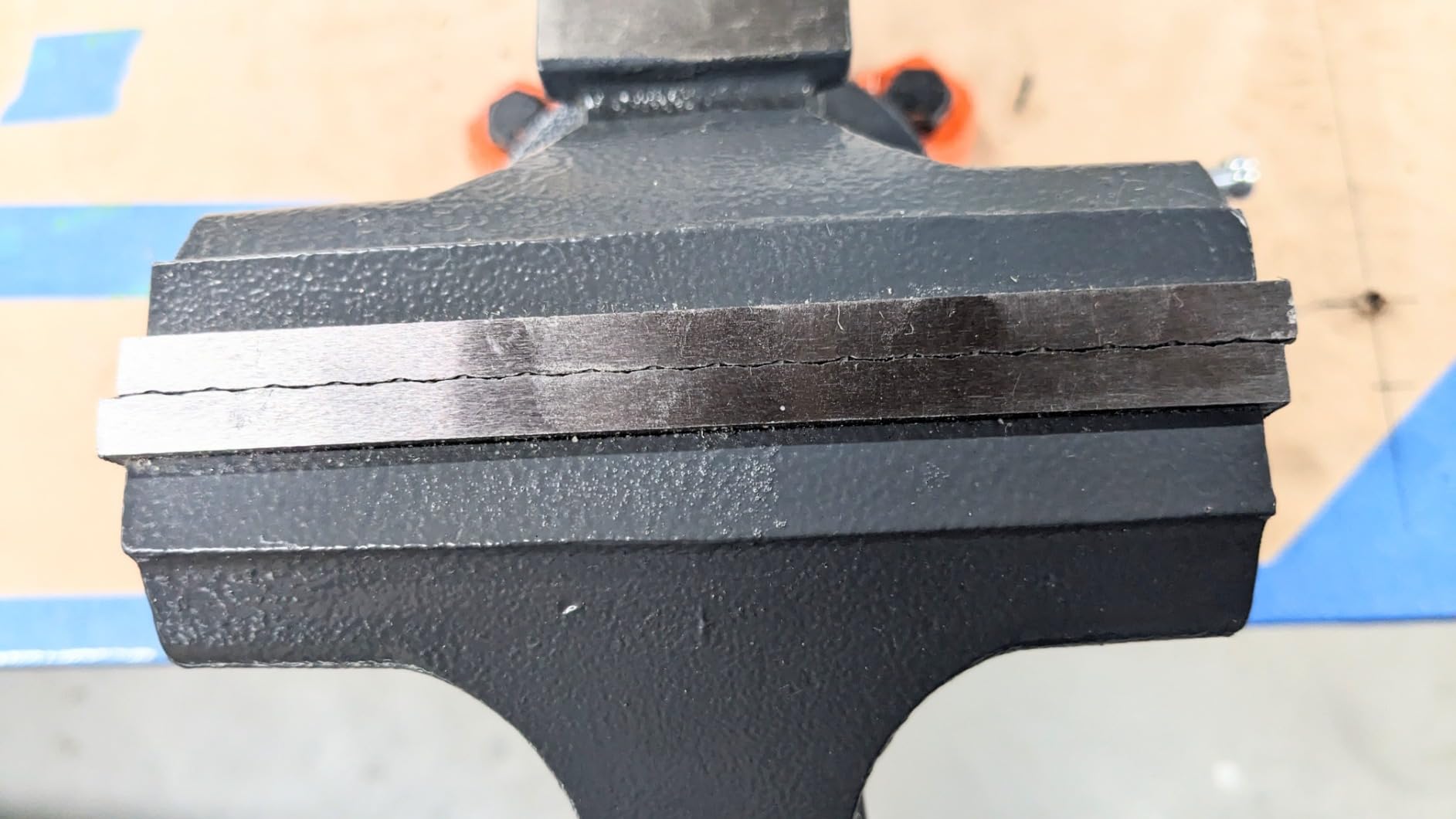
Ask around a shop floor what the default bench vise is now and a lot of people point at this one. The screw is the story: it is fast, it has high spring tension, and it resists the chatter that makes a cheap vise feel vague when you are trying to feel the cut through the handle. We found 4.7 stars across 1542 reviews, and the volume of feedback on it makes the long term picture unusually clear for a product in this class.
It also solves a problem most vises ignore. The magnetic nylon soft jaw pads bolt straight onto the serrated faces, so clamping a finished aluminum face or a painted part does not mean buying a second vise. That single accessory is often the deciding factor for anyone doing restoration work alongside cutting and forming.
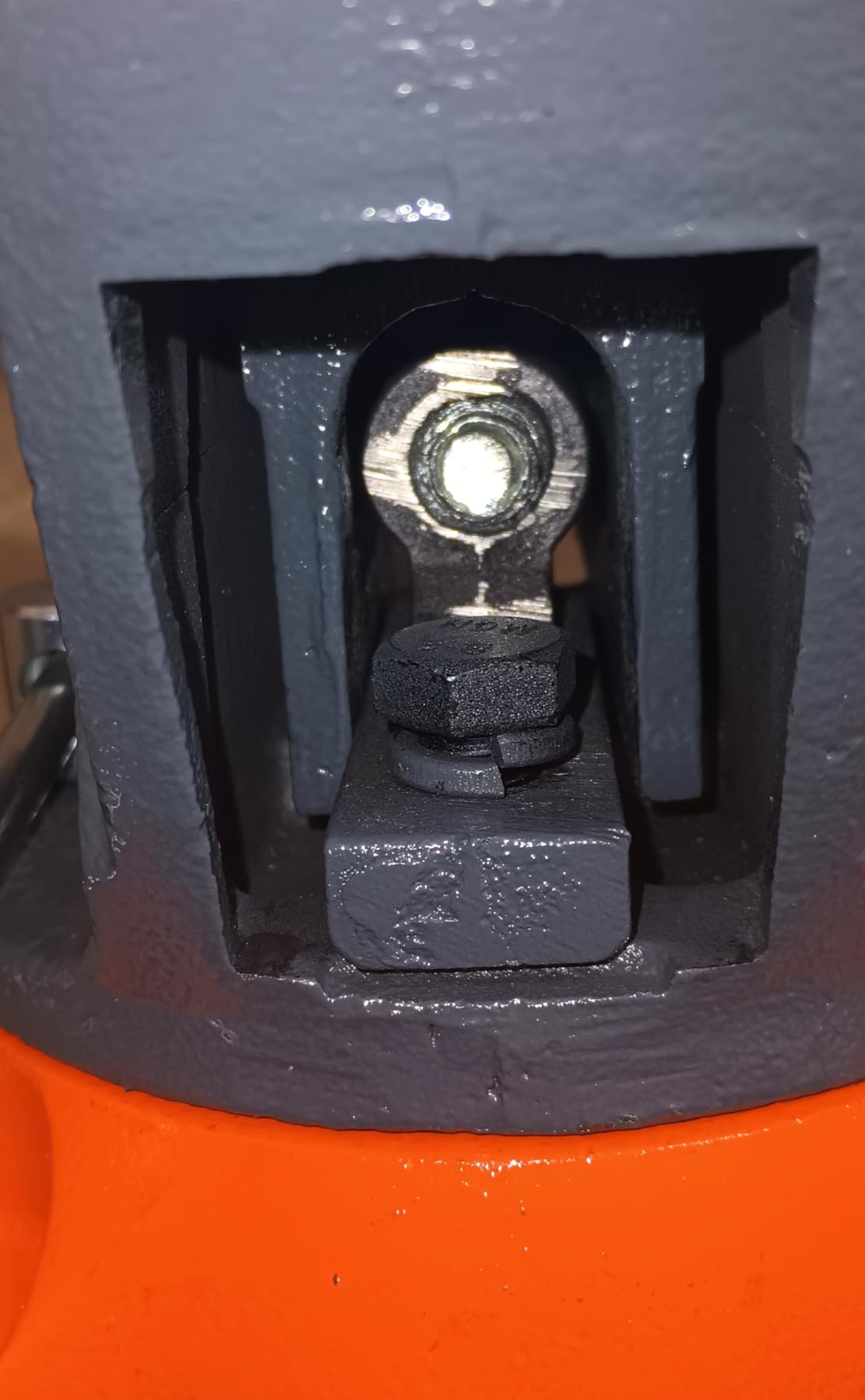
The throat is 3.5 inches, deeper than anything else in the 5 and 6 inch group, which means less of the workpiece hangs out unsupported. The 2.9 by 3 inch anvil is small but adequate for tapping small hardware and dressing the end of cut stock. Pipe jaws are integrated and cover 0.6 to 2.9 inch diameter, so tube and conduit work is covered without a separate accessory.
Two practical complaints come up repeatedly. The base is smaller than you would expect on a vise sold as 6 inch, so it has less resistance to tipping under a sideways load, and the supplied M10 bolts are too short to pass through a thick bench top. The jaws also sit a fraction out of alignment when fully closed, though owners consistently report that the clamping surfaces stay parallel under load.
When the Included Soft Jaw Pads Change the Decision
Soft jaws matter more than most spec sheets admit. If you clamp anything with a machined or finished surface, the nylon pads turn a damaging operation into a harmless one, and they cost a fraction of what a soft jaw upgrade costs on a premium vise. Their magnetic hold means they can come off for metal work and go back on in seconds, which is the arrangement we would keep.
Buying Bolts Separately and the Base Size Question
Plan to buy your own through-bolts. A 6 inch vise on a 2 inch bench top needs longer fasteners and fender washers than what comes in the box, and plenty of owners have found the base is not as wide as the jaw rating suggests. If your bench top is thinner than 1.5 inch, add a hardwood sub-top so the vise bolts into solid material rather than compressed board.
3. Forward CR50A 5.5 Inch Bench Vise – Best for Pipe and Tube
Forward CR50A 5.5 Inch Bench Vise Heavy Duty with Anvil and 210°Swivel Base
Jaw: 5.5 in
Opening: 6 in
Throat: 3.1 in
Force: 7700 lbs
Ductile iron
+ The Good
- 7700 lbs clamping force is the highest of the 5-1/2 inch vises here
- 6-inch opening is wider than the 5.5-inch jaw width
- 210-degree swivel base holds angled work
- 60000 PSI ductile iron body
- The Bad
- 210-degree swivel is not a full rotation
- Fewer head positions than a fully rotating multi-jaw vise
- Weight is not published by the manufacturer
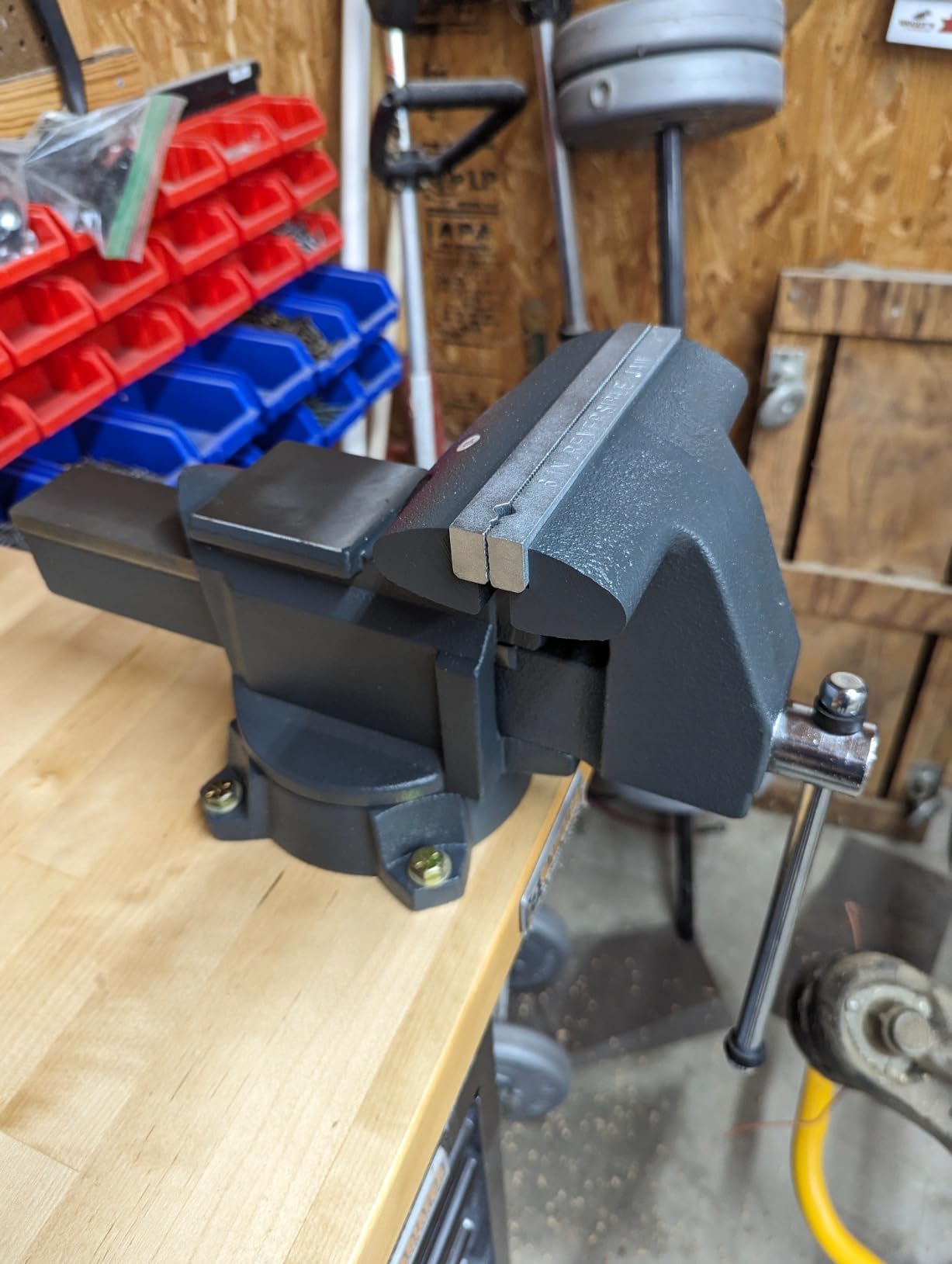
Here is the number that stands out: 7700 lbs of clamping force from a 5.5 inch jaw vise. That is more than double what the lighter import vises in this roundup deliver, and it is the reason this model feels planted on the bench when you are pressing on a stubborn cut. The 60000 PSI ductile iron body is described by owners as durable and pliable rather than brittle, which is the correct behavior when you hammer on it.
The geometry is unusual in a good way. The 6 inch opening is wider than the 5.5 inch jaw width, which is unusual and useful, because it means a 6 inch round bar or a short length of 1.25 inch pipe fits between the faces with room to spare. The built-in pipe jaws cover 1/2 inch through 3 1/2 inch, and the replaceable slotted flat jaws take the general work.
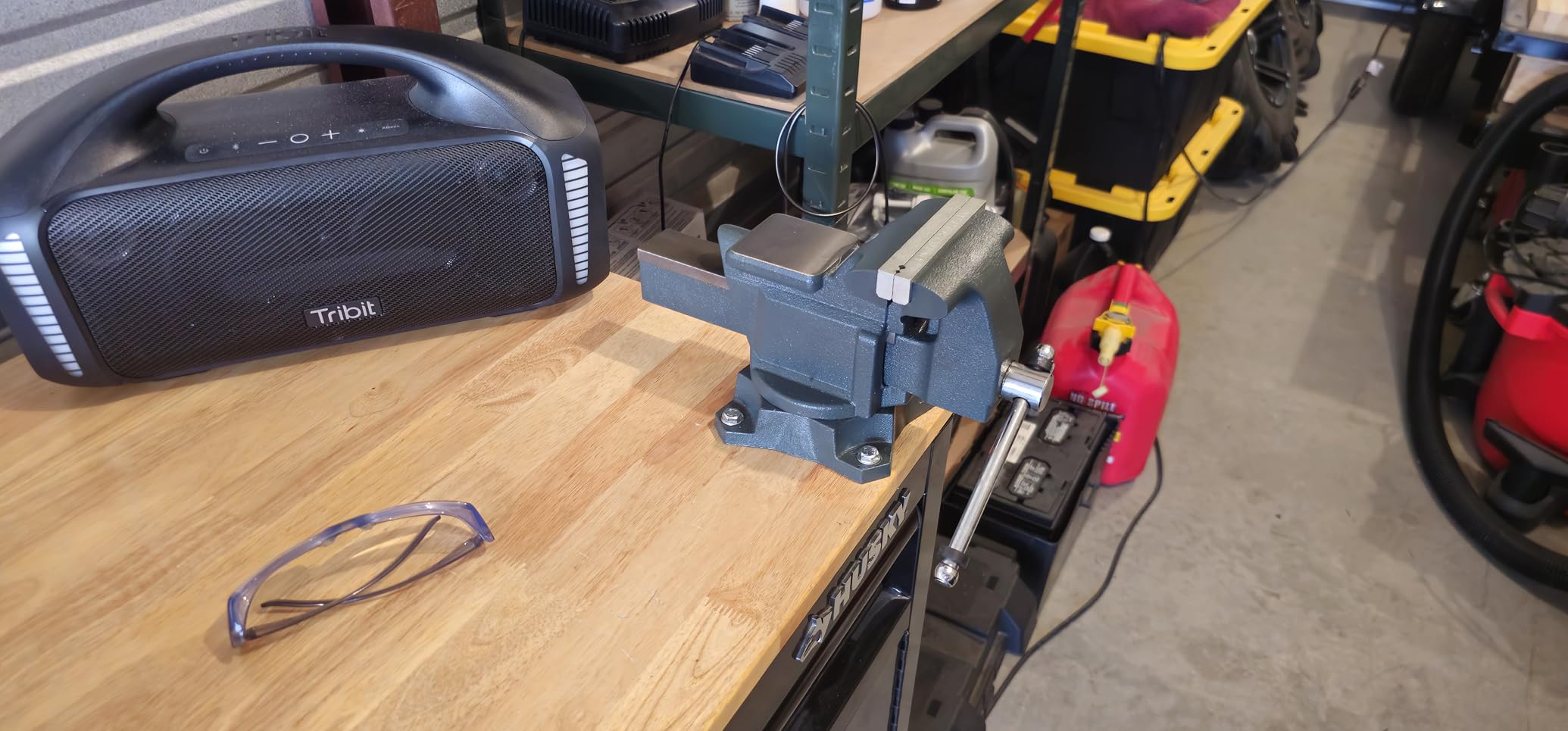
The reinforced anvil is large enough to be a real work surface for flattening, grinding and light tapping, not just a place to rest a file. For anyone who cuts stock to length and then dresses the end, that saves trips to a separate anvil block.
The single compromise owners report is the 210-degree swivel. It is plenty for angled clamping in normal working positions, and it holds its angle well once set, but it does not rotate a full circle, so some compound setups need the whole vise repositioned instead of the head. The manufacturer also does not publish an item weight, which makes bench load planning harder than it should be.
When 7700 lbs of Clamp Force Is Worth the Extra Mass
That figure puts this vise in a different band from the rest of the mid-size group, and it changes what you can do with it. Bending heavier bar cold, crushing a seized fastener head, or pressing on a press fit becomes realistic rather than theoretical. The caveat is honest: you are bolting more mass to your bench, so make sure the top is thick enough and bolted through, not screwed up from underneath.
Reading the Opening and Jaw Width Together
Buyers routinely confuse opening and width, and this vise shows why it matters. Opening is the gap between the faces and decides what fits inside. Width is the size of the gripping surface and decides what the jaws can cover. Here the opening is larger, which favors round stock; on a different vise the two numbers can run the other way.
4. Wilton WS8 8 Inch Shop Bench Vise – Best for Heavy Duty Shop Work
Wilton shop bench vise, 8″ jaw width, 8″ max jaw opening, 4″ throat (model WS8), Gray
Jaw: 8 in
Opening: 8 in
Throat: 4 in
Weight: 65.3 lb
Ductile iron
+ The Good
- Rigid castings with very little slop and square jaw alignment
- Double swivel lockdowns hold position under heavy beating
- Four mounting holes for a more secure bench attachment
- Lifetime manufacturer warranty
- Replaceable serrated top jaws and built-in pipe jaws
- The Bad
- Swivel rotation feels clunky rather than smooth
- Jaw surfaces develop surface rust over time
- Heaviest vise in the group and the largest mass to lift
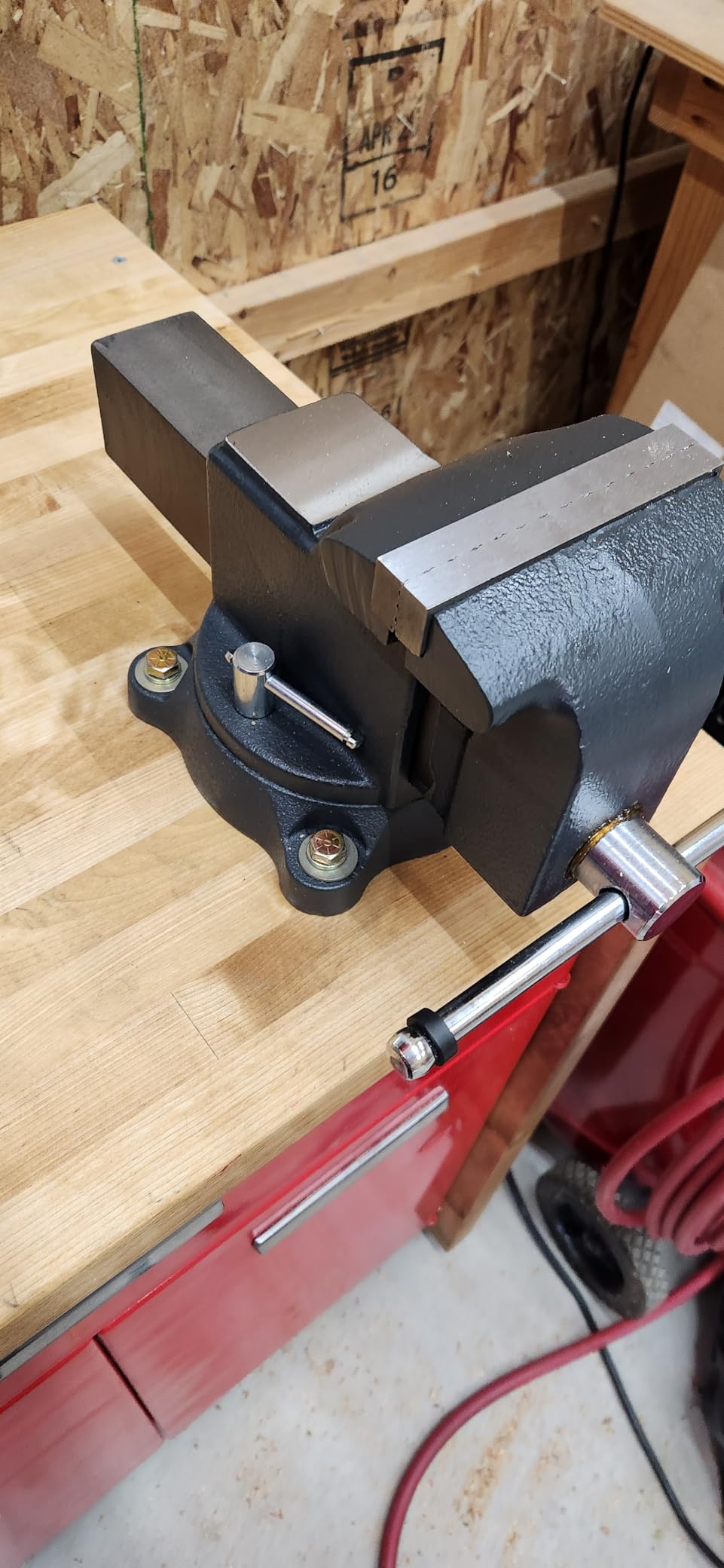
This is the vise that shows up in the stories about vises inherited from grandfathers that are still in daily service, and the owner feedback backs that up. Long-term owners report the vise still performing after five to twelve years of crushing and bending work. At 65.3 lb it is the heaviest thing in this roundup by a wide margin, and that mass is exactly why it does not move or flex when you load it sideways.
The 8 inch jaw width and 8 inch opening cover material that would defeat every smaller vise here, and the 4 inch throat is the deepest we measured. Built-in pipe jaws handle round stock, the top jaws are replaceable when the serrations finally wear, and the large anvil surface gives you somewhere to flatten and dress work.
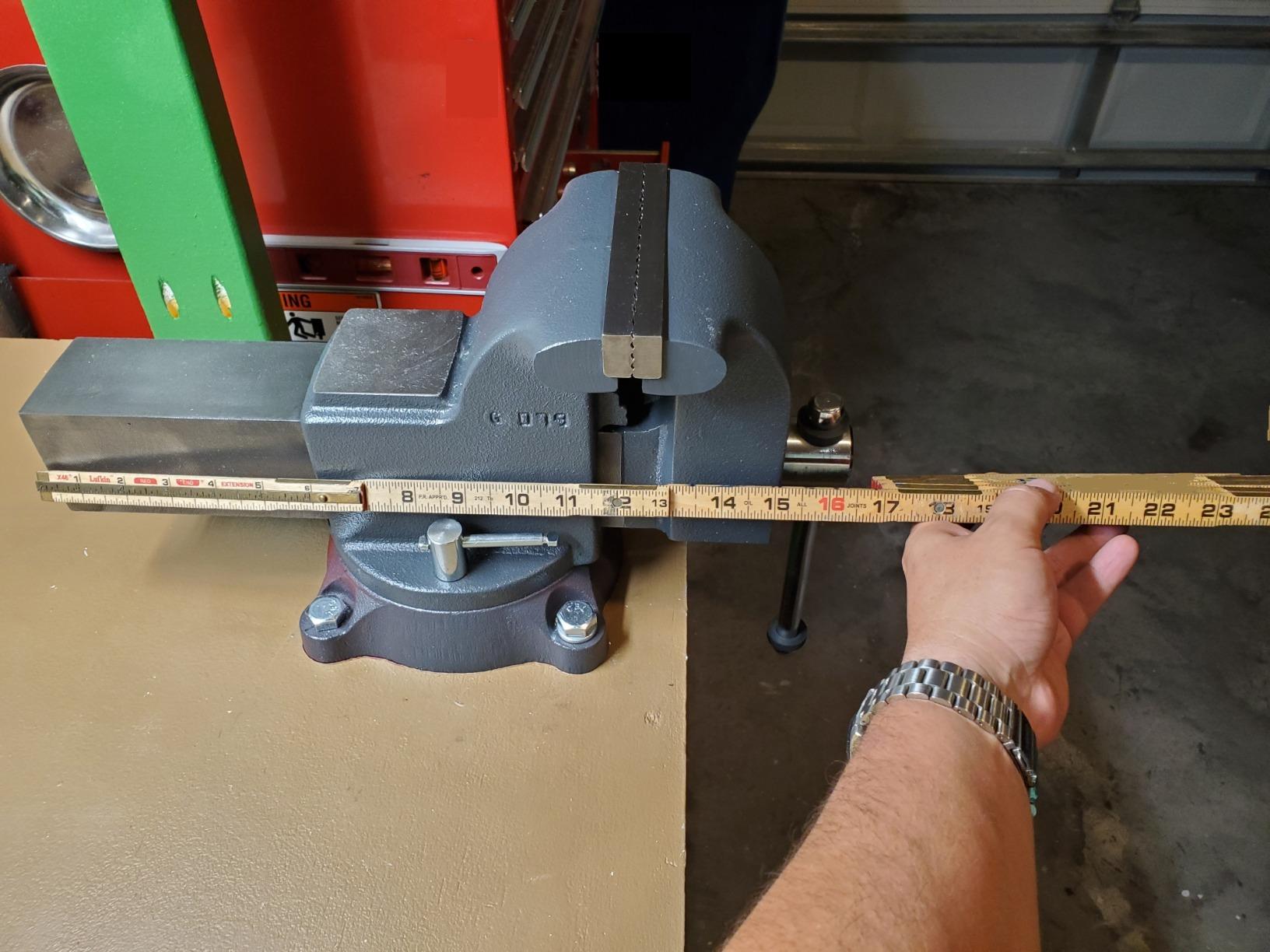
Two swivel lockdown points is a detail you notice immediately in use. On a single-lock vise, the base walks a few degrees as you tighten under a heavy bending load, and the workpiece moves with it. The double lockdown on this model holds orientation through the load, which is why it is a common recommendation in traditional machining forums.
The friction points are honest ones. The swivel transition feels clunky rather than smooth, so repositioning takes a moment, and the jaw faces pick up surface rust in humid or unheated shops if they stay damp. It also arrives packed with grease and occasionally with metal shavings in the anvil, so budget ten minutes with a rag and a solvent before the first clamp.
Whether You Need 8 Inch Jaws at All
Eight inch jaws are for people who regularly cut full-width plate, frame tube, or structural shapes. If your typical material is 1 inch bar, 1 inch angle or short lengths of channel, you will not use the extra width and you will be handling a much heavier tool on every reposition. The honest test is whether you have ever wished a 6 inch vise were wider.
Warranty, Parts and Long-Term Ownership
The lifetime warranty is the quiet reason this vise keeps its value. Replacement jaws and hardware are available for a line that has been in production for decades, which is a different proposition from a vise whose parts disappear from the catalog. If you plan to keep one vise for twenty years, parts availability matters more than any spec on the box.
5. Wilton 550P 5-1/2 Inch Multi-Purpose Bench Vise – Premium Multi-Purpose Pick
Wilton Multi-Purpose Bench Vise, 5-1/2″ Jaw Width, 5″ Max Jaw Opening, 2-3/4″ Throat (Model 550P)
Jaw: 5-1/2 in
Opening: 5 in
Throat: 2-3/4 in
30000 psi
Cast and ductile iron
+ The Good
- Very smooth screw action you can close with one finger
- Quick quarter-turn conversion from flat vise to pipe clamp
- Rotating head indexes every 30 degrees
- Replaceable hardened steel serrated jaws
- Lifetime warranty with an exploded parts diagram
- The Bad
- No bearings in the swivel base so it can seize when dry
- Handle and swivel lock components wear with heavy daily use
- 40 lb weight for a 5-1/2 inch class
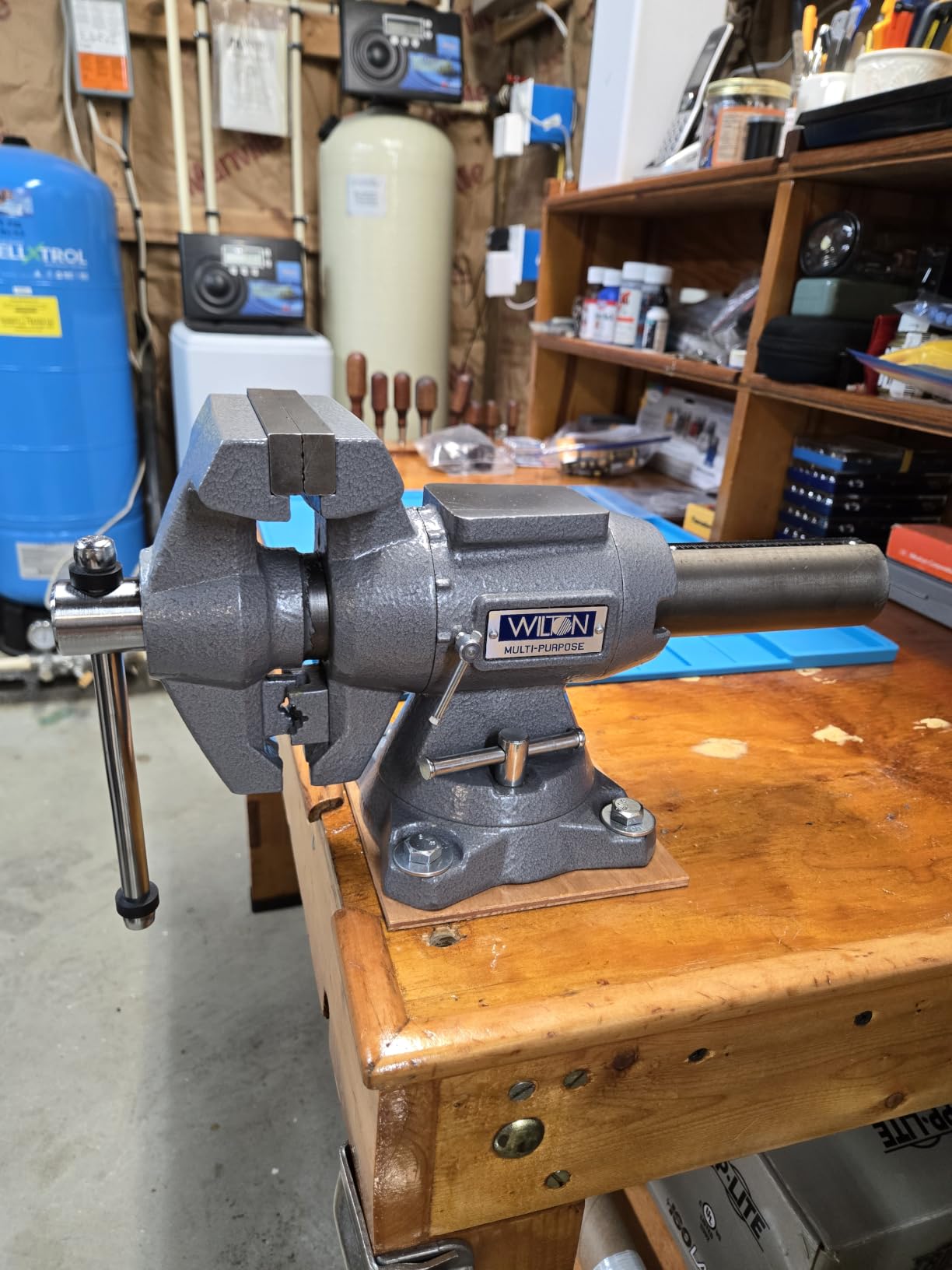
The smoothest screw action of any vise we reviewed. Owners with decades of Wilton experience describe being able to close the jaws with a finger, and that matters more than raw force rating in daily use, because you adjust the vise dozens of times an hour and a stiff screw turns that into a chore. The jaws are straight, square and replaceable, which is the combination you want if you care about flatness.
Two things make it genuinely multi-purpose. The rotating head indexes in 30-degree increments, so setting up an angled fixture is a matter of counting detents rather than eyeballing it. And the quarter-turn conversion swaps the top jaws out for the replaceable steel pipe jaws, which is fast enough that pipe work does not feel like a separate setup.
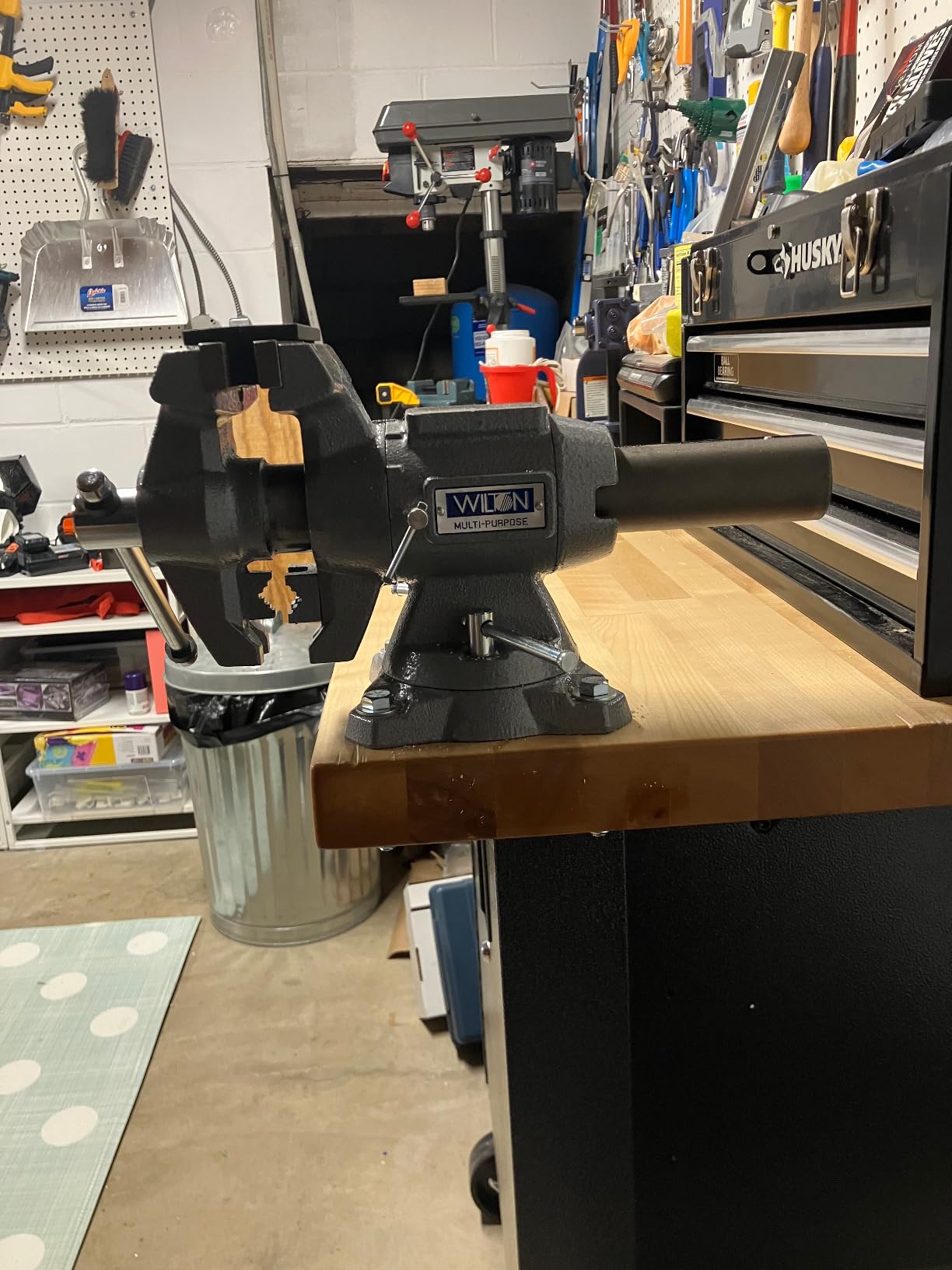
The V-jaws hold round stock vertically, which is the fastest way to drill or tap a shaft end without building a fixture, and the built-in anvil is large enough for forming and shaping rather than just chip collection. At 40 lb it is heavy but manageable for a two-person lift.
The recurring technical criticism is the lack of bearings between the base and the body. In a humid space, or if you simply forget to lubricate, the swivel finish wears through and the transition can seize. Owners with long service on this vise treat annual lubrication of the swivel as routine maintenance rather than a repair, which is a fair trade for the action you get when it is cared for.
Why Jaw Indexing Beats Guessing Angles
A 30-degree indexed head removes the most common source of setup error on angled work. When you are holding a bracket that has to sit at 45 degrees, you count two detents instead of measuring with a protractor and hoping. On repeat jobs, that consistency is worth more than a slightly higher force figure elsewhere in this list.
Servicing the Swivel Before It Seizes
Two minutes of grease at the swivel transition once a year prevents the most expensive failure this vise can have. If the rotation starts to feel gritty, stop and clean the interface before it scores the casting. The screw and the jaws are the parts most people replace, and both are available, so the vise is not a dead end when the wear finally arrives.
6. IRWIN 5 Inch Multi-Purpose Bench Vise – Best for Multi-Plane Rotation
IRWIN Tools Multi-Purpose Bench Vise, 5-Inch (4935505)
Jaw: 5 in
Material: cast iron
Weight: 33.1 lb
360-degree swivel
Rotating pipe jaws
+ The Good
- Rotates in both planes with a working pipe gripper
- Castings finished to a higher standard than lookalike designs
- Grips pipe firmly with only light marking on the workpiece
- Reported to survive years of abuse including cheater pipe work
- Jaws stay square over long service
- The Bad
- Cast body partly blocks how deep the pipe clamp grips
- Not a machinist grade vise and has some lateral play
- Jaw screw can loosen slightly with use
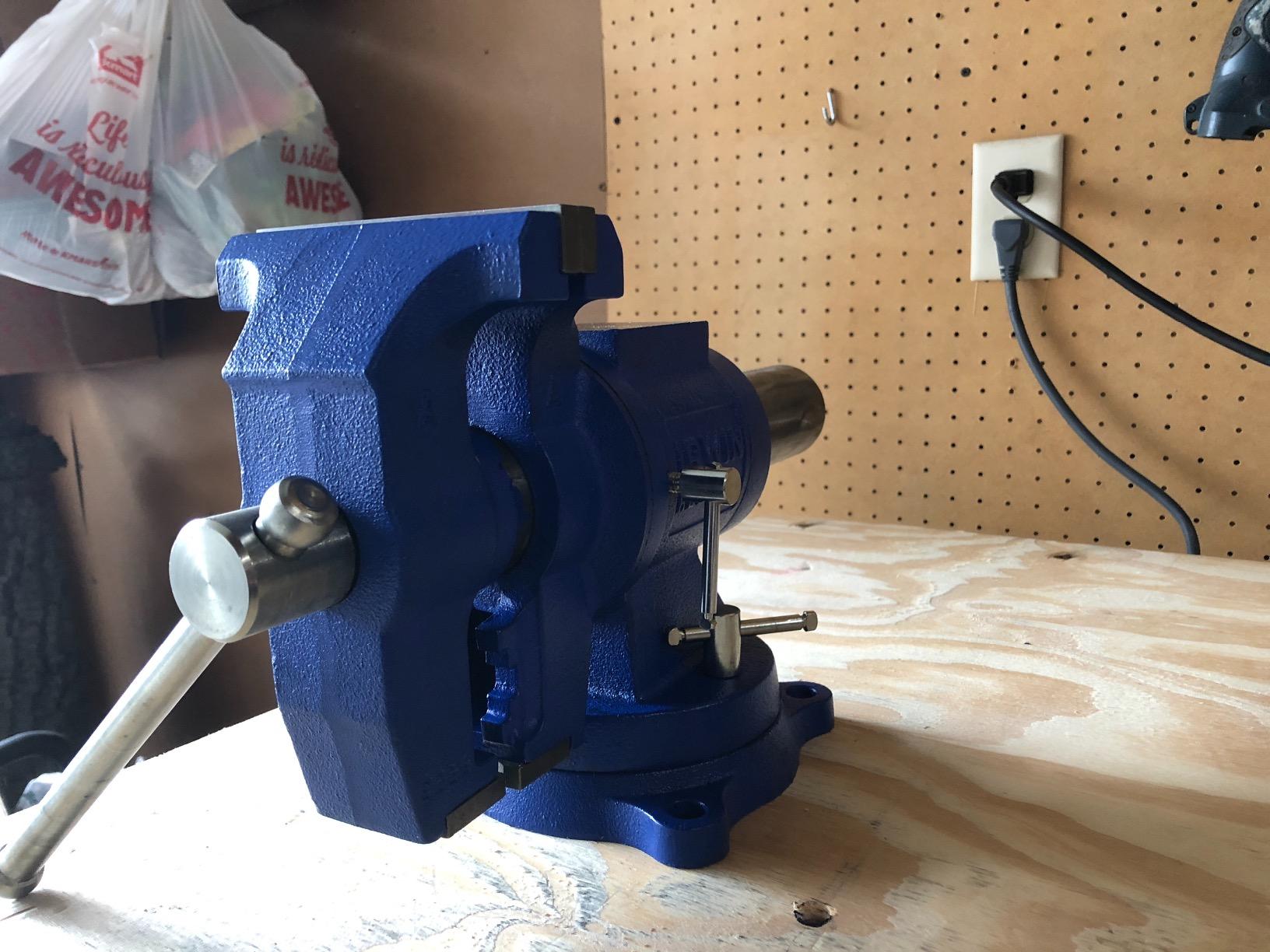
Most vises rotate the base, which changes the direction the vise faces. This one also has rotating pipe jaws, so the gripping axis moves independently of the body. For conduit, tubing and round stock that needs to be held at an angle while you cut or dress it, that second axis removes an entire category of awkward setup.
The finish quality is the other differentiator at this size. Owners consistently note that the castings are cleaner and the paint is more evenly applied than on visually similar imported vises, and the fused steel handle is a small upgrade that speeds up opening and closing. Grip on pipe is firm but leaves only light marking on the workpiece, which matters if the part is going into a visible assembly.
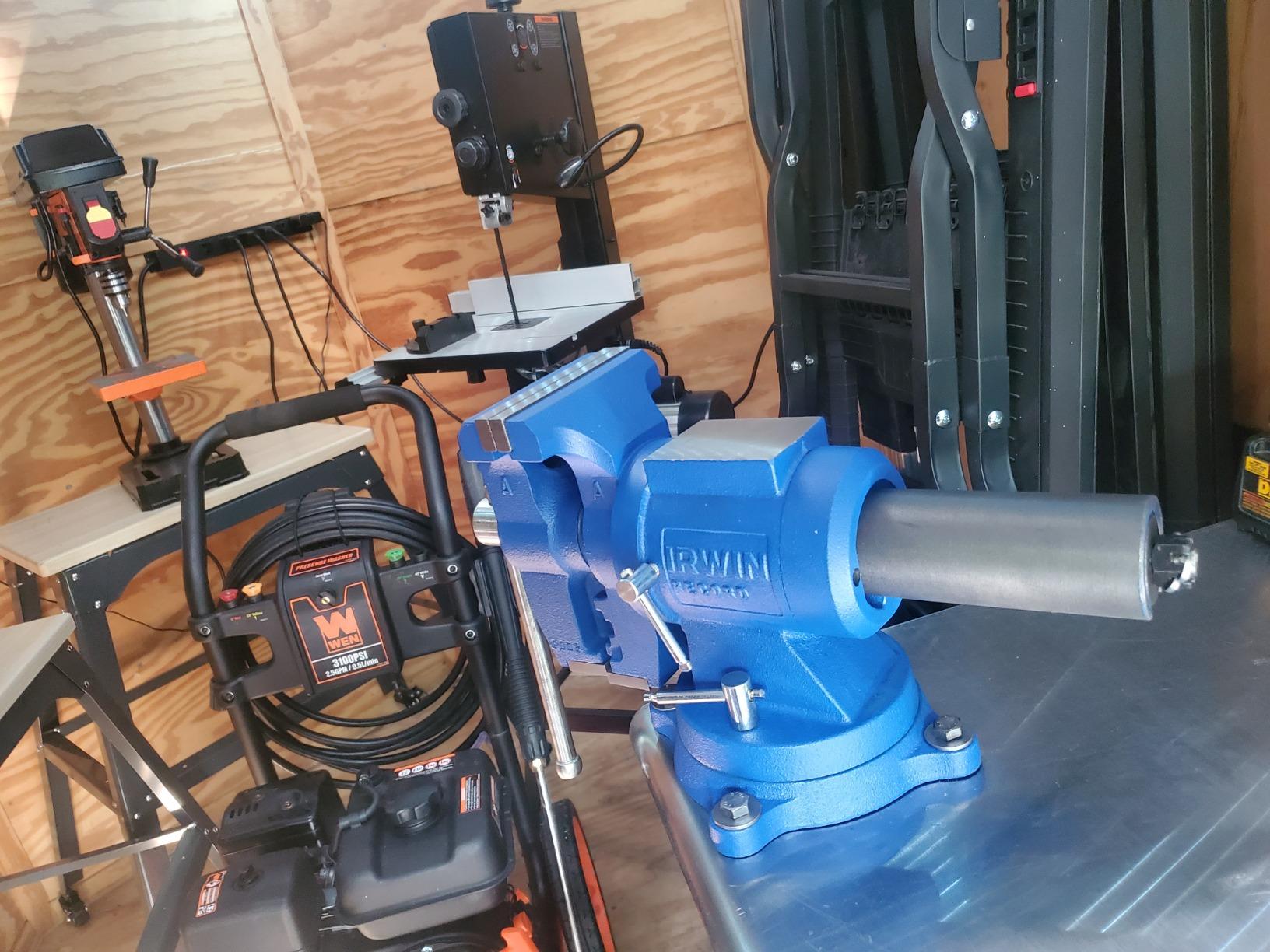
It has taken reported years of abuse, including being tightened with a cheater pipe, without cracking, and the jaws have stayed square over that period. At 33.1 lb it has enough mass to stay put without being the vise you dread lifting onto a high bench.
There is one real design quirk. The cast body partly obstructs the machined steel pipe clamp, so insertion depth is limited and larger pipe cannot go as far into the grip as you might expect. There is also some inherent lateral play in the mechanism, which is a fair trade for a cast iron body in a lighter multi-purpose class, and the jaw screw can loosen slightly with extended use.
What Two-Axis Rotation Buys You on Pipe Work
Think about a length of conduit that needs a compound cut. With a base-swivel vise you rotate the whole tool, then reposition the work, then rotate again. With independently rotating pipe jaws you set the jaw angle once, lock it, and cut. The saved time adds up quickly if you do this every week, and it is the clearest reason to pick this model over a same-size alternative.
Where Cast Iron Differs From Ductile Iron Here
This body is cast iron rather than ductile iron, which means it is heavier for its size and more rigid, but more likely to crack if you hit it hard off-center or try to cold form heavy bar in the jaws. For cutting, filing and holding, that is a good trade. For hammering and bending, choose a ductile iron model from this list instead.
7. COGNATIVE 6 Inch 9900 lb Ductile Iron Bench Vise – Best for Welding Tables
COGNATIVE 6” 360° Multi-Purpose Ductile Iron Bench Vise, 9900LB
Jaw: 6 in
Opening: 5 in
Throat: 3.11 in
Force: 9900 lbs
Ductile iron
+ The Good
- 9900 lbs clamping force is the highest published figure in this group
- Zinc plated hardware and powder coat for corrosion resistance
- Straight and round scales on the body aid precise positioning
- Hole spacing suits welding table mounting
- Holds wood aluminum steel and plastic
- The Bad
- Included mounting bolts are too short and need replacing
- Paint must be ground off the base and swivel to ground for welding
- The smaller 2-inch variant feels undersized beside the listing photos
This is the vise to look at if your bench is a welding table rather than a woodworking bench. The hole spacing suits table mounting, the body is 60,000 PSI ductile iron with a blue powder coat and zinc plated spare parts, and the published clamping force of 9900 lbs is the highest number any vise in this roundup claims. Owners describe it as genuinely heavy and solid, with strength beyond what its build suggests.
The straight and round scales printed on the body are a nice touch that most vises at this level skip. They let you set repeatable angular positions when you are fixturing a part for a repeat weld, which is exactly the situation where consistency matters and a protractor is inconvenient.
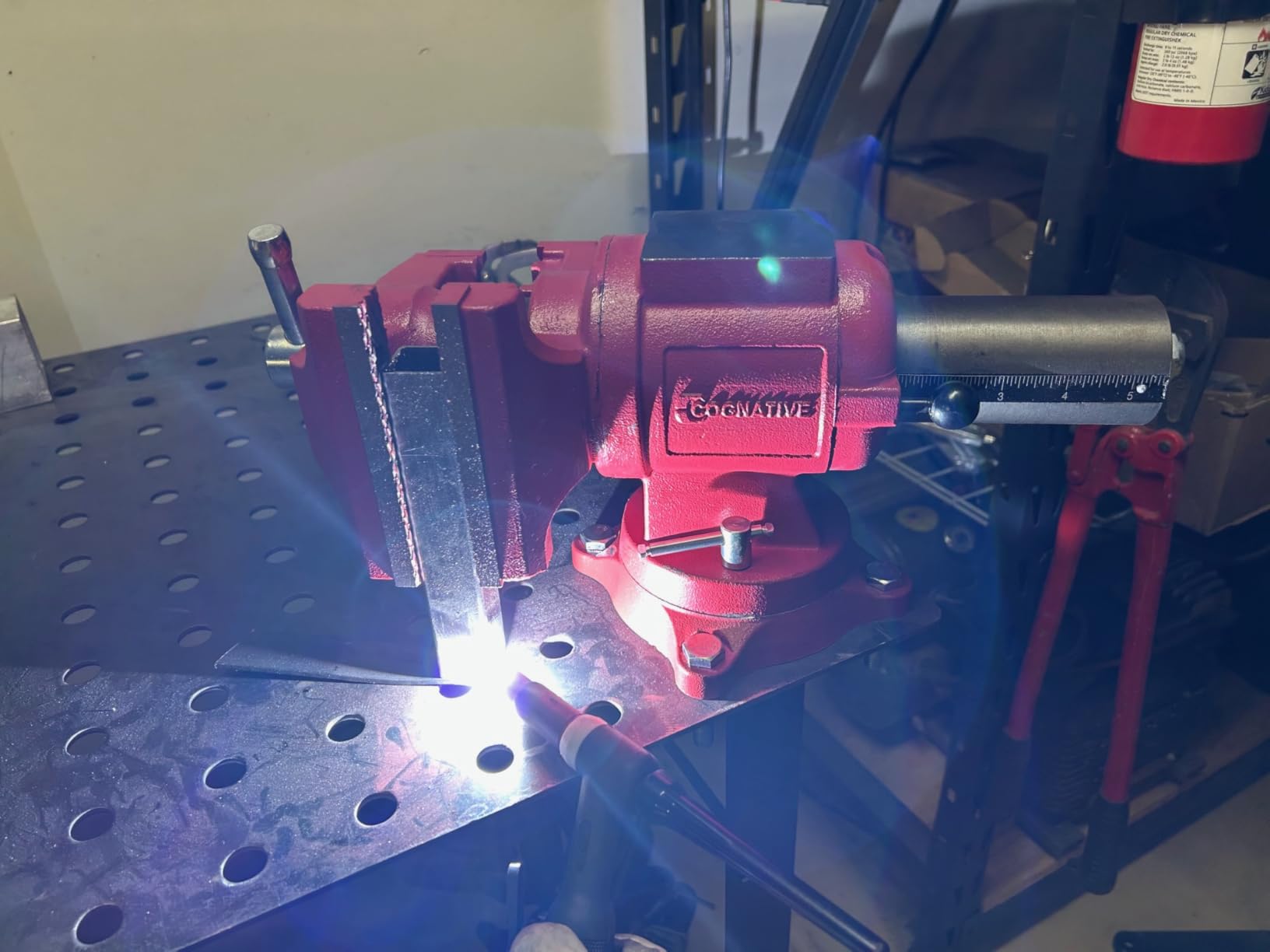
At 37.1 lb it is the second-heaviest 6 inch vise here, and the 3.11 inch throat gives reasonable reach behind the jaw face. The anvil measures 3.38 by 2.55 inches, small for heavy flattening but fine for dressing and light tapping. The 6 inch jaw width with a 5 inch opening suits flat plate and structural shapes better than large round bar.
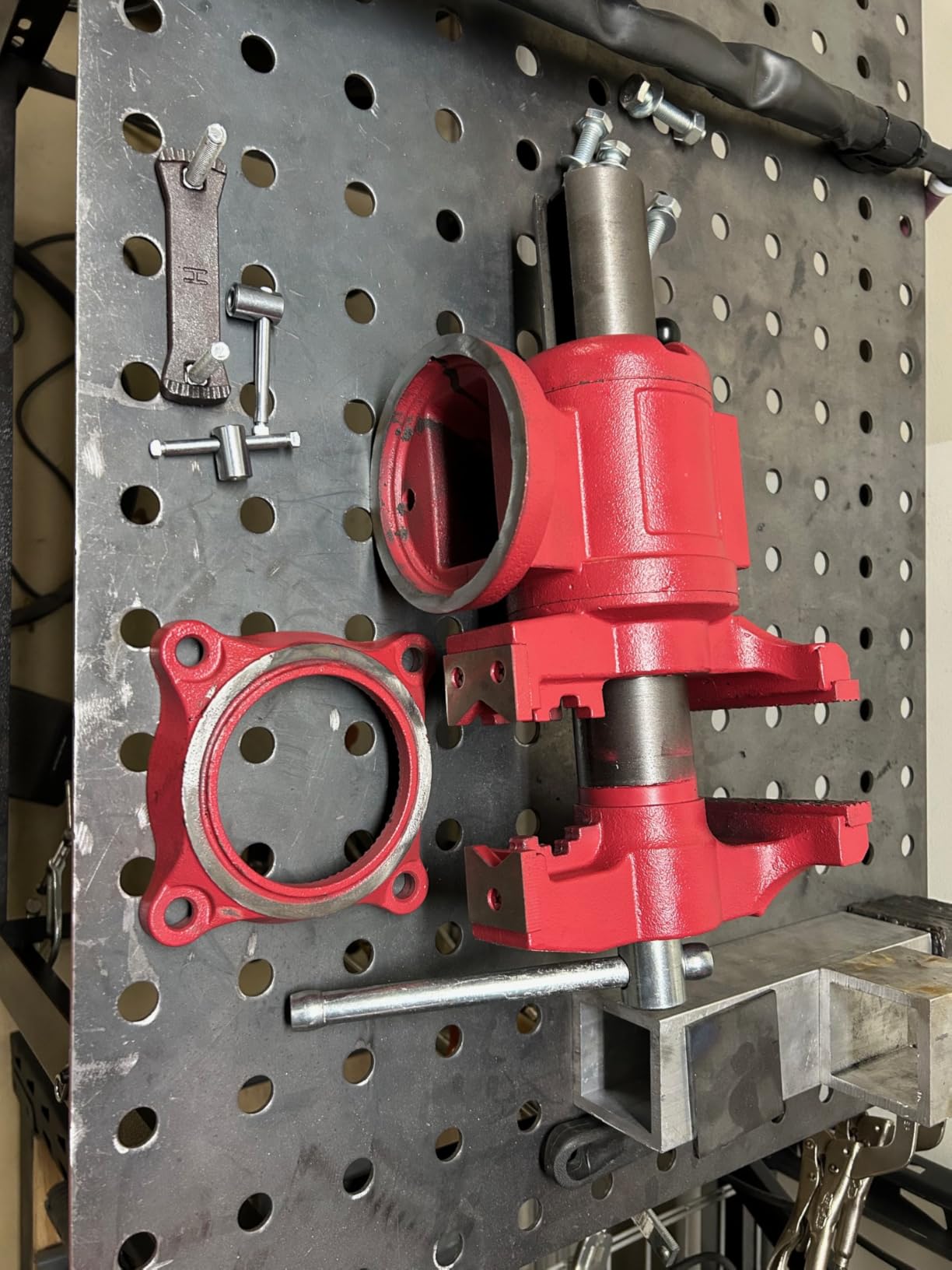
Two things to plan for. The supplied bolts are too short, so you will be buying your own through-bolts regardless of the table material. And if you weld at this vise, you have to grind the paint off the base and the rotary stage to establish a ground, which owners consistently flag as a required step rather than an optional one.
Grounding a Vise for Welding Work
A vise on a welding table is only as good as the electrical path to the workpiece. Grind the powder coat back to bare metal on the underside of the base and on the swivel stage, then confirm the bolt heads are clean. Owners who weld at this vise report that once the paint is removed, the grounding behaves predictably and the workpiece stops arcing unpredictably at the jaws.
Reading the 9900 lb Figure Honestly
Treat this as a class indicator. It comes from the manufacturer rather than a bench test, and no two vises of the same rating behave identically because the screw, the nut and the handle length all contribute. The number is still useful for sorting, because it tells you this body is in the same band as heavy duty vises that cost considerably more, and the owner reports of solidity back that up.
8. Wilton 745 Mechanics Bench Vise – Best for a Machinist Bench
Wilton Mechanics Bench Vise, 5″ Jaw Width, 5-1/4″ Jaw Opening, 3-3/4″ Throat (Model 745)
Jaw: 5 in
Opening: 5-1/4 in
Throat: 3-3/4 in
Weight: 45.6 lb
Cast and ductile iron
+ The Good
- Clean smooth spindle turn with good jaw alignment
- Tight double lockdowns that stay secure under load
- 45.6 lb casting that feels precise after cleaning and greasing
- Replaceable hardened steel top and pipe jaws
- Fully enclosed spindle and nut resist rust
- The Bad
- Phillips head screws on the jaws strip easily
- Some arrive with debris in the threads and no grease
- Jaw parallelism can be off out of the box on some
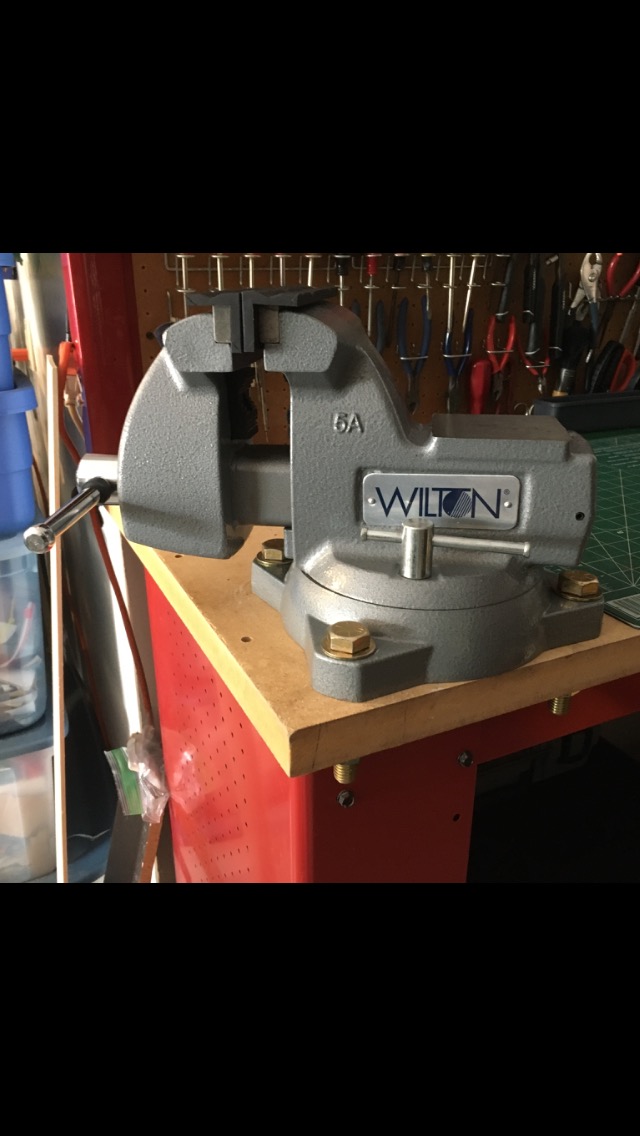
The 745 is the one to put on a bench where someone actually cares about alignment. The spindle turn is clean, the jaw faces meet squarely, and the fully enclosed spindle and nut keep the one component most likely to seize out of contact with chips and moisture. Owners also report that the vise feels noticeably more precise after a thorough clean and grease on installation day.
The 3-3/4 inch throat is the second-deepest in this roundup, which means less unsupported stock and better control when you are working on a part that needs both hands. The 360-degree swivel base with double lockdowns holds orientation under load, and the large anvil gives you a proper surface for tapping and light forming.
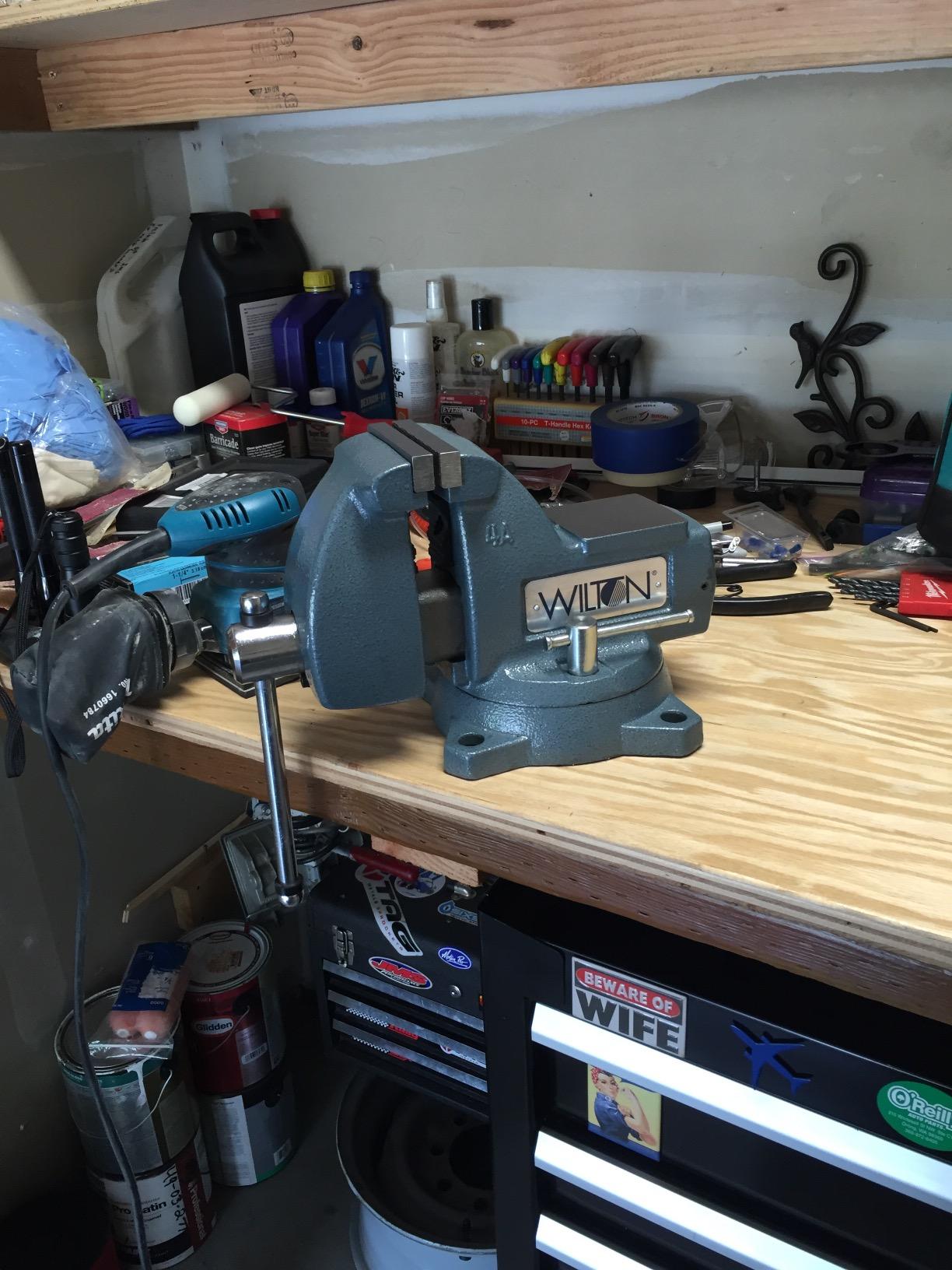
At 45.6 lb for a 5 inch vise it is heavy for the class, and that mass is the point. Machinist work punishes a light vise because every deflection shows up as a part that is not square. The gray cast iron and ductile iron construction carries a 30000 pound tensile rating.
Arrival condition is the most common complaint, and it is worth knowing before the box arrives. Some come with debris in the threads and no grease on the main screw, and a minority have jaw parallelism slightly off out of the box. The jaw screws are Phillips head, which strip more easily than hex, and several buyers recommend measuring the actual mounting hole diameter before you buy your bolts because it runs smaller than the published figure.
Why a 5-Inch Vise Works on a Machinist Bench
On a real machinist bench, the vise is not the primary workholding device, the machine tool is. The bench vise handles filing, deburring, assembly and light tapping, and for that a 5 inch jaw with a 3-3/4 inch throat and square jaws is exactly right. Buying 8 inch jaws here would add mass and take up bench space without improving the work.
First Hour Setup Checklist
Plan twenty minutes before the first clamp. Degrease the threads, grease the main screw and the swivel, check the jaw parallelism with a straightedge across the faces, and confirm your bolts fit the actual hole diameter. Most of the complaints about this vise are arrival-condition complaints, and all of them are resolved in that first session.
9. Forward 30608 8 Inch Heavy Duty Bench Vise – Best for Long Bar Work
Forward 30608 8 Inch Bench Vise Heavy Duty with Anvil and 360° Swivel Base
Jaw: 8 in
Opening: 8 in
Throat: 3-1/2 in
Force: 8800 lbs
Ductile iron
+ The Good
- Minimal lash even after years of hammering and bending
- 5 threads per inch screw balances clamping force against travel speed
- Dual swivel locking nuts resist accidental rotation
- Asymmetric mounting pattern allows forward or rear mounting
- Replaceable grooved machinist jaws and built-in pipe jaws
- The Bad
- Swivel is stiff until the lock bolts are backed out several turns
- Stationary jaw sits close to the base for awkward long stock
- Factory jaw serration is aggressive and marks workpieces
Eight inch jaws with 8800 lbs of clamping force, and owners rate it as one of the best quality vises in this class. What stands out in the feedback is durability rather than first impressions: multiple owners report years of hammering and cold bending with no cracks and only minimal lash, and one compares the screw behavior favorably to a Wilton mechanics vise they own.
The screw is specified at 5 threads per inch, which is a deliberate compromise. Coarser threads move faster and generate more force per turn; finer threads travel slower but hold position better. Five threads per inch sits in the middle of that trade, and it is a good choice for a vise that gets used for general work rather than dedicated bending.
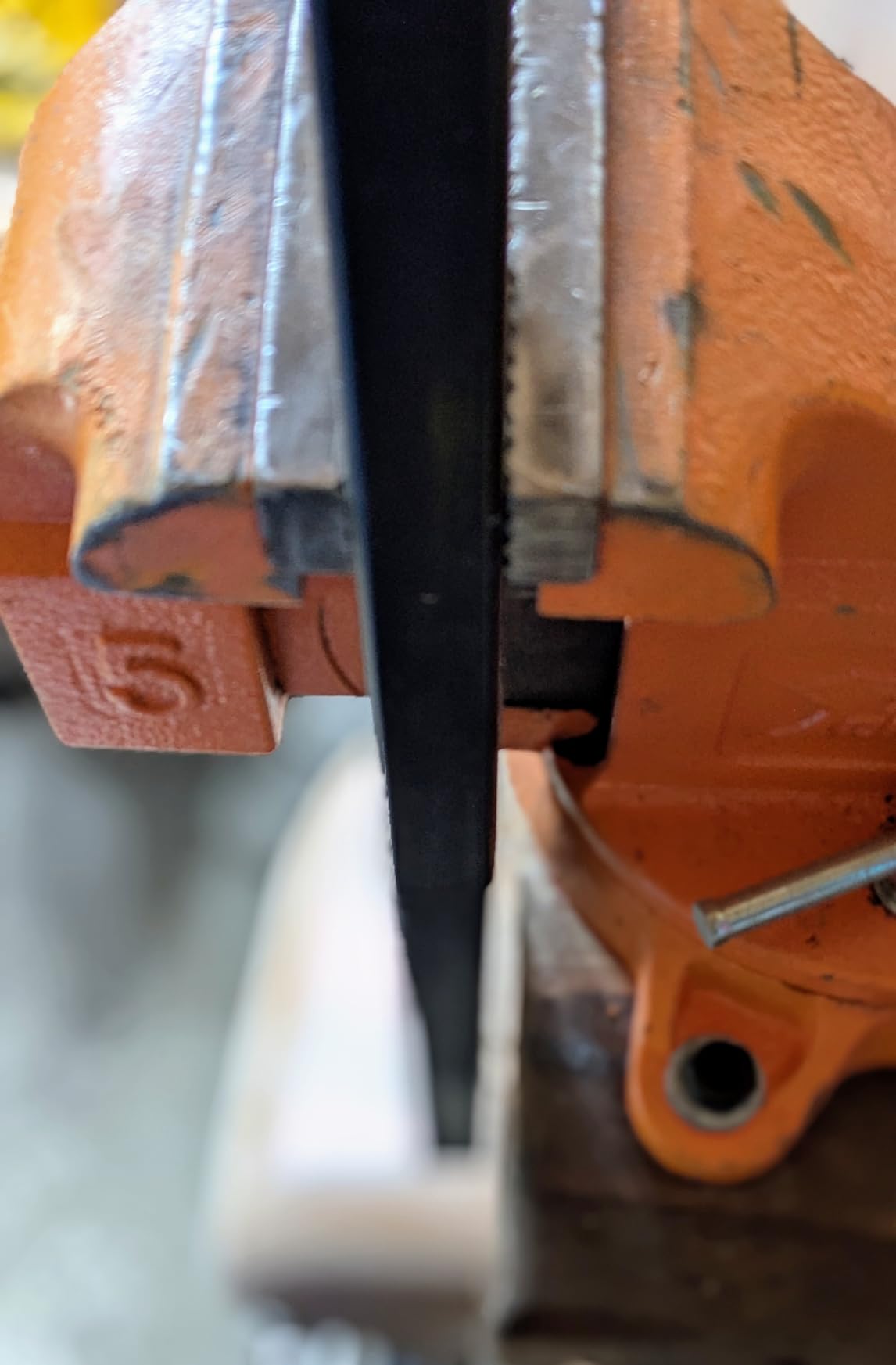
The asymmetric mounting hole pattern is the detail most people miss until they need it. You can mount the vise forward or rear-facing, so the fixed jaw is not always in the same spot relative to the edge of the bench. Owners working with long bar use it to get the workpiece clear of the bench edge, which is exactly the constraint that makes an 8 inch vise awkward on a small bench.
The swivel is stiff until you back the retaining bolts out several full turns, which is the most discussed drawback and pure habit adjustment. Two smaller notes: the stationary jaw sits close to the base, which makes long vertical stock awkward to secure, and the factory jaw serration is aggressive enough to mark workpieces, so soft pads are worth adding for anything with a finished surface.
Dual Locking Nuts vs Single Swivel Locks
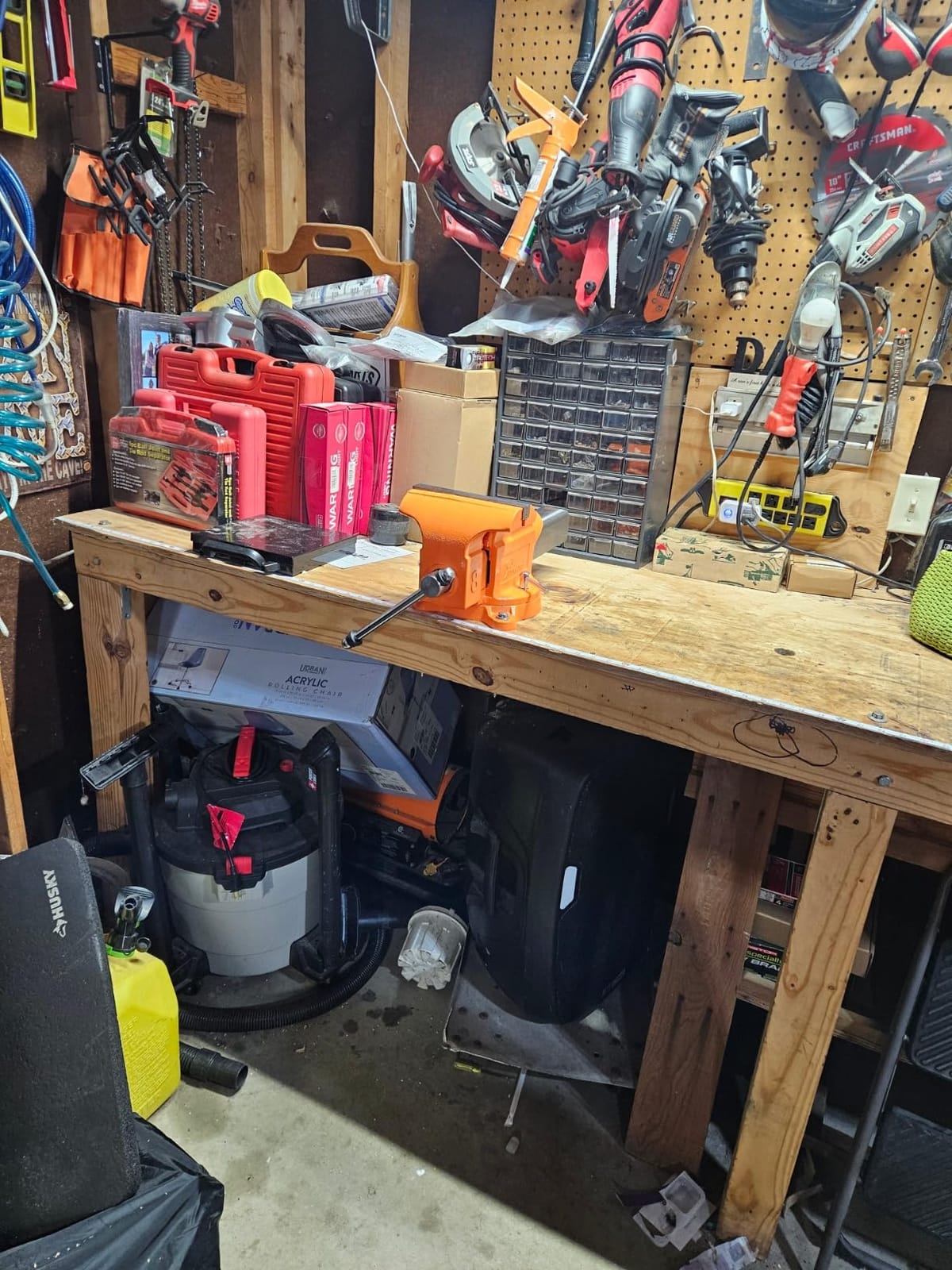
Two locking points hold the swivel under a heavy bending load where one tends to walk a few degrees as you tighten. If your work involves press fits, cold bending or any load applied off-center, the difference is real and repeatable. Set the bolts snug before you put load on the vise, and back them out only when you actually need to rotate it.
Managing the Factory Jaw Serration
The grooved machinist jaws are excellent on rough bar and harsh on finished surfaces. Cheap nylon or aluminum pads that bolt over the jaws solve the problem for a few dollars, and the pipe jaws stay unaffected. Add them before you clamp a machined part, not after you have put a witness mark in it.
10. WORKPRO 4-1/2 Inch Bench Vise – Budget Pick for Light Shop Work
WORKPRO Bench Vise, 4-1/2″ Vice for Workbench
Jaw: 4.5 in
Opening: 4-1/4 in
Throat: 2-11/32 in
Force: 2204 lbs
Gray iron
+ The Good
- Lowest cost multi-jaw swivel vise in the group
- Multi-jaw design grips flat bar and pipe without scratching
- Installs on a home bench corner with 3/8 inch hex bolts
- Compact 4.5-inch footprint suits small workbenches
- The Bad
- Some arrive with a casting mismatch that leaves the vise sitting uneven
- Lock handle and threaded collar can arrive jammed or damaged
- 2204 lbs is well below the rest of the group
This is the vise to buy when you want a clamp on the bench this week and spending very little matters most. At 4.5 inches of jaw width and 10.6 lb it is small and light, which makes it easy to add to a corner of an existing bench without rebuilding anything. For cutting small bar, holding hardware, filing and light assembly, it does the job.
The multi-jaw design is the smart part. Separate faces for flat material and for pipe or tube mean you are not trying to hold a round tube in a serrated flat face and wondering why it spins. The 240-degree swivel locking base covers the angled setups you would actually attempt at this size, and the anvil area is large enough to rest work on.
Owners call it a solid value for homeowners and handymen, with good grip and easy installation, and 4.5 stars across 1635 reviews is a large sample for the budget end of the category. The 2-11/32 inch throat is adequate for small stock and short workpieces.
The recurring caveat is arrival condition. A portion of these come with a casting mismatch that leaves the vise sitting uneven on the swivel base, which some owners fix with a file and others return. The lock handle and threaded collar can also arrive jammed or damaged. The 2204 lbs clamping force is roughly half of the mid-size vises here, so it is not the tool for press fits or heavy bending.
What 2204 lbs of Clamp Force Can and Cannot Do
That figure is enough to hold light bar firmly while you cut, file, deburr or assemble. It is not enough for press fits, cold bending heavy bar, or crushing, and pushing past it risks the jaw screw. Match the vise to the work: if your heaviest metal task is cutting and finishing small components, this is a fine tool.
Should You Upgrade Within a Year
Many owners buy this as a first vise and replace it once they start bending or forming. If that is likely, spend the extra on a ductile iron model now and skip the two-step. If you genuinely only need a light duty clamp, the low cost and the small footprint make it a reasonable place to start.
How to Choose a Bench Vise for Metal Work
Jaw width: the single most important number
Jaw width is the face size of the vise and it decides the largest flat stock or the widest round bar the jaws can cover. A 4 inch vise covers 1 inch bar, 1 inch angle and short tube. A 5 inch vise covers 2 inch bar and 2 inch channel. A 6 inch vise covers 3 inch stock and most frame tube. An 8 inch vise covers full-width plate and structural shapes. If you are unsure, step up one size, because a vise that is slightly too large is a nuisance while one that is too small simply cannot do the job.
Jaw opening is the gap between the faces and it is a different measurement. Jaw throat depth is how far back the workpiece reaches toward the screw, and a shallow throat means long pieces hang out unsupported and can chatter. A deeper throat gives you more control on long work but reduces the maximum opening on some designs.
Cast iron, ductile iron and cast-and-ductile bodies
Gray cast iron is rigid and heavy for its size but brittle under shock, and it is the material in the lower-priced vises in this roundup. Ductile iron has a nodular graphite structure that lets the casting flex slightly before it cracks, which is why most vises rated 60000 PSI use it and why they survive hammering. Cast and ductile combinations use each material where it belongs, with ductile in the highly stressed body and gray iron in the base. For bending and hammering work, choose ductile iron. For a vise that mostly holds while you cut, cast iron is acceptable.
Clamp force and handle length
Published clamp force ranges from 2204 lbs on the smallest vise here to 9900 lbs on the largest. What actually reaches the workpiece depends on the handle length and your leverage, which is why manufacturers publish the figure but buyers test it. Longer handles multiply force and reduce travel per turn. A vise with adequate force and a short handle feels better in daily use than a higher-rated vise with a long, slow screw.
Several vises in this roundup publish a tensile strength rather than a clamp force, usually 30000 psi or 30000 pounds, and those numbers are not directly comparable. Use clamp force to sort, and use weight and construction quality to break ties.
Swivel base, base footprint and bench clearance
A swivel base is the most useful upgrade on a bench vise and it is close to universal in this category. Full 360-degree rotation handles compound angles, while 210-degree and 240-degree bases are adequate for everyday positioning. Base footprint is the less discussed factor: a small base on a nominally large vise tips more easily under a sideways load, and the handle needs roughly 18 to 24 inches of clearance past the bench edge to swing through a full turn.
Serrated jaws, soft jaws and replaceable inserts
Hardened serrated jaws are the metalworking default, and they bite hard enough to stop a round shaft spinning while you file it. Soft aluminum or nylon pads go over the jaws for finished surfaces, and copper jaws suit non-marring work on softer metals. Replaceable jaws matter more than they first appear, because a worn serration cannot be corrected, only replaced. Check that the model you buy has jaws you can buy separately, and whether the pipe jaws are also replaceable.
Brands, origin and budget tiers
The two heavy names in traditional machining forums are Wilton and Yost, both valued for replaceable parts and long service, while the import brands cover the value and mid-range tiers. Made-in-USA construction carries real weight in metalworking communities, mostly for the reason that it tracks with heavier castings and available parts. If you are starting out, the garage cabinets with workbench guide covers bench setups that pair well with a mid-size vise, and if you work at night, our workbench lighting picks solve the shadow problem that hides jaw alignment issues.
For the budget tier, expect to buy mounting bolts separately and expect the occasional arrival defect. For the mid tier, you gain better castings, a proper pipe jaw and more clamp force. For the top tier, you gain jaw indexing, replaceable hardened jaws, enclosed spindles and a warranty that suggests the manufacturer expects the vise to outlive you.
One group this roundup does not cover deserves a mention. Modular precision vises built by Chick, Orange Tool or Emmert are a different category entirely, with independent jaw control and a cost that competes against precision tooling. They make sense for gunsmithing and for work where you need to locate the same part in the same place repeatedly. For general metalwork, a benchtop machinist vise is the right instrument.
How to Mount a Bench Vise to a Steel or Wood Bench
Mounting is where good vises get ruined, and it is the single most common installation mistake reported by owners in this category. The rule is simple: the vise must be bolted through the bench top into solid material, with washers under the heads and the bolts run along the grain on a wood top or through solid steel on a metal bench.
Check the top thickness. Anything under 1.5 inch of solid wood or under 16 gauge steel will not give the vise enough bearing surface. Add a hardwood sub-top rather than bolting into thin material.
Measure the mounting holes before you buy bolts. Several vises in this roundup include fasteners that are too short, and at least one has holes smaller than its published spec. Measure the diameter and the spacing from the actual vise.
Use fender washers. A wide washer spreads the load across the top and stops the fastener head sinking into particle board or thin steel.
Position for handle clearance. Leave enough room past the bench edge for the handle to swing through a full turn without hitting a wall or drawer, and keep the fixed jaw clear of the front edge if you work with long stock.
Tighten in a cross pattern. Work the bolts up evenly so the base seats flat. A vise mounted on one corner twists under load and the swivel will never track true.
Ground it if you weld at the bench. Grind paint or coating off the underside of the base so the vise bonds to the table electrically.
Once it is down, grease the main screw and the swivel interface before the first clamp. That is the easiest moment to do it and the hardest moment to do it later.
Bench Vise Maintenance and Jaw Upgrades
Cast iron and ductile iron both pit and rust when they stay damp, and the cheapest maintenance is keeping water off the vise. Wipe the jaws after cutting wet material, do not leave aluminum parts clamped overnight where the two metals can sweat together, and if you are in an unheated garage in winter, a light coat of oil on the exposed iron goes a long way.
For surface rust on the jaw faces, a fine wire wheel or 400 grit paper on a flat surface restores the serrations quickly. Do not use coarse sandpaper, because you flatten the teeth and the vise stops gripping rough material. Once the faces are clean, a thin film of oil on the screw and the swivel keeps the mechanism free.
Jaw upgrades are the most worthwhile modification. Soft aluminum or nylon pads protect finished surfaces, copper jaws mark nothing at all, and hardened steel plates restore a worn serration without buying a new vise. Add them before you clamp a part you care about rather than after. On vises where the top jaws are replaceable, swap the plates out and you have effectively reset the vise for a fraction of the cost of a replacement.
A few mistakes ruin workpieces more often than the vise itself. Clamping thin stock on serrated jaws without pads leaves visible bite marks, over-tightening distorts the workpiece and loads the screw, and clamping round stock in flat jaws allows it to spin the moment you apply force. V-gaws, pipe jaws and a strap over the work solve the last one, and a light hand on the handle solves the second.
Frequently Asked Questions
What is the best brand of bench vise for mechanics?
Wilton is the perennial choice among mechanics and machinists, mostly because replacement jaws, pipe jaws and other parts stay available for decades and several models carry a lifetime warranty. IRWIN is a strong alternative when you want rotating pipe jaws and a lighter cast iron body. For the value end, the VEVOR and Forward ductile iron vises deliver 4000 to 7700 lbs of clamping force with replaceable jaws, which is enough force for most repair and fabrication work.
What vise size do I need for metalworking?
For most home and hobby metalworking, a 5 or 6 inch jaw width is the right default. A 5 inch vise handles 1 to 2 inch bar, angle and channel, while a 6 inch vise covers 3 inch stock and most frame tube. Step up to 8 inch jaws only if you regularly cut full-width plate, structural shapes or long bar stock, since the extra size and weight are a real cost on a small bench.
Is a cast iron vise strong enough for metalwork?
Cast iron is strong enough for holding stock while you cut, file, deburr and assemble, and gray cast iron bodies are rigid and heavy for their size. For hammering, cold bending and press fits, ductile iron is the better choice because its nodular graphite structure lets the casting flex slightly instead of cracking. Several vises in this roundup combine both materials, using ductile iron in the stressed body and gray iron in the base.
What is the difference between a machinist vise and a woodworking vise?
A machinist vise has narrow hardened metal jaws, a deep throat and a heavy cast or forged iron body built to take shock, which suits steel, aluminum and pipe. A woodworking vise has wide shallow faces and a wooden or cast frame that holds lumber close to the bench. If your bench sees metal rather than wood, a machinist vise is the correct tool even if your current vise is a good woodworking model.
Do I need a swivel base vise for metalworking?
Yes, in almost every case. A swivel base lets you rotate the vise to match the workpiece instead of contorting the work, and it is close to standard across this category. Full 360-degree rotation handles compound angles, while 210-degree and 240-degree bases are fine for everyday positioning. Make sure the locking bolts are snug before you apply a heavy load, since a loose swivel lets the base walk and move the part.
How tight should vise mounting bolts be?
Tighten the bolts evenly in a cross pattern until the base sits flat on the bench top, using fender washers under the heads, then stop. Over-tightening can distort the base or crush a particle board or thin steel top without adding useful grip. Check the base for rock after tightening, and if the top is thin, add a hardwood sub-top and run longer bolts through it.
Final Verdict: The Best Workbench Vises for Metalworking
After working through all ten, the Forward DT08125A is the best workbench vise for metalworking for most people, with the highest owner rating in the group, three jaw sets, and a body that stays planted under a cold press fit. If you need 6 inch jaws and you want soft pads in the box, the VEVOR is the value pick, and if pipe and tube are your main work, the Forward CR50A is built for it with 7700 lbs of force and a 6 inch opening.
For shops that already hammer, bend and crush metal daily, the Wilton WS8 and the Wilton 550P are the durable long-term answers, and the parts availability is the real reason. Whatever you choose, bolt it through a solid top with fender washers, add soft jaw pads before you clamp anything finished, and grease the screw on install day. Those three habits do more for a vise than any spec on the box.