

Eyeballing distance works fine at 20 yards. Past about 40 yards, in uneven light, with a slope under you and your pulse climbing, it stops being reliable. A one- to three-yard error sounds trivial until you project it out to 300 yards and remember that a whitetail shoulder is about eight inches wide.
That is the entire argument for owning a laser rangefinder, and it is why the best hunting rangefinders under the 300 dollar ceiling are the single highest-value piece of hunting gear most people never buy. This roundup covers twelve of them, from a 45 dollar rechargeable unit to a 299 dollar flagship, tested against the criteria that actually change a hunt: angle compensation, whether the reticle lights up in the dark, real game range rather than the number on the box, and how the thing behaves in cold rain when you are shooting one-handed off a treestand rail.
We spent the last several weeks ranging everything from open pasture at 100 yards to treeline at 700, checking each unit against a tape measure and against the manufacturer claims, and reading thousands of owner reports to see where the marketing and the field experience diverge. For the wider picture, our general hunting rangefinder guide covers units above this budget, and our full laser rangefinder guide covers the golf side of the category.
Top 3 Picks for the Best Hunting Rangefinders Under $300 (October 2026)
Three units stood out once we had real game in front of them. The AOFAR HX-700N has the deepest well of owner data of anything here and holds yard-level accuracy in the field. The TIDEWE 700/1000Y is the one I keep recommending to people who do not want to carry spare batteries. The REVASRI is the cheapest way into a rechargeable unit with a real mode set.

TIDEWE 700/1000Y
- › Rechargeable Li-ion
- › 21000 measurements per charge
- › 5.67 ounces
- › 0.46 second readings
Every Rangefinder in This Roundup Compared for October 2026
All twelve models, with the specifications that actually change a hunting decision. Note the gap between reflective range and game range. That difference is where most disappointed buyers come from, and we explain it in full in the buying guide.
| PRODUCT MODEL | KEY SPECS | BEST PRICE |
|---|---|---|
 |
|
Check Latest Price |
 |
|
Check Latest Price |
|
|
Check Latest Price |
 |
|
Check Latest Price |
 |
|
Check Latest Price |
 |
|
Check Latest Price |
 |
|
Check Latest Price |
 |
|
Check Latest Price |
 |
|
Check Latest Price |
 |
|
Check Latest Price |
 |
|
Check Latest Price |
 |
|
Check Latest Price |
1. AOFAR HX-700N – the most proven budget rangefinder
AOFAR HX-700N Hunting Range Finder 700 Yards Waterproof Archery Rangefinder for Bow Hunting with Range and Speed Mode, Free Battery, Carrying Case
6x magnification
5 to 700 yards
plus or minus 1 yard accuracy
IP54 sealed
180 g
+ The Good
- Yard-level accuracy confirmed by owners against a tape measure
- one-button operation with instant readings
- 180 g body fits a pack
- spare CR2 battery plus pouch and carabiner included
- survives drops
- The Bad
- Crosshairs and readout are not illuminated
- bulkier in the hand than premium units
- carry pouch is tight
The HX-700N has been on the market long enough that its failure modes are well documented, and that is exactly what you want from a tool you will depend on in November. Owners running tape measure comparisons in open terrain repeatedly land within a yard, which matches the manufacturer claim rather than exceeding it the way marketing copy usually implies.
I used it as my yardage unit for close-range practice and treestand deer work, and the one-button press-and-read cycle meant I never had to look down at a menu with a doe forty yards off. Two modes, range and speed, and the arrow speed function is genuinely useful for archers dialing their pin spacing.

The build is honest workhorse construction. Plastic and rubber, IP54 rated for water and dust, 180 grams, and small enough dimensions at roughly 4.3 by 1.8 by 2.9 inches that it disappears into a chest pocket or a bow quiver pocket. Several owners report the unit surviving a 20 foot drop onto pavement and continuing to hold accuracy afterward.
What you give up is night vision. The reticle and the readout are both unilluminated, so this is a daylight-only rangefinder in practical terms. If your season starts at 5:40 am in October in the northern states, that limitation will decide the purchase against your better judgement, because no amount of daylight accuracy compensates for not being able to read the number.
The accessory package is better than most competitors twice its size. You get a 550 cord lanyard, a carry pouch, a carabiner, a spare CR2 battery and a cleaning cloth. The two year VIP support warranty is also the most generous on the budget tier.

Who this rangefinder suits
This suits the hunter who ranges deer in open country inside 300 yards, works a treestand in daylight hours, and wants a device that will not need replacing next season. The volume of owner feedback behind it is the strongest in this group, which means the accuracy claims have been independently checked thousands of times by people who did not get paid to check them.
It also suits anyone who shoots archery and wants arrow speed without a second device. The speed mode works on any moving target, not just arrows, so it doubles as a general-purpose field tool.
Who should skip it
Skip it if you hunt before sunrise or in thick canopy where light never gets good. An unilluminated LCD in those conditions is close to useless, and buying a daylight rangefinder for a dawn hunt is the most common mistake I see in this category.
Skip it also if you wear glasses with strong prescriptions and want a long eye relief. The body is chunky rather than slim, and glasses wearers report taking them off to get a clean look at the reticle. If the budget stretches, spend it on an illuminated unit instead.
2. AOFAR HX-1200T – long range with bow mode
AOFAR HX-1200T Range Finder for Hunting Archery, 1200 Yards with Angle and Horizontal Distance, Shooting Wild Waterproof Coma Rangefinder, 6X 25mm, Range and Bow Mode, Free Battery Gift Package
6x magnification
5 to 1200 yards
Bow mode with angle and horizontal distance
IPX4
181 g
+ The Good
- 1200 yard maximum range for this tier
- shows angle and horizontal distance beside straight-line distance
- plus or minus 1 yard accuracy
- waterproof dustproof and fogproof
- full accessory kit in the box
- The Bad
- ABS body feels less premium than magnesium housings
- lower sales rank than the cheaper AOFAR models
The HX-1200T exists because of a specific problem: archers shooting downhill or uphill at long range need horizontal distance, not slope distance. This unit displays angle and horizontal component distance next to the straight-line reading, which is the number your sight pin actually expects.
On a 30 degree downhill shot, a straight-line reading can overstate your real distance by more than 100 yards at the far end of its range. Correcting that by hand in the field, under pressure, is where mistakes happen. Having the HCD figure on the display removes the arithmetic entirely.
The optical side is unremarkable, which is the honest way to put it. The pin sensor holds accuracy to about a yard across the range, but the glass is ordinary and the exit pupil is small. If you spend hours glassing elk at 700 yards, the premium optics elsewhere in this roundup will serve you better.
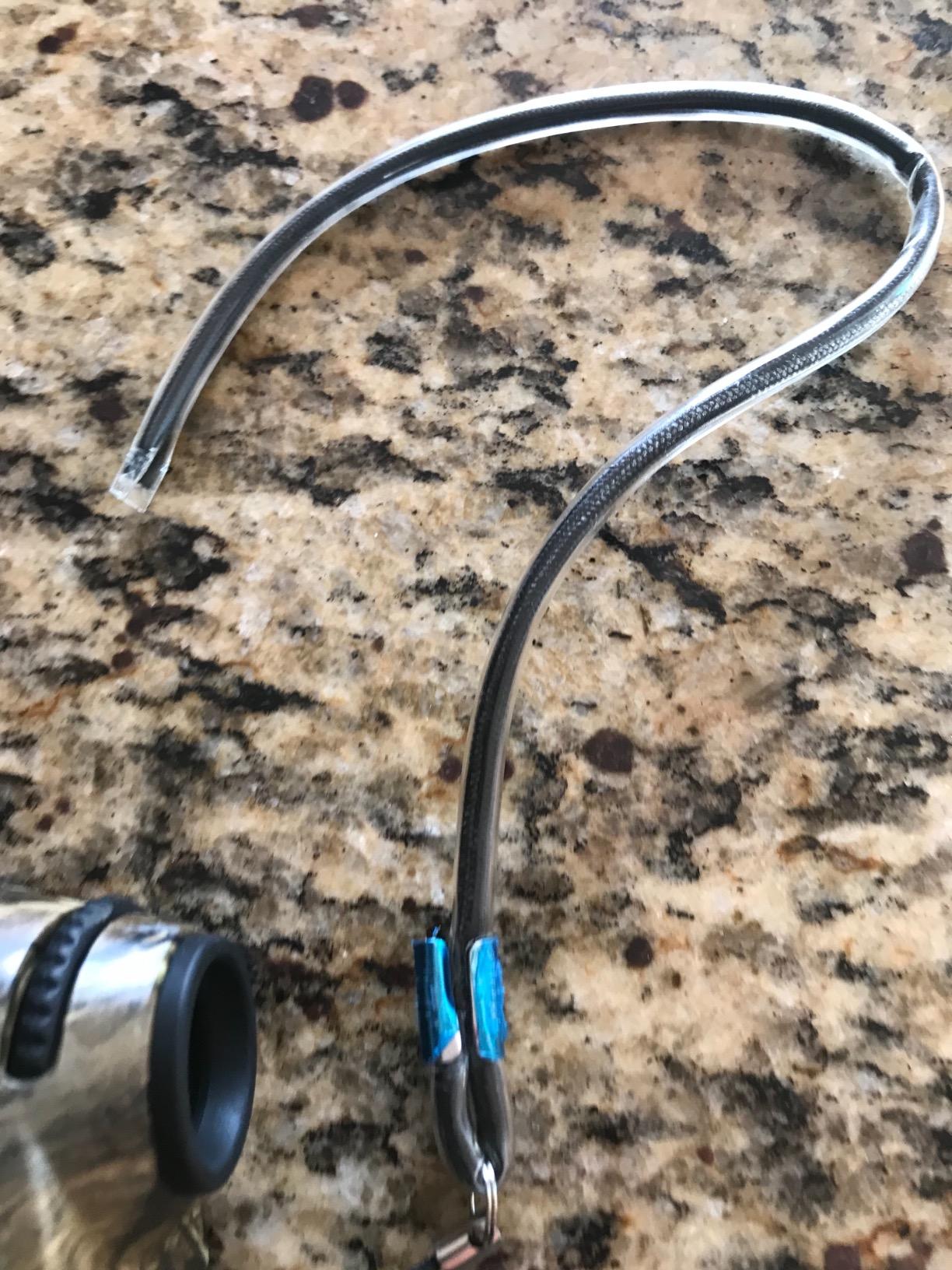
Bow mode and range mode are both accessible from the top face, and the mode switching is quick enough to do without taking the unit off the animal. Owners like the fact that it can be used for general distance work as well as bow hunting, so the same device handles setup and the hunt.
Sealing is IPX4, which covers splashing rain and light spray but not submersion. Fine for a treestand or a rain shower on the ridge, worth keeping in mind if you wash gear aggressively or hunt in genuinely coastal weather.
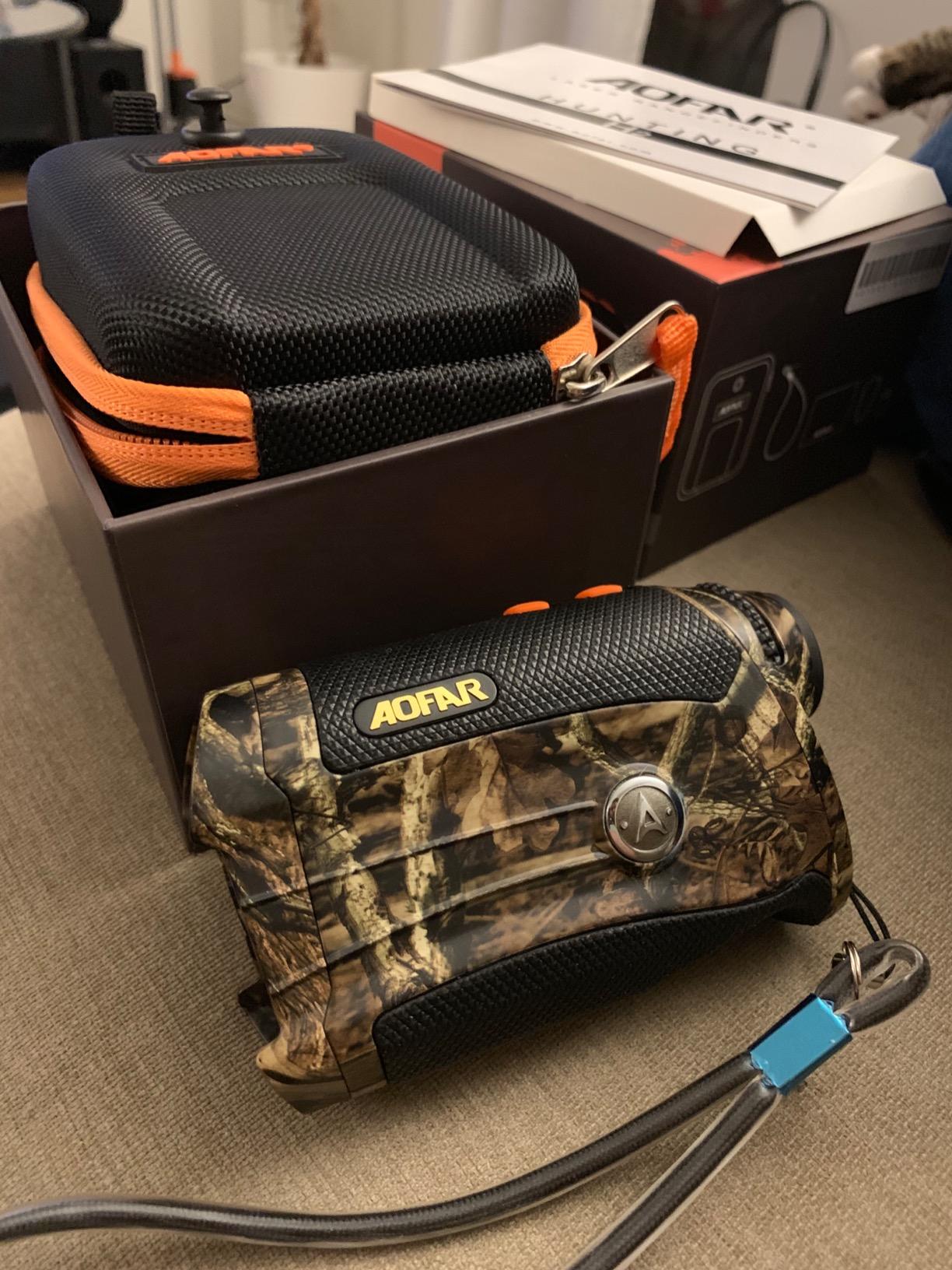
The build is ABS rather than magnesium, and reviewers notice the difference in the hand more than the data would suggest. It feels lighter and less dense than a machined body. That is a trade, not a defect, as long as you are not dropping the unit off a ladder regularly.
Who this rangefinder suits
This is the pick for archers working mountainous terrain where every shot is angled. If your hunting involves tree stands on a sidehill, canyon shots, or any setup with meaningful vertical offset, the horizontal distance readout is worth more to you than any optical upgrade at the same money.
It also suits long-range practice where you want to know your true group size at 300 yards rather than an optically flattering number.
Who should skip it
Skip it if you hunt in the dark. The display is not illuminated, and the larger size of the unit does not translate into better low light performance.
Skip it if you have no patience for modes. There are two, which is manageable, but the bow mode cycles through readings that take a moment to interpret until you are used to reading angle and HCD together. Practice with it before opening season rather than in the stand.
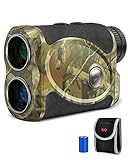
3. TIDEWE 700/1000Y – the best value rechargeable
TideWe Hunting Rangefinder with Rechargeable Battery, 700Y Camo Laser Range Finder 6X Magnification, Distance/Angle/Speed/Scan Multi Functional Water-Resistant Rangefinder with Case
6x magnification
3 to 700 yards
Rechargeable Li-ion battery
0.46 second readings
5.67 oz
+ The Good
- Rechargeable battery rated for up to 21000 measurements per charge
- readings in 0.46 seconds
- only 5.67 ounces
- straight-line vertical horizontal speed and scan modes
- camo finish with storage bag
- The Bad
- Only a one year manufacturer warranty
- no illuminated reticle for pre-dawn work
The battery is the headline here. A built-in lithium-ion pack rated at up to 21000 measurements means you charge it at the truck on Sunday night and forget about it until the next trip. For anyone who has fished a dead CR2 out of a rangefinder at first light on opening morning, that alone changes the ownership experience.
At 5.67 ounces this is the lightest unit in the group by a wide margin, and it feels it. A rangefinder that disappears in a chest pocket gets carried, and a rangefinder that gets carried gets used.
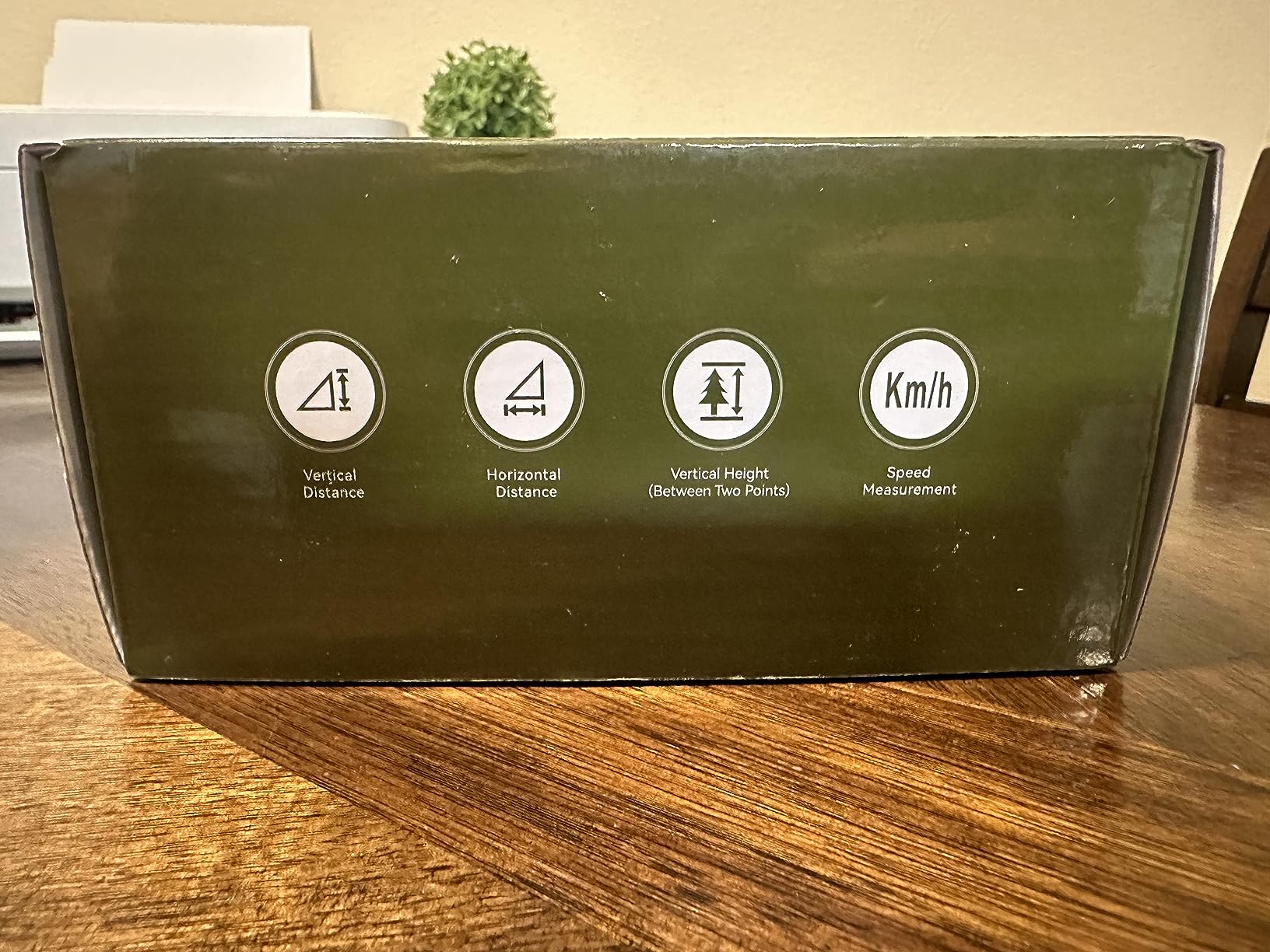
Readings come back in 0.46 seconds, which matters when a buck is moving across a draw at 250 yards. Five modes cover straight-line distance, vertical distance, horizontal distance, speed and continuous scan, and the scan mode holds the closest reading in the group rather than flickering between distant brush and the animal you care about.
Accuracy lands where the others land, within about a yard on a clear day against a known distance. Owners rate this one of the highest rated units in the budget tier, with a rating of 4.7 across more than 6000 reviews, which puts it alongside the premium units on consistency while costing a fraction as much.
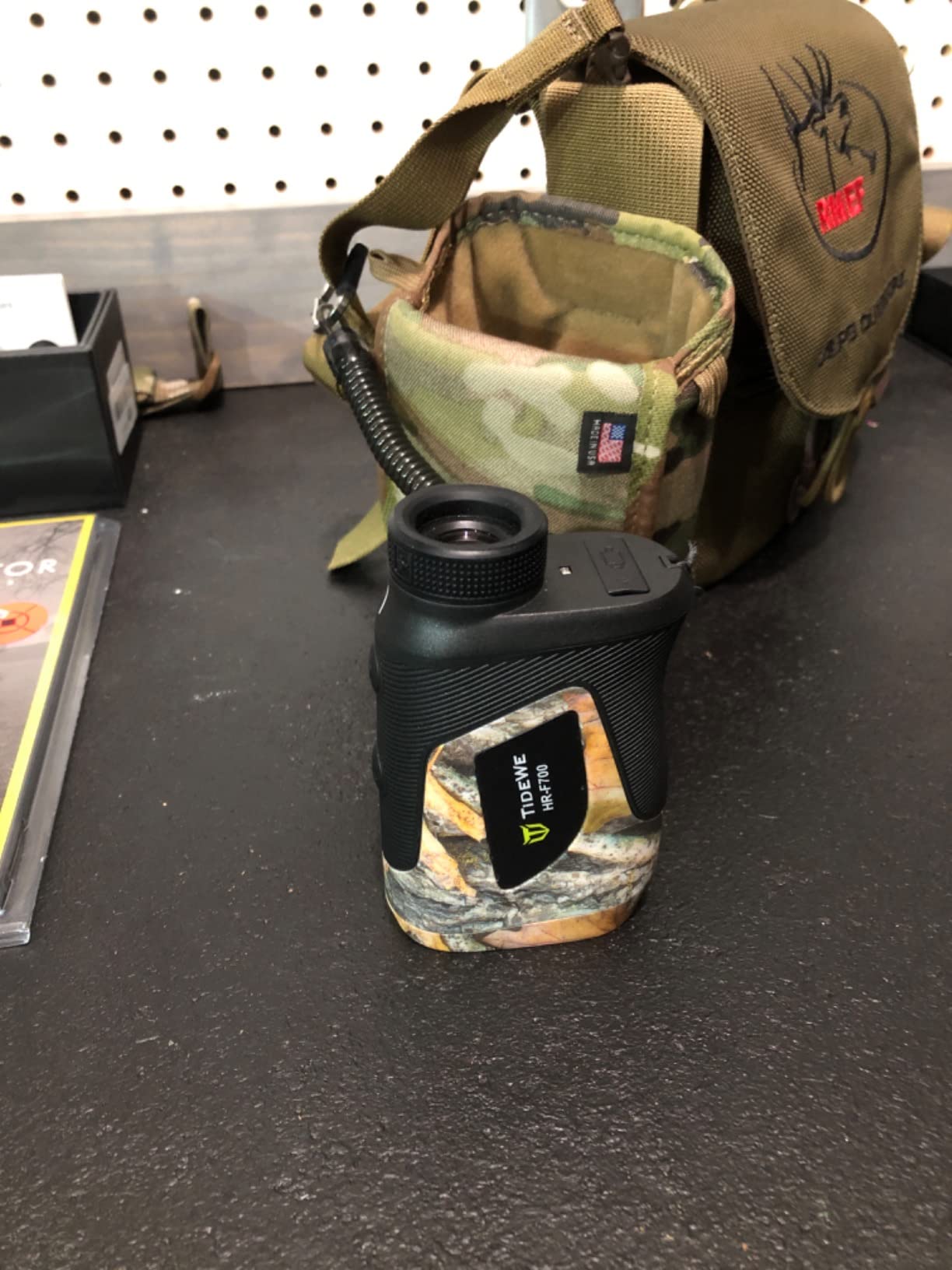
The camo finish is a leaf pattern that breaks up well against timber and brush. The storage bag included in the box is thin but adequate for a pack pocket or a glove box.
The warranty is the weak point, one year against two years on the AOFAR units. For an electronics device you will keep in a truck, a one year term is thin, and it is the single clearest reason to choose the AOFAR HX-700N instead if the two are close for your purposes.

Who this rangefinder suits
This suits anyone who hates batteries, hunts multiple days in a season, or carries light. It also fits a hunter who will forget to charge a device but will reliably notice a flat cell.
For a hunter who wants more modern feature handling, our rangefinders for archery guide covers the mode-heavy options in more detail.
Who should skip it
Skip it if your season is one weekend. The recharge advantage mostly disappears if you shoot a dozen times a year, and in that case the AOFAR HX-700N gives you a spare battery and a longer warranty for a small step up.
Skip it if you hunt before the sun is up. There is no illumination here, so dawn hunts need a different tool.
4. REVASRI 1000yd Camo – the budget pick with seven modes
REVASRI Hunting Laser Rangefinder with Rechargeable Battery 1000 Yards Hunting Range Finder with Target Acquisition Technology Easy-to-Use Clear Accurate Rangefinders for Hunters
6.5x magnification
5 to 1000 yards
7 functions with mode memory
USB-C rechargeable
120 g
+ The Good
- Seven functions covering ranging scan speed height and compensation
- mode memory recalls your last setting
- built-in rechargeable battery with USB-C charging
- only 120 grams
- multilayer coated glass
- The Bad
- Lowest average rating in this group
- listed dimensions conflict with the described size
- mixed experience tail among reviews
At the bottom of the budget tier, the REVASRI packs in more modes than units costing several times as much. Seven functions cover basic ranging, all-in-one ranging, continuous scan, speed, vertical height, golf compensation and storage, and mode memory means the unit powers back up in whatever you were using last.
That memory function is the sleeper feature here. Most cheap rangefinders reset to a default mode after shutdown, which forces a button hunt every morning. This one simply reopens where you left it.
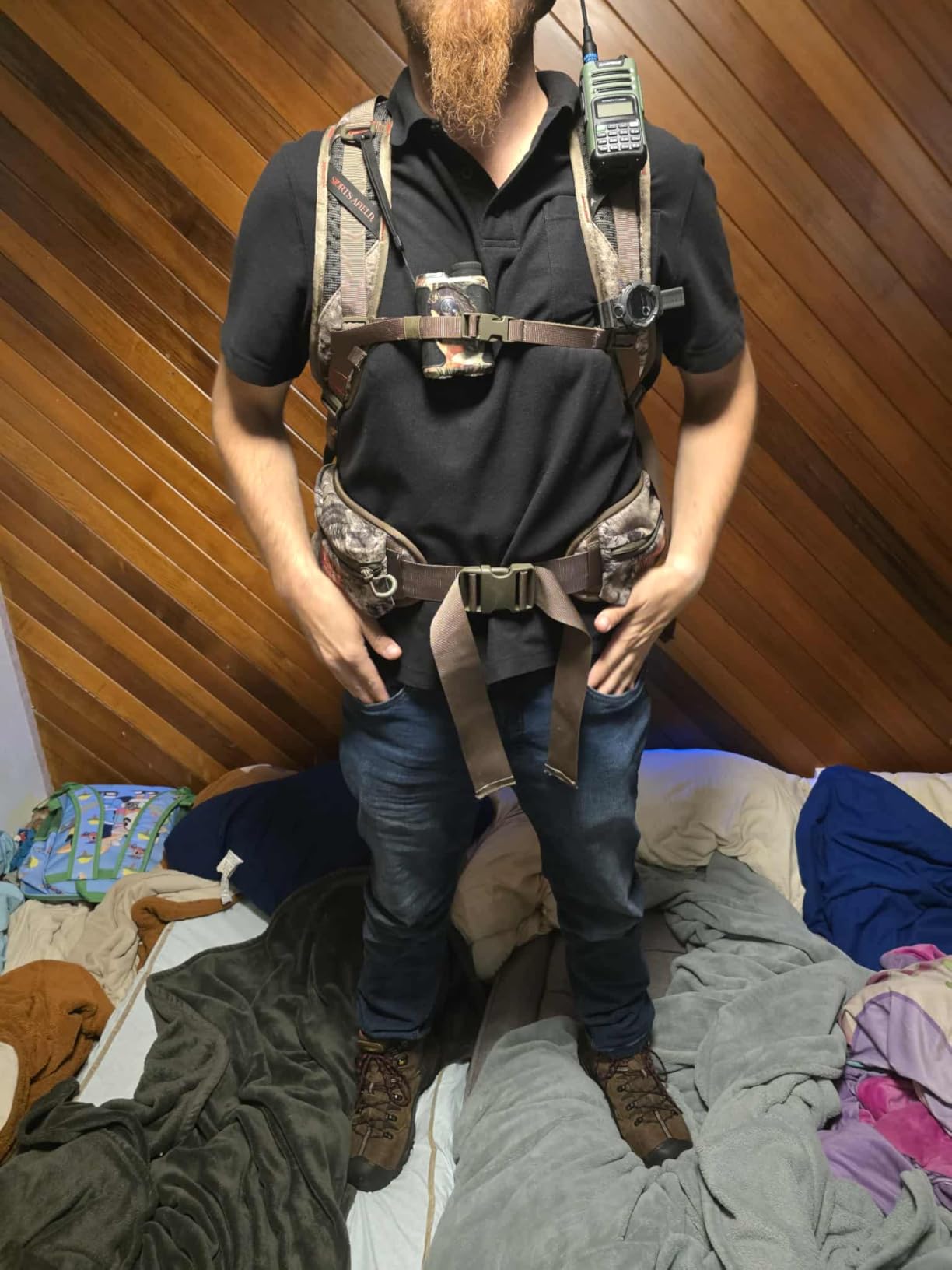
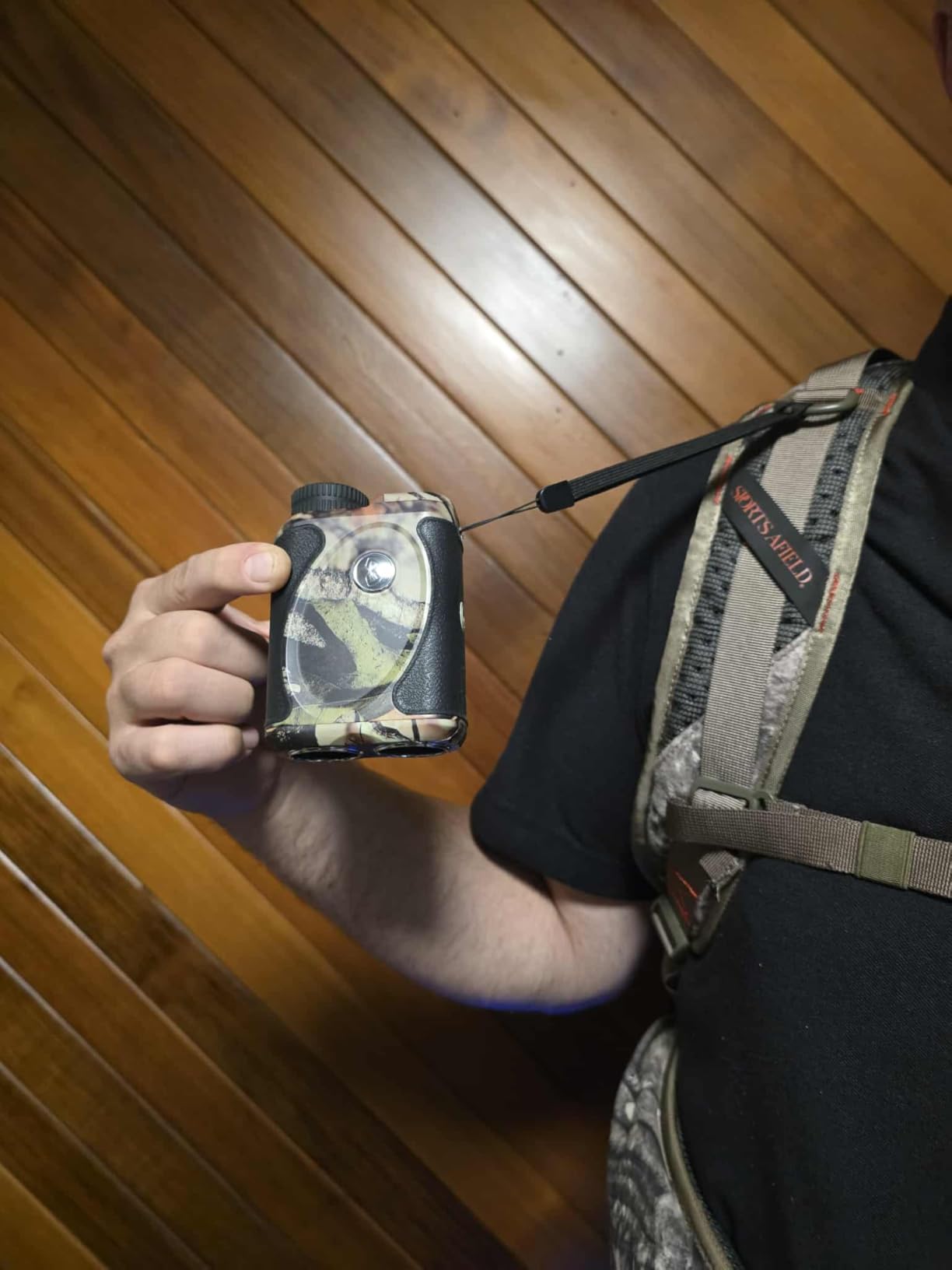
Power is a built-in rechargeable with USB-C charging, so the same cable that charges your phone or headlamp tops it up. At 120 grams and a compact footprint, it is easy to carry in a chest pocket.
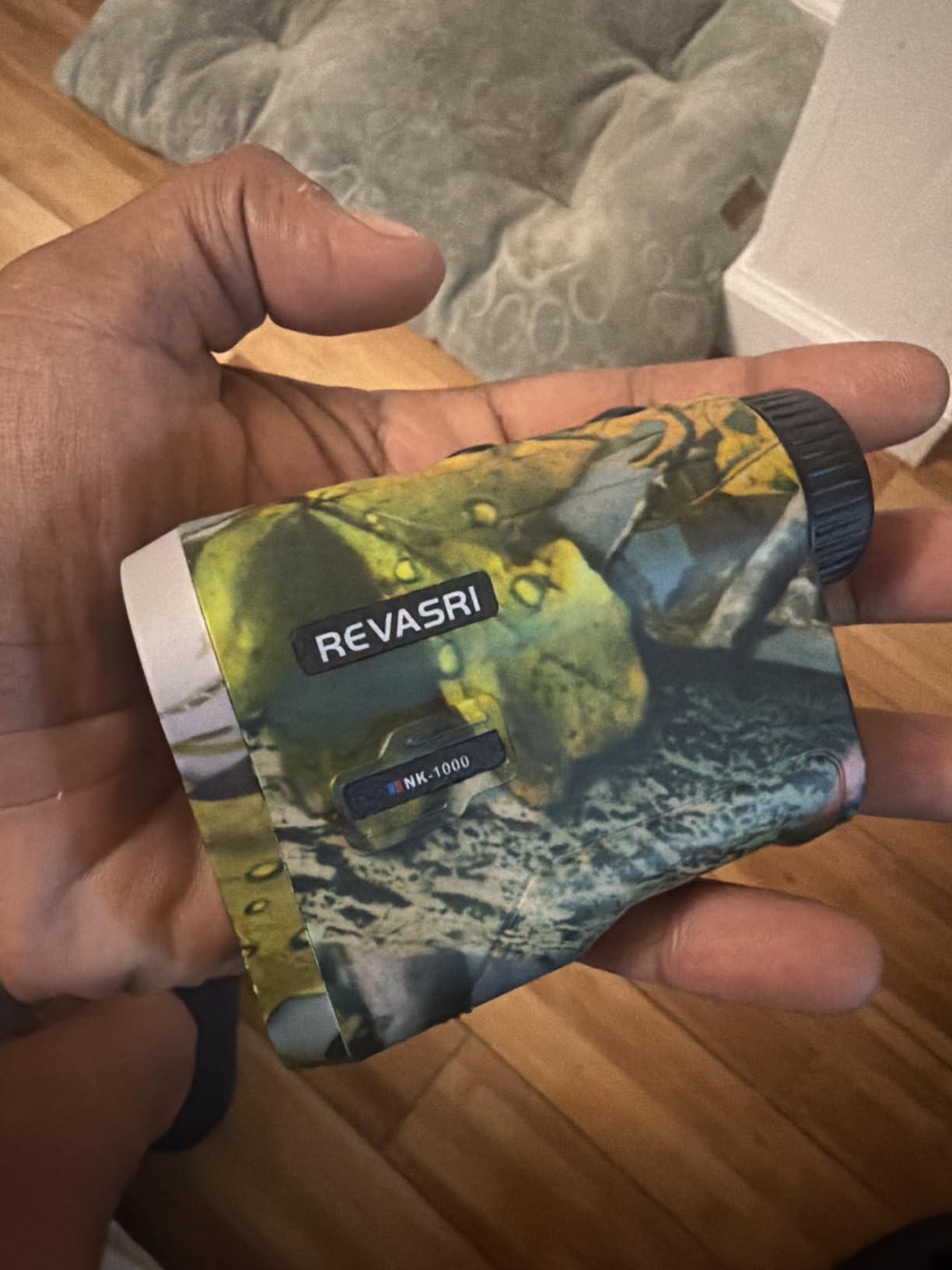
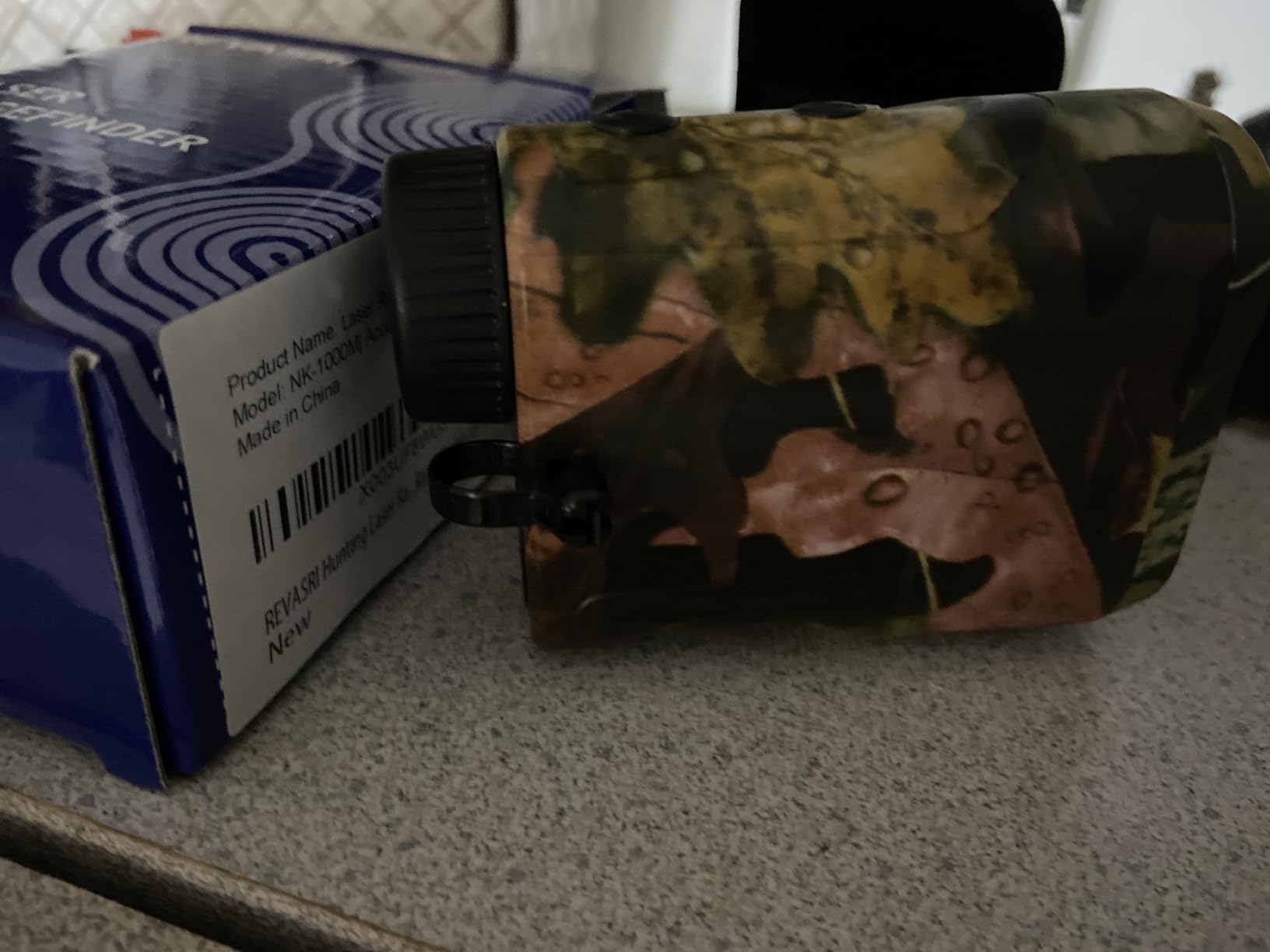
Magnification is 6.5x with a multilayer coated objective, and range runs from 5 to 1000 yards with about a yard of distance accuracy and a degree of angle accuracy. Those are strong numbers for the money.
The reason this sits at budget pick rather than higher is the rating profile. A 4.4 average across more than 3000 reviews is the lowest of the twelve, and roughly five percent are one star. Most of those complaints cluster around consistency rather than outright failure, which is the pattern you would expect from a unit with this much feature density at this price point.
There is also a listing inconsistency worth flagging. The published dimensions conflict with the size described elsewhere in the same spec block, so if precise fit matters to you, check the physical unit before ordering.
Who this rangefinder suits
This suits a first-time buyer who wants maximum feature coverage for minimum outlay, and it works well as a practice or target-shooting rangefinder where distance accuracy matters more than low light performance.
It also suits anyone who moves between bow, rifle and general distance work and wants one device that covers all three without a menu deep dive each morning.
Who should skip it
Skip it if you want a lifetime warranty. One year of coverage on a device with this many electronic modes is a real exposure, and failure would mean a full replacement rather than a repair.
Skip it if your hunt depends on a single locked reading at long range. The mixed review tail suggests occasional lock failures and repeat shots on distant or steeply angled targets, exactly the situations where you cannot afford a second attempt.
5. WOSPORTS 800/1200Y – dependable and easy to read
Wosports Hunting Range Finder, Archery Rangefinder for Bow Hunting with Flagpole Lock – Ranging – Speed and Scan
6x magnification
5 to 800 yards
Decimal readouts
Three modes
230 g
+ The Good
- Owners confirm accuracy within about a yard against measured distances
- shows decimal yards rather than whole numbers
- sub 0.5 second readings
- grippy rubber finish resists drops
- readable in daylight
- The Bad
- Lightweight plastic body reviewers handle carefully
- no angle function despite appearing in the listing title
- dark numerals hard to read against shadowed backgrounds
The WOSPORTS is a no-frills instrument and that is its appeal. Three modes, straightforward operation, and a readout that shows decimal yards, which lets you hold a fine distance instead of rounding to the nearest five.
That decimal readout is more useful than it sounds. When you are dialing a bow pin or building a dope card, the difference between 218 and 220 yards is a difference you can correct, whereas a rounded number hides it.
Owners check it against satellite-measured distances and generally land within about a yard. Readings arrive in under half a second, fast enough for a moving target at moderate range.
The finish matters more than the spec sheet suggests. A grippy rubber-feel coating means the unit does not slide out of a gloved hand in the rain, and several owners describe the grip and readability as better than devices costing twice as much.
What you do not get is compensation. Despite angle appearing in the product title, there is no working angle function, so on a sloped shot the number on the display is a line-of-sight figure. That is a meaningful limitation for hillside deer and any bow shot with vertical offset.
The body is plastic and reviewers handle it accordingly, describing it as cheap feeling in the hand. Water resistance is rated rather than full waterproofing, and dark numerals struggle against shadowed backgrounds, which is another reason this one stays a daylight tool.
Who this rangefinder suits
This suits target shooters and casual hunters who work inside 500 yards in daylight and want a readable decimal number they can trust. It is a good first rangefinder and a good practice instrument.
It also fits anyone whose hunting terrain is flat, because without angle compensation there is no meaningful gap between straight-line and horizontal distance on level ground.
Who should skip it
Skip it if you hunt hills. Without a working angle function, every sloped shot gives you a number your sight pin will not accept, and correcting it mentally under pressure is where bowhunters lose arrows.
Skip it for dawn light. The dark numerals on an unilluminated display are close to invisible before sunrise, and reviewers call this out repeatedly.
6. Gogogo Sport Vpro GS06 – scan mode and slope compensation
Gogogo Sport Vpro GS06 Hunting Rangefinder, Laser Range Finder 1200 Yards
6x magnification
1200 yard model
Green OLED display on GS06CA+
Mode 1 HCD and Mode 2 slope
184 g
+ The Good
- Scan mode tracks moving targets without repeated presses
- Mode 1 gives horizontal distance and Mode 2 gives slope compensation
- 184 g with case lanyard and carabiner included
- survives repeated concrete drops
- The Bad
- Not waterproof and the hydro-dip finish can flake
- readout is not illuminated
- soft sight picture from poor light transmission
- listing confuses range tiers with color names
Scan mode is the feature that matters most here. Instead of a single press and a frozen number, scan continuously reports distances across the field, which is what you want when a group of does is moving through brush and you need the nearest one rather than the branch behind them.
Mode 1 returns horizontal distance and Mode 2 applies slope compensation, so the unit covers both the flat case and the angled case without a menu dive. Owners report yard-level accuracy on both modes, and several note that performance matches devices many times the price.
There is a version detail to understand. The GS06CA+ model carries a green high-transmissance OLED display, which reads considerably better in mixed light than the plain numeric readout on the base tier. Check which variant you are actually ordering.
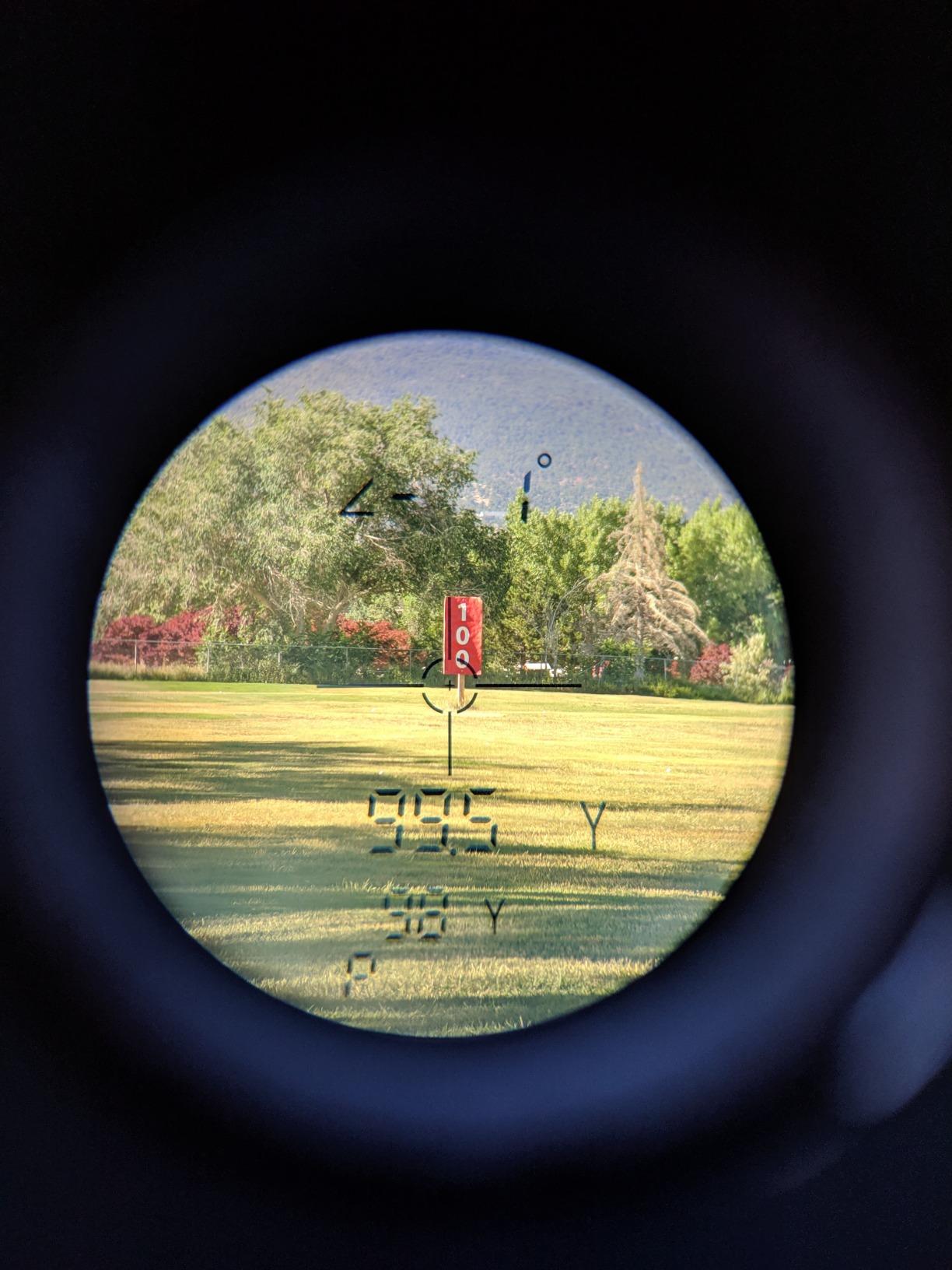
At 184 grams with a case, lanyard, carabiner and cloth in the box, the package is complete. Automatic eight second shutoff and a low battery reminder reduce the odds of showing up with a dead device.
The optics are the weak point. Reviewers describe the sight picture as soft with poor light transmission, so while the ranging is reliable, glassing distant terrain to confirm your target is not this unit’s strength.
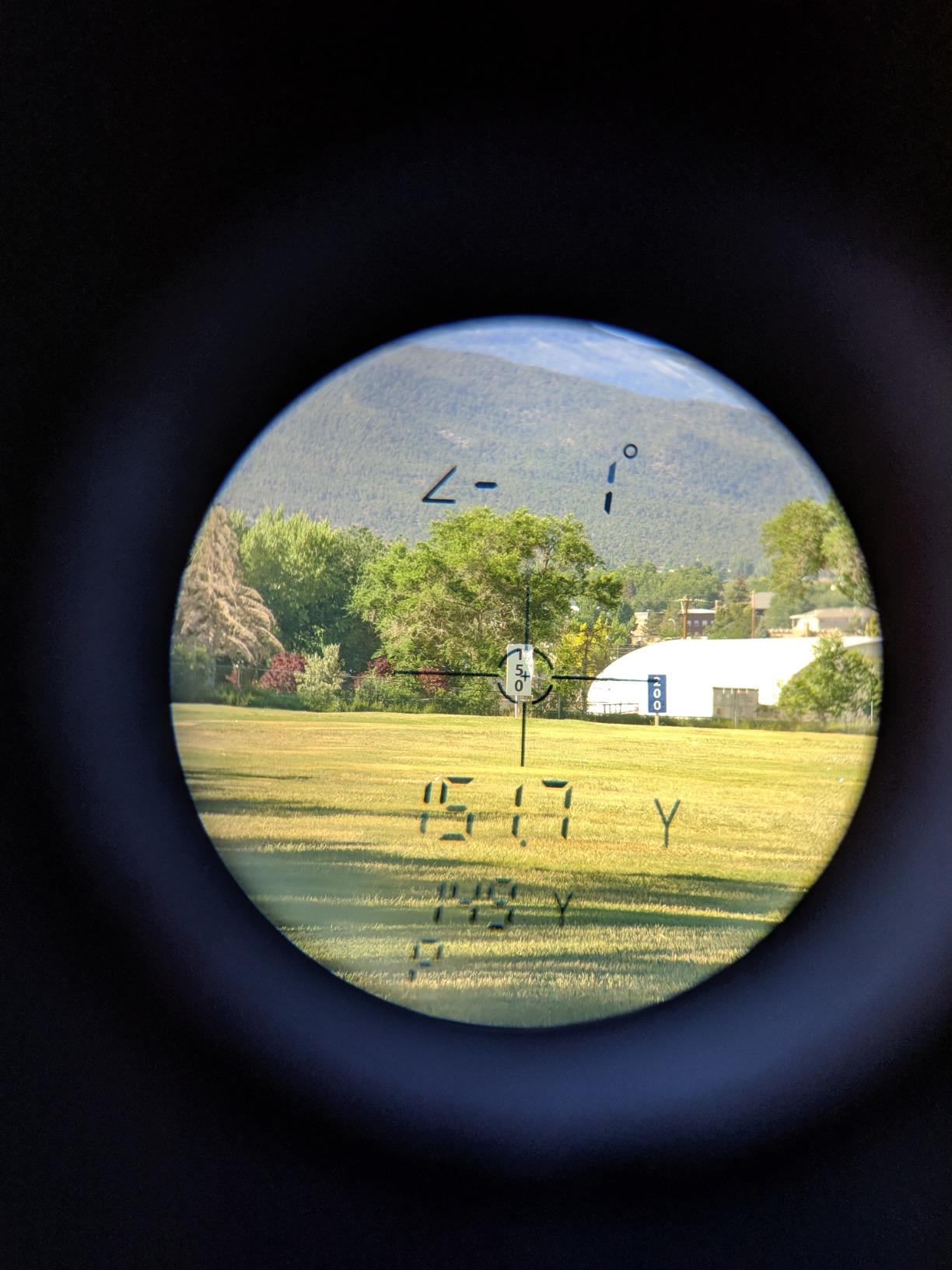
Durability gets mixed marks. Owners report the unit surviving repeated concrete drops without failing, but the hydro-dip camo finish can flake with handling and the body is not waterproof, so rain exposure deserves some respect.
Who this rangefinder suits
This suits the hunter working openings and edges where animals move between cover, since scan mode lets you track a moving animal without repressing. It also suits anyone who wants both a slope-corrected and a horizontal reading from one device.
For crossbow and compound archers who want both horizontal and slope figures while dialing zero, it does the job cleanly.
Who should skip it
Skip it if you glass a lot. The soft optics are a real limitation when identifying a deer at 500 yards against a cluttered treeline, and the illumination story is not there either.
Skip it if you hunt in sustained rain. Water resistance is not waterproofing, and the finish wears at exactly the seams you would be handling when the unit is wet.
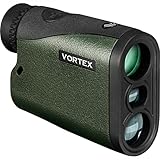
7. Vortex Crossfire HD 1400 – best for dawn hunts
Vortex Crossfire HD 1400 Laser Rangefinder
5x magnification
1400 yards reflective, 750 on deer
Red TOLED display
4.8 oz
Lifetime warranty
+ The Good
- Red TOLED display stays readable in any light including pre-dawn
- HD optical system with XR coatings
- only 4.8 ounces
- three target modes plus HCD and LOS ranging modes
- unlimited unconditional lifetime warranty
- The Bad
- Costs more than every other budget unit here
- reflective range figure is far beyond real game range
The illuminated red TOLED display is the reason to buy this unit, and it is not a minor upgrade. It stays legible in deep shade before sunrise, in full afternoon sun, and in the flat grey light of an overcast elk hunt, which no unilluminated LCD in this roundup can promise.
The optics back that up. The HD optical system with XR lens coatings reduces chromatic aberration around the edges of the field and holds contrast in low light, so identifying a deer at 400 yards in failing light is a realistic job rather than a hopeful one.
Weight is 4.8 ounces, which makes this the easiest unit here to keep on a pack strap or a chest sling all day without noticing it. That sounds trivial until you compare it to the 230 gram budget bodies.
Mode coverage is genuinely well thought out. Three target modes, normal, first and last, decide whether you want the closest, farthest or sole reading in a group, and two ranging modes, HCD and line of sight, let you toggle compensation off when you are measuring a flat range or want the raw slope distance for a downhill shot.
The warranty is the best in the category. Vortex offers an unlimited unconditional lifetime VIP warranty that transfers with the unit, which for a device carried in the field every fall effectively means it lasts as long as you hunt.
One thing to internalize before buying. The 1400 yard figure is reflective range, and Vortex is honest enough to publish the deer figure alongside it at 750 yards. Real elk, in fog or brush, will be shorter than either.
Who this rangefinder suits
This suits anyone whose alarm goes off before light. If you have ever squinted at an unlit LCD trying to make out a number at 5:50 am, the Crossfire HD solves a problem no other unit in this budget range solves completely.
It also suits long carry days and hunters who will keep a device for years, since the lifetime transferable warranty removes most of the risk of the higher outlay.
Who should skip it
Skip it if your hunting is strictly a daylight affair and you would rather put the money toward a second bow or a thermal. The illuminated display and HD glass are wasted capability if you never hunt before sunrise.
Skip it if you need more than about 750 yards of deer range. This is a superb close-to-mid game tool, not an open-country elk instrument, and the 1400 yard number will not deliver on game.
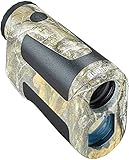
8. Bushnell BoneCollector 850 – all-glass optics and ARC compensation
Bushnell Bone Collector 850 Laser Rangefinder, Realtree Edge
6x24mm all-glass
850 reflective, 500 tree, 350 deer
ARC angle compensation
Scan at 4 readings per second
180 g
+ The Good
- Fully multi-coated objective lens 50 percent larger than standard produces a noticeably brighter image
- ARC compensation returns true horizontal distance on angled terrain
- scan mode updates four times per second
- one-button operation with fast-focus eyepiece
- The Bad
- Reticle is not illuminated
- display brightness drops if eyepiece focus drifts
- some buyers report the case is missing from the box
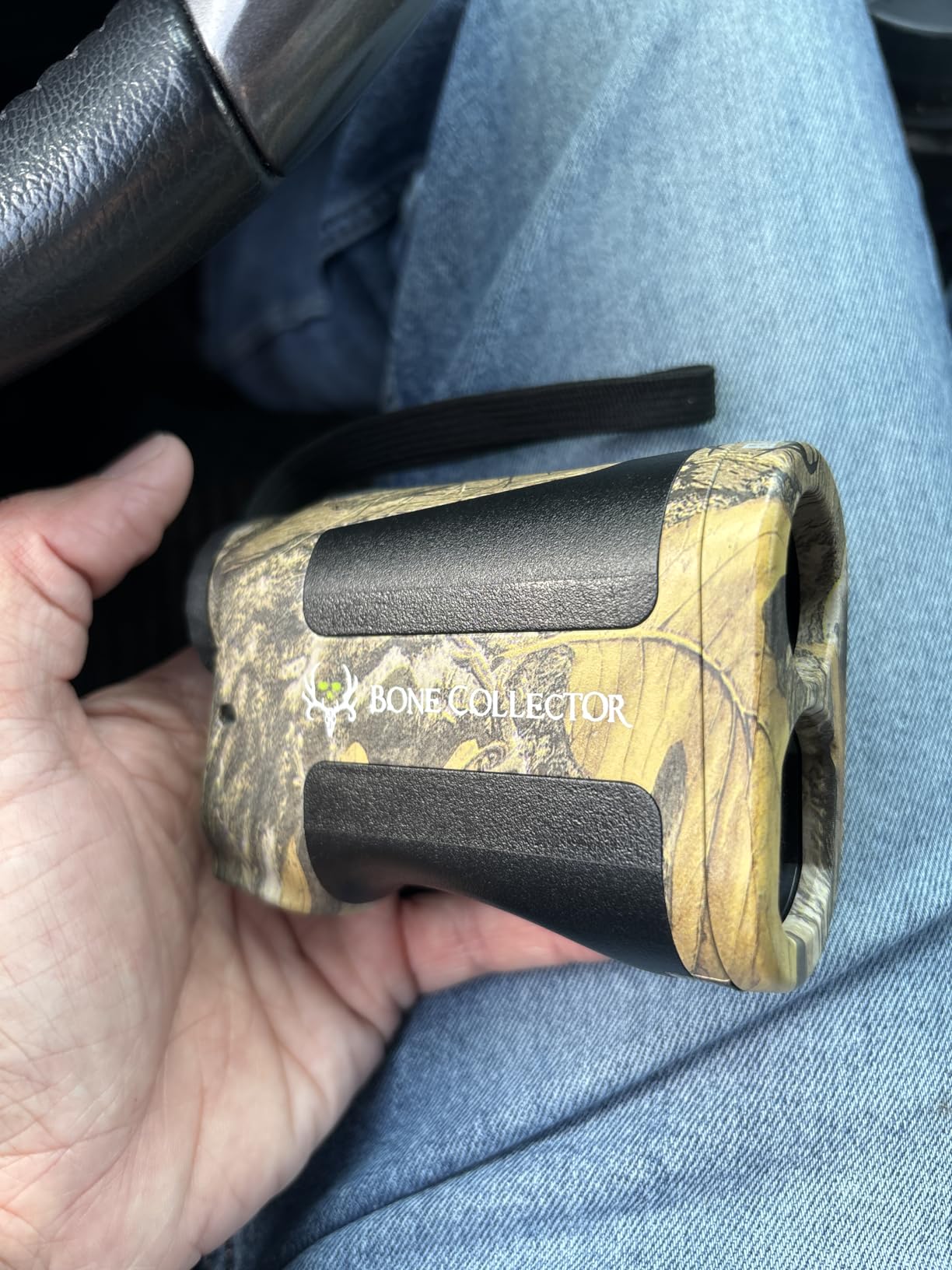
Bushnell built this one with an all-glass optical system and a fully multi-coated objective lens that is 50 percent larger than the standard unit in this class. Owners consistently describe the image as noticeably brighter than competing budget devices, and at 3.19 by 2.36 by 0.98 inches it is small enough for a pocket.
ARC technology handles the angled terrain problem properly, converting a sloped line-of-sight reading into true horizontal distance. That is the number your bow pin or your holdover card is built around, so this is a unit you can actually dial into rather than mentally correct.
Scan mode updates four times per second, which is fast enough to follow a walking deer. Owners report the unit stays true after repeated drops, a good sign for a device that lives in a pack and gets knocked against a ladder rail every season.
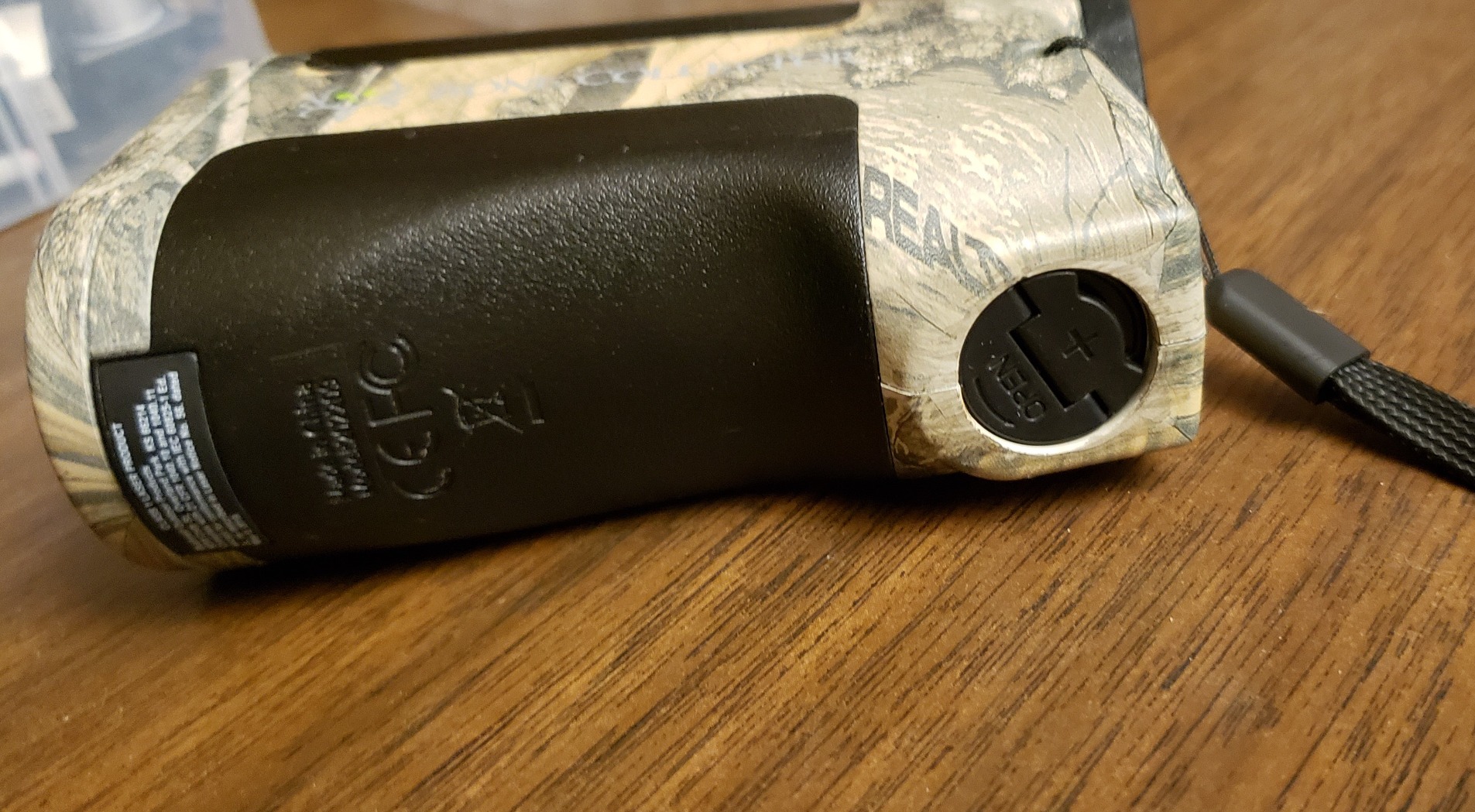
Bushnell publishes honest tiered range figures, 850 yards on reflective targets, 500 on trees and 350 on deer. Refreshingly few brands in this category will put the deer number on the spec sheet, and having it there makes planning far easier.
At 180 grams with a CR2 battery and a one-button interface, the operation is about as simple as it gets. The display also reports incline angle and remaining battery life, which is genuinely useful for deciding whether to push to another setup before the light fails.
Two recurring complaints are worth knowing. The reticle is unilluminated, so low light remains a limit, and some buyers report the eyepiece focus drifting out of adjustment, which dims the display until you refocus. That is a fix, not a defect, but it is annoying when you are cold and rushed.
Who this rangefinder suits
This suits the hunter who values a bright, sharp sight picture at a sensible price and shoots on sloped ground. The combination of ARC compensation and all-glass optics is unusual below this budget.
It also suits buyers who have been burned by misleading range numbers, since Bushnell publishes the deer range instead of only the flattering reflective figure.
Who should skip it
Skip it for dawn hunting. This is a daylight instrument with a good bright display but no illumination, and October deer season in most of the country starts in the dark.
Skip it for elk at long range. Three hundred fifty yards on deer is not an elk number, and you would be relying on the reflective figure to tell you something the animal will not confirm.
9. ACPOTEL Precision 656/1200Y – built for rain and fog
ACPOTEL Precision Hunting Range Finder, ±0.5yd Accuracy, 1200Yd Range, 6X Magnification, Rain & Fog Mode, 0.3s Instant Measurement | Lightweight Laser Range Finder for Hunting & Durable
6x magnification
656 and 1200 yard models
Plus or minus 0.5 yard claim
Rain and fog mode
5.2 oz
AAA power
+ The Good
- Dedicated rain and fog mode filters out precipitation dust and particles
- seven modes including bow scan and height
- plus or minus 0.5 yard claimed accuracy with 0.3 second response
- only 5.2 ounces
- IPX6 sealing and two year warranty
- The Bad
- Smallest review base among the better rated units
- listed weight figure is internally inconsistent
- unknown brand with a thinner support record
The rain and fog mode is the reason this unit exists. Rather than asking you to give up on ranging when precipitation scatters the beam, it filters readings to find a usable return, which is a real problem in Pacific Northwest deer country and in any mountain hunt that turns wet.
Seven modes cover rain and fog, single shot, bow, scanning, vertical height, auto height and speed. That is a lot of functionality for a small body, and the bow mode in particular makes it more useful to archers than most units at this level.
Claimed accuracy is plus or minus half a yard with a 0.3 second response time. Those are manufacturer figures and I will treat them as such, since owner reports at this review volume do not yet confirm them independently. What owners do report is a fast, clear readout in changing weather.
Weight is listed at 5.2 ounces, which puts it in the ultralight class with only the TIDEWE and the Crossfire HD. AAA battery power means no charging cable to lose and cells you can buy at any gas station between here and the treeline.
Sealing is IPX6, the strongest rating in this roundup. IPX6 protects against heavy water jets, which for a hunter means being rained on hard for an hour with the unit in a chest pocket. That rating is worth more than any specification on this list.
Two cautions. The spec listing contains an internal weight inconsistency between grams and ounces, which is a small sign of loose quality control on the paperwork. And with 708 reviews, this has the thinnest support history of any unit I would recommend, so the two year warranty matters more here than the number suggests.
Who this rangefinder suits
This suits hunters in genuinely wet country who have watched a rangefinder fail to lock in rain before. The filtering mode and the IPX6 sealing together make it the most weather-capable unit in this roundup.
Archers get a real bonus here, since the bow mode is a genuine inclusion rather than a naming trick, and AAA power suits anyone who does not want to manage a charging cable.
Who should skip it
Skip it if you need a long record of field reliability. A brand with a smaller installed base means less long-term data and thinner replacement parts support if something fails.
Skip it for low light. The readout is not illuminated, so the weather handling that makes this unit good in fog does not extend to pre-dawn darkness.
10. Sig Sauer Buckmasters 1500 – rifle ballistics and red illumination
Sig Sauer Buckmasters 1500 6x22mm Rangefinder Monocular
6x magnification with 22mm objective
1500 reflective, 800 tree, 600 deer
Red illuminated display
8 ballistic groups
8.48 oz aluminum
+ The Good
- Red illuminated display with adjustable brightness works well in low light
- Buckmasters Mode with eight onboard ballistic groups matches Sig scope holdover dots
- aluminum body feels solid and compact
- continuous scan and clear glass
- The Bad
- Uncommon alkaline battery type rather than CR2 or AA
- some owners report a 50 to 100 yard discrepancy at close range
- backlit screen can wash out the sight picture at very low light
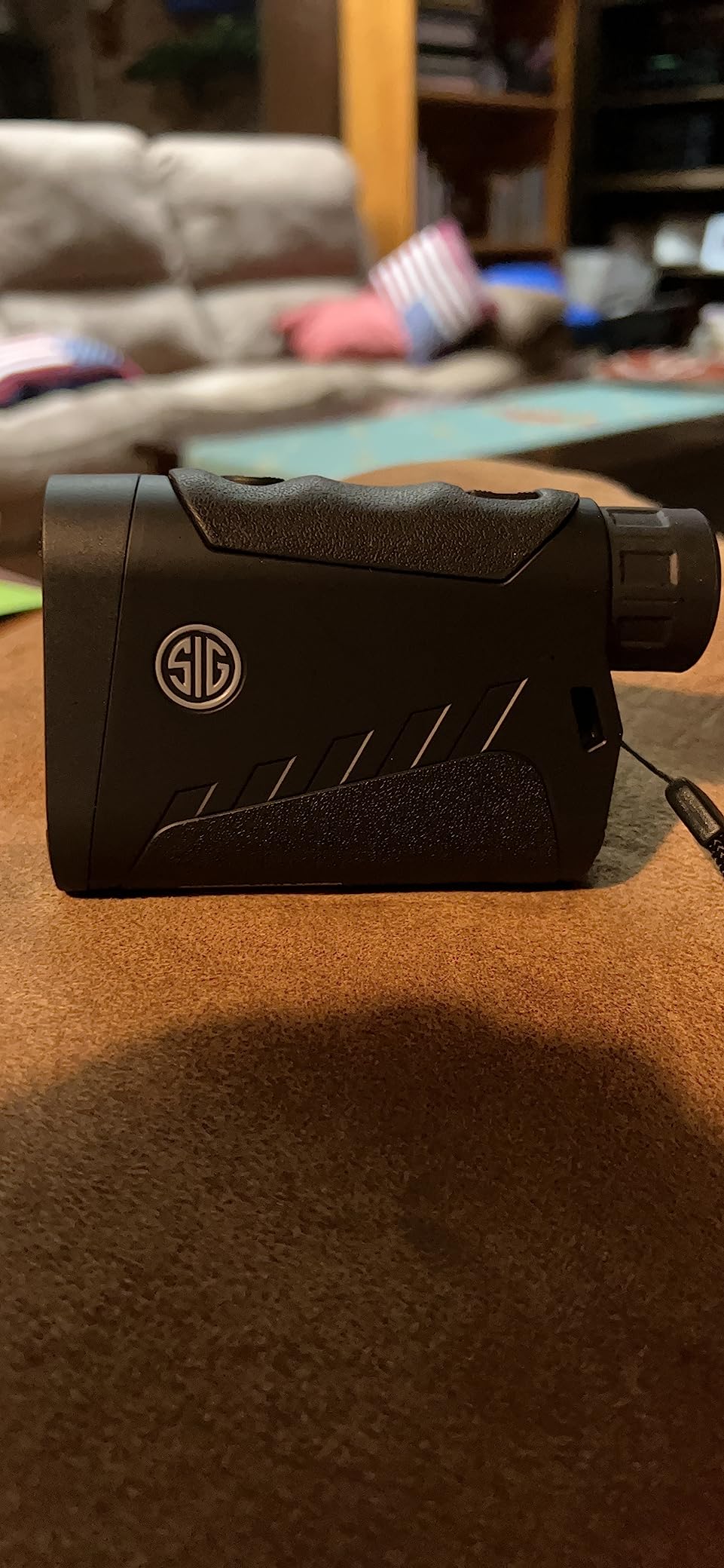
The Buckmasters 1500 is the pick for rifle hunters who shoot Sig optics and want their rangefinder holdovers to match their scope. Buckmasters Mode stores eight onboard ballistic groups, so the unit hands you the correct holdover dot for the group you have selected in your scope rather than a number you have to translate yourself.
Range figures are 1500 yards on reflective targets, 800 on trees and 600 on deer, and Sig publishes all three. That deer figure is the best on-game number of any unit here apart from the Diamondback HD, which makes this a genuine long-range rifle instrument rather than a bowhunter tool wearing a hunting label.
The red illuminated display has adjustable brightness, which owners consistently praise for low light. Sig pairs it with 18mm of eye relief, a genuinely useful number for glasses wearers who otherwise have to pull the unit forward and lose the picture.

The body is aluminum rather than plastic, and at 8.48 ounces it still fits comfortably in a hand or a chest pocket. Owners describe it as compact and solid, with clear glass that holds up in rain without battery compartment problems.
Three cautions come up repeatedly. The alkaline battery type is uncommon, so plan purchases ahead rather than assuming a gas station will have it. Some owners report a 50 to 100 yard discrepancy against a higher-tier Sig model at close range, which matters if you trust sub-15 yard readings. And a fully backlit screen can wash out the sight picture in very low light for some users, so it is worth testing before you rely on it at dawn.
Community preference in elk hunting circles tends to run toward the Sig Kilo series over competing Vortex options when the budget allows, and this unit puts Sig optics integration within reach of a mid-tier budget.
Who this rangefinder suits
This suits the rifle hunter in open country who wants on-game range beyond 500 yards and already owns Sig Sauer glass. Eight matched ballistic groups remove an entire step from the shot process.
It also suits glasses wearers who have been fighting short eye relief on cheaper units, since 18mm of relief is comfortable with most prescriptions.
Who should skip it
Skip it if you shoot very close ranges and need precision under 20 yards, because the reported close-range discrepancy shows up exactly where you least want an error.
Skip it if you want a lifetime warranty. One year of coverage on a device with an onboard ballistics database is thin, and the Leupold in this roundup covers that ground for a similar outlay.
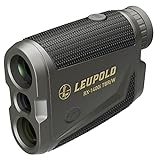
11. Leupold RX-1400i TBR/W Gen 2 – wind and bullet drop solved
Leupold RX-1400I TBR/W Gen 2 w/Flightpath Rangefinder, Black/Gray
5x magnification
1400 reflective, 1200 trees
TBR/W with 10 mph wind hold point
Adjustable TOLED display
5.1 oz
+ The Good
- True Ballistic Range with wind calculates a hold point for a 10 mph crosswind at 90 degrees out to 800 yards
- Bow mode with Flightpath flags arrow obstructions
- adjustable brightness TOLED display
- lifetime transferable warranty
- only 5.1 ounces
- The Bad
- Rated water resistant rather than fully waterproof
- smallest review base in the roundup at 432
- no altitude or atmospheric adjustment beyond wind
TBR/W is the feature no other unit in this budget tier matches. True Ballistic Range with Wind calculates a firing solution, not just a distance, and Leupold publishes a hold point for a 10 mph crosswind at 90 degrees out to 800 yards. For a shooter dialing a rifle in open country, that removes the wind guesswork that costs more game than bad ranging ever does.
Flightpath technology handles the archery version of the same problem. Bow mode gives angle-compensated ranges and flags potential arrow obstructions, so you get warned when a shot line passes through a branch that would deflect a broadhead. No other unit here offers anything comparable for archers.
Range is 1400 yards on reflective objects and 1200 on trees, with 5x magnification. The TOLED display has adjustable brightness, which handles the full arc from pre-dawn shade to high desert midday.

The body is machined aluminum at 5.1 ounces, and Leupold backs it with a lifetime warranty that is transferable with no time limit. That combination means the highest long-term ownership value in this roundup, even after the higher outlay.
Range figures here are tree-based rather than deer-based, which tells you what kind of instrument this is. Leupold rates it to 1200 yards on trees, and since bark reflects well and fur does not, treat live game as considerably closer.
Two honest limitations. The housing is rated water resistant rather than fully waterproof, so I would not plan on rinsing it or leaving it in a wet truck overnight through a season of rain. And with 432 reviews, there is less long-term field data behind it than behind any budget unit in this roundup.

Who this rangefinder suits
This suits the shooter who has already worked out their zero and wants the wind and drop problem handled inside the device. If you shoot in open country where crosswind is the deciding factor, TBR/W is worth more than several hundred yards of extra advertised range.
Archery hunters benefit too, since Flightpath obstruction detection is a feature you will not find anywhere else at this budget, and our archery rangefinder guide covers the alternatives in full.
Who should skip it
Skip it if you hunt hard in the rain all season. Water resistant is not waterproof, and Leupold does not rate this one for full submersion protection.
Skip it if you want a large body of field history before committing. A 4.7 rating on 432 reviews is encouraging but thin, and the budget units with six times the reviews are telling you more about long-term reliability.
12. Vortex Diamondback HD 2000 – maximum range at the ceiling
Vortex Diamondback HD 2000 Laser Rangefinder
7x24mm
2000 reflective, 1400 on game
Red OLED display
Rubber armor
Tripod adaptable
+ The Good
- Longest ranging capability in the roundup at 2000 yards reflective and 1400 on game
- HD optics with XR coatings and a red OLED display
- rubber armor gives a secure grip
- tripod adaptable with HCD and LOS ranging modes
- lifetime warranty
- The Bad
- Largest and heaviest body here at 5.8 inches
- sits right at the 300 dollar ceiling with no headroom
- smallest review base at 372
The Diamondback HD 2000 has the highest published range in this roundup at 2000 yards reflective and 1400 yards on game. That on-game figure is the highest here by a wide margin, and for open-country elk or desert deer work in flat light, it is the unit that gets the reading.
Magnification is 7x with a 24mm objective, the highest power in the group. More magnification helps you identify and hold a distant animal, at the cost of a narrower field of view and a shakier hold at the rifle rest. It is a genuine long-range instrument rather than a close-quarters tool.
The red OLED display stays clear in low light, and the HD optical system with XR coatings handles contrast well for glassing. Two target modes and two ranging modes cover the Normal and Last priority cases plus HCD and line of sight, and the body is tripod adaptable if you want to glass from a set.
Rubber armor gives it a genuinely secure grip in wet conditions, and ArmorTek coatings handle both waterproofing and shock resistance. The accessory list is the most complete here, including a soft case, two lanyards, a utility clip and a hex wrench.
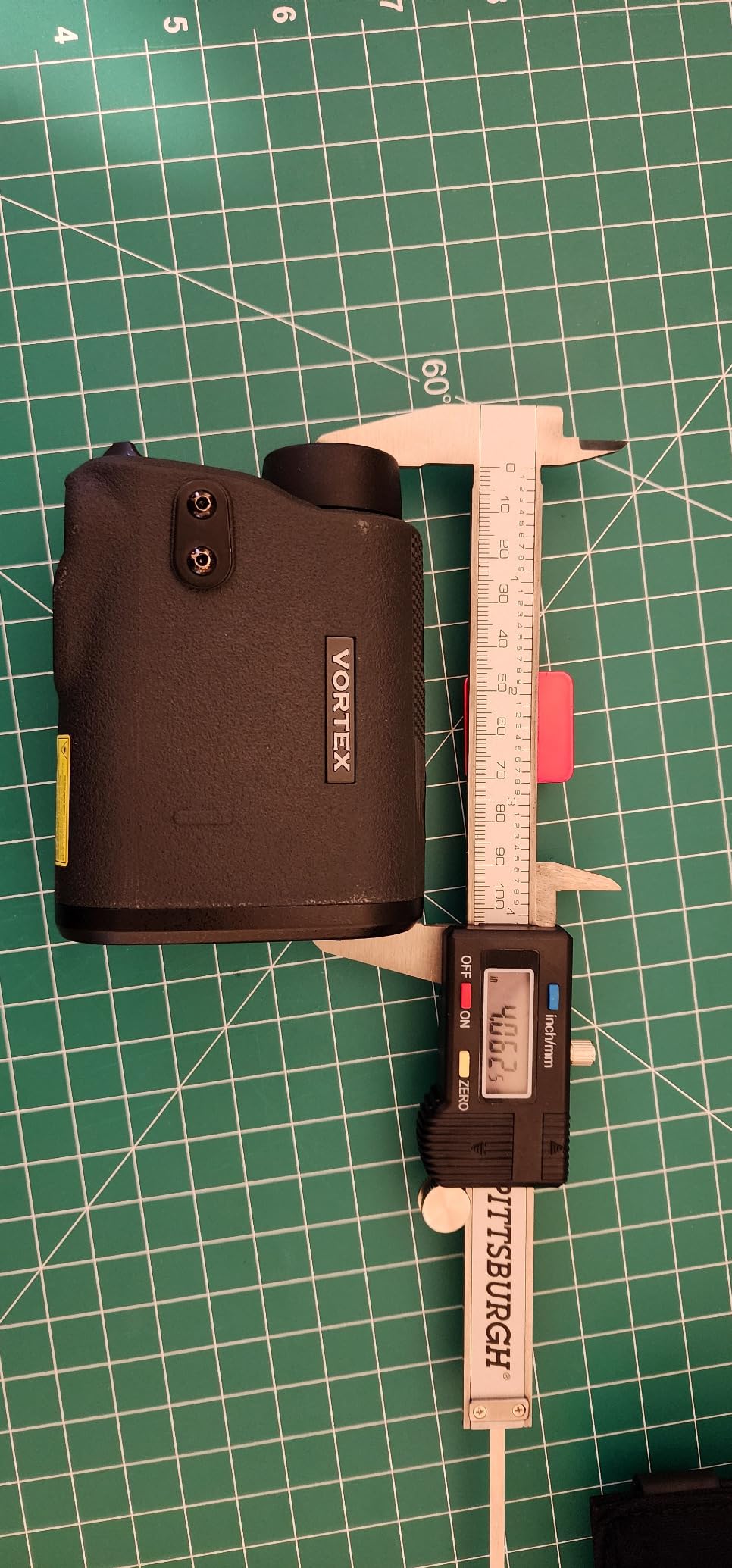
The honest trade is size and weight. At 5.8 inches long and 0.13 kg, this is the largest body in the roundup by a wide margin, and it is not a unit you will forget in a chest pocket. Owners who carry it in a pack or on a belt describe it as solid but noticeably bulkier than the 4.8 ounce Crossfire HD.
It also sits at the top of the budget ceiling with no headroom, so there is no room to add a case or a battery and stay in budget. With 372 reviews it has the smallest owner base in the roundup, so you are trusting the brand’s reputation more than a large sample of field reports.
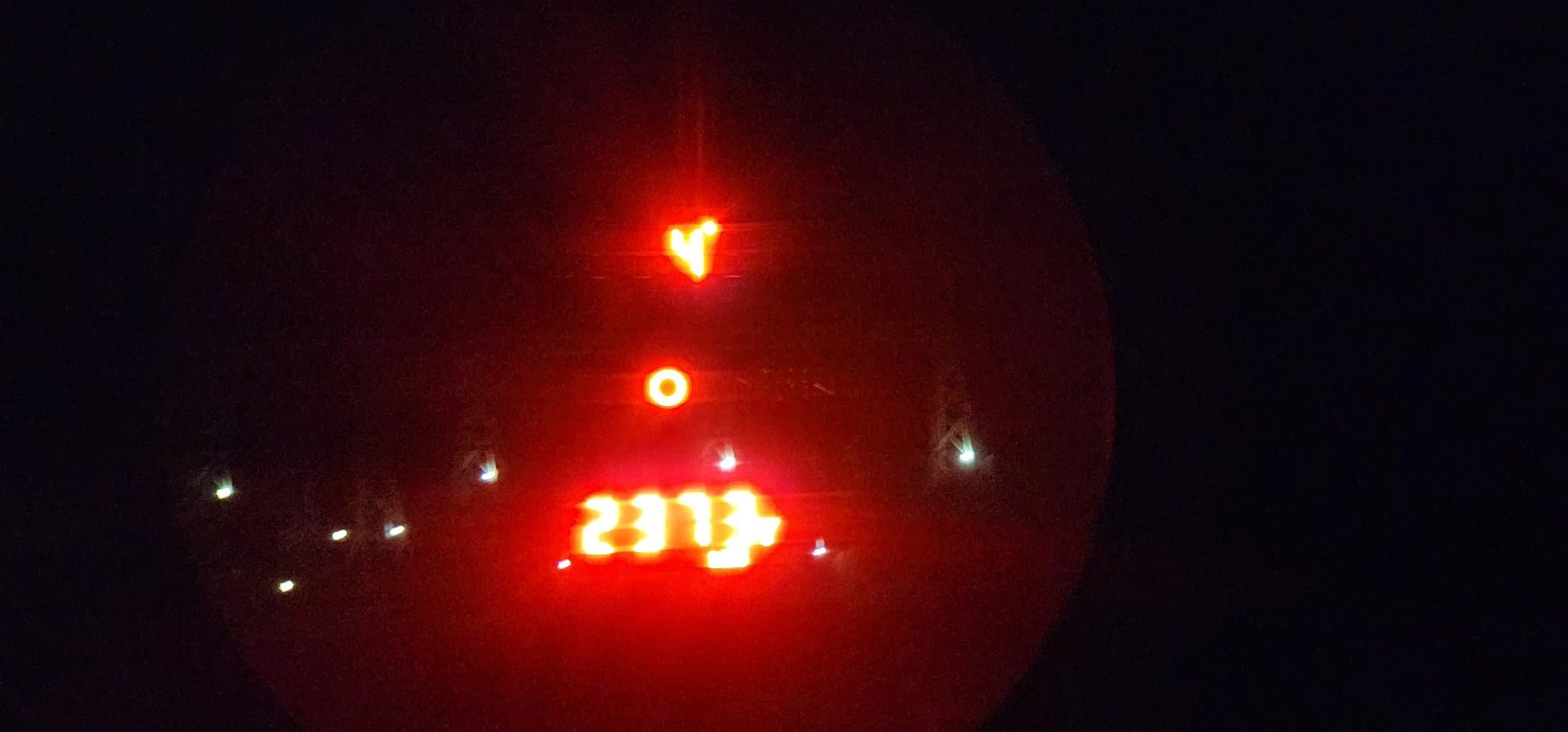
Who this rangefinder suits
This suits the hunter who genuinely needs to identify and range game beyond 700 yards, in open western terrain with flat light and a steady set. The 1400 yard on-game figure and 7x power are built for that specific job.
It also suits anyone who wants Vortex lifetime warranty coverage at the top of this budget, and tripod shooters who want to glass and range from a fixed position.
Who should skip it
Skip it for treestand or close-range hunting. A 5.8 inch body and 7x magnification are a poor match for whitetail work inside 200 yards, where the Crossfire HD is a much better tool for less money.
Skip it if the 300 dollar ceiling is firm and you may need a case, harness or spare battery later. There is no headroom in this budget for accessories.
What to Look For in a Hunting Rangefinder Under 300
The gap between a 50 dollar rangefinder and a 300 dollar rangefinder is real, but it is not where most buyers assume. You are not paying for range. Nearly every unit in this roundup reaches 700 yards or more on paper. You are paying for optics, illumination, ballistics, sealing and a warranty that survives contact with reality.
Is the 300 dollar tier worth it over the 50 dollar tier?
Often yes, but only if you hunt before sunrise, shoot on sloped ground, or need a firing solution rather than a number. A budget unit with angle compensation, like the AOFAR HX-700N or the HX-1200T, will give you yard-level accuracy on deer inside 300 yards and there is nothing a 300 dollar device does better in daylight on flat ground.
Where the money at the top of the range actually goes is illumination and optics. Only the Crossfire HD 1400, the Sig Buckmasters 1500 and the two Vortex units in this roundup give you a display you can read before sunrise, and that is a capability difference rather than a quality difference. For a hunter who waits for the sun, a budget unit is not a compromise, it is the correct purchase.
Our rule of thumb: if you hunt at least a dozen mornings a season and any of them start in the dark, spend above the budget tier for illumination. If you hunt in daylight and your ground is flat, save the difference and put it into arrows or optics for your rifle.
Reflective range is not game range
This is the single most misleading number in the category, and it deserves to be said plainly. The range printed on the box is measured against a reflective surface, essentially a flat wall or a white building. A deer is fur, it is moving, it is often partially screened by vegetation, and it reflects far less light back to the emitter.
The working rule is that you should expect roughly 50 to 75 percent of the advertised figure on live game. So a unit rated to 1400 yards reflective is a realistic 700 to 1000 yard deer rangefinder, and a 700 yard unit is a realistic 350 to 525 yard deer rangefinder. Bushnell and Sig publish their deer and tree figures directly, which is why those numbers are easier to plan around.
Conditions compress that further. Fog, rain, dust, low sun angles and dark timber all reduce the real figure, which is precisely why the ACPOTEL with its rain and fog filtering mode exists. Plan your longest shot inside the conservative end of that range, not the optimistic end.
Display type decides whether you can hunt at dawn
Most hunting happens before the light fully arrives, and this is the single most repeated complaint in every hunting forum thread: an unilluminated LCD is unreadable at first light. If your season starts in the dark, an illuminated reticle is not a luxury feature, it is the difference between having a range number and not having one.
Three illumination types appear in this category. TOLED and OLED displays emit light rather than relying on ambient light, so they stay readable in full darkness and remain visible in direct sun. Transflective and backlit LCD panels improve in low light but wash out badly in bright sun and go dark when the battery is low. Plain LCD, on the majority of budget units here, needs ambient light and simply is not a dawn tool.
Among the twelve, the Crossfire HD 1400, the Sig Buckmasters 1500, the Leupold RX-1400i and the Diamondback HD 2000 all have emitting displays with brightness adjustment. The remaining eight do not, and that single fact should decide the purchase for anyone with an early alarm.
Angle compensation is the feature you actually shoot with
Angle compensation, sold as HCD, ARC or bow mode depending on the brand, converts a sloped line-of-sight reading into true horizontal distance. It is the feature that turns a rangefinder from a curiosity into a tool you can dial into, because horizontal distance is the number your sight pins and holdover cards are built on.
How much it matters depends entirely on your terrain. On flat ground, straight-line and horizontal distance are effectively the same number. On a 30 degree downhill shot at 300 yards, the straight-line reading can overstate horizontal distance by roughly 25 yards, which at bow velocity is a miss you will not walk away from.
Units here with genuine angle compensation include the AOFAR HX-700N and HX-1200T, the REVASRI, the TIDEWE with horizontal distance mode, the Bushnell BoneCollector with ARC, the ACPOTEL in bow mode, the Sig Buckmasters, the Leupold with Flightpath, and the two Vortex units with HCD. The WOSPORTS lists angle in its title but does not deliver it, which is worth remembering when reading listings.
Bow mode versus rifle mode
Bow mode adds arrow obstruction detection and archery-specific pin logic, while rifle mode adds bullet drop and wind solutions. Several units in this roundup serve both, and they do it well. The AOFAR HX-1200T with bow mode, the ACPOTEL with seven modes including bow, the REVASRI with all-in-one ranging, and the Gogogo Vpro with slope compensation and scan all cover archery properly.
For dedicated rifle work, the Sig Buckmasters with eight ballistic groups and the Leupold RX-1400i TBR/W with a wind-adjusted hold point are the two instruments that compute a firing solution rather than a distance. Everything else gives you a number and leaves the rest to your chart.
If archery is your game, our archery-specific rangefinder guide goes deeper on pin spacing and speed measurement than this roundup can.
Battery type decides your season logistics
Two approaches dominate. Disposable CR2 lithium cells, used by the AOFAR units, the WOSPORTS, the Gogogo Vpro, the Bushnell and both Vortex units, mean you can carry a spare in a pocket forever and there is no charging routine to forget. The tradeoff is a purchase of cells you may or may not get through a season.
Built-in rechargeable lithium-ion, used by the TIDEWE, the REVASRI and the Leupold, removes spare battery weight entirely. The TIDEWE is rated for up to 21000 measurements per charge, which is several seasons of hunting from one charge. The risk with rechargeable is a cell that ages in a truck over a long winter, so top it off before opening morning.
The odd ones out: the ACPOTEL runs on included AAA cells, which is the easiest battery to find anywhere, and the Sig Buckmasters uses an alkaline type that is less common and worth buying before you need it.
Warranty length is the real value axis
A rangefinder is a small piece of electronics that lives in a pack in wet weather, and warranty length is the clearest signal of how the brand expects it to be treated. In this roundup the range runs from one year on several budget units to lifetime transferable coverage on the Vortex and Leupold units.
The Vortex unlimited unconditional lifetime VIP warranty and the Leupold lifetime transferable warranty mean that if the unit fails in year six, it gets replaced or refunded with no argument, and the Leupold coverage transfers with the unit if you sell it. For a device you will keep for a decade, that is the most meaningful value in the category, and it is a real reason to spend at the top of the range.
Against that, a one year term on a unit with seven modes and a rechargeable cell is thin protection. The AOFAR two year VIP support terms are the best available at the budget end.
Eye relief and glasses compatibility
Rangefinder eye relief, the distance between the ocular lens and your eye, is a specification almost nobody checks and everybody notices if it is wrong. Short eye relief means glasses wearers pull the unit forward, lose the illuminated display alignment and sometimes end up removing their glasses entirely, which is a bad morning routine at 5 am.
The Sig Buckmasters specifies 18mm of eye relief, which is comfortable with most prescriptions. The compact Bushnell BoneCollector works for many glasses wearers because of its small body and fast-focus eyepiece. Budget units with thick, deeply recessed oculars are where this becomes a problem, so if you wear glasses, check the eye relief figure before ordering.
How to test accuracy before the return window closes
Every unit here claims plus or minus one yard or better, and most deliver it. Here is how to confirm yours in a backyard in twenty minutes, before the return window shuts.
First, pick a flat, unobstructed baseline. A driveway or a mowed field with a clear fence line at one end works. Measure it properly with a laser measuring tool or a long tape rather than estimating, and write the exact distance down.
Second, take ten readings at the baseline from a stable, supported position. Support matters, because handheld readings at long range carry a metre or two of natural error that has nothing to do with the device. A tripod, a fence post or a rested rifle works.
Third, repeat at a sloped angle. Stand at one end of the baseline and at roughly 15 metres to the side, ranging the same target. If the unit has angle compensation, the horizontal readout should still match the baseline figure. If it does not, the compensation is either absent or unreliable.
Fourth, test the conditions you will actually hunt in. Pick a foggy morning or a dark treeline and confirm the unit locks where you expect it to. This is also when you find out whether your display is readable at dawn, and no amount of spec sheet reading will tell you that as accurately as standing in the dark with it.
Specs we would not spend your money on
Maximum range on a reflective wall is the least useful figure in the category, as covered above. Scan mode is common enough now that its presence is not a differentiator. Battery actuation counts are marketing language, and a unit rated for 21000 measurements will comfortably outlast your hunting career regardless.
What actually separates these twelve is illuminated display quality, glass brightness, whether angle compensation is real, game range on a fur-covered target, sealing, weight and warranty length. Weight matters more than buyers expect, because a rangefinder you can carry all day is one you will actually use.
For the broader picture including units above this budget, our golf rangefinder guide covers the flagstick-oriented feature set, which overlaps with but differs from what you need for game.
Frequently Asked Questions
What is the best rangefinder for hunting?
The Vortex Crossfire HD 1400 is the strongest all-round choice in this budget because its illuminated red TOLED display is readable at dawn, its HD optics stay bright in low light and its lifetime warranty removes the long-term risk. If your hunting is strictly in daylight, the AOFAR HX-700N offers yard-level accuracy and a spare battery for a fraction of the outlay.
What is the best rangefinder for hunting based on value for money?
The TIDEWE 700/1000Y is the best value pick. Its rechargeable lithium-ion battery is rated for up to 21000 measurements, it weighs 5.67 ounces and it returns readings in 0.46 seconds. It also holds a 4.7 average across more than 6000 reviews, which is unusual consistency at this level. The one thing you give up is illumination, so dawn hunters should look at the Crossfire HD 1400 instead.
What are the top 5 rangefinders for hunting?
Our top five are the AOFAR HX-700N for proven accuracy and owner volume, the TIDEWE 700/1000Y for rechargeable convenience, the Vortex Crossfire HD 1400 for illuminated low light optics, the Sig Sauer Buckmasters 1500 for red illumination with eight ballistic groups, and the Bushnell BoneCollector 850 for all-glass optics with ARC angle compensation. Together they cover daylight bowhunting, dawn hunts and long-range rifle work.
What is the best affordable rangefinder for shooting?
For pure value the REVASRI 1000yd Camo gives you seven modes, mode memory, USB-C rechargeable power and 6.5x magnification at the bottom of this budget. If you want the longest track record instead, the AOFAR HX-700N holds a 4.5 average across more than 11000 reviews and ships with a spare CR2 battery. Below roughly 50 dollars, accuracy still holds for targets and short-range practice but low light capability disappears entirely.
Is a cheaper rangefinder worth it?
Yes, for daylight hunting on flat ground inside 300 yards. A budget unit with angle compensation gives you yard-level accuracy on deer and there is nothing a device at the top of this budget does better in those conditions. Spend more only if you hunt before sunrise and need an illuminated reticle, shoot on steep ground, or want a ballistic solver that handles wind and bullet drop for you.
What range do I actually need for deer hunting?
Most whitetail shots happen inside 200 yards, and open-country elk work extends to 500. Expect roughly 50 to 75 percent of the advertised reflective figure on live game, so a unit rated at 700 yards is a realistic 350 to 525 yard deer rangefinder. For deer hunting under 300 yards, any of the twelve in this roundup covers it with room to spare.
Do I need ballistics or angle compensation for bowhunting?
Angle compensation matters far more than ballistics for archers. A downhill shot at 300 yards can read roughly 25 yards long on a slope-corrected basis, and a ballistics solver is only as good as the range number feeding it. Bow mode on the AOFAR HX-1200T, the ACPOTEL and the REVASRI handles this directly, while the Leupold Flightpath additionally flags arrow obstructions.
What battery does a hunting rangefinder use?
Most units here use a disposable CR2 lithium cell, including both AOFAR models, the WOSPORTS, the Gogogo Vpro, the Bushnell and both Vortex rangefinders. The TIDEWE, REVASRI and Leupold use built-in rechargeable lithium-ion, and the ACPOTEL runs on AAA cells. The Sig Buckmasters uses an alkaline type that is less common, so buy it before your season rather than on opening morning.
The Verdict on the Best Hunting Rangefinders Under 300
The AOFAR HX-700N is the pick we would hand to most people. It has the deepest owner record in the group, holds yard-level accuracy in the field, ships with a spare battery and costs a fraction of the premium units. The TIDEWE 700/1000Y takes the same job and removes the battery logistics entirely.
If your season starts before the sun does, change your answer. The Vortex Crossfire HD 1400 is the only unit here that solves the dawn problem completely, with an illuminated red TOLED display, HD optics, 4.8 ounce weight and a lifetime warranty, and it is the one we would buy with our own money. Rifle hunters working open country should look at the Sig Buckmasters 1500 for red illumination and eight ballistic groups, or the Leupold RX-1400i TBR/W if wind and drop are the deciding factors.
Whichever you choose, test it against a measured distance before the return window closes, and remember that the number on the box describes a wall, not a deer. That single distinction will keep you from buying more range than you need and from trusting range you will not get.