
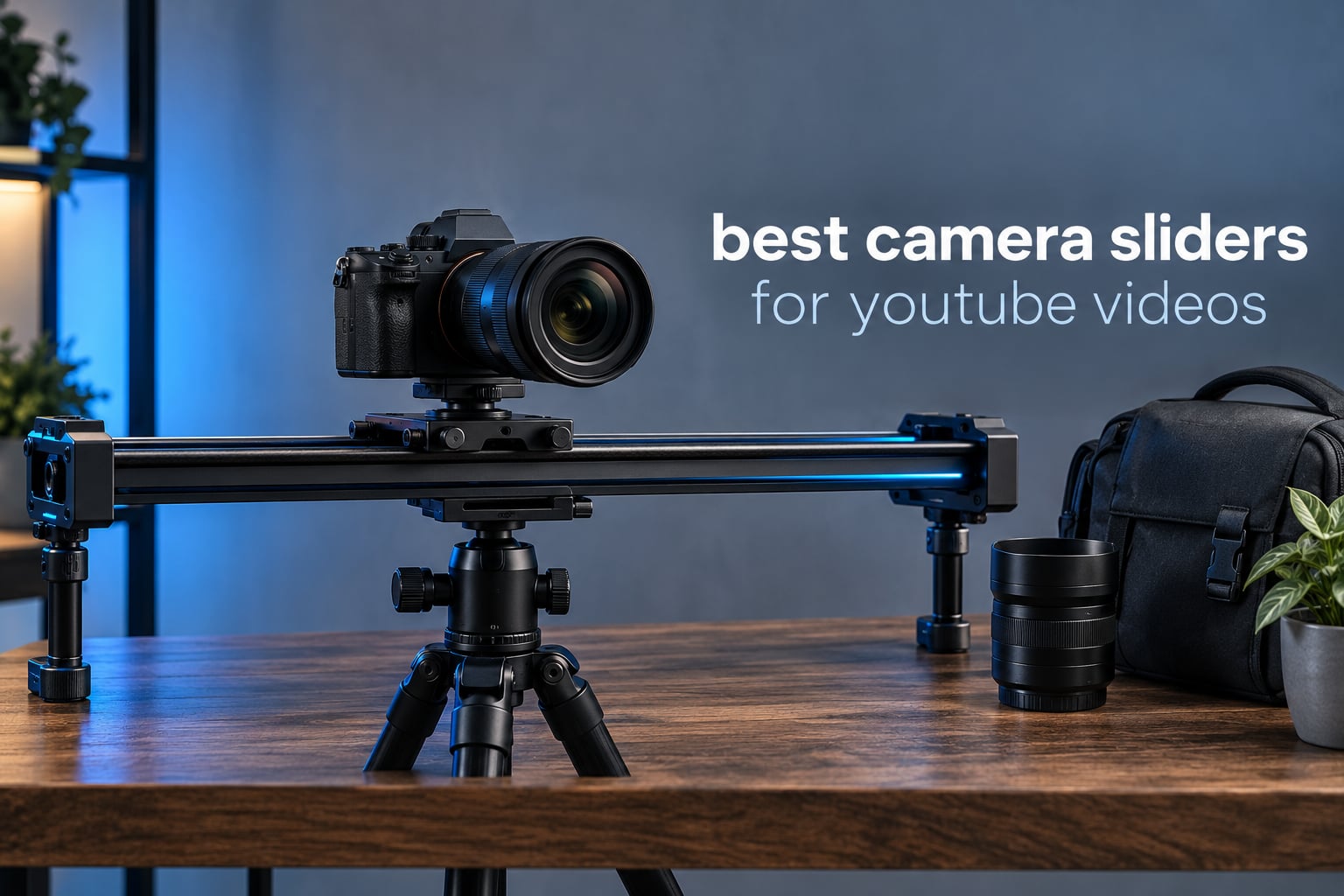
A camera slider is a rail or wheeled track that carries your camera on a moving carriage, so the lens glides horizontally, vertically or on an angle while you film. The result is the smooth, controlled tracking shot a tripod physically cannot produce, and it is the fastest visual upgrade a YouTuber can make without hiring a second operator.
That matters because flat tripod footage reads as an amateur talking head. A slow push across a desk, a slide past a product, or a reveal move down a hallway tells the viewer someone knows what they are doing before a single word is spoken. For a solo creator, a slider is also the only piece of motion gear you can operate alone, set up on a dining table, and put away in a bag between videos.
What follows is our tested shortlist of the best camera sliders for YouTube videos right now, split by what you actually shoot. We have covered everything from a lightweight wheeled dolly for phone b-roll to multi-axis motorized rails that sync with a gimbal. Every pick is judged on one question: does it make better footage for a channel run by one person, and how much pain will it cause you to carry it up three flights of stairs?
New here? Start with the picks below, then read the motorized-versus-manual section before you spend anything. It is the single decision that trips up new creators, and it is the one question that comes up most in filmmaking and videography forums.
Top 3 Camera Sliders for YouTube Videos in October 2026

NEEWER DL100 3-Wheel Dolly
- › Wireless remote with 3 speeds
- › Adjustable wheel angle for curves
- › 1800mAh battery
- › 6 hours runtime

Zecti 24 Inch Carbon Slider
- › Manual rail with four bearings
- › 654g with carrying bag
- › Adjustable legs and bubble level

StudioFX 40 Inch Ball Bearing Track
- › 40 inch manual travel
- › 15 lb load rating
- › Detachable legs for tripod mounting
Our top three cover three genuinely different jobs. The NEEWER DL100 does the most for the least thinking: you place it, press a button on the remote, and it moves. The Zecti 24 inch is the pick if you want a real rail with a real carriage and you are happy to push it yourself. The StudioFX 40 inch is the long-travel budget option, and the only one here rated to carry a heavier body without complaint.
Best Camera Sliders for YouTube Videos in October 2026
| PRODUCT MODEL | KEY SPECS | BEST PRICE |
|---|---|---|
|
|
Check Latest Price |
|
|
Check Latest Price |
 |
|
Check Latest Price |
 |
|
Check Latest Price |
|
|
Check Latest Price |
 |
|
Check Latest Price |
 |
|
Check Latest Price |
 |
|
Check Latest Price |
 |
|
Check Latest Price |
 |
|
Check Latest Price |
Two things jump out of that table if you read it carefully. First, the payload ratings range from 4.4 pounds on the Zecti to 20 pounds on the 31 inch GVM, so a heavy DSLR rig rules most of this list out instantly. Second, three of these ten are wheeled dollies rather than rails, which is a distinction beginners routinely get wrong and one we explain further down.
1. NEEWER DL100 3-Wheel Wireless Dolly — Best Camera Slider for Everyday YouTube B-Roll
NEEWER 3 Wheels Wireless Video Camera Dolly, 3 Speed Motorized Slider
Motorized wheeled dolly
3 speed settings, 6m remote range
6.6 lb max load
1800mAh battery, up to 6 hours
1.1 lb, folds to 5.3 inches
+ The Good
- Folds to roughly 5 inches and weighs 1.1 lb
- so it travels anywhere
- Three speeds plus remote start
- stop and direction change
- 180 degree adjustable wheels for curved and pitch moves
- Built-in battery gives up to 6 hours of runtime
- Converts between 1/4 inch and 3/8 inch screws for phones and action cams
- The Bad
- Not a rail
- so travel is limited to the dolly path
- 6.6 lb load rules out cinema bodies and big lenses
- Short travel means wide moves need repositioning
This is the slider we actually reach for first, and the reason is not subtle. You set the dolly on a desk, set the camera on the ball head, and the built-in battery means there is nothing else to charge, nothing to wire, and no controller to program. Three speeds sit between 1.4 and 3.0 cm per second, and the remote reaches about 6 meters, which is more than enough to start a move from behind the camera and walk into the shot.
It is also the smallest thing on this list at 1.1 pounds, folding to roughly 5.3 inches on each side. If you shoot travel content, that matters more than any spec sheet. We have used it in hotel rooms, on café tables and on a floor beside a product, and it has never needed more than a minute to be moving.
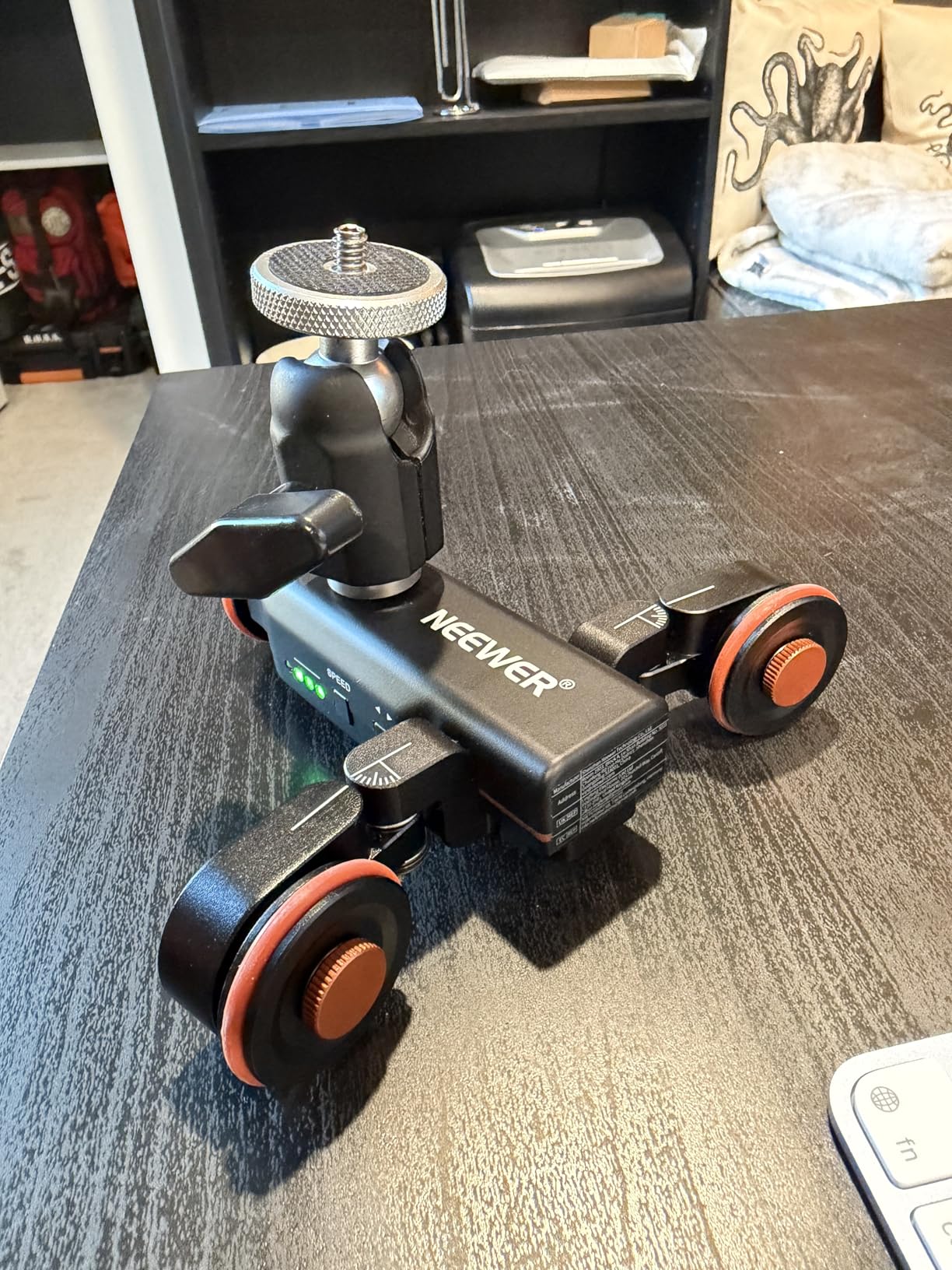
The adjustable wheel angle is the feature that gets missed. The wheels pivot through 180 degrees, so the same unit runs a straight line, an arc around a subject, or a pitch move through a ball head. On a talking-head channel that means a slow arc around your desk rather than the flat sideways drift most people shoot with their first slider.
Being honest about the limits matters here. This is a wheeled dolly, not a rail, so its travel is whatever surface you give it. Put it on carpet or a slightly uneven table and the motion will tell you about it. The 6.6 pound load ceiling is fine for a phone, an action camera or a small mirrorless body, and not fine for anything heavier.
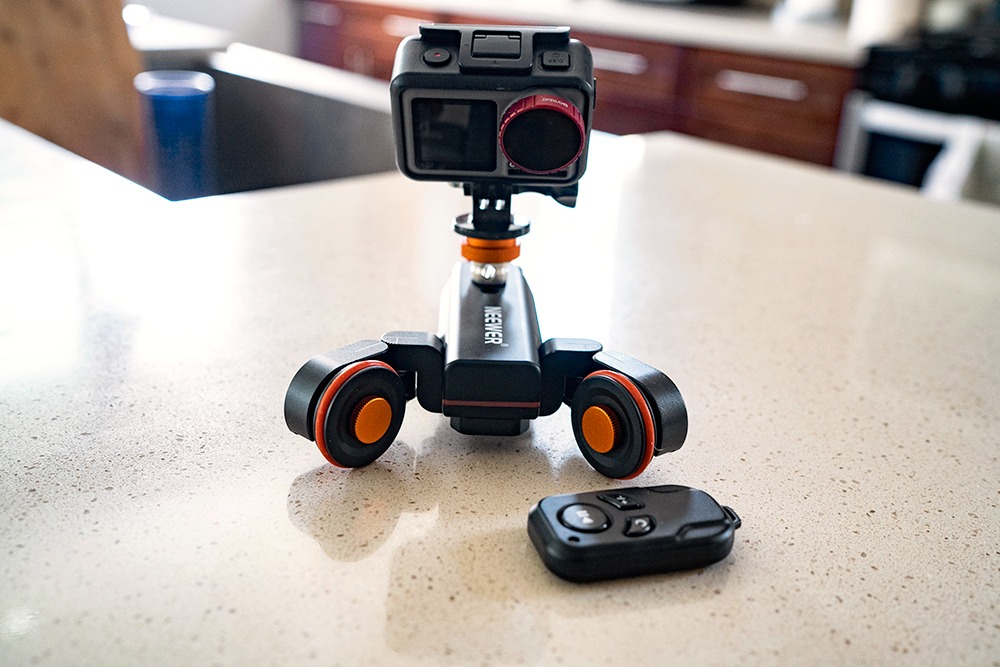
This is the right slider if you shoot a lot and carry everything yourself
If your channel posts two videos a week and you are already walking to locations with a backpack, this is the pick. Nobody will hand this to you and ask why you are carrying a tripod head around. It is the least committed piece of motion gear you can own and it will get used from day one.
It also solves the solo-shooter problem better than any rail we tested. You can start the move with the remote and step into frame, which is exactly how most two-person studio shots are made with one person.
This is the wrong slider if you need repeatable takes or long moves
Nothing here is repeatable frame-for-frame. If you are shooting a time-lapse, a stop-motion sequence, or a six-take product sweep where the framing must be identical each pass, you need a rail with programmable endpoints. Save your money and jump to a motorized rail further down.
It is also worth saying that reviewers commonly buy this expecting a rail and being pleasantly surprised by the dolly format. That is a good sign, but it is not the same thing as the smooth, guided glide a rail gives you.
2. Zecti 24 Inch Carbon Fiber Manual Slider — Budget Pick Camera Slider for YouTube Shots
Zecti Camera Slider 24″/60 cm Adjustable Carbon Fiber Camera Dolly Track
Manual carbon fiber rail
24 inch / 60 cm travel
4.4 lb maximum load
654g carriage with carrying bag
Four precision bearings
+ The Good
- Lightest rail here at 654g
- and a carrying bag is included
- Four precision bearings and a double carbon fiber rail for quiet travel
- Mounting holes at centre and both ends for vertical
- horizontal and diagonal use
- Removable adjustable legs with non-skid feet and a bubble level
- Works with phones
- action cams
- mirrorless and DSLR bodies
- The Bad
- Manual only
- so moves are not repeatable
- The maker notes stiff or noisy travel if the screws are overtightened
- 4.4 lb is the lowest load rating in this roundup
This is the rail we hand to people who ask whether a slider is even worth buying. A 60 cm carbon fiber rail with four precision bearings and a double interior rail system weighs 654 grams, comes with a scratch-resistant bag, and costs less than most accessories in this article. For a channel that lives on desk b-roll, product shots and food video, it covers the large majority of what a slider is for.
The carriage has multiple 1/4 inch and 3/8 inch screw holes at the centre and at both ends. In practice that means you can mount a camera upright for a vertical Shorts move, flat for a tabletop sweep, or at an angle for a hero product shot, without moving the camera between holes. The removable adjustable legs with non-skid rubber feet and a bubble level make leveling on a kitchen table quick.
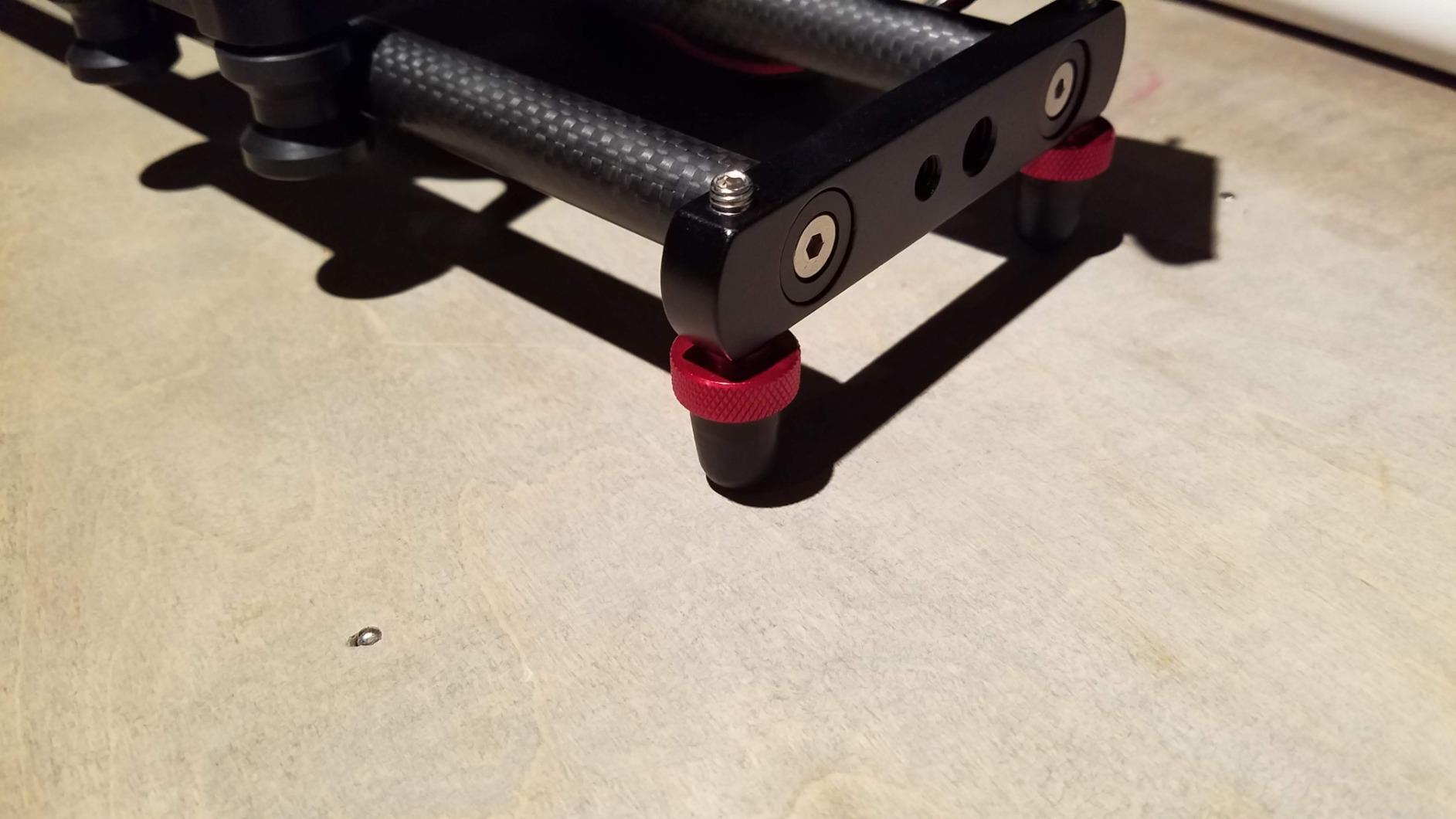
One honest note that the manufacturer itself puts in the listing: a manual slider can feel stiff or make noise, and the usual cause is screws tightened a little too hard. If your first move judders, back the carriage screws off slightly before you assume the unit is faulty. That single adjustment fixes the majority of complaints about this kind of slider.
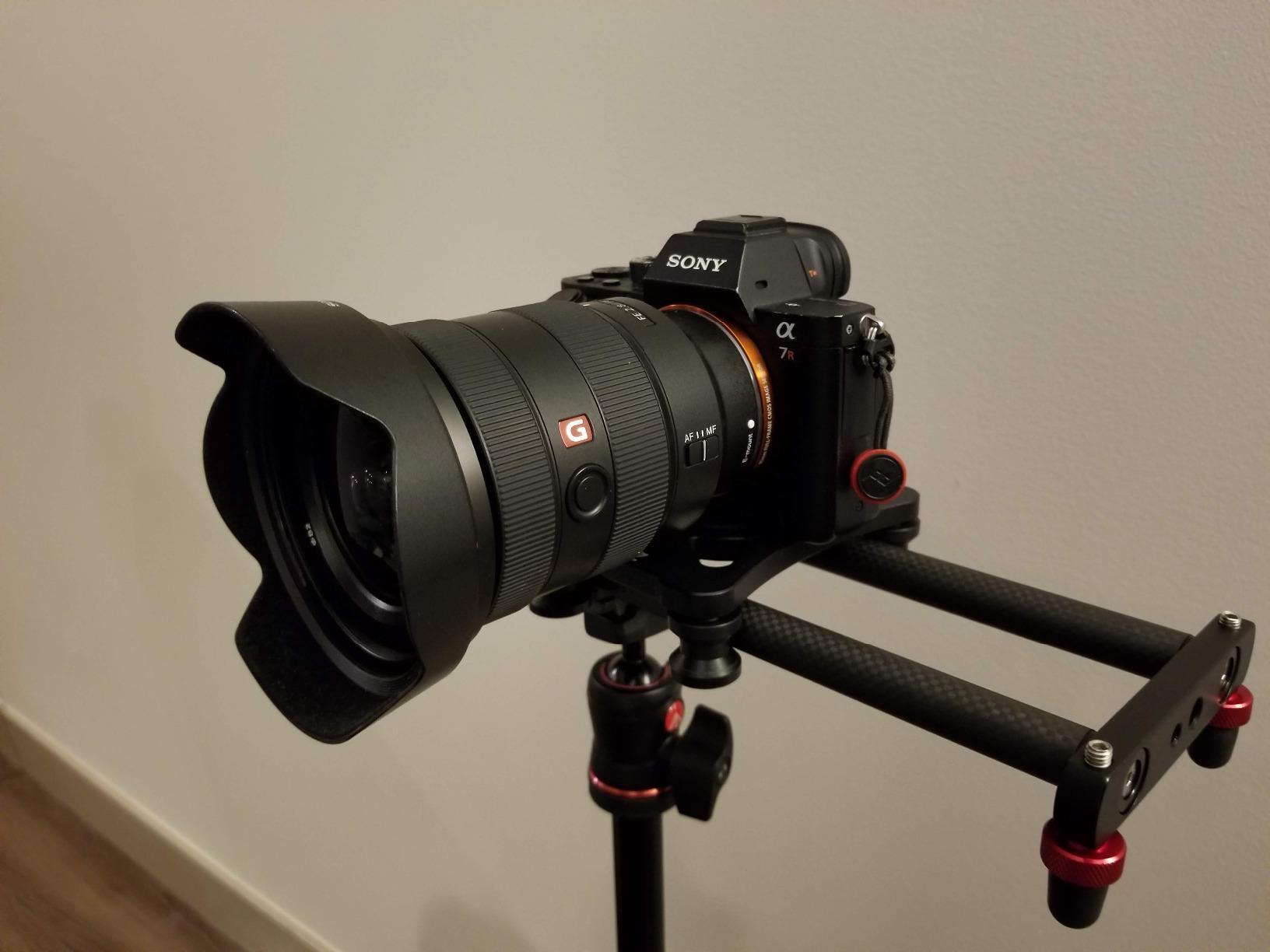
The 4.4 pound load ceiling is the real constraint. A phone, an action camera or a lightweight mirrorless body rides it comfortably. A DSLR with a fast lens attached will sit at or over the limit, and you should not push it.
Buy this if your b-roll happens on a desk, a table or a kitchen counter
Product video, unboxing inserts, coffee pours, phone screen recordings, that kind of thing. The carriage travel is smooth enough that a slow push at arm speed looks professional, and because it is manual you control the easing by hand better than most beginners expect.
It is also the one to grab if you already own a good tripod and just need the motion. A rail plus a ball head, and you have every tracking shot a talking-head channel needs.
Skip this if you shoot time-lapse or anything with a heavy body
Manual means you push. There is no repeatability, no interval shooting and no auto loop, so a time-lapse or a stop-motion sequence is out of reach without extra gear. If your channel leans into time-lapse, the 4.4 pound ceiling will also rule out the camera you want to use.
For a large sensor body, work up the list rather than up the weight class of this one.
3. GVM GP-120QD 48 Inch Motorized Slider — Best Camera Slider for Wide Tracking Shots
GVM Great Video Maker Camera Motorized Slider,48″/120CM,Automatic Round Trip,Time Lapse,Panoramic Shooting,Video Capture,Slider Smooth and Stable,with Battery
Motorized carbon fiber rail
48 inch / 120 cm travel
5 kg maximum load
Controller with auto loop
Carrying bag included
+ The Good
- Longest travel in the roundup at 48 inches for wide cinematic moves
- Programmable start and end points
- speed from 1 to 100 percent
- interval
- stop time and up to 1000 photos with auto loop
- Manual and electric control modes with 120 degree panoramic orientation
- Complete kit with controller
- battery
- charger
- six shutter cables and a bag
- The Bad
- Weighs 11.8 lb
- so support at both ends is normally needed
- Controller interface is functional rather than modern
- No app control on this model
When you need a move that actually travels, this is the slider. A 48 inch carbon fiber rail gives you more usable travel than anything else in this roundup, which means a single pass can cover a product table, a food spread, or a room reveal from a doorway to a window. On a channel built around reveals and walkthroughs, that travel is the entire point.
The controller is where this slider earns its keep. You set start and end points, adjust motor torque, dial slip speed from 1 to 100 percent, set an interval between 0.1 and 999.9, choose a stop time, set a photo count up to 1000, and switch on auto loop. For a time-lapse channel or a batch product shoot, that is a real production tool rather than a toy.
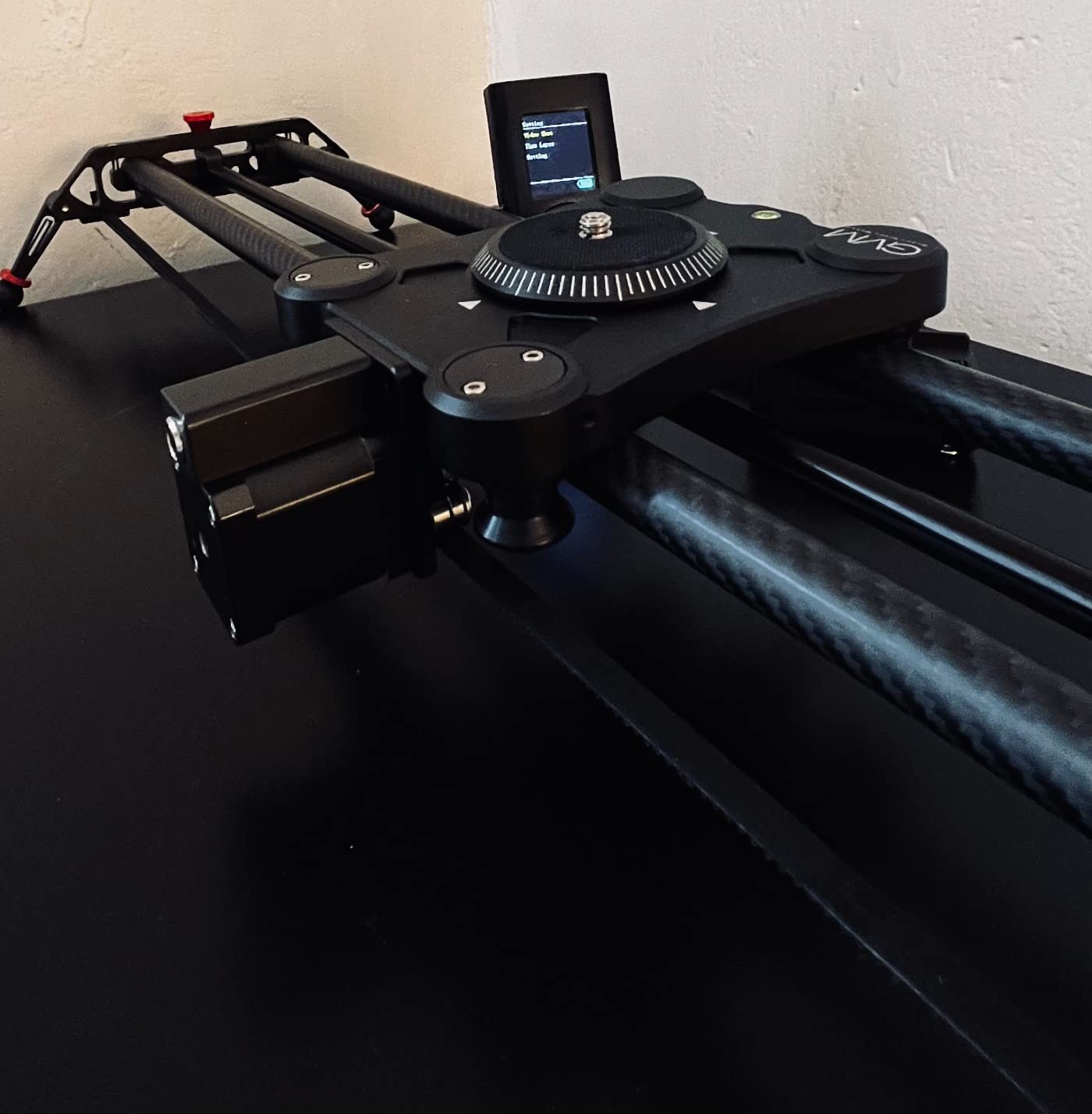
Red side knobs reposition the rail into tracking, 120 degree panoramic, time lapse or video configurations, and it switches between manual and electric modes, so you can push it yourself for a handheld-feeling take when the shot calls for it. Reviewers consistently praise the quiet motor and the generous bundle of six shutter release cables, battery, charger and bag.
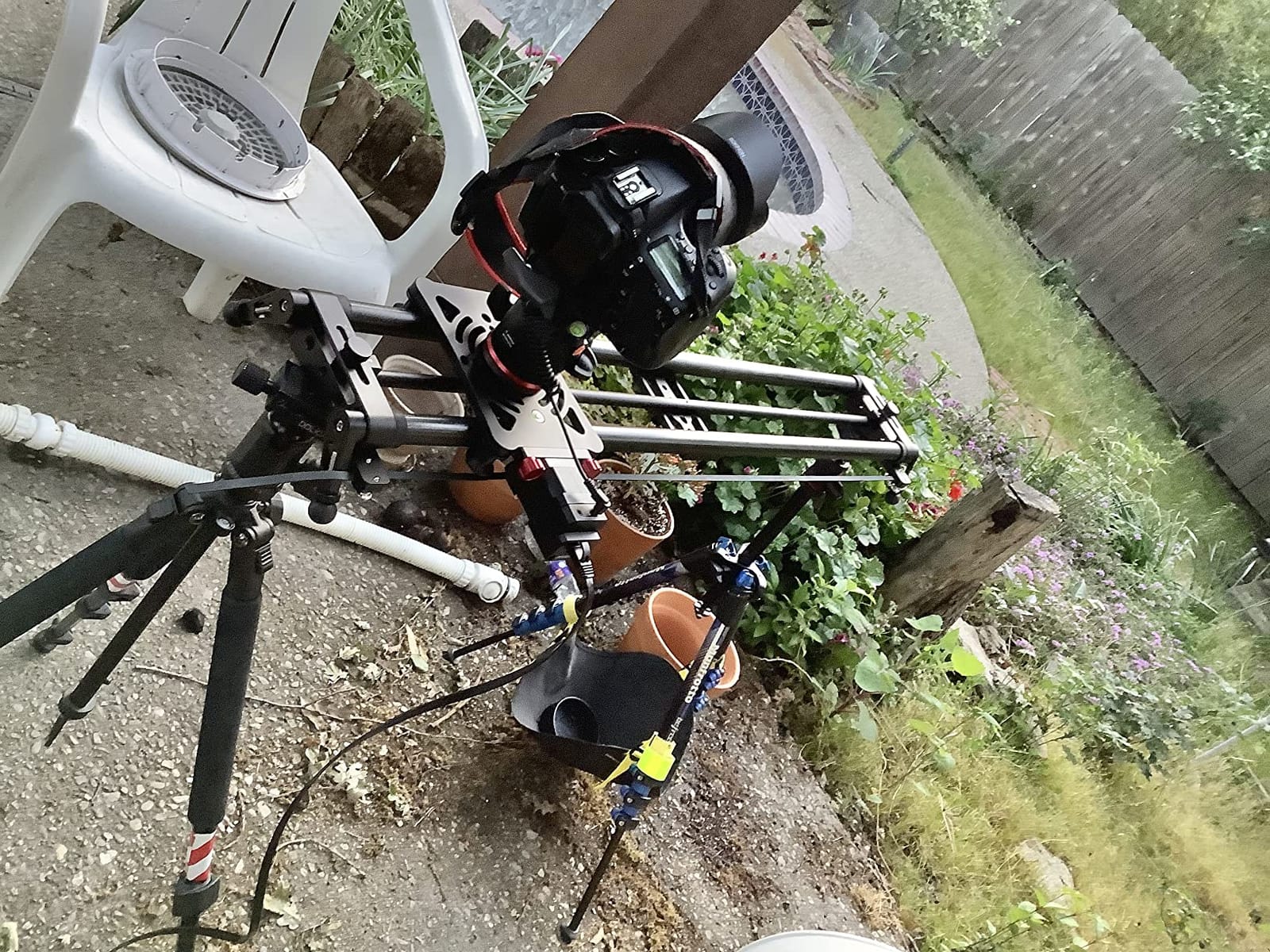
At 11.8 pounds this is the heaviest unit we tested, and on anything longer than about 30 inches you want a tripod or stand under the far end. Budget for the second support. Ignoring it produces a rail that sags mid-move, and sag is visible in the finished shot.
Buy this if you shoot real estate, food spreads or room reveals
Any shot where the camera has to cross real space benefits from a long rail. A walkthrough of a flat, a spread of dishes on a long table, or a slow push along a shelf all need travel you cannot fake with a short rail and a reset.
The auto loop and photo count also make it a batch tool. Set the endpoints once, trigger it, and capture an entire time-lapse or a whole run of identical product passes without touching the camera.
Skip this if you are a solo creator working from a small apartment
Eleven pounds plus a second support plus the rail itself is a lot of kit for a 30 second insert. It is also the least modern interface here, with no app control, so programming a move takes button presses rather than a phone screen. New creators almost always get more value from a shorter motorized rail or a manual rail and a good ball head.
4. GVM GT60 27 Inch Aluminum Motorized Slider — Best First Motorized Slider for a New Channel
GVM Camera Slider, 27” Aluminum Alloy Motorized Slider with Time-Lapse, Video Shooting and Round Trip Shooting, Track Dolly Rail for Most DSLR Cameras for Interview Photography
Motorized aluminum rail
27 inch / 60 cm travel
2.5 kg maximum load
Wired controller
Power bank adapter included
+ The Good
- A straightforward entry into motorized sliders at 27 inches
- Aluminum alloy construction runs smoothly and stays stable
- Time lapse
- video and auto round trip modes in one unit
- Multiple 1/4 and 3/8 inch holes for ground
- tripod or ball head mounting
- Adjustable non-slip feet plus bubble level for leveling
- Handles vertical
- horizontal
- 45 degree and 70 degree slope shooting
- The Bad
- 2.5 kg is the lowest load rating among the motorized models here
- Aluminum is heavier than carbon fiber for the same rigidity
- No app or wireless control
- wired controller only
- No battery included
- so the power bank adapter and cables are required
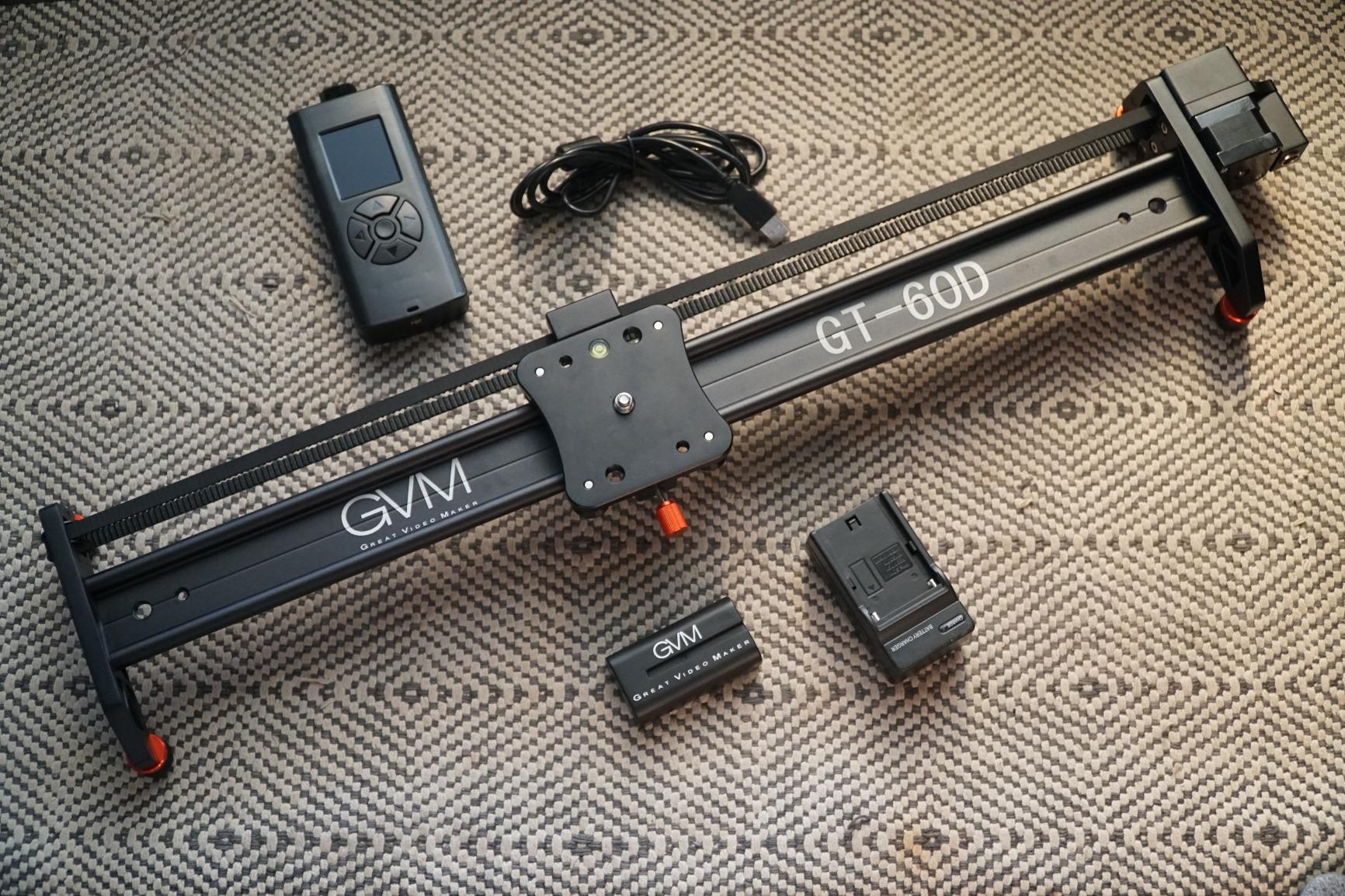
This is the model we would put in front of a creator who has decided they want a motor but is not yet sure how much motor they need. Twenty-seven inches of travel covers a desk, a countertop or a short walk down a hallway, and it runs time lapse, standard video and automatic round trips from the same wired controller.
Mounting flexibility is genuinely good for the money. There are 1/4 inch and 3/8 inch holes on both sides and in the middle, so the rail works on the ground, on a tripod, or on a ball head. It handles vertical, horizontal and 45 degree orientations, and the manufacturer claims a DSLR body can climb a 70 degree tripod slope.
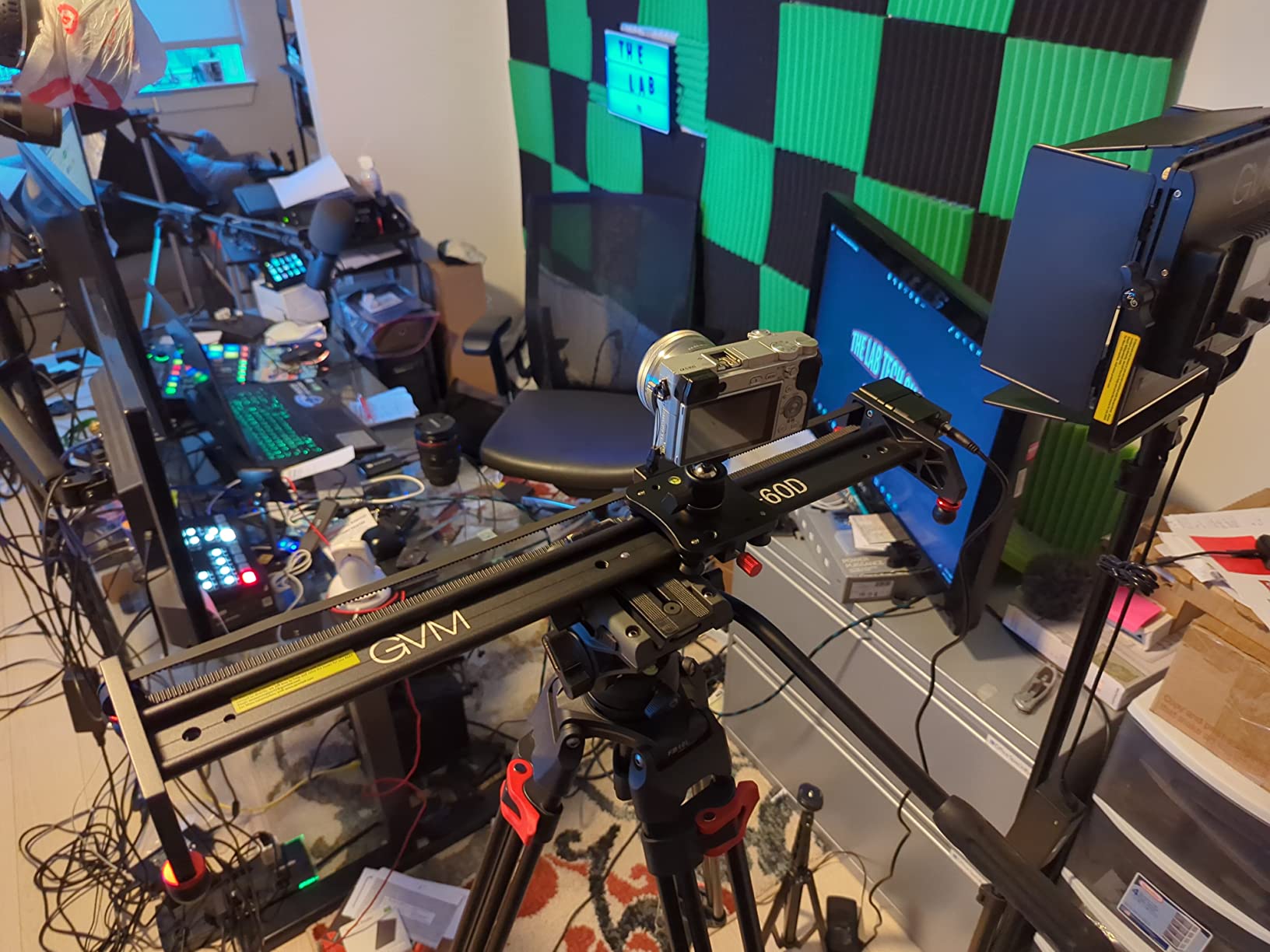
Adjustable non-slip feet and a bubble level make setup forgiving, which matters when you are working alone on a floor rather than on a studio table. The whole thing folds down to roughly 26.8 by 5.9 by 2.75 inches, so it lives in a normal camera bag.
Two honest caveats. The 2.5 kg load rating is low for a motorized unit, and it is the reason you would step up rather than sideways. And no battery is included, so you are running it from a power bank through the included adapter, which is one more thing to remember on a shoot day.
Buy this if you want repeatable moves without app dependency
There is real value in a slider that works with no phone, no pairing and no app updates. You plug in a power bank, set your endpoints on the physical controller, and the move runs. On a location shoot with unreliable signal, or for anyone who just does not want to deal with software, that reliability is worth more than a touch interface.
It also handles the vertical and 45 degree orientations that Shorts and product work need, which many budget rails skip.
Skip this if your camera and lens combo is heavy
Add your body, your lens and your ball head together, and 2.5 kg is not much of a margin. A mid-size DSLR with a standard zoom will already eat most of it. If you are not sure, weigh the full rig and then decide, because a motorized rail that struggles at the end of its travel produces a slow, wobbling finish.
Aluminum also means more weight to carry than an equivalent carbon rail, which is a factor if you shoot travel.
5. StudioFX 40 Inch Ball Bearing Manual Track — Best Budget Slider for Long Manual Moves
StudioFX 40″ Ball Bearing Pro DSLR Camera Slider Dolly Track Video Stabilizer
Manual ball bearing track
40 inch travel
15 lb maximum load
1/4 and 3/8 inch screws included
Carrying case included
+ The Good
- 15 lb load rating
- the highest on any manual slider in this roundup
- 40 inch travel
- noticeably longer than a typical 24 inch budget rail
- All-metal construction feels solid for the money
- Multiple 1/4 and 3/8 inch holes for horizontal and vertical slides
- Legs detach quickly by unscrewing the knobs for fast tripod mounting
- The Bad
- No motor
- and no easy provision for adding one
- Track can have sticky spots until it is worn in
- Feet and tension knob are reported to wear or grip poorly
- Feet slide on smooth surfaces such as a table
This is the sleeper pick of the roundup for a specific reason: 15 pounds of load capacity on a 40 inch manual rail. Nothing else at this entry level comes close on either number. If you shoot on a DSLR with a heavier lens and want a real rail, this is where the payload maths stops being a problem.
The ball bearing slide system is smooth once it is run in, and there are mounting holes at three bottom locations and at both ends, which lets you shoot a vertical push or a horizontal slide without swapping hardware. A bubble level is fitted to the carriage sled, and the legs detach by unscrewing the knobs so you can drop the rail onto a tripod head in seconds.
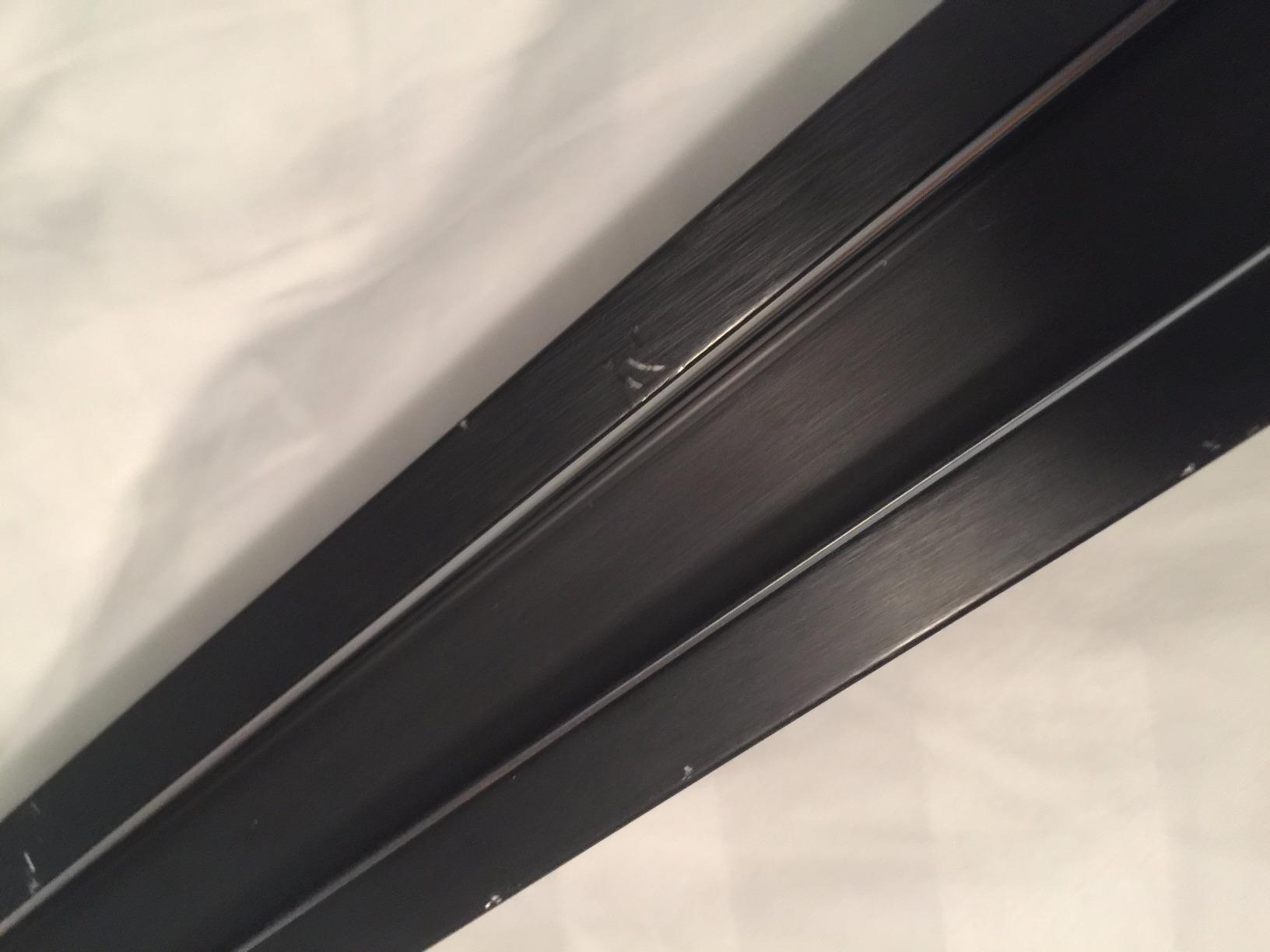
The honest part is the break-in. Reviewers repeatedly describe a carriage that catches at a few points straight out of the box, and the fix is simply to run the carriage back and forth a dozen times until it wears in. Once it does, the motion settles into the smooth glide you are buying.
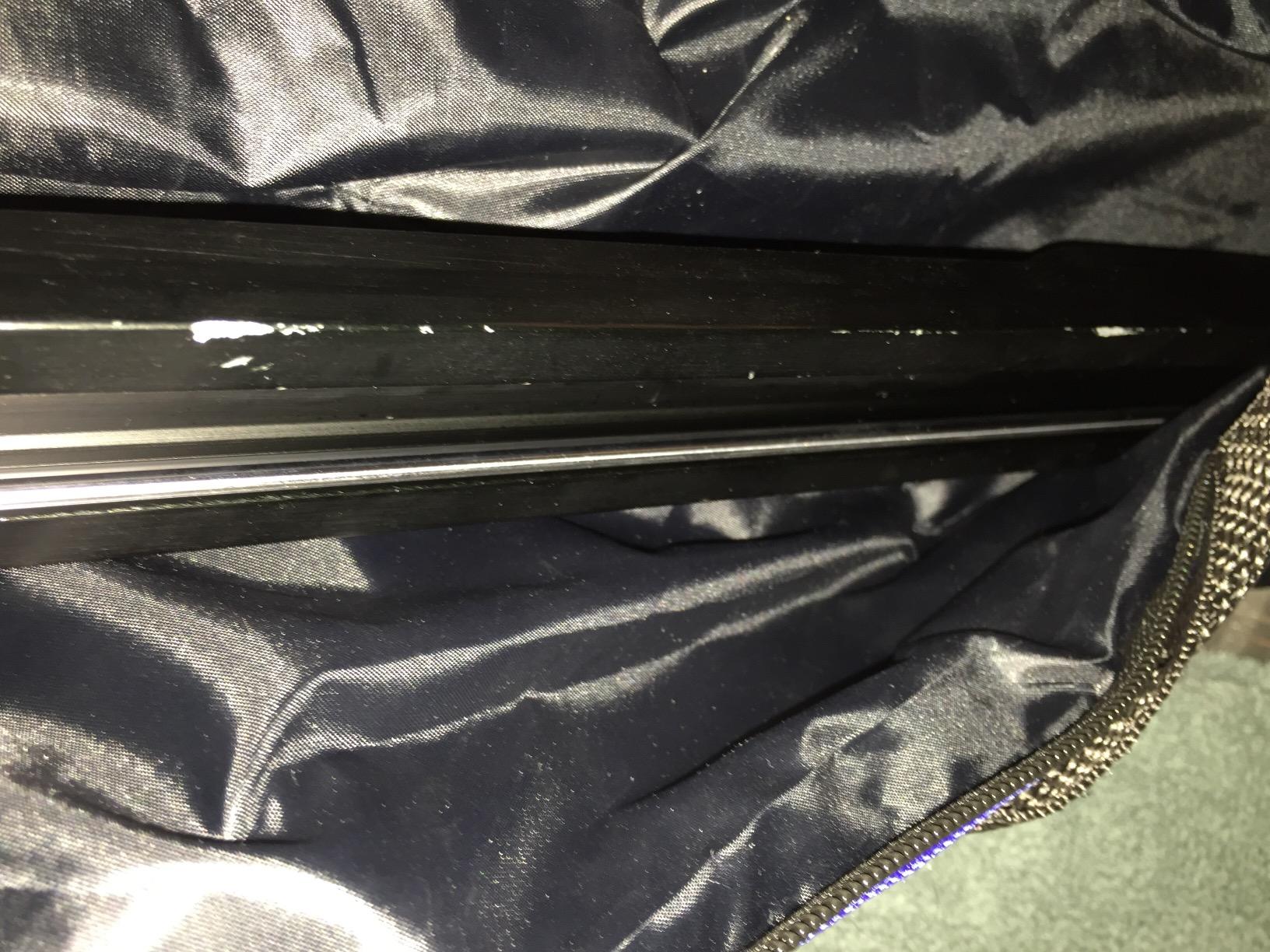
The weak components are the rubber tension knob and the hard plastic feet. Owners report them wearing and gripping poorly, and the feet sliding on a smooth tabletop, so put this on carpet or a rubber mat rather than a polished dining table. The carrying case is also tight, and a tripod head will not fit alongside the rail inside it.
Buy this if you have a heavy body and want long travel without a motor
A 40 inch rail at 15 pounds of capacity covers the classic slither, the slow product reveal and the travel walkthrough without any electronics to fail. The detachable legs are a genuinely smart touch, because a long manual rail with permanently extended feet is miserable to mount on a tripod.
For a solo creator who already knows how to move a carriage at a constant pace, this is a completely viable primary tool rather than a stepping stone.
Skip this if you plan to grow into time-lapse work
There is no motor and no easy way to add one, so time-lapse requires a separate stepper motor and additional wiring. Several buyers have done exactly that, but you are building a project rather than unboxing a tool. For a 4 star average across a wide spread of reviews, the value is in the capacity and the travel, not in refinement.
6. GVM 31 Inch Carbon Motorized Slider — Best Camera Slider for Heavy Camera Rigs
GVM Motorized Camera Slider, 31″ Carbon Fiber Dolly Rail Camera Slider with Time-Lapse Photography, Tracking Shooting and 120 Degree Panoramic Shooting for Most Cameras, with Remote Controller
Motorized carbon fiber rail
31 inch / 80 cm travel
20 lb maximum load
Silent stepper motor
NP battery and ball head included
+ The Good
- 20 lb load rating
- the highest here
- Carbon fiber rail with a silent stepper motor driver
- Three shooting modes including horizontal
- tracking and 120 degree panoramic
- Separate video and time lapse menus with up to 1000 photos and auto round trip
- Four roller bearings add balance and dampen shake
- Ball head
- battery
- charger
- remote and six shutter cables included
- The Bad
- No app or smart control
- programmed from the physical remote only
- 10 lb unit weight needs tripod support
- 31 inch travel is shorter than the 48 inch GVM model
Payload is the headline here. A 20 pound rating across a 31 inch carbon fiber rail means a full-frame body with a zoom, a matte box or a small rig, and still several pounds of headroom. If your camera is the reason you were hesitant about entry-level sliders, this is the number that ends the argument.
Motion control comes from a silent stepper motor driver powered by the included NP battery, and the kit ships with the remote, data cable, battery, charger, ball head, hex key, extension cable and six shutter release cables. Two separate shooting menus handle uniform-speed video with auto round trip, and time lapse with accurate step distance up to 1000 photos.
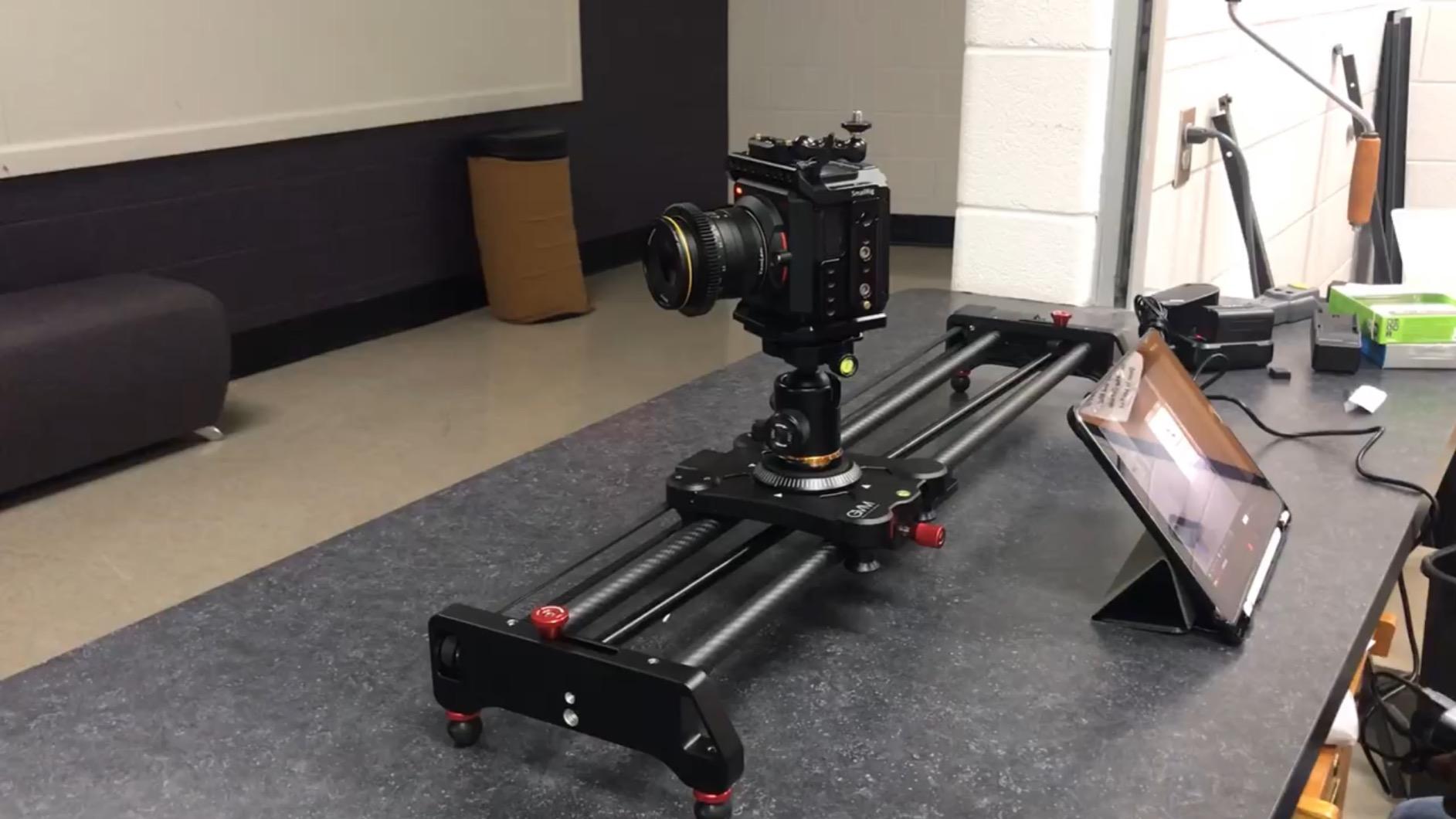
Repositioning the rod switches between three orientations: horizontal and tracking, plus 120 degree panoramic. Multiple 1/4 inch and 3/8 inch screw ports handle tripod mounting in vertical, horizontal and 45 degree setups, and four roller bearings add balance and take the edge off shake over the middle of the rail.
At 10 pounds it is not a carry-everywhere tool, and the remote-only programming means you are pressing physical buttons rather than setting a move on a phone. Reviewers like the quiet motor, the three orientations and the completeness of the bundle, and point to the need to support the rail at both ends as the main handling drawback.
Buy this if your body plus lens is heavier than 11 pounds
Most motorized rails at this length drop to around 11 pounds of rated capacity horizontally, and much less when tilted. This one does not, and the carbon fiber construction means you are not carrying an extra several pounds to get that rating.
It is also a strong choice for channels that mix talking-head inserts with time-lapse establishing shots, since both menus are handled in the same unit.
Skip this if travel weight matters more than payload
Ten pounds plus a support at the far end is a two-person carry for most people. If you are shooting on location and moving between setups, a lighter rail or a manual rail will serve you better even if the rating is lower.
Programmable moves also take practice on the physical remote, so budget an afternoon before your first production day with it.
7. NEEWER ER1 47.2 Inch App-Controlled Slider — Best Camera Slider for Phone-Programmed Moves
NEEWER 47.2″/120cm Motorized Camera Slider, DSLR Carbon Fiber Dolly Rail Slider with App Control, 4400mAh F750 Battery for Time Lapse Photography, Supports Video Mode, NOT Include Charger, ER1
Motorized carbon fiber rail
47.2 inch / 120 cm travel
11 lb horizontal, 5.5 lb tilted
Silent stepper motor
NP-F750 battery included
+ The Good
- Highest average rating in the roundup
- with 80 percent of reviewers giving five stars
- App control alongside optional 2.4G remote
- with manual
- video and time lapse modes
- Long 47.2 inch travel from a carbon fiber rail that weighs only 2.5 kg
- Silent stepper motor with a 4400mAh NP-F750 battery for long sessions
- Four roller bearings and 1/4 and 3/8 inch threaded tripod holes
- Can also run from a 5V 2A Type-C portable charger
- The Bad
- 2.4G remote and battery charger are not included
- Manufacturer warns that minor shake can occur in macro work
- Payload drops from 11 lb horizontal to 5.5 lb at a 45 degree tilt
This is the most highly rated product we tested, and the reason is that it does the two things motorized sliders historically do badly. The motor is genuinely silent, and the rail is genuinely light at 2.5 kilograms despite running 120 centimeters of travel. That combination is unusual and it is what the rating reflects.
Control comes from an app or an optional 2.4G remote, with manual, video and time lapse modes where you set speed, interval and exposure rather than pressing through a menu. For a creator who wants to define an endpoint, walk away, trigger the shot and come back, setting a move up on a phone screen is a real workflow improvement.
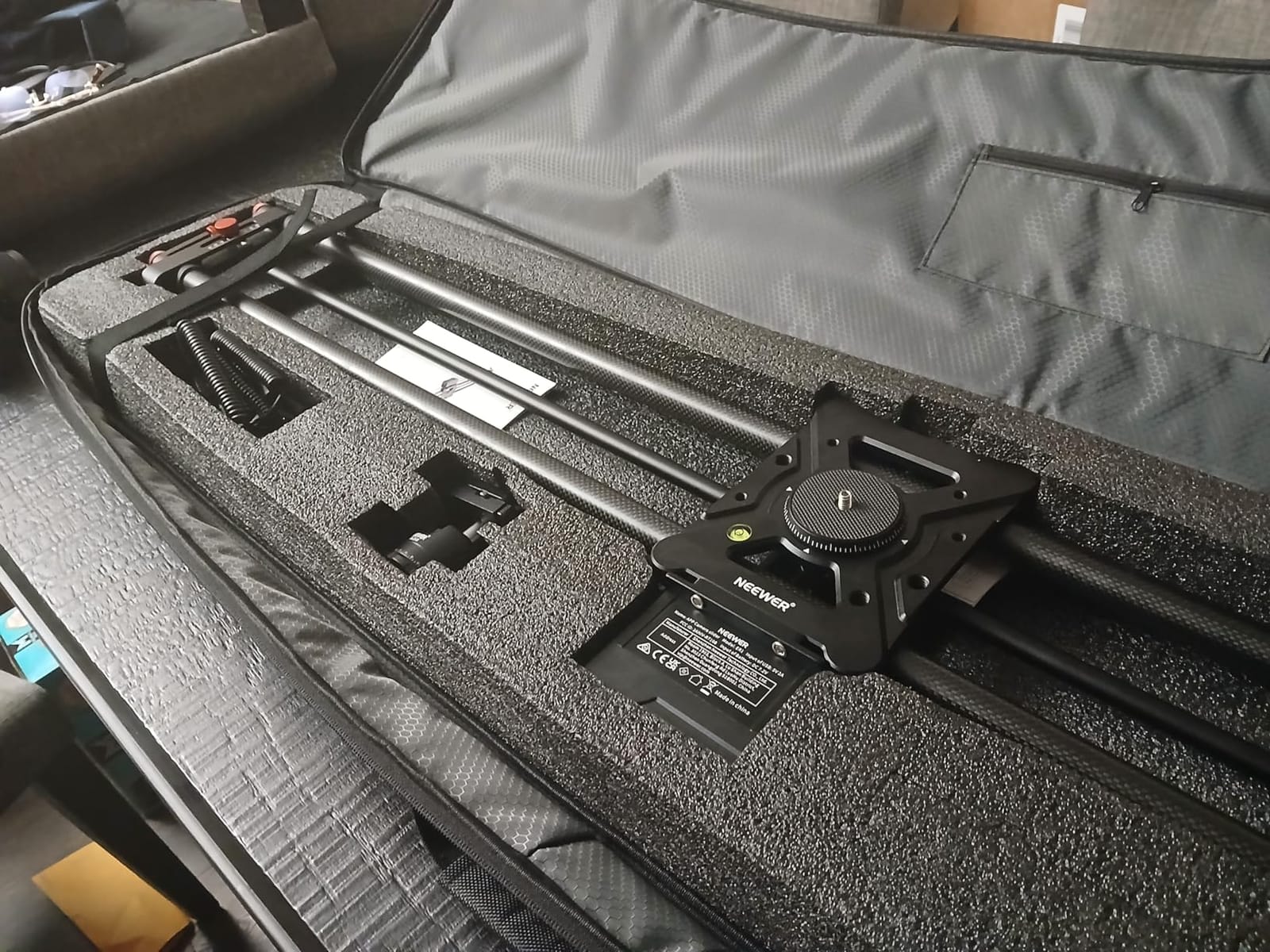
Side knobs set tracking, 120 degree panoramic or horizontal orientation, and the unit supports a 45 degree tilt. Note the rating carefully if you plan to angle the rail: 11 pounds horizontally falls to 5.5 pounds at a 45 degree tilt, which is a halving and catches people out regularly.
The omissions are worth budgeting for. The 2.4G remote and the battery charger are both sold separately, and the manufacturer itself flags that slight shake can appear during macro work, so keep it for medium shots rather than close-up tabletop work. The 4400mAh NP-F750 battery is included, which is the more important of the two.
Buy this if you shoot alone and want to trigger moves from a distance
App control changes the ergonomics of a solo shoot. You can set the carriage running, walk into the shot, and let it complete, rather than reaching for a physical remote from behind the camera. Combined with the silent stepper motor, that is what makes it viable for recorded dialogue and ambient audio.
The carbon fiber weight also means this is the only long motorized rail here you could realistically carry solo through an airport without resenting it.
Skip this if you need the remote or a tilt rating above 5.5 pounds
If you want the physical remote, add it to the list, because a 2.4G unit and a charger are not in the box. And if your shot is a 45 degree tilt with anything more than a small mirrorless body on it, the halved rating is a hard stop rather than a caution.
Macro work is the other one to avoid on this rail, per the manufacturer’s own guidance.
8. IFOOTAGE Shark Nano II 660 — Best Camera Slider for Multi-Axis Motion Control
IFOOTAGE Shark Nano II 660 Motorized Camera Slider 26″ for Phone Camera
Dual axis motorized slider
17 inch travel, 360 degree pan
7 kg horizontal, 3.5 kg vertical
Brushless motor under 20 dB
IPS touchscreen and app
+ The Good
- Pairs with DJI RS2
- RS3 Pro
- RS4
- RS4 Pro and RS5 gimbals for combined slider travel
- pan and stabilization
- Very little micro-jitter even with longer telephoto lenses
- 7 kg horizontal and 3.5 kg vertical payload
- On-device touchscreen programming stores settings and survives power cycles
- Whisper quiet brushless motor under 20 dB
- suitable for recorded dialogue
- 8 programmable waypoints plus Multi-Target mode covering four camera positions
- AI face and object tracking through the app
- Single-cable USB-C PD 60W power can run slider
- gimbal and camera
- The Bad
- The most expensive unit in this roundup by a wide margin
- 17 inch travel is short next to the 31 to 48 inch rails
- Vertical payload is about half the horizontal rating
- Switching between landscape and portrait setups takes time
- A few buyers report defective units and slow support response
This is the only true multi-axis slider in the roundup, and that single fact changes what you can shoot. Through the Nano II-RS adapter it pairs with DJI RS-series gimbals, so the carriage travels, the head pans, and the gimbal stabilises at the same time. On a talking-head channel that is a moving frame that stays locked on a speaker, which nothing else here can do.
Control is on the IPS touchscreen or in the app, with 8 customizable waypoints and slide speed from 0.1 to 180 degrees per second. Settings auto-save and survive a power cycle, which sounds minor until you have lost a programmed move on set. The AI dynamic tracking will lock onto a face or a moving object through the app for solo vlogging.
Build quality is aviation-grade aluminum and carbon fiber with 1 micron movement precision, and the brushless motor is quoted at under 20 dB, which is the quietest figure any product here provides. That number matters if you are recording audio on set. A 7 kilogram horizontal and 3.5 kilogram vertical payload, with the vertical figure covering a body with a long lens on an upward move.
Buy this if you already own a DJI gimbal and shoot people
The integration is the reason to buy it, and reviewers coming from other pro slider systems single out the absence of micro-jitter even with telephoto glass. AI face tracking and Multi-Target mode let one unit behave like four camera positions, which is transformative for a one-person channel that has to cover a wide space alone.
Single-cable USB-C PD 60W power also runs the slider, the attached gimbal and the camera together, which removes a whole category of cable clutter from a live shoot.
Skip this if your shots are wide or your budget is fixed
Travel is 17 inches. That is short next to the 31, 40 and 48 inch rails here, so a room reveal or a walkthrough needs repeated passes rather than one clean move. Vertical payload is 3.5 kilograms, and several buyers who shoot both landscape and portrait end up wanting a second unit because the changeover is slow.
A small number of buyers also report defective units with heavy judder and slow support response, so buy it from a seller with straightforward returns. It is the most expensive unit in this roundup and the least forgiving of a bad sample.
9. NEEWER DL400 App-Controlled Motorized Dolly — Best App-Controlled Dolly for Phone and Small Bodies
NEEWER DL400 Upgraded Motorized Camera Slider Dolly with App Control
Motorized wheeled dolly
Dual motor under 30 dB
Five speeds from 15 to 60 s/m
6.6 lb max load
NP-F750 battery included
+ The Good
- App control from a phone in manual
- live video and time lapse modes
- Upgraded non-slip wheel rings and a dual motor that stays under 30 dB
- Five selectable speeds from 15 to 60 seconds per metre
- Ball head included for 360 degree rotation and 90 degree tilt
- NP-F750 rechargeable battery included with up to 5 hours runtime
- USB-C also used for firmware updates
- The Bad
- 6.6 lb maximum load limits larger cinema rigs
- Time lapse mode requires a shutter cable that is not included
- Wheels travel only a limited path rather than along a rail
- Starting at top speed on an incline produces noticeable shake
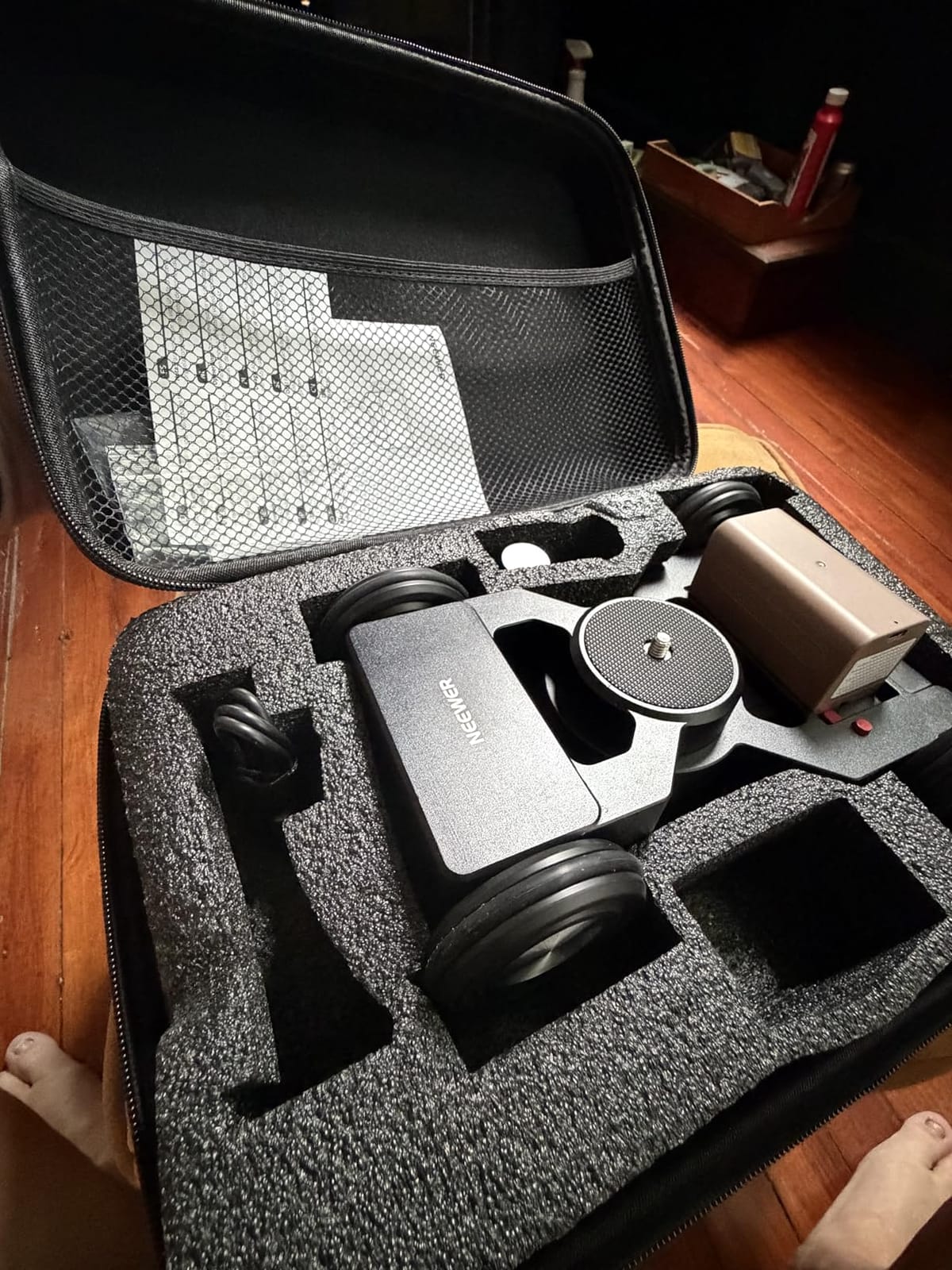
This is the newer sibling to our top pick, and the upgrade is the app. Manual, live video and time lapse modes are set from the NEEWER app on your phone, so you can start a move, step away and check the frame from a distance without touching the camera. For a solo creator filming inserts around a room, that is a meaningful upgrade over a physical remote.
Motion is controlled through five speed settings measured in seconds per metre, so 60 is a slow cinematic push and 15 is a fast slide across a desk. There is 30 degrees of manual lateral movement, and the included ball head gives 360 degree rotation plus 90 degree tilt, which covers both horizontal and vertical framing for Shorts without extra hardware.
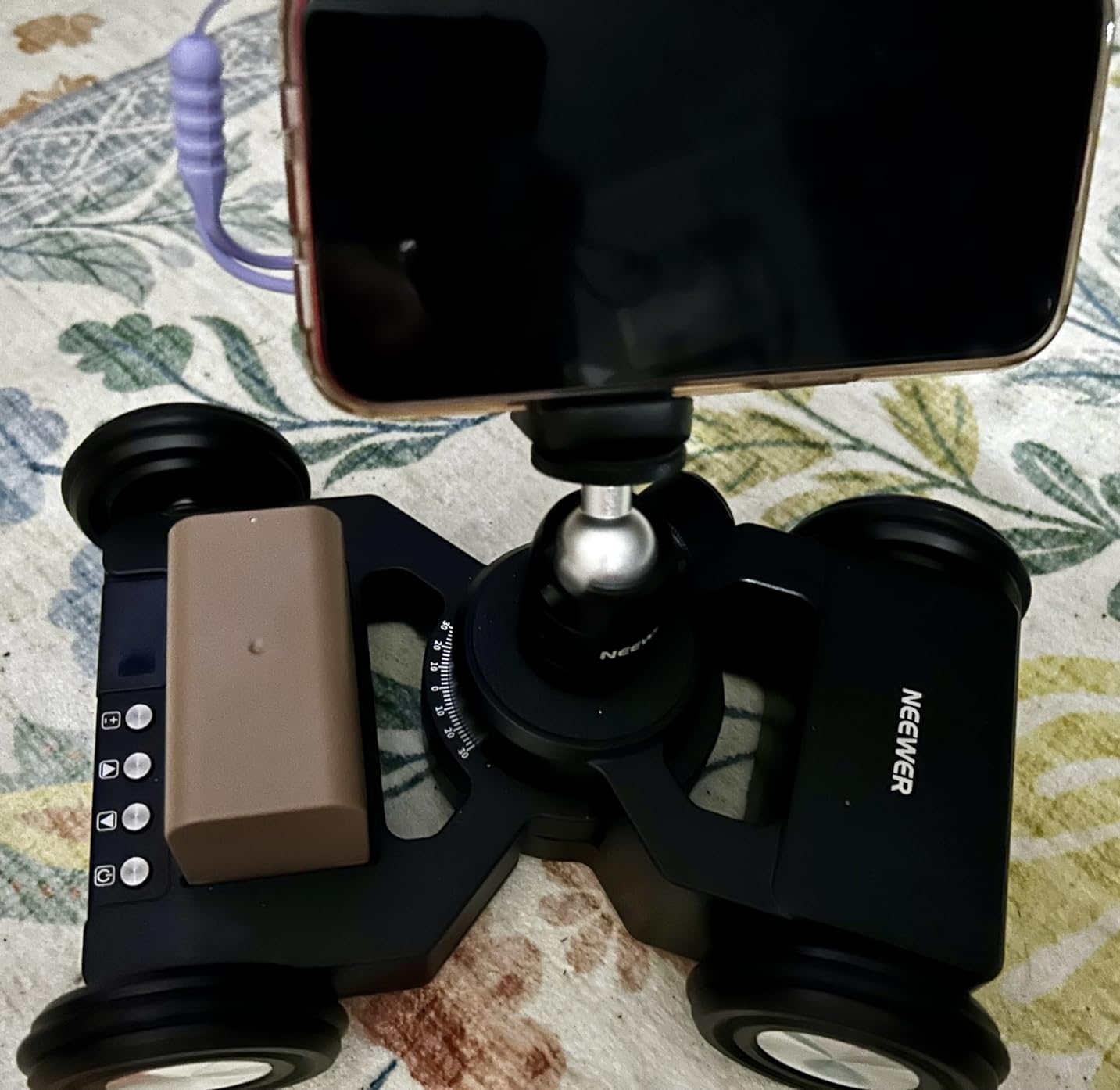
At 3.75 pounds it is heavier than the DL100 but still portable, and the NP-F750 battery is included with up to 5 hours of runtime. The dual motor is quoted at under 30 dB and the wheels have been upgraded with non-slip rings, which addresses the biggest complaint about cheap dollies of this shape. Reviewers like the app workflow, the five speeds and the included battery.
The 6.6 pound ceiling is the same as the DL100, so it suits a phone, an action camera or a small mirrorless body. Time lapse needs a shutter cable sold separately, and the manufacturer’s own guidance is not to start at the top speed going uphill because it will shake.
Buy this if you want app control but not a full rail
It is the cheapest way here to get programmable app-driven motion, and the ball head plus tilt coverage means you can set up a vertical move for a Short and a horizontal move for a b-roll insert on the same unit. The included battery removes the most common first-day complaint with motorized dollies.
It is also a sensible travel companion, since it is the only app-controlled option here that fits a normal camera bag without a support underneath.
Skip this if you need long repeatable travels or a heavy rig
A wheeled dolly cannot produce a repeatable frame-for-frame move, and its path is only as long as the surface. For a time-lapse series where the exposure must be identical every frame, or a product sweep you need to repeat five times, you need a rail with set endpoints.
Buy the separate shutter cable up front if you plan to use time lapse, and stay off the top speed on anything that is not a flat, hard surface.
10. KONOVA P1S2 60cm Motorized Carbon Slider — Best Camera Slider for Parallax and Panorama Work
KONOVA Motorized Slider P1 Series Carbon Slider Dolly with S2 for Parallax Panorama Shot Live Motion and Timelapse Supports Camera, Mobile Phone, DSLR, Mirrorless with Bag (60cm (23.6 inch))
Motorized carbon fiber rail
60 cm / 23.6 inch travel
5 kg horizontal, 1.5 kg diagonal payload
Speed from 0.7 to 42.8 mm/s
Time lapse with start delay
+ The Good
- Carbon fiber rail with a 3 kg unit weight that stays portable
- Quiet S2 motor
- with one buyer reporting it imperceptible at top speed
- Wide speed range from 0.7 to 42.8 mm/s for slow parallax or fast pushes
- Supports inward panning for parallax and outward panning for panorama
- Start delay function lets a night time-lapse be armed hours ahead
- Carrying bag included
- The Bad
- Motor noise varies
- with some reporting a high-pitched whine audible on interview audio
- NP-F batteries not included and the required type is not clearly specified
- Motor track brackets block the centre mounting holes
- Diagonal payload is only 1.5 kg
- Limited replacement belt supplied
This is a 60 cm carbon fiber rail with the S2 motor system, and its distinguishing feature is panning control. Inward panning produces parallax shots, where the camera tracks sideways while turning to hold a subject locked in frame, and outward panning produces a wider panorama. Very few sliders at this level let you do either, and parallax is the effect behind a lot of the polished food and product footage you see on YouTube.
Speed control is unusually wide, from 0.7 mm per second up to 42.8 mm per second, so the same unit handles a slow creep for a macro-style move and a fast push for a reveal. Live motion and time lapse modes both run from the tethered controller, and a start delay function means you can arm a night time-lapse hours in advance and let it run while you sleep.
Opinions on the S2 motor genuinely split. Some owners describe it as effectively silent, while others report a high-pitched whine that picks up on interview audio and gets louder on direction reversal. If you record voice or ambient sound during a move, treat that as a real risk and test the specific unit you receive.
There are also practical quirks. The motor track brackets block the centre mounting holes, so mounting to a light stand needs a separate arm or a side mount. Batteries are not included and the required type is not clearly stated, so check before you commit. The horizontal rating is 5 kilograms, but diagonal payload is only 1.5 kilograms, which is easy to miss and easy to exceed with a DSLR plus a tripod head.
Buy this if you shoot food, product or landscape style parallax
The inward pan is the reason to choose this over a generic motorized rail. Combined with the very low 0.7 mm per second end of the speed range, it produces the slow drifting parallax move that is hard to fake and very effective on plated food, small products and craft surfaces. The carrying bag and the 3 kg unit weight make it a portable kit.
Time-lapse users report strong results for the money, including long night sequences, and the start delay function is a genuine convenience for unattended shooting.
Skip this if you record audio on set or shoot on a diagonal
The split reports on motor noise are the honest reason to hesitate. For an interview channel where the audio track matters, the risk of a whine in your dialogue is not worth taking when quieter options exist at similar levels. And if you plan to tilt the rail onto a diagonal, check your rig against the 1.5 kilogram limit before you buy, not after.
You also need to source your own batteries and confirm the type, and the included replacement belt is only partial length, so a belt failure is not fully repairable with what is in the box.
Do You Actually Need a Motorized Slider for YouTube?
Probably not yet, and this is the answer most roundups avoid giving you. A manual rail covers the overwhelming majority of YouTube b-roll, and a creator who can push a carriage at a constant pace can produce shots that are indistinguishable from motorized ones in the finished edit. Motorized motion buys you three specific things: repeatability, time-lapse, and the ability to start a move without touching the camera.
That third one is the underrated benefit. On a one-person shoot, the ability to trigger a move remotely means you can be in the shot rather than behind it. On an in-depth channel that is the difference between a slide you watch happen and a shot that looks like it came from a two-person crew.
The cost of that convenience is real. Motorized units here run to 10 or 11.8 pounds, most need a support under the far end, and several need a battery you have to charge or source separately. The r/filmmaking community keeps returning to motorized-versus-manual for exactly this reason, and the most common thread in those discussions is that beginners buy motorised hardware they do not use for months.
There is one more factor that nobody mentions until it ruins a take: motor noise. If you record audio while the carriage is moving, a whine can bleed into the track. The numbers matter here, and the manufacturers who publish them are the useful ones. The IFOOTAGE Shark Nano II quotes under 20 dB, the NEEWER DL400 quotes under 30 dB, and the KONOVA P1S2 has genuinely split reports on how quiet its motor is. If dialogue is part of your content, prioritise a slider that publishes a noise figure.
Our rule of thumb after working through all ten: buy manual if your shots are live video b-roll, buy motorized if you shoot time-lapse, want repeatable passes, or film yourself. Most new channels land in the first category, and they are perfectly served by a light carbon rail with a good ball head.
How to Choose a Camera Slider: 7 Steps
Work through these in order and the decision makes itself. Start with the heaviest part of the process, not the most exciting one, because payload rules out options instantly and no amount of saving will fix an overloaded rail.
Weigh your rig and match the payload. Body plus lens plus ball head plus any matte box or cage, then find a slider rated above that number with margin. A phone or a small mirrorless body sits comfortably under 5 pounds. A full-frame body with a zoom and a tripod head can pass 10 pounds, and a small cinema rig can exceed 20.
Choose travel length for your space. A 24 to 27 inch rail handles a desk, a countertop and a short hallway. A 40 to 48 inch rail crosses a room or covers a long product table in one pass. Longer is not automatically better, because every extra inch adds weight and a second support point.
Decide between a rail and a wheeled dolly. A rail gives guided, repeatable, gliding motion along a fixed line. A wheeled dolly rolls wherever the surface allows, which is freer but never repeatable. Beginners frequently buy a dolly expecting a rail and then wonder why the framing drifts.
Pick your control method. Physical controllers work with no phone and no pairing, which is more reliable than it sounds. App control is faster to program and lets you trigger from a distance, at the cost of a dependency on software. A 2.4G remote is a good middle ground if the model supports one.
Check the noise figure if you record sound. Under 20 dB is comfortable for recorded dialogue and ambient audio. Around 30 dB is workable with a microphone separated from the rig. No published figure is a warning, because a whine you discover in post is expensive.
Plan the mounting, not just the slider. Check for 1/4 inch and 3/8 inch threaded holes, and count how many stands you already own. A rail over about 30 inches usually wants a support at the far end, and that support is part of the cost. Confirm the carriage holes and the tripod holes are in the same place, and check whether any motor bracket blocks a centre hole.
Sort out power and packing before the first shoot. Some units include a rechargeable battery, some include only a power bank adapter, and some include neither. Note which batteries the unit needs and whether it accepts Type-C power. Then confirm the folded size fits your normal camera bag, because a slider you leave at home is a slider you never use.
Carbon Fiber vs Aluminum: What the Rail Is Made Of
Carbon fiber is lighter for the same rigidity, and that is the whole argument. In this roundup the Zecti carbon rail weighs 654 grams and the NEEWER ER1 carbon rail weighs 2.5 kilograms while running 47 inches of travel. The GVM GT60, built from aluminum alloy at the same general class of length, weighs 5.2 pounds. Forum advice consistently pushes carbon fiber for exactly this reason, and the numbers here back it up.
Aluminum is heavier but cheaper and it damps vibration differently. It is also more forgiving of knocks, which matters for a rail that lives in the back of a car and gets handled roughly. Steel is heavier again and rarely appears in modern creator sliders, so you can treat it as a non-choice.
The practical rule is that carbon fiber is worth it when you carry the rig. If your slider lives on a desk, moves between two rooms, or goes out of a cupboard twice a month, the weight difference will not change your footage. If you shoot travel, live events, or anything where you walk the rig a long way, carbon fiber pays for itself in how little you resent carrying it.
If your tripod is also carbon, the two decisions reinforce each other. A lighter slider on a lighter tripod is a genuinely one-person carry, and that is the difference between gear that gets used and gear that stays in a bag. Our guide to the best camera backpacks for travel covers the other half of that equation.
Slider vs Gimbal vs Tripod: Which One Solves Your Problem
A slider adds smooth, deliberate, repeatable movement. A gimbal keeps a handheld shot steady while you move freely. A tripod holds a frame still. They are not competing answers to the same question, and the most common mistake new creators make is buying a gimbal to solve a problem a slider would have solved better.
For a talking-head channel with a fixed desk, a tripod plus a slider for the inserts covers almost everything. A gimbal becomes the right tool when the camera has to move with a person through a space, or when you have no room to set anything down. The number one question asked in videography forums is whether a slider or a gimbal comes first, and the consensus answer is that a slider is the easier first purchase because it is easier to operate and you can still pull focus or zoom by hand during the move.
The genuinely advanced answer, and the one the top pick in this roundup is built for, is both at once. A motorized multi-axis slider that pairs with a gimbal gives you the gimbal’s subject tracking on top of a rail’s guided travel, which is how you film yourself walking while staying framed. That is a later-stage purchase, not a first one.
One format nobody covers properly is the vertical move. Every slider in this roundup can be mounted upright or has a tilt range, and a vertical 9:16 move is exactly what Shorts, Reels and TikTok need. Set the carriage vertical, frame your subject tall, and run the move up or down the rail. Our NEEWER picks with a 90 degree tilt ball head make this a one-minute change rather than a rebuild.
Whichever you choose, pair it with a body that suits the job. Our picks for best cameras for YouTube cover everything from phones to mirrorless, and the payload numbers in this article are the deciding factor between them.
Mounting, Leveling and Keeping Motor Noise Off Your Audio
Level the rail before you load it, not after. The adjustable non-slip feet and bubble levels on the Zecti, the GVM GT60 and the StudioFX all exist for one reason: a rail that is even slightly out of level drifts across the frame during a long move, and the drift is visible as a slow tilt that viewers read as amateur.
Rated tripod load is the other thing people get wrong. The recurring rule of thumb in filmmaking forums is that a slider rig should sit well inside your tripod’s rating, and that many tripods are the limiting factor rather than the slider. Add the rail, the carriage, the ball head, your camera and your lens, and stay under the lowest rating in the chain, not the highest.
Mounting holes are not always where you want them. The KONOVA P1S2 is the clearest example in this roundup: its motor track brackets block the centre mounting holes, so fitting a light stand needs a separate arm or a side mount. Check hole positions against your existing stand before you commit, especially if you have already bought the stand.
On audio, the measured figures are the guide. Under 20 dB means the motor is not a concern for recorded dialogue. Under 30 dB means you are probably fine but you should keep your microphone off the rig rather than on the camera. No published figure means test it, and the KONOVA’s split owner reports are exactly why. Recording voiceover separately and sliding over silent plate footage is a legitimate workflow that removes the question entirely, and it is what a lot of working creators do.
Long rails also need a support at the far end. Both of the heaviest units here are over 10 pounds, and both reviewers point to the same issue. Add the second stand to your kit list on day one, and the difference in smoothness on an extended move is immediate.
If you are building out a kit rather than replacing one piece, a camera cage and a small monitor speed up positioning far more per unit of cost than a second slider would.
Frequently Asked Questions
What is the best camera slider?
For most YouTube creators the best camera slider is one that matches your camera weight and your shot length. A manual carbon rail in the 24 to 27 inch range covers most desk and tabletop b-roll, and a motorized rail earns its place when you shoot time-lapse, want repeatable passes, or need to trigger a move while standing in frame. Match payload first, travel length second, and control method third.
Do I need a motorized camera slider for YouTube?
Usually not. A manual slider covers the majority of YouTube b-roll because the finished footage looks the same whether the carriage was pushed by hand or driven by a motor. Motorized motion pays off when you shoot time-lapse, need frame-for-frame repeatable takes, or want to start a move remotely so you can appear in your own shot. If you record audio during a move, check the published noise figure, since motor whine is the most common motorized complaint.
What is the best professional camera slider?
A professional slider earns that label through payload headroom, quiet operation and repeatable programmable moves rather than through price alone. In this roundup the multi-axis unit that pairs with a gimbal leads on motion control, the long carbon rails lead on travel, and the app-controlled unit leads on quiet operation and light weight. Judge any pro slider on published noise levels, rated payload at your shooting angle, and whether settings are saved between takes.
How long should a camera slider be?
Choose length based on the space your shot crosses. A 24 to 27 inch rail handles a desk, a countertop or a short hallway and is easiest to carry alone. A 40 to 48 inch rail crosses a room or covers a long product table in one pass, but adds weight and usually needs a support at the far end. Shorter is easier to work with solo, and repeated passes look better than one pass on a rail you cannot safely carry.
How do I balance a camera slider on a tripod?
Level the rail first using the adjustable feet and bubble level, then mount it and add the ball head last. Your tripod has to carry the rail, the carriage, the ball head, the camera and the lens combined, so stay under the lowest rating in that chain rather than the highest. Rails over roughly 30 inches want a support at the far end to stop the mid-span sagging that shows up as a visible dip in the finished move.
Final Verdict: The Camera Slider We’d Buy for YouTube Videos
Start with the NEEWER DL100. It folds to about 5 inches, weighs 1.1 pounds, runs for up to 6 hours on a built-in battery, and is triggered by a remote so you can be in your own shot. For a creator who shoots often and carries everything themselves, it is the best camera slider for YouTube videos you can buy first, and the reason is workflow rather than specifications.
If your content is desk-based and you would rather push a carriage than program one, the Zecti 24 inch is the better value and only marginally heavier at 654 grams. If your body plus lens is heavy, the StudioFX 40 inch solves the problem no other entry-level rail does with a 15 pound rating. And once time-lapse or repeatable passes enter the picture, move up to a motorized rail rather than stretching a manual one.
Whatever you choose, match payload to your full rig, check the noise figure if you record sound, and buy the second tripod support before the first shoot day. Start with the pick that fits how you already work, not the one with the longest spec sheet.
Our deeper guide to motorized camera sliders goes deeper on the motorized side if you have already decided that is the route.