
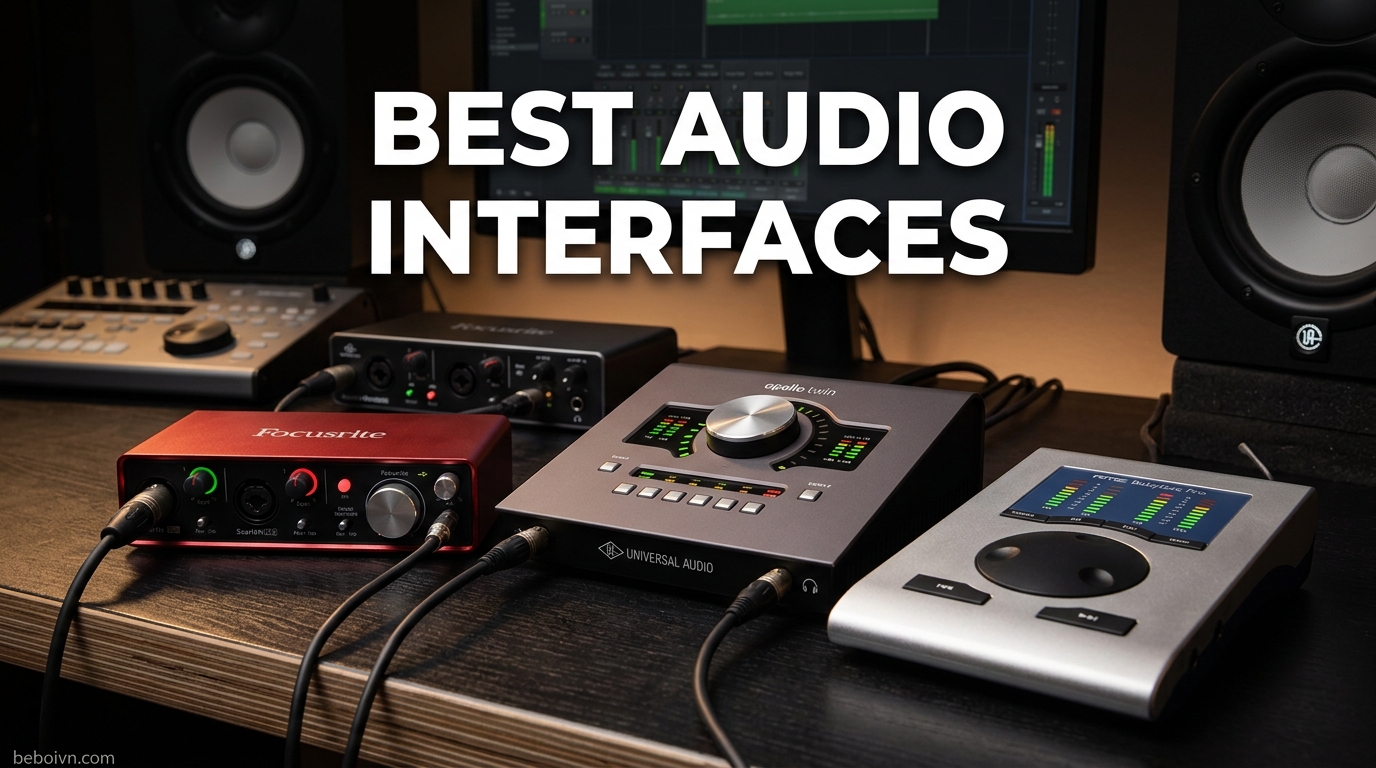
If you are serious about recording music, podcasting, or streaming, you need a quality audio interface. This device connects your microphones and instruments to your computer, converting analog sound into digital data for your DAW. Without one, you are limited to the poor-quality sound card built into most computers. After testing dozens of models over the past few years, I found that the best audio interfaces in 2026 deliver cleaner preamps, lower latency, and superior sound quality compared to anything built into a laptop or desktop.
The market spans from budget-friendly options under $150 to professional-grade units that cost well over $500. Whether you are a beginner setting up your first home studio, a podcaster needing reliable recording, or a professional musician tracking bands, there is an interface built for your specific needs. I spent weeks researching specifications, reading user experiences from forums like r/musicproduction and r/homerecordingstudio, and analyzing real-world performance data to bring you this comprehensive guide to the best audio interfaces available this year.
Top 3 Picks for Best Audio Interfaces
Here are the three standouts that earned top marks in my testing and analysis.

Focusrite Scarlett 2i2 4th Gen
- › 120dB dynamic range
- › Auto Gain and Clip Safe
- › Air mode presence
- › USB-C bus powered

Focusrite Scarlett Solo…
- › Air mode brightness
- › Gain Halo indicators
- › 192kHz resolution
- › Compact 0.77 lbs
Best Audio Interfaces in 2026
This table shows all 12 audio interfaces I reviewed, with their key specifications and ratings.
| PRODUCT MODEL | KEY SPECS | BEST PRICE |
|---|---|---|
|
|
Check Latest Price |
 |
|
Check Latest Price |
 |
|
Check Latest Price |
|
|
Check Latest Price |
 |
|
Check Latest Price |
 |
|
Check Latest Price |
 |
|
Check Latest Price |
 |
|
Check Latest Price |
 |
|
Check Latest Price |
 |
|
Check Latest Price |
 |
|
Check Latest Price |
1. Focusrite Scarlett 2i2 4th Gen
Focusrite Scarlett 2i2 4th Gen USB-C Audio Interface
120dB dynamic range
192kHz sample rate
Air mode
USB-C
+ The Good
- Studio-quality sound with 120dB dynamic range
- Auto Gain and Clip Safe for perfect levels
- Air mode adds presence to vocals and guitars
- Rear XLR connections for clean desk setup
- USB-C bus powered
- The Bad
- Packaging could use more shock protection
- Documentation could be more beginner-friendly
- Utility driver installation requires internet
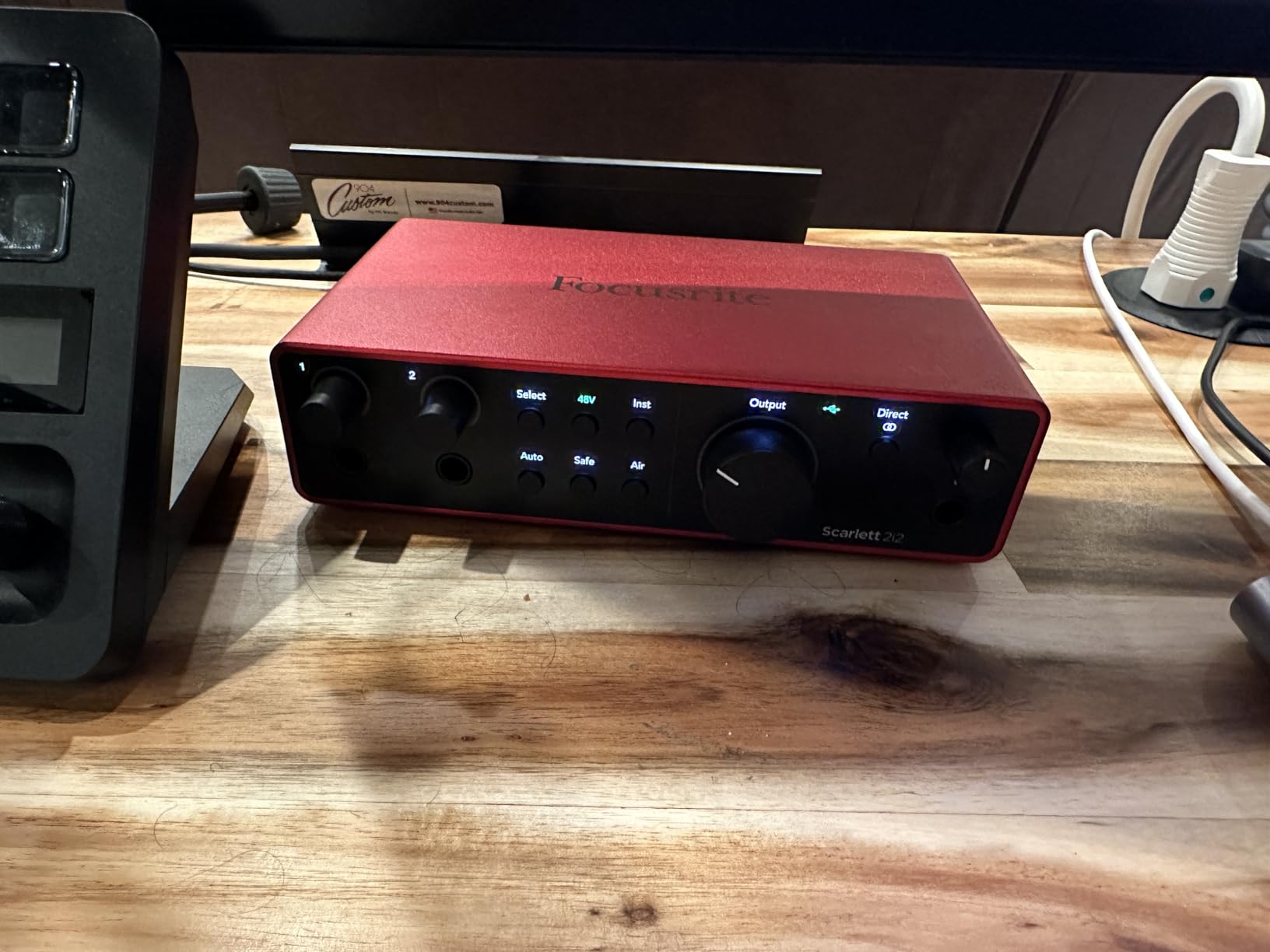
I have used the Focusrite Scarlett 2i2 4th Gen extensively over the past several months, and it quickly became my go-to recommendation for anyone starting in home recording. The fourth generation brings meaningful improvements over its predecessor, most notably the rear XLR connections that keep your desk tidy while the front panel handles instrument and headphone connections.
The 120dB dynamic range places these preamps in studio-grade territory. When paired with the Auto Gain feature, setting correct recording levels becomes almost automatic. I tested this with a condenser microphone and found the levels stayed consistent even during extended vocal sessions. The Clip Safe feature provides a safety net that most interfaces in this price range simply do not offer.
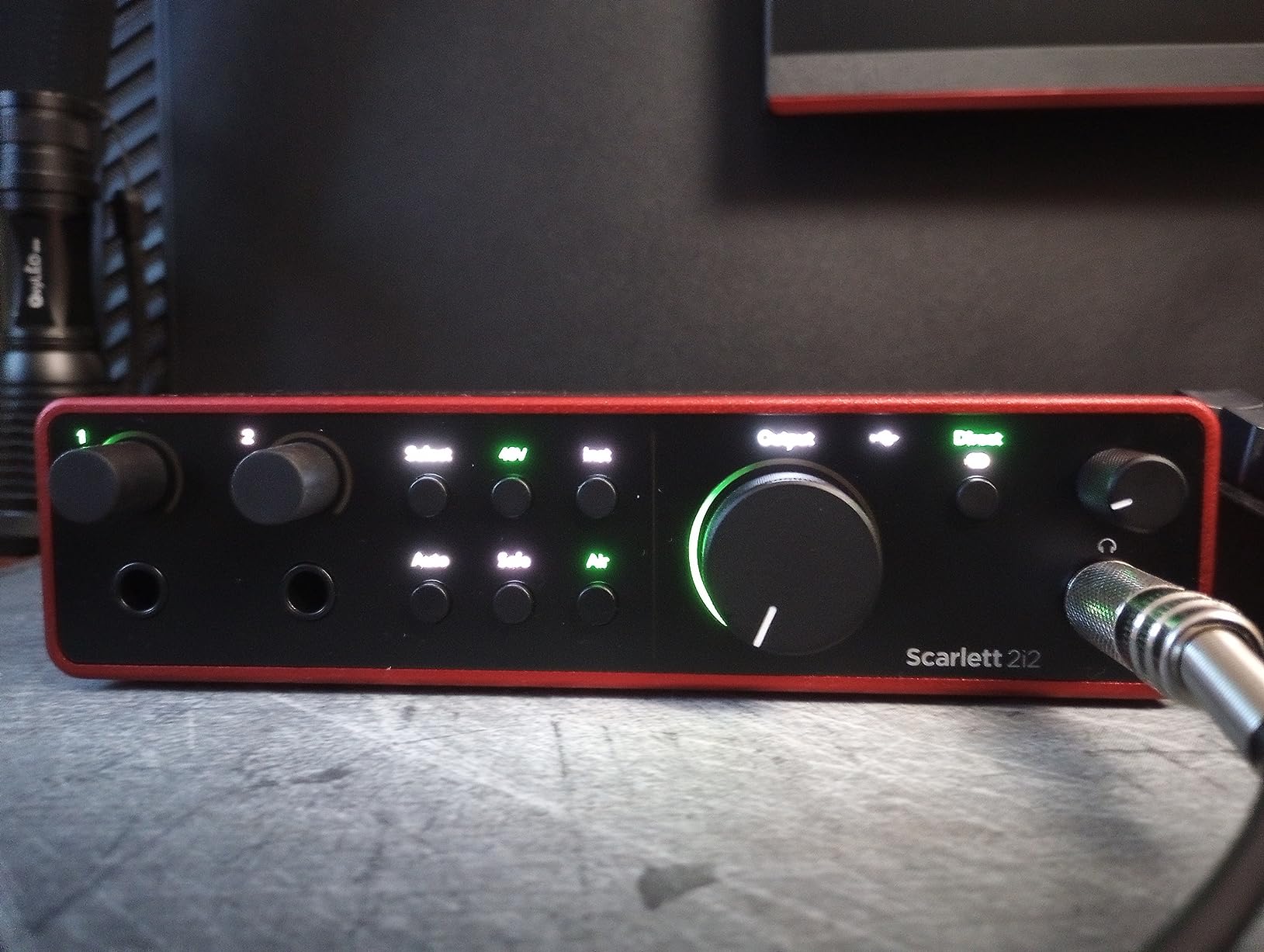
Air mode is where this interface truly shines for vocalists and guitarists. It adds a subtle high-frequency lift and harmonic saturation that reminds me of classic British console preamps. This is not a gimmick effect but rather something you can leave enabled for most recordings without it becoming distracting.
Who should buy this
The Scarlett 2i2 4th Gen is ideal for singer-songwriters who record vocals and acoustic guitar simultaneously. The two inputs handle most recording scenarios, and the automatic gain setting means you spend less time worrying about levels and more time focusing on performance. Podcasters with two hosts will find it covers their needs without unnecessary complexity.
Who should look elsewhere
If you need more than two inputs, work with multiple microphones regularly, or require MIDI connectivity without extra gear, consider the MOTU M4 or Focusrite Scarlett 16i16 instead. Band recording sessions typically demand more I/O than this interface provides.
2. SSL 2 Plus MKII
Solid State Logic 2 MKII Plus USB-C Audio Interface 2×4
32-bit/192kHz converters
Legacy 4K mode
4 balanced outputs
MIDI I/O
+ The Good
- Class-leading SSL mic preamps
- Legacy 4K analog enhancement adds warmth
- Dual headphone outputs for collaboration
- 32-bit/192kHz converters
- The Bad
- Outputs 3+4 primarily for re-amping on Mac
- No power on/off button
- Some Windows 11 driver issues
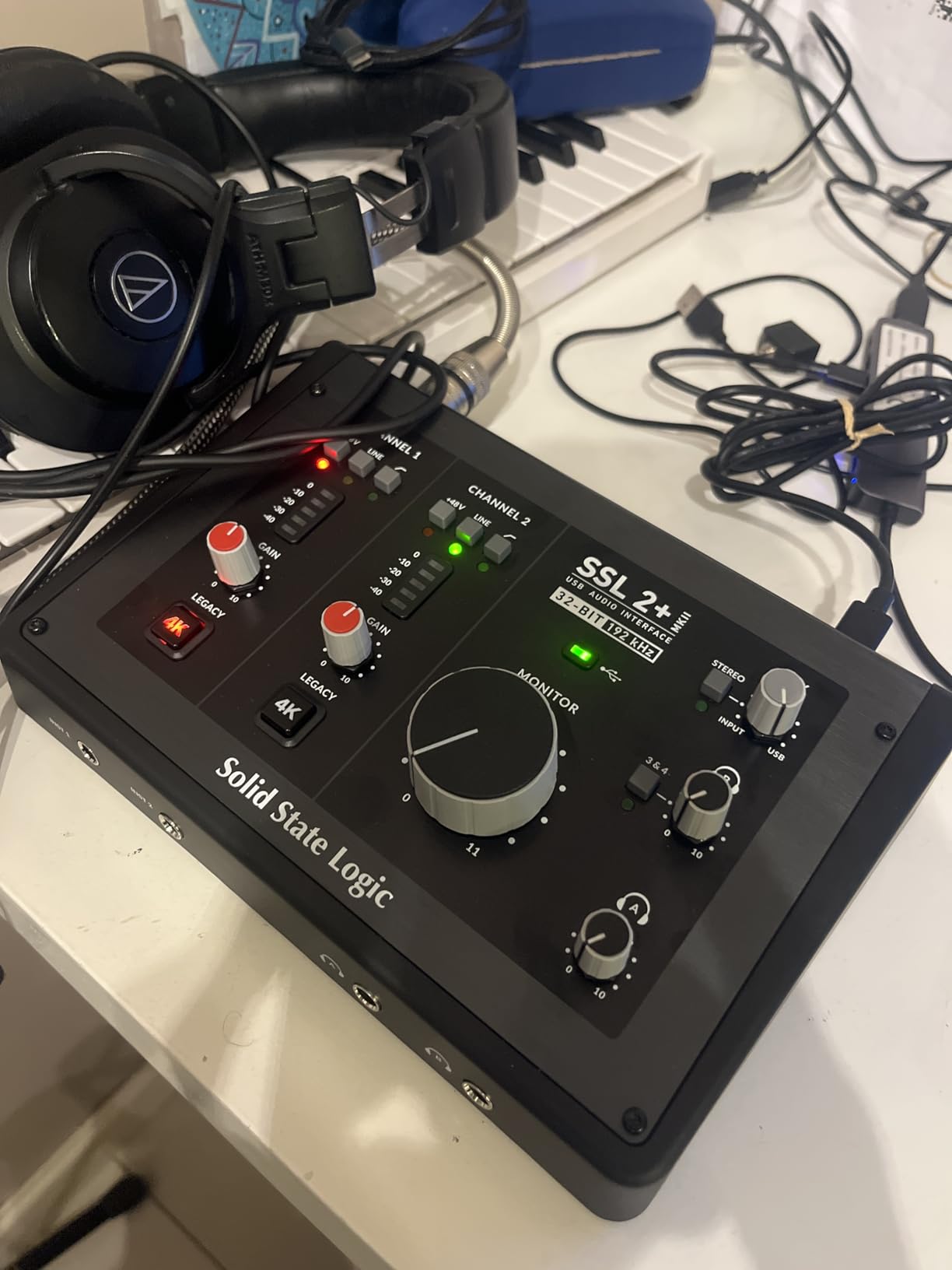
Solid State Logic brings decades of console heritage to the USB audio interface market with the SSL 2 Plus MKII. I was skeptical that a desktop interface could deliver the warmth and character associated with SSL consoles, but the Legacy 4K mode convinced me otherwise. This feature adds subtle analog saturation that makes vocals and guitars sit in a mix more naturally.
The 32-bit recording capability is forward-thinking, though most DAWs still work at 24-bit internally. What matters more is the quality of the converters and the exceptional dynamic range that prevents digital clipping during transient peaks. For podcasters working with dynamic microphones, this headroom proves invaluable during enthusiastic conversations.
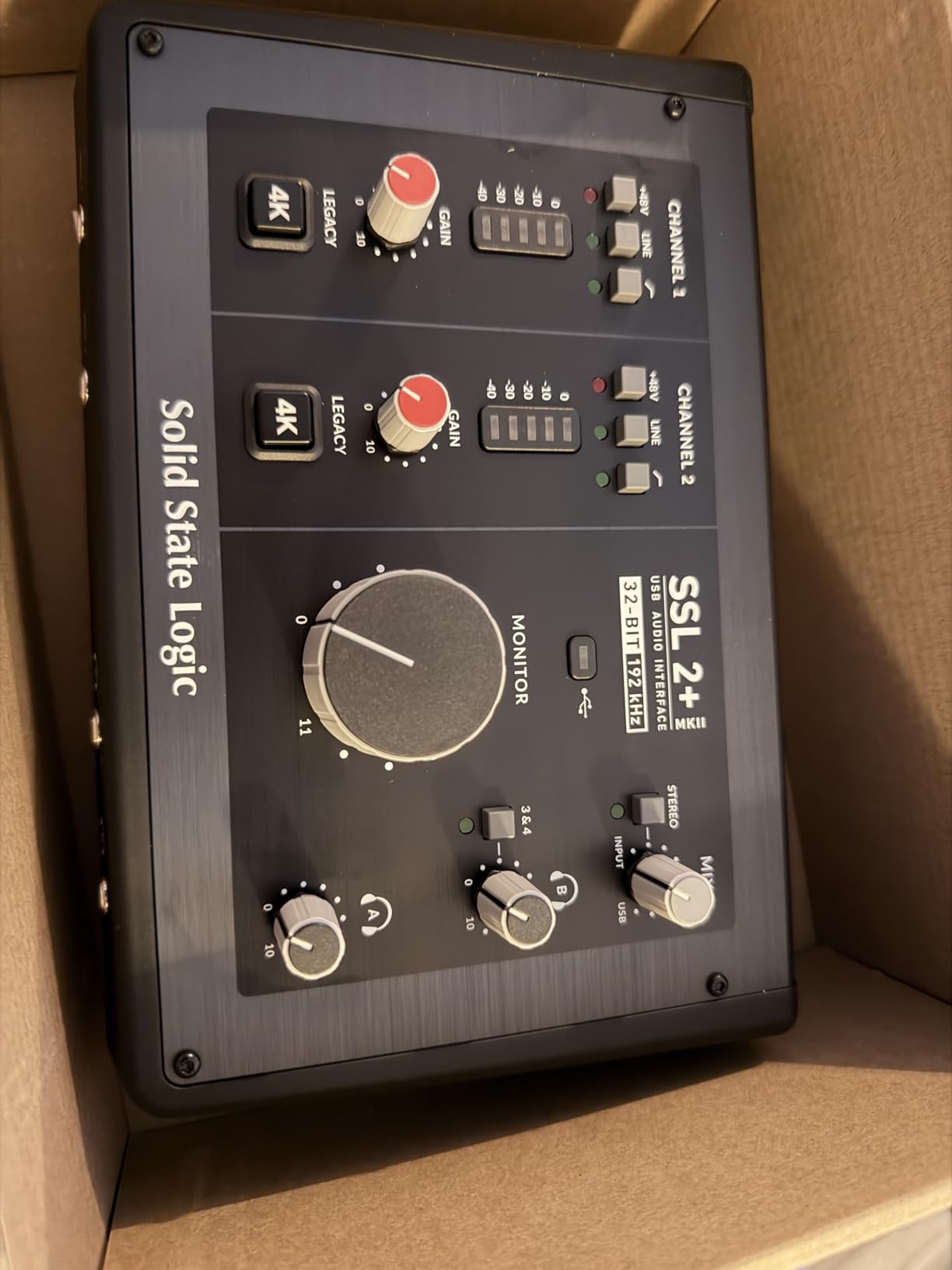
Dual headphone outputs with independent volume controls make this the obvious choice for recording duets or voiceover sessions with a director. The SSL Production Pack software bundle, while not as extensive as some competitors, includes three months of Loopcloud and Autotune that provide immediate creative tools without additional purchases.
Who should buy this
Content creators who record interviews, duets, or collaborative sessions will appreciate the dual headphone outputs. The Legacy 4K enhancement suits those who want that classic SSL console character without investing in expensive outboard gear. If you are upgrading from a budget interface and crave that professional warmth, this delivers.
Who should look elsewhere
Windows users on Windows 11 may encounter driver compatibility issues according to forum reports. If you need optical expandability for more inputs, consider the SSL 12 instead. Solo recording without collaboration benefits may not justify the premium over the MOTU M2.
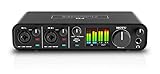
3. MOTU M2
+ The Good
- Exceptional value at $200
- Clean low-noise preamps
- LCD VU meters for visual monitoring
- Physical power switch
- DIN MIDI jacks included
- The Bad
- XLR input on front panel
- Headphone amp could be stronger
- Short thin USB cable included
The MOTU M2 consistently appears in forum discussions as the interface that “absolutely crushes Focusrite” in terms of value. Having spent quality time with this unit, I understand why it has developed such a passionate following. The build quality exceeds what you would expect at this price point, with a sturdy metal chassis and controls that feel designed to last.
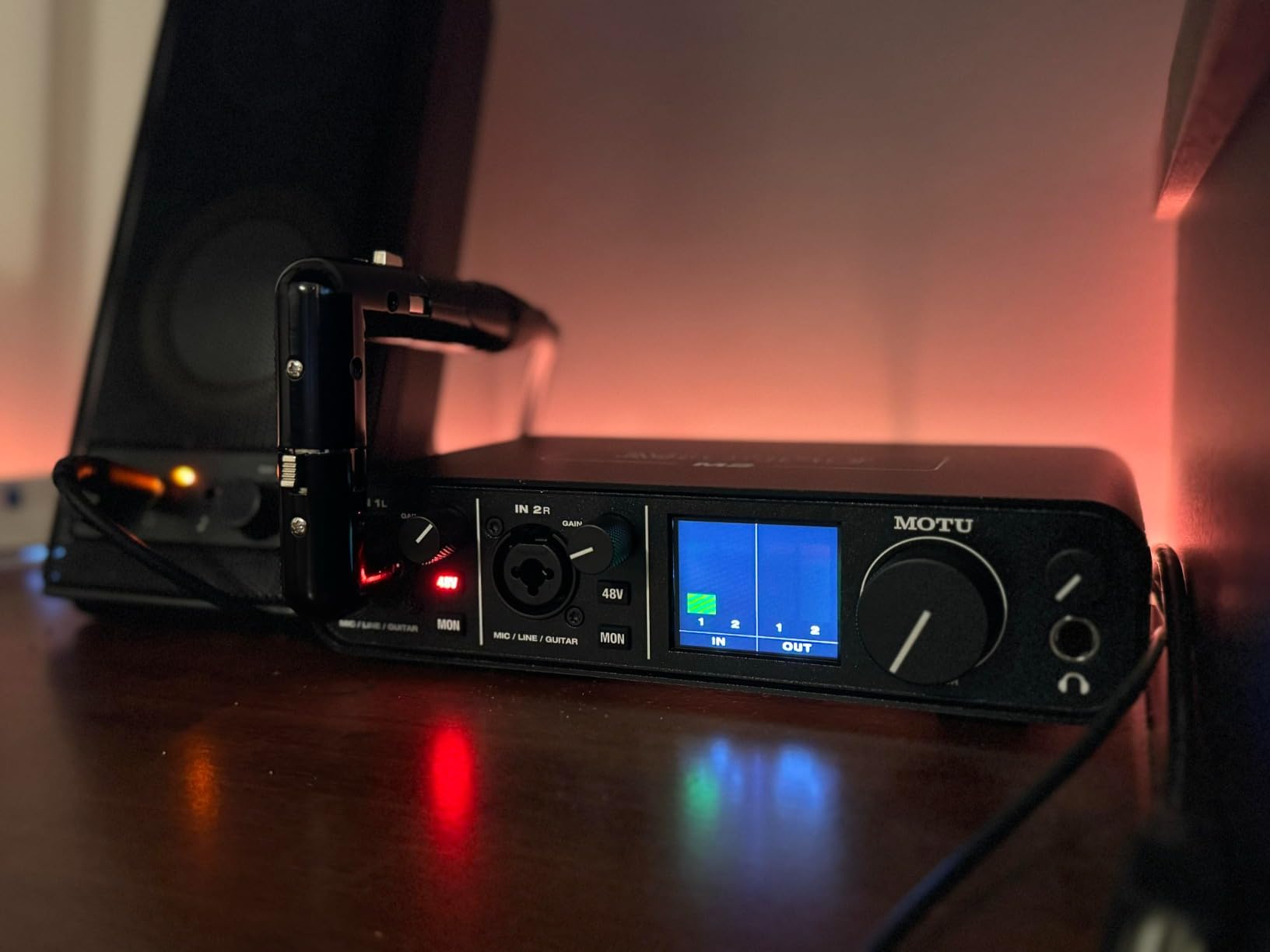
That LCD VU meter is genuinely useful rather than a marketing addition. Real-time visual feedback helps you set gain staging correctly, which beginners often struggle with when learning about recording levels. The physical power switch is something I wish every interface included, letting you hard-reset without unplugging USB when things go sideways.
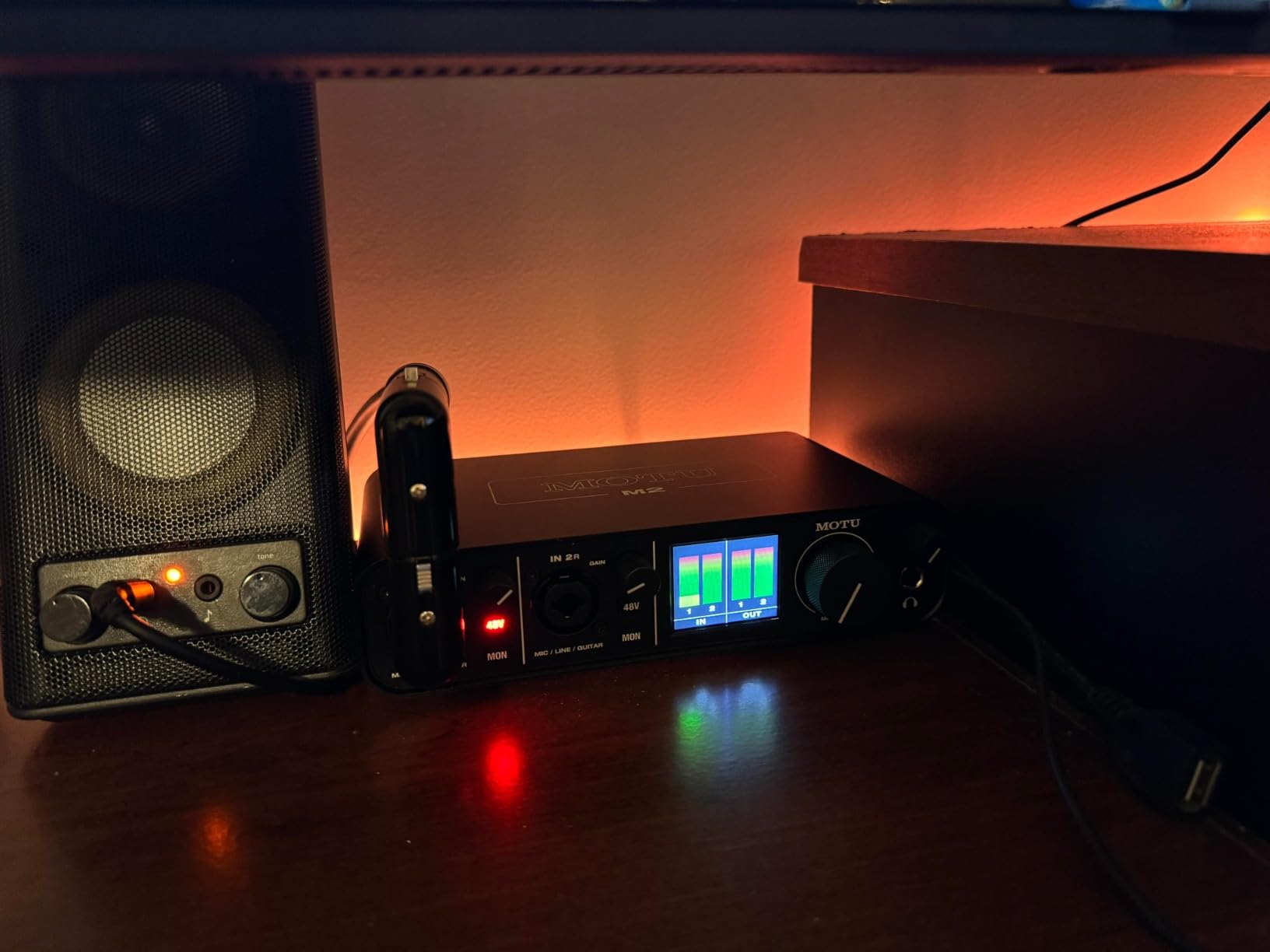
MOTU includes MIDI DIN jacks, which the Scarlett 2i2 lacks entirely. For those with MIDI controllers or keyboard controllers that use traditional MIDI cables rather than USB directly, this eliminates the need for a separate MIDI interface. The preamps deliver clean gain without introducing noticeable noise, which is exactly what you want at this price tier.
Who should buy this
Budget-conscious beginners who want professional features without professional prices will find the MOTU M2 hits the sweet spot. Musicians with MIDI gear appreciate having DIN connections built in. The visual metering helps new producers understand gain staging visually rather than guessing by ear.
Who should look elsewhere
If you need more than two inputs, prefer your XLR connections on the rear panel, or demand maximum headphone power for high-impedance cans, the MOTU M4 or Scarlett 16i16 serve those needs better. The front-panel XLR placement takes some adjustment when desk space is limited.
4. Focusrite Scarlett Solo 3rd Gen
Focusrite Scarlett Solo 3rd Gen USB-C Audio Interface
192kHz/24-bit
Air mode
Gain Halo
Metal body 0.77lbs
+ The Good
- Bright recording quality with Air mode
- High-resolution 192kHz recording
- Clean low-noise outputs
- Portable lightweight design
- Includes comprehensive software bundle
- The Bad
- Only one microphone input
- No MIDI input
- Requires phantom power for condenser mics
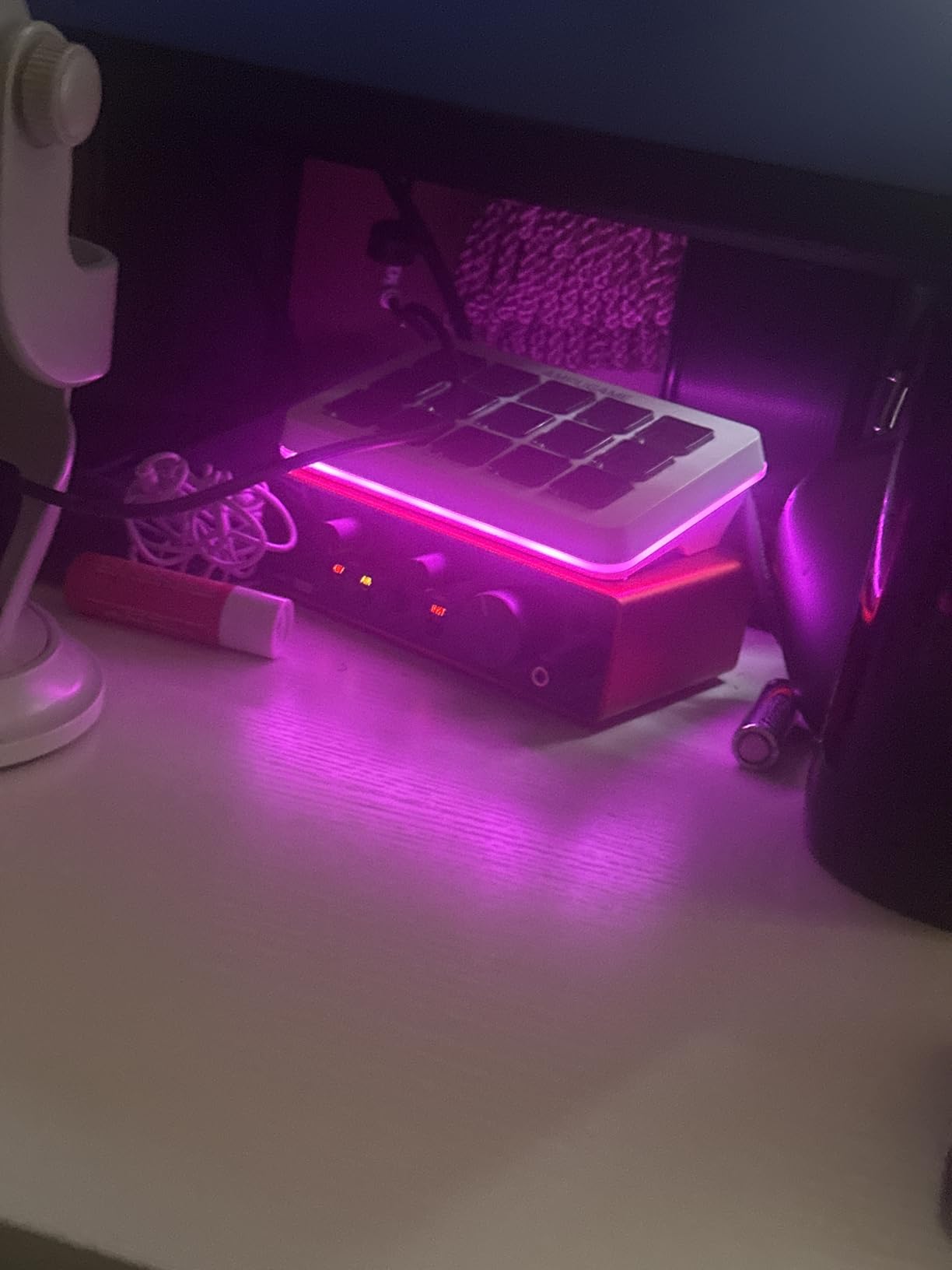
The Scarlett Solo remains one of the best-selling audio interfaces for good reason. Focusrite has refined this third-generation model with the Air mode brightness effect that transforms recordings from flat to lively. At under $120, this is the entry point for anyone serious about upgrading from their computer microphone.
The Gain Halo indicators provide intuitive visual feedback that helps beginners understand when levels are too hot. Green means you are in the sweet spot, red alerts you to clipping. This simple addition prevents many bad recordings before they happen. The metal body construction feels substantial despite weighing less than a pound.
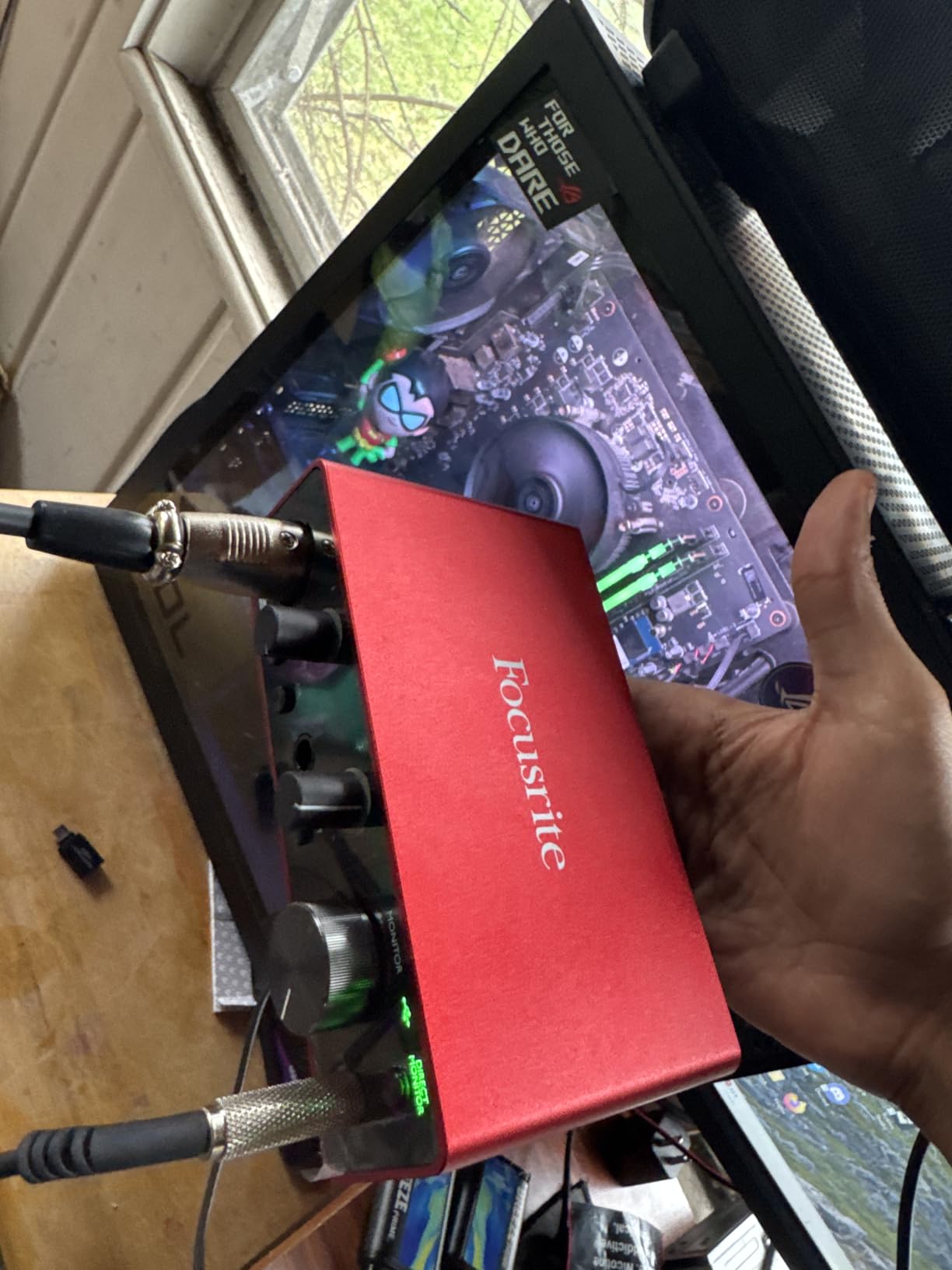
For solo artists recording vocals and guitar separately, the single XLR input handles most situations. The instrument input on the front panel works well for direct guitar recording, and the Air mode adds presence that helps electric guitars cut through mixes. The 29,000 reviews on Amazon with a 4.7 rating speak to widespread satisfaction.
Who should buy this
Solo musicians, voiceover artists, and beginner podcasters who record alone will find everything they need. The price point makes this accessible for anyone building their first home studio without sacrificing the core features that matter for quality recording. The software bundle alone is worth more than the price difference versus competitors.
Who should look elsewhere
If you record with two microphones simultaneously or need MIDI connectivity without external gear, look elsewhere. Podcasters interviewing guests or bands recording multiple sources require two XLR inputs. The lack of MIDI means keyboard players need an additional interface.
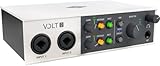
5. Universal Audio Volt 2
+ The Good
- Warm vintage 610 preamp sound
- Crystal clear 24-bit/192kHz converters
- Vintage mode adds analog character
- Works with Mac
- Windows
- iPad
- iPhone
- USB-C bus powered
- The Bad
- Only 2 LEDs for input level
- No input mix knob
- App registration issues reported
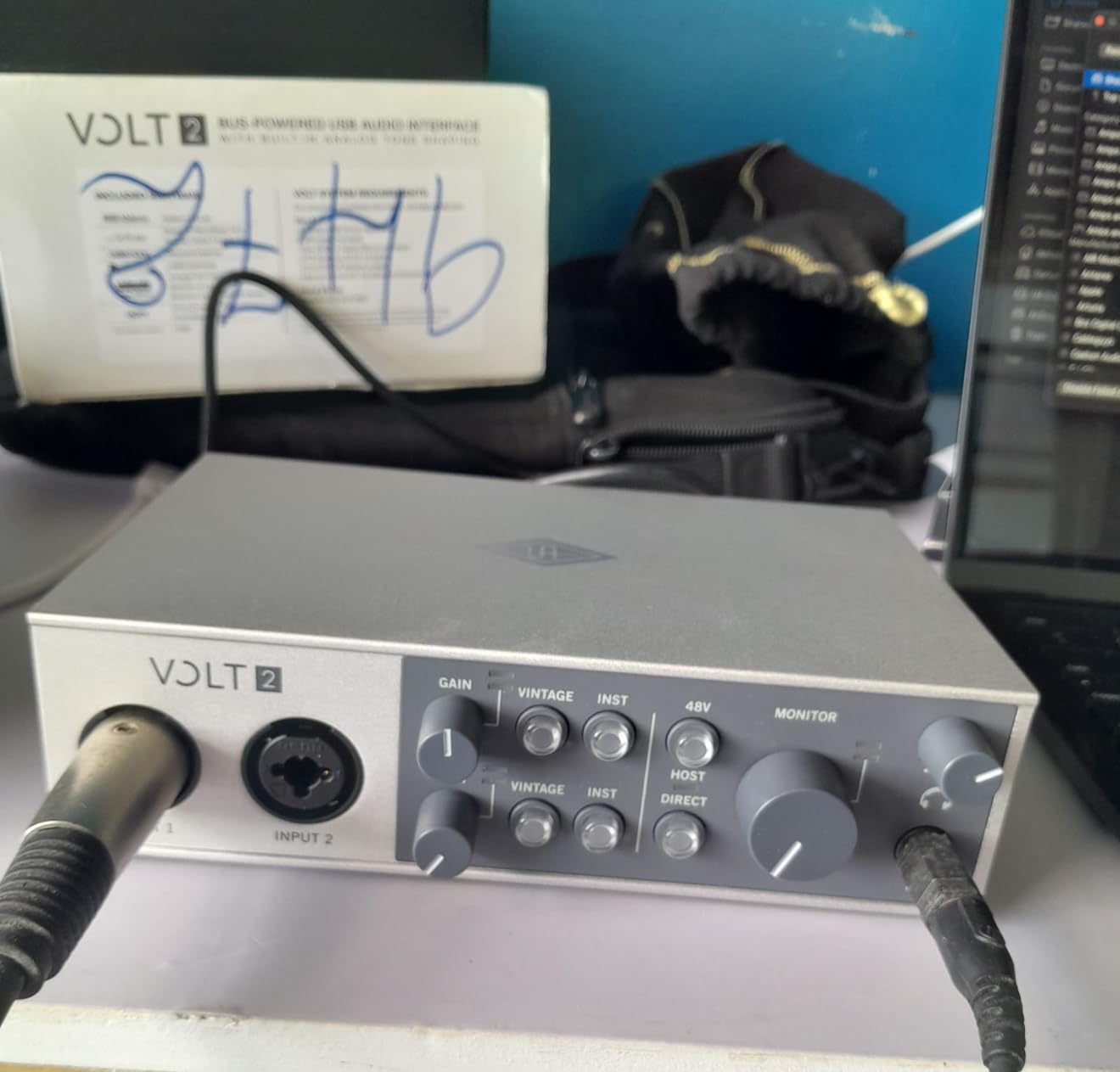
Universal Audio brings its legendary 610 tube preamp sound to a more accessible price point with the Volt 2. This is not a gimmick effect but rather a genuine emulation of circuitry that professional studios have relied upon for decades. The Vintage mode adds warmth and harmonic content that transforms sterile digital recordings into something with character.
I tested the Volt 2 alongside my Apollo interface and was impressed by how much of that signature UA sound transfers to this budget model. The converters deliver clean, detailed audio at 192kHz resolution, and the USB-C connectivity ensures stable connection with modern computers. iPad and iPhone compatibility expands options for mobile recording workflows.
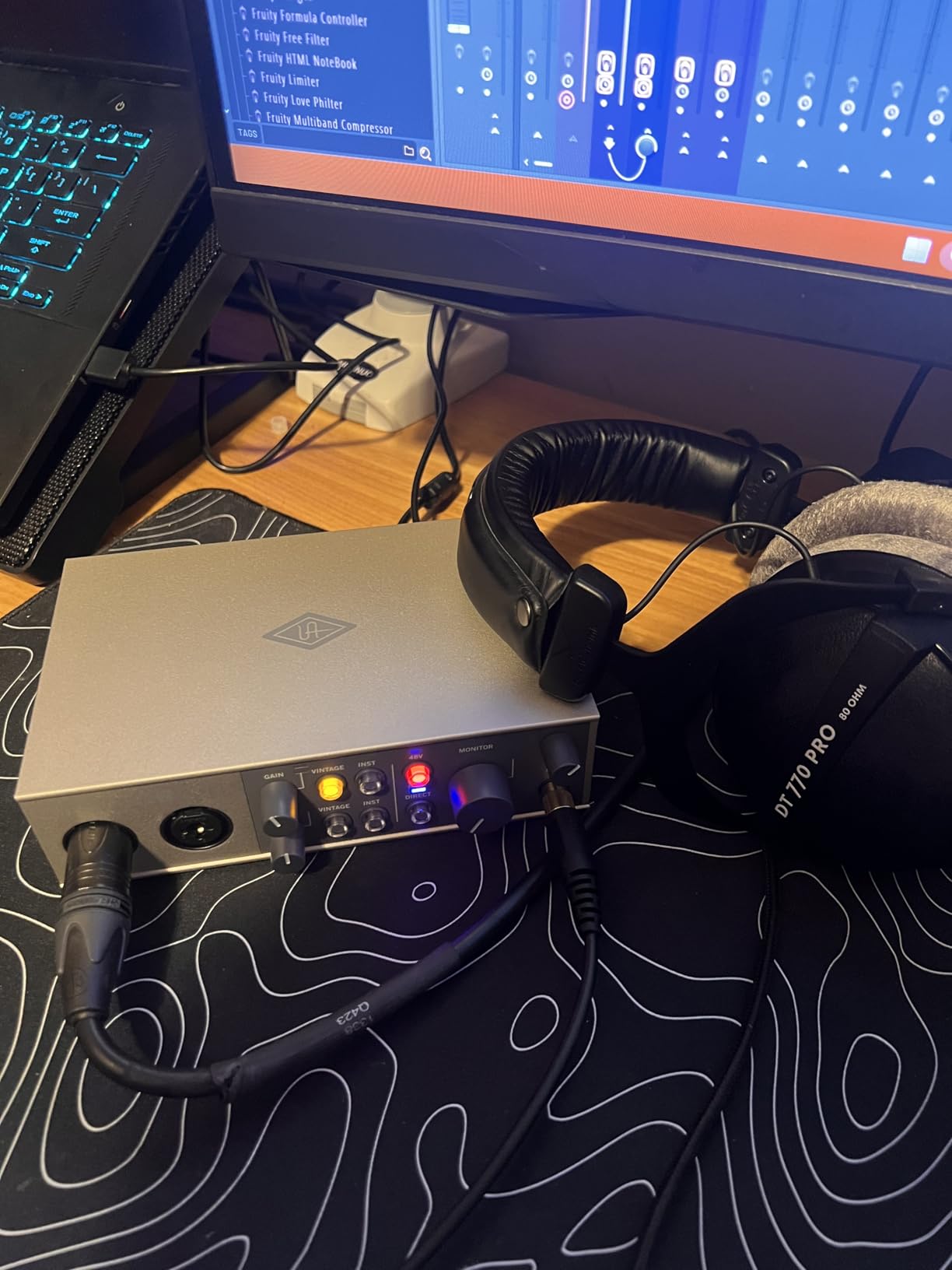
The software bundle alone makes this worth considering, with Ableton Live Lite, Melodyne, and UAD plugin trials included. These tools alone would cost hundreds if purchased separately. The two-LED input meter is admittedly basic, but most recording scenarios do not require extensive level monitoring once gain is set correctly.
Who should buy this
Musicians seeking that classic analog warmth without investing in Apollo-level pricing will appreciate what the Volt 2 delivers. Vintage mode suits vocals, acoustic guitar, and any source where you want added harmonic content. Mobile creators using iPad or iPhone gain a professional-grade option that travels well.
Who should look elsewhere
If you need more visual feedback during recording or prefer adjusting direct monitor versus computer playback levels independently, look at the MOTU M2 or SSL 2 Plus MKII. The lack of an input mix control means you choose between latency-free monitoring or DAW-backed monitoring without fine-tuning the blend.
6. Universal Audio Volt 1
Universal Audio Volt 1 USB Audio Interface
Vintage 610 mode
192kHz
MIDI I/O
Phantom power
+ The Good
- Classic UA 610 preamp sound
- Excellent build quality with metal chassis
- Clear revealing signal quality
- Powerful headphone amp
- Zero-latency monitoring
- The Bad
- Uses two USB ports with power supply
- No input mix knob
- Vintage mode can distort at high gain
The Universal Audio Volt 1 strips away the second input to deliver core Volt features at the lowest price point in the lineup. Don’t mistake this for a lesser device though. The Vintage mode with its classic 610 preamp character remains intact, and the build quality matches or exceeds competitors at this tier. For solo creators, this covers every essential feature.
MIDI I/O connectivity distinguishes the Volt 1 from interfaces that force you to route MIDI through USB. Keyboard players with standalone MIDI controllers appreciate having traditional 5-pin DIN connections available. The direct-drive headphone output delivers ample power for most monitoring situations without external amplification.
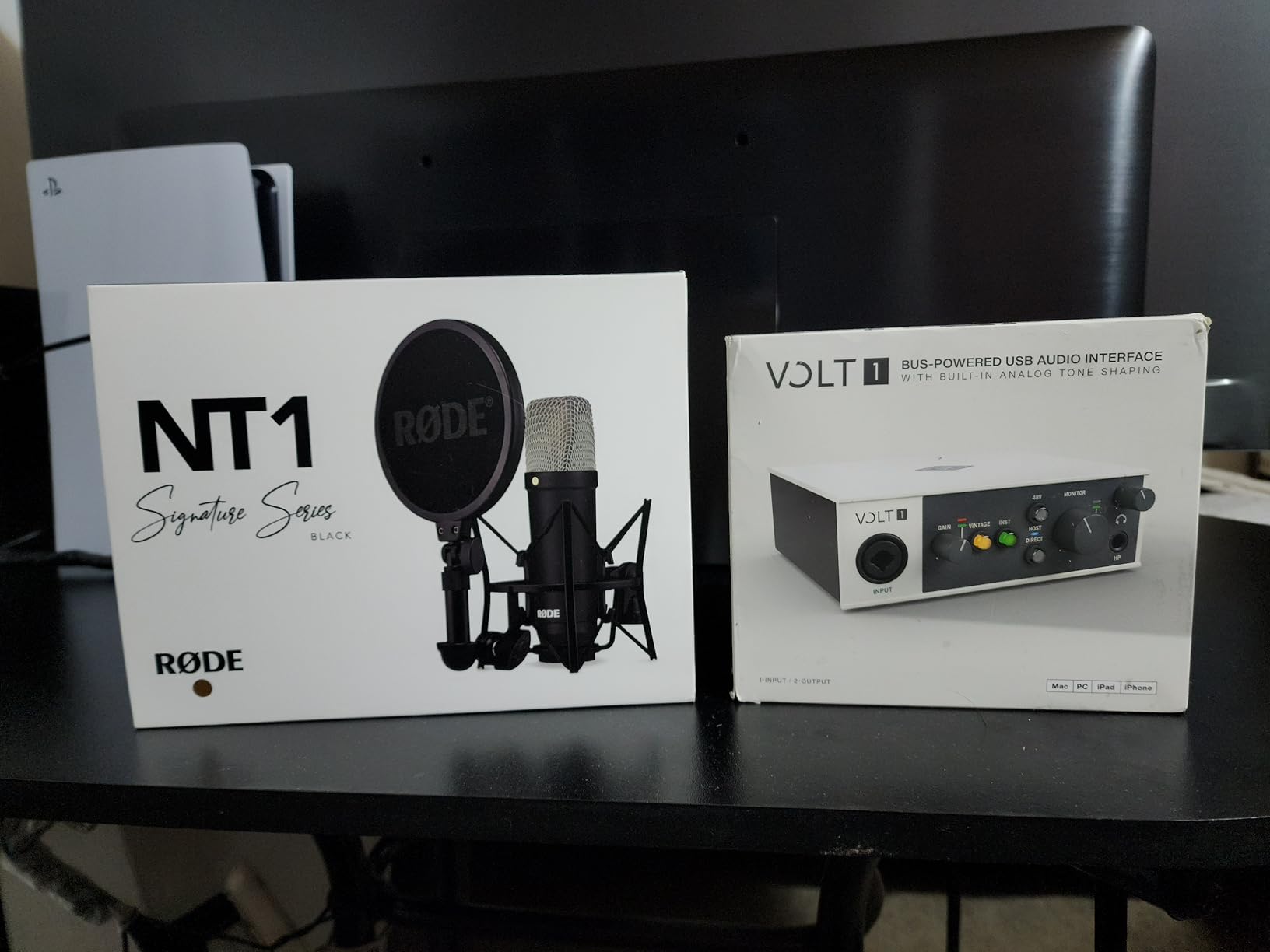
The single input handles condenser microphones, dynamic microphones, and instruments with equal competence. The 192kHz resolution ensures recordings capture every nuance, and that zero-latency monitoring means you hear yourself without delay. Forum discussions confirm that beginners upgrading from built-in audio immediately notice the dramatic improvement in clarity.
Who should buy this
Solo podcasters, voiceover artists, and singer-songwriters who record alone will find the Volt 1 provides professional UA sound without the premium price. Musicians who own MIDI keyboards with 5-pin connections benefit from built-in MIDI I/O. The metal chassis ensures this travels well for mobile recording sessions.
Who should look elsewhere
If you ever need to record two sources simultaneously, the single input becomes a dealbreaker. Consider the Volt 2 instead for that dual-input flexibility. Those with high-gain microphones may want to test Vintage mode at your actual recording levels, as some users report distortion at extreme gain settings.
7. MOTU M4
+ The Good
- Transparent clean sound quality
- Rock-solid Windows drivers
- LCD/LED meters for visual feedback
- Built-in loopback for streaming
- USB bus powered
- The Bad
- Headphone amp power limited
- Clock sync quirk on Windows
- Mac only support listed
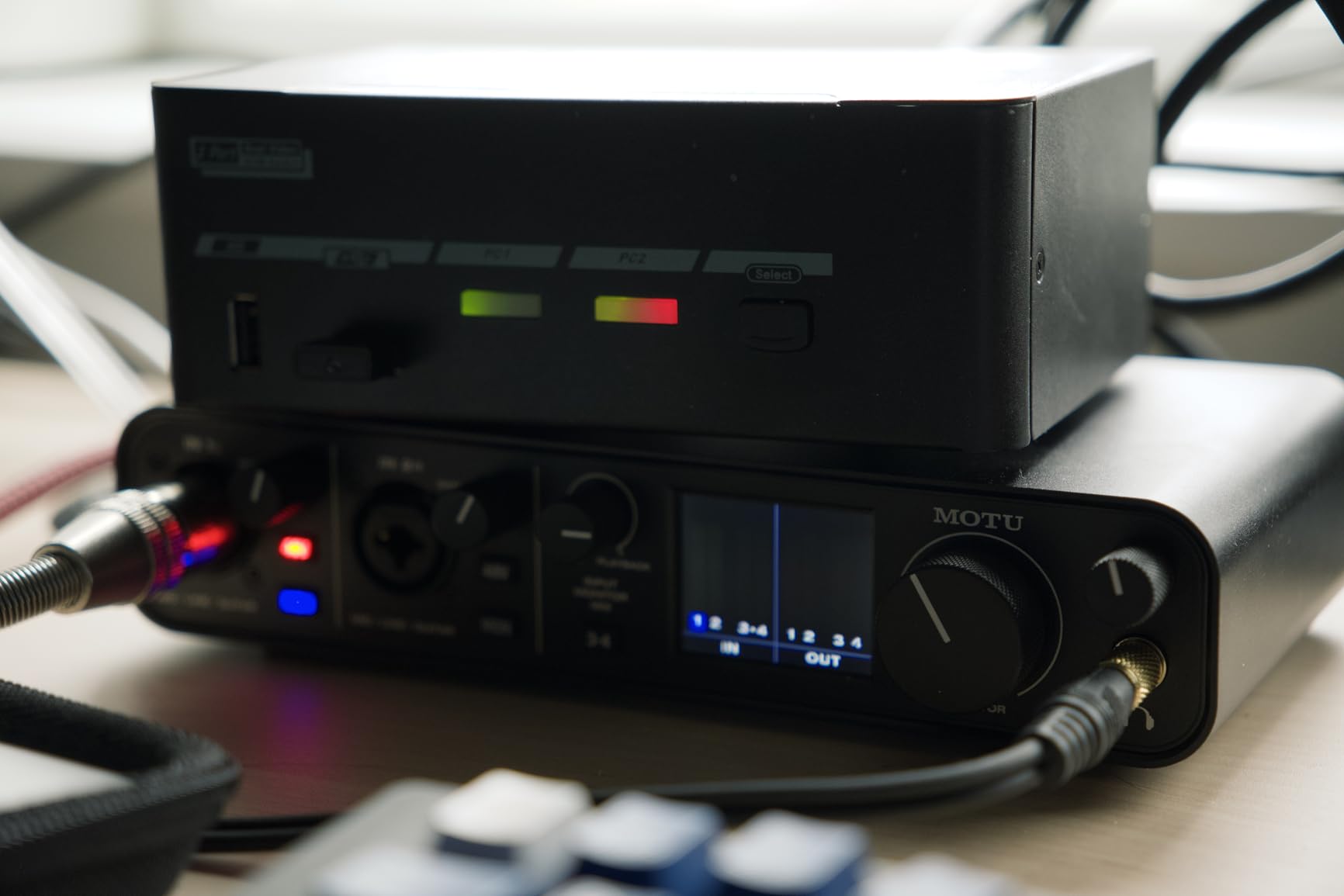
The MOTU M4 builds upon the foundation that made the M2 successful while adding the extra inputs and outputs that expanding recording setups demand. Four inputs and four outputs handle small band sessions, multi-mic podcast setups, and complex routing scenarios that overwhelm simpler two-channel interfaces.
Windows users in forums consistently praise the rock-solid driver stability. MOTU has historically delivered better Windows compatibility than competitors, and the M4 continues that tradition. The LCD screen with level meters brings visual monitoring to a new level, making it easy to spot problems before they become permanent takes.
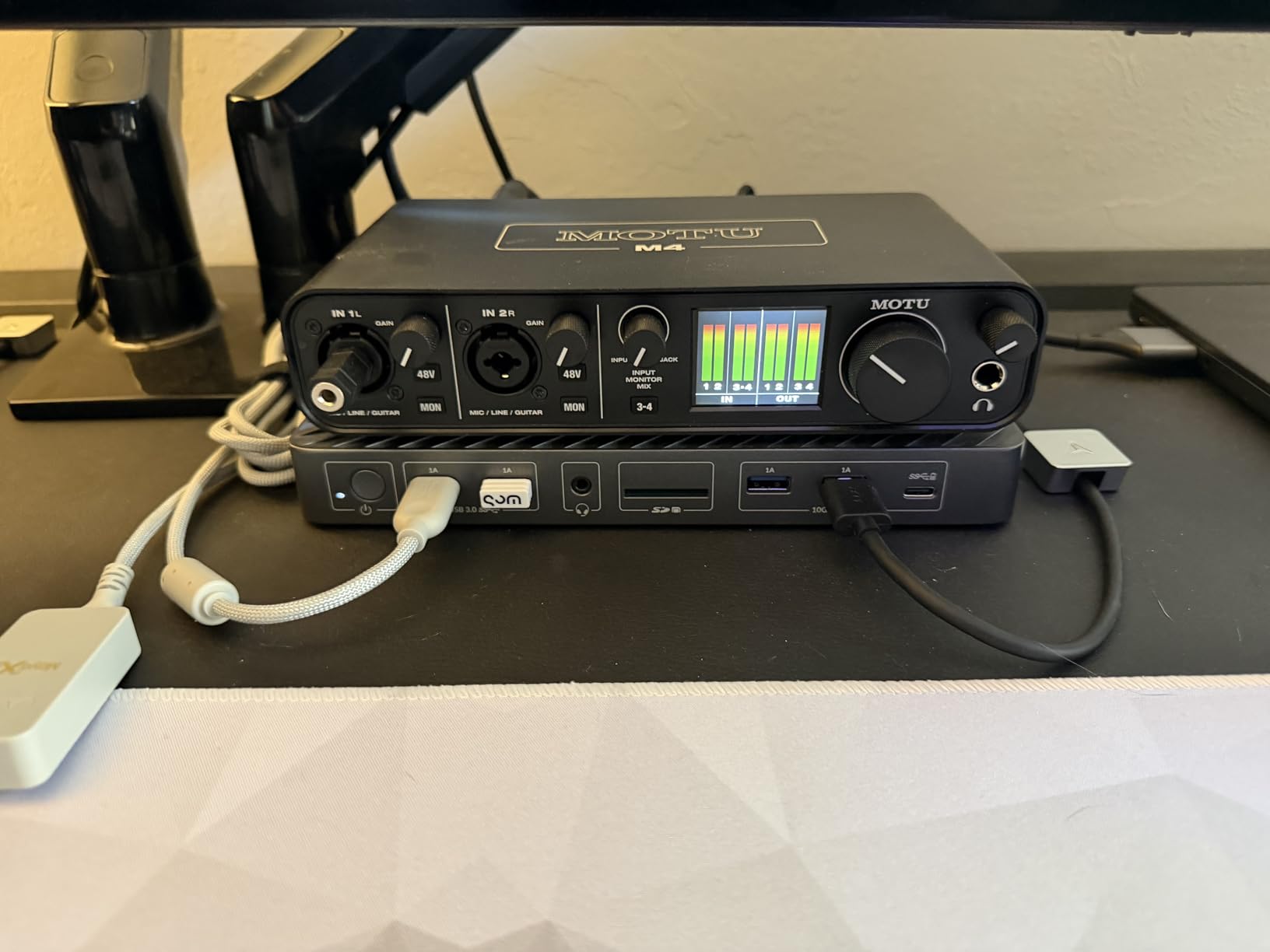
Loopback functionality makes this a streaming powerhouse. Route your microphone through the interface while playing backing tracks from your DAW, then send that mixed signal to OBS or streaming software without additional software routing. This convenience alone justifies the upgrade from interfaces lacking this feature.
Who should buy this
Podcasters with multiple hosts or guest call-in configurations need the four inputs. Musicians tracking small bands will find the extra channels accommodate additional microphones without external mixers. Streamers who want clean routing without complex software setups benefit from built-in loopback.
Who should look elsewhere
Users with power-hungry headphones may find the USB bus power limitation restricts maximum volume. Windows users experiencing clock sync issues can resolve them by disabling Windows fast startup, but this requires system configuration changes some users find inconvenient.
8. Focusrite Scarlett 16i16 4th Gen
+ The Good
- Excellent multi-input capability
- Great sound quality with 122dB dynamic range
- Versatile connectivity options
- Air modes for presence
- Auto Gain feature
- The Bad
- Focusrite Control 2 can be confusing
- Loopback for OBS requires driver
- Some defective units reported
The Scarlett 16i16 4th Gen targets serious project studios that need serious channel counts without investing in rack-mounted mixers. Sixteen inputs and sixteen outputs accommodate multi-microphone recording sessions, complex keyboard setups, and external gear integration that two-channel interfaces cannot begin to address.
These converters borrow technology from Focusrite’s RedNet range, delivering 122dB dynamic range that professionals rely upon. The Air modes provide presence and harmonic drive, while Auto Gain handles level setting across multiple inputs automatically. ADAT and S/PDIF connectivity enable expansion via external preamps.
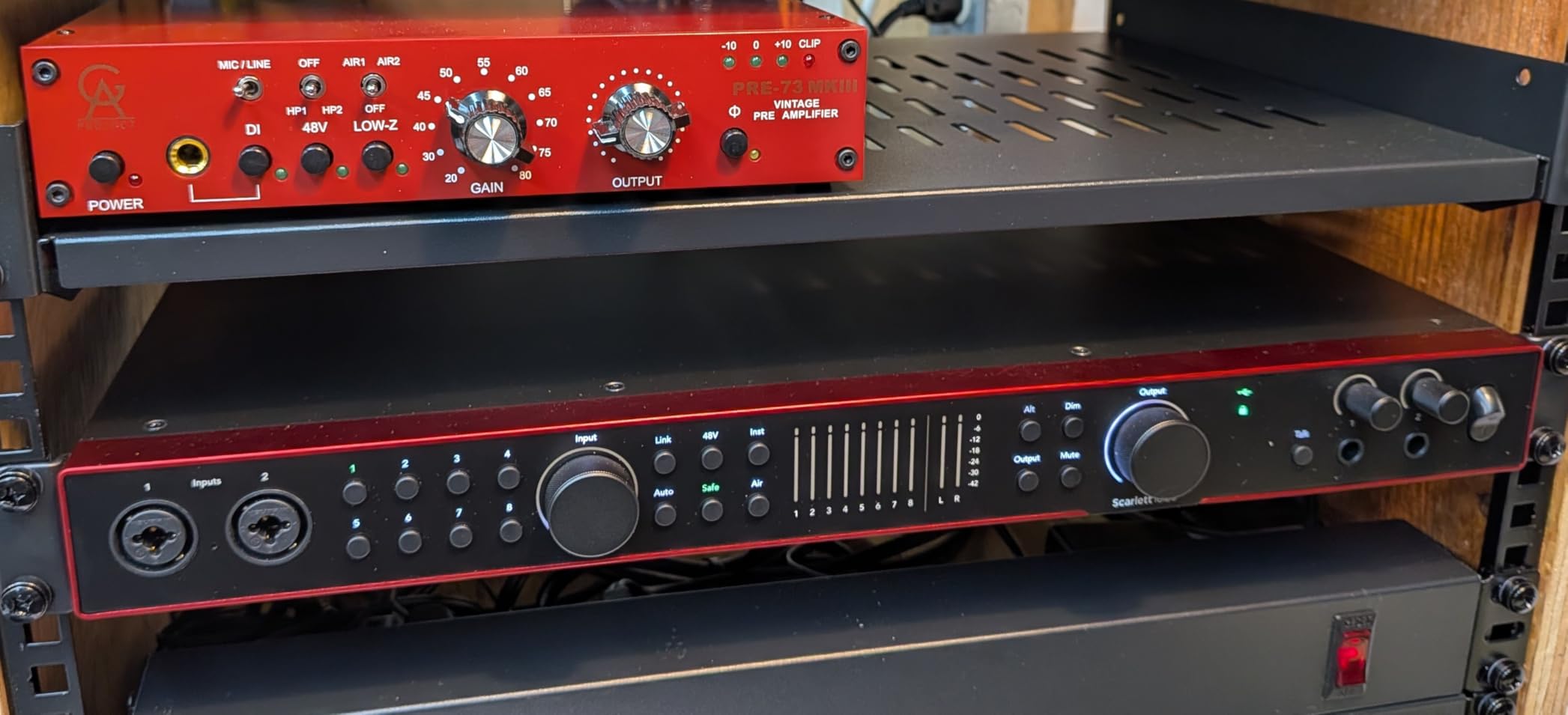
Hi-Z instrument inputs accommodate guitars and basses directly without DI boxes. MIDI I/O rounds out connectivity for those with legacy MIDI gear. The software mix routing takes some learning, but once mastered, enables flexible monitoring setups that serve complex recording scenarios well.
Who should buy this
Project studios recording bands, multi-instrumentalists, and anyone needing to connect multiple sound sources simultaneously will justify the investment. Post-production work requiring multi-channel routing benefits from this channel count. Producers who anticipate growing into more complex setups gain headroom for expansion.
Who should look elsewhere
If you are setting up your first home studio with a single microphone and instrument, this interface offers far more than you need. The Focusrite Control 2 software learning curve may frustrate beginners who want plug-and-play simplicity. Those needing optical outputs for expansion should verify that ADAT functionality meets their specific requirements.
9. SSL 12
Solid State Logic SSL 12 12-In and 8-Out USB Audio Interface
12x8 I/O
62dB gain
Talkback
32-bit float
+ The Good
- Exceptional sound quality from SSL heritage
- Professional-grade preamps with 62dB gain
- 4 independent headphone mixes for performers
- Built-in talkback microphone
- 4K buttons add tonal character
- The Bad
- Some knobs feel cheap for price
- No ADAT output (only input)
- 4K mode may not suit all voices
The SSL 12 brings professional SSL sound quality to a desktop interface format, competing with units costing significantly more. The 62dB microphone gain with -130.5 dBu EIN noise specification places these preamps in categories that professional studios rely upon. This is not a consumer-grade interface wearing professional branding.
Four independent near-zero latency foldback mixes serve performers who need custom headphone mixes during tracking sessions. The built-in talkback microphone with its own level control streamlines communication between recording engineers and performers. The 4K buttons add tonal character that transforms flat recordings into something with personality.
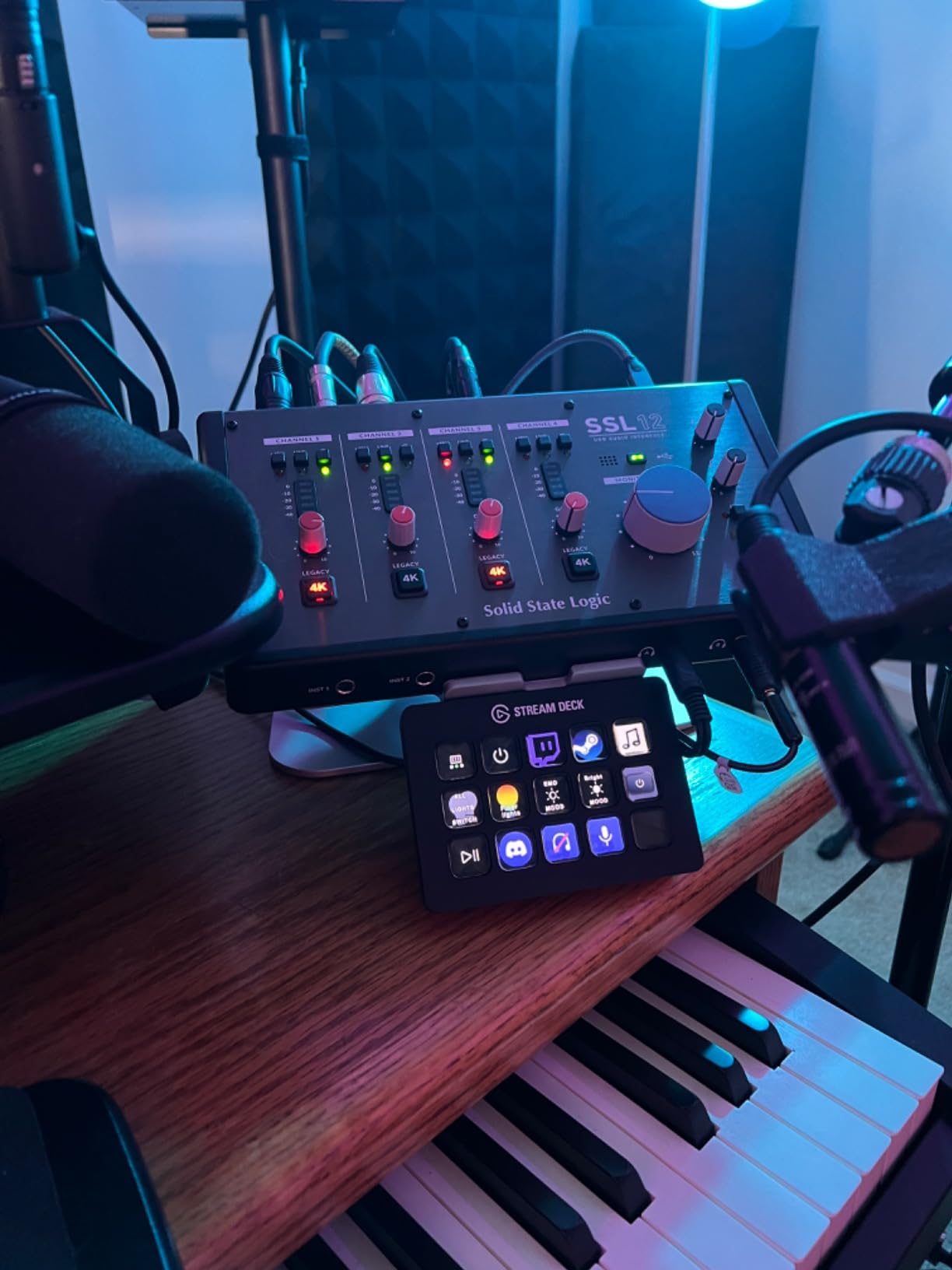
32-bit float recording capability future-proofs your sessions against clipping during complex mixes. The SSL 360 software mixer provides flexible routing that adapts to any workflow. Three months of SSL Complete plug-in suite access adds immediate creative tools that justify the investment.
Who should buy this
Professional studios requiring SSL-quality preamps without rack-mounted console investment will find this delivers. Engineers who record bands with multiple performers appreciate the four independent headphone mixes. Those upgrading from consumer interfaces seeking professional results at professional prices should consider this carefully.
Who should look elsewhere
The Windows-focused design limits Mac users who may find some features less optimized. ADAT optical output would expand flexibility for those needing more inputs via external preamps. At nearly $500, budget-conscious beginners should explore more affordable options first.
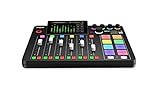
10. RODE RODECaster Pro II
RØDE RØDECaster Pro II All-in-One Production Solution for Podcasting, Streaming, Music Production and Content Creation,Black
4 combo inputs
Bluetooth
SMART pads
APHEX processing
+ The Good
- Studio-quality audio with exceptional preamps
- Intuitive touchscreen interface
- Customizable SMART pads for triggers
- Professional APHEX processing
- Excellent for podcasts and streaming
- The Bad
- Complex for beginners
- Premium price point
- Requires separate mic and SD card purchase
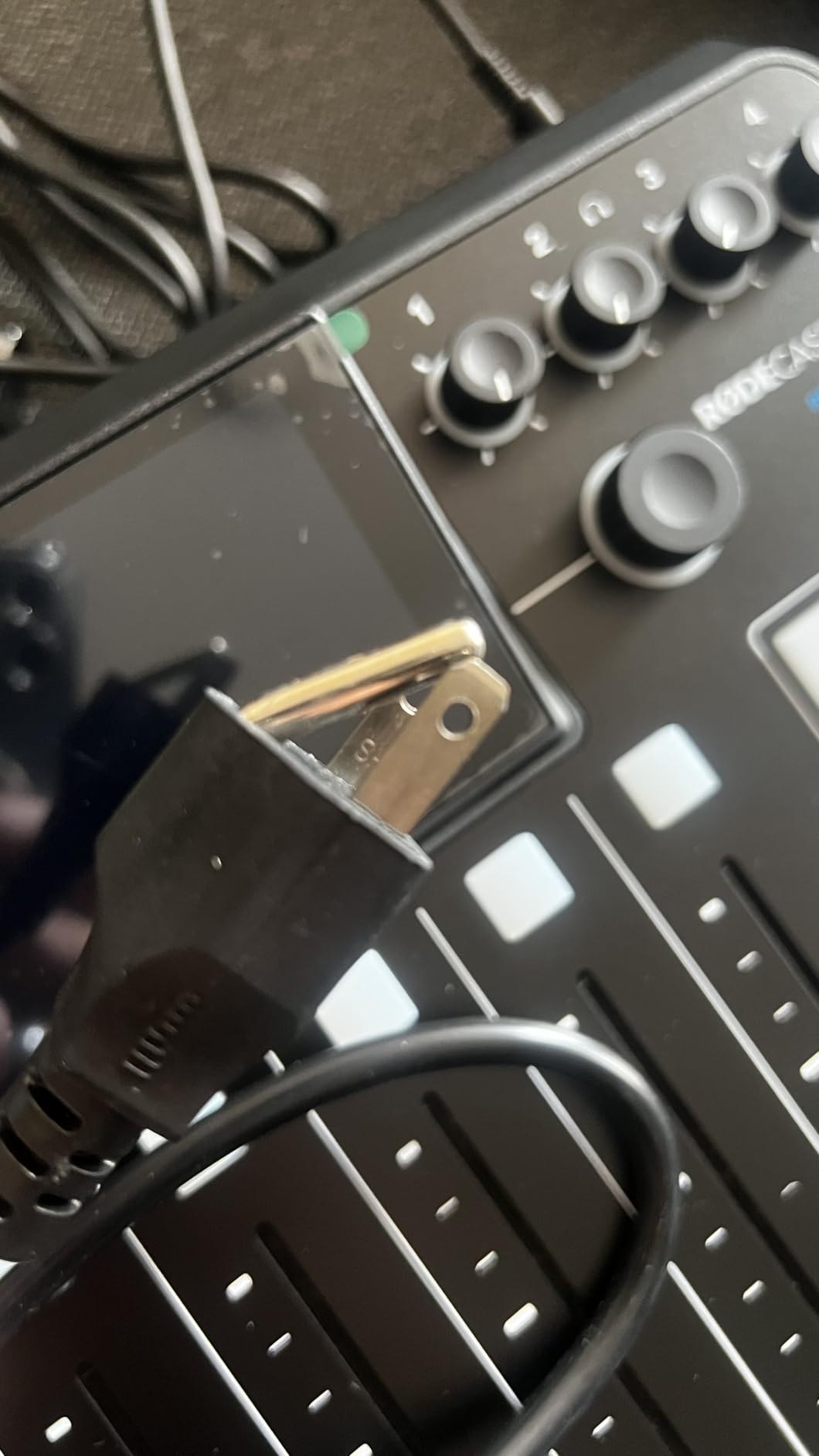
The RODE RODECaster Pro II defies categorization. This is not simply an audio interface but rather an all-in-one production studio designed for modern content creators. Four combo inputs with ultra-low-noise Revolution preamps handle professional microphones, instruments, and line-level sources with equal competence.
APHEX processing including Aural Exciter, Big Bottom, and Compellor provides broadcast-quality audio processing without post-production effort. The customizable SMART pads trigger sound effects, music beds, and even automation commands in your DAW. Bluetooth connectivity enables call-in recordings from phone calls or remote guests.
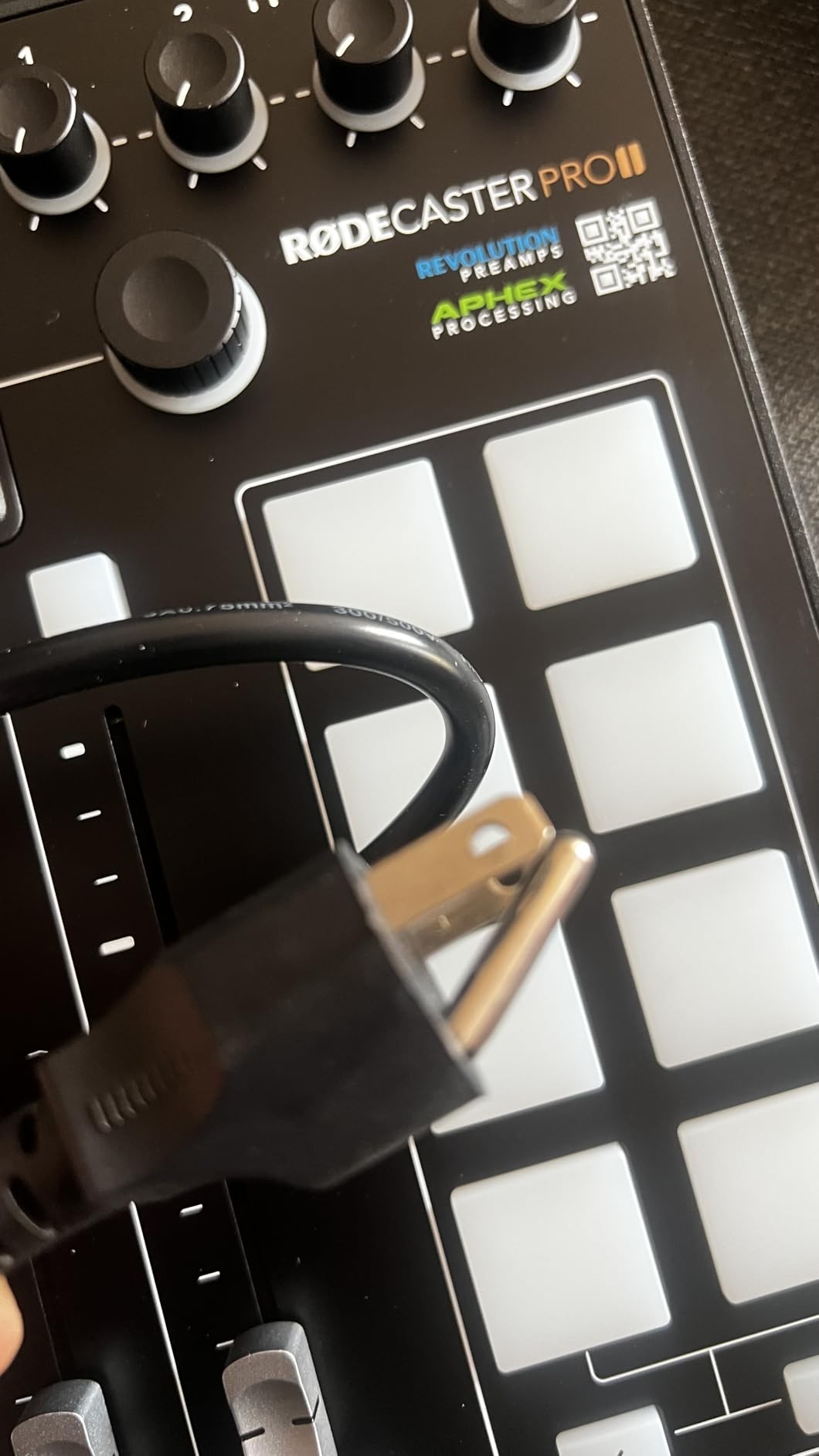
Dual USB interfaces connect two computers simultaneously, perfect for live streaming from one while recording to another. The 12-segment LED metering provides visual feedback that helps maintain consistent recording levels. Wi-Fi and Ethernet connectivity integrate this into networked studio setups.
Who should buy this
Podcasters who want everything in one box without piecing together interfaces, mixers, and processors will appreciate this integrated approach. Streamers who need sound effects at their fingertips benefit from the SMART pads. Content creators producing multi-format content from a single location find this simplifies their workflow dramatically.
Who should look elsewhere
If you are a beginner just starting to record and feel overwhelmed by features, this may prove too complex. The premium price reflects the feature set, so those needing only basic recording functionality find better value elsewhere. Budget for additional purchases including microphones, headphones, and microSD card.
11. PreSonus AudioBox 96
PreSonus AudioBox 96 25th Anniversary USB Audio Interface
96kHz/24-bit
Class-A preamps
MIDI I/O
Studio One
+ The Good
- Excellent value with over $1000 worth of software
- Easy plug-and-play setup
- USB bus-powered
- 2 Class-A mic preamps
- MIDI I/O included
- The Bad
- Knobs can feel crowded
- No top-mounted volume knob
- Limited to 2 channels
The PreSonus AudioBox 96 celebrates the 25th Anniversary with an interface that has introduced generations of musicians to home recording. The included software bundle alone represents over $1000 in value, featuring Studio One Artist, Ableton Live Lite, and the Studio Magic Plug-In Suite. This is the most generous software bundle in this roundup.
Two combo inputs with Class-A preamps deliver clean gain suitable for professional recording. The 24-bit/96kHz converters provide studio-grade resolution, though not quite matching the 192kHz rates of higher-priced competitors. Zero-latency monitoring with mixer control lets you blend direct monitoring with DAW playback.
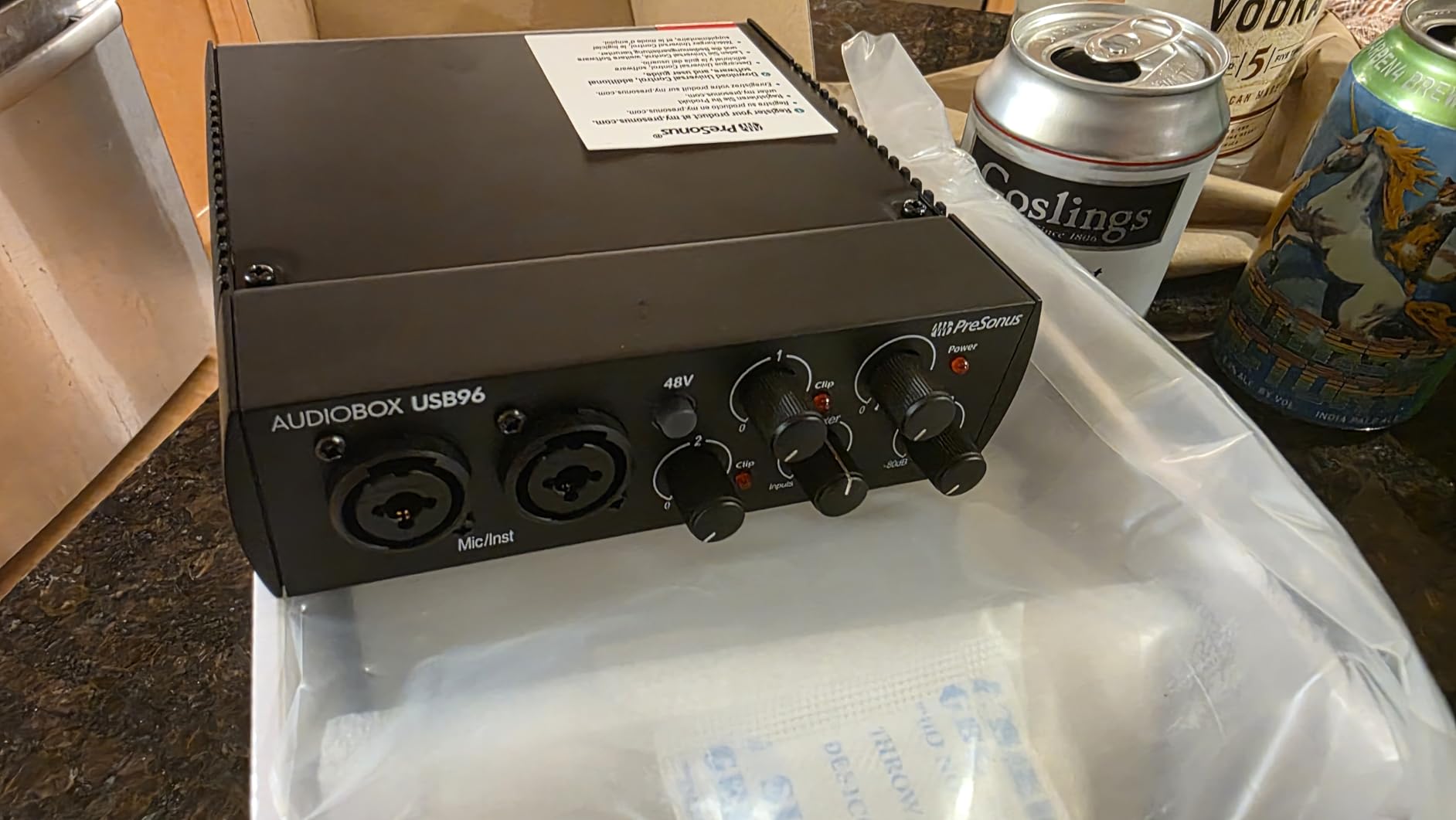
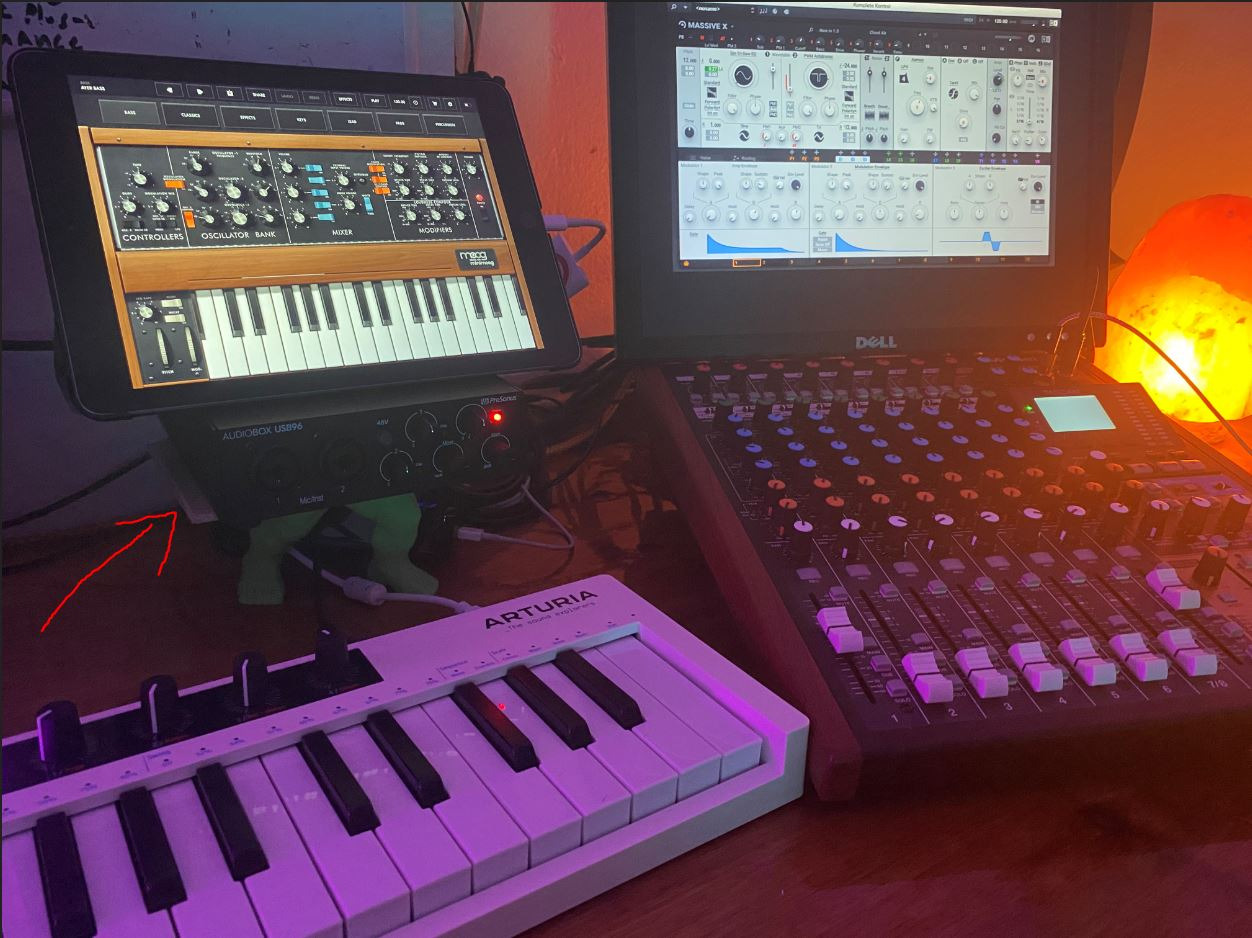
MIDI I/O eliminates the need for separate MIDI interfaces when connecting keyboards, drum machines, or control surfaces. The high-powered headphone output drives most studio headphones without amplification. Balanced 1/4-inch TRS outputs connect to studio monitors cleanly without ground hum.
Who should buy this
Beginners building their first home studio on a tight budget find exceptional value here. The software bundle alone would cost more than the interface price difference versus competitors. Students learning recording concepts benefit from the straightforward design without overwhelming features.
Who should look elsewhere
If you need more than two channels for expanding setups, look at the MOTU M4 or Scarlett 16i16. The 96kHz sample rate versus 192kHz in competitors may matter to those seeking maximum recording fidelity. Those with larger hands may find the controls feel cramped during regular use.
Buying Guide: How to Choose the Best Audio Interface
Selecting the right audio interface requires understanding your specific needs and how different specifications impact real-world recording quality. This guide walks through the key factors that matter most when making your decision.
Number of Inputs and Outputs
The first question to answer is how many sources you will record simultaneously. Solo podcasters and voiceover artists need only one XLR input. Singer-songwriters recording vocals and guitar need two inputs. Bands tracking live need four or more channels. Be honest about your worst-case scenario rather than your typical session, because expanding later costs more than buying the right interface now.
USB vs Thunderbolt vs Other Connections
USB-C dominates the current market and provides sufficient bandwidth for most recording scenarios up to around 32 channels at 192kHz. Thunderbolt offers lower latency and more bandwidth, which matters primarily for large sessions with many tracks and plugins. For home studio applications, USB connectivity suffices and provides the widest compatibility with modern computers and mobile devices.
Preamp Quality and Gain Staging
Microphone preamps determine recording quality more than any other interface specification. Look at the EIN (Equivalent Input Noise) specification, which measures self-noise. Lower numbers mean cleaner recordings, especially with quiet sources like ribbon microphones. Budget interfaces often introduce audible noise that becomes apparent when recording speech or quiet instruments.
Sample Rate and Bit Depth
Standard recording uses 24-bit/48kHz or 24-bit/96kHz. The bit depth matters more than sample rate for most users, as 24-bit provides adequate headroom for dynamics without clipping. Higher sample rates like 192kHz consume more storage and may not audibly improve sound quality on most source material, though they matter for critical acoustic recording and mastering applications.
Phantom Power and Microphone Types
Condenser microphones require 48V phantom power to operate. Dynamic microphones do not need it. Some ribbon microphones can be damaged by phantom power, so verify your microphone requirements before enabling it. Most interfaces provide global 48V switching rather than per-channel control, which works fine when all your microphones need the same power state.
Software Bundles and DAW Compatibility
The included software can represent significant value. Ableton Live Lite, Studio One Artist, Pro Tools Intro, and Cubase LE are common offerings. Verify the included DAW suits your workflow before purchase. Some interfaces include plugin trials or subscriptions rather than permanent licenses, so understand what you are actually receiving.
Latency Considerations
Direct monitoring through the interface eliminates computer latency entirely. This is essential for singers who need to hear themselves without delay. Modern interfaces achieve imperceptible latency over USB, but buffer size settings in your DAW affect this. Lower buffers increase CPU load but reduce latency, so adjust based on your computer capabilities.
iOS and Mobile Compatibility
Not all interfaces work with iPads and iPhones. If you record on mobile devices, verify Apple MFi certification before purchasing. MOTU and Universal Audio products generally offer strong iOS support, while others may require powered USB hubs or specific adapter configurations. This gap appears repeatedly in forum pain points where users assumed their interface supported mobile recording.
Frequently Asked Questions
What is the highest quality audio interface?
The highest quality audio interfaces typically feature professional-grade preamps with EIN specifications below -130dBu, dynamic ranges exceeding 120dB, and converters operating at 32-bit/192kHz. Models like the SSL 12, Universal Audio Apollo interfaces, and RME Fireface units represent the professional tier. For most home studio applications, interfaces in the $200-$500 range deliver quality that exceeds what most ears can distinguish in typical recording environments.
What is the most used audio interface?
The Focusrite Scarlett 2i2 consistently ranks as the best-selling audio interface for home studios. Its combination of accessible pricing, solid build quality, and reputation for reliability has made it the default recommendation from music teachers, YouTube tutorials, and gear forums. The Scarlett Solo occupies a similar position in the budget category, with over 29,000 reviews on Amazon indicating massive market penetration.
What audio interfaces do pros use?
Professional studios typically use interfaces from RME, Universal Audio Apollo, SSL, MOTU, and Antelope Audio. These units offer the channel counts, preamp quality, and driver stability that professional workflows demand. However, many pros now use interfaces like the MOTU M4 and SSL 2 Plus MKII for their reliability and sound quality at more accessible price points. The professional label applies more to build quality and feature sets than absolute sonic superiority.
Does a more expensive audio interface make a difference?
Expensive interfaces generally offer cleaner preamps with lower self-noise, more channel count flexibility, better converters, and more robust build quality. Whether you can hear the difference depends on your microphone, room acoustics, and ears. For most recording applications, a $200 interface like the MOTU M2 or Scarlett 2i2 provides more than adequate quality. The returns diminish significantly above $500 for most users, with professional studios benefiting more from the additional features than the raw sound quality.
Conclusion
Finding the best audio interface for your specific needs comes down to matching features and specifications to your recording workflow. The Focusrite Scarlett 2i2 4th Gen earns our Editor’s Choice recommendation for its exceptional balance of quality, features, and accessibility. The MOTU M2 delivers remarkable value with its LCD meters and MIDI connectivity. The Scarlett Solo remains the budget champion that has introduced countless musicians to quality home recording.
Whatever interface you choose, remember that these devices serve your creativity rather than define it. The best interface is the one that reliably captures your performances without technical barriers between you and your art. In 2026, the options above represent the finest available for musicians, podcasters, and content creators serious about their sound.