
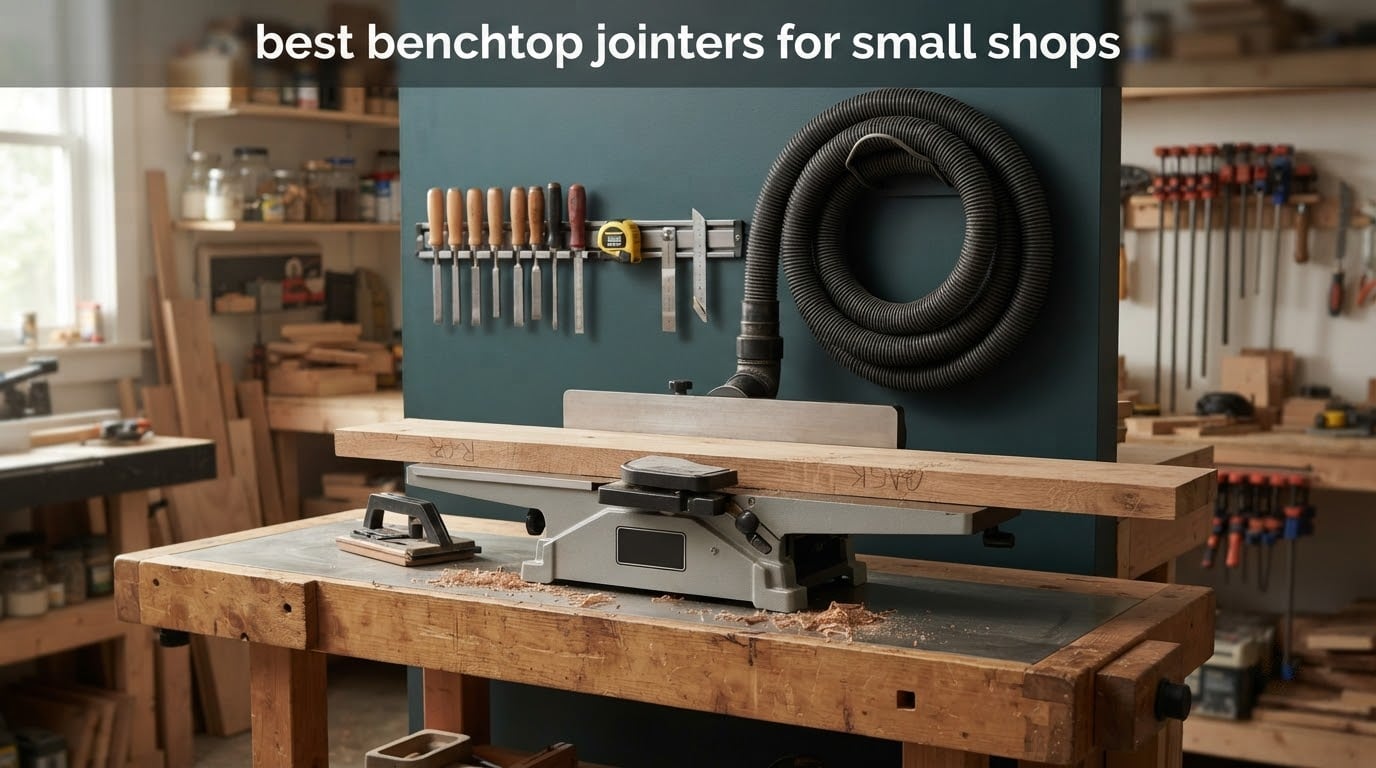
A benchtop jointer is a compact machine that flattens faces and squares edges on rough lumber, weighing roughly 21 to 83 pounds so it can sit on a workbench or a light stand instead of taking up the floor space a cabinet jointer needs. For a small shop working with boards under about 8 inches wide, that trade is worth it. We compared eight of them across cutting width, cutterhead type, table material, motor output, weight, and dust handling to find the ones that earn a place in a tight shop.
Eight benchtop jointers made this list, and not all of them deserve the same spot in your shop. Four are 6-inch machines, two are 8-inch, and the rest fall between those widths with very different table materials and cutterhead designs.
The honest wrinkle, which we come back to below, is that experienced woodworkers argue constantly about whether any benchtop jointer is the right answer. The case against them is that a used cabinet jointer from the 1980s or 1990s costs less and cuts better, if you can find floor space. That argument has real merit, and we handle it head-on in the buying guide.
If you are still building out a compact shop, our guides to the best wood jointers overall and the best benchtop planers cover the wider machine categories.
Top 3 Benchtop Jointer Picks for Small Shops in October 2026

WEN JT630H 6-Inch Spiral Jointer
- › 12-blade spiral HSS cutterhead
- › 6-inch cutting width
- › 36.8 pounds
- › 2-1/2 inch dust port

Wahuda 50180CC 8-Inch Cast Iron
- › 16 rotatable carbide inserts
- › Cast iron tables
- › 49.9 pounds
- › Pull-out table extensions

Cutech 40160HB 6-Inch Teflon
- › Teflon-coated aluminum tables
- › 12 carbide inserts
- › 44.2 pounds
- › Rifle green finish
The WEN JT630H takes the top slot because it pairs the largest owner base in this group with a 4.6 rating and a spiral cutterhead that needs no knife setting. The Wahuda 8-inch is the one to buy if your boards routinely run past 6 inches and you want cast iron tables. The Cutech 40160HB is the quiet, forgiving pick for a beginner who will not set knives.
All 8 Benchtop Jointers Compared in October 2026
| PRODUCT MODEL | KEY SPECS | BEST PRICE |
|---|---|---|
|
|
Check Latest Price |
 |
|
Check Latest Price |
|
|
Check Latest Price |
 |
|
Check Latest Price |
|
|
Check Latest Price |
 |
|
Check Latest Price |
|
|
Check Latest Price |
 |
|
Check Latest Price |
Two patterns jump out of that table. First, every machine here weighs less than 85 pounds, which is what makes a benchtop format possible at all. Second, the table material splits the group cleanly: five machines run aluminum tables and three use cast iron, and that single choice changes how much the machine weighs and how long it holds a flat surface.
1. WEN JT630H 6-Inch Spiral Jointer – The One Most Shops Should Buy
WEN JT630H 10-Amp 6-Inch Spiral Benchtop Jointer
6-inch cutting width
12 staggered HSS spiral blades
36.8 pounds
2-1/2 inch dust port
+ The Good
- Largest owner base in this group at over 1000 reviews
- Clean finish on tear-out-prone hardwoods
- Compact enough to store on a shelf
- Handles light passes without bogging
- The Bad
- Fence takes real effort to square and can drift
- Aluminum tables mark easily with rough stock
- 2-1/2 inch dust port needs an adapter for many shop vacs
This is the machine we kept coming back to. The JT630H is a 6-inch spiral-head jointer from WEN, and it has the largest reviewed owner base of anything on this list by a wide margin. That matters in a category where most machines are sold in small batches and reviews never accumulate.
The cutterhead uses 12 staggered HSS blades arranged in a spiral pattern. Because the blades are staggered rather than aligned, each one shears a small slice instead of tearing a full shaving. On tear-out-prone stock like maple and purpleheart, that difference is visible on the finished surface.
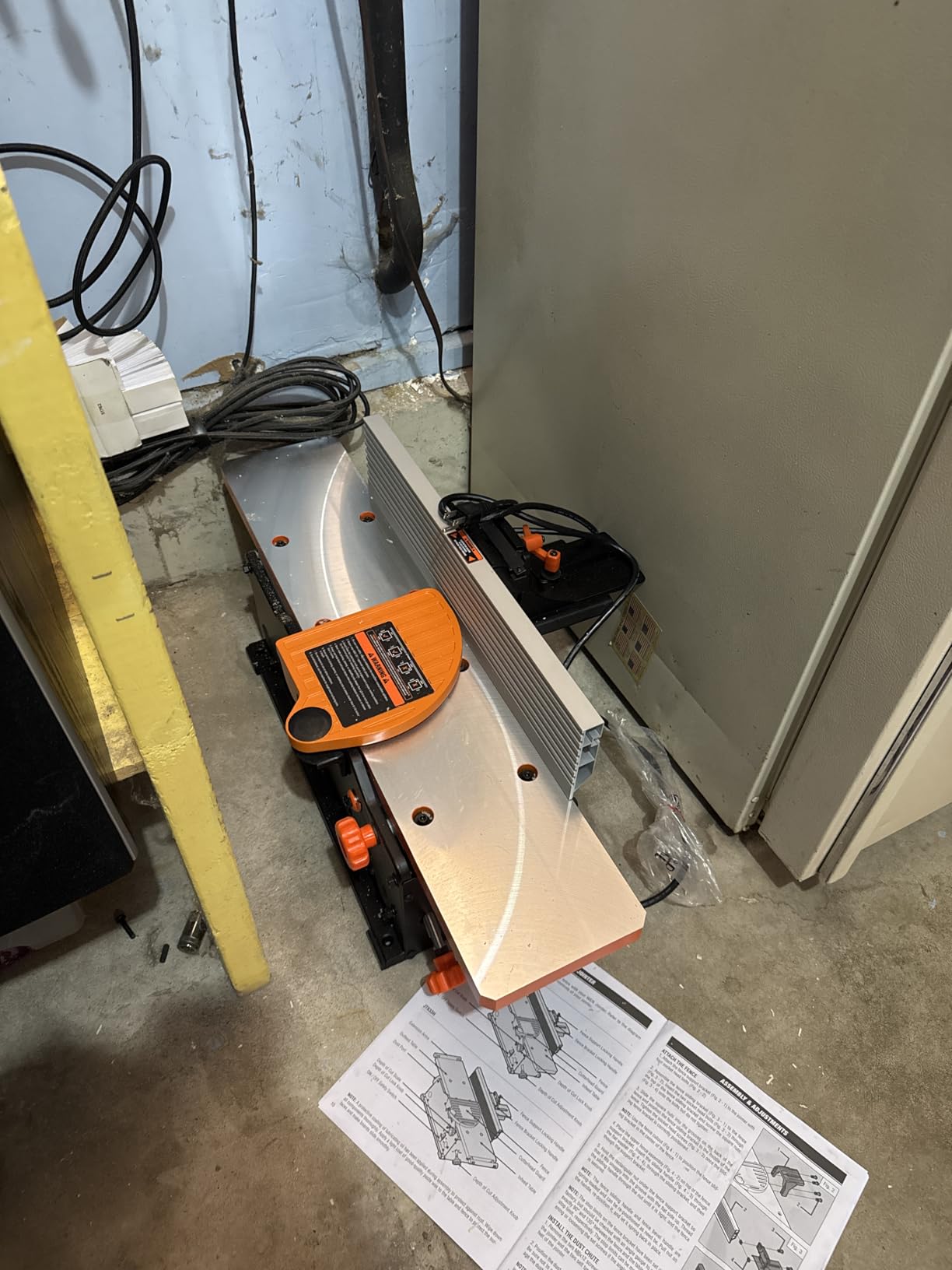
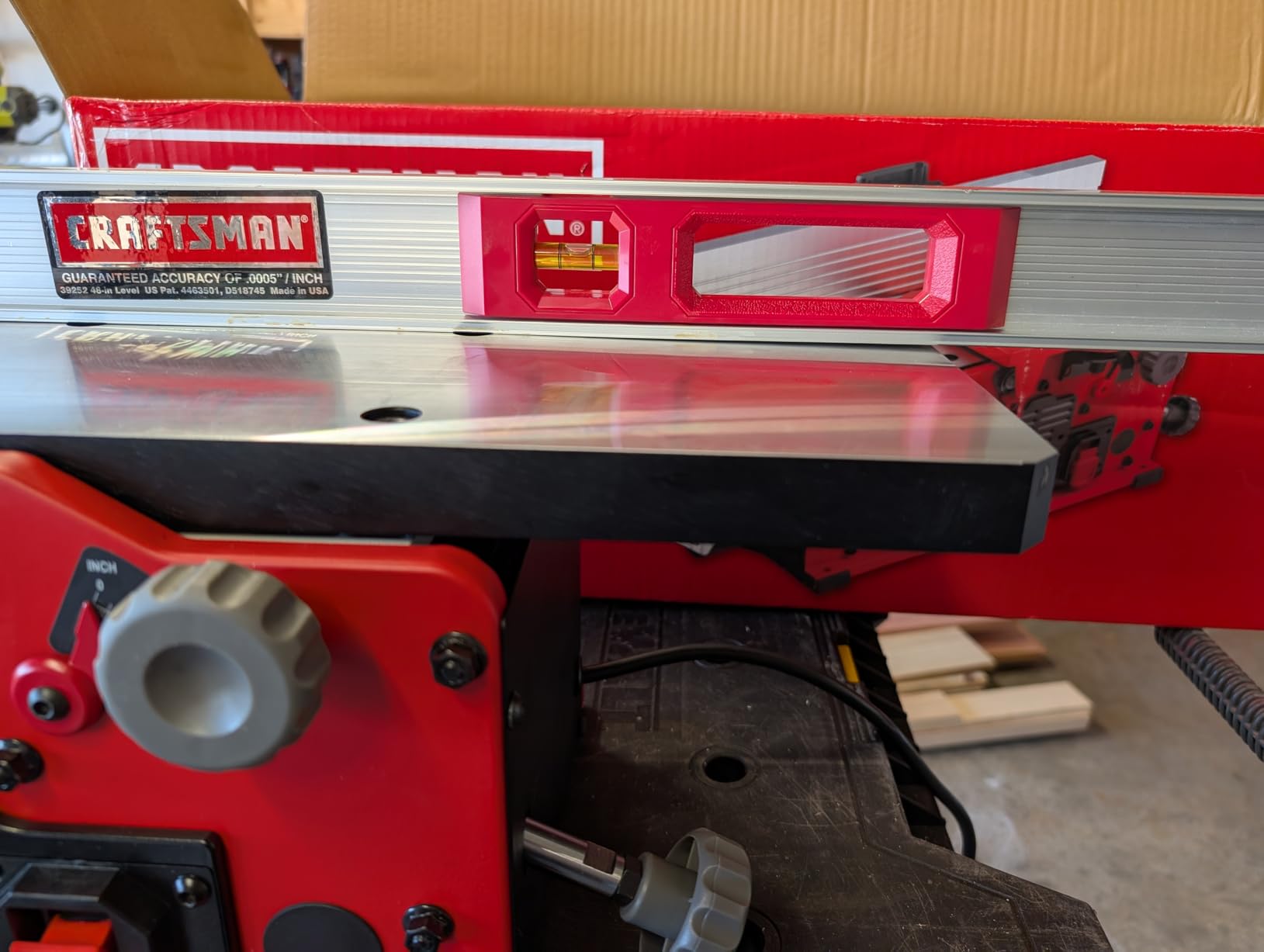
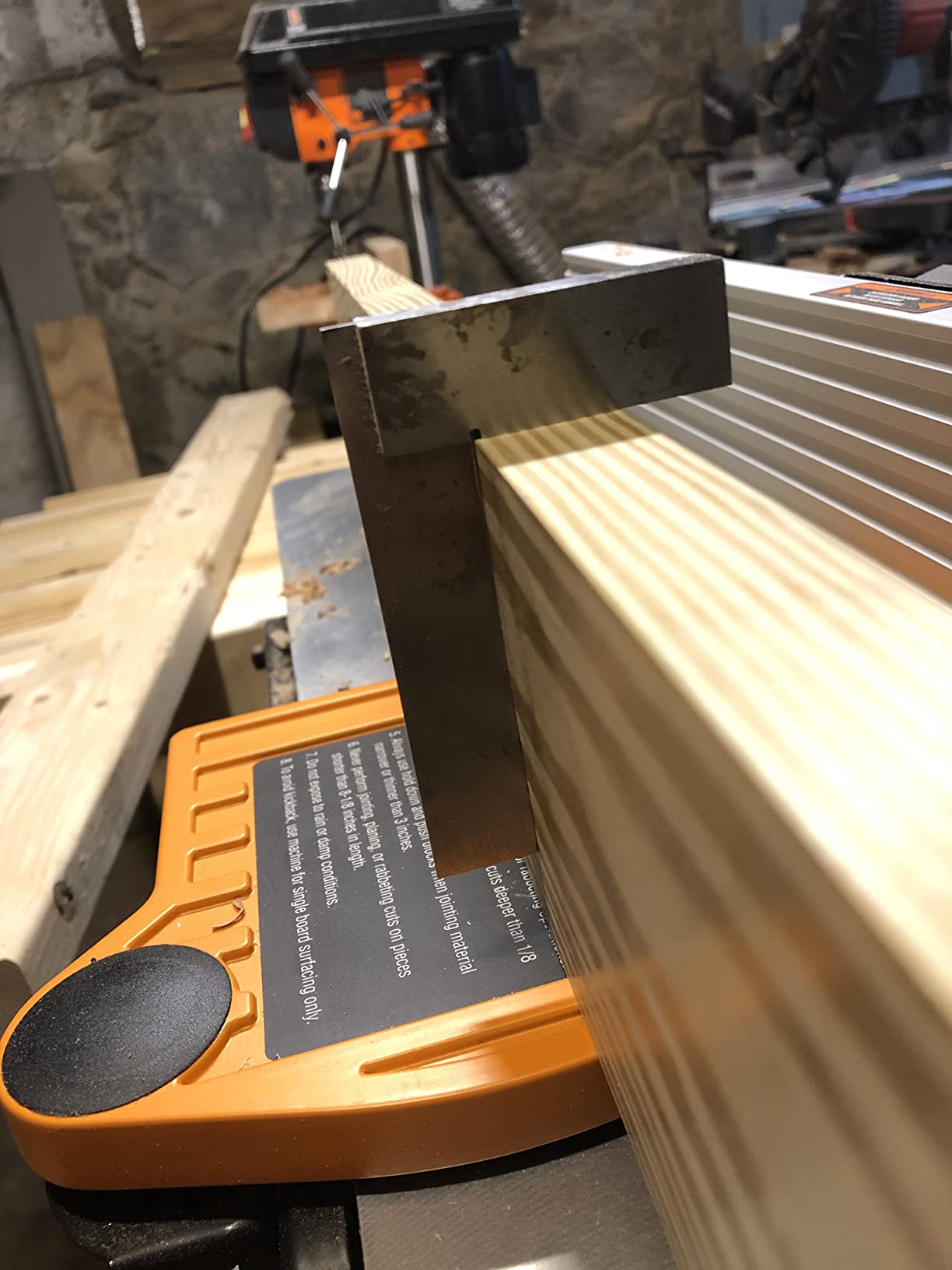
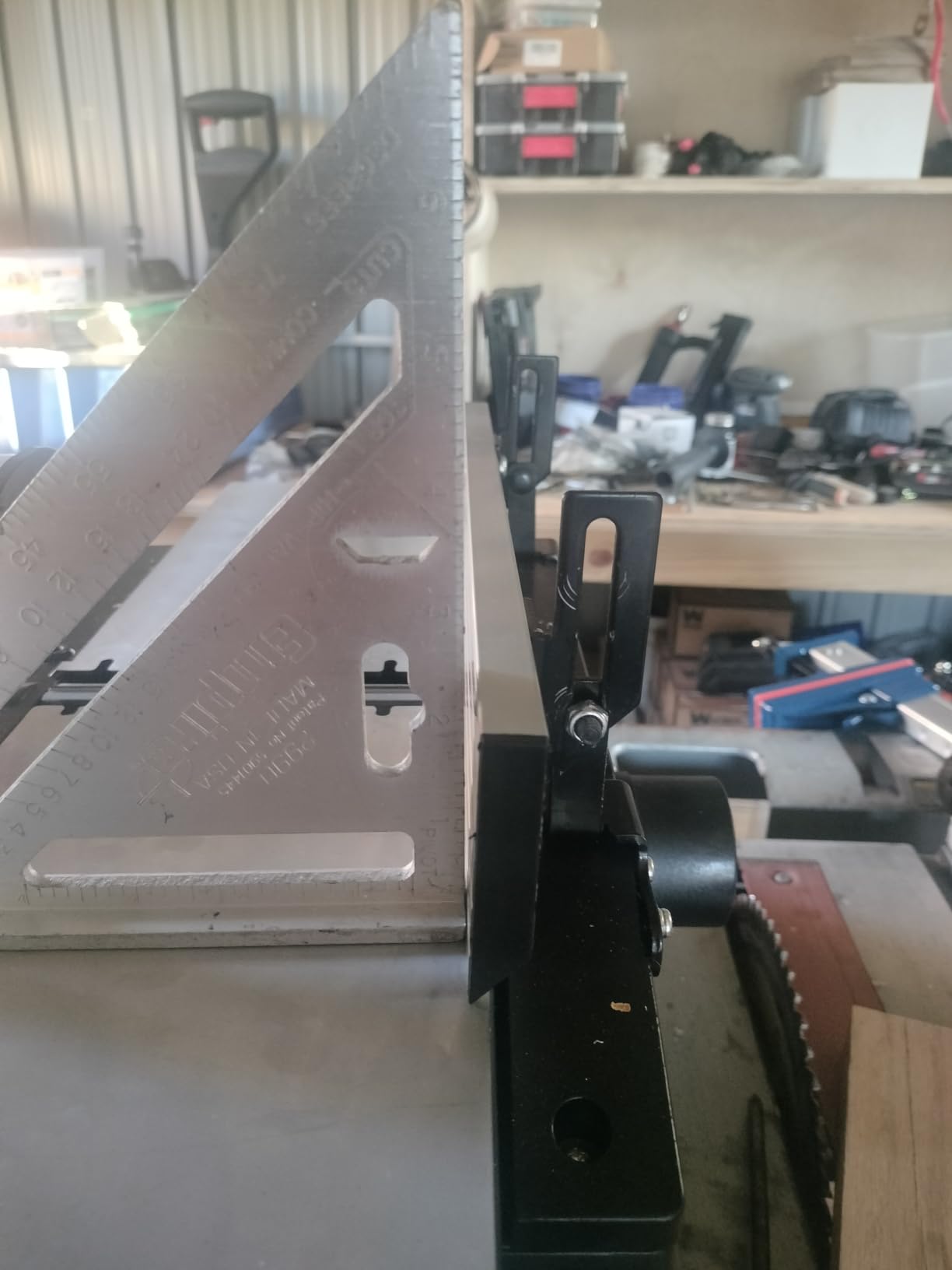
Setup is where your time goes. Owners consistently report around two hours of leveling and squaring before the first usable cut, and our own read of the machine agrees that the fence is the part that needs patience. Check it with a good square before every session rather than trusting it to stay put.
The 30-by-6-inch table is roomier than most 6-inch competitors and the 19-3/4 by 4-1/4-inch fence tilts up to 45 degrees, which covers rabbeting and tapers. At 36.8 pounds it moves easily, but owners of lighter units in this class do report the machine walking across a bench during hard cuts, so bolt it down if your bench top is not rock solid.
What the JT630H does better than the alternatives
Where most 6-inch spiral machines give you a thin owner base, this one gives you a body of long-term feedback, and the pattern in it is consistent. Owners report clean cuts on pine, oak, maple, and mahogany, with the same complaint recurring: check the fence.
The 10-amp motor handles 1/32 inch passes without hesitation, and the onboard depth-of-cut scale plus two included push blocks mean you can start cutting the day the machine is set up rather than hunting for accessories.
Where the JT630H will disappoint you
The aluminum infeed and outfeed tables are the weak point. They machine accurately and do not flex under normal use, but they scar easily when rough-sawn boards slide across them, and micro-scratches show up as snipe at the end of a cut.
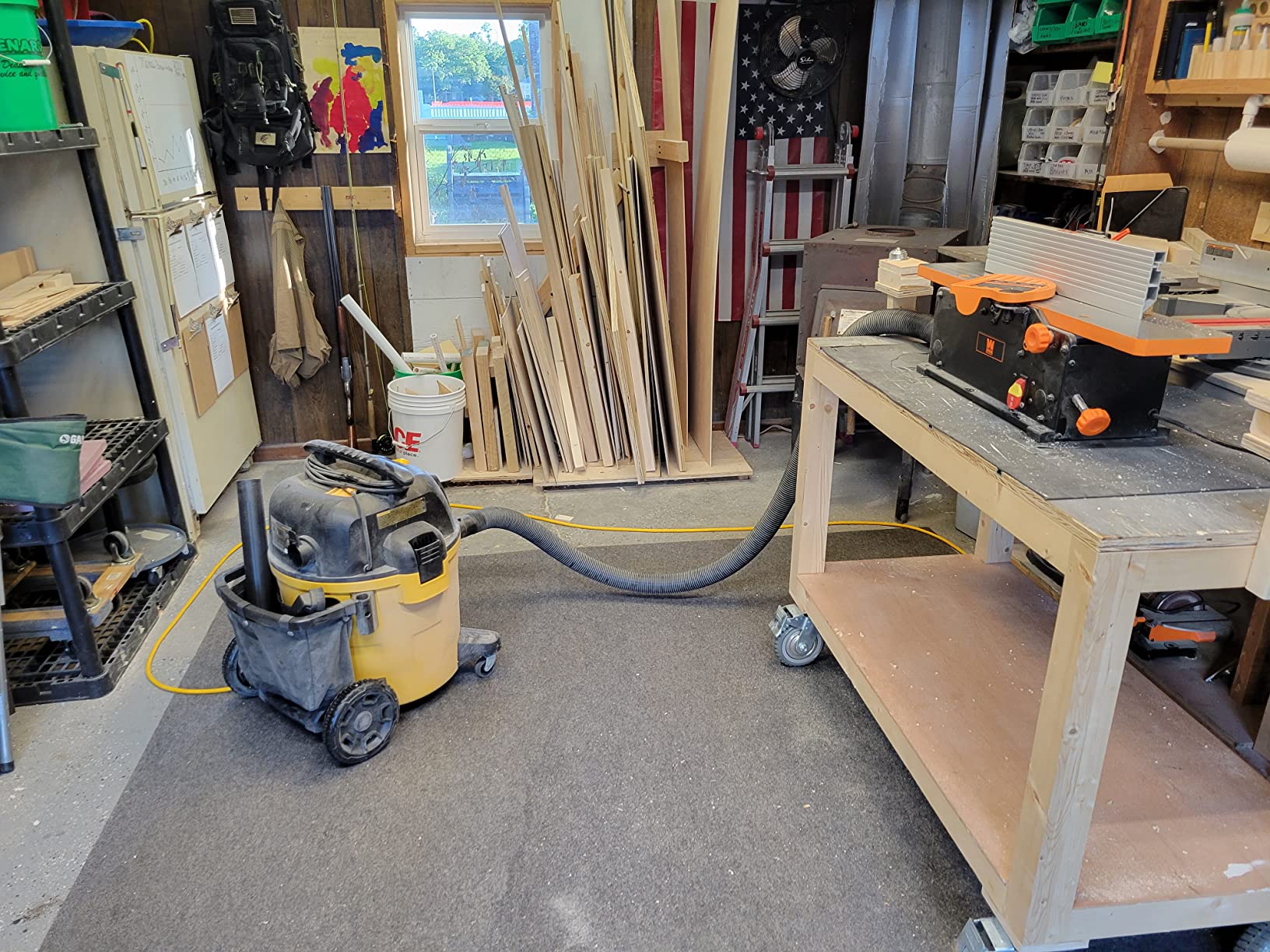
The 2-1/2 inch dust port also captures less than most shop vacs want, which is a common reason benches end up covered in shavings despite a vac running.
2. CRAFTSMAN CMEW020 Variable Speed Jointer – Best Dial for Different Woods
CRAFTSMAN Benchtop Jointer, Up to 22,000 cuts per Minute, 10 Amp, Corded (CMEW020)
6,000 to 11,000 RPM variable speed
Two-knife head with jackscrew leveling
Center-mounted 4-1/4-inch fence
10 amp corded motor
+ The Good
- Variable speed lets you match RPM to the material
- Center-mounted fence supports the whole cut
- Good dust pickup with a proper collector
- Quick to set up and square
- The Bad
- Short infeed and outfeed tables limit board length
- Two-knife head needs periodic knife leveling
- Some owners report motor failures
- Aluminum tables scratch with rough lumber
The CMEW020 is the only machine here with a genuine variable speed control, and that changes how you work. It spins from 6,000 to 11,000 RPM, so you can back the speed off on figured or soft stock and run it harder on dense hardwood.
It uses a two-knife straight cutter head with a jackscrew leveling arrangement, which is the traditional jointer design. That is a real maintenance trade-off against a spiral head, but it also means you can resharpen two cheap HSS knives instead of sourcing a full set of carbide inserts.
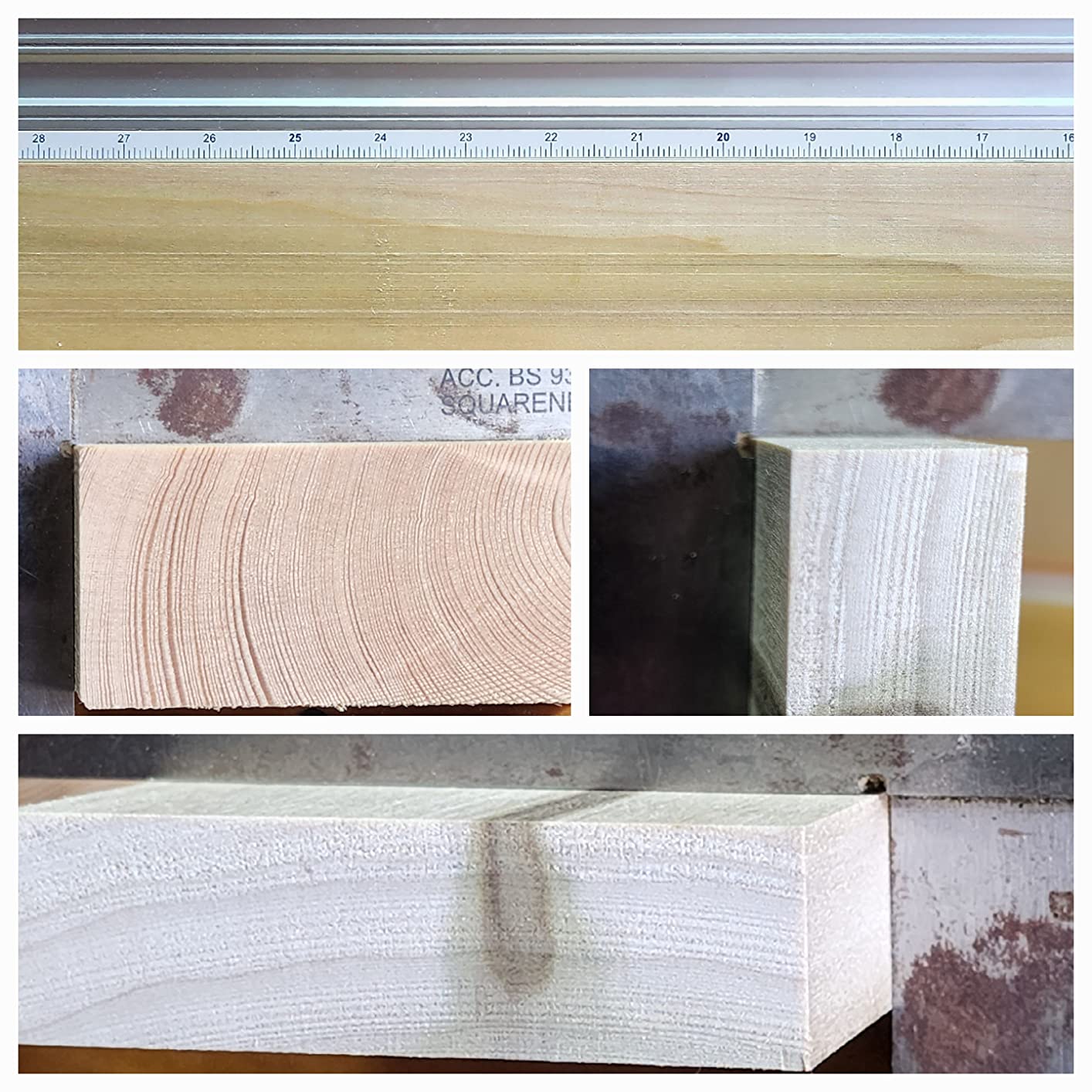
Owners report that setup and squaring take under an hour with a decent machinist square, which is faster than most in this roundup. The center-mounted 4-1/4-inch fence is genuinely useful because it supports the workpiece along its whole length rather than at one edge.
Dust collection is better than most machines at this size when you hook it to a shop vac or cyclone. The center-mounted fence also keeps narrow stock from tipping as it leaves the cutterhead.
Where the variable speed actually earns its keep
On pine and other soft stock, a lower RPM setting reduces the chance of burning and fuzzing the surface. Turn it up for hard maple or white oak and the 10-amp motor has more cutting force per tooth. For a shop that moves between materials, that flexibility is worth more than it sounds on paper.
The jackscrew knife leveling arrangement is the other reason experienced buyers like this one. Two knives means half the setting work of a four-knife head, and the screws are easy to reach.
Where the CMEW020 falls short
The short infeed and outfeed tables are the biggest constraint. Owners describe it as suited to boards around four to five feet long, which rules out long glue-up panels without auxiliary support.
A small number of owners report motor failure within months or years, and the blade guard can contact the knives under pressure. Check both before a long run.
3. Wahuda 50180CC 8-Inch Cast Iron Jointer – the Premium Pick
Wahuda Tools Jointer – 8-inch Benchtop Wood Jointer, Spiral Cutterhead Portable Jointer, Cast Iron Tables w/Pull Out Extensions, 4-Sided Carbide Tips & 10amp Motor, Woodworking Tools (50180CC-WHD)
8-inch cutting width
16 four-sided carbide inserts
Expandable cast iron tables
49.9 pounds
+ The Good
- Cast iron tables hold flatness better than aluminum
- Individual inserts rotate when nicked with no head leveling
- Noticeably quieter than two-blade designs
- Customer service sends replacement parts quickly
- The Bad
- Tables usually need hours of leveling out of the box
- Feed table drifts out of square and needs re-checking
- Fence finish needs frequent waxing
- Cast iron tables rust if they stay wet
The Wahuda 50180CC is the machine we would buy with cast iron tables in mind. Long-term owners across forums consistently report that cast-iron-table benchtop jointers hold alignment far better than aluminum-table models, and that the difference is worth the weight premium.
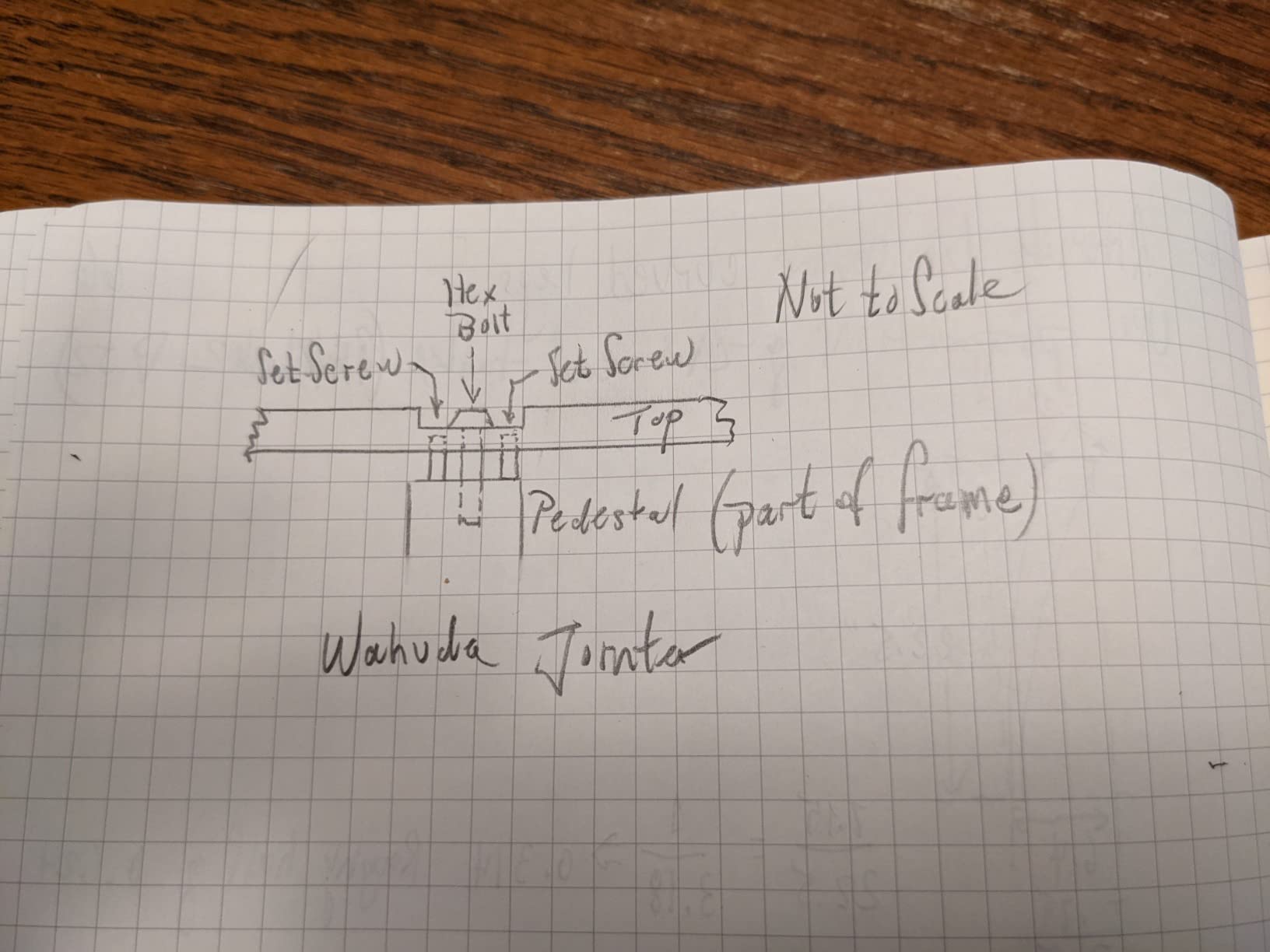
It also solves a problem most benchtop jointers create. The tables are adjustable and expandable, so pull-out extensions add reach for longer stock once you adjust the recessed set screws. That is a direct answer to the short-bed complaint that comes up constantly in shop forums.
The spiral cutterhead carries sixteen 4-sided carbide inserts. Each one rotates to a fresh edge when it nicks, and no head leveling is ever needed. The 120V motor runs at a fixed 12,000 RPM and handles edging, jointing, flattening, and tapering.
Owners also report it runs noticeably quieter than the two-blade machines in this roundup, which matters if you joint in a space that also serves as a living area.
Why the cast iron tables matter after month one
Aluminum tables move and scratch. Cast iron tables are heavier, hold their surface, and resist the marking that produces snipe. The tradeoff is rust, which owners flag as a real concern if wet boards sit on the surface overnight. Wipe the tables after use and this becomes a non-issue.
The fence tilts from 90 to 135 degrees and the machine weighs 49.9 pounds. Heavier benchtop jointers in this class are reported to sit stable on a workbench without bolting, which is worth something in a shop with a single bench.
Where the Wahuda asks more of you
Out of the box, the infeed and outfeed tables usually need hours of iterative leveling. This is the dominant experience in owner reviews and it reflects how cast iron arrives, not a defect.
The feed table also tends to drift out of square, so re-check it before use. The fence surface finish is not especially smooth and needs frequent waxing, and the plastic fence locking handles can strip if you overtighten them.
4. WEN JT833H 8-Inch Spiral Jointer – Best When Boards Run Wide
WEN JT833H 10-Amp 8-Inch Spiral Benchtop Jointer with Extendable Table
8-inch cutting width
16-blade spiral HSS cutterhead
33-by-8-inch table extending to 51 inches
2-1/2 and 4-inch dust ports
+ The Good
- Widest cutting width among the aluminum-table models
- Support arms add 18 inches of reach for long boards
- Dual dust port sizes fit most collectors
- No knife adjustments needed
- The Bad
- Shares the WEN fence design some owners find tricky to square
- Heavier and bulkier than the 6-inch models
- Spiral HSS blades still need sharpening
- Thinner long-term feedback than the 6-inch models
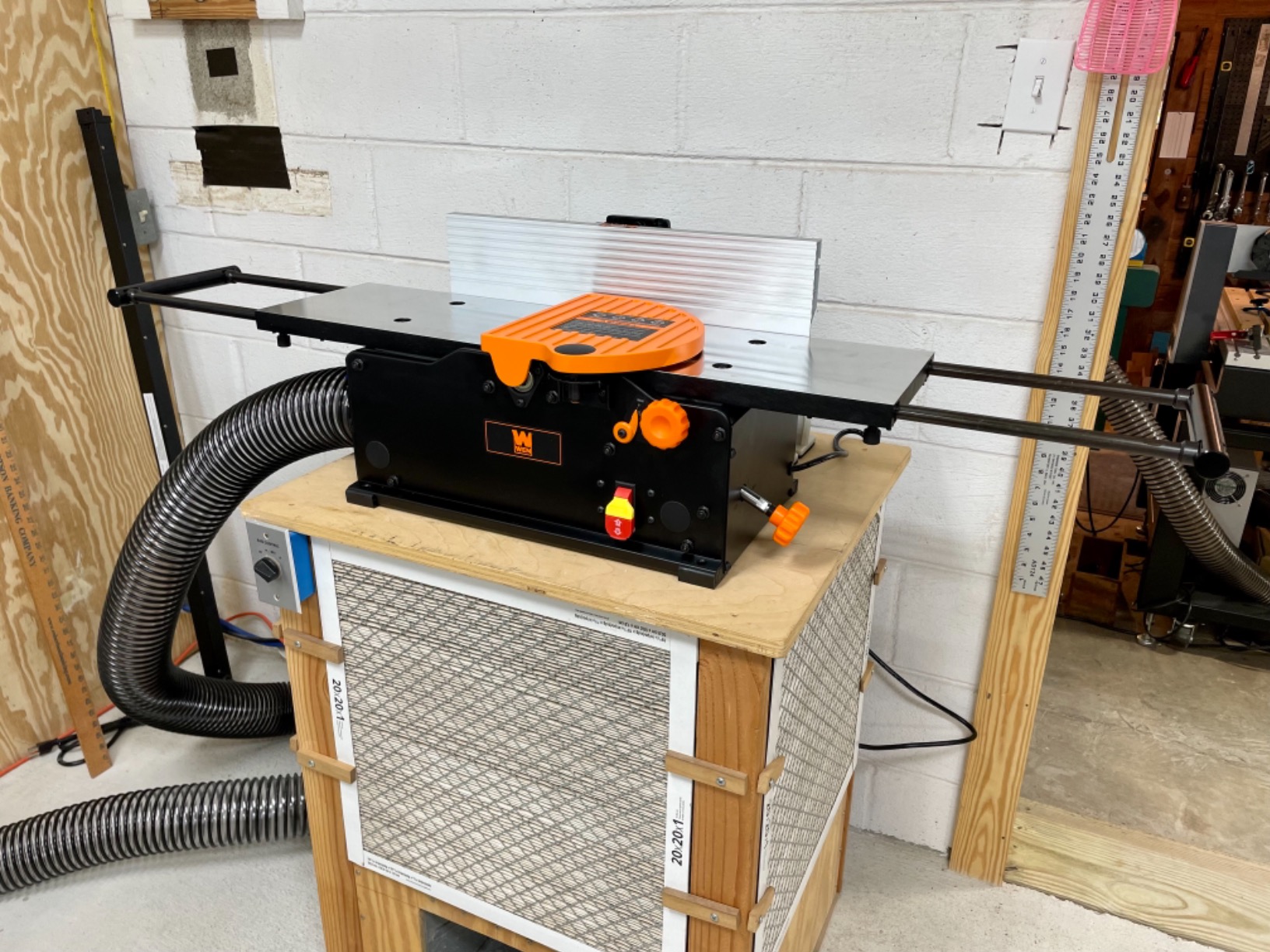
The JT833H is the 8-inch member of the WEN spiral-head benchtop line, and it inherits the cutting performance of the smaller models with more width and more reach. The 33-by-8-inch table includes support arms that extend out to 51 inches, adding 18 inches of support for longer boards.
That extension matters more than the width number. Most benchtop complaints come from boards tipping off the outfeed before they finish the cut, and the arms directly address it without turning the machine into a floor model.
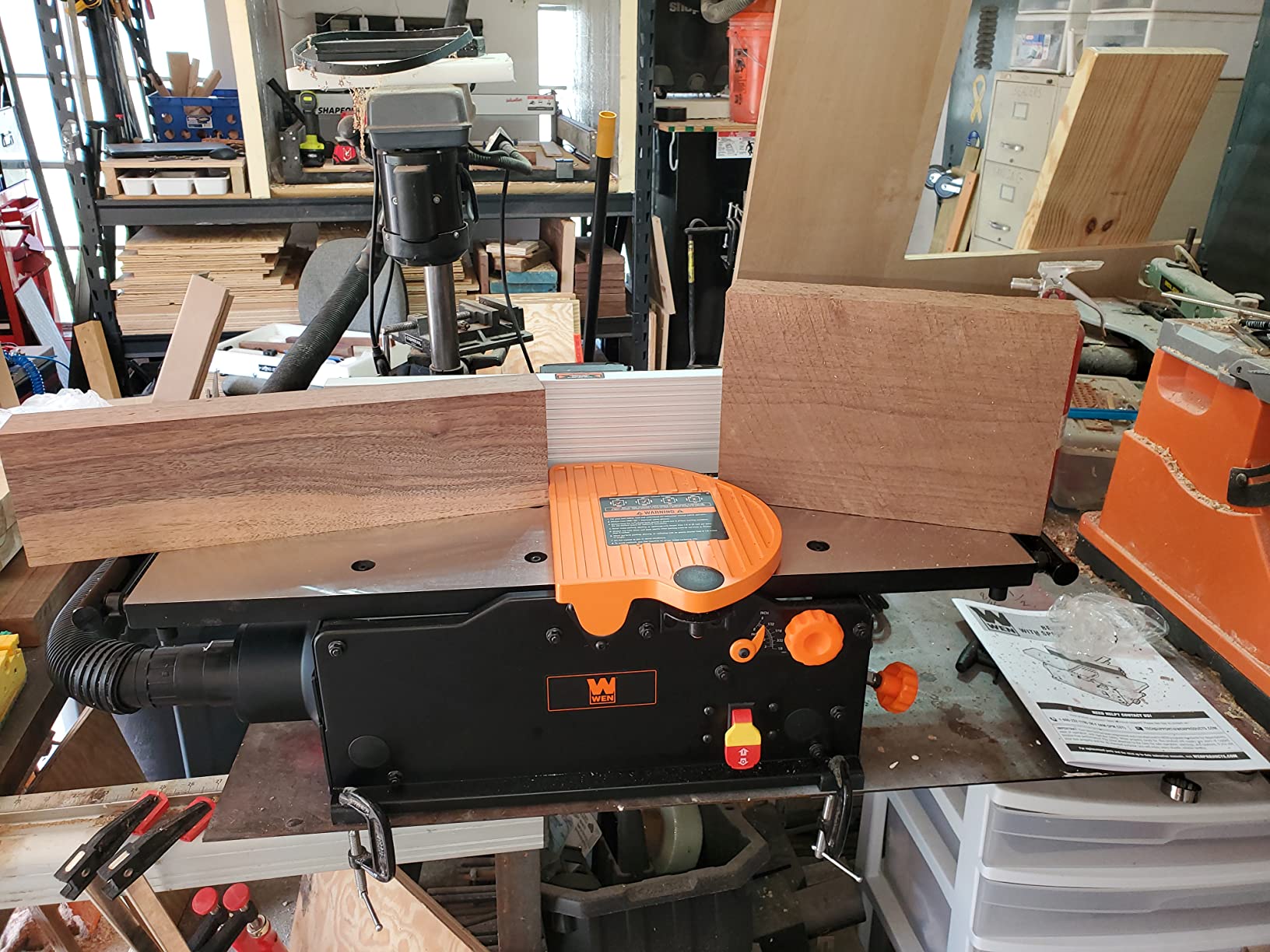
The 16-blade spiral HSS cutterhead gives a fine finish with no knife adjustments. It includes onboard depth-of-cut scale, two push blocks, and both 2-1/2 inch and 4 inch dust ports, so you are not stuck with an adapter.
The fence is the same 19-3/4 by 4-1/4-inch design that tilts up to 45 degrees, and it is the part of the machine owners most often criticize. Square it carefully and re-check it before each session.
When the extendable arms are the deciding factor
If the boards you buy are eight feet long, the support arms are the reason to pick this over a shorter-bed 8-inch machine. Boards that would tip and drop on a 34-inch bed stay supported through the cut here.
Dual dust ports are a small detail that pays off daily. A 4-inch port fits most canister collectors directly, and the smaller port is there for a hose adapter.
Where the JT833H is not the right call
It is heavier and bulkier than the 6-inch models, so it is less convenient to move around a small shop. In a one-car garage where the bench is also the storage location, that is a real cost.
Spiral HSS blades still need sharpening and periodic replacement, unlike carbide inserts that rotate. Review volume is also thinner than the 6-inch WEN models, so there is less long-term owner feedback to lean on.
5. WEN JT3062 6-Inch 2-Blade Jointer – Best for Beginners
WEN JT3062 10-Amp 6-Inch 2-Blade Benchtop Jointer, Black
6-inch cutting width
22,000 cuts per minute
30-by-6-3/16-inch table
Fence bevels to 45 degrees
+ The Good
- Level and square right out of the box in most owner reports
- 22000 cuts per minute with no motor bogging
- Fence slides laterally across different blade areas
- Highest rating among the WEN models
- The Bad
- Two-knife head requires knife leveling like a traditional jointer
- Plastic knobs and handles feel cheap
- Rougher than spiral-head models on figured wood
- Short table limits work to roughly four to five foot stock
The JT3062 is the pick for someone who has never used a jointer. Owners repeatedly describe it as level and square out of the box, and the 4.7 rating with 81 percent five-star reviews reflects how little setup friction people hit.
The 10-amp motor delivers up to 22,000 cuts per minute anywhere from 0 to 1/8 of an inch of depth. That is the highest figure in this roundup, and owners report no bogging on hardwoods.
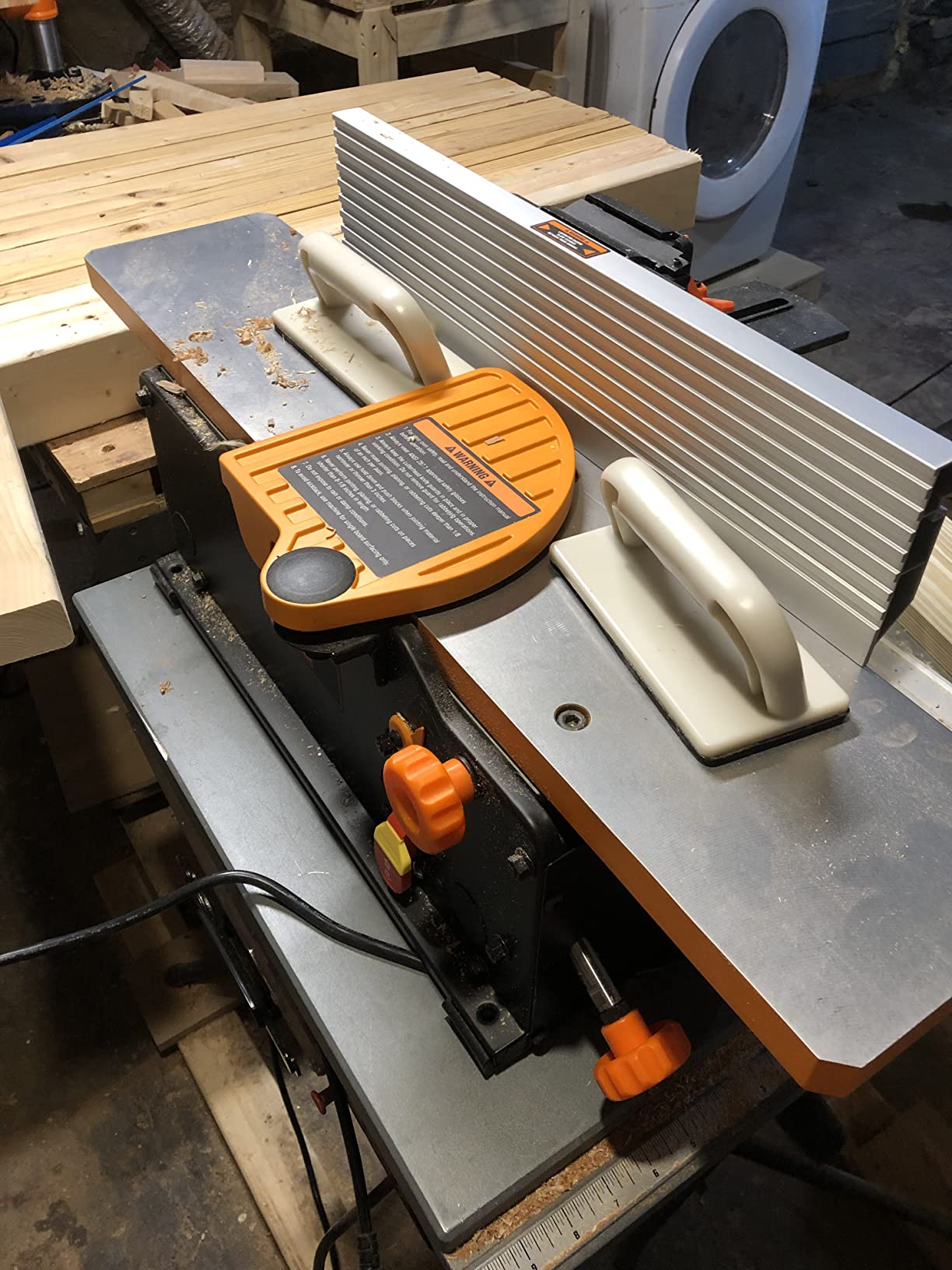
Two details stand out in day-to-day use. The onboard depth scale makes adjustments straightforward, and the fence slides laterally so you can move to different areas of each blade as the edges wear.
It comes with an onboard depth-of-cut scale, two push blocks, a 2-1/2 inch dust port, and a two-year warranty.
Why a straight-knife head is not a step backwards
A two-knife cutter head is the traditional jointer design and it teaches you the fundamentals. If you ever move to a full-size machine with four straight knives, nothing about the technique transfers differently.
The lateral fence slide also has a practical payoff. Rather than resetting the fence when one section of a blade dulls, you shift it and keep working.
Where the JT3062 will frustrate you
The knife head has to be leveled periodically, and that is the intimidating part of jointer ownership that spiral heads eliminate entirely. If you would rather never think about knife setting, choose a spiral machine.
Knobs and handles are plastic and feel cheap at the hand, and the finish is rougher than the spiral-head models with more chance of tear-out on figured wood. The shorter table limits you to roughly four to five foot stock.
6. Cutech 40180HI 8-Inch Cast Iron Jointer – the Most Stable
Cutech 40180HI 8-Inch Spiral Cutterhead Benchtop Jointer with Cast Iron Tables, 16 TC Inserts, Extra Long 24″ Aluminum Fence, Additional 7-3/8″ Fence Brackets, and a 10-amp Motor
8-inch cutting width
Six rows of tungsten carbide inserts
24-inch fence with 90 and 135 degree stops
82.8 pounds
+ The Good
- Cast iron tables arrive co-planar and factory calibrated
- Two-sided carbide inserts rotate individually when chipped
- Extra fence support brackets hold 90 degrees well
- Heavy build that does not shift during cuts
- The Bad
- 12000 RPM motor is loud under no load and needs hearing protection
- Fence alignment mechanism is crude and needs fine tuning
- Heaviest machine here at 82.8 pounds
- Styrofoam packaging did not always protect the tables
The Cutech 40180HI is the heaviest machine in this roundup at 82.8 pounds, and that weight is the feature. It does not shift during cuts, which removes the single most common complaint we heard about lighter benchtop machines walking across a workbench.
The cast iron tables arrive co-planar and factory calibrated in most units, so you skip the hours of iterative leveling that cast iron models usually demand. Owners highlight this directly as the reason setup felt straightforward.
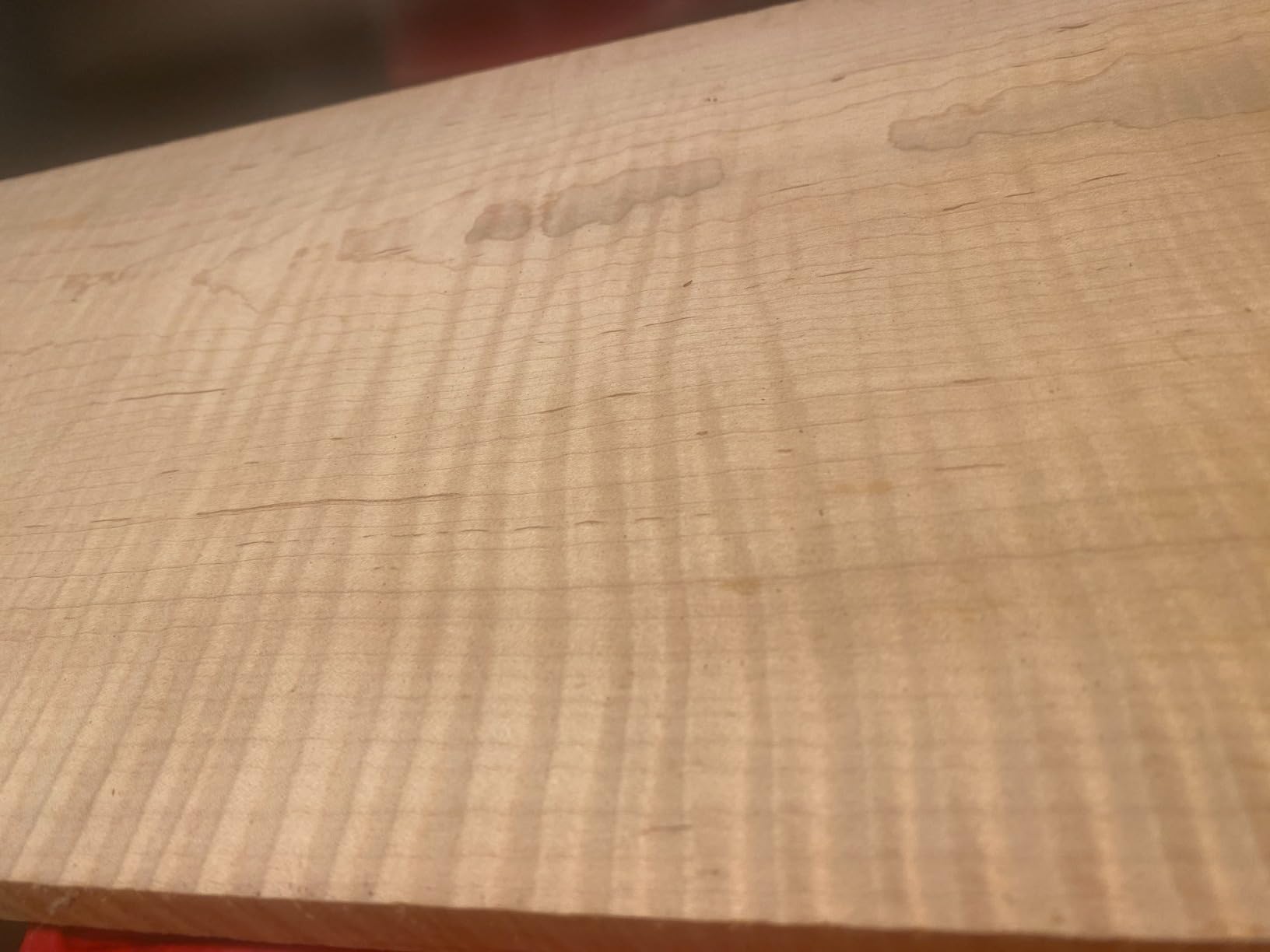
The cutterhead uses six rows of staggered tungsten carbide inserts. The two-sided inserts sit aligned to the spiral cutterhead with a non-cutting edge that prevents skewing while planing, and they rotate individually when chipped.
The fence system is genuinely different from every other machine here. The adjustable 24-inch aluminum fence comes with quick stops at 90 and 135 degrees, plus added fence enhancement brackets that stabilize both ends and hold 90 degrees well. An elevation control guide post keeps tables parallel at any depth.
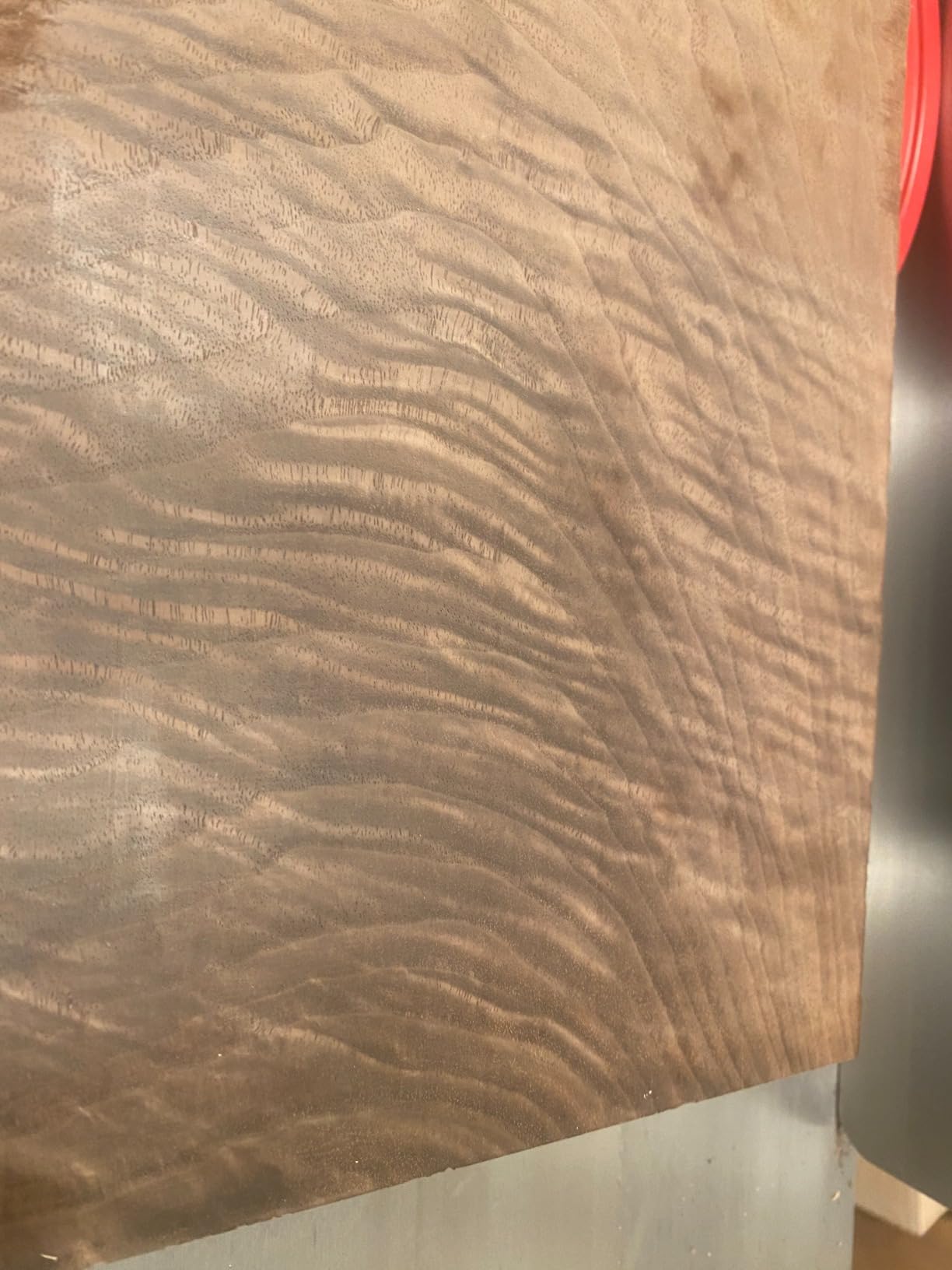
What the extra fence brackets fix
A short fence that is only supported at one end drifts as you push stock through it, and that drift is the source of most fence squareness complaints. The brackets on this model support both ends, which owners credit with holding 90 degrees reliably.
The 24-inch fence length also gives more contact area than the 19-5/8 and 19-3/4 inch fences in this group, which helps on wider workpieces.
Where the Cutech 40180HI gets heavy
At 82.8 pounds it is not easy to reposition, and in a small shop that is not a one-time cost. You plan where it lives rather than where it goes.
The 12,000 RPM universal motor is loud under no load, so hearing protection is required. The fence alignment mechanism is described as relatively crude and needs fine tuning to hit 90 degrees, and some owners found the styrofoam packaging did not fully protect the tables in transit.
7. Cutech 40160HB 6-Inch Teflon Jointer – the Best Value
Cutech 40160HB 6-Inch Spiral Cutterhead Benchtop Jointer with teflon-Coated Aluminum Tables, 12 TC Inserts, 19-5/8” Aluminum Fence, and a 10-amp Motor (Rifle Green, 6 inch)
6-inch cutting width
Teflon-coated 6H aluminum tables
12 two-sided carbide inserts
44.2 pounds
+ The Good
- Teflon-coated tables resist the scratching that ruins plain aluminum
- Spiral cutterhead is quiet and beginner friendly
- Two-sided inserts are cheap and quick to swap
- Reasonable 44-pound weight for this class
- The Bad
- Only 59 reviews
- the second-smallest owner base in this group
- Short 6-inch bed limits width and usable board length
- Aluminum tables still mark under heavy use
- Cuts hard wood more slowly than cast iron table models
The 40160HB carries the highest average rating in this roundup at 4.8 stars with 83 percent five-star reviews. Its rifle green finish also sets it apart visually from every other machine here, which is a small thing but a real one in a shop where everything else is grey.
The 6H Teflon coating on the table surface reduces scratches and extends table life. Given that scratching is the most common complaint about aluminum-table benchtop jointers, the coating attacks the actual problem rather than hiding it.
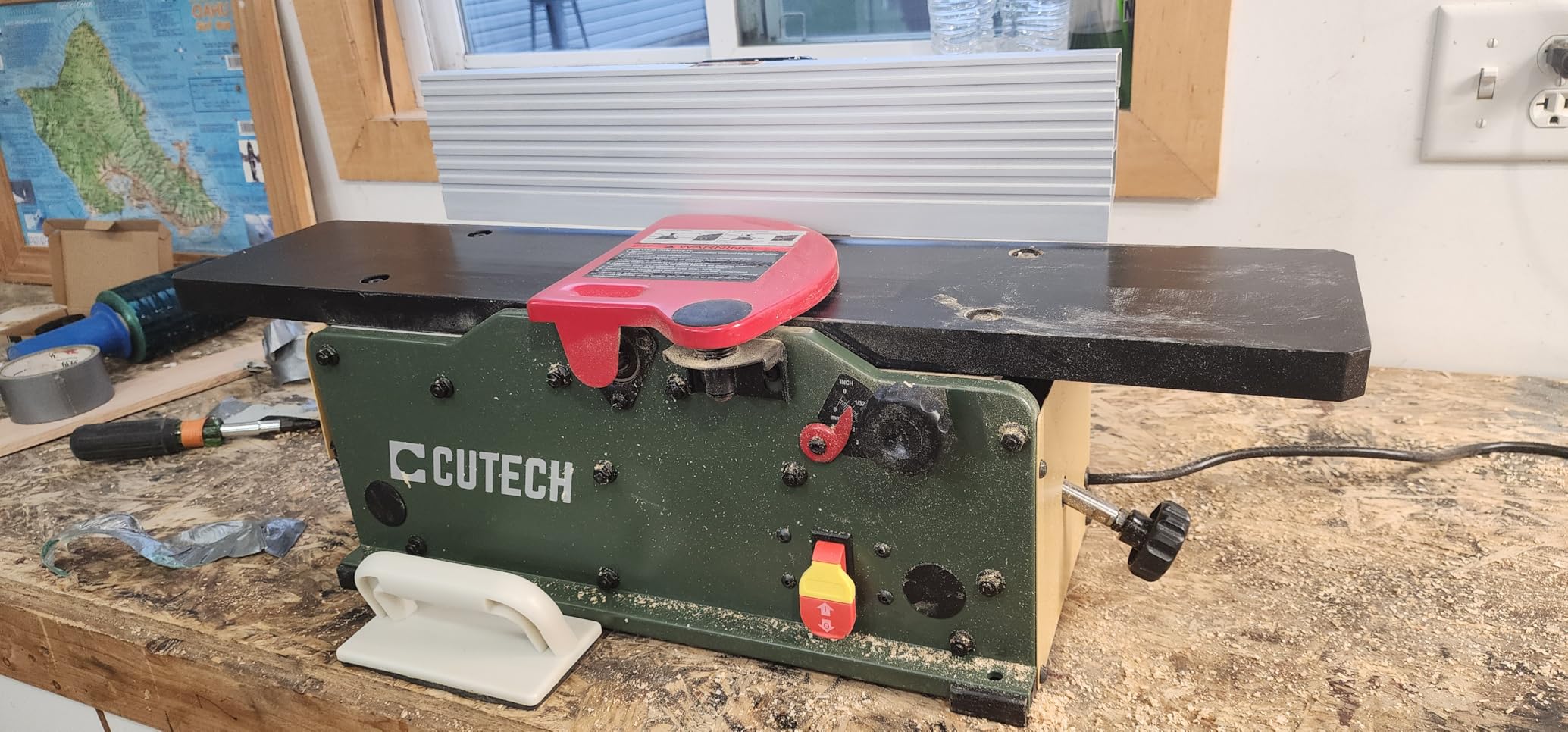
The cutterhead uses six rows of staggered inserts with a non-cutting edge designed to prevent skewing while planing. Owners describe it as quiet and beginner friendly while still producing a smooth finish, and the inserts are cheap and quick to swap when chipped.
A depth of cut pointer with a clear, accurate scale helps you make precise measured cuts, and the 19-5/8 inch fence has quick stops at 90 and 135 degrees.
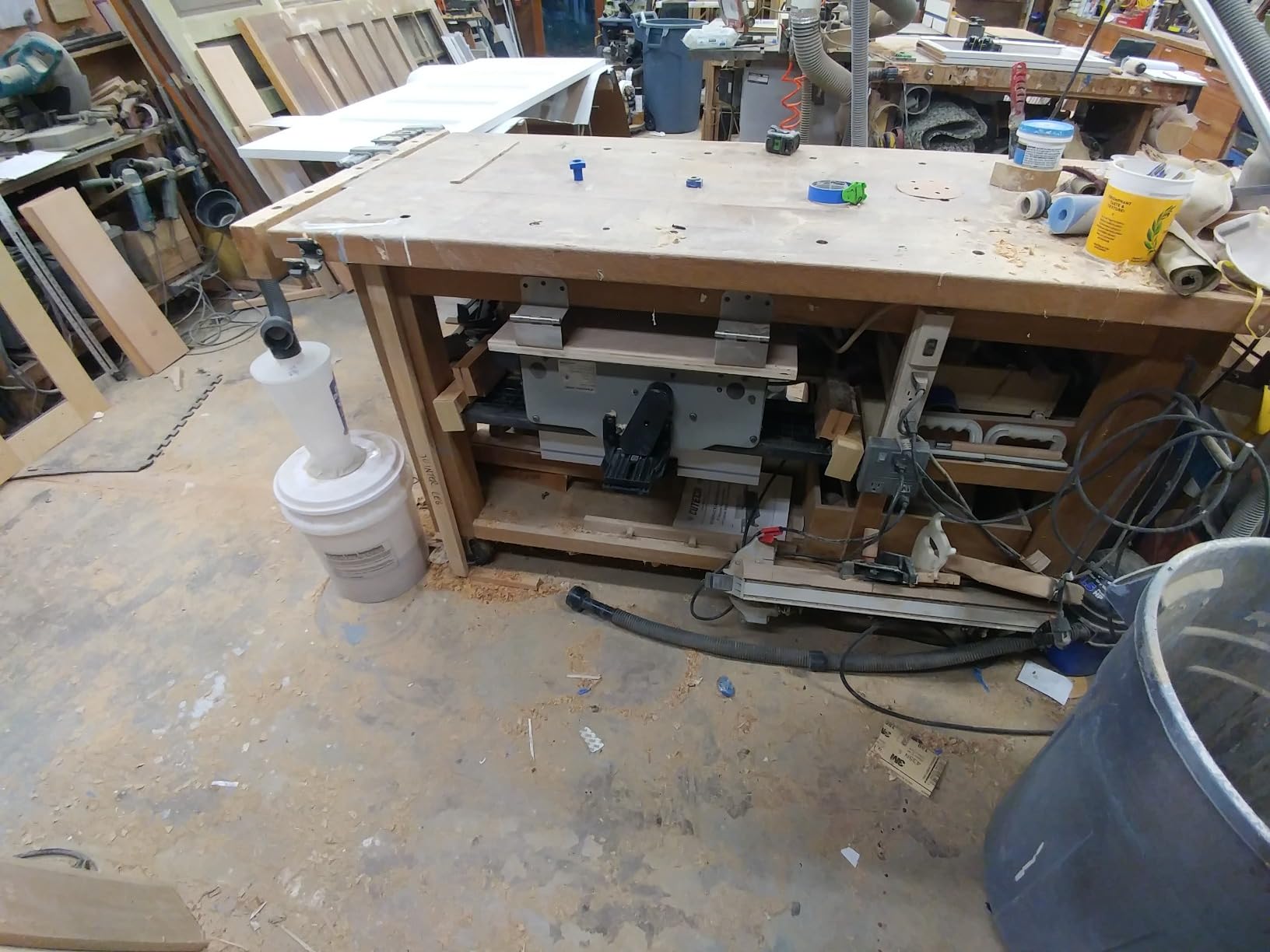
What the Teflon coating is worth
Micro-scratches on an aluminum table cause snipe at the end of a cut, which shows up as fine chatter lines on the jointed surface. A coated surface resists the scratch that creates it, so your finish stays cleaner with rough boards sliding across.
At 44.2 pounds it sits in the middle of this group on weight. That is stable enough for most bench work without being so heavy that repositioning becomes a chore.
Where the Cutech 40160HB falls short
With only 59 reviews it has the second-smallest owner base in this roundup, so long-term reliability is less proven than the WEN and Wahuda machines. Judge the category by the numbers we give and not by the star rating alone.
The short 6-inch bed limits both width and usable board length. The aluminum tables still mark under heavy use despite the coating, and it cuts hard wood more slowly than the cast iron table models.
8. WOODSTARTER BJ12K 6-Inch Jointer – the Budget Pick
WOODSTARTER 6-Inch Benchtop Jointer with 15 Amp Motor, 12000 RPM Cutting Speed, Adjustable Fence 90–135°, Up to 1/8″ Depth, HSS Blades, Table Jointer To for Woodworking DIY
6-inch cutting width
15 amp motor at 12,000 RPM
21 pounds
1 year manufacturer warranty
+ The Good
- Lowest cost in the roundup with a 15 amp motor
- Lightest machine here at 21 pounds so it is easy to carry and store
- Fence tilts from 90 to 135 degrees
- Includes dual HSS knives and an installation guide
- The Bad
- Only 21 reviews
- the smallest owner base in this roundup
- Straight HSS knives need sharpening and leveling rather than rotatable inserts
- 22.9 inch footprint limits board length
- Only a one-year manufacturer warranty
The BJ12K is the cheapest way into benchtop jointing, and at 21 pounds it is by far the lightest machine here. If your shop is a shed or a closet workshop where floor space and carrying weight decide everything, that portability has real value.
On paper the motor is the most impressive spec in the group. It is a 15 amp unit running up to 12,000 RPM with adjustable cutting depth up to 1/8 inch, which is more amp draw than anything else in this roundup.
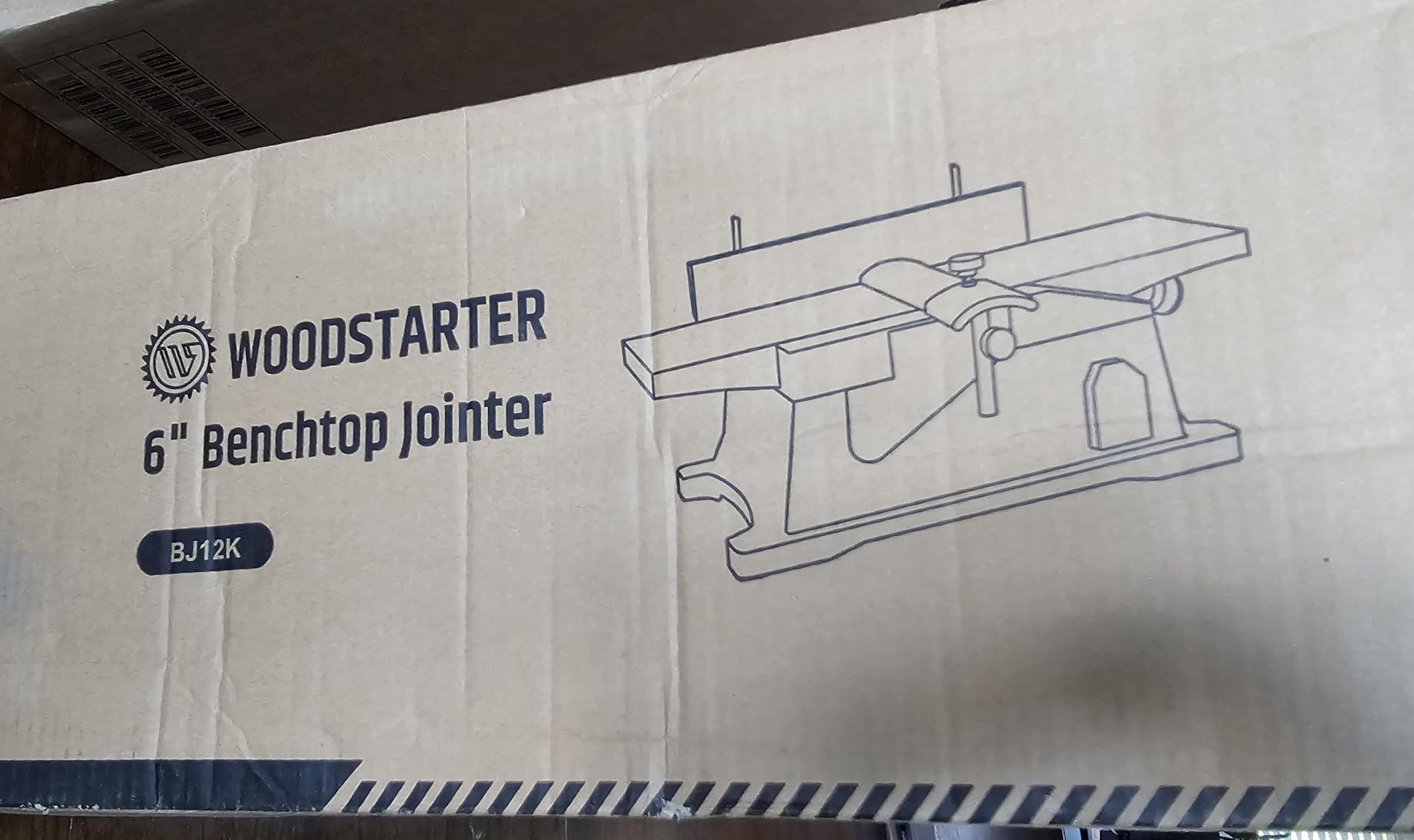
The fence tilts from 90 to 135 degrees for bevel work, and it ships with dual high-speed steel knives plus an installation guide for quick setup. The overall footprint is 22.91 inches long by 12.99 inches wide by 11.54 inches high.
Owner feedback is thin but positive on the power-to-size ratio and how easy the machine is to move and store in a small workshop.
When the 21-pound weight decides the purchase
Every other machine in this roundup needs a sturdy bench or a stand. At 21 pounds this one can be picked up by one hand, carried to a rental space, or set on a folding table for a weekend project. Nothing else here works that way.
The 15 amp motor is the one spec that suggests real headroom on dense hardwoods, which is where lighter 10-amp machines tend to bog down.
Where the budget pick gives ground
Twenty-one reviews is the smallest owner base in this roundup, so long-term reliability is unproven. Treat this as a first jointer you might outgrow rather than a machine you build a shop around.
The straight HSS knives require sharpening and leveling instead of rotatable carbide inserts, the compact 22.9 inch footprint limits board length, and the warranty is only one year. The nylon and aluminum construction is lighter duty than the cast iron table models.
Should You Actually Buy a Benchtop Jointer in 2026?
Benchtop jointers are worth it when your boards are under about 8 inches wide, your stock is mostly rough-sawn lumber that needs flattening, and floor space is the constraint. They are not worth it if you regularly work with wider boards, run production work, or can fit a cabinet jointer.
How to choose the right cutting width
Choose a 6-inch jointer if your material is furniture-scale: table legs, shelves, small boxes, cutting boards, and trim. Owners with 6-inch machines report that 6 inches genuinely covers most hobby furniture work. Choose 8 inches only when your lumber routinely runs past 6 inches, because you can always get the same result on a 6-inch machine by taking two passes.
Wider is not better. Ten- and twelve-inch benchtop jointers are widely seen as a poor compromise, since the same capacity can be had by making two passes on a 6-inch machine.
Spiral cutterhead or straight knives
A spiral cutterhead uses staggered inserts or blades so each tooth shears a thin slice instead of pulling a full shaving. That is why spiral-head owners report dramatically less tearout on figured hardwoods and never have to set knives. Straight knives are the traditional design: cheaper to maintain in blade cost, but they need periodic leveling and they tear out more on figured stock.
Note the wording. The WEN machines in this roundup use spiral HSS blades, which still need sharpening. Carbide inserts rotate four or sixteen times before replacement, which is the lower-maintenance option over a decade of ownership.
Cast iron, aluminum, or Teflon-coated tables
Cast iron tables hold alignment better over time and resist the scratching that produces snipe, but they weigh more, need leveling out of the box, and will rust if left wet. Aluminum tables are lighter and easier to move but develop micro-scratches. Teflon-coated aluminum resists marking without the cast iron weight penalty.
If you value long-term flatness, choose cast iron. If you move the machine around a lot, choose aluminum.
Motor power and depth of cut
Most machines here run a 10 amp motor, and the ones that bog down do so on deep cuts in dense hardwoods like hard maple and white oak. Take 1/16 inch per pass rather than the full 1/8 inch, even on a capable motor. Variable speed, which only the CRAFTSMAN offers in this group, lets you match RPM to the material.
Fence quality and squareness
Fences drifting out of square after adjustment is the single most repeated complaint across every brand, so treat the fence as consumable maintenance rather than a set-and-forget component. A center-mounted fence supports the workpiece along its full length and improves accuracy. Fence brackets that support both ends, like the ones on the Cutech 40180HI, cut down on drift further.
Dust collection
Dust collection is largely inadequate in this class. A 2-1/2 inch port does not capture the bulk of chips, leaving the bench covered in shavings and pitch building up on the cutterhead. If your shop vac hose does not match, budget for an adapter. The WEN JT833H and the 4-inch-port machines are easier to connect to a canister collector.
Noise and hearing protection
Noise depends more on the cutterhead and motor than on the brand. Straight-knife machines are louder per tooth, and the 12,000 RPM universal motor in the Cutech 40180HI is loud under no load. Wear hearing protection for any of them, especially in a shared space.
Footprint, weight, and what to put the jointer on
Weight ranges from 21 pounds to 82.8 pounds in this roundup. Machines in the heavier half of that range sit stable on a workbench without bolting, while lighter models may walk during hard cuts. If yours is light, bolt it down.
Every benchtop jointer also needs something underneath it. A purpose-built open stand or a rolling cart is not optional, and its cost is often a significant fraction of the machine cost. Plan for a stand sized to the jointer weight before you order, and check the stand height against your own standing height at the bench.
When a used cabinet jointer is the better buy
Many owners report that a used 6×48 cabinet jointer from the 1980s or 1990s is both cheaper and better than a new benchtop jointer, if the shop can find floor space for it. That is the strongest argument against everything on this list, and it is worth weighing honestly before you buy.
The catch is floor space and moving weight. A cabinet jointer is several hundred pounds on a stand and will not go up on a bench. If you have the room, the argument holds. If you do not, a benchtop machine beats no jointer at all.
Two other categories solve problems this roundup does not. Short-bed models like the Grizzly G0452Z are recommended in very tight shops where floor space, not capacity, is the binding constraint. Flip-top outfeed designs such as the RIDGID JP0610 are repeatedly singled out as the feature that solves the long-board problem on a small jointer.
Setup, First Cuts, and Safe Operation
Every machine in this roundup arrives needing attention. Budget an afternoon for the first setup and a machinist square or straightedge, and expect to repeat the squaring check every few weeks.
Five checks before your first cut
First, confirm the infeed and outfeed tables are parallel with a precision straightedge across the tables at the cutterhead, and adjust until a straightedge rocks evenly. Second, square the fence to the tables with a machinist square, checking the front and rear edges separately. Third, verify the cutterhead or knives spin true with a marked board test.
Fourth, make sure the jointer is bolted to the bench if it weighs less than about 45 pounds. Fifth, hook up dust collection and confirm airflow before you start, because shavings work their way into the fence mechanism fast.
Fixing tapers and out-of-parallel tables
A taper on a jointed edge almost always means out-of-parallel tables. Loosen the table lock, set a dial indicator or straightedge on the outfeed table, and raise or lower the infeed in small increments until the straightedge rocks evenly across both tables. Square the fence again afterward, since changing table height moves the reference surface. Then cut a test board and measure both edges against a square before you trust the setting.
Face first, then edge
Joint the face first and the edge second, every time. Edge jointing first means the workpiece can shift on a surface that is not yet flat, and you will chase a problem that does not exist. Take 1/16 inch per pass on rough boards and light outfeed pressure to keep the workpiece moving rather than being pushed into the cutterhead.
On narrow boards, hold the workpiece firmly against the fence with one hand and use a push block on the infeed side. Never reach over the cutterhead, and never pull a workpiece back against the cut.
Frequently Asked Questions
Are benchtop jointers worth it?
Benchtop jointers are worth it when your boards are under about 8 inches wide and floor space is the constraint. They flatten faces and square edges on rough lumber at a fraction of the size, weight, and cost of a cabinet jointer. They are worth skipping if you regularly work with wider boards or can fit a floor model.
Are benchtop jointers any good?
Yes, in the right size. The machines in this roundup hold a 4.4 to 4.8 average rating, cut cleanly on common hardwoods, and use spiral cutterheads that need no knife setting. Their real limits are short beds, table scratch maintenance, and fence squareness that needs re-checking.
What size jointer should I get?
Choose a 6-inch jointer for furniture-scale work such as legs, shelves, boxes, and cutting boards. Choose 8 inches only if your lumber routinely runs wider than 6 inches. You can always take two passes on a 6-inch machine to get the same result, so wider is not automatically better.
Who makes the best benchtop jointer?
Among the eight machines reviewed here, WEN offers the best-supported spiral-head platform, Cutech and Wahuda build the strongest cast iron table models, and CRAFTSMAN is the only one offering variable speed. Note that Cutech and Wahuda jointers are widely understood to come from the same manufacturer, so compare table material rather than paying a large premium between the two names.
Why does my jointer cut tapers?
A taper almost always means the infeed and outfeed tables are out of parallel. Place a precision straightedge across both tables and raise or lower the infeed in small increments until the straightedge rocks evenly. Re-square the fence afterward, because changing table height moves the reference surface the fence is set against.
Can plywood go through a jointer?
You can joint the edges of plywood safely, but do not run sheet goods across the cutterhead face. Ply veneers are thin and prone to tearout on both faces. Break the edges first, then use a sharp blade with minimal depth of cut for a clean result.
Do benchtop jointers need to be bolted down?
Light machines should be. Models in the 21 to 45 pound range can walk across a workbench during hard cuts, so bolt them down or place them on a stand with good grip. Heavier cast iron and cast iron style machines in the 50 to 83 pound range are generally stable on a bench without bolting.
What is the best benchtop jointer for a home shop?
For most home shops, a 6-inch spiral-head machine is the right answer, and the WEN JT630H is the strongest all-around pick in this roundup with the largest reviewed owner base. Beginners who want to avoid knife setting should look at the Cutech 40160HB, and shops with wider stock should consider the Wahuda 8-inch cast iron model.
Final Verdict for Small Shops
The best benchtop jointers for small shops are the WEN JT630H for most people, the Wahuda 50180CC for wider boards and cast iron tables, and the Cutech 40160HB for a beginner who wants quiet, knife-free cutting in a small footprint. Those three cover the majority of the shops we hear from.
Beyond those, match the machine to the constraint. Lighter shops that need to move a jointer around should look at the WOODSTARTER BJ12K at 21 pounds. Shops with wide lumber and a need for flatness that holds over years should look at the Cutech 40180HI. Shops that want to match cutter speed to the material should look at the CRAFTSMAN CMEW020, the only variable-speed machine here.
Before any of them, check whether your shop can hold a used cabinet jointer. If it can, that is often the better machine and it costs less. If it cannot, one of these eight will serve you well, and the differences above will make the choice easy.
Pair it with the rest of a small shop and our picks for the best benchtop belt sanders, best benchtop band saws, and best benchtop drill presses cover the machines that sit next to a jointer on most benches.