
Most city crashes are not head-on. They are angled: a car door opening into a wheel, a glancing hit from a turning vehicle, a front-wheel lock-up on wet paint, a low-speed tip at a junction where the tarmac meets a kerb. That is exactly the kind of impact MIPS was built for, and it is why the best bike helmets with MIPS for commuters sit at the top of this list rather than in a niche gear drawer. We picked ten that suit daily urban riding, from an entry-level budget shell to a premium unibody road lid, and every one of them carries a CPSC or ASTM certification plus a rotational-impact layer.
MIPS, short for Multi-Directional Impact Protection System, is a low-friction band that sits inside the helmet and can slide up to roughly 10-15mm across the shell during an oblique blow. That sliding motion lets the shell and liner do their normal job of stopping straight-on force while the head twists less inside the skull. You still need a certified helmet either way; MIPS is an added layer, not a substitute.
What separates this roundup from the dozens of generic helmet lists is the filter. We only counted helmets that a person would wear from a front door to an office and back, five to thirty miles a day, in rain or summer heat, then unclip and store in a bag or locker. That rules out full-face and downhill-only designs, leaves out anything a commuter would peel off at the first red light, and pushes weight, ventilation, strap quality and low-light visibility up the list. We also looked hard at fit systems, because a helmet that rotates on a commuter rider’s head protects nobody. If you are curious how a snow helmet or a welding helmet differs from a cycling lid, our ski helmet guide covers that side of the category, though nothing there suits a bike rack.
Top 3 MIPS Helmets for Daily City Riding for October 2026

Giro Fixture MIPS
- › Integrated MIPS slip plane
- › Roc Loc Sport dial
- › Adjustable visor
- › Reflective details
Giro Agilis MIPS
- › Integrated MIPS slip plane
- › Roc Loc 5 dial
- › Hardshell lower wrap
- › Wind Tunnel vents
Best Bike Helmets With MIPS for Commuters in October 2026
| PRODUCT MODEL | KEY SPECS | BEST PRICE |
|---|---|---|
|
|
Check Latest Price |
|
|
Check Latest Price |
 |
|
Check Latest Price |
 |
|
Check Latest Price |
 |
|
Check Latest Price |
 |
|
Check Latest Price |
 |
|
Check Latest Price |
 |
|
Check Latest Price |
 |
|
Check Latest Price |
 |
|
Check Latest Price |
1. Giro Fixture MIPS Helmet – Best Bike Helmet With MIPS for Most Commuters
Giro Fixture MIPS Bike Helmet – Matte Black/Grey – Universal Adult (54-61 cm)
Integrated MIPS slip plane
Polycarbonate shell over EPS foam
Roc Loc Sport one-handed dial
54-61 cm universal sizing
+ The Good
- MIPS slip plane built into the fit system
- Light and cool for long rides
- One-handed dial with 7 cm adjustment range
- Adjustable visor plus reflective details
- Universal sizing fits most adults out of the box
- The Bad
- Visor is short and only partly blocks sun
- Wind noise is still noticeable at speed
- Basic buckle rather than a magnetic fastener
This is the helmet I put on riders who ask me for a single recommendation, and the most recent owner feedback lines up with the retail numbers: 4.8 stars across more than five thousand ratings, with the fit dial, not the MIPS layer, doing most of the praising. That makes sense. Integrated MIPS, where the slip plane is stitched into the same structure as the retention system, means there is no loose band to shift around inside the shell as you ride.
What I notice over a week of daily use is the dial. The Roc Loc Sport system adjusts one-handed with 7 cm of range, which means you can dial the helmet in at the kerb in the rain instead of fumbling with webbing. The shell is polycarbonate fused to impact-absorbing foam, so it is light and cool without feeling thin, and reflective details help in low light.
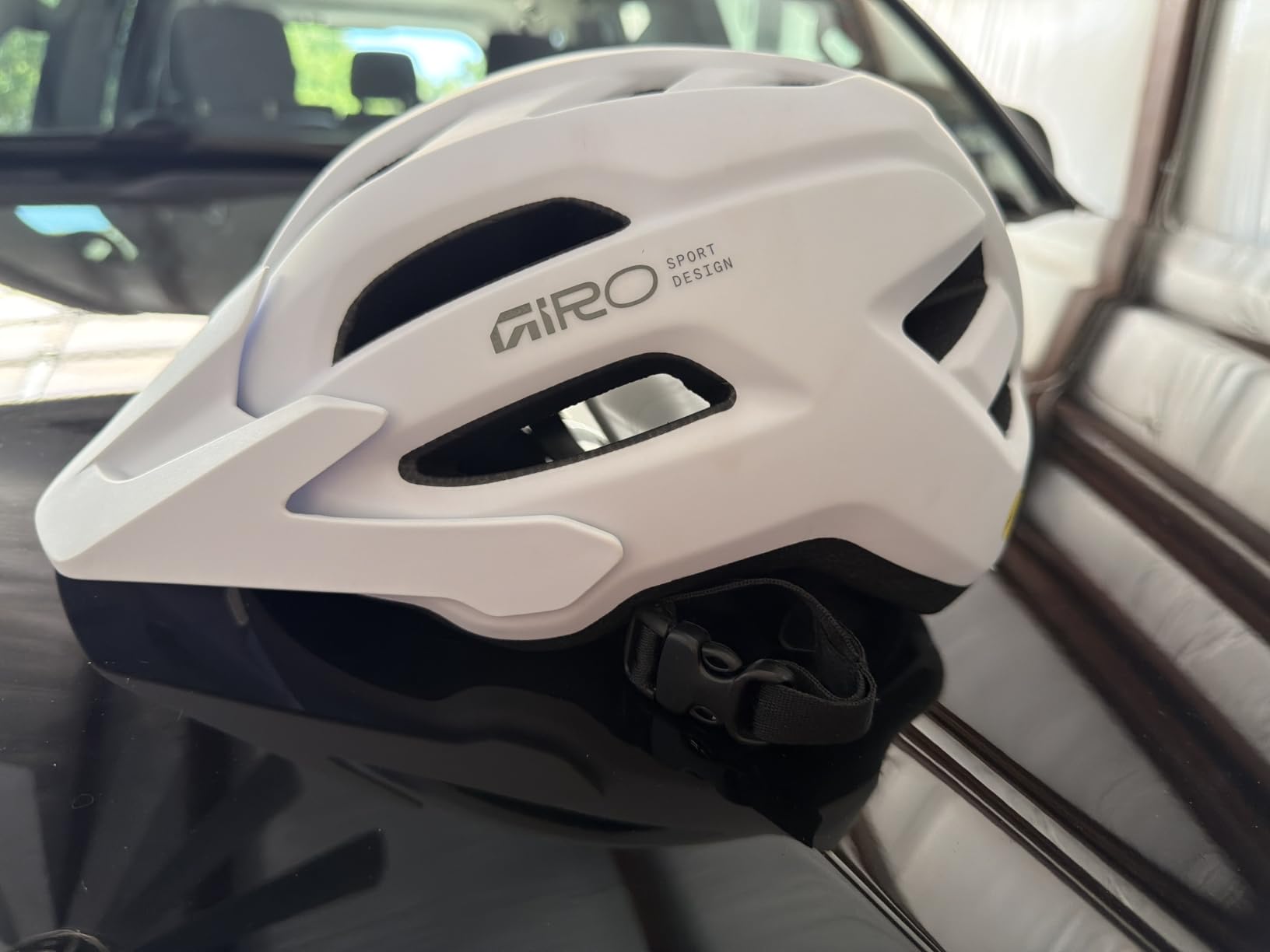
The MIPS story here is worth stating plainly for anyone still on the fence. This is not a marketing sticker. The slip plane is designed to reduce rotational forces and it is integrated with the fit system, so as the head rotates on an angled impact the layer slides and spreads energy instead of passing it straight through.
The two complaints that come up repeatedly are the visor, which reviewers describe as short and only a partial sun shield, and residual wind noise through the vents at speed. Neither is a safety issue, and both are cheaper to live with than a hot head or a poor fit.
What the dial does for a long commute
A one-handed retention system matters more on a bike than in a showroom, because you will be adjusting the helmet with gloves on, in the dark, or while holding a coffee. This one handles all three. It also has ponytail compatibility, which riders with longer hair consistently mention as the reason a road helmet works or does not work for them.
The visor is adjustable rather than fixed, so you can drop it out of the way when you want full vent airflow and pull it forward for low sun. It is not a sun hat, but it takes the glare off a direct morning commute on an east-west route.
Where it falls short
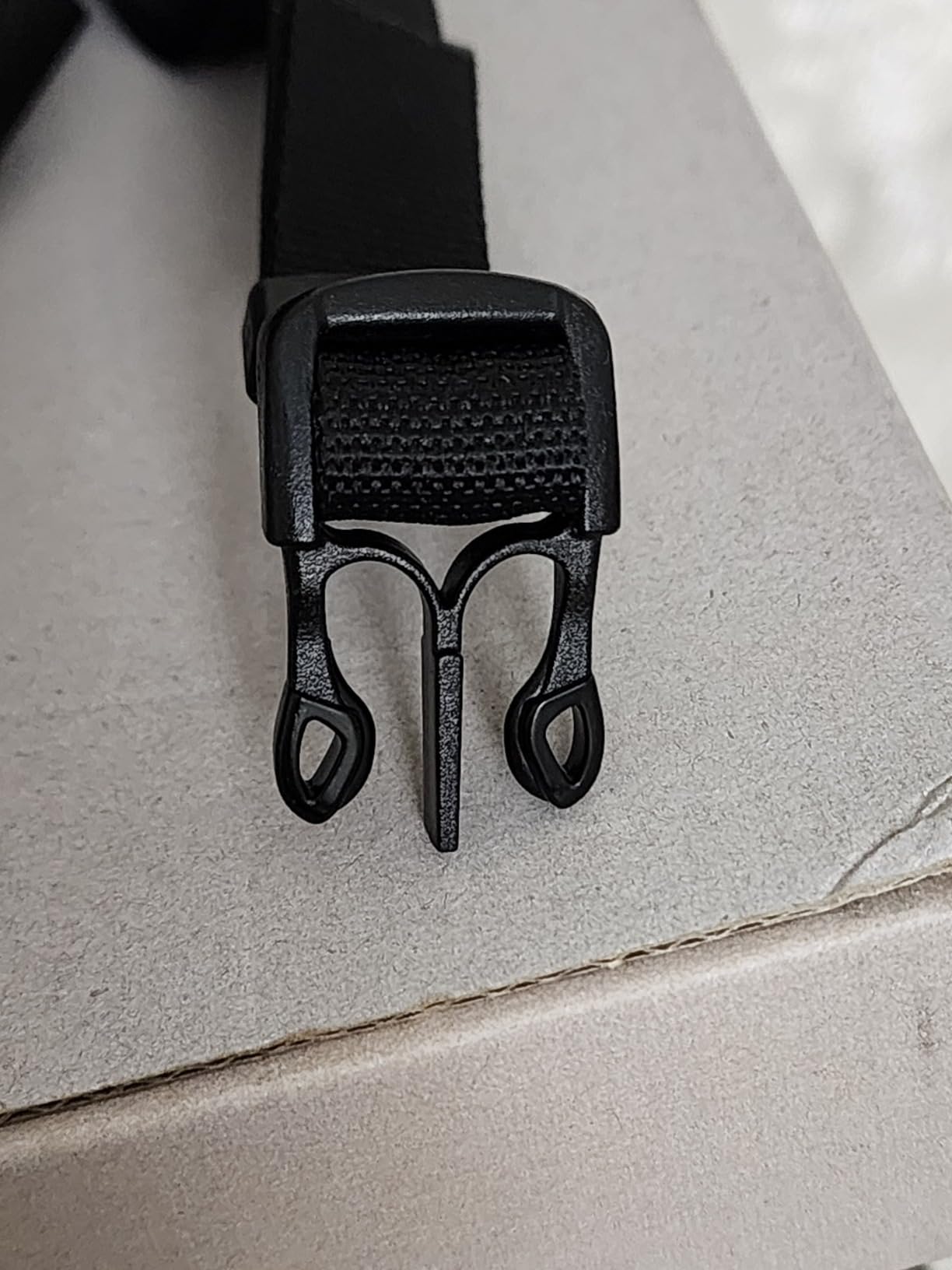
The buckle is a conventional side-release, not the Fidlock magnetic buckle found on higher-end lids. You will need two hands when you are fully stopped at a light, and a magnetic buckle is a genuine upgrade if you often ride one-handed on the bars. Wind noise at commuting speeds is mild but present, and the short visor is the one place where this helmet gives ground to a road-oriented model.
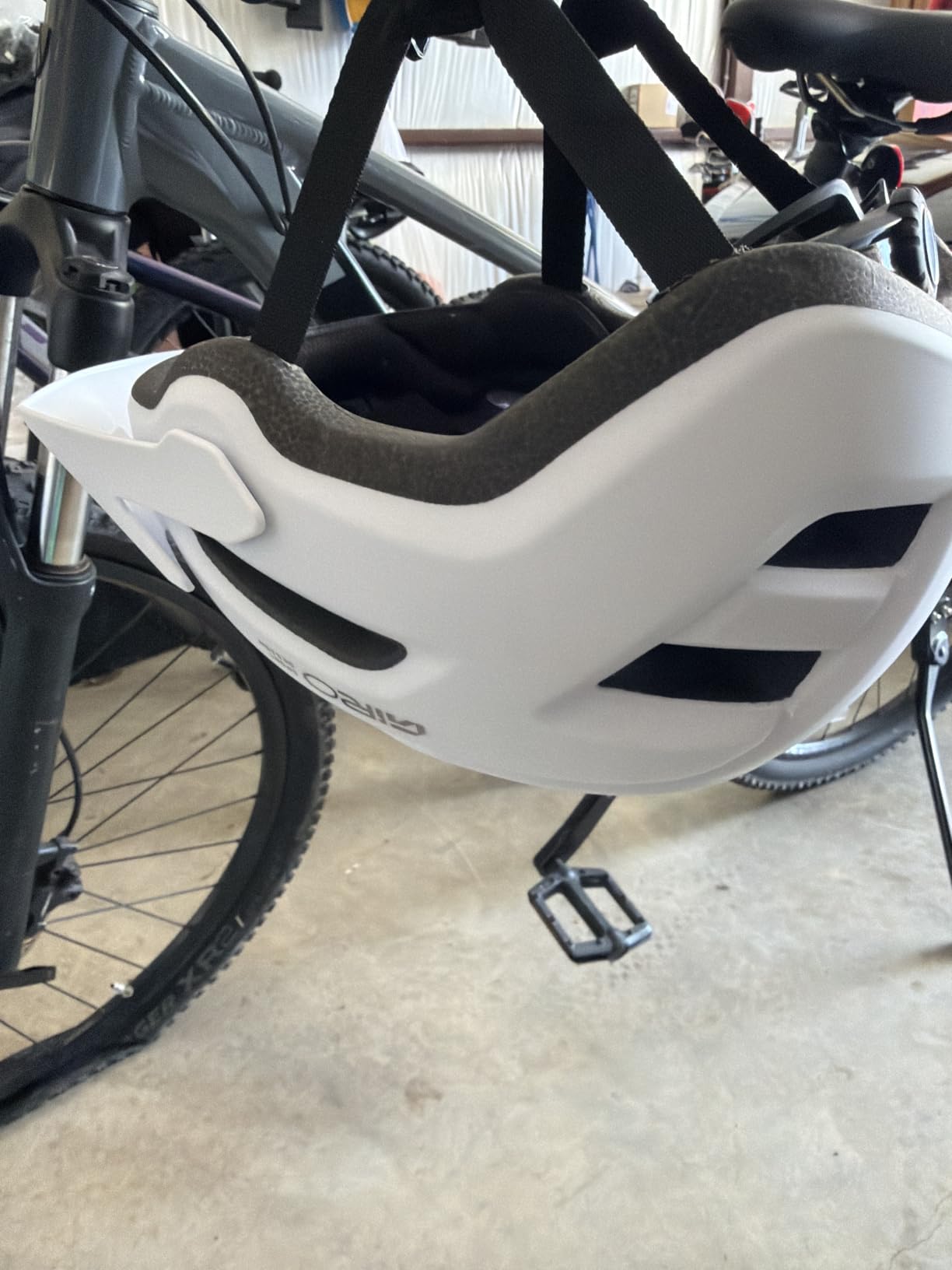
2. Giro Agilis MIPS – Best MIPS Helmet for a Long Daily Ride
Giro Agilis MIPS Cycling Helmet – Matte White – Medium
Integrated MIPS slip plane
Hardshell with in-mold hardbody wrap
Roc Loc 5 one-handed fit
Wind Tunnel ventilation
+ The Good
- Hardshell lower wrap resists scuffs from kerbs
- Integrated MIPS slip plane
- Roc Loc 5 tunes tension and tilt one-handed
- Active vents with internal exhaust channels
- The Bad
- Hardshell build runs heavier than in-mold rivals
- Molded-in straps are awkward to adjust
- No visor on this model
If your route includes rough surfaces, a loading bay kerb or a shared path where the bike goes over, the Agilis MIPS is the pick. Its two-piece shell fuses a tough outer shell with a polycarbonate lower wrap over the liner, which is the construction detail reviewers single out when they talk about durability in city use. The integrated MIPS layer handles the angled side of the equation.
Ventilation is the reason this one lands in the commuting top three. Wind Tunnel ventilation pairs active shell vents with internal exhaust channels that force heat and stale air out over the head, and reviewers describe it as noticeably cooler than hardshell competitors in the same class. The Roc Loc 5 dial sets both fit tension and fore-aft tilt one-handed.
On the negative side, the hardshell is a real tradeoff. It is heavier than similar in-mold MIPS helmets, and for a rider doing thirty miles a day that weight shows up on the back of the neck by the end of the day. If your commute is short and your streets are rough, weight is the right thing to spend. If your commute is long and smooth, a lighter in-mold shell may suit you better.
The other two gripes are practical. The straps are molded into the shell rather than clipped on, so fine adjustment is limited, and there is no visor at all, which leaves you relying on sunglasses for glare. Riders with a habit of tipping their head forward to look downhill should note the lack of a brow lip.
Durability versus daily weight
Hardshell construction survives the kind of contact a commuter actually has. Brushing a wall, a bike rack, a low branch, a fall onto a kerb, none of which trouble a two-piece shell the way they scuff a thin in-mold lid. If you cycle to work in a city rather than on a road, that is worth a measurable amount of peace of mind.
The counter-argument is straightforward. Riders report this model as heavier than comparable fit systems in its class, and heat accumulates faster in a sealed hardshell than in a fully vented in-mold shell. On a hot humid commute that trade flips, and the in-mold helmets lower down this list are the better buys.
Who should skip it
Skip the Agilis MIPS if you ride with glasses you push up on your forehead, because a visor is missing and there is no stored eyewear position. Skip it if you want one strap to loosen and retighten on the fly, since molded-in webbing limits that. And skip it if your commute is twenty-plus miles of fast riding in summer, where the in-mold alternatives here will feel cooler and lighter.
3. SMITH Engage MIPS – Best MIPS Helmet for Hot Climates
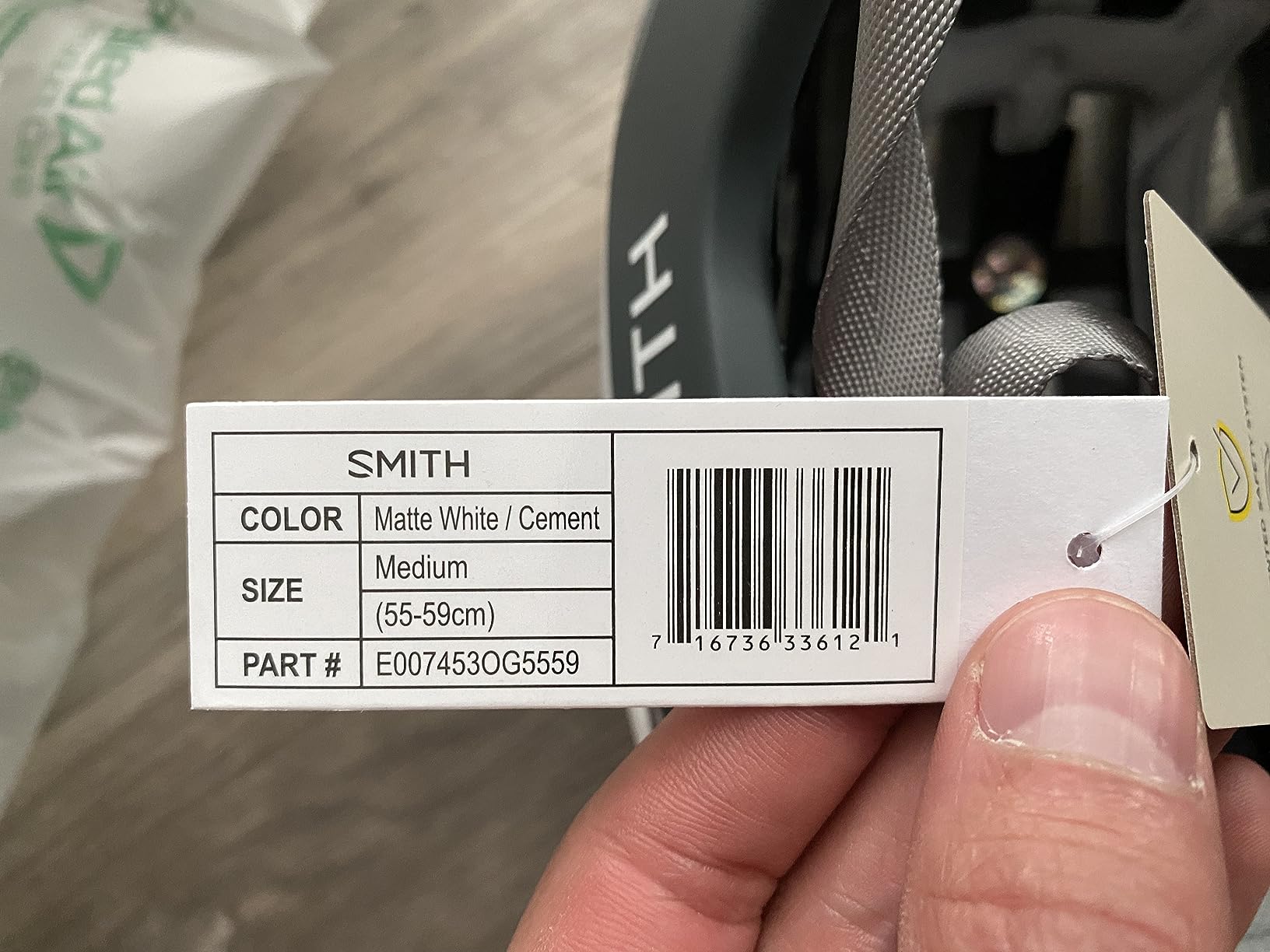
SMITH Engage MTB Cycling Helmet – Matte Black, Medium
MIPS with zonal Koroyd coverage
ABS outer shell
20 fixed vents
Ionic+ sweat-activated lining
+ The Good
- Two rotational systems in one shell
- 20 fixed vents and low-bulk single-layer webbing
- Ionic+ lining controls odour as you sweat
- Deep rear coverage sits low and looks less bulky
- Visor adjusts into two positions
- The Bad
- Sweat still builds on hard efforts
- Standard buckle is fiddly one-handed
- Colour finishes described as washed out
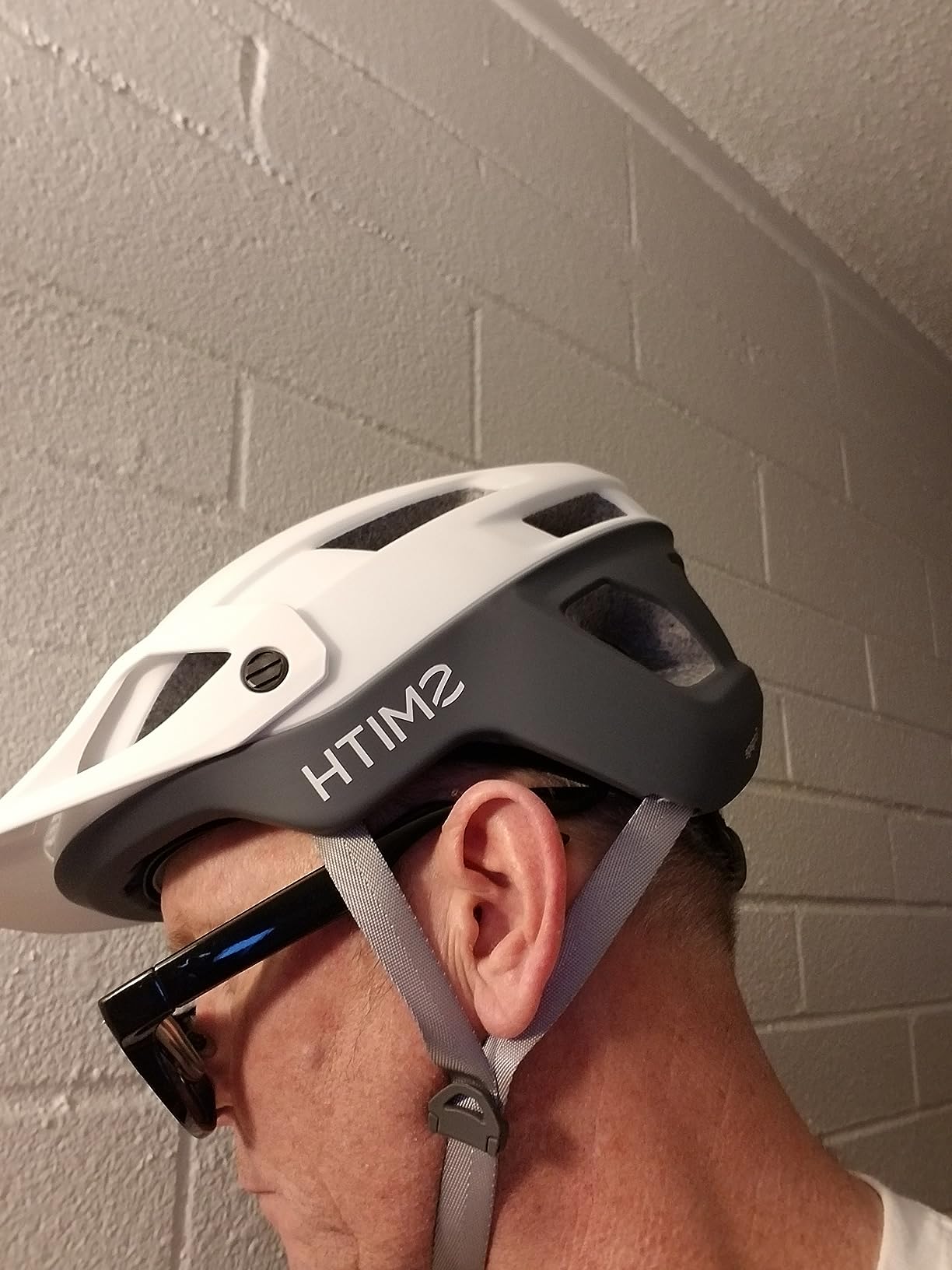
This is the first one to buy if heat is the reason you stopped wearing a helmet in August. It is the only model here carrying two rotational-impact systems at once: MIPS through the shell, plus zonal Koroyd coverage in the pads. The Koroyd sections are lightweight, energy-absorbing and ventilated, so they add angular-impact protection without closing off airflow the way a full second shell would.
Cooling is the headline. Twenty fixed vents, low-bulk single-layer webbing instead of doubled straps, and an Ionic+ lining that uses silver to provide sweat-activated odour control. It is CPSC, CE EN 1078 and AS/NZS 2063 certified, and the rear coverage sits low on the head, which reviewers like both for comfort and for a less bulbous look under a cap.
The repeated criticism is perspiration on hard efforts. Owners report still needing to loosen the ratchet on a hot climb, which is honest for a ventilated hardshell with 20 fixed vents rather than a channeled in-mold design. The visor holds two positions, which is useful at a fixed angle rather than continuously adjustable, and the standard buckle takes two hands.
Note that Koroyd coverage is zonal rather than full-shell, so some riders step up to Smith’s larger coverage model instead. Read the product page carefully if you ride rough surfaces, because the protection is concentrated in specific zones on this one.
Cooling on a humid summer commute
Fixed vents like these are cheaper to make and simpler to keep clean than the internal channel systems on the Giro models, and on a slow urban ride in thick air that airflow volume matters more than channel sophistication. The Ionic+ lining is the part riders underrate. It keeps a helmet from smelling stale after a week of daily wear, and that keeps people actually wearing it rather than leaving it on the handlebars.
Deep rear coverage is a genuine commuter feature. It protects the base of the skull where a slow-speed fall backward lands, and it stays comfortable because the retention cradle sits lower rather than perched on top of the head.
What to watch for
Two of the four listed cons come down to finish and hardware. Reviewers describe the colour options as washed out, which matters if you want a helmet that coordinates with a work outfit rather than shouting. The standard buckle is fiddly to close one-handed, and if you ride in traffic with one hand on the bars you will want a magnetic buckle or a helmet with a dial-and-strap arrangement you can manage seated.
4. Giro Syntax MIPS – Best Premium MIPS Helmet for Long-Distance Commuting
Giro Syntax MIPS Helmet – Matte White – Large
Integrated MIPS slip plane
Roc Loc 5 Air MIPS fit system
Wind Tunnel ventilation
Ionic+ silver padding
+ The Good
- Roc Loc 5 Air MIPS suspends the helmet off the skull for airflow
- Integrated MIPS slip plane
- Low-profile shape sits deep rather than perched
- Excellent sweat handling over long distances
- Subdued colours suit office commutes
- The Bad
- Some shells arrive with glue residue near vents
- Front vents can fight sunglasses temples
- No eyewear storage and no carry shell
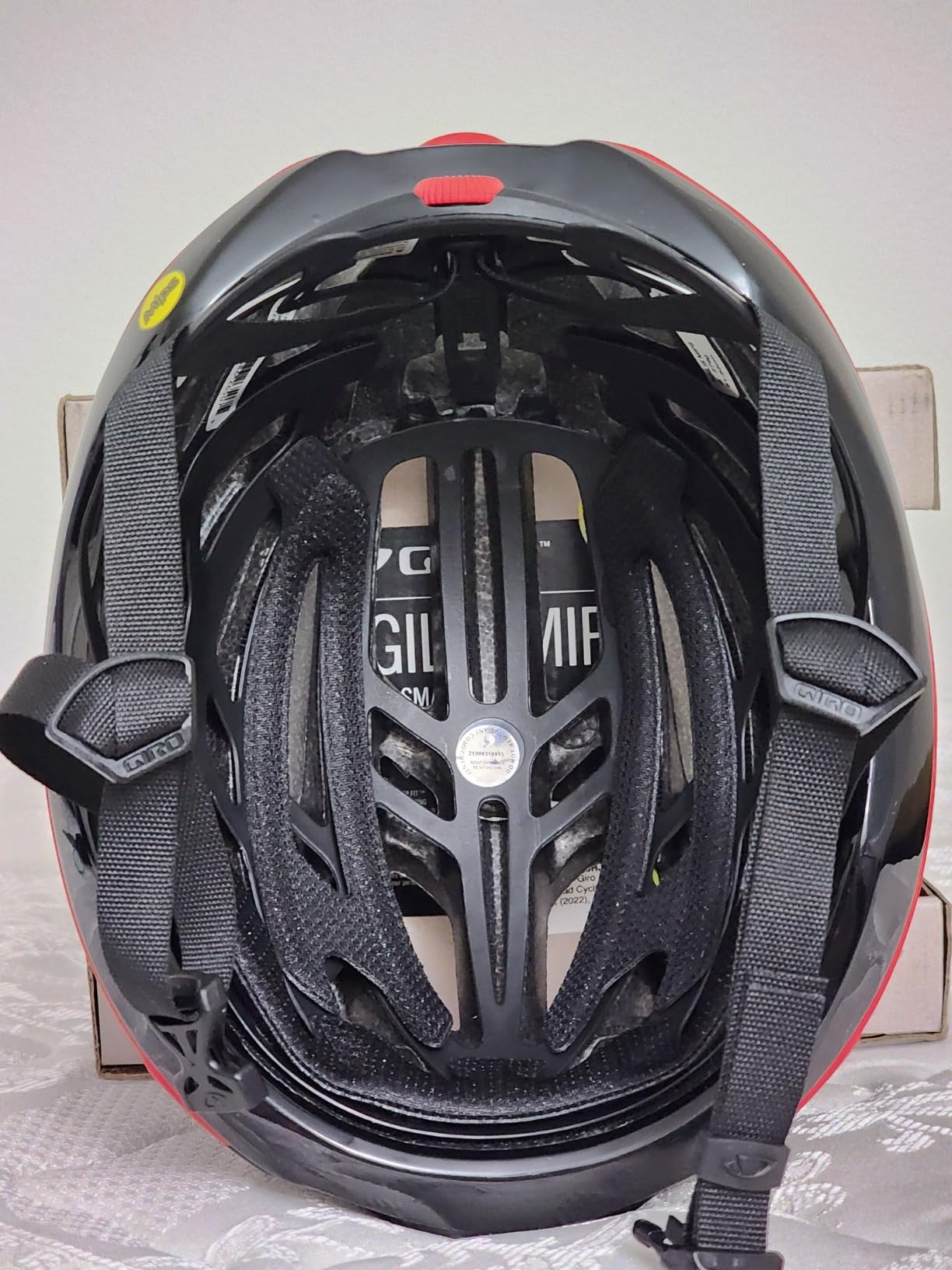
The Syntax is the long-day answer. Rider feedback describes it as the best-fitting road helmet people have owned, with no pressure points over long distances, and the mechanism is visible in the design: the Roc Loc 5 Air MIPS system suspends the helmet slightly off the skull so cool air passes over your head rather than through a compressed foam sandwich.
The MIPS layer here is tied into the fit system rather than sitting as a loose band. The slip plane is built into the structure, so it does not shift, and the hardshell with an in-mold hardbody lower wrap keeps the durability benefit without a punishing weight penalty. Wind Tunnel ventilation with internal exhaust channels moves air over the head and pushes heat out, and Ionic+ silver padding gives permanent odour protection with no activation step.
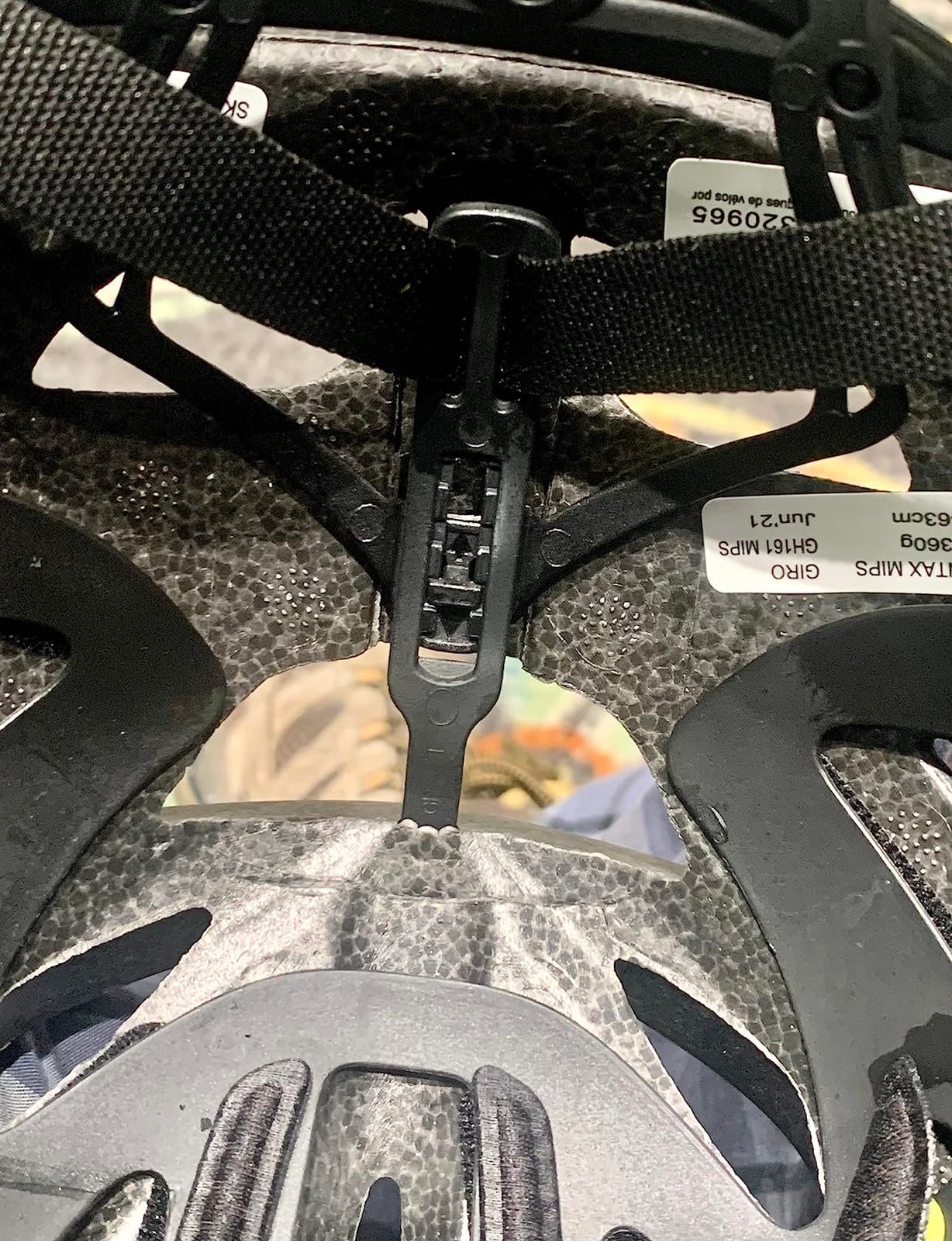
Where it disappoints is in the details. Some shells arrive with glue residue around the vents, which is a quality-control nuisance rather than a design flaw. The front vents are not shaped to accommodate sunglass temples, and there is no eyewear storage or included carrying shell, so glasses end up in a jersey pocket or clipped to a strap.
The slim, low-profile shape is worth calling out as a commuter feature in its own right. It sits deeper on the head instead of perched on top, which looks far less like recreational cycling gear under a shirt and tie, and the subdued colours and textures were clearly designed to disappear into office clothing.
Fit for people with sensitive pressure points
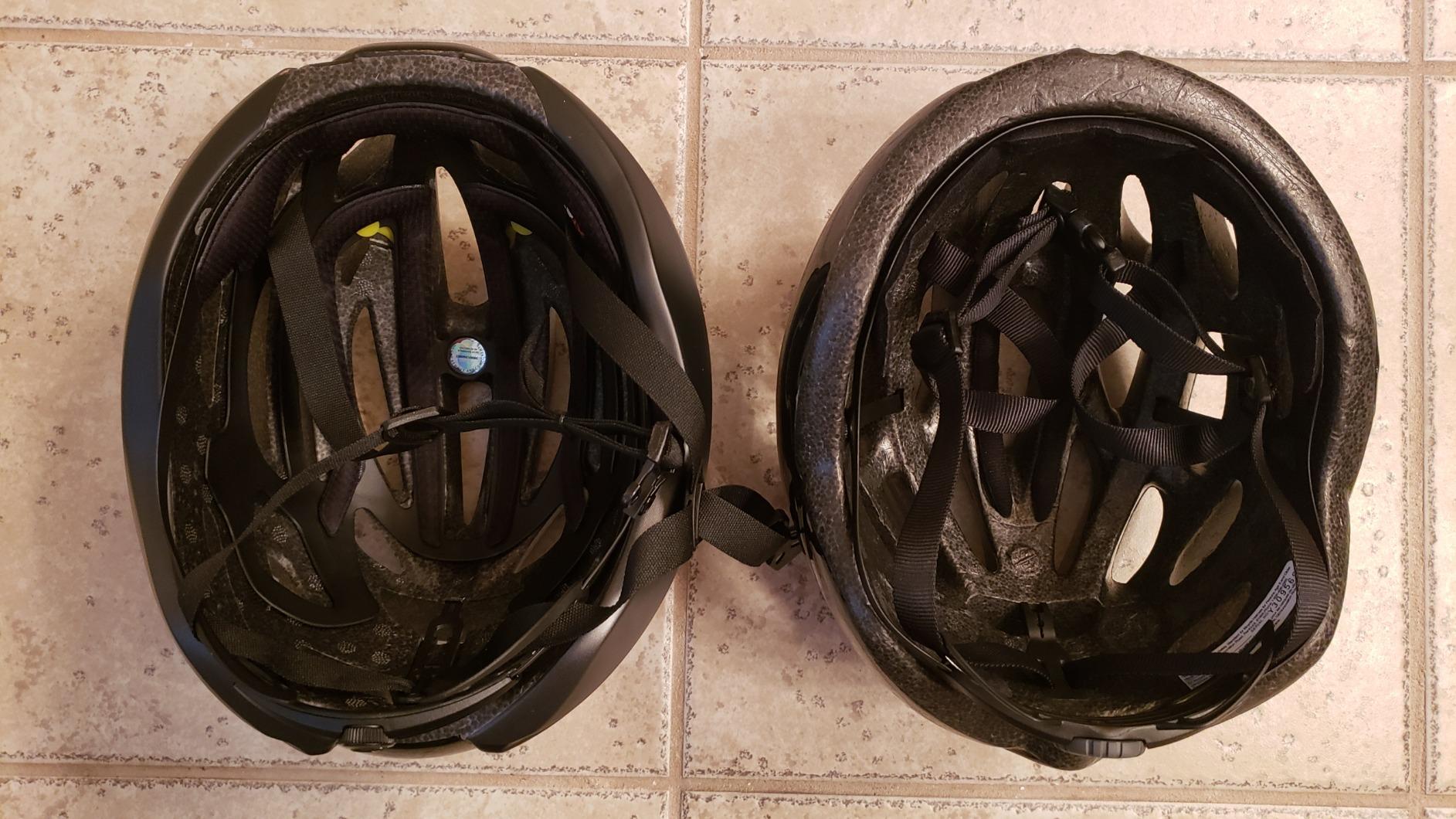
The recurring theme in owner feedback is the absence of pressure points after hours. That is not a marketing claim; it is a consequence of the fit system geometry and the low-profile shape, and it is why this model keeps appearing in long-distance rider threads. If you have worn a narrow, heavily shaped road helmet before, this is a different silhouette and you should check that your head shape suits it.
Suspending the helmet off the skull is also a ventilation decision with a comfort payoff. Air moves over the top of your head rather than through a squashed gap, and reviewers report noticeably better sweat handling than the firmer fit systems lower down this list.
Where the premium goes
Reviewers flag front vent geometry that fights sunglasses arms, no dedicated glasses storage and no carry shell, plus cosmetic colourway variance. The carry shell matters for commuters who unclip a helmet daily and do not want to set a high-end shell on a desk. None of these are safety issues, but they are the reason this helmet is not our top pick for everyone: you pay for fit and airflow, and you do not get a visor or storage.
5. POC Omne Air MIPS – Best MIPS Helmet for E-Bike Commuting
POC Omne Air MIPS Bicycle Helmet Bicycle Helmet with MIPS Technology, Adjustable and Optimal Ventilation, for Men and Women, Ideal for Leisure and Commuting
MIPS Brain Protection System
Listed at 0.33 kg
360 degree one-handed dial
Straps moulded into the liner
+ The Good
- MIPS brain protection built into an unibody shell
- 360 degree dial adjustment operated one-handed
- Straps moulded into the liner for comfort and safety
- Low weight for a premium helmet
- Comfortable over long warm-weather commutes
- The Bad
- Medium size can run small for some head shapes
- Premium pricing for a commuter helmet
E-bike commuters ride faster and further under motor power than pedal commuters, often holding 20-plus mph on a straight road with a delayed reaction time. POC markets this one explicitly for commuting and road use, and the fully wrapped unibody shell with an optimised EPS liner is built for that kind of sustained protection with low weight, listed at 0.33 kg.
Fit is handled by a 360-degree adjustment system with one-handed dial operation, which is the single most important comfort feature when you are riding fast and want the helmet tight but not painful. Precision straps are moulded into the liner rather than clipped on, so there is nothing to twist or catch, and owners report the shell stays comfortable on long rides in warm weather. A soft fabric storage pouch comes in the box, which is genuinely useful for a commuter carrying a helmet to work.
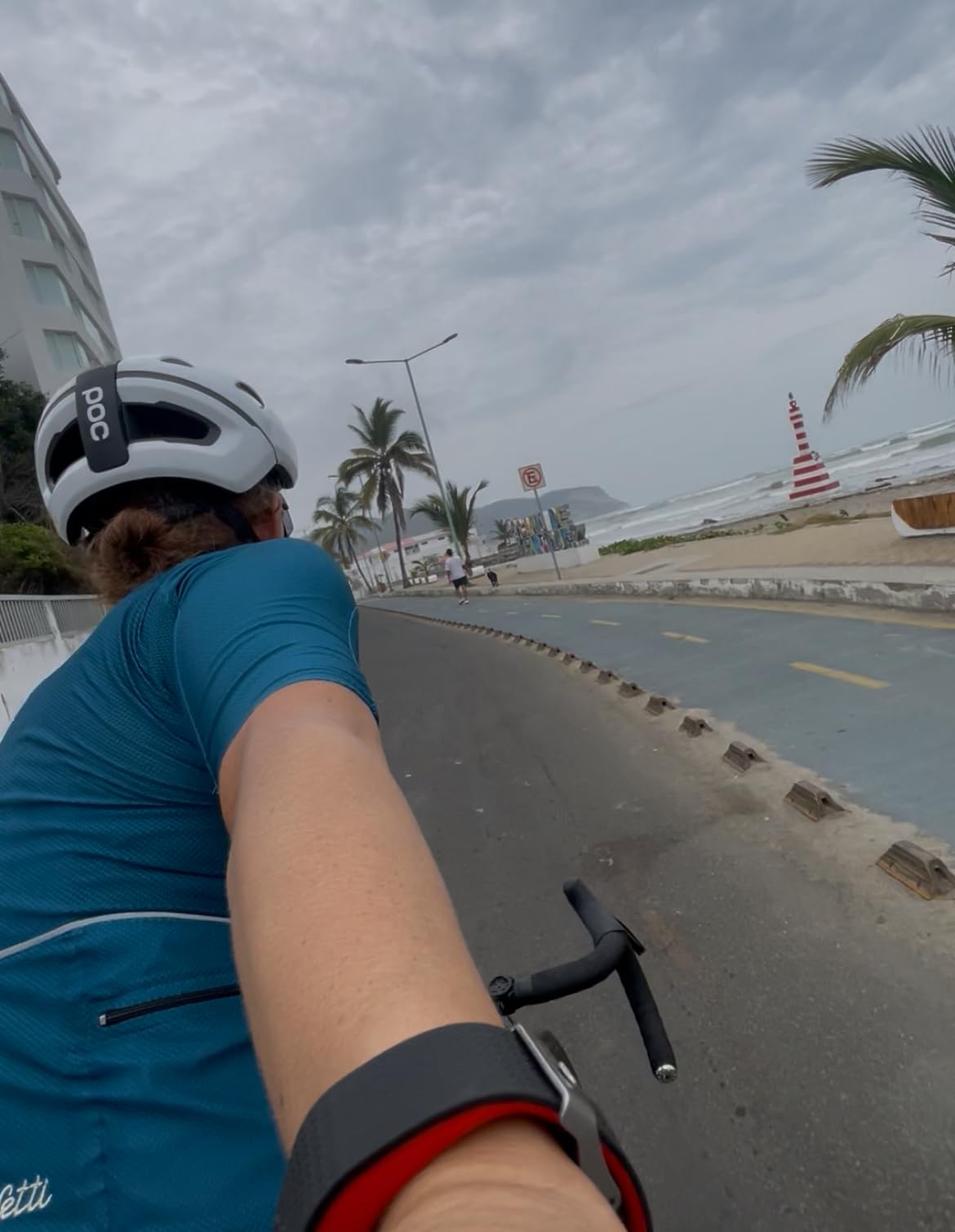
The first thing to check is sizing. Reviewers report that the medium can run small for some head shapes, and the size range is listed as L/56-61cm for this variant. If you are near the top of a size band, or you know you have a long or narrow head, measure before ordering rather than after.
The second is cost relative to what you get. This sits at the premium end of the commuter helmet range, and the honest comparison is that a mid-range in-mold MIPS helmet gives most urban riders the same rotational protection for noticeably less money. You are paying here for a very light shell, moulded-in straps, the dial and the finish.
Why the unibody shell suits faster riders
A fully wrapped shell keeps the liner continuous around the sides and back, which spreads the load across a larger area in the kind of glancing strike that a car door or a kerb edge delivers. At commuter speeds that is already a benefit, and for e-bike riders running above 20 mph it matters more, because impact energy scales with speed and the shell is the part of the helmet that manages where that energy goes.
The low weight is the other half of the case. At a listed 0.33 kg, and that is light enough that you stop noticing it on the back of your head, which is the difference between a helmet you keep on and one you hand back at the office.
Who it is not for
It is not for riders who need deep, round coverage over the ears for a cargo bike with a load behind them, and it carries no visor, so sun glare is handled entirely by your eyewear. It is also not for anyone who struggles to justify premium spend on a daily-use item. For those riders, the Giro models in this roundup deliver the same MIPS benefit at a lower tier.
6. Bell MIPS Soquel – Best Value MIPS Helmet for Daily Wear
Bell MIPS Soquel Bike Helmet, Matte Black Ti
MIPS slip plane
Fusion in-mold shell over EPS
One-size dial fit
53-60 cm head range
+ The Good
- MIPS slip-plane rotational protection
- Fusion in-mold bonds shell to EPS liner
- Extended rear coverage
- Lightweight dial retention system
- CPSC certified
- The Bad
- Ventilation is more limited than premium rivals
- Thinner interior padding than higher-end models
- One size suits 53-60 cm heads only
Bell is a long-established helmet maker, and the Soquel is the version of that experience aimed squarely at a daily rider. Reviewers treat it as a dependable, correctly fitting everyday helmet rather than a performance purchase, which is exactly how a commuter uses one.
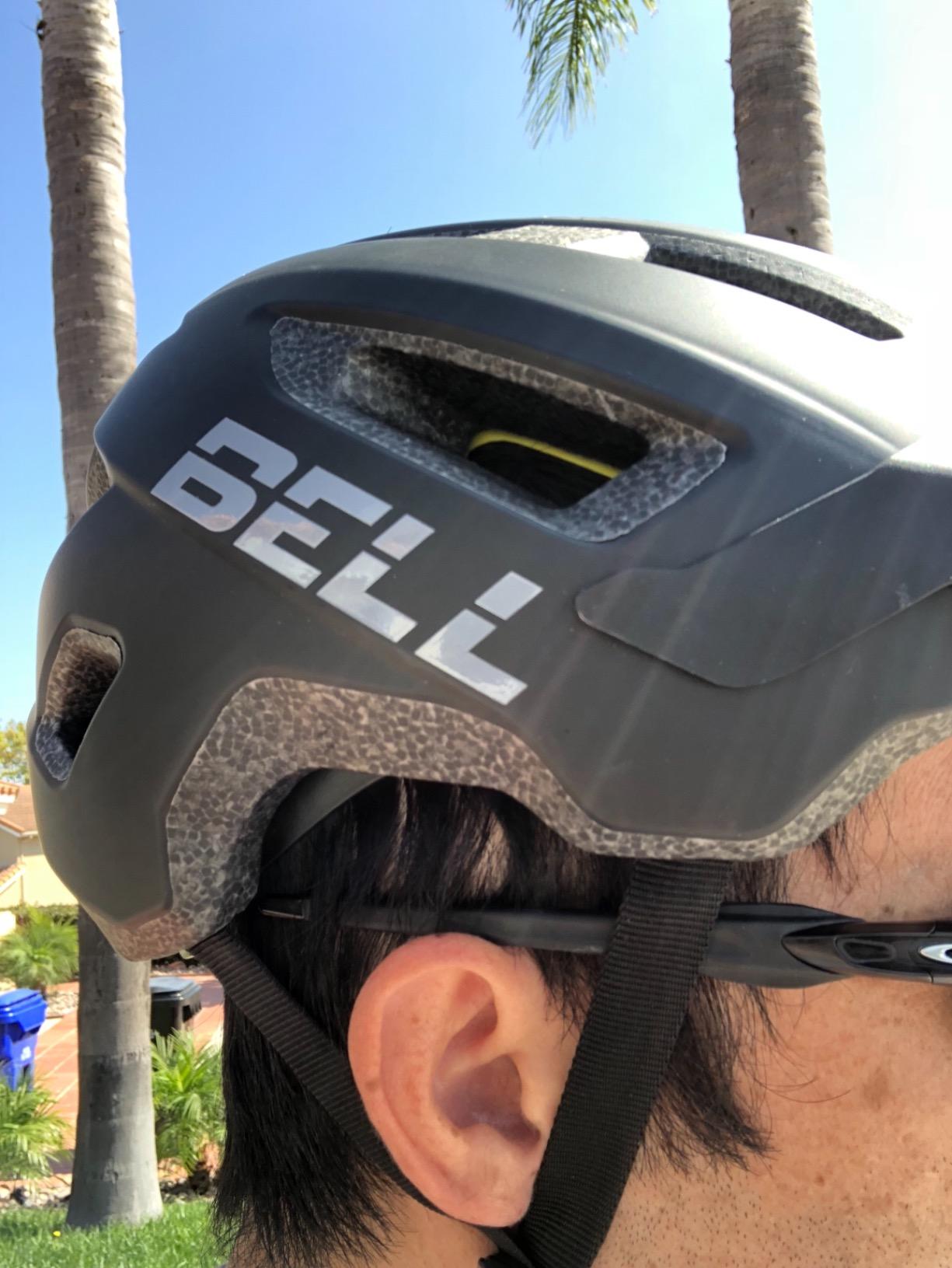
The construction is the part to notice. Fusion in-mold construction bonds the outer shell directly to the EPS foam liner, which is why the shell is tough enough to take a knock from a kerb or a bike rack without the whole thing deforming, and why it stays light. The MIPS slip plane reduces rotational forces, extended rear coverage adds protection, and the fit system uses a straightforward turn dial.
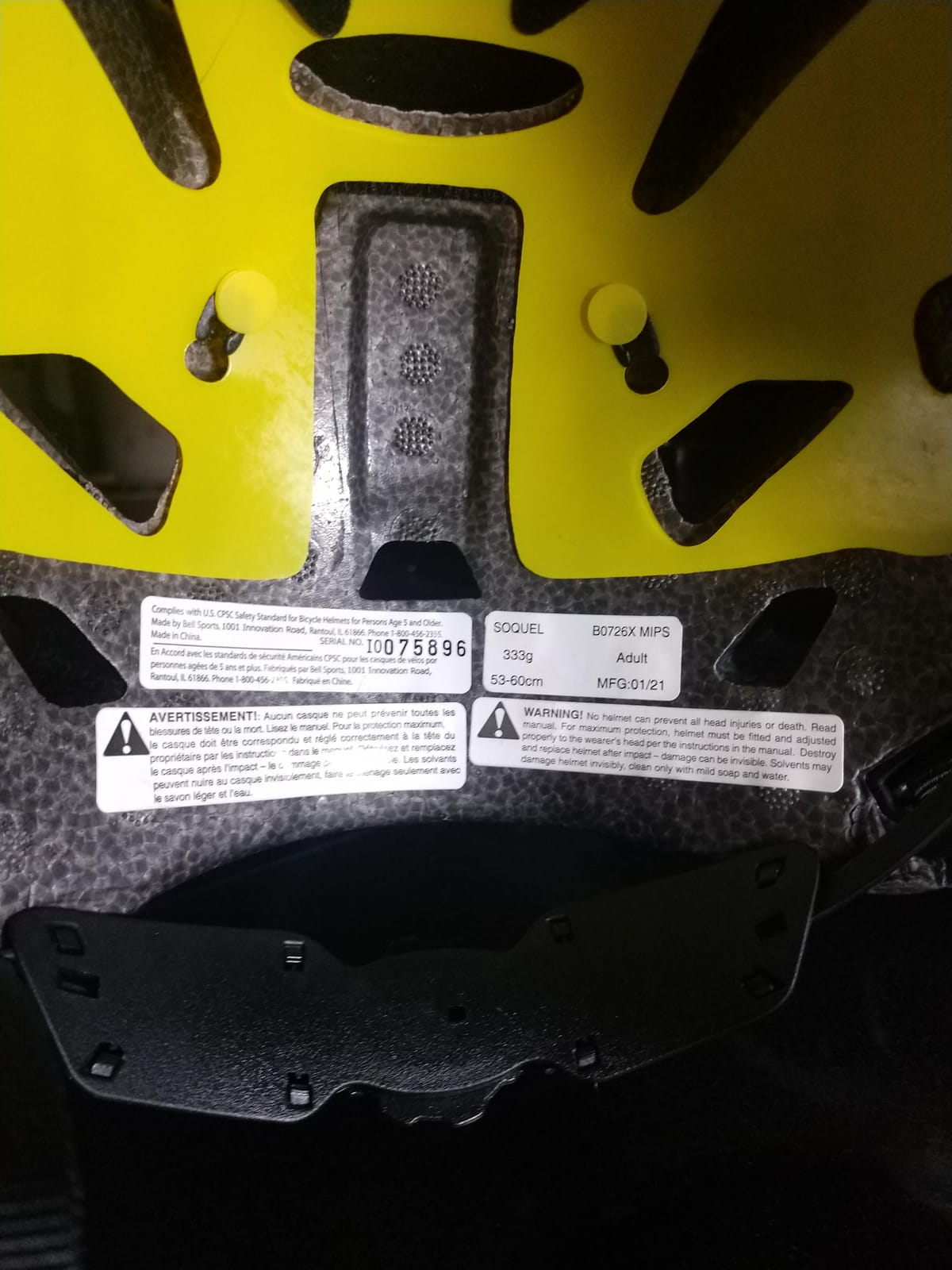
The honest limitations are ventilation and padding. Owners compare both unfavourably to more expensive helmets, with a shell that runs warm on a hot commute and thinner interior padding than a well-padded premium lid. Padding is where the money goes in a comfort-focused helmet, and this one is not trying to compete at the top.
One size fits heads from about 53 to 60 cm, and it is listed for adults aged 14 and up. Measure your head circumference before buying, because a slightly tight commuter helmet on a 60-plus cm head is a daily annoyance and a slightly loose one is a safety problem.
Fit, dial and daily reliability
The dial-based retention is what makes this model work for a commute. A turn dial tightens evenly around the whole head rather than pulling on two strap tails, so you can set it once in the morning and adjust it with gloves on. Extended rear coverage is rated positively by owners, and it is a useful feature for city riding where a slow fall backward is common.
Being a single-size shell, it is a straightforward buy for riders inside the stated range. Riders with a notably long or narrow head should step up to a model offered in a genuinely long size rather than forcing the fit with strap tension.
When to spend more instead
Step up if your commute runs through open sun in summer, because limited ventilation and thin padding will show up as discomfort and you may end up riding without the helmet at all. Step up if you wear your helmet for eight hours a day, since the padding difference is felt directly. Stay here if your route is a shaded or cool urban loop, because the protection level is the part that matters and it does not change with price.
7. OutdoorMaster MIPS Adult Helmet – Best Budget MIPS Helmet for Commuters
OutdoorMaster MIPS Adult Bike Helmet, Adjustable Cycling Helmet
MIPS slip plane
PVC and ABS shell over EPS
Three sizes from 51-61 cm
10 vents with washable pads
+ The Good
- MIPS system in a very affordable certified package
- Three shell sizes covering 51-61 cm
- Removable washable quick-drying pads
- Built-in sun visor
- ASTM F1447-18 certified
- The Bad
- Shell runs wide for narrow and long head shapes
- Fewer vents than higher-priced rivals
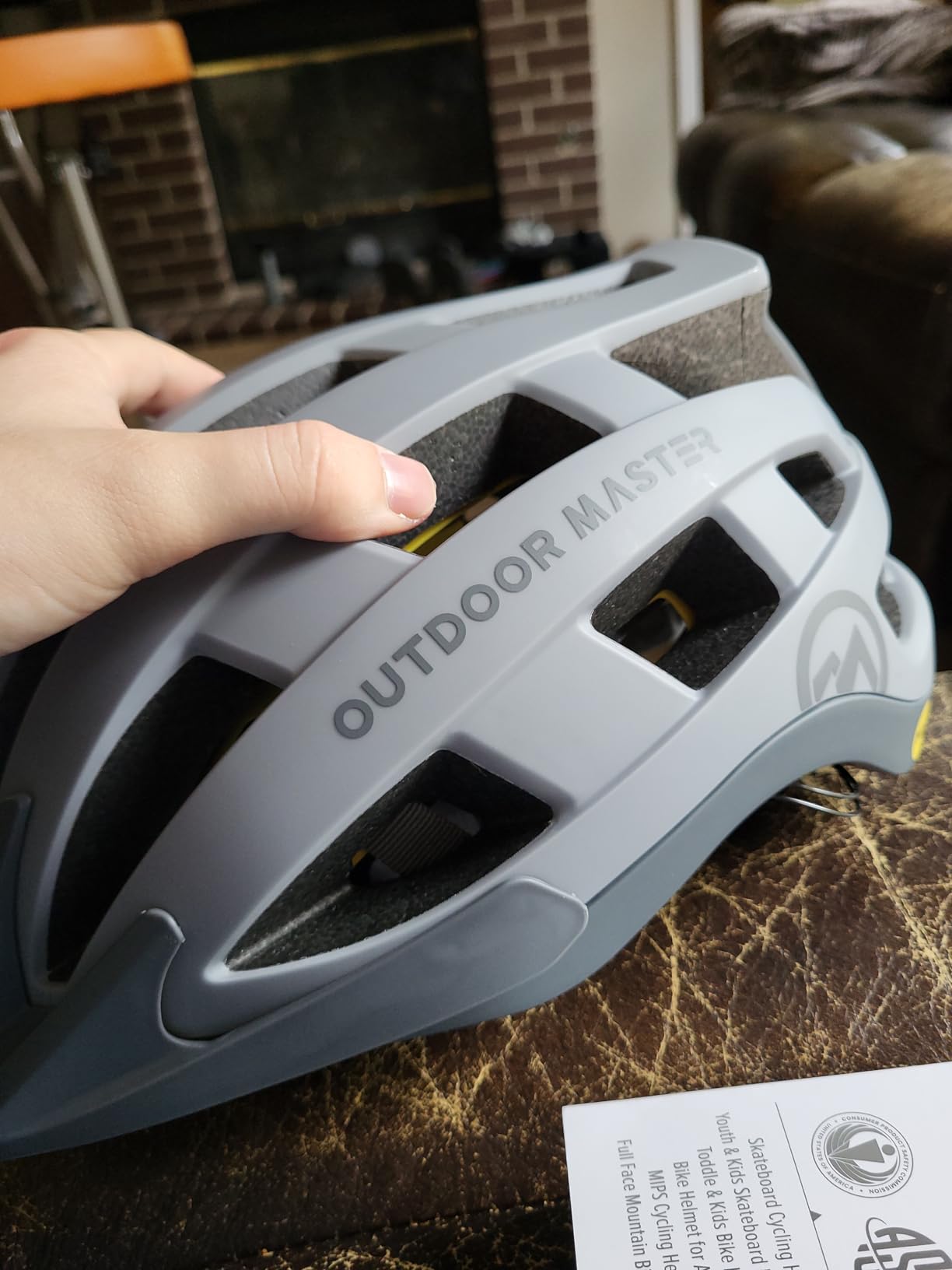
If your budget is the main obstacle to wearing a helmet at all, this is the model to look at first. It carries a MIPS slip-plane system designed to reduce harmful rotational forces, a durable PVC and ABS outer shell over EPS foam, and ASTM F1447-18 certification, which is the standard US bicycle helmets are tested against.
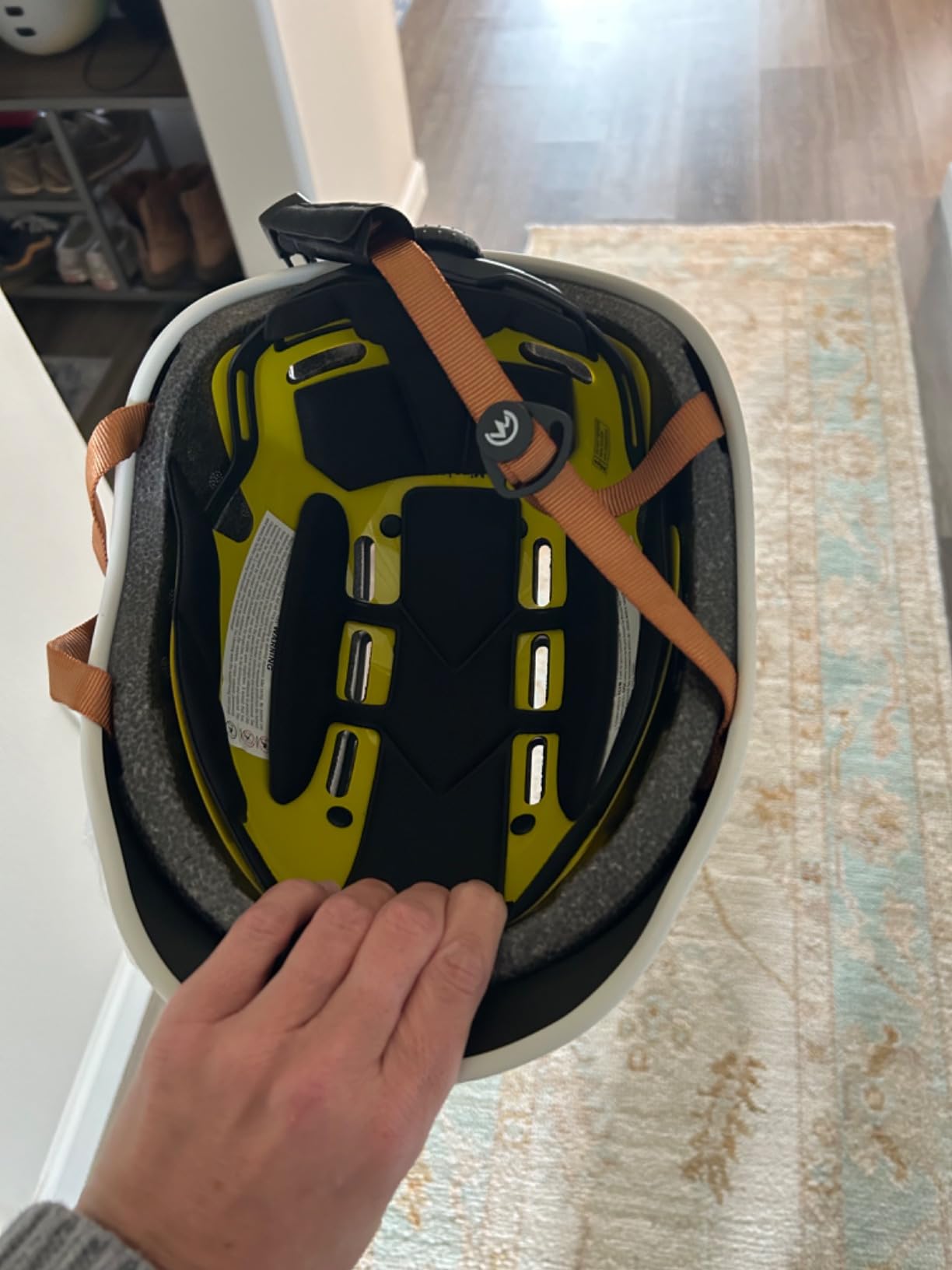
The commuter details are unusually good for the tier. There are three shell sizes covering head circumferences from 51 to 61 cm, a round rear adjustment dial plus an adjustable chin strap for a close fit, and ten vents with removable, washable, quick-drying interior pads. Removable pads are the feature most often skipped at this price, and for daily wear they are the difference between a helmet you keep and one you avoid.
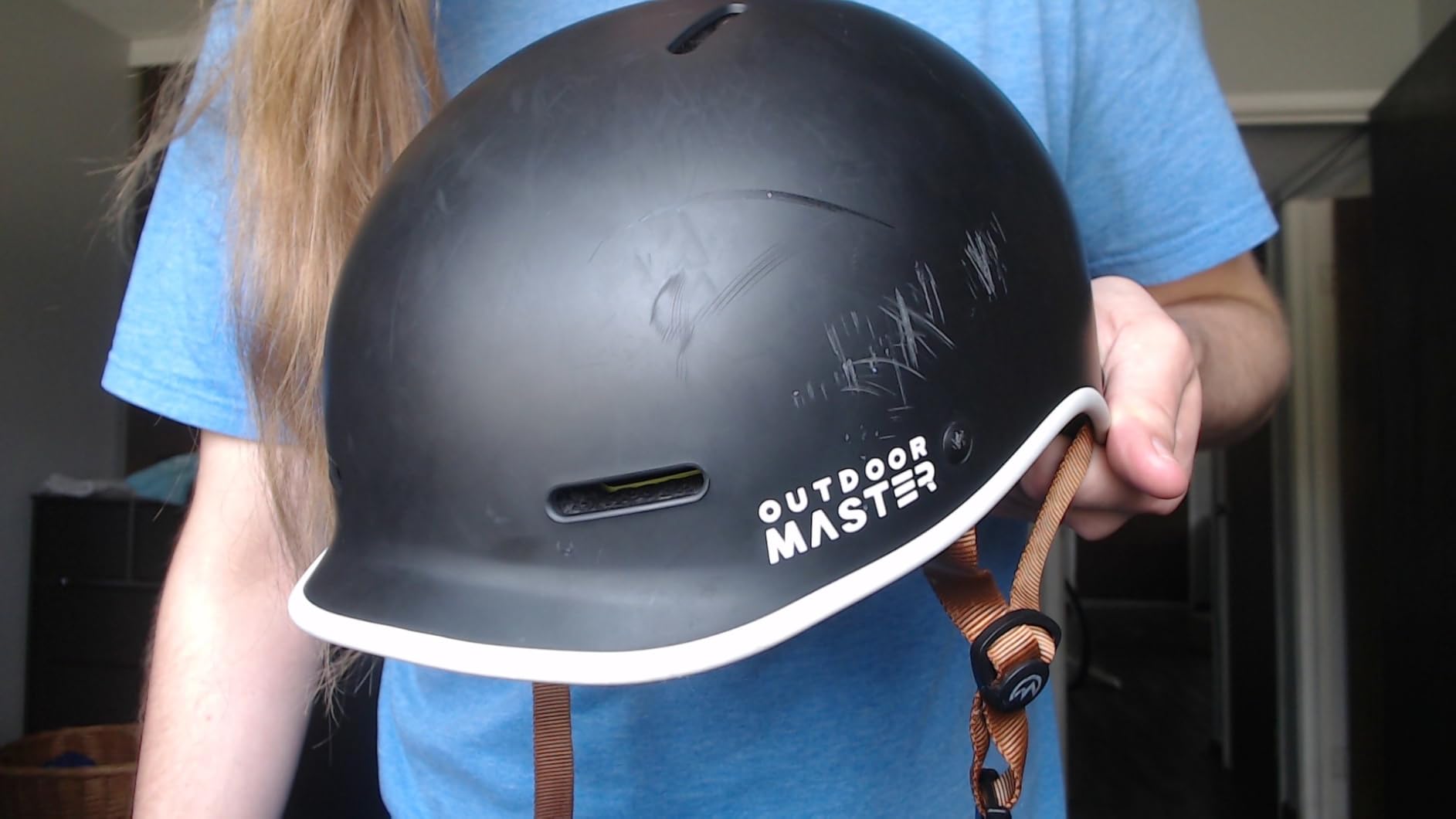
The built-in visor blocks sun without needing sunglasses, which is convenient on a hot route, and the bright colour options improve visibility in traffic. One reviewer credits the helmet with preventing a serious injury in a collision, which tells you something about what these are for.
There are two real drawbacks. The shell shape runs wide, and riders with narrow or long head shapes report that it does not suit them no matter how the dial is set. Vent count is ten, which is modest beside the twenty-plus vent models here. If your head shape is at the narrow end, keep the dial but plan to try it on in person.
What a lower tier still gets right
Washable, quick-drying pads and three shell sizes are the two things that matter most for a helmet worn every single day, and both are present here. Three real sizes spanning 51-61 cm is the kind of coverage that avoids the wide-shell fit problem a single-size budget helmet usually has.
The visor is fixed rather than adjustable, so it shades straight ahead and not much else. If you ride with the sun behind and to one side, sunglasses are still worth carrying.
Where the trade-off bites
Ten vents is fewer than the twenty-plus vent helmets higher up this list, and on a hot humid commute that difference is measurable. Vent count is not a safety feature, so if you are riding in a cool climate or a short distance, the cooling gap costs you little. If your summer commute is fifteen miles in still air, look at one of the more ventilated models instead and accept the higher tier.
8. OutdoorMaster Gem II MIPS Helmet with Light – Best MIPS Helmet for Night Commuting
OutdoorMaster Gem II MIPS Bike Helmet with Light for Adult Youtht
MIPS slip plane
Rechargeable USB LED in three modes
21 vents with air channels
Three sizes from 52 to 62 cm
+ The Good
- Rechargeable LED light with three modes
- 21 vents with internal air channels
- Removable washable padding
- Hand-adjustable fit across three sizes
- Exceptionally light with bright colour options
- The Bad
- Rear light hard to see in direct daylight
- Some sizes run tight or restrict vision
- Arrives in a thin plastic bag
This solves a specific commuter problem: being seen. It has a plug-in USB rechargeable LED light built into the rear of the shell, with three modes covering steady, fast flash and slow flash, a 60-minute charge and roughly 13 hours of use. For a rider leaving an office at dusk or riding an unlit stretch of road, that is a genuine safety gain rather than a gadget.
The shell is polycarbonate over expanded polystyrene and weighs in at a listed 0.44 kg, which is light. Ventilation is the strongest number in the budget half of this roundup: 21 vents with internal air channels, plus removable washable padding. Fit is hand-adjusted across three sizes, S for 52-55 cm, M for 55-58 cm and L for 58-62 cm.
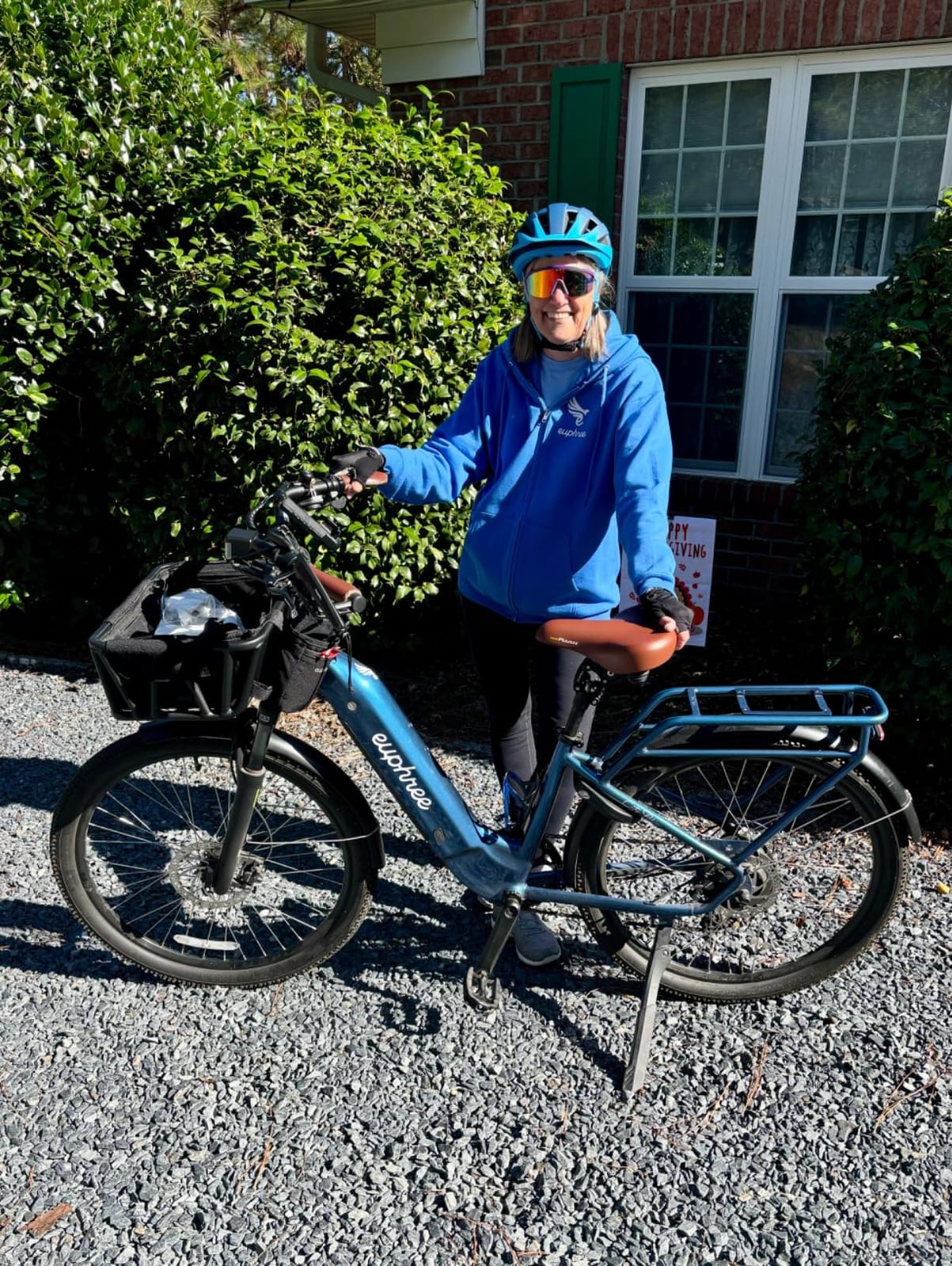
Owners consistently rate this as excellent value, and the light is the reason. The recurring complaints all concern the same things: the light is hard to see at long range in direct sunlight, the light sits at the back so it only helps if your head is upright, and some sizes run tight or restrict vision for certain head shapes.
Packaging is a minor negative, since it arrives in a thin plastic bag with little padding around it. If you are buying for a gift or ordering it to yourself, that is worth knowing, though helmets are foam and compress well.
Visibility after dark and at dusk
Rider feedback is clear that the light works well as a supplement to front and rear bike lights, and reviewers are honest that it is not a replacement. The three modes let you pick a steady beam for a dark lane and a flash for traffic, and the 13-hour runtime means you can charge it once a week and stop thinking about it.
Bright colour options add passive visibility that works in daylight too, which matters if you keep the helmet in a bag on an office desk. The polycarbonate shell is the more expensive construction choice here, so the low listed weight is a good outcome rather than a thin one.
Consider buying a separate light instead
If you already run proper front and rear lights on the bike, the built-in unit is a nice backup rather than a necessity, and the bright colours plus reflective position on the bike may serve you better. The main reason to pass on this model is fit: reviewers report some sizes running tight or blocking vision, so measure and check the size chart before ordering.
9. Bell Revolution MIPS – Best Budget MIPS Helmet for Weekend and Light Commuting
Bell Revolution MIPS Adult Bike Helmet, Black, Adult (14+ yrs.)
MIPS slip-plane protection
Polycarbonate shell over EPS
Ratcheting rear adjuster
12 ounce listed weight
+ The Good
- MIPS slip-plane protection at an entry-level tier
- Ratcheting rear adjuster gives fine fit tuning
- Straps fixed to the shell so they do not shift
- Light 12 ounce build
- Works with cycling glasses
- The Bad
- Shell finish can peel within a couple of months
- Adult sizing runs small for larger heads
- Plainer shell finish than premium models
With 740 ratings at 4.3 stars, the Revolution is one of the most widely reviewed budget MIPS helmets in circulation, and owner feedback describes it as a solid buy from a trusted brand. One owner reports it absorbed a significant impact, which is the sort of data point you cannot get from a spec sheet.
The ratcheting rear adjuster is what separates it from cheaper non-MIPS helmets. It tightens in small increments around the whole head rather than pulling on two strap tails, so you can dial in a precise fit, and the straps are fixed to the shell so they do not shift out of position over a long ride. The listed weight is 12 ounces, and owners say it is comfortable enough to wear around the house, which tells you how little it intrudes on daily life.
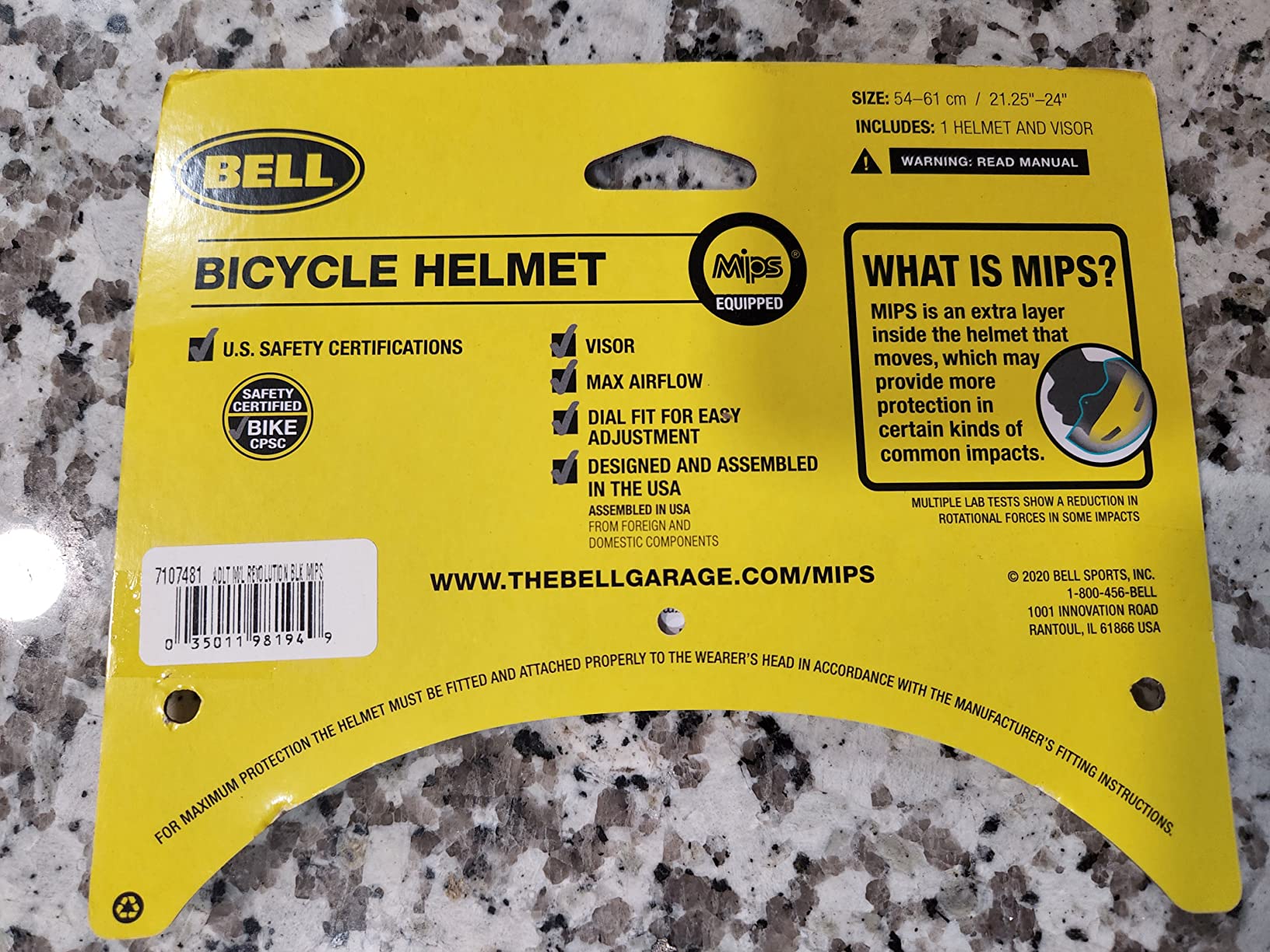
It also works with cycling glasses without interference, which is a practical point for riders who wear prescription or tinted eyewear and refuse to buy a helmet that fights their frames.
The criticism is mostly cosmetic. Owners report the shell finish beginning to peel within a couple of months, the finish is plainer than premium models, and adult sizing can run small for larger heads. Cosmetic peeling does not affect protection, but it is the kind of thing that makes a commuter stop wearing a helmet they have come to dislike.
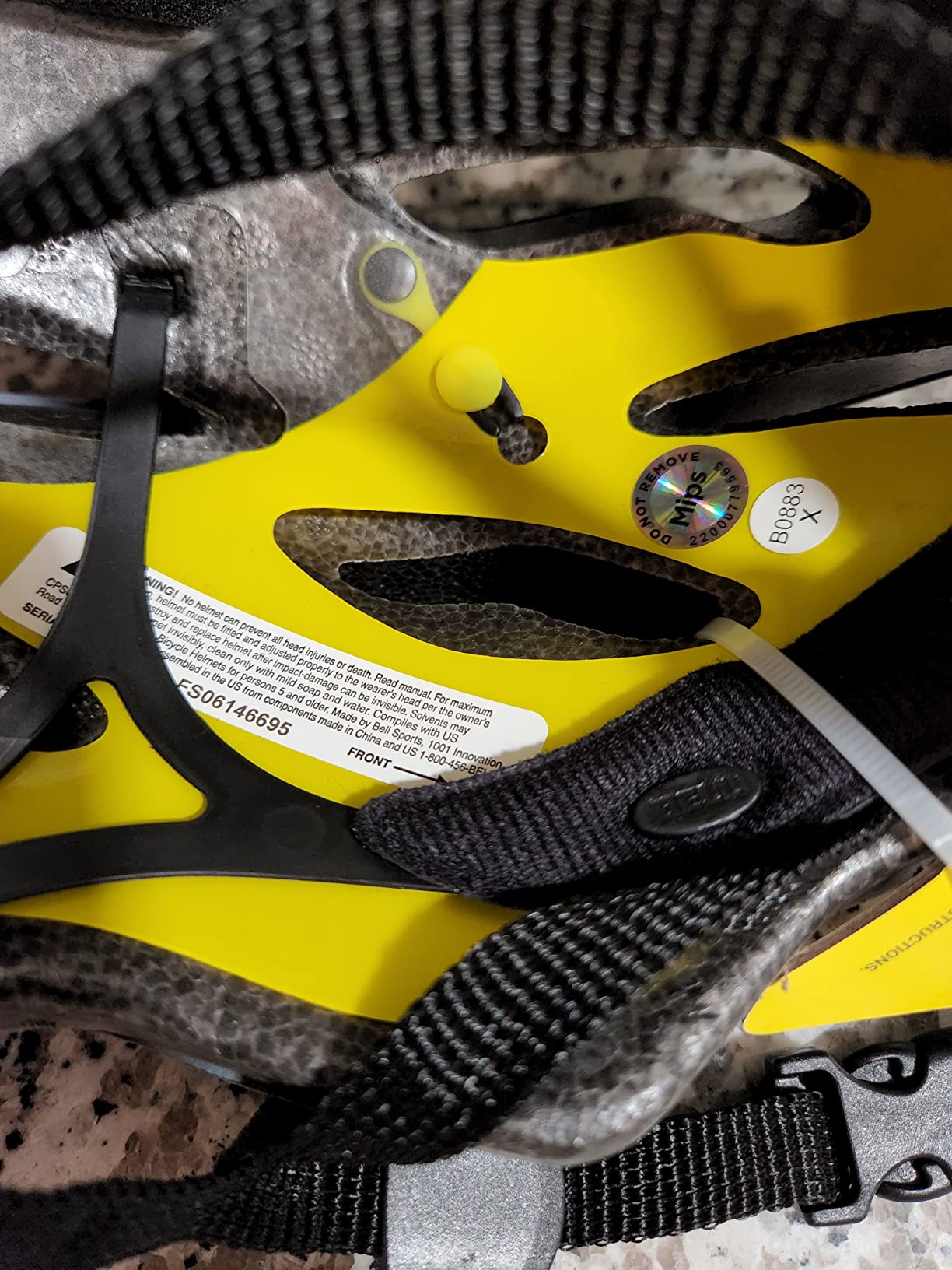
Fit and the ratchet advantage
Fine adjustment is the real story on this helmet. A ratcheting dial lets you move one small notch at a time, which is how you get a genuinely even fit around the temples and occipital lobe rather than a front that is loose because the sides are tight. For a commuter wearing the same helmet every day, that precision is worth more than a feature list of anything else.
Fixed straps mean nothing shifts as you move on the bike, so the retention you set in the morning is the retention you have at the end of the ride. Glasses compatibility is confirmed by owners rather than claimed by the manufacturer, which is a good sign.
When it is the right buy
This is the pick if your commute is short, your budget is fixed, or you are buying a first helmet to replace a damaged or very old one. Stay at a lower spend and accept the finish. Move up if you ride long daily distances and want better ventilation and padding, or if your head is at the larger end of the adult range and you know sizing runs small here.
10. POC Octal MIPS – Best MIPS Helmet for Riders Who Wear Glasses
POC Octal MIPS – Ultralight Cycling Helmet with MIPS Protection, Optimised Ventilation, Unibody Shell, Eye Garage and Comfort for Road, Gravel & CX Riding
MIPS Brain Protection System
270 gram unibody shell
360 degree one-handed dial
Expandable liner for a winter cap
+ The Good
- Exceptionally light at a listed 270 g
- Structurally optimised air ports and internal channels
- Comfortable straps that do not choke
- Works with a variety of glasses
- Expandable liner fits a winter Lycra cap
- The Bad
- Minimal interior padding
- Oval head shapes can leave room at the sides
- Large size chart can disagree with the box
- Fluorescent AVIP colour is documented to fade quickly
The Octal is built for coolness as much as protection, and at a listed 270 g it is the lightest shell in this roundup, which riders with long commutes specifically praise as not straining the neck. Structurally optimised air ports and internal channels force air through the shell rather than merely letting it in, and the MIPS Brain Protection System handles the angular impact case.
Fit comes from a 360-degree adjustment system with one-handed dial operation, plus adjustable neck straps that owners report do not choke even on a long ride. On a commuter who is already tired when they get to work, strap comfort is a feature worth paying for.
Two details stand out for commuting, and neither appears on the other helmets here. Glasses compatibility is confirmed by owners across several reviews, which matters if you wear prescription eyewear. And the expandable liner can accommodate a winter Lycra cap, which solves the cold-weather problem properly instead of encouraging you to squeeze a beanie under a tight shell and compromise the fit. If heated protection matters more to you, our snowmobile helmets with heated visors guide covers a different category entirely.
The negatives cluster around padding and sizing. Interior padding is minimal, so this is not a helmet to wear for eight hours a day if you dislike pressure points. Oval head shapes can leave a little room at the sides, and the listed size chart for the large can disagree with the box measurement, so measure your head rather than trusting either.
Why weight matters more than usual on a commute
Most riders notice a light helmet less than they notice a heavy one, and the effect compounds daily. A 270 g shell is small in absolute terms, but the difference between a light shell and a heavy one is felt across the temples and the back of the neck after an hour, and again after the second hour of a long day.
The ventilation design supports that: air is pushed through the helmet by structural porting and internal channels, not simply drawn in, so a light shell here does not mean a poorly aired one. That combination is why this model appeals to riders doing fast e-bike or long-distance commuting.
Who should pick something else
Skip the Octal if you want a visor, if you wear the helmet for a full working day and prefer thick padding, or if your head is strongly oval and you cannot try it on in person to check the sides. The fluorescent Orange AVIP colourway is also documented to fade quickly, so pick a darker version if you care about long-term appearance.
How to Fit a Bike Helmet: The 2-2-2 Rule
Fit matters more than any feature on this page. A helmet that rotates, slides or lifts on impact does not deliver the protection its label promises, and no amount of MIPS technology changes that.
1. The 2-2-2 rule. Two inches of space between your eyebrows and the front edge of the shell, two finger-widths above your eyebrows when measured flat, and two finger-widths of strap under each ear. That is the quick version. Most mis-fitted helmets sit too low and too far forward because riders are used to seeing over the brow, and the front vents on several models here are shaped low enough to encourage that mistake.
2. Set the dial first. Tighten the retention system until the shell feels firm against the top of your head, then check it stays put when you shake your head. Adjust the fit again after a haircut or if you change between a cap and bare head, because the same helmet that fitted in January does not fit in July.
3. Level it. Look in a mirror and check the shell sits level front to back, with the back edge level and low rather than tilted up onto the crown. For long or oval heads, the rear cradle should make light contact with the base of the skull.
4. Center the straps. Straps should form a V just below each ear, not run straight down. If they sit behind the ear or drift outward, the helmet is the wrong shape for you and a different size is the fix, not tighter straps.
5. Re-check on the bike. Sit on the saddle, look down at your front wheel, and check that your head does not push the helmet forward or lift the rear. Then ride a short loop and ask someone to look at the dial from behind.
What to Do With Your MIPS Helmet After a Crash?
Post-impact replacement is the one helmet rule with no exceptions and no judgement, and it is the question most often left unanswered. Here is the sequence.
1. Stop riding in it. Do not make a second trip to the office, and do not put it back on to ride home. An EPS liner is designed to crush once and stay crushed; the protection you had before the fall is gone even if the shell still looks perfect.
2. Check the shell for cracks and dents. Look for a visible crack, a flattened area, or any sign the shell has been compressed or scraped hard. A shell that flexes where it should not is a clear discard.
3. Treat the MIPS layer as single-use. A slip plane is a low-friction layer with a defined movement range. If the helmet was hit hard enough to engage it, the layer is compressed or abraded and there is no way to verify its state from the outside. Manufacturers do not expect you to be able to, which is why the same replace-after-impact rule applies to a MIPS helmet as to a plain certified one.
4. Replace it. Buy a new helmet. Do not buy a used one, because you cannot tell whether it has been dropped, and many manufacturers seal the date of manufacture in the liner foam. If you want an independent data point rather than brand marketing, look for helmets with a published third-party rotational-impact rating in addition to the CPSC standard.
5. Check the crash-replacement terms before you buy your next one. Some brands offer a reduced-cost replacement within a fixed window after a documented crash. It is worth confirming the terms and what documentation they require, because the programme is a genuine ongoing financial benefit for commuters who wear a helmet every day and accept a non-trivial crash probability.
Lifespan without a crash is usually longer than people expect, but the foam, shell and padding all age. Replace when the manufacturer guidance says to, and immediately if the helmet has been stored in a hot car, dropped, or shows a cracked or faded shell. Padding that is flattened or soaking up sweat is a comfort reason to replace, not a safety one.
MIPS vs WaveCel vs Koroyd vs a Plain CPSC Helmet
Rotational-impact protection is no longer a MIPS monopoly, and that is good news for anyone buying a commuter helmet in 2026. Three different systems appear in this roundup, and two of the ten picks combine more than one.
MIPS. A low-friction slip-plane layer that slides up to roughly 10-15mm relative to the shell during an angled impact, reducing the rotational acceleration transferred to the head. Variants differ in construction: integrated systems tie the slip plane to the retention structure, and separate systems add a band inside a conventional shell. Both appear here, and integrated versions avoid a loose layer shifting over time.
WaveCel. Trek and Bontrager use a cellular structure inside the helmet that manages both linear and angular motion. It is a different mechanism from a slip plane but aimed at the same problem, and it is the option to look at if you prefer a Bontrager or Trek shell to the Giro and POC designs here.
Koroyd. Smith uses thin, energy-absorbing tubes that crush on impact and are also very good at letting air through, which is why the Engage in this roundup pairs it with a large fixed vent count. Coverage is often zonal rather than covering the whole shell, so check the product page for where the Koroyd sections actually sit.
Plain CPSC or ASTM. A certified helmet without a rotational layer still protects you from straight-line impact, which is the majority of what a certification test measures. It is not a bad helmet. It is simply addressing a narrower range of the impacts a city rider actually experiences, and for a commuter the extra layer is worth having when the cost gap is modest.
So, is it better to have MIPS or not? For a commuter in mixed traffic, yes, but the brand of rotational technology matters far less than three things: current certification, a fit that does not move, and replacing the helmet after a hit. A well-fitted WaveCel or Koroyd model beats a badly fitted MIPS one every time.
How to Choose a MIPS Commuter Helmet?
Use these in order. Fit and head shape come first because they are the only things that can make a good helmet useless.
Fit and head shape. Measure your head circumference, then check the size range, not just the size label. Round and long shells suit different head shapes, and the budget shells in this roundup are the most likely to run wide. A dial retention system with a wide adjustment range is more valuable than any other feature on the spec sheet for a daily rider.
Ventilation and padding. Vent count is a proxy, not a measurement, and a helmet with twenty fixed vents and washable pads will beat a vented shell with compressed thin padding in summer. Removable, washable interior padding is the single most valuable comfort feature for someone who wears a helmet five days a week. If you ride in heat and humidity, prioritise a model with active internal exhaust channels.
Light, reflective detail and theft. Reflective details return light to its source and cost almost nothing, so treat them as standard. A rear light mount or a built-in rechargeable light adds real value if you ride after dark. For theft, choose a shell with a smooth profile and no strap loops that a cable can be routed through, or carry a cable and lock the helmet to the frame while you are at your desk.
Weight. Anything in the low hundreds of grams feels light, and the difference is felt over a long day. Do not chase the lightest helmet on the shelf: an ultralight shell with thin padding is a worse helmet for an eight-hour day than a slightly heavier one with good cushioning.
Build quality. In-mold construction bonds the shell to the EPS liner and gives a light, tough result. Hardshell two-piece builds are heavier but shrug off scuffs, which is a real consideration if you clip your helmet to a bike at work. Both are safe; they fail differently.
Tier it by how you ride. If you ride a short route and a fixed budget, the entry MIPS helmets here give you the same slip-plane technology as the expensive ones. If you ride long, hot or fast, put the money into a mid-tier in-mold shell with real ventilation. If you ride at higher speeds on an e-bike or want a helmet that disappears under office clothing, a premium unibody or slim road profile is the right target. A winter cap, a work hard hat, a hair growth helmet or a welding helmet are not substitutes for any of these, though we understand why anyone holding a heat lamp over their head wants one.
Frequently Asked Questions
Is it worth getting a helmet with MIPS?
For anyone riding in traffic, yes. A certified helmet without a rotational layer handles straight-line impact well but manages the angled, twisting blows that make up most urban falls far less well, and rotation is what causes concussions and diffuse axonal injury. The extra cost is modest, and none of the MIPS helmets in this roundup compromise on weight or comfort.
Is a MIPS helmet worth the extra money?
Usually, because the price gap between a budget MIPS model and a comparable non-MIPS model is small once you are shopping helmets in the same tier. What you are paying for is a slip-plane layer that slides up to about 10-15mm relative to the shell during an oblique impact. Spend the difference on a helmet that fits your head shape properly rather than on the most expensive MIPS model available.
Is a helmet without MIPS still good?
Yes. A current CPSC, CE EN 1078, AS/NZS 2063 or ASTM F1447-18 certified helmet protects you from straight-line impact, which is what certification tests. It is simply not addressing the oblique impacts common in city falls. A well-fitted non-MIPS helmet is far better than a poorly fitted MIPS one, and WaveCel and Koroyd are valid alternatives to MIPS.
What is the 2 2 2 rule for bike helmets?
It is a quick fit check: two inches of space between your eyebrows and the front edge of the shell, two finger-widths of strap above your eyebrows when measured flat, and two finger-widths of strap under each ear. If the helmet sits too low or too far forward, adjust the retention dial and level the shell before you tighten any strap.
Which bike helmet with MIPS is the best?
The Giro Fixture MIPS is the best all-round choice for most commuters, with an integrated slip plane, a one-handed Roc Loc Sport dial with 7 cm of adjustment, an adjustable visor and reflective details, rated 4.8 across more than five thousand ratings. The Giro Syntax MIPS is the better pick for long rides at speed, and the Giro Agilis MIPS suits rough city surfaces and rough weather.
Do you have to replace a MIPS helmet after a crash?
Yes, replace it, exactly as you would a helmet without MIPS. An EPS liner is designed to crush once, and a slip plane that has engaged an impact is compressed or abraded in a way you cannot inspect from outside. Do not ride home in it, and do not buy a used replacement, because a dropped helmet cannot be assessed by looking at it.
How long does a bike helmet last?
Most manufacturers expect a helmet to last several years of normal use, but replace it after any impact, immediately if it has been stored in a hot vehicle or dropped, and when the fit changes after a haircut or a change of headwear. Flattened padding and a faded or cracked shell are replacement prompts. Padding wear is a comfort issue rather than a safety one, so it is a personal call.
Which MIPS Helmet Should You Buy?
The Giro Fixture MIPS is our pick for most people reading this, because an integrated slip plane, a one-handed dial and an adjustable visor cover the commuter case better than anything else at this level. If your routes are long and fast, move up to the Giro Syntax MIPS for fit and airflow. If you need a light shell that disappears under office clothes, the POC Omne Air MIPS is the one. On rough city surfaces, the Giro Agilis MIPS hardshell shrugs off knocks better than in-mold rivals. If money is the deciding factor, the Bell Soquel MIPS and Bell Revolution MIPS both give you certified MIPS protection at the entry level, and the OutdoorMaster models add washable pads, a sun visor and a rechargeable rear light.
Whatever you choose, fit it with the 2-2-2 rule on day one, re-check after a haircut, and replace it after any impact. Those three habits matter more to how protected you are than any badge on the shell. This roundup of the best bike helmets with MIPS for commuters is updated for 2026, and every pick here is a helmet you would be happy to unclip at the office door after forty-five minutes in traffic.