
Turn your head to check behind you on a road bike and two things happen at once. Your eyes leave the tarmac, and for a second your front wheel points somewhere it is no longer travelling. That split second is exactly when a car closing from behind becomes a close-out. A bike mirror moves the check behind you into an eye movement instead of a head movement, so the road ahead stays in your line of sight. This is our guide to the best bike mirrors for road cycling, tested and sorted by the thing that decides the purchase for most riders: how the mirror mounts.
We spent weeks with these ten mirrors on drop bars, flat bars and helmets, in the dropped position where most of our riding happens. Nothing in this roundup is ranked first because of a commercial relationship, and the brands on this list did not choose their position. Where a mount clearly does not fit a road bike, we say so, because a mirror that fights your position is worse than no mirror at all.
Short version before we start: the Hafny HF-MR095 wins on glass clarity, adjustability and the deepest review history here, the BriskMore 76mm pair wins on field of view, and the Sprintech is the one purpose-built for drop bars. If you ride in traffic every day, keep reading.
Top 3 Bike Mirror Picks for Road Cycling in October 2026
All 10 Bike Mirrors Compared in October 2026
| PRODUCT MODEL | KEY SPECS | BEST PRICE |
|---|---|---|
 |
|
Check Latest Price |
 |
|
Check Latest Price |
 |
|
Check Latest Price |
 |
|
Check Latest Price |
 |
|
Check Latest Price |
 |
|
Check Latest Price |
 |
|
Check Latest Price |
 |
|
Check Latest Price |
 |
|
Check Latest Price |
 |
|
Check Latest Price |
1. Hafny HF-MR095 Handlebar Mirror – The Best All-Rounder
Hafny Handlebar Bike Mirror – HD Glass, Wide Angle, Adjustable 360° Rear View – Shatterproof, Anti-Glare, Premium, MTB, E-Bike, and Commuter Cycling Safety, HF-MR095 (Silver Left)
Convex HD glass
21-26mm bar clamp
360 degree ball joint
Foldable arm
+ The Good
- Wide and sharp glass image
- Stays put over rough roads
- Tool-light installation
- Anti-glare coating
- Folds flat for storage
- The Bad
- Bar knuckle has no side-to-side adjustment
- Mirror face is small for the housing
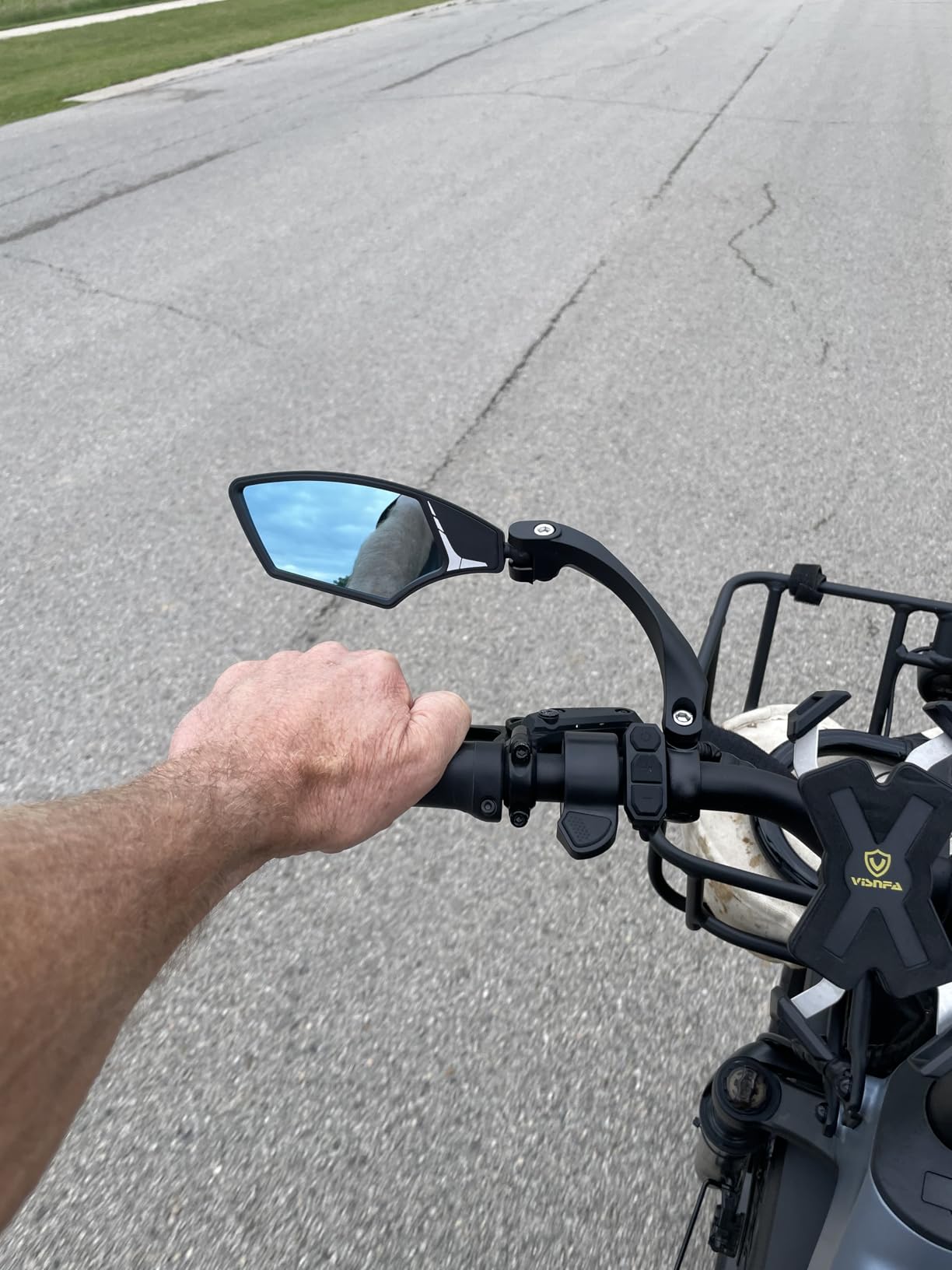
This is the mirror we ended up reaching for most often. The glass is genuinely high-definition with a wide-angle convex curve, and the anti-glare finish kept the image readable on a bright road with the sun behind us. Owners consistently report it stays exactly where it is set, which is the single property that separates a mirror you trust from one you keep adjusting mid-ride.
Several owners buy a second unit for the other side, which tells you something about the mounting system. The clamp takes 21 to 26mm outside-diameter bars with a single bolt and a supplied 5mm hex key, and the ball joint tilts and rotates through 360 degrees. We found the only compromise in the head, since there is no side-to-side movement at the bar knuckle, so the angle needs dialling in once and then stays put.
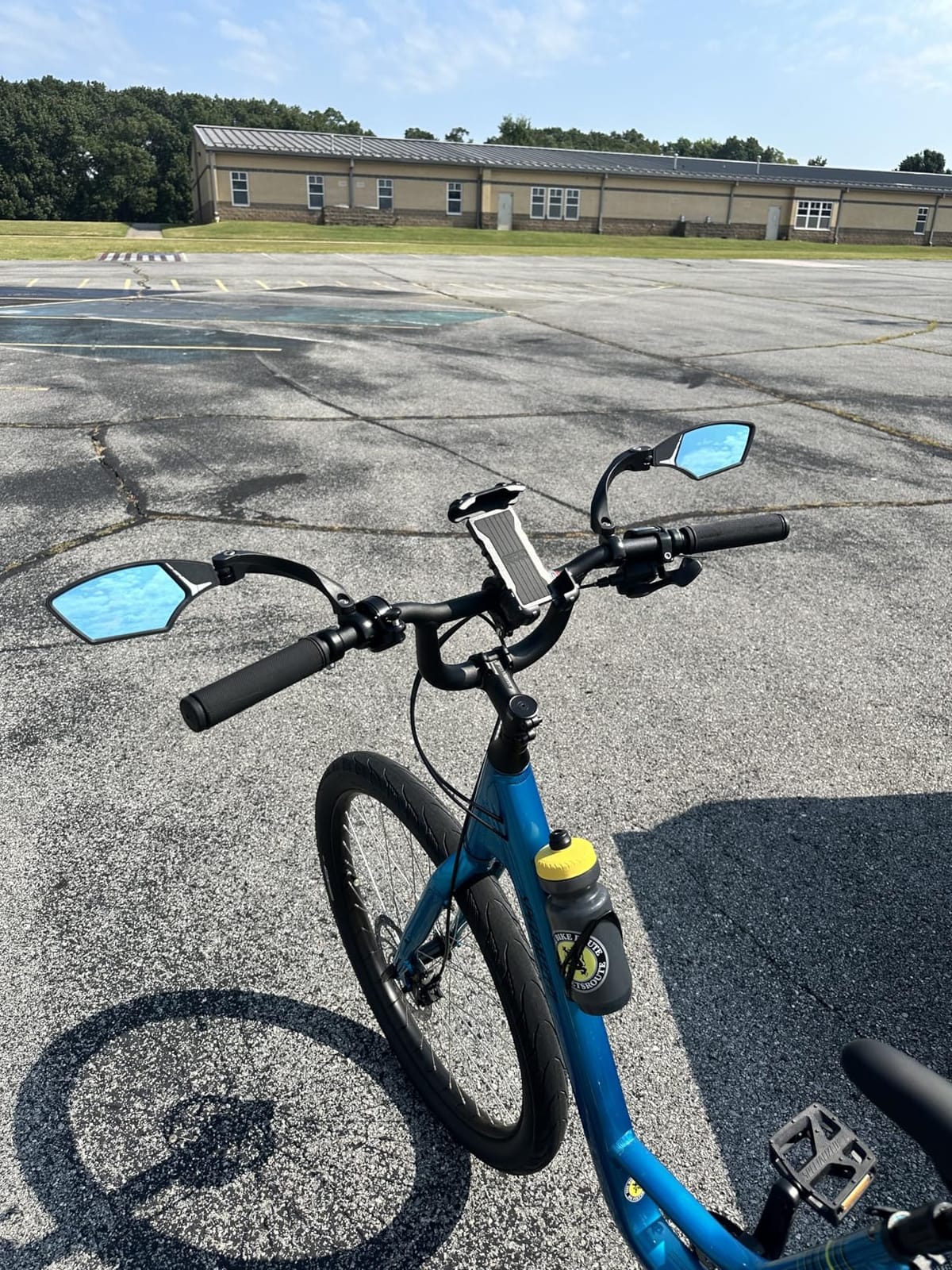
Build quality is high-impact nylon with a scratch-resistant finish, and the lens is shatterproof safety glass. It measures 5.5 by 2.45 inches overall, with a convex lens that gives a wider slice of road than most rectangular mirrors. Owners praise how quickly it goes on with almost no tools and how smoothly the joint moves once seated.
The honest criticism from a minority of owners is the glass size. The reflective area is compact relative to the housing, so the view is a narrower slice of road than a large round bar-end mirror gives you. A few riders also report seeing more of their own shoulder in the reflection, which the fixed bar knuckle does not let you correct. Both are fair points and neither is a deal-breaker.
Who the Hafny HF-MR095 suits
This suits road cyclists and commuters who want one mirror that handles both wet mornings and rough tarmac without fuss. The anti-glare treatment matters more than most spec sheets admit, because a mirror you cannot read through a low sun is the same as no mirror. The foldable arm is a genuine bonus for anyone who carries a bike through doorways or onto trains.
It is also the safest first purchase for anyone who does not yet know their preferred mount. Nothing is permanently modified, and moving it to the other side takes a minute. With the deepest review count of anything on this list, you have a large body of real-world feedback to draw on if something does not suit.
Who should skip the Hafny HF-MR095
Skip it if your priority is the widest possible field of view, because a large round lens will show you more of the road behind at a glance. Riders who need coverage on both sides should plan on a second unit rather than hoping the oblong glass covers a blind spot it was never shaped for.
Also skip it for drop bars. The clamp is sized for 21 to 26mm outside-diameter flat and riser bars, and the maker states plainly that it does not fit drop bars. Riders on a time-trial or triathlon bike should read the drop-bar section further down before buying anything with a bar clamp.
2. Hafny HF-MR083 Steel Bar End – The Touring Choice
Hafny Bike Mirror, Bike Bar End Mirror, Unbreakable Stainless Steel Lens, Safe Adjustable Rearview Mirror, Cycle, E-bike, HF-MR083/HF-M851-FR03 (Black 62mm Dia)
Steel lens
14.8-23mm bar fit
72 g
Left or right mount
+ The Good
- Lens survives knocks and touring
- Strong ball joint hardware
- Folds for tight packing
- Installs above or below the bar
- The Bad
- Steel lens is slightly softer than glass
- Can vibrate if pivot screws are loose
- Needs a cut bar end or open grip
Where the first Hafny uses glass, this one uses an unbreakable stainless steel lens, and that single decision changes the character of the mirror. On a tour bike that gets loaded, leaned on and dropped in gravel, a lens that will not shatter is worth more than a slightly sharper reflection.
The hardware is the strongest element here. Owners repeatedly describe the mirror as far more rigid than clamp-style mirrors they replaced, and the wide ball-joint motion lets you set the angle high on the bar, out of the way of a bag mount. It fits 14.8 to 23mm inside-diameter bars and installs on the left or the right, above or below the handlebar.
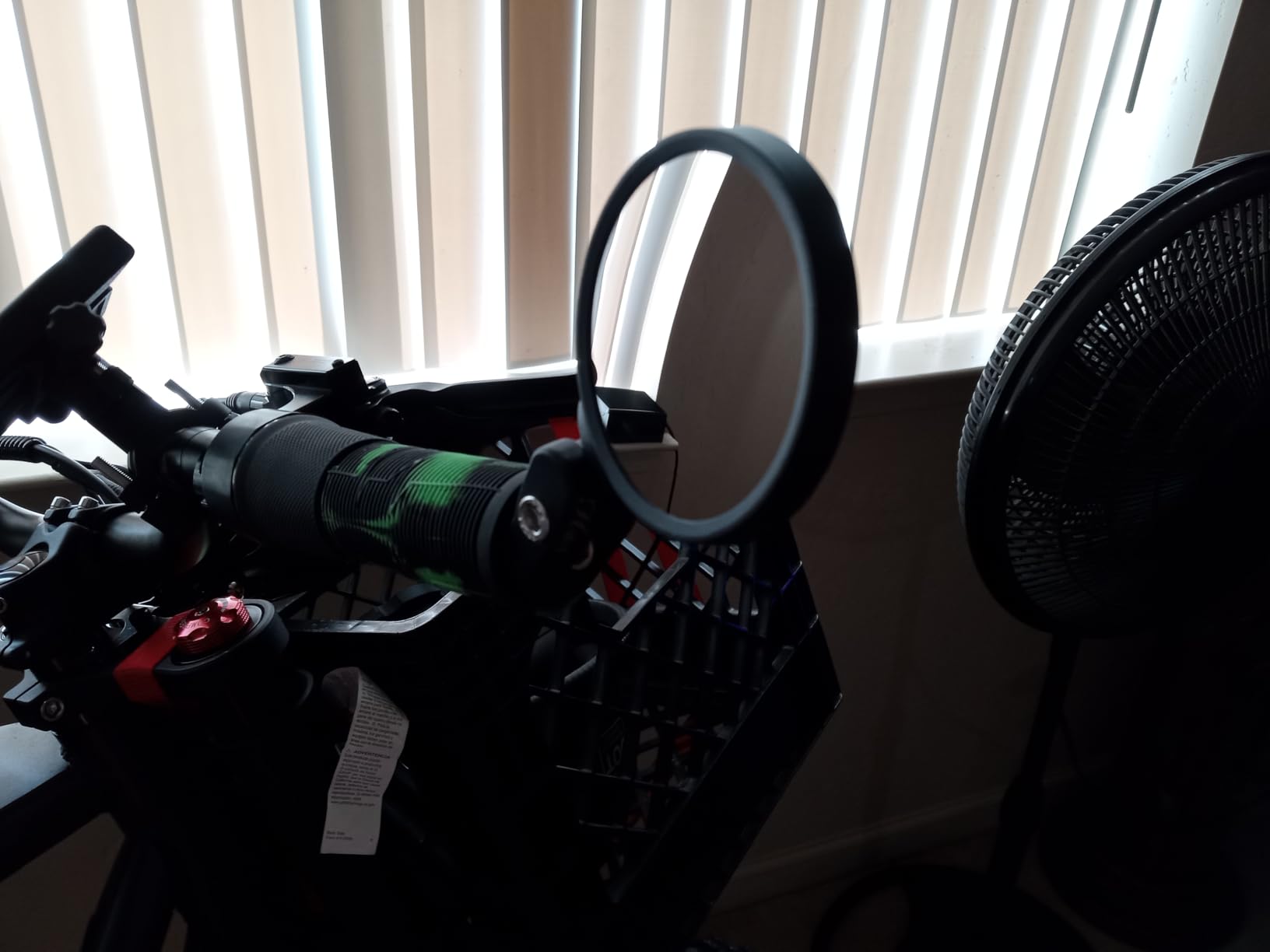
At 72 g it is heavier than the featherweight options but light enough to forget. A 5mm hex key is required, and the installation needs either an open-ended grip or a bar end that has been cut. The maker notes it does not work with Trek Isozone grips, so check your cockpit before you commit.
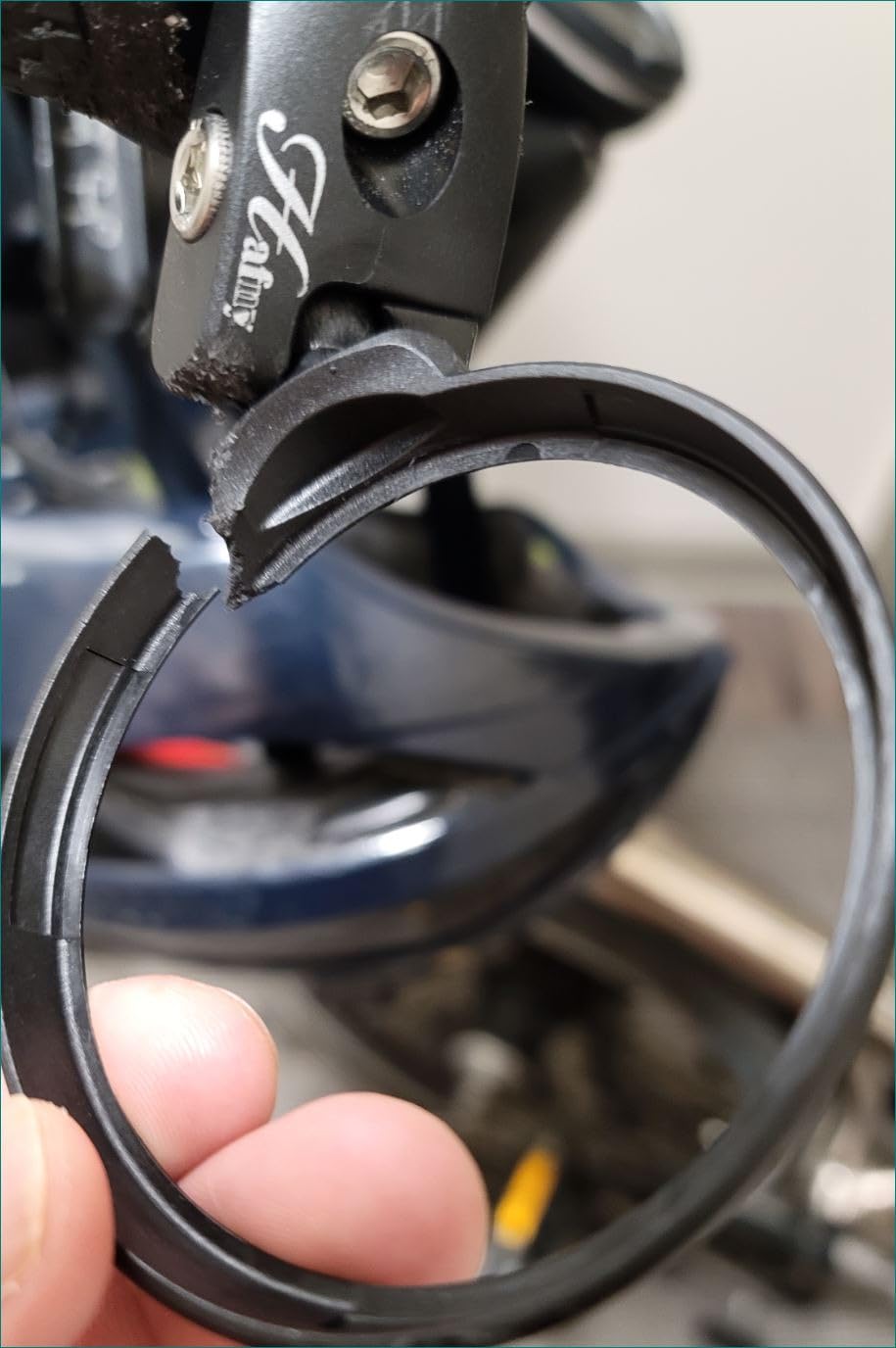
The trade-off is image quality. The steel lens is a touch softer and less sharp than glass, and reviewers who upgraded from a glass mirror notice it immediately in low light. Vibration also shows up at speed or on broken tarmac if the pivot screws are not fully tightened, so treat the hex key as a final step rather than an optional one.
Who the Hafny HF-MR083 suits
Touring riders and anyone who has already broken a glass mirror will recognise the value immediately. It is also a sensible commuter choice for riders on streets with poor surfaces, where a rigid mount and a lens that tolerates a tip-over matter more than optical perfection. Owners who fitted it on drop bars report it works there as well as on flat bars.
If you ride in mixed traffic and want one mirror that survives a bad week, this is a safe recommendation. The adjustable joint and the option to mount it high on the bar make it adaptable to different cockpit setups without buying a second unit.
Who should skip the Hafny HF-MR083
Skip it if your cockpit uses sealed grips or internal routing that leaves no open bar end, and if your bars are already fitted with closed plugs. Riders who chase the sharpest possible image for judging distance in a group will find the glass options more satisfying in daylight.
Also be honest about maintenance. If you are not comfortable cutting a bar end or removing a grip, this is not the mirror to learn on. The installation is straightforward but permanent, and that permanence is exactly what makes the joint hold rigid once you are riding.
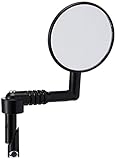
3. Mirrycle Mountain Mirror – The Top-Rated All-Rounder
+ The Good
- Wide steady image at speed
- Adjusts on three axes while riding
- Aluminium and plastic build
- Replacement parts available
- The Bad
- Ships unassembled with stiff pivot screws
- Needs a cut bar end or removed plug
- Occasional missing mounting bolt
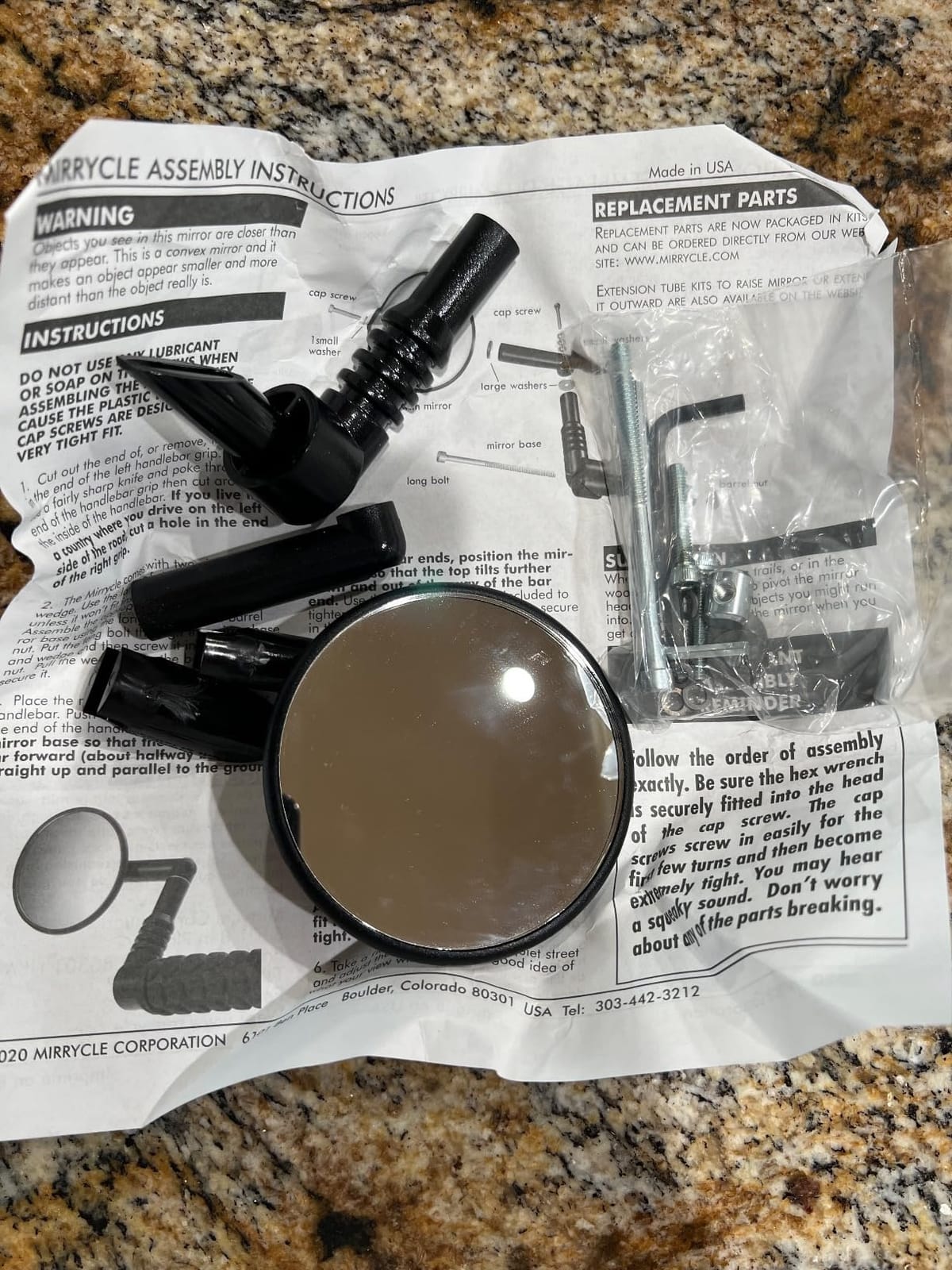
This carries the highest rating in our list, tied only with the BriskMore pair, and the reason is consistency rather than any single feature. Owners describe it as the one bike mirror they have never had to replace, and several report the same unit moving between bikes over the years.
The viewing experience is what sells it. A three-inch round convex lens pivots on three axes, so you can set the exact angle that clears your own arm and shoulder, and reviewers report tweaking it while riding. The long arm puts the lens far enough out to give a genuinely useful slice of the road rather than a postage stamp.
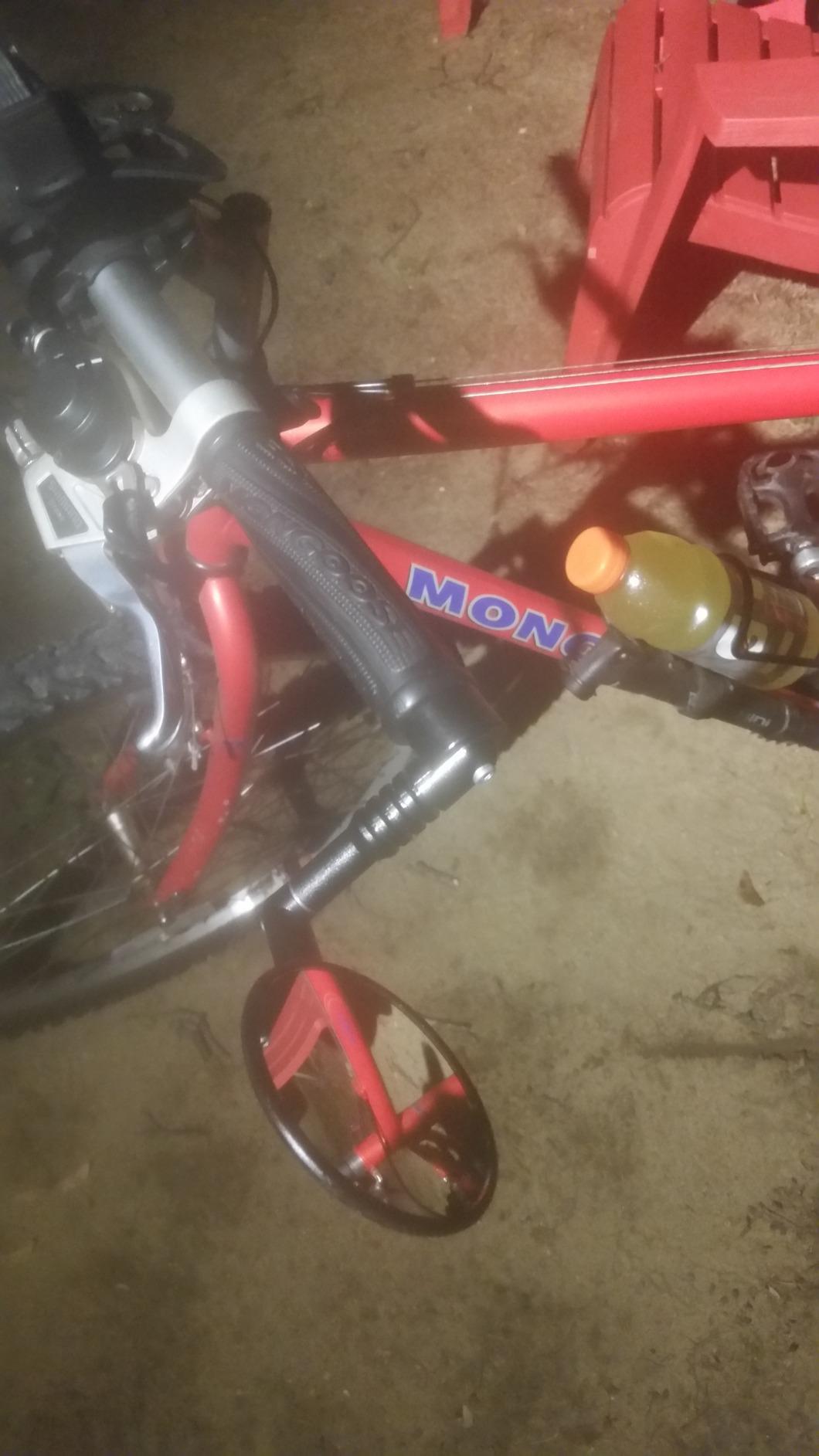
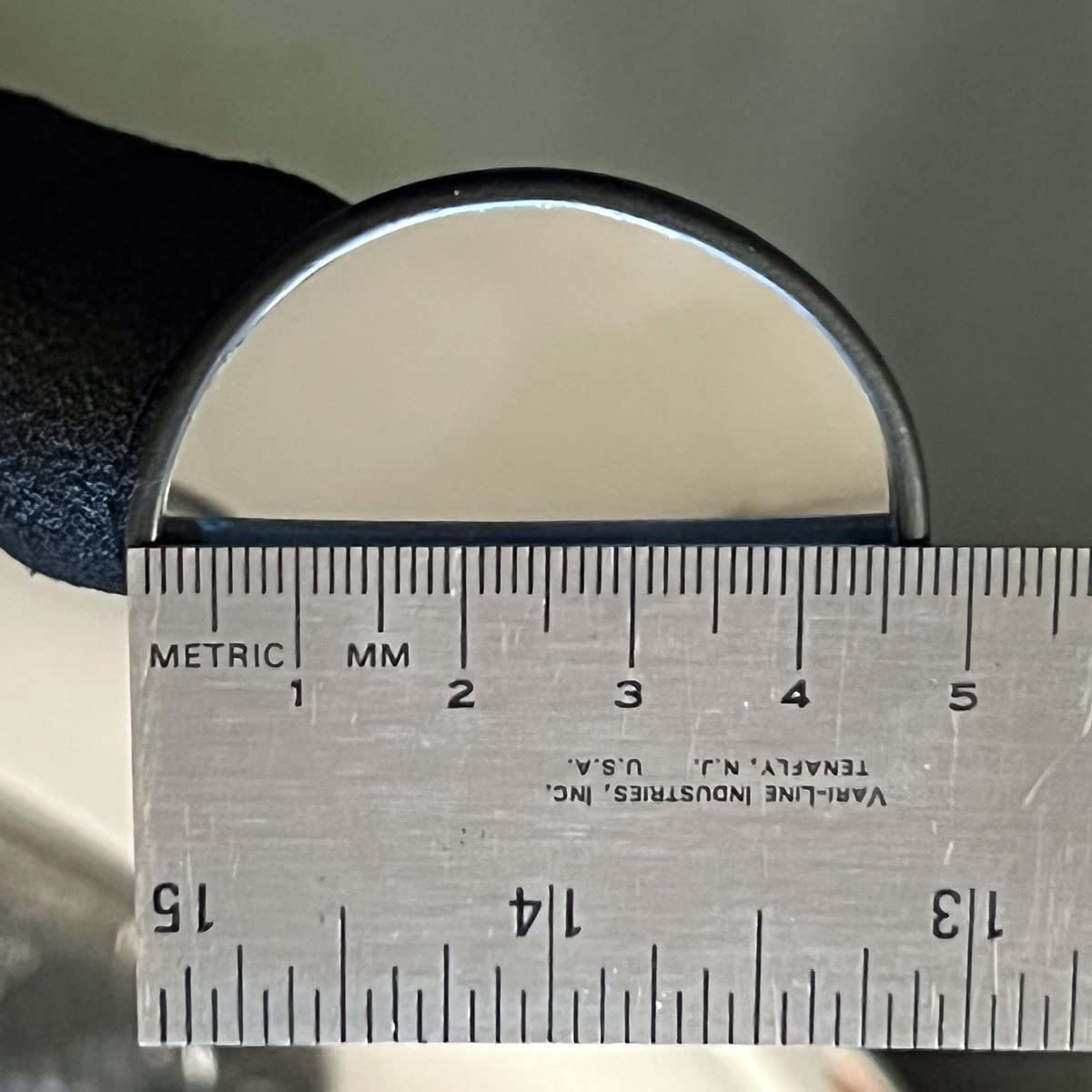
Two wedge adapters cover different internal bar diameters between 13.75mm and 22.5mm, so it fits most open-ended bars. At four ounces it is not the lightest option, but it is light enough to disappear on a road bike. There is no battery and no electronics, which means nothing to charge and nothing to fail.
Assembly is the difficult part and owners say so plainly. It arrives unassembled and the two large pivot screws bind badly enough that pliers are often needed. The bar end also has to be cut or the plug removed, and a small number of reviewers have received units missing the long mounting bolt, so check the box before you strip a bar.
Who the Mirrycle Mountain Mirror suits
Riders who want a large, round, easy-to-find image will appreciate the three-inch face more than a rectangular bar clamp gives you. The fold-flat design matters for anyone who carries a bike through a doorway or onto a train, and the three-axis adjustment solves the shoulder-blocking problem that smaller mirrors create.
It is also a good match for riders who like to tinker. Replacement mirror glass and hardware can be ordered separately, so a scuffed lens is a five-minute fix rather than a replacement. For a bike you keep for years, that serviceability has real value.
Who should skip the Mirrycle Mountain Mirror
Skip it if you want a mirror you can fit in under five minutes with hand tools only. The stiff pivot screws and the need to cut a bar end make the first assembly a job, and if your bars use sealed plugs that you would rather not disturb, look at a clamp-mounted option instead.
Road riders focused on grams per mirror should also weigh this carefully. At four ounces it is one of the heavier units here, and while it disappears against a flat-bar commuter, it is noticeable on a lightweight road cockpit. The Sprintech in this roundup was designed specifically around that weight concern.
4. CATEYE BM-45 – The Most Discreet Bar-End Mirror
CATEYE BM-45 Bar End Mirror
Flat glass lens
1.28 oz
Fits drop and flat bars
Two year warranty
+ The Good
- Barely adds weight to the bars
- Flat lens for accurate distance
- Minimal bar projection
- Fits drop and flat bars
- The Bad
- Flat lens gives a narrower view than convex
- Requires a cut bar end
- Only one size offered
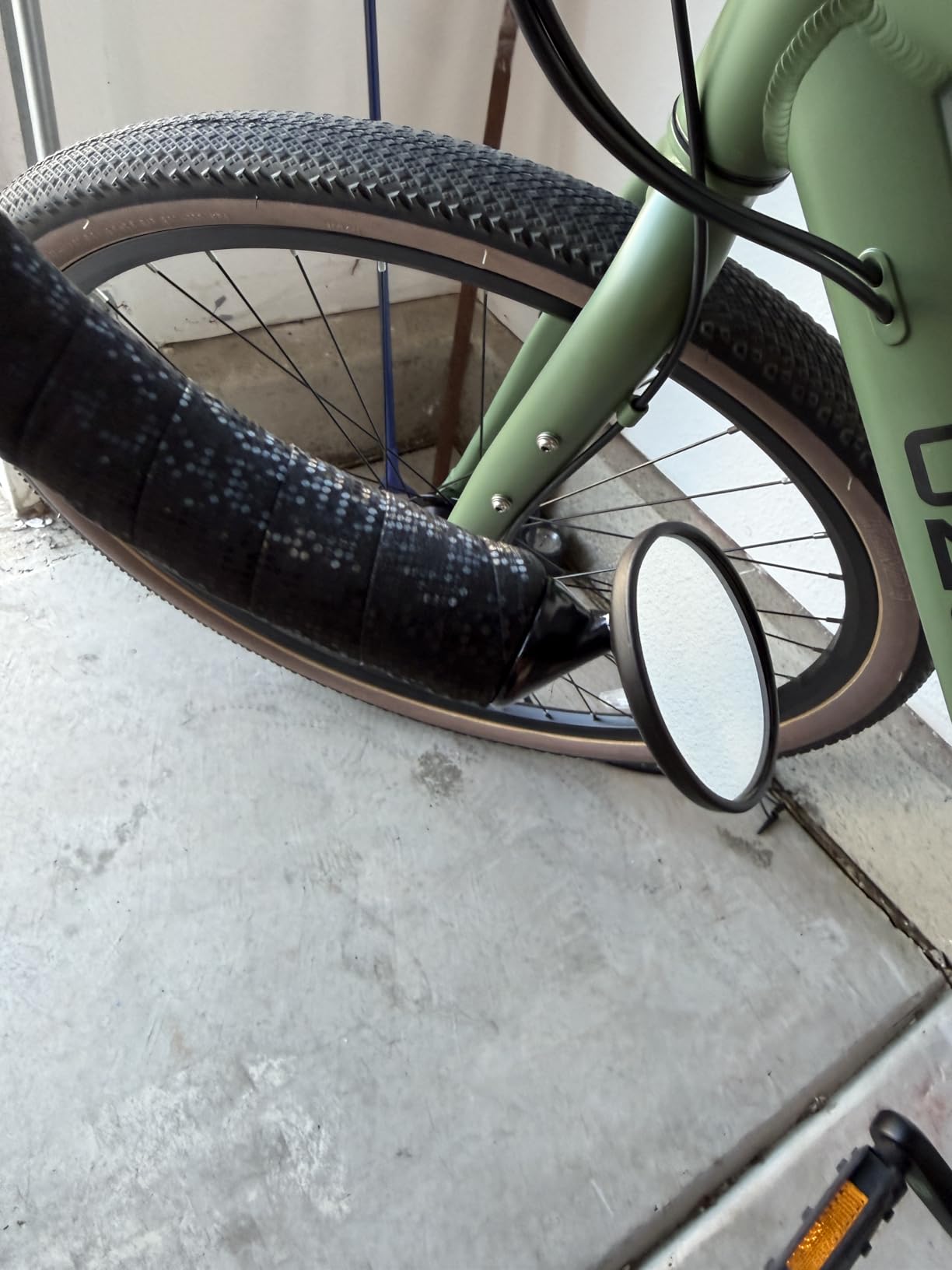
The BM-45 is the pick for riders whose objection to a mirror is aesthetic. It sits almost flush in the bar end, and at under 1.3 ounces it adds effectively nothing to a road bike. If you have a smart-looking cockpit and a low tolerance for clutter, this is the one that will not spoil it.
The lens is flat glass in an aluminium housing, which is the opposite trade to most of the round bar-end mirrors here. You get a smaller total field of view, but distances read accurately, which matters when you are judging a gap or a closing speed rather than just spotting a vehicle. A single bolt fixes it with the supplied Allen key.
The brand carries a two-year manufacturer warranty, and reviewers consistently mention build quality and the finish of the scratch-resistant glass. The maker lists it as fitting both drop and flat handlebars, which makes it one of the few options here that will not rule out a road bike on paper.
What you give up is magnification. A flat lens does not widen the view the way a convex one does, so this is a mirror for riders who want to confirm what is behind them rather than scan a wide arc. The housing is also deliberately minimal, with no arm to fold, which is the whole point and also limits how far you can re-aim it later.
Who the CATEYE BM-45 suits
This suits road riders on a clean, light build who still ride in traffic. The low weight and small projection mean you can leave it fitted permanently without thinking about it, and a lens that does not distort distances is genuinely useful when you are reading a junction ahead.
It is also a safe first bar-end mirror for anyone who wants a known Japanese brand name behind the warranty. Installation is a single bolt, and because the maker lists both drop and flat bars, it is one of the few products in this roundup you can buy before measuring your cockpit in detail.
Who should skip the CATEYE BM-45
Skip it if your priority is the widest field of view or a magnified image that shows more of what is closing behind you. A flat lens in a small housing gives a noticeably tighter picture than the large round convex options, and that is a real limitation in heavy urban traffic.
It is also not the mirror to choose if you use sealed bar plugs and will not cut your bar ends. The single-bolt design assumes an open bar end, and there is no clamp alternative in this model.
5. BriskMore 76mm Glass Pair – The Widest View Here
BriskMore Black Convex Rearview Mirrors, 2PCS Adjustable Handlebar Bicycle Mirrors for Road, Mountain, Scooter Bikes
76mm convex glass
Left and right pair
14-24mm bar fit
Shatterproof film
+ The Good
- Largest lens in the bar-end category
- Shatterproof film over real glass
- Reinforced nylon and steel hardware
- Left and right pair in the box
- The Bad
- Needs open-ended grips or a cut bar
- Pair is heavier than a single mirror
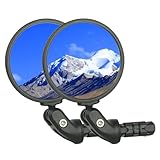
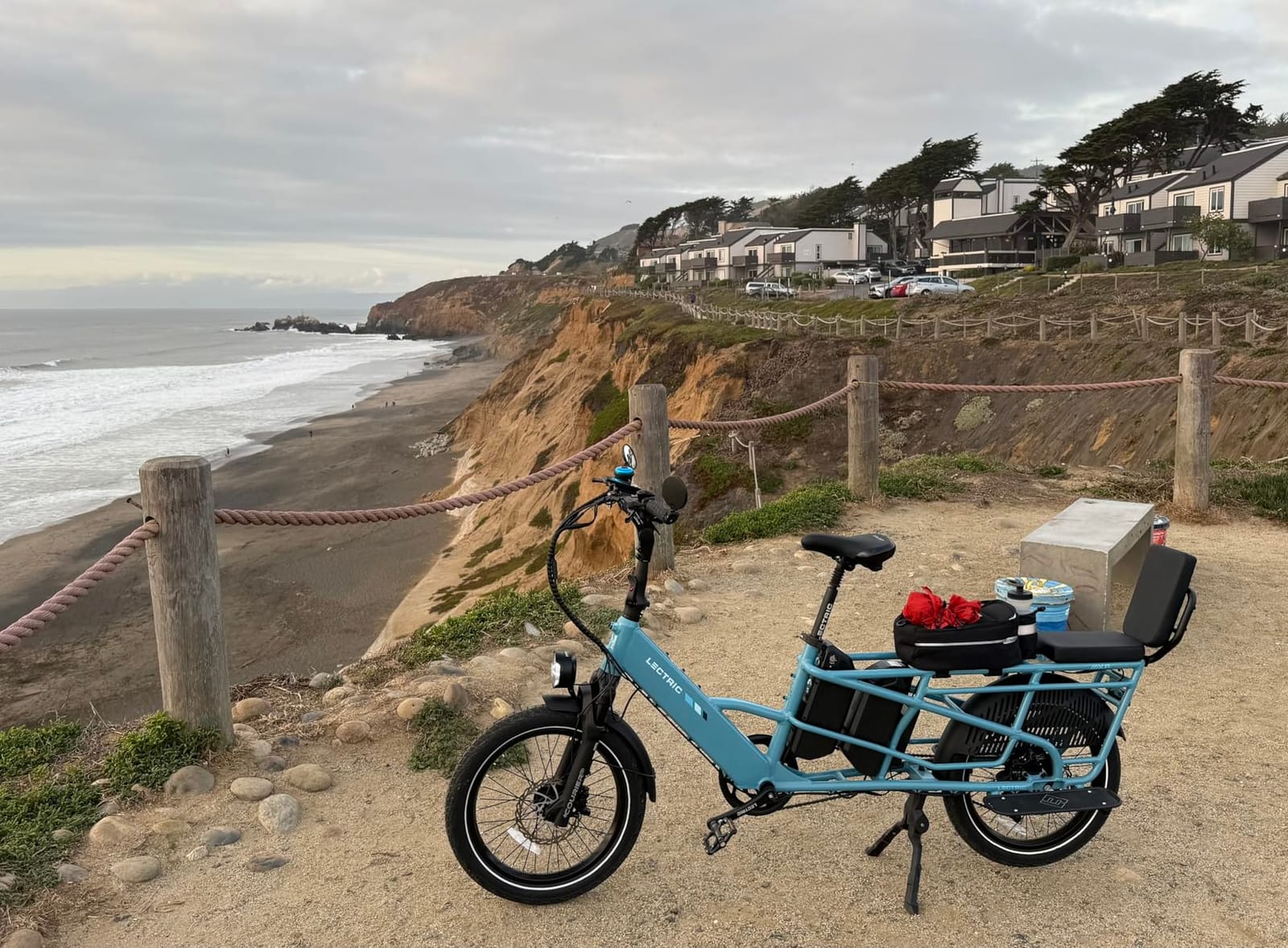
This pair exists for one reason: the lens is 76mm across, and buyers single it out as giving a materially wider rear view than the small round mirrors they replaced. A bigger lens means you can acquire the image faster in peripheral vision, which is the difference between a glance and a head turn.
It comes as a left and right set, so you get coverage on both sides without a second order. For road riders this is genuinely useful, because the side you do not cover is where a vehicle overtaking on the inside will appear first. The head rotates 360 degrees and tilts 180 to clear your own arm.
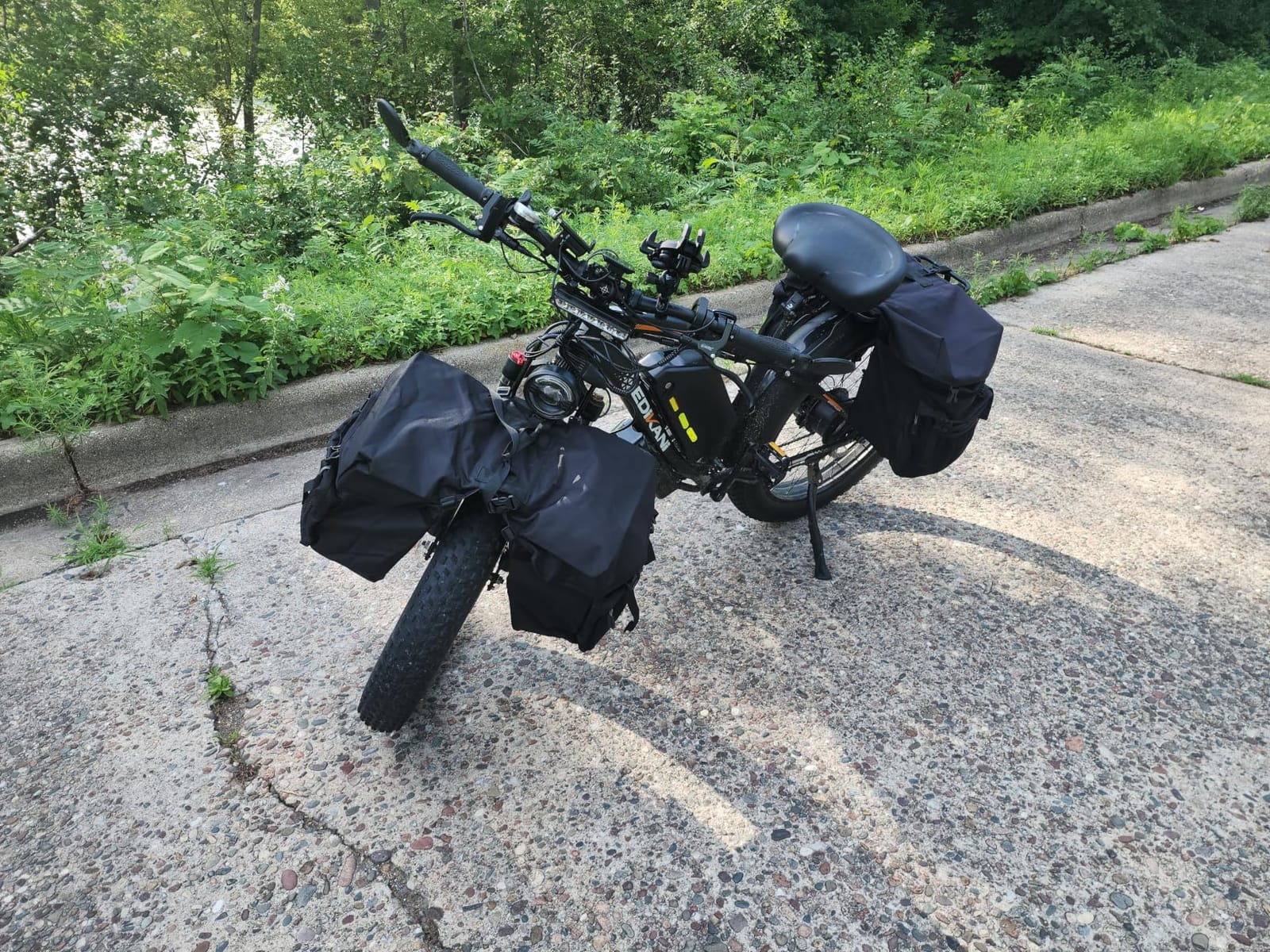
Optically it is automotive-grade convex glass with a shatterproof film, and a waterproof rubber ring around the lens. The frame is nylon reinforced with glass fibre and the mounting screw is 304 stainless steel, and owners credit that combination with holding position over gravel and rough tarmac.
Fit is the thing to check first. It needs open-ended grips at 14 to 24mm internal diameter, or a hole cut in the bar, and it installs left or right with the supplied 4mm hex key. A cleaning cloth is included, which sounds trivial until you have tried to read a dirty convex lens in bright sun. There is a two-year manufacturer warranty with lifetime replacement support.
Who the BriskMore pair suits
Commuters, e-bike riders and anyone who spends time in dense city traffic get the most out of a very large lens. If you have been riding with a small mirror and constantly turning your head to find the image, the jump to 76mm convex glass is the single biggest upgrade in this roundup.
Running two mirrors also changes how you ride. With coverage on both sides you can hold a line through a junction, signal earlier and still know a car is coming up on your inside, which is the situation that ends badly for cyclists far more often than a rear tap does.
Who should skip the BriskMore pair
Skip it if your bars have closed plugs you do not want to cut, or if the internal diameter of your bars falls outside the 14 to 24mm range. Riders on very small-diameter drop bars or unusual cockpit tubing should measure before ordering.
Weigh the extra grams too. At 190 g for the pair, this is a real addition to a race-weight build, and on a fast group ride the extra width at the bar ends is something other riders will notice. If weight and cleanliness are your priorities, look at the CATEYE or the Sprintech instead.
6. BriskMore Extended Handlebar Mirror – The Long-Arm Flat-Bar Pick
BriskMore Handlebar Bike Mirror – Crystal Clear HD Glass, 360° Adjustable&Foldable Mirror for Safe Riding, Wide Angle Rearview for E-Bikes, Mountain Bikes & Scooters,Bicycle Mirrors,Left Side Mount
13 inch extended arm
21-26mm flat bars
Left side only
Spacer clamp
+ The Good
- Long arm clears your arm and shoulder
- Spacer clamp kills vibration
- Folds flat for storage
- Weather-resistant build
- The Bad
- Left side only in this variant
- Does not fit drop bars
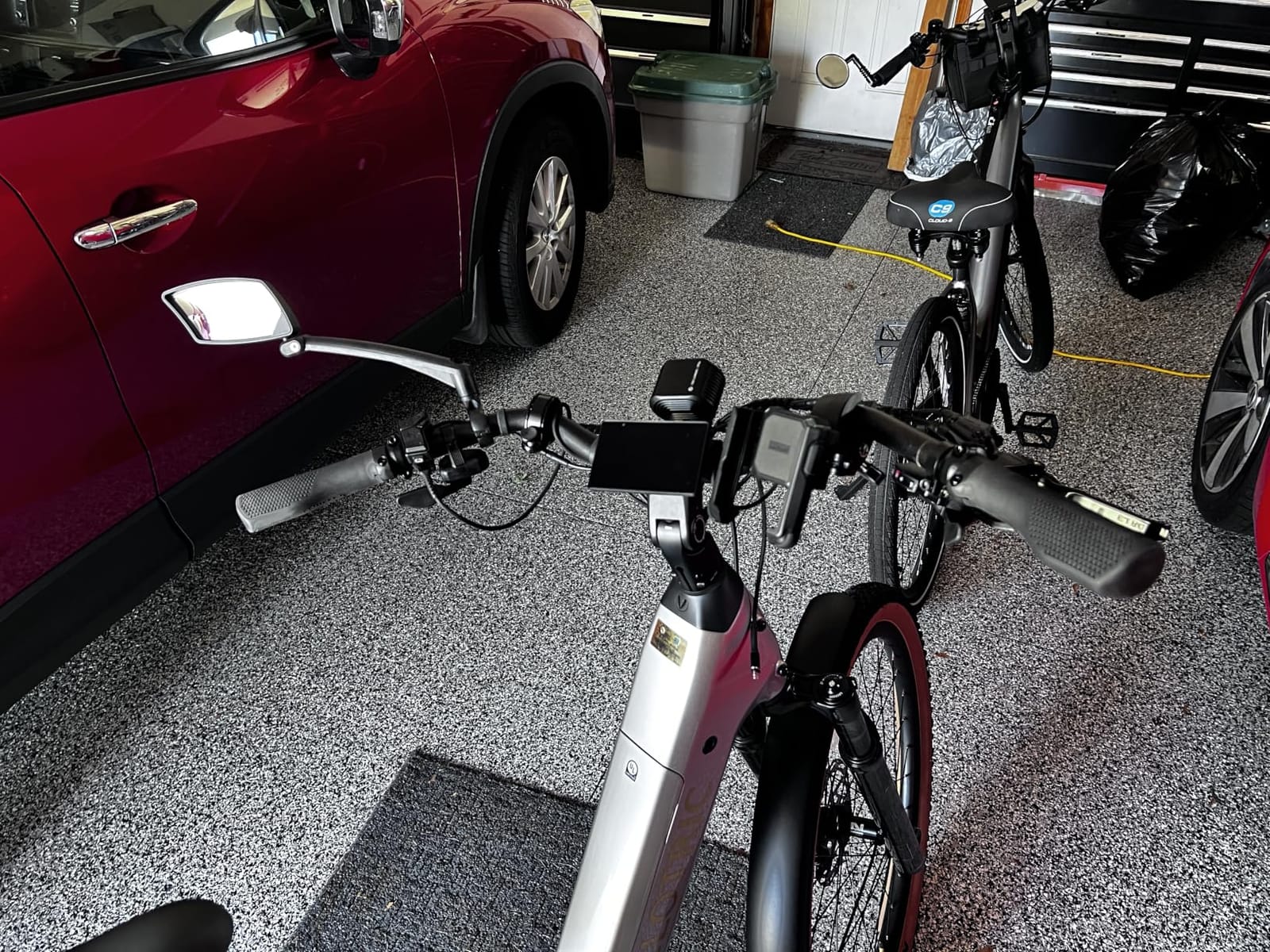
The defining feature is a 13-inch arm that puts the lens out past your shoulder. Flat-bar riders describe this as the difference between a usable view and a reflection of their own arm, and it is the reason this clamp-style design keeps coming up for upright riding positions.
The adjustable spacer clamp is the second strength. Instead of a single point of contact, the clamp grips the bar at a set distance and locks down with the 4mm hex key, and owners repeatedly credit it with removing the shake that makes cheaper mounts unreadable over broken surfaces.
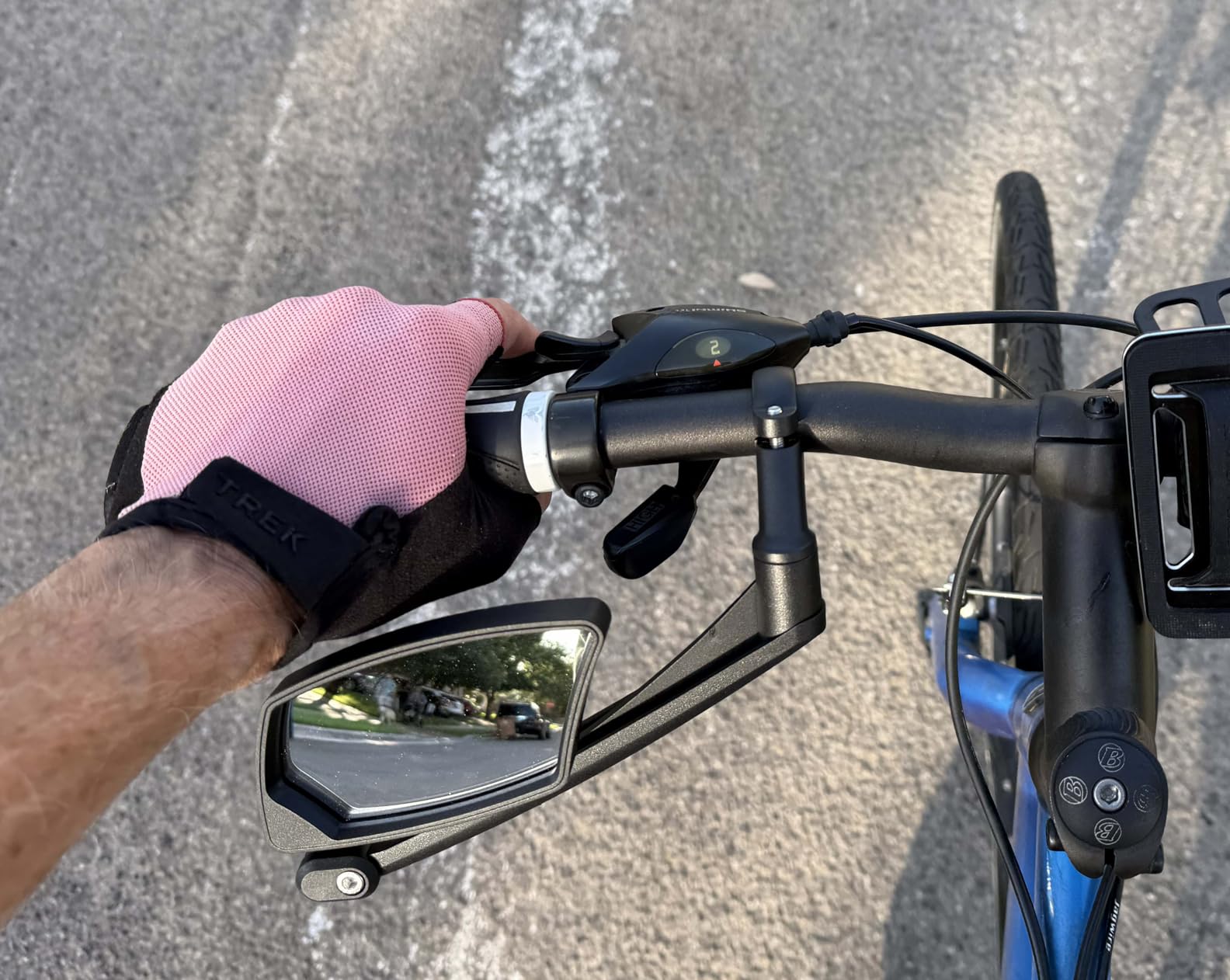
The lens is a wing-shaped 4.7 by 2.4 inch convex HD panel with shatterproof safety film, on a nylon and glass-fibre frame with an aluminium alloy clamp. The head rotates 360 degrees and tilts 180, and the whole thing folds flat for storage. Weather resistance is part of the design rather than an afterthought.
Read the fit line before you buy. This version fits flat handlebars of 21 to 26mm outside diameter and is left side only, and the maker states plainly that it does not suit a drop-bar road bike. If you ride drops, this is the wrong tool and the product section further down is the right one.
Who the BriskMore extended mirror suits
Upright riders, e-bike users, gravel riders on a flat bar and anyone whose cockpit is wider than a race bike will get the most from a long arm. The outboard position also means the image sits in peripheral vision, so you can check behind without moving your head at all.
If you have been disappointed by clamp mirrors that loosen after a few weeks, the spacer system here addresses that directly. The build is described as weather-resistant and the product carries a lifetime warranty with free replacements, which fits a bike that lives outside.
Who should skip the BriskMore extended mirror
Drop-bar riders should skip it. The stated fit is 21 to 26mm outside-diameter flat handlebars, and there is no drop-bar version, so on a road bike it will simply not sit where you need it. Riders in left-side-traffic countries should also note this variant is left side only.
It is a heavy option at 195 g and it adds visible width outboard of the grip. On a narrow road cockpit that looks out of place and adds aerodynamic drag, which is precisely the objection that makes some road cyclists reject mirrors altogether.
7. Take A Look Clip-On Mirror – The Best for Glasses Wearers
Take A Look Cycling Mirror – Low-Tech Rearview Mirror for Bikes – Fits Helmet & Sunglasses – Shatter-Resistant Polycarbonate Lens, Anti-Vibration Stainless-Steel & Brass, Always On (Left-Side)
Clips to glasses or helmet
28 x 37 mm lens
Stainless steel and brass
10 g
+ The Good
- Stays aligned in wind and heavy rain
- No handlebar bulk or drag
- Clips on and off in under a minute
- No batteries or wiring
- The Bad
- Small reflective area limits the view
- Needs a deliberate head and eye movement
- Helmet mount can detach on bumpy roads
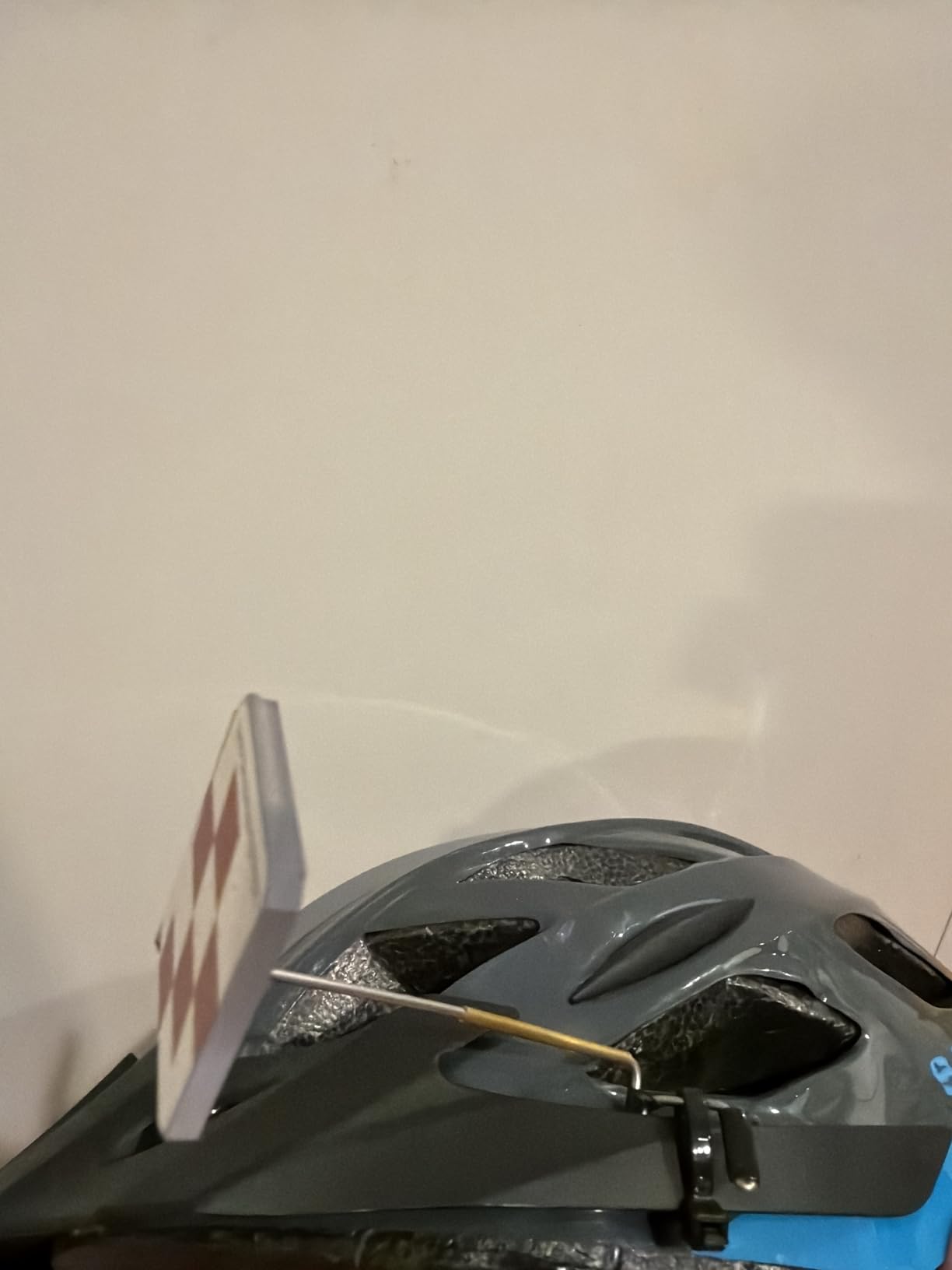
This is the most-mentioned clip-on mirror in road cycling forums, and the reason is durability. The stainless steel and brass frame holds its alignment through conditions where plastic helmet mirrors slip, and at roughly 10 g it adds nothing to your bike and creates no drag at all.
It clips to sunglasses, to a helmet visor, or to most helmets with the optional adapter, using a three-prong clip on a 70mm arm. The frameless polycarbonate lens is 28 by 37mm and pivots on three axes, so the angle is settable, and it adjusts one-handed while riding.
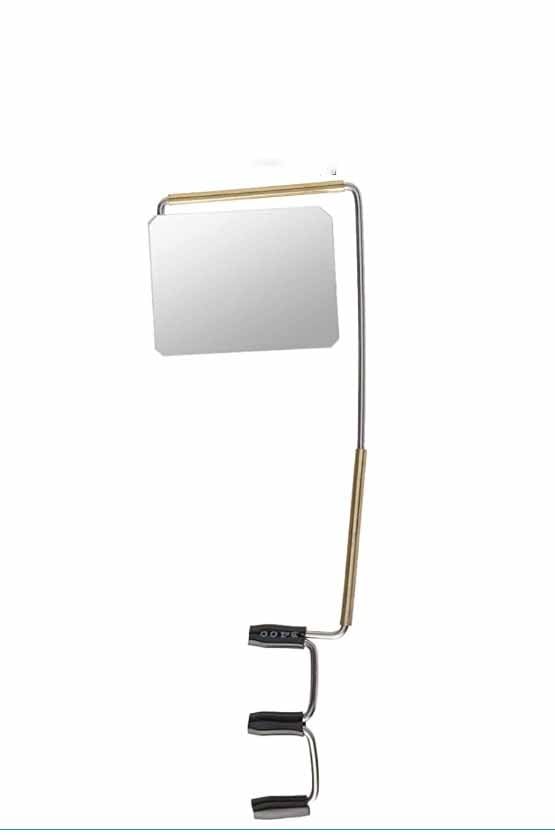
The divide in owner feedback is about mounting style, not build quality. Riders who clip it to sunglasses are emphatic about the stability and the lack of any handlebar clutter. Critics find the small flat lens hard to acquire quickly, because finding it takes a deliberate head movement and eye focus that feels awkward in the first weeks.
Helmet mounting is the weaker option. Several owners report the clip detaching mid-ride on bumpy roads, and this mirror is optimised for the left eye in this version, with a right-side version sold separately. The consensus recommendation from experienced users is simple: use it on glasses, not on the helmet.
Who the Take A Look suits
If you wear glasses, this is the pick. There is nothing on your handlebar to add width, weight or drag, nothing to get knocked off in a fall, and nothing to install. Riders report multi-decade ownership, which says more about the metal frame than any specification can.
It also makes sense for anyone whose bars are already full. When the cockpit is crowded with a bike computer mount, lights and a mount for a feed bag, an eyewear-mounted mirror solves the space problem instead of adding to it. Pairing it with one of our cycling computer picks keeps the bar clean.
Who should skip the Take A Look
Skip it if you do not wear glasses and do not use a helmet, because there is nowhere to attach it. Wire-rimmed and very thin temples are also repeatedly reported as poor hosts for the clip, and progressive lenses distort the periphery enough to make some riders find the view unusable.
Be careful about position, too. A clip-on arm that sits in front of your eye is a hard object in the path of a fall, and forum riders have reported a bent arm cutting a cheek near the eye. Mount it out of the line of your temple rather than pointing it back at your face.
8. EVT Safe Zone Helmet Mirror – The Best Helmet Mirror
Safe Zone Bicycle Helmet Mirror by EVT
2.25 inch convex acrylic
Zip-tie rail mount
1.6 oz
Linked arm
+ The Good
- Oversized lens is easy to find quickly
- Angle holds over bumps and wind
- Interchangeable arm links
- Five year no-fault warranty
- The Bad
- Bulky arm and bracket on the helmet
- Breakaway joint can snap if knocked
- Zip ties can cut into helmet foam
The oversized 2.25-inch convex acrylic lens is the whole argument for this mirror. It is roughly double the face of a typical helmet mirror, and reviewers converge on the fact that this removes the hunting-for-a-tiny-mirror problem that frustrates users of one-inch glass units.
Once set, it stays set. Owners report the angle holding through wind, gravel and rough tarmac over years, and the linked arm uses multiple ball-socket joints so you can re-position it for different layers under the helmet. At 1.6 ounces it is light for a helmet-mounted unit.
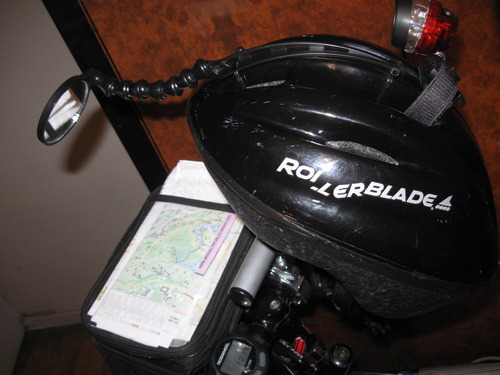
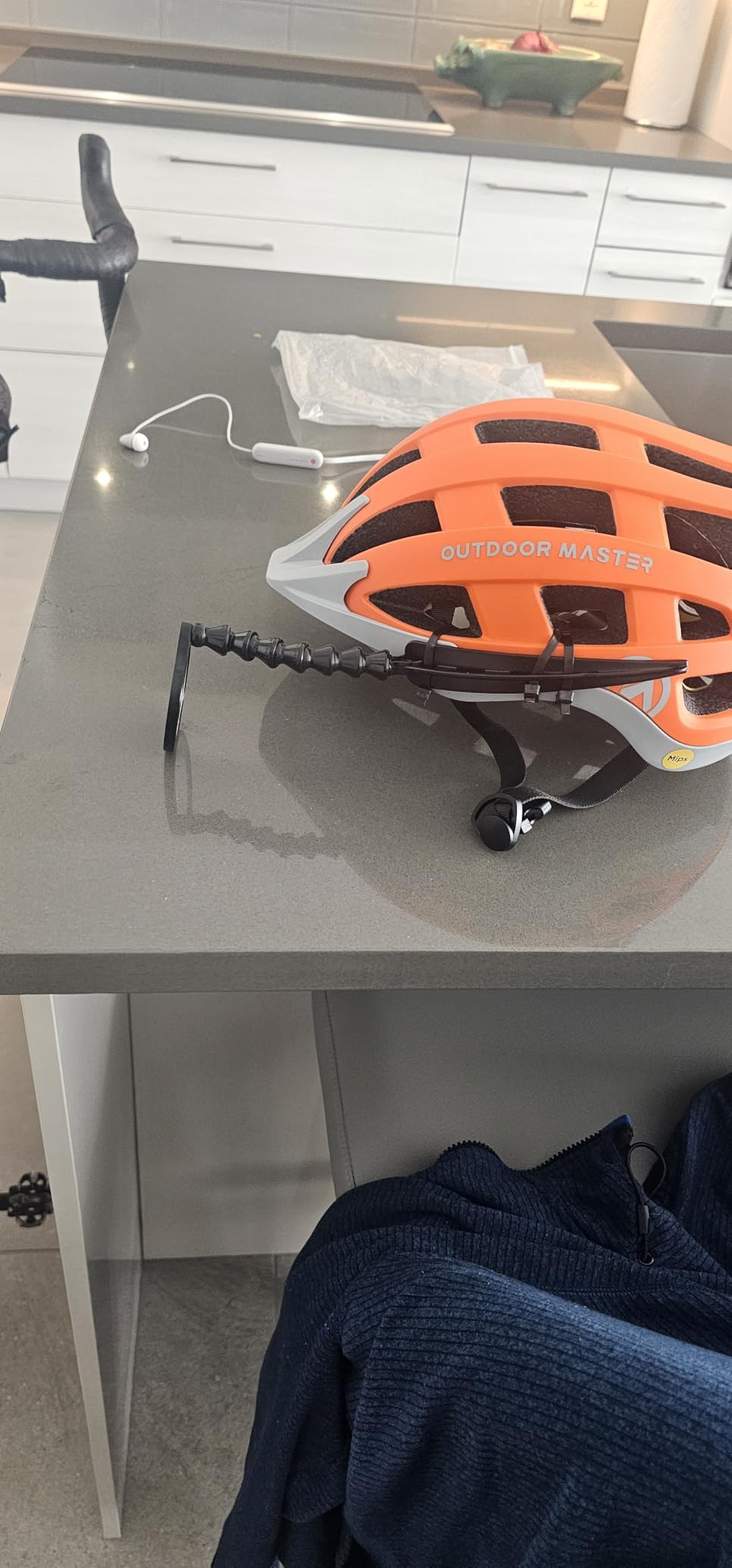
It is made in the USA and carries a five-year no-fault warranty, and the manufacturer includes installation help, which is sensible given the fitting method. The rail is secured with supplied zip ties and Velcro strips, and a breakaway joint lets the arm detach in a fall rather than driving into your helmet.
The criticisms are all about installation and bulk. The arm and bracket add noticeable size to the helmet, the arm is short so the range of positions is limited without extra links, and the included zip ties can cut into EPS foam without holding reliably on every helmet shape. Adjustable-visor helmets and glasses wearers frequently cannot get the arm far enough from the eye.
Who the EVT Safe Zone suits
Riders who cannot use a bar end, whether because of sealed plugs, a folding bike, a recumbent or a full cockpit, get a working mirror from this. Upright riding positions also suit it, since the lens sits just above your line of sight and moves with your eyes rather than staying fixed to the bike.
If you already wear a helmet with a visor, you can add extra arm links to push the lens further outboard. That is the configuration experienced riders describe as more stable than bar-end mounting, and it works well on tours where the handlebar is already busy.
Who should skip the EVT Safe Zone
Road riders in the dropped position should skip it. The lens moves with your head, so it bounces at the exact moment you try to read it, and on an aero helmet with a fixed visor there is nowhere sensible to fit the rail at all. This is a helmet mirror problem, not a quality problem.
Also weigh the bulk and the fitting risk before committing. If your helmet has adjustable visors or few vents, installation is genuinely difficult, and zip ties pressed into foam can leave permanent marks on an expensive helmet. Read our smartwatch and computer picks only after you have settled the mirror question.
9. Sprintech Drop Bar Mirror – The Best for Drop Bars
Sprintech Drop Bar Bike Mirror – Road Bike Rear View Mirror for Drop Handlebars – Bar End Bicycle Mirror, Swiss-Made (Black, Left Single)
Purpose-built for drop bars
Under 30 g including plug
Bar plug system
Convex lens
+ The Good
- Designed for drop bars rather than adapted
- Angle holds without rattling
- Under 30 g including the plug
- Shatter-resistant construction
- The Bad
- Single left mirror in this variant
- Small oval housing
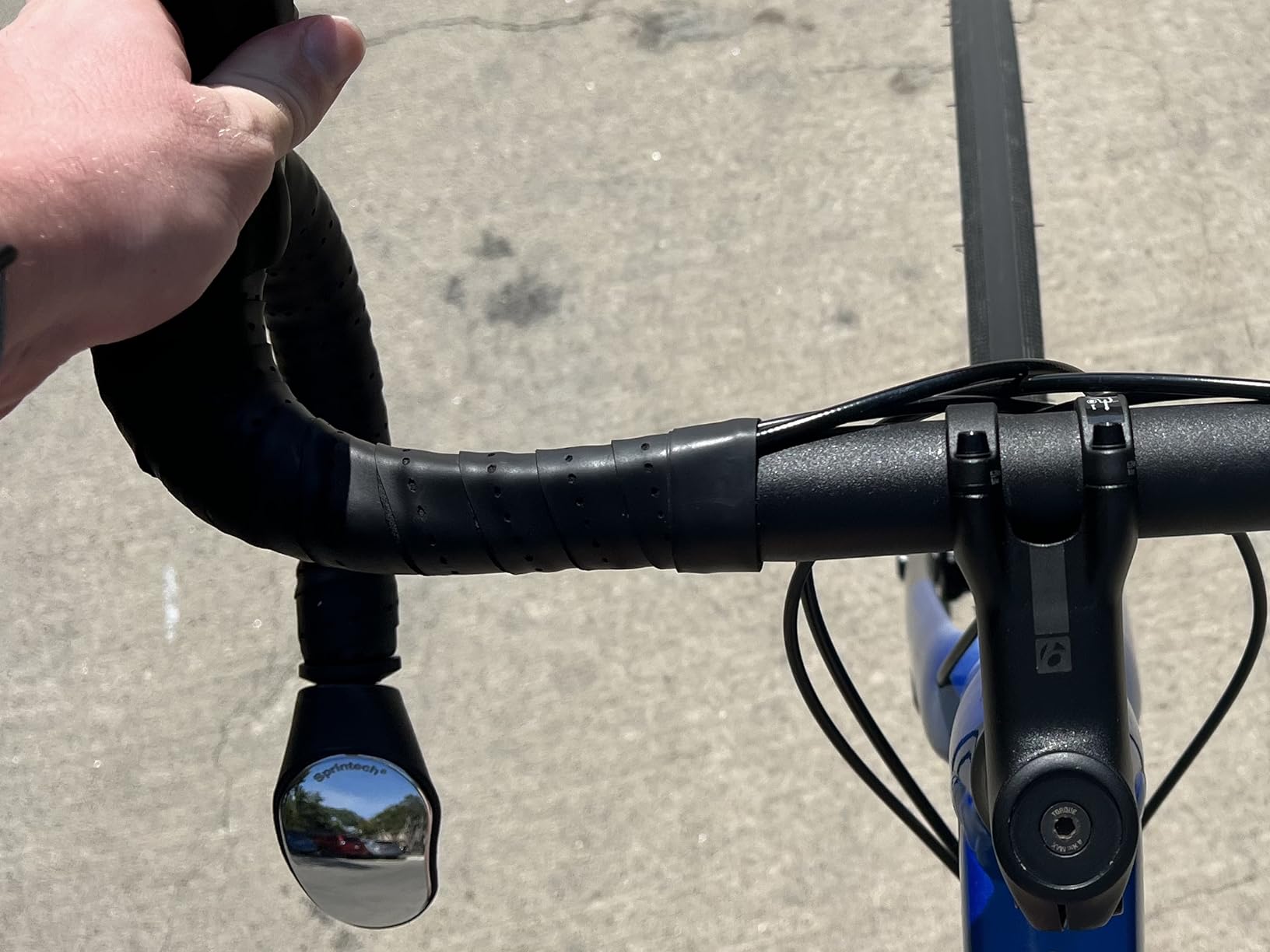
Every other bar-end mirror on this list started life on a flat bar and was offered to road riders as an afterthought. The Sprintech was engineered the other way around, for drop handlebars on a road bike, and that shows in how compact and how light it is.
At under 30 grams including the bar plug, it effectively disappears on the bar, which is the number that matters to road riders who reject mirrors for weight and looks. Long-distance riders name it as their choice precisely because the joint stays tight once set, instead of drifting after a few hundred kilometres of rough road.
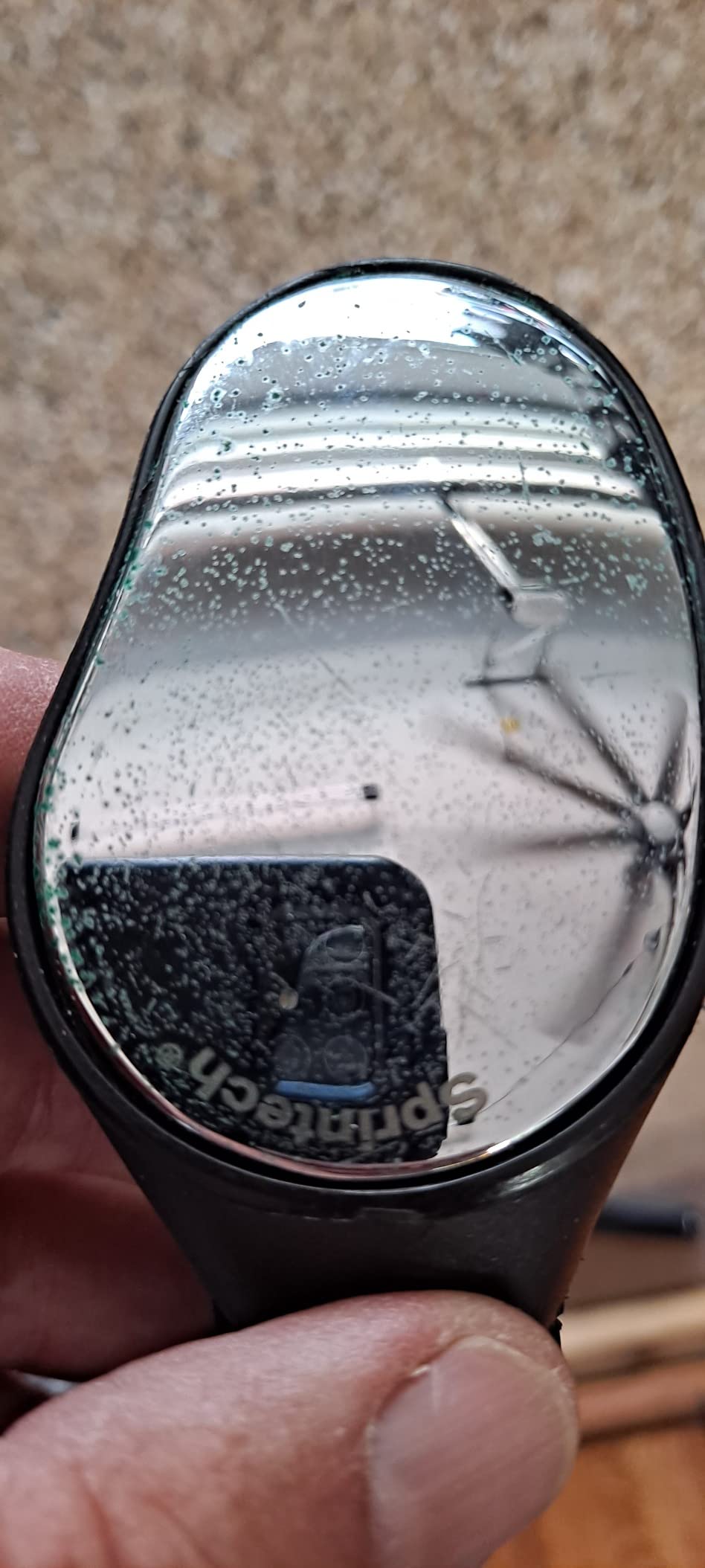
Installation is the cleanest on this list. You swap the supplied bar-end cap, then fit the mirror’s male insert into the cap receptor, so there is nothing to cut and no grips to remove. The lens is convex in a slim oval housing, and the shatter-resistant construction is reassuring on a drop bar that takes knocks in a group ride.
This version is a single mirror for the left side. Road riders who want both-side coverage need a second unit, and the small oval housing gives a narrower image than the big round lenses in this roundup, so it rewards careful angle setting rather than a quick glance.
Who the Sprintech suits
This is the pick for anyone whose bars end in drops and who intends to keep the mirror fitted all year. Purpose-built geometry means the lens sits where your eye is in the hoods, which is the position nobody tests and every road rider notices immediately if it is wrong.
Weight-conscious riders get the best result here, and the cap-receptor system means a second mirror can be added later without any permanent modification. Riders who pair a mirror with rear radar describe the combination as complementary rather than redundant, and this is the bar-end half of that pairing.
Who should skip the Sprintech
Skip it if you need the widest possible image, because the oval housing is compact and the lens magnification is modest. It is a confirmation mirror rather than a scanning mirror, and in dense traffic with many small road users that distinction is felt.
Riders in countries with left-side traffic should also check the handedness before ordering, since this version is a left-side unit. Buying the wrong side means the mirror sits in the wrong eye and you end up with a rear view you never look at.
10. RBRL Extra Large Bar End Mirror – The Big Panel Option
RBRL Bicycle Mirror, Extra Large Bike Mirror, 360° Adjustable Shatterproof and Durable Bar End Rear View Mirror Bicycle, Side Mirrors for E-Bike (Left)
124 x 67 mm flat glass
15-20mm bar fit
360 degree tilt
Three-point arm
+ The Good
- Very large lens shows a wide rear area
- Three-point arm stays rigid
- 360 degree tilt clears arms and shoulders
- No distortion in the image
- The Bad
- Fit needs 15-20mm bar and 6 cm of space
- Bar-end cap feels slightly flimsy
- Instructions are confusing
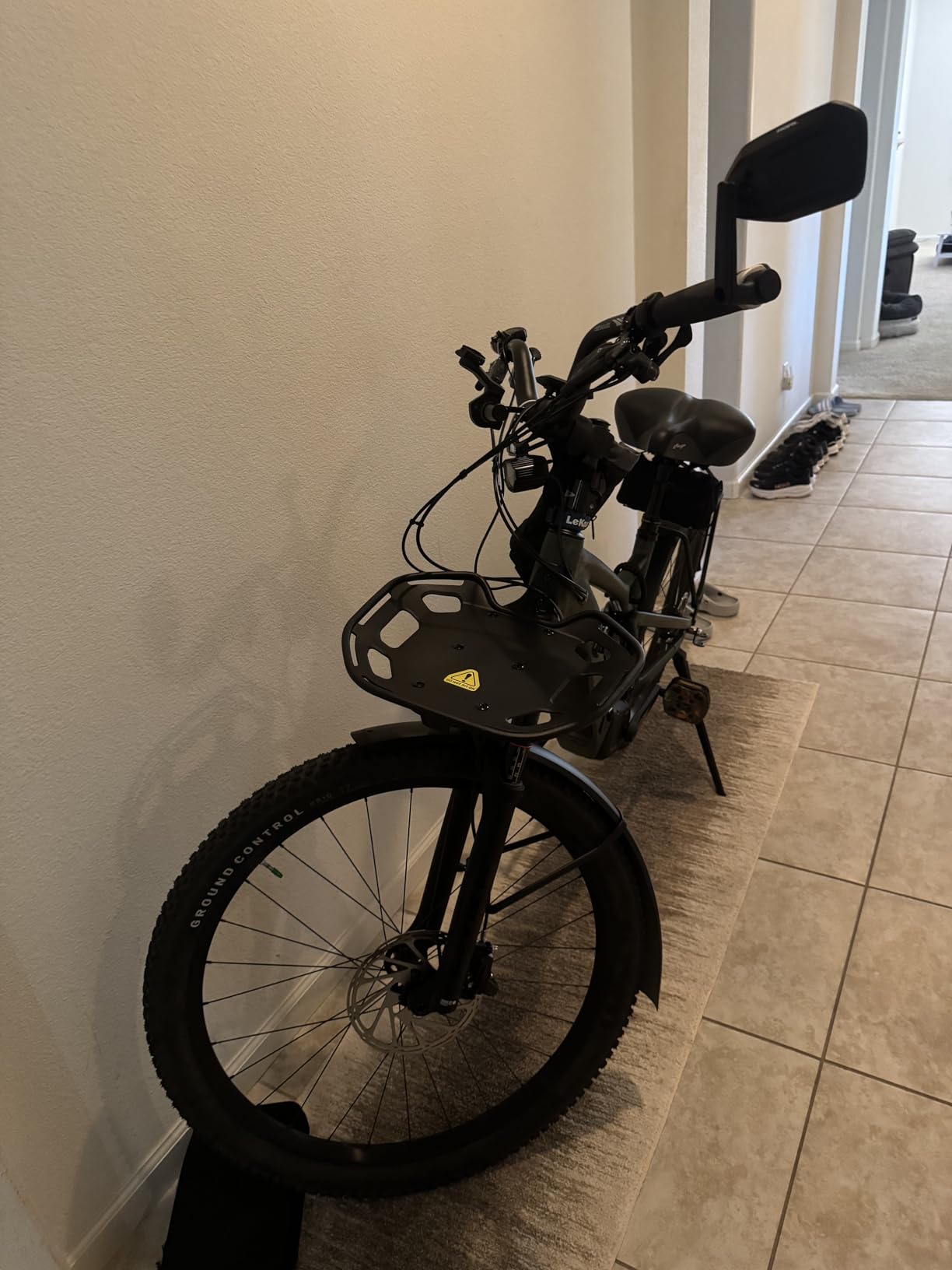
This is a big oval panel rather than a round mirror, and the shape is the point. A 124 by 67mm lens gives a wide horizontal band of the road behind, which is exactly the shape of the view you need when a car is alongside rather than directly astern.
Unlike the round convex options, the lens is flat automotive-grade glass, and owners report a clear, undistorted image that stays usable at speed. The 360 degree rotation and up-and-down tilt let you aim the view clear of your own arms and shoulders whether you are upright or leaning forward.
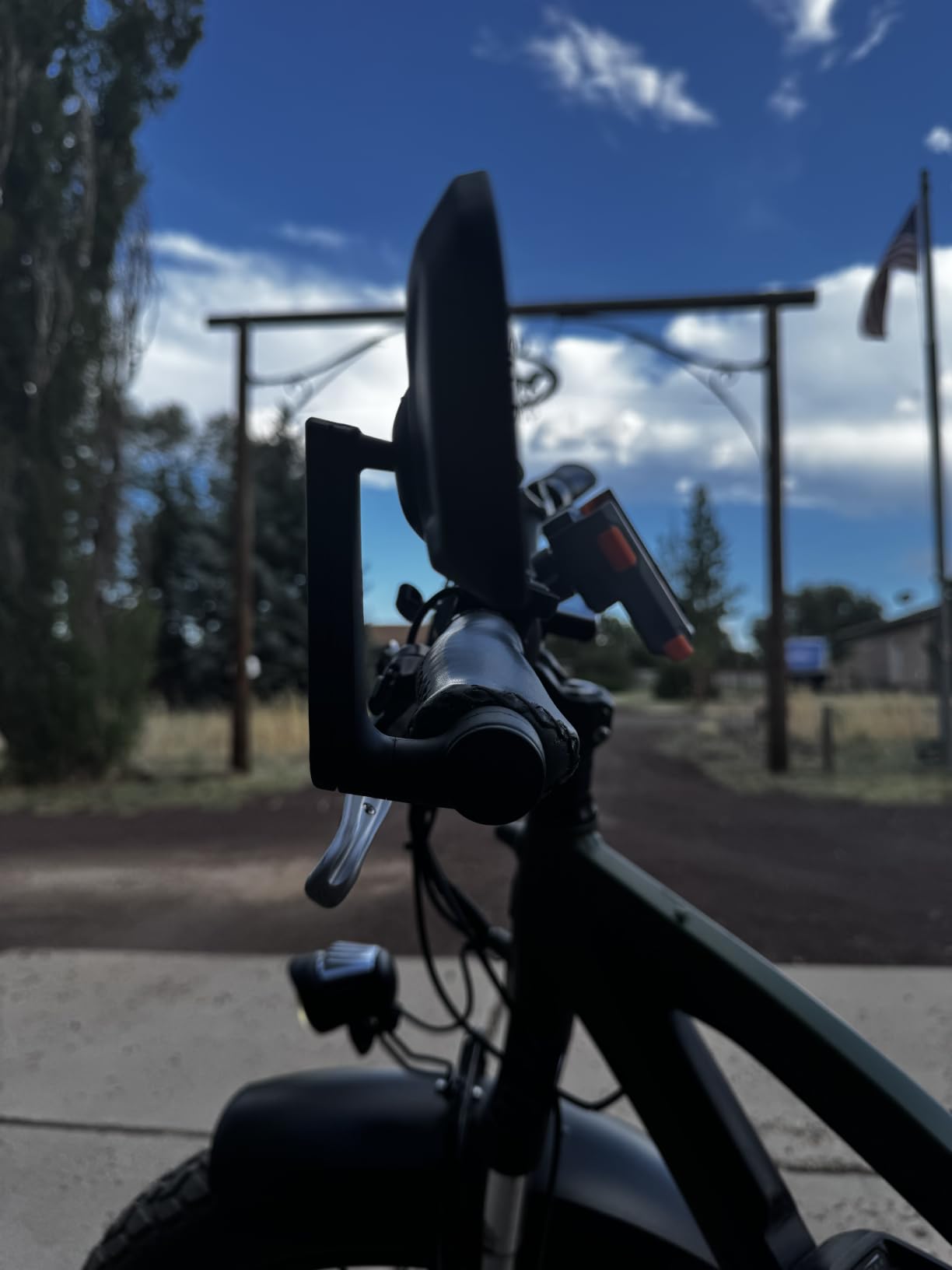
The connecting rod is high-strength nylon fixed at three points, and that is credited with holding its setting and not rattling despite how freely the head moves. Several owners have bought second and third units for other bikes, which is a good sign of long-term satisfaction with a product that is not famous.
Fit needs 15 to 20mm internal bar diameter and roughly 6cm of clear bar space, with expansion bolts supplied for both halves of that range plus a dust cap. Some reviewers point out the cap feels slightly flimsy when plugged and the instructions are hard to follow, so allow a few minutes and follow the diagrams.
Who the RBRL mirror suits
Riders who want a wide, undistorted view will appreciate the flat panel where a round convex mirror would shrink a car that is actually close to you. The three-point arm also means it holds position without constant re-tightening, which is a common complaint with cheaper bar-end mirrors.
It suits e-bike riders and upright commuters too, since the mounting point is the bar end and the lens is large enough to find quickly without a head turn. The fold-in bar cap keeps the profile tidy when the bike is parked in a crowded rack.
Who should skip the RBRL mirror
Skip it on very small-diameter bars, on unusual cockpit tubing, and on any bike where 6cm of clear bar space is not available. Owners report the fit excludes some scooters and a number of e-bikes, so measure the bar before ordering rather than after.
Road riders optimising for weight should look elsewhere, since 143 g is substantial for a bar-end fitting. If your bars are already carrying a computer, lights and a feed mount, the additional clamp and width may be more than your cockpit wants to hold.
How to Choose a Bike Mirror for Road Cycling in 2026
Choose the mounting type before you choose a brand. Riders who start with a model and then look for somewhere to put it end up with a mirror in a useless position, because the mount decides whether you can use it in your riding position at all.
Choosing a mounting type first
Bar-end mounts use an expanding plug inside an open-ended bar. They give the steadiest image because the mirror is fixed to the bike, and they need either an open grip or a bar end you are willing to cut. Two bar clamp mirrors in this list, the Hafny HF-MR095 and the extended BriskMore, fit 21 to 26mm flat bars and are explicitly not drop-bar products.
Handlebar strap and clamp mounts avoid cutting anything, which makes them the safe choice for a nice bike or a cockpit you do not want to modify. Helmet mounts keep the bars clear and put the lens near your eye, but the image moves whenever your head does. Glasses and sunglass clips add nothing to the bike at all, at the cost of needing eyewear to ride.
Four conditions where a bar-end mirror wins. One, you ride in traffic and want a stable image rather than a moving one. Two, your bars end openly and you can fit a plug. Three, you ride in a fixed position and need the lens where your eye already rests. Four, you want one mirror that works for helmet and no-helmet days alike.
Which side should you mount a bike mirror on?
In right-hand traffic, mount on the left bar. That puts the mirror on the side a car will pass you on, and it is the side most riders already turn toward. In left-hand traffic, mirror that logic and mount on the right, because overtaking vehicles approach from the other side there.
Several products here are one-sided. The Hafny HF-MR095 in this guide is the left variant, the extended BriskMore is left side only, and the Take A Look is optimised for the left eye with a right-side version sold separately. If you ride in left-hand traffic, confirm the handedness before you order or the mirror will sit in the wrong eye.
Running both mirrors is a genuine option, not an extravagance. The BriskMore 76mm pair ships left and right, and on a road bike it closes the inside blind spot that a single mirror leaves open when a vehicle comes up beside you. Check your bar width first, because extra width is awkward in tight bike parking and crowded racks.
Flat versus convex: what you actually see
A flat lens shows the world as it is, so a car three metres behind you looks three metres behind you. A convex lens widens the field of view and shows more of the road behind in a single glance, but everything in it looks smaller and further away than it really is. That distortion is why the CATEYE BM-45 and the RBRL are chosen by riders who need accurate distance judgement.
For road cycling the practical split is this. Convex is better for scanning, spotting and city riding where you want early warning of anything at all. Flat is better when you are judging a gap at a junction, a closing speed, or a rider holding your wheel in a bunch. Most riders end up preferring convex and simply remembering that the image is not to scale.
Lens size and field of view
Bigger is generally better for glance speed, and the difference between a 45mm-class lens and a 76mm lens is immediately obvious. The BriskMore pair and the EVT helmet mirror are built around large lenses precisely because finding a small mirror costs you a head turn, which defeats the point.
Shape matters as much as diameter. A round lens gives even coverage all around, a wing or oval shape gives a wide horizontal band, and a rectangular bar-clamp mirror gives a compact but close-to-the-eye view. The most useful rule is to judge the reflective area rather than the housing, because some mirrors look large and show very little.
Stability and vibration at speed
Vibration is what turns a mirror into a disappointment. A blurred, shaking image is harder to read than no image, so a rigid joint is worth more than a clever mount. The strongest hardware in this roundup comes from the ball-joint bar-ends, and the Helmet-type mounts are the ones that bounce, simply because they move with your head.
Almost every vibration complaint traces back to loose pivot screws rather than a bad design. Tighten both screws on a bar-end mirror after the first few rides, and if you ride rough tarmac constantly, check the mount periodically. The clamp and strap mounts in particular need this more often than a fixed bar-end plug.
Weight and aerodynamic drag on a road bike
Here is the objection most road riders raise, and the one no roundup tends to address. A mirror at the bar end adds width and frontal area to a cockpit you have otherwise optimised for efficiency, and on a race-weight build the grams count. Aero helmets make the helmet-mounted option impossible, which leaves a bar-end mirror as a visible compromise.
Two of the ten products here are built around that objection. The CATEYE BM-45 is under 1.3 ounces and projects almost nothing, and the Sprintech is under 30 grams including its bar plug. If a mirror is a deal-breaker on appearance, those are the two to buy rather than a large round lens on a flat-bar commuter.
Our honest advice is that the safety benefit outweighs the drag at typical road speeds, and the grams are smaller than the difference in tyres or the bottle you swap. What road riders object to is not the weight so much as the look, and that is a preference worth respecting with a discreet model.
Bike mirror or rear radar: use both
A mirror and a rear radar are not competitors, they answer different questions. Radar tells you that something is approaching and how close it is, including directly behind you when you are not looking. A mirror shows you what it is and exactly where it is relative to your wheel. Radar warns; the mirror shows; the shoulder check confirms.
Long-distance riders describe the pairing as the reason they feel comfortable in traffic, and if you already run a computer, adding radar is a straightforward next step. You can compare the current crop of cycling computers we tested before deciding what to mount on the bars.
Where a mirror wins on its own is when you ride without electronics, when the threat is beside you rather than behind, and when you need to judge a gap yourself. Where radar wins alone is on long solo descents in the dark, and on descents generally, where you want warning without lifting your eyes at all.
Bike mirrors for prescription glasses wearers
Yes, you can use a bike mirror if you wear prescription glasses, but the failure modes are worth knowing. The best option is a bar-end mirror, because the image sits far enough from your eye that progressive lens distortion in the periphery does not distort it. A flat lens helps further, since it does not shrink the image further.
The eyewear-mounted route has specific problems. Wire-rimmed and very thin temples are repeatedly reported as incompatible, the clip tends to lose its angle when you take the glasses off mid-ride, and a bent arm sitting in front of the eye is a hard object in a fall. Riders who want the eyewear position should test it over several rides before relying on it.
Riders over about 45 often find that close-up focus changes push them away from mirrors near the eye, and a bar-end mirror or helmet mount can be the answer. Monovision contact lenses are another route discussed by experienced riders, and they remove the temple problem entirely because there is no frame to clip to.
Do you even need a mirror?
There is a real argument that you do not. Experienced riders point to a deliberate three-step technique: glance at the shoulder, turn the head, check the blind spot, then signal. Done well, that is thorough and costs nothing. The honest counter-argument is that turning your head takes your eyes off the road, and a mirror is the only way to check behind without that cost.
So the question is not really whether a shoulder check is sufficient. It is whether you can always afford to do it at the moment a vehicle is closing from behind, at the moment a car appears at a junction, and at the moment you need both hands on the bars. If the answer is not always, a mirror closes the gap. The strongest case for a mirror comes from riders who have lost colleagues to vehicles overtaking from behind.
Building the habit in your first 20 rides
New riders routinely report being unable to focus on the mirror image for weeks, and one account describes roughly six months at four to five rides a week before it clicked. That is normal and it is the single most common reason people buy a mirror and then stop using it.
The fix is mechanical rather than visual. Check the mirror before you check the shoulder, every single time, for the first twenty rides. Set the angle while parked so the image sits just inside your peripheral vision. Practise looking while stationary at a quiet junction until your eye finds it without searching. After that it becomes automatic, and riders describe feeling unequipped without it.
Keep one rule that keeps the habit honest: the mirror confirms, the shoulder check decides. If you signal and move on the strength of the mirror alone, you have saved a fraction of a second and lost a habit that has kept you alive for years.
Frequently Asked Questions
Are bar end mirrors better?
Bar-end mirrors are better for most road cyclists because the image stays fixed to the bike instead of bouncing with your head. They are steadier at speed, easier to read in peripheral vision, and they work whether or not you wear a helmet. The trade-off is installation: they need an open bar end or a bar you are willing to cut, and they add a little weight and width.
Do bicycle helmet mirrors work?
Yes, helmet mirrors work well for upright riders and anyone who cannot use a bar end. The lens sits just above your line of sight, so acquiring the image is fast. The drawback is stability: the image moves every time your head does, which makes it harder to read in the dropped position, and most aero helmets have nowhere to fit the mount.
Are handlebar end mirrors legal?
Bike mirrors are legal for cyclists in most countries, and they are generally permitted on racing bicycles. Rules vary by jurisdiction, though, and some places regulate anything that projects from the handlebar or requires an approval mark on the lens. Check your local traffic regulations before riding in a competition, and remove any mirror that could be seen as an obstruction.
Do I need a rear view mirror on my bike?
You do not need one legally in most places, and a proper over-the-shoulder check remains essential. A mirror adds value because it lets you check behind without turning your head, which keeps your eyes on the road. It is most useful for commuters, riders in mixed traffic, anyone holding a line through junctions, and anyone who cannot safely turn their head.
Do bike mirrors work with drop handlebars?
Yes, but you need a model designed for the position. A bar-end mirror with an expanding plug fits a drop bar as long as the bar end is open and the internal diameter is in range, and purpose-built drop-bar mirrors use a bar plug system so nothing needs cutting. Avoid bar clamp mirrors specified for flat bars, since they do not sit correctly on a curved bar.
Is a bike mirror better than rear radar?
Neither replaces the other, and experienced riders use both. Radar tells you that something is approaching and how close, including directly behind you. A mirror tells you what it is and exactly where it is beside your wheel. Use radar for warning, the mirror to identify the threat, and a shoulder check before any manoeuvre.
The Best Bike Mirrors for Road Cycling: Our Final Word
The best bike mirrors for road cycling are not the biggest or the most expensive, they are the ones that put a readable image where your eye already rests. The Hafny HF-MR095 takes the overall spot for its HD glass, 360 degree adjustment and the deepest review history in this roundup, and it works for most riders on almost any cockpit. Riders on drop bars who refuse to compromise on weight should look at the Sprintech, and anyone who needs the widest view available should take the BriskMore 76mm pair.
Fit it this week and ride twenty commutes with it before you judge it. The first few rides will feel awkward, and that is the adjustment period every experienced rider describes. After that, the glance becomes automatic and the shoulder check becomes what it should always have been, a confirmation rather than a last resort. If you are still setting up a new bike, our indoor cycling bike picks are a good place to start training indoors, and our smartwatch picks pair well with a rear radar for the rides where you want warning without lifting your eyes.