
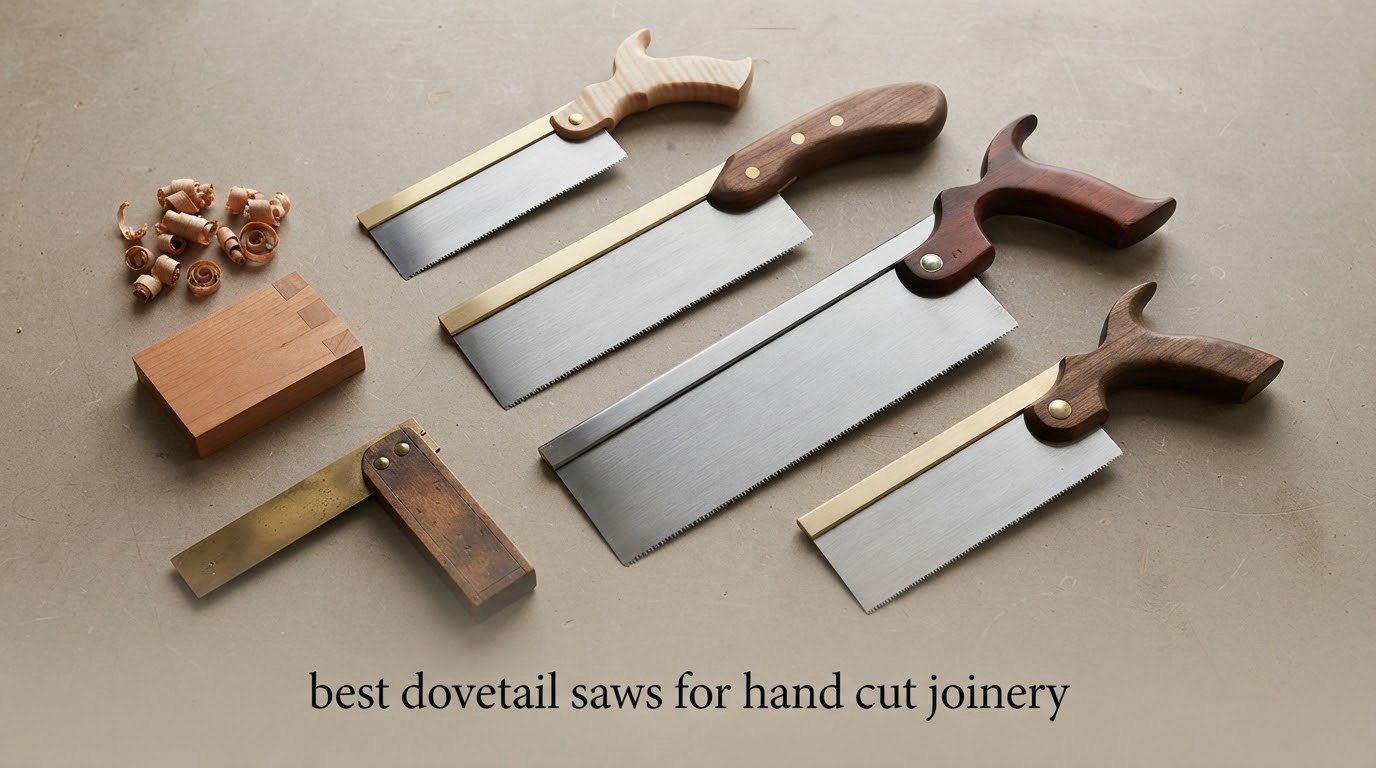
A dovetail saw is a small backsaw with a very thin steel plate, fine rip-cut teeth running about 14 to 26 teeth per inch, and a weighted spine that keeps the plate from flexing so it can follow a pencil layout line down a dovetail without wandering. That combination is why the best dovetail saws turn a hand-cut joint into a glue-only job instead of a fitting exercise.
We spent weeks with these twelve saws on drawer sides, blanket chest corners and small boxes, mostly in pine and walnut, and compared them on the three things that actually decide a joint: how straight the saw tracks, how narrow the kerf is, and how it behaves when your wrist starts to tire. If you would rather have a machine cut the joint for you, our guide to the [best dovetail jigs](https://beboivn.com/best-dovetail-jigs/) covers the mechanical route instead.
What surprised us most is how different the two sawing systems feel. Japanese pull saws draw the blade toward you on a thin tensioned plate, which is why they slice a hair-thin kerf with almost no effort. Western push saws drive a heavier plate forward against the wood and rely on spine weight to stay on the line. Neither is better in the abstract, but they reward very different techniques, so we explain both below.
This roundup covers every saw we tested, plus what to look for in teeth, spine, depth and handle before you buy. Updated for 2026.
Top 3 Dovetail Saw Picks for Hand Cut Joinery for October 2026
The SUIZAN is our editor’s choice because it does everything a hand-cut dovetail needs and asks almost nothing of your arm: a 25 TPI Japanese steel blade, a 0.5mm kerf and a pull stroke that keeps the line clean from the corner cut all the way to the shoulder.
The Gyokucho 770-3500 is the value pick. At 9 grams with a 0.3mm plate, it is the lightest tool here and the one that rewards a beginner most for a modest outlay.
The ROCKLER Mini Dozuki is the budget pick for a different reason: its hook tooth at the tip starts a cut in the middle of a board, which removes the hardest part of learning dovetails.
All 12 Dovetail Saws Compared in October 2026
| PRODUCT MODEL | KEY SPECS | BEST PRICE |
|---|---|---|
 |
|
Check Latest Price |
 |
|
Check Latest Price |
 |
|
Check Latest Price |
 |
|
Check Latest Price |
 |
|
Check Latest Price |
 |
|
Check Latest Price |
 |
|
Check Latest Price |
 |
|
Check Latest Price |
 |
|
Check Latest Price |
 |
|
Check Latest Price |
 |
|
Check Latest Price |
 |
|
Check Latest Price |
Read that table as two families. Nine of these twelve are Japanese pull saws, which cut on the return stroke with a thin plate held in tension. The IRWIN, the Crown and the Shark are push or all steel saws with thicker bodies, which trade kerf width for raw strength.
One more note before the individual reviews. Several of these blades are crosscut rather than rip cut, and on a Western saw that distinction decides whether the teeth shear end grain cleanly or tear it. We call out the geometry in each write-up so you know what you are getting.
Western Push-Cut vs Japanese Pull-Cut Saws
The two sawing systems differ in the direction of the cut and in how the blade is supported. A Western push saw is stiffened by a heavy spine along the top edge, so weight does the work of keeping the plate vertical as you push forward. A Japanese pull saw gets its stiffness from a thin plate held under tension in the handle, so the plate stays straight when you draw it back toward your hip.
That tension is why a 0.3mm plate can behave like a much thicker blade. The plate does not need mass to resist bending because the handle is squeezing it flat along its length. It also explains the very narrow kerf: 0.3mm plate plus 0.3mm tooth set gives a cut barely wider than a millimetre, so a joint closes up with glue alone.
Because the plate is unsupported below the spine on a Western saw, the saw can wander at first contact. Start at a corner rather than across the full width of the board, use a starter notch or V cut on the offcut side, and let the saw settle into the wood over the first few strokes. Users with high handle hang report that a light saw feels like it wants to run off the line at that moment, and the fix is always the same: start narrow, then open the cut out.
The pull stroke has its own learning curve. You are working toward yourself, so control comes from turning your hips rather than steering with your wrist. Tense the hand and every twitch travels straight into a plate that is only a third of a millimetre thick, which is exactly the failure mode reviewers describe.
Rule of thumb for picking a system: choose a Western push saw if you want one tool that can rip, crosscut and cut deep, and choose a Japanese pull saw if your joints are small, your material is fine, and you care most about the kerf width.
1. SUIZAN 6 Inch Dozuki Pull Saw – The Best All-Rounder
SUIZAN Dozuki Dovetail Saw 6″ Cross Cut – Japanese Pullsaw Hand Saws
Blade 6 inch
25 TPI
0.3mm plate
0.5mm kerf
Japanese steel
+ The Good
- Japanese steel holds an edge through long joint-cutting sessions
- 0.5mm kerf leaves a joint that closes with glue alone
- Pull stroke needs far less effort than a push saw
- Light at 0.16 kg so your hand does not tire
- The Bad
- 25 TPI teeth cut slowly through thick material
- Wood handle picks up grime with use
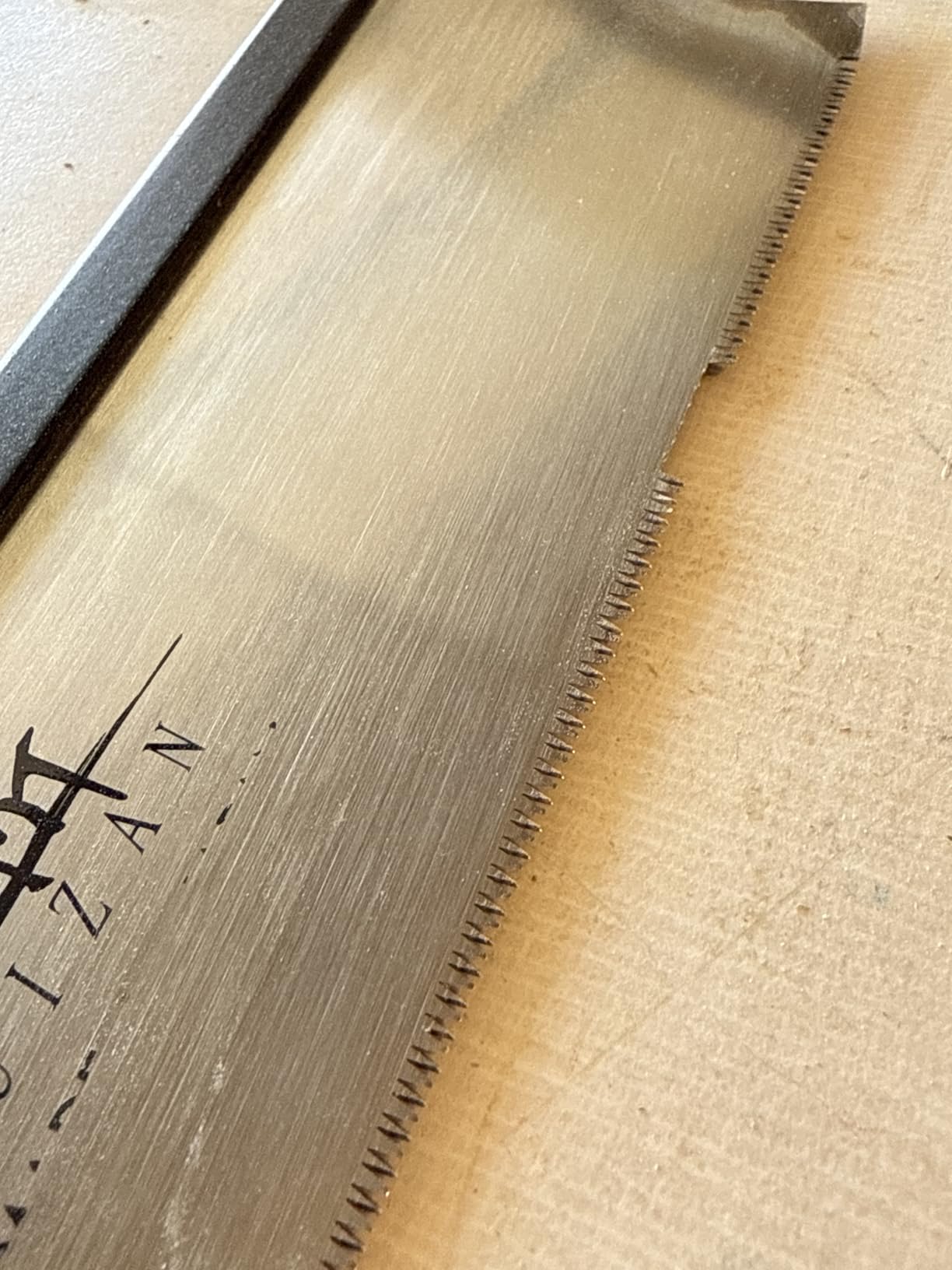
The SUIZAN dozuki is the saw we reach for first, and after a month of drawer sides it earned that place. The plate is 0.3mm thick with 25 teeth per inch, and that combination produces a kerf narrow enough that a half-blind joint goes together without any paring at all.
Because the blade is tensioned rather than spine weighted, the saw stays on the layout line with very little pressure from your hand. Owners with thousands of reviews describe the same behaviour we saw: start at the corner, take a few light strokes, and the cut tracks itself down to the shoulder line.
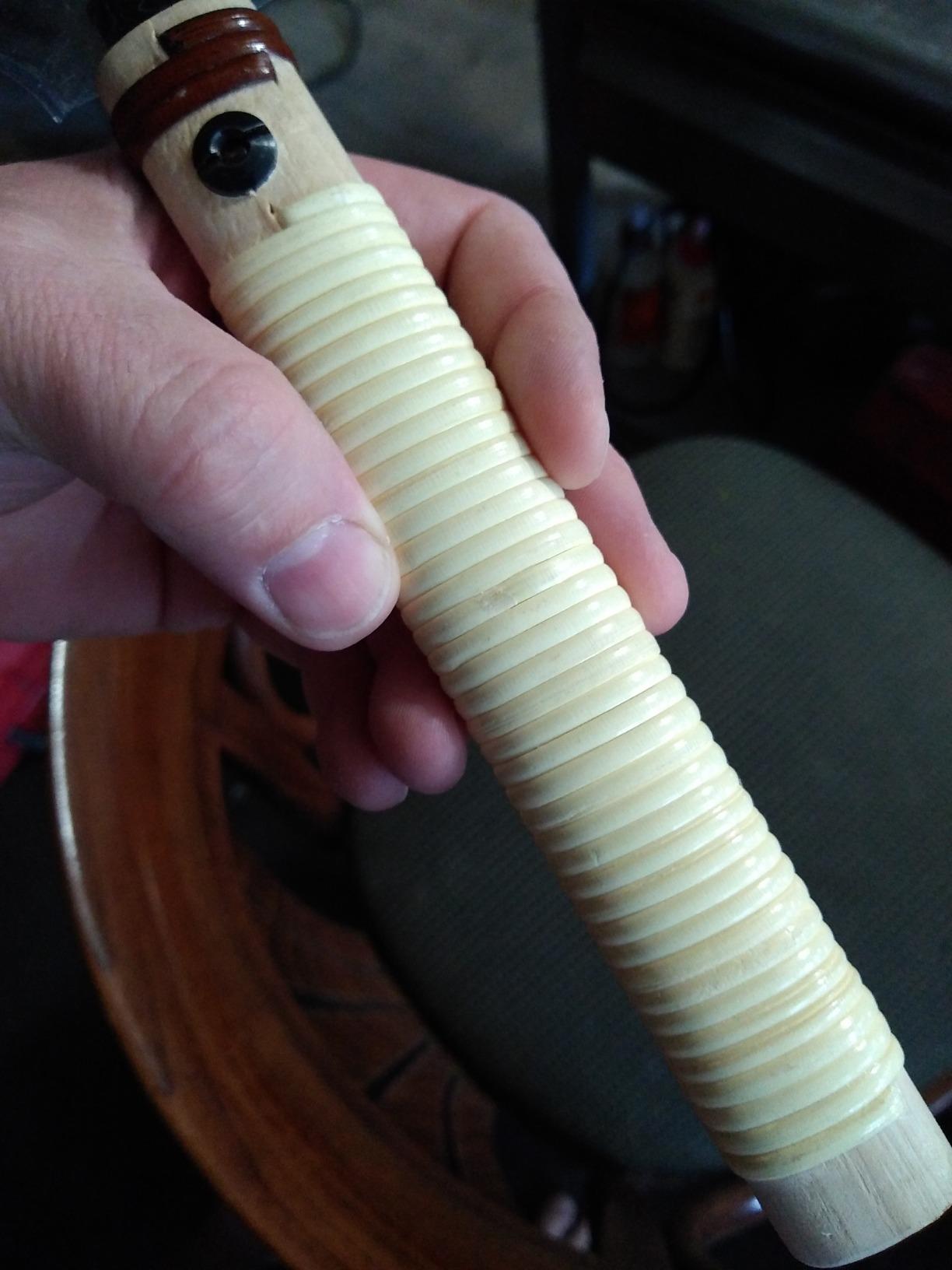
Two details set it apart from cheaper dozukis. The Japanese steel holds a fine edge far longer than the high speed steel used in many entry pull saws, and the overall length of 15.2 inches gives you enough room for a full grip without your knuckles hitting the work.
The kerf width of 0.5mm is the trade-off to understand. It is fine enough for joinery but too narrow for a coping saw blade to reach into, so you will clear the waste with a fret saw blade or a small chisel. Plan your waste removal before you start cutting.
Who This Saw Suits
It suits anyone cutting through or half-blind dovetails in material up to about three quarters of an inch thick, which covers the overwhelming majority of hand-cut joinery. At 0.16 kg the weight never becomes a problem, so beginners can concentrate on the line rather than on their arm.
It also suits anyone who moves between the bench and a Moxon vise, because a light tensioned plate behaves the same at chest height as it does on a bench top. Nothing about it depends on leverage from a low cutting position.
Where It Falls Short
Twenty-five teeth per inch is a fine-tooth count, and fine teeth remove material slowly. Cutting a thick board in walnut will test your patience, and reviewers consistently flag this as the single limitation of the saw.
The wooden handle is a real surface over years of use, and owners report it darkening and holding grime. It is cosmetic rather than functional, but it is one reason a saw like this belongs on a bench hook rather than in a damp shop.
2. Gyokucho 770-3500 Razor Dozuki – Lightest Saw In The Test
Gyokucho 770-3500 Razor Dozuki Saw with Blade
Blade 180mm
17 TPI
0.3mm plate
Stiffened back
9.07 g
+ The Good
- Exceptionally fine kerf from a 0.3mm plate
- Stiffened back holds the line in hardwood
- Weighs just 9.07 g so long sessions are easy on the hand
- Made in Japan
- The Bad
- Narrow plastic handle feels less refined than a wooden handle
- 180mm blade limits you to shallow fine cuts
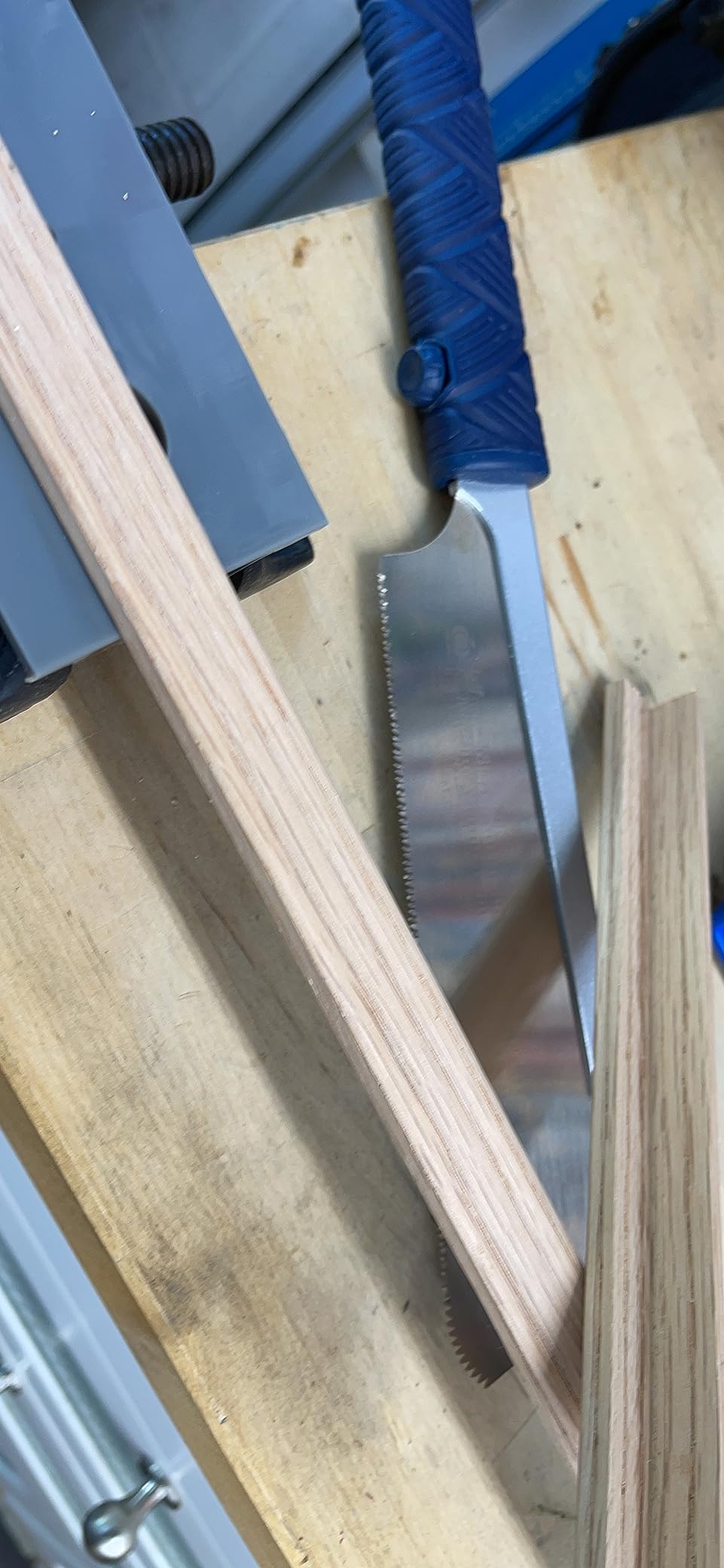
The Gyokucho 770-3500 is the most surprising tool here, mostly because of the number on the scale. At 9.07 grams it weighs less than a set of keys, and yet the 180mm blade is stiffened at the back enough to hold a clean line in hardwood.
Where the SUIZAN has 25 teeth per inch, this one runs at 17, so it cuts noticeably faster for the same plate thickness. On thinner work that difference matters, and on drawer sides it made the job noticeably less tiring.
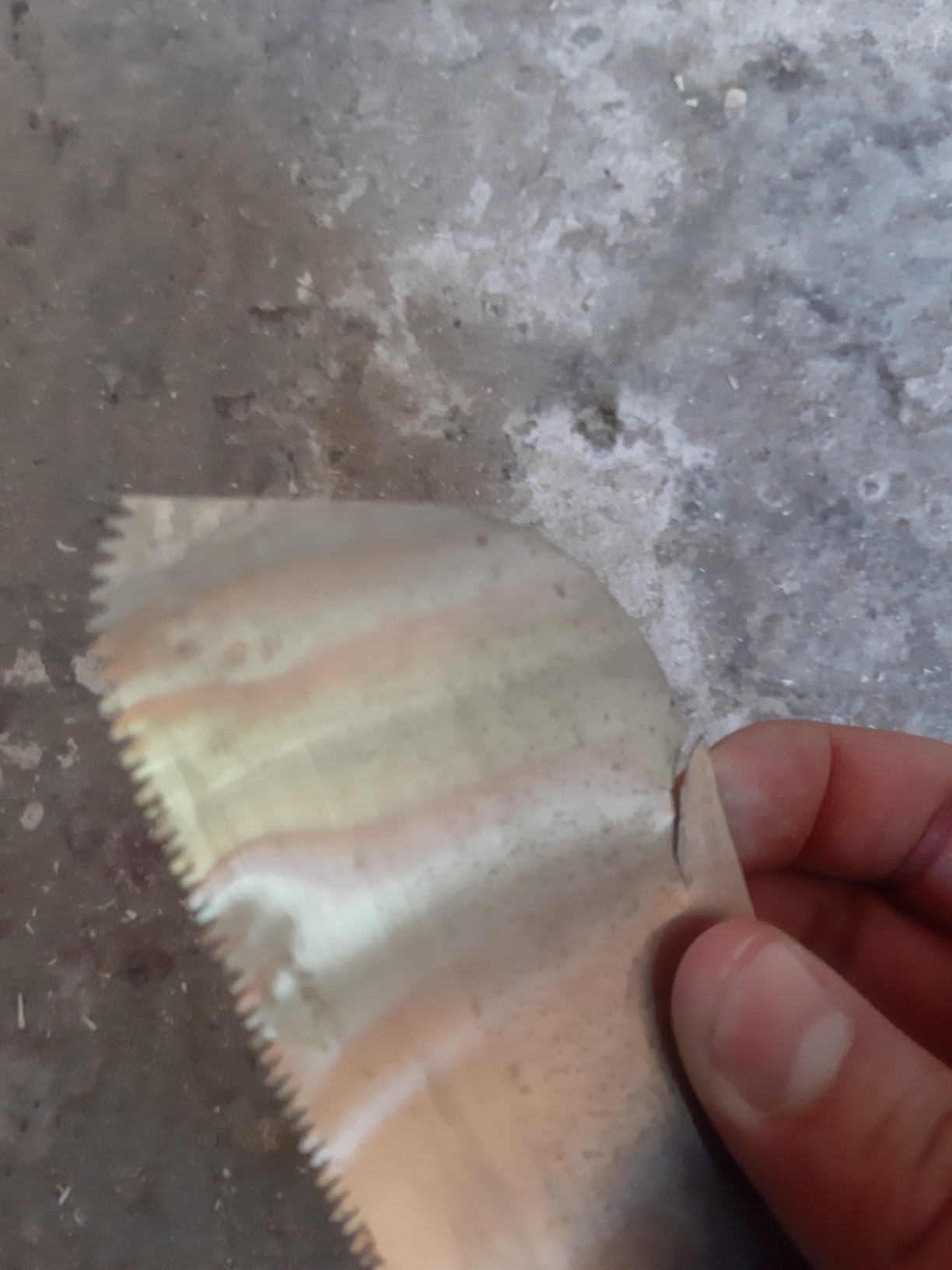
The 0.3mm plate gives an exceptionally fine kerf, which is the whole reason to reach for a dozuki instead of a general backsaw. Joints close up with glue alone, and there is very little saw-mark cleanup on the show face.
It is also the saw we would hand to someone who is worried about their hands shaking. At under 10 grams, grip tension barely registers in the plate, so a nervous beginner is far less likely to bend the cut off the line.
Who This Saw Suits
It suits fine work on small parts: jewellery boxes, small tenons, drawer bottoms and any joint where the material is thinner than the reach of the blade. It also suits people with hand strength or grip issues who find a heavy push saw tiring after ten minutes.
Owners rate it highly for control rather than for speed, and that matches our own experience. If your priority is a straight line rather than a fast one, this is the saw to beat.
Where It Falls Short
At 180mm the blade cannot reach far into a board, so it is not a tool for deep sawing or for ripping a thick panel. Plan your work so the cut runs from an edge inward rather than across the middle of a wide piece.
The plastic handle is the most common complaint. It works, but it does not have the warmth or the natural grip variation of a traditional wooden handle, and the narrow profile suits smaller hands more than large ones.
3. ROCKLER Japanese Mini Dozuki Panel Saw – Starts Cuts Mid-Board
ROCKLER Japanese Mini Dozuki Panel Saw, 150mm Blade, 106 Teeth, Silver
Blade 150mm
106 teeth
0.30mm plate
0.49mm kerf
3.84 oz
+ The Good
- Hook tooth at the tip starts cuts in the middle of a workpiece
- Backed spine tracks straight with virtually no burr
- Induction hardened teeth stay sharp for years
- Blades change out quickly and replacements are easy to find
- The Bad
- Rigid back stops the blade lying flat for flush veneer work
- Shallow depth of cut limits thicker material
- Handle faces downward which makes long rip cuts awkward
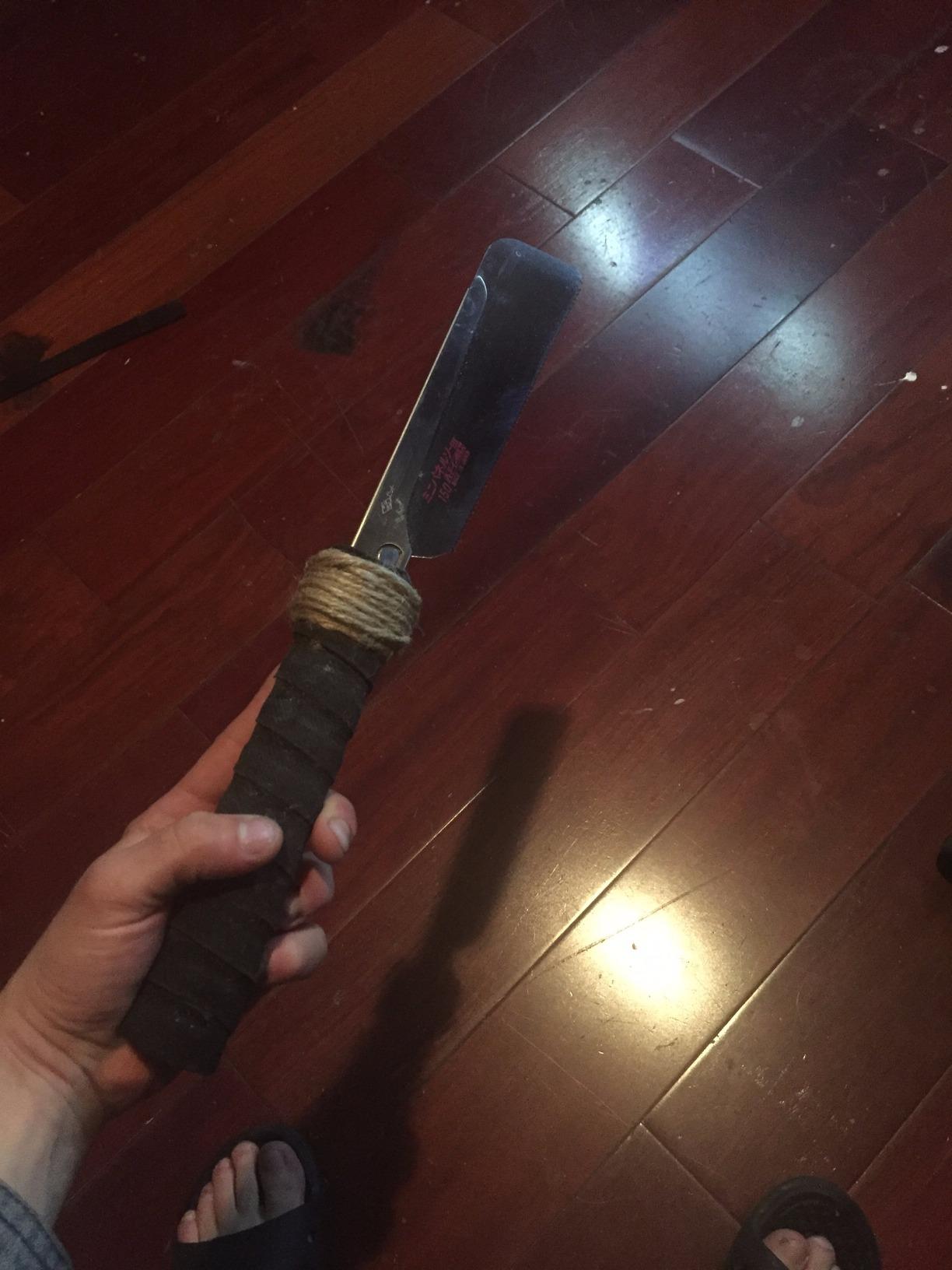
The ROCKLER mini dozuki is defined by one feature no other saw in this roundup has: a hook tooth at the tip of the blade. That tooth lets you start a cut in the middle of a workpiece instead of at an edge, which removes the single hardest moment in learning to cut dovetails by hand.
Everything else about it is aimed at accuracy. The 150mm plate is 0.30mm thick with a pitch of 1.41mm and a kerf of 0.49mm, and the metal backbone over the back reinforcement keeps the cut straight with almost no burr on the exit face.
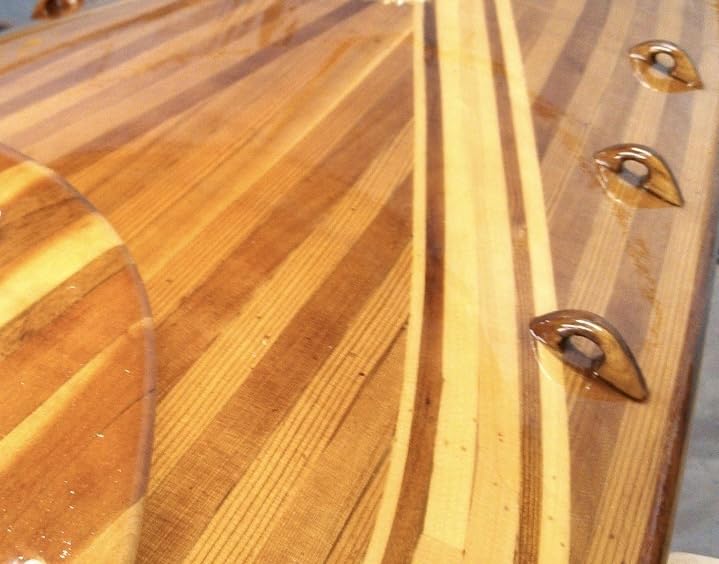
Reviewers with long careers in hand-tool work describe it as remarkably sharp out of the box, and the induction hardened teeth are the reason. They report that it tracks straighter than a Western push saw and holds that line with less wrist correction.
The blade is a standard Z-Saw fitment, and it unlocks quickly at the handle. That matters more than it sounds: when a blade is damaged you swap it in a minute rather than searching for a sharpening service, and owners confirm replacement blades are easy to obtain.
Who This Saw Suits
It suits beginners who have never started a cut on a layout line, because the tip tooth does the guiding for you. It also suits anyone cutting small tenons, tight joinery or workpieces where starting from a corner is awkward.
It suits people who work at a Moxon vise. The reinforced back keeps the plate true regardless of angle, and the 3.84 ounce weight means the saw stays balanced even with your wrist high above the work.
Where It Falls Short
The back reinforcement is the trade. It is what makes the saw stiff and accurate, but it also stops the blade lying flat, which rules it out for flush veneer work and for any cut that needs the full width of the plate against a surface.
It is not built for deep sawing, and the downward-facing handle makes a long rip cut against a straight edge awkward. Use it for cross cuts and dovetails, which is what it is designed for.
4. IRWIN 10 Inch Dovetail Saw – Cuts From Either Direction
IRWIN Dovetail Saw, 10-Inch (2014450)
Blade 10 inch
14 TPI
Spring-loaded reversible blade
50mm flush-cut blade
+ The Good
- Spring-loaded reversible blade cuts from either direction
- Rigid build holds the blade position without wobble
- Offset handle keeps your hand clear of the work
- Backed by a lifetime limited warranty
- The Bad
- 14 TPI lacks the aggression of finer dovetail saws
- Only the offset jamb handle is supplied with the saw
- Fine teeth mean slow cutting
The IRWIN takes a different approach entirely. Instead of a fixed handle, it uses a spring-loaded reversible blade and a folding offset handle, so you can flip the saw over and keep the same hand position whether your stroke works one way or the other.
At 10 inches with 14 teeth per inch it is a much more capable tool than the name suggests. Owners use it for door jambs and dowels as often as for joinery, and the wide-body flush-cut blade of 50mm is genuinely useful when a joint face has to end flush with a surface.
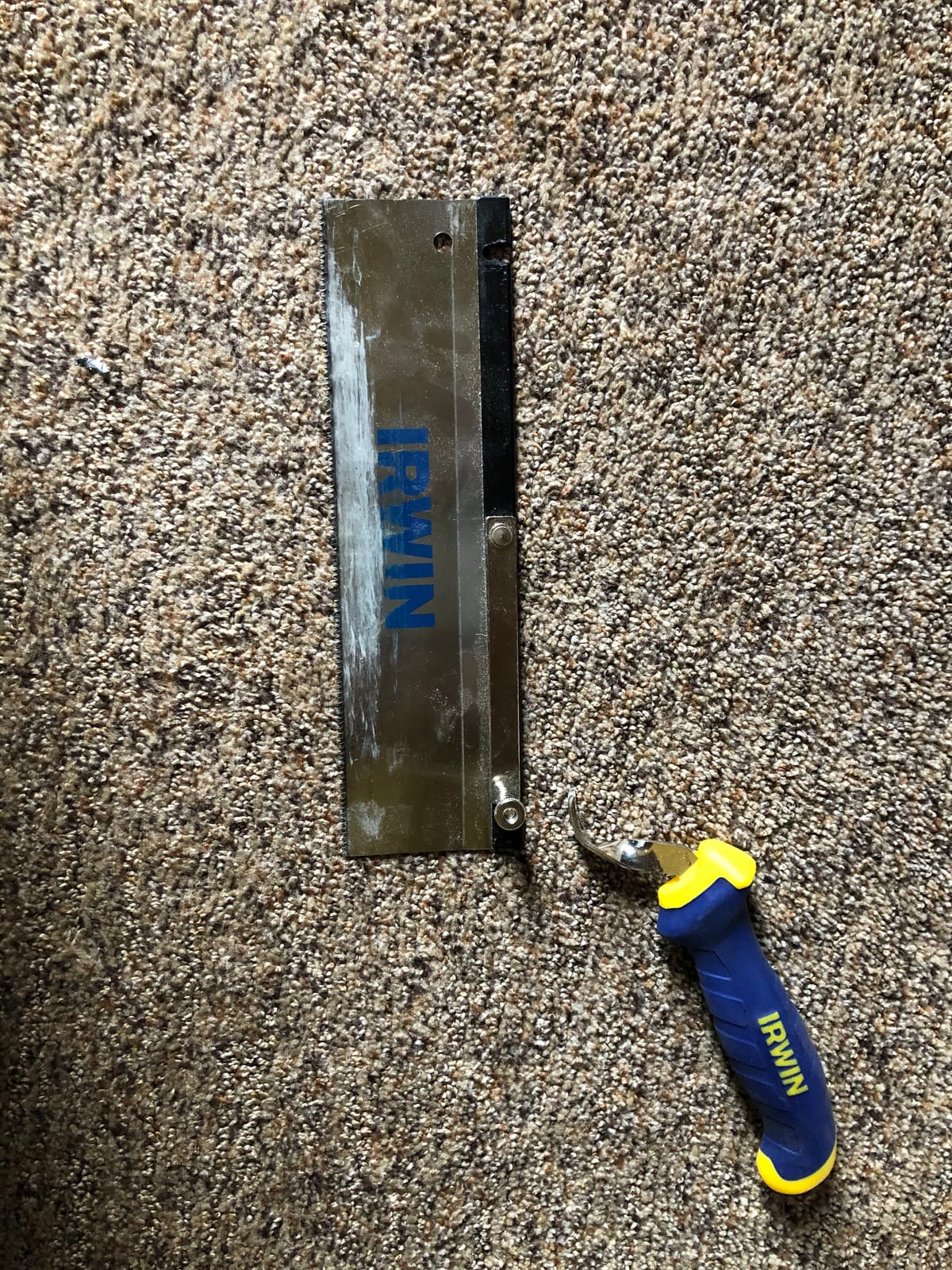
For hand-cut dovetails the offset handle is the real advantage. Because your hand sits below and behind the cut line, you can saw a full board thickness without your knuckles catching the work, which many handles force you to think about constantly.
The build is rigid and reviewers single out the absence of wobble. That rigidity is what keeps the blade from fluttering when you push through a knot or a cross grain, and it is why this saw stays predictable on mixed material.
Who This Saw Suits
It suits anyone who wants one hand tool for both stroke directions, and anyone who alternates between a right-handed bench setup and a job where the work sits awkwardly. The reversible blade is a real convenience, not a gimmick.
It also suits a workshop that also does trim carpentry. A dovetail saw is a single-purpose tool, and the reversible handle means this one doubles as a general backsaw without much compromise.
Where It Falls Short
Fourteen teeth per inch is coarse by dovetail standards. It will cut dovetails, but the kerf is wider and the teeth feel blunt next to a 20-plus tooth plate, and a careful fit needs more cleanup.
Only the offset jamb handle comes with the saw. If you prefer a straight handle for general work you have to buy one separately, and reviewers treat that as the most common complaint about an otherwise solid tool.
5. ZETSAW 240mm Dozuki – Fastest Pull Cut In The Test
Dozuki Z-Saws, 240Mm, Overall Length 535Mm (21″)
Blade 240mm
26 TPI
Bamboo handle
13.61 g
21 inch overall
+ The Good
- Very thin blade lets you cut on the mark for snug joints
- Fast clean cuts for a fine-kerf saw
- Lightweight bamboo handle is comfortable
- Replacement blades are easy to swap and easy to find
- The Bad
- Teeth can snap off if the blade is twisted under pressure
- Crosscut tooth setting is inefficient for wide rip cuts
- Handle wrap picks up dirt during long sessions
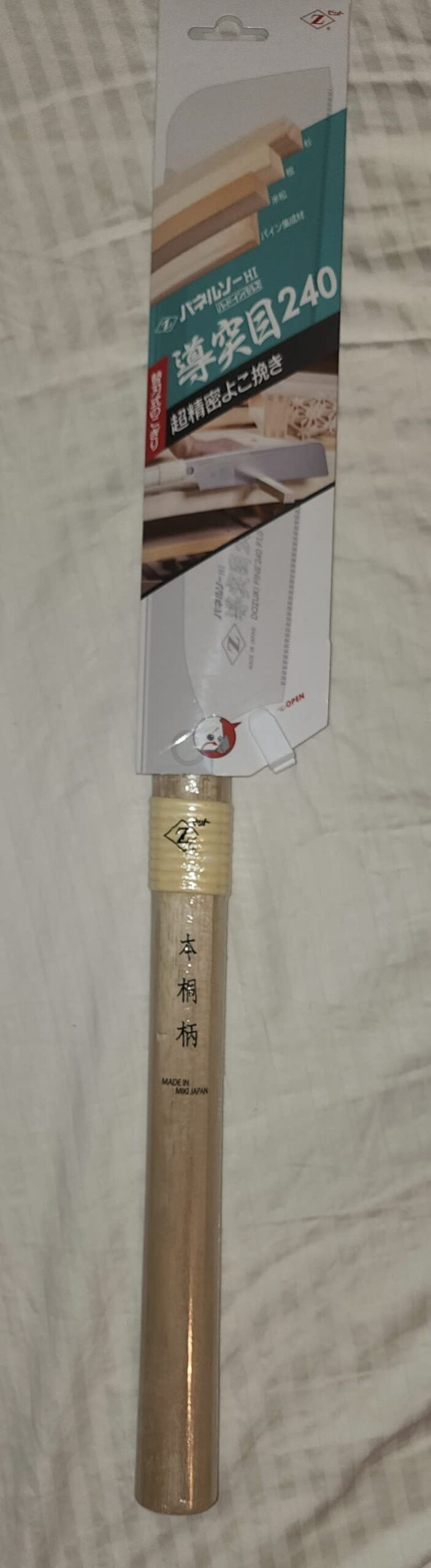
The ZETSAW dozuki is the largest of the fine pull saws we tested, at 240mm of blade and 21 inches overall. That extra length gives it more reach than a 150mm saw and a noticeably longer cutting stroke, which is where the speed advantage comes from.
With 26 teeth per inch it is finer than most of the field, but the long stroke more than compensates. On dovetails, pins, finger joints and small tenons it produced the fastest clean cuts of any pull saw in this group.
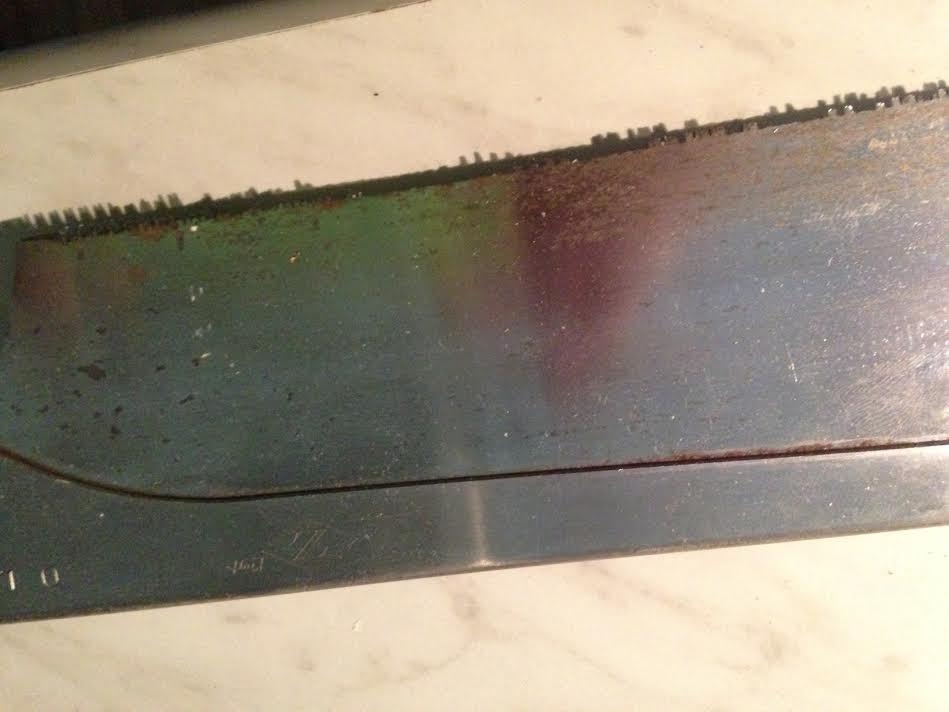
Owners consistently call out cut-on-the-mark accuracy, and the rigid back is why. A 240mm plate would whip badly on a saw without a stiff spine, and the backbone keeps it vertical through the full stroke.
Blade changes are the other thing owners rate highly. You can remove the blade, swap it or re-tension it in a few seconds, which matters for anyone who works on several joint types with the same saw.
Who This Saw Suits
It suits furniture makers who cut a lot of small dovetails and want fewer strokes per cut. The 240mm reach also handles a drawer or a small cabinet component without the cramped feeling of a 150mm blade.
It suits anyone who wants a pull saw that can crosscut and rip with the same blade. At this size it is versatile enough to serve as a general detail saw in a small shop.
Where It Falls Short
The tooth pattern is crosscut rather than rip, which is efficient on the face of the board but slow on a cut that runs with the grain. Do not expect to rip a wide panel quickly with it.
Two handling warnings appear repeatedly. Twisting the blade under sideways load can snap teeth, and some newer production has a handle wrap that does not run the full length of the grip, so check the fit before committing.
6. Temple Tool Co Dozuki 6 – One Blade For Every Cut
Japanese Pull Saw – Dozuki 6 for Ripcut and Crosscut – Hand Saw for Dovetails, Tenons, Fine Joinery – Dovetail saw – Temple Tool Co.
Blade 6 inch
25 TPI universal teeth
SK85 steel
Solid brass back
+ The Good
- Universal teeth handle crosscut
- rip and diagonal cuts in one blade
- SK85 Japanese steel holds its edge in hardwood and softwood
- Solid brass back keeps the cut straight
- Compact 150mm size gives excellent control
- The Bad
- Costs more than most entry-level Japanese pull saws
- Newer listing with a smaller base of owner reviews
The Temple Tool Co dozuki is the most refined-looking saw in the group, and the build explains it. A solid brass back sits along the top of a 150mm blade made from SK85 Japanese steel, and the handle is a dark brown wingnut grip with brass fittings.
The real differentiator is the tooth pattern. It runs at 25 TPI with what the maker calls universal teeth, combining crosscut geometry with Oni-Ba rip teeth so the same blade handles a crosscut, a rip cut or a diagonal without changing tools.
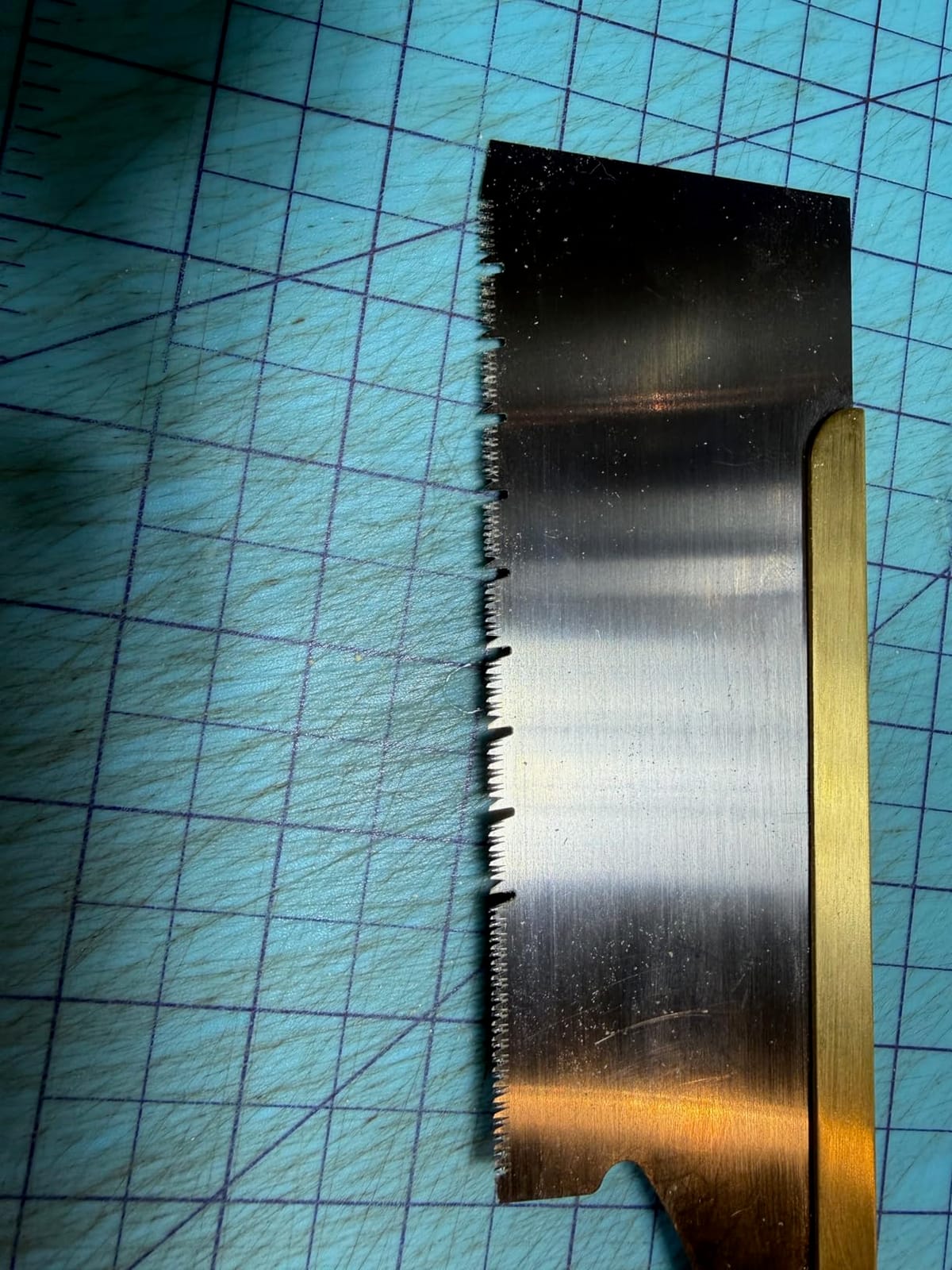
The brass back is the part you feel rather than see. It adds weight to the top edge without making the plate thick, so the saw stays controlled through a cut in dense hardwood while the blade remains thin enough for fine joinery.
It is made in Nagata, a town with a long tool-making tradition, and the SK85 steel is a higher grade than the high carbon steel used in most entry pull saws. Reviewers note that the edge stays sharp in both softwood and hardwood.
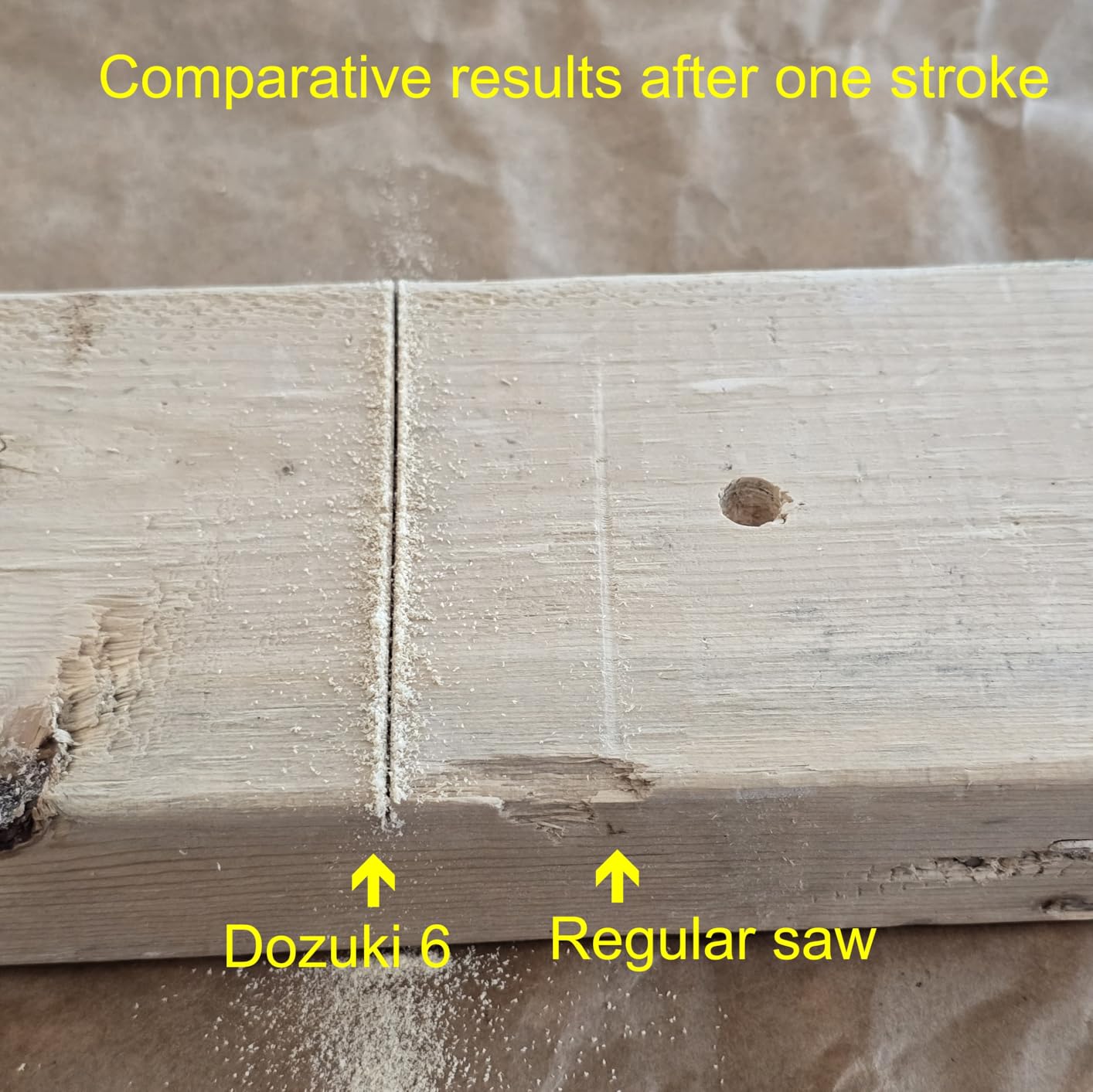
Who This Saw Suits
It suits a mixed shop where the same day brings crosscuts, rip cuts and diagonals, because the universal tooth pattern removes the usual argument about which pull saw to reach for.
It also suits anyone who wants a dovetail saw that does not look improvised on a wall-mounted cabinet of hand tools. The brass fittings and the wingnut handle are finished well enough to be part of the display.
Where It Falls Short
It sits above the price of most entry dozukis, and that premium buys the brass back, the higher grade steel and the universal teeth rather than a fundamentally different cutting experience.
The review base is also much smaller than the established Japanese brands, with a few hundred owners rather than thousands. There is less long-term durability data behind it, which matters if you want a tool you can pass on.
7. JORGENSEN 6 Inch Folding Pull Saw – The Portable One
JORGENSEN Japanese Pull Saw, 6 Inch Pro Folding Dovetail Saw with Beech Wood Long handle, SK5 Steel Blade Tool-less Quick Change, 21TPI Cross Cut Woodworking Handsaw for Hardwood, Softwood
Blade 6 inch
21 TPI
SK5 steel
0.3mm plate
Folds for storage
+ The Good
- Folding design protects the blade and packs into a small bag
- 0.3mm plate produces a very narrow kerf
- Rigid spine stabilises the cut for straight tracking
- Tool-less blade change is quick and easy
- The Bad
- Replacement blades are hard to find for this saw
- Blade can flex and lose teeth on knots or off-line strokes
- Cannot cut material thicker than about 2-3/4 inch
The JORGENSEN is the only folding pull saw here, and that single design decision changes how you use it. The blade folds into the handle, so you can carry a proper joinery saw in a tool bag without a sheath and without worrying about teeth finding your fingers.
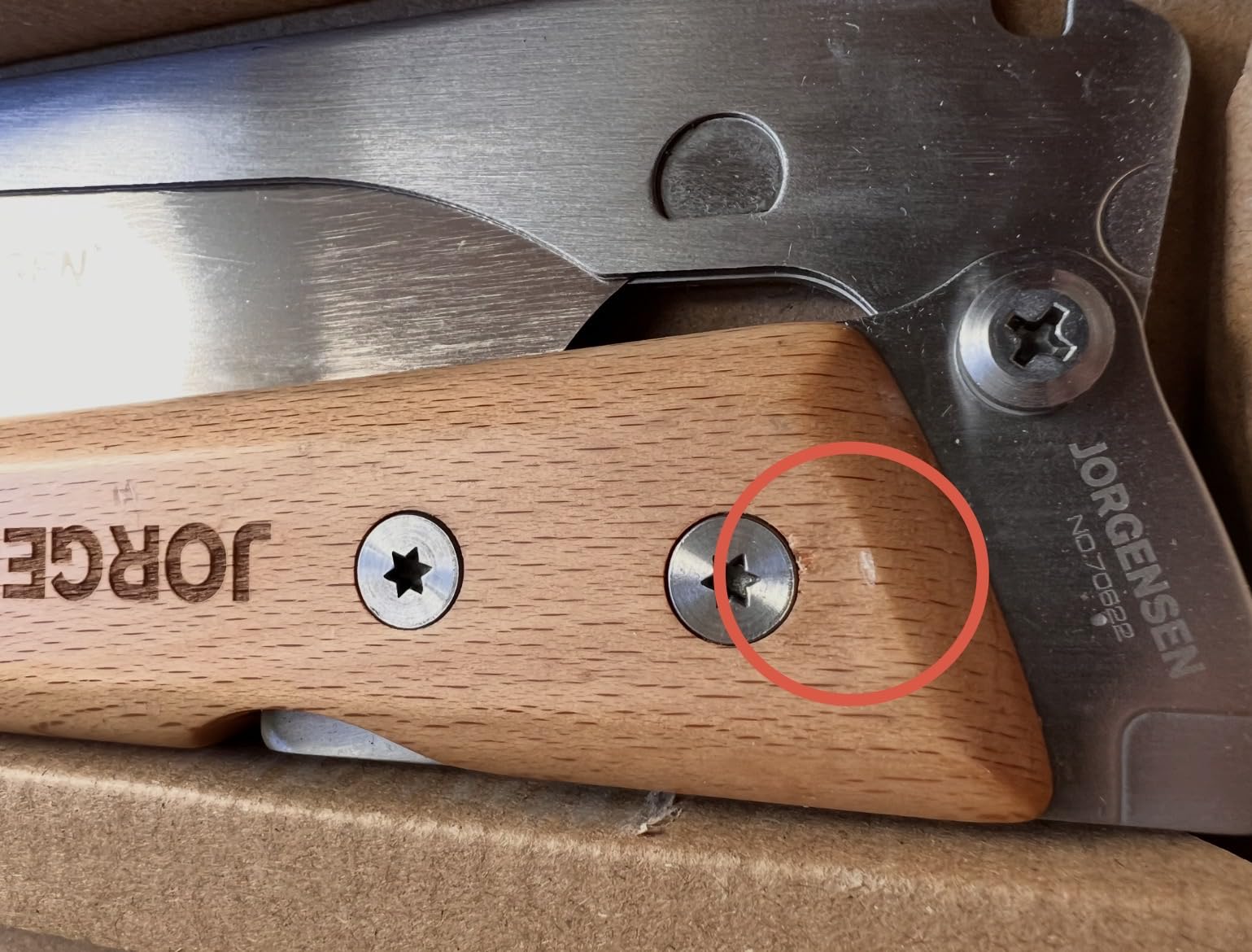
The blade is 6 inches of SK5 Japanese steel, nickel plated, at 21 teeth per inch and 0.3mm thick. The rigid spine over the back keeps the cut stable, and the European beech handle is shaped for one-handed use.
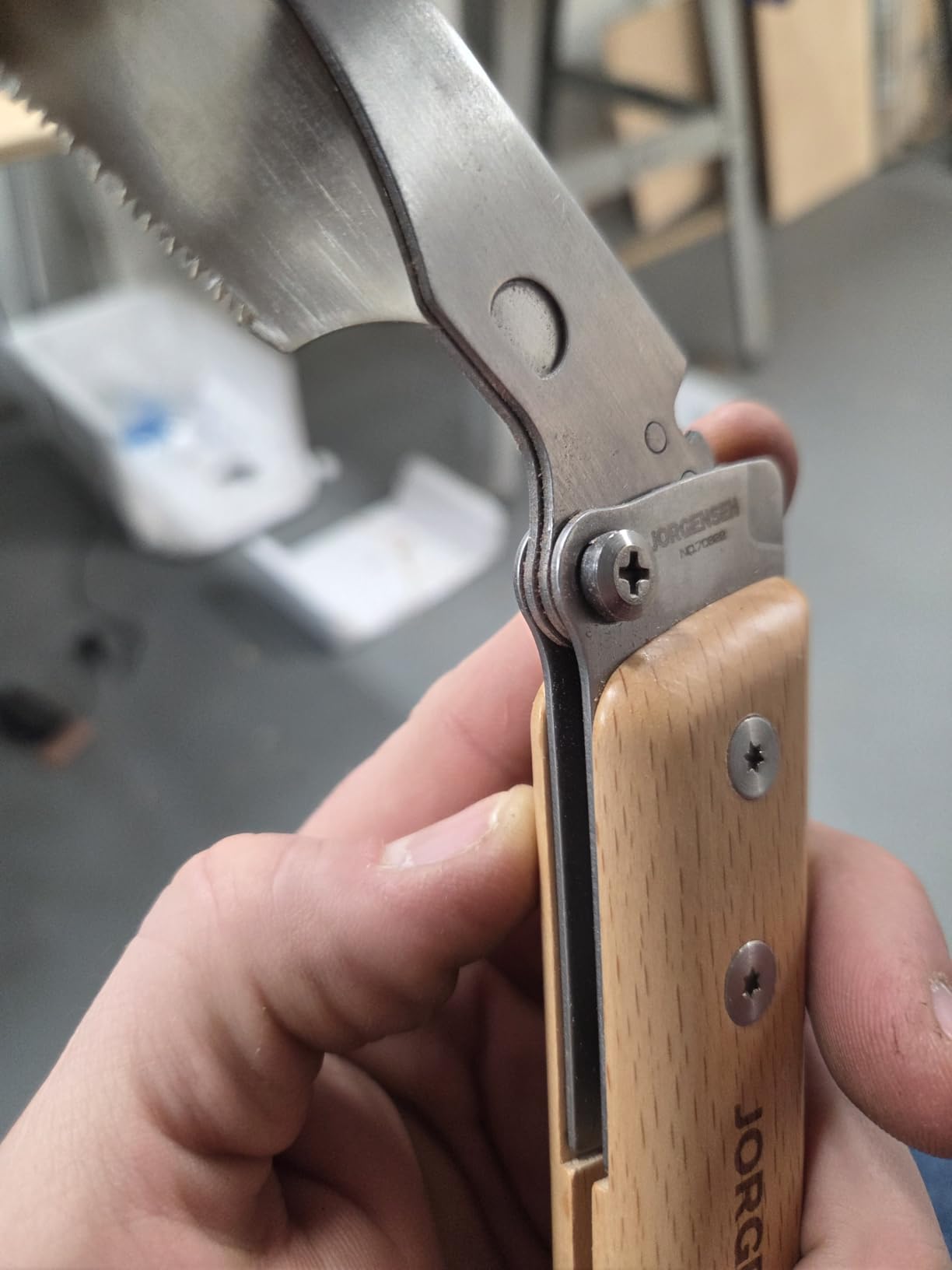
Owners rate the cut quality highly for the money. The blade arrives sharp, the kerf is narrow enough for fine joinery, and the geometric tooth pattern leaves a surface that needs very little sanding on the show face.
That said, this is a saw with two specific limits. It cannot cut through material thicker than roughly 2-3/4 inches, and the plate is thin enough that a knot or a wild stroke can cost you teeth.
Who This Saw Suits
It suits anyone without a dedicated bench, or anyone who does site work and needs a capable joinery saw in the car. The folding design and the fast folding system are what make that possible.
It also suits people who work on small components only. At 6 inches it is at its best on boxes, drawer bottoms and small tenons where a full size saw is overkill.
Where It Falls Short
Replacement blades are the biggest problem. The tool-less change system is a real benefit only if you can find a blade, and reviewers report that availability is the main drawback for this saw.
Several owners also report blade flex and lost teeth when a stroke runs off line or meets a knot, and a few report a slightly loose lock screw out of the box. Check the lock before the first cut.
8. Crown FLINN1 10 Inch Dovetail Saw – Built For Depth
Crown FLINN1 10-Inch Dovetail Saw
Blade 10 inch
Alloy steel plate
Beechwood handle
0.19 kg
+ The Good
- Made by Crown Hand Tools in Sheffield England
- Solid beech handle and a quality steel blade
- 10 inch blade cuts deeper than any 6 inch dozuki
- Handles thicker material than the fine pull saws
- The Bad
- Alloy steel plate is thicker than a Japanese pull saw
- Lowest average rating among these twelve saws
- Fixed handle cannot be swapped
The Crown FLINN1 is made by Crown Hand Tools in Sheffield, England, and at 10 inches with 0.19 kg it is built around one idea: reach. It cuts deeper into a workpiece than any of the 6 inch pull saws here, which is the reason it earns a place in a roundup of dovetail saws at all.
The beech handle is solid and shaped in the traditional way, and the steel blade is a conventional push-saw plate rather than a tensioned one. That means it behaves like a small backsaw: solid, predictable and heavier on the return stroke.
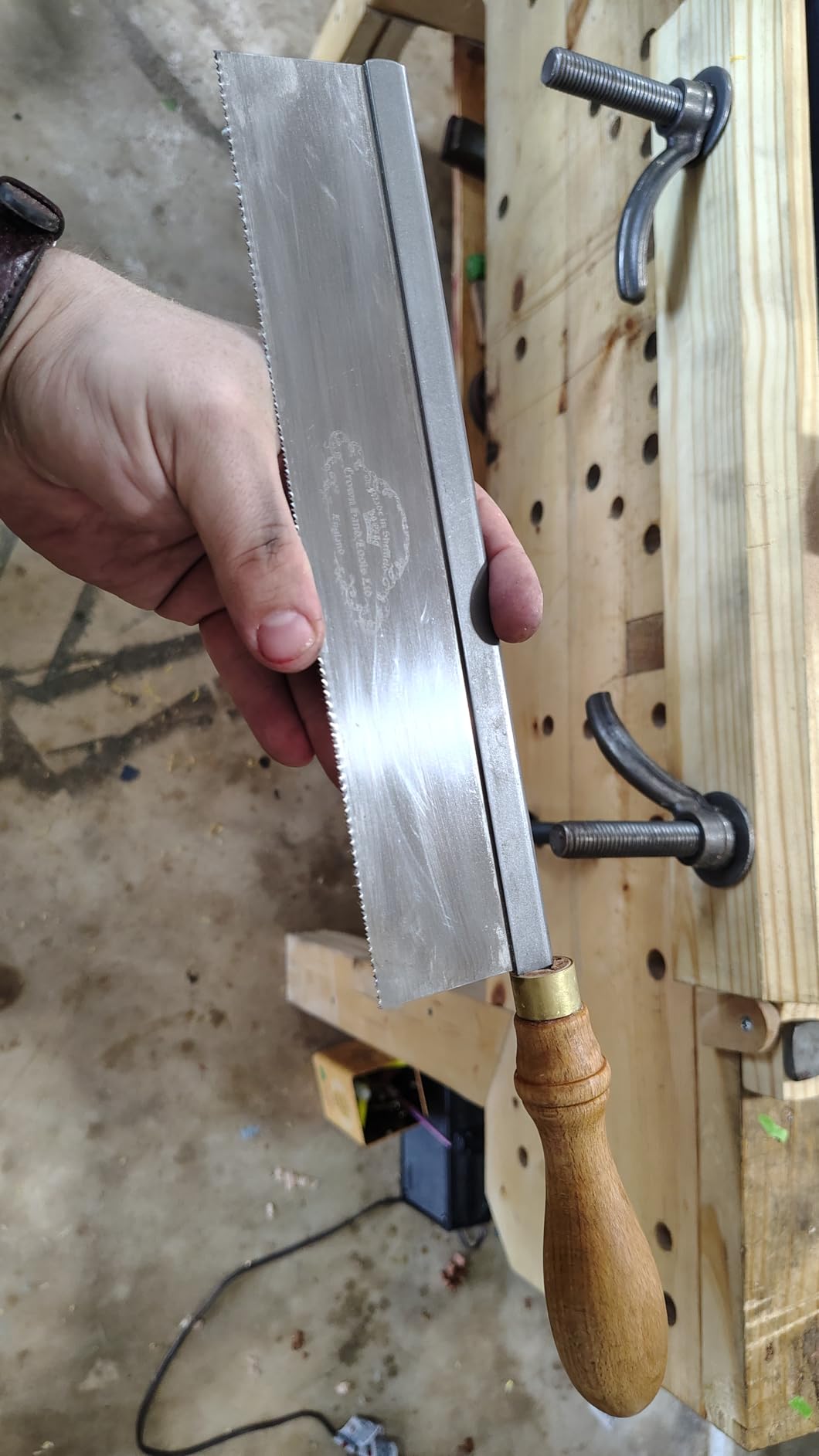
For a box with thick sides, or a carcase corner where the cut runs well past the shoulder line, that depth is genuinely useful. The saw does not fight you the way a fine pull saw does when the material is chunky.
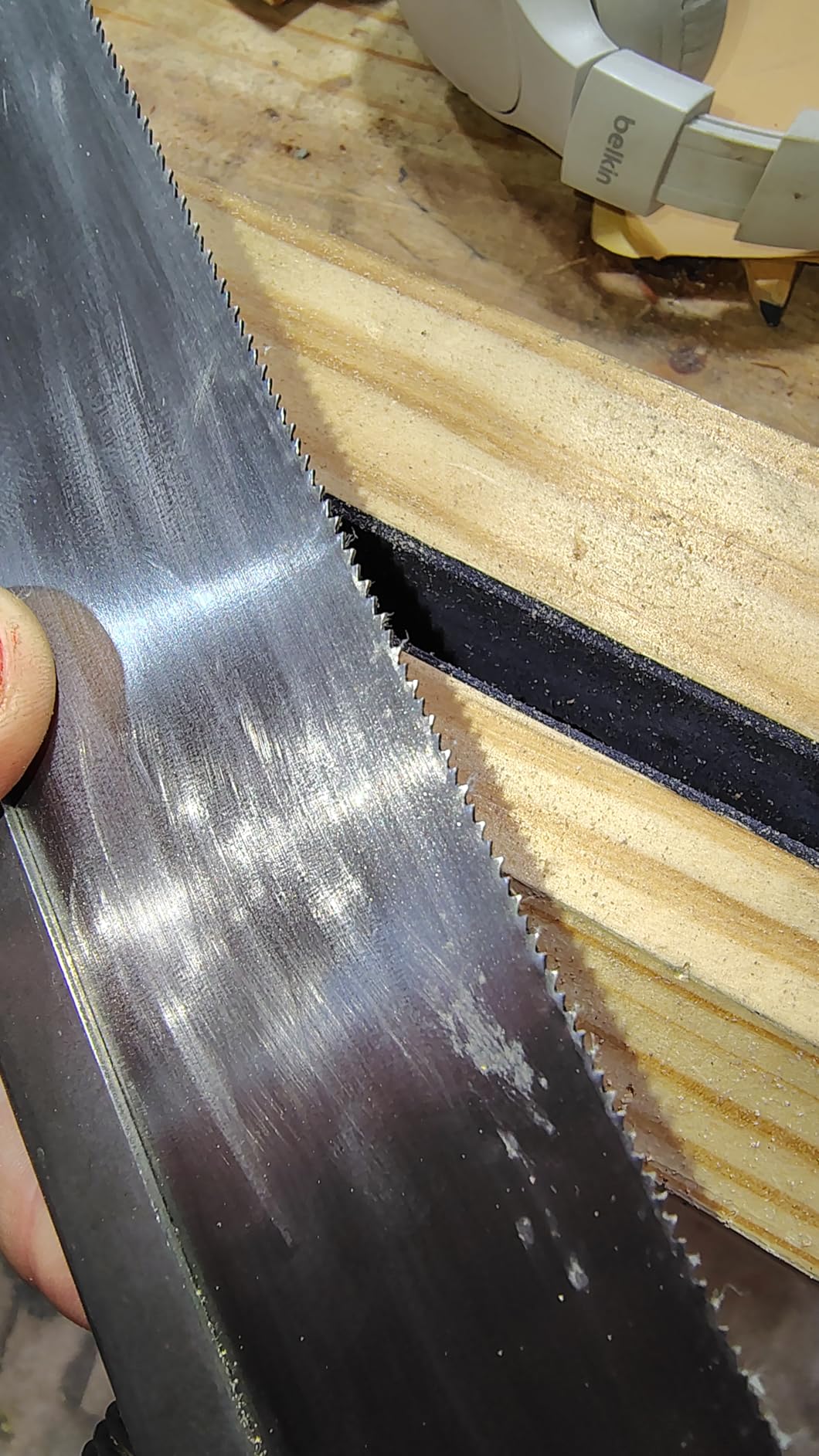
The Sheffield construction is not a marketing flourish. Owners who value the tool talk about the solidity of the handle and the finish of the plate, and it is the kind of build that suits a workshop rather than a travelling kit.
Who This Saw Suits
It suits anyone cutting thicker material than a fine pull saw can handle comfortably, particularly thick box stock and deep corner cuts. It also suits people who prefer a push stroke because they have learned sawing on Western tools.
It suits buyers who value a British maker and a traditional wooden handle over a minimal modern design. The beech handle takes a patina and stays comfortable over years.
Where It Falls Short
The alloy steel plate is not thin and not fine kerfed. You will get a wider slot than a dozuki leaves, which means more fitting work on a tight joint and more cleanup on the show face.
It also has the lowest average rating of the twelve saws here, and the review breakdown is correspondingly mixed. If your priority is the finest possible joint, a pull saw is the better tool and this is not.
9. WORKPRO 6 Inch Pull Saw 23TPI – Sharpest Out Of The Box
WORKPRO 6” Japanese Pull Saw, Dovetail Saw with 23TPI & SK5 Flexible Blade
Blade 6 inch
23 TPI
0.017 inch plate
SK5 steel
HRC 60-65 teeth
+ The Good
- 23 TPI triple-tooth geometry cuts smoothly and quickly
- 0.017 inch plate keeps cutting resistance low
- Reinforced spine tracks straight and controlled
- SK5 steel with gold coating resists rust
- The Bad
- Triple-tooth geometry and reinforced spine make it stiffer than a flex-blade dozuki
- Newer brand with a smaller base of owner reviews
The WORKPRO is the saw we would put in the hands of someone starting out. It arrives sharp, it is stiff enough to forgive a slightly unsteady stroke, and the 23 TPI triple-tooth geometry cuts faster than the finer teeth on the traditional dozukis.
The plate is 0.017 inch, which is thinner than a 0.3mm plate, and the teeth are hardened to HRC 60-65. That combination gives a low cutting resistance even in dry pine, which is the material every beginner starts with.
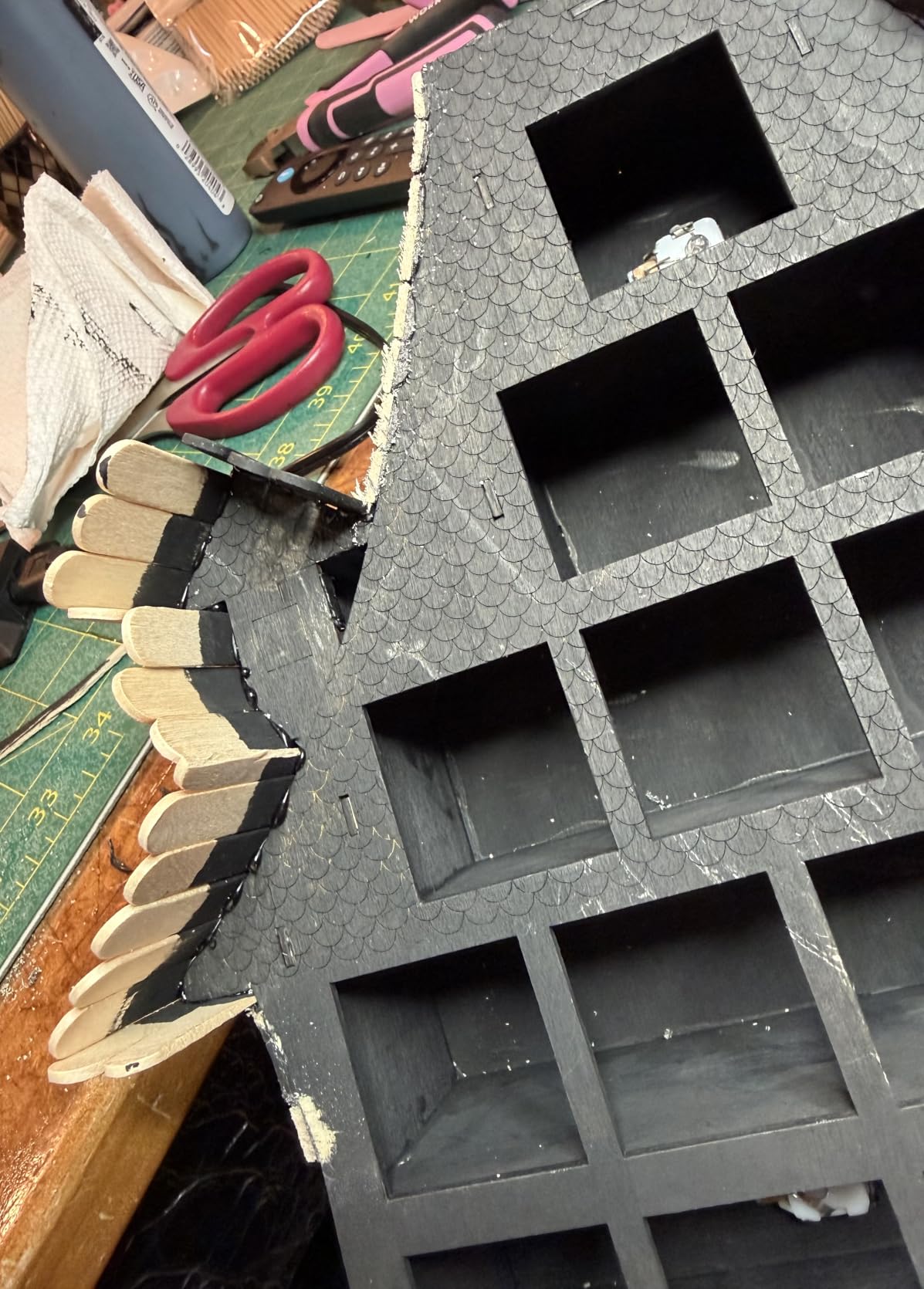
The reinforced spine is doing a lot of work here. It is what keeps the cut straight when the blade is longer than you are confident about, and it is why the saw tracks well without constant wrist correction.
The SK5 steel plate carries a gold coating for rust resistance, and the beech handle is shaped with a non-slip finish. Buyers consistently mention that the handle is comfortable over long practice sessions.
Who This Saw Suits
It suits a beginner working in softwood who wants a saw that cuts quickly and forgives errors. The reinforced spine means a nervous first cut is far less likely to run away from the layout line.
It also suits anyone who wants one pull saw for practice material and light work. At 6 inches with a 0.017 inch plate it is closer in feel to a flex-blade dozuki than the other stiffened saws here.
Where It Falls Short
Triple-tooth geometry and the reinforced spine make it stiffer and less versatile than a pure flex-blade dozuki. It will not fold into tight spaces or flex around a curved cut the way the thinnest blades do.
The brand is newer, and the review base is small next to the established Japanese names. You have less long-term data to lean on, which is a fair thing to weigh if you want a tool for decades.
10. RAZOR Saw 180 Dotsuki 297 – The Finest Kerf Here
+ The Good
- Exceptionally fine kerf from a very thin plate
- Rigid stainless steel back keeps cuts accurate
- Light at 0.15 kg for long cutting sessions
- Cuts fairly quickly for a fine-kerf saw
- The Bad
- Kerf too narrow for a coping saw blade to clear the waste
- Not practical beyond about half inch of material
- Some newer units have looser handle screws and back play
The RAZOR Saw 180 dotsuki 297 is built from carbon tool steel with a stainless steel backing, and that combination gives the stiffest, most rigid spine of the compact dozukis. The plate is 0.3mm with a pitch of 1.0mm, or size 30, and it is the finest kerf in this roundup.
It also cuts faster than its fineness suggests. Owners consistently note that it moves through material more quickly than other fine-kerf saws, which makes it a good choice when you have a stack of drawer sides to get through.
Who This Saw Suits
It suits anyone who wants the tightest possible joint and will do the waste removal with a fret saw blade. In a tight box or a drawer joint, that narrow slot is the difference between fitting with glue and fitting with a chisel.
At 0.15 kg it is light enough for long sessions, and the impact hardened teeth plus replaceable blades mean it can be maintained rather than discarded when it eventually dulls.
Where It Falls Short
The kerf is a double-edged feature. It is so narrow that a coping saw blade will not reach into the cut, so you need a finer blade to remove the waste. Plan a fret saw or chisel approach from the start.
It is also limited to thin material, roughly half an inch, and a few owners report that newer units arrive with looser handle screws and a little play in the back that causes vibration. Tighten and check before the first cut.
One more caution: tiny teeth can snap in very hard wood or laminate, so keep it on the wood it was designed for.
11. Gyokucho Noko Giri 9-1/2 Inch – Longest Reach Of The Pull Saws
Gyokucho Dozuki Noko Giri 9-1/2″ Dovetail Razor Saw
Blade 9.5 inch
26 TPI
Rattan handle
10.24 oz
+ The Good
- Longest blade reach in the group for deep cuts
- Suited to cabinet
- furniture and trim work
- Traditional rattan wrapped handle is comfortable
- Handles fine miter
- cross
- tenon and dovetail cuts
- The Bad
- Larger and heavier so less nimble for delicate dovetails
- 26 TPI teeth cut slowly through thick material
- Smallest review base of the twelve saws
The Gyokucho noko giri is the exception in this roundup, and it earns its place for length. At 9.5 inches of blade it has roughly 50 percent more reach than a 6 inch dozuki, which means you can start a cut from an edge and keep going a long way into a workpiece.
That reach changes which jobs it suits. The maker lists cabinet work, furniture work, trim carpentry and deep cuts, and at 26 TPI with a wide plate it is also a capable tenon and miter saw in its own right.
Who This Saw Suits
It suits furniture makers working on large components where a 6 inch saw would need a second cut from the opposite edge to meet in the middle. It also suits cabinet and trim work where a long clean crosscut is the main requirement.
The rattan wrapped handle is a traditional grip and a comfortable one over long sessions, and the reach makes the saw useful well beyond dovetails, which is rare in a category of very single-purpose tools.
Where It Falls Short
It is less nimble than a small dozuki on delicate dovetails. Buyers focused purely on hand-cut dovetails tend to prefer the smaller 6 inch Gyokucho for control, and we agree for fine half-blind work.
At 26 TPI the teeth cut slowly through thick material, and the larger frame takes more space in a small tool bag. It is a bench saw rather than a portable one.
12. Shark 10-2204 Detail Saw – Best For Flush-Cutting Dowels
Shark 10-2204 Dowel/Dovetail/Detail Saw
Blade 6.5 inch
24 TPI
Narrow kerf
All steel body
One year warranty
+ The Good
- 24 TPI gives exceptionally fine and precise cuts
- Cuts dowels and plugs perfectly flush
- Very narrow kerf removes very little material
- All steel body and blade are balanced and durable
- The Bad
- Push stroke needs more effort and buckles more easily
- Thicker alloy body gives a wider kerf than a pull saw
- Fixed blade cannot be replaced
The Shark 10-2204 is sold as a dowel, dovetail and detail saw, and the dowel part is where it has quietly become a favourite. At 24 TPI it produces an exceptionally fine cut and will trim a dowel or a plug perfectly flush with a surface, which is genuinely hard with a normal saw.
It is also a saw you can use for both strokes. The all steel body and blade are balanced in the hand, and because there is no folding handle or spring mechanism, it is the simplest tool in this roundup to keep in a bag and pick up.

The very narrow kerf is the practical benefit for joinery. Less material is removed, so a hole that has to receive a dowel or a tenon needs very little widening, and the show face is left close to finished.
Owners mostly use it as a companion to a main dovetail saw rather than as the primary joinery saw. It is the tool you reach for when the joint is already made and something has to end flush.
Who This Saw Suits
It suits anyone who builds furniture with doweled or pegged joints, and anyone who trims plugs flush. It also suits a beginner who wants a dovetail saw for practice without a tensioned plate to learn to hold.
It suits a mixed tool kit. A 6.5 inch all steel saw with a one year warranty does not need explaining, and it will be used for detail work long after the fine joinery is finished.
Where It Falls Short
It is a push saw, so it needs more effort than a pull saw and it is easier to buckle. Keeping the stroke straight is on you in a way it is not on a tensioned plate.
The alloy body is thicker than a dozuki plate, which means a wider kerf and more fitting work on a tight dovetail, and the blade is fixed rather than replaceable. Treat it as a detail saw first and a joinery saw second.
How to Cut a Hand-Cut Dovetail With Your Saw?
Cutting a hand-cut dovetail well comes down to four steps, and the saw matters far less than the sequence. Any of the twelve above will do the job if you follow this order.
Step one: score the baseline shoulder. Use a marking knife and a marking gauge to cut a clear line on both faces at the exact depth of the shoulder. This is the line that keeps the joint square end to end, and a saw cannot rescue a shoulder that was scribed by hand with a pencil.
Step two: start narrow with a V notch. Extend your baseline line down the end grain and start a small V on the offcut side, angled at roughly 70 degrees. This is exactly what a hook tooth tip does automatically, and it gives the blade somewhere to go that will not run off the line. Starting across the full board thickness is the most common beginner error and the hardest to fix afterwards.
Step three: track the line with a relaxed hand. Open the saw out gradually, let the blade find the layout line, and resist the urge to steer. Grip tension transmits every wrist twitch straight into a 0.3mm plate, so move your body instead of your hand and let the spine or the tension do the work.
Step four: stop dead at the shoulder. Approach the baseline from above and below, and as the tooth tips reach the scribed line, roll the saw out of the cut rather than pushing straight through. This keeps the corner square and the full width of the board intact.
If your sawing angle changes through the stroke, so does the effective rake the teeth see. Pulling a saw straight down a dovetail has more effect on how hard the teeth bite than most beginners realise, and that is the single biggest reason a saw that felt uncontrollable on day one feels fine by week four.
Once the practice joints go together with glue alone, move to hardwood. Most people find pine forgiving and walnut humbling, and the difference is entirely in how much force the teeth need.
Dovetail Saw Buying Guide: TPI, Teeth, Spine and Handle
Choosing between these twelve is mostly a question of which system you want to learn and how fine a joint you need. The specs below are the ones that actually change how a saw performs.
How many TPI should a dovetail saw have?
Most hand-cut dovetail saws fall between 14 and 26 teeth per inch, and the saws in this roundup span 14 to 26 TPI. Finer teeth cut a narrower kerf and leave a cleaner face, while coarser teeth cut faster and tolerate steeper sawing angles.
For softwood and practice material, 20 to 26 TPI is the sweet spot. For dense hardwood, many woodworkers drop to 16 to 20 TPI so the teeth can remove enough material without forcing the stroke.
Do not overthink it. A saw that cuts on the line and stays sharp will outperform a better-specced saw held at the wrong angle. Pick a TPI that matches your material, then focus on spine weight and balance.
Rip-cut vs crosscut teeth and why it matters
Rip-cut teeth are filed to cut with the grain, along the length of the board. Crosscut teeth are filed across the grain, which is what you want when the cut runs across the board. A dovetail cut runs along the end grain, which is why most Western dovetail saws use rip-cut geometry.
Several saws here carry crosscut patterns, and most owners note they work well on face grain and dovetails in practice. The rule of thumb is to match the teeth to the direction of the cut as closely as possible and accept a slightly wider kerf when a universal pattern is doing two jobs.
If you are unsure, a dovetail saw with a flexible plate will follow the line better than a rigid saw with ideal teeth. Plate stiffness and tooth geometry pull in opposite directions when you choose.
Spine weighting, plate thickness and kerf width
Plate thickness is the number that determines your kerf. Add the tooth set and you get the total slot. The thinnest plate here is the WORKPRO at 0.017 inch, and several others use a 0.3mm plate, all of which produce a kerf around half a millimetre.
Spine weighting is how a thin plate resists flex. Western saws do it with a heavy brass or steel spine along the top edge. Japanese saws do it with tension: the handle squeezes a thin plate flat, so the blade behaves as though it were far thicker than it is.
Spine weight also changes how the saw feels. A heavy spine suits a low sawing position where leverage does the work, and a tensioned plate suits a high position where your arm is doing more of the lifting. Buying the wrong one for your bench is the most common reason new owners say a saw feels wrong.
Blade depth, cutting depth and how you work
Blade length and depth of cut are different numbers. A 6 inch dozuki with a stiffened back may only cut an inch or so into a board, while a 9.5 inch pull saw with a flexible plate can run halfway across a panel.
Match the saw to the job. Half-blind dovetails in a drawer side need reach but not depth. A corner cut on a carcase needs depth, because you are cutting through the full thickness of the material. A saw that is too shallow will leave you joining two cuts in the middle of the waste.
Sawing height matters as much as depth. Work at a bench and you are pushing down and forward. Work at a Moxon vise at chest height and you are pulling mostly straight down, which suits a light tensioned plate far better than a heavy spine weighted saw.
Handle hang angle and sawing height
Handle hang is the angle between the spine and the handle, and it changes the force transmitted to the teeth. A high hang puts more of the stroke into pressing down, which lets a light saw do more work. A low hang makes the saw easier to start on a line but demands more arm for depth.
Owners of high hang zero-rake saws report that the saw wants to wander at first contact, and the answer is always the same: start at a corner or a V notch and let the saw settle over the first few strokes rather than fighting it immediately.
Our advice is to pick a sawing height first and choose the saw second. Set up a vise at the height you will actually work at, then choose a spine weight that suits that position. You will adapt far faster to a slightly unfamiliar saw than to a saw that fights your bench.
Sharpening, setting teeth and blade replacement
A dovetail saw is a maintenance tool, not a disposable one. Fine rip teeth dull quickly, and a saw that has been properly set and filed will outlast several cheaper plates that were never sharpened at all.
Thin tensioned plates are the easiest to maintain because a flat file and a stone will keep them cutting. Setting the teeth evenly is what determines whether the saw tracks, and cheap saws with poorly executed setting are the ones owners complain about first.
Replaceable blades are worth a premium. The ROCKLER and the ZETSAW both swap blades in seconds and both have obtainable replacements, which means a damaged plate is a small expense rather than the loss of the whole saw.
Companion tools and practice material
You need very little besides the saw. A marking knife and a marking gauge set the baseline, a dovetail saw guide or a story stick helps beginners hold the angle, and a small fret saw or a narrow chisel removes the waste.
Protect your hands and your finish as you go. A good pair of cut resistant gloves is useful for handling material and blades, and you can see our picks in the [best cut resistant gloves guide](https://beboivn.com/best-cut-resistant-gloves-for-metalworking/) if you want a general pair in the shop.
Practice in scrap pine first. It is soft, it is cheap, and it marks your mistakes clearly. If you want the wider picture on general saws for other shop tasks, our [hand saw guide](https://beboivn.com/best-hand-saws-for-cutting-drywall/) covers the bigger tools.
Only move to walnut or mahogany once the joint closes with glue alone in pine. The material is not the hard part; the stroke is.
Frequently Asked Questions
How can I cut dovetail joints by hand?
Score the baseline shoulder with a marking knife and gauge, start a small V notch on the offcut side or from a corner, track the layout line with a relaxed hand, and roll the saw out of the cut at the shoulder instead of pushing through it.
What is a high-quality dovetail saw?
A high quality dovetail saw has a thin steel plate, fine rip-cut teeth between about 14 and 26 teeth per inch, and a rigid spine, either a heavy brass back or a tensioned plate held flat by the handle, so it can follow a layout line without flexing.
What hand tools are needed to cut dovetails?
You need a dovetail saw, a marking knife, a marking gauge, a fret saw or narrow chisel to remove the waste, a dovetail saw guide or story stick to hold the angle, and clamps or a Moxon vise to hold the work.
What type of wood is best for practicing dovetail joints?
Scrap pine or poplar is best for practice because it is soft, cheap and shows your layout mistakes clearly. Move to hardwood such as walnut or mahogany only once a joint closes with glue alone.
How many TPI should a dovetail saw have?
Most hand-cut dovetail saws run between 14 and 26 teeth per inch. Fine teeth give a narrower kerf and a cleaner face, while coarser teeth cut faster and are more forgiving of a steep sawing angle.
Is a Japanese dozuki a substitute for a Western dovetail saw?
Yes for most hand-cut dovetails. A dozuki cuts on the pull stroke with a tensioned plate, which gives a much narrower kerf and needs less effort, but it cannot rip efficiently and the stiffened back limits depth of cut.
The Best Dovetail Saw for Your Bench in 2026
The SUIZAN 6 inch dozuki is the best dovetail saw in this roundup, and the reason is simple balance rather than a single standout spec. It has the largest body of owner feedback of any saw here, a kerf narrow enough to close a joint with glue, and a pull stroke that stays controllable late into a long session.
If you want the lightest tool and the fastest learning curve, the Gyokucho 770-3500 is hard to argue against. If the hardest part of a dovetail is starting the cut, the ROCKLER mini dozuki solves that with a hook tooth at the tip. And if you cut thicker material or work in a shop without a bench, the Crown FLINN1 gives you the reach and depth a pull saw cannot.
Whichever one you choose, the saw is the last 20 percent of the work. Score the shoulder properly, start narrow, and keep your grip loose. That is what makes the best dovetail saws worth owning.